“ We have found Cambridge Insight data helps us develop informed teaching and learning interventions before the start of each Cambridge course. This has led to better results in Cambridge exams.”
Jackline
Aming’a,
Head
of School, Oshwal Academy Mombasa, Kenya www.cambridge.org/insight
CONTENTS
schoolmanagementplus.com
Our School Management Plus online platform offers a wealth of information to keep education professionals up to date, including:
• latest news, regular features and opinion
• monthly newsletter and jobs to your inbox
• the chance to contribute your own ideas and opinion
• the chance to join our webinars and round-table discussions. We are the leading opinion platform for those running a modern international school. We are always keen to hear about the issues that matter to you most, so get in touch to have your school’s voice heard. editor@schoolmanagementplus.com
International School News
The leading source of news, opinion, features & jobs for all professionals working in independent and international education.
EDTECH
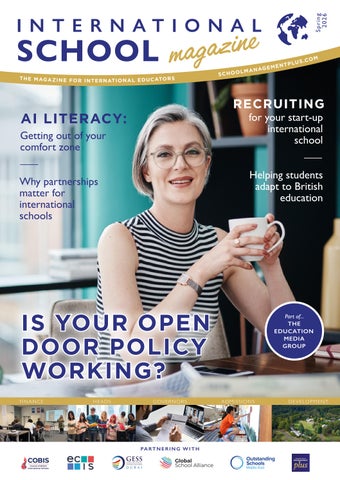
4 AI literacy: Educators must teach students about AI’s blind spots, writes Richard Human.
SEND/WELLBEING
6 Culture shock: How can teachers support students experiencing British education for the first time? By Danny Steadman.
EXPERIENCE
8 English: How a real-life author visit brought memoir writing to life, by Yvonne Slough-Kuss.
CLASSROOM
11 Motivation: Jess Darke explores how to build a culture where sixth form students really want to learn.
LEADERSHIP & MANAGEMENT
14 Recruitment: How do you recruit for a school that isn’t built yet? by Denry Machin.
16 Partnerships: How can international schools become ‘community anchors’? by Christina Astin.
20 How do you ensure your open door policy has the effect you want it to? by Nick Casey
THE INTERVIEW
23 Tony Darby, founding principal, Rugby School Japan.
SCHOOL SPOTLIGHT
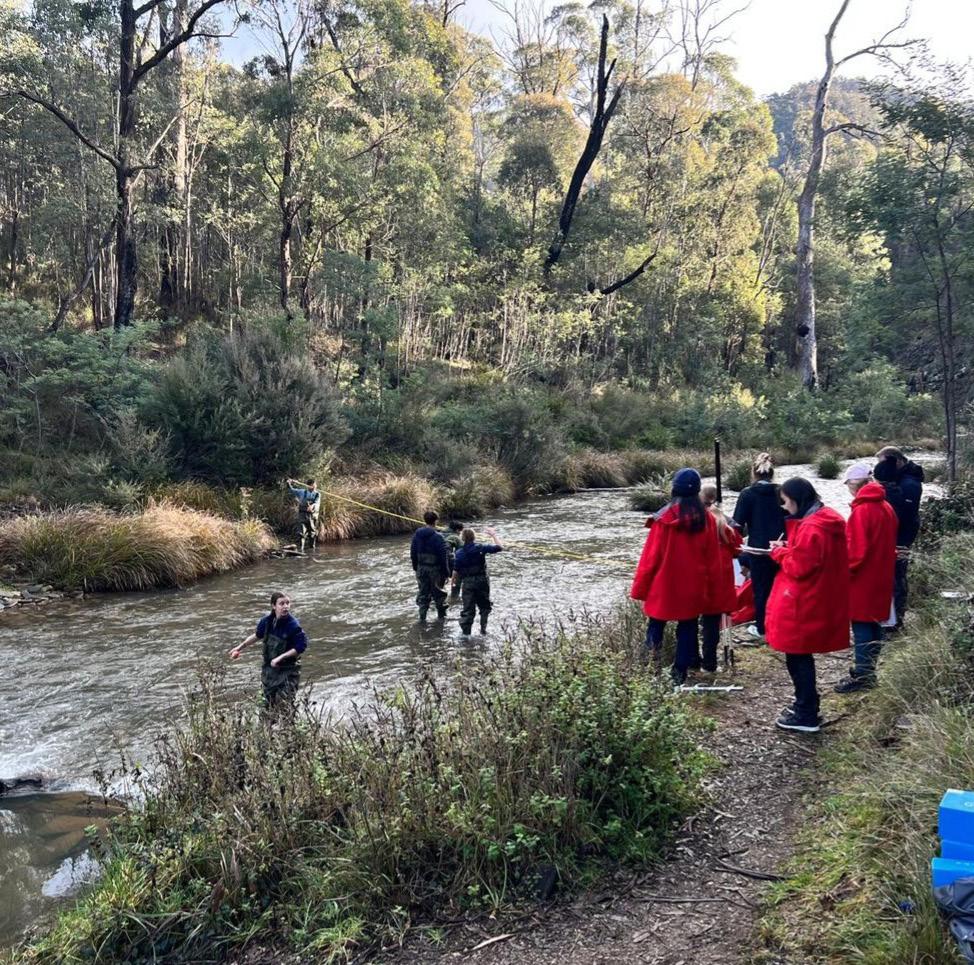
26 Tanglin Trust School runs an outdoor programme with a difference.
ASK THE RECRUITER
30 Hayley Mintern explores the key considerations when taking on an international school leadership role.
@ International School News
ON THE COVER
Is your open door policy working? page 20
AI literacy:
Get out of your comfort zone
Educators must teach students to recognise the blind spots of artificial intelligence, writes Richard Human
Icollect feedback after every training session I give. It’s how I improve. But one piece of feedback from a recent AI literacy session was different to the usual: “Less woke would be nice.”
Typically, I spend an hour working with either students, parents, or teachers across our international school network about how large language models work, how to write effective prompts,
and why they need to verify AI outputs. I explain that LLMs are statistical pattern machines, not knowledge databases –they predict the next token based on training data, which means they inherit whatever biases exist in that data.
Then I show three photographs.
The first: me with my adopted brothers taken during my childhood – my youngest brother is of Kenyan descent;
my middle brother is of Asian descent; we do not look alike.
The second: a man from one of the remote highland communities in Papua New Guinea.
The third: six tech leaders –all white, all male, all American. I didn’t editorialise. I simply ask participants to think about who’s building AI systems and whose experiences are represented in the data those systems learn from.
On this particular occasion, that was “woke”.
When facts become ‘political’
Here’s what troubles me about that feedback. I wasn’t teaching ideology. I was teaching technical literacy.
The statistics I shared aren’t controversial: 22 per cent of AI professionals globally are women. In many tech and AI-related workforces, Black workers make up under 6 per cent of employees, despite constituting a much larger share of the population.
These aren’t political statements – they’re measurable facts about who’s designing the systems that will shape our students’
“I wasn’t teaching ideology. I was teaching technical literacy.”
“Understanding AI bias isn’t about political correctness. It’s about understanding the technology itself.”
futures. You can reduce these biases with careful design and governance, but you cannot fully separate an AI system from the patterns in its training data.
More importantly, I was sharing with my audience something fundamental about how AI actually works. If you train a system on internet data, and internet data over-represents certain demographics and perspectives, your system will reflect those biases. It’s not a design flaw you can patch. It’s an inherent mathematical consequence of how LLMs function.
Understanding AI bias isn’t about political correctness. It’s about understanding the technology itself.
Why does this matter in practice?
Acknowledging these biases implies responsibility to fix
them. It’s more comfortable to believe that maths and code are “objective” than to accept that AI reflects the perspectives of its creators and the limitations of its training data. But mostly, it’s because words like “diversity,” “representation,” and “bias” have been pulled into broader culture wars. So even using them in purely technical contexts triggers defensive reactions – especially from those for whom the current system works rather well.
If we don’t teach students to question AI outputs, to understand these limitations, to recognise when a system’s “blind spots” match realworld inequalities, we’re not preparing them to use these tools critically. We’re teaching them to accept algorithmic authority uncritically – which is far more dangerous than any political perspective I might share.
photograph from Papua New Guinea isn’t “woke.” It’s evidence that the world contains far more diversity than the internet represents. My photograph of tech leaders isn’t political activism. It’s documentation of a power structure that shapes what AI can and cannot do well.
What we’re really teaching
When I train students, teachers and parents, I give them a framework: verify AI information carefully; use AI honestly, ethically and safely; never share personal information; understand that bad prompts can yield bad information.
But I also teach them to ask: whose perspectives are represented in this output? What voices might be missing? If this system was trained predominantly on one culture’s data, how might that limit its usefulness for others?
These aren’t radical
questions. They’re the questions any critical thinker should ask about any information source.
Holding the line
Here’s what I’ve learned from many years in education: the pushback against teaching uncomfortable truths often comes loudest from those who benefit most from leaving those truths unexamined.
Our job as educators isn’t to make everyone comfortable. It’s to prepare students for the world they’ll inherit. Today, that world includes AI systems built by a remarkably homogeneous group of people, trained on data that over-represents certain perspectives and under-represents others.
Teaching students to recognise this isn’t political. It’s essential literacy for an AIpowered future.
Like most teachers, my core philosophy when teaching has always been “everyone comes with us” – that no one gets left behind by change. But that philosophy only works if we’re honest about who’s currently leading that change and whose experiences aren’t yet adequately represented in the systems we’re building.
If that’s too woke for some, so be it. I’ll wear that badge proudly, knowing I’m helping prepare students to question, to verify, and to build a more representative future for AI – one where everyone truly does come with us. ◆
Richard Human has been a teacher and school leader for 25 years. He is currently head of artificial intelligence at global schools group Globeducate.
My
Richard Human with his brothers Peter and John.
Culture shock?
Experiencing British international education for the first time can be a challenge for some pupils – but teachers can help, writes Danny Steadman
Every year, international students step into British classrooms carrying more than a school bag; they carry an entire educational history that doesn’t always fit the system they’ve just entered.
Through my career, I have taught a wide range of students from a wide range of nationalities, ranging from Asia to Europe to Africa. Each student comes into the British system with different levels of academic proficiency, with the subjects embedded in the British curriculum. There are, very commonly, barriers to learning due to English proficiency, but the barriers to learning often go much deeper than the students’ ability to speak, read, and comprehend texts in English.
A student once came to me during a geography lesson with their exercise book from their previous school in Spain (they were following the Spanish curriculum). The pages were immaculate: titles underlined, diagrams in flawless pencil, facts listed neatly in rows. He handed it to me with pride. But when I asked him a simple question – “So why do you think this happens?” – he froze. His eyes moved from the page back to me, confused. The answer wasn’t in the notes. No one had ever asked him to explain anything before.
information, students record it, and exams reward precise reproduction. It creates disciplined learners, but often passive ones.
British education, by contrast, asks students to question. To analyse. To write in paragraphs. To debate ideas out loud. To solve problems they’ve never seen before. To challenge, compare, and justify.
For a student arriving at 12, 13, or 14 years old, this shift can feel less like transferring schools and more like switching languages – except the new language is academic thinking.
The cultural gap
“Each student comes into the British system with different levels of academic proficiency.”
This student’s story is not unusual. Across Europe, more students are joining British international schools later in their schooling, often coming from systems where success is measured by memory, repetition, and quiet compliance. They arrive with strong work habits, respect for teachers, and impressive recall of content – but they also bring an invisible weight: the cultural and academic gap between two very different educational worlds.
The hidden shift
“British education asks students to question.”
While it’s easy to assume that learning is universal, the reality is that education systems aren’t just built on different curricula – they’re built on different beliefs about thinking itself.
In many countries, particularly those with highly centralised systems, students are taught to remember. Teachers deliver
Academic expectations are only half the story. Alongside them sits a cultural shift that is equally disorienting.
Students from more traditional systems may not be used to group work, open discussion, or teachers who invite disagreement. They may find British classrooms noisy, fastmoving, and full of opinions. They might misunderstand instructions that rely on inference rather than direct commands. Even the simple act of putting up a hand to ask for help can feel unfamiliar or uncomfortable.
One student once told me: “In my old school, asking a question meant you didn’t study hard enough.” In a British classroom, asking questions is how you show you’re thinking.
Where the struggle shows first
These gaps often reveal themselves in subtle moments:
• A student who can recall content for a science test but can’t explain a process in their own words.
• A teenager who appears disengaged, not because they don’t care, but because they’re terrified of saying the wrong thing.
• A child who hands in tidy but empty work –beautifully presented, but without depth.
• A newcomer who avoids group tasks, unsure of the unspoken social rules.
None of this means they are behind. It means they were taught differently.
Building bridges
The good news is that with the right support, latejoining students often make remarkable progress. Many become some of the strongest learners in a cohort precisely because they bring grit, structure, and discipline from their previous systems.
But the bridge must be built with intention. You may find the following tips useful when you’re trying to make things work:
1. Explicitly teach thinking, not just content. Skills like analysing, predicting, comparing, and constructing arguments should be broken down into small, concrete steps. Modelling is essential. Students need to see what good thinking looks like.
2. Give them safe spaces to speak. Small-group discussions, sentence starters, and low-stakes oral tasks help students practise the “voice” British classrooms expect.
3. Use visuals, examples, and real objects. Concrete nouns – magnets, timelines, maps, food items, rocks, photographs – help anchor unfamiliar concepts in something solid.
4. Explain the culture of the classroom. Don’t assume students understand phrases like “give your opinion,” “expand your answer,” or “work
collaboratively.” These are cultural codes as much as academic ones.
5. Celebrate what they bring. Their discipline, memory skills, and respect for learning are huge assets. When students feel valued, they adapt faster.
A chance to rethink
Bridging this gap is not just a challenge – it’s an opportunity. As more children move between countries, cultures, and curricula, international schools have a responsibility to be more than just places of transition. They can be places of transformation. ◆
is deputy
Danny Steadman
head of St George’s British International School, Bilbao, Spain.
Writing and memory
An inspiring visit from a real-life author helped Year 10 students at Strothoff International School explore the world of childhood memoir writing
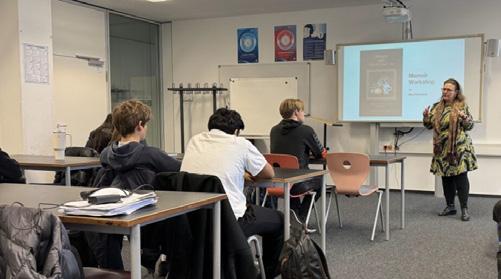
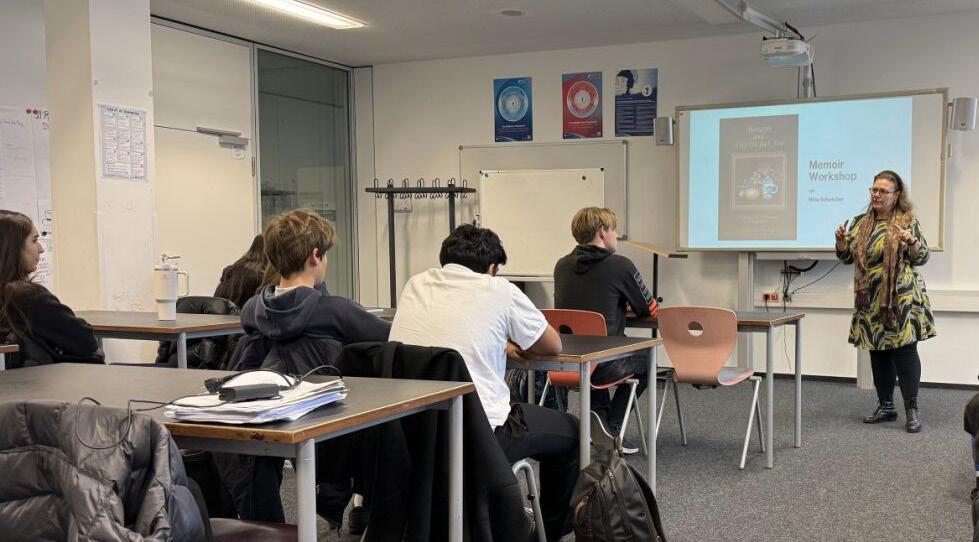
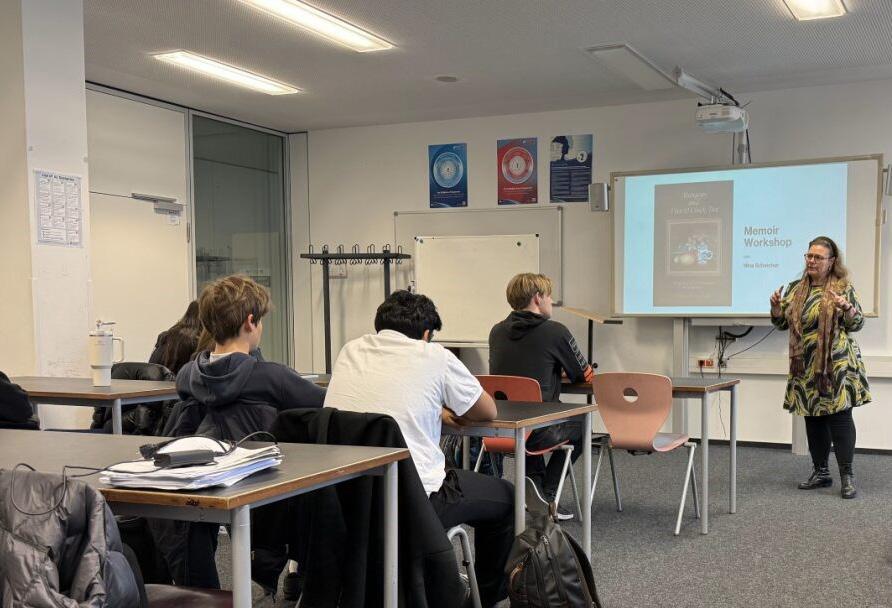
Grade 10 students at Phorms Strothoff International School in Dreieich, Germany, were in for a treat when author Nina Scheicher, writer of Mangoes and Five O’Clock Tea: Memoirs of a Childhood in Singapore, visited their English class.
Her presentation and workshop, rich in storytelling and personal insight, encouraged students to explore the genre of memoir, with a focus on childhood memoirs. Scheicher opened by explaining that memoir writing is a skill: the ability to pass on experiences, to share the moments that shaped us, and to help readers relate emotionally and personally to a writer’s journey.
Universal feelings
To frame the craft, she introduced two well-known childhood memoirs: Angela’s Ashes by Frank McCourt and Wavewalker by Suzanna Heywood. These texts, she explained, show how memoirists use emotional storytelling to evoke “universal feelings.” Memoirs remind us that “others’ stories help us understand our stories.” Although we are all unique, she emphasised that people share key emotions that allow readers to connect across cultures, ages, and backgrounds. This sense of similarity is what gives memoir its particular power.
Scheicher then introduced her own memoir, describing how writing it required her to examine her childhood closely and honestly. She encouraged students to do the same. Memoir writing, she said, involves learning “how to tap into your personal story.” It does not require dramatic events or a full life story; rather, a memoir captures “a moment in time.” Writers must focus on small, specific memories because “it doesn’t have to be full or complete… but make it as specific as possible.”
Vivid memories
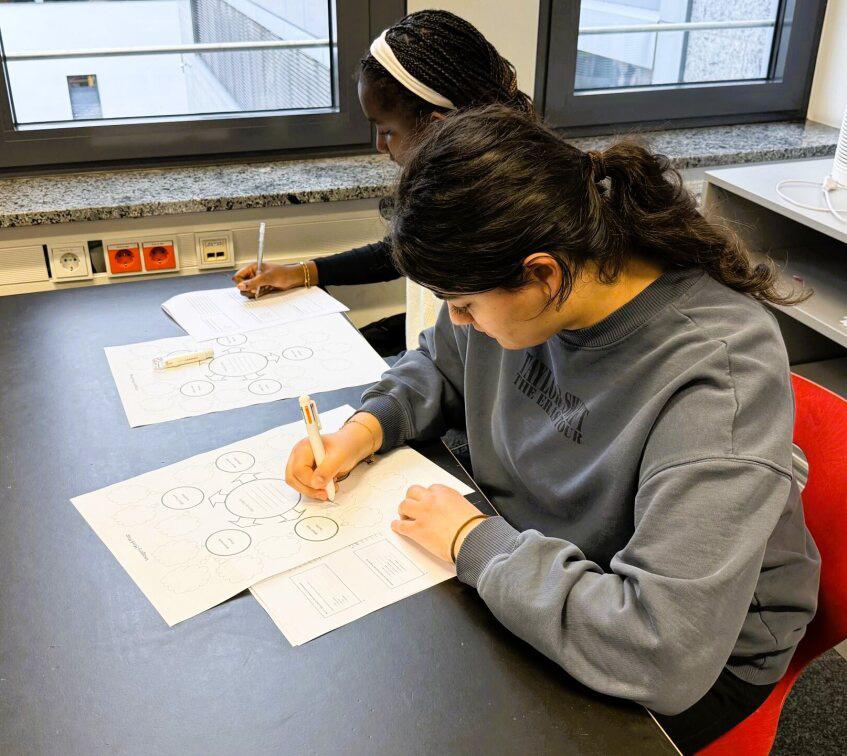
To help students access these moments, Scheicher asked them to start with a memory in 30 seconds – a quick exercise designed to bypass overthinking. After noting a small memory, students built an imagery mind map using the five senses: smell, sight, sound, taste, and touch. Sensory details, she explained, make memories vivid. A memoirist must ask: What did I smell? What did I hear? What did something taste or feel like? She encouraged students to “think of your writing as a camera that zooms into that moment.” The closer the zoom, the clearer the memory becomes, and the more effectively the reader is drawn into the writer’s experience.
Students eagerly shared memories both positive and negative. One described saying “yes” to an unexpected opportunity, using sensory detail to convey the emotions and physical sensations tied to that moment. Another recounted spilling a glass of wine while waitering at a school event: the wobbling tray, the sensation of falling off balance, the dry mouth, and the embarrassment. A third student shared the warmth and imagery of Christmas traditions. As she listened, Scheicher reminded them, “It must be as specific as possible… that’s what makes good writing.”
story,” and shape how people relate to a writer’s emotions. One student summarized: “You need to feel the feeling of another.”
Throughout the workshop, she posed thought-provoking questions: What distinguishes memoir from other genres? Why do writers rely on sensory detail? What do memories do for readers?
Students concluded that sensory memories engage the reader, “throw them into the
Scheicher then guided the class through a close analysis of excerpts from Angela’s Ashes and Wavewalker. Students compared the sensory techniques used in each, examining how writers build atmosphere, evoke emotion, and balance detail. Scheicher noted that effective memoirs include both positive and negative emotions and that “less is more.” Carefully chosen language can sometimes draw the reader in more powerfully than lengthy description.
The intimacy of the genre
The discussion also turned to the challenges of writing memoir. Scheicher shared that while drafting her memoir, she had to unpack layers of memory, a sometimes emotional process. “Not everyone will like what you write,” she cautioned, noting that revisiting personal memories can be painful and that others involved may prefer them forgotten. Still, memoir allows writers to preserve their truth. “While reading a memoir, you are hearing someone speaking,” she said, highlighting the intimacy of the genre. Memoirs can serve many purposes: as meaningful gifts for family, as records that
“keep the facts straight,” or simply as a means to look back.
A memorable moment came when Scheicher mentioned her communication with the author of Wavewalker. Curious about the advice she might give young writers, Scheicher contacted Suzanna Heywood, who replied that students should keep a diary. Daily writing, she said, strengthens memory and voice and offers a space to practice noticing details.
New tools for writing
Scheicher concluded by reflecting on her own growth: writing her memoir helped her mature further and understanding her past. She encouraged students to explore their own stories and reminded them to imagine their writing as a camera zooming in –capturing small truths that reveal larger ones. By the end of the session, students left with new tools for writing and a deeper appreciation for the value of sharing and shaping personal stories – moments that connect us through the universal language of memory. ◆
Dr. Yvonne Slough-Kuss is head of language and literature at Strothoff International School in Dreieich near Frankfurt.
Passion project
How do you build a culture where international sixth form students are intrinsically motivated to learn? Jess Darke explains what worked at Harrow International School Hong Kong
The most impressive sixth form students I encounter have one characteristic that marks them out: intellectual curiosity.
However, for many this does not come instinctively. There may be extrinsic motivation in achieving high grades, pleasing parents or impressing peers, but how can teachers create a culture of intrinsic motivation?
“To cultivate a culture shift, we had to lead by example.”
How do we make pupils interested and interesting people? How do we teach them to learn to love learning?
These were the questions raised last year in our sixth form team meeting. So, we began devising a plan for academic enrichment, subsequently cultivating passion, in all of our sixth formers – a lofty ambition, but
one which we are now on our way to achieving.
At my school, we have a sixth form specific PSHE offering, designed in house; this was a natural starting point for cultural revolution. We introduced:
Fireside chats
To cultivate a culture shift, we had to lead by example. F
“We were hesitant to make enjoyment of learning an obligation.”
We launched the programme from armchairs, grabbing microphones and waxing lyrical: our favourite books, films that made us cry, questions we wish we could answer.
Our own willingness to learn soon sparked interest. Not only did pupils enjoy peeking into our “personal lives”, as they saw it, but it also provided a framework for them on how to speak passionately, demonstrating that we prioritise finding time for these things in our own lives, implicitly suggesting that they should do the same in theirs.
“We launched the programme from armchairs, grabbing microphones and waxing lyrical.”
Fireside chats have since become our most requested sessions, with pupils submitting their own questions now for us to answer.
Success sessions
We had immediate buy-in from our keenest students, but we now had to sell the less willing on how and why this would have an impact. What was in it for them? As such, I ran two sessions: one exploring types of success, asking pupils to decide which were important to them, and one created around current students who are successful in their respective fields.
Establishing foundations with personal definitions for success in the first session, the second session was arguably the most impactful. Hearing “from the horses’ mouths” how they achieve their goals
and listening to strategies and advice from peers made the intangible notion of “thriving in the sixth form” suddenly become something which was replicable. We made a display from the advice given, constantly reminding pupils what they could do to thrive, long after the session ended.
What to read, watch and listen to… I sent out a list of hyperlinked recommendations divided into: “Spare 5 minutes?” “Spare 15 minutes?” and “A whole spare hour?” There were summaries of classic novels, retellings of Greek myths, podcasts on philosophy, Youtube videos on life skills etc.
This helped to make good use of study periods, removing researching and deciding time, freeing students up to make every minute useful and interesting when their work had been completed. Another display – links as QR codes –meant that pupils could access materials at any time.
Passion presentations
Hesitant to make enjoyment of learning an obligation (paradoxical, anyway) we still wanted to have a tangible outcome that gave weight to our endeavours. Every pupil in Year 12 presented on their “passion” at the end of our explicit teaching of academic enrichment.
Pupils had free reign over topic choice and the range was indicative of genuine interest. In one session, we heard about “TV Love Triangles”, “The Psychological
Effects of Music Genres”, “Looking After Orchids” and “Britpop: Blur vs Oasis”.
Seeing students empowered to share genuine passions in a presentation delivered to a group of around 20 peers and staff members was phenomenal. Every single person eloquently and dynamically communicated their passions. Following up 1-1 to find out more afterwards was some of the best relationship building I did all year.
These were curriculum changes that made an impact. I appreciate that not everyone has control over their sixth form curriculum, and pupils also have to work on getting through exams. So, start small.
Start conversations about what pupils are watching, ask questions about their favourite bands, find out about what makes them excited with a register question. Share your recommendations. Run an assembly making explicit the benefits of becoming an interesting and interested person. Follow up when pupils demonstrate academic joy.
Where there is time, use it for this. It’s the most impactful thing I’ve done as head of year, and the most important.
These are the conversations that students will remember in years to come. These passions, cultivated now, will last a lifetime. ◆
Jess Darke is head of Year 13 and an English teacher at Harrow International School Hong Kong.
Building a team before the buildings are finished
Dr Denry Machin considers the challenges of recruiting for start-up international schools
ILike most clichés, it’s also a truism that the most important task a principal does is recruiting teachers. Not just any teachers. The right ones, at the right time in the school’s development. People who fit not only what the school is now, but what it will become.
That’s true for all schools. For start-ups it’s critical.
In a start-up, you’re not just hiring teachers, you’re building a new culture. You’re building trust. You’re building everything that will shape how families, students, and staff experience the school. Especially in those chaotic, crazy, fragile first few months.
Start-up schools ask a lot of their founding teachers:
• Buildings may be unfinished and classrooms unready.
• Resources may need unboxing even as curriculum, policies, and assessment frameworks are still being written.
• Timetables and class allocations may shift repeatedly, sometimes for months.
• Everything is new. The routines and rhythms that mature schools take for granted, start-ups must invent—and reinvent—week by week.
• Staff housing may be delayed, unsuitable, or beset with snagging issues, with staff expected to ‘cope’ (for now, at least).
• Despite all of this, they need to hit the ground running, delivering strong lessons from day one.
• And they may be doing it all while adapting to life in a country they’ve just arrived in.
And that’s just the “normal” stuff of opening a new school. That’s when things go well. Founding teachers are also expected to adapt when things don’t go to plan. I’ve known schools where:
• Teachers arrived before their apartments had furniture; or in one case, running water.
• Staff induction took place in the construction firm’s offices because no school rooms were ready.
• During opening week, teachers delivered lessons in corridors, meeting rooms, sports spaces, or just about anywhere until classrooms were completed.
• Visa delays meant several teachers couldn’t legally teach until after the mid-term break, leaving colleagues to cover in the meantime.
• One incoming staff member resigned after a breakdown at the airport, never boarding the plane.
• Staff (and students) had a running joke about “what will go wrong today,” such was the extent of the snagging list.
These things happen. They’re not always avoidable. Some teachers will thrive in that kind of ambiguity. Others simply won’t. It is crucial, then, that your recruitment focuses on finding and employing the former.
Some suggestions for how you might do that:
Start early
You’re not just filling jobs, you’re selling a vision. That takes time. And it may take more than one attempt; you won’t always find the right people on the first try. Start recruiting early. The closer you get to opening, the greater the risk of less optimal hiring decisions.
Hire for mindset, not just CVs
You’re not looking for teachers who want ‘a job’, you’re looking for teachers who want this job. Those who are drawn to the energy of a start-up and know what that entails. Those who understand that building a school is messy, uncertain…but also deeply rewarding.
Check for resilience
Sure, this is not easily done at interview, but ask questions that explore how candidates handle ambiguity, setbacks, and plans that change (repeatedly) or disappear entirely. You’re looking for calm, not chaos, when things go off-script.
Singles, couples, or families?
Discuss this carefully as a founding SLT. There are pros and cons to each, and your context will matter. For example: if you’re hiring large numbers of single teachers, consider who will support them once the initial excitement fades and the reality of disruption and emotional fatigue sets in. Couples and families have built-in support systems; singles may not—so who (or what) will they lean on?
A mix is fine, of course; perhaps even optimal. The point is that staff mix needs discussing: it needs to be contextual and strategic.
Be honest
Don’t sell a fantasy. Be proud of what’s real but transparent about
what isn’t ready (or may not be). Glossing over the chaos helps no one. Under-promise and over-deliver.
Plan arrivals for orientation, for jet lag, for banking, for breathing. One week of induction is usual for international schools; at least two is advisable for start-ups.
Build a team, not just a staff list.
Connections formed before Day 1 make all the difference. Online meetups, collaborative onboarding, group chats that aren’t just for admin updates, they all help create shared ownership before anyone sets foot on campus.
In new schools, first-year teachers aren’t just employees, they are founders, even if you don’t call them that. They will shape the tone, the culture, the hidden curriculum. And they will shape your reputation.
A good opening earns attention. A strong founding team turns that attention into trust.
So recruit early and recruit carefully.
Critically, recruit for the school you are (new, possibly unfinished, and very probably messy), but also for the school you hope to become (successful, secure, established, and thriving). ◆
Denry Machin is an international school startup specialist supporting investors, schools and leadership teams to set up new schools.
Beyond the gates
International schools that build local partnerships can become true community anchors and offer students vital learning opportunities, writes Christina Astin
“The school’s reputation shifts gradually from the gated campus to the community anchor.”
In a rapidly changing world, schools that thrive are those that give students opportunities to develop skills beyond the school gates.
By connecting with charities, community groups and other schools, we can broaden
horizons for our students and equip them with the critical thinking, adaptability and resilience they will need for the future.
But how can international schools build purposeful partnerships or social action projects that develop character and enrich learning for students while strengthening community connections?
UK independent schools have a long tradition of placebased partnerships historically born out of charitable or moral purpose. Recent years have seen a shift towards creating links that involve reciprocal benefit.
Schools are keen to offer opportunities for service learning, and the co-created projects that result – working with the local community –have two-way impact.
So while the primary beneficiaries might be the local food bank or beach cleaning project, the primary or special school, the students taking part also gain hugely. They learn to teach, develop their communication or leadership skills, become more independent, resilient and empathetic.
And all the while they expand their horizons, meeting a wider diversity of fellow humans and boosting their wellbeing.
One student I spoke to
recently said the biggest impact on him was raised awareness – of the limits of his experience, of his own privilege and of the challenges that different people face. Powerful stuff, and crucial learning during adolescence.
An unstable world
In 2026 the young people emerging from our schools are facing a perfect “VUCA” storm of volatility, uncertainty, complexity and ambiguity.
We have a backdrop of economic and employment instability together with the ethical maelstrom (and cognitive potential atrophy) of AI proliferation and the inexorable slide beyond 1.5 degrees of climate heating. Thrown into the mix, we now face the turbulence of war.
These challenges will require more than A*s or 7s.
“Students in international schools have called for a curriculum that teaches them to connect with fellow humans, not AI”
Young people who can talk comfortably with those with different life experiences, exercise ethical judgment, think creatively to solve problems and bring optimism where pessimism reigns, will be more likely to be happy and succeed.
Looking outwards…
Many community partnerships expand from service-learning projects (such as the CAS element of the IB programme or the Duke of Edinburgh’s Award), often fuelled by students’ strong sense of social justice. Some junior schools involve pupils as young as 6 or 7, keen to grow their awareness of the world beyond the school bubble.
Projects can take many forms, such as peer tutoring, conservation schemes, student exchanges, reading buddies, joint science F
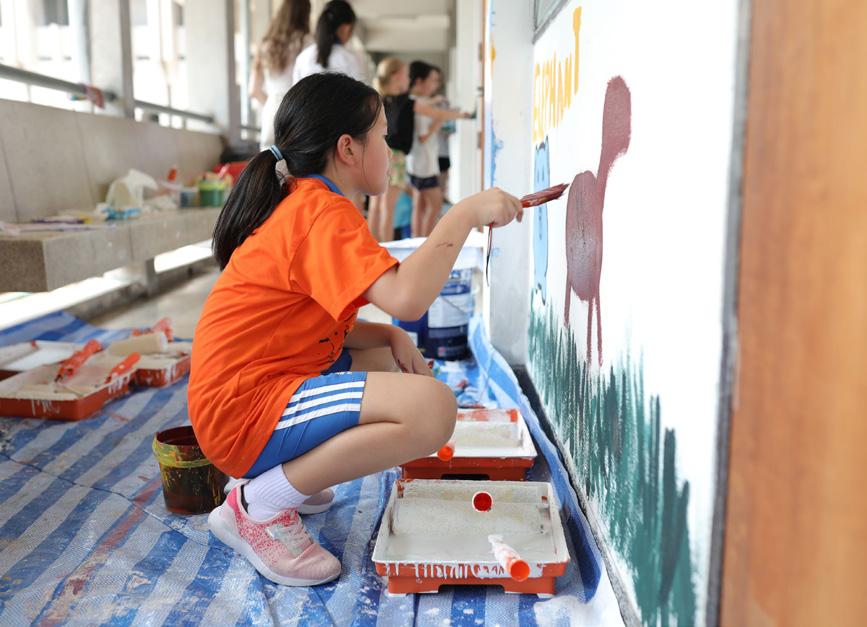
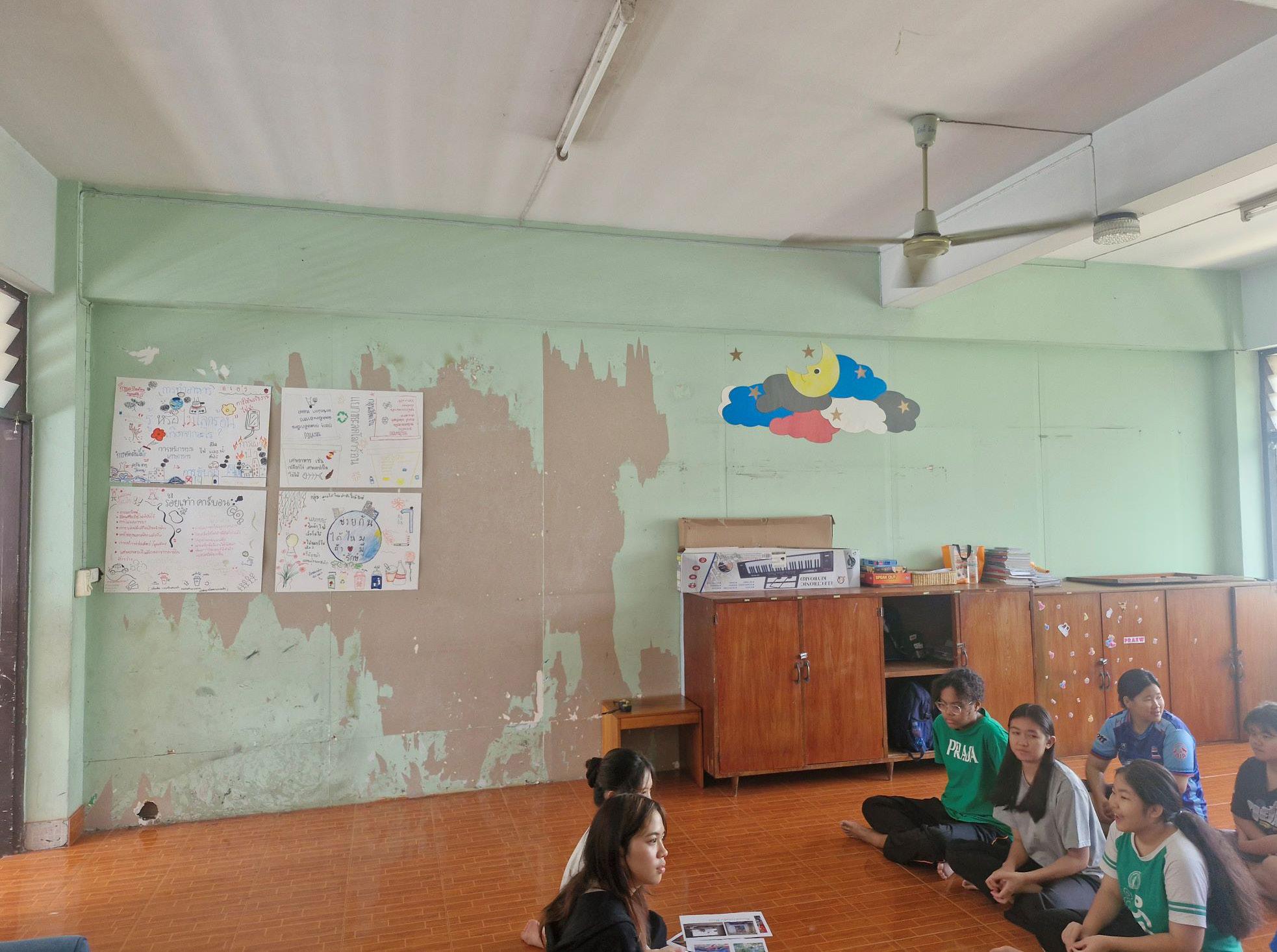
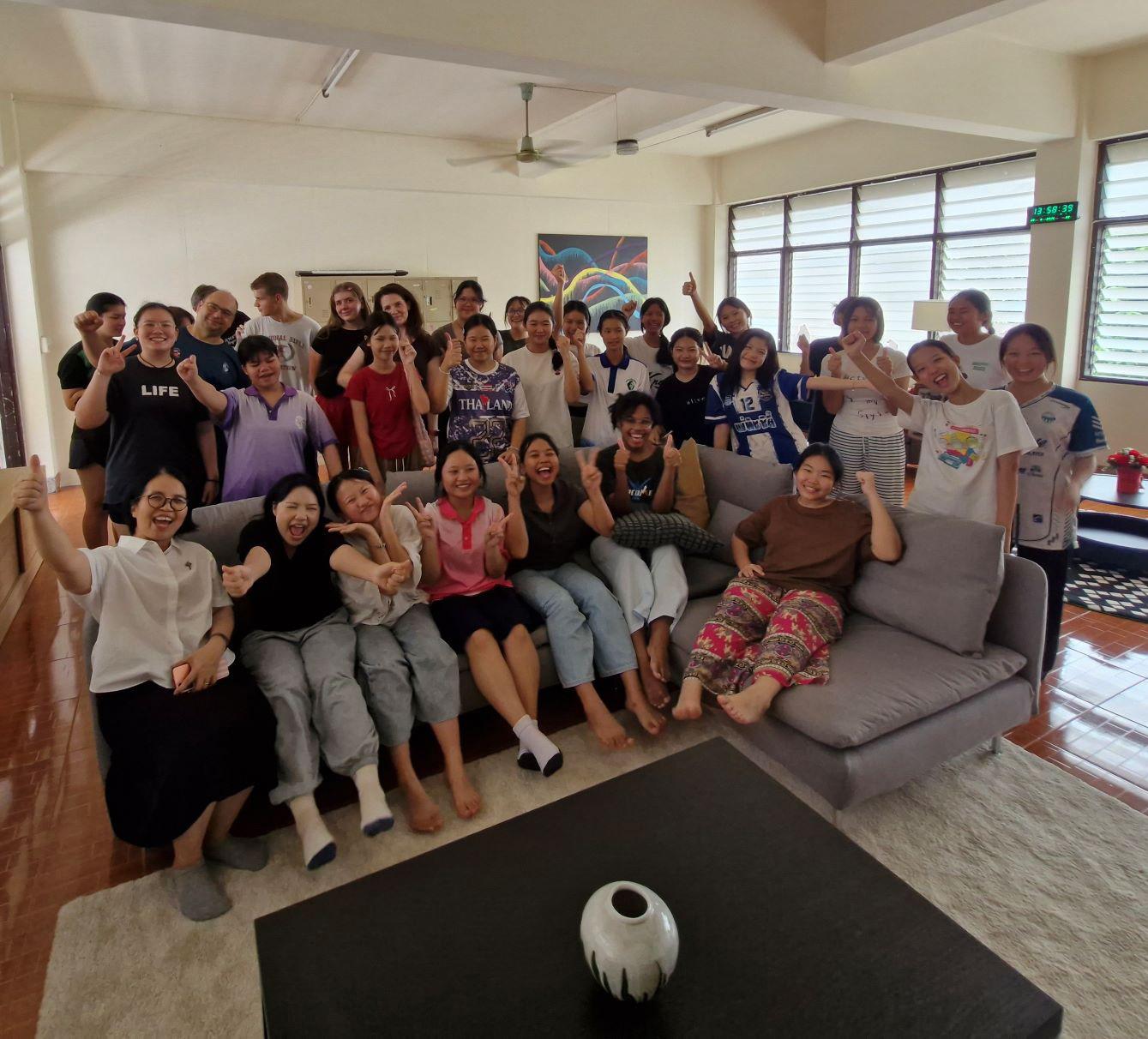
Students from Shrewsbury International School in Bangkok refurbished the living room at a local orphanage for teenage girls.
After:
“The challenges of the modern world will require more than A*s or 7s.”
research and neurodiversity support. These can involve schools as far apart as Addis Ababa, Prague, Aotearoa, Santiago and Dubai.
Virtual or long-distance links, such as online mentoring or cross-border teacher training placements, can build over generations, growing close, trusting and sustained relationships.
The impact (and yes, it’s measurable) on students participating in such projects can be transformational.
And the desire is there: The student panel at last year’s COBIS conference advocated strongly for a curriculum that teaches them to connect with fellow humans, not AI. School mission statements promise prospective parents that their children will become “the global citizens of the future”, or the “empathetic leaders of tomorrow”. Is it really possible to fulfil that ethos without going beyond the school gates?
Zooming out, and the benefits of place-based partnership projects can be seen to have wider and more lasting impact. The school’s reputation shifts gradually from the gated campus to the community anchor. This can be valuable as schools expand and face local planning or political challenges.
So, how to start building a strategy for partnerships? The
framework we use (see box) works for a relationship with any kind of organisation.
Our top tips
1 Listen with humility. Don’t second-guess your partner organisation’s values and needs.
2
Align with your ethos. The “Character Compass” at The British School of Paris which underpins their community service drew praise from ISI inspectors recently: “Pupils are kind. They recognise the value of service to others.”
3
Start small. Plan a simple pilot project and measure outcomes, including student voice, wellbeing indicators and community benefit; impact evaluation enables schools to justify resources, steer projects and communicate success.
4 Harness the support of senior leaders and others. One deputy head in SE Asia shared his observation that modern parents are keen for their children to connect with the local community, and the students themselves often take the initiative, adding momentum.
5 Build it in, don’t bolt it on. Projects last longer when embedded in the school calendar or curriculum, as seen in the case study. ◆
Reciprocal relationships
Driven by its motto “if the heart is right all will be well”, Shrewsbury International School in Bangkok (Riverside Campus) has supported nine local charities for some years. But now they seek to make those relationships more reciprocal, involving students directly, through not just transactional charitable giving but action, underpinned by strong values.
Key features which contribute to its success:
• Belief that children are never too young to learn that they have the power to make a difference, but match passion with long-term strategic planning.
• Spending time listening to partners’ needs without imposing solutions. The painting project at a local school emerged from conversations with the teachers and children.
• Embedding in the curriculum, for example linking topics to real causes, such as plastic in the oceans or air quality. Shrewsbury aligns these with the UN Sustainable Development Goals.
• Encouraging students to be reflective participants. “It has been very rewarding to me help others... I have learnt how important it is to be patient and supportive,” said one student. Staff have noticed how the impact is becoming stronger and more nuanced with each cohort involved.
• Looking for the learning. In one project, students refurbished the living room at a local orphanage for teenage girls. They worked alongside young people from very different backgrounds, gaining confidence in Thai language, and developing their DT skills with a real client. Less academic students sometimes gain the most. The school reputation is benefiting too.
• Giving opportunities for students to lead, even at a young age where students organise fund-raising. The senior school has established a student parliament and one of the ministries is community engagement.
Christina Astin is founder of Astin Consulting, supporting partnerships and leadership in education.
Is your ‘open door’ policy really working?
Cultural differences mean international leaders need to think carefully about how they are perceived by their school community, writes Nick Casey from Dulwich College Suzhou
It’s a scene familiar to many school leaders: the cheerful poster on a leader’s door proclaiming, “My door is always open!” A signal of approachability. An invitation to connect.
The open-door policy has become a shorthand for transparency, a promise that no issue is too small and no time is the wrong time. It speaks the language of openness and collaboration.
But in an international school context, does everyone interpret that invitation the same way?
The short answer is no. And the longer answer raises questions about leadership visibility across cultures, and how we can avoid mistaking proximity for presence.
“Everyone knows they can come to me...”
Do they?
Early in my headship in China, I was proud of being “visible.” I greeted students at the gate each day, visited classrooms, and kept my calendar open for teachers. In my mind, I was accessible.
A colleague I often chatted with said something unexpected during a planning meeting. As we wrapped up, she placed a hand on her chest and said, “I felt quite nervous booking this meeting,” adding, “My heart was beating very fast.”
Despite our informal interactions, the act of requesting a meeting with “the head” still carried pressure, not because of anything I
said, but because of how leadership roles are culturally perceived.
Once again, I was reminded that in some contexts, the role communicates before the person does. Presence alone wasn’t reducing distance.
Cultural perceptions of hierarchy
In many cultures, school leaders are seen as authoritative rather than collaborative. Respect is shown through formality, and directness may be avoided in favour of deference. In others, humour and informality signal trust.
So when international leaders say they want to be “seen,” the type of seeing matters. Do staff feel invited into dialogue,
“In some contexts, the role communicates before the person does.”
or placed at a respectful distance?
Leadership behaviours don’t translate seamlessly. As many of us learn, perception is deeply contextual.
Visibility doesn’t equal empowerment
Being in the staffroom or on the playground is only part of the picture. True visibility isn’t about how often we’re seen, it’s about how we’re experienced. Does your presence invite others in, or reinforce hierarchy? Do your interactions show confidence, or curiosity?
At Dulwich College Suzhou, we’ve been exploring leadership from the middle, inviting colleagues to shape strategic direction. But this requires flattening hierarchy with intention. Saying “we value your voice” is not enough unless that voice influences outcomes.
Leading with everyday visibility
In multicultural teams, leadership presence must do more than signal availability, it must bridge different cultural expectations about hierarchy and formality. To make accessibility tangible across cultures, we’ve found the following practices helpful:
• Spending regular, unstructured time in shared spaces to be part of the school’s daily rhythm and culture.
• Using weekly staff briefings for shared gratitude, moving recognition beyond top-down praise into peer-topeer appreciation.
• Creating space for middle leaders to drive initiatives, and genuinely celebrating their ownership. Leadership is not just shared; it’s trusted.
• Maintaining a leadership walkthrough rhythm, where every teacher is seen each week, not for performance, but presence. These may seem like small gestures. But in diverse teams, they help level unseen hierarchies, offer culturally varied access points to leadership, and build shared language around trust.
Translating trust across cultures
Recently, I received feedback that I hadn’t offered enough recognition to a team member. My instinct was to disagree, I could recall offering encouraging feedback, warm non-verbal gestures, and moments of gratitude shared in conversation.
But they were right: it hadn’t been in a form that felt visible. What they hoped for was a written email, formal, tangible, and sharable. Something beyond feedback. In their view, that format gave the message weight.
That gave me pause. Maybe not in intent, but in delivery, I’d missed the mark. Just as
openness is interpreted differently, so is appreciation. Leading across cultures means tuning in to how others receive what we offer.
Sometimes, leadership isn’t about doing more, it’s about noticing more. Being visible isn’t about how we lead, but about how others experience that leadership. And I’m still learning.
Rethinking the open door
Approachability is self-reported. Accessibility is community-confirmed. So maybe it’s time to rethink the open door. Instead, ask:
• Who actually feels welcome in your space?
• Who hesitates and why?
• How do your actions, beyond slogans, signal belonging?
Real visibility means being not only seen, but received and understood, on terms that matter to those around you.
That’s a more nuanced, courageous kind of leadership. ◆
Nick Casey is head of primary at Dulwich College Suzhou, China. With leadership experience in Australia and internationally, he is a CIS-trained evaluator with a passion for relational leadership, the development of professional culture and teams, and future-focused education.
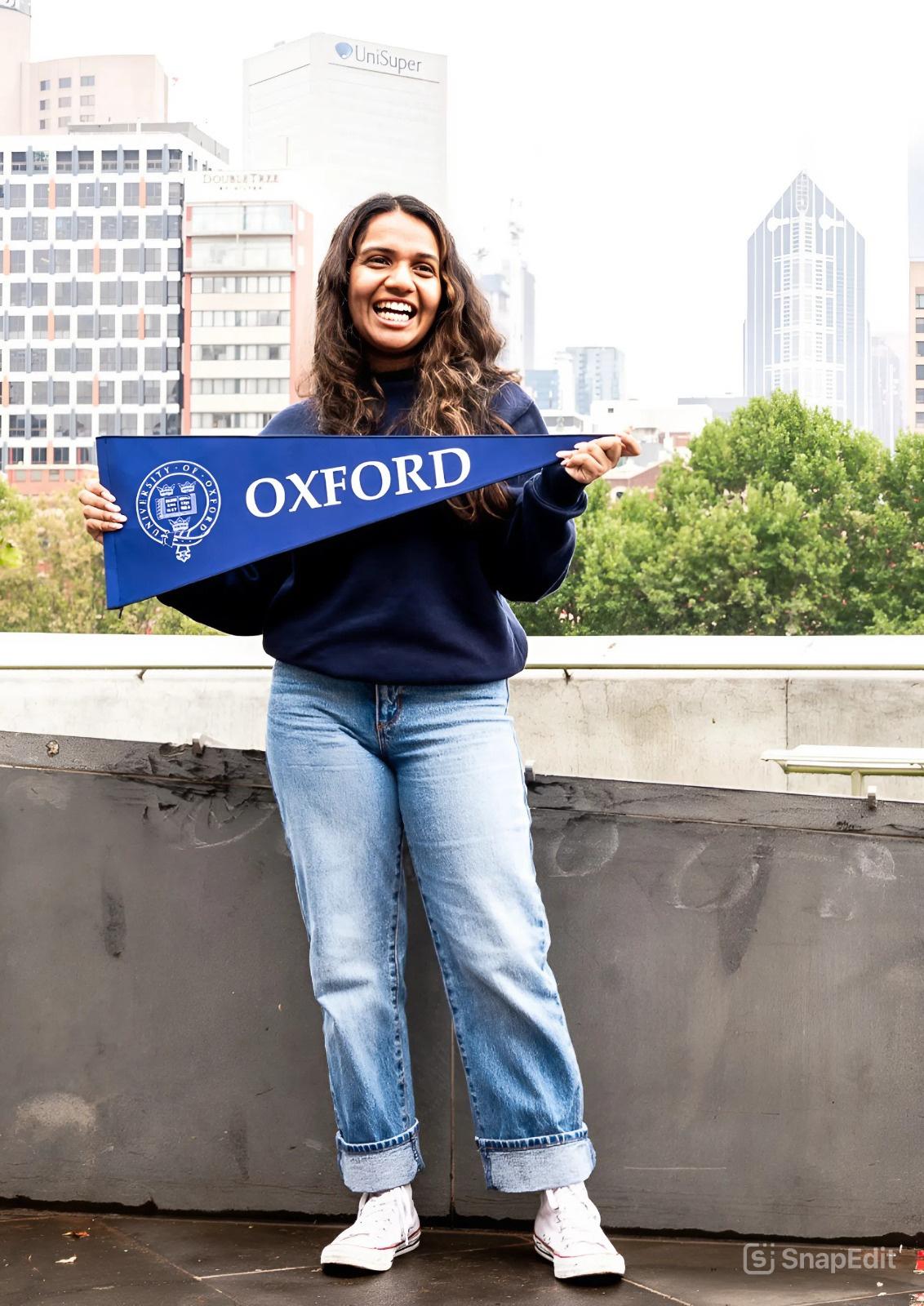
Preparing Students for the EverChanging Oxbridge Admissions Landscape
The University of Oxford has recently announced a significant overhaul of its undergraduate admissions process, a move that carries major implications for international schools across Europe. For the 2026/27 cycle and beyond, Oxford is moving away from its subject-specific entrance exams. Long-standing assessments such as the MAT and PAT are being replaced by the TMUA (Mathematics) and the ESAT (Engineering and Science), whilst the TARA (Test of Academic Reasoning for Admissions) has been introduced for several humanities and social science courses.
These testing changes arrive on top of the already significant reform to the UCAS personal statement. The 4,000-character freetext essay was replaced by three structured questions designed to focus specifically on motivation, academic preparation, and activities outside of school. For guidance counsellors, this represents a shifting landscape in how students are tested and how they must articulate their suitability for their degree.
For international students, these changes
assessments offer limited historical data, requiring an agile approach to preparation. Similarly, the new UCAS personal statement structure favours specificity and well-thoughtout examples to justify their choice of course. Students are explicitly encouraged to think about the different roles that their supercurriculars play, requiring them to reflect more deeply on how their independent reading or research projects have shaped their academic identity.
In this competitive environment, excellent school grades are merely the baseline. To secure an offer, international students must demonstrate a profile that evidences deep, independent engagement with their subject. This standardisation increases the pressure on the quality of each specific component, from the digital reasoning test to the meticulous personal statement responses.
At Crimson Education, our goal is to act as an extension of the support already provided by schools. We recognise that counsellors often manage vast cohorts with diverse global destinations and that the admissions landscape is ever-changing; our role is to provide the niche, subject-specific depth
1,492
3, 280
that complements your support. By weaving our resources into the school’s existing framework, we help ensure that students have access to the granular, data-driven insights necessary to navigate these recent reforms and the continuously dropping acceptance rates.
Our support is delivered by teams of former admissions officers and graduates from Oxford and Cambridge who work alongside school staff to demystify the process. Whether through bespoke supercurricular mentoring, guided research projects, or intensive interview coaching that replicates the rigorous academic environment of a real Oxbridge tutorial, we are there to provide an extra layer of reassurance. By aligning our expert insights with your school’s support, we help students improve their chances of acceptance by 2-10x.
4 42
Tony Darby founding principal, Rugby School Japan
Seeing Japanese families embrace the benefits of boarding has been a highlight of setting up a new school in Tokyo, says Tony Darby
The builders had finished almost exactly on time – a day early, in fact.
Standing on the newly completed campus of Rugby School Japan, Tony Darby did what any British head with decades of experience would do: he suggested they go round and make a snagging list.
The builders looked slightly insulted: The building, delivered by Mitsui Fudosan, one of Japan’s biggest construction companies, was perfect.
“I just offended them,” he chuckles. “They were utterly brilliant. I’ve never seen such a clean, fantastic building site in my life.”
It was an early lesson in cultural difference –something that Darby has come to embrace after first accepting the role of founding head in 2022.
After more than two decades in UK boarding education – including 14 years at Rugby School UK and five years at St Edward’s, Oxford – he found himself asking a question familiar to many senior leaders: what next?
“What would scare me and excite me in equal measures?”
“I knew this school was coming up,” he says. “And I thought: what could I actually take on that would scare me and excite me in equal measures? And it was this – setting up a big British boarding school in Japan, in greater Tokyo.”
He arrived in September 2022 having never been to Japan before. He had one year to open the school, working initially on his own with a local operator, Clarence Education Asia. There was no established staff body, no pupils; just a flattened site, an ambitious vision and a tight timetable.
“I couldn’t really sit around and enjoy Japan,” he says. “I had a school to create.”
The challenge was formidable. Japan has no tradition of boarding; sending children away to live at school is not the norm. Yet in September 2023, the school opened with 134 pupils and two boarding houses. Today, it has more than 300 pupils, six boarding houses – three for girls and three for boys – and a trajectory towards a full roll of around 760 to 780.
For Darby, watching that growth has been satisfying, but he has also enjoyed seeing the growing friendships and confidence of pupils as they begin to transition from day into weekly or full boarding. What the school offers is deliberately different from the mainstream Japanese educational model. F
“Japan has no tradition of boarding; sending children away to live at school is not the norm.”
Its emphasis on holistic education, character development and a globally minded outlook is not traditional in Japan – but it is increasingly attractive.
“There’s a growing number of parents in Japan, and in Korea, Taiwan, mainland China, who like this education,” Darby says. “We’re not saying it’s better. It’s just different. And for some families, it’s a real eye-opener.”
The pupil body reflects that global mindset: around 30 nationalities, with roughly 40 per cent Japanese (often from bicultural families), just under 20 per cent mainland Chinese, growing numbers from Korea and Taiwan, and a significant expatriate community from the UK and the US.
“You’d be a fool to lock yourself in a bubble in a country like Japan.”
Staff recruitment to a school in Japan is not a hard sell.
“We’re a good mix, and there’s a real sense of community and really embracing each other’s culture that’s really important,” he says.
That commitment to inclusion extends to staffing and local Japanese people are employed in roles across the school. In terms of recruiting international teachers, Japan, he admits, is “not a hard sell”.
“There’s a sense that Japan is such a wonderful place,” he says. “On average we get 50 to 60 applicants per teaching post.”
The standard of living is high, the cost of living comparatively low, and the opportunities for travel are exceptional. But recruitment is not simply about attracting high numbers, Darby says.
“We interview staff three times,” he says. “The first interview isn’t really about academic experience – it’s about values. What really motivates them to get up in the morning, what excites them, what is creating that sense that they might want to come over to Japan and be part of what is a great project?”
Academically, establishing systems was relatively straightforward, he says, given what is in place already at Rugby School in the UK.
Culturally, it required nuance. The game of rugby may be at the heart of the school’s identity, but football and basketball had to be woven in to reflect local interests. The history curriculum was adapted to ensure Japanese history was taught alongside global perspectives.
“The last thing I wanted was an elite British bubble,” Darby says. “You’d be a fool to lock yourself in a bubble in a country like Japan.”
Instead, the school has embedded itself in its community. Pupils support local nursery and primary children with English, take advantage of Tokyo’s galleries and cultural institutions, and benefit from impressive local partnerships, including internships for sixth formers working alongside Tokyo University professors.
The campus itself, in Kashiwanoha in Chiba, northeast Tokyo, plays its part. Planned decades ago as a “smart city” and now a thriving educational hub, the area is family-friendly and fast-growing. Staff live either on site or locally. Neighbours include Tokyo University and Chiba University.
There are even now plans for an “enrichment campus” on the northernmost Japanese island of Hokkaido, dedicated to skiing, outdoor pursuits and outdoor learning. It will be located in the ski resort of Niseko, Darby says, dubbed the “powder snow capital of Asia”.
The arrival of Rugby School Japan comes amid a small wave of new top British-branded openings in Japan in recent years. Harrow Appi opened in the north of the country in 2022, offering education set in the mountains of Appi Kogen, and Malvern College is now established in west Tokyo, offering day education only.
But Darby sees this as momentum rather than competition.
“It’s helped promote British education in a country that doesn’t have a history of it,” he says. “That sense of momentum – that’s fun.”
Asked about Japanese attitudes to foreigners, Darby is unequivocal. “I’ve never experienced any negativity,” he says. “There’s a curiosity about us, and that really helped in the early days.”
Now, Darby is preparing to leave Japan for family reasons, and will be handing the baton of leadership over to Dr Sarah Wade, an experienced international school leader, in August.
His emotions about leaving are mixed.
“I’ll be very sad,” he admits. “I’m incredibly proud of what we’ve created together. Setting something up from nothing and seeing it thrive – that’s very special.”
He has no firm plans for what comes next.
But living, working and travelling in Japan have left their mark.
And somewhere, perhaps, a group of builders will remember the British head who asked about snagging. The thought of it.
Irena Barker is a freelance writer and editor of International School Magazine.
THE HOME OF INDEPENDENT AND
STANDARD LISTING
45,000+ independent & international professionals
15,000 social media reach accross six channels
Included in weekly jobs newsletter
Recruit the best teaching talent with us
FEATURED
Standard listing PLUS
Featured listing at the top of the Careers Section
Advertising alongside relevant content throughout the site
School Management Plus is the leading print, digital and social content platform, for leaders, educators and professionals within the independent and international education sector worldwide.
Our readership spans every stakeholder within fee paying education worldwide from Heads, Governors, Bursars, Admissions, Marketing, Development, Fundraising and Educators – to catering, facilities and sports. Our jobs & careers center is the natural meeting point for those already in the sector, aspiring to join it, or hiring from within it.
PREMIUM
Featured listing PLUS
Free listing if the vacancy is not filled
Included on magazine digital distribution to 150,000 readers
Included in school directory
Listing experience hosted on Kampus24
ONLINE INDEPENDENT AND INTERNATIONAL JOB BOARD
UNLIMITED
Premium listing PLUS
Unlimited job listings throughout the year to our audience
Newsletter presence every month for your school
Exposure and features on your school in main careers section
Print adverts for your listings each term
Listing experience hosted on Kampus24
The rst 100 schools to sign up will receive 20% o a year’s unlimited package
•Social following of 15k across 6channels
• 60% annual growth in web tra c
• Core readership of Heads, Senior Leaders, Heads of Department, Bursars and Finance managers, Marketing and Admissions, and Development across the sector
Lessons that last
Tanglin Trust School’s Highlands Programme is inspired by history but prepares students for the rollercoaster of modern life, writes CEO Craig Considine
Although Tanglin Trust School has been in Singapore for over 100 years, there was a period in our long history where our founder, Miss Griffiths-Jones, also established a boarding house in Malaysia to provide our students with fresher climes.
When I first heard the stories of Tanglin students in the mist-shrouded trails of the Cameron Highlands in Malaysia in the 1930s, I was struck by the degree of physical challenge and reports of the robust health of the young children.
The education there was imbued with camaraderie, discomfort (at times), laughter, and the sense of becoming part of something larger than themselves. Those early insights complemented my
own previous work with the Timbertop campus at Geelong Grammar School in Australia and the Aramea Programme at Whanganui Collegiate School in New Zealand. It was clear that these formative outdoor experiences weren’t just memorable – they were transformative.
And so, the question that has shaped much of my leadership emerged: How do we honour Tanglin’s past while creating a future-focused education that remains deeply human?
The answer, in many ways, became the Highlands Programme, which recently won Curriculum Initiative of the Year in the 2025 TES International Schools Awards.
It is a modern, intentional evolution of that early spirit of adventure, self-discovery and connection to place. Rooted in our history but redesigned for today’s learners, the Highlands Programme captures Tanglin’s belief that education must shape not only what students know but who they are.
This philosophy aligns with our longstanding ethos which asks our learners to be reflective, resilient, principled and balanced individuals who are prepared to contribute with confidence to the world.
Honouring a legacy while shaping something new
Founded in 1925, Tanglin is the oldest British international school in Southeast Asia, a school built on the conviction that a broad, balanced and
“The world our students inhabit has changed, but the need for young people to understand themselves and develop inner strength has not.”
values-driven education is essential for preparing young people for life. As we began shaping the Highlands Programme, we returned to these roots. The world our students inhabit has changed dramatically, but the need for young people to understand themselves, collaborate authentically, and develop inner strength, has not.
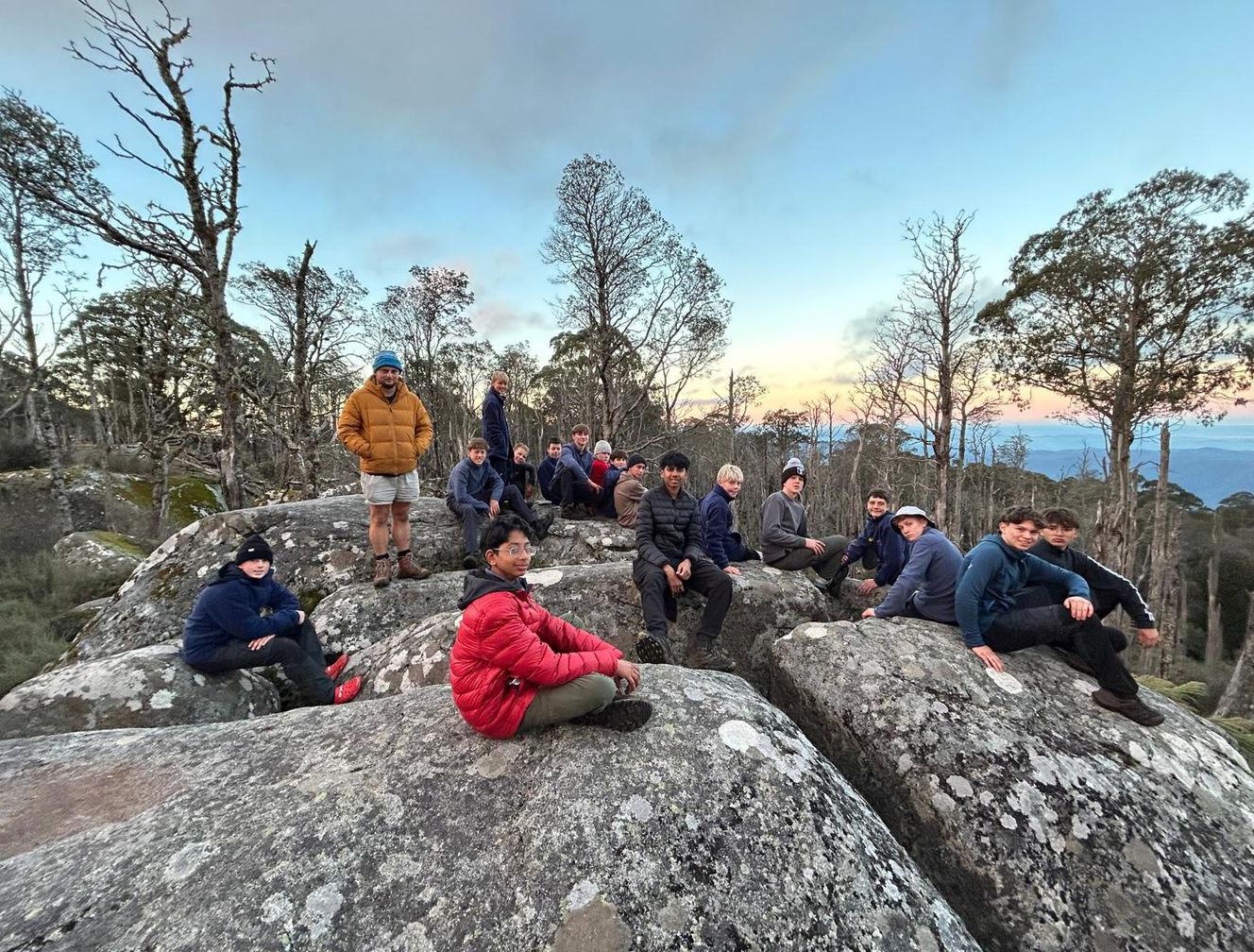
We launched the Highlands Programme in April 2025 at Tanglin’s new 15-acre Gippsland campus in the Victorian Alps, Australia. The
“The lessons learned through discomfort frequently outlast anything taught in the classroom.”
five-week residential for Year 9 students is the culmination of both the Middle School Curriculum and Tanglin’s 3 to 14 curriculum. Its timing is deliberate; Year 9 is when students must develop independence, critical thinking, and resilience in preparation for IGCSEs and beyond.
Core subjects – English, maths, science, and geography – are delivered in experiential, place-based ways. The academic objectives remain unchanged, but the setting adds meaning and authenticity.
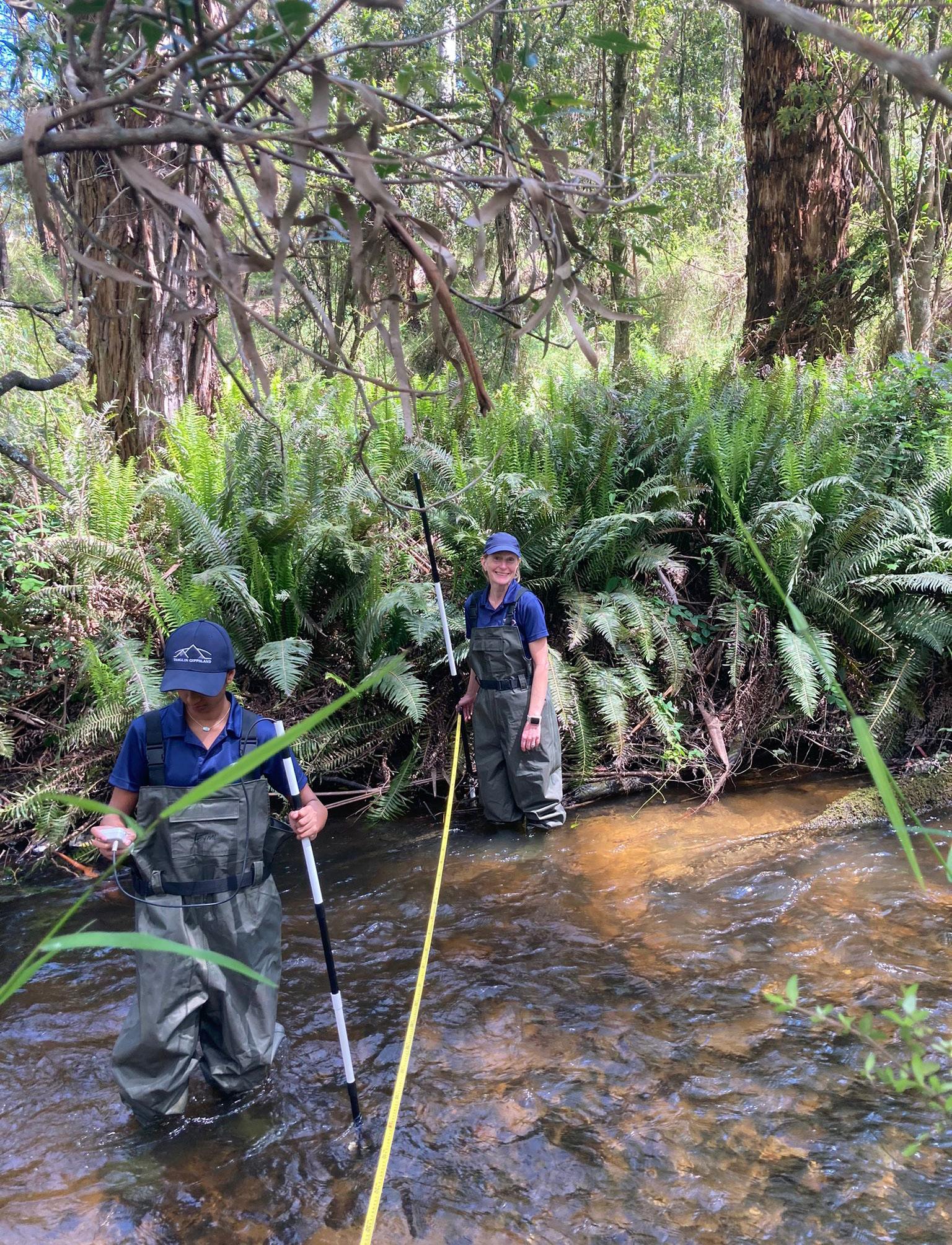
Their geography unit of work is based on rivers and, we believe, there is no better way to learn about rivers than standing in one. Similarly, their science unit is based on botany, and being surrounded by plants in the bush provides a spectacular classroom.
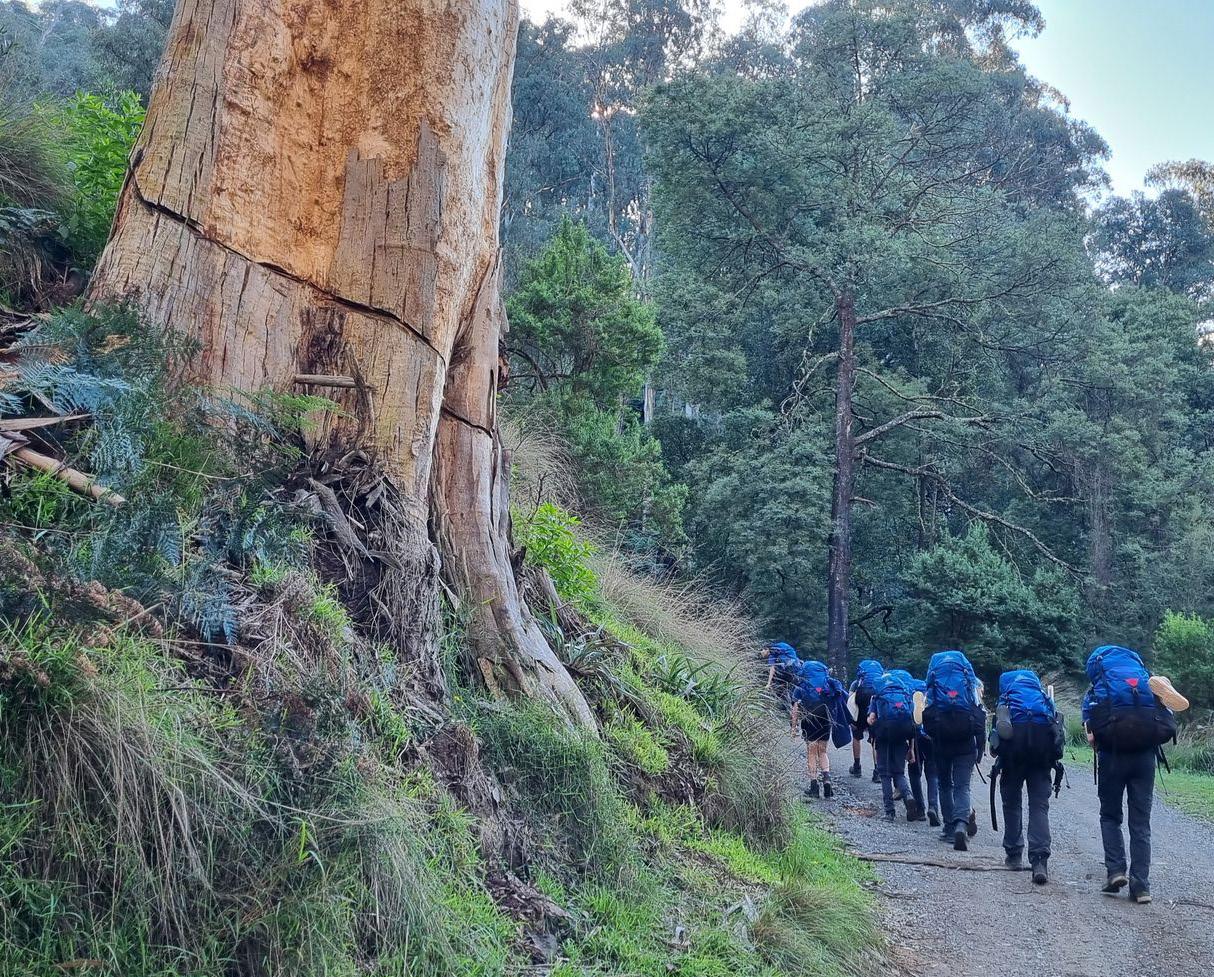
Beyond academics, the programme encompasses outdoor education and life skills. Students plan hiking expeditions, complete shared chores, and an absence of digital distractions fosters deeper human connections. These elements come together to build the Middle School values of curiosity, confidence, and community.
What today’s students gain from yesterday’s inspiration
Outdoor education at Tanglin is not just about mastering practical skills. It is about cultivating empathy, environmental awareness, adaptability and a resilient mindset. Mr Cutchie, head of Gippsland Campus, often reminds me that the lessons learned through discomfort –fog, rain, steep climbs, shared decision-making – frequently outlast anything taught in the classroom.
They develop character, deepen relationships and create stories students will draw on throughout their lives. Mr Cutchie explained F
“There is no better way to learn about rivers than standing in one.”
how students learnt how with adversity, often came joy, something the pupils came to learn.
He said: “The students were all in high spirits after a damp night and foggy morning camping. The upside of fog in the morning is the beautiful sunny day that follows, and the students were able to enjoy a glorious autumn day for their classes.”
It is particularly powerful when our Year 9 students return and share how these experiences helped them grow. Students consistently describe the experience as one that challenges them physically and emotionally, helping them discover capabilities they didn’t know they had. Mehar, who participated in 2025, said: “Although we were far from a traditional classroom, the learning never ceased – it simply took a different form. Each day brought new lessons in practical skills: how to navigate with a compass, cook as a team, manage time and resources, and care for one another when challenges arose. These lessons were not theoretical; they were lived and experienced.”
views expressed by students, teachers and parents. These reflections reinforce something I believe wholeheartedly: education is not simply preparation for exams –it is preparation for life.
Leading through challenge and change
challenges has been ensuring coherence across all dimensions of the Tanglin experience –academic, pastoral, co-curricular and cultural. We have needed to ask ourselves:
• Are we designing learning that prepares students for an uncertain future?
must be paired with strong support, and that meaningful learning often occurs when students are invited into purposeful difficulty. This thinking now underpins many areas of our strategy – from sustainability and digital learning to leadership pathways for staff and students.
We are capturing data as each group returns and are thrilled with the positive
The last decade has tested schools everywhere and expectations are evolving at an unprecedented pace. Covid had a profound impact on student wellbeing, and technology continues to challenge, and, in many respects, undermine the development of young people. The world they are entering demands adaptability, confidence and clarity of purpose.
On a personal level, one of the most significant leadership
• Are we striking the right balance between support and challenge?
• Are we nurturing a community where every individual feels they belong and matter?
The Highlands Programme offered a powerful model for bringing these ambitions together. It reinforces our belief that high expectations
Many staff involved in outdoor education speak personally about how such experiences shaped their own childhoods. Their passion is not incidental – it is what makes the programme authentic and impactful.
If I have learned anything from listening to the many voices that shape Tanglin –students, staff, alumni and parents – it is this: we thrive when we honour our past and lean confidently into our future. ◆
Craig Considine is chief executive of Tanglin Trust School, Singapore.
Are you assessing multilingual applicants equitably?
Password and international admissions
Research shows proficiency in English language is a key predictor of attainment for learners with EAL.
Schools only using tests of academic potential designed for monolingual English populations may inadvertently put multilingual pupils at a disadvantage.
Password’s community of partner schools embrace equity, access and inclusion for English language learners by using our reliable test of academic English, to enhance or replace cognitive ability test data.
Password Pupil tests at a glance
Cost-effective 60 minute online test with instant results
Optional writing component
Designed by language acquisition experts
Aligned to international standards
Informative results data
"As a school it’s very easy for us to recommend working with Password. Their tests provide a really clear baseline that we are able to use to assess students against before they even arrive at the school.”
Thomas David Blower Head of EAL, King Henry VIII College, Malaysia
Ask the Recruiter: Key considerations when taking an international school leadership role
Ask the difficult questions to ensure your next overseas post is a good fit, says Hayley Mintern
International school leadership remains one of the most rewarding and complex career moves an education professional can make. It can offer professional stretch, cultural opportunities, and the chance to shape learning communities on a truly global stage. But it can sometimes expose leaders to misaligned governance, unrealistic expectations, or personal and family strain.
Anderson Quigley has worked with a number of senior leaders considering international posts. The most successful appointments are rarely about prestige or location alone – they are about fit, clarity, and timing. Hayley Mintern, partner at Anderson Quigley, shares some key considerations we encourage every prospective international school leader to reflect on before accepting a role.
Understand the governance mode
One of the most common reasons
international leadership appointments fail is a misunderstanding of governance. International schools vary widely: some are not-for-profit with highly experienced boards; others are privately owned, family-run, or part of larger education groups.
Before accepting a role, leaders should ask:
• Who holds decision-making power?
• What is the board’s experience of international education?
• How are boundaries maintained between governance and operations?
• If it is a name-branded British school, how does it link back? Is it a local operating model, a franchise, or an alternative arrangement?
A strong governance structure can be a leader’s greatest ally. A weak or ambiguous one can significantly constrain autonomy and impact.
Clarify the school’s strategic reality
Every school will speak confidently about its vision. The more important question is whether that vision is resourced, realistic, and shared. Prospective leaders should probe:
• Where is the school in its development cycle?
• Is the role about growth, stabilisation, turnaround, or consolidation?
• What legacy is the current leadership leaving behind?
Titles can be misleading especially on the international market. A “Head of School” role in one context may be far more operational than strategic in another. Understanding the real brief is essential.
Assess cultural and community fit
International schools sit at the intersection of multiple cultures: host country norms, expatriate expectations, and often a dominant educational philosophy (British, IB, American, etc.).
“One of the most common reasons international leadership appointments fail is a misunderstanding of governance.”
Effective leaders are culturally intelligent, adaptable, and humble. But cultural fit is a two-way street.
Ask yourself:
• How does leadership show up in this context?
• What are the spoken and unspoken expectations of parents and staff?
• How is conflict typically handled?
Leaders who thrive internationally tend to be those who listen first and impose later (if at all).
Consider the full package, not just salary
Compensation should always be viewed holistically. An attractive salary on paper can quickly lose its appeal if living conditions or benefits are misaligned with expectations.
Beyond base salary, consider:
• Housing quality and security
• Schooling for children and support for your family
• Healthcare coverage
• Tax implications (both local and home country)
• Pension provision (or lack of it)
• Cost of living and currency stability
Reflect on personal and family readiness
International leadership is not just a professional move; it is a life move. The impact on partners and children should be openly discussed and carefully planned. Leaders who succeed long-term internationally often have strong personal resilience and a clear support network both within and beyond the school.
Key questions include:
• Is this the right time for our family?
• What support exists for spouses or partners?
• How transient is the leadership team and wider community?
Examine contractual terms and exit clauses
International contracts vary significantly and can be complex. Seeking independent advice before signing is not a sign of mistrust – it is a sign of professionalism.
Leaders should pay close attention to:
• Length of contract, renewal conditions and visa implications
• Termination clauses (on both sides)
• Repatriation terms
• Professional indemnity and legal protections
“An attractive salary on paper can quickly lose its appeal.”
Think beyond the role
Leaders should consider how the role fits into their broader career story.
International appointments can be powerful accelerators, but only when they are purposeful. The strongest candidates are those who make international moves with intention, not impulse.
Ask yourself:
• What will I learn here that I cannot learn elsewhere?
• How will this role position me for my next move?
• Am I moving towards something, or simply away from something?
• What happens if we don’t settle?
International school leadership is not for everyone, and that is not a failing. But for those who approach it with curiosity, realism, and self-awareness, it can be an exciting and enriching chapter. The most successful leaders are not those chasing a destination, but those seeking alignment: between values and vision, ambition and context, professional growth and personal wellbeing.
As recruiters, our role is not simply to fill positions, but to help leaders make decisions they will still feel good about years down the line. So, ask the questions during the process, not after. If you’d like further advice or support, do reach out to Hayley Mintern, Partner and Schools Lead at AQ (hayley.mintern@andersonquigley. com) or Hugh Martin, Managing Partner MENA at AQ (hugh.martin@ andersonquigley.com). ◆
Hayley Mintern is a partner at Anderson Quigley executive talent search.