Navaclean Tank-Cleaning Solutions
Decades of tank cleaning expertise at your service
Decades of tank cleaning expertise at your service
The shift from Dirty Petroleum Products (DPP) to Clean Petroleum Products (CPP) is a high-stakes moment that demands absolute precision, unwavering compliance, and expert guidance. Market requirements, charterer “water white standard," and stringent environmental regulations leave no margin for error; a single residue can block a load, trigger costly delays, or invite regulatory action.
Navadan by Wilhelmsen is built to eliminate that risk. We act as your trusted advisor, not just a chemical supplier, combining over 20 years of hands-on experience with a global logistics network spanning 2,200+ ports. Our goal is to give you complete clarity on tank readiness, maintain control over every cleaning step, and ensure full compliance at every inspection.
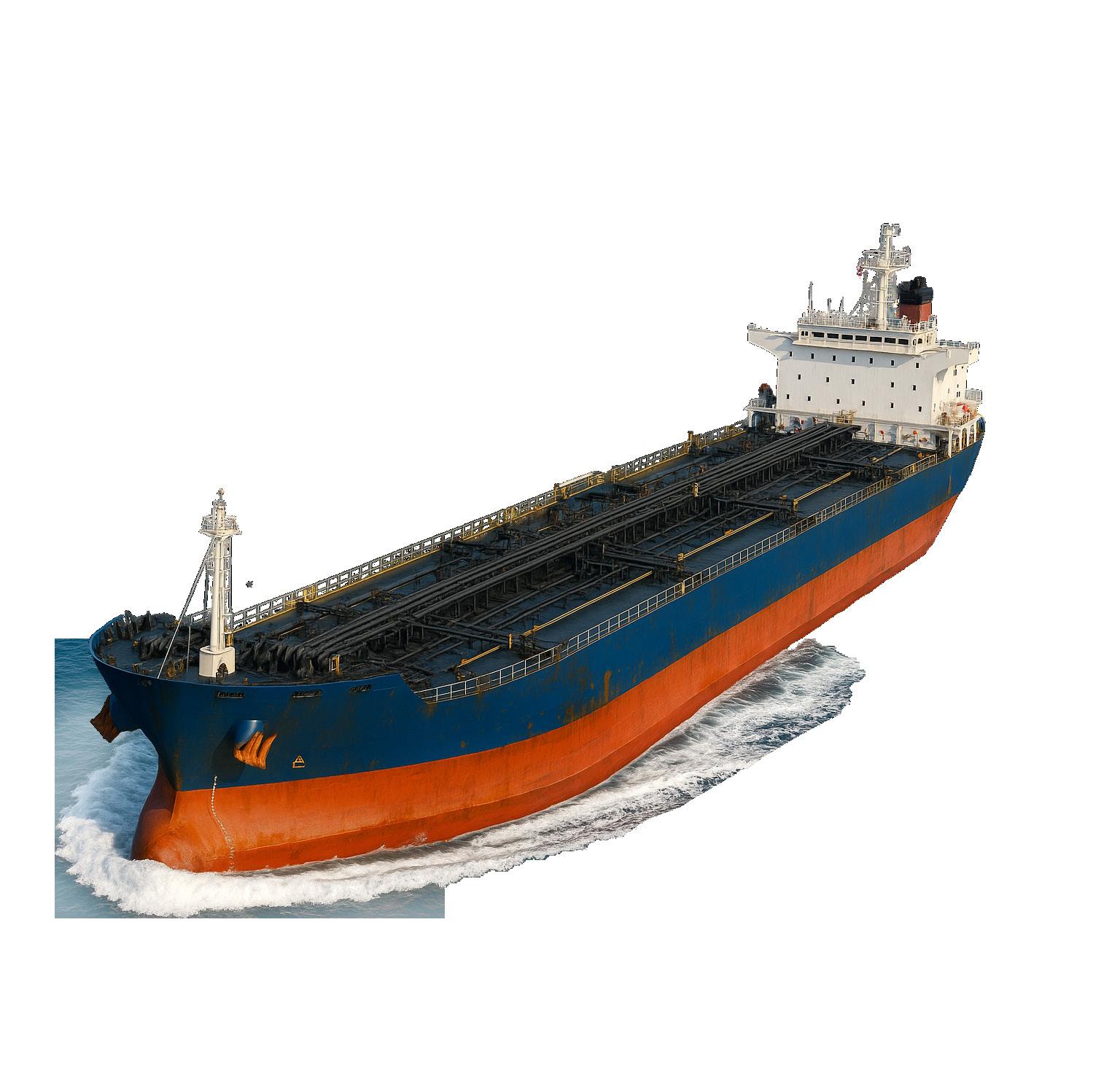
In this brochure, you’ll learn more about our Navaclean 7-step methodology: cold wash, hot wash, visual inspection, manual de-mucking, chemical application, flush, and final verification, engineered for repeatable, to 3rd party inspector's standard results. You’ll also find the technical details you need to plan efficiently and execute flawlessly, whether you’re prepping an MR tanker or converting a VLCC.
// From planning to clean tanks, Wilhelmsen is with you at every step. We don’t just supply chemicals — we guide you to results.
Our 7-step methodology is precise and field-tested
Cold water wash removes loose sludge and prevents wax from hardening.
Initial hot water wash begins breaking down residues.
High temperature hot water wash further loosens hardened deposits.

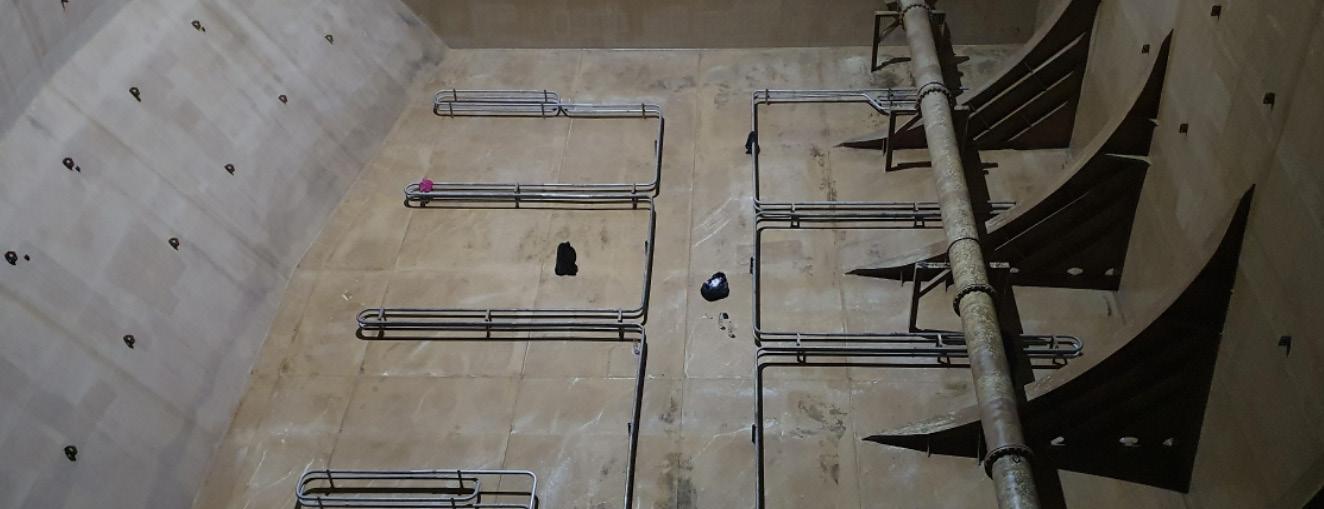
Manual inspection and de-mucking identifies and removes remaining sludge.

Ventilation makes tanks safe for entry.
Chemical recirculation dissolves remaining residues.

Final rinse and drying flushes systems and prepares tanks for inspection.
// In this business, cleaning isn't just compliance. It's your gateway to the next voyage.
Standard No.
1 Visually Clean Standard Clean, dry and visually free of residues of previous cargo and/ or foreign matter, no uncharacteristic odour.
2 Water White Standard Dry, odour-free, free of visual residues of previous cargoes and/or foreign matter.
Colour test: Wall-wash with suitable solvent shows:
• Colour PtCo (ASTM D 1209) 15 or less1
3 High-Purity Standard Dry, odour-free, free of visual residues + wall-wash with methanol conforms to:
• Water miscibility test (ASTM D 1722) passes
• Colour PtCo (ASTM D 1209) or APHA 10 or less
• Chlorides less than 2 ppm
• Permanganate time test above 50 min
• UV spectrum passes
4 Ultra-High Purity Standard Dry, odour-free, free of visual residues + wall-wash with methanol conforms to:
• Water miscibility test
(ASTM D 1722) passes
• Colour PtCo (ASTM D 1209) or APHA 10 or less
• Chlorides less than 2 ppm
• Permanganate time test above 50 min
• UV spectrum passes
• Non-volatile matter less than 10 ppm
• Last cargo by Gas Chromatography or other suitable method less than 2 ppm
¹ No visible discoloration compared to a blank sample.
N/A
In-tank inspection — Dry, and visually free of residues of previous and/or foreign matter, no uncharacteristic colour.
WWM² / WWA²
In-tank inspection – Dry, odour-free, free of visual residues of previous cargoes and/or foreign matter.
Colour test: Wall wash with suitable solvent shows:
• Colour PtCo (ASTM D 1209) 15 or less¹
Comments/ description
Master to confirm that the onboard tests we conducted via a tank cleanliness certificate.
Tanks should only be inspected from deck level, no wall-wash to be taken.
Master will confirm that the onboard tests were conducted via a tank cleanliness certificate.
Charterer may choose not to conduct in-tank inspections for wall wash (colour test). WsW³ N/A
In-tank inspection – Dry, odour-free, free of visual residues + wall-wash with methanol conforms to:
• Water miscibility test (ASTM D 1722) passes
• Colour PtCo (ASTM D 1209) or APHA 10 or less
• Chlorides less than 2 ppm
• Permanganate time test above 50 min
• If WWM us used, UV spectrum passes
WsW³
WWM² / WWA²
Less than 100 ppm of last cargo in final wash-water
In-tank inspection – Dry, odour-free, free of visual residues + wall-wash with methanol conforms to:
• Water miscibility test (ASTM D 1722) passes
• Colour PtCo (ASTM D 1209) or APHA 10 or less
• Chlorides less than 2 ppm
• Permanganate time test above 50 min
• UV spectrum passes4
This is the most commonly used standard for the carriage of methanol as a cargo.
Master will confirm that the onboard tests were conducted via a tank cleanliness certificate.
Charterer may accept the cleanliness certificate provided by the master or may require an internal inspection and a wall-wash test.
This should be pre-agreed with the charterer/shipper.
This standard is used for the carriage of extremely high-spec cargoes that require a higher level of cleanliness than that required for the carriage of methanol.
Master will confirm that the onboard tests were conducted via a tank cleanliness certificate.
Charterer may accept the cleanliness certificate provided by the Master, but will most likely require an in-tank inspection and wall-wash test.
WsW³ Less than 100ppm5 of last cargo in final wash-water
² Wall-wash test using methanol (WWM) and wall-wash test using acetone (WWA).
³ Wash-water test is an alternative test method for the verification of cargo tank cleanliness using wash-water sampled during tank cleaning operations and is based on the premise that when the wash water is clean and largely free from previous cargo residues, the cargo tanks and lines can also be considered clean.
⁴ Applicable if UV spectrometer available on board.
⁵ The operator should use their experience and judgement when applying the 100 ppm standard to the wash-water at this level of cleanliness. Prior cargo compatibility, tank coating, and other such factors should be assessed to ensure that 100 ppm standard of wash-water will be sufficient to pass the equivalent wall wash test at this level; otherwise, a more stringent level of wash water test should be applied at this level.
Navaclean 803 – Alkatuff PHS
Navaclean 809
Navaclean 818 – Coldwash
Navaclean 823 – Buffercleaner 55
Navaclean 825 – Stench Remover
Navaclean 842 – Alkasafe
Navaclean 855 –Hydrocarbon Remover
Navaclean 856 – EcoClean
Navaclean 865 – CC Booster
Navaclean 873 –Rust and Stain Remover
Navaclean 888 – Seaclean
Navaclean 897 – IGS Remover
Navachlor 812 –Sodium Hypochlorite 12%
Heavy duty water based alkaline cleaner and degreaser. Based on strong anionic surface-active agents, builders and potassium hydroxide. Excellent for cleaning tanker vessels after Vegetable oils, animal oils, waxes, oil, sludge, soot carbon deposits and general dirt and grime.
General purpose water based tank cleaner for removing of light oil and dirt from any surface from its rapid penetration of wetting agents & surfactants.
General purpose solvent based tank cleaner and degreaser, suitable for almost all tank linings, for spot cleaning of petroleum oil residues, petroleum based chemicals and some natural oils.
Concentrated cleaner for zinc and epoxy based tank coatings designed to clean cargo tanks after cargoes such as leaded gasoline, gasoline blends containing MTBE, carbon tetrachloride, methylene chloride as well as virgin naphtha.
Neutral water based deodorizer / smell killer, specially to remove obnoxious smells/ stench in cargo tanks and holds.
Water based non-caustic alkaline cleaner that effectively removes a very wide range of natural oil and fat residues, alcohols, petrochemicals, and light hydrocarbons. An ideal cleaner between cargo changeovers.
Water based hydrocarbon free tank cleaner, used for removing vegetable oils, animal oils, fats and light mineral oils in aluminum and/or zinc silicate coated tanks.
A water based multipurpose cleaner for cargo tanks for removal of oil or dirt from any surface.
Specially designed to boost Navaclean alkaline, acid and solvent based cleaners. Effective cleaner for stubborn hydrocarbon products and chemical cargo residues.
Blend of acids specially formulated to remove white stains, residues or salt deposits that can appear in cargo tankers after cargo.
Heavy duty solvent based tank cleaner for the removal of heavy mineral oils and waxes, cleaning after crude and refined mineral oil and degreasing of bilge spaces and engine room. Especially used for DPP to CPP cleaning.
Heavy duty concentrated water based alkaline cleaner and degreaser especially designed for removal of inert gas soot (IGS), with cleaning efficiency enhanced by high quality surface-active agents.
Heavy duty water based alkaline cleaner, that effectively removes dye discoloration, stains in cargo tankers caused by dyed gasoline cargoes or cargo tankers carrying red wines.
This tank cleaning chart is to be considered as reference overview only. Always take the product data sheet and safety data sheet into consideration prior to cleaning or consult our specialist.
Navaclean Tank Cleaning Chemical
Navachlor 812 4000001 (200 Ltr)
Navaclean 803 – Alkatuff PHS 4000017 (200 Ltr)
Navaclean 809 4000022 (200 Ltr)
Navaclean 818 – Cold Wash 4000027 (200 Ltr)
Navaclean 823 – Buffer Cleaner 4000032 (200 Ltr)
Navaclean 825 – Stench Remover 4000037 (200 Ltr)
Navaclean 842 – Alkasafe 4000042 (200 Ltr)
Navaclean 855 – Hydrocarbon Remover 4000057 (200 Ltr)
Navaclean 856 – Ecoclean 4000062 (200 Ltr)
Navaclean 865 – CC Booster 4000067 (200 Ltr)
Navaclean 873 – Rust & Stain Remover 4000072 (200 Ltr)
Navaclean 888 – Seaclean 4000077 (200 Ltr)
Navaclean 897 – IGS Remover 4000082 (200 Ltr)
*Directions for use and dosage rates are stated in the specific product data sheet
White deposits, Salt deposits
dirt, grease, grime, carbon deposits
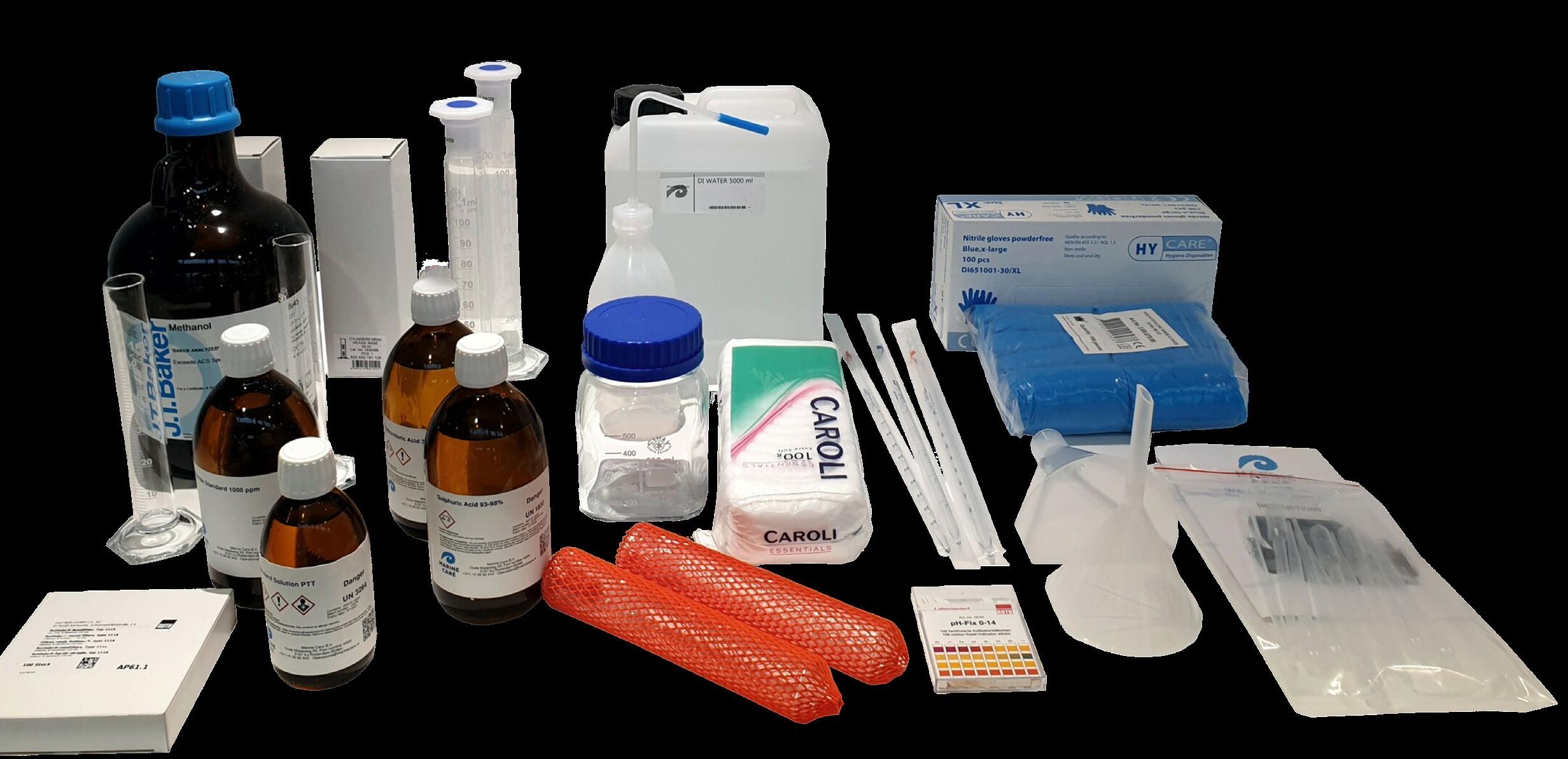
Wall wash test kit set (4000196)
Mixed bed resin (4000134)
Caustic Soda 50%
Potassium Hydroxide Flakes KOH (4000120) Nitric Acid
Hydrochloride Acid 33%
Navaclean 803 – Alkatuff PHS
Navaclean 809
Navaclean 818 – Coldwash
Navaclean 823 – Buffercleaner 55
Navaclean 825 – Stench remover
Navaclean 842 – Alkasafe
Navachlor 812 Sodium Hypochlorite 12%
Navaclean 855 – Hydrocarbon remover
Navaclean 856 – Ecoclean
Navaclean 865 – CC Booster
Navaclean 873 – Rust & stain remover
Navaclean 897 – IGS remover
Navaclean 888 – Seaclean
Navaclean Tank Chemicals
Navachlor 812
Navaclean 803 – Alkatuff PHS
Navaclean 809
Navaclean 818 – Coldwash
Navaclean 823 – Buffercleaner 55
Navaclean 825 – Stench remover
Navaclean 842 - Alkasafe
Navaclean 855 – Hydrocarbon remover
856 - Ecoclean
Navaclean 865 – CC Booster
Navaclean 873 – Rust & stain remover
Navaclean 897 – IGS remover
Navaclean 888 – Seaclean
Legend:
&
R = resistant when used according to WSS recommendations as described in our Product Data Sheet (PDS) and Safety Data Sheet (SDS)
NR = not resistant at all concentrations
LR = limited resistant, depending on concentration and exposure time, that may lead to coating discoloration and/or gloss and/or even coating breakdown if often used. Exposure time, concentration, cleaning temperature and frequency of cleaning must be kept to absolute minimum
A = acceptable for use
A + L = acceptable with limitations (max at 3% solution, max at 50◦C)
NT = not tested / needs further testing or evaluation