18-21 August 2026 | Melbourne Convention and E xhibition Centre (MCEC)
AUSTRALASIA'S PREMIER EMERGENCY MANAGEMENT AND FIRST RESPONDERS CONFERENCE AND EXHIBITION
THEMED | Leading together: Integrity, inclusion and impact
Across 3 days of conference programming and exhibition, AFAC26 will examine how transformational leadership grounded in integrity, equity and inclusion can shape the future of our industry. We will explore and celebrate how diverse voices and inclusive cultures foster innovation, strengthen social licence, and build community trust.
WITHIN | These industry groups, who protect life and property
Encapsulating these seven collaborative sectors
NEWS AND OPINION
EDITORIAL
Laura King managing editor laura@iawfonline.org
BUSINESS
Mikel Robinson administration execdir@iawfonline.org
Shauna Murphy graphic design
Century Publishing, Post Falls, Idaho
FEATURE STORIES
ASSOCIATE EDITORS
David Bruce (Australia)
Scott Goodrick (United States)
Michael Scott Hill (United States)
Richard McCrea (United States)
Lindon Pronto (Germany)
Anthony Robert White (Australia)
BOARD OF DIRECTORS
Trevor Howard (Australia), president
Ciaran Nugent (Ireland), vice president
Sarah Harris (Australia), secretary
Tamara Wall (United States), treasurer
Amy Cardinal Christianson (Canada)
Meg Dolman (United States)
Scott Goodrick (United States)
Kerryn Little (United Kingdom)
Claire Lötter (South Africa)
Tiago Oliveria (Portugal)
Joaquin Ramirez (United States)
Amber Lynn Scott (United States)
David Shew (United States)
Allistar Smith (United States)
Naomi Eva Stephens (Australia)
Vivien Thomson (Australia)
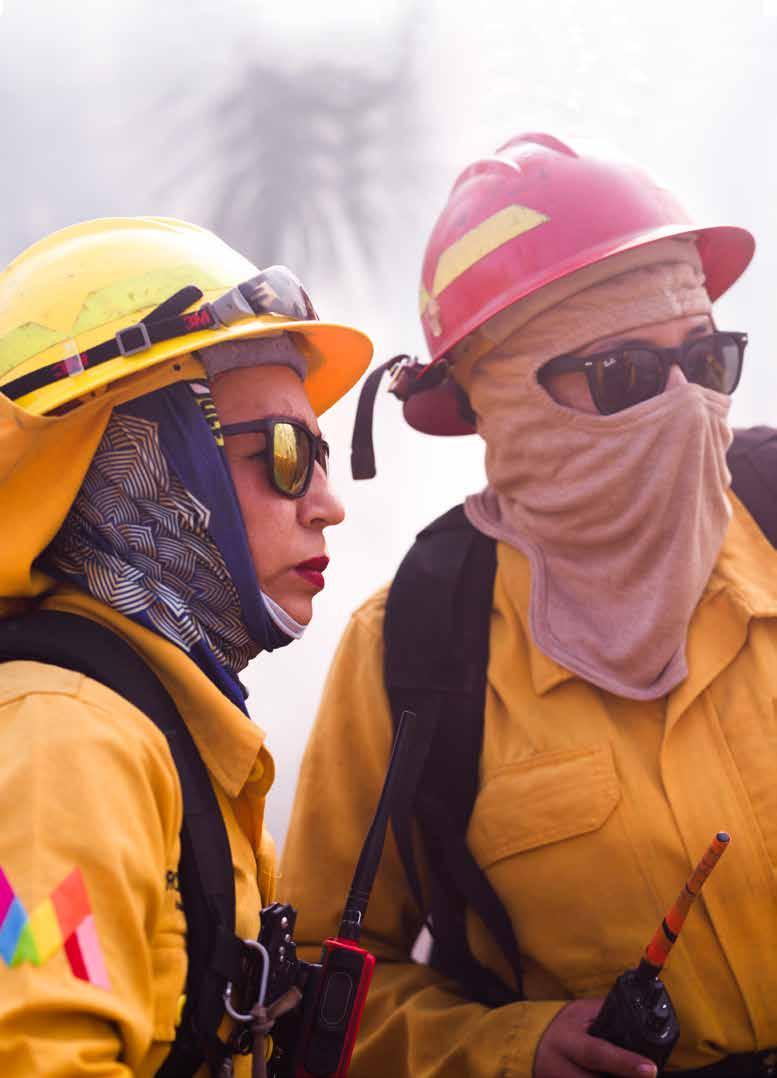
Nancy González and Ceci Portillo, both from
AT-802F & 802F FIRE BOSS
AT-802F & 802F FIRE BOSS
Fast Attack Keeps Fires Small.
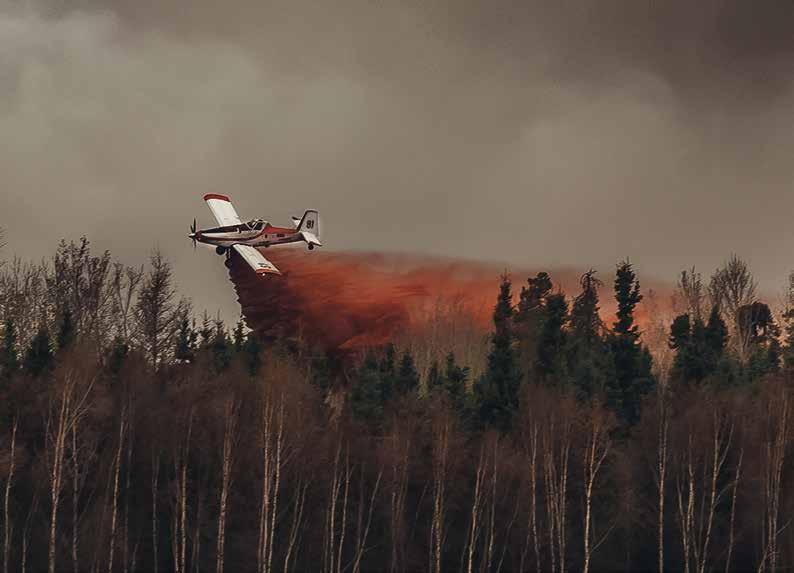
Agile, forward-attack aircraft are effective tools for rapid, direct initial air attack. AT-802F SEATs can launch quickly from regional airports near fire zones. Once over the fire, they can drop water, gel or retardant to hold fires until crews arrive.
A FOUNTAIN OF KNOWLEDGE
BY LAURA KING
As is so often the case, this issue of Wildfire features some new writers with new perspectives.
Silvie Fojtik’s cover story about her travels during the off season in Canada to fires and training sessions in Mexico, Costa Rica, Argentina, and Spain provides a glimpse of the programs that bring instruction, networking, and real-life application to places experiencing wildfires.
Fojtik is a firefighter, photographer, and creative storyteller, and her journey (pages 20-26) tells a tale of passion, interest, professionalism and teaching.
Fojtik’s experiences at a Women in Fire Prescribed Fire Training Exchange event in Mexico and a women’s wildland firefighter camp in Costa Rica highlight the demand for female-specific training and the brilliant women instructors who have tirelessly advocated for fire safety and helped to organize the sessions.
“It was an honour to also be in the presence of Costa Rica’s Luisa Alfaro, a powerhouse I had the fortune to meet,” Fotjik says.
“For decades, Alfaro has been a lead consultant to the U.S. Agency for International Development (USAID) in emergency management in Latin America; she started a mission 24 years ago to knock on every country’s governing office to establish the incident command system (ICS) Latin America wide. A 2017 post by USAID celebrated Luisa’s contributions and boasted about the more than 20,000 firefighters trained by Luisa!”
Rhodri Jones, a fire investigator who is the technical lead for fire safety with the UK civil service, came to write for Wildfire through contacts on our communications committee. Jones explains on pages 16-18 that despite the growing number of wildfires in the England, Scotland, Northern Ireland and Wales, wildfires in the UK are not forensically investigated. However, a new wildfire investigation framework is under development and has the support of several wildfire agencies.
Although climate change plays a significant part in the increase in wildfires, Jones notes that wildfire is affected by “politics, culture, infrastructure, psychology, and deliberate human action.
“Understanding wildfires, through investigations,” Jones says, “will help to prevent and mitigate incidents and provided a clearer picture of necessary resources.”
Jones’ 2023 Wildfire Investigation Project Report notes the importance of considering human dimensions.
“Wildfire investigation goes far beyond the mechanics of fire; it encompasses human behavior, socioeconomic factors, and psychological drivers, equipping authorities to anticipate incidents, understand trends, and prevent recurrence,” Jones says.
“In the UK context, where deliberate and accidental ignitions occur in roughly equal measure, the ability to distinguish motives and patterns is essential for effective policy, resource allocation, and community safety.”
Eugene Gerden is a freelance writer in Russia whose byline appears in myriad trade and professional journals. Gerden’s overview of wildland fire in China (pages 30-33) looks at the country’s wildland fire prevention and mitigation efforts.
Although there is some varying data – depending on the source – there’s agreement that government efforts since 1998, when the Forest Fire Prevention Regulations were introduced, have made a difference.
State figures indicate wildfires in the last couple of seasons were at historic lows, but some media agencies have reported seemingly contradictory information about a lack of state-provided equipment contributing to fire fatalities.
One fire-prevention strategy under consideration is to more aggressively hold people accountable for starting fires; as is the case in many regions, human-caused fires outnumber fires started by natural phenomenon such as lightning.
This issue of Wildfire is our first fully digital edition. Let us know if you like the digital format, and follow the IAWF socials – Facebook, Instagram, and LinkedIn – for magazine highlights, conferences and other events, and engage. We’d love to hear from you!
Managing editor Laura King is an experienced international journalist who has spent more than 15 years writing and editing fire publications. She is the Canadian director for the National Fire Protection Association (NFPA), works closely with FireSmart™ Canada to help residents build resilience to wildland fire, and has participated in the development of the Canadian wildland fire prevention and mitigation strategy.
PRESIDENT’S PERSPECTIVE
BY TREVOR HOWARD
It’s a busy year for IAWF conferences across the globe. The 4th International Smoke Symposium was held in March in Tallahassee, Florida, and the 8th Fire Behaviour and Fuels Conference was in Hobart, Australia, in April. Other events throughout the year include the Wildland Fire Canada Conference in Saskatoon, Saskatchewan, and the 19th International Wildland Fire Safety Summmit in Coimbra, Portugal. The IAWF will also be a partner in other conferences and events in various parts of Europe as well as Australia.
The recent International Smoke Symposium, as a hybrid in-person and online event, was a great success made possible by a dedicated group of committee members as well as the staff at Tall Timbers, the research station and land conservancy. Held in the newly built Leigh Perkins Conservation and Education Center, the program covered smoke modelling, management and communications, human health, and emerging technologies and tools as well as several workshops and fieldtrips. There were opportunities for attendees to observe prescribed burning, a science-based craft that Tall Timbers has a proud history of supporting through fire ecology research, best practice in land
stewardship, plus communication and education. It was also a di ffi cult time for many people with strong connections there, with the sad loss of Beadel House in the days prior to the symposium due to a lightning strike and structure fire. Dating from 1895 and built by Edward Beadal, the original homestead was a significant part of regional history and heritage and contained many valuable artifacts, some of which were saved by firefighters.
While I couldn’t attend the Smoke Symposium in person, I was able to be online for some sessions and one of my most rewarding IAWF roles is presenting awards to outstanding members of our wildland fire community. Dr. Faraz Hedayati from the Insurance Institute for Business and Home Safety received the IAWF Early Career Award in Fire Science for his excellent work in wildland urban interface research, fire engineering and building performance, extensive publications, major contributions to learning from disasters and informing policy, and advocacy for mitigation. Deputy Chief Drew Daily from Oklahoma Forestry Services received the IAWF International Wildland Fire Safety Award for his efforts and successes in applying meteorological information to emergency preparedness, public
“ The IAWF was built on the belief that an understanding of fire is vital for natural and cultural resource management, firefighter safety, community preparedness, and harmonious interaction between people and their environment.”
warnings, incident management, firefighting operations and training, with his leadership directly contributing to fire detection, rapid initial attack and the saving of countless lives and properties. These awards not only recognize two outstanding individuals but also highlight the importance of science in evidence-based policy, actual fire operations and the safety of personnel, as well as the need to support our people at all careers stages to ensure continuous improvement and succession.
Change is inevitable and this edition of Wildfire magazine is the start of a new era. While many of us will always enjoy reading printed documents, the world is changing quickly with ever-increasing printing and distributions costs, the need to be more agile in scheduling and compiling editions, and younger generations being more adept at accessing information online. Many of you will have read our special edition of Wildfire in 2025 in partnership with the Arctic Council which was published in digital and PDF formats only. It covered topics of vital importance to global wildland fire management and was very well-received by members and other readers. From the start of 2026 we will no longer be printing and mailing Wildfire magazine. We will
still be doing our utmost to ensure interesting and topical articles for our members and others as well as timely and international exposure for our advertisers and supporters. Wildfire continues to be an important component of IAWF communications, along with the peer-reviewed International Journal of Wildland Fire and our online platform, Wildfire Today, which provides regular news and other information on global fire and aviation and can be read in numerous languages.
For future editions of Wildfire, we also need your help to provide credible, relevant and interesting content on all aspects of wildland fire management and from all corners of the globe. With numerous IAWF and partner conferences across each year, there will be many presentations and posters that will never be written up and published in peer reviewed journals but will be of interest to members of the wildland fire community well beyond those present at the event. Thas also applies to workshops and field trips and we encourage organisers and facilitators to share the background, journey and outcomes with others. For fire practitioners, operational case studies and lesson learned on tactics, tools and safety are also keenly sought by our readership.
The IAWF was built on the belief that an understanding of fire is vital for natural and cultural resource management, for firefighter safety and community preparedness and protection, and for harmonious interaction between people and their environment. Our purpose includes connecting the global wildland fire community and facilitating the sharing of knowledge and lessons. We encourage and value your contributions.
Trevor Howard is the national manager, prescribed burning strategy, with the Australasian Fire and Emergency Service Authorities Council (AFAC).
Based at the Bushfire Centre of Excellence in Western Australia, Howard leads national capability development for prescribed burning and supports rural fire services, land management agencies and non-government organisations with continual improvement.
BEING A GOOD LEADER STARTS WITH BEING A GOOD PERSON
BY MICHAEL DEGROSKY
A few months ago, I had the pleasure of attending a lecture by renowned political scientist and author Robert Putnam, who was speaking on making democracy work. While decrying the decline of social clubs and organizations in the United States and the resulting loss of social capital, Putnam mentioned the traditional Boy Scout creed. On the night of the lecture, I made a note to myself to check out the Boy Scout creed. My scouting career was brief, having never gone much beyond Cub Scouts, but my older brother’s copy of the Boy Scout Handbook was a prized possession, owing to my love of the outdoors and outdoor skills, and I continued to reference it for years.
I had convinced myself that I had developed my leadership ethos from a combination of professional experience and advanced education. But what I had intended as a casual review of the Boy Scout creed reminded me that early influences, even fleeting ones, helped form the values that underlie my leadership
philosophy. What was Boy Scouts of America when I was a kid is now Scouting USA but the Scout Oath and Scout Law have remained remarkably stable.
For a long time now, I have told students of leadership that being a good leader starts with being a good person. If Wildfire readers have seen or heard me describe someone as a person of integrity, a person of character, or even just one of the good ones, they have witnessed me paying a person my highest compliment. I have spent what some might consider an inordinate amount of time considering how my core values, including my beliefs about integrity and character, infuse my leadership ethos. Recently, I went the other direction, comparing my core values to an early and nearly forgotten influence.
When I stripped away the religious and nationalistic elements at the core of the scouting mission, the
Trust is, of course, the cornerstone of effective leadership.
No one willingly follows a person they do not trust or who does not trust them.
influence on the values that shape my leadership philosophy seemed clear, beginning with a sense of duty and doing your best. Leadership is a duty, a threefold duty to one’s organization, to the people we lead, and to oneself. Leading well means giving our best; not as a perfect, flawless leader, but as one striving to be as good as we can be while pursuing the hard, often messy work of leading.
Twelve points make up the Scout Law, and six – being trustworthy, loyal, helpful, friendly, courteous, and kind – resonate with me. Each are values, or exist within values, that I imperfectly strive to live. The six values also align with my strong belief that we must lead with compassion, empathy, and respect for people.
Trust is, of course, the cornerstone of effective leadership. No one willingly follows a person they do not trust or who does not trust them. Leadership thrives in an environment of reciprocal trust, one in which leaders earn loyalty by first showing loyalty, by investing in relationships, and by demonstrating support for the people they wish to lead. Both in the Scout Oath and the associated Scout Law, the orientation toward being of service and helping others aligns with a servant leadership orientation and placing, over personal ambition and privilege, a sincere desire to help and uplift others.
We know that compassionate and empathetic leaders, by building deep connections with the people they lead, generate trust and loyalty. We also know that trust and loyalty represent the bedrock of leadership. There exists a long-standing assumption that being a friendly leader might somehow prove detrimental to effective leadership. Additionally, people who maintain a classical leadership perspective might dismiss leading with friendliness, kindness and courtesy as soft. However, leadership researchers are increasingly
offering a counter-narrative that leaders focused on building strong relationships and creating a positive work environment are actually more effective. For example, writing for Harvard Business.com, Rasmus Hougaard and Angela Gest-McCall provided a more contemporary view, observing that studies have found that compassionate leaders are actually perceived by followers as stronger and more competent.
There are, of course, limits to leading in a friendly manner. A responsible leader must balance friendliness with professional boundaries to ensure fairness and respect for authority. However, it is becoming increasingly clear that friendly, kind, and courteous leaders who build connection and signal their intention to benefit the people under their stewardship, produce results.
Comparing my core values to an almost forgotten influence proved an interesting exercise, reminding me that early influences helped shape the values that power my leadership ethos. And I am still confident in my belief that being a good leader must start with being a good person. So, my advice to wouldbe leaders remains to build reciprocal trust, earn loyalty by showing loyalty, place desire to help and uplift others over personal ambition and privilege, be friendly, be courteous, and be kind. In short, lead with compassion, empathy and respect. Be a person of character. Be a person of integrity. Be one of the good ones.
Mike DeGrosky is a student of leadership, lifelong learner, mentor and coach, sometimes writer, and recovering fire chief. He taught for the Department of Leadership Studies at Fort Hays State University for 10 years. Follow Mike via LinkedIn.
WEAVING PALAWA KNOWLEDGE WITH WESTERN SCIENCE
IAWF CONFERENCE OPENS WITH PLEA TO FIND BALANCE AMONG FIRE, PEOPLE AND COUNTRY
BY TODD SCULTHORPE
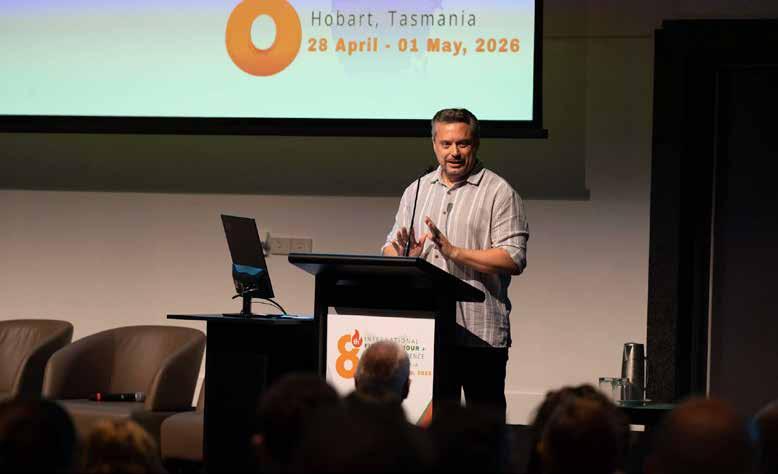
EDITOR’S NOTE: Fire, in its essence, is about connecting people with place, past with future, ground to air. The 8th International Fire Behaviour and Fuels conference was held in April in Hobart, Tasmania, with a Welcome to Country from Todd Sculthorpe, who asked everyone to think about knowledge that respects and understands fire. Here is Sculthorpe’s welcome to the 470 delegates.
Ya pulingina, hello and welcome.
My name is Todd Sculthorpe. I stand before you as a proud Trawlwoolway man, carrying a lineage that stretches back through my ancestors to Fanny Cochrane-Smith, and her parents Tanganutra and Nicerminic and their parents and so on. Their lives, their resilience, and their deep relationship with Country live on in me, and it is with that good spirit and with deep respect that I welcome you all here today to Nipaluna, Hobart.
This land was traditionally the lands of the Muwinina
people, they cared for this country nestled between the feet of Kunanyi/Mt Wellington and the shores of Timtumili Minanya/the River Derwent. From as far down the southeastern coast to the Kingborough region and as far north as the Derwent valley they cared for country, introduced vital life-giving burning that has shaped this landscape. As a community we feel their absence deeply because with them went generations of cultural knowledge and a deep relationship with country. But they will not be forgotten by us the Palawa community and because of that they will continue to live on in our hearts and our intentions to respect and care for country.
I pay respects to my community the Palawa people, the Tasmanian Aboriginal community, as the enduring custodians of this land Lutruwita. I pay my respects to our Elders past and present and to those that did not survive the impacts of invasion. I extend that respect to any first nations people here today, to your elders and families and all delegates and presenters.
You have come here as fire practitioners, scientists,
land managers, thinkers, and knowledge holders from across the world. You have come to talk about fire, its behaviour, its fuels, its risks, its science. But here, on this island, fire is more than a phenomenon to be studied. It is a relationship. It is a language. It is a practice of care.
For Palawa people, fire has always been part of how we understand and live with Country. It is not something separate from us, it is something we move with, something we listen to, something we carry responsibility for.
When we speak about cultural burning, we are not simply speaking about a technique or a management strategy. We are speaking about a way of seeing the world, where fire is guided by knowledge passed down over tens of thousands of years. Knowledge built through observation, through story, through practice, and through deep, enduring connection.
Fire, in this sense, is not destructive. It is regenerative. It is purposeful. It is relational.
It clears, but it also reveals.
It burns, but it also heals.
It transforms, but it also connects.
And importantly, it is never applied in isolation, it is always part of a broader understanding of Country: the seasons, the winds, the animals, the plants, and the people.
In Lutruwita, our ancestors used fire carefully and intentionally. They read the landscape in ways that science is still catching up to, understanding when to burn, where to burn, and when to let Country rest. These practices shaped ecosystems over tens of thousands of years, creating mosaics of vegetation that greatly reduced the risk and intensity of wildfires and supported biodiversity.
Today, many of the landscapes you study, many of the fuel loads you model, are the result of disrupted relationships with fire. When cultural burning was interrupted, when people were removed from
Todd Sculthorpe offered a traditional Welcome to Country at the 8th Fire Behavior and Fuels Conference in Hobart, Tasmania, in April, noting that fire has always been a part of the way Palawa people understand and live. Photo by Friedo Ligthart.
Country, fire did not disappear. It changed. It built up. It became something more dangerous, more unpredictable. And we have seen the impact of this not just here in Lutruwita and not just in Australia but globally.
And that brings me to where we find ourselves now.
We are living in a time where fire is increasingly framed as a global crisis. We see it in the headlines, megafires, unprecedented seasons, landscapes burning with an intensity and scale that challenges our systems and our understanding.
But perhaps what we are really seeing is not just a fire problem, but a relationship problem.
A disconnection.
A forgetting.
A loss of balance between people, fire, and Country.
If I can offer a metaphor, think of the world right now as a landscape carrying a heavy fuel load. Not just physical fuels, but social, political, and environmental tensions. Climate change, biodiversity loss, inequality, conflict, all of these are like dry tinder accumulating over time.
And when the right, or perhaps we should say the wrong, conditions come together, those tensions can ignite. Sometimes slowly, sometimes suddenly. Sometimes in ways we expect, and often in ways we don’t.
We are living in a time of unpredictable ignition.
And just like wildfire, once something starts, it can spread rapidly, crossing boundaries, overwhelming systems, and challenging our ability to respond.
But we know, from fire, that unpredictability does not mean uncontrollability.
It means we need deeper understanding.
It means we need better relationships.
It means we need to pay attention to the conditions we are creating.
And that is why conferences like this matter.
Because just as fire moves across landscapes, knowledge must move across communities.
You have come together here, from different countries, disciplines, and perspectives, to share what you know. To respectfully challenge each other. To learn. To innovate.
And in that coming together, there is great strength.
But I would encourage you to think about this not just as an exchange of information, but as an opportunity to build relationships, relationships with each other, and relationships with the places you work.
Because knowledge without relationship can only take us so far.
Cultural burning teaches us that the most important question is not just “How do we burn?” but “Why do we burn?” and “Who are we in relation to this place?”
It asks us to slow down.
To observe.
To listen.
To be guided, not just by data, but by responsibility.
And it reminds us that fire is not just a tool, it is a teacher.
Here in Lutruwita, we are in a time of renewal. There is a growing recognition of the importance of cultural burning practices, and a re-emergence of Aboriginal leadership in caring for Country. But this work is not about going backwards, it is about bringing together knowledge systems.
To offer another cultural analogy, It is about weaving.
Weaving together Palawa knowledge and Western science.
Weaving together long-term observation and modern technology.
Weaving together community, policy, and practice.
And like any weaving, it requires care, patience,
and respect.
Because not all threads are the same.
Not all knowledge is held in the same way.
And not all voices have been equally heard.
So as you move through this conference, I invite you to think about what you are contributing to that weave.
What knowledge are you bringing?
What knowledge are you open to receiving?
And how are you ensuring that the relationships you build here are grounded in respect and reciprocity?
Because the challenges we face, whether they are wildfires, climate change, or broader global uncertainties, cannot be addressed by any one group alone.
They require collective effort.
They require humility.
They require us to recognise that no single system of knowledge holds all the answers.
Fire, in its essence, is about connection.
It connects the ground to the air.
It connects the past to the future.
It connects people to place.
And in many ways, this conference is a fire in itself, a coming together of energy (physical and intellectual) and potential.
So, my question or my challenge if you will indulge me is, what will you do with that energy?
Will it burn quickly and fade?
Or will it be tended carefully, like a cultural burn, creating space for new growth, strengthening connections, and leaving the landscape healthier than before?
That choice sits with all of us.
Before I close, I want to return to where I began, with my ancestors.
Fanny Cochrane, Tanganutra, Nicerminic.
They lived through times of immense change, upheaval, and loss. They witnessed the disruption of Country and culture in ways that are difficult to fully comprehend. And yet, through them, knowledge endured.
Connection endured.
Responsibility endured.
I stand here because of that endurance.
And I speak to you today with that same sense of responsibility, to ensure that what we pass on to future generations is not a landscape of crisis, but a landscape of care and of respect.
A landscape where fire is understood, respected, and used wisely.
A landscape where knowledge is shared, not siloed.
A landscape where people come together, not just in times of emergency, but in ongoing relationship.
So in that spirit of care and respect, I welcome you to Nipaluna.
I welcome you to Lutruwita.
I welcome you to this gathering.
May your time here be meaningful.
May your conversations be respectful.
May your learning be deep.
And may the knowledge you carry forward help create a better, more balanced relationship with fire and with the world we all share.
Nayri nina-tu (thank you).
WILDFIRES IN THE 21ST CENTURY
RETHINKING CAUSE, CONSEQUENCE, AND THE CRITICAL ROLE OF INVESTIGATION IN THE UK
BY RHODRI JONES
In an era of climate volatility, sprawling urban development, and rising societal pressures, wildfires in the United Kingdom have evolved from seasonal phenomena into persistent national threats.
No longer confined to distant wildernesses, wildfires pose real and recurring dangers to communities, economies, and ecosystems.
During the July 2022 heatwave, multiple wildfires occurred across England, Scotland, Northern Ireland and Wales. In 2022 – for the first time – the UK capital London was significantly hit by a wildfire season that included the destruction of 18 houses in the suburb town of Wennington.
In the summer of 2025, there were more than 700 recorded wildfire incidents in England and Wales that burned between 29,000 and 35,000 hectares of moorland, forest, and grassland (which is equivalent to the metropolitan area of Washington D.C), putting a huge strain on fire and rescue services. Comparatively, there were half this number in 2023 and 2024 respectively, primarily due to wet summers, however both 2023 and 2024 recorded approximately 150 more fires than 2022.
In the UK, wildfires are not forensically investigated.
Despite growing in scale and severity the UK’s fire investigation communities’ understanding of the root causes of most wildland fires remains limited, guided primarily by international literature and a lack of scientific rigor given the nuanced complexities that come with wildfire investigation. Wildfire incident record data suggests that causation is split equally between accident or negligence and deliberate ignition, with the latter potentially underreported due to the lack of investigations. This data represents not only unintentional ignitions from human activity but also intentional acts ranging from vandalism and thrillseeking to ideological motivations. Humans are not merely victims of wildfire – they are often instigators.
REFRAMING THE CAUSE: BEYOND CLIMATE ALONE
My secondment to the UK Forestry Commission – a UK government department responsible for the management of woodlands and forests – from the Greater Manchester Fire and Rescue Service, reinforced what years of my research to better understand wildfire suggested: the assumed causes of wildfire are often speculative, unproven, or incomplete. The tendency to focus solely on climate or accidental human behaviors does little to inform effective prevention or policy. Instead, the narrow focus diverts attention from
the complex reality, including the underappreciated frequency and impact of deliberate ignition.
Wildfire research has also explored the concept of pyro-terrorism – arson-induced wildfires as potential tools of political violence or sabotage. Although pyro-terrorism is statistically less common than other causes of unplanned wildfire, the threat is recognized in academic literature due to its potential to disrupt infrastructure, economies, and public morale with minimal resources. In the Russia-Ukraine conflict there have been reports of wildfires – caused by drones – being used as a tactic of modern day warfare. In this sense, wildfire investigation is not only an environmental and public safety necessity but also a national security concern.
THE UK’S EMERGING RESPONSE: FROM SECURITY TO RESILIENCE
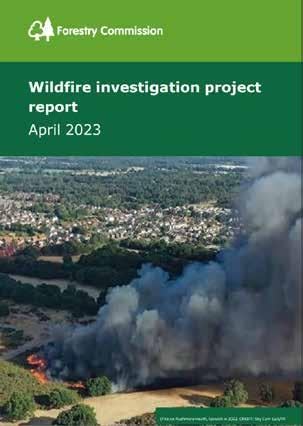
Historically, the UK lacked formal mechanisms for consistent wildfire investigation, relying instead on fragmented data and assumptions. This began to change in early 2023, during my secondment to the Forestry Commission, with the development of a UK-specific wildfire investigation framework. Drawing inspiration from international best practices, including the U.S. National Wildfire Coordinating Group’s (NWCG) F110 and F120 programs, a bespoke model was proposed in the April 2023 Wildfire Investigation Report, tailored to the UK’s landscape, urban interfaces, and operational context. (Search April 2023 Wildfire Investigation Report + Rhodri Jones.)
The framework emphasizes that investigating wildfires is not just about identifying ignition points but also about disrupting cycles of destruction before they begin, understanding fire mechanics, analyzing the psychology of arsonists, and evaluating the socio-economic drivers of landscape mismanagement. The framework also considers the strategic motivations behind deliberate ignition, ensuring that even low-probability threats such as pyro-terrorism are not ignored.
The framework and proposed training are under development but have been endorsed by the National Fire Chiefs Council, the Department for Environment, Food & Rural Affairs, the Forestry Commission, the Home Office, and Natural England, the government’s advisor for the natural environment. Given that the
2025 wildfires demonstrated a tangible national threat, the concept of wildfire investigation will hopefully evolve from a development program into a full-fledged project, supported by an array of stakeholders. The framework’s message is clear: without structured, evidence-led investigation, wildfire prevention efforts risk being reactive, inefficient, and misdirected.
WHY INVESTIGATION MATTERS NOW MORE THAN EVER
Wildfire investigation goes far beyond the mechanics of fire; it encompasses human behavior, socio-economic factors, and psychological drivers, equipping authorities to anticipate incidents, understand trends, and prevent recurrence. In the UK context, where deliberate and accidental ignitions occur in roughly equal measure, the ability to distinguish motives and patterns is essential for effective policy, resource allocation, and community safety.
International experience demonstrates the value of
The 2023 Wildfire Investigation Project Report provides a framework for determining cause and origin but also considers issues such as pyro-terrorism.
such approaches. In Australia, for example, arson prevention programs in primary schools that aim to reduce the number of bushfires ignited in parks near schools on Friday afternoons have had a positive impact in addressing the socio-behavioral causes of wildfire. The UK can similarly benefit from adopting evidence-led strategies and structured investigative frameworks.
MOVING FORWARD: AN URGENT CALL TO ACTION
In the UK, the 21st century demands a new paradigm for understanding wildland fire. Climate change is critical, but it does not act alone. Wildfire is also a function of politics, culture, infrastructure, psychology, and deliberate human action. The UK must invest in specialized wildfire investigative capacity, develop formal training programs, promote international knowledge exchange, and embed wildfire cause analysis into national resilience planning; this will support government departments and partner organizations in preventing, protecting against,
responding to and recovering from wildfires that are increasingly becoming part of the UK’s annual risk cycle, many of which are influenced by anthropogenic factors.
Most importantly, wildfires must be treated not only as environmental disasters but as events that can involve deliberate human intent.
Rhodri Jones is a progressive fire sector professional and leader with 18 years operational, fire safety, investigative and project management experience gained within the UK and international fire and rescue services. He now works as a government scientist for the UK civil service in the Health & Safety Executive as the technical team lead for fire safety. Jones has been pioneering the concept of wildfire investigation in the UK and in 2023 produced a wildfire investigation report for the UK Forestry Commission, which examines the UK causes of wildfires and how the UK can improve its wildfire investigation capability.
Super P Pro 40
Pounder II 40
Bigfoot
Mcleod 48
Hoe
Wire Fire Broom 48
Scalper 48
Chingadara
ANYWHERE ANYTIME
A GROWING FLEET TO FIGHT WILDFIRES Fast. Effective. Efficient. A reliable response every time.
ONE FOOT IN THE BLACK
AN OFF-SEASON JOURNEY
BY SILVIE FOJTIK
I work a seasonal job in wildfire; generally, this covers the months of February through October in the Northern Hemisphere.
In the off season, while some lock into their skis and patrol the local hill or undertake rites of passage on their respective journeys to self-discovery through recreational foreign adventures, I kept one foot in the black.
The winter of 2024-25 was particularly fruitful, with an organic unfolding of fire opportunities in Latin America that kept me busy until I stepped back into my regular position in Smithers, British Columbia, as a wildfire assistant – an offi cer role – for the Cassiar Zone, the furthest northwest region of the province, its borders abutting Yukon and Alaska.
My venture south began in Mexico, where I participated in the first Latin American WTREX (Women in Fire Prescribed Fire Training Exchange). I later went to Costa Rica for a couple of training
events for local wildland firefighters. I ended the trip witnessing the tail end of a historic fire that threatened the town of El Bolsón, Argentina.
In 2023, largely due to my intermediate proficiency in Spanish, I was tasked as liaison to a contingent of 100 Costa Rican firefighters deployed to British Columbia and various single resource fireline roles in conjunction with Mexican Unit Crews. That experience and growing frequency of inter-agency resource sharing emphasized the benefits of better understanding fuel, terrain, and operations in Canada’s visiting partner countries, not to mention continuing to improve my Spanish.
These trips were of a personal nature, not funded nor representing my employer.
The following is a photo essay chronicling my travels to Latin America from November 2024 through February 2025.
Mexico’s WTREX Nov. 4-15, 2024 | Jalisco,
Mexico
Women-in-fire Prescribed Fire Training Exchange is under the same auspices as TREX, typically a two-week event combining in-class and field portions related to prescribed burning and forming collaborative experiential training around good fire. TREXs are managed under the arm of Fire Networks, largely coordinated by staff from The Nature Conservancy, Watershed Research and Training Center, University of California Agriculture and Natural Resources and United States Department of Agriculture Forest Service, now taking on international reach with events across the globe.
This was the first WTREX delivery in Latin America with more than 35 participants from 11 countries, spearheaded by Yesica Garcia, based in Jalisco and inspired by her participation in the 2023 South Africa WTREX. Garcia was the incident commander whilst being, impressively, eight months pregnant.
Nancy González (Mexico) fulfilling role of Holding Boss. All photos by Silvie Fojtik.
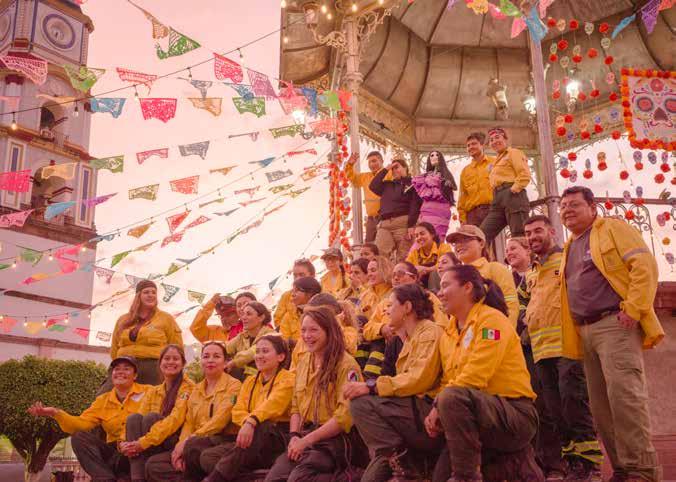
A cultural visit and formal municipal welcome by the town of Mascota, Jalisco; posing at town square kiosco decorated with remnant Day of the Dead festivities.
Lenya Quinn-Davidson, University of California Agriculture and Natural Resources’ Fire Network and lead on Fire Network’s WTREX, attended the first half. We had technical o ffi cers from Mexico, Spain, Chile, the United States, and Ecuador; operational staff from Portugal, Costa Rica, Argentina, and Honduras; and a high o ffi cial from Peru working on establishing his country’s wildfire management program.
The primary base for the event was Agua Brava training centre, near Guadalajara; during my stay I found out it was the defining training grounds for a visionary, longstanding partnership between the Mexican state of Jalisco and Canadian province of Alberta. In the mid 2000s, Jalisco firefighters were embedded in Alberta’s provincial fire crews for the duration of the season; some were further trained in operational single resource roles. Several of these participants now undertake critical agency representation (AREP) roles while on deployments to Canada with high proficiency in English and a deep understanding of Canadian fire operations. The program was paired down to a regular resource sharing agreement around mid 2010s.
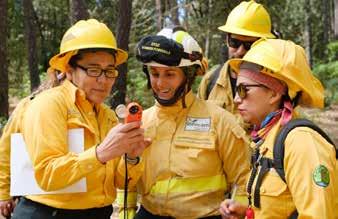
Doctora Faviola Castillo Navarro, University of Guadalajara (far left) delivering a fire effects monitoring and field observer workshop with María Ángeles Romero (Mexico), Pablo Alcorta (Argentina) and Nancy González (Mexico). Ángeles will later be one of two to spearhead the 2026 WTREX Quijota. Oak trees dominate the local fuel types.
Participants in WRTEX, Mexico, the first delivery of the program in Latin America.
The best data, in a single trail.
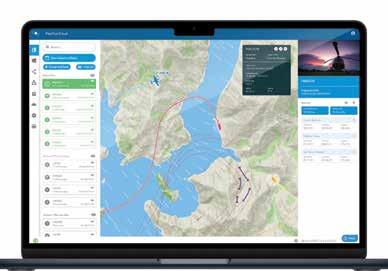
Sat, Cell, and now integrated ADS-B. Only with TracPlus.
TracPlus provides aerial firefighting enterprise software to the world’s best agencies and operators. Our telemetry and analytics set the global standard in aerial wildfire suppression operations, creating one picture everyone can act on.
TracPlus fuses ADS-B positioning with satellite, and cellular into one live operational picture, not multiple systems to reconcile. You get higher resolution and built-in redundancy in a single seamless feed, for faster, safer, and more effective operational decision-making. And it works with your existing aircraft hardware. Scan QR code
1st SINAC Women’s Wildland Firefighter Camp
Jan. 16-19, 2025
Cabo Blanco Absolute Nature Reserve, Costa Rica
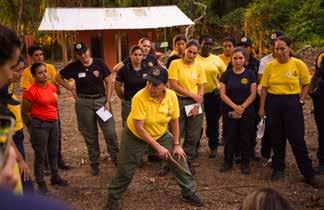
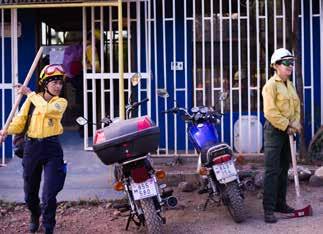
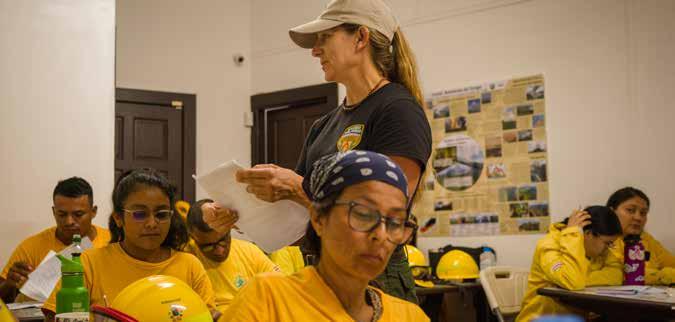
I was invited as speaker and instructor to Costa Rica’s first women-devoted firefighting camp. In a rare occurrence, the camp was held over three days in one of Costa Rica’s national reserves closed to public. The event was funded by the Canadian embassy through the Canada Fund for Local Initiatives.
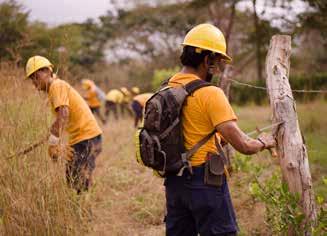
The nation’s is mostly characterized by surface fires as the predominant deciduous stands drop their leaves by summer’s heat. Some introduced coniferous stands do exist.
Costa Rica is building a growing contingent of skilled select individuals across several agencies; many are being trained specifically for the prerequisites necessary for Canadian deployments, some having as many as three back-to-back seasons in Canada’s boreal under their belts.
There are a select few wildfire trained personnel among the structural firefighters in Costa Rica. The country’s administrative body responsible for conservation areas, SINAC (Sistema Nacional de Áreas de Conservación), has crews comprising regular park staff and local volunteers, both generally responding within their designated jurisdictions.
The Canadian Interagency Forest Fire Center (CIFFC) made a reconnaissance visit to Costa Rica in 2019 and a memorandum of understanding and operations plan were signed on Oct. 19, 2021, with SINAC.
The third main player in the wildland sector in Costa Rica, the engine behind the dispatch and organizing of the deployments, is an NGO closely tied to SINAC called Pro Parques, nimbly able to mobilize finances and resources rapidly.
A joint effort between Carolina Orozco, a SINAC officer and member of the first contingent to Canada in 2023, and Pro Parques executive director Rocío Echeverri, helped to spearhead this first women-specific fire training event.
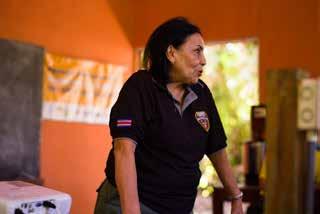
It was an honour to also be in the presence of Costa Rica’s Luisa Alfaro, a powerhouse I had the fortune to
meet. For decades, Alfaro has been a lead consultant to the U.S. Agency for International Development (USAID) in emergency management in Latin America; she started a mission 24 years ago to knock on every country’s governing office to establish the incident command system (ICS) Latin America wide. A 2017 post by USAID celebrated Luisa’s contributions and boasted about the more than 20,000 firefighters trained by Luisa!
María Luisa Alfaro motivating the next generation of female firefighters.
María Luisa Alfaro explaining basic fireline operations; breaking down terms such as head, tail and flanks of a fire (in Latin America often termed left and right flanks, assuming unidirectionality of head).
In center, Carolina Orozco, participant of WTREX Jalisco and Quijota, visionary and leader behind the Costa Rica event, next to Azofeifa sisters, all members of the first major contingent to Canada in 2023.
With the growing threat of wildfires, there’s never been a more urgent need for wildfire mitigation educators and specialists. NFPA® offers training and certification that equips you with the most current and comprehensive information. It provides you with the authority and expertise to lead in your station and in the field, helping you to protect communities along the way.
CERTIFIED WILDFIRE MITIGATION SPECIALIST (CWMS)
Demonstrate that you understand hazard mitigation measures, planning and preparedness strategies, public education practices, and wildland fire science.
ASSESSING STRUCTURE IGNITION POTENTIAL FROM WILDFIRE TRAINING
Learn how to evaluate wildfire risks, identify and address vulnerabilities, and provide effective wildfire mitigation recommendations with this two-day classroom training.
more at nfpa.org/wildfire
Ade Brica Volunteer Brigade
NWCG S-190 – Intro to fire behaviour
Jan. 25, 2025 | Tamarindo, Costa Rica
With a week off between events, Renee Jack, one of the instructors at the SINAC women’s camp rounded up an opportunity for a volunteer fire brigade – led by the fierce born and bred local, Natalia García – to experience a day of basic fire certification. I supported García’s instructional minimally and largely captured photos for her reporting needs. I first met Nati at the WTREX in Mexico, earlier in November, and again during the women’s camp – another example of the immeasurable benefits of these international events.
Renee is a fire program specialist for United States Forest Service international program; her gentle poise reflects her multi-decade career in fire from smokejumper to high-level operational roles, through to the international realm of training and emergency response.
Nati’s father established ADE Brica to address a gap in response coverage in the community and, notably, an area more prone to fires, as the northwest finds itself drier than the rest of Costa Rica. Impressively, most Saturdays are dedicated to the local volunteer brigades; some days were spent cutting and digging a fire break for the community of Tamarindo or training, like on that one January weekend.
Renee Jack, a fire program specialist for USFS, delivering the exam portion of the S190 course to a local volunteer brigade, which gathers every Saturday to train and develop local projects like strategic fuel breaks near Tamarindo, Costa Rica.
Angela Valencia gearing up for the upcoming field portion of the Intro to fire behaviour course delivered and overseen by Renee Jack, on the right, fire program specialist for United States Fire Service international program.
The machete is a fundamental tool in hand lines, used to cut through a highly non-native, invasive plant in Costa Rica, Jaragua.
Historic WUI Wildfire
“Confluencia” 3’892ha
Feb. 14-24, 2025 | El Bolsón, Argentina
On Jan. 30, 2025, a historic fire ignited north of El Bolsón, taking a nine-kilometre run west through the neighbouring community, burning more than 1000 hectares the first day. Despite united efforts among farm landowners with slip tanks, structural engines, and wildland firefighters, the fire advanced for the next 72 hours, resulting in one fatality, 200 structures lost and 900 people evacuated. SPLIF, Rio Negro’s provincial wildfire agency, coordinated mutual-aid response.
After two days without sleep, navigating airports and red-eye flights, I arrived in El Bolsón. With no time to spare, by morning, I was immediately integrated into a local squad, finally getting a chance to join the fireline with friends I made the previous year, learning their techniques, fuel types, and fire behaviour, and attempting to infuse some fresh energy to an already exhausted crew.
The Confluencia fire was on the heels of several multithousand-hectare fires that had been burning in and around neighbouring provinces. By the time I arrived on Feb.13, the flashy pressing flames had abated due to some favourable weather and many outside agencies had begun to disperse. Significant work remained in buttoning up the perimeter of Bolsón’s almost 4000-hectare fire.
For some, this fire had meant 23 days straight on this fire alone (some had been supporting neighbouring fire incidents and were quickly diverted to defend Bolsón), not to mention several 20- to 30-hour shifts at its inception. In addition to agency fire crews, various military entities and structural fire crews mobilized from across the country.
Argentina has a robust wildfire management program at three levels of administration with a framework established for both prevention and suppression at each agency level.
In the early 2000s, the Canadian International Development Agency (CIDA) – now dissolved and part of Global Affairs Canada – funded a multi-year program to bolster Argentina’s wildfire management program, primarily in prevention. Canada’s fire weather indices (FWI) was adopted.
The senior officer at the local base recalls two Hercules landing from British Columbia filled with suppression equipment. Imprints of this 25-year-old collaboration are still present in the people I met, and equipment found on the fireline.
I crossed paths with a Canadian faller who recalled the time a group of Argentinians came to shadow his crew while he was a supervisor for BC’s Trailblazer Unit Crew. The BC hallmark Mark 3 pump red toolboxes
Going on weeks without breaks, local firefighters received relief from agencies and volunteers from across the country, like this navy soldier.
Mati Sáez rolling hose at base, SPLIF El Bolsón, incident command post for Confluencia Fire.
Mati Quelin, Mauri Salazar and Seb Inalef, all long standing members of SPLIF El Bolsón, all smiles at sundown, coming off the mountain fireline.
can still be found in Argentina’s national park inventory and on the line.
Some anecdotes point to the introduction of Douglas fir in the 1950s in the province of Chubut, but a more concerted national push for the introduction of lodgepole pine, Ponderosa pine and Monterey pine occurred in the 1970s with associated subsidies in an ironic effort to build an effective logging industry under the auspices of saving the native species.
These conifers proved to be far more aggressive, exhibiting more impressive growth than in their local habitat. Far more alarming is the trees’ immediate dense colonization post fire, exacerbating the situation. The confluence of changing climactic conditions (drought and increased frequency of lightning) and loaded landscape-scale invasive pines is forming a dire situation in Patagonia, requiring an aggressive adaptation to the devastating ecological impacts and increased wildfire urban interface threats.
A symphony of five Mark 26 and Mark III Waterax pumps in series spanning a steeper drainage, to deliver water several kilometers away. Some pumps date to gear deliveries made in the early 2000s from Canada, on two Hercules aircraft.
a break from mop up, Pablo and Seb.
WTREX Quijota
April 13-24, 2026 |
Castilla-La-Mancha, Spain
María Ángeles Romero and Gloria Sánchez López (see photo below) lived a transformative experience as participants of the Mexican WTREX and dedicated the last 1.5 years organizing the inaugural Spanish WTREX: WTREX Quijota, in the arid landscape dotted with wind mills that inspired Cervantes’ classic novel Don Quixote.
Fifteen countries were represented (Spain, Brazil, Bolivia, Mexico, Canada, the United States, Peru, Costa Rica, Switzerland, Colombia, Ecuador, Argentina, Chile, Honduras and Guatemala) in an immersive two-week event filled with workshops, presentations, multiple prescribed burns of pine-oak forests, and cultural visits from vineyards to cheese makers.
Spain was a perfect backdrop with its widely established prescribed burn and prevention programs in addition to suppression, international emergency
response reach, and leader in technical innovations. The presence of local experts smoothly facilitated both the training and burn operations.
The WTREX model transcends a typical sanitized public confluence to break barriers and build a stronger, more intimate team of diverse individuals, boosting confidence and flow of insights and learnables. The impacts are continuous and immeasurable in a world with expanding need for international collaboration.
Born to Czech parents in Switzerland, Silvie Fojtik’s family emigrated to Canada when she was two years old. Thus began her eclectic, diverse exposure and multidisciplinary life into arts, sciences, engineering and outdoor adventure. The latest explorations coalesced into a trajectory in wildfires, starting in 2017, bouncing between contracting companies, provincial and National Park fire crews and currently single resource roles for BC Wildfire Services. Covid restrictions prevented furthering Fojtik’s scuba diving certifications; with an unknown end date, she invested her savings into her first mirrorless digital camera system instead. This event unearthed a deeply seated, buried passion for the creative arts.
The Leading Field-Proven Wildfire Operational Solution
The authoritative platform used by agencies worldwide for their operational decision making and wildfire intelligence.
• Assess initial and ongoing incidents with real-time wildfire spread predictions using high-resolution data and advanced global models.
• Prepare in advance with daily wildfire risk forecasting, based on millions of simulations validated with actual fire behavior.
• Manage the entire lifecycle of an incident and exhance situational awareness with mobile-first capabilities and a multi-hazard common operational picture.
Learn more about our wildfire solutions for Fire Agencies.
MAKING PROGRESS
CHINA ACCELERATES PREVENTION EFFORTS
BY EUGENE GERDEN
China is accelerating efforts to prevent and mitigate wildland fires.
The country’s vast territory and an extremely rich variety of forest resources and plant species requires a well-developed system of prevention.
In 2025, the situation was generally better than in 2024, although the country experienced a number of wildland fires in the northern region in the summer of 2025 after the Qingming Festival. There were also several large-scale wildland fires in southern China during the winter – which is generally dry and peak season wildland fires – in the cities of Jiangmen and Zhaoqing (both Guangdong Province).
In general, according to senior state o ffi cials, for the most part, wildland fires are wildland fires are better managed, thanks to new state prevention and mitigation efforts.
Before 1988, China’s approach to wildland fire fighting was largely underdeveloped, however the situation changed in 1987 after the Black Dragon
fire (also known as the Daxing’anling wildfire), the deadliest wildland and forest fire in the modern history. The fire broke out in May in Daxing’anling Prefecture, Heilongjiang, and spread into the Soviet Union. The burning lasted almost a month; it was finally stopped on June 2, 1987. The fire covered about 10,000 square kilometres, of which 6,500 square kilometres was forest; it destroyed 7.3 million hectares (18 million acres) of forest, including one-sixth of China’s entire timber reserves.
The Black Dragon fire forced the Chinese government to approve a package of measures and regulations to prevent new large-scale wildland fires. In 1998, legislation called the Forest Fire Prevention Regulations was adopted; it was based on the Forest Law of the People’s Republic of China and underwent several revisions. At the time, most of the state bodies responsible for wildland firefighting in China had been established in their present form, including the National Forestry and Grassland Administration, the O ffi ce of the National
Forest and Grassland Fire Prevention, and the Ministry of Emergency Management.
Since 1998, all Chinese provinces have been required to issue and refine local regulations based on their respective wildland fire prevention conditions, characteristics, and patterns. With the arrival to power in 2013 of the current head of China – general secretary of the Chinese Communist Party Xi Jinping – the level of state control has tightened and has led to some good results.
Overall, due to China’s vast territory, natural conditions such as topography and climate vary significantly across different regions; this leads to regional variations in the frequency of wildland fires. In the last decade, wildland and forest fires were mainly concentrated in central and southern China with Hunan, Guangxi, and Guizhou provinces being particularly fire-prone, with each experiencing
more than 3,500 fires each year between the mid-1990s through 2016-2017. Western provinces experience fewer fires and a lower risk due to the relative scarcity of forest resources.
China’s progress in wildland fire management is confirmed by analysts.
Yue Chao, a wildland fire researcher at Northwest Agriculture and Forestry University, said China has established a comprehensive system for wildland fire prevention and control, which has contributed to a significant improvement in wildland fire damage.
“Since the devastating Daxing’anling forest fire in 1987, China’s fire prevention and control policies have been remarkably effective, with major indicators of forest and grassland fires nationwide showing a significant decline and remaining stable at historically low levels.”
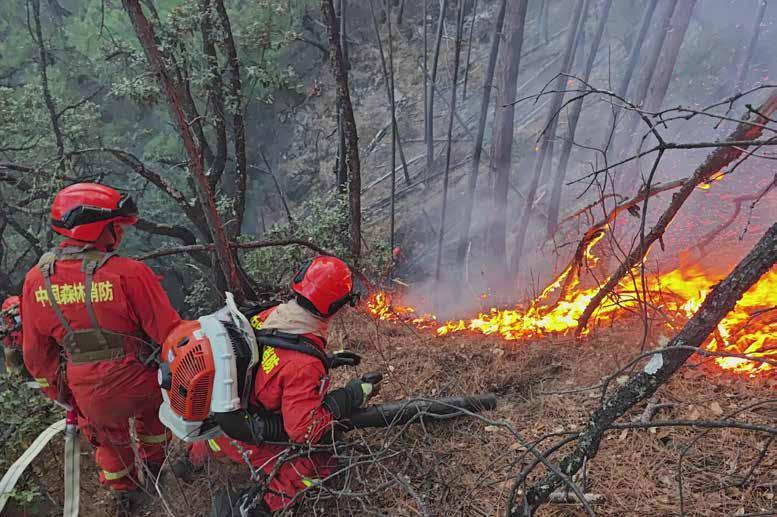
Firefighters from the Sichuan Forest Fire Brigade arrived at the scene of the Yajiang forest fire. Photo by Wang FeI.
According to the Chinese Ministry of Emergency Management, over the past 60 years, both the total area burned and the size of individual wildfires in China have declined significantly. The average annual total area burned and the size of individual fires decreased by 92.5 per cent and 80.7 per cent, respectively, from 1988 to 2024.
Despite the progress, ongoing climate change and other challenges may create risks of major wildland fires. In addition, China is the world’s largest greenhouse gas emitter.
Zhao Jie, a lecturer at Linyi University and one of China’s leading experts in wildland fires, said global warming presents increasingly severe challenges for China’s wildland and forest fire management. The most significant risks, Jie said, are in the more economically developed Northeast China provinces (in contrast to poor agrarian provinces in Western
China). Natural specifics of these regions and climatic conditions add to the risk.
“This is particularly true in Northeast China, where the accumulation of fuel understory is a key factor contributing to the increased fire risk,” Jie said.
“In addition, long-term fire-prevention efforts have led to excessive accumulation of litter under forests in Northeast China, increasing the risk of extreme forest fires. Furthermore, the unique climate and topography of Northeast China complicate forest fire prevention, control, and fire fighting, including di ffi culties mobilizing resources, providing comprehensive support, conducting firefighting operations, and managing the whole situation.”
Chinese authorities are aware of the challenges and are considering the adoption of more scientific and precise measures in the field of wildland forest
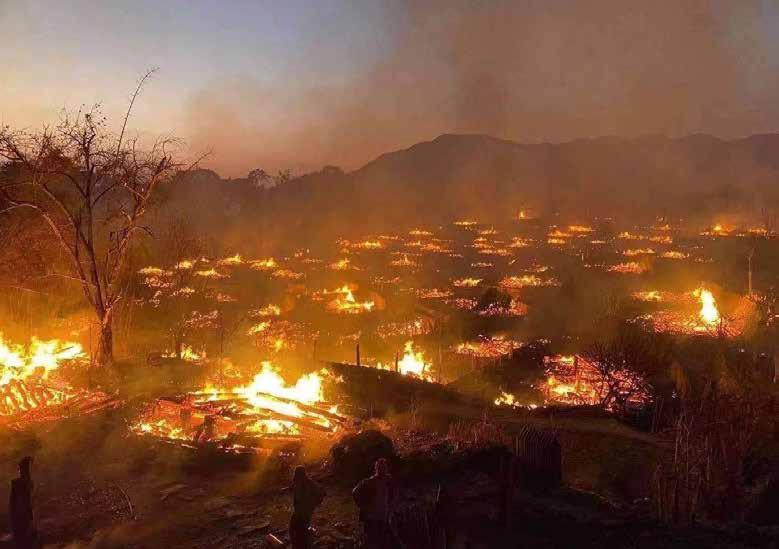
A wild land fire in Yunnan, the inland province in Southwestern China (photo CNR).
fire management with the aim to better prevent and mitigate wildland fires. According to an o ffi cial spokesman of Wang Xiangxi, the Chinese Minister of Emergency Management, as part of these plans, particular attention will be paid to the most “problematic” provinces and areas of the country.
Plans include continuing to strengthening the existing system of forest-fire monitoring and early warning, improving command training, optimization of firefighting methods (using aviation firefighting techniques and tactics), and strengthening crossdepartmental collaboration.
In general, according to data from the Chinese National Forestry and Grassland Administration, over the past decade – since the introduction of prevention and mitigation measures – China has experienced more than 2,000 forest fires annually, although the intensity of the fires has decreased.
According to state data, since 2015 the total area burned by forest fires in China has reached only about 500,000 hectares, and the affected forest area reached 193,000 hectares. In comparison, in 2010, the affected forest area peaked at more than 40,000 hectares. Current figures range between 8,000 and 10,000 hectares annually.
The year 2010 was also a peak in terms of the number of destroyed young trees, which numbered more than 10 million; this data has also declined significantly in recent years.
According to some Chinese media reports, in addition to a further strengthening of wildland fire management, particular attention will be paid to technical re-equipment of the entire service with high-tech equipment for Chinese firefighting brigades, including helicopters. According to reports in some Western and South Korea media, the lack of equipment has been a major contributor to
On the Fireline, Every Decision Matters.
In federal wildfire operations, decisions made in minutes can be examined for years.
FEDS Professional Liability Insurance provides essential coverage for the unique legal and professional exposures federal wildland firefighters face.
Wildland firefighters may be reimbursed up to half of the annual premium by your agency.
numerous fatalities, both firefighters and civilians.
These reports, however, have been denied by the state, which says both damage and fatalities caused by wildland fires have declined. O ffi cial Chinese statistics shows that over the past decade, wildland fires have caused 607 fatalities. According to data of the Ministry of Emergency Management of China, every year, no more than 20 people die in forest fires annually. The latest statistics also shows that since the beginning of the decade, the number of such cases has declined.
The general improvement in wildland fire management in China is also confirmed by the data of China Forestry Statistical Yearbook; it says the number of rescue operations has decreased from almost 1 million in 2019-2020 to 300,000 in 2024.
The annual forest firefighting costs and other losses from fires were estimated at only 100 million yuan in 2023-2024, compared to 500 million yuan in 2014.
The Chinese government plans to further tighten responsibility for wildland fires and hold people accountable for their actions. Human-caused forest fires in China account for a larger proportion of fires than natural causes such as lightning. Burning wasteland for charcoal is the most common source of forest fires in China.
Eugene Gerden is a freelance writer who can be reached at gerden.eug@gmail.com.
Secure your spot at the UK’s largest multi-agency wildfire conference
Welcoming up to 300 delegates across two days, Wildfire2026 is bringing together experts from across government, responders, research, land management and more.
Network, collaborate and learn about the latest wildfire research and innovations in prevention, preparedness, response and recovery. Delegates will enjoy full access* to the plenary sessions and exhibition, as well as the drinks reception, awards ceremony and gala dinner.