A Living Heritage: The stewards of the WMA Spirit
IIn the long and storied history of Wilbraham & Monson Academy, buildings provide the stage, but the people are the soul.
“At Home. In the World.” isn’t just a tagline for us; it is a culture passed down through a lineage of dedicated stewards. Some individuals spend significant periods of their lives committed to the WMA community, and these “lifers,” a few of whom I will discuss here, act as the Academy’s long-term memory and its moral compass. From the boardroom to the training room, their enduring impact is the invisible thread that binds a student in 1952 to a graduate in 2026.
Institutional stability begins with the Board of Trustees, who provide the strategic vision that guides the Academy through economic shifts and cultural evolutions.
Mark Shenkman ’61M stands as a titan of this kind of stewardship. Joining the Board in 1970, he was heavily engaged in the 1971 merger, ensuring the legacy of Monson Academy was not lost but integrated
into a stronger, unified future for both schools. For more than 55 consecutive years of board service, his presence has been a beacon of excellence. By establishing the Shenkman Trading Center, he didn’t just provide a facility; he pioneered a bridge for WMA between traditional liberal arts and modern global finance.
Complementing this longevity is Scott Jacobs ’75, who joined the Board in 2002 and has served as Chair since 2004. If Shenkman is the bridge to the years of the merger, Jacobs is the architect of the modern era.
Under his two decades of leadership as Chair, the Academy has seen a transformation in its physical campus and its global reach. Scott is a true Alumni Leader. He experienced the transformational power of a WMA education firsthand, and now he has dedicated considerable time, talent and resources to ensuring that the same opportunity exists for future generations.
While many people within the immediate WMA community impact specific cohorts of students, Sandi Scott and Erika Whipple represent a rare, universal influence.
Sandi Scott, as the College Counseling Office Manager and Associate College Counselor since 1998, has been the steady hand guiding the most high-stakes transition in a student’s life. In the complex world of college applications, Sandi is the calm in the storm, ensuring every transcript and recommendation is met with precision. For a quarter-century, she has been the silent engine behind thousands of success stories.
Parallel to that support in the office is the tireless dedication of Erika Whipple to the athletic
program and everywhere on campus. Since 1996, Erika has been a constant presence for every student-athlete who has worn a WMA jersey. Starting as an Athletic Trainer and evolving into her current role as Assistant Athletic Director, her influence spans nearly 30 years of the Academy’s athletic history. Whether she is teaching, advising or serving as a dorm parent, Erika embodies the “do-anything-for-anyone” ethos of a true boarding school educator. Every graduate since 1996 knows her not just for her clinical expertise, but for her literal presence at their side during their most vulnerable moments of injury or their greatest triumphs. She is the personification of the Academy’s grit and its heart.
Of course, to speak of WMA history is to speak of Fred Watts.
Serving from 1952 to 1992, Mr. Watts epitomized the “Schoolmaster” in its truest sense. In a community where educators were expected to be mentors, coaches and surrogate parents, Fred Watts literally did it all.
Throughout his 40-year tenure, he served in virtually every capacity the Academy needed, providing the institutional “know-how” that kept the community grounded during the pivotal transition into one unified home.
The heart of WMA is the relationship between teacher and student, and hundreds of educators have contributed to this bond. Two recently retired educators defined the academic experience for generations.
Gary Cook (1979 –2022) gave 43 years of his life to the community, proving that while technology changes from chalkboards to smartboards the need for a rigorous, supportive mentor never does.
Similarly, Charlie D’Avanzo (1990 –2024) served as a faculty member, Dean of Students and Director of the Middle School. His 34-year career was defined by a focus on “discipline and discipleship,” knowing when to challenge a student and when to offer grace, often while dancing and singing his way across campus.
Perhaps the most extraordinary testament to the WMA spirit is Don Kelly.
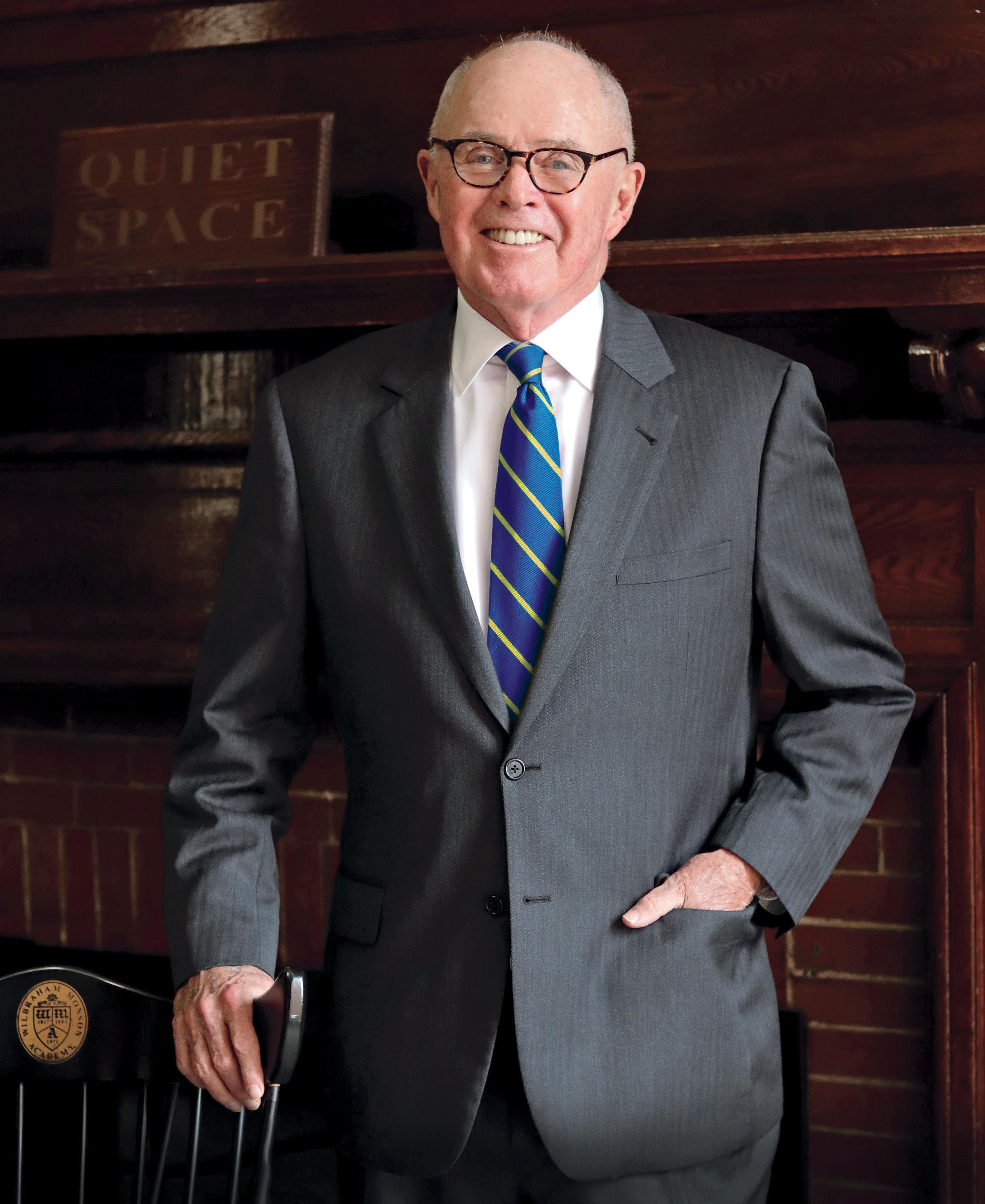
Having started in 1976, Mr. Kelly is serving his 50th consecutive year at the Academy with no indication of stopping. As a Classics teacher, he connects students to the ancient foundations of Western thought, but as a multi-term Dean and now the Faculty Marshal, he has been a contemporary pillar of the administration. To serve for half a century is to become a living part of the landscape. Mr. Kelly is the “living bridge” who has worked alongside every individual mentioned in this article.
We all know that Wilbraham & Monson Academy is a place of high expectations and global connectedness, but at its core, it is a human institution. We are defined by the people who chose to stay those who saw their work not as a job, but as a life’s mission. From the strategic oversight of Mark Shenkman and Scott Jacobs to the all-encompassing service of Fred Watts, the academic devotion of Gary Cook and Charlie D’Avanzo, the vital guidance of Sandi Scott and Erika Whipple, and the monumental 50-year milestone of Don Kelly, these individuals have built a foundation that will last another two hundred years. They have demonstrated that the greatest gift one can give a community is one’s persistent, positive presence.
Respectfully,
by brian p. easler Head of School
e ditor
Teddy Ryan
Associ Ate e ditors
Russ Held
Bill Wells
A rt director
Chris Tinnesz
Advisory Bo A rd
Brian P. Easler
Melissa Earls
Don Kelly
Janet Moran
Sean Valentine
co N tri BU ti NG W riters
Melissa Earls
Brian P. Easler
Tim Harrington ’73
Michael Insler ’01
Annie Kandel
Deb Kelly
Maureen Kelly Chesky ’02
Mike Mannix
Bill Wells
d esi GN Stoltze Design
p ri N ti NG Kirkwood
p H oto G r A p H y
Paul Bloomfield
Chris Evans
Getty Images
Deb Kelly
Various contributing photographers
Bo A rd of t r U stees
Scott B. Jacobs ’75, Chair
David A. Reeves, Vice Chair
Mark R. Shenkman ’61M, Vice Chair
Linda B. Griffin, Vice Chair
Caitlin S. Flynn ’06, Treasurer
Bonnie Faulkner Ryan ’82, Secretary
Raymond J. Anton ’61M
Christopher C. Antonacci ’06
Helen Assefaw ’14
John J. Baker
Melissa M. Besse
John LaCrosse
Dohun Lee ’99
Robert F. Little
Andrew P. Mele
Stephanie T. Robbins ’10
Craig A. Rubin ’63W
Paul J. Sullivan ’91
t r U stees e meriti
Eric W. Anderson
Michael J. Flynn
Richard S. Fuld ’64W
Benjamin F. Wilson ’69W Life t r U stee
William E. James ’64W
James E. LaCrosse ’50W
Donald J. Stuart ’73
Alumni, we’d like to hear from you! Send your current contact information and news to alumni@wma.us.
“Academy World” is published in the spring and fall for alumni, parents and friends of the Academy. Please direct comments and letters to:
Wi LB r AHA m & m o N so N Ac A demy
mA rketi NG & c omm UN ic Atio N s o ffice
423 mA i N s treet
Wi LB r AHA m, m A 01095-1715
m A rketi NG @ W m A U s
oU r m issio N
Wilbraham & Monson Academy offers a transformational experience where students become challenge-seeking citizens and leaders of an evolving world.
Wilbraham & Monson Academy does not discriminate on the basis of race, religion, color, national origin, age, sex, disability, sexual orientation, genetic information, military status, gender identity, and any other categories protected by federal, state or local law.
Get Social with u S !
@wilbrahammonsonacademy @WMAalumni
Wilbraham & Monson Academy @wilbraham_monson @wmaalumni
Don Kelly, a mainstay of WMA for
News from the Hill
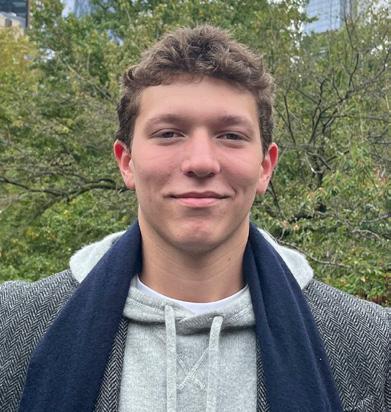
Colin Moussette ’26 publishes in Cathartic Youth Literary Magazine
For many, blueberry picking is a healthy way to be outside, gathering the tiny pieces of fruit one by one, making for a yummy snack on the ride home or maybe even a pie.
For Wilbraham & Monson Academy’s Colin Moussette ’26, blueberry picking resulted in a published tribute to his parents, Jon and Kris.
Colin’s piece, “Blueberry Rows,” was published last fall in the Cathartic Youth Literary Magazine, which the website states is a “space for youth writing on mental health and identity.”
“I believe the place where a piece of writing appears is just as
important as the message itself,” Colin shared. “Cathartic Youth Literary Magazine is dedicated to youth voices on mental health and identity, making it a natural fit for what my essay represents.”
His essay described blueberry adventures with his mom while the family vacationed in Maine the experience depicting her character then and now. The start of the second paragraph read: “My stomach warmed like the contents of a cauldron over a fire at my mother’s touch, bubbling with a child’s love not for anything in particular, like a toy or book, but for her presence.”
“I have always loved reading books, so writing naturally followed,” Colin explained. “It really began with my habit of annotating every book I read. From
quick notes to longer reflections in the margins, I’ve always made a point to record whatever came to mind as I engaged with a text.”
Colin’s classroom experiences at the Academy have pushed his writing talents.
“In my AP Language class with Mr. (Tim) Harrington (’73) and my AP Literature class with Ms. (Meg) Hutcheson, I’ve learned to blur the line between fiction and non-fiction,” he articulated. “In truth, I believe one can learn just as much from a novel as from an essay. I enjoy conversations with people, and I see writing as another form of dialogue putting thoughts onto paper is, for me, synonymous with speaking to an audience.”
And Colin spoke beautifully. Using a photograph from simpler times, he chose his words carefully in describing what has happened, and to a degree, what is yet to come.
He closed with: “The genuine happiness behind my lips and eyes brings tears, not just because of the duality of love, but because of the privilege of memory. My body, my scent, my laugh each moment in time stands still, unaltered by the fears for the future and regrets of the past; a reminder that without the photographs of childhood, I remain a stranger.”
Colin said: “I am who I am today because of my family and close friends. Being at WMA has given me countless opportunities to grow not only academically, but also personally. The story I wrote about my mother, father and me is a tribute to my respect and admiration for them not only as parents, but as people and lifelong inspirations for the work I will undoubtedly continue at the Academy in my last year.”
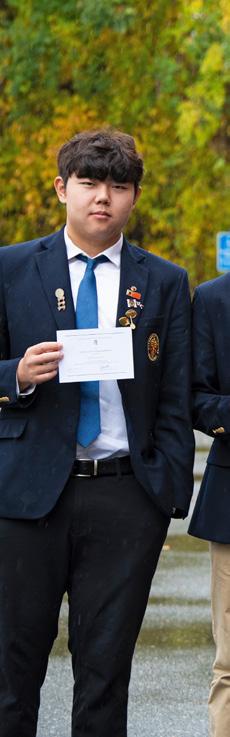
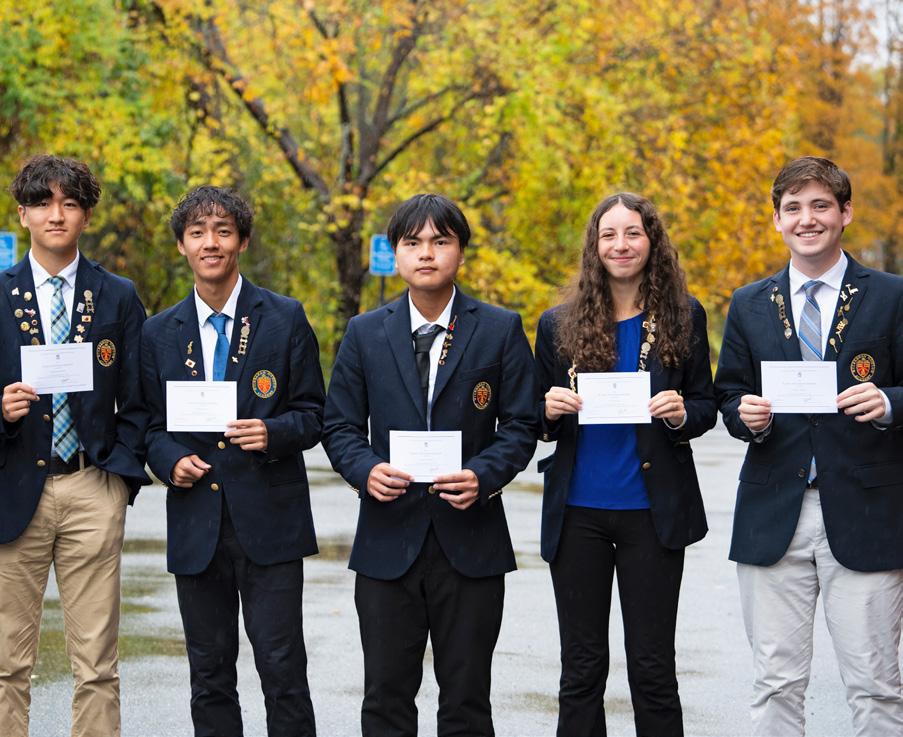
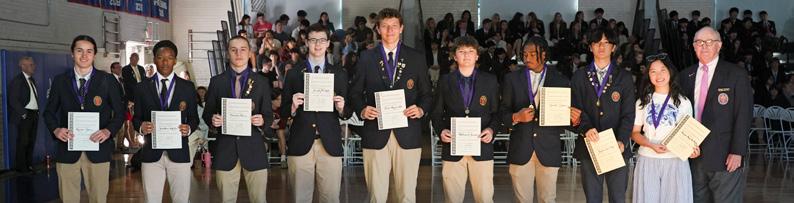
• from Left: Qingxuan “Jack” Wang ’26, Jayden Lee Choi ’26, Yuxiao “David” Zhou ’26, Gia Minh Tran ’26, Lily Meier ’26 and Ryan Cooley ’26.
Colin Moussette ’26
National Merit commendation feted for 6
Academic awards? We love academic awards, especially those on a national level.
Six members in Wilbraham & Monson Academy’s Class of 2026 were honored during School Meeting in October for their performance on the 2024 Preliminary SAT/National Merit Scholarship Qualifying Test.
Qinqxuan “Jack” Wang ’26, Ryan Cooley ’26, Jayden Lee Choi ’26, Lily Meier ’26, Gia Minh Tran ’26 and Yuxiao “David” Zhou ’26 were named National Merit Commended students.
The half dozen WMA students were among 34,000 nationwide who
earned certificates from the National Merit Scholarship Corporation. According to a spokesperson, “Those being named Commended Students have demonstrated outstanding potential for academic success. These students represent a valuable national resource; recognizing their accomplishments, as well as the key role their schools play in their academic development, is vital to the advancement of educational excellence in our nation. We hope that this recognition will help broaden their educational opportunities and encourage them as they continue their pursuit of academic success.”
WMA students shine with Global Seal of Biliteracy recognition
Buen trabajo and bravo!
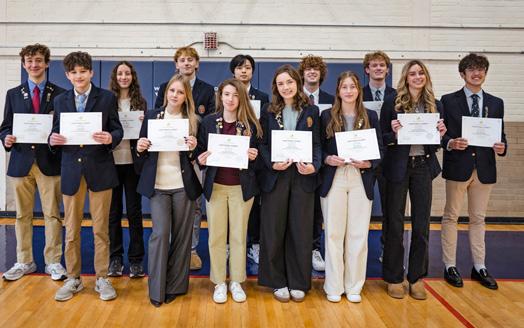
Twenty-nine Wilbraham & Monson Academy students earned Global Seal of Biliteracy Certificates, which rate language proficiency in two languages based on AP scores or the Avant Assessment.
“Students performed very well in Spanish and French,” explained Madame Fabienne Dubois, Chair of the World Languages Department. “We are very proud of them.
It is difficult to receive the Global Seal because you need to have good proficiency in each of the skills: reading, writing, listening and speaking. You need to be at least IntermediateMid in each section for the first level of the Seal (Functional Fluency) and you need to be Advanced-Low (or a score of 5 on the AP exam) to receive the second level of the Seal (Working Fluency).”
The tests were administered during the 2024–2025 school year. Three French students achieved Working Fluency status: Katie Hutcheson ’26, Cooper Dwyer ’25 and Emma Landry ’25. For Spanish, Ji Min Hong ’25 reached the Working Fluency level.
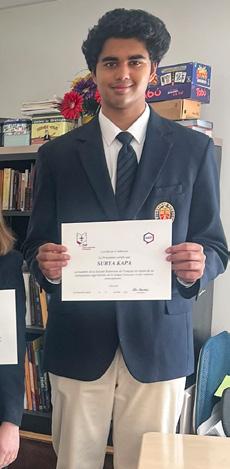
Winning Functional Fluency honors for French were: Surya Kapa ’27, Vicky Luo ’28, Lillian Ricci ’26, Constanza “Coco” Valenzuela Lastra ’26, Regan Zhao ’25, Celia Hansen ’26, Linda Xiao ’25, Alba Pelaez-Rodriguez ’25 and Breslin Grozio ’25.
Sixteen students in WMA Spanish classes received recognition for Functional Fluency:
Gabriel Hall ’26, Adrianna Chechile ’26, Dakotah Thomas ’26, Sze Lun “Cyril” Chan ’28, Andrew Chang ’28, Nikos Kratimenos ’28, Daniel Pierce ’29, Khloe Thomas ’28, Romy Allen-Schubert ’27, Eoin Cavanaugh ’27, Wyatt Cavanaugh ’27, Brady Chisholm ’27, Sara Di Pangrazio ’27, Lily Meier ’26, Jan-Paul Ramesh ’26 and Sophia Najeebi ’25.
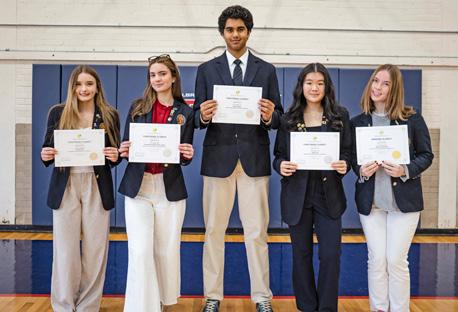
Kratimenos ’28, Daniel Pierce ’29, Lily Meier ’26, Sara Di Pangrazio ’27, Brady Chisholm ’27, Romy Allen-Schubert ’27, Sze Lun “Cyril” Chan ’28, Dakotah Thomas ’26, Gabriel Hall ’26, Khloe Thomas ’28, Wyatt Cavanaugh ’27, Adrianna Chechile ’26 and Eoin Cavanaugh ’27.
• GLoBAL se AL , spANisH cUrreNt stUdeNts, from Left: Nikos
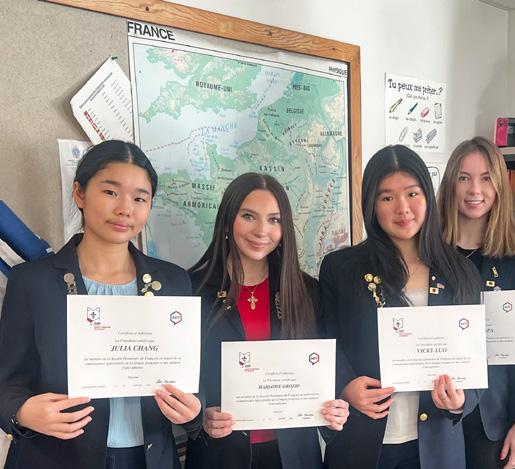
• GLoBAL se AL , freNcH cUrreNt stUdeNts, from Left: Lillian Ricci ’26, Constanza “Coco” Valenzuela Lastra ’26, Surya Kapa ’27, Vicky Luo ’28 and Katie Hutcheson ’26.
French Honor Society
inducts quartet
Four Wilbraham & Monson Academy students can say “bonjour” to the Société Honoraire de Français.
Julia Chang ’29, Vicky Luo ’28, Harlowe Grozio ’28 and Surya Kapa ’27 were inducted into the Academy’s chapter of the French Honor Society during a ceremony in February.
World Languages Department
Chair Fabienne Dubois said membership is awarded “based on scholarship, commitment to French, citizenship and service to the school. Inducted students demonstrate exceptional dedication to learning the French language and exploring Francophone culture. It is deeply rewarding to recognize their hard work and enthusiasm, to support them during their time at WMA and to continue supporting them as they apply to college.”
Trio shines at Model Congress
Weeks and months of preparation came down to four days for Wilbraham & Monson Academy’s Model Congress program and, once again, despite a grueling and pressure-packed environment, the Titans delivered.
Three students from WMA
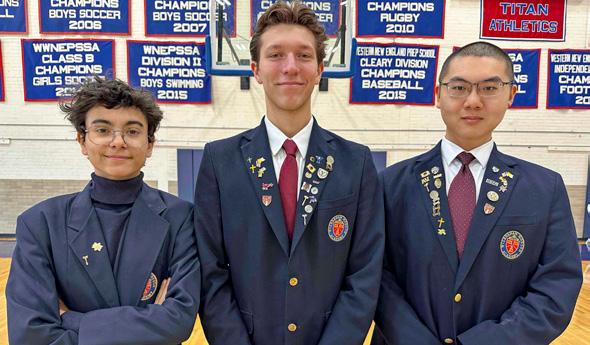
Colin Moussette ’26, Thiago Pinho Mota ’28 and Mingjun “Max” Li ’27 were recognized for their performance at this year’s Harvard Model Congress which was held in Boston, Massachusetts, in February. The 41st annual event drew more than 1,500 students from nearly 100 high schools from throughout the country.
Colin and Thiago both won Best Delegate Awards based on their efforts within their respective committees. Max was an Honorable Mention recipient.
Colin served as President Donald J. Trump’s Secretary of the Treasury, Scott Bessent. He said the “goal of my role was to address the economic needs of the nation regarding student loans and loan forgiveness plans while keeping the President’s agenda in mind. Our topics ranged from student loan forgiveness to manufacturing and infrastructure across the USA.”
A rarity, Colin repeated as a Best Delegate winner.
“Winning at (Harvard Model Congress) is always special, and I am beyond proud of the work we did as an entire community in preparation for our committee,” he said. “While I am grateful for the victory, I am even more thankful for the experience and the opportunity to improve my oratory and public speaking skills. Being recognized for my dedication to speech and debate two years in a row at Harvard is a high honor, but I owe it all to Dr. (Anthony) Kandel and his desire to see the best in all of his pupils. There is simply no better way to end my time as Vice President of the program than with a win in his honor.”
Thiago portrayed Celeste Malloy, Utah’s 2nd Congressional District Representative. He worked “to allow states to use federal lands for diverse purposes (housing, resource extraction) and to increase pipeline infrastructure and safety throughout the United States.”
Even though this was Thiago’s first time participating in Model Congress, he used his experience from Model United Nations as guidance.
“I was pretty relaxed in terms of expectations but nervous in terms of what I was supposed to do,” he said. “Thankfully I adapted quickly and was able to participate and win an award at the conference, but it
was pretty nerve-racking to get there. For me, the conference was an amazing time and I’m glad I was able to participate and represent WMA when winning the award.”
This was Max’s sixth year of participating in Model Congress. He served as Derek Theurer, President Trump’s Deputy Secretary of the Treasury, with his task “to maintain fiscal discipline, protect long-term solvency of the federal government, promote sustainable economic growth and ensure taxpayer accountability.”
Max used his significant Model Congress experience, as well as his knowledge of the topic, to his advantage.
“Having participated for a long time, I found myself less focused on speaking the most and more focused on speaking with clarity and purpose,” Max explained. “Representing the Deputy Secretary of the Treasury allowed me to draw heavily on my background in business and economics. My experience studying markets and fiscal policy gave me a framework to approach debates with structure and discipline. In many ways, this role felt like a natural extension of the work I’ve already been doing outside the conference room. I was especially grateful for the opportunity to connect Model UN with the field I’m passionate about.”
• from Left: Julia Chang ’29, Harlowe Grozio ’28, Vicky Luo ’28, French Honor Society president Katie Hutcheson ’26 and Surya Kapa ’27.
Fine & Performing Arts
Avah MacDonald ’27 lands prestigious opportunity
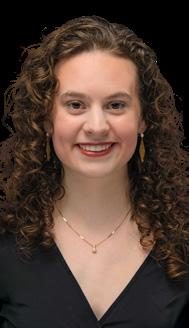
Avah MacDonald’s ’27 musical journey is headed from Wilbraham & Monson Academy to Italy.
Avah, a soprano, was selected to attend the American Academy of Music International Summer Music Institute in Todi, a historic hilltop town located 100 miles north of Rome.
“When talking about western classical music, it is impossible not to mention Italy and its influence on the musical world,” Avah explained.
“For example, it is a well-known fact that Italy is regarded as the birthplace of opera. For me, a singer who not only loves opera but hopes
Marina Hall ’28 wins Miss Western Massachusetts Pageant
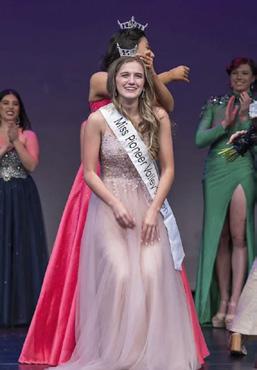
Say hello to Ms. Pioneer Valley Teen, Wilbraham & Monson Academy’s Marina Hall ’28.
Even though she initially had no interest in entering, Marina earned her crown at the Miss Western Massachusetts Pageant at Holyoke Community College, in Holyoke, Massachusetts, in October.
“I didn’t have any feeling that I was going to win, but I felt really confident about everything I did,” said Marina, the youngest competitor in the field. “I didn’t think all of the categories would go as well as they did, and I don’t think I could’ve done any better.”
The contestants had to endure five categories: private interview, on-stage question, talent, fitness and evening gown.
“I was most concerned about the on-stage question because I am not that good at speaking in front of an audience and that is not something I like to do,” Marina admitted. “The question was based off of our community service initiatives that we wrote, but we did not know what the question was going to be.”
For the talent portion, Marina stuck to her strength as she performed a tap dance. She said
to sing that style professionally, Italy has always been somewhere I hoped to study. I am excited that I get to fulfill this dream so soon.”
Avah submitted two songs in her application for the two-week program: a French art song by Reynaldo Hahn and an Italian aria by Puccini.
“This program will provide me the chance to work with worldrenowned teachers and professionals in the industry who are living my dream, in quite literally the heart of opera,” Avah said. “It is my hope that this program will open even more doors for me in the future as I approach college and beyond.”
Avah has been selected for a number of noteworthy musical
her many years of dance experience helped in various ways during the pageant.
“I do think being a dancer helped with my stage presence and making a connection with the judges,” she said. “I had also done a few on-stage questions for dance competitions in the past, which helped for the speaking portion of the competition. I definitely do think the results would have been different without my dance experience.”
As Ms. Pioneer Valley Teen, Marina was expected to participate in a number of community events during the past year. She will also implement her community service initiative, which is directly tied to her interests at WMA.
“Each contestant created a community service initiative that they would follow through with if they were chosen,” Marina explained. “Using my education on financial literacy from our CEEF (Center for Entrepreneurship, Economics & Finance) department, I was inspired to create my community service initiative based off of the knowledge I have because many schools in the U.S. do not offer CEEF classes like WMA. My goal for this year is to introduce kids to the basics of financial planning. I am going to travel to schools and youth organizations with a
venues, including the Massachusetts Music Educators Association Western District Senior Festival last January.
“One of the advantages of attending a small school is that I have gained a lot of performance opportunities which have helped me grow as a soloist,” she said.
“The voice is an ever-evolving instrument that does not fully develop until about 25. My musical journey, similarly, will never quite stop changing and molding itself. While this experience and other precious accomplishments have helped shape my instrument and who I am, there is still so much to learn, live, dream and create in regards to singing.”
presentation on the importance of basic financial literacy.”
Marina was eligible to compete in the Miss Massachusetts Pageant in June.
Marina Hall ’28
Artists shine at Scholastics Art Awards
In an age where technology and distractions are commonplace, Wilbraham & Monson Academy’s Hajun “Paul” Jeong ’29 searched for serenity. He found that calmness in nature with his camera.
Paul earned a silver medal in the Photography category at this year’s Scholastic Art & Writing Awards.
Of the nearly 9,000 submissions, Paul placed in the top 20%. Paul was invited to the contest’s awards ceremony, which was held at Tufts University in Medford, Massachusetts, in March.
Paul was one of four WMA students to be recognized in the Massachusetts Region for their artwork. Earning honorable mentions awards were Yixuan “Alissa” Zhao ’28 (Digital Painting/Drawing & Collage), Kiki Brook ’26 (Ceramics and Glass) and Minh Nguyen ’26 (Sculpture).


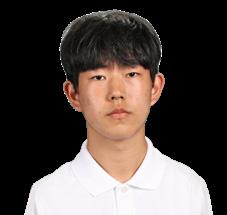

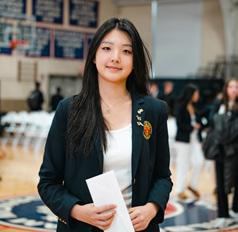
yvonne xu ’28 ha S the “write” S tuff
Wilbraham & Monson Academy’s Kexin “Yvonne” Xu ’28 put her writing ability up against some of the brightest teenage minds in a global contest. When the results were announced, Yvonne learned her writing skills are among the best in the world.
Yvonne earned a Very High Commendation the highest group award from the John Locke Institute Global Essay Contest in October.
“I felt surprised because it was my first time joining the John Locke Essay,” she said. “It felt great to know that my ideas were recognized. It encouraged me to keep writing.”
Yvonne chose the following 2,000-word prompt: Should anyone be ashamed of their nation’s history? Should anyone be proud of it?
“This topic attracted me immediately because it made me think of China in World War II,” explained Yvonne, of China. “This part of history is a painful but significant chapter of China’s past.
“Also, this topic gives me the opportunity to challenge myself to sculpt a country by shame and pride. It helped me understand history and human nature in a deeper way. Also, I used this chance to research China and Italy, two ancient countries that have an attractive history and culture.”
According to its website, “The John Locke Institute is an independent educational organization that works to embolden the best and brightest students to become more academically ambitious and more intellectually adventurous.”
Kiki Brook ’26
Yixuan “Alissa” Zhao ’28
Minh Nguyen ’26
Hajun “Paul” Jeong ’29
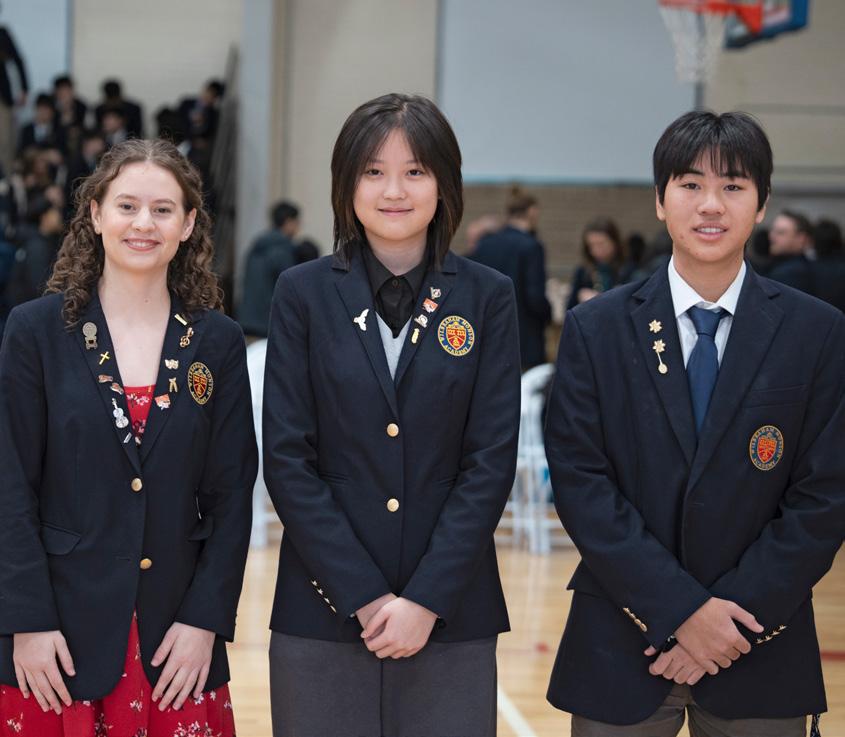
Musical trio qualifies for Senior Districts
It’s been obvious for most everyone at Wilbraham & Monson Academy how much the music program has improved in the last two school years.
People outside of the Academy are seeing that improvement as well.
Three WMA students Avah MacDonald ’27, Angie Huang ’28
and Zheng “Neil” Lian ’27 were chosen to participate at the highly selective Massachusetts Music Educators Association Western District Senior Festival. The event’s concert was held in January in Wilbraham. Avah, Angie and Neil were chosen after their respective
auditions in November at Westfield State University in Westfield, Massachusetts. Each musician had to perform an assigned solo. All three made a return trip to the festival. Each artist also receives private lessons at WMA. Avah and Angie, both sopranos,
scored extremely high and earned an opportunity to try out for all-state.
• from Left: Avah MacDonald ’27, Jingyi “Angie” Huang ’28 and Zheng “Neil” Lian ’27
WMA sends 5 to Junior Districts showcase
Chance McEvady ’32 loves being on stage, and he was on stage with four other students from Wilbraham & Monson Academy at one of the biggest musical events for youths in the region.
Chance tallied the high score for the district during his chorus audition at Westfield State University in December for the Massachusetts Music Educators Association Western District Junior Festival (Grades 6 – 9).
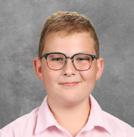
Chance, Neela Hopkins ’29 (cello), Berreth “Bear” Pratt-Buckholz ’32 (chorus), Rania Khan ’31 (chorus) and Makenzie Pierce ’31 (chorus) advanced to the Junior Festival, which was held in Wilbraham in March.
Singing soprano, after performing “Alleluia” by Mozart and E Major scales, Chance totaled 118 of a possible 120 points.
“I like to sing a song that I enjoy and share it with others,” said Chance, who began taking music lessons in kindergarten. “I really like to add in my own twist to songs when I can. I also love the experience of being on stage and entertaining people. That is what I like the best.”
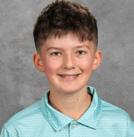
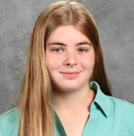
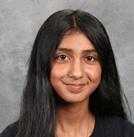
I like to sing a song that I enjoy and share it with others. I really like to add in my own twist to songs when I can. I also love the experience of being on stage and entertaining people. That is what I like the best.”
chance mcevady ’32
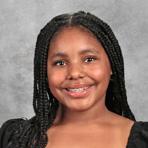
Noelle MacDonald ’31 shines
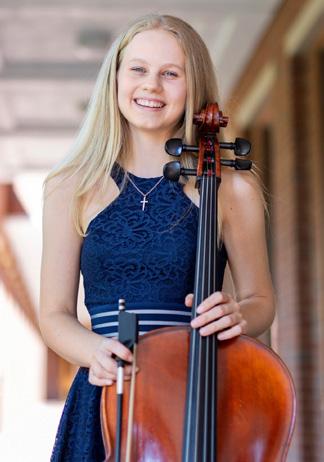
Whether she was playing in an orchestra in Springfield or Florida, Wilbraham & Monson Academy’s Noelle MacDonald ’31 kept hearing about a summer program named “Interlochen.”
After looking into it, Noelle realized that’s where she wanted to be. And after her audition, that’s where she’s going.
Noelle was selected to be a member of this summer’s Interlochen Arts Camp, held in Michigan and regarded as one of the most elite music programs in the world.
“In the competitions and orchestras I’ve played, the most advanced players have attended Interlochen,” said Noelle, a cellist who has performed for youth orchestras in Florida and Springfield, Massachusetts. “I really wanted to challenge myself this summer. Interlochen is one of the most renowned music camps in the world with some of the best and wellknown professional musicians.”
Noelle was chosen following her video audition, where she played Vivaldi Sonata in E minor 4th movement and Tchaikovsky Chanson Triste.
“I am looking forward to studying with great teachers, going to chamber rehearsal, studying music theory, making connections, seeing the Great Lakes and playing some of the best music,” said Noelle, a five-time first-place finisher at the Florida Federation of Music Club.
Chance McEvady ’32
Neela Hopkins ’29
Rania Khan ’31
Berreth “Bear” Pratt-Buckholz ’32
Makenzie Pierce ’31
Middle School
Robotics team enjoys success at high level
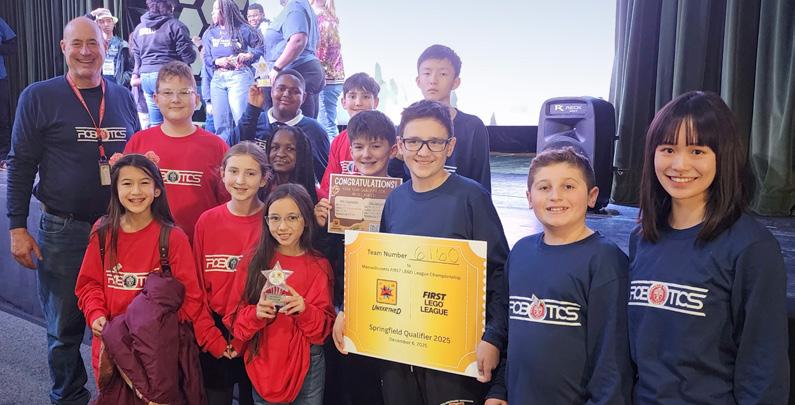
Wilbraham & Monson Academy’s Blue Team won first place in the Robot Design category at the FIRST Qualifying Tournament in Springfield in December. The competition includes top middle school robotics programs in Massachusetts.
“I am very proud to see Ms. (Linxi) Wen and the Blue Team’s learning journey get rewarded with a victory and a spot at the state competition,” said Mr. Luke Pelletier, who leads the Robotics program at WMA. “This team and coach were entirely new to Spike Prime programming and the First Lego League environment this season, making their success even more meaningful. Their victory highlights their rapid acquisition of complex skills and exceptional teamwork under new circumstances.”
The Blue Team consisted of Stry Ramirez-McCarthy ’31, Thomas-Enzo Mazzoli ’32, Chance McEvady ’32, Zijie “Rory” Zheng ’30 and Alasdair Lowery ’32.
The group advanced to the state event, which was held in mid-December at Worcester Polytechnic Institute in Worcester, Massachusetts.
“I think the reason why (the judges) gave this award to us was due to the uniqueness of our attachments we had made for our robot to complete missions,” explained Chance. “Stry
• froNt roW, from Left:
Emmy Valania ’32, Olivia Salema ’31, Marissa Trimble ’32, Stry RamirezMcCarthy ’31, Thomas-Enzo Mazzoli ’32 and Ms. Linxi Wen (Advisor).
secoNd roW: Mr. Luke
Pelletier (Advisor), Berreth “Bear” Pratt-Buckholz ’32, Olarinsola Oladimeji ’30 and Chance McEvady ’32.
BAck roW: Alasdair
Lowery ’32, Liam McMahon ’32, and Zijie “Rory” Zheng ’30.
came up with an effective design for our first mission. He had made an attachment that is supposed to knock a lego brush left and right, and then pick the brush up. To do this, we made two arms for the attachment: one has round legos and the other has rubber legos. One of these arms knocks the brush, then both arms clamp together on the lego brush, and pick it up due to the round legos and rubber legos creating friction by clamping together. The hard work really paid off.”
WMA’s Red Team also placed, taking second in the Core Values category. The Red Team included Liam McMahon ’32, Bear Pratt-Buckholz ’32, Emmy Valania ’32, Olivia Salema ’31, Marissa Trimble ’32 and Olarinsola Oladimeji ’30.
“I am very proud of the Red Team for navigating the rigorous, independent judging session to secure a welldeserved second place on the group core value,” Mr. Pelletier said. “They presented their research project, robot design and programming presentations without coaches’ presence. This strong finish is a direct result of their teamwork, strong problem-solving skills and ability to present their hard work confidently. The judges wrote, ‘They demonstrated and showed they were all friends and enjoyed each other’s company, and engaging with each other.’”
Future City captures
New England regional title
One week after winning the regional event, the Wilbraham & Monson Academy Middle School team of Grade 7 students earned the top prize at the Future City New England Regional Finals in Boston, Massachusetts, in January.
WMA bested four other teams to advance to the national competition, which was held in Washington, D.C., in February.
“This is the result of many hours of work both in and out of the classroom,” explained Future City faculty advisor Mark Weber. “There is no exam, no vocabulary to memorize it’s all about tapping into the students’ innate creativity and passions. Each student can find a task that suits their skills and interests so everyone is engaged and dedicated to the final outcome. It’s important to remember that this is a student-run project. There are adults who act as advisors and help the students learn some organizational skills, but at the end of the day, this is their project and their victories.”
The team included Henry Adams ’31, Gonzalo Baz Arroyo ’31, Colleen Chesky ’31, Lily Hoar ’31, Emerson Letendre ’31, Gianna Lovelace ’31, Noelle MacDonald ’31, Mikey Mannix ’31, Charlie Proctor ’31, Logan Sheffer ’31 and Jade Villamaino ’31.
The same team won the Western New England Regional in January.
3 S tudent S win national award
Winner!
Check that National Winner!
Competing against some of the most creative and motivated middle schoolers in the world, Wilbraham & Monson Academy won a “Special Award” at the Future City national competition, held in Washington, D.C., in February.
The Titans Colleen Chesky ’31, Noelle MacDonald ’31 and Henry Adams ’31 were one of 46 teams to qualify for the global venue, which drew participants from China and Mexico, along with the United States.
“The team was proud of what they had created and achieved, but they knew they were facing other truly excellent teams,” said Mr. Weber.
• from Left: Mark Weber (Advisor), Jade Villamaino ’31, Charles Proctor ’31 (rear), Colleen Chesky ’31 (front), Emerson Letendre ’31, Henry Adams ’31, Noelle MacDonald ’31, Lily Hoar ’31, Logan Sheffer ’31 and Gonzalo Baz Arroyo ’31 at the New England competition State champs!
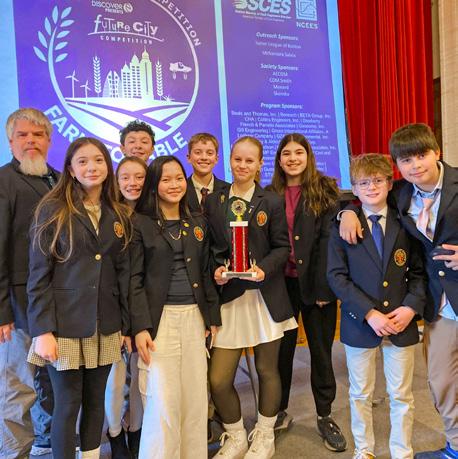
At Future City, competitors create a city 100 years into the future. WMA selected Rio de Janeiro, naming it Soil de Janeiro due to the theme of farm waste from food to table.
WMA was named the recipient of the “Most Sustainable Food System Award.”
The three-day grind included explaining the team’s city to various professionals in the STEM field, followed by a more casual discussion with guests on Day 1. The stress ramped up Day 2, with WMA presenting to three panels of judges for seven minutes each before taking questions for eight minutes.
Day 3 featured the awards ceremony. WMA did not end up on the podium for one of the top five overall awards, but the team felt it was in good position to win the “Most Sustainable Food System Award,” which it did.
“This was the award the team sought the most, as it was the theme of the entire project and showed WMA’s dedication to solving the problems with food waste from farm to table,” explained Mr. Mark Weber, WMA’s Future City Faculty Advisor.
“The team utilized desalinization technology as a water source with a minimal environmental impact.
“Currently, Rio de Janeiro has many abandoned skyscrapers that the students envisioned being repurposed as vertical farms, each with a market or restaurant at its base and connected directly to the desalinators. This provided a streamlined connection between the farm and the table, and the judges awarded their creativity with the corresponding award.”
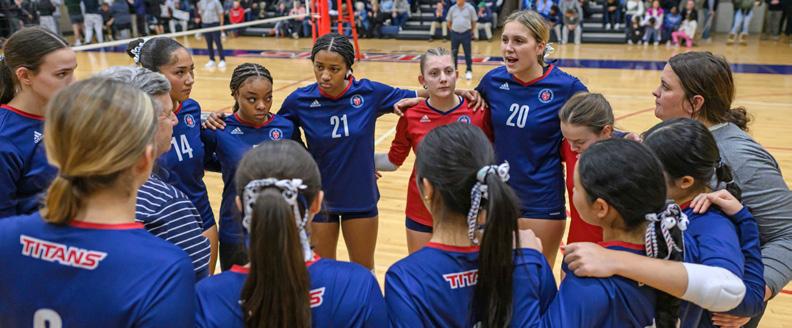
volleyball
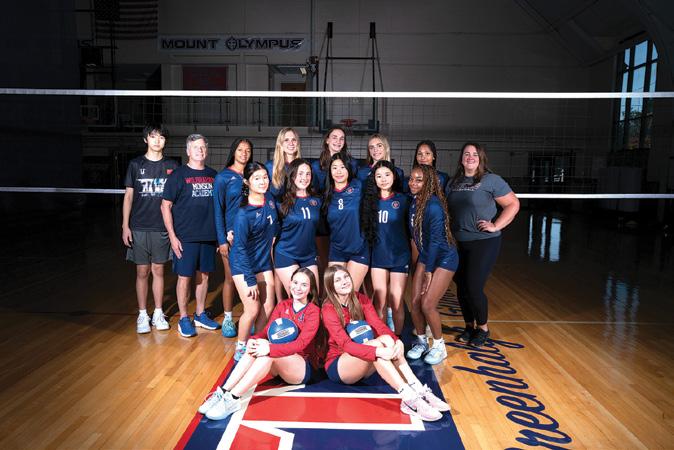
Girls Volleyball posts record season
Gabby Ravosa ’28 said it was a huge season of growth for the Wilbraham & Monson Academy Girls Volleyball program.
After their performance in the team’s first playoff game in nearly a decade, the Titans were still growing…and winning.
In its first postseason match since 2016, WMA shook a hard-working Marianapolis Prep team to win its New England Prep School Athletic Council Class C quarterfinal 3–1 in an electric Greenhalgh Gymnasium in November.
“Our whole goal was to keep doing what we’ve been doing,” Gabby said. “It’s been a huge season of growth in the program so there wasn’t a ton to change just stay calm, play our own version of volleyball and be ourselves.”
The victory against #8 Marianapolis (11– 9) was the first playoff victory since 2010.
“That’s not too far after I was born,” Caterina Ravosa ’26 noted. “I’m a four-year senior, and we’ve never made playoffs before. To make it as a one seed and to win our first-round game, a lot of us are excited. There were a lot of nerves going into it because none of us had played in a playoff volleyball game before. We’re excited to continue and none of us want the season to end.”
Top-seeded WMA (16 –2), which set a program record for wins in a single season, lost in the semifinal round to eventual New England champion Hamden Hall Country Day School.
Against Marianapolis, Greenhalgh Gymnasium saw its largest volleyball crowd in more than a decade. Football players wore their helmets, and the stands were full. Most importantly, the WMA fans were loud.
“The crowd really helped with our energy,” Selah Prignano ’26 added. “I felt like at any point
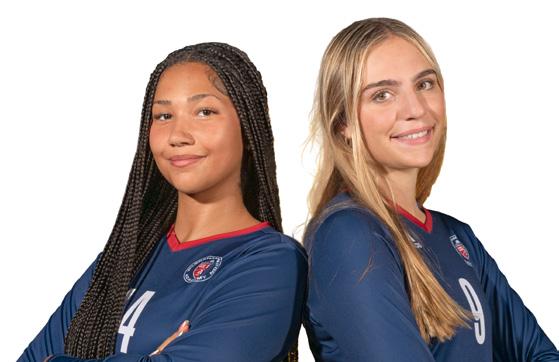
• Adelina Brown ’28, left, and Gabby Ravosa ’28.
when we were down, they picked us up. We were able to keep our energy on the court really well and we came out with the win.”
WMA won the first sets 25–20 and 25–22, Marianapolis took the third 29 –27 before WMA closed it out.
Gabby Ravosa ’28 (First Team) and Adelina Brown ’28 (Honorable Mention) were chosen to the All-NEPSAC team.
Caterina Ravosa ’26, No. 20, speaks to the team during a timeout during quarterfinal tournament action.
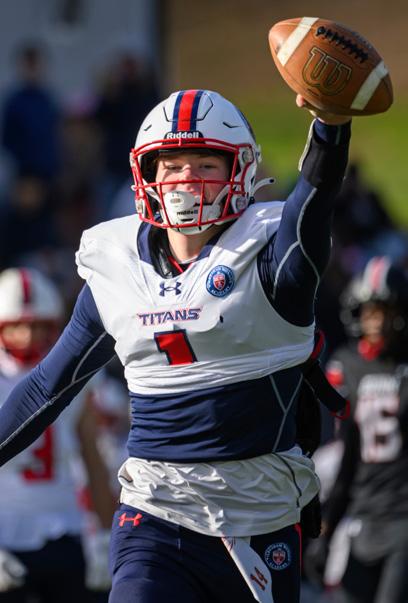
football
Football reaches championship game
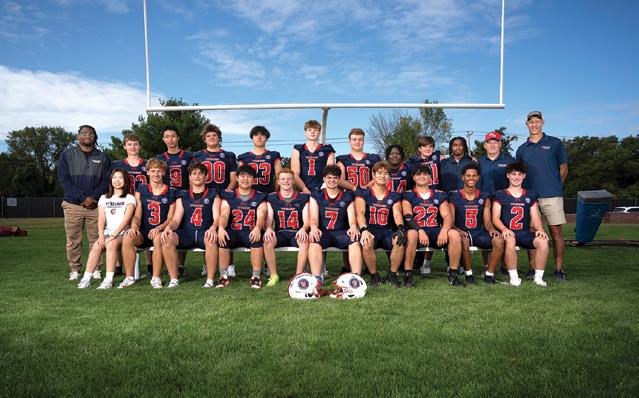
In just its third season of playing under a new format, the Wilbraham & Monson Academy Football team reached the championship game in 2025.
And with a number of key players returning, the Titans are in position to get back to the final in 2026.
With its high-powered offense leading the way, WMA competed in the 8-Player Football League Championship, falling to Frederick Gunn School 48–29 in November.
“Reaching the 8-Player League championship was a great accomplishment,” Coach Jeff Vartabedian said. “It was a real testament of how much this group improved throughout the season and came together as a team.”
The Titans (5–3) led in the first half before quarterback Owen Earle ’28 a finalist for the league’s Player of the Year award left the game with a foot injury.
WMA rode an offense that averaged 43.9 points per game to the championship.
football
Football lands five on all-star teams
Five Wilbraham & Monson Academy Football players received postseason awards following a season that included a trip to the championship game.

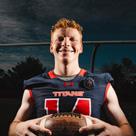

Owen Earle ’28
All-NEPSAC, NE
8-Player Football All-League, finalist for Player of the Year
Patrick Dorunda ’26 All-NEPSAC, NE 8-Player Football All-League
Ethan Carreiro ’27 All-NEPSAC Honorable Mention, NE 8-Player
Football All-League Honorable Mention
Freddie Shubrick ’27 All-NEPSAC Honorable Mention
Jack Garvey ’27
New England 8-Player
Football All-League Honorable Mention
Quarterback Owen Earle ’28 celebrates a touchdown run during championship game action.
boy S S occer
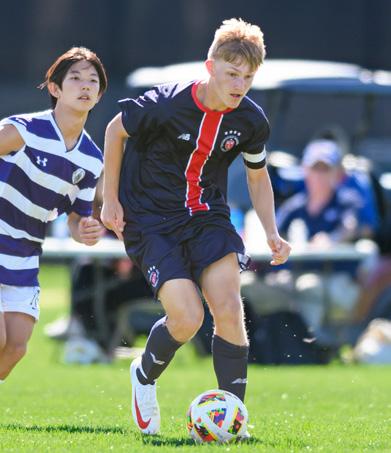
Honor caps historic season for Brant Stoltz ’26
Wilbraham & Monson Academy Boys Soccer player Brant Stoltz ’26 posted historic numbers during 2025, finishing his remarkable season with a nod to the All-New England Prep School Athletic Council’s Honorable Mention list.
Brant finished with 20 goals and three assists, meaning he partook in 72 percent of WMA’s 32 goals.
“Going into the season, my goal was to score 10 goals, as I had scored seven the previous year,” Brant explained. “Through our first four games, I had nine goals, including a four-goal game, and that’s when I realized that the season had a lot of potential.
“We played with three forwards, and constantly worked in new players into those spots. The team picked up a lot of steam, and my teammates were able to find me on through balls consistently, so I have them to thank for reaching 20 goals on the season. I could never have done it without the trust of my teammates to score their passes, and I am excited to see how the returning players can step up to the next level next year and continue to be a threat up front.”
As a bonus, Brant had a goal and assist at the league all-star game.
“(Brant) was a leader on and off the field,” former WMA Boys Soccer Coach Bret Thibault said. “He worked hard every practice and game, leading by example. He also connected with his teammates, working to help everyone play better and play better as a team. He was all about the team and making us better because he understands that we all are needed for success.”
G irl S S occer
Girls Soccer stars find spotlight
Five Wilbraham & Monson Academy Girls Soccer players earned awards following their performance during the 2025 season.
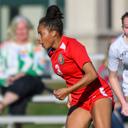

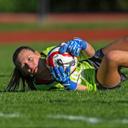
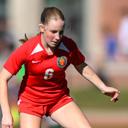
Katie Hutcheson ’26 NEPSAC All-State
Ani Hodge ’27
NEPSAC Junior All-Star
Adrianna Chechile ’26 Boston Globe All-Scholastic
Viviana Poirier ’29 Women’s Western New England Prep School Soccer Association All-Star
Sabina Zwyrbla ’29
WWNEPSSA All-Star
Brant Stoltz ’26
field hockey
Field Hockey garners postseason awards
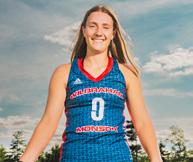
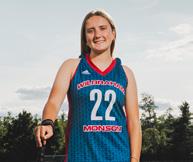
Wilbraham & Monson Academy Varsity Field Hockey player Caitlin Stratton ’26 concluded her seven-year career by being named to the All-New England Prep School Athletic Council Honorable Mention list.
Stratton and Callie Klepacki ’27 were selected to compete in the Western New England Prep School Association All-Star Game.
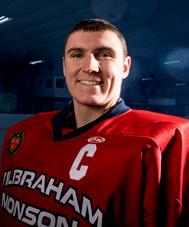
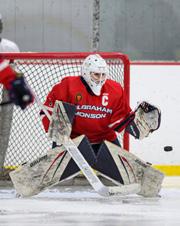
hockey Titans’ goalie reaches saves milestone
Anyone with a hint of hockey knowledge who has been to a Wilbraham & Monson Academy Boys Hockey game can see that Titan goalie Max LaBelleLavallee ’26 is talented.
How talented? One thousand saves talented.
Playing in just his 20th game for WMA, Max recorded his 1,000th career save in a 9 –2 loss at Rhode Island’s Mount Saint Charles Academy in January.
“The thing I am the most proud of is my resilience and mindset going into every single game,” Max explained. “No matter who we are playing, and with who I will play with, I will give the best of myself. Honestly, a big part of this was the mental and physical endurance. I prepared better since I knew the challenge it meant, and (Fitness) Coach Emily Nitzsche also gave me good advice so I can repeat one save 1,000 times.”
G ymna S tic S
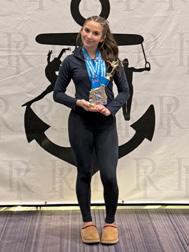
Harlowe Grozio ’28 excels in gymnastics
Wilbraham & Monson Academy’s Harlowe Grozio ’28 isn’t fully healthy, but she’s talented and healthy enough to still be very competitive in her area of expertise.
Still nicked up from previous injuries, Harlowe medaled in all four events and placed fourth in the all-around competition in a field of 30 gymnasts in her category at the Rhode Island Invitational in December in East Greenwich.
Coach Lawrence Biondo marveled at Max’s accomplishment and ability.
“Max has worked extremely hard to record 1,000 saves in less than two full seasons,” Coach Biondo said. “On the ice and in the gym, he is willing to put in all the extra effort necessary to prepare himself well for each of his starts. Max is an outstanding competitor. He is unafraid of any challenge, and he can quickly refocus himself whenever a goal is scored upon him.”
Max tried to focus on his goaltending responsibilities as he neared the milestone.
“I indeed knew that I was about 45 saves away from getting my 1,000th, but the plan was still the same battle ’til the end and do my job, saving pucks,” Max said. “I honestly didn’t see the shots go; I was focused on helping the team at the best of my abilities.”
“This year, I am finally able to have the season I have been waiting so long for, despite ongoing back, knee and hip problems,” Harlowe explained.
Competing at Level 7, Harlowe placed third on the vault, fourth on the bars, second on the beam and third in the floor exercise. Ironically, her balance beam has grown into one of her better events because of her previous setbacks.
“In 2023, I placed second out of all Level 5 athletes in Massachusetts,” Harlowe said. “This was a huge accomplishment of mine because it was my first season back after breaking both of the bones in my left wrist. Unfortunately, after that meet, I injured my right elbow and was unable to do much gymnastics outside of conditioning for a few months going into the summer. In early 2024, I fractured my tailbone and went through an intensive recovery process, including physical therapy and spinal trigger point injections.
“My best event is balance beam, which I think in large part is due to the significant time I was able to focus on my balance and coordination because of all my injuries silver lining, I suppose,” she said.
Harlowe has participated in gymnastics since before she could walk. She hopes to be healthy and competitive at this year’s state meet.
“Even though gymnastics is a physically and mentally challenging sport, I keep coming back because I truly love it,” she said. “I’ve done it for my whole life and it has helped shape (me into) the person I am today. I am proud of my discipline and grit and I have made so many amazing friends, had wonderful coaches and enjoyed some incredible opportunities, including meeting Olympians Simone Biles and Gabby Douglas.”
Caitlin Stratton ’26
Callie Klepacki ’27
lacro SS e
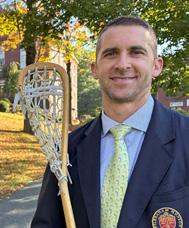
Boys Lacrosse coach takes center stage
Many of the top youth boys lacrosse players in New England were in Massachusetts for a showcase in October, and they heard a lesson from one of best prep coaches in the region.
Mike MacDonald, who has built Wilbraham & Monson Academy into one of the premier prep teams in the northeast, was the keynote speaker at the Little Brother
ba S eball
Lacrosse event at Eaglebrook School in Deerfield.
Coach MacDonald addressed more than 100 players and their families. The intent of the showcase was to provide the youth players with exposure to New England Prep Lacrosse. Who better than Coach MacDonald, who played on NCAA Division I championship teams at Syracuse University in 2004 and 2008 before hitting the prep school coaching ranks, leading the Titans to titles in 2022 and 2023.
Baseball coach Jamie Gouin earns high-level certification
When it comes to arm care for high school pitchers, there are few more qualified than Wilbraham & Monson Academy Baseball coach Jamie Gouin.
Coach Gouin earned his credentials as a Certified National Pitching Coach, Velocity, and Arm Care Specialist after attending an 18-month
“This is great exposure for WMA,” explained Coach MacDonald. “To be able to stand in front of the entire group, share my story and motivate them is also a huge recruiting benefit.
“I also hope to continue the WMA Boys Lacrosse legacy for years to come for my son. Building a lasting championship program takes dedication and consistency. Attending events like this ensures we are getting not only quality players but quality people enrolled in our community.”
course directed by National Pitching Association Regional Director Gardy O’Flynn in Ipswich, Massachusetts.
“I was one of only two coaches on the East Coast to achieve this rank, and there are fewer than 100 certified NPA coaches in the nation,” Coach Gouin explained. “I feel truly honored to have been accepted into this program and to train under Gardy’s guidance. I was a little starstruck attending my first virtual NPA meeting,
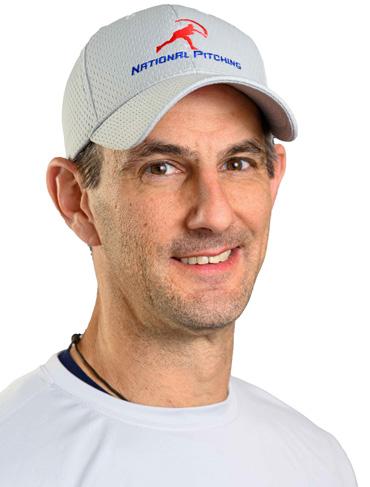
Being associated with Tom House, a legendary figure in baseball development, is incredibly meaningful, as it connects WMA to a nationally recognized network of elite coaches and brings national attention to our baseball program.”
jamie gouin
surrounded by some of the top professional and college coaches in the country.”
Staying healthy in baseball is different to other sports due to one activity throwing putting such an imbalanced demand on the body. Coach Gouin wanted to ensure his players received the best care.
“I wanted to attend (the course) to deepen my knowledge of biomechanics, arm care and velocity development using NPA’s sciencebased, health-first system,” Coach Gouin said. “Being associated with Tom House, a legendary figure in baseball development, is incredibly meaningful, as it connects WMA to a nationally recognized network of elite coaches and brings national attention to our baseball program. This distinction also gives WMA Baseball an edge over other schools by providing players with access to cutting-edge instruction and training methods that are rare at the high school level.”
Tom House, a 12-year Major League Baseball player, is regarded as a leader in the field of training pitchers.
Coach Gouin and the Titans began their season with practice and exhibitions games at the Jackie Robinson Training Complex in Vero Beach, Florida, in March.
“WMA Baseball players will directly benefit from this training through scientifically validated instruction, individualized feedback, and a longterm approach to performance and arm health,” Coach Gouin said. “I’m excited to bring these methods to our program to help every athlete grow physically, mentally and strategically, while staying healthy and maximizing their potential on the mound.”
FALL SPORTS
FOOTBALL
VOLLEYBALL
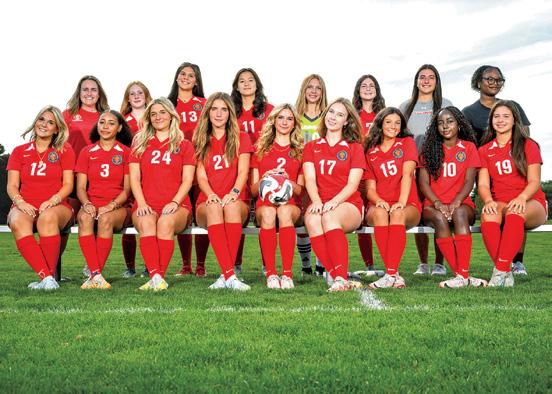
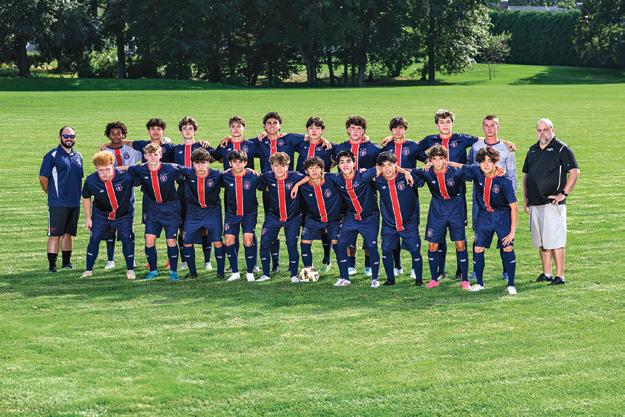
BOYS SOCCER
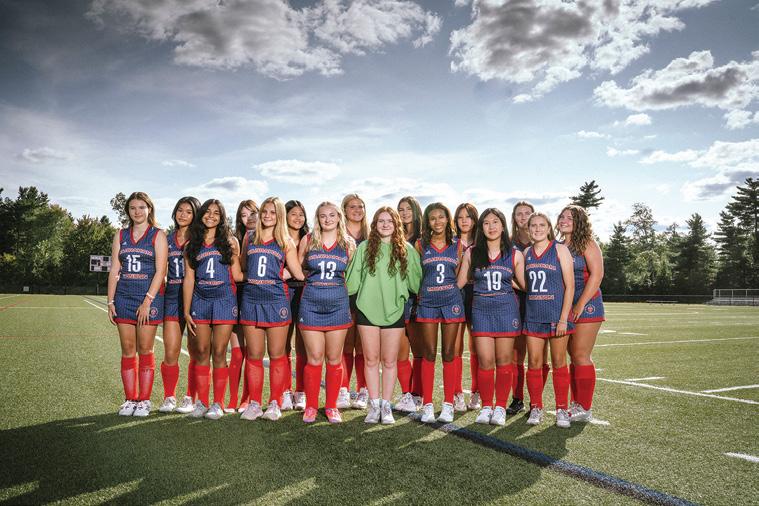
HOCKEY
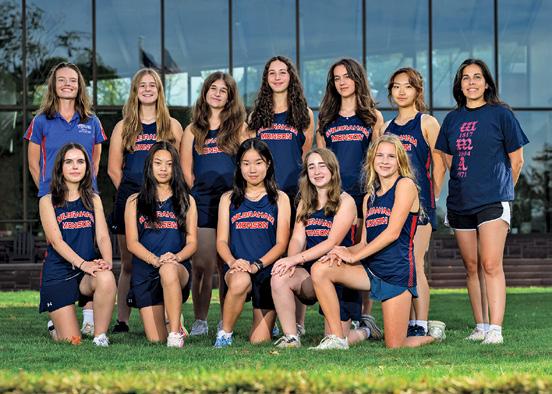
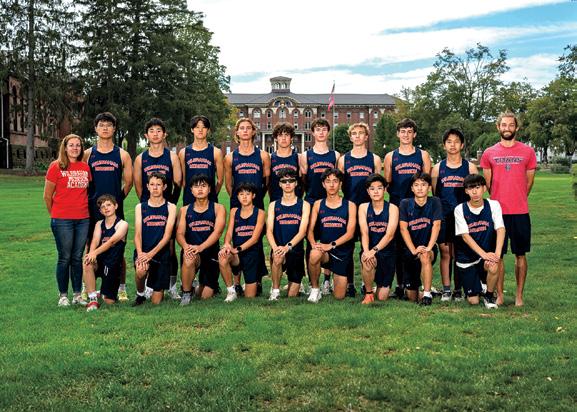
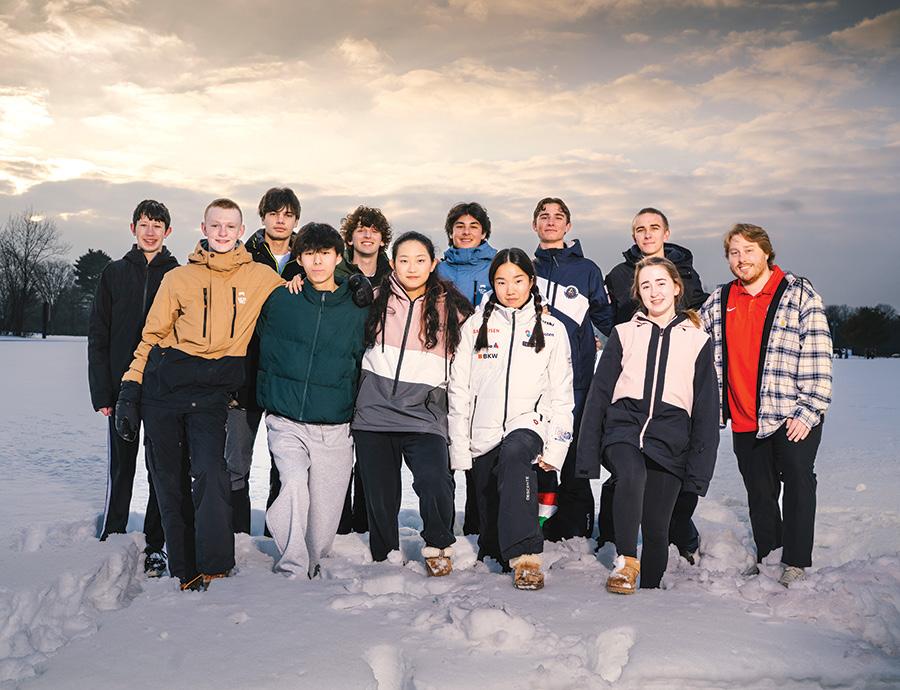
GIRLS CROSS COUNTRY
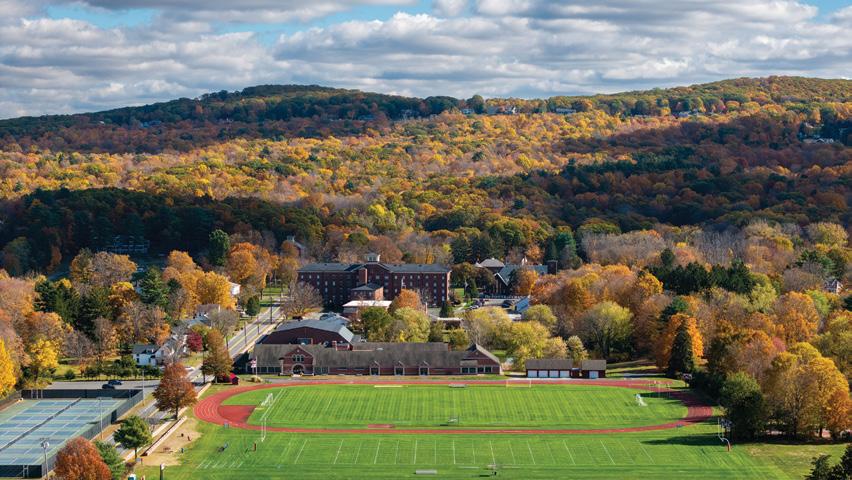
WINTER SPORTS
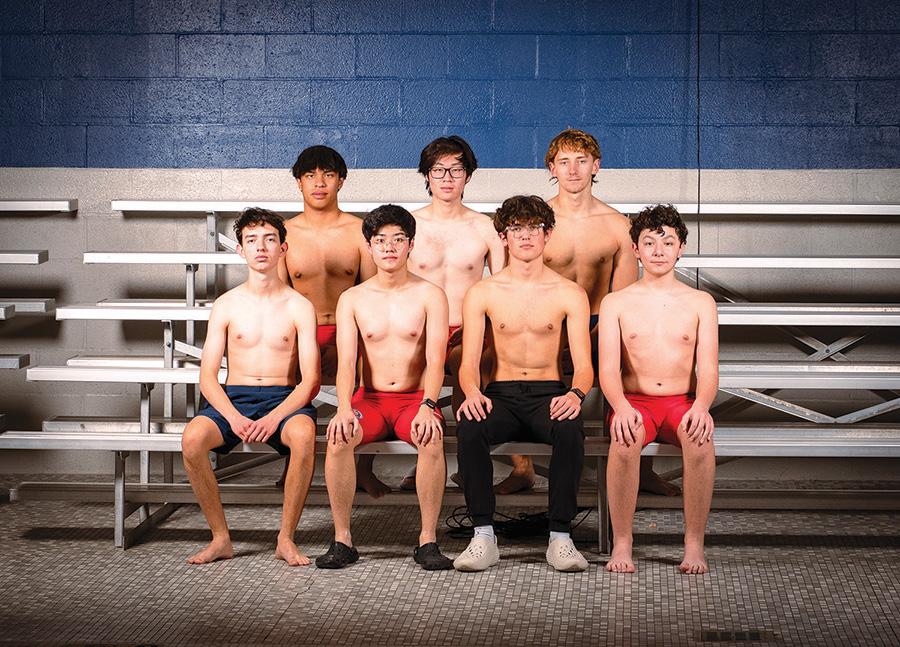
BOYS SWIMMING
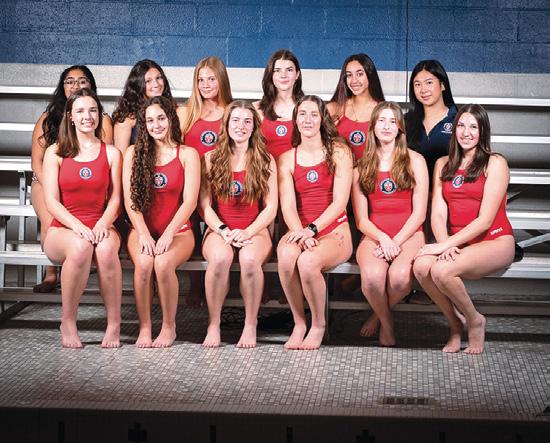
GIRLS
SWIMMING
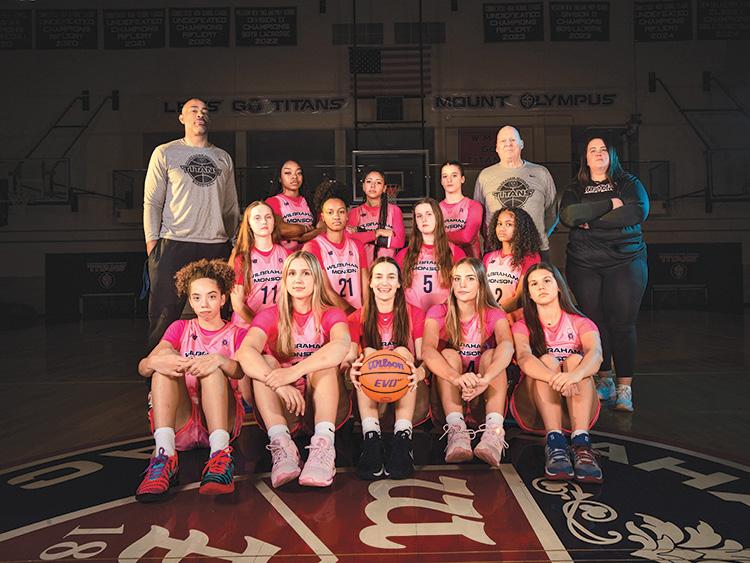
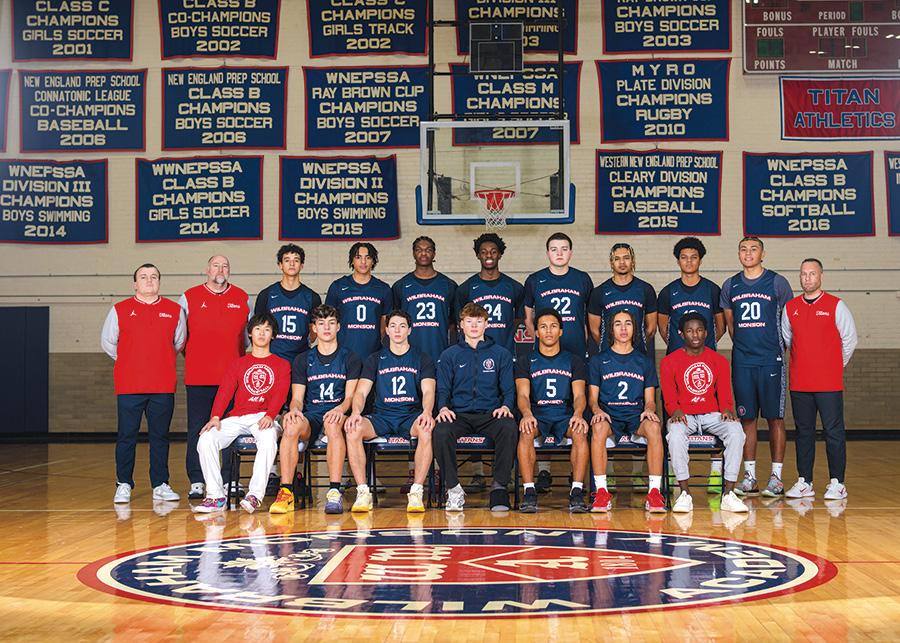
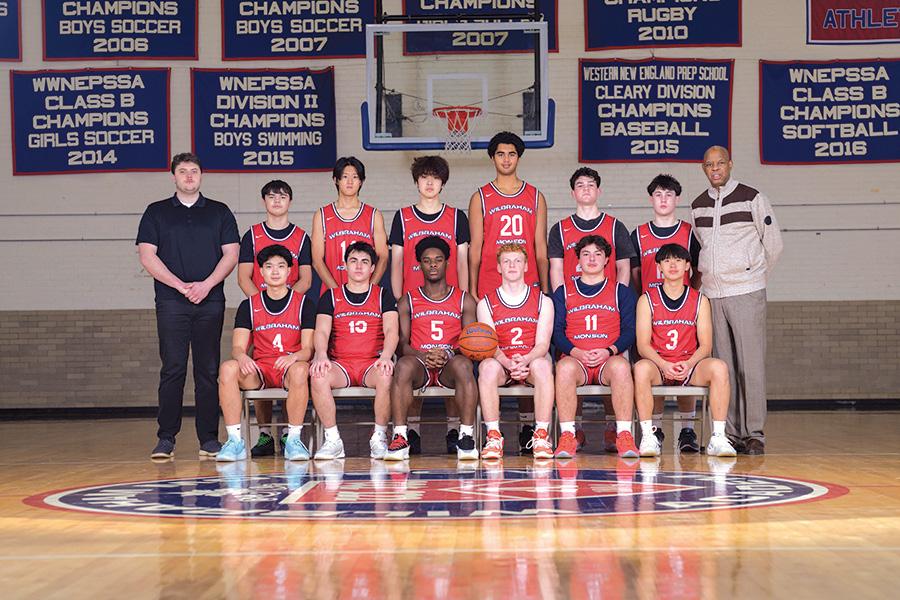
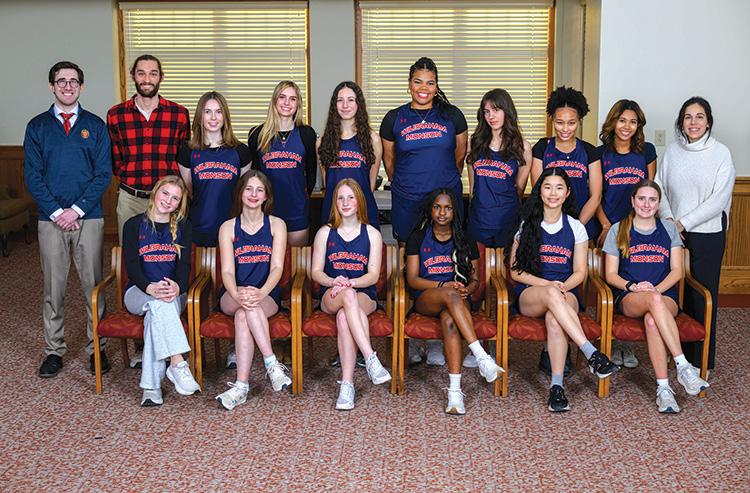
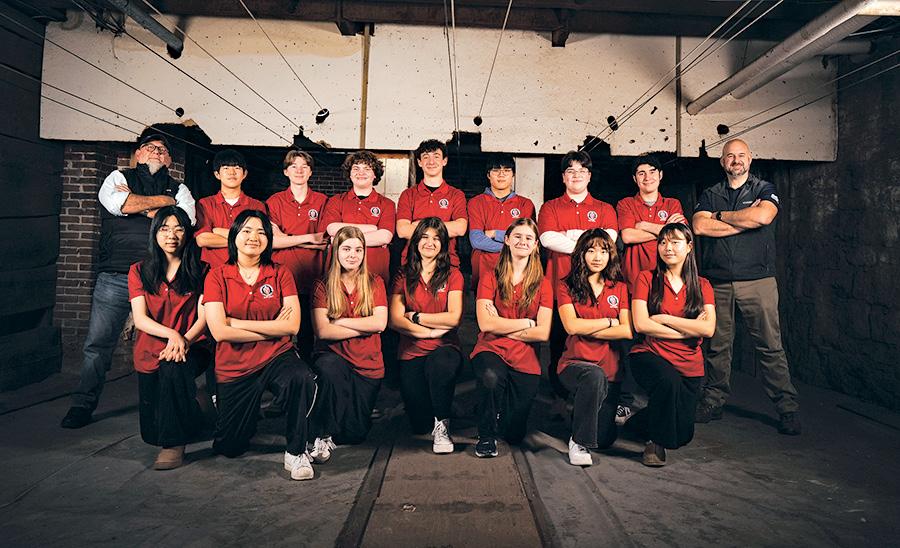
GIRLS WINTER TRACK
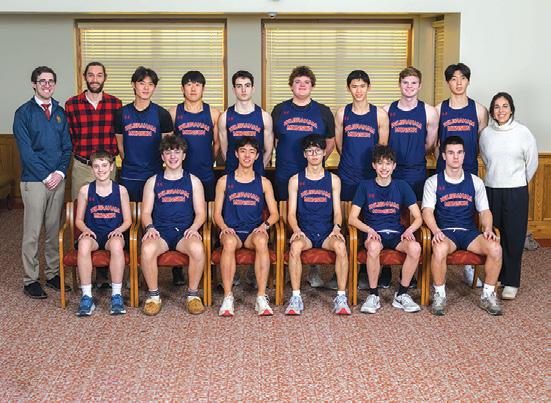
BOYS WINTER TRACK
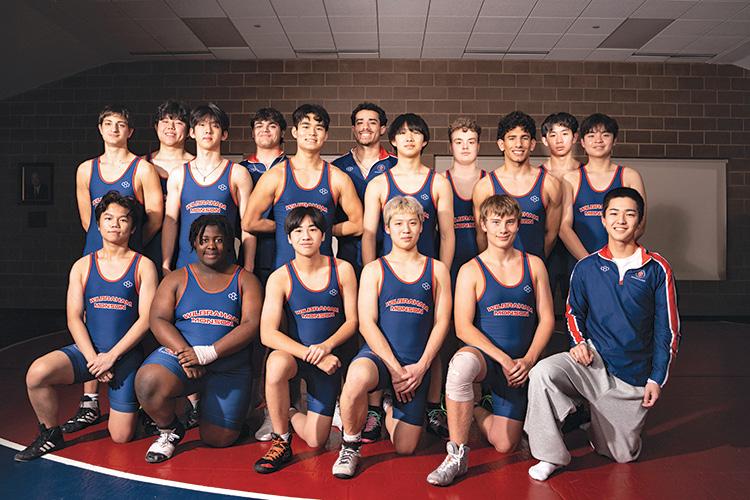
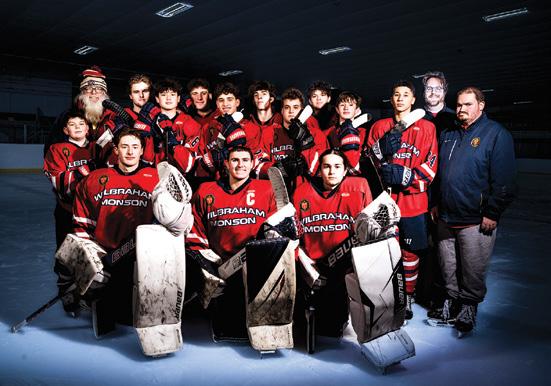
BOYS HOCKEY

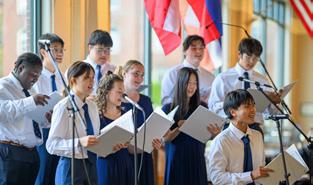
Life on Campus
The 222nd year of the Academy opened with an energy and outlook that we haven’t seen in years. Our opening day enrollment of 374 students represented 21 nations including: Argentina, Armenia, Brazil, Canada, China, Czechia, Germany, Italy, Japan, Republic of Korea, Mexico, Nigeria, Philippines, Russian Federation, Serbia, Spain, Thailand, United Arab Emirates and Vietnam.
1 Orlando Levi ’26, left, of Italy, shares an umbrella with Nia Johnson ’28 while walking down Broad Walk.
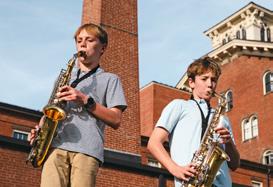
2 Student singers entertained families during a musical performance in Lak Dining Hall. 3 The rear of Rich Hall serves as a backdrop to the musical talents of Wesley Mallory ’31 and Matthew Laporte ’31.
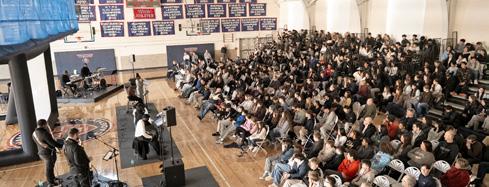
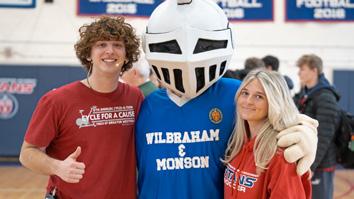
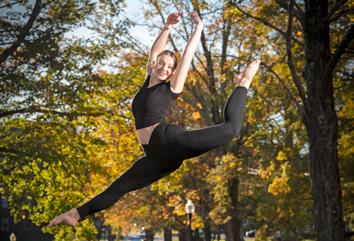
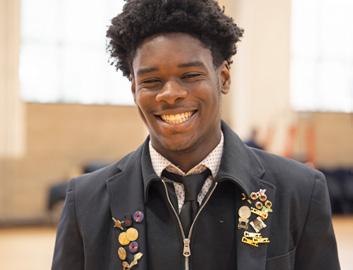
4 Student Spirit Leaders Gabe Hall ’26, left, and Sadie-Lou Krause ’26 take a moment with Titan during an all-school pep rally. 5 Avery Kay ’26 displays her high-level dance form during a promotional shoot with school photographer Paul Bloomfield. 6 Our student community gathered in Greenhalgh Gymnasium to participate in a Crossing Borders Day musical presentation that celebrated the legacy of Dr. Martin Luther King Jr. 7 Nosa Oghagbon ’26 is all smiles wearing his WMA blazer during a School Meeting.
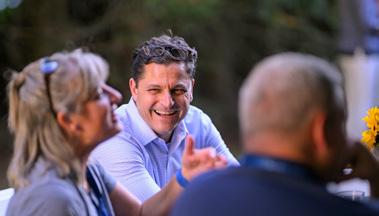
8 Head of School Brian Easler shares a laugh with community members during a Parent Kickoff event.
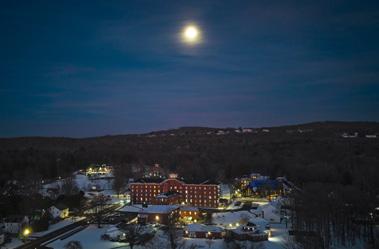
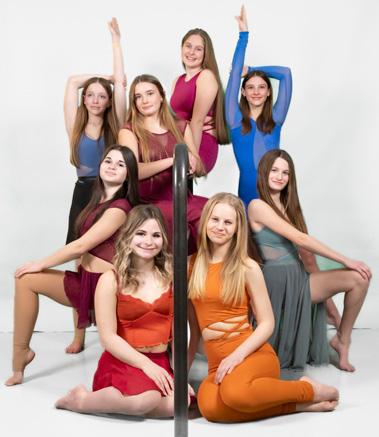
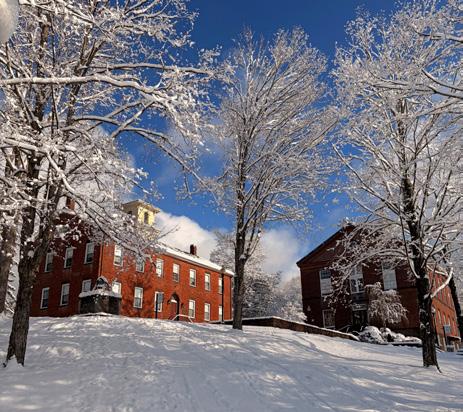
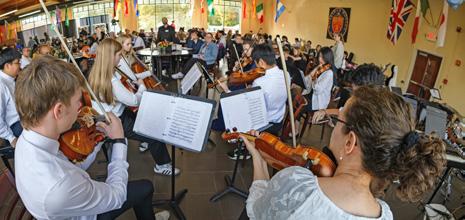
9 A winter’s night across campus, looking east from above the Athletic Center. 10 The Winter Academy Dancers in a promotional photo session prior to their “Take 5” performance. 11 Old Academy, left, and Fisk Hall through the camera lens of Colin Moussette ’26. 12 A “back-stage” view of a Musical Brunch performance by our talented student (and faculty) musicians during Family Weekend. 13 Ben Gamba ’27, left, and Lillian Bonner ’28 during the Academy Players Winter Production of “Alice By Heart.” 14 Dean of Faculty Wally Swanson, left, and English Faculty member Tim Harrington ’73 enjoy a light moment after the 81st running of the Bunion Derby. The pair still coach the Boys Rugby team together.
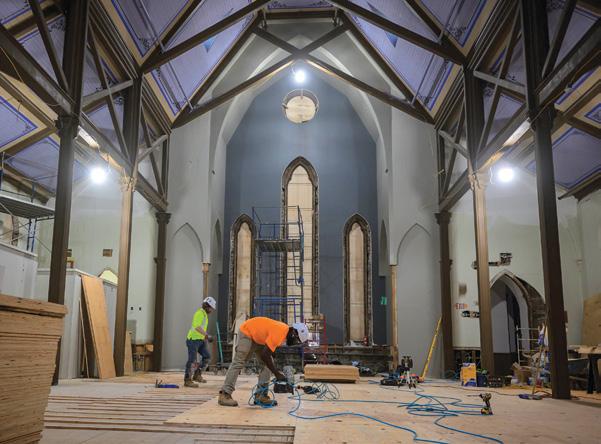
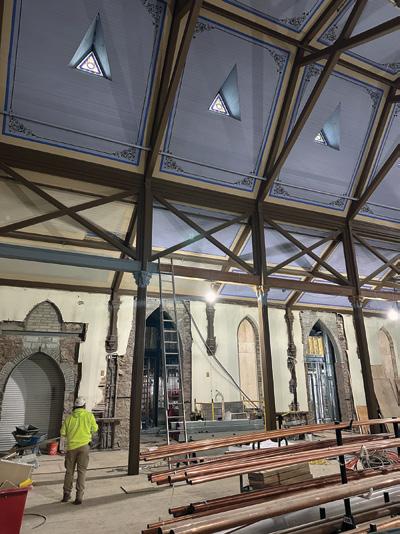
So far, so good …
As you would expect with a building as old as Alumni Memorial Chapel, we’ve run into a few surprises during this exciting renovation project. You just never know when you’re going to find a long-forgotten chimney in a wall where you intended to put a door. The design and construction teams have been exceptionally creative in their approach to these challenges, however, and so far we are still on schedule and on budget for the project!
There have been some really happy surprises, as well, most notably the discovery of the original stained glass which was encased in the alcoves behind the dias. Although there was some damage to individual panes, the three glass segments are in reparable condition and will now adorn once again the south wall of the room. These windows and their unique elements will be stunning with the southern-exposure light coming into the room. Additionally, the reopening of the 10 stained-glass roof dormers makes them visible from inside the room and their light will bathe the space with warmth and color.
We are eagerly awaiting the new dining facility coming online for the next academic year, and we look forward to as many of you coming back to see it as possible.
Brian P. Easler, Head of School

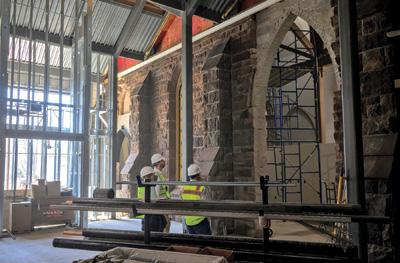
Opening Fall 2026

Don Kelly, est magister
celebrating
50 years at W ma
by maureen K elly c H es K y ’02 Associate Director of College Counseling
Magister. Teacher. It is one of the first words students learn in the Cambridge Latin Course, and it is the perfect word to describe my dad, Don Kelly.
MFor 50 years at Wilbraham & Monson Academy, he has worn many hats but teaching has always been at the heart of every role he has held. Don Kelly est magister
For generations of students and colleagues, he has taught far more than Latin. He has taught us what it means to listen with care, to honor commitments with loyalty and to simply show up. He has shown us how a sense of humor matters, and how respect is earned through consistency and kindness. I have had the privilege of learning from him not only as his daughter, but as his former Latin student and now as his colleague.
Students who reached AP Latin may remember studying Vergil’s Aeneid and translating the epic poem throughout the course with my dad. One of the poem’s central themes is pietas: devotion to family, community
and responsibility, even when the path forward is difficult.
While my father’s story includes no mythic battles or wandering heroes, it does include difficult chapters and unexpected turns.
Prior to arriving at the Academy, he spent time in the seminary and served our country in Vietnam before embarking on a career in education. It was eventually here, at the Academy, where he created his new home, raised his family and formed lifelong friendships. What defines my father’s time at the Academy is his choice to live that ancient Roman value pietas: Devotion and duty to students, colleagues, family and teaching, again and again, for 50 years.
Although some people might say, “Latin is a dead language,” my father brings those ancient worlds to life, full of humor, heart and human insight.
For beginners, we meet Caecilius, Metella, Quintus and Grumio, the characters who help us learn vocabulary and grammar in the first years of Latin. But whether you encounter my father in the classroom through a Latin grammar lesson, on the softball field, in the
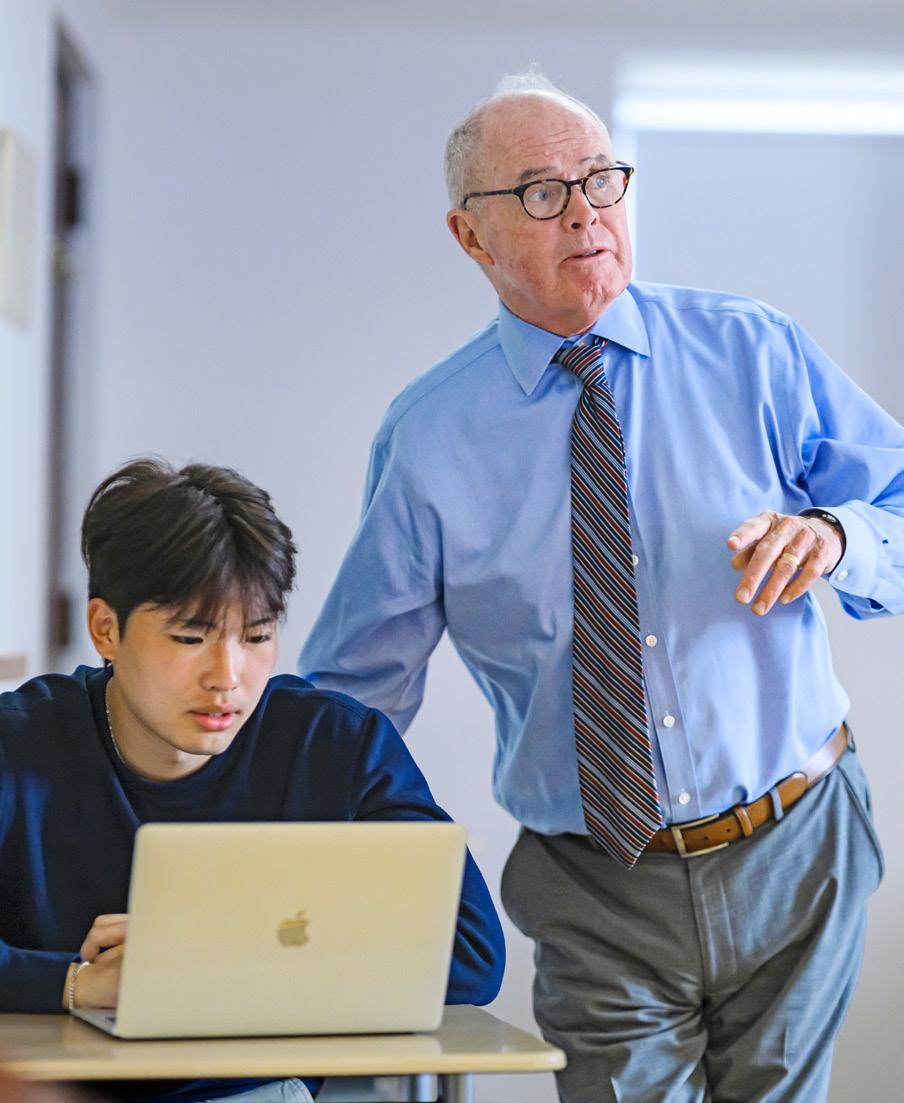
• Don Kelly, right, in the classroom with Yougun Yang ’25
dorm, on the basketball court or in a faculty meeting, he has a way of reminding people that they matter and that learning with him is human, even if it is from lessons from long ago.
His teaching, like the Academy itself, has evolved over time.
I’ve heard stories from the early days of erasers occasionally thrown to recapture wandering attention and witnessed legendary reenactments: the Cambridge Latin Course barbershop scene brought vividly to life, complete with shaving cream, ketchup and a willing student, as my father dramatically demonstrated the barber’s unfortunate slip of the razor. But what never changed throughout the years was my dad’s desire to reach his students, to make learning memorable and establish a shared connection.
What defines my father’s time at the Academy is his choice to live that ancient Roman value pietas: Devotion and duty to students, colleagues, family and teaching, again and again, for 50 years.
maureen K elly c H es
K y ’02
Beyond the classroom, my father has shaped the Academy in many ways.
As Dean of Faculty, he helped welcome new members into the community, taking chances on young teachers, just as others once took a chance on him. He understood when humor could ease tension; I have seen him arrive at faculty meetings dressed as a referee, whistle in hand. He also understood when listening mattered more than speaking. Though he is now back in the classroom, his door remains open. Colleagues still seek him out for clarity, steadiness and counsel, and they leave feeling supported and understood.
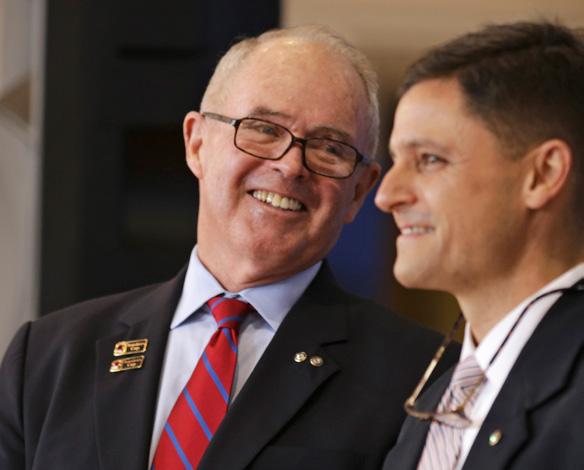
Don Kelly, left, enjoys a laugh with Head of School Brian P. Easler during a recent School Meeting.
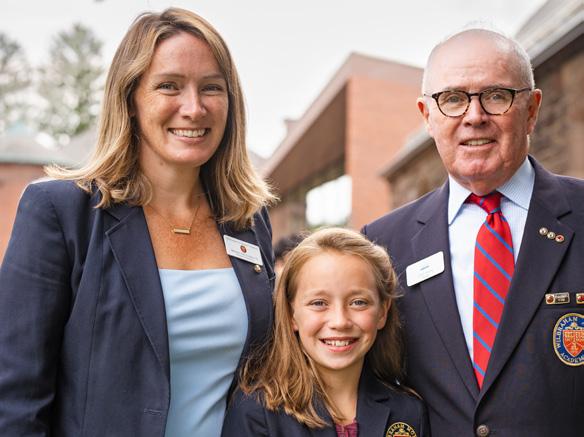
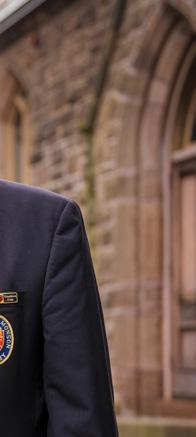
Maureen Kelly Chesky ’02, left, with her daughter Colleen Chesky ’31, center, and father Don Kelly.

leavin G
a
mark for a half century
by D eb K elly Contributing writer
My husband, Don Kelly, and I were both raised in suburban New Jersey towns Ridgefield for Don and Clark for me. We enjoyed our early years in N.J. and felt lucky to be situated so close to New York City. We still make frequent getaway trips there for fun.
Since I spent most of my adult years running a business in Manhattan, I enjoy playing tour guide and arranging our transportation and accommodations, getting tickets to events and mapping out a path for any sightseeing we want to do during the day.
A while ago during one of these weekend excursions, we were crossing Fifth Avenue headed to a Broadway show when a voice called out “Mr. Kelly!” Neither one of us stopped, because surely there must be another Mr. Kelly in midtown Manhattan, but the voice did it again and then ran up to us in the middle of the crosswalk.
That person said: “Mr. Kelly, I can’t believe it’s you. Do you remember me?
How are you? I’m so happy to see you! What are you doing here?”
We scooted out of the street, and the student told Don how much he had thought about him over the years and how he enjoyed getting to know him back then (though he may not have said it at the time). Above all, he stressed how much he still values his WMA experience, and felt so lucky to have had Don as a teacher and felt lucky to have had Don’s guiding hand during those years.
Don was touched.
And the student’s words made me pause and reflect on how many times this has happened over the years I have spent with Don Kelly. He is often spotted and thanked by students wherever we go, albeit this middle-of5th-Avenue was probably the most upscale location of all!
I document this student encounter for a couple of reasons. First, as a warm tribute to Don and his commitment to teaching at WMA for the past 50 years. And also to encourage all young teachers to continue in this noble profession.
Teaching can be frustrating. You wonder if you are getting through or if your class is as interesting as it could be. Will your students reach their personal
goals? Will they become mature thinkers?
But your effect on students may be much larger than you realize. In the case of Don, when alumni approach him, it does not seem to be the Latin they mention as much as it is the adult-to-young-adult communication they experienced. Don’s gifts were to always offer advice, applaud a task well done, explain a situation to a parent, forgive some errant behavior, remember a birthday or wipe a slate clean and get a student back on the right track these are important, sometimes life changing moments that add to the student experience at WMA.
So, if you’re reading this and thinking about going the full 50 years like Don, just know that it will result in hundreds of the most valuable rewards you can receive as a teacher: surprise emails from students reporting recent accomplishments, holiday cards with exuberant life updates, requests to have a beer at reunion and dates for coffee at the Village Store the next time they are visiting WMA.
Kudos to Don and a well-spent 50! Semper Ubi Sub Ubi.
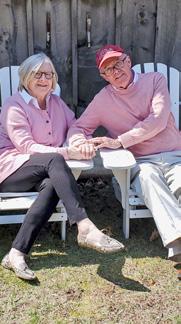
• Don Kelly, right, with wife and contributing writer Deb Kelly.
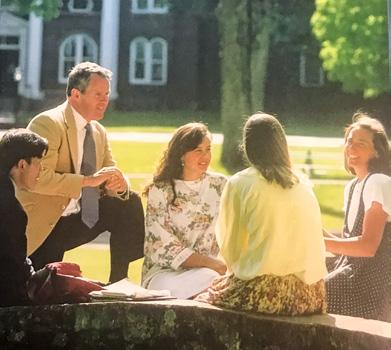
Don Kelly, second from left, engaging with students across from Rich Hall
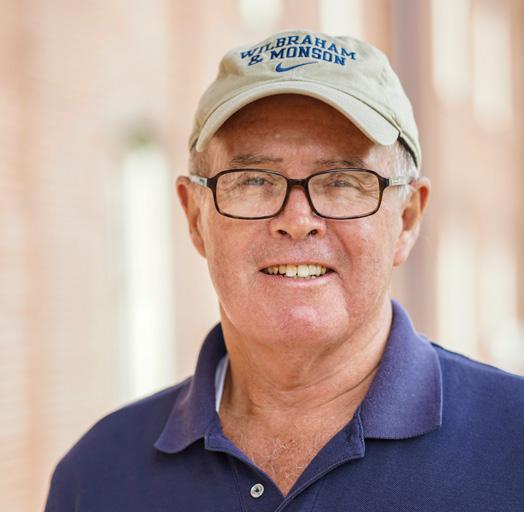
So what does 50 years of teaching, coaching and guiding look like?
• It looks like students who still hear his voice when they translate a line of Catullus.
• Colleagues who say, “He got me through my first year.”
• Alumni who smile when they remember Caecilius and Quintus and even that barbershop scene.
• A bench in his honor, humorously inscribed semper ubi sub ubi
• Athletes who know how to be good teammates.
• Students who recognize the lasting impact of a shared joke or his generosity with time and attention.
• A faculty member who knows exactly whom to seek when they need wisdom, kindness or perspective.
And it also looks like teaching in the same place long enough to see your granddaughter walking the halls of the same school, and knowing the community you chose so long ago will always be home. To teach long enough to see that kind of continuity is to know that you belong there and always will. That kind of presence, shaped by time and care, appears memorably in Vergil’s Aeneid:
Tum pietate gravem et meritis si forte virum quem conspexere, silent arrectisque auribus astant; ille regit dictis animos et pectora mulcet.
(Aeneid 1.151–153)
“When they catch sight of a person distinguished by duty and earned merit, they fall silent and listen; with his words, he steadies their minds and calms their hearts.”
Some of my father’s students will know how to translate these lines, but after 50 years at the Academy, those lines describe something everyone has felt: Don Kelly is a teacher whose respect has been earned, whose voice calms and whose presence endures long after the lesson ends.
And his story is not finished. He is still teaching. Still listening. Still guiding. Still laughing. And still loving this community. Fifty years ago, he arrived as a young Latin teacher. Today, he remains the Academy’s magister, in the classroom and beyond.
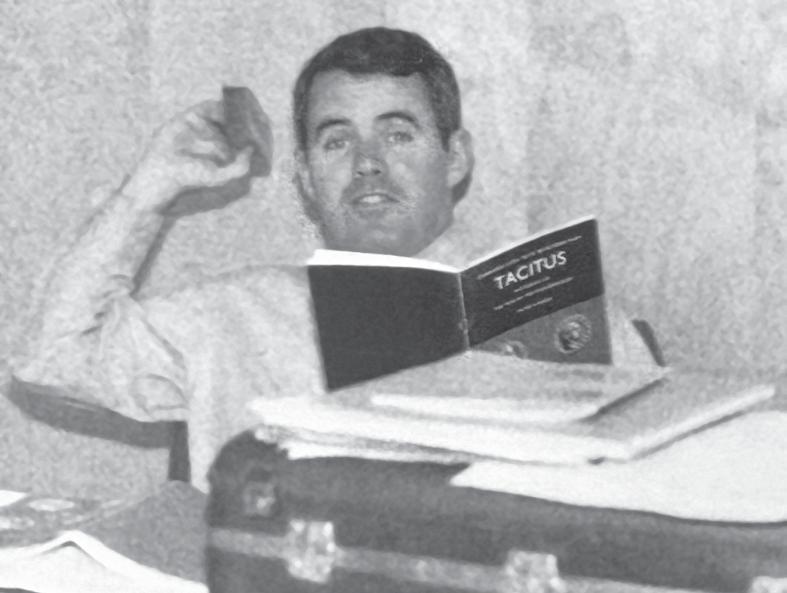
Don Kelly, with eraser ready, reading about Roman historian and politician Tacitus.
by D eb K elly Contributing writer
If one has ever taken a Latin course with Mr. Don Kelly, one knows that his students immerse themselves in the Cambridge Latin Course materials in the very first class. These are expertly prepared textbooks designed to teach Latin by engaging the students with a family living in Pompeii, Italy, during the first century AD. The family of five is made up of Caecilius, his wife, Metella, their son Quintus, daughter Lucia and their pet dog, Cerberus.
Students get up close and personal with this family, learning about day-to-day rituals, house chores, food preparation, holiday celebrations, clothing choices, architectural elements of homes, the layout of the city, going to market, on and on. It is a virtual slice of Pompeiian life and all based on historically true data. This was a real family living and enjoying life in the city up to that fateful day in 79 AD when Vesuvius erupted.
Today, when visiting Pompeii as a curious tourist, one can visit the very home of Caecilius and imagine what their family life was like.
Don has used the Cambridge Latin Course for teaching throughout his entire career, ordering fresh materials from, and attending workshops, with Will Griffiths, the Director of the Cambridge School Classics Project.
In 2015, as a Frances Perkins Scholar from Mount Holyoke College, I was in Rome, Italy, doing research on an architecture project. After several weeks, Don decided to join me for a few days before my project concluded. He planned a trip for us to Pompeii, as it was only a short train ride away and a great way to refresh his knowledge of the city and reacquaint himself with Caecilius, at this point an old ‘friend’ of his.
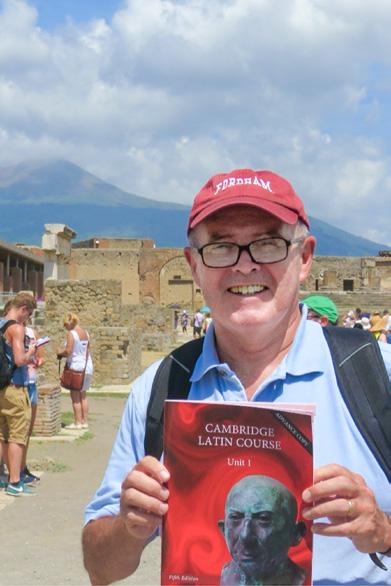
As we were leaving to catch our train to Pompeii, I noticed that Don was bringing his Cambridge Latin textbook on the journey. It was going to be close to 100 degrees that day, and I said: “You’re bringing that textbook? Why? You’ll have to carry it all day.” He said something like: “I don’t know. I just want to bring it.”
We arrived, and with a hoard of other tourists, started exploring the ruins. Don knew the streets and the city layout by heart and could tell me the name of the homeowner even before we arrived to see the nameplate near the doorway. With Don in the lead, we made a beeline for Caecilius’s home, Cambridge Latin textbook held tightly across his chest.
We arrived, but had to wait because there was a crowd in front of the entrance listening to their group leader. Suddenly, one crowd member shouts, “Hey, that guy’s got the Cambridge Latin textbook.”
As it turned out, the leader of the group was Griffiths, and we had stumbled upon him as he was teaching a group of Latin teachers from the UK who had asked him to chaperone their trip to Pompeii to (you guessed it) Caecilius’ house.
Well, there I was in the middle of this pretty intense nerdfest and, without hesitation, I began taking pictures of the most bizarre Latin coincidence I have ever experienced.
Needless to say, there were hugs and high-fives all around with everyone complimenting Don’s choice of textbook, and Will and Don standing side by side united in their reverence for the star of their curriculum: Caecilius!
The moral of this story: Latin may be a dead language, but for its devotees, there is a strong bond with the language, its history and the human stories used in teaching it to the next generation.
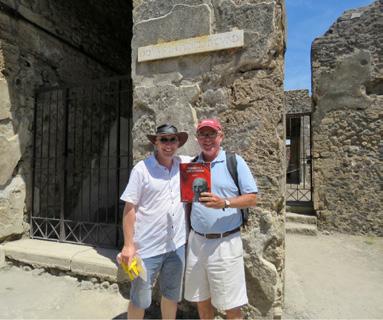
• Don Kelly, right, with Will Griffiths, the Director of the Cambridge School Classics Project.
latin live S on in pompeii
Don Kelly with the Cambridge Latin Course while visiting Pompeii, Italy, 2015.
Celebrating 50 years of Don Kelly
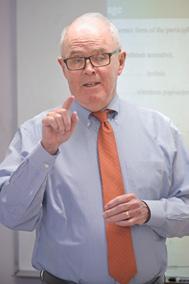
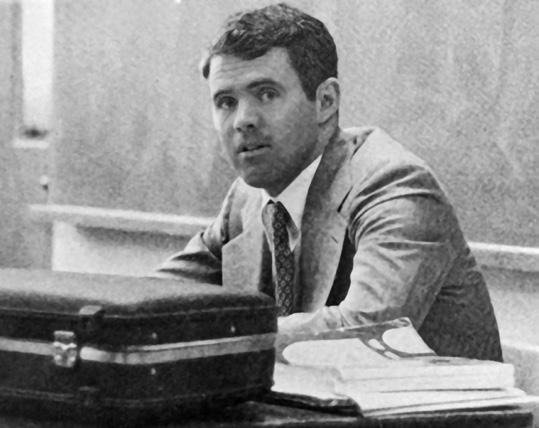
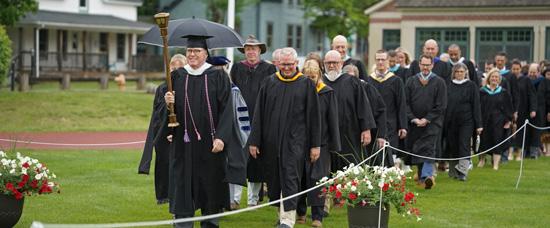
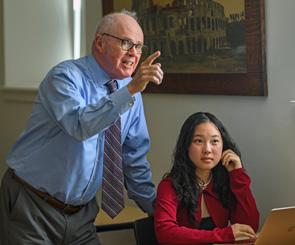
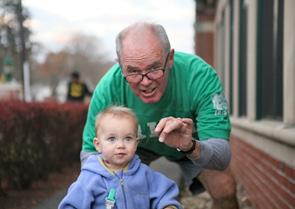
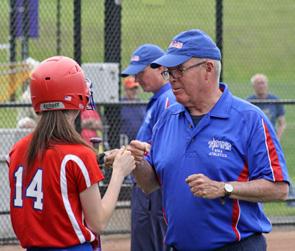
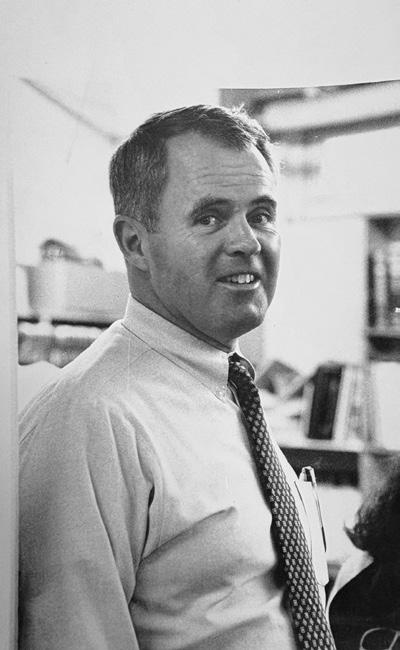
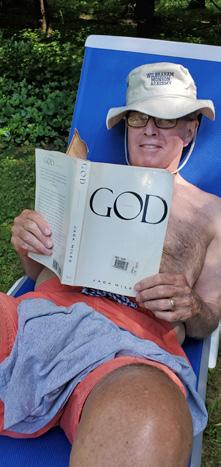
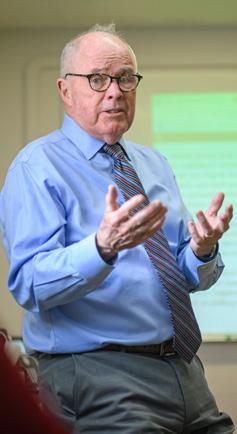
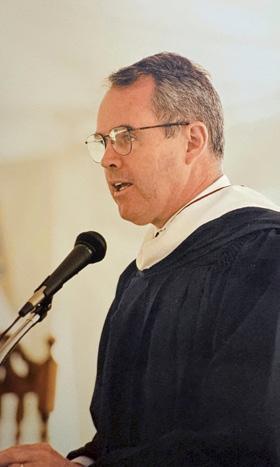
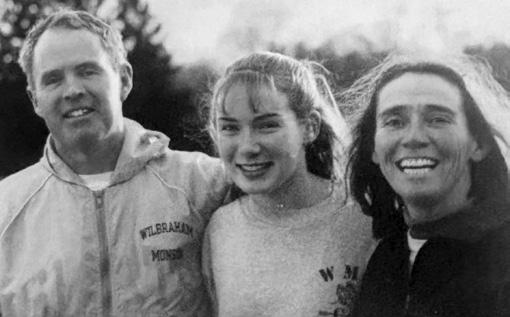
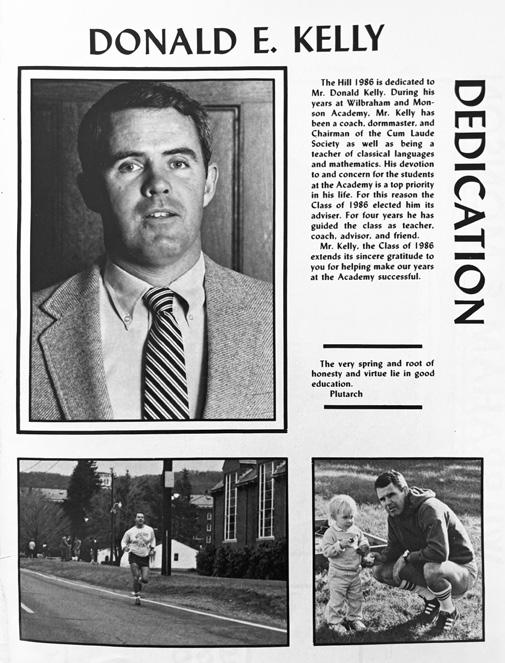
Don Kelly has completed his 50th year at Wilbraham & Monson Academy. Our Faculty Marshal and World Languages faculty member has held a number of responsibilities on campus. Each has proven to be an opportunity for Don to be a leader, mentor, colleague, friend and advisor. He has performed these masterfully. For his efforts and dedication, we take a quick look back in pictures at his half century on campus.
1 In the classroom, 2022. 2 Classroom photo, 1979. 3 As Faculty Marshal leading the procession to Prize Day on Corbin Field. 4 Don Kelly instructs Ha Ahn Nguyen ’25. 5 On vacation with his three daughters. 6 Fun with granddaughter Colleen Chesky ’31 at the Bunion Derby in 2014. 7 During his softball coaching days. 8 Office candid. 9 Teaching Latin. 10 With daughter Maureen Kelly Chesky ’02, and his first wife, Jane, in 2000. 11 Yearbook dedication, 1986. 12 Enjoying summer reading. 13 Speaking at Commencement, 1998. 14 As an assistant softball coach of the 2016 New England Championship team, with head coach Erik Kindblom, left, and alumni parent John Venditti.

W orl D languages
The enduring value of offering Latin and the Classics in prep school
b y melissa e arls
Associate Head of School & Dean of Academics
IIn contemporary discussions about secondary education, the study of Latin and the Classics often faces skepticism because it is perceived as outdated or irrelevant to the demands of a globalized economy. Yet, both empirical research and institutional experience affirm that Latin and classical studies provide distinctive cognitive, linguistic and cultural benefits that support academic success, intellectual maturity and future professional development.
Linguistic and Cognitive Benefits
One of the most widely cited advantages of studying Latin is its
positive impact on students’ linguistic awareness and cognitive abilities. Latin’s methodical grammatical system requires learners to attend rigorously to how a word is used, its syntactic relationships and its semantic nuance. This disciplined engagement fosters metalinguistic awareness the ability to think about language analytically rather than simply absorb vocabulary and rules superficially. Research shows that students who study Latin demonstrate enhanced nativelanguage proficiency and greater linguistic awareness compared to peers who do not undertake Latin study.
In addition, the successful study of Latin may contribute to improved performance on standardized assessments. Classics Departments at institutions such as the University of Illinois and Duke University note that Latin cultivates alertness,
logical reasoning and attention to detail cognitive traits that correlate with higher performance on verbal sections of exams like the SAT, GRE, LSAT and MCAT.
Latin’s influence on vocabulary development is particularly notable. Because a large proportion of English academic vocabulary derives from Latin (and Greek) roots, familiarity with those roots enables students to decode unfamiliar words more effectively, strengthening both reading comprehension and expressive precision. This benefit extends into disciplines where specialized terminology is central law, medicine, science, philosophy thus making Latin study foundational rather than superfluous.
Academic Skills and Intellectual Habits
Beyond language mechanics, the Classics cultivate academic habits that are central to success in rigorous educational environments. Classical studies demand close reading of complex texts, critical evaluation of evidence and interpretation of rhetorical structures skills similar to those required in advanced humanities coursework and in professions that value analytical writing. Departments emphasizing
Classics report that students trained in careful textual analysis tend to demonstrate stronger writing, research and reasoning abilities across disciplines.
Latin also serves as a gateway to the successful pursuit of other world languages. Latin provides structural insights that make Romance languages more accessible, and the analytical skills gained from Latin fluency transfer to the study of other non-Romance languages, such as German or Russian. Thus, classical language study does not isolate students linguistically; instead, it expands their capacity to acquire additional languages and navigate multilingual contexts with confidence.
by the number S
Four “Summa Cum Laude Gold Medal” winners from most recent National Latin Exam results
Current courses offered: Latin 1, Latin 2, Honors Latin 3, Honors Latin 4 and Advanced Latin Upper School Students enrolled in Latin classes: 26
Cultural Literacy and Historical Perspective
The value of studying the Classics goes far beyond learning an ancient language. By reading the literature and learning about the history, philosophy and daily life of ancient Greece and Rome, students gain a better understanding of the ideas that continue to shape the modern world. These studies help students see where today’s political systems, ethical values and literary traditions come from. In this way, classical education builds cultural knowledge that broadens students’ thinking and deepens their understanding of society.
Ryan Cooley ’26 began studying Latin in fourth grade and plans to continue to pursue the Classics at the collegiate level this fall.
When asked about the value of classical studies at the secondary level, he said: “Beyond expanding my vocabulary and understanding of grammar, Latin has taught me to see myself as a participant in thousands of years of history, connected to Roman emperors, medieval scholars and worldchanging scientists through words and ideas that continue to shape modern life. The influence of the ancient world emerges in unexpected places every day and studying the classics helps build an understanding of the present through the context of the past.”
Encountering classical texts also encourages students to grapple with
enduring questions about political philosophy and governance. These inquiries are not merely historical curiosities; they provide context for modern debates and cultivate habits of reflective judgment that are central to democratic citizenship and ethical leadership.
Magister Don Kelly, WMA’s resident Classicist now celebrating his 50th year in the classroom (see cover story) is a strong proponent of the continued inclusion of Latin and the Classics among our curricular offerings.
“I enjoy Latin because when the stresses of daily life, personal issues or the troubles of the modern world seem overwhelming, the world of Latin literature is a wonderful oasis in which you can find peace.” Mr. Kelly said. “Authors like Virgil, Cicero and St. Augustine faced the same problems we face today. Their writings basically tell us that there is nothing new in the world, and their words offer good advice about facing issues that occur in the human experience century after century.”
Preparation for College and Professional Life
For students who pursue Latin and the Classics at the post-secondary level, the preparation provided in secondary school makes more ambitious academic coursework in classical languages possible. However, academic majors and concentrations such as history, comparative literature, philosophy and related fields are also more easily accessible because of a student’s background in Latin and the Classics. Early Latin proficiency allows undergraduates to engage sooner and more deeply with primary sources, enabling richer participation in courses requiring close textual analysis and independent research.
Importantly, the benefits of Latin and the Classics are not confined to students who become professional Classic scholars.
The analytic precision, disciplined study habits and rhetorical agility developed through classical study are assets in law, medicine, public policy, business and other areas of advanced study leading to diverse professional paths. Employers and post-baccalaureate programs often look for candidates with evidence of intellectual rigor and well-honed communication skills capacities that classical study cultivates through sustained engagement with complex material.
Avery Kay ’26, a student enrolled in post-Advanced Placement Latin, is grateful for the opportunity to pursue Latin at WMA, and recognizes the benefit this study will have on her future.
“Because I plan to pursue law in the future, studying Latin has been especially helpful because it has given me a deep familiarity with legal terms, and has taught me how precise wording and structure affect meaning which is essential in legal reasoning,” she said.
Conclusion
In a world where educational choices are frequently driven by immediate economic considerations, Latin and the Classics offer a compelling model for deep learning, transferable skills and intellectual resilience.
The study of Latin sharpens linguistic and cognitive faculties, strengthens academic performance and enhances students’ capacity to understand and articulate complex ideas. The broader study of the ancient world cultivates cultural awareness and critical judgment that are essential to both higher education and professional life.
Far from being an outdated luxury, Latin and the Classics remain a vital component of a collegepreparatory education, arming students with the skills necessary to navigate the challenges of an increasingly complex global society with insight, clarity and ethical purpose.
reference S
Hauspie, Charlotte, Wouter Duyck, Liesbeth Schelfhout, Geert Vereeck, Eline Janse, and Agnieszka Szmalec. “Is Studying Latin Associated with (Non-)Linguistic Cognitive Advantages?” Journal of Neurolinguistics, vol. 72, 2024, ScienceDirect https://www.sciencedirect. com/science/article/abs/pii/ S0361476X24000705.
“How Latin Develops the Mind.” Memoria Press, 24 Jan. 2025 https://www.memoriapress.com/ articles/latin-develops-mind/.
“Benefits of Latin.” University of Kentucky College of Arts & Sciences, website accessed January 2026 https://mcl.as.uky.edu/cla-benefitslatin.
“Why Classical Languages?” Department of Classical Studies, Duke University, website accessed January 2026 https://classicalstudies.duke.edu/ undergraduate/greek-latin.
“Why Study Latin.” Department of Classics, University of Illinois at Urbana-Champaign, website accessed January 2026 https://classics.illinois.edu/whystudy-latin.
“Why Study Classics.” Department of Classics, University of Illinois at Urbana-Champaign, website accessed January 2026 https://classics.illinois.edu/ admissions/why-study-classics.
Tulane University. Why Study Classics? Department of Classical Studies, website accessed January 2026 https://liberalarts.tulane.edu/ classical-studies/academics/whystudy-classics.
University of Pittsburgh. Why Classics? Department of Classics, website accessed January 2026 https://www.classics.pitt.edu/ about/why-classics.
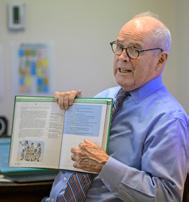
• Don Kelly in the classroom
alumni in action

Sarah Richard ’07
Navigating uncharted waters:
An architect of the future of tech law
b y annie K an D el Director of Annual Giving
Operating at the cutting edge of law, technology and innovation, attorney Sarah Richard ’07 doesn’t just keep up with the pace she helps set it.
In the volatile landscape of emerging industries, where rulebooks are often nonexistent, Ms. Richard acts as both a navigator and a trailblazer,
architecting responsible growth for companies navigating uncharted territory.
“I help technology startups scale,” Ms. Richard said simply, a concise description for a role requiring unparalleled agility and foresight.
Over the past decade, she has pioneered legal frameworks across fintech, blockchain, cryptocurrency and now artificial intelligence industries defined by rapid disruption and constant change. Her work goes far beyond simple compliance: Ms. Richard orchestrates complex regulatory strategies, advises on product development and streamlines global operations.
In these fields, time isn’t just money it’s survival.
“If you wait until next week for an answer, your competitor has already launched,” Ms. Richard explained. “In emerging technology, timeliness matters just as much as accuracy.”
Ms. Richard’s career demonstrates a fearless approach to professional evolution, taking her from the infancy of a cryptocurrency exchange to fastscaling global companies.
She began her journey at Gemini as one of its earliest employees, a defining experience that sparked her expertise in navigating regulatory ambiguity. Since then, she has advised a wide variety of business types, including Series C companies, bootstrapped organizations and blockchain firms operating across international markets.
Today, Ms. Richard holds a vital role at Quorum, a software company serving government affairs professionals, while simultaneously consulting for a range of blockchain companies.
“Every day is a new adventure,” she said. “There’s no script for this work and that’s why I love it.”
The Strategic Business Partner
Rather than serving as a traditional gatekeeper, Ms. Richard views her role as a true business partner.
“Lawyers often get labeled as the people who just say no,” she said. “But that doesn’t work in this industry.”
Instead, Ms. Richard empowers leadership to make informed, high-stakes decisions by presenting a clear spectrum of risk. Understanding a company’s vision and risk appetite allows her to tailor her advice and build trust with the teams she supports.
“A lot of what I do is forecasting,” she explained. “You’re looking at where the industry is going, where regulations might land, and helping leadership decide how to navigate that landscape.”
One of Ms. Richard’s favorite aspects of her work is the intense collaboration with brilliant engineers, cryptographers, and product teams.
“I feel like I work with some really smart people. You can’t learn this stuff in school it’s truly built on the job,” she said.
Sarah Richard ’07, center, with co-maids of honor Cori Richert ’07, left, and Megan McCarthy ’07. pHoto credit: Nate Bittinger Photography
“A lot of what I do is forecasting,” she explained. “You’re looking at where the industry is going, where regulations might land, and helping leadership decide how to navigate that landscape.”
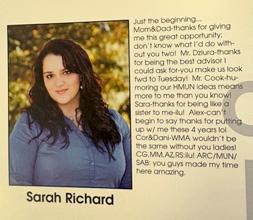
Recognizing that risks often emerge faster than legal teams can identify them, Ms. Richard fosters a collaborative environment in which product teams flag potential problems early. She proactively will ask, “What scares you about this?” to design solutions that protect against bad actors while facilitating innovation.
Foundations of Fearlessness: The WMA Impact While Ms. Richard’s career is entirely futurefocused, she traces the skills that support her work back to her time at Wilbraham & Monson Academy.
As a student, she helped launch the Academy’s Model United Nations program with Mr. Gary Cook, a defining experience that sparked her interest in global affairs and shaped her academic path through her undergraduate study of political science, a master’s in public administration, and law school.
Beyond academics, Ms. Richard credits WMA’s emphasis on public speaking,
improvisation and discussion-based learning with preparing her for high-pressure professional environments.
“Between theater, public speaking classes, and seminar-style discussions, you learn to think on your feet,” she said. “You get comfortable speaking up even when you don’t have all the answers.”
Those skills now serve her well when presenting to executives, testifying before legislative bodies or condensing complex ideas into clear guidance under tight deadlines.
Her love for exploration a trait cultivated by a 2005 CEGS trip to Belgium and the Netherlands while at WMA continues to fuel both her personal and professional life.
Last January, while on a business trip to Japan, she reconnected with former WMA volleyball teammate Ayako Hidari ’06.
“It took me almost 20 years to get there, but I finally made good on a promise to visit!” Ms. Richard said.
Looking Ahead
Looking back, Ms. Richard’s career path may appear unconventional, but she believes that’s part of its strength.
“At the time, it probably looked like I was bouncing around,” she said. “But when you look at it in reverse, every step makes sense.”
Her advice to students and young alumni is simple: follow what genuinely interests you. Passion, she believes, creates momentum and clarity often comes later.
Despite her busy schedule, Ms. Richard remains closely connected to the WMA community.
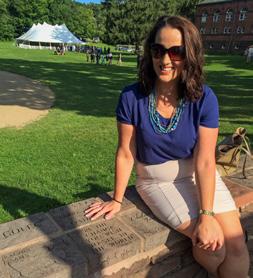
Several alumni stood beside her at her recent wedding to David Kramar, a Technical Program Manager & Senior Engineering Leader for Amazon Web Services, at Kalero Vineyard in Virginia.
This tech power couple now balances highstakes careers with family life, including Ms. Richard’s role as a step-mom. Sarah and David are preparing for a honeymoon in the Philippines, where they plan to dive with non-stinging jellyfish which sounds tame compared to last year’s trip to Hawaii where they went cage-free shark diving.
In a career defined by constant change, Ms. Richard thrives in the unknown helping companies navigate what’s next, even when no roadmap exists yet. It’s challenging, fast-paced work, not for the faint of heart. But for Ms. Richard, it’s exactly where she’s meant to be.
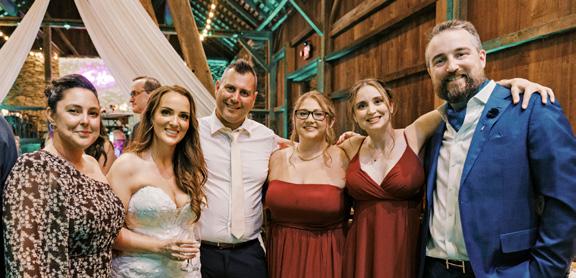
Left to riGHt: Sara Young ’07, Sarah Richard ’07, her husband David Kramar, Cori Richert ’07, Megan McCarthy ’07 and Alexander Williamson ’07 at their wedding reception.
s ara H r ic H ar D ’07
Eric Dortch ’10
From the Classroom and Court to the Global Sneaker Stage alumni in action
WWhen Eric Dortch ’10 speaks about his work at athletic apparel and footwear giant Adidas, he often returns to the word “dedication” which he attributes to a postgraduate year at Wilbraham & Monson Academy.
As the Global Product Manager of Collaborations and Partnerships, Mr. Dortch’s career at Adidas has, in part, been a globetrotting journey that has taken him through France, Germany, the Netherlands and China. With trips to Vietnam and Indonesia on the calendar, Mr. Dortch is at the center of the world’s sneaker and apparel culture.
Earlier this year, his focus was closer to his new home in Los Angeles, California: the Intuit Dome in Los Angeles. Mr. Dortch spent most of 2025 in preparation for February’s NBA All-Star Game, orchestrating the activation of a massive new collaboration.
The face of the project is NBA All-Star Anthony Edwards, featuring a groundbreaking new shoe and apparel line.
“I work closely with the design team,” said Mr. Dortch, who lives with his wife, Camila Marquez, in Los Angeles.
“My process begins by talking to consumers and researching the markets to find out what they are looking for. It’s my responsibility, while working with our team of engineers, to ensure that every component of a shoe has the right cushion, stability and meets our performance standards.”
While the Edwards project is the current headline, Mr. Dortch points to a collaboration with Chicago legend and former NBA MVP Derrick Rose as one of his proudest professional milestones.
“I’m a Chicago guy, and working with him was a dream come true,” said Mr. Dortch, who grew up in Evanston, Illinois. “We wanted the shoe to embody who he was as a person. We captured exactly who he is, and that process was eye opening for me. It showed me a different side of sports. I was able to see how invested an athlete like Derrick was in ensuring his shoe lived up to his standard.”
Mr. Dortch’s path to global product management began in the hallways of WMA. As a 17-year-old senior, his AAU travel basketball coach suggested a postgraduate year at a prep school. WMA stood out because it promised to challenge him both on the court and in the classroom.
“I’ve always been a bit of a bookworm,” Mr. Dortch said. “WMA appealed to me because it combined basketball and academics in a way that felt serious.”
I’m doing something now that I love. And I know WMA instilled that drive and dedication in me.”
eric D ortc H ’ 10
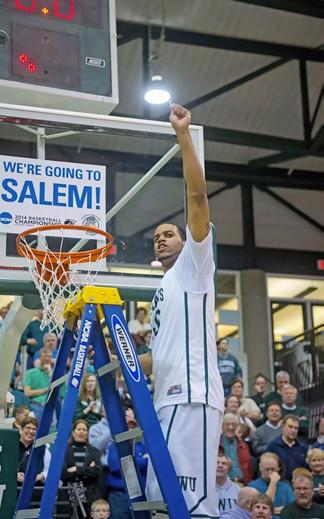
Living on the second floor of Rich Hall (Rich 2), Mr. Dortch remembers his dorm parent and teacher Mr. Sean Bridge.
“He consistently checked in with me and shared advice on how to embrace prep school so I’d have the tools for college. He helped me embrace the hustle and bustle of the everyday schedule.”
That discipline was tested in the classroom, where Mr. Dortch chose not to shy away from rigor.
“I didn’t avoid any challenges,” Mr. Dortch said. “I took AP Physics. It wasn’t easy, but it was integral in the development of my self-discipline as a student-athlete.”
On the basketball court, Mr. Dortch credits Coach Mike Mannix with pushing him to his limits literally.
“The treadmill workouts in September ... oh man, I hated them,” Mr. Dortch said. “But they were a major reason I became the player I did. I dedicated myself to improving in every way.
•
My conditioning reached a new level, and that raised my entire game.”
Beyond the physical, Mr. Dortch found inspiration in WMA leadership.
He recalls current Head of School Brian Easler, who was then Dean of Students, as a pivotal figure.
“His status was intimidating at first, but the first time I spoke to him, I thought, ‘He’s a down-to-earth guy,’” Mr. Dortch said. “He was a top administrator you could have a regular conversation with. He talked to me about focusing on my journey, not my destination, and emphasized the importance of mental preparation something I carried with me as a college athlete.”
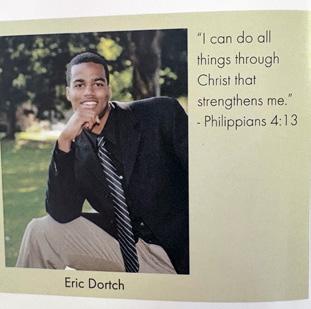
The preparation paid off. After WMA, Mr. Dortch attended Illinois Wesleyan University, where he played basketball all four years and helped the team to the semifinals of the NCAA Division III national championships. He noted that his transition was seamless: “My first year of college was almost a ‘cake walk’ because of what WMA did for me.”
Today, Mr. Dortch is thriving in a career that is both a passion and a daily challenge. Whether he is in a design meeting at Adidas in Germany or courtside at the All-Star Game, he carries the sense of independence and challenge-seeking he discovered on the WMA campus.
“I’m doing something now that I love,” Mr. Dortch said. “And I know WMA instilled that drive and dedication in me.”
• Celebrating as a player at Illinois Wesleyan University
Senior photo, 2010
Senior Stone

alumni in action
Emily (Vincunas) McGonigle ’08
WMA gave me confidence in my individuality … and teaching me to think without limitations.
Ab y bill W ells Director of Student Promotion
After years of enjoying the physical and mental benefits of being outdoors, Emily (Vincunas) McGonigle ’08 and her husband opened Hiker Hunger Outfitters as a bit of a passion project in 2015.
“My husband from the get-go was very entrepreneurial and driven to start his own business,” said Ms. McGonigle, who married Rory McGonigle in 2019. “After some thorough research, we landed on hiking poles.”
Immediately, even though it was an online store, Ms. McGonigle loved the interaction with customers. She thought most buyers would be like her and Mr. McGonigle young, fit,
adventurous. That was partly true, but there was also a twist.
“We soon came to realize that a lot of people buying our most popular product, hiking poles, were actually still very adventurous at heart but older and needed assistance continuing to get outside and enjoy what nature had to offer,” said Ms. McGonigle, who lives in Bozeman, Montana, with her husband and two young children, Maisy and Lucy.
“We started getting a lot of customers who were recovering from knee surgeries, had Parkinson’s, hip replacements, cancer, and it was beautiful to see how our products were helping them continue to do what they love.”
Ms. McGonigle recalled an exchange with a retired park ranger in his 60s.
“As a park ranger, being in nature was clearly a huge part of his life, and he was diagnosed with a type of cancer that required surgery,” she said. “Our poles became a big part of his recovery
journey. He used them in the hospital after surgery to get around and, then once healed and cancer free, he used them out on some of his favorite trails. We were always corresponding, and he would send us a number of photos of himself out hiking. It wasn’t something he thought he’d be able to do again, and you could tell it meant so much to him.
“This was probably the first time I realized our poles were so much more than a product because they allowed people of all ages and abilities to have the confidence to keep moving and getting outside.
“We were making a difference in people’s lives and that’s become a cornerstone of our life. Even with our new business, Solura (opened in 2025), we’re contributing to small, organic USA farmers by crafting handmade skincare that’s all natural and buying directly from small farms around the U.S., which supports regenerative organizations.”
Hiker Hunger Outfitters, which can be found online at hikerhunger.com, is also involved in Hike the Good Hike, a nonprofit that supports mental health through outdoor activities, mainly hiking. The couple met the founder, Jesse Cody, during an 800-mile trek along the Pacific Crest Trail in California.
“We ran into him within the first 100 miles and he had our poles, which was really cool to see our products out there in the wild,” Ms. McGonigle said. “This was in 2017. The company was relatively


Emily (Vincunas ’08) McGonigle, right, with husband, Ryan McGonigle, and daughter Maisy.
new so we introduced ourselves, told him that he was using our poles and he told us he was from Cambridge, Massachusetts.”
At the time, the McGonigles were living in nearby Beacon Hill, a neighborhood in Boston. Soon thereafter, Mr. Cody started Hike the Good Hike. The young entrepreneurs were on board with the association’s mission.
“It was an easy ‘yes’ as he had become a good friend, and we really believed in the work and message he was spreading,” she said. “On our website, people can donate to the nonprofit. We also donate products through fundraising efforts that Jesse puts on. We have collaborated on a number of initiatives that help support people with mental health struggles to get outside more. We have also been in discussion about coming out with a co-branded hiking pole, where all proceeds would go directly to his nonprofit.”
Hiking will forever be part of the McGonigle’s relationship. Hey, how many people get engaged at 14,500 feet? During their 800-mile jaunt, they summited Mount Whitney in California.
“We made it to the top, and I had altitude sickness pretty bad so I wanted to go to sleep right away,” Ms. McGonigle said. “Somewhere along the way, Rory made the decision in his mind that he was going to propose to me, so he stayed up making a ring out of Starburst wrappers. We had saved our favorite Starburst flavor as a last-day-on-the-trail treat. We woke up super early the next morning to catch the sunrise. A friend had made it up to the top (that morning) around the same time and was able to snap a photo of Rory proposing to me, which was pretty magical.”
What was also magical for Ms. McGonigle was her time at WMA.
A boarding student from Granville, Massachusetts, she starred at soccer, helping the team to four playoff appearances, including reaching the New England final in 2005. She finished her career with 22 goals and 27 assists before playing at Wheaton College in Norton, Massachusetts, where she met Mr. McGonigle during their freshmen year.
“Emily was a tireless worker on the field and fast as lightning,” former WMA Girls Soccer Coach Don Nicholson ’79 said. “She could run all day. (She) always had a quick smile and good attitude.”
(Soccer) was a blast,” said Ms. McGonigle, with the Titans going 54– 9 –3 during her four seasons. “I loved the sport and it was something I always looked forward to at the end of the day. Whether it was practice or a game, we had so much fun together as a team. I’m sure a big part of that was being good, but it was also the people and the bonds we built.”
Ms. McGonigle was also involved in Varsity Basketball, Swimming, Track & Field, Yearbook, Tech Crew, and did Fitness with Mr. Joe Mazeika ’73.
“There were so many adults I could go to,” said Ms. McGonigle, whose three siblings Matt ’07, Sara ’10 and Mary ’12 also attended the Academy.
“I was a boarder, so I lived on campus all four years, which really helped build stronger bonds between certain teachers and dorm parents. (Dorm parent) Sue Cole was an easy go-to (because) I was friends with her daughter, and then she was also my advisor for a couple of years. Mrs. (Alison) Marzuoli, Mr. (Adam) Beck, Ms. (Gina) Markowski, Mr. (Eric) Newman, Mr. (Michael) Dziura. There were so many teachers that were approachable and supportive during my time there.
“WMA gave me confidence in my individuality while fostering a strong love for learning and teaching me to think without limitations. It was eye opening to live with international students and learn about their cultures. That experience showed me the importance of community. The teachers pushed you to excel and were always there to support you along the way.”
Through her business, Emily is doing the same for others.
From left in family Christmas photo with Ryan McGonigle, daughters Maisy and Lucy, and Emily (Vincunas ’08) McGonigle.
“The Proposal” atop Mount Whitney
Emily (Vincunas ’08) McGonigle marking the 500th mile of her 800-mile hike.
Senior Stone
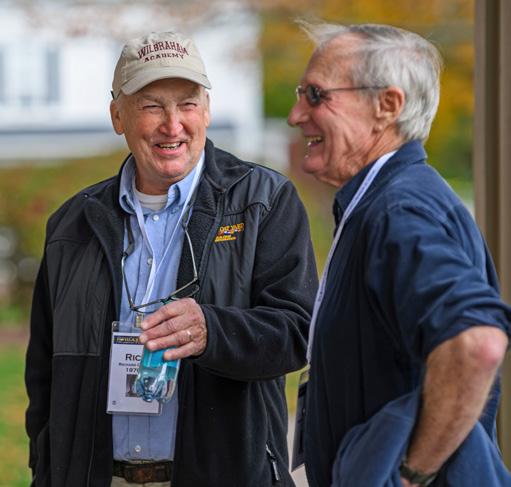
Given the chance, alumnus sails to successful career alumni in action
Rick Clifton ’70W
Ab y bill W ells Director of Student Promotion
Rejection: It’s what led Rick Clifton ’70 to Wilbraham Academy, and it’s what led him to working at one company for more than four decades.
Growing up on the South Shore of Long Island, New York, boats became a way of life for Mr. Clifton. As a kid, he raced and painted his small sailboat, which was fairly standard practice
for a young person growing up on Long Island back in the day. But Mr. Clifton was a bit more involved, especially since he and his brothers all owned their own boat.
“It was a small wooden sailboat,” described Mr. Clifton, now 74. “It became part of me and never left me. Going out in the boat and being completely in control, with nobody else there. We could take it out on the bay. It was a wonderful experience and it stayed with me right up until the time I walked into the boat shed at the yard and saw the boats.”
After four years at Wilbraham Academy and one at Nasson College in Springdale, Maine,
Mr. Clifton spent the next four years as a roofer, built houses and played in a band. That changed, though, in 1974.
“The boats came back to me,” he recalled. “I wanted to be a boatbuilder.”
Mr. Clifton hoped to attend one of the most prestigious boat-building programs in the United States The Boat School in Lubec, Maine, the longest-running boat school in the country.
“I went up to the school, talked to them, and they rejected me,” Mr. Clifton said. “So I thought the only way I’m going to do this is to get a job at a boatyard on the coast. So I started looking up and down the coast, going to boatyards and there was only one that accepted me, like Wilbraham was the only school that accepted me.”
Mr. Clifton worked for a few years at a boat yard in Brooklin, located 200 miles up the rugged and beautiful coast of Maine. That particular job, though, didn’t stick. He was there a couple years before hitting the trades, which included owning a renovation business for houses.
“I tried to get into Brooklin Boat Yard for four years,” Mr. Clifton said. “They finally hired me in 1980. They didn’t want to hire a young kid with long hair that they didn’t know. But I got in and was there for 43 years. It was a close-knit group of 5– 6 guys.”
Just like some communities embrace a sport or the arts, Brooklin was labeled the “Boatbuilding Capital of the World.” There was no place Mr. Clifton would rather be. His boss, Joel White, son of famous author E.B. White, founded the custom boatbuilding yard in 1960.
“We appreciated each other, respected each other and got along great,” Mr. Clifton said. “It was wonderful. That whole community was really geared not just toward wood boat building, but boatbuilding in general. All kinds of materials: fiberglass, metal, whatever. They all had their different niches and styles. We all respected each other. It was great.”
From 1980 to 2023, Mr. Clifton built dozens of wooden boats, either by himself or part of a team. While a skill saw, band saw, adze, chisel and various hand saws were crucial, he relied mostly on a ruler, pencil and hammer.
“You had to figure out what piece of wood you wanted to use out of the choices you had and you had to decide how you were going to shape this thing to get it to fit where it was going to go,” Mr. Clifton said. “The wood doesn’t want to go there naturally, but you want to make it look like it belongs. To do that you had to beat the wood.”
Of all of the boats that Mr. Clifton had his
Rick Clifton ’70W, left, shares a laugh on the front steps of Rich Hall during Reunion 2025.
I have been very lucky to have spent more than half my life with people I enjoy and work that lives on for others to enjoy.”
hands on, one did stand out: “Grace.” With great satisfaction, it’s still moored in the harbor near his home in Brooklin.
“I was fortunate enough to be given the project and the crew,” said Mr. Clifton, who served as project supervisor for “Grace.” “It was a wonderful experience all the way through. And her owners were the most fantastic people. They meant a lot to me. They lived there and came down every other day or so. They were so appreciative of what we did, and the crew was so great.
“She got in the water and sat on her lines
beautifully. Seeing her sail … she stayed in the harbor since she launched and she’s still there today.”
During an age where people and professions often come and go, Mr. Clifton stayed at the same workplace for 43 years. In a team-first environment, the veteran workers took care of him when he was young, and day after day he was learning something new.
“I stayed at Brooklin Boat Yard for all those years because I was treated like family,” he admitted. “They respected my wishes and let me carve my own path. I have been very lucky to have spent more than half my life with people I enjoy and work that lives on for others to enjoy.”
Mr. Clifton, whose brother, David, also attended the Academy, returned to campus in the Fall of 2025 for the school’s annual reunion event.
Mr. Clifton said he learned to “live with 300 -plus young men from all walks of life.”
He valued his relationships with faculty members Phillip Williams, Sumner Brown and Jere Austen. Mr. Clifton was a member of 18 different teams and clubs. He played football, ran track and was a member of the Scuba Club all four years, and was a Senior Monitor and on the Campus Life Committee his final year.
Senior Stone
“Grace,” the favorite boat of all that Rick Clifton ’70W has worked on.
Senior year, 1970
Rick Clifton ’70W as a member of the Varsity Club, front row (far right) WILBRAHAM & MONSON
alumni reflection

Much of my experience at WMA was defined by involvement beyond the classroom.
Year-round participation in cross country, track, riflery, tech theater and the writing center gave me a deep sense of belonging and introduced me to mentors who shaped my interests and abilities.
Coaches and teachers like Mr. Mark Warburton, Mr. Paul Ekness, Mr. Steve Gray, Mrs. Deborah Finley, Mr. Jonathan Shee and Mr. Robert Felton helped cultivate both discipline and curiosity whether on the trails, at the range or behind the scenes of a production.
Even after graduation, I remained connected to campus through summer work at Beech Tree Camp, first as a counselor and later as a science instructor under Mr. Don Nicholson ’79, who was camp director at the time. These experiences revealed an early aptitude for teaching and helped launch me on a path that would eventually lead to a career in economics and higher education.
The symbols reflected my love of competitive running and my passion for the classics, but the specific inspiration for the quote came from Mr. Warburton’s challenging English electives and our reading of postmodern novels, including “SlaughterhouseFive.” Those courses pushed us to critically analyze human behavior across past, present and future settings, and they were instrumental in shaping the way I learned to think.
In many ways, that experience drew me toward the social sciences economics, at its core, is the rigorous study of human interaction. At the same time, the stone expressed the bittersweet feeling of being a senior about to leave the Academy after having spent virtually all of my school years on the WMA campus.
WMA prepared me exceptionally well for college and life by teaching me how to think critically, write clearly and discipline myself both mentally and physically. That foundation supported my studies at Cornell University, where I pursued mathematics and economics, and later at the University of Rochester, where
My path to Wilbraham & Monson Academy felt less like a single decision and more like a natural progression.
I began at Academy Hill School which was on WMA’s campus at the time shortly before my fifth birthday. When WMA introduced a sixth grade, I was accepted and continued on through my graduation in 2001, two years after my older brother Jonathan. Although I was one of only a few day students commuting from Connecticut at the time, WMA quickly became not just the place I went to school, but the center of my academic, athletic and personal development.
At WMA, I was fortunate to learn from so many exceptional educators. From AP Latin with Mr. Don Kelly and Mr. Michael Zadig, to physics and AP Chemistry with Mr. Charlie D’Avanzo, to AP U.S. History with Mr. Gary Cook, my time at WMA was marked by rigorous academics and genuine mentorship.
The library also played a central role in my daily life; it was where I studied, met friends and felt consistently welcomed by Mrs. Nancy Rosenwald and her staff. Some of my fondest memories are tied to those long afternoons and evenings, as well as to traveling with the cross country and track teams especially the opportunity to compete alongside my brother and share countless road trips and post-practice dinners.
The sense of continuity and reflection that defined my WMA years is perhaps best captured on my Senior Stone, which bears a winged foot and the Latin phrase eheu fugaces labuntur anni “alas, the fleeting years slip away.”
WMA prepared me exceptionally well for college and life by teaching me how to think critically, write clearly and discipline myself — both mentally and physically.”
michael insler ’01
MICHAEL INSLER ’01
Michael Insler ’01, left, with daughter Cecilia, on his shoulders, his wife Karyn, right, and son Calvin, foreground.
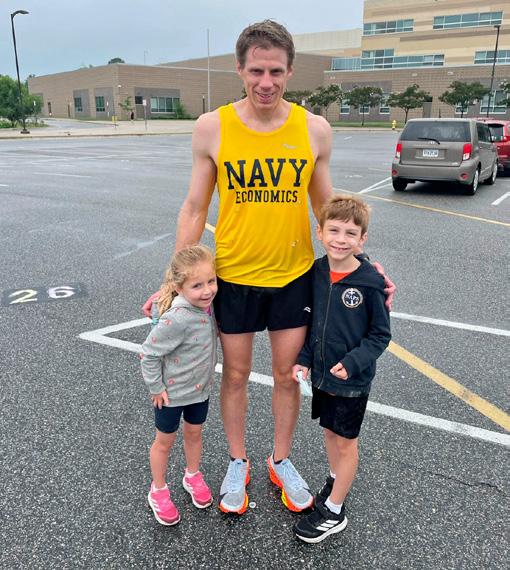
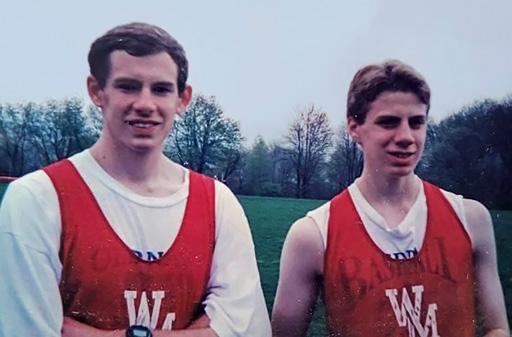
•
I completed a demanding Ph.D. program. Just as importantly, the diverse community at WMA broadened my perspective and continues to influence how I approach my work, my relationships and my role as an educator.
Today, I live in Annapolis, Maryland, with my wife, Karyn, and our two children. I have been a professor of economics at the U.S. Naval Academy since 2011, teaching microeconomics and econometrics and conducting research in labor economics and the economics of education.
Although most of my free time is now devoted to my children’s activities, I remain deeply connected to running, competing regularly and serving as a faculty mentor for Navy’s men’s varsity cross country team.
I last visited campus a few years ago with my young son. I was struck by how much WMA has grown and evolved yet still felt unmistakably familiar. We were lucky to chat with (Head of School) Mr. Brian Easler and find both my Senior Stone and my brother’s. It was a powerful reminder that while the years do indeed slip away, the impact of a WMA education endures.
• Senior photo, 2001
• Michael Insler ’01, center, with daughter Cecilia, left, and son Calvin.
Michael Insler ’01, right, with brother Jonathan ’99.
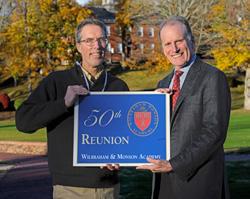
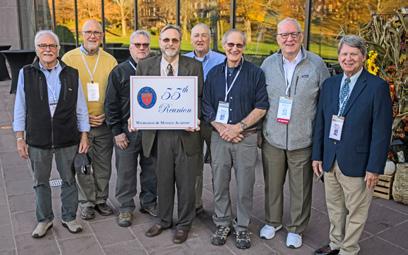
Fall Reunion
Last fall, WMA welcomed back alumni from the Class of 1975 and earlier for a memorable 50th & Beyond Reunion celebration.
The alumni came back for everything from nostalgic campus tours to heartfelt reunions with classmates and faculty. The weekend was filled with laughter, reflection and shared stories spanning generations. All alumni are invited to the next Reunion Weekend, Oct. 9 –10.
1 John Davis ’75, right, with Scott Jacobs ’75, Chair of the Board of Trustees. 2 Darius Mojallali ’70W, left, with his wife, Stephanie. 3 The Wilbraham Academy Class of 1970, from Left: Douglas Willey, Darius Mojallali, David Clifton, James Prudden, Richard Clifton, Richard Forshay, Henry Downey and Edward Owens on the Griffin Athenaeum porch.
4 Alumni were joined by WMA’s Board of Trustees to for a delicious dinner in the Griffin Athenaeum.
5 Members of Wilbraham Academy’s Class of 1970 reminisce over yearbooks and memorabilia in Griffin Athenaeum. 6 Alumni and guests make their way from classroom visits to the Griffin Athenaeum for dinner.

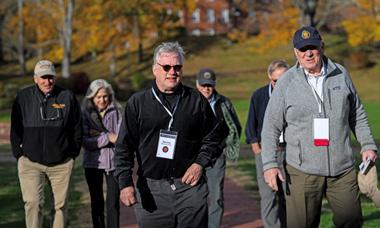
Supporters’ Soiree
We celebrated one of the most special nights of the year the Supporters’ Soirée, a celebration of the individuals whose generosity, leadership and belief in Wilbraham & Monson Academy continue to shape our community. The event was held at GreatHorse in Hampden, Massachusetts.
1 Attendees
College Comeback
Young alumni from the previous five graduating classes were invited back to campus in early January for an opportunity to visit classrooms, meet up with faculty, enjoy time with Head of School Brian P. Easler during lunch and explore the campus.
Boston Event
Alumni and friends gathered for an evening of connection, conversation and Greek hospitality with host and owner Demetri Tsolakis ’01 at Krasi in Boston.
3 from Left:
Liz Wagoner ’01,
and
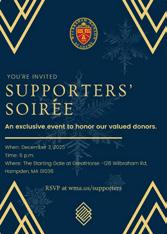
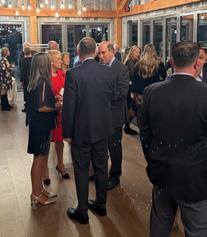
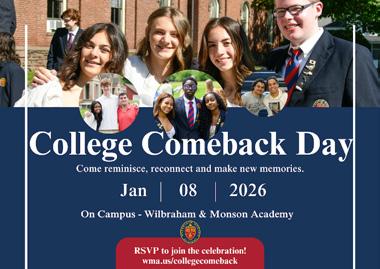
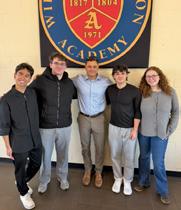


at the Supporters’ Soiree enjoy an entertaining night at the Starting Gate at GreatHorse in Hampden, Massachusetts.
2 from Left: Gabriel Cruz ’25, Ryan Clark ’25, Matt Clark ’24 and Madeleine Soukup ’22 were among those alumni to reconnect with Head of School Brian P. Easler on College Comeback Day in Lak Dining Hall.
Robert Edmunds ’01,
Ramon Garcia ’00
Demetri Tsolakis ’01. 4 from Left: Bettina Pancho, Joshua Cuddy ’09, Marina Bourgeois, William Bourgeois ’10 and Christian Grenier ’11. 5 Alexander Williamson ’07, left, with Head of School Brian P. Easler. 6 Associate Head of School/Dean of Academics Melissa Earls, center with Nicholas Leone ’17, right and his fiancee Miranda Dukach.
Years of Service Awards
Each year, WMA honors faculty and staff who reach milestones for their years of service to the Academy. The following 11 people are recognized through the end of the 2025 calendar year.
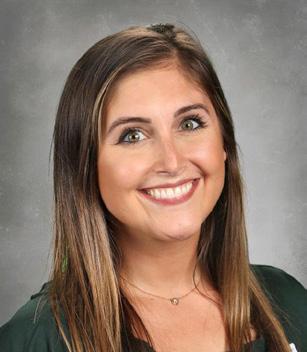
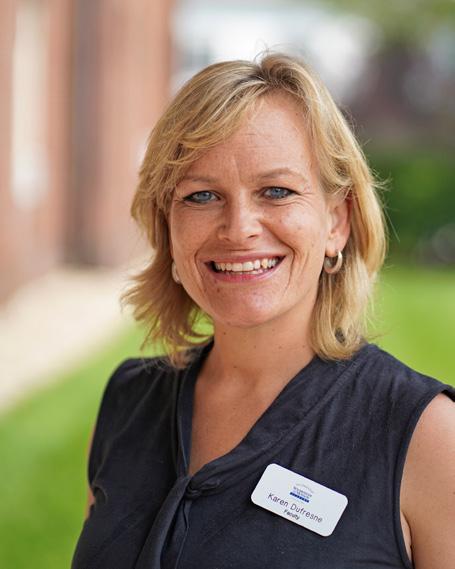
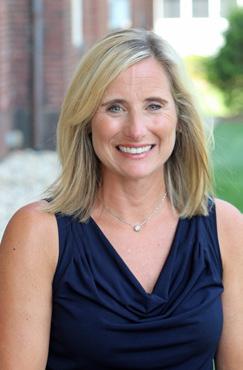
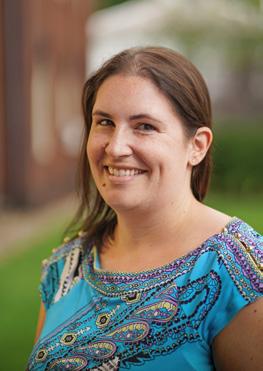
Karen Dufresne Faculty, Mathematics
Christina Robinson Faculty, Health
Kimberly Therieau Controller, Business Office
John Fonte Network Administrator, Information Technology
Jessica Wood Health Services
Josh Bain Director of Information Technology
“Throughout his 15 years at the Academy, Josh has consistently prioritized the protection and smooth operation of our technology and data. He is proactive in anticipating technical issues and responds quickly to resolve them. His problemsolving skills and commitment to excellence ensure that our campus technology effectively supports teaching, learning and daily operations.”
Dr. m arxan p escetta, Dean of Educational Technology
Clark
Seibold Faculty,
Fine & Performing Arts
“From the middle schooler just approaching a new instrument to the experienced players in the Jazz Ensemble, Clark’s commitment to student improvement combined with his ever-present laugh and cool persona continually attract and drive students forward on their musical journey.”
Wally sWanson, Dean of Faculty
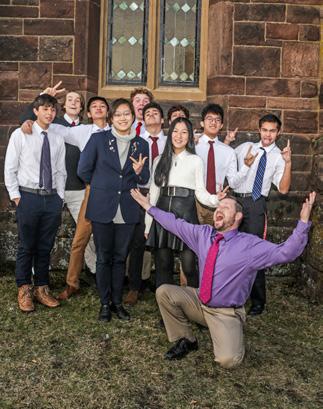
WILBRAHAM & MONSON ACADEMY
Stuart Whitcomb Director of the Middle School
“The ability to be an academic leader and unafraid to be silly is what allows Stuart to powerfully connect with people. There are very few of us with his mix of patience and humor, combined with intellect and devastating good looks. I appreciate his company in this elite group.”
Wally sWanson, Dean of Faculty
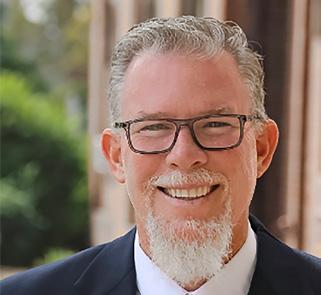
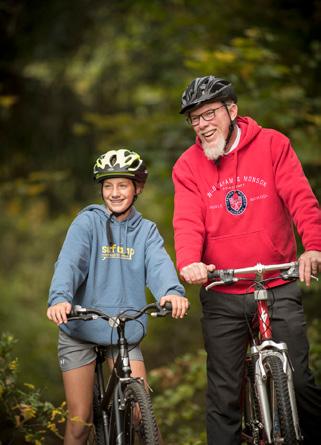
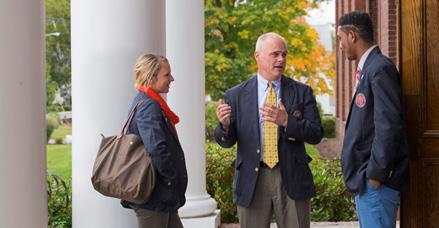
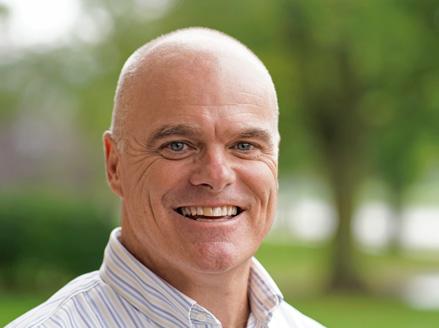
John Boozang Director of College Counseling
“When I first met John, I was a student tour guide in our Admission Office, and he was interviewing to join the Admission team at WMA. Along with the other summer admissions intern (coincidentally, my now husband), I still remember sitting with John on the benches in front of Rich Hall and thinking how naturally he connected with people and how perfectly he would fit into this community. Even as students, we could feel his warmth and genuine interest, qualities he continues to bring every day to his work as a college counselor. Despite being a proud graduate of our rival Suffield, he embraced WMA wholeheartedly from the very beginning and quickly built strong connections with students, whether through admissions, as a baseball coach or as a dorm parent. When I later returned to the Academy as a colleague, he stepped into the role of Director of College Counseling at the same time I joined the team, and I have always felt incredibly fortunate to work alongside someone who leads with kindness, care and a good sense of humor. For 25 years, John has remained devoted to our students and to strengthening this community, showing up each day with generosity, thoughtfulness and a sense of humor that reminds us not to take ourselves too seriously.”
m aureen Kelly cH es K y ’02, Associate Director of College Counseling
Mark Fischer Faculty, Mathematics
“For the 25 years at Wilbraham & Monson Academy that Mark has taught here, he has made rigor feel possible for all his students. He teaches with clarity and enthusiasm, runs the math tutoring program and the math team with devotion, and stays with a student until the struggle lifts. He is patient, exacting and fully present in all that he does.”
b ret tH ibault, Chair, Mathematics Department
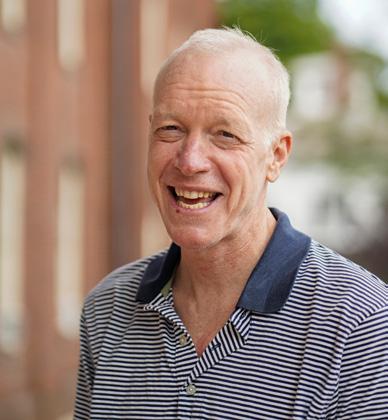
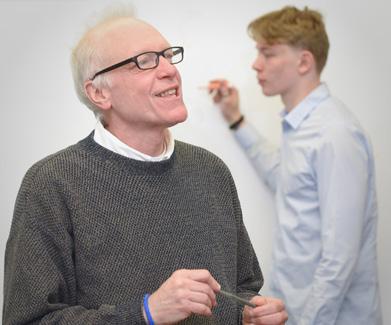
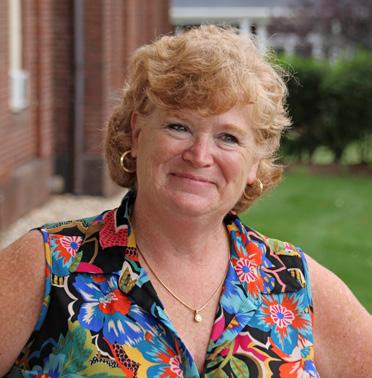
Rose Power, R.N., B.S.N. Nurse, Health Services
“I have known Rose for many years and working at WMA with her has changed my life. Rose is someone that I learn from every day we work together. She is kind and understanding with our students. She treats every student and situation individually and always has the student’s best interest in mind. When a student comes in, Rose does not only address the reason the student came in to see us, but she asks how school is going, how sports/their after-school activity is going and she asks about their families. Students know our office provides a safe, caring and warm environment, and this is completely because this is how Rose has established our place in the WMA community.”
amy croc K er, Director of Health Services
Class Notes
1953W
Peter Ferguson writes: “I had the rare privilege of participating in a baptism of my great grandson this summer on Martha’s Vineyard, where I have a cottage in the campground of 300 or more other cottages. My two other grandsons were baptized there 20-plus years ago!”
1956
Phillip L. Holt writes: “I am definitely planning to attend Reunion 2026. Whether I come alone or with some family will be their choice. I would have liked to attend this year as well, but my writing has been consuming all of my spare time. I have two books in preparation. One is centered on my experiences growing up, and large portions drawn from my days at Wilbraham.
Seventy years must surely make such a transformation in an evolving educational institution as to render its earlier days hardly recognizable. Buildings mostly remain, renovated inside, maintained outside. But architecture isn’t the reason for the place. People come, stay, make a difference, move on, retire, depart. All leave their mark on the student/ alumni body. None was as young as I when I arrived in 1954. So, no one is there now who was present then. That is what reunions are for.
Over the last three years, I have folded into one novel many of the nuances and people (many names changed) remembered from Wilbraham combined with some life lessons reluctantly learned. Statistical response for purposes of the “normal” alumnus update:
• Retired from Bath Iron Works after 12 years in configuration and change management in the DDG 51 USS Arleigh Burke Class Guided Missile Destroyer construction and lifecycle management programs.
• Retired and moved on to The International Butler Academy in the Netherlands to train for a fifth career in personal service.
• Now rusting elegantly in Maine and serving part time at the new Cancer Treatment Center at Central Maine Medical Center in Lewiston in customer service.
• Six, no, seven children legal or adopted, 12 great and 14 greatgreat-grandchildren and a cat shared with my youngest son who lives with me.
• No longer sailing, nor bicycling, nor diving, nor skiing; just reading and writing.
1959W
William A. Tychsen writes: “Splitting my time between Colorado and Estero, Florida. Enjoying pickle ball, biking and golf. Just cranked the big 85 and am very grateful for my family and companion Bonnie. Family, son and daughter are in Colorado, but we will all be in Florida for Christmas. Visited Dave Griffith ’59W and wife, Kaki, in Portland, Oregon, last summer. Will spend time with Dick Morgan ’59W in Florida early in 2026.”
1974
1 Robert Jenkins writes: “After graduating W&M, I joined the Marine Corps for four years. I did ‘Boot Camp’ at Parris Island and got orders to Twentynine Palms, California. After getting discharged from the Marine Corps, I attended Northeastern University in Boston. While at NU, I did a semester tour at Danish International Studies (DIS) in Copenhagen, Denmark. After graduating NU, I worked for Polaroid in Cambridge, AmEx, American Banknote Holographics, VCON and VTEL (both video conferencing companies). We were making a presentation to Lehman Brothers about a desktop IP video solution on 9-11. I was on the 39th floor of WTC-1 when the first plane hit. Many things happened over the next 10 years I started a construction business in Charlestown, Massachusetts, and eventually moved to Beverly (Massachusetts) to renovate a beautiful 150-year-old Victorian on the water ... I moved to Carefree, Arizona, and own VETSBuilt Contracting and about to retire soon! Cheers!”

1980
2 John Banas III writes: “Ahlan to all my WMA friends! My wife, Margaret, and I toured Egypt in October. The Nile and its 10,000 years of civilization was truly stunning a perfect match to the new friends we met there. My love of history began in 1977 at WMA, and I’ve carried that joy of learning my whole life. Sadly, I also have to share that my father, Dr. John S. Banas Jr. (Wilbraham, Class of 1955), died in May at his Monaco home. He always considered his time at Wilbraham Academy as the pivotal point on his life’s path, a sentiment we shared. This year would have been his 70th reunion. He wanted me to pass along a final warm embrace to his Academy friends, along with his gratitude for a life that found its direction there.”
3 Nancy Law writes: “Sarah Riveira Toppe and I both graduated in 1980 and came to Cornell following. We had played on the girls basketball team when we only had I think eight players, because girls had been admitted to Wilbraham only a year before we started. In November, we got together when she and her family visited Ithaca. It was wonderful to catch up and to share about who we’re in touch with and remember some of our funniest memories at W&M. I thought you’d appreciate this photo of us from their Airbnb.”
1986
4 Dr. Mark A. Warburton writes: “This is Mark Warburton (’86) and former English Teacher at WMA. I’ve lived in Cleveland for 15 years now, and, in July 2025, Mike Zadig, my friend and former colleague at WMA, drove out from Boston to visit. We had the pleasure of meeting up with Peter Weeks (Class of 1999), who also now lives in the Cleveland area. It was amazing to catch up!”
Bill Guerin strikes Gold
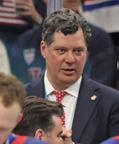
Bill Guerin ’89 had his moment in the international spotlight albeit a bit from the shadows when the U.S. Men’s Hockey team won the gold medal at the 2026 Winter Olympics in Milan, Italy.
The organization’s general manager was the major architect of a team roster that won gold for the first time since 1980. The defining moment was a 2–1 overtime win over Canada in the final in late February.
“It was like a dream,” Guerin told The Athletic. “It was a grind going through those games. In a playoff series, you have to take your wins and losses as they come. You get into the medal rounds, and it’s one and done. It’s not like you start back up in September. It’s the Olympics. You have four years. And some of us, some guys, you don’t know if we’re going to get another crack at it. So there’s just a lot. There’s a lot on the line. And everyone feels it.”
Guerin, 55, is the GM of the National Hockey League’s Minnesota Wild and he has won four Stanley Cups during a long career as a player and administrator. The Wilbraham native is a former member of WMA’s Board of Trustees.
Bill Guerin ’89, standing fourth from right, poses with Team USA’s gold medal hockey team.
• Bill Guerin ’89, as general manager of Team USA Men’s Hockey, watches the gold medal presentation ceremony moments after a gold medal win at the 2026 Winter Olympics. pHoto credit: Getty Images
from Left: Peter Weeks ’99, Mark Warburton ’86 and Mike Zadig
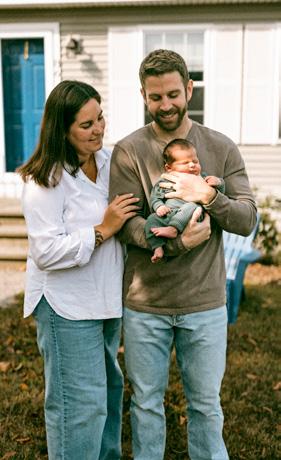
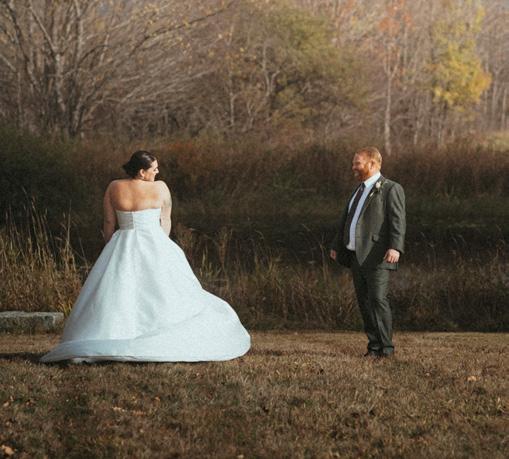
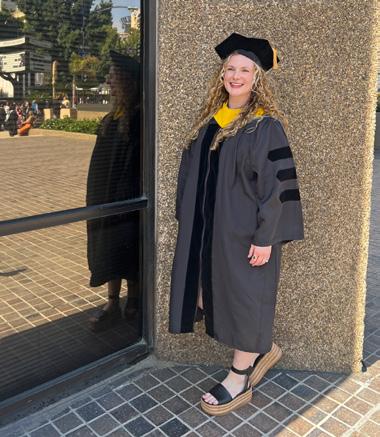
2012
5 Nicole C. (Robitaille) Castonguay writes: “My husband and I just welcomed our first baby boy, Marshall Anderson Castonguay, in August! We’ve lived in Portland, Maine, for 10 years where I work as a sales manager at PTC, and Andrew is a sergeant with the Portland Police Department.”
6 Ryan McLarney writes: “I got married on Oct. 18, 2025, to my wife, Rebecca Burt, at Wild Sugar Homestead in Newbury, Vermont. Rebecca’s father has had a family genealogy performed and her family is one of the early residents of Wilbraham (late 1700s). The street next to the new restaurant (Pafumi’s) on the corner is named Burt Lane, which we assume is named for her family. Discovering this connection has been a meaningful way to link our present to a much deeper family legacy.”
2013
7 Claudia J. Woloshchuk writes: “I recently completed my doctorate in Clinical Psychology (PsyD) at Alliant International University, California School of Professional Psychology. I am working as a postdoctoral fellow in San Diego, California. I’m excited to continue to use my training to support individuals and communities in the field of mental health.”
8 Emma Feeley writes: “I recently graduated from Sacred Heart University with my Bachelor of Science in Nursing. I passed my licensure exam to become a registered nurse in July and have started my full-time position working at Baystate Medical Center on a medical-surgical telemetry unit. I look forward to the start of my nursing career and helping make a difference in my patients’ lives!”
9 Nathan Gould writes: “I’m joining the Army’s WCAP (World Class Athletes Program) and then the national team this spring in San Diego for 7s rugby. I’m pretty excited. I’m in Oklahoma right now doing field artillery BOLC (Basic Officers Leaders Course), which isn’t too bad.”
Title time (again) for Hannah Grudzien ’25
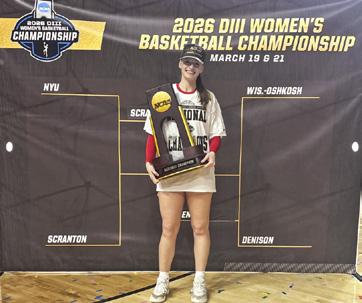
Hannah Grudzien ’25 brought her winning ways to Dennison University and with it, she’s a champion. Again.
The 5-foot-11 guard/forward was a key member of Dennison’s first NCAA Division III Women’s Basketball championship. The Granville, Ohio, program (30–2) defeated the University of Scranton in the title game in March. Hannah played in four of the Big Red’s tournament games, and averaged 3 points in 20 overall.
At WMA, Hannah’s teams went 67–20 and she helped lead the Titans to the NEPSAC Class C Championship as a junior in 2023–2024. She was a three-time All-NEPSAC selection.
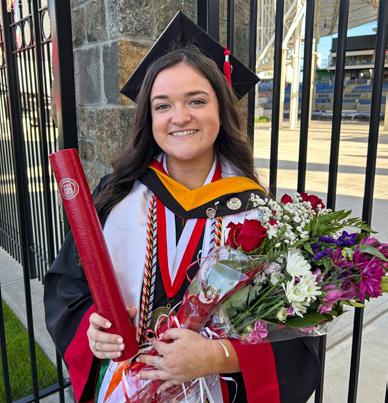
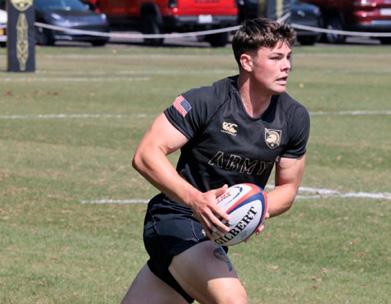

submit a class note
We Remember
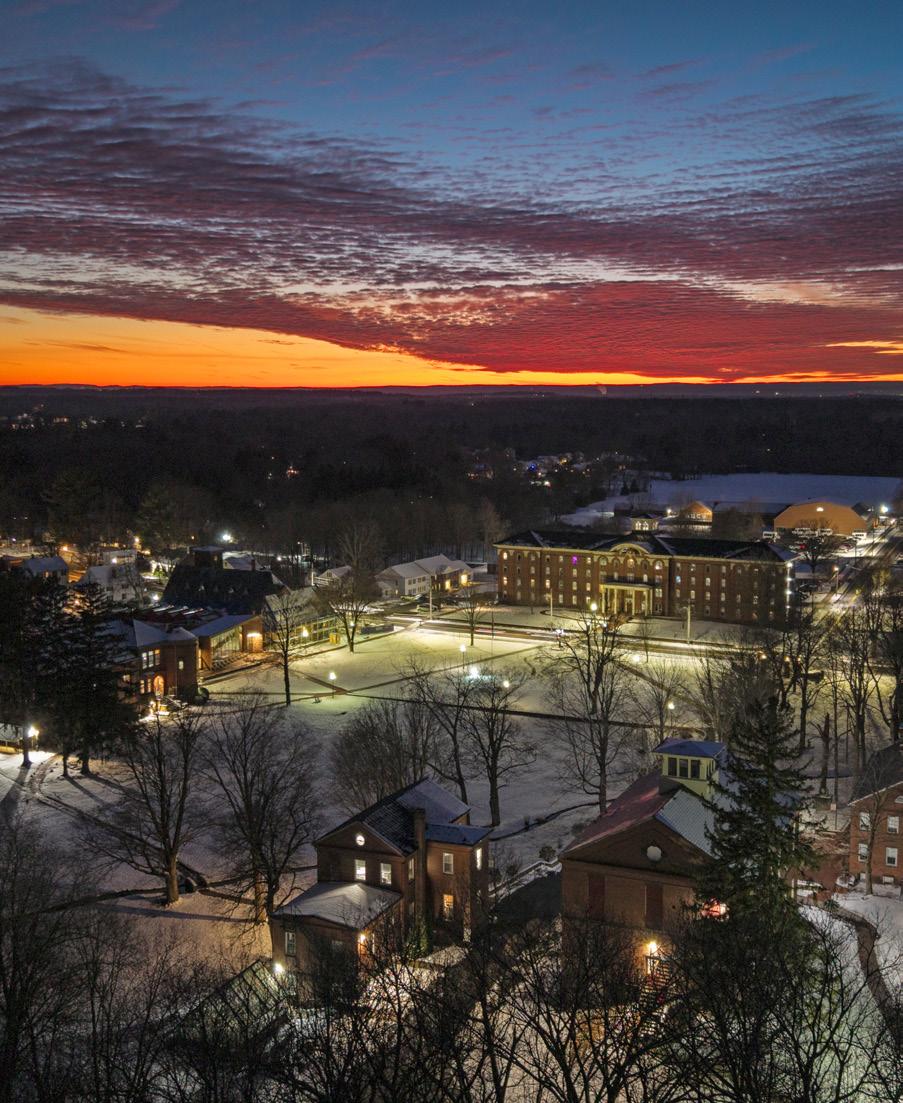
W ilbra H am & monson aca D emy
ALUMNI
Mr. William K. Ferriter ’75
Mr. Peter D. Franke ’75
Mr. Paul S. Kapinos ’74
Mr. Richard S. Michelson ’75
FORMER FACULTY & STAFF
Rita F. Carey
monson aca D emy
ALUMNI
Mr. Thomas C. Crafts ’65
Mr. Joseph A. Furgal Jr. ’57
Mr. Robert E. McKinney ’70
Mr. Jeffrey J. Peden Jr. ’69
Mr. John C. Sayles Jr. ’61
Mr. Chester J. Szetela ’55
W ilbra H am aca D emy
ALUMNI
Dr. John S. Banas Jr. ’55
Mr. Irving L. Fass ’47
Dr. Paul I. Kingsbury ’53
Dr. David S. McKeith III ’51
Mr. Dennis M. Marshall ’69
Mr. Harold R. Norton ’59
Mr. Wayne L. Wexler ’70
Mr. Robert H. Whyte ’55
Every gift fuels the Journey of a Titan from opportunity to accomplishment.
Support the Atlas Fund to help us create opportunities for students like Avah, now and in the future.
Avah M.’27
Published poet
All-State vocalist
SYO violinist
Played Alice in WMA’s 2026 production of “Alice by Heart”
Contemporary Dance Soloist with the Academy Dancers
High Honor Roll student
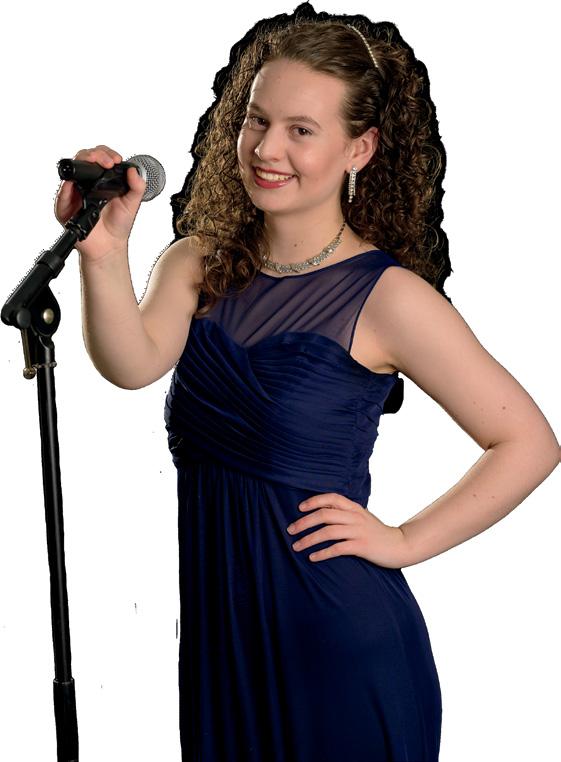
“WMA has ened d rs I nev knew isted—giving me p tunities and p iences, aveling to England and Scotland to iendships that have broadened my w ld in ways that will shape me f a lifetime.”
- Avah M. ’27
Selected to attend the prestigious AAMS Opera American Academy of Music International Summer Music Institute in Todi, Italy

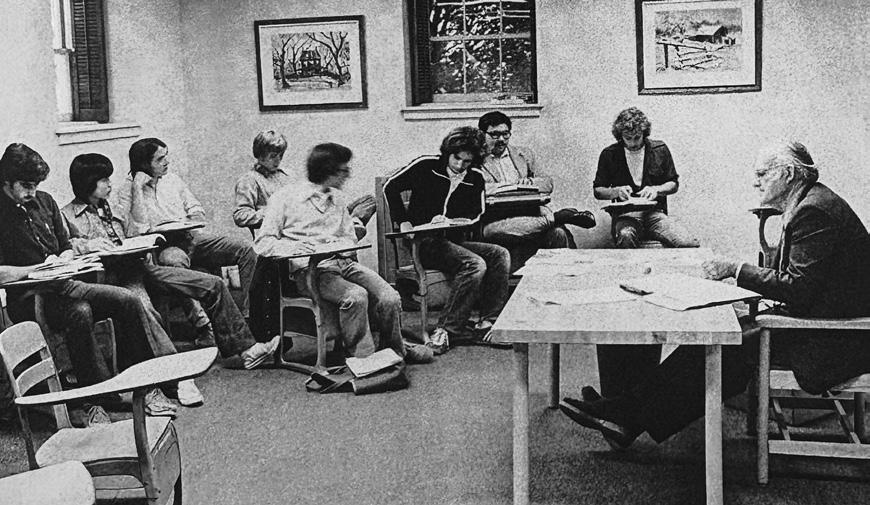
from t H e arc H ives
Passing the baton as time races on
b y tim H arrington ’73 Faculty, English
RRoger Nye Lincoln is one of the primary reasons I am an English teacher today. What Roger was for so many decades or more precisely what Roger taught me and what he keeps on teaching me decades after his death is the real subject of this article.
For those of you who may be unfamiliar with Roger Lincoln’s legacy at the Academy, he taught English here from his graduation from Tufts in 1936 to his retirement in 1980. He was the chair of the
English Department from 1938 to 1972 and the combined English and dramatic arts departments from 1972 to 1980. In many important ways, his life was the Academy.
In the fall of 1972, I was among the small group who made it into Mr. Lincoln’s Honors English 12 (no AP in those early days but not because of Roger, who had been involved in the development of the AP English Lit exam). The dozen or so of us squeezed into one of the smaller classrooms of Old Academy (the one on the left after the descent into the basement) in our hard-worn 1970s attire (blue jeans and tee shirts; no ties or blazers or even collared shirts) with tweedy Mr. Lincoln who taught us from his desk chair. I don’t remember him ever getting up
Each class would often start with Mr. Lincoln reading aloud a passage from the assigned homework, after which he would pause to let us reflect (or break the spell and come back to the classroom) and then he would begin to ask questions.
I didn’t understand the methodology until much later but I know now it was classic Harkness Table discussion (only we didn’t have a table). But he was at eye level with us asking challenging questions, and how we responded led to other challenging questions. There was nowhere to hide. It was a true dialectic. And it was engaging and, weirdly, it was fun. We weren’t just talking about the book we were learning to think and to make connections.
The point of the reading aloud was for us to hear the narrator’s voice. Without that, we were just reading a narrative with a plot and characters. Understanding the narrator’s voice gave the story immediacy and nuance.
except to write the homework on the blackboard (in chalk for those reading this born after 1990).
I don’t remember a syllabus but I do remember a reading list. He would have scoffed at the current notion that high school students can’t handle long, difficult books. (I don’t remember every book we read that year but I do remember “Moby Dick,” “Crime and Punishment” and “Northanger Abbey,” and that the list was much longer.)
What papers we wrote were pen on paper. The homework was 50+ pages of reading each night with a pen (annotations!). And we were encouraged to have a notebook to take notes in class (though I wrote just about everything in whatever book we were reading).
I didn’t understand this aspect of Roger’s teaching until I heard a recognized giant of literary criticism and education Jim Maddox 10 years later read the first few pages of Jane Austen’s “Emma” in a graduate school classroom, impersonating Austen’s narrator in his Texas drawl. But we all heard the irony and the humor, and we were transposed to the countryside of early 19th century England at that moment. And for the first time, I felt that I understood Jane Austen (and Roger Lincoln).
Though it was 50 years ago, I have a clear memory of Mr. Lincoln reading “Moby Dick” (his favorite novel) to us in class. In particular, I remember Ahab’s challenge to God about 700 pages into the novel as the Pequod gets closer to the whaling grounds in the South Pacific a few days before Ahab is finally “reunited” with the white whale. In chapter 119 in the midst of an electrical storm at
Roger Nye Lincoln in the classroom.
sea, Ahab addresses the three masts of his ship (like the three crosses on Gethsemene), which are lit by the storm (known by sailors as St. Elmo’s fire). Mr. Lincoln practically shouted out the lines as he read.
In the speech, Ahab addresses God’s ignorance of His own origins and suggests his superiority to God because Ahab knows his “father”/ creator (but not his mother). Ahab says: “Thou knowest not how came ye, hence callest thyself unbegotten; certainly knowest not thy beginning, hence callest thyself unbegun. I knoweth that of me, which thou knowest not of thyself, oh, thou omnipotent.”
Ahab ends his speech: “I leap with thee; I burn with thee; would fain be welded with thee; defyingly I worship thee!”
This is the heart of the novel where Ahab’s quest becomes much more than a “story about a big white fish” as a classmate of my older brother used to say (Dan Kunhardt ’72, are you out there?).
You can probably imagine the discussion that followed, especially because Ahab immediately after this speech puts down a mutiny by grabbing the electrified harpoon he has fashioned himself and pointing it at his frightened crew.
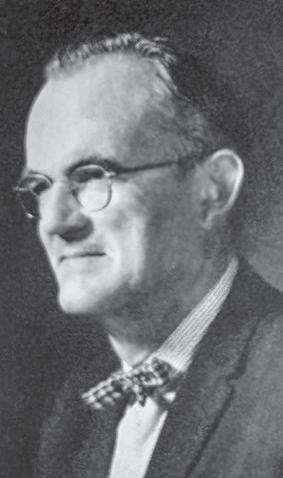
A few years later as a colleague in the late 1970s, what I remember best about Roger (though I never reached the point where I could actually call him that in his presence) was how he took me under his wing. It became a regular thing (though not an everyday thing) during my first two years of teaching to have breakfast in the dining hall with Roger and Fred Watts, and afterwards to join Fred in the teachers’ room (now the Campus Store) while we finished our coffee and he titrated his nicotine levels. Even now, I can’t explain how much of an honor and a gift this was for me, especially at that time.
Like most new teachers, I felt like an imposter those early months and years of teaching, but these lifetime educators, each in their own way, assured me I wasn’t though not in so many words. I don’t ever remember talking about teaching, but being included in their breakfast week after week felt like a message to me that I belonged, and that I could be good at this teaching business.
Though I have had terrific teachers in college and grad school, my chief guide to this day has been Roger. My classes sit in a circle so everyone is in the front row, and I sit in the circle with them so we’re all at eye level (I gave up lectures years ago). In just about every class, I read from selected passages from the text, especially if we are reading literature. I put the discussion questions on the board (not with chalk, but with the assistance of a projector connected to my laptop). The challenging questions I begin with lead to more challenging questions based on student responses. My classes are engaging and hopefully fun (I am told this by my students every year) and often loud (I teach with my door open). And, as of last year (due to the insidious nature of AI), my students write mostly pen on paper. We’ve all come full circle.
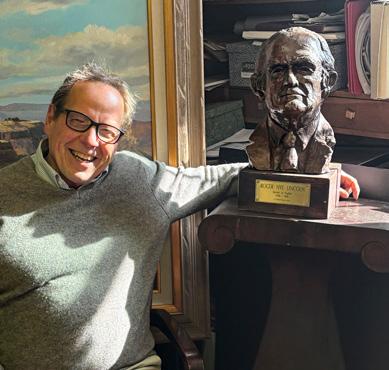
I have heard from many of my classmates over the years that Mr. Lincoln was one of their favorite teachers, even those not in his Honors classes (his film electives in the 1970s are what some of my classmates remember). They also remember his sense of humor and his love of Mark Twain. But his legacy, of course, extends far beyond the 1970s.
Almost 15 years ago, I was asked to interview the Pulitzer Prize winning poet Galway Kinnell (Wilbraham, 1944) for Academy World magazine.
We had a long conversation in his office in a converted barn behind his house in the Northeast Kingdom of Vermont that ranged from mixers with McDuffie, to the current state of football and baseball at the Academy to this writing on the Atlas (school newspaper) staff, but we ended up talking about Mr. Lincoln’s English class. It had left a profound impact on each of us separated by 30 years. Galway even shared his memories of Roger reading aloud without any prompting from me. Later, I learned that he had dedicated his book “Selected Poems” to Roger.
The impact teachers like Roger and Don Kelly (currently finishing his 50th year at WMA) have on their students transcends their lifetimes.
The lessons their students learned will be carried into their lives and their worlds, whether they become teachers or not. But some will become teachers. I am very fortunate to be able to count as colleagues two of my former English students: Ms. Sommer Mahoney ’11 and Ms. Emily Dromgold ’17, who I admire and respect as teachers. I feel as honored and fulfilled by calling them colleagues as anything I have accomplished in my professional life, and I am comforted that they will continue the relay race when my days are done.
When it’s time to drop out of that race, we pass the baton on to our colleagues (and, if we’re lucky, maybe one of our own students) and watch them run on into the unknowable future. That is human progress. That is the value of an education (and it’s never been more important than now). That has been the Academy that I know and love going back to when I was in Mr. Lincoln’s classroom.
Tim Harrington ’73 with the bust of Roger Nye Lincoln.
Roger Nye Lincoln
Wilbraham & Monson Academy
423 Main Street
Wilbraham, MA 01095-1715
www.wma.us
tel: 413.596.6811
address service requested