APPLIED RESEARCH
SOLVING REAL-WORLD CHALLENGES WITH LETHBRIDGE POLYTECHNIC’S CENTRE FOR APPLIED RESEARCH, INNOVATION AND ENTREPRENEURSHIP
SOLVING REAL-WORLD CHALLENGES WITH LETHBRIDGE POLYTECHNIC’S CENTRE FOR APPLIED RESEARCH, INNOVATION AND ENTREPRENEURSHIP
At Lethbridge Polytechnic, applied research is one of the clearest ways we fulfill a purpose as a polytechnic institution. It connects learning with discovery, and discovery with impact.
Our research activity is not undertaken in isolation from the world around us. It is grounded in the real economic and societal needs of our region, our province and the industries and communities we serve.
Applied research matters because it turns emerging challenges into practical solutions. Whether supporting innovation in agriculture, advancing technologies for industry, strengthening community well-being or addressing environmental and social priorities, our work is shaped by relevance and responsiveness. We are proud to collaborate with partners who are looking not only for ideas, but for action with solutions that can be tested, refined and implemented in real settings.
This work also creates an extraordinary learning environment for our students. Through applied research, students gain more than knowledge; they gain experience. They work alongside faculty, researchers, industry and community partners on current issues, using current tools, in contexts that reflect the realities of today’s workplaces. This kind of realtime, relevant learning builds confidence, deepens capability and prepares graduates to contribute immediately and meaningfully in their careers and communities.
Applied research is therefore central to who we are. It strengthens our relationships with employers and partners, contributes to economic development and helps us respond to pressing societal needs. Just as importantly, it ensures education at Lethbridge Polytechnic remains dynamic, current and connected to the future.
I am proud of the work highlighted in this report and of all the people behind it, who demonstrate the power of applied research to create opportunity, generate solutions and make a lasting difference.

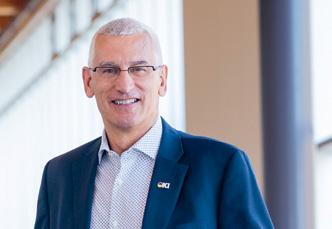
Dr. Brad Donaldson President and CEO

Lethbridge Polytechnic’s Centre for Applied Research, Innovation and Entrepreneurship (CARIE) plays a pivotal role in advancing applied research that directly supports industry, community and regional economic development.
CARIE has five key areas of focus based upon the expertise and strength within our institution. Our Spatial Technology Applied Research and Training (START) Centre, leverages technologies such as advanced virtual and extended reality capabilities to support immersive learning environments, simulation-based training and industry-driven prototyping. These technologies provide industry partners with practical tools to test, refine and implement solutions in a low-risk, high-impact setting.
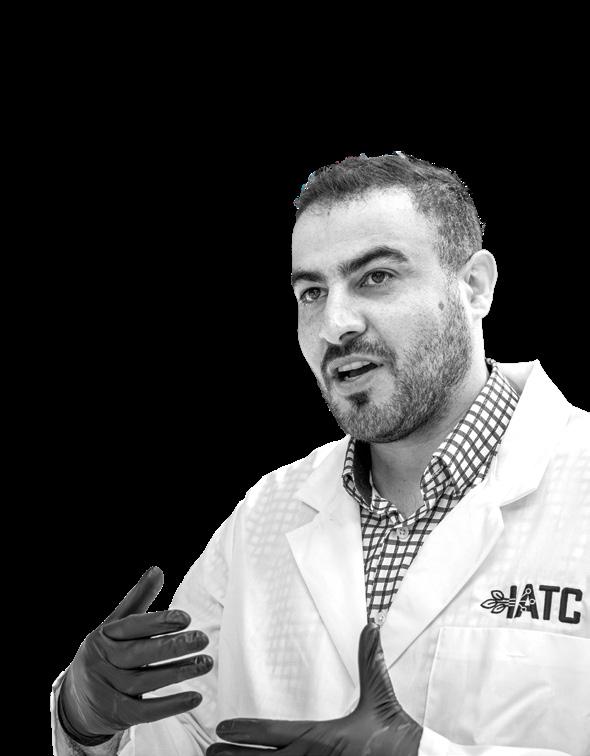
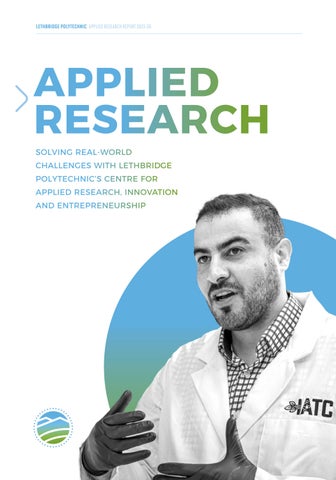
Complementing these assets is the Integrated Agriculture Technology Centre (IATC), a hub that bridges traditional agriculture with controlled environment technologies. The IATC supports interdisciplinary research spanning automation, data analytics, environmental monitoring and economic analysis. Together, these facilities position Lethbridge Polytechnic as a national leader and partner in sustainable food production and applied agricultural innovation.
START often collaborates with the Centre for Public Safety Applied Research, featured heavily in our last report. Together, they aim to inform evidence-based practice and policies in the Canadian field of justice to keep Canadians safe and contribute to strong and resilient communities. One active project is the development of a “day in the life of a police officer,” offering youth an engaging and immersive virtual experience designed to educate those interested in the realities of a career in public safety.

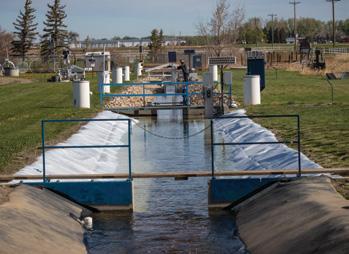
Equally important is the polytechnic’s Research Farm, which serves as a living laboratory for agricultural innovation in southern Alberta. The farm enables applied research in areas such as sustainable crop and food production, precision agriculture, irrigation efficiency and post-harvest storage. By collaborating with producers, agribusinesses and technology providers, CARIE ensures research outcomes are directly transferable to real-world agricultural operations, strengthening one of the region’s most critical economic sectors. I encourage you to read our in-depth profile on the farm in the following pages.
Through CARIE, Lethbridge Polytechnic continues to foster a culture of inquiry, collaboration and practical impact — driving innovation that is responsive to industry needs while preparing students to contribute meaningfully to a rapidly evolving economy.

Dr. Kenny Corscadden, Vice President – Academic and Research

Farming and planning may be spelled differently, but the idea is the same at Lethbridge Polytechnic’s Research Farm. Both demand the ability to read changing conditions, adapt on the fly and keep one eye firmly on the future. At the research farm, those abilities drive everything from what gets planted to the questions being asked of the soil itself. Located just east of Lethbridge, its 155-hectares (385-acres) may look like a few small plots of winter wheat in early spring, but behind the scenes, months of planning are about to kick-start one of the most exciting times of year.
Established in 2000 by the Governments of Canada and Alberta and named the Canada Alberta Crop Diversification Initiative, the goal of the research farm was twofold: to showcase whole-field irrigation management methods and to serve as a location for

demonstration and experimentation of small-plot research projects. Often spanning just a few square metres to several hectares, the projects helped bridge the gap between small-plot trials and full-scale farm application.
More than two decades later, that core purpose endures. The research farm, under the administration of Lethbridge Polytechnic since 2020, supports up to 15 active research projects at any given time, spanning irrigation technology, crop variety trials, soil science and crop drying and storage, all while growing a diverse range of cereals, grains and specialty crops like potatoes and sugar beets. The farm grows crops representative of southern Alberta’s agriculture makeup to best study management strategies around them. That makeup shifts based on industry needs, research priorities and the realities of crop rotation.

Rotation is, in fact, one of the more challenging aspects of managing a research farm at this scale. With a canola or spring wheat rotation, for example, only 25 per cent of the farm can be in that crop at any given time, meaning a fertilizer trial can’t be repeated on the same land for several years due to residual nutrients compromising results.
“We need to cover a lot of ground with not very much ground,” says Mike Ellefson, farm manager, who has worked at the farm since 2002, long before it was part of the polytechnic’s Centre for Applied Research, Innovation and Entrepreneurship.
The farm also pursues smaller-scale projects – plot-scale or half a hectare for forage, or specialty crops like hemp that have come and gone based on research interest.
“We strive to remain consistent, but at the same time, we’re all flexible and adaptive in how we respond to industry needs – and the need is there,” says Dr. Willemijn Appels, Mueller Irrigation Research Group chair.
Despite its purpose as a research farm, it operates functionally like the majority of farms in southern Alberta with centre pivot irrigation equipment adorning
WE STRIVE TO REMAIN CONSISTENT, BUT AT THE SAME TIME, WE’RE ALL FLEXIBLE AND ADAPTIVE IN HOW WE RESPOND TO INDUSTRY NEEDS – AND THE NEED IS THERE.”
Dr. Willemijn Appels Mueller Irrigation Research Group chair
the fields. A practice used in southern Alberta since the late 1800s, irrigation is vital to the growth and sustainability of agriculture in the region. Now, the land serves as a place to demonstrate the benefits of more deliberate or efficient practices that reduce water loss, such as subsurface drip irrigation and variable rate irrigation.

“Irrigated crop producers get inundated with technology that promises to help reduce water use or increase efficiency in their operations,” says Appels. “These claims are rarely validated against prevailing irrigation practices, and sensor data often differs from the condition assessments producers rely on when making irrigation decisions.”
THE RESEARCH FARM, under administration of Lethbridge Polytechnic since 2020, recently signed a new 20-year lease agreement with the Government of Alberta to continue research operations in partnership with the agriculture industry.


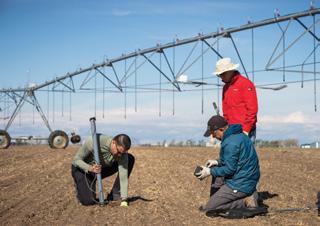
Appels and her team are using new sensors and data to improve irrigation scheduling for producers. This three-year project, in collaboration with the University of Alberta and funded by Results Driven Agriculture Research (RDAR) and Alberta Innovates, includes interns, summer students and graduates from the polytechnic’s Ecosystem Management, Agriculture Sciences and Computer Information Technology programs. Together, they are developing user-friendly estimation software that will perform complex simulations using sensor network data to estimate and evaluate plant and soil moisture conditions to inform irrigation scheduling practices.
The research farm is where data for spring wheat, canola, field peas, sugar beets and potatoes is collected and computer simulations are validated. Ideally, the project will see the development of an open-source software platform that enables producers and agronomists to evaluate irrigation amounts, timing and other variables to optimize their irrigation water use.
And the farm is not limited to irrigation. Researchers cover a lot of

ground, including contributing to national collaborative projects. As a benchmark site for the Canadian Nitrous Oxide Collaboration Network project, led by the University of Guelph, Appels measures nitrous oxide (N2O) emissions and soil processes to better develop and validate emission-reduction targets.
“Synthetic nitrogen fertilizer is essential to global food security, but inefficiencies in its use come at a significant cost both economically and environmentally,” says Appels. “N2O emissions from these products have a global warming potential approximately 270 times higher than carbon dioxide, making responsible management critical. While Canada already leads the world with sustainable practices like zero and minimum tillage and regenerative agriculture, our research
“OUR RESEARCH FARM IS DOING ITS PART IN SOLVING A PROBLEM FACING THE COUNTRY’S ENTIRE AGRICULTURAL INDUSTRY.”
Dr. Willemijn Appels
Mueller Irrigation Research Group chair
farm is doing its part in solving a problem facing the country’s entire agricultural industry.”
Whether it’s tangible results like a new software platform, or longterm strategic contributions to the environmental policy of the nation, the research farm has a place in Canadian agriculture.
Both projects rely heavily on external funding from donors, industry and government partners, such as RDAR, Alberta Innovates, the Natural Sciences and Engineering Research Council of Canada, the Social Sciences and Humanities Research Council of Canada, the joint federal-provincial Sustainable Canadian Agriculture Partnership and donations from the estates of Lloyd and Dorothy Mueller and Joe and Laverna Hranac. Additionally, the polytechnic recently signed a 20-year land lease agreement with the Government of Alberta for the research farm, offering what Appels and Ellefson both agree bolsters consistency and reliability of the farm’s services.
“We have a baseline, our research teams and our partners and collaborators for projects, but it’s donors and grants that make our day-to-day lives possible,” says Ellefson. “It’s not like we’re worried about paying the bills, but there are opportunities for growth here, through staffing and equipment, that could see us performing at a higher level.”
This foundational support is what allows the farm to take on the volume and variety of projects, while being a reliable, long-term partner rather than a project-by-project operation.
The team also has clear ambitions for what comes next, such as new equipment and deeper engagement with irrigation technology vendors who could use the farm as a demonstration
“WE HAVE A BASELINE, OUR RESEARCH TEAMS AND OUR PARTNERS AND COLLABORATORS FOR PROJECTS, BUT IT’S DONORS AND GRANTS THAT MAKE OUR DAY-TO-DAY LIVES POSSIBLE,”
Mike
Ellefson
Research Farm manager
platform. As more students and programs become involved, the vision for the farm isn’t just to be bigger – it’s to be more deliberate in its connections: supporting student projects and research opportunities while serving as a knowledge hub for farmers, producers and the public with questions about new crop varieties, irrigation innovations or long-term industry partnerships. That connection is what donors, like the Muellers and Hranacs make possible – turning a field of sprouting winter wheat into a living laboratory, contributing to the future of Canada’s most important growing region.
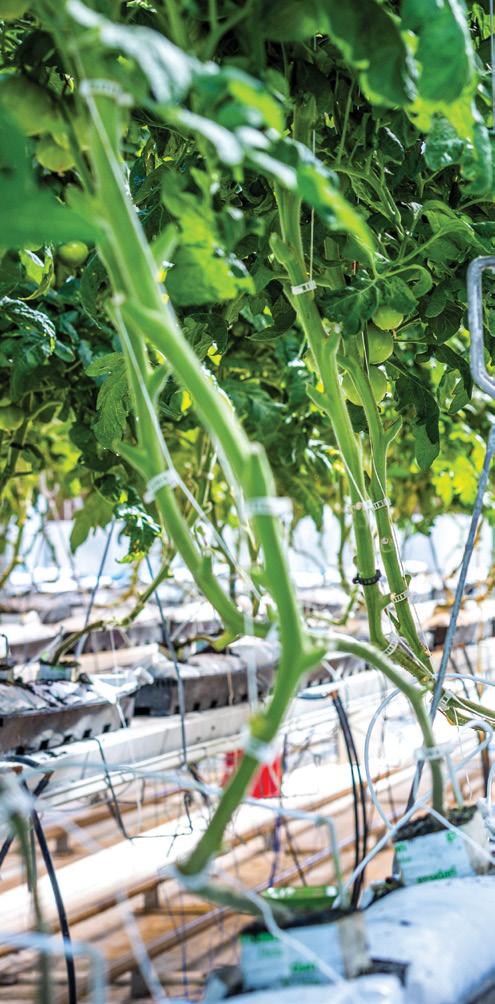
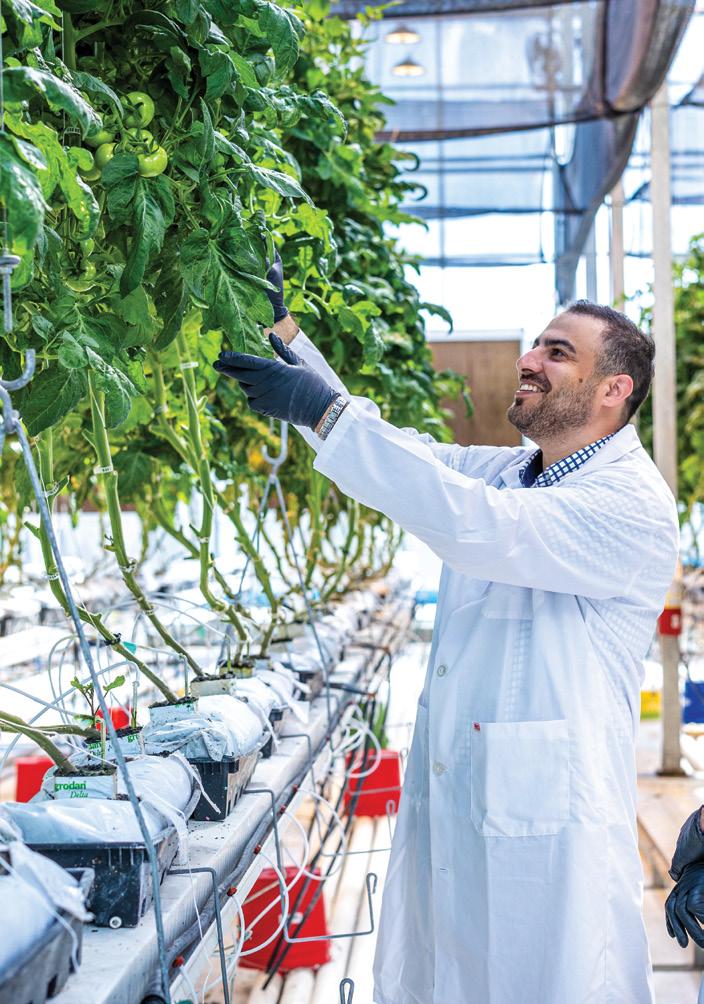
Home to nearly 2,000 square metres of controlled environment agriculture space, Lethbridge Polytechnic’s Integrated Agriculture Technology Centre exists to solve real-world challenges facing a growing industry.
At the core of applied research is an industry to engage with. That partnership is what makes Lethbridge Polytechnic’s Integrated Agriculture Technology Centre (IATC) a prestigious applied research resource for Canadian greenhouse and controlled environment agriculture (CEA) operators. As one of 70 Technology Access Centres (TAC) across Canada, the IATC serves as a federally designated, public-facing applied research hub for industry.
Alexis Buzzee, IATC manager, Centre for Applied Research, Innovation and Entrepreneurship (CARIE), acts as the
bridge between industry, government, funders, innovators and researchers — balancing priorities to ensure the IATC can best deliver as a TAC.
“Lethbridge Polytechnic’s presence as a nationally recognized and funded research institute brings immense value to not just Alberta’s growing CEA and greenhouse producers, but those across Canada,” says Buzzee. “As a TAC, we respond to industry challenges with a multidisciplinary team ready to help de-risk innovation activity and provide the expertise, insight and collaboration needed to tackle real-world challenges and commercialization.”
ARE YOU A GREENHOUSE OR CEA PRODUCER WANTING TO IMPROVE EFFICIENCY, SUSTAINABILITY OR YIELDS?
Let us know! We can help you evaluate new technologies, test new system designs or practices and even aid in customized training or workforce development.
Last year, the polytechnic received approval for its second TAC grant from the Natural Sciences and Engineering Research Council of Canada. This fiveyear, $1.75 million grant will further grow and diversify the IATC, ensuring industry has the support needed to succeed.
Projects underway at the IATC range from technology, product or prototype development with a mass balance and feed formulation study, exploring sustainable aquaculture by supplementing and replacing fish meal with canola meal, thus creating value from canola by-products, or testing fertilizer and bio stimulant validation to support product launches and market confidence.
Another project, a three-year greenhouse lighting trial, funded by Results Driven Agricultural Research with industry support from Tamura Imports Limited, Current Prairie Fishermen Corporation and Vivent SA, compares common lighting strategies for cucumbers, bell peppers and tomatoes, while evaluating yield,
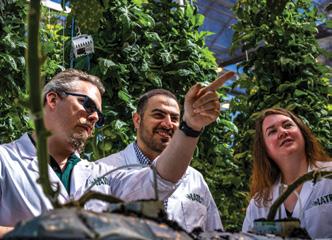
energy use, capital and replacement costs in hopes of clear recommendations for growers and producers.
“Research tends to have a history of large, multi-year projects that, while incredibly helpful, don’t tell the complete story of working with industry,” adds Buzzee. “Sometimes short-term projects are just as valuable in helping industry and innovators evaluate their position sooner rather than later, saving time, money and resources that could be put toward new or otherwise competing projects.”
The IATC continues to grow as a resource for Canada’s agricultural sector, welcoming industry partnerships at the prototype, validation or demonstration stage of the research process.
To learn more, or to request a project scoping meeting as a small- or medium-sized agricultural enterprise, visit: www.lethpolytech.ca/iatc.
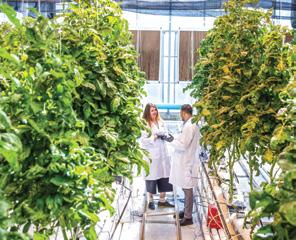

The IATC offers validation and demonstration studies for innovators developing inputs like fertilizers and biostimulants, or products such as sensors and climate control systems.
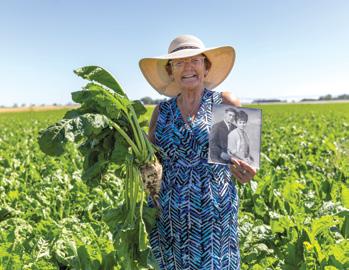
In August 2025, Lethbridge Polytechnic celebrated a transformative $2.8 million gift from the estate of Joe and Laverna Hranac, the second largest donation in the institution’s history. The gift will support operations at the Research Farm, enabling the continuation and expansion of applied agriculture research and innovation.
“This legacy gift from Joe and Laverna Hranac ensures our students and researchers can continue to work alongside industry partners to solve real-world agricultural challenges,” says Dr. Brad Donaldson, president and CEO of Lethbridge Polytechnic. “It’s a lasting investment in education, innovation and the agricultural community that helped shape the Hranacs’ lives.”
The polytechnic announced in January 2026, a 20-year land lease renewal agreement with the Government of Alberta for the 385-acre research farm east of Lethbridge.
LEARN MORE ABOUT THE HRANACS’ LEGACY lethpolyte.ch/hranac-donation
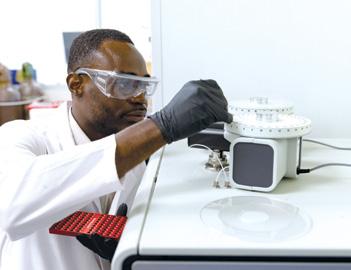
The 2025 Research Infosource Inc. rankings listed Lethbridge Polytechnic ninth among research colleges in Canada, up from 10th in 2024 and 11th in 2023.
“Being recognized for our applied research, when compared with so many other institutions across Canada, is a remarkable win for the polytechnic,” says Dr. Kenny Corscadden, vice-president – academic and research. “By offering applied learning and research opportunities for students and researchers in a growing number of industry and community-based sectors, Lethbridge Polytechnic is becoming an institution of choice for those interested in making a difference and taking their education and research to the next level.”
The polytechnic also ranked second in College Research Intensity Dollars per Researcher, third in College Research Income, fourth in Artificial Intelligence (AI) Research Partnerships and AI Completed Research Projects, and ninth in Research Partnerships.
LEARN MORE ABOUT APPLIED RESEARCH AT LETHBRIDGE POLYTECHNIC lethpolyte.ch/research-rank-2025
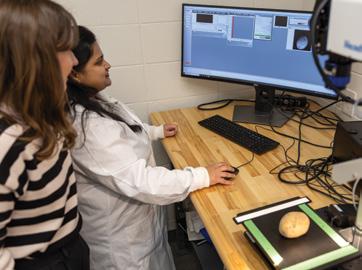
At the Advanced Post-harvest Technology Centre (APHTC), post-doctoral fellow Dr. Diksha Singla is working to ensure potatoes reaching consumers are as healthy as possible.
Potatoes produce total glycoalkaloids (TGA), a natural defence compound. While usually safe, levels above 200 mg/kg – set by Health Canada – can pose health risks.
To better understand and detect TGA levels, Singla and her team stored more than 200 Yukon Gold potatoes under continuous light for up to 14 days to simulate poor storage conditions, then measured TGA using highperformance liquid chromatography.
They then used short-wave infrared hyperspectral imaging to develop a nondestructive predictive model, achieving 72 per cent accuracy.
Now that the findings have been published, the team’s next step is exploring how imaging could be implemented as a practical, long-term investment for producers and processors.
LEARN MORE ABOUT SINGLA’S PROJECT AND WHAT IT MEANS FOR PRODUCERS lethpolyte.ch/potato-testing
Between July 1, 2025, and June 30, 2026, CARIE applied researchers and teams worked on a total of
58 applied research projects
34
25
OF THOSE, 33 were new projects initiated after July 1, 2025 and 25 were ongoing projects that began prior to June 30, 2025 were grant-funded projects and leveraged industry contributions were direct fee-for-service projects funded by industry clients
SCAN HERE TO LEARN MORE ABOUT OUR CURRENT AND PAST RESEARCH PROJECTS WITH INDUSTRY PARTNERS

While generative artificial intelligence continues to spark debate, virtual reality is proving itself to be one of the most reliable tools for hands-on training, and Lethbridge Polytechnic’s Spatial Technologies and Applied Research and Training (START) Centre is putting that potential to work.
As applied researchers in extended reality (XR) and virtual reality (VR), START’s mission is to partner with industry to explore the value of effectively implementing VR technologies in their operations to improve training times, reduce safety risk and offer scalability,” says Austin Hatch, XR developer with the START Centre.
While the concept of VR has not changed in the past several years, its accessibility has improved greatly with the reduction of hardware requirements, more mobility with fewer wires and even completely wireless multiplayer function. Earlier this year, START signed a collaborative agreement with Virtualware, a global pioneer in 3D-driven enterprise software. Based in Spain and with operations in Hamilton,
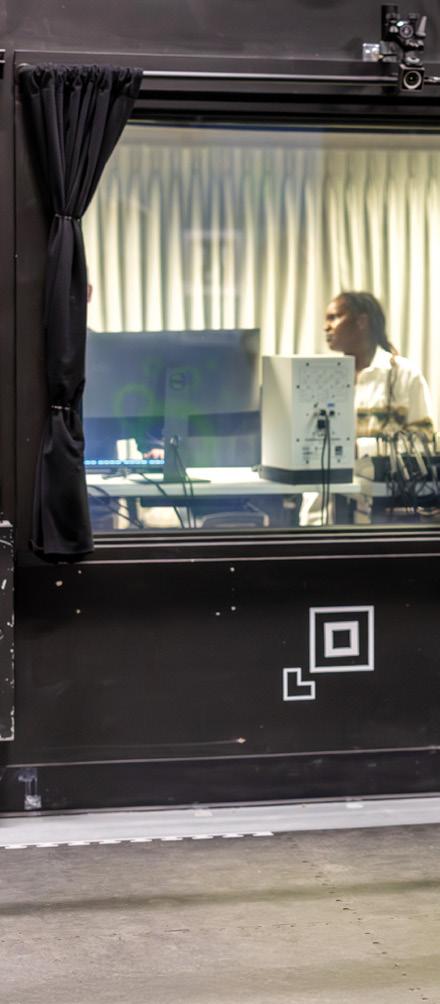
Ont., START aims to use Virtualware’s proprietary platform, VIROO, to develop wireless, multiplayer demonstrations, environments and scenarios that can be translated to industry use.
This collaboration will enable START to shift from development of systems to the design of content. Hatch explains the change in his team’s function will be comparable to modern web design, where creators focus on developing content rather than the backend server infrastructure and coding.
“The platform already exists — it’s up to us to harness the robust capabilities and tools of VIROO to build out that content for our industry partners,” says Hatch. “It makes us more efficient and maximizes what we can do with a small team.”
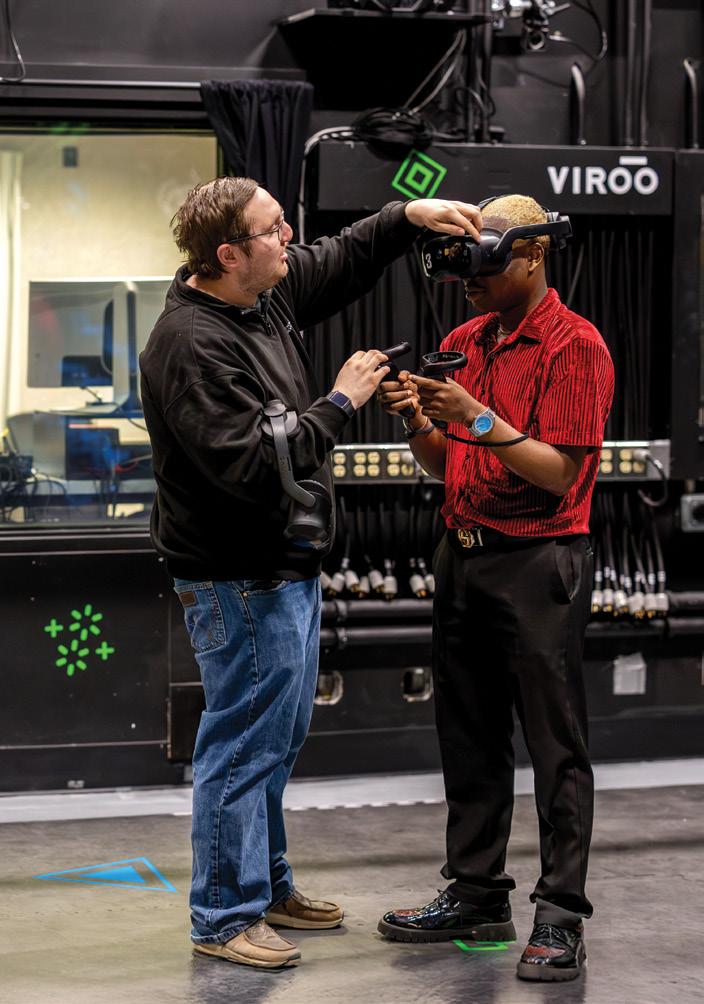
The goal is to develop dual-use, or dual-purpose, scenarios that can be used for diverse purposes. Medical training, for example, could see an overcrowded emergency room with ailing patients and audio and visual stimulation evocative of a real hospital that is designed to test nursing students before they encounter the real thing. While the scenario is virtual, the experience is as close to real as you can get – full-immersion into a stressful situation with distractions and deadlines. And with VIROO, students or trainees at the polytechnic could be interacting with counterparts in other parts of Alberta, or even Canada, in real-time thanks to the technological benefits of Virtualware’s platform.
“As the first VIROO space in Alberta, this facility serves as a powerful catalyst for collaborative VR, demonstrating how immersive solutions can unlock new innovation across educational institutions and industry,” says Michael Rosas, president of Virtualware North America.
“By working with Lethbridge Polytechnic, we are creating meaningful, industry-aligned applications that not only prepare learners for the future but also provide a scalable roadmap for the province to drive workforce development and operational excellence across critical sectors.
“Their longstanding commitment to applied XR research — and the work the START Centre has done to build real industry bridges — is precisely why this partnership made sense. Virtualware seeks out ecosystem leaders who don’t just adopt new technologies, but actively champion them alongside their communities. Together, we’re building a unified front that signals clearly to every stakeholder across Alberta: this is a space where immersive technology is being taken seriously, and there is room at the table for everyone who wants to help scale it.”
“BY
WORKING WITH LETHBRIDGE POLYTECHNIC, WE ARE CREATING MEANINGFUL, INDUSTRYALIGNED APPLICATIONS THAT NOT ONLY PREPARE LEARNERS FOR THE FUTURE BUT ALSO PROVIDE A SCALABLE ROADMAP FOR THE PROVINCE TO DRIVE WORKFORCE DEVELOPMENT AND OPERATIONAL EXCELLENCE ACROSS CRITICAL SECTORS.”
M
ichael Rosas
President
of Virtualware North America


like VIROO deliver seamless multiplayer experiences that deepen immersion, increase engagement and improve learning outcomes without replacing the value of hands-on learning in high-stakes environments like emergency rooms or crime scenes.



Let us know! Whether you’re looking to improve existing methods or build something entirely new, START can work with you to develop immersive VR scenarios that put trainees in the environment before they ever step into it – reducing risk, building confidence and scaling to meet your needs.

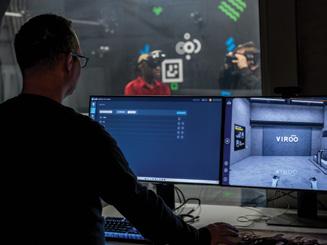
START’s team also benefits from VIROO’s scalable and evolving XR infrastructure, meaning each scenario can reach far beyond a small group of trainees or a particular XR device technology. With its security, reliability, global footprint and multiple device-agnostic deployment options, VIROO enables large -scale distribution across key sectors such as public safety, construction and infrastructure, public health, skilled trades and national defence.
“All of these sectors are facing a need to train a large number of recruits in the face of a changing national landscape,” says Dr. Andrew Dunlop, associate vicepresident – research. “From construction and infrastructure growth to national defence expansion, platforms like VIROO can ensure a harmonized training standard that optimizes learning outcomes by using advanced technologies without minimizing the value of hands-on learning.”
By combining industry needs with advanced VR technologies,
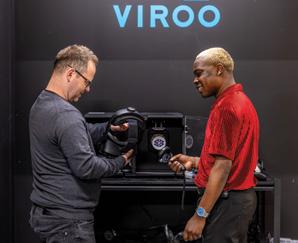
START’s partnership with Virtualware will deliver practical and scalable applications that enhance training, simulation and research-led projects while being grounded in strong educational principles. The goal for each demonstration is to maximize learning outcomes, engagement and measurable real-world impact. Students at Lethbridge Polytechnic can get hands-on with VR content development to gain experience in a growing industry.
“Students using a platform like VIROO don’t need a high level of development expertise; instead, they can use it to build strengths in content modelling, meaningful interaction, sound and environment design and quality assurance,” says Hatch. “It’s greater access for more people wanting to develop and leverage skills.”
As START looks to grow its content library with VIROO, the team expects to grow its roster of industrial partners in southern Alberta and beyond.
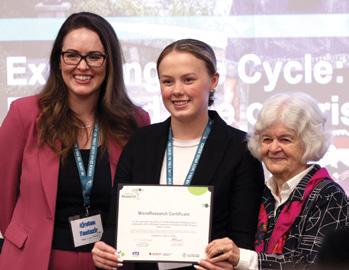
For the second year in a row, nearly two dozen Lethbridge Polytechnic employees and southern Alberta community members took part in a MicroResearch Canada workshop aimed at finding new and innovative ways to address public safety challenges in the region.
Founded by Dr. Noni MacDonald and Dr. Bob Bortolussi, MicroResearch brings together community members from diverse fields to participate in researcherled workshops. Participants learn the fundamentals of research development, design and implementation with the goal of building local research capacity to address community issues.
“This is how we give back to our community,” says Dr. Kirsten Fantazir, president’s applied research chair in public safety at Lethbridge Polytechnic’s Centre for Applied Research, Innovation and Entrepreneurship. “We share our knowledge and skills and aim to demystify the research process.”
LEARN MORE ABOUT MICRORESEARCH AT LETHBRIDGE POLYTECHNIC lethpolyte.ch/cpsar-microresearch
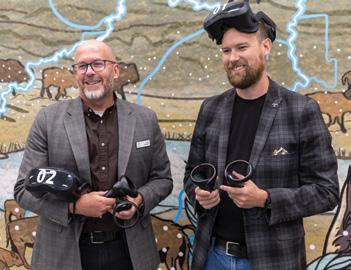
Lethbridge Polytechnic received $450,000 from the Natural Sciences and Engineering Research Council of Canada for an applied research project to develop virtual reality experiences for youth interested in public safety careers.
The research initiative is led by the Centre for Public Safety Applied Research (CPSAR) in partnership with VRCORE, a Calgary-based augmented reality educational provider who also provided $112,500 in funding.
The first stages of the project will focus on developing an accurate representation of a public safety career. Over the next three years, the project will move to designing and testing interactive scenarios where participants collaborate with peers to potentially solve logic puzzles, review evidence and present their findings.
VRCORE will aid in development of the experiences; CPSAR researchers will consult with multiple policing services across the province, conceptualize scenarios and collect, analyze and review data.
READ HOW APPLIED RESEARCH COMBINES VR EXPERIENCES WITH PUBLIC SAFETY lethpolyte.ch/cpsar-vrcore
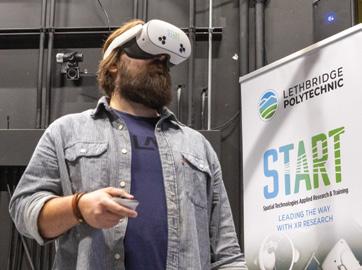
Lethbridge Polytechnic’s Spatial Technologies Applied Research and Training (START) Centre completed a suite of virtual reality (VR) training scenarios for Calgary-based TALEO Project Services. These scenarios are designed to make project management training more engaging and practical for an increasingly diverse audience.
Based in Calgary, TALEO comprises a group of experts who help business operators solve complex problems and find success in their businesses. The company approached Lethbridge Polytechnic in 2022 to explore how spatial technologies might reshape their clients’ learning experiences. The two-year collaboration produced three fully interactive scenarios that will be used in TALEO’s project management certification programs. Aimed at learners ages 16 to 25, the scenarios are designed to bring energy and engagement to personal and professional development.
READ ALL ABOUT START’S PROJECT WITH TALEO lethpolyte.ch/start-taleo
16
CARIE Delivered 16 unique services to clients
BETWEEN JULY 1, 2025, AND JUNE 30, 2026 (INCLUDING SUPPORT AND COACHING THROUGH TECHNOLOGICAL CHANGE PROCESSES, ADAPTATION OF TECHNOLOGICAL SOLUTIONS AND KNOWLEDGE TRANSFER/ANALYSIS)
33
Employed 33 students on applied research projectS
Served 31 private sector clients
Served 23 small and medium-sized enterprises
Served 39 public, health-care and non-profit clients
31
23
39
SCAN HERE TO LEARN MORE ABOUT OUR CURRENT AND PAST RESEARCH PROJECTS WITH INDUSTRY PARTNERS
Post-secondary journeys are a transformative time for students, where they can learn, grow and create. It’s in these years that students hit their most creative stride, thinking of ideas to shape the future — all they need is a little guidance.
That’s where AgENT comes in. The student-focused resource at Lethbridge Polytechnic connects students with entrepreneurial and innovative experts and resources to help them solve problems, find mentorship and access the supports needed to see their ideas succeed.
Since AgENT’s inception eight years ago, students and recent graduates have come forward with inventive ideas such as fire suppression

systems, board game development, marketing and promotional business ideas, talent management, a cultural food truck and even a portable music studio.
“We welcome all ideas,” says Joshua Leith, AgENT co-ordinator, Centre for Applied Research, Innovation and Entrepreneurship. “Sometimes the easiest solutions require a small amount of innovation to improve what’s already being done.”
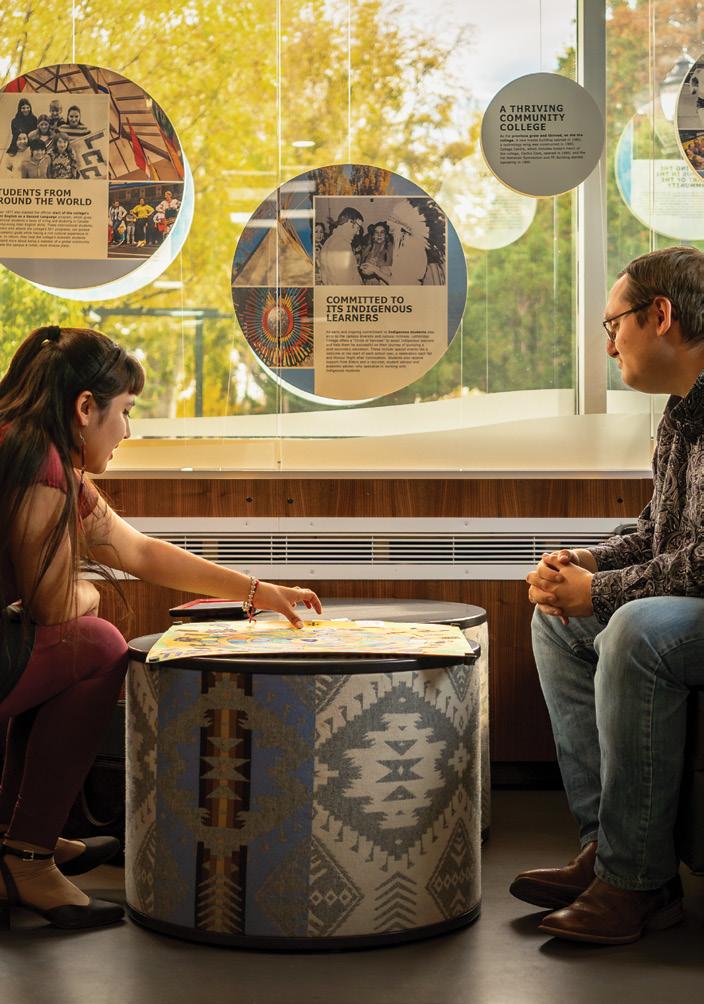
Adouble graduate of the polytechnic’s Agriculture Sciences diploma programs – Agriculture Business in 2021 and Animal Sciences in 2020 – Leith was involved with AgENT as a student from its inception until 2021, when the program focused primarily on risk-mitigation for student agriculture ventures. Leith’s experience in the program helped his highland cattle business grow but it also opened his eyes to the benefits of learning directly from industry experts. In May 2022, Leith was hired by the polytechnic to help shift AgENT’s mandate to support students from all polytechnic programs.
“This opportunity enables me to give back after I received the help I needed,” says Leith. “It’s great seeing our students go places – I feel accomplished helping them take that next step forward as best they can.”
AgENT is located in The Pivot, an oncampus student idea incubation space where innovators and entrepreneurs can develop their ideas using tools and collaboration such as 3D printers, whiteboard tables, conversational spots and other engagement areas. Privately funded by a generous donation from business leader, philanthropist and education advocate Cor Van Raay in 2014, with ongoing contributions from the Regional Innovation Network of Southern Alberta (RINSA), students and recent graduates seek out AgENT for a supportive approach from ideation to creation and implementation.
One student who made the most of AgENT’s support is Roberta Mistaken Chief (Culinary Careers 2007), owner of Niitsitapi Eats & Treats, whose business brings Indigenous fusion cuisine to communities across southern Alberta. In March 2025, while she was enrolled in the polytechnic’s Business Administration – Business Operations program, her food truck business plan earned her the top prize of $2,000 at the LaunchPoint Pitch Competition.
“Things seemed to explode for me – it went from a dream and idea to something that can actually happen now,” says Mistaken Chief.
With plans to use her winnings on mobile catering equipment and early customers already lining up, Mistaken Chief is putting her culinary experience and newfound business knowledge to work bringing Indigenous food and culture to a larger audience.
“Since 2022, we’ve been fortunate to have the resources to directly help our students with nearly $25,000 in financial start-up aid, vouchers for marketing support and more,” adds Leith. “Running the AgENT Program means finding creative ways to make things happen, I’m happy to do my part in giving students that little push to see their dreams through.”
“WE WELCOME ALL IDEAS. SOMETIMES THE EASIEST SOLUTIONS REQUIRE A SMALL AMOUNT OF INNOVATION TO IMPROVE WHAT’S
ALREADY BEING DONE.”
Joshua Leith
AgENT co-ordinator, Centre for Applied Research, Innovation and Entrepreneurship

AgENT student Roberta Mistaken Chief is a former LaunchPoint Pitch Competition winner. Her business, Niitsitapi Eats & Treats, was also selected as the client for the 2026 Tecconnect Challenge.
Two Lethbridge Polytechnic students spent their summers gaining valuable research experience as paid research assistants.
Aleksandra Calic, a fourth-year Bachelor of Ecosystem Management student, spent multiple summers with the Mueller Irrigation Research Group, starting with greenhouse gas research on potato crops and progressing to work on a national initiative to reduce fertilizer nitrous oxide emissions. Through this work she honed field and lab skills, operated various research equipment and developed competencies she plans to carry into her environmental conservation career.
Sierra Stumborg, a third-year Bachelor of Criminal Justice student, spent her summer assisting the Community Integration Through Art – Pissatsinaskssini project. She engaged directly with participants, analyzed data and collaborated with researchers, building skills she sees as foundational to her future in community-focused policing.
LEARN MORE ABOUT CALIC AND STUMBORG’S EXPERIENCES IN THE FIELD lethpolyte.ch/calic-and-stumborg
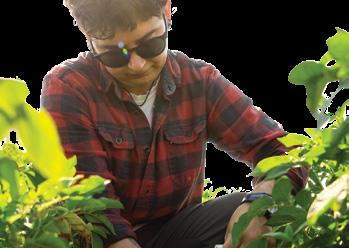
Two student researchers examining movement and exercise capabilities were selected to present their projects alongside a Lethbridge Polytechnic instructor at the European College of Sports Science annual conference in Lausanne, Switzerland in July 2026.
Hallee Pilling, second-year Exercise Science student, and Hannah Smith, a Lethbridge Polytechnic graduate (Exercise Science 2025) and public health student at the University of Lethbridge, each explored a topic of interest that analyzed physical activity. Pilling’s research examined the relationship between movement competency and executive function in youth while Smith explored how menstrual cycle phases relate to well-being and performance in collegiate runners.
The research projects, overseen by Dr. Simon Schaerz, Exercise Science instructor and researcher, were funded by a Social Sciences and Humanities Research Council Exchange grant.
LEARN MORE ABOUT PILLING AND SMITH’S PROJECTS lethpolyte.ch/pilling-and-smith
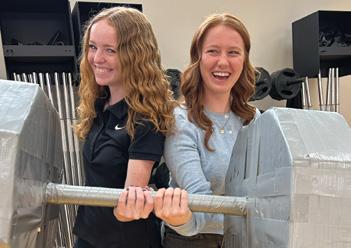
An instructor-student research team published findings on optimized leisure and recreational activities for older adults with moderate dementia.
Rena Walker, an instructor in the polytechnic’s Centre for Health and Wellness, and recent graduate Geraldine Torres Gonzales (Therapeutic Recreation –Gerontology 2024) conducted a pilot study to determine the optimal length of time to engage clients in therapeutic recreation.
“Based on the data from our observations of recreation therapy activities, we saw clients maintain engagement for an average of 38 minutes before we saw decline,” says Torres Gonzales, who now works in the industry. Their research was supported by a Lethbridge Polytechnic Centre for Applied Research Internal Fund research grant, an initiative intended to develop applied research capacity through short-term funding for employees.
READ MORE ABOUT THE FINDINGS OF THIS INSTRUCTOR-STUDENT RESEARCH TEAM lethpolyte.ch/trg-research
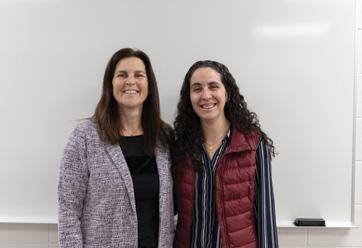
SCAN HERE TO LEARN HOW AGENT SUPPORTS STUDENT ENTREPRENEURS

23
AgENT held 23 different events in 2025-26 to help EntreprenEUrs
AGENT HOSTED 95 one-on-One sessions with student and community entrepreneurs to help them advance their businessES
18
AGENT Averaged 18 students per CAMPUS workshop
Through its five key themes, the Centre for Applied Research, Innovation and Entrepreneurship (CARIE) delivers innovative solutions to industry challenges at all levels – from ideation to prototype testing and workforce development training to concept validations.
Throughout its storied 37-year history, one core mission has remained at CARIE – to meet the evolving needs of our industry partners. What began in 1989 with aquaculture trials and expanded in 2003 to aquaponics and controlled environment agriculture, has now evolved into a multifaceted centre covering agriculture, food and environment, business and technology, health and wellness, justice and public safety and social sciences and humanities. These diversified applied research offerings have grown to keep pace with the everchanging needs of southern Alberta and beyond. With strong roots in irrigation,


controlled environment agriculture and postharvest technologies, to the ever-fluid sphere of spatial technologies and the complexities of public safety and criminal justice systems, CARIE’s team is ready to help Canadian organizations by providing applied research to enhance productivity, competitiveness and innovation.
This report offers just a glimpse of the work happening in the fields, labs and communities across our region, province and nation. As priorities shift and needs change, CARIE will continue to partner with enterprises interested in using the tools of today to address the challenges of tomorrow.
Located on the traditional lands of the Blackfoot Confederacy, Lethbridge Polytechnic is committed to honouring the land from a place of knowing. We honour the Siksikaitsitapi as both the traditional and current Land Keepers of this area, and we welcome all First Nations, Métis, Inuit and non-Indigenous peoples who call Blackfoot territory their home.
The Centre for Applied Research, Innovation and Entrepreneurship encompasses the following research themes:
Aiming to increase efficiency and productivity for farmers, producers and food processors, improve food safety and security for consumers and reduce the environmental impact of food production, waste and energy consumption.
Aiming to drive our digital economy by paving the way for multiple industries to explore and integrate emerging technologies into their operations to improve business process efficiency, reduce costs and enhance employee safety.
Helping people and communities thrive, whether through identifying new antibiotic molecules for the prevention and treatment of infectious diseases or using immersive technologies to improve training for health-care workers.

Leading the way toward proactive global change in the field of justice and public safety with industry-focused research projects that are at the forefront of sustainable change.
Exploring a better future by building knowledge about people, cultures and societies that help address today’s challenges and tomorrow’s issues for a sustainable future.
This publication aims to inform, educate and intrigue readers with stories and photos about the people and innovative projects happening at Lethbridge Polytechnic’s Centre for Applied Research, Innovation and Entrepreneurship (CARIE). It is created by the institution’s Communications, Marketing and CARIE departments. For additional copies, email appliedresearch@lethpolytech.ca.
Publisher: Dr. Brad Donaldson
Executive editors: Dr. Kenny Corscadden and Dr. Andrew Dunlop
Co-editors and writers: Sam Sasse and Tina Karst
Designer: Dana Woodward
Photographers: Tanner Fletcher, Spencer Nelson, Rob Olson and Shawn Salberg
1.800.572.0103 • 3000 College Drive S. Lethbridge, AB T1K 1L6