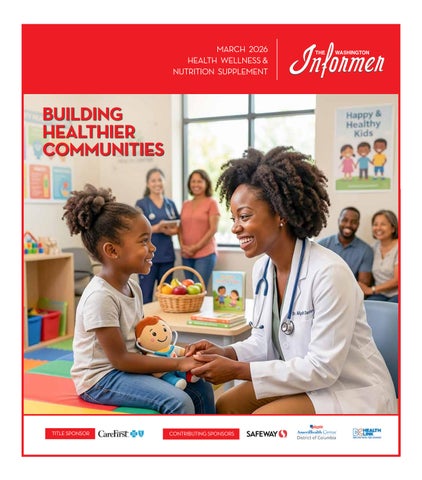
MARCH 2026 HEALTH WELLNESS & NUTRITION SUPPLEMENT
BUILDING HEALTHIER COMMUNITIES
TITLE SPONSOR
CONTRIBUTING SPONSORS
NEWSPAPER READING IS A HABIT
Building Health Where It Begins: In Our Communities
DON’T BREAK THE HABIT!
READ THE WASHINGTON INFORMER YOUR WAY: n In Print – feel the ink between your fingers of
our Award Winning Print Edition
n On the Web – www.washingtoninformer.com
updated throughout the day, every day
n On your tablet n On your smartphone n Facebook n Twitter
By Ricardo Johnson Executive Vice President and Chief Growth Officer at CareFirst
n Weekly Email Blast – sign up at
www.washingtoninformer.com
202-561-4100 For advertising contact Ron Burke at rburke@washingtoninformer.com
...Informing you everyday in every way
In Memoriam Dr. Calvin W. Rolark, Sr. Wilhelmina J. Rolark
THE WASHINGTON INFORMER NEWSPAPER (ISSN#0741-9414) is published weekly on each Thursday. Periodicals postage paid at Washington, D.C. and additional mailing offices. News and advertising deadline is Monday prior to publication. Announcements must be received two weeks prior to event. Copyright 2016 by The Washington Informer. All rights reserved. POSTMASTER: Send change of addresses to The Washington Informer, 3117 Martin Luther King, Jr. Ave., S.E. Washington, D.C. 20032. No part of this publication may be reproduced without written permission from the publisher. The Informer Newspaper cannot guarantee the return of photographs. Subscription rates are $55 per year, two years $70. Papers will be received not more than a week after publication. Make checks payable to: THE WASHINGTON INFORMER 3117 Martin Luther King, Jr. Ave., S.E Washington, D.C. 20032 Phone: 202 561-4100 Fax: 202 574-3785 news@washingtoninformer.com www.washingtoninformer.com
PUBLISHER Denise Rolark Barnes STAFF Micha Green, Managing Editor Ron Burke, Advertising/Marketing Director Shevry Lassiter, WIN-TV Producer Ra-Jah Kelly, Digital Asset Manager Lafayette Barnes, IV, Editor, WI Bridge DC Desmond Barnes, WIN Daily Editor Anthony Tilghman, Social Media Strategist ZebraDesigns.net, Graphic Design Mable Neville, Bookkeeper Angie Johnson, Office/Circulation Manager Jada Ingleton, Content Editor REPORTERS Stacy Brown, National Reporter Sam Plo Kwia Collins, Jr., Political/Education Reporter Brenda Siler, Lifestyle Reporter Ed Hill, Sports Reporter Richard Elliott, Reporter Skylar Nelson, Sports Reporter Mya Trujillo, Environmental and International Reporter PHOTOGRAPHERS Shevry Lassiter, Photo Editor Ja Mon Jackson, Asst. Photo Editor Roy Lewis, Jr. Robert R. Roberts Anthony Tilghman Abdullah Konte Cleveland Nelson
Health is not something we stumble upon. It is not discovered in the exam room, nor delivered in a single prescription. It is built quietly, uneventfully and long before care is ever sought. In D.C., in particular, health is shaped by whether a family can reach fresh food, whether work is steady and whether trust exists in the places they call community. For too many, those are not given. There are gaps. At CareFirst BlueCross BlueShield, we believe acknowledging those gaps is the first step toward closing them. That belief drives our commitment to sharing stories of partnership and progress while providing programs, tools and information designed to help individuals and families take an active role in their well-being. Because understanding is a form of agency, and agency, once realized, changes what is possible. Across the District, neighbors, community organizations, faith leaders, providers and local advocates are working together to close the gap between systems and people and between information and action. CareFirst does not stand apart from that work. We join it and are accountable to it. CareFirst serves nearly half a million people in this city, and our role goes beyond providing coverage. As a not-for-profit organization headquartered in D.C., we invest directly in the communities we serve, strengthening the conditions that make health attainable, not aspirational. Healthcare must work for everyone. Better health does not happen alone. It takes partnership, trust and commitment. In these pages, you will find stories that inspire and information that empowers. You will see how care takes shape through collaboration and how having the right tools at the right time can help people take charge of their health. Because when people are informed, supported and seen, health becomes something we can build, protect and carry forward together. n
INTERNS Keith Golden Jr., Spring Intern Kree Anderson, Spring Intern Sumaya Abdel-Motagaly, Spring Intern
www.washingtoninformer.com / MARCH 2026 HEALTH WELLNESS & NUTRITION SUPPLEMENT
HS-2
MIMI’S MUSINGS
Building Healthier Communities, Black Women Health Freedom Fighters By Micha Green WI Managing Editor Happy March and Women’s History Month! As the nation celebrates women and ushers in spring, there’s also work happening across the District and nation to address continued challenges affecting African American communities, particularly when it comes to health disparities. Much of the work toward health equity starts in the community and the people fighting to combat challenges. Research, such as from Dr. Lucile Adams-Campbell, a barrier-breaker in medicine highlighted in this edition, points to disparities rooting from racism, leading to a lack of access to education, preventative care and treatment when it comes to health.
“We can collect a lot of information on social determinants of health and we can talk about it and describe it, but if we can’t do anything about it, then we have a problem,” Adams-Campbell said in a lecture to Georgetown University students: “Intersectionality of Cancer, Aging and Disparities: A Biological Basis,” in April 2023. Learn about the people and organizations, many led by women, working to raise awareness about Alzheimer’s, particularly in Black and Latino communities, or the freedom fighters in D.C., inspired by the work of the Black Panthers, offering health care and resources directly to District residents. Check out the women who have been groundbreaking in medicine or those working to educate the masses about diseases such as fibroids and maternal health care. Further, delve into some of the
organizations in the District and nationwide, including: CareFirst, Greater Washington Community Foundation, Howard University Center for Sickle Cell Disease, Safeway, Multicultural Healthcare Marketing Group, AmeriHealth Caritas District of Columbia and DC Health Link, who provided sponsored content for this edition and are working toward building healthier communities daily. This edition offers tools, resources, education and inspiration to be part of the solution in making health care, treatment and out-
comes equitable for all. “Public health begins when all of us recognize the humanity and dignity of every human being,” said lawyer and author Bryan Stevenson, founder and executive director of the Equal Justice Initiative, during the virtual ALPHA 2020 meeting in October of that year, as the COVID-19 pandemic plagued the world and affected Black communities nationwide. “Sometimes we suffer, sometimes we are sick, sometimes there is crisis, sometimes there is infection, because people have had their humanity and their dignity doubted. And it is the role of public health to step into that breach. To wrap our arms around those who’ve been told their lives don’t matter. To affirm humanity and dignity.”
This edition offers tools, resources, education and inspiration to be part of the solution in making health care, treatment and outcomes equitable for all.
n
BARRIER BREAKING BLACK WOMEN IN HEALTH Henrietta Lacks and Family, her cancer cells are the source of the groundbreaking HeLa cell line.
“On this day in 1951, Henrietta Lacks died from cervical cancer at just 31 years old. However, she lives on through the contribution — without her consent — of her HeLa cells that revolutionized medicine,” civil rights attorney Ben Crump, 5 Members of the Congressional Black who represents the Lacks family, wrote on Caucus (CBC) with Henrietta Lacks’ Oct. 4, 2025. “Her story demands that family and civil rights attorney Ben we uplift her name and ensure her legacy Crump in 2023. (Courtesy File Photo/ is never forgotten. Rest In Power.” Mark Mahoney)
Dr. Lucile Adams-Campbell, the first Black woman to receive a PhD in epidemiology in the United States. She focuses on addressing minority health and cancer health disparities. “We know what the barriers are, we know how to try to get around the barriers, but if we do nothing then there’s a problem and that leads to the reality: people get left behind,” Campbell-Adams said in a presentation to 5 Dr. Lucile Adams- Georgetown University students called “The Intersectionality of of Cancer, Aging, and Disparities: A Biological BaCampbell is the first Black woman to receive sis.” “When you want to deal with social determinants of a PhD in epidemiology health because they all come from baggage so to speak— racism is very pervasive and more pervasive now than ever in the United States. before.” (Courtesy Photo)
EVEN THOUGH WE’RE WORKING,
TRYING TO MAKE ENDS MEET,
IT JUST ISN’T ENOUGH.
– SHAUNA
Washington, DC
Meet the 1 in 3 of our DMV neighbors currently facing hunger.
H-3 HS-3 MARCH 2026 HEALTH WELLNESS & NUTRITION SUPPLEMENT / www.washingtoninformer.com
HungerIsHere.org
CareFirst Arena Marks First Year as a Must‑See Destination in Southeast D.C. Submitted by CareFirst BlueCross BlueShield One year after opening on the St. Elizabeths East campus, CareFirst Arena has quickly emerged as one of Washington, D.C.’s most dynamic destinations for sports, culture and community connection. From nationally recognized sporting events to neighborhood‑centered gatherings, the arena has welcomed tens of thousands of visitors—bringing new energy, visibility and pride to the District. But CareFirst Arena is much more than just a location for sports. Over the past year, it has transformed into a true gathering place. Its inaugural year demonstrates how a modern venue, thoughtfully situated within its neighborhood, can attract audiences from across the region while remaining deeply connected to the community it serves.
A Destination Built for Energy and Experience
Located at the heart of the St. Elizabeths East campus, the arena brings world‑class events east of the Anacostia River while inviting visitors from across the region to experience Ward 8 in a new way. Its scale and design create an intimate, high‑energy atmosphere that resonates with both fans and performers. Over the past year, the venue has hosted dozens of public events—from high‑profile sporting competitions to community celebrations and its first health fair—establishing the arena as both a premier event space and a welcoming gathering place for local residents. That versatility has fueled a growing reputation beyond the District, including national recognition for the electric environment it brings to professional women’s basketball. The arena’s impact extends beyond its event calendar. In its first year, arena‑related programming generated more than 1,000 volunteer hours, highlighting the role participation
plays in building vibrant, connected neighborhoods. Events hosted at the venue have also supported local economic activity, creating jobs, vendor opportunities and increased foot traffic that benefit small businesses in and around the community. For residents east of the Anacostia River, that visibility matters. Longstanding inequities have shown that access to opportunity and shared spaces often shapes outcomes beyond entertainment. The arena demonstrates how a destination venue can help close those gaps by showing up consistently in the places where people live and gather.
Rooted in Community, Sustained Through Partnership
CareFirst Arena was developed through a long‑term partnership between CareFirst BlueCross BlueShield and Events DC, grounded in a shared belief that trusted community spaces play a critical role in well‑being. While the partnership reflects a decade‑long commitment, the focus remains on what happens inside the venue: the events, the connections and the experiences that bring people together. “Health doesn’t start in a clinic. It starts in our neighborhoods and in the spaces where people already come together,” said Ricardo Johnson, Executive Vice President and Chief Growth
5 CareFirst employees at arena community launch event.
Officer of CareFirst. “This arena allows us to show up consistently in Wards 7 and 8 through supporting community‑driven events while creating space for connection, opportunity and trust.” Events DC President and CEO Angie M. Gates highlighted the venue’s integral connection to the community. “Events DC’s historic partnership with CareFirst is a testament to our unwavering commitment to the communities we serve,” Gates said. “CareFirst Arena not only enhances the vibrant energy in the community but also serves as a catalyst for new connections and opportunities.”
As the arena marks its first anniversary, success is measured not only by attendance or national recognition, but by momentum. Looking ahead, the venue will continue to welcome new events and audiences while remaining grounded in the neighborhood that makes it unique. In Southeast D.C., CareFirst Arena is proving that when a space is created for connection, pride and possibility, it becomes far more than a venue—it becomes a destination. Learn more about CareFirst Arena by visiting www.carefirstarena.com/ community-impact. n
THE ENERGY OF COMMUNITY. THE THRILL OF EXPERIENCE.
10797-CF-WI-CF Arena-Half-9.85x5.5.indd 1
HS-4
www.washingtoninformer.com / MARCH 2026 HEALTH WELLNESS & NUTRITION SUPPLEMENT 3/6/26 6:43 PM
BUILT FOR COMMUNITY. STRENGTHENED BY PARTNERSHIP. H-5 HS-5 MARCH 2026 HEALTH WELLNESS & NUTRITION SUPPLEMENT / www.washingtoninformer.com
Maternal Health Must Be a Priority For Greater Washington By Dr. Bryan O. Buckley and Dr. Marla Dean Maternal health in Greater Washington—and especially in Washington, D.C.—is in crisis, and ignoring it comes at a cost our region cannot afford. For too many families, pregnancy and childbirth come with risks that have little to do with medical care alone. Where someone lives, whether they can get to appointments, whether they have stable housing, enough food, reliable transportation or support after delivery often matter just as much as the care they receive while giving birth. When those needs go unmet, the consequences extend far beyond the delivery room, affecting families and communities across the region. It is worth asking a simple question: what would it look like if we treated maternal health as something we protect together? And just as importantly, what happens if we do not? Those questions are at the heart of a $2.2 million investment to improve maternal health outcomes in the region. Funded in large part by a $1.4 million commitment from CareFirst BlueC-
ross BlueShield through the Greater Washington Community Foundation’s Developing Families Maternal Health Fund, the funding supports 11 nonprofit organizations working every day to support parents and babies across the District and Greater Washington. It reflects a shared belief that maternal health requires sustained, community-based investment. The Developing Families Maternal Health Fund, managed by the Greater Washington Community Foundation, invests in community-based organizations primarily within Wards 5, 7, and 8, where women of color continue to face higher barriers to affordable, high-quality maternal care. The fund highlights an urgent need in D.C., where Black women account for 90% of all pregnancy-related deaths. As a not-for-profit healthcare organization based in D.C., CareFirst is part of the region’s ecosystem that shapes health. The Greater Washington Community Foundation has been the region’s philanthropic leader for more than 50 years, partnering with donors to invest in the most critical needs facing our communities. Together, we are working to build a maternal health sys-
5 Nonprofit partners who received grants from the Developing Families Maternal Health Fund.
tem that centers the communities most affected by this crisis. We know that pregnancy outcomes are determined well before the first prenatal visit and long after birth. When that reality is ignored, families pay the price and the effects are felt across our region. The need is clear. The United States has the highest maternal mortality rate among developed nations. The 2025 March of Dimes Report Card shows that the District of Columbia’s maternal mortality rate is 28.2, higher than the national average of 23.5. The racial and wealth gap is also visible. Black
mothers in D.C. experienced a preterm birth rate of 14.5%, while those covered by Medicaid saw a rate of 14.7%, the highest within their respective categories. Overall, the District ranks 45th out of 52 jurisdictions—including all states, D.C., and Puerto Rico—for preterm birth, with a rate of 11.8%. This is unacceptable. The numbers reflect everyday realities for families. They are balancing pregnancy with work, keeping track of appointments, arranging childcare, learning how to be first-time parents, managing time off and figuring out how to recover after birth without falling behind financially. These challenges do not resolve themselves without intention and investment. Improving maternal health outcomes requires more than clinical care alone. It means addressing the social drivers of health that shape whether families can access care and afford it. When those drivers are ignored, the effects ripple outward, leading to missed work, delayed recovery and long-term health issues. CareFirst has invested in maternal health across the region for more than a decade, supporting prenatal and postpartum care, home visits, doula services and mental health support in the District, Maryland and Northern Virginia. The Greater Washington Community Foundation has similarly focused on advancing health equity through strategic grantmaking and partnerships with
community-based organizations. These efforts reflect a simple truth: health begins in homes and communities, not just doctors’ offices. The latest round of grants is an extension of this long-term commitment. Rather than launching new programs, the funding strengthens organizations already doing the work. Mamatoto Village offers home-based care for pregnant and postpartum families. SheRises, Inc. focuses on postpartum guidance for young Black and Latina mothers. The Healthy Babies Project works with young parents experiencing homelessness. Whitman-Walker provides care for pregnant people living with HIV. Together, these efforts reflect a shared focus on meeting families where they are. Maternal health is not a niche issue. It is a community issue. It is a measure of whether a region values the people who live there. And right now, maternal health is in crisis. If we want a healthy, stable region and stronger families, investment in maternal health cannot be optional in D.C. n Dr. Bryan O. Buckley is head of public health and community impact at CareFirst BlueCross BlueShield. Dr. Marla Dean is senior director for health equity at the Greater Washington Community Foundation.
5 Leaders from CareFirst, BlueCross BlueShield, The Community Foundation and the Developing Families Maternal Health Fund at the announcement event at Mamatoto’s Village in Northeast D.C.
www.washingtoninformer.com / MARCH 2026 HEALTH WELLNESS & NUTRITION SUPPLEMENT
HS-6
PACA Brings Preventive Care and Political Education to Southeast D.C. Keith Golden Jr. WI Intern A city riddled by racial and economic segregation doesn’t offer much support for the disproportionate health disparities plaguing the residents of Southeast, D.C. With a focus on environmental and communal activism, some local health experts and advocates are pushing to change the status quo. “I think doing it in a way which is more community-based is really what health is about,” Dr. Chaand Ohri, a DMV-based internal medicine specialist, recently told The Informer. “Rather than the business of medicine, we want to be in the idea of health being a community collaboration. People will feel like they are part of this clinic, part of this collaboration. We want to hear from people.” That mentality led Ohri to
Southeast’s R.I.S.E. Demonstration Center on Feb. 22,, where he joined scores of medical professionals, advocates, and D.C. residents in the launch of Pan-African Community Action (PACA)’s inaugural People’s Pan-African Wellness Front (PPWF). A monthly initiative rooted in equity and self-sufficiency, the daylong event shone a light on a pivotal trek to championing health care –– knowing that the work, in part, starts within the community. “We’re trying to empower the people to take health into their own hands,” said PACA member Bree Hemphill, “and give them alternatives to the current profit-driven health system.”
Education and Combating Medical Racism
During the Feb. 22 event, Ohri recounted memories of a 12-year career in D.C. — some of which
includes witnessing patients lose access to health insurance, and others on learning how to recognize, what he calls, medical racism. In one case, the internal medicine specialist repeatedly treated the same patient for asthma, initially believing the inhaler was being used incorrectly due to a learned mindset: “if something goes wrong, it is the patient’s fault.” Later, the patient invited Ohri to visit his home. “I saw carpet which was moldy, I saw black mold in his kitchen and that changed me,” he said. “I was like, ‘Oh my God, no matter what medicines I give this person, if you’re not solving the root cause, you’re just going to stay sick. And I’m going to keep blaming you or medicine will keep blaming you.’” To address root causes, some organizers say political education is essential.
Greater Washington Urban League
5 Members, supporters and attendees at the inaugural Pan-African Wellness Front that had seven stations where people could learn about health care and access resources on Feb. 22. (Keith Golden Jr./The Washington Informer)
From pollution affecting food, air and water, to mobility issues, police violence and high-risk pregnancies, the foundation lies in Southeast residents overcoming the realities of a system designed against them, Hemphill adds. “Not just coming here to get the service but to tell people this is how you do it. This is how you
read these numbers,” she continued. “If this number is high, that means this. If it’s this low, that means this.”
The Importance of ‘Community Collaboration Groups’ PACA Page HS-9
Greater Washington Urban League
BIRTHING BLACK
BIRTHING BLACK:
The Postpartum Support International (PSI) Certificate training is a thorough, evidence-based curriculum for Black health professionals who serve birthing persons. Get this in-demand certification and add specialty to your practice!
Healing the Mind. Reclaiming the Legacy.
Perinatal Mental Health Certification Training
May 7-8th, 2026
PERINATAL MOOD DISORDERS: COMPONENTS OF CARE
Cost: $100
($1000 value - $500 training and $500 to cover exam cost)
FATHERHOOD LIBERATED Birthing Black: Fatherhood Liberated is a two-day training led by Postpartum Support International (PSI) trainers that builds practical skills in paternal perinatal mental health, emphasizing that fathers’ mental health concerns are common and treatable. Designed for clinicians and birth professionals, it covers screening and treatment planning using intersectional, multicultural, and gender-sensitive approaches. The training includes interactive learning, resource materials, and continuing education credits.
The Gold Room
8600 Glenarden Pkwy Glenarden, MD 20706
June 17-18th, 2026 Cost: $100 Location To Be Announced
Please visit https://gwul.org/perinatal-mental-health/ or email us at blackwellness@gwul.org for more information.
H-7 HS-7 MARCH 2026 HEALTH WELLNESS & NUTRITION SUPPLEMENT / www.washingtoninformer.com
Connecting you to care at WhitmanWalker Health... Where Everyone Matters At Whitman-Walker Health, “We See You” means we see each person as who they are. We believe healthcare is vital and that everyone deserves affordable, whole-person, compassionate, affirming healthcare, delivered by a team of dedicated healthcare professionals. We are committed to personalized primary care services that prioritize your well-being through routine check-ups, preventative care, dental services, mental health, substance use treatment, and sexual health services.
Whitman-Walker Health is here to help you be your healthiest self.
We go beyond treating symptoms to address the root causes of health concerns. Our primary care services encompass a range of medical needs,
ensuring that you receive comprehensive and integrated care that promotes your overall health and wellness. Whether you are seeking cervical cancer screening, treatment for menopause symptoms, have heart health issues, need to speak to a therapist, or are seeking birth control or sexual health services, Whitman-Walker Health will work with you to achieve your goals in a safe, loving, and affirming space.
Whether you are a patient or not, if you need help getting connected to HEALTH INSURANCE... We can help.
Our Public Benefits and Insurance Navigation (PBIN) team is here to talk with you about your health insurance options and problems you are having with insurance or the cost
of your care. The PBIN team serves as certified DC Health Link Assisters, providing critical consumer outreach and enrollment assistance to uninsured and under-insured DC residents. We also have the skills and know-how to help residents of Maryland and Virginia. We can help with: • Health insurance eligibility screening, including programs that
may reduce costs. • Insurance enrollment and renewal assistance. • Health insurance literacy counseling (how to use coverage, understand out of pocket costs, reduce costs); and • Troubleshooting eligibility, coverage, cost of care issues. We are a DC Health Link enrollment center to help you find an insurance plan that meets your needs and helps you navigate any insurance issues as well as life changes.
Your Health, Our Priority Southeast DC: Whitman-Walker Health’s Max Robinson Center is a clinic where you can get health care and services, and be treated like family. We see people ages 10 and up!
OUR SERVICES At Max Robinson Center, you will find:
• Medical Care • Dental Health • Mental Health • Pharmacy • SMART Immediate Care – Same day care available! INSURANCE We accept Medicare, many commercial/ private insurance plans, all DC Medicaid and Alliance MCOs, and a few MD Medicaid MCOs – check in with us!
Proudly operating in Congress Heights on the St. Elizabeths East campus, the Max Robinson Center is the largest expansion of inclusive healthcare in Whitman-Walker Health’s history. Named in honor of Max Robinson, a trailblazing journalist and advocate, this center reflects his legacy by offering a range of healthcare services that prioritize your holistic well-being. Located at 1201 Sycamore Dr. SE, our state-ofthe-art facility is designed to be your haven for wellness, embodying the principles of compassion and acces-
sibility. At Whitman-Walker Health, we provide comprehensive and inclusive Primary Medical Care, Women’s Health, Healthcare for Children 10 and up, SMART Immediate Care, Behavioral Health, Dental Care, and a range of health-related Legal, Insurance Navigation and support services to more than 20,000 individuals and families annually in the greater Washington, DC region. We even have an On-Site Pharmacy for all to use, whether you are a patient or not. Our care model is rooted in our 50+ year legacy of service to the LGBTQ communities, people living with HIV, Black and Latino communities, and other people facing barriers to accessing health care. That legacy is what makes our present and future health care welcome to everyone. At Whitman-Walker Health, our motto “We See You” symbolizes that we see patients, but we see the person first. Call us today at: 202-745-7000 to book an appointment. Or find out more about all our services at: www.whitman-walker.org. n
SCAN TO VISIT US ONLINE
Max Robinson Center 1201 Sycamore Drive SE Washington, DC 20032
www.whitman-walker.org 202.745.7000 202.978.6123
www.washingtoninformer.com / MARCH 2026 HEALTH WELLNESS & NUTRITION SUPPLEMENT
HS-8
PACA from Page HS-7 Organizers drew inspiration from the Black Panther Party’s People’s Free Medical Clinics and Cuba’s state-run health care model, combining direct services with a broader push for community control and long-term self-determination over health care access. As Black culture and music set the scene, Feb. 22 provided free services, including blood pressure screenings, glucose tests, hygiene products, medical supplies, health information and guidance for preventive care. Ohri, who provided glucose tests to attendees, said community collaboration at the intersection of health and justice is what brought him to R.I.S.E Demonstration Center. “What we need is these community collaboration groups like PACA, which are doing this wonderful initiative to be able to go to people and meet them in their neighborhoods,” he told The Informer. “Every time I’m working, I always feel like it’s not enough. Rather than the patients coming to me, I want to go to them.” Georgette Gray learned about the event just hours earlier through word of mouth, and made a point of attending, highlighting its importance for the health of her community. “This is just what we need, you
need to be informed on,” Gray, 67, said. “If you have health issues, why not get them all checked out? But if you’re one of those ones that want to slack and don’t want to do anything about your health, then that’s on you. But I’m going to take care of me.” Gray said her results showed no issues with her blood pressure or cholesterol — information she wanted to know. She called events like this a blessing. “You don’t know who next,” Gray said. “So, why not get all you can get now? I just lost my niece two years ago, she had lung cancer. But I see a lot of people on the street, they have nowhere to go, they not taking care of their health. And your health is important.” Hemphill said the event will recur every fourth Sunday, as part of what PACA calls their survival program. “We’re trying to empower the people to take health into their own hands and give them alternatives to the current profit-driven health system,” Hemphill told The Informer. “They can leave here with an understanding of health that they don’t always have to pay the copay to get someone to tell them they have high blood pressure. They can come here, and that we are able to do these things for ourselves.”
Freedom to Learn
Affordable Classes for a Healthier You. All at PGCC. PGCC’s SAGE program offers classes for seniors ready to stay fit or sharpen their skills. Enjoy strength training, dance, computer skills, and more—all for just $40 per class.
n
Join SAGE today!
Learn more at pgcc.edu/sage.
©2026 Prince George’s Community College. All rights reserved. 26035
5 Dr. Chaand Ohri (right) giving a glucose test to the custodian team of the R.I.S.E. Demonstration Center on Feb. 22. Ohri used a translator software to communicate with these ladies to offer the test. (Keith Golden Jr./The Washington Informer)(Keith Golden Jr./The Washington Informer)
Support The Washington Informer as we Celebrate 61 Years.
H-9 HS-9 MARCH 2026 HEALTH WELLNESS & NUTRITION SUPPLEMENT / www.washingtoninformer.com
Donate online today at wicharities.org Purchase an ad to support our education programs. Email rburke@washingtoninformer.com
Howard University Sickle Cell Wellness Center Howard University Hospital Submitted by Center for Sickle Cell Disease In June 2025, Howard University proudly opened the Sickle Cell Wellness Center - the first clinical space of its kind in Washington, D.C., dedicated to providing comprehensive, patient-centered care for individuals living with sickle cell disease (SCD). Developed in partnership by Howard University Hospital, the Faculty Practice Plan, and the Center for Sickle Cell Disease, the Sickle Cell Wellness Center integrates same-day appointments, infusion therapy, routine follow-ups, and personalized treatment plans—all under one roof. “Our goal is simple: no patient with sickle cell disease should suffer in silence or face unnecessary delays in care,” said Dr. James Taylor, Director of the Howard University Center for Sickle Cell Disease. “This center brings our clinical expertise, research, and compassion under one roof for the people who need it most.”
Sickle cell disease is an inherited disease that affects the red blood cell. Hemoglobin, a protein inside red blood cells, carries oxygen. In SCD, the pieces of hemoglobin can stick together and cause the red blood cells to become distorted (sickling), eventually blocking the flow of blood in the vessels. There are also fewer red blood cells in the system, which causes anemia. Individuals with SCD often experience significant pain, with many saying it’s worse than the pain associated with pregnancy labor or a broken bone. “It’s a horrible pain, but it’s so much worse than that, because it also deals with your mental state. You have to be really strong to deal with that amount of pain. It’s the amount of pain you wouldn’t wish on your worst enemy,” Ayanna Johnson, a patient with SCD. Because the source of their pain isn’t always visible, and because of racial discrimination and biases, people with SCD can face poor treatment and be approached with suspicion when they seek care in
medical facilities. Their pain is questioned, and they are sometimes accused of drug-seeking, when they are only trying to access quality care for their condition. Despite long-standing underfunding in sickle cell disease research, recent years have brought
meaningful progress in developing new treatment options. However, the lack of specialized centers in SCD, especially in adult care, has led to a disparity in access to treatment by appropriately trained and knowledgeable providers. Dr. Taylor shares that, “We have three FDA approved drugs now, we have transfusion therapy. These four are underutilized, and so my goal is to get patients on treatment, so we keep them away from the hospital.” As patients with SCD are started and maintained on these therapies, it can be life-altering. Pain medications can be lowered and people with SCD can be more functional in their everyday lives. Providing clinical care for people with sickle cell disease is a primary goal of the SCWC, but it also provides a place for people with SCD to find support. “Living with sickle cell disease can be an isolating experience and can lead to feelings of depression. You may miss family gatherings, important social events, and holiday celebrations because of an acute pain episode or because you are in the hospital. Being around others with similar experiences can be empowering, as you find solutions together, develop friendships, and it can positively impact your mental well-being,” says Barbara Harrison, genetic counselor and Assistant Director of Community Outreach and Education for the Center. The SCWC plans to host
events that bring patients together, provide education, and celebrate their triumphs in overcoming the challenges of living with SCD. Staying true to the community engagement mission of the HU Center for Sickle Cell Disease, the Center has also recently expanded its sickle cell and hemoglobinopathy screening program. Monthly screenings in the lobby of Howard University Hospital, on the first Thursday from 9:00 AM – 2:00 PM, will continue. With supplemental funding from the Maryland Department of Health, the Center is also hosting screening events throughout Maryland, including Charles, Montgonery, and Prince George’s Counties. If a person is identified as having a chance to have a child with sickle cell disease, free consultation by a certified genetic counselor will be offered to discuss clinical impact, reproductive implications and guidance for family members. For more information and to schedule an appointment at the Sickle Cell Wellness Center, please call 202-865-6785. If you would like to schedule sickle cell screening at an upcoming health fair or other event, please reach out to us at sicklecell@howard.edu. For updates on upcoming screening events, please follow us @hucscd on Instagram and @Cure Sickle Cell Now Move-On on Facebook. n
www.washingtoninformer.com / MARCH 2026 HEALTH WELLNESS & NUTRITION SUPPLEMENT
HS-10
H-11 HS-11 MARCH 2026 HEALTH WELLNESS & NUTRITION SUPPLEMENT / www.washingtoninformer.com
Wellness Habits for Families By Safeway Sincerely Health Your children look to you to help set examples for how they should act and behave. If they see you making your health a priority—by eating nutritious foods, fitting in exercise, and protecting your mental health—they’re more likely to do so, too. Instilling good habits in kids doesn’t have to be another parental chore. It can be a fun way to connect as a family. The payoff: Those wellness habits may stay with your child, increasing their chances of enjoying a long, active life.
Steps for building good habits as a family
These actions can help your family make changes that benefit physical and mental health:
Let kids help with meals
Kids need a lot of vitamins and nutrients for their growing bodies. But they can also be picky about foods that are good for them, like vegetables. [i] These steps can help expand your child’s tastes and ensure they eat nu-
tritious foods: • Take your child grocery shopping. Let them pick out a new-tothem veggie, fruit, or food they want to try. • Look up recipes online with your child. Help them make a grocery list, shop for the items, and prepare the recipe; try all this in the Safeway app!
Be active as a family
An estimated 1 in 4 children don’t get 60 minutes of physical activity every day.[ii] That’s the minimal amount recommended by the American Academy of Pediatrics (AAP) and the Centers for Disease Control and Prevention (CDC).[iii] Physical activity is good for children and adults.[iv]
In summary: Help your family get strong together
Changing behaviors and developing wellness habits takes time. To help your family get on board, you might start by setting small goals and focusing on a few smaller changes each month. Your children are more likely to be excited and engaged in these
changes when you model that enthusiasm too. You won’t just be making wellness changes that can last a lifetime, you’ll be making great memories as a family, too. Now that you know more about building good habits as a family, you may be curious about how Safeway’s Sincerely Health tools in the Safeway app can help, it offers science-backed insights and grocery savings to support your wellness journey. Track your fitness, get personalized nutrition insights, manage prescriptions, and earn grocery coupons for meeting activity goals! You can start by downloading the Safeway app. You’ll save $10 on groceries* for creating an account. Next, create a personalized Sincerely Health nutrition profile to receive 1,000 points*. Your nutrition profile allows you to: • Set specific nutrition goals. • Collect healthy points for daily activities, reaching your goals, making smart food choices, and more. Redeem them for grocery coupons! n
RSV, pneumonia & shingles vaccines in one easy stop. Get up to
$20 off groceries with each vaccine*
Restrictions apply. See pharmacy for details
*
Schedule today or walk in!
www.washingtoninformer.com / MARCH 2026 HEALTH WELLNESS & NUTRITION SUPPLEMENT
HS-12
Budget Friendly Meals Create the perfect meal that’s right for your budget
SELECT 1 “MEAL PLANS” SCAGNETTHSETACRODTEEDTO CLICK ON 2 “START A BUDGET” H-13 HS-13 MARCH 2026 HEALTH WELLNESS & NUTRITION SUPPLEMENT / www.washingtoninformer.com
PRIVACY.FLOWCODE.COM
Alzheimer’s Cases Climb Among Black and Latino Americans as New Campaign Promotes Early Screening By Stacy M. Brown WI Senior Writer
Living with Type 2 Diabetes in Wards 5, 7 and 8?
Join us for FREE Art and Creative Care Sessions
MARCH 21-JUNE 13, 2026 REGISTER NOW
Dance
Mindful Creative Coloring
Playback Theatre
bit.ly/afhdiabetesincolor
Breathwork Exercises
Soundbath Meditation
Nearly 40% of Americans living with Alzheimer’s disease by 2030 will be Black or Latino, a reality that places communities already burdened by health disparities at the center of one of the nation’s most urgent medical challenges. The projection arrives as a new campaign, AlzInColor, seeks to bring brain health conversations out of the shadows and into the homes, churches, clinics of Black and Latino neighborhoods across the country. “We have to begin to speak about it more,” Deanna Darlington, founder of Links2Equity and architect of the AlzInColor campaign, said in a recently published interview with The Grio. “We have to talk about it with our health care practitioners earlier and not wait until there’s a diagnosis or memory issues that we’re noticing.” From a medical standpoint, Alzheimer’s disease is a progressive brain disorder marked by abnormal protein buildup that damages and eventually kills brain cells. Over time, the brain shrinks. Memory falters. Judgment shifts. Daily tasks that once felt automatic can become overwhelming. Roughly 7 million Americans are living with the disease each year,
and there is still no cure. But the numbers do not tell the full story. Black Americans are twice as likely to develop Alzheimer’s disease compared with white Americans. Latino Americans face about a 1.5 times higher risk. Yet these same communities often experience delayed diagnoses, fewer referrals to specialists, and limited access to culturally responsive care. AlzInColor, which officially launched in January, aims to close that gap by making brain health a routine topic of conversation. The campaign provides a growing online library of culturally rooted resources, state-by-state directories to navigate care, personal storytelling, webinars, and a Brain Health Awareness Quiz designed to prompt early dialogue. Darlington’s motivation is personal. Her father died from Alzheimer’s disease. She has spoken about the benefit of having access to information and open family communication, an experience that shaped her commitment to ensure others do not navigate the disease alone. “Too many Black and Latino families don’t talk about brain health, leaving us to navigate Alzheimer’s without the information, preparation, or community sup-
ALZHEIMERS Page HS-15
socialartandcult DESIGN BY GINA TOOLE SAUNDERS. ILLUSTRATION BY RIN PARK.
POWERED BY
SUPPORTED IN PART BY
COMMUNITY PARTNERS
stress, health, and development lab
www.washingtoninformer.com / MARCH 2026 HEALTH WELLNESS & NUTRITION SUPPLEMENT
HS-14
ALZHEIMERS from Page HS-14 port that makes the disease more manageable when it hits,” Darlington said. “AlzInColor is here to make brain health a kitchen-table topic and ensure no family has to figure this out alone.” The campaign launched with a series of national observances designed to focus attention on the issue. Latino Brain Health Awareness Week ran from Jan. 26–Jan. 31. Further, Feb. 2 marked AlzInColor Day, a moment of solidarity featuring the release of a story centered on two families calling for change. Black Brain Health Awareness Week followed from Feb. 3–Feb. 8. In a public service announcement released alongside the campaign, two families, —one gathered in a barbershop and another around a family table— confront subtle changes in an older relative’s memory. The scenes are familiar. A forgotten shirt. A missed detail in a story. A brief lapse, followed by clarity. The message is simple and direct: raise the volume on the conversation. From a clinical perspective, that advice aligns with what neurologists have long recommended. Amyloid buildup in the brain can begin up to 20 years before symptoms appear. Research suggests that up to 45% of dementia cases may be delayed or reduced by addressing modifiable risk factors such as diet, physical activity, sleep, and cardiovascular health. Early detection opens the door to planning, lifestyle adjustments, and, when appropriate, medication. Dr. Elena Rios, president of the National Hispanic Health Foundation, framed the issue as one of fairness in care. “Brain health is a matter of equity,” Rios said. “Black and Latino communities face a disproportionate burden of Alzheimer’s and other dementias, yet often lack access to early diagnosis, quality care, and culturally responsive education. Protecting brain health means investing in community-centered solutions that honor lived experiences and ensure every family has access to support.”
Importance of Community Engagement, Education
flects that emphasis on community engagement. Founders and advisors include health researchers, faith leaders, advocates, and local organizers from Washington, D.C., Georgia, Kentucky, Maryland, California, Delaware, Wisconsin, and beyond. Supporting organizations such as the Caregiver Action Network and HealthyWomen are partnering to expand caregiver education and ensure reliable, evidence-based information reaches families in both English and Spanish. The campaign also encourages practical steps in clinical settings. Families are urged to ask for a “brain check-in” during routine appointments, to report small changes in memory, mood, or concentration, and to review medications that may affect cognition. In faith communities, leaders are encouraged to incorporate brain health into health ministries, host memory awareness events, and create caregiver support groups. In neighborhoods, barbershops, salons, and local businesses are being recognized as potential early observers of change. At its core, the movement is about replacing silence with clarity. For generations, memory loss in many families has been explained away as simple aging. Persistent cognitive change deserves evaluation, not dismissal. “Silence doesn’t protect our families or our communities,” Darlington said. “Raising the volume does.”
5 A family participates in the 2024 Walk to End Alzheimer’s in Washington, D.C, With studies revealing nearly 40% of Americans living with Alzheimer’s disease by 2030 will be African American or Latino, AlzInColor is working to bring brain health conversations in Black and Brown communities. (WI File Photo/Cleveland Nelson)
n
“Brain health is a matter of equity,” Rios said. “Black and Latino communities face a disproportionate burden of Alzheimer’s and other dementias, yet often lack access to early diagnosis, quality care, and culturally responsive education.”
AlzInColor’s advisory board re-
H-15 HS-15 MARCH 2026 HEALTH WELLNESS & NUTRITION SUPPLEMENT / www.washingtoninformer.com
AI and the Future of Health Equity The Promise, The Potential, The Problem, The Prognosis agnoses and less aggressive treatment. In oncology, AI-powered research is beginning to improve detection and treatment for high-mortality cancers—including breast, prostate, lung, and colorectal cancers—that disproportionately affect communities of color. When grounded in inclusive data, these advances offer a path toward more equitable outcomes.
By Sheila Thorne President & CEO Multicultural Healthcare Marketing Group, LLC What if the same technology powering smartphones, navigation apps, and digital assistants could help close America’s most persistent healthcare gaps? Artificial Intelligence—once the stuff of science fiction—now sits at the center of a revolutionary transformation in U.S. healthcare, promising faster diagnoses, more precise, personalized treatments, and smarter use of limited resources. But as AI moves from research labs into hospitals and clinics, one question remains: who truly benefits? Researchers first imagined intelligent machines in 1956, when scientists gathered to explore whether computers could replicate human reasoning. Nearly seventy years later, AI systems analyze massive volumes of medical data, identify patterns invisible to the human eye, and support clinical decisions in real time. Few industries feel the impact more acutely than healthcare. Across the country, hospitals are turning to AI to reduce administrative burdens, support overstretched physicians and nurses, and improve patient care. Investment has surged into the billions, reflecting confidence that AI can help address some of healthcare’s most pressing challenges. For communities long underserved by the healthcare system, the technology represents more than innovation—it offers the possibility of fairer, more equitable care. Yet AI does not operate in a vacuum. It learns from data shaped by decades of unequal access, incomplete research, and systemic bias.
A New Era for Healthcare
Healthcare systems across the United States are adopting AI at an unprecedented pace. Rising costs, staffing shortages, and administrative complexity have accelerated demand for
The Risk of Built-In Bias
tools that improve efficiency without sacrificing quality. In 2023, healthcare AI investment reached $1.4 billion, with projections estimating growth to $25.7 billion by 2030. Health systems now use AI to automate paperwork, analyze complex patient data, and enhance clinical decision-making. When implemented responsibly, these tools can improve outcomes across populations and help narrow gaps affecting underrepresented and underserved communities— groups that continue to experience higher rates of chronic disease, disability, and premature death.
AI reflects both the data and the people behind it. Today, women make up fewer than 20 percent of AI professionals, and people of color account for less than 2 percent. That lack of diversity influences which questions AI systems ask—and which problems they overlook. For decades, clinical research relied heavily on narrow patient populations, often overlooking how disease presents across race, ethnicity, gender,
and environment. As a result, some AI systems struggle to recognize melanated skin or account for cultural and biological differences in care. Models trained on incomplete or biased datasets risk reinforcing disparities rather than reducing them. Even synthetic data, when poorly designed, can amplify bias instead of correcting it.
A More Inclusive Path Forward
Healthcare leaders still have an opportunity to shape AI responsibly. Doing so requires diversifying AI development teams, expanding inclusive data collection, and building partnerships with community-based organizations and trusted leaders. Clinicians must also receive training to use culturally relevant prompts and integrate social determinants of health into AI-supported decision-making. Transparency—clear documentation of data
sources, limitations, and potential bias—must become standard practice.
The Bottom Line
AI has the power to reshape healthcare and improve both the quality and length of life for millions of Americans. But technology alone cannot deliver equity. Only by centering inclusion, data integrity, and accountability can the healthcare system ensure that AI benefits everyone—not just a select few. When built with intention and cultural competence, AI can help move healthcare closer to its most important goal: better outcomes for all. n
Sheila Thorne has attended 8 seminars on AI including being a delegate at the 2025 International AI Summit in Cape Town, South Africa sponsored by the University of the Western Cape AI Research Center
Speeding Up Drug Discovery
AI is also transforming pharmaceutical research and clinical development. Traditionally, bringing a new drug to market has taken more than a decade and required billions of dollars, often without certainty of success. AI-driven tools now help researchers identify promising compounds earlier, refine clinical trials, and shorten development timelines while reducing costs. This acceleration holds particular significance for diseases that disproportionately affect marginalized populations, who often receive later di-
www.washingtoninformer.com / MARCH 2026 HEALTH WELLNESS & NUTRITION SUPPLEMENT
HS-16
Surrounded by Food but Still Underserved Submitted by AmeriHealth Caritas District of Columbia (DC) In conversations about food access, food deserts are often mentioned. But in many neighborhoods, the bigger problem is food swamps — areas where unhealthy options, such as fast food and snacks, are everywhere,1 and healthy options are difficult to access. A food desert is an area with low access to affordable, nutritious food, often because full-service grocery stores are far away or hard to reach. “Low access” is often defined as low-income areas where many residents live more than one mile from a supermarket.2 A food swamp, on the other hand, has an oversaturation of fast food, carryout options, corner stores, and convenience stores selling highly processed snacks and sugary drinks, while fresh produce and healthy options are limited or overpriced.
How food swamps affect DC residents
In DC, some neighborhoods may have a grocery store that is technically nearby, yet their day-to-day food choices still consist of cheap, calorie-dense foods. When a community is saturated
with unhealthy food options, the easiest meals become whatever is the quickest and most affordable, especially for those who are juggling multiple jobs, caregiving, and long commutes.
How to tell if you live in a food desert, a food swamp, or both
Not every neighborhood struggles with food access in the same way. Answering a few questions about your daily life can help you figure out whether where you live is in a food desert, a food swamp, or a mix of both: • Distance and transportation. Can you get to a grocery store easily without a car, especially with kids, bags, or mobility challenges? • What food options are available? Are there multiple carryout options, fast food chains, and convenience stores nearby, but few places to buy affordable produce and fresh proteins? • Prices and quality. Even if a store sells fruit, is it fresh and reasonably priced or is it bruised, limited, and expensive? • Marketing pressure. Are sugary drinks and snacks right in your face, promoted by deals that make healthier choices feel out of reach? If you answered “yes” to several
of these, you may be living in a food swamp, even if you’re not in a textbook “desert.”
Ways to fight back and get healthier food
Big policy solutions are needed to address issues such as food deserts and food swamps. But there are also practical steps families can take right now to improve access to healthier food: • Take advantage of farmers’ markets. Many accept SNAP (Supplemental Nutrition Assistance Program) benefits and offer matching programs that make fruits and vegetables more affordable. • Shop with intention at stores. Look for reliable staples like canned tuna, beans, frozen vegetables, and low-sodium items. • Create a simple, no-cook routine. Keep quick options on hand, such as yogurt, bagged salad, rotisserie chicken, and fruit. • Plan grocery deliveries. If transportation is a barrier, a single monthly delivery for grocery items may cost less than multiple shorter trips. Everyone deserves to live in neighborhoods where healthy food choices are available. Recognizing the difference between a desert and a swamp helps
communities push for what they need in areas where affordable, nutritious food is not accessible. Sources 1. “What Are Food Swamps? All You Need To Know,” Healthline, March 28, 2023, https://www.healthline.com/nutrition/ food-swamps, accessed January 8, 2026. 2. “Food Access Research Atlas — Documentation,” Department of Agriculture, Economic Research Service, January 5, 2025,
https://www.ers.usda.gov/data-products/food-access-research-atlas/documentation, accessed January 8, 2026. All images are submitted by AmeriHealth Caritas District of Columbia and are used under license for illustrative purposes only. Any individual depicted is a model n
THE HIDDEN BARRIER TO HEALTH CARE: TRANSPORTATION For many individuals and families, getting to doctors’ appointments isn’t just inconvenient; it’s a major barrier to health care. When transportation is unreliable or unavailable, people may skip preventive visits, delay their care when they are feeling unwell, or end up using emergency services more often. Lack of reliable rides can cost time off work, childcare expenses, and increased stress — all factors that can worsen health outcomes. Why transportation becomes a barrier When transportation falls through, the effects show up quickly in how and when people receive care. This can result in missed appointments and screenings, increased emergency room visits due to delayed care, and higher overall healthcare costs. Many factors shape whether someone can reliably get to a medical appointment, such as: • Limited access to personal vehicles or affordable transit. • Long travel times or routes that don’t connect easily. • Costs for ride services or public transit. Ways to combat transportation barriers Small changes, planning in advance, and existing support can make a meaningful difference in whether your health care is delayed or received when you need it: • Use public transit or community shuttle programs when available. • Plan rides in advance or coordinate with family or friends. • AmeriHealth Caritas DC enrollees can schedule transportation for routine provider appointments, urgent follow-up medical visits, hospital discharges, and urgent care services. Enrollees can call 1-800-315-3485 to be connected with a representative for more information.
Healthy Cooking Made Easy CLASS AmeriHealth Caritas DC enrollees are invited to join Food Jonezi for a nutrition education and cooking class each month! At this event, the chef and dietitian will demonstrate how to make healthy and delicious meals. The Ethel Apartment Building 1900 C Street SE, Washington, DC 20003 View the calendar at www.amerihealthcaritasdc.com/events or call 202-216-2318 for more information.
H-17 HS-17 MARCH 2026 HEALTH WELLNESS & NUTRITION SUPPLEMENT / www.washingtoninformer.com
2026 Open Enrollment: Navigating Soaring Costs and New Options on DC Health Link By WI Special Contributor As 2026 began, District of Columbia residents and small businesses were navigating a shifting health insurance landscape, characterized by significant premium increases and a newly launched, no-cost, no-deductible coverage option. For residents who relied on the Affordable Care Act (ACA) marketplace, this year brought a mix of challenges and, for some, new, more affordable solutions.
2026 Rate Hikes and the Subsidy Question
JUST MOVED TO DC? With a qualifying life event, you may be eligible to enroll in quality health insurance through a Special Enrollment Period (SEP). FOR DETAILS, VISIT DCHEALTHLINK.COM/SEP • 27 PLANS to meet your needs • Expert enrollment help • Essential Plans with FREE type 2 diabetes care and insulin, FREE heart disease and stroke care, FREE HIV care, plus $5 copay for children’s mental health services DCHealthLink.com | (855) 532-5465 / TTY: 711
According to data reported by the Washington Post, many Americans could face the largest annual premium increases in recent years, with some paying double or even triple in 2026 if federal health care tax credits are not renewed. While DC regulators have worked to soften the blow—with the Department of Insurance, Securities and Banking (DISB), reducing some 2026 proposed rates to save residents over $1.2 million, the impact of federal policy changes remains a major factor. New: The “Healthy DC Plan” To address the rising costs of traditional private plans, DC Health Link introduced the Healthy DC Plan for 2026. The Healthy DC Plan is quality health coverage for DC residents who qualify. There are no monthly payments and no costs when you get care. For more information, go to Healthy DC Plan. This initiative aims to assist residents—particularly those losing Medicaid eligibility—by providing a coverage option with: • No premiums • No copays • No deductibles This new option is a key part of the city’s effort to maintain its high coverage rate (over 97% of residents are currently insured) and provide relief, especially for those losing Medicaid or needing more affordable alternatives to commercial plans.
Deadlines and Support
While the main open enrollment for
the 2026 plan year ended on January 31, 2026, DC Health Link extended the deadline to allow more time for residents to secure coverage. For those seeking to compare plans, the “Plan Match” tool on DCHealthLink.com can determine eligibility for lower premiums in less than 60 seconds. Disclaimer: Information regarding premium rates, subsidies, and enrollment deadlines is subject to change based on federal legislative action and local DC Health Link decisions. Check the official DC Health Link website for the most up-to-date information.
About DCHealth Link
DC Health Link is governed by the DC Health Benefit Exchange Executive Board appointed by the Mayor and confirmed by the District of Columbia Council. The professional staff is led by Executive Director Mila Kofman, J.D. DC Health Link was created and is governed by the DC Health Benefit Exchange Authority (HBX). The HBX was established as a requirement of Section 3 of the Health Benefit Exchange Authority Establishment Act of 2011, effective March 3, 2012 (D.C. Law 19-0094). The mission of the DC Health Benefit Exchange Authority is to implement a health care exchange program in the District of Columbia in accordance with the Affordable Care Act (ACA), thereby ensuring access to quality and affordable health care to all DC residents. DC Health Link is the name of the DC Health Benefit Exchange program. The HBX has an 11-member Executive Board that includes seven voting members from the general public and four non-voting members representing important public agencies of the District of Columbia government. The HBX works closely with DC Department of Health Care Finance, Department of Human Services and Department of Insurance, Securities and Banking (DISB) to coordinate benefits and create a “nowrong-door” environment for District residents seeking help with insurance coverage and costs. Please visit the DC Health Benefit Exchange Authority website for more information. n
www.washingtoninformer.com / MARCH 2026 HEALTH WELLNESS & NUTRITION SUPPLEMENT
HS-18
Barrier Breaking Black Women in Health
Health Insurance for Small Business
Serena Williams Maternal Health Care “I am so grateful I had access to such an incredible medical team of doctors and nurses at a hospital with state-of-the-art equipment. They knew exactly how to handle this complicated turn of events. If it weren’t for their professional care, I wouldn’t be here today,” Williams said in an op-ed published to CNN in 2018. “According to the Centers for Disease Control and Prevention, Black women in the United States are over three times more likely to die from pregnancy or child5 Celebrated retired tennis legend Serena birth-related causes. But this Williams, a mother of two, is a longtime advois not just a challenge in the cate for maternal health care after almost dying United States. Around the during childbirth. (Courtesy Photo) world, thousands of women struggle to give birth in the poorest countries,” Williams continued. “When they have complications like mine, there are often no drugs, health facilities or doctors to save them. If they don’t want to give birth at home, they have to travel great distances at the height of pregnancy. Before they even bring a new life into this world, the cards are already stacked against them.” n
BEN’S CHILI BOWL Enrolled since 2017
BIG BENEFITS FOR SMALL BUSINESS
Keep your business healthy with DC Health Link MULTIPLE PLAN CHOICES
Lupito Nyong’o, Fibroids
5 Actress Lupita Nyong’o holds 77 fruits as a symbol for each fibroid she’s had, in a picture posted to Instagram on her birthday March 1, as she worked to promote more work to fibroid research and care. (Courtesy Photo)
“Over the course of my lifetime, I have carried 77 uterine fibroids: 25 surgically removed, and more than 50 still growing inside me today, the largest the size of an orange…. I have endured seasons of constant pain, losing dangerous amounts of blood each month, and suffering in silence. Last year, I broke my silence,” Nyong’o wrote in an Instagram post on March 1— her birthday— encouraging people to donate to the organization she founded that helps those with fibroids. “The response was overwhelming: women everywhere reached out with stories just like mine. That’s why I launched #MakeFibroidsCount, to raise funds and awareness for uterine fibroid research.” n
Saves money and provides affordable health insurance options. Plans to meet every need and budget
ESSENTIAL PLANS
Offers FREE type 2 diabetes care and free insulin, FREE heart disease and stroke care, plus $5 copay for children’s mental health services
AUTOPAY: THE CONVENIENT WAY
Ensures on-time payments with one monthly bill for both medical and dental coverage.
DCHealthLink.com • (855) 532-5465 / TTY: 711
Support The Washington Informer as we Celebrate 61 Years.
H-19 HS-19 MARCH 2026 HEALTH WELLNESS & NUTRITION SUPPLEMENT / www.washingtoninformer.com
Donate online today at wicharities.org Purchase an ad to support our education programs. Email rburke@washingtoninformer.com
1
#
MOST TRUSTED
*
HEALTH INSURANCE BRAND IN THE REGION
*CareFirst BCBS 2025 Brand Health Tracker Survey www.washingtoninformer.com / MARCH 2026 HEALTH WELLNESS & NUTRITION SUPPLEMENT
HS-20