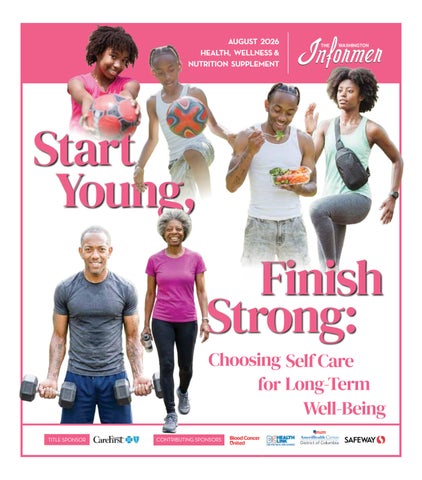
AUGUST 2026 HEALTH, WELLNESS & NUTRITION SUPPLEMENT
Start Young, Finish Strong: Choosing Self Care for Long-Term Well-Being TITLE SPONSOR
CONTRIBUTING SPONSORS
The Health We Build Every Day
In Memoriam Dr. Calvin W. Rolark, Sr. Wilhelmina J. Rolark
By Ricardo Johnson Chief Growth Officer at CareFirst BlueCross BlueShield
PUBLISHER Denise Rolark Barnes
THE WASHINGTON INFORMER NEWSPAPER (ISSN#0741-9414) is published weekly on each Thursday. Periodicals postage paid at Washington, D.C. and additional mailing offices. News and advertising deadline is Monday prior to publication. Announcements must be received two weeks prior to event. Copyright 2016 by The Washington Informer. All rights reserved. POSTMASTER: Send change of addresses to The Washington Informer, 3117 Martin Luther King, Jr. Ave., S.E. Washington, D.C. 20032. No part of this publication may be reproduced without written permission from the publisher. The Informer Newspaper cannot guarantee the return of photographs. Subscription rates are $96 per year, two years $168. Papers will be received not more than a week after publication. Make checks payable to:
THE WASHINGTON INFORMER 3117 Martin Luther King, Jr. Ave., S.E Washington, D.C. 20032 Phone: 202 561-4100 Fax: 202 574-3785 news@washingtoninformer.com www.washingtoninformer.com
STAFF Micha Green, Managing Editor Ron Burke, Advertising/Marketing Director Shevry Lassiter, WIN-TV Producer Ra-Jah Kelly, Digital Asset Manager Lafayette Barnes, IV, Editor, WI Bridge DC Desmond Barnes, WIN Daily Editor Anthony Tilghman, Social Media Strategist ZebraDesigns.net, Graphic Design Mable Neville, Bookkeeper Angie Johnson, Office/Circulation Manager Jada Ingleton, Content Editor REPORTERS Stacy Brown, National Reporter Sam Plo Kwia Collins, Jr., Political/Education Reporter Brenda Siler, Lifestyle Reporter Ed Hill, Sports Reporter Richard Elliott, Reporter Skylar Nelson, Sports Reporter Mya Trujillo, Multimedia Reporter PHOTOGRAPHERS Shevry Lassiter, Photo Editor Ja Mon Jackson, Asst. Photo Editor Roy Lewis, Jr. Robert R. Roberts Anthony Tilghman Abdullah Konte Cleveland Nelson
There is something about the transition from one season to the next that invites reflection. As summer begins to wind down, routines start to shift. Families look ahead to what comes next, communities settle into a new rhythm, and many of us take stock of where we are and where we want to be. These moments often create space to be more intentional about the future we want to build. The same is true when it comes to our health. Good health is rarely shaped by a single moment. More often, it is built over time through the choices we make, the support we receive and the habits that help us navigate life. At CareFirst, we recognize that health begins long before someone walks into a doctor’s office. It is influenced by whether people have the resources they need to support their well-being. It is also shaped by the small decisions we make each day to care for ourselves and those around us. Too often, conversations about health focus on moments of illness or crisis. Those moments matter, but so do the quieter ones: making preventive care a priority; taking time to rest and recharge; and staying connected to the people who help keep us grounded. Over time, these actions help create a stronger foundation for healthier lives. The same is true for communities. Meaningful progress rarely happens all at once. It grows through steady investment in people and opportunities that help individuals reach their full potential throughout every stage of life. As we look toward the months ahead, it is worth considering how the choices we make today can influence our well-being tomorrow. Those efforts may seem small, but their impact often extends far beyond a single season. Because healthier futures are built one day at a time. n
INTERNS Evan Aldridge, Summer Intern Tatiana Allen, Summer Intern Jordan Armstead, Summer Intern Will Deffaa, Summer Intern Razak Diallo, Summer Intern
www.washingtoninformer.com / AUGUST 2026 HEALTH WELLNESS & NUTRITION SUPPLEMENT
HS-2
MIMI’S MUSINGS: START YOUNG, FINISH STRONG
The Importance of Prioritizing and Promoting Self-Care at all Ages By Micha Green WI Managing Editor It’s summertime, and hopefully the living has been somewhat easy. No matter how eventful this hot-weather time has been or what’s ahead this fall, it’s August, also known as National Wellness Month— a time to slow down and be mindful about health. A primary focus of the annual August wellness recognition is encouraging people of all ages to prioritize self-care for overall success— whether in school, mid-career or working to fully enjoy life after retirement. Choosing self-care is not just about treating oneself to pampering (although that can be very nice too); it’s about prioritizing rest, exercise, healthy foods and mental and emotional check-ins to promote wellness. Prioritizing wellness from youth, such as getting eight hours of sleep, eating fruits and vegetables, and staying active, not only helps young people when participating in physical activities, but is beneficial for achievement in the classroom, interacting with their peers and developing healthy habits to carry into adulthood. As adults, choosing self-care— from exercising a few times a week, to getting a 15-minute nap, and cooking foods versus ordering out— can make all the difference in how one thrives in the workplace, navigates relationships, shows up for family and friends, and overcomes challenges— health or otherwise. Even folks who have been diligent about healthy, self-care practices tend to have better outcomes when diagnosed with serious or, potentially, fatal illnesses. “There is also evidence and growing awareness among healthcare professionals that supporting and empowering persons with chronic conditions and their care partners and helping them to perform self-care can improve patient well-being, decrease morbidity and mortality, and reduce healthcare costs,” according to information published in the August 2019 report: “Self-care research: Where are we now? Where are we going?” published by the NIH National Library of Medicine. This month is a reminder that health and self-care is not just about personal determination, but a community commitment to promoting wellness. It’s the village that supports young people to ensure they start practicing healthy habits and have nutritious foods throughout their development. It’s the youth and younger adults who support seniors, through older age and combat elderly isolation. This special edition features stories with helpful tools for choosing wellness, such as walking, eating healthy foods, prioritizing mental wellness and participating in intergenerational community groups, and offers tools for the community to get involved in promoting overall health. Further, sponsors offer several beneficial wellness resources for the whole family ahead of the upcoming school year. As always, dive into this guide and keep it as a reminder beyond this August to prioritize wellness all year. Refer to the pieces featured in this edition for information, guidance and as a source of inspiration. Finally, remember, choosing health and self-care is not just about the present, but will contribute to a lifelong wellness. “Self-care is not a waste of time,” said relationship expert and author Jackie Viramontez, according to Southern Living. “Self-care makes your use of time more sustainable.” n
5 District area residents walk and skate in Anacostia Park. August is National Wellness Month, a time to encourage self-care choices for all ages, such as exercising, prioritizing mental health and eating nutritious meals. (WI File Photo/Roy Lewis)
Food for Thought: Adequate Nutrition in Neighborhoods, Schools As the Fight for Universal Free School Meals Persists, Advocates, Organizations and Farmers Remain Committed to Feeding Every Child By Mya Trujillo WI Multimedia Reporter As the adage goes, it takes a village to raise a child, and when a basic necessity like access to and education about nutritious meals is at risk due to federal government rollbacks, community leaders and organizations are showing up and protecting the food that students across the nation and its capital need to live. From nonprofits, advocacy organizations and local farms, people are stepping in to know children and their school meals have an unwavering support system behind them.
5 Students of DC Central Kitchen’s Culinary Job Training Program spend 14 weeks preparing for a full-time career in the culinary industry. In school cafeterias, graduates from this program become advocates for nutritious foods and healthy lifestyles. (Courtesy Photo/DC Central Kitchen)
H-3 HS-3 AUGUST 2026 HEALTH WELLNESS & NUTRITION SUPPLEMENT / www.washingtoninformer.com
After President Donald Trump signed the One Big Beautiful Bill Act in July 2025, funding for major initiatives— including the Supplemental Nutrition Assistance Program Education (SNAP-Ed)— was immediately threatened. Although this monumental program encourages nutrition education and obesity prevention by promoting healthy food choices and physical activity, its federal funding halted at the end of September 2025, and any remaining funds are expected to be spent by the end of September 2026. With cuts to SNAP, the fight for universal school meals becomes more challenging. “Congress really needs to strengthen and protect SNAP at this moment in time,” Ashanti Lewis, director of federal government relations at FoodCorps, told The Informer. “It affects direct certification where children [can] go in and have access to their meals without the burden of paperwork, and so it’s a much easier way for kids to get their meals.” Universal school meal initiatives
FOOD Page HS-8
Open Enrollment: Making Informed Choices for the Year Ahead Submitted by CareFirst BlueCross BlueShield Choosing health coverage can feel like one more task on a long list. However, choosing the right plan for you is one of the most meaningful self-care steps you can take for your well-being. It can shape how easily you get care, what you pay for a prescription and whether the doctors you trust are in reach when you need them. Open Enrollment is a chance to slow down, compare your options and choose coverage that fits your life. Open enrollment through DC Health Link gives District residents who buy insurance on their own a chance to compare plans, review costs and select coverage for the year ahead. Taking time to understand
the options can help you avoid unexpected expenses and make it easier to get care when you need it. CareFirst BlueCross BlueShield is among the health insurers offering coverage through DC Health Link, giving District residents access to a range of plans designed to meet different health needs and budgets.
Choosing Coverage that Fits Your Needs
Caring for yourself long term starts with seeing the full picture, not just the number that catches your eye first. A monthly premium is only part of the story. You should also consider: • Doctors and specialists: Check whether the doctors you already trust are in network. • Prescription coverage: Make
sure your medications are covered and review what you may pay at the pharmacy. • Preventive care: Look for coverage for annual checkups, screenings and other routine care. • Virtual care access: Consider whether telehealth options can make it easier to get care when life is busy. Think about how often you and anyone else covered by the plan typically use health care, and make decisions based on everyone’s needs.
Steps to Take During Open Enrollment
Treat Open Enrollment on DC Health Link like you would any other investment in your well-being: a little preparation goes a long way. We recommend you: • Start Early: Open enrollment for individual and family coverage through DC Health Link generally runs from November 1 through January 31. Giving yourself time to review options before the last minute. • Make a list of life changes: Consider what changed during the past year. New medications, a new diagnosis, a different doctor or a
change in family size may affect what coverage works best. • Compare Plans: Use the Health Plan Comparison Tool to lay out your options side by side, comparing benefits and affordability. • Check when coverage starts: Depending on when you enroll, the date your coverage begins may vary. Review DC Health Link’s enrollment and payment deadlines carefully to avoid a gap in coverage.
Planning Pays Off
Long-term well-being isn’t built in a single doctor’s visit. It’s built
in small, consistent choices, and choosing the right coverage is one of them. It’s not always the lowest price or the easiest to click through. It’s the one that supports how you and your family actually use care. This Open Enrollment season, give yourself time to compare your options, ask questions and choose coverage that fits your life. To compare plans, check eligibility for financial assistance or enroll, visit DCHealthLink.com. To learn more about CareFirst plans and member resources, visit CareFirst.com. n
“CareFirst BlueCross BlueShield is among the health insurers offering coverage through DC Health Link, giving District residents access to a range of plans designed to meet different health needs and budgets.”
SHOWING UP FOR THE COMMUNITIES YOU SERVE Building healthier futures, together.
www.washingtoninformer.com / AUGUST 2026 HEALTH WELLNESS & NUTRITION SUPPLEMENT
HS-4
BUILT FOR COMMUNITY. STRENGTHENED BY PARTNERSHIP. H-5 HS-5 AUGUST 2026 HEALTH WELLNESS & NUTRITION SUPPLEMENT / www.washingtoninformer.com
When Young People Feel Connected, Communities Grow Stronger By Ricardo Johnson, Chief Growth Officer at CareFirst BlueCross BlueShield and Thennie Freeman, the Director of the Washington, D.C. Department of Parks and Recreation Recent conversations about youth gatherings in D.C. have raised important questions about safety, opportunity and how young people experience the city around them. However, the conversation cannot stop at where they should not be. It must also ask where they are welcomed, where they can grow and whether they see themselves reflected in their community’s future. Young people need places where they feel welcome and experiences that capture their interest. They need meaningful responsibilities, programs that help them develop their talents and trusted adults who listen before deciding what support should look like. They also need room to move, create, learn and enjoy being young. They also need to know that the schools, parks, recreation centers and other community institutions belong to them, too. They need to know they are not simply visitors in this city— they are an important part of its future. When young people believe they belong, they are more likely to care for their neighborhoods, invest in their communities and see themselves as leaders. That sense of connection is part of a young person’s health and well-being. Health is shaped long before someone enters a doctor’s office. It is influ-
enced by whether people feel valued and supported in the places where they live and learn. For youth, feeling understood and included can affect their confidence, relationships, participation in school and willingness to seek help when they need it. That shared belief is where CareFirst BlueCross BlueShield and the Washington, D.C. Department of Parks and Recreation (DPR) meet. CareFirst invests in the people, organizations, programs and community spaces that shape health outside of clinical settings. DPR works every day to ensure young people thrive by providing safe spaces, recreation and enrichment programs that support health, growth and connection to community. Together, we see belonging not as an extra benefit, but as a part of what helps youth imagine more for themselves and their city. Through Graduation on Wheels, CareFirst, DC Bike Ride, FITDC and DPR distributed more than 300 DC Public School (DCPS) second graders were provided with bicycles, helmets and locks at Kenilworth Park and Recreation Center in Ward 7. Students learned how to ride a bicycle safely, then received new bikes that they can use to stay active and explore the city they call home. The bicycles encouraged physical activity, but the program was also about independence, confidence and joy. For a child, a bicycle can expand the map of what feels reachable. It can make a neighborhood feel more open, a park
5 DCPS Students at the 2026 Graduation on Wheels presented by DC Bike Ride, CareFirst, DPR and FITDC
closer and a city feel more like home. At CareFirst Arena in Ward 8, students from Anacostia High School, Calvin Coolidge High School and Garnet-Patterson S.T.A.Y. Opportunity Academy helped create murals through the DCPS Transform DC program. Its theme, “We are the Builders, Our City, Our Blueprint,” sends a powerful message: Young people are not simply growing up in D.C. They are helping shape its identity and future. The arena also recently welcomed District teens for Late Night Hype, part of the DPR’s summer programming. With music, dancing, games, food and other activities, the event offered young people a place to gather with friends in a setting created specifically for them. Programs like Late Night Hype and Late Night Drip are about much more than entertainment. They create safe, adult-supervised spaces where teenagers can build friendships, express themselves and simply enjoy being young without feeling pushed to the margins. These experiences help replace unstructured environments with opportunities that encourage positive decision-making, confidence and connection. These efforts alone will not answer every need facing District youth. They do, however, demonstrate what is possible when schools, government agencies, businesses and community organizations work together and listen to what young people say they need. At DPR, that philosophy extends across everything we do. Whether
5 District teens at Late Night Hype, presented by DPR, hosted at CareFirst Arena
through youth sports leagues, arts and cultural programming, internships, workforce development opportunities or our citywide Supreme Teens program, our goal is not simply to keep young people busy. It is to help them discover their strengths, develop life skills, build meaningful relationships and find a sense of belonging. DPR often emphasizes that teenagers are an integral part of our city. We must teach young people to care for their community while also ensuring they understand that this community truly belongs to them. This requires creating welcoming environments where every young person feels respected, valued, and empowered to make choices that support their growth and wellbeing. CareFirst is working to strengthen the environments that support health and well-being. Our investments in the District include youth behavioral health, after-school programs, food access, recreation and places such as CareFirst Arena that can serve as year-round
community assets. CareFirst’s work with DC SCORES, the Washington Spirit and other organizations reflects a commitment to reaching young people through the activities and relationships that are already part of their lives. Young Washingtonians are artists, athletes, scholars, neighbors and leaders. They are not waiting to become part of the city. They are already shaping it. A healthy city does more than tell its young people where they cannot be. It creates places where they are welcomed, where they can build relationships and where they know they have a stake in what happens next. When we invest in belonging, we are investing in safer neighborhoods, healthier communities and a stronger future for the District. When young people feel that they belong to their community, they are more likely to care for it. And when a community makes room for its young people, the entire city becomes stronger and healthier. n
3District teens at Late Night Hype, presented by DPR, hosted at CareFirst Arena
www.washingtoninformer.com / AUGUST 2026 HEALTH WELLNESS & NUTRITION SUPPLEMENT
HS-6
Fresh Food, Fresh Air and Fresh Programs Should Never be a Luxury By Thennie Freeman, Director, DC Department of Parks and Recreation When people think about health and wellness, they often think about doctor’s appointments, gym memberships or dieting. Those things matter, but wellness often begins much closer to home. It starts with access to fresh food. It starts with spending time outdoors. It starts with moving your body, clearing your mind and connecting with your community. At the DC Department of Parks and Recreation (DPR), we believe every resident deserves those opportunities, regardless of where they live or what their budget may be. We are committed to making health, nutrition and wellness accessible across all eight wards through free programs that nourish both body and mind. As conversations continue around food safety and where our food comes from, more people are paying closer attention to what they’re putting on their tables. There’s never been a better time to enjoy fresh, locally grown produce. Through DPR’s communal farms, we continue to host free produce giveaways through November at three locations across the District. To make them as accessible as possible, distributions take place four days each week—including Saturdays—so working families can stop by when it’s convenient. Fresh food should never be a luxury. Through partnerships with the Capital Area Food Bank and Martha’s Table, we’re able to expand our reach with regular produce distributions and neighborhood pop-up giveaways that bring healthy food directly into our communities. The impact speaks for itself. In 2025, DPR hosted 117 produce give-
aways across the District, distributing more than 99,000 pounds of fresh fruits and vegetables. Nearly 12,000 pounds were grown on DPR farms, while another 87,000 pounds came from our partners. More than 1,400 volunteers helped make this work possible, proving that when a community comes together, everyone benefits. Our commitment to wellness extends beyond the harvest and your wallets. DPR proudly stewards urban farms, forested spaces and two food forests at Edgewood Rooftop Farm and Lederer Gardens, where residents can find fruit trees, berries, grapes and herbs growing in the heart of the city. We’re also proud to partner with Casey Trees to help restore and protect the District’s tree canopy because healthy communities depend on healthy environments. Wellness also means caring for our mental health. Our Meditative Moments in Nature series invites residents to slow down through forest bathing, yoga, meditation, sound bathing, Healing Hikes and outdoor reiki. These experiences remind us that sometimes the best medicine is simply stepping outside and taking a breath. For residents looking to build healthy habits, our Gardening 101 and Farm to Fork Culinary Series teach participants how to grow their own food and prepare nutritious meals using seasonal produce from local gardens, while our Herbal Remedies workshops introduce natural approaches to everyday wellness. If movement is your medicine, we have that covered too. Our DPR Hike Club has become one of our fastest-growing wellness initiatives, welcoming residents of all ages to explore trails across the District together. More than 1,500 participants joined us last year, and we’re on pace to welcome even more this season. Our next hike takes place September 12 at Oxon Run Park. We’re also ex-
cited to introduce The Reset, an adult camping experience at Camp Riverview in Southern Maryland, September 3-5. Whether you’ve camped for years or have never pitched a tent, it’s an opportunity to unplug, recharge and reconnect with nature alongside fellow residents. While these programs may look different, they all share one goal: making wellness accessible to everyone. At DPR, we’re in the business of improving quality of life. That means making sure families have access to healthy food, protecting green spaces, encouraging physical activity and creating spaces where residents can reduce stress, build relationships and thrive. Health is about more than healthcare. It’s community. It’s fresh air. It’s fresh food. It’s movement. It’s peace of mind.
5 Prepping for Veggie Giveaway at Lederer Garden
This season, I encourage you to visit one of our communal farms, pick up fresh produce, take a hike, learn a new recipe or simply spend time enjoying one of the incredible parks that make Washington, DC such a vibrant place to live.
H-7 HS-7 AUGUST 2026 HEALTH WELLNESS & NUTRITION SUPPLEMENT / www.washingtoninformer.com
Your next step toward a healthier lifestyle may be closer than you think. To learn more about DPR’s free health, wellness and recreation programs, including produce giveaway schedules and upcoming events, visit https://dprevents.com/ .
FOOD from Page HS-3 gained national momentum in 2021, when California and Maine implemented the Healthy School Meals for All policy, which offers school breakfast and lunch to all students at no cost for families. Since then, Colorado, Massachusetts, Michigan, Minnesota, New Mexico, New York and Vermont have also enacted similar, permanent programs. In Washington, more than 75% of students qualify for free or reduced-price meals, and while the city has made strides toward expanding access to nutritious foods in schools, it still has work to do to ensure all students can receive free school meals regardless of income eligibility rules. To move forward with securing free school meals, the Universal School Meals Amendment Act was introduced on Jan. 31, 2025, but has been under review since February 2025. “A great thing about universal access is that it removes the stigma associated with school meals for students,” said Nathan Garcia, senior advocacy communications manager at Food Corps. “When every student eats, the cafeteria becomes a place of commu-
nity rather than a place where a child’s household income is visible.” While universal access is crucial, guaranteeing that the food served in early childhood, primary and secondary educational institutions is nutritious is just as imperative. Lewis acknowledges the progress the nation as a whole has made in school meal access, but urges Congress to continue building on that momentum by expanding and protecting the Community Eligibility Provision (CEP), which is a universal meal program that provides meals at no cost to eligible schools in low-income areas. She also believes the federal government should recognize school nutrition as an essential educational infrastructure and strengthen opportunities for schools to purchase food from local and regional producers. “Children’s bodies and brains are still developing every day... so consistent access to nutrient-dense food supports healthy growth, energy, concentration and the ability to regulate emotions and remain engaged in the classroom,” Lewis explained. “When children do not know when or where they’re going to get their next meal, that uncer-
5 Local farmers like Eugene Yarbro (pictured above) of Harvest 2 Health advance education and access to nutritious whole foods for children and their families. (Tatiana Allen/The Washington Informer)
tainty creates stress in addition to hunger.”
How Local Food Leaders are Nourishing D.C. Students
In Washington, organizations like D.C. Central Kitchen (DCCK) and
Back-to-school starts with healthy children.
From July 15 to September 30, 2026, children ages 3–20 can receive a free bookbag packed with school-supply swag. They may also qualify for gift card rewards after completing a well-child visit and dental screening. Schedule your child’s yearly appointments today so they can start school healthy and confident.
This program is brought to you by the Government of the District of Columbia Department of Health Care Finance.
To find out more, scan the QR code below or call us at (855) 798-4244.
numerous local farmers are doing the necessary work in prioritizing locally sourced foods to put scratch meals on children’s breakfast and lunch trays. They simultaneously serve as educational resources, connecting students and their families to the land and whole-food cooking. DCCK has served Washingtonians for 37 years and is considered to be the nation’s first community kitchen. For the last 15 years, the nonprofit has acted as a food service provider for 30 schools in the city through its Healthy School Food program, using the act of serving students fresh meals as an educational source through cooking demonstrations, taste tests and nutritional lessons. “When we talk about healthy food, the idea is that you have to do something that’s esoteric, or maybe unfamiliar to kids in order to make it healthy,... [but] that’s not true,” DCCK Chief Development Officer Alexander Moore told The Informer. “The magic we try to have is that we try to make foods that are recognizable to kids but use healthy techniques.” Using whole-grain ingredients and whole raw fruits and vegetables processed in-house by graduates of its Culinary Job Training program, DCCK produces school meal menus that are compelling to students. Lunch items that have garnered a positive response from kids in schools that partner with the nonprofit include: hot honey chicken, a fish sandwich made with catfish caught from the Chesapeake Bay, tacos, nachos, orange chicken and pizza made with flatbread dough from a local vendor.
DCCK prioritizes a leadership cycle through its Culinary Training program, which equips people who have faced barriers with the tools necessary to pursue culinary careers. Through this program, the organization has created nearly 100 full-time jobs for graduates– something that is extremely fulfilling for Moore. “Being able to provide living-wage employment that says, ‘You matter, your community matters, and you can be a part of making that community a better place while providing for yourself and your family ’–that’s really powerful,” Moore told The Informer. Whether in the District, Maryland, or across the nation, the commitment to providing children with nutrient-dense foods in the institutions they spend the majority of the year in runs deep between advocates, nutrition professionals, chefs and farmers alike. Future generations need adequate access to healthy foods to sustain the long and healthy lives they’re supposed to live. The fight to ensure these meals are available to children nationwide is important to a web of like-minded people ready to provide for their communities. “All of us within this industry know that local foods for schools are so important when we’re working with farmers and agriculture close to the school because children get that fresh food every day, and it’s great for local economies,” Lewis told The Informer. “It’s great for the community, and it’s such a boost for schools.” n
www.washingtoninformer.com / AUGUST 2026 HEALTH WELLNESS & NUTRITION SUPPLEMENT
HS-8
3The Wisdom Walkers celebrate the historic feat of walking 128km of the El Camino to Santiago de Compostela, Spain, to raise funds for the Association of Black Cardiologists and American Heart Association. (Courtesy/Sharon Robinson Goods)
Wisdom Walkers: Steps That Change Lives
Redefining Aging, Community, and Heart Health Dr. Patrise Holden WI Contributing Writer When Sharon Robinson Goods stood atop Mount Kilimanjaro in 2022, she wasn’t thinking about breaking records. She was thinking about possibilities. Just months removed from the isolation of the COVID-19 pandemic, she had spent nine months training alongside a group of seasoned adults, all over the age of 50, who refused to believe adventure belonged only to the young. Robinson Goods remembered watching younger climbers who had skipped training be forced to turn back while every member of her trained group of older African Americans successfully reached the summit. “Everyone had personal reasons for doing the hike; bucket list, personal goal, interest in world travel,” Robinson Goods recounted. “We put it out to the business community, and 25 people appeared on Zoom. And then we started training.” The climb became more than a personal accomplishment. It was the beginning of Wisdom Walkers, a nonprofit organization of seasoned adults committed to promoting healthy living through hiking, walking, and acts of service. Today, the organization has grown into a nationwide movement, with its largest presence in the Washington, D.C. region. The group encourages people of all ages and activity levels to embrace movement through walking. “I remember when I got COVID, I couldn’t even walk to the corner, and before that I used to walk 3-5 miles.
And, for that time, I had to be satisfied with that,” said Robinson Goods, who serves as the organization’s executive director. “There is great satisfaction in doing what you can, even if that is walking to the corner, resting and coming back.”
A Different Kind of Fitness
Every Saturday morning, participants gather at Rock Creek Park before 8 a.m. to walk. There is no membership fee, no pressure to keep pace, and no expectation that everyone finishes at the same place. For newcomers, Wisdom Walkers created Fresh Start, a walking group where total distance is determined by the newest participant, even if that means walking only two blocks. “We start together, take a picture together, and begin walking,” Robinson Goods said. “Everyone’s goal is the same, to increase quality of life. We accept people of all fitness levels.” That philosophy has attracted more than 350 people to the organization’s online WhatsApp community. Some walk five to seven miles each weekend. Others simply take their first steps toward better health. “The camaraderie is the most important part,” said hiking enthusiast Samuel Gaillard. “You’re talking about life, your children, work, and before you know it you’ve walked two miles.” For Gaillard, walking is not simply about exercise; it is about protecting the quality of life people often assume they will naturally maintain as they age. “As you get older, your quality of life, your ability to care for your3Wisdom Walkers, a group that combines fitness, adventure, and community to inspire adults of all ages to embrace healthier living through movement, in Pontevedra, Spain, July 2026. (Courtesy/Sharon Robinson Goods)
self and others, and even your libido could all be increased by walking,” Gaillard, 62, said. “Men as young as their 30s and 40s can sometimes have pain and symptoms of a much older man; back pain, loss of strength, low endurance, decreased concentration, and heightened mood changes. You’d be surprised how much 10 minutes of walking per day can do.” Changing the Story of Black Health For Robinson Goods, every walk is also a response to one of the most urgent health crises affecting African Americans: heart disease. African Americans still face disproportionately high heart disease rates. Through its Every Step Changes Lives campaign, Wisdom Walkers is raising awareness and funding for the American Heart Association and the Associ-
ation of Black Cardiologists, recognizing that prevention must become as important as treatment. Gaillard understands that lesson personally. After learning he was at high risk for multiple chronic diseases, he was told medication was unavoidable. Instead, he committed himself to walking, nutrition, and consistent movement. “You almost have to be countercultural,” he said. “You have to value
your life more than the quick enjoyment of unhealthy habits. Walking is low impact, accessible, and one of the simplest ways to improve your quality of life.” His advice is practical; park farther away, take the stairs, walk your dog a little farther, or simply spend five minutes walking around your home. “Small decisions, repeated consistently, can change the trajectory of a person’s health,” he emphasized. For Robinson Goods, the mission extends beyond exercise. She believes walking restores something many people lost during the pandemic: connection. “People are isolated,” she said. “When we’re walking together, we’re encouraging one another, solving the world’s problems, laughing, and before we know it, we’ve gone farther than we imagined.”
Get your children ready for back-to-school.
From July 15 to September 30, 2026, children ages 3–11 can receive a free bookbag filled with school-supply swag. They may also qualify for gift card rewards after completing a well-child visit and dental screening. Schedule your child’s yearly appointments today so they can start school healthy and confident.
This program is brought to you by the Government of the District of Columbia Department of Health Care Finance.
H-9 HS-9 AUGUST 2026 HEALTH WELLNESS & NUTRITION SUPPLEMENT / www.washingtoninformer.com
To find out more, scan the QR code below or call us at (855) 798-4244.
Cedar Hill Regional Medical Center GW Health Is Together for Your Health Every Day When we opened our doors in April 2025, Cedar Hill Regional Medical Center GW Health made a commitment to the Wards 7 and 8 communities, becoming the first new full-service
hospital in Washington, DC, in more than 25 years. Meet Kimberlee Daniels, MBA, FACHE, Chief Executive Officer. “I came to Cedar Hill because I wanted
to be part of something important, leading a new hospital with one mission: delivering excellent healthcare East of the River,” she says. “And it’s working.”
Freedom to Learn
Hitting Our Stride
As our services expand, so do the number of patients seeking our care. We are pleased to see much of that care received by our closest neighbors. In addition, our new hospital hired 168 DC residents and invested more than $850,000 in local small businesses. Cedar Hill Urgent Care GW Health in Ward 7 already expanded local access to care and we are far from finished transforming healthcare in the community. Our hospital continues to connect with many established physicians to enhance our services and care for more patients.
Investing in Our Community
Bringing Healthcare Home
Affordable Classes for a Healthier You. All at PGCC. PGCC’s SAGE program offers classes for seniors ready to stay fit or sharpen their skills. Enjoy strength training, dance, computer skills, and more—all for just $40 per class.
At Cedar Hill, our patients are our neighbors. We believe our community deserves high-quality, compassionate healthcare services, right in our backyard. Residents turn to our hospital for a wide range of inpatient and outpatient services, including emergency care, cardiology, orthopedics and behavioral health. We also offer advanced surgical techniques, urology, women’s services, rehabilitation and more. Cedar Hill proudly welcomes the next generation of our neighbors. Expectant parents no longer have to travel for quality care. We opened access to prenatal care and timely treatment for high-risk pregnancies, as well as a Neonatal Intensive Care Unit for babies requiring specialized care and a Pediatric Emergency Department. Antonia Williams and Bertrand Ngampa welcomed a healthy baby boy at Cedar Hill this year. Ngampa said, “Cedar Hill Regional restored our faith in healthcare and changed my family’s future. They earned our complete trust, respect and loyalty.”
Community voices matter to Cedar Hill, as residents play a meaningful role in how we shape our growth and priorities. We participated in many community-focused initiatives over the past year, including community health fairs, hiring events and health education. Connecting with our neighbors helps increase awareness of our services, and encourages residents to seek crucial preventive and primary care.
Building a Healthier Future
Cedar Hill is dedicated to helping to ensure our community can access high-quality, patient-centered healthcare, close to home. “It is a privilege and a mission to care for our neighbors, when and where they need it. Our hospital is here to listen, serve and help improve health outcomes for patients across our region,” says CEO Daniels. To learn more and view all services, visit cedarhillregional.com To make an outpatient appointment, call 771-444-6200. Schedule an in-person maternity tour at cedarhillregional.com/maternity
Convenient Outpatient Care
Join SAGE today!
©2026 Prince George’s Community College. All rights reserved. 26035
Learn more at pgcc.edu/sage.
Cedar Hill opened access to a range of outpatient services for the whole family here on campus. Affiliated clinicians offer outpatient primary care and specialty services located at our facility, such as cardiology, colorectal cancer screening, podiatry, surgery and more. The hospital itself offers outpatient imaging (X-ray, MRI, CT, ultrasound), laboratory and physical therapy.
1200 Pecan Street SE Washington DC 20032 Physicians are independent practitioners who are not employees or agents of these facilities. The facilities shall not be liable for actions or treatments provided by physicians. For language assistance, disability accommodations and the nondiscrimination notice, visit our website. n
www.washingtoninformer.com / AUGUST 2026 HEALTH WELLNESS & NUTRITION SUPPLEMENT
HS-10
20th Annual Cure Sickle Cell Now 5k Walk/Run Howard University Center for Sickle Cell Disease
Submitted by Center for Sickle Cell Disease On September 12, 2026, the Howard University Center for Sickle Cell Disease (HU CSCD) will host their 20th annual Cure Sickle Cell Now 5K Walk/Run on Howard University’s campus. In-person and family-friendly, the event will also feature activities, games, and prizes. Although there had been sickle cell walks prior, 2007 marked the first Stomp Out Sickle Cell Walk, from Howard University to a hotel hosting a local sickle cell conference. Over the years, the Walk location has changed location, from Howard University to Freedom Plaza to the National Mall and back to Howard. This year, the walk will start at the courtyard lawn area in front of the Louis Stokes Health Sciences Library, located at 501 W St, NW, Washington, DC 20059. Sickle cell disease is an inherited condition that affects the red blood cell. Hemoglobin, a protein inside red blood cells, carries oxygen. In SCD, the pieces of hemoglobin can stick to-
gether and cause the red blood cells to become distorted (sickling), eventually blocking the flow of blood in the vessels. There are also fewer red blood cells in the system, which causes anemia. Individuals with SCD often experience significant pain, with many saying it’s worse than the pain associated with pregnancy labor or a broken bone. Although new therapies have been developed for sickle cell disease, the majority of people with the condition, called Warriors, either do not have access to or meet the strict criteria for those treatments. The theme of this year’s walk, Cure Sickle Cell Now FOR ALL, is intended to focus on this issue and advocate for better medical care, as well as continued efforts to find treatments that will be effective for a larger number of Warriors. For over 50 years, the HU CSCD has focused on a six-fold goal that includes comprehensive medical care, research, testing, education, counseling, and community outreach. In June 2025, Howard University proudly opened the Sickle Cell Wellness Cen-
ter - the first clinical space of its kind in Washington, D.C. - dedicated to providing comprehensive, patient-centered care for individuals living with sickle cell disease (SCD). The Sickle Cell Wellness Center integrates sameday appointments, infusion therapy, routine follow-ups, and personalized treatment plans—all under one roof. Another critical service provided by the Center is free sickle cell and hemoglobinopathy screening. Weekly screenings occur in the lobby of How-
ard University Hospital on Thursdays from 9:00 AM – 2:00 PM. With supplemental funding from the Maryland Department of Health, the Center is also hosting screening events throughout Maryland, including Charles, Montgonery, and Prince George’s Counties. If a person is identified as having a chance to have a child with sickle cell disease, free consultation by a certified genetic counselor will be offered to discuss clinical impact, reproductive implications, and guidance for
H-11 HS-11 AUGUST 2026 HEALTH WELLNESS & NUTRITION SUPPLEMENT / www.washingtoninformer.com
family members. Join the Cure Sickle Cell Now 5K Walk/Run! Registration is FREE, and more information is available at https://HUcureSCnow2026. eventbrite.com. For more information and to schedule an appointment at the Sickle Cell Wellness Center, please call 202-8656785. If you would like to schedule sickle cell screening at an upcoming health fair or other event, please reach out to us at sicklecell@howard.edu. For updates on upcoming screening events, please follow us @hucscd on Instagram and @Cure Sickle Cell Now Move-On on Facebook. n
DC Health Link’s Limited Time Offer for Small Business Owners Every year, DC Health Link gives small business owners a unique opportunity to offer health insurance to their employees with fewer eligibility requirements. It’s a limited time offer that can help businesses recruit and retain top talent by providing a valuable workplace benefit. Small businesses with 1–50 fulltime equivalent employees can enroll in health coverage through DC Health Link at any time during the year. To qualify, employers must normally contribute at least 50% of the employee premium and have at least two-thirds of eligible employees enroll in or waive coverage. However, these contribution and participation requirements do not apply for businesses that choose a January 1 coverage start date. This annual enrollment op-
portunity gives employers greater flexibility to begin offering health benefits, even if they cannot meet the standard rules. For example, an employer has 10 full-time employees but only 5 want health coverage and don’t have other qualifying coverage. Or, an employer has 5 full-time employees but can only contribute 25% of the cost of coverage for each employee. Usually these employers would be ineligible because they don’t meet the requirement that the employer must contribute at least 50 percent toward employees’ monthly premiums and that two-thirds of eligible employees either enroll in coverage or notify DC Health Link that they have other qualifying coverage (a waiver). With a January 1 start date, these requirements are not applicable.
To participate, businesses must still meet the basic eligibility requirements. They must: • Be headquartered in DC or offer coverage to all full-time employees who have a primary worksite in DC. • Have 1–50 full-time equivalent employees. • Have at least one non-owner employee enroll in coverage through DC Health Link. DC Health Link offers more than 150 health plan options from CareFirst, Kaiser Permanente, and UnitedHealthcare, giving employers and employees the flexibility to choose coverage that fits their healthcare needs and budget. Choosing the right health plan doesn’t have to be complicated. DC Health Link encourages employers to work with certified bro-
kers who provide free expert guidance throughout the enrollment process. These licensed professionals can help business owners compare plans, understand costs, and select coverage that best meets the needs of both the business and its employees. This limited time offer is available only once a year. Small busi-
ness owners who have been waiting for the right time to offer health insurance should take advantage of this limited-time window and explore the affordable coverage options available through DC Health Link. For more information, contact DC Health Link at (855) 5325465 or visit DCHealthLink.com. n
Health Insurance for Small Business Enrolled since 2023
DC HEALTH LINK CELEBRATES NATIONAL BLACK BUSINESS MONTH Saluting entrepreneurs for strengthening the economy and enriching the diversity of our city
SHOP, COMPARE & ENROLL Quality health coverage to fit your business and budget MULTIPLE PLAN CHOICES Options and flexibility like large companies
DC Health Link offers more than 150 health plan options from CareFirst, Kaiser Permanente, and UnitedHealthcare, giving employers and employees the flexibility to choose coverage that fits their healthcare needs and budget.
FREE EXPERT ENROLLMENT HELP DC Health Link certified brokers available
DCHealthLink.com • (855) 532-5465 / TTY: 711 www.washingtoninformer.com / AUGUST 2026 HEALTH WELLNESS & NUTRITION SUPPLEMENT
HS-12
Health Insurance for Small Business
COTTON & REED Enrolled since 2016
LIMITED TIME OFFER!
Small Businesses Can Get Private Health Insurance For Their Employees At Little Or No Cost • Flexible contribution levels as low as 0% percent for coverage starting January 1st • Easy and convenient enrollment for quality coverage • Free expert help from certified Brokers
DONT’ DELAY SEIZE THE OPPORTUNITY TODAY! DCHealthLink.com • (855) 532-5465 / TTY: 711 H-13 HS-13 AUGUST 2026 HEALTH WELLNESS & NUTRITION SUPPLEMENT / www.washingtoninformer.com
Wellness Habits for Families By Safeway Sincerely Health Your children look to you to help set examples for how they should act and behave. If they see you making your health a priority—by eating nutritious foods, fitting in exercise, and protecting your mental health— they’re more likely to do so, too. Instilling good habits in kids doesn’t have to be another parental chore. It can be a fun way to connect as a family. The payoff: Those wellness habits may stay with your child, increasing their chances of enjoying a long, active life.
Steps for building good habits as a family
These actions can help your family make changes that benefit physical and mental health: • Let kids help with meals • Kids need a lot of vitamins and nutrients for their growing bodies. But they can also be picky about foods that are good for
them, like vegetables. [i] • These steps can help expand your child’s tastes and ensure they eat nutritious foods: • Take your child grocery shopping. Let them pick out a new-tothem veggie, fruit, or food they want to try. • Look up recipes online with your child. Help them make a grocery list, shop for the items, and prepare the recipe; try all this in the Safeway app!
Be active as a family
An estimated 1 in 4 children don’t get 60 minutes of physical activity every day.[ii] That’s the minimal amount recommended by the American Academy of Pediatrics (AAP) and the Centers for Disease Control and Prevention (CDC).[iii] Physical activity is good for children and adults.[iv]
In summary:
Help your family get strong together Changing behaviors and devel-
oping wellness habits takes time. To help your family get on board, you might start by setting small goals and focusing on a few smaller changes each month. Your children are more likely to be excited and engaged in these changes when you model that enthusiasm too. You won’t just be making wellness changes that can last a lifetime, you’ll be making great memories as a family, too. Now that you know more about building good habits as a family, you may be curious about how Safeway’s Sincerely Health tools in the Safeway app can help, it offers science-backed insights and grocery savings to support your wellness journey. Track your fitness, get personalized nutrition insights, manage prescriptions, and earn grocery coupons for meeting activity goals! You can start by downloading the Safeway app. You’ll save $10 on groceries* for creating an account. Next, create a personalized Sincerely Health nutrition profile to receive 1,000 points*.
Your nutrition profile allows you to:
• Set specific nutrition goals. • Collect healthy points for daily activities, reaching your goals, making smart food choices, and more. Redeem them for grocery coupons! Register for the Summit at
soultherapymedia.com/summit26 The Washington Informer is the official media partner for the Soul Therapy Wellness Summit. Soul Therapy Media is a WBENC-certified creative wellness agency based in MD, serving individuals, corporations, and communities in the DC metro area and beyond. n
Get 10% off groceries with each immunization*
Your place for back-to-school vaccines
Get your family covered in one easy visit Set an appointment that fits your schedule
Scan to schedule
Not sure what’s required? Ask our pharmacists!
*
Restrictions and limitations apply. See pharmacy or URL for details.
*Terms Apply. Visit www.safeway.com/health.html for details.
HS-14
www.washingtoninformer.com / AUGUST 2026 HEALTH WELLNESS & NUTRITION SUPPLEMENT 8/3/26 11:21 AM
22213_081326_SWY_Washington Informer_Health and Wellness_ROPS_HalfPage.indd 1
Create a health profile, boost your perks
Get $10 off groceries
Want more from your for U™ membership? Create your health profile with Sincerely Health and enjoy free wellness tools, exclusive offers, and smart shopping insights–just for you. Plus, get $10 off groceries just for signing up!*
when you create a health profiles*
Additional
$180 annual savings available*
Health habits, real rewards
Earn grocery coupons just for making simple, healthy choices –like eating better and moving more.
Free wellness tools that work
Sincerely Health customers log 2x more steps than the national average. **Set your activity goals with easy-to-use wellness tools.
H-15 HS-15 AUGUST 2026 HEALTH WELLNESS & NUTRITION SUPPLEMENT / www.washingtoninformer.com 22213_081326_SWY_Washington Informer_Health and Wellness_ROPS_Full Page.indd 1
Health insights just for U™
Discover food recommendations that fit your lifestyle and earn rewards through healthier choices
8/3/26 11:10 AM
A Healthy Smile Starts Early Submitted by AmeriHealth Caritas District of Columbia (DC) Oral health plays a major role in a child’s overall health. Healthy teeth can help children eat, speak, smile and feel confident, but dental care doesn’t always get the same attention as regular provider visits. When dental care is delayed, small problems can become bigger health issues. Building strong dental habits early Children need regular dental care to stay healthy. Programs like Medicaid’s Early and Periodic Screening, Diagnostic, and Treatment (EPSDT) benefit help ensure that children receive a full range of services including: • Regular dental exams and cleanings • X-rays when needed • Fluoride treatments • Sealants to prevent cavities • Treatment for tooth decay or gum issues Cavities are the most common chronic disease in children in the United States,1 but they can be prevented with regular dental care.
Gaps in access to dental care Even with coverage available, many families face challenges getting their children to the dentist. These barriers can delay care until small issues become bigger problems. Some common barriers include: • Difficulty finding a dentist who accepts Medicaid • Transportation challenges • Limited appointment availability • Lack of awareness about covered benefits • Dental anxiety in children (and sometimes parents) When dental care is missed, the risks add up Children who do not get regular dental care may face more than cavities. Over time, poor oral health can lead to: • Gum disease (gingivitis). Early inflammation can worsen without treatment.2 • Heart issues. Gum disease may increase inflammation in the body, which can affect heart health.3 • Dental pain and infections. Untreated issues can lead to serious pain and discomfort. • Difficulty eating or speaking.
Poor oral health can affect nutrition, speech, and development.4 • Missed school days. Dental problems are a leading cause of school absences. • Lower self-confidence. Visible dental issues can impact how children feel about themselves. Practices to maintain oral health Healthy habits can help protect children’s teeth and gums every day. Families can support oral health by: • Brushing teeth twice a day with fluoride toothpaste • Flossing daily once teeth begin to touch • Limiting sugary drinks and snacks • Drinking plenty of water • Keeping up with regular dental visits For younger kids, turning brushing into a fun routine or using a timer can help build consistency. Understanding what’s covered, addressing barriers, and building simple daily habits can go a long way. Healthy smiles can help set children up for healthier futures. Sources 1.“Oral Health Tips for Children,” Centers for Disease Control and Prevention, May 15, 2024, https://www.cdc.gov/oral-health/pre-
vention/oral-health-tips-for-children. html, accessed April 20, 2026. 2. “Oral Health,” World Health Organization, March 17, 2025, https://www.who.int/news-room/factsheets/detail/oral-health, accessed April 21, 2026. 3.“Gum Disease May Be Linked to Plaque Buildup in Arteries, Higher Risk of Major CVD Events,” Heart.org, December 16, 2025, https://newsroom.heart.org/news/ gum-disease-may-be-linked-toplaque-buildup-in-arteries-higher-risk-of-major-cvd-events#:~:text=%E2%80%9CGum%20 disease%20and%20poor%20 oral,part%20of%20protecting%20 your%20heart.%E2%80%9D, accessed April 20, 2026. 4.Samantha Watt et al., “Does Poor Oral Health Impact on Young Children’s Development? A Rapid Review,” Br Dent
J, Vol. 237, No. 4, August 23, 2024, https://pmc.ncbi.nlm.nih.gov/articles/ PMC11343692/, accessed April 24, 2026. 5.“Mental Illness in Children: Know the Signs,” Mayo Clinic, January 27, 2024, https://www.mayoclinic.org/ healthy-lifestyle/childrens-health/indepth/mental-illness-in-children/art20046577, accessed April 24, 2026. 1., accessed April 24, 2026. All images are submitted by AmeriHealth Caritas District of Columbia and are used under license for illustrative purposes only. Any individual depicted is a model purposes only. Any individual depicted is a model . n
UNDERSTANDING BEHAVIOR CHANGES IN CHILDREN Children and teens do not always have the words to explain when or why they are struggling emotionally. Sometimes stress, anxiety, depression, trauma, or social pressures show up through behavior changes long before a child says something is wrong. It is important to pay attention to patterns, not just isolated moments, to help recognize when extra support may be needed. Some behaviors that may signal emotional or mental health concerns include:5 • Big changes in mood, behavior, or personality • Pulling away from friends, family, or favorite activities • Sudden changes in sleep, appetite, or energy levels • Trouble focusing in school or declining grades • Ongoing sadness, hopelessness, or low self-esteem • Increased anxiety, excessive worrying, or panic • Risk-taking behaviors or acting out more than usual • Complaints of constant headaches or stomachaches • Talking about self-harm, feeling alone, or wanting to disappear When these behaviors begin to affect daily life, school, or relationships, it may be time to seek additional support. These changes may be connected to emotional,
behavioral, or mental health concerns that could benefit from professional support.5 Where families can find help Families in the District can find help through resources such as: • The DC Department of Behavioral Health’s Children, Youth and Family Services program • The 24/7 Access HelpLine • ChAMPS for children experiencing mental health emergencies AmeriHealth Caritas DC also offers behavioral health services for children and teens at no cost to enrollees, including 24/7 emotional support through Headspace. Enrollees age 13 and older can access guided meditation and mindfulness exercises or chat with an emotional support coach all in the Headspace app. Parents can help their children get the treatment they need by calling Enrollee Services at 202-408-4720 or 1-800408-7511.
Beat the Heat During extreme heat, it is important to recognize the signs and symptoms of heat exhaustion and stroke. Symptoms may include: • • • • • • •
Dry red skin Convulsions Throbbing headaches Disorientation Chills Delirium Coma
If you suspect that you or someone you know is experiencing a heat-related illness, call 911.
www.washingtoninformer.com / AUGUST 2026 HEALTH WELLNESS & NUTRITION SUPPLEMENT
HS-16
What Have We Been Missing About Black Aging? By Raymond A. Jetson Aging While Black For years, the dominant conversation about Black aging has been shaped by disparities, deficits, and service gaps. While that work has been necessary, it has made visible the unequal conditions Black elders face in health, housing, income, caregiving, and access to support. This has also created a serious blind spot. It has trained the field to look at Black aging primarily through what is lacking, rather than through how Black communities understand aging when they speak in their own terms. That blind spot matters because when a field defines a population primarily through harm, it often misses the social logic, cultural wisdom, and community structures that people themselves rely on to live, adapt, and thrive. In the case of Black aging, the result is a framework that can identify need, but struggles to recognize what sustains life across generations. There is a lack of knowledge on what kinds of institutions, narratives, and public investments that better align with our reality. At Aging While Black, we decided to approach reimaging aging differently. Through our Spirit of Sankofa convenings, we brought together Black elders, younger adults, caregivers, faith leaders, artists, researchers, and civic leaders to explore a simple question: What does it mean to age well in Black communities? Instead of treating Black aging as a narrow issue of later-life services, The Spirit of Sankofa explored a variety of actions that might follow in this process. It was not traditional stakeholder engagement but instead, an intentional effort to generate knowledge that no single constituency could produce alone. When communities are asked only what services they need, the conversation often remains within the boundaries of existing systems. When they are invited to reflect on belonging, memory, responsibility, faith, dignity, and the legacy they hope to leave future generations, a much richer understanding emerges. That understanding should re-
shape how we think about aging in America. That is what The Spirit of Sankofa made possible. What began to surface through each of the convenings was not simply a longer list of needs. It was a different way of understanding aging itself. These community members did not describe aging as something that starts late in life or as a condition affecting older adults in isolation. They described it as a lifelong and intergenerational process shaped by what happens to families, neighborhoods, institutions, and communities over time. They also surfaced a perspective that stands in sharp contrast to dominant assumptions in the aging field. Across the convenings, interdependence was not described as weakness or dependency. It was described as how life works when it is healthy. Villages, mutual responsibility, caregiving across generations, faith communities, and shared accountability were not treated as sentimental ideas. They were understood as part of the social design that makes collective wellbeing possible. Participants also revealed how much the field misreads culture, faith, and story. These are often treated as secondary concerns or as matters of sensitivity and inclusion. Religion, testimony, storytelling,
ancestry, music, family gathering, and collective memory appeared as forms of infrastructure. They help transmit values, identity, responsibility, healing, and continuity across time. Any serious effort to support Black aging while treating these forces as peripheral will miss some of the very conditions that sustain community life. Another important insight that emerged from the tension participants named between integrated lives and fragmented systems. People experience health, housing, food, spirituality, safety, technology, culture, and economic wellbeing together. Yet the institutions meant to support aging are often divided into separate sectors, funding streams, and professional categories. The issue is not only that services are insufficient. It is that many systems are built on assumptions that do not match how Black communities actually live and care for one another. This raises a larger challenge for the aging field. The goal cannot be only to improve existing programs while keeping the same conceptual frame intact. The deeper task is to reconsider the assumptions on which that frame has been built. What if the core unit of concern is not just the individual older adult, but the community moving through time together? What if dignity, belonging, continuity, and shared responsibility matter as much as service access? What if culture and narrative are not side issues, but part of the architecture of wellbeing? These questions do not diminish the
importance of policy, services, or material support. They make those priorities more precise. They suggest that meaningful change will require more than expanding access to fragmented systems. It will require new ways of understanding Black aging, new ways of measuring what matters, and new forms of partnership across community, culture, policy, and practice. This is where Aging While Black sees its role. The task is not simply to publish findings from a set of convenings. It is to create and hold a container where this body of knowledge can continue to develop. That includes continued convenings, stronger thought leadership, and partnerships that help move what communities are sur-
H-17 HS-17 AUGUST 2026 HEALTH WELLNESS & NUTRITION SUPPLEMENT / www.washingtoninformer.com
facing into broader public conversation, institutional learning, and practical experimentation. The opportunity ahead is significant. At Aging While Black, we believe the question is no longer what we have been missing about Black aging. Black communities are not waiting for the field to define their reality. They are already articulating a richer understanding of what it means to age with dignity, meaning, continuity, and collective care. The question is whether the aging field is prepared to listen differently, ask better questions, and recognize that what has long appeared at the margins may in fact point toward a more complete understanding of aging in America. n
The Vital Connection Between Oral Health and Overall Wellness Submitted by Mary’s Center As we age, our health needs evolve, and oral health is no exception. Maintaining a healthy smile is more than just aesthetics; it’s a vital component of overall well-being. Dr. Usman Ahmad, Dental Director at Mary’s Center, emphasizes the importance of proactive dental care for older adults and shares valuable advice on how to preserve our smiles and health as we grow older.
Dr. Ahmad explains that aging naturally brings changes to the mouth like gum recession, wear and tear, dry mouth caused by medications, and systemic illnesses that can affect oral health. These changes increase the risk of cavities, gum disease, loose teeth, and ultimately, tooth loss. However, he reassures that with early intervention and consistent care, many of these issues can be prevented. A proactive approach allows older adults to continue eating,
speaking, and smiling confidently throughout their lives. The mouth often reflects the state of our overall health. Dr. Ahmad highlights that signs of systemic conditions such as diabetes and hypertension frequently appear in the mouth first. Indicators like inflamed gums, bleeding, and dry mouth can serve as early warning signs. Regular dental checkups enable early detection, which can lead to timely treatment of underlying health issues, reinforcing the vital connection between oral health and overall wellness. Dr. Ahmad identifies bleeding gums as the most common dental issue he sees in older adults. Early gum disease, or gingivitis, may cause puffy gums, while more advanced stages can lead to bone loss
g n i r e w o Emp Smiles
and tooth mobility. If left untreated, these issues can result in tooth loss. He also warns about root cavities and broken teeth, which are addressed with dental solutions like crowns, bridges, and dentures. Early detection is key. Symptoms such as puffy, inflamed gums and bad breath should prompt dental consultation. Good oral hygiene practices like brushing twice daily, flossing, and professional cleaning are essential in preventing the progression of gum disease and maintaining healthy gums. Many older adults take medications that can cause Xerostomia (or “dry mouth”) which fosters bacterial growth and increases cavity risk. Dr. Ahmad recommends using saliva-stimulating mouthwashes and staying well-hydrated to combat dry mouth and protect oral health. Dr. Ahmad urges older adults to “follow your dentist’s recommen-
dations, visit every six months, and maintain excellent home care habits. Your smile is an important part of your overall health and well-being.” Since joining Mary’s Center in 2020, Dr. Ahmad has overseen numerous enhancements in dental services, including root canals, crowns, bridges, and especially dentures aimed at restoring functionality and improving quality of life. Mary’s Center emphasizes ongoing follow-up care, including in-house deep cleanings and regular checkups, to ensure long-term oral health for its patients. Regular dental visits not only protect your smile but also serve as a crucial link to your overall health because a healthy smile is not just about looks, but a lifetime investment in your health and happiness. Remember, investing in your dental health is investing in your overall quality of life. n
Dental Services for Older Adults
Supporting health and well-being through every stage of aging.
Dental Services for Ages 60 and Older Preventive care Restorative care Referrals to specialty care
We accept new patients!
maryscenter.org
Make an appointment today
844-796-2797 Fort Totten
Petworth
Silver Spring
100 Gallatin Street, NE, Washington, DC 20011
3912 Georgia Avenue, NW, Washington, DC 20011
344 University Blvd. West, Silver Spring, MD 20901
www.washingtoninformer.com / AUGUST 2026 HEALTH WELLNESS & NUTRITION SUPPLEMENT
HS-18
Redefining Legacy: The Journey from a Dialysis Chair to the APOL1 Action Alliance By Sharron Rouse, Patient Advocate and President, APOL1 Action Alliance When we think of leaving an inheritance for the next generation, we traditionally think of financial assets or property. But, what about your genetic legacy? In the United States, approximately 35% of people on dialysis for kidney failure identify as African American, even though they’re only 13% of the population. Although some of this is due to factors such as disparities in access to healthy foods and adequate health care, scientists have recently discovered a genetic link. Changes in a gene called APOL1 can be associated with chronic kidney disease, and those changes are more common in people of African descent. For years, I lived with the unanswered question of why my kidneys suddenly failed in 2006. I was a vibrant professional school counselor and a new mother to a five-month-old daughter, with zero family history of renal disease, diabetes, or high blood pressure. Diagnosed with Focal Segmental Glomerulosclerosis (FSGS), a rare condition causing severe kidney scarring, I faced an overwhelming wave of denial and silent depression. The defining turning point arrived when my nephrologist issued a stark, “do-or-die” warning to start dialysis. At this unimaginable crossroad, I chose to shift my internal narrative from despair to purpose, resolving to use my time in that dialysis chair to build a roadmap for the people coming behind me. In 2013, my sister stepped forward as my living donor, giving me the life-saving gift of a kidney transplant. Empowered by this renewed lease on life, I founded Kindness for Kidneys International, Inc. to ensure no other family would ever have to navigate the terrifying landscape of kidney disease blindsided and alone. Despite the success of my transplant, the mystery of my original diagnosis lingered until I began hearing about the APOL1 gene at national kidney forums. A genetic test ultimately provided immedi-
ate, life-altering clarity: I carried two copies of the G1 high-risk APOL1 alleles. My FSGS wasn’t the byproduct of personal or lifestyle failings—it was genetic. I had APOL1-Mediated Kidney Disease (AMKD). This aggressive condition uniquely and disproportionately impacts individuals of African ancestry, stemming from an evolutionary trait that once protected against African Sleeping Sickness but now triggers rapid, premature renal decline. AMKD is a silent diagnostic mimic that frequently accounts for a massive percentage of FSGS and hypertension-attributed kidney failure in Black communities, often causing severe, irreversible damage before a single physical symptom ever appears. Discovering my genetic status replaced my lingering confusion with a fierce mission to eradicate the heavy burden of shame and guilt felt by kidney warriors who mistakenly blame themselves for a disease woven directly into their DNA. Recognizing a profound systemic gap in awareness and diagnostic access, I co-founded the APOL1 Action Alliance (AAA), stepping into the role of President alongside veteran patient advocate, Richard Knight. Our Alliance operates with an urgent, community-first mandate to bridge the massive education gap in communities of color, empower families with a clear roadmap to access early genetic testing, and unite patients, healthcare providers, and pharmaceutical developers to accelerate targeted therapies. To become a part of this collective movement, you can connect directly with our leadership team by visiting our official website at apol1alliance.org or by emailing us at info@apol1alliance.org. Through our platform’s dedicated contact portal, we actively coordinate partnerships, patient navi-
gation resources, clinical trial enrollment, volunteer programs, and speaking engagements. Through my two-decade survival journey, I challenge the world to look closely at what we leave behind—because health equity, genetic clarity, and active community connection are the most critical inheritances we can secure for the next generation. Visit https://apol1alliance.org/ for more information about AMKD, APOL1 and the APOL1 Action Alliance. n
Community-centered healthcare for all.
INTRO TO Whitman-Walker Health
BEHAVIORAL HEALTH
Meet Dwight Venson
Meet Bob Kearney
PRIMARY CARE
PUBLIC BENEFITS & INSURANCE NAVIGATION
Meet Megan Dieterich
Meet Miggie Garcia
PrEP and SEXUAL HEALTH
DENTAL HEALTH
Meet Adrian Rodriguez
Meet Dr. Buck
Health lives here.
Don’t wait for a medical emergency to land you in the ER! Turn to Whitman-Walker Health to handle all your health needs. MAX ROBINSON CENTER 1201 Sycamore Dr. SE Washington, DC 20032
WHITMAN-WALKER AT 1525 1525 14th St. NW Washington, DC 20005
Phone: 202.745.7000
H-19 HS-19 AUGUST 2026 HEALTH WELLNESS & NUTRITION SUPPLEMENT / www.washingtoninformer.com
www.whitman-walker.org
Understanding Multiple Myeloma Submitted by Blood Cancer United If you or someone you love has been diagnosed with multiple myeloma, one of the first questions that often comes up is: What causes multiple myeloma? There is no single cause of this type of cancer, and oftentimes no clear answer as to why one person develops it and another does not. However, learning about the risk factors and what may cause multiple myeloma can assist in making sense of the diagnosis and making informed choices.
What is multiple myeloma?
Multiple myeloma is a cancer that forms in plasma cells, which are white blood cells that help fight infections. When these cells become abnormal, they grow uncontrollably and crowd out healthy blood cells. Over
time, this disrupts the immune system (Blood Cancer United 2026).
Genetic factors
Early symptoms of multiple myeloma
The early symptoms of multiple myeloma can show up in different ways. Some of the most commonly reported include (Blood Cancer United 2025): • Bone pain, particularly in the back, hips, or chest • Fatigue that doesn’t improve with rest • Frequent infections, due to a weakened immune system • Kidneyproblems,whichmayshow up as changes in urination or increased thirst • Weakness or numbness in the legs Many of these symptoms overlap with other common, less seri-
Diagnosed with myeloma? Myeloma is a blood cancer. We’re all about blood cancer, so you can be about everything else. If you’ve been diagnosed with myeloma or any of the 100+ types of blood cancer, Blood Cancer United is here for you at no cost. Personalized support from highly trained social workers and oncology nurses Help navigating clinical trial options and process Financial support, including the Medical Debt Case Management program
Your situation is unique, but you’re not alone.
ous health issues. Experiencing them doesn’t mean you have multiple myeloma, but they are worth talking about with your healthcare provider. If you’ve noticed any of these symptoms and they persist or worsen, reaching out to your doctor is always the right move. Most cases of multiple myeloma begin with acquired genetic mutations in plasma cells (Blood Cancer United 2025). These mutations disrupt how your cells: • Grow and divide • Undergo normal cell death While these changes are complex, they are common in many cancers and are a focus of ongoing research and treatment advances.
Environmental and lifestyle risk factors
Learning about risk factors can feel like a lot to take in, especially if some of them feel familiar. Remember that risk factors do not mean a person is guaranteed to have specific health outcomes.
Give us a call or scan the QR code for free resources. Call 800.955.4572 or visit BloodCancerUnited.org
Tony
Myeloma survivor
Age
As we get older, the likelihood of genetic mutations in our cells increases. If you’re 50 or older, this may slightly raise the risk of developing multiple myeloma (Blood Cancer United 2025).
Sex
Males are diagnosed with multiple myeloma more often than females. While researchers continue to study this increase, this risk is just one potential factor (Blood Cancer United 2025).
Race and ethnicity
According to the NCCN, multiple myeloma is twice as common and twice as likely to lead to death in African Americans compared to white people living with myeloma (National Comprehensive Cancer Network 2026). However, research shows that differences in outcomes are often driven by access to care. A real-world study by ASH found that when African American people with myeloma have similar access to care as white people, their survival outcomes are comparable (American Society of Hematology 2022).
Nutrition
Focusing on overall health and regular medical care (ex: healthy diet and weight) can help reduce risk and support early detection (Blood Cancer United 2025). You can learn more about diet in our recent webinar: Dietary, Microbiome and Metabolism Evidence in Blood Cancers (Focus on Myeloma).
Chemical and radiation exposure
Exposure to certain chemicals or radiation may play a role in the development of multiple myeloma. These include: • Pesticides • Fertilizers • Agent Orange These substances can affect how cells repair damage over time, which may increase cancer risk. If you work with or have lived in environments with these exposures, let your provider know so they can monitor your health appropriately. The good news is that, even with these risk factors, many people never develop the disease and having them does not mean a diagnosis is inevitable. These are considered risk factors, not direct causes (Blood Cancer United 2025).
A final word
While uncertainty can be difficult, ongoing research continues to improve our understanding and treatment of this disease. It’s important to remember: • Multiple myeloma develops over time • Most causes are not preventable or inherited • Risk factors increase the likelihood but do not guarantee disease You don’t have to navigate these questions alone—and we’re here to help you take the next step, whatever that looks like for you. n
www.washingtoninformer.com / AUGUST 2026 HEALTH WELLNESS & NUTRITION SUPPLEMENT
HS-20
H-21 HS-21 AUGUST 2026 HEALTH WELLNESS & NUTRITION SUPPLEMENT / www.washingtoninformer.com
view P INT What is the importance of physical activity in youth and young adults?
EVAN ALDRIDGE, WI INTERN
JUSTI B /
NEW JERSEY
“It not only establishes good habits at a young age that will benefit you down the line in the future, but opens the door of people challenging themselves. Physical activity can also build social skills.”
MORGAN COLLINS / ORLANDO, FLORIDA
“[Physical activity among young people] encourages a healthy lifestyle and fosters community and accountability within it.”
SULENI SABIO-ARZU / BRONX, NEW YORK
“To reset your mind after a long day. It’s important to exercise your body to keep the mind-body connection. I feel like I sleep better because I worked out.”
BRADLEY ADAMS /
LOS ANGELES, CALIFORNIA
“As people get older they tend to fall out of old habits they formed when younger. And it’s harder to start new habits. The pipeline from student-athlete to gym rat is insanely popular. But another reason why it’s important for kids to be active is it carries on into their young adult lives.”
GABRIEL ELEY /
CHARLOTTESVILLE, VIRGINIA
“The importance is to keep them healthy. It builds strength and durability, like football, stamina, like track, and even IQ, like basketball. It helps them build core muscles in their body and even their mind.”
SUPPORTING FAMILIES AND INDIVIDUALS FACING AN EMERGENCY AND IN NEED OF ASSISTANCE WITH RESOURCES AND SERVICES. GWUL’S COMMUNITY CARES CENTER OFFERS:
LEARN MORE
▪ UTILITY PROGRAMS - Provides emergency utility assistance to residents in need. ▪ RECERTIFICATION BENEFITS - Assists with recertification process for public benefits such as SNAP, TANF, or Housing Vouchers ▪ PROJECT RE-CONNECT - Supports new arrivals to low-barrier shelters, returning citizens, and aged-out foster care youth by connecting them with host families or friends for extended stays or providing resources to transition into independent housing.
www.washingtoninformer.com / AUGUST 2026 HEALTH WELLNESS & NUTRITION SUPPLEMENT
HS-22
HOPE FROM A DC EX-SMOKER
“I feel blessed, and I would like for other people to receive the blessing also.” — Delica M., Deanwood
DC’s personalized, free program gives you a 60% better chance at quitting for good. • Coaches • Medications • Daily support See Delica’s story, and find out what’s right for you.
1-800-QUIT-NOW
.org
H-23 HS-23 AUGUST 2026 HEALTH WELLNESS & NUTRITION SUPPLEMENT / www.washingtoninformer.com
1
#
MOST TRUSTED
*
HEALTH INSURANCE BRAND IN THE REGION
*CareFirst BCBS 2025 Brand Health Tracker Survey
www.washingtoninformer.com / AUGUST 2026 HEALTH WELLNESS & NUTRITION SUPPLEMENT
HS-24