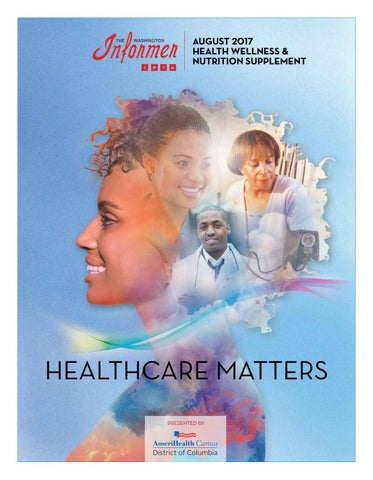
AUGUST 2017 HEALTH WELLNESS & NUTRITION SUPPLEMENT
HEALTHCARE MATTERS PRESENTED BY
WORDS FROM THE EDITOR
NEWSPAPER READING IS A HABIT DON’T BREAK THE HABIT!
READ THE WASHINGTON INFORMER YOUR WAY: In Print – feel the ink between your fingers of our Award Winning Print Edition
n
On the Web – www.washingtoninformer.com updated throughout the day, every day
n
n
On your tablet
n
On your smartphone
n
n
n
Weekly Email Blast – sign up at www.washingtoninformer.com
202-561-4100 For advertising contact Ron Burke at rburke@washingtoninformer.com
...Informing you everyday in every way
In Memoriam Dr. Calvin W. Rolark, Sr. Wilhelmina J. Rolark THE WASHINGTON INFORMER NEWSPAPER (ISSN#0741-9414) is published weekly on each Thursday. Periodicals postage paid at Washington, D.C. and additional mailing offices. News and advertising deadline is Monday prior to publication. Announcements must be received two weeks prior to event. Copyright 2016 by The Washington Informer. All rights reserved. POSTMASTER: Send change of addresses to The Washington Informer, 3117 Martin Luther King, Jr. Ave., S.E. Washington, D.C. 20032. No part of this publication may be reproduced without written permission from the publisher. The Informer Newspaper cannot guarantee the return of photographs. Subscription rates are $45 per year, two years $60. Papers will be received not more than a week after publication. Make checks payable to: THE WASHINGTON INFORMER 3117 Martin Luther King, Jr. Ave., S.E Washington, D.C. 20032 Phone: 202 561-4100 Fax: 202 574-3785 news@washingtoninformer.com www.washingtoninformer.com
PUBLISHER Denise Barnes STAFF D. Kevin McNeir, Editor Ron Burke, Advertising/ Marketing Director Shevry Lassiter, Photo Editor Lafayette Barnes, IV, Assistant Photo Editor John E. De Freitas, Sports Photo Editor Dorothy Rowley, Online Editor ZebraDesigns.net, Design & Layout Mable Neville, Bookkeeper Dr. Charles Vincent, Social Sightings columnist Tatiana Moten, Social Media Specialist Angie Johnson, Circulation REPORTERS Stacy Brown (Senior Writer), Will Ford (Prince George’s County Writer), Hamil Harris, Tatyana Hopkins, Jade JamesGist, D. Kevin McNeir, Lauren Poteat, Dorothy Rowley, Sarafina Wright (General Assignment Writer) PHOTOGRAPHERS John E. DeFreitas, Shevry Lassiter, Roy Lewis, Demetrious Kinney, Mark Mahonny, Lateef Mangum, Travis Riddick
Better Care Really Matters When I was born, doctors discovered that I had a clef palate. But I was fortunate in that I didn’t have the facial deformities that often come along with this abnormality. I did require surgery, as I am told, to repair a small hole in the roof of my mouth which I needed so that I could drink liquids without them seeping through the hole and into and then out of my nose. Doctors also had to clip the underside of my tongue so that it could move properly – an essential for normal speech patterns. A few years later, when I started school, the speech pathologist was amazed that I was able to pronounce my words with clarity, forming my consonants and word endings like any other child. My mother told the pathologist that she had resolved that I would not have a problem speaking, adding that she had taken me through regular drills that she’d crafted in the form of games intended to strengthen my tongue and help my lips form letters in the right ways. Guess I should add my mother was an elementary education specialist. I think about that first “encounter” with medical experts, as well as the other childhood illnesses and injuries that I suffered and from which I healed after receiving medical attention: the chicken pox, the measles, a slew of cavities, sports-related cuts and sprains, gashes and deep wounds caused by foolish pranks on bicycles and skates, even several serious car accidents that required hospitalization – I survived them all. Most amazing to me as I think about “I never worried that I those days is the fact that not once did I ever would be unable to see worry about how my parents would pay the bills. I never worried that I would be unable a physician whenever to see a physician whenever I needed. It just never crossed my mind. In fact, I assumed I needed. It just never that the options before me were the same crossed my mind. In fact, I in everyone’s home – for all of the children with whom I played and grew up. assumed that the options Maybe that’s why I am so befuddled, actually angered by the antics of Congress before me were the same as they go back and forth in their efforts in everyone’s home – for all to erase the legacy of President Barack Obama, spending what appears to be every of the children with whom I waking moment to find ways to repeal and replace the Affordable Care Act. played and grew up.” I’m fairly confident that not one member of Congress, no matter what their ethnic background, ever had to worry about health insurance during their youth, much less now. I’m sure they never had to use the emergency room as their only source of securing medical attention. Rather, like me, they were fortunate enough to have access to regular eye and dental checkups and annual physicals conducted by a physician of their choice. They were able to weigh the options of getting braces to correct crooked teeth and were able to convince their parents that they were ready for contact lenses so they could get rid of those annoyingly thick eyeglasses that made them looked like the cartoon character Mr. Magoo. Many members of Congress, like me, grew up in a different age. But now, we’re living and working longer, We’re facing higher costs of living. We stand on the verge of a medical state of crisis. But why when we know the truth: better care really matters. We’re seeing senior citizens being forced to choose between paying for medicine or buying food. We’re seeing an increasing number of children falling victim to childhood diseases once announced as “eradicated” because their parents can’t afford vaccinations. And we’re seeing more Americans who, after taking their health plans for granted for years, are struggling to keep up with soaring premiums. And so, the irony exists that while we’re living longer, it looks like we may be growing sicker along the way. Is this what our president meant when he promised to “make America great again?”
D. Kevin McNeir
Editor Washington Informer
www.washingtoninformer.com / AUGUST 2017 HEALTH WELLNESS & NUTRITION SUPPLEMENT
HS-2
Affordable Care Essential for All By Stacy M. Brown WI Senior Writer The purpose of health insurance remains to help pay for care, protecting individuals financially in the event of an unexpected serious illness or injury that could be very expensive. With health insurance, individuals can get routine and preventive care to lower the chance of serious illnesses without having to pay cash for very expensive services. “We need health insurance because we cannot predict what our future medical bills will be. In some years, your costs may be low,” said Beatriz Mallory, the senior vice president of SensisHealth, a cross-cultural healthcare marketing, advertising and branding agency located in Northwest. “In other years, you may have very high medical expenses. If you have health insurance, you will have peace of mind in knowing that you are protected from most of these costs,” Mallory said. While individuals may have some control over their health by eating properly, drinking plenty of water, getting enough sleep and avoiding bad habits, everyone still requires health care for things they cannot control, said Kent Moore, president of Moore Benefits Inc., an employee benefits broker and consultant. “Injury and illness strike most everyone at some point and we don’t have the natural ability to recover without help,” Moore said. “More importantly, health care providers can help prevent many illnesses and early detection of certain conditions can save and improve lives,” he said. Moore added that some avoid going to the doctor because of a combination of fear and the cost involved. “The thought of finding that a cancer is hiding silently in our bodies is terrifying,” he said. “We don’t want to face the pain and crushing cost of treatment, so some want to believe what they don’t know won’t hurt them.” Educational and socioeconomic levels are most likely to have the greatest effect on whether an individual seeks medical attention, said Dr. Lisa T. Williams who owns Assessments Unlimited LLC. “One of the most prominent reasons is trust of health care providers. Many people don’t trust health care providers,” Williams said. “In some cases, this is cultural. However, what we have found is that building patient and provider relationships is very important to the facilitation of optimal health outcomes for all,” she said.
H-3 HS-3
Further, without proper care, individuals who have had surgeries or other major procedures are more susceptible to secondary complications such as pressure sores, circulatory complications, pneumonia and other illnesses, said Vinny Dolan of Spinalcord.com. “Depression and emotional withdrawal are also common. So why do we need health care? One reason is to take care of individuals who through no fault of their own are in great need of health care to live and to become productive members of the community,” Dolan said. Also, acquiring health insurance shouldn’t wait until someone becomes ill, said Mallory at SensisHealth. “Today, health insurers cannot charge more or deny coverage to you or your child because of a pre-existing condition like asthma, diabetes, or cancer,” she said. “They cannot limit benefits for that condition either. While Obamacare is still in place, it’s easier to find a plan you can afford.” WI
Those at SensisHealth in Northeast, D.C., say affordable health care is essential for all. /Photo courtesy Beatriz Mallory
Healthcare a Top Priority For Millennials By Sarafina Wright WI Staff Writer The ever-so intriguing millennial generation continues to walk away from homeownership, cable TV and retirement savings, but they seem to be following a more traditional way of doing things when it comes to healthcare, according to a recent study. The Benenson Strategy Group [BSG] polled over 1,000 millennials earlier this year discovering 86 percent carry health insurance and a majority of those polled considering it a critical employee benefit. “Prioritizing security-oriented benefits suggests millennials take a more thoughtful and cautious view of the future than they are often credited for in the media,” BSG Managing Partner Danny Franklin said. “Understanding how this generation gathers information and uses medical services can help both employers and healthcare providers better communicate with millennials and serve them, particularly as their needs shift.” Millennials, who recently overtook baby boomers as the largest segment of the workforce, want
traditional job benefits and health insurance tops the list. BSG also claims that when asked if they’d rather have better insurance or a 10 percent pay raise, 51 percent opted for the insurance while 49 percent chose the money. They continued that though millennials are happy with their insurance and 60 percent are favorable toward Obamacare, they’re concerned about the system. Forty-nine percent believe healthcare in the U.S. remains a system in need of repair. As far as trust goes, healthcare providers such as doctors, nurses and hospitals are on the top of the list, while health insurance and pharmaceutical companies are on the bottom. The millennial generation neither trusts President Donald Trump on healthcare nor expects him to improve it the strategy group revealed. BSG found that only 22 percent of millennials trust Trump on healthcare policy, including just 45 percent of Republicans, 15 percent of Democrats and 13 percent of Independents studied. “Even though most millennials do not expect healthcare improvements from the Trump adminis-
“What millennial view as important” infographic. / Courtesy of The Benenson Strategy Group [BSG].
tration, they still place a high value on health insurance and care about what happens to the system,” Franklin said. In terms of the immediate future of healthcare, 47 percent of the polled millennials expect their health insurance options to deteriorate under Trump while 44 percent feel that the president’s eventual plan to repeal and replace Obamacare will undermine
AUGUST 2017 HEALTH WELLNESS & NUTRITION SUPPLEMENT / www.washingtoninformer.com
healthcare quality. “Policymakers who jeopardize millennials’ insurance options risk alienating this younger set of voters and that could carry long-term political consequences,” Franklin said. The full report can be accessed at: http://www.bsgco. com/insights/millennials-sound-off-on-healthcare. WI
Childhood Bullying: The Signs, Risks and Ways You Can Help Submitted by AmeriHealth Caritas District of Columbia Sometimes children can be mean to one another. They can tease, insult, fight, and exclude other kids from group activities. These behaviors might be a onetime thing, but they are often a sign of something more serious. When these actions become regular or focused on a single child, this behavior can be considered bullying. Bullying is a problem for children of all ages and backgrounds. It can be hard to identify when bullying is happening. It can be even harder to know what to do about it. But bullying can be stopped. Whether your child is being bullied, is the one doing the bullying, or both, knowing what to look for can help put an end to this bad behavior. What is bullying? Bullying is unwanted and aggressive behavior. It creates an unsafe environment and makes it harder for a person to feel comfortable and live a happy life. Bullying usually involves a real or perceived power imbalance. That power could be physical strength, social popularity, or embarrassing information. Bullying is not a one-time thing. Bullying happens more than one time or can have the threat of happening again. Not all bullying looks the same. It may not involve physical violence at all. Sometimes it will be between two children. Other times it can involve groups of kids. Some children who bully may also be bullied themselves. Many times, bullying occurs at school. In 2015, 20 percent of high school students said they were bullied on school property. It can also happen on the school bus, after school, or at a playground. The different types of bullying There are three different types of bullying: physical, social, and verbal. Physical bullying involves harming a person or a person’s belongings. It can include: • Hitting, punching, or kicking • Inappropriate touching • Tripping or pushing • Stealing or breaking other people’s belongings
Social bullying affects a person’s relationships, status, or image. Examples of social bullying are: • Spreading rumors or lies • Embarrassing or shaming someone in public • Avoiding and excluding someone, and telling other people to do the same Verbal bullying is harassment that is spoken or written, such as: • Name calling • Threatening • Insulting • Making inappropriate comments All types of bullying share common aspects. It is always unwelcome and always intended to cause harm. It isn’t a game, even if the bully says he or she is “just playing.”
WHO IS LIKELY TO BE BULLIED?
All children are at risk for bullying. It could happen because of someone’s appearance, opinions, or family. There may be no reason at all. But some kids are at greater risk than others. The following are risk factors that may cause a child to be bullied: • Being seen as different, such as being overweight or underweight • Being depressed, anxious, or antisocial • Being seen as weak or helpless • Being unpopular • Being in an ethnic minority group • Being lesbian, gay, bisexual, or transgender (LGBT) • Having a disability or special needs • Having a religion different from most other kids. How children are bullied may vary depending on who they are. For example, boys are more likely to be physically bullied than girls. High school girls are more likely than boys to be bullied on school property. And African American and Hispanic children who are bullied are more likely to do worse in school than white students. Bullying can have negative and lasting effects on children. Kids who experience these attacks are more likely to experi-
ence: • Depression • Anxiety • Loneliness • Trouble in school • Loss of interest in activities To protect your child from these experiences, learn the warning signs so you can step in and help.
WARNING SIGNS OF BULLYING
It can be hard to know when bullying occurs. Many kids don’t want to talk about it. They may be ashamed. They may also fear what the bully will do if parents or teachers find out. If you think your child is being bullied but he or she won’t talk about it, there are some warning signs to watch for. Pay attention for any of these signs: • Unexplained injuries • Lost or destroyed toys, electronics, or clothing • Changes in eating habits, like being more hungry after school because he or she wasn’t able to eat lunch • Loss of interest in going to school • Declining school performance • Loss of interest in socializing
• Lower self-esteem • Self-destructive behavior, such as running away from home or self-harm Not all bullied children will show warning signs, and not all of these signs mean a child is bullied. But if you notice any of the changes above, talk to your child to see what is happening. Even if no bullying is occurring, something else may be going on. Talking to a health care provider or behavioral health care provider may help.
WARNING SIGNS OF BULLYING BEHAVIOR
It can be hard to know if your child bullies other kids. Your child may not open up to you about how he or she treats others when adults aren’t around. If you think your child may be bullying other kids, there are some warning signs to watch for. Your child may be bullying others if he or she:
• Gets into fights (physical or verbal) • Hangs out with others who bully • Has unexplained money, electronics, or other items • Gets into trouble at school • Is obsessed with popularity • Shows aggression toward others Some bullies may act differently at home than with their friends. That’s why it’s so important to talk to your kids about treating others with respect. If you notice any of the warning signs listed here, talk to your child and help him or her accept responsibility. Even if no bullying is occurring, something else may be going on. Talking to a health care provider or behavioral health care provider may help.
HOW YOU CAN HELP
As a parent, you play a key BULLYING PAGE HS-5
www.washingtoninformer.com / AUGUST 2017 HEALTH WELLNESS & NUTRITION SUPPLEMENT
HS-4
BULLYING FROM PAGE HS-4
role in stopping and preventing bullying. Your child may not know what to do and will look to you for help. With your support, your child can learn to stand up for himself or herself. Here’s how.
TALK WITH YOUR CHILD
Keeping an open dialogue with your child is the first step. Talk with your child every day after school to find out how his or her day went. If you sense something is wrong, ask if anything bad happened and let your child know he or she can talk to you about anything. If you think your child is being bullied, teach him or her safe ways to address it. This can include telling the other child “no,” walking away from the situation, or finding a teacher or trusted adult. If you think your child is the one doing the bullying, make sure he or she knows that bullying is wrong. It may help for him or her to write an apology. This can help bullies see their actions and how they affect others. If the bullying continues, it may help for your child to speak with a behavioral health professional.
WORK WITH THE SCHOOL
If bullying is happening on school grounds, talk to your child’s teacher about the situation. Let school staff know about the bullying. They can help to create a safer classroom for all students if they know what is happening. If you know other parents, talk to them as well to create a network to keep kids safe.
CREATE SAFE COMMUNITIES
Protecting children is everyone’s job. There are other people in your community who can help. After-school programs, community centers, and religious groups can work together to educate kids about bullying. Some children may feel more comfortable talking to a coach or religious figure, so let them know about your child’s concerns. If you have questions about bullying, AmeriHealth Caritas District of Columbia can help. Call our Member Services department at 1-800-408-7511 to learn more ways to help your child and stop bullying. Sources: StopBullying.gov, GirlsHealth.gov, National Institute of Child Health and Human Development All images are used under license for illustrative purposes only. Any individual depicted is a model. WI
What is cyber bullying? Cyber bullying is a new form of harassment. When someone is cyber bullied, they are taunted, threatened, embarrassed, or insulted using electronic technology. Making fun of someone on social media or sending a threatening text message are both forms of cyber bullying. Cyber bullying can be especially dangerous for children. Because the attacks are electronic, they can happen any time. A child who is being cyber bullied may never feel safe or able to escape the taunts. Embarrassing images or messages can quickly spread, making it harder for the child to avoid. It can also be hard to trace the source of cyber bullying because people can remain anonymous on the internet. Some kids who are cyber bullied are bullied in person as well. Protecting your child from cyber bullying may seem hard, but there is a lot you can do. Take the steps below to take control of cyber bullying. 1. Watch what your child does online. Find out what sites and apps your child is using. If your child uses social media, ask to “follow” or “friend” them. 2. Teach them about online safety. Tell your child about the dangers of posting personal information online. It can be used against them or be seen by people they did not intend. You may want to set up rules about using technology, such as which devices are OK, and set times for use. 3. Shut down cyber bullying. If your child is being harassed, keep records of what is happening. Save files and take screenshots of the bullying. If possible, have your child block the person doing the harassment. 4. Alert the police. Some forms of cyber bullying are illegal. If the bullying involves threats of violence or sending sexually explicit images, report it to law enforcement.
I got a gift card for taking care of my health. You can too. You can get a $25 gift card if you: • Are an AmeriHealth Caritas District of Columbia member
Rewards Program
• Are 12 – 21 years old • Get an annual physical exam
Visit www.amerihealthcaritasdc.com/giftcard to learn more. Note: Member cannot get more than $50 in incentives each year. AmeriHealth Caritas District of Columbia complies with applicable federal civil rights laws and does not discriminate on the basis of race, color, national origin, age, disability, or sex.
www.amerihealthcaritasdc.com 5400ACDC-17207
H-5 HS-5
AUGUST 2017 HEALTH WELLNESS & NUTRITION SUPPLEMENT / www.washingtoninformer.com
A Smile to Remember By Community of Hope
Relaxed and excited about dental care, Terry Boone talks with a Community of Hope dental team member at the Conway Health and Resource Center in Bellevue.
“A great smile says it all,” according to Terry Boone, a dental patient at Community of Hope’s Conway Health and Resource Center at Atlantic and South Capital Streets, SW. The D.C. native describes himself as a man of many hats – a banquet cook, an ad-jingle-making musician, and a martial arts enthusiast. His passions have taken him all over the East Coast, meeting many people along the way. “But what people really remember me for is my smile,” he says. He credits the friendly dentists at Community of Hope for his smile. Mr. Boone has been a dental patient since Community of Hope opened the doors of the Conway Health and Resource Center in 2014. He is happy that accessible, quality and affordable dental care is in his Bellevue neighborhood. “I walk in and feel immediately at home – the staff is nice and caring. I knew I was in the right place to put me in line with my health!” Mr. Boone has come to Community of Hope for all his oral health needs like annual cleanings, fillings and root canal and wisdom teeth referrals. He looks forward to his visits with our dental team. Dr. Halima Karim, Community of Hope’s Dental Director, says her team loves to improve smiles. “The best part of our job is helping patients feel more comfortable about their smile,” she said. Dr. Karim said she likes to talk with patients and understand what the patient’s goals are and share treatment options. But, she adds, there’s something more im-
portant than a beautiful smile – good oral health. “I try to remind patients that the mouth is what you use every day, anything you put in the mouth affects your body,” she said. “Our mouths and bodies are connected. People with gum disease may have risk factors for heart disease or diabetes.” Dr. Karim says that she stresses that routine dental check-ups can prevent a lot of oral health problems. Many people don’t get routine check-ups because they fear of dental visits. Dr. Karim makes patients feel comfortable while in the dentist chair by talking them through what she is doing. It helps both kids and adults. Boone says he feels at ease with the Community of Hope dental staff. “It’s like catching up with longtime friends – I share my life events with staff, inviting them to my upcoming food shows or band gigs. It’s special to have a place where I can do that,” he said. Paying attention to his oral health has made Mr. Boone more conscious about his overall health too. He’s now watching the ingredients he puts in his food, especially working in the food industry. “Community of Hope has shown me what small changes can do – starting with flossing more,” he said. Last year, Community of Hope provided compassionate healthcare to 9,825 patients. They have enrollment assisters available to sign up people who need insurance and offer a sliding fee scale to patients. WI
“I walk in and feel immediately at home – the staff is nice and caring. I knew I was in the right place to put me in line with my health!” Terry Boone
www.washingtoninformer.com / AUGUST 2017 HEALTH WELLNESS & NUTRITION SUPPLEMENT
HS-6
Diabetes Myths That May Be Sabotaging Your Health Inaccurate information about diseases can lead to myths, misconceptions, and even stereotypes and stigma for many people. While nearly 10 percent of Americans have diabetes, there’s a lot of misinformation about the disease out there. Such misconceptions about diabetes risk factors, symptoms, healthy foods, and more often affects how diabetes patients take care of themselves. That’s why on October 21, 2017, United Medical Center (UMC) is hosting a diabetes awareness day to help DC residents—especially those in Wards 7 and 8 where death from diabetes is quite high— learn about the warning signs and risk factors associated with diabetes and how to live a healthy life with the disease. In this article, we also shed some light on the truth behind some of the most common myths about diabetes.
MYTH #1: DIABETES IS CAUSED BY EATING TOO MUCH SUGAR.
FALSE: Diabetes is not caused by eating too much sugar. There are two types of diabetes: type 1 and type 2. Type 1 diabetes occurs when the pancreas completely stops making any insulin, a hormone that helps the body to use glucose (sugar) found in foods for energy. The exact cause or causes of type 1 diabetes isn’t known, but research shows that environmental factors, viruses and genetics often play a role. Type 2 diabetes, however, results when the body does not produce enough insulin and/or is unable to use insulin properly (also called “insulin resistance”). This form of diabetes usually occurs in people who are over 40 years of age, overweight, and have a family history of diabetes. Today, though, more and more young people are also being diagnosed with diabetes.
MYTH #2: PEOPLE WITH DIABETES CAN’T EAT SUGAR OR SWEETS
FALSE: This is one of the
H-7 HS-7
most common diabetes myths. People with diabetes should eat a diet that is balanced, which can include some sugar in moderation. With type 2 diabetes, keep sweets a small portion of your overall diet and fill the rest with fiber-packed whole grains, vegetables and lean protein. Type 1 diabetes is a little trickier, because you’ll have to learn how to adjust your next insulin dose to compensate for sugary carbs. Using a continuous glucose monitor to know what your levels are and when they change is key.
MYTH #3: EXERCISE IS DANGEROUS FOR PEOPLE WITH DIABETES
true that losing some weight (if you are overweight) may prevent you from developing diabetes, or help you to better manage your condition if you have already been diagnosed with diabetes. At UMC, we help people learn how to take control of their diabetes to prevent complications and live the healthy life they desire and deserve. For more information on controlling your diabetes, please visit our Diabetes Education Center or call 202.574.6141. In the meantime, mark your calendar for Saturday, October 21 for our Diabetes Awareness Day event so that you can get the tools you need to live well with diabetes. WI
FALSE: This myth is very far from the truth. Exercising and being physically active can lead to improved health for most chronic diseases and conditions, especially diabetes. Overtime, regular activity can help lower your blood sugar levels and improve the way your body handles insulin. Just make sure to talk to your doctor or your diabetes care team first about ways to include exercise as part of your daily routine. But rest assure, being physically active with diabetes is absolutely possible and is definitely encouraged.
MYTH #4: TYPE 2 DIABETES IS NOT AS SERIOUS AS TYPE 1 DIABETES.
FALSE: Left uncontrolled, both types of diabetes can cause serious complications and lead to death. Diabetes is the 7th leading cause of death in the United States. It is also a major cause of disability, often leading to other complications, such as kidney disease, heart attacks, strokes, vision loss and amputations.
MYTH #5: TYPE 2 DIABETES ONLY AFFECTS FAT PEOPLE
FALSE: While type 2 diabetes is often associated with being overweight and obesity, it is actually untrue that it only affects people who are overweight. Type 2 diabetes can affect anyone, whether they are overweight, normal weight or underweight. However, it is
Millions of people live full, happy, active and healthy lives with Diabetes. You should be one of them.
SAVE THE DATE
Submitted By United Medical Center
Diabetes Awareness Day Saturday, October 21, 2017
9:30am-3pm } United Medical Center Expert Speakers } Cooking Demonstrations Healthy Refreshments } Fitness Activities Get the information, tools and help you need to stay one step ahead of your diabetes and live the healthy life you desire and deserve! UMC can help you live well with diabetes and enjoy a healthy lifestyle! Mark your calendar for October 21st and get your life back from diabetes!
Not-For-Profit Hospital Corporation 1310 Southern Avenue, SE, Washington, DC 20032
202.574.6000 www.united-medicalcenter.com
AUGUST 2017 HEALTH WELLNESS & NUTRITION SUPPLEMENT / www.washingtoninformer.com
UnitedMedicalCenterDC @UMC_DC
Working for a healthier community.
We’re Here for DC’s Residents and Small Businesses
These days, it seems that everyone in Washington, DC is talking about the Affordable Care Act (ACA), the landmark law that helps ensure that individuals and families and small businesses have access to quality, affordable health coverage. Since the Affordable Care Act was signed into law in 2010, more than 20 million people across the country have gained health insurance, dropping the nation’s uninsured rate to a record low of 8.8%. In Washington, DC, has a great success story through DC Health Link, the District of Columbia’s online health insurance marketplace under the Affordable Care Act. Since opening for business on October 1, 2013, DC Health Link has served more than 300,000 people enrolled in private individual health plans, small group health plans, and Medicaid. DC’s uninsured rate has been cut in half and
DC ranks among the top 3 states with the lowest rate of uninsured. In fact, the District has the lowest uninsured rate it has ever had with more than 96% of its population insured. Since January 2017 with a new White House administration, much of the talk on Capitol Hill has been about repealing the Affordable Care Act. The good news for District residents is that DC Health Link isn’t going anywhere, no matter what Congress does. DC Health Link is established in District law, locally managed and controlled, financially sound and going strong. DC Health Link was built to reflect DC’s priorities and serve the needs of District residents and small businesses. What’s happening on Capitol Hill doesn’t impact your ability to enroll in quality, affordable health insurance for 2018, and you
may also be eligible for premium reductions. For 2017, DC Health Link has 20 private health insurance options to choose from for residents and their families from CareFirst and Kaiser Permanente. Small businesses have 151 health plan options from Aetna, CareFirst, Kaiser and United. Individuals and families can enroll if they qualify for a special enrollment due to a change in their life like getting married or having a baby. Small businesses can sign up throughout the year. Residents can apply for Medicaid throughout the year.
SUCCESSES
When DC Health Link opened for business in 2013, the District was one of four states that opened on time and stayed open even though DC was the last state to start building the information technology (IT). Since then, DC Health Link’s innovation and technical advances continue to grow. In January 2017, the Clear Choices Campaign ranked DC first among all state based and federal marketplaces for consumer shopping tools. In 2016, DC Health Link’s
IT system won Amazon Web Services “Best Practices in Innovation” Award for its open source code, agile development, in the cloud. This focus on technological development was a major factor in the Massachusetts Health Connector’s decision to use a separate branch of DC Health Link’s existing online platform to improve available offerings to Massachusetts small businesses and their employees. This is a first of its kind partnership in the nation among state-based marketplaces. This year, DC Health Link will offer an extended Open Enrollment Period for District residents. Rather
than ending Open Enrollment on December 15, 2017 like HealthCare.gov, DC Health Link is offering a Special Enrollment Period (SEP) for District residents to sign up for health insurance coverage from December 16, 2017 through January 31, 2018. This gives District residents a three month open enrollment period of November 1, 2017 through January 31, 2018, with the same calendar days and amount of time to enroll as last year’s Open Enrollment Period. For more information on how to enroll in DC Health Link, visit DCHealthLink.com, call (855) 532-LINK (5465). WI
In Washington, DC, we’ve seen a great success story through DC Health Link, the District of Columbia’s online health insurance marketplace under the Affordable Care Act.
DCHealthLink.com
(855) 532-5465 TTY 711
HEALTH INSURANCE FOR SMALL BUSINESS 151 Plans Fits all budgets
Telecommunications Development Corporation (TDC)
Open Enrollment for Individuals and Families begins November 1, 2017 - January 31, 2018 www.washingtoninformer.com / AUGUST 2017 HEALTH WELLNESS & NUTRITION SUPPLEMENT
HS-8
America’s beverage companies are working together to bring you more choices with less sugar and smaller portion sizes. And we’re adding new signs to encourage you to consider these choices. See what else we’re doing at BALANCEUS.ORG.
SUPPORTING YOUR EFFORTS TO FIND BALANCE H-9 HS-9
AUGUST 2017 HEALTH WELLNESS & NUTRITION SUPPLEMENT / www.washingtoninformer.com
A No-Go For GMO’s By Brittany E. Tillman, CHES Health Neurotics, LLC - Brittany.e.tillman@gmail.com As busy, complex and hectic the occupancy of our daily schedules can be, we can neglect our health and continual wealth for our bodies. Are we conscious about what we feed ourselves and our children? Time is always of the essence but preparation and knowledge are variables in the formula for great health. Daily values, serving sizes, calories, protein, fat, carbohydrates and ingredients are all components one can find on the nutrition labels of a food product. Pay close attention some products you imagined to be healthy, as they are marketed as such, read ‘partially produced with genetic engineering’ or the company won’t label the product at all if it contains genetically modified organisms (GMO’s). You don’t know what that means and life is moving fast, and remember time is of the essence so you make decisions about food without comprehensive thought. These hasty actions can contribute to unhealthy food selections. Genetically modified organisms, are organisms in which the genetic material (DNA) has been altered or modified in some way through genetic engineering. Typically, taking one organisms DNA and transferring it into another organism of a different breed or species for specific
results. November of 2015 the Food and Drug Administration (FDA) approved Aqua Bounty Technologies, Inc. use of genetically engineered Atlantic salmon for the food markets (the first genetically modified animal approved for human consumption in the U.S. by the FDA). Salmon is native to North Atlantic, however, this process will grow the fish in tanks in Canada and the eggs will be shipped to Panama to grow out to size for market. AquaAdvantage Salmon will rapidly grow faster than non-GMO salmon using growth hormones from the Pacific Chinook Salmon and genes from the Ocean Pout fish. This matters because, there are potential health risks for altering food when adding an rDNA complex (genetic modifications). Are the salmon we consume safe to eat anymore? Potential health risks may include toxic affects to the liver, pancreas, kidneys and reproductive organs. Furthermore, an increase in allergen levels; development of antibiotic resistance; and the overexpression of genes that can potentially cause cancer. Under the Federal Food, Drug and Cosmetic Act (FD&C Act) it states that genetically modified fish, such as AquaAdvantage Salmon are safe to eat. Can we trust this artificial process? How will the consumer know which fish is genetically modified? The United States Department of Agriculture
(USDA) requires food imported from another country to be labeled with Country-of-Origin (COOL) and whether or not the product is “farm raised” or “wild caught”. Look closely at the Atlantic Salmon labels for “farm raised” and “Product of Panama”. Formerly, the FDA didn’t mandate manufacturers to provide any GMO information on their food labels. However, manufacturers can voluntarily label their products with a GMO label to eliminate misleading their consumers. President Obama enacted the GMO Labeling Bill also known as the Dark Act (Denying
Americans the Right to Know), effective July 2016. Manufacturers using GMO’s have the option to disclose label on most food packages to by text, symbol or an electronic code (QR code) readable by smartphone, at the manufacturers discretion. Why most food packages? Why not just one standard labeling process? Beware, the labeling of food products that contain GMO’s is still very fishy! For more information on Health Neurotics, LLC please contact Brittany.e.tillman@ gmail.com. WI Health Neurotics, LLC is an emerging health promotion
firm in Washington, DC offering health promotion consultation products and services. Health Neurotics specialize in diet and physical activity aspects of health promotion and health education for adolescents using health literacy standards and cultural competence to targeted demographics. One of our most celebrated efforts was a guest appearance on Sirius XM Shade 45 nationally syndicated radio show, First Aid with Kelly Kinkaid focusing on Diabetes Awareness Month. Our soon to be available highlighted invention, Body Cycle is a software application game for adolescents 12 and older to actively engage in learning about chronic disease and behavior change.
Genetically modified organisms, are organisms in which the genetic material (DNA) has been altered or modified in some way through genetic engineering. Typically, taking one organisms DNA and transferring it into another organism of a different breed or species for specific results.
www.washingtoninformer.com / AUGUST 2017 HEALTH WELLNESS & NUTRITION SUPPLEMENT
HS-10
‘Conquered’ Childhood Illnesses Make a Resurgence Can Vaccinations Keep Measles, Mumps and Polio at Bay?
By Stacy M. Brown WI Senior Writer In 2000, the U. S. reportedly declared that measles had been eliminated. However, in 2014, a massive outbreak occurred at Disneyland in California. Eighty-four individuals in 14 states were infected. As of late 2016, there were 22 confirmed cases in Arizona alone. These numbers double the an-
nual rate of infections in the U.S. and counts as a grave concern because the disease can lead to encephalitis, blindness and death. Also, while the World Health Organization had long declared a large swath of the world to be polio free, that disease has also returned with a vengeance, officials said. The comeback of those diseases in which most children are vaccinated against, is due to two factors: infections from abroad
and the anti-vaccine movement, according to listverse.com. “Basically, there’s a reemergence of vaccination preventable diseases and it’s of very big concern,” said Dr. Abdul-Quyyum Ahmed, co-founder of Multicare Physicians DPC. “We need to understand the cause of these reemergence. The reoccurrence is mostly seen in the unvaccinated or patients whose vaccination status is questionable,” Ahmed said. “It’s rarely seen in individuals with definite vaccination status. The other cause could be a waning-effect of immunization especially in the case of pertussis and hence the need for revaccination or re-immunization. It’s all about educating families and parents,” he said. History has shown that illness and disease tends to evolve and return, said Dr. Lisa T. Williams, who owns Assessments Unlimited LLC. “Technology and medical advancements are evolving as well. I have no doubt that we have the capabilities to face the challenges of older diseases returning through innovation and cutting-edge research, but we must find a way to address these issues while keeping The return of childhood diseases like measles and mumps have some alarmed. /Photo by Nancy Fann-Im, Wisegeek.com.
costs down,” Williams said. Though measles outbreaks are primarily linked to unvaccinated people, Jason McDonald of the Centers for Disease Control and Prevention [CDC] said in a Time Magazine report that some vaccines aren’t foolproof. For example, the whooping-cough vaccine may lose its efficacy over time. Overall, most people do get their vaccinations. A CDC report looking at children entering kindergarten for the 2012–13 school year in all U.S. states found that more than 90 percent had their vaccines. Still, there are people – including public figures and celebrities – who don’t vaccinate their children and promote their choices. Most infamously, Jenny McCarthy has espoused her antivaccination position because she believes vaccines are full of toxins and cause autism, Time reported. Some of the preventable diseases that are making a vicious return because some aren’t getting their vaccination include measles where, for every 1,000 children who get the measles, one or two will die, the CDC said. Most in the U.S. are vaccinated against the measles, but since measles is still around in other countries, those who travel outside of the U.S. can contract it if they are not vaccinated.
Other diseases that have made a comeback according to the CDC are mumps, whooping cough and chicken pox. From January 1 to July 15, 2017, 117 people from 13 states – California, Florida, Kansas, Maine, Maryland, Michigan, Minnesota, Nebraska, New Jersey, New York, Pennsylvania, Utah and Washington – were reported to have measles. “Measles is sometimes ignored and thought of as a kind of rash that will go away with time but it’s a very serious disease,” said Beatriz Mallory, the senior vice president of SensisHealth, a Washington, D.C.-based cross-cultural healthcare marketing, advertising and branding agency. “If you catch measles during pregnancy and you’ve never had a vaccine, this may result in a miscarriage, stillbirth or pre-term delivery,” Mallory said, noting that polio, an infectious disease, has also made a comeback. “Here in the U.S., we’ve nearly eradicated that disease, so it won’t be a great concern if we continue to make sure our children get all of their shots,” she said. “Having health insurance enables us to afford all of the vaccinations our children and we need to stay healthy, and therefore keep us all from the threat of infectious diseases,” Mallory said. WI
Sleep: Nature’s Elixir for Sustaining Good Health Age May Not Be the Primary Factor as Once Believed
By D. Kevin McNeir WI Editor How many hours per night do you sleep? Do you ever feel the need to take a “cat nap” in order to make it through the day? What are the benefits of a sufficient amount of sleep? And why does it seem that both infants and children as well as the elderly require more sleep than others? These are the kinds of questions that sleep researchers, psychiatrists and behavioral scientists explore in this new millennium where the average life expectancy continues to rise and where more medical breakthroughs provide ways to overcome illnesses once considered to be death sentences. During an interactive session
H-11 HS-11
recently led by Dr. Sonia Ancoli-Israel during the 21st IAGG World Congress of Gerontology and Geriatrics in San Francisco, a standing-room only crowd listened to her and several others as they shared their latest findings on the importance of quality, adequate sleep associated with healthy aging as well as how to better manage sleep disorders, particularly in older patients. One thing with which medical experts agree: sleep starts to deteriorate in late middle age and steadily erodes from that point on. Also, poor sleep, counter to commonly accepted theories, does not occur because of aging but rather because of illnesses or the medications one uses to treat them.
“The more disorders older adults have, the worse they sleep,” said Dr. Ancoli-Israel. “If you look at older adults who are very healthy, they rarely have sleep disorders.” But what about those who say they suffer from sleep insomnia? The California-based professor of psychiatry and sleep researcher says there are a few changes one can make. First, avoid caffeine after lunch, avoid alcohol which while it makes one sleepy, actually causes insomnia. If you can’t get to sleep, get up and do something active for a while. Then return to bed. Most important, she says, remember that the bed is meant for sleep – not for texting, returning e-mails – or for tossing and turning.
And for the record, given the healing benefits associated with sleep, it may be wise to consider a few of the reasons why we should remember that adequate sleep remains a key part of a healthy lifestyle, impacting the heart, one’ weight and the mind in positive ways. In addition, adequate sleep not only makes us feel better but goes way beyond keeping those bothersome bags under our eyes to develop or making us “grouchy.” One sleep research report conducted by the NYU Sleep Disorders Program made the following observations: 1) Memory improves after a good night’s sleep, so don’t fight the need to rest; 2) Too much or too little sleep, for reasons still unknown, can be
AUGUST 2017 HEALTH WELLNESS & NUTRITION SUPPLEMENT / www.washingtoninformer.com
connected to shorter lifespans; 3) Sleep not only can reduce levels of stress but helps people maintain greater control of their blood pressure and cholesterol levels – both of which play a significant role in heart disease; 4) Sleepiness, often underrated, affects both reaction time and decision making and costs society more than we can imagine; and 5) If you’re trying to handle depression, make sure you’re sleeping well as a lack of adequate sleep can result in a lot more than just a few moments of irritability. This article was written with the support of a journalism fellowship from New America Media, the Gerontological Society of America and AARP. WI
Rewards Program
I got a gift card for taking care of my health. You can too. You can get a $25 gift card if you: • Are an AmeriHealth Caritas District of Columbia member
• Are 12 – 21 years old • Get an annual physical exam
After your exam, you can sign up for a gift card to 1 of these retailers: • Wal-Mart
• H&M
• Chipotle
• Downtown Locker Room (DTLR)
Visit www.amerihealthcaritasdc.com/giftcard to learn more. Note: Member cannot get more than $50 in incentives each year. AmeriHealth Caritas District of Columbia complies with applicable federal civil rights laws and does not discriminate on the basis of race, color, national origin, age, disability, or sex.
5400ACDC-17207
www.amerihealthcaritasdc.com
www.washingtoninformer.com / AUGUST 2017 HEALTH WELLNESS & NUTRITION SUPPLEMENT
HS-12