NEWSPAPER (ISSN#0741-9414) is published weekly on each Thursday. Periodicals postage paid at Washington, D.C. and additional mailing offices. News and advertising deadline is Monday prior to publication. Announcements must be received two weeks prior to event. Copyright 2016 by The Washington Informer. All rights reserved. POSTMASTER: Send change of addresses to The Washington Informer, 3117 Martin Luther King, Jr. Ave., S.E. Washington, D.C. 20032. No part of this publication may be reproduced without written permission from the publisher. The Informer Newspaper cannot guarantee the return of photographs. Subscription rates are $96 per year, two years $168. Papers will be received not more than a week after publication. Make checks payable to:
THE WASHINGTON INFORMER
3117 Martin Luther King, Jr. Ave., S.E Washington, D.C. 20032
Anthony Tilghman, Social Media Strategist ZebraDesigns.net, Graphic Design
Mable Neville, Bookkeeper
Angie Johnson, Office/Circulation Manager
Jada Ingleton, Content Editor
REPORTERS
Stacy Brown, National Reporter
Sam Plo Kwia Collins, Jr., Political/Education Reporter
Brenda Siler, Lifestyle Reporter
Ed Hill, Sports Reporter
Richard Elliott, Reporter
Skylar Nelson, Sports Reporter
Mya Trujillo, Environmental and International Reporter
PHOTOGRAPHERS
Shevry Lassiter, Photo Editor
Ja Mon Jackson, Asst. Photo Editor
Roy Lewis, Jr.
Robert R. Roberts
Anthony Tilghman
Abdullah Konte
Cleveland Nelson
INTERNS
Keith Golden Jr., Spring Intern
Kree Anderson, Spring Intern
Sumaya Abdel-Motagaly, Spring Intern
Tapping Into the Right Resources to Achieve Homebuying Goals
By Micha Green WI Managing Editor
Happy June, National Homeownership Month and 2026 halfway point!
With June comes the summer solstice, celebrations such as graduations and cookouts, festivals and outdoor gatherings, and a chance to reflect on all that’s been accomplished in the last six months.
Getting to the midway point of the year is significant, not just because of all that’s happened from January to now, but because of the lessons gleaned in that period.
“We do not learn from experience,” early 20th century scholar, psychologist and philosopher John Dewey said. “We learn from reflecting on experience.”
So think back. If purchasing a home was a New Year’s goal in January or even it is becoming one in June based on realizing other goals, then this is the perfect special edition to help achieve that mission.
As people across the DMV and nation navigate rising gas and grocery prices and socio-economic inequities continue, the path to saving and homebuying might seem like a long road ahead, for some. However, there are people across the Washington metropolitan area championing the importance of homeownership and working to empower DMV residents with access to homebuying.
Homeownership is not just a path to housing security but building generational wealth, experts explain. This special edition reveals that homeownership can go from a dream to a reality even bigger than one could have imagined for those who know how to tap into the right resources.
Despite concerns about credit scores and finances overall when purchasing a home, there are people and programs working to alleviate those worries and provide paths to owning property.
It’s not about how much money folks have necessarily, but about the programs they can access to go from nervous prospective homebuyers to confident homeowners.
From the District’s Department of Housing and Community Development’s (DCHD) Home Purchase Assistance Program, to DC Housing Finance Agency’s (DCHFA) HomeAdvantage DC, efforts in Prince George’s County, and more, there are tools to achieve homeownership, even with questions, concerns and seemingly limited funds.
Use this special edition as an encouraging guide along the road to purchasing a home, save it as a reference tool and if you’re already a homeowner, share it with loved ones.
While purchasing a home might seem unrealistic— particularly in this economy— in the District and surrounding areas, increasing access to homeownership is a priority as the ultimate goal is promoting equity and financial freedom.
“We know that homeownership is an important tool for closing racial wealth gaps in our city. We also know that for people without generational wealth, the idea of becoming and staying a homeowner can be daunting,” said D.C. Mayor Muriel Bowser in an August 2022 statement. “But we have programs and resources in our city that can open doors that people may not have even thought possible. One way we can keep more Washingtonians in D.C. is by making sure our neighbors know about these programs and are using them.”
n
In Memoriam Dr. Calvin W. Rolark, Sr. Wilhelmina J. Rolark
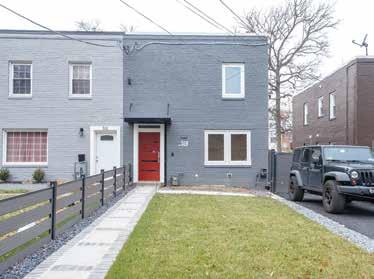
5 June, the midway point into the year and National Homeownership Month, is a perfect time for prospective homebuyers to reflect on their goals in purchasing a property and tapping into resources to achieve that mission. (WI File Photo/Ja’Mon Jackson)
DCHFA, DHCD to Host 3rd Annual Homeownership Fair to Empower Prospective Homebuyers
HomeAdvantage DC Aims to Expand Opportunities
By Sumaya Abdel WI Contributing Writer
The District of Columbia Housing Finance Agency (DCHFA) in partnership with the DC Department of Housing and Community Development (DHCD), will host the third annual Homeownership Fair on June 13 at Martin Luther King Jr. Memorial Library, with a goal to empower prospective homebuyers with tools to help them achieve their goals.
The event, hosted from 10 a.m. - 3 p.m., aims to connect residents with real estate professionals and homeownership counselors free of charge.
“Information is power, and it creates confidence in the process,” Julienne Y. Joseph, DCHFA’s senior vice president of single family programs and housing finance expert, told The Informer. “What we want to do is make sure that the people who are interested in achieving the dream of homeownership don't have additional barriers to information.”
The majority of District residents rent housing rather than own, according to D.C Policy
Center, a nonpartisan think tank. Rentals are estimated to make up about 68 % of housing in the District.
Last month, the DCHFA launched HomeAdvantage DC, a new financing initiative aimed at expanding homeownership opportunities through below-market mortgage rates and optional down payment assistance for eligible buyers. Those who qualify will be able to access 30-year fixed-rate mortgages and receive up to 3.5% in down payment assistance depending on the loan type.
“DCHFA’s HomeAdvantage DC program will help District residents with high housing costs and instability. One of DCHFA’s priorities is to decrease the homeownership gap,” said Christopher E. Donald, DCHFA’s executive director and CEO in a press release. “Qualified residents can have stability while living in a healthy and affordable environment.”
5
At the fair, residents will have the opportunity to learn more about the new financing program as well as connect with lenders and industry experts, including Joseph who will host a fireside chat. The fair will feature more than 30 exhibitors and also include information sessions.
to make home ownership more attainable.”
“We are very excited to put [the fair] on for the third year,” Joseph said. “[Attendees] can expect great conversations about resources
‘Homeownership is Still One of the Greatest Investments That Someone Can Make’
As senior vice president at DCHFA, Joseph explained the main barriers prospective District homebuyers face, including: rising housing costs, interest rates, the lack of generational wealth and credit.
Prospective buyers often enter the homeownership process with many misconceptions, which Joseph said can deter them from even attempting to start the process.
Despite the common belief that a perfect credit score is needed to purchase a home, Joseph told The Informer this isn't necessarily true. In the District, residents need a minimum credit score of 640 to qualify for HomeAdvantage DC.
“There's some unspoken housing trauma that could be there that makes it more comfortable for prospective buyers to just continue to rent. They wonder if this
is a good time to buy,” she said. “Homeownership is still one of the greatest investments that someone can make, as well as creates generational wealth.”
As a former homebuyer counselor, Joseph recommends that all residents interested in purchasing a home seek homeownership counseling, which helps prospective buyers better understand and navigate the process.
The HomeAdvantage DC program requires first-time homebuyers to take a homebuyers education course, with exceptions made to those buying a home in a federally-targeted area in the District.
“If [buyers] secure homeownership or home buyer education and counseling before entering into the process, it creates a different level of ownership in the process that makes them feel more in charge,” Joseph said.
The Homeownership Fair on June 13, Joseph said, will give D.C. residents the opportunity to learn more about how to start the process of purchasing a home in the nation’s capital.
“Our doors and our arms,” Joseph said, “are wide open for anyone who's interested in coming.”
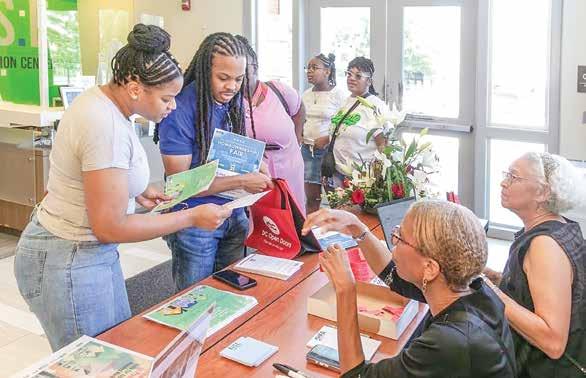
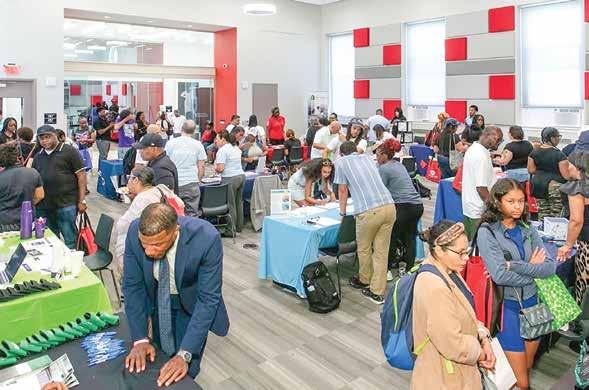
D.C. residents attend last year’s Homeownership Fair. (Courtesy Photo/DCHFA) available
5 Prospective homebuyers explore resources and connect with experts during last year's Homeownership Fair. (Courtesy Photo/DCHFA)
Staying Strong: Eviction and Foreclosure Prevention in the Washington Metro Area
By Hermond Palmer Senior Vice President of Outreach & Engagement National Foundation for Credit Counseling
Let’s be honest—these are tough times across the Washington Metro area, many African American families have long been pillars of strength, resilience, and community leadership. Today, that strength is being tested by challenges that are often beyond individual control—recent federal layoffs, rising costs of groceries and gas, and inflation driven by global instability like the war with Iran. These pressures can strain even the most carefully managed household budgets. If you’ve found yourself worrying about rent, mortgage payments, or the risk of losing your home, know this: You are not alone, and help is available.
Understanding Today’s Financial Pressures
The region’s economy is closely tied
to federal employment and contracting. When layoffs hit, the ripple effects can be immediate and severe. At the same time, everyday expenses— food, utilities, transportation—have climbed sharply. For many households, paychecks simply aren’t stretching as far as they used to. These realities can lead to missed payments, mounting debt, and overwhelming stress. It’s important to remember that financial hardship is not a personal
failure. External factors—from market shifts to geopolitical events—can disrupt even the most stable households. What matters most is how quickly you respond and what steps you take next.
Why Acting Early Matters
If you’re behind on rent or mortgage payments—or even concerned that you might fall behind—taking action early can make a significant difference. The sooner you seek help, the more options you typically have.
Early intervention can:
• Prevent eviction filings or foreclosure proceedings
• Open the door to repayment plans or loan modifications
• Reduce late fees and penalties
• Provide time to stabilize your income or budget
The Power of Qualified Counseling Support
Waiting until a court date is scheduled or a lockout notice is issued limits your choices. But reaching out at the first sign of trouble gives you a better chance of protecting your home and your peace of mind. quickly and appropriately.
One of the most effective steps you can take is to connect with a certified housing or nonprofit credit counselor. These professionals are trained to guide you through difficult situations, explain your options clearly, and advocate for solutions that work for your specific circumstances.
A highly trusted resource is the National Foundation of Credit Counseling (NFCC). With decades of experience, the NFCC provides confidential, nonjudgmental support to individuals and families facing financial challenges. Their certified counselors understand the unique pressures affecting communities in the Washington Metro area and are committed to helping you find a path forward.
What to Expect When You Contact the NFCC
Reaching out for help can feel intimidating, but the process is designed to be supportive, respectful, and straightforward. During your first interaction, an intake specialist will conduct a screening to understand your situation and connect you to the right resources.
Here’s what they’ll typically discuss:
1. Understanding Your Housing Situation
They will ask whether your concern involves:
• Foreclosure
• Eviction
• Delinquency (missed payments)
• Imminent housing instability
This helps determine the type of counseling and services you need.
2. Assessing Urgency
The specialist will evaluate how immediate your situation is. Timing is critical, and they want to prioritize those facing urgent risks.
3. Identifying Legal or Formal Actions
You may be asked if you have:
• A scheduled court date
• A sheriff sale notice
• A lockout or eviction notice
These details help counselors act
4. Communication With Landlords or Servicers
They will ask whether you’ve already been in contact with:
• Your mortgage servicer
• Your landlord
If you haven’t, they can guide you on how—and when—to start that conversation.
5. Reviewing Income and Employment
Understanding your household income and employment status is key to building a realistic plan. This includes recent changes such as layoffs or reduced hours.
6. Discussing Current Hardships
Finally, they will talk through any challenges you’re facing, such as:
• Job loss
• Illness
• Divorce or family changes
• Rising costs due to inflation
This holistic view ensures that recommendations are tailored to your real-life situation.
Moving Forward with Confidence
Seeking help is not a sign of weakness; it’s a powerful step toward stability and recovery. With the right guidance, many families are able to avoid eviction or foreclosure, regain control of their finances, and build a stronger future.
The Washington Metro area is full of resources and support systems designed to uplift the community. By acting early and working with trusted organizations like the NFCC, you give yourself the best chance at a positive outcome.
A Final Word of Encouragement
No matter how tough things may feel today, solutions exist. Your home, your stability, and your peace of mind are worth protecting. Visit nfcc.org to take that first step. Reach out, ask for help, and remember that brighter days are ahead. n
Facing Foreclosure or Eviction in the DMV?
Across the DC Metro area, too many families are feeling the weight of uncertainty. With ongoing federal job losses affecting households throughout the region, and everyday costs like gas and groceries continuing to rise, the pressure is real—and it’s growing.
For many, these challenges come with another burden: the fear of being judged, the stress of not knowing where to turn, and the uncertainty of who you can truly trust for help. It can feel overwhelming—but you don’t have to face it alone.
There is support. There is understanding. And there is a way forward.
The National Foundation of Credit Counseling (NFCC), a nonprofit organization, is here to help—with experienced, certified counselors who listen without judgment and provide real, practical solutions tailored to your situation. Whether you’re behind on mortgage payments, facing eviction, or simply trying to regain financial stability, the NFCC is ready to stand with you.
In partnership with The Washington Informer, the NFCC is bringing trusted, high-quality financial counseling resources directly to communities across the DMV—because everyone deserves access to clear guidance and a second chance.
If you or someone you know is at risk of foreclosure or eviction, contact the NFCC at (844) 865-3028 or visit nfcc.org/keystohomeownership.
America’s trusted financial coach for more than 75 years, the NFCC is a nationwide resource for education and support—offering impactful approaches to debt reduction whether consumers are struggling with credit card debt, decisions about housing, or household budgeting.
Yes, You Still Can: Homeownership Is Possible—Even Now!
By Hermond Palmer Senior Vice President of Outreach & Engagement National Foundation for Credit Counseling
Let’s be honest—these are tough times.
During times of economic uncertainty, it can be easy to become anxious, frustrated, and unsure about the future. For generations, Black and brown families have leaned on government jobs for stability, good benefits, and a pathway to the middle class. When that foundation begins to crack, it shakes everything. But even in the face of layoffs and economic anxiety, one truth still stands:
The American Dream of homeownership is still within reach—and it's one of the best tools we have to build and protect our wealth.
Homeownership isn’t just about having a place to lay your head. It’s about building something that lasts. A home can become a foundation for financial security, a hedge against rising rents, and a powerful asset to pass on to your children.
But Can You Really Buy a
Home in Times Like These?
The answer is yes—and here’s why: Despite economic challenges, there are resources specifically designed to help people like you. Firsttime homebuyer programs, down payment assistance, and housing counseling services are available right here in D.C. Many of these are free or low-cost and created to support working-class families, even if your income isn’t where you want it to be yet.
More importantly, you don’t have
HUD-certified housing counselors can walk you through every step—from fixing your credit to understanding mortgage options to creating a plan that fits your budget. Their job is to help you win.
to figure this out alone. HUD-certified housing counselors can walk you through every step—from fixing your credit to understanding mortgage options to creating a plan that fits your budget. Their job is to help you win.
Why It Matters
Now More Than Ever
In uncertain times, owning a home can be a game changer. While rents in D.C. keep rising, a fixed-rate mortgage can give you predictable payments and more control over your financial future. And as home values grow over time, that equity becomes wealth—real, tangible wealth—that you can use to pay off debt, invest, or
leave as a legacy.
Let’s be clear: Black homeownership has been under attack for decades. From redlining to predatory lending, systemic barriers have made it harder—but not impossible. Every person who becomes a homeowner pushes back against that history. Every home purchased is a step toward closing the racial wealth gap.
You’ve Got Options—Use Them
If you’ve been laid off or your hours have been cut, you might be thinking, “Now’s not the time.” But there’s no one-size-fits-all path to homeownership. What matters most is having a plan. A housing counselor can help you make that plan, and local programs can help make it real. Call the HOPE Hotline at 1-888995-HOPE or visit the Consumer Financial Protection Bureau’s website to find a certified housing counselor near you. The National Foundation for Credit Counseling can help, too, in managing debt that may be holding you back. nfcc.org
You Deserve This
You’ve worked hard. You’ve held your family down. You’ve sacrificed. Now it’s time to invest in you. Homeownership is not a dream for “other people”—it’s a future you can create, right here, right now.
Yes, you still can. n
By Stacy M. Brown WI Senior Writer
For Young Black Families, Homeownership Remains the Missing Link to Wealth
Black millennials and members of Generation Z are not abandoning the American dream of homeownership, but are rather pursuing it aggressively, according to a new national study.
What young adults often lack are the same financial tools, family resources, and market access that helped previous generations build wealth.
An April 2026 report, “Ambition Without Access,” released by the Julian Bond Institute, found that young Black and Latino Americans continue to rank homeownership among their highest financial priorities. Yet the path from aspiration to ownership remains far steeper than it is for white Americans.
“‘Everybody gets the same opportunity’ Black people: Red Lined, unable to purchase homes in certain areas, denied even when overqualified for bank loans, [not] able to be
business owners, generational wealth via real estate, houses being appraised CRIMINALLY low compared to whites,” one social media user wrote on X, formerly known as Twitter, on June 3.
While 86% of Americans across racial and generational lines identified homeownership as a financial goal when they became financially independent, only 23% of Black millennials who sought to buy a home have succeeded, compared with 51% of their white counterparts.
These findings are exacerbated when considering that home prices remain near record levels and many first-time buyers face down payment requirements that can exceed annual salaries. The National Association of Realtors reported that the median existing home price reached $417,700 in April. In the Northeast, the median climbed above $510,000. The median home price in the District is estimated between $620,000 and $650,000.
Despite the findings, researchers said they found no shortage of ambition among younger Black Americans. Sixty-seven percent of Black Gen Z respondents said they aspire to own a business, while 77% said they hope to build wealth substantial enough to leave an inheritance. Yet only 18% expect to receive an inheritance themselves.
Housing advocates say those numbers are a reflection of the lasting effects of policies that prevented many Black families from accumulating housing wealth in the first place.
Habitat for Humanity reports that the Black-white homeownership gap remains nearly 28 percentage points nationally, with 74.2% of white households owning homes compared with 46.5% of Black households. Habitat points to generations of redlining, discriminatory lending practices, and unequal access to affordable mortgage credit as key factors behind the disparity.
In D.C., advocates say the chal-
lenge remains urgent. Black residents once represented a strong majority of the District’s population, but rising housing costs and displacement have
steadily reduced that share. In 2022, Mayor Muriel Bowser established the Black Homeownership Strike Force
5 Black millennials and members of Generation Z are aggressively pursuing homeownership. (WI File Photo/Ja’Mon Jackson)
and proposed a $10 million Black Homeownership Fund to increase Black homeownership and narrow the racial wealth gap. The effort focused on identifying practical solutions to help Black residents purchase and retain homes in the city.
“The Black Homeownership Strike Force will address decades of racially discriminatory policies and practices that have hampered access to one of the most significant ways to build wealth for Black residents, which is homeownership,” Bowser, who is not running for reelection, said in June 2022. “In partnership with the Strike Force, I intend to chart a path to rectify these problems with the recommendations and goals that emerge from its members and the public – and to set a 2030 goal for Black homeownership.”
For prospective buyers, several pathways exist. The District’s Home Purchase Assistance Program helps qualified first-time buyers with down payment and closing costs. The city
has also invested in heirs-property assistance programs that help families secure legal ownership of inherited homes, preventing the loss of property that often serves as a family’s largest asset. Additional housing counseling and financial education programs are available through nonprofit organizations and community development groups across the District.
Nationally, the Julian Bond Institute argues that expanding first-generation down payment assistance, increasing access to affordable mortgage credit, strengthening small-business lending, and modernizing consumer protections would help close the gap between financial goals and financial outcomes.
The report’s authors contend that the stakes extend well beyond individual households.
“As the United States moves toward a majority-minority future, closing these gaps is not just a moral imperative — it is an economic one,” said Sara Weiss, executive director of the Julian Bond Institute and a co-author of the study. n
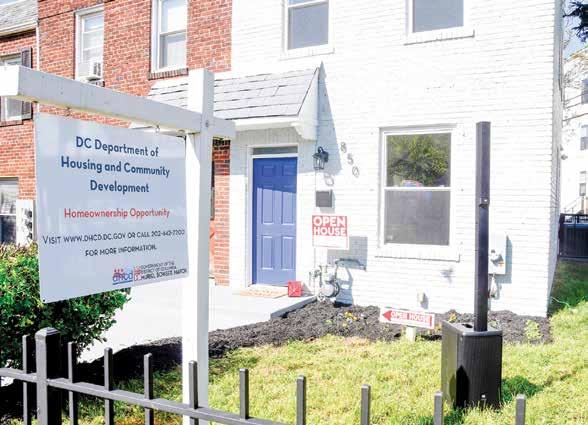
For prospective buyers in the District, several pathways exist, such as the District’s Home Purchase Assistance Program. (WI File Photo/ Robert R. Roberts)
From Blueprint to Breakthrough: Tackling Affordable Housing in Washington D.C.
Preservation of Affordable Housing and JPMorganChase help neighborhoods—and residents—thrive.
Sponsored by JPMorganChase
Finding an affordable place to live continues to be a challenge for many as widespread housing shortages persist across the U.S. Rising home prices and high interest rates have made homeownership inaccessible for a large portion of the population. Meanwhile, as rental demand increases, the number of renters facing affordability challenges is also on the rise.
The State of the Nation’s Housing 2025 by Harvard University’s Joint Center for Housing Studies reveals that cost burdens for renters reached another record high in 2023. Similarly, the JPMorganChase Institute reports that renter affordability is declining and forcing people to devote more of their take-home pay to housing costs. There is a growing need for affordable housing across the U.S. and that rings true here in Washington D.C.
with JPMorganChase, we’re investing in homes, infrastructure, and spaces that support long-term stability and ensure residents can grow with their neighborhood.”
A broader commitment to Washington D.C.’s future
While Hillsdale Flats is foundational, the vibrancy of a community depends on much more. In Washington D.C., the firm provides banking services to 170,000 customers and works across sectors to expand economic opportunity. Over the last five years, JPMorganChase has invested more than $60 million in local nonprofit organizations, supported 15,000 small business clients and delivered financial health education to thousands of residents to broaden access to banking, financial health resources, homeownership and other wealthbuilding tools.
To close that gap, it’s essential that all Washington D.C. residents share in its growth with housing options that accommodate a range of needs and budgets. For Preservation of Affordable Housing (POAH), this meant delivering a concrete solution to the local community, resulting in housing for individuals and families who otherwise might not have been able to live in the area.
Rebuilding Barry Farm in D.C
In Washington, D.C., the redevelopment of Barry Farm is about building a stronger community fabric, not only adding homes. Developed by POAH and constructed with support from JPMorganChase, Hillsdale Flats is one of three residences within Barry Farm, a new community planned for nearly 1,000 units of housing. As part of the broader redevelopment, residents can expect more than housing: the plan includes all new public utility systems, green eco-friendly landscaping, community-serving retail and a large central park with facilities that can host on-site services and programs. By pairing housing with upgraded public infrastructure and community space, Hillsdale Flats is positioned to help residents stay connected to opportunity—supporting a neighborhood where people can live, gather, access services and build long-term stability as the community evolves.
“Rebuilding Barry Farm is about more than housing, it’s about restoring opportunity and strengthening a community with deep roots in D.C., said Maia Shanklin-Roberts, the Vice President of Real Estate Development at POAH. “Through our partnership
“As we work with local stakeholders to expand housing options, JPMorganChase’s goal is to create inclusive economic opportunity for all,” said Brett Macleod, Executive Director, Community Development Banking and Chair, Mid-Atlantic Market Leadership Team at JPMorganChase. “When our communities thrive, we all thrive.”
Learn more about affordable housing and community development at jpmorgan.com/ commercial-real-estate.
You can also read more about what’s happening in Washington D.C. at https:// www.jpmorganchase.com/ communities/Washington D.C.
The Mortgage Approval Secrets Your Underwriter Wishes You Knew
By Shinique Pernell Assistant Vice President of Residential Lending & Underwriter Manager.
“What do underwriters actually look for?”
It’s one of the most common questions I hear from aspiring homeowners, yet one of the least understood parts of the mortgage process.
Many people spend months searching for homes, attending open houses, and calculating affordability. Few take time to understand the person who ultimately reviews their mortgage application and helps determine whether the loan is approved.
As a mortgage underwriter with
underserved communities, homeownership can seem out of reach. In reality, many are closer to achieving that goal than they realize. The challenge is understanding the rules of the mortgage process.
Four Factors That Influence Mortgage Approval
When reviewing a mortgage application, underwriters seek to answer one question:
Can this borrower successfully manage the responsibilities of homeownership over the long term?
To make that determination, we focus on four key areas:
Consistently paying bills on time and maintaining low credit card balances are among the most effective ways to strengthen a mortgage application.
2.
Debt-to-Income Ratio (DTI)
Your debt-to-income ratio compares your monthly debt obligations to your gross monthly income.
Lenders use this calculation to determine how much of your income is already committed before adding a mortgage payment. Lower debt levels generally create more financial flexibility and improve your ability to qualify.
perfect market. Interest rates fluctuate, home values change, and economic conditions evolve. What matters most is whether you are financially prepared.
Homeownership remains one of the most effective tools for building long-term wealth. Each mortgage payment can help build equity, an asset that may contribute to future financial security and opportunity.
Building Generational Wealth
For generations, homeownership has served as a foundation for wealth creation and financial stability.
A home provides more than shelter. It can create financial leverage, strengthen communities, and establish opportunities for future generations.
Homeownership a Reality
Your credit report tells the story of how you manage financial obligations. While a perfect credit score is not re-
3.
Employment Stability
Lenders value consistency because it helps demonstrate reliable income. Recent job changes or employment gaps do not automatically disqualify a borrower, but they often require additional documentation and explanation. Being organized and prepared before applying can help prevent unnecessary delays.
4. Savings and Financial Management
Many first-time homebuyers mistakenly believe they need a large down payment to purchase a home. In reality, various down payment assistance programs may help eligible borrowers with down payments and closing costs through grants, forgivable loans, and other resources.
However, lenders still want to see evidence of responsible financial habits. Consistent savings, cash reserves, and sound money management help demonstrate readiness for the financial responsibilities of homeownership.
Is Now the Right Time to Buy?
Many consumers wait for the “perfect” market conditions before purchasing a home.
The truth is there has never been a
Unfortunately, many families have historically lacked access to the information needed to navigate the mortgage process successfully. Education remains one of the most powerful tools available to prospective homeowners. The more you understand how lending decisions are made, the better positioned you are to prepare, qualify, and succeed.
For over 90 years, Industrial Bank has helped expand access to homeownership through financial education, lending solutions, and personalized guidance designed to help families build stronger financial futures.
The Bottom Line
Homeownership isn’t reserved for the wealthy, it’s available to those who are prepared.
The families who successfully purchase homes are not always those with the highest income or credit scores. Often, they are the ones who understand the process, develop a plan, and take intentional steps toward their goals.
Knowledge creates opportunity. By understanding what underwriters evaluate, prospective homeowners can position themselves for success and move one step closer to achieving the dream of homeownership. n
DOWN PAYMENT ASSISTANCE PROGRAMS * FIRST TIME HOMEBUYER GRANT PROGRAMS * HOME PURCHASE ASSISTANCE PROGRAM (HPAP)
FHA, CONVENTIONAL AND VA LOAN PROGRAMS * HOME EQUITY LOANS*
* Offer of credit is subject to credit approval
** A preapproval is contingent upon an underwriting approval, a clean title search, and no significant changes to your financial situation
: industrialbank mymortgage-online com ibmortgage@industrial-bank com
Pathways to Homeownership: Free DC Fair Connects Residents to Funding and Resources
DCHFA and DHCD Present Homeownership Fair to Expand Access Across the District
Submitted by DCHFA
Everyone deserves a place to call home. On Saturday, June 13, homeownership educators will assist firsttime homebuyers in purchasing a home and current homeowners in navigating homeownership from 10 a.m. to 3 p.m at the Martin Luther King Jr. Memorial Library.
This free event will be hosted by the DC Housing Finance Agency (DCHFA) and the DC Department of Housing and Community Development (DHCD). Breakfast and lunch will be available to registered guests.
Make your next move in homeownership by learning about grant opportunities, down payment assistance programs, and several other homebuying resources in the District. Banks, credit unions, mort-
gage advisors, and brokers will be present during DCHFA’s and DHCD’s Homeownership Fair. Have your questions ready! Experts will be answering homeownership FAQs while informing District residents about additional financing they may qualify for.
Attendees will meet with industry professionals, vendors, and community-based organizations along with having the option to sign up for DHCD’s Estate Planning/Heirs Property class, DCHFA’s Credit Building class, DHCD’s Housing Preservation/Rehabilitation class, and DCHFA’s HomeAdvantage DC class!
DCHFA’s new HomeAdvantage DC program makes homeownership in Washington, D.C. more accessible by offering eligible buyers below-market mortgage financing
with flexible assistance options. The program provides qualified homebuyers with a choice of financing structures, including optionable down payment assistance. DCHFA’s DC Open Doors program offers qualified buyers home purchase loans, down payment assistance, and closing cost assistance. DCHFA’s DC4ME program provides D.C. government employees a first trust mortgage at a reduced interest rate. The rate comes with or without the option of three percent down payment assistance with a zero percent deferred subordinate loan.
A home is one of the most valuable possessions a person can have. You can learn more about Homeadvantage DC, DC Open Doors, and DC4ME by attending DCHFA’s and DHCD’s Homeownership Fair on Saturday, June 13 from 10 a.m. to 3 p.m. at the Martin Luther King
Jr. Memorial Library. Meet with one of DCHFA’s participating lenders that offer the Agency’s mortgage loan products. These participating lenders will handle your entire mortgage loan process from application to settlement.
Homeownership builds equity and creates generational wealth. Learn more about which program(s) works best for you during the Homeownership Fair. Hear from current homeowners as they share their inspiring success stories highlighting the impact of DCHFA's initiatives and other District resources and programs. This Saturday will be filled with valuable information and helpful resources.
Registration is required. Register at homeownershipdc.eventbrite.com n
Down Payment Assistance Programs in DC, Maryland, and Virginia
By Stephen Morris United Bank Mortgage Director of Community Lending SVP
In honor of National HomeoBuying a home is an exciting milestone, but saving for upfront costs can feel challenging, especially in the Washington, D.C. region. Between the down payment, closing costs, and other purchase expenses, many buyers wonder how much they need before taking the next step. For eligible homebuyers, down payment assistance programs may help make homeownership more manageable.
Across Washington, D.C., Maryland, and Virginia, assistance programs are offered by state housing agencies, local governments, and approved program providers. These programs may help with down payment and/or closing costs and are typically subject to income limits, property requirements, homebuyer education, funding availability, and other eligibility guidelines. Since program details can change, review requirements with a mortgage professional.
Washington, D.C.
Down Payment Assistance Programs
Washington, D.C., offers homebuyer assistance options through local housing agencies. These programs are designed to support qualified buyers purchasing a primary residence in the District.
The Home Purchase Assistance Program – Often called HPAP, this program is administered by the DC Department of Housing and Community Development. HPAP may provide financial assistance to eligible homebuyers purchasing a home. Assistance is based on income, household needs, and program
requirements. Depending on the program structure, repayment may be deferred and may become due if certain events occur, such as selling the home, refinancing, or no longer using the property as a primary residence.
DC Open Doors – Offered through the DC Housing Finance Agency, DC Open Doors may provide eligible borrowers with mortgage financing options that include down payment assistance. Program requirements can vary and may include income limits, property guidelines, and other eligibility criteria. A participating lender can explain how the program works and whether it may fit a buyer’s goals.
Some buyers may also qualify for employer-assisted housing programs, depending on where they work. These programs vary, so eligible employees should review current guidelines with their employer or program administrator.
Maryland Down Payment Assistance Programs
Maryland offers statewide homebuyer assistance through the Maryland Mortgage Program, along with additional programs available through counties and local jurisdictions.
The Maryland Mortgage Program – The MMP offers mortgage options that may be paired with down payment and closing cost assistance for eligible homebuyers. Assistance may be structured in different ways depending on the program, including deferred loans or other forms of secondary financing. Eligibility requirements may include income limits, credit and underwriting guidelines, property location, purchase price limits, and homebuyer education.
In addition to statewide options, some Maryland counties and municipalities offer their own assistance programs. These programs may be available to buyers purchasing in a specific county or community and may have separate eligibility requirements. Because local program availability can change, buyers should con-
firm details before relying on a specific option.
Virginia Down Payment Assistance Programs
Virginia homebuyers may have access to assistance options through Virginia Housing, the Virginia Department of Housing and Community Development, and local government programs.
Virginia Housing offers mortgage programs that may include down payment assistance for eligible buyers. Depending on the program, assistance may be provided as a grant or as secondary financing. These programs often require the use of an approved mortgage product and may include income, purchase price, and property eligibility requirements.
The Virginia Department of Housing and Community Development also administers assistance programs that may help eligible homebuyers with down payment and closing cost needs. These programs are generally subject to income limits, funding availability, and program-specific requirements.
Many localities in Virginia, including Northern Virginia jurisdictions, may offer additional homebuyer assistance. Program amounts, repayment terms, and eligibility criteria vary by locality. A mortgage loan officer or local housing agency can help buyers understand what programs may be available where they plan to purchase.
What Homebuyers Should Know
While every program is different, many down payment assistance options include similar requirements. Buyers may need to meet income limits based on
household size and location, use the home as a primary residence, complete homebuyer education, purchase within certain price or property location limits, use an approved lender or mortgage product, and apply while program funds are available.
Down payment assistance can be helpful, but it is not one-sizefits-all. The right option depends on where you plan to buy, your income, your loan type, and program requirements. If you are thinking about buying a home in Washington, D.C., Maryland, or Virginia, United Bank can help you review mortgage options and discuss whether down payment assistance may be available. A United Bank mortgage loan officer can walk you through the process, explain eligibility requirements, and help you understand the next steps.
United Bank | NMLS ID 522399 (www.nmlsconsumeraccess.org) | Member FDIC | Equal Housing Lender | BankWithUnited.com
Advertising Notice. Not a Commitment to Lend. Subject to Program Availability. All loan applications subject to credit approval. Annual Percentage Rate (APR), programs, rates, fees, closing costs, terms and conditions are subject to change without notice and may vary depending upon credit history and transaction specifics. Other closing costs may be necessary. Flood and/or property hazard insurance may be required. To be eligible, buyer must meet minimum down payment, underwriting, and program guidelines.
United Bank is not endorsed by or affiliated with any government agency or program.
n
OPEN THE DOOR TO WHAT’S NEXT
From your first home to your forever home, and everything in between. We offer mortgage solutions designed for every stage of your journey.
Unlock new possibilities. Start an online application today.
By Levonia Wiggins United Bank Mortgage Senior Community Mortgage Loan Officer
In honor of National Homeownership Month, United Bank is sharing a list of top tips for anyone considering buying a home in the Washington, D.C., Metro area.
Be prepared.
While the market may seem to have slowed down, it is still competitive. Often, first-time homebuyers’ lack of preparedness prior to putting in an offer can negatively affect them. Therefore, it’s best
The 2026 D.C. Housing Market
What you need to know for buying in the
to have everything in order so you can strike first and fast. A good way to ensure you are prepared to make an offer is to meet with a real estate professional or lender to assess your options early in the process. These trusted professionals can help you manage your expectations and efforts by explaining what you qualify for, and what grants or other lending options are available to you and on which properties. They can also help you prepare the documents you’ll need to show sellers you’re serious about homebuying. If you are considering buying a home, plan to begin these conversations six months to a year in advance, just to get your
ducks in a row.
DMV
Be honest.
Everyone is entitled to their privacy, but when considering a home loan, your lender will quickly find out everything, including debt (and income) you didn’t think was important, and a credit history you may not want to talk about. Your financial history and status will be part of the application process and are a big part of qualifying for a loan. It is best to be upfront and honest about the state of your finances so your lender can help you. Curveballs and surprises will only hurt you in the long run.
Be competitive.
While the real estate market is a little calmer this year, the DMV remains a very competitive housing market for homebuying. As such, potential homebuyers should remember they’re not the only buyers in the market and take steps to get a head start on the competition. Preparedness and speed may help you stand out. Having pre-qualification letters in hand and the available capital to close will show sellers you’re serious and will make your offer more attractive. If you have this information, you will be prepared to make an offer on-site during an open house or a private showing.
A home is a big purchase, so you don’t want to settle — but if you are willing to make some concessions,
it may help you close a deal more quickly. For example, it’s not uncommon for a buyer to offer above asking price or to waive a home inspection in a competitive market — this makes an offer more attractive in the eyes of a seller. However, you should only make the concessions you’re comfortable with. At United Bank, we strive to make the mortgage process as simple and straightforward as possible. It all starts with reaching out to a member of our mortgage team or filling out our easy online application. From there, one of our knowledgeable mortgage loan officers can help you find the best loan option for your needs, then continue to work with you every step of the way on your home-buying journey — through closing day and beyond.
United Bank | NMLS ID 522399 (www.nmlsconsumeraccess.org) | Member FDIC | Equal Housing Lender | BankWithUnited.com Advertising Notice. Not a Commitment to Lend. Subject to Program Availability. All loan applications subject to credit approval. Annual Percentage Rate (APR), programs, rates, fees, closing costs, terms and conditions are subject to change without notice and may vary depending upon credit history and transaction specifics. Other closing costs may be necessary. Flood and/or property hazard insurance may be required. To be eligible, buyer must meet minimum down payment, underwriting, and program guidelines. n
and Community Development (DHCD) is helping more residents achieve homeownership through programs designed to expand access to affordable housing opportunities across the county.
three programs
Prince George’s County Department of Housing and Community Development (DHCD) is Launching Three New Programs
and opportunities.
Beginning July 1, 2026, Prince George’s County Department of Housing and Community Development (DHCD) will offer several innovative programs designed to make homeownership more attainable for County residents. The Critical Workforce Housing Assistance Program provides eligible public servants and essential workers—including teachers, police officers, firefighters, emergency medical personnel, healthcare professionals, and other critical workforce employees—with down payment and homeownership assistance in the form of a zero-interest deferred loan. Eligible homebuyers may receive up to $50,000 or 25 percent of the home’s purchase price, whichever is less, helping them purchase homes in the communities they serve. The Homeownership Equity Program (HEP) assists income-eligible homebuyers by providing up to $30,000 per buyer in down payment and homeownership assistance through
a zero-interest deferred loan, helping bridge affordability gaps and create pathways to long-term wealth building targeting homeownership inside the Capital I-495 Beltway. The County’s flagship Pathway to Purchase Homebuyer Assistance Program provides eligible first-time homebuyers with up to $50,000 in down payment and closing cost assistance through a 0 percent interest deferred loan, reducing one of the greatest barriers to purchasing a home—the upfront costs associated with homeownership. Eligible properties include new construction, resale homes, foreclosures, and short sales. Together, these programs expand access to affordable homeownership, strengthen neighborhoods, support workforce retention, and advance DHCD’s mission of ensuring that more Prince George’s County residents can achieve the dream of homeownership, build equity, and create generational wealth. n
Prince George’s County Department of Housing and Community Development (DHCD)
Prince George’s Homeowners Seek Equity, Awareness To Promote Homeownership
By Richard Elliott and Jada Ingleton WI Contributing Reporter and WI Content Editor
From tackling the roots of racial disparities to equitable education and resources, shaping homeownership is a dual effort, and for Dr. Kofi Bryant Sr., part of the work starts at home in Prince George’s County, Maryland.
“Homeownership is still a worthy dream. I’m living it with my wife [in Prince George’s], and I wouldn’t trade it. But let’s tell the whole truth about it: the maintenance, the cost, the labor,” Bryant, lead pastor of Inspired Life Ministries, told The Informer, “and let’s build lending systems and point people toward resources….with enough grace to meet people where their story actually is.”
As June marks National Homeownership Month, Bryant is among the Prince Georgians aiming to create the American dream he sees fit, particularly in the lens of what many consider the catalyst to wealth creation.
While acknowledging the need to advance better policies, Bryant highlighted the realities often lost to first-time buyers –– particularly an understanding of what it means to own
property.
“It’s about everything that comes after the keys. It’s the Saturday morning you spend cutting grass instead of resting. It’s the call you didn’t want to make about a leaky pipe — and then discovering that ‘fixing it’ actually means replacing old copper plumbing with PVC throughout an aging house,” the faith leader explained. “It’s an HVAC system that’s seen better decades, air ducts that need work you can’t see until the air stops flowing right.”
When it comes to bridging the gaps, local advocates say expanding affordability and access are top priorities, even with Prince George’s unique role as an affluent, majority-Black suburban county.
“Having median or higher incomes, college degrees, white collar professional work, and home ownership outside of the city does not insulate the Black middle class from the cumulative and ongoing effects of policies and other forms of White domination and anti-Black racism that have evolved from the slave era,” said Dr. Angela Simms, a professor of sociology and urban studies at Columbia University. “Black neighborhoods
are undervalued by market actors… irrespective of class composition, location in a metropolitan area, and the quality of resources available. African American areas also do not receive the level of government investment they deserve.
Plus, with the median home in Prince George now selling for around $445,000, increasing awareness and opportunities across the county is piv-
otal to assisting first-time homeowners’ success, Bryant says.
“My wife…and I are proud homeowners and residents of Prince George’s County. But my journey to this address ran through Calvert County first,” the faith leader told The Informer, “and that contrast taught me something about the American dream that I don’t think enough of us talk about honestly.”
From Affordability to Assistance: Investing in the Future of Homeownership
According to Simms, establishing the building blocks towards homeownership requires the ability to identify the roots of modern disparities. After tracing the inevitable impact
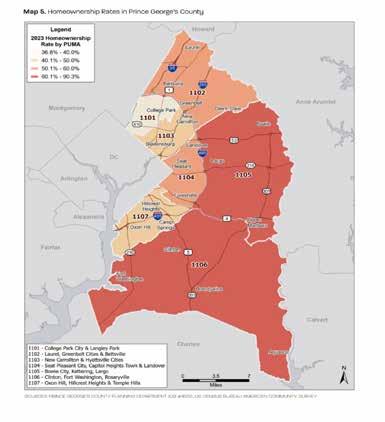
5 A map of homeownership rates in Prince George’s County. (Courtesy Photo/Parks and Planning Commission)
HOMEOWNERSHIP
CAN BE A KEY TO UNLOCKING A BRIGHTER FINANCIAL FUTURE.
5 Rachel Jones notes that the Maryland Mortgage Program offers up to $6,000 to first-time homebuyers. (Courtesy Photo/Maryland Department of Housing)
from HS-19
of the Great Recession –– a time when the response from the federal government failed to match “the level of harm inflicted” –– Simms pointed to the inevitable state of a dual-edged crisis that majority-Black counties continue to recover from, including Prince George’s.
“Reduced tax revenue alongside increasing demand for public goods and services as people cannot make ends meet,” she explained. “The major issue is Black Americans’ ability to afford the increasingly high cost of living in a context where they have never been made whole from slavery and Jim Crow segregation, while continuing to face anti-Black barriers to economic upward mobility and stability.”
Thus, she sees a critical role in an allaround investment in uplifting Black families –– from increasing civic engagement on the ground floor, to assisting financial woes through schools, health care, and social services.
“The level of investment necessary requires that we raise state and federal taxes and then distribute that money equitably, such that the money goes to the areas that have been most deprived of resources,” Simms told The Informer. “Counties, school districts, and other local units are the place where Americans realize their citizenship, and they are where policies from all levels of government—federal, state, and local—converge.
Local jurisdictions’ financial status shows us that local jurisdiction boundaries are not neutral; they are tools White Americans use to hoard resources at Black Americans’ expense.”
Where affordability meets policy, Rachel Jones has a word.
The former Maryland delegate told The Informer that expanding homeownership is key to the future of Southern Maryland –– and housing affordability should be a top priority.
“Home ownership provides stability, community, and a financial safety net. Those benefits also come with the
challenges of maintenance and repair, whether it's appliances or lawn care. It is an investment that allows you to build your dreams as well as generational wealth,” said Jones.
“Rising costs to purchase a home in addition to property tax increases are making the dream of home ownership less of a reality for so many people.”
The community leader, who is also running for the District 27B seat, added her vision of expanding existing mortgage programs to help new homebuyers.
“If elected to serve as delegate once more, I will work to expand the Maryland Mortgage Program to increase the loan amount given to first- time home buyers from $6000 to $10,000 to purchase a home. I'd also support enabling legislation to allow counties to build homes on smaller lots in order to increase housing stock,” Jones told The Informer.
Similarly, Bryant said his view of homeownership boils down to building generational assets and weathering the burdens and annoyances of caretaking an aging home.
Though the county offers some assistance programs –– such as Prince George’s Housing Rehabilitation Assistance (HRAP) programs–– the local homeowner noted a need for local officials and resources to expand their scope and services, all the while moving with the notion of communal betterment.
“We need mortgage and lending institutions to build more forgiving criteria for people whose hardship was circumstantial, not characterological: people who didn’t mismanage their lives, but whose lives were managed by forces outside their control,” he told The Informer. “A more compassionate underwriting lens, one that looks at the full story and not just a recent dip in the numbers, could open the door to ownership for families who are more than ready to carry the responsibility; they just need someone to believe their story is bigger than their setback.” n
Flood Insurance Basics
Submitted by The Department of Insurance, Securities and Banking (DISB)
Water damage is broadly categorized as loss or harm to personal property and describes many possible losses that are a result of water intruding from a sudden and accidental discharge or overflow. Flooding occurs when an excess amount of rain water flows overland for a prolonged period.
According to the National Flood Insurance Program (NFIP), all 50 states and the District have experienced floods or flash floods in the past five years. Even if you do not live in a flood prone area, minimal amounts of flooding can result in a financial disaster. It is important to note that roughly a third of all assistance for flooding goes to moderate- to low-risk areas. The NFIP states that one foot of water could cause $27,150 of damage to a 1,000-square-foot home.
During periods of heavy rainfall, excess water from sewers or drains can overflow into your home or cause water to back up in basement areas. However, this is not considered a flood and is not covered by flood insurance. You must purchase additional coverage through your homeowner’s insurance policy that can help you repair water damage from overflowing drains and sewers and broken sump pumps.
Neither a standard homeowner’s insurance policy or a water backup and sump overflow coverage endorsement provide protection against flood loss. Flood insurance is available for homeowners, renters and businesses through the NFIP and can be purchased through an insurance agent or by contacting www.floodsmart.gov. Flood insurance also will be available directly from some insurers. Most condominium associations located in special flood hazard areas can purchase flood insurance that covers the structure of the buildings and common areas.
The associations may purchase coverage on individual units in the names of the unit owners and/or the names of the associations. It is important to check the associations’ policies, issued by NFIP, to determine if coverage extends to the inside of residential units. For additional protection, you may want to consider a separate policy.
After a flood event, many people look to the Federal Emergency Management Agency (FEMA) for assistance. While FEMA provides individual assistance, it is not intended to cover your losses or rebuild your home. Typically, the average individual assistance from FEMA ranges from $4,000 to $7,500. However, a flood insurance policy can provide up to $250,000 for your home's structure and $100,000 for your personal property. Private flood insurers can provide higher limits.
There are several steps you can take to protect yourself from a flood. They include:
• Raising the elevation on your home
• Installing flood vents
• Installing a water alarm that lets you know if water is accumulating in your basement
• Developing an emergency plan
• Cleaning debris from gutters and spouts
• Using the United States Geological Survey Water Alert System https://maps.waterdata.usgs. gov/mapper/wateralert/ to receive text messages when a stream in your area is rising to flood levels
• Checking with your insurance agent or company to review your coverage and available options (regardless of whether you rent or own).
The Department of Insurance, Securities and Banking encourages all District residents to prepare for flooding by knowing your flood risk, preparing your homes and businesses and ensuring that you have sufficient insurance coverage. n
view P INT
HOMEOWNER from HS-20
Why is home ownership in D.C. important?
KRUZE / SOUTHEAST, D.C.
“Ownership in D.C. is important to be able to have something you own. The only thing is you don’t own the land, so that’s something to be conscious of if you’re going to buy a home.”
AFRAH ALI / NORTHWEST, DC
"I think it’s really important for us [to have] homeownership in these communities for young Black and brown homeowners as there’s so much rapid change happening in this city.”
BY EVAN ALDRIDGE / WI EDITORIAL INTERN
MICHAEL “MIKE” PRATT / NORTHWEST, D.C.
"Homeownership in D.C. is super important to me as a Black person, specifically just because of the fact that D.C. has always been Chocolate City, and having ownership in a city that doesn't really represent you in Congress or in the government is super vital. [And]… you have the ability to actually [have] generational wealth.”
“CHUCKY” ISOM I / SOUTHEAST, DC
“I grew up in Washington, D.C., born and raised in Southeast: born at DC General; my dad and mom had an apartment over in Savannah Terrace [in] Southeast, we stayed there for four years. Then we moved into this community off K Street and Minnesota Avenue in 1972. So, I'm instilled or ingrained with Washingtonian inside my heart, and especially Southeast. When I graduated from high school and went into the service, and coming out, [going to] college, I knew I was going to eventually purchase a home in Washington, D.C., and lo and behold, I did.”
Expand the Path to Homeownership: Creditworthy Borrowers are Being
Overlooked Lost Market Share, Reduced Originations, and Missed Long-Term Customer Relations
By Marcia Griffin Founder & CEO HomeFree-USA
For decades, we have talked about homeownership as a cornerstone of economic mobility. Yet for too many Americans - especially younger generations and many first-time buyers - homeownership remains out of reach.
Millennials and Gen Z represent the largest emerging homebuyer segment in history, yet millions appear to be overlooked by legacy credit models. These borrowers are income producing, use credit differently than prior generations, and want to buy a home. Many, however, remain credit invisible or underrepresented in traditional scoring models.
Despite efforts by FHFA, many lenders remain tethered to outdated credit scores. This delay limits access to homeownership at a time when every lender wants increased production, greater market share, and long-term customer relationships.
At HomeFree-USA, and with our partners, we are working with families across the country. Many are doing the right things. They are working consistently, paying their bills on time, and making thoughtful financial decisions. Yet they still struggle to qualify. The issue is not always their financial performance. Often, it is how that performance is measured.
This is especially noticeable in our Center for Financial Advancement® where HomeFree-USA trains college graduates for powerful financial futures with homeownership as a top priority.
A More Complete View of Financial Behavior is Needed
Newer credit scoring approaches, like that of VantageScore 4.0, have been proven by credit third parties like Prosperity New to provide a broader and more accurate picture of how younger generations manage their financial lives.
VantageScore 4.0 usage of trended data reflects patterns and behaviors that traditional models may overlook, particularly for consumers who are early in their credit journey.
As a result, millions of individuals who were previously unscorable or overlooked can now be evaluated more fairly. The use of thinfile scoring is important. Many of these individuals are not high-risk borrowers. They are younger and need encouragement while steadily building toward financial stability.
They are, in many cases, future homeowners who are simply overlooked.
Meet the Next Generations Where They Are
Millennials and Gen Z engage with credit differently than previous generations. They rely less on traditional credit cards and more on consistent payments such as rent, cell phone bills, utilities, and other recurring obligations. Many have income streams that are stable but not always conventional, like those in the gig economy.
These realities do not signal higher risk. They reflect a changing economy and a shift in credit mentality.
Credit evaluation systems must evolve to recognize these patterns and provide a clearer view of financial responsibility. When consumers are visible within the
system, they have the opportunity to build, strengthen, and expand their credit profiles over time.
Put simply, when people are credit visible, we can better serve them.
From Invisible to Mortgage Ready
At HomeFree-USA, we guide homebuyers to become mortgage ready. That preparation includes financial education, counseling, and savings strategies. It also depends on access to newer systems that recognize readiness in a novel way.
When consumers are invisible or misrepresented by outdated measures, they are effectively locked out before they even begin the process.
A more modern approach to credit evaluation helps shift that dynamic. It allows lenders to better distinguish between true credit risk and a limited credit history. That distinction is essential if we are serious about expanding sustainable homeownership without lowering standards.
An Opportunity for the Industry
Recent announcements by both FHFA and HUD fully implemented modernized credit scoring models, introducing much needed competition on credit score model developers. According to reports, lenders are already actively using VantageScore 4.0 and/or in the late stages of integration. This is welcomed change but urgency is needed.
By incorporating additional credit data like rent payments, cell phone bills, etc, VantageScore 4.0 captures the everyday financial discipline that defines Millennials and Gen Z. I believe this results in a more complete and equitable assessment of credit worthiness.
Lenders, GSEs, and policymakers have the ability to:
• Expand access while maintaining sound risk practices
• Better serve younger and
first-time homebuyers
• Close longstanding gaps in who gets seen and who gets approved
This is not about changing standards. It is about improving how we assess readiness. It’s not a policy shift, it’s a market expansion strategy.
This includes thoughtful adoption of competitive credit scoring models. VantageScore 4.0 provides a more complete view of today’s consumers. Used appropriately, these tools can help ensure that responsible financial behavior is more accurately recognized.
We cannot fully address the housing affordability challenge without also addressing the access challenge.
Modern credit scoring is not a silver bullet. But it is an important step toward aligning our systems with how younger people actually live and manage their finances today.
At HomeFree-USA, our work has always focused on preparing individuals and families for successful, sustainable homeownership, with strong partnerships that support long-term outcomes.
If we believe in expanding opportunity, then our systems must evolve to recognize it.
Because… the next generation is not unqualified. They are simply waiting to be seen, heard, and recognized.