



By Elsie Pagnotta Staff Writer
Different hobbies and sports can change you in many different ways and it begins with what you choose to do. Activities can range from knitting to sports to art and music, each with their own skills and aspects that help one grow as an individual. When starting different hobbies at a young age, many develop certain skills like problem solving, critical thinking, communication, teamwork, leadership and time management that can be crucial later in life. Sports focus on teamwork and communication, while activities like cooking focus more on problem solving, but all skills are important aspects in one’s life. These skills are very cooperative when finding a job and coming across co-workers in the future. Extracurricular activities can help change your personality because participation in them can affect your daily lives. Parents seem to choose a child’s hobbies which leaves them with no personal freedom. Personality changes can happen through activities because of the aspects each comes with.
Many experience a parent or guardian choosing an activity for them, often wasting their kid’s time doing something they do not always love or have a passion for. People should have personal freedom to choose the hobbies and sports they want. When they are younger, the parents choose the kid’s activity, but as they grow older and the kid wants to quit, the parents have a tough time trying to let go of the activity their kid started at a very young age. Parents like to do this so they can see what their child likes at an early age, so they can continue in the right activity. This is important that they are doing something that they like because they should be doing something that entertains them and keeps them busy instead of not liking the hobby. Activities are important because it can give you something fun that entertains you, that you love, instead of not doing anything. Activities can also affect personal development because in some, there are specific skills being enhanced.
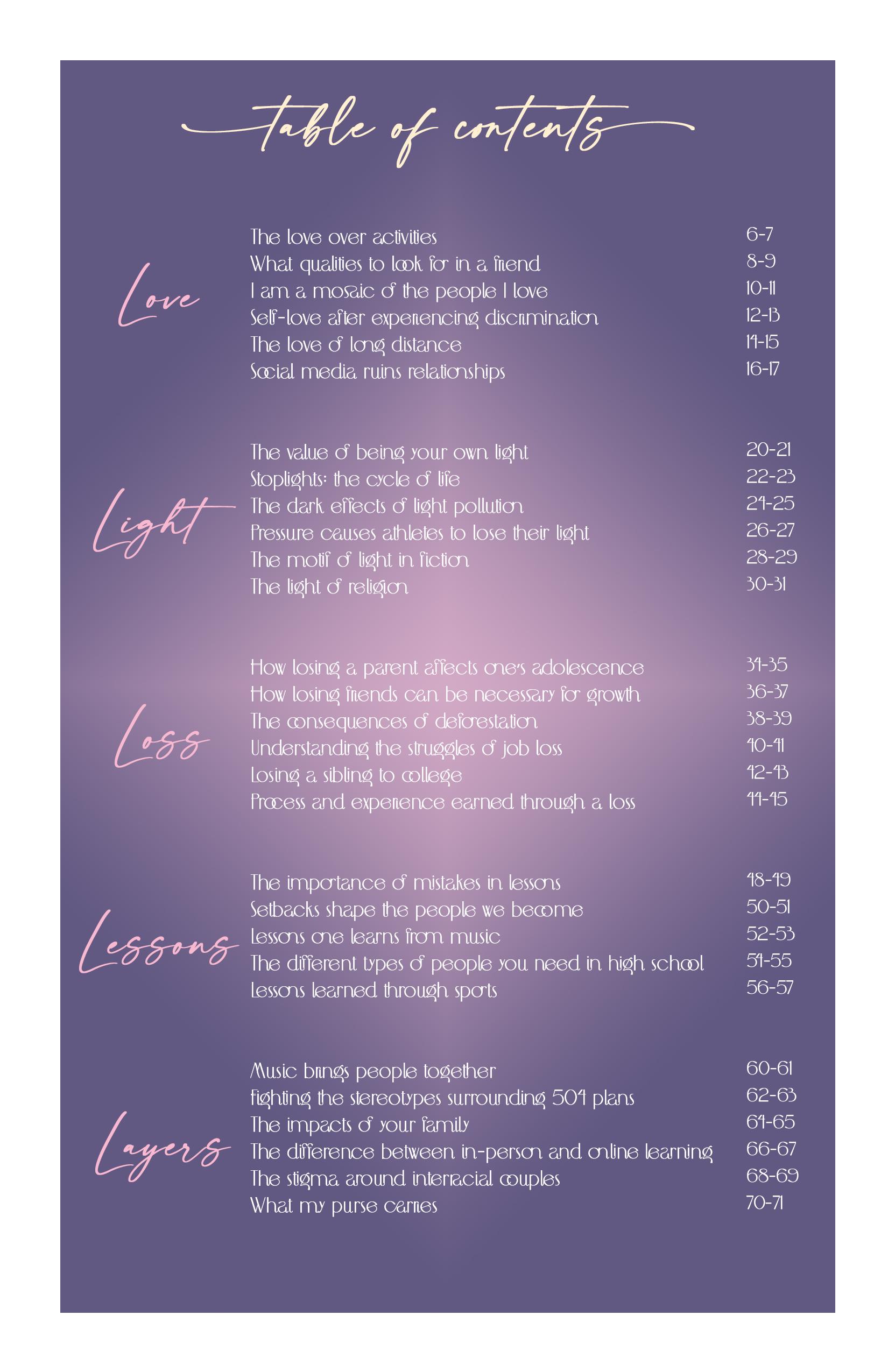
When doing an activity you enjoy, the skills gained from it could be enhanced through practice and help you in the future. I play two sports, one of those being soccer, so this can help because I use teamwork which could assist me. When I am working at my job to help me with my other co-workers by being able to work with them and solve problems with them. The sport teaches me to work with my teammates to not only defend the goal
but to be able to score goals to win against the opposing team which enhances the skill of teamwork. Now, soccer helps me in my algebra class because we can split up the problems and everyone can understand what the problem is asking and we can efficiently get our work done showing how we can work together. Activities can help our personal development because of the skills we learn when doing activities. I am currently on the indoor and outdoor track teams at Walpole High School (WHS). When I am doing track, it changes my personality. During all of my sports seasons, I am determined to not only improve my athletic ability, but also myself, academically and as a person. When I am motivated, it can help with my structure inside of school so I can complete all my homework during free time in school. This also helps outside of school, because I feel like I am working harder on tasks at home. Throughout the track season, my critical thinking could help me when I am about to run. I have to decide on a technique that will improve my speed, so my time is shorter. Critical thinking can be helpful in school because I can use different techniques when trying to solve a problem. Both of these skills and many more help us grow in many different ways.
Activities can affect your future because when you do a certain activity, that hobby could have a greater impact when you are an adult. If you choose to play soccer when you are younger, you could get recruited to play in college while still in high school which can help build your personality and aid you when finding a job. Hobbies help because they give you a background that a recruiter can take from. The same thing could happen if you decide to choose another activity, like being a musician. You could be recruited for playing so well and then be upgraded to a new playing field. Activities have a great impact on people because it could potentially change the trajectory of their future career. These careers can be started from something you choose at an early age and fall in love with quickly. Since I have been playing soccer for a long time, I have gone to tournaments and received prizes from them. My team had the opportunity to play in a soccer tournament and we won. Afterwards, we had the chance to go walk on the field before the New England Revolution game at Gillette Stadium which has taught me to be determined, but also to work with my team to build up my communication skills. This helps because it can enhance my skills and help me later in life. I have also learned to have good sportsmanship and to be a good team player, so I could be put anywhere on the field. Activities have had a huge impact on my life and I will take these skills I have
learned to help me in my job career and future life. These skills I learned from the tournament will affect me when I mature and can be something that helps me find a job. Many parents choose activities for their children, which is less beneficial because of how the parents choose their child’s activities. This is unfair because the child would not be able to do an activity they want to do. Some parents forcefully choose activities for their children like Russian School of Mathematics (RSM) or karate when they are young, but then have them stay with the same activities forcing them to potentially do something they do not want to do. RSM helps enhance your math skills and make them better, so when finding a job they could choose a math occupation. Karate can help with self-defense and which could help with future instances. When someone willingly chooses these activities, they can benefit from the skills that are learned which helps with personal development. A child should be able to choose the activities they would like to do, but also the activities they would like to quit and not partake in anymore. Kids should have the personal freedom to keep with what they want to do when it comes to extracurricular activities.
At home, when I was younger, my parents put me in numerous different activities to try out. As I have gotten older, I have been able to choose the activities I want to stay with. After COVID-19, I lost interest in karate because I had already gotten my black belt, so I decided to quit the sport because I lost my love for it. This changed me because I did not like the sport anymore. I started this sport in kindergarten but then after I received my black belt, I felt like I wasn’t learning anything new. I was also at the point where I felt that I had learned everything I wanted and needed more time on my schedule. My parents have always told me that if I did not like the sport or activity, I should finish the season before I decide I am done with the activity. This gives an example of how parents should act when their child doesn’t want to participate in a sport. My parents gave me the personal freedom I deserve so I can succeed in what I want to be successful in, giving the example of how every parent should be.
Children should have the personal freedom to select their activities they want to do. They should stay with the activity they want to be with because of the effects it can have on the future and it affects people’s everyday personality. Parents should not choose their child’s activities because they could be choosing something the child does not want to do which can be affecting them negatively. Activities should be loved by all and children should not have to feel like what they are doing outside of school is something they do not want to take part in.

By Lila Zahurak Staff Writer
Do you remember the girl you were best friends with in kindergarten and that you thought was going to be your best friend forever? Looking back now, you may realize that you have gradually drifted apart over the years, to the point where you do not hang out anymore and barely even wave to each other in the hallway at school. Although it is sad that you have grown apart from someone who used to be your best friend, it is inevitable for many people. As you grew older, many things changed about your qualities and interests and so did those of your elementary school best friend. Maybe you and your friend were always similar when you were younger, but as you became older, you realized you both have changed and are not as similar as you used to be. The qualities and interests you and your friends share improves your overall relationship with them and ultimately helps the two of you grow closer, which can bring you to become a better person.
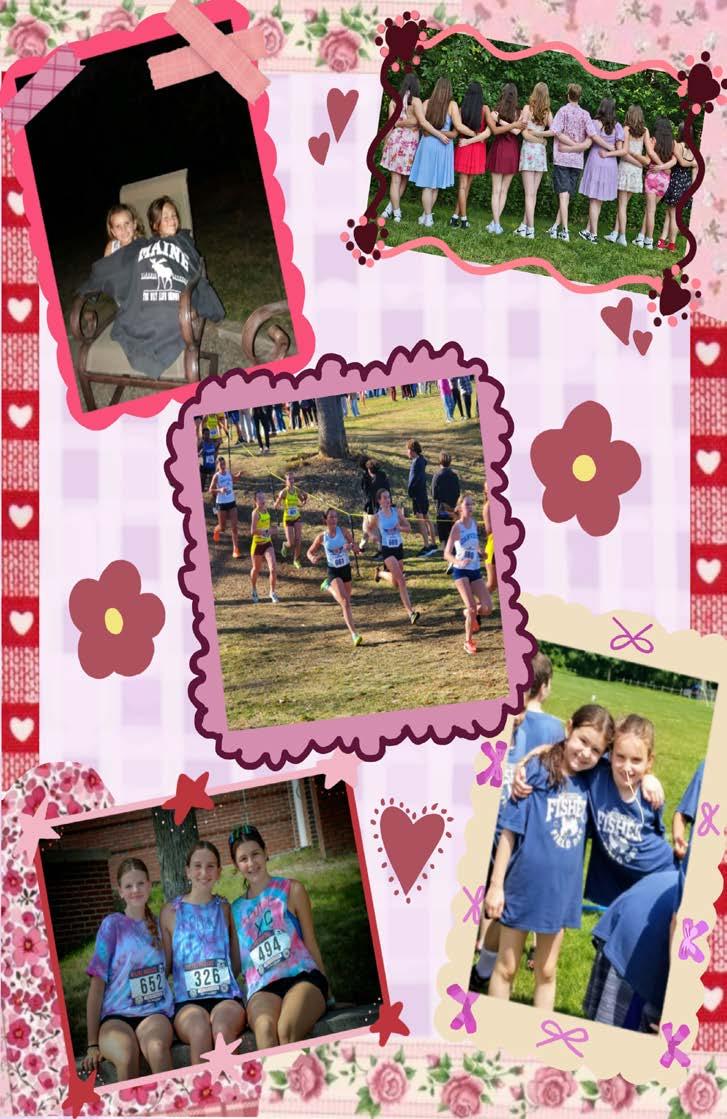
When a friend has good qualities, like honesty, trustworthiness and dependability, it is easy to hang out with, feel supported by and have trust in them. These qualities can grow your relationship and form a friendship with a strong and healthy bond. Friends with these qualities help you grow as a person and can help you improve your mental health, self-esteem and overall happiness. Personally, I know I can always rely on my friend to encourage me before and during a cross country race, which always helps me get through pre-race nerves and I appreciate and love her for this. Before we ran cross country together, we had not been very close friends, and I found that we bonded during the season through the support we gave each other. If my friend were not as kind and encouraging as she is, we may have never become as close as we are now. Both trust and honesty in a friendship are very important traits because they create a safe, genuine and comfortable relationship where you can always rely on someone to be sincere. Being able to trust someone, whether it is knowing that they
will always give you their honest opinion or trusting that they are not constantly judging you for being yourself is one of the crucial parts of a relationship. When a friend does not invite you to a hangout or birthday party that other people know about, it can feel like they are excluding you or trying to hurt your feelings. When you trust in someone to tell you about everything, it feels like a stab in the back when they keep something from you. It canhurtwhenafriendlackshonestyandit can ruin your trust in them. This can lead to a toxic friendship that eventually falls apart when you are not honest with each other. Being friends with someone who is always honest makes it easier and more comfortable to be around them, stressing a healthy and positive relationship. Dependability in a friendship is another crucial quality. Friends should always be someone you can rely on, whether it is when you are struggling in school and need someone to help you study, if you are upset and need someone to make you feel better or if you need someone to celebrate your achievements with you. A good friend will always be there for you when you need them and know they can always depend on you as well, no matter what. A friend should be there to celebrate with you in your best moments, as if your achievements were their own and will give you everlasting support. If you and a friend do not celebrate each other’s accomplishments and support each other when you need it, you will not obtain as deep of a bond. They should also be there for you when you are down, even if they just let you know that they are there for you so you know you are not alone. This bond can make the biggest difference because a sustainable friendship and long-lasting support is fostered by this bond when you or a friend are facing a difficult time. Sharing interests in a friendship can also help bring you and a friend closer. Friends often spend more time together when bonding over a shared interest. Whether you are talking about a book you both love, spending time painting together, watching a show you enjoy together, going to the movie theater to see a new movie you are both in-
terested in or doing the same sports, you will be brought closer to your friend. For many people, it can be hard to be friends with someone when you share few interests, as you will not be very similar and will not have as much to connect over.
When a friend does not treat you with qualities like honesty and trust, you may find that you feel upset by how they are acting towards you or feel like they do not care about you. It is difficult when a friend treats you like this and sometimes, if they continue to hurt your feelings for a longtime,youmighthavetoconfrontthem regarding how you are feeling. Although it may be scary, or you may be nervous about ruining your friendship, if someone really wants to be your friend, they will apologize for how they have been treating you and you will be able to work together to find a solution where both people are happy and understand each other. It is normal for a friend to not always be perfect, but if they continue to treat you unfairly or unkindly, trying to distance yourself from them for some time may help. Having friends with these types of qualities positively influences your life and surrounds you with people you are happy with. Not only should you want to find friendsthattreatyoukindly,butyoushould also strive to be just as supportive, honest and trustworthy to your friends. If a friend is struggling with homework, I always try to help them figure it out if I know how to do it. When both people in a friendship are equally supportive and kind, it leads to a positive, healthy relationship. If you ever see that your friend needs help, try to give them some advice or help them the best you can, because they would do the same for you. When both people in a friendship have similar qualities and interests, it makes spending time with each other more special, and can bring a type of love that can only be found in a friendship. These friendships help you grow as an individual as you gain emotional intelligence, communication skills and self-awareness through a positive relationship. Friends who have a good influence on your life can boost your self-esteem with their kindness and love and leave a lasting positive impact on both the person you are and the person you will become in the future.
By Vanshi Shroff Graphics Editor
People say to “be yourself” as if that is one clear, simple thing to do. While it is important to be your own person and not try to be others, truthfully, I am not just “me,” I am everyone I’ve ever loved, I’m a collection of my friends and family’s habits, voices, phrases and ways of existing that slowly found their way into me and never left. This not only applies to me but everyone’s personalities are influenced by their lovedones.Ifmylifewereamemoir,itwouldn’tbeaboutastringof events, it would be about the people in my life that have shaped me into the person I am today. My family is the base layer of who I am, even when I don’t realize it. My parents are the people who shaped me before I had any say in it. They taught me right from wrong and what to do in difficult scenarios. Growing up with an older brother meant always watching someone go first, he made mistakes before me, and learned things before me. Whenever we are in the car, Yash is always on aux, no matter what, but I don’t mind because when he plays a good song, I always secretly add it to my playlist. No matter how much he tells me “I copy him,” I will always deny it, but I know that I do. Having my big brother in my life is the best thing I can have because no matter what I know, I have so many of his habits and qualities.
Friendships are where I learned just how much other people can become a part of your identity. Caitlin has been in my life for so long; she was my first friend. We technically knew each other before sixth grade, but we
met again on a walk. Nothing huge happened; I was just on a walk and she was as well; there. We exchanged phone numbers and somehow that small moment turned into years of friendship. Caitlin is the person in my life that is always there, but she doesn’t make a big deal out of it. She was my first friend as I didn’t have any friends before middle school and she has watched me grow and change tremendously. Being friends with her taught me that some of the strongest relationships don’t have to be loud and intense, but they are steady and they last. I don’t know what I would do without her, I would be a totally different person. Amy came into my life later and somehow knows me on a deeper level than anyone could ever know. I met her in high school and from the very beginning, talking to her felt easy. I don’t need to change my personality when I’m around her and can be my unapologetic self. I tell her everything, even when it’s the truth that she doesn’t always want to hear. She is understanding in a way that makes one feel safe and she listens and always has the right thing to say. Being friends with Amy taught me so much, I’ve changed and grown a ton since I’ve met her because her advice led me to have a greater understanding on so many aspects. She has so many of her own opinions and hasledmetohavethesameones. There is the part of me that exists around boys, not one boy in particular, but just someone I like in general. It’s the pattern of how I become slightly different around someone I like. I notice how I slightly adjust my personality, pick up interests and even laugh a little differently. Not in
a fake way though, but in a way that I try to fit into what I think they want. It is like a version of me that only exists in that moment. The experiences taught me that it is so easy to shape yourself around other people and how important it is to eventually come back to being yourself. Even the way I talk is proof I’m made up of other people. I pick up phrases without meaning to and once they are a part of me, they never really leave. My freshman year of high school, there was a senior on my cross country team, Caroline, she always talked in abbreviations, like to the extreme she would abbreviate everything. I picked up on that, so many times I will catch myself speaking like that, not because I’m coping with her but because I was around her so much that year it naturally happened. It wasn’t only me though, more than half the girls on the team now talk like that, including Coach Cashman. There are so many words and phrases like that, things I didn’t invent, but now feel like mine. My language is a timeline of the people I’ve been close to and every phrase is a memory, whether I realize it or not. When I think about who I am, I don’t see one clear definition. I see layers; every relationship I have left something behind in me and it all leads to who I am today. We are not meant to be unchanged, we are supposed to be shaped by the people we love. I am a mosaic of all the conversations, inside jokes, shared walks, late night talks and moments that don’t feel important in the moment but end up meaning everything. Some people are in my life and some aren’t, regardless, they all live inside me in one way or another.

By Jeff Todd A&E Editor
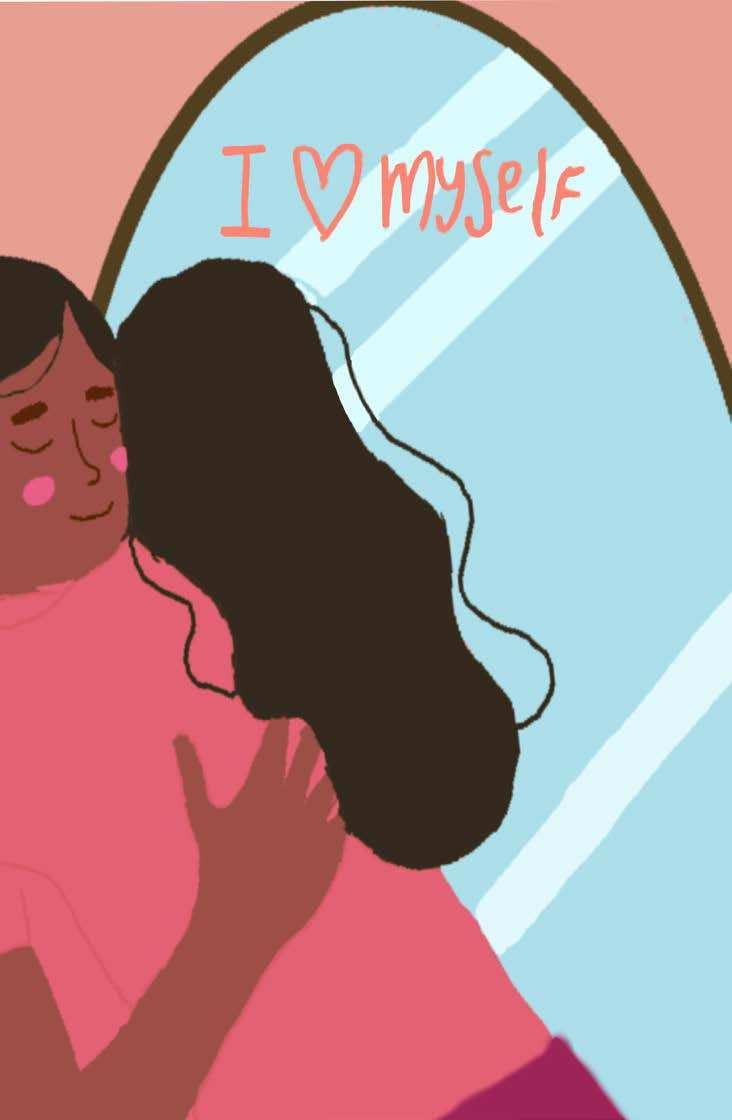
In today’s society, discrimination has become an increasingly detrimental societal issue; however, we choose to ignore its impact on our lives. By definition, discrimination is “the unjust or prejudicial treatment of different categories of people, especially on the grounds of ethnicity, age, sexual orientation or disability.” No matter the type, discrimination attacks parts of a person that sets them apart from others. If you experience it first-hand, it can cause stress and insecurity for something you can not change about yourself. Discrimination-related stress can be linked to mental health issues, such as anxiety and depression — harming people of any age, but also young children. While it is difficult, instead of hiding the parts of you that others point out, you should embrace them. More than anything, self-love is the only guidance needed to live an ideal day-to-day life. However, living an ideal life is undoubtedly affected by discrimination. It affects people mentally and socially, but through understanding its causes and sharing common or personal experiences with others, it becomes clear why self-acceptance and speaking out are essential in overcoming discrimination’s harmful effects.
“Perceived discrimination is a type of stressor that, like other psychosocial stressors, is adversely related to a broad range of physical and mental health outcomes,” The National Library of Medicine said.
tal state are viewed as more important than those who may be financially or mentally struggling. These people are often alienated and treated differently based on their life’s condition. If we do not give these people a chance to succeed, we may not be able to recognize their abilities; therefore, feeding into a cycle of discrimination based on class.
“Nearly seven in 10 adults (69%) in the U.S. report having experienced any discrimination, with 61 percent reporting experiencing day-to-day discrimination, such as being treated with less courtesy or respect, receiving poorer service than others,” The American Psychological Association said. From personal experience, being discriminated against led to problems with my mental health that still affect me today—including anxiety, depression and suicidal thoughts. Discrimination can also limit opportunities in schoolandhealthcare,makingitharder for specific minorities to succeed in today’s society. More often than not, individuals who present a difference within them will face some form of repercussion, solely for being accepting of that difference. When these behaviors continue over time, advantages build for some, while the rest are left to suffer.
selors at school, as well as my parents. Now, I feel at ease when I am in school and other public places. People who do not know you might have something cruel to say about you, but they do not know you for a reason. Therefore, you should not let someone who does not know you for yourself define who you are as an individual. If someone only claims to know you by a rumor or two, they do not know you whatsoever. Looking back now, I should have embraced those unique parts of me instead of belittling myself. Although staying quiet felt safer at the time, it only made me feel more alone. Speaking to trusted adults helped me to realize my worth and that my feelings were valid. I was able to regain lost hope and finally be able to look at my life from a bright side I had not seen in years. Resourcesaredigitalandareable to provide assistance when contacted, so do not hesitate. The Massachusetts Behavioral Health Help Line (BHHL) can connect you directly to clinical help, when and where you need it. If you or someone you know is in need of assistance, you can call BHHL at (833)773-2445. Additionally, the 988 Suicide and Crisis Lifeline is a network of local crisis centers that are available 24/7 to provide support for youth and adults who are in emotional crisis. Call 988 if youorsomeoneyouknowishavingsuicidal thoughts, or considering attempting suicide. Both of these resources are free-of-charge and confidential. Discrimination is normalized; however, we as a society need to speak outagainstit,asitshouldnotbetolerated. The concept as a whole is a vicious, unending stigma that will not end unless we as a society choose to recognize discrimination and shut it down. Frequently, using slurs and speaking about a minority a certain way is commonly not looked down upon in the way it should; therefore, more and more people are affected and change is out of the picture. Making offensive jokes, or bullying as a whole is considered okay because the people affected are different. However, no matter what others say about you, you are your own person and only you can define yourself. Only you can decide who you want to be. Only you as an individual know the full, authentic version of yourself. In a world full of hate and constant, unethical harassment, it is necessary that you do not lose sight of yourself. Prioritizing well-being during the challenging situations of today
Discrimination in society is driven by several factors. Often, discrimination as a whole comes from fear or misunderstanding of people who are different from themselves, or the social norm. People create false narratives and stereotypes about others based on their race, religion, gender or other traits. Cultural traditions or history can influence how people treat each other. Common examples of this are the cruel, belittling history around women and their fight to obtain basic human rights, history around those who practice judaism and those of asian descent. Sometimes, discrimination happens because of social inequalities that cause some groups to be perceived as more powerful than others. Frequently in society, people with a higher income rate or appear to be in a positive men-
When you are discriminated against, it is common to attempt to conceal or get rid that part of yourself; when really, those parts are what make you your own, unique person. This ideology is especially significant for teenagers, who, on the daily, are still constructing their identities. As teenagers build an identity for themselves, they may feel pressured to hide certain aspects of themselves that are perceived as “weird,” when in actuality, these parts are just different from others. With maturity comes personal growth, and if we choose to hide our differences, these features cannot evolve and shape who we are. I was faced with homophobia because of my sexual orientation. As a result of the negative things people said about me, I tried hiding my interests and acted differently in order to feel like everyone else. I felt alienated from the rest of society and instead of speaking up about it, I stayed quiet and kept my head down. However, it is necessary for individuals to open up and confide in those whom you trust, as oftentimes they will be there to help. I began to speak to my coun-
By Grace Savickas Staff Writer
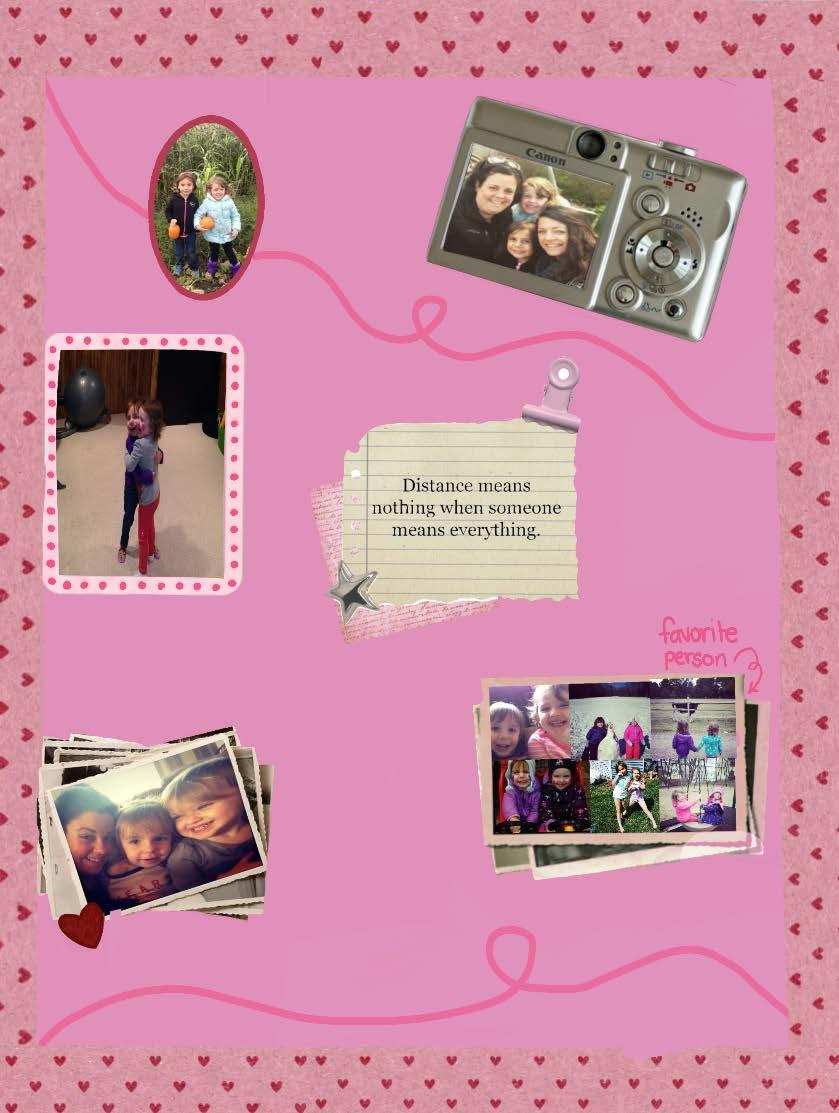
When I was five-years-old, my best friend told me that she was moving to Outer Banks, North Carolina. At the time, I was nervous that I wouldneverseeheragainandthatwe would lose contact but I still wanted to be friends with and to talk with her everychanceIgot.Havingalongdistance friend can be difficult, as some just move on with their new life, but keeping these friendships are very significant because having a friend that you can count on regardless of distance is a very special opportunity. While it can be upsetting when someone you are close to moves far away, fighting for these friendships is a crucial factor if you want to stay connected with each other. Everyone should have a person that they can go to for anything, even if they are not geographically close to you. Although distance can create changes in these types of relationships, such as acting more distant or making new friends, no one wants to lose their best friend. The length of time you know someone can shape your expectations and standards in later friendships. Depending on one’s age, they might not have the technology needed to talk with their best friend, which is a common reason why many friends part ways at such a young age. Age is not the only factor of friendship breakups; schedules can also have an impact on the length of time these friendships last. Many teenagers have very busy schedules and do not have time to plan hangouts with their friends, especially if those friends live far away. Although planning can be stressful, when you are planning a fun trip or meet up it can be very fun. This can make the actual meetup more memorable because you are enjoying it with a best friend, but also someone who you have missed spending time with.
When I found out that my
best friend, Cory, was moving 13 hours away, I was devastated because I had known her my entire life. I automatically thought that she would move on with her life and forget about me when she moved to the Outer Banks. I was happy for her, but nothing was better than seeing her every day and having sleepovers constantly. My best friend being 13 hours away made me feel like our relationship was going to change, and that we would drift apart, and stop being friends. In the summer of 2018, two years after Cory’s family moved, my family was going to visit her and her family for a week and I was so grateful that we could see each other again. We had so much fun together and I realized that I was going to miss her when we left, but I knew that we would stay close and that I would see her again another time. Later that year, my family had the opportunity to rescue a dog from a shelter in the Outer Banks, where Cory’s mom, Trisha, worked. At the time, I was very scared of dogs and was hesitant to say yes to having a dog in the house, but I agreed and we drove to the Outer Banks and rescued our dog, Harry. Cory’s family also rescued a dog named Boone and our dogs just happened to be brothers. Since dogs have a very poor concept of time, it may feel like they have not seen each other in years, which can be very upsetting, as even though Cory and I see each other sometimes, our dogs do not always come with us. Since our dogs have not seen each other in a longtime,itmayfeelliketheyarein a long distance relationship as well. And although we do not see each other as often and even if we do not text everyday, our friendship manages to stay strong and reliable. It may be hard to stay in touch with and communicate with a friend, but there are many things youcandotomaintainafriendship. Just because your locations might
be far apart, having a best friend who lives far can open up many opportunities. Again, although planning can be hard, you should try to visit your friend whenever possible and spend quality time with them, when you are both free to do so. Whether it is venting about a stressful situation or just debriefing your day, you should have someone who you can truly trust, like your best friend, who you can talk to about anything. It can be hard for some people to open up about their emotions when they do not have someone trusted to talk to, like a best friend. Every once in a while, it is important to visit your friend and to experience happiness and love greater than at home. Although there are not a lot of ways that you can provide for a friendship that is long distance, here are some options. Text your friend and ask them how they are doing and talk to them about any recent updates in their life, or you can call or FaceTime to at least see each other’s faces. With access to technology, a little effort can go a long way. Fortunately, we do not have to deal with expensive long distance charges for phone calls or long wait times for postal deliveries like generations before us experienced. Living in the age of technology lends itself to easy communication, since you have access to easily see each other’s faces or chat 24/7. FaceTime, texting and sending videos,aregreatwaystostayintouch. This being said, you just have to care enough about your friendship and connection to keep it going strong. Having a healthy friendship through distance is a privilege, and many people fail to maintain these types of relationships through schedules, school and work. Staying in touch with these friendships is very beneficial, because everyone should havesomeonenomatterthedistance. Keeping these friendships can help with many things in your life whether it is stress, friend drama or family drama, which is why it is so important to keep a long distance friendship.
By McKenna Scott Staff Writer
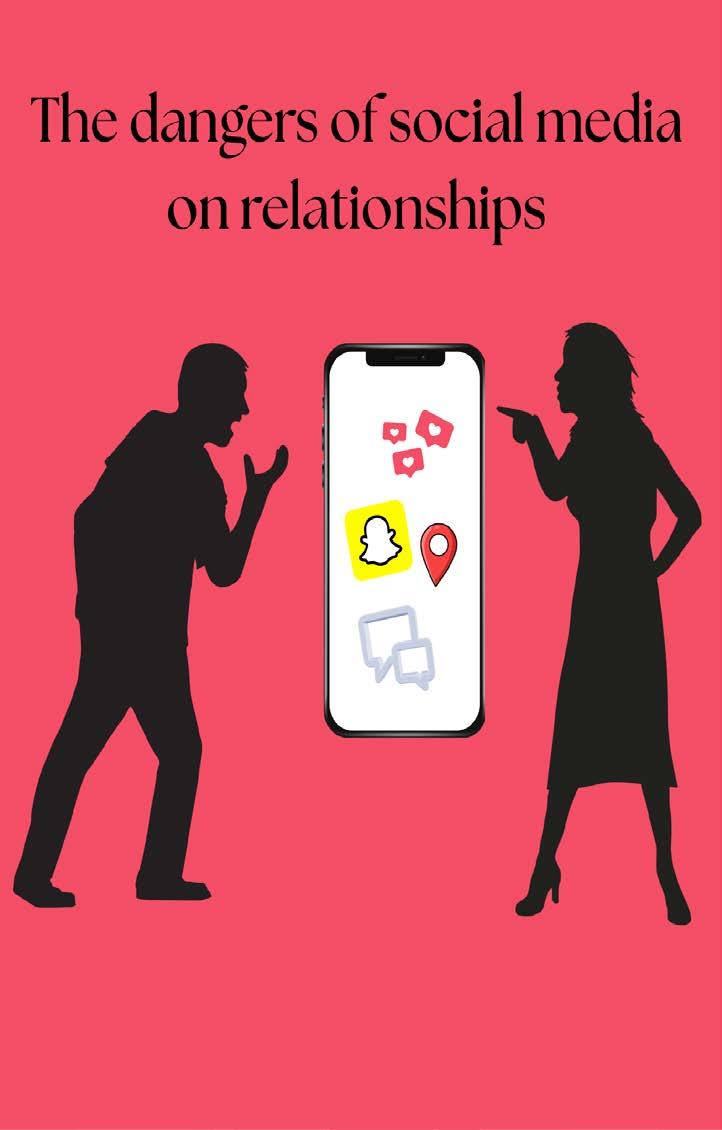
In an era where social media is deeply embedded in everyday life, its influence on romantic relationshipshasbecomeimpossibleto ignore.Whiledigitalplatformsensure instant connection, accessibilityandconstanttexting,theseapps have increasingly undermined the grounds of healthy love. Social media has reshaped how people form relationships, perceive their partners and prioritize validation. As a result, modern relationships are more vulnerable to the insecurity, comparison and emotional distance that social media causes, meaning that social media has ultimately caused harm to love.
Social media has significantly contributed to the rise of comparison, jealousy and insecurity within modern romantic relationships.PlatformssuchasInstagram and TikTok constantly display carefully edited posts of “perfect” couples, which can cause individuals to compare their own relationships to unrealistic standards. The comparison often leads to feelings of self-doubt and fragility, making people question their own relationship. In addition, public like counts, comments and interactions with others can create jealousy and mistrust, even when there is no real threat. The lack of contextbehindsubtleactsonsocial media can fuel suspicion, as it is easy to misinterpret comments or likes as flirtatious. Over time, the pressures damage communication and emotional security, demonstrating how social media is a majorcauseofoverwhelmingunease.
Digital communication has also created unrealistic expectations surrounding constant communication in relationships. The pressure to respond to texts immediately can cause tension, as delayed replies are often misinterpreted as disinterest or avoidance. This environment encourages
overthinking, especially as individuals overanalyze tone, punctuation and word choice to determine hidden meanings that may not exist. Furthermore, minor communication gaps can escalate into dispute or lack of confidence. Rather than strengthening connection, constant texting often increases stress and emotional dependence, ultimately undermining healthy communication and trust between partners. Location-based features on social media and mobile apps have further complicated modern relationships by increasing surveillance and mistrust. Appliances such as location sharing and activity status may create an expectation of constant transparency, leaving little to no room for personal privacy. When partners have access to each other’s whereabouts, small inconsistencies can lead to suspicion and unnecessary conflict. Insecure partners can weaponize the location tracking and inappropriatelychallengetheirpartners to justify small changes in routine. This constant awareness may cause individuals to feel monitored rather than loved, shifting relationships away from mutual respect and towards control. Similarly, it is common for partners to stop sharing locations to partake in disloyal actions that contradict the exclusivity of their relationship and betray their partners. The normalization of this assumption causes people to develop trust issues or presume unfavorable instances. In relationships where sharing locations is expected or common, a sudden change can raise fear. Consequently, reliance on location tracking can weaken trust andindependence,bothofwhichare essential for a healthy relationship. Many couples also aim for a performative relationship over a true partnership, as they boast about their utopian relationships by uploading perfectly curated photos for all to see. Instead of focusing on communication and problem-solving, couples may prioritize how their relationship appears online. Posting carefully selected pho-
tos and affectionate captions may illustrate a perfect relationship, even while real issues remain unsolved. The emphasis of their performative displays discourages honesty and vulnerability, as admitting conflict contradicts the curated image presented to others. Therefore, couples may invest more effort in maintaining an online image than strengthening their real, imperfect relationship. Though these problems seem unavoidable, with time and effort, overcoming them is achievable. Bothpartnersshouldpracticeopen communication.Astheyworktounderstand the root cause of the location-sharing requirement, underlying feelings may be exposed and resolved. Rebuilding trust requires consistent effort and honest behavior from both partners. Acknowledging feelings, being open and reliable is essential to establishing trust. Partners should also work together to establish boundaries that both are comfortable with. Agreeing to share locations strictly for safety concerns, checking in over text and defining individuality can eventually lead to resolution. By focusing on mutual respect, open dialogue and addressing the root causes of insecurity, a couple can move beyond the need for location sharing and build genuine trust. Social media has reshaped romantic relationships in ways we may never recover from. Constant comparison encourages jealousy and insecurity, while unrealistic texting expectations promote overthinking. Location features further contribute to mistrust, as they replace personal boundaries with surveillance. The pressure to present a flawless relationship online prioritizes appearance over genuine connection. Together, these influences weaken communication, trust and emotional intimacy. Instead of enhancing love, social media frequently complicates a relationship, making healthy relationships more difficult to build and maintain in the modern age.

By Katy O'Brien Sports Editor
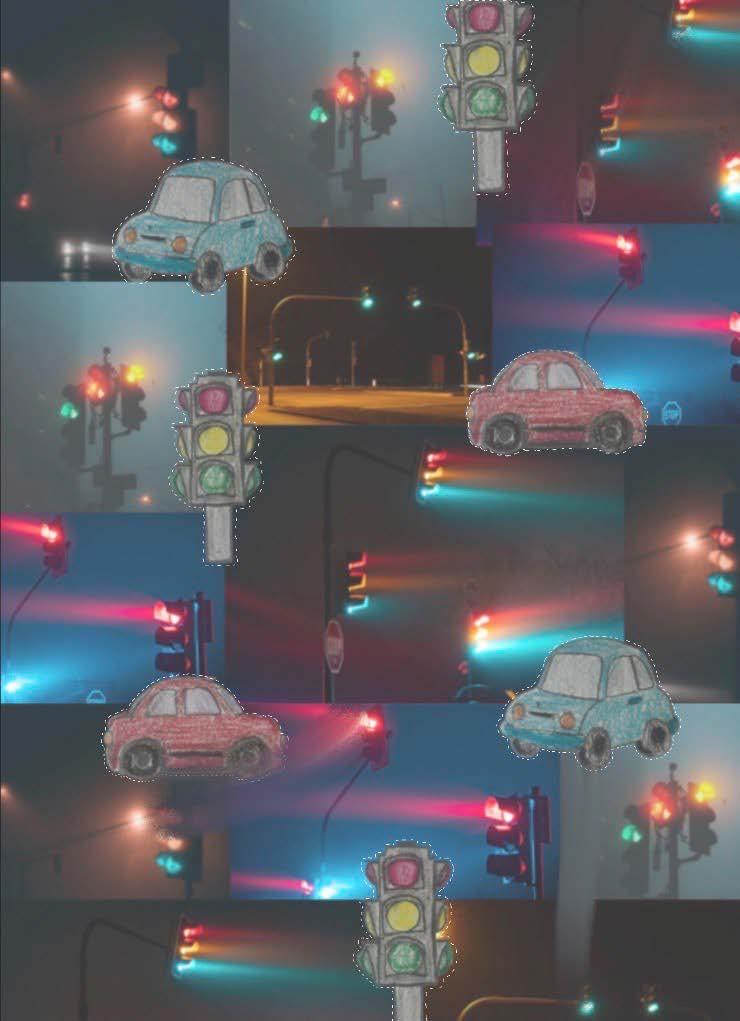
Peyton Sawyer: a character argued by viewers of the media as too complicated for a television show. But in reality, she is the character that everyone wanted to avoid relating to. Within the television series, One Tree Hill, Peyton’s story is not one built upon the idea of simplicity or ease, but rather with confusion and emotional weight. She represents the aspects of life people often choose to overlook, the moments that do not go as expected. She is a personification of the moments when pain feels permanent and standing still feels easier than moving on. Between death and break-ups, one thing stayed the same: her love for art. Despite her artwork outlining dark thoughts and seemingly lacking positive thematic significance, her sense of creativity portrays some of the most important societal lessons. In the beginning of her artistic journey, a stoplight across her canvas. But the painting was not a symbol for cars, but a stoplight of life. A red light flashes before a driver’s eyes, signalling them to stop. Red lights are the moments in life when everything feels as if it is coming to a dramatic halt with no possible escape. Red lights are unavoidable, forcing you to pause and sit with discomfort. Waiting can feel endless as other cars go through their green lights, convincing you that you are stuck while the rest of the world moves forward. This red light is not made for punishment, it is made for you to be able to grow and stay protected. It is there to prevent further damage or to simply re-
mind you to slow down and figure out a solution to life’s frustrating “bumper-to-bumper” problems. Red lights can create the facade that life is impossible to maneuver through, but in reality it is life’s way of testing your strength and allowing you to overcome your deficits. However, at these red lights, there is always an opportunity to be resilient and utilize your courage to persevere through challenges. Turning on red: a moment to pause and move through that obstacle even when the circumstances are not ideal. You may still carry that pain with you throughout your travels but you are presented with an opportunity to push yourself through the struggle which is the greatest reward of all. Despite this, it is of most importance to remain careful when turning around the corner. There is always the possibility that another obstacle may come racingatyoulikeacarmovinginthe opposite flow of your life’s traffic. Yellow is the most uncertain stage of life. These moments exist between stopping and moving forward; the moments where you may hesitate with the fear of being caught at a red light. Transition periods are the times when life asks you if you are ready to move forward or if you need more time to slow down and reflect. Some of life’s biggest challenges are not always the clear red lights in front of you, but rather the times when you have to consider all of life’s possible outcomes. It is essential to only move forward when you feel the time is right. You may never know the right answer of when to stop or go through that yellow light, but this is a stage that will allow you to grow
as an individual. These challenges are a direct reflection of your confidence, courage and comfort while still allowing you to change yourself for the better. Although this stage is full of internal struggle, having a sense of discomfort is crucial in order to maintain growth as a person. Asforgreen,thesearethetimes when you feel ease and comfort. Green lights have a sense of familiarity, clearing your mind from what once felt like a lack of movement. The obstacles that came as a result of your red and yellow lights have not gone away, but they no longer consume you as they did before. Green lights are the times you need to capitalize on your growth and continue to push yourself forward on your road to success. This is the time to remind yourself that life always continues and progress can be achieved, even when you are stuck at a red stop light for long periods of time. Peyton’s way of expressing her thoughts through her art presents valuable lessons to viewers of all backgrounds. Her relation and connection to stop lights allow for viewers to feel as if this is something they can relate to themselves. Stop lights do not just represent the inevitable phases of your life, they represent the choices you make to grow yourself as an individual. Stop lights symbolize what it means to persevere and movethroughlifewithgraceanddignity. They teach us valuable lessons, reminding us that life will not stay red forever. Failure and challenges are not a permanent state, but a step towards personal success, even when life feels stopped. But through all phases, the most important thing to remember is that there will always be another stoplight ahead.
By Molly Diggin Assistant Graphics Editor
As you grow into your adolescent years of life, a romantic relationship can seem like a necessity for the typical “high school experience” highlighted through films and media. As you start to form relationships in high school with friends, peers and romantic interests, it is important to stay true to your standards and be your own person. Throughout adolescence, maintaining a romantic relationship is not necessary for one’s happiness.
Once you enter the late stages of middle school and start high school, you might start to notice that all of your friends begin to form romantic relationships. At first, this new experience may seem fun and exciting. Your friend’s boyfriend may ask you what to get your friend for Valentine’s Day, her birthday and all her favorite candies. She asks you to help write her a text to send to him and asks you to hang out with them because it’s awkward between them at first. They need someone to be “comic relief.” Typically, in most youth relationships, there are three stages: the first couple months are called the honeymoon stage, the next few are the conflict period and then comes mature love. In the first two stages, you will feel as though you’re super involved in your friend’s relationship, or be on the phone with her when she cries about him. You tell her that maybe she should take a step back from the relationship and consider breaking up, but she doesn’t listen. Suddenly those three months of arguing fly by and now she doesn’t text you anymore for relationship advice and he knows her favorite colors and what she wants for certain holidays . You become more distant from your friend and notice that she is not reaching out as much. Then they break up. Suddenly she needs you again and calls you crying. You pick up because you’re a nice person, but in reality you hadn’t talked to her in months. You feel like you’re only friends when it is convenient for her.
Once your friends get into a relationship, it is likely that they will try and bring some of the boy’s friends to a hangout with her friends, forming a friend group. This can be the early stages of you or your friends getting closer with his friends; some even dating. Your friends begin to date the boy’s friends as the friend group mixes. You may begin to feel pressured to talk to one of them because you feel lonely without someone. Good connections can be formed this way, but you should not go into a relationship feeling forced, it’s not fair to you or the other person. You should
not allow your friends to make you feel like you need a boyfriend just because they have one. You need to be in the right head space and want a relationship first. You need to love yourself before anyone else can love you.
“You can’t love the boy more than you love the girl in the mirror,” country music artist, Megan Moroney said. Her lyrics reflect how you need to always put yourself first. When you do this, a romantic relationship brings a major light to your life. But when done wrong, you start to lose your light. You don’t feel happy doing things you used to love, you can’t seem to find joy. When you’re in high school and in a new relationship, you may start to distance yourself from your friends and isolate yourself from everyone except your partner. You text your boyfriend when you’re with your friends and you may start to not respond to your friends text messages because you are only focused on your boyfriend. Your friends may start to realize this and stop reaching out. You cannot expect them to be friends with you after you only give your attention to a boy. One of the hard parts about this is that most of the time, you don’t even notice that you are doing this to your friends until you break up and realize that you haven’t texted any of your friends in a while. Forming strong connections with your peers is very important. Your high school friendships can last a lifetime; you want to make sure that you don’t get caught focusing on needing to be popular or needing a boyfriend. You will receive light from true friendships that make you feel happy; they should support you and not make you cry at night because they are mean or passive-aggressive towards you. That is not what a healthy relationship is. I have lost my light in friendships and I’ve learned it is very important to walk away from those relationships that are not benefiting you. A friendship should be a two-way street. It might not always be a perfectly equal relationship, but you should never feel as though you are carrying the whole friendship. In my experience, I have found that having a closer group of a few friends is better than a large group. For example, four quarters are better than 100 pennies, meaning that four really good friends of “higher value,” meaning that they truly care about you and are always there for you, is better than 100 friends that you have texted once or twice. Holding on to friendships that don’t benefit you can make youloseyourlight.Whenthishappens,itisimportant to turn to others. Form good and true friendships that can give you that light again. In your friends’ romantic relationships,
you may start to notice that they don’t do anything without their partner and won’t leave their side. They cannot do everyday activities without them; simple things you know they can do themselves, they claim they cannot do in order to receive assistance from their significant other. Relying on your boyfriend to text you to do your homework. This is called codependency, once they break up they no longer know how to be independent. They can forget when to do their homework, or to talk to their friends and family. When in a relationship, it is very important to have your own hobbies separate from them. In a relationship there are girls with boyfriends and girls that are girlfriends. A girl with a boyfriend has a whole life, friends, hobbies and passions. She has a boyfriend who is a priority, but her life comes first. If they were to break up, then she would still have hobbies and things to do. He is going through life with her, he is not her whole life. They are able to find a balance. The only priority of girls that are girlfriends is their boyfriend. They try to bring him everywhere, to girls’ nights, or to dinners and text him constantly. They are codependent and do everything together. They can be seen as one person. If they were to break up, she would think the world is over because without her boyfriend, she has nothing. Although romantic relationships may seem like a necessity in high school, it is very important to know that they are not. It is key to be your own light and not depend on others. Your friends can also be a sense of light in your life. Do things that make you happy; join a sport or club, pick up hobbies or spend time with family. It is also very important to take care of yourself. This may look like getting the proper amount of sleep, exercising, properly fueling your body and setting boundaries with both friends and romantic partners. Learning how to say “no” to things that don’t benefit you is very important, especially in high school. If all of your friends want to hangout with a group of boys you don’t feel comfortable with, it is best to trust yourself and say no. You cannot love others if you do not love yourself. Learn to be your own light and not depend on anyone else to give you light. Relationships in high school are not as beneficial as they may seem. They can often create issues further down the line like loss of friends and codependency. While a boyfriend in high school might seem like a necessity, focusing on yourself and your friendships is far more important. If you do decide to get into a relationship, remember your friends that were there for you before and during your relationship.

By Alice Beverly Staff Writer
Light pollution is the excessive use of artificial lights which affects animals, the ability to observe astronomical objects, humans and the ecosystem. Therearethreemaintypesoflightpollution: clutter, light trespass and glare. Clutter pollution is the disorganized grouping of light found in billboards allaroundtheworld—fromNewYork City to Japan. Light trespass is when light invades an area where it is not needed, like security lights that shine intopeople’shomesoryards.Glareisa form of excessive brightness which can cause visual irritation like floodlights distracting drivers. This perpetual artificial light has already covered 80% of the world and is an ongoing issue that affects the entire planet. As a society, people need to work to eliminate the excessive use of synthetic light.
The most common example of light pollution is a round globe lamp post, a streetlight with a transparent sphere on the top which lets the light produced go in all directions. This method of lighting is extremely harmful for the environment because the light produced from these fixtures is abletoshineeverywhere,soduringthe night, its light is facing both upwards and sideways. Street lights and other light fixtures that have fully shielded tops are ideal for the environment because the light produced from the fixture is facing the ground which means no light is able to escape into the sky, which reduces the effect of light pollution. Billboards are also a huge contributor to light pollution because throughout the night, the luminescence is cast out into the atmosphere. A statistic from Scenic America states that using only half the advertising lights used now, it is predicted there would be a 50% decrease in light in the sky. These billboards also disorient animals, humans and insects, by throwing off their internal rhythms which is why people need to limit the amount of light we are putting out into the world. Artificial light is harmful to animals because of the excess light produced. This light causes psychological
stress and disturbance, changing the behavior of these animals and causing a lack of exercise. For nocturnal animals, this light has the ability to change the offspring’s genetics, modifying their eyes by increasing sensitivity to darkness and other forms of navigation. Light pollution also interferes with sleep, which changes breeding, hunting and foraging behavior. Predators rely on the behavior and cues of their prey or the lack of light to hunt from the shadows; if the synthetic light is a disruption to that, then those carnivores have no way of hunting and will eventually starve. Even smaller animals, like turtles, are disoriented by these glares; once these hatchlings are able to move, they go towards the brightest light they see, which should normally be the moon. Some city or beach lights cause these turtles to become misdirected and move inland, where they will eventually die. Birds rely on light to navigate during migration. The excessive amount of light causes these birds to fly towards lit areas and become entrapped. Most of these lit-up areas are cities with large buildings and tons of hazardous infrastructure that birds collide with easily. These illuminated zones cause migratory birds to keep away from habitats essential for survival and the difference of the sky’s brightness changes the animals behavior and relationships. This is a major problem for thousands of species of birds all over the world. Additionally, astronomy is deeply affected by light pollution. The Bortle Scale is a measurement tool to estimate the sky’s brightness: nine being the worst and having no visibility of stars and one being best with an almost completely clear sky. In the United States, it is most common in suburban areas for the Bortle scale to be a five, which means most stars are hidden, but the brighter few are able to be seen. Rural areas have around three to four and the urban inner city area has anywhere between seven and nine, meaning even the brightest stars are faintly visible. Without the effects of light pollution, galaxies would be visible to amateur stargazers. With higher levels, it makes telescopes un-
usable, data gathering difficult and puts a strain on human eyes, creating sensitivity and a lack of adaptation. All species of life are affected by the earth’s light-to-dark rhythm and humanshavespecificallyfollowedthese patterns for millions of years. Once artificial light was introduced, that rhythm was disrupted and human’s physiological clocks were thrown off balance. A person’s circadian rhythm is the body’s natural internal clock which affects one’s mental, physical and behavioral changes. While your circadian rhythm is working, it’s controlling your hormone releases, body temperature, mood, appetite and alertness. Jet lag is a common, mostly harmless disruption of the 24-hour internal clock, but frequent disruptions can lead to more severe and long term problems like cardiovascular issues, bipolar disorder and premature aging. Earth’s species have a direct relationship with the light-to-dark cycle.
People need light at night for safety, security and productivity, but the amount of light being used is destructive and damaging the earth. It is recommended by the International Dark Sky Association that people switch to responsible light practices so light pollution can decrease and eventually be solved. Some ways people can reduce the effects of light pollution are using shielded outdoor light fixtures that only point light downwards, use warmer colored bulbs to create less harmful blue light, turn off unnecessarylightsandsettimersonlightappliances. If these habits were implemented, light pollution would decrease a significant amount and ecology issues, human health complications and astronomy problems would be solved. The world has already begun to degenerate, which is why addressing this issue requires global collaboration and effort. If humans don’t find a way to reduce and reverse this problem our earth’s functioning ecosystems can only survive for so long without this change. In 50 years, populations of sea turtles, frogs, bats, insects, coral and nocturnal birds will rapidly decrease unless these changes are made. The communitymustcooperatesotheplanet can be safer for future generations.

By Nicky Mahoney Staff Writer
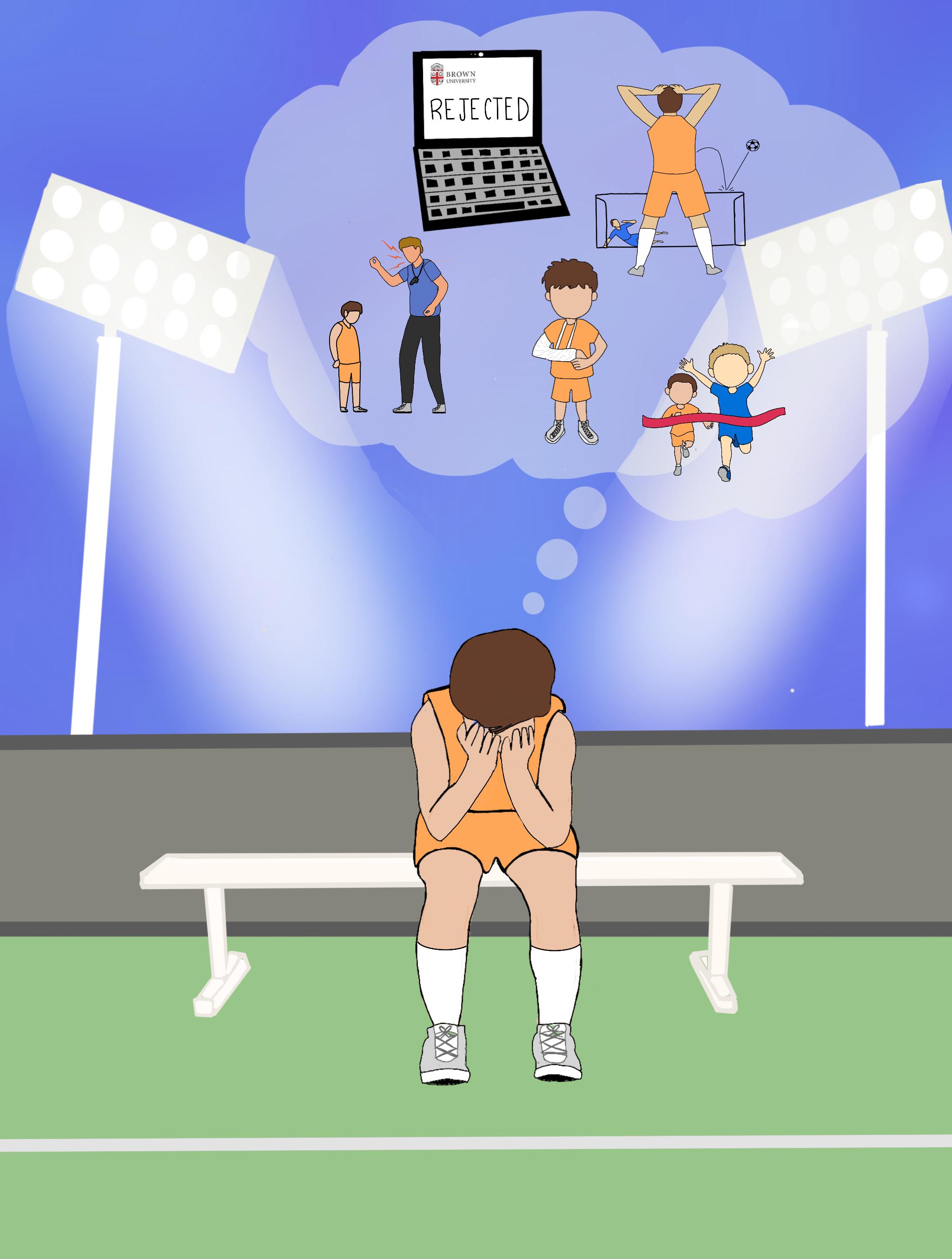
Under stadium lights, student-athletes are seen as confident and disciplined. However, behind their uniform, many high school athletes struggle with mental health. There are over eight million high school student-athletes in America, most of which “lose their light” due to stress and sports-related burnout. The term “lose your light” means losing your joy, hope, purpose or vitality. Losing light can stem from depression, sleep deprivation, too much stress or feeling a loss of purpose. Most athletes tend to define their self worth based on their athletic performances. The expectation they create for themselves to perform perfectly every day causes them to burn out, resulting in the dimming of their internal light. Although they might show up to the field or court and seem fine externally, most athletes are struggling mentally. Along with self-created pressure in high school, student athletes tend to face mental health struggles due to academic pressure, coaches, injuries, club sports, teammates and the college recruitment process, often forgetting that they are more than just their sport, and their performance on the field does not define them as a person.
Athlete performance training has recently gained popularity among high school athletes. It consists of multiple sessions a week that focus on different strength and conditioning workouts specialized for your sport. These training sessions are very expensive and inaccessible for many athletes. It can cause harm to athletes who can not afford these training sessions or do not have time to attend and commit to them. Athletes who are not enrolled in these programs often compare themselves to athletes who do attend them, wondering why they cannot be as skilled as the athletes who spend thousands of dollars a year on specialized training. Comparing yourself to others is harmful for your mental health because you are creating an unrealistic standard for yourself. This tends to cause burnouts for athletes who want to be as good as the people with professional training. Student-athetes will end up overworking themselves, trying to get to a higher level, but hurting themselves in the process. According to the American Academy of Orthopedic Surgeons, sports injuries happen to 20-25% of high school student-athletes per year. Most athletes’ sports are major parts of their identity and taking it away for even a short period of time can make them feel isolated. Long term recovery means that athletes will spend lots of time unable to practice or play in games, watching their teammates succeed and compete. This can result in feelings of hopelessness and frustration because you want to be out on the field playing and improving, but you have to sit and watch instead. Recovery from long lasting injuries is extremely mentally challenging as well because it causes a major step back in skill from where you were when you first got injured. Returning back to your sport and feeling how much progress you lost can cause you to feel
like you will never come back and lose all hope. For most, it feels as if a part of their identity is missing. Injuries are athletes’ number one cause of depression and for women, injuries have a high correlation to suicide. Although injuries may feel like the end of the world at the moment, know that all great things take time and you will eventually be able to come back stronger than you were before. From my experience, in most high school sports, no matter how good you are, you will lower your chance of getting on varsity substantially if you do not participate in that club sport. Club sports cost thousands of dollars to participate in and can be detrimental to athletes’ mental health. Club sports can overtrain athletes and set unreasonable expectations. For all club sports I have participated in, you have practice once or twice a week and tournaments a few times per month. Practices are usually two hours full of high intensity workouts and by the end, I am exhausted and burnt out so I can not perform to my full potential during games or practices the next day. Although club sports focus on improving skills, they also can cause burn outs. When an athlete is burnt out, they feel as if they are disappointing everyone because of this pressure they put on themselves to improve every single day which is very unrealistic. Many athletes feel pressured into committing to college for their sport. The commitment process is very stressful and mentally draining for athletes. The recruiting process takes years of non-stop dedication to get noticed by schools. This makes them feel a pressure that every mistake they make is bigger than it truly is because it may ruin their chances of recruitment. Freshman year is when it starts for many; you have your first season of high school sports, begin to upload videos onto your recruitment page and email coaches. That process will continue until coaches can reach out to you. The earliest coaches will start reaching out is June 15 or Sept. 1 after your sophomore year for Division I coaches. Divisions II and III usually talk to athletes late in their junior year or early in their senior year. Before collegiate coaches can reach out to you, many athletes become very stressed because they often feel pressured into doing as many tournaments and practices as they can so coaches will want to reach out. This easily causes burn outs for athletes due to the immense amount of exercise and stress they are going through; however, September of junior year is when the stress really begins for the athletes because this is when they start talking to coaches and will have to receive rejections from dream schools. Some athletes will commit on the first day they are eligible to do so, while others can take over a year to decide on a school to commit to. The years of stress this adds into athletes’ lives can dim their lights and make them lose love for their sports. It makes them put tons of pressure on themselves so one off day feels like a huge issue. Additionally, athletes might compare themselves to others who got into their dream school or commit to a higher division in the sport, making them feel that they are worth-
less because they are not the best at their sport. Coaches play a very influential role in shaping athletes’ perception of their value as a person on and off the field. Having a supportive coach who values communication creates confident and motivated players by making every player feel seen. Communication takes a pressure off of athletes because they feel they can openly talk to their coach when they have an injury or are experiencing mental health struggles. If a coach cares about their players, then the players will care more about them and the sport. A coach giving constructive criticism along with compliments and signals that they are improving will make the athlete more likely to listen and respond to a negative comment since it feels more motivational and important rather than only hearing negative comments. Some coaches rely on fear to coach their athletes. They believe that by constantly criticizing and publicly humiliating them, their athletes will get better. However, when all they hear is criticism with no compliments, the athlete will feel like they are disappointing their coach and that they must be underperforming. Athletes hearing constant discouragement are less likely to feel encouraged by criticisms and to try to improve because they feel it’s impossible when the only feedback they receive is negative. It causes the athletes’ motivation and confidence in their sport to fade away. Some coaches still view being open about mental health struggles as a weakness in athletes and will criticize them, hoping they will toughen up, but in reality it is dimming the athletes light to the point where they lose all love for the sport. For example, my soccer coach for eight years would constantly yell at me and never once tell me I did good, but instead would only tell me what I was doing wrong. He picked favorites and completely ignored the rest of the team. I lost all love for the sport because he made me dread having to step on the field because he made me feel that I was not good enough to play in high school and I should just quit then. Student athletes do not lose their light overnight; it fades gradually with the high amounts of stress, exercise and pressure they endure every day. Addressing mental health in teenagers requires acknowledging what is causing these issues. Healthy coaching and practice styles that value athletes, not as just a player, but a person, open up an opportunity for one’s light to come back. Recognizing that a strong athlete has to be vulnerable in order to succeed is what society does not understand. Acting tougher on the field and hiding your emotions make it worse for you in the long run. Reaching out for help and being honest with your coaches and teammates about your struggles is the only way you will be able to progress to the level you want in your sport, not through overstressing and excessive exercising. Supporting charities such as Morgan’s Message, an non-profit organization which raises awareness for athlete mental health and speaking up about your own mental health breaks the stigma for other athletes, benefiting all players around the world.
By Joe Curran Editor-in-Chief
As the world’s literary canon has developed, a handful of motifs have become a staple of humanity’s writings. With the advent of other forms of media, these ideas transitioned to these new mediums as well. One such motif is that of light. Throughout human history, light has been used in art to signify a plethora of ideas. One of the most prevalent ideas associated with light has been hope. Whether it is portrayed as positive or negative, its relationship with light has been deeply analythroughout all artforms.
One of the earliest instances of light as a central motif was the myth of Prometheus. In this ancient Greek story, the titan, Prometheus, gives fire to humanity — his beloved creation. The light that came from fire gave people a feeling of safety. Despite the positive effects that the fire had on humans, the gods were angered at Prometheus’s transgression and so punished humanity through Pandora’s Box. The box, which was eventually opened due to Pandora’s human curiosity, released plagues and adversities across the world, but, in the box, remained hope. This allowed people to remain optimistic in a world now plagued by sorrow. This myth set the basis for light and hope as literary ideas, reflecting howtheycanprovidecomfortintimesoftrouble.
“His cold, white head mingled with her radiant hair, which warmed and lighted it as if it were the light of Freedom shining on it.”
Charles Dickens’s magnum opus, “A Tale of Two Cities,” highlights the healing abilities of hope through its use of light. “A Tale of Two Cities” is a sweeping story taking place across England and France and featuring a multitude of characters. The connecting glue of the story comes in the form of Lucie Mannette. In the first book of the novel, she reunites with her father, doctor Alexandre Mannette, who has gone insane due to his imprisonment in France’s Bastille. Lucie, who is described as having an aura of golden light, is contrasted with her father’s gaunt, dark features. Over time, her light slowly revives the doctor, returning him to his once thought unattainable sanity. Throughout the novel, Lucie’s hopeful, bright demeanor contrasts the darkness around the world, suggesting that hope can prevail in a cynical world. “The whole castle stood empty with every door and window open and the light and the sweet spring air flooding into all the dark and evil places which needed them so badly.”
In C.S. Lewis’s series, “The Chronicles of Narnia,” one of the defining landmarks of the land of Narnia is a lampost. “The Chronicles of Narnia” revolves around a group of children, the Pevensies, who travel through a cupboard to the magical world of Narnia. The first thing the children see after walking through the cupboard is a lamppost. The lamppost — an ordinary thing to see in England, where the book is set — signifies a transition from the common world to the fantastical one. The world of Narnia is full of beauty and wonder and the lamppost is used as a marker to denote the transition to this wonderful place, mixing both worlds and showing that in the right circumstances, the ordinary can seem fantastical. Lewis also uses the lamppost and light and general to contrast it with that of the White Witch. The White Witch is an evil character who took over Narnia and subjected the land to an endless winter. The lamppost stands as a symbol of hope in this dark time, perpetually burning bright in a land of cold. After the death of the White Witch, the light of the lampost spreads to all of the dark corners of Narnia, proving that hope had prevailed. “Most of it was beautiful, but just the same, all I
keptsayingtoeverybodywas,Iwanttogohome.”
L. Frank Baum’s “The Wizard of Oz” delves into many aspects of light. This analysis is furthered by Victor Fleming’s 1939 film of the same name. Fleming utilized the newly made technology of technicolor film to create a stark contrast between Kansas and the mystical land of Oz. During the opening of the film, the protagonist, Dorothy Gale — played by Judy Garland — is at her farm house in rural Kansas. Kansas is presented with sepia coloring, reflecting the drabness of life there. In the song, “Over the Rainbow,” Dorothy expresses her hopes that somewhere, there is a world full of wonder and color that she will someday find, this world is Oz. After being whisked away from Kansas, Dorothy arrives in the land she had dreamed of. To reflect the wonder of Oz, Fleming bathed the set in bright colors, showcasing that Dorothy’s dreams had come true. “The Wizard of Oz” is also notable due to its use of darkness. Even in the magical land of Oz, there is darkness in the form of the Wicked Witch of the West. The Witch dresses in all black clothing and lives in a drab castle adorned with cloudy skies. Fleming uses the coloring of the Wicked Witch to juxtapose the wonders of Oz with its dangers. Returning from Oz, Dorothy gains a newfound appreciation for the life she had in Kansas, realizing that the life she now wants is not one of adventure, but one of love, a realization she would not have come to without the wonders and perils of Oz. “I thought of Gatsby’s wonder when he first picked out the green light at the end of Daisy’s dock. He had come a long way to this blue lawn and his dream must have seemed so close that he could hardly fail to grasp it. He did not know that it was already behind him.”
Considered by many to be the great American novel, “The Great Gatsby” by F. Scott Fitzgerald presents the risks of hope. Jay Gatsby, the titular protagonist, is enamored by Daisy Buchanan, his former lover. When first introduced, Gatsby is seen reaching for a green light coming from the Buchanans’ residence, an image repeated throughout the novel. The fact that this is Gatsby’s first appearance within the novel suggests that Fitzgerald intends for this moment to stick as a key feature of Gastby. By extent, Gatsby is portrayed as a character wholly consumed by hope. In his eyes, if he can reach the green light, he can reach Daisy, hoping and believing that this goal is achievable. All of Gatsby’s choices are done in his pursuit of Daisy. He throws parties, makes money and buys luxurious objects in order to appeal to her because he truly believes in his ability to reach her. As Gatsby begins to realize his goals and he rebuilds his relationship with Daisy, the power of the light over him subsides. Although he achieves his goals, Gatsby seems less full of life than when he only desired, suggesting that hope can often be more fulfilling than attainment. Gatsby continues to chase the light throughout the novel as his obsessions lead to his undoing because of the destruction the Buchanans leave in their wake. Ultimately, Gatsby is killed for his attempts to reconnect with Daisy, proving that unchecked hope can lead to disaster. “Who am I to think that she would follow me / Into the cold and dark again?”
The set design of “Hadestown,” created by Anaïs Mitchell, puts light at the center stage. Most notably, in the number “Wait For Me,” the protagonist, Orpheus, walks through a cavern of swinging lights on his journey to reclaim his lover, Eurydice, from the realm of Hades. The lights act as a guide for Orpheus, leading him towards the underworld just as his hopes lead him towards Eurydice. Despite the lights, the stage remains dark with an ominous mist rising from the floor. This darkness represents Orpheus’s doubts, both in his ability to
save Eurydice and in her devotion to him. This second doubt returns in the songs “Wait For Me (Reprise)” and “Doubt Comes In.” In these songs, Orpheus again walks through the passage connecting Hadestown to the human world, this time walking away from Hades with Euridice trailing behind him. This is due to a deal he made with the god to allow him to leave with Eurydice as long as he did not look at her during his journey, an agreement they came to because of the new life Orpheus had managed to bring to Hades’s marriage to Persephone with his music. Although Orpheus has trekked this passage before, the swinging lights are no longer present to guide him. Without the lights, Orpheus is overpowered by his doubts, unable to believe that Eurydice would be willing to follow him through the terrible darkness. Without hope, he fails to simply trust Eurydice’s love for him, causing him to turn to look at her, breaking his vow to Hades and returning her to his clutches. Orpheus’s story is ultimately a tragic one, marred by suggestions of what happens when hope is lost. “Thelightisgettingdimmer/IthinkIseeaglimmer.” Stephen Sondheim’s broadway musical, “Into the Woods,” takes its characters on a journey of realization, coming to terms with the hardships and the hope that are key parts of life. Mirroring classic fairy tale imagery, Sondheim has the Baker, his wife, Jack, Cinderella and Little Red Riding Hood embark on a journey through the titular woods in order to realize their wishes. Throughout the musical, remarks are made as to the darkness of the setting, reflecting the descent into hopelessness the characters feel as well as juxtaposing this with the hope they had felt when first setting off to achieve their wishes, driving home Sondheim’s point that wishes are not easily attainable and are instead something that must be worked for. As the woods get darker, the peril increases; characters begin to die and those remaining realize that the happily ever after they had once wished for is a fantasy. These tragedies however, bring the core cast together and gives them a chance to reshape their wishes to fit the new reality they were thrust into. Finding both the proverbial and literal light at the end of the tunnel, the survivors are able to make a new life for themselves as a family, not achieving the happily ever after they had wished for, but a more realistic and bittersweet, yet hopeful ending, Hope is an intrinsic part of human life. Without it, the great visionaries of the past would be unable to create the world we are in today. Therefore, it is no surprise that so many writers have latched onto hope as a core thematic element of their works. Furthermore, to couple hope with light — a source of safety for humanity as well as a representation of their greatest advancements — is second nature. Despite the same basis for their works, these artists have taken the ideas of hope and light in many different directions. Dickens and Lewis focused on hope in its purest form, arguing thatitspropertiesallowforrestorationandprogress, creating a better world. Others, including Fitzgerald and Mitchell took the opposite stance, presenting the false realities that hope can provide, before being wiped away, leaving only despair. Those like Fleming and Sondheim presented a more nuanced view of hope, highlighting its transformative powers in which it helps one to achieve what they need, although it may not have always been what they had intended. Despite these varied views, there is always a positive that can be derived from hope; Gatsby would have remained an aimless man, drifting through life, had it not been for his dream of Daisy to focus him, Orpheus was able to bring new hope to the marriage of Hades and Persephone, rekindling their love, the Baker, Cinderella, Jack and Little Red Riding Hood started a new life together, getting a happy ending despite their circumstances and Dorothy gained a newfound love for her family and her home. Hope’s ability to provide light to people has not gone understated and will forever remain a key part of artistic expression.


By Lizzy Schiavo Staff Writer
I used to have an unsteady relationship with God and would hate going to church. When I was younger, I attended a Catholic private school and was almost forced to believe instead of finding my set of beliefs on my own. Though I wasn’t super focused on religion, I still learned about ideas and virtues preached by the bible. Later, I lost my connection with God since I stopped going to that school, I stopped going to church, I stopped praying and my family and I were going through rough times. Despite this, one day in fifth grade my flight to Europe stopped working and we had to turn around. The flight back to Boston was one of the scariest flights of my life. We had to brace for landing and I prayed more than I ever had before. We landed safely despite the fact that our aircraft was extremely heavy compared to a traditional plane landing. I saw that as a sign from the holy spirit. I felt so protected and from that day on, I gave my life to Christ.
Following a religion can enlightenandguideyouintheright direction. It can prevent you from abusing habits like hurting yourself or others and provide a connection bigger than you. It offers a new identity and a way to start again. I learned that I can’t control everything and that everything happens for a reason. I also learned over the years that everyday is a new beginning, the healthy way of forgiveness and that optimism and a positive mindset can help you better understand yourself. Having a spiritual structure in your life can
provide you peace, hope and a healthy mindset. One thing I have learned while better understanding my religion is that kindness provides you a sense of happiness and fulfillment , whether you are the one receiving it or the one spreading it. A divine guidance can also provide you peace through prayer, scripture study or meditation. Reading parts of scripture shows that others have dealt with struggles and have figured awayoutofit.Meditationkeeps you calm and stress free; peace is easily attainable with breathing techniques and relaxation. Prayer supplies you with a direct conversation with God or any other religious figure. I have always felt understood due to prayer because it is a way for you to be listened to and be directed to the right decision. The Bible is the religious scripture I follow. There are many values and ideas that can make you a better person and help you through times of darkness. One thing I struggle with is that I have always tried to see the positive traits in people as much as possible and sometimes I can get hurt from that. I have always put others first and have never cared about my well being as much as I care about others. What I now understand from services and community hours from my church is that I am my own advocate and my say matters just as much as anyone else. Even when I have felt the most alone I would always know that I have my family and my relationship with God. The physical idea of light is
mentioned in the Bible plenty of times. Specifically when Matthew and Ephesians are trying to explain in their bible verses that “you are the light of the world… let your light shine before others so that they may see your good works and give glory to your father in heaven” or “for you once darkness, but now you are the light of the lord”. They represent that you are a radiant character when you follow God’s teachings and others can see that. Jesus teaches that he is a torch, he illuminates a path to salvation. Jesus says “I am the light of the world. Whoever follows me will not walk in darkness but will have the light of life.” (John 1:4-5) My family grew up in Italy and Italian was my dad’s first language. We have always been Roman Catholic and every Easter we would drive into a church in Boston to go to an Italian speaking service. As the priest would preach about the ideas of the Bible, I was not able to understand anything and it was very hard to comprehend the ideas they would talk about. Since my grandmother has dementia, we continue to go to church like this since her English is slipping away from her. As much as it is hard to connect with Italian service, it is a very important piece of my childhood and religious journey. This metaphorical light has shined through times of darkness and guided me to make the right decisions. I understand there will be times when I doubt my faith, but this light has saved me and has brought me so much joy. I want to continue to become a better person and strive to take care of myself and others better.


By Caitlin McCabe Opinion Editor
Friendships are crucial in your life; however, losing friends is also necessary in order to establish who you are as a person. Although it can be an emotionally difficult experience, the loss of friendships can end up being very beneficial. It can help you grow and introduce you to new people, which is what happened to me. After losing a friend of mine, I felt a lot of emotions including sadness and anger, but also happiness and relief. I also gained new friendships as a result of the end of that friendship. While ending friendships can be painful at first, it is important to also know how to overcome that hurt.
As a teenager, you are still figuring out who you are as an individual and what your passions are. During the process, it is common to let go of friends whom you have drifted from. Even if these friends have been in your life for a while, it is okay to grow apart. A big part of growing up is drifting away from people. Whether you end the friendship, they end it or it is mutual, losing someone is a crushing experience and can make you feel angry; however, it can also make you feel relieved. Loss puts people through a rollercoaster of emotions, which is why it is important to remember to persevere.
Having friendships end can spark feelings that you may have never felt before. People can go through the five stages of grief: denial, anger, bargaining, depression and acceptance. For me, right after losing a friend, I grieved the loss, but then, after time passed, I became very angry. I was annoyed over everything that had happened and why I let it happen, but I was mostly angry that I had decided to become friends with her in the first place. After a while, I realized that the anger I felt was unnecessary. People change and there is nothing you can do about it, so it is important to see it through and not let
the loss define how you live your life. To move on from ending a friendship, you have to get over it and discover everything that came out of the relationship. My old friend introduced me to my current friend group, which I could not be more thankful for. My friends have taught me what a real friendship is and I could not have met them without my ex-friend. It is vital to learn to value the outcome of past friendships and see the positive side of the breakup. Somerelationshipscanholdyou back and in order to grow, it is necessary to let go. If you are not evolving as a person because of somebody, it is best that you let them leave. Friends could hold you back by preventing you from trying new things or meeting new people. You need to remember to do what would be the best for yourself to grow, even if it sounds selfish. With that being said, you should not completely disregard the feelings of those around you. While your feelings should be prioritized, everyone is human and still feels, even if you disagree with them. Furthermore, some friends could be poor influences or mean people in general. For instance, if you surround yourself with people who are constantly getting in trouble, you will most likely get in trouble with them. While it is hard to admit, not everyone is a good influence and cutting those people out of your life is often the best option to move forward. Additionally, even if you do not want to end a friendship with somebody but they do, you should still respect their decision to move on. Having the ability to see the other person’s point of view and feel empathy is difficult, but is also an essential part of forgiveness. This can also help you grow because it develops new skills that are very good to have in life. Knowing how to forgive people can make social challenges a lot easier and less painful. It can also be utilized in every
situation and will never not be needed. Losing a friend can be hard because you could still see them often at school, on social media or at a job, which is unfortunate, especially if you cared for them a lot. On the other hand, when losing someone because they are no longer near you, it can be extremely painful that you will never see them again, but you will not get the constant reminder that they are gone like you would if you lost a friend when you see them. If a friendship ends, having to casually see them and pretend like nothing happened between you can be an excruciating experience. However, it is important that you realize this is a part of growing up and you need to overcome the hardships that result from the end of a friendship. Another way to get over the loss is to focus on things that are more important to you. While friendships are necessary for an enjoyable high school experience, putting activities you enjoy above them are also important. They can provide you with a distraction from what is going on in your life. I know for me, dancing or running is a way for me to take my mind off of current issues and block out the world. Working out or spending time studying can refresh you and reset your mindset after a hardship. Focusing on school can divert your attention from drama due to the amount of time it can take up with studying or homework. Utilizing different activities to occupy your time can be very beneficial if you want to move on from someone. While losing friends is painful, it is also an essential part of your life in order to grow as a person. There are multiple aspects of a breakup that can be beneficial so it is necessary to keep an open mind and accept the truth: somebody else does not define you. It is important to appreciate what past friends gave you and the impact they had on your life. Without my old friendships, I would not be the same person today.
Nora O’Connor Assistant Lifestyle Edior
When one loses a parent at a young age, dealing with the aftermath can be difficult, as it is a life changing experience. A major loss, like one of a parent, affects every aspect of one’s life. In June 2025, my father passed away of Leukemia. I can say, with certainty, that the loss of my father has completely changed me as a person, both positively and negatively. Losing a parent or a parental figure can negatively affect one’s mental health, but it can also help a person become more emotionally mature. After losing a parent, it can be hard to feel motivated for things like school work and other normal activities. In my personal experience, it has been hard for me to focus on school when it feels like there are a multitude of different things on my mind. Doing my homework takes much longer to do now than it took to do before my father passed away, asmyattentionspanhasdeclined. Doing little things, like hanging out with friends, have been hard for me to find motivation to do. Typical things that I would do often before my father passed away, I have lost complete interest in, like reading or socializing. When I do go out and do something with my friends, it can take me a long time to force myself to do so, as socializing typically feels like a chore. A simple activity that requires a lot of focus, like reading a book, can be extremely hard to sit down and do, all of which are common effects that many experience after the death of a parent. The death of a parent can cause severe changes in mood and normal behavior. I have become more irritable and angry
over small things. Little situations that would normally not affect my mood, irritate me much more easily now. When I am in public and I see fathers with their daughters, I become unreasonably angry. It is hard for me to see something as simple as this, as I tend to get jealous seeing someone able to do things with their father. Why should someone get to live life with their father, when I do not get to do so with my own father? After my dad died, people would often try to comfort me by saying things like “he is in a better place now” or “I would not know how to live without my dad, I don’t know how you do it.” People may think that these are comforting, but in reality, they are not. To me, a comment that others make about his place now, like the first one, makes me upset. There is no better place for my dad to be, than alive and at home with my family and I. Similarly, when a comment is mentioned about living without him makes me equally upset as the first; being told that I am almost living someone’s “nightmare” is not a comforting statement.
According to the National Alliance for Children’s Grief, only around six million people in the United States have lost a parent before the age of 18. Because of this, it is very easy for me and others who have lost a parent to feel different from our peers of similar ages. I could name only a handful of kids that I know that have also lost a parent, due to this, I feel that others do not understand what I have gone through. When one of my friends or peers is talking about their father in front of me, I can tell that they are trying to not upset me on purpose. Similarly, when I talk about my dad in front
of people, it tends to make the situation awkward, even if I do not mention him being dead. My father’s death affected me heavily, as seeing my fathers health deteriorate rapidly was very impactful. Most of my peers have not experienced an event like this, which makes me feel isolated from others. Oftentimes, I tend to feel like I am on a different grief related maturity level than my peers, as they have not experienced the things I have, pertaining to the passing of my father.
Inafewways,mydad’sdeath has changed me for the better. I have felt that recently, I have definitely become more emotionally mature. I am now both better at handlingmyownemotionsandat helping my friends when they are going through hard times. Also, since I have gone through an objectively very hard time, dealing with difficult situations has become easier. When I have to do something difficult in school, like a presentation or take an assessment, I remind myself that I have done and gone through harder things. Before my father passed away, a bad grade on a test would have felt like the end of the world, but now it seems insignificant.
I will never be the same person I was before June 30, 2025, but that is not inherently a bad thing. Yes, the bad definitely does outweigh the good in this situation, but there are also some positive outcomes. In my opinion, it is meaningful that I have loved someone so much that their absence has affected me so greatly and will continue to affect me for the rest of my life. Not having my dad physically with me for most of my life’s big accomplishments hurts, but deep down I know that he would be immensely proud of whoIwasandwhoIhavebecome.

By Charlotte Manos Staff Writer
Forests once covered about half of earth’s land surface; trees stretched across continents, which helped us by regulating the climate and providing homes for animals. The world’s forests are home to millions of different animals who depend on trees, such as animals like orangutans, who are highly adapted to trees and due to palm oil plantations they are forced to the ground andriskextinctionwithinthenext10 years. Deforestation is the large-scale clearing of forests by humans and is one of the greatest threats to wildlife. Through the extermination of forests, humans are disrupting ecosystems and pushing countless animals towards extinction. Understanding deforestation and how it impacts our lives is crucial because it’s a global issue.Afterobservingtheconsequences of deforestation, it is evident that humans need to take immediate action.
Because forests are shrinking due to human activities like urban expansion, animals have to relocate because of a lack of shelter. When animals move into new areas, they disturb ecosystems that had previously been thriving. The addition of a new species can cause major ripple effects, such as disease and problems with the pre-existing food chain, for that specific environment. If a predator is put into the environment that it previously did not belong to, it creates an imbalance that will cause prey population to decrease and it will subsequently have an impact on the other species who rely on that prey. In most situations, animals cannot adapt to the new area, causing a rapid decline in the animals that migrated to the area and over time we won’t be able to reverse the habitat disruption. The most well known consequence of deforestation is climate change. Since the beginning of the Industrial Revolution, over 200 years ago, humans have been responsible for the extermination of 15 billion trees annually. The amount of
trees lost is astounding; the aftermath of deforestation in the last 10,000 years covers twice the size of the United States. Trees help combat climate change, so if we stop deforestation and begin planting trees, we will notice less natural disasters and global warming would slow down significantly.
Trees play an important role in our water cycle. They release oxygen and water vapor into the air through a process called transpiration, which is what produces clouds, which help to cool the planet and rain to form in the atmosphere. When a large area of forest is lost in a relatively dry climate, it will lead to droughts, while in wetter climates the lack of trees will cause a flood because there are less trees to absorb the abundance of rainfall. Without tree roots to collect rainfall, water will not be absorbed into the ground, increasing the risk of flash floods. Forests also filter the water of pollutants and sediments; without them there will be an increase in muddy rivers and dangerous waters. Along with that there will be soil erosion washing nutrients into rivers and lakes. When the sediments settle, it smothers the fish’s spawning homes, covers bottom-dwelling organisms and clogs the fish’s gills. As a result, the fish have a harder time breathing and finding food. Deforestation causes soil erosion by removing tree roots, which leaves the land vulnerable to water damage due to trees stabilizing the soil and acting as the anchors to keeping terrain in place. Deforestation has consequences on the human population as well. Rural communities depend on forests for their needs, such as food, medicine and environmental services; without forests, people lack the resources to live. Many people have spiritual connections to the forest and when they lose their land, they lose their tradition and culture. Scientists also can see the health problems globally; lack of trees lowers air quality and increases pollution. More pollution has been linked to increased risks of strokes and lung cancer. A major cause of pollution is fossil fuels. These fuels produce harmful gasses like sulfur dioxide, which is a serious health problem and can amplify respiratory diseases. Fossil fuels
affect more than just the air, it affects bodies of water by releasing excess heat into water and forever changing the temperature and affects the biodiversity. Everyone has a duty to protect the Earth in any way we can and stop using harmful energy sources.
Deforestation additionally affects human health and the spread of diseases. Forests serve as natural barriers between wildlife and humans. Humans are at higher risk of disease after forests are destroyed and animals are forced to leave their habitats. At least 75 percent of emerging contagious diseases including HIV and Ebola have been linked to wildlife. Scientists believe that every animal-borne virus that has infected humans, there are a thousand more with the potential to affect individuals. Deforestation also creates a perfect space for mosquitoes; they like the water which is extremely common in areas without trees and a wet climate. The biggest issue with mosquitoes becoming more common is a rise in mosquito-borne diseases, such as Malaria. Mosquitoes cause over 700,000 deaths annually, making them the deadliest animal on the planet. Forest loss also contributes to air pollution. Poor air quality will harm those with respiratory conditions like asthma. Smoke from intentional forest fires releases toxic chemicals into the air and harms many parts of the world. Deforestation is not just an environmental issue but also a public health issue.
Deforestation is a serious global issue with major effects. Due to impacts like climate change, water disruption, habitat loss and human suffering, the impacts of deforestation are significant and, as of now, are practically irreversible. With Earth’s history of mass extinctions, researchers presume that if we keep up with deforestation, we will accelerate the next mass extinction. Confronting this problem means changing the way we live on Earth. One massive step in the right direction is using renewable energy sources. When people use fossil fuels, they clear forests and strip them of the oils and gas. Instead, using renewable energy
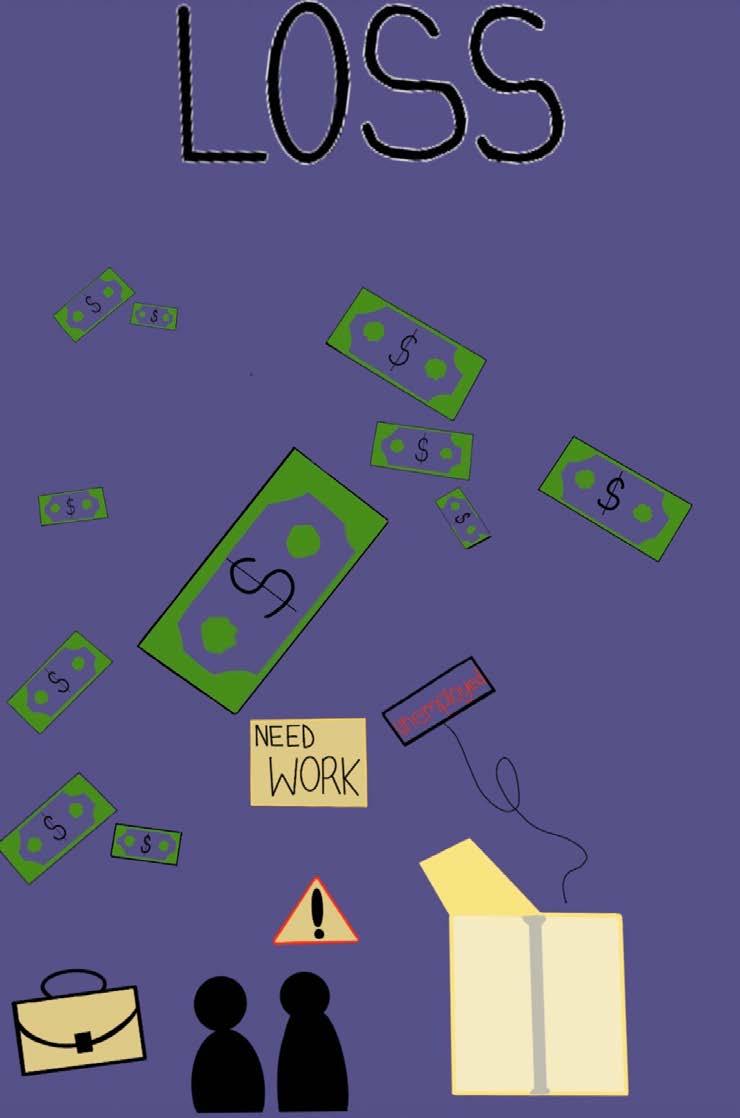
By Anna Baker Staff Writer
The first known case of Coronavirus (COVID-19) appeared in Wuhan, China, in January, 2019. Since then, people all around the world have found themselves struggling with finding employment. Regardless of the impact on a person’s company, COVID’s financial burden on businesses caused millions of job losses throughout the world. In March, 2020, just two months after the pandemic started, 23 million people lost their jobs. Since then, people’s lives have been affected emotionally, financially, individually and socially.
The emotional impact of being unemployed affects a lot more than just the 23 million people who lost their jobs. For one, being unemployed creates tensions within their family. Parents often face a sense of responsibility to financially support their family, but when one parent suddenly has the sole responsibility to provide food for the family, there is often a strain on the relationship.
According to Axelrod’s Attorney at Law Association, in February of 2020, following the start of COVID, there was a 58% increase in divorces because of sudden unemployment and the financial pressure that followed. The financial strain that follows unemployment creates a multitude of personal problems, triggering strong emotional outbreaks and increased depression. Unemployed workers often face depression and start arguments blaming their partner; ultimately, arguments lead to a toxic environment in marriages and family dynamics.
The most prominent setback in people’s lives when they lose their job is the financial instability that follows. Oftentimes, when people suddenly lose their jobs, they face financial troubles because of the sudden loss. According to an Assured Partners Investment article on the importance of saving, many people spend their whole adult lives saving for retirement. Consequent-
ly, the financial setback creates problems and pushes back many people’s retirement plans because they do not have the financial support to retire as early as they hoped.
“Losingyourjoblateinyourcareercanbelifealtering.Yourincome stream is interrupted during peak earning years. This can have a significant effect on your ability to save for retirement, and only about 21% reported being financially stable,” Assured Partners Investment said.
Although many plan to retire intheirearly60s,21%ofpeoplehave reported that they were not financially stable enough to have retired at the age they wanted to, and many of those cases are a direct result of the instabilities COVID brought. In the face of saving for retirement, many other financial struggles arise. Specifically, according to EH Law Group, an organization focusing on bankruptcy, more than 52,000 people were laid off in January, 2023 causing mass unemployment. Consequently, forcing them to push back their retirement because they do not have the financial stability to afford to step away from working.
Many define themselves by their career and successes. Careers often offer people a sense of purpose and belonging, so when they suddenly lose their jobs, a lot of people face the struggle of learning to rebuild their lives. In many cases, with losing their jobs, people also lose a structured life. When people follow a certain schedule, based on their career, for a majority of their life, they become accustomed to it and lose structure. When someone is laid off, there is often anxiety and the feeling that they spent years wasting their time at their job. In careers, people are actively participating in the success of the company — when people lose their jobs they can experience the feeling that they are no longer valuable. Another reason that someone may feel useless in life is because of icebreakers. Icebreakers are a way for people in a group, normally strangers, to get to know each other. In
most groups, the common question that is asked is “what do you do for work?” Although this question may seem simple and insignificant, someone who is unemployed may feel a sense of unbelonging.
“People with high ‘work role centrality’ who lose their jobs suffer more. They are more likely to be depressed and anxious and more likely to feel that there is less purpose in their lives. Their identity and purposeseemedtodisappearwhenthey losttheirjob,”PsychologyTodaysaid.
Although being unemployed is often a burden, some people look to new hobbies to help relieve their stress. In the search for a fresh start, many people have found that hobbies are the best distraction during a time when people feel fearful of their future. Not only do people have to carry the weight of financial burdens, but it also raises concerns for companies as they question your skillsandreliability:ifyouhavepreviously been laid-off, many employers questioniftherearemorereasonsto why your past employer let you go.
“Being unemployed makes it much more difficult to find a job. Multiple studies show that employers have a bias against candidates who are not currently employed. In some companies, you are automatically disqualified if you’ve been out of work for more than six months,” Mac’sListonthestudyofcareerssaid.
The loss of one’s job often brings about feelings of hatred or self-pity. Not only do people face the struggles that come with unemployment, but also the repercussions of spending your life wanting more. COVID has brought people mixed outcomes in regards to their future goals. As a result of the recent pandemic,manypeopletothisdaystruggle with the effects of loss and the burden of unemployment; however, some people prioritize their mental health and wellbeing through the participation in hobbies and other activities. It is important for people to find passion outside their careers so being laid-off does not make someone question their identity.
By Liv Fezzie Lifestyle Editor
Although most may not realize it, having a sibling can be one of the biggest blessings in life. Often, having a person that you grow up with that knows everything about you can feel annoying. However, my perspective on having a sibling has immensely changed as I have grown older and more aware. When I was younger, like many others with siblings, I dreamt of what it would be like to be an only child. I pictured it as having all the attention on you: being forever pampered and adored. Even though these scenarios were often unrealistic, I started to realize I took for granted the built-in best friend that I had. I understood I would not always have this person by my side to come home and talk to. I recognized that I regretted all the silly disagreements we have had and that they would not actually affect our bond and be worth fighting about in the long run. The true blessing of having someone you relate to more than anyone else in the world is rare and it is something I know I will cherish forever.
Losing a sibling to college can have major impacts on communication. Depending on how far a sibling travels, communication barriers can be altered or extended. For some, siblings travel across the country, typically leaving only holiday breaks for seeing one another. For others, having a sibling move away from anywhere from minutes to hours away can still have a huge impact on home life. Especially for younger siblings, having someone that you look up to and have
grown up with your entire life move away suddenly can be truly a difficult experience to have to endure. All of a sudden, the person that you knew the best is not in your everyday life anymore. This upcoming spring, my older brother is graduating high school. I know how hard this new change will be for the both of us. We are two years apart, so we have always had a close bond, even though we often do not relate to one another due to our different ages and genders. This adjustment can be especially harder for younger siblings that do not have any other siblings that they live with, like myself. For younger siblings with a much larger age gap than their older sibling, this new experience can be particularly confusing. One of the most important people in your life that you saw everyday moved away to some unknown place. From my perspective, I know my house will have a new quietness to it, one that I have never experienced before and I will have to adapt to. There are a variety of ways that anyone who has a sibling in college can learn how to live without them in their life. I know my brother and I are definitely going to stay in close contact. Although he is not going to college that far away, he and I are going to communicate daily. For those with siblings in college who live within driving distance, occasionally meeting up for lunch or even to go for a walk is a great way to stay in contact. For some with a sibling living further away, communication platforms such as FaceTime, messaging and even social media apps are great ways to continue contact. The strong bond between any siblings is so import-
ant to preserve and I know the strong connection we had growing up will still be there. Understanding that constant communication is unrealistic is necessary in order to maintain an agreeable relationship; consequently, knowing that conflicting schedules and events are undoubtedly bound to interfere is crucial. Despite all the negative outcomes of having a sibling go off to college, there are some positives. I’m beyond thankful for having someone in my life that makes saying goodbye beyond hard. Reuniting with your sibling during a break is truly a heartwarming experience; similar to catching up with a good friend you have not seen in a while is a fulfilling experience that makes you cherish time with that person, as well as any other loved ones you may take for granted without realizing. Often, if people see someone on the daily, they might tend to underappreciate that relationship. Though not realized, we might tend to miss them before they’re gone and when they do leave, that’s when we realize we miss them so much. That is why it is so important to always be aware and thankful for the meaningful relationships we encounter. Losing a sibling to college comes with its ups and downs, proving the importance of always cherishing important relationships and never taking them for granted. Sibling relationships are some of the strongest there are and remembering to love your sibling and other family members is something everyone should do everyday.Everyonethathasasibling leave for college should know that that separation does not have to impact the relationship.

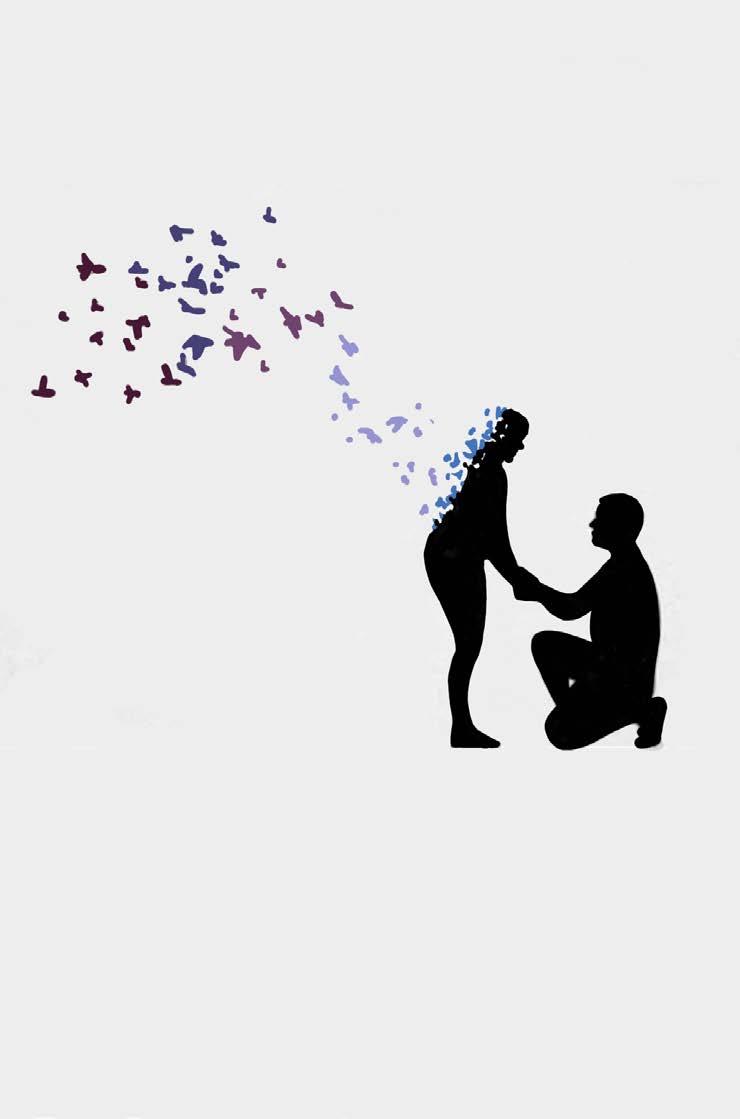
By Yulia Paliy Staff Writer
Loss is an experience many go through at least once in their life. There are many different ways to experience a loss and it’s very easy to lose yourself in the process of grief. Coming from someone who has experienced a loss in a relationship or friendship before, it’s important to keep yourself restful during that time and find ways to move on and improve yourself.
In the beginning of the process, right when it happens, you will feel heartbroken and devastated. It will feel like everything you had, has been taken away from you. You will start searching for answers or blame everything on yourself. That is how loss can lead to depression. Instead of sitting there and wondering what has gonewrongandwhyithashappened to you, try and do quality things that will clear up your mind.Manypeoplewouldrathergoonawalkorhangoutwith people that make you happy. From my own experience with loss, the strongest emotion I felt was self doubt and loss of confidence. I kept blaming myself for the situation that occurred and kept replaying the past memories, questioning what I could have done differently in the relationship. I felt really sad because the individual that I hurt someone that was really close to me. For the first few months, I felt nothing but guilt and regret. It took some time to let go of that
feeling, but eventually, I realized there is way more to life than just the difficult situation I have to overcome right now. After feeling down about myself for months, I finally recovered my mind from that regretful feeling I’ve been carrying all this time. At first, your mind will probablymakeyouthinkitwas all your fault and you should blame yourself for what happened. The right thing to do is just try to accept what happened and move on for the time being. In time, that part in your life will come back to you and every time you would think about the situation, it would hurt less than it did in the beginning. Loss is really hardtogetthrough,especially if you don’t understand what happened is not always your fault. It stops you from enjoying the present, but after a while, you start to understand that people make mistakes. Loss is an emotional experiencethatcancausepeople to make mistakes when they feel emotional. Recovering from grief needs to start with accepting that losing someone will be forever in most cases. And if you were in the wrong, forgiving yourself is the biggest step towards moving on. When you forgive yourself, it does not mean that you will forget what happened. Forgiving means that you accepted that you did the best you could with what you knew at that time. It should not mean not trying to change how you act or what you do, just to get over that obstacle in life.
People going through loss teaches a lot about the people around you. When things get tough, you see who really is there for you and who is not. It hurts to find out that some people will not be in your life for long. But it is nice to see the people who help and support you through tough times. The people who stay with you will make your friendship stronger. With someone by your side, it does not feel so lonely. Having at least one person who cares about you makes things a little easier. Loss doesn’t only teach aboutrelationshipsofallforms, but it also teaches independence.Whenwelosesomething or someone, we have to find a waytobestrongonourown.At first, it can feel like a lot to handle, but it also helps us get to know ourselves better and deal with the harder things. After a while, it can feel like you do not need to rely on anyone for help or advice when you are upset over a loss. Loss helps us learn to be strong and confident. Loss gives a chance to learn and grow as a person and makesyouthinkaboutyourself. You may start to think about what you want to do with your life or find new things to do for distractions, as new activities and interests help to minimize the emotional pain you feel. They show you that something good can come out of something bad. When you experience loss it does not always mean everything is over. Sometimes loss redirects your life and helps you grow; it puts you in a better spot for the future.
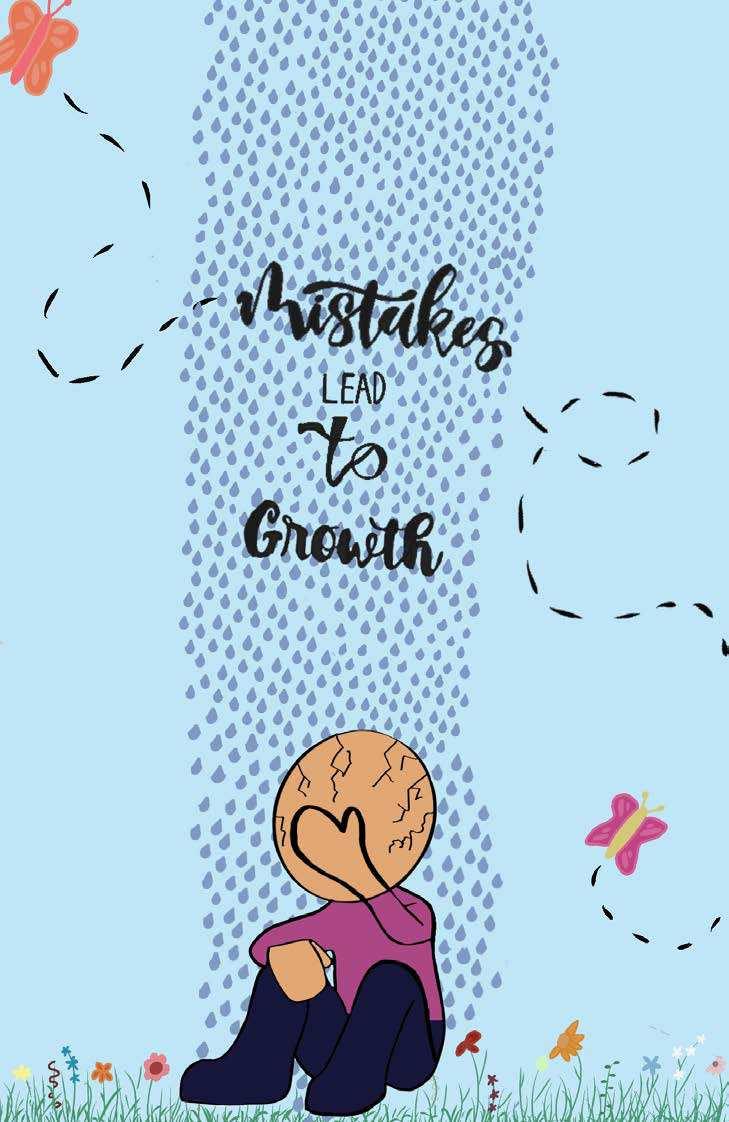
By Gabriella Luongo Assistant Graphics Editor
Life constantly throws difficult challenges at us; however, each experience teaches us valuable lessons, strengthens us for the future and guides us towards growth. There are certain moments where it can feel as if your life is crumbling. Everything you were working so hard for suddenly falls apart; you feel lost and as if you no longer recognize yourself. In specific situations, you can feel as if the moment defines you. You may feel unmotivated, lost, empty and unsure of where to go next. Setbacks can make you feel overwhelmed in the moment, causing constant questions to run through your mind. You may constantly wonder “Why did this happen to me?” “What did I do to deserve this?” or “Why me?” However, setbacksplayacrucialroleinlife.They teach strength, resilience and perseveranceandremindusthatwhen everything feels as if it is falling apart, it is often falling into place. When your life does not go the way you had planned, it can feel as if nothing is working in your favor. Even small things that occur in your life can make other situations feel more challenging. I have experienced times where things I cared deeply about did not turn out the way I hoped and goals fell apart. These experiences affected my motivation, confidence and mindset. It felt difficult to stay positive when my mind was constantly filled with negative thoughts. It is extremely draining to bounce back from a tough situation when you try to manage it by yourself. What is even more exhausting is when you do not know what to do with yourself. You can feel lost and confused. In situations like these, people can feel as
if they have to bottle up their emotions and ignore them because they won’t be understood. People usually deal with these emotions by sitting home alone, scrolling on social media and feeling sorry for themselves. Your mind starts to be consumedwith“whatif”thoughts, which causes it to be even more difficult to move forward. It is necessary to do everything in your power to find the motivation within and keep pushing forward, as everything is hard before it is easy. Over time, I have started to look back on difficult moments I have faced with a different perspective. As a result of this alternative outlook, I was grateful these situations occurred. What I used tobelievewasgoingtoruinmylife, I realized was redirecting my life for the better, because everything happens for a reason. These hardships forced me to grow, and find motivation within me that I did not know I had. I forced myself to do things I was uncomfortable with doing in order to improve. I realized that you should not let setbacks define you, but instead, learn how to push through them even if it feels impossible. In the moment, these situations can feel unbearable, but it is important to remember that they were created to guide you. When I look back at these situations, I realize why they happened and I let them guide me to be a better person. Although you can make mistakes in life, it redirects you for the better. It is a necessity to overcome these situations instead of letting them define who you are. These moments were handed to us for a reason and in the end, as long as you persevere everything will work itself out. Ultimately, you always turn out to be a stronger version of yourself than you were before. It is okay to take as much time as one needs to get
through a situation, but what matters is that you eventually push through. Your mindset greatly influences your viewpoint on life. If you want to have an enjoyable life; you need to switch your mindset and fill it with happy thoughts. There are many different ways to put yourself back together after a difficult time. Strategies I find the best are surrounding yourself with loved ones and exercising. I tend to be around with friends and family when I am feeling lost after a setback. They always cheer me up after a difficult time. It is very helpful to talk things out and hear other perspectives on the situation you are dealing with rather than bottling emotions up. Being with friends and family helps distract my mind from a difficult time and it allows me to have fun and enjoy myself. Another way to pick yourself up is exercising. When your body exercises, it releases endorphins, dopamine and serotonin. These chemicals can give your body a boost when you are feeling down. It boosts motivation, improves mood and reduces stress and anxiety. When I exercise, I find that my brain pauses my over-thinking and allows me to mentally reset. Life can be extremely difficult and challenging. It throws obstacles at us for reasons we may not understand. The setbacks we go through are opportunities to grow as a person. While these moments feel painful and discouraging, they shape us to become strong and allow us to be more capable of facing more difficult challenges in the future. Each moment of disappointment forces us to reflect and persevere. Everything happens for a reason and setbacks create stepping stones in our lives to redirect in order to become the best version of ourselves.
By Naya Karzoun Staff Writer
When people hear the word “lesson,” they often associate it with school, teachers and textbooks. Not all the lessons are learned inside of a classroom, rather, they are learned through experience. Mistakes are usually viewed as a negative thing, but they play a huge role in personal growth and learning something new in life. Without mistakes there would not be any actual learning from your own actions and it would stop past mistakes because you would have learned your lesson. Every mistake should teach a lesson and each lesson will help moving forward in life. Mistakes teach people about growth, effort, resilience and the value of relationships in a person’s life.
Mistakes often make people feel ashamed because we are taught to view them in a negative way, but in reality, they are more of a benefit than a disadvantage. Mistakes force people to face their problems. The idea of facing your issues might drive people away because they are scared of the outcome, but making mistakes pushes people out of their comfort zones and encourages them to think differently, which usually leads to their improvement. Growth does not happen when everything goes perfectly and in a linear fashion, it happens when people go through struggles and learn from them.
Since many have been raised to believe that messing up means they are not good enough. Because of this, people tend to avoid taking risks due to the fear of making mistakes. People who do not go out of their comfort zone and try new things will never grow, because in order to grow in life, you need experience. A person will not get better if they do not put in the effort by making choices you would never have made before.
“The only man who never makes a mistake is the man who never learns anything,” former President Theodore Roosevelt said. Mistakes should not be seen as a sign of failure, but as a sign that someone is learning and trying to grow. Making a decision means that
youcouldbeimprovingandmistakes fromthosedecisionsshowhowsomeone was brave enough to try and will learn from what they have done. Doing nothing and staying where you are may seem safe to some people, but it does not get you anywhere or lead to growth, it leaves you exactly where you started. Mistakes should be seen as feedback, showing what has not worked and what needs to be changed in the future. This kind of learning can only come through people’s own experience. Someone telling you or reading about someone’s failure is not the same as living through the consequences it comes with and learning from it through your own experiences. Another important lesson that mistakes teach is resilience. When people mess up and still keep going, they learn how to handle difficult problems. People should learn that failure does not mean the end of the world. Instead, it should be seen as going through the process of learning and maturing to get better. Over time, mistakes make people stronger and more confident in their ability to handle situations because of their past experiences. Each mistake should give a person the courage to tryagainanddobetterthenexttime.
In relationships and friendships, mistakes are extremely purposeful. Mistakes can hurt feelings and cause huge misunderstandings between people. Mistakes such as failing to communicate or cheating can affect relationships in a significant way because it breaks the trust that was built up over time; however, past mistakes show us how to make our relationships better. Learning from what we did wrong helps communication and improves trust with each other. These mistakes teach you what not to do in the future. Learning from mistakes requires reflection. Simply making a mistake is not enough; a person must think about it and what they can do better afterward. Reflecting means asking questions like: “what went wrong?” and “what can I improve on next time?” This process helps turn mistakes into lessons so you do not repeat your wrongdoings. Taking
responsibility for mistakes is an important part of learning from them, especially because a person has built up the courage to take accountability for their actions. Making mistakes helps people build the courage to take accountability by pushing them to face the consequences of their actions rather than avoid them. Over time, this teaches individuals that admitting mistakes leads to growth, maturity and better decision making. Mistakes can also result in people being more humble. When someone makes a mistake and accepts that they did something wrong, they realize that they are not flawless, which makes them more open to getting better. Being humble allows someone to be accepting of people’s opinions or feedback on things they do not normally receive criticism on. The people who believe that they are always right will not have any room to improve from their past actions later in the future. Making mistakes reminds people that you can always get better at anything and that everyone has room to improve no matter how old they are. Some people also resist learning from their mistakes, which is improper. Having an open mind when making a mistake is important becausepeopleshouldwanttoimprove. If you blame others or do not take accountability for your own actions, then you are preventing growth. On the other hand, accepting mistakes leads to progress. This choice helps make the decision between staying stuckwhereyouareormovingonfor the better. Accepting mistakes means admitting when you are wrong. Learning from them helps you grow and make better choices next time. Mistakes are unavoidable but a person earns the choice of learning from it to make themselves better based on how they react to them. Mistakes are not failures but opportunitiesforgrowth.Theyhelppeople learn through experiences, build resilience and develop better judgment over time. Although mistakes can be uncomfortable, they push people to face their problems and learn. Accepting and learning from mistakes allows people to grow stronger.

By Layla Casey StaffWriter
When people hear the word “sports,” they typically think about competitive games or entertaining events such as Sunday Night Football games. But for those who participate in athletics, sports are a lot more than just a game or activity. When you play a sport, you learn valuable lessons that stick with you in everyday life. The essential lessons gained from sports are often difficult to gain in other settings. Someone who may not gravitate toward sports, and more into other activities might find it harder to learn these lessons like teamworks, discipline and dealing with setbacks because these are often lessons learned through physical challenges and competitive sports environments.
One big lesson sports teach is how to work with other people. When you are on a team, you cannot only focus on yourself or your individual goals. You have to communicate with teammates, listen to them and sometimes make sacrifices in order for the team to succeed. You may play defense for a game instead of your primary position on offense or pass the ball instead of taking a shot. In these situations, you put the team before yourself, helping the team succeed even if it doesn’t give you personal recognition. If someone does not communicate, give effort or do their part, it affects the entire team and could be the deciding factor between a win or a loss. Collaboration is something that appears in real life as well, including group projects at school or working with others at a job. Sports also teach discipline and the importance of perseverance. Practices can be long, tiring and demanding; there-
fore, there may be days when you may not want to show up. In those moments, it is up to the athlete to remain disciplined and choose to always give their best effort. As a result of showing up and putting in the work, you can improve your skillsandbecomebetteratthesport. Through practicing and staying persistent, athletes commonly see improvement and realize that hard work leads to development and ultimately pays off in the end. From a young age, sports teach you that discipline is one of the most important qualities to have as a person. This lesson is relevant in both academic settings and various other pursuits. Discipline highlights the importance of dedication, even when results seem gradual. Waiting f or results may be frustrating, but by maintaining hard work athletes develop the skill of patience. For student-athletes, discipline comes in many forms. It may look like completing homework after long practices, studying even when physically exhausted and being able to manage responsibilities without falling behind. These routines enforce strong routines and teach athletes how to stay focused and motivated, even when their schedules may feel overwhelming. Another important lesson in sports is learning to deal with setbacks and challenges. Losing a game or making a mistake can be frustrating, especially when you feel like you have let your team down, but sports teach you that messing does not mean ultimate defeat. You learn to move forward, stay positive and try again. This lesson can be seen through shortterm situations, such as making an error during a game or missing a crucial shot; additionally, this can also be seen in long-term situations like not making a team or suffering from an injury. Most athletes are taught skills from coaches to get over their personal setbacks. A helpful strategy includes what athletes call “be a goldfish,” meaning
to adopt a short-term memory for mistakes. Another strategy may be to encourage a teammate or pick them up when they are feeling down, many athletes use this strategy to encourage them to reevaluate their perspective. This also helps in everyday life. For example, when something does not go their way, like not getting the job you wanted, athletes are able to use the strategies learned from sports to pick themselves up and remain unbothered and professional. Over time,dealingwithsetbacksinsports helps athletes gain confidence and learn to bounce back from failure. They become willing to take risks and learn from mistakes, helping them handle challenges in academic and personal situations. Sports often stand apart from everyday life because of their intense moments that create a sense of increased reality. Lots of athletes have felt the pressure of a close game, or the nerves right before a big event. These experiences push you out of your comfort zone. More importantly, they teach you how to handle stress and emotions in a way that you cannot always learn from different, less intense situations. Through the stressful, exciting moments, sports force you to grow, even when you may feel uncomfortable. By overcoming the uncomfortable moments, athletes learn to handle everyday stress and emotions efficiently. Sports are more than just games, they provide lessons that helpyoubecomestrongerandmore resilient in everyday life. Through teamwork, discipline and learning how to handle setbacks, sports prepare you for challenges beyond an athletic setting. Playing sports also teaches time management. Athletes mustlearntobalanceschool,sports, studying and other responsibilities. These responsibilities force athletes to prioritize, plan ahead and make productive use of their time. These skillsarevitalinhighschoolandwill continue to be useful in adulthood.
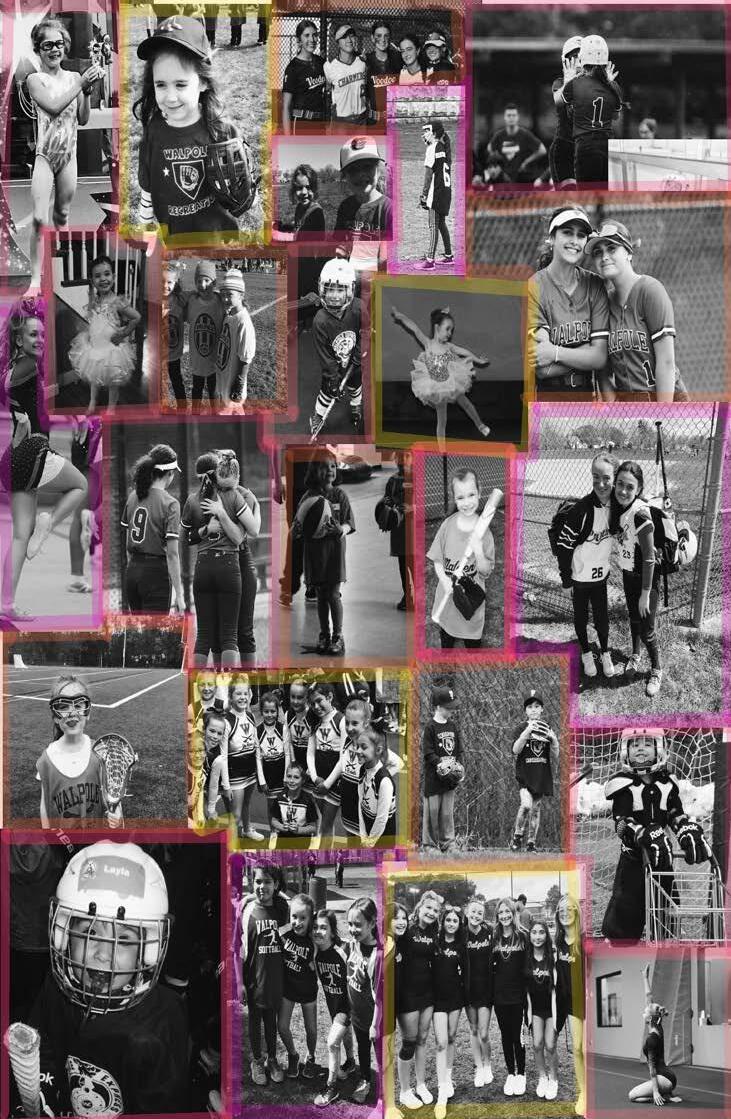

By Kate Potter Marketing Manager
High School can be a challenging time for most teenagers. With maintaining grades, applying to colleges or scholarships, an overwhelming workload and athletics, high school can be an unpredictable four years. However, high school is also a place where a person can grow, building relationships with the people around them.
Arguably, one of the most important relationships you can make in your lifetime isabestfriend.Mostpeople—includingmyself — take it for granted, but a best friend is the biggest support system that a person can have throughout these challenging four years. When I was in second grade, I had just moved to Walpole and was extremely nervous to start at a new school. My teacher assigned a group of girls to show everyone who was new around the school and little did I know that the girl who I would soon be attached at the hip with was among that group. Throughout all of middle school, she continued to be by my side through the thick and thin, the good and the bad and everything in between. In high school, even with oppositeschedules—likemybestfriendand I — it is important to stay close with your friend. Finding the person that genuinely enjoys spending time with you and supports you, yet can disagree and call you out when you are in the wrong is an extremely special friendship. No one is perfect, everyone makes mistakes, even in friendship. My best friend and I have fought more times than I can count; however, we were always able to listen and hear each other’s different points of view without ruining our close friendship. A conversation that I believe is crucial to having before understanding the different types of people that you meet during high school is that not all relationships we build are healthy. At one point in life, you will inevitably come across someone whose lifestyle does not positively align with yours. Although it is essential that you try and be nice to everyone around you, it is bound to happen that you cross paths with someone who may be overly critical, controlling or dishonest.Although it is inevitable that we encounter people like this in our lives, it is important to find ways to deal with these people in our lives, such as recognizing the toxic signs and setting boundaries. In my experience, remaining civil with everyone is the best thing to do during high school. Last year, I got into a huge fight with a friend who I was extremely close with. This fight caused us to not want to be around each other or even look in each other’s direction. Following the saying “be the bigger person” is simple, yet incredibly beneficial to our relationship and it made it easier to co-exist with someone who I did not necessarily get along with; it is crucial to control your reactions and avoid gossip. Alongside the friendships that one
builds in high school, the mentors that support each and every student can deeply impact a person’s experience with school. Teachers that inspire their students and create an environment where teens are able to foster creativity and build resilience and long-term success through encouragement, achievable expectations and engaging relationships. Fortunately, in the past I have had numerous teachers which have allowed me to grow as a student and thrive in school. However, one teacher in particular always sticks out to me. The beginning of freshman year can be extremely stressful as one must find their way through a new environment while also balancing the workload from school and any extracurricular activities. My freshman Spanish teacher allowed not only me, but the entire class to do well in the class by creating an environment where we were able to ask questions without feeling judged or criticized. While remaining focused on academics, we as a class still had fun with every activity that we did each day. In contrast, it is bound to happen that you will not get along with every teacher which you have. Although your thoughts and views may not align, it is important to learn how to adapt and be able to learn things that may not be in your comfort zone. Struggling to meet the teacher’s expectations may feel impossible at first; however, in the end, the different points of views will expand your mind not only as a student, but also as a person. Learning to adapt is a crucial part of life and having this skill as early as high school can set a person up for success in college and jobs. Even though I have had a positive relationship with most teachers, I have also not gotten along with some as well. Math has always been my weakest subject; it is a class which takes me longer to fully understand. A teacher I had made this pre-existing struggle even more complicated. Due to the fact that it was an honors class, she believed that we already had an understanding of the topic we were learning, which made it incredibly difficult to learn as she would not demonstrate the exact steps to problems. Rather than stressing myself out and trying to teach myself how to do the math problems, I sent my teacher an email explaining how I felt. I was able to meet with her and build a better understanding of what we were learning. Streotypically, high school relationships can be overdramatic. However, relationships throughout high school benefit andimprovesocialaswellasemotionalskills. Communication not only fosters encouragement and motivation and teaches valuable lessons, but also prepares a person for any future relationships with a significant other. One of my close friends met her boyfriend at the end of her sophomore year. Since then, I have had the privilege to watch one of my best friends grow as a person and be loved by another person. Watching my friends find happiness in a person is truly some-
thing like no other and I find joy in seeing them happy in a new chapter of their lives. Students are constantly forming new friendships through classes, clubs or even group projects; however, one of the places where some of the closest friendships can grow is athletics. Through early practices, after-school scrimmages and late night games, students are able to develop friendships with both their teammates and coaches. Not only do sports create friendship, but they also form community. It allows individuals to get involved and encourages them to put themselves into situations which may be out of their comfort zone, ultimately maturing them as a person. My dance team will forever be a group of people I am immensely grateful for. Five days a week, four hours each day, my team has always had my back and has been a support system that I know will always be there for me. It is especially important that a person finds both a sport that is right for them as well as a team in that sport. Surrounding yourself with people who have similar goals and love the same thing that you do is truly an indescribable feeling. Those people understand a part of you that others may not.
During high school, you are always surrounded by people who you may not have gone to primary schools with and you may have not met otherwise. One of the most rewarding people you can meet in these rigorous four years, may come at a time when you least expected and it could be someone you would have never guessed. These friendships may feel like they come at a random time, but in reality, it is when we need them most that these people come into our lives. This year, I have grown incredibly close with the girls on my dance team; however, I could not imagine how dance would be this year without one particular girl on the team. We have grown extremely close within a short amount of time and she has made such a positive impact on not only my life at dance but me as a person. When I was younger I was always on the older teams which made me feel a bit disconnected from my team since they were all older than I was. However, when my friend joined the team, we immediately clicked because we were close in age.
A person’s high school experience heavily depends on the people that they surround themselves with. The individuals that surround us foster a sense of belonging and although your ideas may not align with everyone, it is important to appreciate the people in your life who form your adolescent years and impact your transition into the years beyond high school. By involving yourself not only in school, but also things that you are interested in, you will automatically surround yourself with people who have similar interests and goals. Although having a large group of friends may sound nice, it is important to prioritize the invaluablefriendshipthatyoumakeinhighschool.
By Sophia DeMelo Staff Writer
Everyday, we are surrounded by music and do not even realize the things it is trying to teach us. Music is often used by its artists to convey their feelings or emotions and to provide listeners with a new lesson after every song. Music plays a vital role in our day-to-day lives by helping people form a sense of self through its vastly different genres; therefore, music has been one of the key contributors to the diverse and unique culture of our world today. Music has been a part of human culture dating back millions of years ago to create community and bring people together. Hence, there is really no exact number of music genres that have been created. There are classic genres such as pop, rock or country; however, artists tend to split broad genres into subgenres and mix different ones together, forming thousands of little unknown genres that people do not really talk about. Because of this, most would consider music to be subjective, meaning people form their opinions on it based on personal experiences and views. Moreover, because of music’s subjectivity to its listener, every lesson in songs means something different to people based on their interpretation. There is always one strong underlying message that the artist wants to convey to the listener. However obvious or hidden this message is, it is meant to benefit the listener and can give them advice in difficult or challenging parts of their lives. Every song you listen to is trying to influence you in some way shape or form. Music is meant to kindle emotions by activating the hippocampus, dopamine and emotional centers in the brain. By releasing dopamine, you begin to feel emotions like happiness. The hippocampus controls your memory. When music activates the “memory center” in your brain, it associates certain recollections with songs, creating the feeling of nostalgia. By activating the different emotional control-centers of your brain, the overwhelming sense of feelings often persuade one to do certain things.Thesethingscanincludecrying,laughter or making a decision. Music is always trying to direct you by touching different parts of your emotions to induce what you do. Noah Kahan, a folk-pop artist, often uses relatable lyrics to discuss topics such as the stigma based around mental health and love to teach listeners through his music. One song in particular, “Call Your Mom,” has a very strong message. Released on his “Stick Season (We’ll All Be Here Forever)” album in 2023, the song discusses Kahan’s unconditional support for those struggling with mental health issues, as well as his urge to those struggling to not lose hope in dark times. One line particularly highlights this message: “all lights turned off can be turned on.” His specific lyrics convey the overall lesson of the song, encouraging the listener to have faith that dark times are temporary. Kahan uses the simplicity of turning a light on to explain to the listener that seeking help and getting yourself out of a negative place is possible with the right support and motivation. This particular song has been extremely
influential in his career, because it directly illustrates his advocacy to seek help and support when one is struggling mentally. This topic is known to be extremely important to the artist, as he even has a non-profit mental health foundation called The Busyhead Project. The non-profit focuses mainly on providing resources and information about mental health; additionally adding Kahan’s personal experiences with mental health. This helps educate people on the topic of mental health and helps raise awareness; teaching people many lessons on the very hushed topic. Kahan is very vocal about his own struggles with his mental health and has derived the project from them by using some of his profits from concerts towards mental-health advocacy.
Phoebe Bridgers, another popular folk artist, is mainly known for her sorrowful lyricism and themes that convey powerful lessons in her music. One of her most popular songs, “Funeral” from her “Stranger in the Alps” album, was written after the unexpected death of a close friend. Bridgers uses death as a common theme throughout this album to cope with the passing of her friend. However, it is particularly obvious in this song, as she focuses on addressing her feelings about her friend’s death and teaching listeners valuable lessons on coping, acceptance and realization. In addition to these points, Bridgers uses this song to show how some people’s problems can be much bigger than your own. Although your problems are not unimportant, someone is always enduring much worse. In her lyrics, Bridgers says “wishing I was someone else, feeling sorry for myself, then I remember someone’s kid is dead.” Bridgers uses the harsh comparison of someone else being dead and oneself being alive to undermine her own grief and hit the listener with the reality of others’ situations. With this, Bridgers is teaching the listener to be grateful for their life even when struck with grief and negativity, as there is always someone else who is going through something worse. Bridgers conveys to the listener to keep pushing forward during difficult times in one’s life and to not constantly feel pity for oneself when there are other people with much larger issues around them. Country artist, Zach Bryan, continues to impact listeners with the compelling messages in his music. Bryan was originally discovered through his authentic uploads of music on YouTube during his time spent in the Navy. Many listeners characterize his music as being raw and relatable, which goes along with his heavy usage of acoustic guitar and focus on topics such as love, loss and self-acceptance. More specifically, his song “Smaller Acts” hones in on the lesson of staying true to yourself and not performing for anyone else. Within the song, Bryan uses a unique style of wording to describe the unnamed woman he is singing about. He talks about how the woman is fond of the smaller things such as the summer, coffee and dancing. The woman mentioned in the song is meant to be a broad representation of people. She is most keen on the smaller things that represent life instead of big gestures meant to impress her. At one point, Bryan states that “there ain’t a grand thing a man can do, she’ll
only love you for you.” Using these lyrics, Bryan is attempting to instruct the listener about the benefits of simplicity, as well as being yourself and never changing for someone else’s benefit. He tells the listener that trying to become grander to seem appealing to another person never results in success, but being proud of who you are is what attracts others. Staying true to yourself is a quality that others admire and that draws people in, not pretending to be someone you’re not. Irish musician, Hozier, conveys lessons of love, happiness and community in his lyrics. Hozier is known for his notable mixture of folk, soul and blues styles of music in his songs, in addition to his use of literary themes. Most of all, Hozier’s advocacy for the importance of being who you are and acceptance are what have drawn in listeners for years. One of his more popular songs, “Someone New,” off of his self-titled album released in 2014, plays a key role in portraying the lesson the artist advocates for the most, which is love. Hozier discusses how love can be used as a distraction from the struggles of life. He sings “would things be easier if there was a right way? Honey there is no right way. And so I fall in love just a little, oh a little bit everyday with someone new.” Through these lyrics, Hozier is reiterating to the listener the valuable lesson that love is incredibly versatile and different for everyone. Love is a universal feeling and there is no “right way.” Whenever you feel love, you should embrace it and not hold the feeling back. Later on in the song, the artist sings “love with every stranger, the stranger the better.” By connecting “love” to the word “stranger,” Hozier creates a sense of community, togetherness and a want to spread love. This is because the two words are usually not associated together. When one thinks of love, they don’t usually think of a person they do not know, or a stranger. A community is based around the idea of coming together with the people around you with similarities. This could include culture, race, gender or language. By using the two very different words, Hozier connects them together with the idea of sharing something with someone you don’t know to build a feeling of community. His ideas intensify the message laid at the center of the song. All music composition is created with the goal of making the listener feel a certain emotion or feeling. Artists use a variety of techniques such as metaphorical lyrics, storytelling and repetition to draw the listener in and reveal a meaning. Metaphorical lyricism is often used to transform strong emotions into imagery, making the song more emotionally impactful. Artists also use storytelling to give the listener something to follow along with, which can help provide the listener with a better understanding of what the lyrics are trying to convey or teach. Additionally, repetition is used to make the song more memorable and linger in the listeners mind so that the lyrics will stick with them and leave the listener thinking. Often out of curiosity, they will listen to the song again; reiterating the deeper meaning of the song until it is memorized. Kahan, Bridgers, Bryan and Hozier all use these techniques to promote the messages they are trying to convey in their music.



By Gabriel Goulart Assistant A&E Editor
Music, something so simple that has existed since the early ages of humanity, with groups of people gathering together to listen to it being performed right in front of them. Music has always been a way for people to connect with each other since the very beginning of time. There are many musical genres, some of the most wellknown ones being: pop, hip-hop, classical, rock, country, jazz, R&B, blues, alternative and electronic (EDM). Most other genres fall in between others, commonly referred to as “sub-genres;” for instance, hyperpop is a genre that falls in between pop and EDM and Lo-Fi is a mix of hip-hop and jazz. There are also subgenres that have something that makes them stand out from their parent genre, such as orchestral music, which falls under the classical music umbrella.
Each individual genre tends to feature distinct instruments and production styles, such as jazz, which tends to have a slower tempo than EDM. Music genres are vital because they separate music into many different parts, as they do with the people that listen to them. People who are in the same group of people who enjoy the same music are significantly more likely to get along with, be friends with and connect with each other than a person who enjoys a different genre
Music taste is a term commonly used to describe the collection of genres or artists one listens to. People can talk about their “music taste” and claim they have good taste in music, but having good or bad taste in music isn’t a thing. Everyone has their own definition of what makes good or bad music; it’s different for everyone. Many factors influence what music some-
one likes, such as the music they grew up listening to, culture, age, life events, if they relate to what is being said in the lyrics and much more. Music can bring people together and set them apart: if someone really identifies with a genre, they’re not going to go out of their comfort zone to listen to other genres of music, they may not relate with people from other genres. People with similar music tastes often get along well because they share the same interests. Genres are more than genres, they are a whole community someone can identify with. Someone that listens to traditional pop music is likely to dress differently than someone that listens to horrorcore hip-hop, two diverse genres makes two diverse people. There is always an in-between, such as experimental hip-hop which blends several genres while still maintaining the hip-hop style. This also relates a lot to emotions; traditional pop is brighter and joyful, there’s stereotypes for people who listen to that genre, they are expected to dress a certain way, such as wearing bright colors or in a Y2K manner. Meanwhile, horrorcore is much darker: gloomy instrumentals and pitcheddown vocals, someone who listens to horrorcore may be expected to be seen wearing darker colors and much more alternatively. Artist popularity is a significant factor too; some people may favor a mainstream artist, while others would much rather listen to less well known artists. This has a significant impact on how others perceive one’s musical taste: does someone prefer to listen to someone everyone recognizes, or listen to an underrated artist, in which a lot less people would recognize? Those factors count a lot with the yearly tradition, the Spotify Wrapped, which shows a summa-
ry of most listened artists, songs, albums and more. Others can see what you listen to, but does this mean someone would be willing to listen to specific music just so they appear a specific way? Yes, they will. In early December, many social media users stress that their music taste was “bad” over the year, so their Wrapped wouldn’t meet their expectations; many users fear being judged by their music taste. However, if someone finds another’s Spotify Wrapped interesting, they could send a like or a comment. But it doesn’t need to end there: direct messaging is easily accessible in social media, which is so helpful to get to meet new people with the same music taste. Music is a lot more than just organized sound; it’s a whole story and if the listener is able to relate to the story that is being conveyed by the song, they will like the song. It’s not only lyrics, instrumentals that are enjoyable have their own psychological connection to the listener’s emotions: a song with a stronger bass and pitched down assets can demonstrate anger, whereas a song with a brighter lead and melody will be happier, but if you pitch down the melody and lower the volume of the drums and decrease the tempo, the song becomes sad. This is a way that listeners can connect through emotions; people connect with each other, often relating to the artist’s stories, and that’s why fans of the same genre or artist can relate to each other that much. Music, a concept that has existed for longer than humans can keep record of, has always been able to bring people of diverse interests and music tastes together. Each genre is its own community, every artist has their own fanbase, and many of those people are actually alike.
By Maeve Connors News Editor
Out of all public school students in the United States, around 3% have 504 plans and over 15% have Individualized Education Plans (IEPs). IEPs can be given to students with disorders or students born with disabilities that impact their education, such as blindness, deafness, autism, learning disabilities or any other health impairment. IEPs are more detailed than 504s and provide specialized instruction. Students with ADHD, anxiety, asthma, diabetes and other disorders, physical or mental, can qualify for a 504 plan. These are broader plans and grant accommodations, rather than specifc instruction. These academic accommodations can often lead to peers, teachers and friends stereotyping these students and making them feel undervalued. If you qualify for these accommodations, it is common to feel judged for disability which allows you, further adding to the insecurity. School can be especially hard, due to their restricting disorders and how they can often be stereotyped by their peers, guardians and teachers to make them feel less capable of achieving good grades. For middle and high school students, it can be especially tough when speaking up about having accommodations regarding their optimal learning needs. Some students may think it is embarrassing to need extra time on assessment or “weird” if they use an alternate setting for a test, even though they need to. Additionally, students may just fnd it hard to muster up the courage to ask to exercise their accommodations. That embarrassing feeling of asking for help is mainly due to the judgment from other peers. By large, it is during kids’ middle school years — as well as high school years — when they are still exploring themselves but also trying to ft in with the crowd; moreover, teasing or making fun of students with differences allows the one teasing to feel like they can separate themselves from that group and ft in with the customary crowd. Unfortunately, kids do this without realizing the consequences it can have on the mental health of the students with different needs than them. For students with 504 plans, they might receive some of these joking comments for disorders, such as ADHD, which is out of their control. As a student myself who has ADHD and anxiety, I have strug-
gled to stand up for what will best beneft my learning in school just like so many others. My 504 plan specifcally has accommodations surrounding my ADHD; it permits me to take extra time on tests and assignments, as well as providing several other adjustments I can employ when necessary. In multiple classes, it has been diffcult for me, where most peers are not in the same situation as me, to stand up for myself and ask to implement those adjustments in spite of what other students may be thinking. With various stereotypes surrounding students with 504 plans, such as the idea that they are not as smart or capable and are slow to grasp concepts, students who do have accessibility to accommodations, often feel less compelled to utilize them because they do not want to ft that stereotype. Students without accommodations often can not comprehend the fairness of giving other students extra time on quizzes because they view it as an advantage rather than equalizing opportunities. From my own experience, I have been told that it was unfair and no one deserved extra time. As a student who struggled all through middle school to fnish my quizzes and tests and suffered from bad grades because I would turn assignments in unfnished, students talking down on the concept of extra time can feel demoralizing. A good example of the supplementary equalizers that 504 plans offer to those select students is the band-aid metaphor: being fair isn’t achieved by giving everyone the exact same thing which is equality, but by supporting each person with what’s necessary for their success which is equity. Not only do peers perceive students with academic modifcations differently than those without, but teachers similarly let a student’s 504 plan modify how they view their ability. In my own high school experience, if you discuss with your teacher you want to utilize your modifcations, for example if you ask to take extra time on your next quiz, then teachers begin to acknowledge that as a sign of struggle. However, what teachers do not understand is that a student could fully understand the topic they are currently learning in class, but due to the way their brain works and processes information, they will naturally take a longer time to complete a quiz or test. Additionally,
teachers may feel like a student is falling behind if they continue to employ their accommodations because, to their understanding, the student must not understand what is being discussed in class if they take over the standard amount of time to take an exam; however, that is predominantly not the case. Students with attention and focus disorders, such as ADHD and ADD, or students with dyslexia or critical anxiety, often comprehend the material fne but struggle with it due to internal factors, meaning a person’s disorder . However, judging by the way some teachers act, it can feel that as a 504 student, you stand out from the other students. Based on what I have experienced myself, teachers often check in with me, more than students who do not hold 504 plans, to ensure that my grasp on the curriculum is meeting their course expectations. While teachers do this with good intentions, it can still feel discouraging because they are stereotyping your ability to be less than others without even realizing they are doing so. In a world where it is common to chase perfectionism and excellence in school, it can take a toll on your own confdence. Public schools are not designed for the minority of students with academic accommodations, so as a child, always reaching to achieve the expectation of a student without a disorder is tiring and impossible, specifcally in the honors and AP level classes offered in high schools. There are often few students, one to three on average, in higher level classes that have 504 plans. A common stereotype that I have experienced throughout high school was that students with ADHD were not as smart or profcient as students without; therefore, taking multiple or all honors classes is questioned for ability. However, having ADHD or a 504 plan does not defne your ability to succeed in school. It just shows you may favor different methods of learning more than others or need different study techniques. Many people joke about having ADHD because of a quirk of theirs or wish they had a 504 plan just to get extra time, yet they do not realize how diffcult it is to get through the school day having both. Teachers, peers, friends and parents play such a major role in your everyday life so it is incredibly important to be more mindful and respectful to their peers because no one truly knows what anyone is going through.
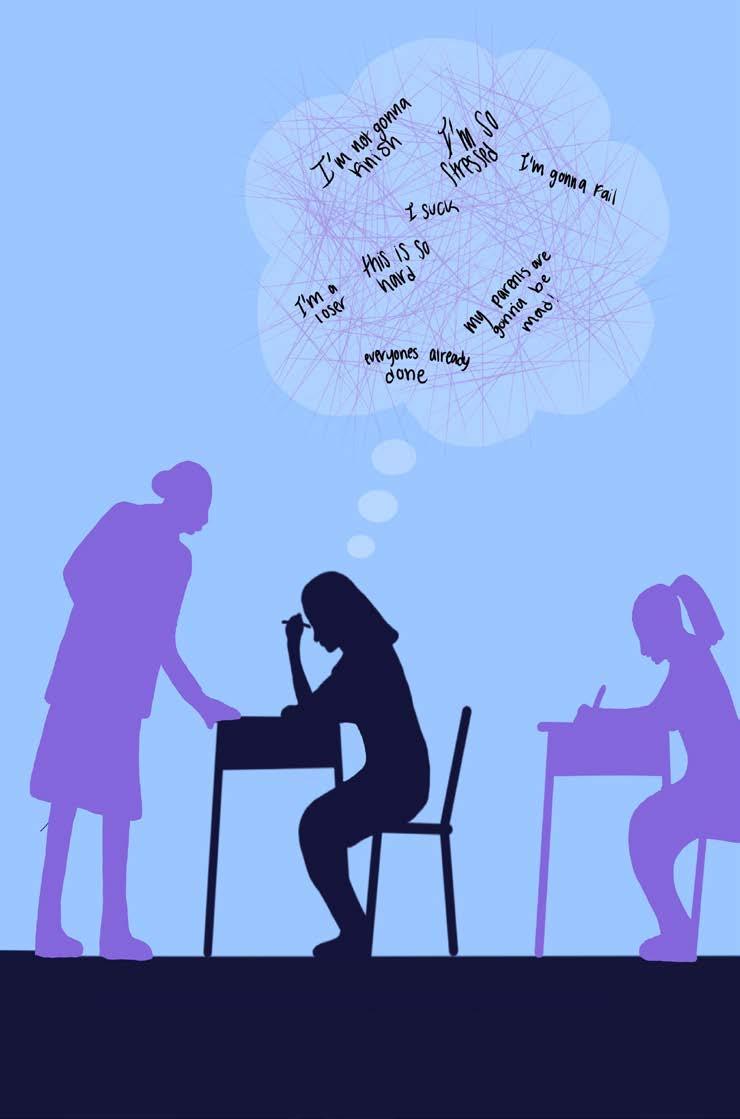

By Colbie Johnson Staff Writer
No matter who your family consists of, or however many parents and siblings you have, they will impact you in all stages of your life. Every family’s situation is different, but throughout them all, one thing stays the same: your personality, especially what effect your familial role has on it. Your personality is impacted by the people you grew up surrounded with and were influenced by. People often can tell if another person is an older, younger or middle sibling due to their personality and behaviors. The effect that competition between siblings has on a person helps to set the course of their life.
The majority of older siblings do not hesitate to fight for and protect their younger siblings. The first born is often treated as a parent’s “trial,” as the parents set them as their expectation for any other children they might have. This leads to the oldest sibling experiencing an intense sense of responsibility. An older sibling is by nature, an important part of the household, as they are always looking for ways to assist their family.
“Research has consistently proven that oldest children are slightly more intelligent and also tend to be highly motivated, conscientious and achievement-oriented,” licensed psychologist Sabrina Molden said.
Firstborns tend to seek approval from everybody around them, more so than their younger siblings and often put a lot of personal pressure on themselves. According to Best Life, it is found that once firstborns become aware of the threat of a younger sibling, they will most likely become control-oriented, focused on making sure they still seem important in their parents’ eyes. The competitive characteristics lead to the stereotypes that surround older siblings.
Though one stereotype is that younger children are the most needy and attention seeking, studies have found that it is actually a common trait of the middle children in a family. Middle children mirror their other family members the most, as they struggle to develop their own personality. Of-
ten overshadowed by their older siblings and cast away by their parents in favor of their younger siblings, middle children are found to be competitive, battling to be as important.
“[Middle children] seek to find interests that don’t already belong to other family members, making them feel foreign to their parents,” licensed family and marriage therapist (LMFT) Carrie Krawiec said. Middle children are the most social of their siblings, as they often turn to friends when they feel that they are not accepted by their family members. There is even a syndrome, “Middle Child Syndrome,” that explains why middle children feel so alone. As they are caught between their other siblings, middle children often feel that they are missing important bonding time with their parents who they believe favor their other siblings. They also compete for the attention of their siblings, as in a three or more sibling family, bonds often form with the children that are closer to their own age. The middle child can feel like they need to stand out from their siblings and the way to do this is to be competitive in many things, such as sports and academics. This leads to the stereotype of competitive middle children.
Doctor of psychology, Stephanie Newman, believes that the babies of a family are the most stress free out of their other family members, as everything has been taken care of for them. The babies are more concerned with having fun and spending time with their friends than any personal responsibilities they might have. The youngest kids are often spoiled and given more attention, because parents know it is their last chance to raise a kid. This causes parents to extend the process of kids growing up, keeping the nursing and other processes of their life longer than it is supposed to be for their beloved baby. All the attention in the early stages of a younger kid’s life causes them to be more needy throughout the rest of their lives. Younger children are often rulebreakers and carefree. They are carefree because their parents are less strict with them then they had been with their older siblings.
“The youngest children in a
family tend to be more social because of having more increased opportunities, at early ages, of interacting with siblings,” Molden said. Only children’s personalities are often described as slightly awkward; they were deprived of the ease of developing social skills that comes with having siblings. They have a tough time relating to and developing relationships with their peers. When they go into a school setting for the first time, they do not have past experiences with other kids and can not relate to others as easily. Due to this, the sole child in a family can also have trouble sharing their belongings with others and often becomes selfish in the eyes of others. This is why they tend to turn to their parents for social interaction or choose to spend time by themselves.
“Only children are like older siblings in many ways, particularly when it comes to their maturity, they are super responsible, perfectionistic and also have difficulty handling criticism,” Krawiec said. Only children are very used to frequent praise from their parents, who can focus all their praise on one child or other adults who remark on how grown up they seem. This leads to them being constant overachievers as they grow older, always looking for the praise they were so accustomed to when they were younger. Even though it may seem that only children get the worst characteristics, there are positive attributes to their character that are only seen in them. They are more independent than others at the same stage in their lives due to them needing to be self-sufficient as they didn’t have siblings to depend on growing up. Since they feel isolated from other children their age, they often become more mature in order to fit in with adults. Even though you yourself may not believe you fit the assumptions, these are widely acknowledged as true. Of course there are exceptions to every belief, but do not be surprised if someone guesses your familial position easily. Your family and your position within it will affect you for as long as you live. Siblings, at their best, urge one another on; competing while also collaborating, helping to chart the course of one another’s lives.
By Siobhan Humphreys Staff Writer
In most recent years, many teenagers have been switching from attending school in-person to taking classes from home through online programs. Teens shift to online school for many different reasons. Some students have a harder time socially and may be going through mental health challenges that negatively affects their ability to learn in a school environment. Online school can be very beneficial to these students who struggle going to school everyday. However, many teens often take advantage of having the privilege to do their school work at home, revealing that in-person school may be more beneficial for students to grow educationally. While online school can be more beneficial to students who may have difficulties attending in-person school like academic pressures, mental health struggles and lack of academic support.
Many teens around the world have a hard time fitting in at school and may experience bullying from their peers. School is a place that some kids fear going to everyday due to what their classmates say and do to them. Other teens struggle a lot with mental health and find very little motivation to get up in the morning and having to sit in a building for over six hours and give their best effort on their school work. Online school is often the option that teens lean towards when struggling to attend in-person school. Online school has many benefits like being able to do your work from the comfort of your home and many kids are even able to significantly increase their grades due to being in an environment where they feel safe. Although online school can be fitting for many teens, in-person school is seen to be more beneficial to students educationally and socially. Disadvantages of online school include lack of social interaction, increased distractions due to being at home and depending on the internet and Artificial Intelligence (AI) to give answers on assignments. Due to resources like AI and other internet websites, students are not growing into their full potential academically and are missing out on crucial information that may be needed in the
future like college courses and when applying for jobs. Online school allows these students to have the freedom to do what they want and use their phones because they are not in an environment where a teacher can see exactly what they are doing. Another disadvantage that comes with online school is not being able to be in a classroom with a teacher and other peers around you to help. It may be harder for students to get the attention that they need from their teachers when doing school online. In-person school is an environment where students are able to learn face to face with their teachers and other peers in which they can grow bonds and friendships. These friendships can help in a learning environment and can allow someone to feel more comfortable and be more successful. In-person school is a good way to socialize because you are guaranteed to have to talk to other peers and administrators everyday. Kids attending in-person school can improve communication skills, learn to resolve conflicts with face-to-face interactions and develop social skills. Online school can hurt kids because they are not in social environments where they can collaborate face-to-face with others which could hinder social skills which can lead to students feeling lonely or isolated. The structured environment that comes with in-person school allows a student to maintain a routine because school begins and ends on a set schedule. A structured routine at school can also help reduce the amount of distractions for teenagers because when everyone in a class is working hard on an assignment, it pushes others to want to work hard and succeed in the class. Being at home can cause students to feel less motivated and be distracted by things like the television, cellphone or pets; however, in many schools, cellphones are required to be in phone holders, minimizing distractions, and teachers create an environment where work is expected to be done within an allotted amount of time.
According to a survey by Pew Research Center, 65% of teens preferred to go to in-person school, and in-person school has higher success rates like increased testing scores and grades in general. Online school has seen lower success rates due to not receiving real-time feedback from teachers and not having reduced distractions. In 2019, a study by the National Institutes of Health (NIH) proved that students doing online school had lower grades due
to having less interactions with teachers. Although in recent years, many students have been slipping in scores while attending in-person school due to chronic absenteeism and finding it hard to pay attention and complete work in class. Now, homeschooled students — mainly those doing online programs — have in fact been scoring 15-25% higher on tests than teens attending school in-person. Online school offers more flexibility to teens who do not have the time for in-person school. For example, many teens who are very good athletes give up in-person school for online school so that they can still get their academics done while being able to travel around for their sports and not miss an extensive period of school. Along with not missing out on a lot of vital lessons that are on going while a student goes away for sports events. Online school allows for teens to still be able to learn and grow academically everyday due to having all of the resources that they could need on a computer, making it easy to set up and complete while in a hotel room, airplane, bus or car. Online school for athletes is proven to be more beneficial because these teens are at zero risk of falling behind and having to deal with the stress of having to go back to school and see all the work they have missed and finding the time to be able to complete all of it in a timely manner. Online school benefits students who struggle with going to school due to mental health challenges, social challenges or having intense commitments outside of school causing them to miss a large amount of school. However, online school is an easy gateway for students to have easier access to the internet, causing them to be able to find ways to cheat and use resources like AI on work. In-person allows students to succeed socially and educationally due to the constant hands on work, being able to socialize and talk to other students and being faceto-face with a teacher can allow students to get more attention on subjects that they need better understanding for. In-person also can cause teens to go through struggles like anxiety and depression which can lead to a negative outcome in academic performances. In-person and online school both have pros and cons for teens all over and choosing the right path is crucial for a student’s successes for the future.
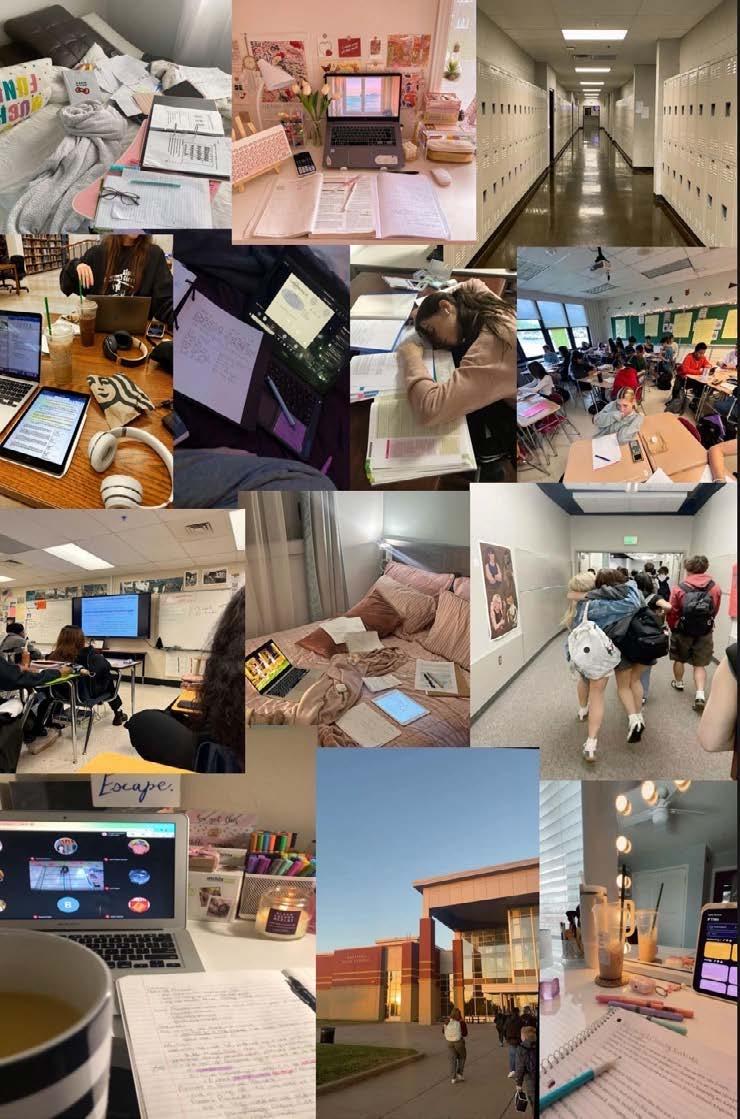

By Addy Pinto Opinion Editor
Romantic relationships are the most intimate connections a person can have. These relationships involve emotions, commitment and passion. However, this type of relationship requires many more complexities than requiring love. Race imposes itself onto this relationship by creating stigma, identity struggles and navigating different cultures. Interracial couples experience hardship because they have to manage unique identities and cultural backgrounds.
In different households, the topic of race holds a different amount of value. Some parents avoid the topic of racial identity when raising their children, believing it is too sensitive of a topic. Without parents expressing these ideas, the media and social experiences are almost fully relied on to support children’s understanding of race. For children born in the 2000s, movie collections like Barbie often depicted same race couples and lacked variety. While many television shows on platforms like Disney and Nickelodeon did portray multiple races in shows, they often left out interracial couples. Shows often gave the white character the lead role while minorities served as side characters. Examples include shows like “Jessie” and “K.C. Undercover,” where in “K.C. Undercover” her African American brother tries to get with her popular white friend and in “Jessie” when the parents are white but their kids are multi-racial. This may not necessarily feel that impactful; however, it causes children to see separation between different races. Many children have now grown up categorizing minorities in a psychological way, by creating groups and prejudices. Due to the media’s lack of portrayal of multi-race relationships, society has conformed to this being the norm and we do not often realize the weight of having an education about race. Subconsciously, everyone has prejudices that cause them to categorize African-Americans, Asians, Indians and Middle-Eastern people as being “different.” This is especially harmful when it comes to intimate relationships, where attraction holds the most importance. To some individuals, finding something different to be attractive can be rather difficult, especially when as kids we viewed other races as unfamiliar.
High school is a foundational part of all people’s lives and change will inevitably occur during this period. Our teenage years are a time for us to better understand ourselves and to also better understand others; relationships develop, new identities prosper and we navigate the complexity of all the different factors of a relationship. In high school, relationships begin to develop and teenagers get a chance to better understand attraction. When schools have a more diverse population of students, they allow for more options of attraction. This period of time gives teens a chance to challenge social norms and date outside of their own race. For those who embrace different ethnicities, they are able to better understand how identity works, that everyone is different and that some have unique cultures, traditions and religions. This period also provides a chance for younger people to experience their first relationships. We are able to understand how to deal with feelings that do not just involve our own and to connect with people who are different. However, while some teens overcome social barriers, others struggle to repress their mental framework. Certain teens chose to stick with what is comfortable: same race relationships. They lack the ability to see beauty in different ethnicities. While not being attracted to other races is okay, it sets back others who want to experience other races.
In some schools, there is limited diversity, which can also play a major challenge to dating outside of your race. Certain areas of the country have various races in school, while others are limited to being predominantly one race. For example, some areas have a high population of European heritage or some schools have a large amount of Latino and Asian populations depending on your location in the country. Monoracial areas limit the amount of cultural experience one can have, it also can cause people to be biased against other races because they are so used to being around certain races. This is particularly impactful because when you leave high school, you are still unable to remove prejudices and it also limits you to monoracial attraction.
For those who feel attracted to different races, managing these relationships can be difficult to some extent. Although it is largely the
same as dating someone of your own race, it does come with more societal factors that may play a large role in the relationship. Interracial couples have to manage cultural differences, integrating into a new family, religion and new traditions. When moving into a relationship, their family also gets integrated into your own life. Families have their own bond and especially those that have a strong heritage. Families from different countries have different food, traditions and customs. For a partner that is of a different race, it can be difficult to blend into this family, especially when they are so different. The key is to have an open mind, to be interested in new traditions and to dismiss any past prejudices. It’s important to respect cultural differences and to take time to learn about them before going to a family gathering. When your partner does move into the family, their beliefs can hold a lot of weight on your partner and sometimes they may not accept your partner’s race. However, if a family prioritizes having a relationship with you, they should also accept your partner for who they are. Not only should you incorporate your culture by having your partners join in on family events, but also in your own relationship. It is crucial that both cultures be included in the relationship, because it shows that you have interest in your partner’s background. You can do this by letting your significant other cook a dish from their country or playing music and trying different clothes. The little things are very impactful and by showing you care, it can help create a stronger bond with your partner. It also shows effort and interest; by experiencing your partner’s traditions, it shows that you want to be part of their heritage. Unfortunately, not everyone in society is interested in having this kind of relationship. That is completely okay as long as you are still respectful. Attraction is an important thing; not everyone can see the beauty in being different. As a society, we need to understand that we are evolving; more and more people are dating out of their race and the number of interracial couples is slowly increasing. It is important to be understanding to these couples and to not stereotype. We should end the stigma around these couples and respect them for what they are. At the end of the day, we are all humans, whether or not we come from the same country. Everyone should have the ability to love who they want unconditionally.
By Maeve O’Connor Editor-in-Chief
My purse is not just a place to store things, it is my personal archive. An unspoken record of who I have been, who I am and who I have yet to become. It holds more than objects; it holds habits, fear, memories and the versions of myself I don’t always know how to explain. Every item is there because it serves a purpose beyond usefulness. It is in the way I perceive the world in which I live.
A purse collects what we don’t mean to say out loud. The broken, forgotten and half used objects are not mistakes, they are traces of emotions I have felt in my life. In the everyday items tucked into the depths of my bag: a cracked mirror, faded receipts, dried flower petals and bent polaroid photos, I see more than things. I see the simplicity of the bag from the early 2000s that can display both the life I live and the person I am becoming.
The bag itself is the first layer of my identity, like the freckles that line my cheeks in the summer time, visible to anyone by first glance. A vintage black Kate Spade shoulder bag that once belonged to my mother, given to her as a wedding gift before it ever became mine. As a child, it held princess fantasies and makeup used to experiment with. Now it appears in nearly every picture on my Instagram feed, stitched into my public image. The purse is the part of girlhood that never fully leaves, only changes gets tucked way temporarily. It carried the weight of time, femininity and the decision to hold onto things that are of meaning.
There’s a part in my bag that is practical. No other word for it. It’s the version of me that is always ready, always anticipating, always thinking one step ahead. My Black Cherry Clinique lip gloss is a quiet survival tool — a quick way to tell the world I look okay even when I don’t feel it. Champagne Toast Bath and Body Works hand sanitizer represents my urge to clean up messes that never were truly mine but become mine because I feel a dire instinct to control the un-
controllable. Tissues for all the quiet tears I prepare for — both mine and everyone else’s. Bandaids and Advil are temporary solutions, proof of how often I try to calm the pain without ever addressing the wound beneath it.
A KIND granola bar sits untouched, waiting for a future version of me who might need comfort. Anti nausea pills speak to a fear so deep, it has shaped the way I exist in society and acts as a reminder that some anxieties are not visible, but are always present. H&M sunglasses rest on my head, not my face, a shield I wear for style, rather than to protect my eyes. The practicality of my bag carries responsibility, caretaking and control. A belief that if I carry enough, nothing will ever go wrong. The items without a purpose, where all the imperfections gather, are the things that stay simply because I never let them go. A blue compactable mirror that has shattered glass down the middle, reflecting how I see myself with more pressure than anyone else ever could. A dead pen holds ideas that never made it to paper. A house key that opens my childhood home that I no longer know the way around and that unlock promises that were never kept, independence that was postponed and quiet moments that were interrupted by an agonizing responsibility that came with age. A single bobby pin is the last attempt of control, holding everything together when the structure underneath feels too unstable to bare. A pen cap without its pen proves how often I keep things long after their meaning disappears. The mystery crumb reminds me that not everything needs explanation, some messes just happen. There’s a part of my bag that is a nostalgic scrap book. A quiet museum of moments I didn’t know I was saving. A faded receipt proves I once wanted something badly enough to buy it, even if I can no longer remember what it was. A light pink $50 Amazon digital camera holds stories instead of still images, memory cards filled with laughter and nights that matter more than I once realized. A polaroid photo bent in the top left corner speaks to the friendships that
once defined me, even if I no longer know their favorite color. A dried flower petal holds love that changed me, even after it had faded. It is delicate, intentionally preserved and refuses to allow beauty or disappear completely.
The next layer of my identity is the part that others see, and the one I’m still figuring out. My freshman, sophomore and junior year scratched student IDs that have “class of 2027” plastered on the top like a countdown. The card shows an identity that changes, year by year, horrendous school photos, one after another. Hair ties appear endlessly, symbols of adaptability and how often I pull myself together at the last second. A stray earring stands for the parts of me that feel lost but remain beautiful. A mask from COVID carries the memory of fear, vulnerability and overcautiousness in a world that punished naivety. Loose change, gum, mints and perfume blur together into one. The faint scent inside my purse is a memory capsule of every version of myself layered into one smell. Some days, one scent is stronger than the others and I am pulled back into time with déjà vu.
An unopened envelope sits at the bottom of my bag, sealed with grief I have yet to face. It represents the words I am not ready to read and the feelings I am not ready to open. A blank flashcard is proof that my future is unfinished. A bookmark with no book, marks the chapter I loved but had to leave behind. The objects carry weight without making noise. They remind me that growing up isn’t immediate or linear. It is slow, layered and unresolved.
My purse is not messy, rather it’s human. Every item, whether useful, broken, forgotten or sentimental, holds a piece of who I am. They paint a mural of responsibility, fear, nostalgia, softness and survival. To clean it out or rearrange it would be to erase evidence of my unapologetic self, the one who carries too much because she cares too deeply. The things we carry do not just weigh us down, they shape us. Sometimes, the clearest way to understand who we are is to look at what we refuse to get rid of in our purse.