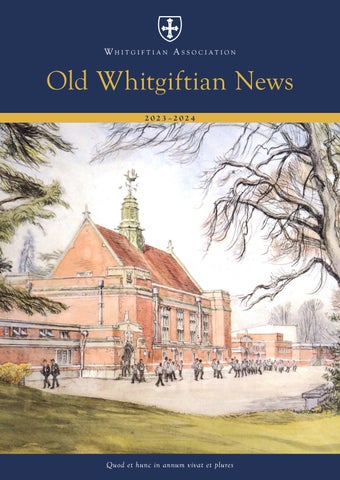
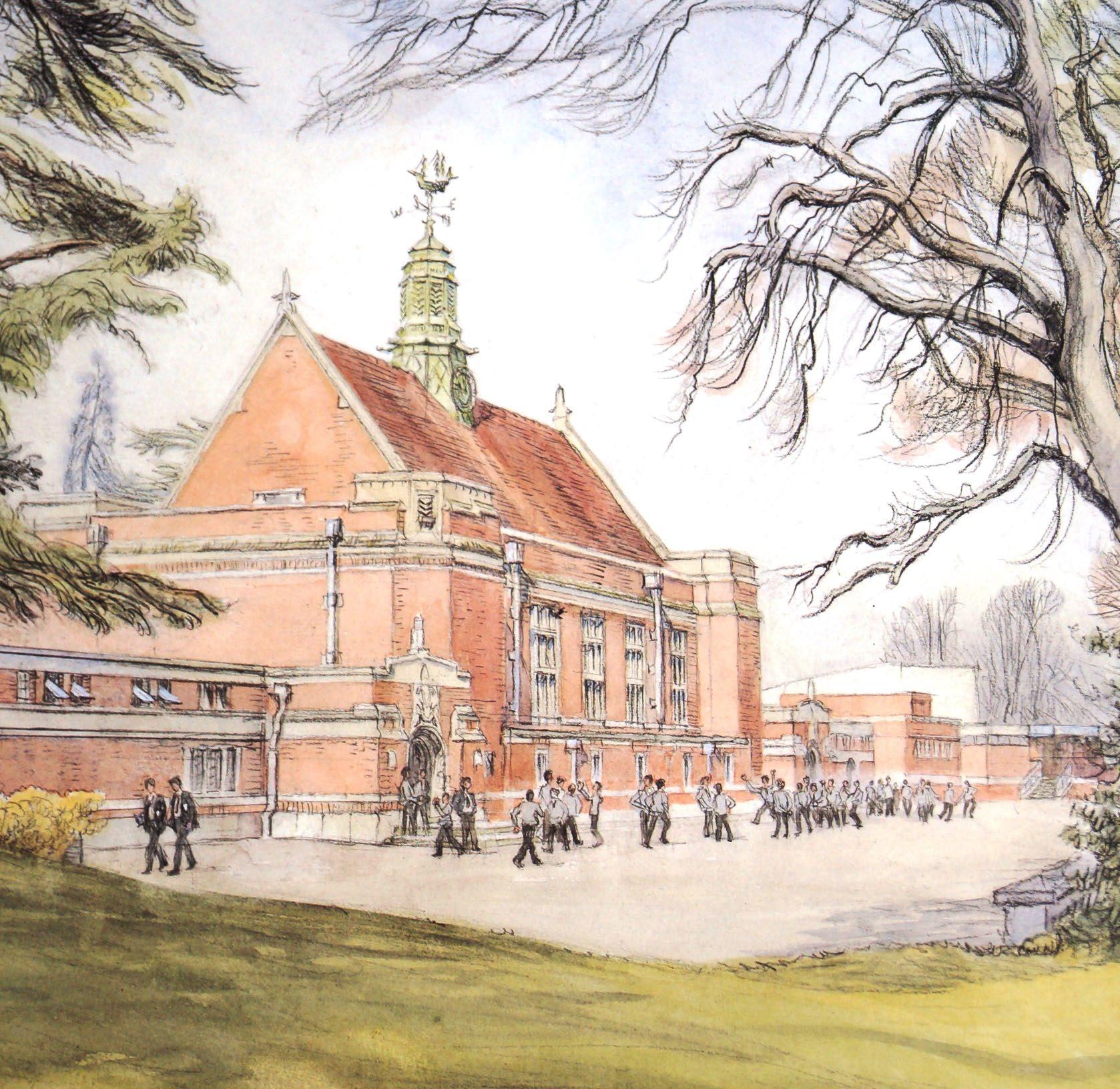
Front cover image: Sketch of Whitgift School by artist Dennis Flanders, RBA, RWS (1915 -1994)
This is the eighteenth edition of Old Whitgiftian News which takes us from summer 2023 to summer 2024. There is always plenty of OW and School information and news to be found in Whitgift for All News, published three times a year, and in Whitgift Life. Both can be accessed through the School’s website www. whitgift.co.uk so you can find reports on OW sports, reunions and information on the doings of fellow OWs as well as news about the School Do not forget also to look at the School’s various X (formerly Twitter) accounts which provide fascinating details of sport, music, art, drama and academic success. The Whitgift Connect website is also a valuable link to a wide range OW contacts and events. This publication is focussed on Whitgiftian honours, appointments and achievements not publicised elsewhere, on items of Whitgiftian history and on recording the passing of OWs and providing, where available, obituaries and tributes.
The Year 2023/24 was one which brought elements of uncertainty to the School. There was the announcement in December 2023 by the Foundation that Old Palace School would close, an indication that the financial position of the Foundation was not as assured as it had always seemed. The next surprise was the news that Chris Ramsey, Headmaster for seven years, would be leaving at the end of the academic year to take up the position as Headmaster of King’s School, Madrid. In the background was the indication by the then Opposition that they intended to levy VAT on school fees, a threat that has become reality with the decisive result of the 2024 General Election.
The impact of VAT on fees on the number of pupils wishing to attend the School cannot yet be judged but as matters stand, demand remains very high and the School thrives in all areas. The positive philanthropic impact of Whitgift for All (‘WFA’) will become an even greater benefit to the School: as a start, the first full bursaries from WFA have been awarded from the coming year.
The School continues to thrive academically with excellent results at GCSE, A Level, B Tec and IB whilst cultural and sport thrive. As an example of the former, the School attracts a wide range of visiting speakers not least Ssegawi-Ssekintu Kiwanuka (1997-2005), former School Captain, Cambridge graduate, boxing blue, research scientist, musician and climate activist, who was Guest of Honour at the 2024 Celebration of Whitgift Life.
The success of hockey was mentioned last year in the context of the death of Bob Schad and this year Whitgift reinforced its claim to be the leading hockey school in the country with several national titles both indoor and outdoor. The range of sports offered at the School is quite remarkable and it would be extraordinary if there were no sport or other activity offered by the myriad School societies and clubs (the website lists 129) that appeals. Whether it is choral singing (evensong from Croydon Minster on BBC Radio 3 or Christmas Carols at the Goring Hotel), Japanese Pop-culture Club, Mah-jong or Robotics there is every likelihood that even niche interests can be pursued.
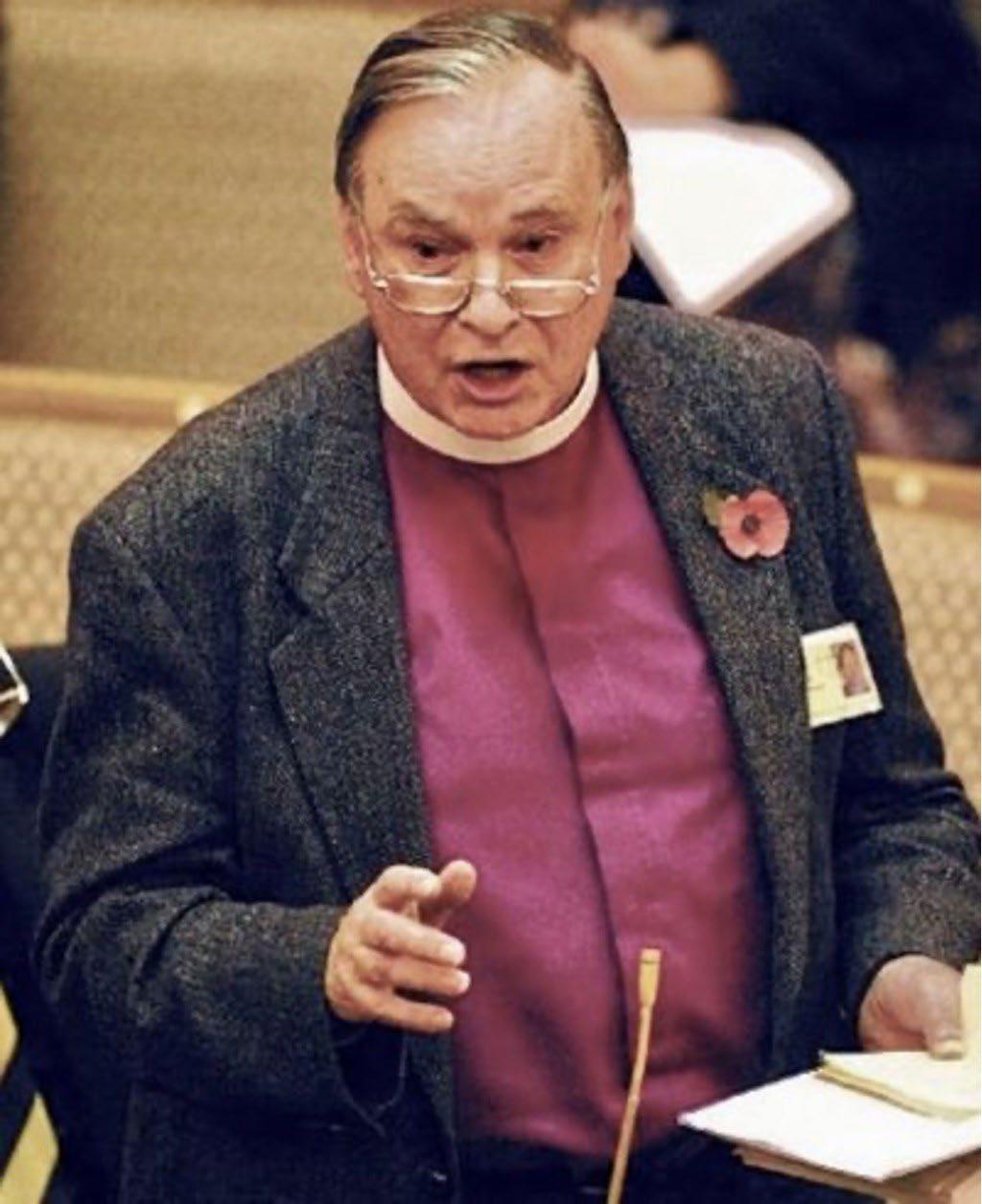
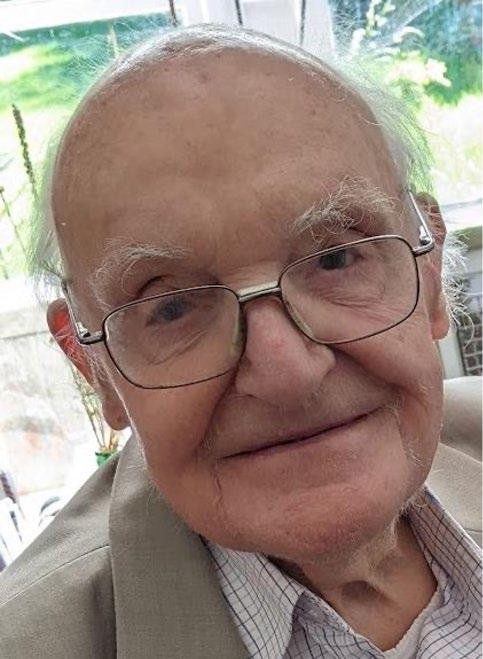
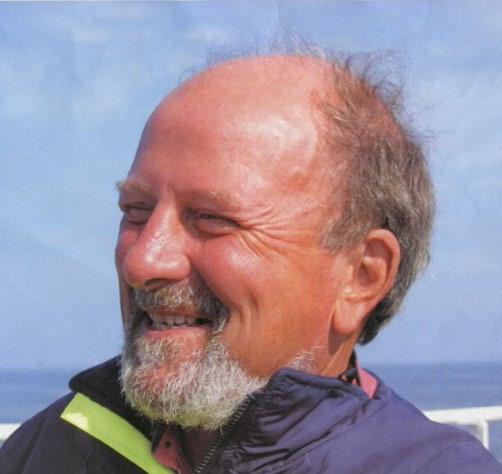
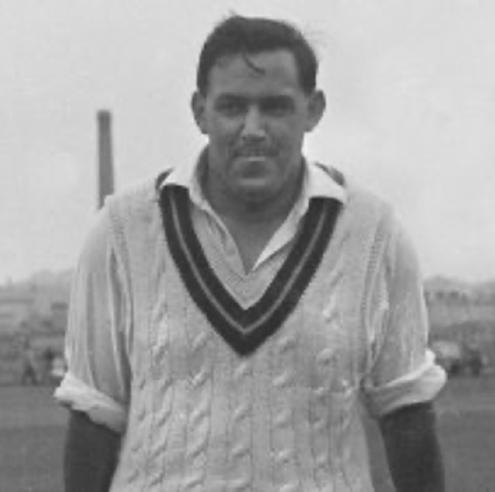
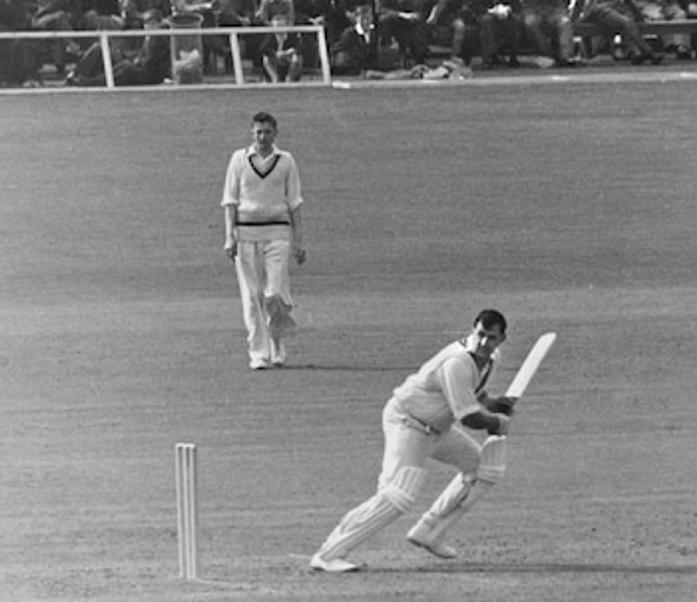
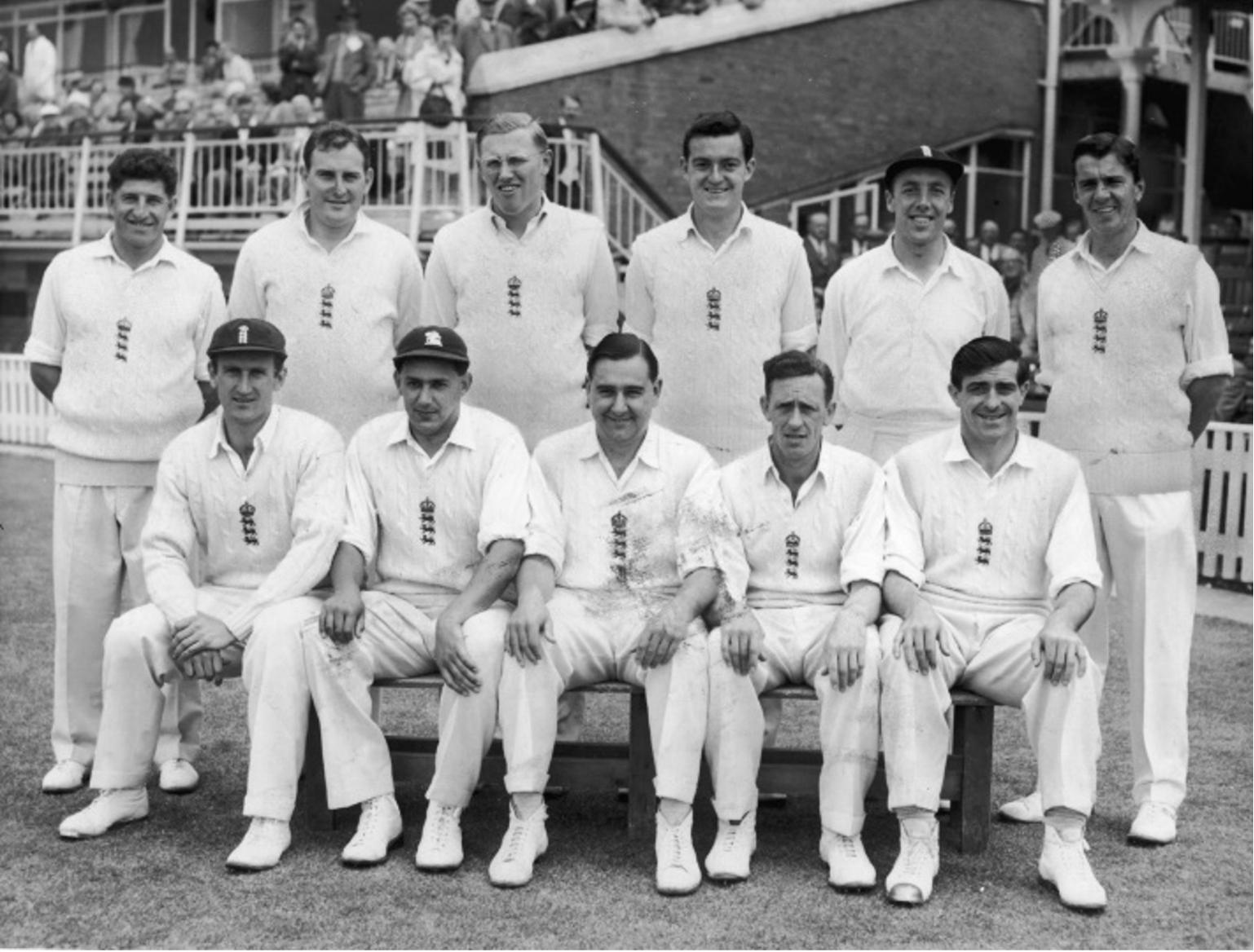
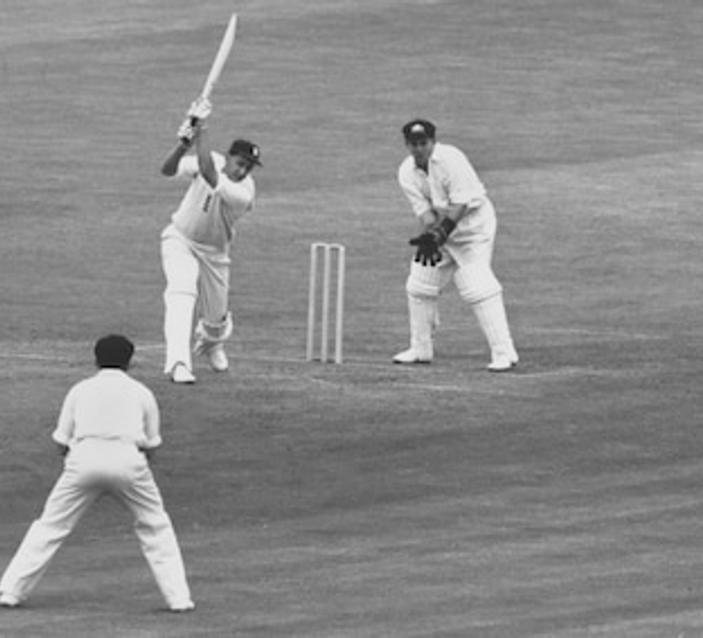
This edition of OW News records a significant number of distinguished OWs who have died. Among others, we celebrate the life and memory of Raman Subba Row, our first England Test cricketer, who in many ways was the single person who most personified the School over many years, Rt Rev Colin Buchanan, Church of England bishop and liturgist, Professor David Gee, geologist and member of the Royal Swedish Academy of Sciences. We remember also long serving members of staff – John Branston, Mike Callow, Robin Macklin and Tony Reddy who gave immense service to the School.
The year 1888 was known in the German Empire as Dreikaiserjahr (the Year of the Three Emperors). For Whitgift the year 1924/25 will be the year of the Three Headmasters as we say goodbye to Chris Ramsey and welcome Andrew Halls, OBE as his successor for the next academic year before Toby Seth takes over as permanent Headmaster.
Nigel Platts (1955-64)
WHITGIFT CONNECT
Whitgift Connect , the online networking platform for alumni, can help establish and facilitate new connections and enhance existing ones. As a networking tool it can be used to highlight projects, publications, and alumni events. Old Whitgiftians live locally and across the globe so being able to bring everyone together on one platform is more important than ever. For more information or to contact the Alumni Relations team please email: alumni@whitgift.co.uk
Remember that you should not hesitate to make contact and let us know what you have been doing for the last ten (or sixty) years. You may, of course, also send letters and messages directly to the Alumni Relations team.
New Leadership for the School CONNECT
The announcement of Chris Ramsey’s departure required the appointment of an interim Headmaster to allow time for the process of identifying a suitable candidate for the longer term. It was with considerable pleasure that the Chairman of the Foundation was able to announce that Andrew Halls, OBE would act as interim Headmaster for academic year 2024/25.
After Cambridge, where he achieved a double first in English, Mr Halls taught at Chigwell School, Whitgift and Bristol Grammar School before becoming Deputy Head at Trinity School. In 1998 he was appointed Headmaster of Magdalen College School, Oxford where he stayed until 2007 when he became headmaster of KCS, Wimbledon where he stayed until his retirement in 2022. In recognition of his distinguished career in education, Andrew Halls was appointed OBE in the New Year’s Honours List 2020.
The search for a long term successor involved a highly competitive recruitment exercise at the end of which it was announced by the Governors that Toby Seth, presently Headmaster of Pocklington School, York would become Headmaster of Whitgift in 2025.
Mr Seth was educated at Dulwich College and Cambridge. He taught subsequently at Dulwich, Wellington College, where he was head of modern languages, at Godolphin and Latymer School, where he was Assistant Head and then at King’s School, Macclesfield as Deputy Head. He became Headmaster of Pocklington School in January 2019.
Other changes:
David Cresswell, Senior Deputy Head for the past four years, has been appointed Headmaster of Barnard Castle School (where he had been Deputy Head before coming to Whitgift). His replacement is Mrs Rachel Attenborough.
Andrew Halls, OBE
Toby Seth
Rachel Attenborough
Rachel was previously Deputy Head (Academic) at the School, having joined in 2023. Rachel was educated at Wolverhampton Grammar School and St Catharine’s College, Cambridge following which she became a management consultant before taking a PGCE at Durham University and teaching at Wellington College (head of geography). She then moved to Uppingham School as Assistant Head before her move to Whitgift.
Reunions
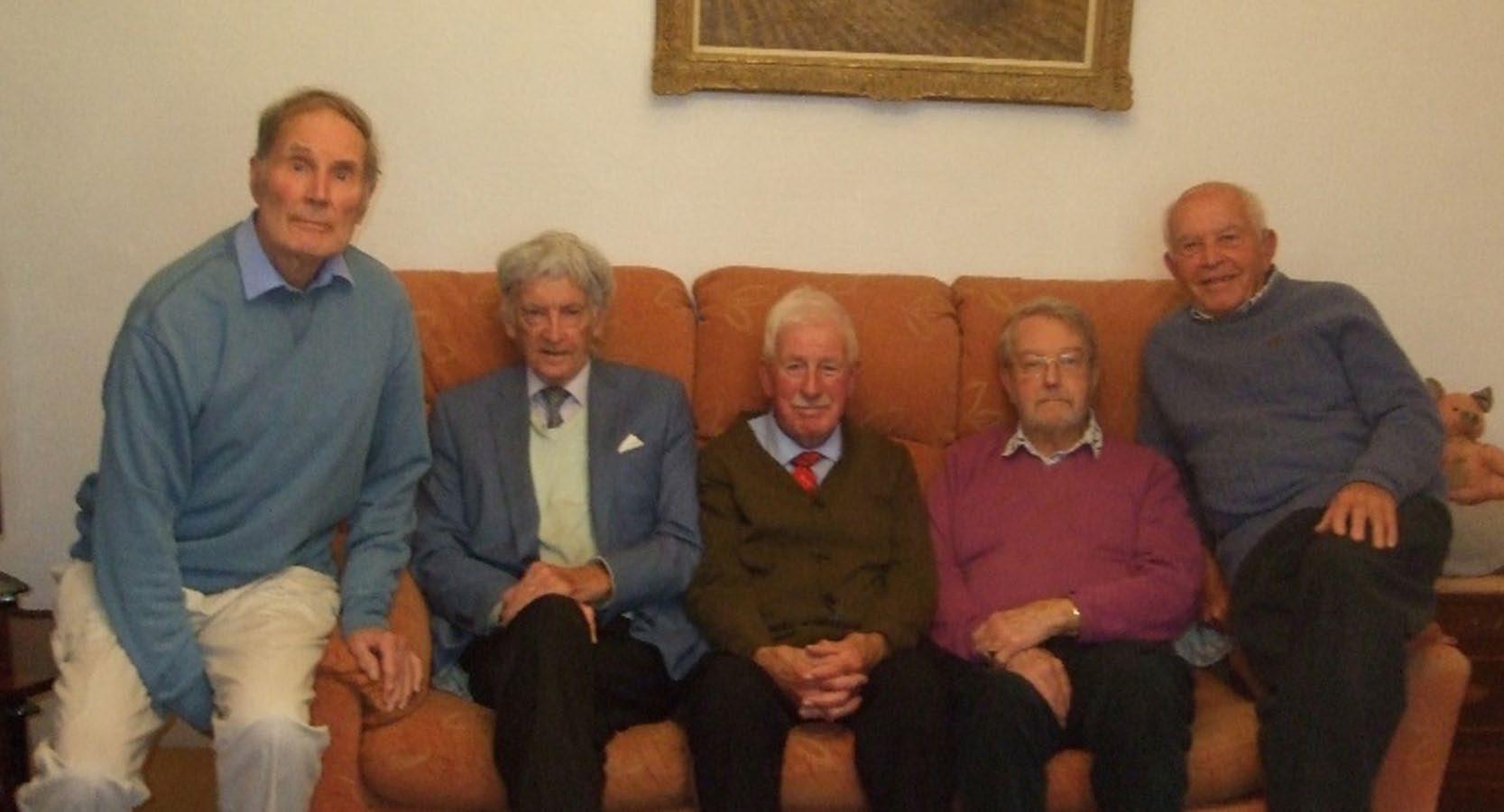
As indicated previously, OW News will no longer report on reunions as a matter of course. In the last year WFA News has recorded among other events an Oxford dinner, an evening of cricket at The Oval, City drinks, drinks in Hong Kong, and a reunion for those leaving in years ending with a “4”. Of course, WFA News also celebrated the 71st Reunion of the Upper Vth 1952-53 which is summarised here:
The 71st anniversary took place at Peter and Angela Warren’s house on 17 October 2023. Of the original 28 members of that form, fourteen survived at the time of the reunion. Sadly, since then there has been further reduction in numbers. The Reunion, however, maintained the tradition of mainly looking forward despite ages ranging from 86-88: topics discussed included “Where on earth is England cricket going? Has rugby football a future? How will the Middle East crisis pan out? (Questions that could validly have been discussed at most of the previous 70 events! Ed). It was an occasion neatly encapsulated by Ken Rokison’s account of how, when recently
pressed by fellow Betchworth residents, he demonstrated his Thespian talents by singing in the style of Sinatra “You Make Me Feel So Young”.
There is a lesson for all Whitgiftians, whatever their vintage, in the staying power of that remarkable group. Floreat Superior Quinti!
Another notable reunion event took place in May 2024 and definitely needs to be recorded here:
The all-conquering 1961 1st XV meet again
Graham Hill (1955-62) writes:
PLAYED 13 WON 13 POINTS FOR 290 POINTS AGAINST 49
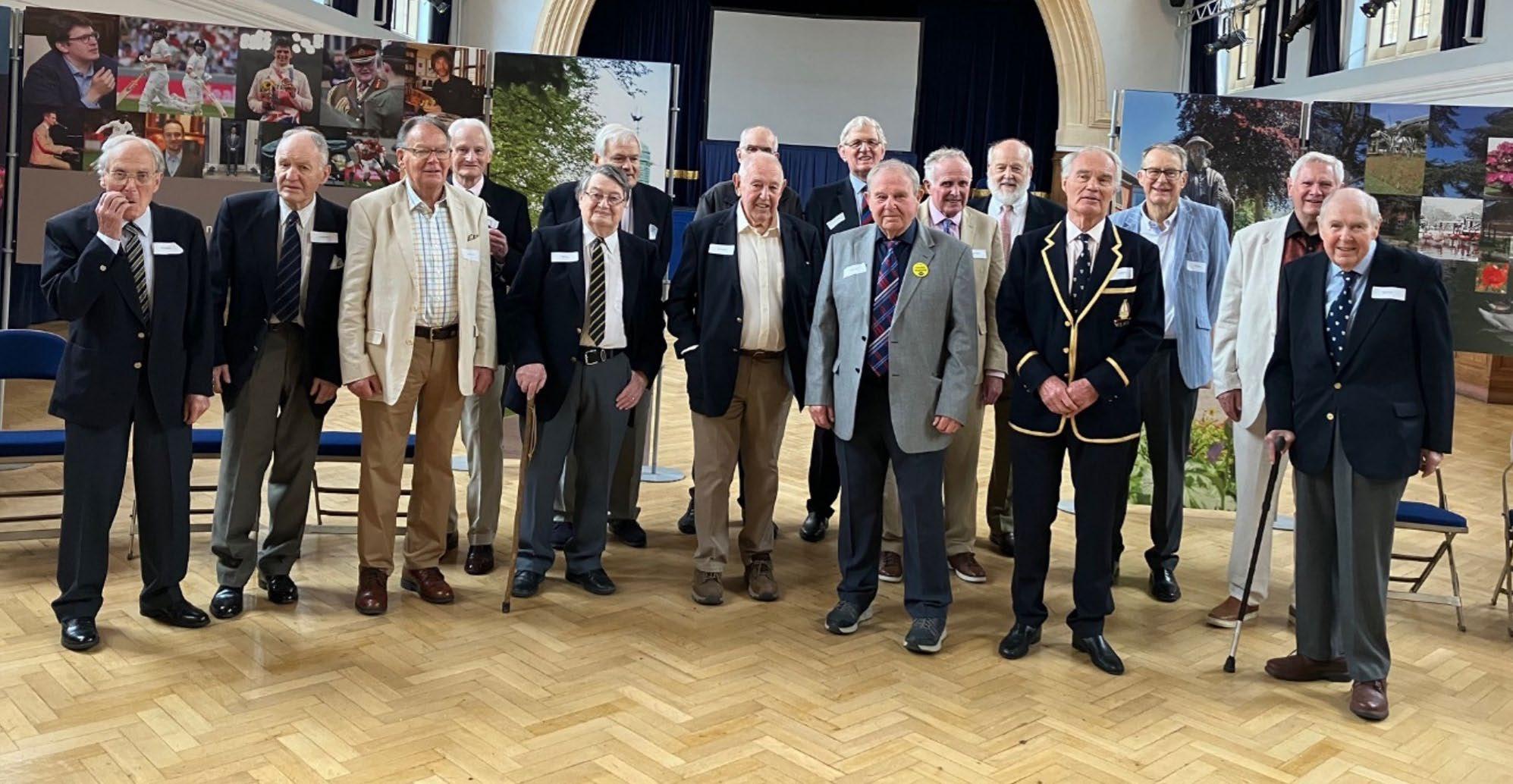
A very memorable and successful reunion meeting of the unbeaten 1961 Whitgift School 1st XV was held at Haling Park on the 18th May 2024, a team successfully coached by Gerwyn Williams, Ken Nicholas and Jeff Abbott. It was the second time that there had been a team meeting, the first one being in 2006 in the presence of both Gerwyn and Ken.
Of the team, made up from the pool of eighteen players, fourteen were able to make it and that included one from the USA, one from Canada and two from France and Spain.
The day started with a welcome coffee in Big School followed by a fascinating tour of part of the school given by Simon Beck. Whitgift has doubled in size since our time, passing from 800 boys to 1600, and this was apparent as there was no longer the familiar parade ground, but instead there were impressive new and well-designed buildings.
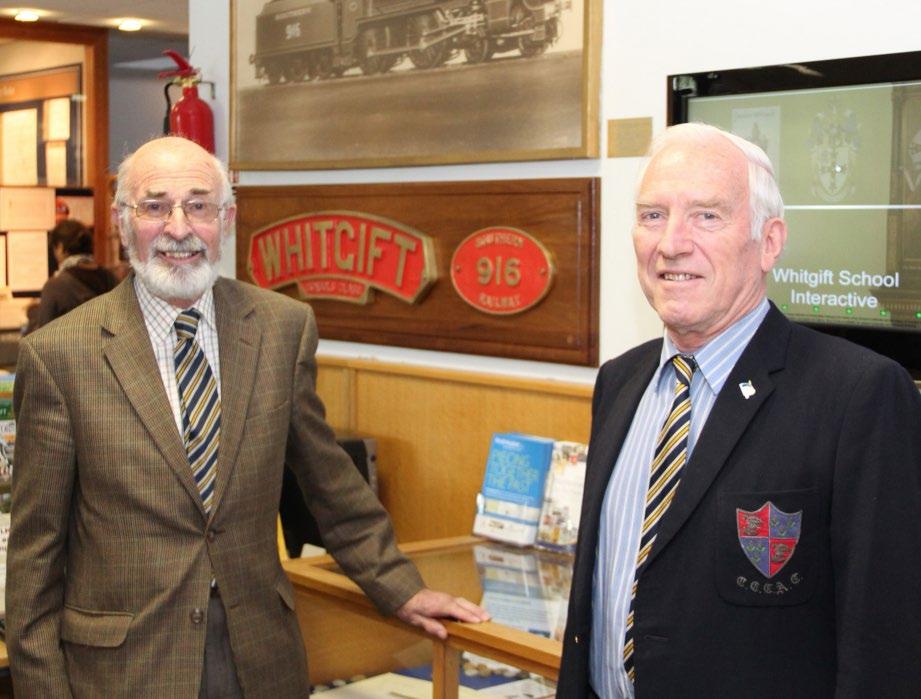
From left to right: Peter Warren, Brian Halfacre, John Hamilton, Ian Brown and Kenneth Rokison
We learnt that Whitgift now fielded nineteen rugby teams as well as seventeen football teams and that academically Whitgift organises International Baccalaureate examinations and regularly finds itself internationally among those schools with the best results worldwide.
The visit was successfully followed by an excellent lunch in the Raman Subba Row Room which could have obtained a Michelin Guide Star Rating. The period for lunch included a welcoming address from our Captain, Mike Wilkinson, followed by an unexpected sing-song led by Robert Kibble who wished to remind us of our times spent together on coaches going to away matches. Farewells were made and then about half of us drifted up to Croham Road for further refreshments.
William Wood, the school archivist, kindly provided us all with press and other reports on our games. One in The Observer of 19th November, on the game against KCS Wimbledon (won by 43points to 3) said; -
“This was no ordinary game of Rugby indeed, one may rarely see the like again. Whitgift were quite magnificent. Impressible, dominant, superbly creative they tore KCS Wimbledon to shreds.”
Or, reproduced from The Guardian after the Whitgift v Dulwich game (won by 5 points to 3)
“The muddy pitch and spitting rain of the second half did nothing to dampen either side’s ardour and productive intentions, or that of a fantastic crowd of 2000, some of whom threatened to spill on to the pitch in those last pulsating minutes when the game was won and lost. The atmosphere was extraordinary. Someone aptly put it at Halftime, it was like a pocket international with the flavour of a varsity game.”
We must also give all thanks to Emma Helbert from Whitgift who was our key interlocuter for all our
organisational communications with Whitgift: thanks to her everything went brilliantly.
The author of this note would like to mention that of the fourteen of us present on the 18th May, seven were members of the Under 14’s team who thrashed Dulwich College 58-3 at home on 28th September 1957, much to the pleasure of Geoffrey Marlar, our headmaster. The under 14’s were coached by Dick Glynne-Jones and captained by Paddy Miller. The other members of the team were either a year ahead or a year behind in the progression through school.
Editor’s note: As a mere spectator, present at most of the matches in that astonishing season, I can only say how much pride and pleasure the team brought to the rest of the School. The excitement around the matches and the sheer quality of play was something to behold and large numbers were there to watch every match, home or away. There were stars in the side but most important of all it was a great team. Matches against familiar opponents like KCS, Cranleigh, Christ’s Hospital and, most stressful to the onlookers, Dulwich were all won and far off opponents Monmouth, Royal Belfast Academical Institute and Blackrock College, the last two in Belfast and Dublin respectively, were also beaten. The press were effusive in their praise (in those days the major newspapers wrote reports on inter schools matches) but not half as ecstatic as the School community. Over sixty years on, and on behalf of everyone who remembers that season, I should like to offer my thanks and best wishes to all those who gave us so much in 1961.
Nigel Platts
Remember that reunions large and small are always worthwhile. The Alumni Office at the School is happy to help with contact addresses.
Photograph of those present at the reunion, who are from left to right: Peter Souster, Grant Eustace, Robin Jenkin (our Touch Judge), Ian McCall, Brian Councell, Robin Holt, Gordon Brackstone, Mike Wilkinson (Our Captain), John Spanswick, Paddy Miller, Robert Kibble, Iain Aitken, Graham Hill, John Moyle, Roger Purdue (invited Guest) and Nigel Carter
Remembrance 2023
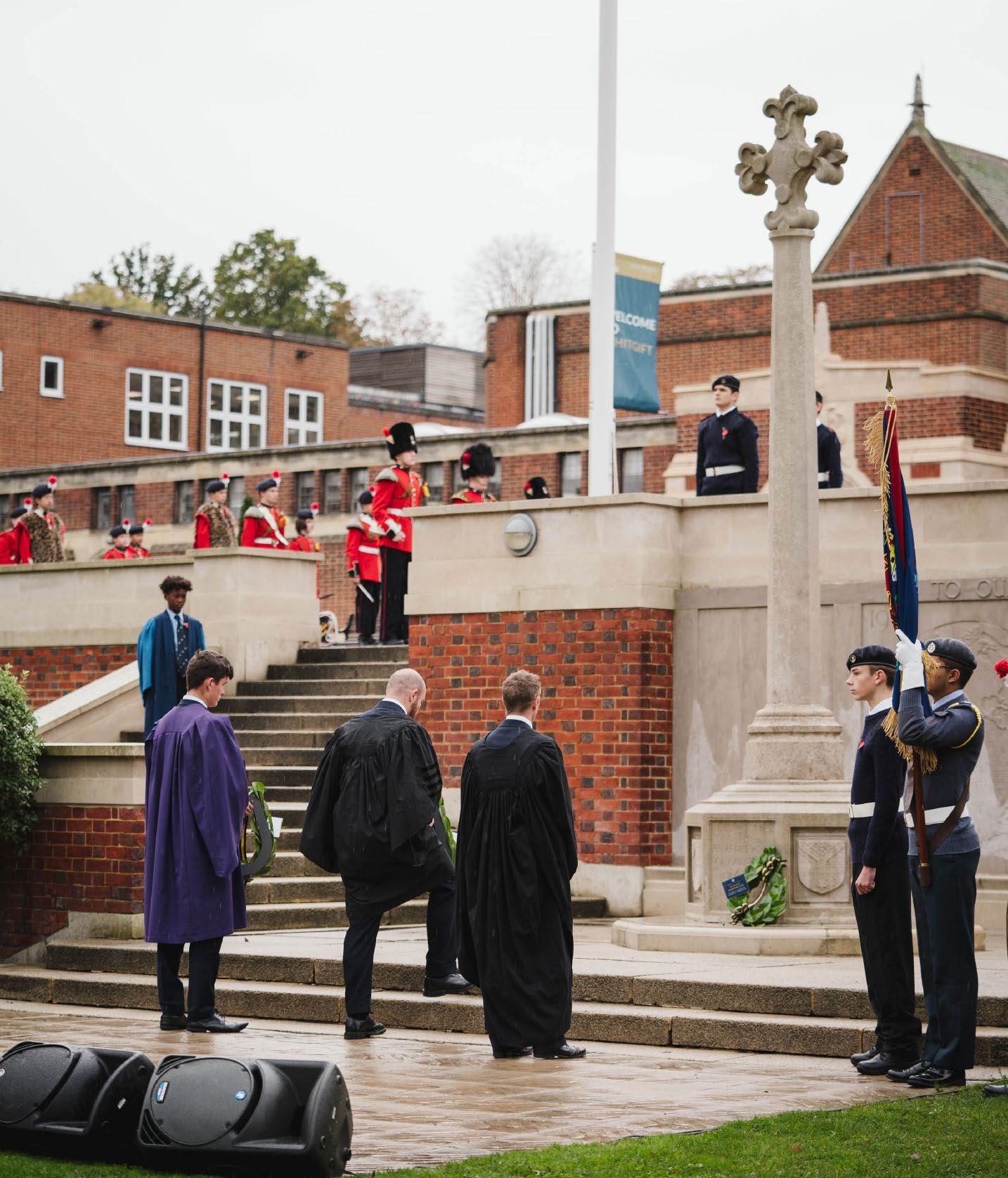
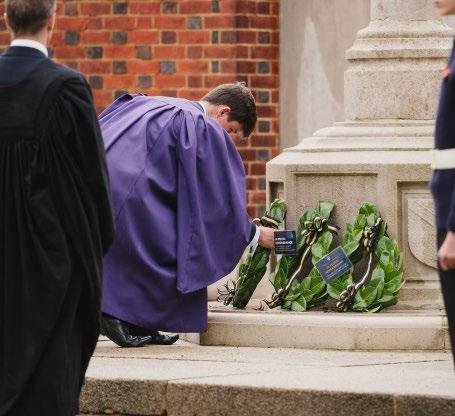
As in previous years, Remembrance Day 2023 attracted a good number of OWs to the School. There was hospitality in Big School before the service at the War Memorials. The service was led by the Corps of Drums and the colour party. The bugler performed the Last Post and Reveille, hymns and anthem were sung, there were readings from the School Captain and the Lower School
Captain and Rev Alan Bayes, School Chaplain, gave a short address at his last Whitgift Remembrance Day and wreaths were laid. It remains important that the School community remembers the sacrifice of fellow Whitgiftians in World Wars and other conflicts. It also offers an opportunity for OWs to meet, commemorate and then move on to a friendly and convivial lunch.
Memories of Whitgift
For the following reminiscences of his first year at Whitgift we are indebted to the encyclopaedic recall of Jerry Hartley (1953-62) whose memoirs include the following chapter:
Chapter 4 – Whitgift 1953
As the time approached for me to start at Whitgift I became quite excited. I was taken to Pickford & Newtons in Croydon, the official outfitters, and kitted out. Blazer, cap, tie, shorts, socks and shirts, rugby and PT kit. All a little too big as I would grow into them (said Mother). My cricket kit arrived secondhand from friends at the Church, but the boots were as unyielding as if they had been carved out of a solid block of wood. Blisters were assured.
Finally came the day of reckoning. All new boys were assembled in the Dining Hall, and I.A. Evans (Chief Master, Junior School) read out the list of names and the forms that we were to be in. I was in 1B, based in Room 1 –nothing like starting at the bottom. For the whole of my first year I would be addressed as “new fag” by any boy that was not new. Part of the Public School system I suppose, but hardly calculated to instil any self-confidence.
Harry Bennett was our form master, by now in his sixties, and in excellent physical condition. He was a jovial, approachable man, and would be taking
us for PT. We were given our timetables, our homework diaries, and told more or less what was expected of us.
We were allocated lockers, but several of us were unable to find them. We were later to discover that we had been given a block outside the Prefects’ Room, which as any Whitgiftian will tell you is about as far from the Junior Corridor as is physically possible. After several days of fruitless searching, I approached Harry Bennett.
“Sir, please Sir, I can’t find my locker, Sir.” “You will,” he replied amicably. More days passed, and then I finally found it. But I dared not put anything in it, as the chances of finding it again were slim indeed. Nevertheless I was relieved, and set off home, following School Captain Bradshaw downstairs as I did so. He turned and glared at me.
“Where are you going?” “I’m going home,” I replied, not unreasonably. “Do you know that you are going down the ‘up’ stairs?” “Well, you are.” Again it seemed a reasonable response. I was admonished for being rude, and the possibility of various fates was outlined to me. But when it was found out that I was new I was released with a caution.
Quentin Bristow came round to our house one night. He had just left Whitgift, and had very kindly prepared a map of the School for me. There was also a list of the masters, the rooms they inhabited, and their nicknames. “Just so you will know who people are talking about,” said Mother. “Of course, you won’t be using those names yourself.” Not much! But the map helped a lot, and I became the unofficial form navigator.
For maths we had “Cod” Blatherwick in Room 3. He was a good teacher and a genial man, but hopeless at keeping order. At the end of term he would read to us from “The Man-Eaters of Tsavo”, gruesome tales about lions devouring people, and we loved every
minute. Mother wondered how he had come to be called “Cod” and Father felt that with a name like Blatherwick he had come off rather well.
“Ding-Dong” Bell took us for English. A strict disciplinarian, he was fair and understanding, and well respected by us boys. He was also in charge of Junior Houses sport, and in the first term he had to select the newest rugby team. No mean feat, as he only had appearances to go on.
“You look like a forward, Hartley,” he said, sticking the blunt end of a familiar pencil in his ear. In a way he was right, as I probably did look like one, being large and lumpy, but appearances can be deceptive. Anyway, I was now a member of the Junior Houses Third Thirty, and surely on my way to the top.
As forms were used for schoolwork, so were houses used for sport. I was in “B” house, under the housemastership of R.B. Kennedy. He was a quiet and respected man, and we would meet regularly years later when he took me for English in the sixth form. Our house captain was J.G. Parnaby, and the vice-captain was J. Claxton. To us in the first form, these were lordly young men; my mother remembered taking me for tea to a place near Whitgift after school one day, and I was indicating that we had to behave especially well. When she queried this I whispered “there’s three junior pre’s at the next table.”
For art we made our way to the Art Room, where Frank Potter, selfproclaimed “last of the Victorians”, as he had been born in the last century, would greet us. On our first visit we were making the usual row that tenyear-olds do when he walked in and gave us the most frightful telling off. Quentin Bristow had observed that Potter’s bark was worse than his bite, but this was of little consolation. His bark was quite bad enough by itself. We were to learn that he had a pronounced
Jerry Hartley
stammer, and was therefore a delight to imitate. I very much doubt that any boy who attended Whitgift at that time was not able to take him off perfectly. Or so he thought.
At the end of the term we formed an orderly queue at Potter’s desk, bearing our works of art, and awaiting his scrutiny. It was at this time that I learnt the true meaning of prayer. I recall being quite hurt when one of my masterpieces was dismissed as resembling “a disused Ch-Ch-Chinese lavatory.”
Julian Kennedy-Cooke took us for French in Room 4. I believe it was his first year at Whitgift, although such things were not discussed by us boys. We knew him as “Nutty Slack”, a bit cryptic, but it was generally accepted that he had introduced himself to his first class by writing his name on the blackboard as “Kennedy-Coke.” As there was a coal crisis at the time the name stuck. He would write French vowels and diphthongs on the board, and as he pointed to them we had to pronounce them. It was a wonderful opportunity to practice farmyard imitations with impunity, but it also taught us basic French pronunciation.
In Room 2 dwelt Claude Loving, and we would visit him for history. In his time he had been a first- class athlete, and had made a major contribution to Whitgift. But his best years were now behind him, and he was ready for retirement. He was also very deaf. This gave a bunch of firstformers the chance to shout to each other across the room, whereupon he would cup his hand to his ear and say “someone’s murmuring.” He had an unpleasant habit of walking round the class with a large history tome, and on encountering a problem he would bring it down with a crash on the nearest head, simultaneously shortening the neck and life expectancy of the unfortunate offender.
One day one of our number walked into class late. Loving looked at him enquiringly and Hodgson (I think it was he) said nervously “Sir, please Sir, I’m sorry I’m late Sir, but Mr Nutty Slack wanted to see me, Sir.” This was too good, and we all rolled around in merriment. As expected, Loving delivered a stern lecture to all. At the end of class Loving showed how out of touch he was when he called Hodgson aside and said “don’t you come into my class with dirty boots again!”
We had Mike Scott for geography. I good teacher, I think, but it was my worst subject, and many of my offerings were returned with the legend “see me.” We saw quite a lot of each other that year. My first geography report read “disappointing”, but by the end of the year I had worked my way up to “he could do better.”
One a week we made our way to the woodwork shop, where Cyril Worsell instructed us in the art of cutting cardboard with a blunt knife. We were not as yet trusted with wood, and our final efforts were glued together. Six out of ten and above, we were allowed to take home, five and under was pulped.
And then there was music, taken by J.S. (Jesse) Odom. I looked forward to it, as it meant walking round Big Side (the first fifteen rugby pitch) to Bagbie House. It was all quite laid back, and we enjoyed warbling “Nymphs and Shepherds” and such like.
PT in the gymnasium was also enjoyable. Gym master Harry Bennett would have been about the same age as Claude Loving, but in excellent condition. We were taught how to climb fifteen foot ropes, and I was impressed by Mickey Bauer, who at the tender age of ten possessed a good pair of biceps and went up arms only. Others were less impressive. I have in mind a rather fat boy (perhaps after
60-odd years he would prefer to remain anonymous) who would hang on the rope bleating pitifully “Sir, Sir!” The idea being that he had tried his best, and could he now stop this senseless torment?
Another favourite was Divinity, partly because it was not taken very seriously, and didn’t count towards the term’s marks, but mostly because it was the last subject on Saturday morning, and after that no more class until Monday.
There was Nature Study in the Junior Lab with Mr Yeo (I had quite forgotten how many subjects we took). When we got around to studying animals, I was pleased to find a dead mole in our garden at Banstead, and took it to show the class. It would have gone down well, but I had to keep it in my locker for a week. When I finally produced it I was urged to take it outside immediately and give it a Christian burial in the dustbin.
I suppose that every generation likes to tell the next one that “we had it tough” – you only have to read Tom Brown’s Schooldays, set at Rugby School in the 1860s. But looking back, the early days at Whitgift were no picnic. Banstead Primary was a hopeless preparation for Whitgift, and I was almost a year under the average age. Others had been to feeder schools, or had brothers already at Whitgift.
And then there was the journey. From our house in Banstead it was a ten minute walk to the bus, which took me to Sutton. Then a train to West Croydon, and another bus to South Croydon. All in all, about an hour. We usually emerged at West Croydon running, as buses were plentiful. If possible we would catch one destined for “Swan and Sugar Loaf only” as this went past the School and saved a walk. Pride of place on the bus was the upstairs back seat, which had armrests
on both sides. “When I write my memoirs one day,” I boasted grandly to Buxton, who had become a good friend and travelling companion, “I shall call the book ‘Back Seat in a Swan’. I think that’s a good name.”
On Mondays, Tuesdays, Thursdays, and Fridays school finished at threethirty, so on rugby practice days in winter I would be home well after dark. Then there was an hour’s homework and, to add insult to injury, home reading. Several books had been selected for us to plough through by ourselves; not authors that I enjoyed such as Anthony Buckeridge and Frank Richards, but heavy stuff which in the opinion of the Whitgift Staff was excellent literature. One book I remember was called “The Splendid Journey”, and was about a family who made the trip across America on foot. As they progressed, they died off tragically one by one, and only two made it in the end. It was enough to put me off reading for life, and to this day I approach a recommended book with caution.
It was not all doom and gloom. At the end of the first term we had the Junior School Party which started with a slap-up meal in the Dining Hall. We then joined our parents in the Hall for an evening of enjoyment. Imagine our delight when the curtain went up and there were I.A. Evans, ‘Ding-Dong’ Bell, and ‘Cod’ Blatherwick dressed up as Whiftgift schoolboys, and singing a song about ‘squirting dirty water out of dirty water taps’. In those days the staff were unbending, and this was glorious. The Prefects put on a sketch, and the Glee Club were at their best with ‘One finger lift up’. We went home that night with the feeling that perhaps Whitgift wasn’t so bad after all.
We broke up for the Christmas holiday. I can never hear “Lord dismiss us with Thy blessing” without being
transported back to 1953. I had done quite well in form orders, having come eleventh overall. I mentioned my success to Buxton, but he was unimpressed as he had come second.
All too soon it was the New Year, back to “Lord receive us with Thy blessing”, and another term. Each morning after assembly we would look towards the headmaster, Geoffrey Marlar, and if he put his mortar board on we were dismissed. If he raised both hands in a pushing gesture, we were to sit down. This was usually good news, as it took time off the first period. I believe that anyone who knew him at the time will remember Mr Marlar with respect, and to us in the first form at the front of Big School, he was God. He was known simply as “The Head” – no nickname for him, as the very thought of having to face him to explain why one had called him “The Old Man” or some such thing, was enough to strike terror into the heart of the bravest.
One day the piano was finishing its morning voluntary, and the duty prefect about to read the morning lesson, when from behind us came an ungodly crash, not unlike a canteen of cutlery being dropped from a great height. To make matters worse, it was followed by a cackle of hysterical laughter. We all looked at Mr Marlar, but there was not a flicker of emotion. And after assembly he made as if to raise a dismissive mortar board. Then with perfect timing he regaled us all with a penetrating glare and said “will the individual who made the noise, and the other fellow who laughed so immoderately, see me in my study.”
We crowded as far as we dared up the Main Corridor towards the Head’s quarters, but were unable to see who the culprits were. We speculated about their fate – six of the best at least, maybe expulsion. All too ghastly to contemplate.
One of the advantages of having a locker outside the Prefects’ Room, actually the only advantage, was that we were able to witness proceedings outside the weekly prefects’ court. Boys in the senior school would be waiting outside nervously before they were called in. Punishment would be in the form of lines, or maybe a caning, and rumour had it that Second Prefect Doughty would run the length of the room before delivering a beating. Boys would emerge in some pain, and we would look to see if they were crying. Today it seems quite barbaric, but I think that most of us who were processed by the system would agree that corporal punishment was acceptable, and at least it was over quickly. Whether it should have been administered by prefects is another matter.
Subsequent years at Whitgift would fly past with increasing speed, but the first one took an age. We played “Bowwow” in the playground, a sort of “he”, and we invented “Whitgift Chase.”
Several boys were given a start, and the rest of the pack had to find them before the end of the lunch-hour. No mean feat, as they were allowed to go anywhere in the school grounds, 42 acres of them. In the winter we revelled in the snow and made slides, in the summer we enjoyed the warm weather. Finally the school year ended, for me on a sad note. I had made firm friends with a boy called Paul Cockram, and his family was relocating to Worthing. We did make the trip to see him once, but after that we lost contact. Such is the fickle nature of boyhood friendships.
Editor’s note: Whether it was the same for those of a different vintage I cannot tell, but there are great similarities with my experience of starting two years after Jerry Hartley. Memories from different decades would be gratefully received.
Whitgift and cricket
I am delighted to report another amendment to the list of OWs who have played first class cricket. The article in Edition 16 aimed to provide a comprehensive list acknowledged that it was entirely possible that there might be omissions. Edwin R Bailey (1933-42) played in India for the Europeans in season 1946-47. He is much better known to several generations of OWs as Russell Bailey a great stalwart of the OW Cricket Club for which he played well into his seventies, organiser of numerous reunion lunches and dinners and President of the Association in 1986. Russell, playing as a fast medium bowler, although in later years for the OWs he was better known as a very forceful batsman, took 3 wickets for 37 in his single first class match. At Trinity Hall, Cambridge he narrowly missed out on a cricket blue largely because of injury but he was always an adornment to OWCC teams wearing his Cambridge University Crusaders sweater. Russell, who died in 2004 at the age of 80 was a solicitor with a practice in the West End. He was the son of an OW at School in the 1880s and father of two OWs (Peter and James at School 1978-86 and 1981-88 respectively) –three generations of Baileys spanned a full century.
Nigel Platts
Schoolmasters in print
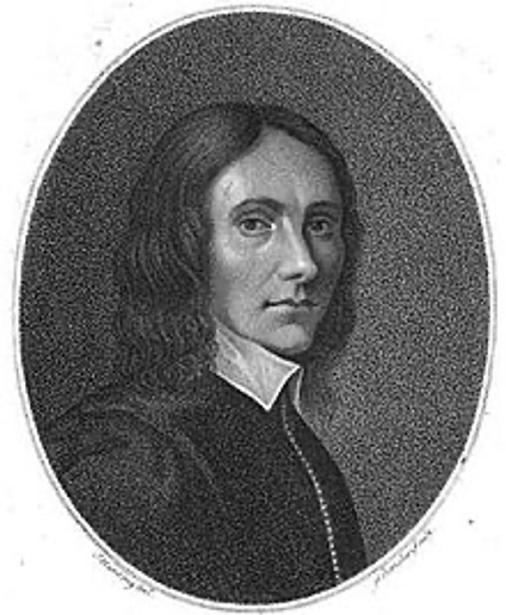
From time to time I come across books written by members of the School staff so I thought it might be interesting to set down a selection of those who taught at the School who have been published. If we exclude the various ecclesiastical works written by or attributed to our Founder John Whitgift, the first literary member of staff was John Oldham, usher (assistant master) at the School in the 1670s.
Oldham was admired by John Dryden, the first Poet Laureate, who wrote an elegy To the Memory of Mr. Oldham lamenting not having met him earlier and that he had died too young. Oldham died of smallpox at the age of 30 by which time he had left the School – of his time at the School he wrote that the position was poorly paid, monotonous and left little time to compose poetry; his discontent at the time was expressed in these lines from one of his satires –“To a friend about to leave University”:
But who would be to the vile drudgery bound
Where there so small encouragement is found?
Where you for recompense for all your pains,
Shall hardly reach a common fiddler’s gains?
For when you’ve toiled and laboured all you can
To dung and cultivate a barren brain,
A Dancing-Master shall be better paid,
Tho’ he instructs the Heels and you the Head.
A number of Headmasters published widely: Samuel Ogden Andrew was best known for his well-regarded translations of The Odyssey and The Iliad and also of the Middle English romance Sir Gawain and the Green Knight. David Raeburn was another highly regarded translator of Latin and Greek authors, in particular his translation of the Metamorphoses of Ovid was highly praised by critics “It is easier to read this for pure pleasure than just about any other ancient text”. In a different genre Ronald Gurner, MC wrote a number of successful novels including Pass Guard at Ypres, based on his experiences as a junior officer in the Rifle Brigade in the First World War.
Gurner was one of the dozen writers chosen by Hugh Cecil to illustrate the power of literature amid the horrors of war in his book The Flower of Battle: How Britain Wrote the Great War (coincidentally another of Cecil’s subjects was Robert Keable, OW).
John Oldham (1653-83)
We should not forget Dr Christopher Barnett whose output included a short biography of the Founder as well as scholarly catalogues for the Mary Rose and the Remembering 1916 exhibitions.
There were several assistant masters whose work was published –some were well known: Dr Cecil Prime’s Lords and Ladies, one of the Collins New Naturalist series, has become a sought after book for collectors of botanical books.
Charles Lydall was joint author of Practical Latin Grammar, a familiar text book to those of us struggling up the lower foothills of Latin. He was also a well-regarded translator of Latin texts, notably several volumes of Livy’s History of Rome.
Harold Parr sold in excess of 2m copies of School Mathematics which almost certainly produced more in royalties than he earned in salary!
Gerwyn Williams was not just a member of the most recent Welsh XV to beat the All Blacks (in 1953) but was also the author of four books on rugby coaching.
There were other masters who published an array of volumes: Douglas Hussey wrote books about history and the constitution, Ian Evans offered one act plays in French (Contes Dramatiques) and, in an earlier era, Marc Ceppi wrote text books to support his “Direct” method of teaching French (positively revolutionary at the time). Although Ceppi’s books were ancient there are still those of us whose first French lessons at School were
founded on Un Peu de Fran çais (I am grateful to our excellent archivist, Bill Wood, for telling me that Marc Ceppi was also a regular contributor to the information included annually in Collins Schoolboys and Schoolgirls Diaries)
The remarkable Freddie Percy, of course, wrote the definitive history of the School and even at the end of his life his fertile mind was hard at work writing and proof reading What Really Happened in Hamlet: Madness in Elsinore is Sanity in Southwark . This neatly takes us back to the work of an earlier Whitgift master, Professor John Dover Wilson, CH the celebrated Shakespearean scholar and Regius Professor of English at the University of Edinburgh, who taught at the School early in his career and whose published works include What Happens in Hamlet , one of the most influential books ever written about that play.
Tim Hands, Second Master and later headmaster at Portsmouth Grammar School, Magdalen College School and Winchester College is the author of books on Thomas Hardy including A Hardy Chronology, and the Hardy volume in Macmillan’s Writers in their Times series. He also wrote an illustrated guide to Winchester College’s heritage, A Winchester A–Z .
The most prolific and best-selling former Whitgift master of all must be Sir Anthony Seldon . He is author of more than 45 books (so far) on contemporary history, politics and education including biographies of all U K Prime Ministers since Sir John Major – truly an extraordinary output for any person never mind one so fully occupied with responsibilities as Headmaster and university Vice Chancellor.
Finally, although I am not aware of any literary output from his pen, it is worth mentioning that the late Ken Bell , terror of Junior School rugby for a generation, was a descendant of Dr Joseph Bell of Edinburgh University, widely regarded to have inspired Sir Arthur Conan Doyle to develop the character of Sherlock Holmes
This article is almost certainly an incomplete record but it is hoped that it gives some indication of the more significant ventures into print of Whitgift staff over the years.
Nigel Platts
OWs in the News
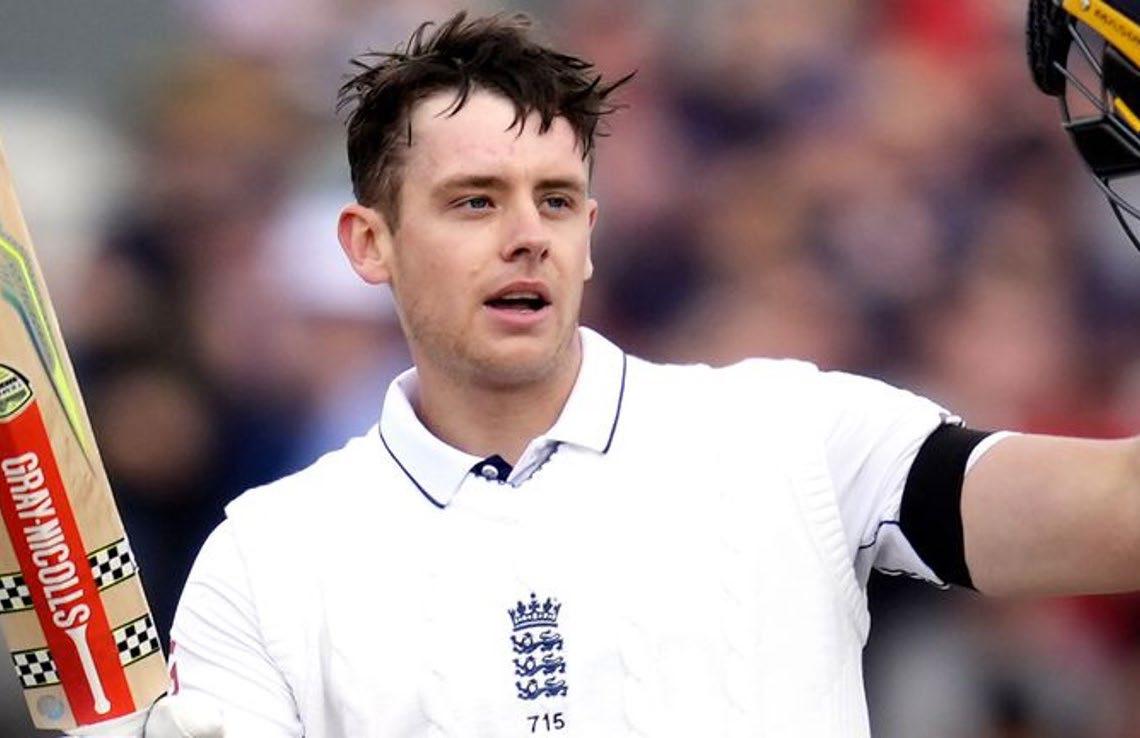
After considerable speculation in the press about whether he should be selected for England’s test team, Jamie Smith (2010-18) made his début in the First Test Match of Summer 2024 against the West Indies.
He proved an instant success with a score of 70 in his first innings followed by 95 in the Third Test. In the First Test against Sri Lanka in August, Jamie reached his maiden Test Match century (111) becoming the fourth OW to achieve this milestone. He has also kept wicket with considerable skill and received admiring comment from the leading pundits of the game. At the end of the season Jamie was honoured by the Professional Cricketers’ Association
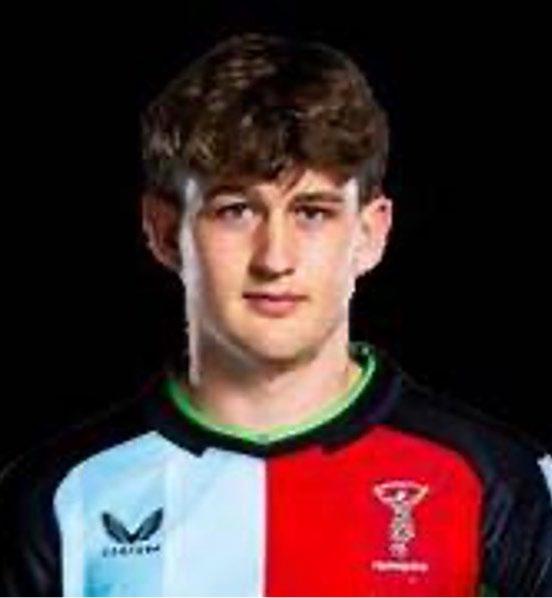
as the Young Player of the Year 2024. Sean Kerr (2016-23) was a member of England’s Under 20 World Cup winning rugby team. England beat France in the final on 19 July 2024. He was the second highest scorer in the tournament
OW international recognition was further increased in July 2024 when Matt Gallagher (2013-15) made his début for Italy (for which he qualifies through his mother) against Samoa. Matt became the eighth OW rugby international of the 21st century.
Paris 2024
No fewer than four OWs were selected in Team GB for the Paris Olympic Games. This was mentioned in a number of newspaper articles reporting the large number of alumni of independent schools represented in the Team. Plymouth College with 6, and Millfield with 5 were the only schools that exceeded the Whitgift contingent. However, both those schools are mixed as were their Olympian sportspeople. There were 155 men in Team GB and Whitgift was the number one boys’ school. Sadly, there were no medals for OWs this time round but we offer many congratulations to Joe Choong
(2008-13), Zach Wallace (2016-18), Jack Waller (2013-15) and Laurence Okoye (2003-10).
There have been OW representatives in several earlier Olympic Games but, in passing, it is worth mentioning one remarkable Olympian – Gordon Kaufmann (1903-04), the celebrated architect of the Hoover Dam and other iconic American buildings. In the 1936 Berlin Games Kaufmann competed for the United States in the Architectural section of the Art Competitions. Not surprisingly, given the background to those notorious games, the overwhelming majority of medals were awarded to German, Italian and Austrian entrants and winning examples of architecture and municipal planning included the Reich Sports Field and the Skiing Stadium. Again, unsurprisingly, the International Olympic Committee subsequently removed the medals awarded from the database and from the list of medals won at the 1936 Games.
Jonathan Gill (1998-2005), celebrated for many as a singer in the band JLS and latterly well-known for presenting on television a young new face of farming and as a presenter for several years of BBC television’s Songs of Praise, was announced on 5 August 2024 as the first celebrity to sign up for the next season of Strictly Come Dancing.
Tarik O’Regan (1989-96) continues to be at the forefront of modern musical composition and, in June, 2024 was announced as a recipient of the Yaddo Artist Medal, which “recognizes individuals who exemplify a level of achievement and commitment to their art that reflects the tradition of excellence that has always been a hallmark of the Yaddo residency program, as well as celebrating those who have been supportive and understand the sense of community that it has long promoted
Jamie Smith – century maker and Man of the Match v Sri Lanka, Old Trafford, Manchester August 2024
Sean Kerr in Harlequins kit
among artists”. Over the past hundred years Yaddo, a large estate in Saratoga Springs, New York, has been an artists’ community with a mission «to nurture the creative process by providing an opportunity for artists to work without interruption in a supportive environment.» It is designated a United States National Historic Landmark Among the artists who have worked at Yaddo are numbered Saul Bellow (Nobel Prize in Literature), Alan Hollinghurst (Booker Prize winner) and more than 80 Pulitzer Prize winners.
Derren Brown (1981-90) has announced that his next live show Only Human will be touring the UK between April and September 2025.
Matthew Kelleher (1984-92) has recently been appointed Chief Digital Officer and a member of the Executive Board at Asda after some twelve years in senior roles at Morrisons. Prior to that, Matt was a partner in Accenture the consulting firm. He is also a Trustee of Royal British Legion Industries which provides work, housing, care and support to the disabled, particularly service veterans.
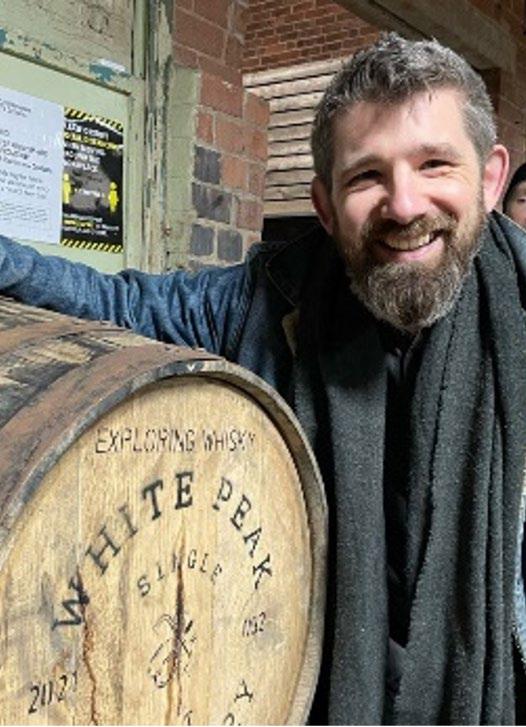
Richard Foster (1995-2002) describes himself as “Chief Explorer” of his venture Exploring English Whisky.
From a marketing background focussing on the drinks industry, Richard went into running whisky tastings as a hobby. This developed and in 2023 he started the English Whisky Festival which attracted 24 brands – in November 2024, the second English Whisky Festival, in Birmingham, will feature 34 brands. The excitement for Richard is shining a light on English whisky, discovering the best craft distilleries and building an understanding that there are always excellent whiskies waiting to be found
A statistician discovered
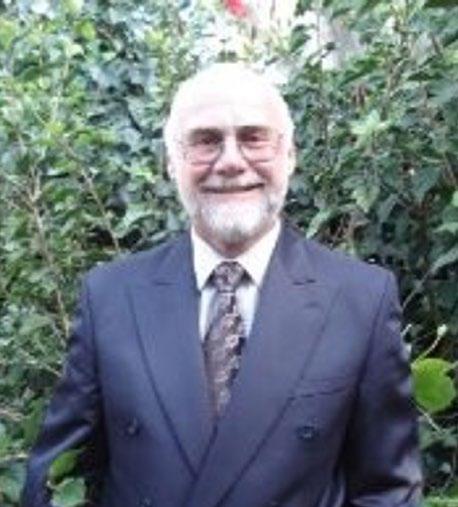
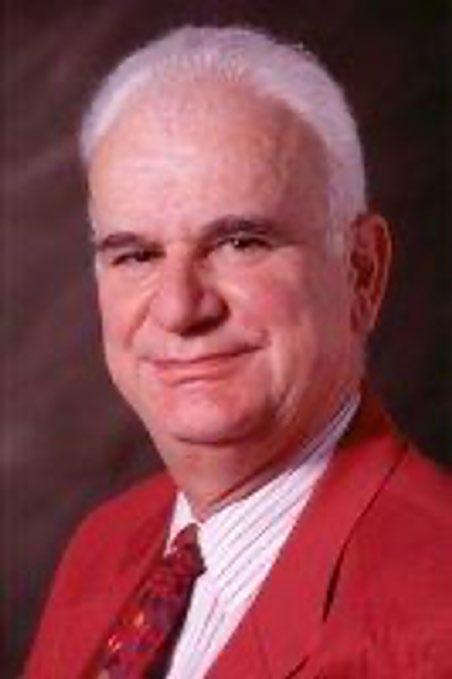
From time to time information about OWs which was previously unknown comes to hand. In previous editions it has been noted that several OWs have had distinguished careers in the field of statistics and the names of Brackstone, Chesher, Copas and Turnbull have been cited. Another name that has come to light is Professor George Styan (1948-55) now Emeritus Professor at McGill University in Montreal.
George Styan received a B.Sc. degree in mathematics from Birmingham University in 1959, and then went on to an M.A. 1964 and Ph.D., in mathematical statistics from Columbia University, New York. He was then appointed Assistant Professor and, in 1987, Professor of Mathematics and Statistics at McGill University researching into statistics at the interface of linear algebra and its broad spectrum of applications.
Professor Styan has published some 150 peer reviewed research works as well as serving on many editorial boards including seventeen years as managing editor of The Canadian Journal of Statistics. In 1988, George Styan received the Statistical Society of Canada’s Distinguished Service Award . In 2000 he was made an Honorary Doctor of Philosophy by the University of
George Styan
Tampere, Finland and in 2003 received the Harry C. Carver Medal from the Institute for Mathematical Statistics. In 2009 he received the rare accolade of Honorary Membership of the SSC, which is awarded only to a statistical scientist of outstanding distinction who has contributed to the development of the statistical sciences in Canada.
The citation for this award read “To George Styan, for his deep research at the interface of Matrix Theory and Statistics; for his remarkable editorial work within Canada and beyond, his mentoring of graduate and postdoctoral students; and for innumerable other scholarly and professional contributions to the international statistical community.”
It is good, albeit at a late date, to record the successful career of another distinguished OW.
Richard Foster
Professor
Honours, Awards and Appointments
King’s Birthday Honours 2024
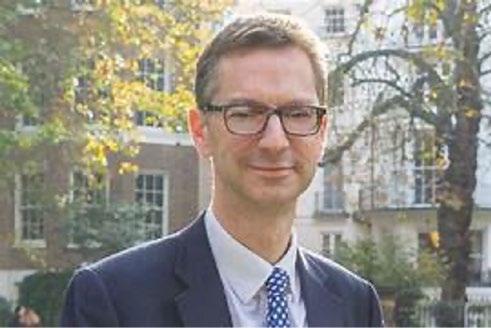
KCB – Peter Schofield, CB (1979-87), Permanent Secretary Department of Work and Pensions
Sir Peter’s career in the civil service was summarised in the 2022-23 edition of OW News but it is interesting to see his recent response to questions about his Department’s values and an insider’s view on his abilities:
“Our five values as a department are: we care, we deliver, we adapt, we work together, we value everybody. We set them during the pandemic. It had been such an extraordinary period for us, in terms of the demand on our services. Millions of people were coming to DWP for the first time and we rose to the challenge – staff felt really empowered and proud of what they’d done. And so we thought: how do we bottle that? How do we describe what the DWP is like when we are at our best? How do we describe what the DWP is like when we are at our best? And that’s where the values came from.”
A senior DWP official – when contacted by Civil Service World magazine for a verdict on the permanent secretary –described Schofield as “a class act … he’s had a serious economic and commercially focused career but somehow pulls great leadership out of the bag, setting a really positive and can-do culture across DWP”.
OBE – Giles Montagnon (1988-96), latterly Minister Counsellor British Embassy Beijing, for services to British foreign policy.
Giles spent a long period and had various roles in the British Embassy in Beijing: he has a deep commitment to and understanding of China. Interestingly, the award of his OBE was singled out for mention in the newsletter to alumni by Sir Rick Trainor, Rector of Exeter College, Oxford, Giles’s old college.
OBE – Professor Dudley Shallcross (1977-84), Professor of Atmospheric Chemistry University of Bristol, for services to science education. Dudley is described by the University as “A pioneering University of Bristol chemist who has helped more than 10,000 teachers across the UK and worldwide
inspire and educate the next generation of scientists”. Dudley’s teaching career started at the University as a lecturer in chemistry in 1999 after studying at the universities of Southampton, Oxford and Cambridge. The following year sparked his interest in nurturing science talent in children, which fast became a lifelong passion. Within a few years he was awarded the University’s first National Teaching Fellowship and soon after the School of Chemistry was made a Centre for Excellence in Teaching and Learn ing, called Bristol ChemLabS . His extensive outreach work has involved bringing secondary schools from across the country and globe into the School of Chemistry labs. His revolutionary work continued when he was appointed Director of the Primary Science Teaching Trust – a role which allowed him to transform the dynamic of teaching science at primary school level. In 2020 he was made President of the Education Division at the Royal Society of Chemistry, coinciding with the COVID-19 pandemic. His experience in virtual lab work and inst ruments proved pivotal, and helped scores of institutions deliver practical learning during public lockdown restrictions.
BEM – Dr Christian Willcock (1970-77), senior partner of the Friends Road, Croydon medical practice was honoured for services to the National Health Service and to the community in Croydon.
In a December 2023 interview with Martin Jarvis, OBE (1953-60) for the Daily Telegraph to publicise his Just William adaptation for Christmas, the journalist Claire Allfree summed up Martin thus: “ Jarvis, 82, is one of our most recognisable and reliable actors, part of the furniture rather in the way of a handsomely upholstered, immensely comfortable armchair”.
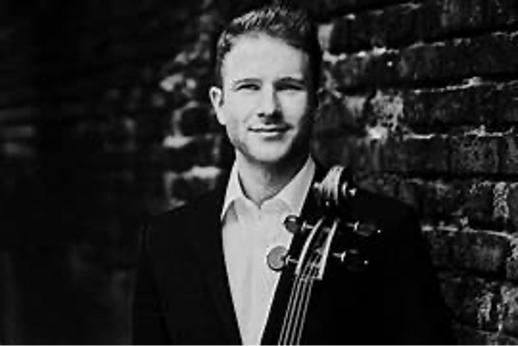
Tim Posner (2006-13) has received outstanding reviews for Concerto, his first major recording with orchestra: “British cellist Tim Posner’s first major recording with orchestra reveals him as a cellist of stature and integrity and boasts some inspired programming” “He has tremendous tonal beauty across his cello’s range”.
Sir Peter Schofield, KCB
Tim Posner
Tim has been named as a ‘rising star’ by Classic FM and the BBC Music Magazine, as ‘one to watch’ by Gramophone Magazine Concerto was listed by The Times as “one of the best classical albums of 2024 so far”.
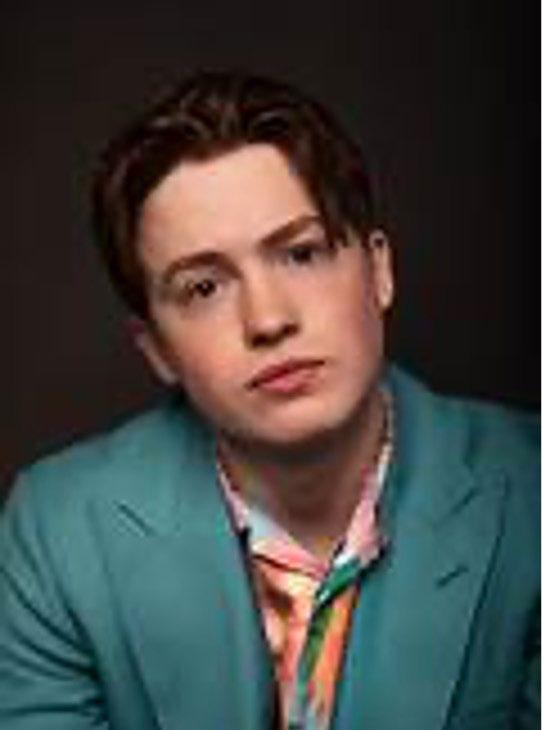
Kit Connor (2016-22) is already a multi award winning actor who won a 2023 Royal Television Society Programme Award and a 2024 Queerty Award for his continuing part in Heartstopper. In autumn 2024 he will be making his Broadway début as Romeo in a new production of Romeo and Juliet. The production will also star Golden Globe winner Rachel Zegler as Juliet.
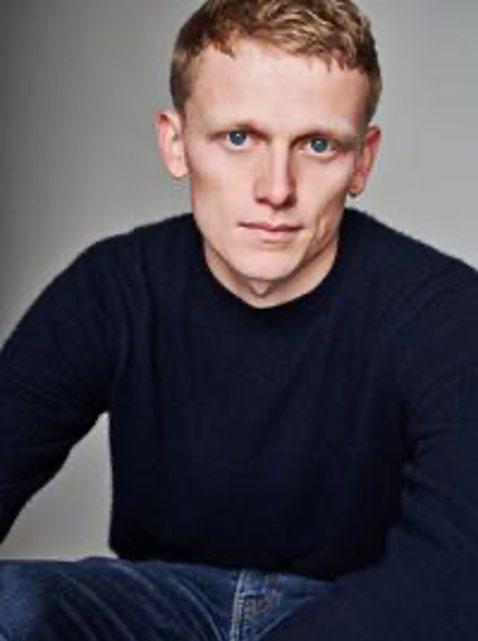
George Jacques (2013-20), already named by Screen International as a Star of Tomorrow, has directed his first feature film Black Dog, a road trip story as two young men make their way from London to Scotland and come to terms with the “black dog” of depression.
The film was shown at the London Film Festival and has received very positive reviews. It was released online in August 2024.
News of Former Staff
Irfan Latif (Member of Staff 1997-2004) has been appointed Headmaster of Royal Hospital School, Holbrook, Suffolk. The school is a mixed boarding and day school which moved to Suffolk in 1933 from its original site at the Royal Hospital in Greenwich. Its naval origins give rise to its nickname “cradle of the navy” and no fewer than 1000 former pupils served on Royal Navy ships at the Battle of Jutland in 1916. In that battle at least 101 old boys died, the greatest loss in action in a single day of any British school.
The Services
Maj General Jonathan Swift, OBE (1983-1991), formerly General Officer Commanding Regional Command, has been appointed Director Programmes. In this role, in April 2024 he introduced to the press the army’s new main battle tank Challenger 3 which is anticipated to be in service until 2040. Jon said of the new tank “Challenger 3 will be at the heart of the Army’s Armoured Brigade Combat Teams, alongside Ajax and Boxer, and is critical to the Army’s warfighting capability and the UK’s contribution to NATO. The delivery of these prototype vehicles, the first of which has already started trials, marks a significant milestone on the Army’s modernisation journey.”
Brigadier Matthew Birch (1987-92), previously Head of Military Capability Delivery, has been appointed Senior Responsible Owner for Land Intelligence Surveillance Target Acquisition and Reconnaissance (ISTAR). This involves coordination of information based army operations.
Brigadier Mike Cornwell, OBE (1984-92) is now head of Future Force Development Army Command – this looks at how robotics will be integrated into the British army of the future. In addition, Mike found time to be inspecting officer at the Annual General Inspection of the School’s CCF in April 2024.
Kit Connor
George Jaques
Publications with a Whitgiftian interest
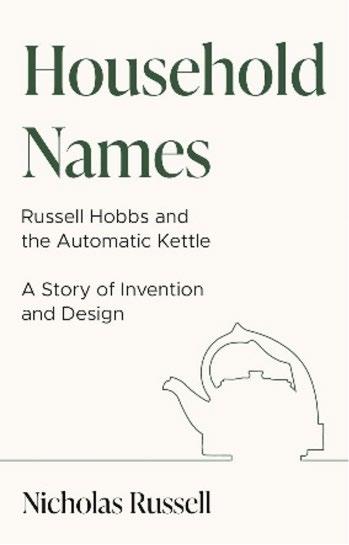
The idea of a successful family business is much rarer than in former times but to have a family business that becomes a generic name for a product (think Hoover, Singer) is even more unusual. Dr Nick Russell (1958-63), Emeritus Reader at Imperial College, London has written a book about the Russell family company that fits such a designation. Household Names: Russell Hobbs and the Automatic Kettle – a Story of Innovation and Design .
The famous brand of Russell Hobbs was the brainchild of Bill Russell (Nick’s father) and Peter Hobbs. They had started out at Morphy Richards but in 1952 set up on their own with Bill on design and engineering and Peter on marketing and sales.
Their story demonstrates the significance of invention and design for successful manufacturing, often neglected by British firms, especially during the latter part of the 20th century, and provides object lessons in how successful product manufacturing might still be done. Russell Hobbs was an independent firm for only a decade but in that short time established an international reputation for design quality.
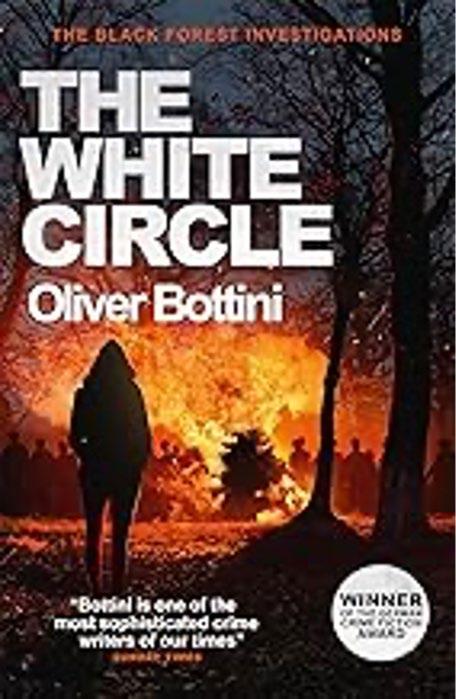
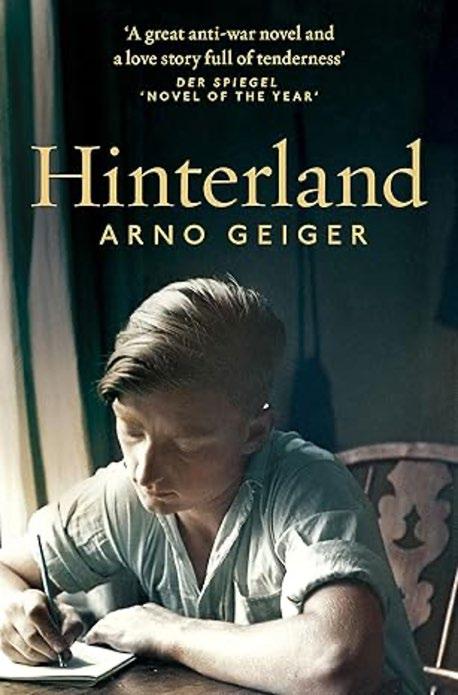
Jamie Bulloch (1979-87) has for the second time won the Schlegel-Tieck Prize awarded annually by the Society of Authors for the best translation into English of a German book. The book for which Jamie won the prize is Hinterland by Arno Geiger set in 1944 and described by Der Spiegel , which considered it “Novel of the Year”, as ‘Both a great anti-war novel and a love story, full of tenderness – as around it the world shatters’.
Jamie has also published the following novels in translation since last year’s edition of OW News:
Anatomy of a Killer, Romy Hausmann, What Mother Won’t Tell Me by Ivar Leon Menger and The White Circle by Oliver Bottini, the latest in the very successful and award winning Black Forest investigations series.
Professor Stephen Gunn (1971-78) continues to lead the project on Everyday Life and Fatal Hazard in Sixteenth Century England. The Discovery of the Month on the project website is a never ending source of insight into our long ago ancestors and the sheer danger of everyday life. As an example: July 2024. Pranks can enliven the dullest working day, but occasionally they misfire. At 10 in the morning on 15 July 1549, at Rowde in Wiltshire, William Byrde was shoeing a horse. His neighbour Walter Barnarde – they were both small farmers in the village – decided to have a joke with him.
As William was busy with the horse, holding its foot in his hand, Walter threw some dust down the back of his neck. William instantly kicked dust back at Walter. Unintentionally he kicked with it a tool lying behind him, a blacksmith’s buttress used to trim horses’ hooves. The buttress hit Walter on a vein in his leg, near the heel, and began an unstoppable flow of blood. Seven hours later, jesting Walter was dead.
Appearing: September 2024
Age does not seem in any way to weary Graham Masterton (1957-62). He continues to follow a frantic schedule of events around Europe, particularly Poland and to publish new novels and short stories. Quite how he does it is a mystery!
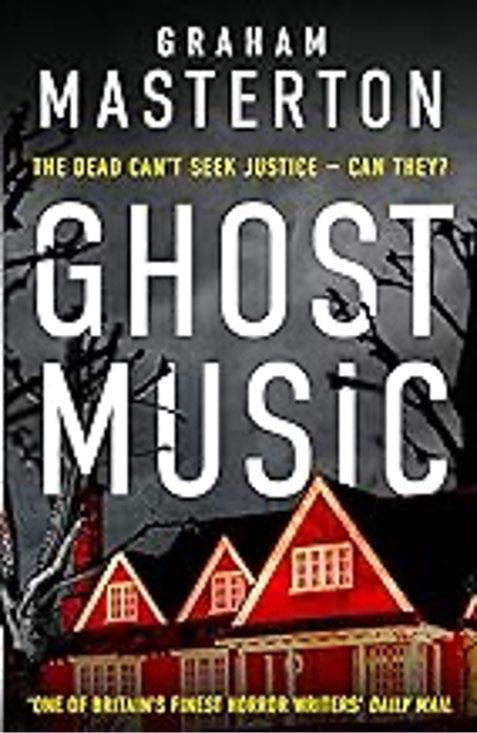
From Graham: ‘Ghost Music will be coming out on November 7 (two days after the US election so maybe readers will need something even spookier to take their minds off the result!).
‘Gideon Lake, a successful composer, is immediately smitten by his neighbour Kate Solway. They begin a passionate affair, and Kate invites him to Europe so that they can be together without her husband finding out. But when Gideon witnesses all kinds of strange and terrifying events, he soon realises that nothing in Kate’s world is what it seems.
‘Gideon must work out who, and what, Kate really is –and what she wants from him...’
From Graham: ‘Katie Maguire will be back on October 10, in hardback and Kindle, trying to solve her 12th devastating case.’
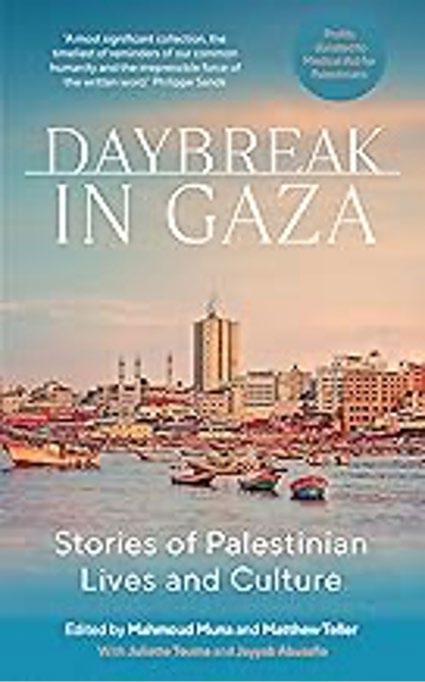
Matthew Teller (1979-87) had great success with his previous book Nine Quarters of Jerusalem. His next book Daybreak in Gaza weaves together four thousand years of this extraordinary place and people, showcasing the illustrious achievements of the past with insights from Gazans today. Vignettes of artists, acrobats, chefs, shopkeepers and medics tell stories of life, love, displacement and survival, rubbing shoulders with vivid accounts of the warriors and travellers of old.
Sport
This was another year when with OWs made their mark in top level sport.
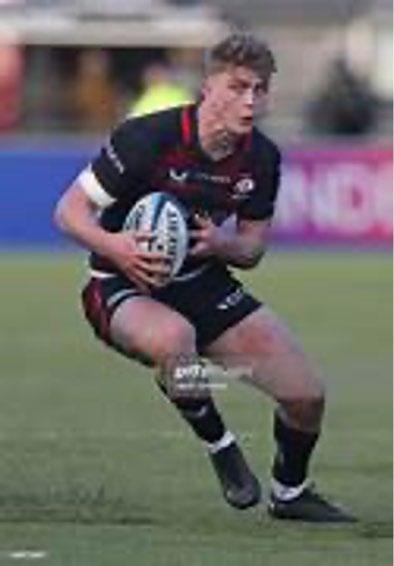
There were two new OW cricket internationals – Jamie Smith (2010-18), whose Test Match début is recorded elsewhere. Jamie made his début for England in a one day international against Ireland in September 2023. In October 2023 Nick Welch (2014-16) made his international 20/20 début for Zimbabwe in a match against Namibia. He has since played a further six 20/20 internationals. In rugby, Whitgift was represented in England teams at all levels in the 2023/24 season – Jamie Miller (PW) played for England U18, Sean Kerr (2016-23) was a member of the England Six Nations’ winning team at under 20 level (he was on more than one occasion voted player of the match in the tournament) before his key part in England’s World Cup victory. Olly Hartley (2015-20) continued to impress for Saracens and played for England A in their only match (against Portugal),
The evergreen Elliot Daly (2006-11) played in the World Cup and was an ever present during the 2024 Six Nations’ Tournament.
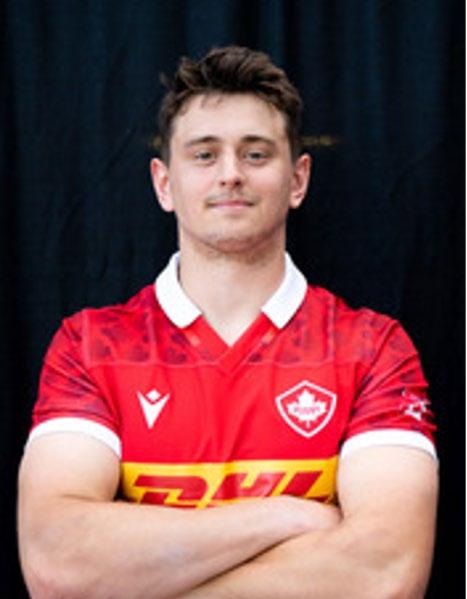
In addition, Piers von Dadelszen (2015-19) received two more caps for Canada in matches against Tonga and Lasha Jaiani (2014-16) won four more caps for Georgia, including two in the World Cup.
Zach Wallace (2016-18) was voted Senior Performance Player of the Year at the England Hockey Awards in May 2024. He was also a nominee for FIH Player of the Year (the global award). He now has in excess of a hundred international caps.
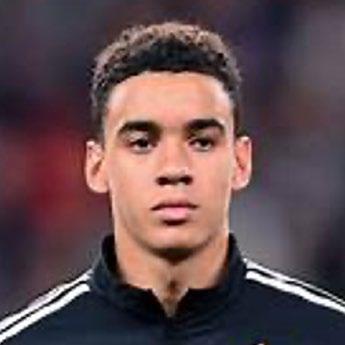
Jamal Musiala (2014-17) is an acknowledged footballing superstar and has won a further 9 caps for Germany in 2024.
Bertrand Traoré (2011-13), who played for Villareal in season 2023/24, has returned to Ajax for 2024/25 and in the last year won a further four caps for Burkina Faso.
OW international recognition was further increased in July 2024 when Matt Gallagher (2013-15) became the first OW to be awarded a full international cap for Italy. In season 2024/25 he will play his club rugby for Benetton Treviso.
Cricket
When Michael Burgess (2004-08) scored 108 for Warwickshire on 17 May, he became the fourth OW to register a first class century in the 2024 season – the other OW centurions were Dominic Sibley (2007-14) Surrey Vice - Captain, with two scores over 100, Rory Burns (2001- 06) Surrey Captain and Jamie Smith (2010-18) all for Surrey.
Since then Ryan Patel (2009-16) has also scored two first class centuries and on 23 August Rory scored a double hundred against Lancashire.
Ryan’s successful 2024 was recognised at the end of the season by the award of his Surrey county cap. He thus became the fifth OW in the current Surrey squad to receive that accolade.
Nyeem Young (2017-19) has progressed in his cricketing career and in the 2023-24 season captained the West Indies Academy XI in the West Indies Championship.
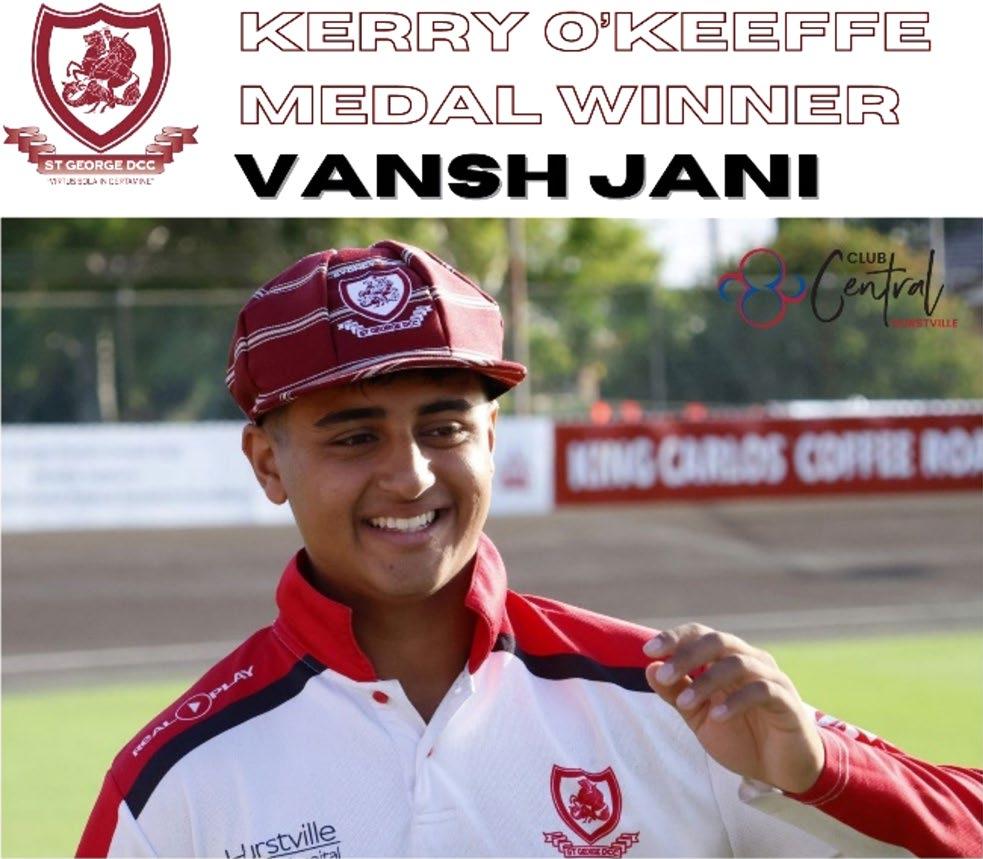
Arjun Gill (2015-23), from the 2023 School XI, has started well for Surrey 2nd XI with scores of 196 against Kent, 75 against Middlesex and 64 against Hampshire. His direct contemporary Vansh Jani (2017-23) spent the English winter in Sydney where he played for the St George’s District Club (the former club of numerous Australian Test Match stars including Sir Donald Bradman, Bill O’Reilly Ray Lindwall, Arthur Morris, Josh Hazlewood and also our own Rory Burns) and had a spectacular season. In the full season he finished with 946 runs and 8 wickets which was enough to win the prestigious Kerry O’Keeffe Medal for the St George DCC Player of the Year.
Vansh has since returned to England where he has been playing for Richmond CC and for Middlesex 2nd XI.
Olly Hartley playing for Saracens
Piers von Dadelszen in Canadian shirt
Ryan Patel
For Richmond, he scored an amazing 244* on 5 May in a cup match – this was the highest score ever recorded by a Richmond player in its long history. On 27 August, Vansh scored 128 for Middlesex 2nd XI against their Worcestershire counterparts.
Rugby
Elliot Daly (2006-11) and Olly Hartley (2015-20) played for Saracens, Matt Gallagher (2013-15) for Bath Rugby and George Hammond (2016-18) for Harlequins in the English Premiership 2024/24. Harry Williams (2002-10) played for Montpellier in the French Top 14 whilst Lasha Jaiani (2014 -16) continued to play for Nevers in the second division of the French Championship.
Matt Gallagher appeared for the runners up, Bath, in the Final of the Premiership Competition for 2023-24.
Football
For Germany, Euro 24 was a disappointment but there was consolation for Jamal Musiala (2014-17) who won the Golden Boot for scoring three goals in the tournament. Jamal has now won over 30 caps for Germany and scored 5 goals. He has also played well over 100 times for Bayern Munich.
Callum Hudson-Odoi (2012-15) is at Nottingham Forest and played some 30 times in season 2023/24.
Nathan Baxter (2009-15) is still with Bolton Wanderers and played 33 times for them in season 2023/24
Di’Shon Bernard (2012-15) is currently playing for Sheffield Wednesday and made 33 appearances in season 2023/24. He has now made a total of 17 international appearances for Jamaica.
Hockey
The extraordinary success of hockey at Whitgift results in numerous Present and Old Whitgiftians representing England and/or Great Britain at every level from schools and Under 21to full international – as indicated earlier this success was reflected in two OWs playing for Great Britain in the 2024 Paris Olympics.
Golf
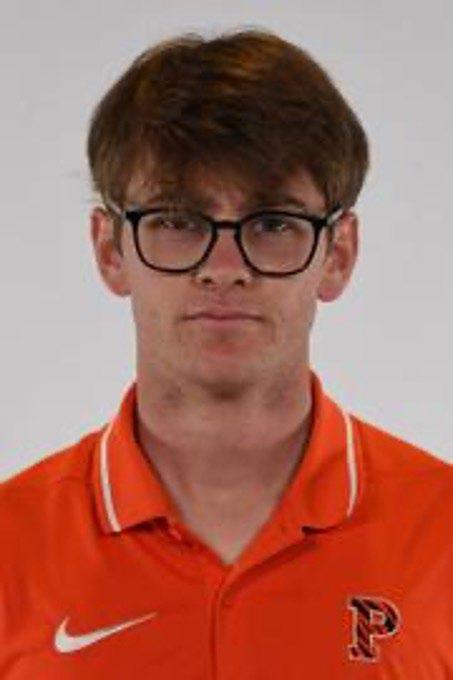
After being named Ivy League Rookie for 2023 in his freshman year, Riccardo Fantinelli (2018-20), now a sophomore, was voted Ivy League Player of the Year for 2024, the first from Princeton to receive this award. In October 2023, he was one of the four man Italian team that came fifth in the World Amateur Team Championships (the Eisenhower Trophy) which was held in Abu Dhabi.
Harvey Byers (201017), now a professional, was runner up in two tournaments on the Toro Tour in February2024.
On a domestic OW front, although the Halford Hewitt for 2024 finished with defeat in the first round (to Shrewsbury), there was excellent news in the Cyril Grey competition for over 50s when a relatively youthful Whitgift team won a very competitive competition. This was the third Whitgift win in the history of the event.
Jamal Musiala
Riccardo Fantinelli
Vansh Jani
Whitgiftian Miscellanea
In carrying out some background research about the career of the late William Dawson (1936-39), who was at Whitgift and was evacuated at the beginning of the Second World War spending the rest of his schooldays at Leighton Park School near Reading, I came across his memories of Cambridge during the War in the alumni magazine of Christ’s College. Much to my surprise the next person whose memories were included in the magazine were those of another OW Canon Hugh Melinsky (1936-42). Coincidence is a powerful tool when looking at historical information!
I set out below some Wartime memories of these two OW contemporaries which give vivid illustration of the conditions “enjoyed” by university undergraduates.
William Goodhugh Dawson
Matriculated at Christ’s College in 1943
Christ’s was very cold and dark during wartime. During the winter and spring terms we lit our coal fires after lectures at about 4pm when we made tea and ate bread (unrationed) and butter (rationed). The black-out of all windows was of course maintained throughout the year.
Electric fires were forbidden but Alan Jackson, who had been in lodgings with me the previous year, had a one bar fire in his rooms on the staircase next to the chapel. One day coming out of lunch we saw thick smoke issuing from his window. The NFS promptly put out the fire and intended returning later to investigate. I was able in the interim to run up the stairs and retrieve the offending fire so there were no recriminations for Alan. This incident was a very well-kept secret but to this day I am sometimes reminded of it by those who knew of it!
Interviewed by the Senior Tutor Mr Grose on joining the College in September 1943, he asked if I would be joining the Home Guard or the National Fire Service. I chose the latter and he sniffed disapprovingly but said nothing.
I was in a moral dilemma because my mother had adopted Quakerism and disapproved of killing Germans. Also I had had two holidays in Germany, one a school summer holiday with the family of our German maid when I had attended school and had made friends. Yet it was with huge relief that I saw the tide of war now turning in our direction with the victory of El Alamein.
With me on the College NFS pump which was towed by a large saloon car were a team of the Chaplain, Ramsay, later Bishop of Durham, who was very heavy to carry when practising the “fireman’s lift”, and several others who achieved fame as clergymen. They included Eric Heaton, Peter Baelz, Tony Dumper and Jock Wilson. Peter Baelz, later Dean of Durham,
was a conscientious objector at school and so had been passed over for Head Boy of Dulwich College. We trained one evening during the week whereas the Cambridge Battalion of Home Guard trained on Sunday mornings. In our lodgings on Saturday evenings I frequently found my two co- lodgers cleaning guns in front of their respective hearths!
Our trailer pump was quite powerful and could project a stream of water from Second Court over to the Fellows’ Building. The College roofs were covered with ladders for access in case of fire.
Most of the students at Christ’s during the war were on Short Service Courses of 6 months before training as officers in HM Forces. Christ’s was a poor choice for medical students but my headmaster Mr Castle of Leighton Park wished to distribute his sixth form around the various colleges and he was not a scientist. I should mention that during lectures the great majority of students and lecturers smoked. The handful of women, who were not then members of the university, sat in the front row.
To go back to the NFS, I was in some ways fortunate in being given a driving licence without any formal driving instruction or examination. We had to reverse the appliance and saloon car into the Master’s garage after exercises away from the College. One evening, when the air-raid warning had sounded and in the total darkness of the black-out, I was reversing into the garage. Unusually, no one was guiding me. I think the other members of the crew had taken cover as they thought they heard gunfire or enemy aircraft. I managed to hit and split one of the main posts of the garage. I was told to expect disciplinary action. However, the following night, the Master’s wife, having secured a small amount of petrol had the same experience causing further damage, so I heard no more about it!
All meals were taken in Hall, although hot meals could be brought to your rooms by your gyp, if requested. There were two sittings for dinner for 1st and 2nd year students respectively. Great efforts were made to provide an adequate diet and we collected our tea, butter, margarine and sugar rations in small bottles from the Buttery and purchased fresh un-rationed loaves. On Wednesday we often had pigeon pie at lunch. However the calorific value of the diet was not high and my friend Jim Long used to feel very faint after rowingthe diet was not adequate to support that sporting activity.
On V.E. Day all the College flags in Cambridge were flying. I had tooth ache and managed to find a dentist to extract the tooth. At the long vacation term of 1945 there was an atmosphere of euphoria. We took a course in Pharmacology. I had to take Physiology a second time after failing to achieve a satisfactory mark in the Tripos.
We also attended a course of introduction to medicine at Addenbrooke’s Hospital and saw many wounded men at the Ley’s School which had been turned into a military hospital.
And so the war in Japan ended with the atomic bomb. I left Cambridge to commence clinical studies at St. Bartholomew’s Hospital in London.
During the Easter Vacation of 1945, I was detailed to serve for one week at the fire station at Oxted in Surrey. I returned for the Summer Term wearing my NFS uniform in a train full of men mainly on short leave from the front. I felt rather embarrassed and ashamed. I received some strange looks but nobody said anything to me. Although we were considered by many to be “D-day Dodgers” we did work very hard with little relaxation for sport or other interests. Habitually we would study to midnight every night, often in cold rooms when our coal ration was exhausted.
Conditions were very primitive by modern standards. We had a measured bath every week in the bath house where the new library now stands and I occasionally bathed in the swimming pool.
In summary, the atmosphere at Christ’s during wartime was far from bellicose. The Master was a known pacifist although as far as I know he did not parade this fact during his Mastership, whereas a few of the bishops did speak out about the bombing of German cities. There was a general feeling of tolerance and we all got on with our week as well as we could.
Canon Hugh Melinsky Matriculated at Christ’s College 1942
My first year at Christ’s in 1942-43 was in the middle of the war and the college was largely empty apart from a large contingent of RAF cadets. My two best friends were Peter Baelz, who was a conscientious objector, and Eric Heaton who was meant to be medically unfit. The most obvious symptom of war was food rationing: we had to have all our meals in Hall and I became very tired of herrings for breakfast for they were unrationed unlike bacon and eggs. We had an allowance from the Buttery of 2oz a week of butter and 1lb of jam for the term.
A new Chaplain arrived, Ian Ramsey (who became Bishop of Durham in 1966) and I received an invitation to his wedding in the Chapel, conducted by the Master, Canon Charles Raven. His bride, Margaret, was a fortunate choice for us because she came from Eire where there was no food rationing and so Ian was able to invite us to tea with rich fruit cake. Otherwise one had to queue at 10 o’clock on a Saturday morning at a shop for the only cake available, very plain
I seem to remember we had to do some fire-watching which meant sleeping in the Reading Room prepared for all eventualities (I was in digs.) Nothing exciting happened.
What was exciting was a supervision (in classics) I went to one morning with ‘Daddy’ Grose, the Senior Tutor, who remarked, “Before we begin, would you like to learn Japanese?” I enquired the significance of this and was told that the allies in the Far East were desperately short of linguists. I was asked what it would involve and was told “An interview with Colonel Tiltman from M.I.8. (actually Bletchley Park) and if you are accepted, a 6-month intensive course and then probable dispatch to the Far East”. But that is another story.
This is that story from Hugh Melinsky’s –A Code-breaker’s Tale
In 1943 Hugh Melinsky was studying Classic at Cambridge while waiting for his call-up to the RAF. Then one day his tutor asked him if he would like to lean Japanese. By answering ‘yes’ he began an adventure which was to take him right round the world. He was to join the army and serve with the Wireless Units in Australia, at both Brisbane and Darwin, breaking the codes of the Japanese pilots whose masters were then threatening complete domination in the south west Pacific. He was at the recapture of Borneo, and the Philippines, Delhi and Singapore all feature on his itinerary. It fell to him to translate for General MacArthur the first Japanese radio news reports of the ‘new-type bomb’ which had fallen on Hiroshima. When he finally returned to Britain in 1946 he found his army record completely blank; no one knew what he had been doing for three years!
I never intended to learn Japanese, or go out to the Far East. Come to that, I never intended to join the army. My main interest was in aeroplanes and flying, and that indicated the Air Force. In 1942 I was eighteen and in the sixth form at Whitgift School, Croydon. The war had been going on for two and a half years and the Royal Air Force had lost a lot of pilots and aircrew. A senior officer came round to the school to recruit some new ones, and I, with half a dozen others, asked for an interview. I remember his asking me some mathematical questions, most of which I got wrong, but that did not seem to matter too much because at the end he handed me a piece of paper stating that I was an accepted volunteer for aircrew duties (pilot), subject to a medical examination. I had to produce this form when I was called up at nineteen.
I won an exhibition to Cambridge in classics and I was allowed to go up for a year because the university was nearly empty. Most of the friends I made there were either conscientious objectors or medically unfit – one of the latter died in 1996 at the age of seventy-five!
In 1942 I went up to Christ’s College, Cambridge, for a year because I was too young to be called up for the R.A.F., and continued my study of Greek and Latin. One day in the spring of 1943, I went to my tutor to have my Greek composition marked. He sat in his comfortable chair, looking like a well-fed pussy-cat, and said, ‘Oh, by the way, before we begin, would you like to learn Japanese? They are very short of people who can translate it’. I nearly fell through the chair, but managed to say, ‘What would I have to do?’ He replied, ‘You’ll have to have an interview. If you’re accepted you’ll train for six months in this country and then probably go out to the Far East in the army.’ I thought this sounded interesting and replied, ‘I’m prepared to try anything once.’
So I had an interview with Colonel Tiltman from the War Office department M.I.8. He asked me if I played chess, and I said I didn’t; or did crossword puzzles, and I said I did; or could read music, and I said ‘Reasonably’; and other questions which at the time seemed odd, but which later I understood. He said that I would hear from him, and I told him about the Air Force offer, but he said ‘Don’t bother about that’. So I started my summer holiday.
Half way through, on a day when I was sunbathing in the garden, a telegram arrived telling me to report to the InterServices Special Intelligence School at Bedford on the last day of August. So began the six months’ hardest work of my life. There were thirty of us in the class (twenty-nine men and one woman) who had all done Greek and Latin at Oxford or Cambridge and so they thought we could tackle Japanese.
We worked every day from nine till five, and Saturday mornings, and every evening we had to learn a dozen or so new words and characters.... We even had to work Christmas morning.
In the middle of June 1944, six weeks after arriving at Brisbane, I was posted to No. 2 Wireless Unit, Royal Australian Air Force, in, or rather, near Darwin ... We had a teletype line to Brisbane (which was like a typewriter on a telephone line). This land-line was not ‘secure’ since anyone could tap into it, and so every one of our messages had to be enciphered by our unit and then deciphered at Central Bureau...Life was very busy when I arrived, with over a hundred messages a day.
p.56 – On the way to Singapore from New Guinea is the large island of Borneo, vital to the Japanese as a rich source of oil. I was to take part in a sea-borne invasion of part of the island with a detachment of no. 4 Wireless Unit.
p.67 – General MacArthur was making plans for the final invasion of Japan on the Southern island of Kyushu (target date 1st November) and we were told that we were going to be the only non-American unit involved... On August 6th an
American bomber dropped an atomic bomb on Hiroshima, wiping out the whole city centre and killing some seventy thousand people, many of them women and children. We knew nothing about this weapon; the secret had been well kept.
Our wireless operators picked up the official war report from the Domei News Agency, and I had to translate it for General MacArthur. I still remember the words ‘shingata bakudan’ which I took to mean ‘new-type bomb’, for the Japanese did not know what had hit them. The word ‘shingata ‘ was not in the dictionary, and my doubt was finally dispelled fifty years later in a television programme celebrating the anniversary of V-J day. Taking part was a Japanese lady of about my age who was the daughter of a high government official at the time. She said she vividly remembered the announcement about the bomb, quoting it in Japanese, and then giving the translation.
The power of coincidence is remarkable. For reasons unknown I recalled the name of Tony Kremer (1962-64), a contemporary who joined Whitgift in the VIth Form. I wondered if I could find out what had happened to him in later life. I thought he had gone on to King’s College, London. To my surprise, almost immediately, I found a post on the King’s website which was one of a series entitled “We met at King’s”. This piece was written by Tony’s widow, Sandra and it told how they met in 1966 as undergraduates and summarised their life together. Sadly, Tony died in 2022. I made contact with Sandra Kremer and heard more about Tony’s life after school – an appreciation of his life is included with other OW deaths.
The 2023 edition of the Annual Record, the formal publication of Trinity College, Cambridge includes a transcript of the speech given by Professor Alan Windle, FRS (1953-60) at the dinner given by the College to celebrate Alan’s 80th birthday. The speech includes a section about his upbringing in Croydon and his time at Whitgift. One story speaks volumes about the difference between then and now –Alan was in the Shooting team and “In summer we practised on open ranges, often away in the countryside, getting there by coach. On occasion when the coach was due to pass my house, I was given permission to take my rifle home the night before. So, to get home as usual, I would climb up onto the top deck of the 194 bus, with my .303 match rifle slung over my shoulder and my shooting box containing live ammunition in my other hand. I was not in CCF uniform but probably had a school blazer on. Nobody batted an eyelid. Times were different then.”
Deaths
We have, with regret, to record the deaths of the following OWs reported since the preparation of the previous edition of OW News:
ABSALOM – On 1 June 2023, Michael Edwin (1937-44), aged 96
ALEXANDER – On 15 January 2024, Graham Ernest Howard (1954-62), aged 79
ANDERSON – On 7 August 2024, Kenneth Stanley, (1967-74), aged 68, brother of DC (1965-72)
BERNARD – On 9 November 2023, Ronald (1948-54), aged 87
BLACKMORE – On 14 November2023, Dr David Richard (1949-56), aged 84, brother in law of JR Sutcliffe (1948-55)
BRANSTON – On 10 September 2023, John Richard Martin (Member of staff 1956-97), aged 91
BROWN – On 1 June 2023, Robert Augur (Bob) (Member of staff 1960-90), aged 87
BROWN – On 21 December 2023, Stephen James (1965-73), aged 69
BUCHANAN – On 29 November 2023, Rt Rev Dr Colin Ogilvie (1944-53), aged 89
CALLOW – On 15 September 2023, Michael John (Member of staff 1980- 2008), aged 69
CLARK – On 31 May 2024, Graham (195259), aged 82
COYLE – On 6 March 2024, Brett Anthony (1984-91), aged 50
DAWSON – On 31 May 2024, Dr William Goodhugh (1936-39), aged 98
EVERETT – On 20 February 2024, Simon Philip (1986-91), aged 51
GEE – On 5 October 2023, Professor David Godfrey (1949-56), aged 85
HILTON – On 15 December 2023, David Mervyn (1949-56), aged 86
HOUGHTON – On 6 May 2024, Dr Christopher Handen (1949-57), aged 85
KIRK – On 11 June 2023, David Cameron (1957-64), aged 75
KREMER – On 15 June 2022, Anthony Laurence (1962-64), aged 75, brother of NJ (1962-63)
KUSEL – ON 27 March 2024, Professor John Richard (1950-58), aged 84, brother of RH (1953-57) and cousin of PA (1952-60)
McCALL – On 10 August 2023, Travis Guy (1962-70), aged 71, brother of IV (1955-63) and AD (1956-64)
MACKLIN – On 15 July 2024, Robin William (Member of staff 1963-2002), aged 85
OLDER – On 4 September 2023, Alan John Clark (1940-48) aged 93, President OWA 1996
POOLE – In May 2023 Keith Roderick (1945-54), aged 87
REDDY – On 2 October 2023, Captain Anthony (“Tony”) (Member of staff 19772005), aged 78
SHARPE – On 15 July 2024, Anthony John (1939-47), father of SJ (1972-80) and brother of the late GD (1935-42)
STOCKS – On 14 June 2024, Dr Alan Ernest, AM (1947-55), aged 87
STRAW – On 24 February 2024, John Sorby (1941-47), aged 92, President OWA 2007, brother of DS (1945-53)
SUBBA ROW – On 17 April 2024, Raman, CBE (1943-50), aged 92, President OWA 1972, brother of the late SA (1931-39)
SUTCLIFFE – On 21 April 2024, John Ross (1948-55), aged 87, brother in law of Dr DR Blackmore (1949-56)
WRIGHT – On 1 November 2023, Donald Andrews (1946-51), aged 89
Obituaries and tributes
Michael Absalom (1937-44)
Mike Absalom, who died in June 2023 at the age of 96, had a glittering career at School – he was Captain of the School in 1944, of Tate’s, of the 1st XV, of athletics and the fives 1st IV. In addition he was for two years in the 1st XI and a colour for cricket and CSM in the cadet force. On leaving School he served in the latter stages of the War in the Far East with 44 Commando Royal Marines before going to The Queen’s College, Oxford where he read Physics. On graduation he worked for 17 years for Robertsons, a US company making building components (then ranked 50 in Fortune’s Top 500 World Companies) and became General Manager (Europe). His last 20 years of working life were spent as General Manager of a UK construction company, largely involved in MOD contracts. In his spare time he was an International Tournament Referee in lawn tennis and squash.
On retirement, Mike emigrated to Australia, where he was an active Lion and involved in Diabetes Awareness among remote communities. Due to his wife’s ill health, he returned to UK after 7 years and was a volunteer at The Royal Marines Museum, Southsea and at Tangmere Military Aviation Museum. At 83 he lost his sight, but continued to walk regularly to the end. He was married twice and had two sons and an adopted daughter.
This obituary is based on Mike’s own summary of his life. The photograph,, along with a number of School photographs from his collection, was provided by his friend and neighbour Mrs Maureen Harris.
Graham Alexander
(1954-62)
Graham Alexander was in Smith’s house and left from VIth Maths in July 1962. He was Captain of Tennis and formed a formidable doubles partnership with his direct contemporary John Dellière. The following tribute appeared in The Times on 20 April 2024, Graham having died on 15 January.
Graham Alexander founded the Alexander Partnership, which developed a coaching method he came across in the US
The “supercoach” Graham Alexander, who founded the corporate coaching business the Alexander Partnership, started his professional life as a tennis player in the US. His interest in human potential was piqued when he came across the “inner game” theory developed by the tennis coach Timothy Gallwey.
The technique, first described in Gallwey’s 1970s sportspsychology book The Inner Game of Tennis, is a method of silencing the critical inner voices — the self-doubt, nervousness and lapses of concentration — that can keep a player from winning. “The opponent within one’s own head is more formidable than the one on the other side of the net,” he claimed.
For Graham, who was curious about the mind and its potential and who in the early 1970s had taken part in the “human transformation” courses becoming popular in the US, the method struck a chord. He could also see the commercial possibilities. In 1970, with Gallwey’s permission, he and John Whitmore, the Old Etonian former British racing driver, took the Inner Game to Europe. At first they applied its method to tennis players and golfers and then started to use it in the workplace.
With Graham setting himself up in an office with a desk and telephone on Buckingham Palace Road in London, the pair spent most of the 1980s working out the means of improving performance at a time when few businesses in Britain and Europe were focusing on coaching at board
Mike Absalom, aged 89, pictured in Big School in front of the list of Captains of the School – note his name in 1944
Tennis player who became an executive “super coach”
Obituaries and tributes (continued)
level. The aim was to help leaders and managers to recognise the barriers preventing them from operating at the highest levels of capability. The focus was also on self-awareness, engagement and enjoyment. Yet it was not until 1986, when they took on McKinsey & Co the management consulting company, that the pair developed a model specifically designed for workplace performance coaching.
Many of the programmes they ran for McKinsey included experiential coaching work on tennis courts, with such impressive results in unlocking employees’ potential that McKinsey asked Graham and Whitmore to come up with a defining framework for the process. It would take several months of watching videos of themselves and others coaching. They also called neurolinguistic programming experts whose job was to ascertain if a model for goal-setting was being used.
The process started with finding a Goal, understanding its Reality, seeking the Opportunities and finding the Way forward. The “Grow” model, an acronym of the aims, was born, and remains one of the most-used coaching models in the workplace.
The Alexander Partnership, which Graham started in 1988 and continued to run for the next 36 years, had at its peak more than 40 employees versed in sharing the Grow coaching method. Clients tended to be the chief executives from the top FTSE 50, among them Marks & Spencer, BT, Boots, Lloyds TSB, Sainsbury’s and BAE Systems. It led to Graham writing five books, including in 2005 Tales from the Top: 10 Crucial Questions from the World’s No 1 Executive Coach and, with Ben Renshaw, Supercoaching
Graham Alexander was born in Purley, south London, in 1944 to Raymond Alexander, a company secretary in the City of London at a wool firm, and Daphne (née Franklin), who worked in a bank before raising a family. He had a younger sister, Dilys. His love of tennis started on his grandparents’ grass court.
In the mid-1960s and, being something of a free spirit, after Whitgift School in Croydon, Graham decided against university and took on odd jobs, among them driving a van and a minicab, and working as a petrol attendant during the 1966 World Cup final. He eventually found employment working for an insurance company.
One day a friend suggested to Graham that he go into computer programming, implying that it was the “next big thing”, and he moved into a role working for IBM in London, initially as a programmer and then a manager. In 1971 the technology company worked with the Trident Trust, an educational charity that helped young people in school grow in self-awareness through work experience, adventure training and community work. The concept chimed with Graham and he applied for a role with the charity on secondment from IBM and was accepted.
In 1978 he married Anita Melull, a make-up artist for TV commercials and magazines whom he met in Israel. Anita graduated from the London College of Fashion at the age of 60 and predeceased him in 2017. They had three children: Reina, a brand strategist who lives in Hobart, Tasmania; Elan, a web designer who lives in Denver, Colorado; and Lara, who lives in Charlottesville, Virginia.
For most of the week Graham and Anita lived in Hampstead, northwest London, but kept a house in Margate, Kent, where they liked to maintain links with the arts world and became founder patrons of the Turner Contemporary art gallery. Graham was an accomplished photographer and exhibited at shows around the country as well as in Dubai.
As the business grew, Graham explored his tastes, driving a Ferrari and dressed like a rock star with his scarves, fancy shoes and jackets. Yet he remained a private but down to earth figure. His approach to coaching was non-judgmental, irreverent and fun. One client remembers insisting on a teambonding exercise, and Graham suggesting they turn up at a manor house outside London and together herd a gaggle of geese through an obstacle course. It broke the ice even if what Graham really wanted to get on with was asking the clients the questions that mattered and finding the answers. His mission, inculcated from his twenties, was to help others to get the best out of themselves. “Strive to be happy in life and strive to help others be happy,” were among his last words.
Graham Alexander exhibited his photographs in shows around the country. This picture was taken by him in Margate, 2020
Ronald Bernard (1948-54)
Ron Bernard, who was born in Amsterdam in May 1936, died in November 2023 aged 87 just 39 days after his wife Norma for whom he cared for the last few years of her life. Ron was a member of the Upper Vth of 1952 whose annual reunions over some seventy years have been recorded assiduously by their scribe Dr Peter Warren.
Peter wrote recently of Ron “Ron was kindness personified in his dealings and concerns for others to the point that one seldom learned much, if anything, of his own life”. At School Ron was a prefect, house captain of Smith’s, a formidable rugby player (three years in the 1st XV, Vice-Captain and winner of the OWRFC Honours Cap), and a sergeant in the CCF.
On leaving School Ron emigrated to Canada where he joined Harrisons & Crosfield, tea and coffee importers, as a junior trainee. He progressed to branch manager of the Toronto branch and assistant general manager for Canada but in 1960 decided to return to England with Norma, who he had met and married in Toronto in 1958, to join the family haute couture dress manufacturing business. The company based in Purley and later in Horsham manufactured dresses for such customers as Liberty & Co and Mary Quant. In 1967, Ron also opened a retail boutique in Horsham which sold their dresses and other fashion items. Ron said that he went to Canada to make fame and fortune and returned to England with neither. However, his career in the fashion business was long and successful. He retired in 1993 as Chairman having started as a trainee and worked in every conceivable part of the business: in his own words as well as Chairman he had been managing director, company secretary, company accountant, head designer, personnel manager, production manager, transport manager, head of maintenance and senior tea boy.
In Canada, Ron’s principal sporting activity was rugby –he played for Toronto Barbarians, Ontario Province and Eastern Canada. The highlight of his career was playing
against the Barbarians when they toured Canada – the Barbarian team included the legendary Wales and Lions fly half Cliff Morgan. In later life he was President of his local Probus, where he introduced and fulfilled the role of Welfare Officer, Membership Secretary of The Horsham Society and played golf and snooker. It was, he said, his ambition to achieve his snooker scores on the golf course and transfer his golf scores to the snooker table!
Ron was a devoted husband, married to Norma for 65 years, and a loyal father and grandfather to their children, Mark and Tanya and their granddaughters Georgina and Natasha.
This obituary is based on a brief autobiography produced in 2002 as part of the 50th anniversary celebrations of the 1952 Upper Vth together with additional information provided by Ron’s son Mark.
Dr David Blackmore (1949-56)
David Blackmore, who has died at the age of 84, was born in Colchester, Essex in 1938, was in Cross’s, a member of the hockey 1st XI and captain of the cricket 2nd XI.
David left Whitgift for Corpus Christi College, Oxford with an open scholarship in natural sciences where he read Chemistry and went on to gain a D Phil in gas phase reaction kinetics. After a post-doctoral period at UMIST, Manchester, he joined Shell Research in Cheshire, where he spent his main career as an applied research scientist in fuel combustion and gasoline and additive technology. During that time he worked on both sides of the Atlantic. In retirement he was an active lay person in the Church of England, and was a Lay Reader and member of the General Synod for many years as well as being a Lay Canon of Chester Cathedral.
As a significant retirement project he directed research into his family history and genealogy, and more specifically into the life and works of his kinsman, Richard Doddridge Blackmore (to whom he was related as a second cousin three generations removed), the author best known for the novel Lorna Doone He wrote and published a number of booklets on aspects of the novelist’s personal and literary life. These include a chronology and a biographical essay on the author as well as a comprehensive list of his works, reviews from contemporary periodicals and a gallery of images including portraits and photographs of places associated with him.
Ron Bernard in later life
Ron Bernard – the schoolboy
Dr David Blackmore
Obituaries and tributes
Rt Rev Colin Buchanan (1944-53)
Colin Buchanan was Captain of the School in 1953 and house captain of Smith’s. By the time he left School from U VI Classical with an Open Scholarship to Lincoln College, Oxford, he had reached the pinnacle of most areas of School life – he was a Victoria Scholar, Chief Editor of The Whitgiftian , a sergeant in the army section of the CCF, played for three years in the1st XV and was four years in the athletics team of which he was also captain. He was Surrey junior champion at 440 yards and a member of the London Schools’ team. At Oxford he ran for the University.
Colin Buchanan was the son of Professor Robert Buchanan, who came from Otago in New Zealand and became Professor of Geography at the LSE and President of the Royal Geographical Society.
At one time there were no fewer than three OW bishops in office namely Buchanan, Manktelow and Roxburgh – all are now deceased.
The following obituary, written by Rev Dr Andrew Atherstone, which was published in the Church Times of 15 December 2023 offers a comprehensive summary of his career as a leading churchman. The story of his issues over the Tutu event received much publicity at the time and might have prevented his advancement to diocesan status. His acceptance of blame was seen as the behaviour of a truly good man.
Revd Dr Andrew Atherstone writes:
Colin Buchanan was one of the Church of England’s preeminent liturgists. He was a theological educator, publisher, bishop, organiser, reformer, campaigner, and whirlwind. Born in 1934, Buchanan was educated at Whitgift School, in Croydon, before National Service with the Royal Artillery, and Literae Humaniores (“Greats”) at Lincoln College, Oxford. As an undergraduate, he was a competitive athlete (440 yards), and president of the Bishop Jewel Society, which drilled students in Anglican Evangelical doctrines. After theological studies at Tyndale Hall, Bristol, where he famously achieved full marks in the worship paper for the General Ordination Examination, he served his title curacy from 1961 at St Mary’s, Cheadle, in Chester diocese.
In 1964, Buchanan joined the staff of the London College of Divinity, in Northwood, and quickly came to the attention of Archbishop Michael Ramsey, who wanted to find an Evangelical for the Church of England’s Liturgical Commission. The Commission was then dominated by postwar Anglo-Catholic scholars, leading Buchanan to dissent publicly from some of its proposals, but he won respect for the clarity and conviction of his arguments, and for his generosity of spirit towards his theological opponents. He began to produce a steady stream of publications on apostolic succession, ecumenism, the sacraments, and Prayer Book revision. His first major book was Modern Anglican Liturgies 1958-1968 (1968), from Oxford University Press. The year 1970 proved to be a significant turning point in Buchanan’s career. He was thrust into the national limelight with the publication of Growing Into Union , a surprising cross-party collaboration between two conservative Evangelicals, Buchanan and J. I. Packer, and two conservative AngloCatholics, Graham Leonard and Eric Mascall. They all agreed that the Anglican-Methodist Unity Scheme was theologically inept, and, instead, laid out alternative ecumenical proposals to satisfy both Evangelical and Catholic consciences. Also in 1970, Buchanan was elected to the inaugural General Synod, having twice run unsuccessfully for the Church Assembly in 1964 and 1967. He loved the cut and thrust of the debating chamber, with an enviable ability to argue on his feet and a mischievous delight in exploding woolly thinking. He was responsible for steering the new Rite A eucharistic liturgy through Synod in 1979, a foundational text for the Alternative Service Book, during a mammoth debate which Buchanan reckoned deserved a place in The Guinness Book of Records. He was repeatedly re-elected to the Synod for three decades, with only brief periods away. A third significant development in 1970 was the migration of the London College of Divinity, rebranded
Bishop Colin Buchanan speaking in General Synod
as St John’s College, to Bramcote, Nottingham. Buchanan loved the teaching and the college community. He was promoted to Vice-Principal in 1975 and Principal in 1979. At the heart of the college was a Georgian house, The Grove, which lent its name to Buchanan’s publishing enterprise, Grove Books, initially focused on liturgy but soon branching out into ethics, pastoralia, spirituality, and other subjects. New products were added, such as Grove Liturgical Studies and News of Liturgy, and Buchanan himself contributed many booklets, including early bestsellers such as A Case for Infant Baptism (1973) and What Did Cranmer Think He Was Doing? (1976). But the expansion was too rapid, leaving him responsible for large quantities of stock, indebted to the printers, and in a financially precarious position. In response, in 1985, friends put the venture on a secure financial footing through the creation of Grove Books Ltd. Buchanan continued to chair the Group for the Renewal of Worship until 2003, and the Liturgical Studies editorial board until 2019. News of Liturgy evolved into Praxis News of Worship (now Transforming Worship News), and he contributed a column to every issue until his death. In 1985, Buchanan was invited by Hugh Montefiore (Bishop of Birmingham) to become suffragan Bishop of Aston. He was consecrated in St Paul’s Cathedral alongside Wilfred Wood, Bishop of Croydon, the first black bishop in the Church of England. In Birmingham, racial tensions and soaring rates of unemployment sparked the Handsworth riots in September 1985; so Buchanan was thrown straight into episcopal ministry in a context of fractured communities. In 1989, as a contribution to the Birmingham city-wide centenary celebrations, he chaired the committee that invited Desmond Tutu to speak at an interdenominational series of events. But the project lost £200,000, a cost borne by the diocesan board of finance, and Buchanan took 3 personal responsibility, resigning his bishopric. Unsolicited, more than £96,000 was swiftly and spontaneously donated from all over the country to help mitigate the financial loss. Buchanan was suddenly an unemployed bishop. He spent a year in itinerant ministry, often lecturing in theological colleges, before being instituted as Vicar of St Mark’s, Gillingham, in 1991. Archbishop George Carey awarded Buchanan a Lambeth DD degree in 1993 in recognition of both the character and quantity of his theological output. Buchanan continued to campaign and write on many different fronts, including Cut the Connection (1994), which argued vigorously for the disestablishment of the Church of England. He was also a vice-president of the Electoral Reform Society and a passionate advocate of the single transferable vote. In 1996, he was invited by the Bishop of Southwark, Roy Williamson,
to become Area Bishop of Woolwich. It was a happy return to full-time episcopal ministry and witnessed the publication of his major study of Anglican ecclesiology Is the Church of England Biblical? (1998). He suffered from angina and in 2001 underwent quadruple heart-bypass surgery. The operation gave him bonus years of life which he fully embraced. Of the many strong relationships that Buchanan made with Anglicans around the globe, his New Zealand connections were particularly important to him, as the place of his father’s birth. After his retirement from Woolwich in 2004, aged 70, he continued to agitate, speak, minister, and publish, with characteristic energy. His later books included Taking the Long View (2006), a memoir of his many synodical campaigns, Historical Dictionary of Anglicanism (2006), An Evangelical Among the Anglican Liturgists (2009), and histories of St John’s College, Nottingham (2013) and Trinity College, Bristol (2022). At the time of his death, several other projects were at an advanced stage, including a booklet, The Seal of the Confessional , and a historical monograph, The Quest for Anglican-Methodist Unity. In retirement, he also served as an honorary assistant bishop in the dioceses of Bradford, and Ripon and Leeds, and then in the new diocese of Leeds. Dr Buchanan died on 29 November, aged 89. He is survived by his wife, his two daughters, and two grandchildren.
William Dawson (1936-39)
William Dawson was born in Coulsdon on 20 September 1925 and died in Reading on 31 May 2024 at the age of 98. He left Whitgift on being evacuated at the outbreak of War and continued his education at Leighton Park School. William went on to Christ’s College, Cambridge where he read medicine and subsequently continued his medical studies at St Bartholomew’s Hospital qualifying in 1949. He continued at Bart’s as a junior resident anaesthetist carrying out anaesthetic procedures for the eminent surgeon Sir James Ross, surgeon to King George VI and later to Queen Elizabeth II. He did national service in Libya as a provincial medical officer with the Royal Army Medical Corps. On his return to England, he again took up anaesthetics but contracted tuberculosis
William Dawson
Obituaries and tributes (continued)
and spent a year in Ventnor on the Isle of Wight to recover. While working in Southampton General Hospital he met and married Margaret Hayward. After some years of general practice in Hereford, he returned to Libya with his wife and two young children. On returning to England he joined the RAF and in 1976 was appointed consultant obstetrician and gynaecologist at the Cameron Hospital, Hartlepool. He concentrated on assisted reproduction procedures. Although he retired in 1990 he continued with GP locums into his 80s.
In 2014, William published his memoirs A Long Life: The Memoirs of William Goodhugh Dawson, Over Sixty Years in Medicine in the UK and Libya. A brief Wartime memory of life at Christ’s was recently published in the College alumni magazine – by extraordinary coincidence the next reminiscence in the magazine was from another OW, Canon Hugh Melinsky.
Professor David Gee (1949-56)
David Gee , one of a very talented cohort of Whitgiftians at the School in the early 1950s is described in Wikipedia as a British Swedish geologist. He had the rare distinction of membership of the Royal Swedish Academy of Sciences, the equivalent of Fellowship of the Royal Society.
David Godfrey Gee was born in Sutton, Suffolk, on December 11, 1937. He was the second child of Edward Rowland Gee, OBE and his wife Winifred.
Rowland Gee was a geologist, who, after Cambridge, worked for the Geological Survey of India based in Quetta, Baluchistan (today part of Pakistan), close to the Afghan border. Rowland and Winifred married in 1928 and although Winifred came to live with Rowland in India, she went back to England to have her children, Rosemary in 1932 and David in 1937. She stayed on in England after David was born and it was not until 1939 that Winifred and her two children sailed for India. David always claimed that they were on the last ship to go through the Suez Canal before WW2.
The family stayed in Quetta until partition in 1947. That year the British left India and the sub-continent was divided into two independent countries, India and Pakistan. The Gee family had planned to move to Australia, but eventually decided to go back to England.
The family settled near Croydon south of London. His parents decided to send David to Whitgift. It was not David’s father who made him into a geologist and in fact Rowland advised against studying geology as he thought there was no future in the subject. It was a science teacher at the school (Dr R J “Bobby” Jones), a geology enthusiast that got David interested in the subject. When the time came
to go to university, David decided to apply for Cambridge (Gonville and Caius College) and to study geology. But before he entered university he did national service. He had a wonderful year (1955/56) travelling around the world on an aircraft carrier.
David stayed for ten years in Cambridge. In the summers he went to Spitsbergen with Cambridge expeditions under the leadership of Brian Harland to do geological field work and this research was the base for his PhD on the tectonics of the Svalbard peninsula which he finished in the spring of 1966. By that time he had been in Norway for almost a year working for the Norwegian Polar Institute. He had met and married Veslemöy, and in May 1966 they moved to Sweden. The family eventually grew into five, with Kathryn arriving in 1967 and Simon and Hilde in 1970.
David’s first job in Sweden was with the Geological Survey in Stockholm and he worked for the Survey from 1966 to 1986. Every summer he went north to map the mountains in the county of Västerbotten.
In 1983 David took a sabbatical and moved the family to the US where he had been offered a visiting professorship at Virginia Tech in Blacksburg, Virginia. This was the beginning of his move over to the world of academia. In 1986 David was awarded a personal professorship by the Swedish Natural Science Research Council. The professorship was to begin with placement at the University of Lund, but eventually moved to Uppsala University in 1994 as Professor of Orogenic Dynamics. He was dean of Earth Sciences from 1996-2002. The professorship gave David the opportunity to work on his own research together with his PhD students. He spent more than 20 field seasons in the high Arctic and
Professor David Gee
was the leader of expeditions to Svalbard, Novaya Zemla, the Polar Urals, the Taymyr Peninsula, and Severnaya Zemlya. In 1998 he became a member of the Royal Swedish Academy of Sciences.
David initiated a number of international projects such as the Caledonian Orogeny which was part of the International Correlation Programme (IGCP) and not least Europrobe - financed by the European Science Foundation - which brought together geologists, geophysicists and geochemists from all over Europe.
David was President of the European Union of Geosciences (1999-2001). He worked hard and successfully to merge this organisation with the European Geophysical Union - in 2002 the European Geosciences Union was established. For this work David was awarded the Stephan Mueller medal in 2007. David was a member of the Swedish Geological Society and the Geological Society of London.
David retired officially from the university in 2004, but kept his office and continued working full time. He travelled and did fieldwork in Russia, visited China, India and Pakistan and went, of course, all over Europe. From 200709 he was a senior adviser to the UN International Year of Planet Earth and was awarded the title of Sweden’s Geologist of the Year in 2008. Living in Uppsala and working at the University reminded him of Cambridge and his time there: we believe he felt that he had come full circle, that he had come home.
David’s enthusiasm for the rocks was boundless. Even during his final weeks, he asked for his geological papers and talked about going into the department. He lit up when he had visitors with whom he knew he could “talk shop”. But he also loved and intrinsically needed his family, Veslemöy, his children and grandchildren and Toby (and the other dogs before him). He loved his home and garden, and enjoyed tending to the roses and digging the compost. Possibly he did his best thinking and reflection there.
His colleagues remember him especially for his enthusiasm, cooperation and for the many stimulating discussions they had with him. He was always willing to listen to others. They point out that his death is a great loss for both Swedish and international geological research.
David wrote ca 200 scientific publications, and was coauthor/editor of various books, such as The Caledonide Orogen in Scandinavia and Related Areas, The Neoproterozoic Timanide Orogeny of Eastern Baltica, European Lithosphere Dynamics.
David died peacefully on October 5th 2023.
This appreciation of David Gee is based almost entirely on the tribute written by his wife Veslemöy with minor additions from online works of reference.
The following memories of David Gee come from his lifelong friend Dr Peter Warren, CBE (1947-56) who writes: “David and I were fellow geologists. Our initial geological instruction was at Whitgift School, under the brilliant tutelage of Bob Jones, then at Cambridge for first and higher degrees in geology.
As undergraduates we were both members of Cambridge Spitsbergen Expeditions, led by Peter Friend.
However, our professional paths then split: David into ‘hard’ rock research in Scandinavia, especially Svalbard and organising circum-polar cooperation, me into ‘soft’ rocks in Wales and the Welsh Borders and then into advice and administation.
After David married Veslemöy in 1965 he was based permanently in Sweden but came back to the UK regularly to see his father and sister and keep up his links to the Cambridge academics in his field. We always found time, with or without our wives, to meet. By 1970 we had each acquired three children and, in 1980 (when even the youngest on both sides was 10), David and Veslemöy very kindly offered us the opportunity of a lifetime, an adventure holiday in Sweden/Norway. And indeed it was just that! David and family had come to the UK, so our holiday began with a North Sea car-ferry ride from Immingham to Gothenburg. Seeking to keep any control on six children aged 10 to 15 was something of a challenge!
As well as staying with the Gees, we were given the keys to their country cottage close to the Baltic shore but with a freshwater lake alongside for dinghy rowing. As an example of Swedish service and kindness: on his first outing our son Simon lost his glasses overboard (without which he was all but blind for getting about.) A call by Veslemöy to her opticians with the ‘phone number of ours and 48 hours later we were in Uppsala collecting Simon’s new glasses.
David was very keen that his elder daughter Kathryn should spend a period at our daughter Kate’s school (Croydon High School for Girls (GPDST)) and, courtesy of the Head, I was able to arrange that in Summer 1981 when they were both 14. Very generously, David reciprocated by arranging a trip for Kate a year later with the Gee family during the Easter holiday ski-trekking and frozen lake fishing in the far North of Sweden.
David attended a great many reunions (often with Veslemöy) of Cambridge Geology Department alumni, and I sought to make those occasions too. But alas too often I could not. Happily Angela and I both attended in 2019 as did David and Veslemöy, for what, with the intervention of COVID, turned out to be the last time .
Dear David, Rest in Peace.
Obituaries and tributes (continued)
Roger Hilton (1947-56)
Roger Hilton, who has died at his home in Belgium at the age of 86, was in Andrew’s, a member of the 1st XV and a sergeant in the CCF. He left School, where he had held a Victoria Exhibition, having obtained a State Scholarship and with a Whitgift Exhibition (an award no longer available but then open only to boys from Whitgift or Trinity Schools) to read Modern languages at Trinity College, Cambridge. Prior to going up to Cambridge he spent two years of National Service in the Royal Artillery.
Roger was determined after Cambridge to use his language skills (French and German) and joined what he described as a mini conglomerate, Foseco Minsep, as a management trainee. He spent some twenty years with Foseco (later acquired by Burmah Castrol and in due course by Texaco) first in Staffordshire and then from the mid 1960s in Borken, Germany and Belgium in various roles within the steelworks division of the group. In 1969 Roger became Managing Director of Foseco S A based in Brussels and then in 1971 European Operations Manager of Kemwell AEA Ltd which specialised in heat treatment of metals throughout Europe. This company closed in 1981 and Roger found a new opening in crop protection – this new company, initially based in Luxembourg expanded with the formation of a second company in France. Roger managed and directed both companies until his retirement in 1998. Part of his responsibilities was the development in collaboration with an Indian company of active ingredients for crop protection in a European environment. Roger travelled frequently to India and found this area of his job to be particularly interesting.
In 1969, when living in Borken, Roger married Ursula, who was for twenty years a civil servant in the EU based in Brussels. They had two children Natalie, a civil servant at the Council of Ministers in Brussels, and Dominic, a marketing executive with a New York fund manager. In retirement, Roger enjoyed travelling and was a committee member of a travel club for EU officials and spouses. He was a keen cyclist undertaking annual tours of Austria, an active gardener to the surprise and delight of Ursula and an “experimental” (his word) golfer.
Roger died in Leuven and his funeral was attended by Gerald Heywood, yet another of the fabled Upper Vth of 1952, and also a long-time co-resident in Belgium (more specifically the environs of Brussels). Gerald said that “Roger, his family and mine were very good friends. We spent holidays together in Spain. I cannot give exact dates but when Roger was appointed manager of Foseco Belgium (suppliers to the iron and steel industry) he hired me and was my boss. We spent many hours after work reorganising the world and I appreciated his cool and positive approach to life. He was an affectionate husband and cared well for his children He was generous and supported my efforts in creating a care home for the physically handicapped”.
Others from the Upper Vth of 1952 offered their memories of their old friend – Peter Warren gave an extraordinary picture of early days at Whitgift “Roger had the remarkable capacity (age 10) to deliver a spectacular party piece of folding himself up into a standard school locker (of the kind that lined Whitgift classroom corridors in the late 1940s). It has stayed in my mind as a truly unique ability”. Nick Hartley went on to say “Not only that but he grew longer and stouter to become a very effective scrum-half”, whilst Peter Kennedy gave a brief but charming perspective “He was a likeable and cheerful lad”.
David Kirk (1957-64)
David Cameron Kirk came to Whitgift aged 10 from Cumnor House. At School he was academically very successful and matched that with his numerous leading acting roles – in those days of all male casting he was a powerful and convincing St Joan in 1963. David demonstrated strongly held left wing political views from an early age and, ever able to deploy a persuasive argument, was even able to convince a sceptical contemporary that he should subscribe to the magazine New Society, a now defunct publication that was described by the cultural commentator Robert Hewison as “a forum for the new intelligentsia”. David was certainly part of that intelligentsia: he left School with an Open Scholarship at University College, Oxford where he read Modern History. At Univ he was a member of the Players, the Debating Society and President of the Martlets. He was also a member of the Oxford University Dramatic Society (OUDS). In 1968 he graduated with a first class degree – at a time when there were only about twenty firsts in history out of some 300 candidates this was a remarkable year for Whitgift with not just David but also Richard Bonney (later Rev Professor Richard Bonney) achieving that accolade.
Roger Hilton
Between school and university David spent two terms as a classics master in a prep school and on graduating, and prior to joining the Ministry of Defence, he spent a year or more in Kabul teaching English and learning to speak Dari, the form of Persian spoken in Afghanistan.. He had a lifelong love of Afghanistan and took a lengthy trip there in the mid-1970s. His ability to speak Dari served him well on a later occasion when he was separated from a guided group but was reunited thanks to his linguistic ability.
David spent his working career in the Ministry of Defence where he reached the position of Director (equivalent to Deputy Secretary in the earlier Civil Service hierarchy)g. His activities in the Ministry included working as a government representative on the privatisation of the railways and leading the rationalisation and consolidation of military hospital facilities but he was also involved in sensitive missions including a secondment to the Green Zone. On one occasion he was asked why his name had disappeared from the current version of the Civil Service Year Book – there was no straight answer but he admitted that his current posting involved Northern Ireland. There was always an element of mystery.
David lived in Wandsworth and, after the break-up of his marriage, devoted himself increasingly to a series of activities including membership of the Royal Society for Asian Affairs and the Dickens Fellowship as well as the Wandsworth Society, of which he was Chairman from 2013-18, and Battersea Labour Party. A fellow member of the Wandsworth Society said that David “was keen to be involved in the community and to use his formidable brain … enormous range of knowledge, considerable wit and wide range of contacts”.
This tribute is based largely on that written by Caroline Pook and published in the Christmas 2023 magazine of the Wandsworth Society. Information also came from the 2023 edition of The Record, the alumni magazine of University College, Oxford.
Anthony Kremer (1962-64)
Tony Kremer, who died of leukaemia in June 2022 at the age of 75, came to Whitgift in 1962 from Ratcliffe College, a Catholic boarding school in Leicestershire. To change schools half way through the A level course was a dramatic upheaval but Tony succeeded in negotiating that hurdle. He stayed on in the Upper VIth with hopes of Cambridge but was offered a place at King’s College, London, where he met his future wife Sandra. Tony wrote of his change of school “after one year of Sixth Form it was decided that I should leave Ratcliffe. By then my parents were living near Croydon, near an excellent day school (Whitgift School). Very fortunately the German department was of high quality and was led by an excellent teacher, John Chester. He managed
to get me to a B grade and also an S-Level. Somehow King’s College London rewarded me with a place at University, studying German with French”. Tony was already showing an enthusiasm for flying – he was a sergeant in the RAF section of the CCF at Whitgift and was awarded an RAF flying scholarship.
The following is based on Sandra’s article in the King’s alumni magazine and on subsequent correspondence: It was the winter of 1966, February. Two young students were standing together at the King’s German department noticeboard. One, Sandra Kremer (nee Simmonds) (German with English, 1966; PGCE Education, 1968), had recently returned from a year abroad at Innsbruck University into the looming prospect of Finals; the other, Tony Kremer (German with French, 1968), was enjoying all the pleasures of his second year at King’s – namely sport, more sport and, importantly, flying with the University Air Squadron. It was the start of a lifetime together.
It wasn’t straightforward! At the point where we met, I still had my Finals to sit, and Tony still had to do his year abroad – in those days, there were no phones of course, letters only, sometimes crossing, with long waits in between.
It was a miracle we coincided at King’s, coming from very different backgrounds: Tony, from itinerant parents of mixed Jewish and Catholic faiths, had attended seven different schools up and down the country, including three years boarding; I was an only child who had had a settled rural upbringing.
Tony experienced a crushing disappointment in his final year at King’s. Applying to become a commercial pilot, it was discovered in his medical that he had an incurable eye disease – retinitis pigmentosa – so could no longer fly. This was a huge blow to his aspirations, but he turned his mind to business and the new world of computing. A diploma in
Sandra and Tony Kremer en route to New York 2019
Obituaries and tributes (continued)
Management Studies followed, with additional qualifications in Accounting and Computing. I thought he would never stop studying, but he said he was good at exams so might as well make the most of it.
So, he worked in computing as a systems analyst and then embarked upon a long career in management consulting, a career which took him all over the world. Tony worked in numerous countries and particularly enjoyed the various islands of the Caribbean where he set up billing systems for the local operations of Cable & Wireless.
Politics entered our lives in the early 80s. Always politically interested, Tony famously said ‘Why not?’ when we were asked to join the Liberal Party. A year later, he was the second Liberal on Woking Council. In 2022 we saw our party take control of our council, due in no small part to Tony’s endeavours and irresistible optimism. He was a real community warrior in retirement, taking on all manner of issues and throwing himself into projects – everything from a celebration of HG Wells (Woking now has the only statue of HG in existence which celebrates his time living in Horsell where he wrote both The War of the Worlds – the Martians landed on Horsell Common - and The Invisible Man) and local festivities for the Queen’s Diamond Jubilee in 2012 to Neighbourhood Watch. I never stood for election, but we were both of the same mind on these matters, as in most important things,
He is much missed.
This appreciation is prepared with great thanks and appreciation to Sandra Kremer
Professor John Kusel (1950-58)
John Kusel, who died on 27 March 2024 at the age of 84, was born on 17th September 1939 in Sanderstead, to Henry and May Kusel. He was one of two sons, being older brother to Richard who was at Whitgift from 1953 to 1957 and who predeceased him.
John had a very happy childhood, despite growing up during World War II. At Whitgift he was in Cross’s, a Victoria Exhibitioner, a prefect, in the 1st XV, 2nd XI and hockey 1st XI and left with a State Scholarship to read natural sciences at St Catherine’s College, Cambridge. He graduated in 1961 and continued at Cambridge achieving his PhD in 1964. After his time in Cambridge, John moved to Edinburgh University for 3 years before travelling to Sudan to teach and continue his research.
John’s childhood friend Donald Payne tells the story that John, already fascinated by cell biology was charged at the University of Khartoum with testing the stools of patients
suffering from bilharzia, a task which might have put off many from pursuing an academic career in that field. Yet, when he produced a brief summary of his interests it was the lasting fascination of research into bilharzia that was core to his career “I have worked on membranes all my life, starting with my PhD on plant cell membranes. My major interest has been the membranes of parasites and the membranes of some of these are very unusual. The most strange is the double membrane of schistosoma mansoni a worm which causes bilharzia (schistosomiasis). I also have an interest in work on virus membranes”.
Upon returning to the UK, John accepted a job with the medical research council at Mill Hill. This is where he met Marion, during a game of badminton. The couple’s love blossomed, and after a ten-week courtship, they married on 9th January 1971.
In 1975, John moved to Glasgow University where he continued to teach and carry out research, gaining promotion from lecturer to professor working there until his retirement in 2004. During his time at Glasgow John and Marion made many visits to Brazil where he engaged in research with colleagues at the René Rachou Institute and the State University of Minas Gerais in Belo Horizonte. John welcomed to his research lab many Brazilian students as well as those from parts of the world where schistosomiasis was endemic. Even following his retirement John taught access students for 8 years, until his 80th year.
John and Marion enjoyed hill walking, travelling and going on holiday together. John was an avid reader and a keen writer as well. He also enjoyed running, and competed in the London Marathon. John was increasingly drawn to a strong Christian faith and in due course became an elder and the longest-serving Session Clerk (effectively the right hand man to the Minister) of Kildrum Parish Church. He undertook his duties with his usual humility and grace and led by example. The congregation loved him very much and would refer to him as their very own absent-minded Professor. John wrote about his faith and the relationship between science and faith in his well-received book The Great Discovery: The Faith of a Scientist Founded on Love.
Eric Liddell, the Chariots of Fire Olympian, was a hero of faith to John, and John was involved in the recent discovery of a textbook that Eric had written while a Prisoner of War.
Professor John Kusel
John was amazed at the accuracy of the information that Eric had been able to reproduce just from his memory.
In October 2019, John and his old School friend John Hewitt, both of whom took part in the School’s 1957 expedition to Lapland wrote a piece for the Journal of the Linnaean Society entitled Dr Cecil T. Prime, FLS: A Teacher For All Times. This well researched paper looked at the career and influence of Cecil Prime who taught at Whitgift from 193169 and guided innumerable pupils into careers in biological and medical science. The two Johns emphasised Prime’s remarkable teaching ability and how it made them become life-long learners from his influence and to have profound reverence for knowledge and the sanctity of life. The impact of Prime on his pupils has been referred to in earlier School publications – numerous future academics and medics were enthused by his teaching and in 1987 three of them were elected Fellows of the Royal Society, a feat unparalleled for one school – sadly Dr Prime died in 1979. The writing and publication of this paper demonstrated the loyalty and regard that both Johns had for their mentor.
John was a clever man, a man of determination and faith and is much missed.
This tribute is based on the eulogy given at John’s funeral by Rev James Gemmell, Minister Cumbernauld Old and Cumbernauld: Kildrum & St Mungo’s and from personal memories of Donald Payne, John Kusel’s friend since childhood in 1940s Sanderstead.
Alan Older (1940-48)
Alan Older, who died on 4 September 2023 at the age of 93, was described in the announcement of his death in the Daily Telegraph as “a proud Old Whitgiftian” and he lived up to that claim in his life taking an active role in Old Whitgiftian affairs for many years and being elected President of the Association in 1996. Alan had a most successful career at School and was one of the leading members of an outstanding cohort of senior boys who emerged in the immediate post War years – he was in Cross’s house, was Second Prefect, a member of the 1st XV and CSM in the army section of the CCF. He was also highly successful in the examination hall and left with Highers in the sciences and proceeded to Imperial College, London where he read mining engineering.
Alan John Clark Older was born on 1 December 1929 and, an only child, lived with his parents in Carshalton Beeches. His first school was Collingwood in Wallington, where so many OWs started their education. At Collingwood he met John Jacobsen, another future OWA President, and they remained lifelong close friends. He went on to Whitgift
with a scholarship and there developed his love for rugby –both playing and the culture of the sport.
On graduation Alan took his employment with the National Coal Board which involved a move to Manchester. As a Coal Preparation Engineer his tasks included responsibility for washing the coal, not presumably an aspect of the job that was included in the specification. On a sabbatical at Birmingham University Alan met his future wife Jennifer – they married in September 1959 and found a flat in Didsbury, Manchester. Shortly after, Alan changed his career path and became a management consultant with AIC where his assignments included work for Tesco, Royal Insurance and the Mersey Docks and Harbour Board. Alan and Jennifer moved to Goostrey in Cheshire where their three daughters were born. They remained in Goostrey until 1980 although during that time Alan was sent on assignment to Canada for a year, where he greatly enjoyed driving large American cars and later to Iraq. He left AIC, which had been taken over by Inbucon, in 1975, to work for British Leyland in Lancashire, a long commute from Cheshire but no challenge to a dedicated driver. Working with British Leyland led to a move to London and a move in 1980 to Purley where Alan and Jennifer lived for 33 years. The time with British Leyland was not so long, however, and Alan moved to Mike Neale and Partners where he started work with the London Dockland Development Corporation on an assignment that was originally for two weeks and eventually lasted for 14 years. Alan took great pleasure in being an integral part of bringing the largely derelict docklands back to life.
Alan Older the schoolboy
1st IV Fives team – Alan Older on left with John Jacobsen next to him
Obituaries and tributes (continued)
Alan retired from LDDC in 1995 and began a series of cycling holidays with his childhood friend John Jacobsen and John Straw (another OWA President). These trips usually involved extensive visits to French vineyards with plenty of opportunity to sample the product while enjoying the scenery.
Alan and Jennifer moved to Horsham in 2013 by which time Alan had been diagnosed with Alzheimer’s disease. It was a hard time for the whole family and Alan eventually moved into a care home where he died.
Alan was devoted to Whitgift and served the OWA as Secretary for many years before his year as President. He was quiet and diligent and took his OW responsibilities very seriously which endorses the words of his daughter Jill “he was a very kind and gentle man. I don’t think I ever saw him lose his temper. He was hard working and dependable”.
This appreciation is based on the eulogies given at Alan’s funeral by his daughters Clare and Jill and grandson Martin.
Keith Poole (1945-54)
Keith Roderick Poole, who died in May 2023, was the son of an electrical engineer and a school teacher. He came to Whitgift from Dulwich College Preparatory School. At School he was a Prefect, Secretary of Swimming, a Queen’s Scout and Hon Secretary of the Science Society. In 1954 Keith went up to Corpus Christi College, Cambridge with an Open Exhibition in chemistry. After two years he and his friend Anthony Cable became the first Corpus students to change over from natural sciences to the chemical engineering tripos. Anthony was captain of Boats and Keith also rowed in the College’s first boat – a demanding schedule given the rigours of the academic course. Nonetheless it was
successful and resulted in the Corpus boat making a rare appearance at Henley.
On graduation Keith worked for the chemical engineering division of the Atomic Energy Research Establishment at Harwell. He loved sailing and MG cars and was the proud owner of a 1955 TF 1500. In 1966 Keith took a job with African Explosives & Chemical Industries in South Africa where he encountered the commercial world; needing to add to his tech-biased education he took a master’s degree in business leadership. He had a 17 year career with AECI, mostly on plant design and development, with much overseas travel. He subsequently became development manager and then project manager with Fluor Engineers and for the last twelve years of his working life was a productivity management consultant with Alexander Proudfoot.
During his journey to South Africa he met Marilyn, a young journalist emigrating to join a Johannesburg newspaper. It was the start of fifty four years of companionship and many shared interests. Keith’s first MG remained in England but was replaced by a 1936 model ‘SA’ Tickford drop head coupé, which provided him with immense pleasure in mechanical and electrical restoration work. He and Marilyn rallied the car in vintage and veteran events, she as driver and he as navigator. In retirement in the small Western Cape village of McGregor, he enjoyed working on the MG and his stamp collection, playing bridge and presiding over the Robertson Literary Society. A Rotarian for forty years, he co-founded the Breede River Winelands Rotary Club to help disadvantaged rural communities. As chauffeur, wearing a Corpus blazer and boater, he and the MG were much in demand for weddings at local vineyards.
Keith died in May 2023 – a true all-rounder.
This tribute, written by Keith’s College friend Anthony Cable, first appeared in The Record, the annual publication of Corpus Christi College, Cambridge.
Anthony Sharpe (1939-47)
Tony Sharpe died in Winchester on 15 July 2024. He joined Whitgift in autumn 1939, four years after his older brother Geoff. Tony took away from Whitgift some life-long friends (I received last week a condolence letter from Reg Snow, who joined the school with him in 1939), a love of birdwatching (which he credited to IA Evans), and a love of maths (which he credited particularly to HE Parr). He had a few stories of wartime Whitgift - he recalled a group going with IA Evans to help with the harvesting in Warlingham; and finding their photo in the Croydon Advertiser above the caption “Father and sons harvesting in Bomb Alley”.
Peter Bateman (1945-52)and Keith Poole (1945-54) in the Raeburn Library on 21 October 2010. Keith was visiting his classmate Peter from his home in South Africa. Note that Keith is wearing the Corpus blazer referred to in the tribute.
Tony left Whitgift with an open scholarship to Queens’ College, Cambridge and went up to Queens’ after national service in Egypt. He took a first in Part II of the maths tripos in 1951 (making him in the Cambridge jargon a “wrangler”), and then took Part III in 1952. After a few years working for ICI in Middlesbrough, he returned to Croydon in 1957 to work for Kellogg Engineering. He joined IBM in 1965, shortly after they launched their first mainframe computer. For the next 35 years, he worked on computer systems – eventually specialising in ticketing systems for airlines. He enjoyed the adventures this gave him around the world (including a rapid evacuation from Buenos Aires at the start of the Falklands War in 1981).
He married Monica in 1958, and they lived in and around Selsdon Road for the next 40 years. Monica taught history at Croham Hurst School. They had two children, a son Sam (who was at Whitgift from 1972 to 1980), and a daughter Joanna. Tony was an active member of Emmanuel Church –teaching the Boys Pathfinder Class for many years, and later becoming a lay reader.
In 1998, Tony stopped work and planned to enjoy his retirement in Croydon. But Monica unexpectedly died, shortly after their 40th wedding anniversary, and events took a different turn. Four years later, Tony remarried, moving to join his new wife Anne in Winchester – where he lived until his death in July 2024.
This tribute was written by Tony’s son, Sam (1972-80)
Dr Alan Stocks, AM (1947-55)
Alan Stocks, who has died at the age of 87, was in Andrew’s, a member of the School cross country team and a sergeant in the RAF section of the CCF. Alan was one of many Whitgiftians to come to the School from Collingwood Preparatory School in Wallington. He left Whitgift in 1955 to study medicine at King’s College Medical School where he came top in the country in surgery. Unfortunately he was diagnosed with type 1 diabetes two days before he was to qualify as a doctor in 1959 and was told by the Dean of Surgery that he didn’t think he could cope with a surgical role because of his diabetes.
In the words of the spokesman of the Australian Diabetes Society, of which Alan was a Past President, “The loss to surgery was an important gain to people who live with diabetes”. Alan’s response to his diagnosis was “I decided
if I wasn’t going to train as a surgeon, I would train as a specialist physician. Why not train in diabetes? At least I knew something about it”. Alan’s first post after qualification was as a house physician in the diabetes department of King’s College Hospital. It was there that he met his future wife Miriam, an Australian anaesthetist – they emigrated to Australia and married in 1963. Most of Alan’s professional career was in Brisbane at the Princess Alexandra Hospital, although he had spells in Melbourne and at Guy’s Hospital in London.
From 1980-82 Alan was President of the Australian Diabetes Society and from 1982-84 was Chairman of the Princess Alexandra Hospital Society. He was also a Governor of Kellion Diabetes Association, a Director of Diabetes Australia and Patron and Medical Patron of the Diabetes Association of Queensland. His contribution to medicine was recognised in 1998 with appointment as a Member of the Order of Australia.
In their tribute to Dr Stocks, Diabetes Australia said “The Australian diabetes community is mourning the passing of Dr Alan Stocks AM, a renowned endocrinologist who lived with type 1 diabetes and the father of Kellion Victory Medals. Diabetes Australia joins with the diabetes community to extend our condolences to his family. The passing of Dr Stocks, 87, marks the end of an unparalleled contribution to the wellbeing of Australians living with diabetes. One of Dr Stocks’ proudest accomplishments was initiating the Kellion Victory Medals scheme in Australia in 1984 to honour people living with diabetes for 50, 60, 70 or more years. For more than 35 years, he personally administered the eligibility process of the Kellion Victory Medals, with more than 2000 awarded across Australia since the scheme started”.
Alan was musically gifted and ever-active as a singer from his days in Gilbert & Sullivan operas at Whitgift to his time as Director of the frequently recorded Quodlibet Singers of Brisbane. Ken Rokison recalls that the 1954 production of
Tony Sharpe
Dr Alan Stocks, AM and his wife Miriam
Obituaries and tributes
Yeomen of the Guard included in its cast no fewer than three members of Upper Vth 1952-53 – Ken as Jack Point, John Maynard as Elsie Maynard and Alan as Colonel Fairfax. Alan’s singing was commented on most favourably in The Whitgftian . Alan also enthusiastically took up golf.
Alan is survived by his widow Miriam and his son Graham. Another son, Philip, predeceased him. In a message to Dr Peter Warren, Alan’s old friend and School contemporary, Miriam and Graham wrote that would be buried “in his full dress suit including one of his Whitgiftian ties (Navy with Silver shields)”, to which Peter responded: “That was Alan!”
This tribute is compiled from a range of sources including Alan’s own CV prepared for a 50th anniversary reunion of Upper Vth 1952-53, reminiscences from School contemporaries and the eulogy published by the Australian Diabetes Society.
John Straw (1941-47)
John Straw was a much loved and admired OW who gave freely of his time and talents to Whitgift, the Association and the Benevolent Society. In his younger days he was a very active member of the rugby club whilst in later years his diligent attendance at Croham Road for committee meetings was an object lesson to those for whom making an appearance did not involve a lengthy drive from Emsworth and then back in an ancient Ford with many thousands of miles on the clock. His service to the Whitgift community was exemplary and his Presidency of the Association in 2007 was a fitting tribute.
The following is based on the eulogy given by John’s son Mike at the funeral on 26 March 2024
Welcome everyone and we are so pleased to see you from the many walks of Dad’s life – Croydon, connections to Whitgift, Emsworth, work colleagues and so on. My Dad - a story for a life time.
He was a remarkable man – so many of the letters and tributes call him a legend, one of a kind, old school and in a mould they don’t make any more – we need people like him in the world. To our family and Jenny he was an amazing force of nature - full of energy with an unstoppable appetite for life. Whilst preparing for this eulogy the one thing I could say is there was no shortage of material. In fact, about 5-10 years ago we had the idea of capturing Dad’s stories and life so we could keep them and pass them down from generation to generation – so we gave Dad for Christmas the services of a touch typist for 5 days – after about 4 days of typing – I got a call from the typist (Andrea) saying she
was slightly concerned as Dad had only got to age 27 by that time. You will be pleased to know I am not going year by year through his life but more about what he meant to us and his characteristics!!
So what shaped him - recently he was reminiscing about school and all things Whitgift – the school was important to dad and friendships that started there endured a lifetime. His reminiscing went something like this: 1946 – should have stayed at school and been a prefect!! Need to let that one go at 92!! But he went on to say how influential it was joining the Old Whitgiftian Association. Most of the people involved in the OWs had just come back from the war – rugby in those days was a big pastime and formed a vibrant community - but what was really key was the people he met and the lessons he learned from their experiences which made him grow up quickly: you see life as precious and understand the need to live for the moment, work hard and play hard. Dad learned at that early stage not to look back but always forward, to grab opportunities and above all be generous and help out. It was an era many of us have forgotten or never knew but it set Dad on a path that forged his outlook and character.
Dad had a massive impact on everyone he met and I want to celebrate some of his about his passions – I have to start with work …
• Work – he just loved working – whether it was as an articled clerk – when he also moonlighted with his own printing press in the garage to earn extra money, at Robson Morrow, where he travelled the world solving problems like holes in oil rig drilling platforms, flying doctors in Zambia, as Managing Director of Clarksons Travel (when we had a chauffeur and a red Jaguar!!
John Straw
Although, I feel the two Ford cars that he owned with 300,000 miles on the clock and stuck together with duct tape – fitted us and Dad better – miles more character).
• His early adoption of computers - working for friends - designing systems, doing accounts or whatever was required – he loved all of these roles
• His entrepreneurial exploits –steak Diane restaurant in Victoria, Playstage and Magic Roundabout toys, (my personal favourite), going to the market and seeing opportunities and to buy and sell lemons and grapes: the lemons worked, the grapes never got out of customs but all shows his nature to seize the day
• Throughout his work he cared about everyone he worked with: the most addictive thing for dad was helping anyone in dire straits and he would do whatever he could to help out – paid or unpaid – the OW Benevolent Fund was great channel for this enthusiasm
• I was lucky enough to have Dad working with me for 20 years - he only stopped 6 months ago. I would get monthly reports telling me what I now needed to do – we often disagreed but I will really miss these conversations - I appreciated his guidance and it is a special thing to have someone who only wants the best for you – we had Sunday lunch just before he died and even then he said he would happily still monitor my accounts.
His next great passion was sport. He was interested in every sport going squash, rugby, skiing, riding and, of course, sailing. Life was an adventure for Dad, life was for living and have fun and caution was often thrown to the wind; problems were to be overcome and he always made things happen. Growing up with him as Dad meant having adventures – sometimes scary for there were often near misses or catastrophes. – let’s take sailing and the time that he beached himself on the rocks near Cherbourg and had to be rescued; the front page of Cherbourg newspaper described him as “le jolly sailor”. Although the boat was a write off Dad brought her back from the insurance company and continued to sail her - anything is possible! On another occasion, also near the French coast an early morning skinny dip went wrong when the ladder fell off the boat and Dad and Bobby Phipps, well into their 70s had to be rescued by a passing French boat: the comments of the rescuers finding two elderly, naked Englishmen are not recorded but, for Dad, you should love a life well lived.
Dad loved watching his grand-children and would follow every one’s sporting endeavours our, offering advice and enthusiasm. It was in his nature to help out at the sailing club on rescue boats as bosun or being officer of the day in junior race week. He was very much a feature of many people’s childhood memories of sailing.
Another great enthusiasm was parties and entertaining –Boxing Day ones when we lived in Warlingham, summer ones in Emsworth, entertaining all through his life – hosting drinks and always happy to be involved. The only thing that changed was his drink of choice moving from Gin and French to the greater sophistication of Champagne at the recommendation of his great friend Harold Porter. Allied to his love of parties was a passion for singing – anywhere and everywhere.
What got Dad through was his sheer enthusiasm for life and his determination to defy old age – admirable in every respect despite his very adventurous skiing and treacherous sailing trips.
On his 75th birthday he was asked for one piece of advice to pass on and he responded without hesitation “take more risks”. So, following his own advice in the last 15 years of his life he went skiing – even when he needed a second hip replacement he decided that he could get away with only turning left on the slope. He carried on riding until a one hour ride required 45 mins to get off the horse. He sailed back from Alderney alone having been assured that the weather in Emsworth was satisfactory. Dad and Jenny went on tour with Julie Felix – travelling the length and breadth of the country supporting and just having fun – for those that don’t know she is an American-British folk singer who was big 60’s and 70’s and continued touring up until 2020. In addition to this he was treasurer and responsible for the box office of the Players Theatre in London – attending shows and events and looking after the money (I had a lovely note from the Players that said - in show business the artistes often take and expect all the limelight and adulation and the treasurer has none, but we all know that without the sensibly nurtured money, nothing would or could happen).
All this and at age 90+ he still had a personal trainer and went regularly to the gym. This to me captures Dad’s thirst for life and that never say never attitude of his.
What I saw in my father was that when some people saw the impossible he saw why not; when some saw foolhardiness he saw adventure and fun; when some said slow-down and be sensible, he thought there’s life in the old dog yet because you should never look back always look forward.
He was a legend, a special man, generous often to a fault, kind and great company, a good father – we are grateful for the life he gave us in Emsworth sailing and the world he and mum opened up for us, a loyal friend and great partner to Jenny, a great enthusiast for life – he would have loved to be at his own celebration!
He always called me a chip off the old block and I can say I am very proud to be that!
He will be sorely missed and always treasured.
Obituaries and tributes (continued)
Raman Subba Row (1943-50)
Raman Subba Row was one of the remarkable group of School Prefects that met regularly for reunion lunches for some sixty years. Among their number were many who had careers of significance including Ian Beer, rugby international, President of the RFU and Headmaster of Harrow School, but few would argue that Raman was not preeminent among them in terms of representing and personifying Whitgift on a wider stage. At School Raman was in Dodd’s, became Second Prefect, Captain of cricket and fives (for which he also received a blue at Cambridge) and had already represented Surrey 2nd XI before he left to go up to Cambridge. Raman was devoted to Whitgift and the Old Whitgiftian Association of which he became President. When he retired early from first class cricket he played regularly for the OWCC and as the obituary in The Times pointed out he lived “in a house overlooking the Old Whitgiftians’ ground: one of the sightscreens was almost in his back garden”. Raman was much involved with modernisation of first class cricket but he was also one of the creators of the Surrey Championship that brought competitive league cricket to the amateur game. He was Chairman of the OW Cricket Club from 2002-04 and a great enthusiast for the annual cricket week particularly when his beloved Stoics CC were the visitors. At the time of his death Raman was the oldest surviving England Test cricketer, and according to The Times “one of the last of the great amateurs to play Test cricket” as well as Geoffrey Boycott’s predecessor in the England side “as the batsman least inclined to give his wicket away”. It is not for nothing that this great OW was commemorated in his lifetime by the naming of a room in the School’s sports and conference centre.
The following obituary is taken from the Daily Telegraph of 18 April 2024:
Raman Subba Row, cricketer who was a prolific batsman before becoming a powerful administrator – He had courage and an excellent eye as a batsman, while as a referee he did not shy away from tough decisions.
Raman Subba Row, the England cricketer, who has died aged 92, was never the kind of stylish and elegant batsman in whom purists delight; he did, however, possess in abundance the basic and inestimable talent for scoring runs.
A left-handed batsman, he played in only 13 Tests before retiring at 29 in 1961 when he seemed to be at his peak. That summer he had headed the England batting against Australia, scoring centuries at Edgbaston and the Oval. When he left the game he had made 984 runs for England at the more than respectable average of 46.85.
Not for Subba Row, however, the classic on-drive in the manner of Peter May, the upstanding slaughter of the bowling administered by Ted Dexter, or the glorious cover drive of Tom Graveney. Although he was six feet tall, his style at the crease appeared cramped and confined.
Yet if he rarely rose to rumbustious domination of an attack, he became quite as effective as his more dashing batting contemporaries. Above all he possessed an excellent eye, along with great skill in deflection and placement. He was also a fine judge of a run.
His courage and concentration were proof against all aggression, while his natural friendliness won the affection of all who played with him. Later in his life these qualities, along with his keen sense of equity, were put to good use as a cricket administrator and referee.
Raman Subba Row was born in Streatham, south London, on January 29 1932. His father was an Indian lawyer practising in the London Privy Council, then the court of last
Subba Row in 1959, the year after he took on the captaincy of Northamptonshire
appeal for cases in India; his mother was English. They had two sons born before 1920; one of them, though, was killed in a car crash in 1929. Raman felt that he was a replacement.
At his prep school in Croydon he soon demonstrated his talent for cricket. In 1946, when he was 14, he father took him to Hastings, where he was introduced to the Indian touring team, including such luminaries as the Nawab of Pataudi (senior), Vijay Hazare, Vinoo Mankad and Vijay Merchant. Subba Row remained proud of his Indian background; nevertheless he grew up as an Englishman.
At Whitgift School he excelled alike as a batsman and a right-arm off-spin bowler, though in his last year he switched permanently to high-flighted leg-breaks and googlies. From 1947 he spent four years in the school 1st XI, captaining the side in 1950.
Going on to read law at Trinity Hall, Cambridge, he won a cricket Blue in his first summer, no mean feat in a university side that included Peter May, David Sheppard , Robin Marlar and John Warr. That summer, 1951, his leg-breaks were very
much to the fore; indeed he took five for 21 in Oxford’s second innings in the Varsity match. Nevertheless Cambridge, so much stronger on paper, lost by 21 runs.
In 1952, however, it began to become clear that it was as a batsman that Subba Row would distinguish himself. That summer he averaged more than 40 with the bat for Cambridge, while at Lord’s a fifth-wicket stand of 119 with David Sheppard was crucial in turning the tide against Oxford. Subba Row eventually made 94; the match, however, was drawn.
In 1953, Subba Row’s improvement was sustained to such an extent that at the beginning of July he was top of the firstclass batting averages. His excellent form continued when he played for Surrey after the Varsity match, so that he finished the season with 1,823 runs to his credit at an average of 50.63.
That winter he toured India with a Commonwealth side captained by the Australian Ben Barnett, but although he performed respectably enough, he did not feature in any of the unofficial Test matches. In 1954, however, his batting for
The England team v Australia – Edgbaston June 1961 - back row: Barrington, Illingworth, Smith, Allen, Murray, Pullar; front row: Dexter, Subba Row, Cowdrey, Statham, Trueman
Surrey was disappointing, not aided by a torn thigh muscle, and he thought seriously about giving up the first-class game.
Instead he joined Northamptonshire, and, having studied accountancy, attached himself to a firm within the county. On the cricket field he rediscovered his prolific ways in the summer of 1955, notably with an innings of 260 not out against Lancashire.
In 1956 Subba Row was called up for National Service, joining the RAF. He reached the rank of pilot officer, specialising in education and training. His summers, however, were largely devoted to cricket. He scored freely for the RAF, and in 1957 scored centuries for the Combined Services against Surrey and the Public Schools at Lord’s.
In 1958 Subba Row returned to the Northamptonshire side as captain, and once more became one of the most consistent batsmen in the country. His seasonal totals were 1,810 runs in 1958; 1,917 in 1959; 1,503 in 1960; and 1,710 in 1961. A highlight, in June 1958, was an innings of 300 against Surrey at the Oval. He seemed to enjoy making a point against his old county.
Later that season, he won his first England cap, against New Zealand at Old Trafford. Though he failed, and was dropped, the selectors chose him for England’s tour of Australia in 1958-59. Supposedly this was a strong England side; in fact the tour turned out disastrously.
Subba Row performed adequately against the Australian states, and might perhaps have forced his way into the England team had he not broken a bone in his right hand just before the first Test.
In 1959, however, his steady accumulation of runs earned him a recall to the Test side for the fifth Test against India at the Oval. This time he opened the batting, as he sometimes did for Northamptonshire, and notched up a steady 94.
Selected for the tour of the West Indies in 1959-60, Subba Row did not gain a place in the England team until Peter May was forced by illness to return to England. In the fourth Test at Georgetown, however, he helped to save England with a century in the second innings, notwithstanding a chipped knuckle.
At last Subba Row was a regular in the England side. At Lord’s in 1960, against South Africa, he established himself as an opening batsman with an innings of 90, though he missed the last match of that series due to a fractured thumb.
Despite Subba Row’s excellent batting against the Australians in 1961 – 468 runs at an average of 46.80 –England lost the series. The crucial moment came at Old Trafford in the fourth Test, when England, set 256 runs to win in 236 minutes, seemed to be romping home at 150 for one. At one end Dexter was massacring the bowling; at the other Subba Row was steady in defence. But then Richie
Benaud accounted for both of them, and England collapsed to 201 all out.
It was during that Test that Subba Row announced his retirement, though he was still chosen for the final Test, in which he made his highest international score, 137. His decision surprised everyone. He had, however, married in 1960, and as a father felt it was time to settle down to the serious business of earning a living. In 260 first-class matches he had scored 14,182 runs at an average of 41.46. As a bowler he had taken 87 wickets at 38.65 apiece.
For six years from 1963 Subba Row worked as an assistant director in the advertising agency WS Crawford. In 1966 he joined the committee at Surrey, and soon brought his marketing expertise to bear on cricket, introducing advertising signs at the Oval, and subsequently performing a similar service for MCC at Lord’s. From 1974 to 1979 he was chairman of Surrey.
In 1980-81 Subba Row was manager of the England side that toured India under the captaincy of Keith Fletcher. It proved a contentious series, which England lost, but the atmosphere might have been a great deal worse but for Subba’s Row’s conciliatory attitude. Everyone found him delightful to deal with, from the country’s Prime Minister Indira Gandhi to the humblest spectator.
From 1985 to 1990 he was chairman of the Test and County Cricket Board, and was thoroughly progressive in his views. Among the causes he forwarded were neutral umpires in Test matches (partially achieved from 1992 and fully adopted in 2002) and four-day county cricket, first introduced in 1988, and comprehensively adopted from 1993.
CREDIT: Dennis Oulds/Central Press/Hulton Archive/Getty Images
The Australian wicketkeeper Wally Grout looks on as Subba Row plays an off-drive off the bowling of Bob Simpson on his way to a second-innings score of 112 during the first Test at Edgbaston in 1961
He also played an important part in reforming the International Cricket Conference, which in 1989 was renamed as the International Cricket Council. In 1992 Subba Row, aged 60, retired as managing director of his public relations firm. That April he undertook a new career when he acted as referee in the match that marked South Africa’s return to Test cricket, against the West Indies at Bridgetown, Barbados. Over the next 10 years he refereed 41 Test matches and many one-day internationals, bravely attempting to serve his own Corinthian ideals, sometimes in difficult circumstances.
At Johannesburg in March 1997 he banned Ian Healy from two one-day internationals (ODIs) after he had hurled his bat into the dressing room in fury after a (wrong) LBW decision. In Antigua in April 1999 he fined Glen McGrath £900 for spitting in the direction of the West Indian batsman Adrian Griffith. Such incidents left him convinced that the only effective sanction against offenders would be the forfeiture of the match.
Later in April 1999, in the ODI at Bridgetown, a riot erupted when the West Indian batsman Sherwin Campbell was given run out after colliding with the Australian bowler, Brendon Julian. Subba Row showed admirable sangfroid, until the situation was defused by the Australians allowing Campbell to continue his innings.
Subba Row was also referee for the Tests and ODIs between India and South Africa early in 2000, after which the South African captain Hansie Cronje confessed to matchfixing. Subba Row had suspected some chicanery since the triangular ODI tournament in 1993-93 between India, the West Indies and New Zealand, but was unable to get the ICC to investigate.
Raman Subba Row was appointed CBE in 1991. He is survived by his wife Anne, née Harrison, and a daughter and son. Another son died in 2020.
Raman Subba Row, born January 29 1932, death announced April 18 2024 – Daily Telegraph 18 April 2024.
The obituary in The Times of 18 April 2024 added to the story of Raman’s many activities, particularly in respect of modernisation of cricket:
Raman Subba Row “became renowned for modernisation in the face of opposition from the conservative cricket establishment. After co-founding a marketing subcommittee at Surrey, he was responsible for the first perimeter advertising on cricket grounds, at the Oval in 1968, which drew opprobrium from Gubby Allen, one of the most powerful figures in the game, who told him this would never occur at Lord’s.
‘Raman understood, way ahead of anyone else, that we couldn’t have a private club running the national game,’ said the late Bernie Coleman, former president of Surrey CC. ‘He devised the Test & County Cricket Board set-up to rescue the game from total poverty. Once the board was established, the counties had a say in how things were run, which was important because they were all skint. Raman was the man who had the vision and put it down on paper — it was a magnificent document. He was a visionary because he could see how it should be and how we could stay solvent. He was years ahead of the rest.’
Subba Row chaired Surrey’s general committee from 1974 and ran the club’s executive board from 1979 to 1992. Arguably his greatest achievement was modernising the Oval in the wake of legislation after the Bradford City stadium fire in 1985 that effectively condemned the ground’s wooden stands, jeopardising the Oval’s status as a Test venue. Subba Row devised the “Save the Oval Appeal” campaign in 1988, fronted by Sir Leonard Hutton, which raised the funds to build the Ken Barrington Centre and Bedser Stand. Subba Row again utilised his contacts to the full when Lambeth council threatened to close down the Oval owing to the deteriorating state of the perimeter wall. The estimated cost of the repair work was £1 million, but a deal with the London Brick Company brought this down to £70,000. ‘He transformed the Oval towards being the envied modern stadium it is today,’ said Surrey CCC.
Anne Bickerstaff, doyenne of the club office, recalled one Christmas when there was too little in the club’s coffers to pay staff their promised bonus. Subba Row disappeared, returning soon having taken the necessary funds from his own account to make up the difference.
Although he was appointed CBE in 1991, Subba Row did not always garner the appreciation he would have received in other sports, given how much his reforms benefited the game. “Cricket is part of life and life has changed,” he said. ‘And cricket, without sacrificing principles, standards and integrity, has to keep pace with that.’”
Subba Row in 2001 during his time as an ICC referee CREDIT: David Munden/ Popperfoto
Obituaries and tributes (continued)
John Sutcliffe (1948-55)
John Ross Sutcliffe, who died on 21 April 2024 aged 87, was born in in Folkestone to Annie and John Sutcliffe. He leaves behind myself Vanessa, his wife of 43 years, his two younger sisters, Marjorie and Christine, 9 nieces and nephews and their families.
From an early age John moved around, being schooled in Kent, Essex, Edinburgh and Croydon. It was at Whitgift that John made some of his lifelong friends who he met up with annually until recent years. At Whitgift John was in Cross’s and had a highly successful academic career culminating in obtaining a place at Queens’ College, Cambridge. He was a Victoria Scholar at School and was awarded a State Scholarship for his university career.
Prior to university he undertook national service from 1955-1957 and served initially in the Highland Light Infantry (his parents were from Glasgow). In 1956 he was transferred to the Intelligence corps in Maresfield Sussex which gave him the opportunity to travel further afield to Singapore (then Malaya) where he was a lance corporal in field security. There he was awarded The General Service medal for active service in Malaya - John joked that it was awarded during the first 24hrs abroad and all that they had done during that time was sunbathe!
His time in the army clearly left a lasting impression as he’d often tell stories of his time there. His school and university friend Nick Hartley recalled that John would enjoy retelling how he was promoted to Corporal several times but on each occasion was soon ‘busted back to the ranks’. John was always his own man.
After the army John read chemical engineering at Cambridge from 1957 to 1961. He became a chartered engineer in 1983. John enjoyed a long career as a Chemical Engineer and worked on varied projects in numerous countries. Highlights included trouble shooting as a process engineer in Trinidad, being the lead engineer for the full two year project designing Runcorn Brewery, working in Cape Town on Africa’s first offshore oil platform and various projects in Abu Dhabi.
John and I got married on 25th October 1980 surrounded by friends and family. In 1982 we moved to our home in Rouse Gardens, Dulwich where we lived until August last year. Together we enjoyed attending monthly lectures run by The Arts Society Dulwich and doing crosswords togethereven winning the Saturday Times prize atlas in 1983.
John and I shared an interest in travelling, fuelled by us both having spent a lot of time outside of England before we met. This led to lots of trips visiting lots of counties together. We enjoyed going on cruises, often with Swan Hellenic, and spent lots of time exploring the Mediterranean, particularly enjoying the Greek Islands.
John liked to keep himself active. He enjoyed playing golf and was an avid runner, running regularly well into his 80s. His school friend and frequent golf partner Brian Halfacre recalls that John would often reminisce about playing golf in Trinidad while working there in the mid 1960s – that must have been somewhat different from golfing in suburban Surrey.
John and I shared a love of art and as well as the Dulwich branch of The Arts Society we were friends of the Dulwich and Tate galleries. John was also an artist himself, attending drawing and painting classes. He particularly enjoyed drawing portraits and studying the proportion of faces – even he admitted at the start he needed a bit of practice to get it right, but he persevered with it! He was also particularly proud of a drawing of a tiger’s face he drew, which was one of the pieces of artwork that moved with us to Ascot.
Another of John’s passions was music. We spent many an hour attending operas and concerts over our years together. He was born into a very musical family and his love of music lasted his whole life. He was a keen piano player, practicing most days until recent years, although he always said his sisters were far better pianists.
John retired in 2001 which allowed him over 20 years to enjoy his passions and spend lots of time with me, friends and family.
It is with great sadness we mark his passing but will continue to keep him in our hearts.
This eulogy was written by John’s widow, Vanessa, with one or two additions relating to his time at Whitgift and memories from school friends.
John Sutcliffe
Former members of staff
John Branston (Staff 1956-97)
John Branston, who has died at the age of 91, was one of the group of young schoolmasters who joined Whitgift in the 1950s and devoted their entire working career to the School. Some years ago, and well into their retirement, a celebratory dinner was held at the Old Whitgiftian Club to honour four of these remarkable men – John Branston, Dick Glynne-Jones, Ken Nicholas and Bob Schad, the “Four Musketeers”. All seemed surprised that 120 diners attended – there were tributes from those like Martin Jarvis, Neil Gaiman and Sir Jeremy Cooke who could not be there in person and formal and impromptu speeches, anecdotes and tributes to these remarkable men who had such influence on generations of Whitgiftians. They should not have been surprised because dedication to the School and to their former pupils produced an unbreakable bond.
John Richard Martin Branston was born in April 1932 in Warwickshire, the son of school teachers. He was educated at King Edward VI Grammar School in Nuneaton from where he went to St Edmund Hall, Oxford to read modern languages. He narrowly failed to gain a cricket blue although he did play four first class matches for the University in 1956. John joined Whitgift straight from Oxford to teach French and to be master in charge of cricket in which role he took over from John Blatherwick.
From the first, John threw himself into all aspects of School life not just teaching and cricket but also as an officer in the RN section of the CCF (despite being an RAF National Serviceman), rugby coaching and refereeing and drama. In drama he made a remarkable impact leading school productions on tours to Germany where, to the amazement of some of the adolescent actors, large audiences lapped up all male productions of Shakespeare in English.
John remained throughout a Warwickshire man – this was to him the county of Shakespeare as well as cricket at Edgbaston. When playing cricket he often wore a Warwickshire sweater and took great pleasure in being called up to play for the county 2nd XI. There was regret that cricket had not led him to the career of his near contemporary Tom Cartwright who went on to great things
with Warwickshire and England – there was always a sense of what might have been. Nonetheless John played cricket with enthusiasm and skill for the Old Whitgiftians and on sunny summer evenings for that team of all talents Domini.
As a schoolmaster John was a linguist of the old style, focussed on grammar, vocabulary and literature. He did not profess to be a fluent speaker of French and indeed admitted that in his degree course at Oxford he had spent only about one hour actually speaking the language. Those of us fortunate to be taught by him for A Level could only admire his delight as we read Cyrano de Bergerac. John would transform himself into the Gascon hero and delight in Cyrano’s ability to dream, to imagine and to woo. Lower down the School lessons with Branston often included diversionary tactics from boys eager to avoid French grammar – cricket was the default subject and many was the time that John talked of his early days playing league cricket in Nuneaton where the side winning the toss would invariably field to make use of the only new ball of the match whilst the batting side attempted to bat all day for a draw. Baffling to small boys but nonetheless entertaining and better than French verbs.
Whether it was John’s intention to make Whitgift his entire career it certainly became so but the core of John’s life became drama. In OW News for 2019-20 reference was made to a Times article about the Pendley Festival which annually puts on two Shakespeare plays from scratch for audiences of up to 1,000. It was at Pendley that John met Jennie – as the article said “the dramas played out at Pendley have been the backdrop to a lifetime. John Branston and his wife Jennie have retired from the festival after 55 years. They met there in the 1960s and said it was truly love at first sight”.
At the service to celebrate John’s life there were many friends and former pupils who enjoyed tales of cricket, of travels in France and particularly of John the director and producer. It was fitting that there was a song from Twelfth Night, a reading from Antony and Cleopatra and even the gangsters’ demand to “Brush up your Shakespeare” from Kiss Me Kate John Branston, the cricketing thespian from Shakespeare’s county, certainly knew his “Bard from Stratford on Avon”.
Condolences go to Jennie and to their daughter Sarah with thanks from so many for all he did for Whitgift over the years.
Nigel Platts (1955-64)
Robin Macklin (Staff 1963-2002)
Robin Macklin joined the staff at Whitgift in 1963 at the age of 24.He had just come down from Oxford, Brasenose College, where he had been President of the University Athletics Club, a star athlete specialising in hurdles. For
John Branston
those of us who were taught by him at that time he seemed impossibly young not just in comparison with other members of staff but with us in the VIth form. It is difficult for those who remembered him so young to comprehend that he was 85 when he died in July 2024.
Robin was born in 1939 in Horsham where his father, Roy, was a master at Christ’s Hospital. Roy went on to become founder in 1946 and first principal of the new teachers’ training college at Bognor Regis. Robin’s childhood was spent on the south coast where he developed a passion for sailing (although his great love was sailing on the Norfolk Broads) – indeed Robin taught briefly in Littlehampton before his permanent move to Whitgift. Robin was educated at Kingswood School, John Wesley’s Methodist foundation in Bath (old school of two other long serving Whitgift masters Bill Edge and Don Rose) before going up to Oxford. Robin’s subject was English and, at a time when it was compulsory for all in the VIth form to take a number of English lessons each week, regardless of A level subjects being studied, he was a revelation. Not for him a mere rota of turgid classics, although we read Shakespeare, Hardy, Ibsen and Chekhov but also an opportunity to read some new and challenging authors. I remember in particular two plays The Dog Beneath the Skin and The Ascent of F6 by Christopher Isherwood and W H Auden: amusing, subversive, different. Though I only knew him a little and then through a modest number of English lessons, Robin was very influential in my life. I was already an avid reader but I would not have read so widely without his guidance and would certainly never have read the Isherwood/Auden plays.
Robin was not just a classroom schoolmaster – he was in charge of athletics and cross country at School and had a great positive influence on many of those who trained under his guidance. He encouraged a sense of confidence and selfbelief without the development of a sense of arrogance. At Robin’s funeral there were memories from friends, William Duggan, a colleague in the staff common room and on the athletics track, who told amusing stories of his inexpert attempts to sail on the Broads and Robin’s explanation of how to avoid a bridge, and Mike Fleet, an international track athlete who was recruited through Robin’s efforts to coach athletics at the School. William also told of Robin’s prowess at a chef and how he introduced cookery as one of the “general studies” for Whitgift VIth formers.
Robin was a devoted family man and the eulogy written by his family stressed his abilities as a man of words (one of his poems was read by his daughter Kate), a handyman, a chef and a much loved father and grandfather. Nigel Platts (1955-64)
Captain Anthony Reddy (Staff 1977-2005)
Tony Reddy spent over a quarter of a century administering the School’s CCF and bringing professional military experience to its activities. The measure of affection and respect for him from his former charges was reflected in the CCF guard of honour that attended his funeral and the presence of the School and OW Corps of Drums playing at his wake. The eulogy at Tony’s funeral started with the following: “It is said that in your life there is one teacher you will always remember. Often that is an academic teacher but for many here that one person was Captain Anthony Reddy who taught resilience, respect and integrity that changed the lives of many young men at Whitgift School”.
Tony and his twin brother were born in Birmingham in June 1945 and were placed in a children’s home before being adopted by Patrick and Ann Reddy when they were three. After a tough childhood, Tony decided on the army and in 1963 joined the 1st Battalion Royal Warwickshire Fusiliers. Tony served all over the world including Berlin, Hong Kong, Borneo and Northern Ireland.
He married Midge in 1974 and they had one son, Robert. Also in 1974 he joined Manchester Army Cadet Force – he instructed army cadets in the evening and drove buses during the day. His love for army life took him in due course to Whitgift. Tony was commissioned into the 6/7th Battalion Queen’s Regiment (subsequently the Princess of Wales Royal Regiment) and then into the Royal Fusiliers, the regiment to which the School’s CCF is now affiliated. Given this background it is no surprise to note that Tony’s funeral included the Last Post and Reveille and ended with the regimental quick march of the Royal Fusiliers (“British Grenadiers”) played by the massed bands of the British army.
Sadly, Tony suffered a stroke in 2004 which left him severely disabled. His partial recovery was greatly helped by the birth in that year of his granddaughter Phoebe with whom he developed a close bond.
Tony – an army man, never seen without shirt and tie and brilliantly polished shoe, shad a strong positive influence on the young men he worked with. He took great pride in their subsequent successes and also loyal to family, friends and the Fusiliers.
This tribute is based on the eulogy from Tony’s funeral written by Yvonne Lamont.