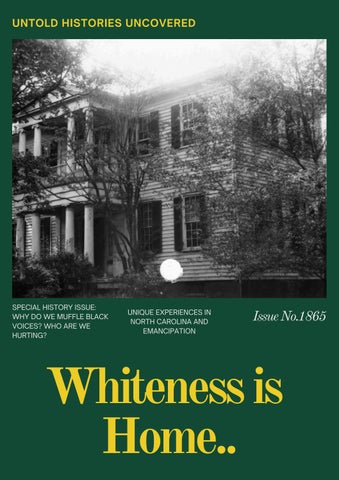
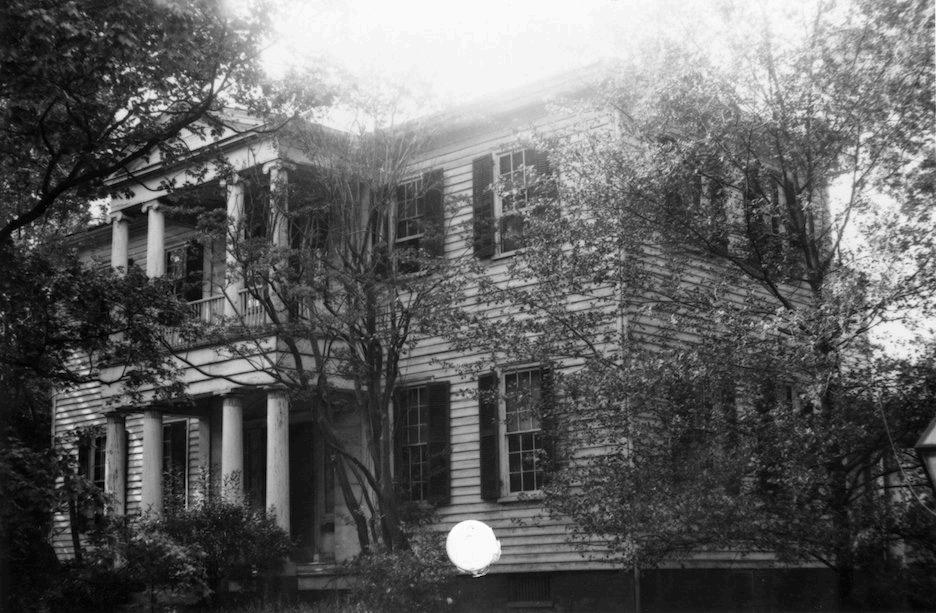
Whitenessis Home..
SPECIAL HISTORY ISSUE:
DO WE MUFFLE BLACK
UNIQUE EXPERIENCES IN NORTH CAROLINA AND EMANCIPATION UNTOLD
IssueNo.1865
WHY
VOICES? WHO ARE WE HURTING?
HISTORIES UNCOVERED

have been made concerning the reliability of these stories but are they valid enough to stop using these stories completely.?
TableofContents AMY PENNY The Story of Tempie Herndon-Durham from Slave to Farmer PURPOSE 1 DISCLAIMER 2 6 7-8 VISION 3 WILLIAM SYKES The story of William Sykes from enslavement to Prison 4-5 The story of Amy Penny from Virgina to suffering NORTH CAROLINA 1865-1938 9-10 TO USE OR NOT TO USE 11-12 13
A ROAD TO HEALING TEMPIE HERNDON-DURHAM 14 PLANS OF IMPROVEMENT 15-16 SOCIAL MEDIA
Arguments
Purpose
Chattel Slavery, a deeply dehumanizing institution that treated black people as property was abolished in the United States in 1865 following the Emancipation Proclamation and the presence of Union soldiers on Southern plantations. By popular belief, this moment is largely a win for the African American community, free from bondage with opportunity on the horizon. But lurking in the shadows, there is a contrary feeling between some blacks, those who found comfort in racial oppression and inequality as a means of survival. Now, they must fend for themselves and grapple with a freedom they never desired or yearned for. This website is intended to share the stories of those who found themselves disenfranchised, unsupported, and struggling after their liberation and their want to return to their previous lives of enslavement where safety and security were provided under their former white owners. Through visual storytelling and discussions surrounding the societal, historical, and economic factors this website aims to examine an unfamiliar opinion within the African American community in North Carolina specifically and prompt further discussion to grapple with these hard realities.
1 IssueNo.1865
Disclaimer
The following content contains sensitive topics related to stories of enslavement, the Black struggle, and unpopular opinions regarding the continuation of enslavement. These narratives should be handled with care and empathy, recognizing the historical context and the economic, social and political impacts that emancipation bought on to these individuals. Please be respectful of this content and the differing perspectives and refrain from quick judgements.
IssueNo.1865
Thank you, Treasure Rouse
2
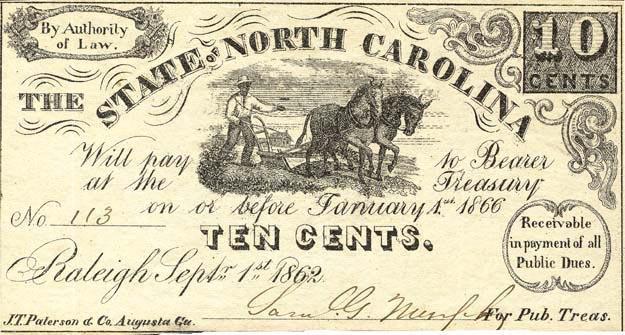
UNKNOWN [CSEPT1ST,1862] NC 10¢ NOTE NORTH CAROLINA STATE ISSUE DOCUMENTING THE AMERICAN SOUTHUNIVERSITY LIBRARY, THE UNIVERSITY OF NORTH CAROLINA AT CHAPEL HILL, 1998-2001HTTPS://DOCSOUTHUNCEDU/IMLS/CURRENCY/NC1862/NC1862-10A AT 150HTML

VISION

Hello!MynameisTreasureRouse,thecreatorof“WhitenessisHome.”Iama PublicHistoryMastersstudentattheUniversityofNorthCarolinaatCharlotte.
TheVisionforthisprojectistocreateadigitalscrapbook,somethingthathas beenatraditionformyAfricanAmericanfamilyforgenerations.African Americanfamiliesusescrapbookstokeepmemoriesandemblemsofthepast thusIwanttopresentthistraditionwithinthiswork.
Thepagespresentedinthisprojectwillbeagainsttexturedpaperslikethepages ofaoldscrapbook.Aswellaspicturesheldbytapeandsmalldrawinglike picturesasiftheyarehanddrawn.Reminiscentofascrapbookyouwouldfindin yourgrandmothershome.
3


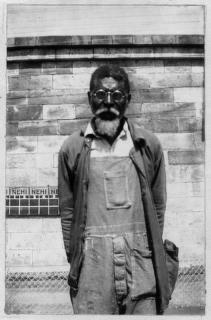

https://www.loc.gov/item/mesnp112327/
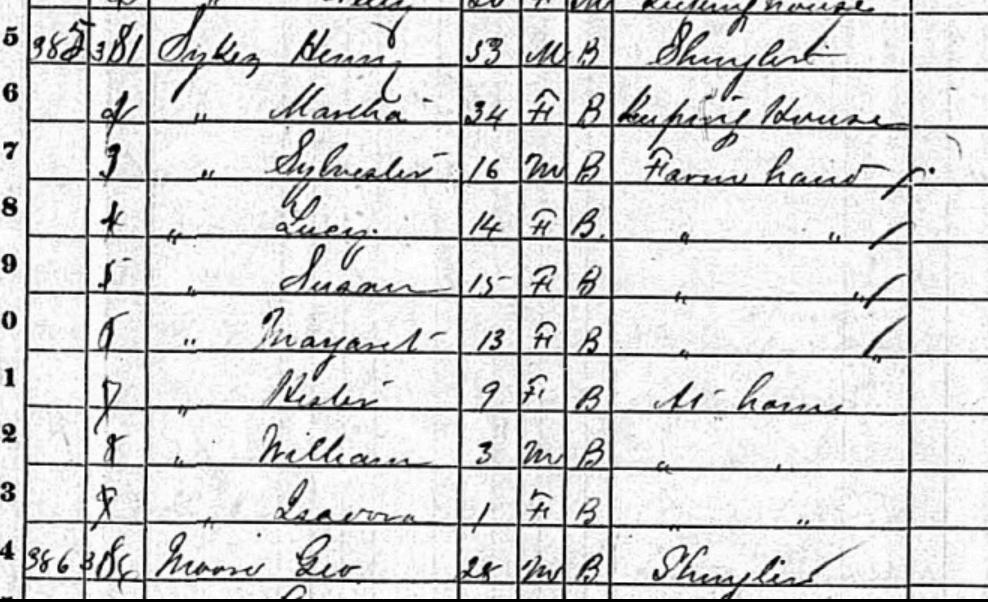
Year:1870;CensusPlace:Jamesville,Martin,NorthCarolina; Roll:M593_1147;Page:529;Image:365.
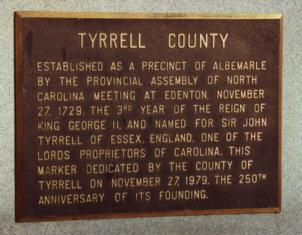
N/A.“HistoryofTyrrellCounty,NC.”NCGENWEB.N/A.N/A. https://www.ncgenweb.us/tyrrell/HISTORY.HTM

4 IssueNo.1865
WilliamSykes
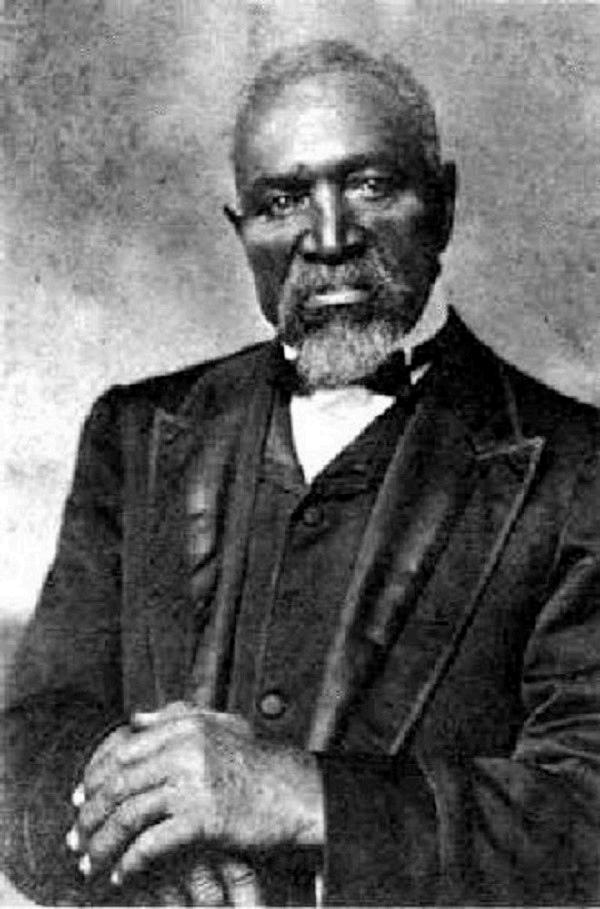
William Sykes, Age 78. United States North Carolina, 1936. Between 1936 and 1938. Photograph.
William Sykes

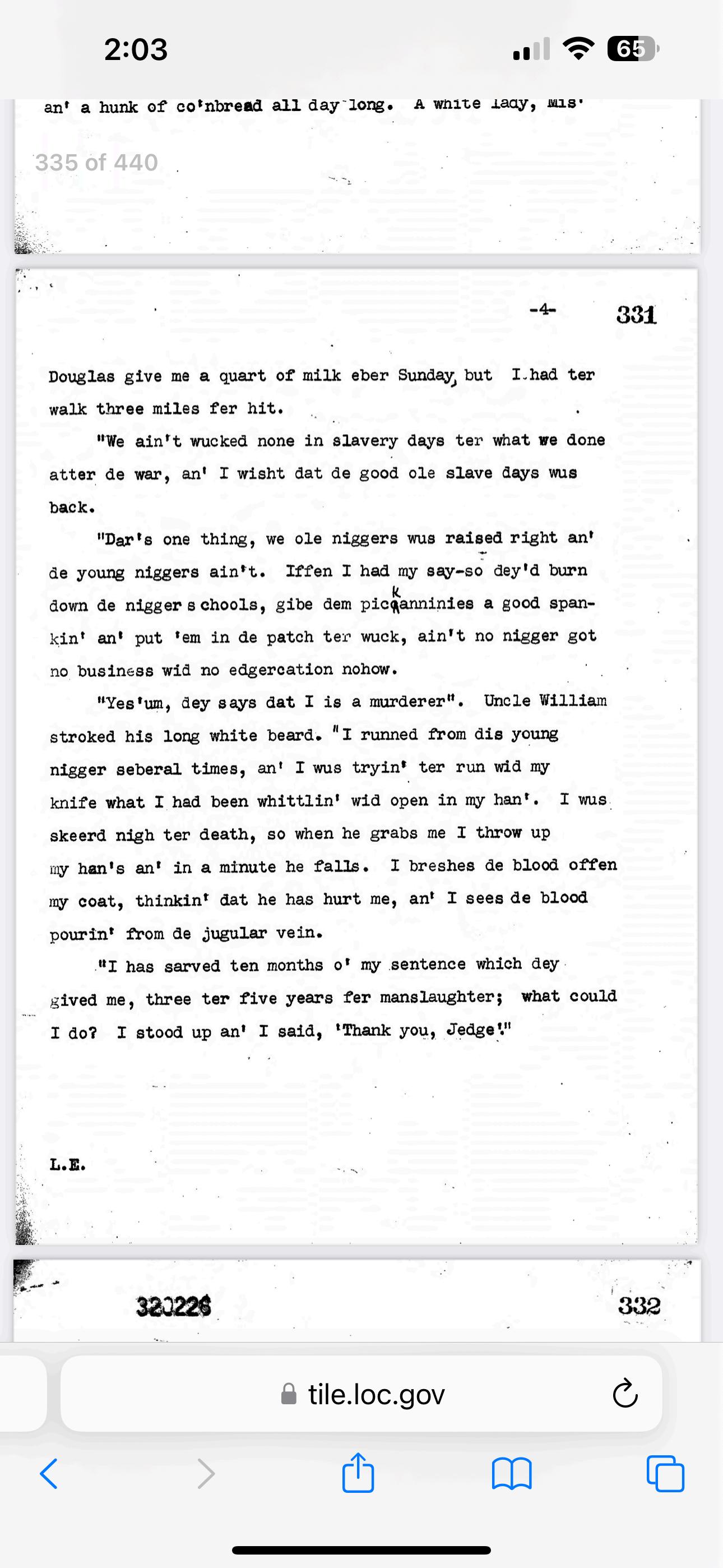
William Sykes was born in Martin County North Carolina with his 7 siblings under the enslavement of Joshua & Catherine Long. Sykes remembers playing in the lake, fishing, and having large gatherings filled with music and dance. He was never worried about his next meal, clothes, or living situation. After emancipation, William's family suffered many hardships, mainly food insecurity He states “A whole heap of times I had nothing but one cup of peas and a hunk of cornbread.” At the time of his interview, Sykes was incarcerated for Manslaughter and serving three to five years.
In Sykes's interview, he shows extreme feelings of opposition toward emancipation and black mobility

IssueNo.1865
5

TEMPIE HERNDON

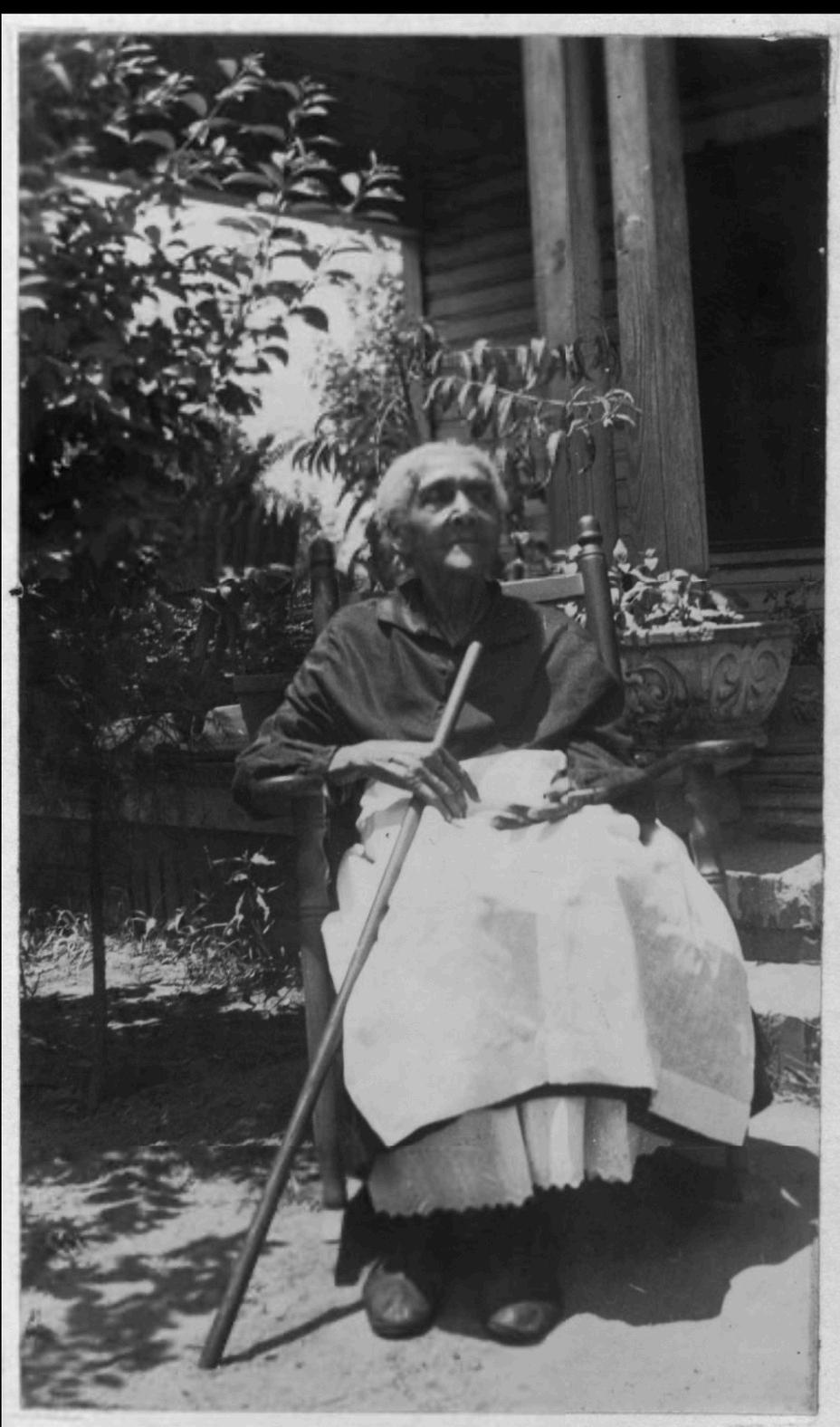
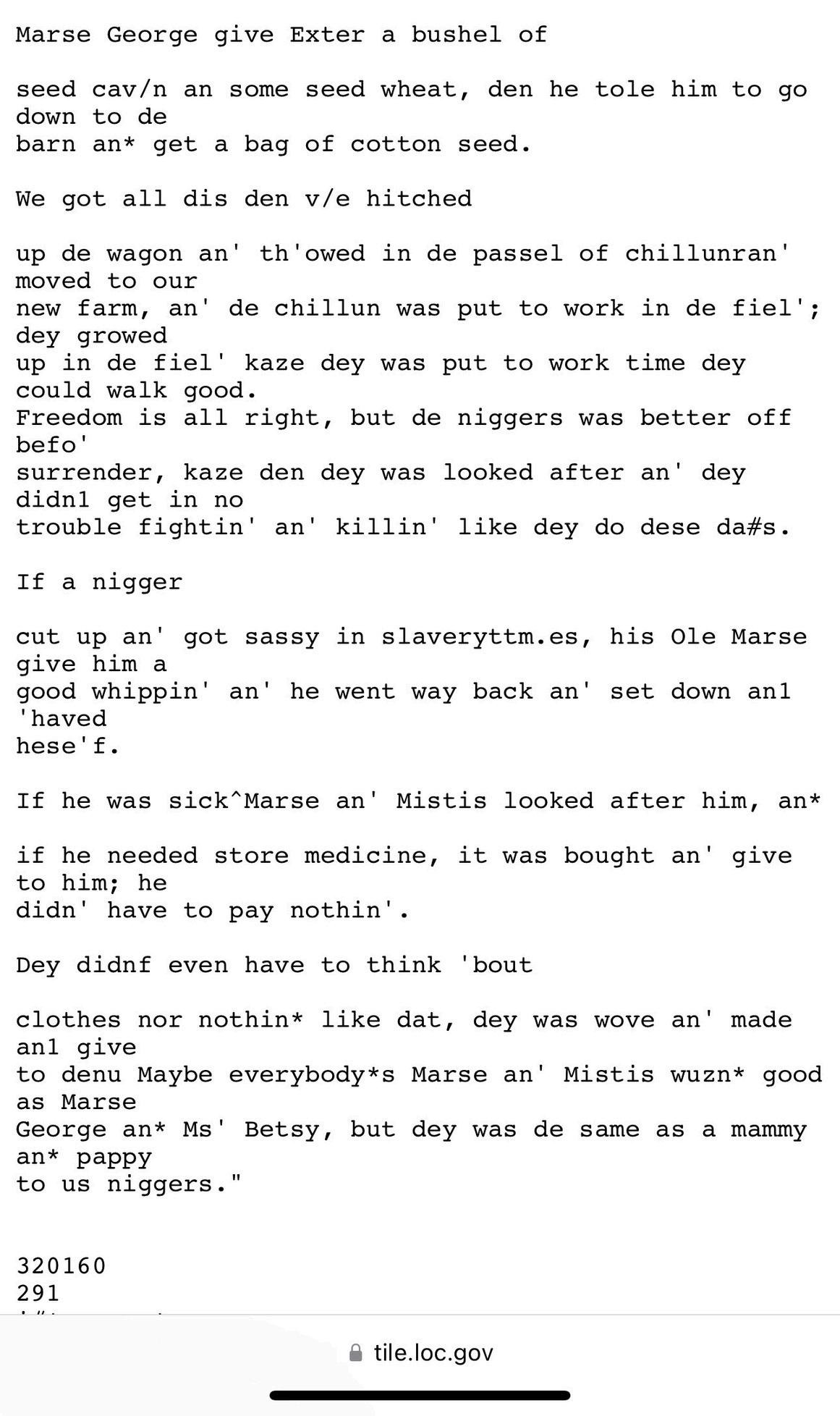
Tempie Herndon Durham was born in Chatham County, NC under the enslavement of George and Betty Herndon Tempie raves about the good treatment provided by her enslavers discussing their help with her wedding to helping her family move to their own farm Tempie states that enslavement offered much comfort for African Americans especially financially. For her, the only real upside of emancipation was that she was no longer separated from her husband who resided on a different plantation. However, she recognizes that her experience may not be shared among her peers.
6
Amy Penny
FederalWriters'Project:SlaveNarrativeProject,Vol.11,NorthCarolina,Part2,Jackson-Yellerday.1936.Manuscript/MixedMaterial.https://www.loc.gov/item/mesn112/.
7
Amy Penny


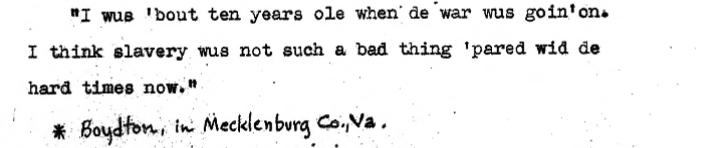
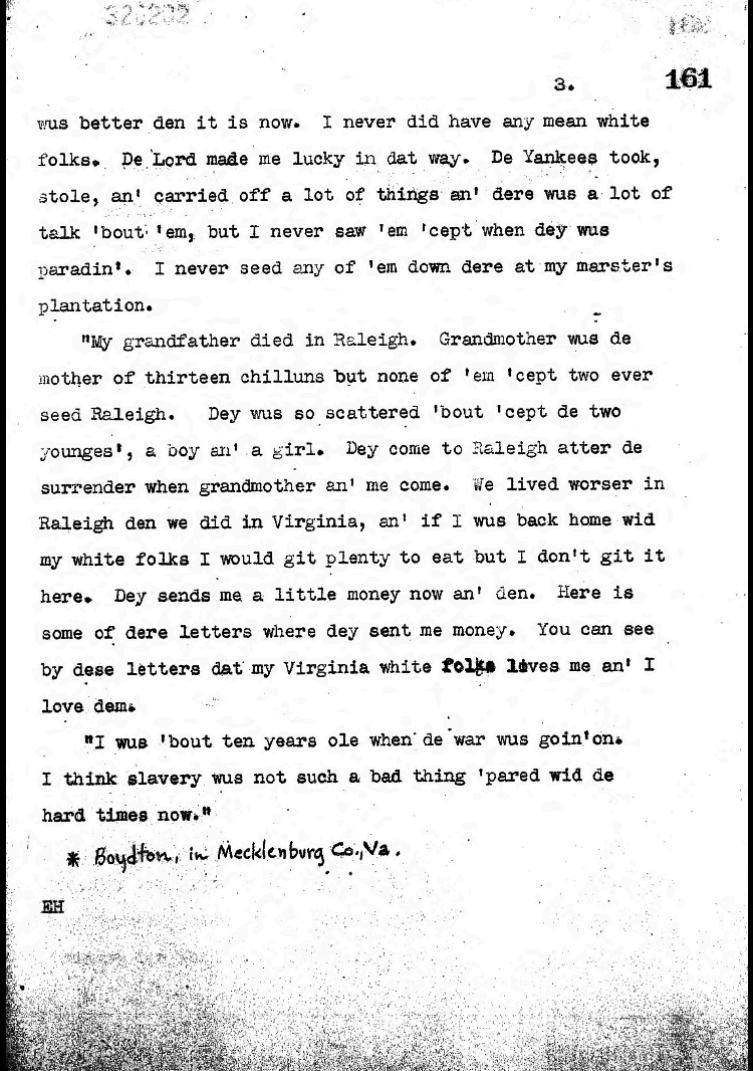
Amy Penny did not know her age or when she was born but grew up in Boydton Virginia in Mecklenburg County owned by Victor Epps. She states that she was raised by “some might good white people” (160) and that after the Civil War, she endured some of the worst times of her after Emancipation after moving to Raleigh, NC. Amy describes having to deal with a lot of food insecurity but would sometimes receive financial help from her master's in Virginia. While she does recognize that her masters were the exception to the rule she still states that she believes slavery was not such a bad thing compared to her current situation.

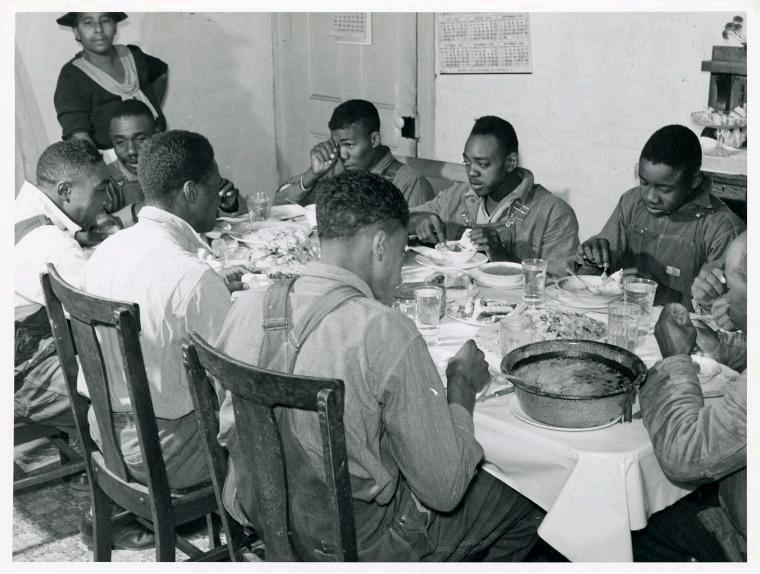
Blacktenantsandneighbors eatingtogetherafteraday ofCornShuckinginGranvilleCounty,NC 1939 SchomburgCenterforResearchinBlackCulture,PhotographsandPrintsDivision,TheNewYorkPublic Library."TheNegrotenantsandneighborseatingdinnerafterthewhitemenhavefinished,ondayofcornshuckingatMrs.FredWilkins'home.Tallyho,Stem,GranvilleCounty,No.Car.,Nov1939."NewYorkPublic LibraryDigitalCollections.AccessedMay10,2024.https://digitalcollections.nypl.org/items/510d47df-f924a3d9-e040-e00a18064a99
Amy Penny’s enslaver Victor Epps amount of slaves in the 1860's census Blake,Tom,ed.“MECKLENBURGCOUNTY,VIRGINIALARGESTSLAVEHOLDERSFROM1860SLAVECENSUSSCHEDULESandSURNAMEMATCHESFORAFRICANAMERICANSON1870 CENSUS.”MecklenburgCounty,Virginia1860slaveholdersand1870AfricanAmericans,August2003.https://sites.rootsweb.com/~ajac/vamecklenburg.htm.
8 IssueNo.1865
NorthCarolina from 1865-1938
AftertheendoftheCivilWar,thequalityoflifeforwhitesandblacksin NorthCarolinacontinuedtodecline Thewarcausedmillionsofdollars inpropertydamage,bankruptcy,andalackofjobs.[1]Themajorityof AfricanAmericanssawthemselvesworkingbackontheplantationas sharecropperswhichoftenlimitedtheirsocialmobilityaswhite landownersprofitedoffsharecroppingbyrentingtheirlandatrates thatexceededproduction.
OnMay29th,1865,aproclamationwouldbepassedthatallowed amnestyforthosewhoparticipatedonthesouthernsideoftheCivil War–grantingthemtheirpropertyback,excludingtheirslaves,in returnfortheirloyaltytotheUnitedStates However,thisamnestywas onlygiventoindividualswhowerenotthe“fourteenclassesof individualswhoengagedinthewaragainsttheUnionfromCivilor diplomaticofficersoftheConfederacywhoconductedpiracyagainst Unioncommerceduringthewar ”[2]
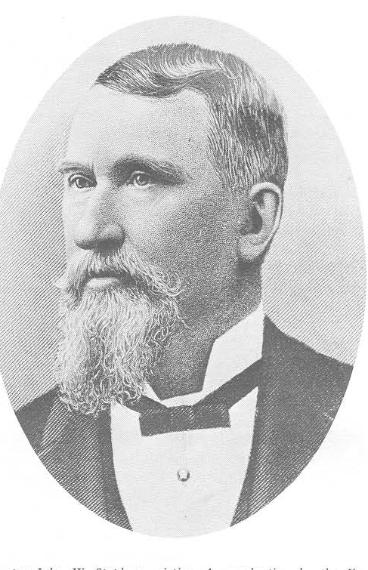
By1865theNorthCarolinaBlackCodeswerepassedthatwould severelylimitAfricanAmericanautonomy Thiswouldmakeinterracial marriageacrime,regulateAfricanAmericantestimony,andlimit Americans-'SecondAmendment [1]In1868,freedmenbegantaking officebutatthesametime,theKKKwasjustbeginningtoemerge By 1869,theFreedman’sBureau,afederalprogramthatwasdedicatedto helpingAfricanAmericanswithamultitudeofservicesafter emancipation,wasnolongerfederallysupportedandhadtostop operations By1870,Whitedemocratshadregainedcontrolwithin politicalofficeafterthemurderoftworepublicanleaders,who advocatedforblackrightsandotherassumedscaretactics implementedbytheKKK [3]
Bythetimeoftheinterviewsin1938,notonlyhadAfricanAmericans enduredhardshipsalreadytiedtotheirfinancesbuttheyhadalsojust undergonethedepression.Thismakessenseforwhymanyofthe formerlyenslaveddiscusstheuncertaintiesoftheirday-to-daylives

[1]NorthCarolinaHistoricSites.“War’sEndandReconstruction.”War’sEndandReconstruction|NCHistoricSites. [2]AndrewJohnson, ProclamationofAmnestyandReconstruction, May29,1865,CivilWarEraNC,accessedMay 10,2024,https://cwnc omeka chass ncsu edu/items/show/13
[3]Kelly,Brian,SusanEvaO’Donovan,andJohnWhite “TimelineofReconstructioninNorthCarolina:1862-1876 ” LowcountryDigitalHistoryInitiative d https://historicsites nc gov/resources/north-carolina-civil-war/wars-endand-reconstruction
PictureofJohnWaltersStephen,oneofthe Republicansenatorswhoweremurderedatthe handsoftheKKKinMay1870
Stuart,McIver."TheMurderofaScalawag."AmericanHistoryIllustrated(April1973).12-18. http://ncccha.org/pdf/stephens/stephensmurderarticle.pdf(accessedMay9th2024).
PictureofWyattOutlaw,theotherRepublicansenator killedbytheKKK Outlawhadbeentargetedduetohim outwardlydefendingBlackpeoplewithinthetownof Graham,NorthCarolina Outlawwasfoundlynchedinthe Winterof1870afterbeingaccusedofshootingatthe Klan aftertheyattemptedtointimidateOutlaw Eric,Kerl.“WaronWhiteSupremacy.”RampantMagazine,2020.July9.https://rampantmag.com/aboutrampant/.
9
9
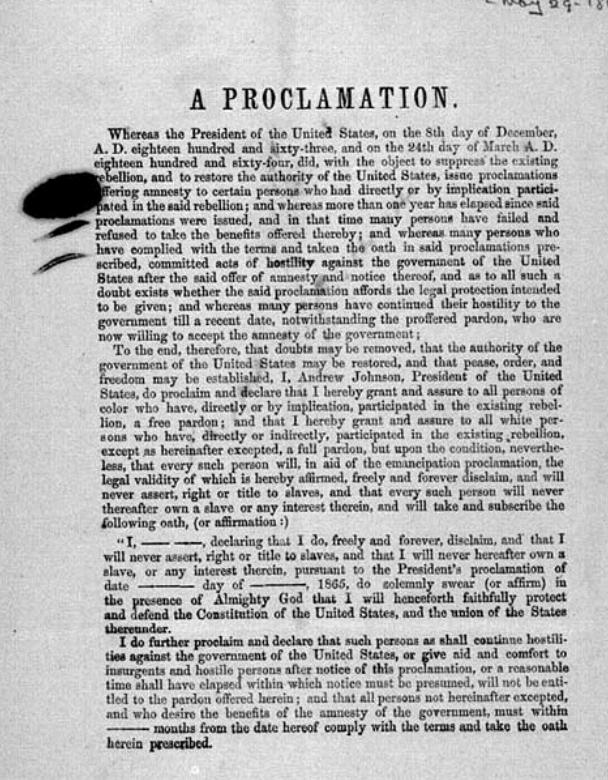
1865-1938 Johnson,Andrews"ProclamationofAmnestyandReconstruction,"May29,1865,CivilWarEraNC,accessedMay10,2024,https://cwnc.omeka.chass.ncsu.edu/items/show/13 The proclamation providing amnesty to low ranking confederate soldiers and giving their property back. (With the exception of their former slaves) 10
North Carolina from
To Use or Not to Use
Scholars have continued to argue back and forth on whether the WPA interviews are reliable enough to be used for historical research. Some historians argue that the WPA narratives were conducted during a period of extreme stress and thus the answers would not be in line with the actual views of the participants. In Lynda M Hill’s article “Ex-Slave Narratives: The WPA Federal Writers Project Reappraised ” Hill discusses the interview's lack of authenticity by examining the appraisals done on the physical interviews Hill states that the “variation gives an idea of how the narratives appear to contain multiple voices - most obviously, the voices of the interviewer and the voices of former slaves, but editors' remarks are also visible.”[1]
Other historians such as John Blassingame dismiss the interviews completely labeling the enslaved as untrustworthy critiquing the environment and the lack of skill from the interviewers, the quality of questions, and the old age of the enslaved at the time of their interview.
Others like Stanley Elkins seemed to be plagued by speculations of abolitionist editors crafting the interviews to promote their political views and beliefs. [2] It should be noted that Stanley Elkins was a strong conservative and wrote a book entitled Slavery: A Problem in American Institutional and Intellectual Life however the book contains ideas that do not align with real facts and thus many have argued that the historian has not proved his arguments well and tends to implement his personal beliefs [3]
However, the WPA narratives should be examined as any other oral interview while counting the outside factors rather than discounting these individuals' experiences. This includes the less popular opinion that some ex-enslaved people believed slavery to be a good thing. While the interviews were taken during the great depression, which also was the catalyst for many of the proslavery comments, it was still a very real feeling and opinion that should be discussed in a larger conversation. One can also argue that African Americans are not a monolith and thus the same should be applied to their feelings on emancipation While American enslavement was a horrendous system, many found refuge in the security it gave regardless of their bonded status The implications of using these interviews will always be there but two things can exist at the same time and thus we should not discourage their use in scholarly text but instead highlight the implications of these interviews as well to provide all the facts
[1] Lynda M, Hill. “Ex-Slave Narratives: The Wpa Federal Writers’ Project Reappraised.” Oral History 26, no. 1 (1998): 64–72. http://www.jstor.org/stable/40179473.
[2] William W, Nichols. “Slave Narratives: Dismissed Evidence in the Writing of Southern History.” Phylon (1960-) 32, no. 4 (1971): 403–9. https://doi.org/10.2307/274066.
[3] Bertram, Wyatt-Brown. “Stanley Elkins’ Slavery: The Antislavery Interpretation Reexamined.” American Quarterly 25, no. 2 (1973): 154–76. https://doi.org/10.2307/2711595.
11 WHITENESS IS HOME......
A Road To Healing
To Be Continued...
12


To Find More information: follow our Instagram page: @whitenessishome If you want to engage more with this content or offer suggestions please scan the QR code below! WHITENESS IS HOME
Bibliography
Photos
Blake,Tom,ed “MECKLENBURGCOUNTY,VIRGINIALARGESTSLAVEHOLDERSFROM1860SLAVECENSUSSCHEDULESandSURNAMEMATCHESFOR AFRICANAMERICANSON1870CENSUS”MecklenburgCounty,Virginia1860slaveholdersand1870AfricanAmericans,August2003 https://sitesrootswebcom/ ajac/vamecklenburghtm
Johnson,Andrews"ProclamationofAmnestyandReconstruction,"May29,1865,CivilWarEraNC,accessedMay10,2024, https://cwncomekachassncsuedu/items/show/13
N/A “HistoryofTyrrellCounty,NC”NCGENWEB N/A N/A https://wwwncgenwebus/tyrrell/HISTORYHTM SchomburgCenterforResearchinBlackCulture,PhotographsandPrintsDivision,TheNewYorkPublicLibrary "TheNegrotenantsandneighborseating dinnerafterthewhitemenhavefinished,ondayofcorn-shuckingatMrs FredWilkinshome Tallyho,Stem,GranvilleCounty,No Car,Nov1939"NewYork PublicLibraryDigitalCollections AccessedMay10,2024 https://digitalcollectionsnyplorg/items/510d47df-f924-a3d9-e040-e00a18064a99 WilliamSykes,Age78 UnitedStatesNorthCarolina,1936 Between1936and1938 Photograph https://wwwlocgov/item/mesnp112327/ Year:1870;CensusPlace:Jamesville,Martin,NorthCarolina;Roll:M5931147;Page:529;Image:365
Unknown [cSept1st,1862]NC10¢Note NorthCarolinaStateIssue DocumentingtheAmericanSouthUniversityLibrary,TheUniversityofNorthCarolinaat ChapelHill,1998-2001https://docsouthuncedu/imls/currency/nc1862/nc1862-10aat150html
Manuscripts
FederalWriters'Project:SlaveNarrativeProject,Vol.11,NorthCarolina,Part2,Jackson-Yellerday.1936.Manuscript/MixedMaterial.https://www.loc.gov/item/mesn112/.
SecondarySources
Kelly,Brian,SusanEvaO’Donovan,andJohnWhite“TimelineofReconstructioninNorthCarolina:1862-1876”LowcountryDigitalHistoryInitiativend https://historicsitesncgov/resources/north-carolina-civil-war/wars-end-and-reconstruction
Kerl,Eric“WaronWhiteSupremacy”RampantMagazine,2020July9https://rampantmagcom/about-rampant/
Nichols,WilliamW“SlaveNarratives:DismissedEvidenceintheWritingofSouthernHistory”Phylon(1960-)32,no4(1971):403–9https://doiorg/102307/274066
Spindel,DonnaJ"Assessingmemory:twentieth-centuryslavenarrativesreconsidered"TheJournalofInterdisciplinaryHistory27,no2(1996):247+GaleAcademic OneFile(accessedMarch10,2024)
McIver,Stuart"TheMurderofaScalawag"AmericanHistoryIllustrated(April1973)12-18http://nccchaorg/pdf/stephens/stephensmurderarticlepdf(accessed March13,2013)
RHDC,“MordecaiHouse,”RaleighHistoric,accessedMay10,2024,https://raleighhistoricorg/items/show/13(pictureonthecoverofthemagazine) NorthCarolinaHistoricSites“War’sEndandReconstruction”War’sEndandReconstruction|NCHistoricSites
Wyatt-Brown,Bertram“StanleyElkins’Slavery:TheAntislaveryInterpretationReexamined”AmericanQuarterly25,no2(1973):154–76 https://doiorg/102307/2711595
WhitenessisHome
Continuingthisproject:
AsIcontinuethisproject,Iwouldliketodoafewmorethingstotrulyfinishit.
1)Iwouldliketocontinueresearchingtolengthenmybibliography.Asofrightnow,I have7primarysourcesandsixsecondaryresourcesbutwanttore-evaluatethedirection ofthemagazineasIwantittobemoreconciseandreadableforapublicaudience.In termsofprimarysourcematerial,Iwouldliketoaddmorepicturesoftheoverallsettingof NorthCarolinabetween1865-1938andattempttofindmorephotographsofAfrican Americansandpossiblytheirfamilies.Forsecondaryresourcesfocusingonthehistoryof NorthCarolinabetween1865-1938justbecauseitisabitweakinthissubmissionandI thinkIcanstrengthenitbetter.
2)IcreatedanInstagrampageformyprojectwhereIwillcontinuetopostcontentrelated totheWPAnarratives,thecontinuanceoftheproject,andshorttik-tokvideossimilarto myteaserthatcanengageaudiencesthatmaywanttodigesttheinformationthroughan auditorymediumratherthanjustvisually. Iwouldalsoliketopostsomephotosofthe enslavedjustforthepublictoknowthatthismaterialisoutthereandaccessible.
3)Iwanttocontinueworkingonthedesignaspectofthemagazine.Inthelastfewhours, Iwantedtoatleastgetthebarebonesofmymaterialinthisfinalandthusheldbackon thescrapbookaesthetic.However,IthinktheprojectisgrowingintowhatIimagined, andwithabitmoretimeandalotlessburnoutbelievethatthiscanevolveintoareally beautifulthing.
4)Afterdoingsomelast-minutethings,Irealizedthatthisprojectcouldusea recommendedreadinglist.IsawthatcommonlyasIwaslookingforsourcesandthinkit wouldbeagreatwaytocontinuetheconversation.Maybeevencreatingabookclubvia FacebooktoreadsomecontinuingscholarshiponNorthCarolina,emancipation,andhow thegreatdepressionimpactedAfricanAmericansandtheoutcome.
5)IwasabletouseISSUUaftermyflipbookcrashedmyprojectandrealizedthatIwas justoverthinkingitandcoulduploaditdirectlyonthesite.However,Ididhavetopayin orderforallthepagestoupload.Intermsofotherdigitaltools,Iamunsurewhetherornot doingInstagram,facebookandISSUUissufficientthusImayalsocreateadigital timelinewhenIhavethetime.Duetoextremeburnoutwithschoolandmyjobattheend hereIwasmentallycheckedoutandthuscreatingadigitaltimelinewasjusthonestlynot goingtohappenbeforethedeadlinehowever,asIcontinuetoworkonthisprojectduring thesummeritissomethingthatIplantoimplement.
Continuingthisproject:
WhenworkingwithNarrative,Iwouldliketogobackandmakethisprojectflowmore likeastory.PossiblygoingbackandseparatingitbytimewiththenarrativesofWilliam, Tempie,andAmyattheendratherthanthebeginningtohelpwiththebuild-upandthe storytelling. WhilealsotryingtoexpandtheirstoriesasbestasIcanwiththelimitations athand.
Overall,Ibelievethatmyprojectstillhasalotofworkaheadofherbutbyimplementing thechangeslaidoutinthisplanIthinkthisworkcanmakethisprojectmuchbetter.I apologizeforthisnotbeingmybestworkbutdidtrymybesttogiveitallthatIcouldwith everythingthatisgoingonbuthopethisprovidesagoodfoundationformoreworktobe done.
Editor-n-Cheif, TreasureRouse