
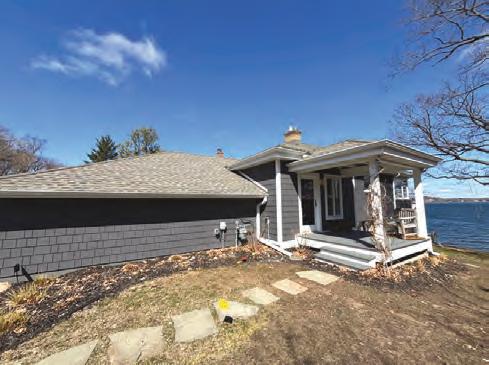
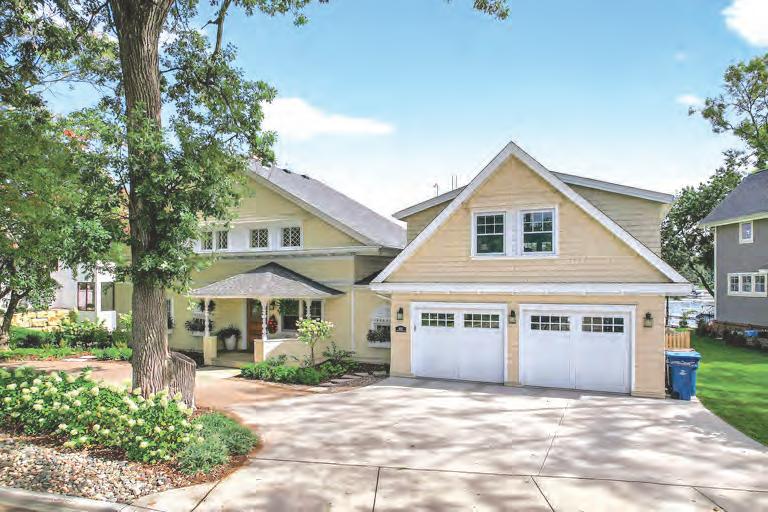
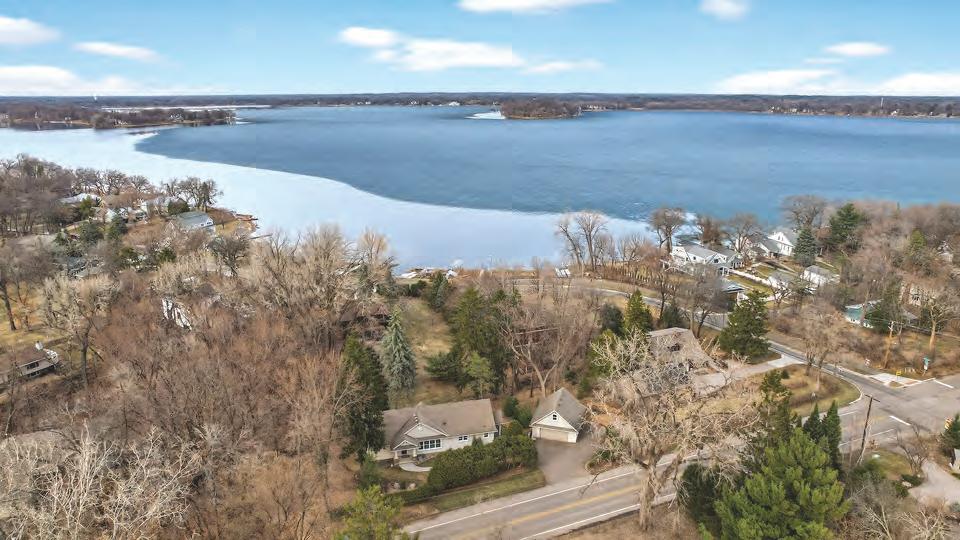
On White Bear Lake, the 2026 market remains selective and refined, with just 9 closed sales to date—7 of which were represented by our team. With qualified buyers still actively seeking exceptional properties, if you are considering selling, we invite you to connect with us for a discreet and strategic approach
Call us to gain access to our patented 3-Steps to a Successful Sale and Marketing Plan:
Sellers maximize their sale price with fewer showings
Buyers enjoy year-round access to our Private Collection of homes
Our dedicated team of five agents ensures a smooth and enjoyable experience
With an extensive network of motivated buyers actively seeking their ideal lakefront property, your home could be next.
Call us today for more information.


Ah, summer. A sure sign of summer is watching the last few docks going in the water. Another, newer sign of summer is seeing the first issue of the LAKER arrive in mailboxes.
The LAKER launched in 2023, delivering to White Bear lakeshore homeowners, deeded access residents, dock association members and dozens of lake area newsstands. In 2024, delivery was expanded to include Bald Eagle Lake homeowners, thanks to the Bald Eagle Area Association board of directors.
To kick things off for 2026, readers who like cool boats will enjoy Erik Suchy’s article about William Ward, a lifelong fan of the Yellow Jacket F-57 racing boat. The Yellow Jacket will be on display at the White Bear Lake Boat Show Saturday, June 20.
Fish enthusiasts can learn more about the types of fish that are stocked in White Bear Lake thanks to the Minnesota Department of Natural Resources.
For surf or wakeboard enthusiasts look no further than Glyde Watersports.
If you need some summer recipe ideas, look no further than Aqua Wagyu & Pork Meatballs and MIZU Hikari Highball. If you plan to watch sailboat races, you’ll find a breakdown of the various entities that race on White Bear Lake and Bald Eagle Lake and what race schedules look like.
Readers will also learn about the history of the Spring Park Villa Resort on Bald Eagle Lake, which was built in 1905 by Charles Davies on the southeast corner of Bald Eagle Boulevard E. and Park Street. History buffs may also be intrigued to learn more about Wildwood Bay.
Inside this issue, you will also learn more about the community members who sit on the White Bear Lake Conservation District Board and the Bald Eagle Area Lake Association.
Looking for something to do? Check out the LAKER calendar.
Before you dock your reading glasses, make sure to let us know what you think about the LAKER. Be sure to send your lake photos from White Bear Lake and Bald Eagle Lake to whitebearnews@presspubs.com for possible inclusion in an upcoming edition. From our crew to your crew, we hope you agree the newest summer essential is the LAKER.

By Madeline Dolby Quad Community Press Editor
When you’re out on the water, the best thing you can do to avoid drowning is wear your life jacket. It’s just like wearing a seat belt when you drive. When worn properly, it is meant to save your life.
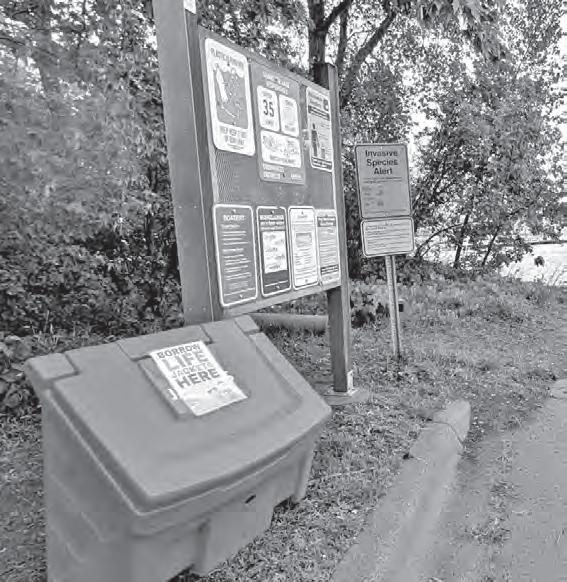
To help keep its residents safe when they’re out on the water, union members of the White Bear Lake Professional Firefighters provide free life jackets for residents to use at various lakes throughout the area. This will be the fourth year the program is in place.
The program was created because White Bear Lake Fire Department Captain and Paramedic Jeremy Andert said members of the union had responded to significant drownings around White Bear Lake that occurred because life jackets were not being worn. After those incidents, the union members got together and talked about how they could prevent drownings in the future.
“One of our firefighter/ medics at the time used to work in Eau Claire … In Eau Claire, they had a similar program going on when he worked there,” Andert explained. “We ended up doing research and found out if we offer free life jackets at the boat launches there is a chance we can significantly reduce (the chance of) a potential drowning.”
Residents can find life jackets at White Bear Lake County Park (Ramsey Beach), Bellaire Beach and the Bald Eagle Lake boat landing. Bins are at each site that include two toddler life jackets, two child life jackets and four adult life jackets. Andert said the bins are placed at their designated locations at the beginning of May and are left
• When selecting a life jacket, make sure to wear your paddling clothes while trying it on.
• To fit the life jacket, tighten the straps and buckles.
• Have another person pull up on the shoulders of the life jacket. If the shoulders move up past your nose, try tightening the straps more. If it still moves, the life jacket is too large.
• Test out your life jacket in a pool or shallow water. It should not ride up on your body or slip while in use.
out until the lakes freeze.
According to the Minnesota Department of Natural Resources, children under the age of 10 years old are required to wear an approved life jacket when the boat is underway. A readily accessible and wearable life jacket is required for each person on board a boat. This includes canoes, kayaks, stand-up paddleboards, paddleboats and waterfowl boats.
Andert said they worked on spearheading the program right away and then they worked on finding partnerships. Now, the union partners with the Ramsey County Water Patrol and the Minnesota Department of Natural Resources.
Over the course of the program, Andert said they monitor the use of the life jackets on a
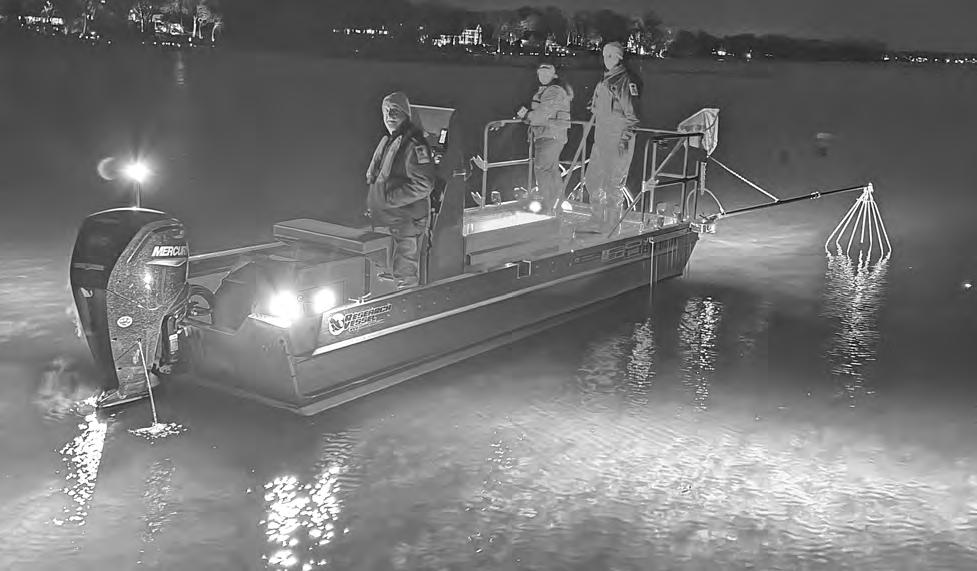
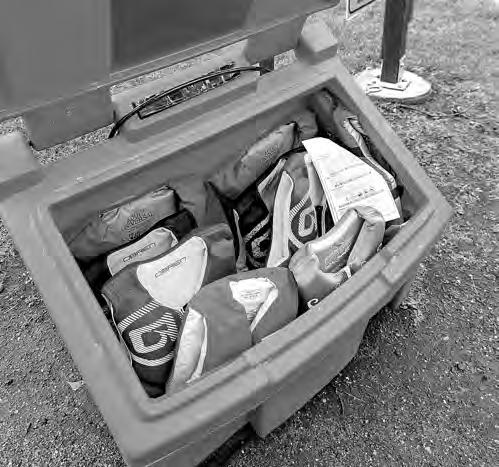
weekly basis. The life jackets get used the most during the weekends by those doing recreational boating versus those who are planning on fishing.
Last year, he noted that they placed out 100 life jackets. The union will work with the Minnesota DNR to receive life jackets along with the Ramsey County Water Patrol, which Andert said receives their life jackets through an organization called Abbey’s Hope.
“Talking to our water patrol partners, they’re not issuing as many tickets because more people have life jackets on,” Andert said. “I think that’s the accumulation of working with the Ramsey County Water Patrol and us making them available.”
The different types of life jackets and their purpose:
There are various levels of life jackets, ranging from type 1 to 5.
A Type 1 life jacket, also known as an off-shore life jacket, is a yoke-type device generally found on a commercial craft. It is designed to turn most unconscious persons from facing downward to a face up position in the water.
A Type 2 life jacket, referred to as near-shore buoyant vests, usually looks like a horse collar and is worn like a bib. It also has an unconscious turning ability similar to Type 1.
Flotation aids, known as Type 3, are usually foam-filled and come in several styles, including full-sleeve jackets. Type 3 life jackets also include inflatable life jackets. These life jackets are not designed to turn an unconscious person, but they do provide protection against exposure to cold water.
Special use devices are categorized as Type 4. These are designed and approved for use during specific activities. Type 4 jackets include some inflatable life jackets, duck hunting flotation coveralls and flotation aids made for sailboarding and whitewater rafting. ◼


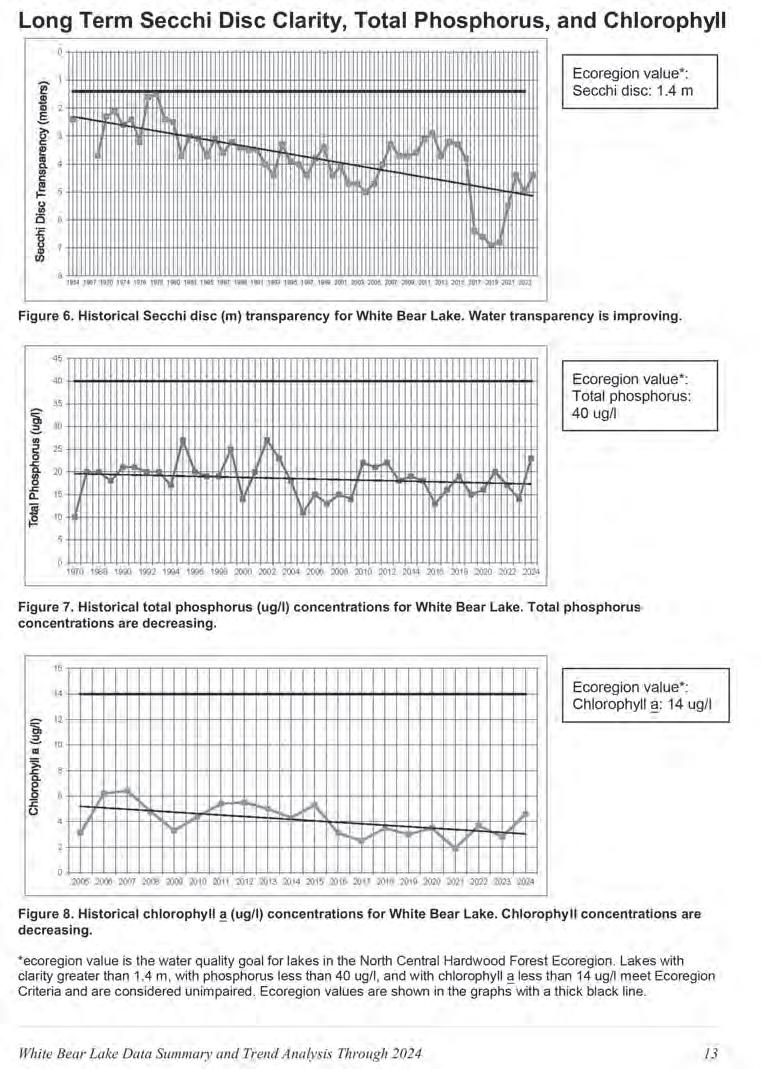
Here is what we learned:
• Three water quality indicators are all trending better: Seccihi disc (water clarity), total phosphorus and chlorophyll a (algae) (Fig. 1)
• Chloride (salt) is increasing but WBL is not yet near an impaired level.
• WBL has good biodiversity in aquatic plants and fish. Our dominant panfish is pumpkinseed and dominant gamefish is northern pike.
• Shoreline (riparian) watercraft have increased in number but this was primarily due to increases in nonmotorized watercraft, mainly kayaks and paddleboards.
• A total of 1,479 watercraft are kept along the shoreline.
• 636 watercraft are kept at marinas on the lake. This is a 20% increase since 1999.
• The number of watercraft per dock has increased to an average of 3.1.
on weekends and holidays and slightly later on weekdays, 4:30-7:30 pm. The dominant boats launched were runabouts and rear tiller fishing boats.
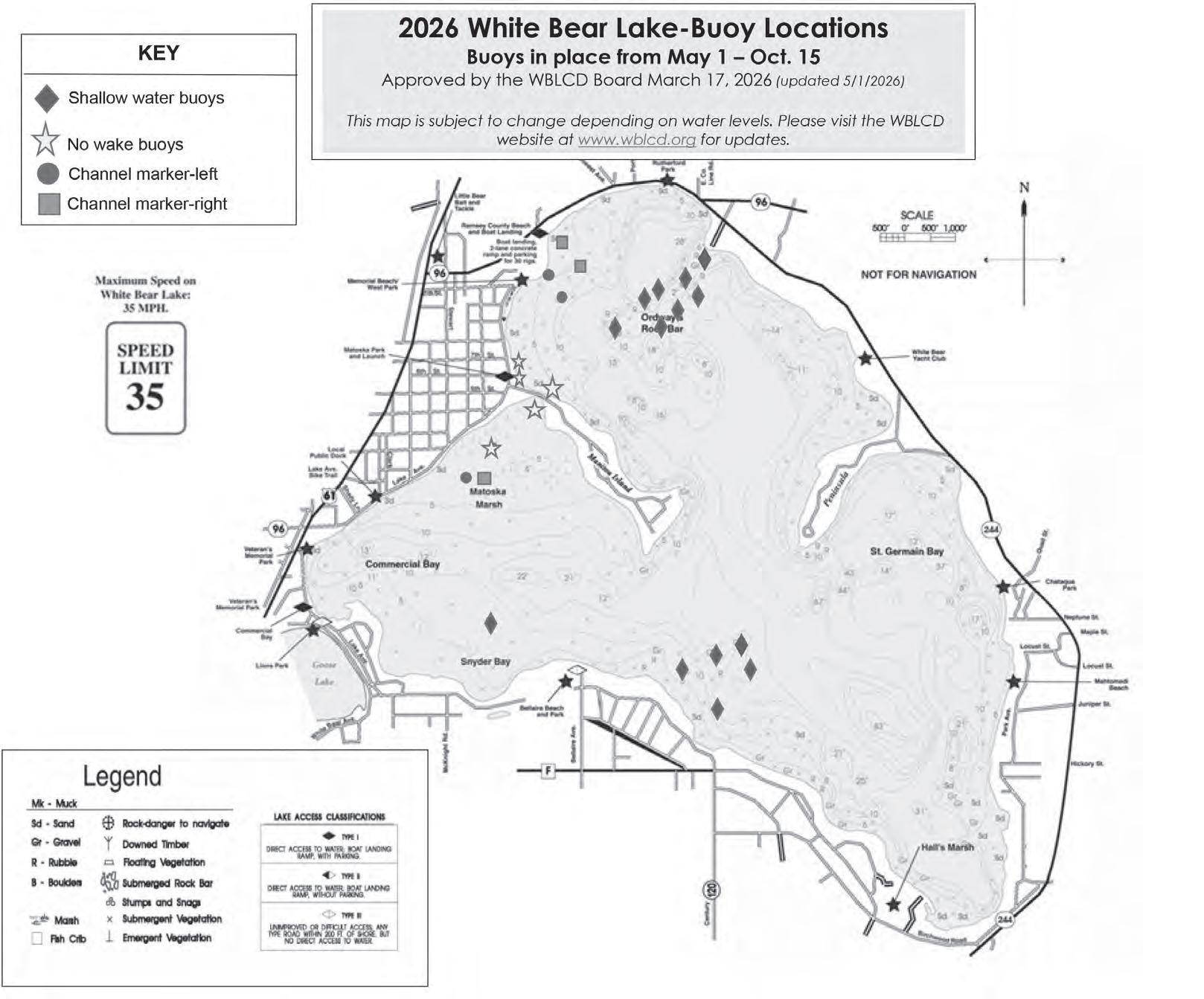
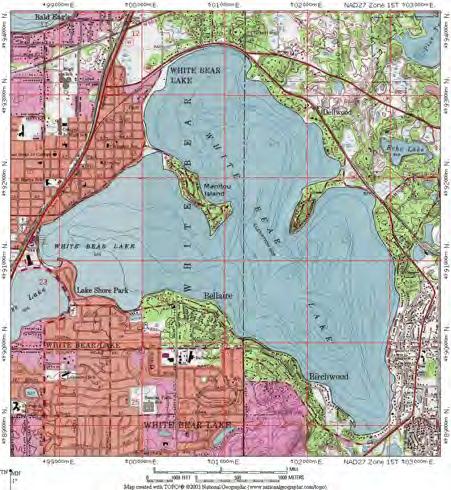
• Boat density is safe for the most part. On weekends and holidays boat density in the North Bay (Fig. 2) does exceed the 20 acres per boat recommended safety level during afternoon and early evening hours.
• Lake residents use the lake an average of 3 times per week.
Boats launched onto WBL spend an average of 3 hours on the lake and visit an average of 17 times per season.
• The most common concerns that were found on the lake resident survey were concerns about wakeboards, rental boats, overcrowding, unsafe conditions, noise, lake levels and anglers casting into docks and lifts.
• Full reports on lake use and water quality
1. The State of Minnesota is phasing in mandatory boater education for motorized watercraft. Effective July 1, 2025 everyone born after July 1, 2004 needs to have a boater’s permit. Effective July 1, 2026 everyone born after July 1, 2000 needs to have a boater’s permit. In 2027, you will need a boater’s permit if you were born after July 1, 1996 and in 2028, you will need a boaters permit if you were born after July 1, 1987. Obtaining a boater’s permit takes between 3 and 8 hours. The permit does not expire once granted. All people renting a motorized watercraft will need either a boaters permit or have completed the Minnesota Watercraft Rental Course in the past 180 days.
2. White Bear Lake Conservation District Ordinance 6 now prohibits mechanical appropriation of water from White Bear Lake at all times. Do not pump water out of White Bear Lake to water your lawn or for other uses.
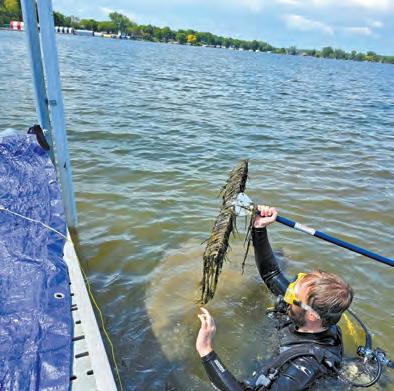
Starry Stonewort (SSW) is the biggest invasive species threat to White Bear Lake
Preventing SSW from entering WBL will require help for all lake residents and users.
How to help- Your role is critical: Check, Snap, Send. Please check the area around your dock regularly.
• Check the water around your dock, lift and swimming area for SSW
• Snap a photo if you find something suspicious
• Send it by email to the White Bear Lake Conservation District wblcd25@gmail.com
What to look for:
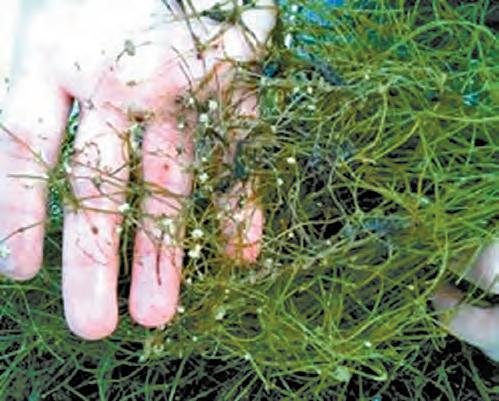
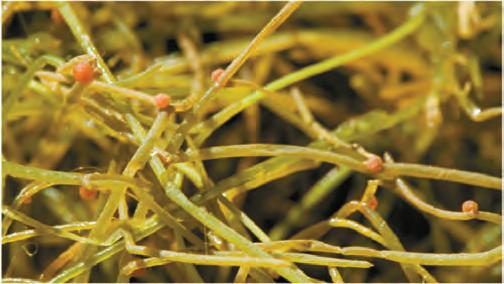
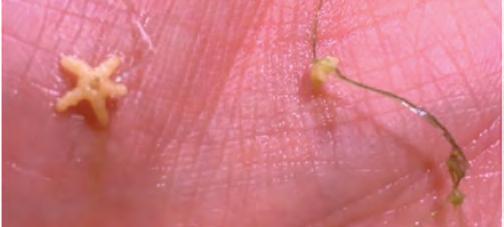
• Bright green (almost fluorescent), stringy algae that has little star shaped bulbs
• Grows in shallow water (2-5 feet), often around docks and lifts
• Feels crunchy or coarse when pulled out of the water
Prevent accidentally introducing SSW into WBL:
Clean-In, Clean-Out for boats, docks and lifts
• Remove all visible plants, algae, mud and debris from boats and trailers
Drain water from ballast tanks, bilges, motor, live wells and bait containers and remove plugs
• Dispose of all bait properly
• Inspect and clean docks, rafts, and boat lifts if you are moving from another lake and wait 21 days to install into WBL
• Make sure any company bringing a dock, lift or raft to you is a Lake Service Provider. This means they have training in aquatic invasive species.
What is Starry Stonewort?
SSW is an aggressive, non-native macro algae that:
• Forms dense, thick mats that can smother native plants and clog boat motors
• Spread rapidly by fragments and bulbils (very small star shaped fragments)
Lakes in MN with SSW: Anna, Beltrami, Bemidji, Blackduck, Bowen, Buffalo, Carnelian, Cass, Clearwater, Dora, Garfield, Grand, Gull, Koronis, Leech, Long (Kandiyohi County), Long (Hubbard County), Medicine, Middle Cullen, Minnewaska, Mississippi River, Moose, North Twin, Pimushe,
Pleasant, Pokegama, Rice, Rush, Three Island, Thunder, Turtle, Turtle River Lake, Two Rivers, Upper Red, West Sylvia, Winnibigoshish and Big Wolf
Please help us protect WBL from SSW. Please check at the area surrounding your dock or boat launch, snap a photo if you think something is suspicious and send it to us.
Please join us on June 27 for our annual summer lake clean up. Get out on the lake in a canoe, kayak, rowboat, paddleboard, motorboat or walk along public shoreline to pick up trash. Participants are encouraged to take a photo of their trash and tag the WBLCD on social media. (WBLCD on Facebook or WBLConservationDistrict on Instagram)
Participants should dispose of the trash in a proper waste receptacle.
Thank you to all the volunteers who helped with the Annual Ice Clean Up. This year 66 volunteers picked up 415 pounds of trash that would have otherwise melted into the lake. Since this event started in 2004, over 8,000 pounds of trash have been removed by 1,773 volunteers. Mark your calendars for the 2027 Ice Clean Up on March 6th.
Follow us on Facebook, Instagram or check out our website
Website: wblcd.org
Facebook: “WBLCD” www.facebook.com/
WhiteBearLakeConservationDistrict
Instagram: WBL Conservation District
YouTube: WBL Conservation District
New E-Mail: wblcd25@gmail.com
By Lisa Brock WBLCD Volunteer
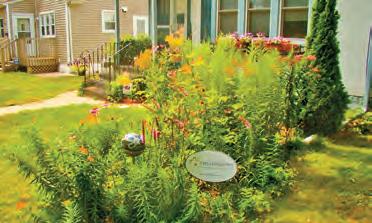
Now that the snow has melted and summer is on the horizon, it’s a great time to think about landscaping for water quality. Spring showers and summer downpours send stormwater running across our properties and ultimately into White Bear Lake, picking up pollutants, debris and contaminants along the way. There are many steps you can take to slow down and filter that water so that it doesn’t negatively impact the water quality of the lake. These changes can make your property cleaner and more attractive at the same time.
One of the easiest ways to improve water quality is to replace some of the turf on your property with a native garden or buffer strip of unmowed native vegetation. Either treatment will slow the flow of stormwater water on its way to a storm drain or the lake. Buffer strips along the shoreline also help prevent erosion
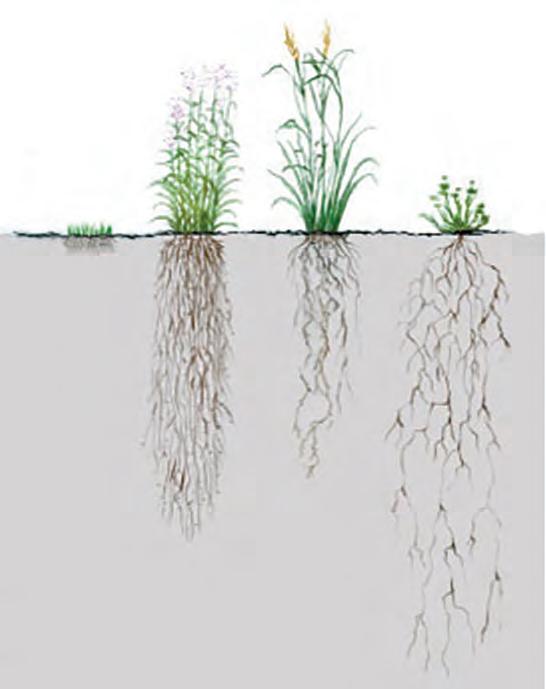
MN DNR | Contributed
From left, this illustration contrasts the shallow (2-3 inches) roots of Kentucky bluegrass to the deep (3-5 feet) and dense roots of native grasses. The root systems of native grasses may be effective for preventing erosion.
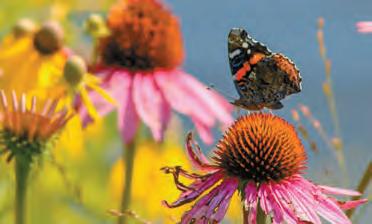
by anchoring the soil and absorbing the energy of waves and wind action. Native plants, shrubs, and grasses have significantly deeper root systems than turf grasses. Those deep roots create channels down into the soil, allowing it to drink up stormwater and infiltrate runoff more easily. Contaminants get filtered out as the stormwater percolates through the soil. As an additional benefit, these types of native plantings in garden beds and buffer strips provide food and habitat for birds, pollinators, butterflies, and other wildlife.
Rain gardens can offer even more water quality benefits. A well-designed rain garden should be dug down 4-10 inches to create a depression or bowl in the landscape, amended with sandy soil to encourage good drainage, and filled with deep-rooted native plants that help the rain garden capture and retain stormwater runoff. Rain gardens typically hold water for up to 48 hours after a rainfall, allowing the sandy soil to trap and filter contaminants as the water gradually soaks into the ground. Since the garden only holds water on a temporary basis, it doesn’t attract mosquitoes. A good mix of native vegetation will include plants like Blue Flag irises, Cardinal Flower, and Red Twig Dogwood, that can tolerate standing water, as well as perennials like Yarrow, Black-eyed Susans and Butterfly Weed for the drier edges. These types of plantings will offer a banquet for pollinators all season long.
You can hire a landscaper to install your rain garden, but it also makes a great DIY project. Check out how-to resources at UMN Extension and Blue ThumbPlanting for Clean Water, a program operated by Metro Blooms.
Typical suburban shorelines that feature turf lawns running right to the water’s edge encourage stormwater to run quickly into the lake, picking up phosphorus and depositing it into the
water. Increased phosphorus encourages algal blooms, which degrade the water quality and impact the health of fish, loons and other local wildlife.
If you own a lakeshore property and want to make it more lake-friendly, you can start by evaluating it with the Score Your Shore tool. Available on the DNR website, this self-guided survey will help you assess the amount of healthy habitat and shoreline buffer on your property. Armed with this baseline information, you can then explore strategies to improve the resilience of your landscape, maintain your shoreline if it’s functioning well, or undertake a restoration project.
There are resources available to help you landscape for water quality:
• Rice Creek Watershed District (RCWD) Mini Grants - up to $500 for smaller projects such as native and pollinator gardens, small buffer strips, and turf alternatives. All land or homeowners within the RCWD are eligible. Visit ricecreek.org for more information.
• Rice Creek Watershed District (RCWD) Water Quality Grants – up
to $10,000 for larger projects such as stabilizing shoreline erosion, shoreline restorations, pervious pavers, and rain gardens. All land and homeowners in the RCWD are eligible. Visit ricecreek.org for more information.
• Lawns to Legumes – a partnership between the Board of Water and Soil Resources (BWSR), Metro Blooms, and Blue Thumb – Planting for Clean Water, this program offers workshops, coaching, planting guides, and cost-share funding up to $400 with a 25% match for pollinator-friendly native plantings in residential lawns. Visit bwsr.state.mn.us for more information.
• UMN Extension – a comprehensive source of information for plant selection, rain garden design, native gardens, and water side buffers. Visit extension.umn. edu for more information.
• MN Department of Natural Resources (DNR) – information about the Score Your Shore survey, natural shoreline preservation and restoration, landscaping with native plants, healthy pollinator habitat, and more. Visit dnr. state.mn.us for more information.
Learn about how landscaping on your property effects water quality
Keep the New MN Boater’s license requirements in mind
Never pump water from WBL for irrigation or other uses
Join us for the Manitou Days Summer Clean Up on June 27th
Birchwood Music in the Park
When: 6-7:30 p.m. Sundays, June through August
Where: Tighe-Schmitz Park, Birchwood
Details: All are welcome to bring a lawn chair or blanket, picnic and beverage and listen to a different performance each week.
Contact: cityofbirchwood.com
Midwest Ski Otters Shows
When: 6 p.m. Sundays, June 7 through end of August
Where: Little Goose Lake
Details: White Bear-based team of 120 amateur skiers performs weekly throughout the summer.
Contact: skiotter.com
Bald Eagle Waterski Shows
When: 7 p.m. Fridays, June 19 through Aug. 20
Where: Trail Side Park, Centerville Details: Waterski Club with long, local history performs shows throughout the summer.
Contact: baldeaglewaterskishows.net
Marketfest
When: 6-9 p.m. Thursdays, June 18 through July 30
Where: Downtown White Bear Lake
Details: Community summer festival with 160+ food and vendor booths, live music, car show, kids activities, specials at local merchants. Contact: marketfestwbl.com
Mahtomedi Area Farmers Market
When: 8 a.m.-noon Saturdays, June 27 through Sept. 26
Where: Veterans Memorial Park, Mahtomedi Avenue and Stillwater Road
Details: Local growers, artisans, community resources. Contact: mahtomedimn.gov
White Bear Farmers Market
When: 8 a.m.-noon Friday, June 26 through Oct. 31
Where: Clark Street between Second and Third Streets
Details: More than 50 vendors and growers each week.
Contact: whitebearlake.org
Music by the Water
When: 6-9 p.m. Wednesdays, Fridays and Saturdays
Where: Tally's Dockside, 4441 Lake Ave. S.
Details: Live music on the lakeside patio. See lineup online.
Contact: cghooks.com/summer-eventmusic-calendar
Live music at Admiral D's
When: Noon-3 p.m. and 6-8:30 p.m. Sundays; 6-8:30 p.m. Thursdays
Where: Admiral D's Waterfront Tavern, 4424 Lake Ave. S.
Details: Live music performances throughout the summer. Contact: admiraldswbl.com
Mayhem Regatta
When: Noon Saturday, May 23 and Sunday, May 24
Where: White Bear Lake
Details: Kick off to the Black Bear Yacht Racing Association keelboat sailboat racing season. Contact: bbyra.com
Memorial Day Race
When: 10 a.m. Saturday, May 23, 1 p.m. Sunday, May 24 and 10 a.m. Monday, May 25
Where: Bald Eagle Lake
Details: Kickoff to the Bald Eagle Yacht Club racing season.
Contact: 763-464-2778
Mahtomedi Memorial Day Parade and Pancake Breakfast
When: 9 a.m. Monday, May 25
Where: Downtown Mahtomedi/ Willernie
Details: Parade honoring those who have served includes local organizations and students, followed by pancake breakfast at the Fire Hall from 9:30 a.m.-noon, 800 Stillwater Road.
Contact: 651-426-3344
The American Revolution Experience Exhibit
When: Opens Friday, May 29; 10 a.m.-3 p.m. Tuesdays-Fridays through June 6
Where: White Bear Lake Armory, 2228 Fourth Street
Details: Learn the stories of the Patriot cause in an exhibit from the Daughters of the American Revolution and the American Battlefield Trust.
Contact: whitebearhistory.org
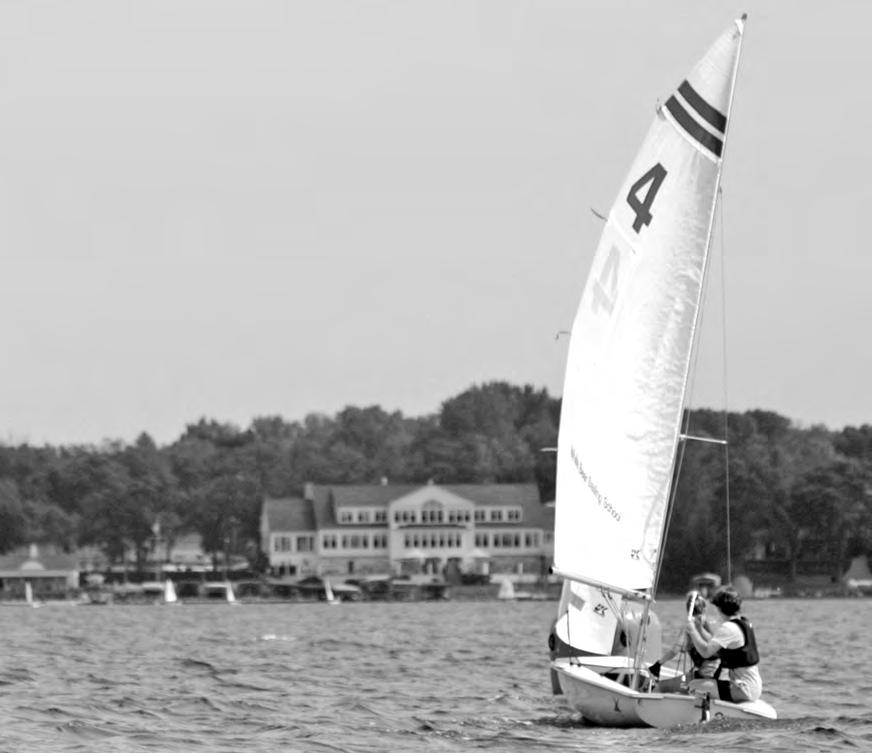
Black Bear Yacht Racing Association
Keelboat racing on White Bear Lake (Mahtomedi Bay) begins May 26 through end of September
Tuesdays at 7 p.m. and every other Saturday at noon
Go to bbyra.com for information and schedule
Scow racing season begins June 1 on White Bear Lake
A Scows: 6:30 p.m. Mondays
C Scows, Cat boats, E Scows, MC Scows: Wednesdays at 6:30 p.m.
Melges 15 Scows: Thursdays at 6:30 p.m. and every other Sunday at 2 p.m.
C Scows, MC Scows, E Scows: Saturdays at 10 a.m.
Cat boats: Saturdays at 2 p.m.
Laser Sailboats: Sundays at 2 p.m.
Go to wbycsail.org for information and schedule
Bald Eagle Yacht Club 2026 Racing Schedule
Special Races
Memorial Day weekend: Saturday 10 a.m., Sunday 1 p.m., Monday 10 a.m.
4th of July weekend: Friday 10 a.m., Saturday 10 a.m., Sunday 1 p.m.
Bald Eagle Regatta: June 27-28
Labor Day weekend: Saturday 10 a.m., Sunday 1 p.m., Monday 10 a.m.
Regular season schedule (June-August)
Tuesdays - E Scows, 6:30 p.m.
Wednesdays – Lasers, 6:30 p.m.
Thursdays - Hobie Waves, 6:30 p.m.
Weekends - Varied classes, 10 a.m. Saturday, 1 p.m. Sunday
Contact Bjorn Bagnall at 763-464-2778 or bjornbagnall@gmail.com for questions or full schedule.
Greenhorn Wednesday Series Bass Tournament
When: 5-8:45 p.m. Wednesday, June 3
Where: White Bear Lake
Details: Approximately 50 entrants participate as part of the Twin Citiesbased nonprofit Bass fishing league. Contact: greenhornbasstour.com
Mick Sterling Presents: Heart & Soul! The Music of Huey Lewis and the News
When: 7:30 p.m. Saturday, June 6 and 2 p.m. Sunday, June 7
Where: Hanifl Performing Arts Center, 4941 Long Ave., White Bear Lake
Details: Three-piece horn section and vocals pay tribute to Huey Lewis and the News. Ticket information online. Contact: 651-478-7427 or lakeshoreplayers.org
Metro Muskie Tournament
When: 6 a.m.-3:30 p.m. Saturday, June 13
Where: Bald Eagle Lake and White Bear Lake
Details: Cash prizes and Junior division. Participate on 21 Twin Cities Metro-area lakes. Register by June 6. Contact: metromuskietournament. com
Greenhorn Advanced Sunday Series Bass Tournament
When: 6 a.m.-2 p.m. Sunday, June 14
Where: White Bear Lake
Details: Approximately 50 entrants participate as part of the Twin Citiesbased nonprofit Bass fishing league. Contact: greenhornbasstour.com
When: 8 a.m.-2 p.m. Thursday, June 18
Where: Lions Park, White Bear Lake
Details: Kids ages 7-12 who live or attend school in White Bear Lake are selected for a one-on-one fishing experience with local police officers. Nomination-based and space limited. Equipment and lunch provided. Contact: 651-429-8559 or whitebearlakemn.gov/publicsafety/ page/cops-and-bobbers
When: 8-11 p.m. Friday, June 19
Where: Memorial Beach
Details: Enjoy live music by the Free & Easy Band. Food and beverages available for purchase. Admission fee. Contact: manitoudays.com
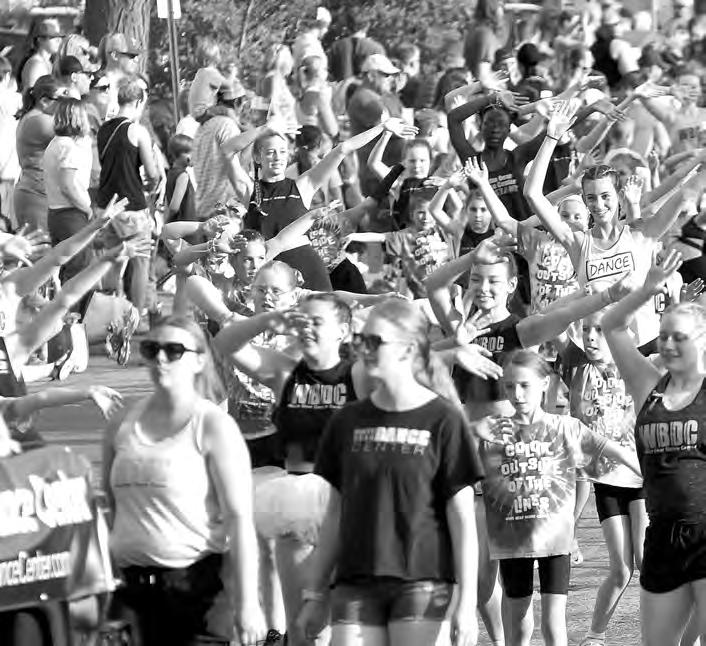
When: 6:30 p.m. Friday, June 19
Where: Begins at 2nd Street and Clark Avenue; ends at Memorial Beach Details: Floats, marching bands, local organizations, and more travel through downtown and along Lake Avenue toward the beach.
Contact: manitoudays.com
When: 8 a.m.-noon Saturday, June 20
Where: White Bear Lake; registration at Lions Park
Details: Fishing contest for youth ages 15 and younger. Fish on your own schedule. Prizes and free gift for every angler.
Contact: 651-363-1008 or manitoudays.com
When: 8:15 a.m. Saturday, June 20
Where: Memorial Beach, 4980 Lake Avenue
Details: Annual fundraiser for the White Bear Area Food Shelf. Canceled if rain.
Contact: yogadevotion.com
When: 10 a.m.-noon Saturday, June 20
Where: Memorial Beach
Details: Gather family and friends to build a sandcastle, sand creature, or sand sculpture in a free event hosted by White Bear Center for the Arts. Prizes awarded at noon. Contact: manitoudays.com
When: 10 a.m.-3 p.m. Saturday, June 20
Where: Lakefront of the White Bear Lake Shopping Center, 4391 Lake Ave. S.
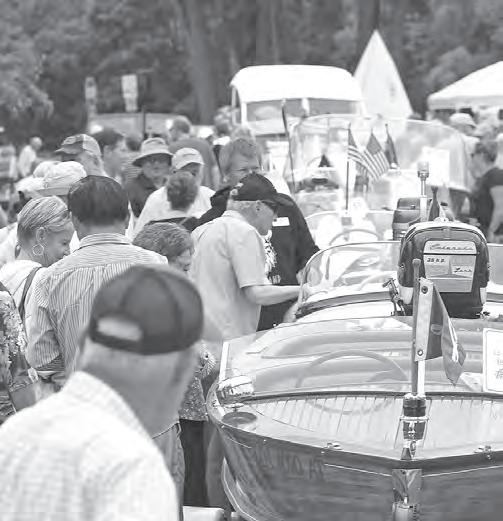
Details: Display of classic and vintage boats-inboards, outboards, row boats and sailboats. Live fishing and “ask and expert” fisherman, vendors, nautical market, food and vendors. Contact: facebook.com/ WhiteBearPress
When: 6-8 p.m. Wednesday, June 24
Where: White Bear Lake Armory, 2228 4th Street
Details: Guided walking tour of downtown White Bear Lake highlighting the history of the buildings, businesses and organizations that make this community unique. Registration required.
Contact: whitebearhistory.org
Artisan and Vendor Fair
When: 10 a.m.-3 p.m. Saturday, June 27
Where: Mariner Middle School, 3551 McKnight Road
Details: 100+ Minnesota crafters, makers, boutiques and vendors.
Contact: sunriseeventsandcraftshows. com
When: 8:30 a.m. Sunday, June 28
Where: White Bear Lake County Park, 5050 Lake Ave.
Details: Sprint and Olympic Distance triathlon open to individuals 13 years and older and two and three person relay teams. Aqua Bike options as well as the traditional three-discipline format. Post-race party and barbecue. Details and registration information online.
Contact: mmraces.com/manitou-tri
When: 9 a.m. Sunday, June 28
Where: West Park, 2350 11th Street
Details: Noncompetitive 5K run/ walk along the lake organized by local family, with proceeds benefiting Cranio Care Bears.
Contact: sites.google.com/site/ keegans5kforcranioawareness
White Bear Lake Conservation District Lake
When: 8 a.m.-noon Saturday, June 27
Where: White Bear Lake and shoreline
Details: Community members are invited to get out on the lake in a watercraft or walk along a public shoreline to pick up trash. Participants encouraged to take a photo of the trash they collect and tag WBLCD on social media or email it to wblcd25@ gmail.com.
Contact: 651-429-8520
When: June 27-28
Where: Bald Eagle Lake
Details: Annual regatta
Contact: 763-464-2778
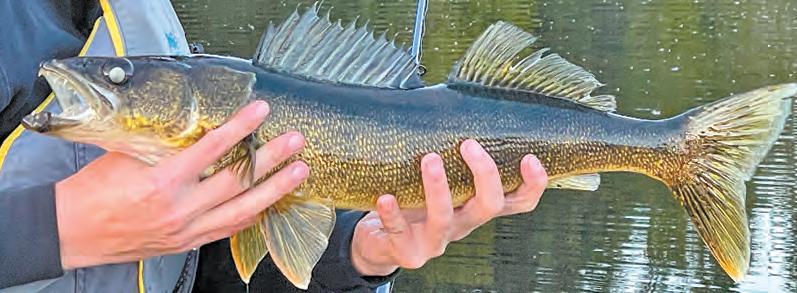
These are the possession limits for 2026 and 2027 according to the Minnesota Department of Natural Resources for inland waters, specifically for White Bear Lake:
• Walleye and Sauger: Six combined totally (only 1 walleye over 20” in possession)
• Muskellunge: 1 (minimum size 54”)
largemouth or smallmouth bass (when smallmouth season is open).
• Smallmouth bass: March 1- May 22: Catch and release only; May 23- Sept. 13: Six combined total largemouth or smallmouth bass; Sept. 14, 2026- Feb. 28, 2027: Catch and release only.
• Crappie (white or black and their hybrids): 10 combined total













ROOFING INSTALLATION
We install several types of roofing materials including asphalt shingles, cedar shakes, metal, slate and more.
STORM DAMAGE REPAIR
We repair roofs and siding damaged by severe weather. We are happy to work with your insurance company as well.


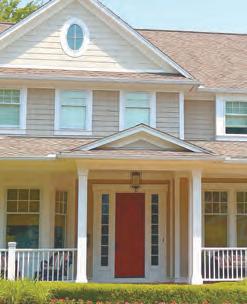


SIDING INSTALLATION
We install vinyl, wood or metal siding for your home or business. We can help you determine the best option. SOFFIT & FASCIA
Usually part of a roofing or siding project, soffit and fascia are important feature for a finished home exterior.

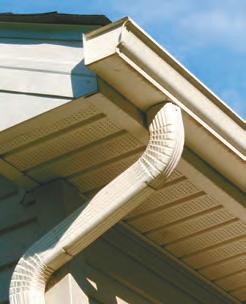
GUTTER SERVICES
Water damage from poor gutters can lead to expensive repair. We install and repair gutters to keep the water away from your home.
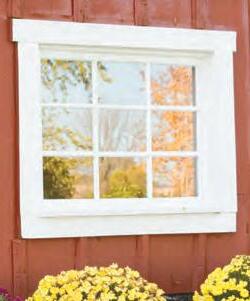
WINDOW INSTALLATION
New windows can make a huge difference for your home both in appearance and energy efficiency.




By Debra Neutkens Contributing Writer
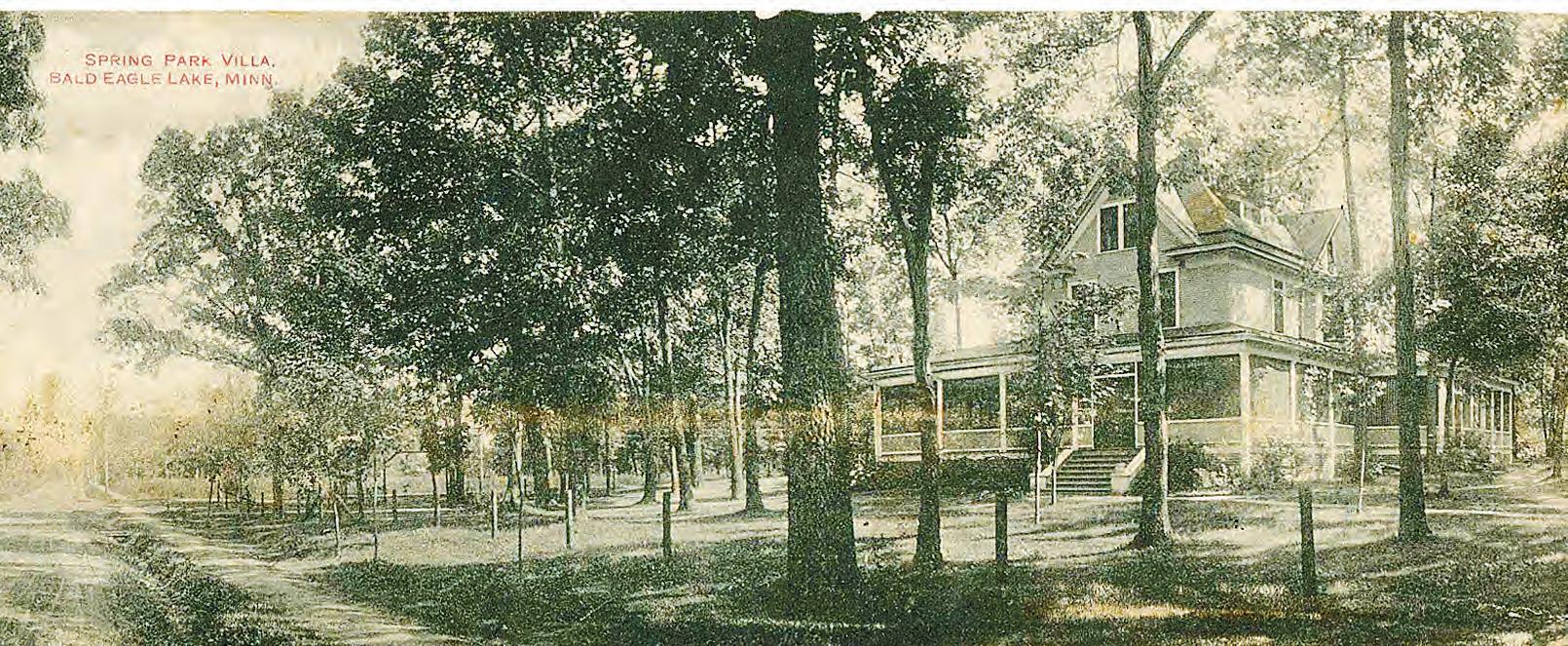
Promotional brochures in the early 1900s touted Spring Park Villa Resort on Bald Eagle Lake as “ideal” for families vacationing from the Twin Cities.
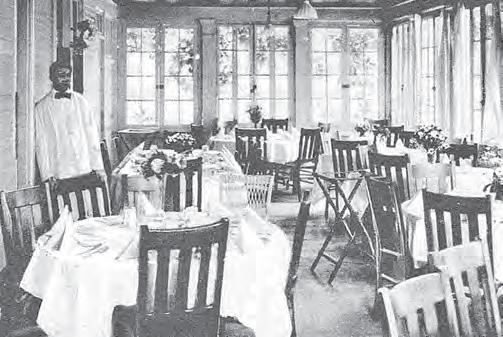
Accessible by motor bus or the Northern Pacific Railway from St. Paul, the villa enticed tourists with these descriptions: “All out-of-doors sports are here, with a hotel set in a grove of large trees that is up to date in every respect; baths, electric lighting, open fireplaces, hot water heat, screened
dining room overlooking the lake and a large porch. We set a good table, vegetables, berries, etc. either from our garden or neighboring farms.”
Guests could stay a week, a month or for the whole summer season at the Villa, which was built in 1905 by Charles Davies on the southeast corner of Bald Eagle Boulevard E. and Park Street. For $15 per week and up, families could enjoy activities like boating, swimming, fishing and tennis.
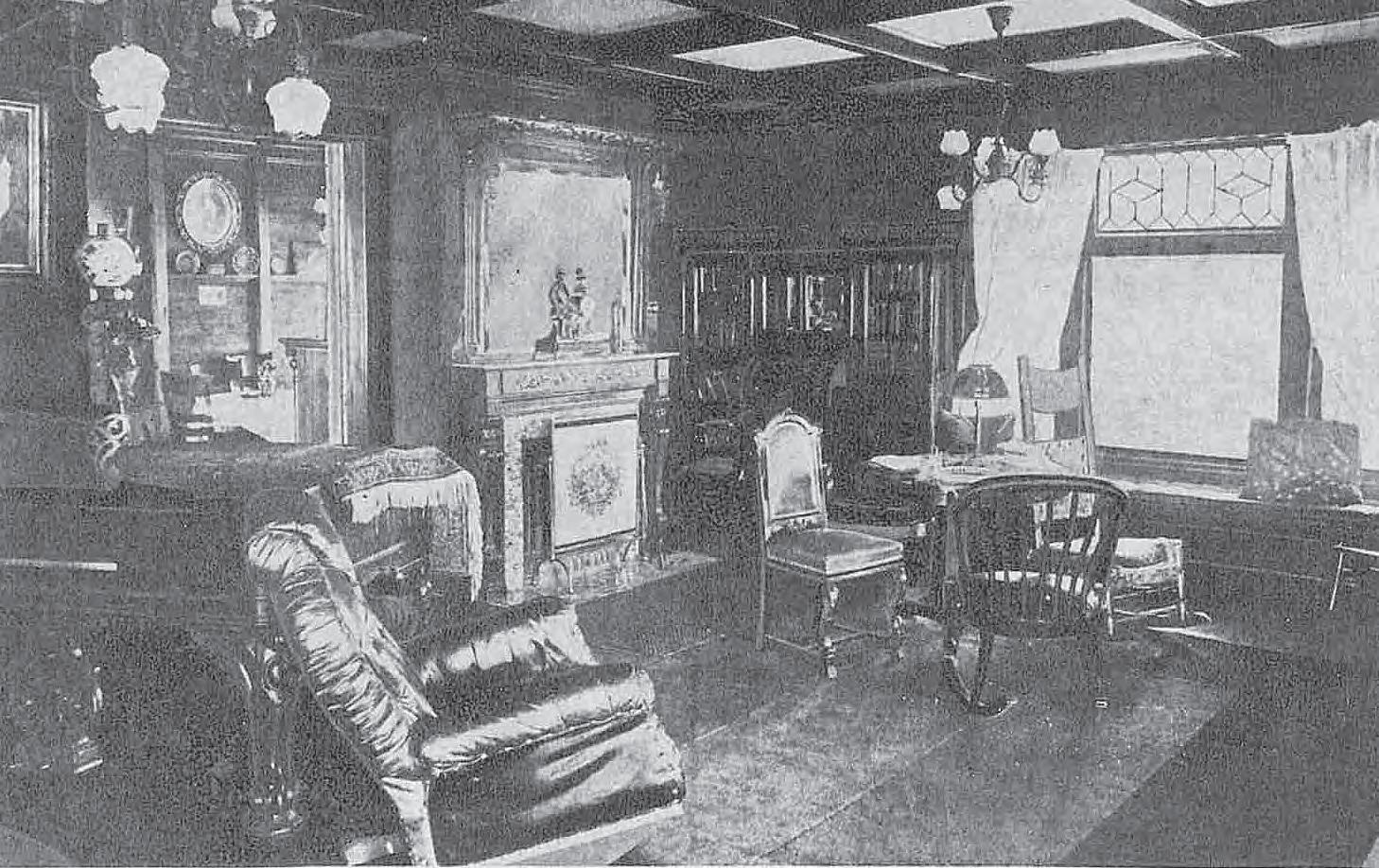
The luxurious three-story hotel showcased a lobby with fireplace, grand piano and fine dining. It had six bedrooms and two baths on the second
floor. There were also 20 cottages designed for single families surrounding the hotel on the 10-acre property. Guest capacity was 70.
The name Spring Park comes from the fact a natural spring existed on the parklike property that was turned into a well. Early residents were thought to collect their water from the spring.
The Mahlon Miller family owned and operated the resort for the first 50 years, using horse-drawn carriages to pick up guests at Bald Eagle Station. According to “Looking Back at White Bear Lake,” by Cynthia Vadnais, the elder Mahlon died in 1907. His wife
and six children continued to operate the resort; daughter Grace took over after her mother’s death. During the Depression years and the drought of the 1930s, the cottages turned into housekeeping units and the hotel stopped serving meals.
In 1956, the property was purchased by Carroll and Ruth Mattlin and Harold and Mary Mattlin. Ruth ran the resort until it closed in 1977. By then, most of the cottages were replaced with homes and the hotel, the last remaining structure, was torn down in ’78.
“It was a lot of work for my mother,” recalled Barb Judd, (née Mattlin), who was a young girl when her parents bought the resort. “The cottages were rented out for the season so there wasn’t as much housekeeping, and the hotel was winterized and rented to single families. Mother had a groundskeeper and a cleaning woman who helped with chores. We lived on Elk Street, so she walked to the resort.”
Barb, who graduated from White Bear Lake High School, moved away years ago but returns when she can. Her sister Jane, a retired librarian, also left the area, so the only Mattlin in White Bear is a second cousin.
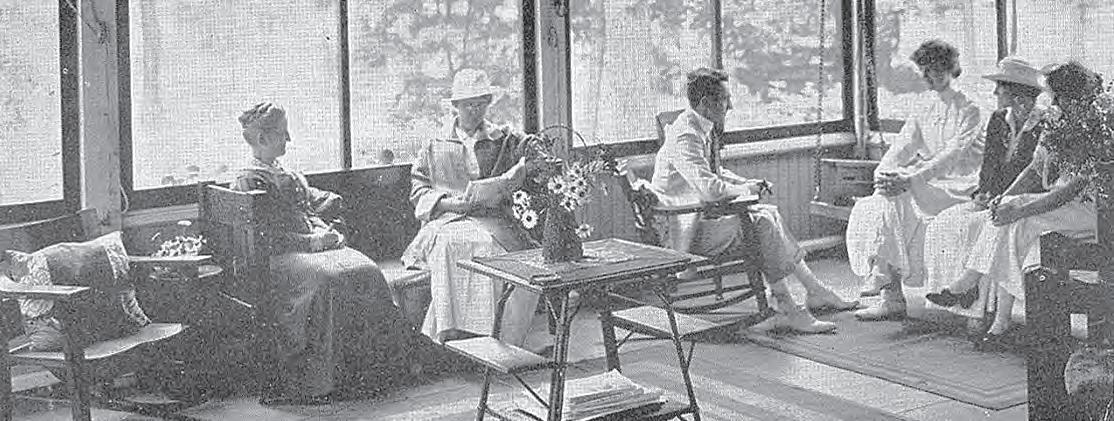
Judd admits she didn’t spend much time at the Villa in high school, “but it was an interesting place, especially the fancy sitting areas.”
She remembers swimming with Bald Eagle families who paid a nominal fee to use the Villa beach and always knowing when it was 5 p.m. because the steam engine train went by. “My grandfather was a night watchman for the railroad, and my dad was born in an apartment above the Bald Eagle watchtower,” she said, which explains how a family affinity for trains got started.
Longtime residents may remember Carroll Mattlin’s Appliance City, opened in 1960 behind Cup and Cone. A serious train enthusiast, he had a 1910 Great Northern caboose and a 1946 Pullman observation lounge car on a railroad siding next to
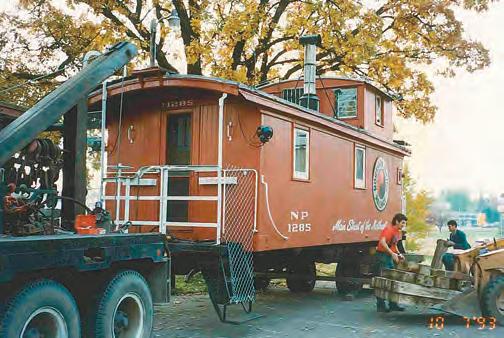
his showroom. That same caboose is now moored next to the depot on Hwy. 61. The Rainier club car was obtained by a railway museum in Duluth. Both were moved to their permanent sites in 1993. Mattlin also owned a general contracting business started by his father, Carl, around 1920. In addition to building hundreds of homes, the company built the brick fire station at Clark Avenue and Second Street in 1930, the White Bear Yacht Club in 1939 and the Sunset Bowling Center in 1940. The property was sold to the city for development when Carroll retired in 1979.
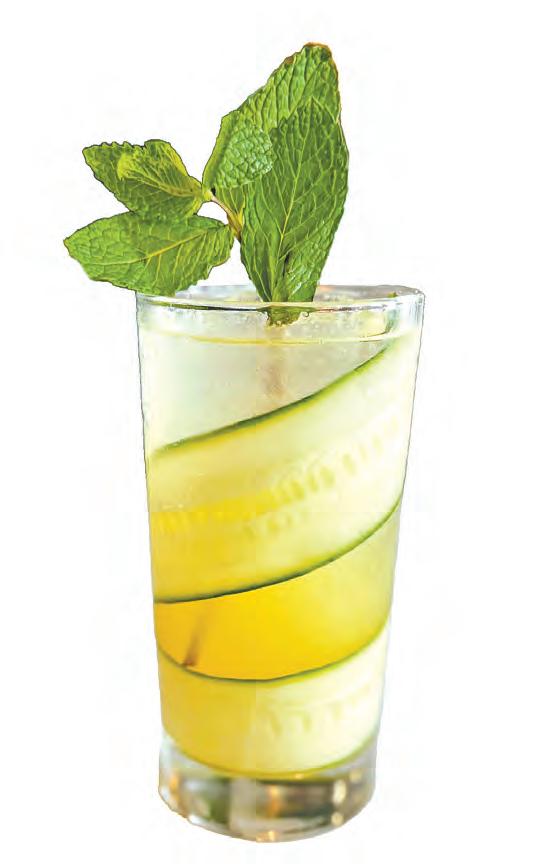
Ingredients:
• 1.25 oz Ketel One Cucumber Mint Infused Vodka
• 0.75 oz Japanese melon liqueur
• 0.5 oz Lemongrass Shochu
• 0.25 oz ginger simple syrup
• 2–3 oz Suntory -196 Lemon Seltzer (to top)
• Ice
Garnish:
Cucumber ribbon
Method:
1. Fill a chilled highball glass with ice.
2. Add vodka, melon liqueur, shochu, and ginger syrup.
3. Stir briefly (2–3 turns).
4. Top with Suntory -196 Lemon Seltzer.
5. Lightly lift once to integrate.
6. Garnish with cucumber ribbon.
Ingredients
• 5 lb ground pork
• 5 lb ground veal
• 5 lb ground wagyu
• 4 cups chopped parsley
• 4 cups microplaned pecorino
• 1 lb fontina, finely grated
• 6 cups finely diced onion
½ cup extra virgin olive oil
• ½ cup chopped basil
• 1½ cups garlic, minced
• 1 cup Calabrian chili
• 1½ lb gluten-free bread, toasted/dried and blitzed
• 2 cups gluten-free panko
• 2 cups whole milk
Preparation
Build the Flavor Base
In olive oil, gently sweat the onion, garlic, and Calabrian chili until soft and aromatic. Deglaze with white wine and allow to fully cool.
Prepare the Components
• Finely shred the fontina (smallest side of a box grater) and chill in the freezer for 10 minutes.
• Soak the blitzed gluten-free bread in milk immediately to fully hydrate and prevent clumping.
Mix
Combine all ingredients
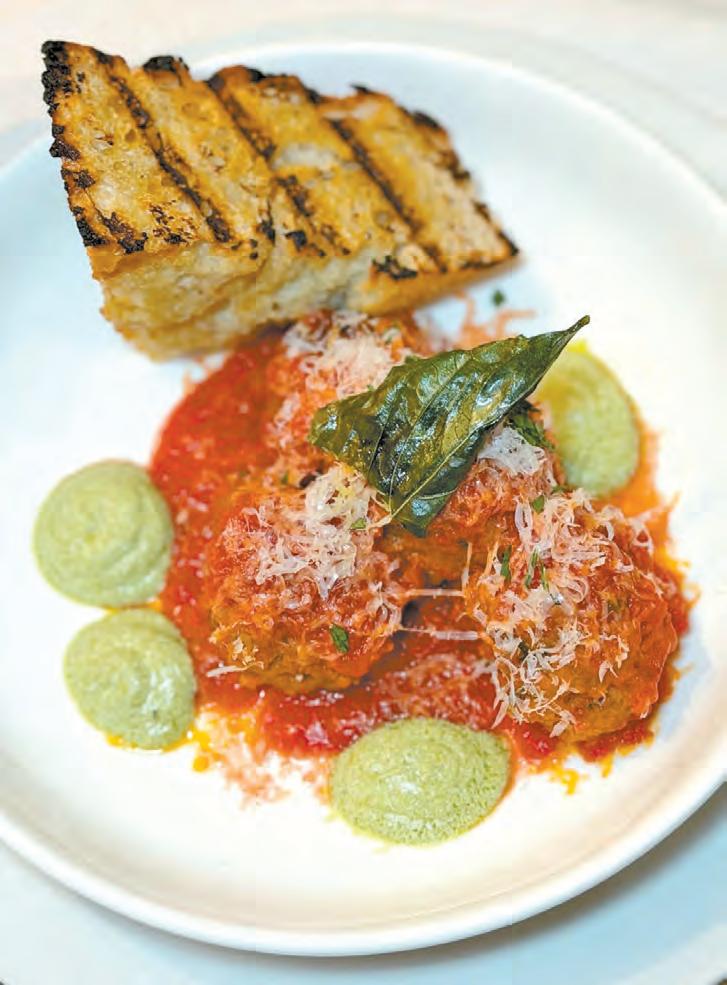
in a large mixing bowl, including the cooled onion mixture. Mix thoroughly until fully incorporated, but avoid overworking.
Form & Cook
• Portion using a scoop and roll into uniform meatballs
• Arrange in a shallow hotel pan
• Cover with pomodoro sauce
• Place parchment directly on top, then wrap tightly with foil
Bake
350°F for ~30 minutes, or until internal temperature reaches 155°F
Finish
Allow to cool slightly, then transfer and store for service.

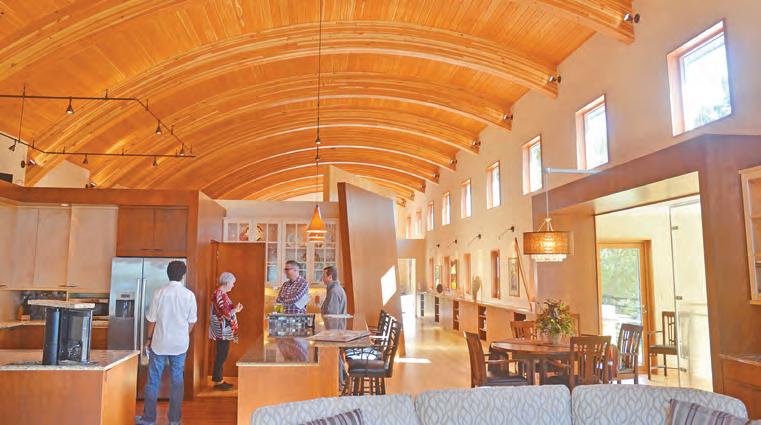
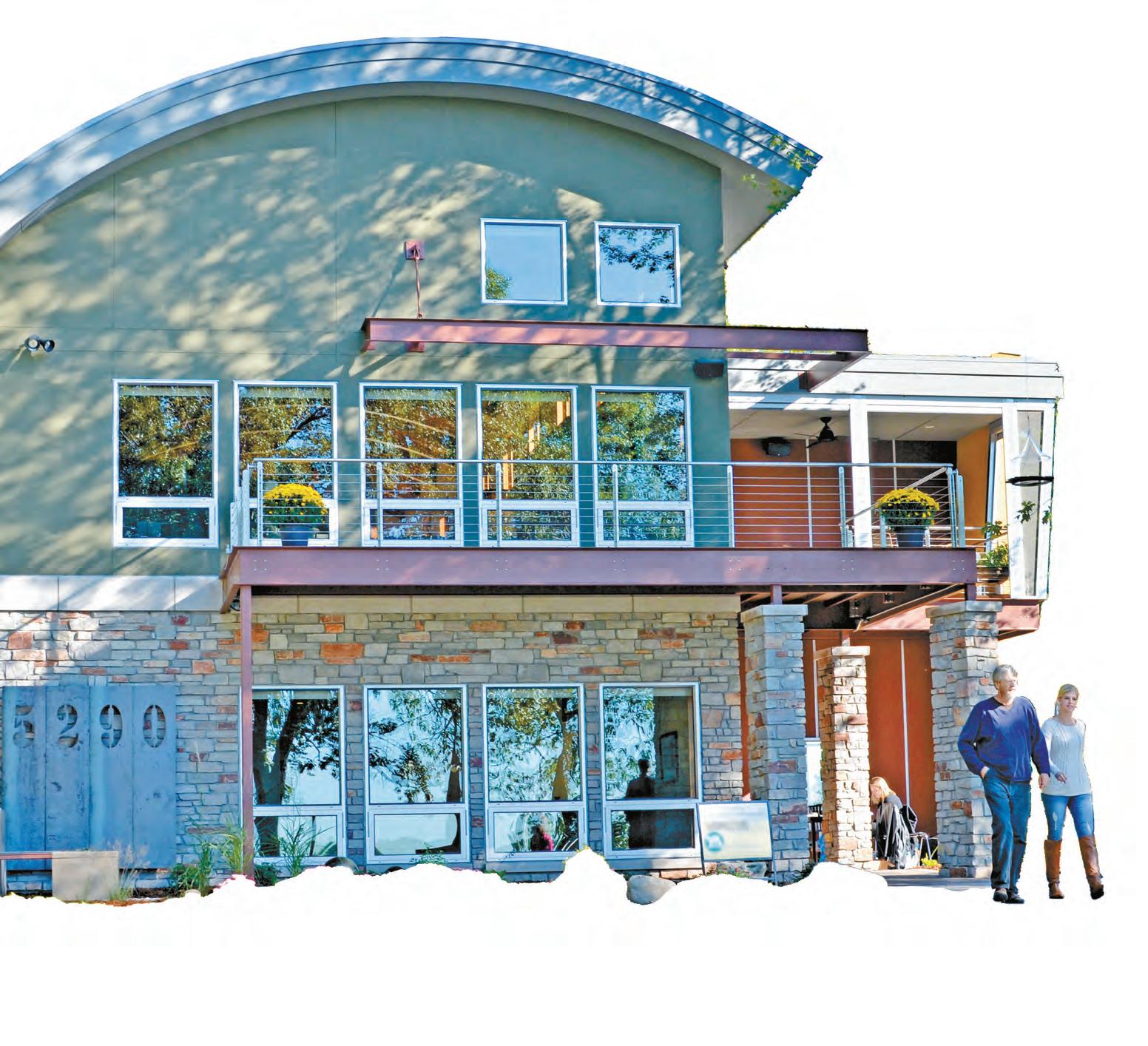
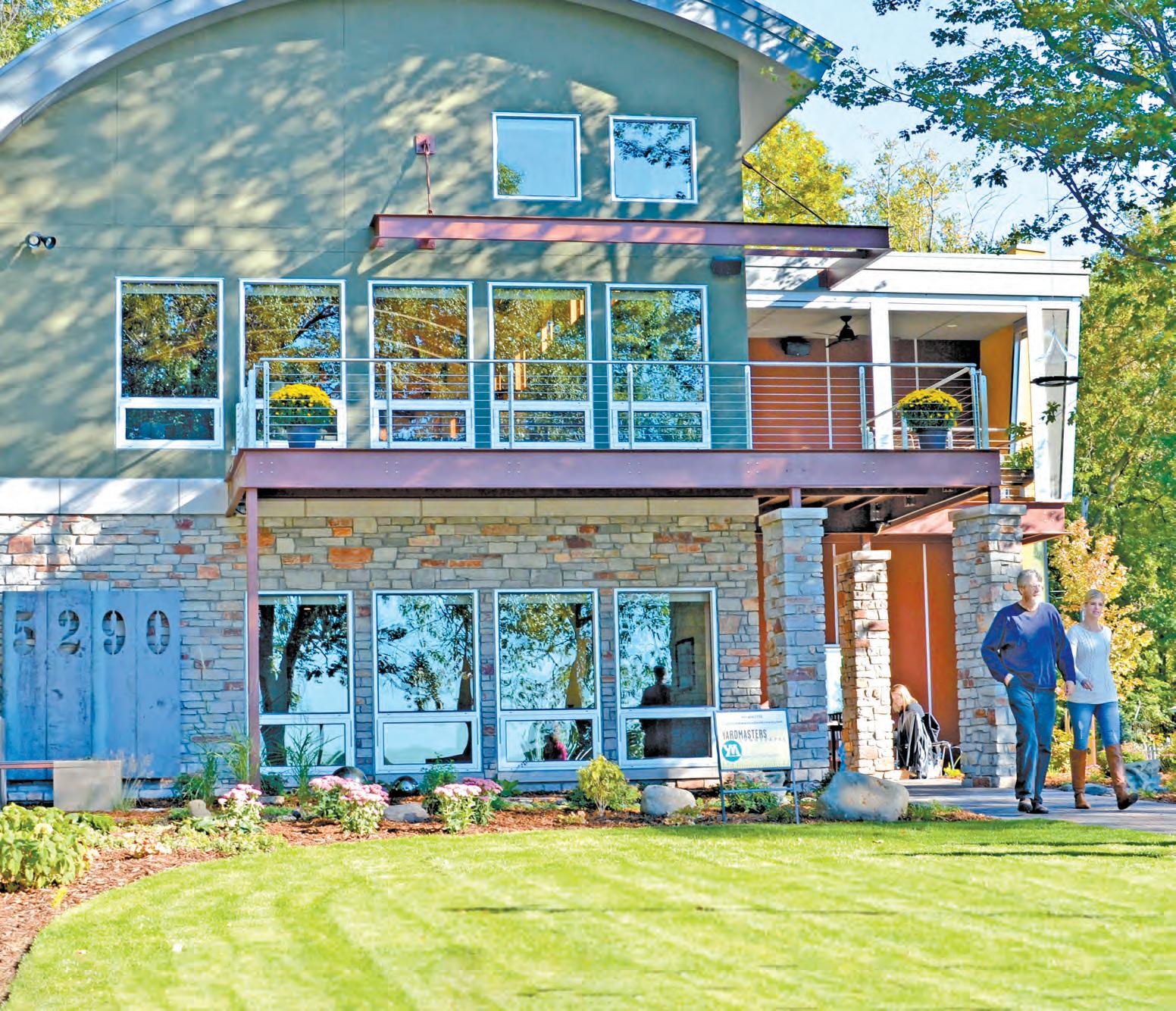
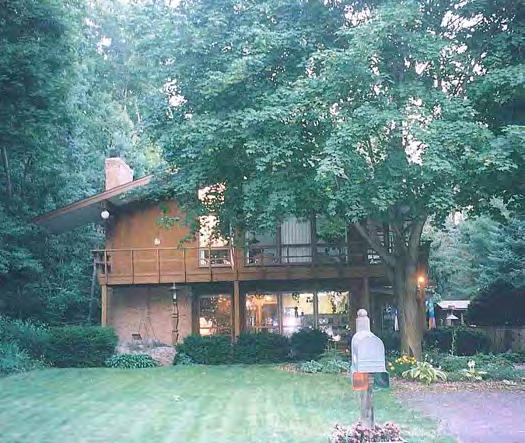
Like many lakefront properties, the original Villa acreage saw several transformations over the decades. The first was in 1962, when Carroll and Ruth removed two cottages and built their “dream home” at 5290 E. Bald Eagle Blvd.
house in 2010, four years after Ruth died. Jim was a township resident who knew the Mattlins and the property well; and their daughters knew he was interested in its ownership. Much to their chagrin, however, the family home was razed.
“How we made peace with that is no one else lived in the house,” Judd said.
A 2018 Press article on Muellner, who founded Smarte Carte, quoted him as saying the unique, eco-friendly house “was a gift to ourselves.” The distinctive house was featured in a Homes by Architects tour in 2013 and a pictorial feature in the White Bear Press that same year. Among its many features is a barrel-vaulted Douglas fir wood ceiling, cherrywood floors, arches that allow light to flood in from south-facing windows and a curved roof.
“The cottages had latrines behind them and people would throw bottles and dishes in the holes,” Judd recalled.
“My mom would find old glass medicine bottles and pieces of dishes when gardening in the backyard.”
Today, the Mattlin home has been replaced by a custom home built by Jim and Marilyn Muellner. They bought the
The house has new owners now, transplants from North Oaks, and Marilyn Muellner has since passed, but the history of the property and its iterations remain, thanks to news clippings and photographs, journal entries by Ruth Mattlin and the keeping of the legacy by the Mattlin daughters. ◼



By Erik Suchy Contributing Writer
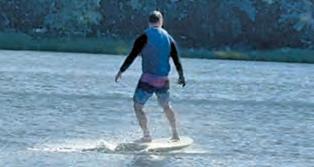
During the summer, nothing beats taking a surf- or wakeboard onto the lake to catch some waves, do spins and perform a couple of neat tricks. For those who want a little more flight with their water sports, look no further than Glyde Watersports.
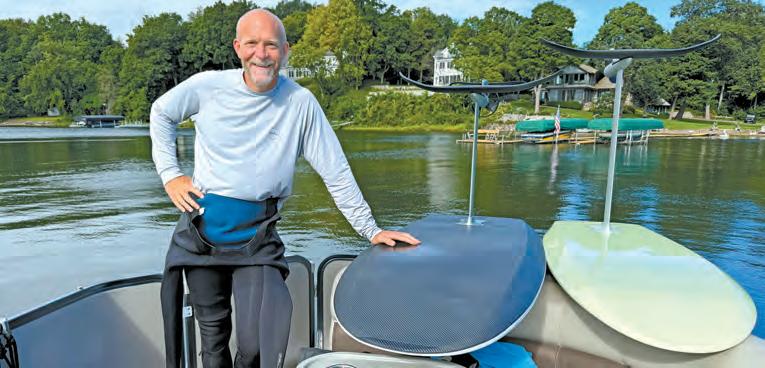
Initially a side hustle for owners Steve Nelson and Dave Hickey, Glyde Watersports has grown into a unique Upper Midwest dealership catering to what the owners describe as the “next biggest thing” in watersports. That “thing” is an electric hydrofoil surfboard, or e-foil board for short.
The e-foil board features a hydrofoil on its bottom, which enables the board to lift out of the water, reduces drag and increases speed. A brushless electric motor and lithium-ion battery enable the board to rise above the surface, controlled by the user via a Bluetooth controller. As with a small surfboard, riders steer by shifting their body position. Most boards, according to Hickey, can reach speeds of more than 30 miles per hour.
The history of e-foil boards can be traced back to David Trewern, CEO and founder of Fliteboard. Trewern, a former kitesurfer, set out to create a board that could glide across the water like a kiteboard — even without wind. “What if I didn’t have to wait for the wind?” Trewern said. “What if I could just attach an electric motor to my foil?”
Though development began in Australia in 2016, the boards didn’t reach the North American market until a few years later. Since then, the boards have seen several technological advances,
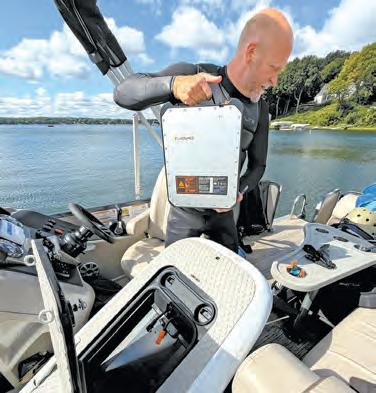
primarily in their lithium-ion batteries and brushless motors. “Battery technology has enabled e-foils to become a thing, as have brushless motors,” said Nelson. “Those two things, in conjunction with the hydrofoil parts, have helped them grow in popularity over the last 10 years.”
Another significant advantage of e-boards, according to Nelson, is their ability to glide smoothly, even in rougher waters. “You don’t need the water to be super smooth to ride on. You can enjoy it even when the water’s somewhat choppy, because you can ride up and above the chop,” he said. “Wind also plays a factor, but it’s surprising how much you can withstand and still be able to foil.”
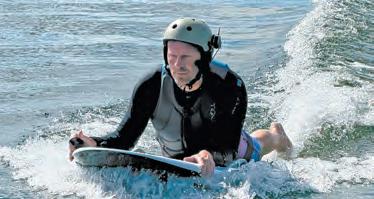
Those looking to try an e-foil board for the first time should complete basic training beforehand. Users are advised to wear a life jacket or impact vest, along with a helmet for added protection. According to Hickey, those who buy a board through the company receive a free lesson on the water.
“That’s some of the added value we provide,” Hickey said. “We coach them on how to use it and handle it out of the water. We also help with the setup and make sure they’re comfortable and confident in their purchase.”
Hickey added that the company works diligently to ensure which boards are best for beginners. “There are larger boards that are more likely to support beginner level riders,” he said. “We offer several shapes, sizes and material composition options, which come at different price points. You can configure a board, as well as its wings, batteries and chargers, to meet your price point and your usage targets.”
Where does the company see itself in a few years? For now, Nelson said that the main goal is to bring more attention to how e-foil boards work.
“This market is so new. We’re in the awareness-building stage right now,” he said. Main goals include getting people to understand what e-boards are and what their benefits are, along with increasing general knowledge and acceptance of the product. “One of the benefits of these products is that they don’t make any noise or wake, and they’re very low-impact,” Nelson said. “As we start to see some of the controversy around wake boats and personal watercraft, e-foils can be a good alternative to those products. Over time, we think they’ll lend themselves well to growing the sport and its popularity.” ◼

- Sherry S.
“Visit went excellent! I would recommend White Bear Eye Clinic & Optical to anyone.”
- Ryan P.

N.
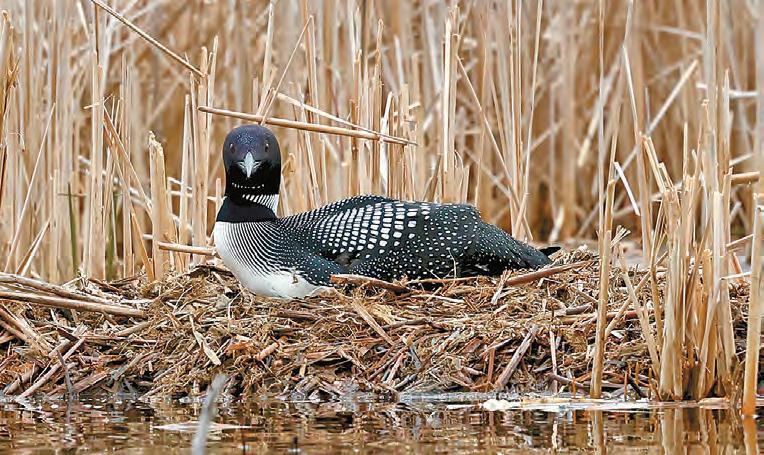
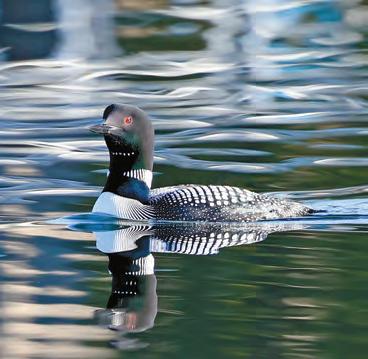
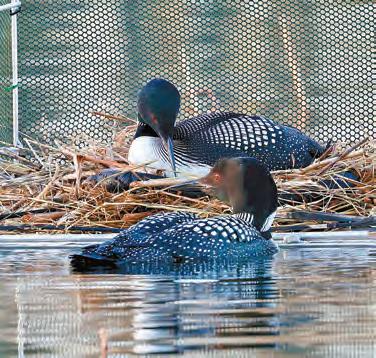
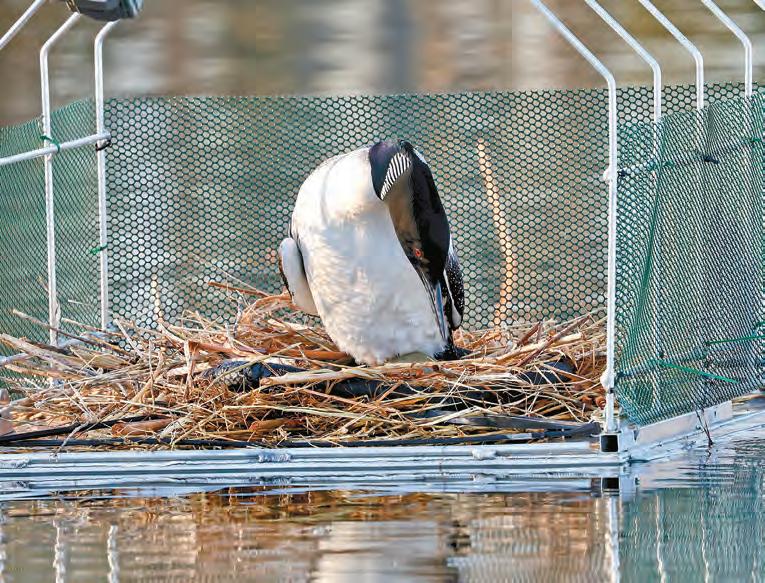
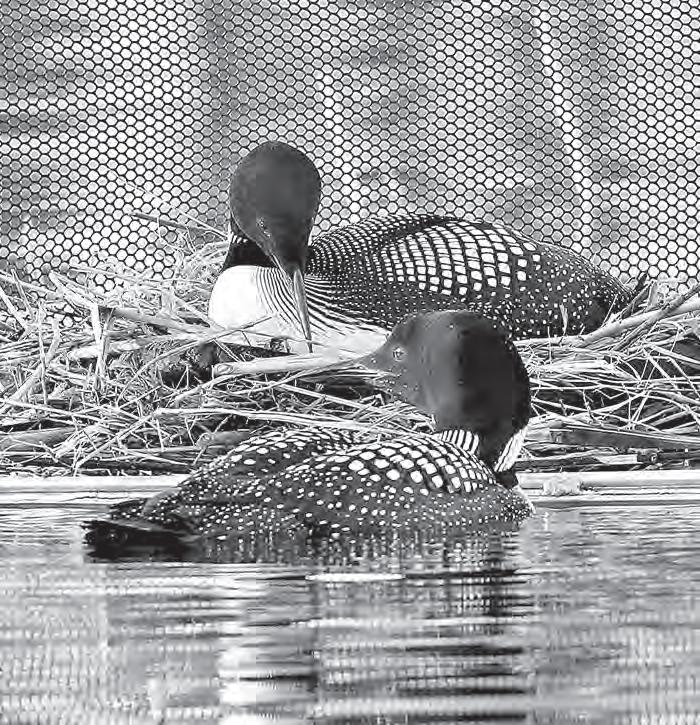
During the last three weeks, the Loons returned to White Bear Lake. The Peninsula and Cove pairs found each other, claimed their territories, and established their nests. The Peninsula pair wasted no time and set up shop on the canopy-nest, with anticipated hatches on May 17 and 18.
(Top left) Like last year, the Cove pair commandeered an abandoned goose nest. The first egg should be laid in the next few days.
(Top right) Mama Loon inspecting and turning the eggs on the canopy-nest.
(Bottom left) One of the first arriving Loons, spotted on April 8.
(Bottom right) The Peninsula pair getting ready to trade nest-duty shifts.





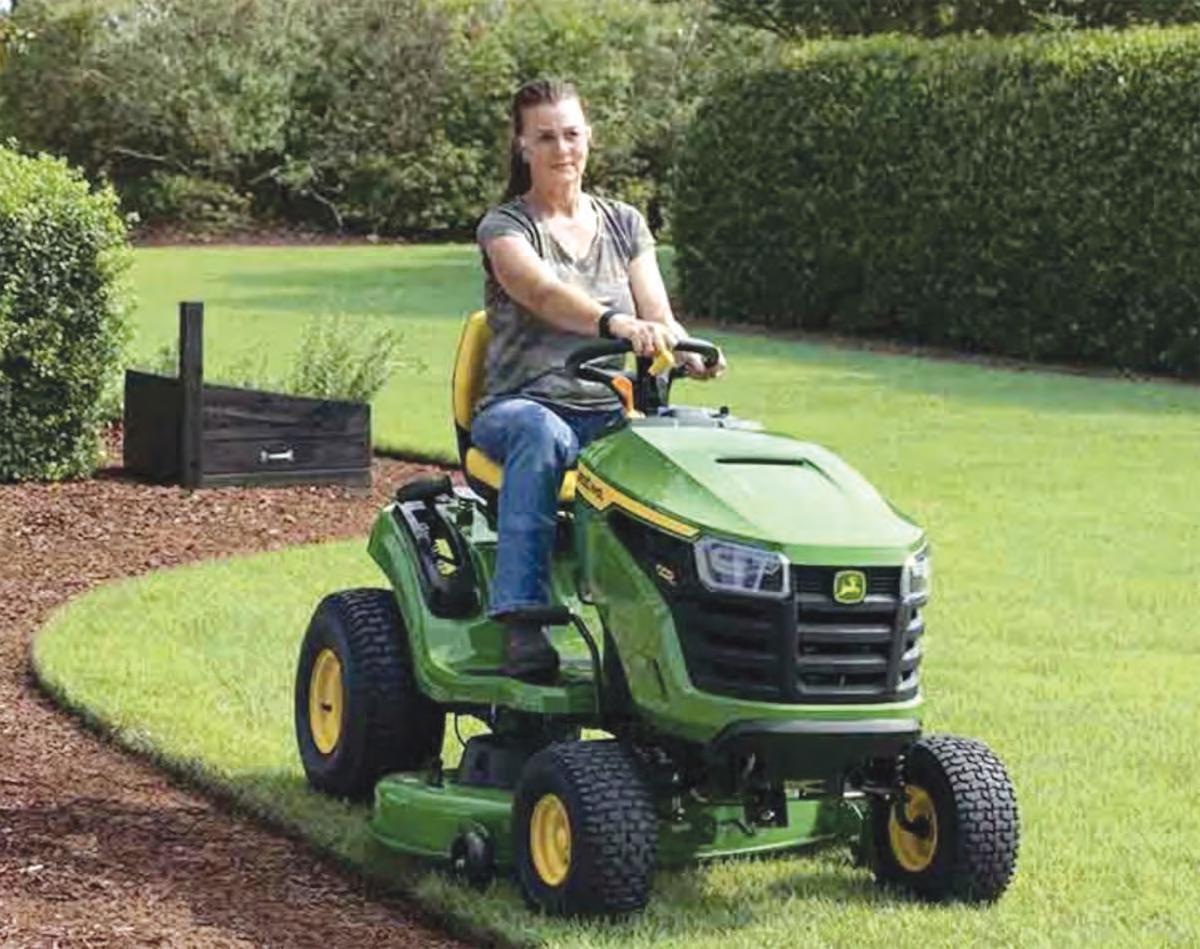
The 100 Series is designed to make yard work simple. With affordable prices, comfortable designs, and a bumper-to-bumper warranty1, it lets you focus on the real reason you have a lawn in the first place – to make memories.
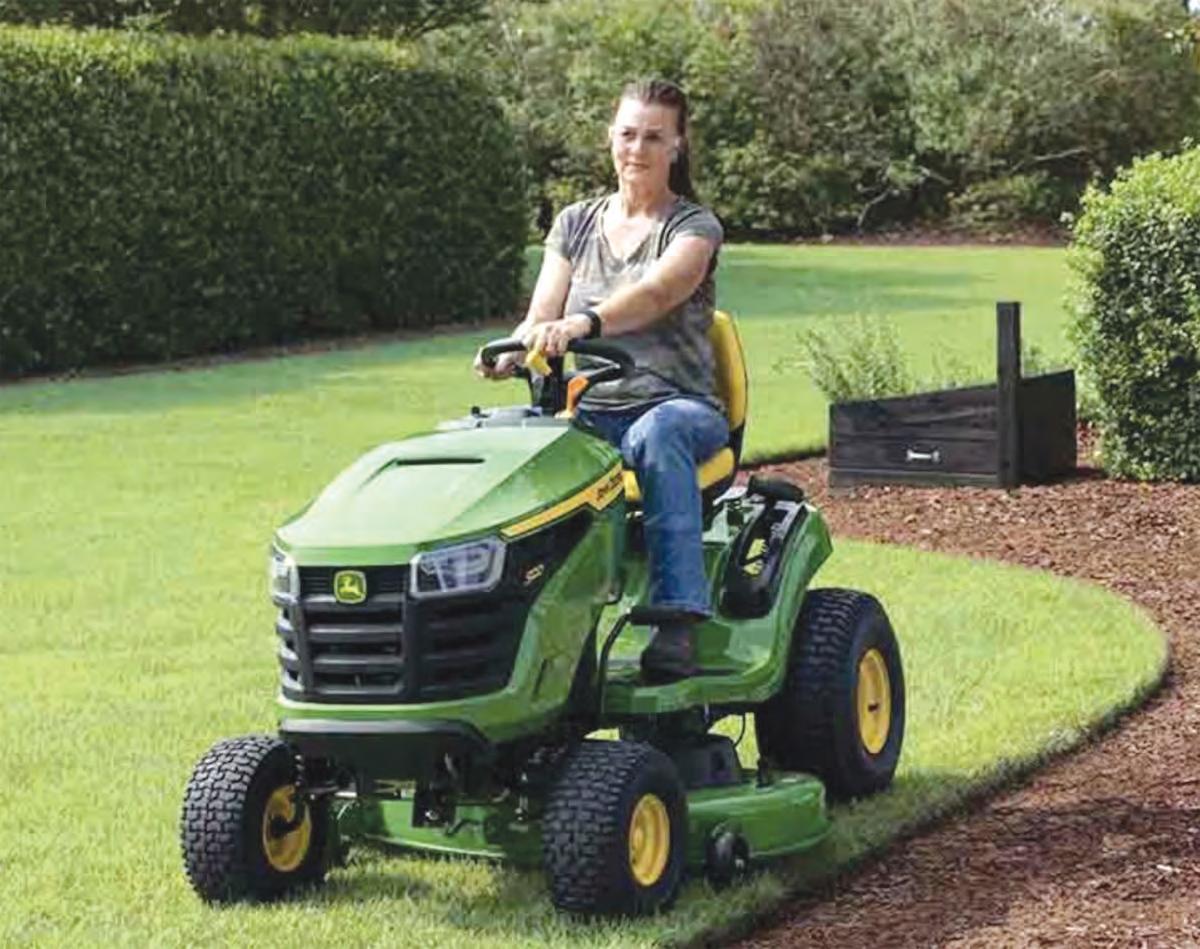

• 22-hp (16.4-kW)* V-Twin Engine
• Hydrostatic Transmission with side-by-side pedals
• Easy Change™ 30-Second Oil Change System
• 22-hp (16.4-kW)* V-Twin Engine
• 42-in. (107-cm) Edge™ Mower Deck
• Electric PTO, hydrostatic transmission with side-by-side pedals
4 • No. 1
By Erik Suchy Contributing Writer
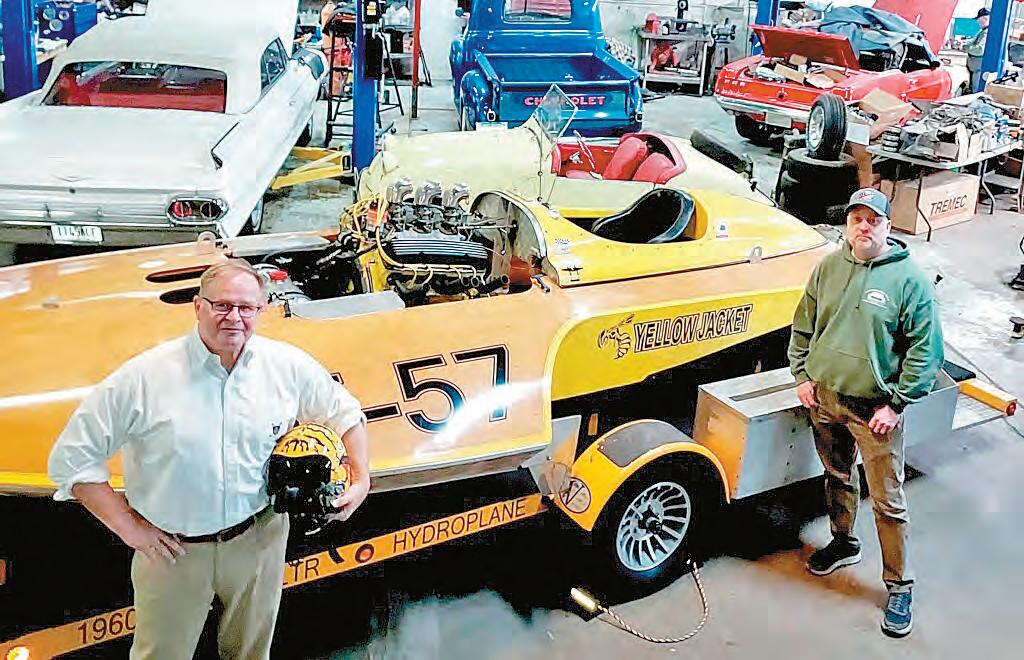
This is a story about one man, his ambition to race and the large hydroplane boat he recently acquired to make that dream a reality. That man is White Bear Lake resident William Ward.
Ward, a lifelong fan of the Yellow Jacket F-57 racing boat, said he was first drawn to it in high school, when he would often sketch designs of it, though he felt it received little exposure over the years. However, his interest piqued again later in life after he joined the American Powerboat Association, the national governing body for powerboat racing in the United States. Then, on a pivotal day, Ward received a phone call that marked the moment his dream began to take shape.
“There was a gentleman in Maryland
who had this type of boat, so I went out, picked it up and drove it back,” Ward said.
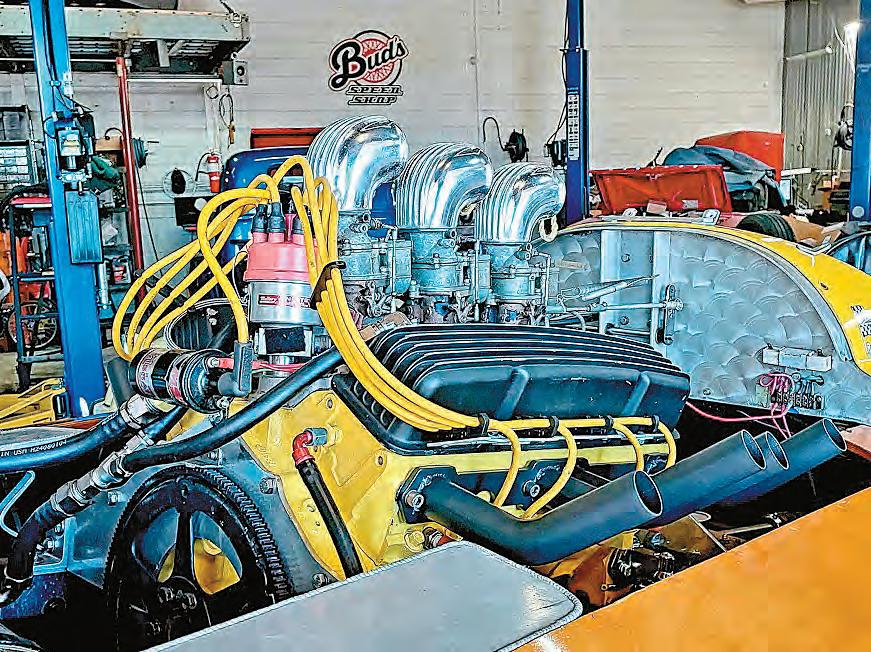
“The trip to get it was a bit of a power trip in itself. The engine was inspected at Side Street Engine Machines in Baldwin, Wisconsin. I’m also replacing some of the paint on the sponsons and have had the exhaust headers ceramic-coated. It’s important to make sure it’s brought up to standards.”
Ward has found that learning how the Yellow Jacket F-57 operates to be just as challenging as finding a place to race it.
Hydroplane racing remains uncommon in the Midwest, he said, and he may need to travel a considerable distance to find competition.
“As far as racing goes, there’s nothing that I’m aware of that exists around here. Most of the boats are concentrated on the West and East coasts. The closest I can think of is Detroit, which has a dense
racing history. I lived there for about 17 years and had no clue until I started reading about all the races that started there after World War I through the 1940s.”
But for Ward, the scarcity of hydroplane boats in the Midwest extends beyond finding races. It has also made it difficult to find someone who can teach him how to operate the craft. He notes that the Yellow Jacket is significantly faster than most recreational boats. Should he be able to find training, Ward said it would likely have to be done through a course at the American Power Boat Association.
“Right now, I don’t have any training, and I don’t expect to be racing, because it just doesn’t exist around here. It’s a challenging boat to drive, because once you get up to 90 to 100 mph, you really have to pay attention. It definitely has a
different feel. Most water-ski boats are just cruising across White Bear Lake, so to start going this fast is a different sensation, especially when you’re so low to the water, which makes your sense of speed magnified.”
So what does the future hold for Ward and his current racing desires? For now, no straightforward answer exists; however, he remains hopeful that he will make his way onto the water eventually.
“I’m looking to honor the boat’s history, keep it 100% mechanically fit and see what happens. This is all new to me, so hopefully my biggest thing is just having people enjoy this boat and its history. If it takes me to races, great; if it just keeps me around here in the Twin Cities, that’s fine, too. The most fun you can have is with the people you meet and learning about the history of these boats or other boats from them.” ◼
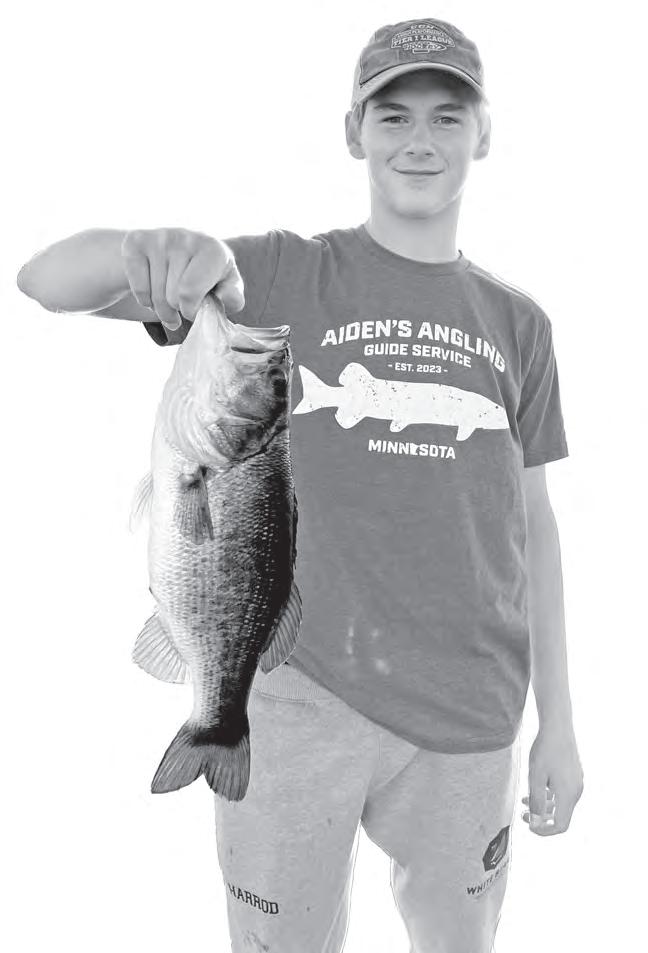
By Aiden Johnson Special to The Laker
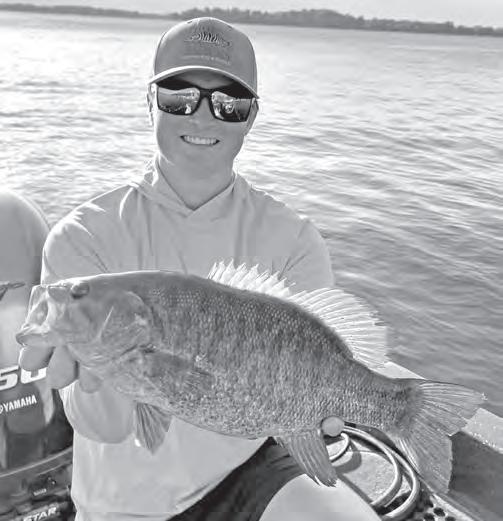
For anglers like me, ice-out on White Bear Lake / Forest Lake means one thing, spring fishing season is here! Unlike years before, this year brings a new sense of excitement to spring fishing, as the Minnesota Department of Natural Resources recently imposed a year-round catch-and-release bass fishing season that will allow for an earlier start to targeting largemouth and smallmouth bass, therefore extending the opportunities anglers have to fish throughout the spring.
I’m Aiden Johnson, owner and operator of Aiden’s Angling Guide Service based out of the East side of the Twin-Cities metro area, and while I typically
Putting the pieces of the puzzle together while dealing with cool water temps and various changing conditions can be tricky while bass fishing in the first couple weeks of the season, but over the years, I have found a few tips and tricks that have helped me to put more fish in the boat every spring. The first piece of advice that I would give to anybody getting out on the lake to fish for the first time this year is to look for early signs of vegetation and weed growth. Oftentimes, these areas can be found in the parts of the lake that are covered with weeds all the way up to the surface of the water in the summertime, or the parts of the lake with the warmest water temperatures (usually shallow North/ North-Eastern bays receiving most of the afternoon sunlight). These areas will attract all sorts of fish, such as baitfish, panfish, walleyes, paired up spawning muskys, and most importantly, bass. Largemouth bass especially will be drawn to these areas as the weedy vegetation provides both the cover that they prefer and easy access to a food source while they
Once you have found a quality weedbed in a warm water area (bonus points if the weeds are vibrant and a bright, lively shade of green), the next step in the process is figuring out how to trigger a bite. Oftentimes, cooler water temperatures in the spring have fish moving in a more lethargic manner and reacting less aggressively to lures as they would during the summertime peak. This doesn’t mean that the fishing will be slow, however, it just means that you need to change the way that you fish in order to adjust.
One of my favorite ways to catch fish in cooler water temperatures is fishing jerkbaits with a long pause in between slack-line pops and pulls. Jerkbaits like a Rapala X-Rap, Shadow Rap Shad, and
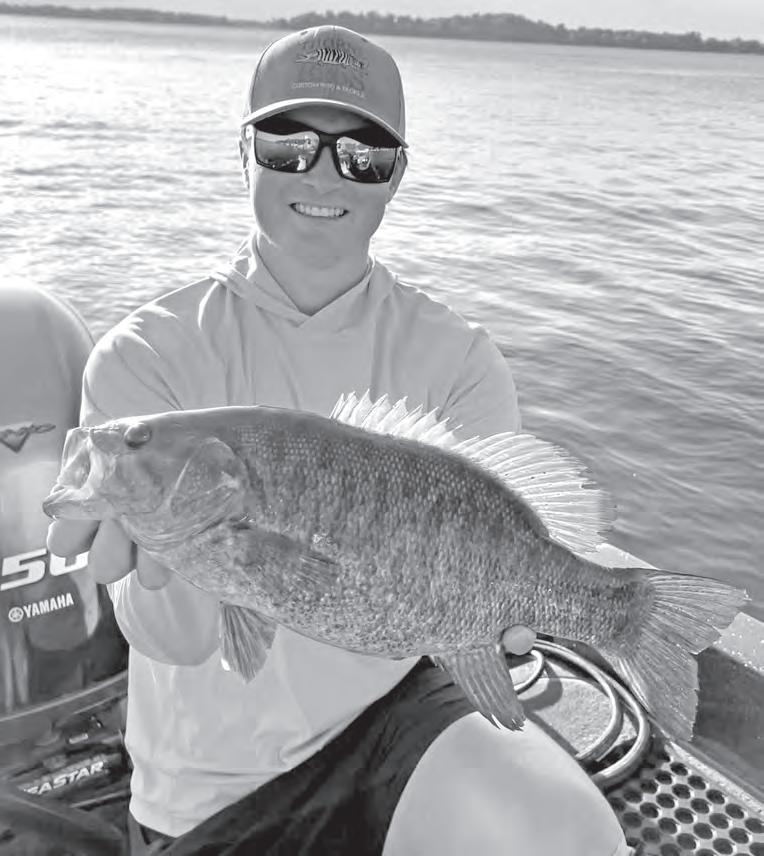
a Jackall Rerange 110 are perfect for accomplishing this style of fishing, as you can work them right over the tops of the weeds and keep them at the right depth while still being sure to maintain that long pause in between each pull. Another technique that works well alongside a jerkbait in the spring is some sort of slower, more finesse soft plastic lure. Ones that have worked well in my boat are ned rigs, wacky rigs and swimbaits. These soft plastic style baits are great for thoroughly breaking down smaller sections of structure and focusing more on spot-on-the-spot style fishing, whereas a moving bait, like a jerkbait, is better at fan casting all over the structure and covering more water.
My last tip that I would give to anyone planning on doing some spring bass fishing on White Bear / Forest Lake this year is to be patient and let the conditions of the lake and the weather dictate your
approach. Early in the season, success oftentimes comes down to continuously checking in on weed growth in different areas, looking for signs of life within the lake (like bait balls and other fish species), and staying confident along the way. Be sure to pay attention to subtle changes like water temperature, wind direction, and sunlight, as these factors can shift fish positioning and fire off certain spots within the day! Spring bass fishing is exciting and oftentimes actionpacked, so whether you’re getting out for a few hours after work or spending a full day on the water, get out there and take advantage of the spring season, because before you know it, summer patterns will take over, and this unique early season bite window will be gone. ◼
Aiden Johnson owns Aiden’s Angling Guide Service, LLC. Visit https:// aidensangling.com for more information.
By Erik Suchy Contributing Writer
The Minnesota Department of Natural Resources works to stock various species of fish in White Bear Lake each year. East Metro Fisheries, whose staff members focus on habitat oversight, management work and monitoring, is responsible for stocking the lake as well as more than 100 miles of rivers and streams across several counties. But just how many different fish are introduced into White Bear Lake each year?
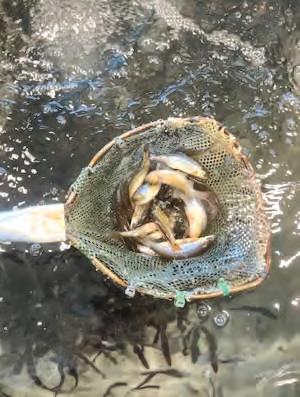
Although fertilized walleye eggs come from the Pike River on Lake Vermilion, they are brought to the St. Paul Hatchery, where they take approximately 2 to 3 weeks to hatch into fry. They are then placed in rearing ponds to grow into fingerlings, a process in which it can take until fall for them to reach full size.
In contrast, fertilized muskie
*Both 2025/26 quotas were stocked in the fall of 2025 due to a surplus of muskies.
eggs come from Lake Rebecca in Hennepin County, which is stocked from a brood strain of muskies in Leech Lake. They are also brought to the St. Paul Hatchery to grow into fry before being taken to rearing ponds, where they grow to full size by autumn. Summer weather changes and pond stocking densities often affect muskie survival rates, among other factors.
“White Bear is one of our bigger lakes,” said TJ DeBates, East Metro Area Fisheries supervisor, “and sometimes we
stock them with fish that the DNR fisheries has raised in one of those rearing ponds. Sometimes, we stock it with private walleyes purchased from aquaculture facilities in west-central Minnesota. But whether it’s from the state or by these private facilities, we generally stock them as fingerlings in the fall.”
DeBates noted that, in contrast to walleye fingerlings, which are typically raised in natural ponds, muskies are raised in drainable ponds. “We feed the muskies a dry diet from late May through the early part of July. When we
stock them in our ponds, we make sure there’s no bass in there to eat the transplants. The ponds are drained at the end of the year, and the fish keep feeding so their growth remains strong through October. The goal is for them to be between 10 and 12 inches long. We don’t fill the ponds again until next year because we don’t want carryover fish to eat the transplants we stock in July.”
Anglers who purchase walleye stamps help cover the cost of privately purchased fish used for additional stocking. Trout stamp sales support trout stocking across the state, though trout are not stocked in White Bear Lake. “Floy” tags can be found on some stocked muskies in White Bear Lake, typically located near the dorsal fin. The tags are yellow and roughly 1 inch long. Anglers who catch a tagged fish should record the tag number, fish size and date,
then report the information online at https://webapps. dnr.state.mn.us/tagged_fish_ reporting.
The DNR is also seeking funding to help repair and upgrade the state’s many hatcheries, including the one in St. Paul, noting that their infrastructure has needed improvements for some time. The St. Paul hatchery was established in 1877 and originally contained seven spring-fed coldwater ponds; today, only two remain in production.
“There’s been a big push on potential bonding money coming to all of our fish hatcheries on a statewide basis, and we’re not really sure how that’s going to play out. We’re still waiting to see if the money’s there to do some maintenance and general upgrades in our hatchery. We definitely have some needs and some areas that need some TLC.” ◼
By Maya Betti Contributing Writer
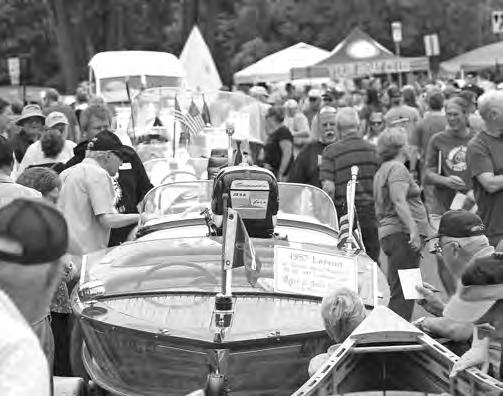
Boat lovers will have plenty to explore at the 19th annual Classic & Vintage Boat Show.
The outdoor event, set for 10 a.m. to 3 p.m. Saturday, June 20, offers free admission and showcases a wide range of boats. Attendees can vote for their favorite vessels in categories including Sailboat, Motorized/ Runabout, Rowboat and a People’s Choice award, while also connecting with fellow boaters from across the region.
For many participants, the White Bear Lake Boat Show marks the unofficial start of boating season.
“It’s the first boat show of the season,” said Pete Johnson, winner of the Rowboat category in 2025, who has been bringing boats to the show for about a decade. “If you have a car, you go to car shows. If you have a boat, you bring it to the boat show. It’s just fun to talk to people.”
This year, Johnson plans to bring a 1926 Larson 14foot runabout, a boat nearing its 100th birthday, which offers visitors a rare glimpse into early recreational boating history.
Lisa and Kevin Westman, who have participated in the vintage show for multiple years, previously won in
the Sailboat category. Their entry was a restored 1955 two-man racing dinghy by Fairey Marine, a Britishdesigned sailboat built using technology developed during World War II. Lisa Westman inherited the boat from her father around three years ago, and the couple just finished a two-year restoration of the boat.
Kevin Westman said the show’s outdoor setting and its connection to White Bear Lake’s sailing history keep drawing him back.
“I learned how to sail on White Bear Lake,” he said. “It’s always fun coming back. It’s a nice show — all outside, and it’s a good show.”
Beyond the boats themselves, community groups will once again play a visible role at the event. The U.S. Coast Guard Auxiliary, Division 11, plans to return after a successful appearance last year, where its patrol vessel, Voyageur, became a popular attraction.
“I was completely overwhelmed by how well we were accepted,” said Jim McCarthy, a Division 11 member.
“So many people were enthused by meeting us. They were like, ‘Oh, well, I never knew you guys even existed, what do you guys do?’” he said.
The Auxiliary focuses on boating safety education, free vessel safety checks and public outreach, and McCarthy said events like the boat show are a valuable way to connect with boaters ahead of the busy summer season.
“We want people to know we’re there for them,” he said. “If they have questions about safety or inspections, we want them to walk away with answers.”
Boat owners who are interested in displaying their vessels can register for free at presspubs.com/ boatshow. The event will take place at the White Bear Shopping Center, 4391 Lake Avenue S., White Bear Lake. ◼



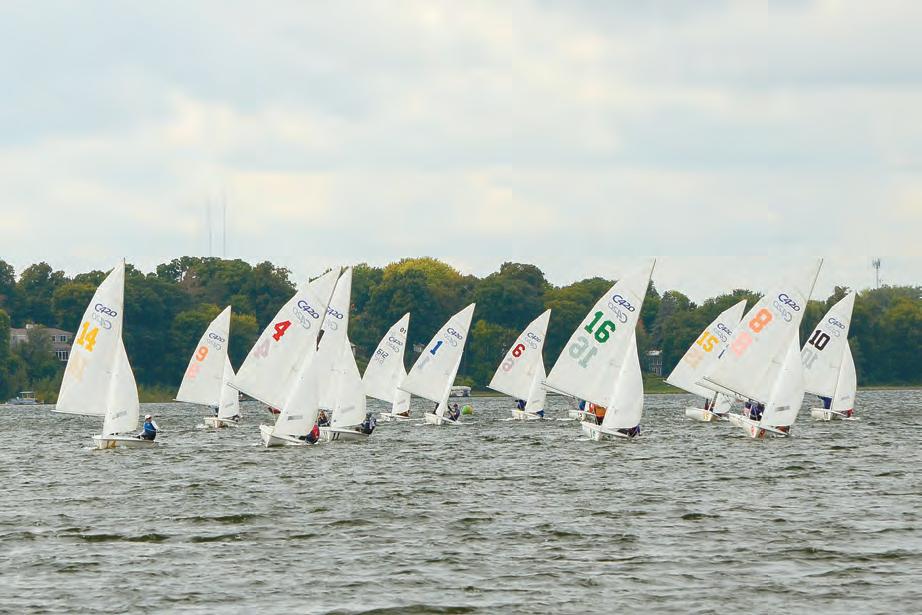
White Bear Sailing School offers programs for all ages including programs for adults. Their scholastic race program (grades 7-12) draws from local schools and races C420s, Optimists, and Lasers. Their season culminates in the infamous Art Johnson Classic, a town favorite for spectators.
• Scholastic Spring Conference, Grades 7-12, May 2
• TCYS Manitou Days Race, Grades 5-12, June 26
• Art Johnson Classic, Grades 7-12, October 10-11
The White Bear Yacht Club focuses on scows, catamarans, and M15 dinghies, with weekly races for various boat classes. You can find a race almost any night of the week and on weekends. A highlight is the
Driscoll Memorial Race, racing A Scows in memory of Fletcher Driscoll, on September 13 and 20.
The Black Bear Yacht Racing Association primarily races keel boats on Tuesdays nights and Saturdays.
The Ordway Classic is an annual race that welcomes all boats and sailors of all levels around the 4th of July weekend.
White Bear Lake has a rich sailing history with many opportunities to learn and grow. Here are some ways to watch or participate in sailing on the lake. For more information or if you're interested in learning to sail or race, contact Jill Lein at jilllein@gmail.com. ◼
Bryan DeSmet

I wanted to help with the management of White Bear Lake, and to work on conservation efforts to keep the lake healthy. I would like to continue working on lake water quality issues. I’m a civil engineer specializing in water and wastewater consulting work. I was first appointed to the board in June 2012. I represent White Bear Township. I’m a grandparent, and I love spending time with my grandchildren.
Meredith Walburg

I grew up on Bourbon Bay, lived on the south shore of White Bear Lake and now live in Dellwood. This lake has provided countless hours of enjoyment in my life and I have a deep desire to protect it. It has been my pleasure to represent the city of Dellwood on the WBLCD Board for the last four years. My primary focus has been improving communication between the board, watershed residents and lake users. Protecting WBL for future generations depends on a well-informed and engaged community working together. Outside my volunteer work for the board, I’m an avid lake user, golfer, tennis player and downhill skier.
Mike Parenteau
I’ve represented White Bear Lake as a board member for many years, and was first appointed in 2004. I was born and raised in White Bear Lake and had my business here. I enjoy the lake and being on the conservation district board is my way of giving back to my community. I have always had a commitment to help the lake clean and safe for all to use. Currently, I am the WBLCD treasurer, and chair the Lake Quality Committee. In the past, I’ve served on the city of White Bear Lake City Council.

Diane Longville I joined the board because I firmly believe in the District’s mission to preserve and protect the lake for present and future generations. I want to safeguard the lake’s ‘A’ water quality rating and keep it safe for all users. It’s about following DNR and WBLCD rules. I’ve been on the board representing White Bear Township since 1989. The lake has always been an integral part of my experiences and we never want to take it for granted.
Mark Ganz
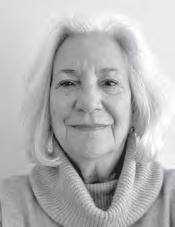
Mark Wisniewski
I think White Bear Lake is an amazing resource for the communities that surround it and for the greater region. Our family has enjoyed the lake immensely over the last 20 years for swimming, boating, sailing, paddling, fishing, skiing, waterskiing and just enjoying sunrises and sunsets.

I was motivated to join the WBLCD Board because I love this lake, and want to serve the community. I want to emphasize lake etiquette that’s centered on safety and respecting shared space. The other thing is maintaining the lake’s good water quality. We need to remind people that what you put on your yard goes into the lake. I’ve been a director representing Mahtomedi for 17 years.

I hope I can contribute, with the rest of the board, to sustainably managing White Bear. I’ve been a Dellwood representative to the WBLCD Board since 2023.
I have worked in the medical device industry for most of my career, I enjoy trying to keep up with my kids and all their activities, and I hope to waterski on White Bear Lake as many days as possible!
Shari SalzmanHankins

hockey on the lakes and outdoor rinks. I was able to play high school hockey for White Bear Lake, college hockey for the University of Minnesota, and professional hockey for the Minnesota Wild. Post retirement, I’ve been selling youth sports software and coaching hockey. My wife Rachel and I raised three boys who also learned to respect and cherish the gem of our city, the lake.
I joined the WBLCD to ensure a common sense and conservative approach is employed when legislation is considered in the rules and regulations of the WBLCD. That common sense pervaded my youth experience on the lake, an education provided by both my father and grandfather Rollie Bonin (VFW Post 1782). The lake is for both private and public use and I’m excited to share my 50 years of experiencing this relationship in conserving White Bear Lake for future generations.
Shelley Dropkin


Chris Churchill I joined the White Bear Lake Conservation District Board in 2021 as a way to give back to a community and lake that have been a big part of my life. White Bear Lake is a special place for so many of us, and I wanted to do my part to help take care of it and preserve it for future generations. As a director, I focus on helping maintain a balance on the lake—making sure it remains a place people can enjoy while also protecting its health and natural beauty. It’s important to me that we find practical, common-sense approaches that work for the entire community.
I represent Mahtomedi and appreciate the opportunity to serve both my city and the broader lake area. Outside of board service, I enjoy spending time on the water fishing and coaching youth lacrosse, which keeps me connected to both the lake and the next generation growing up around it.
After living on the lake for eight years, I decided I wanted to be more involved in preserving it for future generations. It's a great way to serve the community. I hope that I can make a difference and bring changes to how the lake is utilized and protected. Everyone deserves a chance to enjoy the lake. I encourage residents living within the watershed to consider what small change they can make to keep the lake healthy. I’ve represented Birchwood Village as a board member for 1.5 years.
I enjoy reading, hiking, biking around the lake, and cheering on the Minnesota Twins and Minnesota United!
Brian Bonin
I’m a lifelong resident of White Bear Lake (1973). I grew up swimming at our public docks and beaches and I cherish my memories of fishing, paddling in a rowboat. My father, Phil Bonin, was a member of the WBLCD and I joined him many times (spring and fall) to drop and pull the lake buoys. As a child, I skated the lakes and played
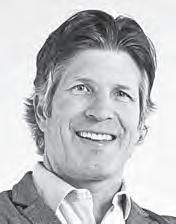
Having grown up around lakes all my life, I am very committed to their long-term health and well-being. My family had a cottage on Keuka Lake, part of the Finger Lakes Region outside of Rochester, New York. After moving to the Boston area for graduate school, I met my husband, and we raised our two sons along the shores of Great Pond at the Crystal Spring Camps in the Belgrade Lakes Region of Maine, north of Augusta. I have served on the Crystal Springs board for the past 20 years and was the lead facilitator in gaining the first LakeSmart Association Approval for our association. We have recently moved to White Bear Lake and love the atmosphere and overall environment in and around the Lake.
This is my first year as a board director and represent Birchwood Village. I want to support and foster whatever efforts are deemed appropriate and needed to ensure the long-term health and well-being of White Bear Lake.
In addition to serving on the Crystal Spring Camp Association Board, I am President of the Bonnie Spielers Curling Club, one of the women's curling organizations as part of the Saint Paul Curling Club. ◼
Bridget Cavanagh, Member at Large

Bridget Cavanagh has been a resident on Bald Eagle Lake for 11 years. She been volunteering with the BEAA Silent Auction Committee for the past three years and joined the board as member at large last fall when her daughter left for college. Bridget has enjoyed working with the Silent Auction Committee and the White Bear Lake community businesses supporting our Association. Bridget is originally from the Quad Cities in Illinois, but has lived in the Twin Cities since she graduated from college. Bridget works at Medtronic as an implant procedure development engineer, so the lake allows her to relax after a busy day. Grace, her daughter, is an angler. Together they like to findwhere the bass are biting and reel in the fish. Bridget favorite part of Bald Eagle Lake is to take things slow, either on her pontoon or stand-up paddleboard when she goes out with family, friends and her dog, Lola.
Katie Philippi, Secretary

Katie Philippi has lived on Bald Eagle Lake for the past five years. Her family enjoys the lake year-round— whether its surfing, paddleboarding, pontooning, walking, snowmobiling, ice skating or snowshoeing with neighbors, friends and visiting family. It’s a place full of activity, connection and relaxation—a true retreat for many. Family, community and the environment are deeply important to her. She works full-time, and even though her kids are grown, they love coming back to visit and spend time on the lake. She joined the lake association to be an active part of this wonderful community and to help foster a space where neighbors can interact and come together to care for the lake we all value.
Allison Drusch, Member at Large Allison along with her family, husband Doug, daughters Ivory and Tatum and golden-doodle Stella, have lived on Bald Eagle Lake for 10 years. The Drusch family loves their lake home for the breathtaking sunset views, quiet lake walks, ice skating in winter and boat cruising or
practicing standup paddleboard yoga with the LifeCore yogis in the Summer. Allison joined BEAA to continue the great traditions of our lake community, like Music on the Lake, and to support fundraising efforts to preserve water quality.
Brad Mason, Member at Large
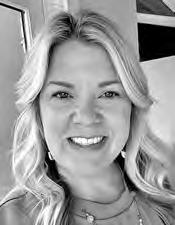
neighbors returning things that float away in a storm, hooking pontoons together to visit on a warm afternoon, and simply looking out for one another. In every season, you'll find her paddleboarding, snowshoeing, walking, or out on the water with friends and family. She and her husband Quinn are parents to two adult children, Claire and Barrett, with Bella proudly filling the role of lake dog.
Chris Harding, Vice President

Brad Mason - a lifelong White Bear Lake local and proud BEAA Board member since 2023. His family moved to Bald Eagle in 2018, drawn to the lake and everything it has to offer! Whether it’s an early kayak paddle, ski run or pontoon ride to wind down the day, He is passionate about keeping our lake clean, healthy and thriving for generations to come!
Katie Haskins, Treasurer Elect

Katie Haskins joined the Bald Eagle Area Association Board as treasurer in October 2024, eager to leverage her skills as a CPA for community involvement and to assist the non-profit. She particularly appreciates the vibrant, positive energy of the lake community, whether it's through activities like waterskiing and paddleboarding or simply relaxing on a pontoon.
Janel Woods, Member at Large
Janel has called Bald Eagle Lake home since 2022, and from her very first day on the water, she fell in love. That love is what brought her to the Bald Eagle Area Association board. She's inspired by the work past boards have done to improve the lake and hopes to contribute to carrying that forward. What she values most is the sense of community—

(Maya, Elyn and Zoey), along with their dog (Ozzy) who has the swimming ability of a bowling ball.
Cory Huberty, President

Chris Harding has called Bald Eagle "home" since 2019. Over the past years Chris has grown to love the new friends he has met on the lake and wanted to find a way to contribute to the health of and also grow community engagement to the benefit of Bald Eagle Lake. He has found that purpose on the BEAA board and hopes to be a positive influence on the lake for years to come. Chris spends his time on the lake with his wife Jill, their three daughters
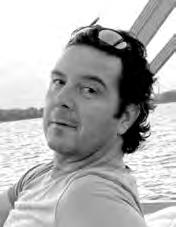
Cory has lived on the shores of Bald Eagle Lake for 24 years. He loves to watch the sailing races every Saturday and Sunday. He grew to know Bald Eagle and what a treasure it is when he met his wife out on Bald Eagle Lake. Cory’s wife Keely, has lived on Bald Eagle for 39 years. They have two boys (Alex and Nico) and their two dogs (Lolli and Ginger) were featured as the Labradoodles of Bald Eagle in The Laker. Being on Bald Eagle Lake means family time for the Hubertys. It is where they go to spend time together, whether it is on the pontoon, playing hockey or just enjoying a sunset. Making sure Bald Eagle is a healthy, beautiful lake is very important to Cory. ◼
The name “Wildwood Bay” could have been derived from two sources, according to Dan Jones of the White Bear Lake Historical Society.
The bay’s name might come from when the western 12 sections of Grant Township were purchased by the Wildwood Park Association (aka Company) who then sold the land for development over the next 40 years. These sections bordered the lake.
However, Jones says the bay was most likely named after Wildwood Amusement Park that opened in 1889 after the land was purchased from the Wildwood Park Association.
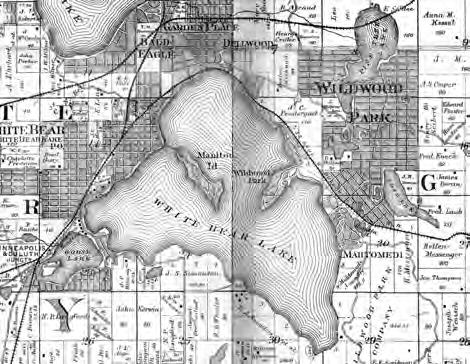
WBL Historical Society | Contributed
“There is no official documentation,” Jones said.
Sara Markoe Hanson from the White Bear Lake Historical Society said that during the heyday of the resort era between 1870 and 1910, ferry boats
ran almost like a bus line to popular stops on the lake, like Wildwood Amusement Park.
“They weren't just for fun,” she said. “They were part of the lake transportation system,” she noted. ◼
on the water is limited. Don’t waste a single weekend. Experience precision of a Nautique and the local expertise of MarineMax Minnesota. MarineMax to explore the 2026 lineup.