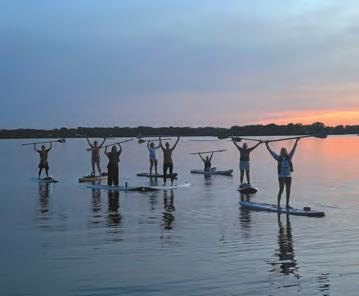
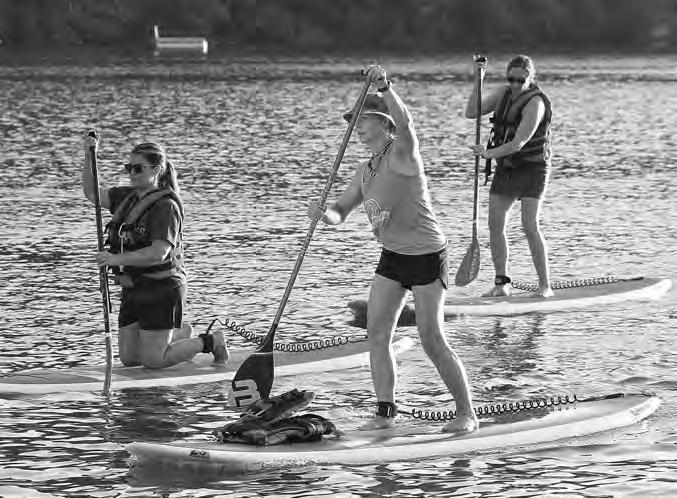
Members of the Bald Eagle Paddle Board Club (aka SUP'er Club) take a twilight paddleboard tour on Bald Eagle Lake.
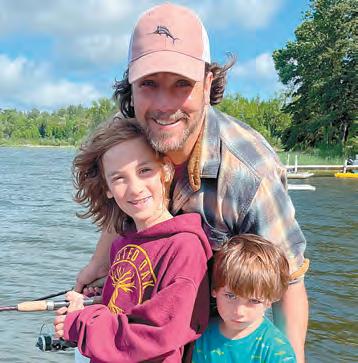
Ben celebrated Father's Day with his children Oliver and Charlies on the lake.
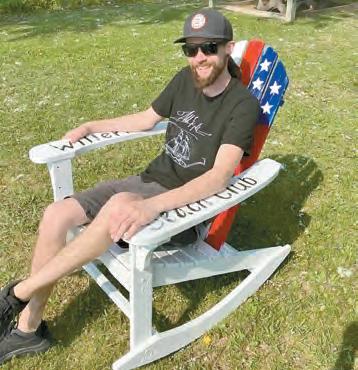
Grant Murray tests out the Willernie Beach Chair, back for another year and America’s 250 Anniversary at Willernie Beach. The chair had washed up on shore and was found five years ago.
The Cargo Manifest
PORT OF CALL
LAKE DOG
Lake season is here
Welcome to the busiest part of summer on the water. As we gear up for the Fourth fireworks and a long holiday weekend, our crew at THE LAKER is excited to give you a packed summer issue delivered directly to lakeshore property owners, deeded access and dock association homes, and dozens of newsstands where nautical people gather.
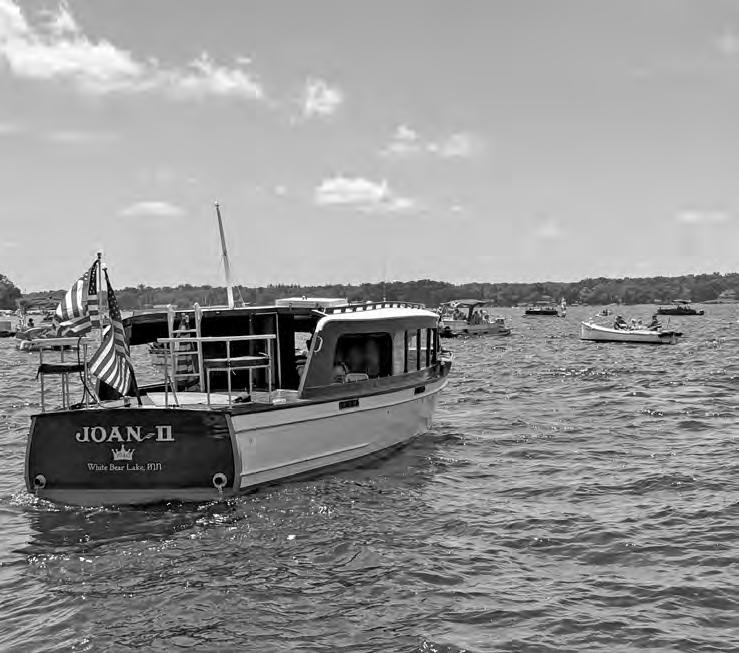
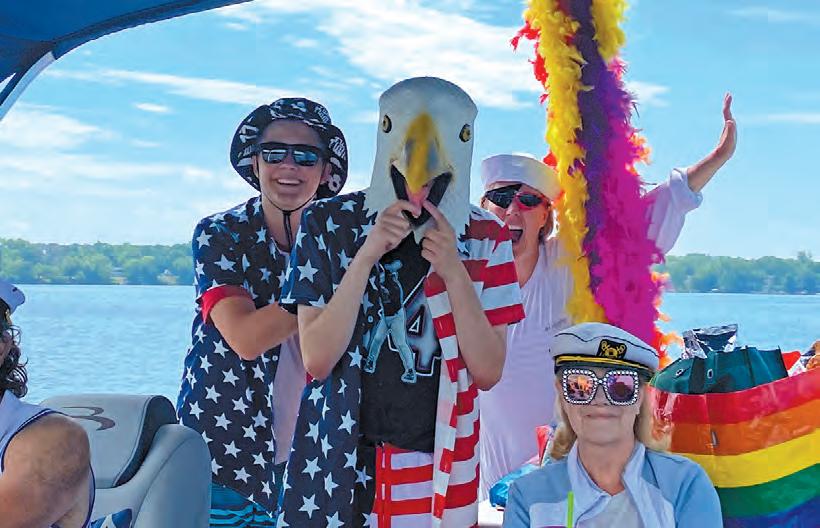
Inside this issue, you’ll find all things Fourth of July, from the annual boat parades on White Bear Lake and Bald Eagle Lake as well as the Manitou Days Fireworks.
You will learn about the slalom courses on both lakes and meet a bow fisherman named Joe Caminati and a lake dog named Otter.
History buffs will want to check out the story about a 19th-century boat rental business known as Chas. Millette Boats for Rent that was located in what is now Matoska Park.
In the mood for music? Several events are planned, including Music on the Lake on Bald Eagle, Birchwood Music in the Park at Tighe-Schmitz Park and Music by the Water at Tally’s Dockside. Check out our calendar section for more information.
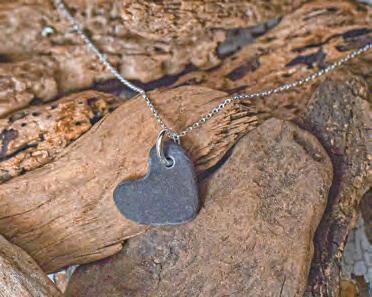
Lake lovers can also learn more about a new mobile sauna business called NÓRDHAVEN as well as Alyssa Boldischar, founder of Opal + Birch, who creates works of art inspired by the natural world around White Bear Lake and the Minnesotan landscape.
In this issue you will also find information from the Ramsey County Sherriff’s Office, White Bear Lake Conservation District as well as lake maps of White Bear Lake and Bald Eagle Lake.
Before you dock your reading glasses, make sure to let us know what you think about THE LAKER. Email whitebearnews@ presspubs.com. From our crew to your crew, we hope you agree the newest summer essential is THE LAKER.
THE LAKER Staff
LAKER will return September 2026.
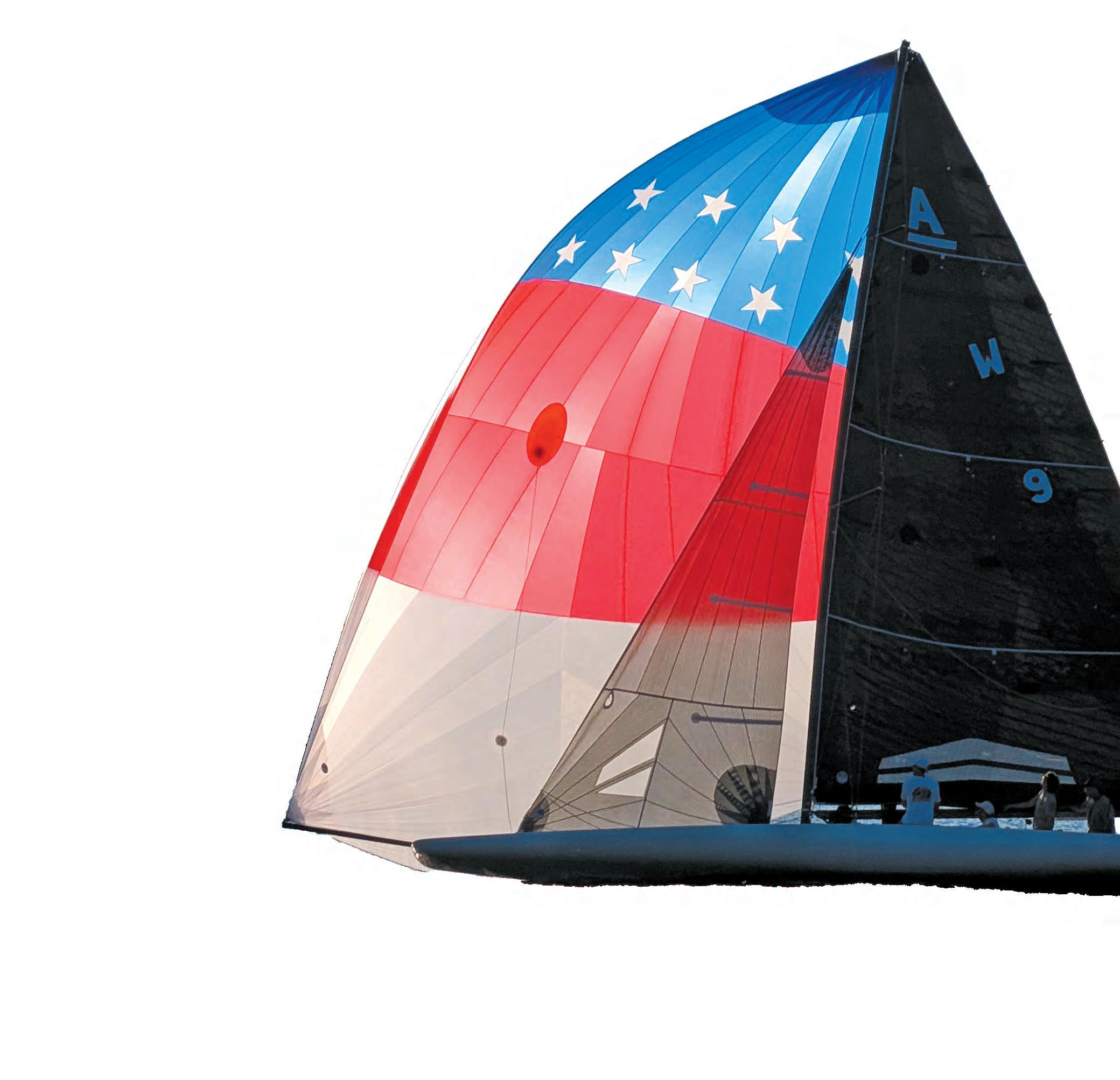
Cover photo by Raye Taylor | Contributed
GREEN BUOYS MARK BEGINNERS’ SLALOM COURSE
By Debra Neutkens Contributing Writer
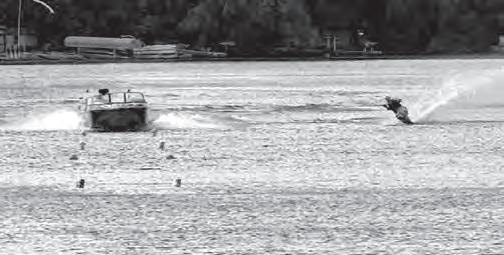
Newbies to slalom skiing, or those who prefer something a little less strenuous, can test their skills on color-coded buoys set on the same course the regulars use. Just look for the green ones.
“It’s all the same course, but there are green buoys set 10 feet in for seniors and beginners,” explained John Redpath, who has been slalom skiing on White Bear Lake for 30 years. “The skier doesn’t have to get as far outside the wake (with the green buoys).”
The group of water-ski enthusiasts who maintain and move the slalom setup every few weeks decided to add the easier course two summers ago. “We want to get more kids and more people interested,” Redpath said. “Some of us guys are getting older, too, and can have success going to the green buoys.”
Skiers using the course range in age from 8 to 88, according to Redpath. He’s one of three regulars, along with his son-in-law Mike Auge and Joe Allaben, who move the course throughout the season
lake every summer since 1954. It has been surveyed to American Water Ski Association specifications and is used primarily by members of the club but is open to the general public.
as required by the Lake Conservation District. There are two portable courses on the lake at one time. The redundancy is to ensure calm water in at least one area.
A district stipulation is the buoys must be moved every three weeks to new spots on the lake with some leniency for weather and availability of volunteers.
The twin courses, anchored with PVC pipe, are relocated to avoid homeowners getting perturbed at the noise and activity as early as 7 a.m. or any other time of the day.
The fact Redpath has been installing the course for three decades means he’s settled on six areas of the lake to move it during ski season. “It has become a social science on where to put it in and when,” he said. “All six have surrounding neighborhoods that enjoy the fact it’s there. The few complaints over the last 10 years are people asking ‘why it’s leaving’ and ‘when is it coming back?’”
If someone is trying to fish near the course, skiers stay out, Redpath added. “Our motto is ‘don’t get anyone upset.’ We want to promote waterskiing and be good neighbors.”
Everyone is welcome to use the course, he said. “The level of skiing doesn’t matter.” Redpath also wants to warn boaters to stay away from the buoys and the lines connecting them to avoid getting tangled. ◼
Sheriff’s office shares lifesaving tips for summer
Ramsey County has more than 100 lakes, thousands of wetlands and nearly 150 miles of rivers in streams.
But there are only about three months of summer, which is so many people spend so much time in boats, on the water, sinking lures, staying up on skies and soaking up sunshine.
With boating season in full swing, the Ramsey County Sheriff’s Office wants to share some important information — information that just might save a life:
• Personal Floatation Devices (PFDs) are mandatory on all
watercraft (boats, sailboats, personal watercraft, kayaks of any length, paddleboards, etc.).
• Drinking alcohol and boating is a bad mix. Make sure you have a designated operator if you’re out there and you’re drinking on the boat.
• The DNR has changed the boatlicense requirements. On July 1, 2026, anyone born after June 30, 2000 will need a boat license.
“Warm weather is finally here,” said Commander Mike Servatka, who runs the Sheriff’s Office Water Patrol Unit. “Making sure you’re aware of the regulations and boater education requirements keeps yourself and others on the lake safe.” Servatka encourages anyone with questions to contact the Water Patrol office by emailing RCWaterPatrol@ ramseycountymn.gov or calling 651-2667352. ◼
Photos Contributed
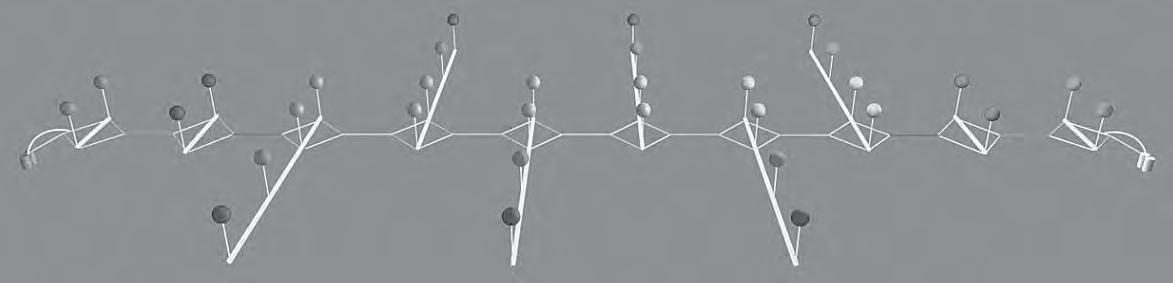
The course diagram shows the green pre-gates for the boat to line up straight when entering the course, as well as the green novice skier buoys.
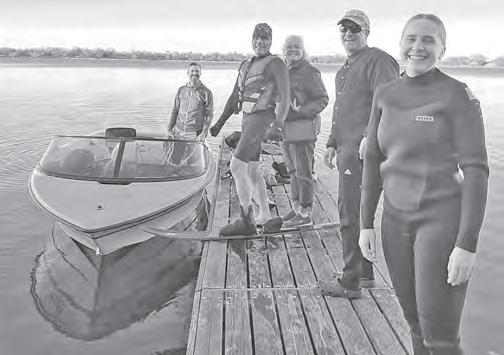
Todd Stanhope, John Redpath and his wife Victoria, Mark Wisniewski and Carley Pakonen prepare for the polar bear ski last November. A trophy goes to the last person to ski before the lake freezes. The 2025 award went to Mark Wisniewski on Nov. 23.
The Bald Eagle Water Club has maintained a slalom course on the west shore of the
Minnesota Boating Safety: Essential Guide for White Bear Lake (WBL)
Navigating WBL requires adherence to both Minnesota state laws and specific ordinances set by the White Bear Lake Conservation District (WBLCD). Whether you are a local resident or a visitor, following these rules ensures a safe environment for swimmers, boaters, and the lake's ecosystem.
Key Speed Limits & Proximity Rules
WBL has strict speed regulations to manage its high traffic and protect shorelines.
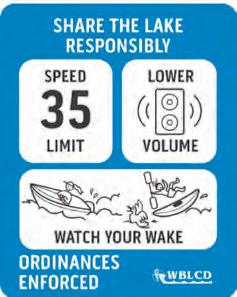
• Daytime Maximum Speed: The maximum speed limit on the lake is 35 mph
• Nighttime/Sunset Limits: Speed must be reduced to 10 mph from sunset until 7:00 am.
• No Wake Zones: You must maintain a "Slow-No Wake" speed (under 5 mph) in the following areas:
• Within 150 feet of the shore, docks, or swimmers.
• Within 200–300 feet of the shore in designated "shore zones."
• Around all boat launches and public swimming areas.
• Safe Distance: Boats and skiers must stay at least 100 feet away from other boats, rafts, and persons in the water.
Mandatory Safety Equipment
Every vessel must be equipped with specific safety gear as mandated by the Minnesota DNR
Requirement
One wearable USCG-approved PFD for every person on board. Must be readily accessible and the correct size.
Children under age 10 must wear a life jacket at all times while the boat is underway.
Boats 16 feet or longer (except canoes/kayaks) must have one Type IV throwable cushion or ring.
Required on all motorboats; typically, at least one B-I extinguisher for vessels under 26 feet.
Vessels 16 feet or longer must have a whistle or horn audible for at least half a mile.
Must be displayed from sunset to sunrise and during periods of low visibility.
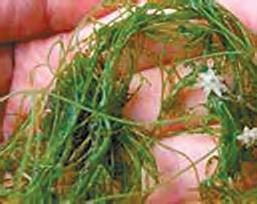
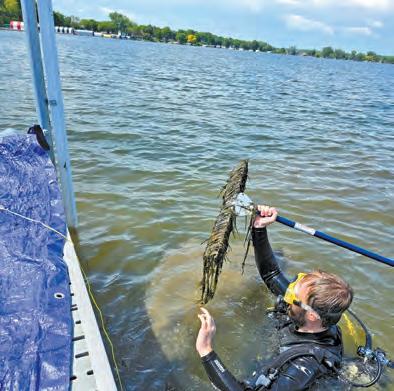
Check the area around your dock or boat launch for Starry Stonewort.
Please send us a photo if you see anything suspicious.
Use the checklist if you plan to rent your boat.
boating busy season. Remember the boating safety reminders.
Watercraft Rental Compliance Checklist for WBL
This checklist is a compilation of the statutes, ordinances and regulations in place to regulate boat rentals. The WBLCD has seen increasing boat rentals from individuals and companies not associated with the commercial marinas on WBL. We have created this list to make the process clearer, more responsible and safer for everyone involved.
Minnesota DNR requires: Registration
• Registration card with rental company name
• Numbering on both sides of the watercraft
• All renters must present boater’s license or have completed a MN Watercraft rental course in the last 180 days
• Age restrictions: You must be 18 years old or older to rent a boat or personal watercraft (PWC)
• PWC MN Rules Sticker needs to be posted on PWC and rules/laws need to be provided to renter
• Lake Service Provider permit
State of Minnesota Statute requires:
• Carbon monoxide detector and warning stickers for boats with enclosed compartments that a person may enter Suitable number of wearable personal
Check, Snap and Send us a photo if you think you see Starry Stonewort.
flotation device (PFD) for adults and children readily accessible. All children under age 10 must wear PFD.
• Throwable PFD that is immediately available, not stored
• Whistle/working horn
• Navigation lights
• Fire extinguisher- for boats less than 26 ft: 1 size BI extinguisher, Boats 26-40 feet: 2 size BI or 1 size BII
• Ventilation/blower Muffler
• If you have a marine toilet you must have a tank for storage, no discharge
• Watercraft in good overall condition
White Bear Lake Conservation District requires:
• A permit is required for any persons or companies renting out a PWC (WBLCD Ordinance 9).
• The permit application for PWCs (Form 9), and a list of all other WBLCD ordinances, is available at wblcd.org.
Washington and Ramsey Counties require:
• Inspection of boat by local county sheriff (must have Lake Service Provider Permit from the MN DNR before this step). The sheriff will look to see if all the items required by MN Statute are present on the rental watercraft.
CONNECT:
Follow us on Facebook, Instagram or check out our website Website: wblcd.org Facebook: “WBLCD” www.facebook.com/ WhiteBearLakeConservationDistrict
Instagram: WBL Conservation District
YouTube: WBL Conservation District
Click on the 'Live' tab
New E-Mail: wblcd25@gmail.com
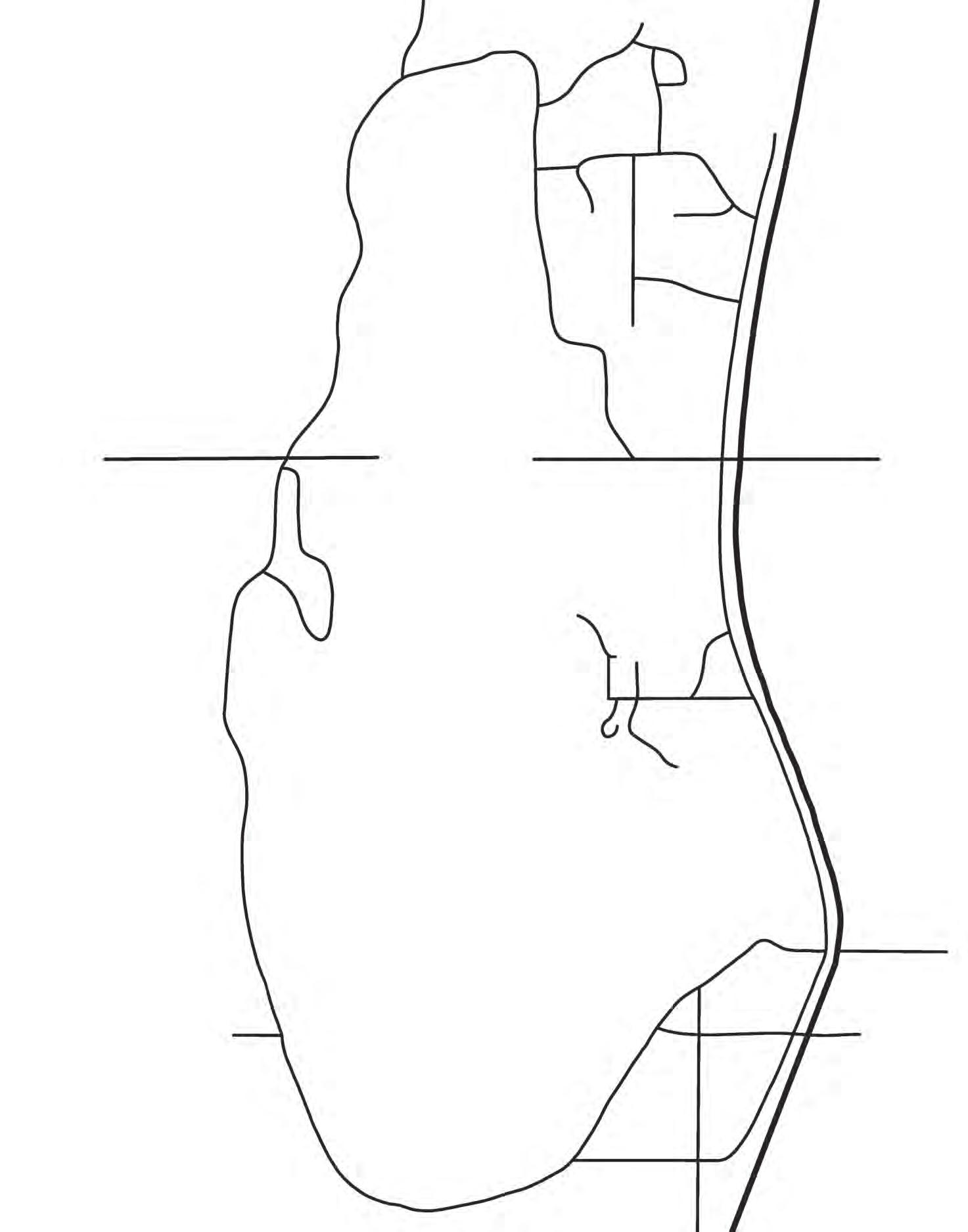
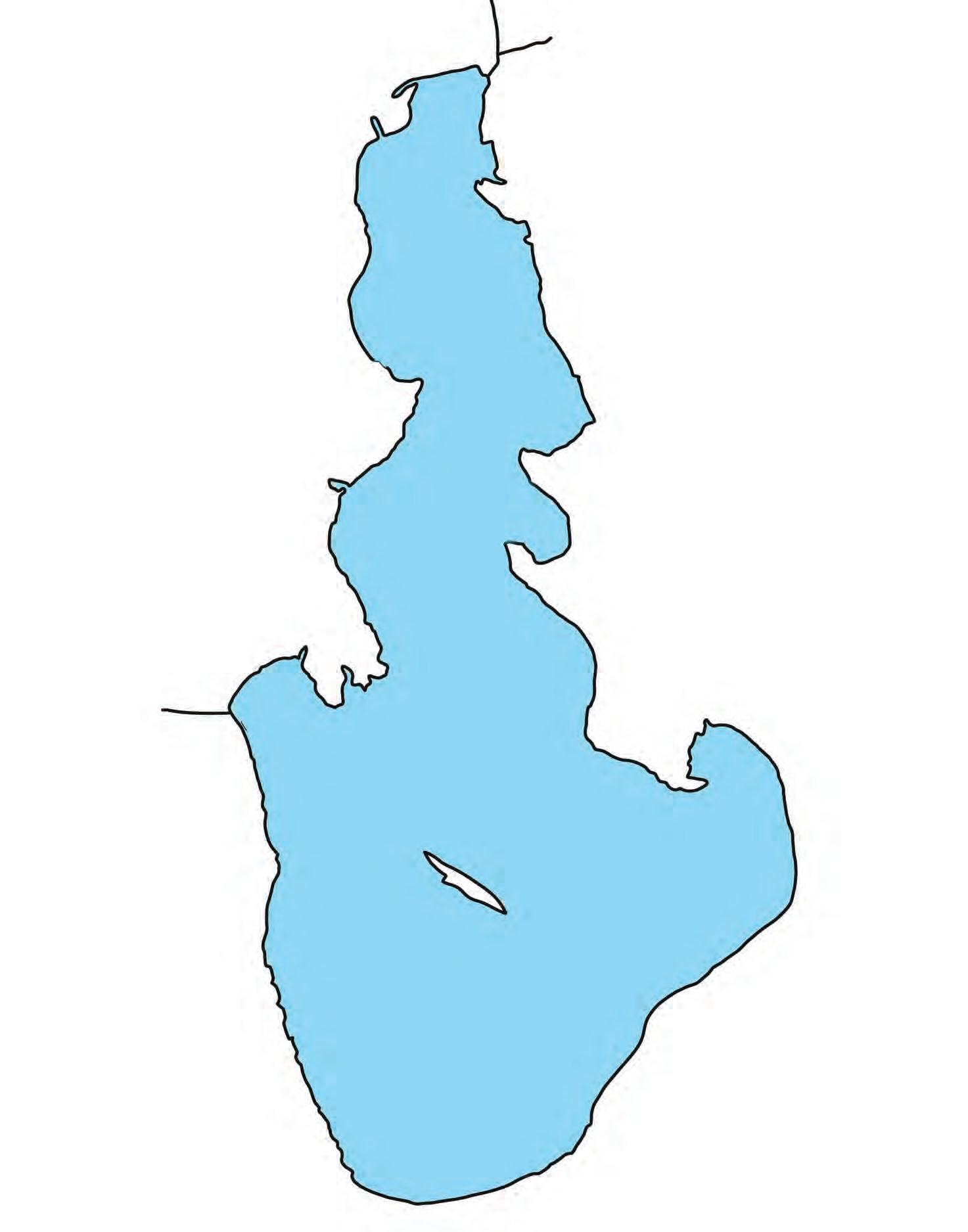
Bald Eagle Lake
Water area: 1049 acres
Total shoreline: 9.23 miles
Mean depth: 13.3 feet
Maximum depth: 36 feet
Emergent vegetation
MapbyWilliamPeter
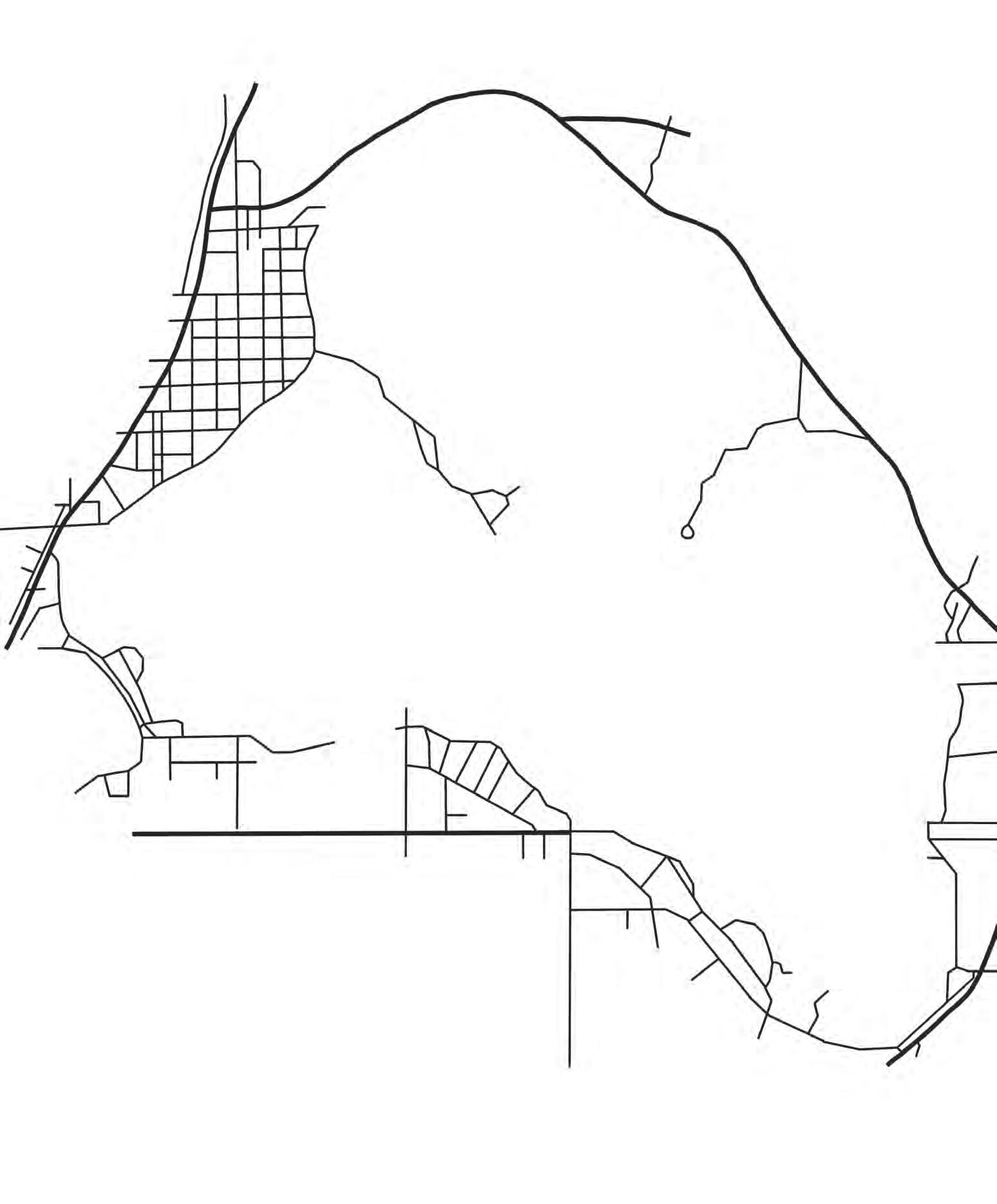
Water area: 2427.71 acres
Total shoreline: 13.57 miles
Mean depth: 20 feet
Maximum depth: 83 feet
Channel
Channel
LakeAve.
ShadyLn
MapbyWilliamPeter
TIPS AND TRICKS TO HELP YOUR LAKE’S ECOSYSTEM
Get to know your lake
First and foremost, take some time to learn about your lake and the types of plant life that already exists in it. While beautiful in their own way, many plants are actually invasive to Minnesota waters. Some of these include:
• Flowering Rush
• Curly-Leaf
• Purple Loosestrife
• Eurasian Watermilfoil
It’s also important to always clean off your equipment before leaving a body of water. This also helps to reduce the risk of transferring invasive species that can harm your lake’s natural ecosystem. It’s a delicate balance!
What exactly is algae?
We’ve all heard of it - but most people don’t know much about it. Algae is a type of photosynthetic, aquatic, multi-cellular plant-like organism. It thrives in open water and converts sunlight into energy to help it grow. Additionally, algae loves excess nitrogen. If you find that your shoreline has large amounts of algae, try to minimize any grass clipping and other foliage that may fall in the water. This adds nitrogen into the habitat and promotes excessive algae growth.
Another way to minimize algae growth is to avoid having stale/stagnant water. By removing excess underwater weeds, the water can flow more naturally. Moving water = less algae!
For more information, visit ruthlesslakefrontrehabilitations.com ◼
LAKER CALENDAR
ONGOING EVENTS
Birchwood Music in the Park
When: 6-7:30 p.m. Sundays, June through August
Where: Tighe-Schmitz Park, Birchwood
Details: All are welcome to bring a lawn chair or blanket, picnic and beverage and listen to a different performance each week.
Contact: cityofbirchwood.com
Midwest Ski Otters Shows
When: 6 p.m. Sundays through end of August
Where: Little Goose Lake, 4150 Hoffman Road, White Bear Lake
Details: Get ready to power down the screens and power up the imagination! This year’s show takes you inside the whimsical world of The Otter Box Toy Company, where the mission is simple: bring back the “real action” and ensure no toy is left behind.
Contact: skiotter.com/contact
Mahtomedi Area Farmers Market
When: 8 a.m.-12 p.m. Saturdays
Where: Veterans Memorial Park, 93 Mahtomedi Ave.
Details: Local growers, nonprofits, vendors and artisans to come together and celebrate the community, offering fresh produce, honey, artisan breads, handmade crafts and more.
Contact: mahtomedimn.gov
White Bear Farmers Market
When: 8 a.m.-12 p.m. Fridays
Where: Clark Ave., between Second Street and Third Street
Details: A tradition since the 1970s, the farmers market features more than 50 vendors—many returning as second-generation farmers.
Contact: whitebearlake.org or 651-429-8526
Music by the Water
When: 6-9 p.m. Wednesdays, Fridays and Saturdays
Where: Tally's Dockside, 4441 Lake Ave. S. Details: Live music on the lakeside patio. Contact: cghooks.com/summer-event-musiccalendar
Freedom: A History of Us Pop-up exhibit
When: July 27- Aug. 21
Where: White Bear Lake Armory 2228 Fourth St., White Bear Lake
Details: Pop-up exhibits from The Gilder Lehrman Collection on display in celebration of the United States of America's 250th Anniversary. Free and family-friendly.
Contact: office@whitebearhistory.org or 651-407-5327
WBCA Instructor Showcase
When: Through July 23
Where: White Bear Center for the Arts, 4971 Long Ave.
Details: View the works of WBCA teaching artists. Contact: 651-407-0597 or whitebeararts.org
Contributed
MARKETFEST
When: 6-9 p.m. Thursdays, June 18 through July 30
Where: Downtown White Bear Lake
Details: Community summer festival with 160+ food and vendor booths, live music, car show, kids activities, specials at local merchants. Contact: marketfestwbl.com
JULY/AUGUST EVENTS
Comedi in Mahtomedi
When: 7:30 p.m. Thursday, July 2
Where: Dugout Bar, 96 Mahtomedi Ave., Mahtomedi Details: Monthly standup show hosted by local comedian and promoter Nate Hood. Food and beverages available for purchase. Contact: 651-440-9128
Fourth of July fireworks
When: 8-11 p.m. Friday, July 4
Where: Memorial Beach, 4980 Lake Ave., White Bear Lake
Details: Shoreview Northern Lights Variety Band performs in West Park, followed by a flyover of the WWII North American AT-6 at 8:30 p.m. and a fireworks display at 10 p.m.
Contact: manitoudays.com
Community & Coffee with Mayor Nicklawske
When: 9:30-11 a.m. Saturday, July 11
Where: Lions Park, 4410 Lake Ave. S, White Bear Lake Details: The mayor will visit parks in each ward over the summer/fall to chat with residents about ideas, questions, concerns or just conversation. Drop-in event. Contact: 651-429-8526
The Music of the Beach Boys
When: 2 & 7 p.m. Sunday, July 12
Where: Hanifl Performing Arts Center, 4941 Long Ave., White Bear Lake
Details: Pet Sounds Live presents the music of the Beach Boys. Ticket information online. Contact: lakeshoreplayers.org
CONTINUED ON 10A
SHORE LEAVE | EVENTS
LAKER CALENDAR
MUSIC ON THE LAKE
When: 2-5p.m. Saturday, July 11
Where: Bald Eagle Lake - Southeast Shore, E. Bald Eagle Boulevard and Buffalo Street
Details: Listen to live music by Free & Easy from a boat or dock in honor of America's 250th.
Contact: Facebook: Bald Eagle Area Association or baldeagleassn.org
Bobber-style fishing camp
When: 10 a.m.-noon Monday, July 13–Wednesday, July 15 and Monday July 27-Wednesday, July 29
Where: Tally's Dockside, 4441 Lake Ave. S.
Details: Kids who have completed grades 1-5 can expereince the fun of “bobber-style” catch and release fishing at various spots around White Bear Lake with a guide. Equipment provided or bring your own. Registration required. Contact: 651-407-2018 or communityed.mahtomedi.k12.mn.us
Music on the Lawn
Boatworks Commons. Registration required.
Contact: whitebearhistory.org
Greenhorn
Wednesday Series Bass Tournament
When: 4 p.m. Wednesday, Aug. 12
Where: Bald Eagle Lake, 5589 Hugo Road, White Bear Township
Details: Approximately 50 entrants participate as part of the Twin-Citiesbased nonprofit bass fishing league.
Contact: greenhornbasstour.com
Vocality Concert from the Porch
When: 3 p.m. Saturday, Aug. 15
Contributed
WHITE BEAR LAKE BOAT PARADE
When: 1 p.m. Friday, July 4
Where: Mahtomedi Beach, 1045 Park Ave., Mahtomedi
Details: Decorate your boat, play patriotic music and cruise the shoreline with family and friends in celebration of community and country in the annual Fourth of July boat parade.
Contact: Facebook: White Bear Lake Boat Parade or angela@redseaglass. com Contributed
When: 4-5 p.m. Sunday, July 19
Where: White Bear Lake United Methodist Church, 1851 Birch St.
Details: Billy McLaughlin and SimpleGifts present an acoustic tribute to Neil Young, Crosby Stills and Nash, the Eagles, Joni Mitchell, America and more at the concert series held on the first Sunday of the month during summer on the back lawn. Held indoors if rain.
Contact: 651-429-9026 or wblumc.org
Concert in the Park
When: 6-7 p.m. Wednesday, July 22
Where: Mahtomedi District Education Center parking lot
Details: Outdoor concert featuring music and entertainment by The Royal Order of Chords and Keys (R.O.C.K.)
Treats available; bring a lawn chair or blanket. Canceled if inclement weather. Contact: 651-407-2018 or communityed.mahtomedi.k12.mn.us
Into Nature
Community Reception
When: 6-8 p.m. Thursday, July 23
Where: White Bear Center for the Arts, 4971 Long Ave.
Details: Celebrate the beauty of summertime in White Bear Lake. View works of art painted “en plein air,” or outdoors, around the community from July 23-Aug. 27.
Contact: 651-407-0597 or wbca@ whitebeararts.org
Guided Walking Tour of Lake: Lake Avenue Part 1
When: 6-8 p.m. Wednesday, July 29
Where: White Bear Lake Armory, 2228 4th St.
Details: Guided walking tour highlighting the history of the former resorts, boat-building businesses and summer cottages along the shores. Part 1 is from the Armory to
Where: 4671 Lake Ave., White Bear Lake
Details: Local a cappella quartet performs a repertoire of classic rock from the ’60s and ’70s, soul-stirring Gospel, show-stopping Broadway hits, and the timeless charm of Barbershop.
Contact: vocalityquartet.com
Pops on the Porch
When: 6:30-8 p.m. Saturday, Aug. 20
Where: Fillebrown House, 4735 Lake Ave.
Details: Bring lawn chairs, blankets and picnic supper and enjoy the Big Band sounds of the Moonlight Serenaders. Free; donations appreciated.
Contact: whitebearhistory.org
Guided Walking Tour of Lake: Lake Avenue Part 2
When: 6-8 p.m. Wednesday, Aug. 26
Where: White Bear Lake Armory, 2228 4th St.
Details: Guided walking tour highlighting the history of the former resorts, boat-building businesses and summer cottages along the shores. Part 2 is from the Armory to Memorial Beach. Registration required. Contact: whitebearhistory.org
White Bear Craft Fair
When: 10 a.m.-3 p.m. Saturday, Aug. 29
Where: Mariner Middle School, 3551 McKnight Road N., White Bear Lake Details: Shop over 70 booths of Minnesota crafters, artisans, boutiques and vendors. Food trucks on premises.
Contact: 763-269-2166 or sunriseeventsandcraftshows@ gmail.com
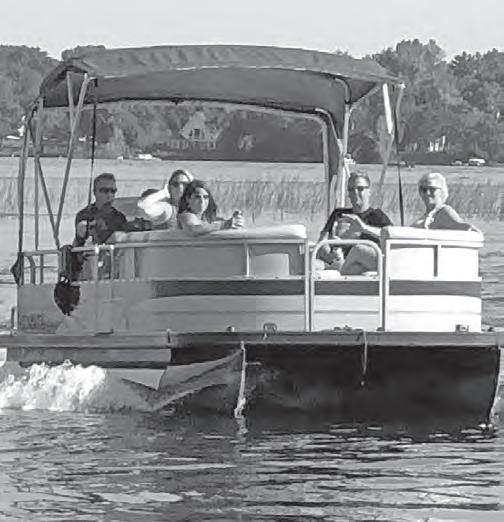
PARADE ON BALD EAGLE
ROOFING INSTALLATION
We install several types of roofing materials including asphalt shingles, cedar shakes, metal, slate and more.
STORM DAMAGE REPAIR
We repair roofs and siding damaged by severe weather. We are happy to work with your insurance company as well. SIDING INSTALLATION
We install vinyl, wood or metal siding for your home or business. We can help you determine the best option. SOFFIT & FASCIA
Usually part of a roofing or siding project, soffit and fascia are important feature for a finished home exterior.
GUTTER SERVICES
Water damage from poor gutters can lead to expensive repair. We install and repair gutters to keep the water away from your home.
WINDOW INSTALLATION
New windows can make a huge difference for your home both in appearance and energy efficiency.
Contributed
CONTINUING YOUR HOME’S LEGACY: Price isn’t only consideration when selling a home
By Lynn Nelson Special to The Laker
Sometimes selling your home isn’t about getting the best price, it’s about finding the right buyers to continue your home’s legacy. That was the case when owners Lynn Nelson and Mike Keeler sold their home to Caroline and Tony Yares in January.
Like many homes in the area, it was a friendly transaction. The two families lived two blocks apart. The younger couple told the older couple often that they admired the home and would like to buy it.
The home had been in Nelson’s family for decades, so she brushed off the offer. She couldn’t imagine selling it, even though she’d also received letters from prospective buyers throughout the years.
Then she saw another home on Lake Avenue that seemed better suited to their evolving retired lifestyle; then the wheels started turning quickly. Nelson and Keeler bought a condo at the Chateauguet Condominiums at the north end of Lake Avenue. Local Realtor Joe Benson orchestrated both the sale of the condo and the purchase of the house.
Tony’s company, Yares Renovation Services, immediately began renovating the condo. It had most of its original furnishings from the mid-80s when the complex was built.
As soon as that renovation was complete, the NelsonKeelers moved, and renovation on the house began. Tony and Caroline collaborated on a massive project to update the 1930s home to match their youthful vision. It included total renovation of the kitchen and bathrooms, as well as the usual surface improvements to walls and ceilings.
In addition, they added their own dream improvements, such as French doors leading from the master bedroom to a deck overlooking White Bear Lake, a skylight in the master and a bunny-proof garden and family area in the back yard.
Maintaining historic charm
“We tried very hard to keep the historic charm of the home/neighborhood when making decisions,” said Tony. “Whether it was colors, finishes, materials, etc., we tried to honor the age of the home, use similar materials and add details to tie into its historic aspects.”
He added they painted the exterior white because
“many of the old historic homes originally featured either cedar siding or were whitewashed. Many people continued that tradition to maintain that historic cabin/ cottage vibe.”
Keeler and Nelson had sold the home to the young couple to keep it from being “scraped” – current vernacular for tearing a home down. They knew they could get more money for the home on the open market, but preserving the house was important to them for a variety of reasons.
“A big part of it was sentimental,” said Nelson, whose grandparents bought the home in the 1960s when she was a young child – in part because her ancestor immigrants had worked at the Chateaugay hotel that originally stood on the property. Another objective was to keep a house that had a lot of use left in it out of the landfill.
According to construction industry standards, an average of 120 cubic yards of debris (almost 25 tons) per 1,000-square-foot of home is generated during demolition.
CONTINUED ON 2B
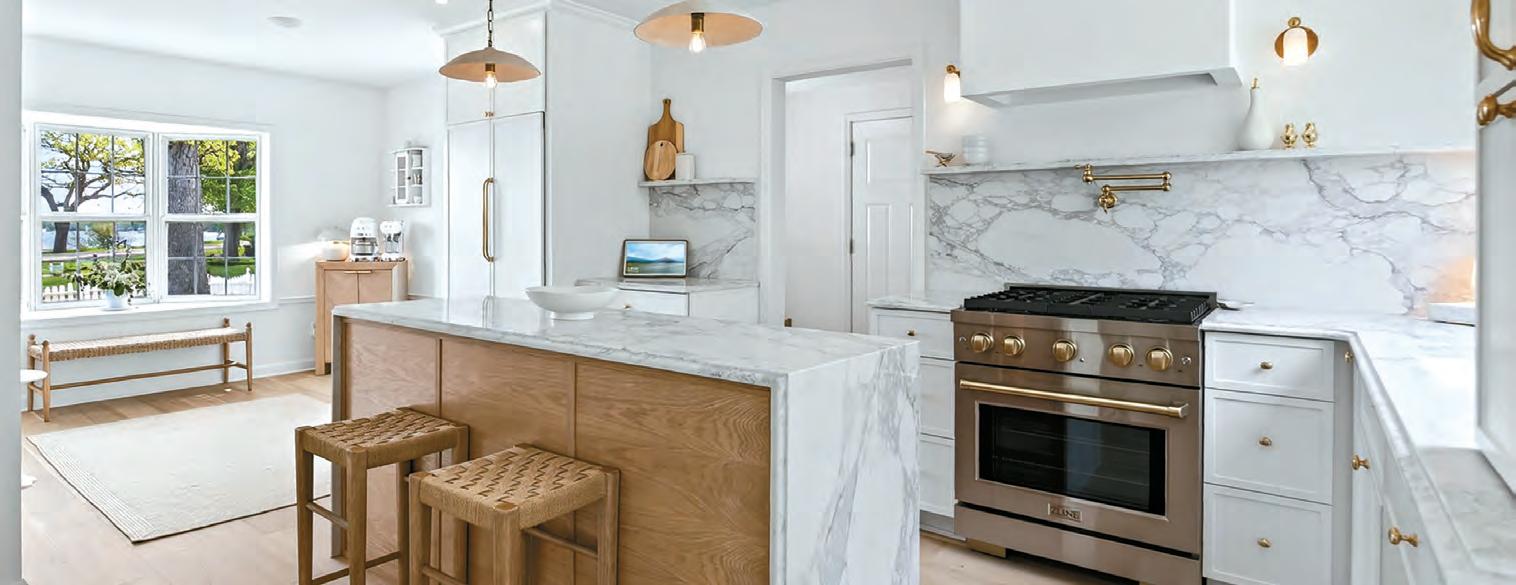
To accommodate Caroline Yares’ personal and professional cooking pursuits, the kitchen was enlarged and totally renovated. To give it a beachy feel, ceramic lights, alabaster, real wood and stone were featured. The counter and backsplash in the kitchen is white quartz (with black marbling).
PORT OF CALL ◼ ◼ ◼ ◼
YARES HOME | FROM 1B
While the house was being renovated, Nelson was nervous and tried not to be overly critical. And Keeler joked, “at least the silhouette of the house is still there.”
During a recent walk-through of the home, the older couple was impressed with how the Yareses were able to complete projects they’d always wanted to do. Projects from small ones, like getting rid of a popcorn ceiling, to big ones, like installing French doors to the deck facing the lake.
And Caroline who owns, PLNT BSD, a plant-based smoothie and bites pop-up shop behind Anchor Coffee in White Bear Lake (https://plntbsdbowls. com) had an earthy, beachy vision for the home. The vision was reminiscent of Carmel by the Sea (or in this case Carmel by the Lake), which her husband’s construction team executed perfectly.
“We chose construction materials accordingly, such as ceramic lights, alabaster, real wood and stone,” said Caroline. “We also used unlacquered brass knobs, pulls and hardware
throughout, so they would acquire natural patinas over time. I hoped it would complement the age of the home.”
They favored earth tones, as well as her signature color white for most of the floors, walls and ceilings. “The color we chose for the entire house is ‘White Dove’ (exterior and interior). Although Pantone’s ‘Cloud Dancer’ is this year’s color of the year, we wanted a more traditional soft and warm cottagey feel.”
The Yareses have a six-year-old daughter who wasn’t too enthusiastic about moving from the house down the street where she had lived her entire life. But she is warming up to the new house, motivated in part by the trampoline her parents installed for her in the backyard. Both couples are happy with their new living circumstances and their decision to preserve an older home through an out-of-the-box real estate arrangement. ◼
Lynn Nelson is a blogger who writes about Lake Avenue and other topics at www.LakeAvenueWBL.com.
Photos Contributed
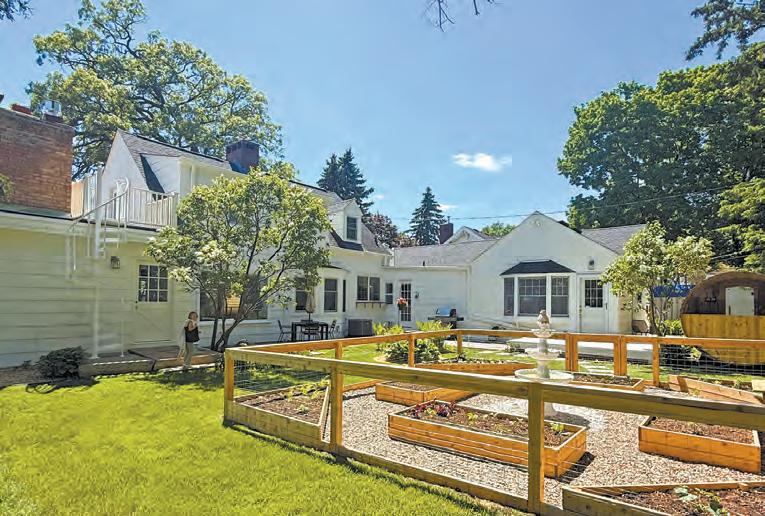
A bunny-proof garden with raised beds, a fountain and a fence take advantage of the full sun in the middle of the Yares’ new back yard.
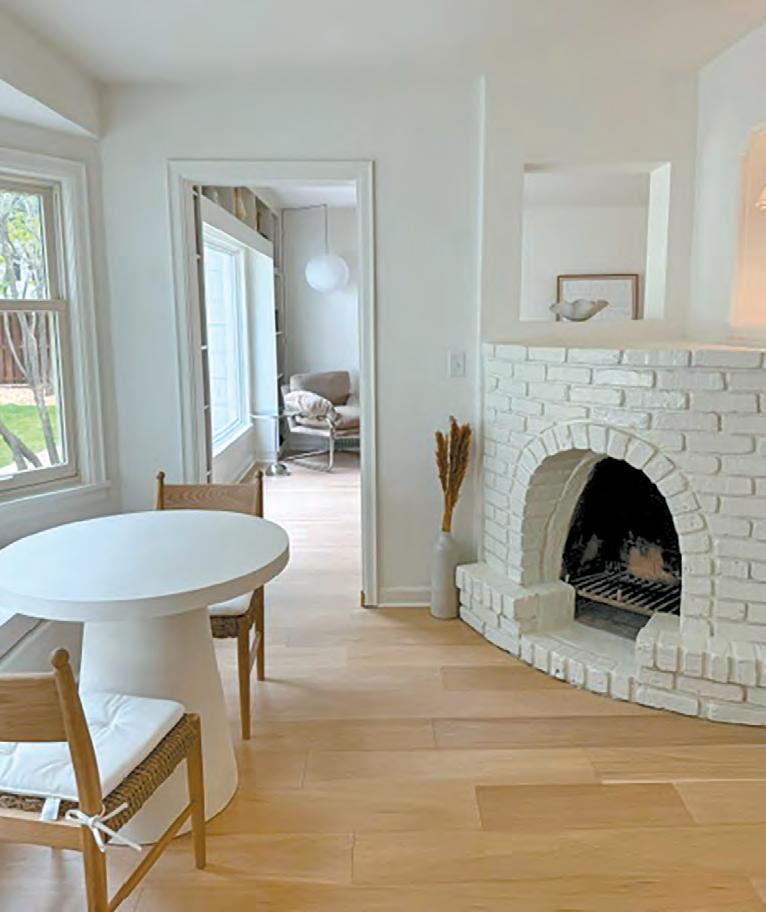
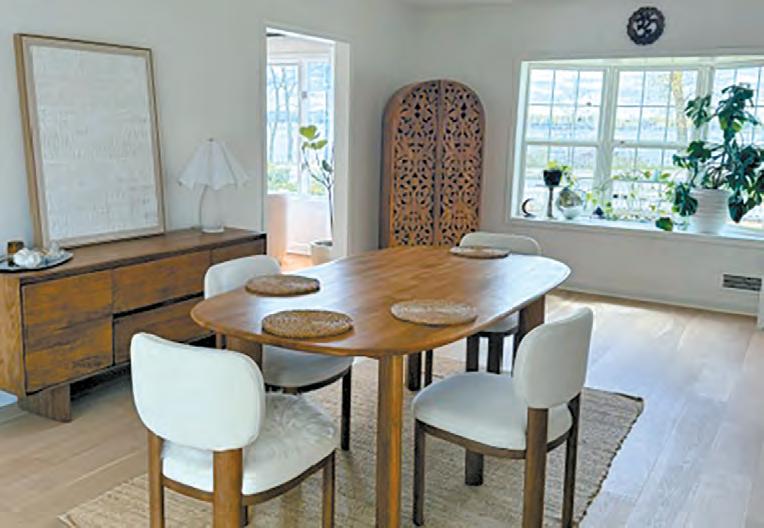
The flooring in the dining room and kitchen is natural white oak.
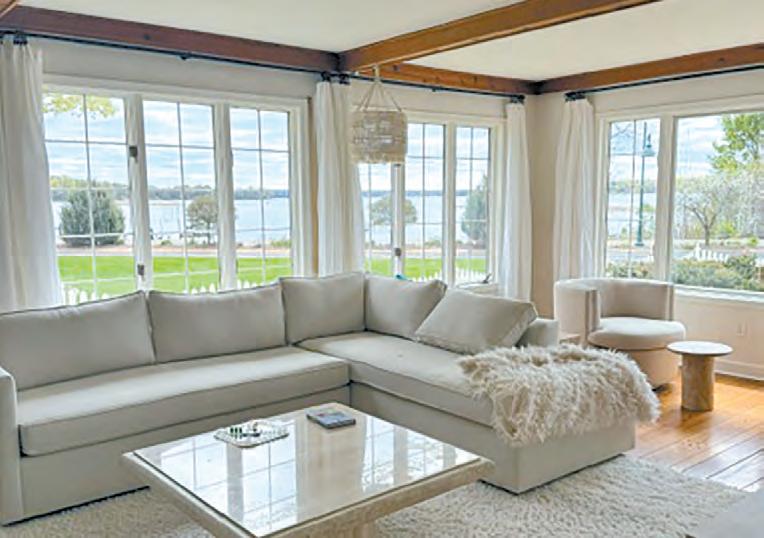
Lynn Nelson’s grandparents added a family room with a beamed ceiling to the home in the early ‘80s.
The circular white brick fireplace in the kitchen area is original to the house, which was built in the late 1930s.
Peach Caprese
Yield: 1 plate
Ingredients
• 1 thick-cut heirloom tomato slice (4-5oz, ½–¾ inch thick)
• 4 oz stracciatella burrata
• 1.5 oz peach chutney
• 1 tbsp Peach–Basil Vinaigrette
• 1 tbsp toasted pistachios, chopped
• 1–2 tsp hot honey
• flaky sea salt
• cracked black pepper
• basil leaves - chiffonade
Preparation
1. Tomato Base
Spoon 4 oz stracciatella burrata generously into the center of a chilled plate.
Season lightly with:
• flaky sea salt
• cracked black pepper
2. Burrata
Place thick-cut heirloom tomato over the stracciatella leaving edges visible.
3. Chutney
Add spoonfuls of peach chutney across the burrata and tomato.
4. Dress
Drizzle Peach–Basil Vinaigrette lightly around and across the plate.
5. Finish
• drizzle lightly with hot honey
• scatter toasted pistachios
• garnish with fresh basil
• finish with a pinch of flaky salt
Peach Chutney
Yield: ~1 quart
Ingredients
• 2 lb peaches, diced
• ½ cup shallot, fine diced
• 1 tbsp fresh ginger, minced
• 1 small Fresno chili, fine diced (optional)
• ¼ cup champagne vinegar
• 2 tbsp honey
• 1 tsp kosher salt
• ¼ tsp cracked black pepper
• zest of ½ lemon
• 1 tbsp lemon juice
• 3–4 basil leaves, chiffonade
Preparation
1. Add a small amount of olive oil to a sauté pan.
2. Sweat shallots and ginger over medium-low heat for 2–3 minutes. No color.
3. Add: - peaches - Fresno chili
- champagne vinegar
- honey
- salt
- black pepper
4. Simmer gently for 8–12 minutes, stirring occasionally, until peaches soften but still retain shape.
5. Remove from heat and finish with:
- lemon zest
- lemon juice
- basil chiffonade
6. Chill completely.
Peach–Basil Vinaigrette
Yield: ~2 cups
Ingredients
• 1 cup peach puree
• 1 packed cup fresh basil leaves
• ¼ cup champagne vinegar
• 1 tbsp honey
• 1 tsp kosher salt
• ½ tsp cracked black pepper
• ¾ cup extra virgin olive oil
• 1–2 tbsp cold water, as needed
Preparation
1. In a blender combine:
- peach puree
- basil
- champagne vinegar
- honey
- salt
- black pepper
2. Blend until smooth.
3. With blender running on low, slowly stream in olive oil until fully emulsified.
4. Add cold water as needed for a silky, drizzle-able consistency.
5. Strain lightly through a fine mesh strainer to remove larger basil fibers while maintaining body.
Hold chilled. Best used same day for brightest basil flavor and color.
MIZU Koi Cocktail
Yield: 1 cocktail
Rim
•Fresh lime wedge
•Togarashi spice blend
Ingredients
•2 oz Cachaça
•3 lime wedges
•¾ oz simple syrup
•1 oz Mango Puree
•2 oz fresh sour
•Ice
Cocktail Build
1. Rim Glass
Run a fresh lime wedge around the rim of a rocks glass. Dip rim into togarashi to coat.
2. Build in Shaker
In a cocktail shaker add:
•3 lime wedges
•¾ oz simple syrup Muddle thoroughly.
Add:
•2 oz cachaça
•1 oz Perfect Purée Mango
•2 oz fresh sour
Fill shaker with ice.
3. Shake
Shake hard and heavily for 10–15 seconds.
4. Finish
Dirty pour directly into prepared rocks glass over fresh ice.
‘FOSTER FAILURE’ TURNS INTO LAKE BEST FRIEND
By Shannon Granholm Managing Editor
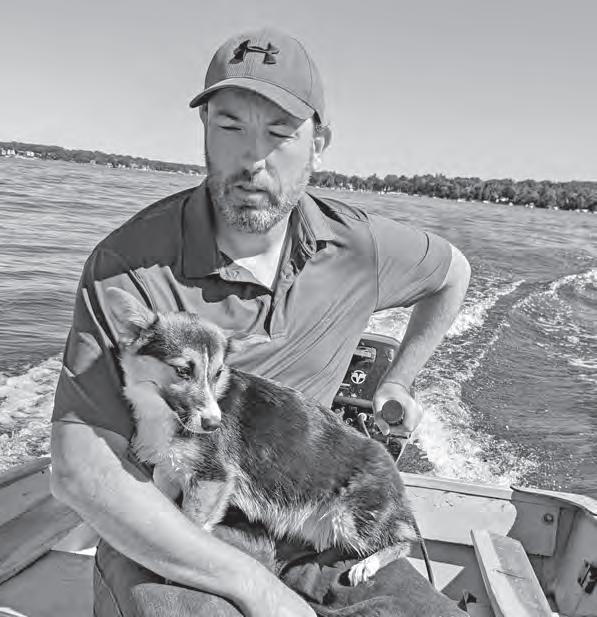
Otter’s name reflects his nature as a true lake dog.
“It took a while to name him,” explained owner Shari Salzman-Hankins, who is a member of the White Bear Lake Conservation District Board. “We were playing fetch near the lake, and the ball went into the water. He went swimming after it. His ears went way back, and he looked like an otter swimming in the water.”
Otter is a 2-year-old corgi. The family adopted him when he was 8 months old. Shari had previously fostered for Homeward Bound Rescue, and an emergency request came in for fosters for a group of corgis coming into rescue.
“I picked him up that night and brought him home. He immediately fit in with his cat siblings and human brother,” Shari recalled.
After fostering seven dogs, the family had their first “foster failure”: they decided to keep him.
Otter is a super-friendly dog who
Contributed
loves nothing more than curling up and snuggling on someone’s lap. His two obsessions are chews and balls.
“If you throw a ball, he will chase it for hours,” Shari said. “True to his nature, he loves to herd his humans around the house to ensure they do what he wants. He knows he is in charge.”
To get Otter out of the house, all they have to do is say two words — boat ride — and he runs to the back door ready to run to the boat.
“I wasn't sure if he would be a water dog, but as soon as we threw a ball in the lake, he was chasing after it,” Shari said. “He is a digger, and the sand at one of the beaches is perfect for him to dig in. He is a true outdoor dog who loves being out and enjoying the lake with his people.”
Shari described their family as “lucky” and “grateful” that Homeward Bound Rescue chose to let them foster Otter.
“His ability to make people smile is an awesome superpower,” she said. “I encourage anyone who has ever thought of fostering or rescuing a dog to take a chance. You never know, you may get your best friend out of it.” ◼
Otter, a 2-year-old corgi from Birchwood Village, loves swimming and boating.
My name is Brian Roelofs and I have been assisting families and businesses just like yours for over 24 years in finding the right insurance company to fit your specific needs. Our agency represents over 50 insurance companies that we can shop to find the best fit for you. As the insurance industry experiences historic increases across the marketplace. Our selection of companies to shop and offer our clients has never been more valuable.
SHORE LEAVE
Local artist turns lake life into inspiration
By Maya Betti Contributing Writer
grew into a business that blends pottery, jewelry and art with nature.
Art has been central to Boldischar’s life since childhood. Raised in Roseville, she lived with her grandmother, a painter who encouraged her creativity from a young age. She grew up on Lake Owasso, which further strengthened that connection as she spent her time fishing, collecting rocks and exploring nearby woods.
“It always has been basically creating
art and being in nature and animals and wildlife and all of that has always kept me really grounded,” Boldischar said.
When she moved to White Bear in 2016, Boldischar immediately was drawn to the area’s wildlife and water — the deer, birds and lakes all influenced her work.
“One thing about the White Bear Lake area, too, is that it’s helped teach me to slow down and take notice,” she said. "It's a beautiful place to just sit back and observe and be inspired.”
Art has been an important part of her life, and Opal + Birch is meant to reflect that bond. The name combines Boldischar’s birthstone, opal — which she shares with her grandmother — with birch trees, a common sight in Minnesota that symbolizes resilience and rootedness.
“That's just kind of myself in a nutshell, and how I've evolved creatively,” she said, “It just resonated and I went with it.”
Through Opal + Birch, Boldischar creates a range of handcrafted pieces inspired by lake life, specifically White Bear Lake and Bald Eagle Lake.
Among various nature-inspired artwork, her work includes small sailboats made from Lake Superior driftwood, paired
LOON LANDINGS
with sails sewn from repurposed fabrics sourced at local thrift shops. She also makes hand-spun pottery pieces with an organic feel that “echo the natural landscapes” she loves.
Boldischar is also involved in the local arts community as a co-founder and vice president of Bald Eagle Lake Arts, the organization behind the annual Bald Eagle Lake Art Crawl. Now preparing for its third year, the event allows for artists around White Bear to showcase their work at various homes around the lake
According to Boldischar, it’s been a way for community members to connect with artists on a deeper level.
“It’s amazing to watch all of these people
On
walking up and connecting with artists and actually talking about their work,” she said. “People want to learn about the process, and it's just been a beautiful thing to watch.”
Looking ahead, Boldischar hopes to grow Opal + Birch thoughtfully through seasonal collections and collaborations rather than mass-produced items.
“I want to stay rooted to this area and what inspires me here, just creating things that feel meaningful,” Boldischar said.
Boldischar’s pottery and designs can be found at Humble Roots Boutique in downtown White Bear Lake and Centerville as well as online at opalandbirch.com. ◼
Top
Photos contributed
Alyssa Boldischar creates works of art inspired by the natural world around White Bear Lake and the Minnesotan landscape.
Photos by Ellen Maas | Contributed
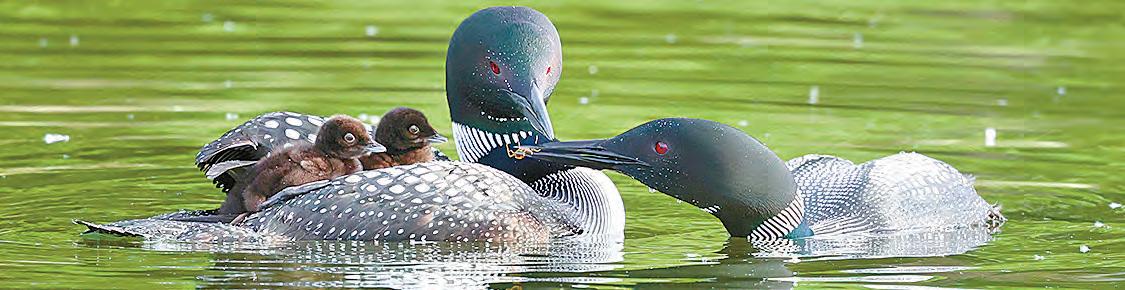
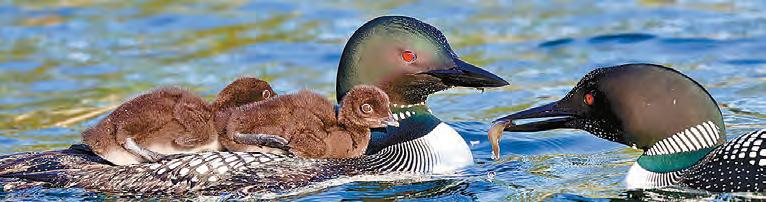
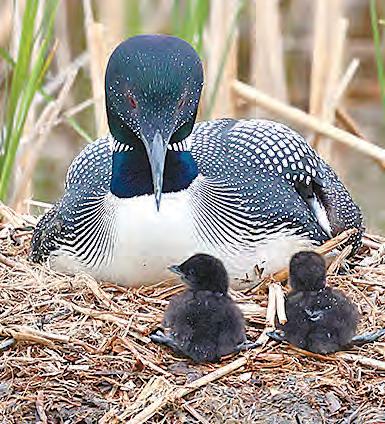
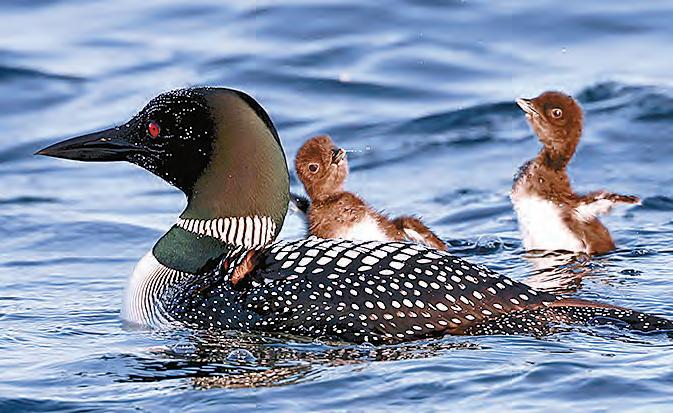
May 16 and 17, Peninsula chicks Artemis and Apollo hatched and continue to thrive. On May 21 and 22, Cove chicks Tweet Tweet and Marshmallow hatched and went to Loon heaven on May 25 and June 1. Fingers are crossed for a successful re-nest in the next two weeks.
Top Left: Papa delivering fish to Artemis and Apollo on mama’s back, tow days post-hatch.
Bottom Left: Papa delivering breakfast in bed to Tweet Tweet and Marshmallow.
Top Middle: Cove chicks Tweet Tweet and Marshmallow, on the nest with mama, one day post-hatch.
Right: Tweet Tweet and Marshmallow enjoying their last day together.
The 100 Series is designed to make yard work simple. With affordable prices, comfortable designs, and a bumper-to-bumper warranty1, it lets you focus on the real reason you have a lawn in the first place – to make memories.
S120Lawn Tractor
• 22-hp (16.4-kW)* V-Twin Engine
• Hydrostatic Transmission with side-by-side pedals
• Easy Change™ 30-Second Oil Change System
S130 Lawn Tractor
• 22-hp (16.4-kW)* V-Twin Engine
• 42-in. (107-cm) Edge™ Mower Deck
• Electric PTO, hydrostatic transmission with side-by-side pedals
4 • No. 2
Contributed
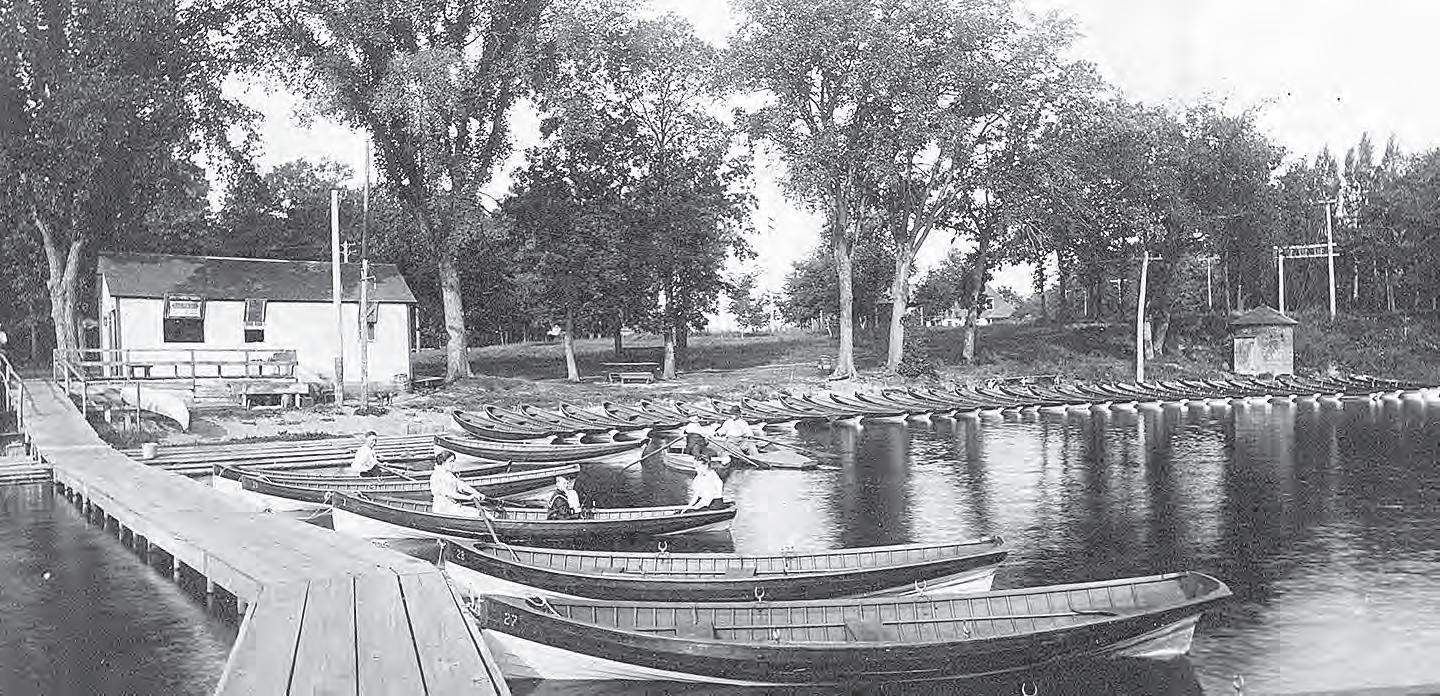
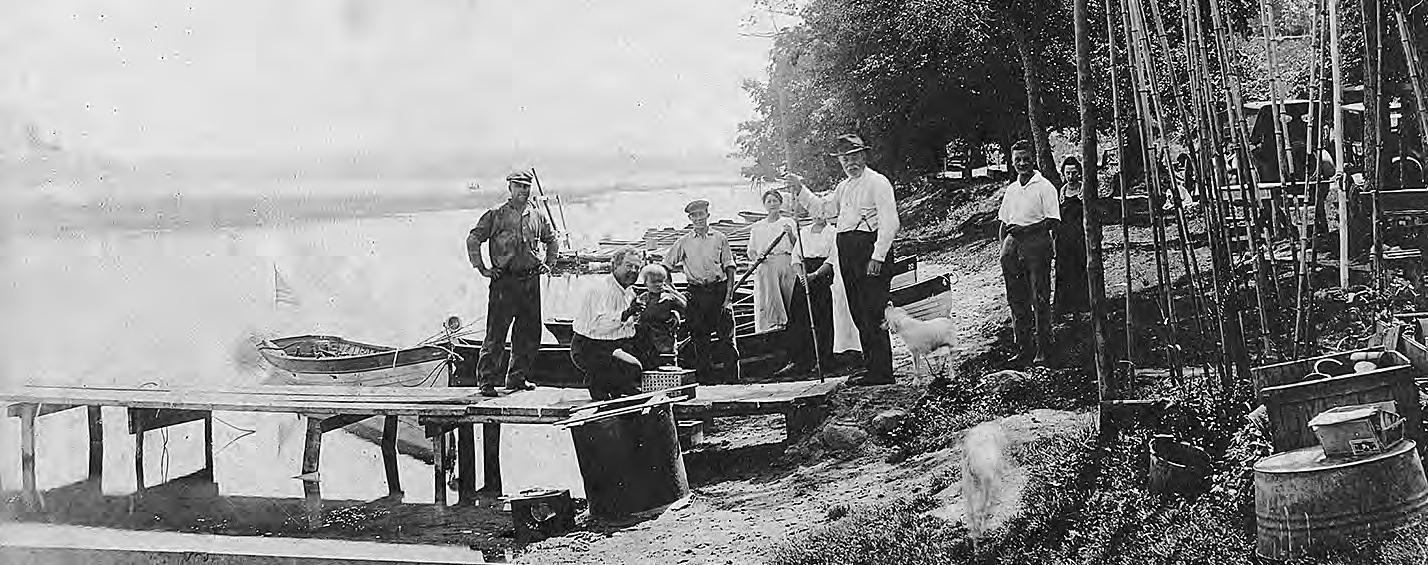
A fleet of more than 40 rowboats were available for rent during the height of the tourist season. The sturdy wooden boats look to be Amundson-made, but it’s unknown if all were built at the Boat Works. The pump house roof that still stands can be seen in the photo’s background.
LITTLE KNOWN ABOUT 19TH-CENTURY BOAT RENTAL BUSINESS
By Debra Neutkens
Contributing Writer
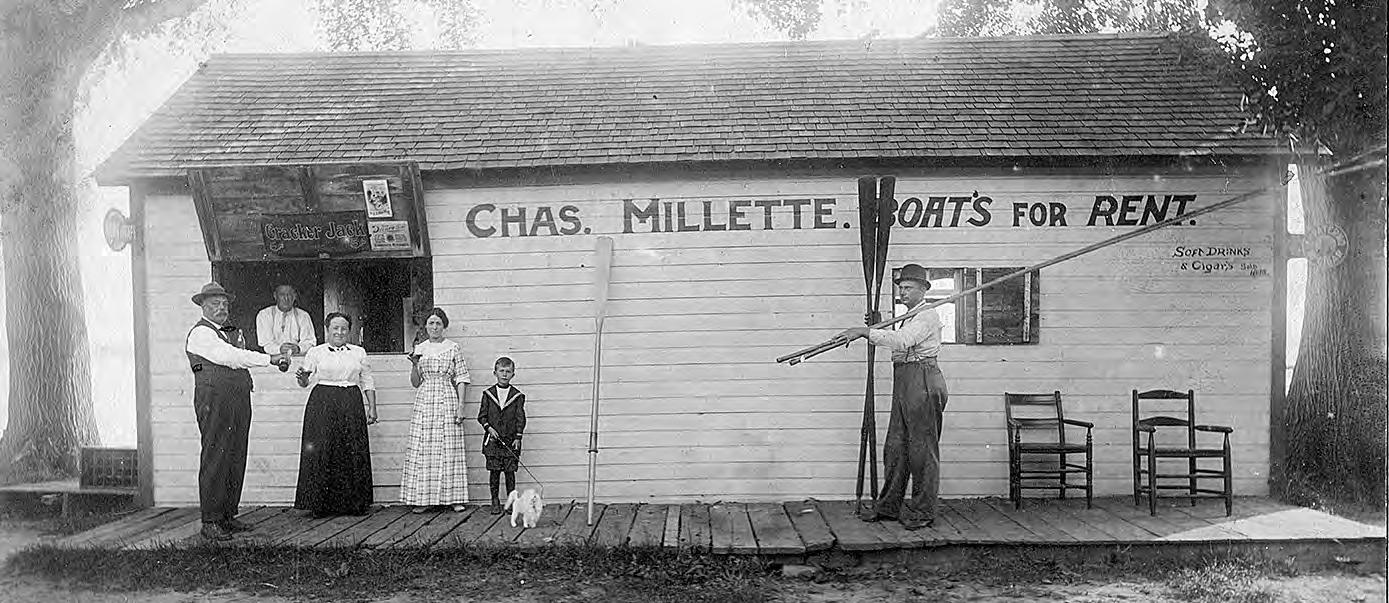
When long-forgotten photos surfaced of a late-1800s boat rental business on White Bear Lake, it was news to the proprietor’s greatgranddaughter. In fact, not much is known about Chas. Millette Boats for Rent, except it was located in what is now Matoska Park. The rental rowboats were likely made at Amundson Boat Works. It
prospered during the peak of the resort era on the lake.
The owner, Charles Millette, was Patty Wiberg’s maternal greatgrandfather. The precious few photos that offer proof the boathouse existed were passed down to her by her father, Edward D. Kieffer, who got them from his father, Edward J. Kieffer, Millette’s son-in-law.
As Patty’s husband Steve explained, the story of the rental business surfaced over a discussion of Model T
Fords. “Patty’s dad enjoyed old cars. He watched on as I was restoring an early T pickup. When the car was near completion, Ed told me it was coincidental that Charles and his brother were holding a snapping turtle in front of a Model T around the same year as mine. He went up in the attic and got the photo, then told us the story about his grandfather owning a boathouse at the entrance to Manitou Island. Patty didn’t know about it.”
Although the exact dates are unknown, Millette and his wife Celina operated the boat rental business from the late 1800s to about 1917 at what was then called Canary Park. The couple married in 1878 and resided in the town of White Bear. She was an Auger.
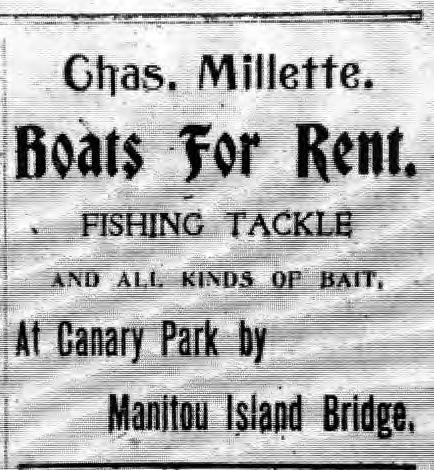
The business rented boats and cane poles, sold bait, refreshments and cigars.
ON 2C
MILLETTE BOATS | FROM 1C
Millette was a man who wore many hats, noted Steve. “He was a sworn peace officer for the township and well-known as a skilled woodworker and all-around outdoorsman. He also worked in the off-season for Gus Amundson (of Amundson Boat Works) building row boats for his rental business.”
When Celina died in 1917 at age 57, Charles sold the business. He was 60. According to the Wibergs, the business languished under the new ownership and soon closed. Millette died in 1942 in Chisago County at age 84. Like Celina, he is buried at St. Mary’s Cemetery. Their daughter, Clara Millette Kieffer, died in 1938 at age 50. Her husband, Edward J. Kieffer, the keeper of the photos and the Millette’s son in law, died in 1983 at age 89. Their son, Edward D. Kieffer, Patty’s father, was only 10 when Clara died. He passed in 2008. They too, are buried at St. Mary of the Lake Cemetery.
“My dad and his four siblings all stayed in White Bear Lake their entire lives,” added Patty. “He would say the only way to get a Kieffer out of White Bear Lake is in a casket.”
Another bit of family history: Patty’s grandfather worked at the White Bear Lumber Company that burned down in 1964. Both Patty’s and Steve’s fathers were White Bear firefighters who fought the fire together; it was Steve’s father’s first fire call.
The Wibergs are well known in the White Bear sailing community. Steve races both E and A scows and both maintain a close connection to White Bear and Bald Eagle Lakes. They’ve called Mahtomedi home for the last 46 years, raising three boys, all who live locally. No surprise there. The retirees also babysit their four grandchildren on a weekly, part-time basis.
The box of historical photos discovered in the attic after Patty’s dad died is all the history the Wibergs have of the family boathouse business.
“But that’s OK,” Steve said. “The photos tell the story.” ◼
An unidentified group gathers at the shore where Chas. Millette had his boat rental business. Note the cane poles stacked on a rack by the dock.
A fourth-generation White Bear native, Patty Wiberg, holds a framed photo of her great-grandfather’s boat rental business.
An advertisement in the White Bear “Lake Breeze” newspaper appeared in the year 1900. The exact date is unknown.
Photos Contributed
This photo of the boathouse is believed to include Charles, Celina, Clara and an unidentified boy. The business was located across from or near the end of Sixth Street in the current Matoska Park area.
AIDEN'S ANGLING: Late summer metro musky magic
By Aiden Johnson Special to The Laker
Locating and catching late summer muskies in the Twin-Cities metro area isn’t always an easy task. Between hot water temperatures that periodically drive musky anglers off the water in order to protect the fish, and frequent bright, humid, and flat-calm conditions, fishing in the summertime heat can make an already difficult bite even tougher. Despite these challenging forces and weather-related obstacles, musky fishing in the late summer time period can also be one of the most fun ways to target these fish, as their metabolism is peaking and they’re feeding in full swing, looking to angrily chase down baitfish and fishermen's lures across the lake.
The first thing that comes to mind when discussing “late summertime fishing” is defining exactly what time of year that means. In the minds of a metro musky fisherman, the late summer time period is usually somewhere around the middle or end of August when overnight air temperatures start to noticeably plummet, causing the water temperatures in the lake to cool as well and drop back into the mid/low 70s. This is when anglers pick back up the rods that they set down in July when the water temperatures were too hot to target these fish, and they begin to cast at muskys again after a well-deserved break. At the same time, muskys that spent most of their June and July out deep in the basin (feeding on baitfish and recovering from going through the motions of spawn) begin to return to structure, and oftentimes, they haven't
the best ways to catch a musky in the late summertime season. My personal favorite is a bucktail, because they are flashy, obnoxious baits that can be reeled in at a very fast pace, making a fish have to quickly decide right then and there to either let the bait go by, or react fast and eat it. Bucktails like a MuskyFrenzyLures “8/9 stagger” or “ringer 8” excelled in my boat during the late summer season last year and were responsible for a number of catches for both my clients and myself. Beyond something like a bucktail, topwater baits also start to come into play during this time of the year, and a topwater/bucktail hybrid bait like a Kramer Bros Tackle “woodtick” can be another excellent bait to trigger a fish sitting on a weed edge or further up shallow on structure.
seen a lot of the baits that traditional musky fishermen have to offer for quite a few weeks. This is personally one of my favorite situations to be out on the water, because it always seems to be a great time of the year to score on a big, uneducated metro musky.
As far as bait selection goes, this time of the year, speed is key. Baits that can be “burned” or worked fast over the top of weeds and other types of structure are one of
Although there is a lot to digest between water temperature, bait selection, seasonal musky movements, etc, don’t be overwhelmed by all the information that anglers like me will throw at you about musky fishing during this time of the year. And truth be told, the best advice that I can give anybody chasing “the fish of ten thousand casts” here in the Twin Cities area is to simply put time on the water. Learning from experience and never really knowing when you will get that next bite is what makes musky fishing such a fun and thrilling challenge. The chase is addictive and there is no better time than late summer to go get that metro giant that is just one cast away! ◼
Aiden Johnson owns Aiden’s Angling Guide Service, LLC. Visit https:// aidensangling.com for more information.
THE JOE CAMINATI GUIDE TO BOWFISHING
By Erik Suchy Contributing Writer
Meet Joe Caminati, owner of Average Joe’s Archery in Coon Rapids. Those who know him are familiar with his passion for a good time, often involving a bow, arrows and bull’s-eyes. But if there’s another sport he wants people to try, it’s one out on the open water: bowfishing.
“It’s an extremely safe sport,” said Caminati, who also leads guided bowfishing trips through his shop. “It also makes a lot of great contributions to the lakes themselves. When we conduct tours, we try to remove fish that are detrimental to the quality of the fisheries; certain species create nesting or bedding areas that spawn other fish, which destroy habitats and decrease water clarity. It makes it a lot better for other anglers.”
Compared with traditional rod-and-reel fishing, bowfishing uses a fiberglass barbed arrow
to shoot and retrieve fish; the line is stored on a reel mounted to the bow. The reel then allows anglers to retrieve the fish. Most bowfishing is done in shallow water, roughly 2 to 4 feet deep, where invasive species such as carp, gar and buffalo fish spawn or feed during the spring and early summer.
Bowfishing is typically done at night, as invasive species are often easier to spot with floodlights and are generally less skittish than during the day.
During daylight hours, the sport becomes more difficult because light reflects off fish near the surface. According to Caminati, this can lead anglers to assume the fish are closer to the surface than they actually are, affecting the accuracy of a potential shot.
“When you’re on a boat, in terms of speed and accuracy, your target is typically stationary; that’s not always the case with bowfishing. You have to adjust for shooting at a moving target.
That refraction can be extremely challenging for shooters, because the accuracy rate of a typical bowfisher is much lower than that of a typical archer.”
For daytime shooters, Caminati recommends wearing polarized sunglasses to reduce glare and fishing on calm days with fewer ripples to see the fish better.
“Being able to recognize the different species of fish you can shoot is very important. You don’t want to make mistakes where you shoot the wrong fish.”
Caminati also noted that newer anglers must also be aware of safety rules before heading out on the lake, such as maintaining a proper distance from structures. As outlined in Minnesota Statute 97C.376, an angler must not shoot within 150 feet of an occupied structure or within 300 feet of a campsite from sunset to sunrise.
While he has taken bowfishing to many different lakes, Caminati said White Bear Lake offers a
good variety for anglers. “The variety of the lake’s structure is what makes it both rewarding and challenging. It’s a great lake with a really good fishing base. It can sometimes get a lot of traffic, making it harder to get out there and succeed. But some of those challenges are what make it good.”
Despite the focus and knowledge needed to be a successful angler, Caminati said that as with any sport, it ultimately comes down to having fun. “Everyone is a little bit different. You’ve got to develop your technique and knowledge base, and that takes time, but that’s part of the fun of the sport. It’s not always about just shooting fish. It’s about being out on the water and enjoying the scenery.”
For more information on Average Joe’s Archery and to book bowfishing tours, visit www.averagejoesarchery.com. ◼
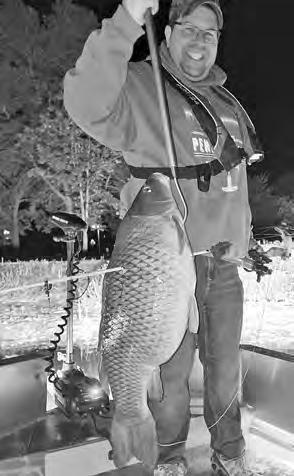
Joe Caminati | Contributed Joe Caminati of Average Joe’s Archery frequently conducts bowfishing tours on various Minnesota lakes, describing it as an “extremely safe sport” that helps remove invasive species. Pictured is one of the shop’s employees, Shane, holding a carp during one such tour.
Contributed
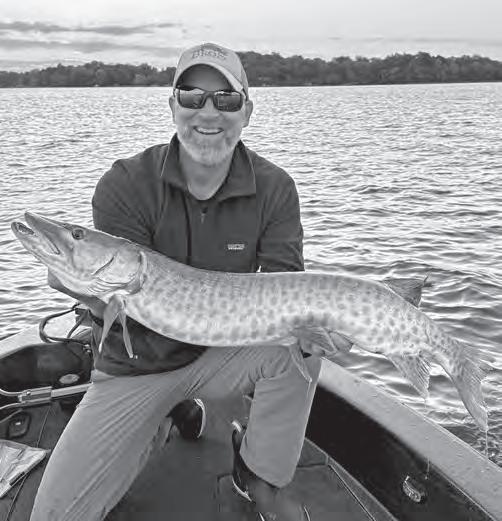
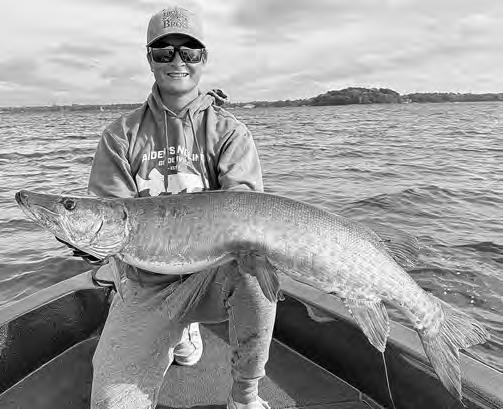
Aiden Johnson of Aiden's Angling Guide Service holding up a chunky metro musky that ate his bucktail at the side of the boat after reeling it in quickly over an underwater weed edge.
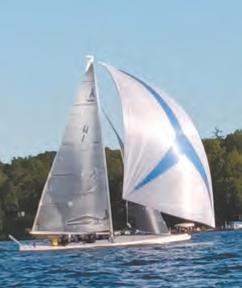
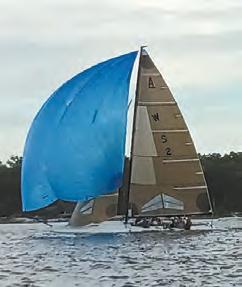
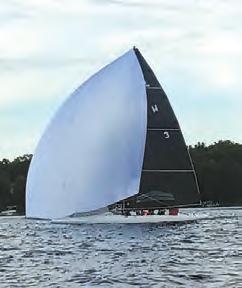
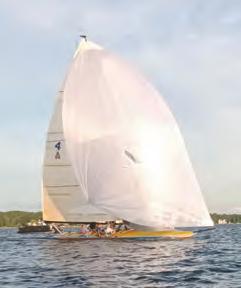
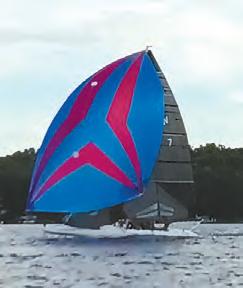
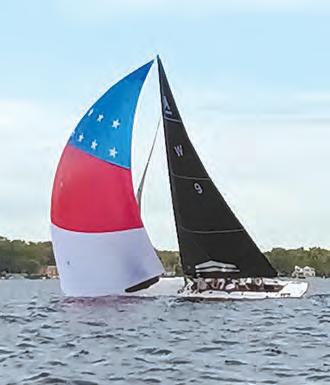
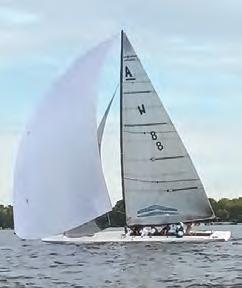
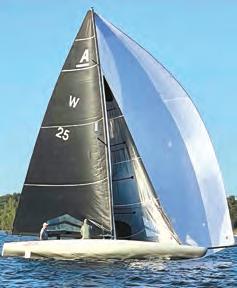
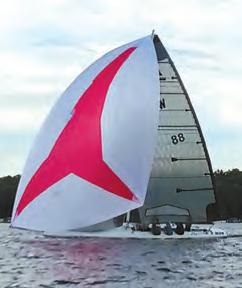
W-1 Firebolt Skipper: Mark Duvall
W-8 / W-10 Skipper: Ed Cox Jr
W-2 The Robinson Skipper: Trevor Taylor
W-25 Euphoria Skipper: Lee Alnes
W-3 AWOL Skipper: Tom Austin
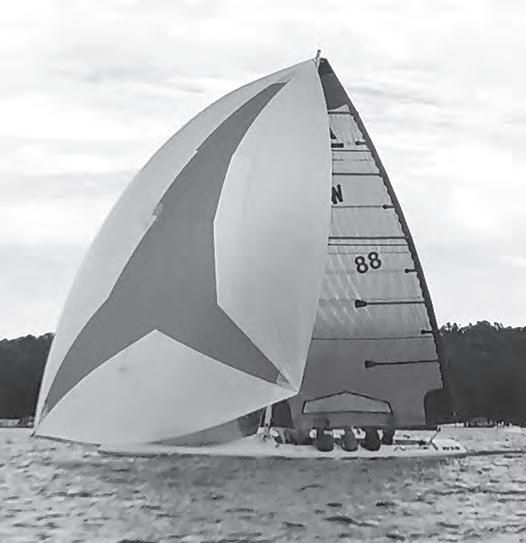
W-88 Asylum Skipper: Larry Pardee
W-4 Firenze Skipper: Ted Jagger
W-7 GRYPHON Skipper: Steve Johnson
W-9 G & T Skipper: Van Johnson
SHORE LEAVE ◼
FROM SAUNA TO SHORE:
New business offers wellness retreat on White Bear Lake
By Shannon Granholm Managing Editor
Steam drifts across the shoreline of White Bear Lake as guests step from a 180-degree cedar sauna toward the water, reviving a Minnesota tradition that entrepreneur Drew Reuss hopes will help locals and visitors slow down, connect and embrace the outdoors.
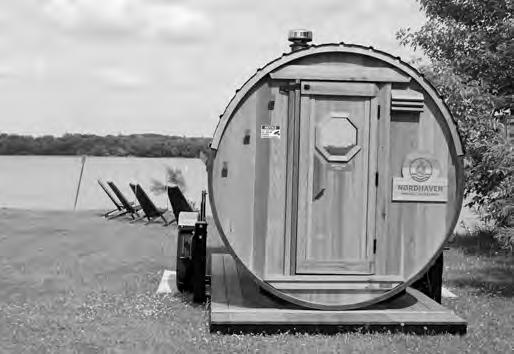
By now, visitors to White Bear Lake County Park have likely seen the barrel-shaped sauna sitting right on the lakeshore.
The business name, NÓRDHAVEN, translates to “north harbor” in Scandinavian. Reuss says the name taps into his Minnesotan pride and haven being a safe place.
“The whole idea is this is a safe, inviting place of rest and wellness in Minnesota,” he explained.
Reuss and his wife Jen, along with their three children, have lived in White Bear Lake since 2023. Prior to that, the family traveled the world and lived abroad while doing mission work with a nonprofit called Youth With A Mission. They lived in Hawaii for three and a half years prior to moving to New Zealand in 2019.
When they moved back to Minnesota, Reuss said they were starting to see more movement around mobile saunas. “More people were starting to utilize it, and community was forming around it. I don’t know if it is a resurgence, but it’s being embraced in a new way,” he said.
Contributed
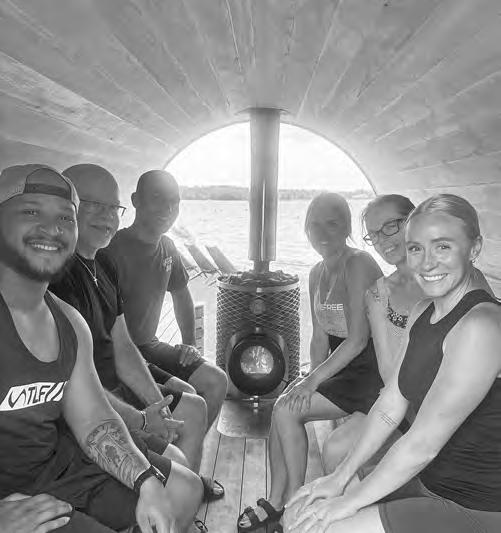
A group enjoys a shared sauna session. A typical sauna session is 90 minutes, and the business offers a private or shared sauna experience with up to eight people. On average, the sauna temperature will usually be set at approximately 180 degrees. Sessions are 90 minutes long and typically include sitting in the sauna for 15 minutes, cooling off in the water or on the dock for four minutes and then returning to the sauna.
a new barrel-shaped sauna, sits right on the lakeshore at White Bear Lake County Park. The sauna was made by a company called Nomad currently based out of Hudson, Wisconsin.
Last March, they dove right in, turning the idea into reality. Reuss explained it was a bit of a challenge to work through the permitting process with Ramsey County and the city of White Bear Lake since a mobile sauna is a newer concept.
“It was a long process but it’s super exciting to see the sauna here (at White Bear Lake County Park) where we envisioned it in those early days,” he said.
NÓRDHAVEN’s tagline, “embrace the elements,” pays homage to the fact that there is no such thing as bad weather for a sauna. “If it's rainy, if it's snowy, if it's sunny, if it's windy, the sauna gives you that shelter. And then when you go out into the elements, it actually gives you that refresh,” Reuss said. He added that many people think about a sauna as something to do in the winter, but it can be just as refreshing in the summer.
“It might be hot, but Minnesota has cold mornings, cold evenings and even if it's 85 or 90 degrees, it's 180 degrees in there. Going from there into the water is still going to be refreshing, and you're still going to get all the health benefits and wellness benefits of a sauna even if its summertime.”
A sauna forces people to slow down and make connections.
“In a place where we have constant dopamine fixes from unsustainable stimulant through our phones, our computer, a sauna forces you to slow down. It forces you to be present,” Reuss said.
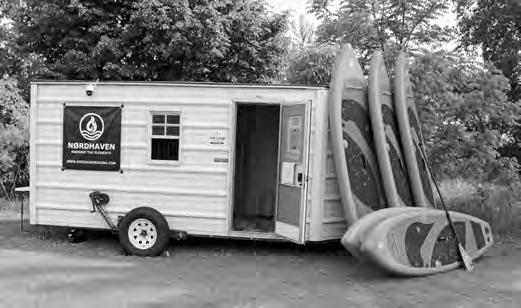
NÓRDHAVEN’s barrel-style sauna was built by a company called Nomad, which recently relocated from Minneapolis to Hudson, Wisconsin. Reuss converted an icehouse to a host station to offer private cool/heated changing spaces for before and after the experience, so sauna users don’t have to use the public restrooms.
A typical sauna session is 90 minutes, and the business offers a private or shared sauna experience with up to eight people. On average, the sauna temperature will usually be set at approximately 180 degrees. Sessions are 90 minutes long and typically include sitting in the sauna for 15 minutes, cooling off in the water or on the dock for four minutes and then returning to the sauna.
The business has also teamed up with Paddle North based out of New Brighton to offer sauna users paddle boards, as well as an inflatable dock. “We want to give people a reason to (be in) White Bear Lake, spend some time in the sauna, spend some time in the water, grab a bite to eat downtown … What a perfect day,” Reuss said.
NÓRDHAVEN plans to offer police officers and firefighters complimentary sauna sessions to help them decompress from the heavy load they carry with them. “We know they are going above and beyond day in and day out, so if we can give them a thank you in a way that is hopefully going to feel really good and refreshing to them, we just want to bless them in that way,” he said.
Reuss is hoping the sauna will be set up at White Bear Lake County Park, except for July 4, hopefully through this fall and even into the winter. Eventually, they hope to hire additional sauna guides. Their ultimate hope would be to add more saunas to the fleet, and have a brickand-mortar location, ideally in downtown White Bear Lake.
“That would be our dream,” Reuss said.
For more information about NÓRDHAVEN, visit www. nordhavensauna.com. ◼
Managing Editor Shannon Granholm can be reached at 651-407-1227 or whitebearnews@presspubs.com.
NÓRDHAVEN,
Photos by Shannon Granholm | Press Publications Entrepreneur Drew Reuss owns the business with his wife Jen.
Reuss converted an icehouse to a host station to offer private cool/heated changing spaces for before and after the experience, so sauna users don’t have to use the public restrooms.
AN INSIDE LOOK INTO STAND-UP PADDLEBOARDING
If you’re looking for a new activity to get into this summer, try standup paddleboarding. It is a cross between surfing and canoeing and is the fastest growing paddle sport in the nation.
There are four types of paddleboards: surf, touring, inflatable and racing. If you’re going to try paddleboarding, according to the Minnesota Department of Natural Resources (DNR), you will need a life jacket, the board itself, a long paddle and a leash.
If it is your first time trying to paddleboard, the DNR recommends trying to paddle on a smaller lake or a quiet bay of a larger lake. As your skills improve, you can try larger lakes and slow-moving rivers. Fast moving rivers with rock or other hazards are for advanced paddlers.
According to the DNR, Minnesota has 35 designated state water trails. These water trails are managed for recreation, and have designated accesses, rest areas and campfires. When currents are slow, flatwater portions of the Mississippi, Minnesota and St. Croix Rivers are suitable for intermediate paddlers or beginners with a guide.
There are multiple state parks in Minnesota where you can also rent a paddleboard:
• Bear Head Lake State Park
• Big Bog State Recreation Area
• Camden State Park
• Glacial Lakes State Park
• Glendalough State Park
• Itasca State Park
• Lake Shetek State Park
• McCarthy Beach State Park
• Myre Big Island State Park
• Sakatah Lake State Park
• Scenic State Park
Split Rock Creek State Park
Stand-up paddleboard safety and Minnesota law
When paddleboarding, it is important to be aware and be safe. Make sure to always wear your life jacket and tie a whistle to it in case of an emergency. The DNR encourages paddleboarders to tell
Paul Dols | Press Publications
When paddleboarding, it is important to be aware and be safe. Make sure to always wear your life jacket and tie a whistle to it in case of an emergency. If paddleboarding on a river, use a quick-release leash and avoid a the standard ankle-leash to avoid possible entanglement.
someone when they’re going out and when they’ll be back. Be aware of weather and wind conditions and be aware of paddling hazards like rocks and low hanging branches. You can always take a paddling skills course to learn how to self-rescue and tow another paddleboard.
There are also multiple laws you must abide by if you decide to go paddleboarding. One of these laws states, according to the DNR, there must be a United States Coast Guard approved life jacket, either worn or on board, for each person. Children under the age of 10 years old must wear a properly fitted lifejacket.
If you decide to paddle after sunset, you must at least carry a white lantern or flashlight. This light should be strong enough so other boaters can see it at least two miles away. The light must be displayed in time to avoid a collision with another watercraft.
Paddleboards more than 10 feet long need to be registered. The registration decals should be placed
on the front of the paddleboard, if possible. If not, place both decals on the back of the board.
Take a paddle sports safety course
The Minnesota DNR also offers a free paddle sports safety course. The course provides useful information to paddling safety. It covers the rules of the water, what to do in an emergency and other tips to enhance paddlers’ knowledge base and operating skills.
Learning how to paddle is a great way to get your feet wet in recreational boating. Starting off with basic boating knowledge will make your experience safer and more enjoyable. For more information about the course, visit www.dnr.state.mn.us/safety/ boatwater/education.html.
More information about stand-up paddleboarding can be found on the Minnesota DNR’s website at www.dnr.state.mn.us/watertrails/ paddleboard.html. ◼
Madeline Dolby
Paddling safety tips from the DNR
1. Always wear your life jacket.
2. Know or learn how to swim.
3. Tie a whistle onto your lifejacket in case of an emergency.
4. Paddle on a lake or a calm bay of a larger lake if you are a beginner.
5. Tell someone where you're going and when you'll be back.
6. Paddle sober. Never paddle under the influence of drugs or alcohol.
7. Be aware of weather and wind conditions.
8. Paddle with a group, not alone.
9. Take a paddling skills course to learn how to self-rescue and tow another paddleboard.
10. Be aware of paddling hazards like rocks and low hanging branches.
11. Know when to wear a leash (for more information read the "More SUP Safety" section below).
12. In case of an emergency, bring a cell phone in a waterproof case or bag.
13. Consider wearing footwear to protect your feet.
Paddleboarding and Minnesota law
• There must be a United States Coast Guard approved life jacket, either worn or on board, for each person.
• Children younger than 10 years old must wear a properly fitted lifejacket.
• After sunset, you must carry at least a white lantern or flashlight. This light should be strong enough so that other boaters can see it at least two miles away. The light must be displayed in time to avoid a collision with another watercraft.
• Registration is required if your paddleboard is more than 10 feet long. Place the registration decals on the front of the paddleboard, if possible. If not, place both decals on the back of the paddleboard. ◼