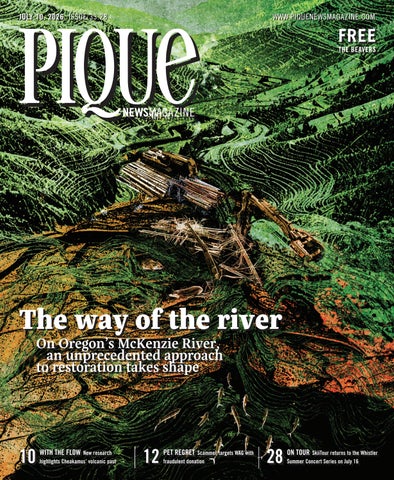
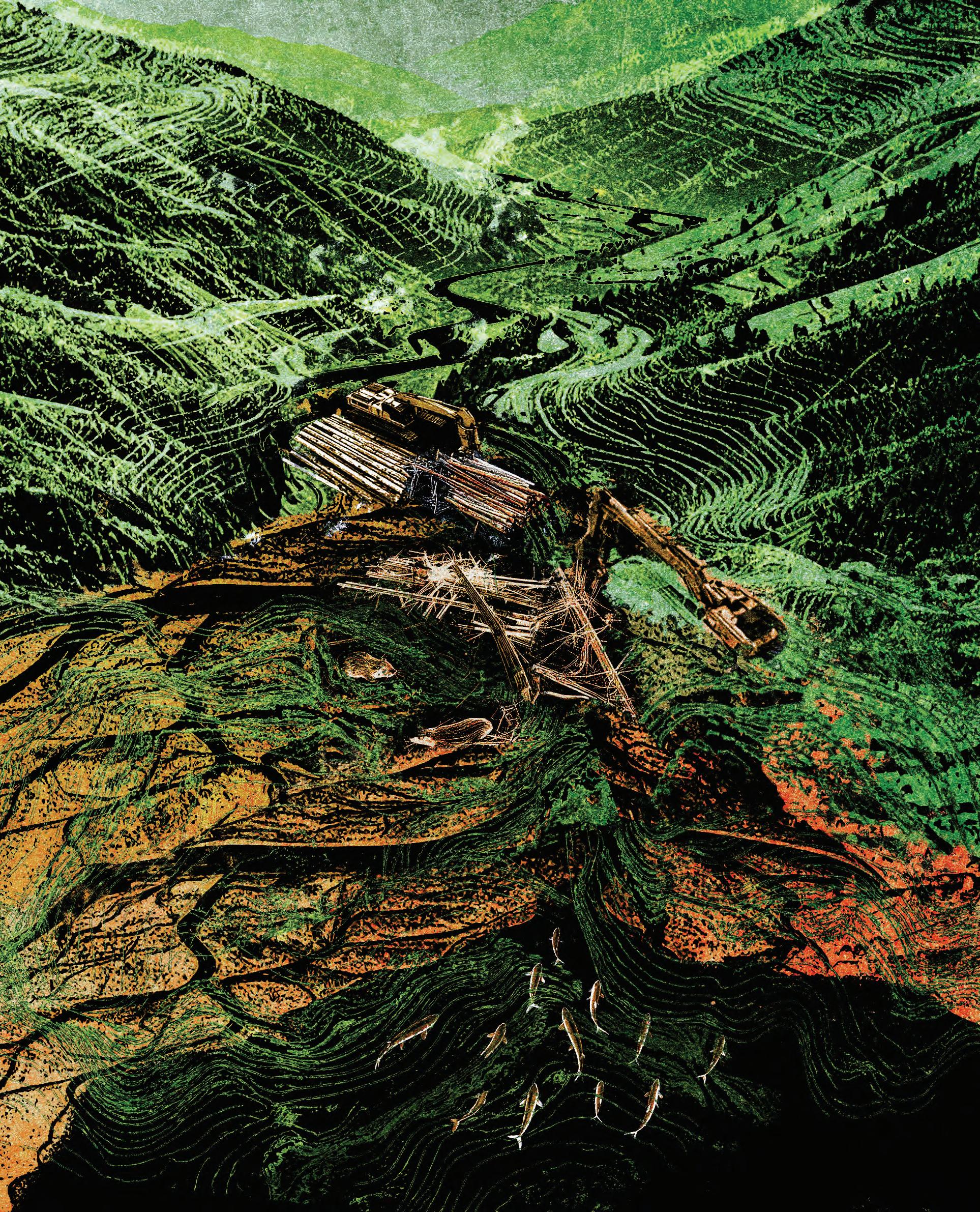
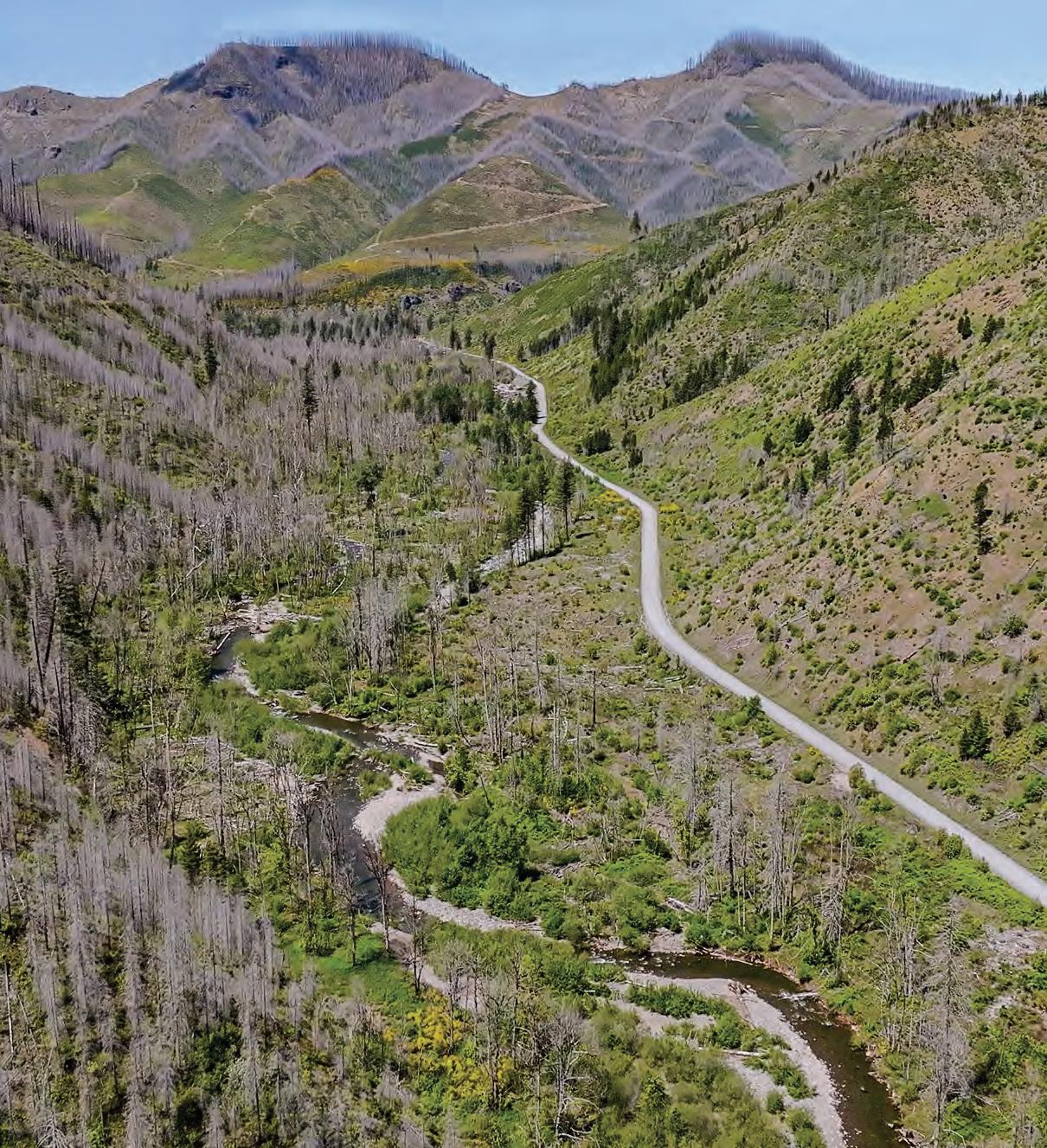
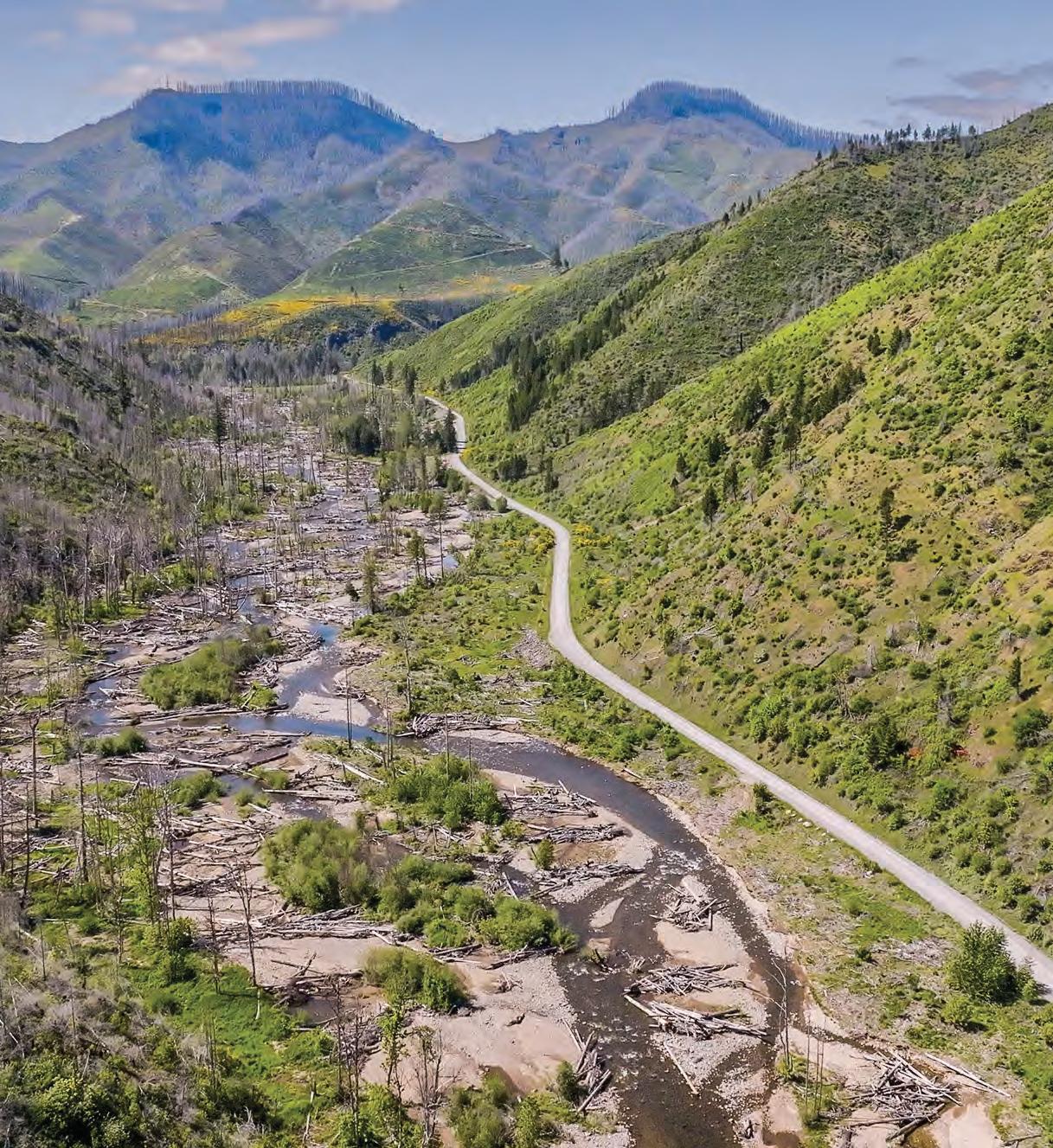
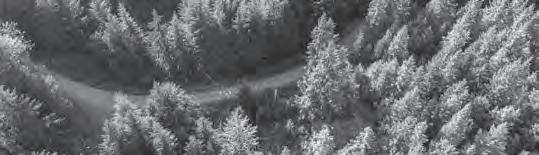
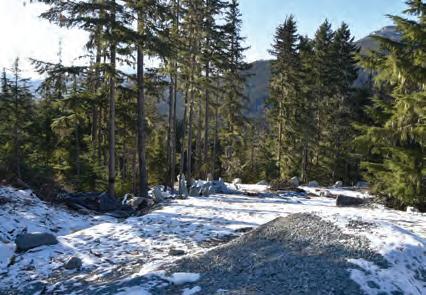
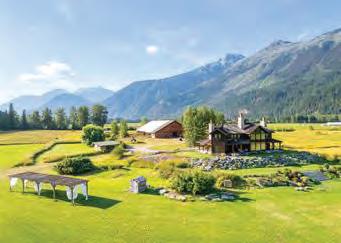
On Oregon’s McKenzie River, an unprecedented approach to restoration takes shape. - By Jaclyn Moyer, High Country News
06 OPENING REMARKS The art of the steal is increasingly about trust, writes editor Braden Dupuis—and once trust starts to erode, everything becomes just a little bit harder.
08 LETTERS TO THE EDITOR This week’s letter-writers call for proactive measures in addressing taxi concerns, and share thanks for a recent school celebration.
18 RANGE ROVER Leslie Anthony explores the geology, wildlife and deep history behind Québec’s iconic Percé Rock.
38 PIQUE’N YER INTEREST With nearly six months left in 2026, it’s not too late to try your hand at slow-maxxing, writes Lisa Richardson.
10 WITH THE FLOW New research highlights how glacial erosion and ancient floodwaters helped obscure part of Cheakamus’ volcanic past.
12 PET REGRET A huge donation would have been a difference-maker for Whistler Animals Galore—until it turned out to be a scam.
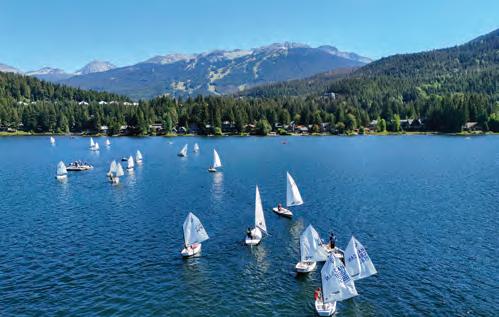
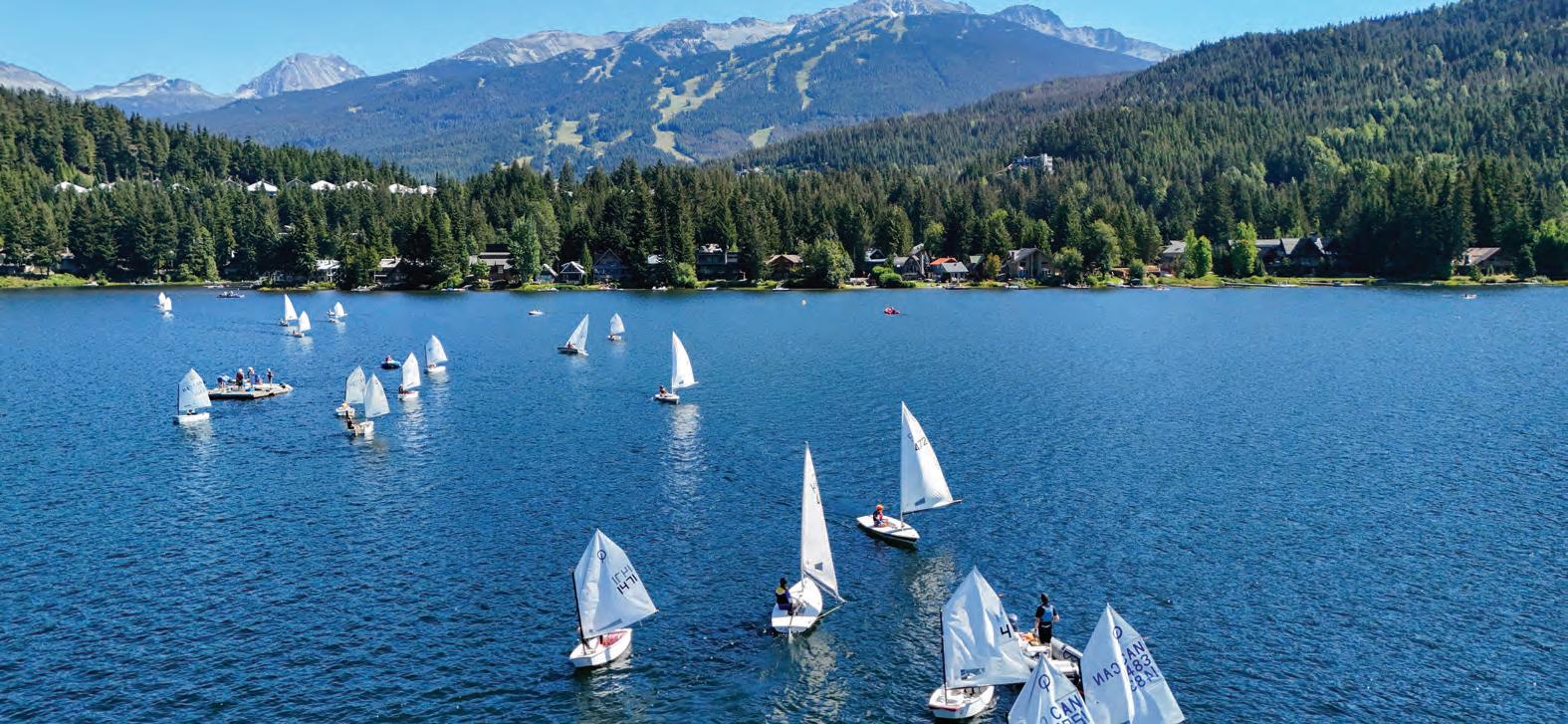
24 ANCHOR’S AWEIGH The Whistler Sailing Association is preparing for the BC Optimist Championships, returning to Alta Lake July 18 and 19.
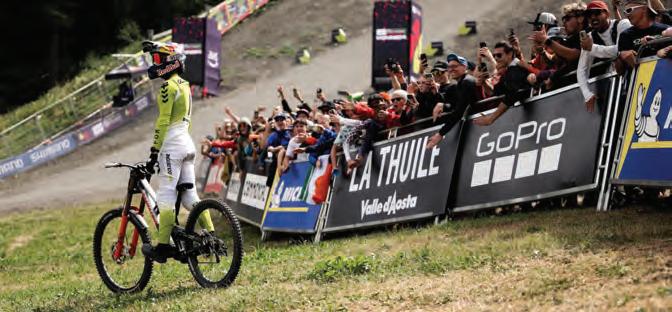
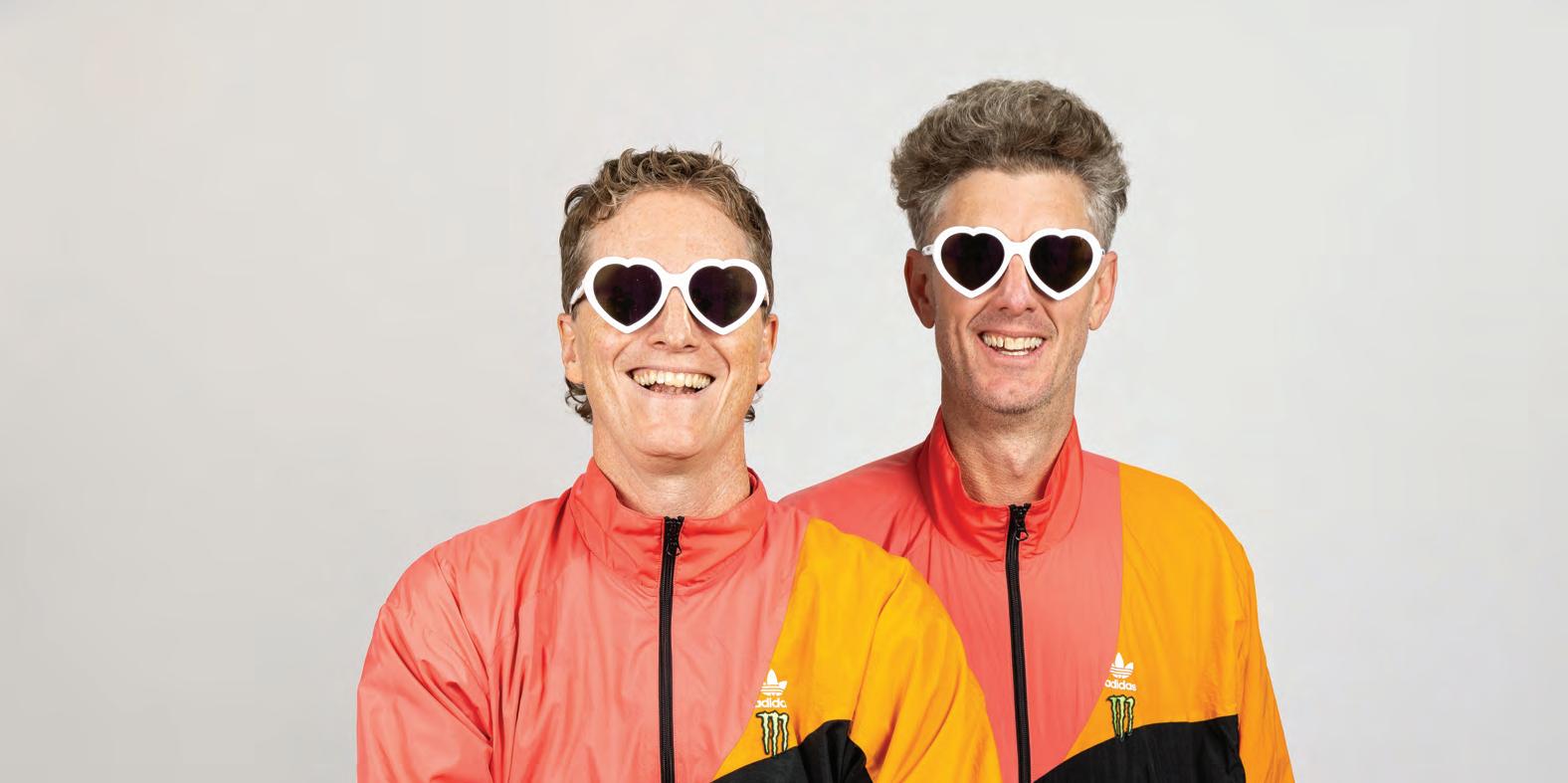
28 ON TOUR Local DJs Tim Livingstone and Dave Rollinson of SkiiTour bring their homegrown act back to the Whistler Summer Concert Series on July 16.
COVER Humanity’s biggest challenge will be undoing all of the mistakes made by those who thought they could play God. - By Jon Parris // Adobe AI // @jon.parris.art
Publisher SARAH STROTHER - sstrother@piquenewsmagazine.com
Production Manager AMIR SHAHRESTANI - ashahrestani@piquenewsmagazine.com
Art Director JON PARRIS - jparris@piquenewsmagazine.com
Advertising Representatives
TESSA SWEENEY - tsweeney@wplpmedia.com
ANDREW BUDRESKI - abudreski@piquenewsmagazine.com
Digital/Sales Coordinator KATIE DOUGLAS - kbechtel@wplpmedia.com
Reporters
LUKE FAULKS - lfaulks@piquenewsmagazine.com
DAVID SONG - sports@piquenewsmagazine.com
Classifieds and Reception - mail@piquenewsmagazine.com
Contributors G.D. MAXWELL, VINCE SHULEY, LESLIE ANTHONY, GLENDA BARTOSH, ANDREW MITCHELL, LISA RICHARDSON, LIZI MCLOUGHLIN, TOBIAS C. VAN VEEN
Founding Publishers KATHY & BOB BARNETT www.piquenewsmagazine.com
The art of the steal
THIS WEEK, we learned Whistler’s beloved animal shelter, Whistler Animals Galore (WAG), was the target of a sophisticated scammer.
Some unidentified lowlife, or lowlives, spoofed the information of a legitimate organization in offering WAG a hefty $67,000 “donation.”
You can read more on page 12, but
BY BRADEN DUPUIS
the gist of the scam would have included WAG sending said scammer $20,000 (they didn’t fall for it, fortunately).
It’s upsetting for a few reasons, first and foremost being the blow to a struggling local charity at a time they could desperately use the help. But then, most non-profits would likely put themselves in this category—which is sadly what makes them targets for wouldbe scam artists in the first place.
Call it the art of the steal—identify an easy, vulnerable mark, take advantage, rinse and repeat—taken to its next logical step. But where the marks used to be primarily the elderly or the desperately lonely, the scam artists have started sourcing their desperation elsewhere. So of course they’re now targeting charities.
The net just keeps getting wider. As our technology evolves, scams and scammers are evolving right with them.
It seems not a day goes by without at least a small handful of scam-adjacent, phishing-attempt emails hitting my inbox, and they’re seemingly getting more sophisticated every week. Where a dangerous email may have been identifiable at a glance 10 years ago, now the scammers and hackers have new, exciting ways to steal your info.
They send emails using your company name and logo, with official-sounding wording and urgent links to click; plant just enough doubt to make you question your own cybersecurity training.
That hesitation is really what scammers are selling. Because increasingly, what they’re stealing isn’t just money, but trust.
Trust that an email from your bank is actually from your bank, or that a phone call from a government agency is genuine. Trust that a donation request is legitimate. Trust that the person on the other end of the screen is who they claim to be.
And once that trust starts to erode, everything becomes just a little bit harder.
And they can come from anywhere. In January 2025, some residents of the Squamish-Lillooet Regional District (SLRD) received an email from Area D director Tony Rainbow containing supposedly important information hidden behind hotlinks.
of bad-faith actors impersonating elected officials for nefarious means are far more serious than the SLRD’s short apology email let on.
If faceless entities can convincingly impersonate elected officials, employers, charities or financial institutions, people inevitably become more suspicious of every legitimate message they receive.
That’s exactly what scammers want.
In this case it was likely financially motivated, as so many scams are. What happens when it’s a foreign government or other outside entity manipulating mass communication via elected officials?
Worst-case scenario, sure, but an interesting thought exercise nonetheless, as we know foreign actors are actively meddling in our online discourse around things like Alberta separation and other divisive, hot-button issues.
For now, most of the scammers, evolving though they may be, seem to still be following the old phishing
deal. And so the art of the steal, as it has been since the days of pickpockets in Dickens’ London, is a numbers game.
It’s an arms race most of us never signed up for. Every year, organizations spend more on cybersecurity training, password managers and multi-factor authentication. Every year, scammers find new ways around them. Artificial intelligence has only accelerated the process, making it easier than ever to generate convincing emails, fake invoices, cloned voices and manipulated video.
And that’s perhaps the most unsettling part.
For generations, our instincts have served us well. If something looked obviously fake, it probably was. If a voice sounded familiar, you knew who you were talking to. If someone handed your local animal shelter a cheque, you assumed they were trying to help.
Those instincts are becoming less reliable.
For generations, our instincts have served us well. If something looked obviously fake, it probably was. If a voice sounded familiar, you knew who you were talking to. If someone handed your local animal shelter a cheque, you assumed they were trying to help.
Only Rainbow didn’t write or send it. The next day, the SLRD sent out a warning about the email.
“Please do not open or click on any links or attachments in the message, as it may contain harmful content,” it read. “We are investigating the matter and taking necessary steps to resolve it. There is no indication of an information breach.”
Reassuring to know there was “no indication” of a breach, but the implications
Luxury 2-bedroomquar ter-sharejuststepsfrom the Creekside Gondolaandamenities.Enjoyup to 13 weeksof owneruseeach yearorgenerate rentalincome. Quietlocationwithmorning sunand forestviews. Featuresinclude granite countertops, Mieleappliances,heatedtile floors,andspa-inspiredbathrooms. Evolution amenitiesincludeanoutdoorpool,hottubs, sauna,steam room,games room,andtheatre Strata feesincludeproper ty taxes, Tourism Whistler fees,utilities,andinsurance. Ownin Whistler at afractionofthe cost.
303D-2020 London Lane
Askingprice:$489,000
playbook, which essentially boils down to fooling someone into clicking a bad link as a means of inserting malware onto a device, or otherwise gaining access to sensitive passwords and systems.
After all, consider your entire organization. Now consider the dumbest, most technologically illiterate person in your organization. Now consider the scammer really only needs to trick that one person to compromise the whole
Soon enough, we may reach the point where we instinctively distrust everything that arrives through a screen or speaker until proven otherwise. That may be the safest approach, but it’s also a sad commentary on where we’re headed.
It almost makes you yearn for the simpler days of benevolent Nigerian princes, miracle weight-loss ads and allcaps chain emails promising good fortune if you just forwarded them to 10 friends. n
TA KEANADDITIONAL 20 % OF F ONALLAPPAREL& FOOTWEAR
SHOPIN-STORE
WBOUTLET STOREWHISTLER 4204VILLAGESQUARE,UNIT#203 WHISTLER BC V8E1H5
WBOUTLET STORESQUAMISH 40147GLENALDERPLACE,UNIT#101 SQUAMISH, BC V8B0G2
In-person purchaseonly.No doublediscounts. Exclusionsapply.See store fordetails. Valid6/26/26–7/12/26.
A s evening settles, the spirit of Latin America is e xpressed through bold flavours, refreshing cocktails, a nd the quiet rhythm of live music.
A n open-air setting invites relaxed connection, where conversation lingers and summer unfolds at its own pace.
P
URA VIDA
PATIO THURSDAYS
EVERY THURSDAY NOW THROUGH SEPTEMBER 10TH 5:00PM - 8:00PM
Pura Vida arrives to the Braidwood Tavern patio at Four Seasons Resort Whistler.
SCAN to reserve
‘Shocked and angry’ about taxi driver misconduct in Whistler
I was both shocked and angry to read in last week’s Pique that there have already been three reported/alleged sexual misconducts by taxi drivers in Whistler so far this year. And it’s only July… To put it another way: on average, one woman is being sexually harassed or assaulted by a taxi driver in Whistler every two months? This is unacceptable.
If the statistics for sexual harassment are similar to the statistics for sexual assault, the three reported incidents are potentially a very small fraction of the number of incidents that actually occurred. Under-reporting of gender-based violence is a problem across Canada, as victims often worry that they won’t be believed by police, or worry that they will be implicitly blamed by police (e.g., if it is implied that because they were “drunk” or were wearing “sexually-suggestive clothing,” that they somehow encouraged the behaviour of the perpetrator).
In reporting, investigating, and preventing violence against women, the focus is too often on what the victim did or didn’t do (or, what they should or or should not have done). Pique’s most recent article included the line, “Police
recommend always taking a photo of the identifying info [of the taxi driver] when you get in a cab.” This implies that our local police believe that the onus is on ME, as a woman (and as a passenger), to take additional steps to ensure that I don’t get sexually harassed or assaulted?
It should not fall to ME (as an individual) to make sure I don’t become the fourth reported victim of sexual misconduct by a taxi driver in Whistler this year. Public safety in Whistler (including for women and girls!),
is actually the responsibility of the Whistler RCMP and our local elected officials. I would ask that the Whistler RCMP shift their focus from commenting on how women in Whistler can avoid being sexually harassed or assaulted in a taxi, to instead being more open and transparent with the local media and the community, by providing more frequent and detailed updates on the status of these ongoing investigations.
I would also call on Mayor Jack Crompton, who has experience in the transportation
industry (and is also a father to young women), to take the most proactive, handson and assertive approach he can possibly take in addressing this issue behind the scenes. And for all the women and girls living in this community who are reading about this ongoing issue, I would ask that the mayor assume a more vocal and engaged leadership style, beyond the Resort Municipality of Whistler staff-approved statements that read something like, “We can’t comment on anything until the investigation is complete.” Mr. Crompton, we are going to need more than that from you.
Isla
Robertson // Whistler
Whistler Grade 7 celebration a ‘memorable success’
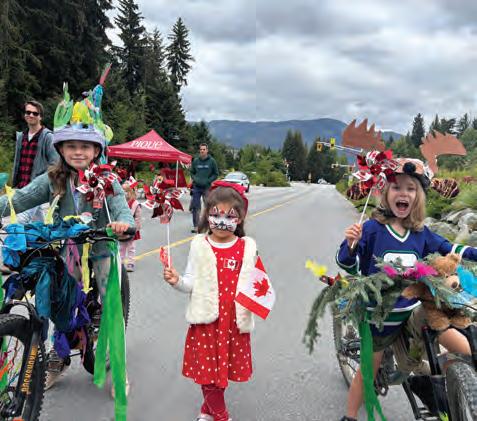
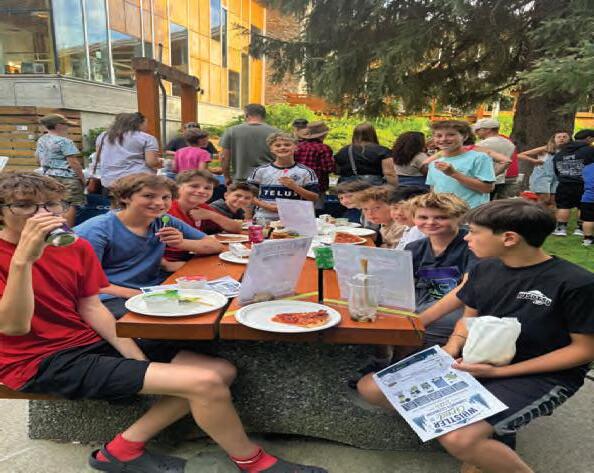
On behalf of the Whistler Grade 7 Community Celebration Volunteer Committee, we would like to extend our heartfelt thanks to everyone who helped make the Whistler Grade 7 Community Celebration on June 24 such a memorable success.
More than 160 students, families, volunteers, and community members gathered at Florence Petersen Park for an evening filled with connection, celebration, and fun. Thanks to beautiful weather and the extraordinary generosity of our community, the event exceeded all of our hopes.
This volunteer-led, grassroots initiative was created by Grade 7 parents with one
TheSea to Sky ContractorsDirectory isback! We offerfree listings foralllocal contractorsandtrades. Don’tmissoutonbeing part oftheregion’s go-to resource—simplyfillout thefor mbelow to claim yourspot.
simple goal: to provide a free, inclusive celebration where students from every school in Whistler could come together, build new friendships, reconnect with old ones, and celebrate this important milestone before beginning high school.
We would also like to thank the Whistler Youth Centre for hosting an open house for youth and families before the celebration, and recognize the incredible teachers, education assistants, administrators, support staff, and school communities who have supported this graduating class since kindergarten. It truly takes a village to help raise and inspire our children.
A special thank you goes to our volunteer planning committee—Nicole Baudisch, Liza Walli, Emily Dicken, Kath Tilley, Chantel Jackson, Karen Potter, Jenn Hashimoto, Jayne Touchet, the Amat Family, Terri Parker, and Mike and Ainslie Conway—whose countless volunteer hours brought this event to life.
We are grateful to the Whistler Community Foundation’s Neighbourhood Small Grants Program, the parents and families of Myrtle Philip Community School through the Camp Summit Fundraiser, and a generous private donor for providing the financial support that made this free event possible.
We also extend our sincere appreciation to Sancha Events for generously donating professional event services, music, graduation balloons, signage, and creating such a welcoming atmosphere
LETTERS TO THE EDITOR
for our graduates and families.
Finally, thank you to the businesses, organizations, and community partners whose generosity through donations of food, prizes, supplies, and services made the evening possible.
“Our hope is that this community-led celebration becomes a lasting Whistler tradition...”
- JACKIE DICKINSON
Our hope is that this community-led celebration becomes a lasting Whistler tradition, bringing together Grade 7 graduates from every school to celebrate this exciting transition in an inclusive and welcoming way.
To everyone who volunteered, donated, sponsored, attended, or helped spread the word—thank you. Your kindness, generosity, and community spirit created an evening our graduates and their families will remember for years to come.
Congratulations to the Class of 2026. We wish you all a wonderful summer and every success as you begin your high school journey.
Jackie Dickinson // Whistler Grade 7 Community Celebration Volunteer Committee n
NickDavies, Whistlerlocal andexperiencedfamilylawyer practisingacrossBCandYukon. Callat 604-602-9000 or visit www.macleanlaw.ca
New study finds ancient Sea to Sky lava flow was bigger than previously thought
THE RESEARCH HIGHLIGHTS HOW GLACIAL EROSION AND ANCIENT FLOODWATERS HELPED OBSCURE PART
BY LUKE FAULKS
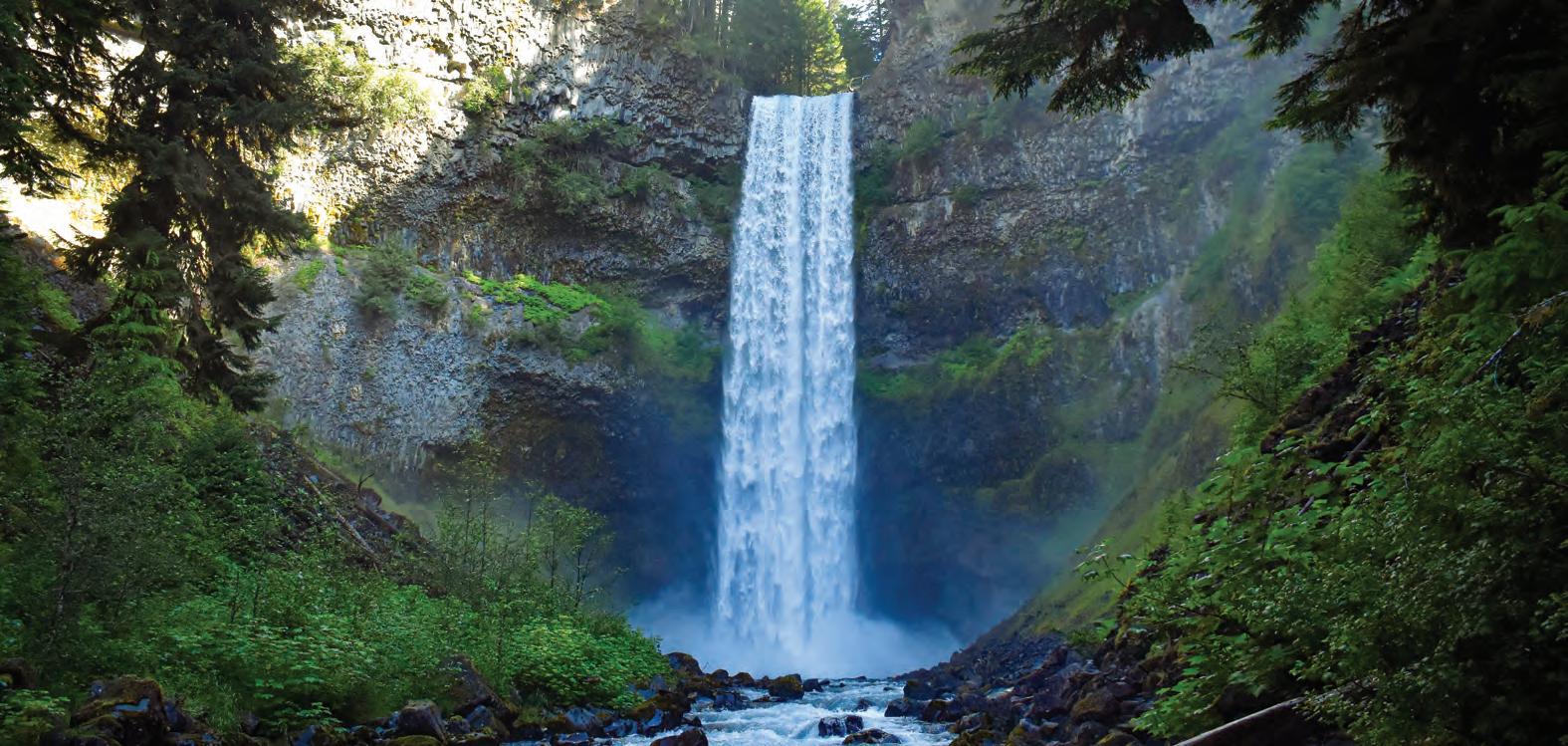
STAND AT THE Brandywine Falls viewpoint, and the water drops over a cliff that tells a story older than the waterfall itself.
The cascade pours off roughly 80 metres of ancient lava—part of the Cheakamus basalts, an approximately 18,000- to 20,000-year-old eruption that filled parts of the Callaghan and Cheakamus river valleys between Squamish and Whistler.
For University of British Columbia volcanologist Annie Borch, that cliff begged an important question: “Why is the waterfall there today?”
“If you’re filling the valley with lava, it’s going to be totally filled, right? It’s like filling a bathtub,” she told Pique. “So, why is there this big cliff?”
The answer, according to a new study published in the Journal of Volcanology and Geothermal Research, is that the Cheakamus basalt eruption was bigger than previously understood—but that much of the evidence was later removed by glacial erosion and a major glacial lake outburst flood.
“There’s been a lot of removal of
material through various processes, like these huge amounts of water that came through, ripped up the ground, and carved out giant canyons,” Borch said. “So without looking super carefully you could be tricked into thinking that it was smaller than it actually was.”
The study, authored by Borch, James Kelly Russell, René W. Barendregt and Glyn Williams-Jones, reconstructs the original size of the lava field by linking isolated downstream basalt remnants to
OF CHEAKAMUS’ VOLCANIC PAST
looked beyond the continuous lava outcrops already mapped in the Cheakamus system.
Before the new reconstruction, the Cheakamus eruption was understood to cover about 28 square kilometres and stretch roughly 31 kilometres from the source near Conflict Lake in the Callaghan Valley down to Daisy Lake.
But Borch and her co-authors identified basalt remnants farther downstream, including near Deadman’s
“It was a pretty staggering result to see how similar they all were...”
- ANNIE BORCH
the main Cheakamus basalt body.
The revised figure puts the lava field’s original extent at 38.4 square kilometres—9.9 square kilometres larger than its current mapped extent—with a minimum volume of about 2.3 cubic kilometres of lava ejected during the event.
That’s up from the previous estimate of 1.65 cubic kilometres of lava— meaning the reconstructed eruption volume is roughly 40 per cent larger than previously calculated.
READING THE MISSING LANDSCAPE
To find what was missing, the researchers
Lake and Starvation Lake. The Starvation Lake remnants sit about 7.3 kilometres south of the last previously mapped Cheakamus basalt outcrop.
The remnants hadn’t been previously understood to be a part of the same eruption, Borch explained.
“We knew they were there, but we didn’t really know what they were connected to,” Borch said. “We actually had to do quite a bit of work to link them to the body of the main body of the Cheakamus basalts, because we have a lot of volcanic edifices, bits of lava here and there.”
That work involved comparing
the downstream rocks with the main Cheakamus basalt body using petrography, geochemistry and paleomagnetism—in simpler terms, their minerals, chemical fingerprints and preserved magnetic signatures.
The downstream samples matched the Cheakamus basalts closely enough for the researchers to conclude they were part of the same eruption. The paper says the remnants strongly resemble the main basalt body, including shared columnar jointing patterns and flow structures.
The mineral and chemical comparisons helped narrow the link. Paleomagnetism helped test whether the rocks could have cooled during the same eruptive event.
“Essentially the Earth is surrounded by a magnetic field, right? And magnetic material, given the chance, will align with the magnetic field like the needle of a compass,” Borch explained.
“When the lava solidifies or goes below a certain temperature, the orientation of those minerals gets locked in, even if the magnetic field changes after the cooling of that lava.”
If lava samples preserve very different magnetic directions, it suggests a lot of time passed between eruptions. If they preserve similar directions, they likely cooled around the same time.
“It was a pretty staggering result to see how similar they all were, even though we kept taking more and more samples,” she said.
ANCIENT EVIDENCE Annie Borch, the grad student behind the research, says spots like Brandywine Falls offer a glimpse into the scale of the ancient floods that obscured evidence for the larger Cheakamus eruption.
THE IIO IS PROBING A SUNDAY AFTERNOON CRASH THAT LEFT A FEMALE MOTORCYCLIST DEAD FOLLOWING A HIGHWAY PATROL SPEED ENFORCEMENT ENCOUNTER
BY JENNIFER THUNCHER
The Squamish Chief
A SERIOUS CRASH on Sunday, July 5 that killed a motorcyclist and closed the Sea to Sky highway overnight is now being investigated by the provincial police oversight body.
The BC RCMP has notified the Independent Investigations Office of British Columbia (IIO BC) of an officerinvolved incident near Squamish where a woman died.
The IIO is a civilian-led police oversight agency responsible for investigating incidents of death or serious harm that may have been the result of the actions or inactions of a police officer, whether on or off duty.
According to an RCMP news release, on Sunday, July 5, at approximately 5:30 p.m., an officer with the British Columbia Highway Patrol (BCHP) was conducting
WHY ANCIENT LAVA MATTERS TODAY
The research is not a warning that an eruption is imminent. Instead, Borch said, it adds an important data point for understanding future volcanic hazards in the Garibaldi Volcanic Belt (GVB).
The GVB is the Canadian end of the Cascade volcanic arc—the same broader volcanic chain that extends south through the United States. In southwestern B.C., the Belt includes more than 2,300 volcanic edifices or vents that have been active over roughly the last two million years.
The paper notes it includes Canada’s youngest explosive eruption at Mount Meager, about 2,360 years before present, and at least 10 other Holocene eruptions.
Borch said that lack of a modern eruption record makes past eruptions especially important.
“It’s challenging to forecast volcanic activity in the Garibaldi Volcanic Belt today, because we haven’t observed any historic eruptions here, and don’t yet know what signs of unrest are linked to what style or size of eruption for these volcanoes,” she said. “We have to investigate past eruptions to know about future hazard, because we don’t have any eruptions that we’ve witnessed.”
In the paper, researchers compared the reconstructed Cheakamus eruption to modern basaltic eruptions of similar scale, including the 2014-15 Holuhraun eruption in Iceland, the 2018 Kīlauea eruption in Hawai’i and the 2021 Cumbre Vieja eruption in La Palma.
speed enforcement on Highway 99 when they saw two motorcyclists who were allegedly speeding and driving erratically.
“The officer left their position along the highway and moments later located one of the motorcyclists who was involved in a collision with a recreational vehicle. The female motorcyclist was declared deceased at the scene,” RCMP said in the release.
The IIO BC has been notified and is investigating police actions in this incident.
As the matter is now under investigation by the IIO BC, no further information will be released by police.
Meanwhile, BC Highway Patrol is continuing to investigate the incident and is seeking witnesses and dashcam video. Anyone who may have observed the motorcyclists, or may have dashcam video of them, between Britannia Beach and the crash scene are asked to contact 604-526-9744. n
The comparison isn’t meant to suggest the same impacts would play out in the Sea to Sky, Borch said, but it helps researchers understand the possible size, intensity and behaviour of an eruption style that has occurred here before.
“This type of eruption, where you have a bunch of lava coming from one vent, will follow topographic lows, so it will follow valleys, which unfortunately is where we all live and where all of our infrastructure is,” Borch said.
Borch said those details could help inform lava inundation maps—planning tools that model where lava might travel under different eruption scenarios.
UNANSWERED QUESTIONS
The study also points to a broader challenge for volcanic hazard work in the Sea to Sky: that the landscape scientists can see today is only a partial record of what happened.
“It’s likely that a lot of the lavas that exist in valleys today are systematically missing volume,” Borch said.
“But in the Sea to Sky especially, it’s sort of like trying to read a book where half the page is missing,” she said. “It’s a challenge to put the story together, and then it’s like trying to read a book covered in trees.”
Borch’s next work on the Cheakamus basalts is focused on documenting evidence of the glacial lake outburst flood itself, including the landforms and boulders left behind in Paradise Valley and around Brandywine Falls. n
At St ilh av n,su cces si sn’tsolitar y. It ’s shared We ’reg rowingwithagentswh ob elieve th at co llabo ra tionan dp ro fess ionalis me leva te usall. Lo okin gtoraiseth eb ar ?
WAG SAYS NO MONEY WAS LOST, BUT THE FRAUDULENT DONATION BRIEFLY OPENED THE DOOR TO MORE STAFFING, MORE INTAKES AND EXPANDED MEDICAL CARE FOR ANIMALS IN NEED
BY LUKE FAULKS
WHISTLER ANIMALS Galore (WAG) thought it had received the kind of donation that could change the immediate future for animals in its care.
Instead, the $67,000 that appeared to have landed in WAG’s account turned out to be fraudulent—and part of an attempted scam to steal nearly $20,000 from the Whistler animal shelter.
Naomi Holliday, WAG’s director of operations and development, said the attempted scam began when someone claiming to be from “Factor Consulting” contacted the shelter with what seemed like an amazing offer.
“They reached out, basically saying, ‘Good news, one of my clients would like to donate to your organization,’” Holliday said. “They’d like to support monthly—between $3,500 [and] $5,000 monthly—which is insane.”
After further communication, the supposed donor shifted from a monthly gift to a lump sum. Holliday said she later received a call from the bank indicating US$48,000 had been transferred to WAG. Converted into Canadian dollars, that worked out to roughly $67,000.
The bank warned WAG the money would take 20 days to clear and should not be spent in the meantime.
Then came the ask that exposed the scam.
The person claiming to represent the donor said the money had been sent in U.S. dollars by mistake, rather than Canadian dollars, and asked WAG to return the difference—about $20,000.
‘DON’T SEND PEOPLE MONEY’ WAG did not lose any money.
Holliday said that was partly because the shelter did not have $20,000 available to send, and partly because she knew
not to transfer funds before the original payment had cleared.
She noted the person had communicated by both email and phone, and the initial approach sounded credible because the company being impersonated seemed to be legitimate. The scammer had also used what looked like a company email address.
The request also did not initially seem strange because WAG is accustomed to receiving donations from people outside Whistler.
“Sometimes people from all over the world will donate to us because they ski here or they have a second home here,” Holliday said. “So it’s not strange to have donations pop up out of the blue.”
In retrospect, Holliday said, one step she would recommend to other non-profits is independently verifying the person making the donation by contacting the company directly through its official website or phone number—
not by using contact details supplied in the original email.
“Obviously, don’t send people money is the No. 1 thing,” she said.
WAG’s bank, BlueShore Financial (now Beem Credit Union), also helped flag the issue, Holliday said.
The Canadian Anti-Fraud Centre (CAFC) says fraud and cybercrime can be reported online or by phone at 1-888495-8501, and the RCMP advises victims of fraud or cybercrime to contact local police as well as the CAFC.
The Canada Revenue Agency also says scams or fraud should be reported to the CAFC even when someone did not ultimately lose money.
WHAT THE MONEY COULD HAVE MEANT
For WAG, the emotional sting came not from money lost, but from what the shelter briefly thought it could do.
The organization said in a Facebook
post on the scam that 75 per cent of its budget comes from donations. Holliday said a gift of that size would have helped address some immediate pressures at the shelter, starting with staffing.
“We don’t have enough money to be fully staffed here,” she said. “Some of the feedback we’ve gotten has been that we’re not fully open to the public, but we actually don’t have enough staff to even have somebody here as much as we would like.”
Hiring a full-time staff member was one of the first things that came to mind.
The money could also have helped with Rex, a Shepherd mix Holliday said was intentionally hit by a car and has already undergone two leg surgeries. Rex may need a third surgery or an amputation, she said, and also has a neurological concern that could require an MRI.
“It would have given us a bit of freedom to explore what’s going on with Rex,” Holliday said.
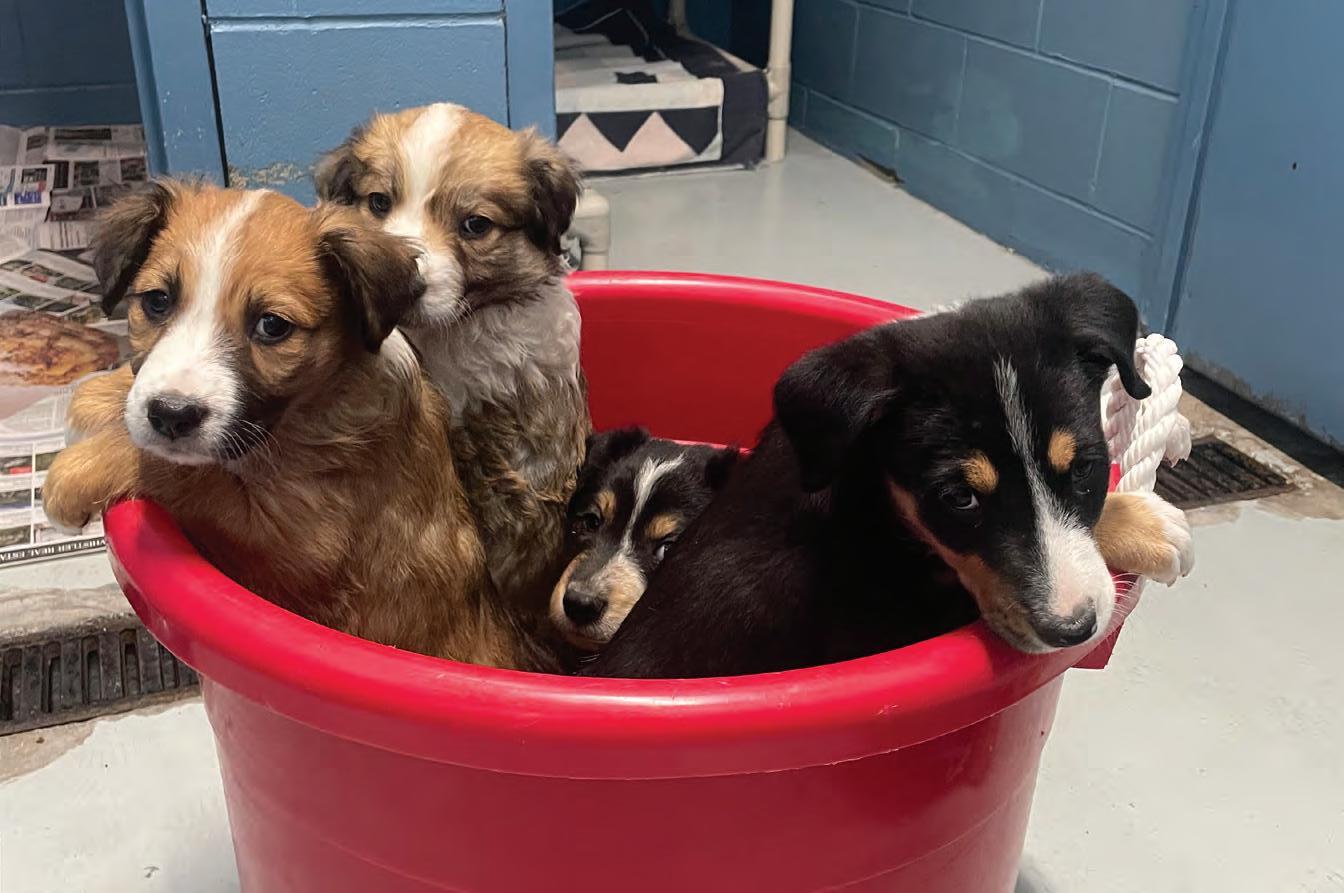
The apparent donation also influenced WAG’s decision to take in Maddy and her puppies at a time when the shelter was already caring for 12 dogs, which Holliday described as a lot for WAG.
“We basically said yes to a mum and some puppies, which obviously we have still said yes to,” she said. “They’re here, they’re loving life.”
Even without the donation, Holliday said WAG is continuing to care for the animals it has taken in.
“The good thing is, no money was stolen,” she said. “We sort of feel like we’ve lost money, but we haven’t, so we’re going to keep doing what we do.”
People who want to support WAG can donate through the shelter’s website. WAG says donations help cover costs including medication, veterinary exams, spay and neuter surgeries, critical-care cases, shelter, adoption and fostering programs. n
SPORTAMii app aims to help locals find friends through sport
THE APP, LAUNCHED BY FORMER WHISTLER LOCALS HOLLY MITCHELL AND GOWTHAM ASHOK KUMAR, MATCHES USERS BY ACTIVITY, SKILL LEVEL AND LOCATION
BY LUKE FAULKS
MOVING TO WHISTLER as an athletic person can be easy on paper: the resort has mountains, trails, lakes and snow— it’s a ready-made outdoor lifestyle.
But finding people to share all of that with isn’t always easy.
That was the experience for Holly Mitchell after she moved to Canada six years ago and settled in Whistler, where she said the outdoor culture could feel intimidating if you did not already have
a group—or the same ability level as the people around you.
“When I first moved here, I found it pretty hard to make girlfriends, because everyone was ... like a really pro athlete, and I wasn’t in that scene, so it was a bit hard,” Mitchell said.
Mitchell said she heard similar stories from other Whistlerites, including women posting in local Facebook groups about being new to town, feeling lonely or trying to meet friends.
Her partner, Gowtham Ashok Kumar, had a similar problem finding people to play tennis with. The couple met through
tennis, but Mitchell joked the pairing was not always a perfect match.
“Gowtham’s really good, and I’m really not,” Mitchell said. “So we thought, ‘How cool would it be to be able to match people at your level?’”
Those conversations eventually became SPORTAMii, a free app designed to help people find friends, training partners and activity buddies based on shared sports, interests, locations and ability levels.
The app is currently focused on Coastal B.C., including Vancouver Island, the Gulf Islands, Squamish, Whistler,
Pemberton, Lillooet, North Vancouver and West Vancouver, with plans to expand later.
HOW THE APP WORKS
After signing up, users build a profile with basic information, location, photos, a short bio and the sports or activities they are interested in. Mitchell said the app currently has about 43 sports, with users able to choose ability levels such as beginner, intermediate or advanced for some activities.
PUP INTERRUPTED The donation influenced the shelter’s decision to take on Maddy and her puppies.
PHOTO COURTESY OF WAG
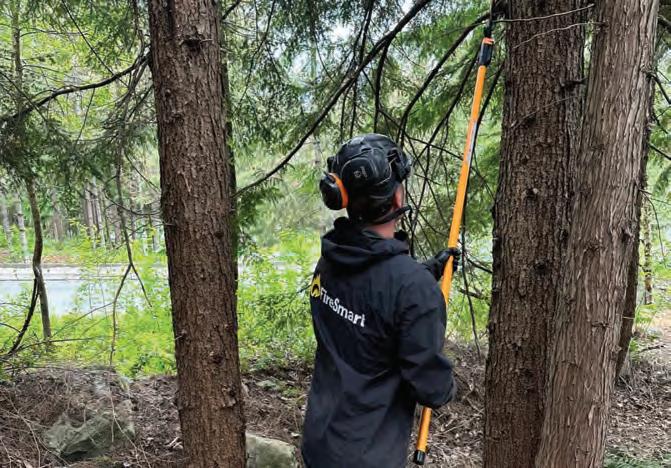
POW Canada, FireSmart Whistler rally volunteers to reduce wildfire risk
VOLUNTEER DAYS WILL RUN ON JULY 10 AND 25 AS CREWS CLEAR FOREST
BY LUKE FAULKS
POW CANADA and FireSmart Whistler are teaming up this summer to put wildfire mitigation work into the hands of local volunteers, with a series of community work days aimed at reducing fuel loads in public areas around Whistler.
“We’ve watched our glaciers disappear in recent years, and now we live in fear of a wildfire event each summer. Despite our best efforts, fossil fuel emissions continue to rise, so we felt we needed to add wildfire mitigation to our advocacy work,” said Protect Our Winters (POW) Canada co-founder and Whistler resident Mike Douglas.
The FireSmart Volunteer Days program launched June 26 near the base of the Blackcomb Gondola, where about 20 volunteers spent three hours clearing deadfall, low branches and forest debris. The work was done alongside Whistler FireSmart as part of the Resort Municipality of Whistler’s (RMOW) existing wildfire-resilience program.
The next volunteer days will be held on July 10 and 25. Prospective volunteers are asked to RSVP on the POW website.
DEBRIS AND LADDER FUELS FROM PUBLIC AREAS AROUND WHISTLER
‘THE WORK IS NEVER-ENDING’
Organizers said the Blackcomb base area was a visible place to begin, given the importance of the lifts to Whistler’s community.
“The work is never-ending,” said Mike Brew of Whistler FireSmart. “Once we
go through and do a proper clean-up of an area like we did [on June 26], it will typically be resilient to fire for about 10 years before we have to go back in again. Our program here started in 2014 so we are revisiting sites in and around homes that
were previously done. There’s more work than we can possibly get through so we welcome cooperative efforts like this.”
FireSmart experts say the goal is to remove “ladder fuels”—material that can carry fire from the forest floor into the canopy, where flames can intensify and become harder for firefighters to control.
Volunteers removed about seven tonnes of material during the first threehour session, according to a release shared with Pique. Branches and debris were chipped and hauled away by FireSmart staff.
The first work day came as firefighters were battling a wildfire on Cougar Mountain.
‘ONE
LITTLE BIT AT A TIME’
POW member and volunteer Sam Rainer said wildfire has become a growing threat in Whistler and other mountain communities.
“Wildfire is probably my biggest concern. Every year we’ve been dealing with smoke, so if you look at Jasper or Lytton, it sort of feels like it’s becoming a matter of time before we start to see [something like that] around here,” Rainer said. “It feels good to come out and do what you can. One little bit at a time can actually make a difference.”
FOREST FUELS ”There’s more work than we can possibly get through so we welcome cooperative efforts like this,” said FireSmart’s Mike Brew.
PHOTO COURTESY OF POW CANADA
SLRD approves pay increases for next board term
UPDATED BYLAW COMES AFTER MULTI-YEAR REVIEW AND TAKES EFFECT NOV. 25
BY LUKE FAULKS
THE SQUAMISH-LILLOOET Regional District (SLRD) board has approved a new remuneration bylaw that will increase pay for directors when the next board is sworn in after the 2026 local government election.
Under the new bylaw, electoral area directors will receive $41,980 a year, up from $36,915. Municipal directors will receive $20,713, up from $18,462.
The board chair’s annual indemnity will rise to $36,638, up from $25,885, while the vice-chair’s indemnity will more than double to $10,611, up from $5,054. The Electoral Area Directors Committee chair indemnity will increase to $5,966 from $4,143.
Chair Jen Ford said the updated bylaw reflects the time and responsibility involved in regional district work.
“It’s not something that you do one day a month or two days a month off the side of your desk,” Ford said. “There’s some real rigour that’s required to do this job.”
The bylaw, adopted during the board’s June 24 board meeting, comes after a multi-year review of director pay. The changes take effect Nov. 25.
Human resources manager Monica Halitzki told the board the bylaw was
“long anticipated,” and said it updates director stipends, indemnities and eligible expenses reviewed during the current term.
Lillooet Mayor Laurie Hopfl ultimately supported the motion, but was grappling with the timing of the increases and the impact they might have on taxpayers.
The report says the stipend increases
are expected to add about 91 cents per $1 million of assessed value to 2027 taxation. The estimated unbudgeted cost in 2026 is $6,654. The increases will be factored into the 2027 budget and 20272031 financial plan.
“I think taxpayers are having a hard time,” Hopfl said. “I think they’re struggling out there with food, gas, and all sorts of everything else.”
Other directors argued higher pay could make the roles more accessible. Squamish Mayor Armand Hurford said low compensation risks limiting who can afford to serve.
“If we’re not compensating elected officials to a reasonable amount, then the folks that can afford to do these jobs, because things are tight, are likely going to be wealthy and retired,” he said.
Director Tony Rainbow, who has pushed for higher remuneration, said the final numbers still did not go as far as he wanted.
“We don’t live in one of the cheaper parts of the province,” he told the board. “I would bet we don’t even live in the sort of an average part of the province in terms of housing costs. So, this is better than it was but nowhere near where I think it should be.”
The bylaw also adds a $1,500 annual telecommunications allowance for electoral area directors, mileage reimbursement for regional district business over 60 kilometres, a $100 dependent-care subsidy for some meetings, updated meal and incidental rates, and higher meeting fees for alternate directors.
After the discussion, the board gave the bylaw three readings and adopted it without opposition. n
School District 48 rolls out updated policy regulating animals in schools
THE
POLICY REGULATES ASSISTANCE
DOGS,
EMOTIONAL SUPPORT
DOGS,
ANIMALS FOR EDUCATION, AND WHEN PEOPLE CAN BRING PETS ONTO SCHOOL GROUNDS
BY LIZ MCDONALD
The
Squamish Chief
SCHOOL DISTRICT 48 updated its policy for animals on school grounds during a policy committee meeting held June 17. The policy outlines the scope and time pets can be outside of school buildings, and when they are allowed indoors.
“If you were intermediate at one sport, then you could save that, and then you could also indicate that, ‘Oh, I’m also into camping,’ and camping is just like a social level,” she explained.
Users can then match with people who share the same activity, or narrow their search to people at the same level. The app also allows users to choose who they want to match with, including options for same-gender connections.
Ashok Kumar said the app “can be used for dating,” but that is not the purpose.
“It’s mainly to find sports friends and active people, like to try and get with likeminded people in the community,” he said.
“This was a request just to feedback review at the end of the school year. And, happy to report that it’s going very well. Yes, there were some growing pains as folks did have to adjust to not having their dogs freely roaming,” Supt. Chris Nicholson said.
After 8 a.m. to 5 p.m., animals can be on school property if they are leashed by an adult, not near buildings or play areas,
Mitchell said many early users appear to be looking for friendship rather than dating.
“There’s a lot of girls on there, just looking for girlfriends, and same with guys,” she said.
The SPORTAMii website describes the app as a way to “find friends, training partners or adventure buddies nearby,” with filters for sport, skill level, distance and age group.
EARLY GROWTH AND NEXT STEPS
About two weeks after launch, Ashok Kumar said SPORTAMii had about 500 users. The app is available on iOS, while an Android version is expected to follow.
Mitchell said some users have already met up, including women in Kitsilano who
and owners dispose of pet waste.
“From time to time, I do hear of folks bringing their dog after school, and then our janitors and custodians who work very, very hard do report that out because it is not their role to clean up after said dog,” he said.
Squamish trustee Lisa Turpin noted the signage at schools as a helpful addition brought forward by facilities staff.
connected first over coffee before planning a hike, and others using the app for tennis matches. The pair has also been adjusting the app based on early feedback, including adding users’ locations to profile cards and limiting how many sports appear on a card at first glance.
“How many girls on the app” has been one of the biggest surprises so far, Mitchell said, adding the main demographic appears to be people between about 23 and 40.
The app’s safety features are still being built out. The app currently uses email verification, and Mitchell said the next planned feature is an ID-verification process. Ashok Kumar said profile verification may become part of a future premium feature,
“More people seem to be leashing said animals, and there seems to be less poop on my walk,” she said. Also in the policy are conditions regulating animals indoors, including assistance dogs, emotional support dogs, and animals for educational purposes. The issue came up in 2025 after a
while both he and Mitchell reiterated the basic app will remain free.
Looking ahead, the founders hope to expand SPORTAMii across Canada, potentially reaching Alberta within six months. They’re also planning in-person events—including a riding event in Pemberton and Pilates in the park, aimed at giving people another way to meet.
Updates are posted to Facebook, Instagram and their website.
Mitchell said the name came from her mother: “Ami” means friend in French, while the two lower-case i’s at the end are meant to represent two people.
“The app is for friendship, and we want that to be clear within the name,” she said.
RIGOUR REQUIRED The next general local election will be held on Oct. 17.
PHOTO BY JENNIFER THUNCHER
parent in Pemberton spoke to the School District about challenges faced by their child, who wasn’t allowed to have her emotional support pet in school.
Assistance dogs, including “guide dogs, service dogs, or therapy dogs” are allowed in all SD 48 sites when aiding a person with a disability, so long as
“There was a lot of growing pains for sure in Pemberton.”
- MELISSA RONAYNE
they have the required certifications and accreditations, approvals based on the student’s individual education plan, and the school community is informed.
Emotional support dogs are given the green light on a case-by-case basis.
The principal at a school will evaluate documentation, which includes a note from a mental health professional attesting that the student needs the support dog for their diagnosed mental health condition. Then, the superintendent will give conditional approval pending the following: license and registration of the dog; health and vaccination status of
the dog; behavioural history of the dog; completion of an advanced training course at a recognized dog training organization/ facility, to be approved in advance by the superintendent.
The principal will communicate the approval with the school in advance of the dog coming to school, and a hazard and risk assessment is required by the site health and safety committee to evaluate school community impacts “and develop a plan to monitor and address these impacts on an established review schedule,” according to the policy.
Sometimes, animals are brought in
by teachers for lessons, with Nicholson citing a Signal Hill teacher who used baby chicks to teach youth about lifecycles.
These animals receive pre-approval first from the principal, must be connected to the curriculum and leashed, tethered or kept in an enclosure and supervised by “a competent adult.”
The principal of each school will review the policy each year with the parent advisory council and staff. They can also add site-specific recommendations for unique cases.
Any animal that causes health, safety or behavioural issues can be removed;
POW FIRESMART FROM PAGE 13
Upcoming POW Canada and FireSmart Whistler volunteer days are scheduled for July 10 and July 25.
The July 10 event will run from 10 a.m. to 1 p.m. behind the Blackcomb Administration Building, with tools, staff and a chipper provided by FireSmart Whistler. No experience is required, and volunteers are asked to bring work gloves, sturdy footwear and eye protection if they have them. Spots are currently capped at 25 volunteers.
Douglas noted the teams are also offering an après celebration for volunteers.
“We are partnering with local organizations that support POW Canada for some food and drinks after each work session,” he told Pique in a follow-
up email. “It’s a great way to socialize afterwards and show some appreciation to the folks that come out.”
More information and registration details are available through POW Canada’s event page.
FIRESMART STEPS AT HOME
The volunteer days add to a broader FireSmart program in Whistler.
The RMOW offers free FireSmart assessments, neighbourhood work days and a community chipper service to help residents remove potential fire fuel from their properties.
FireSmart BC recommends residents start close to home by moving combustibles such as firewood, propane tanks, patio
aggressive or dangerous animals will be removed immediately, and schools will do their best to accommodate students with sensitivities, allergies or fear of animals.
Melissa Ronayne, Village of Pemberton trustee, applauded the work that went into the policy’s creation.
“I wanted to say thank you for the way that this is written. There was a lot of growing pains for sure in Pemberton. There were a lot of upset people, and through this policy, they’ve been able to figure out how to work through and see what is appropriate, and I think it’s worked really well,” she said. n
furniture and toys at least 10 metres from the house; keeping grass shorter than 10 centimetres; trimming tree limbs at least two metres above the ground; cleaning leaves and debris from gutters; and regularly removing dead leaves, branches and dry grass from yards.
Residents are also encouraged to clean debris from under decks, clear roofs and gutters of flammable material, prune trees, prepare an evacuation plan and monitor current wildfire conditions and evacuation alerts.
Local FireSmart information is available through the RMOW’s FireSmart page, while broader home-preparedness guides, checklists and landscaping resources are available through FireSmart BC. n
‘I know that story’:
Líl’wat-led research project links ancient stories to modern Mount Meager hazards
RESEARCHERS
FROM SFU AND UBC WILL STUDY LANDSLIDES, FLOODING AND CLIMATE CHANGE WHILE CENTRING COMMUNITY KNOWLEDGE
BY LUKE FAULKS
LONG BEFORE researchers mapped Mount Meager’s hazards, the Líl’wat Nation had a story for how the mountain changed the river.
The story of the Copper Canoe follows two brothers travelling through a transformed Lillooet River valley. In one part of the story, the canoe cuts through a rock wall, creating the narrow opening now known as Keyhole Falls. In the tradition, the breach allows fish to flow back into the valley, feeding members of the Nation downstream.
Researchers have since connected that oral history with geological evidence of a volcanic eruption roughly 2,400 years ago, when material from Mount Meager, or Qwelqwelústen, blocked the Lillooet River, formed a lake and eventually released a major outburst flood downstream.
For Líl’wat territory stewardship manager Lhpatq Maxine Bruce, the connection landed when Simon Fraser University (SFU) volcanologist Glyn Williams-Jones explained the geological version of Keyhole Falls.
“He started to talk about from his
geological history the creation of Keyhole Falls,” Bruce said. “He explained that this thick lava was spewed out of Mount Meager and went right over the Lillooet River, and it stopped the river, and so that lava hardened up, and it started to create a lake behind.
“I was freaking out,” she recalled. “I know that story. Of course, I know it from a whole different perspective.”
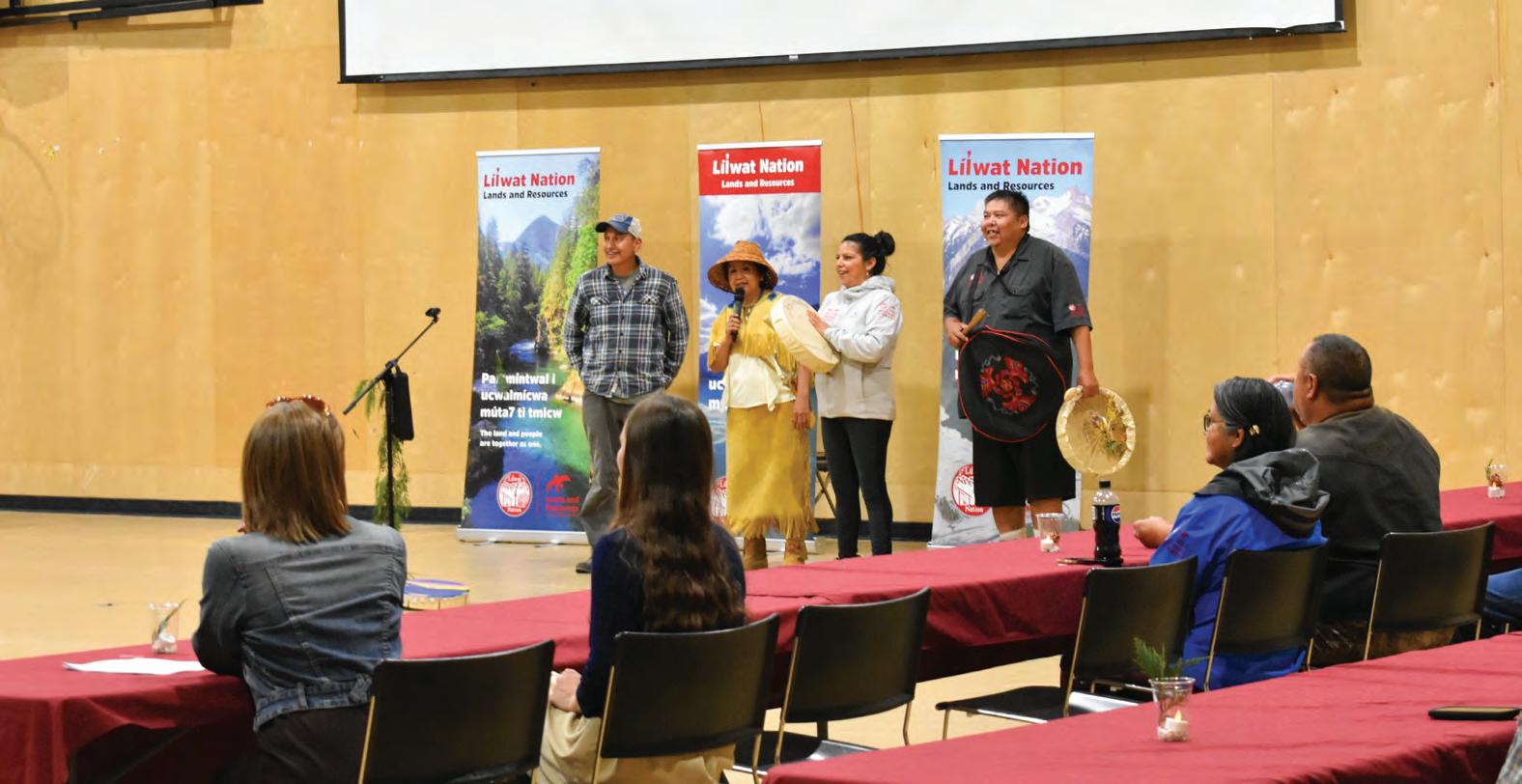
That linkage between traditional and scientific knowledge now helps frame a new multi-year research partnership between the Líl’wat Nation, University of British Columbia, SFU, Lancaster University and the Pemberton Valley Dyking District (PVDD).
The project is looking beyond treating Mount Meager as a hazard, instead asking how science, oral history and community priorities can work together to better understand a changing watershed.
A LIVING HAZARD ABOVE THE VALLEY
Mount Meager is one of the most active landslide areas in Canada, and a continuing concern for people living downstream in Mount Currie, Pemberton and the Lillooet River valley.
waterways and sent material into the Lillooet River valley.
Bruce remembers the emergency response. She recalls going “door to door evacuating people,” moving residents to the Xet ’ ólacw community and setting up Emergency Social Services registration.
The slide created a berm, she said, and water began rising behind it. But rather than breaking through in one dramatic burst, “it just creeped over, and took about four hours to get to the lake,” Bruce recalled.
Still the impacts of the slide didn’t end when the immediate emergency passed. Bruce said Líl’wat Nation has continued working with the diking district “almost every year” to remove gravel from the Lillooet River and lower the riverbed.
Holly Chubb, a UBC postdoctoral research fellow and project manager for the watershed monitoring project, said the new study builds from that history while taking a broader view.
“We’re taking a much larger-scale watershed approach,” Chubb said. “We’re looking not only at kind of what hazards are at the complex, but also how that is affecting downstream flood risk, how that’s affecting ecosystem health.”
the river’s capacity and make flooding more likely—all while affecting Lillooet Lake, wetlands, ecosystem dynamics, traditional practices, cultural practices and food security.
The study is meant to understand those wider, watershed-level impacts.
FROM SENSORS TO SEDIMENT
The project will use both technical monitoring and community direction to better understand how hazards move through the watershed.
Researchers are looking at landslides, glacier retreat, volcanism, sediment transport and flooding as connected processes, Chubb said.
“This is all about the cascades, right?” she said. “It’s starting with the glaciers, the glacier recession, the volcanism, the landslide, then the sediment transportation, and the flooding, and it’s all connected.”
Some of that work is already highly technical.
The most recent major reminder came on Aug. 6, 2010, when a slide (known to the Líl’wat as the Capricorn Creek slide) sent tens of millions of cubic metres of rock and debris down the mountain system. The slide travelled through Capricorn Creek and Meager Creek, temporarily dammed
Chubb, who completed her doctoral research on the 2010 landslide, explained that about 50 million cubic metres of sediment was deposited during the event. The Lillooet River continues to move that material downstream, which can raise the riverbed, reduce
Researchers described using LiDAR to scan the 2010 landslide deposit and compare it with airborne LiDAR from the mid-2010s. That comparison can help estimate how the deposit has changed, where erosion is happening and how sediment is being transported downstream.
Monitoring stations also include cameras and seismometers, with more HISTORICAL
Líl’wat leadership celebrated the project as an example of community consultation done right.
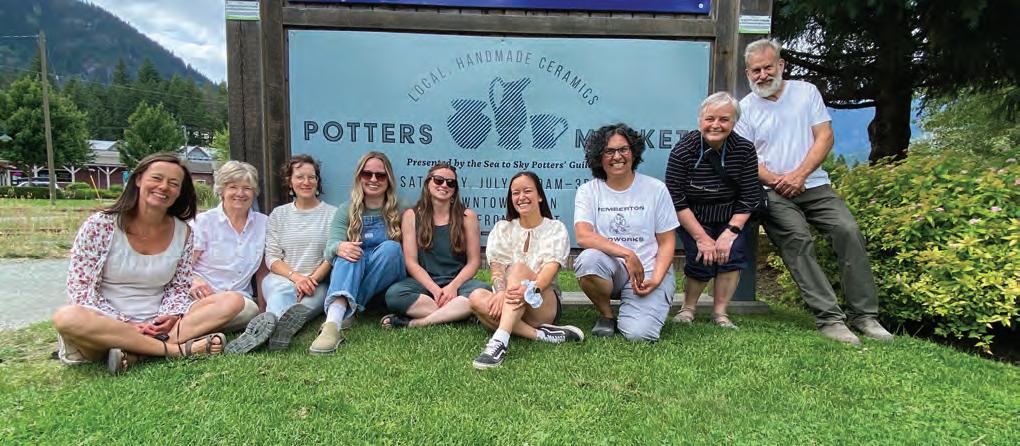
Potters Market returns to Pemberton with hands-on clay and live musical acts
THE THIRD ANNUAL SEA TO SKY POTTERS GUILD EVENT RUNS JULY 11 AT THE DOWNTOWN BARN
BY LUKE FAULKS
PEMBERTON’S POTTERS Market is returning for its third year with more than finished ceramics on display.
The Sea to Sky Potters Guild’s third annual market will run Saturday, July 11 from 10 a.m. to 3 p.m. at the Downtown Community Barn, located at 7444 Frontier Street in Pemberton. This year’s event will feature nine vendors, live music, guild information tables and hands-on clay activities aimed at giving visitors a closer look at the ceramic process.
Coral Patola, a Guild board member and the group’s Pemberton-area coordinator, said last year’s most successful interactive elements are returning.
“We’re returning with our clay play station that was really successful last year, so it’s like kind of a hands-on, interactive kind of space for people just to touch clay, play with it, maybe for the first time, and just kind of get their hands dirty,” Patola said.
The clay play station will be led by Kathleen Tennock, a guild member and Pemberton ceramic artist. Last year, visitors helped create a clay version of One Mile Lake, adding trees, people and animals to a shared clay scene. Patola said a similar community-built diorama is planned this year.
The market will also bring back a wheel demonstration station, where potters will throw different forms and talk visitors through the process.
‘QUINTESSENTIALLY PEMBERTON’
This year’s event will also include a Pemberton Arts Council presence. Patola explained the council is hoping to open a community clay centre across from the barn, and will be on site to answer questions from the community.
Live music is also being added to the market. Chicks with Picks will be performing around 11 a.m., followed later in the afternoon by B. Daddy and
the Coconut.
Patola said the barn itself is part of what makes the event work.
“The barn is just such a lovely venue. It’s such a gorgeous building. It’s got the railroad, the horses come by. It just feels very quintessentially Pemberton,” they said. “It’s a time where it’s all just potters, which is cool. Like, if I go to another market, it’s usually food and clothing and jewelry, which is all nice, but this is like a time for all ceramic enthusiasts to get together and talk shop and get excited about new things that are happening in our community.”
Patola said last year’s response was positive, especially from people interested in the range of ceramic work being produced across the Sea to Sky.
“I think people were really excited to just see the varied styles of artists that are in the Sea to Sky,” they said. “We all have
“The barn is just such a lovely venue. It’s such a gorgeous building ... It just feels very quintessentially Pemberton.”
- CORAL PATOLA
a different voice expressing it through ceramics, whether it’s sculptural or more utilitarian.”
The market is not intended to represent every potter in the corridor, Patola added, but it does offer a strong selection, with a focus on Pembertonbased artists.
MOUNT MEAGER HAZARDS FROM PAGE 16
instruments planned. Researchers said one station has already captured a landslide moving down onto a glacier. Other sensors are being deployed to detect ground vibrations, small earthquakes and sound waves from snow avalanches and rock avalanches.
The work could eventually support improved monitoring and warning systems, though researchers emphasized the project is still in its early stages.
Chubb recalled the proposal began taking shape around 2023 through meetings with elders, Líl’wat referral and committee processes, and relationship-building between the Nation and researchers.
But Chubb said the final outputs are
intentionally flexible.
The team expects to produce a documentary, public talks, community resources and possibly policy recommendations, but the exact direction will be guided by community.
WHO GETS TO ASK THE QUESTIONS?
For project organizers, the way the research is done is as important as what it finds.
“Researchers often control the agenda, and we don’t want to do that,” Chubb said. “Our interests don’t always align with community interests and priorities.”
Instead, the team plans to use one-on-
one interviews, community conversations, focus groups and other sessions to shape the work as it unfolds. Chubb said community members will not be treated as “passive recipients of knowledge,” but will be asked to critique the research, guide the methods and identify where researchers can and can’t go.
“This is not my land to traipse across and do whatever I want,” she said. “As a researcher, it needs active consent and permission.”
Xzúmalus Roxanne Joe, territory land use referral coordinator, said one condition for studies on Líl’wat lands is that results be shared back with the Nation and community.
KEEPING THE CLAY COMMUNITY GROWING
Beyond the market, Patola said the guild’s work is about creating more opportunities for people to learn, connect and experiment with ceramics.
For aspiring potters, they pointed to kiln-sharing options in the Sea to Sky, where people can pay to fire their work without investing in their own kiln. The guild also hosts Raku firings, social meetups, material swaps, a summer barbecue and community events, including an Empty Bowls fundraiser for the food bank expected to return later this year.
“We’re all just trying to make opportunities for people to learn and share knowledge around ceramic and get excited about it,” Patola said.
Proceeds from the market will support the Sea to Sky Potters’ fundraising efforts, which help create educational and experiential opportunities for local ceramic artists and the wider community.
Check out the Sea to Sky Potters Guild on Instagram and Facebook to stay up to date with upcoming events. n
Michelle Edwards, representing the St’át’imc Chiefs Council, said that qualifier is essential.
“They need to research what we want to know,” Edwards said. “Because they always come in, they have a question and they want us to help them answer it, but it has to be what we want answered.”
For Bruce, the project also reflects the power of oral history to carry knowledge across generations.
“The Líl’wat people, we have our own story of the creation of Keyhole Falls, and we tell them in a different way that’s easier on our hearts, and so that we can tell the story to our children,” she said. “That’s the magic of oral history.” n
STATE OF CLAY The market will feature nine vendors, live music and hands-on clay activities.
PHOTO COURTESY OF THE SEA TO SKY POTTERS
Rocks in my Head II: Percé Rock
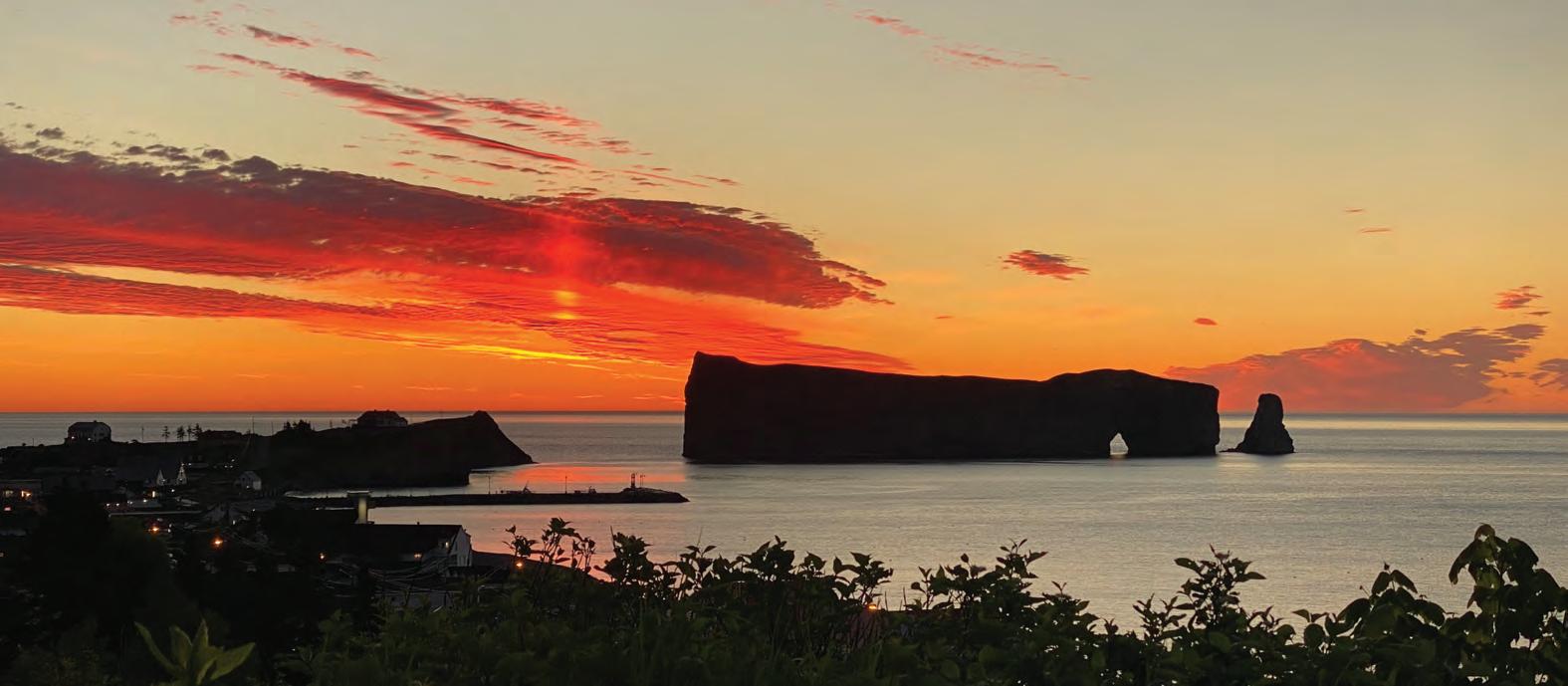
AT 3:58 A.M. the sky above Percé Rock is ablaze, while the North Atlantic on which it flames remains preternaturally calm. As the sun rises, I watch smouldering celestial embers deliquesce into the sea from HôtelMotel Le Mirage—aptly named given the hallucinatory dawn and famous monolith’s reputation for shifting colours, looming as a phantom during storms, even presenting as a ship on occasion.
The drive to Percé from La Malbaie, on the north shore of the St. Lawrence River, had been long but stunningly picturesque, a ferry, lighthouses, coves and quaint villages, followed by forest palisades, sea
BY LESLIE ANTHONY
cliffs and rock-cuts through wildly folded sediments—like ice-cream cake that had melted then refrozen. I’d turned south at Forillon National Park, cutting inland across the Gaspé Peninsula. Late in the evening, as I rounded Pointe St. Pierre, Percé Rock took shape in the gloaming, a full moon shimmering in the stillness of ocean between us.
An historic natural icon visited by some 400,000 each year, “pierced rock” is the eponymous focus of compact UNESCO Global Géoparc de Percé, whose exposures of sea-bottom sediment span the Cambrian, Ordovician, Silurian, Devonian and Carboniferous periods. A massive, steep-sided stack of siliceous Devonian limestone over 400 million years old, Percé was cast adrift from the
coast by the fractious mountain-building of the Appalachians. Standing 88 metres high, 433 metres in length and 90 metres wide, with a 20-metre arch and obelisk at one end, fossils from some 150 different species can be found embedded within its matrix—though not for much longer; Percé’s wave-racked cliffs lose 300 tonnes of rock to the sea each year, which explains some oddities in its recorded history.
When Jacques Cartier sailed through in 1534, Percé featured three holes through which the sea passed; by the time Champlain arrived in 1603 there was but one. In a mid-1700s illustration it sported two again, until one of those collapsed in 1845, leaving today’s sole arch. Future holes, meanwhile, are being excavated on the rock’s seaward side, as I observe on a boat tour that begins with close-up views of
the physical landscapes, soil chemistry and hydrology that determine various types of habitat. The first to articulate this relationship was globetrotting German naturalist and explorer Alexander von Humboldt, who, in his 1858 tour-de-force Cosmos, wrote: “In considering the study of physical phenomena… we find its noblest and most important result to be a knowledge of the chain of connection, by which all natural forces are linked together, and made mutually dependent upon each other.”
That chain of connection is writ large as we round Bonaventure, where tens of thousands of seabirds have used natural fractures, shelves and depressions in sea cliffs to build their nests—including one of the largest gannet colonies on earth. Though a later hike to the colony will
[I]t’s well known that biodiversity is underlain by geodiversity...
Percé before peeling off toward its geologic confrère within Île-Bonaventure-et-duRocher-Percé National Park.
While offering no formal protections of their own, geopark designations by UNESCO require that significant conservation measures already exist for some of their key features—for which national and provincial parks handily serve. Created in 1985, IBRP’s original intent was to protect internationally significant bird colonies on both Île Bonaventure and Percé Rock; in so doing, it also fortuitously preserved their interconnected geological heritage.
Indeed it’s well known that biodiversity is underlain by geodiversity, which combines with climate to create
show me how these enormous, stunningly beautiful birds tolerate the biologists researching them, for now they wheel in alarm above the boat, an animate cloud condensing from inanimate cliffs.
Next day, I clock another example of geobiology at a geosite atop Mont Sainte-Anne. Here, where water-eroded caves riddle conglomerate bedrock with “bottomless holes,” I hike into the so-called Magic Forest, a knot of eastern red cedar that line a small graben (a geologic term adopted from the German for “trench” that describes a wedge of bedrock subsided between two faults). Along with ecosystem buddies moss and ferns, cedars flourish here to the exclusion of other trees
because of their tolerance for the water that flushes through such geologic sinks during rain events.
I discuss these particulars with my guide, Osric Parry-Canet, a young Géoparc employee working on a degree in sustainable development whose family came to Percé by way of France, New Caledonia and New Zealand. His knowledge and enthusiasm were both apparent when we’d met in the park’s spiffy modern interpretive centre, where I’d studied up with slickly produced films, interpretive panels and hi-tech displays before venturing into the field. We’d hopped a Géoparc shuttle to the impressive cantilevered viewing platform on Mont Sainte-Anne, with its Plexiglas flooring and impressive views of Percé townsite and rock.
That night, in popular seafood restaurant La Maison du Pêcheur, I overhear a man, newly arrived by motorhome from New Jersey, chatting up a similarly itinerant Dutchman. “That rock with the hole in it is pretty impressive,” he says, summing an intrinsic sightseeing value first articulated by Cartier. And yet there’s so much more to Percé’s ever-shifting forma— with a direct line from unfathomably old ocean-bottom to its current touristic and conservation values. It’s at these very crossroads, I think, that the geopark mission can really enrich a visitor’s experience, sending buddy back to New Jersey with not only an understanding of deep-time, but a much better story than just a cool, fenestrated rock.
And if he headed south along the New Brunswick coast on his return, he’d transit another Canadian geopark that contained a virtual book of astounding geological stories.
Leslie Anthony is a biologist, writer and author of several popular books on environmental science. n
CAST ADRIFT Percé Rock is an historic natural icon visited by some 400,000 each year.
PHOTO BY LESLIE ANTHONY
As the world burns, the powerful deny and delay
WE COULD BE happier, healthier and more economically secure—if we were to act on the knowledge that many of our problems are related. For example, addressing the climate crisis will also help resolve issues around pollution, health and economic disparity.
But we’re not only up against a “polycrisis,” we’re also facing varying degrees of denial. At its most blatant, the United States president has labelled the
accelerating climate change. It’s suicidal.
Even though many effective solutions are being employed throughout the world—creating good jobs, making energy systems more efficient and reducing pollution and related health-care costs— many governments, including Canada’s, are focusing on unproven measures that allow the fossil fuel industry to keep on profiting at our expense.
BY DAVID SUZUKI
clear and overwhelming scientific and observable evidence for human-caused climate disruption as a “hoax” and is promoting polluting, climate-altering fossil fuels over cleaner, more efficient
Denial in Canada may not be as blatant, but it’s still dangerous. Taking a page from former Prime Minister Stephen Harper’s playbook, Prime Minister Mark Carney is arguing that climate policies are “too expensive for Canadians.” His government is scrapping effective measures such as carbon pricing and oil and gas industry pollution caps and is going all in on increased fossil fuel development, including liquefied natural gas projects and bitumen pipelines.
Carney even boasted that Canada is producing more oil than ever, overtaken only by the U.S. and Russia.
It’s absurd. Record high temperatures and humidity are killing hundreds of thousands of people a year worldwide and sending many more to hospitals. Recent heat and storms in Europe have killed thousands. Schools have been closed, productivity hindered, events cancelled and power grids strained. Some European countries have shut down nuclear power plants because river water has warmed too much to cool them.
In India, where soaring temperatures and humidity are killing tens of thousands, entire villages have been abandoned as droughts cause crop failures.
Insanely, many in the corporate class are even denying or downplaying the severity and reality of heat waves!
We’ve seen increasingly intense wildfires destroying entire towns, droughts drying up crops, water shortages causing disease and death, sea level rise threatening major cities. Ocean surface temperatures are higher than ever, bringing “consequences for weather patterns, global climate and marine ecosystems,” the Copernicus Climate Change Service says.
But short-term profit for the sake of constantly growing the economy and gross domestic product outweighs concerns about the enormous costs of
Some, such as carbon capture and storage, are based on misleading industry-sponsored research. A ProPublica investigation reveals that a widely cited 2004 Princeton University study promoting carbon capture and “natural” gas (which is mostly the potent greenhouse gas methane) as climate solutions “was significantly shaped by the British oil giant BP—one of the single global entities most responsible for causing climate change.”
“In 1997, BP abandoned climate change denial,” ProPublica reports. “Instead, the company quietly launched a far-reaching effort to intertwine oil company interests and climate science, in part by using its vast resources to shape the research that major universities undertook.”
Canadian taxpayers are sinking millions into carbon capture projects, subsidizing an obscenely profitable industry. We’re also subsidizing liquefied natural gas developments.
Research by ProPublica and Drilled concludes, however, that carbon capture technology “faces financial and technical hurdles and is unlikely to ever work at the scale needed to avert extreme warming.”
As for LNG, research by the David Suzuki Foundation and others shows that deadly, climate-altering methane emissions are underreported and that, with a predicted glut, major projects could enter an oversupplied market by the time they’re completed.
Meanwhile, the costs of renewable energy and storage technologies are dropping as efficiency improves, making them more cost-effective than fossil fuels.
Why do we stay on this destructive path, which leads to more pollution, extreme weather events, water shortages, health crises and wealth inequality?
It’s about power and profit. Centralized energy systems and the fuels to run them are easy to monopolize and control. Energy from sun and wind is readily available everywhere and advancing energy storage technologies are making it available at any time.
It’s past time to end the enormous power of the destructive fossil fuel industry. The survival of civilization and our species is at stake.
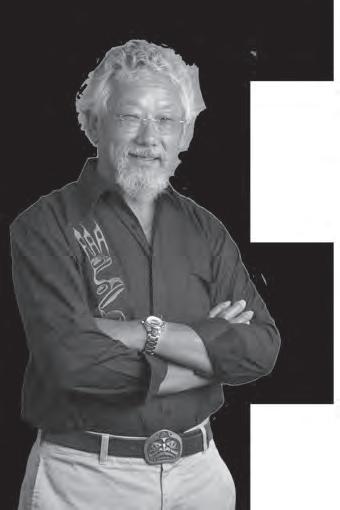
David Suzuki is a scientist, broadcaster, author and co-founder of the David Suzuki Foundation. Written with David Suzuki Foundation Senior Writer and Editor Ian Hanington. Learn more at davidsuzuki.org. n
The way of the river On Oregon’s McKenzie River, an unprecedented approach to restoration takes shape
by Jaclyn Moyer, High Country News
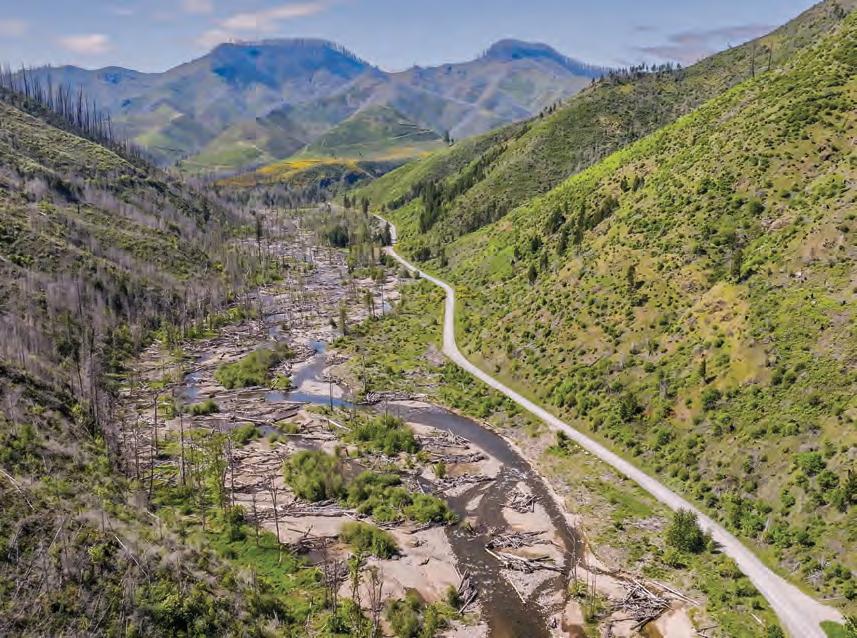
An hour’s drive east of Eugene, Oregon, Quartz Creek pours down the flanks of the Western Cascades, across a widening valley and into the McKenzie River. One morning last August, I stood on a bridge spanning the creek and watched thunderheads boil up over a distant ridgeline, trying to wrap my head around how this place became itself.
One version of its story goes like this: Some 12 million years ago, the Earth’s crust thrust upward from beneath a volcanic plateau. The plateau buckled, forming the rough shape of a mountain range. Over millennia, rain and ice sculpted this shoulder of rock, carving narrow canyons into steep terrain and carting the eroded sediment downstream to deposit across gentler slopes. In these broad depositional valleys, like this section of Quartz Creek, water spread across the land to create wetlands laced with branching channels. Chinook salmon, bull trout and Pacific lamprey hatched and grew in the slow-moving water. Some migrated to the Pacific and returned years later to spawn, bringing nutrients from the sea to nourish riparian forests of cottonwood, fir and hemlock. Frequent windstorms, wildfires and landslides toppled trees, strewing them across the valley bottom. Beavers moved the wood into dams, forming ponds and redirecting water.
All this may sound like chaos, but the relentless flux sustained a kind of stability, preventing any single channel from becoming dominant and maintaining a mosaic of deep pools and turbulent confluences, sandy bars and gravel beds, fast flows and slow side-channels. The landscape supported an equally diverse range of biota, which, in turn, supported people. Native tribes and bands, including the Kalapuya, Mollala, and Warm Springs, lived year-round at lower elevations and came here in summer to fish, hunt, and gather huckleberries and hazel.
In the mid-1800s, Euro-American settlers arrived. By 1860, the U.S. government had forcibly removed local tribes—whose descendants belong to the Confederated Tribes of Grand Ronde, Confederated Tribes of Siletz Indians and Confederated Tribes of Warm Springs—to reservations, and settlers began harvesting the forests. Quartz Creek, like many area streams, presented an obstacle, with its swampy floodplain and unpredictable flows. So the newcomers dug drainage ditches, built berms and raised roadbeds. Like wool spun into yarn, the creek’s many threads began to draw together. In turn, the valley was remade: The concentrated flow deepened its channel, while the rest of the floodplain grew drier. Fewer downed trees reached the water, and accelerated currents flushed sediment through the valley, leaving scarce calm pockets for fish. Lamprey declined. Chinook salmon and bull trout vanished altogether.
Transforming Quartz Creek’s unruly flow into something closer to a ditch must have entailed a lot of labour, something I found myself pondering as I stood on the bridge that August morning and watched another group of humans hard at work. With the help of modern technologies—excavators, LiDAR, GPS mapping—they hoped to undo the efforts of their predecessors and remake the valley, again.
The project is the latest phase of a river restoration effort begun a decade ago in
the McKenzie River watershed. It uses a new approach called Stage 0, which aims to turn canal-like channels back into dynamic wetland-stream complexes by regrading parts of a valley’s floor. It’s a bold process, requiring a tremendous disruption of the existing landscape. Studies of the long-term effects of this approach have not yet been completed, and the project’s scale is unprecedented. As geomorphologist Gordon Grant put it, “It’s a full-on field experiment.”
The McKenzie River is beloved by boaters, anglers and environmentalists alike, and many are uncomfortable with using it to test this highly invasive restoration technique. Others see it as a chance to repair some of the damage done to the watershed, before it’s too late.
The McKenzie River once supported some 110,000 Upper Willamette River chinook salmon, a threatened native fish integral to the tribal cultures and ecological health of the Columbia River Basin. Now, the McKenzie’s population is just under two per cent of that historic abundance—and it’s the largest remaining wild population, our best hope for the species’ recovery. Without intervention, some analyses predict the population could be extinct by 2050. “We know we don’t know everything,” Elizabeth Goward, community engagement manager for the McKenzie River Trust, told me. “But if we don’t act now, we could lose this species.”
BRIAN CLUER STARTED FLYING
airplanes as a teenager. He spent hours in the cockpit, looking down at the land surrounding his Idaho hometown. So perhaps it’s no surprise that he became a fluvial geomorphologist, someone who studies how rivers and streams sculpt the Earth’s surface.
As a student, Cluer learned the principles established by pioneers in the field— including Luna Leopold, son of famed conservationist Aldo Leopold—who had studied river systems in the mid-Atlantic. They had concluded that undisturbed streams resembled meandering single channels, an archetype that would inform both restoration goals and the collective imagination: When we picture a pristine river, most of us see a winding ribbon of clear water between defined banks.
In the ’90s, an enterprising hydrologist named David Rosgen began championing a restoration method called Natural Channel Design (NCD), which used formulas based on these seminal studies and exhaustive site assessments to attempt to determine how an impaired stream could be reshaped into its natural stable form. At the time, federal regulations had begun allowing developers to “mitigate” negative environmental impacts by restoring habitats elsewhere, setting river restoration on track to becoming the multibillion-dollar industry it is today. NCD was widely embraced by private companies and public agencies, including the Environmental Protection Agency. Though Rosgen’s designs were intended to allow for some movement over time, his disciples often hardened banks with riprap and boulders, locking the channels in place. Some of these projects became infamous failures when floodwaters destroyed the fixed forms. Overall, Cluer said, many NCD projects fell short of their ecological promises.
“When you think about rivers in that way, you always get a wiggly, single-thread channel,” Cluer told me. During his decades of flying, he’d come to believe “there was something in nature much more wild and broad and spread out and chaotic and undefined than that.” He’d noticed remote river valleys that lacked defined channels and looked more like big wetlands. “That got my creative thoughts going,” he said.
In 2008, two geologists published a paper in Science affirming Cluer’s hunch. The authors revisited the mid-Atlantic streams studied by early geomorphologists and found they were not, as assumed, “natural.” Instead, they’d been shaped by mill dams, thousands of which were constructed across the region by Euro-American settlers beginning in the late 1600s. Though no longer visible, these dams had significantly altered valley floors. The single-channel archetype, the authors concluded, was an artifact of human manipulation.
Meanwhile, researchers in the Western U.S. and elsewhere were digging deeper into historic accounts and using new technologies, such as LiDAR, to better understand a given landscape’s particular history. Though circumstances differed from place to place, their conclusions were similar: Many precolonial streams likely looked less like winding ribbons and more like multi-threaded wetlands. Combining this growing heap of research with their personal experiences, Cluer and another fluvial geomorphologist, Colin Thorne, started developing an updated model of stream evolution. Theirs began not with a single channel but with a wet valley floor webbed with streams. They dubbed this new starting point Stage 0.
WHILE THORNE AND
CLUER were developing their theoretical framework, Kate Meyer, a fish biologist then with the Forest Service, was tasked with improving fish habitat in the McKenzie watershed. She and her team sought to restore a tributary called Deer Creek. Like Quartz Creek, it had endured decades of logging and “stream cleaning,” a misguided effort in the 1960s and ’70s to improve river health by removing logs and debris. Wood was all but eliminated from the system, and berms confined the stream to a straightened, high-velocity channel—“essentially a firehose,” Meyer said.
Working with the McKenzie Watershed Council, Meyer’s team planned to restore the creek by adding wood to the channel, using logjams to slow water and trap sediment. “It was what everyone was doing at the time,” she said. But the results were consistently underwhelming. High-energy streams often washed out the wood, and
even when logjams remained, sediment accumulation could take decades. There was, Meyer knew, another way. In eastern Oregon, her colleagues had been trying a new approach: Rather than working to improve existing channels, they were getting rid of them altogether. The idea had arisen in 2002, when Paul Powers, another fisheries biologist with the Forest Service, visited an NCD restoration project in the Siuslaw National Forest that had recently been disrupted by a landslide. Initially, project leaders viewed this as a catastrophic setback: the dirt had ruined the channel they’d designed. But when Powers visited, he found that the slide had dispersed the stream across the valley bottom, creating slower flows, increased wetlands, and plentiful fish rearing habitat. He began trying to replicate this outcome at Whychus Creek in central Oregon, intentionally directing flows out of the channel and into the floodplain.
In 2014, Meyer attended a river restoration symposium where Cluer and Thorne presented their new paper on Stage 0. “It was a total epiphany moment, to see the concepts we were working with as practitioners described from the theoretical perspective,” she said. When Powers joined the Deer Creek team in 2016, he suggested they try it there. Meyer was excited, but also nervous. “I thought, ‘You mean we’re just going to bury the stream?’”
They started small, dismantling levees and using the material to fill sections of the channel. The stream immediately spread across the floodplain, creating multiple slower-moving channels and deep pools. In the unfilled reaches, by comparison, little changed. When Meyer and Powers invited Cluer and Thorne to visit their projects, the researchers were stunned to see their theories enacted in practice. “I thought, ‘Oh my goodness, these people are actually doing it,” Thorne told me.
Emboldened by the support of Thorne and Cluer and the improvements in Deer Creek—in 2017, chinook salmon were found spawning in the creek for the first time since 1993—Meyer and her team were eager to try a larger project. In 2018, they began work on the South Fork tributary of the McKenzie, planning to restore a 200acre stretch to Stage 0 conditions. By then, practitioners like Meyer and Powers had developed a working methodology.
The first step, which may also be the most contentious, is to identify an appropriate site. Stage 0 is suitable for low-gradient, historically depositional valleys where streams can spread across their floodplains without disturbing infrastructure. But how much gradient is too much remains debated, and understandings of landscape histories are ever-evolving. Next, practitioners use clues such as relic wetlands or stands of oldgrowth trees to approximate the valley floor’s shape before it was altered by settlers. Using LiDAR, they map the precise present-day topography, compare it to the target shape, and create a grading plan. Fish are trapped and relocated downstream, and the river is temporarily diverted into a side channel. Then, operators use bulldozers and excavators to reshape parts of the valley floor, filling channels and removing levees. Logs and woody debris are arranged across the floodplain, some partially buried and others left to move freely. The wood both creates habitat and slows water, functions that are crucial as vegetation regrows. Lastly, the diversion is removed and the stream is released to disperse across the valley floor, where it begins the work of rebuilding the riverscape.
LIKE MOST RUTS,
channels are hard to get rid of, and the process isn’t pretty. When I visited Quartz Creek in August, the landscape looked downright devastated. A muddy stream flowed alongside hundreds of acres of dusty soil strewn with dead wood: giant logs, tangled branches, heaps of slash. “People say, ‘This isn’t Stage 0, it’s Ground Zero—it looks like you nuked the place,” Thorne told me. But Lara Colley, a local resident and the floodplain restoration projects manager for the McKenzie Watershed Council, was smiling proudly when she met me on site. In an orange vest and hard hat, she fanned her arm toward a mostly empty staging ground. “They’re all gone!” she said, meaning the logs. Until a few weeks ago, some 6,700 logs and pieces of wood had been stacked here; now, they were distributed across the floodplain. Colley, who dressed as a log last Halloween, had amassed the wood from Forest Service and Bureau of Land Management lands where trees had been thinned for wildlife habitat or removed after recent wildfires. “I could’ve looked at a log and told you where it came from,” she said.
Since the Forest Service and the McKenzie Watershed Council began collaborating on Stage 0 projects in 2016, the Eugene Water and Electric Board (EWEB) and the McKenzie River Trust have joined the project’s leadership, and several other people and organizations have contributed to the effort. Each collaborator brings different perspectives and resources, Goward told me, enabling the work to persist despite recent federal layoffs and budget cuts. “I like to describe it as an ecosystem,” she said.
For EWEB—a public utility that supplies drinking water from the McKenzie River to 200,000 people in the Eugene metropolitan area—stream restoration is part of protecting water quality. “Quartz Creek has always been our chocolate milk,” said EWEB’s Water Resources Supervisor Susan Fricke. During high flows, the creek often ran brown with sediment, taxing EWEB’s filtration systems. Spreading the flow across the floodplain will allow sediment to drop out before it reaches the mainstem, saving the utility the cost and chemicals associated with removing it. “We consider the river part of our infrastructure,” Fricke said during my visit to Quartz Creek. “Preventing the problem is so much better than dealing with it later—we’re helping protect our future selves.”
The natural resources department of the Confederated Tribes of Warm Springs
has provided feedback on the project. “Stage 0 offers a holistic view of restoring river wetland corridors that reflects the Tribes’ goals for creating sustainable fisheries populations,” tribal fisheries biologist Logan Bodiford said in an email. “Our hope is that this project will better enable tribal members to exercise their treaty rights and access culturally significant resources.”
The design for Quartz Creek was led by Meyer, who left the Forest Service in 2025 to co-found a restoration consulting company. Franklin-Clarkson Timber Co., the private timber company that owns most of the land around the creek, provided access to it via a 50-year stewardship easement. The National Oceanic and Atmospheric Administration funded most of the $9.5 million project with a $7.6 million grant (made possible by the Infrastructure Investment and Jobs Act). And the actual dirt moving and log placement was done by Haley Construction, a family-run heavy construction company based in Lebanon, Oregon, which also holds the state record for hauling the longest log, a 135-foot behemoth.
With less than three months of dry weather to complete the project and so many moving parts—20-some crew members, 11,200 cubic yards of slash, acres of dirt, a flowing river, all those logs—running the construction site was not easy. “It’s like directing an orchestra, getting everyone working together in a timely fashion,” Randy Haley, co-owner of Haley Construction and son of its founder, told me. “And in harmony!” Ashley Haley, project manager and Randy’s daughter, added, laughing. Restoration projects are demanding, she said, but “it’s very rewarding to do something that benefits the community and wildlife.” Many on the Haley crew agreed. “One man recently retired after 47 years of working for us,” Randy told me, “but he comes back to work every summer just to be part of these projects.”
When Randy’s parents started out in 1958, they worked primarily in timber, building roads and hauling logs. Over the past seven decades, the company’s focus has mirrored shifting societal priorities: The Haleys have put in bridges, built dams, taken out dams, and, for the past 35 years, undertaken an increasing number of river restoration projects. “You have to be able to adapt to changing needs, to reinvent yourself,” Randy told me.
Images of Quartz Creek made in 2025 (left) and in 2026 (right) show how quickly the river basin was transformed following the Stage 0 project restoration.
Today, Haley Construction uses its logging expertise to repair some of that industry’s damage. “The knowledge of how to work with wood, in forests and around waterways, all that now lends itself to floodplain restoration,” Ashley told me. “But we can’t condemn the loggers,” Randy added. “They were doing a job they believed was right, at the time.”
Watching the Haleys’ machines scrape at a bald valley floor that had, not long ago, been a green riparian corridor, I found it hard not to wince. It didn’t help that as far as I could see in most directions, the mountainsides were cloaked in standing dead trees: More than 173,000 acres surrounding Quartz Creek were severely burned in the 2020 Holiday Farm Fire.
This fire, it turned out, played a key role in advancing the Stage 0 work in the watershed. For one, it provided ample available logs. It also made the work more palatable to some onlookers. “It’s easier to bring heavy equipment into a scorched valley, harder to drive a bulldozer into a beautiful second-growth forest,” said Goward. But perhaps most significantly, the fire illuminated one of Stage 0 restoration’s most compelling co-benefits. The blaze burned through the 200-acre restoration site on the South Fork of the McKenzie, at the time the largest Stage 0 project ever implemented. Preliminary observations indicate that while unrestored areas suffered uniform, severe burning, the restored region burned in patches, allowing wildlife to take refuge during the blaze and the forest to recover more quickly. In some parts of the restored reach, the wide expanse of water functioned as a fire break. “We didn’t expect this to be part of fire resiliency,” Fricke said, “But it was.”
Over the course of my afternoon at Quartz Creek, the thunderheads had drifted closer, and as we left the job site, they dropped fat shadows on the ravaged valley floor. Fricke pointed to a line in the dust: bobcat prints. The trail led to the water’s edge, then vanished.
WHILE IT CAN BE HARD TO WATCH
the construction of a Stage 0 project, the concept’s appeal can be equally hard to resist. Faced with the mess we’ve made of ecological relations, who hasn’t longed for a fresh start? This approach, down to its nomenclatures (Stage 0 or, as it is sometimes called, “valley reset”), seems to promise just this: an opportunity to return to the beginning—to before the beginning. A chance to shake the Etch-a-Sketch and start anew.
Advocates and critics alike caution against this framing. “We don’t expect to put everything back to the way it was before Lewis and Clark,” Thorne told me. “What we’re doing is empowering nature—by which I mean birds, amphibians, trees, plants, bacteria, everything—to get to work on the riverscape again, to be able to make and remake it continuously.” The result, advocates believe, will be an increased diversity of habitats and biota that will strengthen the watershed’s resilience to new climate extremes. “Will it come out like it did before? Probably not,” Thorne said. “It’s a different world now, a different river, a different catchment.”
Critics argue that historic Stage 0 landscapes aren’t just impossible to recreate, but, in most places, likely never existed at all. David Rosgen, now 84 and still involved in implementing NCD projects around the country, believes the web-like stream networks described as Stage 0’s starting point occurred only in extremely low-gradient valleys and deltas. In those landscapes, he told me, Stage 0 restoration can work. “But a good idea applied as a universal solution is a bad idea,” he said. He believes that places like Quartz Creek and the South Fork of the McKenzie are too steep to have ever maintained wetland-stream complexes, and thinks these rivers would be most stable and ecologically beneficial as meandering channels.
With its emphasis on allowing natural processes to shape streams, Stage 0 runs counter to Rosgen’s method. But Gordon Grant, who recently retired from a 40-year career as a research hydrologist with the Forest Service’s Pacific Northwest Research Station, sees similarities in the rush of enthusiasm for each. “There’s a particular bandwagon effect that seems to associate with restoration,” he told me.
Grant spent his career studying how Western Cascades streams respond to logging, dams and climate change. “If there is any river system on Earth I have any claim to even modestly understand, it is the McKenzie,” he told me. So when he learned of the Stage 0 work there, he began looking into it. “I’ve never tried to restore a river, and have nothing but admiration for those who do,” he said. “But I don’t necessarily worship at the same church as the restoration community.”
A self-proclaimed science geek, Grant describes the landscapes being created on the McKenzie as “novel geosystems.” “There’s nothing in the history of these creeks that looks like that,” he said. “I like experiments; it’s how we learn things, how we get better.” But experiments, he told me, warrant careful study before widespread implementation. From “stream cleaning” to NCD projects gone wrong, there’s no shortage of cautionary examples, he said. “So let’s stand back and ask: What potential risks are being set into motion here?”
Grant, who authored a paper titled “When do logs move in rivers?” is especially concerned about what a severe flood might do to the large wood used in these projects. Mobilized logs can wreak havoc on infrastructure—bridges, dams, docks, embankments—and endanger boaters and swimmers. Though Stage 0 projects are designed with grate-like logjams intended to trap wood within the restored reach, the systems are far from foolproof, especially in high-energy mountain stream systems like those in the McKenzie watershed. “The potential for mischief has not been fully reckoned with,” Grant said.
When I visited his office last winter, Grant stood at a whiteboard and, in a valiant attempt to explain fluvial dynamics to a journalist with a thin physics background, painstakingly drew out basic equations: Q (flow) = Velocity x Depth x Width. I did my best to follow along, but my eyes were drawn to a poster taped to the side of a file cabinet: an outline of a face with the words “Bang Head Here.” Still, I understood
enough to get Grant’s point. Floodwaters are shockingly powerful, capable of lifting enormous logs and tossing them downriver as if they were pool toys. When the last major flood hit the McKenzie, in 1996, Grant was there to watch. “The stream you visit at low-flow, moderate-flow, even big winter flow, is nothing like what you see in an extreme flood,” he said. “And a 100-year flood means each year we have a 1 out of 100 chance it will happen. That’s a significant risk.”
There are, of course, risks involved with leaving things as they are—extinctions, worsening wildfire impacts, diminished water quality. Which risks are acceptable, Grant pointed out, “has a lot to do with who’s sitting at the table.” On this project, he told me, “it’s mostly people trying to make the world better for fish.”
A FEW DOORS DOWN
from Grant’s office, I met Rebecca Flitcroft and Brooke Penaluna, two research fish biologists with the Forest Service’s Pacific Northwest Research Station. Though salmon drive the Pacific Northwest’s restoration economy, Flitcroft told me, “The biggest gap in the literature on Stage 0 is actually around the question of: What does this do for fish?” Fish are notoriously difficult to monitor, so researchers often assess impacts by measuring changes to habitat. “The assumption is: if you build it, they will come,” Flitcroft said.
So far, research suggests that Stage 0 projects can, in fact, build it. A study of 17 sites across Oregon and Washington found that Stage 0 restoration increased low-velocity rearing habitat, broadened the wetted area of valley floors by several factors, and increased the overall production of macroinvertebrates, essential components of salmonid food webs.
These shifts may benefit not only salmon but Pacific lamprey, a native fish of particular cultural significance to Indigenous communities. Historically abundant in the Columbia River Basin, lamprey were an important food source for many regional tribes, but their populations have declined dramatically. Lamprey share many habitat needs with salmon and, like salmon, provide vital ecosystem benefits. Larval lamprey filter-feed in river sediments for up to 10 years, purifying water and cleaning gravel beds in the process; adults transport marine nutrients to freshwater creeks. Until recently, however, lamprey have received little attention from non-Native conservationists.
Not all the findings of the Stage 0 study were glowing. Salmon need cold water, and researchers found that temperatures tended to rise after restoration. Sediment composition shifted from coarse to fine—which can be great for lamprey, but can clog salmon gills and fill in the gravel beds needed for spawning. eDNA analysis showed increases in overall aquatic biodiversity, which includes not only native species but invasives. “When you open up a channel, you open it up to everybody,” Penaluna said. Still, the biggest question is what happens in the long term. Though a Stage 0
project can be constructed in just a few months, the real work of restoring the river begins only after the excavators depart and the water returns. Will these sites cool as shade trees regrow? Will the composition of sediment shift? Will the logjams stay put?
Luke Whitman leads the Oregon Department of Fish and Wildlife’s effort to monitor changes in Upper Willamette River chinook populations over time. Immediately after the South Fork Stage 0 project was completed in 2018, he told me, the number of spawning beds skyrocketed from 44 in 2018 to 272 in 2019. By 2025, the count had fallen to 58. “They’re still slightly above pre-restoration numbers, but the higher levels haven’t been maintained the way we’d hoped,” Whitman said. The reason is unclear, but he suspects it’s due to the Cougar Dam, which lies upstream of the restoration area and prevents scour flows, the floods that historically rearranged sediment and vegetation. “I don’t think we’re getting enough water to keep some of the new channels active, to keep moving things around,” Whitman told me. Still, he believes Stage 0 is a worthwhile experiment. “We’ve got to get creative wherever we can on the McKenzie. Not just with restoration, but with dam management, too,” he said. “Wherever we can take a shot, we should try.”
IN THE LAST WEEKS OF 2025,
heavy rains drenched the Western Cascades. In Deer Creek, powerful flows moved wood throughout the restored reach. “It was both very exciting, because it was the most change we’ve seen on any project yet, and at the same time concerning, because we ended up with longer stretches where wood moved out,” Meyer told me. Without logjams to slow water in these places, the river could start down-cutting into a single channel again. In an ideal system, the deluge that washed out the logs would also bring in wood from the surrounding forest. But here, where the catchment has been logged for decades, downed wood is scarce, and the trees are much smaller.
“Originally, we thought it would just take one intervention and then you could walk away forever,” Meyer said. But river systems are nested inside larger systems, and many of the processes involved— wood and gravel recruitment, flood scouring—are still impacted by logging and dams. Restoration alone can’t fix all the processes, Meyer told me. “So we need to acknowledge that, and think more about long-term stewardship where we monitor and manage these sites over time.”
Thorne agreed. “There aren’t any one-and-dones for rivers,” he said. But he cautions against rushing into action. It’s hard to break a Stage 0 project, he said. “It can be rearranged, the wood and sediment moved around, but nature will repair it over time.” After a moment, he added, “Or it won’t. And the creek will be set on a different trajectory than the one we had in mind.”
IN LATE JANUARY,
I returned to Quartz Creek with Goward. Bright sun slipped between clouds, warming the day to an unseasonable 60 degrees. Snow covered distant peaks, but only a dusting powdered the nearer ridgelines.
I stood again on the bridge spanning the creek. The valley still looked disheveled, piled with tangles of logs and mounds of slash, but the dusty wasteland of last August was replaced with flows of clear water. Braided streams curled across the valley, parting around logjams and lapping at mounds of newly deposited sand.
Watching the creek, I thought of something Gordon Grant told me. He’d turned from the equations scrawled on his whiteboard and said, “You can’t model something like Quartz Creek.” Because of the high-energy flows and the complexity introduced to the system—the unprecedented amount of wood, the intersecting paths of flow—“it’s beyond the capacity of our hydraulic computational fluid dynamic models. … It’s unpredictable.” He’d meant the words as a warning, which they certainly are. But they’re also a promise. Unpredictability, after all, is another word for possibility.
Humans can’t control the outcome of a Stage 0 project any more easily than we can disentangle ourselves from it. Instead, the process requires that people participate alongside a host of other actors—trees and rain, stones and fish, beavers and mayflies—allowing unforeseeable interactions to shape the future river. Here, vulnerability and hope are entwined.
Except for a few scattered firs, nearly all the trees stood leafless. Some had lost their foliage for winter, but most were dead. With snowpack lingering at a recordbreaking low, the next wildfire season was already looming.
After the Holiday Farm Fire, Goward told me, locals were devastated: “People looked around and thought, ‘This place will never be the same again.’” Below us, the stream rippled over gravel, and I could hear the pebbles—pulverized bits of the volcanic plateau that once lay here—clinking against one another. At the water’s edge, blades of new grass emerged through heaps of slash. “Everything around us is changing,” she said. “What we’re trying to do is restore the river’s ability to change with it.”
This article appeared in the June 2026 print edition of High Country News. n
PHOTOS BY SARAH KOENIGSBERG/HIGH COUNTRY NEWS
‘Our
local sailors are very excited’
WHISTLER SAILING GENERAL MANAGER FRANCOIS HEBERT DISCUSSES BC OPTIMIST CHAMPIONSHIPS, WHICH RETURN TO ALTA LAKE JULY 18 AND 19
BY DAVID SONG
THE LAST TIME Whistler hosted a BC Optimist Championships (BCOC), it was 2012 and the Whistler Sailing Association (WSA) was a small operation with just three staff members and a modest fleet of 10 dinghies. Indeed, that BCOC was the organization’s first major championship.
Now, the WSA boasts an armada of 55 boats and employs 20 staff during summer months. They’ve expanded programming into other disciplines like wingfoiling, boosted community participation, and developed a strong race team program. It’s an ideal time for the BCOC to make its long-awaited return to the Sea to Sky area.
“We’re incredibly excited to have been selected to host the BC Optimist Championships,” said WSA general manager Francois Hebert in a press release. “It’s a fantastic opportunity to showcase Alta Lake, our sailing community, and Whistler as a destination for sport and recreation. Hosting this event again is a reflection of how far the organization has come and the level of sailing we are now able to support.”
BCOC is being organized to fit seamlessly into the annual Whistler Regatta, itself a fixture on British Columbia’s sailing calendar that draws athletes from clubs and sailing
associations throughout the region. This year’s event is expected to be one of the largest in the regatta’s history, with racing held against the backdrop of Whistler’s mountains on Alta Lake.
A larger-than-normal Optimist field (with up to 50 boats) is expected, and there will also be races for International Laser Class Association (ILCA) and Pirateclass vessels to accommodate contestants of varying ages and skill levels.
“Our local sailors are very excited about the opportunity to compete in a provincial championship on their home waters,” Hebert said. “Many of those on our race team are younger athletes, and for several of them this will be their
for many sailors who go on to compete at higher levels. Though often considered beginner boats, Optimists are surprisingly technical to master. As every craft is built to the same specifications, success comes down to tactics, handling and skill.
Hebert cited findings by the International Optimist Dinghy Association revealing that 75 per cent of sailing medallists at the Tokyo 2020 Olympics had participated in Optimist World or Continental Championships as youngsters. An additional 16 per cent sailed Optimists at the local or national level, meaning 91 per cent of Olympic medal-winning skippers had an Optimist background.
“It’s a fantastic opportunity to showcase Alta Lake, our sailing community, and Whistler as a destination for sport and recreation.”
- FRANCOIS HEBERT
first major championship event. That’s a special experience. Our top Optimist sailors are particularly excited to have the opportunity to compete on home turf, where they know the lake and conditions extremely well.”
SAILING OPPORTUNITIES
In this context, an Optimist isn’t a person who feels good about their chances at victory—it is the world’s most popular youth sailing class operated in more than 120 countries, serving as the foundation
Most sailors who go far in their careers graduate to the Laser. Originally designed and built in Canada, it is an Olympic class used by both men and women and will be the fastest, most physically demanding boat seen at the Whistler Regatta. Like the Optimist, it is a one-design model.
The Pirate fleet is unique to Whistler and consists of two-person boats raced regularly on WSA Wednesday nights. It was a popular sailing class throughout the 1990s and 2000s in addition to being
employed by the Royal Canadian Sea Cadets, with national championships with more than 50 boats held annually in Kingston, Ont. Having two sailors aboard introduces teamwork and communication as key factors on race day.
Local athletes in all three divisions benefit from the guidance of James Cannon, who enters his third year as head coach of WSA’s race team. Cannon possesses strong coaching experience and key first-hand knowledge of Alta Lake, having competed in the Whistler Regatta five times with multiple ILCA podiums. He understands the unique conditions of Alta Lake and is poised to ready younger sailors from both a technical and tactical standpoint.
“The BC Optimist Championships are part of a larger effort to grow sailing opportunities in Whistler and provide pathways for young athletes to develop in the sport,” Hebert remarked. “We’re proud to host provincial-level competition while also offering programs that introduce hundreds of local children and visitors to sailing each year.
“Events like this showcase not only the talent of young sailors but also the strength of the community that supports them. We’re excited to welcome competitors, coaches, families, and visitors to Alta Lake and to share what makes sailing in Whistler such a special experience.”
The WSA continues to look for volunteers for planning purposes and operational roles during championship weekend itself from July 18 to 19. No sailing experience is required for many of these positions.
Visit whistlersailing.com for more. n
COME SAIL AWAY An aerial shot of numerous Whistler Sailing Association boats on Alta Lake in B.C.
PHOTO COURTESY OF JILL WYNOTT / WHISTLER SAILING ASSOCIATION
Jackson Goldstone returns to World Cup podium with downhill bronze in La Thuile
ELLY HOSKIN WINS TWO ENDURO STAGES, ULTIMATELY PLACES FOURTH
BY DAVID SONG
JACKSON GOLDSTONE got the monkey off his back on Saturday, July 4 in La Thuile, Italy, scoring his first World Cup downhill medal of the season.
Goldstone, who triumphed in 2025’s La Thuile race, delivered his most robust performance in months: carving creative lines through the venue’s wooded sections to net bronze in three minutes and 27.160 seconds. It is the 12th elite men’s podium of his career in just 23 starts.
Emerging victorious was Jordan Williams of Great Britain, who broke a 1,107day winless drought (3:25.767). Asa Vermette made his fellow Americans proud with silver on the Fourth of July (3:26.728), while Williams’ Specialized Gravity teammate Finn Iles lost some momentum with a 20th-place finish (3:32.094) after consecutive wins in Lenzerheide, Switzerland and Leogang, Austria.
“This one feels good,” wrote Goldstone succinctly on Instagram. “Fired up for Andorra.”
Williams was more loquacious in a press release, saying: “That was so insane. I risked my life the whole way down, I just went for it. The track is awesome and the bike is working super well; the grip I had up there was next level. It feels so good to win. Sometimes you feel like it’s never going to happen again. I had a pretty rough winter and broke my collarbone. I knew I was on a pretty good run, and I needed to keep pushing all the way. The back wheel slid and I thought I was going down. Somehow, I managed to hold on and cross the line. I was stoked.”
Amaury Pierron retains the overall lead despite placing seventh, but the top four riders are separated by just 65 points as of this writing.
‘PRESSURE IS SUCH A PRIVILEGE’
For the second contest in a row, it was close but no cigar for Elly Hoskin. The
Squamolian prevailed on two stages, including La Thuile’s unique 600-metre floodlight-illuminated Nightfall area, but it was only enough to land her in fourth (26:02.242).
Enduro World Cup (EDR) overall frontrunner Ella Conolly realized her second victory of the campaign (25:32.591), Mélanie Pugin recovered from an early mistake to be runnerup (25:40.329) and Raphaela Richter edged out Hoskin for the third podium spot (26:02.131).
“What an amazing race. Two stage wins [and] the stages that scared me most,” Hoskin remarked on social media. “Some of the best stages we’ve ever had made for some of the best racing. Unfortunately keep getting the white kit dirty, sorry [Dharco Clothing], and went out the front door after stuffing my front into a moon dust hole at the top of Stage 3. Rode the rest of the stage as hard as I could and clawed myself to two seconds off the podium going into the night stage.
“Pressure is such a privilege and even though I’d rather be battling for a win, there is so much to be proud of. To pull back all but 0.1 seconds on a stage that could not be more intense is too close to be upset about. Congrats [Raphaela], it’s always a pleasure to battle with you...going to do these stripes justice soon.”
Conolly, too, had high praise for the night racing experience and drew energy from the large crowd of fans that showed up.
“I rode quite cautiously because I knew I had a small advantage, maybe even a little too cautiously as it ended up being pretty close,” the Brit elaborated. “But it was an amazing way to finish the weekend. I’m taking it one round at a time and just focusing on giving everything every race weekend. My goal is simple: I want to fight for the win every time I line up.”
70 points now separate Conolly from her French opponent Pugin in the rankings. n
BACK TO BRONZE Jackson Goldstone stands on his mountain bike as fans cheer on his 2025 World Cup victory in La Thuile, Italy.
Small IS beautiful!
SUMMER READS THAT KEEP OUR EYE ON THE BALL—AND HOPE IN OUR HEARTS
SUMMERTIME , and the livin’ is e-a-s-y. Or at least I hope it is, now that we’ve snarfed down some Nanaimo bars and maybe poutine at Lawrence Black’s old pub in the village, and packed up our red-and-whites from July 1 and all the celebrations around the World Cup—a show so big it only felt bigger, given all the classic “Little Engine That Could”
BY GLENDA BARTOSH
tales it held. First and foremost, our own “underdog” Go-Canada-Go! team that out-shot most expectations in a dream run that taught us one heck of a lesson about dogged determination and keeping hope alive.
This was the first time I caught World Cup fever, and it’s exhausting! Sure, we Canucks have enjoyed team sports for ages—baseball, hockey, basketball, you name it—but none quite grab you like The Beautiful Game.
Maybe it’s the lack of giant padding, or the fact it happens in summer when everything feels delicious, or dangerously hot. For, despite its flaws, the Cup’s dynamic reach has been nothing short of extraordinary, from next door neighbours (like Niko Segur from Burnaby, where Alphonso Davies went to high school) to far-away places like that other mighty underdog, Cabo Verde. Whatever else you might have soaked up from the FIFA World Cup—the good, the bad or the ugly, and there’s been plenty of each—I’ve never seen people from here or away as joyfully connected as they were in Vancouver, host city that it was. Ever. Not during the 2010 Winter
Games. Not at the peak of “Elbows Up.”
Which hopefully still are. Up, that is.
Already I’m missing those friendly smiles and good vibes as much as the dynamics of the players, especially the younger ones for Team Canada and beyond, who packed in such promise and optimism. Their skills and smarts and courage proved just what we humans are capable of when we join together with mutual respect and empathy to reach a common goal. That versus slagging each other on social media, or feeling like you are slag because of all the pretender influencers.
While lots of Canadians have ties to nations whose teams will play on, I’m kind of glad our wave of local excitement is over. With some luck, we might get some R&R now, and time for a good book or three.
So here are my “small is always beautiful” summer picks. One especially builds on the cooperative goodwill with very cool ideas on living together a little more caringly, a little more positively,
as one of the 100 most influential books since the Second World War.
E. F. Schumacher’s Small is Beautiful: A Study of Economics as if People Mattered was part of the excellent journalism program at Langara College, one that launched my own newspaper adventure and local legend Paul Burrows used to advise. It’s still renowned for its newsroom-ready grads, like Jen St. Denis at The Tyee, but it’s now tragically in limbo, as explained in Kwantlen Polytechnic University’s great student paper, The Runner.
A journalist, economist and statistician, Schumacher received a Rhodes scholarship, then landed in wide-ranging sectors, from coal mining and organic soils to tech transfer to smaller economies. Highly influenced by Leopold Kohr, an economist who opposed the “cult of bigness,” his book didn’t exactly change my life. But in a series of essays explaining practical, common sense alternatives to our
With some luck, we might get some R&R now, and time for a good book or three.
without wrecking ourselves or the world we live in. But they all deliver insights into why, as Dr. David Suzuki has finally said, we have to keep trying, even when it’s too late.
They also lift the curtain on what’s blocking our way, echoing this reminder from Al Gore at the dear doctor’s 90th: “Political will is a renewable resource.” And renew it we will, once we set our goals and work like gangbusters—just like you do after losing a soccer match.
ECONOMICS SO EVERYONE’S
A WINNER
Skyrocketing costs of living. Nasty geopolitics. Creepy and creeping AI, and the Big Tech Bros making billions off them. What better time to read one of my all-time favourite books, which ranks
obsession with money, power and profit at the expense of everything else, it articulated a lot of small but beautiful ideas I already believed in. Ideas like Buddhist economics. Imagine that!
Small is Beautiful was first published in 1973—a year so parallel to today, you couldn’t make this up. War in the Middle East. Space exploration firsts. The U.S. President—in this case, Nixon—angrily firing anyone who dared challenge him. And the huge OPEC oil embargo that drove fuel prices sky-high and created an energy crisis the likes of which we hadn’t seen. Till now.
My yellowing, dog-eared copy sits alongside George Monbiot’s 2008 Bring On the Apocalypse: Essays on Self-Destruction, another collection of
short, often witty, summer reads with a great goal in mind. The cover sports one of Edward Burtynsky’s classic photos of a mountain of discarded tires. A renowned Canadian photographer who, for decades, has been tirelessly showing us the enviro wreckage we humans have wrought, you might have seen Burtynsky’s stunning images of the Coast Mountains’ disappearing glaciers at the Audain Art Museum.
Not as dour as it sounds, I got my copy from Monbiot himself, one of my socialchange heroes I was lucky enough to meet at a climate change conference for journos in London—way back in 2009, when scientists were already warning us to remove one-third of carbon emissions in the atmosphere, now. They’ve only gone up every year since.
Nearby is Climate Central’s short, readable guide to all things climate-y, Global Weirdness, along with a first edition of Rachel Carson’s Silent Spring—a diatribe against pesticides as yellowed, dog-eared—and influential— as Schumacher’s. All excellent summer reading, heat dome or no, that just might galvanize your determination like in Canada’s last stand against Morocco.
But before you head to the beach, or think I only read old books, try these: Maggie Haberman and Jonathan Swan’s excellent Regime Change: Inside the Imperial Presidency of Donald Trump lifts that curtain I mentioned earlier, this time on you-know who. And if you’re just plain tired of “keeping up,” whether it’s soccer games or summer reading tips, check out Joshau Rothman’s May 22 New Yorker column, “Why Is It So Hard to Be Ordinary?” There’s a paywall, but you can get a taste of it in his interview with CBC’s Matt Galloway.
Happy reading—and remember, support truly local reading at Whistler’s first and finest independent bookstore, Armchair Books in the village.
Glenda Bartosh is an award-winning journalist who reminds you change happens one small but steady step at a time. n
RED, WHITE & BEAUTIFUL Sizzling summer classics straight from the winners’ circle.
R REGISTEREDFITNESS Registeredfitnessclasses haveaseparatefeeanda definedstartandenddate. Pre-registrationisrequired fortheentire setofclasses.
I INCLUDEDFITNESS Theseclassesareincluded withyourpriceofadmission fornoextracharge.
604-935-PLAY (7529) RMOWRecreation
SkiiTour returns home to Whistler for July 16 Summer Concert
LOCAL DJS TIM LIVINGSTONE AND DAVE ROLLINSON ARE VETERANS OF MAJOR FESTIVALS LIKE SHAMBHALA AND BURNING MAN
BY DAVID SONG
IN JULY of 2010, Tim Livingstone was walking past the Spruce Grove baseball fields when a particular song reached his ears.
It would’ve meant very little to most, for the artist Ian Pooley is an obscure name. For Livingstone, who at that point was a DJ for a local nightclub called Tommy Africa’s (now Après Après), it was a beloved track.
He walked over and accosted Dave Rollinson, who was blasting the song from a nearby concession stand. Rollinson, a.k.a. Rollie, was a DJ for Moe Joe’s Nightclub and the men bonded quickly, with Livingstone inviting him to spin the turntables at Tommy Africa’s later that month.
They found themselves lining up the same song to play more than 10 times. Sensing a connection, Livingstone asked Rollie if he’d ever produced music— to which the answer was yes. The duo wasted little time recording their first track, which was picked up by United Kingdom-based record label Riddim Fruit and soared to No. 1 on a now-
shuttered website called Juno Download. Livingstone and Rollie never looked back, having produced and toured together for 16 years and counting.
“At this point, I would consider Rollie my brother from another mother,” says Livingstone. “We’ve travelled all over the world together. We were on tour every weekend from November to the first weekend of May. It’s a partnership forged in friendship and mutual respect, but also we just have a ton of fun together.
been given an early afternoon time slot a day before the event officially started, Livingstone and Rollie decided to jazz things up.
They brought retro ski suits and goggles, invested in movie-grade fake snow machines and spread news about the après-ski party of sorts they were hosting. People showed up wearing similar outfits, turning what was once a sparsely-attended venue into a vibrant good time. Shambhala has continued to
“The music that we generally are known for is fun, upbeat house music, but we dip our toes into all sorts of stuff.”
- TIM LIVINGSTONE
“I think that’s one of the reasons we’ve been able to sustain it for this long, because as a touring DJ travelling on your own, being on the road can be quite isolating and tough. Having a partner like Rollie definitely brings a lot more fun to the table.”
‘OUR
MISSION IS TO MAKE THE DANCE FLOOR MOVE’
SkiiTour as a brand originated at the 2013 Shambhala Music Festival. Having
host SkiiTour’s now-legendary gig in the same location and time slot ever since.
Overall, SkiiTour has been established as a highly sought-after group. Their busy international touring schedule encompasses more than 80 performances each year, including appearances at renowned festivals such as Friendship, Burning Man, Bass Coast, and Snowbombing Canada.
“We definitely like to keep things on the funkier side,” Livingstone remarks.
“We’ve cut our teeth in Whistler, where every night you never know what crowd’s coming in or [where they’re from]. We have music we love to play, but we also consider ourselves DJs, first and foremost. Our mission is to make the dance floor move.
“We consider ourselves artists in festivals and shows where people are paying to come see us. If we’re in a place where nobody’s heard of us and what we want to play, then … we are very quick to pivot and quite versatile that way. The music that we generally are known for is fun, upbeat house music, but we dip our toes into all sorts of stuff.”
Given that Livingstone and Rollie are both perennial members of the local arts scene, it is only fitting they’ve made it into Whistler’s Summer Concert Series.
“For us, hands down, the best place to play is outside,” Livingstone says. “And the fact that it’s an all-ages show, because at this point we have fans who’ve had kids and their kids are now SkiiTour fans. It’s just really cool to have a community event that’s free, outdoors so families can come to and dance with their kids—and we get this amazing view of the mountains while we’re playing.”
On July 16, Fort Knox Five (a headline act during the 2024 Summer Concert Series) will play in Olympic Plaza at 6:30 p.m. before SkiiTour performs for their hometown fans at 7:30 p.m.
Visit whistler.com/events/concerts for more details.
n
FORGED IN FRIENDSHIP Tim Livingstone and Dave Rollinson from SkiiTour.
PHOTO COURTESY OF TIM LIVINGSTONE
‘We’re three best friends, first and foremost’
JUNO AND CCMA AWARD-WINNING COUNTRY BAND THE WASHBOARD UNION PLAYS JULY 10 IN WHISTLER
BY DAVID SONG
DAVID ROBERTS literally plays a washboard.
He chuckles when thinking about what it’s like to explain that to kids. Yes, this used to be a laundry tool, and yes, it has been reimagined as a musical instrument. The Ontarian first picked one up just to scratch out some old rhythms, and feels it is a throwback to an era when harmonicas and washboards vastly outnumbered fancy guitars and amps in people’s homes.
Roberts’ method has clearly withstood the test of time. He, Aaron Grain and Chris Duncombe have been operating as The Washboard Union since 2016 and are the inaugural country band to net a Juno Award for Breakthrough Group of the Year. On top of that they own nine Canadian Country Music Association (CCMA) Awards, including three straight for Group of the Year.
More than 85 million combined streams and video views, 525,000 radio spins, one Platinum and four Goldcertified singles in Canada and nine Top 10 hits present further evidence that the Washboard Union has discovered a winning formula.
Yet when asked about all of these achievements, Roberts voiced a salt-ofthe-earth response befitting the genre of music he plays.
“It’s always lovely to be recognized by your peers and your industry, but I think for us, the most fun we could ever have is when we’re sitting in an old dirty kitchen somewhere writing a song together, or just jamming and hanging out,” he says. “We’re kind of lucky because we’re three best friends, first and foremost, and I wonder how solo artists do it sometimes.
“There’s good days and bad days on the road. When you have a good day, it’s great to celebrate with your friends—but when you have a bad day, it’s even better to be surrounded by your close friends.”
Grain and Duncombe met in 2013 when the former’s mom began dating the latter’s dad in Kelowna. The stepbrothers moved to Vancouver, lodging with Roberts and several other musicians in a 1920s-style Tudor mansion overlooking the Spanish Banks, where their eclectic journey soon took off.
One night, a man approached them during a Vancouver gig they were playing in return for beer tickets. This individual explained that, despite being a selfprofessed “rock guy,” he had fun with their music and wanted to record them.
The man was producer Garth Richardson, who has collaborated with a Hall of Fame-esque roster of musicians: Ozzy Osbourne, Rage Against the Machine, Kiss and the Red Hot
Chili Peppers just to name a few. The Washboard Union became Richardson’s first country band.
BEING AUTHENTIC
Roberts, Grain and Duncombe are diehard music fans above all else, so they derive inspiration from various different sources: old trucker songs à la Red Sovine and C.W. McCall, the legendary Marty Robbins, et al. They’re not picky—if an interesting sound reaches their ears, they might experiment with it.
The Washboard Union has toured (or will soon tour) across North America, Great Britain and Germany. Last year they completed their maiden Australia voyage, and feel as if they’ve matured after playing in front of diverse fanbases.
“When you’re playing in front of new audiences, don’t have any expectations and just try to … come across authentically,” Roberts says. “It’s hard to do that when you’re trying to put on a show, and I think sometimes people get lost in that. They try and put on a performance when that’s not what they should be doing. They should just be playing their music and connecting that way.
“If we can help you forget about how hard your week’s been and let you enjoy the people you’re with, I think we’ve done our job musically. It’s just for people to enjoy themselves and forget about how tough life can be sometimes.”
The Washboard Union last visited Whistler just before the 2020 pandemic started, and they remember being embraced with open arms. There were kids dancing near the front of the crowd and grandparents dancing in the back: a vibe Roberts hopes will develop again when he and his pals return on July 10 to Olympic Plaza.
They’ll perform at 7:30 p.m., an hour after DJ Stache gets the night started. Visit whistler.com/events/concerts for more details. n
•Deck Restoration
• Waterproofing
•New VinylDeckInstallation
• VinylDeck Restoration
• Roof&GutterCleaning
•Interior&Exterior Painting
•Drywall Repairs
• Gardening&Demolition
•Emergency Roof Leak Repairs
Notice of PublicHearingWaiver Elec toralAreaD
Pursuant to Section464oftheLocal Government Act, thisis to providenoticeof intentofthe Squamish-LillooetRegionalDistricttoamendtheElectoral AreaD Zoning BylawNo. 1350-2016,ina mannerconsistentwiththeElectoralAreaD Official Community Plan BylawNo. 1135-2013.
Publicnotice ishereby giveninaccordance with Section467oftheLocal Government Actthata PublicHearingisbeing waived regardingthe following bylaw:
•Squamish-LillooetRegionalDistrictElectoral Area DZoningBylaw No.1350-2016, AmendmentBylaw No.1968-2026
PERFECT UNION Juno and CCMA Award-winning country band The Washboard Union on stage.
PHOTO COURTESY OF SAMANTHA PICKARD / THE WASHBOARD UNION
Whistler’s whitewater river runners
BY BRONWYN PREECE
WHISTLER and the Sea to Sky boast some of the best Class 4 and 5 whitewater river runs in the world. However, this facet of our local sports history is often overlooked or underpublicized. Our “triple crown” of the Callaghan Creek, the Soo River and the nucleus of it all, the Cheakamus River, draw people from near and far. As do the Ashlu and Elaho. Whistler is speckled with stories of people who came here to kayak and stayed here to kayak.
The Whistler Museum has begun gathering oral histories from local kayakers and will be running several pieces related to the history of the local scene—everything from the inception of the Whistler Kayak Club (Kayaklub) in the 1980s to the river and water changes witnessed over the decades. Kayakers are first-hand gaugers of glacial recession because, as Whistler’s whitewater scene grows, simultaneously, we are losing our flows.
Shawn “Puddles” Hughes moved to Whistler in 1977. He has been kayaking here for 40 years, bitten, as the expression goes, “by the river vampire.” Hughes was first exposed to the sport in 1986, when the nationals were held on the Cheakamus. Prior to that, there were a select few locals running and racing on the rivers, but not many.
Hughes was a founding member of the Kayak Club, formed in 1988 by a handful of riverrats in order to acquire the necessary funds to clear a choked-up part of the Upper Cheakamus. Hughes points to Don Butler, of Captain Holiday’s Kayak and Adventure School, as being one of the key instigators of the idea to clean up the “dodgy” section.
As Hughes explains, riparian regulations were different then (this, before the B.C. Forest Practices Code) and logging would take place right up to the water’s edge. Logs and debris had no buffer and rolled right into the river, leaving jammed messes of snags, snarling passage. Such was the case with the Cheakamus.
The extremely unofficial “official”
Club was successful, procuring $2,500 from the municipality and the same amount from the logging company to clear the river; an amount which Hughes
[cutting] off a rope in this like hostile environment,” recalls Hughes.
The excavation of the Cheakamus by river-suspended aerials undertaken
“Kayaking has a camaraderie...”
- SHAWN HUGHES
animatedly relays “was like $20,000” today. It was more like $11,000 in the present-day economy—but suffice to say, it was enough to rent equipment, rig a Tyrolean traverse and pay people for 10 to 12 days to clear the canyon (just below the MacLaurin’s Crossing Suspension Bridge, connecting the Farside and Riverside trails).
“To this day, I’ve never seen anyone lowered down with a chainsaw …
by this crew, along with wild water manoeuvring, not only cleared the way for the river (and prompted a subsequent flood of attention), but it also became the start of new careers for these talented few.
“We all went into the movie business and ended up doing safety and rigging” and kayak stunt work, Hughes says. The Cheakamus would become a destination site not only for
river navigators, but for Hollywood filmmakers, too.
“All of a sudden … word gets out, you know, there’s people from Washington, there’s people from all over the world that are actually honing in on this thing,” Hughes says. “And our little group would act as liaisons and people would call and that’s how we did it.”
What that little group accomplished in the late ’80s helped plant the seeds for a rich, supportive culture to begin to take hold in the valley.
“Kayaking has a camaraderie … it’s strong,” says Hughes, who is upheld as one of the few remaining OGs still paddling and mentoring younger generations. “Most of our crew has passed away,” he says. “The ones that were kayakers, they’re just gone.”
At 68, Hughes paddles daily. At the time this piece went to press, he was on Day 90-something-and-counting of river runs this season. n
ALL THE RAGE The B.C. Kayak Championships held on the Cheakamus River Sept. 21, 1980.
▶ Support forRRSPs/RRIFs,IRAs,RothIRAs,and401(k)sacrossborders ▶ Portfoliomanagementinbothcurrencies(selectedaccounts)
▶ Access to Canadianand U.S.investmentoptions CURT HILLIER ,cim ® Senior FinancialAdvisor, Port folioManager curt.hillier@raymondjames.ca
ENTERTAINMENT LISTINGS & ASTROLOGY
ART ON THE LAKE
Arts Whistler transforms Lost Lake into a floating celebration of local arts and culture. Paddle a kayak, canoe, paddleboard, or floaty while enjoying live music, art installations, and summer vibes surrounded by nature. Free event and everyone is welcome!
» July 10, 12 to 7 p.m.
» Lost Lake Park
COMMUNITY FOOTBALL WATCH PARTY
Watch global football outdoors in Whistler with community viewing parties featuring Whistler youth soccer activities, food trucks, face painting, bike valet, and family-friendly fun. Bring a blanket and enjoy the atmosphere.
» July 11, 12 to 4 p.m.
» Whistler Olympic Plaza
FREE MOVIES AT WHISTLER OLYMPIC PLAZA
Experience a variety of free films, spanning from timeless classics to recent releases, amidst the scenic backdrop of Whistler Olympic Plaza on Wednesday and Saturday nights. All movies begin at 8 p.m. Don’t forget to bring blankets or low chairs for a cozy evening under the stars. On July 11, catch Kicking & Screaming followed by The Way on July 15.
» July 11 and 15, 8 p.m.
» Whistler Olympic Plaza
WHISTLER FARMERS’ MARKET
A feast for your senses, the Whistler Farmers’ Market features local produce, tasty food, local artisans, live entertainment and family activities. Markets happen every Sunday until Thanksgiving on Oct. 11, with the
PIQUE’S GUIDE TO LOCAL EVENTS & NIGHTLIFE
Here’s a quick look at some events happening in Whistler this week and beyond. FIND MORE LOCAL EVENT LISTINGS (and submit your own for free!) at piquenewsmagazine.com/local-events
WHISTLER FARMERS’ MARKET
addition of select Saturday markets.
» July 12, 11 a.m. to 4 p.m.
» Upper Village Stroll
MAKING CONNECTIONS DEMENTIA FRIENDLY SOCIAL CLUB
Supported by a federal grant and organized by the
Free Will Astrology
ARIES (March 21-April 19): There are only two types of humans, right? Some of us serve beauty, truth, and goodness, while the rest pledge their allegiance to illusions, lies, and shadows. Our planet is now caught in a colossal showdown between these two sides. And it’s high time for you to align yourself with one or the other. JUST KIDDING! The truth is far messier and more interesting: Every one of us is a blend of luminosity and ignorance. And now is a perfect moment to study how those two currents move within you. When you clearly see how you contribute to the murky jumble, your commitment to love, harmony, and justice will soar.
TAURUS (April 20-May 20): You’ll move with style and purpose if you take quick jaunts, dare gentle risks, and make a few nimble leaps of faith. You’ll go awry and astray if you wander too far afield, chase swaggering adventures, or try vaulting across yawning chasms. Keep it light, sharp, and intuitive, Taurus. Refrain from lugging heavy emotional baggage or drifting into daydream limbo. It’ll be wise to trust your sprightly impulses, but foolish to dissect them so ruthlessly that the magic leaks out. The colour amber and the number three will be your allies. Sombre gray and the number four will not. Align with sly visionaries and soulful realists but sidestep bitter contrarians and nostalgic clingers.
GEMINI (May 21-June 20): I swear I’m smarter in some places than in others. My intelligence soars in Barcelona, Kyoto, Aix-en-Provence, France, and Florence, Italy. But I seem dull-witted in Munich, Moscow, and Washington, D.C. Even in Northern California, my longtime home, some areas bring out the best in me. I feel mediocre on Valencia Street in San Francisco, for instance, whereas I’m extra wise in downtown Berkeley. Why is this? The branch of astrology known as astrocartography says that my strengths are more likely to shine in certain spots than others. In the coming weeks, Gemini, I urge you to experiment with the possibility that this may be true for you, as well. Wander far
OF JULY 10 BY
and wide. Find out where you feel most aligned with your deep, bright, genuine self.
CANCER (June 21-July 22): Male humpback whales in the Pacific Ocean change their songs over the years. New phrases can spread across thousands of miles as other whales take up and transform them. Researchers don’t know why, but the pattern is clear: The whales value novelty even in their ancient rituals. They create an evolving musical tradition. Consider what this practice might suggest for your own relationship with the past, Cancerian. The memories and patterns you’re carrying don’t have to remain frozen. You can honour your history while remixing it, adding new verses, and changing the key. What needs to be preserved isn’t the exact form but the living spirit.
LEO (July 23-Aug. 22): Leo-born oceanographer Marie Tharp created the first comprehensive maps of the ocean floor. Her work was pivotal in proving theories about plate tectonics. She did much of this work in the 1950s, when women weren’t even allowed aboard research vessels. She had to rely on data collected by others, never seeing the terrain she mapped. But her limitation became her advantage; distance allowed her to perceive patterns that field researchers missed. I suspect that you, too, are working with incomplete information, Leo. Does this disqualify you from drawing conclusions? No! I believe your inability to access certain details will compel you to see larger patterns. What you’re missing might be precisely what enables you to see what others can’t.
VIRGO (Aug. 23-Sept. 22): The “problem” confronting you right now is unusual: Your vision is too sharp, your thinking too precise, and your words too unambiguous. This would usually be good news to celebrate, but at the moment it’s blocking you from noticing the subtle openings life is presenting. Those portals may only reveal themselves if you soften your intense scrutiny and call on a creative, blurry logic. It’s like how, at night, you sometimes see more clearly when you peer from
Read more at whistlermac.org/making-connections.
» July 15, 10:30 a.m.
» Catholic church of Whistler
PHAT WEDNESDAY
Test your skills every Wednesday in this popular downhill race series. Race for great prizes from Bike Park sponsors, then celebrate with après at the Garibaldi Lift Company. Registration is online only, with limited entries available. Racing begins at 5:15 p.m. on a first-come, first-race basis.
» July 15, registration begins at 4:15 p.m.
» Whistler Mountain Bike Park
CRAFTS IN THE PARK
Each week, discover Whistler’s wildlife through a fun story time and craft activity presented in partnership with the Whistler Museum and Whistler Public Library. No pre-registration is required. Designed for children aged 6 and under accompanied by an adult, this engaging program offers a creative way to learn about the animals that call Whistler home.
» July 15, 11 a.m.
» Florence Petersen Park
GARFINKEL’S KARAOKE
Whistler Mature Action Community, a weekly program of 45 minutes of gentle fitness followed by stimulating activities such as card games and music therapy, and socializing over a light lunch. The program was designed to improve physical fitness, delay cognitive decline and build friendships and support networks. We provide a welcoming, stress-free environment for those whose lives have become isolated by dementia. There is no fee. Please contact mcp@whistlermac.org if interested in attending. Donations are welcome.
BREZSNY IN ADDITION TO THIS COLUMN, ROB BREZSNY CREATES EXPANDED AUDIO HOROSCOPES
the edges of your vision rather than staring straight ahead.
LIBRA (Sept. 23-Oct. 22): This is a perfect moment to express your own unique power more than ever before. I invite you to act with conviction, assert your influence, and claim what you’ve earned. For best results, clarify your ambitions and assert your authority. Write down a formal vow or two. Don’t wait for approval from anyone higher up, and don’t waste time wondering whether destiny is on your side. The succulent opportunities aren’t somewhere else or someday later. They’re here and now.
SCORPIO (Oct. 23-Nov. 21): I’m exultant when a vigorous bike ride up the trail of my local mountain leaves me so cleansed and energized that a flash of truth strikes and instantly dissipates the illusions I’ve been clinging to. I get a delightful shock when, while wandering through a city’s maze of asphalt and litter, a sudden breeze carries the earthy aroma of a rebellious garden. I love it when the reckless choices of misguided leaders jolt my community into doubling down on our quest for audacious harmony, inventive affection, and untamed wisdom. How about you, dear Scorpio? Where do you search for your awakenings and salvations? Keep your inner radar tuned; they’re circling close.
SAGITTARIUS (Nov. 22-Dec. 21): Sagittarian physicist Freeman Dyson (1923–2020) proposed that advanced extraterrestrial civilizations might build megastructures around stars to capture their energy. These “Dyson spheres” would be detectable from Earth as unusual infrared signatures. We haven’t found any yet, but his idea revolutionized how we think about looking for alien intelligence. Moral of the story: Valuable contributions can come from inventing the framework for how to search for unknown things. In the coming weeks, Sagittarius, you might not solve problems, but you could redesign the questions. You may not find the answers, but you could create better tools for exploration.
Sing your heart out every Thursday at Garfinkel’s Locals Night Karaoke. Join residents and visitors for a funfilled evening of throwback hits, crowd favourites, and great energy. Whether you’re performing or cheering from the crowd, everyone is welcome to grab the mic.
» July 16, 8 to 11 p.m.
» Garfinkel’s
CAPRICORN (Dec. 22-Jan. 19): Do you have a muse? If not, please find one. You shouldn’t go another day without a provocative, inspiring presence to stir your imagination and drive you deliciously wild. If you already have a muse and that genius has been faithfully fuelling your creative fire, bestow a reward. Give a gift or blessing that provides a muse-like boost to your muse. And if your existing muse has grown quiet lately, go off on an adventure together. Dream up plans to stimulate the bursts of kaleidoscopic energy that you two are capable of generating.
AQUARIUS (Jan. 20-Feb. 18): In some monastic traditions, practitioners engage in “work prayer.” They transform ordinary labour into spiritual practice not by thinking holy thoughts while working, but by bringing complete presence and fond attention to ordinary labours. Chopping vegetables becomes meditation. Sweeping floors becomes devotion. The sacredness arises from their wholehearted attitude. This would be an excellent experiment for you to try, Aquarius. Divine solace and inspiration will arrive as you perform your daily duties with verve and gratitude. Try this: For a few days or even two weeks, approach routine duties and familiar obligations with a ceremonial reverence. Be joyful for the privilege of being alive in the most ordinary ways.
PISCES (Feb. 19-March 20): You’ve entered a phase when your magnetism and charisma will expand as you focus on ruminating deeply about what’s most meaningful to you. Seeking out new teachers and fresh lessons will bring lucky breaks and helpful influences into your sphere. Each fresh insight will polish your allure, and every surge of curiosity will add to your glow. Be extra sexy and ultra smart: Cosmic energies will work in your favour as you weave your id and intellect together.
Homework: Imagine I say to you, “Teach me the most important things you know.” https://tinyurl.com/s44s44s44.
In-depth weekly forecasts designed to inspire and uplift you. To buy access, phone 1-888-499-4425. Once you’ve chosen the Block of Time you like, call 1-888-682-8777 to hear Rob’s forecasts. www.freewillastrology.com
This already felt like a transgression. Coffee is for optimizing. One takes it to think faster, type faster, stay focused, be more on. So, it felt radical to not carry it back to my desk, where work and wakefulness and focus-needs awaited— to wander, instead, by a nearby creek,
BY LISA RICHARDSON
mug in hand, phone left behind.
I had a Moment. I won’t describe it because everybody hates the long boring descriptive nature bits in novels and skims ahead to get to more plot. Plot intruded soon enough: my Stupid Brain said, well that’s more than enough peaceful communing and enjoying yourself. Better get to work now. Put some hustle into it.
Hasn’t everything been shaped, from the earliest time, thus? Into a race? You start swimming, and then as you get better, they say, OK, do it in a lane, and line up against someone, and see how fast you can go. You go to school, and they say, OK, now we’re going to test your comprehension and engagement, so we’ll set a timer and you have to answer these questions before the time runs out. It’s fine if you enjoy these things, but it’s even finer if you’re faster and better than everyone else.
So. Much. Racing.
And not nearly enough sitting in the garden with a cup of tea writing poems in your head. Or floating on your back in the
water. Or strolling around the outskirts of the work day in the company of a furry friend. Or taking a delicious pause by a small pool, that is also taking a pause in its creek journey from mountain top to ocean, enjoying a little side quest being a pool, instead of a thing on a mission, bent on its ultimate existential obliteration.
Back in January, I declared slowmaxxing to be my word for this year. We’re more than halfway through 2026, the wheel of the year has hovered for a second like a PNE ride at the top and is slowly tipping over. The gut-plummet moment is imminent. For now, it’s time to drop away what you are done with. (Get ready to hold on.) In other words: your resolutions or goals or ambitious seed purchase or word of the year, have either served you, or are park litter.
I pick mine back up and contemplate it.
The first principle of slow-maxxing is: “Slow-maxxers do not rush to get through the good bits. When we notice something delicious, potent, enjoyable, we linger, we notice, we try to take a full-
a photo of the late Kevin Damaskie. Kevin was one of the original founders of the Pique back in 1994, alongside Kathy and Bob Barnett and David Rigler. A witty and fast-minded writer, he had moved to Whistler in 1992, chasing powder and kickstarting a budding journalism career. He worked as a reporter at the Whistler Question, helped design and launch Pique Newsmagazine, and wrote for Powder, Skier and Ski Canada He lived up and down the corridor—Whistler, Squamish, Pemberton, worked as a sustainability coordinator for the Resort Municipality of Whistler, a meat-cutter for Pemberton Valley Supermarket, ran for office for Area C Director for the Squamish-Lillooet Regional District, and experimented with being a garlic farmer, and a small farmer. But he was never his jobs. Kevin Damaskie was a vibe.
I remember going for lunch with him, once, and I shared my latest harebrained scheme. I know I would have spent so much of my life energy (NO TIME FOR CREEK GAZING! Projects to usher forth! Deadlines! Hustle!) implementing that
Just like grief is love, with no place to go, slow-maxxing is really lovemaxxing, in another dress.
body snapshot for the memory banks.” (I was really trying to set myself up for success.)
But really, what I was pointing myself at was the idea that my life’s texture matters more than any of its accomplishments or outputs. So cultivate that.
The other day, digging through my archives for photos from the Whistler Writing Society’s early days, for their 25th Festival celebration this fall, I found
thing, and now, 15 years later, I have no idea whatsoever what would have been consuming me. All that I remember is the texture of that conversation with Kevin, his creative enthusiasm and encouragement. His unbridled, “you should go for it” (whatever the heck it was). A 10-second gift of enthusiasm versus hundreds of hours of effort… and what have I retained?
When I learned of his death in 2021, I remember thinking with startling clarity:
none of “the work,” the resume stuff, matters. It disappears like smoke and vapour. All that endures is the texture, which might distil down to one single exchange with a person, like the imprint of fingers into soft clay, and how it made me feel.
Dancing at the downtown Pemberton barn last month, in honour of Liam and Riva Fisher and the fund that has been started up in their names, to make Pemberton more connected, healthy and creative, I marvelled at the work their parents Hillary and Hugh have done to transmute loss into something connective, textured, regenerative, hopeful.
“I want their story to continue,” Hillary Downing shared with me. She is mothering something new here, which makes my heart hurt because I don’t imagine she was looking for something else to mother, than her own two grownup children, their circles of friends and loved ones and furballs, and their beautiful futures. But in the wake of that lost path of being able to watch them live their adult lives, something richly textured is being shepherded into being, shaped tenderly into the kind of imprints that linger on after an open-air live community hoedown. Just like grief is love, with no place to go, slow-maxxing is really love-maxxing, in another dress.
There’s still almost six months to this year, it’s not too late to try your hand at slow-maxxing. Stop to talk to flowers or a body of water or a stranger and tell them how pretty they are (in a noncreepy way. Please don’t be a stalker and quote me as your inspiration). Let things steep. To bring out the full flavour. And then allow yourselves to savour it. This is slow-maxxing 2026. This could be your summer mission.
Donations to Liam and Riva Fund can be made at https://whistlerfoundation. fcsuite.com/erp/donate/create/ fund?funit_id=1233. n
SMOKE AND VAPOUR In the end, all that endures is the texture.