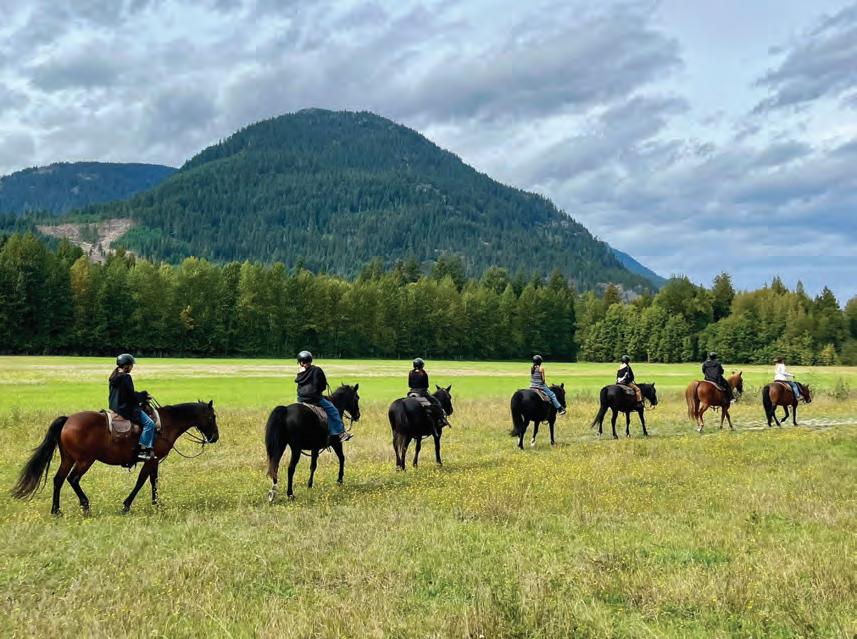
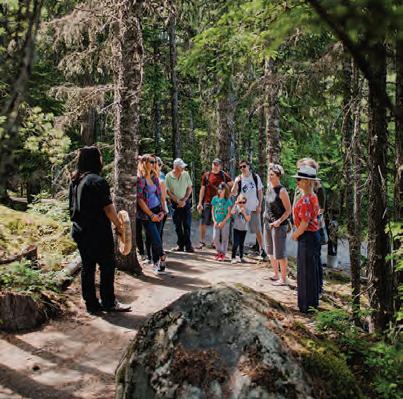
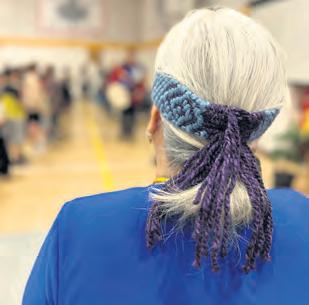
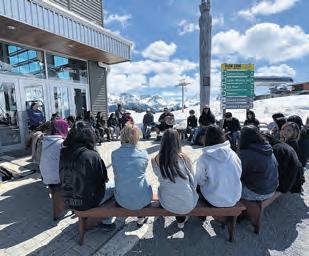
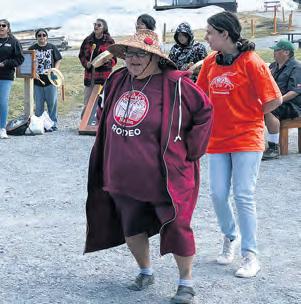
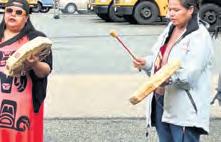
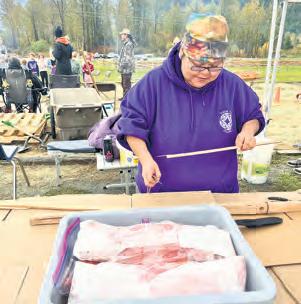
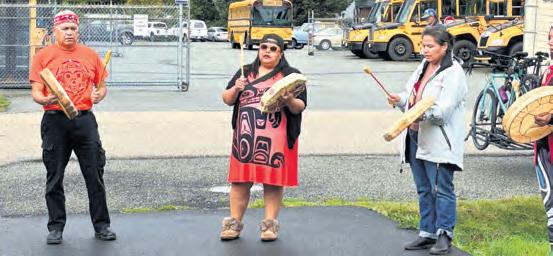
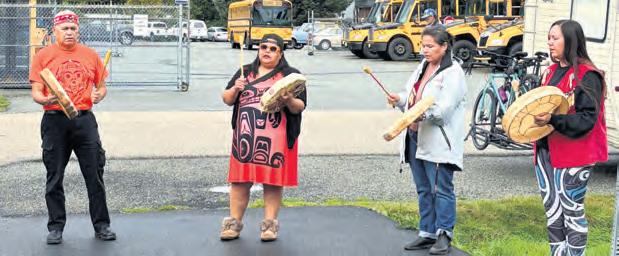
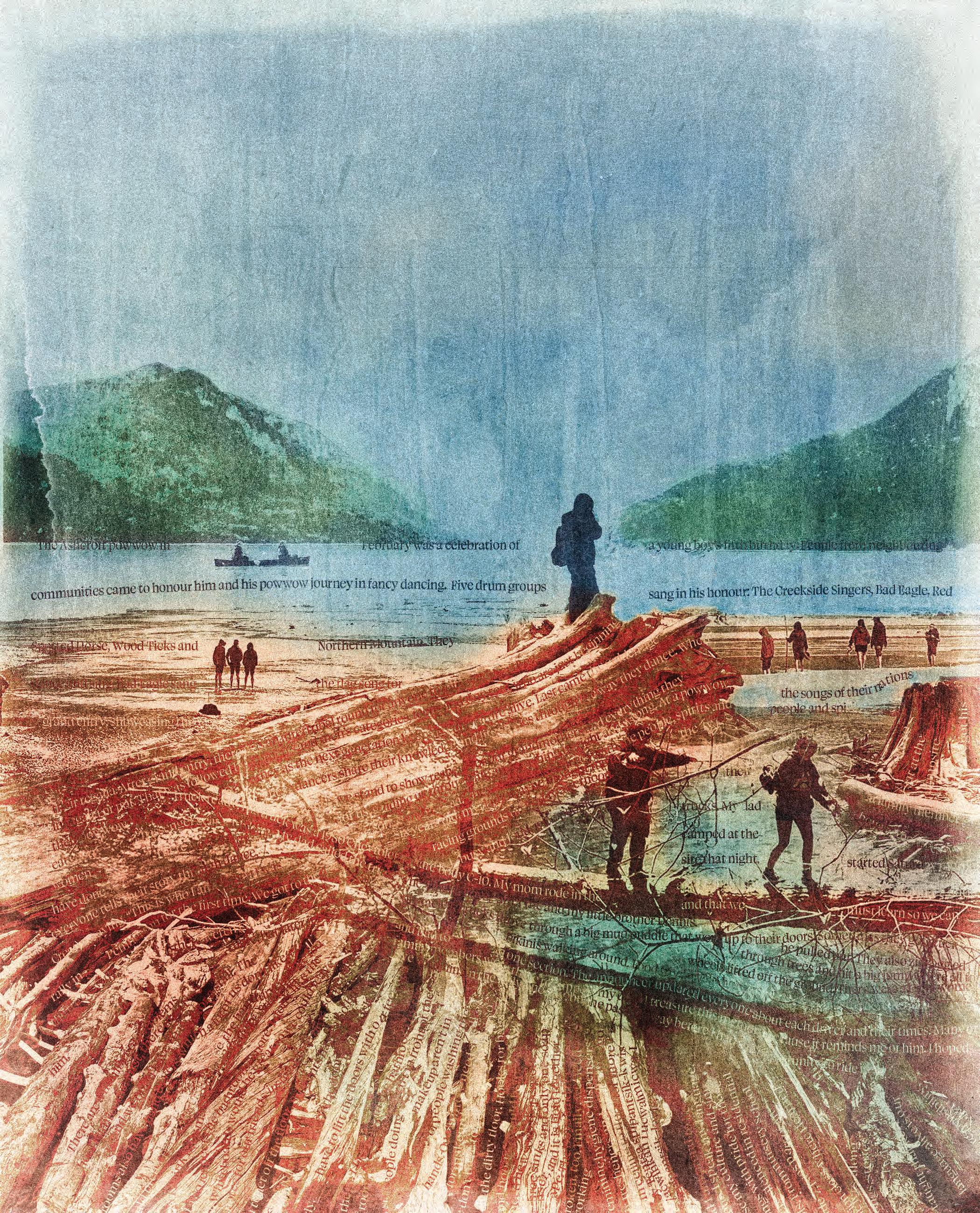
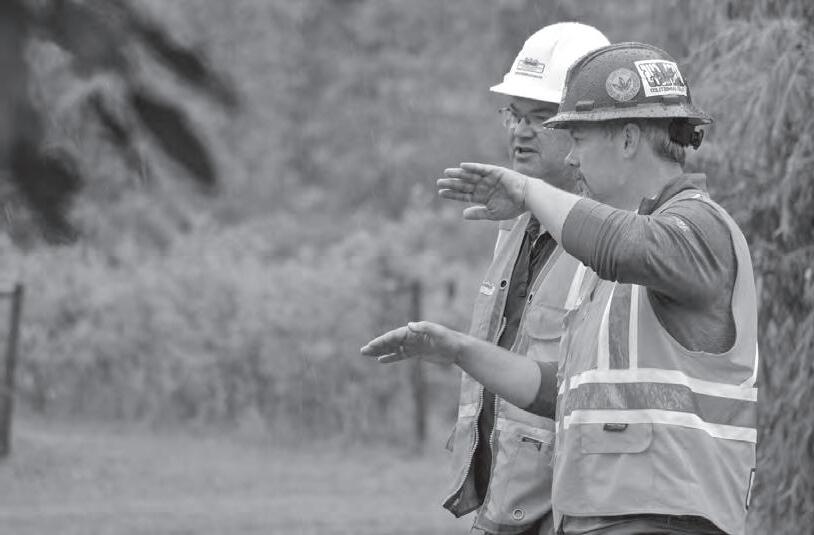
The next generation of Indigenous storytellers reflect on their culture, inspirations and visions for the future. - By Grade 11 and 12 students at Xet’olacw Community School
06 OPENING REMARKS This week’s cover feature reminds us what honest storytelling looks like before adulthood teaches us to sand down every rough edge, writes editor Braden Dupuis.
08 LETTERS TO THE EDITOR In this week’s letters, one of Whistler’s original aldermen offers a rebuttal to a recent Pique story.
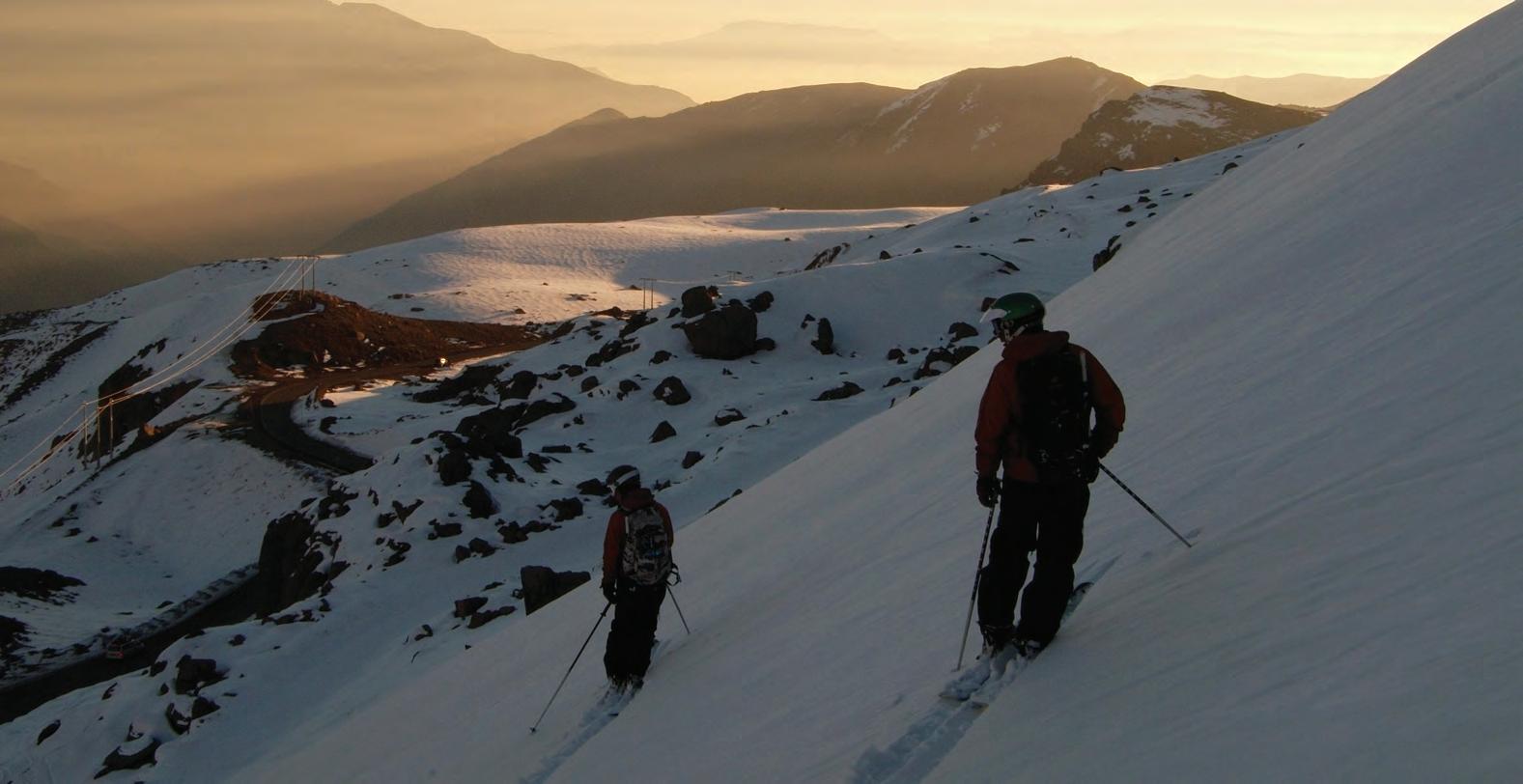
24 THE OUTSIDER If you have the itch to explore and ski down as many mountains in the world as you can, put South America on your list, writes Vince Shuley.
50 PIQUE’N YER INTEREST The Squamish Lil’wat Cultural Centre’s T’ec Georgina Dan writes about what’s in store at the cultural institution this National Indigenous Peoples Day.
COVER These are great stories! Thank you for sharing. - By Jon Parris // @jon.parris.art
Publisher SARAH STROTHER - sstrother@piquenewsmagazine.com
Production Manager AMIR SHAHRESTANI - ashahrestani@piquenewsmagazine.com
Art Director JON PARRIS - jparris@piquenewsmagazine.com
Advertising Representatives
TESSA SWEENEY - tsweeney@wplpmedia.com
ANDREW BUDRESKI - abudreski@piquenewsmagazine.com
Digital/Sales Coordinator KATIE DOUGLAS - kbechtel@wplpmedia.com
Reporters
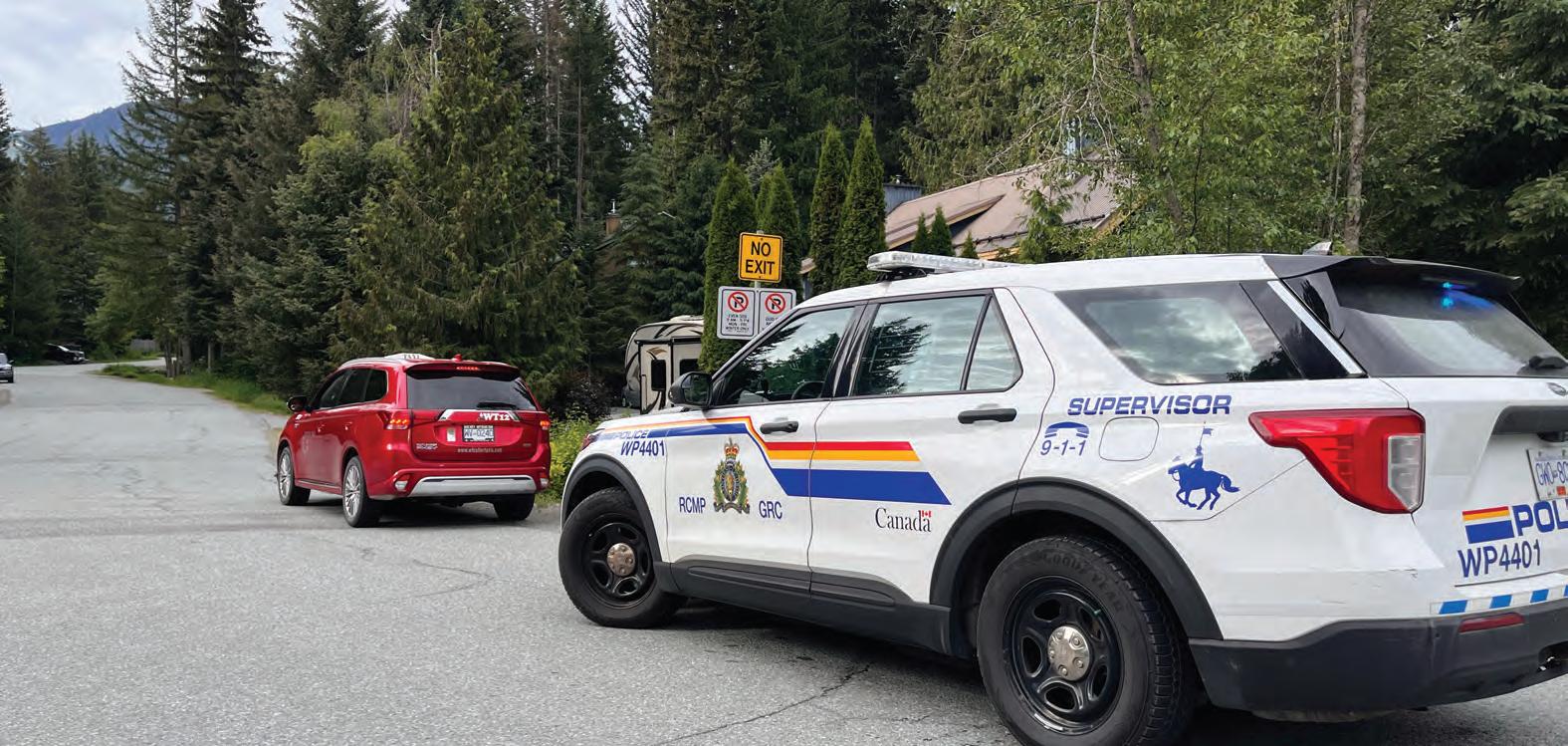
10 UNDER INVESTIGATION Police in Whistler say they are actively investigating reports involving taxi drivers in town, including multiple allegations of sexual misconduct.
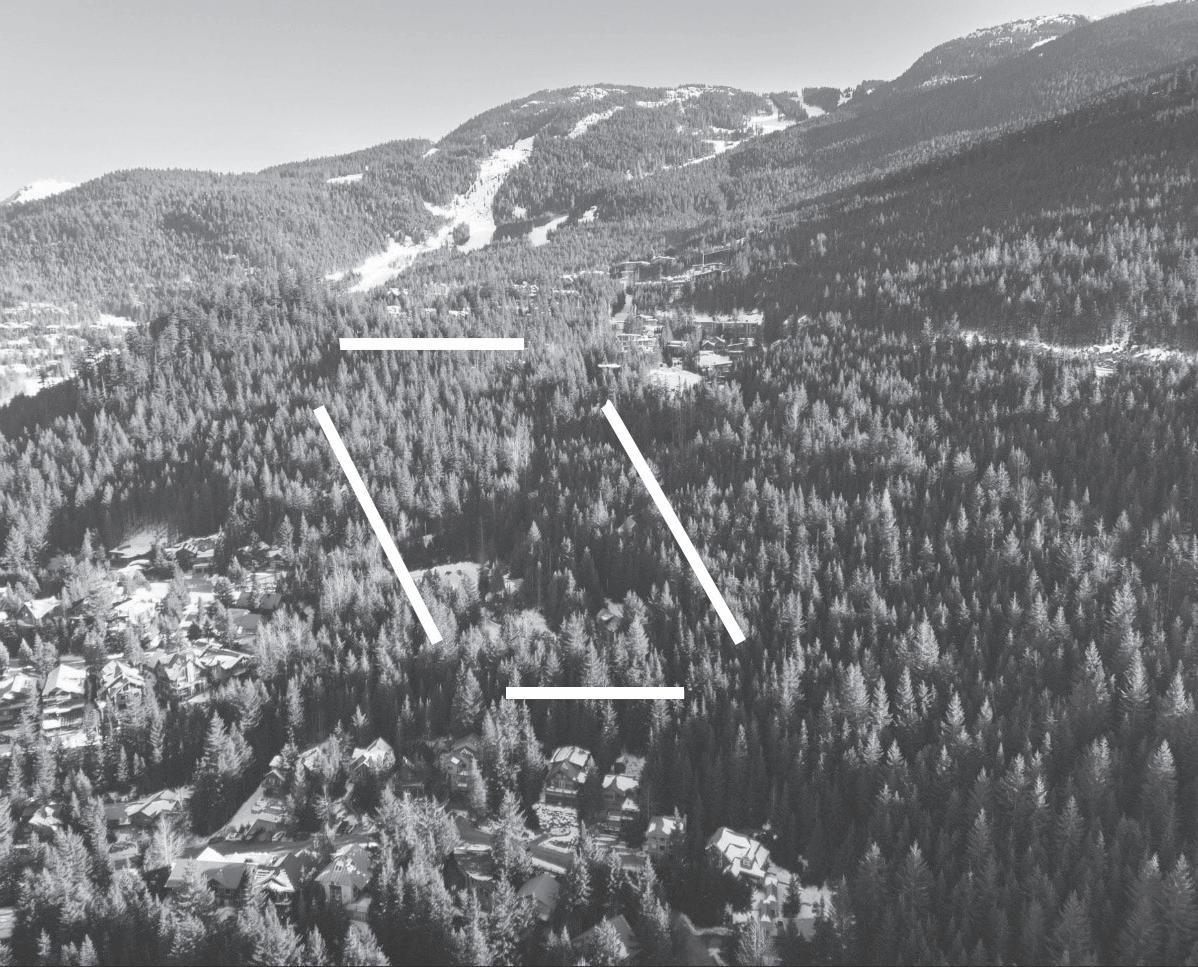
16 SHOVEL-READY Cheakamus Crossing’s Lot 6 is likely Whistler’s next housing push—but what gets built is still up for debate.
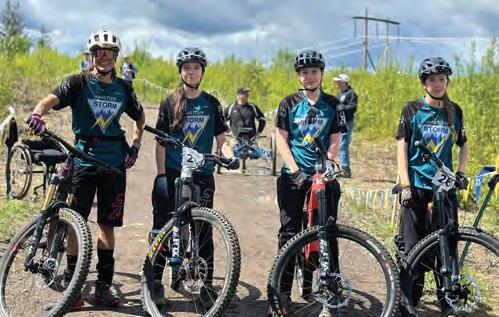
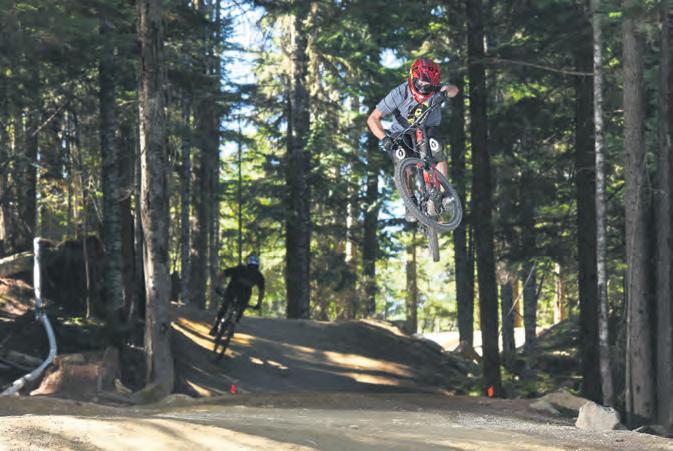
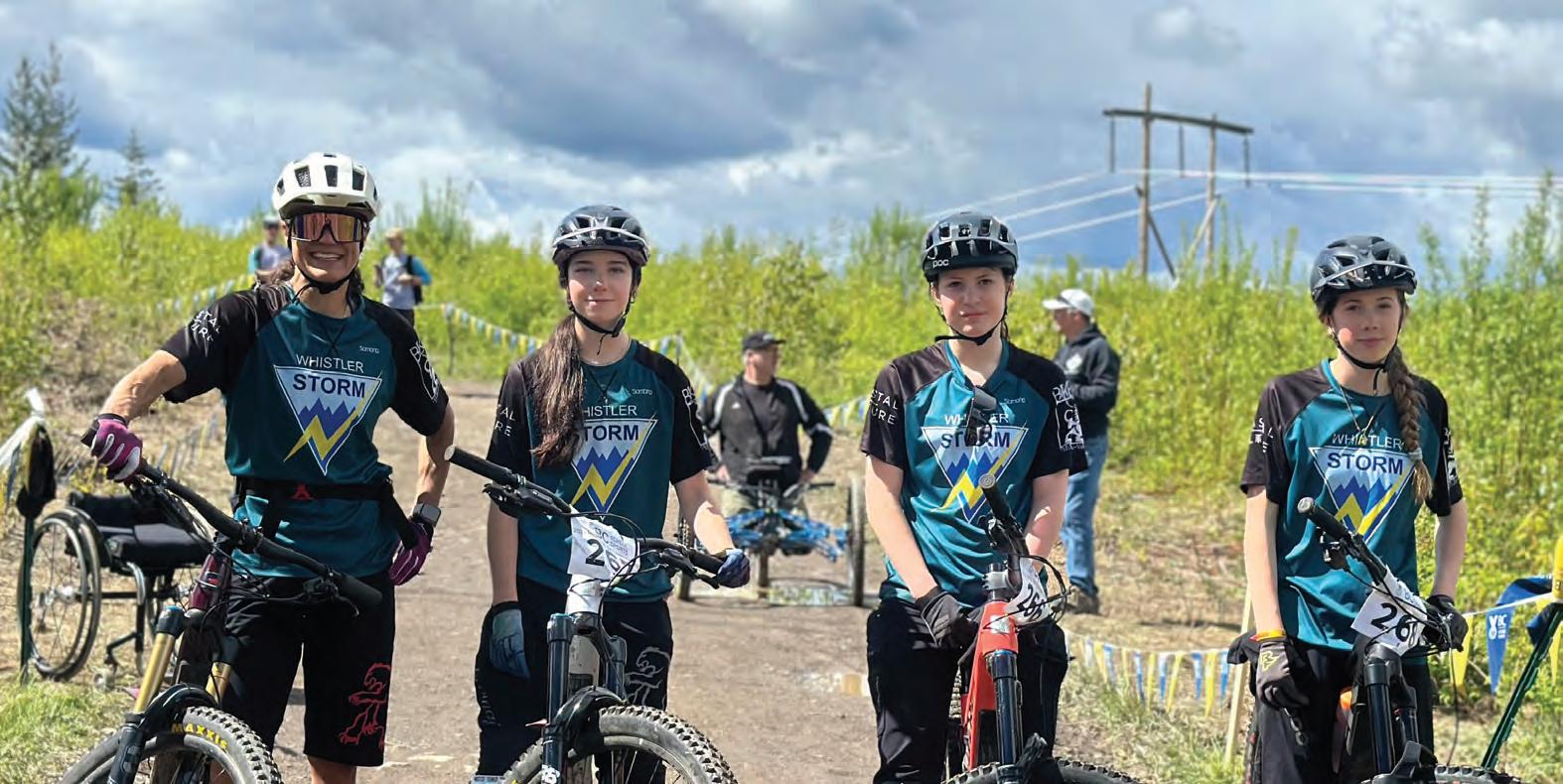
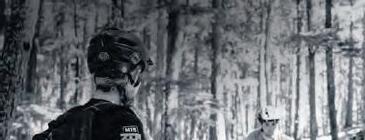
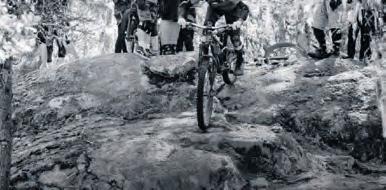
34 SMALL BUT MIGHTY Whistler Secondary bike coach Lesley Clements and rider Alva Campos reflect on the BC School Sports Provincial Mountain Bike Championship in Quesnel.
38 GET NAKED The Steven Page Trio kicks off the Whistler Summer Concert Series on Canada Day with a string quartet and some true Canadian classics.
LUKE FAULKS - lfaulks@piquenewsmagazine.com
DAVID SONG - sports@piquenewsmagazine.com
Classifieds and Reception - mail@piquenewsmagazine.com
Contributors G.D. MAXWELL, VINCE SHULEY, LESLIE ANTHONY, GLENDA BARTOSH, ANDREW MITCHELL, LISA RICHARDSON, LIZI MCLOUGHLIN, TOBIAS C. VAN VEEN
Founding Publishers KATHY & BOB BARNETT www.piquenewsmagazine.com
The stories we tell
THERE’S A COMMON phrase repeated ad infinitum among journalism students (assuming those are still a thing in 2026) when asked why they chose the beleaguered profession.
It’s always some variation of “I just want to tell stories”—this being a job that, at its core, is about storytelling.
BY BRADEN DUPUIS
But while the J-school kids embrace it a bit more than others, we’re all storytellers at heart. We’re telling stories every day, whether we know it or not— to our friends, to our social media feeds, and most often to ourselves.
As adults, our stories get rather convoluted; tainted by the cynicism of age, our varied life experiences over decades of hard growth, our hardened prejudices and partisan political blinders.
Put another, more blunt way, most adults are deeply full of shit, even if we don’t know it, or refuse to admit it. And so our stories quite often reflect that.
But there’s something to be said for the stories young people tell.
In this week’s cover feature, you’ll find more than 20 stories written by students at Xet’olacw Community School in Mount Currie, in the third instalment of Pique’s In Their Own Words (shout-out to teacher Charlotte Jacklein and reporter Luke Faulks for pulling this together again—and to all the awesome young storytellers who
contributed).
In it, the students share stories about family and friends, favourite traditions, personal insights. They write of culture and community, of the things they value, and of important issues and problems they feel need to be addressed.
Each story is unique, and together, it all amounts to a powerful piece of student journalism.
But reading through them all, one common thread jumps out. These stories are earnest, straightforward, no-bullshit accounts about life as these students know it.
It is, in my opinion, very refreshing to read (as someone who gets to read a whole lotta adult bullshit every week).
They aren’t trying to win arguments.
We become less interested in understanding than in being right. We learn to filter every experience through the stories we’ve already decided are true.
It’s a funny quirk of getting older. We collect wisdom, sure, but we also accumulate baggage. Every disappointment, every betrayal, every political fight and every online argument adds another layer between us and the world we’re actually trying to describe. Eventually, it becomes difficult to tell where reality ends and our own carefully constructed narrative begins.
These young writers have not yet had decades to polish their narratives into something more flattering, more
loudest one, not the easiest one, and certainly not the one we walked into the interview expecting to hear.
It’s a useful reminder outside journalism, too.
Every one of us is walking around with a story about who we are, where we come from and why the world works the way it does. Those stories shape our politics, our relationships, our fears and our hopes. They influence what we notice, what we ignore and what we choose to believe.
Maybe that’s why this feature feels so refreshing.
Before adulthood teaches us to sand down every rough edge, these young writers remind us what honest storytelling looks like. It’s curious and
Every one of us is walking around with a story about who we are, where we come from and why the world works the way it does. Those stories shape our politics, our relationships, our fears and our hopes. They influence what we notice, what we ignore and what we choose to believe.
They’re not auditioning for strangers on the internet or squeezing every thought through the lens of partisan politics. They aren’t worried about cultivating a personal brand or signalling that they hold all the correct opinions.
They’re simply describing the world as they see it.
Somewhere along the way, many of us big, serious adults lose that ability. We stop observing and start editorializing.
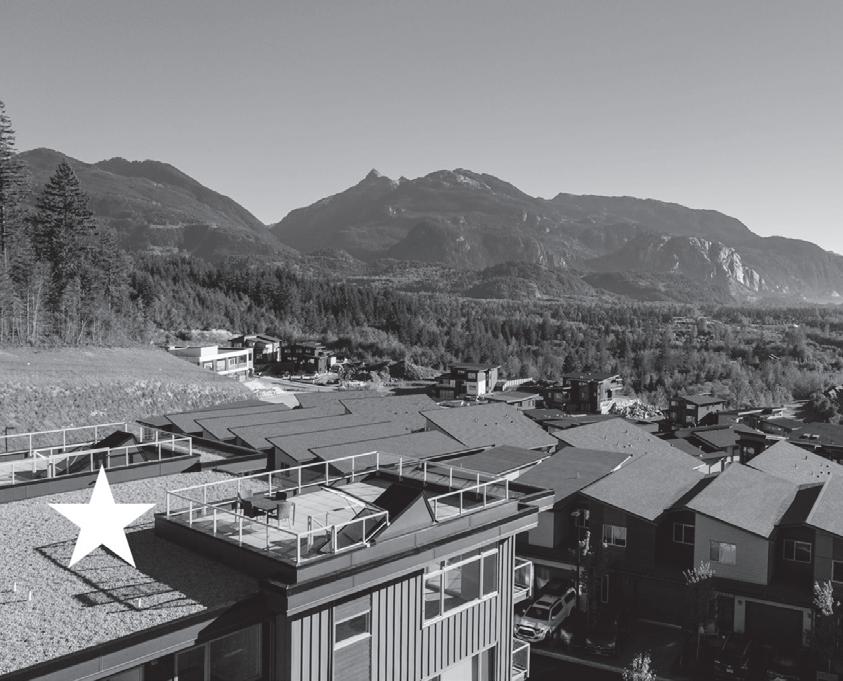
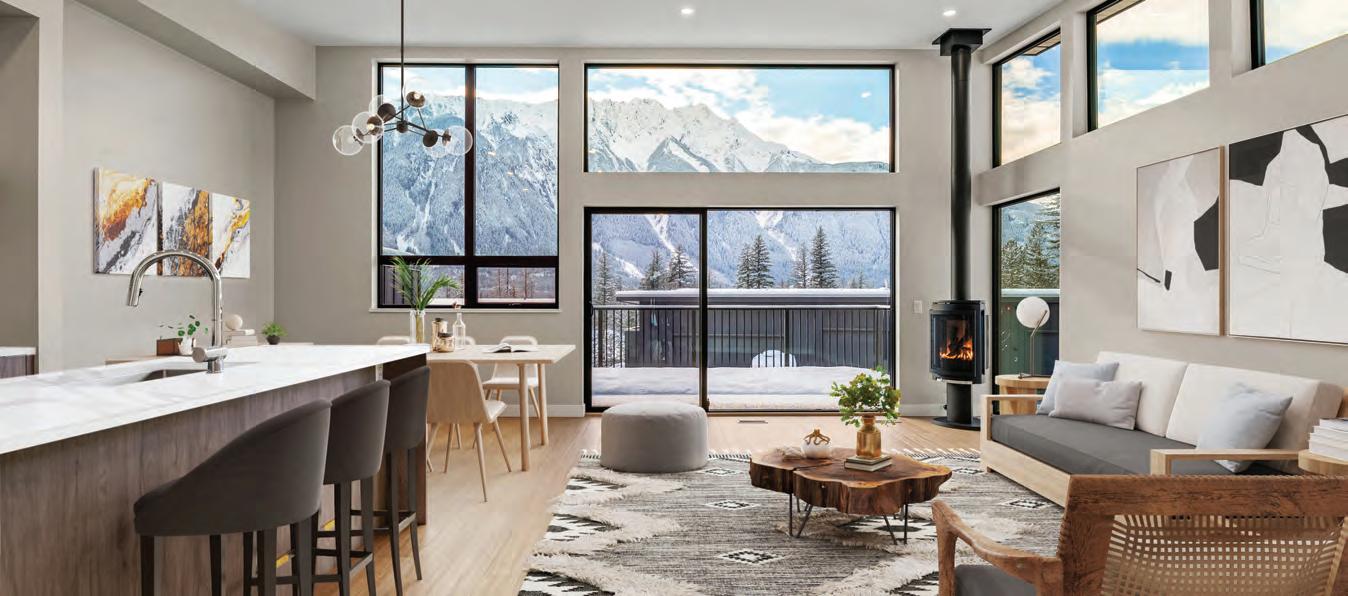
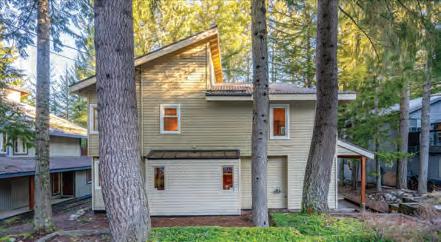
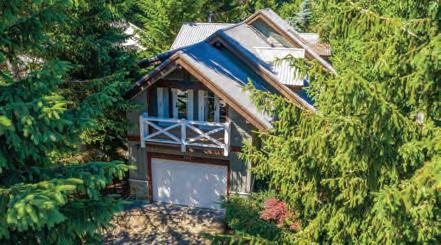
Renovated3-bedroom,2.5-bathroom townhousein The Lagoons withunlimited owneruseandnightly rental zoning. This1,158sq. ft.proper ty features quartz countertops,updatedcabinetr y, stainlesssteelappliances, newflooring,aprivate hottub, andthreedecks.Enjoyaprime Village locationjuststepsfrom Whistler Village,skilifts, restaurants,shops,andthe Valley Trail. Turnkey Whistlergetawaywith excellent rentalincome potentialand year-roundappeal. 54-4335 Northlands Boulevard Askingprice-$2,200,000
convenient or more politically useful. They simply tell the truth as they understand it. Sometimes that truth is joyful. Sometimes it’s difficult. Sometimes it’s just ordinary. But it’s theirs.
As journalists, our job is to tell other people’s stories. But the trickier part of the job is sometimes listening closely enough to make sure we’re telling the right story in the first place—not the
hopeful. It’s deeply personal. And above all else, it’s authentic.
If you haven’t already, take some time this week to read their work.
I suspect you’ll come away with a better understanding of these students, their community and their culture. But if you’re lucky, you might also find yourself thinking a little differently about the stories you’ve been telling yourself. n
We lookforwar dtow elcomingyo u rainorshin etoN orth Ar mF ar m!
Important not to diminish original council’s role
I read the article on Eldon Beck in the May 29 issue of Pique. But as the last surviving member of the first council elected after Whistler became a municipality on Sept. 6, 1975, I found I was quite offended by the allegations regarding the first council’s actions with regard to the proposed Whistler Village. The article states that “the proposed village site was slated for a more conventional North American-style grid design.”
The only grid-style proposal came from a B.C. government agency that proposed that the village area should consist of lots laid out for single-family homes, even though Whistler already had many house lots that had yet to be built upon. At a weekend-long meeting held to make the final decision as to whether the Resort Municipality of Whistler should go ahead with the village, it was recognized by most attendees, some of whom were B.C. government officials, that the village should be a commercial area with stores, restaurants, bars, shops, and a variety
of tourist accommodations. The B.C. government agency’s house lot plan was discarded.
The article suggests that the idea of a pedestrian village originated with Eldon Beck and was later supported by Al and Nancy Raine. I remember that it was Al Raine, who had been to several European ski resorts, who proposed the idea of a pedestrian village. I was a strong supporter of the concept. I had spent the winter before I came to Whistler working in
St. Moritz, Switzerland. The town had not been designed as a pedestrian town but due to its compact nature, narrow streets and very limited parking, it functioned as a pedestrian village. The council had decided on a pedestrian village and had hired a team of architects to design such a village. However, the designs that they produced were never close to what the council had envisioned. These architects seemed to be more interested in designing buildings rather than developing a layout
for the village, so the council became increasingly frustrated with them.
Al Raine, who was the Ski Area Coordinator for the B.C. government at the time and was appointed to the Whistler council, was on a trip to the U.S. when he met Eldon Beck. Al told Eldon about Whistler and discussed the ideas for a village that the council had considered. Eldon appreciated the pedestrian village idea and worked on designing a village plan around the concept. He came to Whistler to discuss his ideas for the proposed village. His designs included view and light corridors, limits on the height of buildings to prevent them blocking the views of the local mountains, and several other important design features. The ultimate design of the village owes a great deal to Eldon, and to the collaboration between him and the council.
The article says that “Whistler’s original council … were so committed to the [pedestrian village] concept that they reportedly carried resignation letters with them while pitching the village idea to the province.” During the second year of the RMOW’s existence the council had decided they might have to resign, but this happened before any of the councillors had even heard of Eldon Beck. The matter mostly concerned the Official Community Plan (OCP) that the council had developed, which included the
plan for the village to go where it now exists. This plan was being strongly opposed by a group of land developers, each of whom wanted the village to be built on land that they owned. They had gone to Victoria to
LETTERS TO THE EDITOR
B.C. government despite any protests by the land developers. This ended the need for any resignations.
None of my concerns with the article diminish in any way the important
“These architects seemed to be more interested in designing buildings rather than developing a layout for the village…”
- JOHN HETHERINGTON
push their case to the B.C. government. The Whistler councillors had decided to turn the municipality back to the B.C. government if the OCP was not accepted. However, Hugh Curtis, the Minister of Municipal Affairs at the time, stated that Whistler’s OCP would be accepted by the
contributions to the village planning that Eldon Beck made, but it’s equally important not to diminish the role that the first councils had in planning and developing the Whistler Village.
John Hetherington // Whistler Alderman, 1975 to 1979 n
Write to us! Letters to the editor must contain the writer’s name, address and a daytime telephone number. Maximum length is 450 words. Pique Newsmagazine reserves the right to edit, condense or refrain from publishing any contribution. Letters reflect the opinion of the writer and not that of Pique Newsmagazine. Send them to edit@ piquenewsmagazine.com before 11 a.m. on Tuesday for consideration in that week’s paper.
NickDavies, Whistlerlocal andexperiencedfamilylawyer practisingacrossBCandYukon. Callat 604-602-9000 or visit www.macleanlaw.ca
Whistler RCMP ‘actively reviewing and investigating’ complaints about taxi driver misconduct
WHISTLERITES ALLEGE INAPPROPRIATE TOUCHING, DANGEROUS DRIVING AND MORE
BY BRADEN DUPUIS
POLICE IN WHISTLER say they are actively investigating reports of misconduct involving taxi drivers in the resort town, which include multiple allegations of inappropriate sexual conduct, dangerous driving, aggressive behaviour towards passengers, and more.
Pique is aware of three reports alleging inappropriate sexual conduct involving Whistler cab drivers. Other allegations include claims of drivers speeding excessively, driving aggressively, swearing at families and children, making sexually suggestive comments and jokes to passengers, and overcharging or requesting multiple fares for single trips.
The complaints span multiple years, involve more than one company and have prompted investigations by both Whistler RCMP and provincial enforcement officials. While police would not provide a complete accounting of reports involving local taxi drivers before press time, Pique confirmed that there have been multiple recent complaints alleging inappropriate sexual conduct involving drivers from different companies.
“We are aware of the concerns that have been raised, and every report received by police is taken seriously and investigated based on the information available. One challenge in these types of matters is
that some victims or witnesses may be visiting the community, may leave before an investigation can be completed, or may decide they do not wish to continue with the process. Regardless, we want to strongly encourage immediate reporting to police so we can assess the circumstances, support the person involved, and take appropriate investigative steps,” said Whistler RCMP Insp. Robert Dykstra in an email to Pique.
“We are actively reviewing and investigating this issue more broadly. I cannot comment further on specific investigations, but we are concerned by the nature of the reports, and our focus remains on public safety and security in the community now and going forward.”
The provincial Ministry of Transportation and Transit confirmed to Pique its Commercial Vehicle Safety and Enforcement (CVSE) officers “are aware of this issue and have initiated an investigation, in cooperation with local RCMP.”
The ministry said taxi operators found to be “egregiously or recurringly noncompliant” with licence conditions or provincial passenger transportation regulations can face penalties up to and including licence cancellation.
‘I
WAS AND HAVE ALWAYS BEEN FURIOUS’
One alleged incident involved Hannah Clinton. She said she was in a Whistler Taxi cab on the night of New Year’s Eve, 2023, when she started to feel uneasy.
“The entire time I am in the backseat I can see the driver, who was a very big man, staring at me in the rearview mirror. To also note, I have a tattoo on my chest and was
wearing a shirt and overalls with my jacket open where you could see it. He made a few comments about how he likes my tattoo and asked if I had any more. I was instantly uncomfortable of course,” Clinton said in an email to Pique.
Clinton said she kept her answers short, eventually staying silent.
“We finally got to my friend’s house and the car stops and the light turns on. As I am quickly and uncomfortably trying to grab my wallet to pay him, I’m looking down into my purse and see this hand come from the front seat towards me, he fully touches my chest/boobs,” she wrote. “Reached under my jacket and I felt his skin on mine. I looked up frozen and in complete shock as I can not believe that this is happening. All he did was smile and pull his hand back. I was so terrified and threw money at him and ran out of the cab.”
Clinton said she called Whistler Taxi to report the incident, “and as I got in contact with a ‘manager’ he essentially said plainly, ‘are you sure that’s what happened?’ I was and have always been furious.”
The owner of Whistler Taxi, Ravindra Dayal, did not respond to multiple phone calls and emails requesting comment before press time.
When Pique called the Whistler Taxi office for a second time on the morning of June 16, a dispatcher hung up after hearing why Pique was calling.
Clinton did not report the matter to the RCMP. There have been no charges in connection with the alleged incident.
Pique is also aware of two recent police reports allegedly involving drivers for Whistler Resort Cabs.
For his part, Whistler Resort Cabs
owner Inderpal Singh did return Pique’s phone call, but while he initially said there had been no incidents involving his drivers—“I have investigated enough on this and I have a proper structure for how I can do this, so I can make sure this wasn’t any of the Whistler Resort Cabs guys,” he said—when Pique provided call logs of two recent reports alleging inappropriate sexual conduct involving his drivers, he said he was “away for the week” and hadn’t conferred with his team regarding the allegations before returning Pique’s call.
Both alleged incidents—one on June 6 and one on April 10, and involving two different Resort Cabs drivers—resulted in the women filing police reports. Both women ultimately declined to press charges.
According to police, when a victim does not wish to proceed, investigators can generally continue taking the necessary steps to gather all available evidence.
“However, if an offender is identified and there are reasonable grounds to believe an offence has occurred, the victim’s cooperation is required to move forward,” Whistler RCMP Cpl. Katrina Boehmer wrote in an email to Pique. “If the victim chooses not to proceed, the investigation will be concluded, and no further action can be taken against the individual responsible.” No charges have been laid in connection with either of the alleged incidents.
Police urged the public to report issues directly to police as soon as possible, as “early reporting significantly improves our investigators’ ability to identify and secure valuable corroborative evidence. No detail is too minor, and information that may seem insignificant in one report could
UNDER INVESTIGATION A Whistler RCMP officer conducts a traffic stop on a Whistler Taxi driver on June 15.
PHOTO BY BRADEN DUPUIS
prove critical when linked to details from separate incidents.”
The RCMP Victim Services team can offer additional support to those who have experienced these types of incidents, they added.
“Reporting a personal violation can feel overwhelming or even embarrassing, however we approach these reports with respect, compassion and understanding,” they said. “We recognize the courage it takes for someone to come forward and share their experience.”
Police also offered safety tips for the public: keep your phone charged and call 911 in an emergency; ride with friends and utilize the buddy system, if possible; plan ahead for your ride home, including considering taking transit; and tell others where you’re going and when you expect to be home.
“Be friendly, but assertive,” the RCMP said. “Trust your instincts; and report all suspicious people and incidents to police.”
‘THERE’S PEOPLE WHO BELIEVE YOU’
For Bree Smith, co-manager of women’s shelter PearlSpace’s Whistler and Pemberton programs, reading the account of the alleged June 6 groping incident in a Whistler cab on Facebook was not shocking.
“It didn’t surprise me, unfortunately,” Smith said.
“I think it takes a lot of courage to come forward. So I think initial thoughts are just feeling proud of the person who’s come forward, who’s had the courage to do that, knowing that it’s often such a long and tedious and often upsetting battle to justice.”
Smith couldn’t get into specifics about how often PearlSpace hears reports involving taxis, “but I can say that we have heard of these incidents happening both professionally and personally,” she said.
“It’s a small town, not only in Whistler, but throughout the Sea to Sky. And honestly, really any situation where someone is vulnerable and alone and people don’t know exactly where they are, I think presents risks no matter where you are.”
What is clear is these cases are underreported, she said, “and especially in a situation where you’re completely alone with the perpetrator, the lack of evidence makes it really hard to feel like there’s a point in reporting.”
There are many reasons why a woman may not report a sexual assault, Smith added. If the assault involved a cab driver, a health official or even a police officer, for example, they likely know your personal address and contact information, she said.
“In Whistler often what we see is people leave because they’re often not from here, and experiencing something so traumatic often results in people just leaving and starting over somewhere else or going back to their home communities,” she said. “They don’t want to go through the whole process of filing a report and everything that comes with that.”
According to a 2024 report from the
NEWS WHISTLER
Government of Canada, just six to nine per cent of sexual assaults get reported.
“So that leaves more than 90 per cent,” Smith said. “So if you think of it as like a thousand cases happen, 914-ish go unreported. And I think that a lot of that has to do with the intimate nature of the crime.”
Asked if she had a message for women, Smith said there is hope on the other side.
“There’s people who believe you. There’s tons of people who believe you and there’s tons of people standing with you,” she said. “The courage that it takes to come forward … you can’t even really put that into words. And I think that the more that people come together and the more that we really acknowledge that this is something that so many women live with, the stronger the support circle is, the stronger the recovery is, and the better chances we have at actually stopping this from happening.”
Find more info and resources at pearlspace.ca.
“The courage that it takes to come forward … you can’t even really put that into words.”
- BREE SMITH
‘I TYPICALLY FEEL QUITE SAFE’
It’s not all doom and gloom. Some who reached out to Pique shared positive stories of local taxi drivers in both companies as well.
“I’ve actually had really good experiences with them, which was a pleasant surprise when I moved here from Coquitlam,” wrote Lauren McCoy, adding she has never felt pressured by drivers, and has gotten to know several who keep up with her day-to-day life, and have been very kind and respectful.
“All in all I typically feel quite safe, the only thing I might mention is that certain cabs need to slow down when going through crowded residential streets,” McCoy wrote.
The ministry said complaints involving inappropriate driver behaviour can be filed through VehicleSafetyBC, while criminal matters should be reported immediately to police.
Under provincial regulations, taxi drivers are required to display a Record Check Certificate inside the vehicle containing their name, photo identification and driver number. Taxis must also display identifying vehicle information inside and outside the cab.
Check back for more in the coming weeks as this story develops.
Do you have a story to share about an experience in a Whistler taxi? Email editor Braden Dupuis at bdupuis@ lodestarmedia.ca. n
Whistler asks Meadow Park Sports Centre users to confirm residency before fall registration
RECREATION USERS MUST CONFIRM RESIDENCY IN PERSON BY AUG. 8 TO AVOID NON-RESIDENT RATES AND REGISTRATION LIMITS
BY LUKE FAULKS
THE RESORT Municipality of Whistler (RMOW) is asking recreation program users to confirm their residency in person at Meadow Park Sports Centre (MPSC) by Saturday, Aug. 8. Unverified resident accounts will be switched to non-resident status on June 22 until users complete the check.
The verification applies to residents who want to register for fall programming, Flex Reg or registered fitness classes. Unconfirmed users will be charged nonresident rates and will not be able to access resident registration.
“Whistler residents receive priority registration and subsidized rates because they contribute to the municipal tax base,” the municipality said. “Non-resident fees reflect the full cost of programs and help maintain and improve recreation facilities.”
The municipality said the refresh is routine but overdue.
MPSC residency records were last updated in 2013, when the council at the time decided residents should get
subsidized pricing and first access to programs.
“It wasn’t an easy decision to make but the fact of the matter is that 60 per cent of the operating costs for Meadow Park Sports Centre are subsidized by municipal taxpayers,” said then-Mayor Nancy Wilhelm-Morden at the time.
“It’s not as if we’re raking in a ton of dough and making some profit off the back of Pembertonians, that’s not what’s
happening at all. We need to subsidize the cost of this sports centre.”
The RMOW said a similar verification process for swimming lessons in winter 2025 found a notable number of accounts incorrectly classified as residents. Municipal staff said the review will be done every three years going forward, even though council policy allows for annual verification.
The timing is intended to give staff
time to process confirmations during the quieter summer season at MPSC before the fall registration rush.
Based on 2025 and 2026 swim lesson registrations to date, about 14 per cent of registrants are non-residents. There are no plans to change drop-in rates at this time; resident discounts and priority access apply to registered programs only.
Residency must be confirmed in person at Meadow Park Sports Centre. The municipality says documents cannot be submitted by email because of privacy rules and the need for staff to visually match users with photo ID.
Acceptable proof must include a full name and Whistler address. Residents must provide one piece of photo ID with address, such as a B.C. driver’s licence or B.C. identification, along with one proofof-residency document, such as a current property tax notice, lease agreement, BC Hydro or phone bill, or utility bill.
Residents of Black Tusk Village, Pinecrest and Wedgewoods are classified as non-residents because they pay property taxes to the Squamish-Lillooet Regional District.
For more information, visit the Meadow Park Sports Centre website. n
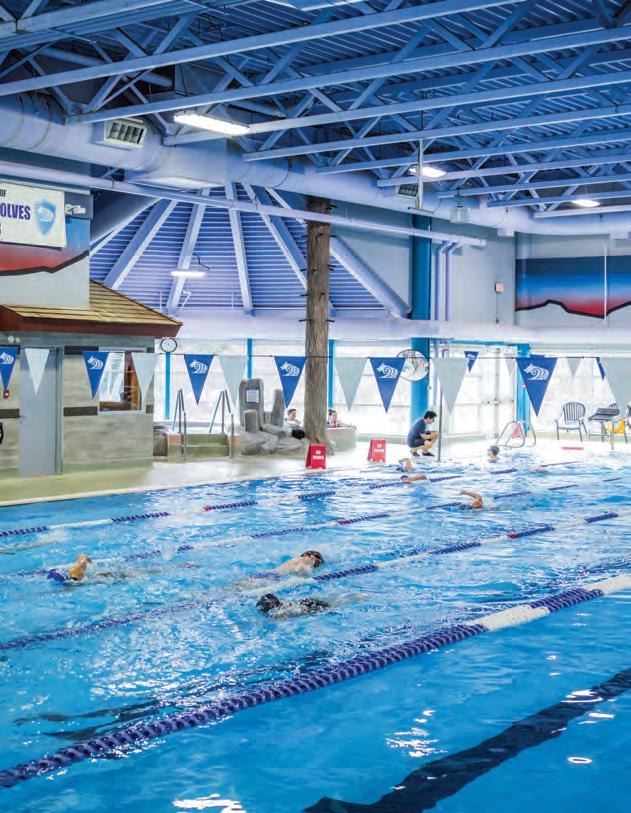
STAY FIT Meadow Park Sports Centre users who want to register for fall programming will be asked to confirm their residency in person by Saturday, Aug. 8.
PHOTO BY ANNASTILLS / ISTOCK / GETTY IMAGES PLUS
Cheakamus Lot 6 likely Whistler’s next housing push—but what gets built is
still up for debate
WDC
IS PREPARING SHOVEL-READY SITES FOR CONSTRUCTION AS EARLY AS 2027, WHILE SITKA & CEDAR STILL HAS SOME TWO- AND THREE-BEDROOM
RENTALS AVAILABLE FOR AUGUST
BY LUKE FAULKS
THE WHISTLER 2020 Development Corporation (WDC) is preparing the last undeveloped parcel in Cheakamus Crossing Phase 2 for future employee housing, with up to three “shovel-ready” sites on Lot 6 expected to be ready by the end of the year.
While site work is advancing, it’s not yet clear what Lot 6 will look like—whether that’s rental apartments, restricted-ownership homes, townhomes, smaller units, family-sized homes or a mix of housing types.
WDC board chair Eric Martin told Whistler council May 26 the corporation believes Lot 6 is the near-term site best positioned to keep employee-housing construction moving after the current phase of Cheakamus work.
“We’ve had no construction commencing this year at all, and we fully believe that we need to be moving ahead next year with something,” Martin said. “It’s our view that the only viable option
in terms of timing is Lot 6.”
The decision could also inform future employee-housing work beyond Cheakamus Crossing, as the Resort Municipality of Whistler reviews municipal land that could potentially support housing in neighbourhoods including Cheakamus, Alpine, Emerald, Alta Lake Road and other pockets elsewhere in the valley.
the roads, utilities and approvals needed to allow a housing project to move toward construction.
“This plan is more land-development plan than a building plan,” Martin told council. “You’ll recall we’ve presented quite a few project plans for individual projects. This is a land-development plan, primarily.”
Lot 6 is the final undeveloped parcel
“This plan is more land-development plan than a building plan.”
- ERIC MARTIN
MAINTAINING MOMENTUM ON PHASE 2
Martin and WDC vice-chair Duane Jackson updated council on the corporation’s Lot 6 servicing and development plan. Crews are currently clearing, grading and blasting at 1825 Mount Fee Road to prepare a “shovel-ready” site—land prepared with
in Cheakamus Crossing Phase 2, sitting behind the soon-to-be-opened Sitka & Cedar building on Mount Fee Road.
Phase 2 has already delivered, or has under construction, roughly 430 dwelling units on Lots 1 to 5.
Sitka & Cedar, the 104-unit WHA rental project on Lot 5, is preparing for August
occupancy, with two- and three-bedroom units still available.
Across the road, Lot 3 is under construction at 1600 Mount Fee Road, with 125 more rental homes planned—20 three-bedroom townhomes and a 105-unit apartment building. The WDC announced earlier this year that tenants were expected in late 2027.
As Lot 6 continues to be cleared, construction staging will be moved out of the future Big Rock Park between Lots 2 and 3 so the park can be completed as the surrounding homes come online.
Martin said March 2027 is the earliest WDC could start vertical construction on Lot 6 if equity is available. He said staying on the construction cycle established through Phase 2 can help control costs.
HOW MUCH HOUSING COULD FIT?
The current zoning provides about 75,000 square feet of gross building area, or about 100 units, that could be accommodated on Parcel A or B in the first phase. The updated WDC report says servicing capacity at the
lot boundary has “significant additional capacity” to support increased density, though that would still need to be reviewed with engineering and planning staff.
Longer-term, the full Lot 6 site has been discussed as having potential for roughly 300 units with additional density. Councillor Arthur De Jong said that kind of buildout needs to be considered alongside the broader needs of Cheakamus Crossing.
“If I get the numbers right, over 300 units [and] roughly 800—perhaps 900— residents, maybe I’m stretching that a bit as the potential buildout, [but] that is another 25, 28 per cent of additional people in Cheakamus Crossing,” De Jong said at the May 26 council meeting. “Again, just looking at that with great interest in terms of driving services, grocery store, pharmaceutical, etc., so we keep people out of their cars and hope to get there one day.”
A GLIMPSE BEYOND CHEAKAMUS
Lot 6 is not the only site under discussion, but according to the WDC report, it is further along than other municipal sites being considered through the RMOW’s broader Municipal Land Strategy. The update says other sites, including Alpine North, are unlikely to see site work before summer 2027 or later, while Lot 6 is more than a year ahead.
Martin said the municipal land strategy has identified potential employee-housing sites throughout the valley, ranging from small parcels that may fit a handful of units to larger sites that could support more.
“The really good part is they’re kind of spread throughout the valley,” Martin said. “For some people, location is important, obviously. Price is always important, the building type, whether townhouse or apartment, and so on, is important to some people.”
Jackson said those sites could allow Whistler to consider different housing types in different locations rather than trying to address all demand on one parcel.
“One site’s probably better for this type or that type,” Jackson told council. “Do we have an alternative? And if we’re ready to go, and there’s funding, as we point out, and council chooses to spend it,
then we can at least keep the momentum and put something in the ground for one of the pieces of that demand.”
LOT 6: RENTAL, OWNERSHIP OR BOTH?
The decision on tenure and unit mix is still being worked through with the Whistler Housing Authority (WHA). Martin said WDC has already had meetings with the WHA, and the ownership wait list is a major factor.
“The ownership wait list is very extensive,” he said. “We haven’t done much for the ownership wait list since 2021, 2022, and we did the first project in the second Phase 2. So, there’s, I think, a strong desire to do some ownership housing, so that could be apartment or townhouse.”
At the same time, the WDC is watching how Sitka & Cedar leases up. The new WHA rental building in Cheakamus Crossing is scheduled for August occupancy, and the WHA says two- and three-bedroom rentals remain available for families and qualified roommate groups.
Even new eligible applicants may have a chance to sign a lease this month, according to WHA outreach material. Applicants must work at least 30 hours a week for a qualified Whistler business and be a Canadian citizen or permanent resident, with income limits and other eligibility criteria applying.
Rental rates are calculated at 30 per cent of annual gross household income, with minimum and maximum rates ranging from $2,455 to $4,215 a month. WHA’s outreach material says demand has been strong overall, but about half of the 32 two-bedroom units remained available at the time of the update.
Applications are available on the WHA’s website at whistlerhousing.ca.
Martin said WHA data shows the average wait for existing WHA housing is seven to nine years, though actual waits can vary depending on the unit someone is seeking.
“There’s definitely demand, and I think we’re really careful about understanding what people need, but more so what they can afford,” Martin said. “And [if we] do the best job we can within that price point, then we’re doing our job.” n
4 0 0 5 W h i s t l e r W a y | 6 0 4 9 6 2 2 2 3 3 | @ w i l d b l u e
DIG IT WDC vice-chair Duane Jackson (centre) with architect Duane Siegrist, Mayor Jack Crompton and other officials during a June 11 tour of Lot 6 in Cheakamus.
PHOTO BY LUKE FAULKS
Wedgemount rescue reinforces when to call for help, Whistler SAR says
SAR PRESIDENT GREG NEWTON SAYS THE SOLO CLIMBER MADE THE RIGHT CALL AFTER DECIDING SHE COULD NOT SAFELY SELF-RESCUE
BY LUKE FAULKS
AN EXPERIENCED mountaineer was rescued near Wedgemount Lake earlier this month after a solo attempt on Wedge Mountain ended with a knee injury, unstable snow conditions and a hard decision to call for help.
The climber, who shared a detailed account of the incident on Reddit under the username sharli_the_unicorn, wrote she has been solo hiking and backpacking for more than 15 years and mountaineering for more than 10. She had dealt with serious backcountry problems before, including getting off-route, being benighted, hypothermia, frostbite and even hiking out on an ankle fracture, without calling search and rescue.
“That all changed yesterday,” she wrote of the June 2 incident. “This trip was my first ever SAR call, and even though I felt guilty at first, I don’t regret it.”
Whistler Search and Rescue president Greg Newton said the team received the call around 6 a.m. through the provincial dispatch system, after the climber first contacted 911 and was routed through police and ambulance services.
Shortly after 8 a.m., crews were in the air.
“It was quite quick, actually,” Newton said. “She questioned if she would be able to extricate herself, or if she’d have the ability to walk back down to the trailhead safely. So we got in touch with Summit [Helicopter] and were in the air just shortly after 8 a.m. that day.”
AN AMBITIOUS ROUTE TURNS DANGEROUS
The climber had set out around midnight with an ambitious plan: hike to Wedgemount Lake in the dark, traverse toward Parkhurst-Rethel Col, skirt around Parkhurst Mountain to avoid glacier travel as a solo climber, then climb the northwest couloir of Wedge Mountain.
But she encountered poor snow conditions—post-holing through weak snow, moving over loose rock and falling behind schedule. By about 2,150 metres, she reported seeing unstable cornices overhead and decided to turn around.
On the descent, she slipped, caught herself quickly with her ice axe and crampons, but injured her knee. She later moved to a safer location away from the overhead hazard and called her father, a doctor. While on the phone, she watched a cornice collapse in the same area where she had been standing roughly 30 minutes earlier.
With a sore knee, dangerous terrain
Children & Youth Summer Programs
Summer Kid’s
Drop -in Ar t Classes
Stop Motion Animation Workshop
Gr ades Kinder ga rten -2
Mo nd ays& Thursdays* 11:0 0a m- 12:0 0pm
Gr ades 3-6 Mo nd ays& Thursdays* 2:00 pm - 3:30 pm
$5 pe r cl as s Fr ee fo r AA M Memb er s *f ro m Ju ly2, pl ea sese e we bs ite fo r da te s.
Ag es 8- 12
July 16 & 17 (2-d ay wo rksh op)
10 :0 0a m- 3:00 pm
$6 0 Memb er s $75 No n- Memb er s
Architecture&
Design Workshop
withthe Sc hool of Dire ct Ex pe rien ce
Ag es 9- 14
July 23 , 24 & 25 (3 -d ay wo rksh op)
10 :0 0a m- 3:00 pm
$8 5 Memb er s $9 9 No n- Memb er s
ahead, limited cell service and no satellite communications device, she called 911.
Newton said that was the correct decision.
“She was a solo hiker, and I think she was a little overwhelmed where she was,” he said. “She had been post-holing in the snow and had an injury to her knee.”
The key question, Newton said, was whether she could safely bear weight and get herself back to the trailhead.
“The way she described it, she wouldn’t be able to continue on, and so I had suggested that it’d be probably better we get her while she’s in an area that it’s easier to get to rather than halfway down the trail or become more seriously injured,” he said.
WHEN TO CALL SAR
Newton said WSAR does occasionally receive calls from people who are tired, overwhelmed or slightly off-route but still able to continue. In those cases, crews may be able to use phone location tools to point people back to the trail instead of launching a full rescue.
But an injury changes the calculation.
“Certainly call for an injury if they’re not able, if it’s a non-weight-bearing injury, for sure,” he said. “If they are in a situation that they’re cliffed-out and if they continue on further, they’re gonna get themselves in
more danger… if they’re not able to retreat the way they came, and if they’re just totally disoriented, for sure. Call us.”
Urgency increases further if someone is alone, young, elderly, has a medical condition or if weather is moving in, Newton said.
This was not a case of someone wandering into the alpine unprepared, he added.
“This individual was very experienced,” Newton said. “She had done extensive climbing and mountaineering. She had ropes, she had a carabiner, she had a tarp, she had an ice axe, and she had set out with a very ambitious route.”
WEDGEMOUNT’S GROWING PULL
The incident also points to a broader pressure on Wedgemount, Newton said.
As Pique previously reported, Wedgemount Lake Trail ranked seventh among B.C. hiking trails for search-andrescue calls in 2022, according to BC Search and Rescue Association data. Newton said WSAR has seen more people heading into the area as nearby destinations such as Garibaldi Lake and Joffre Lakes require free
SEE PAGE 19 >>
Performing& Visual Ar ts Workshop
Printmaking& Textile Workshop
withthe Sc hool of Dire ct Ex pe rien ce
Ag es 8- 12
Au gus t7
10 :0 0a m- 3:00 pm
$25 Me mb er s $3 5 No n- Memb er s
Ag es 9- 14
Au gu st 19, 20 & 21 (3 -d ay wo rksh op) 10 :0 0a m- 3:00 pm
$8 5 Memb er s $9 9 No n- Memb er s
Whistler endorses retrofit strategy to cut building emissions
STAFF ESTIMATES THE PLAN COULD CUT ROUGHLY 10,000 TONNES OF EMISSIONS BY 2030
BY LUKE FAULKS
WHISTLER COUNCIL has endorsed a new building retrofit strategy aimed at cutting emissions from existing homes, hotels and commercial buildings—one of the largest sources of greenhouse gases in the resort community.
The strategy, approved at the May 26 council meeting, lays out 15 actions across four areas: municipal leadership, removing roadblocks, enabling the retrofit market and setting long-term standards.
Eight actions are marked as high priorities, including reducing barriers for heat-pump installations, expanding support for multi-unit residential buildings, bringing in mandatory energy and emissions reporting for large buildings, and regulating emissions from outdoor heating.
Climate and transportation planner Maria Thorlakson told council the work is meant to help Whistler close the gap between its current emissions path and its 2030 climate targets.
“Greenhouse gas emissions from buildings come from burning fossil fuels for heating and hot water, which typically accounts for over 40 per cent of Whistler’s community-wide emissions,” said Thorlakson. “Reducing emissions from existing buildings is complex, and the policy and program landscape is evolving to address this complexity to ensure that Whistler is on track to meet its building-related climate goals.
“Developing this strategy allows us to respond to the changing political and economic landscape, while keeping in mind the local context to
ensure that our residents, businesses, and the building market are supported through the transition to resilient lowcarbon buildings.”
A ROADMAP FOR EXISTING BUILDINGS
Whistler’s buildings are a substantial source of planet-warming greenhouse gas emissions. In 2024, buildings accounted for 43 per cent of Whistler’s communitywide emissions, with emissions largely coming from fossil fuels used for space heating and hot water.
The pressure is especially high in the commercial sector.
Per a staff report, larger commercial buildings make up 28 per cent of Whistler’s total floor area, but account for 61 per cent of building-related emissions. To meet its 2030 targets, Whistler needs to reduce residential building emissions by 20 per cent and commercial building emissions by 40 per cent from 2007 levels.
High-priority actions identified in the strategy include reviewing municipal processes that may slow heatpump installations, looking at zoning and policy barriers to high-performance buildings, and expanding retrofit supports beyond single-family homes to multi-unit residential buildings.
Thorlakson said the plan tries to balance higher standards with support for owners carrying out energy-efficient retrofits.
“So this strategy predominantly presents actions that are lower-cost to the municipality, such as setting standards and removing road blocks,” she said.
“These are balanced with the necessary supports to enable our community to transition to low-carbon buildings.”
Read the full story online at piquenewsmagazine.com. n
WEDGEMOUNT RESCUE FROM PAGE 18
day-use passes during peak periods.
“People are finding it they’re not able to go, and you know they’ve got this agenda, they’ve got friends they want to go on a trip with, and they can’t get into the park because they can’t get a permit, so they decide on Wedge,” he said. “But Wedge is just a different animal. It’s not a Stanley Park walk.”
His advice is practical: wear sturdy footwear, check the forecast, start early enough to return before dark and understand that snow, glacier recession and early-season alpine conditions can make travel harder than expected.
For anyone waiting for a helicopter, Newton said visibility matters. Get into an open area if it is safe, secure loose gear so rotor wash does not blow it away, and use
bright clothing or equipment to help crews spot you.
In this case, the climber stayed put, kept warm, ate, conserved phone battery, identified a safe landing area and signalled the helicopter with a tarp.
Her final message was simple: even experienced people can need rescue, and shame should not stop someone from calling: “Getting rescued was in fact the best decision for my circumstances,” she wrote.
The Redditor and Newton both underscored the importance of donating to WSAR. Like other search-and-rescue outfits in B.C., Whistler Search and Rescue is a registered charity. You can donate to supporting their work on their website at whistlersar.com. n
to 6:30 pm*
À lacarte menu available7 daysa week *Starting Sun June 21|4:30 to 5:30 pm
Naturespeak: More reasons to love beavers
BY BOB BRETT
BEAVERS ARE hard-working, tenacious mammals that quietly go about their activities without getting involved in the affairs of others. They are deeply embedded in Canadian history and culture. They are slow to anger, but ferociously protect territory when provoked. All in all, beavers are the perfect national symbol for Canada.
There are plush beaver toys and countless products with beavers in their name (BeaverTails, Beaver float planes, Thirsty Beaver beer) or as their symbol (Parks Canada, Roots, CP Rail). Even though beaver top hats went out of fashion more than 100 years ago, they are a reminder of the beaver trade that propelled most of the first European settlement westward in North America.
These are all good reasons to admire beavers, but when you factor in all of their beneficial impacts on nature and (mostly) positive impacts on humans, it’s hard to think of an animal more worthy of respect, protection, and yes, love.
Beavers are second only to humans in their ability to alter landscapes, the difference being that beavers’ impacts almost always benefit nature. Beavers
build dams to create a security perimeter around their lodges (as protection from predators) and to store food. Those dams and the wetlands they create are why beavers are so important from an ecological perspective.
Not everyone is impressed by these magnificent works, however, especially humans who consider them pests. Farmers want to maximize their arable land. Golf courses and railways tend to be placed in the valley bottoms that are prime beaver habitat. And towns like Whistler, Squamish, and Pemberton have concentrated their own developments in the valley bottom.
But beavers are having a moment as more people discover the importance of all the good things they do, not least of which is creating wetlands. And Whistler has lots of beaver wetlands!
These wetlands protect biodiversity by providing habitat for otters and birds, dragonflies and aquatic plants, amphibians and snails, reptiles and fish, as well as countless other organisms. They filter water and store nutrients. They also store water, which becomes ever more important as the climate dries. Without wetlands, our valley would have less absorptive capacity to mitigate floods. And in an age of ever-increasing
concerns about fire risk, what better fire break could there be than a valleybottom complex of lakes and wetlands?
The dams themselves offer additional positive impacts. They slow water and thus reduce erosion. They maintain water levels for spawning fish as well as recreationists floating down the River of Golden Dreams in their canoes and Explorers. And of course, without those dams, there would be no wetlands.
Whistler is learning to live with beavers rather than battle them, I think and hope. One of the key concepts is that beavers will happen, and it’s therefore best to beaver-safe any developments rather than beaver-proof them. For example, we can stay out of the lowest-lying areas so that beavers can do their thing without causing problems to buildings, roads, etc. And where those developments have already been built, let’s find ways to coexist with beavers as much as possible. After all, they are Canadian.
Have you seen a beaver? Please report any activity directly to Bob (bob@snowlineresearch. ca) or via the Whistler Naturalists (whistlernaturalists.ca; Facebook and Instagram @WhistlerNaturalists).
Naturespeak is prepared by the Whistler Naturalists. To learn more about Whistler's natural world, go to whistlernaturalists.ca. n
BITE THIS Beavers are second only to humans in their ability to alter landscapes.
PHOTO BY BOB BRETT
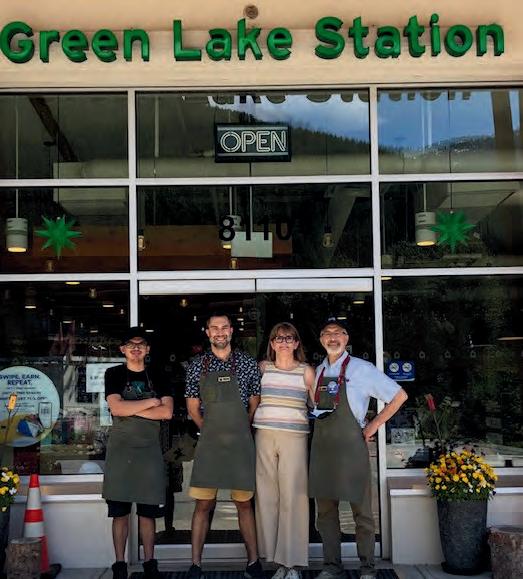
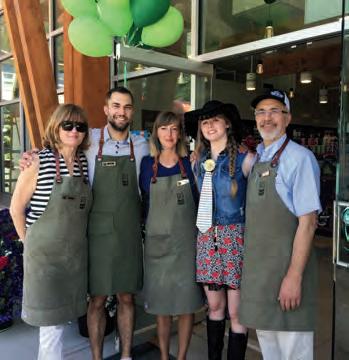
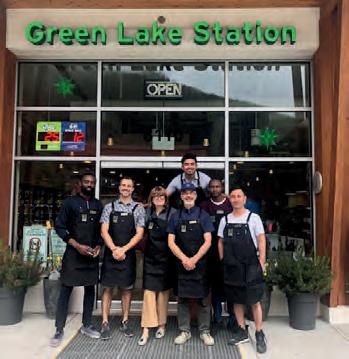
Fora decade,localsandtravelersheading northofWhistlerVillage haveshared adelightful, unexpected secret: Someof thetastiestfoodon Highway99isavailablestepsawayfromthe pumps.This summer,GreenLake Stationofficiallycelebrates its10-yearanniversary,markinga decadeofopeningthe much anticipated pitstopwitha menu builtforfoodies.
Whenthefamily-runChevronfirstopened itsdoorsin2016, ownersAdam,Anna,andGregoryNaundorf setout with aboldvision. They didn'tjustwantto bringa much-needed second fuelingstation to Whistler —theyaimedto buildthe mostbeautiful,welcominggas stationinNorth America. Tenyearslater, their contemporary,WestCoast-inspiredspace—complete with customlive-edgewood tables,warmcedaraccents, anda legendaryspa-likewashroom —hasachievedexactlythat.
Pullin todaytocheckoutthenewpumps,toast to adecadeoflocal business, andbiteintothe finest sandwichon theSeato Skyhighway
Province declines funding for explosive fix to Place Glacier flood hazard
SLRD SAYS VALLEY-BOTTOM REPAIRS WILL REDUCE NEAR-TERM RISK, BUT WON’T ADDRESS THE RECURRING GLACIAL OUTBURST THREAT FACING GATES LAKE AND POOLE CREEK
BY LUKE FAULKS
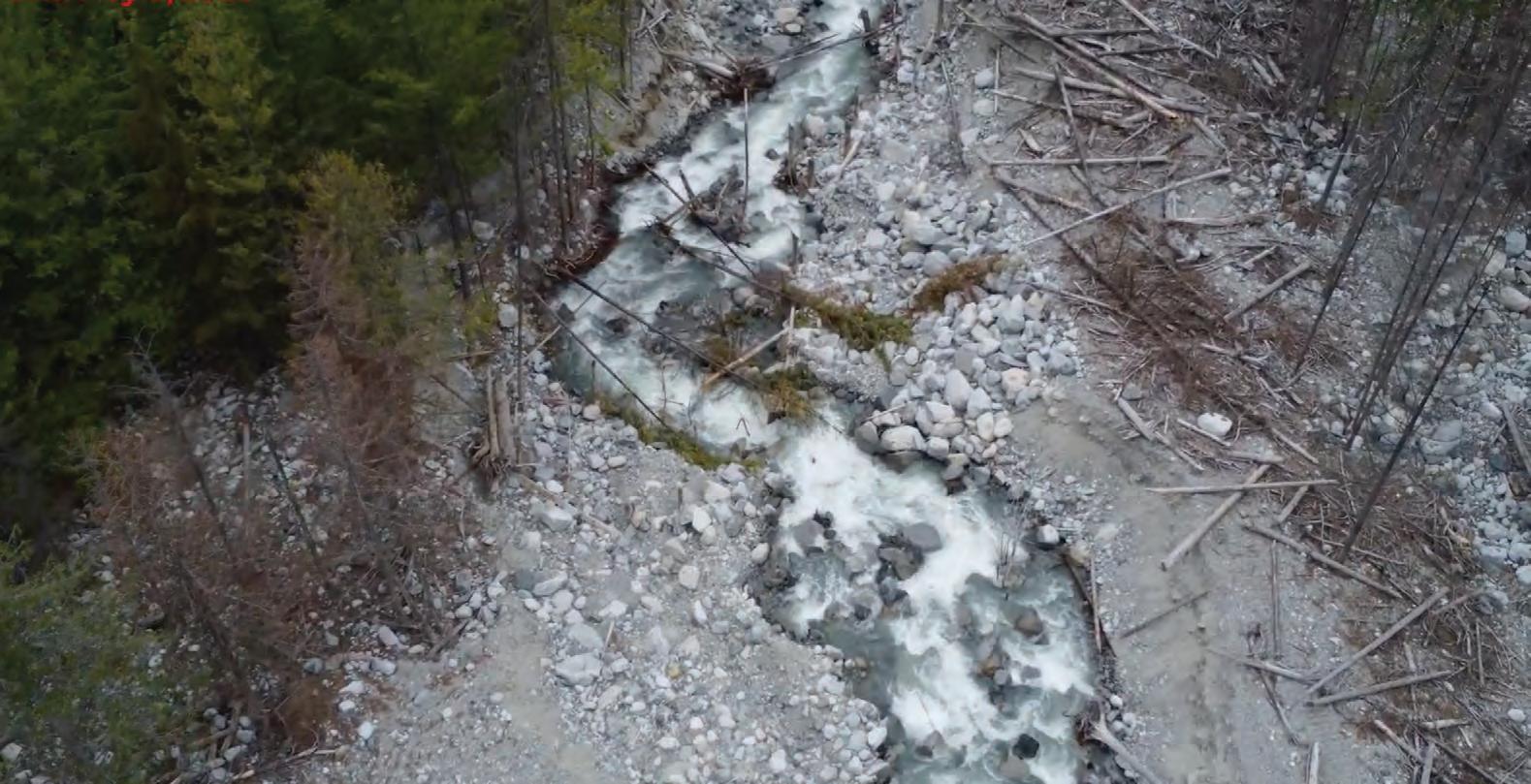
THE PROVINCE has agreed to fund emergency repairs below Place Glacier northeast of Pemberton, but has declined to support using explosives to fracture open a permanent drainage path at the glacier itself—leaving the SquamishLillooet Regional District (SLRD) without a clear long-term solution to a recurring outburst flood hazard near Gates Lake and Poole Creek.
The update came before the SLRD at its May 27 board meeting, then to residents during a June 2 town hall on the Place Glacier outburst flood hazard.
Officials said the province’s work, including the installation of monitoring equipment and emergency preparedness measures, is meant to reduce immediate risk rather than resolve the hazard at the glacier.
“The embankment, it doesn’t do anything to retain water and slow down the release of water or reduce the magnitude of an outburst flood,” Stantec Consulting’s Duncan McTaggart told residents at the June 2 town hall.
“It’s not a dam, it’s not a reservoir, it doesn’t do anything to address the formation of glacial lake up on the
mountain.”
The repaired embankment is intended to maintain the pre-2024 drainage pattern, keeping Place Creek flowing west toward Poole Creek and the Birkenhead River, rather than toward Gates Lake.
A RECURRING HAZARD
Place Glacier’s current flood hazard comes from an ice-marginal lake—a body of water that forms as a glacier melts.
In July 2024, that lake rapidly drained, sending water and debris down Place Creek, flooding multiple residential properties and diverting flow from Poole Creek toward Gates Lake.
The 2024 response involved restoring the water channel back toward Poole Creek and the Birkenhead River. In 2025, the same lake had another outburst, but with less magnitude. That second event did not divert water toward Gates Lake, but it damaged the emergency embankment built the year before.
A subsequent hazard assessment found the problem is likely to continue.
“This study, what it found was that outbursts from Place Glacier are likely to recur on an annual basis until the glacier recedes,” Fusca said. “The magnitude of these potential outbursts could be equivalent to one-in-200-year return period flood.”
A conceptual design report laid out several possible ways to address the hazard, ultimately recommending using explosives to open a conduit through the glacier while repairing the damaged 2024
channel works as the preferred approach.
On March 5, the SLRD board wrote to Emergency Management and Climate Readiness Minister Kelly Greene and Water, Land and Resource Stewardship (WLRS) Minister Randene Neill asking for support on the explosive option’s $481,350 price tag.
PROVINCE FUNDS REPAIRS, NOT GLACIER WORK
SLRD board chair Jen Ford told the June 2 town hall the province had declined the glacier-site solution, but agreed to downstream repairs.
“The Minister of Emergency Management and Climate Readiness approved provincial funding to repair the embankment, but declined to fund the measures at the glacier, asserting that the proposed options were impractical or unclear in their effectiveness,” Ford said.
“The minister also committed to the ongoing evaluation of this hazard and response options in partnership with the SLRD and with WLRS for the duration of this risk.”
The approved work is focused on repairing the Place Creek embankment damaged by the 2025 outburst. The SLRD declared a state of local emergency May 8 to speed up that work, which was expected to be complete in early June.
McTaggart told residents the original embankment was built quickly on an emergency basis, using locally salvaged material from debris-flood deposits. It was never designed as a permanent fix.
“A couple of key things to note, though, so just about this repair work, even once complete, there’s no certainty that with another outburst flood the repairs or the embankment will hold,” McTaggart said. “There’s just tremendous uncertainty about the magnitude of the next or any future outburst floods.”
MONITORING, SANDBAGS AND ADVOCACY
For summer 2026, the SLRD’s response is focused on three measures: repairing the embankment, monitoring the glacial lake and preparing residents for possible flooding.
Natural Resources Canada and the University of Northern British Columbia are supporting the installation of a lakelevel sensor and cameras at Place Glacier. Fusca said if the lake reaches 24 metres deep, the SLRD expects to issue an evacuation alert. If it reaches 30 metres, the SLRD expects to issue an evacuation order.
A sandbag station has also been set up at Gates Lake Community Park for Gates Lake and Poole Creek residents.
SLRD staff say they will continue working with EMCR and WLRS on a long-term plan. If talks stall, staff expect to return to the board for direction on re-engaging the provincial ministers.
As a May 27 staff report put it: “Year on year emergency response action is neither cost efficient for the Province, nor is it compassionate for impacted community members subjected to repeated stress.”
Pemberton farm fined $387K for temporary foreign worker violations
BLUE HOUSE ORGANICS IS BARRED FROM HIRING TEMPORARY FOREIGN WORKERS UNTIL MAY 2028, ACCORDING TO A FEDERAL NON-COMPLIANT EMPLOYERS LIST
B Y LUKE FAULKS
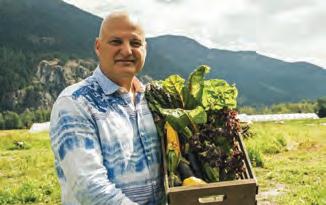
A PEMBERTON organic farm has been fined $387,500 and barred from hiring temporary foreign workers for two years after federal officials found it violated multiple Temporary Foreign Worker Program (TFW) rules.
Blue House Organics Inc. was listed as “non-compliant” in a May 29 decision on the federal government’s public registry of employers found in breach of temporary worker rules.
The listing names three violations: the employer could not show the job description it gave on its Labour Market Impact Assessment application was accurate; it broke federal, provincial or territorial laws for hiring and recruiting employees; and the pay, working conditions or job did not match, or exceed, what was listed in the worker’s offer of employment.
The penalty includes the $387,500 fine and a two-year ban, with Blue House Organics listed as ineligible to hire temporary workers until May 29, 2028.
A FARM WITH A PUBLIC PROFILE
The federal registry lists the company’s address as a Dunbar Street unit in Vancouver. Blue House Organics’ own website lists its farm address as 8184 Pemberton Meadows Rd., and describes the operation as a 70-acre (28-hectare) organic vegetable farm and farm stay, with 20 acres (eight hectares) along Pemberton Meadows Road and 50 acres (20 hectares) in Birken.
“Established in 2017, the farm is located along the scenic Ryan River in the Pemberton Meadows Valley above Pemberton, B.C.,” the company’s website says. It says the farm is certified organic, CanadaGAP food-safety certified and part of the Pemberton Farm Tour.
In 2017, Pique reported owner Alejandro Sucre had teamed up with Fundació Barriga Llena Corazón Contento, a group running a soup kitchen out of a children’s hospital in Caracas, and had donated $1 from every harvest vegetable box sold from his Pemberton farm.
“We have all these beautiful vegetables growing on the farm and the people in my home country are starving,” Sucre said in a release quoted by Pique at the time. “This is a small gesture, but it is important that we do something to help the children.”
Sucre is also an economist and
columnist for Venezuela’s oldest newspaper, El Universal, where he has written about free enterprise and the country’s political and economic crisis.
WORKER-PROGRAM PENALTIES ON THE RISE
The Blue House Organics penalty comes amid heightened scrutiny of Canada’s TFW program and a rise in large penalties for employers found to have broken program rules.
The federal government said in October 2025 that employers using the program must provide “safe, healthy and dignified working conditions,” and can face administrative monetary penalties of up to $1 million per year, as well as temporary or permanent bans from the program.
In the 2024-25 fiscal year, Employment and Social Development Canada conducted 1,435 employer compliance inspections and found 10 per cent of employers inspected to be non-compliant. During that period, penalties more than doubled from about $2.1 million to nearly $4.9 million, while 36 employers were banned from the program.
The Blue House Organics fine is among the larger TFW penalties issued in B.C.
Earlier this year, a Surrey farm was ordered to pay $435,000 for foreignworker violations. The federal government also cited a $1-million penalty and 10-year ban issued to a fish and seafood employer in September 2025 as the largest penalty ever issued by the department.
The TFW program is meant to be used when employers cannot find qualified Canadians or permanent residents to fill job vacancies. Federal officials say the inspection system is intended to make sure employers meet program conditions and protect workers from abuse, unsafe conditions and misuse of the program.
Blue House Organics did not respond to requests for comment before Pique’s weekly deadline. n
HEFTY FINE Blue House Organics owner Alejandro Sucre.
Ski the south
DESPITE GROWING UP in Australia for most of my childhood, it’s not where I learned how to ski. That took place in Sweden at a small rope tow near Härjedalen, a sleepy town near the Norwegian border and a good 10-hour drive from our home in Gothenburg. I don’t remember much from my threeand four-year-old escapades on snow, other than my mum falling off the T-Bar
BY VINCE SHULEY
(right next to a black run) while pushing me up between her knees. Suffice to say, it was a long slide back to the lodge.
After my family returned to Australia in the late ’80s, skiing was no longer an annual affair. We lived in the tropical climate of Brisbane and travelling down to the ski fields in New South Wales and Victoria was rarely in the budget. But we went often enough to be considered a skiing family, at least by Australian standards. I was lucky enough to hit up a couple of school ski trips to New Zealand during my senior high school years, where a classmate told me about his older brother’s adventures working as a ski instructor in Banff. You know the rest.
Fast forward to Whistler in the mid2000s, I’d made friends with a group of Latin American ski instructors, who had stories about the high-altitude mountains and endless backcountry to explore on their home continent. I made it my mission to work a season in South America. I learned Spanish, got a ski school job offer, jumped through the ridiculous number of hoops to secure a work visa, and, eventually, got on a flight to Santiago de Chile.
My employer was the ski school at Valle Nevado, one of three linked resorts about an hour up the mountain road from the polluted metropolis of Santiago. The one-and-only hotel at the resort sat at 3,025 metres, with the staff housing building not much below that. It took a
During the biggest storm of the season, you could barely get out of the staff housing building. Management would warn against anyone walking outside on their own, lest you get trapped. Snow removal happened slowly. When the skies parted and the sun came out, it was a mad dash with my coworkers to get the goods. Work didn’t start until 10 a.m., and there was a metre of fresh out there.
While Valle Nevado had some good runs, the resort itself didn’t have the steepest terrain. Surrounding the resort, however, was some of the best skiing in South America. These sidecountry zones relied on a vehicle pickup, so the travelling pro skier crews would charter a van and driver for a day of laps. For the workers, it relied on hitchhiking. A
I also realized after that year that back-to-back winters were not for me. Summers in B.C. are just too good…
couple of weeks to acclimatize and about a month before the snow started to really show up. And did it ever show up.
New Zealand skiers are used to this, but when you have a higher-elevation, treeless resort, you can’t really ski much on storm days. The wind is relentless, most chairlifts are closed and the visibility is non-existent. There’s rarely any work for ski instructors on such days, so there’s a lot of hanging out at the bar or hitching a ride to the city for errands.
powder day went something like this:
7 a.m.: Click into your skis right outside of staff housing and ski Tambo, a zone directly downhill of the building. A few hundred vertical metres later, stick your thumb out and wait for one of the many commuting pickup trucks heading uphill (mostly staff themselves) and jump in the bed. Wearing your orange ski school uniform jacket was key to getting a prompt lift.
8:15 a.m.: As soon as it opens, get
on the first T-Bar to get access to the neighbouring resort of La Parva. There was never much cooperation between the resorts, so you had to talk your way past the La Parva lifty by either bullshitting that you had to get up the lift to meet your paying clients, or attempt to bribe the lifty with the promise of a bottle of wine next time. Traverse from La Parva out of the boundary and ski Santa Teresa, the aforementioned and arguably best backcountry skiing on the continent. Ski to the road and hitchhike up again.
10 a.m.: Check in for your lesson assignments, which are sold by the hour and assigned according to seniority. Keep your backcountry backpack on your back and ski-touring gear at the ready, in case you get a couple of hours’ break to traverse out from the top lifts. 4 p.m.: See if anyone is keen for a sunset booter photo session. Otherwise, head to the bar.
Working and skiing a season in South America was an amazing experience, one that stands out from my years of ski-bumming in Whistler. I also realized after that year that back-to-back winters were not for me. Summers in B.C. are just too good (for so many reasons) and travelling back to the cold every spring while living out of a ski bag can get old really fast. But if you have that itch to explore and ski down as many mountains in the world as you can, put South America on your list.
Vince Shuley habla español. For questions, comments or suggestions for The Outsider, email vince.shuley@gmail. com or Instagram @whis_vince. n
VAMOS The skiing may feel familiar, but South America is a different experience altogether.
PHOTO BY VINCE SHULEY
Powwow
By Sabrina Peters
The Ashcroft powwow in February was a celebration of a young boy’s fifth birthday. People from neighbouring communities came to honour him and his powwow journey in fancy dancing.
Five drum groups sang in his honour: The Creekside Singers, Bad Eagle, Red Spotted Horse, Wood Ticks and Northern Mountain. They shared the songs of their nations with the people and spirits who came to dance and sing.
Bad Eagle sang the flag song for grand entry, showcasing the flags and dancers in their regalia. After grand entry, there was an intertribal round for anyone to join, whether they were in regalia or not. That was followed by women’s and men’s categories, teens and
family members were there to support my dad. I treasure this memory because it reminds me of him. I hoped to drive with him in the rally one day, but he passed away before I had the opportunity to ride in the truck with him.
Our school bathrooms should be better
By Soaramia Schneider
There are a number of problems with our school bathrooms.
First, there aren’t enough bathrooms, and we often have to wait for a stall. The bathrooms also have hand dryers, which a lot of us don’t like. We would prefer paper towels because the hand dryers take too
dispensers, air fresheners and stalls that go from ceiling to floor for more privacy.
Living my culture By
pipantsik-kwis / Hannah Sampson
éntsa spipantsik-kwis ts7acwlhkan i ucwalmicwa. I am pipantsik-kwis, Summer-rain, and I am proud to be Indigenous.
I speak my language, practise my culture and sing our songs with pride for those who were silenced in residential schools.
From nursery school to Grade 7, I was part of an immersion class where I learned ucwalmícwts, along with our songs, stories and teachings. I was taught that
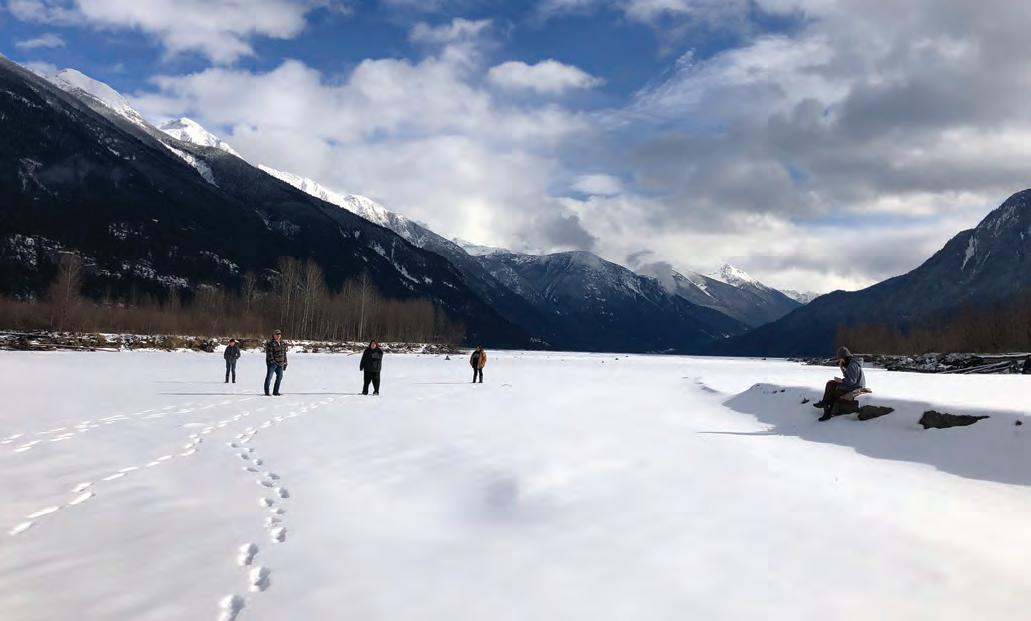
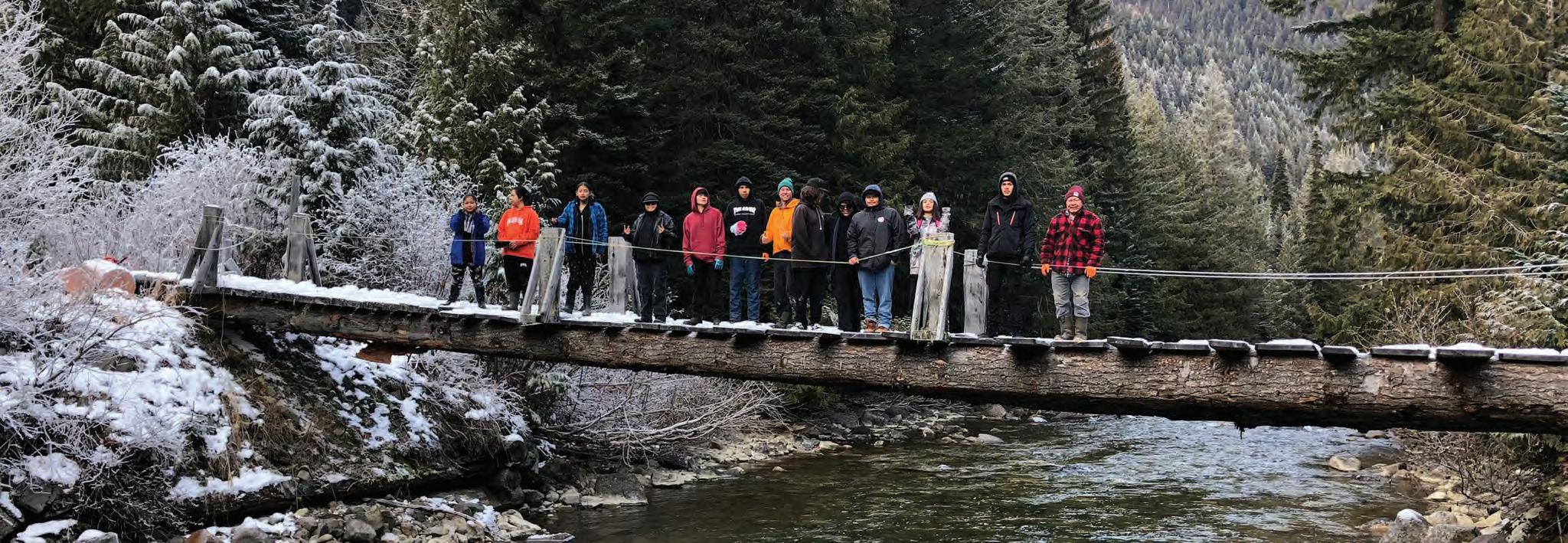
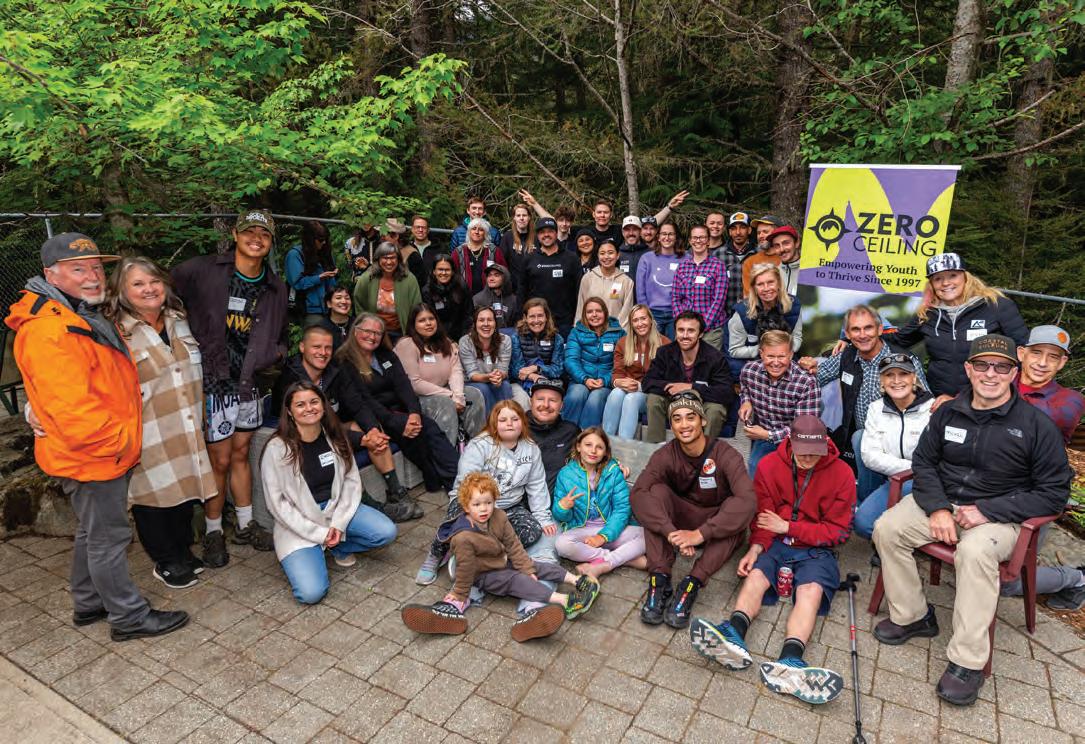
For the third year, Pique’s “In Their Own Words” feature turns the page over to senior students at Xet’olacw Community School (XCS).
Working with teacher Charlotte Jacklein, Grade 11 and 12 students submitted a record 22 pieces this year, sharing stories of culture, grief, humour, responsibility, community and the futures they are working toward.
tiny tots, who are just beginning their powwow journey as the next generation keeping our culture alive.
Last came the golden age category. These dancers share their knowledge and life stories through the way they dance. When women dance, we stand to show respect for our grandmothers and everything they have done for us, guiding us through life and teaching us right and wrong.
At a powwow, everyone tells their story through dance, songs and regalia. They share their journey with the people, spirits and Creator, saying, “This is who I am.”
The 4x4 rally
By Enrico Smith
When I was six years old, my dad Dwayne brought me to the 4x4 rally in Pemberton for the first time.
We got to the racing grounds on Friday afternoon. At first, there weren’t many people there, but later it became busy and loud, with people working on their trucks.
My dad camped at the site that night, and I stayed at a family member’s house. The races started Saturday morning. My dad didn’t race until 9 a.m., so I sat at the campsite while he got his truck ready.
His truck was a 1980 Chevrolet square body C-10. My mom rode in the passenger seat with him. My dad called the truck “The Tipella Boys,” after me and my little brother Dennis.
There were many obstacles. Trucks drove through a big mud puddle that went up to their doors. Sometimes they got stuck and had to be pulled out. They also zigzagged through trees and hit a big jump where all four wheels lifted off the ground.
There were a lot of women in bikinis walking around. Food trucks sold burgers and more. I heard there was a beer garden in one section. The announcer updated everyone about each driver and their times. Many of my
long, and I think they make our hands dirty. Students should also respect the bathrooms more. I don’t like the graffiti. Whiteboards would be great so we could leave little notes for our friends instead.
One time someone broke a toilet off the floor. Students have also hung off the stall doors, so now the doors don’t lock properly. We have to lift the doors with our feet to lock them.
I like how, in the bathroom by the staff room, the mirrors aren’t in front of the sinks, so people doing makeup aren’t in the way of people washing their hands. Our mirrors need small shelves for makeup bags and drinks, so we don’t have to put things on the dirty floor. Hooks for bags, purses and hoodies would help, too.
We also need new soap dispensers. We have three sinks and only one soap dispenser, and it is held together with tape. The boys said theirs is broken, too.
Finally, we need working feminine hygiene
keeping our language alive is our responsibility, and that we must learn so we can teach.
Being able to speak my language and practise my culture freely means everything to me because not long ago, Indigenous children did not have that freedom.
Residential schools, funded by the Canadian government and run by Christian churches, tried to erase Indigenous languages, cultures and identities. More than 150,000 Indigenous children were forced to attend, and thousands never came home.
My great-grandfather was taken to residential school. My great-grandmother avoided being taken only because she was holding one of her baby siblings and they assumed she was a mother. My great-grandfather was one of the survivors.
More than 150,000 Indigenous youth were put into residential schools and more than 3,200 individuals never made it out. Before the last school was closed in
- Luke Faulks // All photos courtesy of Charlotte Jacklein
1997, there were more than 130 schools across Canada. Residential schools lasted 170 years with the last one being closed only 30 years ago.
Knowing this, every word I speak, every song I sing and every tradition I practise is an act of resilience and remembrance for everyone who was silenced.
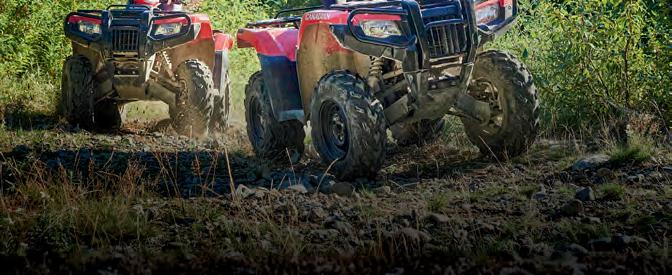
Freedom of ATVs
By Zackery Smith
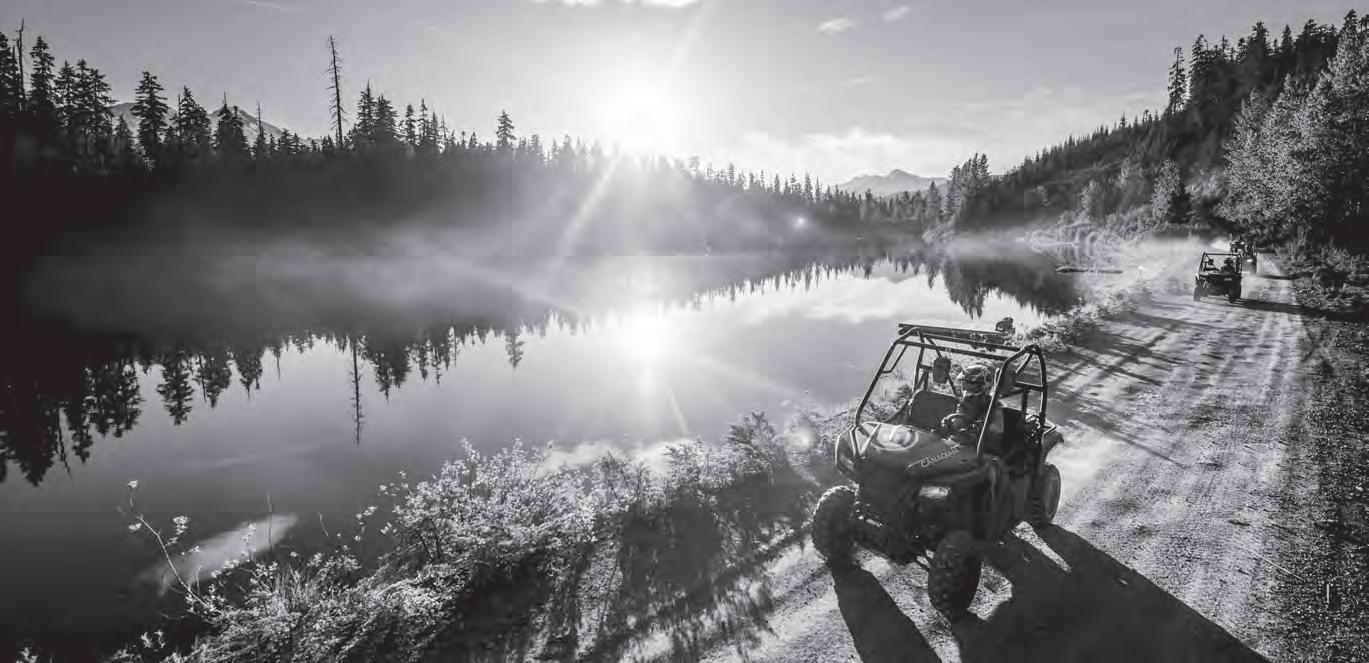
ATVs can almost go anywhere. They can explore new places, and they are fun to drive. I started driving ATVs not long ago.
My girlfriend and other people I’m close to are adventurous when we’re quadding. Once I flew off a quad three times in two days. It hurt my ribs, my head and my lower back. It happened because my girlfriend was driving and accelerated before I was ready.
I drive my girlfriend’s quad because I don’t have my own. The off-roads are rocky and can have sharp turns. Once, I almost hit a tree because I was going around a corner too fast. Some hills are steep, and you can’t see if people are coming from the other side.
The trails can get confusing because there are tire marks going in all directions. Some trails are very fun. They have jumps, berms and space to do doughnuts. Sometimes I see a deer or a bear.
Overall, quadding feels exciting, freeing and meaningful. You are not just sitting at home playing on your phone. It is exhilarating every time.
I usually go quadding after school. I love the views and lookouts. They are beautiful, and it is the most relaxing time of my day.
If I ever get my own quad, I’d be broke because of gas prices, but I guess that is the cost of freedom.
Housing for elders in Tipella
By Roxanne Peters
If I could do one thing for my community, I would ask for better housing for our elders.
I live in Tipella, a small community at the mouth of Harrison Lake, about two hours from Pemberton. I love the quiet and being close to the lake, but I don’t like spending four hours a day driving to and from school in Mount Currie or going into town to shop.
That distance is even harder for our elders. Some have to travel or leave the community because we only have one house that is suitable for them. We have multiple elders who need better housing and support for their conditions.
Some elders need proper bathroom equipment for showering because they have a hard time moving due to arthritis. A few weeks ago, my grandma fell in the shower. I worry about my grandparents and whether they will be able to stay in the community.
Another big need is air conditioning because it gets so hot in the summer. Last summer, my granduncle had heat stroke and had to go to the emergency clinic in Pemberton before being transferred to Vancouver overnight.
When he came home, a nurse helped take care of him. She lives in our community full-time and cares for all our elders.
Our nurse could use more help. Increased support staff and improved elder housing would make a big difference for Tipella.
Cancelling out the world around me
By Bella Smith
Ilove cancelling out the world around me with music. Listening to music helps me focus and get out of my head.
When I’m trying to finish assignments or work out properly, music blocks distractions and lets me concentrate. It also helps when I’m walking alone or getting ready to play a soccer game.
People talk about how white noise calms them down. My white noise is my Apple Music playlist. It has many artists, genres and songs, from loud to quiet. All the songs have meaning to me. Sometimes I like the artist’s voice, the tempo or the backbeat. Sometimes the song just draws me in and keeps me listening.
I listen to music all day, from when I wake up at 8:30 a.m. until I get ready for bed. It makes my day better and helps everything feel easier. It distracts me from thoughts about not doing well at a sport, being alone or rethinking things from the past.
I can put both AirPods in with noise cancellation and walk by everyone and everything without worrying about thoughts I don’t want.
The only worry I have is what happens if my AirPods die. Then I have to come back to reality and listen to the world again. Listening to music helps push away the numb feeling and the repetitive thoughts that happen every day.
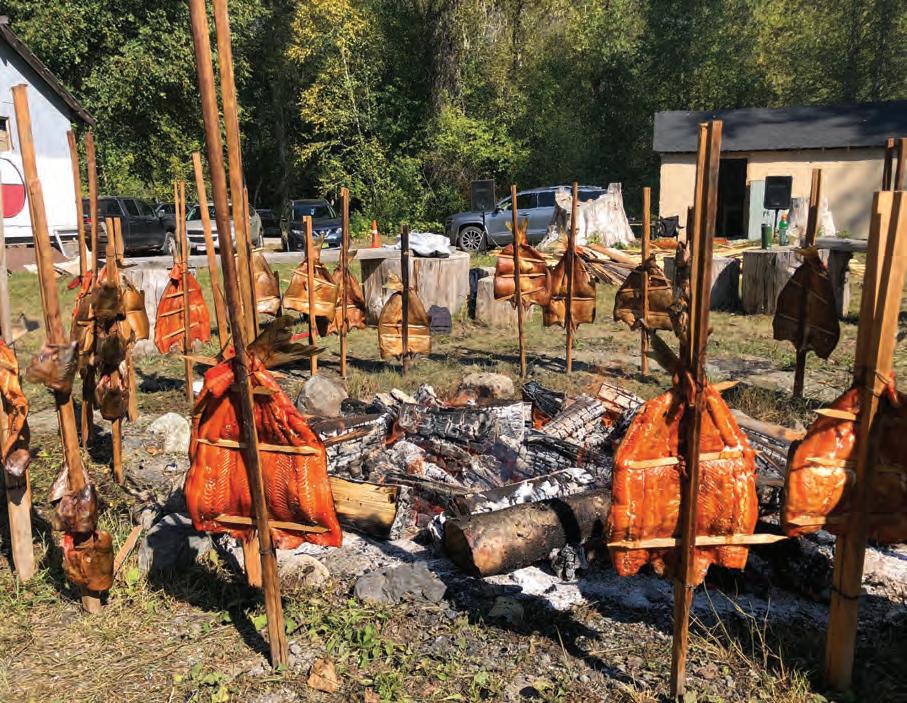
The Salmon Barbecue By Keylon Gabriel-Paul
The Salmon Barbecue in mid-September is a yearly tradition for the whole Lil’wat community to celebrate the return of the salmon. We gather at Lil’wat Place, the outdoor education site on Lake Road.
First thing in the morning, staff from XCS put the gutted salmon on t ’ áqsa7 sticks. T ’ áqsa7 is what we call
barbecued fish in our language, ucwalmicwts. The stick is split at the top so the fish can be held over the fire.
Cooking salmon takes about four hours, depending on the size. While we wait, we play soccer and frisbee, wade in the Lillooet River, catch frogs and talk with friends and family.
When the salmon is ready, hundreds of people make a big circle. An elder says a prayer to thank the fish for coming back. Two students walk around the circle in opposite directions with a salmon each, and everyone takes a piece while we sing and drum traditional songs.
After everyone receives a portion, students bring the fish carcass back to the river as thanks, and in hopes the salmon will come back next year.
The Grade 8s at XCS are also raising salmon fry. When the fish are old enough, they will be released, and they should come back when the Grade 8s are graduating.
The return of Montana
By
Pierre
Smith III
Montana was a big, mean German shepherd that lived across the street from me on Rancheree Street in Mount Currie.
When I was around seven years old, my friend Zik and I often hung out at his house. When we grabbed our bikes, I would ask, “Are you ready to bike fast?”
He would ask, “Why?”
I reminded him about Montana as we left my
driveway.
We biked as fast as we could. I remember seeing her snarling near Zik’s back tire. We pedalled even faster until we finally pulled ahead.
A young woman used to jog on my road past Montana. She did this for a couple of weeks. One time, she didn’t run fast enough, and Montana bit her in the ankle. The next day, Zik came over and asked why there was blood on the road.
After that, we were too scared to bike past the dog. We decided to make a trail through the forest between our houses. It took us a couple of days to clear it, but we got it done.
We felt safe using the trail, but every time Montana heard the bushes moving, she barked because she knew we were in there.
As we got older and Montana got slower, we could out-bike her. One time, my chain came off in the dark, and Montana almost got me. Luckily, I had just enough speed to coast past.
Littering is garbage
By Jonathan Jameson
Iwish nobody littered. Litter is unhealthy for the world and disgusting. It harms wildlife and natural habitats.
About a year ago, I was walking behind another young person near our school. Even though we walked by a garbage bin, the person threw a granola bar wrapper on the ground.
I thought it would be awkward to tell them to put it in the bin, so I walked back and threw it away myself. I
felt sad that this person didn’t care enough about our community, nature and the future to put garbage away properly.
Some people litter because they are lazy or don’t care. If there aren’t garbage bins nearby, people are more likely to litter. Even fruit and food are still litter because they can attract wildlife and cause environmental hazards.
Packaging also creates a lot of waste. Amazon packages, for example, often have extra plastic and paper wrapping. Customers do not always dispose of that packaging properly, which can lead to more litter. Communities try their best to prevent littering and keep wildlife safe. More garbage bins in high-traffic areas wou ld help. People can also keep a garbage bag in their car instead of throwing food or wrappers out the window.
There are still caring, responsible people and communities that dispose of waste properly. Many schools also hold community cleanup days on Earth Day.
Why eagles are so important to me
By
Leticia Pascal
When I see an eagle flying in the sky, it reminds me of my grandfather, my papa.
One day, we were at a family dinner with my aunties, uncles and cousins. My papa was lying in his room in pain because of cancer. He called all the
CURT HILLIER ,cim ® Senior FinancialAdvisor, Port folioManager curt.hillier@raymondjames.ca
grandkids in.
We sat around him, wondering what he wanted to tell us. He took a deep breath and looked at us with pain in his eyes.
In his hurt, raspy voice, he said, “My chemotherapy is not working like we want it to and my cancer is getting worse. I was going to stop doing chemo but I decided to keep trying for you all.”
As soon as he said those words, the room felt heavy. We all broke down. I’m not sure how it was for everyone else, but I was crushed. I fell to the floor crying, and my mom came over and hugged me.
Then my papa spoke over all of our cries and told us, “Every time you see an eagle, it will always be me watching over you.”
I will always hold those words dearly in my heart. Every time I see an eagle soaring over me, I look up and know it is my papa watching over me and keeping me safe.
Mountain biking in Whistler bike park
By Evan Edmonds
Ithought mountain biking would be fun and easy when I started, but little did I know it wasn’t.
The first run I did was EZ Does It, a green run. It was scary and intense. I was so slow that my group kept waiting for me. I felt bad, so I decided to go faster than I was used to.
I almost slipped on every turn. Then I got overconfident and fell off my bike in a deep turn. I landed hard on my left shoulder. It hurt a lot, but I tried to play it off like I was OK. My body said otherwise. I couldn’t ride for a bit, so I chilled for a few minutes and then rode down.
It rained for the rest of the week. I stayed at my own pace because I didn’t want to fall again. After the week ended, I thought the bike park was fun and scary at the same time.
Since that first week, I have gone mountain biking every opportunity I get. I have improved a lot. I can now ride all the green and blue tech and flow trails.
This season, I am thinking about trying a few black trails, but not right away. First, I need to get used to the bike again. I can’t wait to go mountain biking. It feels like it has been forever.
Getting to work from the rez
By Lexx Tilalus-Davies
Waking up at 5:30 a.m. sucks. Getting out of bed is even worse, especially in the dead of winter. The icy air bites the moment I throw back the blankets. The freezing floor chills my toes before I’m fully awake. My cat stays curled up in the warm spot I leave behind, which somehow makes it harder to leave. Trying to get out of the house without waking everyone isn’t easy with all my snow gear. My snow pants make a swish-swish sound, and my boots thump against the floor every time I remember something I forgot upstairs.
Driving three kilometres along the winding dirt road to the Birkenhead bridge isn’t too bad. The sharp morning air wakes me up better than coffee.
My job at Whistler Blackcomb is generous and usually sends a transport vehicle for local staff. On days when there isn’t a ride, I take the bus. Public transit takes just under an hour from Mount Currie to Whistler. When I first started, I didn’t know the local bus continued to Whistler after Pemberton. I had been
getting off one bus and paying an extra $4 for another, not realizing I could have stayed seated the whole time.
Technically, my shift starts at 7:30 a.m., but the bus gets there at 7:30-ish, so I run through the village to get assigned for the day.
The mornings are challenging, but I like the experience, and the pay is good when Friday comes.
More than just sound
By Kadee Dan
Music is essential to my life. I do not think I would have gotten this far without it.
When I listen to music while doing schoolwork, I focus better because it blocks distracting noises and puts me into my own space. I listen to a band called Julie while doing assignments. It makes boring work less overwhelming and more fun, helping me get things done faster and better.
For stress and mental health, music is huge. Sometimes lyrics explain exactly how I am feeling when I cannot find the words myself. A band called Mom Jeans feels relatable to me. There have been times when I sent a song to a friend and said, “This is exactly my life lately.”
Those lyrics are like borrowing someone else’s words to be understood when my own words feel stuck. The melody can speak when my voice cannot.
I believe music is a way of expressing who we are as people. What resonates with one person might not resonate with another, and that is OK.
Our playlists tell stories about who we are, what we have been through and what brings us comfort or happiness. Respecting someone’s musical taste, to me, is about respecting them as a person and recognizing that everyone connects to the world in their own way.
The last all-Indigenous firefighter crew
By Vivian Jim-Joe
The Salish Nation Unit Crew is an all-Native firefighting crew based in Pemberton, B.C. They work all over Canada, and their biggest trip was in 2019 and 2020, when they went to fight wildfires in Australia.
The Salish crew has been part of my whole life. When my mom was in labour, my dad was at a fire in Squamish. My mom called to let him know. He wanted to come back, but she told him to stay.
The crew worried, so they tried to put the fire out as fast as possible. Afterward, they all drove to the hospital fresh from the fire, covered in ash and smelling like smoke. They waited outside ‘til 3 a.m. to hear that I was born. Once they heard I was OK, they took turns holding
me. That is how I was introduced to the Salish crew.
The crew are like uncles to me. They have watched me grow up. At the beginning of every fire season, my sister and I would watch the fitness test to make the team. That inspired me.
I hope one day I get to be part of the crew. I plan to go to boot camp next year, in 2027. I have to wait until I am 19 to try out. If I pass, I would be the first lady on the crew in its 36-year history.
Bear spray misadventure
By Julian Dan
Earlier this year, we were hiking in the deep, dark forest on our way to Earl’s cabin in the Stein Valley. Every year, Grade 12 students from XCS take this trip to go beyond their comfort zones and push themselves. We had hiked 35 kilometres to base camp and were living in nature for nine days.
On the first night, we heard something in the distance. It sounded big, like something walking on loose rocks. Only I heard it at first, so I told myself it was nothing.
Then the noises got closer and louder, and soon we could all hear what we thought was a bear.
Our educational assistant, who was walking with us, told me to hand her the bear spray. We stood there waiting, shining our flashlights into the trees and trying to figure out what was making the noise. Something was getting closer.
Bear spray in hand, ready to use, we waited for whatever it was to come over the hill.
Finally, something appeared. It was two of our friends who had snuck around us in the dark.
Our EA stopped herself from spraying them just in time. My friends were so close to getting bear sprayed. We walked back to camp. None of us ever snuck around again that trip.
My experiences with head injuries
By Carson E. Wells
In February, I had my first experience with a head injury. I still don’t remember what happened. I was by my locker at school while everyone else was at a big basketball game in the gym. The doctor thinks I fainted or stood up too fast and blacked out.
I felt dizzy afterward, but I didn’t think much of it and didn’t tell anyone at school. When I got home, I told my parents. My mom took me to the emergency department in Pemberton, and later we went to Whistler for a CT scan.
I wore sunglasses for two weeks and stayed home from school and sports. I mostly slept. It was very
challenging because I am one of the most active people in the school. I have three Athlete of the Year awards.
After three weeks, I gradually started feeling more like myself and returned to sports.
Since my head injury, my moods have changed. I am more irritable at times. I feel spaced out and alone sometimes, but overall things are improving.
Since starting this article, I was diagnosed with another concussion. Now I am back to resting and no sports.
Having head injuries has shown me how important being active is to me. In the future, I want to be as safe as possible, including wearing a helmet when I’m biking and playing hockey.
My horse-packing trip with Copper Cayuse
By Starr Parker
Last June, I joined the horse packing supercourse because I liked the idea of camping and horseback riding. At XCS, supercourses are a week of activities on a specific topic instead of regular classes.
The horse I rode was named Gus. He was caramel brown, very sweaty at times and mischievous. He always made me ride into trees and bushes. He also snapped at other horses because he liked to be the boss horse, and he kept stopping to eat when he shouldn’t.
I went on this three-day trip with 10 other ladies from different grades. My favourite part was swimming in Birkenhead Lake, surrounded by tall, rocky mountains and endless forest. The lake was refreshing and cool. Jumping off a log into the water was scary but fun.
For anyone going on a trip like this, I recommend bringing a rechargeable battery to charge your phone so you can take lots of pictures and videos. I also recommend wearing comfortable pants.
I was nervous the first time I went. This year I’m going again, and it will be easier because I know what to expect. I’m looking forward to riding a new horse and making more memories with different people. I love camping in the forest, where there’s no drama and no stress. I’m also excited for the delicious food and desserts.
The cost of alcoholism By Grayson Jameson
When people tell me a story about someone getting stuck in a tricky situation, my usual response is, “Was there drinking involved?”
They often say yes.
Friends have told me about all kinds of assault and abuse that happen when alcohol is involved. One person I know woke up from a night of drinking with a fractured collarbone. Two people I know got into a fight, and one ended up with permanent brain damage.
At first, alcohol may not seem harmful, but that is how it reels people in. The harm starts when alcohol takes control. Through my 17 years of being alive, I have seen only the downside of alcohol and its effects.
I have seen addiction from every angle. Some people are too accepting of alcohol and alcoholism, even though it has always done more harm than good. I have heard of adults giving 14-year-olds beer because they don’t think it is a problem.
People trying to escape their problems may believe alcohol gives them relief. Alcohol can also create a feeling of being more social and confident. But we need to remember alcohol is a depressant. It messes with emotions and distracts us from what really matters.
My quest to catch a fish
By Kenyon Henry Dan
Fishing is supposed to be relaxing. You get to spend time in a quiet spot, enjoy the weather and relax in the cool wind and sunshine. However, it can be annoying when you lose your hook and line between two rocks, or when you don’t catch fish.
My dad and grandpa taught me how to fish when I was five. It was a sunny day, and I remember them catching a few fish. At one point, I leaned too far over while looking at a fish in the water and fell face-first into the lake.
Since then, I have only gone fishing every now and
then. I did a fishing elective at school for one term, but I never caught a fish. I used to have more lures and hooks, but I lost them. My fishing rod broke a couple years ago, and last year my grandpa gave me a new one so I could fish more often.
In April, I went fishing twice with the Young Warriors group at Lillooet Lake. I caught nothing, but the weather was nice both times. I loved being outside with friends. We had a fire, ate snacks and chilled until dark.
This summer, I plan to build my tackle collection and catch my first fish ever. I can’t even imagine how it will feel.
kukwstum ’ ckál ’ ap for reading this.
4/20 camping trip
By Eve Wallace-Charlie
Camping will always be my favourite thing to do. I’ll never forget last year’s 4/20 camping trip.
There were about 20 of us, all family and friends. We were at Strawberry Point at kilometre nine on Lillooet Lake for a couple of days. There was a rope swing, trails to walk, sunny weather, a fire, tea, hot dogs and marshmallows.
And of course, DRAMA.
When I woke up on the first morning, the tent was burning hot, and I was sweating like crazy. Outside, my mom and her friends had already made a fire. My six younger siblings were running around and not listening. Us five older siblings were told to help watch them, even though we were still waking up.
My mom’s friends were out there too and could have helped, but instead they yelled at us.
My mom’s friend started getting mad at me for not helping, even though I was literally just sitting there. I wanted to say she could be helping, too, but I didn’t want to start anything and have everyone mad at me for no reason.
For the rest of the day, we went back and forth between the swing and the fire. The adults kept watching us and the little kids, so we couldn’t escape babysitting. Still, even if the younger kids were annoying, I would love to go camping again.
My curse
By Breanna Peters
Since I was young, I have been able to see things that are unexplainable, like shadows without people. I also dream of things that come true later.
When I was four, my Papa Joe was driving us back from Mission after my brother’s birthday. I was asleep. We didn’t know there was a mudslide ahead. In my sleep, I screamed at my Papa to watch out for the dirt. He slammed on the brakes. I woke up crying, but everyone was safe.
I learned to ignore most dreams, except for the day my Papa Joe died. I knew it was going to happen. I had dreamed that my sister and I were playing a game when Mama and my Auntie Pam came home and broke the news.
Even though I knew it would happen, it still hit like a bullet. I had been holding on to hope so tightly that it shattered me.
The feeling I get in my room is heavy and sad. It is where I sleep, but sometimes it feels like I am constantly drowning in my emotions. At times, I see a shadow, but there is nobody around to cast it.
The night my mom left, I knew I would not see her again for years. I remember her singing “Twinkle Twinkle Little Star” after my bedtime story. She read me I Love You Forever. My mom was an artist and writer, just like I am. I dream of her every night. n
CAMPOS WAS NAMED JUNIOR QUEEN OF THE MOUNTAIN FOR NETTING GOLD AND SILVER
BY DAVID SONG
A SMALL BUT mighty crew of five Whistler Secondary School (WSS) athletes combined for two medals and three additional top-10 results in late May at the BC School Sports Provincial Mountain Bike Championship in Quesnel, B.C.
Both podiums came courtesy of Alva Campos. The ninth-grader earned Junior Queen of the Mountain honours after prevailing in cross-country (XC) with a time of 34 minutes and 34.20 seconds, then battling through a crash to grab silver in enduro (7:33.80).
Austin Lewis raced to fourth in XC behind Campos, (36:25.60), Lily McGowan finished ninth in senior girls’ enduro (7:45.10) and Josie Cooper was 10th in junior girls’ enduro. Luke McGowan wound up 19th among bantam boys at his inaugural Provincials enduro competition (7:47.80).
“I was really proud of myself at XC because my goal was to get top 10,” Campos said. “I wasn’t expecting to do very well because the year before I had a concussion. I didn’t really have anything to compare [my XC abilities] to, but I just know that I feel more confident in enduro … then I just kind of walked in
and did pretty well.”
Remaining in the top four during most of her XC race, Campos passed her good friend Lewis and mounted a late charge past Tyler McIntosh of Seycove Secondary, becoming the only junior girl to finish in under 35 minutes.
Next, Campos approached her enduro outing with caution given the wet and muddy venue. After two very good stages, the rain returned—and she slid out in a corner near the race’s end on Stage No. 3.
“When I fall, I don’t really think about anything other than getting back on my
and reaches for them consistently which is pretty amazing. This is a really good point about Alva: even though her primary focus is enduro, she did all the cross-country races … she still tried her very best. Really proud of her for that.”
‘THE WHOLE EXPERIENCE’
Clements, who mentors the bike squad alongside fellow WSS teacher Layla d’Emanuele, is proud of her group and believes they could have done even more were it not for some bad luck—as Campos wasn’t the only athlete who went down.
Lily was viewed as a candidate
“She is very committed, has set very high expectations for herself and she is a really good teammate.”
- LESLEY CLEMENTS
bike as soon as possible,” the Whistlerite explained. “Then when I get back on my bike, I regain my thoughts and be like, ‘OK, how much time do you think I lost?’”
WSS coach Lesley Clements saw the crash from her position as tail guide, but lauded Campos for her poise and overall effort.
“She is very committed, has set very high expectations for herself and she is a really good teammate,” said Clements. “She’s really supportive of everyone else on the team, has high goals for herself
for Senior Queen of the Mountain going into Provincials due to her wellrounded skill set. Unfortunately, those aforementioned wet conditions struck partway through her XC run: her front brake touched a slick wooden bridge and she went careening into the ground. Twisted handlebars required additional time to fix, dropping the elder McGowan from third place into ultimately 18th.
“She brought her younger brother, Luke, onto the team at the beginning of the year, and she’s been one of my
most cherished riders since Grade 8,” Clements remarked of Lily. “She’s just super positive, inclusive, tries really hard, so that was a bit of a disappointment … but we supported her and the next day, she completely rallied [for enduro].
“Kudos to her for hanging tough— and I try not to make it all about winning anyway. It should be about the whole experience, team camaraderie and showing leadership.”
Quesnel is roughly a 6.5-hour drive north from Whistler and most of the 35 WSS riders were unable to make the trip. Nonetheless, Clements identified her outgoing seniors (Kaede Gossman, Damyen Bouvier, Cove White and Oliver Koch) as perennial mainstays who will be missed.
Alexa Maxwell and Maggie Hertz also deserve credit for helping Campos, Lewis and Cooper grab a second consecutive North Shore Series banner for Grade 8/9 girls earlier this year.
Next year, Clements hopes to see 40 or more youth on the WSS bike team. Campos is doing her part to recruit.
“I loved [being a part of the team] so much,” she said. “There’s a couple other girls in my grade at school … they don’t have very much experience in racing and I’ve been trying to convince them: ‘you have to go to Provincials.’ It’s just so fun to be with your friends that you don’t normally race with. I just love going to all the races and meeting a bunch of new people from different schools.”
Visit zone4.ca/event/2026/21ZzJJ for complete results from Quesnel. n
WHEELED WARRIORS Whistler Secondary School riders at the 2026 Provincials in Quesnel.
PHOTO COURTESY OF LESLEY CLEMENTS
Finn Iles nets first downhill World Cup triumph in nearly four years
VALENTINA
HÖLL BECOMES FIRST WOMAN TO START A SEASON WITH THREE CONSECUTIVE WINS
BY DAVID SONG
GOING INTO June 13’s elite downhill race in Leogang, Austria, Finn Iles hadn’t tasted World Cup gold in 1,407 days.
He ended that baneful streak with a vintage run (3:15.647) at one of Earth’s most iconic mountain biking venues, realizing just his second victory out of 68 appearances on tour.
Amaury Pierron of France was forced into silver medal position by under two-tenths of a second (3:15.823) and Germany’s Henri Kiefer held onto bronze (3:16.491).
“That feels really good,” Iles said in a press release. “Last year was such a struggle with injuries and I just didn’t feel like myself. This offseason I put in so much work to find my groove back and to get a win in the third race of the season is incredible.”
The Whistlerite took some time to dial in his approach, with rain having pounded Leogang a day before the final. He and Pierron both needed two rounds of qualifying to advance, but showed why they are top contenders with medals at stake. Pierron’s robust finish launched him into the hot seat as the seventh athlete to go, but Iles went down the ramp next and authored a more consistent run overall.
Kiefer had to work overtime on the back half of the course for a podium after his less-than-ideal start, while Asa Vermette turned heads with a massive crash that he somehow walked away from.
Iles was seen tearfully celebrating his breakthrough with supporters after the event.
“I just can’t say thank you enough to my team, all the people at Specialized for how much work they put into the demo and everybody around me for supporting me through last year because it was such
a tough one for me,” he added. “Now I feel like I’m back to being myself and it means so much.”
Pierron, however, vaulted over Iles to seize top spot in the men’s downhill overall by 29 points.
HISTORY FOR HÖLL
For the first time, elite women dropped in last on a day of World Cup downhill racing and nobody shone more brightly than Valentina Höll, who became the inaugural female to kick off a season with three straight gold medals.
The Austrian did it in dominating fashion to boot (3:44.033), blowing runner-up Frenchwoman Marine Cabirou (3:47.868) away by nearly four seconds. Anna Newkirk of the United States rounded out the podium (3:48.449).
Gracey Hemstreet, the field’s lone Sea to Sky representative, briefly occupied the leader’s chair and managed to finish sixth when all was said and done (3:54.927). Hemstreet was coming off a silver medal effort at the previous World Cup in Loudenvielle, France.
“It was so nice, so quiet on track. I was really enjoying it, no one was disturbing me, so we can repeat that for sure. Pretty epic,” Höll commented in a release. “I know how hard you need to push to be able to win World Cups nowadays. It took me so much energy to do this.
“I just wanted to give back and seeing all my family, all my friends, all the little shredders from Austria, it’s the most important thing I can give back. A lot of haters said they [the crowd] will all leave when we’re racing but look, the crowd is still there, it’s pretty epic, women’s sport is amazing.”
With a near-300 point lead over Myriam Nicole, Höll appears to be an easy favourite for the ladies’ overall crown barring disaster on her part.
Visit ucimtbworldseries.com/ results/2026/leogang-2026 for more results from Leogang. n
FINN FOR THE WIN Finn Iles is all smiles after winning his second career World Cup downhill race on June 13 in Leogang, Austria.
Fort Berens earns 10 accolades at 2026 Los Angeles International Wine Competition
RED GOLD 2022 WAS NAMED BEST RED WINE OF THE CONTEST
BY DAVID SONG
FORT BERENS ESTATE Winery in Lillooet netted an impressive haul at this year’s Los Angeles International Wine Competition, with 10 estate-grown wines from Lillooet receiving major awards.
Most notable was the Red Gold 2022, which earned the prestigious Best Red Wine award (distinguishing it as the top red wine of the entire contest), a gold medal, Best of Class and 95 points.
Other winners include the Pinot Noir 2024 (Best of Class, gold medal, 94 points), Small Lot Pinot Gris 2024 (gold medal, 90 points), Riesling 2024 (silver medal), Merlot Reserve 2022 (silver medal), Cabernet Franc Reserve 2022 (silver medal), Small Lot Merlot 2022 (silver medal), Cabernet Franc 2023 (bronze medal, not yet released), Riesling Reserve 2024 (bronze medal not yet released) and Meritage 2023 (bronze medal not yet released).
“This is an incredibly meaningful
milestone for our winery and our team,” said Fort Berens CEO, co-owner and co-founder Heleen Pannekoek in a press release. “To receive this level of international recognition for a wine that is 100-per-cent estate grown in Lillooet is something we are immensely proud of. It speaks not only to the quality of this vintage, but also to the uniqueness of our terroir and the dedication of our vineyard and winemaking teams.
The South African brings a wealth of knowledge to the table and has long been complimentary of Lillooet’s grapes.
EXCEPTIONAL VINTAGES
Visitors and international peers in the wine industry are often surprised that Lillooet, of all places, can be a source of top-shelf wine. The fact that elegant, juicy grapes can grow in such a relatively hot and dry climate is a point of pride
“This is an incredibly meaningful milestone for our winery and our team.”
- HELEEN PANNEKOEK
“Competing against celebrated red wines from California and around the world and receiving this recognition is a tremendous honour for our small region and for B.C. wine.”
Pannekoek lauded winemaker Alessandro “Alex” Nel for his role in winning a strong slate of accolades. Nel graduated cum laude with a degree in viticulture and oenology from Elsenburg University and worked across five continents prior to joining the Fort Berens team in January 2021.
for Pannekoek and her colleagues. Fort Berens has also displayed an ability to overcome unfavourable conditions.
For example, 2024 yielded a very small crop due to the harsh winter that preceded it, yet the Pinot Noir made from those grapes was successful nonetheless.
As for Red Gold, it is made only in elite vintages deemed deserving of the name. The 2022 batch was made from Fort Berens’ signature Cabernet Franc grapes (related to the more widely known Cabernet Sauvignon) and aged for 15
months in quality French oak barrels.
“I think [Red Gold 2022] is a pretty big red, but it’s not like a powerhouse kind of big red. It’s still a very elegant wine,” Pannekoek explained. “One of the things that is a signature for our area is that our wines have a good level of acidity, which keeps them lively. That prevents them from becoming thick and jammy.
“But it starts with the lovely flavours of dark berries. There’s hints of chocolate and cedar cigar boxes, which are not a typical thing anymore. It has some spicy notes. It has some fruity notes. It’s got a very, very long finish. This is a wine that is great to enjoy now, and it is also a wine that you can put away for at least 10 years and it’s still going to stand out.”
Founded in 2009 by Pannekoek and her husband Rolf de Bruin, Fort Berens has expanded throughout its history as a Vintners Quality Alliance (VQA) certified location. The 17-acre (6.8-hectare) Red Rock vineyard was planted in 2018 and 2019, augmenting the original Dry Creek vineyard and its 20 acres (eight hectares). White varietals planted include Riesling, Chardonnay, Pinot Gris and Grüner Veltliner, while reds include Merlot and Pinot Noir in addition to the aforementioned Cabernets Franc and Sauvignon.
Visit fortberens.ca to learn more. n
GOLD STANDARD Fort Berens Estate Winery in Lillooet.
R REGISTEREDFITNESS Registeredfitnessclasses haveaseparatefeeanda definedstartandenddate. Pre-registrationisrequired fortheentire setofclasses.
I INCLUDEDFITNESS Theseclassesareincluded withyourpriceofadmission fornoextracharge.
‘A
whole other box of paints you can start to experiment with’
STEVEN PAGE TRIO BRINGS A STRING QUARTET TO WHISTLER ON JULY 1
BY DAVID SONG
THIS CANADA DAY , the Whistler Summer Concert Series begins by welcoming an icon of Canadian music: Steven Page.
As a co-founder, vocalist and songwriter for Barenaked Ladies (BNL), Page has sold north of 15 million albums and raked in various accolades: two Grammy nominations, multiple Junos, Billboard Music Awards, SOCAN Awards and Gemini Awards. That’s the context from which an entire generation knows him best, but Page left the band of his youth in 2009 and has released five albums to date as a solo musician.
Now he performs in several configurations, most commonly the Steven Page Trio featuring Craig Northey and Kevin Fox. Page met Northey, guitarist for the Vancouver rock band Odds, in 1993 and considers him an all-time favourite singer-songwriter: lofty praise given that Page himself is a Canadian Music Hall of Fame inductee.
About seven years later, he encountered Fox during a tour in the United States and lauded the cellist for being incredibly invested in the music
he plays—even if it’s not his own.
“[Kevin] digs in in a way that you don’t often see a supporting player dig in,” Page remarks.
The Trio has been together for a decade and now share “a real kind of unspoken psychic language” that enables them to lock into one another as both players and friends. Their brand of sound has no percussion and no amps, yielding a distinct musical flexibility.
Joining them for the first time in Whistler is a string quartet made up of top-notch Canadian classical maestros.
Now with the string quartet, it’s another whole kettle of fish and I’m just kind of figuring that out now.”
‘I’M REALLY THRILLED WITH WHERE I’M AT NOW’
Page has needed to figure out lots during his decorated career: from BNL’s heyday in the 1990s to striking out on his own to personal and legal drama that unfolded offstage.
“I’m super proud of what [BNL] did together as a band,” he says. “I mean, we started that thing when we were 18
“I’m enjoying making music more than I ever have. I’m with people that I’m really fond of.”
- STEVEN PAGE
Page relishes the freedom to work with others from all disciplines, including jazz, musical theatre and the classical realm, as he’s learned to harmoniously blend varying artistic styles and idioms.
“The idea of working with a symphony orchestra, which we’ve done quite a lot over the last bunch of years: it’s a whole other box of paints you can start to experiment with,” says Page. “With a trio there’s a lot more space for the orchestra to actually kind of be the band … and that’s what we try to do.
years old. We had no concept of how big it could be and how much work it would take to get to that place. [By 2009] we were in our late 30s and we were different people … creatively we had really diverged.
“I thought it would be a lot quicker and a lot easier to pick up a solo career at that point … it took me time, but I’m really thrilled with where I’m at now. I’m enjoying making music more than I ever have. I’m with people that I’m really fond of.”
Having visited Whistler before, like with the Trans-Canada Highwaymen two years ago, Page remembers the town as a joyful place with loads of incredibly friendly people. He’s honoured that audiences possess a long memory when it comes to his stuff, with three or four generations of families sometimes dropping by the same concert.
He knows they’re not just there to see him, Northey and Fox, but also to relive portions of their lives associated with his music—whether it’s a loved one or a hopeful, nostalgic bygone era. As performers, the Trio honour their fans no matter their reason for showing up.
Furthermore, Page is cognizant of the fact that Canada Day’s meaning has shifted over time.
“Now that we have started to understand Canada’s culpability in its treatment of Indigenous peoples and so on … we as musicians have an obligation to move forward with a new vision of what Canada is,” he opines.
“We don’t have to be policymakers but I think we can at least culturally be a lot more inclusive than we have been before. That’s a new challenge for a lot of musicians: what are we celebrating and how do we celebrate it now?”
Sea to Sky favourite DJ Foxy Moron gets her turntables spinning on July 1 at 6:30 p.m., making way for the Steven Page Trio to light up Olympic Plaza at 7:30 p.m. Visit whistler.com/events/ concerts for more details. n
PAGE-TURNER The Steven Page Trio headlines Canada Day in Whistler, kicking off the 2026 Whistler Summer Concert Series.
PHOTO COURTESY OF THE RESORT MUNICIPALITY OF WHISTLER
Pemberton artist Natasha Louise set to release first children’s book
ARTS NEWS: ARTS WHISTLER OFFERING TEENY TINY PAINT & SIP EVENT JUNE 25
BY HILARY ANGUS
PEMBERTON ARTIST and teacher
Natasha Louise has put the finishing touches on her first children’s book, Riv and the Heart of Coal.
The richly-illustrated book, whose forest and mountain scenes will be familiar to Sea to Sky residents, follows a tinman named Riv who lives alone in the woods with a coal fire in his chest.
Riv shares his warmth with the nearby woodland animals as winter sets in, until one day his own fire begins to fade. In the end, the animals return his kindness, teaching young readers about community care, generosity, and friendship.
“I’ve always wanted to make a children’s book, but just never really had the time in my life,” Louise said.
Though she always loved crafting, painting, and making art in general— between work as a high school math teacher and the various other responsibilities of life—Louise said the dream was always put on hold.
But after her daughter was born a few years ago, she felt a renewed motivation to work on a kids’ book.
She had recently transitioned her longtime love of painting into digital illustration on an iPad, finding the medium more workable than paint with a newborn in tow.
In the years since, she has sold her art around the Sea to Sky region, and notably painted a giant mural at the Pemberton Valley Supermarket in 2025.
And now she can finally check kids’ book off the to-do list.
Louise variously describes her art
as “bubbly” and “whimsical,” with bold colours and sweeping vistas influenced by the surrounding landscape.
“I’ve lived in Pemberton for the past eight years. What’s inspiring me is definitely the outdoors and nature, mountains, and all the animals,” Louise said.
Her love of the region’s animals comes through in the book, with a rabbit, fox, and squirrel rounding out the cast of characters.
Riv and the Heart of Coal, which Louise has co-written with her sister, will be available for sale soon on her Instagram account @artbynatashalouise.
ARTS WHISTLER OFFERING
TEENY TINY PAINT & SIP EVENT
Now approaching its eighth iteration, the Teeny Tiny Art Show (TTAS) is one of Arts Whistler’s most distinctive events. What happens, however, to people who lack the art supplies or space to contribute?
That’s a problem the upcoming Teeny Tiny Paint & Sip is meant to rectify. Intended for participants of all skill levels, this event will be held on June 25 from 4 to 8:30 p.m. at the Maury Young Arts Centre.
For $25 per person, registrants will receive everything they need (including a complimentary drink) to craft their own works of art fitting on 3x3 inch canvases. Additional canvases can be purchased on the night for $4 each.
Submissions for the TTAS will close on July 3, and the exhibit becomes open to public viewing between July 31 and Oct. 2. Artists must be 16 years of age or older and live in the Sea to Sky corridor from Lions Bay to Mount Currie.
-David Song
FROM THE HEART An illustration from Natasha Louise’s upcoming children’s book. IMAGE BY NATASHA LOUISE / @ARTBYNATASHALOUISE
‘Mr. Showbiz’ Ivan Ackery
BY BRADLEY NICHOLS
SOME OF THE earliest photographs donated to the Museum’s archival collection capture the heyday of Rainbow Lodge, Whistler’s first tourist destination, during the 1920s and 1930s. These images have become invaluable tools for understanding both the atmosphere of the resort and the people who helped shape its story. Fortunately, Alex and Myrtle Philip took care to identify many of the individuals who appeared in their photographs.
One name appears time and again: Ivan Ackery.
Today, Ackery is remembered as one of the most influential figures in British Columbia’s entertainment industry. For more than 50 years, he worked in theatres and film promotion, witnessing the transition from vaudeville to silent films and eventually to talking pictures. Yet long before he became known as “Mr. Showbiz,” a nickname referenced in his 1980 autobiography Fifty Years on Theatre Row, Ackery was a regular visitor to Alta Lake and a close friend of Rainbow Lodge owners Alex and Myrtle Philip.
Born in Bristol, England, Ackery immigrated to Canada in 1914. After serving in the First World War, he entered the theatre business, working his way up from usher to theatre manager. By the late 1920s, when he was spending time at Rainbow Lodge, Ackery had established himself as one of Western Canada’s leading theatre promoters, known for his creativity and flair for publicity.
Photographs in the museum’s collection show Ackery participating in lodge life and outdoor activities. Like many visitors, he was drawn by the Philips’ hospitality and the area’s natural beauty. Unlike most guests, however, his friendship with Alex Philip would eventually connect him to a small-but-significant chapter in Canadian film history.
In 1933, filmmaker Kenneth Bishop arrived in Victoria with plans to produce motion pictures in British Columbia. Taking advantage of British Empire film quotas that required a portion of films shown in U.K. theatres to be produced
within the Empire, Bishop established Commonwealth Productions. One of its first projects was Crimson Paradise, an adaptation of a novel by Alex Philip that became Canada’s first talking-picture feature film.
The production was ambitious for its time. Financial support came from Kathleen Dunsmuir, daughter of former British Columbia Premier James Dunsmuir, who also appeared in the film. Scenes were filmed at the Dunsmuir family residence in Victoria, while a studio was established at the old Willows Exhibition Grounds in Oak Bay. Additional filming took place at Beacon Hill Park and Cowichan Lake.
When the film was completed, Ackery found himself at the centre of its historic premiere.
As manager of Victoria’s Capitol Theatre, he was entrusted with presenting the world premiere of Crimson Paradise on Dec. 14, 1933. Looking back decades later, Ackery recalled the event as one of the proudest moments of his career. Floodlights illuminated the theatre, bands played outside, and distinguished guests arrived for the gala screening. Hollywood actors Nick Stuart and Lucille Browne travelled north to attend, bringing a touch of glamour to Depression-era Victoria.
Ackery personally introduced the cast, producers, and special guests from the stage before the film began. The audience included politicians, military officers, business leaders, and prominent members of Victoria society. The premiere generated tremendous local interest, and Ackery later noted Crimson Paradise earned more money at the Victoria box office that week than any other theatre attraction in Canada.
Today, Ackery’s name survives in Vancouver’s Ackery’s Alley. The photographs preserved in the Whistler Museum’s collection reveal a lesser-known side of his life: summers spent at Rainbow Lodge, friendships formed around Alta Lake, and a connection to Alex Philip that linked a small fishing lodge to one of the earliest milestones in Canadian cinema.
Sometimes the names written on the backs of old photographs lead to remarkable stories. Ivan Ackery is one of them. n
SHOWTIME Ivan Ackery (right) and Alex Philip drinking beer. The reverse is annotated “The two bad boys?” [1950s]. PHOTO COURTESY OF THE WHISTLER MUSEUM AND ARCHIVES
Comeinforlunch WednesdaythroughSunday before3p.m.toget astamponyourcard. On Wednesday,youget2stampsonyourcard! Howgoodisthat?! Childrenarewelcomeuntil10pmever yday. (*Somerestrictionsapply)
2 Bed / 2 Bath Rental Opportunity in Cheakamus Crossing!
Modern 2-bedroom, 2-bathroom unit built in 2024 available July 1. Features include forest views, a private balcony, storage room, parking availability, domestic hot water included, and the potential for an in-suite washer/dryer.
$2,998/month.
Eligibility Requirements:
• Canadian citizen, permanent resident, or valid work permit holder
• Employed a minimum of 30 hours per week by a qualified Whistler business OR are a Retiree
To apply, visit: https://wvhousingsociety.com/ Qualified applicants are encouraged to apply.
ASTROLOGY
Free Will Astrology
WEEK OF JUNE 19
ARIES (March 21-April 19): Aries mathematician Paul Erdos lived without a permanent address, travelling the world to collaborate with other mathematicians. He owned little, claiming “property is a nuisance.” His life was structured around doing mathematics and helping others do mathematics. He published more than 1,500 papers, more than any mathematician in history. Was his minimalism a form of deprivation? I prefer to think it was liberation from everything that didn’t serve his purpose. What would your life be like if you eliminated things that don’t serve your deepest purposes, Aries? In the coming weeks, you have permission to be ruthless about your priorities. What are you maintaining out of habit rather than conviction? What burdens masquerade as responsibilities?
TAURUS (April 20-May 20): A friend told me about the creative writing class he took with renowned poet Brenda Hillman. “I recall being in class,” he says, “and having the thought, wow, this teacher works far harder at teaching than I do at learning.” Dear Taurus, please don’t indulge in a similar laziness anytime soon. Your educational opportunities are currently richer than usual. To extract the full benefit, you must match the verve and vigour of your teachers. (PS: The teachers may or may not think of themselves as teachers. They could even be animals, rainstorms, or ancestors.)
GEMINI (May 21-June 20): Eastern monarch butterflies migrate annually from the American Midwest to central Mexico. The individuals who start the journey from Nebraska or Wisconsin die long before they reach the oyamel fir trees of Mexico. So do their children and their grandchildren. Their great-grandchildren finish the trip, though they have never been to the destination. Somehow they know where to go, navigating thousands of miles to trees they’ve never seen. Let’s apply this as a metaphor for you, Gemini. I suspect you are carrying navigational wisdom you didn’t realize you possessed. Inherited knowledge, encoded deep in your secret places, is ready to guide you. So pay attention to inexplicable certainties. Trust the directions that arrive without logical explanation.
CANCER (June 21-July 22): A large earthquake doesn’t relieve stress evenly along a fault. Instead, it creates zones where stress is reduced and others where stress increases, making future ruptures more likely. So the stress is redistributed, but not uniformly. According to my reading of the omens, Cancerian, you recently experienced a metaphorical shake-up. I suggest you identify where stress has grown and where it has dissipated. Your next moves should account for this new distribution of pressure. Some areas of your life are now more vulnerable, while others have become more stable. Read the landscape accurately before proceeding.
LEO (July 23-Aug. 22): Songbirds like zebra finches practice their melodies while asleep. Their vocal muscles move in ways that mirror daytime singing. These replay patterns help young birds learn their songs and adults maintain and refine their tunes over time. I suspect that you are engaged in a similar type of learning, Leo. You are enhancing skills and uncovering insights while asleep and dreaming. Bonus! Even when awake, you’re absorbing clues on a subconscious level. Your deeper intelligence is gathering information you will need for your upcoming breakthroughs. Hooray for mysterious help!
VIRGO (Aug. 23-Sept. 22): Architects who design concert halls know that perfect sound isn’t achieved through perfect smoothness. The best acoustics come from strategic irregularities, textured walls, and angled surfaces that distribute vibrations in pleasing ways. Too much uniformity creates dead zones and echoes; too much chaos creates muddle. Pleasing resonance arises from organized complexity. In my estimation, Virgo, your life is currently too smooth in some areas and too haphazard in others. You may need more strategic irregularity. Consider introducing productive unpredictability into relationships
BY ROB BREZSNY
that have become too routine. Add inventive structure to efforts that have become shapeless. Don’t aim for either total order or complete randomness. What will generate maximum beauty?
LIBRA (Sept. 23-Oct. 22): Have you ever been ambushed by unexpected bursts of gratification emerging from subtle miracles? Maybe a loved one finally grasps a truth you’ve been trying to convey for eons. Or you feel balanced in a situation that once made you feel lopsided. Or you grasp, with shivers of awe, that you got uncanny spiritual guidance at a key crossroads. I foresee at least three such blessings for you in the coming weeks. To ensure you recognize them, don’t get distracted in the pursuit of splashy bonanzas and gaudy prizes. Be nimbly alert for subtle breakthroughs.
SCORPIO (Oct. 23-Nov. 21): Poet Emily Dickinson rarely left her family home but bequeathed us a marvellous body of lyrical work as she roamed through vast inner worlds. Sci-fi novelist Octavia Butler rose early to write before long shifts at low-paid jobs, imagining visionary futures during her limited hours to be creative. Lucille Clifton raised six children while shaping poems of distilled, luminous insight, showing us how to summon fierce originality from a life crowded with responsibilities. Moral of the story: Buoyant power can flourish even when circumstances are limited. This lesson may be relevant for you in the coming weeks. If conditions seem imperfect or incomplete, trust that your resilience and adaptability can compensate for external obstacles. I have faith in your ability to generate useful beauty
SAGITTARIUS (Nov. 22-Dec. 21): Our tongues are primed to heal astonishingly fast thanks to dense blood vessels, saliva’s repair proteins, and a rapid immune response. Wounds that would take more patience elsewhere can heal
Welcome
Dr. PaigeNosal toour team!
Dr.Nosalhasastrong focusinbiomechanical assessmentand movement retrainingthatistailored to each individual.
Hertreatmentsmayincludespinalmanipulativetherapy, softtissuetherapy, exerciseprescription, movement retraining,andlifestyleandnutritional advice.
Keith Ray, B.Sc., D.C. JacquelineBrusset, B.P.E., D.C. PaigeNosal, B.Sc., D.C.
NOREFERRALNECESSARY Unit 204, StAndrewsBuilding, Besidethe Keg www.whistlerchiropractic.com
Celebrating the Life of Timothy Mark Unruh
Viewing
Sat. June 27th
12:00-2:00 pm
Whistler Community Church 7226 Fitzsimmons Rd.N.
Burial to follow at Whistler Cemetery Celebration of life Sun. June 28th • 3:00pm
Whistler Secondary School 8000 Alpine Way
Refreshments Following
Please join us for as many of the viewing, burial and celebration times of my much-loved husband, Tim, who was a friend to so many of you or made a difference in your life somehow.
Please consider coming as Tim would want you here even if you didn’t know him well or just knew me. He would want this as a “Feast Day of Celebration” with as many as could be there. For Tim, there were never too many people and he always wanted to have a chat or see someone IN PERSON.
In addition to this column, Rob Brezsny creates
EXPANDED AUDIO HOROSCOPES
In-depth weekly forecasts designed to inspire and uplift you. To buy access, phone 1-888-499-4425. Once you’ve chosen the Block of Time you like, call 1-888-682-8777 to hear Rob’s forecasts. www.freewillastrology.com
A live stream for the service and the link will come closer to the date. Information will also be on the Squamish Funeral Home soon to make comments and share stories.
CONSTRUCTION ADMINISTRATOR - Support active projects through data entry and document control. Strong organizational and computer skills required. 2+ years administrative experience preferred. $27–$35 per hour.
Love agoodchallenge?Passionateabout theplaceyoucallhome?TourismWhistler islookingforcommunity-loving,mountainappreciating,environment-respectingpeople tojoinourteam.Comecollaboratewithus.
We’rehiring forthe followingopportunities:
•Coordinator,Conference Sales
($52,000 -$54,000annually+ incentive bonus)
•Coordinator,Market Development
($52,000 -$54,000annually +incentive bonus)
•TravelConsultant
($21perhour +commission)
WhatWeOffer:
•Schedulesdesignedtoenhance work-life balance
•Comprehensivebenefitspackage
•A commitmenttohealthand wellness
•Funandsupportiveteamenvironment
TO
Photo:OisinMcHugh.
A celebration of culture, community, and connection
EVERY YEAR on June 21, communities across Canada gather to celebrate National Indigenous Peoples Day (NIPD), a day dedicated to honouring the cultures, languages, and contributions of First Nations, Inuit, and Métis Peoples. Held
BY T’EC GEORGINA DAN
proclaimed National Aboriginal Day by Governor General Roméo LeBlanc, and in 2017 it was renamed National Indigenous Peoples Day to better reflect the diversity of Indigenous Nations across the country.
of Indigenous presence, knowledge, and rights within Canada.
The path toward this day was shaped by ongoing Indigenous leadership and advocacy. In 1982, the National Indian Brotherhood, now the Assembly of First Nations, called for a national day of recognition. That call was later reinforced through the Sacred Assembly and the Royal Commission on Aboriginal Peoples. In 1996, June 21 was officially
Today, Canada is home to more than 630 First Nations and more than 50 Indigenous languages. British Columbia alone is home to more than 200 First Nation communities and 11 distinct language families. Each language carries generations of knowledge, teachings, and worldviews. NIPD is a reminder that these cultures are not only still here, they
At the Squamish Lil’wat Cultural Centre (SLCC) in Whistler, this day is marked with a full schedule of programming that invites the public to experience Indigenous culture through art, storytelling, land-based learning, food, humour, and performance.
Family Crafts running from 11 a.m. to 4 p.m., creating space for younger visitors to learn through creativity and hands-on engagement.
Cultural programming begins with Spo7ez Cultural Sharing at 11 a.m., followed by storytelling in the Istken Pithouse at 11:30 a.m., an intimate setting where oral traditions and teachings are shared in a way that connects past and present.
At noon and again at 2 p.m., Interpretive Forest Walks guide visitors through the surrounding landscape, connecting Indigenous knowledge systems to the land and offering insight into the deep relationship between people and place.
Food remains central to the gathering, with the Thunderbird Grill opening at 11:30 a.m. Here, visitors are invited to gather, share meals, and connect,
National Indigenous Peoples Day at the SLCC is both a celebration and an invitation: to learn, reflect, and connect.
From 10 a.m. to 5 p.m., the Spo7ez Artist Market fills the SLCC with Indigenous artists and makers sharing jewelry, carvings, textiles, and contemporary works rooted in culture and story. Visitors can also explore the Great Hall and galleries through selfguided tours, offering a chance to engage more deeply with exhibits at their own pace.
Families are welcomed with Kids and
reflecting how food brings people together in all Indigenous community celebrations.
A highlight of the day is the return of Dancers of Damelahamid, who will present Spirit and Tradition in the Great Hall at 1 p.m. and again at 3:30 p.m. The performance blends Coastal Indigenous masked dance with projected imagery and immersive soundscapes, carrying audiences through the landscapes
of the Pacific Northwest Coast. Through movement and story, the work explores themes of reciprocity, balance, interconnectedness, and the relationship between people and the natural world.
Laughter also plays an important role in the day, with Squamish Nation comedian Keith “Bubbas” Nahanee performing at 2 p.m. and 2:30 p.m. His storytelling draws on everyday life and Indigenous perspectives, highlighting humour as a powerful tool for connection, resilience, and shared understanding.
National Indigenous Peoples Day at the SLCC is both a celebration and an invitation: to learn, reflect, and connect. Visitors are encouraged to engage respectfully with Indigenous artists, knowledge holders, and cultural experiences throughout the day.
Admission is free for children and youth 18 and under, supported by the Government of Canada, the Resort Municipality of Whistler, and Fairmont Chateau Whistler, helping ensure the celebration remains accessible for families and young people.
While June 21 marks a focal point of celebration, the SLCC’s programming throughout National Indigenous History Month continues to offer opportunities to engage with the living cultures of the Sk_wx_wú7mesh and Lil’wat7úl Peoples.
On National Indigenous Peoples Day, the SLCC invites the community to come together in celebration of culture, creativity, and connection, honouring the past, engaging in the present, and looking toward the future.
T’ec Georgina Dan is a member of the Lil’wat Nation, and assistant manager at the Squamish Lil’wat Cultural Centre in Whistler. n
SPIRIT AND TRADITION Dancers of the Damelahamid are just one of the highlights of National Indigenous Peoples Day at the SLCC.
PHOTO BY CHRIS RANDLE / COURTESY OF THE SLCC
#29-2641 Whistler Road, Whistler
3.5 Bed | 2 Bath | 1,693 sq.ft.
$2,595,000 604-902-3335
Steve Legge steve.legge@engelvoelkers.com OPENHOUSESUN.JUNE202:30to5:30PM