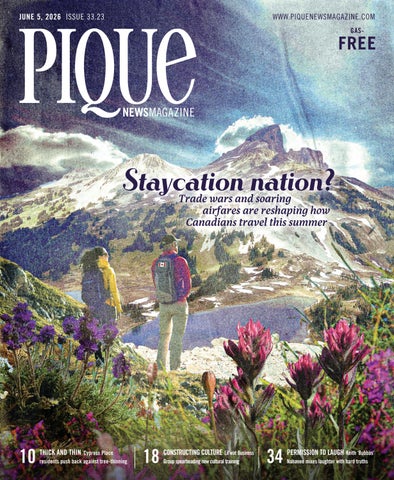
Staycation nation?











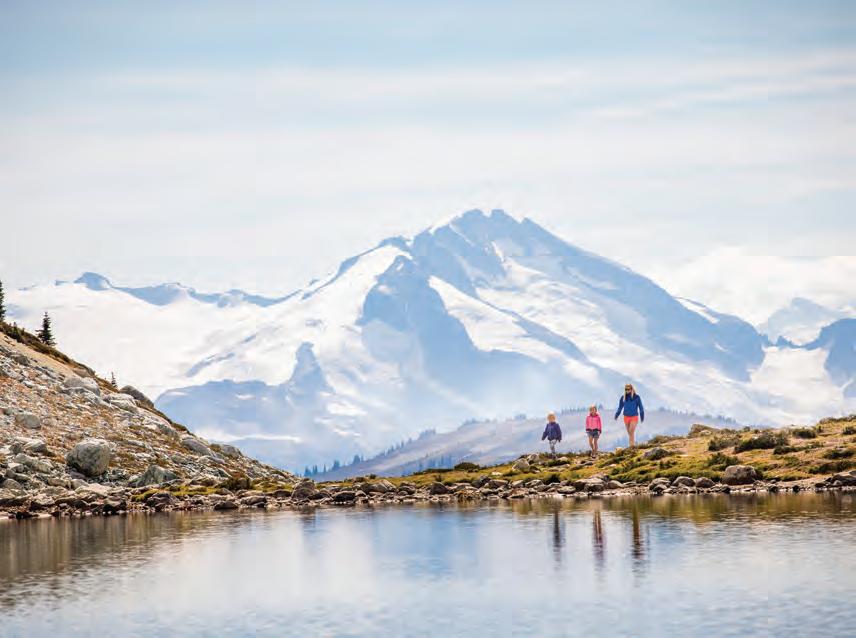
Staycation nation?

Trade wars and soaring airfares are reshaping how Canadians travel this summer. - By Moira A. McDonald, Ann-Kathrin McLean, Oreoluwa Adeniyi and Shimaya Sureshbabu // The Conversation
06 OPENING REMARKS Wildfire statistics paint the picture of our evolving relationship with summer, writes editor Braden Dupuis.
08 LETTERS TO THE EDITOR This week’s letter writers share kudos to the staff at the Whistler Medical Clinic, and concern over rising parking costs.
26 THE OUTSIDER Vince Shuley takes a break from the hero dirt to dabble in the slow dirt of his backyard.
46 PIQUE’N YER INTEREST Nothing threatens the greedy bastards of the world more than simply giving each other what we need, writes tobias c. van Veen.
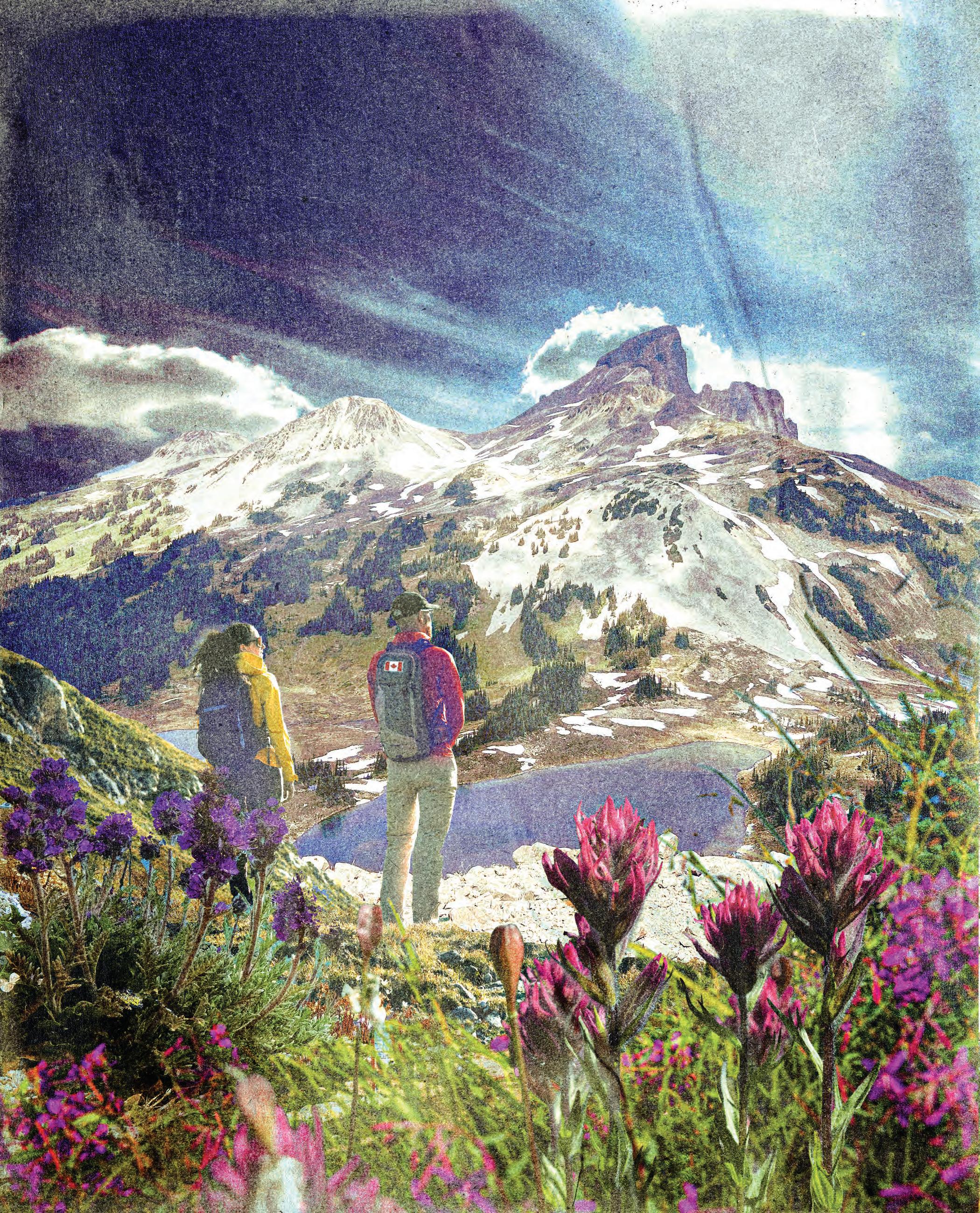
COVER Only two more days till staycation! - By Jon Parris // @jon.parris.art
Publisher SARAH STROTHER - sstrother@piquenewsmagazine.com
Editor BRADEN DUPUIS - bdupuis@piquenewsmagazine.com
Sales Manager KAIJA KNOX - kknox@lodestarmedia.ca
Production Manager AMIR SHAHRESTANI - ashahrestani@piquenewsmagazine.com
Art Director JON PARRIS - jparris@piquenewsmagazine.com
Advertising Representatives
TESSA SWEENEY - tsweeney@wplpmedia.com
ANDREW BUDRESKI - abudreski@piquenewsmagazine.com
Digital/Sales Coordinator KATIE DOUGLAS - kbechtel@wplpmedia.com
10 THICK AND THIN Cypress Place residents say they support wildfire mitigation efforts, but want officials to slow down, document the work and consider restoration after cutting.
18 CONSTRUCTING CULTURE The Lil’wat Business Group is spearheading a new cultural safety program that aims to increase retention for First Nations workers in the trades.
30 BEING THE ELITE Reigning world champion Elly Hoskin feels less pressure after a stellar rookie season as an elite in 2025.
34 PERMISSION TO LAUGH Squamish Nation comic Keith ‘Bubbas’ Nahanee mixes laughter with hard truths.
Reporters LUKE FAULKS - lfaulks@piquenewsmagazine.com DAVID SONG - sports@piquenewsmagazine.com
Classifieds and Reception - mail@piquenewsmagazine.com
Contributors G.D. MAXWELL, VINCE SHULEY, LESLIE ANTHONY, GLENDA BARTOSH, ANDREW MITCHELL, LISA RICHARDSON, LIZI MCLOUGHLIN, TOBIAS C. VAN VEEN
Founding Publishers KATHY & BOB BARNETT www.piquenewsmagazine.com












The new shape of summer
IT’S STRANGE to think about how our collective relationship with summer is changing.
Growing up, I didn’t have a thought in my mind about wildfires—back then, most of us just called them forest fires. They did happen from time to time, but conditions generally weren’t such that they felt like a constant, looming concern.

BY BRADEN DUPUIS
We just enjoyed the summer, and extended heat waves didn’t inspire much anxiety. They were welcomed and savoured. I remember the first time I saw the true destructive force a wildfire could have on a place, and how surreal it felt seeing the catastrophic damage. It was 2011, when one third of the town of Slave Lake in northern Alberta burned to the ground. Having spent time in that community just a few years prior while working in the oilfield, the images of burned-out cars and devastated houses were hard to reconcile with the place I once briefly lived.
That may have been the first, but it was far from the last.
Fort McMurray, 2016. Lytton, 2021. Jasper, 2024. We watch the devastation unfold in other towns, and all we can do in Whistler is hold our breath.
And it’s not just here in B.C. As I write this, a massive, out-of-control wildfire is torching the area around my hometown, having jumped the Saskatchewan River and continued to spread.
It’s something that would have been unthinkable when I was a kid. Now it just feels like another summer.
The same pattern has played out in Whistler. My first summer here in 2014, I didn’t hear the threat of wildfire being talked about much. Curious, I went back through Pique’s archives to read news stories from summers past. Aside from a couple of very dry FireSmart stories (no pun intended), the urgency of today is completely absent.
But wildfire statistics paint the picture of our evolving relationship with summer.
It started to change for good in 2015, when the Elaho Fire burned more than 12,000 hectares down the Squamish Forest Service Road, blanketing Whistler in thick, heavy smoke for what felt like weeks. Suddenly, it was a real issue. The
year, when 1.4 million hectares burned in 2018.
The next two years were mercifully restrained, with 21,138 hectares burned in 2019 followed by just 14,536 in 2020. In 2021, 869,300 hectares burned, followed by 135,235 in 2022.
The worst wildfire season in British Columbia’s history is now 2023, when 2,293 fires burned an astounding 2.8 million hectares.
According to the B.C. government, the current 10-year average, taken from 2014 to 2024, is 1,527 wildfires from April 1 to March 31 the following year, burning just under 800,000 hectares. On average, 40 per cent are human-caused and 60 per cent are sparked by lightning.
It’s an average that has skyrocketed upwards. From 2008 to 2014, the largest
B.C.’s snowpack is trending significantly below normal, with federal officials already warning of increased fire risk.
“[Natural Resources Canada] forecasting shows that fire danger across Canada is expected to build through July with British Columbia facing the highest and most sustained fire danger,” said Corey Hogan, parliamentary secretary for the minister of energy and natural resources, at a press conference in Ottawa last week.
“Additionally, some parts of northern and central and eastern Canada could see elevated fire danger emerge quickly over the same period.”
Emergency Preparedness Minister Eleanor Olszewski reportedly added the most “significant wildfire activity” in B.C. is expected in July.
Fort McMurray, 2016. Lytton, 2021. Jasper, 2024. We watch the devastation unfold in other towns, and all we can do in Whistler is hold our breath.
threat of wildfire is hard to ignore when you can’t breathe the air outside. And while not every summer since has been similarly hazy, the overall trends are clear.
Things ramped up considerably in 2017, when British Columbia experienced its worst wildfire season on record (to that point), with more than 1.2 million hectares burned and half a billion dollars spent battling the blazes.
The record lasted until the following
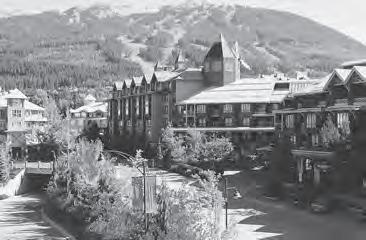

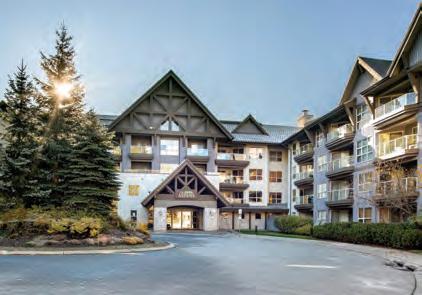
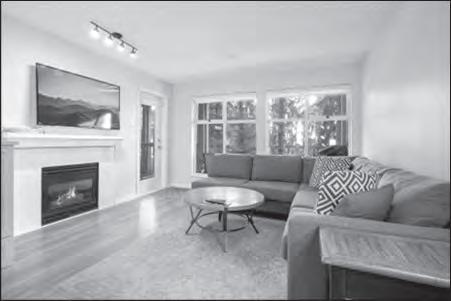
Investmentopportunity at the Delta Whistler VillageSuites,oneof Whistler ’s top revenue-producinghotels. This studiosuiteisstepsfromskilifts,shops, restaurants,and Villageamenities. Features includea kitchenette, year-roundindoor/ outdoorpool,hottubs,fitness centre, concierge,undergroundparking,and conferencefacilities. Ownersalsoenjoy access to thepoolandparkingfacilities whennotstayingintheunit. 1416-4308 Main Street
Askingprice-$245,000
area burned in a single year was 369,168 hectares in 2014. The total burned across all seven years was 1,100,000 hectares— an average of 157,142 burned every year.
From 2015 to 2024 we topped one million hectares burned in four different years, including the record-breaking 2023 season that almost hit 3 million.
It doesn’t take an expert to see where things go from here.
As of this writing on June 2, Whistler’s fire danger rating is at extreme, while
“There are so many factors that can change how that forecast will come to be,” Olszewski told Global News. “We should just be prepared for the worst.”
And therein lies the only real useful advice in our ever-warming new reality.
Here in Whistler, all we as individuals can really do is hope for the best, prepare for the worst, and try not to take the clear days for granted.
Because summer, whether we’re ready or not, just isn’t what it used to be. n





SATURDAY,JUNE6 Noon -4pm

Discovergreatdealsondeliciouslocalproductsandenjoy somefunactivitiesduringour TasteofLocalevent:









Kudos to the Whistler Medical Clinic
During a recent visit, my husband was quickly assessed and admitted for care. While we were there, a person ran at full speed down the corridor, pursued by a police officer who ultimately tackled and subdued them. Throughout the incident, clinic staff remained calm and professional, quickly calling 911 while additional officers responded within minutes.
It was a powerful reminder that healthcare workers and first responders manage far more than medical care alone. We are fortunate to have such dedicated people working every day to keep our community safe.
Just another day at the clinic.
Sandra Larter // Whistler
‘Growing concern’ about increasing parking costs
This letter was sent to Whistler’s mayor and council, and shared with Pique.
I am writing to express growing concern about the continual increases in parking pass prices and the rationale behind them. While these increases are framed as necessary to support transit improvements, the reality for many Sea to Sky residents, particularly those of us in

“[C]urrent transit schedules do not accommodate families or workers.”
- PETER SKEELS
Pemberton, tells a different story.
At present, these rising costs feel less like a transportation strategy and more like a de facto tax on neighbouring communities that rely on Whistler for work, services, and
recreation. Pemberton residents contribute significantly to the functioning of Whistler’s economy, yet we are not seeing equitable reinvestment in transportation options that meet our needs.
For example, current transit schedules do not accommodate families or workers. My children would like to spend time in Whistler, but the lack of earlier evening return options makes this unrealistic on school nights. At the same time, the last available return buses are too early for adults working late shifts or attending events. This leaves residents with an impossible choice: pay ever-increasing parking costs or forgo access altogether.
There has been ongoing discussion about climate leadership and reducing vehicle use. However, without reliable, frequent, and practical transit connections between Pemberton and Whistler, these goals remain aspirational. If reducing car dependency is truly the objective, then meaningful investment in Sea to Sky transit must become a priority, not a talking point.
A more balanced approach would recognize the interdependence of our communities and ensure that policy decisions do not disproportionately burden those who have the fewest viable alternatives.
I urge council to reconsider the current trajectory of parking fee increases and to commit to tangible improvements in regional transit that serve all residents, workers, families, and visitors alike.
Thank you for your time and consideration. Peter Skeels // Pemberton n


















Outcry over Cypress Place fuelthinning continues at council
RESIDENTS SAY THEY SUPPORT WILDFIRE MITIGATION, BUT WANT RMOW TO SLOW DOWN, DOCUMENT THE WORK AND CONSIDER RESTORATION AFTER CUTTING
BY LUKE FAULKS
CYPRESS PLACE residents are continuing to push back on wildfire fuel-thinning work between their neighbourhood and Highway 99, telling Whistler council the Resort Municipality of Whistler’s (RMOW) approach risks stripping away a narrow forest buffer without enough consultation, oversight or evidence it will reduce local wildfire risk.
The concerns came to a head during the May 26 regular council meeting, after residents met onsite with RMOW staff and contractors on May 21 to walk part of the treatment area between Cypress Place, the Valley Trail and the highway.
“Cypress Place residents absolutely support wildfire mitigation, it’s very important, but there’s also a very important balance,” resident Ardie Venes told council. “For us that also means the visual impact, noise, and pollution from
the highway, since the homes are pretty close to the highway with that one pretty narrow green buffer in between.”
In late correspondence to council, residents said they were informed only weeks before implementation, despite believing planning had been underway for months.
“Meaningful consultation requires
no cutting would take place on private property, deciduous trees and cover would be retained, conifers larger than six inches in girth would be left, and pruning would aim to lift conifer branches no more than two metres from the ground.
But residents are asking for those commitments to be documented and enforced.
“Meaningful consultation requires sufficient time for residents to understand impacts...”
- JIM PIKE
sufficient time for residents to understand impacts, evaluate alternatives, and contribute local knowledge before implementation decisions are finalized,” a letter from Cypress’ Jim Pike reads.
‘SLIGHTLY
CRUEL’
According to public comments and correspondence, the May 21 site meeting appeared to ease some concerns, with residents saying contractors clarified
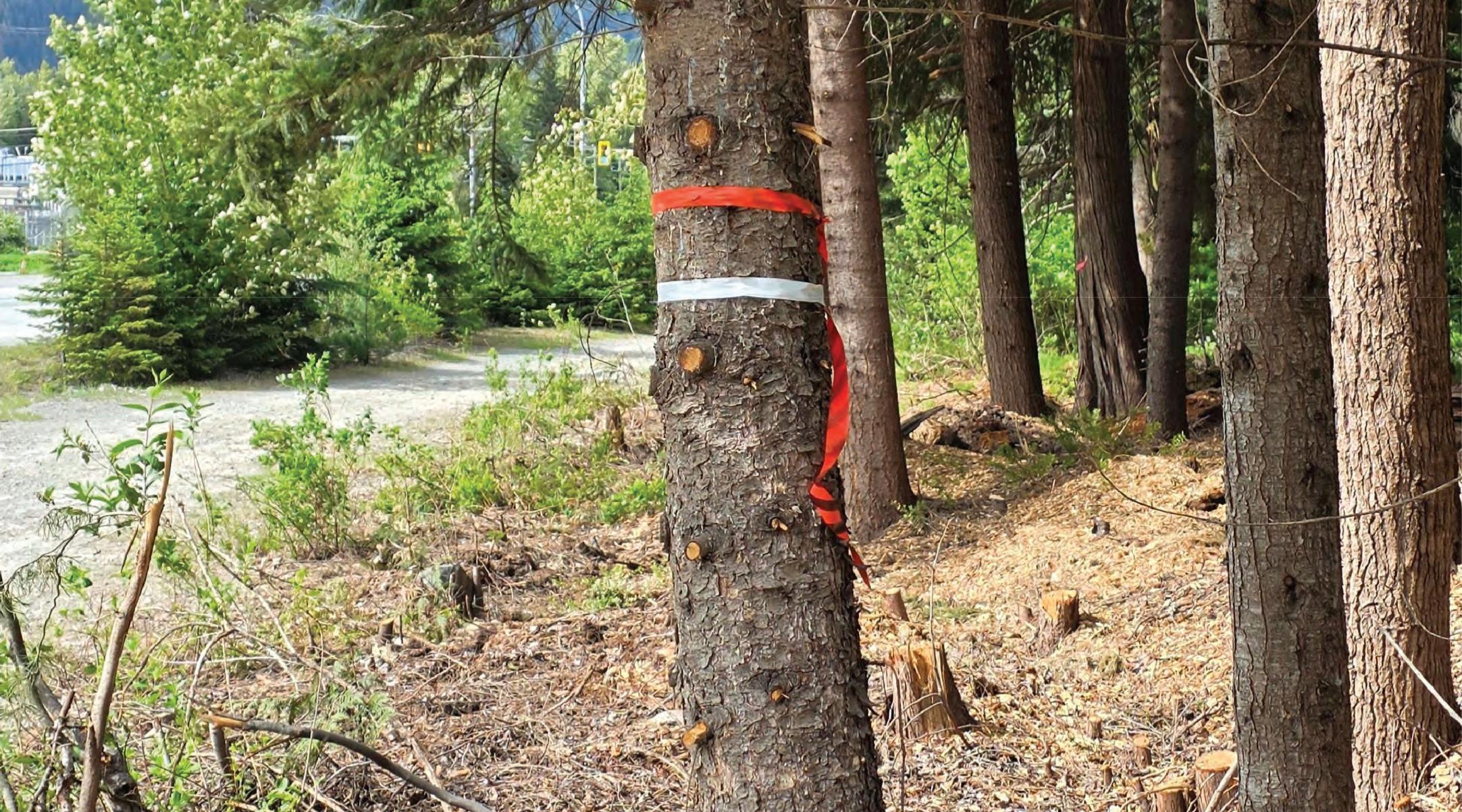
Venes pointed to photos submitted to council from fuel-treatment work south of Spruce Grove Way, where residents said branches had been pruned far higher than the two-metre limit discussed for Cypress Place.
“It’s still very concerning, then, when we look at other locations where the fuel-thinning has already happened, that those limits don’t seem to be adhered to all the time,” Venes said.
He also said a covenant restricts
tree-cutting on the private land between Cypress Place and the Valley Trail, making it feel “slightly cruel” that municipal work would remove vegetation immediately beyond that protected area.
Heike Stippler, a Red Seal horticulturist representing several Cypress Place owners, urged council to be more open to local expertise and evolving research.
“There’s a lot more to say, and a lot more to inform you about, but today I actually just came to ask mainly one thing, and that is to be truly open, truly listen to what is out there, what people know, see, and research or work with daily,” Stippler said.
Her written correspondence raised concerns about machine access, soil compaction, loss of healthy undergrowth, invasive species moving into opened areas, and whether re-naturalization should be actively supported rather than left to happen on its own.
MILLIKIN PRESSES RMOW FOR DATA
The most pointed challenge came from local ecologist Rhonda Millikin.
Millikin has been questioning Whistler’s approach for years, including
BRANCH MANAGEMENT Residents sounded the alarm after branches were trimmed higher than the two-metre limit discussed with RMOW staff and contractors.
after her own studies in Lost Lake and other Whistler-area forest stands.
Her 2024 paper argued fuel-thinning in Whistler’s Coastal forest led to warmer, drier and windier microclimate conditions—findings the RMOW accepted for review, but did not treat as a basis for changing policy.
At council, Millikin asked the RMOW to show local data demonstrating the Cypress Place work would reduce wildfire risk.
“We know from insurance companies that the issue with respect to wildfire risk to property owners is ignition by embers, and we know from fire scientists and first responders—ask any helicopter pilot tasked with putting out wildfire—that humidity is the best defence,” she said.
She cited 2025 B.C. wildfire data and recent Canadian Forest Service research, telling council the likelihood of future wildfires in Coastal forest is “50 to 70 per cent lower than Interior B.C.,” and quoting the paper to say “despite common high fire danger conditions associated with summer drought and abundant fuels, large fires, and crown fire behaviour remain rare in Coastal forest watersheds.”
“Yet this is the rationale given for thinning and limbing conifers under the Fire Smart and fuel-thinning program in Whistler,” Millikin said. “We also know from published research from Whistler that fuel-thinning in our forest decreases humidity, our best defence against wildfire. We know it increases heat and it increases wind, leading to increased conditions for wildfire risk.”
Millikin’s argument is at odds with the conventional fuel-management approach still reflected in FireSmart and B.C. fuelmanagement guidance, which emphasizes reducing ladder fuels—live or dead vegetation that allow ground fire to climb into the upper tree canopy—and treating vegetation to lower fire behaviour.
Millikin was issued a cease-anddesist letter in 2024 from Forest Professionals British Columbia (FPBC), which said the retired ecologist is not certified to offer forestry advice. FPBC took issue with the former Environment and Climate Change Canada scientist advocating for a practice that “is so out of sync with the current science and current practice of protecting communities from wildfires.”
Forest ecologist Lori Daniels previously told Pique that while Millikin has some fantastic ideas, “I think that choosing one or the other, or indicating that the degree of impact from fuel treatment has such negative and severe consequences that they should not be done, is not supported by her research in the spring and summer of 2021, and I think it needs a more holistic kind of assessment.” Daniels said a one-size-fitsall approach shouldn’t be the solution.
MAYOR, STAFF DEFEND APPROACH
Mayor Jack Crompton conceded he is “not an expert on wildfire,” but said RMOW programming is developed with professional input.
“One of the major points [is] that ladder fuels are a big issue related to wildfire, as
NEWS WHISTLER
they do allow fire to get into the crown and create those kind of fire events,” Crompton said. “That’s something that we’re working hard to protect against.”
Dale Mikkelsen, the RMOW’s general manager of climate action, planning and development services, said the municipality follows “a prescribed practice” supported through funding and federal mechanisms for fire-thinning.
“We do continue a practice of removing the understory coniferous material, knowing that as we monitor it over years, the deciduous material comes back because there’s more open forest floor, creating an environment that is more fire robust than we have today,” Mikkelsen said.
Crompton also defended the focus on Highway 99 as a safety and evacuation corridor, saying Whistler is not only an interface community, but an “intermixed community,” with buildings embedded in forested areas.
“Getting out of a community that is experiencing a wildfire is an extremely important project for a community, and ensuring that those corridors are usable by the number of people that live in this community is incredibly important,” he said.
Still, Crompton said the RMOW can change course when warranted.
“Are we willing to change the way we do things based on new information? Absolutely,” he said. “Do we always take the advice of every person who comes to us with new ideas? No, we have a number of different inputs from whom we learn and from whom we make policy.”
RESIDENTS WANT COMMITMENT TO RESTORATION
Residents also asked council to restore the land after fuel-thinning.
In correspondence with Pique after the meeting, Johanna Waterous said residents are asking for cuttings to be chipped and blown back onto cleared areas as green mulch, rather than being hauled away.
Residents are also asking council to facilitate “green fire breaks” made of deciduous trees and shrubs on cleared RMOW land.
“This would be of enormous benefit for all users of the Valley Trail, protecting the soil, accelerating regeneration, and creating a real fire break, while re-establishing a noise and air pollution barrier between the Trail and Highway 99,” Waterous wrote.
Meanwhile, Pike’s letter asked council to confirm the final scope of work in writing, confirm supervision and compliance procedures, ensure commitments from the site visit are honoured, incorporate restoration and replanting where appropriate, and keep engaging affected homeowners through implementation.
“Fuel management should not end when cutting is complete,” Pike wrote. “A relatively small number of homeowners are being asked to absorb these impacts for the benefit of a broader regional objective.
“For that reason, all reasonable mitigation measures should be explored.”

























































Whistler RCMP searching Alta Lake for missing person
SEARCH INITIATED AFTER PADDLEBOARD FOUND ADRIFT IN ALTA LAKE
BY BRADEN DUPUIS
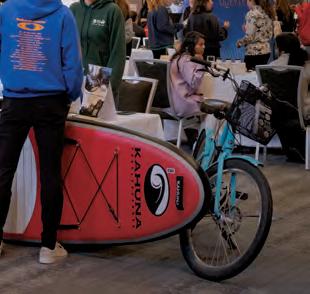
THE SEARCH FOR a missing person is ongoing after a paddleboard was found floating on Alta Lake last week.
“I can confirm we received a report of a paddleboard that was adrift in Alta Lake, and we have been searching to locate the individual associated to this paddleboard with the assistance of a number of our partners, including Search and Rescue, Whistler Fire, RCMP Air Services and BC Conservation Service,” said Cpl. Katrina Boehmer, media relations officer with the Sea to Sky RCMP, in an emailed statement on May 29.
“I can’t provide specific details on the person (due to privacy legislation) however I can say our search is continuing, and it is likely that police resources will be in the area of Alta Lake and surrounding parks in the coming days.”
The individual reportedly set off from Lakeside Park on May 27, and did not return.
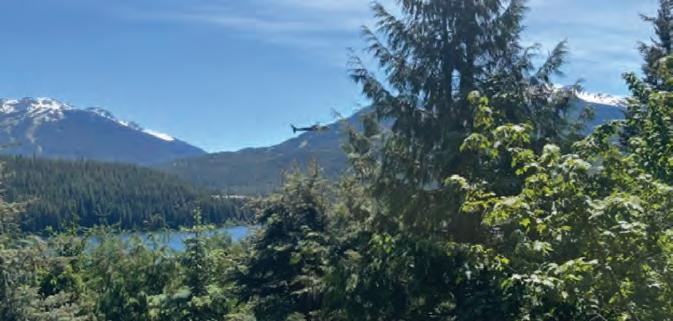
A helicopter was seen hovering over Alta Lake for extended periods this week as authorities carried out the search.
As of Pique’s weekly press deadline on June 2, search teams had found nothing further.
“We had the RCMP Underwater Recovery Team conduct a search of the lake on Saturday, May 30, but we were unable to locate anything that would assist in furthering our investigation,”
Boehmer said. “Our search will continue in the coming days.”
According to the Sea to Sky RCMP, police responded to three separate waterrelated incidents in a span of three days.
On May 30, the Squamish RCMP responded to a report of a man in distress in the Squamish River who was
at risk of being swept away by a fastmoving current. According to a release, a Squamish RCMP officer “rescued the man by removing his heavy gear, donning a personal flotation device (PFD) and entering the water to pull the man to a spot where other responders on shore could assist in completing the rescue.”
The same day, police responded to a report of two people who had fallen off a paddleboard at Browning Lake in Murrin Park and did not resurface.
Police confirmed both people were found deceased on June 2.
“The Sea to Sky corridor is filled with exceptional lakes, parks and recreation sites that draw residents and visitors alike. These lakes and rivers provide plenty of opportunity for fun and recreation, and they can also present serious safety risks if individuals are not adequately prepared,” Boehmer said in the release. “Strong currents, cold water, changing weather conditions and recreating alone are only a few things that can quickly turn a day of enjoyment into an emergency. We want to ensure individuals who recreate in the Sea to Sky corridor are responsible and prepared for a safe and enjoyable experience. We do not want these enjoyable days to end in tragedy.”
Police offered some tips for staying safe on the water: never swim alone; wear a PFD when swimming if you don’t swim well; always wear a PFD when using human-powered crafts; avoid using drugs and alcohol before or during swimming; always keep a close eye on children, and ensure they are wearing a PFD, even in shallow water; and always check the weather forecast, bring supplies and be prepared for changing mountain weather conditions. n

SEARCH PARTY A helicopter was seen hovering over Alta Lake for extended periods on May 28 as authorities carried out the search for a missing person.
PHOTO BY CATHERINE POWER-CHARTRAND

Whistler Blackcomb confirms ‘rock movement’ on Whistler Peak
INCIDENT COULD BE CONNECTED TO ROCK SLIDE ON MARCH 12; ASSESSMENT IN THE WORKS
BY BRADEN DUPUIS
A DETAILED ASSESSMENT is in the works on Whistler Mountain after more “rock movement” occurred near Whistler Peak on May 28.
The latest movement comes after a March 12 rock slide on the peak, and according to Whistler Blackcomb, the two incidents are likely connected.
“Preliminary assessment indicates the movement is likely ‘hangfire’—an unstable section of rock fractured during the March 12 rock slide that did not initially release and is now shifting due to melting snow and rising temperatures,” a Whistler Blackcomb spokesperson said in an email, adding the incident occurred while the resort was closed.
“Our operations team, working with partners at Geotech, will conduct a detailed assessment early next week. We will provide further updates as more information becomes available. The area continues to be monitored and remains closed for the season. There is no risk to guests or staff.”
Asked in a follow-up about potential impacts to summer operations, the spokesperson said no additional info

will be available “until the assessment and reporting is concluded.” Whistler Blackcomb’s full summer ops are scheduled to begin June 13.
While speculation abounded about the immediate cause of the March 12 slide,
Steve Quane, PhD and head geologist at the Sea to Sky Fire & Ice GeoRegion, said rock slides like the one on Whistler Peak rarely hinge on a single dramatic trigger; instead, they’re the culmination of long-
term processes, like freeze-thaw cycles, water infiltration, and gravity.
“You have this competition between gravity [and] weathering,” Quane told Pique in March. “As soon as some part of that rock gets weaker than the force of gravity, it’ll slide.”
In the alpine environment, those weakening forces are relentless.
Temperatures on Whistler Peak can swing dramatically, allowing water to
‘So there’s a bear in your truck’
A WHISTLER RESIDENT’S quick stop at Bayly Park turned into a very Whistler kind of wildlife encounter last week, after she and her partner spotted a bear inside a parked vehicle.
Natasha Hamblin said she and her partner, Peter Vogler, arrived early to a physiotherapy appointment in Cheakamus at 2:30 p.m. on May 28. With time to spare, the pair drove around before pulling into the Bayly Park parking lot to turn around.
“Peter noticed movement in a vehicle [with] back windows [that] were tinted so it was hard to see and he said, ‘is that a dog or a bear in that car?’” Hamblin told Pique
When they realized it was a bear,
the two drove closer to the vehicle to document the situation.
“So there’s a bear in your truck,” Hamblin says in the clip.
The video shows the bear’s head poking out of the rear drivers-side window of a parked SUV as Hamblin and Vogler watch from inside their own vehicle nearby.
“He was trying to get out so we backed up to give him space to safely get away,” she said.
Hamblin said the pair observed the bear for about five minutes. When other people began approaching, she and Vogler warned them before the bear left the vehicle through an open window.
Hamblin said her main concern was
Andrea (Holmes)Donaldson
Jan10,1972–April 26 , 2026
Fartooyoung,Andrealeftthis world soonerthananyone wished,butthewarmth, strength,andjoy she shared fromNiagara FallstotheSea-to-SkyCorridorwillremain forever in theheartsofthosewholovedher.
Andrea issurvived by herlovinghusband,DavidDonaldson Jr.;fatherGeorge Holmes;brotherChris Holmes(Sherri Branscombe);nephewsCJandAlex Holmes;brother-inlawScottDonaldson(Claudia Buscemi);nephewJustin Donaldson;aswellasmanyaunts, uncles,cousins, and countlessfriendsacross Canada.Earlierthis year, shewas predeceased by herbelovedmother, Patricia (Delduca) Holmes.
Andreawasalong-termmemberoftheCanadianBrokerageCommunitywhere she startedhercareerwith PeaceBridgeBrokerage in FortErie Ontario.She excelled at her roleandapromotionbroughthertothe West Coast in 2003. Andreawasknownforbringingpeopletogether.Shelovedentertaining,cooking,baking, music, and sharingherhomewithfamilyandfriends.Herpassionforbakingledtothe creationofherlegendaryScottish meat piebusiness, opened in thefrontofherfamily’s long-standingbusiness, NiagaraSheetMetal,afterherfatherproudlyrenovatedthe storefront intoherbakery space.
Andrealovedherhomeandtooktremendouspride in hergarden.Sheloved sportsand allofourhockeyteams, but shefavouredtrulythebest team-Squamish Preds!Her annualSuperBowlpartieswerelegendaryamongfriendsandfamily,alwaysfilledwith laughter,music, incrediblefood,and goodcompany.
seep into cracks, freeze, expand and gradually pry the rock apart over time.
Pique reader Stefan Quinn didn’t see the May 28 slide happen, but caught the immediate aftermath.
“I was admiring the peak then noticed the slide and thought, hang on, that was during the winter,” Quinn wrote in an email to Pique. “So took a photo and zoomed in to see a dust cloud!” - with files from Luke Faulks n
that the owner might come back and open the vehicle without realizing the bear was inside, especially because the windows were tinted.
Hamblin posted the video to the Whistler Summer 2026 Facebook Group, including photos of the vehicle’s licence plate, in the hopes it would get back to the owner.
When Hamblin and Vogler returned after her one-hour appointment, the vehicle was gone.
“Even [though] bears are a common sight this time of year, it was very unexpected and he looked very unapologetic,” she said. “It’s a good reminder for people to close their windows.”
- Luke Faulks n
Andreaenjoyedentertaining,listeningtomusic, singingalongtoherfavourite songs, and listeningtoDavidplayguitar. Warm-hearted,creative,andfiercely independent,Andrea madeeveryonefeelwelcomeand wasalwaysthereforthepeople sheloved.
Aftermovingwest in 2003,Andreaquicklymadean impactwherever shelived.She andDavid sharedmanyhappyyears in LionsBay, spendingcountlessdays by theocean in thebeautifulcommunitytheyloved. In BritanniaBeach,Andreatruly shined.She broughtlife,personality, andconnectiontothe storeandbecameamemorablepartof thecommunity. Peoplewerenaturallydrawntoherenergy,kindness, andabilitytomake everyonefeelwelcome.
Andrea’sbusiness expertisewas instrumental in establishingDonaldson’sLandandSnow alongtheSeatoSkyCorridor.She is fondlyremembered forherfestivedecorations, annualcelebrations,and unforgettableteamparties at the infamousBrackendale yellowhouse.Knownfor itsalways-opengaragedoorfilled withtheirfamilies memorabilia, It becameawelcoming halfwaystopforcountlessfriendsontheirwaytoWhistler -aplacewherepeopleregularly stopped in just to sayhello andenjoyAndreaandDavid’s warmthandhospitality.
Andreahadalifelongloveforanimals, especiallyher belovedlabsNellieandTucker,andofcourse Cannonball.

Thecare andcompassion shown by theteams at LionsGate Hospitaland InglewoodCare Centrewillalwaysbedeeplyappreciated.
Celebrationoflifedetailswillbeannounced at alaterdate.













Job Site Cultural Safety Plan aims to boost retention for First Nations workers
THE LIL’WAT BUSINESS GROUP HAS INCORPORATED ONGOING CULTURAL SAFETY TRAINING INTO THE ENTIRE LIFESPAN OF THE TSEQWTSÚQUM ’ DEVELOPMENT AT FUNCTION JUNCTION
BY HILARY ANGUS
THE LIL’WAT Business Group is spearheading a new cultural safety program that aims to increase retention for First Nations workers in the trades.
At Tseqwtsúqum ’ , a Lil’wat-led mixedused development in Whistler’s Function Junction that has been about 10 years in the making, Indigenous education will be embedded into the full life of the build, so site workers will have ongoing cultural safety training integrated into their regular workday.
“First Nations people, historically, have been on the periphery of major projects,” said James Williams, Lil’wat Business Group board member.
Williams has worked for more than two decades in major projects construction, including the Sea to Sky highway and now the Massey Tunnel replacement. He said he has observed issues with retention of Indigenous workers on every project.
“Sometimes they would selfsabotage, sometimes there would be discrimination, but a lot of times they just wouldn’t feel safe or comfortable in
the work environment,” Williams said.
In 2015, on the heels of the Truth and Reconciliation Commission, Williams began working on cultural safety initiatives at the companies he worked for, which consisted of educational opportunities for employees and management to learn about Indigenous issues, in addition to regular worksite training.
When he moved home to work on Tseqwtsúqum ’ , operating as the developer for the first time, Williams said it “absolutely made sense” to have a comprehensive cultural safety plan integrated into the project.
The Lil’wat Business Group wrote Indigenous participation plans into all of its requests for proposals, which Williams said has been very well received by every company that wants to work with them.
Employees will have “learning bursts” integrated into the work week.
Williams based the learning bursts on toolbox talks—short, informal safety briefings typically held at the beginning of the workday or before a new task that address specific safety issues.
But instead of a typical safety issue, workers will spend five minutes learning about a specific topic related to First
Nations people, such as the origins of Red Dress Day.
In addition to the learning bursts, there will be quarterly lunch-and-learns where an elder or knowledge keeper is brought in to discuss a topic in more depth, and there is opportunity for discussion.
“The First Nations are feeling safe and confident and seen in a good light.”
- JAMES WILLIAMS
“These are normal things in the industry, and it’s just fitting the cultural safety into what the industry is already doing,” Williams said.
Cam Firth is a project manager with Kindred Construction, the construction company Lil’wat Business Group hired to deliver Tseqwtsúqum ’
Firth said it’s important to recognize Indigenous developers and
the increasingly important role they’re playing, not only in providing housing, but in creating a holistically safer working environment for both Indigenous and non-Indigenous workers.
“Cultural safety is safety,” Firth said. “It’s as important knowing the land you’re working on and respecting the community you’re working in as it is knowing the environmental hazards, or the overhead hazards or something like that.”
Firth said “it’s not just budget and schedule anymore,” and that trades submitting proposals to Indigenous developers are respecting that Indigenous participation, apprenticeships, training opportunities and cultural safety are a necessary feature of the project.
Williams said he’s been pleasantly surprised by the reception to these initiatives when he introduced them on other job sites, both from Indigenous and non-Indigenous employees.
“There’s always a few people that ask really good questions, and they feel safe to ask the questions, so the engagement is good,” Williams said.
“The First Nations are feeling safe and confident and seen in a good light,” he said. “So overall, it has been really good.” n









NOTICEOFAPPLICATIONFOR APERMANENT CHANGETOA LIQUORLICENSE
ESTABLISHMENTLOCATION:2320LondonLane
LICENSETYPE:LiquorPrimary
WhistlerMountainResortLimitedPartnership,Dusty’sBar& BBQis aLiquorPrimarylicensedestablishmentwithhoursof servicefrom9amto1am,MondaythroughSunday. ThelicenseehasappliedtotheLiquorControlandLicensing BranchtopermanentlyaddanadditionalTemporaryUseArea (TUA)onWhistlerMountain.TheproposedTUAsitewillbeat thetimingflatsinCreekside.
Residentsandownersofbusinessesmaycommentbywriting to:
PlanningDepartment ResortMunicipalityofWhistler 4325BlackcombWay Whistler,BCV8E0X5 planning@whistler.ca 604-935-8170
PETITIONSWILLNOTBECONSIDERED.
To ensuretheconsiderationofyourviews,yourwritten commentsmustbereceivedonorbeforeJune28th,2026.Your name(s)andresidenceaddress(orbusinessaddressif applicable)mustbeincluded.Pleasenotethatyourcomments maybemadeavailabletotheapplicantandlocalgovernment officialsasrequiredtoadministerthelicenseprocess.
Whistler waste falls, but RMOW still far from 2030 target
STAFF SAY 65 PER CENT OF LANDFILL MATERIAL COULD BE DIVERTED THROUGH EXISTING COMPOSTING, RECYCLING AND STEWARDSHIP PROGRAMS
BY LUKE FAULKS
THE RESORT MUNICIPALITY of Whistler (RMOW) is cutting the amount of garbage it sends to landfill, but a new progress report shows the community remains a long way from its goal of reducing landfill waste by 80 per cent by 2030.
The update drew a pointed appeal from youth and environmental advocates during public comment at a May 26 council meeting, before staff walked elected officials through a waste audit showing most of the material now being landfilled could already be diverted.
“I’m here tonight to talk about the issue that around 65 per cent of waste in our landfill could have been diverted,” said Laura Hallisey, a Grade 10 student at Whistler Secondary School and member of AWARE’s Young Voices, Big Impact program.
“This issue is important to me, because I’m extremely lucky to have had the experience of growing up in beautiful Whistler, and I want to ensure that future generations will be able to have the same experience,” she added.
“Whistler has made some great progress on reducing our waste in the past few years, such as introducing the
reusable wood program and the reusable cup program, but more action is still needed to reach our goal of zero waste.”
Council received the Zero Waste Action Plan 2026 progress report, then unanimously supported a follow-up motion directing staff to work with the Zero Waste Working Group to identify the highest-priority actions to increase diversion across the community and report back at a future meeting.
and tipped at the Whistler Transfer Station totalled 11,087 tonnes, down 4.2 per cent from 11,577 tonnes in 2024. The decrease came despite a nine-per-cent increase in Whistler’s population equivalent.
Per-capita disposal also fell. The average Whistlerite sent 254 kilograms of waste to landfill in 2025, down 11.8 per cent from 288 kilograms in 2024. The report noted Whistler remains below the provincial average of 481 kilograms per
“Although ambitious, the targets are important because they help to drive momentum, accountability and longterm systems change.”
- ALEXANDRA CUSCHIERI
WASTE DOWN, BUT TARGET STILL DISTANT
Whistler’s 2021 Zero Waste Action Plan set a target to reduce landfill waste by 80 per cent from 2019 levels by 2030—down from 11,841 tonnes annually to 2,368 tonnes.
In 2025, waste originating in Whistler
person and the Squamish-Lillooet Regional District average of 359 kilograms.
But the community’s diversion rate— the share of total waste redirected from landfill—slipped slightly to 45 per cent in 2025, compared to 46 per cent in 2024. The metric excludes yard waste, land-



clearing debris and biosolids.
Zero Waste Coordinator Alexandra Cuschieri told council Whistler’s waste trend is moving in the right direction, but not quickly enough to meet the 2030 target.
“While meaningful progress has been made across education, operation and regulation, accelerated effort is still required to move closer to achieving the 2030 target,” Cuschieri said. “Although ambitious, the targets are important because they help to drive momentum, accountability and longterm systems change.”
The report notes the RMOW’s data has limitations around waste streams that bypass the local transfer station, including some demolition materials transported directly to Lower Mainland facilities, mattresses transported off-site by hotels, and waste handled by newer private haulers that do not consistently use the transfer station.
Still, staff said the dataset remains useful for tracking long-term trends.
COMPOST REMAINS THE BIGGEST OPPORTUNITY
A two-week Tetra Tech waste composition audit conducted in September 2025 found compostable organics are the largest share of Whistler’s landfill stream.
Overall, compostable organics made
Tospendtimeconsidering apossible futureaction,ortoconsiderone particulareventfor alongtimeina seriousandquietway. ContemplatingLISTINGORBUYING?









NOT
up 31.4 per cent of landfill waste, or 3,533 tonnes. Plastics accounted for 19.5 per cent, or 2,194 tonnes, while paper made up 17.4 per cent, or 1,958 tonnes.
The largest sources were multi-family residential and industrial, commercial and institutional (ICI) sectors, each at 38.6 per cent of the audited landfill stream. Residential self-haul accounted for 13.4 per cent, while construction and demolition waste made up 9.5 per cent.
Food waste was a major focus. Across the residential, multi-family and ICI sectors, food waste accounted for 28 per cent of total landfill waste—roughly three-quarters of which was avoidable, according to the report.
Cuschieri said the audit shows existing diversion systems are not being fully used.
“Encouragingly, 65 per of waste could have been diverted through our current systems,” she told council. “Thirty-nine per cent could have gone to composting, and within this sits food waste, as well as compostable packaging and compostable paper products.
“Twenty-two per cent could have gone to recycling, and this now includes flexible and soft plastics, and four per cent to product stewardship programs, such as the electronics and small appliances,” she continued. “The remaining 35 per cent is not currently divertable through local systems, and would require upstream changes at the provincial and federal level.”
AWARE zero waste program manager Kirsty Smyth urged council not to soften its targets.
“We want to remind you that the target ... to reduce landfill waste by 80 per cent on 2019 levels by 2030 informs your inheritance to them,” Smyth said, referring to youth in the audience.
“Right now it looks pretty bleak.”
COUNCIL ASKS WHAT COMES NEXT
Councillors spent much of the discussion pressing staff on how to close the gap between Whistler’s current diversion rate and what the waste audit shows is possible.
Councillor Jessie Morden asked whether Whistler could look at banning
small plastic water bottles, pointing to Tofino’s approach. Acting CAO Ted Battiston cautioned such a move likely falls beyond local government authority without provincial approval, and noted that Tofino obtained an exception from the province based on a desire to avoid microplastics entering the ocean.
Coun. Arthur De Jong asked staff to identify the leading actions that could capture what he described as the roughly 20-per-cent gap between Whistler’s current diversion rate and its achievable diversion potential.
“The largest opportunity for that is action on food waste,” Cuschieri said. “That is by far the heaviest, and in terms of the volume, that’s one of the largest action areas.
“It also aligns with the Big Moves Strategy, because food waste in landfill emits methane, which is a powerful greenhouse gas,” she added. “I would say that the focus would be on food waste, which is continuing through the From Waste to Action program, and it’s a priority of the Zero Waste Working Group as well.”
Coun. Cathy Jewett noted members of the public might not be aware of municipal penalties for improperly sorting waste, which, as of a 2025 bylaw, run between $50 and $500. She summarized her takeaway plainly.
“It seems to me that everybody and every business needs to be asking themselves if they compost,” she said. “That’s the biggest difference we can make right now.”
Council unanimously received the report, then passed Morden’s follow-up motion directing staff to work with the Zero Waste Working Group on priority actions.
“We need more drastic changes in our community to reach the goals, and quickly,” Morden said. “I sometimes feel helpless on this side of the table when it comes to helping our community hit these goals.”
Coun. Jen Ford supported the motion, saying Whistler has “long been challenged” to do more and be a leader in B.C.
“It’s great to have the bins, but if the bins are constantly contaminated, it’s not doing us any good,” she said. “I think our teams do everything they can, but we can certainly be more innovative in this space.” n


WASTE
Whistler sent 11,087 tonnes of waste to the transfer station in 2025.
PHOTO BY JUSTA JESKOVA
Harrow Road rental applications open as health designation unlocks $1M for Pemberton hub
THE PROJECT WILL BRING 63 AFFORDABLE UNITS, A FOUNDRY LOCATION AND 32 COMMUNITY SERVICE PROGRAMS UNDER ONE ROOF WHEN IT OPENS THIS FALL
BY LUKE FAULKS
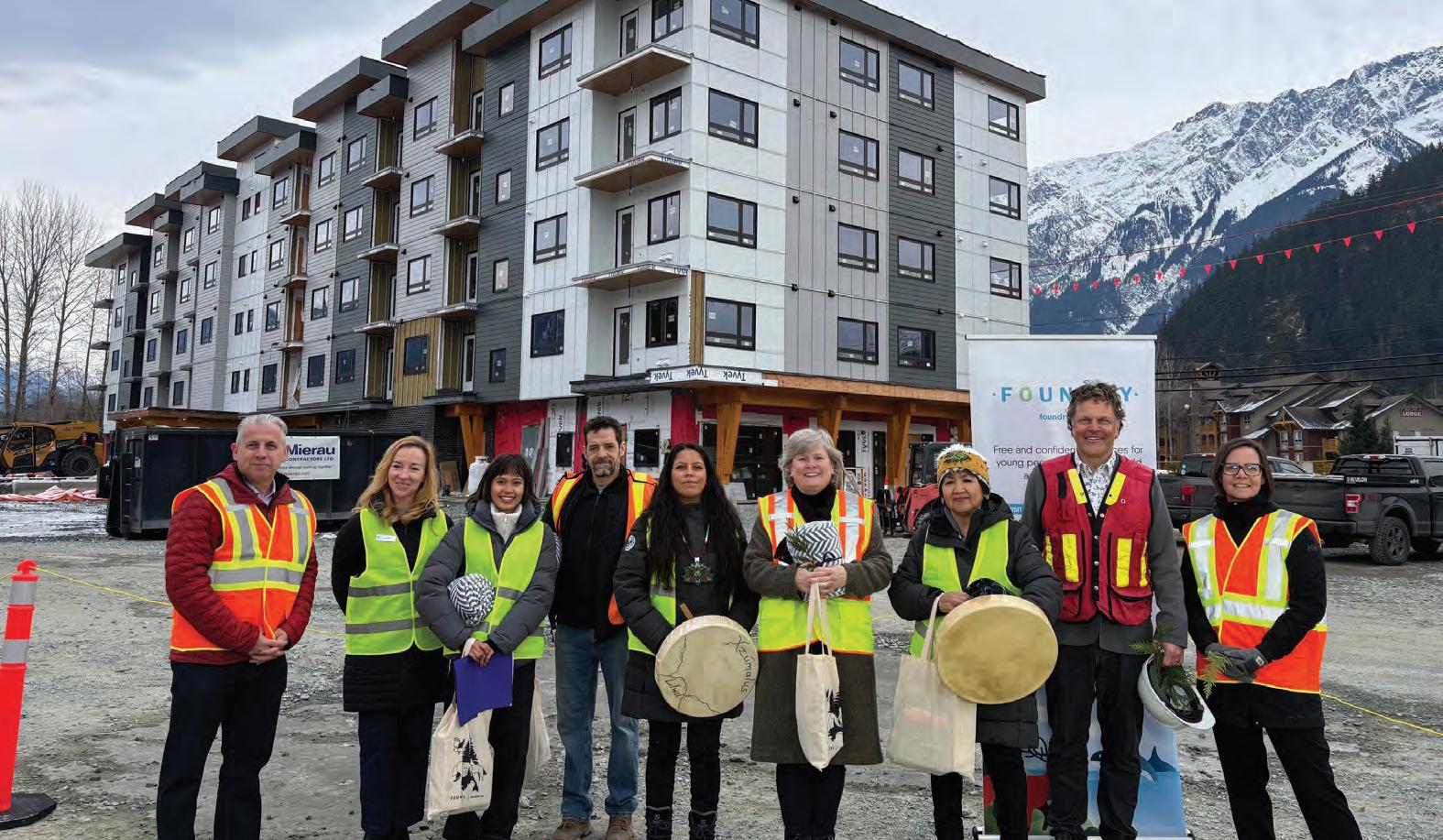
APPLICATIONS ARE OPEN for affordable rentals at Pemberton’s Harrow Road Community Hub, after the province gave the project the health-facility status it needs to receive $1 million from the Sea to Sky Regional Hospital District (SSRHD).
The Sea to Sky Community Services (SSCS) facility is expected to open in September with 63 affordable rental units and a 10,000-square-foot space for health, youth and family services.
“Harrow Road represents more than a building. It’s a place designed to bring people, services and housing together,” said Jaye Russell, executive director of Sea to Sky Community Services, in a May 14 release.
DESIGNATION CLEARS PATH FOR FUNDING
The milestone follows more than a
year of work by the SSHRD to secure the provincial designation needed to release regional hospital district funds. The District board approved $1 million for Harrow Road in its 2025 budget, but the money was contingent on the building being designated a health facility under the Hospital District Act.
approve a draft forgivable loan agreement template, subject to external legal review.
RENTAL APPLICATIONS OPEN
The project is also moving into its rental phase. Applications and eligibility criteria for market-rent housing, rent-gearedto-income housing and deep-subsidy
“What a gift for the community and the surrounding communities.”
- MIKE RICHMAN
Squamish-Lillooet Regional District (SLRD) staff told the board May 27 the Ministry of Infrastructure notified the regional district on May 7 that the application had been approved.
“It’s always nice to be bringing some good news to the table,” said Colin Hodgins, the SLRD’s deputy director of finance. “We received the healthfacility designation for the Harrow project under section 49 of the Hospital District Act. Took a while, but we got there, so exciting.”
The SSHRD voted unanimously to
housing are available on SSCS’ website.
Layouts for each type of unit are also available through the same page.
Applicants selected for a unit will need to confirm their interest by email within 72 hours of being contacted by the SSCS housing coordinator. Proof of income and tax forms must then be submitted within seven days, or SSCS will move to the next eligible applicant.
In addition to housing, Harrow Road will house 32 community programs expected to serve more than 2,200 people a year.
That will include a new Foundry space for young people aged 12 to 24 and their families, offering mental-health, substance-use and wellness supports closer to home. SSCS says Foundry services will include drop-in counselling, peer support, physical and sexual healthcare, groups and workshops and help with education and employment.
Hospital district directors praised the project after hearing the funding update.
SLRD board chair Jen Ford said she attended a May 14 open house and was struck by the scale of the collaboration.
“It is such a beautiful collaboration of putting all of these services and all of these people in one place, like there is no wrong door,” she said. “What a gift for the community and the surrounding communities.”
Pemberton Mayor Mike Richman said service managers at the open house described programming they had not been able to offer before, or had previously offered from “the little tiny cubby hole” available to them.
“You can see the genuine excitement and passion from them about what’s coming and about being able to provide service there in that space,” he said. “It’s pretty great.” n
HUB FOR HEALTH Elected officials and social service reps pose in front of the Harrow Road hub after a funding announcement in Pemberton on Jan. 27.












PublicNotice
PermissiveTax ExemptionOpportunity
Apermissivetaxexemption(PTE)isa wayfortheVillageof Pembertontosupportvoluntary,non-profitorganizationsthat providevaluableprogramsandservicestoresidents.TheVillage mayexempta non-profitorganizationfromtaxationofproperty usedformunicipal,recreational,religious,cultural,orcharitable purposes.Applicantsmustmeetthecriteriasetoutinsection 224ofthe CommunityCharter andinVillagePolicyFIN-002, PermissiveTaxExemptions.
TheVillageisinvitingqualifiedorganizationstoapplyfor aPTE for2027.ApplicationsmustbereceivedbytheVillageby 4:00pmonJune30,2026.
Moreinformation,includingapplicationforms,isavailableatthe VillageofPembertonMunicipalHallat7400ProspectStreet,on theVillagewebsiteatwww.pemberton.ca,andbyemailat admin@pemberton.ca.
Pemberton narrows UBCM asks to Highway 99 safety, ditch maintenance and public engagement support
COUNCIL BACKED A SMALL-COMMUNITY COMMUNICATIONS RESOLUTION, WHILE REFINING ITS TRANSPORTATION PITCH AHEAD OF JUNE SUBMISSION DEADLINES
BY LUKE FAULKS
PEMBERTON COUNCIL has settled on a set of Union of British Columbia Municipalities (UBCM) asks, focusing its 2026 advocacy on Highway 99 safety, drainage maintenance and provincial support for public engagement in small communities.
At its May 26 regular meeting, council directed staff to submit two meeting topics to the Ministry of Transportation and Transit: safety upgrades around the planned Highway 99 access to the new Conseil scolaire francophone school and better maintenance of ministrycontrolled culverts and ditches.
Council also approved a UBCM resolution calling for dedicated provincial funding to help small municipalities meet growing expectations around communications, transparency and public engagement, with added background language around eroding institutional trust.

FourSeasonsWhistler
Weareseekingaquiet,pet-friendly1–2bedroomhomeinWhistler foraprofessionalmanagementcouplebeginninginJuly. Theyareaccompaniedbyonecalm,well-trainedgoldenretriever accustomedtoapartmentliving.Theyarerespectfulofhomesand neighboursandareseekingastablelong-termtenancy. Whatcanweoffer?
•Reliable,professional,long-termtenantswithsecure,fulltimeemployment
•Guaranteed,on-timemonthlyrentandutilitypayments
•Exceptionalcareandrespectforthehome
•Quietlifestyleandalong-termlease
Doesthissoundlikeitcouldbeafit? PleaseemailOdeta.Bartasiute@fourseasons.com
“We are doing great work, but we’re also in an era of very new types of communication,” Councillor Laura Ramsden told council. “There’s a lot of misinformation and eroding public trust in our institutions.”
The annual UBCM convention brings together local government and First Nations members to engage with representatives of the provincial government. During the run-up to UBCM, municipalities from across the province work to assemble a list of topics and meeting requests to highlight pressing local issues.
COUNCIL REFINES INFRASTRUCTURE ASKS
A staff report said council had previously identified several overlapping transportation and flood-mitigation issues, including the Highway 99 school access, Pemberton Creek Bridge and culvert and ditch maintenance.
Because UBCM does not allow local governments to submit the same topic to multiple ministries, staff recommended council clarify which issues should go where.
The original list of possible meeting topics also included Highway 99 improvements in the Gateway area and replacing the Pemberton Creek Bridge with a structure that includes activetransportation space and more clearance above Pemberton Creek. But council pared that back after an update on previous staff talks with ministry officials on several of the items.
Chief administrative officer Elizabeth Tracy said staff met with the Ministry of Transportation and Transit (MOTT)
in October 2025 to discuss the French school intersection, pedestrian-friendly changes along Highway 99, the bridge and other concerns.
“MOTT [said] that there’s still a great deal of lifespan left in the bridge, which is what we’ve heard before, and at this point wouldn’t likely consider any alterations to the bridge until the bridge is at the end of its lifespan,” Tracy said. “But [they were] making notes that the flooding is a concern that has been expressed by us.”
Mayor Mike Richman said the French school access remains a priority, particularly as the village continues pursuing regional transit improvements and development grows along the corridor.
“That intersection has to happen now,” Richman said. “We were hopeful that the bridge would get elevated at the same time for the safety issues. To me, you do it all at once, but as they’ve been telling [us] for years, the bridge is in good shape.”
Council also emphasized ditches and culverts, with Richman saying some residents’ properties are taking on water because roadside drainage infrastructure is not being maintained.
“Our residents’ homes, septic fields, yards, they’re taking on water because ditches are not maintained, and we’re not allowed to deal with them or improve them,” he said. “Culverts are blocked, so I would like to keep carrying that.”
INCREASING PRESSURE ON RURAL COMMUNICATIONS
On the public engagement resolution, staff said no comparable resolution was found in the UBCM resolution database or 2026 Lower Mainland Local Government Association disposition, which could improve its odds of being considered. The draft argues small municipalities face increasing expectations for communications and engagement without corresponding staffing or financial resources.
Coun. Katrina Nightingale asked to add background language about declining institutional trust and the role of strategic engagement in resilient decision-making.
“I do think there’s a move towards doing public engagement differently,” Nightingale said. “There are things like community assemblies, and those sorts of things are a new way of engaging the public, and they do cost. And in the bigger picture of where the world is in terms of democracy, I think we have an opportunity to highlight that.”
Council approved the public engagement resolution with the added background language.
The 2026 UBCM convention takes place Sept. 14 to 18 in Vancouver. n















HISTOR Y MONT H

JUNE 1– 30




Joinustocelebrateauthentic Indigenousculturethismonthat theSkwxwú7meshLíl ’ wat7úl CulturalCentreinWhistler.
SPO7E��ARTIST�MARKET


Sunday,�June��,�10:00�am����pm


SHAYLA�STONECHILD�YOGA
Friday,�June�19,��pm� Saturday,�June��0,�10:30am�






SPO7E��SUMMER�SOLSTICE�FEAST Saturday,�June��0,��:30pm





National�Indigenous�Peoples�Day Sunday,�June��1,�10am����pm



Experience�the�Dancers����Damelahamid,��eith� Bubbas��ahanee�Comedy��how,��torytellin����Crafts. Kids�and�Yout��(1��and�under)�receive��ree�admission�June��1� Gratefully�supported��y�the�the�Resort�Municipality�of�Whistler, the�Government�of�Canada,�and��airmont�Chateau�Whistler��

Visitusat4584BlackcombWay,inWhistler’sUpperVillage
Learnmoreat slcc.ca/nihm




Slow dirt
WHEN I THINK OF “hero dirt,” it’s earth with the perfect moisture content. Not too wet to be slippery mud. Not too dry to be moon dust. Just that light, overnight shower rainfall followed by a clear morning. It’s the type of dirt with

BY VINCE SHULEY
perfect cornering and braking traction, the condition mountain bikers dream about. The only thing better than your favourite trail in hero-dirt conditions is a freshly opened loamy new trail, where the topsoil hasn’t even been properly bedded in yet. Chef’s kiss.
Mountain biking has been my relationship with dirt in the Sea to Sky since I moved here. I’ve learned to ride when it’s good, which trails fare better in what conditions, and when to avoid riding altogether, usually during heavy rain or heat wave conditions. But after all these years, I’m finally exploring a new relationship with dirt, one that slows the pace and requires a zen-like patience. Yes, I’m talking about gardening.
Living in Whistler never gave me
a great motivation to garden. I was living in rental properties, so I never really felt invested in beautifying the outdoor space around the home. The apartments and dark basement suites I resided in never really had much space or sunlight for outdoor plants, and the indoor ones I owned always seemed to wither and die from my neglect. I just never really had time (or more accurately, made time) for plants.
Like most of my new ventures, my hobby gardening started from a gateway. I’ve been brewing my own beer for about 10 years now, and I like to think I have the skills and experience to produce a liquid I would happily pay for
cannabis here. But that’s not something I consume enough of to make it worth my effort.)
Hop vines take about three years before they reach maturation to get a decent yield from your harvest (I can’t remember the last time I looked ahead three years in any of my hobbies or activities). In my second year, the little patio out the back of my townhome now has a couple of vines snaking their way towards the sky. I may not get a decent yield of hops until September of 2027, and that’s OK. But if I’m putting in all this effort for a couple of vines, why not do a bit more to increase the production and beautify the aesthetic
I always looked at growing plants and pretty flowers as a latent activity, only to have the fruits of my labour expire every fall and leave behind a shriveled mess.
at a brewery or the liquor store. While farming my own barley grain is far from practical, I have some friends with hop vines that bloom at the end of every summer. These freshly harvested hop cones help me make some of the best IPAs I have ever brewed, so I decided it was time to try to grow and nurture my own hop vine. (Yes, I’m well aware of the correlation to growing one’s own
of my outdoor space?
Herbs are an easy one. I love fresh basil, and I love it even more when I can nip off a few leaves rather than having to buy it in a plastic container from the grocery store. I’m currently trying to get a young tomato vine to take off by positioning it on the sunniest piece of south-facing ground on my property. And to add some colour, a handful of
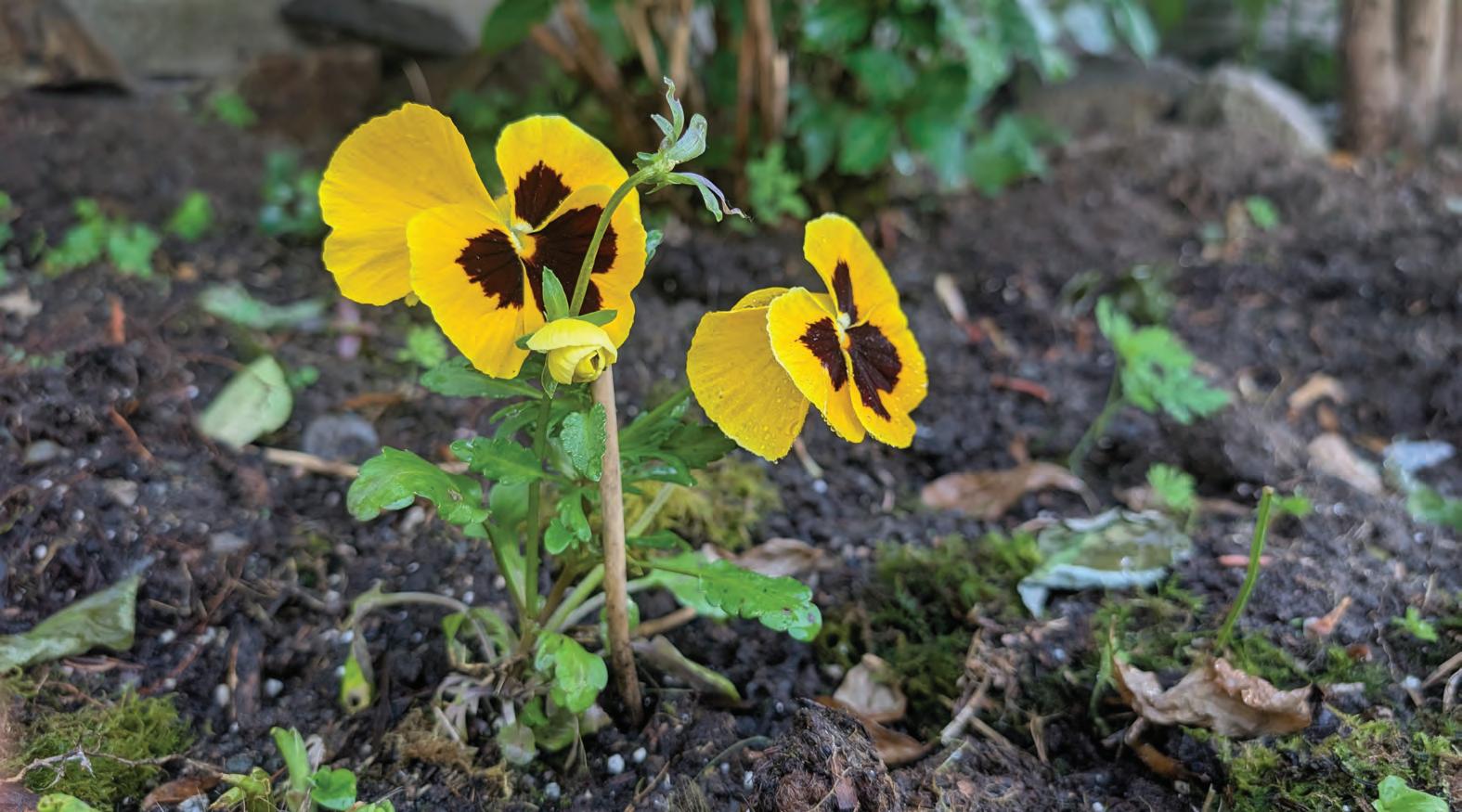
peonies and pansies that break up the green vines and herbs.
I don’t know if the Whistler ski bum of my 20s would recognize me at all.
And that, I believe, is the point. I always looked at growing plants and pretty flowers as a latent activity, only to have the fruits of my labour expire every fall and leave behind a shriveled mess. But that’s all part of the cycle, just like our early season powder days and spring hero dirt. I’m never going to give up riding my bikes to toil in the garden all summer (not any time soon anyway). But for these warmer months of the year, the garden is a place that rewards one’s effort, either in beauty or in consumable produce. Failure is all part of it, of course. There’s no way around the learning experiences of figuring out how much sun, or how much water is required, and the nuances of plants growing in your particular piece of Earth. That’s all part of the fun, too.
Many of you reading this are way ahead in your gardening journey, turning up fresh vegetables multiple times during the summer and/or walking around the garden centre on the weekends like a pro. I don’t know if I’ll ever get to that point in my gardening career, but dabbling in a bit of slow dirt is a welcome change in my outdoor lifestyle.
Vince Shuley has his mother to thank for a childhood of Saturday morning laps around the garden nursery. For questions, comments or suggestions for The Outsider, email vince.shuley@gmail.com or Instagram @whis_vince. n
DR. GREENTHUMB Tending to one’s garden is no extreme sport, but arguably has a stronger connection to nature itself.
PHOTO BY VINCE SHULEY


LAST YEAR was one of Canada’s strongest tourism years on record. The sector generated nearly $60 billion in revenue between May and August 2025, a six per cent year-over-year increase, according to Destination Canada.
Staycation nation? Trade wars and soaring airfares are reshaping how Canadians travel this summer
Several forces drove that surge, including a continued post-COVID rebound and persistent trade tensions between Canada and the United States that encouraged Canadians to explore the nation’s provinces and territories.
In a recent speech to the Liberal National Convention, Prime Minister Mark Carney pointed to last summer’s numbers as evidence of national momentum.
But the fuel crisis and inflation means that the tourism records may not be broken as easily in 2026 as they were in 2025.
FIFA AND THE SUMMER OF 2026
Demand for travel remains strong, with seven in 10 Canadians expecting to travel this year. With the FIFA men’s World Cup arriving in Canada this June, the conditions for another record summer could be in place.
BY MOIRA A. MCDONALD, ANN-KATHRIN MCLEAN, OREOLUWA ADENIYI AND SHIMAYA SURESHBABU
Canada will be co-hosting the FIFA World Cup alongside the U.S. and Mexico. Seven matches will be played at BC Place in Vancouver and six at BMO Field in Toronto.
“This is the largest single-sport event on the planet,” Anne Kang, B.C Minister of Tourism, Arts, Culture and Sport, said in a statement. “More than 350,000 fans are expected to pass through the doors at BC Place.”
Major sports events have historically pulled travel spending into surrounding regions. The World Cup is expected to do the same, drawing
THE CONVERSATION
international visitors who may extend their stays beyond host cities.
RISING COSTS ARE SQUEEZING TRAVEL
There are still factors that could impact travel both internationally and domestically, however.
Following the U.S.-Israeli military campaign against Iran that began Feb. 27 and Iran’s subsequent closure
of the Strait of Hormuz, jet fuel prices have risen nearly 70 per cent.
Even domestic flight fares have increased by 14 per cent, according to Flight Centre Canada. The consolidation and cancellation of flights will also shape Canada’s travel and transportation sectors.
That pressure is compounded by the current costof-living crisis. Thirty-one per cent of Canadians from an Ipsos poll say they plan to travel less due to economic uncertainty.
According to the poll, Canadians aged 55 and older are most likely to say their plans are unaffected by inflation, interest rates and geopolitics. Younger Canadians—the group most eager to travel—are the most likely to be priced out.
A recent TD survey on summer spending indicated that buying Canadian remains a strong sentiment. For example, 79 per cent of respondents plan to support
A MARCH 2026 LEGER
survey found 67 per cent of Canadians cited political tension as a central factor for reduced visits to the U.S., while 64 per cent said they are less likely to travel to Mexico due to security concerns.
local or Canadian businesses this summer. Of that group, 48 per cent said their desire to support local business is even stronger than it was last year.
CANADIANS STILL STEERING CLEAR OF THE U.S.
Trade tensions between Canada and the U.S. are still redirecting spending. There has been a decline in reservations by Canadians who used to consider travelling to the U.S.
A March 2026 Leger survey found 67 per cent of Canadians cited political tension as a central factor for reduced visits to the U.S., while 64 per cent said they are less likely to travel to Mexico due to security concerns.
New barriers and limitations are adding to the friction. Under U.S. President Donald Trump’s executive order “Protecting the American People Against Invasion,” Canadians staying in the U.S. for 30 days or more are now required to register with American immigration authorities.
The rule primarily affects snowbirds and extendedstay travellers, but it’s deterring some Canadians from crossing the border at all.
PLENTY TO DO AT HOME
All these shifts are creating an opening for domestic travel, and the federal government is moving to fill it.
Ottawa has brought back the Canada Strong Pass for a second summer. From June 19 to Sept. 7, it offers reduced or free admissions to Parks Canada sites, historic sites, marine conservation areas and galleries
and museums around the country.
VIA Rail offers free travel for children aged 17 and under when travelling with an adult, and 25 per cent off fares for young adults aged 18 to 24. Last year’s program saw a 13 per cent increase in visits to Parks Canada sites and an average 15 per cent increase in attendance at national museums.
A surge in running tourism is adding another pull. Destination race events combine a fitness goal with a regional getaway in a trend the travel industry has come to call “runcations.” There is no shortage of destination racing opportunities across Canada.
Like the World Cup, these events push tourism dollars into communities that rarely see major-event traffic, spreading the benefits more broadly across the country.
Canada’s tourism and travel industry has shown it can absorb considerable disruption in the face of fuel crises, airline shutdowns and global angst. The fuel crisis and inflation mean 2026 will be harder than 2025, but the appetite to travel is still strong among Canadians.
This article was originally published in The Conversation on May 27. Find the original link here: theconversation. com/trade-wars-and-soaring-airfares-are-reshapinghow-canadians-travel-this-summer-281696.
Moira A. McDonald is a board member with the Travel Tourism Research Association of Canada.
Ann-Kathrin McLean, Oreoluwa Adeniyi, and Shimaya Sureshbabu do not work for, consult, own shares in or receive funding from any company or organization that would benefit from this article, and have disclosed no relevant affiliations beyond their academic appointment. n
Elly Hoskin eighth at Loudenvielle World Cup enduro
THE REIGNING WORLD CHAMPION FEELS ‘LESS PRESSURE’ AFTER A STELLAR ROOKIE SEASON AS AN ELITE IN 2025
BY DAVID SONG
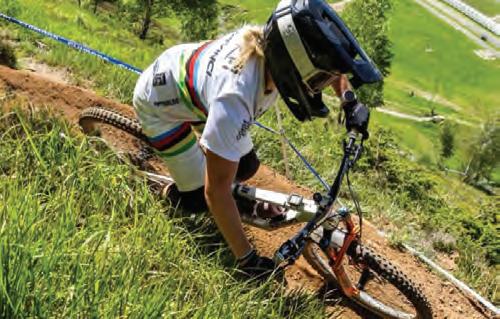
BY THE NUMBERS, Elly Hoskin’s performance in the May 30 Enduro World Cup (EDR) race in Loudenvielle, France was good—not great.
Hoskin finished eighth, managing an aggregate time of 28 minutes and 19.723 seconds. She wasn’t able to match the pace of victorious Ella Conolly (27:01.518), runner-up Mélanie Pugin (27:07.302) or Raphaela Richter in third (27:18.795), but that hasn’t seemed to bother her much.
“Loudenvielle and I will have to wait to make peace until next year but nonetheless very proud of how I raced!” wrote Hoskin on Instagram. “Took two big slams, got back up and continued to push as hard as I could and managed to hold onto a result I’m still very proud of.
“Big congrats to the boss herself, [Ella], that was no joke, so stoked for you. An absolute pleasure to get to wear the stripes for the first time at a World Cup, I’ll keep them cleaner in Leogang.”
Hoskin became world champion last September in Valais, Switzerland and has yet to fully digest the reality that she’ll be wearing the distinctive UCI rainbow jersey all season long. She’s also the first woman outside of Great Britain and France to ever win an EDR contest,
About her previous battles with imposter syndrome and feeling like she might not measure up, the Squamolian remarked: “It’s so tricky because racing is competition, it’s direct comparison, but I feel like there is that degree of separation. Elly the person definitely has
“[T]here’s that confidence now that I can. If I’m aligned with my bike and the race aligns for me, I just believe it can happen and that goes so far in this sport.”
- ELLY HOSKIN
making it happen last May in BielskoBiala, Poland.
“I think having achieved so much in my first year in elite is almost less pressure,” Hoskin said in a press conference. “As much as I want to do it again and achieve more … there’s that confidence now that I can. If I’m aligned with my bike and the race aligns for me, I just believe it can happen and that goes so far in this sport.”
quite the sense of imposter syndrome, but when I’m racing, I definitely don’t. I feel like I tap into a bit of a different personality, and she belongs so much more in the race scene.”
Meanwhile, Conolly admitted in a press release that she didn’t expect gold because of a difficult lead-up to the event. She voiced satisfaction in overcoming the venue’s dry weather and rough terrain.
MEN’S RESULTS
With Whistler legend Jesse Melamed retired as of December 2025, a new generation of enduro athletes is now carrying the torch for Canadian men. Lief Rodgers paced them in Loudenvielle with a ninth-place result (23:57.158), but it was Alex Rudeau who emerged on top (23:30.038).
Rudeau narrowly beat his French compatriot Raphaël Giambi (2:30.787) in a matchup that went down to the wire. Punching into third was two-time King of Crankworx Ryan Gilchrist (23:32.333).
“It feels so good,” said Rudeau in a release. “It has been since 2022 that I haven’t won here. I wanted it. I’m really happy about this one. It’s a good start to the season and good points for the overall.”
Rodgers netted bronze at last year’s Canadian Open Enduro in Whistler. His sister Geza, a U19 Garbanzo Downhill champ from 2024, finished just behind Hoskin in ninth.
“A solid start to the season and I had a lot of fun racing the tracks here,” commented Rodgers on social media. “I started the day with a fourth on the first stage which was sick, but I couldn’t keep that intensity for the rest of the stages. The [Priority Bicycles] x [Gates Belt Drive] startup was working great, I just need to turn it up a bit for the next one.” n
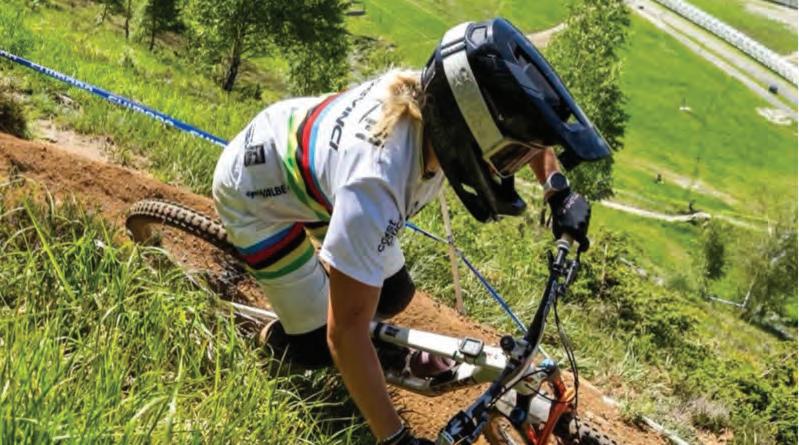
BATTLE-TESTED Elly Hoskin races at the Enduro World Cup in Loudenvielle, France on May 30. PHOTO BY BORIS BEYER
Andrew Russell, Andrea Burley defend 25km titles at Run Comfy Numb
SPORTS BRIEFS: WHISTLER GIRLS’ RUGBY TEAM 14TH AT PROVINCIALS
BY DAVID SONG
THE 22ND RUNNING of Whistler’s Comfortably Numb trail was held last Saturday, yielding a mix of familiar victors and brand-new champs amidst sunny skies and ideal terrain conditions.
Andrew Russell of Victoria defended his title in the men’s 25-kilometre event, crossing the line in two hours, nine minutes and 31 seconds: more than two minutes faster than his 2025 winning time. While his performance wasn’t quite enough to challenge the course record, it placed him firmly ahead of runner-up Henry de Klee from Squamish (2:14:54) and New Zealand’s Callum Wilkie in third (2:18:48).
The ladies’ 25km saw another impressive effort from defending champion and multi-sport athlete Andrea Burley. The West Vancouverite clocked in at 2:33:49, more than 11 minutes ahead of Port Moody’s Roxy Bauer (2:44:45), with North Vancouver’s Madison Martin rounding out the podium (2:48:17).
After settling for silver last year, Ross Reilly returned to claim men’s 50km gold (4:27:48). Reilly and Ivan Shvetsov reached the highest point of the course together at the 40-kilometre mark before a thrilling final stretch saw Reilly prevail by just 19 seconds.
Chloe Brennan triumphed in the women’s 50km, leading from pillar to post (4:59:49). Katie Sandrin finished second, and Squamolian Kelly Young locked down third place (5:26) two weeks after completing a 100-mile ultramarathon.
The 25km masters 50+ category was won by Whistlerite Christian Stulz, whose impressive time (2:49:33) placed him 21st overall in a deep field. Squamish’s Michelle Jamieson earned the women’s masters title (3:41:59).
Peter Wijtkamp (6:09) clinched 50km victory for masters men, with Marieve Legrand taking the ladies’ division (5:33) and placing fifth among all female runners.
Among the day’s most notable nonmedallist contestants was 13-year-old Whistler Secondary student Sebastian Sturgess, who ran 25 kilometres in 3:14:02 to place 70th overall among 224 finishers. At the other end of the age spectrum, 73-year-old Cameron MacKenzie completed the course in 4:18.
Furthermore, new custom awards were presented to athletes celebrating milestones: including five-time 25km finishers Christian Stulz, Anngela Leggatt and Ryan Devine, five-time 50km
finisher Thomas Blake, and Bill Tanzola who marked an 11th successful foray into the 25km. Tanzola was quoted post-race saying: “See you next year.”
“The organizing team would like to extend a heartfelt thank you to the incredible volunteers whose energy, encouragement, and dedication helped create a memorable experience for every runner on the course,” said organizer Charlotte Paul in a press release. “The event would not have been possible without the generous support of its community partners: Moguls Coffee House, Red Bull Canada, Precision Fuel & Hydration, Aava Whistler Hotel, We Dip Whistler, Coast Performance Rehab, Mt Waddington Outdoors, Whistler Liquor Store, Nesters Supermarket, and Coast Optics.
“With another successful year in the books, organizers are already looking ahead to 2027 and continuing to build on the participant experience while maintaining the welcoming community atmosphere that has become a hallmark of the event.”
WHISTLER GIRLS’ RUGBY 14TH AT PROVINCIALS
The Whistler Waldorf School and Whistler Secondary School (WSS) girls’ rugby team achieved a key milestone in its nascent history on May 28 and 29 by entering its first Girls Rugby Sevens Championships in Abbotsford, B.C.
Battling to a 14th-place finish, the Whistler squad’s biggest breakthrough came by a score of 17-10 against Rockridge Secondary, an opponent it had previously lost to on May 14 during Zones competition.
“I would like to emphasize that, although Whistler Waldorf was [the team’s] host school, we could not have achieved this without the support of Whistler Secondary,” said Waldorf outdoor education and athletics coordinator Susie Moore in an email to Pique. “[WSS teacher and Axemen ladies player] Elise Dube has been a fantastic role model and leader for the girls throughout the season. [Parent coach and mayor] Jack Crompton has had an incredibly positive influence on the team and a great motivator.
“I’ve really enjoyed the opportunity to create a joint team, organizing all of the administration for the team, assisting the coaches at the practices and games.”
As a brand-new grassroots program, Whistler finished the regular season with a record of 2-6-1. Athletes borrowed jerseys from boys’ clubs at their respective schools until X-Treme Sports Gear began sponsoring them with proper uniforms. Other support came courtesy of BC Rugby, Shawnigan Lake School and the Axemen ladies’ program. n
PublicComments
CampingandMotorizedUseRestriction
RecreationSitesand TrailsBCis seekingpubliccommentson theprohibitionofcampingand motorizeduseintheBrandywine Meadowsareafrom June 1st to November 1st annually
Thisrestrictionwillsupport theintentoftheWildlife Habita tArea (WHA)2-281,which ishighvaluehabita tused by grizzlybear sto raisecubs ever yyear
Campingandmotorized usedistur bthesebear s, threatencubsurviva land create asignificantriskfor human-bearconflicts
Thedevelopmentof recreationa linfrastructure (foodcaches,toilets, campsites )whic hwould berequired forbearsafe campingisprohibited withinWHA2-281
Formoreinformationorto providecomments,email theMinistry ofEnvironment and Parks, Recreation Sitesand TrailsBranc h at:RecInfo@gov.bc.caby June21st,2026



The Warming Hut brings cabin-coffee vibe to Whistler lakes and markets
ALIX DAVIDSON’S MOBILE CAFÉ CHANNELS MOUNTAIN-TOWN NOSTALGIA, CANADIAN HOSPITALITY AND A GROWING APPETITE FOR OUTDOOR FOOD CULTURE
BY LUKE FAULKS
ON A SUNNY Whistler morning, The Warming Hut looks like it rolled out of someone’s fondest mountain-town memory.
The cedar-clad mobile coffee bar is trimmed with vintage skis, built to evoke a rustic alpine cabin and usually parked somewhere people are already chasing the best parts of a Sea to Sky day: lakeside walks, bike rides, farmers’ market mornings and lazy hours outside.
For owner Alix Davidson, that’s exactly the point.
The Warming Hut is built as a little love letter to Whistler, the North Shore, old ski culture, travel, and the kind of easygoing mountain-town life that has kept Davidson coming back for nearly 20 years.
“I lived up in Whistler during the Olympics and for a few other seasons there, so I love the mountains. I love the community of Whistler,” Davidson said. “I wanted to create a small business that was really place-based, around a mountain community.”
That place-based idea eventually became a mobile café serving espresso drinks, cold coffee, kombucha, baked goods, fruit, candy and, new this year, affogatos.
The business marked its one-year anniversary over the May long weekend and is now rolling into its second summer
with loyalty cards, returning staff, and a little more name recognition around town.
A MOBILE CAFÉ WITH MOUNTAIN ROOTS
The Warming Hut started with a dream Davidson had carried for years: to open a coffee shop in either a surf town or a ski resort.
Both places appealed to her for the same reasons: They’re social, laid-back and populated around people choosing lifestyle over location.
Davidson has travelled to more than 30 countries. During those adventures, she has collected ideas from surf towns, ski towns and outdoor communities around the world.
Whistler, she said, felt like the natural place to bring those ideas home.
“I’m from the North Shore, and Whistler is like my second home, so this whole area is really like my backyard,” she said. “I’ve done all the hiking, all the ski-touring, all the snowboarding that I really wanted to kind of go down the avenue of creating a business and contributing to the local community.
“I also really love that Whistler is on the map globally. A lot of the clientele that come to town are from Australia, the U.K., Mexico, and just international ... when I lived there when I was really young, like 18, 19, that kind of sparked my desire to travel.”
A mobile café offered a lower barrier to entry than a brick-and-mortar shop, but Davidson said the format also fit her background. She has spent roughly a decade in events and experiential marketing, building pop-up activations for brands. The Warming Hut lets her
put that experience to work on her own terms.
She bought the trailer as a shell, built out the interior, created the brand, registered the name and worked with a graphic designer on the logos.
“I kind of leaned into my strengths and my skill set,” she said. “I learned way more about power and capacity of towing trailers than probably anything else, but I have a background in marketing, so I really love the vision of creating a brand, building a business.
“I really think I’m actually just getting started. I don’t know what the future holds, but I kind of feel like this is my baby.”
CANADIANA AND A LINE AT THE MARKET
The Warming Hut’s coffee comes from Elysian Coffee Roasters in Vancouver, while Slope Side Supply in Function Junction helps provide beverages. Davidson said she would be excited to work with a Sea to Sky roastery if the right fit comes along.
The goal is not just to serve a coffee, but to make the stop memorable: “We really love to get to know the customers, of course, even if they’re just in town for the weekend,” Davidson said.
“I want them to be able to see the wooden structure, the skis that really speak about what Whistler was like back in the ’70s or ’80s,” she added. “My grandparents actually met on Grouse Mountain, and they built a ski chalet, and they would hike up the mountain with their wooden skis.”
That family history helped inspire the Hut’s vintage look. Davidson has black-and-white photos of her grandparents and their mountain
friends, wearing pre-Gore-Tex gear and spending weekends outside simply because they loved it.
“I just love all that,” she said. “I think it’s epic, because I feel like we’re all the same people, although they’re no longer here anymore. They were just there for a good time.”
WHERE TO FIND THE HUT
This summer, The Warming Hut is operating through Whistler’s Park Eats program at Lost Lake and Rainbow Park, as well as at the Whistler Farmers’ Market. Hours can shift with the weather. Updates are posted on The Warming Hut’s website and Instagram.
Davidson is also hoping the Hut can keep warming people up after summer ends.
Last winter, the business appeared at a handful of Fire & Ice shows and the John Summit event, but she would like to build more winter partnerships with local businesses, brands or venues looking for a mobile coffee bar—or even a semi-permanent complement to their own space.
For now, Davidson is still handson, still learning, and still building the business around the same things that drew her to Whistler in the first place: good coffee, good people and a mountain-town lifestyle that turns even a quick stop at the park into part of the day’s adventure.
“I just love the community in Whistler,” Davidson said. “It’s a home away from home for so many people. I’ve kind of created a business where people already want to hang out—good coffee, good people, outside in the mountains. It’s everything I’m passionate about in one place.” n
JUST WARMING UP The Warming Hut marked its one-year anniversary over the May long weekend.
PHOTO BY KATELAND CLARKE


MEADOW PARK SPORTS CENTRE
SWIM • SKATE • SWEAT • SQUASH
OPEN DAILY: 6 a.m. to 9 p.m. *some exceptions apply
have a separate fee and a defined start and end date. Pre-registration is required for the entire set of classes.
I INCLUDED FITNESS These classes are included with your price of admission for no extra charge.





Squamish Nation comic Keith ‘Bubbas’ Nahanee to bring laughter, hard truths to the SLCC
‘DON’T
BE AFRAID TO LAUGH’
BY LUKE FAULKS
KEITH “BUBBAS” Nahanee knows laughter can carry a lot.
Nahanee is an outreach worker with Squamish Nation, working with vulnerable people. Sometimes, when there is a death on reserve, he’s called to stay with the body until the coroner arrives. It’s heavy work.
But afterwards, he’ll go and crush a stand-up set.
The award-winning comedian says laughter offers a shared catharsis that makes carrying the weight a little easier.
“When there’s death, that’s heavy energy,” Nahanee explains. “That’s what sometimes gets stuck on me.“
“So when I’m at a comedy show and I get the laughs, it pushes the heaviness out. It lightens everyone else up.”
On June 21, Nahanee brings his mix of humour, storytelling and cultural commentary to the Squamish Lil’wat Cultural Centre (SLCC) in Whistler as part of National Indigenous Peoples Day programming.
FAMILY DINNERS TO FIRST SETS
You can trace Nahanee’s comedy trajectory through family dinners, school plays, ceremonies and years of being told he should get on stage.
“For years, for all my friends, I was class clown,” he says. “In the family, when we’d have family dinners, I would always come up with the games. So people bugged me for years: ‘You should

go to open mic.’ And I was like, ‘Well, I don’t write jokes. I just say whatever comes on top of my mind.’”
The push became more serious in 2014. Nahanee recalls the Squamish Nation saw 41 deaths between January and September that year. He and his wife Berny wanted to bring something lighter to the community.
They were regulars at Yuk Yuk’s on Cambie and had come to know some comics. Nahanee was organizing the show from behind the scenes, and making efforts to bring in First Nations stand-ups.
When an emcee couldn’t make a show in 2015, Berny gave him a nudge.
“My wife said, ‘You get up there. You’ve been wanting to do it,’” he recalls. He was sold.
Comedy was new. Standing in front of people was not. From 2002 to 2010, Nahanee was an ordained travelling missionary with the Squamish Nation Indian Shaker Church, doing weddings, baptisms and funerals.
“Different vibe,” he says. “But I was used to being in front of people.”
A few months later, after his nephew died on Vancouver Island, Nahanee went to Duncan for the funeral and discovered some of the comedians he knew were performing nearby. He and Berny went to watch their stand-up. After the first set, comic Chuck Cease asked what Nahanee was doing for the rest of the night.
“I said, ‘Well, everything closes down at six o’clock in Duncan, right? Just gonna go to our room and hang out,’” Nahanee says. “He goes, ‘Well, you want to stay for the second show and do the first 10 minutes?’ I was like, ‘Sure.’ So I did the first 10 minutes.”
The next day, he was invited to do another set in Victoria. Soon after, someone in Pemberton saw him mention comedy online and asked if he could do a two-hour Christmas staff party.
Nahanee has been on a roll ever since. Nahanee’s comedy can be silly, but it’s not without deeper meaning. His favourite jokes often delve into difficult topics like the relationships between Indigenous people and the RCMP and the church.
“I tell them in a funny way,” he says. “I do get a lot of non-Natives coming up and saying, ‘You talked about the church and a bit of the history, and I’m glad you guys are starting to bring that out in a funny way,’ because it gets people to think.
“And I say, ‘If you don’t understand me, Google this up,’ and they’ll Google it up. Sometimes they will Google it up while I’m doing my set.”
That balance can make audiences hesitate. Nahanee says some younger audiences, particularly off-reserve or in mostly non-Indigenous rooms, do not always know what to do when the joke hits close to something painful.
“My wife says they look at each other like, ‘Are we allowed to laugh?’” Nahanee says.
Berny gave him the fix: give them permission.
“So I’ll tell one or two Native jokes and then they’re like, ‘Oh,’” he says. “And I say, ‘Hey, I’m Native. I’m right up here telling Native jokes. You have my permission to laugh. You’re here at a comedy show. Don’t be scared to laugh.’”
GRANNY’S CORNER AND BUBBAS
For all the bigger credits now attached to Nahanee’s name, one of the best parts of his comedy life is still in the backyard.
Every Saturday in July, he and Berny run Granny’s Corner, a relaxed backyard comedy series named for her longtime nickname. The stage itself came from the floor of a playhouse Nahanee’s father built for his sisters years earlier.
The nickname Bubbas goes back even further. Nahanee drank from a bottle
until he was three and a half and called it his Bubbas. It held orange pekoe tea, not milk—a habit that stuck.
“That’s why I still drink tea every morning,” he says. “Never had a cup of coffee in my life.”
Nahanee’s mother was one of his earliest supporters. She came to his school plays and comedy shows. In 2019, she was diagnosed with pancreatic cancer. And while doctors only gave her one year, she lived three and a half.
In 2022, filmmaker Quentin Lee invited Nahanee to film a half-hour special. It was taped on Mother’s Day. Nahanee asked the crew to film his mom and let him dedicate the performance to her.
“We filmed it in May. She passed in September,” he says. “Then it was released the following spring, so she didn’t get to see it on TV. But she saw me film it.”
That special, Comedy Invasion: Rez Style, later won the Canadian Screen Award for Best Comedy Special in 2024.
“At the end of it, I just looked up and said hi to my mom,” Nahanee says. “It was hard. I cried. I cried because I won, but I also cried because my mom—she’s always been a big supporter in anything I do in life.”
Now, Nahanee’s goal is to make more room for Indigenous comedy.
“Out of the whole Vancouver, we’re maybe 10 per cent—not even that,” he says. “The regular ones, there’s about a dozen of us. That’s not a lot.
“I was on the morning show in Toronto and they asked, ‘What is your goal?’ I said, ‘To get Indigenous comedy out there more than it actually is.’ That’s my goal.”
On June 21, Whistler audiences will get the SLCC version of Nahanee’s comedy: family-friendly, but still rooted in the same mix of grief, history, teasing and catharsis.
“Laughter,” he says. “That’s why I keep going back.” n
PERMISSION TO LAUGH Squamish Nation comedian Keith “bubbas” Nahanee performs in Whistler for National Indigenous Peoples Day on June 21.
Audain Art Museum presents paired Takao Tanabe exhibits to honour the decorated artist’s 100th birthday
‘VISTAS’
IS ALREADY OPEN, WHILE ‘INSIDE PASSAGE’ BECOMES AVAILABLE JUNE 13
BY DAVID SONG
TAKAO TANABE is one of the most prolific artists in British Columbia—and very arguably in all of Canada.
A full list of his achievements would be too much to enumerate here, but Tanabe advocated for creating the Governor General’s Award in Visual and Media Arts (which has since become the nation’s most prestigious honour for artists). He received the accolade in 2003, four years after being named to the Order of Canada.
The Japanese-Canadian was also instrumental in establishing the Audain Prize for the Visual Arts, a lifetime achievement award for B.C. creatives. Fittingly, he earned it in 2013.
Born Takao Izumi in 1926 in the obscure hamlet of Seal Cove, B.C., his surname changed to Tanabe based on a Japanese tradition where men take their wives’ family names if she has no sons. Around 16 years old, his family relocated to Lemon Creek, B.C. as part of the forced internment of Japanese Canadians during the Second World War.
Tanabe’s studies began at the Winnipeg School of Art, where he discovered a lifelong friendship with the late painter Joseph Plaskett. His first public mural commission materialized in 1953 at the University of British Columbia and he never looked back.
Known for virtuoso-like command of brushwork, form and colour, Tanabe mastered multiple styles during his impressive career. In the 1950s and ‘60s he explored hard-edge, a form of abstract painting defined by monochromatic colours, firm geometric shapes and a lack of texture or shading.
Other parts of his portfolio feature striking and realistic-looking landscapes.
To properly celebrate Tanabe’s 100th birthday on Sept. 16 and the Audain Art Museum’s 10th anniversary, Gail & Stephen A. Jarislowsky chief curator Kiriko Watanabe prepared two retrospective exhibits. “Vistas: From Takao Tanabe’s Travels” is already open, while “Takao Tanabe 100: Inside Passage” debuts June 13.
‘HIS PAINTINGS HAVE SOME KIND OF PSYCHOLOGICAL EFFECT’
“Inside Passage” is a series of coastal paintings from Tanabe, but it’s also the name of an exhibition designed to metaphorize his life. It showcases more than 60 works across half a dozen decades: from breathtaking natural scenery to modernist abstraction and the aforementioned hard-edge paintings.
Watanabe intentionally chose numerous lesser-known pieces to facilitate a wellrounded outlook on Tanabe’s repertoire.
Tanabe landscapes are often intricately detailed. A quick glance might cause viewers to recognize ocean storms, forests or mountains, but step closer and you’ll pick out tiny elements like the rippling of waves and water that took days to craft.
Meanwhile, Tanabe’s abstract offerings are less straightforward—but a myriad of possible interpretations await those willing to search for them.
“In order to understand, you really need to look and look and look,” Watanabe says. “It’s not something that a curator or somebody else tells you what you should see. It’s really what your eyes start to catch, and the more you look, just like many other subjects, the deeper your understanding becomes.”
“Vistas” serves as an excellent complement to “Inside Passage” by focusing on the scenery Tanabe encountered during his many voyages across North America, Europe and the Arctic. Initially capturing these locales on camera, the artist later translated their geographical features onto canvas— frequently taking years to do so.
Perhaps the crown jewel of this exhibit is “Machu Picchu,” composed between 1990 and 2012. “Suffolk Village” (199697) is another notable piece: depicting cloudy sky, prairie landscape, a river and a pastoral town in a way that wows the casual observer but also stands up to close scrutiny.
“Many of the paintings sit in [Tanabe’s] head, the scenery that he had seen, then he needs time to percolate and then paint,” opines Watanabe. “I think he needs to get into the mode or mood of painting certain images, certain sceneries, and many of them are not painted immediately after.
“I don’t know how he manages to put such tremendous perspective [in some of his work]. What comes across is the atmosphere and the feeling that he conveys…his paintings have some kind of psychological effect for people to feel almost as if they themselves are immersed in nature.”
Watanabe has noticed Audain visitors and even security guards lingering in front of the pieces in “Vistas” for quite some time. She feels her efforts as a curator are already being validated by these reactions, hoping many more guests will drop by and be in awe of Tanabe’s skill.
“Vistas” closes on Sept. 21, and “Inside Passage” will remain available until Oct. 19. Head to audainartmuseum. com for more details. n

Planning your perfect Whistler wedding? PICK UP YOUR COPY TODAY!
RESORTMUNICIPALITYOFWHISTLER NOTICEOFMEETINGON ANNUALREPORT
Tuesday,June23,2026startingat5:30p.m.
AtMaury YoungArtsCentre,4335Blackcomb Way, WhistlerBCintheFranz WilhelmsenTheatre
NOTICEisherebygiveninaccordancewithSection99oftheCommunityCharter thattheCounciloftheResortMunicipalityofWhistlerwillbeconsideringthe annualreportattheRegularCouncilMeetingon Tuesday,June23,2026.
INSPECTIONOFANNUALREPORT:Acopyoftheannualreportisavailablefor publicinspectiononourwebsiteatwww.whistler.ca/corporateplanoratthe CustomerServiceDeskofMunicipalHall,4325Blackcomb Way, Whistler,BC, duringregularofficehoursof9:00a.m.to4:00p.m.; MondaytoFriday(statutoryholidaysexcluded).
PUBLIC PARTICIPATION:Pleasesendsubmissionsorcommentsontheannual reportpriorto12:00p.m.on Tuesday,June23,2026 to:
Email:corporate@whistler.ca
Mail:Attention:LegislativeServices 4325Blackcomb Way, Whistler,BC,V8E0X5
PleaseaddressyourcorrespondencetoMayorandCouncil.

ResortMunicipalityofWhistler whistler.ca




LocatedinWhistler’s Creekside, Roland’s Pubisyouronestopshopfor greatfood,goodfriendsandthegame you’vebeenlookingfor.
forthe2026/27 Season
TheSea to Sky ContractorsDirectory isback! We offerfree listings foralllocal contractorsandtrades. Don’tmissoutonbeing part oftheregion’s go-to resource—simplyfillout thefor mbelow to claim yourspot.

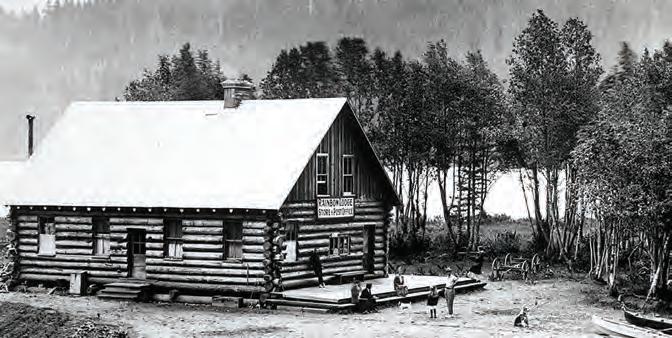
A look back at the local census 105 years ago
BY BRONWYN PREECE
IN 1921, fewer than 100 people lived in the place now known as Whistler.
That’s according to the 1921 census, which recorded just 98 people living here.
In 2021, one hundred years later, that number would jump to 13,982 living in Whistler.
This year is a census year in Canada—that federal survey conducted regularly to shed light on the Canadian population.
a cook $600 and a housekeeper $150. In 2023, Pique Newsmagazine reported: “In 2020, women in Whistler made a median annual wage of $41,200, or about $22.64 hourly, while local men earned a median total income of $47,600, or $26.15 per hour,” Pique Newsmagazine reported in 2023. “About 56 per cent of Whistler’s population of 13,983 took home a total annual income of $50,000 or less in 2021, or $27 per hour with a 35-hour workweek.”
Forty-four of the 84 adults, more than half, reported their marital status as single in 1921. Thirty-three reported themselves as married and seven as widowed.





One-hundred-and-five years ago, the area now known as Whistler had 85 adults residing between McGuire to the south (the since-abandoned logging camp near Brandywine Falls, with its own Pacific Great Eastern Railway stop) and Green River to the north.
In 1921, there were 14 people living in the valley under 21 years old (the then age of majority). The oldest members of the community were three 67-yearolds, the youngest was a one-year old. The bulk of the population was focused around two hubs: Alta Lake being the primary, followed by Green Lake and River area. All mail was received and sent through the Alta Lake Post Office at Rainbow Lodge, established in 1915.
Fifteen different countries were listed, at the time, as peoples’ birthplace, already hinting at the diverse demographic that makes up Whistler’s population today.
Perhaps one of the most fascinating aspects of the census is the list of jobs in 1921. From miner to woodsman, labourer to teamster, cook to carpenter: resourcebased livelihoods dominated. The highest reported income, by far, was that of Alex Philip: co-proprietor of Rainbow Lodge along with his wife Myrtle Philip. His annual income was recorded as $3,000. Nothing was recorded for Myrtle.
Three people reported incomes of $2,000: two were engineers for the railway and one a purchasing agent.
Twenty-six of the 98 were female, representing 26.5 per cent of the population. Only three women recorded income. A nurse reported earning $1,000,
The detailed information gathered in the 1921 census was released following a standard 92-year privacy waiting period.
Census records have been an important source of information in Canada used for research and policymaking. The first census was conducted in New France (modern day Québec) by Jean Talon in 1666. The Constitution Act of 1867 later established the requirement for a national census every 10 years.
Census data can reveal population trends, occupations, family structures and patterns of settlement. In the context of museum work, when combined with archival and research sources such as newspapers, photographs and oral histories, census data can help build a broader understanding of a community’s past.
However, census records are not without limitations. They capture only a single moment in time and can reflect the biases, omissions, and recordkeeping and gathering practices of an era. As a result, they necessarily must be considered alongside other sources.
Present-day Whistler represents a dynamic social and cultural mosaic. On Friday, June 12, the resort will celebrate its diversity through the Whistler Multicultural Festival. The event takes place from 4 to 8 p.m. in Florence Petersen Park by the Whistler Public Library. Museum staffers will be on hand to greet guests with an activity tent. For more information visit festival. wmsociety.ca. n
BY THE NUMBERS Alta Lake’s original general store and post office, located at Rainbow Lodge, 1920s. PHILIP COLLECTION.



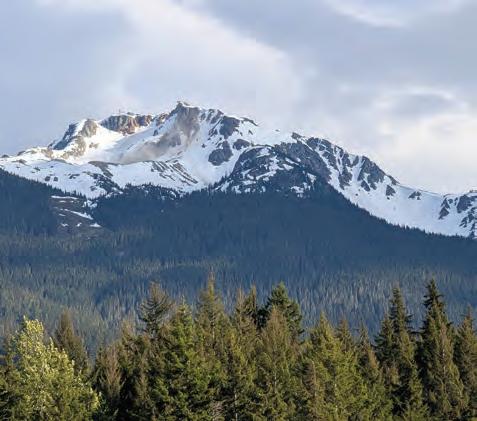
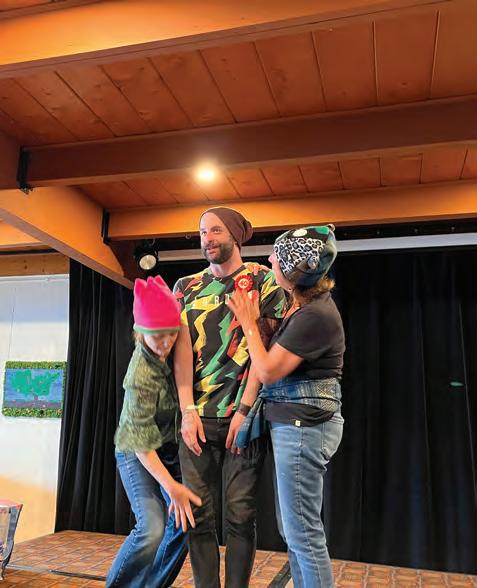




ProvideinputbyJune25onParts10and11 ofthe Insurance(Vehicle)Act andBill M237, Insurance(Vehicle)AmendmentAct,2026
Visit la-bc.ca/consultations, scantheQRcode,orcall250-356-2933 Toll-free1-877-428-8337

SpecialCommitteetoReview ProvisionsoftheInsurance(Vehicle)Act SHAREYOURVIEWSON:
Coffee with Council

PIQUE’S GUIDE TO LOCAL EVENTS & NIGHTLIFE
Here’s a quick look at some events happening in Whistler this week and beyond. FIND MORE LOCAL EVENT LISTINGS (and submit your own for free!) at piquenewsmagazine.com/local-events

WHISTLER HALF MARATHON
FAIRMONT FRIDAYS AT MALLARD LOUNGE
WHISTLER FARMERS’ MARKET
A feast for your senses, the Whistler Farmers’ Market features local produce, tasty food, local artisans, live entertainment and family activities. Markets happen every Sunday until Thanksgiving on Oct. 11, with the addition of select Saturday markets.
> June 7, 11 a.m. to 4 p.m.
> Upper Village Stroll
SPO7EZ ARTIST MARKET

Coffeeisn’tjust a e erage it’s awaytoconnect.
Joinusfora con ersationo er coffeean addyourvo ce tolet usknowwhat’sonyourmin .
MeetwithyourCouncilandfellow communitymem ersatthe followin locationsandtimes
Monday, June 22 Forecast Coffee 1200 Alpha Lake Road
Start your weekend on a high note with Whistler’s favourite Friday tradition. Set against the backdrop of the mountains, Fairmont Fridays bring together handcrafted cocktails, live music and a feature food menu designed for sharing and celebrating the start of the weekend. Each week discover a new signature cocktail alongside specially curated culinary offerings, creating an elevated après experience filled with flavour, atmosphere and a little extra magic.
> June 5, 5 to 7 p.m.






> Mallard Lounge
WHISTLER HALF MARATHON
The scenic running course is designed to showcase all that Whistler is—an amazing town nestled in the Coast Mountains of B.C. With towering, glaciercapped mountains as the backdrop, it is no wonder that Whistler’s only half marathon has made it to the must-do list for distance runners from across North America. Events include Half Marathon, 32K, 10K, 5K and Kids Run.
> June 6
> Whistler Olympic Plaza
ALTA LAKE BIRD WALK
Join the Whistler Naturalists on the first Saturday of the month for a walk to Rainbow Park. Open to anyone interested in learning about birds and contributing as a citizen scientist. Connect with experienced birders who are happy to share their knowledge
> June 6, 7 a.m.
> Bottom of Lorimer Rd
The Spo7ez Artist Market celebrates the incredible talents of artisans from the Squamish Nation and Lil’wat Nation. It takes place on the Mezzanine Patio on the first Sunday of each month during summer, in addition to a full-day of immersive programming on National Indigenous Peoples’ Day on June 21.
> June 7, 10 a.m. to 4 p.m.
> Squamish Lil’wat Cultural Centre
MAKING CONNECTIONS DEMENTIA FRIENDLY SOCIAL CLUB
10 a m to 12 p m Monday, June 22
to 4:30 p m
Bringyourideas,questions,feedbackand conversation starters.We’ve gotthe coffee covered.
EVOTRIP WOMEN’S MTB CLINIC
A weekend of progression, connection and quality trail time. These two-day women’s mountain bike clinics are designed to help riders build confidence, refine skills and ride with more flow, all while connecting with a supportive crew of like-minded riders. Includes plenty of trail time, certified coaching, and personalized feedback on Whistler’s valley trails. The clinics are open to intermediate through advanced riders, with select weekends tailored to specific ability levels.
Supported by a federal grant and organized by the Whistler Mature Action Community, this is a weekly program of 45 minutes of gentle fitness followed by stimulating activities such as card games and music therapy, and socializing over a light lunch. The program was designed to improve physical fitness, delay cognitive decline and build friendships and support networks. We provide a welcoming stress-free environment for those whose lives have become isolated by dementia. Join us for fun, fun, fun. There is no fee. Please contact mcp@whistlermac.org if interested in attending. Donations are welcome. Find more info at whistlermac.org/making-connections.
> June 10, 10:30 a.m. to 1 p.m.
> Catholic Church of Whistler
WORCA TOONIE RIDE



me coffee talk inspiration? r engagement projects

e whistler ca



> June 6 to 7, 9 a.m. to 5 p.m.
> Evo Rentals
Come for the ride, stay for the après. The Whistler Off Road Cycling Association’s (WORCA) Thursday Toonie Rides are a great place to mix and mingle with Whistler’s vibrant mountain biking community. Ride hard for the challenge or ride with friends for the fun of it. When the ride is over, meet up at après to share tall tales with friends old and new. However you ride, it’s guaranteed to be a good time. Read more at worca. com/toonie-rides.




> June 11, 6:30 to 8:30
> Various locations
FILE PHOTO BY ROB SHAER / COURTESY OF THE WHISTLER HALF MARATHON
ASTROLOGY
Free Will Astrology
WEEK OF JUNE 5 BY
ARIES (March 21-April 19): You are often the best possible remedy for stale, unoriginal thinking that’s festering in your vicinity. And you are especially so these days. Others might have the gall to disrupt the deadening status quo, but you have the charm to do it without scorching every bridge and laying waste to the land. So I invite you to step into the role of cheerful troublemaker. Unleash your iconoclastic sparks with the intention of making life friskier and more imaginative, not more tangled and irritating.
TAURUS (April 20-May 20): In many farming cultures, including parts of India, growers speak or sing to their crops as they walk through the fields. It’s a gesture of personal care that mirrors growing scientific interest in how plants respond to sound and vibration. Some studies suggest that plants exposed to sustained speech and song may grow more vigorously. Your assignment in the coming weeks, Taurus, is to speak to the growing things in your life with similar devotion. Talk to your projects. Sing to your relationships. Tell jokes to your dreams. The universe is extra responsive to your sweet voice.
GEMINI (May 21-June 20): Neurologist Oliver Sacks said, “I am haunted by the density of experience.” He meant that every moment contains far more richness than we can fully register or remember. This observation will be especially relevant for you in the coming weeks. Your mind (and heart!) will be flooded with an abundance of stimuli, ideas, feelings, and impressions. It might initially feel overwhelming, but will ultimately be a boon—especially if you prepare yourself for the intensity and abundance. Imagine yourself standing next to a fountain and feeling cheerful about getting soaked.
CANCER (June 21-July 22): You have superpowers that hardened hearts and tough guys can’t fathom. Receptivity is a key part of your genius, for example. Emotional fluency is at the root of your intelligence. Your ability to feel so much and so deeply makes you dangerous to status quos managed by people who overthink everything. Wait! There’s more. You can nurture without smothering and protect without imprisoning. You wield the powers of memory without being enslaved by nostalgia. You make home a verb, not a noun, as you build shelter for yourself and your tribe. I hope you will express these gorgeous talents to the max in the coming weeks and months.
LEO (July 23-Aug. 22): An astrologer rooted in older traditions might claim that now is an ideal time to promote your personal agenda through sly, gossipy manoeuvring. But since I am devoted to building a new culture grounded in compassionate values that nourish the soul, my message is different. I’m pleased to tell you that the coming weeks will be a potent phase to engage in elevating gossip that serves the greater good, to celebrate unsung heroes, and to call attention to everything that is thriving. For practical dreamers like you and me, carelessly speaking ill of others undermines our own aspirations. One of the most effective ways to expand our own possibilities is to use the power of language to boost other people’s chances for joy and success.
VIRGO (Aug. 23-Sept. 22): The ancient Library of Alexandria contained more than half a million scrolls. If you devoted eight hours a day to reading, you could finish about 5,000 books over the course of your life. The librarians back then knew they would never read all the texts they managed and protected. Their job wasn’t to consume all knowledge but to be stewards of abundance. They’re good role models for you, Virgo. The wonderful fact is that you don’t have to master every single thing that attracts your attention. Your far more relaxing task is to curate with care and wisdom. Your growing edge is to know what to preserve and what to release. One of your noblest projects is to commune pleasurably with the intriguing mysteries that life brings you, not obsess on them.
LIBRA (Sept. 23-Oct. 22): Libra psychologist Carol
ROB BREZSNY
Dweck distinguishes between fixed mindsets (“I’m not smart enough”) and growth mindsets (“I can become smarter”). When you have a fixed mindset, obstacles weigh you down. With a growth mindset, they motivate you to develop. What determines your trajectory isn’t your current skill level but how you relate to your edge. With this in mind, Libra, I invite you to monitor your self-talk as you encounter challenges. Are you prone to thinking that limitations are permanent, or do you see them as temporary states you can use as opportunities? You now have a good chance to instil the latter as a root habit.
SCORPIO (Oct. 23-Nov. 21): What’s something you wish you could change about yourself? Is it a trait, pattern, fear, or story about your body? And what exactly tells you that this can never change? Is it loyalty to old expectations or a rotting prophecy someone laid on you? Consider the possibility that maybe the “can’t” is really a “won’t,” or a “don’t know how yet,” or “I’m afraid of who I’d be without this.” Then imagine that you don’t have to transform this thing instantly, but, for starters, need only shift it by 10 per cent in the direction of mercy and freedom. What small, specific action would generate that 10 per cent?
SAGITTARIUS (Nov. 22-Dec. 21): What’s your most vital relationship? I dare you to surprise each other in the coming weeks. Refresh your bond with playful experimentation. Here are adventures you two could explore: 1. Take a walk together with no destination in mind, letting curiosity guide you. Talk about the paths you have not yet taken in life but might like to. 2. Describe the most beautiful future you can imagine for each other. Share practical steps you could take to make these scenarios happen. 3. Choose a food treat you both love, speak a blessing over it, then eat it slowly together as you name what you are most grateful for in your connection.
CAPRICORN (Dec. 22-Jan. 19): Chess masters and accomplished musicians practice differently from amateurs. They focus most intensely on their weak points, less so on rehearsing what they already do well. It’s uncomfortable to confront inadequacy, but they’re better for it. In my astrological opinion, Capricorn, you should specialize in a similar courage during the coming weeks. I invite you to direct your generous attention toward your shakiest skills and most uncertain territories. Glorious growth will happen at the edge of your competence.
AQUARIUS (Jan. 20-Feb. 18): Be more like a lightning storm over a green meadow and less like a porch light attracting moths. Be more like a spiritual riddle in an ecstatic poem and less like a slogan printed on a T-shirt. Be more like a Miles Davis improvisation and less like a tune played note-for-note from the sheet music for a formulaic pop song. Can you stretch yourself into more fertile wildness, Aquarius? Will you expand your future with adventures that thrill your imagination? I believe you can and should. For bonus magic, be more like a dream of wandering in a rowdy paradise and less like the old version of yourself. Trust the frontier signals that make your pulse quicken, and speak less about the obvious truths that make everyone nod in agreement.
PISCES (Feb. 19-March 20): Are you ready to assess the state of your emotional pain? Every few years, I invite you to take stock. I ask you to reflect on how well you’ve been cultivating meaningful stress while avoiding useless pain and misery. So, how’s your progress since our last check-in? Have you improved at sidestepping dull torments you’ve relived a thousand times? Are you less vulnerable to being wounded by ignorant or thoughtless people? Can you more swiftly shake off the sting of minor troubles? Most importantly, are you increasingly magnetized to the intriguing dilemmas that challenge you to grow wiser and more resourceful?
Homework: Identify 10 of your best blessings. https:// tinyurl.com/77ww77.
In addition to this column, Rob Brezsny creates
EXPANDED AUDIO HOROSCOPES
In-depth weekly forecasts designed to inspire and uplift you. To buy access, phone 1-888-499-4425. Once you’ve chosen the Block of Time you like, call 1-888-682-8777 to hear Rob’s forecasts. www.freewillastrology.com


Resort MunicipalityofWhistler
N O OT T I C E O F A S S I S STTA A N C E
In accordance withsection24ofthe Community Char ter, the Resort Municipalityof Whistler(RMOW) hereby givesnotice that:
TheRMOWintends to provideassistance throughpartneringagreements for2026in accordance withthe Council Policy A-39- Fee for Service(FFS) to:
• Whistler Ar ts Council(dba Ar ts Whistler)up to theamountof$594,825 to operate Maury Young Ar ts Centre anddevelop,produceandpromoteartsprogrammingin Whistler;
• Sea to Sky Invasive Species Councilup to theamountof$75,705 to provideinvasive species expertise, programdevelopment, trainingandeducationin Whistler;
• Whistler Animals Galore Societyup to theamountof$124,373 to operateananimal shelterin Whistler;
• Whistler Museumand Archives Societyup to theamountof$224,950 to operate the Wh istler Museum;and
• Whistler Off-Road Cycling Associationup to theamountof$290,925 to maintain the existingoff-roadtrailnetworkwithin Whistler(togethertheFFS Recipients).
On February 25,2026 Councilpasseda resolutionapprovingtheabove -listedfunding amounts to theFFS Recipients at a Regular Council Meeting. TheFFS Recipientsare providingimportantservices to the Whistler community and Councilhasdetermined thattheassistance beingprovided by theRMOWfurthersthegoalsofthe Whistler community asidentifiedin Whistler ’s Official Community Plan. Allfundingunder theseagreementsisdue to bepaidin2026subject to theFFS Recipientssatisfying milestonesthroughout2026and continued availabilityoffunding.
Pauline Lysaght Resort Municipalityof Whistler Corporate Officer
Resort MunicipalityofWhistler whistler.c a











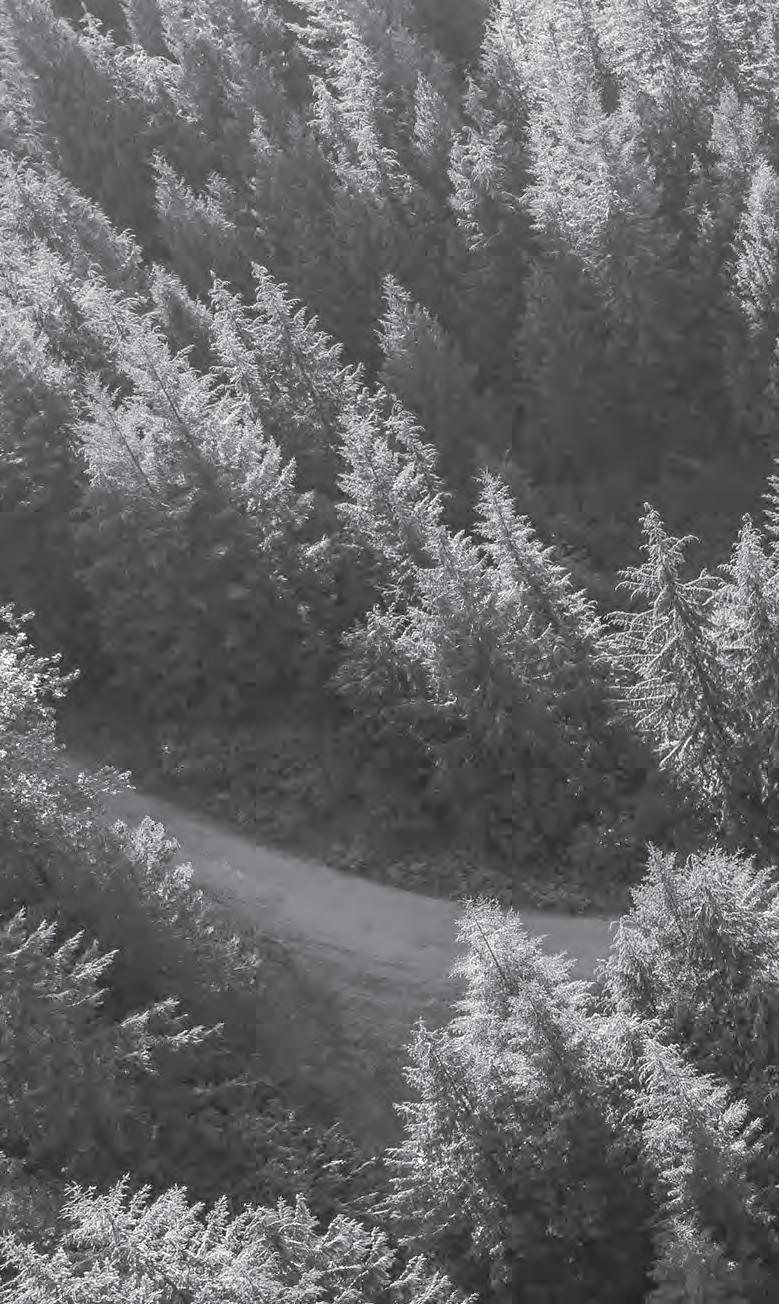
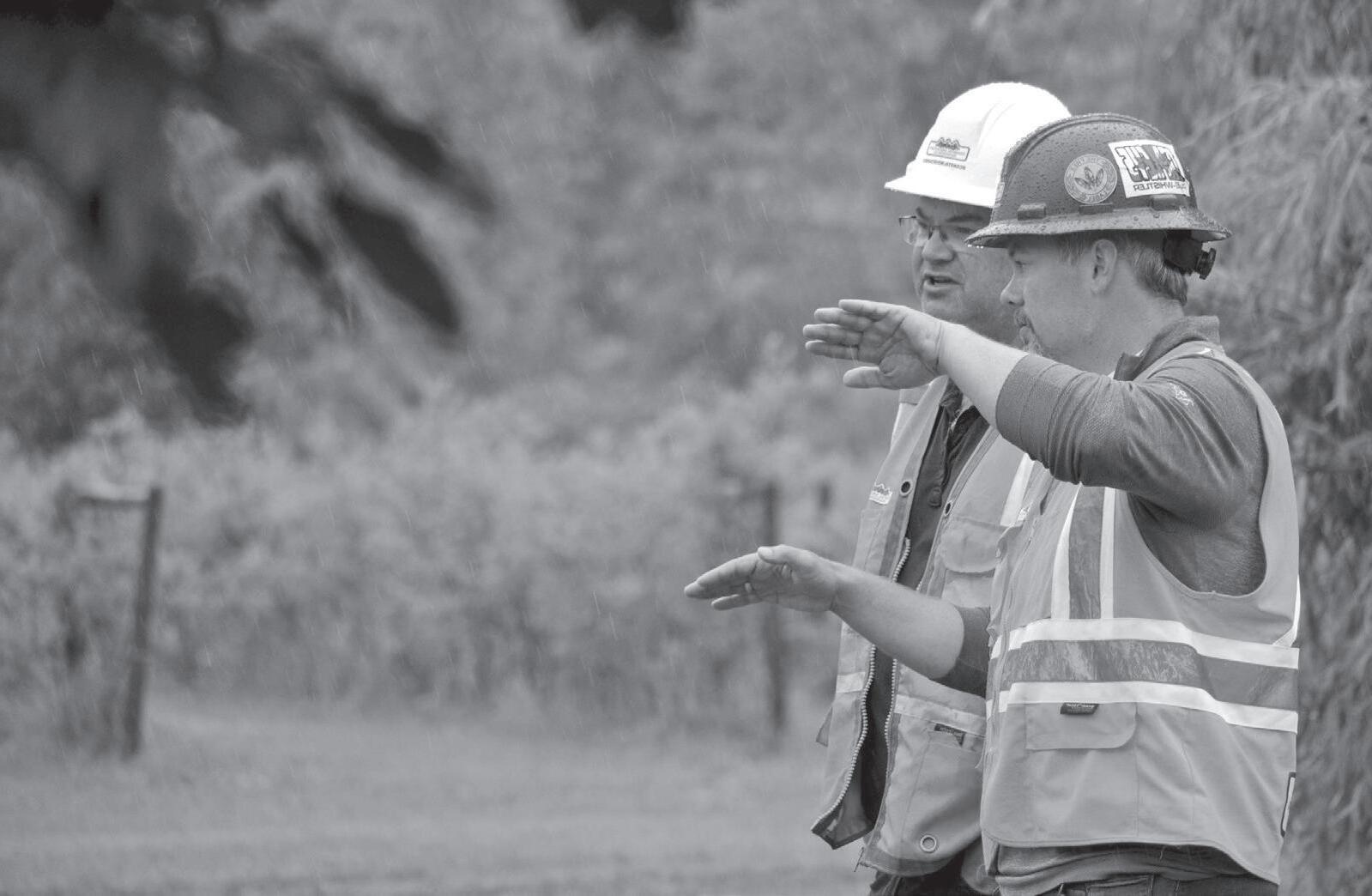

HEAVYEQUIPMENTOPERATOR– Minimum 5yearsor5,000hoursoperating experienceonexcavator.CrushingExperiencepreferred. Full-time,Monday–Friday.$33-$46perhour.
CONSTRUCTIONLABOURER– Greatopportunitytolear non-the-job.Staminafor physicallydemandingworkandperseverancetobraveinclementweather required. Previousexperiencepreferredbutnot required.Trainingprovided.$28-$33perhour.
PIPELAYER –Minimum 5yearsexperienceincivilconstruction. Full-time,Monday– Friday.$33-$43perhour.
TRUCKDRIVER –BCDLClass1 orClass 3withairbrakesrequired.Manualtransmission. 2yearsexperiencepreferred.$35-$41.50perhour.
PROJECTMANAGER –10+yearscivilconstructionPMexperience,Class5licence, strongleadership,scheduling,budgeting&safetymanagementskills.Annualsalary $105k-$125k.
SITESUPERINTENDENT –5–10yrscivil/excavationexp,2–5yrsPMexp,Class5 licence.Leadsiteops,safety,scheduling &qualitycontrol.$40.49-$47.17perhour. Whistler’s



Supporting children and families in the Sea to Sky Corridor who are coping with the loss of a parent.
Amazing Kids Foundation helps families in Squamish, Whistler, and Pember ton by providing sup
port that allows children to con‐tinue par ticipating in activities that build confidence, connection, and stability dur ing difficult times.
If you or someone you know could benefit from support, we encour
age you to connect with us.
Learn more at: www.amazingkidsfoundation.org
Email: info@amazingkidsfoundation.org

Local Stone& QuartzSpecialist
Alsoofferingcustomhome renovationsincludingfully remodeledkitchens,bathrooms andmore...
Settingmaterialsinstock
Tilesalestarting at $4 #103-1010 Alpha Lake Rd, Whistler, BC mariomarbleandtile.com Showroomsales@mariomarbleandtile.com Mario@mariomarbleandtile.com 604-935-8825


GroupFitnessClasses
Friday
I12:30-1:30p.m.GentleFit-M-A
Saturday
I10:30-11:30a.m.Zumba-Susie
Monday
I10:30-11:30a.m.Zumba-Carmen
Tuesday
I8:45-9:45a.m.AquaFitDeep-M-A
Wednesday
I7:30-8:30a.m.Strength&Cardio-Kelsey
Thursday
I7:30-8:30a.m.MTNReady-Julia
Seeourfullpage scheduleadin thisissueofPique fordetails


Help keep Whistler clean and pick up after your dog.


SLRD.bc.ca/careers Full-time |R egular
Thisposition is responsiblefor providingproject management,engagementand administrativesupportacrossa varietyofinitiatives,organizingrelationshipbuilding events,andcoordinating educationandtrainingforSLRDstaff andBoardmembers.
Salary:$87,500 -$98,480annually
Plus acompetitive benefitspackagethatincludescomprehensiveextended health anddentalbenefits, pensionplan,flexibleworkoptions, learning anddevelopment opportunities.
HeadquarteredinPemberton,theSquamish-LillooetRegionalDistrict(SLRD)serves four membermunicipalities—Squamish,Whistler,Pemberton, andLillooet—andfour electoralareas.Located in oneofBritish Columbia’s mostscenic regions, theSLRD offers asupportive, hybridworkenvironmentand anexceptionalplacetoliveand work.









EmploymentOpportunities
ÚlÍusCommunityCentre
•SeniorHumanResourcesGeneralist($76,560.00to$105,270.00peryear)-
Contract –01May2026to31December2026(withthepossibilityofextensionor conversionto apermanentrole
• TransferStationOperator -Salar yRange 1($41,600.00to$54,600.00peryear)
Child &FamilyServices
• OfficeManager($67,040.00to$92,180.00peryear)
• Social Worker($80,160.00to$115,230.00peryear)
• Custodian($35,657.14to$46,800.00peryear)
•FetalAlcoholSpectrumDisorder(FASD)KeyWorker($54,720.00to$71,820.00 peryear)
Health &Healing +PqusnalhcwHealthCentre
•PeerOutreach Worker($47,120.00to$61,845.00peryear)
•CommunityHealthNurse($41.42to$52.81perhour) +$2.15hourlypremium)
•TraumaTherapist($80,160.00to$115,230.00peryear)
•Custodian($33,284.00to$43,680.00peryear)
CommunityPrograms
•DaycareSupervisor -Infant &Toddler($54,720.00to$71,820.00peryear)
•AboriginalSupportedChildDevelopment Worker($25.89 -$33.98perhour +eligibleforwageenhancementtopup)
CommunityDevelopment
• AdministrativeAssistant -YouthJustice($47,120.00to$61,845.00peryear)
Ts’zil,Language &Culture
•SummerStudent($18.25perhour)
Xet’òlacwCommunitySchool
•BusDriver($20.90to$29.45perhour)
•FoodProgramAssistant($18.25to$20.90perhour)
Pleasevisitourcareerpageformoreinformation:https://lilwat.ca/careers/

WE’REHIRING
OutdoorLifeguard
Casualpositionwith a starting wageof$29.53anhour
Western ToadProgram Assistant
Casualpositionwith a starting wageof$29.53anhour

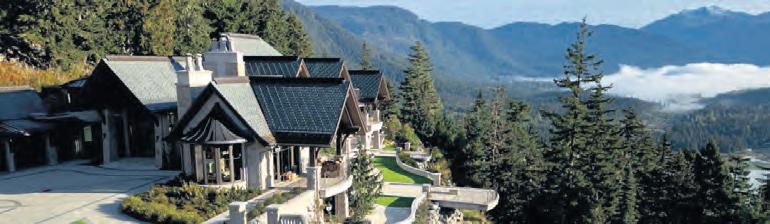
























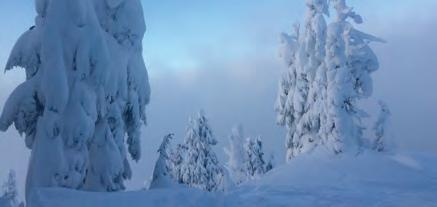





Blessed be the beautiful and free
GRIPES GET TO US ALL, and lately, I feel that too often I have been drawn to kvetching about the goings-on of this Mountain Bubble of a Town.
So I wanted to write about the good things. And more than that, to make a point about how the good things come to be. Say a word or two about something beautiful, and something free.
So let me tell you a story. It might even be a bit of a parable.
FINDING FIRE FOR THE FLOW
A few months past, I scored a rare chance to ski with my closest ski buddy of all time. He is a dancer on the planks—a former park rat who was at the forefront

of covering the Shore’s freeride scene. As for me, a skintrack soulskier, I got him out past the ropes, into the big terrain of the backcountry, and we’ve been slaying and suffering together ever since.
Unfortunately, we have not been out riding in some three years, as—irony of ironies—he had to pack up shop and move to Australia.
Finally, the Canadian Bacon was back. It was the onset of April, and conditions were all-time, sunny and stable, with enough pow to surf at speed.
But we had one small problem.
You see, I had some of the finer stuff to get us into the groove, but had somehow forgotten one essential element: fire.
No fire.
And this being the 21st century, where nearly everything is legal but oddly inaccessible, no fire being sold anywhere in the on-mountain shops.
We contemplated our predicament over a beer at the Rendezvous. The mountain was shutting down; we wanted to catch the alpenglow atop a fave line.
Then I had an idea. I lurched up from the table.
“No way you’re going to find a lighter,” said my best fiend.
I staggered off to Christine’s.
Everyone in the fine-dining establishment was finishing up, but they greeted me warmly. I was grinning, my hands pressed together, as I figured this was gonna be a tough sell.
“Hi there,” I said. “Do you have candles? See… I happen to be looking for a lighter…”
“We don’t have candles, unfortunately,” said a well-meaning server. But then another voice chipped in.
“Looking for a lighter?” I could hear

that hidden smile beneath the question.
I turned and saw a fellow mountainlifer with all the right kind of savvy. Right away, I knew she knew, and she knew that I knew she knew.
Briefly, we connected over how many decades we had spent between us chasing sunbeams on Blackcomb.
“I know you need to borrow a lighter, and that you won’t be giving it back,” she said.
My grin got wider.
She reached into her bag, and handed over a white Bic that is still spouting flame to this day.
“Thank you,” I said, and gave her eyes the full attention of a fellow human who realizes the weird and wonderful karma of the world only happens because people like her make it happen.
“You are a beautiful person,” I said. And so I made a promise.
Thanks to this one, small act of kindness, the Mission was saved. With the lighter sparked, we skied that perfectly sweet line in pure pink alpenglow. Our friendship rekindled as we set alight to the sublime.
GIVING UP THE GRIPES
This moment stuck deep within me. Here was giving and gratitude, a fine example of the wheel of karma. It was abundance and flow and all the things the Great Wisdom Teachers go on about, wrapped up into a single, beautiful act of gifting the smallest of things with the biggest of impacts.
There is nothing so beautiful as giving without hesitation, without need for asking anything more. Such generosity is what puts the glow into the alpine’s highest glimmers. It was, in short, a prime example of the unspoken flow that makes Whistler not just beautiful, but occasionally, peak sublime.
The act of giving is based upon some
fundamental things. Generosity requires empathy. Being able to feel the vibe of another person, slip into their shoes, and realize that making them happy, from your own pure beneficence, betters us all.
I want to point out, rather bluntly, that empathy is weathering some brutal attacks these days. Some rather prominent billionaires and online agitators have been foaming at the mouth, going on lecture tours, trying to convince us all that empathy will be the death of Western civilization.
And even—get this—saying that empathy is somehow contrary to the core values of whatever it is they think “Western civilization” is.
They will have you believe that the right thing to have done is to clam up and try and sell me that lighter like a two-bit hustler. To hoard and snivel and elevate not beauty, but greed.
So let me just say, no. Enough. Empathy is at the very core of being human, “civilized” or not—and skiing, if anything, is only a semi-civilized sport.
Whistler wouldn’t function without feeling the flow. As the best riders know, without flow, you gonna crash and burn. Hard. And most of us, I feel, are all here because of it. We live to be in the flow. Whether on snow or dirt, wheels or planks, we all strive for that effortless moment, floating and free. To touch that sliver of the sublime, we need to learn to be beautiful people. If you can’t feel what someone else needs, and give without greed, you’re never going to get into that groove.
THE SECRET CIRCUIT
Behind the scenes in the local shops, we all know it’s gifting cans of gratitude that greases the wheels of service. It’s a thank you and a bit of a bribe, a sign that You Know the Flow.
When I schlepped away at ski shops,
we often borrowed mounting jigs and all manner of kit from our competitors. The shoprats all knew the score. You helped someone out because next time, it would be you in need of that lone screw.
Most of this town only functions thanks to the secret circuit of sharing and gifting. Give a little, get a lot. Giving is at the very heart of Whistler. We wouldn’t have the Whistler Community Services Society, or WORCA, or the brilliant community of volunteer-run events without it.
So it’s time to renew that call to be real for each other—so we can get surreal out there in the wild.
And a reminder to kindly unfollow the greedy bozos who really only want to sell us more things at our own expense. That expense is hefty: it’s nothing more than selling out our soul.
Because nothing threatens the greedy bastards of the world more than simply giving each other what we need.
Which, if need be said, is really what the likes of the Great Wisdom Teachers were going on about to begin with. Y’know, the ones at the core of whatever this “civilization” thing is. Sharing, not coveting. Giving, not griping.
So the next time you hear the rich and powerful loudly proclaim that empathy and generosity are bringing on the demonic ends to civilization—remember that this is precisely the kind of thing the Devil Himself would say.
So always carry cash and a lighter. Be free and easy with both.
Because blessed be the beautiful, wild, and free people of Whistler.
And thank you, Sally. Here is your column.
(As promised.)
tobias c. van Veen empathizes with those who still cannot feel this. We will unthaw you, bluntly if need be. n
BY TOBIAS C. VAN VEEN


$2,595,000

2219 Aspen Drive, Whistler
3 Bed | 2.5 Bath | 1,848 sq.ft.
$2,999,999

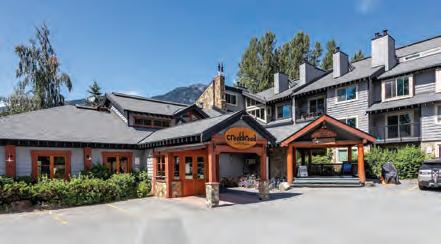


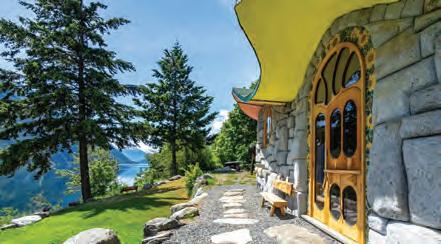

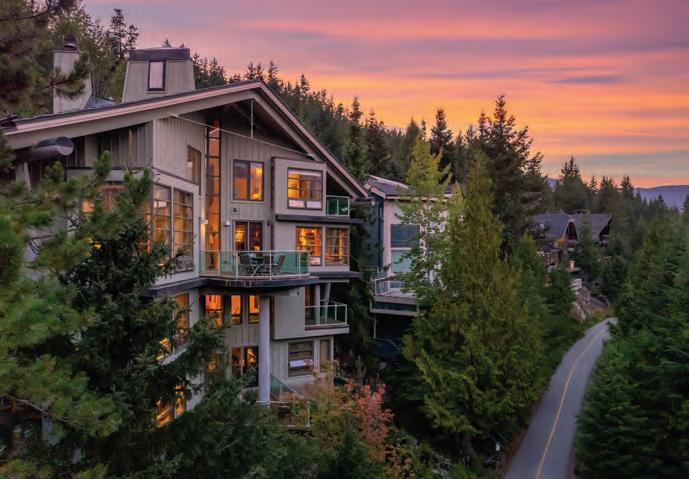
$6,498,000

Thornhill PREC* +1-604-905-8199
maggi.thornhill@evrealestate.com
Maggi & Max Thornhill Team



604-902-3309
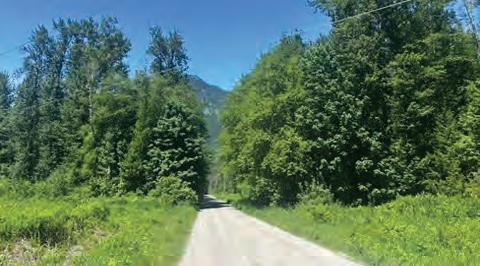

604-905-9001
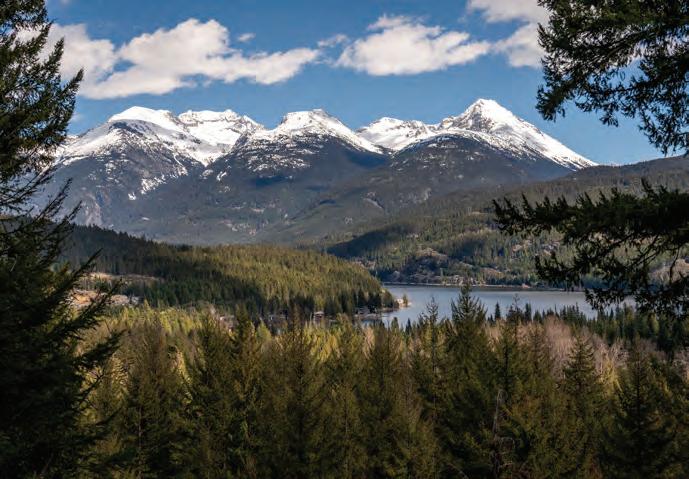
$2,699,000
maggi.thornhill@evrealestate.com