1: Sign up for Whistler alert at whistler.ca/whistleralert.ca
2: Build your household emergency kit
3: Prepare a grab-and-go bag
4: Make a household emergency plan
5: Plan your transportation
6: Prepare your home for emergencies and FireSmart your property
7: Read and understand the Sea to Sky Multimodal Evacuation Plan
One road out
Revisiting Whistler’s evacuation plans ahead of fire seaon. - By Caroline Egan
06 OPENING REMARKS Sticky season’s annual descent on Whistler sparks a crisis of curiosity in editor Braden Dupuis.
08 LETTERS TO THE EDITOR This week’s letter writers weigh in on development on the Spearhead, the loss of the Local Journalism Initiative, and the viability of passenger rail.
22 RANGE ROVER Leslie Anthony explores the ties between Mürren, Switzerland’s Schilthorn and the beloved 1969 James Bond film On Her Majesty’s Secret Service
46 PIQUE’N YER INTEREST There are higher priorities than adding train service to a resort that is already well-served by a highway and multiple bus services, writes Andrew Mitchell.
10 SCAN PLAN With Whistler’s only CT scanner nearing the end of its lifespan, the Whistler Health Care Foundation is launching a fundraising campaign to replace it.
11 PAY TO SPRAY Whistler is shifting to a pay-per-use water billing system, beginning next year with the industrial, commercial, institutional sector.
28 HOOP DREAMS Mount Currie’s Holly Watkinson reflects on the growth of basketball among Lil’wat youth.
32 AWE AND WONDER Whistler author Bronwyn Preece discusses her new book hiking beyond : poems from the trail
COVER I will be smugly riding by traffic on my e-bike while I slowly asphyxiate. - By Jon Parris // Adobe AI // @jon.parris.art
Publisher SARAH STROTHER - sstrother@piquenewsmagazine.com
Production Manager AMIR SHAHRESTANI - ashahrestani@piquenewsmagazine.com
Art Director JON PARRIS - jparris@piquenewsmagazine.com
Advertising Representatives
TESSA SWEENEY - tsweeney@wplpmedia.com
ANDREW BUDRESKI - abudreski@piquenewsmagazine.com
Digital/Sales Coordinator KATIE DOUGLAS - kbechtel@wplpmedia.com
Reporters
LUKE FAULKS - lfaulks@piquenewsmagazine.com
DAVID SONG - sports@piquenewsmagazine.com
Office Manager HEIDI RODE - hrode@wplpmedia.com
Classifieds and Reception - mail@piquenewsmagazine.com
Contributors G.D. MAXWELL, VINCE SHULEY, LESLIE ANTHONY, GLENDA BARTOSH, ANDREW MITCHELL, LISA RICHARDSON, LIZI MCLOUGHLIN, TOBIAS C. VAN VEEN
Founding Publishers KATHY & BOB BARNETT www.piquenewsmagazine.com
Sticky season
THEY ARRIVE every year, sure as spring itself, to cover the road outside my house from ditch to ditch. They stick stubbornly to the car in the driveway, and leave gross little sap stains when I pick them off.
They find their way inside home and office, tracked in by shoes and paws, eventually ground into the carpet and even the couch.
I’ve always just sort of accepted the
BY BRADEN DUPUIS
annual poplar bud deluge as a fact of nature, like rainy days or sunsets. Never bothered to inquire about where they were coming from, or how best to remove them from my car.
They come every year, and that’s that, my brain seemed to say.
But watching my pup grumble with annoyance as she tries to bite them from her paws and fur on our walks, equal parts adorable and hilarious, and later picking a large matted clump from the bottom of her foot, sparked my curiosity.
What I learned—after about 30 seconds of highly scientific Googling— is that these aren’t random sticky invaders at all, but the spring handiwork of cottonwood and poplar trees, most commonly Populus balsamifera and its close cousins. In early spring, as the trees wake up from winter, they push out resin-coated buds—essentially tightly packed leaves and flowers wrapped in a protective, glue-like casing.
Contrary to my own indignant understanding, that sticky coating isn’t
there to ruin your car’s paint job. It’s a natural defence mechanism, helping shield the delicate new growth from insects, fungi and the general unpredictability of shoulder-season weather.
As temperatures climb, those buds begin to open, shedding their resinous shells in the process. What we’re seeing on roads, sidewalks and stuck to everything we own are the discarded outer layers—small, sap-heavy scales that fall in surprising volume over a short window of time. It’s a brief-but-intense phase of the tree’s growth cycle, one that tends to peak before the more familiar cottony fluff starts drifting through the air later in spring.
In other words, the sticky season is less a random nuisance and more a sign that the forest is getting back to work.
And those sticky poplar buds also apparently branch out into traditional uses, like making medicinal oils, healing
It’s a small thing, sure. Harmless and seasonal, mildly annoying at worst. But it did make me wonder how many other little, recurring features of daily life I’ve filed away under “that’s just how it is” without a second thought. The background noise of a place and its people, accepted so completely it becomes invisible.
Because once you notice it—once you ask why—the world has a way of filling in around the question. The trees aren’t just trees. The mess isn’t just a mess. It’s timing, adaptation, survival. A system doing exactly what it’s supposed to do, whether I understand it or not.
The way the valley seems to breathe at dusk, as cool air slides downhill and settles in the low spots. The sudden, synchronized chorus of birds outside my window each morning before the rest of the neighbourhood awakes, and the alarmed squeaks of the squirrels as the dog sniffs her way down the street.
all progress over the course of centuries. (Humanity’s worst invention? Ironically, the internet. Don’t @ me.)
Used properly, precisely, and without prejudice, why can infiltrate any ideology, satiate any curiosity… even topple governments.
But in our day-to-day lives it’s mostly useful for the way it nudges us to pay attention; to look twice at something we’ve seen a hundred times and realize we never really saw it at all.
So why don’t we ask it more often?
Probably because it’s easier not to.
It’s easier not to rock the boat, or upset the apple cart. Go with the flow and follow the crowd. Curiosity breeds more curiosity, questions pile on top of questions forever, if you let them. And wasn’t there some sort of folksy warning about a cat getting killed for being too curious?
For most, it’s easier to let the small things blur into the background. To move
Knowing the great secrets of the stickies won’t change my life, and is more or less in line with what I assumed. But why didn’t I ever ask?
salves or incense. They can even be used to make tea (but really, most things can be used to make tea if you’re brave enough).
The wonders of the natural world, cycling all around us, even when we’re completely oblivious in our own routines.
Knowing the great secrets of the stickies won’t change my life, and is more or less in line with what I assumed. But why didn’t I ever ask?
Even the evergreens themselves, some fading to rusty red in patches, victims of pests like spruce budworm—changes that unfold slowly enough to barely register unless you’re looking for them.
There is a case to be made that “why” is humanity’s greatest invention, accidental or inevitable though it may have been. In English, just three letters, this little word is the driving force behind
through life on autopilot.
Maybe we assume the answers won’t matter, or won’t change anything. And to be fair, they usually don’t.
Knowing where they’re originating from won’t stop the sticky buds from coating my car.
But at least now, when they show up each spring, I’ll know what I’m looking at. Which is as good a place to start as any. n
The Spearhead does need more huts
Hannegan Glass wrote in opposition to the construction of more backcountry huts on the Spearhead ski traverse route (see Pique, April 10: “‘Disappointed’ in more Spearhead Traverse development”). The first hut, the Kees and Claire Hut, is built and two more are planned.
Hannegan writes “my conclusion is wilderness should be kept wild and untrammelled.” The only way a person is going to have a wilderness experience on the Spearhead Traverse would be to time travel back 50-plus years, seriously. The Spearhead is not even close to being untrammelled wilderness and hasn’t been for decades. Aside from the hundreds of backcountry skiers traversing the route each season there is also extensive heliskiing in the area.
Hannegan actually confirms this when he says “the main problems the Spearhead area faces are overcrowding and human waste.” This is very true. I’m sure the Spearhead ski traverse route would be unpleasant to walk in the summertime when visible piles of human waste and toilet paper are scattered throughout the route where people camp in the winter/ spring which can be just about anywhere.
Reducing human-waste problems is one of the main reasons for having properly sited, designed, and managed backcountry huts. Instead of pooping indiscriminately on the route, people use proper outhouses at the huts. People pay a modest fee to stay at the huts. Part of that fee covers the cost of flying out the outhouse barrels when they are full.
Manrico Scremin // West Vancouver
Local journalism is not a luxury
I was very saddened to learn that our community has lost its Local Journalism Initiative funding, and with it, our local journalist Luke Faulks.
I want to sincerely thank Luke for his work. Week after week, I have been reading his articles about Pemberton. His reporting helped keep us informed about what was happening, and by reporting on local
politics, Luke helped hold local leaders accountable. I also want to say how much I appreciated the professionalism and care he showed when he came to cover the donation of the Chair of Generations from our school to our MP. He seemed cheerful, calm and showed the kids how to work his camera. That was great.
It is deeply disappointing that a community like ours should lose such an important voice. Local journalism is not a luxury—it is essential. Isn’t there another way to keep him?
Marilou Carswell // Pemberton
**Editor’s note: Luckily, Luke is still a reporter with Pique covering all things Whistler, but the loss of the federal Local Journalism Initiative does present real challenges for providing proper coverage to Pemberton. Write your MP!
Can tourism help make year-round rail viable?
During the time I was mayor of Lillooet, from 2014 to 2018. I brought together the support of mayors, Regional District boards, First Nation tourism associations and other tourism organizations to initiate talks with the provincial government and Via Rail.
I was in contact with the Western regional manager of Via Rail and I was about to meet with Premier John Horgan when the local government elections happened and I was not re-elected.
My concept was to have a joint feasibility study between Via Rail and the province. Via Rail had agreed to talk about the study with the province. The concept was to have Via Rail operate from North Vancouver to Prince George, with connecting rail over to the coast with a connecting ferry to Vancouver, or east through Jasper to Banff. Where connections could be made back down to Vancouver or over to Calgary. Tourism associations told me they would sell that experience out.
Operating a rail line is expensive and it is highly unlikely that the province will chip in to help finance a year-round service.
If Via Rail were to offer a tour trip like the one I mentioned, it would give them the needed revenue to operate all year round. It would make all-year rail service very inviting.
Is Via Rail still interested? I don’t know. I do know if you don’t bring a big player to the table who has the experience and knowledge to run a rail service it will be a struggle.
You need revenue to make a year-round service viable. Tourism to complement
travelling British Columbians is the way to go.
Marg Lampman // Lillooet
While citizens tighten their belts, MPs get a raise
April 1. Automatic pay raises for them. Not you.
Two steaks now cost more than $50. Gas is over $2.25 a litre. And our MP just got a raise.
Let that sink in.
While British Columbians tighten their belts, Ottawa has ensured elected officials keep getting paid more… automatically, by formula. No performance review. No targets met. No questions asked.
KPI? What’s that? Damn sure no one in government knows the meaning.
I have to ask. What colour is the sky over the heads of our elected officials?
Every tradesperson, teacher, nurse, and small business owner in this country is held accountable for their results. Budgets get cut. Bonuses disappear. People get let go. That’s the reality the rest of us live in. But those setting fiscal policy, while running billion-dollar deficits, have engineered a compensation system that insulates them from exactly that kind of accountability.
Don’t believe me?
The base salary for a federal MP: $209,800/ year plus $225,000/year in benefits.
The average salary of the average Canadian worker: $65,000/year
So… MPs receive six times the total compensation of the average Canadian worker. Let’s not forget that MPs (and MLAs) get a housing subsidy. Free rent.
I am not asking for punishment. I am asking for consistency. Tie their pay to something real: deficit reduction, debt levels, fiscal targets. If the budget improves, they earn it. If it doesn’t, they feel it. Because the rest of us are.
The people we elect to manage public money should live by the same basic rules they expect everyone else to follow. Right now, they don’t.
That should bother you. If it doesn’t, please let me know what type of gummy bears you are enjoying.
Whistler Health Care Foundation launches $2M campaign for next-generation CT scanner
THE FOUNDATION IS LOOKING TO REPLACE AN AGING OLYMPIC-ERA MACHINE CRITICAL TO TRAUMA CARE
BY LUKE FAULKS
WHISTLER’S ONLY CT scanner is nearing the end of its lifespan.
The aging cornerstone of emergency and diagnostic care at the Whistler Health Care Centre is the subject of a $2-million fundraising push by the Whistler Health Care Foundation (WHCF) to secure a next-generation replacement.
The campaign, part of a broader $5-million project with Vancouver Coastal Health (VCH), comes as demand for imaging continues to rise in a resort community where physical trauma cases are a routine part of care.
“Care wouldn’t happen without the CT scanner. It would just sort of grind to a halt,” said Dr. Mark Madden, a radiologist and head of medical imaging for Coastal VCH.
“Very few patients haven’t been touched by a CT scanner or won’t be at some point in their life. And there’s absolutely people walking around Whistler to this day [who] owe their lives to prompt diagnoses.”
CRITICAL TOOL IN A HIGHRISK ENVIRONMENT
The care centre’s current CT scanner was announced by General Electric in 2008 and installed for the 2010 Olympics. According to materials shared by the WHCF, the machine has performed roughly 7,500 scans annually—an average
of more than 20 per day.
While the current machine remains safe and functional, clinicians say it is increasingly outpaced by advances in imaging technology.
“It still works, [but] think of it like a TV or your phone from almost 20 years ago,” explained WHCF chair Carol Leacy. “The image quality is there, but today’s is so much better that radiologists are used to seeing sharper images than what we’ve got.”
The underlying technology hasn’t changed since 2008; modern CT scanners still use X-rays to create detailed, crosssectional images of the body’s internal structures—from organs and bones to soft tissue and blood vessels.
But newer scanners offer faster processing speeds, improved image clarity, and expanded capabilities, including full-body scans and advanced cardiac imaging. They can also reduce radiation exposure while producing more detailed images.
“It does what the other one did, just in so many ways faster, better, stronger,” Madden said. “With trauma cases, time is of the essence.”
The upgrade is also about reliability. Madden noted that, as equipment ages, unplanned downtime becomes more likely—raising the risk of service interruptions and patient transfers.
A SMALL COMMUNITY WITH OUTSIZED NEED
Despite its relatively small permanent population, Whistler has long maintained advanced diagnostic capacity due to its role as a global resort destination and penchant for extreme sports.
“Trauma is the big one, especially coming from Whistler and the Sea to Sky
community,” Madden said. “Everyone’s active, injuries happen. And it’s the detection of those injuries and the prompt treatment that is going to make the difference between life and death in many patients.”
Fundraising organizers say the device is essential for diagnosing concussions, internal bleeding, spinal injuries, complex fractures, and cardiac and lung emergencies.
For emergency physicians like the Health Care Centre’s Dr. Fern von der Porten, the scanner is part of daily practice.
“I order them every day, for sure every day in the high season, multiple times a day,” von der Porten said. “My role is to get scans basically for life-saving treatment— is there a brain bleed? Is there a ruptured spleen, [or] a spinal cord injury?”
The scans can also streamline care beyond Whistler.
“We can get the scan done here and it makes things more efficient for the patient at the other end,” she said, noting images are used for surgical planning at referral hospitals.
“[Doctors] can’t act on those problems unless they know they’re going on,” Dr. Madden explained. “And that’s what the CT scanners do so well.”
He added that without on-site imaging, patients would face transfers to larger hospitals—either by ambulance to Lions Gate Hospital or by helicopter to Vancouver General Hospital—delaying diagnosis and treatment.
HIKE FOR HEALTH
KICKS OFF CAMPAIGN
The foundation aims to raise its $2-million contribution within the calendar year, while VCH funds the remaining
infrastructure upgrades required to install the new system.
The campaign will kick off with this year’s Hike for Health on Father’s Day (Sunday, June 21).
The event, held annually since 2022, invites participants to tackle Whistler’s Ascent Trail. Hikers will have the option to hike to mid-station, complete the full climb or take the gondola and cheer on others.
“The Hike for Health began [as] an initiative to support Whistler’s frontline health workers and our broader fundraising needs,” Jen Black, WHCF vice-chair and event lead, wrote to Pique. “Over the last five years we have raised almost $400,000 towards various healthcare needs in Whistler.”
Participants can fundraise individually or as part of “Trailblazer” teams—donors contributing between $500 and $10,000 who are recognized along the route.
“The Hike for Health has turned into a wonderful community event,” Black added. “It brings all members of the community together with a common goal.”
For the foundation, that collective effort will be critical to reaching what is its largest fundraising target to date. In 2020-21, the WHCF set out to raise $1.5 million for trauma room upgrades.
That campaign’s success has given organizers confidence they can pull off a new CT scanner.
“This is an even bigger goal,” Leacy said. “We were thrilled with the support of the community last time [and] we’re hoping this ambitious goal and the need for the project will really inspire people to contribute.”
Donations can be submitted on the WHCF’s website at whistlerhealthcarefoundation.org. Cash donations will receive a tax receipt. n
SCAN ARTIST Marissa Fry, CT supervisor at the Whistler Health Care Centre, poses with the current scanner.
PHOTO BY SHARON TYRRELL
Whistler eyes shift to pay-per-use water billing
NEW MODEL AIMS TO BOOST CONSERVATION AND IMPROVE FAIRNESS
BY LUKE FAULKS
WHISTLER COUNCIL is weighing a change in how the municipality charges for water and sewer, with staff proposing a move from flat fees to a metered, pay-per-use system beginning with industrial, commercial and institutional users in 2027.
During an April 28 committee of the whole meeting, Resort Municipality of Whistler (RMOW) officials said the approach is intended to improve fairness and curb consumption.
“Reduction in consumption is definitely one of the main aims,” utilities manager Chris Wike explained, adding the municipality is trying to “find that balance” between encouraging conservation and maintaining stable revenues.
The proposal, outlined in a staff report and rate study, would see industrial, commercial and institutional (ICI) properties charged based on how much water they actually use, rather than the current system of flat rates tied to building size or type.
WHAT CHANGES FOR WHISTLERITES?
Under the new system, bills would be calculated using a tiered, volumetric rate—charging more per cubic metre as consumption increases.
Draft rates for 2027 show water priced at roughly $1.17 per cubic metre as a base rate, rising to $1.48 at for consumers of more than 4,400 cubic metres of water.
Meanwhile, the base rate for water captured in the sanitary sewer system is set at $1.48 per cubic metre as the base rate and $1.79 per cubic metre for consuming more than 3,690 cubic metres.
Annual minimum charges of $103 and $172 for water and sewer will be applied if the consumption-based charges fall below the minimum. The rate study noted the minimum charge is meant “to cover administrative costs.”
Instead of individual tenants receiving separate bills, property owners or strata corporations would be billed based on total building consumption, then determine how to distribute costs internally.
Sewer fees would continue to be tied to water use, with staff assuming 90 per cent of consumed water ends up in the sewer system. That figure represents an industry standard, general manager of infrastructure services James Hallisey explained during the meeting.
The changes target ICI properties only—a category of non-residential sites like factories, offices, schools and hospitals that consume significant amounts of water.
Billing would remain quarterly, though new metering technology would allow users to track their consumption more frequently through online systems.
While the initial rollout targets businesses and mixed-use properties, staff say residential customers would likely follow within two to four years.
PUSH FOR CONSERVATION AND EQUITY
The shift has been years in the making, with water metering first identified as a conservation tool in municipal planning documents dating back to 2004.
Staff argue the current system can lead to inequities, where high-volume users may pay less than others due to how rates are structured.
“Metered water consumption billing promotes equity among ratepayers, as consumers pay for the actual volume of water they use,” Wike said, adding the existing model can “over or under represent the amount of water they use.”
The change is also intended to reduce demand on Whistler’s water system, which is under pressure from growth and climate factors like lower snowpack. The RMOW’s volumetric pricing website notes that during peak water demand, the municipality “cannot always draw enough water from 21 Mile Creek to effectively fight fires.”
“A shift to water meter billing will help improve water conservation and ensure users are paying their fair share for this precious and limited resource,” the staff report notes.
The accompanying rate study frames the move as a “foundational action” to meet long-term conservation goals while ensuring financial sustainability for water and sewer infrastructure.
Whistler would also join a growing list of B.C. communities—including Squamish, Tofino and Vancouver—that have adopted volumetric billing, often with measurable impacts on water use.
COUNCIL REACTION
Council members largely focused their questions on how the new system balances conservation goals with cost recovery.
Councillor Arthur De Jong pointed to longer-term infrastructure implications, suggesting lower consumption could help avoid costly expansions to the water system—a point staff agreed with.
Mayor Jack Crompton questioned the rationale behind the municipality’s current declining-block rate structure, which charges less for higher use. Staff confirmed the new model would reverse that approach to better incentivize conservation.
Next steps include further consultation with affected businesses, drafting updated bylaws this summer, and bringing the new rate structure to council for approval ahead of a planned Jan. 1, 2027 implementation.
If approved, rates will kick in Jan. 1, 2027, with the first metered bills issued in April 2027.
The proposed changes will be up for consideration again at the regular council meeting on May 12. n
Whistler advances Legacy Way housing, defers social and supportive units
PHASED APPROACH KEEPS FEDERAL FUNDING APPLICATION ON TRACK FOR THE 110-UNIT EMPLOYEE PROJECT IN CHEAKAMUS CROSSING
BY LUKE FAULKS
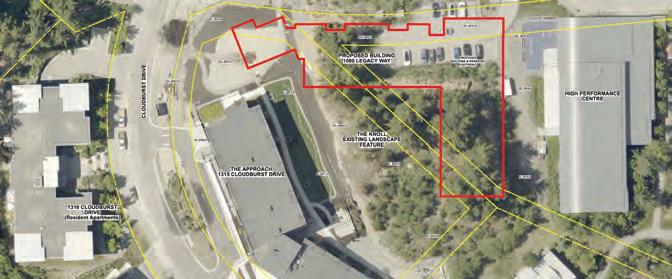
WHISTLER COUNCIL has moved to fast-track a new 110-unit employee housing project in Cheakamus Crossing, advancing key approvals for the Legacy Way development even as a broader shift to allow social and supportive housing remains pending.
At its April 14 meeting, council gave first three readings to a housing agreement tied to the proposed six-storey building at 1100 Legacy Way, part of a Whistler Sport Legacies project that would deliver rental-only, employee-restricted housing on a newly subdivided parcel.
The agreement sets out occupancy rules, tenant eligibility and initial rental rates, while locking the units into employee housing use long-term, according to a staff report.
Rents are proposed to range from $2,100 per month for a studio to $4,200 for a three-bedroom unit, aligning with recent Cheakamus Crossing benchmarks of roughly $4 per square foot.
But the timing of the approval is being informed by external funding pressures.
Speaking to council, acting director of planning Tracy Napier said the developer
is seeking financing through the Canada Mortgage and Housing Corporation and must confirm rental rates to proceed.
“They’re at a critical stage where they must confirm their rental rates to allow the project to move to the next phase of consideration,” Napier said. “If they cannot provide this confirmation, there’s a risk that the project would be delayed or possibly even denied, which would obviously affect the overall viability of the project.”
That urgency led staff to recommend advancing the housing agreement now— even though a key piece of the project
MOTHER’S DA AT
remains unresolved.
Supportive housing still to come
While the Legacy Way development is expected to include a mix of uses, including social or supportive housing, those elements are not yet permitted under current zoning.
“The Housing Agreement Bylaw does not address this proposed use,” staff noted, adding that a future zoning amendment will be required to allow supportive housing on the site.
The newly permitted category includes a range of housing types aimed at more vulnerable residents.
Guests areinvited to create theirowndried bouquettotakehome, alovelyway to mark
am to 2:30pm n e menu, dessert be verage d floral k the occasion
“Social and supportive housing includes housing that may be used for emergency shelter, transitional housing and supportive housing,” an earlier staff report states.
Council signalled its intent to move in that direction later in the meeting, directing staff to bring forward amendments that would enable social and supportive housing both at 1100 Legacy Way and other community land bank sites.
Napier told council the phased approach—locking in the employee housing component first, then revisiting zoning—was necessary to keep the project moving.
“For this reason, Whistler Sport Legacies has requested and staff support advancing the Housing Agreement without the social and supportive uses at this time. Staff suggests that once the [agreement] modification has been registered, [a] zoning amendment could be brought forward [and] a new housing agreement can also be brought forward that would include those uses.”
If approved in full, the development would add 110 rental units to the Cheakamus Crossing neighbourhood, with priority access for Whistler Sport Legacies staff, essential service workers and other local employees. n
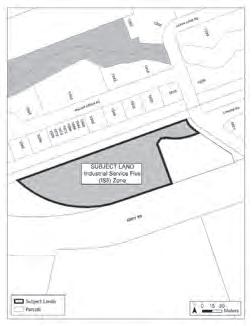
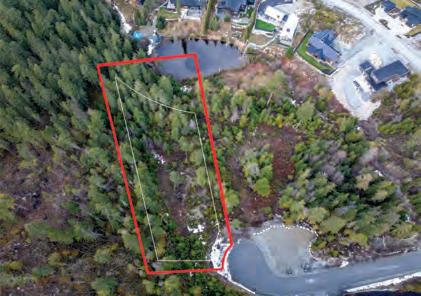
HAVE YOUR FILL The proposed infill parcel (outlined in red) sits between the High Performance Centre and The Approach in Cheakamus Crossing.
IMAGE COURTESY OF THE RESORT MUNICIPALITY OF WHISTLER
Decades-old law firm Race & Company is reborn as Coast Mountain Law LLP
MORE THAN 50 YEARS OLD, THE SEA TO SKY INSTITUTION FINDS NEW LIFE AFTER A MERGER WITH MOUNTAIN LAW CORPORATION
BY STEVEN CHUA
FOR MANY in the Sea to Sky Corridor, Race & Company is the law firm that has been a fixture in the region for as long as some might even remember.
As of April 20, it’s now finding new life as Coast Mountain Law LLP. The rebrand follows last year’s acquisition of Whistler-based Mountain Law Corporation in 2025.
“The re-brand to Coast Mountain Law LLP marks a clear and considered step forward for the firm while acknowledging the firm’s legacy,” reads a news release from Coast Mountain.
“While the name is changing, what the firm does, and how it does it, remains the same. The focus continues to be on providing strong, capable legal advice and representation with the depth and capability of a larger city-based practice, while staying closely connected to the communities it has served for decades. The firm looks forward to continuing to serve new and existing clients with the same values and approach, now under a new name.”
It’s a big development in the long, storied history of the organization.
Back in 1973, Harley Paul started a small law practice in Squamish, sharing office space with Ken Haroldson. In 1978, Douglas Race joined the practice and opened Whistler’s first law practice in Creekside.
When Race and Paul joined forces, the firm became Paul & Company.
In 1983, Roger Stacey joined the firm, and it became Paul, Race & Stacey, before
later reverting to Paul & Race following Stacey’s departure. Upon Nancy Wilhelm-Morden and Dan Moon joining the firm, it became Paul, Race, WilhelmMorden & Moon.
When Harley Paul and Dan Moon left, the firm became Race & Company LLP, which remained for 35 years.
After retiring from practicing law, Race served as a long-time municipal councillor for the District of Squamish.
Mountain Law Corporation also has a long history of being a Sea to Sky institution.
After articling for his father in London, England, David Shrimpton began practicing law in Vancouver in the early 1960s with Messrs. Boucher & Sauer.
His son, Peter Shrimpton, joined the firm in 1987, then extended the practice into Whistler in 1993.
Operating as Mountain Law Corporation, the firm expanded through the acquisition of the Ted Ralfe, Q.C. Function Junction Law Office in 1998, followed by the purchase of David Sweetzir’s notary practice in 2003.
The elder Shrimpton retired in 2008 at age 80 and was honoured by the Law Society of British Columbia for more than 50 years of legal service. Peter retired in July 2023 after over 35 years of practice.
“This re-brand represents legacy, continuity and evolution: acknowledgement to lawyers who built the firm’s reputation, continuity of trusted legal service and community involvement, and evolution toward a modern, regionally recognized law firm delivering sophisticated legal expertise,” the news release said. n
SEA CHANGE Race & Co. is rebranding itself as Coast Mountain Law following an acquisition last year. IMAGE
Kitchen fires on the rise in Whistler prompt safety warning from fire chief
THIS
YEAR’S FOUR INCIDENTS ARE
BY LUKE FAULKS
A RECENT SPIKE in kitchen fires in Whistler has prompted the municipality’s fire chief to urge residents to rethink everyday habits in the kitchen, while the Resort Municipality of Whistler rolls out a new online hub for fire safety guidance.
Whistler Fire Rescue Service chief
Thomas Doherty said crews have already responded to four stove-related fires in 2026—half of the eight recorded in all of 2025—many of them caused by items left on stovetops and burners accidentally turned on.
“We’ve definitely noticed the number of fires that have been started by somebody bumping the stove control knobs,” Doherty explained. “This year, this has resulted in significant damage in the kitchen, including smoke damage and fire damage to the cabinets above, [and] some microwaves that were damaged.
No injuries have been reported with the incidents so far, Doherty added, “but it does impact not just the unit itself. It could affect units below as well, or adjacent units.”
In several cases, combustible materials—particularly pizza boxes—
LINKED
TO
ACCIDENTAL STOVE ACTIVATION AND COMBUSTIBLES LEFT ON BURNERS
were left on stovetops and ignited after controls were accidentally activated.
Doherty said the incidents this year involved front-facing stove knobs, which are easier to bump.
“It can fluctuate, but obviously with people being preoccupied, distracted, they’re putting combustibles on there,”
The chief also warned that even minor mistakes—like turning on the wrong burner—can quickly escalate.
“They may have, you know, like a tea towel on one burner, but they inadvertently turn the wrong burner on,” he said. “While they’re waiting, the towel has caught on fire.”
“Obviously never leave the kitchen unattended when you’re cooking. That’s No. 1.”
- THOMAS DOHERTY
he said.
Doherty emphasized distraction is a major contributing factor, pointing to everyday habits like using phones while cooking or leaving kitchens unattended.
“Obviously never leave the kitchen unattended when you’re cooking. That’s No. 1,” he said. “Just be cognizant of keeping those combustibles away from the stove.
“We see it all the time. It’s not counter space,” he added.
MUNI LAUNCHES FIRE SAFETY PAGE
Alongside the public warning, the Resort Municipality of Whistler has launched a new fire safety webpage consolidating prevention tips and inspection guidance for residents and businesses.
“We developed a guideline for each occupancy type; residential properties, industrial properties, schools,” Doherty said.
The resource includes a home safety checklist and targeted advice on common
risks, including cooking, electrical systems and smoke alarms.
“Homeowners are encouraged to complete a self-assessed Home Safety Inspection at least once a year to make sure your home is protected against fire,” the guide states. “Keep a fire extinguisher in an accessible location… practice fire drills with your family on a regular basis… [and] have an escape plan so that all members of the family know how to get out of the house quickly and safely.”
The page also highlights kitchenspecific precautions, including keeping flammable items away from stovetops, ensuring someone is present while cooking, and keeping a lid nearby to smother pan fires.
“Or if they want to have an inspection, they can request one, and we can come out and give them some pointers,” Doherty added. Inspections can be arranged by contacting the Whistler Fire Rescue Service at 604-935-8260.
With kitchen fires on track to outpace last year’s numbers, Doherty said the message is simple: stay attentive, keep surfaces clear, and treat stovetops as potential ignition sources rather than storage space.
Read more at whistler.ca/ fireprevention. n
Naturespeak: Seven volcanoes and a barrier—the story of Garibaldi Lake
BY CHLOE VAN LOON
LIVING IN the Sea to Sky corridor means being constantly confronted by a landscape of superlatives. Between the towering peaks and glacial lakes, the region’s dramatic geology is effectively “smacking” us in the face while on Highway 99 and on our trails. But it is easy to overlook the powerful forces—sometimes glacial and slow, other times volcanic and violent—taking place beneath our skis and boots. We are fortunate to live in a community blessed with dedicated geoscientists who continue to translate these ancient stories for us. In recent years, the Whistler Naturalists have shared the voices of experts like Steven Carney, Bill Tupper, Karl Ricker, Jack Souther, and Steve Quane. We’d like to welcome back another distinguished voice to help us decode the geologic mysteries of our favourite viewpoints.
Dr. Bob Turner is a longtime resident of Nexw’lélexw’em/Bowen Island, its former mayor, a retired federal geoscientist, and author of several books on the geology of the Vancouver and Sea to Sky region. He is also a filmmaker with more than 50 short movies about wildlife and wild places around the Salish Sea that are posted on his Bob Turner YouTube
channel and website (oursalishsea.ca). Additionally, he was part of the team that achieved a UNESCO Biosphere Region designation for Átl’ka7tsem/Howe Sound in 2021 and currently leads the Bowen Island Conservancy’s biodiversity conservation initiative.
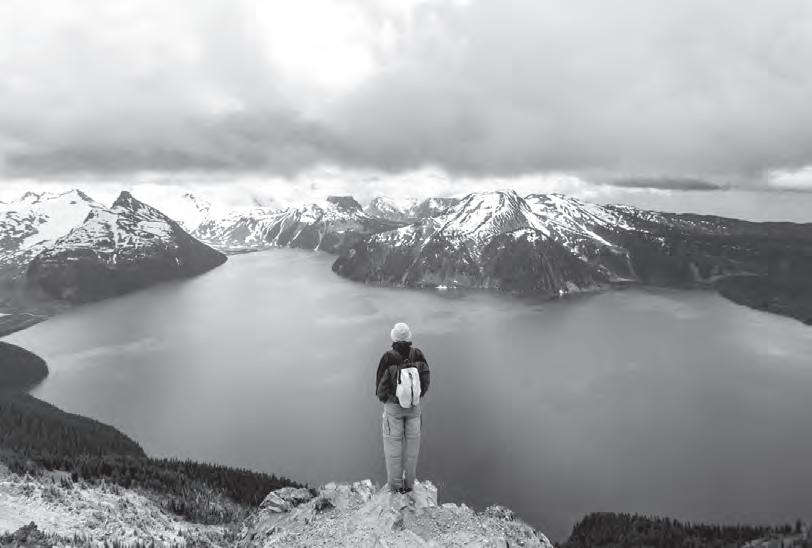
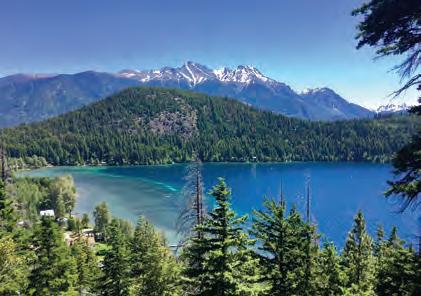
In Bob’s own words: “Garibaldi Lake is magical. For a century, hikers have been drawn by its stunning colour, by the alpine meadows that surround it, and by the views from the ridges that rise above it. Other than Garibaldi Lake
itself, Panorama Ridge is the leading destination in the park, for good reason. Not only does it have gorgeous views, but embedded in those scenic landscapes are a host of geological stories that have no equal anywhere else in Canada.
“To start, you stand amid Canada’s most famous volcanic field, surrounded by seven volcanoes large and small. These include giant N’chay/Mt Garibaldi, the enigmatic and flat-topped Table, and Clinker Peak, source of the lava flow that dams Garibaldi Lake. In addition,
from the ridge you can visualize the retreat of three separate glaciers over the past century and a half; from trimlines that mark their maximum advance, to moraine ridges and rubble fields that follow their collapse. As well, there are other puzzles.”
“On the hike up to the lake, what formed that great wall called The Barrier? What creates the lake’s gorgeous turquoise colour? Why is the lake so deep?—deeper in fact than most parts of Howe Sound. Why are some nearby ridges craggy and accessible only to climbers yet others like Panorama Ridge are soft-topped and easy walking for hikers? So there is lots to talk about!”
If learning more about the Garibaldi Lake and the surrounding area intrigues you, Bob will be giving a talk titled “When Mountains Talk: The Geological Intrigues of the Garibaldi Lake area” on May 14 in the Millar Room at the Myrtle Philip Community Centre from 7 to 8:30 p.m. The Whistler Naturalists will hold a short AGM prior to the event from 6:30 to 6:45 p.m. Tickets for the talk will be available at whistlernaturalists.ca or at the door for $10 for adults and $5 for under 18.
Naturespeak is prepared by the Whistler Naturalists. To learn more about Whistler’s natural world, go to whistlernaturalists.ca. n
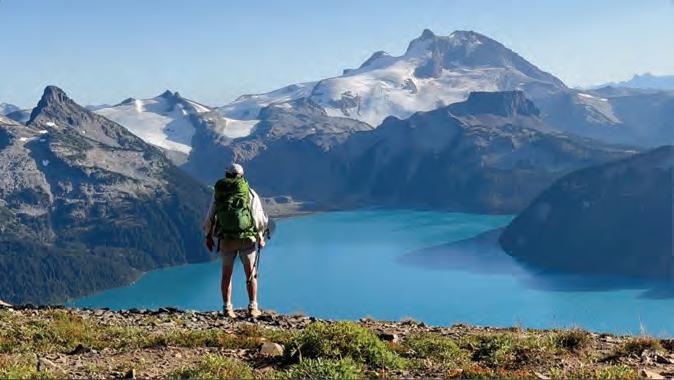
PURE MAGIC The view of Garibaldi Lake from Panorama Ridge.
PHOTO BY BOB TURNER
Stewardship Pemberton Society celebrates 20 years
THE ENVIRONMENTAL AND FOOD SECURITY CHARITY IS HOSTING A SILENT AUCTION UNTIL MAY 3 TO SUPPORT ITS WORK
BY HILARY ANGUS
THE STEWARDSHIP Pemberton Society (SPS) is marking its 20th anniversary this year
The environmental and food security organization has seen a significant uptick in programming over the past few years, with initiatives ranging from community gardens to a seed library to streamkeepers water-quality monitoring and youth field trips.
“We can see little pieces of Stewardship Pemberton across the whole community here,” said Nikki Lax, Stewardship Pemberton’s food security coordinator. “It’s been really exciting to see how many folks are engaging with all the programs that we run now.”
The organization was founded in 2006 by Dawn Johnson and Veronica
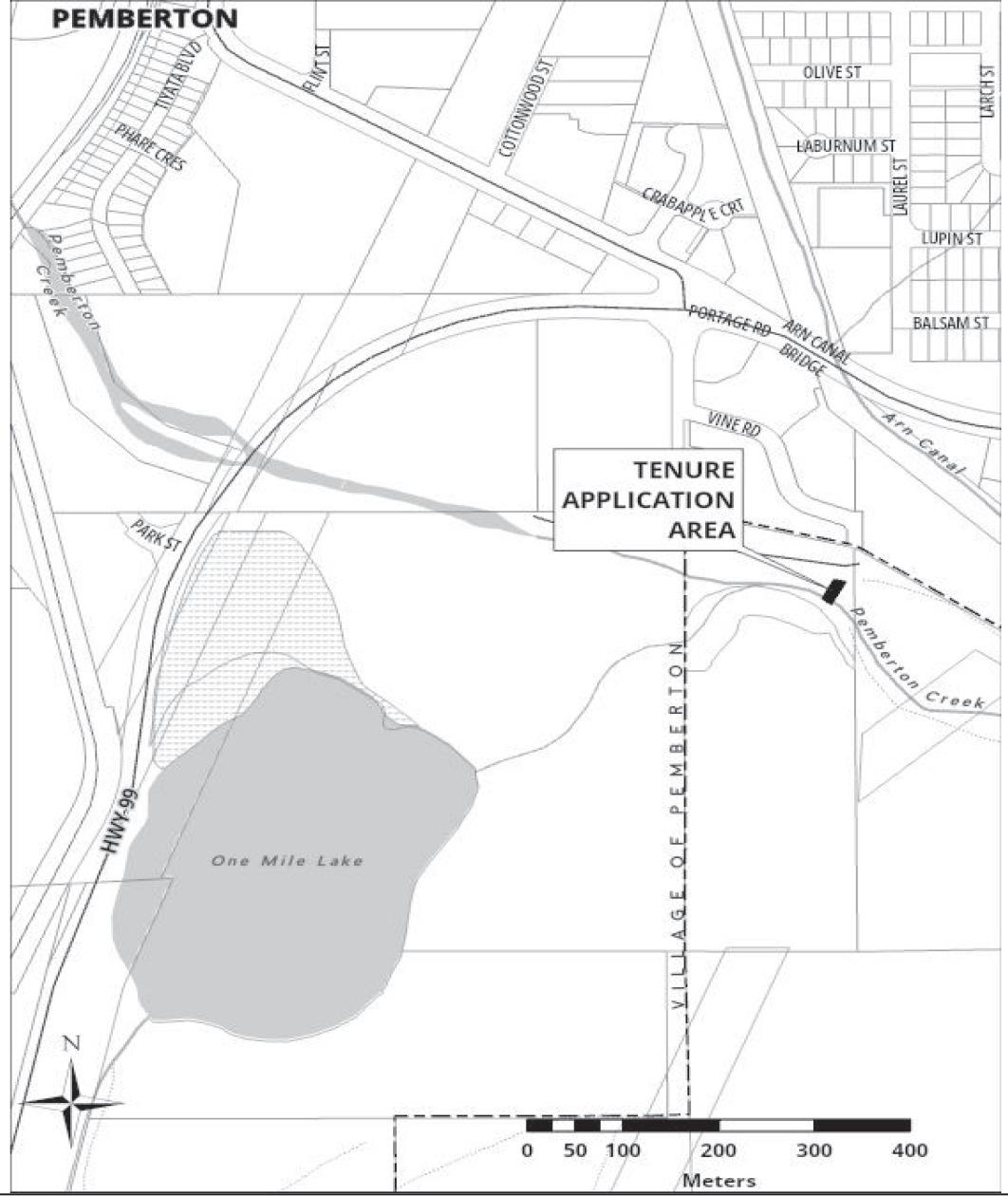
Woodruff with the initial goal of building a local nature centre, which ultimately led to the construction of the One Mile Lake Nature Centre in 2011.
In the decades since, the organization has grown to include a diverse range of programs in both the environmental and food-security spaces, enabling residents of Pemberton and the surrounding communities to build connections while engaging with the local ecosystem and food system.
This year, the organization is celebrating the opening of a new 80-bed community garden at the Multimodal Transport Hub, which builds on the success of its Pemberton Creek community garden.
Local residents can apply to manage a plot for $80 per year, or $50 plus four hours of garden volunteering.
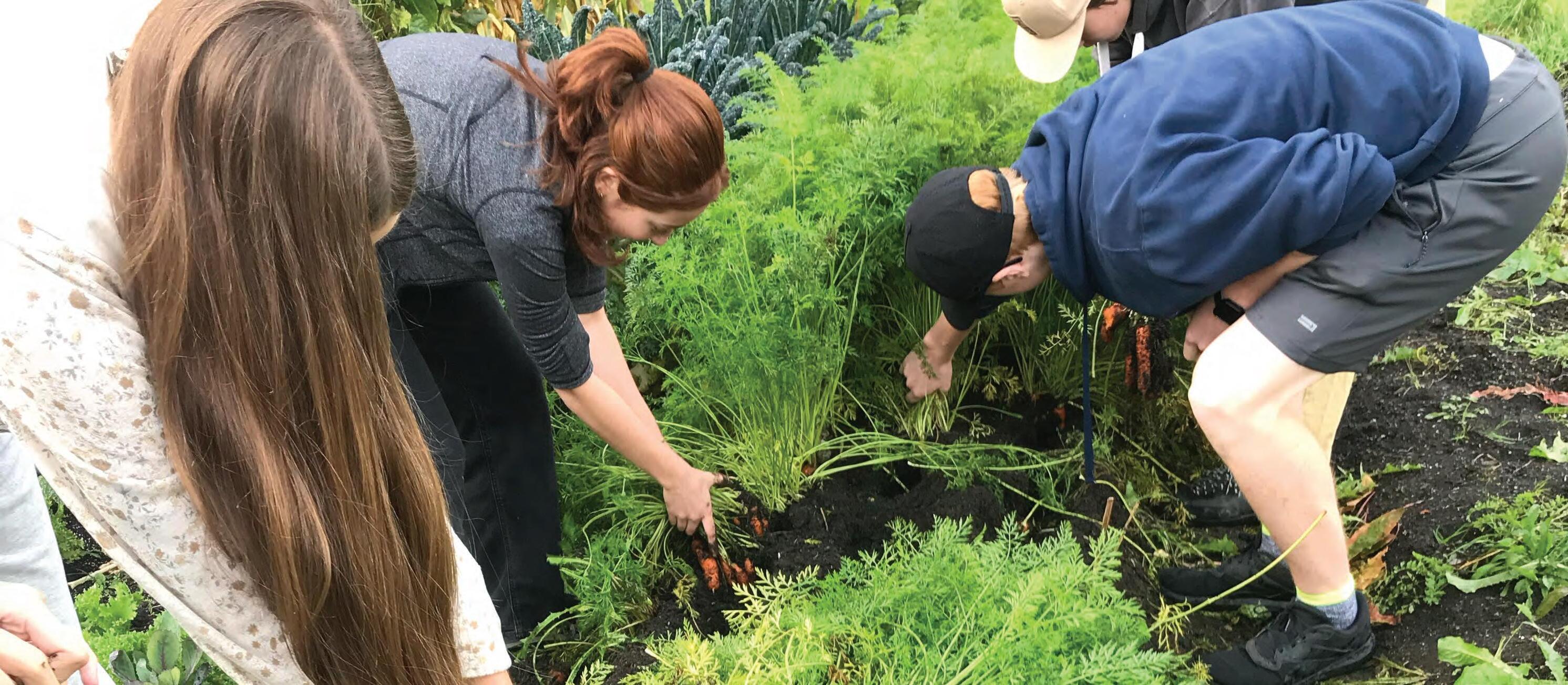
The society is also setting aside a few plots to act as learning gardens for those who are new to gardening and seeking mentorship.
SPS food-security initiatives, including its community gardens, farm-produce rescue program, and fruit-tree rescue program, were responsible for the donation of more than 17,000 lbs of produce to several Sea to Sky food banks in 2025.
“It’s an agricultural community, but it’s also growing really rapidly,” Lax said. “There’s also a lot of inequity as well in the community here, and I think there’s a lot of food insecurity, so it’s important that we’re doing the work to bring more food security.”
Elizabeth Tracy, the Village of Pemberton’s chief administrative officer, said collaboration with the Stewardship Pemberton Society on the community gardens is a meaningful part of how Pemberton continues to develop a healthy, connected, and resilient community.
“They promote food security by creating opportunities for residents to access fresh, locally grown food while fostering shared spaces where people can gather, learn, and build relationships,” Tracy said in an email.
“As the Stewardship Pemberton Society marks its 20th anniversary, we extend our appreciation for their ongoing collaboration, leadership and contributions to environmental stewardship in Pemberton. Their work continues to make a meaningful difference in the community, and we congratulate them on this milestone and look forward to their continued impact
in the years ahead.”
In addition to its food security programs, Lax said the SPS is also excited about the success of its youth field trips from the One Mile Lake Nature Centre, and its partnership with The Woods Outdoor Learning Program to bring back summer Nature Camps from the Centre.
Sara Bartlett, Stewardship Pemberton’s interim executive director, said the various initiatives the organization runs draw volunteers ranging in age from 10 to 80, from all walks of life.
In 2025, their programs and workshops drew more than 1,500 volunteers across 18 events and hundreds of volunteer hours.
“It’s been great to see folks come together, and we get a lot of great feedback that people enjoy that there’s opportunities to get out and meet other people in the community,” Bartlett said.
The Stewardship Pemberton Society has recently extended the date of its 20th-anniversary online silent auction until May 3. Find it online at stewardshippembertonsociety.com/ events/20th-anniversary-online-silentauction. n
We’ve got
Pick up the latest issue of
PHOTO COURTESY OF THE STEWARDSHIP PEMBERTON SOCIETY
InWhistler,risingcostsareleaving toomanyhouseholdsstrugglingtoput foodonthetable.When rent ,bills,andrising foodcostsleave cupboardsempty,theWhistler FoodBankhelpsensurepeople stillhaveaccess to healthy, nutritiousmeals. Your donation todayhelps keepshelvesstocked,meals ontables,andsupportwithinreach forthosewhoneed it most. Want
The Spy Who Gloved Me
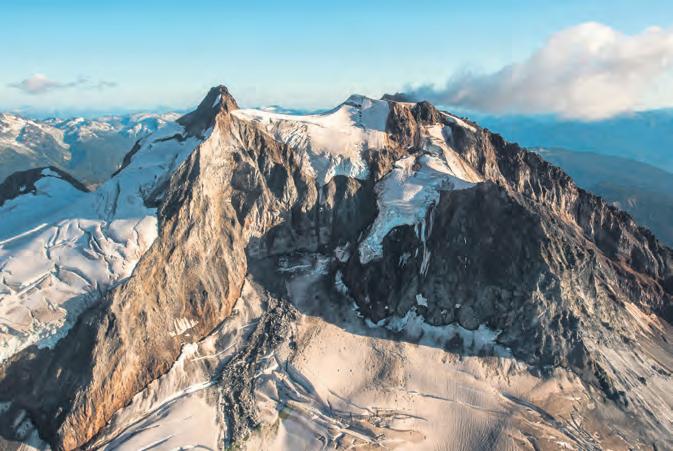
MÜRREN, SWITZERLAND’S Schilthorn has long been celebrated for its part in the beloved 1969 James Bond film On Her Majesty’s Secret Service. Indeed, the iconic film helped bankroll the Piz Gloria and its revolving restaurant that now sits atop the mountain, a structure that
BY LESLIE ANTHONY
eventually hosted a much-visited Bond World Museum and famous James Bond Sunday brunch. But horror of horrors! Last year, Jeff Bezos’ production company Amazon MGM acquired rights to the Bond brand, parting ways with the creative team that had protected it for decades and jacking the licensing fee to heights the Mürren-Schilthorn ski area declined to scale, choosing to relinquish its historic connection rather than bend to a supervillain broligarch.
The lift company pivoted the museum it spent millions on in 2019 for a 50th-anniversary renovation by renaming it Spy World and scrubbing Bond-related collateral—like the eponymous cinema and 007 Walk of Fame. In spring 2025, I was one of the
last to enjoy the famous brunch, already being served on new dishware absent the 007 logo (still, I wrangled a brightpink “Schilthorn Piz Gloria James Bond Brunch” sticker/ticket Nr. 197592 that’s now likely an eBay-worthy souvenir). Future Bondies making pilgrimage to the location of this infamous sixth Bond film will have to be satisfied with a more muted experience.
Given this watershed—and since Piz Gloria is part of Switzerland’s summer hiking scene as well—it’s worth recalling how it all came together.
It all started when location scout Hubert Fröhlich was tasked with finding a suitably dramatic mountain location.
A hotel concierge in Grindelwald, below the Eiger, showed him a photo of the cross-valley Schilthorn and it was game on. The cableway company loved the idea and immediately gave it the go-ahead; ditto film producers Albert R. Broccoli, Harry Saltzman, Eon Productions and director Peter Hunt. The project would play a pivotal role in construction and completion of both the cableway and Piz Gloria—ostensible headquarters of Bond’s arch-nemesis Count Blofeld and his secret organization, Spectre— propelling Mürren into the global spotlight overnight.
By the time shooting started in late October, 1968, Piz Gloria resembled the lobby of a luxury hotel, with wooden ceilings and floors covered in wall-towall orange carpet (I mean, it was the ’60s). The film financed the interior fixtures and fittings, which eventually passed into the cableway’s ownership;
for its part, the cableway transported people and equipment for free. In the meantime, producers also built a heliport to create the impression the building was large enough to accommodate the characters that supposedly occupied it (Blofeld, Irma Blunt, Angels of Death etc.). Because the cableway was meant to look as if it were Blofeld’s own private lift, the cabins were painted in his theme orange, irking local conservationists. The colour was eventually approved because it added to local aviation safety.
Meanwhile, the head cinematographer was demanding at least 2,000 amps of direct current, requiring an additional power station be built on the Schilthorn–with the help of a BBC contact savvy in the rental of generators and motors to run them.
Vast quantities of material had also arrived at the lift base in Stechelberg, including some 25 tonnes of lighting gear, 30 costumes cases, make-up supplies, wigs, hairdryer hoods as well as stationary and office equipment like typewriters and photocopy machines; 50 additional crates contained window filters and props like weapons and décor. The costume, make-up and publicity departments were based at the Palace Hotel. Newly renovated, I stayed at the venerable property in 2025 and imagined the mayhem of those days, when the film’s production office was squeezed behind the front desk and the basement turned into a storage facility for furnishings, ropes, pulleys and tools.
The presence of the army-like film crew changed Mürren forever. For
instance, the concept of a breakfast buffet had been previously entirely unknown; just days into the occupation and every establishment in town had to have one. Unconstrained by fixed licensing hours, hotels rarely offered dinner before 9 p.m. and some even began serving unheard of delicacies like oysters and lobster. Townies who didn’t know who or what Jack Daniels was soon learned; draught beer on tap appeared for the first time in Mürren at Hotel Edelweiss. And hotels hired live music to perform during what they’d dubbed a “third tourism season.”
Other things were also going on—a car race in which Bond flees from Blofeld’s henchmen was staged on the outskirts of Lauterbrunnen, where an area of snow was levelled, rolled and watered to create a sheet of ice with a 300-metre oval, 1.4-metre-high boarding and a 600-seat grandstand (although some 1,500 spectators were brought in by Swiss postal bus). The race proved as exciting as scripted: by the end, nine Ford Escorts, a Cougar and two Mercedes had been completely destroyed.
There were also bobsled and avalanche scenes to film, and anybody in town with any expertise got in on helping make these happen. After seven months of filming, the circus up and left, but the vibe has lived on in a form of a kind of transformation, pride and vibe that even the greed of Bezos and company will never shake loose.
Leslie Anthony is a Whistler-based author, editor, biologist and bon vivant who has never met a mountain he didn’t like. n
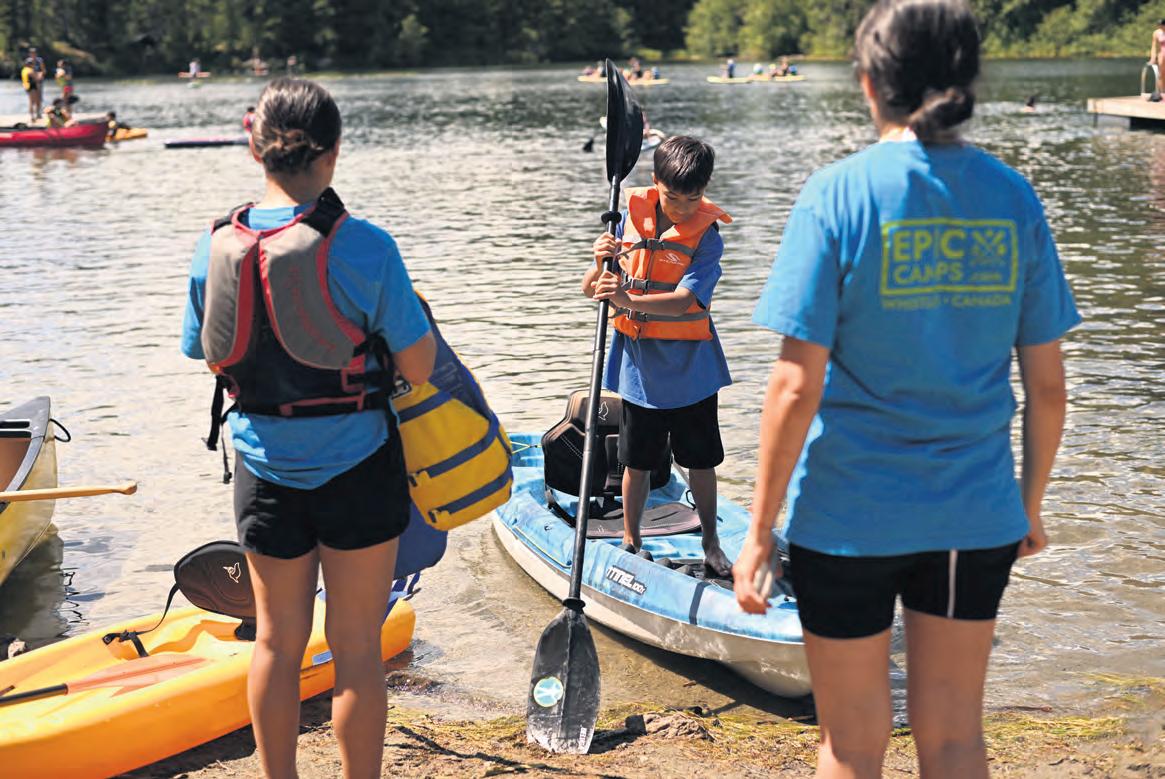
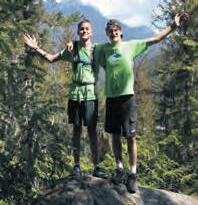
3 SURPRISING BENEFITS OF SUMMER CAMPS
Summer camp is much more than a chance for children to spend a week—or several—away from home. It can be a transformative experience for your child. Have you considered enrolling your little one in a summer getaway? Here are some of the benefits holiday camps offer young people.
1. IMPROVED SOCIAL SKILLS
A little time away from the family environment gives children a chance to meet new people and make friends. They can develop their ability to communicate with others, which will serve them well as they build fulfilling relationships throughout their lives.
2. EMOTIONAL SELF-REGULATION
When a child is removed from their daily routine, they become more aware of how their actions affect other people. By learning to express feelings of disappointment or frustration without resorting to acting out or insulting others, they can improve their ability to manage their emotions in healthy ways.
The advantage is twofold: your child learns to express difficult emotions effectively, and they also gain an appreciation for positive interactions. Parents often observe increased enthusiasm and sociability in their children after they return home from camp.
3. HEALTHY INDEPENDENCE
Your child can increase their selfworth from the sense of satisfaction they feel after participating in activities or facing new challenges outside of home or school. Their improved selfesteem can help them feel more selfsufficient, which may prove useful when they shift into postsecondary studies or move away from home.
In short, summer camp can truly help your child move more confidently through the world. Explore the options available to you!
Newspaper Toolbox
Summer Camp
By Caroline Egan
It’s four-something a.m. and you’ve just stumbled home after another post-Moe Joe’s Sunday afterparty led you astray. You’re disorientated with sweaty streaks of neon paint dripping onto your smashed phone, but you’re safe. You then pass out on your couch because you can’t possibly make it any further without disturbing your 14 other roommates who all work ski school in a few hours.
REST AT LAST…
…until a not-so-gentle tap at the door suddenly wakes you. It’s the fire department. They say a wildfire is blazing towards town and you need to evacuate ASAP. Grab what you need and GO.
This is just one of the likely scenarios Whistlerites have to consider when living here. Sure, we all know how to survive a night of underground antics. But are you really prepared to escape a night like this one?
Are you actually ready to leave?
Don’t fret. Thankfully the Resort Municipality of Whistler (RMOW) and Whistler businesses think about these issues lot. The mayor of Whistler, Jack Crompton, emphasizes how top of mind it is.
“We’ve been particularly occupied with wildfires over the past few years. We have an extremely robust wildfire defence plan, and we are implementing many of the recommendations in it increasingly so,” Crompton says. “Being prepared for that is the No. 1 priority to get it right.”
There’s a few strategies the RMOW has in place. One includes how the municipality will respond locally, while another focuses on a multimodal evacuation plan throughout the Sea to Sky. Although these two strategies were created separate from each other, it is hard to keep it that way.
In 2024, the average daily population of Whistler— including residents and visitors—was just above 40,000 people, all entering and leaving town through one narrow highway. Add Pemberton and Squamish to that highway congestion and you’re looking at an extra 28,000 people, not including any tourists visiting those areas.
natural disaster) is happening. If it’s north, then evacuate south and vice versa. In theory. Most of the hotel’s guests come by bus, says Weir. If a fire happens north then chartered buses from the south some up to collect them. But that only works one way. “So there’s [currently] no system in place for the buses to come up to collect them to bring them down,” he says. “If it’s coming from the south, there’s definitely no way
ONE ROAD
REVISITING WHISTLER’S
It’s impossible to predict the exact number on any given day, but we do know summer weekends will be busier than most. Warmer weather means more people can visit Whistler’s parks and vast backcountry spaces. July and August see some of the highest volumes of tourism. It’s also when wildfires happen more often.
Crompton knows it’s about more than the municipality’s response. “We’ve been in discussion with the hotel sector, BC Transit, Vail Resorts and others, to ensure that we can mobilize their vehicles during an evacuation,” he says.
“Recently, [we] established an agreement with the West Coast Express which, if required, could shuttle up to 3,000 people per train.”
But there’s more to consider than just population numbers. You also need to guess how long it will take to evacuate.
ONE HIGHWAY, TENS OF THOUSANDS OF PEOPLE
The Crystal Lodge’s director of operations, Andrew Weir, has that extra insight.
“We had a previous front office manager who [lived in] Jasper [during] the fires, who presented us with the complications they had there, where they had four ways in and out of their town,” says Weir. “Every speed of which [we] think we can evacuate, she disagreed with it completely.”
Weir recalls then learning police officers stopped to check each car before they were allowed to leave Jasper. They were checking to see if people had enough food, water and other relevant supplies. Rest assured, the Crystal is planning to let you raid its
Originally Weir thought 5,000 cars could be evacuated from Whistler every two hours. Now he says it’s likely three times that time. “So that’s what we’re working
In the case of the hotel, the response can vary depending on where along the highway
FEATURE STORY
to be prepared. While the local governments do have procedures in place for no-notice evacuations, there’s very little wiggle room in terms of time.
Now let’s take that 40,000 population equivalent and make a rough estimate. Say each of the aforementioned 5,000 cars carries three passengers leaving enough space for supplies and possible pets. Now we’ve got 15,000 people evacuating every six hours. Not bad, in theory. It could still take an entire weekend to get everyone out when you consider variables: not everyone may leave at the start of an alert, not everyone is within service to know right away, organizing mass groups of people who speak different languages takes more time, etc.
It’s also worth noting the population average might increase during a summer weekend, especially a long weekend. With advanced notice there’s some time to work through arising issues. When you’ve got a no-notice evacuation you have to get up and
Do you have enough supplies to actually leave? Do you have a car or is yours still getting fixed at the shop? Is there enough gas in it? What if all those buses can’t get to me in time? (You bike or walk, FYI). You know it takes about 15 to 18 hours to evacuate the town in better circumstances. How long is it going to take if people need to walk?
YOU CAN PLAN ALL YOU WANT
“You can plan as much as you want,” adds Weir. He says you can’t really know how things will go down until it happens. Although being prepared can help provide the best outcomes.
Crompton mentions evacuation plans are reviewed and practiced quarterly. The RMOW works through potential scenarios and tests its Emergency Operations Centre.
“But within that whole process of managing an Emergency Operations Centre, one of the most important tasks is communication,” he notes. “The communications lead is very much occupied by how we communicate with the public.”
Whistler resident, Joe Tottle, wishes he knew more about this. Having previously lived in Australia he’s no stranger to wildfires, but is still learning what they mean while living here. “I didn’t really expect how bad [they] would get,” Tottle says.
Tottle works at one of the retail shops in town. When asked what his plan is for an evacuation he says he will listen to authorities but doesn’t know how to be prepared for one. He says he didn’t realize it’s not as simple as driving out of town.
After asking if he’d like to see his employer include it in work orientations—which is what the Crystal Lodge does—he says “I think it’d be probably worth [it at] the start of the summer.”
When the smoke finally arrived last September he was surprised to see how serious even fires from outside of
While there are a lot of concerned groups working to keep the town safe, there’s still gaps in communication and preparedness within the community. Whistler is known for having transient residents; it’s easy for things to slip through the gaps. n
Mount Currie’s Holly Watkinson reflects on the growth of basketball among Lil’wat youth
SIXTY-TWO LIL’WAT NATION PLAYERS WENT TO THE JUNIOR ALL NATIVE BASKETBALL TOURNAMENT IN MARCH
BY DAVID SONG
WHEN HOLLY WATKINSON moved to Mount Currie with her daughter Aria Alec in 2021, the community was only sending one U17 boys team to the annual Junior All Native Basketball Tournament (JANT). The sport has grown in popularity since then, as evidenced by this March when the Lil’wat Nation gathered its largestever delegation.
A press release explains JANT was founded half a century ago on “the belief that sport could be a vehicle for Indigenous youth to discover their potential, strengthen cultural identity and build connections that last a lifetime.”
Sixty-two local athletes participated across six rosters: two U10 co-ed teams,
U13 squads for boys and girls, a U17 boys’ group and four U17 girls competing as part of a multi-nation roster.
None of it would be possible without volunteers like Watkinson, who coaches Alec’s U13 team. She and other community members give their time to organize practices, lead fundraising efforts, coordinate logistics and more.
Watkinson’s reasons for showing up are personal.
“Last year, just before basketball season started, we were actually having a birthday party and three of [Aria’s] friends had run away from home … and put a big alert on parents,” she said. “Being a mother, I really buckled down on trying to find a sport for my daughter. I pushed trying to find something so that my daughter wouldn’t be one of those one girls to run away.
“Being such a small community, I was scared she was going to make those choices, but the mother part of me had to come out and try to tell her why
people run away—sometimes home isn’t a good place for them.”
As Aria developed a fledgling interest in basketball, Watkinson got involved. She helped fellow Mount Currie resident Neil Pierre mentor a U10 co-ed squad at JANT 2025, which led to her coaching at this spring’s edition of the tournament.
‘THEY GAVE THEIR ALL’
More than 1,200 youth from 100-plus Indigenous communities across British Columbia headed to the Langley Events Centre (home of the Vancouver Bandits pro basketball club) for JANT 2026. Mount Currie’s U13s won one out of three round robin games in the girls’ silver division, where the Maaqtusiis Suns eventually prevailed.
“The girls did amazing … very exciting because we are such a remote community,” recalled Watkinson. “They don’t play on a high school basketball court and were playing on a universitylevel court [at JANT]. So they were exhausted, not used to the length of
the gym, but I was very proud of them because they [made it close] in their last game. I was wowed at how much they gave their all.”
Other teams also showed lots of sportsmanship. An opposing player gave Alec some uplifting words, while another coach assured Watkinson that their team (which qualified for championship play this March) had also experienced the sting of round robin elimination in past years.
Ultimately, Watkinson’s belief in the power of basketball to uplift children is shared by other members of her community. A release elaborates: “For the Lil’wat, [JANT] represents a celebration of culture, community, and of what becomes possible when young people are seen, supported, and given space to thrive. Research consistently shows that youth engaged in team sports are less likely to face the social risks that can too easily derail young Indigenous lives, a reality the coaches and families behind Lil’wat’s program know first-hand.” n
A team of girls’ basketball players from the Lil’wat Nation.
WSSF recap: McMorris and the Powder Hounds win inaugural Powder Puck Classic; Crompton victorious in The Grind snowboard event
SHMOBB REALIZES SECOND CONSECUTIVE INTERSECTION TRIUMPH; PRAIRIE DOGGIN’ JENKEM SUCKERS ON TOP AT 72-HOUR FILMMAKER SHOWDOWN
BY DAVID SONG
EARLIER THIS MONTH, the World Ski and Snowboard Festival (WSSF) concluded its 30th iteration with a bevy of crowd-pleasing sellouts in both the athletic and artistic realms.
New this time around was the April 6 Powder Puck Classic, a charity hockey game pitting a team of snowboarders (the Powder Hounds) against a squad of skiers (the Blackcomb Bombers) at Meadow Park Sports Centre. The Hounds, evidently harnessing the championship pedigree of their captain Mark McMorris, defeated Callum Pettit’s Bombers by a score of 5-2.
Yet the number that matters most is the $10,000 raised in support of the Lil’wat Nation Qwixwla7 (Sliding) Ski and Snowboard Program.
Always proud to be active in the Sea to Sky, McMorris said: “The town of Whistler has always been this holy grail, a place I wanted to reach growing up in Saskatchewan. I’ll never forget my first time here in 2008 and I was just like: ‘OK, this is where I need to be.’ Ten years later, I bought a home here.
“It’s an amazing place to access the backcountry and an amazing place for me to train what I would do at the Olympics so I’m honoured to call Whistler home. I feel really grateful because it is a little bit like a fairy tale land … a dreamy place to hang your hat.”
THE GRIND RETURNS
Elite riding took centre stage at The Grind, the finale of Canada Snowboard’s 2026 cross-country streetstyle tour.
Whistler was represented by Maggie Crompton, who struck gold on April 11 among ladies’ boarders. Adel Talyspayeva grabbed silver and the Tech Trick Award as bronze went to Mia Langridge.
“So much to be thankful for,” Crompton wrote on social media. “I love all my friends. Thank you, snowboarding.”
Dane Menzies, fresh off two topseven results at the Milano Cortina Olympics, won the men’s event and a Tech Trick accolade ahead of runnerup Coltan Eckert and Truth Smith, last year’s champion who placed third. Jackie Carlson and Riley Johnson earned the Showman Awards.
A day earlier, the skiers had their turn with Cody Oldham (younger brother of newly-minted two-time Olympic medallist Megan Oldham) victorious, Alec Henderson and Etienne Geoffroy-Gagnon
rounding out the podium in that order.
Naomi Urness, another Canadian Olympian from Italy, prevailed in the women’s division as Mili Hofmann outperformed Zoe Greze-Kozuki for second, leaving the latter in third. Best Trick honours went to Urness as well as Mathieu Dufresne on the men’s side.
CROSSROADS OF SPORT AND ART
No WSSF would be complete without a pair of beloved multimedia events: Intersection and the 72-Hour Filmmaker Showdown.
Local snowboarding crew Shmobb won its second Intersection in as many years on April 8 with a film named Together, filmed and edited by Caleb Chomlack alongside Zack Murray. The Zone Blowers filled the runner-up hole and Broken Nails received a People’s Choice Award.
“Huge shoutout to all the other crews, what a stacked event!” reads a post on Shmobb’s Instagram page. “Thank you to everyone that supports us, we [expletive] love you and feel so honoured to take
“I’m honoured to call Whistler home ... a dreamy place to hang your hat.”
- MARK MCMORRIS
the W [at the WSSF]. Still recovering … [Chomlack] came up with this idea last summer landscaping with [Murray] and from then the ideas just kept coming. So stoked to see this idea come to life.”
Meanwhile, longtime Sea to Sky resident Kelly McGee and a gang of eight dubbed the Prairie Doggin’ Jenkem Suckers conquered the 72-Hour Showdown on April 7 with their offering “S—ing Your Pants: A Love Story”. Odd Productions Whistler submitted “Killer Breakfast” and earned the People’s Choice Award.
“This year’s festival was a special one for so many reasons,” said Joey Gibbons, owner of Gibbons Whistler, in a press release. “Celebrating the 30th edition with this kind of turnout, energy, and community support was incredibly meaningful. It speaks to the legacy of WSSF, but also to where it can go next.”
STAGE 2 WATER RESTRICTIONS MONTHS BEFORE SUMMER STARTS TELLS US LOADS
OH MY GOODNESS. Isn’t Sea to Sky filled with well-meaning people who treasure the great outdoors—then let the tap run and run till it’s nice and cold for one measly glass of water. Or take a l-o-n-g hot shower every morning just to get going. Whatever that means. Loosening up the old joints? Recovering from too many Night Before joints?
Don’t know about you, but our bedroom window is already cracked open to its summer setting for letting in cool night air. And my neighbour just brought home some lovely new pansies for their patio boxes, but they’re already
normal while Vancouver Island is the worst, at about 60 per cent below normal. The stats change constantly as new air masses and storms blow through, some of them so unexpectedly, but with snowpack levels around the South Coast now hovering from 40 to 60 per cent below normal, and almost all forecasters predicting a lousy hot, dry El Nino-type summer, we all need to think twice—or more—about water.
Especially the gloriously clean, and costly, treated tap water we lucky Canucks usually take for granted.
Not anymore.
most people do like I do, unless we stop ourselves: Flip them on full blast, with nary a second thought, when usually all we need is a dribble, as my dad used to say. Apparently, given our human wrist action and more, it’s easier to turn taps fully on with lever handles versus those old-fashioned, traditional knob types that you had to really screw, and maybe screw again another half turn, to render them wide open. The corollary, of course, was they were also much easier to fiddle for a finer flow.
those male forms purposefully, for in regions where the one in four people on the planet don’t have access to clean water (according to the World Health Organization, that’s more than 2 billion, globally) it’s women and girls, seldom men, who carry it home every day in buckets and huge plastic containers, often carefully balanced on their heads.
BY GLENDA BARTOSH
droopy from heat.
Check it out, folks. It’s still almost two months until summer officially starts, and all bets are on it’s going to be a nasty one. Ergo Stage 2 watering restrictions starting May 1 in many parts of the formerly Wet Coast, including Whistler and Metro Vancouver—a level we haven’t seen since the 2023 heat dome, and way earlier than ever.
Right now, the snowpacks across B.C. that we count on for drinking water in dry summer months are down in most places, but they vary widely. Whistler Blackcomb’s is about 30 per cent below
THIRSTY? With summer fast approaching, it’s worth re-floating the message: fresh water is finite.
WHEN JUST A DRIBBLE WILL DO
Every time I mindlessly turn the lever handle on our taps full blast when I only need a trickle of water to rinse my toothbrush or wash some gunk down the drain, I always remember the words of that thoughtful Whistler builder of custom homes, Bob Deeks.
Head of RDC Fine homes for decades, Bob and I were yakking ages ago about doing the right thing when it comes to the environment when he pointed out that, sure, lever handles are handy, but
Check it out next time you use lever water taps, wherever they are. Your house. Your pal’s condo. Public washrooms. We all tend to whip them open, and let ‘er rip.
I’ve got more theories about this. One is that we love the full-throated sound gushing water makes because it reminds us of a cascading creek or wee waterfall out in the middle of nowhere. Ahh. Back to nature.
I also think the look and sound of all that gushing water makes us feel like we’re really “doing something”—again, whatever that means. Working hard. Accomplishing something. Being lord and master of all we survey, and I use
WATER RESTRICTIONS GALORE
Water restrictions vary throughout Sea to Sky. As mentioned, Whistler is facing Stage 2 restrictions starting May 1, as is Metro Vancouver. On the other hand, Squamish is only facing Stage 1 May 1, while Pemberton has so far posted the usual restrictions as of June 1. For places like Britannia Beach, D’Arcy or Gold Bridge, check with the Squamish-Lillooet Regional District.
In a nutshell, for Whistler Stage 2 means you can water veggies and edibles using any method any day, 7 to 10 a.m. and 8 to 11 p.m. As for lawns, trees, shrubs and flower beds it’s complicated, so best to check guidelines online for the RMOW, or any other jurisdiction. These things can change like the weather. And habits are hard to break, but as Squamish’s website neatly puts it: Fresh water is finite. And the infrastructure to bring it to our taps is costly. n
So picture all this versus how thoughtfully we treat water when we’re heading out to camp or picnic in B.C.’s beautiful backcountry, far from handy water taps, levers or otherwise. We carefully pack in the absolute minimal amount of water needed, since it’s so dang heavy and awkward to carry. Then we carefully pack out all those, hopefully, reusable containers, since we’re all waiting for Whistler to follow the brilliant lead of the District of Tofino—the first jurisdiction in Canada to ban the sale or distribution of singleuse plastic water bottles one litre or smaller. According to CTV, since 2015, more than 60,000 plastic bottles have been picked up on the West Coast beaches of Vancouver Island alone. How many, I wonder, are out there floating around Sea to Sky?
But before we get into the real heat and drought of the coming summer, along with those unprecedented water restrictions, here’s a gardening tip. Maybe try heatand drought-tolerant grasses rather than the usual annuals. Some of them are so feathery and gorgeous you’ll wonder why you didn’t plant them ages ago.
Glenda Bartosh is an award-winning journalist who stopped running the tap when she brushes her teeth ages ago, and now tries to rinse as many dishes as she can with one small cup of water. n
MEADOWPARKSPORTSCENTRE
SWIM • SKATE • SWEAT • SQUASH
OPEN DAILY: 6a.m. to 9 p.m. *some exceptionsapply
F FLEXIBLEREGISTRATION Flex-reg’classeshavea separatefeeand allowyoutoregisterfor classesonthedaysthatfit yourschedule.
R REGISTEREDFITNESS Registeredfitnessclasses haveaseparatefeeanda definedstartandenddate. Pre-registrationisrequired fortheentire setofclasses.
I INCLUDEDFITNESS Theseclassesareincluded withyourpriceofadmission fornoextracharge.
I Functional Strength& Conditioning 6:30-7:30p.m. Julia
THE BOOK REFLECTS ON PREECE’S EXPERIENCES BEING OUTDOORS AFTER SHATTERING HER LEG, AND IS ACCLAIMED BY BIG NAMES LIKE ROBERT BRINGHURST
BY DAVID SONG
BRONWYN PREECE loves hiking.
Unfortunately, she doesn’t possess the ideal build for it. Much the opposite: her bones are less dense than normal because of a rare genetic condition. That’s why her leg failed catastrophically in 2020 during a freak incident where she tried to step off her paddleboard and onto a rock amidst fast-moving currents.
Preece recounts that her lower leg bone fragmented into 20-odd pieces, and that after her first surgery it set at a crooked angle. Two more operations, including a full knee replacement, eventually followed—during which time she refused to be idle. She amazed doctors with her ability to walk any notable distance, let alone through uneven terrain with a pack.
Now the self-identified backcountry poet has published a book about her experiences titled hiking beyond : poems from the trail.
It’s not that Preece consciously elects to express herself in this medium. Despite her many years of working with that art,
she still has no fixed understanding of what a poem is. Poetry is not linear, straightforward nor easily quantifiable— and that’s what makes it a natural vehicle for Preece’s own nuanced story.
“I do quote from a whole bunch of resources … but I can only speak from my own experience and how I relate to these stories on the trail,” she remarks. “I carry the awareness that I am of predominantly settler ancestry walking unceded ancestral lands, and I’m also a solo female. That comes with
‘ACTIVE PROCESSING’
hiking beyond has already received endorsements from some big names, including Robert Bringhurst (a heralded Canadian poet and Order of Canada member with a Lieutenant Governor’s Award for Literary Excellence on his resume), Heather Anderson ( National Geographic’s 2019 Adventurer of the Year) and Christine Reed (herself a writer and long-distance backpacker).
Bringhurst went so far as to say in a
“I live in awe and wonder. I’m a researcher and the histories are what fascinate me.”
- BRONWYN PREECE
all sorts of judgments and everything.
“How do I weave all of these narratives together and how do they hold together in one woman’s experience? It’s me often trying to tease out those things that don’t have straightforward answers, and the trail offers that contemplative space. This book often includes me wrestling with some contradictions: for example, I can embrace the notion of what a national park can stand for, but on the other hand national parks have very, very conflicted paths and horrific stories of deporting Indigenous people, too.”
press release: “Every woman I know who owns a pair of hiking boots will want to read this book. Male hikers and climbers should be equally eager to read it because the not-always-flattering portraits of us and our kind ring true, and because the author has something important to tell us all … by learning and doing: pushing herself hard, testing her limits, while warmly embracing the rocks, the plants and animals, the landforms and watercourses, the unpredictable mountain weather, and the panoply of
human cultures she clearly loves.
“It is a deeply personal project, but by setting an example for herself, she sets one for the rest of us as well.”
Preece is honoured by that calibre of recognition—in fact, on several occasions she’s hiked around Haida Gwaii while reading Bringhurst’s work. She feels her role models are trying to challenge and dissect social norms, not unlike her.
“The words and the way I’ve expressed them … it’s very comparable to sharing my poet’s pace which pirouettes down the trail,” says the local writer. “I live in awe and wonder. I’m a researcher and the histories are what fascinate me. The book is an active processing of mine, not necessarily coming up with fixed answers but diving deeper into more and more questions.”
Regarding the intersection of poems and extreme sport, she adds: “To me, they’re so intimately interwoven. You’re riding an edge, you’re riding an unknown and you’re committed. It’s about flow, focus, intention and passion … being alert and being present. I’ve been an improvisational performer. I’ve got a PhD in performance art and to me, the language is very much the same. It’s kind of ironic to think of slow-moving, [crooked leg] hiking solo as an extreme sport, but what else is it?”
Visit caitlinpress.com/Books/H/hikingbeyond to learn more about hiking beyond. n
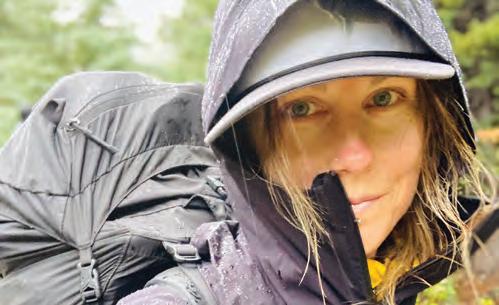
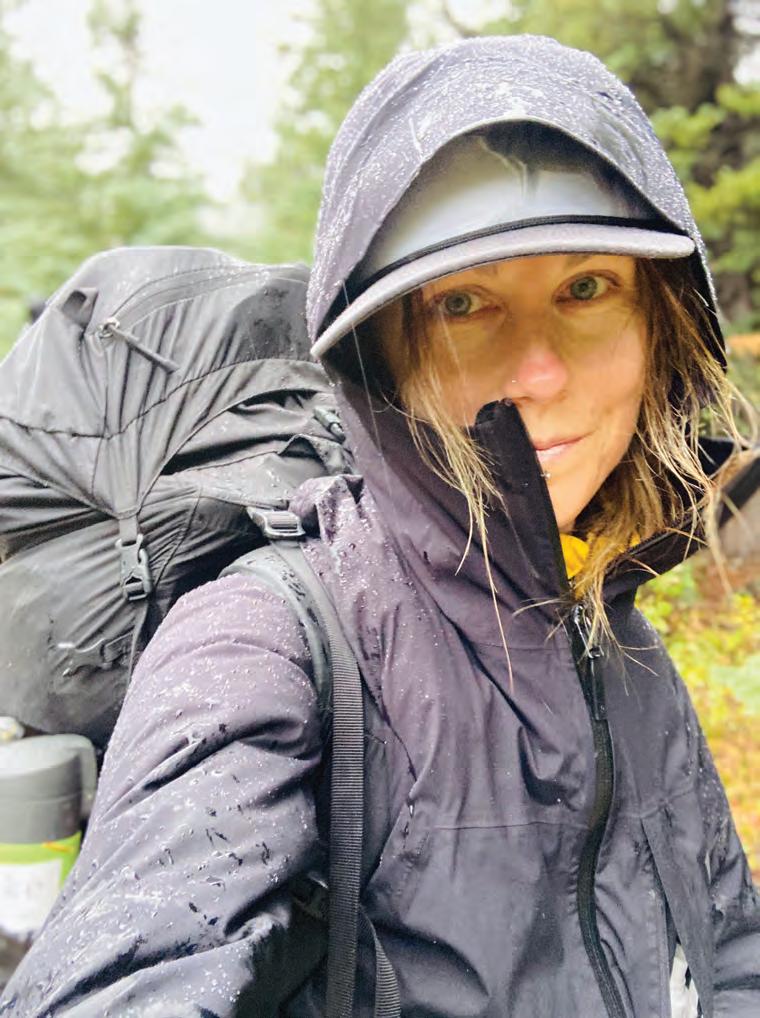
OFF THE BEATEN PATH Sea to Sky poet and hiker Bronwyn Preece.
PHOTO COURTESY OF BRONWYN PREECE
Whistler Secondary School rock fundraiser to feature six local musical acts
THE SHOW WILL RUN ON MAY 1 AT MERLIN’S BAR & GRILL WITH THE ZUMMERS HEADLINING
BY DAVID SONG
IN THE MOOD for some rock music? Want to support Whistler Secondary School’s (WSS) Class of 2026 en route to graduation? Look no further than the Rock for WSS Fun’raiser scheduled for Friday, May 1 at Merlin’s Bar & Grill.
Half a dozen bands comprising 23 artists are on tap to perform, headlined by The Zummers. This Pembertonian rock band led by Tom Csima released its first full-length album, Distracted, in mid-April and has grown steadily in popularity over the last couple of years.
Other acts include Mom Jeans, ABC, El Camino Rust and Papa Josh Trio, with DJ Foxy Moron spinning the turntables in between sets. WSS student Jaxon Mishaw, a singer, drummer and guitarist, is also part of the lineup.
“It’s amazing for young talent to be able to perform in Whistler and share a stage with professional musicians and showcase their talent to their peers,” says Shauna Hardy, a member of the WSS Parent Advisory Committee (PAC) who organized the show. “Jaxon has been playing music since he was eight. He took the Papa Josh Band Camps for five years as well as lessons and band sessions from him.
“He has busked on the Valley Trail, and performed at the Farmers’ Market and Point Artist Run Centre’s Flag Stop Festival, Art on the Lake, and at Alpine Cafe. All of that plus his own practising and dedication has helped him become the talent he is today. I am very proud of him.”
Shaun Kavanaugh and Mike Wilson of Whistler Blackcomb (WB), plus Andrew Bowes of XL Audio Visual, are also supporting Rock for WSS.
‘WE HAVE TO BE PART OF THE VISION FOR OUR COMMUNITY SCHOOLS’
Proceeds from the event will go towards some worthy causes.
The WSS PAC raises more than $90,000 each year from its gaming grant, hot lunch and vending programs, and other initiatives to support programs for 488 kids in Grades 8 to 12: including athletics, field trips, arts and capital equipment purchases. One hundred and nine of these youth will graduate in June, facing various prom expenses that were partially offset by this year’s Grad Fashion Show.
“There are five of us very involved parents leaving the PAC this year: Sarah McCullough, Louis Joncas, James Griffiths, Kevin Creery and me [because] our students are graduating, and we want to leave it in good standing,” Hardy explains. “What many people in the community may not realize is that Sea to
Sky School District 48 (SD48) is a charitable organization. As such, fundraising for WSS or any schools in our district led by parents is critical to improving our public schools, and providing opportunities that otherwise will not be available. We have to be part of the vision for our community schools and commit to making them the best they can be.”
In addition to three decades of event production experience, Hardy has spent eight years volunteering for the PAC where she helped to raise more than $500,000 for projects like the school’s new fitness room and outdoor multipurpose room, resurfacing basketball courts this summer and applying for grants to improve the multipurpose room for theatre productions.
She reached out to as many bands as possible, choosing them based on availability and connection to WSS. Members of Mom Jeans, ABC and El Camino Rust are all raising teens who attend the school, while Papa Josh and his bandmates are parents to school alumni.
Hardy based the format of Rock for WSS on Rock for Big Kev, another charity concert that was held last May to support beloved Whistlerite and diehard music fan Kevin Mikkelsen who is battling multiple sclerosis.
“I am a strong believer in communitybuilding and leaving a place better than you found it,” Hardy remarks. “This show … is guaranteed fun and it’s 100-per-cent community. We are inviting WSS parents, caregivers, alumni and friends to come out to support live music and local talent, and our high school students, enjoy a meal, great company, and buy some raffle tickets for our spirits and experience baskets. It takes a village to raise great humans and we are all in this together.”
Rock for WSS is slated to run on May 1 from 7 p.m. until late, with food service until 9 p.m. All minors in attendance must be accompanied by an adult.
Grab tickets at events.humanitix. com/rock-for-wss. n
SCHOOL HOUSE ROCK Pemberton-based rock band, The Zummers.
“To a person uninstructed in natural history, their forest or lakeside stroll is a walk through a gallery filled with wonderful works of art, nine-tenths of which have their faces turned to the wall.”
-Thomas Henry Huxley
WHISTLER’S LONG-TERM vision is to be a place where nature is protected. To make this a lasting transition, I believe we need both top-down government policy and bottom-up community action.
A joyful part of this journey is learning about the wonderful “works of art” we find in nature.
Research confirms nature education leads to understanding, understanding leads to appreciation, and appreciation leads to stewardship. We’re lucky that Whistler has many opportunities to learn about nature. Here are some recommendations:
RESORT MUNICIPALITYOFWHISTLER
Do youlove riding yourbike?
Do youknow Whistler’s bikingandhikingtrails well?
Do youalready connect withvisitorsontrailsandinparks,giving directions to wherethey want togo?
Turn yourtrailtimeintogoodvibesandbepart ofafun team whileassistingothers!
Enjoybeingoutside,active,and volunteeringin your community.
To applyor receivemore information, contactErinMorgan at ihost@whistler.caor604935-8478
Apply by May25,2026
Interpretive Panels: This municipal initiative fosters a deeper understanding of nature and heritage. Some 170 panels can be found throughout the valley. Many panels are highlighted in selfguided tours—Natural Wonders, History & Heritage, Discover Creekside, Cultural Connector—at whistler.com/self-guidedtours.
Video Guided Nature Tour: This Whistler Museum tour takes place in Lost Lake Park on the walking-only trail that starts at the PassivHaus and follows Blackcomb Creek. The tour has 10 stops and explores the species that call Whistler home (a snowshoe pass is required in winter). whistlermuseum. org/naturewalk.
Monthly Bird Walks: These free walks, hosted by the Whistler Naturalists, are open to anyone interested in learning about birds and contributing as a citizen scientist. Connect with experienced birders who are happy to share their knowledge. whistlernaturalists.ca/ birding.
Interpretive Forest Walk: Offered by
the Squamish Lil’wat Cultural Centre. This seasonal tour is set along the Salish Stroll, the Cultural Centre’s forest trail, and immerses guests in the natural environment while exploring the deep cultural knowledge of the Squamish and Lil’wat Nations. slcc.ca/tours.
Discover Nature: This Whistler Museum free drop-in program runs at Lost Lake Park on weekdays in July and August. Nature interpreters host touch-tables, offering different themes each day of the week to foster deeper connections between people and the natural world. whistlermuseum.org/discovernature.
Whistler NatureKids Club: New in 2025, the Whistler Naturalists have partnered with NatureKids BC to offer free monthly science-based nature outings for families with kids ages five to 12. Email whistler@ naturekidsbc.ca.
Whistler 101 Videos: An online series created by the municipality to inspire a deeper understanding of Whistler. Six episodes highlight biodiversity, geodiversity, Indigenous peoples, history & heritage, climate, and the arts. whistlerlibrary.ca/learn/whistler-101.
Fire & Ice Aspiring GeoRegion: Will eventually contain some 70 geosites stretching from Porteau Cove to Mount Meager. Discover mountain building, glaciation, volcanism, and collapse at fireandicegeoregion.ca.
Naturespeak: These nature articles, written by the Whistler Naturalists, currently appear monthly in Pique. Going back to 1999, hundreds of past articles are available at whistlernaturalists.ca/ naturespeak-articles.
Association of Whistler Area Residents for the Environment (AWARE): Protects Whistler’s natural environment through advocacy on conservation, climate action, and circular economy practices. awarewhistler.org.
Coast to Cascades Grizzly Bear Initiative: Seeks to protect and recover threatened grizzly bears and safeguard their habitat in southwest British Columbia through science-based planning and community involvement. coasttocascades.org. n
PAWS AND REFLECT The Whistler Museum’s Discover Nature program at Lost Lake welcomes you in summer.
PHOTO BY KRISTINA SWERHUN
60 YEARS OF SUMMER SKI CAMPS REUNION
A group of summer ski camp alumni are proud to announce the 60th celebration of summer ski camps on the Whistler Glacier, a milestone reunion honouring six decades of alpine tradition, world-class coaching and lifelong memories forged on snow in the heart of summer. The celebration will bring together old friends and new generations to share stories, reconnect and remember the glaciers that helped shape a community. Friday at 7 p.m., a Speaker Series event at the Whistler Public Library features Wayne Wong, Nancy Greene Raine, Stephanie Sloan, and Skip Taylor. Saturday includes an informal ski day, followed by a 3 p.m. reunion at Creekbread in Whistler Creekside.
> May 1 to 2
> Various locations
ALTA LAKE BIRD WALK
Join the Whistler Naturalists on the first Saturday of the month for a walk to Rainbow Park. Open to anyone interested in learning about birds and contributing as a citizen scientist. Connect with experienced birders who are happy to share their knowledge. More information at whistlernaturalists.ca/birding.
> May 2, 7 a.m.
> Meet at the bottom of Lorimer Road. by the catholic church
PORTRAIT DRAWING WORKSHOP WITH ANGELA MUELLER
This workshop focuses on historical and contemporary portraiture by building a strong foundation, learning how to measure and establish a solid construct. Each phase of the drawing process will be examined in sequence, emphasizing how every layer supports the next. All levels welcome.
PIQUE’S GUIDE TO LOCAL EVENTS & NIGHTLIFE
Here’s a quick look at some events happening in Whistler this week and beyond. FIND MORE LOCAL EVENT LISTINGS (and submit your own for free!) at piquenewsmagazine.com/local-events
ALTA LAKE BIRD WALK
> May 2, 1 to 4 p.m.
> Audain Art Museum
OIL AND ACRYLIC PAINTING WITH LACEY JANE WILBURN
Local artist Lacey Jane is offering a four-week, in-depth painting course covering everything from sketching and grisaille to colour theory, depth, texture, expressive movement, and finishing techniques, with all materials provided. Express your creativity in a group setting and advance your skills in the art of painting.
> May 5, 6 to 9 p.m.
> The Point Artist-Run Centre
Free Will Astrology
ARIES (March 21-April 19): In the 19th century, Aries photographer Eadweard Muybridge (1830-1904) resolved to settle a debate about whether galloping horses ever have all four hooves off the ground. He developed a system to capture rapid sequential images, which ultimately helped lead to the invention of motion pictures. His answer to a narrow technical question opened up an entirely new art form. Moral of the story: Solving a specific problem may create unforeseen revolutions. In the coming weeks, Aries, I invite you to stay alert for how your focused efforts to address one challenge might birth even more significant breakthroughs. Don’t get so fixated on your immediate goal that you miss larger innovations emerging from your work.
TAURUS (April 20-May 20): May is Free Thinking Month for you Tauruses. It’s also Free Feeling, Free Wheeling, and Free Healing Month. Wow! To observe this festive grace period, indulge in any of the following jubilant acts: 1. Declare your independence from anyone who tries to tell you how you should live your life or who you are. 2. Declare independence from your history, especially recollections that dampen your sense of possibility and old self-images that impede your yearning to explore. 3. Declare independence from groupthink and conventional wisdom. 4. Declare independence from your former conceptions of freedom so you’ll be free to arrive at fresh understandings of it.
GEMINI (May 21-June 20): The Navajo practice hózhó means “walking in beauty”: living in balance and harmony with life. But hózhó isn’t a static state you achieve once and possess forever. You must continually restore and reinvent it. I suspect you’re in a phase like that now, Gemini. Too much thinking and not enough feeling? Too much future and not enough present? I recommend you take corrective measures. Start by taking one physical action that grounds you. Have a conversation from the heart instead of the head. Spend an hour not planning
the story to come, but simply loving what’s here right now.
Refresh your hózhó!
CANCER (June 21-July 22): If a honeybee colony becomes too crowded, scout bees search for potential new hive sites. When they return, they perform waggle dances for their colleagues to convey specific information about different locations. Negotiations ensue. Various possibilities are offered and considered through more dancing. Eventually, the swarm collectively makes a choice and heads out to its new home. Your challenge right now, Cancerian, is to be like a scout bee who facilitates your group’s decision-making process. I invite you to carry out a reconnaissance mission and then perform your waggle dances for your people. Make your case with vigour and precision. Trust the group’s emergent wisdom to make the best decision.
LEO (July 23-Aug. 22): Like all of us, Leo, you have persistent aches from old losses, absences, and wounds. They may seem like permanent burdens you will never be able to shake or transcend. But here’s some very good news: In the coming months, there’s a greater chance than usual that you’ll discover new approaches to healing them. The remedies won’t necessarily be logical or obvious. They may involve you conducting rituals, taking symbolic actions, or ambushing the pain from unexpected angles. Be alert for interventions that may seem too simple or unexpected to work.
VIRGO (Aug. 23-Sept. 22): Your restlessness is building. How much longer will you pretend you don’t sense the pull of bright temptations and appealing sanctuaries? At what moment will you finally stop resisting your urge to slip past the usual boundaries and roam? The astrological omens hint that this pivot is close at hand. In the borderlands of your imagination, a daring journey is already taking shape. Where might it carry you? Here’s my guess: down into the raw, unfiltered depths of the future you secretly dream about.
LIBRA (Sept. 23-Oct. 22): In fairy tales, when heroes are
THE HIDDEN JOURNALS AUTHOR READING
Hear from Halikium Wade Baker and Mary Tasi, S’wx’wú7mesh Úxwumixw, as they share insight into the book The Hidden Journals. The authors will reveal stories and narratives about the respectful and high level social, trading and cultural relationships between the British officers and the local Kings, Queens and Siýáms (Chiefs) that are compelling, moving and insightful. The Hidden Journals will forever change how you think about Indigenous people and their history.
> May 6, 3 to 4:30 p.m.
> Squamish Lil’wat Cultural Centre
rewarded for their help and kindness, their gifts are often tools of protection: a cloak that renders them invisible, a magic club that chases off foes, or enchanted shoes that enable them to outrun any threat. In other stories, the reward is meant to deepen the hero’s delight in living: a genie’s lamp, a cauldron that cooks up exquisite food, or a horn that calls forth marvellous companions from the fairy world. I mention this, Libra, because I believe rewards for your past and recent generosity are on their way. If you have any say in what form they take, I suggest you request something from this second, pleasure-giving category.
SCORPIO (Oct. 23-Nov. 21): Poet Marie Howe wrote, “I don’t think we can love anything more intensely than we love a secret.” Many Scorpios feel this way. You understand that mystery is often a joy to be savoured. Some truths reveal themselves only to those who summon the patient intelligence to be at peace amidst the confounding riddles. Non-Scorpios may be desperate to leave nothing hidden, but you like to learn from the teasing prickles. You know that some transformations need darkness to carry on their work. Your next assignment: Decide what truth needs more time in the deep before it’s ready to surface.
SAGITTARIUS (Nov. 22-Dec. 21): Diamond is the hardest natural substance, while graphite is soft and slippery. Yet they’re both made of pure carbon. The difference is in their structure. Let’s extrapolate from this fact as we ruminate on your life, Sagittarius. I’m 97-per-cent certain that you already have everything you need. Maybe you imagine you lack key resources and powers, but from what I can tell, you are well set-up. So I propose that you simply reorganize what’s available to you now. Take the “carbon” of your life and arrange it in new patterns. Your task isn’t further accumulation but reconfiguration.
CAPRICORN (Dec. 22-Jan. 19): My Capricorn grandfather was a master artisan. He told me that the best furniture is
YOGA AT THE AUDAIN
Revel in the stunning architecture as you work through a calming one-hour practice with rotating instructors. Classes emphasize breathing, alignment and ease as you stretch and strengthen your body and mind. Registration includes access to the galleries on the day of the yoga session from 11 a.m. to 6 p.m. Bring your mat (or borrow one from the AAM) and enjoy some mind and body wellness!
> May 7, 9:30 to 10:30 a.m.
> Audain Art Museum
LIFE DRAWING AT BLACK OHM TATTOOS
Draw a live nude model, uninstructed, every Friday from 7 to 9 p.m. at Black Ohm Tattoos.
Models pose in one-, two-, five-, 10- and 20-minute poses. Beginners welcome. Tickets cost $20 in advance and can be found at eventbrite.com/e/whistler-lifedrawing-tickets-1988351412600?aff=oddtdtcreator.
> Fridays, 7 to 9 p.m.
> Black Ohm Tattoos
MAKING CONNECTIONS DEMENTIA FRIENDLY SOCIAL CLUB
Supported by a federal grant and organized by the Whistler Mature Action Community, this is a weekly program of 45 minutes of gentle fitness followed by stimulating activities such as card games and music therapy, and socializing over a light lunch. There is no fee. Please contact mcp@whistlermac.org if interested in attending. Donations are welcome. Find more info at whistlermac.org/making-connections.
> May 6, 10:30 a.m. to 1 p.m.
> Catholic Church of Whistler
built twice: first in the imagination, then with wood. Let’s apply that theme to you. I believe you have mostly finished the first step of visualizing what you want. Now you’re almost ready to launch the actual work. I’m eager to see the practical effects that will bloom from your detailed fantasies. The rest of the world is excited, too. These days, we all especially need your talent for turning beautiful dreams into vivid realities. You have extra power to inspire us to convert our idealistic notions into dynamic actions.
AQUARIUS (Jan. 20-Feb. 18): I invite you to imagine a time in the past when you were almost perfectly content. Visualize that magical confluence of satisfying feelings. Where were you? Who was or wasn’t there? What could you see, hear, smell, and feel in your body? What made that moment so right? Next step: Make a vow to rebuild as many of those conditions as you realistically can over the next three weeks. Maybe you can’t recreate the exact scene, but you can approximate its essence.
PISCES (Feb. 19-March 20): The astrological factors now in effect are tending to generate useful and valuable cosmic jokes. I believe they may be disruptive and catalytic in helpful ways. In this spirit, I offer you the following affirmations, borrowed from internet memes: 1. “You may call me ‘melodramatic.’ I describe myself as a ‘creative problemsolver with flair and panache.’” 2. “I’m not overthinking; I’m overriding simplistic answers that hide the real truths.” 3. “You shouldn’t think of me as chaotic; the fact is that I’m generously non-linear.” 4. “I have a solid plan, but it’s always evolving to keep up with reality’s crazy insistence on ceaseless change.” 5. “Please dismantle your low expectations; I need ample room to exceed them.” 6. “I trust my instincts; they have often been wrong in interesting ways.”
Homework: What’s the part of you that you trust the least? Can you upgrade it? https://tinyurl.com/YourUnexpectedAlly. n
PHOTO BY DAVID WHITE
EITHER PRINT OR ONLINE...OR BOTH!
Î Secure & scamless
Î Fully searchable
Î Targeted online community
Î Categorised listings
Î No reposting
Î Trusted by locals
Î Make your listing stand out with featured locations
Reliable,trustworthy, strong communicationandpeopleskills Interest in continuouseducationandlearningWe providegreat opportunities.Able to workindependently aswellasundersupervision $27 –30+dependingon experienceandrole
Applyviaemailonly, please: info@heikedesigns.com
PEMBERTON
Come buildandgrow withthebestteam.
Ourteamofpeopleis whatsetsusapartfromotherbuilders.As wecontinue to growasthe leaderinluxury projectsinWhistler,ourteamneeds to expand withus. We are currentlyhiring:
Labourers ($20-$30hourly)
CarpentersHelpers/Apprentices1st to 4th year ($25-$35hourly)
We promotefrom withinandarelooking to strengthenouramazingteam.Opportunitiesfor advancementinto managementpositionsalwaysexistfortheright candidates.Don’t missout onbeingable to build withtheteamthatbuildsthe mostsignificantprojectsinWhistler. Send your resume to careers@evrfinehomes.com. We lookforward to hearingfrom you!
We arecurrently recruitingprofessionally mindedpeopletojoinourteam:
EVERY TIME there’s a major accident, severe holiday weekend traffic jam, spike in gas prices or climate change-related weather disaster, people always start to talk about trains—like, why isn’t there one? Has nobody thought of this? Why hasn’t someone already invested in this brilliant, sure-to-succeed idea?
Now that CN Rail’s lease on the BC Rail tracks that run from West Vancouver to 100 Mile is up for renewal there is a chance we may see some form of passenger rail return—though I have my doubts. The biggest doubt is whether all of the people clamouring for a train to Whistler would ever take it themselves.
BY ANDREW MITCHELL
For starters, it would be incredibly inconvenient. You can catch a bus from YVR or downtown Vancouver that will get you directly to Whistler Village in two-to-three hours. For the train option, you need to get to North Vancouver by SeaBus, regular bus, or by some other means. There’s no SkyTrain access connecting downtown Vancouver with North Van over the Burrard Inlet.
The train option everybody brings up for comparison, the Winter Park Express connecting Denver, Colo., to Winter Park Resort, only runs three days a week, there and back once a day, when there’s enough weekend traffic to make it economical. It leaves from downtown Denver and brings travellers right to the base of the mountain, maybe 50 metres
to the closest lift.
The distance from the Whistler Creekside train station to the Creekside base is walkable, but it’s not quite the same. And there’s no way to get to the village or beyond without taking another bus or taxi.
The Winter Park Express only runs once a day in each direction, leaving Denver at 7 a.m. and then returning from the mountain at 4:35 p.m. By way of comparison, just one of the bus operators with service to Whistler has four scheduled bus trips per day in each direction, plus an extra three buses each way on weekends during high season.
Keeping a Winter Park Express schedule would also do nothing to help the isolated communities north of Whistler that need a train far more than we do.
The train option is also slow. It’s a curvy, hilly track and buses take a long time to slow down and speed up. It takes three hours to get to Whistler at an average speed of 40 km/h, which is more
We could potentially realign some sections of track to try and make the trip faster, but new track costs tens of millions of dollars per kilometre compared to a few hundred thousand dollars for asphalt.
Trains are also typically more expensive to operate than buses when you include staffing and maintenance of the vehicles and tracks, although they can be more economical when ridership is high over a long operating day—which is why cities can invest in light rail that is always running. One train to Whistler a day, competing with buses, isn’t going to hit that tipping point. It also can’t operate when there’s a lot of snow or ice. And the cost of replacing tracks—and the tracks do need some work—is about five times what it costs to lay asphalt.
We have no idea how much a train ticket would cost to Whistler, but the cheapest round-trip bus ticket starts at $44. The train option would have to be lower than that given the extra costs of transit to get to the train from the airport
The reality is a lot of people are simply never going to ride the train because they already have cars…
than twice as long as it takes to drive that distance—and that’s not including stops in Squamish, Horseshoe Bay or anywhere else. The Winter Park Express takes just over two hours.
If Whistler Blackcomb opens at 9 a.m. (after the permanent clock change), a Whistler Express train would need to leave the city by 6 a.m.—which won’t work because that’s currently when the SeaBus opens.
or city. That likely means subsidies at a time when our government is running deficits.
The reality is a lot of people are simply never going to ride the train because they already have cars, which are cheaper and more convenient than buses—especially if that car is an EV, there is more than one person in the vehicle, or you’re staying anywhere in Whistler besides Creekside. Whistler is a long town—the distance
from Function Junction to the north entrance of Emerald is the same as Park Royal to the bottom of Marine Drive.
There’s also a question of safety. If something happens on the road it’s possible to get emergency crews to the scene relatively quickly. If a derailment or medical emergency occurred, long sections of the track are inaccessible to rescuers. There are sections of the Cheakamus Canyon where it would be a challenge to even fly a helicopter.
To summarize, the train option is slow, inconvenient, probably sporadic, won’t get people to the village or directly to the slopes, and would probably cost at least the same as taking a bus. And while some people might still take it, the question is whether it would earn enough to cover its operating costs.
I’m not anti-train—especially high-speed trains within our cities and between major cities like Toronto and Montreal, Calgary and Edmonton, Vancouver and Seattle.
Even if it’s not practical for day skiers, I think the province should also look to subsidize some kind of slow and regular rail service to the city for communities north of Whistler, including some remote First Nations communities that once relied on the train to get to larger towns and cities.
I also accept that there could one day be a tipping point where a dedicated train to Whistler might make sense— such as the population increasing in the Sea to Sky corridor so much that the train option actually becomes the faster option.
I see what Japan and Europe and elsewhere have with their high-speed trains, and I know that Canada is a poorer country because of our lack of rail options. But there are higher priorities than adding train service to a ski resort that is already well served by a winding highway and multiple bus services. Let’s focus on those. n
$4,988,000 604-910-1103
Connie Spear connie.spear@evrealestate.com
8232 Alpine Way, Whistler
3 Bed | 2 Bath | 978 sq.ft.
$2,695,000 (GST exempt) 604-616-6933 Kathy White PREC* kathy.white@evrealestate.com