













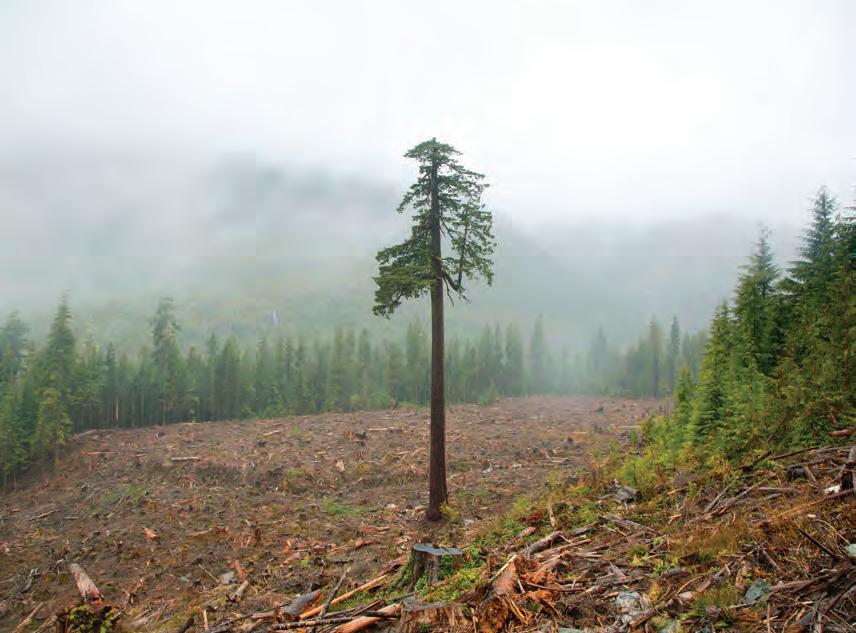

Why forest loss is making our watershed leak rain. - By Adam Wei / The Conversation
06 OPENING REMARKS Six questions, six months out from the next municipal election in Whistler.
08 LETTERS TO THE EDITOR This week’s letter-writers weigh in on April Fool’s and development on the Spearhead.
22 THE OUTSIDER Vince Shuley doesn’t care if you call him a nerd—he’s joining the growing movement of gravel biking.
42 PIQUE’N YER INTEREST Losing the Local Journalism Initiative leaves communities like Pemberton and the Lil’wat Nation in the dark, writes Luke Faulks.
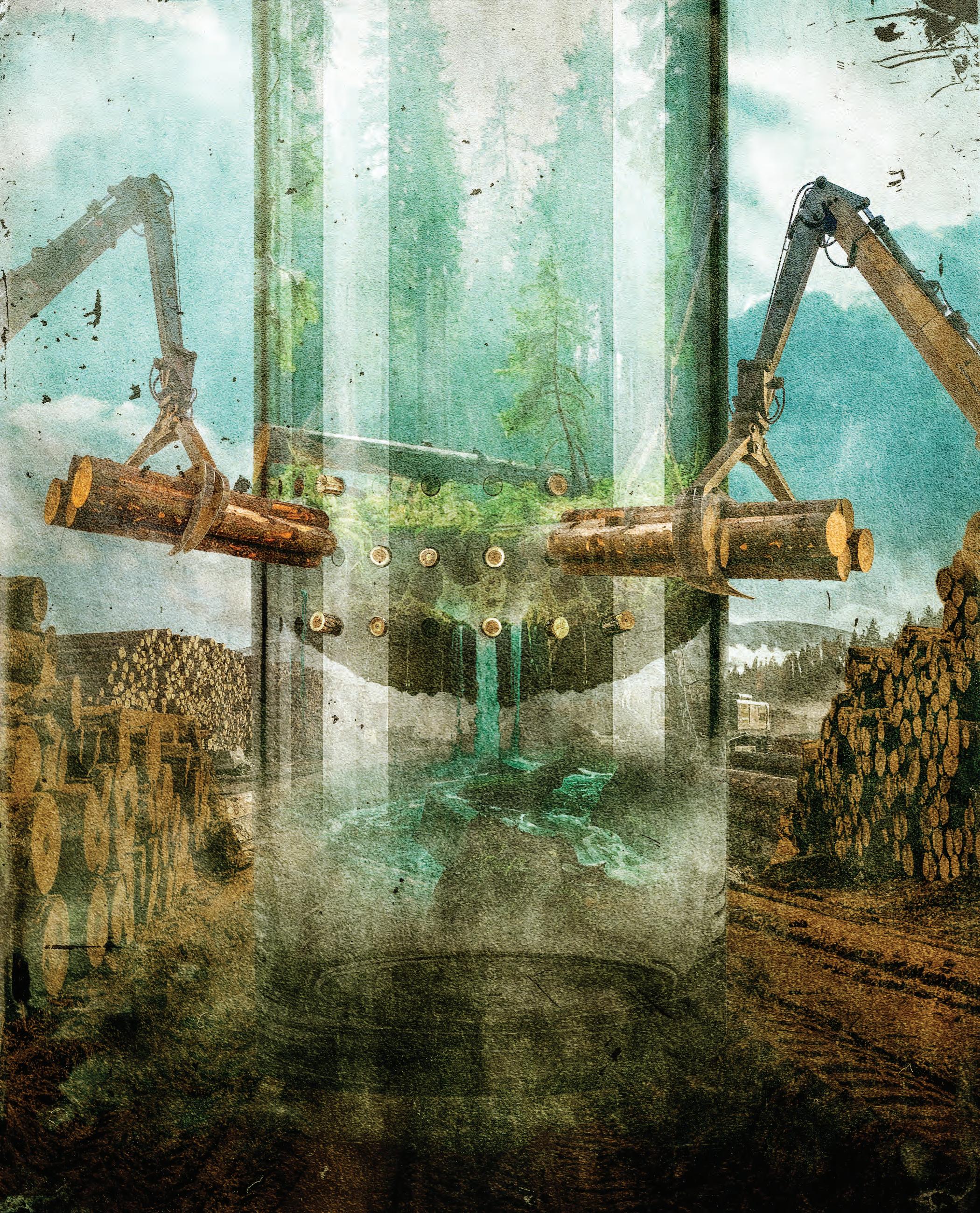
COVER I heart trees. - By Jon Parris // Adobe AI // @jon.parris.art
Publisher SARAH STROTHER - sstrother@piquenewsmagazine.com
Editor BRADEN DUPUIS - bdupuis@piquenewsmagazine.com
Sales Manager KAIJA KNOX - kknox@lodestarmedia.ca
Production Manager AMIR SHAHRESTANI - ashahrestani@piquenewsmagazine.com
Art Director JON PARRIS - jparris@piquenewsmagazine.com
Advertising Representatives
TESSA SWEENEY - tsweeney@wplpmedia.com
ANDREW BUDRESKI - abudreski@piquenewsmagazine.com
Digital/Sales Coordinator KATIE DOUGLAS - kbechtel@wplpmedia.com

10 IN COURT A U.S. class-action lawsuit alleges Vail Resorts and Alterra Mountain Company engaged in an illegal scheme to inflate the cost of skiing across North America.
12 SKATE SANCTUARY A speaker series event at the Whistler Museum traced the 35-year evolution of the Whistler Skatepark on April 1.
26 GIFTS NOT GAPS Clinical counsellor Mike Shaw speaks at a Whistler Adaptive Sports Program fundraiser on April 24.
30 RISING SON Eight-time Juno nominee SonReal joins the World Ski and Snowboard Festival’s After Dark Music Series April 11.
Reporters LUKE FAULKS - lfaulks@piquenewsmagazine.com DAVID SONG - sports@piquenewsmagazine.com
Office Manager HEIDI RODE - hrode@wplpmedia.com
Classifieds and Reception - mail@piquenewsmagazine.com
Contributors G.D. MAXWELL, VINCE SHULEY, LESLIE ANTHONY, GLENDA BARTOSH, ANDREW MITCHELL, LISA RICHARDSON, LIZI MCLOUGHLIN, TOBIAS C. VAN VEEN
Founding Publishers KATHY & BOB BARNETT www.piquenewsmagazine.com

IT’S HARD TO BELIEVE IT , but B.C.’s next municipal elections are officially just six months away as of this month.
Time, right? Sure does seem to keep slipping into the future, in the immortal words of both Steve Miller and Seal.
As we sit here collectively pondering the slow march of eternity and the nature of objective reality, what better time for a good old-fashioned local election preview?

BY BRADEN DUPUIS
And in a nice bit of narrative symmetry, we’ve fashioned six electionthemed questions for this week’s Opening Remarks: one for every month
Might as well start with the most obvious…
The biggest question ahead of any local election, this is one we look forward to every time.
That’s because you have to peer all the way back to the 2011 vote for the last time Whistler had a serious race for the mayor’s chair.
Mayor Jack Crompton ran unopposed, elected by acclamation in 2018, and while two names stepped up to oppose him on the ballot in 2022, there was never any real doubt Crompton would be re-elected. In the end, the incumbent mayor earned a commanding 66.8 per cent of the vote.
So far, nobody has announced publicly for mayor in 2026.
For his part, Crompton is still mulling it over.
“I’ve never made this decision on my own, and I simply haven’t had the chance to sit down with my family to talk it through. We’re planning to do that in June, when everyone’s home from
university, etc.,” the mayor said in a text, when asked the big question.
“There’s lots of important work between now and then.”
When the mayor does have an answer, he promised Pique will be first to know— which means you, our faithful readers, will be second to know.
Like any news about mayoral candidates, it has been all quiet on the councilcandidate front as we approach the six-month-out mark. But it seems Whistler voters will have a strong slate of incumbents to choose from on the ballot.
Asked the question, Councillors Jessie Morden, Jeff Murl and Jen Ford (the three Js, as they like to be called) all said they plan to run again.
Coun. Arthur De Jong is also in. “That said I am currently doing my due diligence asking community members, community leaders, staff... do they really want me back again?” De Jong wrote. “No slammed doors yet!”
Coun. Cathy Jewett, too, is in, with a
It’s feeling a lot like deja vu on this front. The approval of the Northlands rezoning is still waiting in the wings, as the future of the Whistler Racket Club hangs in the balance—will these become election issues in 2026?
Whistler’s contingent of seniors—a not-insignificant bloc of the electorate— is not giving up the fight for more support, including help with aging in place in the resort. What better time to force the issue than election season?
Regional transit, growth management, fiscal responsibility, wildfire prevention and climate mitigation, continued action on housing… might as well add them all to the “council hopeful bingo buzzword” card and call it a day.
One issue that never seems to get much more than lip service, if we even give it that, is the treatment of workers in Whistler—and specifically the young people and transient workers who
The good news: Whistler’s voter turnout was up in the 2022 election, from 32 per cent in 2018 to 35 per cent in 2022.
Unfortunately, that puts us somewhere on the lower end of the provincial rankings, between the District of Kent’s 12.4 per cent and Bowen Island’s impressive 84 per cent (seriously—3,565 out of 4,256 registered electors cast a ballot in Bowen Island in 2022… talk about politically engaged in your future!).
Whistler will likely never hit those lofty highs, but we can still set our sights a little higher. Say, 50 per cent? The last time we hit that most average of numbers was the 55-per-cent voter turnout recorded in 2011, when the aforementioned last proper mayoral race occurred, and when an entire council lost their jobs.
WILL A
MAKE THIS COLUMN MOOT LONG BEFORE OCTOBER?
Here’s the thing about prediction columns: most predictions aren’t really worth a damn to begin with, and our
Whistler’s contingent of seniors—a not-insignificant bloc of the electorate—is not giving up the fight for more support, including help with aging in place in the resort. What better time to force the issue than election season?
caveat: “At this point I’m a yes and as a councillor, but there’s many months until the reality of another four years sets in,” she wrote.
Luckily, there is still plenty of time to decide.
The only undecided at this point is Coun. Ralph Forsyth, who said he’ll let us know before Labour Day. Let the speculation about a potential mayoral campaign begin!
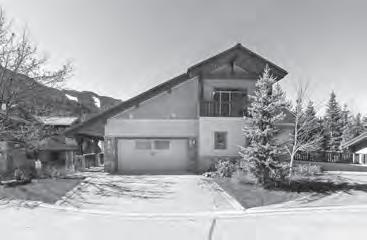
Ski-in/ski-outon Whistler Mountainthis4-bed, 2.5-bath Lookout townhomein Taluswood withviewsof Whistler Mountain.Openconceptlivingwith vaulted ceilings,hardwood floors,heatedtile,andachef ’s kitchenwith Thermadorgas rangeandSub-Zerofridge. Threeprivate decksincludingonewithhot tub.Spaciousprimarysuitewith walk-incloset, soakertub,andglassshower. Nightly rental zoningwithunlimited owneruse.NoGST.
Askingprice$3,900,000 8-2500 TALUSWOODPLACE
don’t really get a say in local politics. Rumours of workplace abuses involving temporary foreign workers run rampant in town, and we are doing nothing to address it.
It’s effectively a don’t ask, don’t tell mentality, and it’s not right.
Will any candidates fight for fair treatment for local workers in this election? (Though a better question might be: will we actually elect them if they do?)
shared reality seems to be getting a little less predictable by the day.
Will some unforeseen “Black Swan” event—like, say, a nuclear winter, a disastrous fire season, or a brand new pandemic—come along to fully upend any hopes of a normal, straightforward election, and render all our pet projects pathetically impotent?
To that, we can answer with near absolute certainty: Maybe. n
20NorthStar








Nightlyrentalready,updated1bedroom at NorthStar. Convenient village locationwith heated poolandhottub. Of feredat$1,165,000







An article on Pique’s website on April 1 (April Fool’s Day) had the following headline: “Report on Whistler rockslide proposes drastic mitigation measures.”
While there was a serious rockslide last month near Whistler’s peak, causing a closure pending expert investigation, contrary to this article in the daily online edition of Pique, I have confirmed—as I suspected—that there are no plans yet for an 1,100-room luxury hotel to be built on top of the mountain, together with outdoor waterslides, tennis courts, and a peak-tovalley zipline.
This is the best April Fool’s Day joke that I can think of.
Braden Dupuis, editor of Pique, has a good sense of humour.
Doug Garnett // Whistler **Editor’s note: Full credit to Pique’s art director Jon Parris, who came up with the concept for this year’s April Fool’s story. I will, unfortunately, assume full responsibility for the ongoing exploits of Pene Esposti.
‘Disappointed’ in more Spearhead Traverse development
A couple weeks ago Pique featured an article about the proposed Macbeth Hut along the Spearhead Traverse.

I am disappointed by the idea of developing more huts along the Spearhead Traverse.
I have spent my career working in the backcountry and studying visitor use management strategies.
My conclusion is wilderness should be kept wild and untrammelled.
The main problems the Spearhead area faces are overcrowding and human waste.
Having busy backcountry slopes is dangerous in avalanche terrain. I do
not foresee adding huts and taming the backcountry as tools to alleviate this problem. If anything the huts will attract more skiers, especially those with less backcountry experience. Furthermore, the huts will fill up quickly with guided groups operating under commercial use.
As for human waste, the first step towards working on this problem should be educating backcountry users on what to do with their solid waste. Free blue bags at the trailhead could be a start.
Perhaps instead of donating money to developing the backcountry, money could be donated to educate backcountry users.
The Kees and Claire hut sits on top of fragile vegetation, and what was a marmot colony.
The hut is also an eyesore. There is no cute natural charm to the hut, and it feels very out of place. Camping at Russet Lake, the hut mars the view.
European mountaineers are accustomed to huts and they travel to North America to experience “true wilderness.” In Whistler, especially this season, the effects of global warming are clear. So why instead of protecting our winters are we adding more carbon into the atmosphere by flying helicopters to construct backcountry ski huts?
The Macbeth Hut, according to the Spearhead Huts Society, was made possible by a $1.5 million donation by Brian Hill, former Aritzia CEO. Nothing says protect the backcountry and the environment like businessmen buying alpine buildings.
When will we stop developing?
Of course I recognize the fun of staying in a hut, the ease of access, the shelter from the storm, and the safety huts can provide during emergencies. But the reason I, along with many, seek backcountry adventures is to have experiences even if they are not always glamorous. I want to feel the weather, be away from human-







As of Wednesday, April 8
IT’S THE (SECOND) most wonderful time of the year! We all love when December storms roll in and build up the snowpack with a whole winter of possibilities ahead, but spring has its charms, too: warm temperatures, long days, and, typically, a predictable snowpack and avalanche danger regime. This year, spring looks to be shaping up nicely indeed.
For the weekend, we’ll be into our fourth and fifth days of a run of freezing levels staying well above 2,000 metres overnight with daytime highs above zero at treeline. Cloud cover will increase, with light rain expected to 2,000 metres or higher on Sunday. With this outlook, cornices and wet-loose avalanches will be the primary problems to look out for.
For wet-loose avalanche problems, management is a two-part strategy. First, identify the sun-facing slopes along your intended route and make a plan to minimize your exposure to them—especially steep slopes—during the warmest part of the
made structures, experience solitude, and practice my decision-making skills in the mountains, all without doing further harm to the ecosystem. I do not want to tame the backcountry.

day. Remember, a bit of cloud can actually add to daytime heating with the greenhouse effect. Rain obviously accelerates snowpack melt as well. Second, monitor surface conditions as you travel. If you’re punching through the surface into wet snow, recognize that you are now travelling on an isothermal snowpack. Wet-loose avalanches are possible, and you should back off from any steep, slushy slopes.
Cornice management is more straightforward. The uncertainty around the timing of natural cornice falls, combined with the high consequences of being caught under one, means avoidance is key. Look up (in other words, recognize where cornices exist), and avoid exposing yourself! If you need to travel under a cornice, make sure it’s one at a time, preferably during the coldest part of the day—likely the early part of the morning. This is consistent with advice that carries for managing all kinds of spring concerns: start and finish early. n
I want to leave it better than I found it. If we continue developing the Spearhead can we honestly look back and say we’ve left it better than we found it?
Hannegan Glass // Squamish n




NickDavies, Whistlerlocal andexperiencedfamilylawyer practisingacrossBCandYukon. Callat 604-602-9000 or visit www.macleanlaw.ca
MacleanLawisheadquartered inVancouverwithofficesacross BritishColumbia.
$2,095,000



CLASS ACTION CLAIMS EPIC, IKON PASS MODEL COERCES SKIERS INTO BUNDLED PRODUCTS WHILE INFLATING LIFT TICKET COSTS
BY LUKE FAULKS
A NEW U.S. CLASS-ACTION lawsuit is alleging Vail Resorts and Alterra Mountain Company engaged in an illegal scheme to inflate the cost of skiing across North America.
Filed March 23 in the U.S. District Court for Colorado, the suit argues the two dominant resort operators used their market power to steer skiers toward bundled season passes while driving up the price of single-day lift tickets.
“At its core, this case is about how Defendants’ conduct has transformed skiing and snowboarding into a prohibitively expensive activity,” the complaint states.
“Defendants have engaged in conduct to raise the costs of lift tickets and mega passes to the detriment of Plaintiffs and members of the Class [and] have caused them to pay supracompetitive prices for lift tickets and mega passes.”
The allegations have not been proven in court.
In an emailed statement to Pique, a Vail Resorts spokesperson disputed the suit’s characterization and pointed to the pass model as a way to lower costs for committed skiers.
“We believe these claims are without merit,” the spokesperson said. “We launched the Epic Pass in 2008 to make skiing and riding more accessible, reducing the price of a season pass by 60 per cent. We’re proud that 18 years later, it’s still one of the best values in the industry, especially following our further 20-per-cent price reduction in 2021.”
The lawsuit frames the case around the rapid consolidation of the ski industry, arguing that decades of
acquisitions have effectively left North America with “two—and only two— behemoth ski resort owner/operators.”
According to the filing, as of 2026 Vail Resorts owns or operates 42 ski areas, while Alterra operates 18, with both companies also maintaining extensive partnership networks that expand their reach to dozens more resorts.
“No other ski area owner or operator comes close,” the filing states. “Nor can it, as Vail Resorts and Alterra have locked up every Destination Ski Resort in the country, either through ownership or by contract.”
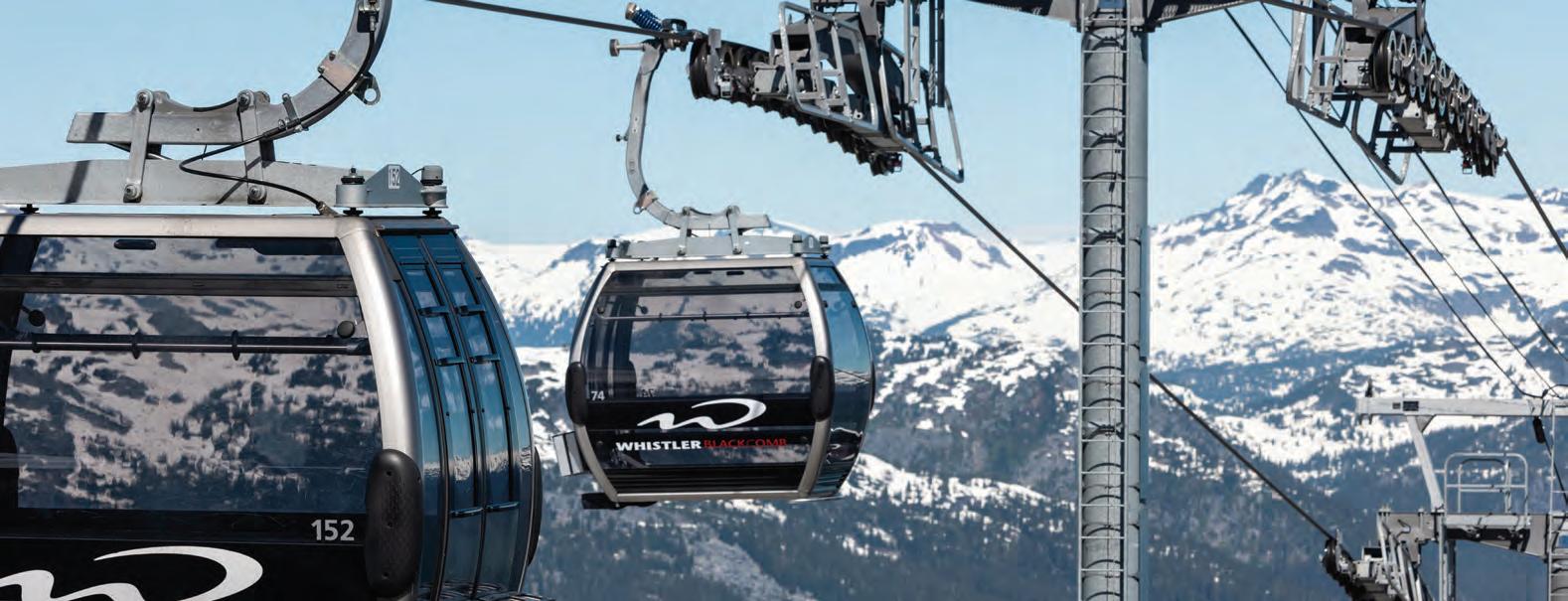
That footprint includes many of the continent’s marquee destinations. The complaint specifically names Whistler Blackcomb—acquired by Vail Resorts in 2016—as among the largest and most prominent ski areas in North America.
The filing notes that North American ski areas saw roughly 81.1 million visits in the 2024-25 season, while participation has reached record highs in recent years. But plaintiffs argue that growth has coincided with sharply rising costs.
Central to the lawsuit is the rise of multiresort season passes—Vail’s Epic Pass and Alterra’s Ikon Pass—which bundle access to dozens of destinations into a single product.
“When an individual purchases an Epic or Ikon Pass, he or she is essentially purchasing access to a bundle of Destination Ski Resorts and Regional Ski Areas,” the complaint reads.
Those passes have become the dominant way people ski. The suit alleges that for Vail Resorts, pass products now account for roughly 65 per cent of lift revenue and 75 per cent of visits.
Plaintiffs argue that dominance is no accident.
“The primary (and unlawful) way that both Vail Resorts and Alterra drive skiers … to purchase mega passes is to charge exorbitantly high prices for lift tickets,”
the filing claims.
In plain terms, the lawsuit alleges a form of bundling—a business practice where companies package multiple products together—in a way that limits consumer choice. Skiers, it argues, are nudged toward buying large, multi-resort passes because individual tickets are priced so high that the bundle appears to be the only rational option.
“Skiers [are] led to believe they are making a cost-conscious decision, [but] are in fact being forced into buying a mega pass,” the complaint states.
Legally, the case hinges on alleged violations of the Sherman Antitrust Act, which prohibits companies from restraining competition. Passed in 1890, Sherman was the first federal American measure aimed at prohibiting monopolistic business practices.
The plaintiffs argue Vail Resorts and Alterra used their dominance in “Destination Ski Resorts”—high-profile, travel-driven mountains like Whistler— to control pricing across the broader market, including smaller, local hills.
“Defendants use the market power they have in the market for Destination Ski Resorts … to restrain competition in the market for Regional Ski Areas by bundling access,” the suit alleges.
The claim is that by controlling must-ski destinations, the companies can influence pricing and competition, potentially squeezing independent or smaller operators.
The complaint points to rising lift-ticket prices as evidence of the alleged scheme, noting that single-day tickets at major resorts can now exceed $300.
“Lift tickets [have] climbed sharply. But this is no accident, or the result of competitive market forces,” the filing states. “Pursuant to Defendants’ identical anticompetitive schemes, lift tickets [are] priced in a way to induce (or
coerce) customers into buying the mega pass bundles.”
It also cites public comments from Vail Resorts leadership acknowledging the company’s role in reshaping pricing across the industry, including a 2025 quote by CEO Rob Katz in the New York Times describing lift-ticket pricing as “intentionally” aggressive.
The result, plaintiffs argue, is a market where both daily tickets and season passes are inflated.
“In short, both the lift ticket and the mega pass are over-priced,” the filing claims.
While the case is filed in the U.S., its implications could resonate in resort communities like Whistler, where Epic Pass access has become a defining feature.
The lawsuit argues rising prices have broader social impacts, particularly for local skiers.
“Unfortunately, as the mega passes have displaced lift tickets in the ski industry, the cost of skiing and snowboarding [has] become excessive, crowding out more price-sensitive locals,” the complaint states.
Vail Resorts’ spokesperson disputed that assertion.
“As we acquired smaller resorts over the years, we also launched new, lowerpriced pass products, such as the Epic Day Pass Local and Limited, for guests who only want to ski close to home,” they wrote.
“We will always give the best value to our pass holders who commit ahead of the season—but that said, we have also been intentional to price our lift tickets, sold in season, on a resort-byresort basis, including numerous new discount opportunities this past season.”
The case is seeking damages for consumers who allegedly overpaid for lift tickets and passes, as well as other relief under federal and state antitrust laws.
For now, the allegations remain unproven, and neither Vail Resorts nor Alterra has responded in court. n
OUTLINE FREIGHT TRANSITION AND PASSENGER SERVICE POTENTIAL WHILE DIRECTORS RAISE QUESTIONS
BY LUKE FAULKS
DAVID HAWKSWORTH has been running Hawksworth restaurant in Vancouver for 15 years. A few years back, he considered opening a restaurant in Whistler, but says a lack of housing for employees, combined with a grind of a drive up Highway 99 from housing options in Squamish, ultimately killed the deal.
Hawksworth wrote in to the Squamish-Lillooet Regional District to share that passenger rail might have changed the equation.
“Just imagine the relief for workers if they could finish a full shift and not have to drive for at least 45 minutes in hazardous conditions, exhausted, and dealing with the constant chaos of that highway,” Hawksworth wrote in a March 18 letter.
“Too many people experience lifechanging events on that road.”
Hawksworth’s letter captured the array of rail issues up for discussion during the SLRD’s March 26 committee of the whole meeting, where planners, advocates and provincial representatives outlined potential next steps and constraints tied to the Sea to Sky corridor.
RAIL CORRIDOR FACES LOOMING DEADLINE
A potential July 2026 decision tied to Canadian National’s (CN) lease of the rail corridor framed much of the discussion. Under the BC Rail Revitalization Agreement, the provincial government can sell the corridor back to CN Rail for $1 until July 2026.
“Starting July 2026, interested parties may assume operations for existing or new train services. Should no party come forward, the corridor could be sold for net salvage value,” a letter from Northern Development Initiative Trust (NDIT) said.
The NDIT seeks out economic development opportunities for communities in central and northern B.C.
Peter Scholz, a registered professional planner and transportation planner with Cairnstone Planning, spoke to the SLRD on behalf of NDIT. His March 26 presentation focused on maintaining the rail line, citing CN’s stated intention to terminate its lease on the Squamish Subdivision and the potential for track removal.
Scholz pointed to interest from a short-line operator—a service using only a section of the massive span of rail—as one possible path forward.
“We have a short-line operator that is willing to take on that track portion, and is seeking to work with the B.C. government and CN to foment that transition,” he said, adding the operator believes “operational profitability is a near certainty” for freight service.
A second delegation from the Mountain Valley Institute (MVI) focused on assessing passenger rail service directly.
Lee Haber, a railway engineer and director of strategy and partnerships, said interest in rail is increasingt, but requires further analysis.
“There is a rare alignment emerging in this corridor, [local] governments, First Nations and elected representatives at both levels of senior government are paying attention,” he said. “What’s needed now is the evidence base to translate that attention into action.”
MVI is proposing a Sea to Sky nearterm passenger rail study examining service between North Vancouver and Lillooet using existing infrastructure and diesel multiple unit (DMU) trains.
“It answers four key questions that no one has answered rigorously yet for this corridor,” Haber said. “Is passenger rail in the near term feasible? What should it look like? What is it going to cost, and what are the specific benefits?”
The organization initially requested $20,000 to begin work, later revising its ask to $90,000 to fund a full study, including ridership modelling.
Board members raised questions about both the timing and scope of the proposed study.
Lillooet mayor Laurie Hopfl said the timeline may limit the study’s influence on provincial decisions.
“I feel like this is a little bit late to the gate. There’s only a few months left,” Hopfl said. “I think that [the] province is going to do what they’re going to do in July, [and] $20,000 … I don’t know what that’s going to get us, so unfortunately, I’m not going to support this at this time.”
Whistler Mayor Jack Crompton raised concerns about the request and process.
“This [all] feels very disconnected from the owners of the line, of the decisionmaking process at the province,” Crompton said. “A letter coming to the table asking for $20,000 and then having it go to $90,000 with no sort of analysis from staff [about what this] gets us and how we’ll use it is a little unfamiliar to me.”
Crompton said he would prefer a staff report before committing funds, and questioned why MVI was the proper firm to carry out the research instead of an established engineering firm like Stantec.
Pemberton Mayor Mike Richman supported a smaller contribution, citing the need for clearer data.
The board motioned to enter into a contribution agreement with MVI, providing $20,000 once the Institute has secured the remainder of the funds required to complete the full study.
Find the full story online. n







THE SOLD-OUT PANEL BROUGHT TOGETHER DESIGNERS, EARLY RIDERS AND THE NEW GENERATION TO DOCUMENT STORIES OFTEN LEFT OUT OF THE RESORT NARRATIVE
BY LUKE FAULKS
ON APRIL 1, the Whistler Museum marked 35 years of the Whistler Skatepark with a speaker series bringing together designers, longtime locals and a new generation of riders—offering a detailed look at how the park evolved from informal pavement sessions into a quietly defining piece of the resort’s identity.
“The park was our sanctuary, our church,” park designer Jim Barnum told a packed crowd of about 80 locals. “It was just very much our little world where we could incubate.”
The event featured Barnum, early builder Monty Little, local advocate Jon Martin, and riders like Jen “Jibber” Godbout, alongside the Pelchat sisters and Maggie Crompton of the Real Wild Kittens collective. DJ and fellow skater Vinyl Ritchie set the vibe for a sold-out audience.
Long before the park’s construction, skateboarding had already taken root in Whistler. Informal skating dates back to
at least the mid-1970s, when riders used newly paved roads and improvised terrain across the valley.
“The first documented evidence that we have of skating in this valley was in like 1975 there was a race down St. Anton Way, because it’s the first road off the highway that was paved,” Barnum recalled. “So the skaters at the time were like, ‘Oh my God, there’s a road that isn’t the highway.’ And they had to have a race down.
“And there were a lot of mini ramps that were built in Function [Junction], mini ramps that were out in Alpine, spots that were all over the village,” he added, showing off a densely speckled map of the valley.
Little described his own early involvement in skateboarding as predating modern infrastructure entirely.
“I had to create my own skateboard, [so] I took my roller skates apart, hammered them flat, and then screwed them to a piece of two-by-four,” he said, showing the audience a carpet-topped block of wood with retro wheels affixed to the bottom.
“People want to know [what] the carpeting’s for. If you’ve ever ridden steel wheels, you’ll know that they vibrate to the point where your feet are so numb you can’t feel them.”
The modern skatepark was built in 1990-91 along Fitzsimmons Creek, designed by Little and Terry Snider with a focus on flow, speed and transition features like the now-iconic snake run and bowl.
When the opportunity came to design a park in Whistler, Little said the goal was to create something sculptural and rideable—shaped in part by Whistler’s growing snowboard culture.
“There was a lot to that park. It’s much larger, and that’s because of the summer camps. We knew they’re going to be down there at the end of the day, and so we wanted this incredible, snowboardable-park situation,” he recalled. “Our fingers crossed there would be enough speed for them to be able to get back all the way to the top.”
By the late 1990s, deterioration in the original concrete driven by Whistler’s relentless freeze-thaw cycle and shifting trends toward street skating led to redesigns, including new rails and ledges.
Barnum said the park’s re-construction reflected a distinctly DIY ethos.
“Today that could not happen, but
in the ’90s, just random skateboarders would come and help build the park. People would come by in the morning, sign in, go out and shovel dirt and pack stuff. They volunteered all summer long, built the park, figured out how to bend the rebar,” Barnum said.
For many speakers, the 1990s represented a unique moment in Whistler’s skate culture: “It was a rare time, the way it got skated hasn’t been duplicated to this day,” Barnum said.
“People from all across the country who were really free-spirited had the courage to move to a town that they’ve never even been to. They wanted to snowboard on the greatest mountain in the country.”
Barnum said it was that combination of snowboarders, the natural setting, isolation, and a sense of pioneering that made the ‘90s special: “Anytime anything is new, that’s a stage you can’t repeat.”
Martin, a longtime local ‘boarder and employee at The Circle, said the park’s reputation persists even as facilities elsewhere have grown larger and more complex.
“There’s no park like it. I’ve been to so many parks, and I always think, like, ‘Oh, I just miss my park,’” he said.
Find the full story online. n
WiththearrivalofDr. JasonDewlingaspresident andvice-chancellor,CapUbeginsanexcitingnew chapter, onerootedinopportunity, inclusionand thestrengthofourlocalcommunity.A respected post-secondaryleader, Dr.Dewlingispassionate aboutcreatingmeaningfullearning experiencesand helpingstudentsthrive—hereathomeandbeyond. “Capilano Universityisat
—Dr. JasonDewling Learnmoreabout PresidentDewlingand what bringshimtoCapU ScantheQRcode


RE/MAX
604-905-8855 1-888-689-0070 Dave@DaveBeattie.com
•PrimeBlackcombBenchlandslocation
•3-level,3-bedroomtownhome
•Vaultedceilingsand woodfireplace
•Wellappointedandturnkey
•Short-termrentalallowed
•Securedundergroundparking $2,195,000






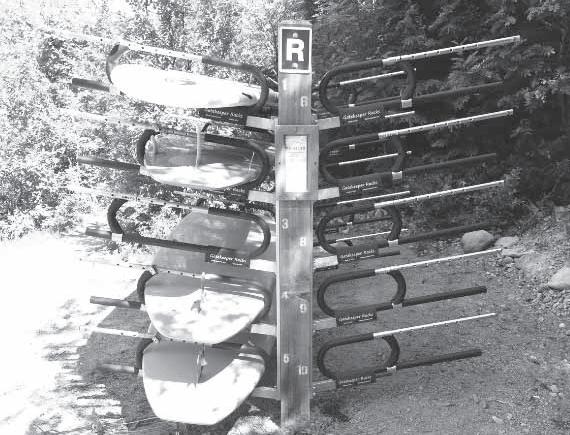



Staggered reservationdates forwatercraftstorage. Reservations forseasonalrackspacesare first-come,firstserved.Storage spacestypically selloutquickly.
•SUPstoragespaceswillbeavailable onlinefromApril14at12:30p.m.
•Canoe/kayakspaceswillbe available onlinefromApril15at12:30p.m.

Rackspaceswillbe availablefor renterstouse from April16toOctober15.





FOUNDER JENNY PEREZ POINTS
AUSTRALIA’S
BY LUKE FAULKS
A GRASSROOTS campaign urging parents to delay smartphone use for children is scaling up its national advocacy efforts, as organizers say a surge in public awareness and mounting legal pressure on tech companies has shifted the conversation around youth and social media.
Unplugged Canada, a volunteer-run non-profit founded by Whistler’s Jenny Perez, has grown from roughly 500 participating families in 2024 to nearly 9,000 today.
“We are building a cultural shift. From the playground to the House of Commons, we are reclaiming childhood,” Perez said in a March press release.
The organization’s core pledge asks parents to delay giving children smartphones until at least age 14, while also advocating for a minimum social media age of 16 at the federal level.
While Unplugged Canada initially focused on building local parent networks, Perez said
the past year has seen a marked shift toward advocacy and legislative engagement.
“It’s not only about the pledge and building community in schools, but also is about a big advocacy efforts for introduction of proper legislation,” she said.
That push has included a federal petition—sponsored by MPs from multiple parties—calling for a national minimum age for social media. The group gathered nearly 2,000 signatures within 30 days, far exceeding the 25 required to table it in Parliament.
Perez said volunteers have since met with multiple federal ministers and political offices, as well as the Prime Minister’s Office, in an effort to influence forthcoming online safety legislation.
“Our ask is to have the social media minimum as part of the new [Online Harms Bill] that we’ve been told will be introduced in June,” she said.
According to a January article in The Globe and Mail, the federal government was considering a ban on youth accessing social media before the age of 14. Perez said Unplugged is still pushing for 16, “to protect the vulnerable years of puberty.”
Unplugged’s efforts, along with the federal effort to curtail social media

• Job-readyskillstraining. Shopsarehiring!
• Everythingyouneedtoknowaboutbike repairs
• Funding available!
•Dates:April16-30,May14-28
• Levelupyourexperience
• Wheelbuilding, Suspension,Brakes
•Dates:May 2-6
• Gainconfidenceandskillstobeginworkingina shop
• Acceptingapplicationsnow
•Dates:Mon &Tues,June29-July28


use for younger Canadians, follows Australia’s announcement of a ban on social media for teens under 16.
Australia’s passage of the Online Safety Amendment (Social Media Minimum Age) Act in late 2024 effectively set a minimum age of 16 for major platforms.
The law places responsibility squarely on tech companies—not parents or kids—to prevent under-16s from creating or maintaining accounts on platforms like Instagram, TikTok and Snapchat.
The age minimum formally took effect on Dec. 10, 2025, requiring companies to implement age-assurance measures and block underage users, with penalties for non-compliance reaching up to roughly AU$49.5 million.
Perez pointed to recent legal developments as another driver of the movement’s rapid growth.
In March 2026, a Los Angeles jury delivered a landmark verdict in K.G.M. v. Meta et al., finding Meta and Google negligent for designing addictive platforms—in this case, Instagram and YouTube—that contributed to a young woman’s mental-health issues,
including anxiety and depression. The jury awarded US$6 million in damages.
Days earlier, a separate jury in New Mexico ordered Meta to pay US$375 million after finding the company liable under state consumer protection laws for failing to adequately protect children from harm, including sexual exploitation risks on its platforms.
“That validates that these are not only concerns. This is real,” Perez said. “These companies are not invincible anymore, they are not immune to be actually liable.”
The group’s messaging is increasingly grounded in a growing body of research linking heavy social media use to youth mental-health challenges.
A 2020 study published in the Canadian Medical Association Journal linked high social media use with anxiety, depression and sleep disruption, while a 2025 Western University study found two or more hours of daily recreational screen time doubled the likelihood of clinical anxiety in teens.
For Perez, Unplugged’s rapid growth SEE PAGE 16 >>
• Completeyourownspringtuneup,learningskillsalongtheway
• Drivetrains,Wheeltruing ,Suspensionserviceandmore
•Dates:Sat &SunApril3-May 3,9am-3pm Sat& Sun,May23-31,9am-3pm
• GreatforBikeGuides,coaches,anyone
•Dates:June13-14,9am-3pm
“WASandCytechallowedmetolearnbikemechanics accordingtomanufacturerstandardsand recommendations. Chrisdeliveredthecontentin away thatenabled understandingoftheactualfunctionsofeachcomponent; whichallowedfordeeperunderstanding regardingservicing andrepairs beyondjustfollowingsteps.Thiscertification ishowyou go beyond ahomemechanicand applytheskillsin aprofessionalcontext!”
-Kirill Kokorin, owner Tr ueMobileBike Mechanics,SeatoSky










BY LIZ MCDONALD
The Squamish Chief
SEA TO SKY SCHOOL District No. 48’s board of education has approved school calendars for the 2026-27, 2027-28 and 2028-29 school years, with Don Ross Middle School emerging as the main point of change following a 30-day public consultation period.
The calendars were due to the Ministry of Education and Child Care by March 31.
Paul Lorette, assistant superintendent for SD48, told trustees that Don Ross had revised its proposed calendar after feedback from the school community.
“This sort of demonstrates that that’s why we have these consultation periods, because there was some feedback to the school regarding their plans,” he said. “They made adjustments to their calendar as a result, and so they have reverted back … to a similar calendar to what they’ve had over these last three years.”
Don Ross was set to implement earlier dismissals on Fridays, but after parent feedback, the school dropped the proposal.
He said feedback at the district level was otherwise limited, and that most

input during the consultation window was directed to individual schools.
One correction was also made to Pemberton Secondary, which had listed its semester turnaround day as a regular instructional day. The school adjusted its bell schedule to meet minimum instructional hour requirements.
A separate elementary calendar change, moving the final day of school from a one-hour early dismissal to a full non-instructional day, means students’ last day next year falls on a Monday. Several parents flagged the change, but the district said adjusting it at that stage would have required all elementary schools to revise their bell schedules.
Trustees also raised concerns about school start times in light of B.C.’s move to permanent daylight saving time, which takes full effect Nov. 1, 2026, meaning winter mornings will be darker than in previous years.
Trustee Celeste Bickford asked why additional instructional time is typically added to the beginning of the school day rather than the end, particularly given research supporting later start times for older students.
“I’m curious, especially given the time change, and given that in some
months, kids are going to be travelling to school in the dark,” she said. “Why is that time typically put on at the beginning of the day, before 9 a.m., rather than being after 3 p.m.?”
Lorette said bell schedule decisions rest with individual principals, who set times in consultation with their school communities and in coordination with bussing.
Bickford asked whether the board
could set a policy floor on start times. Lorette said it was worth discussing but couldn’t be acted on at that meeting, noting the time change had come too late in the calendar process to address this year.
“I do think it’s a really important topic that I have a feeling we’ll probably hear more about moving forward,” he said. The board voted to approve the calendars as presented. n
FROM PAGE 14
has also marked a personal shift from isolation to momentum.
“I thought at one point I was crazy. People couldn’t understand why I was so passionate about this,” she said, recalling earlier efforts to raise concerns about kids and smartphones.
“What has changed is that people are willing to talk about it, even if it makes us uncomfortable,” Perez said. “There are groups of parents [who say], ‘I wish I had known better.’”
Unplugged Canada has leaned into that shift by building out a suite of multilingual resources aimed at helping families and communities start those discussions, including template letters
to school administrators and elected officials, and guides for approaching conversations at home.
“I always say difficult conversations need to happen, even though they are not fun, they must happen,” Perez said. “The use of tech by our children is a very important one, because it affects all of us.”
She added that moving beyond passive support is key to the movement’s growth.
“It’s not about knowing and keeping it at home… if we know something that can impact others, we need to share it, even if it makes us uncomfortable,” Perez said. “Go from talking to doing.”
Find the full story online. n


The winter prix fixe menu is back at Table Nineteen
Enjoy three seasonally inspired and beautifully crafted dishes for only $45 3-Course Prix Fixe $45



Nov22,1951 -Jan 24,2026




JoinusfortheCelebrationof aLifewell-lived
SaturdayApril25th,2026
FairmontChateauWhistler FrontenacBallroom
DoorsOpen:2:30PM CelebrationOfLife:3:00PM
DrinksandCanapes:5:00PM– 6:30PM DrinksandCanapes:5:00PM –6:30PM
Nigelwillbedeeplymissedandlovinglyrememberedby allthosewhoseliveshehadsuch aprofoundimpactupon. Inlieuofflowers,donationsmaybemadeinNigel’s memoryto TheWhistlerHealthcareFoundationor theKeltyPatrickDennehyFoundation.





DonatetoWhistler HealthCareFoundation DonatetoKeltyPatrick DennehyFoundation














MINISTER
TIM HODGSON TOLD INVESTORS
THAT WOODFIBRE LNG HAS AMBITIONS TO DOUBLE AND TRIPLE ITS SIZE—RAISING CRITICS’ FEARS THAT THE PROJECT COULD ACT AS A ‘REGULATORY TROJAN HORSE’
BY STEFAN LABBÉ
Business in Vancouver
OWNERS OF THE MAJOR gas export terminal near Squamish, B.C., are seeking to massively expand the facility’s size, according to Canada’s federal energy minister.
Woodfibre LNG is officially permitted to produce 2.1 million tonnes of liquefied gas per year, but federal Energy and Natural Resources Minister Tim Hodgson recently revealed the project’s scale could grow significantly beyond its current permits.
“I know Woodfibre has ambitions to double and triple the size of their production,” Hodgson said.
Hodgson made the comments March 24 at the CERAWeek energy conference in Houston, Texas—an event billed by S&P Global as the “world’s premier energy conference.”
Later posted online in a podcast, his remarks have since prompted a backlash from critics who say Woodfibre appears to be a “regulatory Trojan horse” designed to bypass a full environmental assessment.
Neither the company nor the
government has previously disclosed plans to expand the Woodfibre LNG project.
In an email, Woodfibre LNG spokesperson Sean Beardow did not deny the substance of Hodgson’s comments.
“Our priority remains the safe and successful delivery of Woodfibre LNG’s current project,” Beardow said.
Business in Vancouver reached out to Hodgson’s office to confirm how the minister learned of Woodfibre’s goal to expand. His office cited “regular contact” with current and prospective proponents of LNG projects.
“This includes Woodfibre LNG, and we look forward to seeing first cargoes from that project—which will be the first net-zero LNG in the world—in 2027,” the spokesperson said.
Woodfibre’s consultants and executives met with federal officials 38 times over the past 12 months, according to the federal Registry of Lobbyists. Five of those meetings were with Hodgson.
Built on the site of a former pulp mill on
Availabledaily at BraidwoodTavern from 5:30pm- 9:00pm

Howe Sound, the Woodfibre LNG project is 65 per cent complete and on track to be finished by 2027. Once operational, the terminal will process gas from northern B.C. that will be delivered via a new 47-kilometre pipeline from Metro Vancouver.
Progress has come at a steep price. Construction costs have ballooned to US$8.8 billion—a significant increase from the US$5.1 billion estimate in 2022 and the company’s original US$1.6 billion projection.
While the facility is currently seven times smaller than LNG Canada in Kitimat, critics argue Hodgson’s comments suggest a “phased expansion” is already in the works.
Tripling its capacity would not only significantly close the gap with its northern rival but also increase the frequency of LNG carriers transiting Howe Sound. For more than a decade, opponents have warned that the project was being overbuilt to eventually exceed its stated production goals.
Starting in 2014, former Woodfibre LNG employees allegedly warned environmental advocacy group My Sea to Sky that they had seen maps of the facility showing it at double to triple the size.
And in 2015, a report authored by the local environmental group concluded the facility appeared to be planning power upgrades and gas pipeline capacity six times more than needed to satisfy the company’s planned LNG production.
In an email, My Sea to Sky chair Eoin Finn said the energy minister’s comments raise the question whether Woodfibre LNG has “misled the public to exploit regulatory loopholes and sneak in a project up to three times larger than initially assessed.”
“This confirms our suspicions that Woodfibre LNG is a Trojan horse that has overbuilt infrastructure to enable a phased expansion of the project while sidestepping the environmental assessment process,” Finn said.
“Did the provincial and federal governments know this was the plan from day one?”
In a joint statement to BIV, My Sea to Sky and Sunshine Coast Conservation Association called on the federal and provincial governments to require a new, comprehensive environmental assessment for the entire Woodfibre LNG and FortisBC Eagle Mountain Pipeline expansion projects.



Aselectionof beer,wine, cocktails, and zero-proofbeverages,startingat$10.
The two groups are also seeking an assessment to understand the cumulative impacts of the project on Howe Sound and the Salish Sea.
“If Woodfibre LNG doubles or triples in size, tanker traffic would as well, impacting ferry traffic and transforming Howe Sound from a globally recognized recreational destination into an industrial shipping corridor,” said Suzanne Senger, executive director of the Sunshine Coast group.
In the past, both groups have raised concerns over Woodfibre’s impacts on nearby communities, local air pollution, underwater noise and global warming.
They have also questioned the project’s actual economic benefits to Canada. Finn and his colleagues have pointed to large government subsidies and tax breaks, and what it sees as a failure to be transparent over the nature and ultimate ownership of the export terminal.
The lack of transparency around Woodfibre’s expansion plans mirrors long-standing concerns surrounding the facility’s majority owner, Royal Golden Eagle (RGE), which holds a 70 per cent stake in the project through its subsidiaries.
The conglomerate has faced international scrutiny for its “shadow” corporate structures and a “money machine” that allegedly shifted hundreds of millions in profits out of Indonesia.
Founded by Sukarno Tanoto in 1973, RGE holds more than $35 billion in assets across Asia, Europe, South America and Canada. That includes several gas power plants and LNG receiving terminals in China.
The vast majority of the group’s holdings lie in palm oil and a fibre supply chain that spans about a million hectares of Indonesian forests and is one of the largest integrated pulp and paper mills in the world.
In recent years, RGE subsidiaries have been criticized for allegedly shifting profits to China in an effort to evade Indonesian taxes.
In 2020, a consortium of environmental and good governance groups found the RGE-owned pulp and paper companies PT Toba Pulp Lesteri and Asia Pacific Resources International Limited (APRIL) Group— Indonesia’s second largest—spent years misclassifying the quality of pulp sent overseas on Indonesian export records.
That allegedly allowed the companies to sell the product at artificially low prices to an offshore affiliate in Macao, which then re-invoiced and sold it at full market prices to buyers in China. The report determined the pulp divisions of RGE shifted an estimated US$668 million in taxable profits out of Indonesia between 2007 and 2018.
The so-called “Macao money machine” arrangement potentially deprived the Indonesian government of more than US$150 million in corporate taxes, according to the report. Meanwhile, in 2013, APRIL withdrew from the Forest Stewardship Council (FSC)—the gold standard for forestry
certification—following a complaint that alleged the company had been involved in large-scale deforestation activities in Indonesia.
More recently, a 2024 investigation from Bloomberg and The Gecko Project— who partnered through the International Consortium of Investigative Journalists (ICIJ)—reported that the Tanoto family allegedly controlled a “shadow” group of companies under the firm Borneo Hijau Lestari (BHL) that has been quietly clearing large swathes of orangutan habitat in Borneo.
If accurate, the allegations would contravene the conglomerate’s environmental commitments. RGE denied BHL and its subsidiaries were owned by or under the control of the company or its shareholders.
RGE is currently involved in a multiyear “remedy” process to try and regain FSC certification.
While the conglomerate works to repair its environmental standing, it is simultaneously accelerating its energy footprint in Canada.
In addition to its stake in Woodfibre, the company bought Pacific Canbriam Energy in 2019, a company focused on natural gas exploration in B.C.’s Montney region.
The remaining 30 per cent stake in Woodfibre LNG is held by Calgary-based Enbridge Inc.
Enbridge is in the process of carrying out a $400-million expansion that will drive a pipeline into B.C.’s Montney shale basin and is expected to come online by 2028.
Back in Texas, Hodgson defended the federal government’s goal of making Canada an “energy superpower”—a term Prime Minister Mark Carney used as part of his successful 2025 election campaign.
“We need to be a clean and conventional energy superpower. It’s not one or the other, it’s both,” said the minister.
Hodgson described the Montney gas formation in B.C. as an “incredible resource” and “the least drilled major gas play in North America.”
“All the American fields are starting to peak and the productivity of each of their wells is starting to go down,” Hodgson said.
“The Montney wells are still going up, and they will go up for some considerable period of time. The world has figured that out, and the world is coming to Canada.”
Hodgson commented on plans to expand the capacity of the Trans Mountain Expansion (TMX) bitumen pipeline by more than 300,000 barrels by 2028, while also building out renewable energy and electricity supply across the country.
The minister’s comments came as energy markets shuddered amid the war in Iran. The threat of missile attack has largely shut oil and gas tanker traffic through the Strait of Hormuz—a choke point where about 20 per cent of the world’s fossil fuels must transit before reaching global markets.
Find the full story online. n



NEIGHBOURS SAY FLOODING HAS WORSENED SINCE GROUNDWORK BEGAN ON THE SITE, WHILE IGB DEVELOPMENT SAYS THE PROJECT INCLUDES EXTENSIVE FLOOD STUDIES TO MITIGATE RISKS
BY HILARY ANGUS
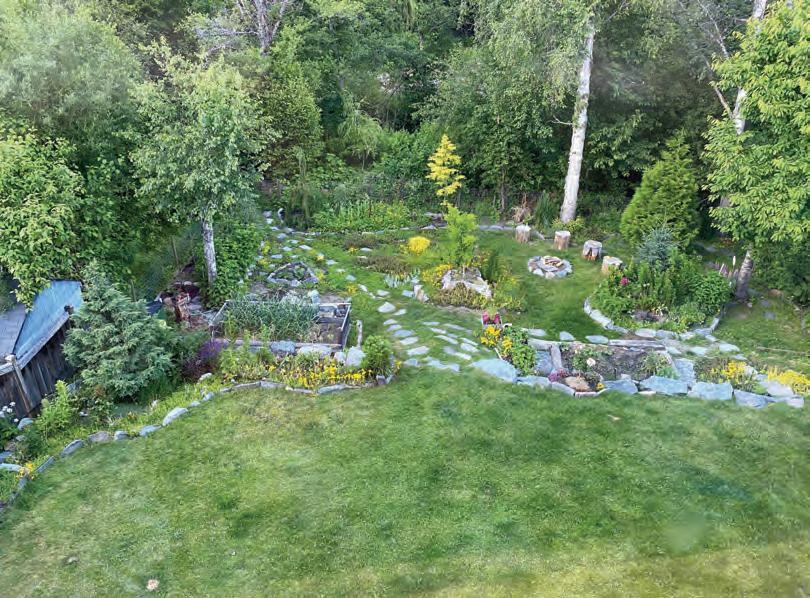
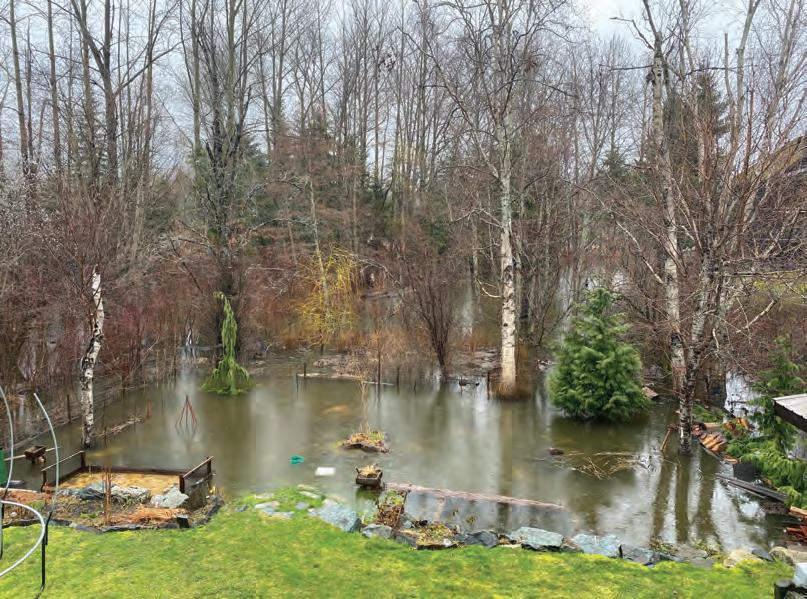
RESIDENTS ALONG Pemberton’s Willow and Urdal Drives say initial groundwork for the planned Alders development along Arn Canal has already worsened flooding in their yards.
The Alders is a planned subdivision that will add four single-family lots on an extension to Willow Drive, and three single-family and 17 fourplex lots on an extension to Urdal Drive. The proposal has been the subject of repeated scrutiny over the past year, with many Pemberton residents expressing concern that development so close to the Arn Canal will worsen flood behaviour and damage a key wildlife habitat.
Innovation Building Group (IBG),
the developer behind The Alders, began logging part of the property in February of this year, and is now replacing the soil with a gravel road base suitable for home construction.
Ian McIntosh lives on Willow Drive, and his backyard is adjacent to the canal. McIntosh said the atmospheric river in late March triggered flooding in his yard unlike any he’d seen in the nearly 20 years he’d lived there, including during the 2021 flooding that washed out multiple sections of the Duffey Lake Road.
“With what we know now about climate change, does it really seem like a good idea to be building on a floodplain?” McIntosh asked, suggesting that the treed land around the canal acts as a “sponge” to absorb excess water during major rainfall events.
While McIntosh acknowledged the need for more housing in Pemberton, he echoed the concerns of other community members over the past year that a suburbscale development on the floodplain will worsen flood impacts during major weather events, which are expected to
increase in frequency and intensity.
McIntosh also said there are broader concerns about environmental regulations not being followed during this initial construction phase.
The Arn Canal is a fish-bearing stream. Canada’s Fisheries Act contains strict regulations on the flow of sediments into fish habitats, but McIntosh said during the atmospheric river it was “just brown water flowing from that lot into the Arn Canal.”
Rod Nadeau, managing partner at IBG, said the company has gone above and beyond to mitigate the environmental impacts of its development, and the concerns expressed by the current residents are “classically out of the NIMBY playbook” because they don’t want new neighbours.
“The people who are concerned are not engineers,” Nadeau said, adding that IBG is working off of an environmental assessment undertaken by Chartwell Resource Group Ltd., a natural resource consulting company, and has done more flood modelling than would typically be required for this kind of development
in Pemberton in order to assuage the community’s concerns.
“When we’re finished, the neighbourhood will improve for all of our neighbours from existing conditions today,” he said.
Nadeau did not meaningfully acknowledge the flooding in McIntosh’s yard.
“I don’t know if they had [water] on actually their property. Most of the water from the pictures, it’s hard to tell exactly where it was,” he said.
Pemberton Mayor Mike Richman said temporary drainage and surface water issues might occur during initial construction and site preparation phases that will be resolved once construction is complete.
“Post-development water flows from a site cannot exceed pre-development levels,” Richman said. “That’s something that’s guided by their flood assessment and flood hazard assessment … we make sure that that’s complied with.
“Everything that’s being carried out there is being carried out with the environmental assessment,” Richman said. n



To ConsiderSquamish-LillooetRegionalDistrict ProcedureBylawNo.1899-2026
Inaccordancewithsubsection225(2)ofthe LocalGovernment Act,noticeisherebygiventhattheSquamish-Lillooet RegionalDistrict(SLRD)Boardintendstoconsideradoption of Squamish-LillooetRegionalDistrictProcedureBylawNo. 1899-2026
When: RegularBoardMeeting- April22,2026at10:30a.m.
Where: SLRDOffice,1350AsterStreet,Pemberton,BC
Theproposedbylawwouldrepealand replace Squamish-Lillooet Regional DistrictProcedureBylaw No.1499-2016 andestablish updatedrules governingtheconductofBoardandCommittee meetings.Key changesbetween Squamish-LillooetRegionalDistrict ProcedureBylaw No.1499-2016 andproposed Squamish-Lillooet Regional DistrictProcedureBylaw No.1899-2026 include,butare not limitedto, thefollowing:
General:Modernizes language,style andformat; adds procedural clarifications.
Chair/ Vice-Chair Elections: Introduces hybrid electionmodel; permitscandidatestoaddress Members.
MeetingSchedule: Requiresadoptionofannual Regularmeeting schedule.
OrderofBusiness: Reorganizesproceedings;adds“Items RemovedfromConsentAgenda”;removesfixed timesfor agenda headings.
Delegations/ InvitedPresentations:Providesdistinction betweendelegationsandinvitedpresentations.
MeetingMinutesandBylaw Records: Authorizes theCorporate Officertocorrect minorclericalerrorsinadoptedminutesand bylawswithoutaffectingsubstance.
Notice of Motion:Clarifiesprocess.
MotionsandAmendments:Introducesspeakingtimelimits; permitswithdrawalbeforea vote.
Requestsfora copyof theproposedBylawandquestions or commentscanbedirected toAngelaBelsham,CorporateOfficer,at 604-894-6371,or1-800-298-7753,or corporate@slrd.bc.ca
LandAct: NoticeofIntentiontoApplyforaDispositionof CrownLand
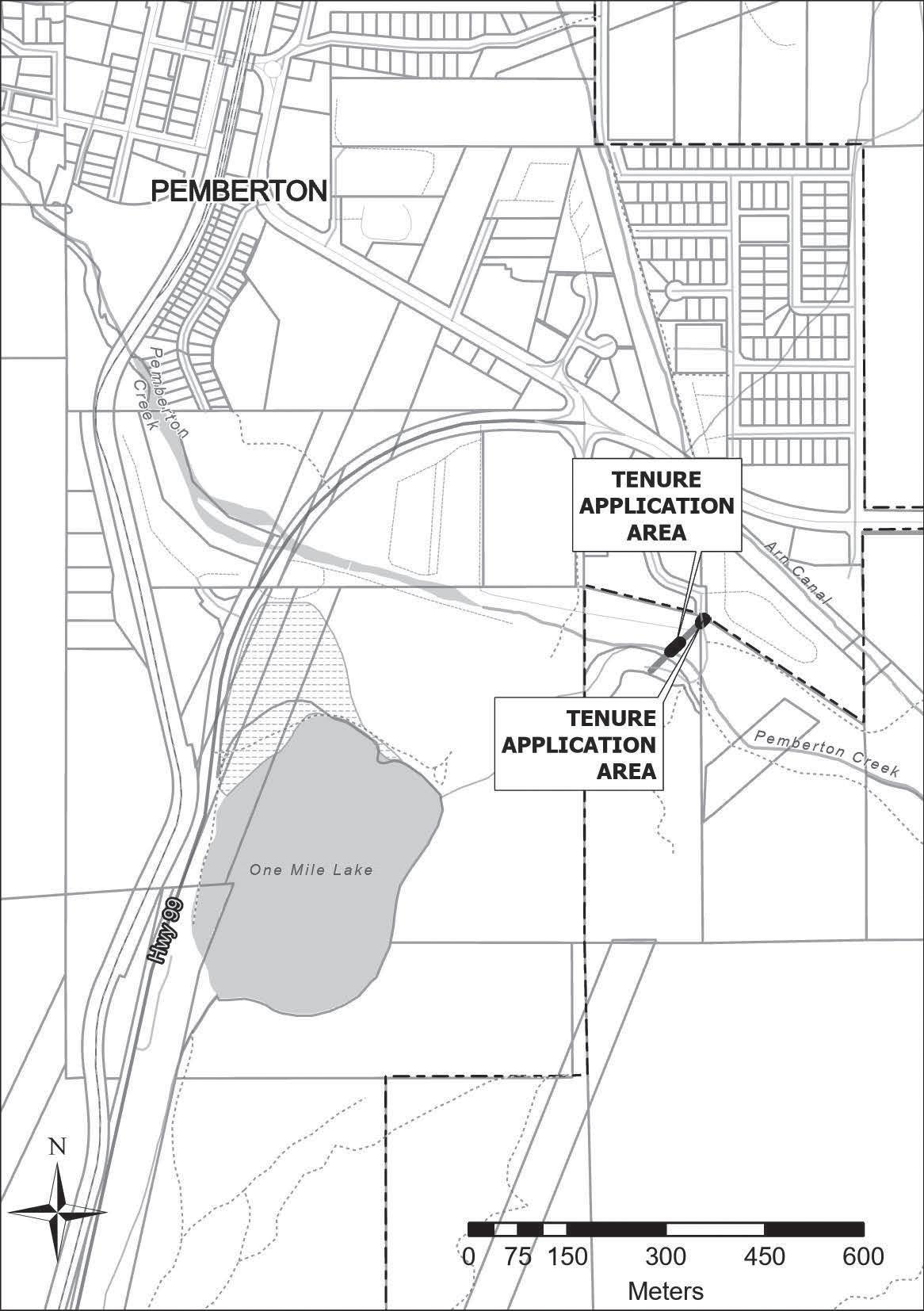
Takenoticethatthe GaribaldiHighlandsLandsLtd. of Pemberton, BC, hasappliedtotheBritishColumbiaMinistryof Water, Landand ResourceStewardship(WLRS),Surreyforatenureforutilityelectric powerlinepurposesituatedonProvincialCrownLandlocatedat PembertonCreek
WLRSinvitescommentsonthisapplication.TheLandsFileis 2413091 Writtencommentsconcerningthisapplicationshouldbedirectedto theSeniorLandOfficer, LowerMainland,WLRS,at200–10428153rd Street,Surrey, BCV3R1E1.CommentswillbereceivedbyWLRSup toMay1,2026.WLRSmaynotbeabletoconsidercommentsreceived afterthisdate.PleasevisittheApplications,CommentsandReasons forDecisionDatabasewebsiteathttp://comment.nrs.gov.bc.ca/for moreinformation.
Beadvisedthatanyresponsetothisadvertisementwillbeconsidered partofthepublicrecord.Accesstotheserecordsrequiresthe submissionofaFreedomofInformation(FOI)request. Visit http://www.gov.bc.ca/freedomofinformationtolearnmoreaboutFOI submissions.
LIKE A LOT of Sea to Sky residents, I’m guilty of owning too many bikes. Over the years, my employment in the mountain bike industry has only compounded the issue, coupled with the fact that I’ve had the necessary storage available in

BY VINCE SHULEY
my household, or more accurately, made the necessary storage available in my household. While some of my bikes hang on the wall for most months of the year, they all serve a specific purpose. And it’s only when they stop getting ridden completely that I consider selling them.
Last year, one bike in the fleet was no longer compatible—my road bike. It was a humble-yet-capable Cannondale Synapse I’d bought second-hand at the tail end of the pandemic bike boom, mostly for use on an indoor trainer during the Whistler winter. Since my move to Squamish, however, the indoor trainer setup wasn’t ideal anymore. My townhouse didn’t really have room for it (or I wasn’t willing to allocate space for it), and besides, I now had much more
opportunity to ride and exercise outside year-round (one of the advantages Squamish has over Whistler).
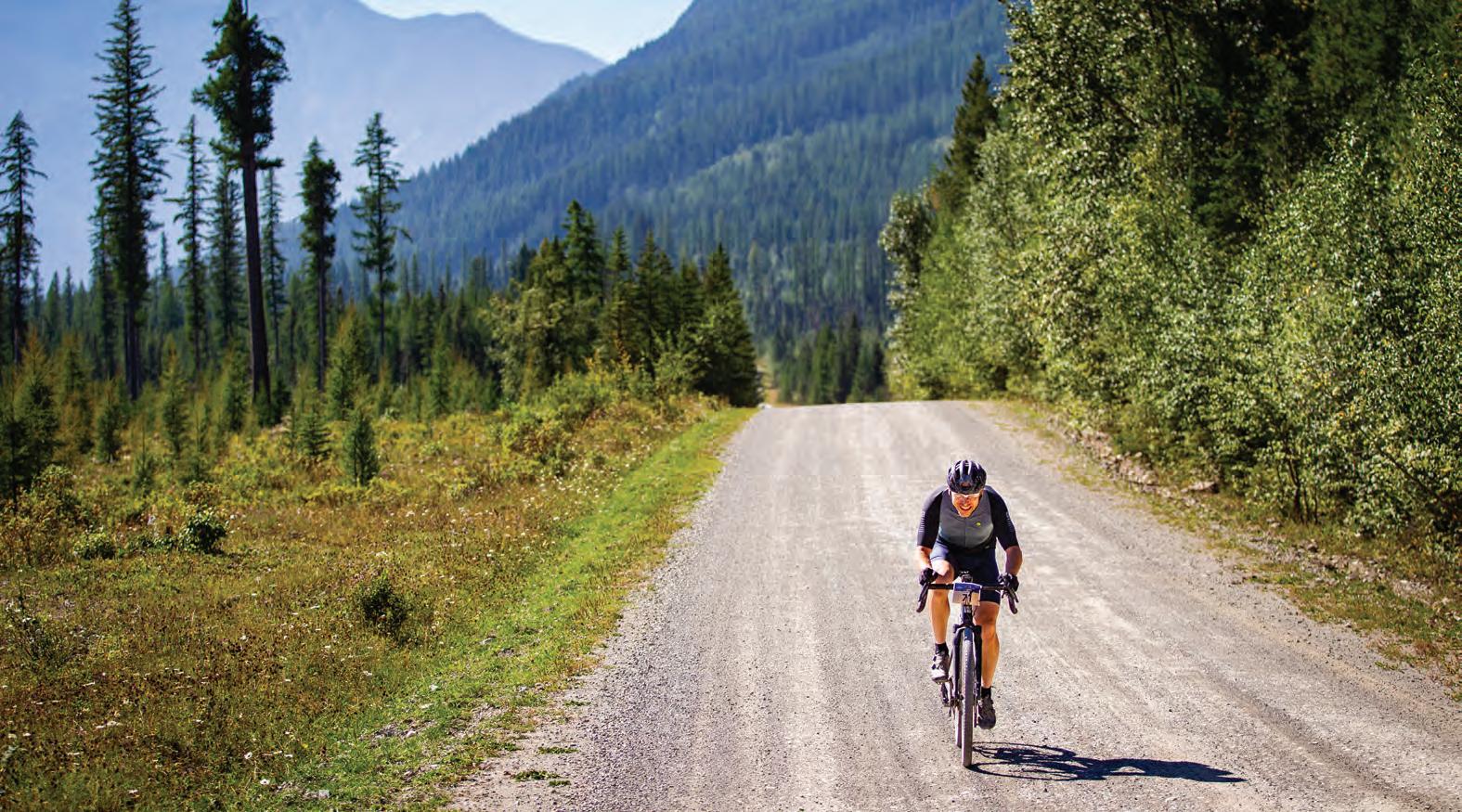
With the road bike on the way out, I decided to join the growing movement of gravel biking, much to the chagrin of my mountain bike friends.
“Nerd,” is all one friend texted me after I posted a photo of my new drop bar gravel bike to social media.
“So you got an XC bike with drop bars. Good for you!” another friend chided.
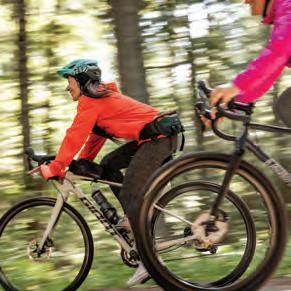
Fair points. The gravel bike is a bit of a reinvention of the old hardtail (or if you go back even further, fully rigid) mountain bike. They have similar geometry and
45-50mm tires one needs for traction and handling off-road.
On gravel bikes being for nerds… It’s hard to argue against that accusation. Given my lifetime of mountain biking and it being a part of my core identity, I’m also a self-professed nerd in most things. So that tracks. The neo-gravel scene (very present in Squamish) does have a certain chicness to it that isn’t necessarily my cup of tea. But riding bikes to me isn’t about the scene. It’s about getting places and having fun along the way.
There were a few reasons I wanted to give gravel biking a go. One was to explore the longer, less technical trails and
But riding bikes to me isn’t about the scene. It’s about getting places and having fun along the way.
gear ratios, and even the two-inch tires we rode on the early MTBs are back. So what’s different? The most obvious is the flared drop bar (similar to those you find on road bikes), which gives the rider more options to place their hands for comfort, aerodynamics and control. The other difference is the larger 700C wheels, which are sized for efficient rolling speed, but are built to accommodate the wider
forestry roads in our collective backyard. Think Sea to Sky Trail between Squamish and Whistler, exploring the Mamquam River FSR, or joining up routes deeper in the Squamish Valley. Riding a mountain bike on a road or path can get a bit monotonous, but gravel bikes are made to do it with more speed and efficiency. Comfort riding over bumps and potholes is sacrificed, sure. But that’s the tradeoff
for covering 50 kilometres or more on an afternoon ride.
Another big reason to pursue gravel was for bikepacking. I’m not particularly interested in riding my fully-ladened bike along roads and highways for days on end. But if it’s off-road primary with more backwater roads in between, you have my attention. Gravel bikes have all the frame mounting points you need to carry more food, more water and more cargo. I’m yet to embark on a bikepacking trip, but I’m certain I’ll have something to say about the experience in this column shortly after I return.
The last reason is simply the reality of aging. I’m still riding my mountain bikes strong and won’t be retiring from the Whistler Mountain Bike Park any time soon, but if and when I do begin to slow down, I want to keep riding bikes with less impact on my body. While I love the idea of pedalling through the European Alps (where motorists actually respect cyclists), road cycling can be treacherous in North America. Taking off down low-traffic gravel roads on Vancouver Island and across the Gulf Islands, or coming back to your accommodation (or camping setup) after an 80-kilometre loop in rural B.C., well, that sounds a lot more attractive to me than it did 10 years ago.
Vince Shuley has officially dipped a toe into the world of gravel biking. For questions, comments or suggestions for The Outsider, email vince.shuley@gmail. com or Instagram @whis_vince. n
RACHEL CARSON’S 1962 book Silent Spring should have been a wakeup call to the world. It opened my eyes—and it’s a big part of the reason I started questioning my career in genetics and decided to devote my life to environmental causes. It exposed the limitations of reductionist Western science and showed how our actions can create unintended consequences throughout interconnected natural systems.
Yet, it drew—and still draws— tremendous, often sexist, backlash from mainstream scientists, industry and media. It cast doubt on the wisdom of awarding someone like Paul Müller a Nobel Prize in
that ate insects—which is most of them— whereas some that don’t rely on insects increased in number. The Science study found many bird species living in forests were stable or increasing.
Marra, who specializes in bird populations, said the study illustrates the folly of society’s focus on constant economic growth.

“The American dream turns into the American nightmare as we start to look at what we’re doing to biodiversity and systems that we depend on as humans,” he told the New York Times.
BY DAVID SUZUKI
1948. The Swiss chemist had discovered DDT, a powerful insecticide credited with reducing the incidence of malaria. While its use on disease-carrying mosquitoes undeniably saved human lives, it also led to the deaths of millions of bald eagles,
Part of the problem, as Carson reported, is that studying phenomena in labs, flasks and growth chambers doesn’t mimic real-world conditions, where wind and rain carry molecules into air, soil and waterways, causing effects that can take months or years to show up, such as weakened eggshells.
Powerful insecticides don’t just kill target insects and, as geneticists know, the “pests” targeted can mutate over time to resist pesticides. Scientists also discovered another important factor: biomagnification. This occurs when toxins become increasingly concentrated throughout the food chain. When birds, bats, lizards and other animals eat insects exposed to chemical poisons, the pesticides accumulate in them and then in other animals, including humans, that eat the birds and other creatures.
What have we learned in the 64 years since Silent Spring was published? Apparently not much. Bird populations are declining catastrophically, as are insects. Scientists point to widespread insecticide use and a heating climate as likely factors.
A recent study in the journal Science analyzed 261 bird species in North America and found that half “showed significant declines from 1987 to 2021, and a quarter showed accelerating declines. Hotspots of accelerating abundance decline were located in regions with high-intensity agriculture (high cropland area, fertilizer use, or pesticide use).”
A 2019 study by Georgetown University ornithologist and dean Peter P. Marra and other scientists found bird numbers in the United States and Canada fell by 2.9 billion, or 29 per cent, since 1970. Another study found bird declines were prevalent among those
Besides insect declines, driven largely by pesticide use, birds face numerous other threats, including habitat loss, collisions with building windows and predation by cats.
When are we going to realize everything is connected? Insecticides are a crazy way to “control” pests. Insects are the most numerous, diverse, abundant and therefore important group of terrestrial animals on the planet. They not only feed a huge number of species—from fish, frogs, reptiles and mammals to birds and even plants—they are also critical for pollination and food production. And they control many other insects by predation.
We think spraying powerful
A world without insects and birds is unimaginable. Every terrestrial ecosystem would collapse...
insecticides to eliminate a tiny fraction that are “pests” to us (mosquitoes, fleas, potato beetles or cotton borers) is sound management. It’s a bit like eliminating murder in a city by killing everybody.
A world without insects and birds is unimaginable. Every terrestrial ecosystem would collapse without insects and countless species would go extinct.
We’ve reached a point where the primary life form the planet could do without is us. A world without humans would be covered in forests and greenery and filled with diverse, abundant species. That’s only because we as a species have become too numerous, technologically powerful and demanding to be a benign rather than negative force on this fragile planet. We must remember that we are part of nature before we destroy everything that keeps us alive and healthy.
David Suzuki is a scientist, broadcaster, author and co-founder of the David Suzuki Foundation. Written with David Suzuki Foundation Senior Writer and Editor Ian Hanington. Learn more at davidsuzuki.org. n


Reducedserviceon Routes5, 7, 20X, 31and 32 toalign with lower seasonaldemand
Seasonal discontinuationof Routes 4, 25 and 33
Seasonaldiscontinuation of free serviceonRoute 7 until winter
Minorscheduleadjustments throughoutthesystem
By Adam Wei The Conversation

It’s a well-established fact that forests and water are deeply connected. For decades, paired-watershed experiments—a scientific method for evaluating land-use impacts on water quantity or quality—have shown that when we lose forests, the total amount of water flowing through our rivers tends to rise.
But a critical question has remained unanswered: does this extra water come from previous reserves, or is it simply “new” rain that the land is failing to hold?
In other words, is forest loss causing our watersheds to lose their internal integrity and leak like a sifter?
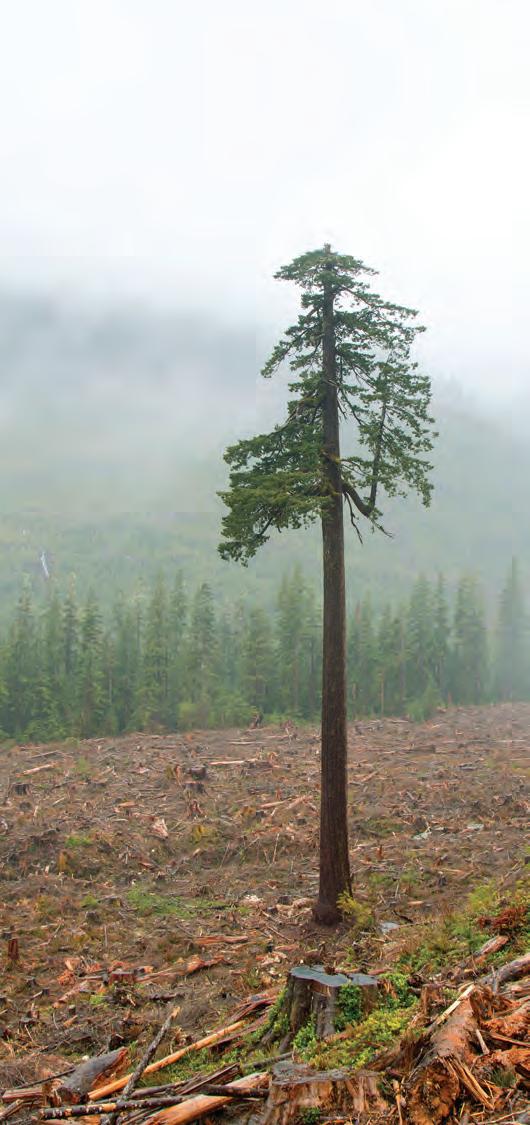
Our recent study at the University of British Columbia analyzed 657 watersheds across the globe. By using a tool called the Young Water Fraction, we found that forest loss significantly accelerates how fast precipitation travels through a landscape.
We estimate that for every one per cent of forest lost, the “young water” in our streams increases by about 0.17 per cent.
Crucially, our research reveals that it isn’t just about how many trees are cut down—it is also about the spatial patterns left behind. The way we arrange forest patches can either aggravate or mitigate this leakage.
Young Water Fraction tells us what proportion of a stream is made up of rain that fell recently—typically within the last two to three months. Ideally, we want a low percentage of young water.
A low amount means the landscape is acting like a sponge, filtering rain through the soil and into groundwater, which sustains the river during dry seasons. A high amount of young water, however, suggests a “leaky” watershed that sheds new rain almost immediately.
The reasons for this leakage are tied to how we treat the land. When a forest canopy is removed, raindrops hit the ground with full force instead of being intercepted by leaves. Furthermore, heavy machinery and logging roads pack the soil tight, making it harder for water to sink in.
Lastly, without trees to breathe water back into the atmosphere through transpiration, the soil stays saturated. When the next rain comes, there is no room left to store it, forcing the water to run off quickly into the stream.
This loss of retention capacity is especially potent in watersheds with shallow groundwater. In these areas, the soil layers are thin, limiting how much rain can be stored. Any disturbance to the land cover lacks a buffer, immediately translating into altered, younger streamflow.
The most striking finding of our work is that the landscape pattern—the spatial configuration of the trees—matters just as much as the total area lost.
Imagine two scenarios: one large, solid block of harvested timber versus many small, scattered patches. Our work confirmed that even if the total area cut is the same, the hydrological impact is different.
We looked specifically at forest edges, the boundary where trees meet open clearings. Interestingly, as the density of these edges increases, the amount of young water tends to decrease.
This happens because these edges are more exposed to sunlight and wind. These “edge effects” can enhance the process of evapotranspiration, driving more soil water to leave the watershed as vapour rather than becoming quick runoff.
This regulative impact is especially powerful in sparsely forested watersheds with less than 40 per cent forest cover. This is because boosting evaporation requires openings large enough to allow sunlight to penetrate from the side and drive microclimatic changes. In densely forested areas, increasing edge density
fragments the remaining open space too much, resulting in smaller gaps that actually attenuate these edge effects.
Our research reinforces the critical role of forests in water management. Beyond the obvious connection between forests and water, we now know more about how forest loss compromises a watershed’s hydrological integrity. The connection between our forests and our water is even closer than we previously expected.
This research also challenges the idea of binary forest management that focuses on either keeping or losing trees. This is particularly vital for regions where the timber industry is integral to the economy.
The direct lesson for the industry is that we should avoid uniform, regularly shaped clearcuts, which result in low edge density. Instead, we advocate for replicating the complex, irregular patterns found in nature. This can be achieved through silvicultural techniques such as variable retention harvesting, selective logging and continuous cover forestry.
Taking into account a forest’s landscape pattern provides a way to balance forest conservation with development: by optimizing how forests are managed, it’s possible to mitigate the negative hydrological impacts caused by logging.
By designing with the landscape in mind, we can help ensure our watersheds continue to function as sponges rather than sifters.
This article originally appeared in The Conversation on March 29. Adam Wei is a professor in the Department of Earth, Environmental and Geographic Sciences at the University of British Columbia. He does not work for, consult, own shares in or receive funding from any company or organization that would benefit from this article, and has disclosed no relevant affiliations beyond their academic appointment. n

‘The gifts, not the gaps’: Mike Shaw to speak at Whistler
SKIER SHAW RECOVERED FROM A DEBILITATING SPINAL CORD INJURY IN 2013
BY DAVID SONG
IT IS MIKE SHAW’S belief that when one door closes in life, another will open.
Such things don’t always happen right away. It can take months or years for a fruitful transition to coalesce, or a daunting obstacle to be conquered— yet that is no cause for despair. Shaw feels that personal growth occurs in the proverbial hallway between doors, a time when one looks for their next goal and trusts that it shall be found.
These aren’t mere platitudes, but rather insights borne of a life lived valiantly. Shaw has experienced lifealtering setbacks: a pair of injured ankles that ended his dream of competitive freestyle skiing, and a paroxysmal accident that broke his neck.
Despite being an incomplete quadriplegic who faces daily challenges to his quality of life, the Vernon, B.C. native elects to focus “on the gifts, not the gaps.” Sea to Sky locals will have a chance to hear his story at the upcoming Whistler Adaptive Sports Program (WASP) No Limits fundraiser.
“Whistler Adaptive Sports Program chose Mike Shaw as a guest speaker
because his story reflects both the joy and the risk that come with time in the mountains,” said WASP communications lead Jennifer Brown. “While skiing injuries are not unfamiliar in our community, Mike’s journey shows what can happen when things don’t go to plan and how sport and community can play a powerful role in rebuilding life afterward.
“Our program supports anyone living with a disability, whether they are born with it or acquire it later in life. Mike’s experience helps illustrate that adaptive
déjà vu to the first. His body would no longer cash the physical cheques his mind tried to write, and there were no more freestyle contests in his future. There was, however, another path to walk: coaching.
By 2013, Shaw had joined Canada’s Olympic Development Halfpipe Ski Team. He never attended a Games, but coached several who have, including former Olympic champion Cassie Sharpe and
“My world came crashing down next—I knew what a spinal cord injury was.”
- MIKE SHAW
sport isn’t just about participation: it’s about rediscovering confidence, connection, and possibility.”
Shaw broke one ankle in Grade 12 and used the time sidelined to begin university with every intention of returning to compete. Unfortunately his other ankle gave out as well, knocking him out of three consecutive seasons. Even when relatively healthy, he could not land switch while spinning right, and could not take off switch while spinning left.
The X-rays of his second ankle injury made Shaw’s heart sink, for it was like
newly-minted halfpipe bronze medallist Brendan Mackay. The role of coach gave Shaw an outlet for his love of skiing, but it was also the realm in which his life transformed forever.
He was in Copper Mountain, Colo. on Dec. 16, 2013, for a World Cup event. Sharpe and Mackay had nailed their final training session, but two others were feeling anxious so Shaw opted to ski with them. He knows first-hand that when adversity mounts, elite athletes should be reminded about the F-word (fun, not the other one) rather than wallowing in stress.
Shaw had executed a cork 720 hundreds of times before. It was a routine trick… but not on this day, where he landed on soft snow and bounced violently forwards onto his face. His feet rose up over his body like a scorpion’s tail and he immediately felt a brief, piercing pain.
“I thought I was landing on my feet and it was really confusing that my head hit the ground,” Shaw remembered. “When you crash, you always try to get up as soon as you can and brush yourself off. That’s just human nature, and I couldn’t. My world came crashing down next—I knew what a spinal cord injury was. I knew I was paralyzed from the neck down, couldn’t move my arms, nothing in my torso, legs, nothing.”
Hours later, his neck was surgically fused in an operation room. Doctors advised him to brace for the likely possibility that he’d never walk again, and would be fortunate just to regain movement in his arms.
As a 26-year-old man born with competitive fire, Shaw tried to prove that bleak prognosis wrong. Recovery should have been impossible given his condition at the time, but something within insisted: “I’m going to leave the door of opportunity open, even if it’s just like a crack that one day I might walk through it again.”
Shaw was hopeful, but not delusional. He understood his life would never be the same again, especially in athletic terms, so he went back to an old friend.
Josh Dueck earned three Paralympic
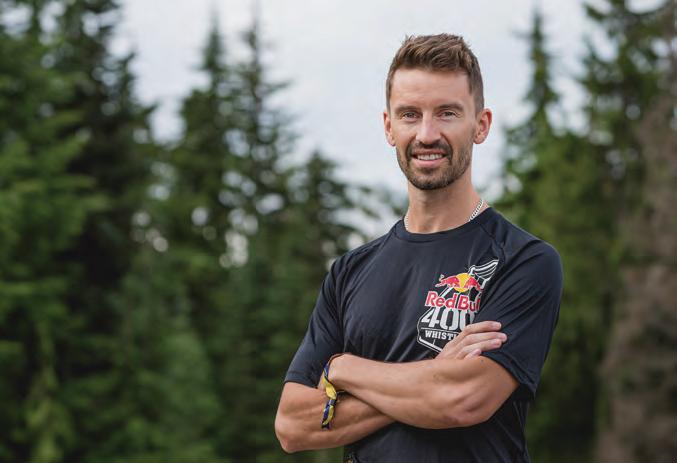
medals during his Hall of Fame sitski career. He was Shaw’s freestyle coach when he broke his back in 2004 overshooting a demonstration jump. Shaw knew to seek out Dueck’s help as he navigated recovery and faced his devastated family—but glimmers of healing began to emerge.
“I felt overwhelming gratitude … which flooded my body with the right neurochemistry to heal,” he said.
Three-and-a-half months after breaking his neck, Shaw walked out of the hospital. Two-odd months after that, he walked five kilometres in 1.5 hours during Vancouver’s Scotiabank Marathon. He even skied in Whistler on the one-year anniversary of his accident using the very same skis he crashed on.
Nowadays Shaw is a registered clinical counsellor who founded Gratus Health to aid a diverse clientele. He understands many people don’t recover from traumatic brain or severe spinal injuries, and that some do not experience his good fortune despite their enormous heart and unflappable faith.
Regardless, he would say: “If you can work through some of the mental and emotional duress, it makes any chance you have at physical healing better and faster. You can really lighten the burden for people just by unpacking the emotional content, the identity issues, the grief, the depression.
“If anyone in the mountain community has experienced an injury that ended their season, you know what I’m talking about. It’s a hard place to find yourself mentally and emotionally. Some people need adaptive support to explore parts of their character … if you like pushing your limits and enjoy the mountains, those parts of you do not change [when injured or sick].”
Shaw possessed great anaerobic power in his freestyle days, but now commits to endurance sport. In 2018 he finished the Red Bull 400 (a gruelling footrace directly up the ski jumps at Whistler Olympic Park), and a year later
captained 700 Canadians during the Wings for Life World Run fundraiser, while 2023 brought a week-long backcountry skitouring trip to mark the decade anniversary of his scorpion incident.
Aerobic exercise reminds him to compete against himself, and it’s a good metaphor for life in a world fixated on comparison between people.
“Endurance sport is so different [from freestyle skiing], but it fuels the same passion for sport in me,” remarked Shaw. “It’s symbolic of what an adaptive sport can do for someone else because this is my way of adapting. I’m very lucky, and that really fuels me to do more in all areas of my life. I feel like I’m on my
“I’m very lucky, and that really fuels me to do more in all areas of my life. I feel like I’m on my bonus round or something.”
- MIKE SHAW
bonus round or something.”
Wild Blue Restaurant + Bar is on deck to host the WASP fundraising gala on April 24 from 7 to 11 p.m. Shaw expressed delight at sharing his testimony and recognized that individuals with disabilities are a relatively small demographic with a massive need. It is his goal to help address that need in any way possible.
Indeed: when one door closes, another opens, and though the hallway between them may be dark, sometimes it leads to a balcony with a view of the mountains (or any other positive metaphor one would care to name).
Visit whistleradaptive.com/support/ nolimits for gala tickets and details. n

WWW.WHISTLERLAWYER.CA adam@whistlerlawyer.ca|604.905.5180




DIVORCELAWYERSEPARATIONADVICE
•ContestedandUncontestedDivorce• AssetandPropertyDivision
•AssetandPropertyDivision •ParentingArrangements
•ChildandSpousalSupport •ChildandSpousalSupport •CourtApplications •SeparationAgreements
Wecanalsohelpwith MarriageAgreements (oftencalledpre-nuptials)and CohabitationAgreements.

332-4370LorimerRoadWhistler Tel:604-932-3211 k.emond@raceandco.com
FarepricesarechanginginthePemberton Valley TransitSystem.Seebelowfordetails. NEW:
Geta Pemberton-WhistlerDualDayPASS andridealldayonallPembertonlocal, commuter,andWhistlerbusesviaUmo.
Anew Pemberton-Whistler30-DayPass isalsoavailableforunlimitedtravelonall PembertonandWhistler routesviaUmo.
*Eligibleforstudents13-18andseniors65+ DualPembertonandWhistlerPasses
Formoreinformationpleasevisit bctransit.com/pemberton orscantheQRCode

BY DAVID SONG
FOR A THIRD consecutive year, the Bearfoot Bistro is rolling out its signature Magic of Maple springtime menu.
Billed as a “Sugar Shack Dining Experience,” this offer replicates the classic Quebecois tradition of gathering and eating at sugar shacks: log cabins where sap from maple trees is boiled to make various products. Culinary director Dominic Fortin and his team have prepared a four-course menu starting at $49 per guest, with new items compared to last year.
Take for example the hearty Quebec elk sausage and tenderloin duo with parsnip and madeira jus (a rich French sauce). As the menu’s largest course it does come with a $28 supplementary charge, but promises to be popular with meat lovers.
Another novel option is the smoked beef sausage accompanied by maple onions, mustard jus and aligot: a stretchy version of mashed potatoes made with cheese curds.
Visitors in search of a good appetizer may opt for the Quebec pea soup, described by Fortin as “a grandmother’s recipe” with sourdough, maple caramel and braised ham.
Last but definitely not least if you’re a fan of sweets, there is a dessert buffet. Customers begin with a nitro ice cream sundae, a Bearfoot classic from 2008 prepared with Tahitian vanilla and maple syrup. They’ll be able to select
main courses, so we’re bringing back the [maple miso black cod], but it’s going to be a bit lighter. The vegetarian [maple glazed maitake mushroom] dish is new and it’s going to be much lighter.”
Several Bearfoot staff, like Fortin and marketing/communications manager Marc Des Rosiers, are Quebecois, and
“[W]e want them to have something more than good food, good wine, good service. It’s all about creating an experience.”
- MARC DES ROSIERS
from a range of additional toppings for their sundaes like maple taffy.
These newer dishes feature alongside returning favourites like the Quebec tourtière, a kind of French-Canadian meat pie.
“Every year the feedback that I get is that it’s a lot of food, but it’s still going to be a lot of food,” said Fortin. “To move forward from last year, I tried to put a few dishes in that are a bit lighter for
they look back fondly on the sugar shack days of their youths. All are pleased to share this aspect of their culture with Sea to Sky locals and the diverse array of international visitors that pass through every year.
“For us at the Bearfoot Bistro, what we’d like to deliver to the guests is we want them to have something more than good food, good wine, good service. It’s all about creating an experience,”
commented Des Rosiers. “We obviously have a good representation of products from all across the country … but it needs to be a little bit more immersive.
“We just want to make this an annual event that takes place in the spring, to show how beautiful maple syrup is and how you can cook with it. Now people are really discovering the wonders of maple products and seeing [them] as ingredients which are easy to integrate into many recipes. Moving into the shoulder season, restaurants in Whistler are all coming up with the spring deals but we said: ‘we need to do something a little bit more special and a little bit more unique.’”
That’s why Bearfoot employees are dressed in plaid shirts and other rustic apparel similar to what Quebec’s sugar shack workers don. Restaurant decor changes for three weeks and Francophone music plays to help set the tone.
“It’s very rewarding, especially when I get the time to go to a table and explain to tourists or locals how maple syrup is made,” Fortin added. “Now I realize that many people have no idea where it comes from, but everybody appreciates it when we take the time to tell them the story behind it.”
Having begun on April 8, Magic of Maple will remain on tap until April 30. Visit bearfootbistro.com/the-magic-ofmaple for more information. n


OPEN DAILY: 6a.m. to 9 p.m. *some exceptionsapply
F FLEXIBLEREGISTRATION Flex-reg’classeshavea separatefeeand allowyoutoregisterfor classesonthedaysthatfit yourschedule.
R REGISTEREDFITNESS Registeredfitnessclasses haveaseparatefeeanda definedstartandenddate. Pre-registrationisrequired fortheentire setofclasses.
I INCLUDEDFITNESS Theseclassesareincluded withyourpriceofadmission fornoextracharge.
POOLHOURS
APR10APR11APR12APR13APR14APR15APR16









BY DAVID SONG
SONREAL LIKES to keep it real, especially when the people in his life are concerned.
The accomplished rapper, hiphop man and songwriter (a.k.a. Aaron Hoffman) has been fully independent since 2023. His professional partners are also his friends: including Pembertonian DJ Rich A who’s been on board since 2008, and Dane Collison who has filmed SonReal’s music videos since the artist graduated from high school.
At one point SonReal was signed to a major label, Capitol Records, and found himself in board meetings with 50 people—but even then, a do-it-yourself approach came naturally. He brought in all his own content, and some tracks with 45 million-plus views on YouTube were recorded in his bedroom. When Capitol dropped him in 2017, it may have been a blessing in disguise.
“I learned that business can never get in between friendship if the friendship’s real,” says SonReal. “People always say
‘don’t do business with your friends,’ but from my experience they’re the people who actually care about you. Why wouldn’t you want people doing business with you that actually care about your livelihood, your family? My friends are all uncles to my kids.
“Whereas if you’ve got somebody that might have all the accolades in the world but doesn’t really know you, often [when
SonReal’s salt-of-the-earth outlook may have been formed by his humble background. He grew up in the “workingclass town” of Vernon, B.C. and has been an artist virtually nonstop since age 15.
Moving to Vancouver after high school, he worked in construction to pay bills, but career-wise there was never a Plan B
“I’ll do whatever I have to do to make sure everything’s fine and it’s always worked out.”
- SONREAL
there’s conflict] the bridge gets burnt. I don’t let bridges burn with people I care about. I’ll do whatever I have to do to make sure everything’s fine and it’s always worked out.”
Eight Juno Award nominations and more than 200 million global streams would indicate that SonReal’s career has, in fact, worked out. He views the recognition as a massive honour, and knows that his 15-year-old self would be “blown away” by this level of achievement.
outside of music.
The 2013 hit single “Everywhere We Go” delivered fame and popularity, and he hasn’t looked back.
Guests at a SonReal concert will quickly find out that he’s a nuanced performer. At one moment he could be pouring his heart out during an emotional acoustic tribute to his late father, the next he’ll be getting people on their feet with a bass-driven rap banger.
“I would describe my music as
vulnerable, relatable, honest, and I write music for the everyday person that’s open-minded because I don’t really make one genre,” SonReal comments. “My fans are regular people of all sorts. There’s no rhyme or reason to my music, and I think that’s what makes it special. I think people really leave my shows with something—I’ve heard that from a lot of people anyway.”
Whistler was more or less the first place SonReal made money from his music, because professional skiers would occasionally feature his tracks in their films. As a younger individual he was surprised to learn that Whistlerites and Pembertonians knew of him, and he’s very excited to return for the World Ski and Snowboard Festival (WSSF).
“It is going to be an absolutely legendary night,” the Vernon native says. “I’m bringing out some special guests with me. [People] can expect, honestly, a roller-coaster of great vibes. I’m going to be playing all the songs that people know, but I’m also going to be playing some of these new songs. I’m bringing my guitar out, I’m going to be singing lots, and then obviously there’s going to be a lot of hype songs.”
SonReal and DJ Rich A perform on April 11 at Garfinkel’s from 7 p.m. until late. Check out wssf.com/music for more details. n
DOBSON, BENJAMIN BUTTERFIELD
ANNE GRIMM
BY DAVID SONG
OPERA CAN be rather stigmatized.
Most laypeople think of it as a quickly recognizable, yet foreign medium defined by performers singing very loudly for very long at glass-shattering decibel levels and languages other than English. Alexander Dobson and three of his internationally respected peers wish to change that stereotype, which is why they’re going on tour.
Whistler is part of their British Columbian itinerary, and they’re delivering a program dubbed “Opera! Are You Kidding Me?”
Dobson, an accomplished baritone, has starred with groups like Théâtre du Nouveau Monde and Orchestre Métropolitain, Florentine Opera and L’Opera de Montréal. His wife, Jimin Shin, has played violin and viola for several ensembles including the Juno Award-winning l’Harmonie des Saisons. They’ll be joined by another married couple, Benjamin Butterfield (a veteran tenor of 35 years) and soprano Anne Grimm (who has toured extensively with the Amsterdam Baroque Orchestra and Amsterdamse Bachsolisten).
Rounding out the cast is Frances Armstrong, who holds a master’s degree in collaborative piano from the University of Toronto.
“This is a very light way to introduce opera very casually to people who don’t really know the art form and just give them a little taste of different productions,” Dobson says. “There’ll be a little bit of banter going on, and we’ll just have a fun time. Anyone can feel the magic that happens when there’s beautiful music being played or sung, so it doesn’t matter what the language is— we can always feel that beauty through music. Of course, if a piece is in another language, we’ll either give translations or give the audience a little gist of what’s going on.”
Iconic composers like Wolfgang Amadeus Mozart, Johann Sebastian Bach and George Frideric Handel once wrote for opera, as did more historically recent figures like Kurt Weill and Noël Coward. Dobson and his group will be presenting selections from each of them and more.
Perhaps the art form most directly analogous to opera is musical theatre. Both may sport elaborate costumes, orchestras, key plotlines and diverse casts with all vocal ranges represented.
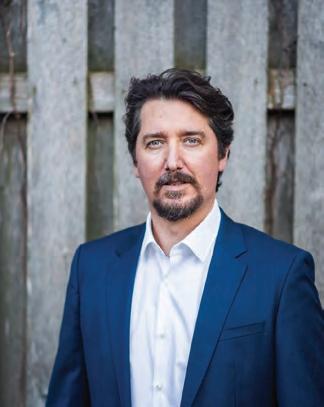
However, traditional opera talents focused mainly—or even exclusively— on their singing to hit the right notes and project them throughout massive concert halls.
Acting, however, is no longer an afterthought.
“Now because of film, because of the Metropolitan Opera, the live broadcasts, acting cannot be secondary,” explains Dobson. “They need to be equal, so as long as you’re working on your technique, you’re also learning your acting skills: which is mostly research but also a lot of body movement, a lot of interpretation of how your body actually is moving while you’re singing. I feel that the art form has changed a lot, and I think my colleagues are part of that new generation. Singing is still first, but the acting is almost at par.”
For example, Grimm has put on contemporary dance routines on stage before despite her lack of formal training in that area. Shows like Handel’s Theodora grant Dobson a chance to flex his own actor muscles by portraying a villainous character whose personality is informed both by his interpretation and by musical subtext.
Dobson has never performed in Whistler, but he looks forward to doing so. He hopes that many Sea to Sky locals will show up on April 12 at 5 p.m. and give “Opera! Are You Kidding Me?” a try.
“It’s going to be a lot of fun,” promises the British-Canadian singer. “[Audience members] should leave their preconceptions of opera at the door. This is just beautiful music and people having fun … maybe you’ll learn a little bit about opera that [you] didn’t know.”
Visit whistlerchambermusic.ca/ concert/opera-are-you-kidding-me for tickets. n





LocatedinWhistler’s Creekside, Roland’s Pubisyouronestopshopfor greatfood,goodfriendsandthegame you’vebeenlookingfor.
Comeinforlunch WednesdaythroughSunday before3p.m.toget astamponyourcard. On Wednesday,youget2stampsonyourcard! Howgoodisthat?! Childrenarewelcomeuntil10pmever yday. (*Somerestrictionsapply)

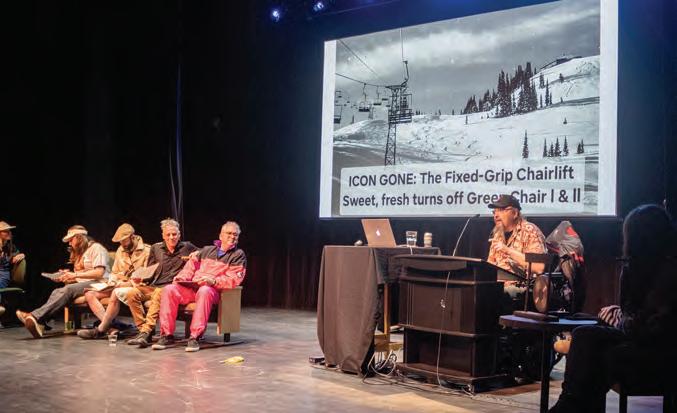
BY BRONWYN PREECE
IT COULD BE ARGUED that a signpost or a benchmark of a town’s maturity can be tabulated by how many significant symbols/things/happenings/elementsuniquely-local that have come to be associated with it can now be referred to in the past tense… measuring a community’s forward trajectory by its “icons gone.”
Lamenting the legacy of legendsleft-behind is the focus of next week’s Icon Gone event put on by the Whistler Museum at the Maury Young Arts Centre/ Millenium Place. The event began in 2008 and ran for many years up until 2013. It was resurrected last year with yet another all-star cast.
In a lively evening of friendly competition (tinged with debaucherous debate… it is, after all, 19-plus), six notable locals will take to the stage and argue for what they think is the largest loss in the landscape of Whistler-specific icons. The audience (through applauseand-yell-o-metre) along with a panel of equally notable judges will crown a champion. Nudity was the winner of last year’s debate. Citta’ (pronounced Cheetah’s, for those who don’t know), the runner-up.

This year’s panel promises to deliver on all levels, covering the extremes from the raunchy to the contemplatively serious. Past topics have included everything from fixed-grip chairlifts, A-frames and The Boot Pub to the Toad Hall poster, the Great Snow, Earth and Water Race and beavers. Gravity even won one year.
The purpose of the evening is two-, even three-fold. Undeniably, entertainment and community fun are a major focus. However, the event also serves as a way to highlight the Museum’s local archive—and remind
people of its absolute essential relevance. Through the eyes of the present we are given tools to reflect upon our past. Icon Gone serves to illustrate the value of preserving our stories, our legacies, our legends and some of the many ways which we can keep them alive. Humour is one of them, a method of honour. The archive is not a dusty, musty collection— it is active, vital and alive—infused only by our present perspectives.
In a Dec. 5, 2025 editorial titled “Who remembers Whistler?” Pique Newsmagazine editor Braden Dupuis deftly articulated the value of the Museum. Icon Gone offers the opportunity to showcase Dupuis’ points, worth repeating anew: “If we don’t invest in institutions that collect, preserve, archive, and explain, we lose more than objects and photographs. We lose context. Identity. A sense of place beyond postcards and ski packages.
“Left unchecked, the version of ‘Whistler history’ that remains will be curated by marketing budgets: sleek, sanitized and built for outside consumption. It’s cultural erasure in its most casual, passive form …
“By preserving history, we don’t resist change, we anchor it in respect. We ensure Whistler doesn’t forget it is more than a ski-lift and slopes, a playground for the rich or an ATM for faceless corporations—that it is a real community built by people, labour and continuity.”
In the spirit of continuity—through raucous reverence—let us celebrate the cornerstones of this community.
On Friday, April 17 at 7 p.m., join judges Ace MacKay-Smith, Julia Murray and Brandon Barrett as together we applaud debaters Feet Banks, Princess Stephanie, Stinky, and Laugh Out Live’s Rebecca Mason as they historically hammer home their iconic topic of choice!
For more information and tickets, please visit whistlermuseum.org. n
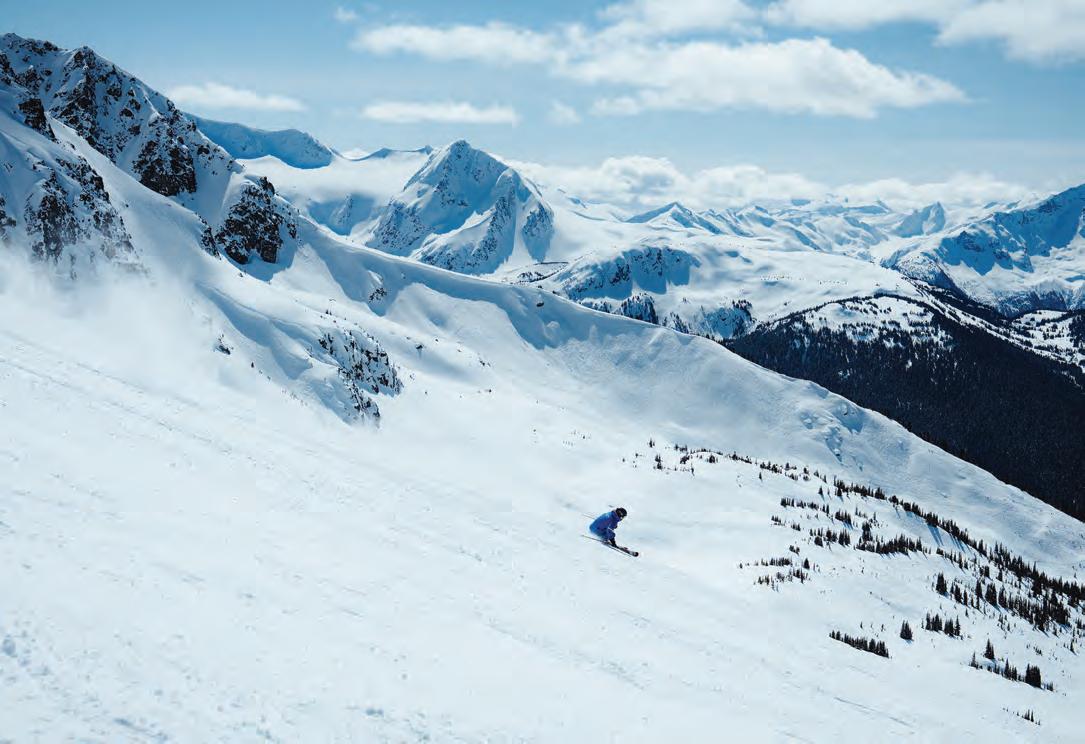
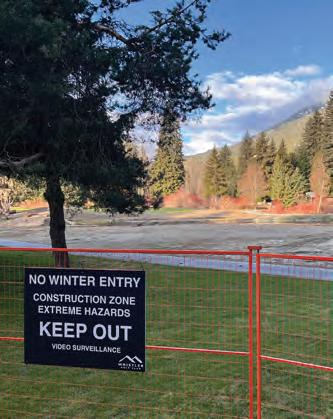
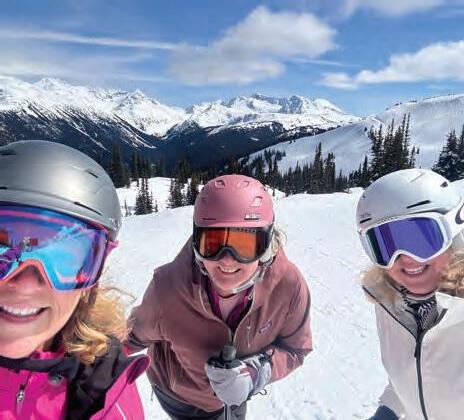




C.R. Avery brings his long-running East Van Abbey Cabaret back to Whistler with a whole new show.
Featuring his house band, the Storm Collective, along with a host of talented artists delivering everything from rock ‘n’ roll and boogie blues to spoken word, performance art, comedy and dance. It’s an eclectic, high energy night in a cabaret setting at The Point.
> April 10, 7 to 10 p.m.
> The Point Artist-Run Centre
The Point’s Jazz & Blues Jam is fun for all ages and abilities. Visitors or spectators are also welcome, if you prefer to hang out and listen in.
> April 12, 1 to 3 p.m.
> The Point Artist-Run Centre
Lights, camera, action and POW! An evening of discussion, reflection and storytelling with a dynamic group of snowboarding documentarians and creatives. Featured speakers include Dano Pendygrasse, photographer of The Golden Age of Snowboarding; Gabe Langlois, cinematographer of The Art of Flight; Erin Hogue, National Geographic photographer and X-Games gold medalist for actions sports photography; and Jody Wachniak of Airtime Podcast.
> April 13, 7 to 9 p.m.
> Whistler Museum
Here’s a quick look at some events happening in Whistler this week and beyond. FIND MORE LOCAL EVENT LISTINGS (and submit your own for free!) at piquenewsmagazine.com/local-events
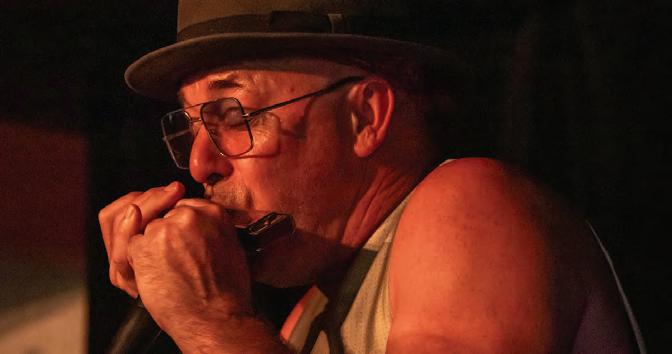
The Whistler Public Library in partnership with Pearl Space, are hosting a public display bearing witness to the serious problem of gender-based violence. Each shirt hanging on the Clothesline is decorated with words or images to represent a participant’s personal beliefs, understanding or experiences of gender-based violence.
> April 13 to 17
> Whistler Public Library
ARIES (March 21-April 19): Unexpected deliverance? Lucky rides? Beginner’s grace? Dreamy, gleaming replacements? To the untrained eye, it may look like you are bending cosmic law in your favour. In truth, you’re simply redeeming the backlog of blessings you earned in the past—acts of quiet generosity and unselfish hardship that never got their proper reward. Serendipitous leaps? Divine detours? Shortcuts to victory? Welcome the uncanny gifts, Aries, even if they’re not what you expected.
TAURUS (April 20-May 20): The current phase of your destiny could disturb you if you’re not super patient. Life seems to be teasing you with promises that then go into hiding. You’ve been having to master the art of living on the edge between the BIG RED YES and the GREY MURKY NO. My advice: Imagine your predicament as an intriguing riddle, not a frustrating ambiguity. See if you can figure out how to grow wiser and stronger in response to the evasive mysteriousness. My prediction: You will grow wiser and stronger.
GEMINI (May 21-June 20): Why it’s always triple-great to be a Gemini, drawing on an abundance of mercurial wisdom: 1. You excel at the art of translation and are skilled at finding common ground between different realms. You can oscillate and flow between the lyrical and the pragmatic, the insightful and the comic, the detailed focus and the big picture. 2. You know that consistency is overrated. Your capacity to harbour multiple perspectives is a superpower. 3. You get to be both the question and the answer, proving that wholeness includes all the fragments. All the aptitudes I just named should be your featured approaches in the coming weeks.
CANCER (June 21-July 22): The saga of Troy is one of the most renowned tales from ancient Greece. Yet the fabled setting of Homer’s epic tale, the Iliad, was a settlement of just under three hectares. Let that detail resound for you in the coming weeks. It’s an apt metaphor for what’s taking shape in your life. A seemingly modest situation could become
WEEK OF APRIL 10 BY ROB
the stage for a mythic turning point. An experience that starts small may grow into a story of immense and lasting significance.
LEO (July 23-Aug. 22): Many people have a favourite number they regard as lucky. Some choose it because it showed up at a major turning point in their life. Others derive it from their birthday or from the numerology of their name. Plenty are drawn to “master numbers” like 33, 77, or 99. Personally, I give three numbers my special love: 555, the square root of -2, and 1.61803, also known as the golden ratio in Fibonacci-related patterns. I hope this nudges your imagination, Leo. Your fortunes are shifting now in the direction of an unusual kind of luck, so it’s a potent moment to select a new lucky number. I suggest that you also choose a new guiding animal, a fresh initiation name, and a charged symbol to serve as your personal emblem.
VIRGO (Aug. 23-Sept. 22): Do you know what ignorance is causing you to suffer? Is there a teacher or teaching that could provide an antidote? I suspect you are very close to attracting or stumbling upon the guidance you need to escape the fog: maybe a therapist who can help you undo a hurtful pattern, a mentor to inspire your quest to do work you long to do, or a spiritual friend who reminds you that you’re not merely your latest drama. Your task in the coming weeks is not to obsess on fixing everything at once, but to seek one or two sources of wisdom that illuminate your blind spots and educate your heart.
LIBRA (Sept. 23-Oct. 22): I’m an honorary Libra, with three planets and my lunar north node in your sign. So I speak with authority when I declare that fostering harmony, which is a Libran gift, is only superficially about smoothing away friction and asymmetry. More importantly, it’s about rearranging reality so that beauty is a central feature. The goal is to accomplish practical wonders by stimulating grace and fluency. When I’m best expressing my Libra qualities, I
A fun annual event open to skiing and snowboarding mums, step-mums, grand-mums, and of course friends of mums who are looking for a super fun day on the slopes.
> April 15, 8:30 a.m. to 5 p.m.
> Whistler Blackcomb
The Spontaneous Shakespeare Company takes you on a deep dive into England’s favourite Bard, and without the script! Be the king you’ve always imagined yourself
BREZSNY
don’t ask how I can please everyone, but rather, how I can serve maximum goodness and intelligence. Here’s another tip to being a potent Libra: Know that your enchanting charm is a lubricant for the truth, not mere decoration. Here’s your homework: Beautify one system you use every day so it serves you with less friction and more pleasure.
SCORPIO (Oct. 23-Nov. 21): You are potentially an expert in creative destruction. You have a knack for eliminating what’s unnecessary and even obstructive. What has outlived its usefulness? You’re prone to home in on energy drains and unleash transformative energy. And yes, this intensity of yours may unnerve people who prefer comfortable numbness—but not me. I love you to exult in your talent for locating beauty and truth that are too complicated for others. I applaud you when you descend into the darkness to retrieve dicey treasures. PS: You’re not shadowy or negative. You’re a specialist in the authentic love that refuses to enable delusion or sanction decay.
SAGITTARIUS (Nov. 22-Dec. 21): My Sagittarian friend Artemisia bemoans “the scarcity of collective delight.” She wishes there were more public acclaim for stories about breakthrough joys, miraculous marvels, and surprising healings. Why are we so riveted by reports of misery, malaise, and muck, yet so loath to recognize and celebrate everything that’s working really well? She also mourns the odd habit among some educated folks to mistake cynicism for brilliance. If you don’t mind, Sagittarius, I’m assigning you to be an antidote in the coming weeks. Your task is to gather an overflowing harvest of lavish pleasure, fun epiphanies, and richly meaningful plot twists. Don’t hoard any of it. Spread it around to everyone you encounter.
CAPRICORN (Dec. 22-Jan. 19): “Id” is a psychoanalytic term. It’s the part of the psyche where basic instincts, needs, and drives reside. On the one hand, the id supplies a huge charge of psychic energy. On the other hand, it
to be, the trickster fairy on a midsummer’s night, or even the star-crossed lover destined for tragedy. In this workshop, participants lean into Shakespearean archetypes, play with iambic pentameter, and turn simple suggestions into a royal tragedy or a comedy of errors. Be quick, there are only 20 spots available!
> April 15 to 16, 6 to 8:30 p.m.
> Maury Young Arts Centre
Celebrate National Canadian Film Day with a screening of the 2025 Canadian mockumentary-adventure film, Nirvanna the Band the Show the Movie. Longtime friends and bandmates Matt Johnson and Jay McCarrol have been trying for over a dozen years to book a show for their band through whacky and unconventional methods. When their latest (and most outlandish) effort leads to them accidentally travelling back in time, they get taken on an adventure that threatens to change everything!
> April 15, 6 to 8 p.m.
> Whistler Public Library
Hunter Gather is hosting a fundraiser in support of Zero Ceiling’s outdoor youth programs this summer. A $1 donation from every meal or alcoholic drink (dine-in or takeout) goes directly towards the cause, and Howe Sound Brewing has generously provided a community keg. There will also be a raffle featuring outdoorthemed prizes, with tickets available for $20 or 3 for $40. There is no entry fee, just donate what you can or come by for a drink to support a great cause!
> April 16, 6 to 9 p.m.
> Hunter Gather
mostly operates outside conscious awareness. Consider the implications: The fierce, pulsing centre of your life force is largely hidden from you. Most of the time, that veil is protective. Encountering the id directly can be overwhelming or unsettling. But in the coming weeks, you Capricorns are poised to cultivate a more interesting and righteous relationship with your high-voltage core. Do you dare? Treat your id as a brilliant but untamed creature. Extend a careful, curious invitation for it to show you more about itself.
AQUARIUS (Jan. 20-Feb. 18): In architecture, a “clerestory” is a high window that brings light into a space without compromising privacy. It illuminates without exposing. I suggest that you find metaphorical equivalents for clerestories, Aquarius. Look for ways to let spaciousness and brightness into your world without disturbing your boundaries. Your assignment is to avoid swinging between total lockdown and overexposure. The best option: strategic vulnerability and selective transparency. Allow people to see selected parts of you without giving them access to everything. Be both open and discriminating.
PISCES (Feb. 19-March 20): In 1903, the Wright brothers flew a primitive model of the first airplane. How did they prepare the way for their spectacular milestone? Their workshop was a bicycle shop, not a high-tech, state-of-theart lab. By building and fixing bikes, they learned key insights about flying machines. The lesson for you, Pisces, is that mastery in one area may be transferable to breakthroughs in another. With this in mind, I invite you to evaluate how your current skills, including those you take for granted, might be repurposed. Methods you developed in one context could solve problems in another. You shouldn’t underestimate the value of what you already know.
Homework: Even if you don’t send it, write a letter to the person you admire most. Newsletter.FreeWillAstrology.com
CALL OR PLACE YOUR CLASSIFIED WITH OUR ONLINE SERVICE FOR EITHER PRINT OR ONLINE...OR BOTH! Get
Î Secure & scamless
Î Fully searchable
Î Targeted online community
Î Categorised listings
Î No reposting
Î Trusted by locals
Î Make your listing stand out with featured locations




Î
Î
*
Free ad design, colour options, incentives for ad frequency. Contact a sales rep today.
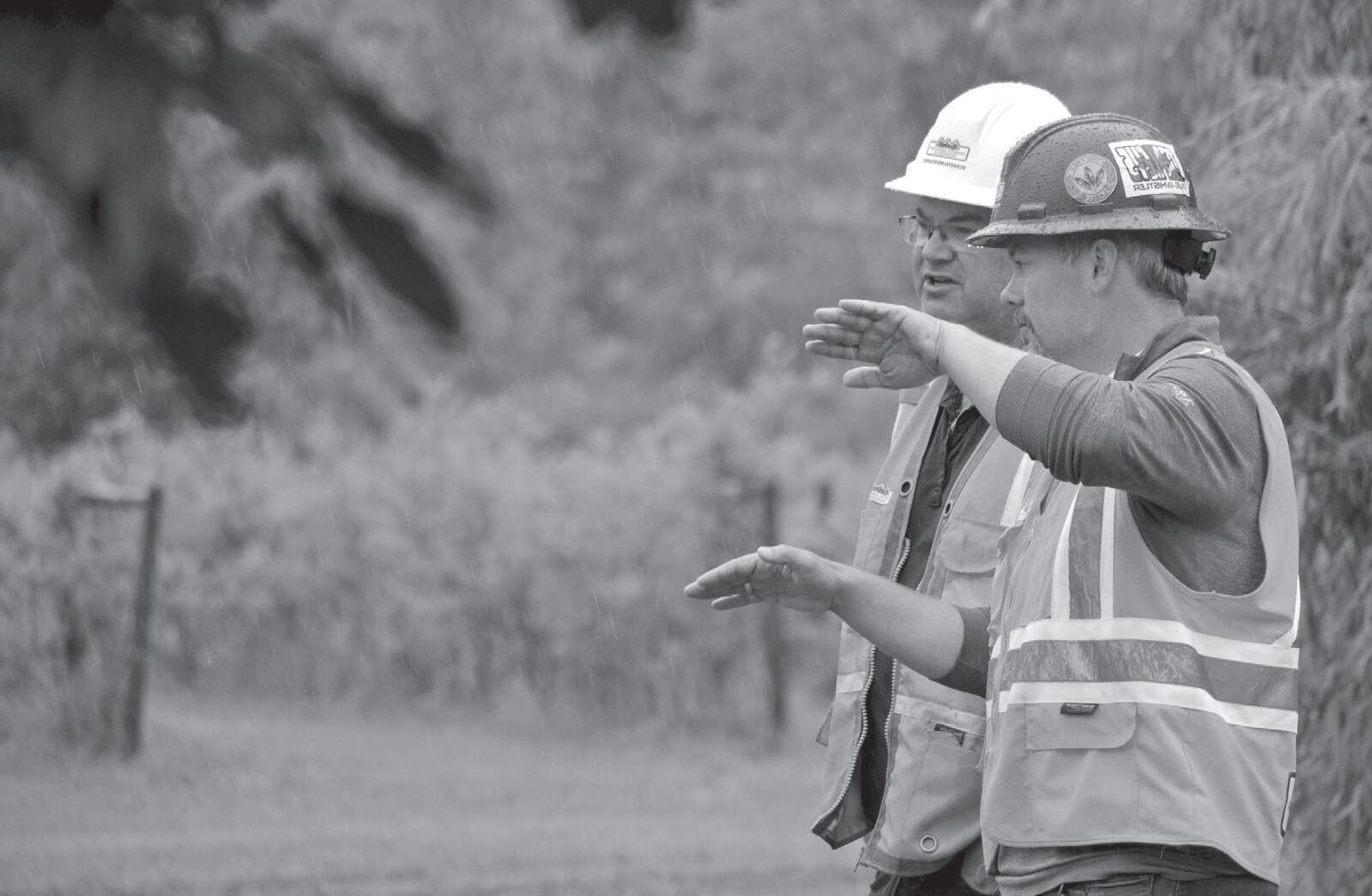

EmployeeHealth &WellnessPlanavailable
HEAVYEQUIPMENTOPERATOR– Minimum5yearsor5,000hoursoperatingexperienceon excavator.CrushingExperiencepreferred. Full-time,Monday –Friday.$33-$46perhour.
CONSTRUCTIONLABOURER– Greatopportunitytolear non-the-job.Staminaforphysically demandingworkandperseverancetobraveinclementweatherrequired.Previousexperience preferredbutnot required. Trainingprovided.$28-$33perhour.
PIPELAYER –Minimum 5yearsexperienceincivilconstruction. Full-time,Monday –Friday.$33-$43perhour.
TRUCKDRIVER –BCDLClass 1orClass3withairbrakes required.Manualtransmission. 2yearsexperiencepreferred.$35-$41.50perhour.
CRUSHING &EARTHWORKSMANAGER– Musthaveexperiencewithcivilconstruction. $33-$46perhour.
HEAVYDUTYEQUIPMENTMECHANIC– Whistler,RedSealCertified,Commercial Truck& Transport, Transport Trailer required.CVSEInspector’s ticket,AirConditioningticket,Class1 or3withairbrakes,andseveralyears’experiencepreferred.$40.19-$42.43perhour.























Lead theWaytoa Thriving Workplace











Th eS eatoSk yWorkpla ce InclusionCharteris a co mmitmentto ex ce ll ence. Join an etworkoflocal leadersdedicatedtobuilding environmentswher ee ver y employeefeelswelcome , respected,andempoweredto succeed.








•EarnRecognition asa Top-TierEmployer
•AccessExpertTools to Scale YourCulture
•N etwork wit hL ocal Inclusion Leaders
•B oost Re ten ti on & Strengthen Team Trust Join Todayat www.s2swic-wmsociety.ca
Ingood companywithour ModelEmployers






GroupFitnessClasses
Friday
I7:30-8:30a.m.StrengthinPlay-Anna Saturday









I10:30-11:30a.m.Zumba-Susie Monday
I10:30-11:30a.m.Zumba-Carmen
Tuesday
I8:45-9:45a.m.AquaFitDeep-M-A Wednesday
R6:30-7:30p.m.RunStrong-Steve Thursday
R12:15-1:00p.m.PainFreePosture-Lou
Seeourfullpage scheduleadin thisissueofPique fordetails











TheSeatoSkycorridor’s topcivil constructioncompany.
We arecurrently recruitingprofessionally mindedpeopletojoinourteam:
PipeLayers $25-$45perhour
ConstructionLabourers $25-$30perhour
Heavy Equipment Operators $35-$45perhour
*Competitive wages, extendedhealthbenefits (after3months)
Email resumeto: info@whistlerexcavations.com
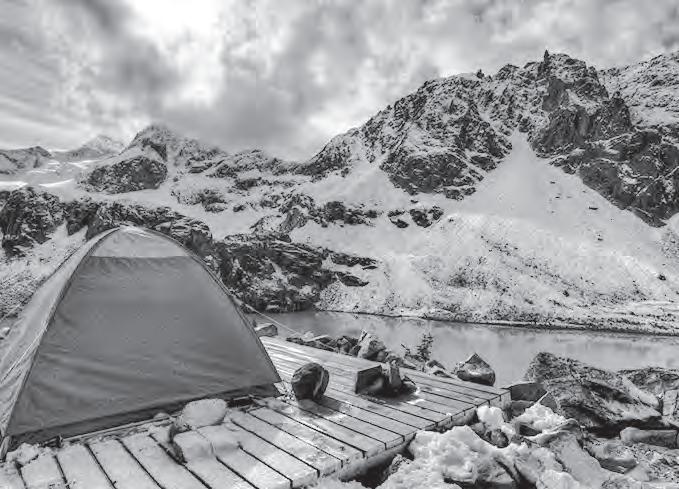


Ourteamofpeopleiswhatsetsusapart fromotherbuilders.As wecontinue to growasthe leaderinluxury projectsinWhistler,ourteamneedstoexpandwithus.
We arecurrentlyhiring:
Labourers ($20 -$30hourly)
CarpentersHelpers/Apprentices1st to 4th year ($25 -$35 hourly)
ExperiencedCarpenters ($30 -$45hourly)
CarpentryForemen ($40 -$50hourly)
SiteSupervisor
Ratesvarybasedonexperience andqualifications.RedSealis abonusbutnot required.Crane Operatorexperienceconsideredanasset.
EV Risc om mi tte dtot helong-t er mreten tionan ds kills deve lopm en to fo ur te am .Wea re passionateaboutinvestinginourteam’sfuture.
WE OFFER:
•Top Wagesand aPositive WorkEnvironment
•FlexibleSchedule- WorkLife Balance(We getit, we love to skiandbike too.)
•Training& TuitionReimbursement(Needhelpgetting yourRedSeal?)
•Support with workvisaandPermanentResidency(We canassist)
BENEFITS &PERKS:
•AnnualLeisure& ToolBenefit –Use toward ski/bike pass, toolpurchase,etc.– youchoose!
•ExtendedHealthandDentalBenefitsfor youand yourfamily
We promotefromwithinandarelookingtostrengthenouramazingteam. Opportunitiesfor advancementintomanagementpositionsalwaysexistfortheright candidates.Don’t missout onbeingabletobuild withtheteamthatbuildsthe mostsignificantprojectsinWhistler. Send your resume to careers@evrfinehomes.com.Welookforwardtohearingfrom you!

HighCountryLandscapingisseekingmotivated individualsforthefollowingpositions:









•Chief FinancialOfficer($140,240.00to$201,595.00peryear)
•Directorof Finance($107,520.00to$154,560.00peryear)
•ExecutiveAssistanttoChiefsandCouncil($62,160.00to $81,585.00peryear)
• Title&RightsCoordinator($38,038.00to$53,599.00peryear)
•HumanResourcesGeneralist($57,330.00to$64,610.00peryear)
Child& FamilyServices
•Social Worker($80,371.20–$91,673.40peryear)
Health&Healing+PqusnalhcwHealthCentre
•HealthProjectManager($57,330.00to$64,610.00peryear)
•CommunityHealthNurse($41.42to52.81perhour)+$2.15 hourlypremium)
CommunityPrograms
•AboriginalSupportedChildDevelopment Worker($24.00-$29.45per hour+eligibleforwageenhancementtopup)
Xet’òlacwCommunitySchool
•HighSchool Teacher($60,015.00to$109,520.00peryear)
•BusDriver($20.90to$29.45perhour)
• FoodProgramAssistant($17.85to$20.90perhour)
Pleasevisitourcareerpageformoreinformation:https://lilwat.ca/careers/ ÚlÍusCommunityCentre

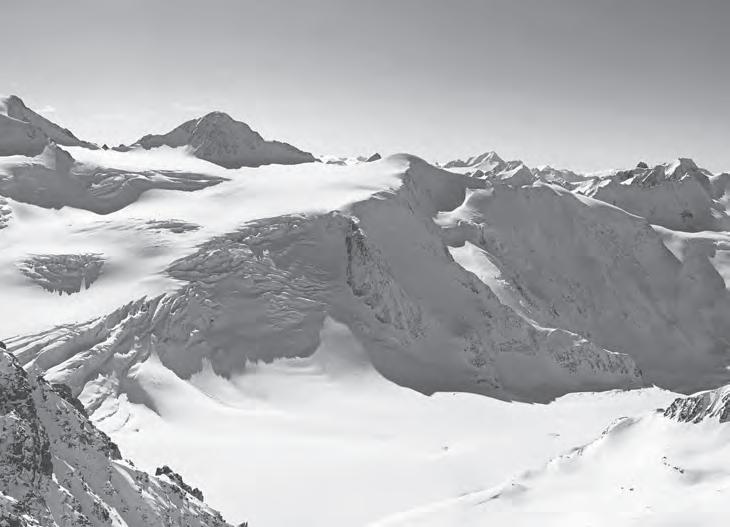

We areadding to ourteam
LandscapeGardener |Foreman/woman
Hard-working,detailed, teamplayerwith2+yrsexperience
Horticulture Technician,CLT orequivalent certificationpreferred ResidentialLandscapeMaintenance,someConstruction Plant knowledge,Driver ’s licenceandlocally availableApril15-Oct31
Reliable,trustworthy, strong communicationandpeopleskills Interest in continuouseducationandlearningWe providegreat opportunities.Able to workindependently aswellasundersupervision
$27 –30+dependingon experienceandrole
Applyviaemailonly, please: info@heikedesigns.com
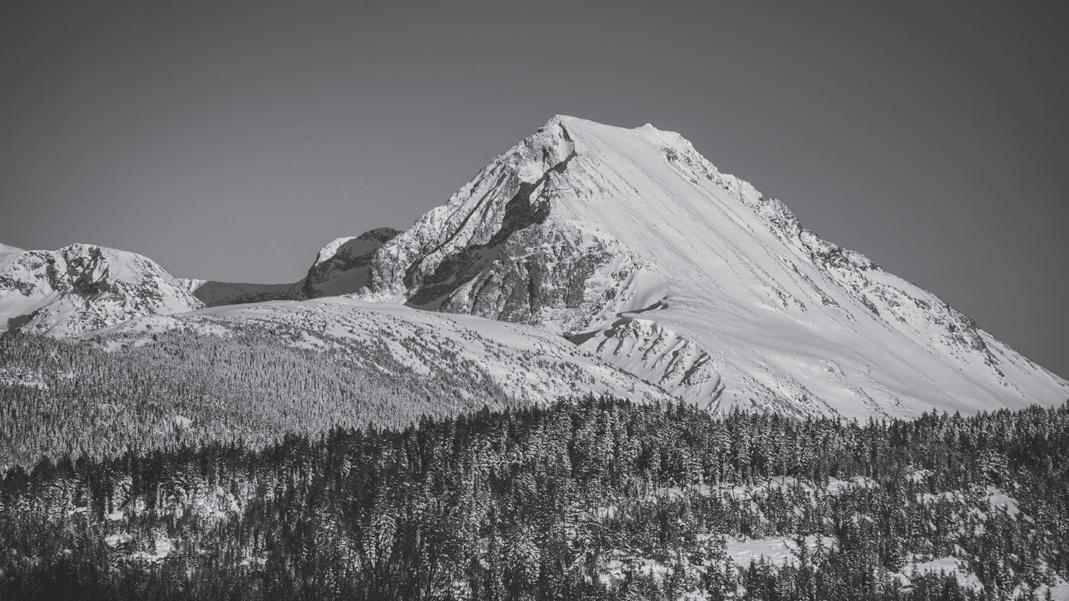



Part-Time& Full-Timepositions available(13-38hrsp/week)
Setschedule
Consistenthours
Startimmediately
Benefits&RRSPMatching (Full-timeonly)
Paidvacation(Full-timeonly)
Greatcrew

SummerStudentpositions
attheWhistlerMuseum
TheWhistlerMuseumishiringforsummer student(YoungCanadaWorks)positions:
•MuseumCollectionsAssistant(YCW)
•MuseumProgramCoordinator(YCW)
Termofemployment: $20.75/hrfor40hrs/week–May13th2026toAug30th,2026(startdatecould changedependingontheavailabilityofthecandidate)
Deadline: April25,2026.
Moreinformationonthesepositionscanbefoundhere: https://whistlermuseum.org/employment/


























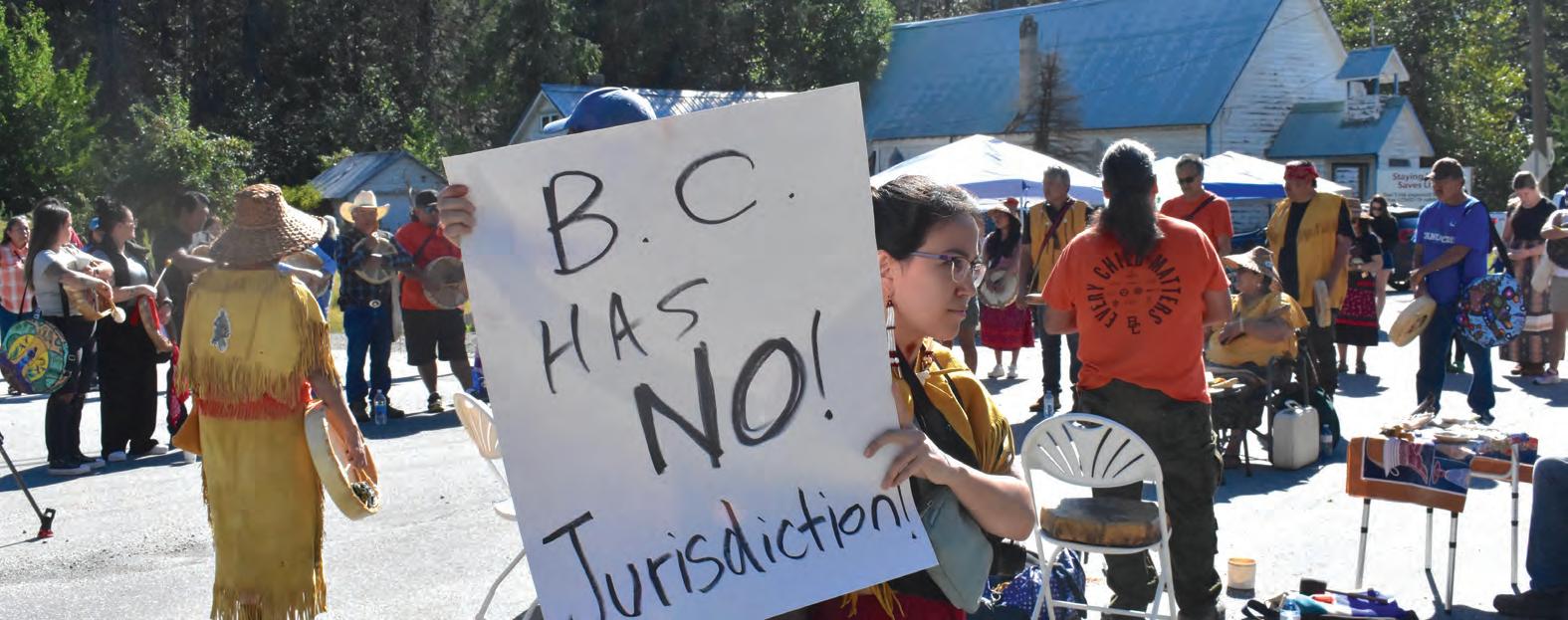
IN DECEMBER 2024, I had the privilege of being hired on in my first paid, nonuniversity-paper reporting gig. Pique Newsmagazine took a chance on a recent University of British Columbia graduate and assigned me to cover Pemberton, the Lil’wat Nation, and a little bit of the Squamish-Lillooet Regional District.
It was a genuine privilege to get to know these communities, particularly as a sheltered Lower Mainlander who hadn’t spent much time north of Horseshoe Bay.

BY LUKE FAULKS
My role, and the coverage of local politics, arts, sports, culture, health, crime, environmental issues, and everything else north of Whistler and south of Lillooet, existed solely thanks to the federal Local Journalism Initiative
The LJI program was launched in 2019 for a simple reason: without it, entire swaths of Canada would go uncovered thanks to a lack of dedicated reporters covering small towns without the population to support a full-time newspaper.
The program was designed to fund original civic journalism in underserved communities—places where residents were no longer getting consistent reporting on local institutions, governments, or issues that directly affect their daily lives. It came at a moment when hundreds of community newspapers had shuttered across the
country, and many more had been hollowed out to skeleton staff.
A 2017 study from the Public Policy Forum—The Shattered Mirror report—put the crisis bluntly: Canada was rapidly developing “news deserts,” areas where credible, verified local news simply doesn’t exist. In those places, civic engagement drops, municipal accountability erodes and misinformation finds fertile ground.
In the vacuum left behind by the shuttering of local news outlets, something else can move in.
Sometimes it’s well-meaning community Facebook groups. Sometimes it’s advocacy dressed up as reporting. And sometimes it’s outright misinformation. Without trained reporters on the ground, there’s no one consistently calling sources, verifying claims or contextualizing complex issues.
That’s where LJI came in.
At Pique, the program didn’t just fund my job. It funded coverage that otherwise wouldn’t exist. It allowed
work done by local non-profits and passionate individuals looking to make their communities a better place.
This year, with what we were told was a record number of applicants to the program, Pique was edged out. The irony isn’t lost on anyone in the newsroom: demand for local journalism funding is higher than ever, even as the need it was created to address has only intensified.
There’s a strange duality to it; on one hand, it’s a testament to the strength of local journalism across Canada, with more outlets, more reporters, more ideas competing for limited support. On the other, it exposes a fundamental mismatch: the problem LJI was designed to solve hasn’t gone away. That more outlets are competing for the funding shows the need has grown. And yet, resources remain finite.
In recent years, the CBC has expanded its presence in smaller communities. In places like Squamish, where there is already a relatively robust local media ecosystem with
The loss of an LJI position doesn’t just mean one less reporter. It means fewer eyes on institutions. Fewer stories about communities that already struggle for visibility.
for regular reporting out of Pemberton and the Lil’wat Nation—coverage that required time, travel, trust-building and consistency. It meant someone was covering meetings, reading dense staff reports, and translating them into plain language. It meant stories about local housing, environmental risks, infrastructure gaps, and cultural initiatives actually reached the public. And it meant highlighting the important
outlets like The Squamish Chief and the Squamish Reporter, a new bureau and reporting initiatives have come online.
More good journalism is undeniably a good thing. But it raises an important question: if federal dollars are meant to address gaps in coverage, why are they sometimes reinforcing areas that are already comparatively well-served? Why fund redundancy in one place while others remain uncovered?
Because just up the road, there are still communities where no one is regularly covering Indigenous governance beyond major announcements. No one is consistently documenting the slow, technical, but deeply important work of local government.
The loss of an LJI position doesn’t just mean one less reporter. It means fewer eyes on institutions. Fewer stories about communities that already struggle for visibility. Fewer opportunities for residents to see themselves—and their concerns— reflected in the public record.
Local journalism is about more than just information. It’s about creating a shared understanding of what’s happening in a place, and why.
Programs like LJI recognize that. Or at least, they were created to. The question now is whether they’ll continue to evolve in a way that matches the scale of the problem.
Canada is still losing local news outlets. Reporters are still being stretched thinner. Entire regions still lack consistent, reliable coverage of the institutions that shape daily life.
And while it’s encouraging to see strong interest in programs like LJI, interest alone doesn’t fill the gaps; funding does.
So does a clear-eyed understanding of where that funding is needed most.
If the goal is to strengthen local democracy, then the priority should be to support the places where journalism is stretched most thin, not just where it’s easiest to deploy. Otherwise, we risk recreating the very imbalance the program was meant to fix.
The LJI program was born out of a recognition that local news is a public good. That it deserves support not because it’s profitable, but because it’s necessary. That hasn’t changed.
What’s changed is how precarious that support now feels. n
1

0.5
$724,900