THE MADISON White House Christmas Tree That Wasn’t
JOHN HUTTON
sparkling with lights, tinsel, and myriad ornaments, decorated Christmas trees have long been an essential part of White House holiday celebrations. But when did this marvelous festive tradition begin? Most historians will tell you that Benjamin and Caroline Harrison were the first presidential couple to have a Christmas tree in the White House. Records state that they entertained their grandchildren in 1889 with a tree in the Yellow Oval Room on the Second Floor.1 Some hint that Christmas trees may have made their White House debut in the time of Franklin and Jane Pierce in the 1850s, when the display of Christmas trees was beginning to become widespread in America.2 But what if the tradition began earlier still, well before either the Harrisons or the Pierces, in the administration of James Madison? Could the young Dolley Madison have been introduced to—and enchanted by—the eighteenth-century Moravian practice of using Christmas trees for yuletide decoration by her neighbors in Philadelphia? The answer to this hypothetical question, appropriately enough for an article in an issue of White House History Quarterly devoted to “The White House That Wasn’t,” is a resounding, if less than authoritative—maybe!
The Moravians were one of the first groups in America to decorate their homes and churches with Christmas trees. Coming to America from Central Europe in the 1740s in search of religious freedom, they established several settlements in the midAtlantic and southern colonies, the chief of which was at Bethlehem, Pennsylvania, founded in 1741. The Moravians were devoted to the celebration of Christmas, which they made as festive as possible not only to mark the Nativity of their Savior but also for the sake of their children. As one Moravian writer put it in 1863, “It has ever been the custom to dedicate the festival of Christmas almost exclusively to children’s instruction and enjoyment.”3 As such, Moravians created a wide range of attractive decorations to be enjoyed by children—young and old—richly adorning their homes and churches with seasonal trees, wreaths, greens, and candles.
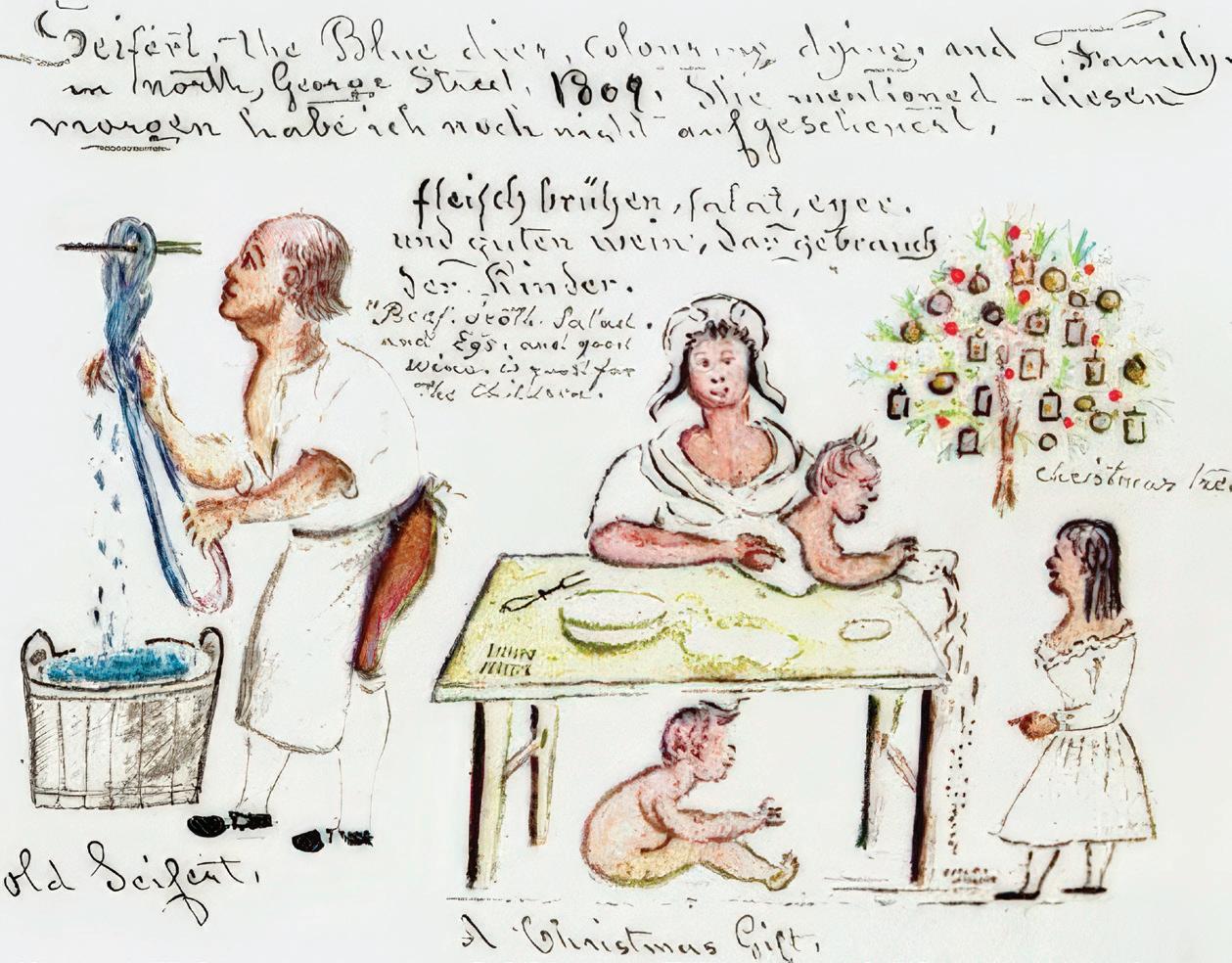
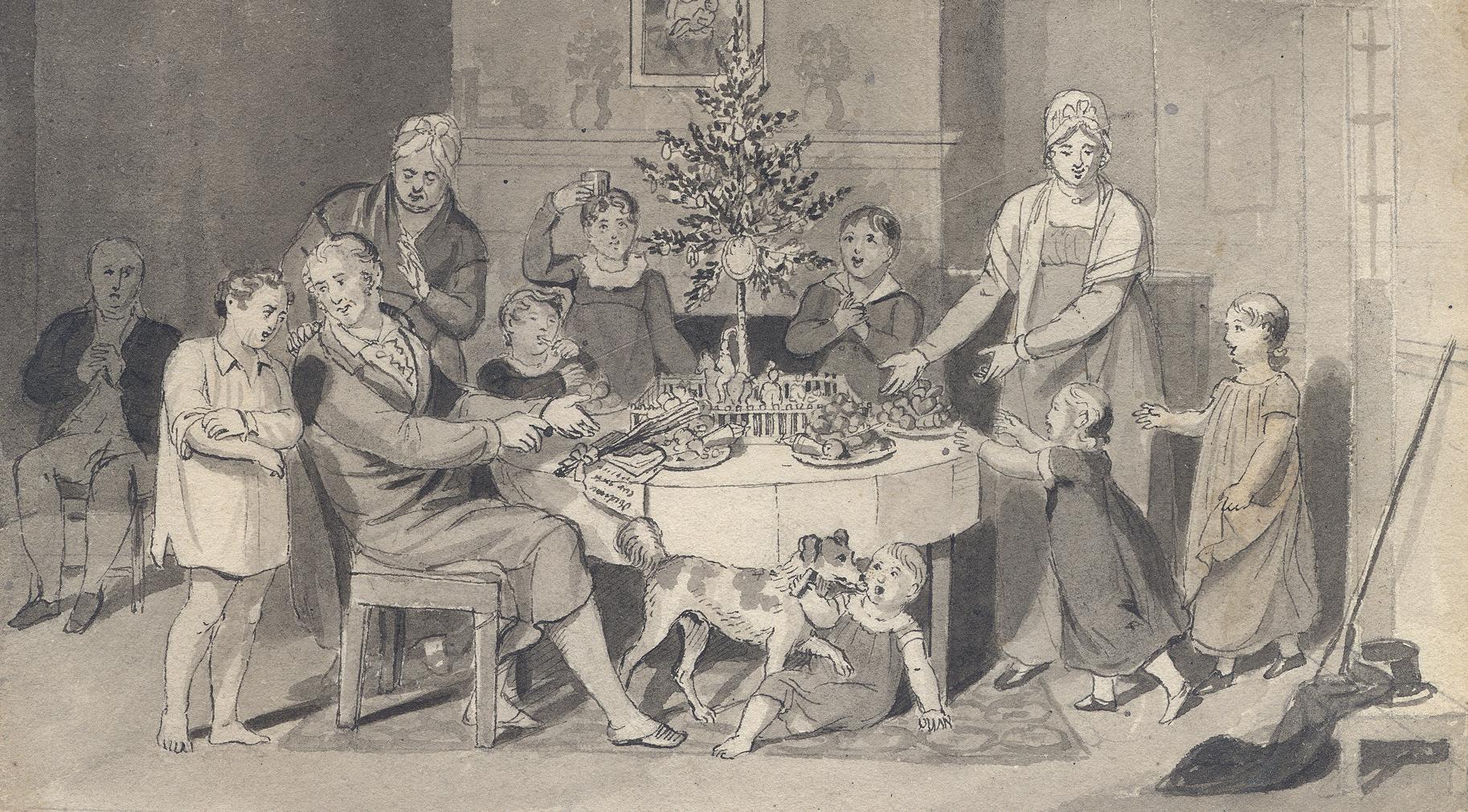
The Moravians—like both pagans and other Christian groups before them—associated evergreens with ideas of rebirth and everlasting life, with solstice and salvation. Trees and evergreen boughs were used by Moravians to enliven Christmas celebrations from their earliest years in America. While historians point to such illustrations as John Lewis Krimmel’s drawing of c. 1812 or Lewis Miller’s drawing of 1809 (possibly 1819–21)—both of which show evergreen trees in the homes of German-speaking, possibly Moravian, Pennsylvania families—to claim that the use of Christmas trees in America dates to the 1810s or 1820s, Moravian records point to the custom being
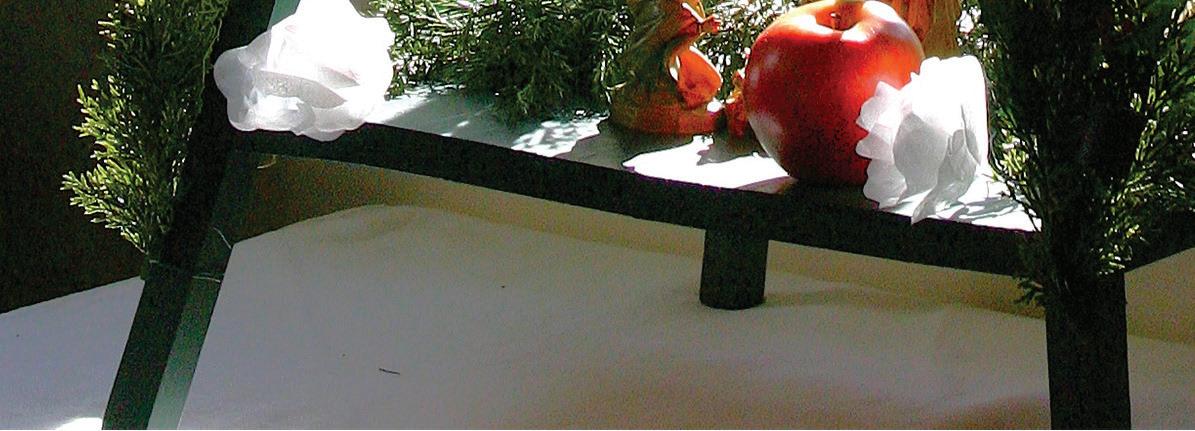
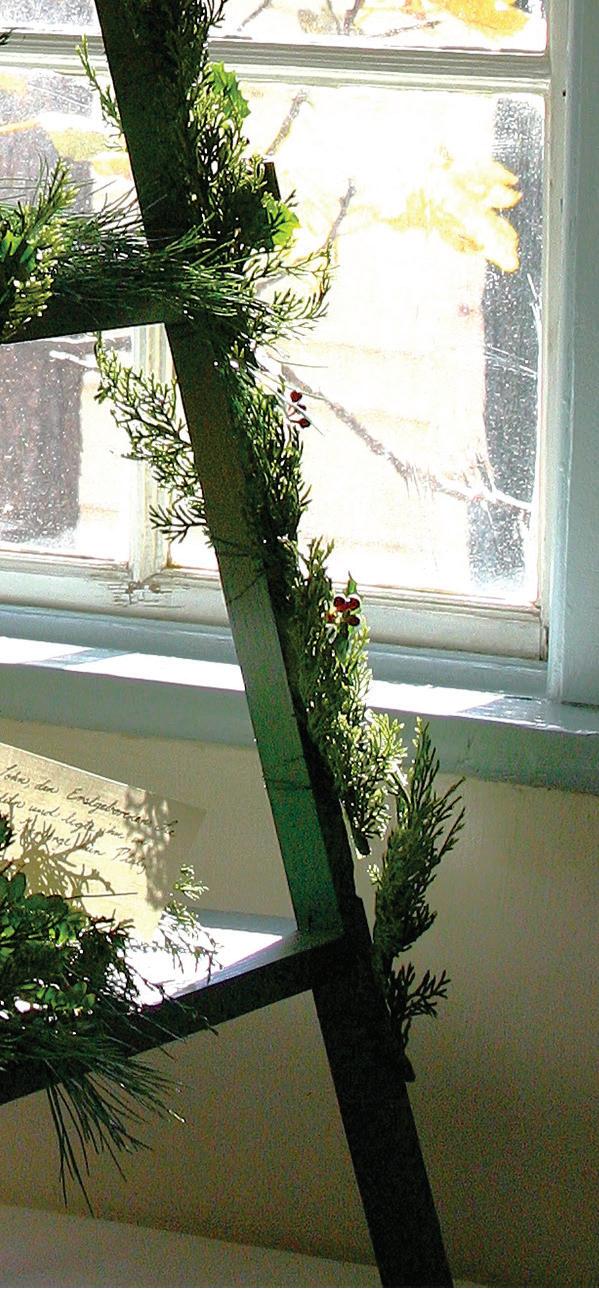
much older. Nancy Smith Thomas notes that Moravians are known to have used evergreen decorations in the form of tree-shaped, pine-branchcovered, shelf-bearing platforms—which they called their Christmas pyramids—in 1747 and 1748 in Bethlehem.4 Thomas also says that actual decorated trees—not just pyramids—were displayed in Bethlehem at the same time in children’s love feast celebrations and suggests that trees might very well have also played a part in Christmas decorations in that place at that time.5 Some additional early evidence exists for cut trees being used for Christmas decoration in another of the Moravians’ chief
previous spread
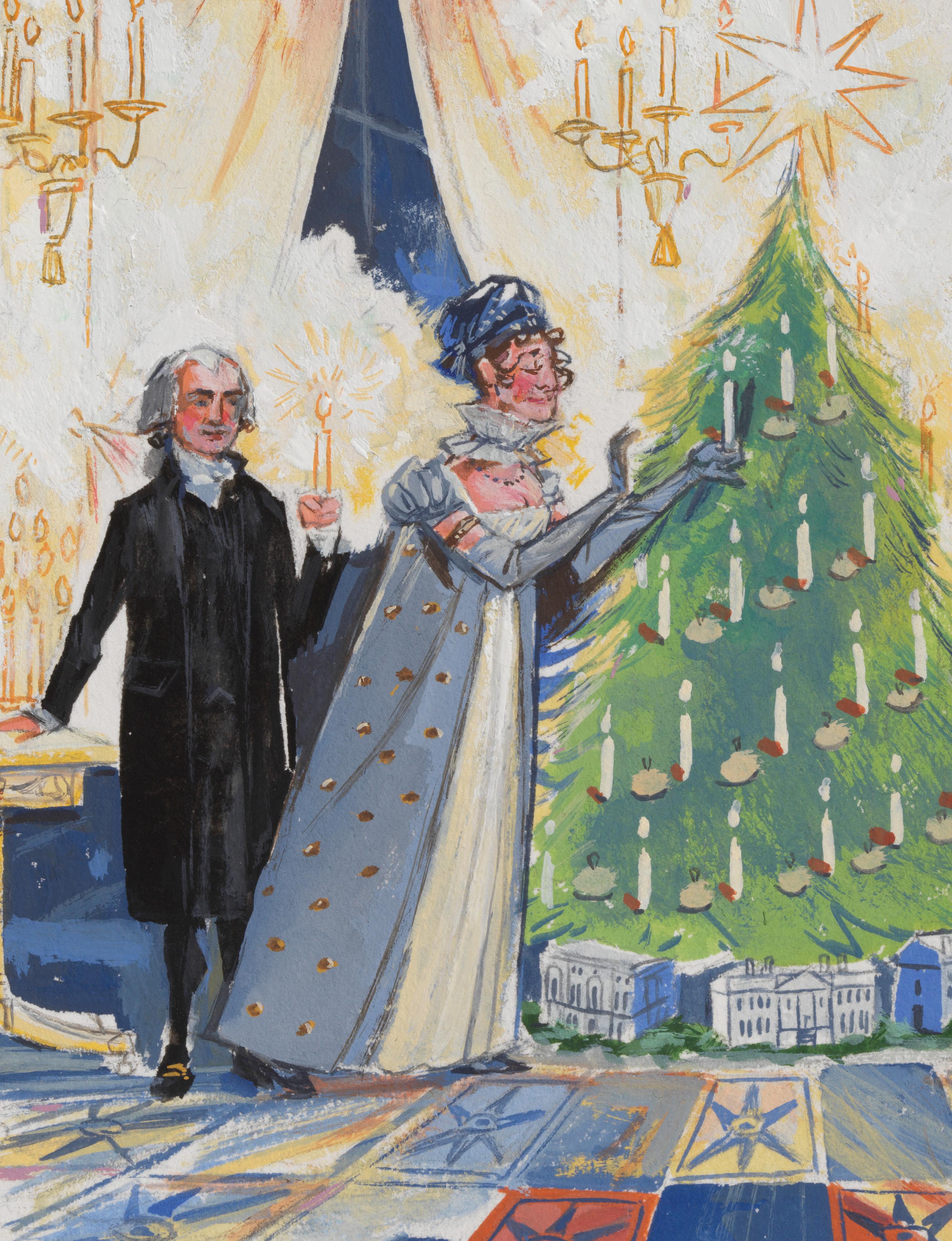
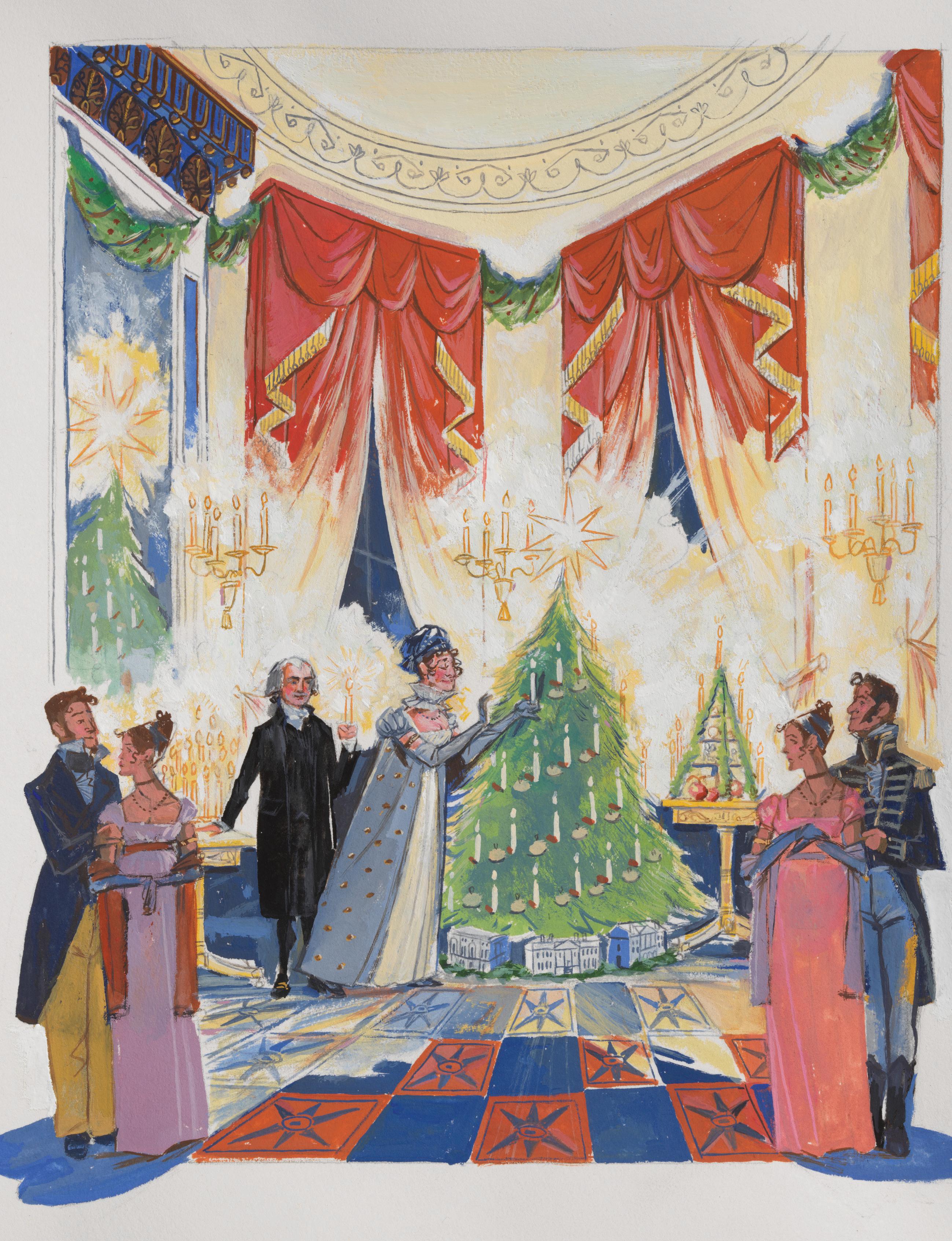
President James Madison and First Lady Dolley Madison at work decorating a White House Christmas tree in a detail of a scene imagined and painted for this article by author John Hutton.
left
Made by John Lewis Krimmel c. 1812, this sketch is one of the first to depict a Christmas tree in the United States. The small tree on the table is decorated with fruits and figurines. below Labeled “Christmas Tree” a colorfully decorated tree is included in a watercolor of the Seifert family made in 1809 by Lewis Miller of York County, Pennsylvania
below
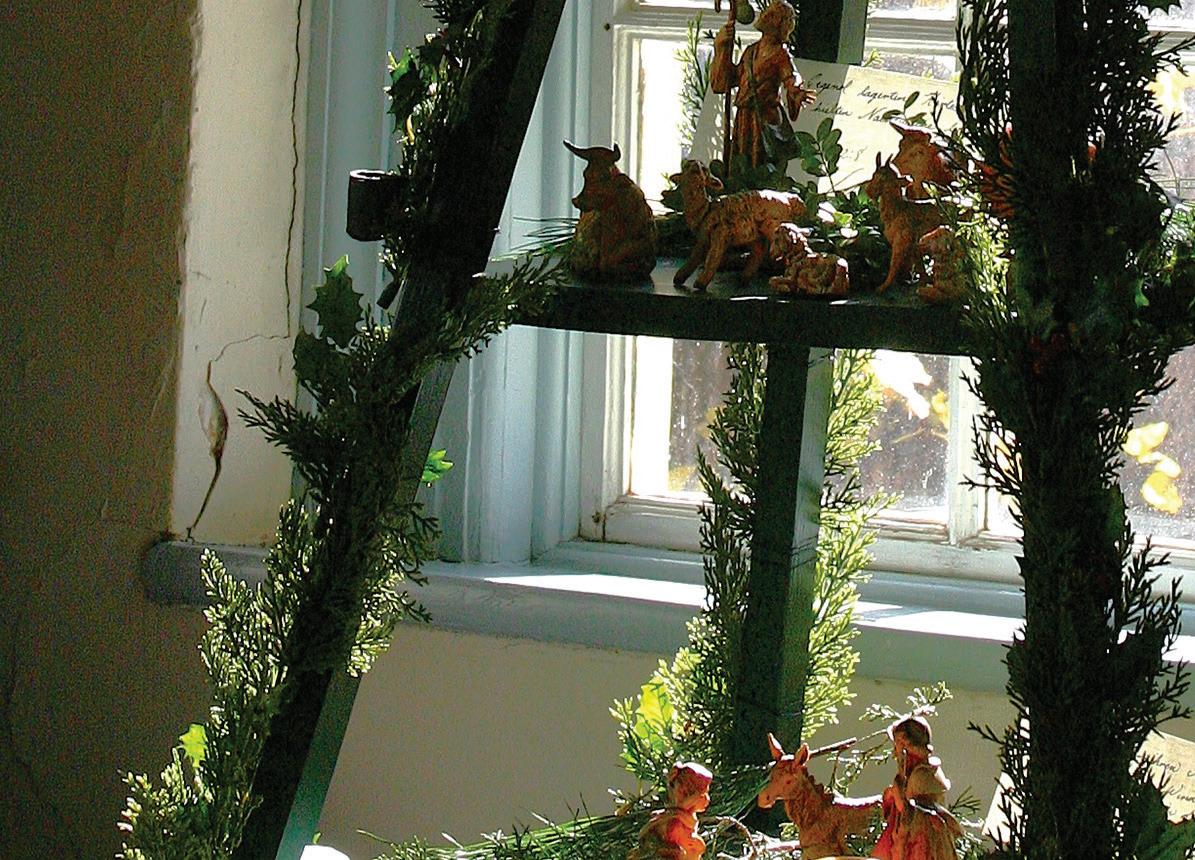
A recent example of a Christmas pyramid embellished with evergreen branches, similar to those made in the Moravian community of mid-eighteenth century Bethlehem, Pennsylvania.
settlements, Salem, North Carolina, as early as in 1786. At this time town records detail a dispute between neighbors over a small, carefully tended pine tree owned by the one and cut by the other without permission on Christmas Eve.6 Wreaths and cut boughs were certainly in use as Christmas decorations throughout this period. As recorded in 1807 in the diaries of the Moravian mission to the Cherokee at Springplace, Georgia, and thought to reflect much earlier practice in Bethlehem from which the missionaries came, children were taken
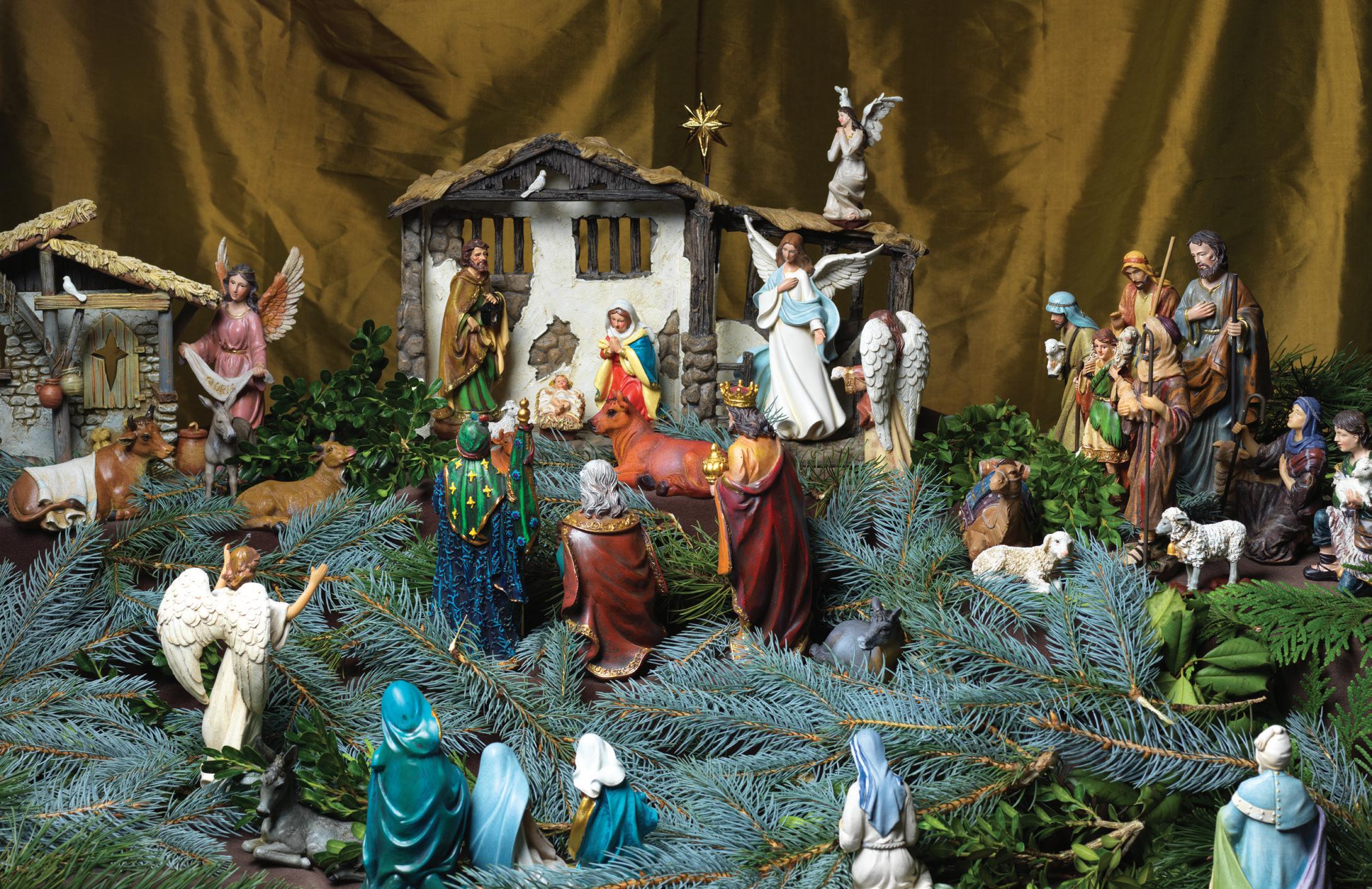
on festive trips into the forest to collect greenery for Christmas celebrations.7 Evergreen boughs were also part of the ornamentation of putzes—dioramas of figures and buildings meant to represent the Nativity and other scenes that were set up on tables or under Christmas trees.8
All displays of greenery—trees, wreaths, pyramids, and putzes—would be further enriched by hanging them with fruit, cookies, lit candles, and paper cards inscribed with Bible verses and painted flower wreaths. Large numbers of candles were especially prized, for their spiritual meaning as well as for spectacle. A quotation from visitors to a 1745 Christmas display in Herrnhut, Germany, one of the most important Moravian centers in Europe and an inspiration for Bethlehem, Pennsylvania, described how one house was so thickly decorated with lit candles that it “resembled a sea of flames from top to bottom.”9 The goal was obvious: to create a blaze of light to celebrate the season.
Such delightful and attractive traditions! All very well and good, but the reader may well ask how Dolley Madison, raised a Quaker, would have known any of this. There are at least two possible connections—one indirect—between Dolley and the Moravians in her early life. This is true for her birthplace of New Garden, North Carolina, and even more so for her teen years in Philadelphia.
Dolley Madison—née Dolley Payne—was born in 1768 in New Garden, North Carolina. New Garden, founded 1750, was a small Quaker settlement near Guilford Courthouse, the predecessor of modern Greensboro. New Garden is just 20 miles east of Salem, North Carolina. Salem, founded from Bethlehem in 1753, was the principal Moravian town in the southern colonies and perhaps the most important trading center at the time in western North Carolina. It was a town of skilled artisans and tradesmen, of builders, potters, gunsmiths, furniture makers, and smiths—and all of them devotees of Christmas! Quakers historically did not celebrate holidays, believing that all days were equally sacred. Dolley’s parents, Mary and John Payne, would certainly have known something of the Moravians of Salem and their Christmas finery, and likely not approved of them. In any case, Dolley did not live near Salem for long. Her parents returned the family to Virginia in 1769 when she was one year old. Could it be that the first time the young Dolley ever heard of Christmas celebrations, decorations, and Christmas trees, it was
only to hear her parents and their fellow Quakers in Virginia complain vociferously about the denizens of Salem and their ridiculous holiday fixation? Would the young Dolley have agreed with her parents, or might not such complaints have had the opposite effect? One wonders if she—in later life a famous lover and giver of parties—might not have, even then, begun to envy Moravian children and their special holidays.
More, and perhaps deeper, Moravian Christmas connections may have come to the fore in Dolley’s teen years, when her family moved from Virginia to a Moravian neighborhood in Philadelphia in 1783. The most important Moravian church in Philadelphia, First Moravian, was founded in 1743 by Nicholas Ludwig von Zinzendorf, who also founded the Bethlehem settlement two years earlier. Large Christmas celebrations, likely including the use of Christmas trees, would have taken place in First Moravian, at the corner of Race and Bread Streets. That was just one block north and one block east of Dolley’s home at 57 North Third Street, where she lived from 1783 to 1790.10 With a church like First Moravian nearby, Dolley would
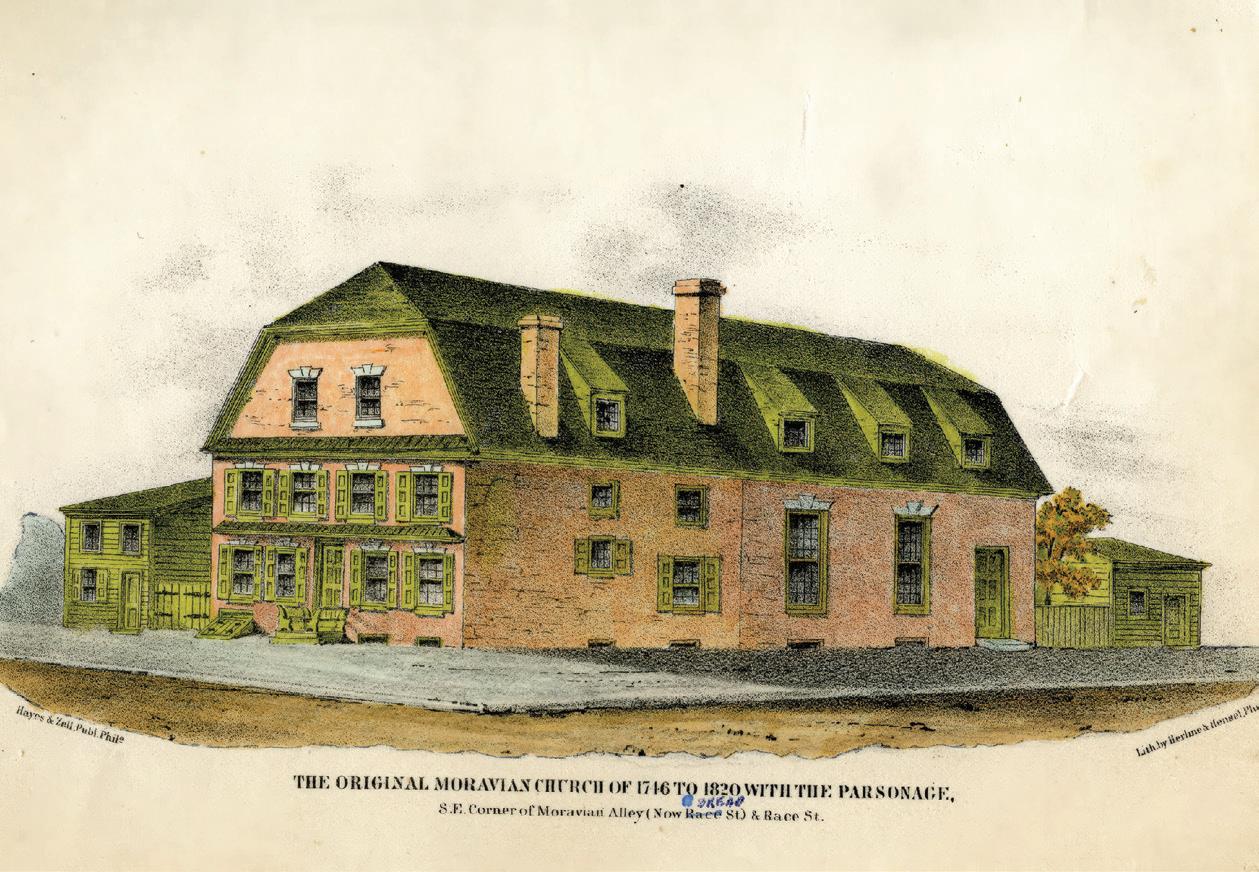
certainly have had Moravian neighbors, friends, and acquaintances, and some of them—perhaps all—would surely have decorated their homes at Christmas to some degree in good Moravian evergreen-filled fashion—with trees, candles, pine and holly garlands, wreaths, pyramids, and putzes. Did the teenage Dolley visit nearby homes where she
right
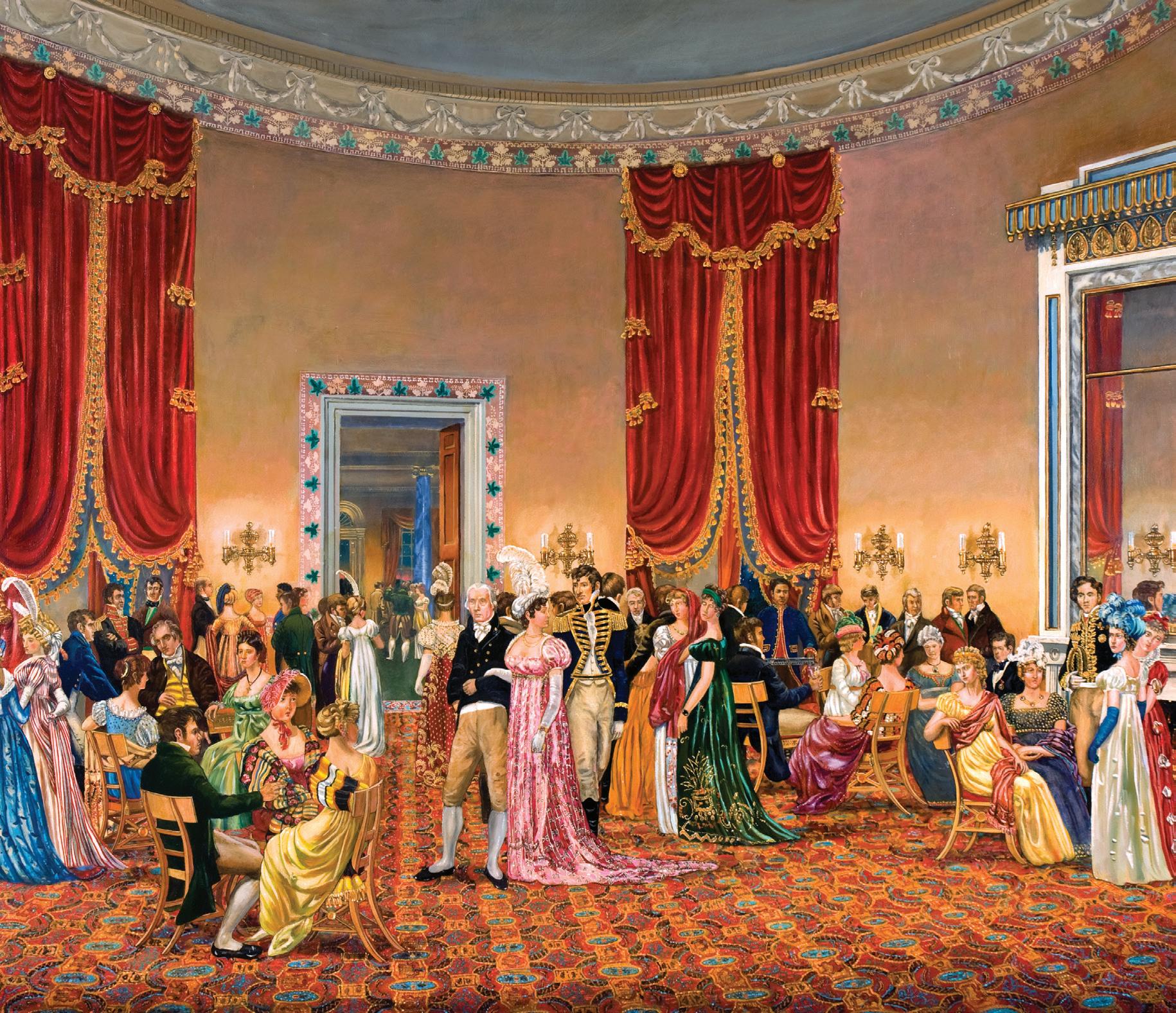
First Lady Dolley Madison enjoyed welcoming guests to her frequent receptions at the White House. She is imagined here on the arm of President James Madison at the center of one of her grand levees in a 2012 painting by Peter Waddell entitled The Splendid Mrs. Madison in the “Elliptical Saloon.”
opposite top
A hand-colored lithograph depicts a view of the front and side of the First Moravian Church, located at the southeast corner of Bread Street and Race Street in Philadelphia, as it would have appeared from 1746 to 1820. First Lady Dolley Madison, who lived about two blocks from the church, would have been familiar with the Moravians’ Christmas decorations.
opposite bottom
Created in the Moravian style, a modern-day putz features a Nativity scene embellished with pine boughs and evergreeens.
could see this tradition firsthand—possibly surreptitiously—reveling with her friends in the scents of beeswax candles and pine boughs, the gaily ornamented trees, the masses of burning candles, the tiny, well-crafted figurines that enlivened the putzes? Or, if the thought of such celebrations would have displeased her parents’ Quaker sensibilities, did she possibly simply catch a glimpse of these things each year from the outside, wistfully looking on from the street through brightly lit windows on a dark December afternoon, longing to join the party and enjoy such things herself?
Imagine, then, Dolley Todd Madison as mistress of the White House, where she served as first lady from 1809 until it was burned in 1814. She had married John Todd in 1790—and lost him and one of their children three years later to yellow fever. She had married again in 1794, to James Madison, the able statesman, introduced by their mutual acquaintance Aaron Burr. Brought to Washington,
D.C., by her husband during his tenure as secretary of state for President Thomas Jefferson, she also served Jefferson as an able and very popular hostess. When James Madison was elected president in 1808, Dolley had already successfully entertained presidential guests for more than eight years. At last, in 1809, she would be first lady in her own right. For her, the question had to arise of what to do differently: How could she further astonish the various politicians, ambassadors, and other jaded courtiers of official Washington at the assorted “dove parties,” “squeezes,” receptions, balls, levees, dinners, and so forth for which she was now fully and personally responsible? And—among all these splendid events—what could she do differently to celebrate at Christmas? Records suggest that Dolley arranged Christmas parties in the White House for President Jefferson from 1805 to 1808, and for President Madison and herself from 1809 to 1813.11
opposite and below
First Lady Dolley Madison lights a candle on the White House Christmas tree as President Madison and their guests look on. The scene, imagined and painted by John Hutton, shows how Mrs. Madison might have decorated the Elliptical Saloon with inspiration from the festive Moravian traditions she would have known while living in close proximity to their communities. A preliminary sketch is seen below.
The question: How would she outdo herself for her latest Christmas party? What novelty could she introduce, something rarely if ever seen before?
The answer, perhaps: To put on, at last, her own Moravian Christmas, complete with Christmas trees and all the trimmings. To present this novelty for her husband, herself, her adoring public, and the nation—and perhaps in honor of old friends and neighbors on and around North Third Street, Philadelphia.
The painting made for this article is intended to portray just such a hypothetical celebration in the Madison White House, sometime between 1809 and 1813. Dolley and James, in a quiet moment before the arrival of most of the guests, have taken a personal interest in the Christmas decoration of the First Floor Elliptical Saloon, as the current Blue Room was then called. Dismissing the servants, they themselves put the finishing touches on their tall fir tree, carefully placing the last of many, many candles on its fragrant boughs. A putz—consisting
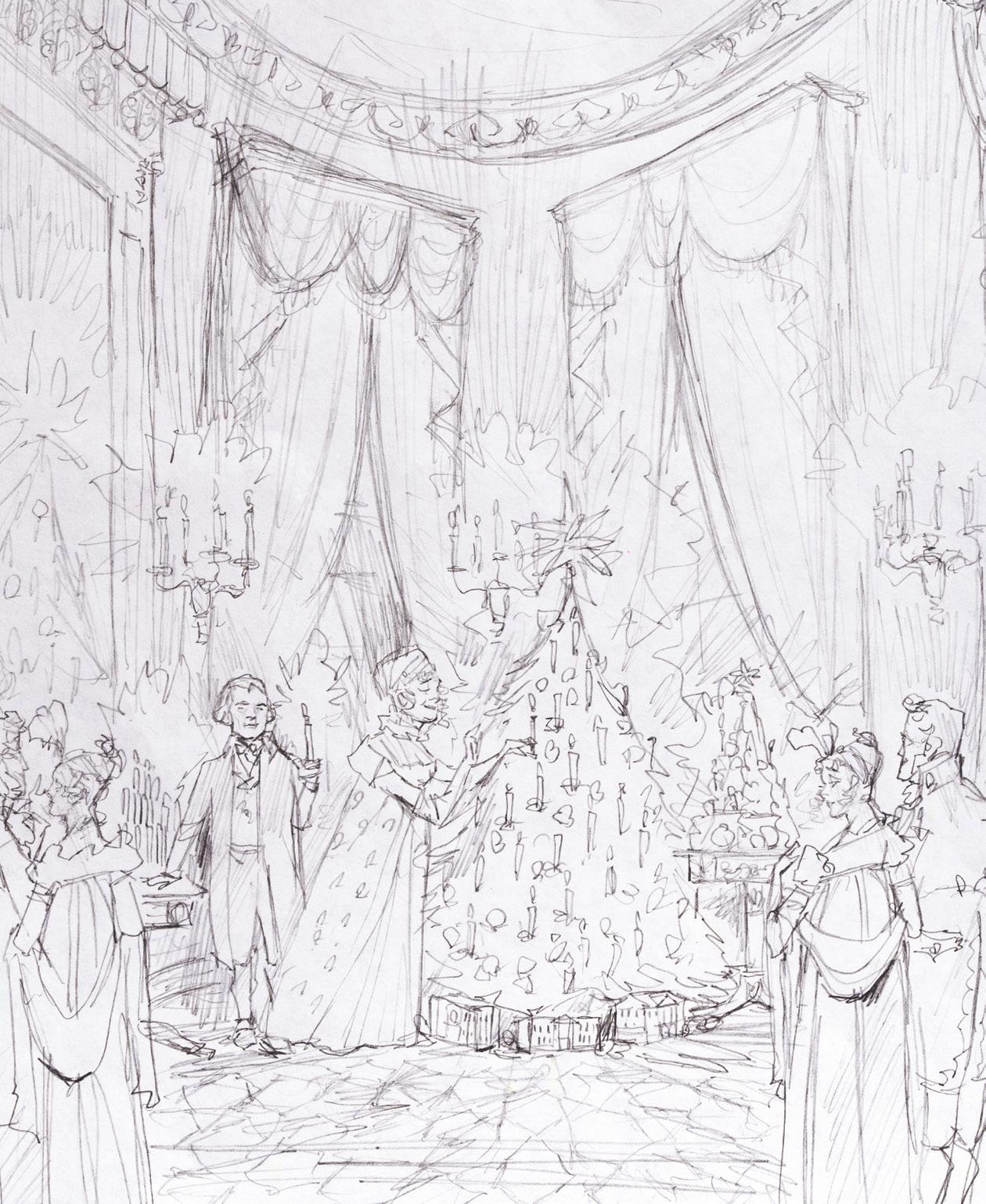
of small replicas of the few public buildings then extant in Washington, namely the Capitol, a model for the first design of the Treasury Building, and the Executive Mansion itself—surrounds the base of the tree. Garlands of pine and holly adorn the walls. Completing the ensemble is a Christmas pyramid placed on a table just to the right of the tree—the table, like the other furniture in the room, designed at Dolley’s insistence by Benjamin Latrobe. All is ready to astonish and delight distinguished guests, especially those not yet familiar with a Moravian Christmas, the possible(!) infatuation of Dolley’s youth, an astonishment and delight that will be amplified by generous helpings of ice cream, a treat for which Dolley was, in fact, historically famous, graciously served to complement the lovely, candle-lit tableau that greets them!
A pictorial fable? All stuff and nonsense? Perhaps. There are, in fact, no records of any such Moravian Christmas celebration in the Madison White House, while others of Dolley’s parties were well noted and discussed by contemporaries. It may be that all this is simply an attractive dream that disappears upon waking. But what a lovely fantasy to re-create in our imaginations, based on some interesting coincidences, for “The White House That Wasn’t.”
notes
1. “White House Christmas Trees,” White House Historical Association website, www.whitehousehistory.org.
2. The account in Wikipedia, “White House Christmas Tree,” references an article by the National Christmas Tree Association, “History of Christmas Trees,” posted December 23, 2006, National Christmas Tree Association website, www. christmastree.org.
3. Quoted in Nancy Smith Thomas, Moravian Christmas in the South (Winston-Salem, N.C.: Old Salem Museums and Gardens, 2007), 5.
4. Ibid., 24.
5. Ibid., 20.
6. Ibid., 23.
7. Ibid., 46.
8. Ibid., 39.
9. Quoted in ibid., 35.
10. Catherine Allgor, A Perfect Union: Dolley Madison and the Creation of the American Nation (New York: Henry Holt, 2006), 19–20.
11. J. David Gowdy, “Christmas at the White House, 1800–1816,” Virginia Institute for American History (blog), December 4, 2012, www.wjmi.blogspot.com.