Please note that the following is a digitized version of a selected article from White House History Quarterly, Issue 76, originally released in print form in 2025. Single print copies of the full issue can be purchased online at Shop.WhiteHouseHistory.org
No part of this book may be reproduced or distributed in any form or by any means, electronic or mechanical, including photocopying, recording, or by any information storage and retrieval system, without permission in writing from the publisher.
All photographs contained in this journal unless otherwise noted are copyrighted by the White House Historical Association and may not be reproduced without permission. Requests for reprint permissions should be directed to rights@whha.org. Contact books@whha.org for more information.
© 2025 White House Historical Association.
All rights reserved under international copyright conventions.
Friends in White House History
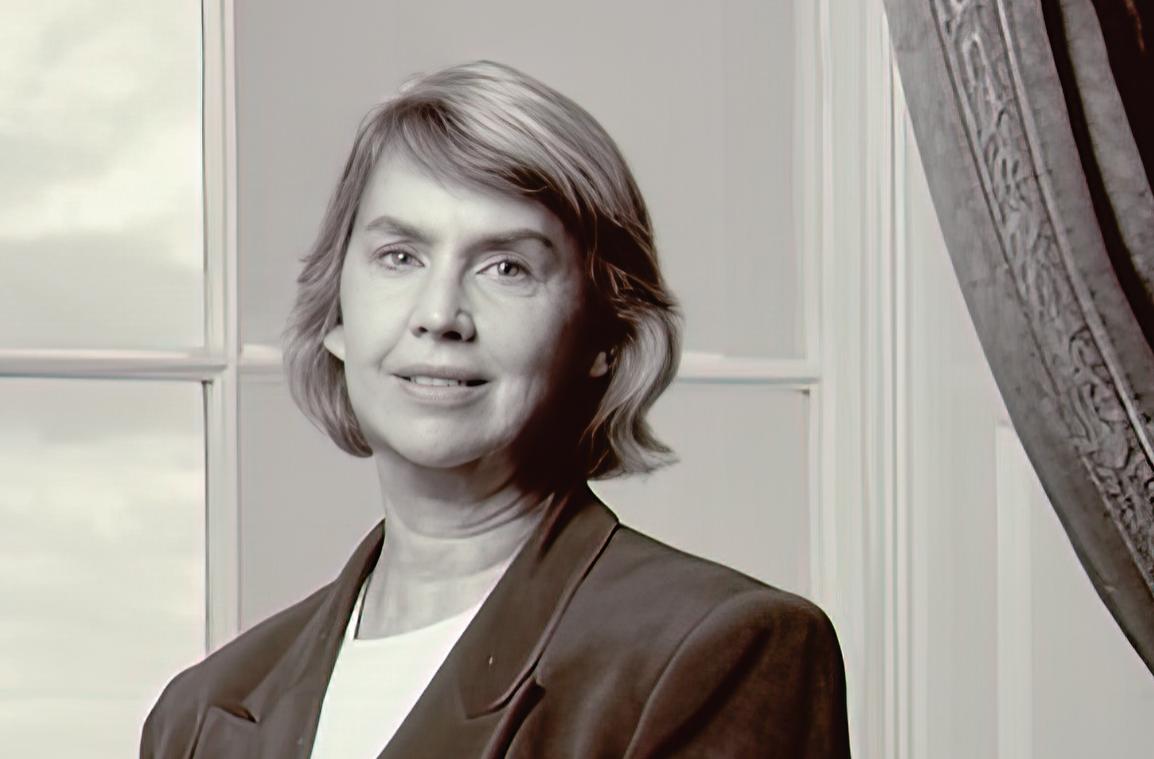
as this issue goes to press we remember the life’s work of the sixth chief curator of the White House, Betty C. Monkman, whose frequent contributions to White House History Quarterly extended from issue number 2 to issue number 63. We at the Quarterly will be forever grateful for her foundational scholarship, her encouragement, and her friendship.
White House history is a place where friends are long remembered, and among the most popular of those friends are the hard-working animals. In the nineteenth century presidential households relied on horsepower to function, but working animals, from dairy cows to honeybees, have also enriched life at the White House. In the pages that follow we turn to some of everyone’s favorite chapters in White House history, beginning with the American bald eagle, now officially our national symbol.
With her article “The Animal Envoy,” Elizabeth Margaret Rees shares the role of animals in diplomacy. Through such examples as pandas Ling-Ling and HsingHsing, Rees explains that “the giving of animals is an expression of national culture and of goodwill.”
Rebecca Boggs Roberts takes us back to World War I when a picturesque and growing flock of sheep made their home inside the White House fence, keeping the lawns trimmed and saving on manpower, to help in the war effort. So appreciated was the work of the sheep that bids on their wool reached record highs at an auction for the benefit of the Red Cross. A sample is prominently displayed at the Woodrow Wilson House today.
on their wool reached record highs at auctions supplied
Author Jonathan Pliska details how Pauline Wayne III, calved on July 15, 1906, and officially registered as number 115580 with the Holstein-Friesian Association of America, quickly became the most famous cow in America after she arrived at the White House to keep the household
of President William Howard Taft supplied with fresh milk and butter. The press and the public were obsessed with her every move, but Pliska makes it clear that she preferred to be left alone.
Lauren McGwin shares an account of Siam, the first Siamese cat in America and a gift to First Lady Lucy Hayes in 1879. After crossing the Pacific Ocean by ship and America by train, Siam was described as affectionate and appreciative and intent on following Mrs. Hayes throughout the White House. McGwin reveals that her story ended too soon and with a mystery that may one day be solved.
Colleen Shogan explains that even the first family pets can have jobs to do at the White House. With her article on “media hounds,” Shogan looks at the “first dogs” who made history as presidents capitalized on their pets’ popularity through media messaging. A favorite subject of White House reporters, these “first dogs” have made appearances in the Press Room, been featured in campaign materials, written books, and starred in films. And, with our Quarterly archival feature, Brittney Meadors shares a “paw-tograph” made by President Gerald R. Ford’s golden retriever Liberty, who set to work answering the mail by signing photographs with her own ink-covered paw.
For our Presidential Sites Quarterly Feature we go to the Reagan Presidential Library and Museum in Simi Valley, California, where wildfires are a continual threat to the facility. Jessie Kratz explains how thousands of brush-clearing goats have been put to work in an annual program to help mitigate that threat.
Stewart D. McLaurin closes the issue with reflections on “Continuity and Companionship” while remembering a few of the “first pets” he has known.
marcia mallet anderson editor, white house history quarterly
born in bottineau, north dakota, Betty Monkman began her career as a schoolteacher in Chicago. Inspired by her interest in history and love of adventure, she moved to Washington, D.C., and worked for the D.C. Public Library briefly before mailing a letter to the White House to inquire about open positions. That inquiry, which led her to accept a position as registrar in 1967, marked the beginning of an extraordinary White House career that extended through eight presidencies, from Lyndon B. Johnson to George W. Bush. Promoted to assistant curator in 1980, and chief curator in 1997, she participated in the growth and transformation of the White House fine and decorative arts collection into one of the finest museum collections in the world.
Throughout her career, Monkman was devoted to sharing the story of the collection through her published works and by mentoring students and staff, collaborating with curators nationwide, leading tours for visiting heads of state and other guests of the presidents and first ladies, speaking with the press, and lecturing at educational programs around the country. Her support for publishing authoritative references on the collections resulted in books on White House glassware, art, china, and outdoor sculpture exhibitions. A frequent contributor to White House History Quarterly, Monkman was also the author of The White House: Its Historic Furnishings and First Families, the first fully illustrated and comprehensive book on the decorative arts collection. Enthusiastically received by historians, museum professionals, and the general public, the book quickly went into multiple printings and became an essential resource for every White House library. In 2023, Monkman served as the lead author for Furnishing the White House: The Decorative Arts Collection, co-authored by curators William G. Allman, Lydia S. Tederick, and Melissa C. Naulin.
Following her retirement in 2002 after thirty-five years of White House service, Betty Monkman continued to share her knowledge of the collection through the White House Historical Association’s publishing and educational programs. She served as the author of five editions of The Living White House and as the managing editor and a contributor to the fiftieth anniversary edition of The White House: An Historic Guide. Until the time of her death, Betty Monkman continued to encourage, advise, and share her knowledge with the Association’s authors.