To the White House
CONOVER HUNT
detective work is among the most exciting aspects of curatorial scholarship because objects can reveal their stories when we read them correctly. In the spring of 2018, I began a quest to authenticate a Frenchstyle mahogany upholstered armchair with a family history of ownership by famed Kentucky U.S. senator, Speaker of the House, and three-time presidential candidate Henry Clay.
SERENDIPITY
Anne Wythe Henry and I had revived a childhood friendship after she returned to the Virginia Peninsula, where in 2009 she co-founded Soundscapes, the commonwealth’s first free public school music program using the Venezuelan paradigm, El Sistema. I joined her effort in 2011 as a consultant on grant writing and messaging, before finally retiring in 2018. At that time, Anne was settling the estate of her identical twin sister, who had died in New York City during the winter.
“Did you take much from the apartment?” I asked by phone.
“Just some family things and the Henry Clay chair from my former husband.”
“Henry Clay?” I felt my scalp tingle.
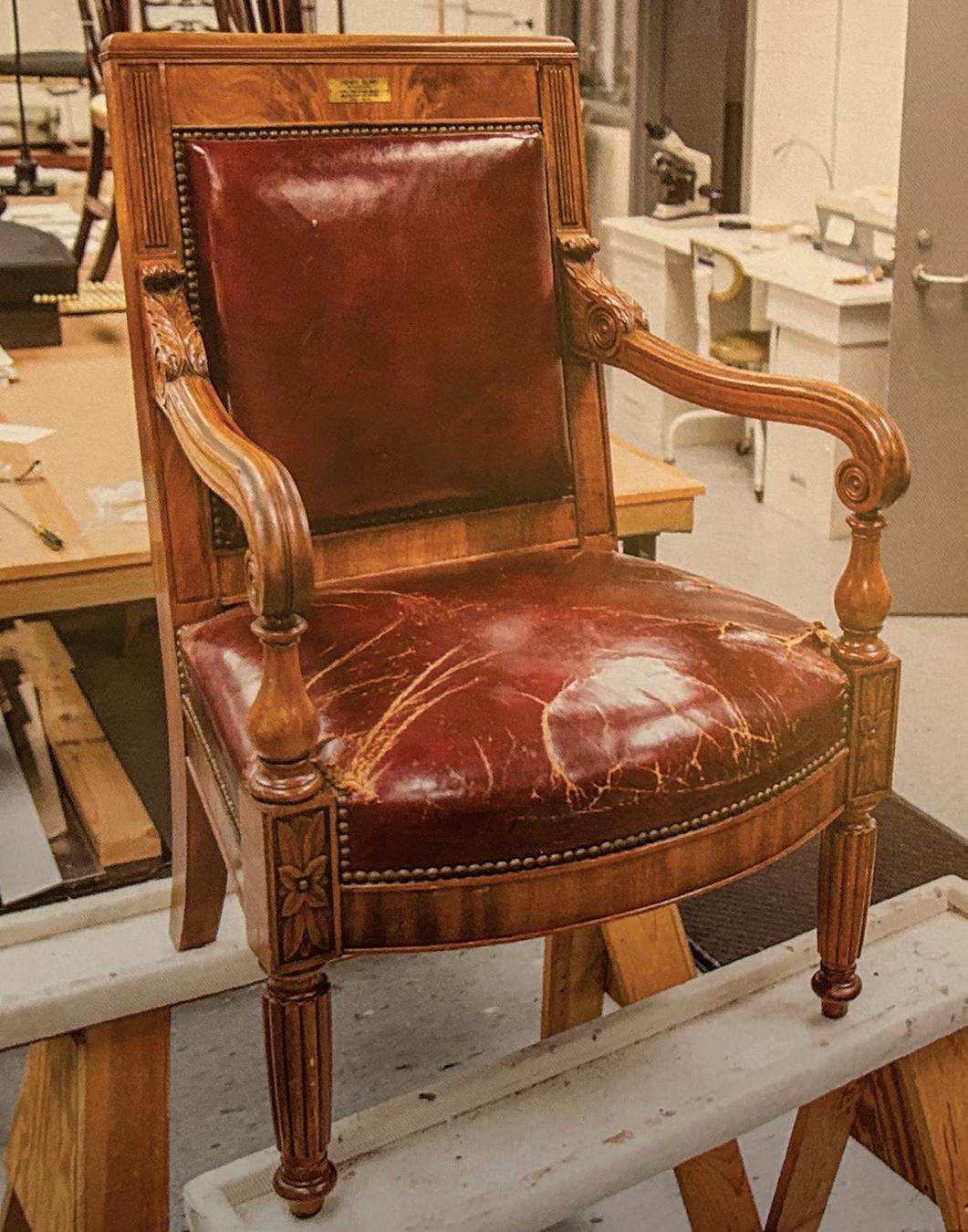
Anne laughed. “It has a brass plaque stating the claim, but the dates are wrong.” I learned that the current red leather upholstery was old and cracked. Her ex-husband, Harold Stirling Henry, had used the chair while studying as a boy. She would probably give it to a friend or donate it to Goodwill, she said.
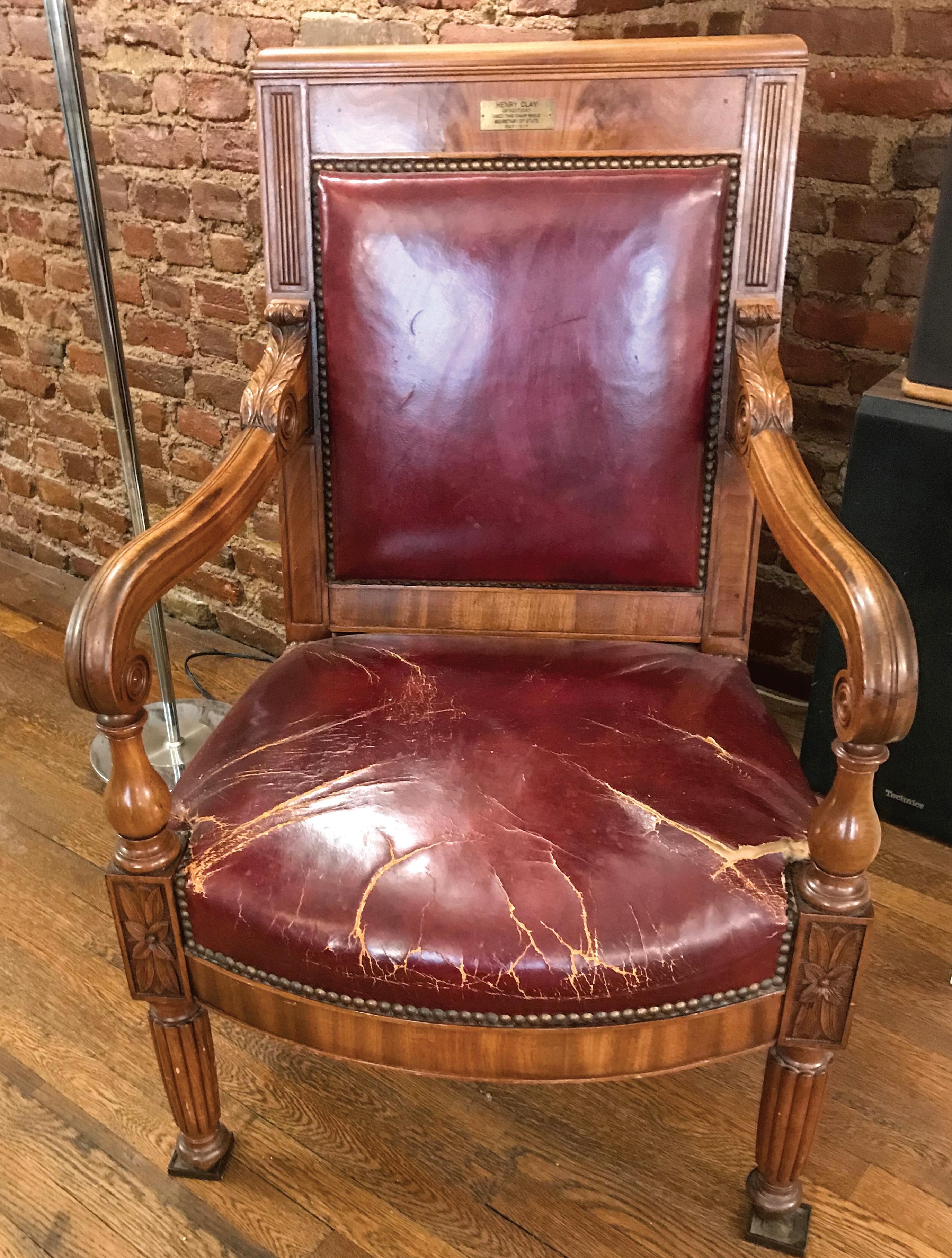
She sent me a photo that showed an antique Empire-style mahogany upholstered armchair of sturdy design, the sort made for heavy use in
government buildings. It obviously predated Henry Clay and spoke of Washington, D.C., manufacture. To my own amazement, I thought I recognized it.
A quick look at Betty Monkman’s 2000 book, The White House: Its Historic Furnishings and First Families, revealed an identical chair, part of a large set of twenty-four chairs and four sofas President James Monroe ordered for the East Room late in 1817. The order went to William King Jr., a Georgetown cabinetmaker, who delivered the set in 1818.1
I recalled that two chairs from this set are in the Daughters of the American Revolution Museum in Washington, D.C., where I had been directorcurator from 1974 to 1976. Decades later, I had seen another chair at Ford’s Theatre when I was researching presidential assassinations for the Sixth Floor Museum in Dallas, which chronicles the killing of John F. Kennedy. One example from the set, now in the White House Collection, had been traced to descendants of Boston decorator William McPherson, who oversaw the refurbishment of the East Room in 1873 that led to the disposal of the King suite. Others had descended among the heirs of John Ford, owner of Ford’s Theatre.2 By 2018 the White House had reacquired three King chairs.
previous page
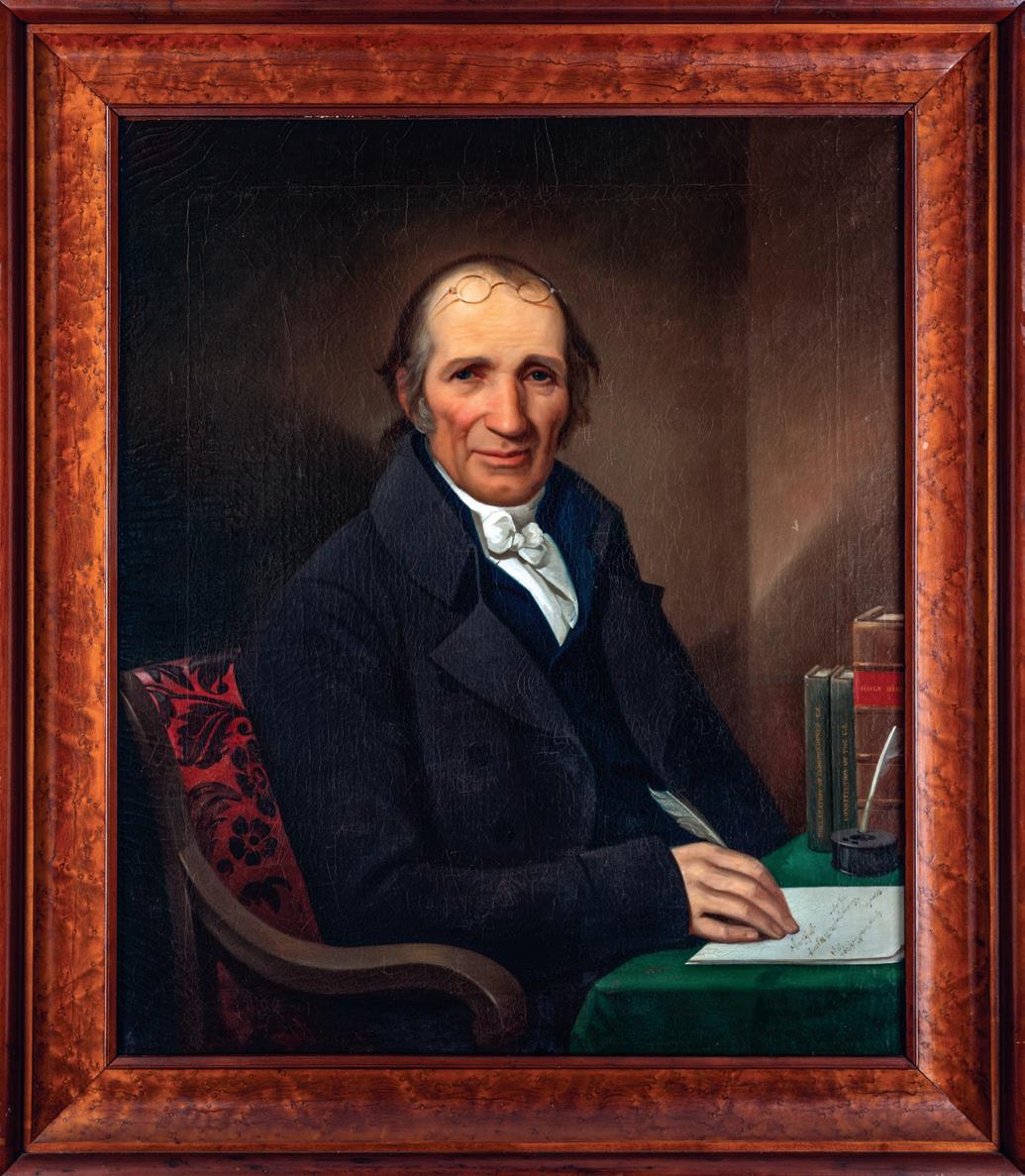
Oil portrait of cabinetmaker William King Jr. by James Alexander Simpson, 1841. President James Monroe ordered a set of twenty-four chairs from King for the East Room in 1817. Delivered in 1818, the set was sold at auction in 1882. Five chairs have since made their way back to the White House, including the chair seen on page 40, which was owned by descendants of William Belknap for more than a century and, with the help of the author, was identified as part of the King set in 2018.
opposite
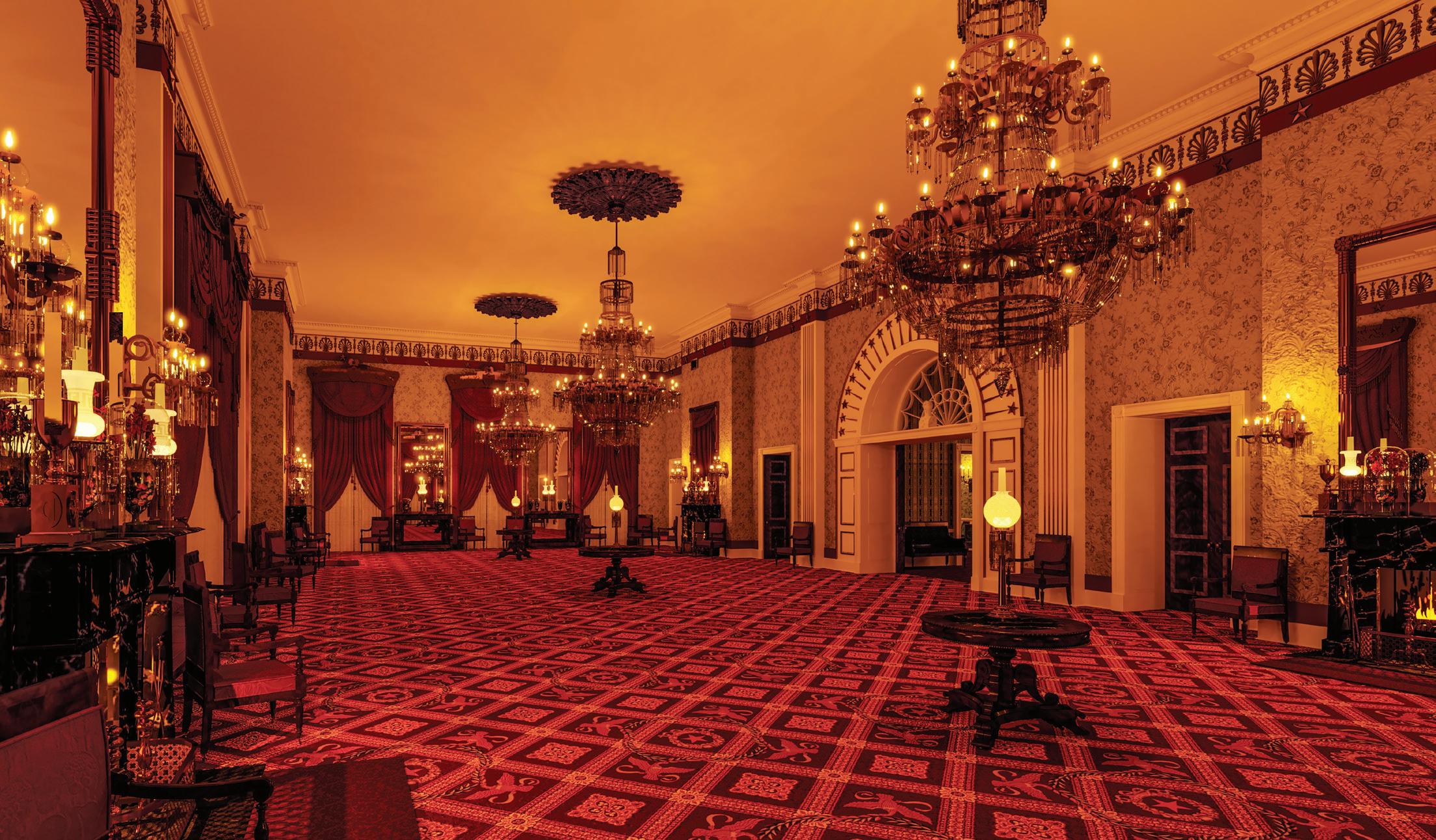
The set of chairs made by William King Jr. and placed in the East Room in 1818 can be seen in 1845 positioned around the room during the presidency of James K. Polk in this illustration by David Ramsey, 2020.
right
Following the sale of East Room furnishings in 1882, the set of chairs made by William King Jr. was dispersed into private hands. Two of those chairs were acquired in 1961 by the Daughters of the American Revolution. They are seen here on display in the DAR Museum, 2024.
Was this a missing piece from the set? I advised Anne to hold on to the chair.
“You think it might be valuable?”
I demurred. “It isn’t in your garage, is it?” I had horrid thoughts of dirt floors, high humidity, wood beetles, and burglars.
She assured me it was stored safely under lock and key.
“Good! Leave it there.”
King was born in County Armagh, Ireland, on September 29, 1771. He came to Baltimore in 1774 and settled in Cumberland County, Pennsylvania. He seems to have apprenticed to the Annapolis cabinetmaker John Shaw, then moved to Georgetown in 1795, remaining there until his death on July 7, 1854.3 Samuel Lane, agent for the president’s furniture fund, was instructed to give the commission for twenty-four chairs and four sofas for the East Room to King. The cost was supposed to be $33 per chair and $198 per sofa, but King discounted the price to $28 and $184 because the furniture did not have its final show upholstery and still needed another coat of varnish. The addition of the show fabric and varnish had to wait eleven years, until in 1829 President Andrew Jackson ordered the work completed by Louis Veron and Company of Philadelphia. In 1873, when President Ulysses S. Grant ordered a redecoration of the East Room, new furniture was acquired, replacing the King suite. Furniture from the East Room was most likely sold during the administration of Chester A. Arthur in 1882.4
PROVENANCE
I checked with Anne on the provenance of the armchair to determine how it was obtained by the Henry family. She did not recall.
“I assumed Henry Clay gave it to a member of the family.”
This scenario was very unlikely, I explained, since congressional allocations to buy and repair White House furnishings came with strings attached, namely, the requirements of the president’s furniture fund.
“White House? You’re joking!”
I explained about Monroe’s 1817 order to William King Jr., and the eleven-year delay in completing the upholstery.
“Clay never owned it?”
I reminded her that Clay had been dead for
nearly three decades when the 1882 sale took place.
“It is quite likely that he sat on it in the East Room when he was a guest of the president.”
Under the furniture fund requirements, Congress would have appropriated funds to President Monroe to acquire and repair furniture, with title remaining with the government. A designated agent would expend the allocated funds, which required a full accounting with detailed invoices. The accounts are stored on microfilm in the National Archives as Miscellaneous Treasury
left
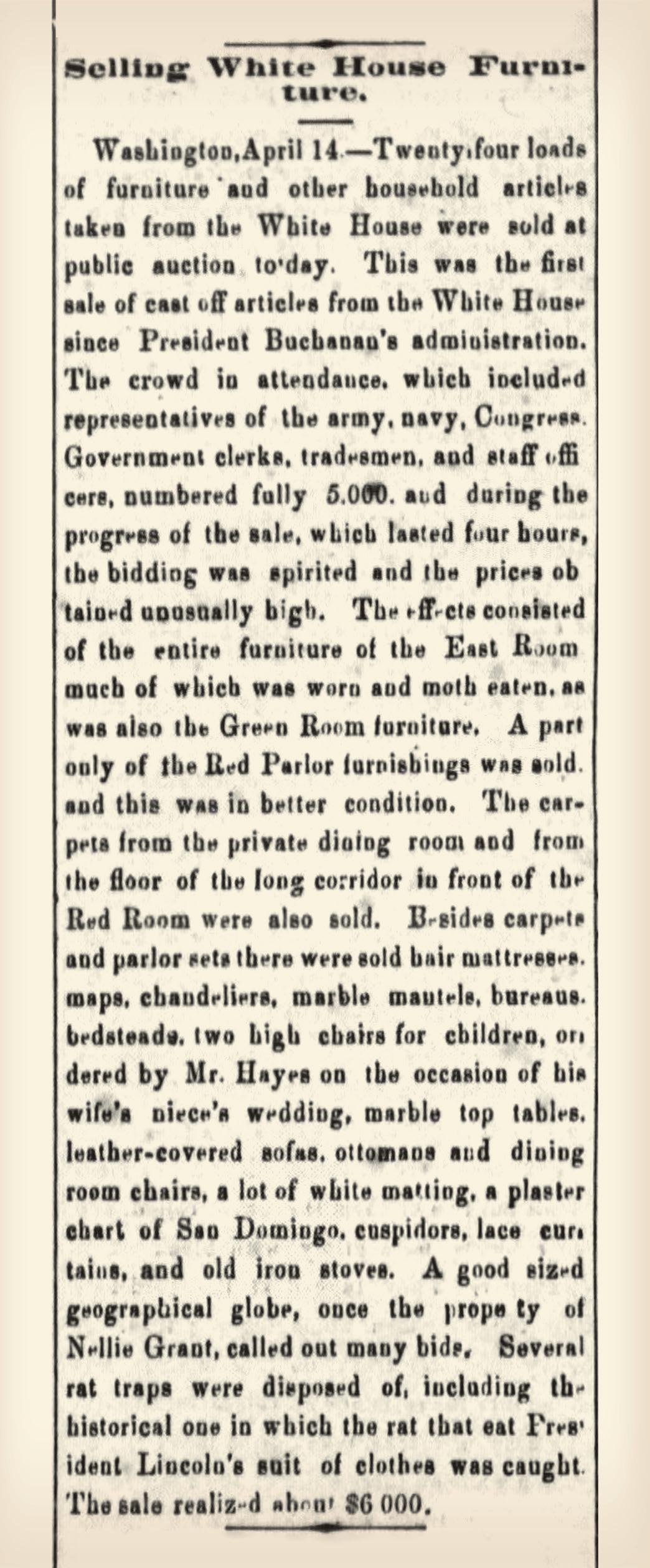
An item in the April 22, 1882, edition of the Southern Herald provides details of the April 14, 1882, auction in which the chairs made for President Monroe to furnish the East Room were sold. The article notes that a crowd of 5,000 attended the four-hour sale and describes the East Room pieces as “worn and moth eaten.”
Accounts. I had slogged through the early records in 1970 while researching objects from the Madison administration. The government microfilmer had lumped White House accounts with lighthouse accounts, which made for slow and confusing reading.5
“If anyone wanted a government-owned chair he or she had to buy it from the nation,” I explained. Alas, the White House accounts did not name who purchased furniture.
“Give me some Henry family names and I will do some genealogical searches.”
“Barklie Henry,” she volunteered. Apparently, her ex-husband’s half-brother, father, and grandfather all shared that name, with minor variations.
“Anything else?”
Anne confided that there had been a family scandal sometime in the distant past.
THE QUEST
I was looking for some tie to Kentucky. The brass Henry Clay plaque on the cresting rail was intriguing, suggesting “pride of place.” There also might have been some additional connection to Washington, D.C., and a direct link to a family scandal.
The research quickly led back to Harold Henry’s great-grandparents, General William Worth Belknap and his third wife, Amanda Tomlinson Bower. Amanda hailed from Kentucky, as did her sister Carrie, who was Belknap’s second wife. The general served as secretary of war during the administration of Ulysses S. Grant. Belknap fought with distinction in the Union Army during the Civil War and was married three times. I soon learned that Carrie and Amanda were the source of the major scandal that led to Belknap’s resignation and impeachment in 1876. Belknap’s biographer Edward S. Cooper wrote that Carrie “was determined to live the good life, regardless of cost.” As for Amanda, she “was even more exploitive and hedonistic . . . and did not care who had to underwrite her pleasures.”6
When General Belknap and his wife Carrie moved to Washington in 1869, Carrie had social ambitions to become a leader in female society, which centered around the White House and members of the cabinet. To keep up with the elaborate parties the couple held during the congressional season, Belknap spent a fortune.
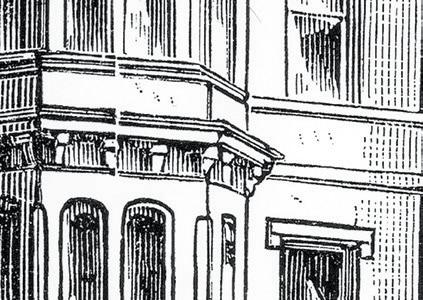
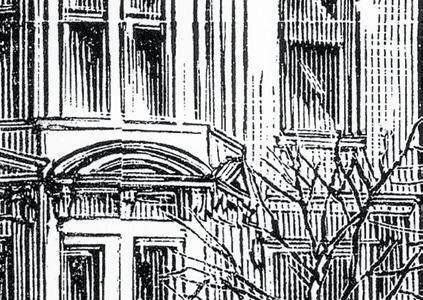
As secretary of war, in 1870 Belknap obtained the authority to appoint sutlers (agents) to run the military commissaries at federal posts. That summer, Carrie Belknap suggested to New York businessman Caleb Marsh that he seek a sutler (post trader) appointment and arrange a kickback to the Belknaps. Marsh was named the official sutler at Fort Sill, Oklahoma Territory, and he subsequently subcontracted with John Evans, who ran the commissary there. Evans sent a percentage of his profits to Marsh, who then made quarterly— later biannual—payments to Belknap. The extra income between 1870 and 1876 came to $24,450 and allowed Belknap to augment his $8,000 annual salary. He used the extra funds to maintain a grand residence in the opulent mansion on Lafayette Square formerly occupied by William H. Seward, and he outfitted his wife with gowns and jewels. At one reception, they entertained as many as 1,200 guests.7
above
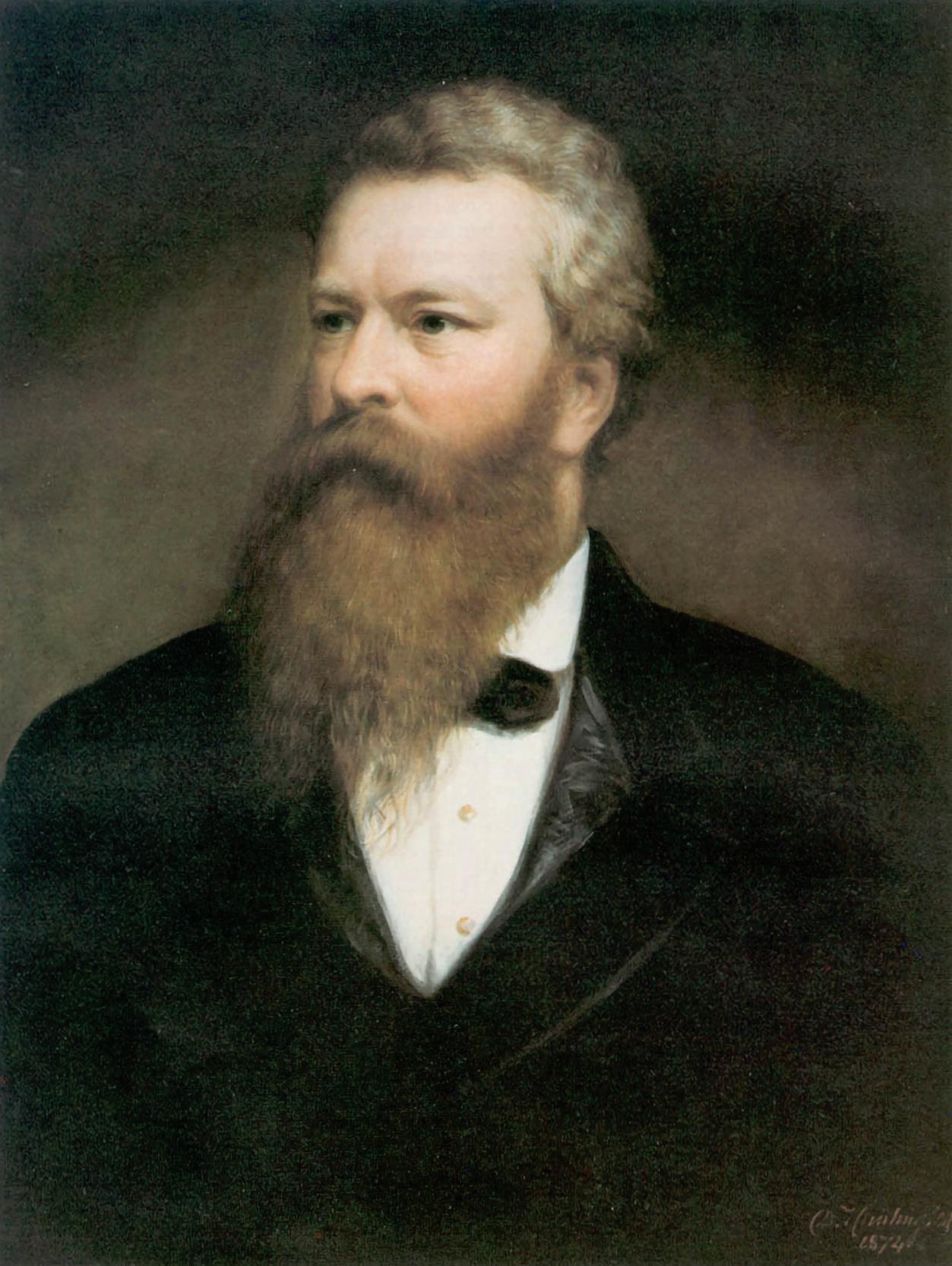
William W. Belknap, portrayed above by Daniel Huntington in 1874, acquired one of the chairs made by William King Jr. for the East Room.
Carrie Belknap was beautiful but frail, and she died of tuberculosis in December 1870, after giving birth to a son. Her sister Amanda, recently widowed, had come to Washington to nurse Carrie and stayed on to take care of the baby. Amanda, described as beautiful, tall, and graceful with black hair and eyes, also aimed to be a leading lady of Washington society. She knew she had arrived when, on January 10, 1873, the Washington Evening Star declared Amanda Bower to be “one of the queens of society.” She also knew of the sutler kickbacks and arranged for Caleb Marsh to continue the payments to Belknap.8
The infant died, and in time Amanda Bower agreed to marry William Belknap but insisted on taking a trip to Europe first. She also demanded a prenuptial agreement and urged the secretary of
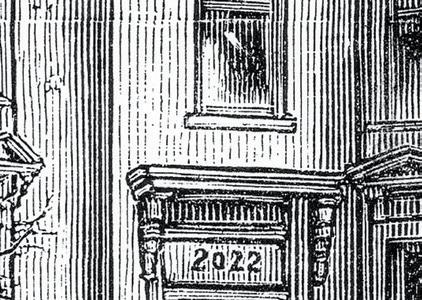
war to turn over property he owned in Iowa and Kansas. She insisted he rent an even larger mansion for her planned social activities, and 2022 G Street NW became her new home once the vows were exchanged on December 11, 1873.9 According to newspaper columnist Mary Clemmer Ames, Amanda Belknap “would insist that newspaper people follow her around the mansion as she pointed out each new acquisition” for her new house.10
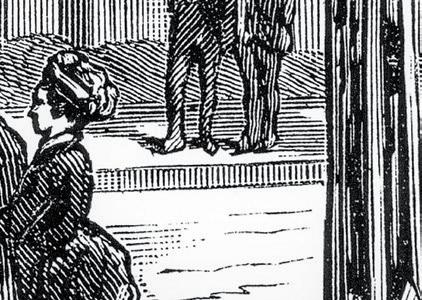
On February 21, 1876, Caleb Marsh received a subpoena to appear two days later before the House Committee on Expenditures, which was investigating the War Department. Marsh panicked and went to see William Belknap in Washington. There, Amanda Belknap insisted that her husband be protected at all costs. Marsh recalled that “every story Amanda suggested involved perjury.”11
opposite
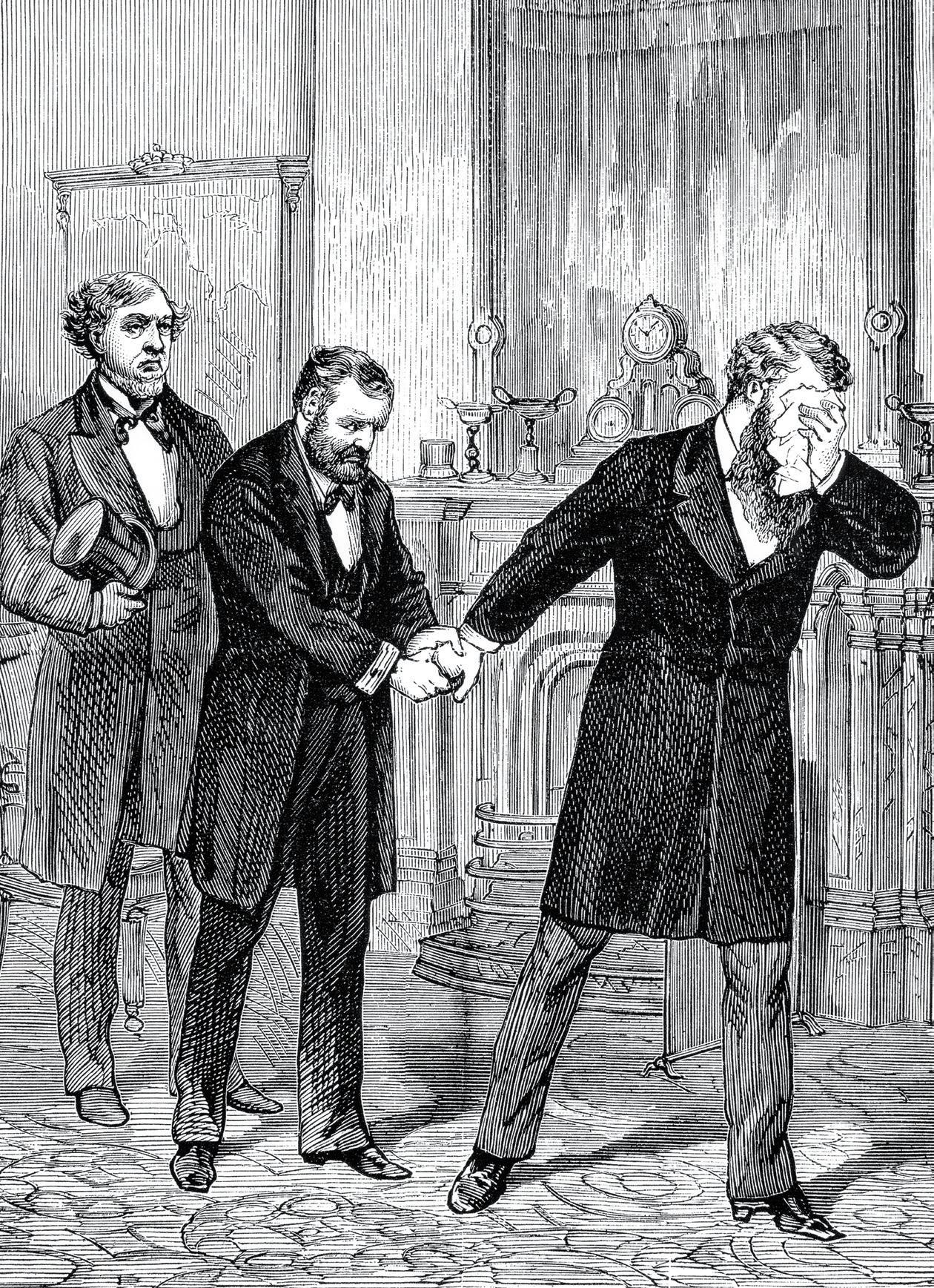
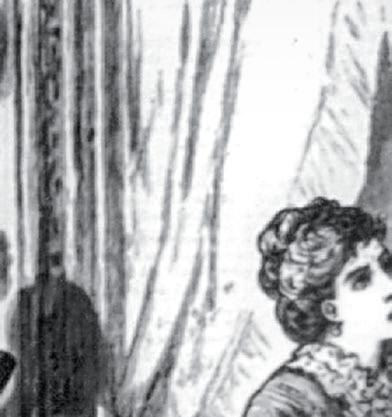
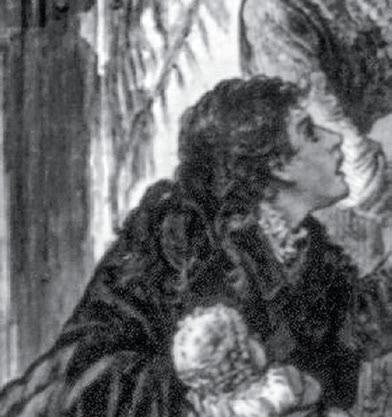
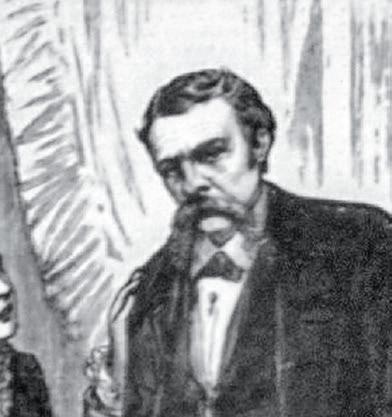
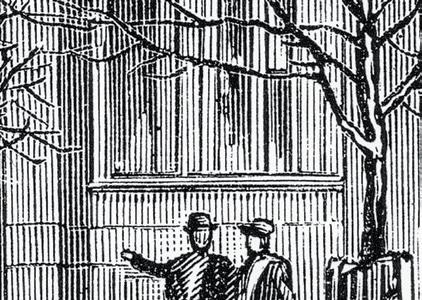
A newspaper engraving (left) captured the dramatic scene in the White House as President Ulysses S. Grant takes the hand of the disgraced Belknap upon his resignation, March 2, 1876, while Secretary of the Interior Zachariah Chandler looks on. Another newspaper illustration (right), titled “National Disgrace,” depicts Amanda Belknap making a plea for her husband to Congressman Joseph Blackburn a member of the House committee that voted to impeach him.
right
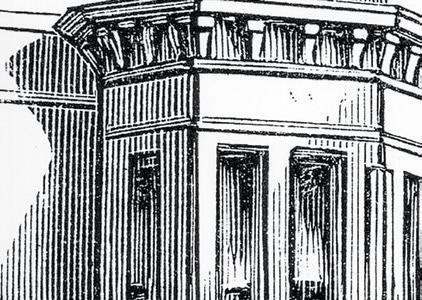
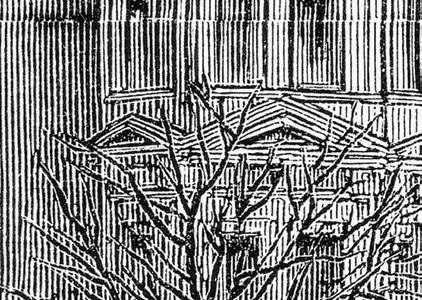
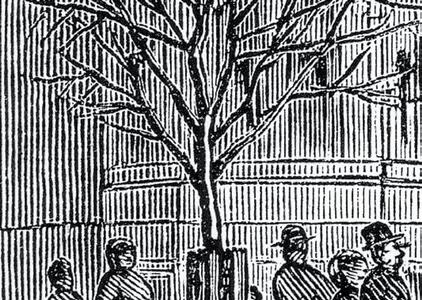
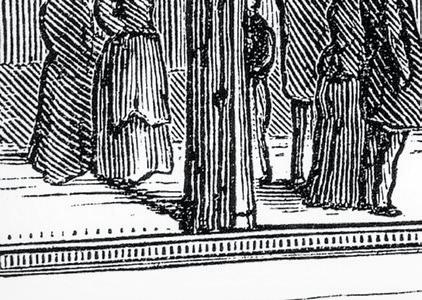
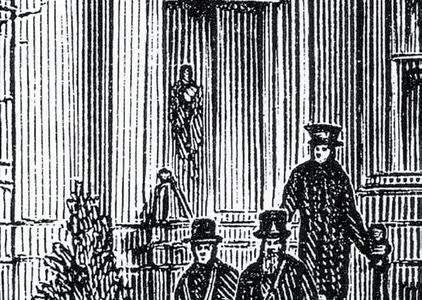
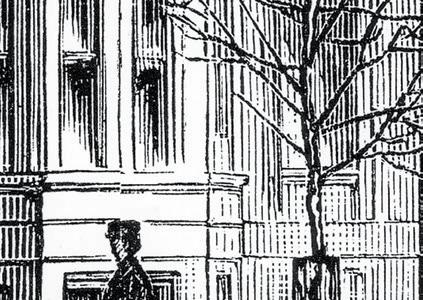
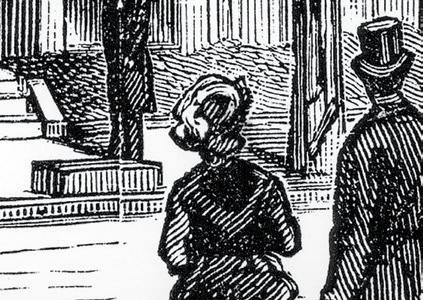
A wood engraving captures the scene at Belknap’s expensive home on G Street Northwest, as onlookers pause to witness his arrest, March 1876.
The scheme with Marsh, who had a written contract with John Evans, was exposed to the committee; payments to Belknap had been carefully recorded. On March 2, while the House committee was drafting articles of impeachment against the secretary of war, Belknap appeared at the White House, resigning his office only minutes before the committee informed Grant of its plans.12 The resignation saved Belknap. Although the House voted to impeach Belknap, twenty-five senators decided they had no authority to convict him because he had resigned. Lacking the needed two-thirds majority, the Senate voted to acquit.
Amanda and William Belknap had one child, Alice, who was born in November 1874. After the impeachment scandal, the couple remained married but lived apart. Belknap returned to his law
practice while Amanda and Alice visited northern resorts and spent time in Iowa.
In 1882, Amanda took Alice to Paris and arranged for her to be educated abroad.13 Raised as a society belle, Alice attracted a variety of wealthy suitors and in 1898 married William Barklie Henry, a wealthy Philadelphia stockbroker and founder of Henry & West (later West and Company) of Philadelphia. He and Alice had two children, Barklie McKee (“Buzz”) Henry and Alice Ellen Henry von Briesen. The marriage ended in divorce before 1909, when Alice took her daughter and moved to Los Angeles, where she wed Lieutenant Colonel Jean Jacques Van Kaathoven, a surgeon born in the Netherlands.14 The 1910 Federal Census lists Alice as the wife of Van Kaathoven in Los Angeles, and daughter Ellen is included in their
family.15 Alice died in 1962 and is buried with Van Kaathoven at Arlington National Cemetery, near the grave of her father.
In 1912 William Barklie Henry married Mary Pancoast Conaway, widow of noted horseman John L. Conaway, in Bar Harbor, Maine. Buzz Henry apparently remained with his father in the east, attending preparatory school before matriculating to Harvard. In 1924, he married Barbara Whitney, heiress to Henry Payne Whitney and his wife, Gertrude Vanderbilt. They had two children before divorcing. Buzz then married Margaret Campbell Trowbridge, by whom he had three children, including Harold Stirling Henry.
It seems most likely that the armchair entered the Henry family through the marriage of Alice Belknap and William Barklie Henry in 1898. Alice had been only two when the impeachment scandal disgraced her parents. The old armchair had no strong attachment for a modern society belle in Philadelphia, and she probably left the relic behind her when she took her infant daughter Ellen and pursued a new life in Los Angeles as the wife of Dr. Van Kaathoven. The chair had migrated to Buzz Henry’s son Harold’s room during the boy’s middle school years. By 2018, the armchair was two hundred years old and had lived with the Henry family longer than it had resided in the White House.
It was time for Anne to make some decisions about the future. Should she sell the chair at auction? Give it to a nonprofit for a tax deduction? After asking me to contact the White House to test its interest in acquiring the piece, she reached out to her former husband and their two adult sons to determine the best course of action. Meanwhile the White House expressed interest and assigned Associate Curator Melissa Naulin as intermediary. In the end, Anne informed me that any proceeds from a sale should benefit the Henry children. Additionally, the White House would have first refusal on a price determined by independent appraisal. There would be no auction.
EXAMINATION
The search for an appraiser was successful, and it was left to determine who would partially remove the existing upholstery to assess the old armchair’s internal condition. This examination would affect the appraised value. Despite its harried workload constructing the expanded DeWitt Wallace Museum, Colonial Williamsburg agreed to host the
examination at its state-of-the-art conservation laboratory. Tara Chicirda, its curator of furniture, made the arrangements for November 30, 2018.
The White House sent Naulin and Curator Lydia Tederick along with Conservator John Courtney. Colonial Williamsburg was represented by Furniture Curator Tara Chicirda, Senior Upholstery Conservator Leroy Graves, Furniture Conservator Chris Swan, and the laboratory’s photographer, who dutifully recorded every minute of the analysis. Williamsburg’s Senior Vice President Ron Hurst dropped in from time to time, along with the director of the conservation laboratory. Apparently, Anne had confided to a few close friends about our pending adventure, and Soundscapes board member Donald Ragland offered his van, inviting everyone to go along. The chair, wrapped up like a mummy, rode in the back.
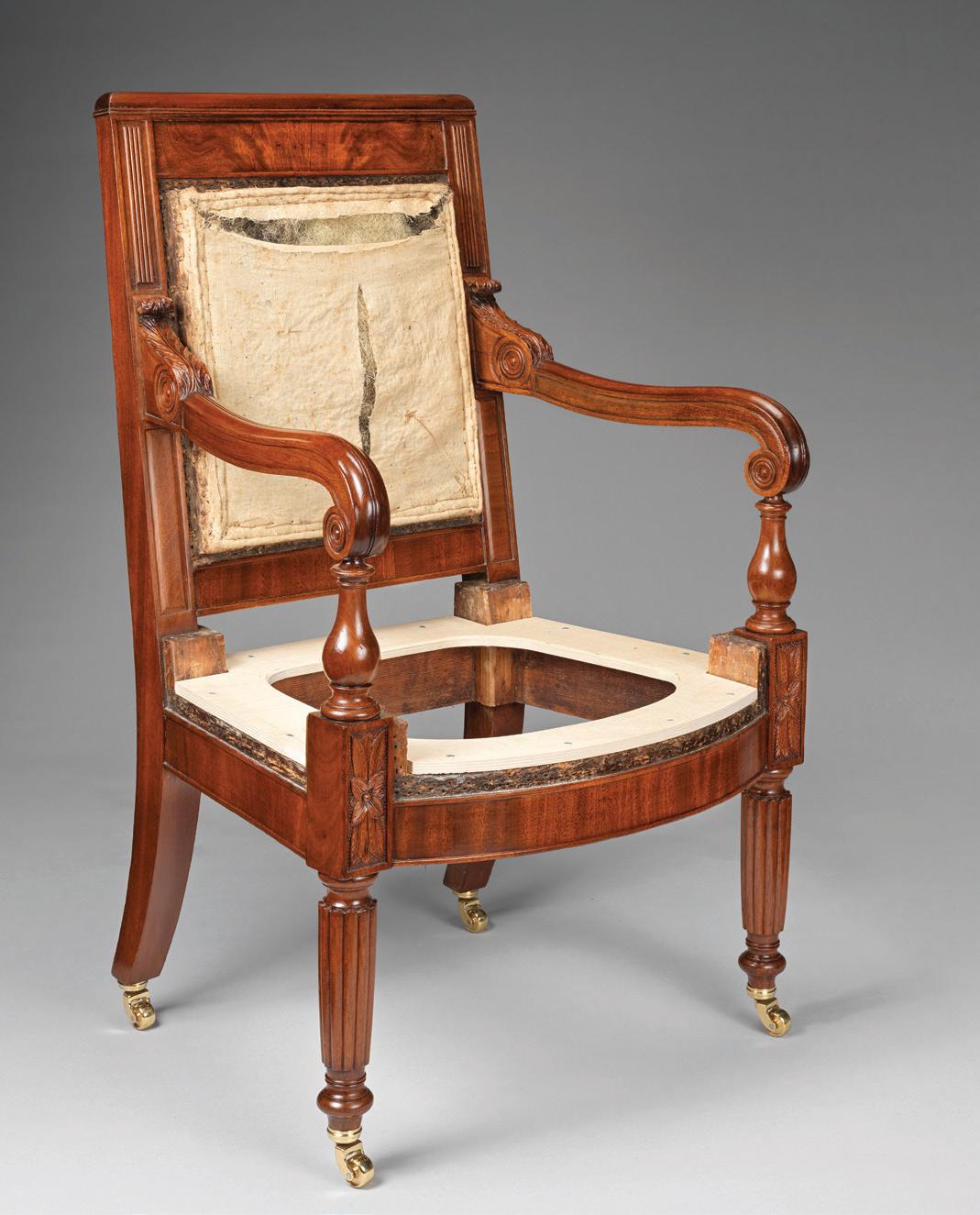
Tara Chicirda met us at the loading dock, where lab technicians carefully placed the chair on a flatbed dolly, rolled it to a lift, then steered it down a hallway into the upholstery lab, the domain of Leroy Graves, whose fame includes inventing a new upholstery technique that will not harm the framework of fragile antique seating furniture. Graves took charge of the chair, which was placed on supports in full view of the group. Then a slow ballet of curators and conservators began, with Graves choreographing the entire operation. The brass tacks holding the leather to the seat and the back were carefully removed. As the frame was exposed, curators with photos of the frames of the three King chairs already in the White House Collection and another at the Baltimore Museum of Art were consulted. They leaned in to confirm original secondary woods and construction techniques peculiar to William King’s work. Then the conservators returned to their work with surgical precision.
After two hours, the professionals had found the chair to be fully consistent with its age and the other known chairs from the suite. A search inside the old stuffing revealed a tiny piece of show fabric.
I approached Leroy Graves to get his official ruling. “It’s in good shape,” he said. I pointed to some black stuffing, asking if it was horsehair. Leroy smiled, “It’s Spanish moss.” The group crowded around the chair like proud relatives at a graduation, grinning as our photos were taken.
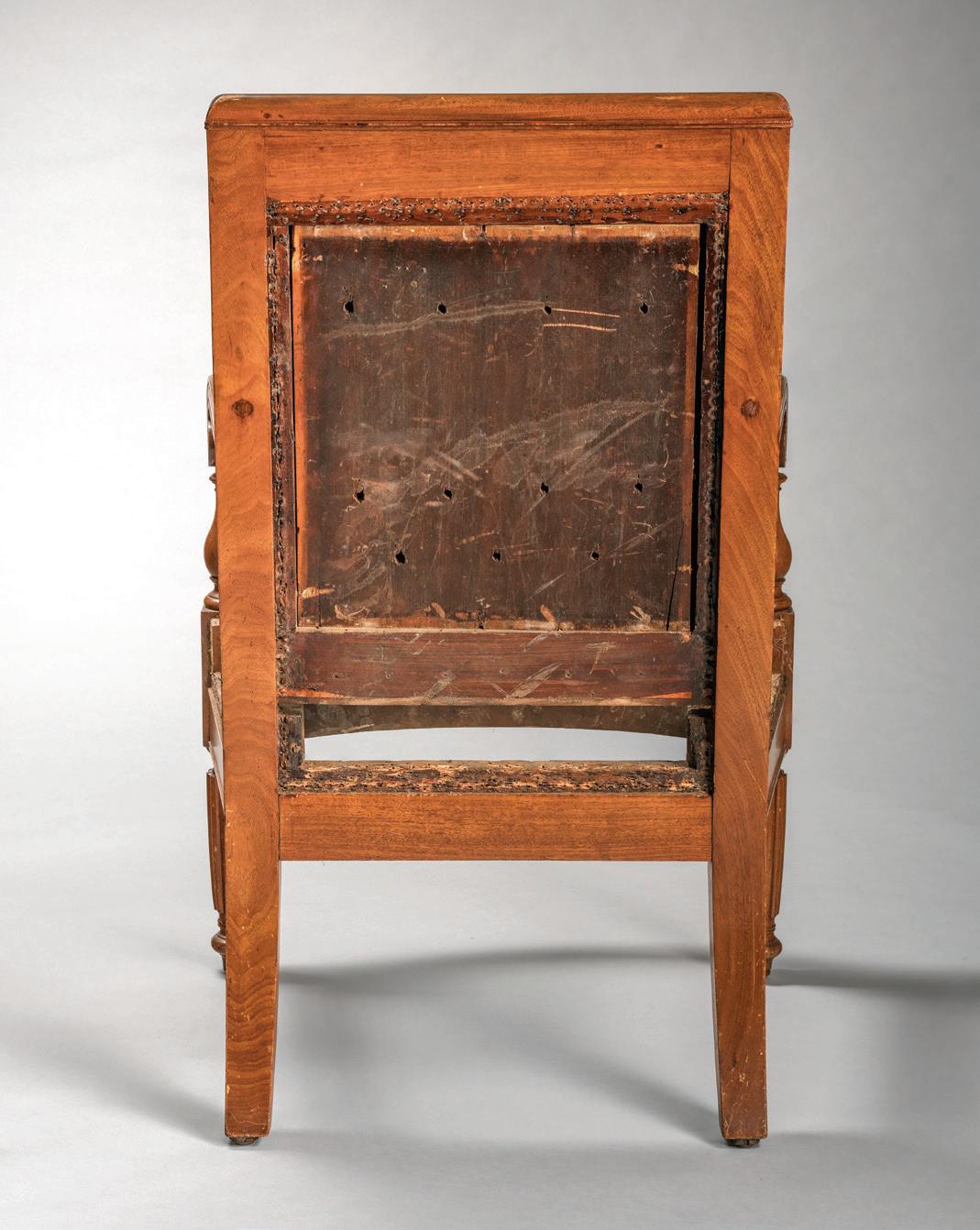
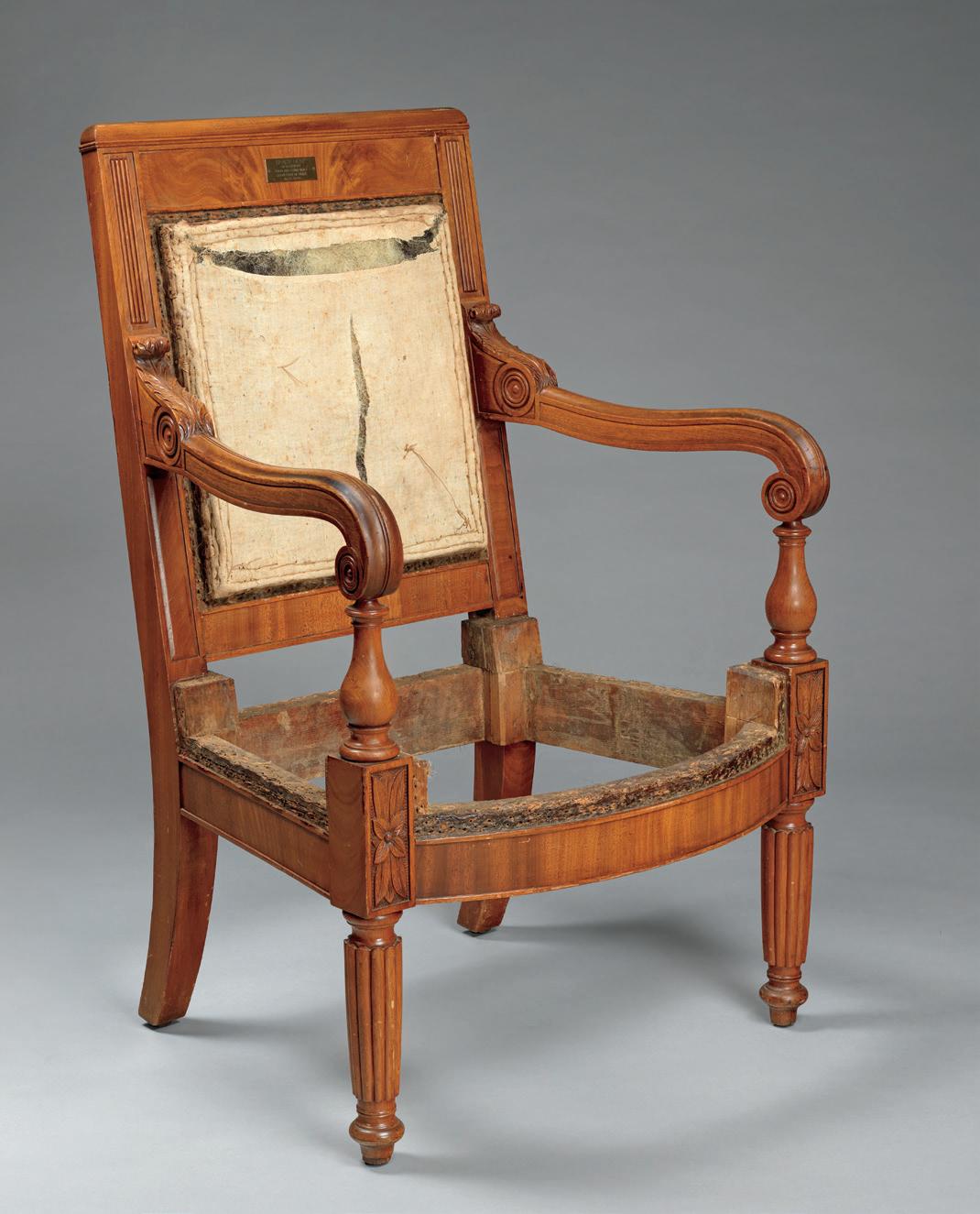
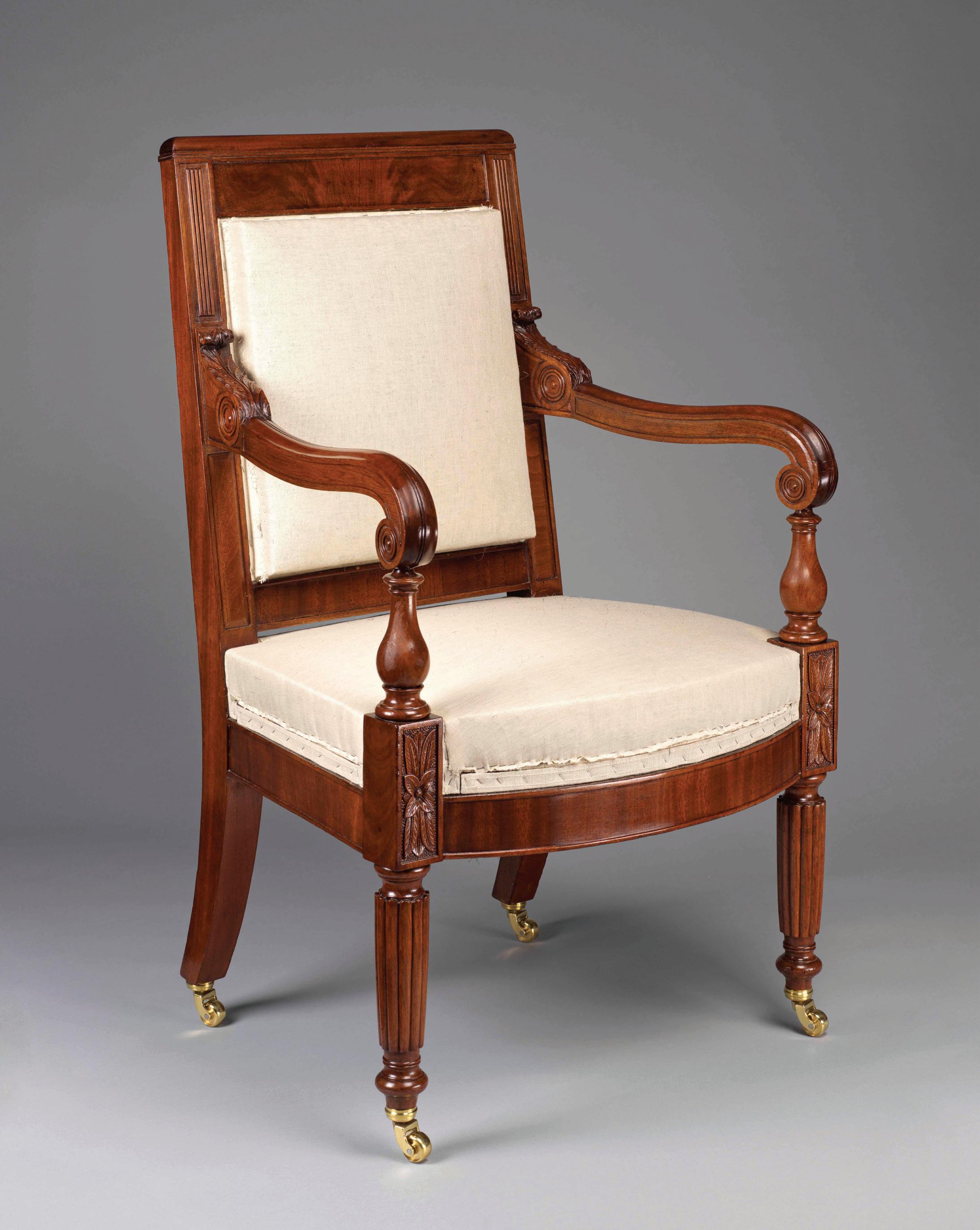
opposite, clocKwise from top left The William King chair is seen upholstered in cracked red leather, the condition in which it was received by the White House, prior to conservation, 2020. Once the upholstery was removed by conservators, the original back panel and wooden frame can be seen more clearly. The stuffed seat back, believed to be original, was retained for reuse. At bottom left, the chair is seen with a new coat of French polish shellac and new brass wheel casters made to match the reproduction casters on the other three King chairs reacquired for the White House Collection. A birch plywood seat has been added to receive future upholstery, so that the upholstery will not need to be attached directly to the chair frame.
The newly conserved King chair is seen upholstered in muslin, 2024. It will be upholstered with the appropriate fabric for display once a decision is made on where it will be placed in the White House. right
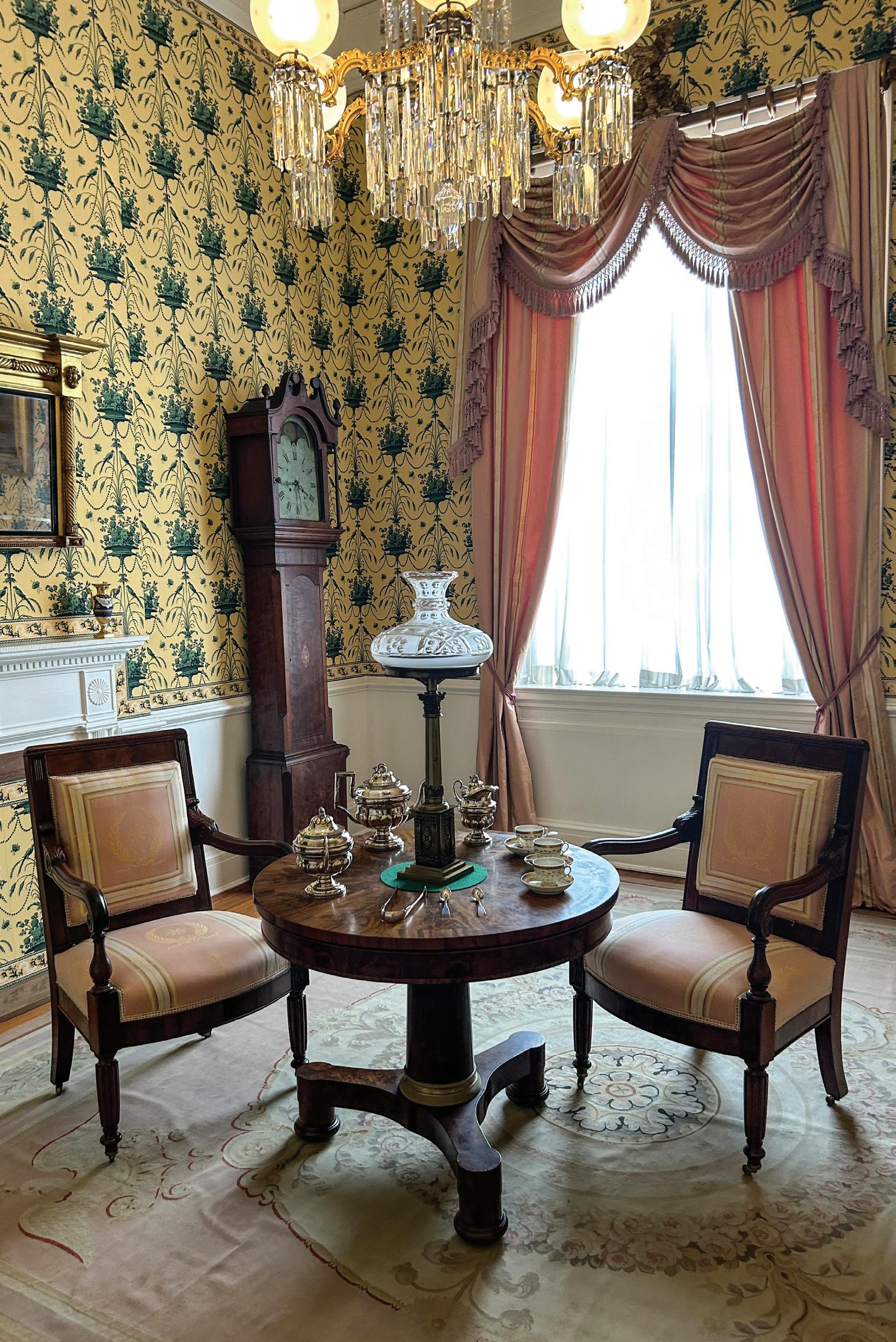
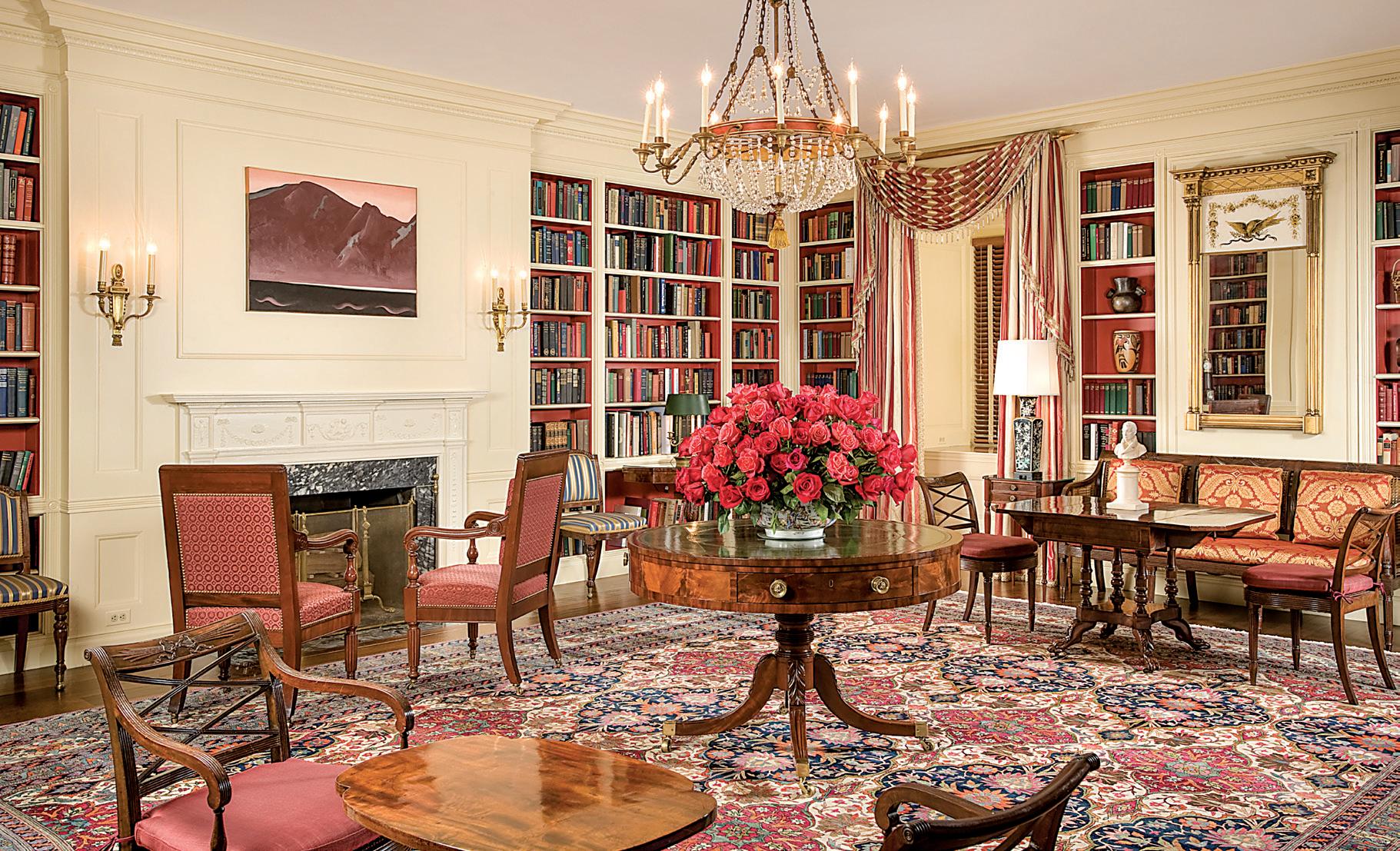
Two King chairs acquired for the White House are seen positioned in front of the fireplace in the Library.
DENOUEMENT
After the examination, it was a matter of obtaining an appraisal and the approval of the Committee for the Preservation of the White House for purchase. The committee’s approval led to an official request from the Office of the Curator, The White House, to the White House Historical Association, a separate, nonprofit organization, to supply the funds to complete the sale. A careful transfer of the chair to Washington followed, where it joined the three identical King chairs from the Monroe purchase already in the White House Collection.16 In January 2024 a fifth King chair was acquired by the White House with funds provided by the White House Historical Association.
notes
16. See the images and discussion in Betty C. Monkman, William G. Allman, Lydia S. Tederick, and Melissa C. Naulin, Furnishing the White House: The Decorative Arts Collection (Washington, D.C.: White House Historical Association, 2023), 326–27. opposite
The late Dr. William Seale, founding editor of White House History Quarterly, invited me to tell the story of what he called the “Adventures of the East Room Chair.” I respectfully dedicate this article to his memory.
1. Betty C. Monkman, The White House: Its Historic Furnishings and First Families (Washington, D.C.: White House Historical Association, 2000), 57, 283n.
2. Anne C. Golovin, “Cabinetmakers and Chairmakers of Washington D.C., 1791–1840,” Antiques 107, no. 5 (May 1975): 898–922; Golovin, “William King, Jr., Georgetown Furniture Maker,” Antiques 109, no. 5 (May 1977): 1032–37.
3. Golovin, “William King, Jr.,” 1032.
4. Melissa Naulin et al., “William King Jr. Armchairs,” typescript, n.d., Office of the Curator, The White House. The office has been compiling this list for decades. It includes information about all known chairs and sofas from the set. The Henry chair was not on this list until it was brought to the attention of the Office of the Curator by the author.
5. Miscellaneous Treasury Accounts of the General Accounting Office, Record Group 217, microfilm, National Archives and Records Administration, Washington, D.C.
6. Edward S. Cooper, William Worth Belknap: An American Disgrace (Madison, N.J.: Fairleigh Dickenson Press, 2003), 12. See also the account of the scandal in William Seale, To Live on Lafayette Square: Society and Politics in the President’s Neighborhood (Washington, D.C.: White House Historical Association, 2019), 122–24.
7. Cooper, Belknap, 19, 23, 26–28, 30–31, 141, 145–47 passim.
8. Ibid., 115–21, 59.
9. Ibid., 145.
10. Ibid., 264–65.
11. Ibid., 18–19.
12. Ibid., 20.
13. Ibid., 33–34.
14. Ibid., 312. On page 316, Cooper mistakenly omits Alice Belknap’s marriage to William Barklie Henry in 1898.
15. United States Federal Census, Los Angeles, California, 1910, National Archives.