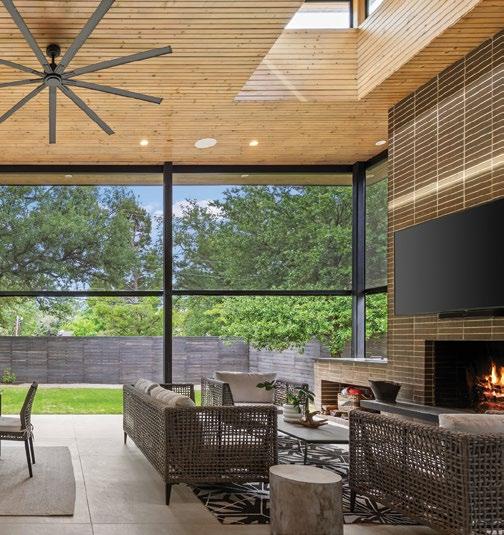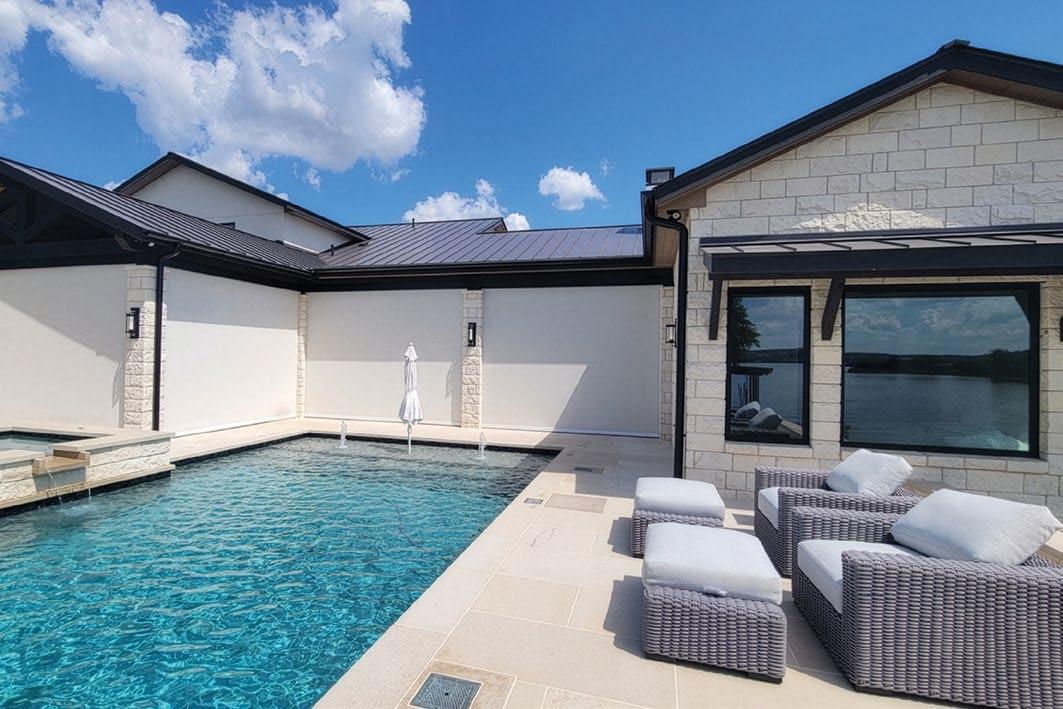






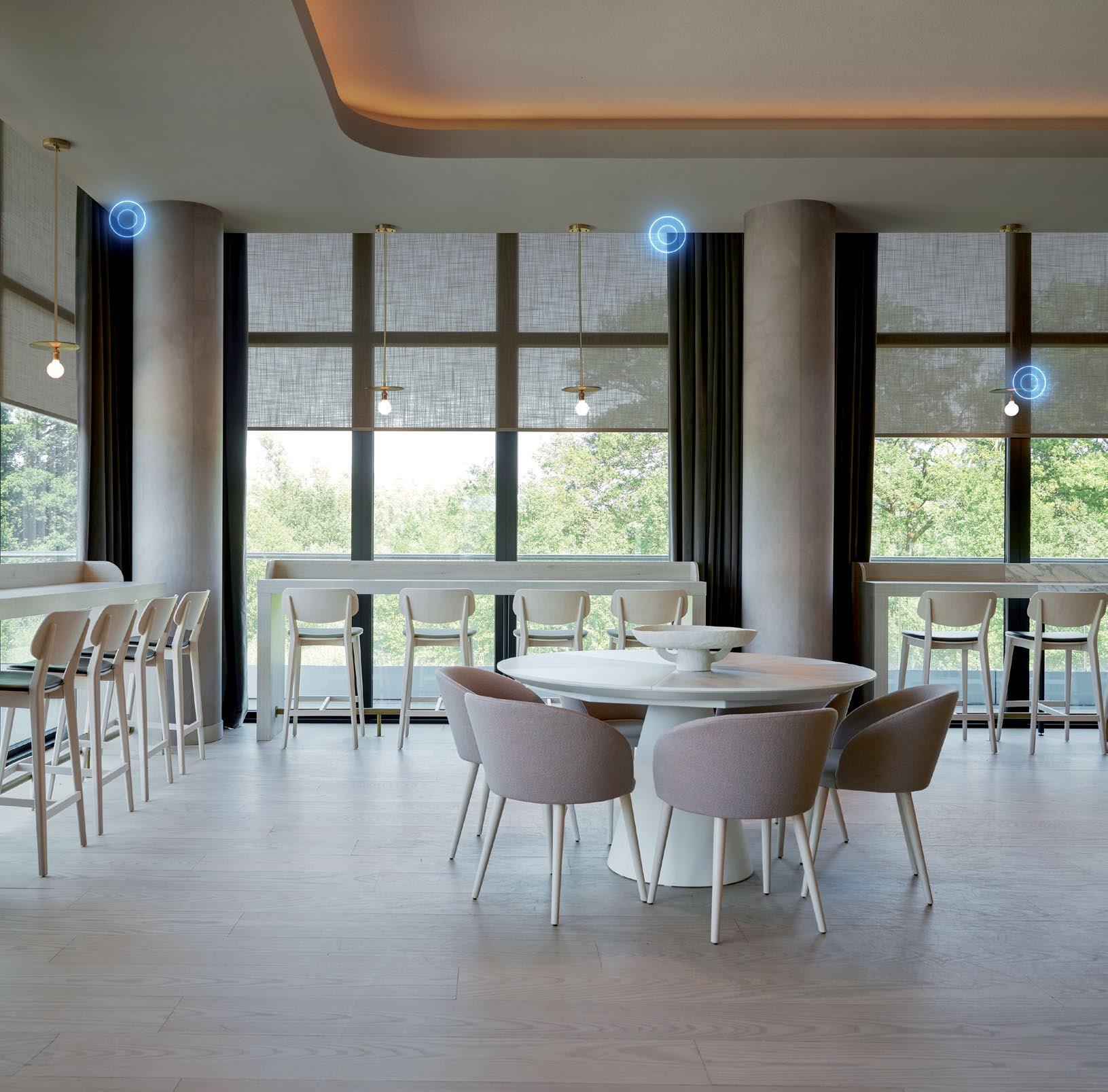



Motionblinds delivers a full range of wired motors for smart adaptive shading, built for commercial and high-end residential projects. Low voltage and 24V DC motors including the new CM-60V2 power panel. Compatible with all building platforms and protocols.
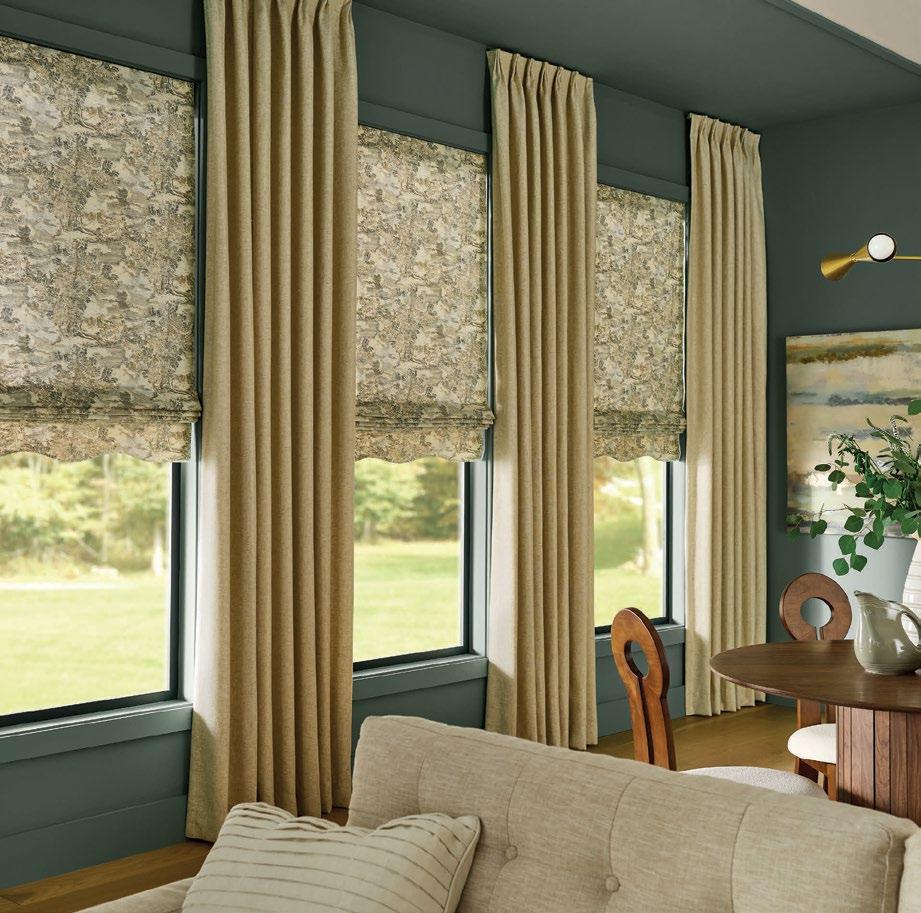
From beautiful draperies, statement side panels and soft Roman shades to finishing details like top treatments and throw pillows, our team of craftsman bring your designs to life crafting high-quality window treatments. Whether you choose from our hundreds of in-house fabrics or provide your own, Horizons can help you create the perfect soft treatment for any space, color palette or design aesthetic.
Ready to start designing?
department
H o r i z o n s
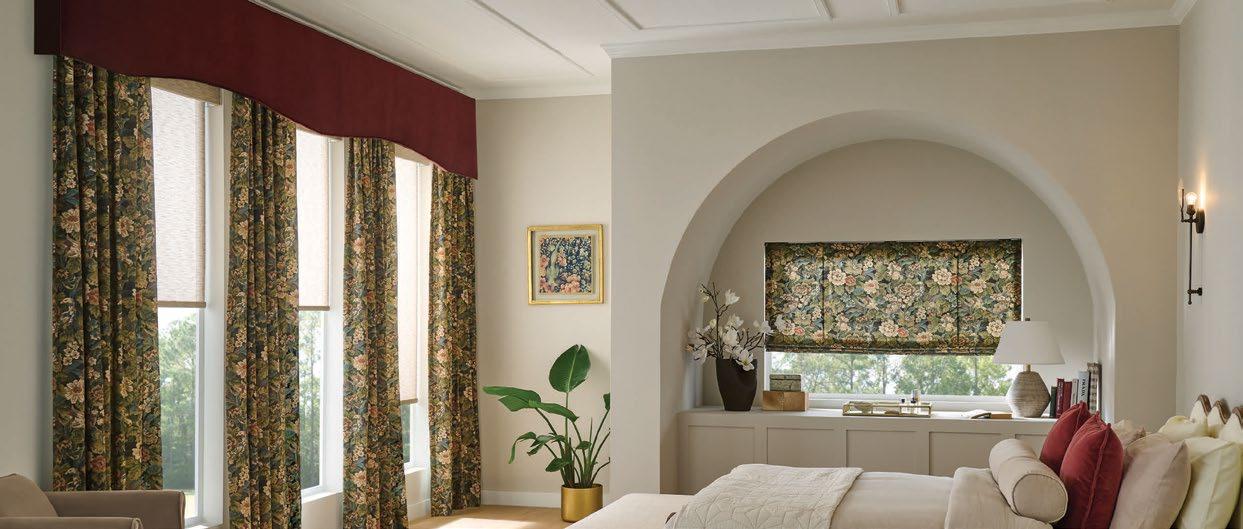
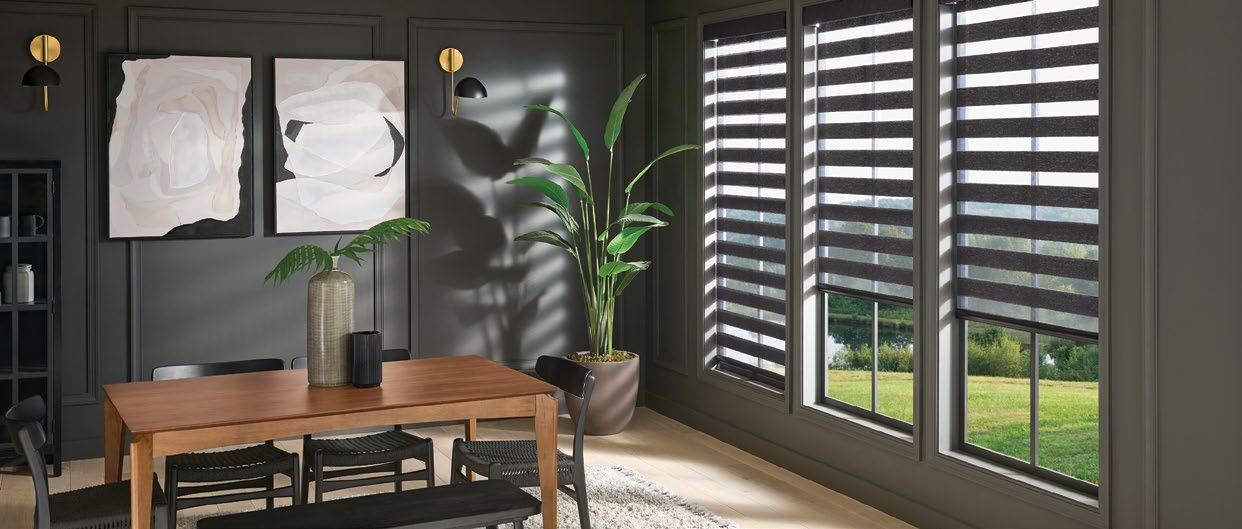
Graber’s spring launch is designed to fill gaps, o er bet ter tech and lead the industr y with on -trend materials. A s your trusted dealer par tner, we listen closely to your feedback to deliver thought ful options that help your business grow. Visit graberblinds.com to view all of the spring launch

VOLUME 48, ISSUE 3
Publisher | Ania Munzer ania@wf-vision.com
Managing Editor | Lindsay Brown lindsay@wf-vision.com
Art Director | Brandon Bennett bbennett@studiobtm.com
Copy Editor | Maude Campbell maude@wf-vision.com
Event Manager | Shannon Flaherty shannon@wf-vision.com
Sales Executive | Nancy Nix nnix@wf-vision.com
Marketing Coordinator | Tracy Herold tracy@wf-vision.com
Sam Blair, Kim Boynton, Else Johnson, Marissa Massey, Kathy Cragg Pace, Oliver Schreiber, Shaun Turner, Ronica VanGelder







SUBSCRIPTION SUPPORT 866-456-0405 • wfvision@bridgetowerhelp.com ON THE COVER:
Window Fashion VISION magazine makes every attempt to credit each person involved in the process of creating a window covering and will not be responsible for crediting any person whose name, company or participation did not surface during the information-gathering process. Crediting disputes between parties other than VISION magazine are solved at the discretion of those involved.
Window Fashion VISION (ISSN 08869669) (USPS 708930) published bi-monthly by BridgeTower Media, LLC, 1633 New Garden Rd Unit #163, Greensboro, NC 27410. Visit our website at WFVISION.com. Periodicals postage paid at Columbia, SC 29292, and additional entry offices.
POSTMASTER
Send address changes to:
Window Fashion Vision Subscription Services PO Box 494 Lincolnshire, IL 60069-0494
Subscription rates: $22/yr. U.S. and possessions; $29/yr. Canada; $90/yr. Foreign (includes airmail postage). Copyright © 2026 by BridgeTower Media. Reproduction in whole or in part without written permission prohibited. Canadian Publications Agreement Number: #40036514. Canadian Return Address: Window Fashion Vision, PO Box 494, Lincolnshire, IL 60069-0494 MAY + JUNE 2026, VOLUME 48, ISSUE 3.


Designer and Installer: SunCoast Blinds
Fabrication: Universal Window Coverings
Photography: Eyeleen L Photography
For magazine updates, go to Facebook.com/wfvisionmagazine
Keep up with all the news @WFVMagazine
Follow us and re-pin at Pinterest.com/wfvisionmagexpo
Follow us on Instagram @wf_visionmag
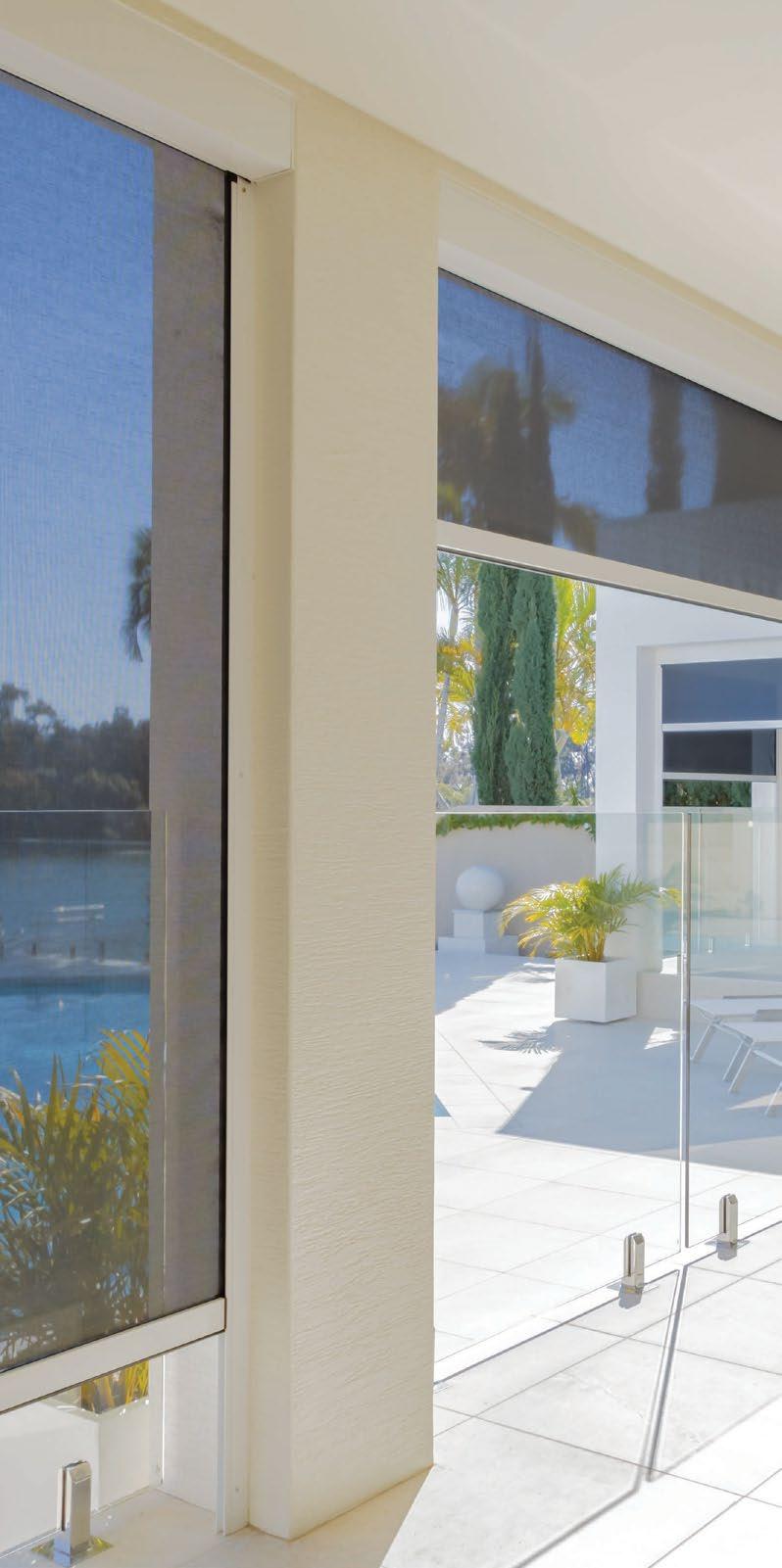




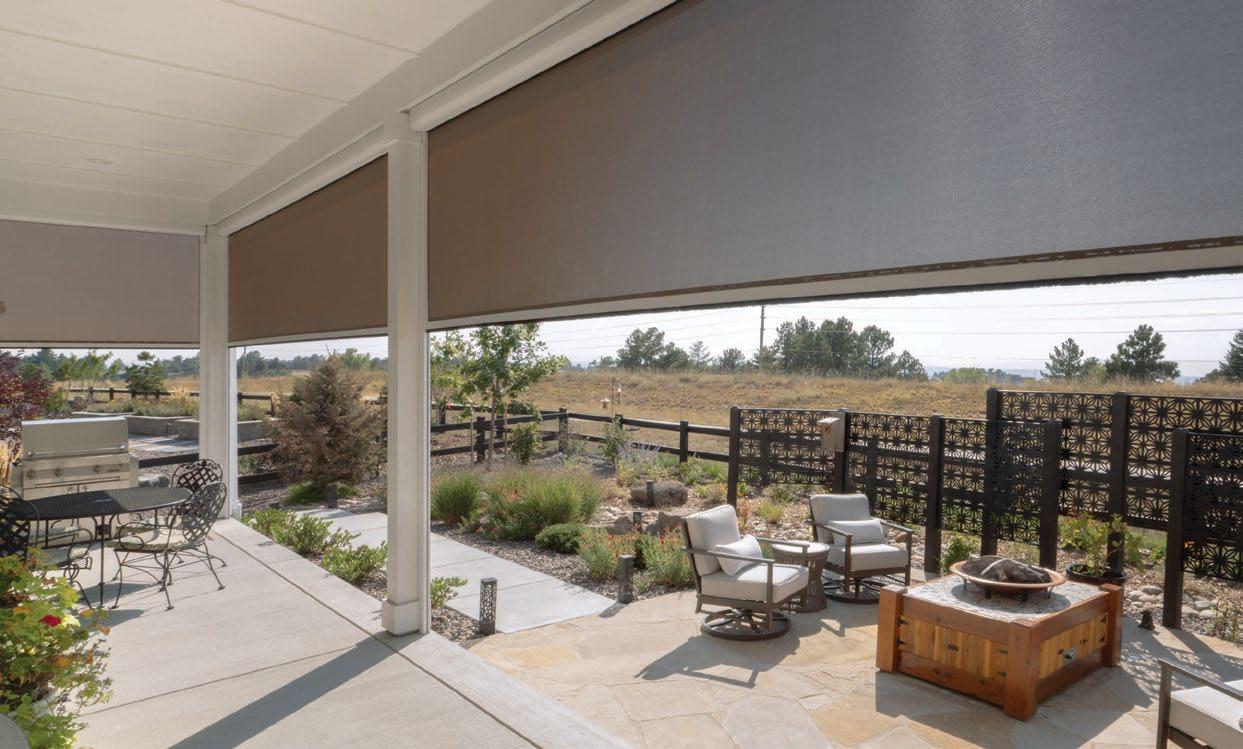
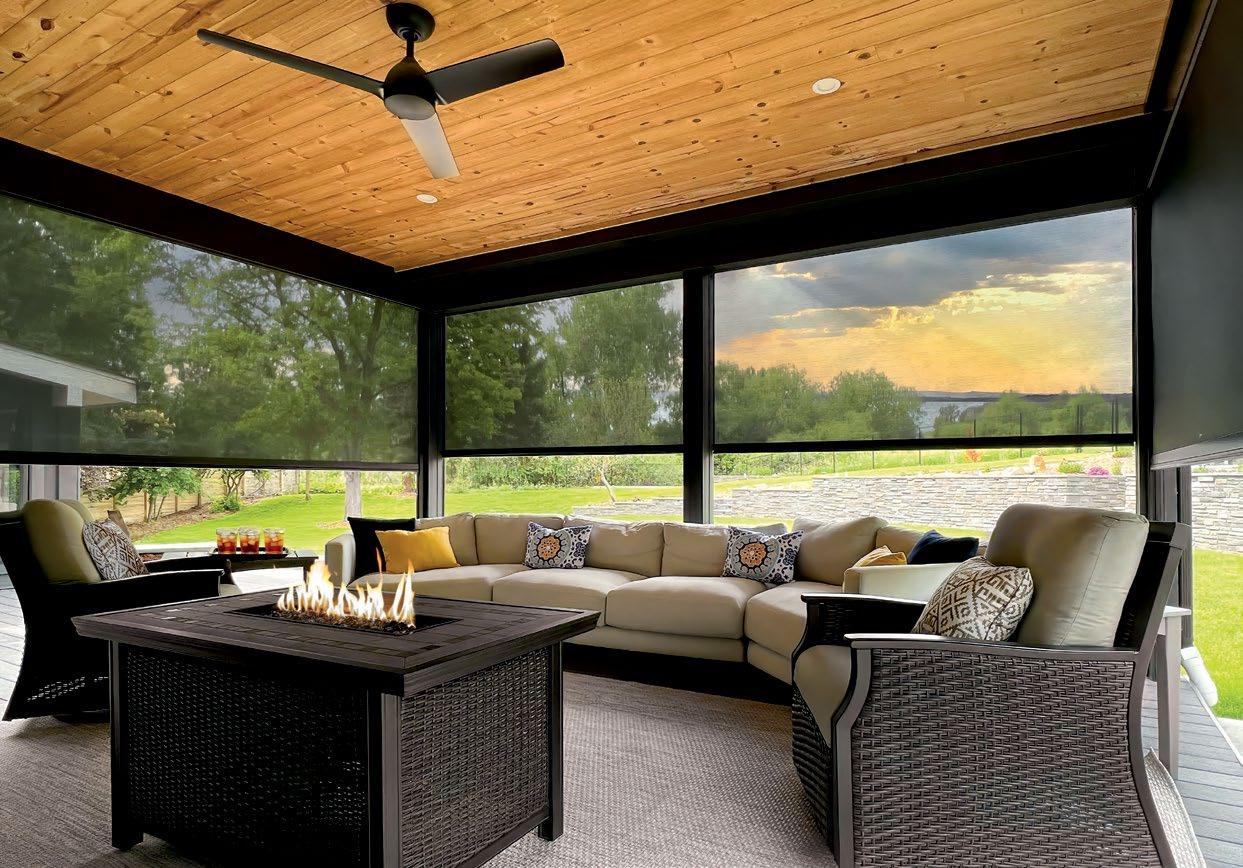
Zipscreen delivers a complete outdoor shading solution, powered by the Automate FT motor range. The wired FT 15 provides continuous power, while the Li-ion FT o ers battery-powered convenience with a USB-C charging port and optional solar panel.

Paired with Texstyle’s X-Weave fabric, it’s built to withstand the elements while maintaining comfort and style.





Summer is almost here. Can you feel it? The days are getting longer, the evenings a little slower and suddenly everything starts to shift outside. Pool days, outdoor dinners, a few competitive rounds of cornhole and, of course, nights around the firepit with s’mores in hand.
That seasonal shift is exactly what this issue is all about. Outdoor living is no longer an afterthought or a nice-to-have, it's a fully realized extension of the home, designed with the same intention, comfort and style as any interior space. And for our industry, that opens the door to new ideas, new products and new opportunities.
Inside this issue, we take a closer look at the materials, technology and strategies shaping exterior spaces today. From high-performance fabrics built to handle sun, moisture and daily use to the latest advancements in automation and integration, outdoor solutions are becoming smarter, more seamless and more essential to how people live.
Of course, great design is only part of the story. There is also real business potential here. As outdoor spaces continue to evolve, so does the opportunity for professionals to expand their offerings, add value and think beyond the window. Whether it is reimagining how exterior shading is sold, specifying products that perform across environments or helping clients create spaces they actually use, the outside category is full of untapped potential.
And because no summer issue would be complete without a little inspiration, we are also leaning into the lifestyle side of outdoor living. From effortless entertaining ideas to simple ways to elevate everyday moments, including Grace’s infamous Hangover Chicken Salad recipe, consider this your excuse to stay outside a little longer.
Here’s to a season spent outside and the possibilities that come with it.
Cheers,
Lindsay Brown Managing Editor

















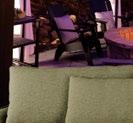
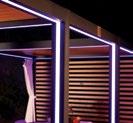

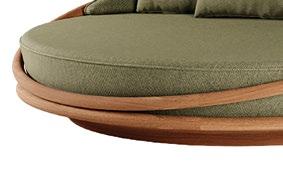

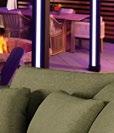







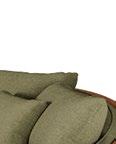
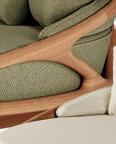
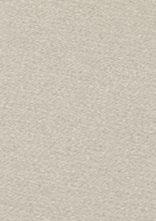




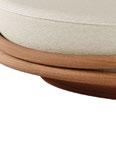





























Including fabrics from


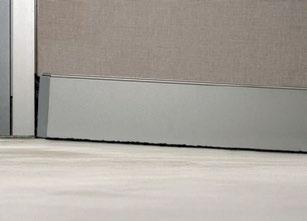
Align Bar covers slope gaps up to 4"



The NEW Align Bar for FlexShade® ZIP exterior shades overcomes sloped surfaces for a refined, gap-free seal to keep insects out.




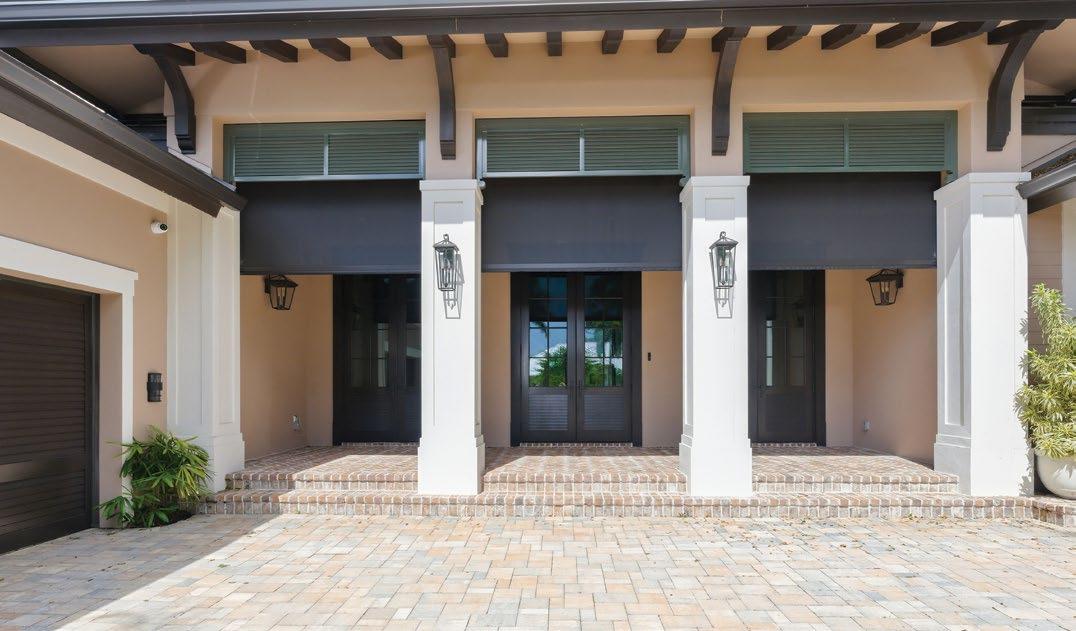
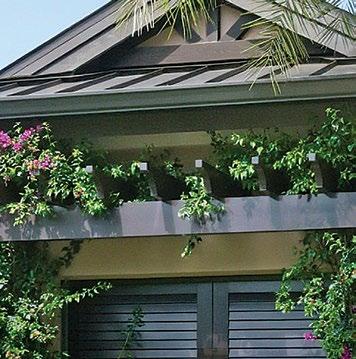
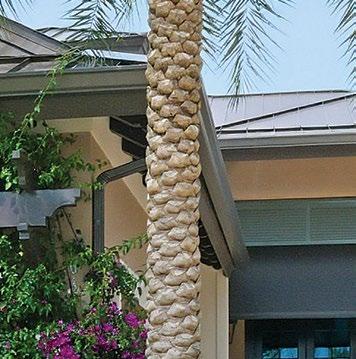
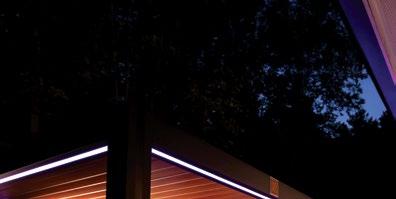
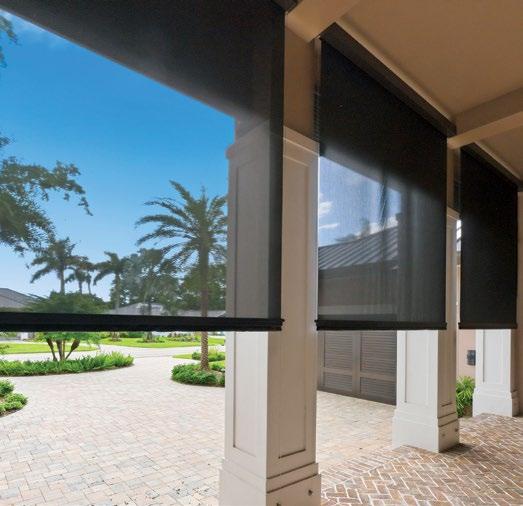
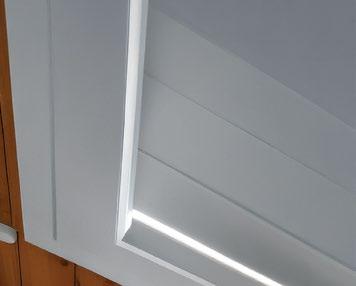
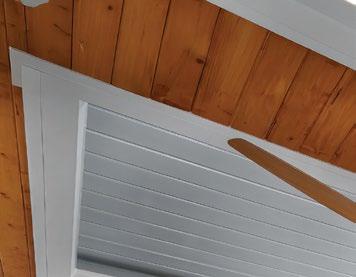
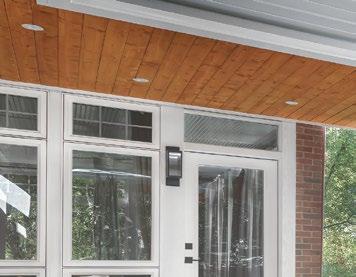
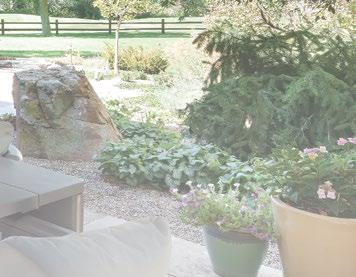
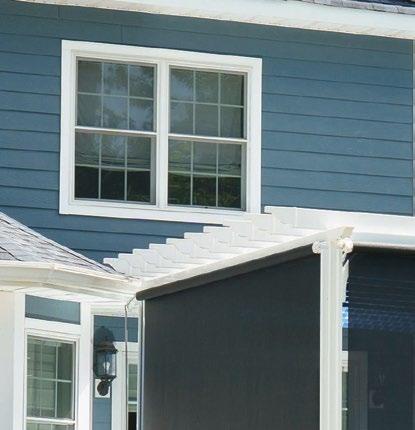
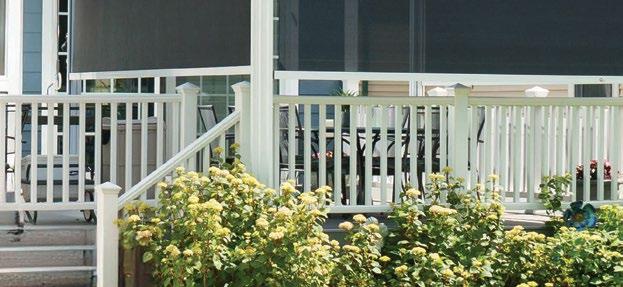
The front porch of this Bonita Springs, Florida, home was once a hot spot, literally. With western exposure and full afternoon sun, the entry quickly became uncomfortable as heat built up across the space, even warming the bronze door hardware. The homeowner had a clear set of priorities: protect the entry from harsh sun, keep surfaces cool to the touch and ensure the shades would disappear completely when not in use.
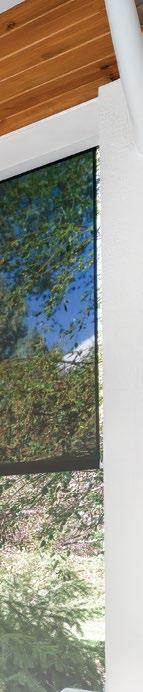
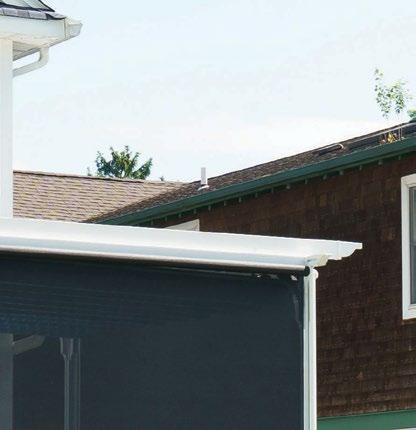
Enter SunCoast Blinds. The Florida-based dealer approached the project with a less-is-more mindset, creating a solution that works quietly in the background. The team installed a Rollease Acmeda box 120 Veue straight-drop system with cable guides, paired with Mermet E-screen 5% fabric in charcoal. When lowered, the shades filter light and heat while maintaining a clear view out. When raised, they nearly vanish, preserving the home’s front elevation.
Motorized with Rollease Automate outdoor rechargeable motors and controlled through a Rollease Pulse Hub, the system is as intuitive as it is discreet. The homeowner can adjust the shades from her phone or rely on a preset schedule that automatically lowers them during peak sun hours, with no switches, no added wiring and no interruption to the architecture.
It is a tailored response to a very specific request and proof that exterior shading does not have to stay in the backyard.
Designer and Installer: SunCoast Blinds
Fabricator: Universal Window Coverings
Photography: Eyeleen L Photography
• Easy field adjustments to accommodate out-of-square openings
• Enhanced zipper system
• Third party wind ratings
• 40 years of patio shade manufacturing
• Oasis 2950 coming June 2026


Outdoor Power, Refined
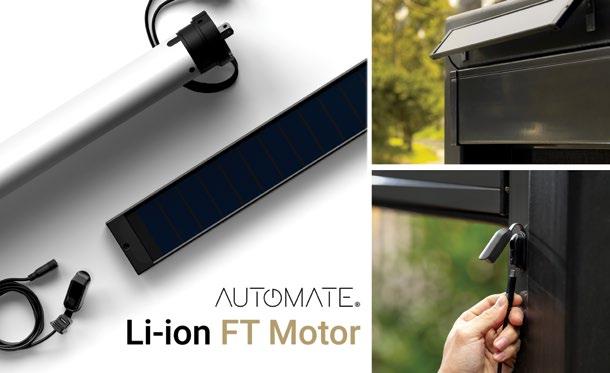
Rollease Acmeda’s Li-ion FT Motor brings a sleek, battery-powered solution to exterior shading. Designed for outdoor use, the system features advanced brushless technology for smooth, quiet operation, while an integrated internal battery eliminates the need for external packs. Fabric tension and impact detection help maintain alignment and protect against obstructions. Paired with an Outdoor Solar Panel or USB-C Port Extension for flexible charging, it offers a streamlined, electricianfree installation with dependable performance. RolleaseAcmeda.com
Into the Woods
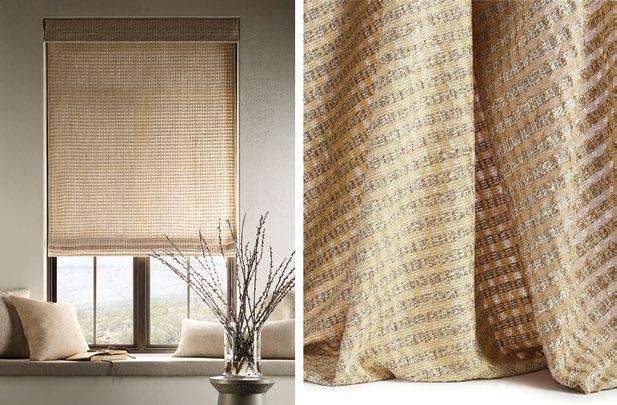
Hartmann&Forbes’ spring ’26 collection, Meandering Wilderness, looks beyond pattern to capture a sense of place. Inspired by the stillness, structure and subtle movement of the forest, the collection introduces seven window covering designs that translate natural elements into handwoven texture and refined materials. From the fibrous movement of Tendril to the soft geometry of Honeycomb and the sheer simplicity of Stria, each design brings a layered, quietly luxurious perspective to the window HartmannForbes.com

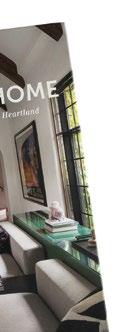
Midwest Home: Interior Design in America’s Heartland by Ryan Hainey explores the diversity and quiet beauty of residential design across the region, featuring 20 homes ranging from lakeside retreats to urban lofts. Through thoughtful essays and striking photography, the book highlights how architecture and interiors respond to place, climate and culture, offering a closer look at the character and craftsmanship that define America’s heartland.
SchifferBooks.com
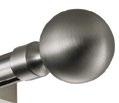

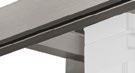
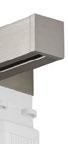
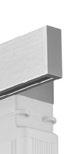
FOREST DRESDEN, FRANKFURT AND STUTTGART MOTOR 2.0 RODS ARE COMPATIBLE WITH THESE MOTOR BRANDS:






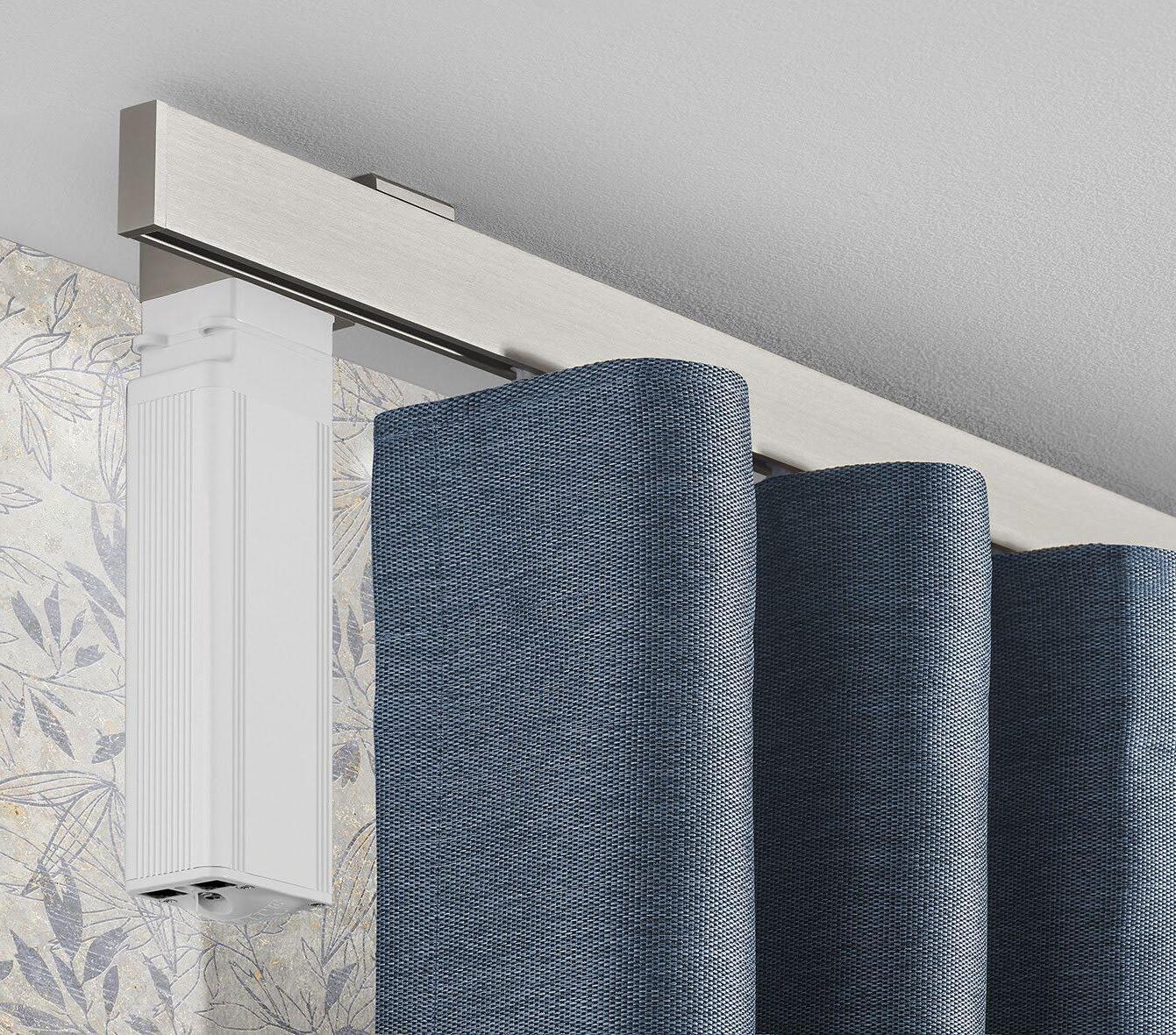
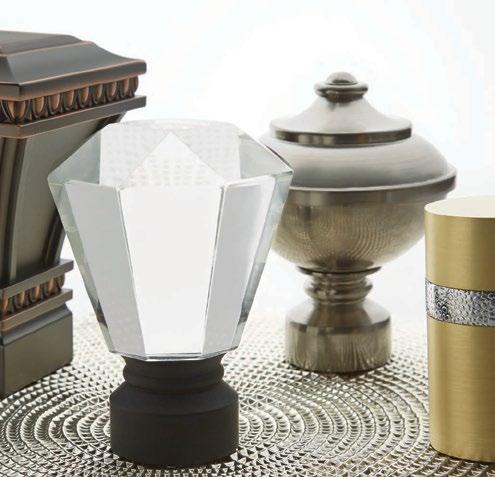
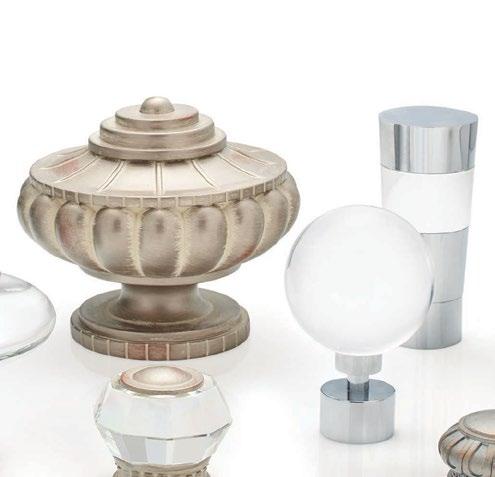
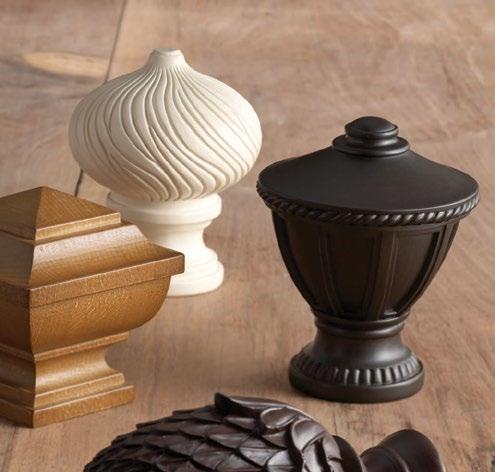
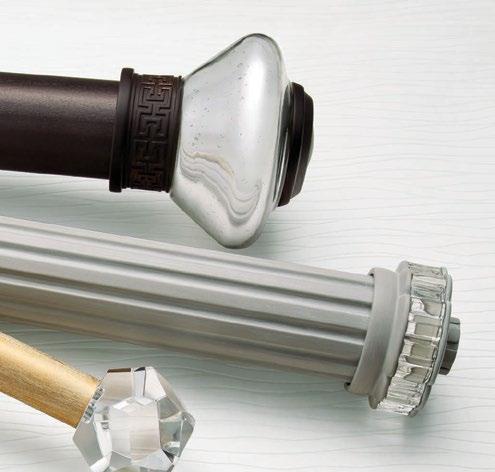
THE NEW STANDARD IN MOTORIZED DRAPERY: Thanks to cutting-edge technology and absolute precision, the Motor 2.0 CNC machine mills out the necessary recess for the motor connection directly into the rods. A separate motor housing is no longer required. The result–visual perfection in a flawless, consistent color while offering a broader selection of finishes and finials! The material savings is friendly to the environment. To top it off, you can choose the motor brand you would like to use.
& Noteworthy
A Bold New Tradition
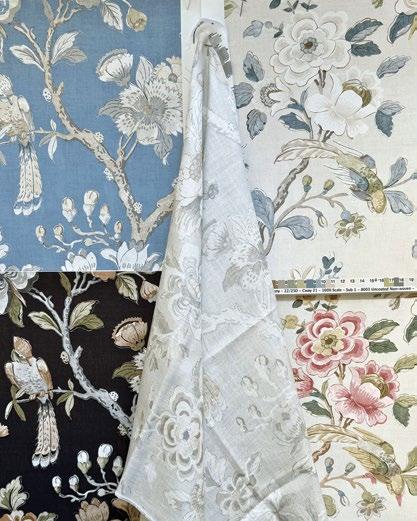
Award-winning designer Corey Damen Jenkins expands his Kravet Couture collection with Trad Nouveau II, reintroducing two of his most beloved prints in fresh colorways and new mediums. Known for his bold, pattern-forward approach to traditional design, Jenkins brings a vibrant, elevated sensibility to the collection, where antiquity meets modernity in layered, expressive motifs now available as both fabric and wallcovering.
Kravet.com















Texstyle’s Ambient Edge brings subtle texture to solar screens, balancing visual softness with dependable performance. Available in seven colors and 1% and 3% openness, the PVC-free fabric filters light, reduces glare and helps manage solar heat gain, supporting more efficient interiors. Its lighter-weight construction makes it well- suited for large and motorized shades, adding quiet dimension to modern spaces.
Texstyle.com
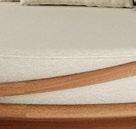
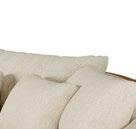
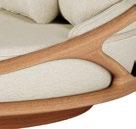
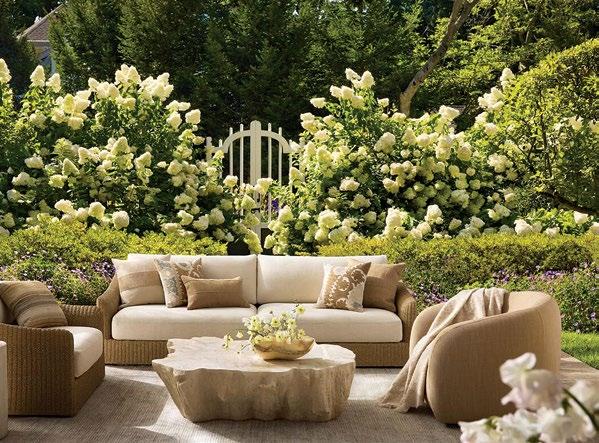
Arhaus’ Ancona Collection brings classic, inviting style to outdoor living with softly curved silhouettes inspired by traditional design. Rustproof, powder-coated aluminum frames are wrapped in all-weather wicker and paired with plush, quick-dry cushions for lasting comfort. Available in lounge styles and offered in natural and mocha finishes, the collection adds effortless luxury to porches, poolside settings and backyard spaces. Arhaus.com
Elevate your next project
Explore the Brands
Exterior soft furnishings bring both design impact and new income potential to the workroom
BY RONICA VANGELDER
For many drapery workrooms, outdoor soft furnishings have shifted from an occasional addon to a real business opportunity. What was once a “while we’re at it” item—a simple bench cushion or a few pillows—has evolved into something clients are actively requesting.
Outdoor work is not always the first place workrooms look to grow. It can feel like a different category, with different materials and considerations, and that alone is often enough to keep it on the sidelines. That may be worth reconsidering.
Exterior spaces are no longer secondary. Clients are investing in porches, patios and outdoor rooms with the same level of attention they bring to their interiors. They want comfort, style and a finished look, and that is where our industry fits seamlessly. Hard elements like furniture and structures create the foundation, but soft furnishings are what make a space feel complete, from well-fitted seat cushions and layered pillows to drapery panels that soften architectural lines. Designers are looking for partners who can help deliver that finished result, often preferring to work with someone they already trust rather than sourcing from multiple vendors.
One of the biggest misconceptions is that exterior jobs require an entirely new skill set. In reality, it builds on what workrooms already do every day, measuring, fitting, constructing and finishing with precision. The shift is less about starting over and more about adapting those same skills to different materials and conditions, making the transition more approachable than it may seem.
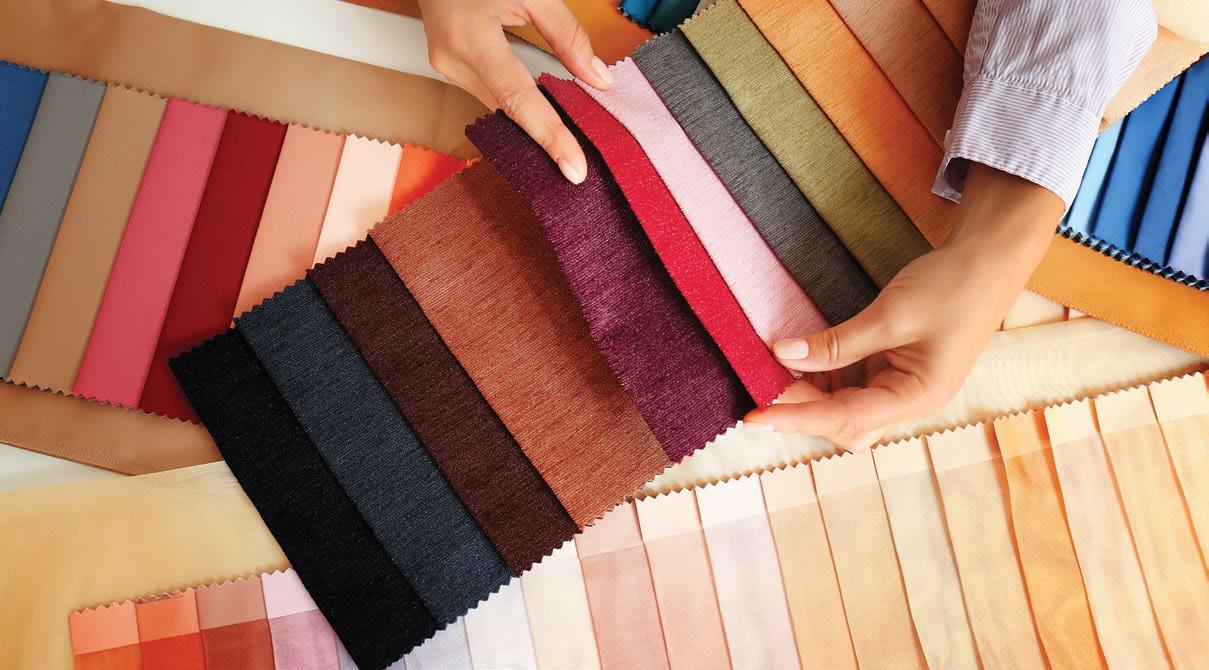
Outdoor soft furnishings require a higher level of material awareness. These products are exposed to sun, moisture and temperature changes, so performance matters. Today’s performance fabrics offer a wide range of colors and textures that rival interior textiles, while foam, thread, zippers and trims all need to be selected with durability in mind.
Execution still defines the end result. Consistent sizing, thoughtful construction and a clean, tailored finish are what elevate a basic cushion into something that feels truly custom. Clients may not always be able to articulate why something works, but they recognize it, and designers certainly do.
For outdoor soft furnishings to become a consistent part of your business, presentation matters. Designers are managing many moving parts, and the easier you make the process, the more likely they are to include you. Clear options, guidance on materials and a willingness to support layouts or suggest coordinating pieces position you as a resource within the project, not just a fabricator.
Pricing also needs to reflect the work. Exterior pieces are labor-intensive, highly customized and often produced in multiples, which creates strong profit potential when priced appropriately. If approached too casually, however, it can quickly become frustrating instead of profitable. Taking the time to evaluate labor, materials and complexity is key to making this category sustainable.
It is also important to set expectations. Outdoor products are designed for durability, but they are still exposed to the elements. Fabrics resist fading but do not prevent it entirely, and cushions benefit from being covered or stored when not in use. Exposure levels will impact
longevity over time. Clear communication upfront helps ensure better long-term satisfaction.
For those just getting started, there is no need to take on everything at once. Beginning with smaller projects such as bench cushions, basic seat cushions or outdoor pillows can be a practical way to build confidence before moving into larger or more detailed work.
Outdoor soft furnishings are not a departure from what workrooms do. They are an extension of it. At its core, this industry is about making spaces feel complete, and that same idea applies outdoors. For workrooms looking to grow, this category is worth considering as a natural response to how clients are living today. Sometimes the next opportunity is not something entirely new. It is simply a different application of the skills already in place. V

Ronica VanGelder of Ronica’s Custom Creations is a dedicated and award-winning window treatment expert, passionate about transforming houses into warm, inviting homes. She specializes in helping new homeowners elevate their spaces by dressing naked or outdated windows—because, let’s face it, windows without treatments are like outfits without accessories! Through personalized in-home consultations and style assessments, Ronica collaborates closely with her clients to select the perfect window treatments. From the initial design to the final installation, she oversees every detail to ensure a seamless and satisfying experience.




Exterior shading is opening up the door to higher-value projects, stronger margins and repeat revenue across the board

BY KIM BOYNTON


Exterior shading is quickly becoming one of the most profitable categories for window professionals. Dealers, designers, installers and fabricators who expand beyond interior treatments are capturing larger projects, commanding premium pricing and building new recurring revenue streams.
Here’s where the money is and how to go get it.
Exterior shading consistently delivers higher ticket sizes than interior-only work. Residential exterior projects often reach $10,000 or more, with opportunities to layer in automation, sensors and integrated controls.
Beyond the initial sale, exterior systems also open the door to:
• Recurring revenue through maintenance, cleaning and service
• Reduced price competition by selling complete systems instead of stand-alone products
• Stronger client retention and referrals tied to visible, high-impact results
For many businesses, this category shifts the conversation from transactional sales to long-term value.
Demand is accelerating, and it is not slowing down. Outdoor living spaces are now treated
as essential “rooms,” not extras, while energy codes and sustainability standards continue to tighten. Smart home integration and automation are becoming expected, and climate realities, including heat, UV exposure and extreme weather, are increasing the need for performance-driven solutions. Together, these factors create steady demand and support premium positioning.
“
[Exterior shading] is a high-margin, high-growth category that rewards businesses willing to expand their scope.”
Exterior shading solves problems at the source by blocking solar heat before it hits the glass, delivering significantly better performance than interior options.
That performance translates into clear value for clients, including:
• Up to a 90% reduction in solar heat gain
• Lower cooling costs and improved energy efficiency
• Better comfort, glare control and privacy
• Extended usability of outdoor spaces
When clients understand these benefits, price becomes far less of a barrier and often secondary to the outcome.
The outdoor category continues to evolve with products that naturally support higher price points. Motorized systems with app, voice and sensor integration, along with solar-powered and batteryoperated options, are simplifying installation while increasing perceived value.
High-performance zip shades, retractable awnings and pergola systems are expanding what outdoor spaces can do, while durable, design-forward materials support long-term use. These solutions increase project value and create opportunities to bundle interior and exterior systems into a single, cohesive package.
Your existing interior clients are the easiest path to exterior revenue. The opportunity often starts with a simple shift in process:
• Walk the property during consultations and identify sun-exposed areas
• Ask targeted questions about how the space is used and where discomfort exists
• Introduce exterior solutions as a natural extension of the project
• Bundle interior and exterior treatments to increase overall scope
Dealers who consistently expand the conversation beyond the window often turn single-room jobs into full-home opportunities.
Exterior shading requires more technical knowledge than interior work, and that complexity is what helps protect margins.
Teams that invest in training can confidently sell motorization and automation at full value, avoid unnecessary discounting and clearly communicate the benefits of professional installation. They are also better positioned to take on larger, more complex projects and differentiate themselves from competitors who lack outdoor experience. The more you understand the systems, the easier it becomes to justify premium pricing.
The most profitable exterior projects are not sold as shade. They are sold as solutions. Position exterior shading as a way to:
• Create usable, all-day outdoor living spaces
• Protect furniture and finishes
• Reduce long-term maintenance and replacement costs
• Improve overall livability and home value
When framed this way, the purchase becomes a strategic investment rather than an optional addon.
Exterior shading has moved beyond a niche offering. It is a high-margin, high-growth category that rewards businesses willing to expand their scope. Those who treat it as an add-on will compete on price. Those who treat it as a system and lead the conversation will own the project, increase revenue and build more resilient businesses. V

is the founder of 3/8 and Co., LLC, bringing decades of experience in the exterior motorization industry. A Connecticut native who relocated to Florida in 2001, she built her expertise from the ground up, beginning in manufacturing before launching her own company in 2013. As a licensed Florida State Specialty Structure Contractor and a member of the Board of Directors for the Suncoast Builders Association, Boynton has grown her company into an award-winning industry leader while raising three children as a single mother.













BY ELSE JOHNSON

She was brilliant. A designer with an eye that could transform any space, a client roster that would make competitors jealous and a business that looked successful from the outside. But when we first spoke, she was drowning.
“I have no time for actual design anymore,” she told me. “I’m just running around putting out fires.”
She had built an amazing business and felt trapped inside it. If that resonates, you’re not alone. And you’re definitely not failing.
I recently spoke with a client running a $3 million window treatment business who said something that represents many of my clients: “I reached this level of success without really knowing how I did it. I work hard, but I don’t feel like I’m actually getting ahead.”
This is the silent crisis in many successful design businesses. You’ve hit impressive revenue milestones. You have a team. You’re busy. You’re respected in your market. But somewhere along the way, busy became overwhelming and successful started feeling like being stuck.
Here’s why: You’ve confused process goals with design goals. Process goals are the metrics everyone talks about, revenue targets, number of employees, project volume and large showrooms. They matter, but they’re not the destination. They’re the vehicle. Design goals are different.
They define what the business is meant to make possible in your life: creative fulfillment, personal freedom, financial security, time with family, space for passion projects or even a clear exit strategy.
Without that clarity, every decision becomes reactive. Pressure quietly replaces leadership. Most business owners I work with can recite their revenue goals instantly, but when I ask, “What does a successful life look like?” they go quiet. That’s why it often feels like organized chaos.
The Pattern Behind Overwhelm
You’re action-oriented. You’re capable. You’re a doer. When someone asks if you can help with a project, your answer is almost always, “Of course, we can figure that out.” That’s how many of us end up in this industry. I know, because that’s exactly how I started my own business more than two decades ago. One day, I woke up and realized I had a window covering company.
Being a doer is a strength. It’s how businesses get built. But without a clear picture of where you’re headed, all that doing creates noise instead of momentum. You take on projects without strategic filters. You say yes to opportunities that don’t align because you haven’t stopped to define what you really want. You hire to handle overflow, but without structure, you waste time reinventing the wheel. The justification is often that you provide custom solutions, so every project feels like a fresh sprint.
Revenue may climb, but control and profit slip further away.
“ Sustainable success requires clarity, structure and self-awareness to recognize when you’re unintentionally holding yourself back.”
Left unaddressed, chaos often leads to burnout—and burnout keeps leaders stuck on the hamster wheel or in a future they never intended to create.
The designer I mentioned earlier didn’t lack talent. She lacked direction. When we started working together, I didn’t ask about revenue first. I asked what she wanted but had been afraid to say out loud. She admitted she wanted to pursue furniture and textile design, but running the business left no space for it.
Once we identified her true design goal, her process goals naturally shifted from “grow revenue” to “create structure so my creativity can lead again.” She built systems. She delegated with intention. She stopped saying yes by default. And she created room for the work that actually energized her. The business didn’t shrink. It grew because it was finally designed on purpose.
The leadership team at that $3 million business experienced something similar. Their real goal wasn’t a revenue target. It was regaining control of their own time and direction. They realized they were stuck in low-level operational tasks, leaving no space for strategic leadership. Once they clarified what the business was meant to support and built processes to match, they stepped into sustainable leadership. Increased profitability followed.
Taking back control begins with three shifts: define where you want your life to go, align the business metrics that support it and clear the internal and external patterns that quietly sabotage progress. This work goes beyond traditional business consulting. It’s about upgrading how you lead behind every strategic and financial decision.
Here’s the real question: Do you know what your business is supposed to make possible in your life, or are you just chasing the next revenue milestone?
If you hesitated, that’s OK. Many capable, successful owners are building without a blueprint. They confuse motion with progress and effort with direction. The skills and talent that got you to your current level of success won’t get you to where you actually want to go.
The good news is that once you see it, you can change it. You can build systems that support your design goals. You can lead intentionally instead of reactively. Because after more than 20 years in business and working with hundreds of owners, I’ve learned this: Talent and hard work aren’t enough. Sustainable success requires clarity, structure and self-awareness to recognize when you’re unintentionally holding yourself back.
That designer who had no time for design is now creating textiles. That leadership team that felt trapped by success? They’re leading, not just reacting.
Now, it’s your turn to ask yourself: Is the business you’re building actually supporting the life you want, or is it simply consuming it? V
V


Else Johnson is a mindset strategist and the creator of the Wise Mind Leadership Blueprint™, trusted by high-achieving entrepreneurs to dismantle self-sabotage and lead with intention. Backed by certifications in NLP, CBT and Positive Intelligence—and decades of experience in finance, entrepreneurship and the design industry—Else helps clients build emotional resilience, redefine their leadership identity and unlock measurable growth in creativity, profitability and strategic influence. » MoreThanJustFine.com
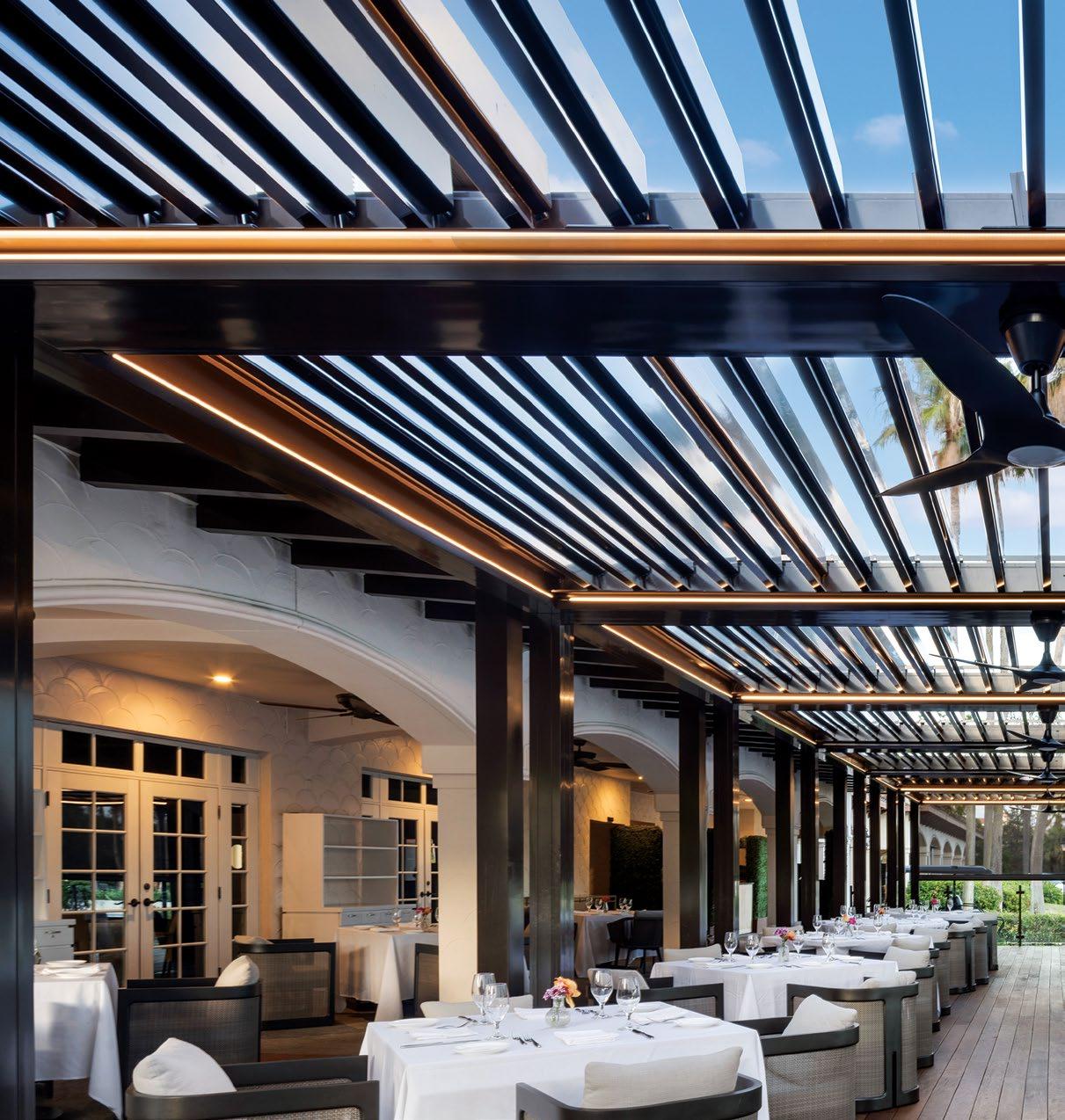

LOCATION: Fisher Island, Miami, Florida
DESIGNER/DEALER/ INSTALLER: Shades By Design
PRODUCTS USED: Renson Camargue Pergolas
EXTRA EQUIPMENT USED: Ferry transport for all materials and equipment
PHOTOGRAPHER: Legendary Productions
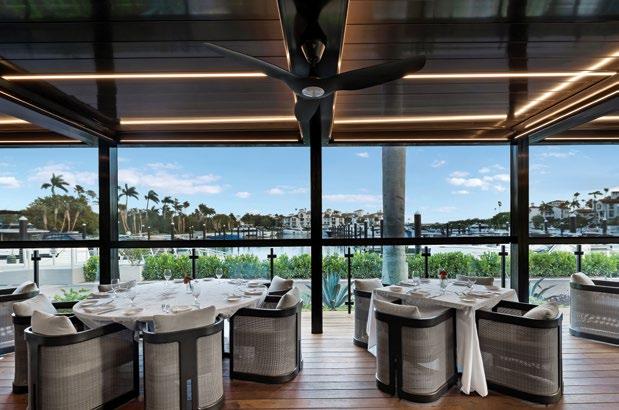
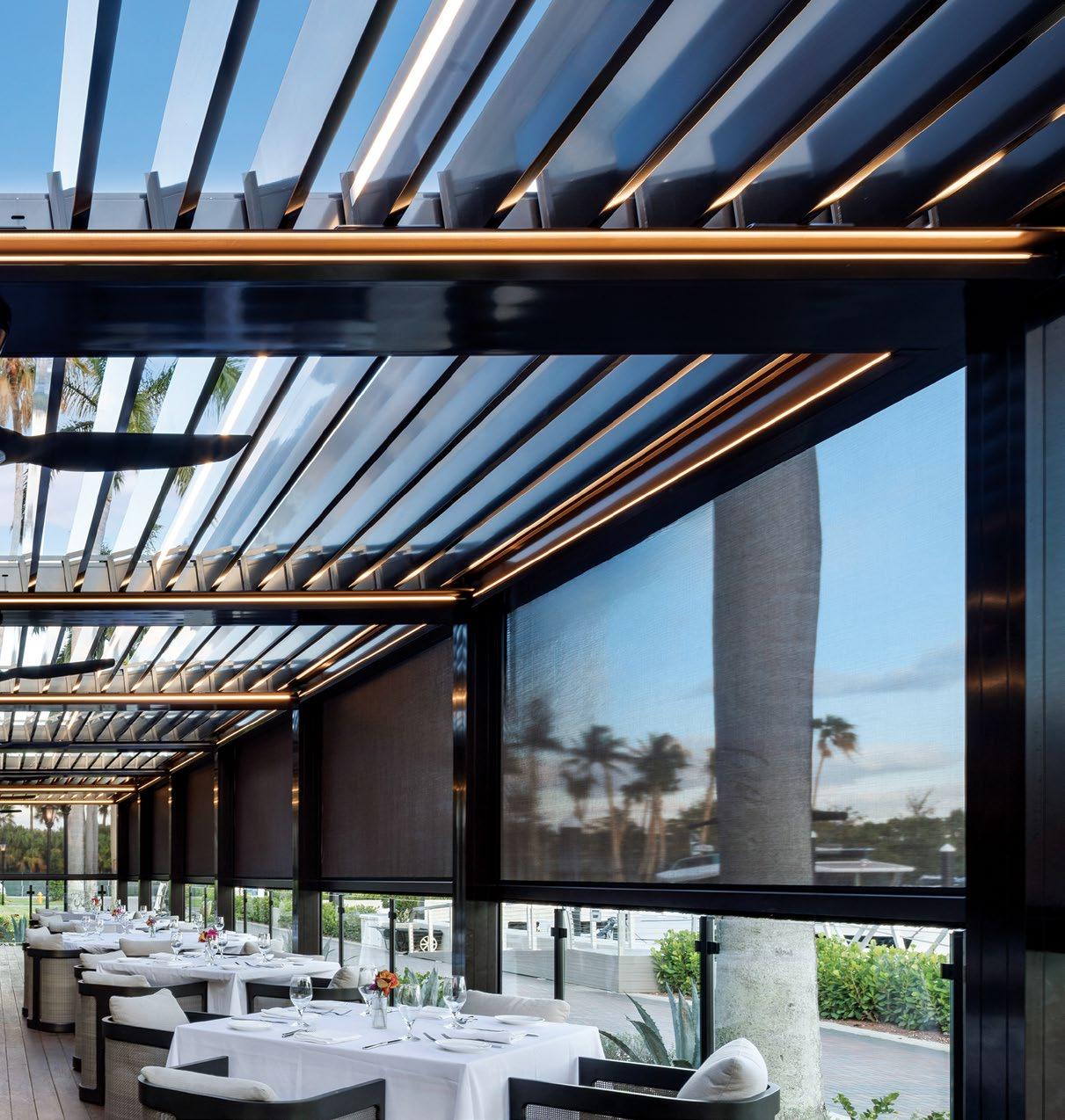
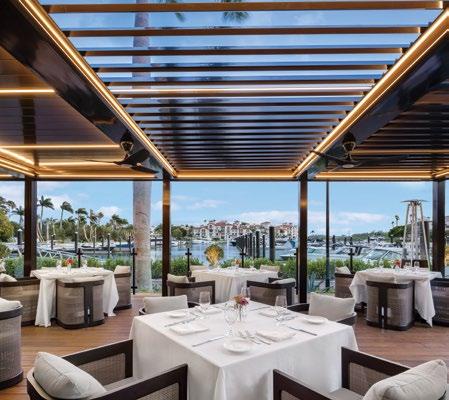
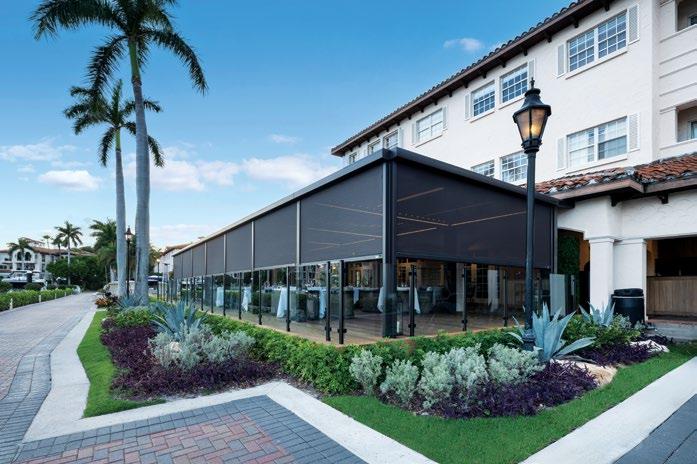
PROJECT GOAL: Extend the restaurant’s covered outdoor area while enhancing comfort and usability for guests
CHALLENGE: The remote island location meant every piece of material and equipment had to be transported via ferry, requiring careful coordination and precise scheduling. The project also involved navigating a complex permitting process tied to strict hurricane rating requirements, all while ensuring the final design aligned with Fisher Island’s distinct architectural style.
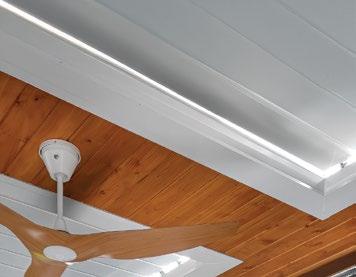
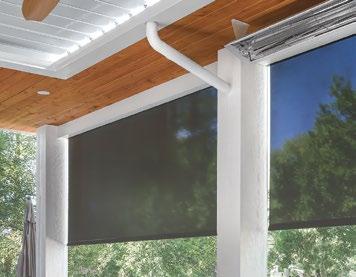
SOLUTION: The team designed and installed a series of custom pergolas featuring retractable perimeter screens, integrated lighting and customfinished ceiling fans. In total, 16 attached pergolas were created, forming a seamless extension across two restaurants. The result is a cohesive, highperformance outdoor dining environment that enhances both function and guest experience.
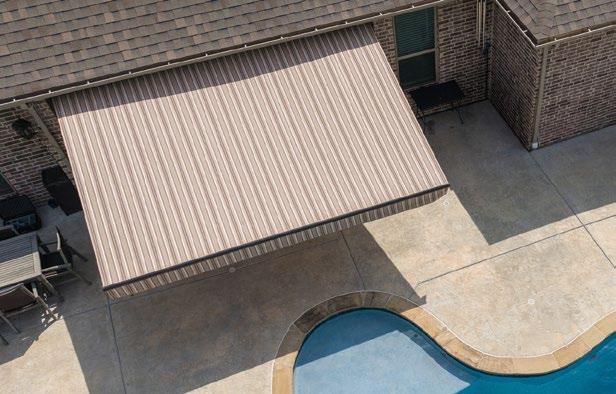
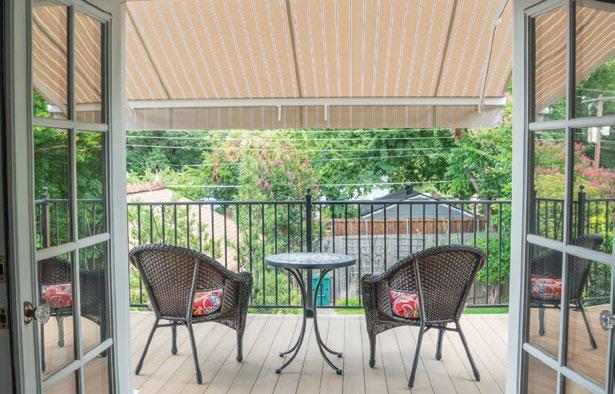
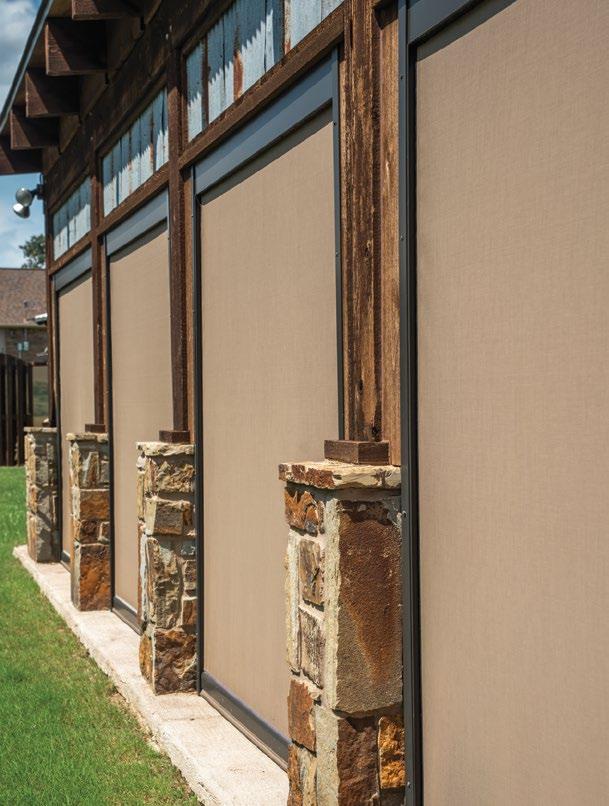
Extend style, comfort, and function into outdoor spaces with intuitive, motorized awnings and screens. Even if outdoor shading is new to you, you’re not alone. Shade Sense Outdoor provides support through project assistance, training, and marketing tools, making it easy to integrate outdoor shading installations into your current workflow.

From automation to integration, outdoor technology is redefining what exterior shading can do

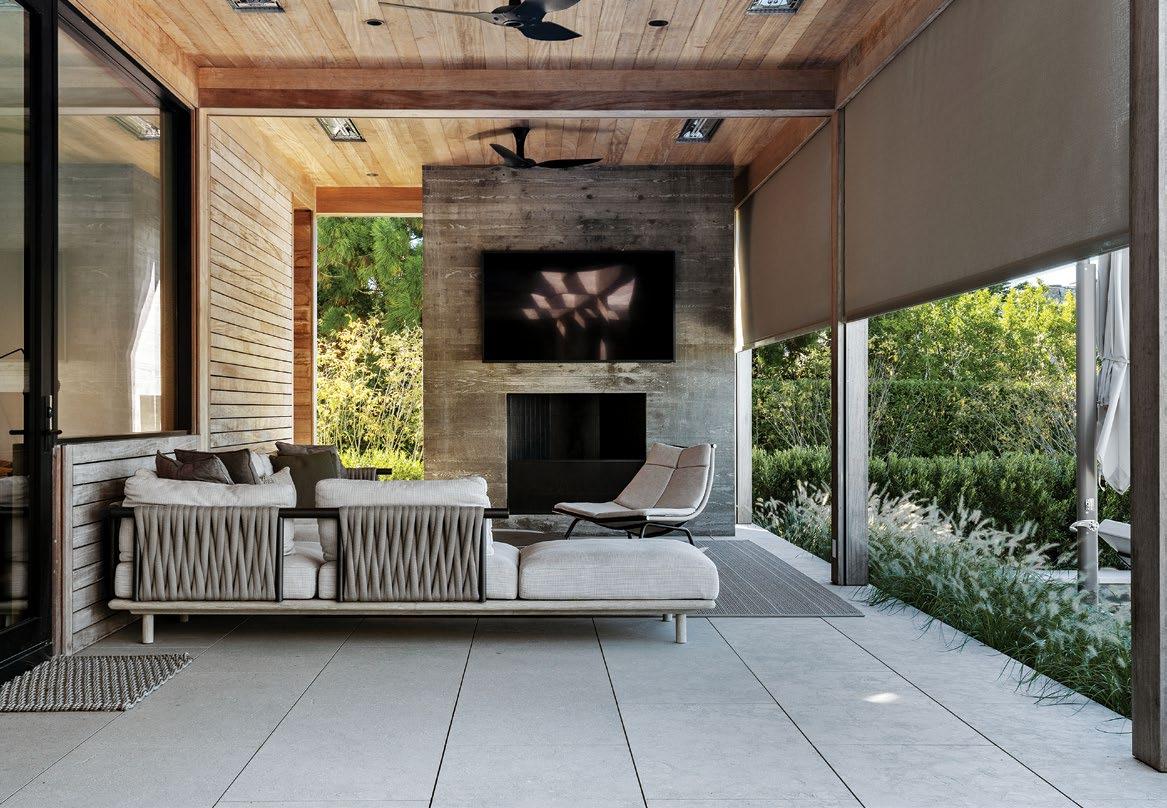
Amore time outside than they were just a year ago, now averaging nearly 12 hours per week outdoors, a jump of
more than 20%. That shift is changing how these spaces are approached. Patios, walkways and gardens are no longer treated as secondary areas, but as fully realized environments designed for comfort, function and daily use.
For industry professionals, that change is translating into steady, large-scale project work. CE Pro’s 2026
Outdoor Technology Deep Dive Survey found that outdoor projects are happening at a significant pace, with 42% of integrators reporting they completed 21 or more installations in 2025. Many others are not far behind, landing in the mid-teens annually.
What defines these projects is not just volume, but scope. Outdoor jobs increasingly involve multiple systems working together—from audio and lighting to networking and security—creating environments that are designed to function as a cohesive whole rather than a collection of individual upgrades.
And the momentum is holding. Nearly half of professionals report an increase in outdoor project activity year over year, while another 47% say business has remained steady. Only a small share report any slowdown, reinforcing that this is not a short-term spike but a sustained shift in how outdoor spaces are being designed and used.
emerging as a critical layer within the outdoor technology ecosystem, driven by automation, connectivity and realtime responsiveness.
That shift is being driven by a new generation of technology that is redefining what exterior shading can do. Advances in motorization, automation and connectivity are turning what was once a static solution into a responsive system, and one that adjusts in real time to changing conditions and integrates seamlessly with the rest of the home.
Not long ago, most exterior shading systems relied on remotes or wall switches. Today, they are connected, automated and capable of responding to their environment in real time. “Shades are no longer reactive—they are proactive,” said Jonny Matuichuk, senior product manager of Automate at Rollease Acmeda. “They adjust throughout the day to maintain comfort, reduce glare and optimize performance without homeowner input.”
That evolution is being powered by advancements in motors, controls and power solutions. Battery-operated systems, solar integration and low-voltage options are removing traditional barriers, allowing professionals to install exterior shading in areas where running power was
once a limitation.
For professionals, that means evaluating not just the product itself, but how it will be powered, controlled and integrated within the space from the start.
One of the most significant advancements in exterior shading is its ability to respond automatically to changing conditions.
Environmental sensors now play a central role in system performance. Sun sensors trigger shades to lower when glare and heat intensify, while wind sensors retract systems to prevent damage. Temperature thresholds ensure shades deploy only when beneficial, reducing unnecessary movement and wear.
This “set and forget” approach allows systems to manage themselves throughout the day, delivering consistent comfort without constant adjustment.
As Sol-Lux explained, “The system manages itself, delivering comfort when conditions are right and protecting itself when they are not.”
It also plays a critical role in protecting the system over time. Outdoor environments introduce constant exposure to the elements, and automation helps mitigate that impact. As Clint Childress, LEED AP, market director of residential solutions at Draper At Home, noted, sensors and overrides allow for more precise deployment and retraction, helping maintain performance and extend the life of the system.
As smart home technology becomes more prevalent, exterior shading is increasingly part of a larger, connected ecosystem. Today’s systems can integrate with platforms such as Apple Home, Google Home and advanced automation systems, allowing shading to respond not only to environmental conditions but also to schedules, occupancy and other connected devices.
This level of integration allows shading to work alongside lighting, audio and climate systems to create a more cohesive outdoor experience. A single command can lower shades, adjust lighting levels and activate audio, transforming a space in seconds.
When designed as part of a broader system, the experience becomes even more seamless. A single scene can trigger multiple actions at once—awnings extend, screens lower, lighting adjusts and audio activates—creating an environment that feels intentional and effortless.
For dealers, this shift requires a broader understanding of how shading interacts with other systems, from lighting to automation, rather than approaching it as a standalone specification.
Integration also expands the role of shading beyond comfort. By blocking solar heat before it reaches windows and outdoor areas, exterior systems contribute to overall energy efficiency, reducing heat buildup and easing demand on cooling systems.
For dealers and installers, these advancements are reshaping how exterior shading is positioned and sold.
Connected systems allow professionals to move beyond single-product installations and into full-scope solutions. By integrating shading with other technologies, dealers can design environments that align with how clients live, entertain and use their spaces.
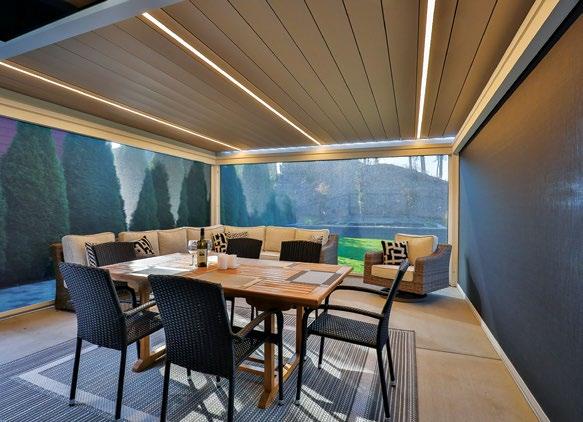
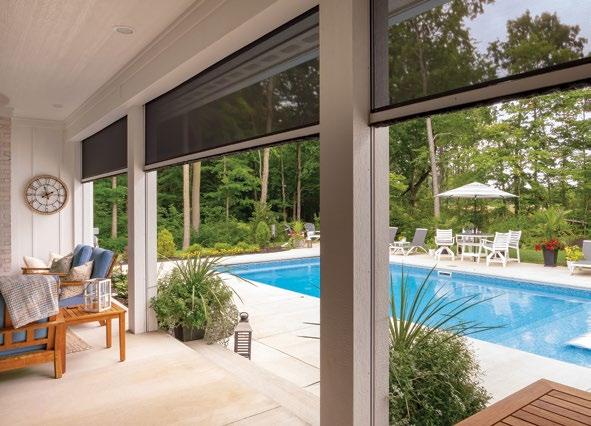
The dealers seeing the most success are those who position exterior shading as part of a larger solution, rather than a single add-on. “Connected shading allows dealers to move beyond product sales and into solution-based selling,” Sol-Lux noted.
“Think beyond the porch and patio,” Childress said. With the right systems, exterior shading can be applied across an entire property—from pergolas to windows—delivering a more complete
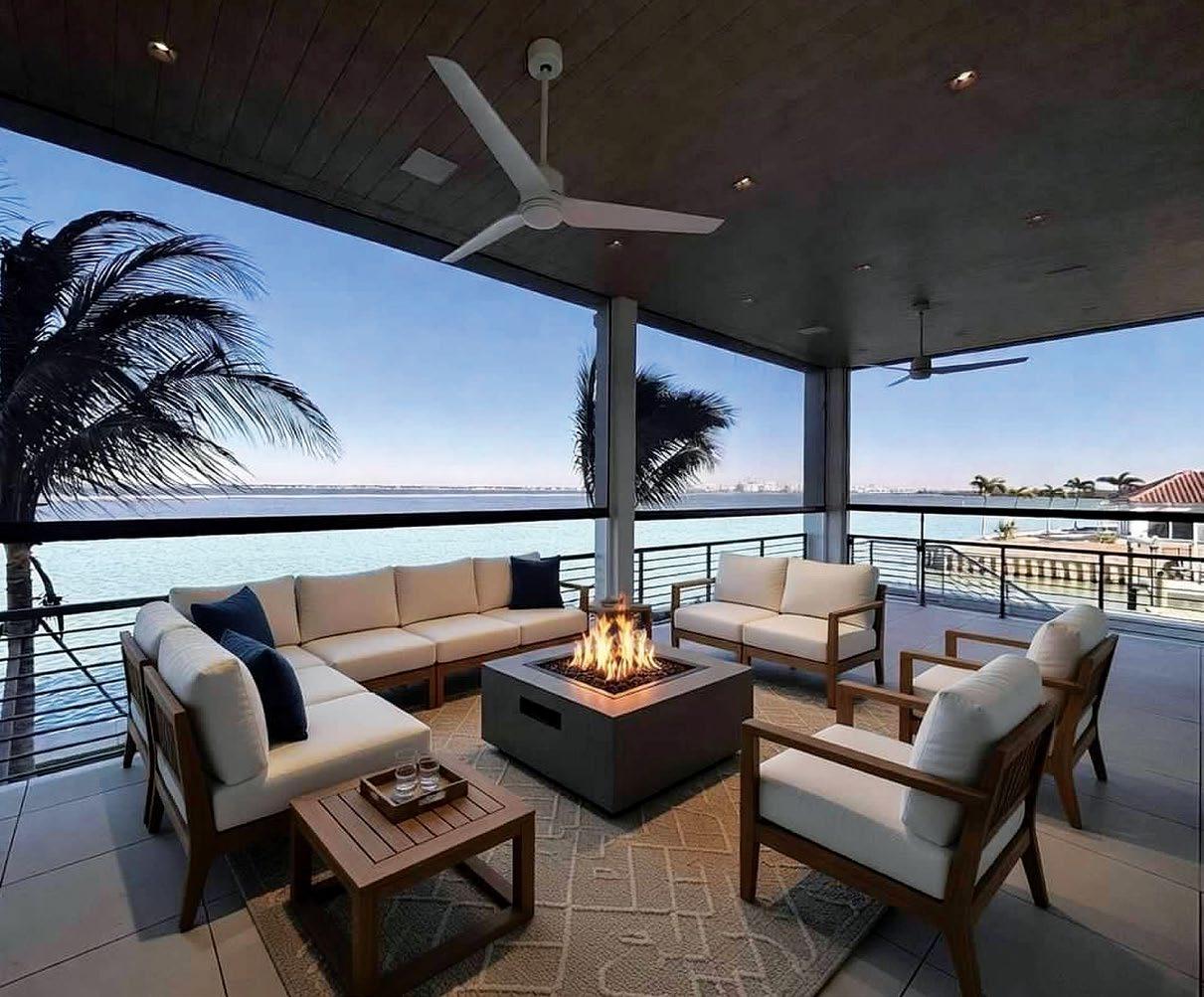
approach to solar control.
This broader approach not only increases project scope but also opens the door to long-term relationships. A single installation can evolve into future upgrades, expanded systems and additional outdoor solutions over time.
At the same time, advancements in technology are making the category more accessible. Systems that once required complex wiring or specialized installation are now easier to specify, install and integrate, lowering the barrier for professionals looking to expand into outdoor offerings.
Despite these advancements, misconceptions about exterior shading technology still persist. One of the most common is the idea that motorization alone defines a smart system. In reality, true intelligence comes from automation, sensors and integration. A motorized shade offers convenience, but a
connected system delivers comfort, efficiency and protection automatically.
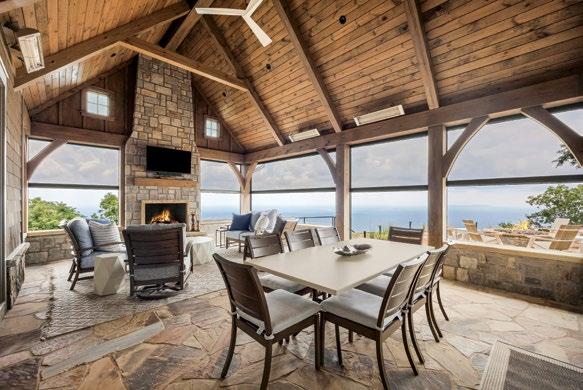
There is also a perception that exterior systems are limited in size or overly complex to install. In practice, modern motorization can support much larger applications, while improved installation methods are making the process more streamlined and repeatable.
As the technology continues to evolve, the challenge is no longer capability. It is awareness. For dealers, that means staying informed on how these systems work, how they integrate and how to clearly communicate their value to clients.
Imagine a summer afternoon where the sun intensifies and shades adjust automatically, reducing glare while preserving the view. As the day transitions into evening, awnings retract, lighting softens and screens lower to create a more comfortable, protected environment. Everything shifts in sync, without a single manual adjustment.
The opportunity is not just in selling more shades, but in designing outdoor environments that respond to how clients live and use their space.
“The homeowner does not think about the technology. They simply experience a space that adapts around them, remaining comfortable, functional, and visually seamless throughout the day,” Sol-Lux shared.
That is where exterior shading is headed—not as a standalone product, but as a connected system that quietly shapes comfort, extends usability and brings outdoor living fully in line with the rest of the home. V
Outdoor spaces demand more from materials. Exterior fabrics are built to handle sun, moisture and daily use while still delivering on comfort and design. Here, a quick look at how they work and where they shine.
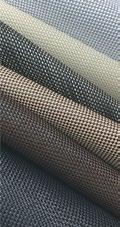
SUNTEX 95/97/99 BY PHIFER
Solar Screen Fabric
Designed to manage light, heat and glare, SunTex 95, 97 and 99 offer varying levels of openness to finetune visibility and solar control. It blocks up to 95% to 99% of UV rays while maintaining airflow, making it a go-to for exterior shades and sun-heavy applications.
STANDOUT FEATURES: Lightweight construction, wide widths up to 126 inches and resistance to fading, moisture and mildew BEST FOR: Sun-heavy spaces where maintaining the view matters


X-WEAVE/X-WEAVE ZERO BY TEXSTYLE
Heavy-Duty Solar Screen
Built for durability, X-Weave features a structured weave that balances visibility and protection, while X-Weave Zero offers full blackout for complete privacy. Both are designed for large-scale exterior applications and demanding environments.
STANDOUT FEATURES: 126-inch width, railroadable construction, fire-retardant and antimicrobial properties and easy maintenance BEST FOR: Enclosing outdoor spaces or covering large openings
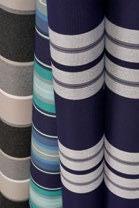
SUNBRELLA SHEERS
Performance Sheer Fabric
A softer approach to outdoor coverage, Sunbrella Sheers diffuse light with an airy drape and subtle sheen. Designed for indoor and outdoor use, they bring a layered, elevated look to spaces that still require durability.
STANDOUT FEATURES: 100% acrylic construction, machine washable and bleach cleanable and suitable for layering
BEST FOR: Softening light while maintaining durability


Outdoor Performance
Textile
Batyline Eden pairs strength with a softer, more refined feel, making it ideal for seating applications. Designed for highuse environments, it delivers durability while maintaining comfort.
STANDOUT FEATURES: Waterproof option, mold-resistant and easy to clean and PFAS-free with Oeko-Tex approval
BEST FOR: Elevated seating that needs both comfort and durability


SUMMIT COLLECTION BY ULTRALEATHER
Performance Upholstery Material
Summit offers a textured, leather-inspired look designed for indoor-outdoor use. It handles moisture, sunlight and daily wear while maintaining a soft, comfortable feel.
STANDOUT FEATURES: Bleach cleanable, antimicrobial protection and includes recycled and certified materials
BEST FOR: Adding warmth and texture to outdoor seating
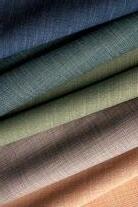
PARTICULATE BY LUUM TEXTILES
High-UV Fabric
With a linen-like appearance, Particulate delivers a softer aesthetic backed by strong performance. It’s built for durability, with high UV resistance and easy maintenance across a range of applications.
STANDOUT FEATURES: Bleach cleanable, high abrasion performance and excellent colorfastness
BEST FOR: Spaces that need performance without a technical look








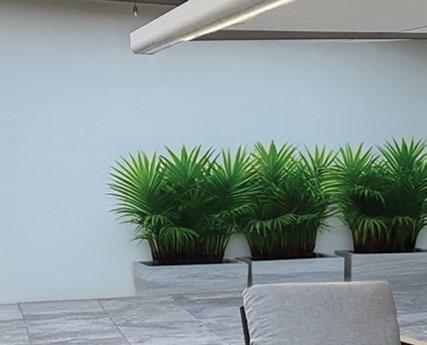
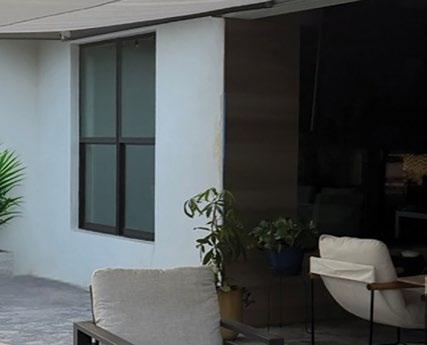
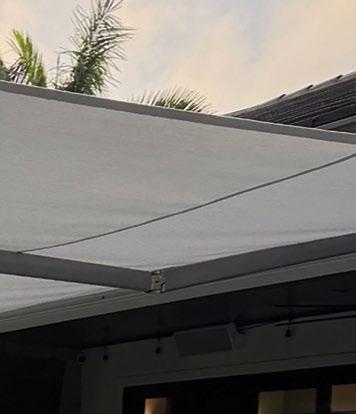

EXTERIOR SHADING IS TURNING OUTSIDE SPACES INTO BIG OPPORTUNITIES
For decades, the window covering industry has focused on what happens inside the glass. But by the time sunlight reaches an interior shade, the problem has already begun. Heat has entered the space, glare has disrupted comfort and energy e ciency has been compromised. As homeowners place greater value on comfort and livability, professionals are beginning to think beyond the window and manage the environment before it enters the home.
Outdoor shading solves a familiar problem: managing light, heat and comfort. e di erence is where the solution is applied. Exterior systems stop solar heat before it reaches the glass, reducing interior temperatures, protecting furnishings and improving energy e ciency, while patio awnings and drop screens create usable outdoor environments.
ink of it this way: Interior shading controls the environment

inside, while exterior shading in uences the environment before it enters. Together, this creates an opportunity to deliver a more complete solution from both sides of the window.
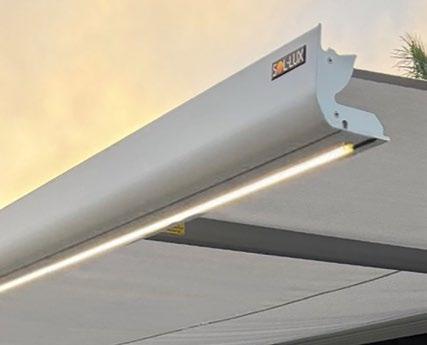
Many interior-focused professionals hesitate to move outdoors due to perceived complexity. In reality, today’s systems are designed with simplicity in mind. Sol-Lux exterior retractable shading systems feature a proprietary aluminum French cleat mounting bracket that simpli es deployment, reduces installation time and improves consistency.
Exterior systems are built to withstand sun exposure, moisture and environmental wear while remaining low maintenance. Fabric selections from partners like Sunbrella®, Recasens® and Texstyle®, combined with a range of nishes, allow solutions to integrate into any architectural style.
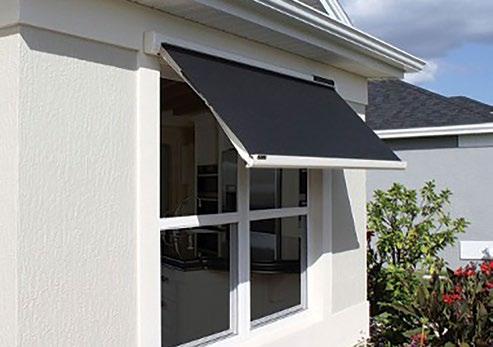
For professionals ready to expand beyond the interior, EOS introduces a new way to think about window coverings. The EOS Window Awning delivers glare control, thermal comfort and interior protection by shifting the solution to the exterior, where it performs more effectively. By stopping solar heat before it reaches the glass, EOS improves heat reduction while preserving natural daylight and views. It integrates into existing workflows with streamlined measuring, simplified installation and autonomous operation that responds to sunlight, reducing heat and glare when deployed and blending cleanly into the architecture when retracted.
For dealers, EOS creates differentiation and expands their role. Pairing exterior and interior solutions delivers a dual-layer approach on a single window, providing daytime comfort, nighttime privacy and new opportunities for outdoor projects.
As professionals expand into exterior shading, a clear sales approach becomes essential. Sol-Lux developed the LASSO framework: Look, Ask, Show, Sell, Optimize
Look for opportunities during consultations, such as sun-exposed windows, overheated rooms and underused outdoor spaces. Ask questions that uncover lifestyle needs.
Show the solution through fabric samples, nish options and demonstrations so customers can quickly understand the value.
Sell the solution as part of a complete environment that enhances comfort, extends living space and improves the overall home experience.
Optimize your book of business by staying connected with past clients and building on each project.
LASSO provides a practical, repeatable path for growth.
e growth of outdoor shading extends beyond the dealer channel, with manufacturers across window coverings, outdoor living and home improvement expanding into the category to meet rising demand. Entering the exterior space requires engineering expertise and manufacturing capabilities built for outdoor environments.
Backed by decades of experience through its Carefree of Colorado® heritage, Sol-Lux partners with manufacturers to develop outdoor shading programs, enabling brands to expand without building
infrastructure from scratch. Outdoor shading is no longer a niche but part of complete home solutions.
Homeowners continue to prioritize comfort, exibility and the connection between indoor and outdoor spaces, expanding the role of the window covering professional. Outdoor shading supports this shift by improving comfort before heat enters the home, expanding usable outdoor space and enhancing aesthetics with retractable solutions. For those willing to step into the category, the opportunity is a natural evolution. e path forward does not require reinvention, only extending what you already do beyond the window.
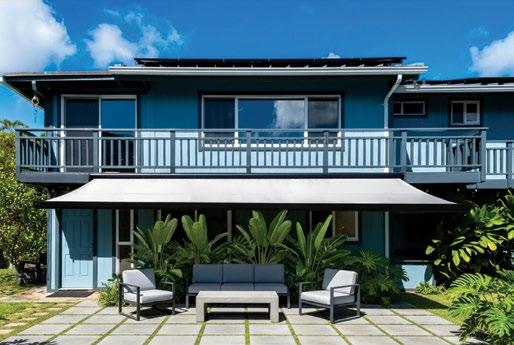
In Hawaii, comfort is driven by how well a home manages the sun, shaping Island Cooling’s business model around outdoor shading using the Sol-Lux portfolio. e company focuses on blocking solar heat before it enters the home, preserving interior comfort while supporting the indoor-outdoor lifestyle.
Hawaii presents unique challenges, including high humidity, salt air, intense UV exposure and strong winds, requiring durable, high-performing solutions. Island Cooling discovered Sol-Lux in 2018-2019 and began with the EOS Window Awning before expanding into patio awnings and drop screens.
Demonstration has been key. By investing in operable systems for showrooms and events, customers can experience the solutions rsthand. “When customers see the product in action, they immediately understand the value. It builds trust,” said co-founder Ivan Whitworth.
eir sales model is structured and repeatable: measure the space, guide selection and deploy through a trained installer network. Simpli ed installation has supported their ability to scale, and today, Island Cooling continues to expand its o erings.
eir advice is simple: start now. e opportunity is real, and with the right approach, it is highly scalable.
In a sun-soaked Florida home, motorized shading from PowerShades brings comfort and control to a space once overwhelmed by heat and glare
A homeowner in St. Petersburg, Florida, had a problem. The center of her home—a main gathering space with 25-foot vaulted ceilings, five windows and two sets of French doors—was sun-filled and a true showstopper. But that sunlight came at a cost. During the afternoons, intense heat and glare poured through the three high windows, making the room difficult to enjoy. What once felt bright and open quickly became uncomfortable, even unlivable at certain times of day.
“We loved the light when we first saw the house,” said the homeowner. “It was the reason we bought it. But living with that much sun, especially in the summer, made it hard to keep the space comfortable.”
The height and placement of the windows made the challenge even more complex. Traditional window coverings were not a practical solution. What the space required was something more strategic, a system that could manage both light and heat without compromising the architecture that made the room so appealing in the first place.
That’s where PowerShades came in.
From the start, the approach was focused and collaborative. The homeowner had a clear goal: reduce heat while maintaining the beauty and flexibility of the space. The PowerShades team worked closely with her to evaluate the windows, the exposure and how the room was used throughout the day.
The final solution was a fully motorized shading system tailored to each part of the
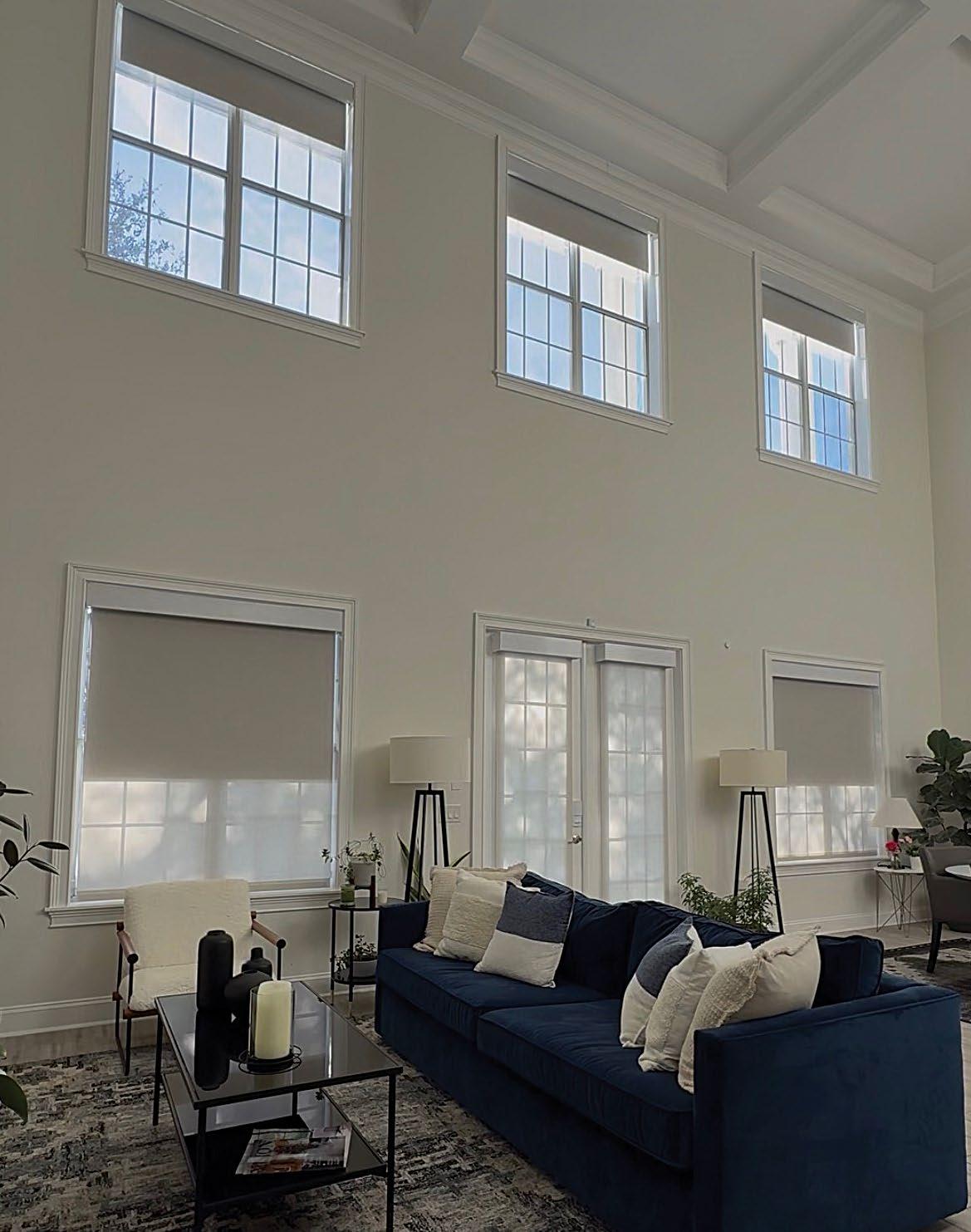
room. Three high windows were fitted with Phifer Oyster blackout fabric to block heat and glare at the source. Two lower windows received dual shades, combining blackout and light-filtering fabrics to allow for flexibility throughout the day. The French doors were outfitted with light-filtering fabric to maintain brightness while softening incoming light. All shades were finished with white square cassettes, creating a clean, cohesive look that blended seamlessly with the architecture.
Behind the design was PowerShades’ motorized technology, which allowed the entire system to operate effortlessly. For a space with windows positioned far above reach, automation was not just a convenience; it was essential.
While the visual transformation is immediate, the performance benefits are what truly define the installation. PowerShades offers multiple motor options, including its patented Power-over-Ethernet (PoE) system, which delivers both power and data through a single cable. The result is a low-voltage, energy-efficient solution that simplifies installation while supporting advanced control features. Shades can be programmed to adjust automatically throughout the day, responding to sunlight patterns to reduce heat gain and maintain comfort.
For the homeowner, that level of control changes how a space is used.
“The transformation has been remarkable,” they said. “Heat control was our main priority, but the impact goes far beyond that. The room feels completely different now.”
Automation also introduces a level of consistency that manual systems can’t match. Whether adjusting for morning glare or afternoon heat, the shades work in the background to maintain a balanced environment without constant intervention.
One of the key advantages of the PowerShades system is its flexibility. With thousands of combinations across fabrics, openness levels and configurations, the solution can be tailored to both performance needs and design preferences. In this project, that meant balancing multiple objectives: blocking heat at the highest exposure points, preserving natural light where possible and maintaining a cohesive aesthetic across all windows and doors.
The result is a space that feels layered and intentional rather than purely functional. Light can be filtered, softened or blocked entirely depending on the time of day, allowing the room to shift with the needs of the household.
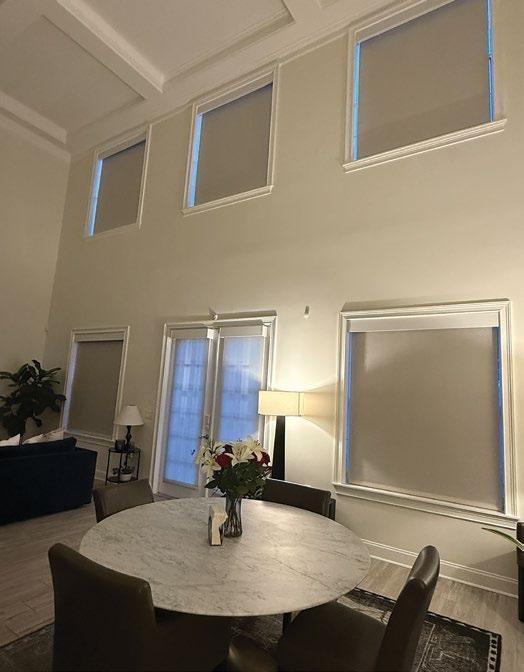
Since the installation, the change has been both immediate and lasting. What was once a challenging environment is now one of the most comfortable and usable areas of the home.
“It almost feels like we gained an entirely new living space,” the homeowner said. “We’re enjoying it every day.”
Beyond comfort, the project highlights a broader shift in how homeowners view window treatments. No longer just decorative elements, they play a critical role in energy efficiency, light control and overall livability.
For professionals, it’s a reminder that the right solution is often about more than just covering a window. It’s about understanding how a space functions and delivering a system that enhances both performance and design. In this case, PowerShades didn’t just solve a problem. It changed how the space works and how it feels, turning a once challenging room into the heart of the home.
For professionals interested in offering similar solutions, PowerShades works with a network of authorized dealers and integration partners. To learn more about becoming a dealer, contact the PowerShades sales team at 417-553-0504 or sales@ powershades.com.













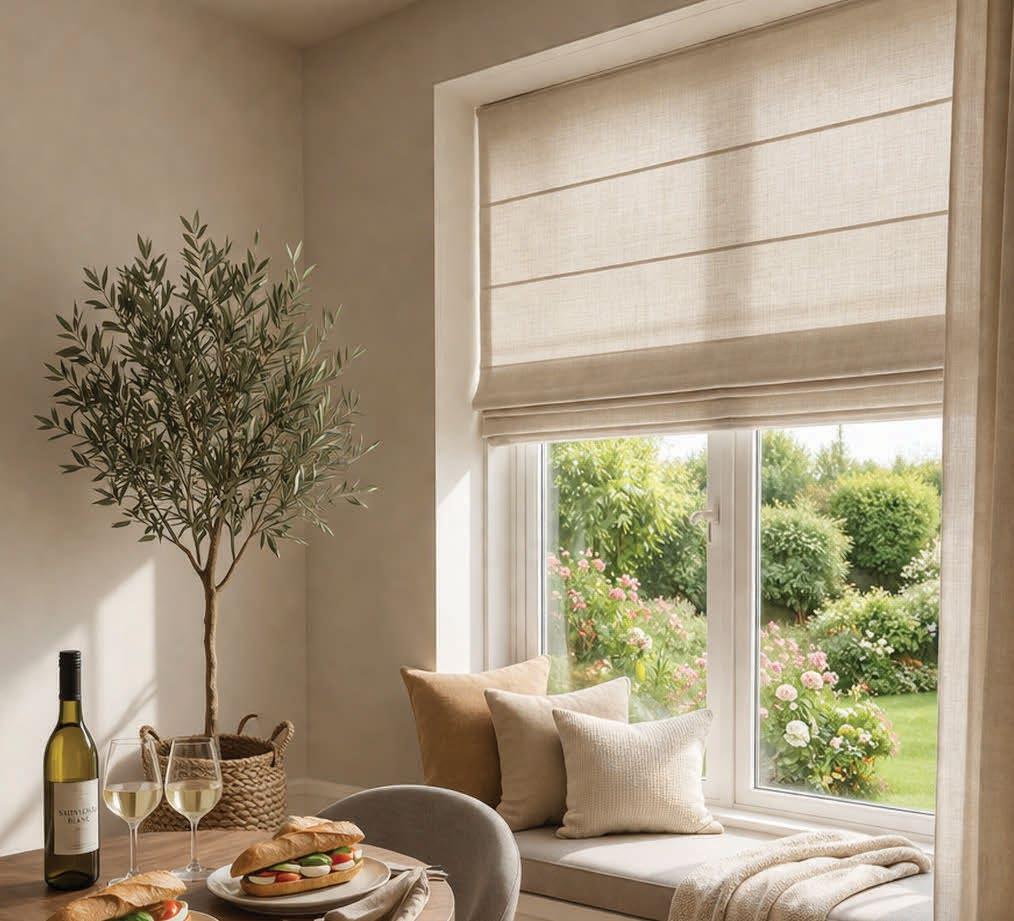

The Allure of Linen Texture Romans - Elegance Redefined 1100
Discover how our exquisite new Linère Driftwood collection can transform your space into a serene retreat.








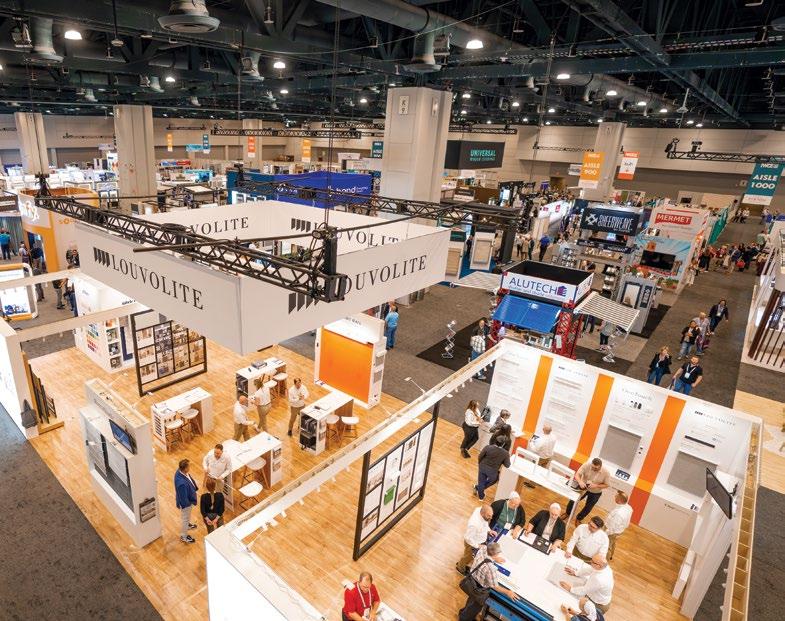
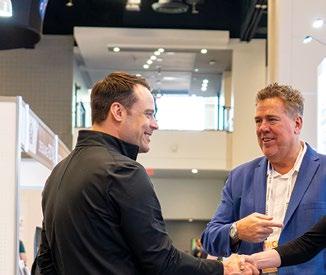

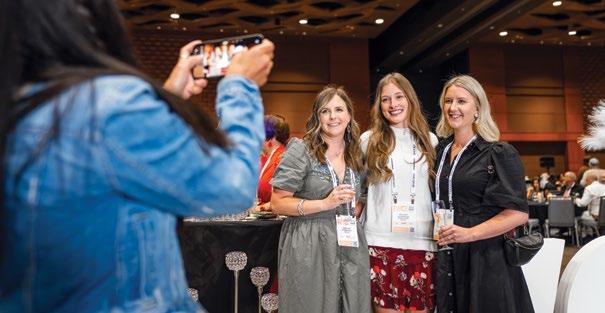
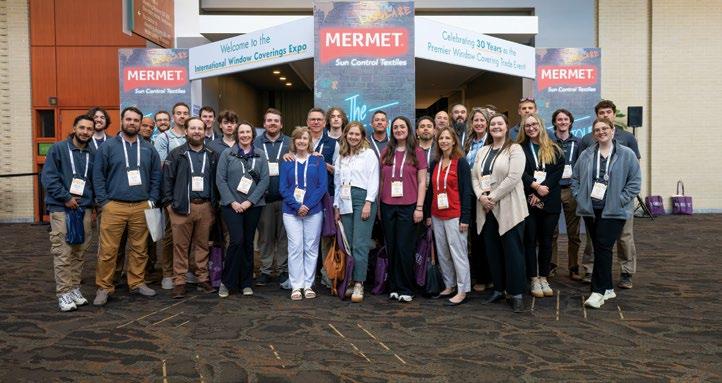
The winners of the Window Covering Manufacturers Association (WCMA) 34th annual Product Awards, recognizing the best new products, innovation and merchandising programs introduced in 2025, were announced during the International Window Coverings Expo.
PRODUCT OF THE YEAR
Motionblinds Wired Motors
Coulisse
BEST PRODUCT INNOVATION
Louvolite Smart Rail
Louvolite
JUDGES’ AWARD
Skylight Normandy Shutters
Norman International
PRODUCT CATEGORY WINNERS
Cellular & Pleated Shades
No Drill Honeycomb
Best New Technical Innovation
Lantex USA Inc.
Duette and Applause Honeycomb Shades –LightLock Flex
Honorable Mention for Innovation
Hunter Douglas
Drapery Hardware
Glydea ULTRA 50 WireFree Zigbee
Best New Technical Innovation
Somfy Systems
Green Products
Louvolite Recycled Program
Best New Green Product
Louvolite
Horizontal Blinds (All Finishes)
Motorized Lift and Tilt Horizontal
Best New Technical Innovation
Carsan Window Fashions
CA Normandy Wood Blinds
Best New Style Concept
Norman International
Motorization & Automation
Louvolite One Touch Motors
Best New Technical Innovation
Louvolite
Hunter Douglas Honeycomb Shades
PowerView Automation with Internal
Rechargeable Battery
Honorable Mention for Innovation
Hunter Douglas
Absolute Silence
Best New Style Concept
Coulisse
AUTOMATE | Push PRO Remote
Honorable Mention for Style
Rollease Acmeda
Roman & Roller Shades
Absolute Roman
Best New Technical Innovation
Coulisse
Hunter Douglas Designer Banded LiteRise
Shades
Best New Style Concept
Hunter Douglas
Premium Hardware for Roller Shades
Honorable Mention for Style
Norman International
Shadings/Sheers
Pirouette A Deux
Best New Style Concept
Hunter Douglas
Shutters
AquaShield Shutters
Best New Technical Innovation
Norman International
Vertical/Panel Tracks (All Finishes)
Adjustable Sliding Panels (Crystal)
Best New Style Concept
Calendar Enterprises Co., Ltd.
Specialty Applications & Miscellaneous
Products
Louvolite Chain Safe Pro
Best New Technical Innovation
Louvolite
SL20 Spring Assist Booster
Honorable Mention for Innovation
Rollease Acmeda
Hunter Douglas Duette Honeycomb Shades
PowerView Automation Arches and Angles
Best New Style Concept
Hunter Douglas
MARKETING & MERCHANDISING
AWARD WINNERS
Best Point of Sale Merchandising
2025 Combined NewStyle Hybrid Shutters
and Heritance Hardwood Shutters Sample Kit
Best Point of Sale
Hunter Douglas
Roller Shade Sample Bag
Honorable Mention for Point of Sale
Norman International
Louvolite Fabric Presenter Collection
Best New Style Concept
Louvolite
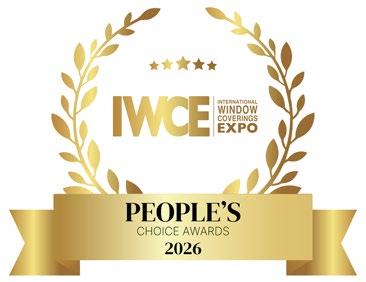
IWCE attendees once again voted for the standouts that defined the show floor, recognizing everything from product innovation to booth experience. These awards highlight the products, people and brands that captured the most attention throughout the event.
Best Booth Experience
Mermet
Most Outstanding Booth Design
Louvolite
Best New Product RYSE
Best Child Safety Solution Draper
Best Motorization Solution Somfy
Best Energy-Efficient Solution
Rollease Acmeda
Best Dressed Booth Staff Coulisse
Best Outdoor Living Products
Texton
Best in Show
Mermet
Congratulations to the recipients of the 2026 People’s Choice Awards!
Strong attendance, standout innovation and a packed show floor made this year’s expo one to watch
The International Window Coverings Expo (IWCE) returned April 21-23 in Raleigh, North Carolina, bringing together more than 3,200 attendees and 190 exhibitors for three days of innovation, education and connection. From the moment the doors opened, the energy was unmistakable, with a steady flow of manufacturers, designers, retailers, fabricators and suppliers moving through the show floor to explore the latest in smart shading, automation, energy-efficient materials and custom applications across residential and commercial spaces.
The exhibit hall was alive with product launches, hands-on demos and conversations that extended well beyond the booth. Attendees tested new systems, explored emerging materials and connected directly with the brands shaping what’s next. “It’s where ideas turn into opportunities and relationships continue to grow,” said Holly Bridwell, senior marketing manager at Mermet USA. That sense of momentum was shared across both returning brands and first-time exhibitors. “This is our first time at IWCE, and having made the journey from Australia, we’re thrilled to finally be here in person and meeting the industry, experiencing Raleigh and what we expect will be the first of many visits,” said Edward Sedgley, CEO of Viewa, a visualization software platform.
More than just a showcase of new products, IWCE 2026 delivered a strong focus on education and business growth. Seminar rooms stayed busy, while a new addition, Fireside Chats, brought quick, practical learning directly to the show floor. These 25- to 30-minute sessions allowed attendees to step in between meetings and walk away with actionable insights on topics ranging from AI-driven visualization and sales strategies to expanding into exterior shading and strengthening financial operations.
The week kicked off in style with The Golden Soirée: Celebrating 30 Years of IWCE, a Gatsby-inspired welcome party that set the tone with live big band music, a golden photo lounge and a lively crowd reconnecting ahead of the show. That momentum carried into the Grace Awards ceremony on April 22, where the industry gathered to celebrate excellence in design, fabrication and craftsmanship. Amy Hunley of The Drapery Room was named Designer of the Year, Irina Otto of IRICHKA earned Artisan of the Year and Lindsay Putzier of Lindsey Putzier Design Studio received the Window Fashion VISION Pick of the Year,

recognizing a stunning bathroom project that wowed the judges with her balance of creativity and technical precision.
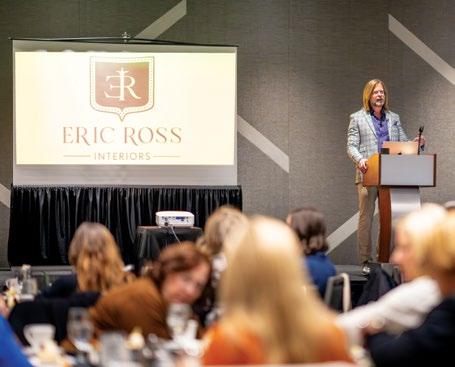
Education and inspiration continued throughout the week, including a keynote from interior designer Eric Ross, whose talk blended design perspective with business insight, offering attendees both creative inspiration and practical takeaways. Elle Cole of Elle Cole Interiors also challenged designers to think more intentionally about color, encouraging layered palettes and more confident client guidance. At the standing-room-only “The AI Advantage” session, Deb Barrett broke AI down into practical applications across the entire design workflow. Additional sessions focused on profitability, client communication and adapting to changing market demands, reinforcing the industry’s growing emphasis on smarter, more strategic business practices.
“IWCE is where ideas turn into opportunities and relationships continue to grow.”
—Holly Bridwell, Mermet USA
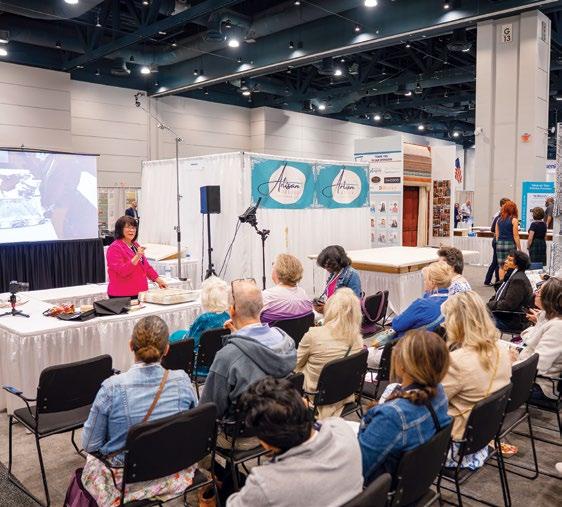
Over at the Artisan Atelier booth, the hands-on hub brought creativity and craftsmanship together for a cause. Designers transformed donated materials into four travel-inspired vignettes, A Passage Home, Pretty in Plaid, Textile Tales of Marrakesh and La Côte Royale, all of which are auctioned to benefit The Green Chair Project, the event’s designated charity. Beyond the displays, the space was buzzing with live demonstrations and workshops. Attendees learned how to perfect pillow edges with flanges and mitered corners, explored the art of layered bedding and custom comfort through tailored techniques, and even got hands-on with traditional British hand-sewing methods for curtains.

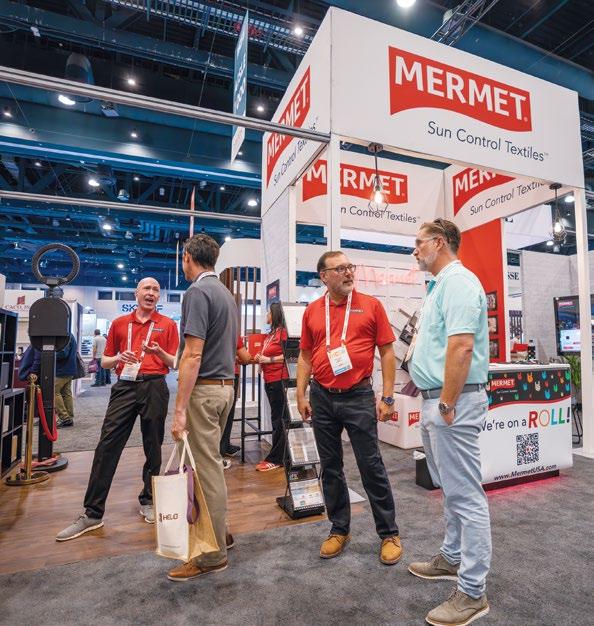
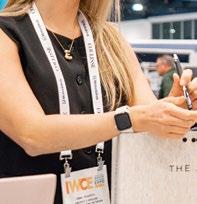

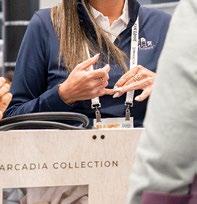


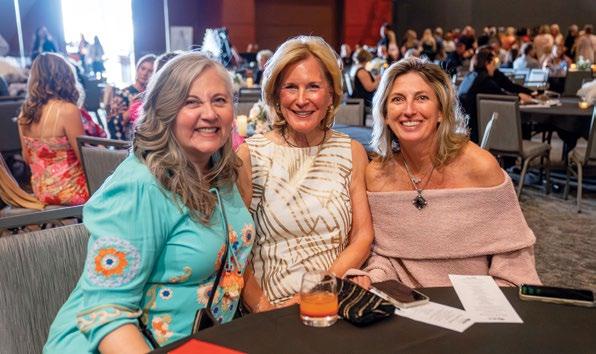
That spirirt of connection carried across the show floor. “The best part of attending IWCE is having the opportunity to have conversations with some of the best professionals in the industry,” said Clint Childress, director of residential markets at Draper. “Sharing ideas, learning from one another, creating new partnerships, that’s what I most look forward to.” For many, those conversations are what make the show indispensable. “It’s the opportunity to be face-to-face with our customers and partners, building meaningful connections and having real conversations,” added Daria Fox, director of sales and strategic partnerships at Olibra.
As the show wrapped, IWCE 2026 made one thing clear: the industry isn’t standing still. With strong attendance, high engagement and a steady stream of innovation, the event delivered both inspiration and practical takeaways. Organizers are already looking ahead to IWCE 2027 in Tampa, building on this year’s momentum and continuing to create space for the ideas, products and connections that keep the industry moving forward.
Mark your calendar! IWCE 2027 will take place March 14-16 in Tampa, Florida. March 14 seminars, March 14-16 show floor, bringing even more education, innovation and opportunity to the window covering industry!
From next-gen motorization and smart control to advanced shading systems and fabrication innovations, the Window Fashion VISION team hit the show floor at IWCE 2026 to find what’s new, what’s next and what everyone was talking about in Raleigh.
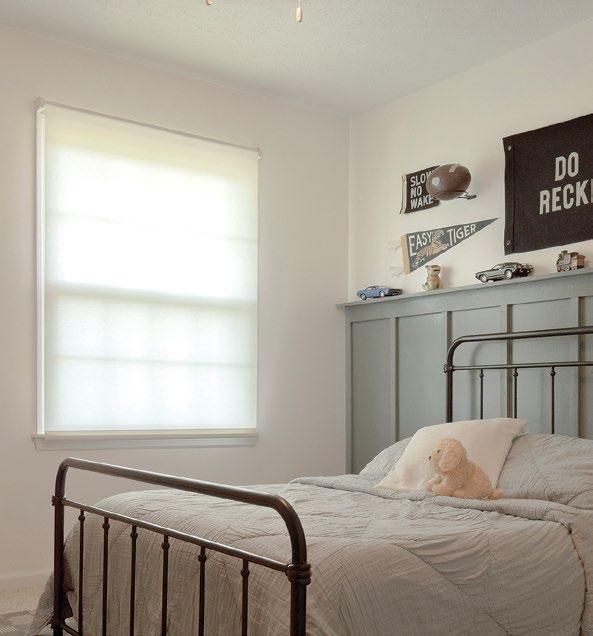
Elevate Cordless Manual Shades from Draper At Home deliver smooth, controlled operation with BalanceFit Technology, an advanced internal system designed to minimize drift and maintain consistent performance over time. The system supports narrow widths as small as 12 inches and heights up to 96 inches, offering flexibility across a range of applications. Designed for a clean, streamlined look, Elevate shades coordinate seamlessly with Draper’s motorized options, creating a cohesive aesthetic throughout the home.
DraperAtHome.com



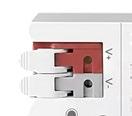
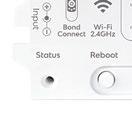
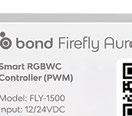
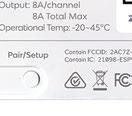
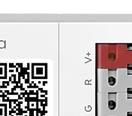
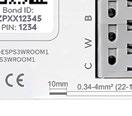
Firefly Aura and Firefly Pixel bring expanded control to smart lighting with Bond-native in-line controllers designed for RGBWC LED strips. Aura manages single-zone common lighting, while Pixel supports addressable strips for more dynamic, customized effects. Users can fine-tune color, brightness and preset scenes through the Bond app, Sidekick for Shades wireless keypad or Mate Pro remote, with added voice control through Amazon Alexa, Google and Josh.ai. Designed for seamless integration, the system pairs with Bond Bridge Pro to extend control across the connected home.
BondHome.io
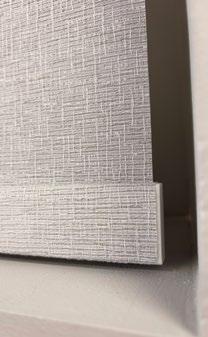
Built by a team with decades of handson installation experience, Retreat Roller Shades are engineered to solve the issues homeowners notice most. An integrated brush strip helps eliminate visible light gaps above the cassette, while a heavy-gauge bracket with a built-in child-safety fail-safe prevents disengaged cassettes from falling. Internal tube ribbing reduces fabric sag on wider windows, and a noise dampening system, including a wrapped Quantum motor and reinforced cassette, minimizes vibration and resonance. The result is a cleaner, quieter and more reliable shade designed with real-world performance in mind.
AerisDealerNetwork.com
RYSE introduces a motorized hem bar designed to bring seamless automation to cordless cellular, roman and horizontal blinds. Engineered to work with existing internal lift cord systems, the solution delivers motorization without requiring modifications to the headrail. The motor is housed discreetly within the bottom bar, with easy battery swapping and recharging from the ground, no ladders or shade removal required. A built-in mechanical failsafe ensures uninterrupted manual operation, allowing the shade to function as usual even without power.
RyseInc.com
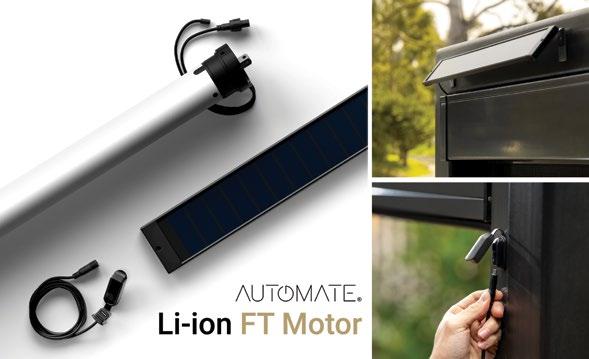
The Automate Li-ion FT Motor is a battery-powered solution engineered for outdoor shading applications. Built with advanced brushless motor technology, it delivers smooth, quiet operation with improved efficiency and long-term reliability. Integrated fabric tensioning helps maintain alignment during use, while impact detection adds an extra layer of protection against obstructions. Designed for flexible installation, the system supports both solar and USB-C charging options, offering a low-maintenance solution for exterior environments.
AutomateShades.com
The Glydea ULTRA 50 WireFree Zigbee motor delivers simple, wireless control for high-end drapery applications. Powered by a rechargeable lithiumion battery, the system eliminates the need for pre-wiring, making it an ideal solution for both new construction and retrofit projects. Featuring Zigbee 3.0 technology, it integrates seamlessly with the TaHoma switch to enhance smart home functionality while simplifying setup for installers. Designed for clean installation and quiet performance, the motor brings a streamlined approach to automated drapery.
SomfySystems.com
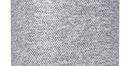
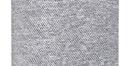
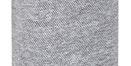
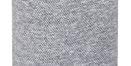
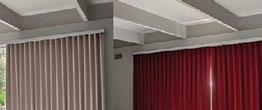
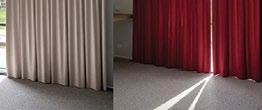
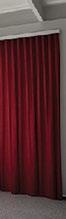
Viewa’s Surface for blinds is an AI-powered visualization tool that allows customers to upload a photo of their space and instantly preview window treatments with striking realism. Designed to remove the guesswork from design decisions, the platform helps users visualize blinds, shutters and curtains in real time, boosting confidence during the buying process. It can be integrated into a company’s website or used in-home by sales teams, creating a more interactive and informed customer experience. Businesses using Surface have seen increased engagement, with users significantly more likely to enquire and connect. Viewa.com


Coulisse rethinks motorized shading acoustics with Absolute Silence, a system engineered to significantly reduce operational noise. Combining patented silent brackets lined with liquid silicone, precision-fit drive plugs and acoustically tuned motors, the system isolates vibration for smoother, quieter performance. Developed in Coulisse’s dedicated sound lab, Absolute Silence delivers up to 15 decibels less noise than standard motors, setting a new benchmark for discreet, automated shading in both residential and commercial spaces. Coulisse.com
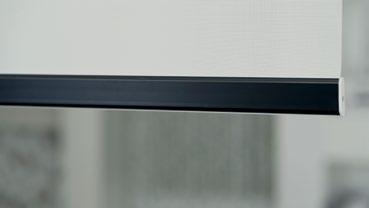


Louvolite introduces Smart Rail, a patented two-piece roller shade bottom bar designed to streamline fabrication and improve finish quality. Its click-to-lock system eliminates the need for stapling, sewing, welding or adhesives, reducing production time while enabling consistent, repeatable assembly. Stay Flat technology helps maintain a smooth, tensioned finish, minimizing rippling and sagging. With a universal profile that supports both exposed and wrapped applications, Smart Rail deliver a clean, modern look alongside improved efficiency and reliability in production. Louvolite.com
Mermet USA introduces E Screen LOWGLARE, a high-performance white-toned fabric designed to reduce harsh glare while maintaining the benefits of traditional light-colored solar screens. Engineered for increased visual comfort, the fabric helps minimize eye strain while delivering strong heat reflectance and thermal control. Available in 1%, 3% and 5% openness levels in the color Dove, it also enhances privacy without compromising outward visibility. The result is a balanced solution that softens light while preserving the view. MermetUSA.com

FROM SETTING THE SCENE TO SERVING WITH EASE, YOUR GUIDE TO EFFORTLESS SUMMER ENTERTAINING
BY ANIA MUNZER



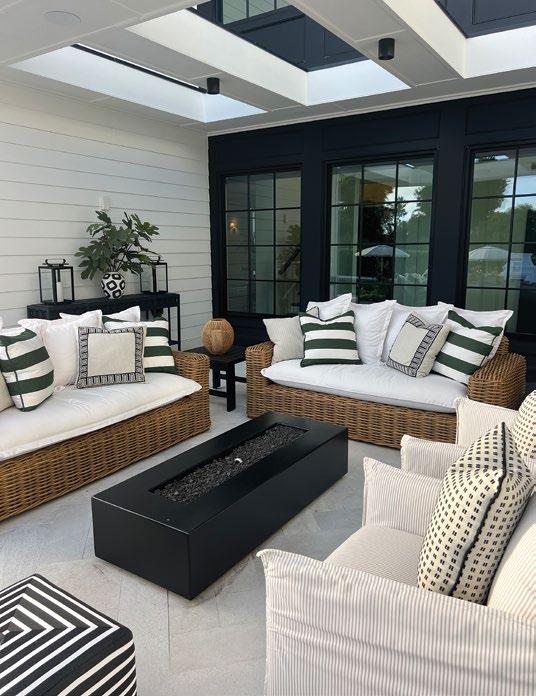
ere’s nothing quite like entertaining on a summer night. e moment you step outside, everything begins to shift. e air feels softer, conversations linger longer and time seems to slow in the most e ortless way. Outdoor entertaining has a way of turning even the simplest gathering into something memorable.
For me, it always brings me back to summers growing up in Minnesota. Evenings stretched on endlessly, marked by bon res, music drifting through the air and the familiar soundtrack of crickets under a sky lit with lightning bugs. It never felt formal or overdone. It just felt right.
What stayed with me most were the small rituals passed down from my grandmother and mother. Cook from the heart. Set the table with intention. Always have something chilled and ready to share. Simple gestures, but ones that made people feel welcome, comfortable and cared for. Somewhere along the way, entertaining became something people overthink. But at its core, it’s not about perfection. It’s about creating a space where people want to gather and stay awhile. With a few thoughtful details, anyone can bring that feeling to life and rediscover the art of outdoor entertaining.
Great outdoor entertaining starts with intention. Instead of one open, unde ned space, think in zones that naturally guide your guests: a table set for dining, a relaxed lounge area for conversation and, if space allows, a spot for games or little ones to
play. It doesn’t have to be complicated. Even subtle shifts like a change in seating, layered textiles or lighting can create a sense of place. When done well, the space feels e ortless, and guests instinctively settle in, move about and stay awhile.
Nothing interrupts a beautiful evening faster than uninvited pests. e goal is to handle it gracefully, without making it feel like a production. Keep a small, thoughtfully styled basket with bug spray options, both natural and traditional. Layer in subtle solutions throughout the space, like citronella candles or torches that double as ambiance. Potted herbs such as lavender or lemongrass add a fresh touch while helping keep insects at bay.
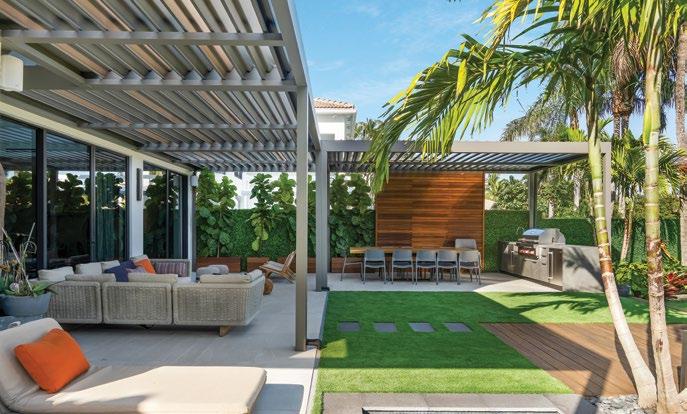
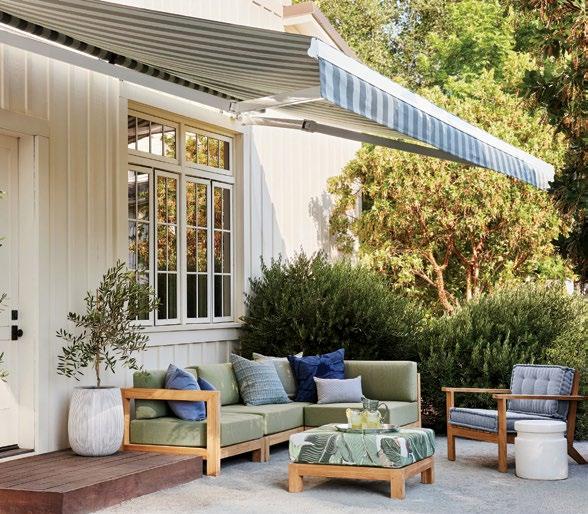
A comfortable guest is a lingering guest. As the sun shifts throughout the day, having intentional shade makes all the di erence. Layer in a mix of umbrellas, pergolas or exterior shading to create both function and visual interest. oughtful shading not only protects from direct sun but also keeps the space cooler and more inviting. e goal is to create an environment where guests can relax without even thinking about the heat, allowing the gathering to ow naturally from day into evening.
Lighting is where the magic really happens. As daylight fades, the atmosphere should gently transition with it. ink soft, layered lighting that feels warm and inviting rather than bright and overpowering. Cafe lights overhead, candles scattered across the table and subtle pathway lighting create a glow that draws people in. It’s these details that make a gathering feel intimate and memorable, the kind of setting guests don’t want to leave just yet.
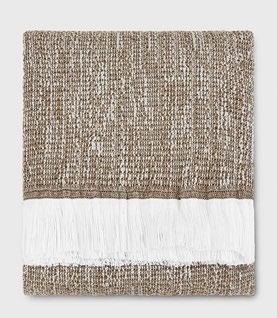
As the evening settles in, comfort becomes everything. Keep a basket of lightweight blankets nearby for guests to grab as needed. If the temperature dips, outdoor heaters can extend the night without disrupting the ambience. ese small, thoughtful
touches make all the di erence. ey signal to your guests that they are meant to stay, relax and enjoy the moment just a little longer.
Serve with Ease
I come from a French and Polish mother and grandmother, where feeding everyone was simply part of being a great host. Hospitality was never complicated, but it was always thoughtful, generous and rooted in care. e best hosts make it look e ortless, and that starts with preparation. Choose dishes that can be made ahead of time, so you’re not tied to the kitchen. Outdoor entertaining should feel relaxed, not rushed. Serve food that’s easy to enjoy and meant to be shared, creating a more casual and inviting experience. For drinks, a simple prebatched option keeps things owing without constant attention.
When everything is planned with ease, you get to do what matters most: enjoy the evening right alongside your guests.



1
The
















2
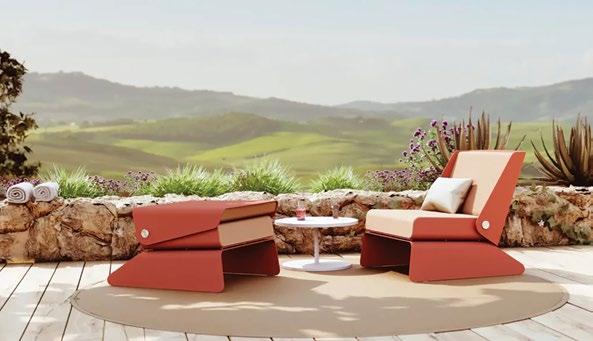
Guests will love lounging in the Coozus chair no matter the season. Its aluminum base, foldable design and Sunbrella cushions make it an easy outdoor go-to.
FIVE PICKS THAT WILL MAKE YOUR BACKYARD THE PLACE NO ONE WANTS TO LEAVE
3
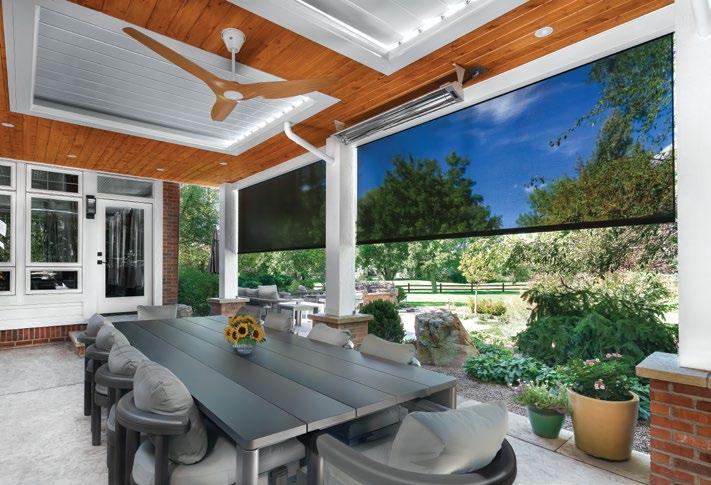
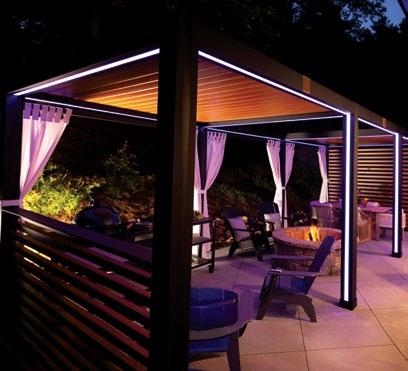
Cabana X Core+ takes shade to the next level, with motorized louvers powered by Somfy and built-in LED lighting that keeps things going after sunset.



4
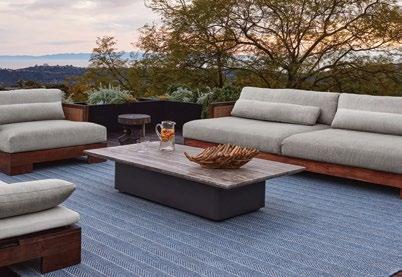



everything feel intentional.







5


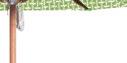






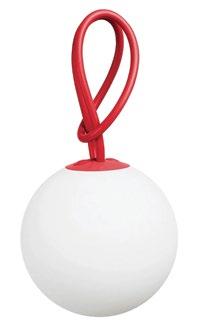
The Thibaut x Santa Barbara Designs Umbrella adds pattern, color and a little attitude












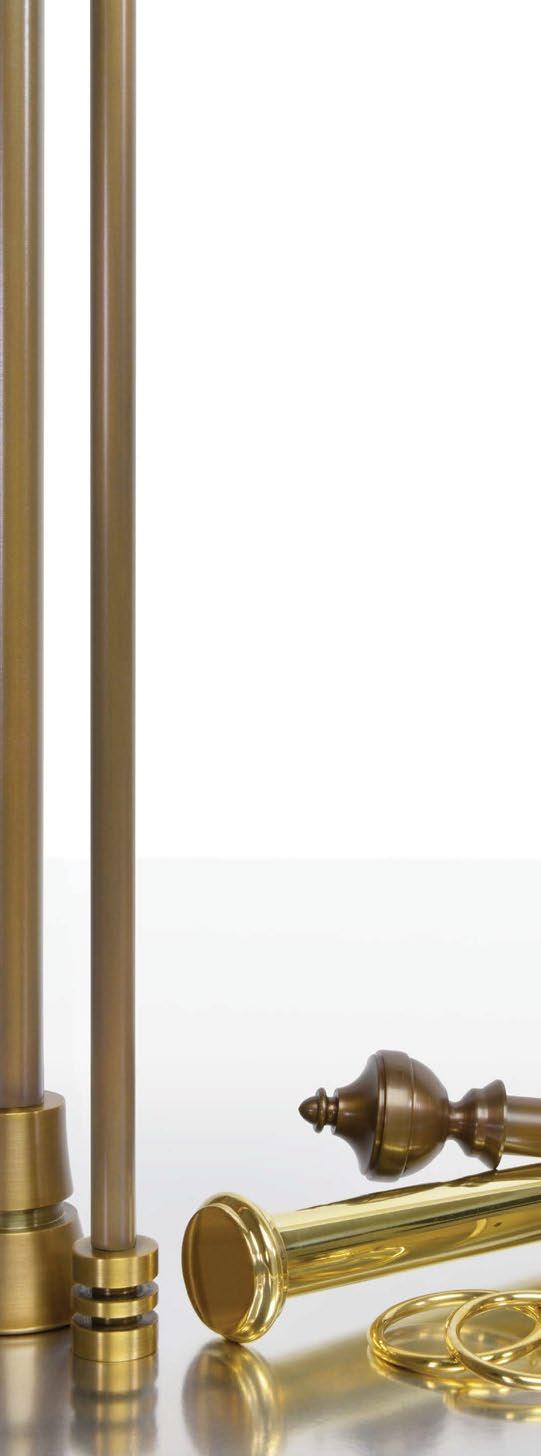
Morgik Metal has been serving the trade for almost 40 years with the finest custom curtain hardware available.
We take great pride in our ability to work closely with interior designers, decorators, fabric workrooms and architects in manufacturing custom curtain hardware to meet your exact requirements.
TEL: 212-463-0304 FAX: 212-463-0329 SALES@MORGIK.COM
WWW.MORGIK.COM MADE IN AMERICA
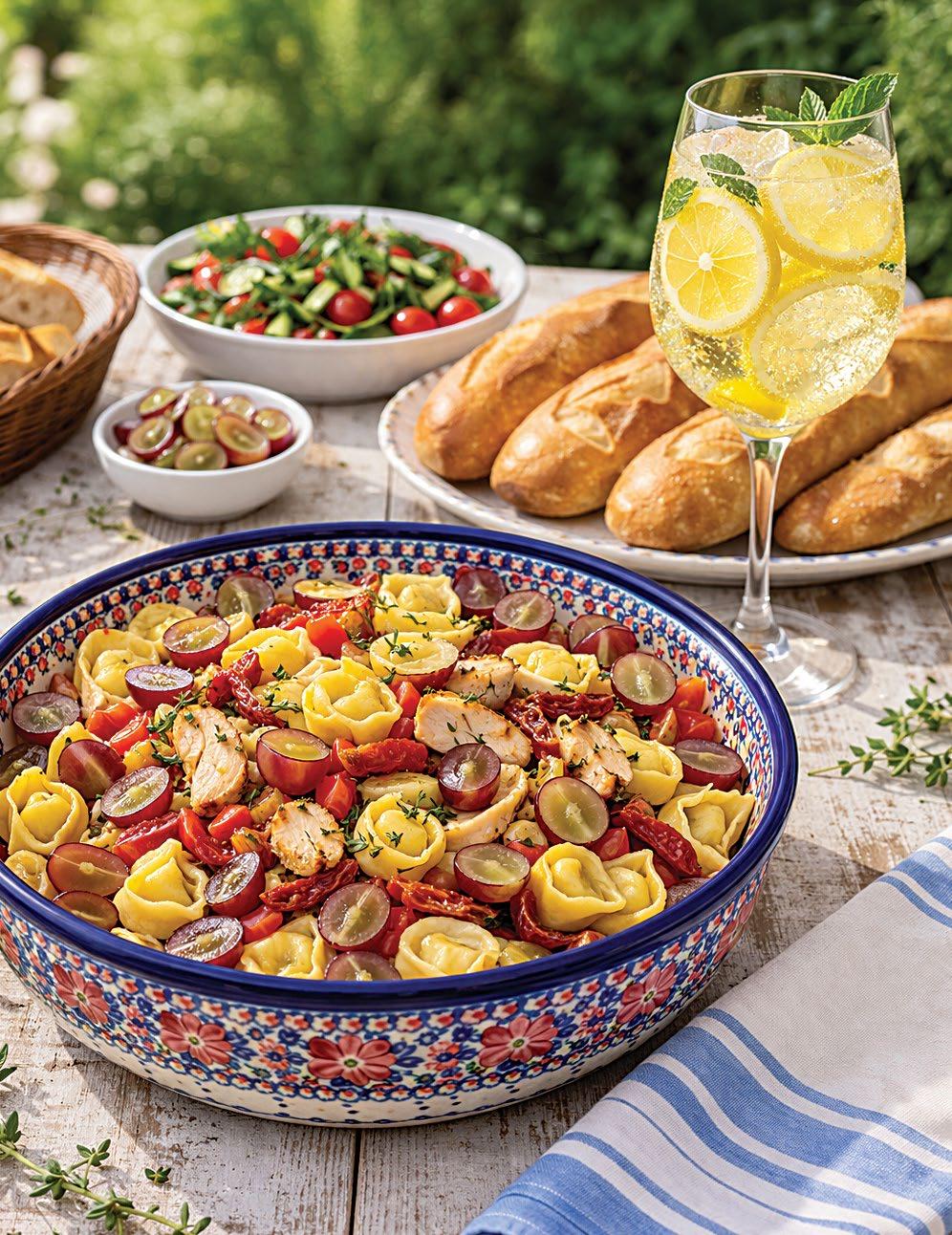
A satisfying, make-ahead salad and a crisp, citrusy spritz are all you need to bring people together and keep the conversations flowing. It’s an easy, crowd-friendly pairing that lets you spend less time in the kitchen and more time enjoying the moment.
A make-ahead crowd favorite. This recipe comes from my grandmother and mother and has been perfected over the years. Set it out and watch it disappear the second it hits the table!


Main Salad
• 2 chicken breasts, butterflied
• Italian dressing, store-bought
• 1 red bell pepper, roughly chopped
• 1 yellow bell pepper, roughly chopped
• 1 sweet onion, roughly chopped
• 1 package fresh cheese tortellini
• 1 small jicama, peeled and diced (optional)
• 1 jar sun-dried tomatoes (herbed, vine-ripened halves), chopped into quarters
Dressing
• 6 tbsp olive oil
• 4 tbsp white wine vinegar
• 2 tbsp balsamic vinegar
• 1 tbsp Dijon mustard
• 1 tbsp grainy German-style mustard
• 1 clove garlic, chopped
• Salt and pepper to taste

1. Marinate the butterflied chicken breasts in Italian dressing overnight.
2. Preheat grill to 350°F to 375°F. Grill chicken approximately 8 minutes per side or until fully cooked. Let rest, then slice.
3. Toss the diced peppers and onion in olive oil, salt and pepper. Wrap in foil and grill for 20 to 30 minutes, until tender and slightly charred.
4. Prepare tortellini according to package directions. Drain and let cool.
5. Combine all dressing ingredients in a blender or use a hand blender for 30 to 60 seconds until emulsified.
6. In a large bowl, combine grilled chicken, tortellini, grilled vegetables and sun-dried tomatoes (and jicama, if using). Pour dressing over everything and toss generously to coat.
7. Serve with crusty bread and a chilled glass of white wine.

Bright, refreshing and effortlessly elegant, this is the perfect pairing for hangover chicken salad. The citrus cuts through the richness, while the bubbles keep it light and celebratory.

(per glass)
• Ice
• 2 oz limoncello
• 3 oz prosecco or any dry sparkling wine
• 1 oz soda water
• Lemon slices
• Fresh mint or rosemary (optional)

Fill a wine glass with ice, add limoncello, top with prosecco and a splash of soda water, then gently stir and garnish with lemon and mint or rosemary (optional).
Personal touch: Add a rosemary sprig for a more herb-forward profile and serve in a stemmed wine glass.












Outdoor Rooms Are Evolving. The Right Hardware Finishes the Story.
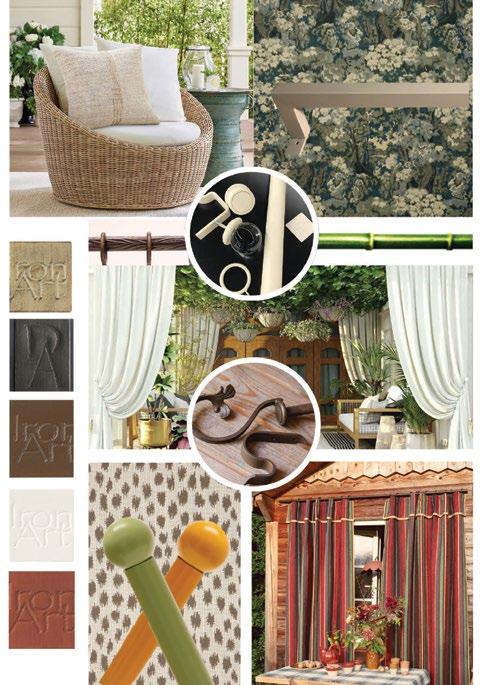
Outdoor décor trends for 2026 center on creating cozy, personalized spaces that blend indoor comfort with nature, incorporating layered, curated zones with soft textiles, gentle curves, and natural materials in warm neutral palettes accented by pops of color, while technology like motorization, lighting, and climate control enhances both function and ambiance; Orion supports this open-air living trend with outdoor drapery hardware designed for durability and style, featuring its Iron Art Collection with poles, brackets, rings, finials, and accessories in over 30 custom finishes, all powder-coated and sealed to withstand harsh weather - because the right hardware doesn’t just support drapery, it completes the design.


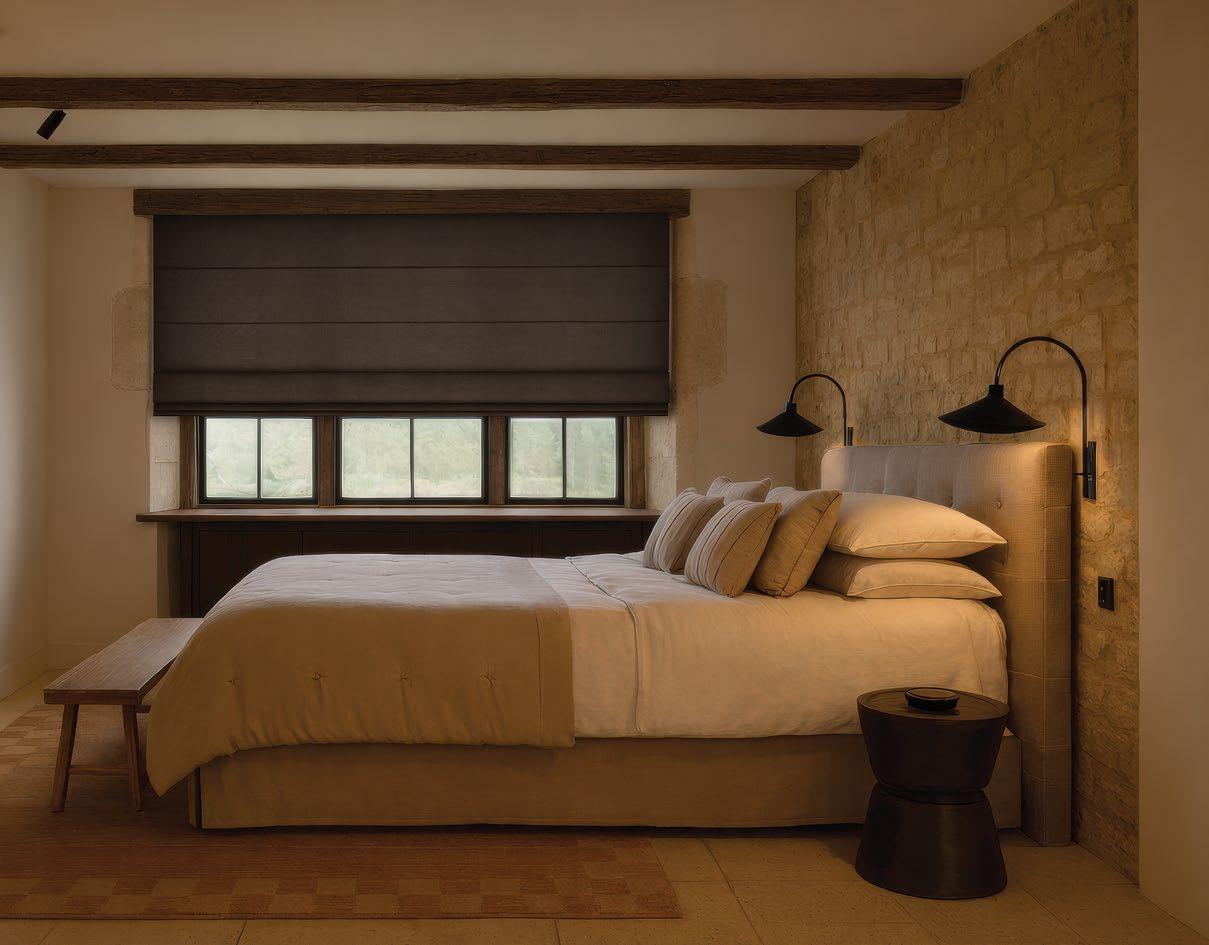
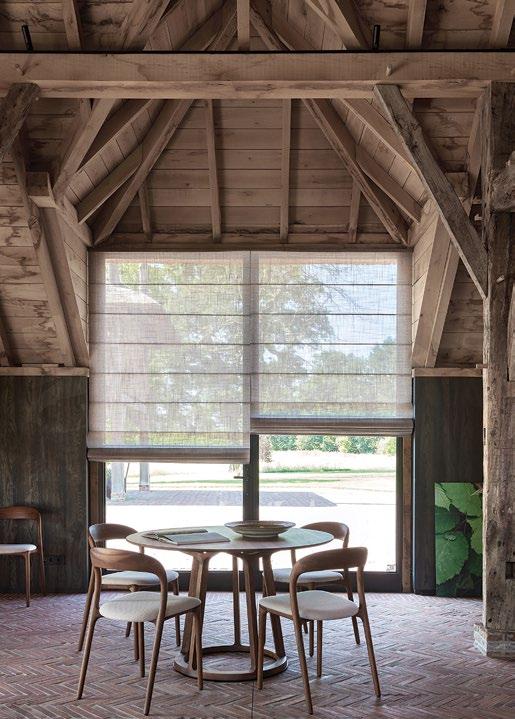
Window coverings don’t exist in isolation. They respond to the spaces around them, to the way interiors evolve, the way materials shift, and the way people want to feel in the rooms they inhabit.
At Coulisse, the starting point for any new collection is never the product. It’s the world outside it.
“The signals from the market were clear,” explained Catharina Idema, creative director at Coulisse. “More natural materials, more luxurious and high-end qualities, more recycled options and a growing appetite for softer roman solutions. We don’t copy those directions—we interpret them, filter them, and translate them into something that truly works in window coverings. This collection is our answer to where interiors are going right now.”
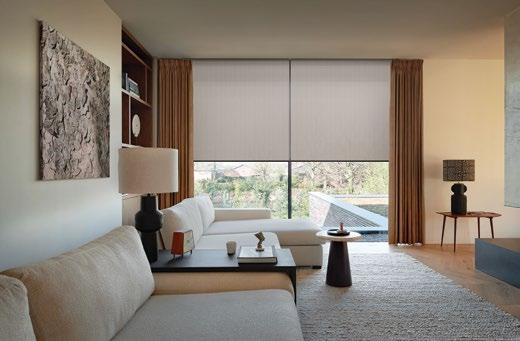
The result is a renewed collection—a new generation of roller fabrics structured across five dedicated books, and expanded with a new roman volume—that brings together the directions shaping interior design today.
One of the most significant additions is the first range of recycled fabrics available globally through Coulisse. Capri, Wembley, Prato,
COULISSE INTRODUCES A NEW GENERATION OF COLLECTIONS FOR ROLLER AND ROMAN
Marseille and Re-Essential introduce a more responsible material choice without compromising on design quality, responding to a shift being felt across interiors, fashion, and architecture alike.
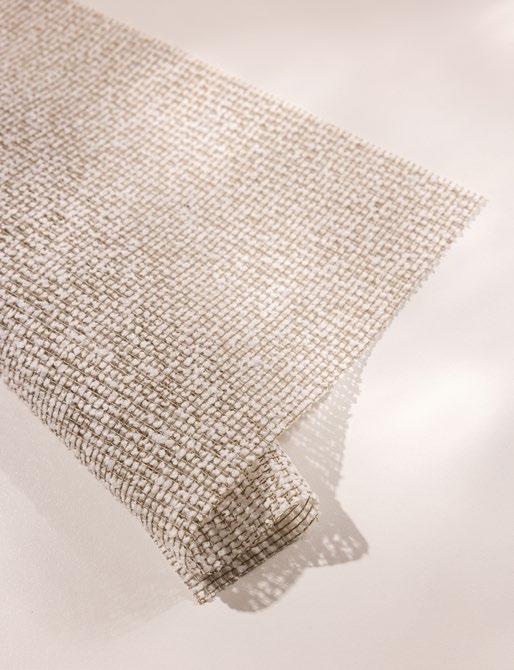
Alongside these, nature-inspired fabrics including Aspen, Belize, Lima and Capri bring a more tactile and elevated aesthetic to the roller range. They are softer in tone, richer in texture and more aligned with the organic, grounded quality that defines so much of contemporary interior design.
“We look at the whole collection, not just what’s missing,” confirmed Esterel Roetgering, textile expert at Coulisse. “Data shows us what performs, experience tells us why. The goal is always a collection that feels intentional and where every fabric has a clear reason to be there.”
The renewed roller collection is organized across five books: Light Filtering, Black-out, Nature, Screen Textile and Screen Function, each built around a specific material direction. The Screen Function book brings together high-performance fabrics engineered for precise light and heat control, aligned with smart motorization
technology for both residential and commercial applications. Proven bestsellers like Mombassa and Hampton remain at the core. Trusted by the market and as relevant today as ever.
“ The signals from the market were clear. More natural materials, more luxurious and high-end qualities, more recycled options, and a growing appetite for softer roman solutions.”
— Catharina Idema, Creative Director, Coulisse
Perhaps the most exciting expansion is the introduction of Roman Shades Vol. 2, a new book that complements the existing roman collection with a curated selection of textured, tactile fabrics.
Available in both sheer and black-out qualities, these fabrics are inspired by nature’s quieter aesthetic and designed to bring a softer, more layered presence to the window.
As interiors continue to move toward warmth, texture and considered materiality, this new volume arrives at exactly the right moment.
BY SHAUN TURNER AND MARISSA MASSEY





















































When a prospective customer lands on your site seeking exterior shading products, does your outdoor shades landing page invite further browsing and close the deal? Or does your site lose the lead?
For window treatment pros, dealers and manufacturers alike, product landing pages are often just a spec sheet uploaded to a template, a few stock images and a generic “Contact Us” button. But these pages are in deep competition.
Whether you’re a manufacturer building pages to support your dealer network or a dealer looking to attract oversaturated clients, these tips will help you achieve optimal visibility with a high-converting product page.
Lead with the Problem, Offer the Solution (Not Just the Spec Sheet)
Too many product landing pages hold a few technical specifications and not much else. While these specs matter
a great deal, your visitor’s first question is not “What are the dimensions?”
Structure your page to answer your client’s problem with your product as the only solution: A homeowner’s patio gets high sun in the mornings when she’s drinking her morning coffee, and your window awning solutions could provide the shade she needs to enjoy her breakfast.
Start with the buyer’s intent for the page, then layer in the technical details: A homeowner seeks a shading solution but doesn’t know what the best option might be. Your landing pages cover various outdoor shade solutions, including recommendations for uses and benefits.
Lead with a benefit-driven headline and a short paragraph that frames the product (and your business) as a solution, then provide the top-quality imagery and specs in a scannable format below. The images let the homeowner see the look and style of each option, while the scannable list
of specs lets her quickly review and identify which products may be best for her needs.
Every page should earn a potential client’s trust and make the next step easy.
• Benefit-driven headlines that communicate real value, not just the product name.
• Clear descriptions that explain what the product does for the customer first, tailored for your clientele.
• Expertise enhances credibility. Display warranties, certifications and business affiliations. Add FAQ sections that represent questions about your products.
• High-quality imagery and video installed in real environments. Include close-ups of materials options and operation systems.
• Social proof like testimonials, project galleries or dealer success stories.
• Strong calls-to-action (CTAs) are linked text or buttons that direct movement into your sales funnel. “Get a Custom Quote” outperforms “Contact Us.”
Once our homeowner understands her options and identifies products of interest, she’s easily able to see why she should choose your business and request a quote or call for more information.
Manufacturers, your product landing pages serve a dual audience: prospective dealers researching your brand and existing dealers that rely on your resources to sell and build out their own pages. Include downloadable sell sheets, catalogs, sample imagery and installation guides. Provide embed-ready content that dealers can use in their own marketing—the easier you make it for them, the more consistently your brand appears in dealer-centered searches.
Dealers, your website is usually the first impression potential customers have of your business, which means every word, header, button and graphic must be carefully considered. The best chance of converting a lead into a customer is if they make a connection with your brand.
• Supporting local is important to a business owner looking to upgrade the awning for his dine-out patio, and he sees that your business is “locally owned and family operated.”
• Past projects hit home with a mom who’s been looking for inspiration for better lighting/privacy solutions for an
indoor/outdoor entertaining area.
• Your 200-plus five-star Google reviews offer assurance to a stressed homeowner who had bad experiences with contractors in the past.
Turning a lead into a customer takes experience and trust. Make your local pride evident, personalize your pages with project photos, add real-customer testimonials, showcase your team’s expertise and create an internal linking strategy to help customers learn more about related topics. Remember: Prominent, specific CTAs are tied to the visitor’s likely next step, so ensure they’re placed strategically throughout the page.
Adhering to brand guidelines can mean the difference between receiving marketing dollars or waiver approval. Ensure you’re up to date on your brand’s specific language requirements, product restrictions and permissions for thirdparty products. Once you identify the guidelines you need to follow, you can create a dynamic structure and engaging copy that meets brand requirements.
Consider an Outdoor Treatments landing page, for example. You may have a primary outdoor shades partner but also offer shadings from two other dealers. If you have a brandcreated template website, you may be unable to advertise any additional brands you work with or products you offer unless you have a waiver from your primary brand. A personal site is more likely to offer fewer restrictions while maintaining co-op funds.
As you update your on-page strategy, remember that conversions begin long before a potential customer decides to contact you. From how you present your brands and products to how you meet a customer’s needs, a thoughtfully executed landing page can increase conversions and support your sales goals. Your product landing pages should be working just as hard as you are! V


Marissa Massey is the head of SEO and content at Creekmore Marketing and uses her writing, editing and SEO knowledge to lead her team and support Creekmore’s clients. Marissa loves the outdoors, cooking for people and reading.
Shaun Turner is from southeastern Kentucky and is a senior SEO and content specialist at Creekmore Marketing. He is also the recipient of the Denny C. Plattner Award in Fiction from the Appalachian Review and won a Kentucky Emerging Artist Award.

In a world of endless options, relevance now depends on how well businesses guide decisions, not just present products
BY KATHY CRAGG PACE
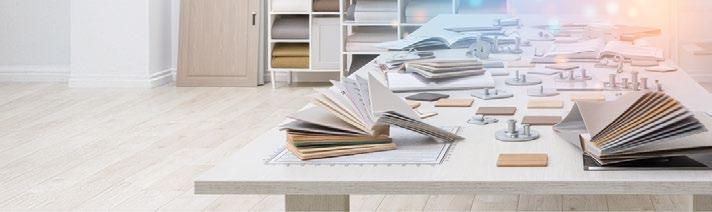
For decades, businesses in the design and home improvement industry have defined themselves by what they sell—custom window treatments, custom closets, kitchen and bath remodeling. The language of home industry businesses has traditionally centered on the products they offer. And, for a long time, that made sense. Products were harder to access, information was limited and expertise lived primarily with the professional. What you sold and how efficiently you could source and deliver it was a meaningful differentiator.
Looking at recent years, however, something fundamental has shifted. The most resilient design and home industry businesses are no longer defined by the products they sell. They are defined by the experience they create and the transformations they guide.
Recently, I read an article about the longevity of Decorating Den Interiors, a franchise that has endured for more than 50 years in an industry where many concepts have come and gone. The story stood out to me not only because of the company’s staying power, but because I owned a Decorating Den franchise early in my career, which gave me then-and-now perspective.
What caught my attention wasn’t branding or scale; it was how clearly the company articulated an evolution many window treatment businesses are now facing: a shift from being a product-driven organization to becoming a design service company that sells products. That change wasn’t cosmetic. It reflected a deeper understanding of where real value lives and why longevity depends on adapting to how clients make decisions today.
There was a time when selling products was the business for most home industry companies. Sourcing was limited, and access to wholesale relationships played a critical role in a company’s success. Education wasn’t easy to come by, so knowing how to navigate a complex industry created real value. Today, trusted vendor partnerships remain essential to delivering quality, reliability and service. What has changed is that those relationships are no longer the sole differentiator they once were, because access to information and products has expanded so dramatically.
Today, information is abundant. Clients can browse inspiration endlessly, compare options instantly and visualize outcomes digitally. Even access to products
has widened, with manufacturers and platforms making it easier than ever for consumers to explore choices independently.
As a result, products, no matter how beautiful or wellmade, are increasingly easy to compare. And when products become easier to compare, they move closer to being perceived as commodities. This is why “We’re comparing proposals” comes up much more often nowadays.
Let’s articulate a shift many professionals feel and most don’t have language for. The value was never truly in the product itself. The value came from the experience surrounding it. It comes from helping a client make sense of options, from guiding decisions with confidence and clarity, and from reducing overwhelm while building trust along the way. Products may still be what clients pay for, but experience is what makes those products worth it. And that experience—how it feels to work with you—is the service.
“ When clients feel supported rather than sold to, trust builds. When they feel confi dent rather than pressured, transformation becomes possible.”
In today’s environment, design service isn’t about degrees, job titles or departments. It’s about how intentionally a business designs the client’s journey from the first conversation through final installation. The experience a client has is shaped long before products are ordered or work begins, and it reflects the standards, expectations and culture set by the business itself. That experience is most powerfully influenced in the early sales conversations, where trust is built, expectations are set and clients decide whether they feel confident moving forward.
This is where decision-shaping happens. It’s where uncertainty is either eased or amplified, and where value is either clarified or left vague. While customer service, installation and product quality are all essential to delivering on the promise, the experience that determines whether a client feels confident saying yes is formed much earlier.
From Value Proposition to Transformation Today’s clients live in a world where nearly every portfolio
looks polished, every image looks beautiful and every website promises expertise. As a result, they are not just evaluating aesthetics. They are evaluating trust. They are quietly asking whether the process will feel stressful or supportive, whether they will feel heard, whether decisions will feel clear or chaotic and whether they can trust the person guiding them.
Those answers do not come from product specifications. They come from the experience shaped from the very first interaction. If that experience does not stand out more than the products being offered, the business is competing in a crowded, commoditized space, whether that is the intention or not.
Professionals who work in clients’ homes do not simply deliver products or finished spaces. They guide people through decisions that shape how their homes look, feel and function every day. That role requires more than design and technical knowledge. It requires presence, confidence and the ability to create an elevated experience that feels calm, connected, engaging and personal.
When clients feel supported rather than sold to, trust builds. When they feel confident rather than pressured, transformation becomes possible. That transformation does not come from the product alone. It is made possible by the design experience that surrounds it, the human conversations that allow clients to say yes with clarity instead of leaving decisions unresolved with the familiar, “I’ll get back to you.”
As we look toward 2026, relevance will depend less on product breadth or presentation and more on how intentionally businesses design the human side of the journey. The companies that thrive will not simply sell things. They will guide decisions, shape expectations and create experiences that clients remember.
Because in a market where nearly everything can be compared, the one thing that cannot be replicated is how it feels to work with you. That is what builds trust, loyalty and lasting businesses. V

Kathy Cragg Pace has owned award-winning design and home building businesses, directed nationwide sales teams and influenced over $450 million in home design sales. Today, she helps professionals in the window treatment and interiors industry stop chasing sales and start leading trust-based conversations that create real momentum. Her coaching and frameworks are built for today’s market—grounded in modern buyer psychology, tested in real appointments and designed to help good people sell with confidence. She generously shares tools and training like The V.A.L.U.E. Path to Yes at » KathyPace.com
In the world of luxury exterior projects, the real opportunity lies in what isn’t specified
BY SAM BLAIR




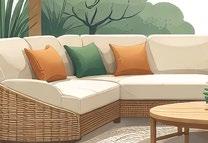


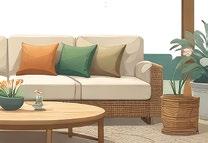






Outdoor living has officially crossed the line from luxury feature to expected part of the built environment. In highend residential, clients are no longer thinking about outdoor spaces as an extension. They are treating them as core living areas. Patios, terraces, rooftops and pool decks are being designed with the same level of intention as kitchens and living rooms.
But here’s the gap: While the design investment has evolved, the scope behind these spaces often hasn’t been fully defined. That’s where the opportunity is, and it’s one that most dealers are still missing.
If outdoor living is approached as just another shade opportunity, it quickly becomes a price conversation or gets overlooked entirely. The real issue is not product. It’s ownership.
Outdoor environments introduce a set of conditions that need to be addressed:
• Heat that limits when a space can be used
• Glare that disrupts visibility
• Lack of privacy
• Material degradation from constant exposure
But these are rarely solved by a single line item. They require coordination, planning and a clear approach to the overall solution. Dealers who step into that role move out of the commodity category and into a position of influence.
Where the Opportunity Actually Lives
In high-end residential projects, outdoor scope is rarely fully defined early in the process. It’s not always in the drawings. It’s not always in the specs. And that’s exactly why it’s valuable.
Look for conditions that haven’t been fully addressed:
• Covered patios without solar control
• Pergolas without integrated shading systems
• Large openings exposed to direct sun
• Outdoor kitchens and seating areas without a defined plan
In many cases, these spaces are visually complete but strategically unresolved. That’s the opening for a dealer who knows how to identify it and take ownership.
1. Lead the Designer Early: Designers are thinking about layout, materials and overall intent, but they don’t always have a deep understanding of exterior shading systems or control integration. Waiting to be asked is a losing position. Instead, guide the conversation early with a simple shift:
How is this space going to be addressed when conditions are at their worst? That question changes your role from product provider to problem-solver.
Dealers who engage early and bring clear, executable solutions become part of the decision-making process rather than a downstream bidder.
2. Define the Scope Before It’s Defined for You: In many projects, scope is not missing. It’s simply undefined. If you wait for it to be outlined, you are competing against it. If you help define it, you have a chance to control it. This is where revenue is created. Not by adding products, but by shaping what the project actually requires.
3. Deliver a Complete System: High-end residential clients expect cohesion, so outdoor solutions should be presented as a fully integrated system that includes exterior shading, integrated controls such as keypads, mobile apps and automation platforms, wind and sun sensors, and coordination with lighting and other building systems.
A complete approach reduces fragmentation, limits price comparison and allows you to take on a larger portion of the project.
4. Expand the Conversation Beyond the Interior: Many dealers remain focused on interior scope during early project engagement, but the opportunity lies in expanding that lens. A simple question—“What’s the plan for this outdoor space?”—often uncovers scope that hasn’t been fully considered, and those who consistently ask it are the ones who consistently create additional revenue.
5. Position It as Protection, Not Just Enhancement:
Outdoor environments represent a significant financial investment for homeowners, with furniture, finishes and architectural elements all exposed to conditions that accelerate wear and deterioration. Positioning shading and control systems as a way to extend the life of materials, reduce maintenance costs and preserve the quality of the space over time shifts the conversation from an optional upgrade to a necessary consideration within the project.
The Bigger Picture Outdoor living continues to accelerate as a priority in residential design, but the larger shift is in how these projects are defined and who takes responsibility for them. The dealers who win will not be the ones who simply respond to defined scope. They will be the ones who identify what’s missing, step in early and shape the direction of the project.
If you’re already involved in a project, there’s a strong likelihood that outdoor scope is underdeveloped or unresolved. That’s not a risk; it’s an opening. Stop waiting for outdoor scope to be defined. Start creating it, because the dealer who brings clarity first becomes the trusted partner and the one who continues to get called back. V

Sam Blair has combined his passion for business growth and window covering innovations to create impactful solutions. His comprehensive experience allows him to generate revenue and enhance team dynamics, all while focusing on mentoring in leadership and window covering advancements.
The best seat in the house might be outside. Retractable screens, awnings and pergolas are redefining how we shade, style and sell exterior spaces.
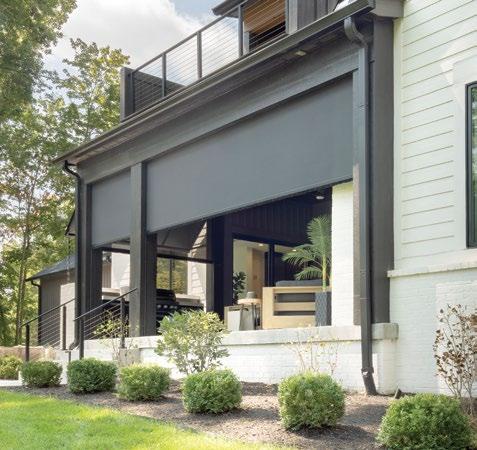
The Look: Clean and minimal, can disappear when not in use
What It’s Made Of: Weather-resistant fabrics paired with aluminum side channels and housing systems
The Backstory: Gained traction as homeowners looked for flexible ways to enclose patios, porches and large openings without permanent structures
Types Available: Vertical drop screens, motorized zip screens, retractable door screens and large opening solutions for patios and lanais
Where It Shines: Patios (new and existing), porches, garages, balconies and large sliding or folding door openings
The Eco Angle: Reduces solar heat gain, improves airflow and can lessen reliance on air conditioning
Why It’s Everywhere: On-demand comfort, insect protection and seamless integration make it an easy add-on with high perceived value
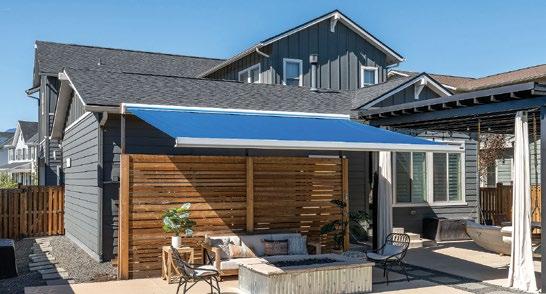
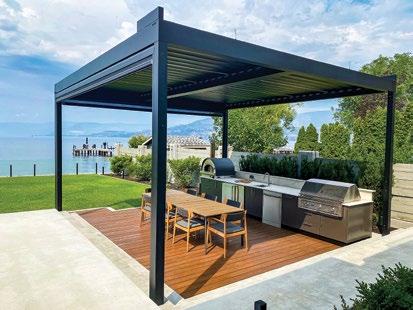
The Look: Architectural and tailored, adding dimension and character to the exterior
What It’s Made Of: Durable performance fabrics stretched over aluminum or steel frames, available in fixed or retractable styles
The Backstory: A long-standing exterior solution that has evolved with modern fabrics, motorization and sleeker hardware
Where It Shines: Windows, patios, decks and storefronts where shade and visual impact are equally important
The Eco Angle: Blocks direct sunlight before it reaches the glass, helping reduce indoor temperatures and energy use
Why It’s Everywhere: Immediate shade, and measurable energy savings keep awnings in steady rotation
The Look: Structured and statement-making, defining outdoor rooms with a strong architectural presence
What It’s Made Of: Aluminum, wood or composite structures with optional louvers, canopies or integrated screens
The Backstory: Rooted in classic garden design, now reimagined with motorized louvers, lighting and integrated technology
What Sets It Apart: Adjustable roof systems allow users to control sun, shade, and ventilation with precision
Where It Shines: Patios, poolside spaces, outdoor kitchens and full backyard living environments
The Eco Angle: Creates usable shaded areas that reduce heat buildup and support more efficient outdoor cooling strategies
Why It’s Everywhere: Transforms outdoor space into a true extension of the home, blending design, comfort and functionality

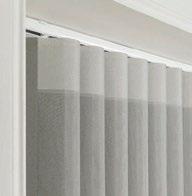
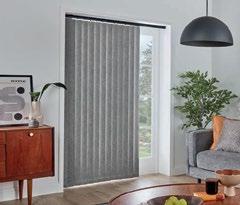
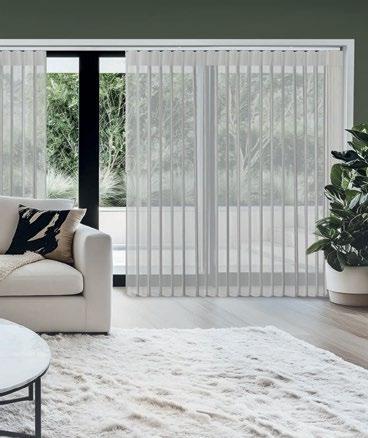
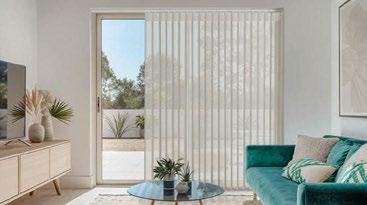













BY OLIVER SCHREIBER
When most homeowners start looking into exterior screen shades or retractable awnings, they think they’re shopping for shade. What they’re really trying to buy is time. Time outside, time with family, time actually using a space they already paid for but rarely enjoy. It is a subtle difference, but it completely changes how these projects should be approached. Because if you walk out onto the average deck or patio in the middle of the afternoon, the problem usually isn’t that there’s “too much sun.” The problem is that the space is uncomfortable. It’s too hot, too bright, or just not usable for more than a short stretch of the day.
So, people adapt. They go back inside. They avoid certain hours outdoors. They tell themselves they’ll use the space more in the spring or fall. And, slowly, what should be one of the best parts of the home turns into something that’s only used occasionally.
That’s where outdoor shade solutions come in. But not as a product—as a transformation.
A retractable awning doesn’t just block sunlight. It changes the entire environment of a space. Suddenly, that same deck that was unbearable at 2 p.m. becomes comfortable enough for lunch, reading or just relaxing without overheating. And at night, with built-in lighting, it becomes a place to relax on nice evenings.
Exterior screen shades do something slightly different, but just as powerful. They don’t just reduce glare—they create a sense of enclosure. They cut down on heat, filter harsh light and often even help with bugs or light wind. What was once an exposed patio starts to feel more like an outdoor room.
Many homeowners even use screenedin spaces in the winter, as great screen shades will also hold the heat in, and the cold out.
And that’s really the shift: you’re not adding shade, you’re creating usability.
One of the most common things homeowners say after installing an awning or exterior shades is, “We’re out here all the time now.” Not because the space changed dramatically in size or layout, but because it became comfortable enough to use consistently. And that’s the part people underestimate. Outdoor spaces don’t fail because they’re poorly designed. They fail because they’re unprotected.
A beautiful patio with no shade will sit empty on the hottest days. Even wellfurnished outdoor areas can go untouched simply because they’re not comfortable for more than an hour at a time. Once you solve that, everything else starts to fall into place. Meals move outside. Kids play out there instead of inside. What used to be a pass-through space becomes a destination.
From a sales perspective, this is where the conversation should live, not in fabric samples or hardware specs, but in how someone wants to use their space. Ask questions like, “What time of day do you wish you could be out here more?” or “If this space were comfortable all day, how would you use it?”
The answers matter far more than whether a fabric blocks 95% or 97% of light. Once someone starts picturing themselves actually using the space, the value becomes clear. It is no longer an accessory. It is an upgrade to how they live.
Unlike a full renovation or addition, exterior shades and awnings don’t require major construction. But the impact can feel just as significant. You’re effectively adding usable square footage without building anything new. And that is a compelling idea for homeowners, especially those who already have a deck or patio they feel like they’re not getting enough out of.
But not every solution is the same. Some spaces need overhead coverage, where retractable awnings make the most sense. Others benefit more from vertical protection, where exterior shades can block low-angle sun and create a more enclosed feel. Regardless of the product, the goal stays the same: make the space livable.
Because at the end of the day, no one is excited about owning an awning or a shade system for its own sake. They are excited about what it allows them to do. Sit outside longer. Use their space more often. Enjoy their home in a way they couldn’t before. And that is the real product.
You’re not just selling shade. You are giving people back a part of their home they didn’t realize they were missing. Do this, and you will find yourself with more exterior product appointments ending up in the Sold column! V

Oliver Schreiber began his sales career over 30 years ago and is CEO of Beltway Blinds in Washington, D.C., Maryland and Virginia. He leads a team that generated more than $11 million in sales last year. He has been a speaker at the International Window Coverings Expo, has received awards for being the largest-volume dealer with Alta Window Fashions and sits on the National Advisory Committee for a window covering group, Exciting Windows! » BeltwayBlinds.com
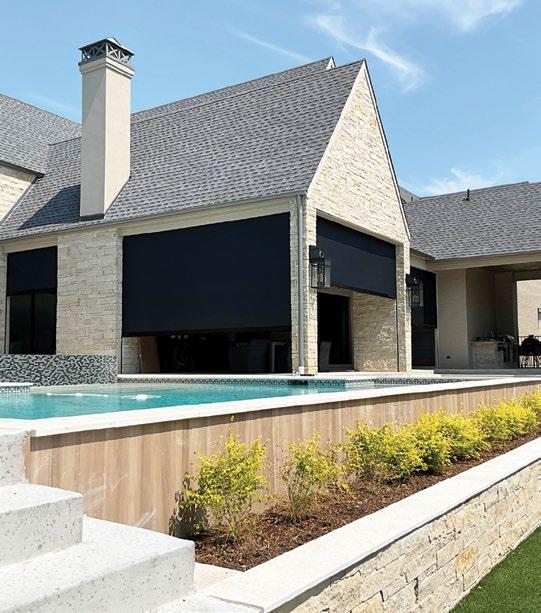
•