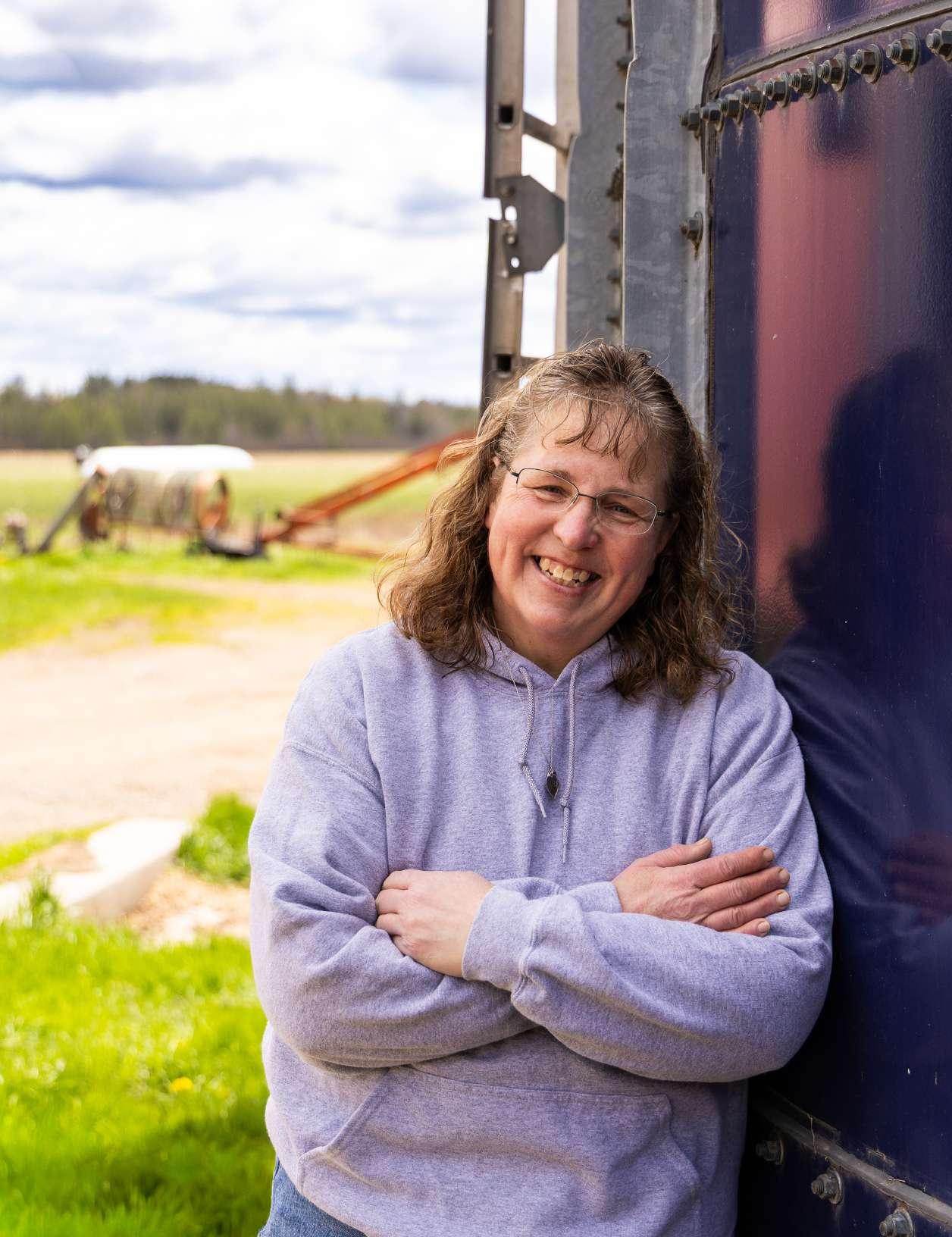

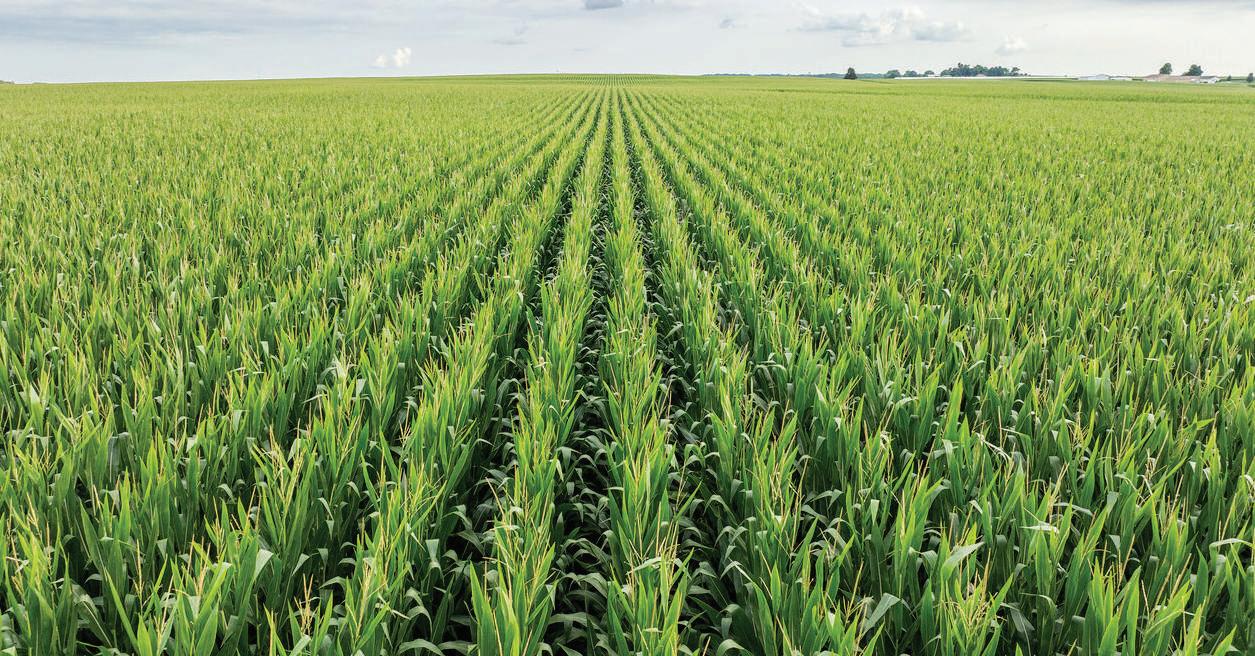

Endure Carbon helps you maximize your carbon assets, by giving you access to three carbon markets via a single data platform. Earn potential premiums for adopting approved sustainable practices and delivering grain to eligible facilities within designated counties.
Our goal? To empower growers with continuous improvement, tracking environmental and operational metrics that support the long-term adoption of regenerative agriculture. Choose from Land -Based Carbon Offset, Scope 3 Carbon Inset, Biofuels Inset, or Enhanced Rock Weathering markets—all backed by the seamless support of FS and our partner, Indigo Ag.

Talk to your FS Crop Specialist today.
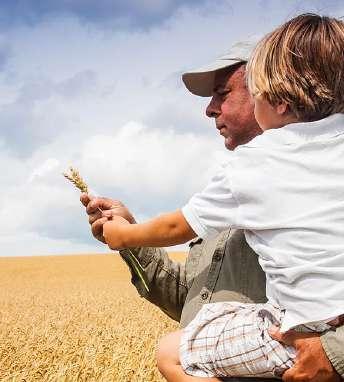

As the leading voice for Wisconsin agriculture, WFBF ensures that farmers’ concerns are heard and addressed, allowing you to focus on what you do best — feeding, clothing and fueling our communities.
Wisconsin Farm Bureau Federation champions policies that protect farmers’ rights, making sure that agriculture remains a thriving industry through proactive engagement at all levels of government.
Members gain access to leadership development, business resources and networking opportunities designed to help farmers expand their businesses and influence.
Through outreach and education, WFBF bridges the gap between farmers and consumers, promoting a deeper understanding of modern agriculture and its role in everyday life.
All your questions about member dues and the member database answered.
Meet three members making an impact on their farms and communities.
Learn how agents across Wisconsin invest in farmers and communities.
Learn how WFBF member benefits pay you back and explore your benefits with a word search.
See where Heidi Sipiorski's membership journey started and where it's taken her.
Discover how grants support local Farm Neighbors Care projects.
Hear from Olson, Duvall, Mickelson, Gentry and Sonnentag.
Celebrate county fair season, a celebration for everyone.
Delicious, crowd-favorite recipes featuring Wisconsin ingredients.
Participate in summer events and meet this year's essay winners.




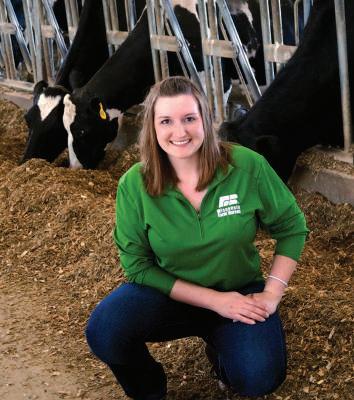
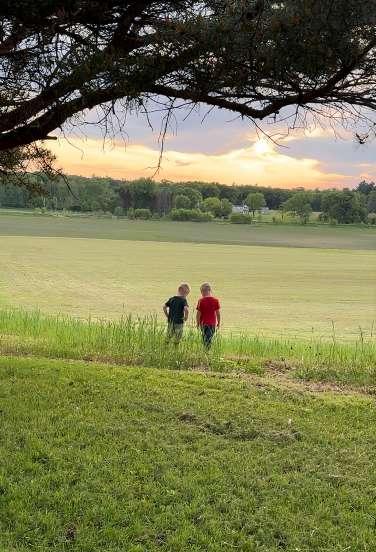
Growing up on our family’s dairy farm some of my favorite moments were the ones right before the sun went down. Part of our farm is perched on hill and from that spot you get the most perfect view of the sunset.
I had a flashback moment to that memory recently while we were at the farm with our kids around that time of day. As they stood at the edge of the hill I was sent right back to my own memory of staring at the deep pink and purple in the sky.
This issue of Rural Route is all about honoring traditions while embracing the future. In agriculture, traditions are a big deal. Sometimes change is
hard for us but embracing the future has never been more important in this fast paced and adapting world we live in.
Farm Bureau members are on the frontlines of both of those things. They carry on traditions such as county fairs, breakfast on the farm and other community events. But they also try new events, connect with consumers online and take time to help the next generation learn about where their food comes from. It’s a balancing act to make sure we don’t lose our traditions and values but stay relevant and adaptable to society.
If you haven’t heard yet, the United Nations declared 2026 as the International Year of the Woman Farmer. We are very excited to highlight some of our own women farmers in this issue of Rural Route and I think it fits in well with our overarching theme of honoring tradition while embracing the future.
According to the United Nations, women make up about 40% of the global agrifood workforce. When I think of the women in agriculture I know, they are all wearing many hats. Some are full time farmers, some are part time farmers, some are providing the support to their farmer through meals, childcare, landscaping, etc while having an off-farm job. The roles of women on the farm differ, but the impact doesn’t.
Enjoy the feature story on page 8 that shares the story of three impressive women but celebrates the work that ALL women do on the farm.
You’ll find lots of other good content from members throughout the pages. I sincerely hope you enjoy seeing and hearing about what your fellow Farm Bureau members are up to. As a reminder if you are looking for other good content you can always sign up for our enewsletters or track us down on social media. All the information you need can be found on wfbf.com.
As always, thanks for reading!
Amy Eckelberg
Rural Route Editor
Wisconsin Farm Bureau Federation
Address of Publication
Wisconsin Farm Bureau Federation PO Box 5550 1241 John Q. Hammons Dr. Madison, WI 53705-0550
Postmaster: Send address changes to Wisconsin Farm Bureau Federation PO Box 5550 Madison, WI 53705-0550
Contact Information
608.836.5575
800.261.FARM (3276) wfbf.com info@wfbf.com
WFBF Board of Directors
Brad Olson, Frederic (President) Joe Bragger, Independence (Vice President) Jim Renn, Hartland Arch Morton Jr., Janesville Robert Nigh, Viroqua Pete Badtke, Ripon Dan Meyer, Kiel Brian Preder, Weyauwega Kim Bremmer, Loyal Steve Mueller, New Richmond (Promotion and Engagement Committee Chair) Ashley Lisowe, Malone (Young Farmer and Agriculturist Committee Chair)
Wisconsin Farm Bureau Federation’s Rural Route (ISSN 1082-1368) (USPS 39940), the official publication of the Wisconsin Farm Bureau Federation, is published six times per year in February|March, April|May, June|July, August|September, October|November and December|January. Subscription of $5 is included in Farm Bureau dues. Periodical postage is paid at Madison, Wisconsin. All rights reserved. No portion of this magazine may be reproduced in whole or part without written consent.
For advertising rates and information: Wisconsin accounts contact Slack Attack at 608.222.7630 or barbara@slackattack.com. National accounts contact Casey McNeal at 800.798.2691 ext. 334 or casey@iafalls.com. For general inquiries, contact Amy Eckelberg at 608.828.5706 or aeckelberg@wfbf.com.

Q: Why pay dues to be a Farm Bureau member?
Farm Bureau is a membership organization that relies on dues as a primary source of revenue. By joining Farm Bureau, you become part of an organization that provides numerous member benefits (for more details, see page 17) while helping to support Wisconsin’s #1 industry. Members are classified at the county level as voting or associate, with voting members having the right to hold office and vote on the organization’s policy.
Q: I’m not a farmer, so why should I be a member of Farm Bureau?
Agriculture is a major driver of Wisconsin’s economy. We all have a vested interest in helping maintain a safe, affordable and abundant food supply. As a member of Farm Bureau, you support programs and policies that ensure that farmers can continue to feed and clothe us, while keeping Wisconsin’s economy strong.
Q: Can my spouse and I share a membership?
Yes! A Farm Bureau membership is a family membership. It applies to the member, member’s spouse and any children younger than 21. A family member 21 or older requires his or her own membership.

Q: I have an insurance policy with Rural Mutual. Why is Farm Bureau membership required?
In 1934, Wisconsin Farm Bureau members created the Rural Mutual Insurance Company to service the insurance needs of its members. Rural Mutual is an affiliate of Farm Bureau and access to insurance products sold through Rural Mutual is a benefit of membership. Therefore, a paid Farm Bureau membership is a prerequisite to purchase auto, homeowners, country estate, farm and crop/hail policies through Rural Mutual Insurance Company.
Q: How much are my annual membership dues?
Membership dues are established at the local level by your county Farm Bureau board of directors and vary from county to county. Annual dues range from $55 to $70, depending on which county you live in.
are my dues used?
When you join Farm Bureau, you not only become a member of your county Farm Bureau, but also Wisconsin Farm Bureau and American Farm Bureau. Your membership dues are allocated as follows:
Used to support state activities, conduct programs and provide staffing for those efforts throughout the state. Consumer and youth education, issue advocacy, leadership development and member publications are services that also are funded with state dues.
Forwarded to support Farm Bureau activities at a national level. These funds support agriculture’s voice in our nation’s capital as well as the many programs that AFBF has in place to educate consumers, share the message of agriculture and provide online resources to its members.
Members receive $2,000 in accidental death insurance for themselves and their spouse and $1,000 for unmarried children under 24 years of age residing in the same household; policy does not increase in value.
The remaining portion of your dues depending on the county is used to fund local events and activities. This may include county meetings, scholarships and other programs for youth, consumer education activities and member service programs in that county.
We are excited to share that we now have a member interactive database. This means that with your help, we can provide better service to you, our members.
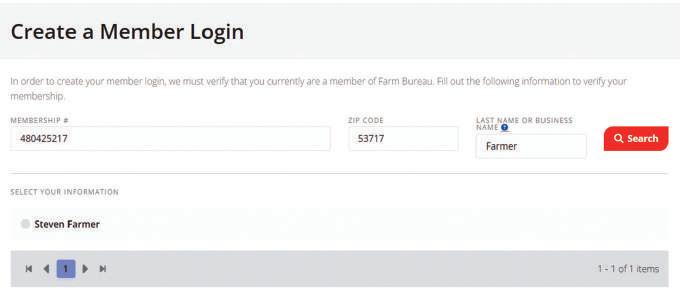
At the top of wfbf.com, you’ll see three buttons: Login, Join, Renew. To create your account and access your member information, you will want to click the login button.
Once you’ve clicked Login, follow these easy steps to creating your official account.
1) Under the login button, click “Create account”.
2) Click yes to “Are you a Farm Bureau Member”.
3) Verify your membership by entering your membership number, zip code and last name. (If you don’t know your membership number, you can find it by emailing info@wfbf.com.)
4) Select your name and click next.
5) Create a User name (use your email address).
6) Create a password and confirm it.
7) Click Register.

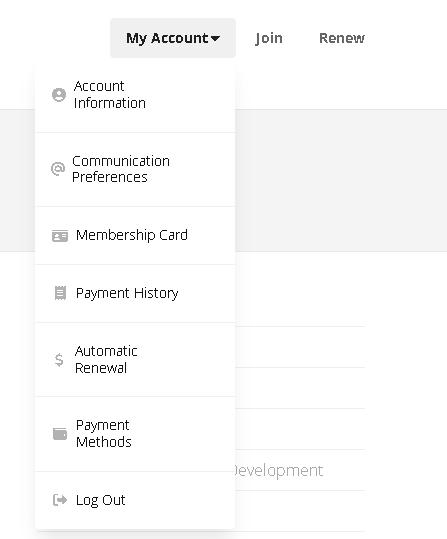
Once you are logged in you will have access to update your account information, verify communication preferences, access your membership card and sign up for automatic renewal. Select My Account to access the drop down menu and verify that all of your account information is correct.
Account Information: Update your mailing address, phone number and add your birthdate. After clicking into Account Information you will see a sidebar where you can change your password and enter additional information about your farm and business to help us communicate more effectively with you.
Communication Preferences: Verify your email address, phone number and which e-newsletters (Ag Newswire, Policy Pulse, Member Benefits, Stewards, etc.)
Membership Card: Print a copy of your Farm Bureau membership card
Automatic Renewal: Sign up for and manage your dues to be renewed automatically on an annual basis
Payment Method: Include a card to be used for automatic dues renewal
Please be patient and if you have questions, reach out to a staff member or contact info@wfbf.com.
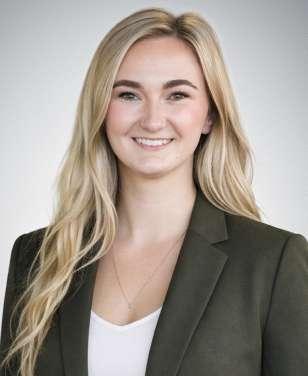
Wallace will be responsible for working with county Farm Bureaus to develop and implement programs to serve Farm Bureau members and to coordinate membership recruitment and retention efforts.
Wallace will serve Farm Bureau’s District 3, which includes the counties of Crawford, Grant, Iowa, Lafayette, Richland and Vernon. She began her duties on April 27.
“Emma’s agricultural background and Farm Bureau involvement make her well-suited to work with our county Farm Bureaus in southwest Wisconsin,” said WFBF’s Executive Director of Member Relations Bob Leege. “We look forward to what she will do as the District 3 Coordinator.”
Wallace grew up on her family’s dairy farm near Belmont in Lafayette County and continues to play an active role in daily operations alongside her dad, husband and daughter. She remains hands-on with employee management, herd record keeping and breeding program decisions.
She attended UW-Platteville where she received bachelor’s degrees in dairy science and agricultural business. During college, she was active in UWPlatteville Collegiate Farm Bureau, Pioneer Dairy Club and Ceres Women’s Agricultural Fraternity. Wallace was named Wisconsin’s Collegiate Farm Bureau Discussion Meet winner in 2022.
Wallace previously worked for Reddy Feed & Grain LLC as Marketing and Communications Coordinator.
Want to meet more WFBF staff? Learn more: wfbf.com/about/staff.
By Cassie Sonnentag
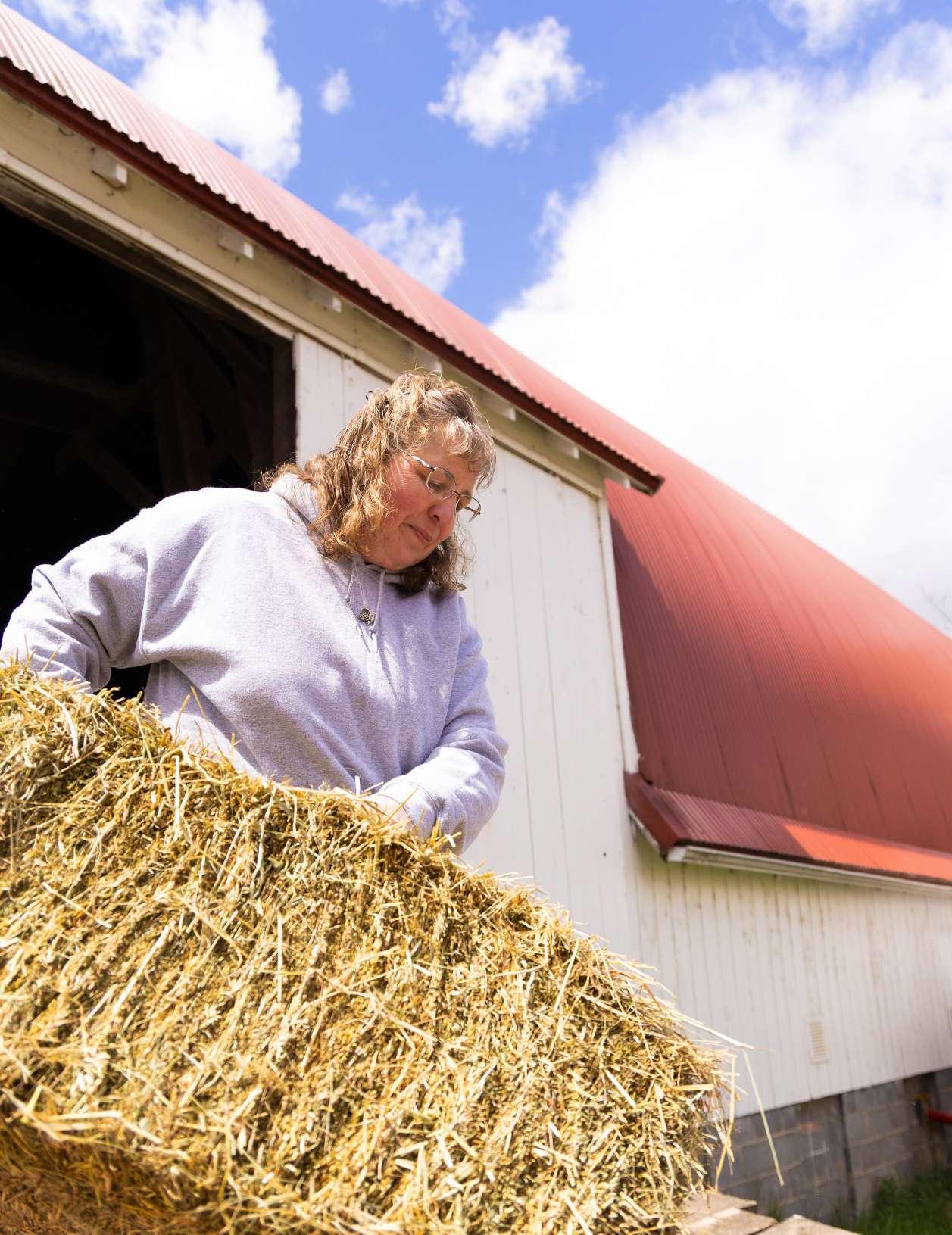
From driving equipment and caring for livestock, to managing sport schedules and delivering field meals, women carry their own heavy lift on the farm. Their roles are diverse and varied, ranging from full-time on the farm, supporting behind the scenes and balancing somewhere in between.
The United Nations is recognizing 2026 as the International Year of the Woman Farmer, aiming to spotlight the contributions of women in agriculture and agribusiness. Kristin Birschbach, Ashley Lisowe and Mary Sosnovske are three Wisconsin Farm Bureau members who each carry a unique story highlighting the impact woman in agriculture have on farms and communities across the United States.
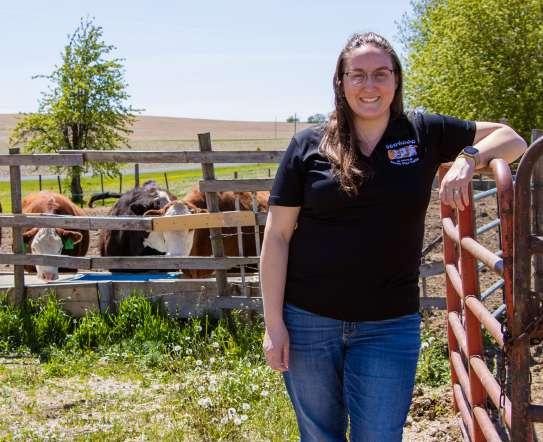
On her family farm near New Holstein, Kristin Birschbach enjoys evening walks at the edge of the woods with her children. With trilliums on the ground and apple trees stretching into bloom above, she reminds them of the special upbringing farming provides.
“Not everyone gets this,” she tells them. “Your friends don’t get to ride in the tractor after school or see their grandparents every day.”
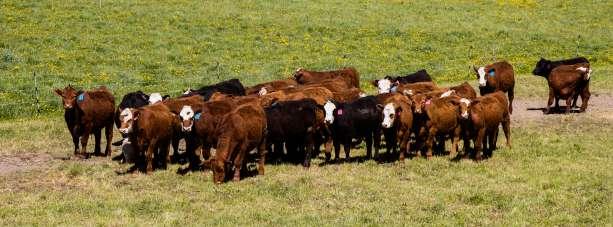
Kristin, her husband Joe, and their children, Henry (10) and Nora (8), own Seven Star Cattle, LLC, a cow-calf farm raising 75 animals total. With the mission of “building a better farm for the future, one regenerative step at a time”, they are honoring a tradition that has been in their families for a lifetime.
Kristin grew up on a dairy farm in southern Calumet County until the cows were sold in the early 2000s. At that time, the farm transitioned to cash crops and a custom heifer raising business.
“That’s where I learned to love agriculture and decided that’s what I wanted to go to school for,” Kristin said.
Her husband Joe grew up in northeast Fond du Lac County and lived a similar story, dairy farming until the late 90s before renting their land to the neighboring farm. The couple grew up in the same high school and started dating their senior year. They attended UW-Platteville, Kristin studying soil and crop science and agriculture business, Joe studying agriculture business and accounting.
“I wanted to be a part of agriculture but didn’t have intentions of having my own farm,” Kristin said.
But, as life would have it, fate intervened. The couple built their farm piece by piece, starting with a decision that felt both simple and bold at the time.
“As we were getting ready to graduate, Joe decided to buy three Hereford heifers,” Kristin said. “We kept them at my parents’ place.”
From there, growth came slow and with intention. They moved the cattle to Joe’s parent’s farm near Mt. Calvary in Fond du Lac County, picked up rented ground and stepped into opportunities as they came.
“As the rental contracts came up for the land my in-laws had been renting out, we slowly started renting the land from them,” she said.
Each decision was built on the one before it, turning a small start into a working farm. Today they rotationally graze their cattle, raise corn, soybeans, wheat, and alfalfa, and sell beef directly to customers. They also practice notill and grow cover crops.
Like many farm families today, Kristin and Joe have offfarm careers. Working off the farm does not pull them away from tradition but rather helps sustain it.
“My husband and I have both worked full-time off the farm the whole time we have been farming,” Kristin said. “Six years ago, I switched jobs to work with the Farm Service Agency for more structure. I appreciate the set hours with FSA and know when it is time to clock in being ‘mom’ when my work day is done.”
While her role on the farm has transitioned from being more hands-on to being more of a support role today, Kristin takes pride in being able to care for the farm and raise a family.
“There are so many different roles of women in agriculture,” she said. “I am honored to show my kids how to be caretakers of the land.”
For Kristin, raising kids in agriculture gives them a foundation. They are learning what it means to show up, help others and appreciate resources, but Kristin is careful to make sure those lessons doesn’t come with strings attached.
“My kids know they don’t have to come back to the farm; there are many ways to still be part of that community,” she said.
To her, tradition isn’t something you force but rather something you live out. It’s a mindset that shows up through Kristin’s Farm Bureau involvement. As a Calumet County Farm Bureau board member, Kristin helps lead efforts like the Farm Bureau food stand at the Calumet County Fair. The funds she helps raise support important initiatives like Classroom on the Farm, where hundreds of fourth graders get a hands-on look at agriculture.
“We work hard to raise money and it is rewarding to turn it into community support,” Kristin said.
Whether it’s a walk in the woods, late-night calving check or day spent at a community event, Kristin hopes the traditions her children carry forward is rooted in values, not pressure. Because in the end, the most important traditions passed down on a farm are caring, showing up for others and choosing to be part of something bigger than ones’ self.
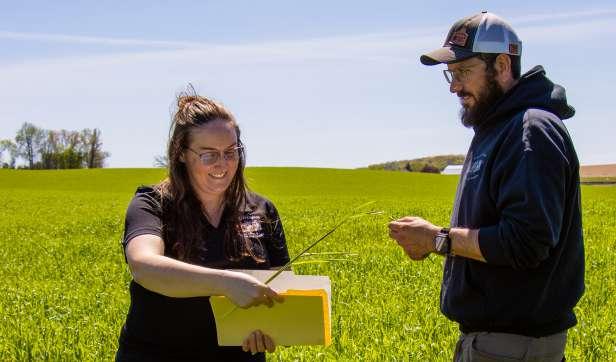
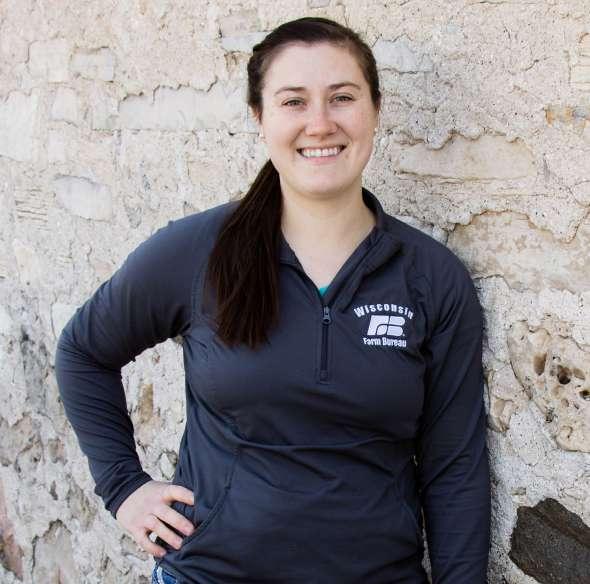
When Ashley Lisowe talks about her family’s farm, she describes a living system, filled with seasons, animals and three small faces watching her every move.
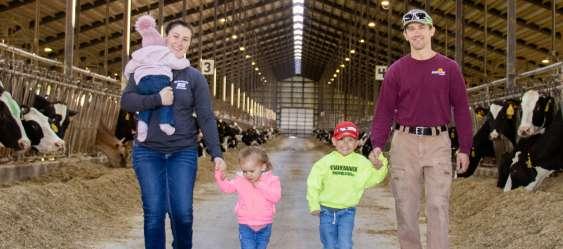
Ashley, her husband Luke, and their three children – Rhett, Aria and Chloe – milk 1,000 cows on their dairy farm near Malone alongside Luke’s family. Together, they raise their own youngstock, crops and do some additional custom work on the side.
Despite a full plate on the farm and raising three children under the age of 4, Ashley has found her own ways to make an impact on the farm, in her community and, most importantly, within her home.
Dairy farming has always been a part of who Ashley is. Having been raised on a 60-cow dairy farm near Plymouth, she grew up showing dairy cattle and being involved in dairy youth activities. She eventually attended UW-River Falls where she studied dairy science and minored in agricultural business.
During her senior year of college, Ashley attended the Wisconsin Farm Bureau Young Farmer and Agriculturist Conference and met her now husband, Luke.
“Farm Bureau holds a special place in our heart,” Ashley said. “Our family stems from our Farm Bureau involvement.”
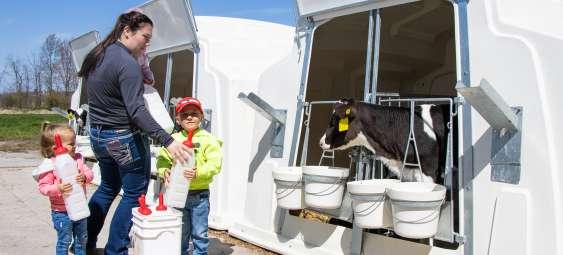
Like many farm women, Ashley’s role on the farm is dynamic. With three young children, Ashley splits her time between home and the farm, stepping in wherever she is needed. Being on the farm part-time, Ashley can be seen helping with calves, managing employees and assisting with breeding decisions.
“I can do a little bit of everything,” she said.
The most important work, however, takes place within the home. She now gets to experience the tradition of dairy farming through her children’s eyes, witnessing every day chores turn into special moments.
“I love bringing my kids along and seeing the joy on their faces,” Ashley said. “They help feed calves, and I get to show them the ways of farming, hard work and dedication.”
Ashley takes a lot of pride in showcasing what the future of agriculture looks like as a woman in agriculture.
“I want to show my two daughters that we can do it, too. Women on the farm have a lot of strength; maybe not always physically, but mentally,” Ashley said. “You have to be strong to be a mom, try to farm and juggle it all.”
While balancing farm work and a young family, Ashley found space to get involved with Farm Bureau. After being involved with Collegiate Farm Bureau at UW-River Falls, she knew to be involved after graduation. She joined Sheboygan County Farm Bureau before moving to Calumet County once she married Luke.
Eventually, the Lisowes were approached to join the WFBF Young Farmer and Agriculturist Committee. This past year, Ashley was elected to serve as the state chair and currently serves on the Wisconsin Farm Bureau Board of Directors. Ashley is grateful for the opportunities she has had since getting more involved.
“Through the committee, we have gained deep connections and formed lasting friendships,” Ashley said. “The experiences and connections through Farm Bureau are so special”
Ashley has seen the impact of sharing her voice through policy development and advocacy. She served as the YFA Committee representative on WFBF’s Policy Development Committee and has participated in various legislator engagements. This spring, Ashley and Luke represented WFBF as guests at the Great American Agriculture celebration at the White House.
“That never would have happened if we weren’t involved in Farm Bureau and advocating for agriculture,” Ashley said. “It really makes me think, ‘wow – my voice does matter.’”
Years from now, Ashley hopes her children will look back and understand what those calf chores, committee meetings and advocacy trips were really about.
“I hope our kids look back and see everything we have done as supporting the whole community and agriculture in general,” she said.
On a farm where tradition lives in daily care, Ashley is shaping a future that makes room for motherhood and leadership—raising kids who can honor what came before without being afraid to build what comes next.
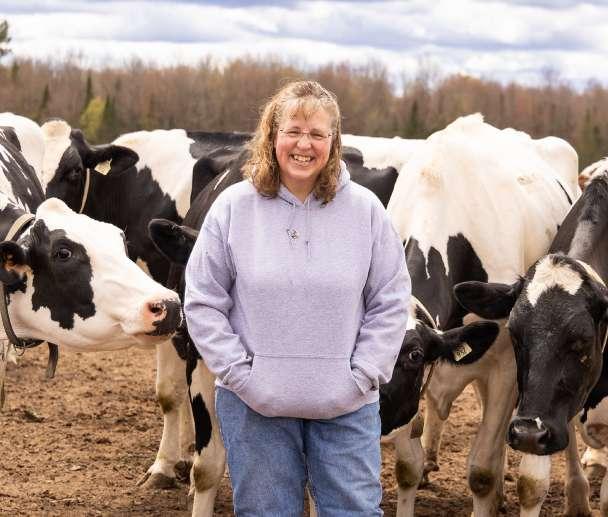
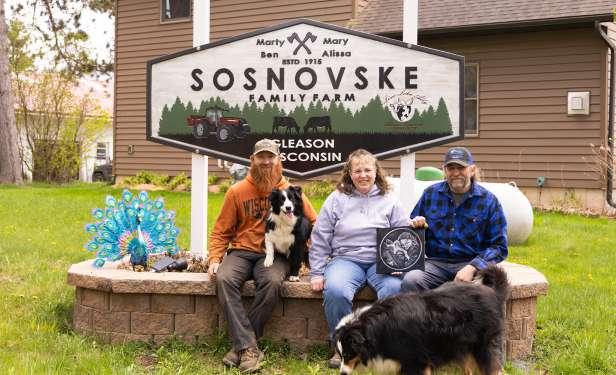
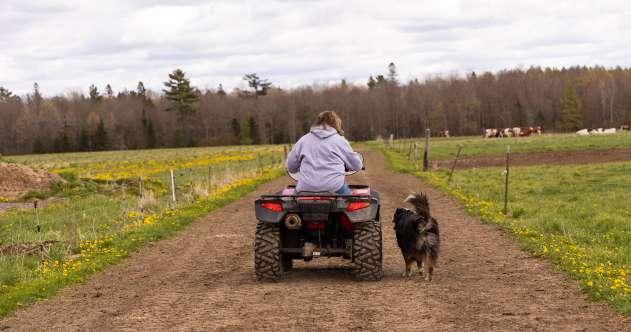
On her family’s dairy farm near Gleason, Mary Sosnovske doesn’t romanticize the work. She talks about it in the way that she lives it: steady, attentive and grounded in animal care.
“Working with the animals has always been my thing,” she said. “Even on the hard days, I’d rather be here with them.”
Mary grew up as the youngest of four children on a 60-cow dairy farm in Marathon County. Two of her siblings still farm and another still “holds a special place in her heart for dairy” according to Mary. That upbringing shaped her path.
“We decided farming was more in our blood than a nine-tofive,” Mary said. “I grew up with this; I can’t think of anything else I’d rather do.”
At UW-River Falls, Mary remembers classrooms split evenly between men and women. Over time, she has watched more women step into farming. Today, 58% of U.S. farms include at least one female decision-maker.
As a farmer, that stat gives Mary a sense of pride.
“That makes me proud,” Mary said. “Women aren’t afraid to step up and do things that weren’t expected years ago.”
The Sosnovskes – Mary, her husband Marty and their son Ben – are embracing the power of change while honoring the traditions that have kept the farm in the Sosnovske family for over a century. The third-generation family farm will break ground on a new robotic milking barn this summer. Currently milking nearly 70 Holsteins, the project meets today’s needs and prepares them for the future.
The barn will include two robots equipped to handle about 120 cows, and the layout keeps the family’s options open for future growth opportunities. It provides a modern answer to the farm pressures of labor and logistics while keeping the family farm viable for the next generation and doing right by the herd.
Like many farm families, they divide work based on strengths. Marty logs in addition to farming. Mary manages breeding and day-to-day animal care. Their son, Ben, now farms alongside them, handling much of the hands-on, fix-it work, making maple syrup and logs, as well.
Three years ago, Mary and Marty’s circle tightened when they tragically lost their daughter, Aly, in a car accident. In a life where chores don’t pause for grief, support matters even more. For Mary, she saw support through her Farm Bureau community.
Mary’s Farm Bureau connection started with her parents and grew when she returned to county involvement in 2012. She’s helped lead the June Dairy Month breakfast and has served on the county board for more than a decade. In addition to Farm Bureau, Mary has volunteered with Lincoln County 4-H for over 30 years.
Over time, she watched her kids, particularly Aly, tag along and find their own place in the organization. Aly became active in Farm Bureau and served as the District 8 representative on the WFBF Young Farmer and Agriculturist Committee.
“Aly wanted to work more with FFA chapters through Farm Bureau because it is a stepping stone,” Mary said. “When I got back being active on the county level, this is what we were working for: to encourage youth to be part of things and a part of the bigger picture.”
Today, the family carries Aly’s legacy forward through their farm, giving back to area youth and being involved in Farm Bureau.
“Farm Bureau is a special organization,” Mary said. “There was already some family in Farm Bureau – blood family, that is – and eventually, the rest became family.”
In the quiet rhythm of each day, Mary carries her daughter’s spirit forward—not only in memory, but in action. She invests her time where it can lift others, just as Aly did. She builds a future that holds space for both progress and purpose.
The County Farm Bureaus in District 8 honor Aly’s legacy annually through the Aly Sosnovske Sporting Clay Tournament. The fourth annual tournament will take place on Sunday, September 20 beginning at 12 p.m. at the Wausau Skeet & Trap Club. Full details and registration can be found at bit.ly/AlyShoot26. All proceeds from the event will be used to continue Aly's legacy in partnership with the Wisconsin Farm Bureau Foundation and the Young Farmers and Agriculturist Program.
ANTIGO
LANGLADE COUNTY FAIR
715-216-2356
www.langladecountyfair.net
JULY 24 - 27, 2025
BARABOO
SAUK COUNTY FAIR
608-356-8707
www.saukcountyfair.com
July 6 - 12, 2026
CEDARBURG
OZAUKEE COUNTY FAIR
262-375-6185
www.ozaukeecountyfair.com
JULY 29 - AUG 2, 2026
CHILTON
CALUMET COUNTY FAIR
920-655-7586
calumetcountyfair.com
Sept. 4-7, 2026
DARLINGTON
LAFAYETTE COUNTY FAIR
608-776-4828
www.lafayettecountyfair.org
JULY 8 - 12, 2026
ELROY
ELROY FAIR
608-633-2123
www.elroyfair.com
Elroy Fair-Wisconsin on Facebook
JUNE 24 - 28, 2026
FOND DU LAC
FOND DU LAC COUNTY FAIR
920-929-3168
www.fonddulaccountyfair.com
SNEAK PEAK JULY 14TH
July 15-19, 2026
GLENWOOD CITY
ST. CROIX COUNTY FAIR
715-565-3419
www.stcroixcofair.com
JULY 15-19, 2026
GREEN LAKE
GREEN LAKE COUNTY FAIR
920-294-4032
greenlake.extension.wisc.edu/fair
August 6-9, 2026
JEFFERSON
JEFFERSON COUNTY FAIR
920-674-7148
jcfairpark.com Facebook: Jefferson County Fair July 8-12, 2026
LADYSMITH
RUSK COUNTY FAIR
715-532-2225
ruskcountyfair.com
AUG 6-9, 2026
LODI
LODI AGRICULTURAL FAIR 608-695-7770
www.lodiagfair.com
JULY 9-12, 2026
LUXEMBURG
KEWAUNEE COUNTY FAIR 920-845-9798
kewauneecountyfair.com
JULY 9-12, 2026
PORTAGE
COLUMBIA COUNTY FAIR
608-697-5043
www.columbiacountyfairwi.org
JULY 29- August 2, 2026
PRAIRIE DU CHIEN
CRAWFORD COUNTY FAIR 608-412-4748
August 25 - August 28 www.crawfordcountywisconsinfair. com
RICE LAKE
BARRON COUNTY FAIR 715-736-3247
www.barroncountyfair.com
JULY 15 - 19, 2026
SEYMOUR
OUTAGAMIE COUNTY FAIR
920-833-2941
www.outagamiecountyfair.com
JUNE 24 - 28, 2025
SHAWANO
SHAWANO COUNTY FAIR 715-526-7069
www.shawanocountyfair.net
SEPTEMBER 2-7, 2026
STURGEON BAY (JOHN MILES COUNTY PARK) DOOR COUNTY FAIR 920-746-7126
August 12-16, 2026 www.doorcountyfair.com www.facebook.com/DoorCountyFair
UNION GROVE
RACINE COUNTY FAIR
262-878-3895
www.racinecountyfair.com
JULY 23-27, 2025
VIROQUA
VERNON COUNTY FAIR
608-637-3165
www.vernoncountyfair.com Sept. 16-20, 2026
WAUSAUKEE
MARINETTE COUNTY FAIR 715-856-5021
marinettecountyfair.com
Aug 27 - 30,2026

1 Available Maverick®, other Ford or
Available to from an authorized per household participation. an authorized details and 2 Available Advantage F-150, Super other

F-650 and to U.S. residents in the state and Texas. of five purchases subject to dealer private offers. for complete
Rural Mutual Insurance Company was founded by the Wisconsin Farm Bureau Federation in 1934 to protect Wisconsin farmers. Today, that same purpose drives their mission to Keep Wisconsin strong as they protect farms, families, businesses and communities across the state while providing meaningful careers for the people who serve them.
Rural Mutual created the Farm Dividend Program in 2017, becoming the first Wisconsin-based insurance company to offer farm policyholders a dividend. It has issued the annual dividend ever since, distributing $32 million to Wisconsin farmers over 10 years.
“As a company with deep roots in agriculture, we recognize the significance of the Farm Dividend Program to our policyholders and take great pride in sharing our financial success with farmers throughout the state,” said Dan Merk, Executive Vice President and CEO of Rural Mutual. “From the beginning, our goal was to create a program that expresses our appreciation and honors farmers as the backbone of Wisconsin.”
From agricultural leadership development to hands-on youth programs and sportsmanship recognition, Rural Mutual invests in the next generation of leaders across Wisconsin.
The company proudly supports agricultural leaders of all ages through its partnerships with Wisconsin Farm Bureau, 4-H and FFA. Through these efforts, the company invests in programs that promote leadership, community service, hands-on learning agricultural education, safety and professional development—strengthening the future of Wisconsin agriculture.
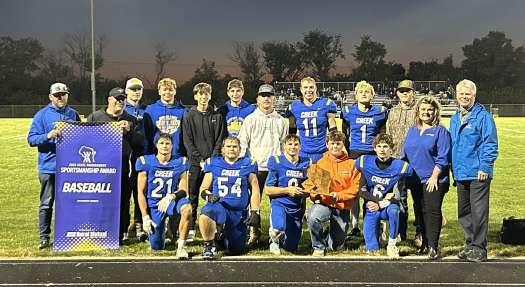
Additionally, Rural Mutual has proudly supported Wisconsin high school student-athletes for decades through its partnership with the Wisconsin Interscholastic Athletic Association. As the exclusive sponsor of the WIAA Sportsmanship Award, the company is present across 28 boys’ and girls’ state tournaments and the biennial Leadership Summit, promoting character, leadership, and integrity while strengthening communities from the classroom to the playing field.
By investing in the communities they serve and the people who work there, Rural Mutual continues to build stronger connections inside and outside the organization.
Each fall, the company holds a multi-week campaign where employees can pledge pre-tax dollars to United Way programs, which Rural Mutual then matches. The company set a new record in 2025 by raising over $73,000 for Wisconsin communities!
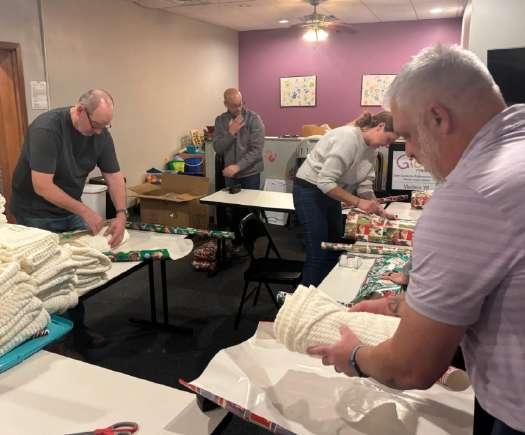
Twice a year, company leaders gather for a workshop at the Madison home office in the morning, and team up to volunteer at local nonprofits in the afternoon. This hands-on service experience not only gives leaders the chance to support our communities—it also strengthens relationships across teams.
Leadership Development Day is designed to help leaders pause, connect and invest in their professional and personal growth despite the demands of a busy workload.
Fulfilled and well-rounded employees make for a healthy workplace environment.
Earlier this year, Rural Mutual was named a Best Place to Work by Madison Magazine, for the 10th time, marking a significant milestone that reflects the company’s longstanding commitment to workplace culture and employee engagement.
The annual recognition is based entirely on employee feedback.
“This recognition is especially meaningful because it comes directly from our employees,” said Merk. “Being named a Best Place to Work for the 10th time is a testament to the people who show up every day, support one another and help create a workplace where individuals can be their very best.”
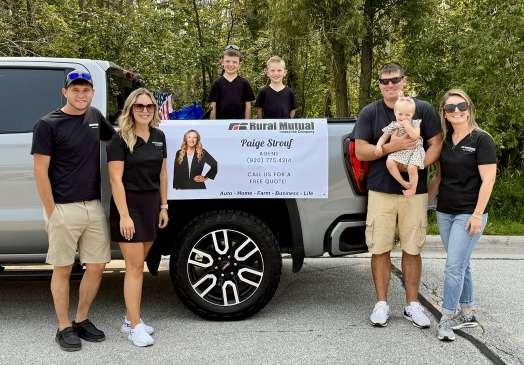
At the heart of Rural Mutual’s success are its more than 150 local insurance agents. These trusted professionals live and work in the Wisconsin communities they serve, providing personalized guidance and building lasting relationships with customers.
Their local knowledge, responsiveness, and commitment to service ensure that every policyholder receives coverage tailored to their unique needs, reinforcing Rural Mutual’s promise to Keep Wisconsin Strong.
A sustained commitment to Wisconsin, combined with sound business practices, has resulted in continued success for Rural Mutual.
In March 2026, Rural Mutual earned a financial strength rating of A+ for the ninth straight year by AM Best—a premier credit rating agency specializing in the insurance industry.
The A+ rating is a reflection of the company’s strong operating performance, diversified business profile and sound approach to risk management.
For 17 consecutive years, Rural Mutual has earned a spot on the exclusive Ward’s 50 list of top-performing property-casualty insurance companies in the nation. Ward’s is an established industry benchmarking group that measures financial health and operational performance.
Each year, the Ward’s research team analyzes the financial performance of nearly 2,900 property-casualty insurance companies in the United States and identifies the top 50 performers.
When asked about the company’s sustained success, Merk’s response was predictably rooted in humility— a staple of Rural Mutual’s identity:
“Our focus is simple: take care of our policyholders, support our people and give back to the communities we serve. That’s how we Keep Wisconsin Strong.”
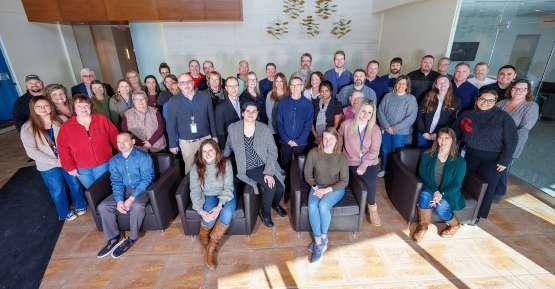


Recognized at Annual Awards Ceremony this spring. Congratulations to all agents on another exceptional year!
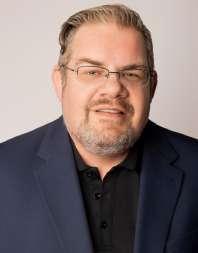
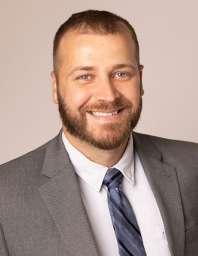
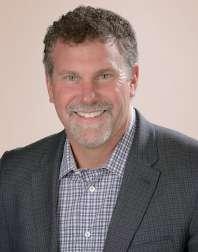
















*WFBF member benefits may be changed or discontinued at any time without notice.* Learn more about your Farm Bureau member benefit savings by scanning the QR code or visiting wfbf.com/membership/member-benefits.


Find and circle the given words


Wes Raddatz, Brown County Farm Bureau President
Farm Bureau membership is more than just being part of an organization; it’s about the real value you can see in your everyday life. From vehicle rebates to financial perks and travel savings, members across Wisconsin are putting these benefits to work. Brown County Farm Bureau member Wes Raddatz shares how he’s made the most of his membership over the years and how it continues to pay off.
Ten years ago, I used the Farm Bureau vehicle $500 rebate to purchase my current Chevy Colorado truck. Now, I just used my Farm Bureau vehicle $500 rebate to purchase my new Ford Maverick hybrid truck. I registered and printed my rebate certificate online, but it turned out I really didn't need to. When I presented it to the salesperson, they said my rebate eligibility was already in their dealer computer system just by registering it with Ford, and they could just add it right onto my bid to give me their absolute best price deal. How easy was that!?
Coincidentally, the day after I signed the order for my new truck, I got a letter in the mail from Farm Bureau Bank confirming that I would not be getting a membership renewal statement again this year because I'd charged $12,000 of purchases on my Farm Bureau Bank Mastercard over the past year, so Farm Bureau Bank would again be paying my WFBF membership dues. I'm a "charter member" of Farm Bureau Bank (according to what it says on my credit card), and I haven't had to write a check for my Farm Bureau dues since Farm Bureau Bank instituted the membership payment incentive sometime back around 2005, I think. So, I haven't paid my Farm Bureau dues for 20 years. And best of all, I still get the card's cash-back rewards on top of the Farm Bureau membership dues payments!
Additionally, a few weeks ago, I reserved a hotel room for my upcoming road trip to visit my kids and grandkids in North Carolina. I found I had enough Wyndham Rewards points from the stays I booked for last year's vacation to get this trip's one-night stay for free. And I'd gotten all those reservations last year for a 20% discount using my Farm Bureau benefit Wyndham Hotels discount!

Farm Bureau membership doesn't cost; it pays! And it pays so well, I almost feel guilty about taking such advantage of Farm Bureau member benefits.
For more information on all Wisconsin Farm Bureau member benefits, visit wfbf.com/membership/ member-benefits.


1. Log in to your member portal at WFBF.com
2. Scroll to the Noah’s Ark member benefit
3. Follow the instructions provided to purchase tickets online
Note: To receive the discounted pricing tickets MUST be purchased online using the provided link and promotion code. Discounted tickets are NOT available using the general Noah’s Ark webpage and CANNOT be purchased at the gate.
Find and circle the given words

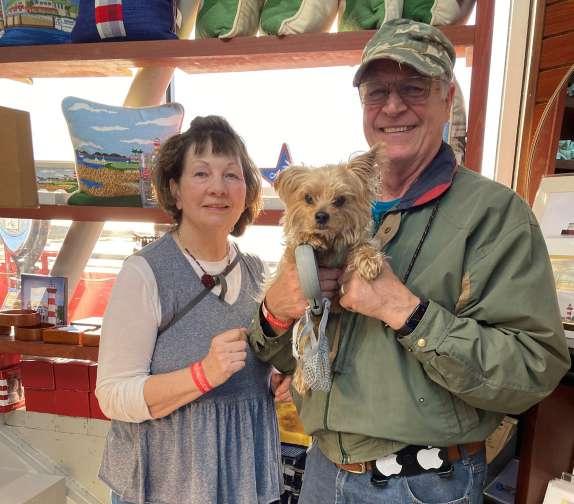
Heidi Sipiorski's membership journey started with her family as Farm Bureau members. Learn more about her journey.
Family > Collegiate FB > Internship > YFA > Leadership
You grew up in a Farm Bureau family. What are some of your earliest memories of Farm Bureau, and how did those experiences shape your interest in getting involved?
My parents have been Farm Bureau members for as long as I can remember. Some of my earliest memories involve Farm Bureau: Hearing about their adventures at the Washington D.C. Fly-In as YFA members, hosting our county annual meeting at our home and tagging along to Wisconsin Dells for the WFBF Annual Meeting. On my 18th birthday, my parents surprised me by paying for my very own Farm Bureau membership.
How did your time in Collegiate Farm Bureau shape your path and prepare you for future leadership roles?
I served as the reporter and helped with the media committee for Ag Day on Campus, where I gained many skills in communication and event planning. One of my favorite experiences was helping plan the Collegiate Farm Bureau Barn Dance. It was such a fun event and seeing how well it brought students together inspired me to take the idea back home to District 4. I’m so grateful for my time in Collegiate Farm Bureau and the way it helped me grow more confident as a leader, develop new skills and step outside my comfort zone.
Looking back, which Farm Bureau experience or opportunity had the biggest influence on your career path, and how?
My internship played the biggest role in my career path. The public relations team was great to work with and really helped guide me as I grew as a marketing communications professional. By the end of the internship, I had built a strong portfolio and developed a great network in Farm Bureau.
What motivated you to step into roles like serving on your county board and getting involved with the Young Farmer and Agriculturist program, and what have those experiences taught you?
I felt motivated to get more involved in the YFA program because of the people. Some of my close friends and neighbors are active as well, and I enjoy spending time with them while also meeting new members. Those experiences have shown me the value of showing up, getting involved and making those memories. It’s easy to talk yourself out of going to events, but those are often the places where you meet some of the best people!
For someone who may have grown up around Farm Bureau but hasn’t taken that next step, what would you say to encourage them to get involved and make it their own?
I’ve always believed that everyone needs to surround themselves with a strong community. Growing up on a farm, I’ve seen the hardships and struggles that come with agricultural life, but knowing there’s a Farm Bureau community behind you makes a real difference. The events are a great benefit, but the real value is the people and the support system you gain. With a community like that surrounding you, it’s something you can’t put a price on.
TAKE THE QUIZ!
Circle the answer that sounds most like you. Keep track of your letters. At the end, count how many As, Bs, Cs, Ds, Es and Fs you selected.
1 2 3 4 5
When you see a challenge facing agriculture, your first thought is:
A. How can we change policy to address this?
B. How can I share this with elected officials?
C. How can I connect with other young agricultural leaders?
D. How can I help consumers better understand agriculture?
E. How can I grow as a leader to tackle this issue?
F. How can I help strengthen my local Farm Bureau?
Your ideal event would be:
A. A policy discussion where members debate solutions.
B. A visit to the State Capitol.
C. A networking event with other young farmers and agriculturists.
D. A community event where you interact with consumers.
E. A leadership retreat.
F. A county Farm Bureau meeting or local project.
Which statement best describes you:
A. I enjoy solving problems and building consensus.
B. I'm comfortable speaking up for agriculture.
C. I enjoy meeting people in similar stages of life and career.
D. I love educating and engaging others.
E. I'm always looking to improve my leadership skills.
F. I like bringing people together in my community.
A. Participating in a discussion about agricultural issues.
B. Meeting decision-makers and sharing your perspective.
C. Attending a social or professional development event.
D. Hosting an educational activity for the public.
E. Learning from experienced leaders.
F. Volunteering at a local Farm Bureau event.
A. Influencing the future of agriculture.
B. Ensuring lawmakers hear farmers' voices.
C. Building relationships with peers.
D. Strengthening public trust in agriculture.
E. Personal and professional growth.
F. Making a difference close to home.
MOSTLY As: POLICY DEVELOPMENT
You enjoy discussing issues, finding solutions and shaping Farm Bureau policy from the grassroots up. Consider joining policy development committees, issue discussions or annual meeting policy sessions.
MOSTLY Bs: ADVOCACY
You are ready to be agriculture's voice. Legislative events, Capitol visits and advocacy opportunities allow you to connect directly with decision-makers.
MOSTLY Cs: YOUNG FARMER & AGRICULTURIST PROGRAM
Designed for members ages 18-35, this program offers networking, leadership development, competitions and opportunities to connect with fellow young agricultural professionals.
MOSTLY Ds: CONSUMER ENGAGEMENT
You thrive on building understanding and trust. Help tell agriculture's story through outreach events, educational programs and community engagement.
MOSTLY Es: LEADERSHIP INSTITUTE
You want to strengthen your leadership skills and expand your impact. The Leadership Institute provides immersive leadership development and networking opportunities.
MOSTLY Fs: LOCAL LEADERSHIP & COUNTY ENGAGEMENT
You believe change starts close to home. County Farm Bureau activities, committees and local leadership roles are a great fit.
Whenpeople think about mental health, they often picture someone in crisis, perhaps facing a diagnosis or a visible struggle. That narrow perception, however, can obscure the broader reality of what mental health truly encompasses.
At a recent Waukesha County Farm Bureau Farm Chat, that broader perspective came into focus. Members gathered at a local pizzeria, not for a formal program, but simply to connect, sharing a meal, conversation and a moment to check in with one another. What began as a casual discussion about applying for a Farm Neighbors Care grant revealed something deeper.
Initially, organizers expressed uncertainty, noting they didn’t know anyone experiencing mental health challenges. But with a bit more reflection, stories surfaced. A neighbor who had stepped away from farming, a member navigating a difficult season and the quiet, everyday struggles that often go unseen.
The initiative isn’t just about responding to crisis, it’s about connection. It’s about reaching out, checking in and making space for conversations that might not otherwise happen. In agriculture, the spirit of showing up for one another is nothing new. Time and time again, communities rally when hardship strikes.
But what if support didn’t begin only after something went wrong?
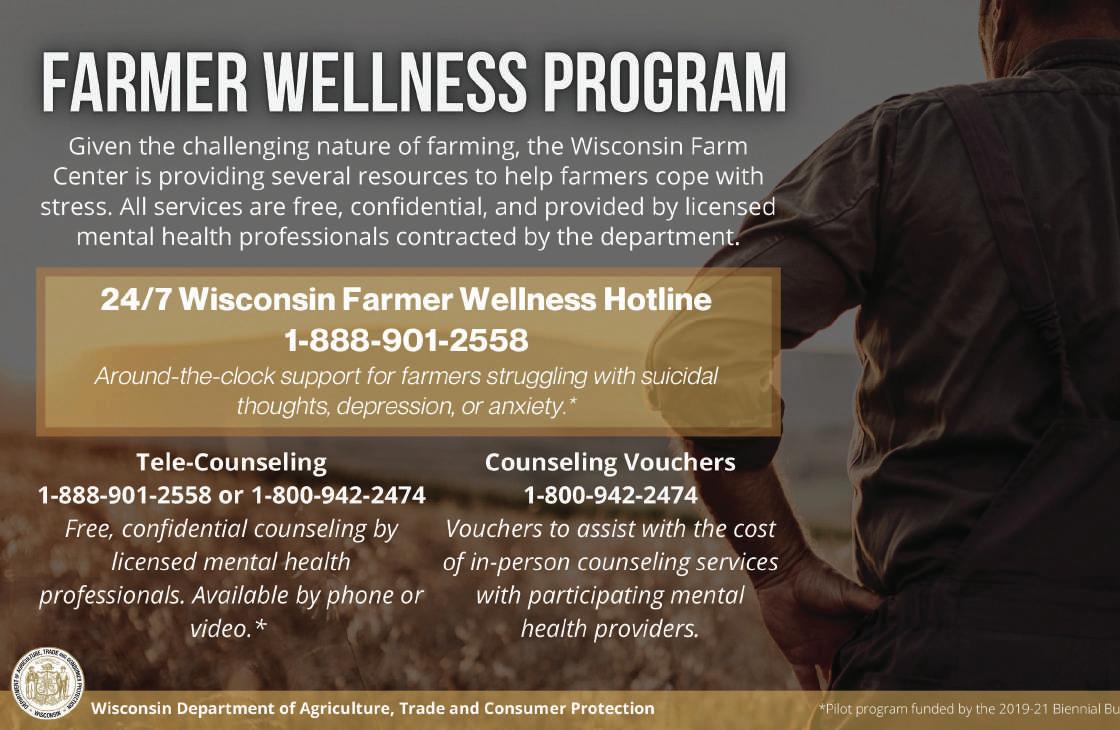
Across the state, county Farm Bureaus are answering that question with action. From hosting community events to assembling farmer care packages and even wrapping a sheriff’s vehicle with mental health resources, these efforts are creating intentional opportunities for connection before a crisis occurs.
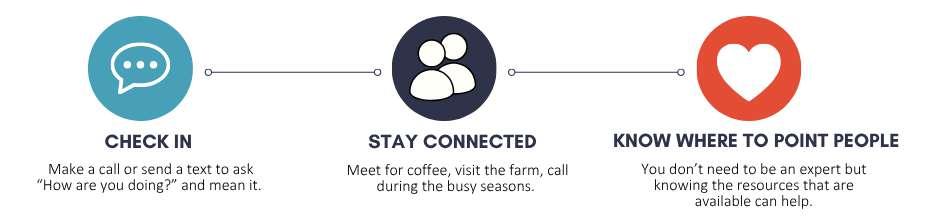
For those wondering where to start, the answer is simple. Make a call, send a text, invite someone over for coffee or a meal. Most importantly, take the time to listen
Here are just a few of the ways Farm Bureau is making a difference in local communities:
NOTE: Farm Neighbors Care grants are made possible with support from McCade’s Joyride and the Wisconsin Farm Bureau Foundation.
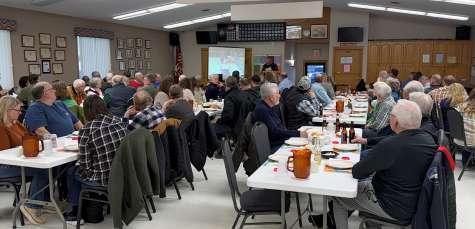
Barron County Farm Bureau hosted its Farm/City Banquet on March 16, bringing together farmers, agriculture professionals and community members for an evening focused on connection, education and celebration. The event featured speakers Jeff “Ditz” Ditzenberger and Brittany Olson, who shared impactful insights and practical strategies to support mental health in rural communities.
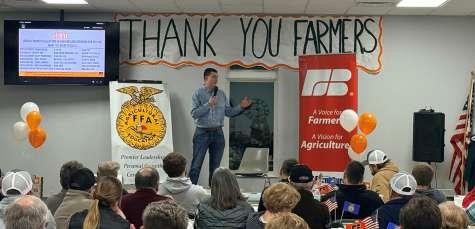
Buffalo County Farm Bureau hosted the Farmers Salute Program for about 125 attendees for an evening focused on appreciation and connection. Dinner was followed by speakers that included Andy Cageon, John DeBoar and YFA Chair Collin Weltzien. The event provided farmers with a meaningful opportunity for fellowship and a mental health break.
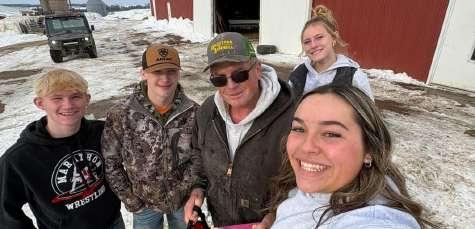
The “Thank a Farmer” event positively impacted both students and the local agricultural community, reaching approximately 20 farmers and farm families. It fostered meaningful connections and showed farmers they are valued, while helping students see the impact of simple acts of gratitude.
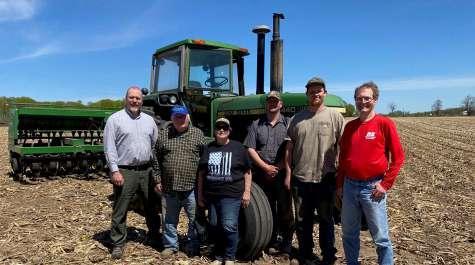
Shawano County Farm Bureau assembled and delivered care packages to local farmers as part of their project. Care packages in cooler bags included water, snacks, Emergen-C and work gloves which were delivered throughout May to honor May Mental Health Month. Randy Romanski, Secretary of the Wisconsin Department of Agriculture, Trade and Consumer Protection (DATCP), assisted in delivering some of the packages and met with farmers to discuss issues impacting them.
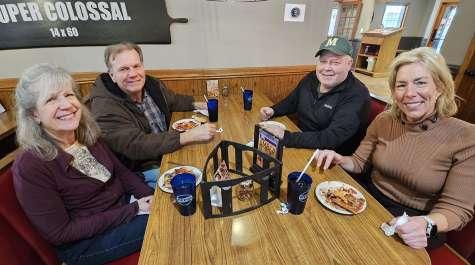
Waukesha County Farm Bureau hosted their first Farm Chat. The event was held in March at Marty's Pizza in Delafield. There was no agenda to the gathering but just an opportunity for people to come together and enjoy pizza and conversation. With the success of this event, the county plans to continue hosting Farm Chat in March and in the park in July.

A quick wellness check for you and your family. Life in agriculture comes with challenges, stress and uncertainty. Taking a moment to check in with yourself can make all the difference.
I’ve been sleeping much more or less than usual.
Little problems seem bigger than they normally would.
I’ve been feeling overwhelmed, anxious or constantly worried.
I’ve lost interest in activities I usually enjoy.
I’ve been withdrawing from family, friends and neighbors.
I feel exhausted, even when I get enough rest.
I’ve found it difficult to concentrate or make decisions.
I don’t feel like myself lately.
If you checked several of these...
Stress can affect anyone. You are not alone and support is available before challenges become a crisis. Talking with a trusted friend, family member, neighbor or professional can be an important first step.


Traditionholds a special place in agriculture. We take a lot of pride in speaking about the generations before us and the challenges we have overcome to get to today.
Regardless of our lives, jobs or circumstances, we reflect on our past nearly every day. Looking to the past is important for reviewing our successes and challenges so we can use those as guidelines for the future.
At Wisconsin Farm Bureau, we have a strong heritage and more than 100 years of history. In that time, we have not just supported agriculture but also rural communities around the state. Our members are integrated into their communities by sitting on town, county, school and church boards and you’ll find them helping out with 4-H, FFA
and events all across the state. You’ll also see them at community events like breakfast on the farm and county fairs. They make sure that agriculture is represented and they always show up to help.
I think what has kept Farm Bureau successful through the years is its ability to serve the changing needs of farmers. Our grassroots policy process ensures our initiatives stay relevant to what members' needs currently are. We also give our members ample opportunities to get involved and speak up. Events like Ag Day at the Capitol allow our members to voice their concerns directly to those who make decisions.
We’ve also done an excellent job of asking our members to direct our future. Right now, we are in the second year of a strategic plan that was created by our members. It is providing us with direction and giving us a path forward. It allows us to continue serving as a united voice for agriculture by shaping policy, developing members and engaging consumers.
That’s the important thing about referencing the past. It’s nice to reminisce, but we have adapted and changed for a reason, and the focus should be on the future.
Would you like to go back to the black and white T.V. days with only four stations to choose from? Or what about being stuck with a rotary dial phone? Or not being able to have the option to use GPS?
Today, almost none of these things exist in our everyday lives because we have moved on from them as new technology has changed these everyday needs.
I think it’s true that the future belongs to those who show up. While we do not know what it holds, we do know that our decisions today are the framework for what is to come.
At WFBF we will continue to work diligently to make sure Wisconsin agriculture stays strong and vibrant. Our members will continue to be involved in their communities to make them stronger, because like many others, farmers rely on resilient local communities.
As Farm Bureau members let's seize the future and make sure it's the version that's right for agriculture.
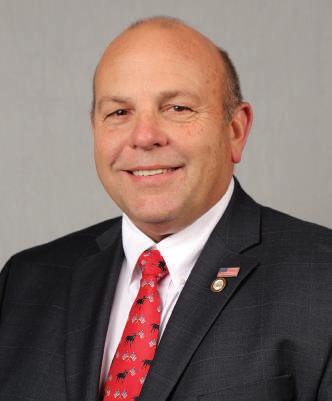
Olson was first elected President of Wisconsin Farm Bureau in 2023. He is a crop farmer near Frederic in Polk County.
A Message from AFBF's Zippy Duvall
Farmers know better than anyone that agriculture never stands still. Every growing season brings new challenges, whether it’s weather, pests, disease, or rising costs. That’s why innovation and farming go hand in hand. Farmers are constantly looking for better ways to care for our crops, protect our animals, and keep our farms sustainable for the next generation.
Take for example last month’s approval of a new gene-edited citrus rootstock designed to help fight citrus greening disease. This new tool is an important step forward for agriculture. For farmers, it’s another example of how innovation can help us tackle problems that once felt impossible to overcome.
For generations, farmers have worked to improve crops and livestock through careful breeding and selection. Gene editing allows scientists to build on that work by making those same kinds of changes that otherwise would take decades through traditional breeding.
"Agriculture has always evolved, and farmers have always adapted."
I think one reason this conversation matters so much is because farmers are being asked to do more with less. We’re facing tighter margins and navigating the pressure from weather and disease. Gene editing offers another tool to help farmers meet those challenges.
Gene editing can help farmers grow crops that are better equipped to withstand drought, insects and disease. It can also help improve livestock health by reducing the threat of devastating illnesses without the need for antibiotics.
A good example of that came last year, when the Food and Drug Administration approved the use of gene editing to help pigs resist PRRS, a costly disease with no cure that has caused major losses for pork farmers for decades.
These kinds of advancements can help farmers grow healthier, more sustainable food. At a time when families have a greater interest in healthy food and how it’s produced, farmers need access to tools that help us continue improving the way we grow food.
The citrus rootstock approval by the Environmental Protection Agency last month is a good example of how gene editing can help agriculture solve real-world problems. Citrus greening has devastated America’s citrus industry for years. Production has dropped dramatically, and many growers have struggled to keep orchards alive. The newly approved rootstock gives farmers another option to help protect trees from the disease while potentially reducing reliance on conventional pesticide applications.
That’s important because crop disease has an impact beyond the farm. Crop losses affect the food supply, food prices, and rural communities that depend on agriculture.
For farmers, innovation isn’t about replacing tradition. It’s about protecting our ability to keep farming. Agriculture has always evolved, and farmers have always adapted. Gene editing is simply another example of how innovation can help us meet the challenges ahead while keeping America’s farms strong.
President of the American Farm Bureau Federation, Duvall raises beef cattle, hay and poultry in Greshamville, Georgia.
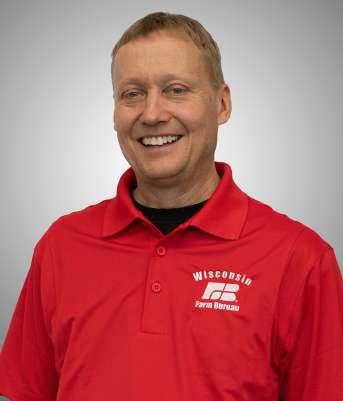
The saying goes that all politics are local. This past winter, I decided to explore this myself. While it had crossed my mind to run for the Columbia County Board, I had never thought about it seriously.
County Boards are elected in the spring of even-numbered years. Like the Wisconsin State Assembly, they have two-year terms. These are non-partisan positions, which means candidates do not declare a party association. Being a farmer, the Columbia County Farm Bureau president and involved in several agricultural organizations, I felt I could appeal to farmers in my rural, farming district. Through serving on the town plan commission, local church leadership and community experience, I felt I could appeal to non-farm, rural residents as well. I specifically chose to run a centrist campaign in an extremist world. As I visited with residents, I discovered
that most people consider themselves moderates. While they may lean one way or the other, most are pretty much in the middle and want the same things. I found this encouraging. The discouraging thing was how many people didn’t know there was an election coming up.
Running against an incumbent forced me to get out and meet people. I wanted to hear residents’ opinions and spent a lot of time listening. At our county fair, I met a candidate running for governor. Afterwards, I talked with a woman who had also met the candidate. She was frustrated because, “All they did was ask what I thought. They didn’t say what their positions were.” I believe candidates should listen to their constituents.
At the same county fair, I worked at the Farm Bureau food stand with a certain politician, side by side, for four hours. Not once did the person ask my opinion about anything. Instead, the person told me how they felt about every possible issue. Honestly, this approach did not earn my vote.
Unfortunately, my experience so far proves that most people know very little about county government. As I met constituents before the spring election, some issues brought up were high property taxes and poor roads. The major concerns are large-scale datacenters.
My campaign began back on December 1 with collecting necessary signatures to get on the ballot. I easily achieved the required amount from friends and neighbors. Once I had enough, I continued to collect signatures to give people a feeling of participation. A friend shared with me how proud her 90-year-old parents
were to sign my candidate papers. If you think you want to run, be sure to educate yourself on campaign finance and basic election marketing. Find people to help you. There are many things you need to know and it can feel overwhelming if you don’t start early enough.
Being involved in local government is a balancing act between how things are or were, and what they can and will be. Nobody, especially me, has all the answers to where our county should go. I am one of 28 people serving on our county board. Each of us has unique experiences, skills and knowledge. We want to do our best for our fellow citizens and I am honored to have been elected
as one.
Ask yourself if you can be a locally elected official. My Farm Bureau experiences at the county level, through the Leadership Institute, lobbying at Ag Day at the Capitol and participating in other Farm Bureau activities have been excellent stepping stones as I have discovered the next way I can serve my community.
Mickelson is a Columbia County Farm Bureau member and Leadership Institute graduate.
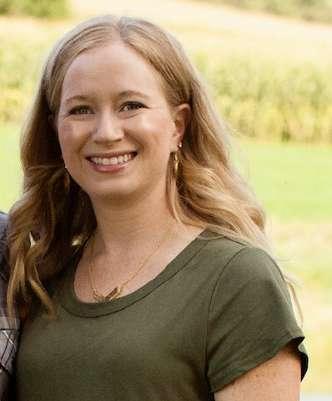
Growing up on my family’s dairy farm, I witnessed firsthand the many changes my parents made to keep the operation sustainable and profitable. At the time, those decisions simply felt like part of everyday farm life. Now, as a part-owner of the farm with my husband, Dominick, I see change in a different light. Each change, whether it involved cow comfort, soil health or cropping systems, helped shape a farm that could continue to thrive while caring for the land that supports it.
That commitment to stewardship reflects the same values we head into another growing season and aligns with many of the principles of regenerative agriculture: building healthy soils, supporting resilient ecosystems and ensuring the land remains productive for generations to come.
Recently, I sat down with my dad, David Olson, to talk about our farm and the thinking behind the way we operate today. In 2009, our farm completed the transition to organic, and we were one of the first dairy farms in our area to make the change.
When I asked my dad why our farm ultimately made the transition, he reflected on the economic realities farmers faced in the 1990s.
“In the 1990s, economic challenges led us to explore new ways to improve cow comfort and soil health,” he explained. “Over time those practices aligned with organic principles, so when the price gap between organic and conventional milk grew
in 2006, we decided to take the leap and we haven’t looked back since.”
That decision set our farm on a new path, one that continues today as the next generation becomes involved. My husband, Dominick, and I officially joined the operation in 2021, shortly after we were married. Today, we work alongside my parents to carry forward the organic systems they established while also looking for ways to incorporate new technology and efficiencies that support the farm’s future.
Organic farming is both challenging and rewarding. It requires careful management of soil health, crop rotations and livestock care. Farmers cannot rely on many of the chemical tools or medications commonly used in conventional systems, which means prevention and observation play an even larger role in daily management. For my dad, the shift to organic farming was ultimately about adopting a different way of thinking about the farm ecosystem and the reward did not come immediately.
“It took a while to see the benefits, in terms of actually, not days, but years, to kind of figure out how we were gonna achieve our objectives, which are healthy cows that are both productively and reproductively sound because as long as that's the case, you will have profitability,” explained my dad.
“In the fields, we shifted our mindset. Rather than trying to keep killing off things we perceive as detrimental,” he told me, “maybe we should focus on enhancing the good things in the soil, creating an environment where both the soil life and the plants can thrive. It’s really more of a holistic mindset.”
Now that Dominick and I are becoming more established in the farm business, we find ourselves asking many of the same questions the previous generation once faced: Where are we today and what improvements will help us succeed tomorrow?
Our goal is to continue that legacy of thoughtful change, seeking ways to improve our operation through regenerative farming practices that build soil health, strengthen our land and livestock systems, and ensure the farm remains viable, resilient and thriving for generations to come.
Gentry farms with her husband and parents at Vaarendahl Dairy LLC in Black River Falls. Erica is a Jackson County Farm Bureau member and serves on the Wisconsin Farm Bureau Sustainability Committee.
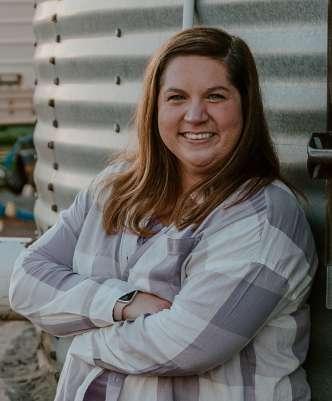
Like many farm women, agriculture has been a part of my life for as long as I can remember. Some of my earliest memories include bringing cows into the barn with my dad, spending time at my grandfather’s implement dealership and attending local FFA Alumni events with our family.
When I met my husband nearly ten years ago, I recall how easily our lives meshed together; he was a farmer, I was working in agricultural journalism at the time and between the busy days of our careers, we suddenly had built a life together.
Once we were married, I distinctly remember struggling to introduce myself. Beyond the traditional adjustment of a name change, I found myself struggling to identify my role with our family’s farm. Soon, I found myself saying a phrase I hear so often from other women:
“I’m
just a farm wife.”
It didn’t necessarily feel right but it wasn’t wrong and I didn’t have a better option.
The United Nations is recognizing 2026 as the International Year of the Woman Farmer, aiming to spotlight the contributions of women in agriculture and agribusiness. As I think about what that means and the celebration behind it, I think about myself and the several other women I’ve run into using the same phrase: “I’m just a farm wife.”
As time goes on, I have found I have a problem with that statement: “just”.
Like a lot of farm families, I hold an off-farm job through my role with Farm Bureau. My strengths lie within my chosen career, and I am more than okay with that. In busy seasons like planting and harvest, I find myself juggling a lot of hats: taking work phone calls while running for parts, dropping off a meal to the tractor while traveling to a meeting, running a load of laundry before sending out a batch of emails… sound familiar?
While in the moment it might not feel like I’m contributing much to the farm, I’ve come to realize that is when we are contributing the most. We are keeping our family and farmers nourished, the house clean, the kids active, the bills paid and all the other little things that keep everyone going. Farm wives are the rock of a farm family, providing stability in a lifestyle that is nothing short of hectic.
Not only are you the support systems within your home and on your farm, but many farm families make the conscious decision to give back, as well. You get done with work,
pick up the kids, take them to practice and somehow find the time to lead the local 4-H. You’re speaking up in board meetings, church basements and community organizations giving your time and talents to others on top of managing everything you’ve got going on at home.
It takes a special person to carry the load of caring for your family, farm and community while remembering to take care of yourself along the way.
So, the next time the words “I’m
just a farm wife” start to come out of my mouth, I’m choosing
something truer: I’m a piece of this farm.
I’m the steady hand behind the scenes, the problem-solver in the pickup seat, the keeper of the calendar, the comfort, the courage and the community connection. Crops don’t get planted on encouragement alone and chores don’t finish themselves— but neither does a farm family thrive without a woman holding the pieces together.
If 2026 is asking the world to see women in agriculture more clearly, then let it start right here at home: no one is “just” a farm wife, because when she is valued, the whole farm is stronger.
Sonnentag is WFBF's Senior Director of Public Relations.
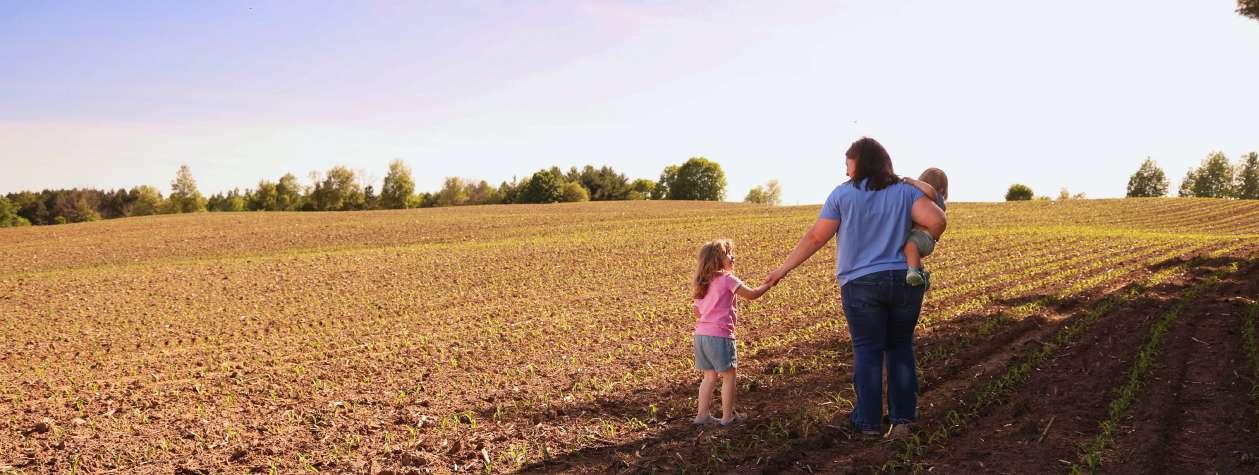






95%


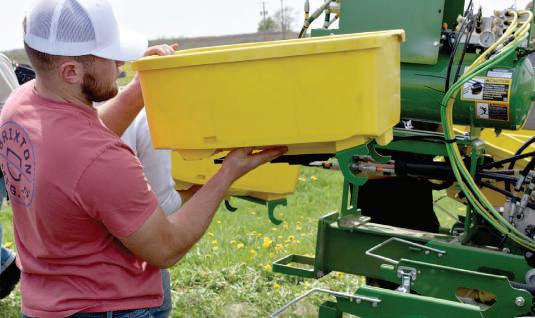
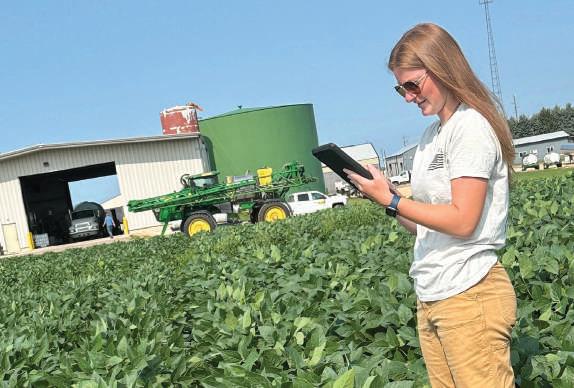


are con dent/very con dent the skills they attained at Southwest Tech prepared them for their career goals.
• Learn cutting-edge precision agronomy skills
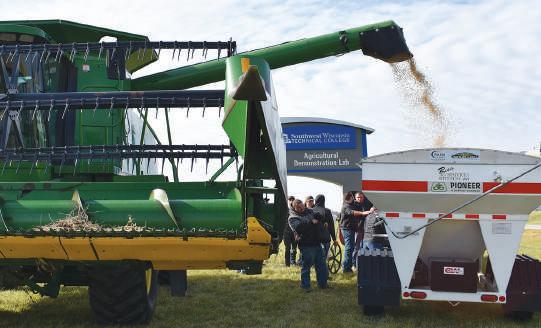
• Plant and harvest crops on 80 acres of production ground
• Apply data-driven decision-making techniques
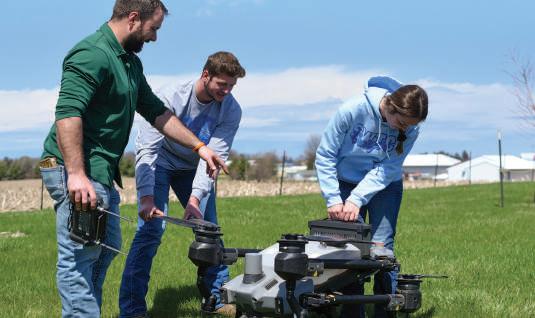
• Gain hands-on experience with the newest ag technology, including drones
• Learn from expert instructors



Upon completion, work as a:

Get to know the members who are leading Wisconsin Farm Bureau’s Young Farmer and Agriculturist Program.
District 9 WFBF YFA Committee Representatives
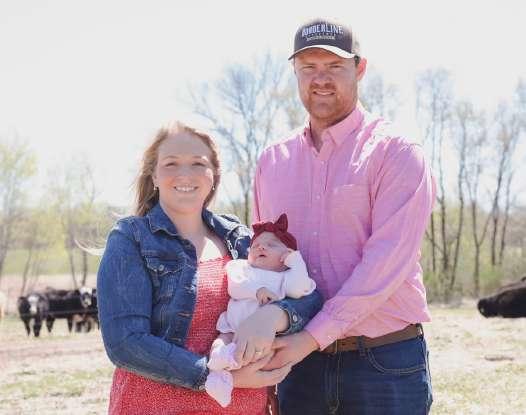
FARM BUREAU MEMBERS SINCE: 2024
Why do you value your Farm Bureau membership?
We value our Farm Bureau membership because it connects us with a strong community of people who understand agriculture, rural life and the importance of supporting local farms and families. The networking opportunities have allowed us to build relationships with other members, share ideas and learn about other agriculture around the state and nation.
What has been your favorite Farm Bureau program/event/etc. and why?
One of our favorite Farm Bureau events has been our county’s Harvest Party. It’s always a great gathering where local farmers and members of the agricultural community come together after a busy season. We appreciate that our county Farm Bureau provides a meal and creates an opportunity for everyone to relax, catch up and have meaningful conversations. It’s one of those events that really highlights the sense of community and connection that makes being part of Farm Bureau so valuable.
What would you tell YFA members about getting involved in the YFA program?
The program is an excellent way to meet new people from across the state and nation who share similar interests and passions in agriculture. One of my favorite parts of YFA is getting to talk with other members at the WFBF Annual Meeting and YFA Conference about the variety of agriculture in their part of the state and hearing about what they do on their own farms and in their communities.
Best words of advice/words of wisdom. The relationships you build through YFA will open more doors than you realize. Don’t be afraid to get involved and meet new people. The agriculture world is small, and the people you meet today may become lifelong friends, mentors or business connections tomorrow.
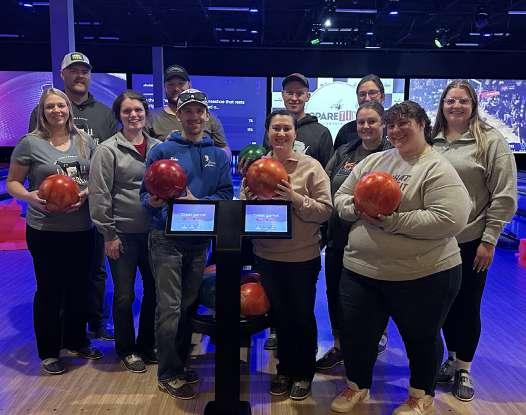


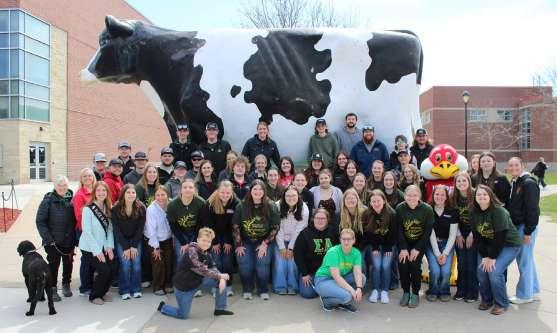
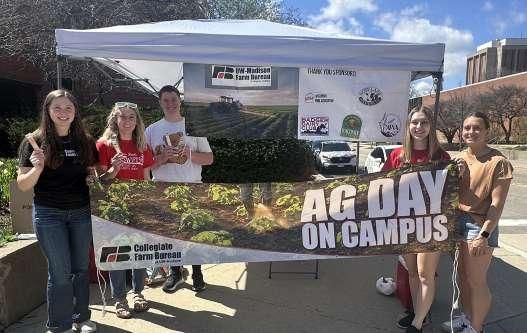
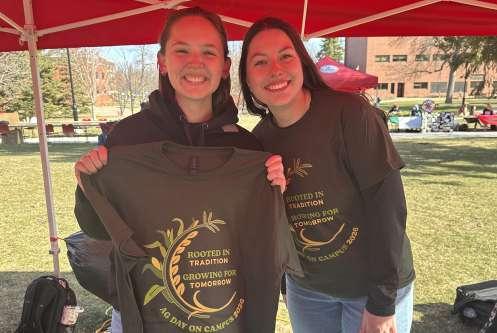
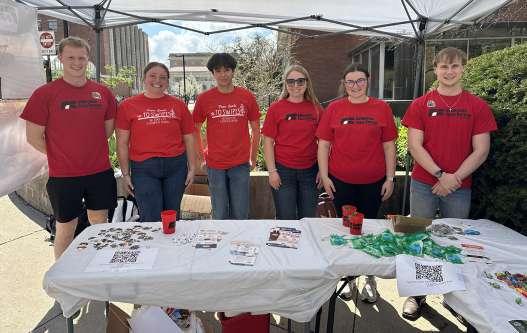
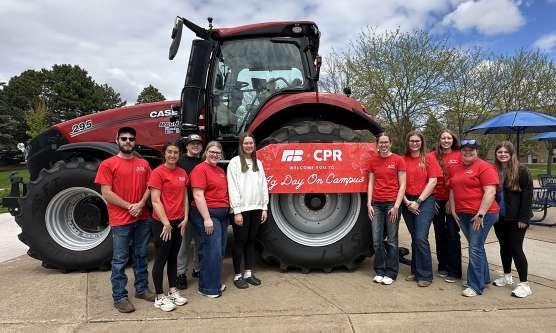
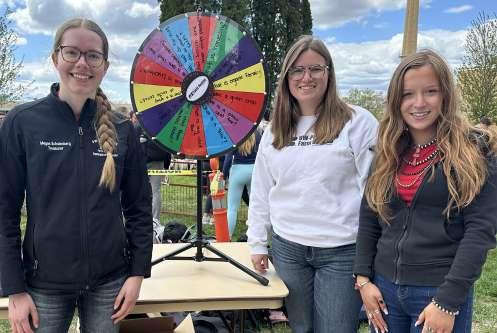
The Collegiate Farm Bureau chapters at UW-Madison, UW-Platteville and UW-River Falls each hosted an Ag Day on Campus event for students, faculty and community members. The events highlighted the importance of Wisconsin agriculture. From hands on activities and animal visits to Wisconsin commodity handouts and guest speakers, more than 150 Collegiate Farm Bureau members helped to share agriculture’s story across the three events.
By Rob Klussendorf, Promotion and Engagement District 8 Representative
We all have traditions passed down from generation to generation. For many of us in agriculture, one of those traditions is the county fair.
I grew up in Waukesha County, home to the oldest county fair in Wisconsin. The Waukesha County Fair began in 1842, bringing families together to celebrate agriculture, community, and hard work long before I was born.
Some of my earliest memories are from the week before the fair. Our family would head to the grounds to set up hog pens. At five years old, my job was simple — two wires on the bottom and one on the top corner of each pen. It may have seemed small, but it mattered. That was my first lesson in responsibility and pride in doing a job well.
County fairs have always been about competition but also education. In the early years, farmers learned from farmers through livestock exhibitions, plowing contests, equipment demonstrations and the sharing of best practices, ladies equestrian and floral displays. Over time, as fewer fairgoers came directly from farms, the audience changed, and so did the role of the fair. Today, fairs are as much about educating the public as they are about friendly competition. Many attendees are several generations removed from agriculture, making these events a bridge between farm families and consumers.
Educational efforts like Farm Bureau’s Adventures in Agriculture displays help families understand modern farming. We explain what it takes to produce a gallon of milk — not just the cow, but the veterinarians, nutritionists, truck drivers, crop consultants, plant workers and retailers involved. We share how livestock contributes to soil health, conservation and sustainability. It’s about showing the full story of agriculture today.
But fair traditions run even deeper than exhibits in our family. My grandfather served 25 years as superintendent of the cattle division at the Wisconsin State Fair, working with youth and experienced exhibitors. He started the practice of milking the dairy cow in milking stalls and requiring the allies in the barns to be kept clean at all times. My father showed the Champion Hog at the Wisconsin State Fair in 1953 and later dedicated more than 50 years to serving the Waukesha County Fair as a hog superintendent and fair board member. He believed fairs should be educational, respectful and something the entire community could be proud of.
I followed in his footsteps through 4-H, showing dairy cattle, hogs and beef. I also showed a champion hog at the state fair but remember that the competition is only part of a fair experience. The camaraderie with the other exhibitors that’s what makes the fair experience
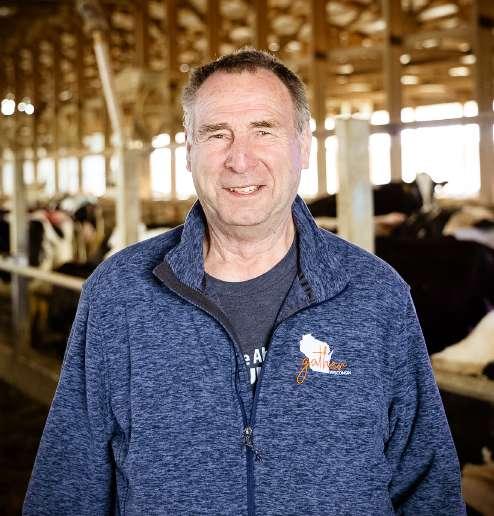
rewarding. Today, my children and grandchildren continue that tradition, learning lessons that extend far beyond ribbons. Fairs teach work ethic, responsibility, sportsmanship and pride. They are classrooms, reunions and proving grounds where one generation quietly hands responsibility to the next.
Traditions don’t continue on their own. They continue because people volunteer, mentor the youth and help in the background to make the fair run smoothly. If we invest our time and share agriculture’s story, these traditions won’t just survive — they will thrive.
And someday, our grandchildren will be the ones setting up the pens and sharing the story of agriculture.
Visit gatherwisconsin.com for more recipes.
• premade meatballs (homemade or frozen)
• 1 cup chopped fresh basil
• 1 cup chopped mixed vegetables
INSTRUCTIONS
• 3 lbs. yellow potatoes
• 1 stick butter
• salt and nutmeg to taste
• 1 cup gouda cheese
1. Cook meatballs thoroughly and sauté mixed vegetables until al dente.
2. Boil potatoes until done, then mash with butter, salt, nutmeg and ¼ cup cheese. Mix in sauteed vegetables.
3. Spread potatoes in butter greased casserole dish and smooth out the top.
4. Make indentations in the potatoes and place meatballs in the indentations. Sprinkle remaining cheese over the top.
5. Bake for 30 minutes in 350° F oven until meatballs are done and cheese has melted. Broil for 2 minutes to brown the cheese.


INGREDIENTS
For the cake:
• 1 box of chocolate cake mix
• 1/2 cup of oil
• 1 cup of milk
• 3 eggs
For the tres leches mixture:
• 1 cup of milk
• 1 can of evaporated milk
• 1 can of condensed milk
• 1/2 cup of Nutella®
For the frosting:
• 2 cups of heavy whipping cream
• 2 tbsp of cocoa powder
• 2 tbsp of powdered sugar
1. Mix the cake ingredients until combined. Transfer to a greased 9 x 13 pan. Bake for 30 minutes at 350 degrees.
2. Poke holes across the cake and allow to cool for 45 minutes.
3. Whisk all ingredients for the tres leches mixture until well incorporated and refrigerate until cake has cooled.
4. Using a stand mixer, whisk together whipping cream and cocoa powder until it starts to firm. Then add the powdered sugar and continue whisking until stiff peaks form.
5. Pour milk over the cooled cake evenly. Add frosting and drizzle with Nutella®
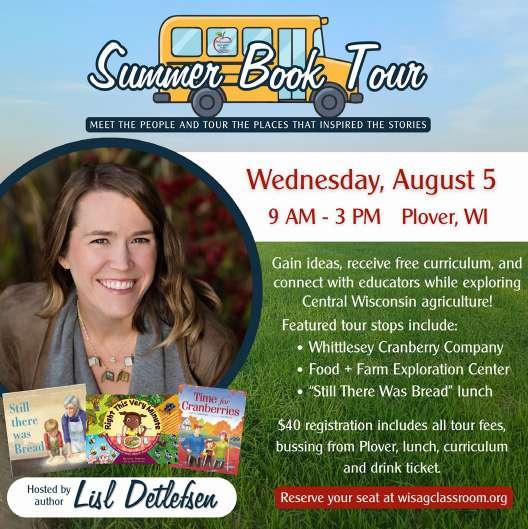
Calling all teachers, volunteers and educators – explore Wisconsin this summer through two premier events.
Whether you teach science, social studies or are a volunteer educator, the Growing Minds Conference in St. Paul, MN, and Summer Bus Tour in Central Wisconsin offer practical tools, real-world experiences and creative strategies to inspire your students. Don’t miss the opportunity to connect with passionate educators and become part of a growing community of change-makers! Register now at wisagclassroom.com/events.





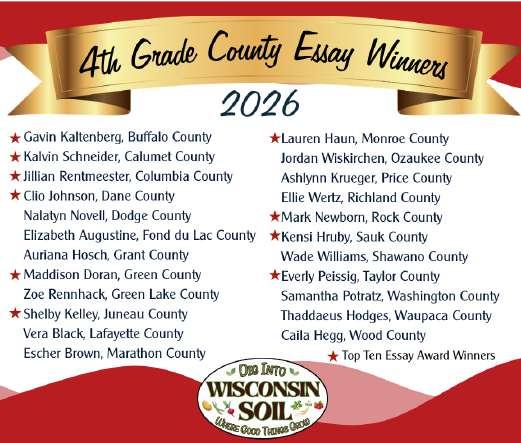
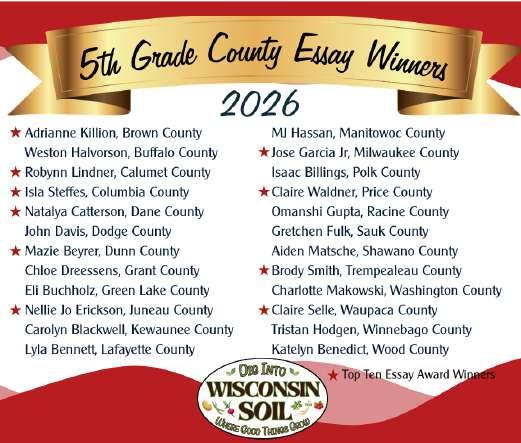
Kalvin Schneider, a fourth-grade student from Chilton, and Nellie Jo Erickson, a fifth-grade student from Mauston, were selected as state winners in the Wisconsin Agriculture in the Classroom essay contest.
The 2026 Essay Contest asked Wisconsin fourth and fifth graders to write a 300-word essay with the theme, “Dig Into Wisconsin Soil Where Good Things Grow.” More than 1,000 students wrote essays for the competition. Essays were judged on content, grade-appropriate writing benchmarks and creativity.
On July 9, the 2026 winners, teachers and county Ag in the Classroom coordinators will attend a special award presentation with the Department of Agriculture, Trade

and Consumer Protection (DATCP) Board Meeting. Winners will read their essays and be awarded their state winner plaques by the DATCP Board.
Since 2005, over 36,000 students have participated in Wisconsin Farm Bureau’s AITC essay contest, allowing students to sharpen their writing skills while exploring Wisconsin’s diverse agriculture. This program would not be possible without the support of dozens of county AITC coordinators and the volunteers who help to promote the contest and judge essays.
The 2027 Essay Contest will be kicking off in September. Visit www.wisagclassroom.org, for details and resources.

By Kalvin Schneider
Did you know that on the third day God made the ground beneath us? Soil is so much more than dirt and is important to the survival of everything around us. So how do we make sure that the soil is healthy for generations to come? We make sure we give back what we take.
There are over 1 billion microorganisms in 1 teaspoon of soil. These microorganisms break down plants and create food for other plants. Soil is the home for many creatures including worms, prairie dogs, and groundhogs. When we plant crops on our farm like corn and alfalfa, the crops take nutrients and turn them into feed for our animals. This is the part where it is important to give back to the soil. The soil also needs water to stay healthy. Did you know that the average precipitation in Wisconsin is 34 inches per year? That is a lot of precipitation!
The way we give back on our farm is through spreading manure on the fields and planting cover crops. My dad works with an agronomist to figure out what crops to plant and how much manure to put on the field. The manure puts nutrients back into the soil. We plant cover crops like rye to feed the microorganisms. The deer also love the cover crops and eat them during the cold of winter. Their favorite snack in our field is alfalfa. Did you know that the upland soils are perfect for alfalfa production, helping to feed 1.3 million dairy cows?
It's important to take care of the soil so that the soil can continue to take care of us. We always need to give back what we take. It's one of God's great blessings.
By Nellie Jo Erickson
Everything on a farm is connected, and it all starts with soil. To many people, soil just looks like dirt, but to my family's Wisconsin dairy farm, it plays a big role. From crops to cows, soil keeps our farm running.
Healthy soil helps plants grow faster and have stronger roots to pull in nutrients. Soil is a living system full of microorganisms like bacteria and fungi that support plant growth.(USDA Natural Resources) On our farm, we grow crops like com, beans.alfalfa and wheat straw. These crops are important because they make feed for our cows. Our cows eat the crops we harvest. In return, our cows produce nutritious milk that is turned into cheese, butter, yogurt, and my favorite, ice cream! Our farm contributes to the 2.6 billion pounds of milk Wisconsin produces each month.(Dairy Farmers of WI)
Farmers take care of the soil by spreading manure on their fields as part of a nutrient management plan. The dairy industry produces about 12 billion gallons of manure annually.(UW Madison- Mitigating) Manure is good for the soil because it contains important plant nutrients. Nitrogen, phosphorus, and potassium come from what cows eat, and much of them are returned to the soil in manure. (UW MadisonEstimating)
Soil is important to our farm because if we didn't have soil we wouldn't be able to feed our cows. In the future, soil will continue to help dairy farms grow. The soil's cycle of crops, cows, and manure helps my family's dairy farm feed the world!
Students in Riverview Middle School science classes are growing their plant knowledge with the help of a brand new EdRack hydroponic growing system provided by a new partnership between Wisconsin Agriculture in the Classroom and RAYN Growing Systems.
The giveaway was part of the celebration of National Agriculture Day on March 24.
Wisconsin teachers were invited to enter the giveaway online from February 4 through March 15. Over fifty applicants submitted to win the giveaway, but ultimately Mr. Nick Mees, a science teacher at Kaukauna High School, won the giveaway by sharing his plans to use the EdRack to expand and provide hands-on student learning in topics of photosynthesis and the growing processes with plants. Along with the system, Mr. Mees will also receive professional training to bring the system to life in his classroom.
Kaukauna School District does not offer traditional agriculture education classes, and the new EdRack system will provide an opportunity to introduce students to growing food through hands-on student learning in seventh and eigth grade physical science and life science classes.
The EdRack hydroponic system was delivered to Mr. Mees in April, and students were eager to begin growing.
“We are very excited about this new tool for our classroom,” said Nick Mees. “Thank you to Wisconsin Agriculture in the Classroom and RAYN Growing Systems for this opportunity. Our students have already planted lettuce and basil with it, and we have a lot of ideas for how we can use it going forward.”
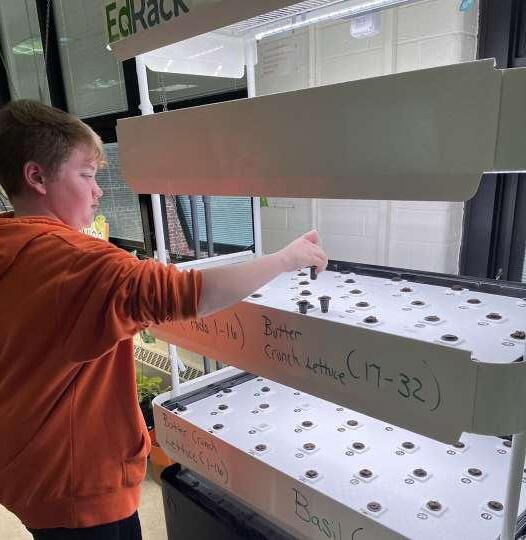

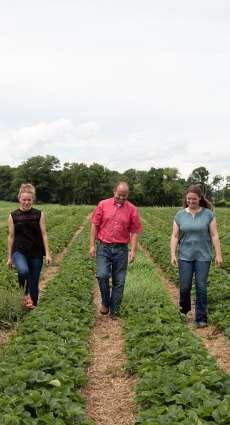
Whenyou become a Wisconsin Farm Bureau member, you are directly supporting programs that educate students, develop leaders and connect consumers to Wisconsin farming. A portion of your membership dues are used to fuel Wisconsin Farm Bureau Foundation programs. Thank you for your contribution to the Foundation. Your support makes a difference!
What is the Wisconsin Farm Bureau Foundation?
Established in 1988, the Wisconsin Farm Bureau Foundation focuses on agricultural literacy, leadership development and support for farmers. Through donations and other contributions, the Foundation fuels opportunities for Wisconsin Farm Bureau members, Wisconsin classrooms and consumers and the agricultural community.
What is the $10 Membership Contribution Used For?
Your $10 membership contribution supports Wisconsin Farm Bureau Foundation programs. Our programs strengthen Wisconsin agriculture through education, leadership
The Wisconsin Farm Bureau Foundation was established in 1988 to provide support for agricultural education and leadership programs. Through donations and other contributions, the foundation invests time and resources to support the next generation of agriculturists.
development, engagement and so much more. These initiatives build agricultural literacy, develop future farm leaders and support rural mental health.
Foundation-supported programs include:
• Agriculture in the Classroom
• Young Farmer and Agriculturist
• Promotion and Engagement
• Leadership Institute
• Farm Neighbors Care
• Gather Wisconsin
• Collegiate Farm Bureau
• FFA Farm Forum
Wisconsin Farm Bureau Foundation Mission Invest in education and professional development to grow awareness and understanding of agriculture.

to the Following Wisconsin Farm Bureau Foundation Donors: (Donations were made between Mar. 20, 2026, and May 28, 2026)
• St. Croix County Farm Bureau in memory of Terry DuSell



Your support helps create informed consumers, engaged leaders and strong farmers by funding programs like Agriculture in the Classroom, Young Farmers and Agriculturists, Promotion and Education, Farm Neighbors Care, Gather Wisconsin and more.
Scan the QR code to donate today!




Join us for Wisconsin Farm Bureau Foundation’s 5
Annual Giving Day! Throughout the day, we’ll celebrate our Foundation-supported programs and YOU, our valued donors and sponsors. Giving Day is an important fundraiser for the Foundation, raising over $180,000 since 2022.
Follow along and join in on Wisconsin Farm Bureau Foundation’s website, Facebook and Instagram pages.
All proceeds from Giving Day provide critical funding for education and leadership programs supported by the Wisconsin Farm Bureau Foundation, including:
Agriculture in the Classroom Young Farmer and Agriculturist Program
Promotion and Engagement Program
Leadership Institute
Gather Wisconsin
Collegiate Farm Bureaus
Farm Neighbors Care
The Wisconsin Farm Bureau Foundation focuses on agricultural literacy, leadership development and supporting farmers. Through donations and other contributions, the Foundation fuels opportunities for Wisconsin Farm Bureau members, Wisconsin classrooms and consumers and the agricultural community. As a 501(c)3 organization, donations are tax-deductible.
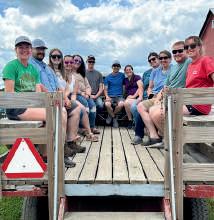
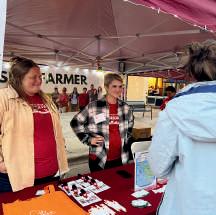
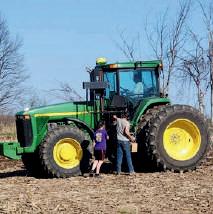
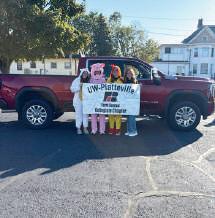
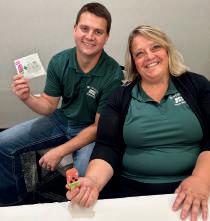
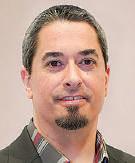
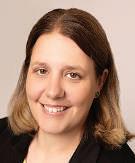
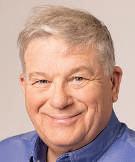
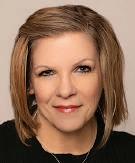
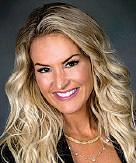
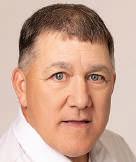
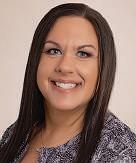
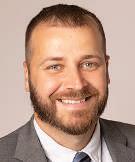
exclusive Hydro-Gear ZT-3600 transmission for a professional-grade cut every time.






I know I need life insurance, but I don’t think I can afford it.
You’re not alone. Many people overestimate the price, but life insurance can cost as little as a dollar a day. When it comes to coverage, there are options to fit your needs and budget. Contact your agent to learn more.
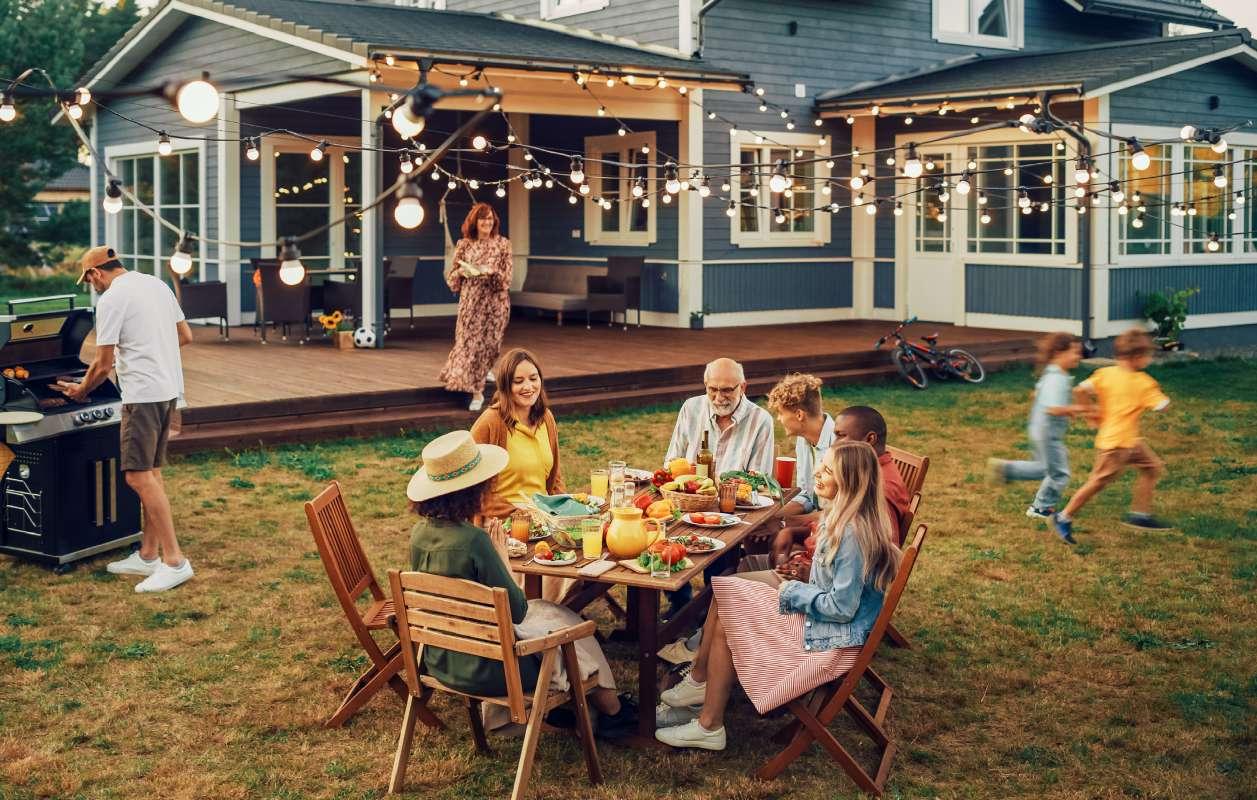
From backyard traditions to family legacies, we’re proud to help protect the people and moments that make Wisconsin home. Connect with one of our 150+ local agents today.
WISCONSIN FAMILIES TRUST RURAL MUTUAL. SEE WHY TODAY.