Assiniboia Aces capture historic 100th Dunning League Championship
Sherri Solomko Freelance Reporter
History repeated itself—and this time, it carried even greater significance. It was a 3-peat league championship for the Assiniboia Aces.
“After falling behind early in both games one and game two, the Aces found a way to string together some hits, winning game one 12-10 and game two, 12-7,” said Lane Jepson.
The Assiniboia Aces are back-to-back Dunning League c hampions after defeating the Assiniboia BrewCrew in a thrilling rematch of last year’s league final. The victory not only secured consecutive championships for the Aces but also etched thei r name into history as winners of the league’s landmark 100th anniversary title.
Adding to the occasion was the pre sence of Earl Berard, president of the Saskatchewan Baseball Museum and Hall of Fame, who presented the championship trophy during the l eague’s centennial celebration. Joining him were Dunning League executive members Chapin Sleightholm, league secretary and member of the Rockglen Rats; Tyler Burnay, league vice-president and Rockglen Rats player; and league treasurer Justin Greffard of the Glentworth Giants.
“Earl began by introducing himself, speaking about his baseball career and how impressed he was with the calibre of p lay before presenting the
championship trophy to Assiniboia Aces president Lane Jepson,” said Sleightholm.
Berard also highlighted the work of the Saskatchewan Baseball Hall of Fame, including the world’s largest baseball bat located outside the museum in Battleford, and invited fans to the Hall’s induction ceremony taking place in August. To commemorate the league’s centennial se ason, he presented special 100-year plaques to the Dunning League executives in attendance.
With league honours secured, both finalists now turn their attention to provincial competition, scheduled for August 7–9.
The Aces will be c hasing another impressive feat as they look to defend their
provincial title and complete another remarkable season with back-to-back league and provincial titles.
The championship series showcased some of the finest baseball seen in the region, drawing praise from local fans who w ere treated to two exciting contests between Assiniboia’s hometown rivals.
While only one team could hoist the trophy, the community celebrated the outstanding effort displayed by both clubs.
For the Aces, lifting the championship trophy in the Dunning League’s historic 100th season made an already memorable victory even more special, a championship destined to be remembered for generations.
| 306-972-9020
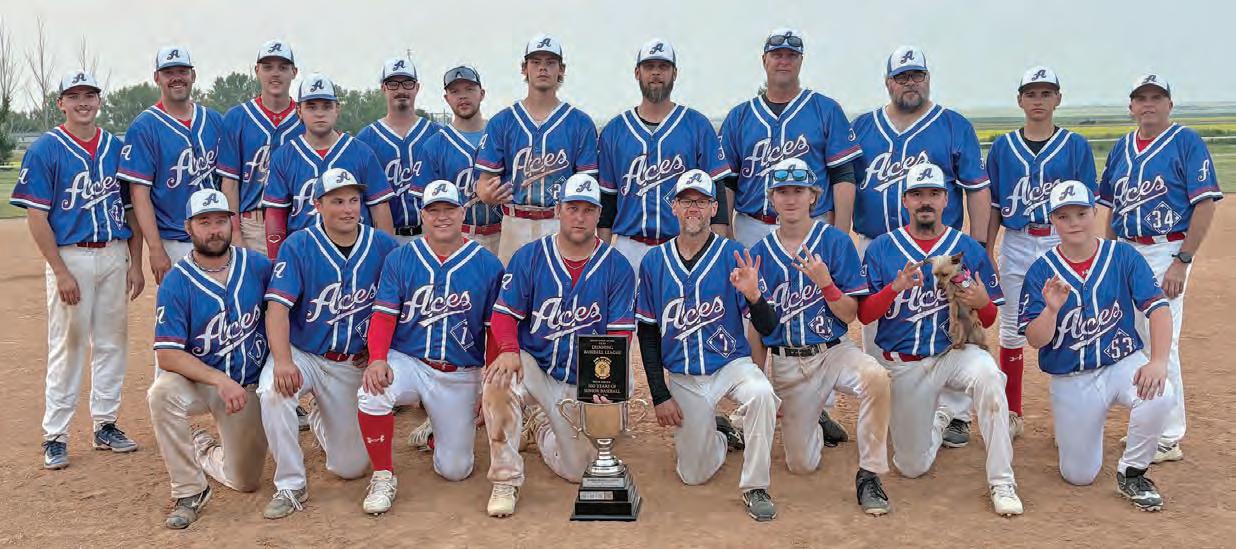
The Assiniboia Aces are back-to-back Dunning League champions after defeating the Assiniboia BrewCrew in a thrilling rematch of last year’s league final. Back row, l-r, Owen Lucas, Brian Ruthven, Dax Peterson, Matt Morhart, Zach Shelstad, Curtis Lucas, Van Sinclair, Al Sinclair, Corwin Jepson, Marc Miller, Houston Hillmer and Ron Lucas. Front, Dakota Bauck, Keaton Hillmer, Mike Morhart, Lane Jepson, Curtis Hawkins, Ty Reid, Derek Lessmeister and Kiptyn Jepson.
Geraldine Ruzicka BC-HIS, Owner
The Dunning League championship trophy was presented to the Assiniboia Aces. Pictured, l-r, vice president Tyler Burnay, secretary Chapin Sleightholm, president Lane Jepson, Baseball Sask. Hall of Fame president Earl Berard and treasurer Justin Greffard.
Coffee
Our Town
Sherri Solomko
Freelance Reporter
Residents are once again talking about another disruption at Assiniboia Hospital after the Saskatchewan Health Authority announced a temporary disruption of emergency services on July 22.
Excluding this latest announcement, at least six similar closures have been recorded, including several in May, two in June, and
now this most recent disruption in July.
Coffee row conversations continue to focus on concerns about having to travel e lsewhere f or emergency medical care and what can be done to resolve the situation.
On a more positive note, provincial ball competitions have brought home two silver medals for Assiniboia teams. The 11U Tier 1 Aces captured silver in baseball,
while the U17 girls earned silver at the Softball Saskatchewan Provincial C Championship.
Row Conversations: What’s on the topic table in and around
for harvest are beginning.
Assiniboia
fic tickets and directing them to click on a link.
Up next were the Lady Aces, who competed at t he Women’s Open Softball Saskatchewan Provincials in S askatoon from July 24–26. Both Assiniboia senior men’s baseball teams will also compete in their respective Baseball Saskatchewan provincial championships from Aug. 7–9 at their host locations.
Haying efforts also continue in and around Assiniboia. According to the Saskatchewan Crop Report, Stonehenge and Wood River each received 30 mm of rain during the week ending July 13.
There also appears to be a renewed sense of optimism following provincial reports that the drought designation has been lifted across the Prairies.
Police stress that this is a scam. SGI does not contact individuals by text regarding traffic matters. If you receive a message like this, ignore it and do not click on any links. Anyone with questions or concerns is encouraged t o contact the Assi niboia RCMP at 306-642-7110 or by calling 310-RCMP.
remedies, including the non-traditional use of Vicks VapoRub, claiming mosquitoes dislike the strong scent of eucalyptus. What has worked for you to help enjoy the outdoors this summer?
C O M I N G C O M I N G E V E N T S E V E N T S
Gas prices are also a hot topic. Another sharp increase pushed prices at some stations to 178.9 cents per litre on July 22. Is this the new normal? Conversations have increasingly turned to hybrid and electric vehicles, although many residents remain skeptical about how well electric vehicles perform during Saskatchewan winters.
Assiniboia Golf Course
Ross Payant Nursing Home
Ladies’ Golf Night every Wednesday 5:45 p.m.
Warmer temperatures and accumulated heat have supported crop development across the southwest region. Producers are hoping for continued favourable weather to further advance crop growth and improve field conditions. Crop monitoring for pests and diseases is ongoing, while preparations
The recent RCMP quarterly newsletter, along with a July 15 social media post, is reminding residents to remain alert to scams involving suspicious texts, messages and phone calls. Most recently, the Assiniboia RCMP Detachment became aware that several residents received text m essages from unknown numbers claiming they had outstanding traf-
The Better Together weekly barbecues continue to be a community success story. With only a few events remaining this summer, residents are encouraged to attend and support t he initiative, which helps fund local recreation programming.
Another topic generating plenty of discussion is the u nusually high mosquito population. Residents have shared a variety of
Finally, many people are already looking ahead to August, wh en attention quickly shifts to back-toschool preparations and the return of activity at the local arena.
June 2- 2:00 P.M.
Men’s Golf Night every Tuesday, 5:45 p.m.
Grand Opening of the new front patio.
Ladies Annual golf tournament.
Saturday, August 8
Assiniboia Aquatic Centre
Everyone Welcome.
June 6
55 Club Bingo
Pool opens for the season.
Wednesdays, August 12, 19 and 26 1:00 p.m. - 4:30 p.m.
Town of Assiniboia
Assiniboia Aquatic Centre
August 11, 18 and 25
June 6
11:30 a.m. until 1:00 p.m.
Better Together BBQ.
Southand Co-op Agro Centre
Community Garage/Yard Sale. Call Denise at 306-640-8800 to register. Pick up your free tickets at the Town of Assiniboia office.
Heritage Day. petting zoo, old time games, pie and cake contest.
Saturday, August 15, 7:00 p.m. - 9:15 p.m. Revealing carbon dating of occupation layer below the Petroglyphs. Assiniboia Library
Shurniak Art Gallery
June 28, 1:00 - 7:00 P.M. Annual Garden Party Fundraiser.
Saturday, August 22. 2:00 p.m. - 4:00 p.m. Nanan Stem Acadamy at the library.
was another beautiful
Wishing you a safe & happy long August weekend!
The Town of Assiniboia wishes everyone a safe, relaxing, and joy-filled break. Whether you’re hitting the lake, hosting a backyard BBQ, or enjoying some quiet time at home, we hope the weekend brings you sunshine, rest, and good company.
What you can do
• Trim vegetation — Cut back overgrown grass, weeds, and branches that encroach into the lane.
• Remove debris — Old lumber, broken pallets, and discarded items should be taken to the landfill.
• Maintain fences — Repair leaning or damaged sections that may obstruct the alley.
• Check for hazards — Ensure no nails, sharp objects, or loose materials are left where vehicles or people pass.
A small effort with a big impact
Keeping your alley tidy is one of the simplest ways to support community beautification and uphold the welcoming spirit celebrated in All Things Assiniboia. When every household pitches in, our alleys stay safe, functional, and pleasant for everyone who uses them.
visibility for drivers and pedestrians and reduce fire hazards.
• Smooth access — Utility crews rely on unobstructed lanes to do their jobs efficiently.
• Neighbourhood pride — A tidy alley contributes to the overall look and feel of our community.
• Pest control — Removing debris, tall weeds, and garbage helps keep unwanted critters away.
For a copy of All Things Assiniboia, our fun resident guide, visit Assiniboia.net or pop in the Town Office for a paper copy.
It
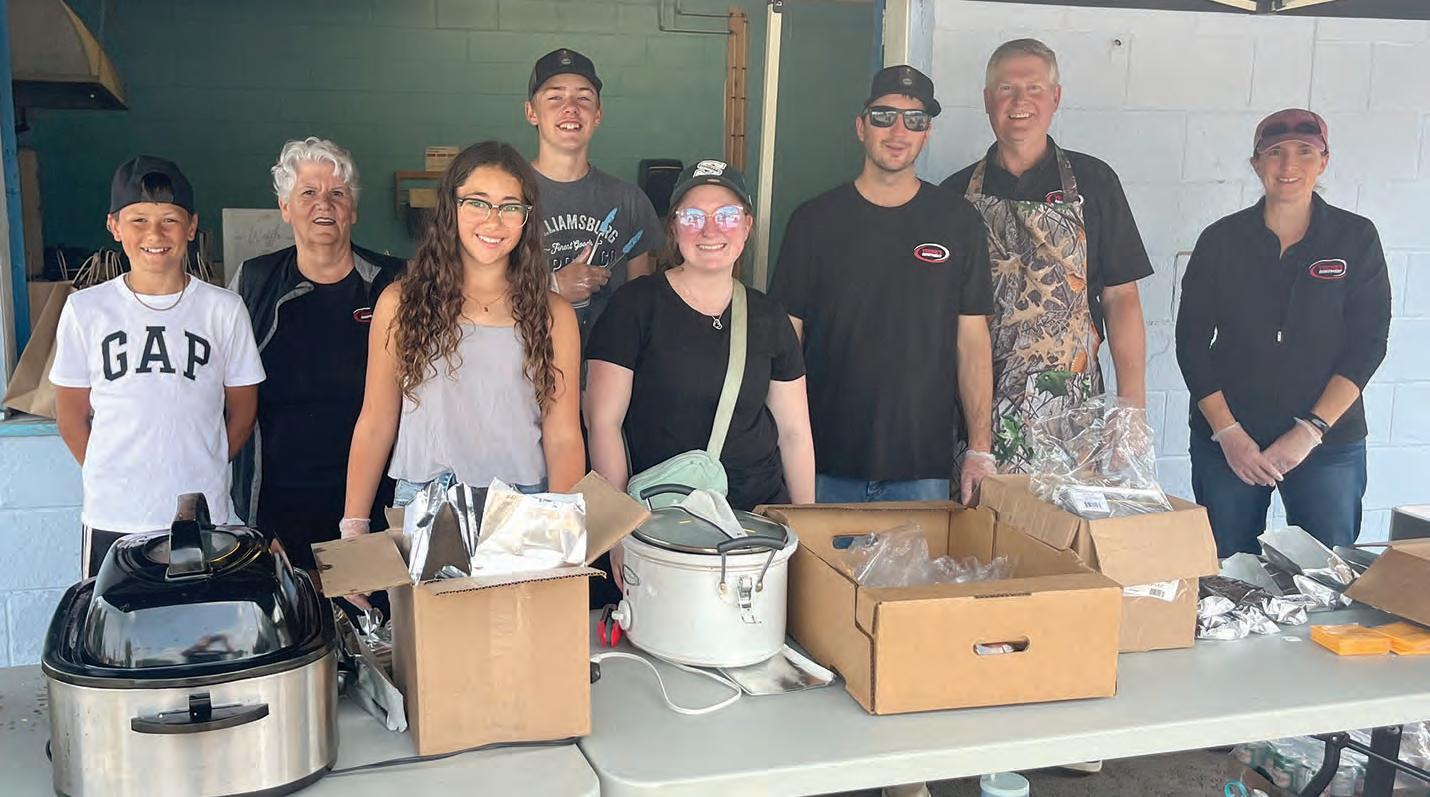
day for the Better Together barbecue, hosted on July 21 by Young’s Equipment in Assiniboia. Pictured, l-r, Hanno, Goretti, Sofia, lihan, Adawncia, Danny, Doug and Shannon.
Lady Aces wrap season, compete at provincials
Sherri Solomko Freelance Reporter
They came, they competed, and they reminded everyone that women’s fastball belongs in Assiniboia. In just their inaugural season, the Lady Aces didn’t simply field a team—they reignited a tradition that had been missing for more than 20 years while earning a spot on the provincial stage. In their first year as a
ladies’ fastball team, the Assiniboia Lady Aces have much to be proud about.
Assembling a team that would compete both in regular season games and take on the opportunity to compete at a provincial competition in their first year is a remarkable accomplishment.
Fans loved the opportunity to watch another fastball team compete on their home diamonds, play-
ing against Gravelbourg, Coronach and Assiniboia as well as a pre-provincial exhibition game against Ceylon.
In a Facebook post on July 1, Sue Berner noted that it had been at least 20 years since a lady’s fastball team was part of the south.
The Aces provincial roster varied somewhat from regular season roster.
The Aces opened up their women’s provincial
Christine Gee and Callie Morhart. Front row, Hailey Peterson, Ella Bouffard, Brooklyn Gee, Ashtyn Krauss and Kaelyn Snape
Local hockey player remembers Allan Cup
quest with a 3-1 victory over Ceylon. However, the team struggled against a strong Saskatoon Eclipse team on July 24 afternoon. The ladies followed up with an amazing game against Saskatoon Storm but ended up on the wrong side of a one run ball game.
A second loss July 25 left the team in a three-way tie for a playoff position but were ruled out in runs for and against, thus ending their provincial hopes.
Focusing on restoring local interest and participation in lady’s fastball after a two-decade break was deemed a success. The local softball community said this team provides visible role models and positive momentum for the town’s growing minor softball community. The Lady Aces have indicated they will be back on the field again next season, with more determination fuelling more home time pride.
The scoreboard may have closed on year one, but the future for the Lady Aces, and the girls watching from the stands, is looking brighter than ever.
Kaitlynn Nordal
Freelance Reporter
For people like Leonard Hicks, keeping your head up and stick on the ice isn’t just about hockey; it’s a way of life.
Hicks started playing hockey at age six.
“We would start playing after school and fool around for a while,” said Hicks.
Although Hicks usually played centre, he went on to play left wing after moving to Kimberly, British Columbia.
The 1978 Allan Cup of the 1977-1978 senior “A” season was hosted by the Kimberly Dynamiters. Hicks and his teammates on the Dynamites finished third in the regular season with a 33-23-0 record. They faced the Cranbook Royals in a best-of-seven, making them eligible for playoff championships. The Dynamites played the Spokane Flyers and won deciding game 6-3
“At the time, every -
thing either went to the east or came to the west,” explained Hicks. “Once we won the league, all the playoffs were held in Kimberly.”
Hicks and his teammates won four games to one in a best-of-seven.
“We were playing pretty good hockey,” said Hicks. They would go on to win their last game by a score of 6-3.
This was the first time Kimberly had won the Allan Cup since 1936.
“It felt pretty good winning something was pretty special,” said Hicks, who was 28 at the time.
Last year, the daughter of one of Hicks’ teammates nominated them for the Hockey Hall of Fame in Penticton B.C.
“I really enjoyed that last year,” said Hicks.
“It’s quite a facility. It was a great evening. They have a picture up on the wall. It was very nice,” said Hicks.
The Assiniboia U17 Aces ball team won a silver medal at provincial playoffs played in Regina on July 17, 18 and 19. Back row, l-r, head coach Emily Lessmeister, Lane Jepson, Kaelyn Nelson, Sadie Jepson, Rylee Huys, Mya Huys, Charlize Hillmer,
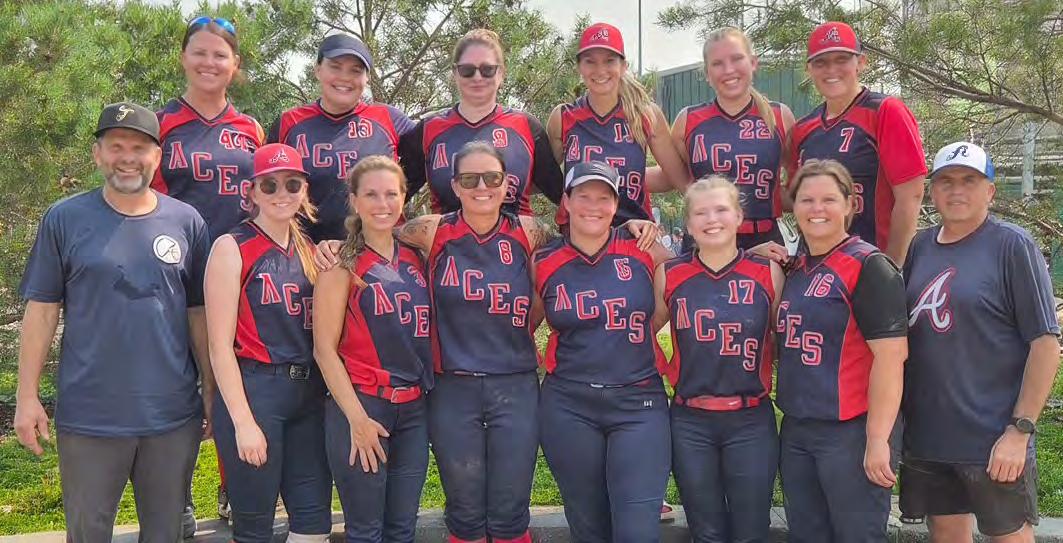
The Assiniboia Lady Aces fastball team recently competed at provincials to complete their season. Back row, l-r, Steph VanDeSype, Sarah Feelye, Ashlee Seal, Randi Ruthven, Hayley Svenson and Andrea Setrum. Front row, coach, Trevor Peterson, Raina Peterson, Krissy Rusu, Keri Legare, Whitney Fitzpatrick, Alyssa Svenson, Sue Berner and coach Ron Lucas.
Photo courtesy of Steph VanDeSype
Exploring Ghost Towns
By Trudy and Dale Buxton, Publishers of The Independent
We continue our journey into British Columbia and our stay in Revelstoke.
We have all know this nice city of 8,300 people as Revelstoke, but when the settlement first began the community was named Farwell after Arthur Farwell who was a surveyor. Initially the town be laid out in 1884, built around the Canadian Pacific Railway. However, during this time the railway and Mr. Farwell were in dispute over the price of land and doing business, so much so that the railway built another community near Farwell, naming it Revelstoke after Lord Revelstoke who was a British banker that was part of the banking system that saved the railway from bankruptcy.
Farwell still exists as a part of Revelstoke, an area that is closest to the highway.
Did you know that Revelstoke is located in the world’s only inland temperate rainforest? This inland temperate rainforest is a rich ecosystem of red cedar, some of these trees are over 1,000 years old, and hemlock trees hosting a wide variety of animals and plant life. British Columbia is the only place in the world to have this type of forest.
The average snowfall in Revelstoke is about just shy of 40-feet. That is a lot of snow, the community is surrounded by the Selkirk and Monashee mountain ranges which helps with the amount of snow that drops each year. Revelstoke holds the record in Canada for the most snowfall in a single winter at just over 80-feet.
Revelstoke is noted as the ‘Birthplace of Canadian Skiing.’ The Revelstoke Ski Club was established in 1891, which was mainly started by Scandinavian miners who introduced the Norwegian snowshoes to the area. The first winter carnival was in 1915 featuring ski racing and ski
jumping.
For many years Revelstoke was internally famous for the ski jumping and people all over the world came to Revelstoke to try out the hills. A world record 183-foot ski jump was accomplished in 1916. Today Revelstoke still maintains an ultimate in different types of skiing and snowboarding.
If you are in for some hiking, the rainforest offers some spectacular waterfalls and awesome scenery along the way.
Along with all the snow of the winter, there is also the chances of an avalanche. Revelstoke is the home to the deadliest avalanche in Canada, when a slide claimed the lives of 58 men, and buried over 400 metres of railway. With all of the avalanches that have taken place, Revelstoke is an innovator in preventative measures, some of which are still used today.
Revelstoke has the most powerful dam on the Columbia River. It is also a great place to film a movie, featuring a number of movies that were shot in or near Revelstoke. It is a haven for many species of wildlife including the mountain caribou that thrive in the rainforest environment, and bears which at one time were such a nuisance that many were destroyed.
The railway still serves as a major divisional point for the Canadian Pacific, while tourism and the natural resources serve as the main economic factors.
One interesting fact (or fiction!) is that the Courthouse Square located in Revelstoke has been noted as one of the most haunted locations in Canada with eerie sounds and the sighting of various apparitions.
Stay tuned next week with more adventures of The Saskatchewan Traveller.
Opinion: Palliative care is a fundamental human right
Submitted by Rebecca Vachon Director of the Health Program at Cardus
We all have our time someday. What most of us tend to worry about is the circumstances—will we suffer? For how long?
One of the chief ways our medical system works to alleviate the suffering of those who are dying is through palliative care. Earlier in May, new polling was released by the Angus Reid Institute, in partnership with Cardus and the Palliative Institute, which reveals how Canadians understand palliative care and whether they want to see it improved.
Despite the fact that everyone dies, and despite the fact that something like 180,000 Canadians and their families interact with some form of end-of-life care in a year, I keep confronting the perception that palliative care is a niche issue, not one of broad interest. But this reaction only underscores the poll’s findings: namely that many Canadians continue to misunderstand what palliative care is and isn’t. On a more positive note, however, when Canadians do understand it, palliative care is, in fact, identified as a priority issue.
Sixty-four per cent of Canadians misunderstood palliative care as only comfort care for those at the end of life. A smaller proportion—one in 20 Canadians—misunderstands palliative care to be the same as “medical assistance in dying,” even though palliative care—by definition—intends neither to hasten nor prolong death, as opposed to MAiD, in which the provider directly and intentionally ends the patient’s life.
Instead, palliative care is appropriate for any stage of serious illness and should be provided as soon as possible at or after diagnosis of a serious illness. It can be provided alongside curative and life-prolonging treatments. It is holistic care to help people live well with illness, improving quality of life through pain management and symptom management, but also through provid-
ing emotional, psychosocial and spiritual supports for a person, their family and their caregivers.
Misunderstandings of palliative care, such as it being only comfort care, only in the final days of life, or only after ceasing other treatments, can mean that:
Patients are not referred early enough by their care teams and/or patients and families may resist an early referral, and thus do not fully benefit from the support palliative care could provide throughout their illness; Policymakers inadequately resource, innovate and invest in palliative care due to a lack of realization of how many Canadians would benefit from receiving it—and how early integration of palliative care can actually improve overall health-care system functioning.
The poll itself reflects this gap. After testing Canadians’ knowledge and then providing a comprehensive definition of what palliative care is, the poll went on to explore Canadians’ experiences with and views on palliative care, including concerns from a majority of respondents about access or availability issues, and the fact that three in 10 lacked confidence that they could access palliative care if they needed it.
Forty-five per cent identified improvements to palliative care as a high or highest priority, with an additional 42 per cent ascribing a medium priority to such improvements. Nine in 10 Canadians believe universal access to funded high-quality care should be a right, something that is not currently the case in Canadian law.
No, this is not a niche issue. Most of us will face serious illness. All of us will lose someone we love, and amid their illness, we will want them to have the best care possible. And with an aging population, the time to have these discussions is now.
Palliative care is, in the end, everyone’s issue. The question now is whether policymakers will treat it that way.
Revelstoke is noted as the ‘Birthplace of Canadian Skiing.’
Local AgricultureCelebrating
Saskatchewan auditor flags water licensees’ overuse, alerts WSA
Karen
Briere
SaskToday.ca
Saskatchewan’s provincial auditor said the Water Security Agency has to better monitor water use after finding some licensees are using more than they are allowed.
Guidance that came into effect in April is expected to help.
Tara Clemett said the WSA hasn’t fully addressed five recommendations her office made in 2020, and a follow-up audit found more overuse than before. The first audit
found seven licensees had exceeded their allocation by more than 100 cubic decametres at least once between 2014 and 2018.
The follow-up, released as part of the Volume 1 report for 2026, said that number grew to 12.
One cubic decametre is one million litres and about 2.5 dam3 will fill an Olympic-size swimming pool.
“We found just over 100 water users exceeded their water use allocation in 2023 or 2024 by enough water to fill 3,600 Olympic-sized swimming
pools,” Clemett said.
Clemett said her office is satisfied with how WSA handles applications for licences and determines the allocations, but she is concerned the limit is ignored by some and then not handled properly by the agency.
“Are you reporting that to senior management and in certain cases, how does that eventually escalate so somebody who keeps doing it on a regular basis knows they need to stop?” she said.
In 2020, the auditor recommended the WSA actively monitor compliance
and follow its enforcement procedures when more water is used than allowed by the licence. That recommendation is not fully implemented, she said.
“Effectively monitoring and taking enforcement action on water use non-compliance, as well as reporting to senior management, is key to insuring a sustainable water supply for Saskatchewan’s current and future generations,” Clemett said.
Her report noted the WSA-approved guidance on monitoring and enforce-
ment was to take effect April 1, 2026.
The 105 users who took too much water in 2023 or 2024 exceeded their allocations by between one and 2,411 dam3.
There were also 34 users who had a cancelled or expired licence who took 6,699 dam3 anyway.
‘Compliance pathways’
“As the agency had not yet implemented its guidance, management has not yet taken appropriate actions to address identified non-compliance with licence requirements,” said
the auditor’s report.
This limits the WSA’s ability to make informed allocation decisions, ensure all users have enough water and protect sustainability of water bodies. In an emailed statement, WSA said it has implemented two of the seven recommendations from 2020 and continues to work on fully implementing the other five.
“The impacts of overuse of water are managed through WSA’s OutcomeBased Compliance Framework. The framework guides the type of enforcement and includes stepped compliance pathways that are proportionate to risk that the non-compliance poses,” it said.
The agency also said it is focusing on education, and while it can restrict or cancel water use and issue fines, those are a last resort.
Meanwhile, the auditor also followed up on two recommendations from 2020 on how the agriculture ministry mitigated regulated pests in crops and pastures. A third was deemed no longer relevant after the ministry deregulated the Richardson’s ground squirrel.
In December 2025, the ministry implemented the recommendations to prepare guidance for producers to detect, report and respond to late blight, bacterial ring rot and Norway or brown rats. The guidance is posted on the ministry’s website.
Growing Saskatchewan Together
Hon. David Marit, MLA for Wood
Climate change is accelerating and spares no one, least of all farmers. Every year, spring floods and torrential rains put fall harvests at risk. The way farmers respond to these challenges are crucial to supporting their resilience.
Be farm safe: mechanized, high-tech equipment requires routine reviews
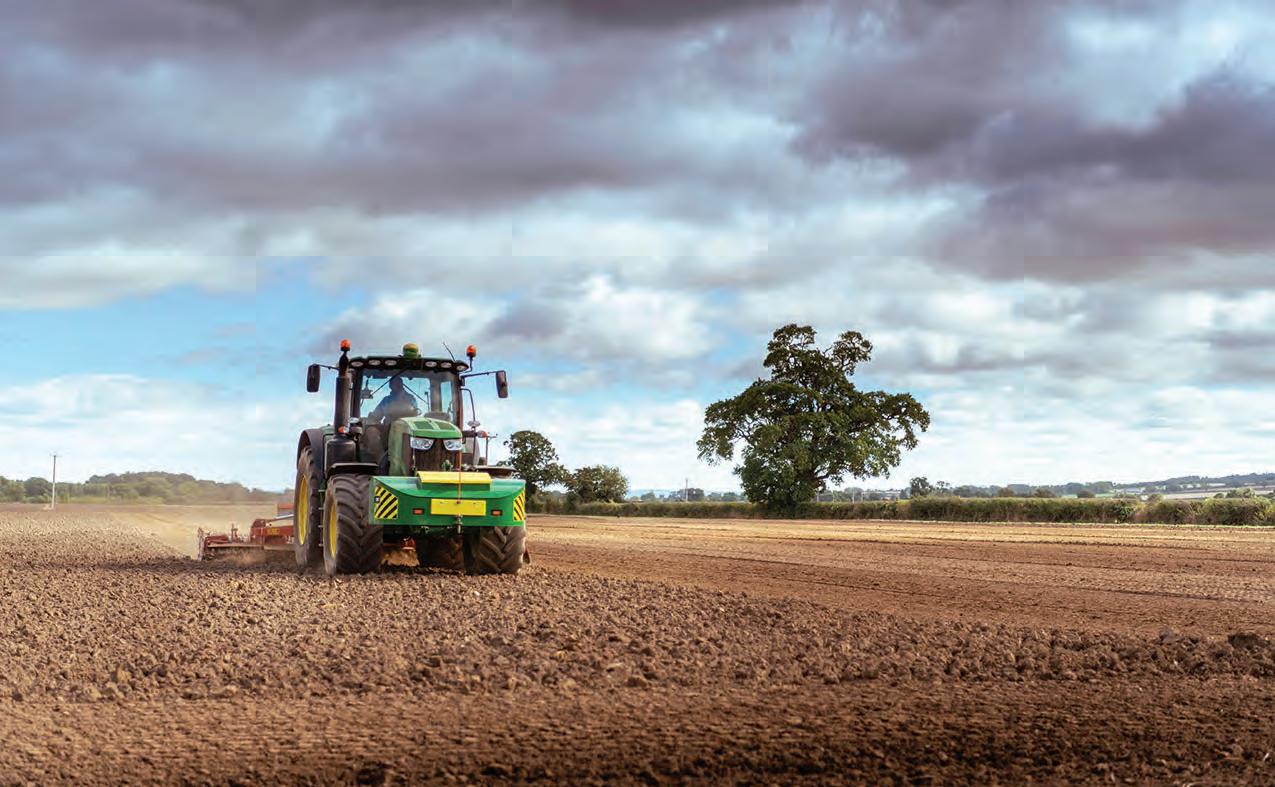
Agriculture is routinely ranked among the most dangerous professions around the world.
Both the National Safety Council and the National Institute for Occupational Safety and Health reported agriculture is one of the most hazardous industries. Farming operations continue to push forward with more mechanized and high-tech equipment that requires routine reviews of safety protocols.
The agricultural sector recorded a fatal injury rate of approximately 18.6 deaths per 100,000 workers in 2023. Transportation incidents, notably tractor rollovers, remain the leading cause of death.
Furthermore, recent reports indicate that a child dies in an agriculture-related incident approximately every three days, which underscores the need to prioritize farm safety across all age groups.
Ensuring safe working conditions is vital within the agricultural sector. These guidelines can set the course for safer farming work.
Rollover Protective Structure (ROPS):
The most effective life-
saver on a farm is ROPS. When combined with seatbelt use, ROPS is 99 percent effective in preventing death during a tractor overturn. ROPS are roll bars or roll cages fitted for wheel- and tracktype tractors, says Penn State Extension. Modern guidelines indicate that all machinery should be fitted with updated guarding to prevent entanglement accidents, which are often caused by Power Take-Off shafts.
Respiratory protection
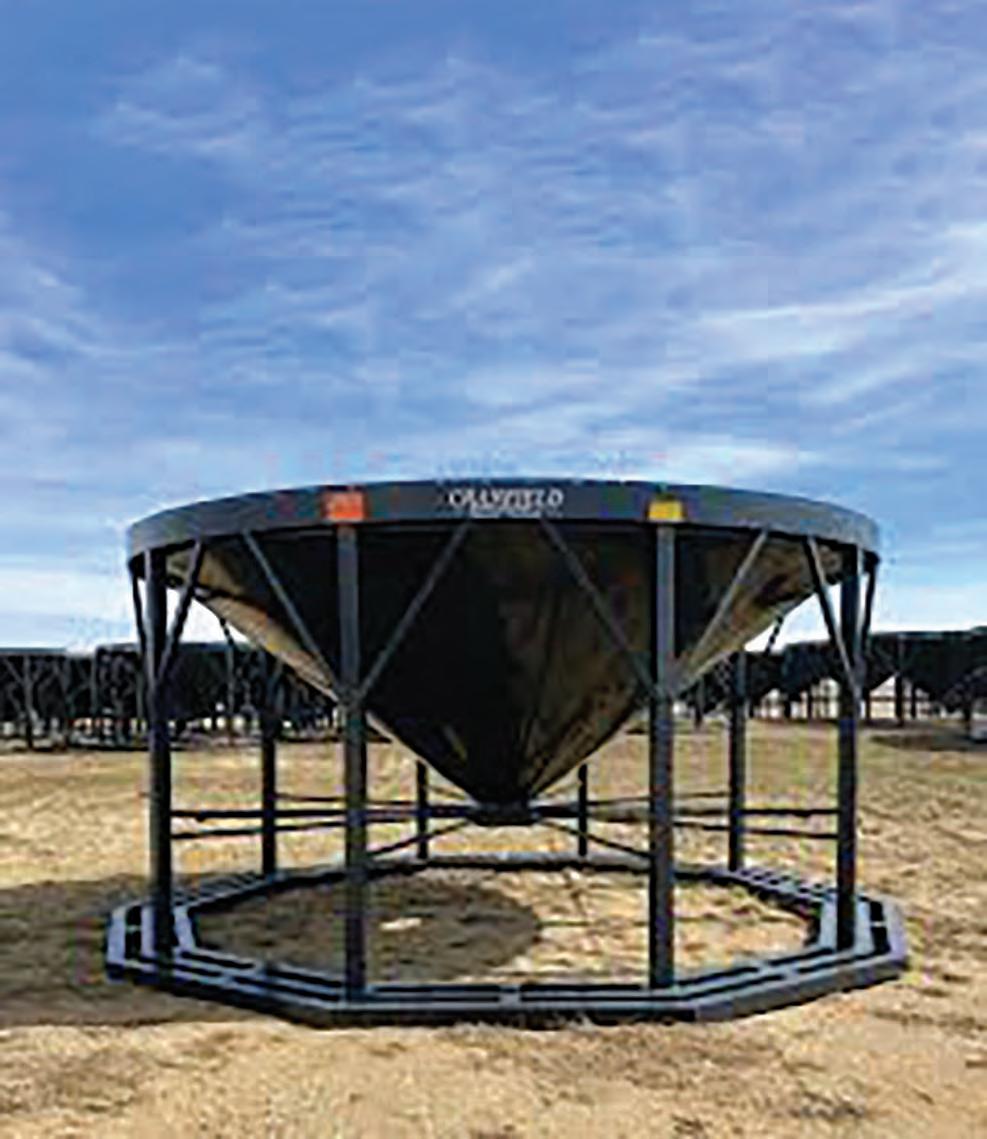
Grain bins and silos can pose significant risks on a farm. This includes toxic air exposure as well as the risk for engulfment. Highprofile incidents in 2023 illustrated the threat that oxygen-limiting silos can pose after deadly carbon dioxide concentrations form. Risk of suffocation also is great in a grain bin if a person is engulfed by grain. Workers should never work in a bin alone and should utilize a lockout/tagout system to ensure that all augers are off before entry.
Chemicals and biological hazards
High-potency pesticides and fertilizers create their own hazards on
the farm. Personal protective equipment (PPE) is a must when working with chemicals. Most modern standards require proper ventilation, chemical-resistant gloves and dedicated eye protection to prevent acute poison -
CRANFIELD
ing and long-term health issues.
Hearing protection
Exposure to the sounds of farm machinery and other equipment can result in tinnitus (ringing in the ears) and eventual hearing loss unless hearing protection is worn regularly.
Fatigue and mental health
Mental and physical fatigue of farm workers can result in injury as well. A critical trend uncovered in recent agricultural safety
From cereals to oilseeds (like canola), grain farming is responsible for many of the products you consume. How much do you know about grain production?
Learn more about this important enterprise by trying to answer these questions.
Multiple choice
1. Which grain is the most widely cultivated in the world?
A. Wheat
B. Corn
C. Rice
2. Which of these crops is not a cereal grain?
research ultimately led researchers to conclude that “fatigue management” needs to be prioritized. Tired operators can be vulnerable to lapse-of-attention errors, so farmers are encouraged to implement scheduled breaks
Stress also is a big factor for farmers. Environmental factors such as drought, floods, wildfires, pests, and diseases, as well as long hours and financial concerns, can result in feelings of isola-
A. Barley
B. Sorghum
C. Soybeans
3. What machinery is used to harvest grain?
A. Forage harvester
B. Hay tedder
C. Combine harvester
4. Which of these grains does not contain gluten?
A. Kamut
B. Corn
C. Rye
5. Which country is the largest producer of grains?
A. China
B. United States
C. Russia
tion and frustration. Stress is a known precursor to physical accidents on the farm.
These are just some of the risk factors on farms that can lead to accident or injury. Falls from ladders, injuries from livestock, exposure to UV rays, and exposure to high levels of dust, mold and bacteria also can affect modern farmers. Agricultural safety needs to evolve as quickly as the changing operations on farms.
True or false 6. Corn and wheat can also be used to produce biofuels.
7. Durum wheat, used to make foods like pasta or couscous, thrives best in a humid climate.
8. Businesses that process grains into flour are called “flour mills.”
9. About half the grain produced in North America is used for animal feed.
10. Cereals belong to the Poaceae family.
Answers below
Tired operators can be vulnerable to lapse-of-attention errors, so farmers are encouraged to implement scheduled break.
Dry weather allows haying to progress for southwest farmers
Submitted
Warmer and drier weather has allowed haying to progress, but many are looking for precipitation to help with grain fill, according to the weekly crop report for the period of July 14 to 20.
Some crops are getting closer to harvest maturity and producers are busy preparing their equipment and monitoring for damage from grasshoppers and gophers.
Very little precipitation fell in the southwest region this week. The highest amount fell in the Eston area at 15 millimetres (mm). The Morse area received 13 mm over the past week and the Tugaske area received 7 mm. Many other areas received only trace amounts of rainfall.
Some areas experienced drying due to heat and wind. Topsoil moisture levels across much of this region remain mostly adequate but there is a growing number of areas rated as short.
Cropland topsoil moisture is: one per cent surplus; 74 per cent adequate; 23 per cent short; and two per cent very short.
Hayland topsoil moisture is: 73 per cent adequate; 26 per cent short; and one per cent very short.
Pasture topsoil moisture is: 69 per cent adequate; 26 per cent short; and five per cent very short.
Due to the warmer weather, crop development continues to move closer to normal compared to previ-
ous weeks. While oilseeds and pulse crops have accelerated crop development, they also have the most amount of acres rated as being behind.
Haying operations continue to progress in the region. 40 per cent of the crop has been baled or silaged, with another 37 per cent cut and waiting to be baled and 23 per cent still standing. Hay quality remains high this week with 13 per cent rated as excellent, 81 per cent good and 6 per cent fair.
Minor to moderate crop damage was reported due to heat, dry conditions and wind. Smaller areas of crop damage were reported over the past week due to flooding, hail and gophers. Producers continue to monitor aphid pressure in their fields. Disease has been noted in some areas with producers applying fungicides to suppress disease already present and proactively spraying to manage disease from developing.
Over the upcoming weeks, producers will be busy finishing fungicide spraying, haying and getting equipment ready for harvest. Producers are reminded to keep safety top of mind while working in the field and moving equipment.
This can be a stressful time of year for producers as weather conditions can be unpredictable. The Farm Stress Line can help by providing support for producers toll free at 1-800667-4442.
Grassroots Cooperativ
Automation and artificial intelligence has changed the agricultural sector
Technology has revolutionized global agriculture. Automation has changed the agricultural sector, and those changes might have arrived in the nick of time.
The global population is projected to reach nearly 10 billion by 2050, and the Food and Agriculture Organization of the United
Nations estimates that food production has to increase by at least 70 percent to keep up with demand. In order to address the deficit without exhausting the Earth’s finite resources, many farmers are seeking help from artificial intelligence (AI).
AI offers farmers addi-
tional perks as well.
Precision agriculture
Precision is a notable benefit of utilizing AI within the agricultural sector. By using AI-powered sensors and satellite imagery, farmers can monitor crop health by looking at each and every plant instead of inspecting by the
acre. According to a report by MarketsandMarkets, a revenue impact and marketing consulting firm, the market for AI in agriculture is expected to grow from $1.7 billion (the figure in 2023) to $4.7 billion by 2028.
Precision helps to keep plants strong and weed-
free. AI-driven “see-andspray” technology utilizes computers to identify weeds among crops and apply herbicides only to those weeds. This reduces blanket-spraying an entire field, which is a waste of resources. Research published in the Journal of Agriculture and Food Chemistry indicates that this AI-guided tool can reduce herbicide use by up to 90 percent. This reduces costs to farmers and benefits local ecosystems.
Risk management
Weather across the planet has featured an uptick in volatile, unanticipated conditions. This can make planting even more challenging for farmers. AI models can process decades of historical weather data, soil conditions and atmospheric changes to offer predictive analytics that help the agriculture industry. By using predictive AI tools, farmers can determine optimal planting windows to maximize yield, according to the International Food Policy Research Institute. In addition, AI algorithms can predict outbreaks of pests and diseases before farm -
ers notice them on their own. Multispectral imagery from drones can detect crop stress caused by nutritional deficiencies or fungus days before a human might recognize such indicators. By catching things early, farmers can reduce risk of a poor crop and financial losses.
Automation Agricultural labor shortages are forcing farming operations to seek alternatives to get the job done. The American Farm Bureau Federation notes that farm labor has become more expensive and it’s harder to find workers who want to do the arduous tasks often required of them. AI-driven robotics and autonomous tractors guided by GPS can help fill the void. These devices can work through the night, preparing soil, harvesting crops and performing other vital tasks.
AI continues to be integrated into the agricultural sector. In order to maintain food security and mitigate labor shortages, farming operations are using technological tools to bridge gaps and improve efficiency.
BRED COW & SPECIAL SALES
By using AI-powered sensors and satellite imagery, farmers can monitor crop health by looking at each and every plant instead of inspecting by the acre.
SaskPower begins consultations on new power line route options
Shaynee Modien SaskToday.ca
Representatives from SaskPower recently discussed a proposed transmission line that would connect the province’s power grid between Coteau Creek, near SaskPower’s hydroelectric facilities at Gardiner Dam on Lake Diefenbaker, and Swift Current’s Chinook Power Station.
The proposed transmission line would stretch approximately 155 kilometres and be constructed on steel H-frame structures. SaskPower says the project is a key component of a broader plan to move electricity generated in the region to homes, businesses and communities across Saskatchewan.
The Crown utility said the proposed 230-kilovolt transmission line would strengthen Saskatchewan’s power grid as new wind and solar generation comes online in the south-central part of the province. It would also help ensure existing generating facilities can continue supplying electricity reliably.
SaskPower is currently consulting Indigenous rights holders, Métis communities, municipalities and landowners as it develops and refines potential routes for the line.
Once a preferred route is selected, SaskPower will seek easements for the right-of-way and conduct further consultation with directly affected landowners.
SaskPower representative Joel Cherry emphasized that the utility is still seeking public input before making any decisions.
“We are still at an early stage of this project and haven’t selected a final route,” Cherry said. “We are actively seeking feedback on potential route options before making a decision.”
Cherry encouraged farmers, landowners, Indigenous rights holders and members of the public to attend upcoming open houses and provide feedback on the project.
At the open houses, SaskPower’s stakeholder engagement team, engineers and technical experts will be available to answer questions from the public.
While some stakeholders attending the first open house in Swift Current expressed concerns about the line’s proximity to homes and properties, another group has become increasingly vocal about its potential environmental impacts.
Trevor Herriot, a Saskatchewan naturalist and spokesperson for the Public Pastures Public Interest group, raised concerns about several of the proposed routes.
The group is particularly concerned about routes that could pass through Saskatchewan Landing Provincial Park and the Matador Community Pasture.
The group has encouraged the public to attend SaskPower’s consultation meetings.
“We’re concerned about the proposed route that would cut through the west side of Saskatchewan Landing Provincial Park,” the group said in a statement. “That area consists of pristine grasslands with no visible infrastructure of any kind, and we believe Proposed Transmission Corridor West should not be considered.”
The group also expressed concerns about Proposed Transmission Corridor West 1 and Proposed Transmission Corridor Centre, which would cross significant portions of the Matador Community Pasture and potentially impact native prairie habitat.
According to the group, Proposed Transmission Corridor East 1 and Proposed Transmission Corridor East 2 appear to be less harmful but require further study by people familiar with the area. The group also noted that another possible route, Proposed Transmission Corridor Crossover, remains unclear.
Herriot said the group’s primary goal is to raise awareness about Saskatchewan’s remaining native grasslands.
“These incredibly precious native pastures and grasslands are among the last we have left,” he said. “We’re down to about 10 to 12 per cent of the grassland that existed before settlement. The concern is that some of these routes could pass through some of the largest remaining pieces of native grassland in Saskatchewan.”
Herriot said there is still time for SaskPower to work with stakeholders before selecting a final route.
“There is still lots of time to work with SaskPower to ensure that they make a good decision,” he said.
Despite its concerns, the group supports the need for improvements to the province’s electrical grid.
“We absolutely need a
stronger, better electrical grid if Saskatchewan is going to take responsibility for the electrification required to reduce carbon emissions and move away from coal,” Herriot said.
“We’re going to need alternative sources of energy and a transmission system that can support them. We support good transmission infrastructure. He also men-
tioned the group just wants to make sure the route passes through landscapes with low biodiversity value and avoids native grasslands.
As of July 22, members of the group had not attended the Swift Current open house but said they hope to work with SaskPower, as they have on previous projects affecting native habitats.
Attention Farmers and Ranchers
We Carry Net Wrap and Twine Check our
Competitive Pricing
Farmland can be habitats for wildlife
When managed thoughtfully, farmland can offer shelter, food and safe breeding areas for a wide range of species. Here are four practical ways farmers help wildlife flourish.
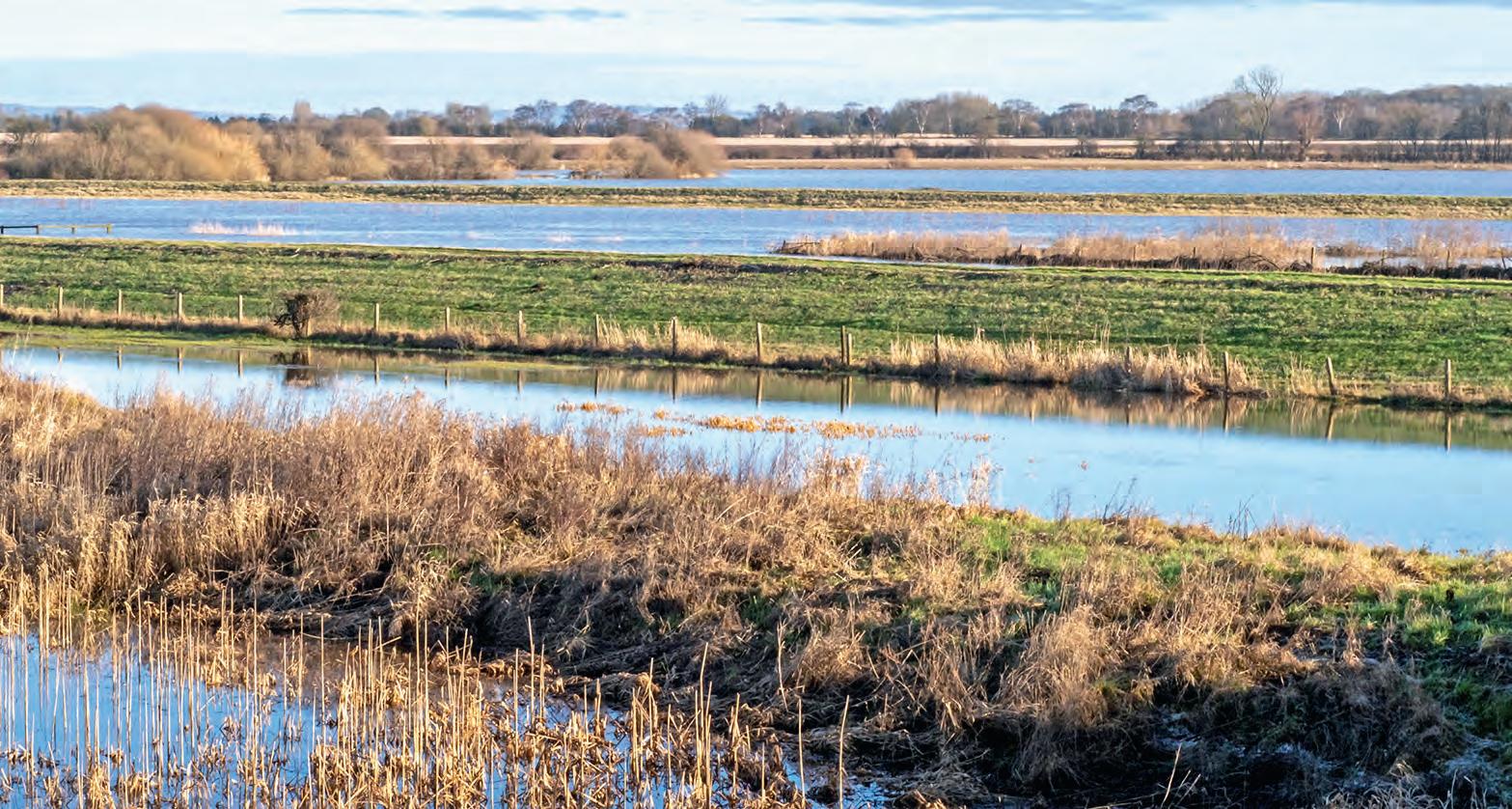
Protecting wetlands
Ponds, streams and wetlands are some of the busiest places on a farm when it comes to wildlife. Farmers often leave buffer zones of grasses or plants around these areas to keep them clean and undisturbed. This helps protect species like
frogs, fish, ducks and insects, while also improving water quality and reducing runoff and flooding.
Planting shelterbelts
Farmers often plant rows of trees and shrubs along fields to break the wind and prevent soil erosion. These hedgerows are living borders, providing nesting sites and food for wildlife. They also serve as corridors, where wildlife can move safely between habitats without crossing open, exposed land.
Using wildlife-friendly farming practices
Farmers who use practices such as rotating livestock between pastures, leaving crop residue after harvest and planting cover crops create better conditions for wildlife.
Wildlife does more than simply coexist with farm activity; it plays an active role in a farm’s wellbeing. The presence of birds, insects and other animals helps create a more balanced and resilient ecosystem.
Reasons to remove cull animals
One might think an animal is culled only when it has a disease that threatens the entire herd. However, the truth is that some cull animals can be removed from the herd and used for other purposes.
Cull animals may be too old for breeding or, in the case of racehorses for example, for competition. Once the animal reaches a certain age, it’s susceptible to various health problems,
such as lameness, infertility, mastitis or arthritis, and is more prone to injury in general. In the case of poultry or dairy breeds, the animal may no longer be able to produce eggs or milk.
Dairy cows or breeding sows, for example, are gen erally sold at auction and then taken to a slaughterhouse to be processed into ground meat, sausages, bacon and other meat products. These carcasses are
also valued for their hides. Even their bones may be processed into meal to be used in animal feed.
Laying hens may also be sold for their meat. Sometimes they may be adopted by families, as their lower egg production is sufficient to meet the needs of a single household.
It’s helpful to understand these practices to appreciate the roles animals play throughout their lives.
Farmers’ mental health is important
Ryan Young SaskToday.ca
The Executive Director of the Do More Agriculture Foundation, Merle Massie, had conversations with farmers about mental health in agriculture, a topic she that is getting a little bit easier to talk about.
“Yeah, they are. What we do know, though, is that there’s still, there remains a lot of stigma.” Massie said, noting one conversation she had with someone who said their husband decided to take a week off from farming, but didn’t want to mention it to family members.
“And she said, well, just tell your sisters that, you know, you’re going to take a week off for your mental
health. He’s like, I’m not mental, right? I’m not going to say that because I’m not mental.” Massie recalled from the conversation.
She said taking a break and doing something fun on your farm is really important for one’s mental health.
Massie promoted Do More Ag’s podcast called “Hey, are we okay?” at Ag in Motion. Launched in October of 2025, the podcast profiles what communities are doing to raise the profile of mental health in their community.
Part of the podcast includes a segment called “Fun on the Farm”. As the name suggests, it encourages people to submit a
voice note to Do More Ag on what they do for fun while on the farm.
She cited one example of farm kids using pasture land as a dirt bike trail.
“He was telling me all about it. And I said, so what do the cows think of that, you know, in the pasture? Well, sometimes they wreck it. But I have to go and fix it. But it was hilarious. It was a great story.” Massie remembered.
There are eight episodes in total for season one with season two of the podcast to premiere in September, she said. “We’ve already got a number of great episodes in the can, and we’re so looking forward to sharing those stories.”
Spotlight on beekeeping in the province: honey, beeswax and more!
Beekeepers raise colonies of domestic bees to harvest the prod ucts from the hives. They must nurture the health of their bees while also ensuring that the area where the bees forage can provide sufficient pollen and nectar to sustain them.
Beekeeping is an essential occupation, as it contributes to the pollination of about one-third of the food consumed by humans. This includes foods like blueberries, cranberries, apples, tomatoes and cucumbers. Many producers of such crops even offer pollination services to generate additional income.
The Saskatchewan Beekeepers Development Commission is a strong organization with over 100 members. Its membership includes a majority of Saskatchewan’s commercial beekeepers as well as an equal number of hobby beekeepers. Beekeepers
are an innovative and progressive group, proud of their accomplishments. Those industrious bees contribute to the creation of many different products. From the apiary’s harvest, beekeepers may produce:
• Honey.
• Pollen.
• Royal jelly, a substance secreted by bees and used to feed larvae and queens.
• Beeswax.
• Propolis, a resin that bees collect from buds and use to seal cracks in the hive, among other things. These products are used to manufacture cosmetics, natural health products, candles, candy, mead, honeys, salad dressings and much more.
Summer is peak beekeeping season, but beekeep ers work hard— and endure their share of painful beestings—all year long. When the honey isn’t being harvested, it still must be sold.
Saskatchewan celebrates the commitment of long-serving crop reporters
SaskToday
The Government of Saskatchewan recognized long-serving volunteer crop reporters from throughout the province during the Saskatchewan Crop Reporter Appreciation Event in Saskatoon.
The event celebrated volunteers marking 25, 30, 35, 40 and 45 years of service providing seasonal, weekly observations and field reports that support Saskatchewan’s Crop Report program, and recognized them for their ongoing commitment in supporting Saskatchewan’s agriculture sector.
“The work our crop reporters do often happens behind the scenes, but it makes a real difference for producers across Saskatchewan,” Agriculture Minister David Marit said.
“Their willingness to gather information helps
keep the agriculture community informed and connected. I want to extend my sincere thanks to each of our crop reporters for their continued dedication and contribution and offer a special thank you to those being recognized for their many years of commitment and service.”
Saskatchewan’s Crop Report program is a trusted source of agricultural information, offering valuable insight into growing conditions across the province throughout the production season, according to Sask. Agriculture.
More than 200 volunteer crop reporters participate in the weekly report, representing agricultural regions throughout Saskatchewan. Their local knowledge and firsthand observations help deliver timely, accurate information on crop conditions, seeding and harvest
progress, moisture levels and other key indicators that are relied upon by producers, industry stakeholders and the public.
“Being a crop reporter is far more than just reading a rain gauge; it comes with significant benefits and a real sense of purpose,” volunteer crop reporter who received recognition for 45 years of service Lyle Ehrman said.
“I truly feel this program is a vital service globally. We are not just looking at our own backyards; we are providing the raw data that feeds into a much larger, worldwide picture of food security.”
The appreciation event provided an opportunity for Ministry of Agriculture representatives to recognize participants for their ongoing commitment and to celebrate the important role they play in supporting
Beekeepers raise colonies of domestic bees to harvest the products from the hives.
FARM APPRECIATION WEEK August
4–7
Southland Co-op Assiniboia Agro Centre
TUESDAY, AUGUST 4
FEED DAY
The BIG Feed Sale!
10% OFF all bagged feed Clearance pricing on all in-stock bulk feed
BONUS: Buy 2 bags of feed and receive 3 stamps on your Feed Loyalty Card!
WEDNESDAY, AUGUST 5
FENCING & EQUIPMENT DAY
Save up to 30% on select fencing and livestock equipment. Featuring:
• Hi-Hog
• 2W Livestock Equipment
• Farm Flex
This is one of our biggest fencing and equipment sales of the year!
⛽ THURSDAY, AUGUST 6
PETROLEUM DAY
Take advantage of one-day-only petroleum savings!
10% OFF Fuel Tanks
Purchase a fuel tank and sign a petroleum contract to receive a FREE Tattle Monitoring System.
Plus, ask us about our current promotions: Buy Now, Pay Later promotion on Harvest Fuel Buy Now, Pay Later promotion on Harvest Oil
FRIDAY, AUGUST 7 - FARM APPRECIATION DAY
Join us for a day dedicated to celebrating our farming community!
We’ll have: Farmer Appreciation BBQ • Petting Zoo • Free Donuts • Slurpees • Balloons • Games & Prizes Family Fun • Product Displays • Southland Co-op Tent • Incredible AG Week Specials
Whether you’re stopping in for the savings, the food, or a fun family outing, there’s something for everyone!
Oil and Lubricants
Lifestyle & Wellness
Helpful tips for managing multiple medications
Important for seniors to stay warm and safe during winter time
When winter’s beauty turns more beast with arctic winds, mounds of snow and bone-chilling temperatures, the season’s harsh side can prove especially dangerous for senior adults.
Gone are the days when retirement meant endless quiet afternoons and slow days spent in rocking chairs. Today’s retirees are smashing those old stereotypes and redefining what it means to enjoy their golden years.
Important for seniors to stay warm and safe during winter time
When winter’s beauty turns more beast with arctic winds, mounds of snow and bone-chilling temperatures, the season’s harsh side can prove especially dangerous for senior adults.
To help families ensure their seniors stay warm and safe during winter months, we recommend the following precautions:
To help families ensure their seniors stay warm and safe during winter months, we recommend the following precautions:
Stay warm indoors: Many elders push their thermostats to higher temperatures, but this promotes over-dry skin and nasal passages, and raises the heating bill. Instead, seniors who feel chilled might consider wearing thicker socks, fleece slippers and a thin, thermal undershirt and leggings.
Retirement is evolving quickly in the digital age, offering new opportunities and presenting unique challenges for those entering this exciting chapter of life. For individuals planning to retire in 2026, staying ahead of retirement trends is essential. Understanding the influence of economic, technological, and social trends can play a crucial role in shaping your retirement planning.
Stay warm indoors: Many elders push their thermostats to higher temperatures, but this promotes over-dry skin and nasal passages, and raises the heating bill. Instead, seniors who feel chilled might consider wearing thicker socks, fleece slippers and a thin, thermal undershirt and leggings.
The retirement landscape in 2026 is significantly
Beware of slick outdoor conditions: Inclement weather can create a buildup of snow, ice and mud on walkways and driveways. Outdoor fall prevention includes these tips: wear nonskid boots, get help with snow shoveling, use ice melt or sand for traction, and watch diligently for black ice.
Beware of slick outdoor conditions: Inclement weather can create a buildup of snow, ice and mud on walkways and driveways. Outdoor fall prevention includes these tips: wear nonskid boots, get help with snow shoveling, use ice melt or sand for traction, and watch diligently for black ice.
influenced by economic factors such as inflation and fluctuating interest rates. These elements can affect the purchasing power of your savings and the stability of your investments.
Global economic trends, including market volatility and shifts in employment patterns, also play a crucial role in shaping retirement funds and pensions, emphasizing the need for strategic financial planning.
Key retirement trends to watch include:
Wear appropriate clothing outdoors: To prevent heat loss or hypothermia when body temperature drops too low, the elderly who venture into the cold should wear light, layered, loose-fitting clothing under an insulated, waterproof winter coat. Outerwear with a fleece lining and windproof shell is a plus. A hat is a must since as much as 50 percent of body heat is lost through the head.
• Continued cost-of-living increases that affect seniors living on a fixed income.
• Changing rates affecting savings yields, annuities, and borrowing costs.
Wear appropriate clothing outdoors: To prevent heat loss or hypothermia when body temperature drops too low, the elderly who venture into the cold should wear light, layered, loose-fitting clothing under an insulated, waterproof winter coat. Outerwear with a fleece lining and windproof shell is a plus. A hat is a must since as much as 50 percent of body heat is lost through the head.
Weatherproof, lined gloves or mittens that still allow for flexibility are also a smart answer to the cold.
Stay current on immunizations: Seniors with a weakened immune system are more vulnerable to catching colds and the flu or more severe illnesses including pneumonia. Older adults should consult with their doctor about seasonal and year-round immunizations that are best for their individual overall health.
• Ongoing fluctuations influencing retirement portfolios and long-term investment strategies.
destinations, picking up new skills like pottery or guitar, and even launching second careers as entrepreneurs or influencers. Additionally, many are more physically active than ever, participating in high-energy sports such as pickleball, hiking, cycling and dance.
A stimulating new chapter
Weatherproof, lined gloves or mittens that still allow for flexibility are also a smart answer to the cold.
Stay current on immunizations: Seniors with a weakened immune system are more vulnerable to catching colds and the flu or more severe illnesses including pneumonia. Older adults should consult with their doctor about seasonal and year-round immunizations that are best for their individual overall health.
Keep well-hydrated: Although the elderly may not feel as thirsty in cooler weather, drinking six to eight glasses of liquid a day is still advised. Hot tea, apple cider and cocoa are fun additions to a wintertime beverage list, but stay mindful of the extra sugar and calories.
Keep well-hydrated: Although the elderly may not feel as thirsty in cooler weather, drinking six to eight glasses of liquid a day is still advised. Hot tea, apple cider and cocoa are fun additions to a wintertime beverage list, but stay mindful of the extra sugar and calories.
Rather than slowing down, retirement has become a launchpad for new passions and dreams. It’s a time to explore creative projects. Why not try your hand at stand-up comedy or improv? Get creative and dive into a painting class or pick up juggling; the opportunities are endless! Your golden years can be as fulfilling as you choose to make them.
• More individuals delaying retirement due to financial necessity or personal choice.
• Greater reliance on 401(k)s and IRAs over traditional pensions.
• Rising medical expenses placing additional strain on retirement savings.
• Growing trend of retirees supplementing income through flexible work.
The new golden years
Maintaining strong social connections in your 60s, 70s and beyond means more than having fun. Socializing is a vital way of staying healthy. Research shows that people with rich social lives experience stronger immune function, slower cellular aging and better mental health. Why miss out?
Maintaining strong social connections in your 60s, 70s and beyond means more than having fun. Socializing is a vital way of staying healthy. Research shows that people with rich social lives experience stronger immune function, slower cellular aging and better mental health. Why miss out? Loneliness is a silent enemy Social isolation and loneliness can have serious
Modern seniors are breaking free from tradition and embracing lifestyles filled with excitement, activity and endless possibilities. They’re jet-setting to far-flung
consequences on your overall health and wellbeing. Did you know that older adults who feel socially isolated are at a significantly higher risk of early death compared to their more socially active peers? Isolation has also been linked to a higher risk of heart disease, depression, dementia and even DNA damage that can accelerate cognitive decline.
reduce stress, keep your brain active and provide a sense of purpose. Consider joining a walking group, attending weekly meetups, participating in a book club or simply engaging in regular conversations with your neighbours. Even small steps towards social connection can significantly enhance your well-being. connections and have fun along the way.
Kay Cristo Room, Assiniboia &
Obituaries
Brandon Welder
1983-2026
It is with the heaviest of hearts and deeply sadden loss of our fellow community member, Brandon Darryl Welder. Beloved husband, father, son, cousin, nephew has passed away peacefully surrounded by his family and friends at the Regina hospital on July 5, 2026. Left to celebrate his life are his wife Nicole, daughters Jasmine, Brooklyn son Connor, grandfather Albert Metz, mother Karen Metz (Brian Sayers), Father Darryl (Erin), sister Kennedy, Roger and Joyce Kerik and numerous aunts, uncles and cousins. Brandon was predeceased by his step-father Welsey Popescul, uncle Don Welder, aunt Debbie Welder grandparents JH and Phyllis McMillan, grandparents Yvonne Metz, Jeanette Metz, Joe and Hilda Welder. Brandon was born on Sunday December 11, 1983 at 11:53 p.m. He lived in Regina until 1991, when he and his parents moved to Assiniboia. He graduated in 2001. He worked for Patterson Grain, GWR and for the Town of Assiniboia. All of which he enjoyed. In the past two years Brandon was working for the Highways Dept. Loved it! Loved the challenges of the job, the new equipment to operate, the new skills he was developing and of course his boss and his co-workers. He was a strong proud hard working man who wasn’t willing to compromise his morals and values. He lived his life to the fullest, filled the room with hearty laughter, off coloured wise cracks and always left you with a good feeling about yourself. Brandon had so many outside of the family, brothers and sisters, aunts and uncles. Brandon truly was an undeniable blessing given to all who met him. A celebration of life will be held at the Prince of Wales Centre Auditorium, August 8 at 1:00 p.m.
The Assiniboia Times will be closed Wednesday, July 29 to Tuesday, August 4. Book classifieds during this time by emailing dstuart@sasktel.net.
Unseen, unheard,
missed,
very dear Forever Loved and Missed Floraine, Leann and David, Roxann and Jason and families.
and Bud Auctions in Edmonton. Consign Now! Firearms, Ammo, Optics, Accessories etc. Call Brad Ward, 780-940-8378. FirearmsAuction.ca
The Kamsack Times is hiring a Local Journalism Initiative (LJI) Reporter to produce original civic journalism for Kamsack; Cote, Keeseekoose and The Key First Nations; and surrounding towns. Job is a term position until March 31, 2027. Apply with cover letter and three writing samples to Devan Tasa at dtasa@tasamedia.ca.
Local golfers aren’t bugging out because of mosquito mania
Sherri Solomko Freelance Reporter
While swarms of mosquitoes are sending many residents scrambling indoors or timing their outings to dodge the worst of the bites, golfers at Assiniboia Golf Club aren’t letting the pesky pests drive them off course.
According to a spokesperson for the club,
there are no mosquito-control measures taking place or planned at present, with most golfers simply coming prepared.
“We haven’t done anything as far as mosquito control and there isn’t anything in the works. Golfers are managing with spray and hoping for a breeze,” the spokesperson told the Assiniboia Times.
Despite the season’s bumper crop of buzzing biters, the fairways remain busy.
“It doesn’t seem as though golfers are staying away. Maybe selecting their times differently, but it’s hard to tell. The regulars have their favourite times and they stick with them,” the club said. “A breeze is good to keep them at bay, and keeping it straight on the fairway helps too. Golfers know they need to avoid long grass.”
In other words, the rough isn’t just bad for your score, it might leave you feeling a little itchy too.
The c ourse isn’t bat -
tling Dutch elm disease, as there are no elm trees on the property, but staff are keeping a close eye on aging poplar trees.
“We planted a few earlier in t he spring and a re looking into the shape of the ones we have.”
The golf calendar i s also in full swing with a packed lineup of tournaments throughout August.
The Bob Rust twoperson best ball tees o ff August 1, followed by the Senior Men’s Stroke Play on August 6 and the Ladies’ Two-Person Scramble on August 8.
Young golfers take their shot at the Junior Open
on August 21, before players rally for a good cause during the CIBC Golf for a Cure breast cancer fundraiser on August 22.
The month wraps up on a glowing note with the always-popular four-person best ball Glow Tournament on August 29, a bright spot that’s sure to outshine even the mosquitoes.
Whether golfers are chasing birdies or just swatting away t he occasional uninvited “fore”legged fan, Assiniboia Golf Club’s scenic ni ne-hole course continues to draw players who refuse to let a few bugs spoil their game.
Ladies Golf tournament in Willow Bunch
A two-person best ball par-three ladies tournament was held at the Willow Bunch Golf Club, with 44 golfers on July 17. It was a bright summer day. Winners for the day were Sarah Thorhaug and Hailey Eger from Willow Bunch with a score of 60.
Second place was Mad Thorhaug and Kathy Ten-
dler with a score of 62
Third place was Lynne Piche and Michelle Bouteaux with a score of 66.
Second flight
First place was Alisa Wilford and Emily Jepson with a score of 71.
Second place was Danika Wolk and Kylie Jamison with a score of 71. Third place was Rita
using the strength of community newspapers! Visit www.swna.com or call 306-649-1405 to find out how!
CLASSIFIEDS 44 local community newspapers, distributing to over 450 communities, including 14 cities. Call 306-649.1405 or visit www.swna.com for details. Advertisements and statements contained herein are the sole responsibility of the persons or entities that post the advertisement, and the Saskatchewan Weekly Newspaper Association and membership do not make any warranty as to the accuracy, completeness, truthfulness, or reliability of such advertisements. For greater information on advertising conditions, please consult the Association's Blanket Advertising Conditions on our website at www.swna.com.
Joyal and Joanne Croissant with a score of 72.
Third flight
First place was Linda Hall and Kathy Willis with a score of 75.
Second place was Erin Tiner and Tulsa Warken with a score of 77.
Third place was Desiray Buckler and Callie Buckler with a score of 78.
In Memoriam
Sarah Thorhaug and Hailey Eger won the Willow Bunch Ladies Golf Tournament held July 17.
The Heart of Mossbank: Old Wives Lake Festival 2026
Submitted by Amisha Modi
The Old Wives Lake Festival returned to Mossbank with neighbours, old friends and new faces together for three days of small-town celebration.
The festival grounds were filled from, July 17 to July 19 with laughter, music and the warm conversations that happen when a community gathers. Families spread blankets on the grass while children ran between carnival rides, their delighted squeals filling the air. Bill Duncan opened the entertainment on Friday evening. Breaking Curfew performed Saturday night, drawing couples to dance under the stars and recall memories of younger days.
DJ Doug Dimen from Platinum Music provided music between acts, while MC Chai announced the tractor pull events, where Jake and fellow competitors demonstrated their machines.
The Mossbank Volunteer Fire Department presented the annual fireworks display on Saturday evening. Grandchildren climbed into grandparents' laps, pointing at each colourful burst across the night sky.
Food vendors, drink booths and local merchants served festival favourites throughout the weekend while friends and longtime community members caught up over coffee and pie. The three-day festival gathering brought together residents of all ages, reminding those in attendance that in Mossbank, community connections run deep.
The festival will return next year in 2027, continuing the tradition of bringing the community together at Old Wive’s Lake Festival.
Fife Lake man recognized as most deserving official from Hockey Sask.
Sherri Solomko
Freelance Reporter
Braden MacLean of Coronach was credited, by Hockey Saskatchewan, for contributions made throughout his officiating career. MacLean represents Zone 3.
The four officials recognized from southern zones 1-4 were named Most Deserving Official Awards for the 2025-26 season.
Assiniboia Times reached out to MacLean who replied, “I love working with coaches and the kids and other officials. It’s a great activity to help pass the winter. “
MacLean says he officiates all minor hockey up to U18 and serves as a linesman for senior hockey.
“I love supporting kids that are in officiating too.”
A rural resident of Fife Lake, MacLean said he is able to continue in this role because his wife is very supportive of his work and he ascertains she is the reason he can fulfill this role throughout the winter.
MacLean travels to Bengough and Coronach in the east, and western parts include Wood River area of Kincaid, Glentworth and others while Mossbank is the farthest north of the area he of -
ficiates in. The newly awarded Hockey Sask. official said he is also in Assiniboia officiating a lot as well.
These people, which include MacLean, dedicate their time to working games, mentoring officials, administering programs and supporting development opportunities at all levels of the game, as included in a social media post by Hockey Sask.
“The award recognizes individuals whose longterm contributions have helped strengthen officiating within their communities and throughout the provincial development pathway.”
All four recipients have also been nominated as Saskatchewan’s representatives for Hockey Canada’s Most Deserving Official Award, which will be announced later this year.
Hockey Saskatchewan’s announcement acknowledges, “This year’s recipients have consistently led by example while embracing opportunities to both develop themselves and support others within the program.”
Like many rural areas throughout the province, south-central communities often face challenges
finding enough qualified officials to cover games throughout the season.
“Braden MacLean has quietly become one of the key individuals helping address those challenges in his region. At just 26 years old, MacLean has taken on a major role helping assign officials, recruit support, and ensure games across several communities are properly covered. His work has not gone unnoticed, with fellow regional assignors regularly identifying him as a dependable resource willing to either work games himself or help find officials to fill assignments,” said the Hockey Sask. media release.
Still active as an official, MacLean returned to his home zone following university and an internship in Regina and southeastern Saskatchewan. Since returning, he has played an important role in building a stronger officiating culture in the area, contributing to improved retention and increased participation among local officials.
“It’s all about relationships, make good relationships with people and it helps with your role. Most people are really good to deal with,” concluded MacLean.
Christmas comes early to Assiniboia
Submitted by Amisha Modi
Who says Christmas has to wait until December?
The Town of Assiniboia Recreation Centre proved that holiday magic knows no season when it hosted a Christmas in July celebration held on July 25.
Families flooded through the doors ready for summer fun with a festive twist. The aquatic centre was the heart of the action, with children and adults alike splashing through the water while soaking up the holiday spirit.
Between cooling off in the pool, visitors danced to
festive music and enjoyed refreshing snow cones that kept everyone cool and smiling.
“The energy was incredible,” said one attendee.
“You could feel the community coming together in a way that reminded us why we love living here.”
Whether families were dancing together, cheering each other on, or simply enjoying quality time together while savoring their snow cones, the atmosphere was electric with joy and connection.
What made the event truly special wasn’t just the activities, it was the sense of belonging. Neighbours reconnected, children made memories, and the entire community reminded itself of what makes Assiniboia special: which is people who care about creating moments together.
As summer winds down, this Christmas in July celebration stands as a perfect example of how our town brings people together. It proved that the warmth of community spirit shines brightest when we gather with open hearts and genuine enthusiasm. Here’s to more celebrations that bring us closer!
RCMP respond to 36 calls for service
The Assiniboia RCMP detatchment responded to 36 calls of service during the week of July 15 to July 21. These included:
• 2 Suspicious person
• 1 Break and Enter to a residence
• 1 Missing Person
• 2 Wellbeing Checks
• 1 Mental Health Act
• 1 Uttering Threats
• 1 Sexual Assault
• 1 Intimidation of Justice
• 1 Harassing Communications Calls for Service
Assiniboia RCMP received a report on July 16 of a boarded up vacant residence in Assiniboia that had possibly been accessed by person(s) with no right to the property. This matter is still under investigation. Members of the public are encouraged to contact the Assiniboia RCMP if they see or suspect suspicious activity in their neighborhood.
Assiniboia RCMP received a report on July 18 of a suspicious person attending a long-term care facility within the Assiniboia detachment area. A person had attended on foot and was asking for EMS and was possibly suffering from heatstroke. Members attended however the person had already departed the location and patrols were negative.
Assiniboia and Coronach members were dispatched to the West Poplar border crossing on July 19 as someone was attempting to cross
into the US illegally. Members attended and located the individual and transported the person out of the Assiniboia jurisdiction.
Traffic Safety
Assiniboia RCMP received a report on July 15 that a semi-truck had passed someone in a dangerous manner within the Assiniboia Detachment area. A license plate of the truck was obtained and the matter is still being investigated.
Safety Tips
Prepare to stop and plan ahead: With road construction underway in our area, and specifically on Highway 2 between Assiniboia and Ardill, please remember to obey traffic signs and signals in the area. Fines are increased for disobeying laws within construction areas and most importantly, everyone wants to go home safe at the end of the workday. Consider different travel routes to get to your destination to avoid delays.
Never drive impaired: Plan a safe ride home and expect Mandatory Alcohol Screening during any routine traffic safety stop.
Slow down and move over: On Saskatchewan roadways, you must slow to 60 km/h when passing stopped emergency vehicles, law enforcement, tow trucks or highway workers with flashing lights. Fines start at a $170 base penalty plus additional amounts for every km/h over the limit. In collisions causing injury or
death, it can lead to criminal charges.
In Your Community Throughout the week, members conducted proactive patrols within the areas of Assiniboia, Rockglen, Mossbank and several RMs.
Continuing this week, people have been contacting the Assiniboia Detachment (as well as the Coronach Detachment) to report receiving text messages from an unknown number advising them that they have outstanding tickets and to click on an attached link which is a scam. SGI will never contact anyone this way when dealing with matters such as this and please ignore these messages.
Report information
If you have information about any crime or have a crime to report, please contact the Assiniboia RCMP Detachment or call 9-1-1 in an emergency.
Report some complaints such as damage/mischief to property under $5,000, theft of bicycle under $5,000, theft under $5,000, theft from vehicle under $5,000, lost or found property and damage/mischief to vehicle under $5000 online here: https://ocre-sielc. rcmp-grc.gc.ca/saskatchewan/en. To submit tips or information anonymously, call Crime Stoppers at 1-800-222-TIPS (8477) or submit a tip online at www. saskcrimestoppers.com.
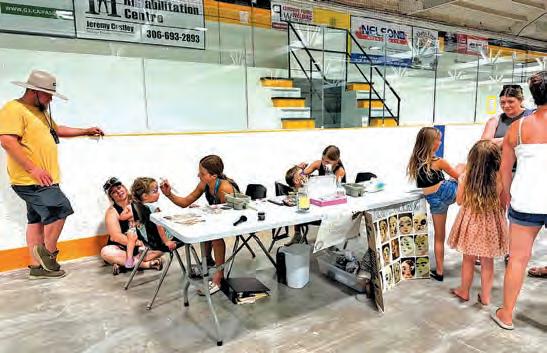
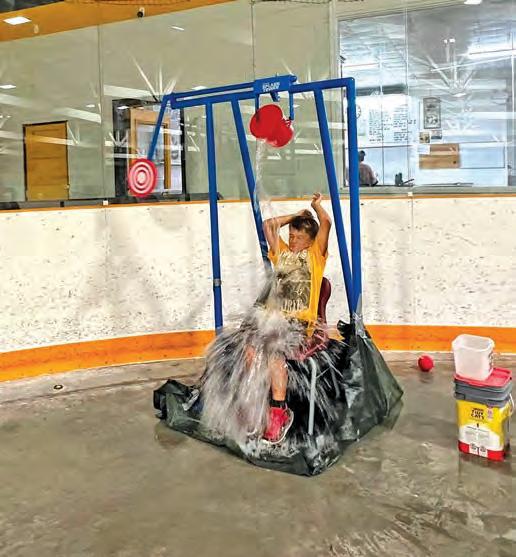
The Town of Assiniboia Recreation Centre hosted a Christmas in July event.