

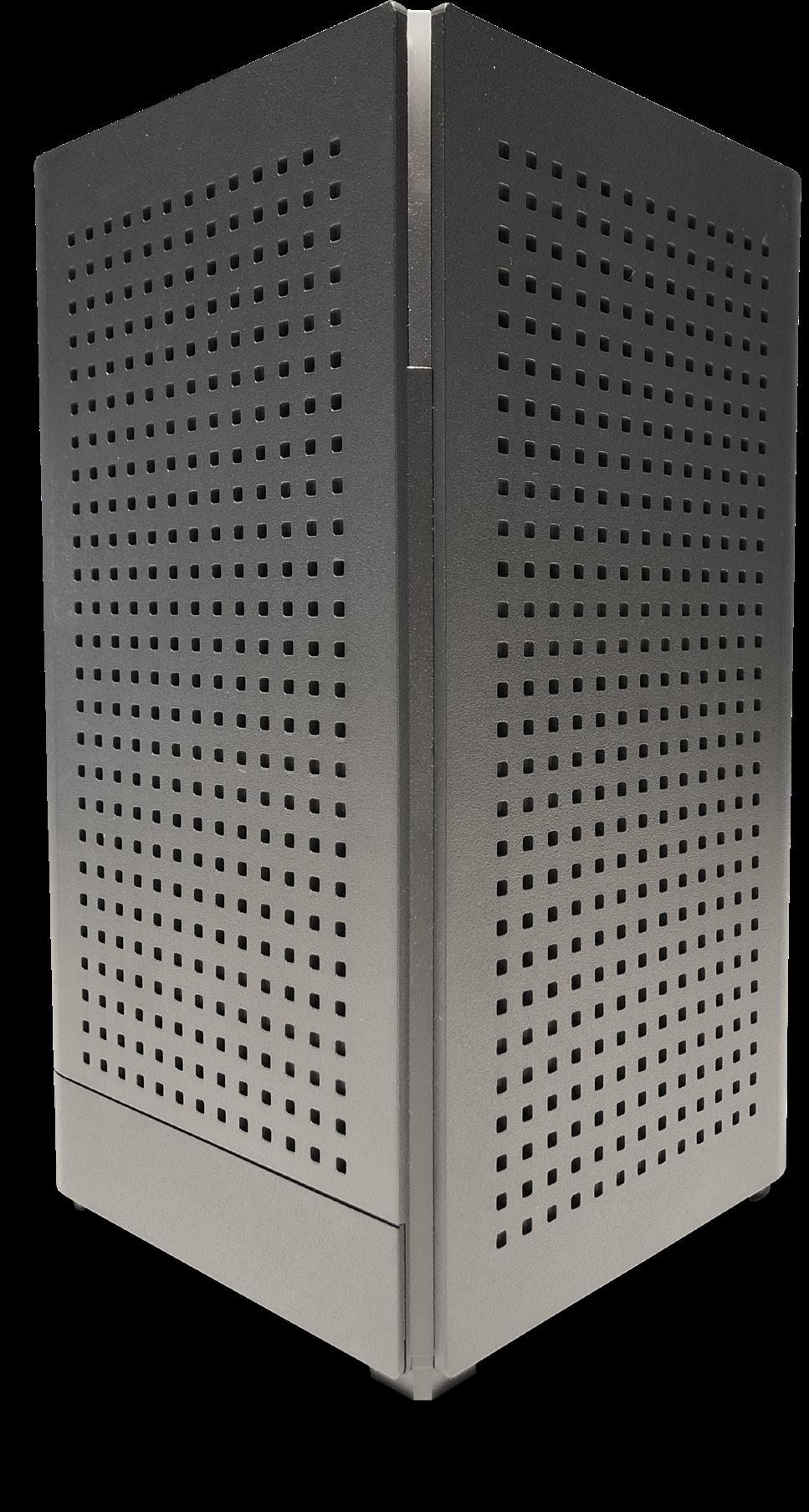


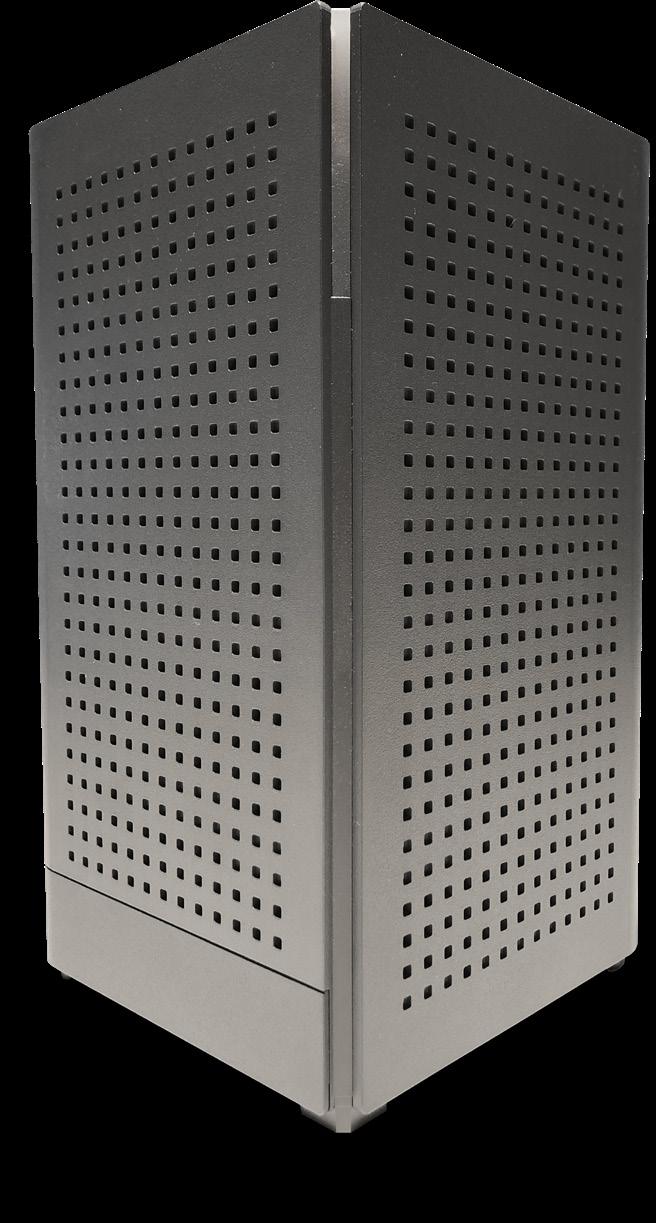
Life has changed a lot over the past year. With so many of us working and learning from home, we’ve become more reliant on our internet than ever before. We’ve trusted our home networks to connect us to everything from homework to healthcare.
Suddenly, lightning-fast home internet isn’t a luxury; it’s a necessity.
While things are slowly returning to normal, our relationship with the internet has changed for good. We’ve learned that remote work, telemedicine, and video conferencing are conveniences that can keep us connected to the world, even on the other side of a pandemic.
At RTC, we’ve changed, too. With upgrades to our robust fiber network, we are now able to offer speeds of 10 Gig—the fastest you’ll find anywhere in the country.
And 10 Gig isn’t the only change you’ll see at RTC. With this network upgrade and new blazing fast speed, we have dropped the prices for our two other fastest speeds. Now, residential customers can enjoy 1 Gig for just $125 a month, which includes our Total Experience Wi-Fi package (a $17 value) at no extra cost to you.
The myRTCnet app, which is free with your Gig internet service, has also been updated to provide you a better user experience. Our improved app will feature a more attractive and intuitive design, a new security dashboard, and the power to prioritize devices.
“We don’t want our customers to be held back by their internet,” said Brooks Goodall RTC Chief Operations Officer/Asst. General Manager. “That’s why we’ve created the fastest, most reliable broadband network. We’ve made a promise to provide the cutting-edge technology you need to stay connected to the world, and 10 Gig is the latest way we’re fulfilling that promise.”
Just a few years ago, 10 Gig speeds would have been unimaginable. In 2008, only 16 percent of Americans had access to internet service of 10 Mbps. Five years ago, RTC was among the first five percent of providers to offer 1 Gig, an internet connection that transmits data at a speed of 1000 megabits per second. The widespread deployment of fiber has allowed for speeds to increase rapidly, and today, 1 Gig speeds are available to over 80 percent of Americans.
Now, we are staying ahead of the curve by joining the first one percent of providers to offer 10 Gig–which is 10 times faster than some of the fastest internet speeds available in not only North Dakota, but the nation.
Only a handful of Americans have access to 10 Gig internet from their home, and you could be next. For now, 1 Gig is more than fast enough for the average household to work, play, and stream simultaneously without interruption.
Gig internet nearly eliminates network latency, a common term for the total time it takes for a short message to make it from sender to receiver. This allows for faster access to web pages, clearer video, better call quality, and improved online gaming, where a few seconds of lag can mean the difference between life and (virtual) death.
But as life continues to change, 10 Gig internet will enable technologies that we haven’t even dreamed of yet. Look around your home: how many devices are currently connected to the internet? You’ll probably see phones, gaming consoles, smart TVs, bluetooth-enabled speakers, and voice-activated assistants like Alexa.
These devices are just the beginning. Projections show that 63 million American homes will qualify as “smart” by 2022, with everything from internet-connected light bulbs to refrigerators. Speeds like 10 Gig will ensure that all of these devices work to their fullest potential, allowing you to game without lag, seamlessly stream your favorite shows in every room, and video chat with crystal-clear high-definition displays.
From video chatting to virtual reality, we can only imagine what the future of smart home technology will hold. And with Gig speeds and RTC’s unlimited data, the possibilities are endless.
“We’ve always been ahead of the curve,” Goodall said. “Now, with 10 Gig, we are building the network of the future.”
For now, 1 Gig is more than fast enough for the average household to work, play, and stream simultaneously without interruption. “ “


Shane Hart CEO/General Manager
A cooperative can be a difficult thing to define. Co-ops can be large or small, exist in almost any industry, and take many forms, each with their own unique structures and services. But to me, the best definition of a cooperative is also the simplest one: a co-op is a group of like-minded people coming together to meet a common need.
RTC was formed in 1951, when a group of passionate community members saw a need to provide low-cost, high-quality telephone service to the residents of northwest North Dakota. We have worked tirelessly over the past 70 years to continue meeting the everevolving communication needs of our neighbors.
We are not alone in this venture. Cooperatives are the backbone of our communities. In this newsletter, you will read about five electric cooperatives in our service territory—Burke-Divide, McKenzie Electric, McLean, MountrailWilliams, and Verendrye. We provide phone and internet service to those who provide our power and are proud to work alongside these businesses whenever possible. And the essential services that cooperatives provide in our communities go far beyond electricity and broadband. Agriculture cooperatives pool the financial resources and expertise that allow farmers to put food on
our tables, while oil cooperatives quite literally fuel our lives.
Cooperatives are not about a return on investment; they are about service. We encourage our teams to be good corporate citizens. I can safely say that the majority of RTC employees volunteer regularly in their communities in some way, from participating in local fire departments and ambulance services to sitting on city councils and school boards.
Because we are not tied to outside stakeholders, cooperatives are able to focus on providing highquality service and cutting-edge technology—like RTC’s recent network upgrades, which now allow us the capacity to offer 10 Gig, the fastest internet speeds in America.
Cooperatives make our communities stronger. We provide high-quality, reliable services to our members; we create jobs in the communities we serve; and we invest in our local economies. I am grateful for our fellow cooperatives and the opportunities we have to better the places that we live— together.
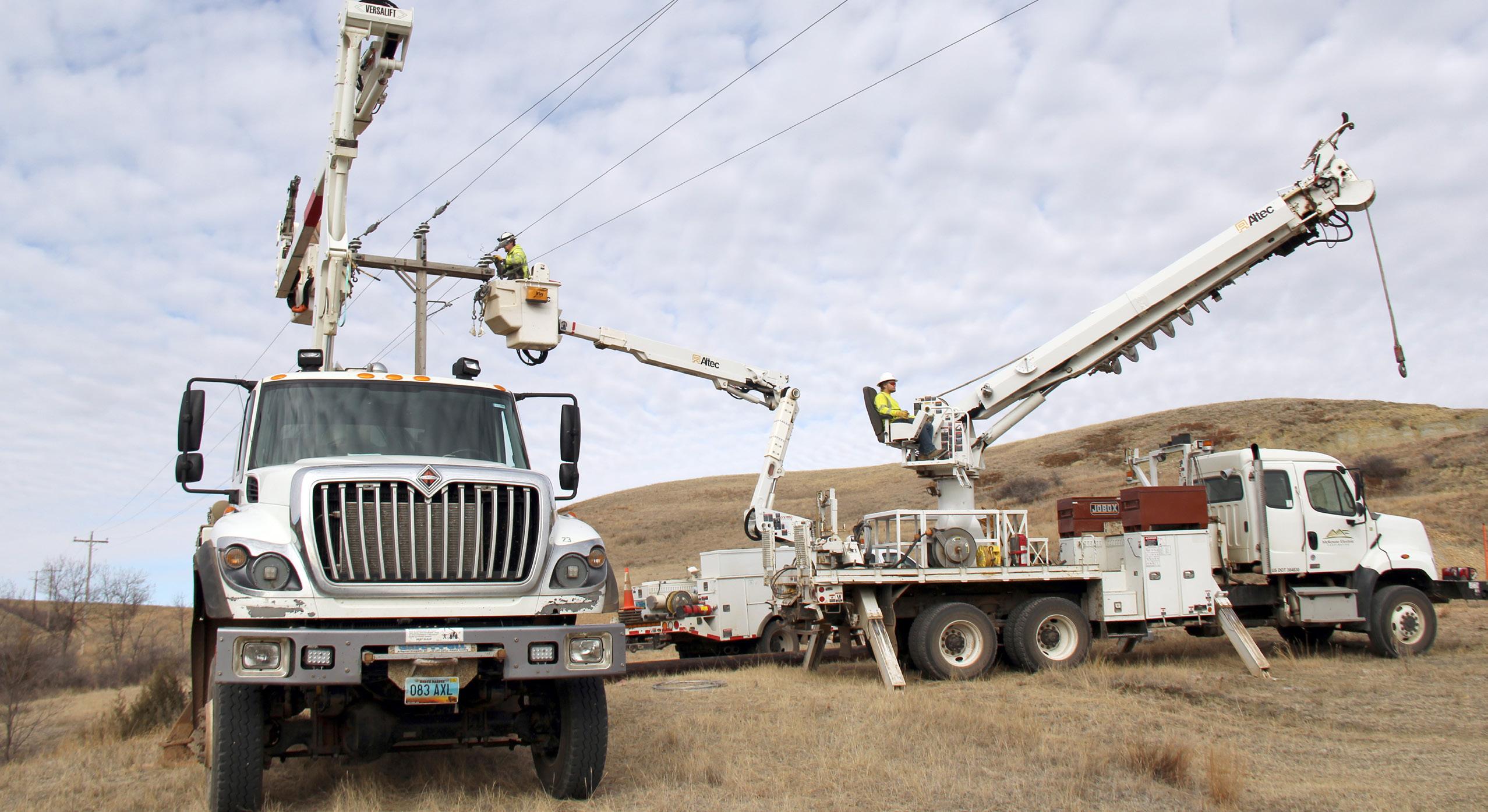
With support from RTC, electric cooperatives are lighting the way for rural North Dakota
Electric cooperatives have been lighting the way for rural Americans for almost a century, providing power to areas that historically have been hard to serve. And these co-ops aren’t just keeping our lights on; they are bolstering our local economies and bettering the places we live.
In RTC’s service territory alone, we intersect with five electric cooperatives: Burke-Divide, McKenzie, McLean, MountrailWilliams, and Verendrye. We spoke to their leaders to learn how, with support from RTC they are continuing to empower
the rural North Dakota communities that first empowered them.
“Were it not for cooperatives, the sparsely populated areas of North Dakota would not have the modern services we enjoy today,” said John Skurupey, CEO of McKenzie Electric Cooperative.
Thank you,
-Shane Hart CEO
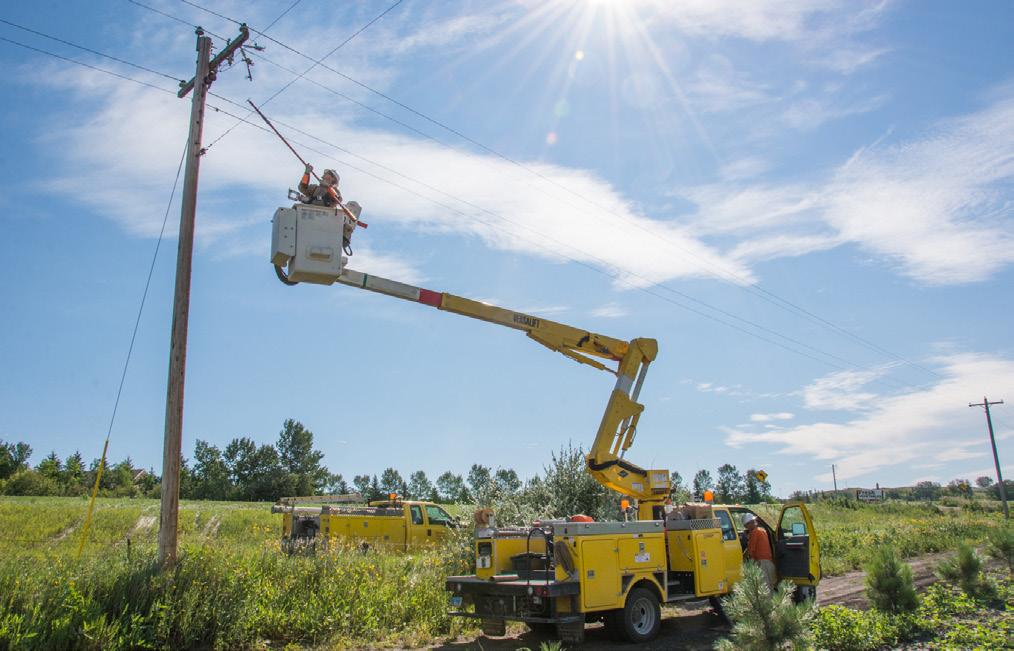
In the early 20th century, electricity was a luxury limited only to large cities and those along major transportation routes. The rest of America was left using kerosene lanterns and wood-burning stoves to cook their meals, light their paths, and warm their homes. Investor-owned utilities chose not to provide service to these rural areas, believing that the expense required would outweigh potential revenue.
Everything changed in 1936, when the Rural Electrification Act (REA) provided federal loans for the installation of electrical distribution systems in isolated areas of the United States.
With this new opportunity, rural residents began to gather in local homes, churches, and city halls to discuss the possibility of bringing power to their communities. Cooperatives like McLean Electric were formed when groups of individuals, paying as little as $5 for their membership, came together with a common goal.
“They wanted to electrify the rural areas. The homesteads, the farmsteads, the ranches, wherever was not being served,” said McLean General Manager Mark Doyle
While the cost of membership has increased over time, that mission—to provide service for the underserved areas of our state—continues to guide electric cooperatives almost a century later. Because they are owned by their members, not investors, business decisions are based entirely on customer needs—not a bottom line.
“When your members are your owners and you’re providing a critical service which the membership places a high degree of importance on, being able to focus on reliability and lowest possible cost as opposed to increasing revenues translates to better service,” Skurupey said.
stay connected to the rest of the world. But doing what’s best for members goes beyond providing power; across North Dakota, electric cooperatives are bettering their communities through volunteership, financial contributions, and local events.
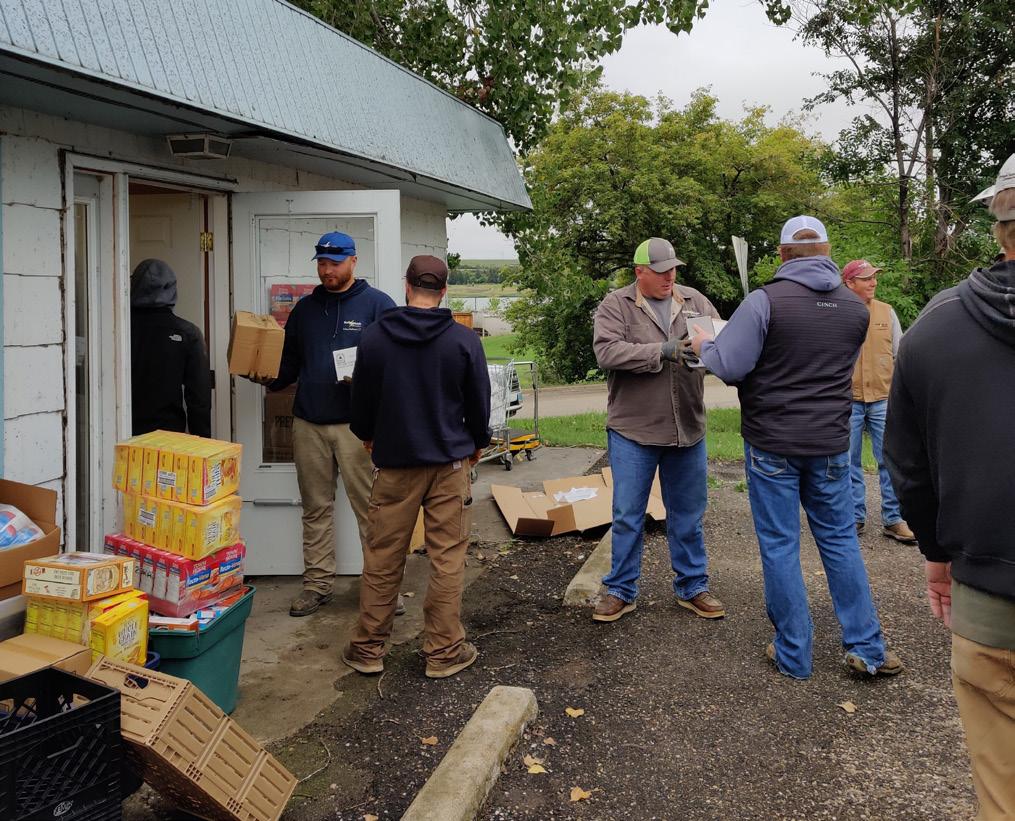
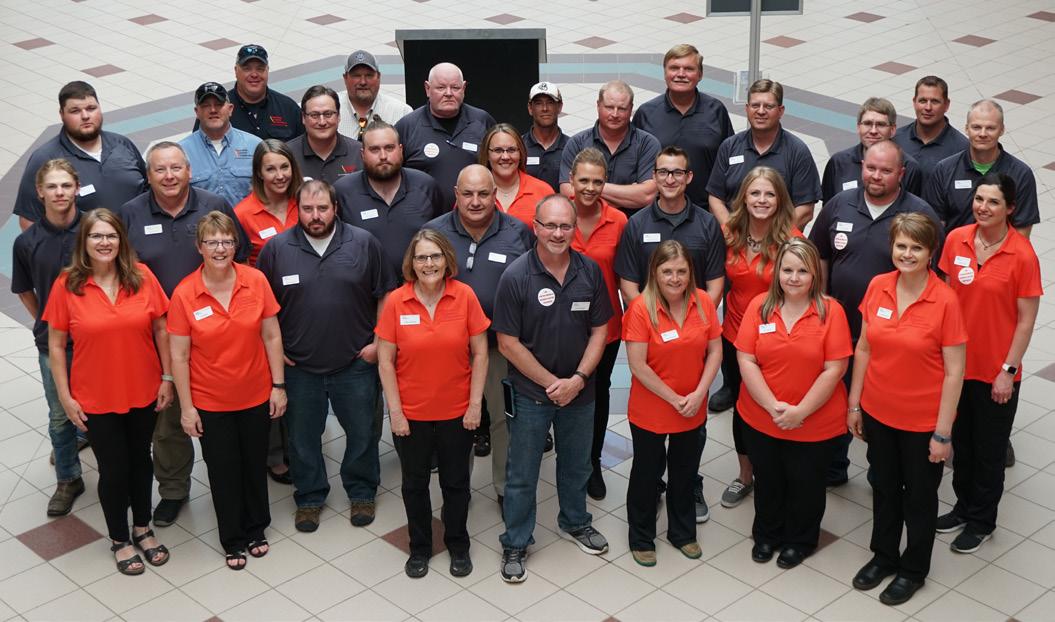
At Burke-Divide Electric Cooperative, General Manager Jerry King encourages all of his employees to find a way to volunteer in their local community.

“I’ve got volunteer firefighters that work for me, I’ve got mayors, members of economic development committees, park boards—you name it,” King said. “Someone’s got to step up and be the leaders, and that’s what we try to do in the cooperative world: we try to create leaders.”
Those extra dollars, along with funds from Operation Round Up (where members have the option to round their electric bill up to the nearest dollar), are donated to local organizations in need, from food banks to the gymnastics team.
Burke-Divide is not the only cooperative giving back to their members.
That’s what we try to do in the cooperative world: we try to create leaders. “ “
“We always ask ourselves, ‘what’s in it for the member?’”
By banding together to bring electricity to their communities, cooperatives make it possible for rural America to
With 35 employees across Burke Divide’s 3,000-square mile service territory, that is a lot of leaders being made. And they are not stopping with volunteership; King also encourages employees to give back through Operation Round Down, in which they can round their paychecks down to the nearest dollar.
North Dakota, a small town of under 600 people. Just over an hour away, in New Town, Mountrail-Williams (through the Rural Development Finance Corporation or RDFC) has provided two $250,000 community capital loans to build a new volunteer fire station and a water park for children.
“That’s a low interest loan. Along with other funding, it just makes it more affordable to make sure that these quality of life projects work,” said Alex Vournas, Chief Operating Officer at Mountrail-Williams. “Through RDFC, we are really filling the gap for rural areas that don’t have their own economic development departments.”
In true cooperative fashion, these
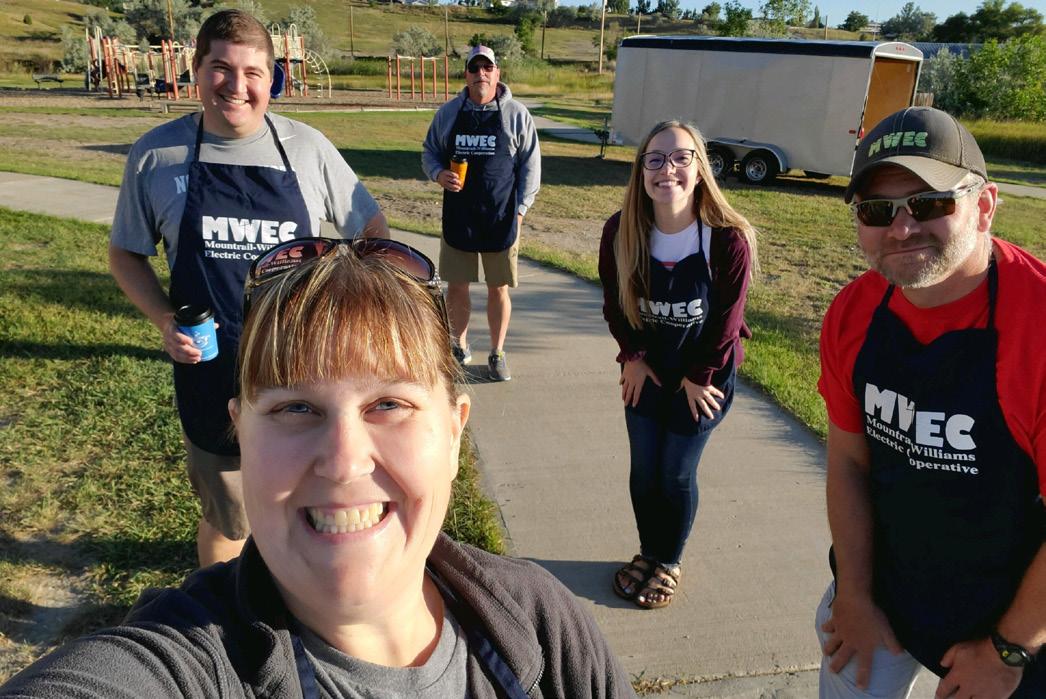
leaders know that they can have an even greater impact when they join forces. From flipping burgers before football games to scooping ice cream cones at the State Fair, these electric cooperatives come together to show appreciation for their members.
“We have the same core philosophy,” King said. “As nonprofits, events like these are an opportunity to thank those people that get services from us. Sometimes events can become so big that one co-op can’t do it alone. And it’s always nice to have partners.”
Randy Hauck, General Manager of Verendrye Electric Cooperative, explains that cooperatives are in a unique position to support their communities financially.
“We have resources available to us through the USDA that other places don’t,” Hauck said. “Things like loan programs or grant programs where we can access funds and help a small community buy a fire truck that they might not be able to get in any other way, unless it’s through a cooperative.”
Verendrye has leveraged these funds to help build a new daycare in Berthold,
“Our relationship with RTC is symbiotic,” King said. “They provide the technology for us, and we supply electricity for their technology.”
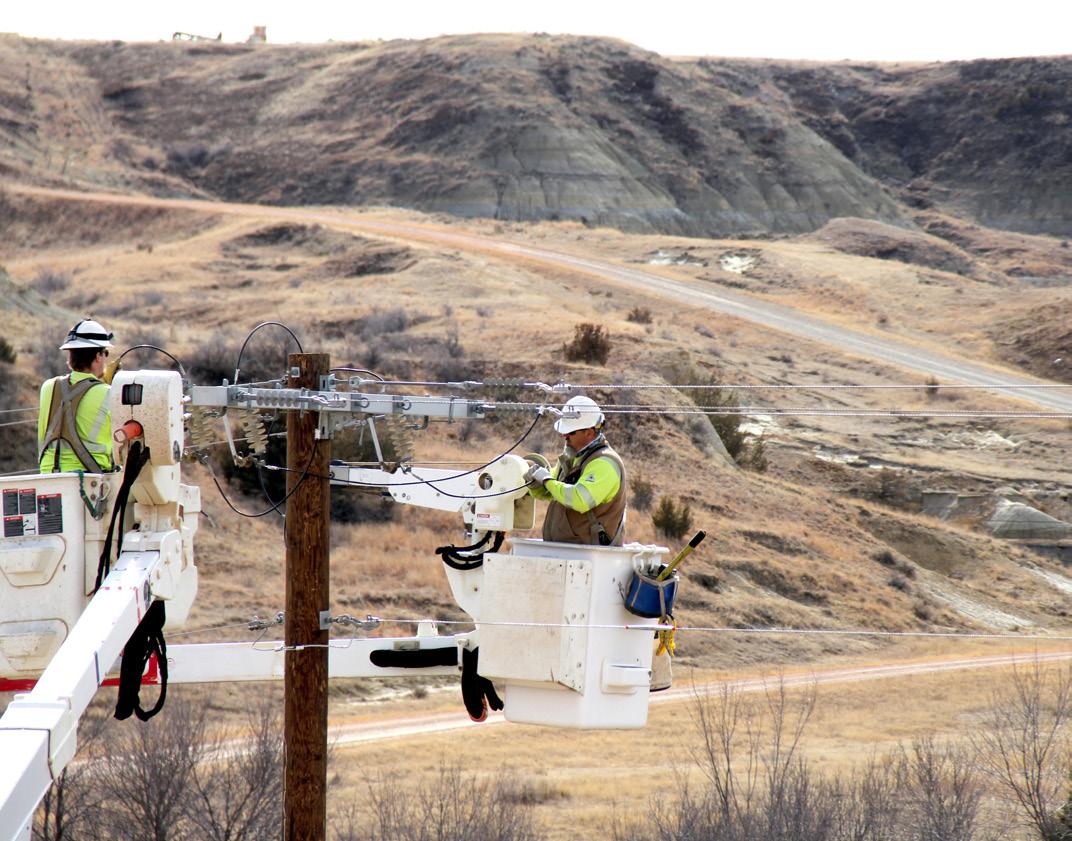
This symbiotic relationship allows coops like Burke-Divide, McKenzie, and Verendrye to equip their meters with smart devices, which can alert their headquarters if the power goes out, show them where the outage originated, and even get it back up and running again without having to drive a truck out to the substation.
These smart devices aren’t just saving time and money; they are providing peace of mind for their members.
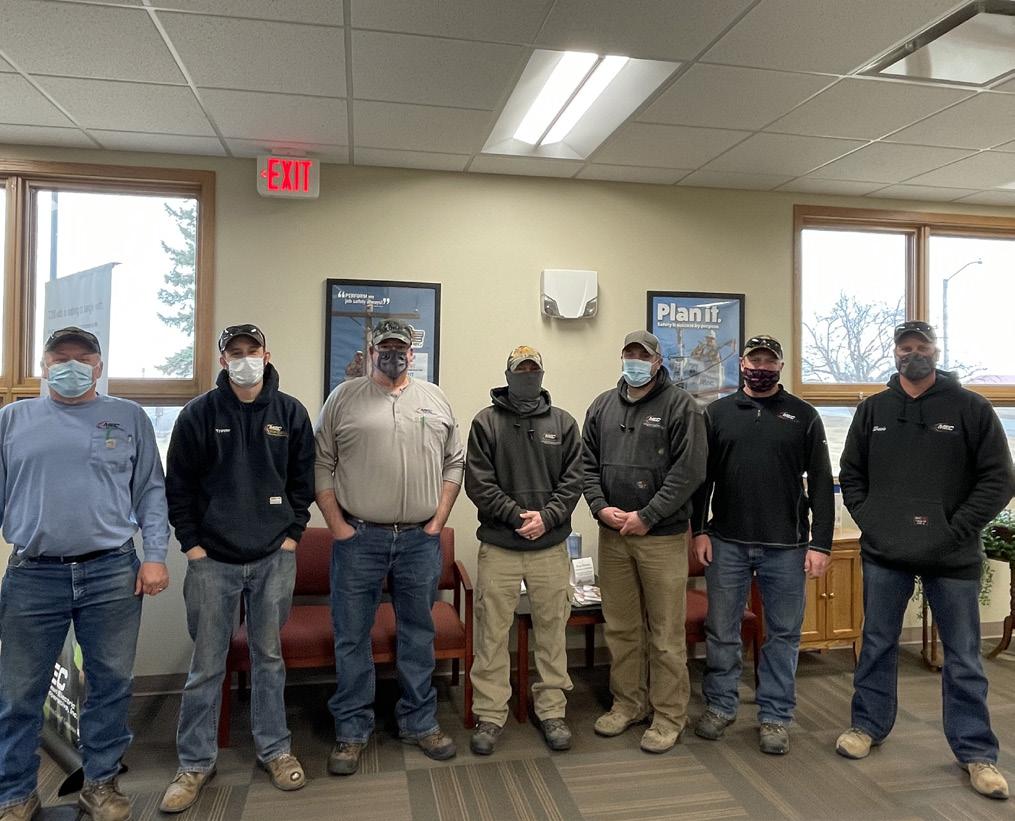
For these cooperatives, one important partner is RTC. In the areas where our service territories intersect, they provide us with power. In return, we supply internet at many of their offices and substations, allowing them to serve their members faster and with fewer interruptions.
Cont. on next page
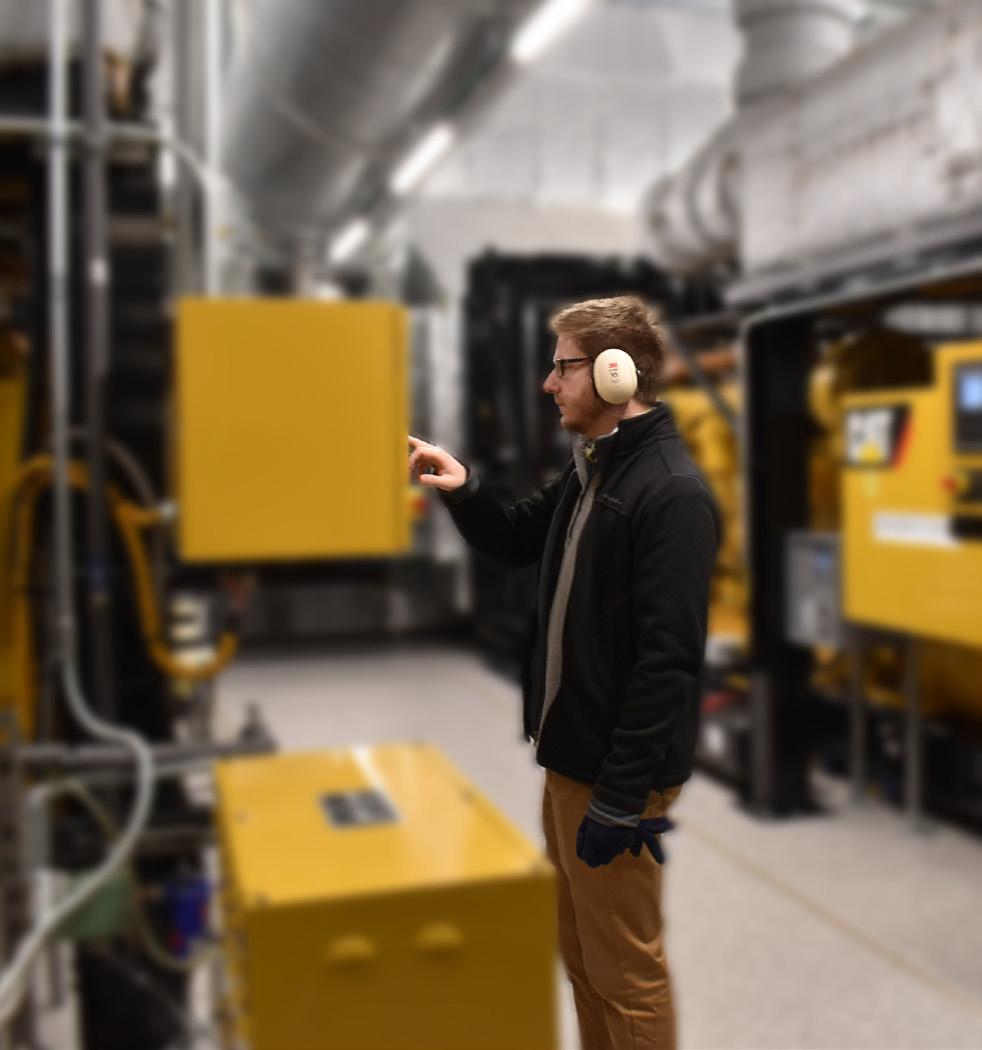
“If we have a problem, we can restore power before you even know it is out. It shortens outage times tremendously,” King said. “And that’s important, because when it’s 40 below and the lights aren’t on, getting power back is a matter of keeping people safe.”
In addition to communicating with their meters, electric co-ops rely on the internet to communicate with their members. For McLean Electric, that communication became more essential than ever this February, when disastrous winter weather in the South caused rolling blackouts across the Midwest.
The Western Area Power Administration turned off substations across the region to cope with the increased demand. While McLean’s headquarters did not experience any interruption, there were blackouts in parts of their service territory.
“When we need to communicate with our member owners, we need to communicate with them now, especially during a crisis like that,” Doyle said. “With RTC, regardless of if the electricity is down, they have contingencies built into their system that ensure that their service will continue so we can communicate.”
Electric cooperatives like Burke-Divide, McKenzie, McLean, Mountrail-Williams, and Verendrye have been serving the underserved areas of our state for almost a century. Whether we are helping them communicate with their members, collaborating on community improvement projects, or digging
Were it not for cooperatives, the sparsely populated areas of North Dakota would not have the modern services we enjoy today. “ “
trenches side by side to deliver service to the same areas, RTC is proud to serve, and be served by, our fellow co-ops.
“The cooperative family is pretty unique. When I think of broadband cooperatives and electric cooperatives, we carry the same end goal. How can we advance the quality of life for the area that we’re serving? How can we make it better for everyone?” Hauck said. “We’re all in this together.”

SO, WHAT IS THE “CLOUD” ANYWAY?
Have you ever wondered what this “cloud” is that everyone seems to be talking about, but felt too embarrassed to ask? If so, you’re not alone.
Today, we’re going to explain what exactly the cloud is, how it works, and how you can use it to store and share your files. If you are more of a visual learner, watch our latest Tech Tip video to follow along with tech expert Riley. Let’s get started!
No, we’re not talking about the fluffy white thing you see in the sky. In the tech world, “the cloud” refers to a vast global network of servers. These servers use the internet to store data, run applications, and deliver content like video streaming and web mail.
These days, the cloud is everywhere—literally. Some examples of cloud-based services that you are probably familiar with include Google Drive, Yahoo! Mail, Dropbox, and Microsoft OneDrive.
When something is “in the cloud”—for example, an email you send over Yahoo! Mail or a document you write in Google Docs—this simply means that it is being stored on internet servers instead of on your computer. Think of it like an extra hard drive that can be accessed anywhere you go, as long as you are connected to the internet.
There are several benefits to using the cloud. Here are just a few:
1. Access your files from (almost) anywhere. The main advantage of the cloud is that you can access your information from any device, anywhere, as long as you have an internet connection. You can begin a document in Google Docs from your home computer and pick up right where you left off when you get to the office or your local coffee shop. Many cloud-based applications even offer an
offline mode that allows you to edit documents even without an internet connection—you just need to connect when you want to sync the files back to the cloud.
2. Free up disk space. Photos, videos, and documents can take up lots of space on your hard drive, which can slow down and ultimately damage your computer. Free up space by uploading large files to the cloud! And don’t worry, once they’re up there, they’re not gone for good—you can easily download all of your files back onto your hard drive.
3. Keep your important documents safe. If your house was burning down, what would you save first? For many of us, the first answer that comes to mind is “My family photo albums.” When you upload your photos and other important documents to the cloud, you don’t have to worry about losing them if there is a fire, or if your computer is stolen or damaged. When you want to access them again, they will be right in the cloud where you left them.
4. Collaborate with your colleagues. With cloud collaboration services like Google Drive and Microsoft OneDrive, you have the ability to share documents with other users, who can all edit in one place. This can be very helpful for colleagues collaborating on a report, students working on a group presentation, or even couples creating a guest list for their upcoming wedding.
The cloud is everywhere, and it’s not going away anytime soon. Please give us a call if you have any questions, and one of our experienced technicians will help you make the most of the cloud.
That’s it for this edition of Tech Tips! Check back soon for another tip to make your technology work for you.
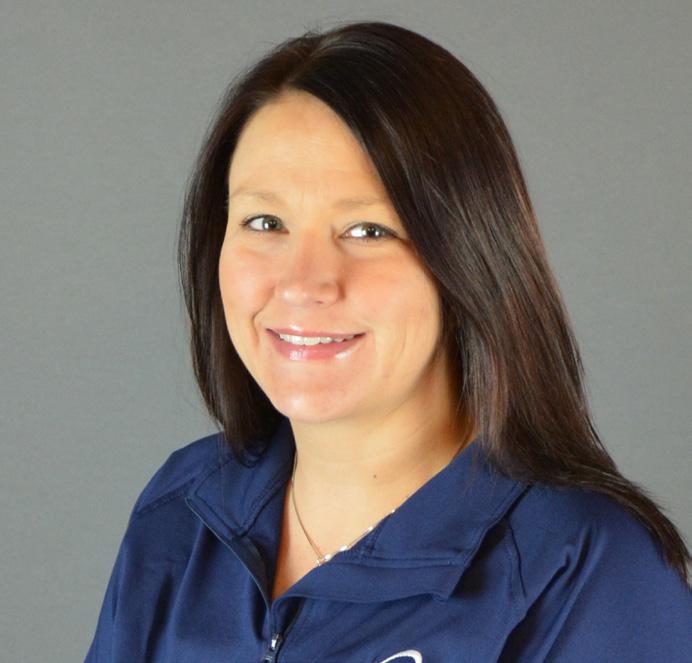
RTC awarded four college scholarships, each in the amount of $2,500 to
SEPTEMBER 9, 2021
RTC Board of Directors has set RTC’s 70th Annual Meeting for September 9, 2021. The event will be held at the 4 Bears Event Center in New Town. More details to come in the following months
If you had RTC services in 1990, 1991 and 1992 watch the mail in May for your RTC Capital Credit check. RTC Board of Directors authorized the capital credits for these years to be distributed in full.
Capital credits are your reward for doing business with RTC. We use capital credits to operate and to make capital improvements. By using capital credits, RTC is able to hold down the cost of service and provide state-of-the-art service to you the member-owners.
For more information on Capital Credits visit: www.rtc.coop/capital-credits




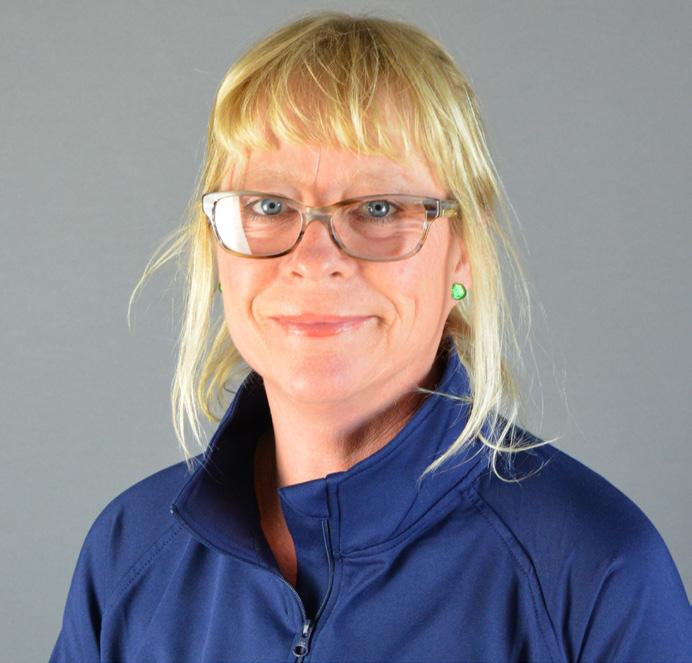
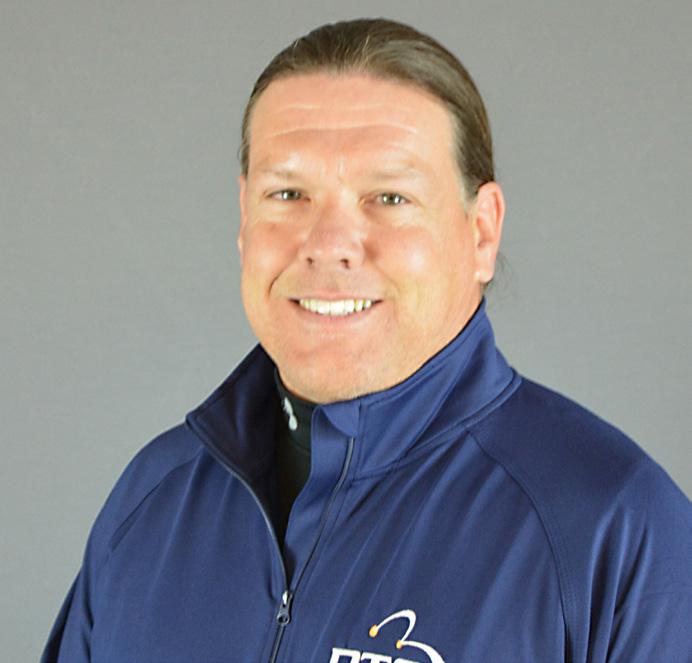
Laney Hartel is the daughter of Justin and Angie Hartel. She will be graduating from Watford City High School and pursuing a career in nursing at North Dakota State University. She would like to become an ER nurse, travel as a nurse for a while and then return to North Dakota to work as a Labor and Delivery nurse. Laney has seen how much of an impact nurses have had during the pandemic and wants to do her part to make a positive difference. Laney has been active in FFA, Student Council, Volleyball and the CrossPoint Youth Leadership Team.
Gage Yellowbird is the son of Dominick Yellowbird and Tammy Bowling. He is graduating from Max Public School and plans to attend Cornell University majoring in Government. Gage will use his degree in Government as a pathway to becoming a lawyer and he plans to attend law school after Cornell University. Gage has been active in FFA, Student Council, Honor Society and with the Max Farm Services Cenex.
Lane Underdahl is the son of Lucas and Heather Underdahl. He is graduating from North Shore Plaza High School and plans to attend Bismarck State College to study Agriculture Industry and Technology. He would like to become an agronomist, after which he plans to return and work on his family farm. Lane would also like to help and influence the next generation of farmers. Lane has been active in Basketball, 4-H, Trap League and his church Youth Group.
Benjamin Meidinger is the son of Joddy and Tami Meidinger. He will be graduating from Kenmare High School and plans to attend South Dakota School of Mines and Technology to study Electrical Engineering. He would like to pursue a career that will allow him to continue creating, building, and operating all type of electronics and electronic systems. Benjamin plans to contribute to modern innovation. Benjamin has been active with the High School Band, Upper Souris Water District Cooperative, the Kenmare Theatre and Gift of Love in Kenmare.
for more information.

• Deadline to submit photos is August 1, 2021.
• Photos of our RTC service area.
• Submit your name, RTC account number, and up to 10 high-def pictures to rtcteam@rtc. email.
• Winners receive a feature in our 2022 Calendar and a $20 bill credit.
• Must be a current RTC customer.
www.RTC.coop, RTC@restel.com www.facebook.com/RTC.coop
Customer
(within
888.862.3115

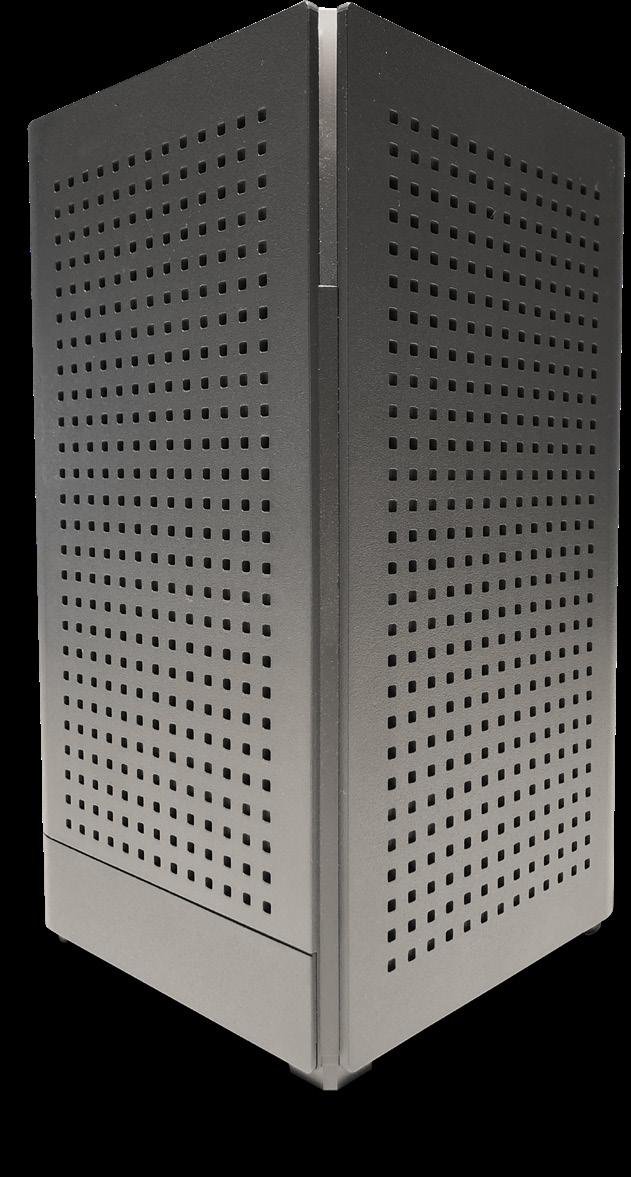
To celebrate this milestone, we’ve lowered the price on our 1 Gig residential speed to $125/month.
Also, our 1 Gig now includes our Total Experience Wi-Fi package ($17/month value), which guarantees great coverage throughout your home and comes with all the enhanced myRTCnet app features for FREE

Congratulations to these Fall 2020 Communicator “Readers’ Contest” winners. They will receive a $10 credit on their RTC bill:
For your chance to be entered in the drawing to win a $10 credit on your bill, correctly answer the questions at the right and include with your RTC bill. You can also submit your answers on our website at RTC.coop/readerscontest or email your answers to RTCteam@restel.com