GLOVE USE THROUGH A BEHAVIOURAL SCIENCE LENS
A SYSTEMS-BASED APPROACH TO MACHINE SAFETY
CRITICAL HEAD PROTECTION AT ALTITUDE
TECHNOLOGY
SAFEGUARDS ON THE ROAD AND IN THE FIELD


A SYSTEMS-BASED APPROACH TO MACHINE SAFETY
CRITICAL HEAD PROTECTION AT ALTITUDE
TECHNOLOGY
SAFEGUARDS ON THE ROAD AND IN THE FIELD
Modern machinery faces two critical challenges:
Safety protects people from operational risks.
Security protects machines from unauthorised access, manipulation, and cyberthreats - which, if ignored, can compromise safety.
Regulations now reflect this reality. The EU Machinery Regulation explicitly addresses cybersecurity as a safety issue, and IEC 62443 sets the global benchmark for Industrial Security.
Pilz can help you comply and stay secure.
From risk assessment to defence-in-depth strategies, we guide you through IEC 62443 and other standards to build a robust Industrial Security concept - right down to the machine level.

Protect your people
Secure your systems
Stay ahead of evolving regulations

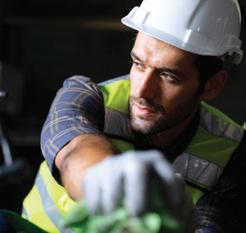
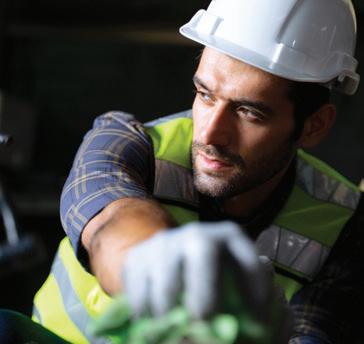
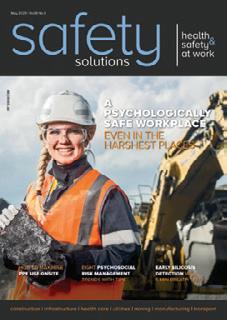
Welcome to the May 2026 issue of Safety Solutions; including a PPE and machine/transport focus, we have timely insights for you.
In our lead feature, Working at Height Association CEO Scott Barber runs us through the updated standard AS/NZS 1801:2024, which reflects a modern understanding of how head injuries occur at height and sends a clear signal to duty holders: protective helmets must match the real risk profile of at-height work, not merely meet historical falling-object requirements. Also on the subject of PPE, Damione Wright — Managing Director APAC at Mechanix Wear — considers glove use through a behavioural science lens; serious injuries rarely happen because workers do not know the rule, Wright argues. More often, they happen when the system quietly teaches people that the rule is negotiable.
Concerning machine safety, Michael Barnard — VP of Sales at Speedshield Technologies — champions a systems-based approach; if traditional models focus on individual hazards, a systems-based approach asks a different question: how do risks emerge from the interaction between people, machines and the environment as a whole? Also advocating for the power of technology in machine safety and compliance, Matt Ireland — Senior Manager of Legal and Regulatory Content at Ideagen Machine Safety — explains where manual processes fall short and how automation is addressing gaps across the machinery lifecycle.
Aligned with transport, with have Zetifi founder and CEO Dan Winson outlining the advantages of connected fleet safety. We also have some recent case studies, including a vehicle-based thermal camera with pedestrian safety in its sights. Plus, much more. Happy reading.
Dr Joseph Brennan, PhD Editor, Safety Solutions
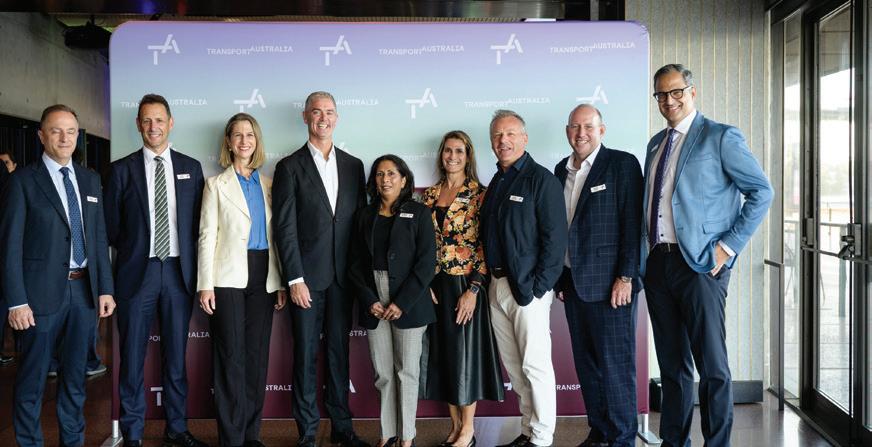
Transport Australia, the new peak industry body — formerly Roads Australia — has launched. Citing new research showing Australians spend around five billion hours travelling across the network each year, at an estimated value of $100 billion, the peak industry body used its launch to call for a ‘step-change’ in how Australia plans, funds and manages its transport system.
The organisation had been established to provide a stronger system voice for an integrated transport network spanning roads, rail, freight, active transport, ports and airports, its CEO Ehssan Veiszadeh said.
‘Valuing Australia’s Transport Network’, Transport Australia’s inaugural research report, shows transport directly contributes around $189 billion to the economy each year. This is equivalent to 9% of GDP and, Transport Australia said, underpins almost every part of Australia’s $2.1 trillion economy.
The report finds the transport network is under growing pressure, with heavier freight demand, electrification, more extreme weather and population growth increasing strain on the system and raising the cost of underinvestment, Transport Australia said. Veiszadeh also said that the opportunity for governments was to shift the debate from isolated projects to whole-of-network performance that improves reliability, productivity and liveability.
You can read the Valuing Australia’s Transport Network report at transportaustralia.org.au/news/valuing-australias-transport-network.
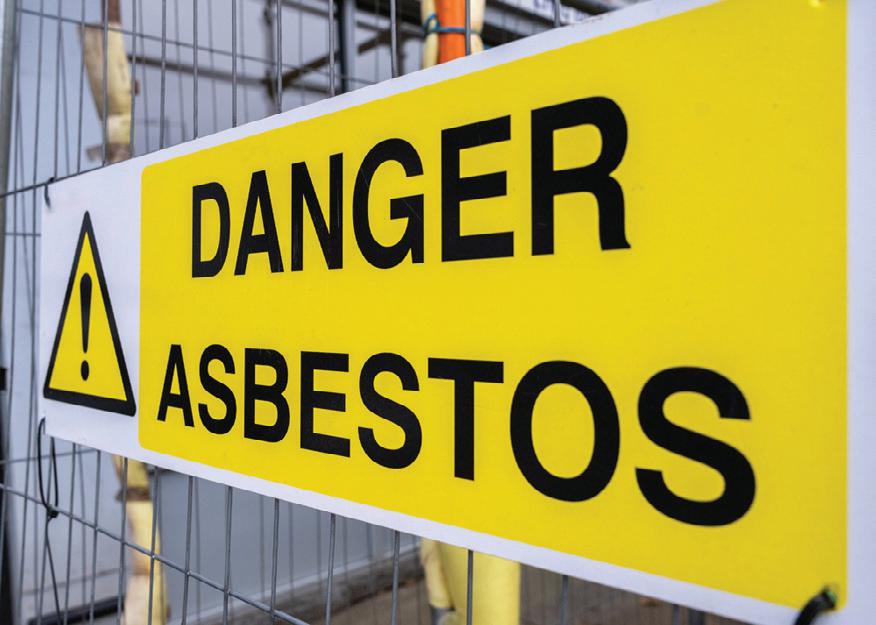
Safe Work Australia (SWA), in collaboration with the Asbestos and Silica Safety and Eradication Agency, has released a new asbestos guide and checklist specifically for health and safety representatives (HSRs). Asbestos consists of many tiny fibres that can get into the air when disturbed, and when asbestos fibres are inhaled they can lodge in the lungs and cause serious diseases like lung cancer, asbestosis and mesothelioma.
In representing members of their work group and bringing issues such as the risks from exposure to asbestos to the attention of the person conducting a business or undertaking (PCBU; eg, employers), HSRs can play an important role. The new resources aim to assist HSRs to: know the risks and recognise asbestos-containing materials; advocate for appropriate safe work practices and control measures; promote communication regarding asbestos concerns; and contribute to a safer work environment.

A plastic packaging manufacturer has been convicted and fined $90,000 — and ordered to pay $5966 in costs — after a worker’s index finger was severed in a granulator that had been recently acquired by the company to grind rejected plastic products into smaller particles for re-use.
The incident occurred in October 2024. Unlike other granulators at the workplace, which used fans to blow plastic dust out, the recently purchased granulator had an auger attachment which used a rotating screw to transfer shredded plastic material. The granulator became stuck and the worker noticed a build-up of material jamming the rotating screw; the worker’s right index finger was severed while attempting to remove the jam, and he was taken to hospital for surgery.
There were no clearly defined roles and responsibilities concerning management obligations when new machinery was introduced to the workplace, a WorkSafe Victoria investigation found, and no procedures or checklists for minimum safety requirements for new machinery. After pleading guilty to a single charge of failing to provide and maintain a working environment that was safe and without risks to health, the company was sentenced in the Melbourne Magistrates’ Court on 5 March.
It was reasonably practicable, the company admitted, to eliminate or reduce risks by using a permanent fixed physical barrier over the granulator’s inlet area; an interlock that would de-energise the granulator and its auger attachment when it was removed from the granulator; or both. “Far too often we see workers injured due to moving parts of machinery when there are simple methods to reduce the risk of hands and fingers being crushed or severed,” WorkSafe Victoria Chief Health and Safety Officer Sam Jenkin said.
“Gender-based violence is behaviour that humiliates, intimidates or threatens a person because of their sex, gender, sexual orientation or because they don’t conform to gender stereotypes,” Safe Work Australia (SWA) said. “It includes physical violence, as well as sexual harassment, verbal abuse, bullying, and offensive languages and behaviours.
“Gender-based violence is a mental health (psychosocial) hazard that can occur in any workplace. However, certain workplace factors can increase the risk of it occurring if they are not effectively managed. In construction, these factors can include workforce characteristics such as a male dominated, young or transient workforce, work design such as high job demands, and organisational or environmental factors such as low job support or isolated work environments.”
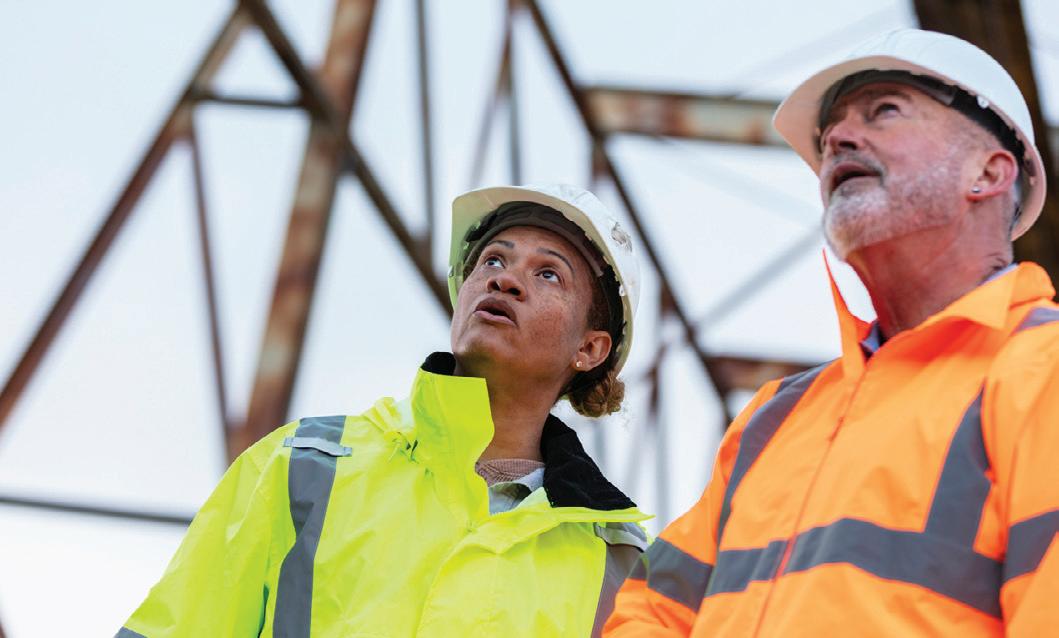
Now, SWA has released a new set of resources intended to help employers identify, assess and manage the risks of gender-based violence in the construction industry. To ensure they reflect specific WHS challenges experienced by women in the construction industry, the resources were developed by SWA in collaboration with construction industry stakeholders and include practical case studies, posters and infographics designed for use on construction worksites.
The resources are designed to raise awareness of what gender-based violence can look like on construction sites, the impact of these harmful behaviours and what employers must do to prevent them. You can access the resources at www.safeworkaustralia.gov.au/mediacentre/news/new-resources-help-manage-risk-gender-based-violence-construction.
If you are affected by any of the issues discussed in this article, 1800RESPECT has a 24/7 support service that can help; please call 1800 737 732.
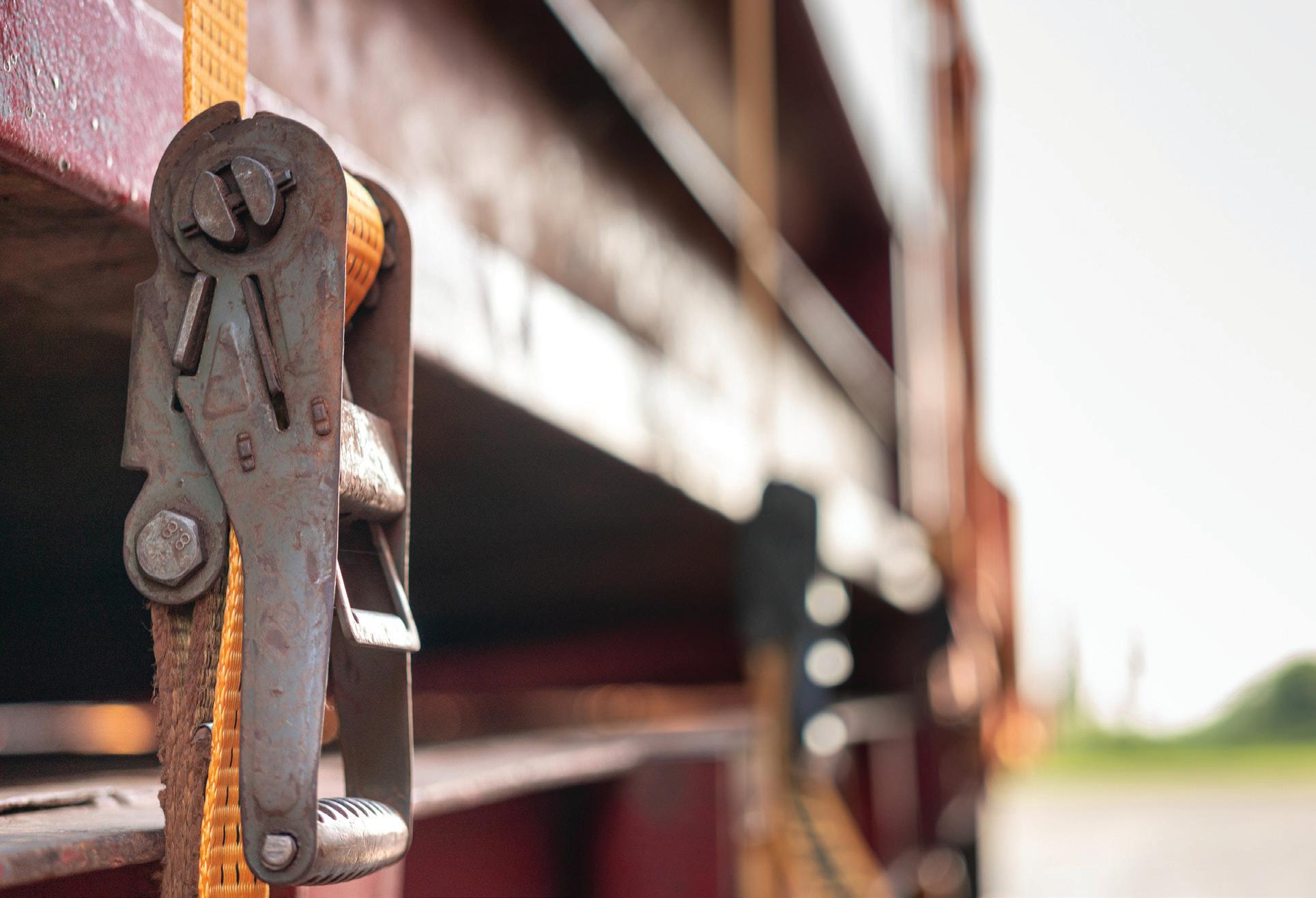
After the ratchet strap securing an intake boom on a truck failed and was later involved in a fatal collision, a trucking company has been fined $550,000 and ordered to pay $8000 in costs.
As part of the construction of earthworks at a mine in the Pilbara, a mobile water pump known as a “MegaFill pump” was required, which has two booms — an intake boom and a discharge boom — that extend out for use and are folded away for storage and secured for transport. If not properly secured, when folded the booms can unfold and rotate away from the pump. Therefore, the intake boom is secured for transport by way of a chain attached to the boom, a travel mount strap placed over the boom and a travel mount bolt attaching the boom to the pump frame — while over the whole machine a precautionary strap is applied.
When work was completed with the pump, a mining and construction services company placed a ratchet strap over the intake boom for transport; however, this created a risk that the boom could rotate during transport because they did not attach the chain or the travel bolt. With the travel strap in place, the pump was later loaded onto a semi-trailer. However, the truck driver failed to check to see if the travel mount bolt or holding chain had been applied to the intake boom, or to place a strap over the entire pump.
The ratchet strap securing the intake boom failed and the boom became unrestrained when the truck was travelling towards Perth on the Great Northern Highway. The intake boom of the pump struck and killed the driver of a truck travelling in the opposite direction just north of Meekatharra at around 9.27 pm on 25 July 2022.
The trucking company pleaded guilty to failing to ensure that the health and safety of other persons was not put at risk by their work and was fined in the Perth Magistrates Court on 13 April. Over the same incident, three mining and construction services companies were also fined a total of $770,000 in October 2025. “This case highlights the importance of safe systems of work and ensuring that employees are properly trained in those systems,” WorkSafe WA Commissioner Sally North said.
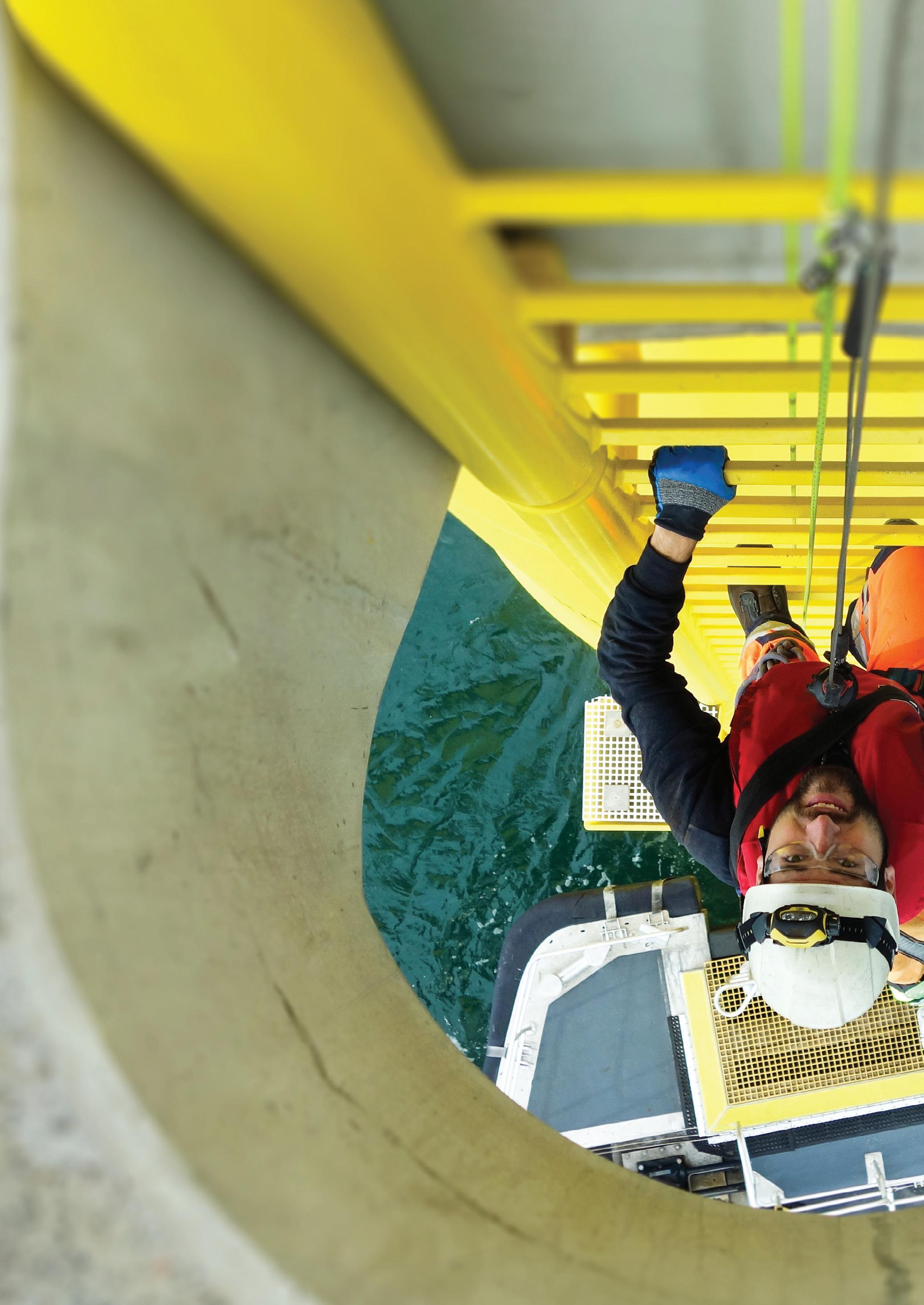
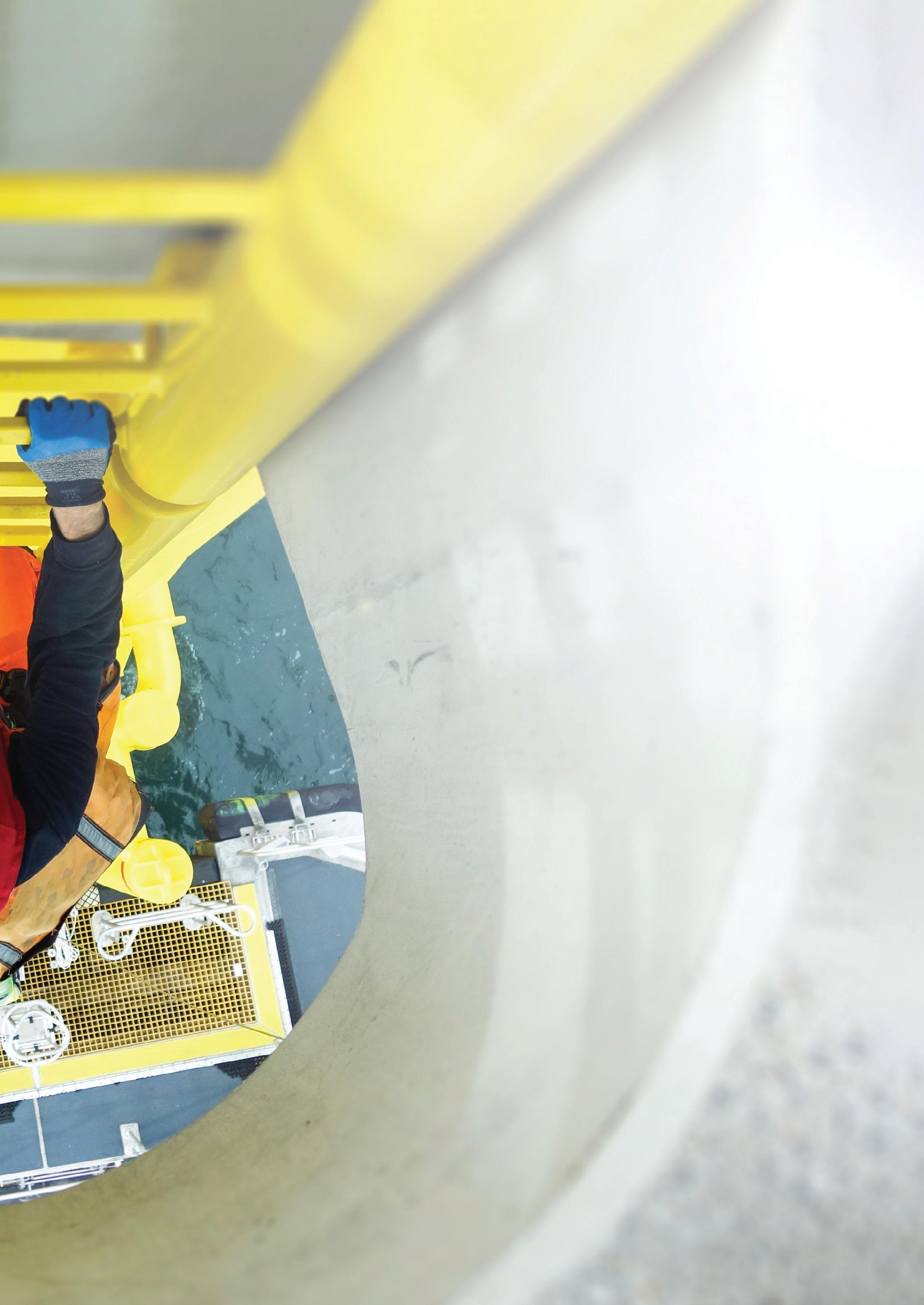
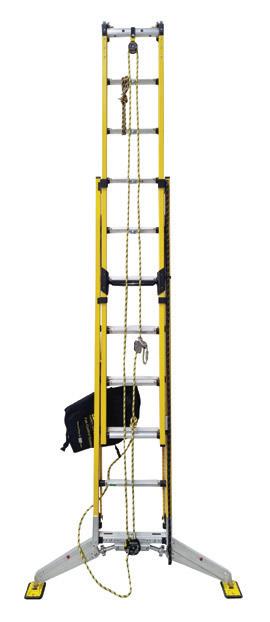
The updated standard AS/ NZS 1801:2024 reflects modern understanding of how head injuries occur at height and sends a clear signal to duty holders: protective helmets must match the real risk profile of at-height work, not merely meet historical falling-object requirements. Working at Height Association CEO SCOTT BARBER runs us through it.
Working at height remains one of the most unforgiving risk environments across modern industry. Construction, utilities, energy, telecommunications, manufacturing and industrial maintenance all depend on workers operating above ground in dynamic, constrained and often unpredictable conditions. Despite decades of progress in fall prevention and arrest systems, serious head injuries continue to occur, frequently not from the fall itself, but from what happens during and after fall arrest.
While harnesses, anchors and engineered controls are rightly prioritised, head protection is often treated as a secondary consideration. In many workplaces, helmet selection remains anchored to legacy procurement norms rather than a clear understanding of contemporary injury mechanisms. With the release of AS/NZS 1801:2024, that gap is no longer defensible.
Falls from height remain a leading cause of fatal and life-altering injuries in Australia and New Zealand. Even where fall arrest or restraint systems function as designed, workers are still exposed to significant secondary hazards. Pendulum swings, uncontrolled rotation and collisions with surrounding structures are common outcomes of fall events.
A worker suspended following a fall may experience:
• Secondary and multiple head impacts
• Lateral or rear impacts during pendulum swing
• Rotational forces and off-axis strikes
• Helmet dislodgement due to poor retention
• Impact during assisted or self-rescue These hazards occur regardless of whether a worker ultimately reaches the ground. Yet many workplaces continue to rely on traditional industrial hard hats that were never designed to manage these forces. >
Conventional industrial hard hats were developed around a vertical object-drop hazard model. Earlier versions of AS/NZS 1801 focused on protection against tools or materials falling from above, a risk profile aligned with ground-based construction rather than dynamic height work.
As a result, traditional hard hats typically lack:
• Side, front and rear impact protection
• Management of rotational energy
• Secure retention during dynamic movement
• Low-profile geometries suitable for confined or cluttered environments
Common design limitations include singleaxis impact testing, basic or optional chin straps, bulky shells prone to snagging, and suspension-only energy management systems. In the context of fall arrest, these shortcomings are no longer theoretical; they are welldocumented contributors to injury severity.
The 2024 revision of AS/NZS 1801 represents the most significant update to industrial helmet standards in decades. Rather than simply refining existing requirements, it introduces a more nuanced, hazard-based framework that acknowledges different risk environments.
The introduction of Type 4 helmets
The most important change for working-atheight environments is the introduction of Type 4 helmets. These helmets are specifically intended to address fall-related head injury risks through:
• Multi-directional impact attenuation
• Enhanced helmet stability
• Stronger retention system performance
• Reduced likelihood of dislodgement during a fall
For any task involving fall risk, even where fall arrest systems are in place, Type 4 helmets more accurately reflect the hazard profile than traditional Type 1 industrial helmets.
A shift in design intent
The introduction of Type 4 helmets signals a deliberate shift away from a ‘falling object’ paradigm towards a ‘fall consequence’ paradigm. Injury data consistently shows that serious head injuries at height occur due to lateral and rear impacts, rotational forces and helmet displacement, not simply vertical strikes.
Type 4 helmets explicitly recognise these mechanisms. They permit and anticipate the use of energy-attenuating liners and secure retention systems designed to keep the helmet correctly positioned throughout dynamic movement and fall events. Importantly, Type 4 does not replace other helmet categories; it clarifies that working at height is a distinct risk context requiring a different protection envelope.
Updates to other helmet categories
AS/NZS 1801:2024 also modernises other helmet types. Type 1 helmets now allow greater design flexibility, including soft energy-absorbing liners and a broader range of shell materials. While this enables lighter and more comfortable helmets, Type 1 still lacks mandatory multi-directional impact requirements and remains unsuitable for height-risk applications.
Type 3 helmets have been aligned with AS/NZS ISO 16073.5 for bushfire and wildland firefighting, reinforcing that these helmets are not intended for industrial height work.
The removal of the mandatory stiffness test allows for lighter materials and more flexible shells, but stiffness alone does not equate to lateral impact protection. The standard makes clear that performance, not material rigidity, is the critical factor.
Why climbing-style helmets already align with the standard’s intent
Many climbing-style and industrial mountaineering helmets already align closely with the intent of AS/NZS 1801:2024, particularly for height-exposed workers. These helmets are often dual-certified to AS/NZS 1801 (earlier editions) alongside EN 12492 or EN 397 Type 2, standards developed specifically for fall-related hazards.
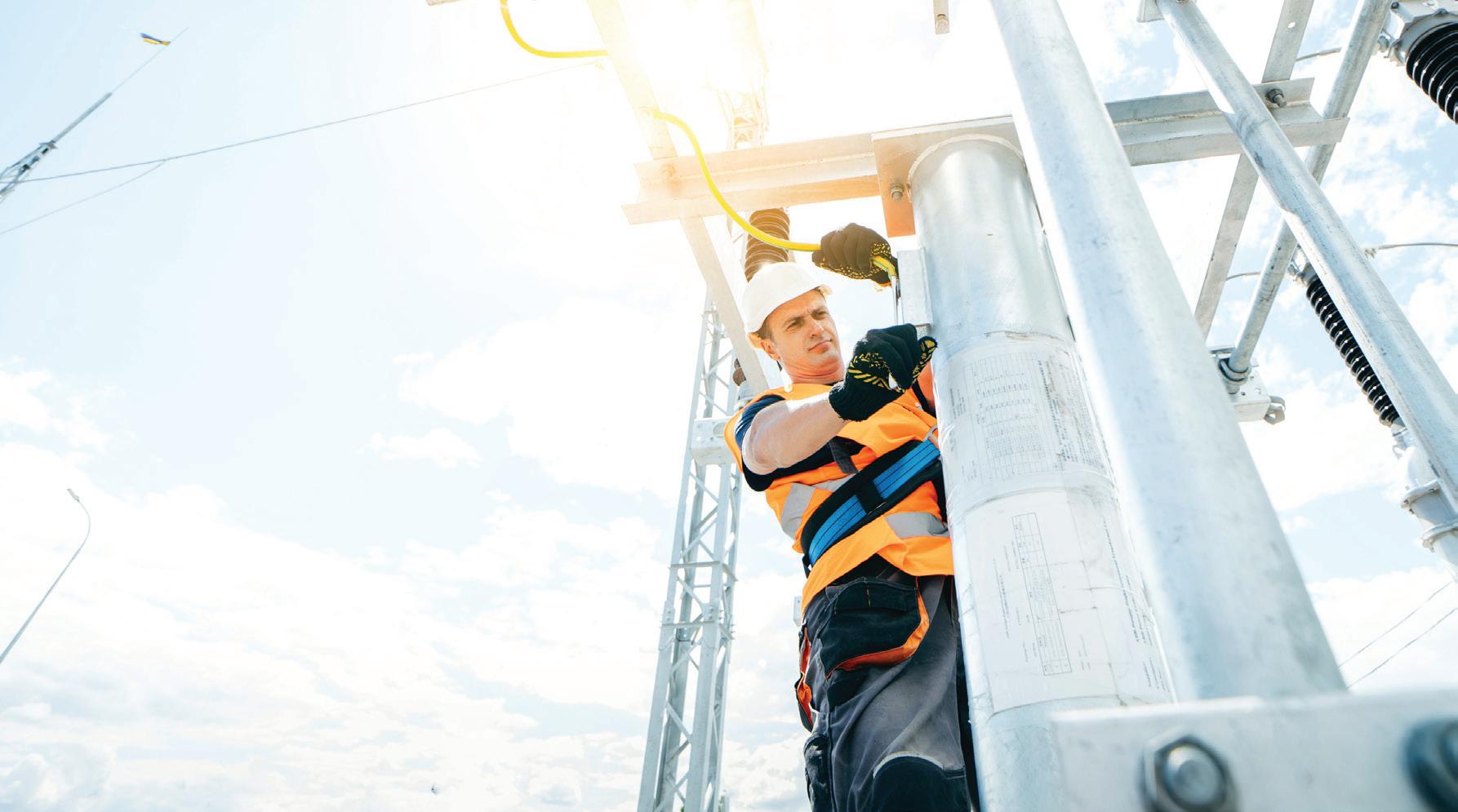
THE 2024 REVISION OF AS/NZS 1801 REPRESENTS THE MOST SIGNIFICANT UPDATE TO INDUSTRIAL HELMET STANDARDS IN DECADES. RATHER THAN SIMPLY REFINING EXISTING REQUIREMENTS, IT INTRODUCES A MORE NUANCED, HAZARD-BASED FRAMEWORK THAT ACKNOWLEDGES DIFFERENT RISK ENVIRONMENTS.
Selection Criterion
Primary hazard addressed
Foreseeable fall risk
Impact direction coverage
Helmet stability during movement or fall
Retention system
Thermal / heat environment suitability
Ventilation and comfort
Availability in AU/NZ market
Type 1 (AS/NZS 1801:2024)
Falling objects (vertical impact).
Not reasonably foreseeable or fully controlled.
Crown (top) impact only.
Limited – relies on suspension harness; chinstrap optional.
Chinstrap optional (≥15 mm if fitted).
Type 2 (AS/NZS 1801:2024)
Falling objects plus high-temperature exposure.
Low or residual; heat risk dominates.
Crown (top) impact only.
Limited – similar to Type 1.
Chinstrap optional; heat-rated materials.
General environments. High-temperature and ignition risk environments.
Generally good ventilation.
Dual-Certified AS/NZS 1801:1997 + EN (e.g. EN 12492 / EN 397 Type 2)
Falls and multi-directional head impacts, with continued compliance to legacy AS/NZS 1801.
Reasonably foreseeable (slips, trips, loss of balance, partial falls).
Crown, side, front, and rear impacts (via EN certification).
High stability – close-fitting shells and mandatory retention under EN standards.
Mandatory chinstrap under EN 12492 / EN 397 Type 2.
Suitable for general and moderate heat; not for molten metal exposure.
Restricted ventilation. Often more enclosed; comfort dependent on liner and vent design.
Widely available. Widely available. Currently available and widely used in height-related work.
Regulatory alignment Meets AS/NZS 1801:2024.
Reasonably practicable justification
Key advantages include:
Meets AS/NZS 1801:2024.
Appropriate where fall risk is not foreseeable. Appropriate where heat risk outweighs fall risk.
Multi-directional impact protection
Technical helmets are designed to attenuate impacts around the entire circumference of the head, not just the crown.
Secure retention systems
Integrated four-point chin straps, typically rated to at least 150 N, ensure the helmet remains in place during falls, swings, rescues and high-movement tasks.
Low-profile, snag-resistant design
Compact geometries reduce the risk of catching on scaffolding, steelwork or confined structures.
Energy-absorbing liners
Expanded foam liners and composite shells manage energy more effectively than suspension-only designs.
Accessory integration
Purpose-designed mounts for visors, hearing protection, lighting and communications allow accessories to be fitted without compromising helmet performance.
Meets AS/NZS 1801:1997 plus higher EN performance requirements; supports risk-based justification.
Reasonably practicable interim control where fall risk exists and Type 4 helmets are unavailable.
Under Australian and New Zealand WHS legislation, PCBUs are required to ensure PPE is fit for purpose, suitable for the hazard, and does not introduce additional risk. With AS/NZS 1801:2024 now formally recognising multi-directional impact protection as a helmet class, continuing to issue traditional hard hats for height-exposed work may be difficult to justify where better-matched options exist.
In the event of an incident, failure to provide appropriate head protection may be interpreted as a breach of the primary duty of care, inadequate risk management or noncompliance with PPE selection obligations.
While Type 4 certified helmets are not yet widely available in the local market, internationally certified helmets such as EN 397:2025 Type 2 and EN 12492 continue to offer a practical, defensible pathway. When
AS/NZS 1801:2024
Type 4 (when available)
Falls and multidirectional head impacts (explicitly).
Reasonably foreseeable (design intent).
Crown, side, front, and rear impacts (mandated).
High stability – dynamic retention and stability testing required.
Mandatory chinstrap with performance testing.
General environments; not intended for molten splash.
Likely enclosed; comfort dependent on manufacturer design.
Limited or unavailable at present.
Meets AS/NZS 1801:2024 intent for height protection.
Preferred option when available and suitable.
supported by documented risk assessments and performance equivalence, these helmets allow duty holders to address known risks now rather than waiting for certification availability to catch up with standard evolution.
Working at height is not just about preventing falls; it is about managing what happens when falls occur. Collisions, swings and impacts are not anomalies; they are predictable outcomes that demand appropriate protection.
Head protection deserves the same level of scrutiny applied to harnesses, anchors and lifelines. Helmets that manage multidirectional impacts and remain in place under dynamic load are not a luxury. They are an evidence-based response to a clearly defined risk.
The question for industry is no longer whether upgrading head protection is possible, but whether continuing to rely on outdated models is acceptable.
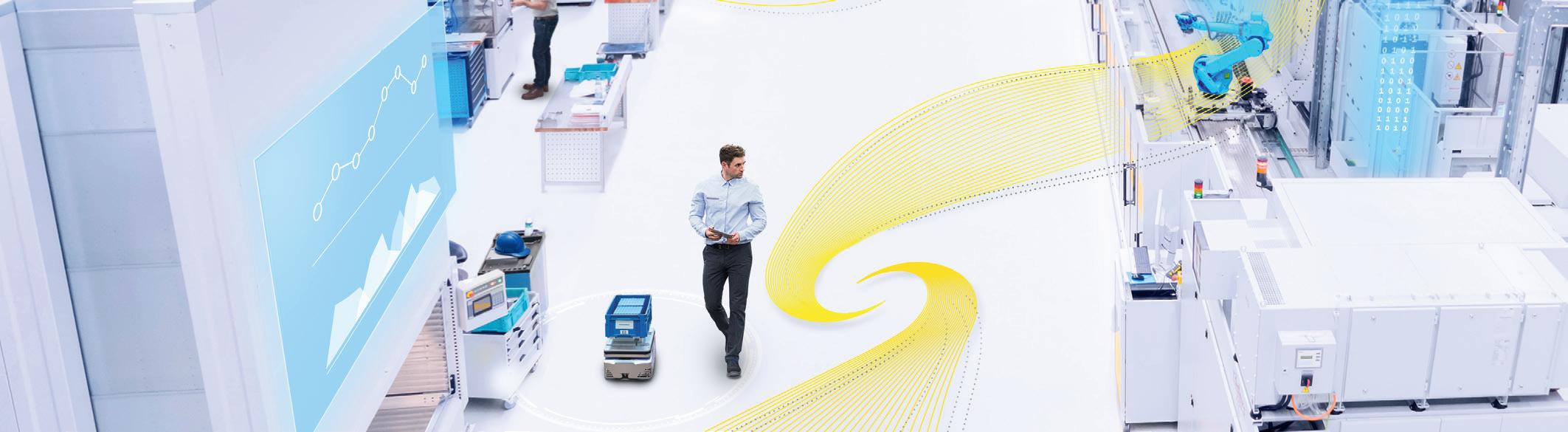
For decades, industrial safety was treated as a necessary constraint — an obligation driven by compliance, guarding, and shutdown logic. Today, that mindset no longer holds. As automation expands across manufacturing, logistics, ports, and outdoor operations, safety has become a strategic enabler of productivity, flexibility, and long-term performance.
At the center of this shift is SICK Safe Productivity philosophy: a holistic approach that integrates safety solutions, safety services, functional safety controllers, and engineered systems into a single, coherent framework. Rather than slowing operations, safety — when designed intelligently — creates the conditions for automation to scale safely and sustainably.
From Protection to Performance
Industrial environments are becoming more dynamic by design. Human–robot collaboration, mobile robots, autonomous vehicles, and intelligent material flow systems are no longer edge cases; they are becoming the operational norm. These environments cannot rely on static safety concepts built around fences and fixed zones.
SICK’s view is clear: safety must be embedded at the system level, not added after the fact. When safety is treated as part of system architecture, risk assessment through control logic and sensor fusion — organizations gain freedom, not friction.
“Safety becomes powerful when it is designed into the system from the beginning. When risk assessment, safety architecture, controllers, and sensing technologies work together, safety no longer limits productivity — it enables it. That is the essence of SICK Safe Productivity,” says
Praveen Kannan, Senior Director for Focus Sales, SICK Asia Pacific.
Safety Services: Where Safe Productivity Begins
Every effective safety strategy starts long before hardware is selected. It begins with understanding risk
Risk Assessment as a Design Discipline Many organisations place strong emphasis on structured risk assessment as the foundation of safe automation. In complex production and logistics environments, risks are no longer isolated to individual machines — they emerge from interaction: people crossing material flow paths, robots sharing space with operators, vehicles moving through open areas.
Risk assessment provides clarity to:
• Identify hazards across machines, systems, and workflows
• Define required safety functions and performance levels
• Align protection concepts with real operational behavior
• Establish compliance with applicable ISO and IEC standards
This early discipline reduces costly redesigns and ensures safety concepts scale with automation maturity.
Design Consulting: Translating Risk into Architecture
Risk assessment alone does not deliver safety. The real challenge lies in safety design consulting — translating abstract requirements into robust, future-ready architectures.
SICK supports customers in designing safety systems that balance protection, availability, and fl exibility. This includes
decisions around:
• Safety sensing strategy
• Safety zoning and operational modes
• Controller architecture and networking
• Integration with machine and motion control
In environments where fixed equipment, mobile robots, and people coexist, design consulting becomes the critical link between compliance and productivity.
Validation: Proving Safety in the Real World Safety functions must ultimately be verified, validated, and trusted . SICK’s safety services extend through commissioning and acceptance, ensuring safety systems operate as intended under real conditions, not just theoretical ones.
Validation closes the loop between intention and execution, providing confidence for operators, integrators, and management alike.
As automation grows more complex, piecemeal safety integration becomes a liability. The industry is moving decisively toward turnkey safety systems — fully engineered, validated solutions delivered from a single source.
Why Sensor Fusion Matters for Safety Modern safety challenges cannot be solved with a single sensing technology. Environmental conditions, dynamic movement, and diverse object types demand sensor fusion
Turnkey safety systems increasingly combine:
• Safety cameras for intelligent differentiation and area monitoring
• Safety LiDAR for precise field monitoring and localization
• Safety radar for robust detection in harsh and outdoor environments
By fusing these technologies, safety systems gain resilience, redundancy, and environmental robustness — essential for logistics hubs, mobile automation, and outdoor operations.
If sensors are the eyes of safety, controllers are its intelligence Safety controllers form the backbone of modern safety architectures, managing logic, diagnostics, and system behavior across diverse applications. Their role becomes especially critical as systems expand beyond single machines into distributed, interconnected operations.
With programmable safety controllers such SICK Flexi Net , safety logic can be centralized or distributed as required. This enables:
• Modular system expansion
• Multi-zone and multi-machine safety architectures
• Reduced wiring and simplified commissioning
• High availability for mission-critical operations
Controller-centric safety design ensures that protection evolves with the system rather than constraining it.
Some of the most significant safety challenges now lie outside traditional factory environments . Ports, yards, airports, and open logistics facilities introduce variables that indoor systems never face—weather, dust, long distances, and unpredictable movement. Outdoor safety—leveraging safety LiDAR and Safety Radars — are designed precisely for these conditions. They enable:
• Reliable people protection in open areas
• Safe automation of vehicles and mobile platforms
• Stable operation despite environmental influences
Outdoor safety is no longer a niche requirement; it is central to the future of automated logistics and infrastructure.
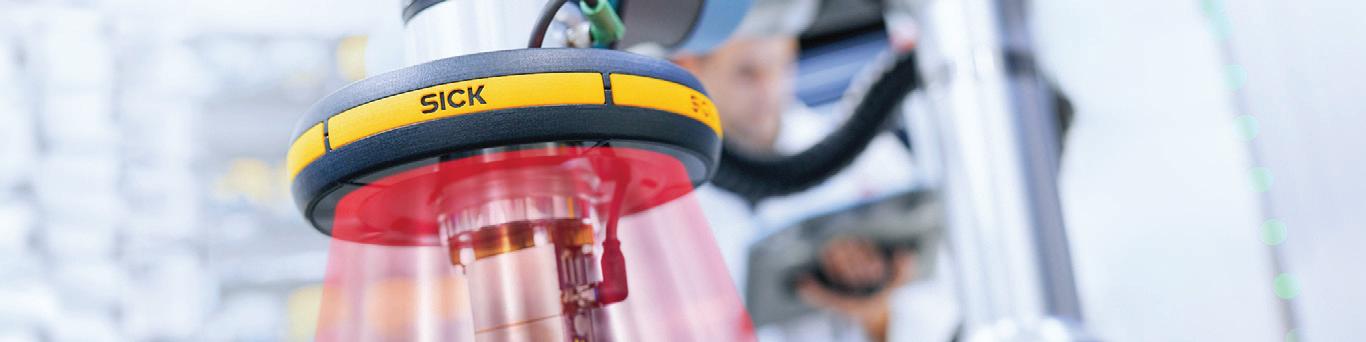
Safety systems only create value when they support real operational needs. Safety solutions are deployed across applications that demonstrate how protection and productivity can coexist.
Smart safety portal solutions differentiate between people and material, allowing material fl ow to continue safely without unnecessary stoppages. This supports high throughput while maintaining strict protection standards.
Controlled Entry and Exit
Safety systems for controlled access enable safe intervention, maintenance, and setup — without compromising system integrity or productivity.
Muting Applications
Muting functions allow safety fields to adapt intelligently to specific, controlled material movements. Combined with people detection, safety becomes dynamic rather than binary — adapting to context instead of stopping processes outright.
The Rise of 3D Safety LiDAR and multiScan Safety
Safety sensing is moving beyond flat fields and fixed planes. 3D Safety LiDAR, including multiScan safety concepts, represents a significant step forward.
Unlike traditional 2D scanners, 3D safety LiDAR enables volumetric monitoring in three dimensions, offering:
• Detection across height, depth, and distance
• Improved protection in stacked or uneven environments
• Enhanced awareness for mobile robots and autonomous vehicles
As environments become more complex, 3D safety sensing expands what can be automated — safely.
Standards and Compliance: Safety Without Borders
Consistency is one of the greatest safety challenges for global operations. SICK’s active participation in international standards and standardization committees ensures that its solutions align with evolving
regulatory frameworks worldwide. For customers, this means:
• Early visibility of regulatory change
• Consistent safety concepts across regions
• Reduced compliance risk for global deployments
Standards are not treated as constraints, but as design inputs — informing safe, repeatable, and auditable systems.
Technology and services are only as effective as the people who operate them. SICK complements its solutions with safety training programs that transfer knowledge from standards bodies and field experience into practical competence.
Training ensures:
• Proper operation and maintenance
• Strong audit readiness
• A shared safety language across teams and sites
Sustainable safety is as much about capability as it is about technology.
Closing Perspective: How to scale Safe
Safe Productivity is not a single product, nor a one-time project. It is a system-level philosophy — one that integrates services, sensing, control, standards, and training into a coherent strategy. SICK provides a comprehensive suite of safety services and training offerings tailored to the unique needs of local industries. Their expert team delivers solutions ranging from risk assessments and safety system design to validation, commissioning, and ongoing support.
As industrial automation continues to evolve, organizations that treat safety as a strategic asset will move faster, operate smarter, and scale with confidence. SICK’s approach makes this possible — not by choosing between safety and productivity, but by deliberately designing for both.
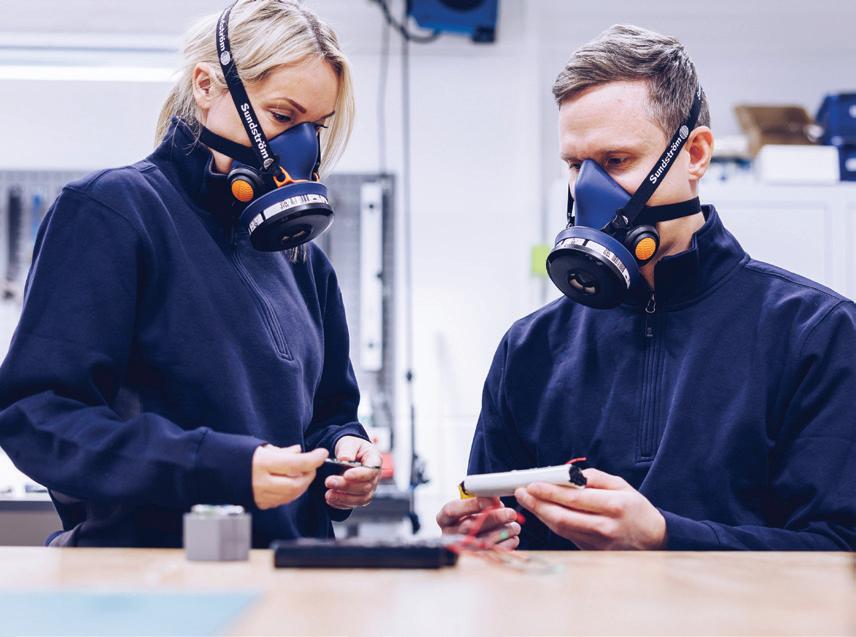
The upgraded Sundström SR100 half-face respirator has been developed to deliver consistent respiratory protection while supporting user comfort across varied industrial environments. It retains its recognisable low-allergenic silicone mask construction, designed to provide a close facial fit and maintain comfort during extended periods of wear. The updated head harness features a more durable, hypoallergenic Lycra material that helps achieve a balanced and personalised fit. The respirator is offered in three sizes, with harness attachment colours indicating size selection to assist users in achieving an effective facial seal.
A practical enhancement in this model is the drop - down function, enabling the cradle -style harness to be lowered when not in active use. This feature is suited to tasks that require frequent transitions between respiratory protection and open-face work. The respirator also includes double -moulded exhalation valve covers that help shield the valve membranes from splashes and airborne particles, supporting reliable performance in demanding conditions.
Lightweight in design, the SR100 can be used with the full range of compatible filters and compressed-air attachments. It may also be equipped with an optional communication device, offering flexibility for users who require integrated communication capability across diverse work settings.
Safety Equipment Australia Pty Ltd www.sea.com.au
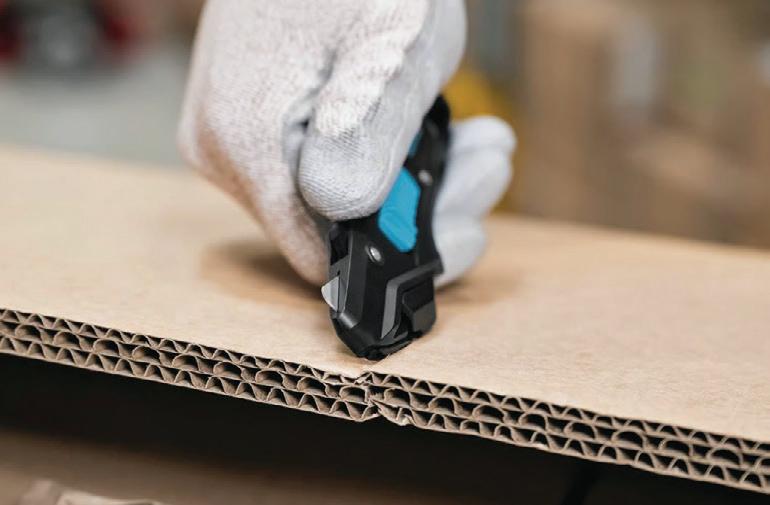
The MARTOR Australia SECUMAX 370 is a concealed blade safety knife designed for cutting thick cardboard in warehouse and distribution environments. The knife features a 10 mm cutting depth while keeping the blade fully concealed. The SECUMAX 370 (Model 370001) handles 3-ply corrugated cardboard, shrink wrap, pallet strapping and adhesive tape.
Key specifications include adjustable cutting depth (6–10 mm), 0.63 mm reinforced blade, 60-gram weight, ambidextrous design, tool-free blade changes, and TÜV GS safety certification. The handle is manufactured from 60% recycled plastic as part of MARTOR’s ECO product line.
Martor Australia
www.martoraustralia.com.au
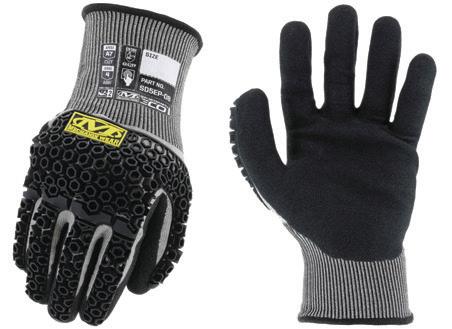
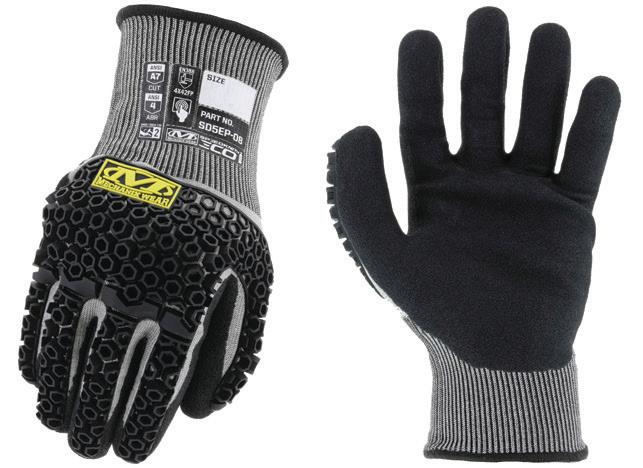
The Mechanix Wear SpeedKnit SD5EP-08 is a high-dexterity safety glove engineered to deliver superior cut, abrasion and impact protection for a wide range of work environments. The glove combines advanced fibre construction with certified performance standards and incorporates recycled materials, supported by product and laboratory documentation.
The SD5EP-08 is an 18-gauge machine-knit glove constructed from a blend of HPPE and tungsten steel, providing high cut resistance (ANSI A7, exceeding EN 388 level F) and abrasion performance (ANSI Level 4 and EN 388 level 4). It also delivers ANSI/ISEA 138 Level 2 impact protection and features a sandy nitrile palm coating for enhanced grip and durability, while also providing touchscreen performance. Each pair incorporates recycled PET material.
The glove is suitable for applications where protection against cut and impact hazards is required, including manual handling, hand and power tool use, maintenance and operational tasks. It is used across industries such as construction, fabrication, mining and resources, oil and gas, logistics, automotive, manufacturing and general mechanical environments.
Its main features include: certified ANSI A7 cut resistance, exceeding EN 388 Level F certification; certified ANSI Level 4 and EN 388 level 4 abrasion resistance; certified ANSI/ISEA 138 Level 2 impact protection; high-dexterity 18-gauge HPPE and tungsten steel knit; sandy nitrile palm coating for grip and durability; touchscreen performance; 100% machine washable; size range: XXs to XXXL; incorporates recycled PET material in construction; and upcyclable at end of life, supported by an environmental impact certificate.
Mechanix Wear LLC www.mechanix.com
In mining, construction and materials handling, the most serious incidents continue to involve machinery and moving equipment. MICHAEL BARNARD , VP of Sales at Speedshield Technologies, sets out how a systems-based approach may be able to help.
Australia’s workplace safety record has improved steadily over the past decade, but one question is still troubling industries such as mining, construction and materials handling: why do the most serious incidents continue to involve machinery and moving equipment? According to Safe Work Australia, machine operators and drivers account for a disproportionate share of injuries and fatalities, with a rate of around 6.7 deaths per 100,000 workers.1 That’s more than five times the national average across all workplaces. It’s a pattern we’ve seen emerging for some time, even as safety frameworks, training programs and compliance standards have matured. If progress has been made in these areas, why do these risks remain so stubbornly embedded in industrial, construction and mining environments? >
Part of the answer is that these industries, in particular, are moving faster than some safety practices can keep up with. Worksites in 2026 are faster, more complex and far less predictable than traditional safety models were originally designed for. Heavy vehicles, automated systems and human workers now operate side by side in environments that are constantly shifting, and visibility is sporadic and limited. Conditions change by the minute, decision-making happens under pressure and machine safety is still too often treated as a checklist or set of isolated controls. This points to something far broader and more systemic, shaped by how people, equipment and environments interact in real time. The challenge facing these environments is unique — it’s not enough to simply attempt to prevent accidents in isolation; teams need to gain a deeper understanding of how risk emerges across the entire site and how it can be anticipated before it leads to harm.
Machine safety has typically been built on a simple premise — identify hazards, put controls in place and expect operators to follow procedures. In more stable and predictable environments, like a small, well-organised warehouse, that approach can be effective. But in larger, fast-paced industrial settings, the cracks start to show. Operators are unfairly expected to maintain full and complete awareness of their surroundings while they manage incredibly complex equipment, navigate unpredictable terrain and keep their eyes “on the job.” Dust clouds and fog can obscure vision, rain can change ground conditions, workers can unknowingly step into blind spots, and that’s only scratching the surface.
The reality is that many of these environments place an extraordinary mental burden on individuals, asking them to process multiple streams of information at once while making split-second decisions. Add to this the reliance on alarms, cameras and warning systems that aren’t always accurate or calibrated to real risk, and a new problem begins to emerge. When alerts are too frequent or poorly timed, or false flags are constantly raised, operators become desensitised to them. It’s important to stress that this isn’t the fault of operators, it’s simply a natural result of humans being placed in environments where noise, fatigue, distraction and pressure are common. We call this the ‘boy who cried wolf’ effect. If a poorly implemented or calibrated system
IF TRADITIONAL MODELS FOCUS ON INDIVIDUAL HAZARDS, A SYSTEMS-BASED APPROACH ASKS A DIFFERENT QUESTION: HOW DO RISKS EMERGE FROM THE INTERACTION BETWEEN PEOPLE, MACHINES AND THE ENVIRONMENT AS A WHOLE?
flags too many non-critical events or false alarms, it gradually loses credibility, and the moments that truly matter get overlooked. How can an operator be expected to trust in a system that is constantly bombarding them with unnecessary lights, sounds and prompts?
Most incidents aren’t the result of carelessness on the part of the operator, but a mismatch between the demands of the environment and the way safety systems have been designed, with too much responsibility placed on human attention and not enough consideration given to how those systems behave under real-world conditions.
If traditional models focus on individual hazards, a systems-based approach asks a different question: how do risks emerge from the interaction between people, machines and the environment as a whole? On a busy worksite, these elements are constantly influencing one another. A vehicle changes direction, a worker steps into a shared space, visibility shifts due to dust or lighting, and suddenly a routine task carries a different level of risk. None of these factors exist in isolation, and yet safety is often managed as though they do. Looking at the system instead of the individual event makes it easier to see how seemingly minor changes can combine to create dangerous situations.
This perspective also highlights something else: many incidents that appear unpredictable at the moment they occur are, in fact, the result of patterns that develop over time. Repeated near misses, consistent blind spots or common movement paths between people
and machinery all point to underlying risks that can be identified earlier if the system is being observed as a whole. Truly designing for safety means moving beyond static controls and thinking about how workflows, site layouts and real-time conditions shape behaviour. Site managers need to recognise that risk is dynamic, not fixed, and that effective safety strategies need to adapt to what is happening on-site rather than relying on assumptions about what should happen in theory.
The good news is that technology is catching up and things are beginning to change. For a long time, safety improvements have been
Prioritise signal over noise
Focus on real, actionable risk. Too many alerts dilute attention and reduce response times.
Make interventions immediate and intuitive
In fast-moving environments, operators should not have to interpret or secondguess a warning.
Reduce cognitive load wherever possible
Safety systems should simplify decisionmaking, not add another layer of complexity.
Align with real-world workflows
Systems must reflect how work actually happens on site, not how it is assumed to happen.
Maintain consistency in how risk is communicated
Clear, predictable signals help build trust and enable faster reactions.

driven by investigation. An incident happens, it is analysed in detail and controls are introduced to prevent it from happening again. That process is still important, of course, but it’s inherently retrospective. It depends on something going wrong first, and that’s not acceptable in such a high-stakes environment, particularly when many incidents are preceded by patterns that go unnoticed in day-to-day operations.
Those patterns often take the form of near misses, repeated interactions between people and machinery in high-risk zones, or small deviations from expected workflows that gradually become normalised. On their own, these events may not trigger formal reporting, but taken together they offer valuable insight into where risk is building. The
challenge here is visibility . Without a clear view of what is happening in real time, these signals are easy to miss. When operators are given timely, relevant feedback, it changes how they respond in the moment, allowing them to adjust behaviour before a situation escalates.
What’s needed is a different approach to how risk is detected and communicated on site. Rather than relying on operators to interpret camera feeds or respond to constant streams of alerts, newer safety approaches are beginning to focus on delivering clear, context-aware signals only when they are needed. By combining AI-powered machine vision with real-time processing at the edge, these systems can distinguish between routine activity and genuine risk, identifying when a
person enters a hazardous proximity zone and triggering a response that is immediate, accurate and completely unambiguous. This also builds trust in the system itself, because the volume of unnecessary alerts is massively reduced. When a warning is delivered, it carries weight and prompts action. At the end of the day, safety technology in these environments only works if it can earn trust, support operators and provide a “joined up” overview of risk that can feed into broader safety policies and processes.
1. Key Work Health and Safety Statistics Australia 2025 now available. Safe Work Australia. Accessed 13 April, 2026. https://www.safeworkaustralia.gov.au/ media-centre/news/key-work-health-and-safetystatistics-australia-2025-now-available
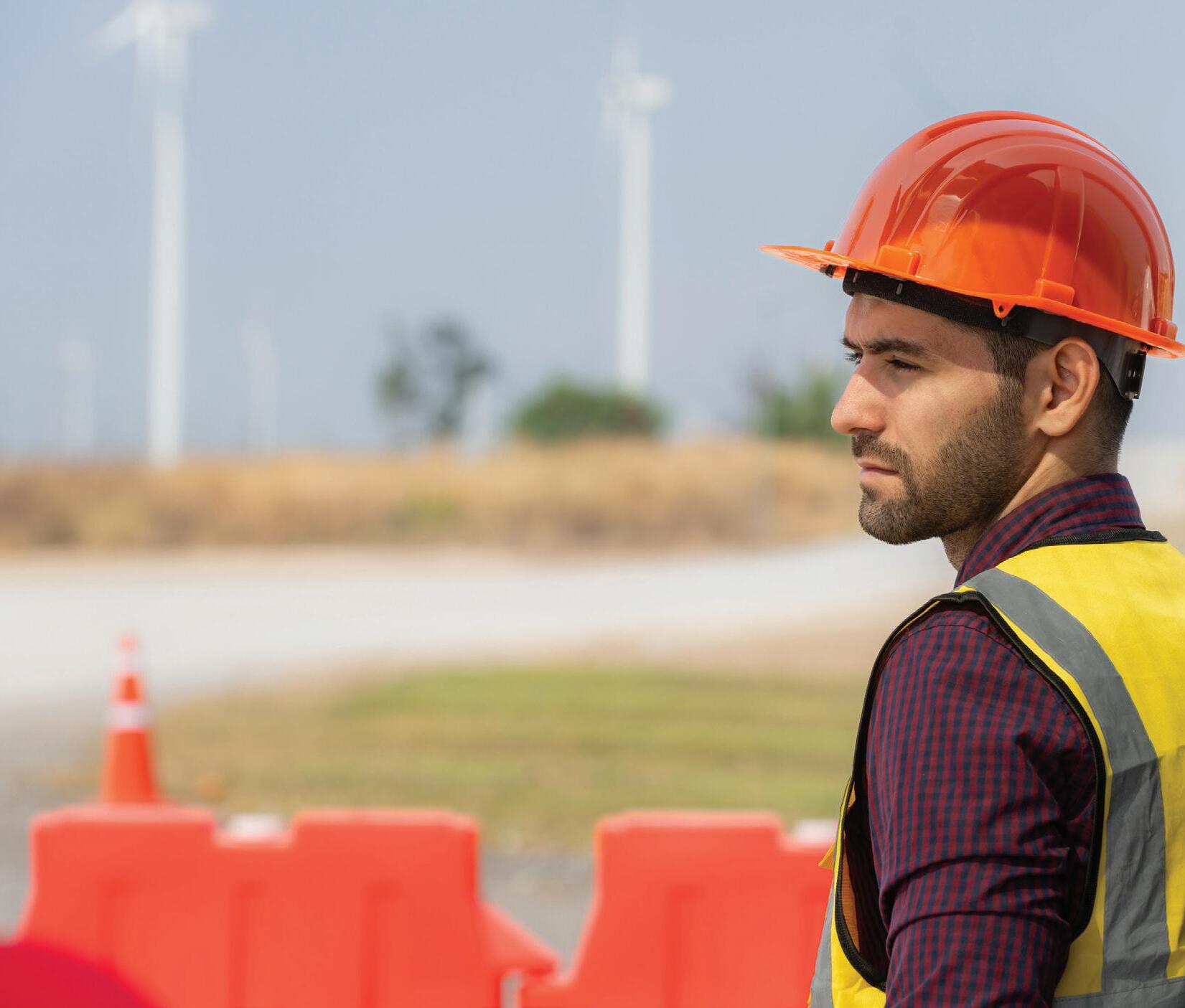
For businesses with mobile and field workers, occupational health and safety obligations can be harder to meet. Zetifi founder and CEO DAN WINSON sets out how connected fleet safety can help.
While Australia’s stringent occupational health and safety frameworks have helped ensure our country’s workplaces are among the safest in the world; in recent decades, workplace fatalities remain a sad reality of life.
In 2024, 188 workers across the country lost their lives due to traumatic injuries incurred at work. Four in five fatalities occurred in just six industries: agriculture, forestry and fishing; public administration and safety; transport, postal and warehousing; manufacturing; health care and social assistance; and construction.
Machinery operators and drivers accounted for 32% of those fatalities, with vehicle incidents the leading cause of fatal injuries (42%), according to Safe Work Australia.
Ensuring the businesses they work for don’t add to these tragic statistics in 2026 should be an overarching goal for all occupational health and safety teams.
Tackling risk head on How best to do so is the question, particularly
for businesses and organisations which employ large teams of mobile and field workers.
For many of these organisations, identifying the gamut of potential risks their workers face when they’re out on the road is a sensible place to start.
And then there are the incidents and events over which employees have rather more control — think erratic braking, speeding events and unsafe overtaking.
Developing policies to mitigate these unavoidable and avoidable risks should be a priority for businesses that have not already done so. Mandating employees drive to conditions, avoid speeding and seek shelter during severe storms, for example, is a straightforward way of reducing the likelihood of them coming to grief on the road.
But having policies in place that require workers to take sensible precautions is just one piece of the puzzle. Being able to enforce them is the other. To do so necessitates
having access to up-to-date insights into how workers behave when they’re behind the wheel of company vehicles.
That’s where technology has a vital role to play. Devices today can sense worker environments, deliver precise location awareness and create intelligent connections between devices, systems and people through connectivity, telematics and applications such as duress and lone worker safety alarm tools.
The signals they detect and transmit can be swiftly and seamlessly interpreted and sent on to key personnel, who can use that intelligence to enhance worker safety on several fronts.
However, what’s required is reliable coverage anywhere, with alerts able to be transmitted kilometres away across the likes of a farm, mining site or national park. Smart antennas and seamless integrations with third-party applications such as telematics can help here and provide robust information on issues such as driver speed, braking, acceleration and cornering performance.
This type of connected fleet safety is ultimately about visibility and proof. By combining radio-based safety features with telematics, organisations can better understand risk, improve behaviour and demonstrate that safety controls are operating in practice.
That’s reassuring for workers, particularly those who are regularly sent out on the road solo. For businesses, meanwhile, it demonstrates a willingness to walk the walk when it comes to occupational health and safety.
The data collected can also be used to build detailed pictures of driver behaviour; identifying individuals who regularly exceed the speed limit and those whose driving patterns are erratic or unsafe.
Training and coaching can then be employed to help these drivers modify their behaviour. In the long term, that can foster a more accountable, safety-oriented workplace culture, while reducing the risk of accidents and injury for the individuals involved and those with whom they share the road.
An engaged, high performing workforce is the most powerful asset any business can have.
Protecting the people whose contributions are pivotal to your organisation’s success is a moral imperative and one that makes excellent commercial sense too. Technology can help you do so, when they’re in the field and on the road.
If creating a safer workplace is a priority in 2026, it’s an investment that will pay dividends now and for many years to come.




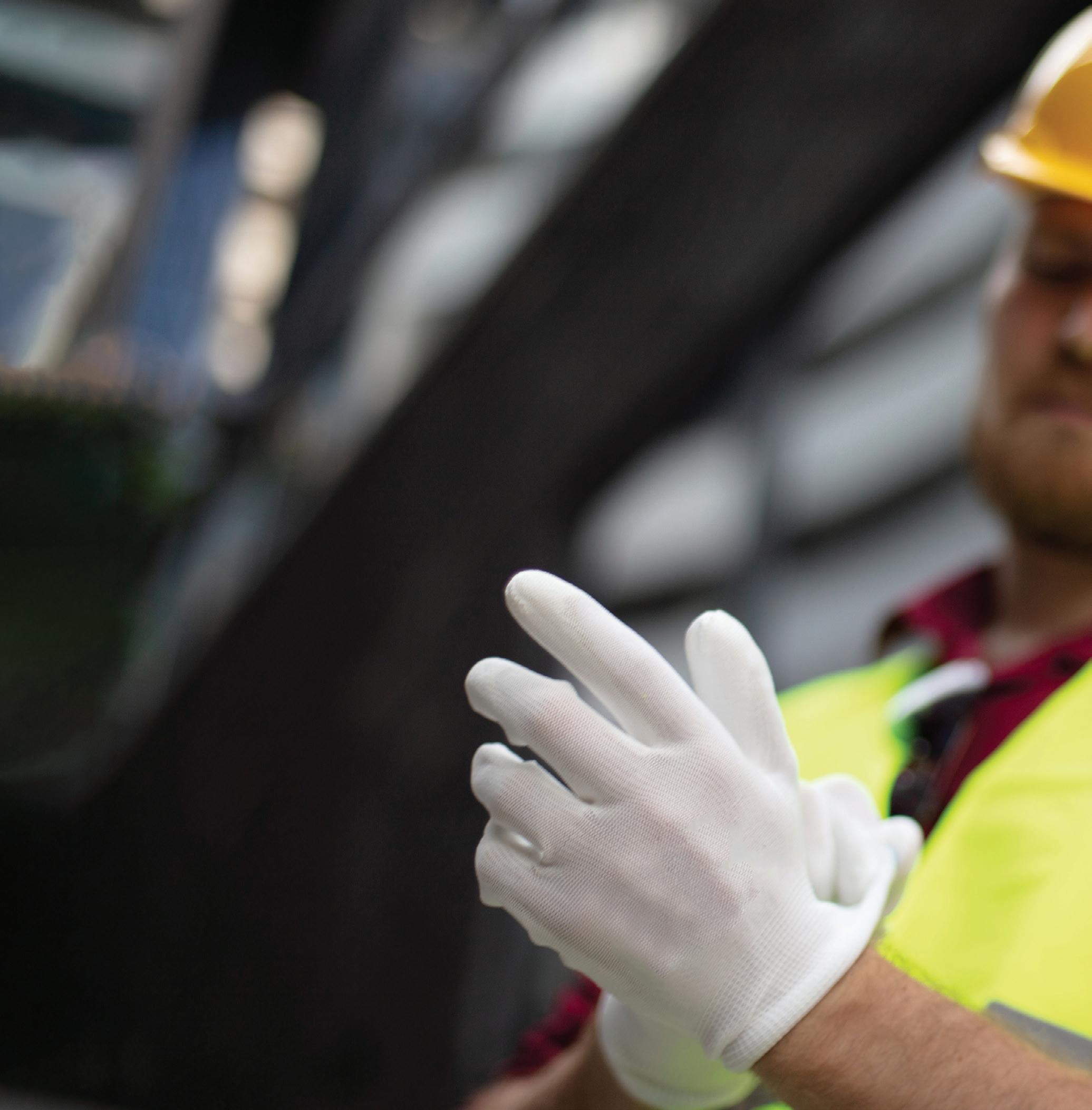
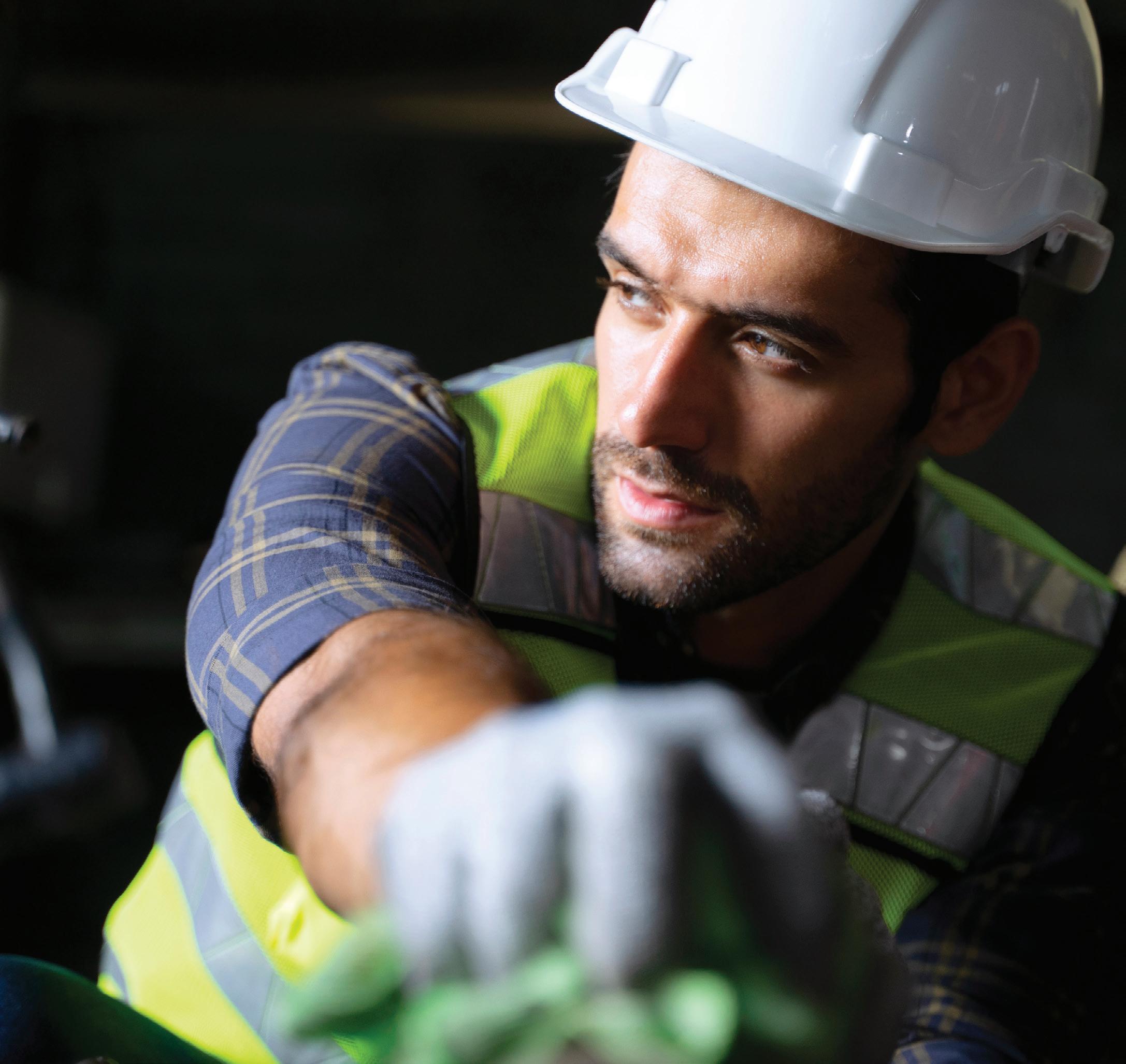
Serious injuries rarely happen because workers do not know the rule. More often, they happen when the system quietly teaches people that the rule is negotiable. As DAMIONE WRIGHT , Managing Director APAC at Mechanix Wear, explains, for safety leaders, the challenge is not simply to demand compliance: it is to design work so the safe choice remains the easy, credible and high-performing choice in the moment.
PPE compliance rarely breaks down through defiance — it breaks in moments that begin with four quiet words: “just for this bit.”
That phrase captures the moment when a worker makes a micro-decision that feels small, reasonable and temporary. The task is familiar. The deviation seems minor. The glove comes off for a fiddly adjustment, a precise grip, a quick connector or one last touch. The hazard has not changed. The rule has not changed. But the decision has — and sometimes that is all it takes.
For senior safety leaders, this matters because it reframes the problem. PPE non-
PPE

compliance is often treated as a rule issue, a supervision issue or a discipline issue. Yet across mature safety systems, strong policies and repeated training still produce patchy, situational compliance. The reason is simple: PPE use is not driven by policy alone. It is a behavioural outcome shaped by context, friction, culture and task design.
That is why the better question is not, “Why do workers ignore the rule?” The better question is, “What is happening in the moment that PPE use becomes negotiable — and what has the system done to make that decision easier to justify?”
Gloves are an especially revealing case study because they do not merely sit around the work. They intervene in the work. They can affect dexterity, tactile feedback, grip, speed and comfort. In other words, they make the trade-off visible.
Research on protective gloves has repeatedly shown that glove design can affect manual performance, including dexterity, grip and tactile sensitivity. That matters because workers do not make a single compliance decision at the start of a shift. They make
repeated micro-decisions throughout the day: is the protection worth the performance cost right now?
This is why glove removal is so instructive for safety leaders. The same behavioural forces that influence glove use — friction, performance trade-offs, norms, identity and habit — also shape the use of other PPE. Gloves simply make those forces easier to see. When protection and performance compete, performance usually wins — not because workers do not care, but because the system has made safe behaviour harder than doing the job.
Behavioural science gives safety leaders a more useful lens for understanding this tension. Icek Ajzen’s ‘The theory of planned behavior’ argues that intention is one of the strongest predictors of behaviour, and that intention is shaped by three key drivers: attitude, subjective norms and perceived behavioural control.1
Translated to the job, attitude is the worker’s judgment about whether PPE helps or hinders the task. Subjective norms are the social signals people read from supervisors, leading hands and respected operators. Perceived behavioural control is the worker’s belief about whether they can still do the job effectively while complying.
This matters because the workplace is constantly shaping those beliefs. If a glove makes fine motor work harder, attitude deteriorates. If experienced operators routinely remove gloves for precision tasks, the norm shifts. If workers believe they cannot perform effectively while gloved, their sense of control collapses. Once that happens, intention becomes fragile even in organisations with good policy, good training and good people.
In practice, immediate experience often outweighs distant consequence. A hand injury may be low frequency but high-consequence. Heat, sweat, poor feel and slower task completion are immediate, repeated and memorable. Over time, the glove can start to feel like the problem rather than the barrier protecting the worker from it.
The rational drivers of behaviour are only part of the story. Safety behaviour also has a moral dimension. Shalom H. Schwartz’s Norm Activation Model is useful here because it explains how personal norms are activated by awareness of consequences and a sense of responsibility.2
WHEN PROTECTION AND PERFORMANCE COMPETE, PERFORMANCE USUALLY WINS — NOT BECAUSE WORKERS DO NOT CARE, BUT BECAUSE THE SYSTEM HAS MADE SAFE BEHAVIOUR HARDER THAN DOING THE JOB.
This is where strong safety cultures distinguish themselves from superficial compliance. Most critical decisions are made in ordinary moments, not under direct observation. People act on what they believe matters, what they believe is expected and what they believe says something about who they are. When hand protection is tied to craftsmanship, responsibility and care for others, compliance becomes more durable than when it is tied only to surveillance or enforcement.
That moral dimension is especially important in routine work. Many hand injuries do not occur during the most visibly dangerous tasks. They occur during familiar tasks, where repetition reduces perceived risk and creates permission for shortcuts. Experience can help people manage hazards, but experience can also normalise deviation. Competence does not cancel hazard.
Once we accept that PPE compliance is a system-design issue, the leadership task becomes clearer. The goal is not merely to increase effort around compliance. The goal is to redesign the decision point so that compliance is easier, faster and more credible than non-compliance.
That means moving beyond blanket rules and generic campaigns. It means understanding exactly where gloves come off, which tasks trigger removal, what workers are trying to achieve in those moments and what the
current glove is doing to the job. In many workplaces, the phrase “non-compliance” conceals an unresolved design problem.
It also means acknowledging an uncomfortable truth: if the system creates a trade-off between working safely and working well, workers will often choose the option that helps them maintain pace, precision and identity. No poster can outcompete poorly designed workflow.
For many organisations, the practical shift is to stop treating PPE as a communications problem and start treating it as an operating design problem. Leaders do not need more slogans about compliance. They need better diagnostics, better task matching, better access, better supervisor reinforcement and better worker involvement in selecting what is fit for purpose.
A useful portfolio mindset is to think in terms of good, better and best. The “good” option is the habit builder: comfortable, available and easy to default to. The “better” option is the task-fit performer that improves control for more demanding work. The “best” option is reserved for high-hazard, high-salience tasks where protection requirements are unmistakable. The behavioural win condition is straightforward: workers must experience the glove as helping them perform the task, not obstructing it.
When that happens, compliance stops
Week Priority action
Week 1 Diagnose: map the moments when gloves come off — task type, glove type, location, time pressure and supervisor context.
Week 2 Redesign: fix sizing, stock quality, access and availability. Review whether current glove selection matches the task.
Week 3 Run structured peer trials: test task-fit options with crews, capture feedback, and equip supervisors to use small, consistent reinforcement in the field.
Week 4 Institutionalise: publish task-based guidance, simplify decision rules, and reinforce identity-based messages around craft, care and responsibility.
1. Audit perceived control
Ask where gloves make the task harder, where removals happen and what is driving the choice in that moment.
2. Select by task, not by site alone
A single glove strategy often fails when the performance penalty is too high for the work being done.
3. Design choice architecture
Put the right gloves at the point of decision, not down the corridor or behind unnecessary hurdles.
4. Use peer trials and feedback
Well-run trials improve attitude, increase perceived control and establish credibility for change.
5. Activate identity, not fear
Frame hand protection around pride, craft, reliability and responsibility — the values skilled workers already respect.
feeling like an external demand and starts functioning as part of the way good work is done.
The most dangerous moment in safety is not when workers lack information. It is when the system quietly teaches them that the rule can be relaxed in the name of getting the job done.
That is why leading organisations are moving beyond compliance messaging alone. They are reducing friction, matching PPE to the work, improving point-of-use access, involving workers in selection, and reinforcing the idea that protection and performance belong together rather than in opposition.
For safety leaders, the implication is direct. Stop focusing solely on enforcing compliance and start examining where the work itself makes compliance feel optional. When protection and performance align, compliance no longer has to be chased, it becomes the natural way the work gets done.
1. Ajzen I. The theory of planned behavior. Organizational Behavior and Human Decision Processes. 1991;50(2):179–211. doi:10.1016/07495978(91)90020-T
2. Schwartz SH. Normative influences on altruism. Advances in Experimental Social Psychology. 1977;10:221–279. doi:10.1016/S00652601(08)60358-5
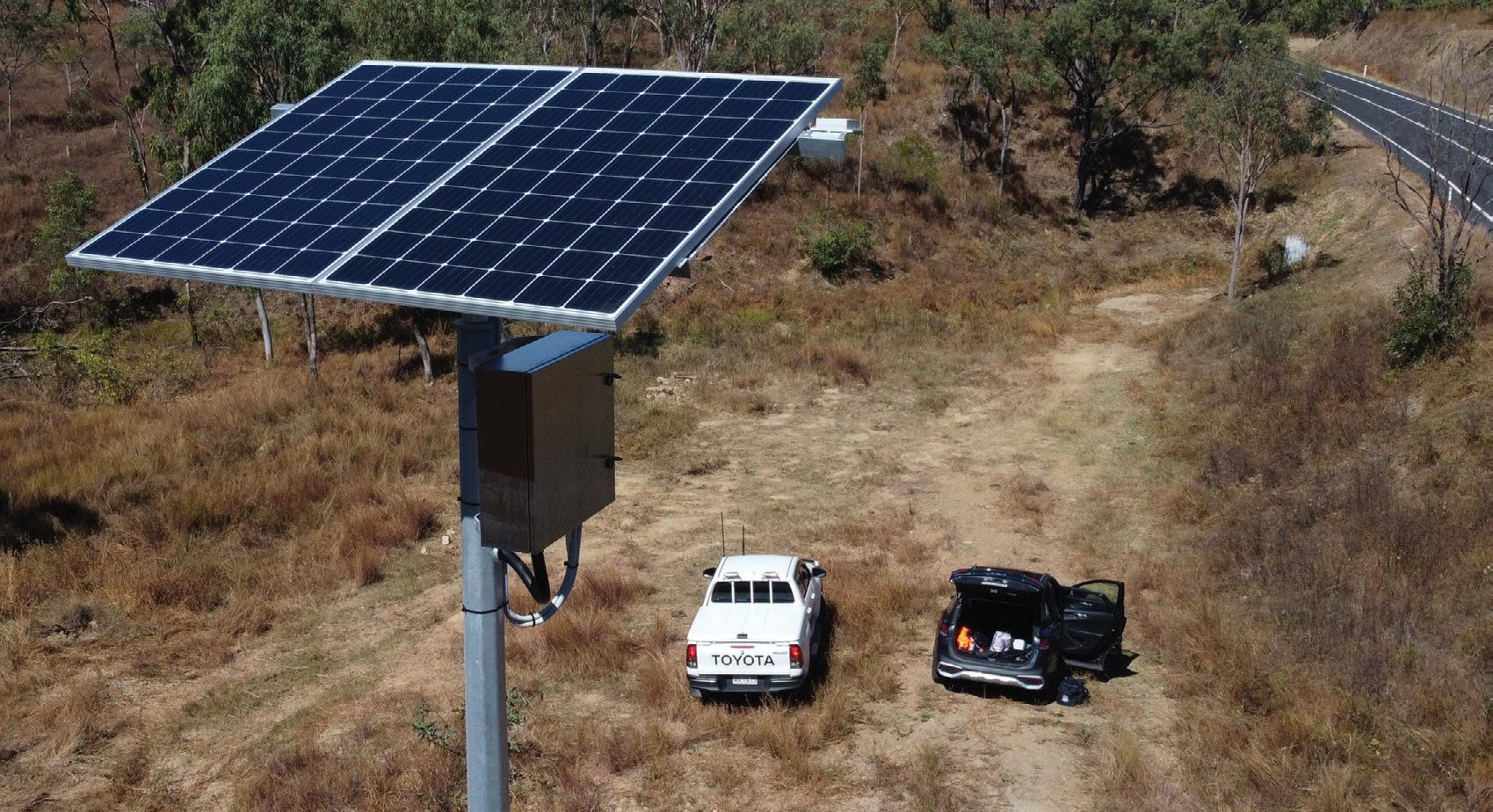
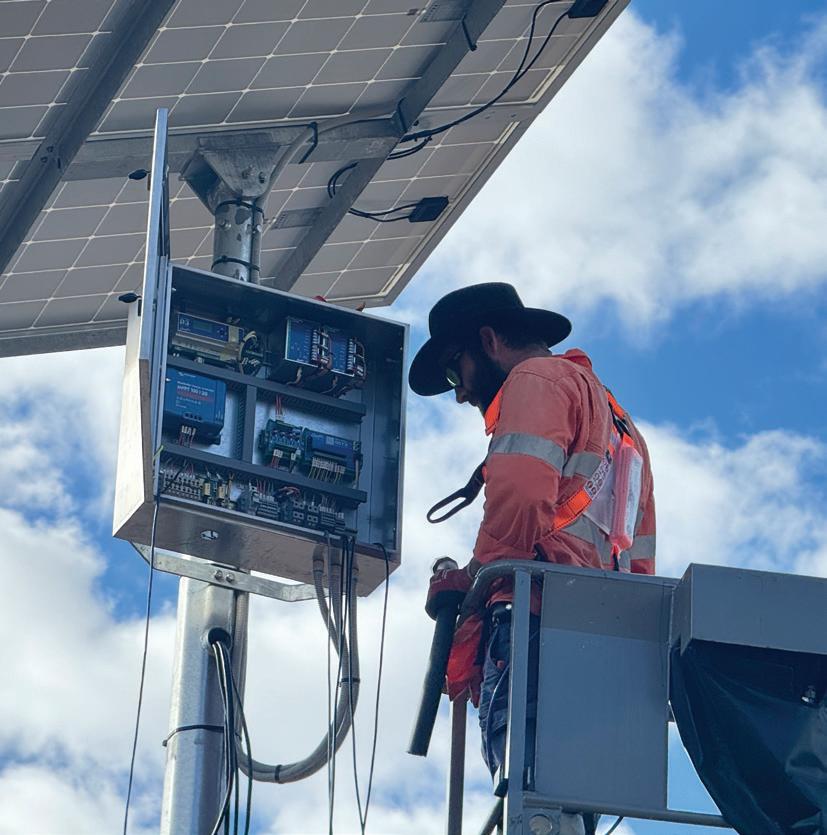
To assist local authorities with essential maintenance of roadside culverts in Far North Queensland, Omniflex has delivered a remote monitoring and control solution for an impressed current cathodic protection (ICCP) control system that is designed to operate in the complete absence of mains power and cellular coverage.
Roadside infrastructure operates in extremely challenging environments in this vast remote region of Australia, with monsoons and seasonal flooding placing significant pressure on culverts. Often out of sight, culverts are essential to road safety and drainage and susceptible to corrosion, with failure of these culverts having the potential to lead to roads collapsing.
Working with corrosion consultant Infracorr, Omniflex’s bespoke ICCP enclosure and control system to protect the culvert is powered entirely by solar panels and uses satellite connectivity, which enables continuous reporting of performance data without the need for regular site visits.
“The culvert that needed cathodic protection was several hours from the nearest town, in a region with no power or network coverage,” Omniflex Managing Director David Celine said. “This meant that traditional remote monitoring solutions weren’t viable, and sending engineers to inspect the system in person would be very costly.
“During our own early site visits, access was so limited that the consultants were forced to abandon the trip altogether when the road became impassable due to flooding; not a cost-effective use of time.
“With galvanic anodes already in place from a previous installation that were not providing sufficient protection, an ICCP system that would extend the lifespan of the infrastructure and allow performance to be verified was urgently needed,” Celine said.
With vandalism considered a risk factor due to the remoteness of the site, the entire ICCP system was installed at the top of a pole under the solar panels, with the batteries buried in the ground in a waterproof enclosure.
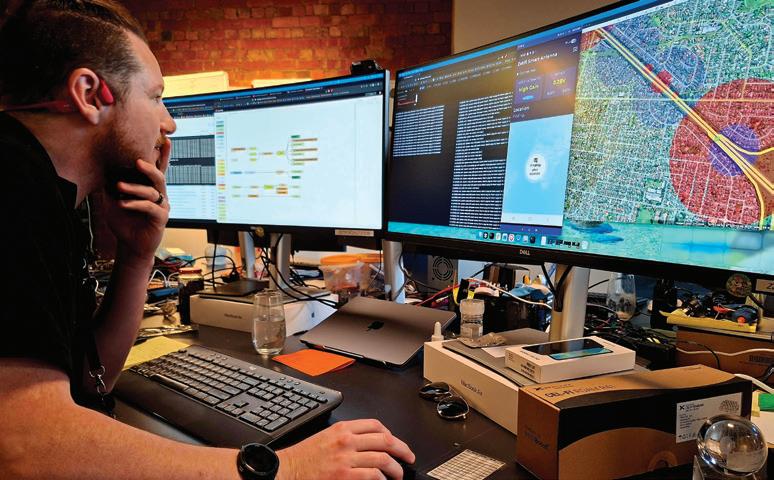
Two solar-powered transformer/rectifiers for ICCP delivery and a Remote Terminal Unit to monitor and control performance using four reference electrodes embedded in the earth surrounding the culvert were used in the system. Using satellite connectivity to report back to Omniflex’s Data2Desktop platform, set points can be adjusted by local authorities, who can also access performance data and information on solar power generation and battery health in real time, reducing the need for regular in-person site inspections.
Omniflex (Australia) Pty Ltd www.omniflex.com.au
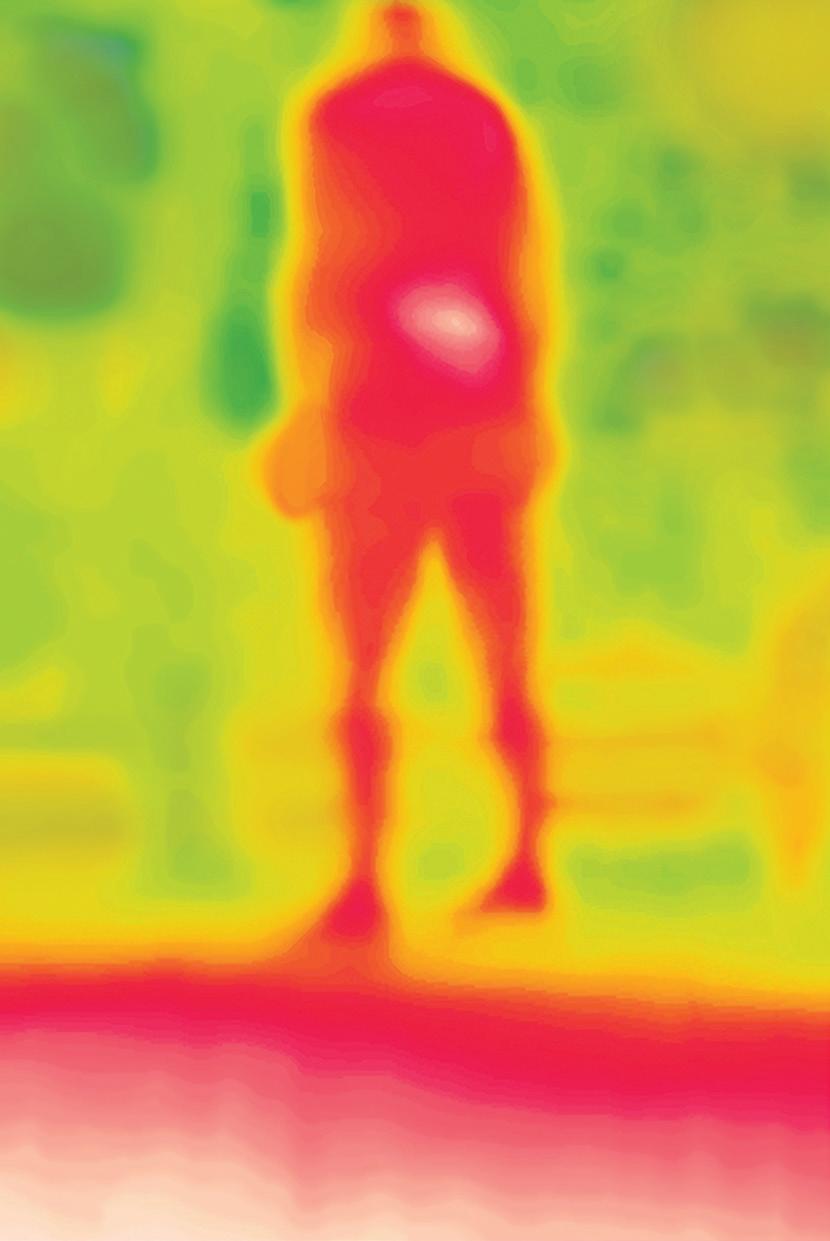
‘Tura’, a thermal longwave infrared camera, has been developed to improve automatic emergency braking and autonomous vehicle safety. Launched by Teledyne FLIR OEM, Tura is an Automotive Safety Integrity Level (ASIL-B) thermal longwave infrared (LWIR) camera developed in compliance with ISO 26262 functional safety (FuSa) standards.
The solution has been purpose-built to meet the stringent perception requirements for vehicle-based night vision, advanced driver-assistance systems (ADAS) and autonomous vehicles (AV) that demand high performance, low supply risk, and cost-effective thermal solutions.
Featuring a new, high-performance passive 640×512 resolution far-infrared (FIR) sensor with sensitivity critical for detecting and classifying pedestrians, animals and other vulnerable roadway users, the automotive-qualified Tura is engineered to deliver perception far beyond headlights in complete darkness and through challenging conditions such as fog, smoke, sun glare and headlight glare.
“Safety and reliability are non-negotiable pillars of autonomous technology, and Tura sets a new industry benchmark with compatible FuSa features starting from the sensor,” said Paul Clayton, President and GM of Teledyne FLIR OEM. “We have manufactured more than one million automotive thermal camera modules over the last 20 years for driver warning systems and will continue to provide a high-volume, cost-effective solution.”
Also deployed in fully autonomous vehicles, perception data is provided, as are multiple thermal camera modules that can be integrated to enhance 360-degree situational awareness. This feature is designed for the detection of heat-emitting objects — such as people, vehicles and animals — even in low-visibility conditions.
Teledyne FLIR www.flir.com.au
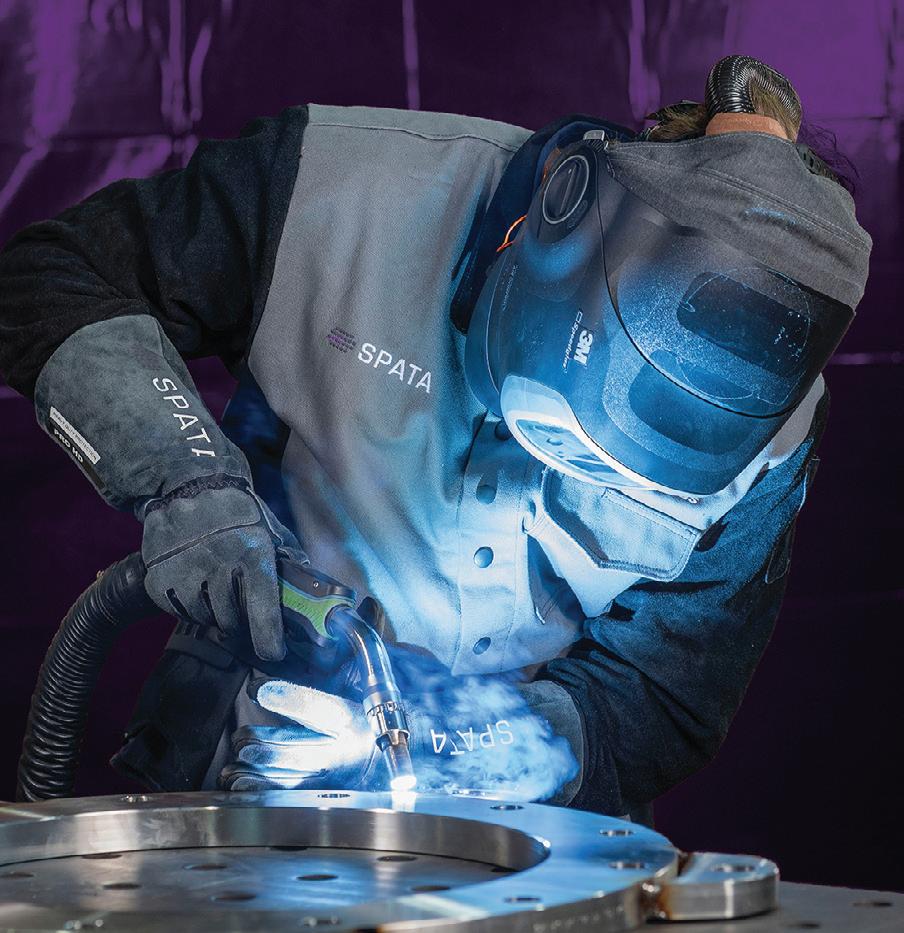
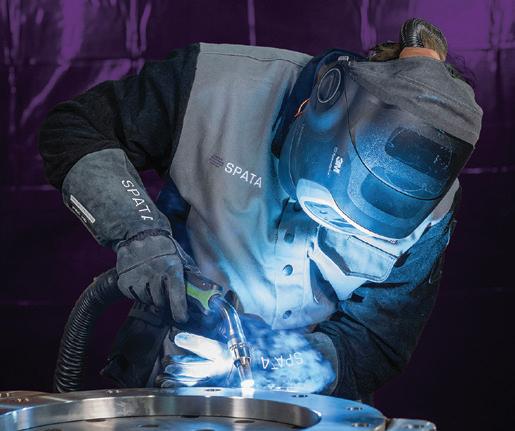
AWS has launched the SPATA Welding Gloves range. Designed to meet what Australian and New Zealand welders want and need in their welding gloves, the SPATA glove range includes three heat welding options and three premium TIG welding options — all field-tested and welder-approved.
The Heat Welding Glove range is headlined by the SPATA Pro HD, boasting extreme heavy-duty protection. SPATA Inside Out is tough on the outside and soft on the inside, designed to allow welders to maximise their protection without compromising their comfort. And for the welder who does it all, the SPATA All-Rounder is intended to be a reliable, versatile and competitively priced entry point to premium hand protection.
There is also the SPATA Hybrid, designed to be a TIG welding glove with a difference, featuring extra cut protection and heat relief not usually found in TIG gloves. This is followed by the super-thin SPATA TIG Feel, which is designed to offer the highest level of dexterity and best TIG glove feel on the market. Finally, the SPATA TIG Tough is engineered to be an exceptionally hard-wearing TIG glove that won’t quit when the job gets tough.
The SPATA Welding Gloves range is intended to suit a welder’s specific needs, whether for durability, dexterity, comfort or all of the above.
AWS Pty Ltd
www.apexweldingsafety.com.au
Regarding machinery safety and compliance, MATT IRELAND , Senior Manager of Legal and Regulatory Content at Ideagen Machine Safety, explains where manual processes fall short and how automation is addressing gaps across the machinery lifecycle.
Managing machinery safety and uptime is one of the most persistent operational challenges facing industries that rely on heavy equipment. Unplanned downtime, safety incidents and compliance failures carry serious consequences, financial losses, reputational damage, regulatory penalties and most critically, injuries to the workforce. >
Yet across construction, mining, manufacturing and utilities, many organisations still manage machinery risk through manual processes: paper-based checklists, spreadsheet tracking, reactive maintenance schedules and compliance documentation scattered across filing cabinets and shared drives. These methods served their purpose for decades, but as fleets grow, regulations tighten and workforce expectations shift, the limitations of manual approaches are becoming harder to ignore.
Automation, specifically, digital platforms purpose-built for machinery safety and compliance, is offering a fundamentally different approach. Rather than digitising existing paper processes, these platforms are restructuring how organisations identify hazards, assess risk, schedule maintenance and demonstrate compliance.
The risks that manual processes struggle to contain
Machinery risk is multifaceted. Heavy equipment presents hazards from moving parts, electrical systems, hydraulics and high-pressure components. Operators and owners must navigate a web of legislation, regulations, standards and codes of practice, obligations that vary by jurisdiction, industry and machine type. A failure in any one area can trigger penalties, legal liabilities or operational shutdowns.
Beyond the regulatory layer, three operational risk areas consistently cause problems for organisations still relying on manual methods.
Inconsistent inspections and risk assessments
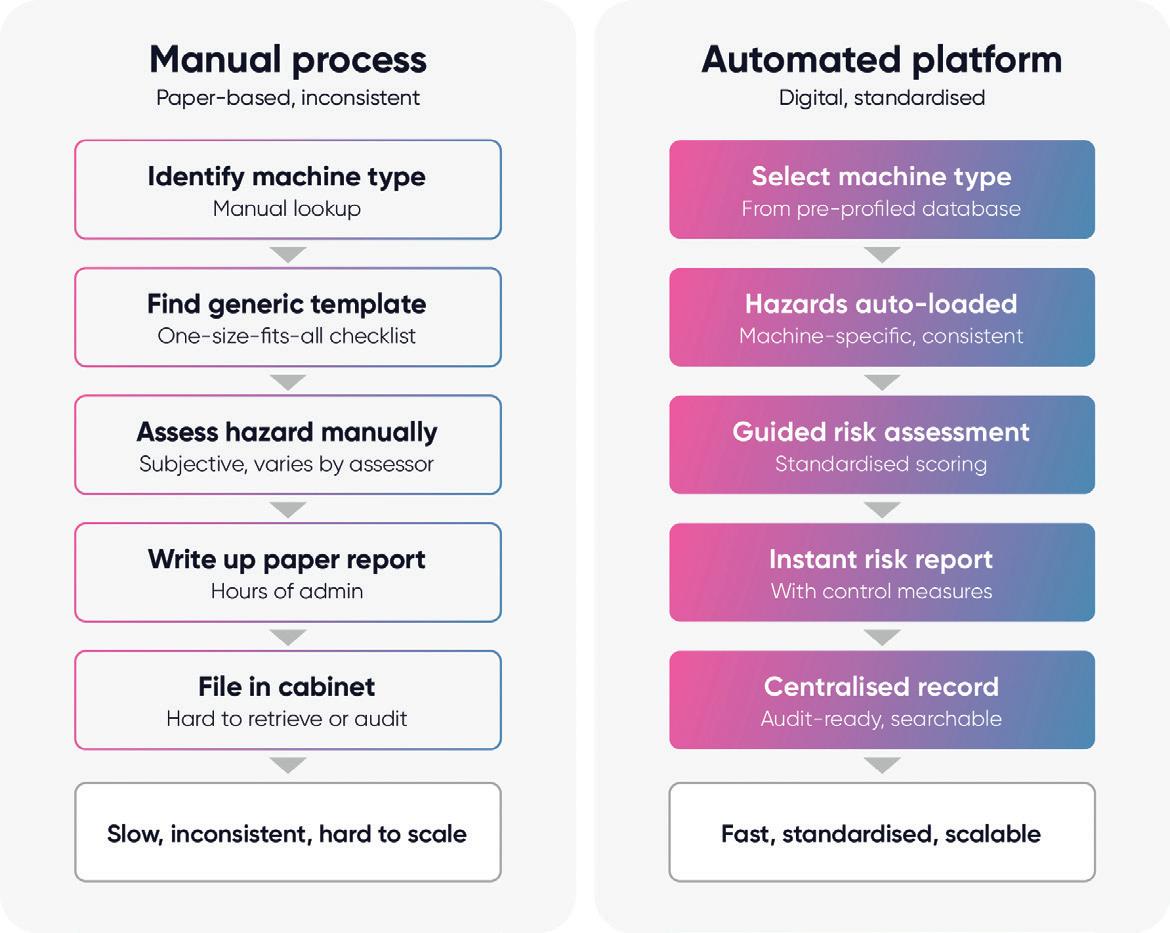
Every machine has a unique hazard profile. A 20-tonne excavator presents different risks to a concrete pump or an elevated work platform. Yet many organisations still use generic risk assessment templates across their entire fleet, relying on individual inspectors to identify machine-specific hazards. The result is inconsistency: different assessors evaluate the same machine differently, hazards are missed, and the quality of any given assessment depends entirely on whoever filled in the form that day. This subjectivity is one of the most underestimated risks in machinery safety management.
Reactive maintenance cycles
Without automated scheduling, maintenance tends to become reactive, machines are serviced when something breaks, not before. Many businesses struggle to track service intervals across a mixed fleet, leading to either over-servicing (wasting resources) or missed servicing windows (creating safety
and reliability risks). The downstream effect is unplanned downtime, which is almost always more expensive and disruptive than scheduled maintenance.
Fragmented documentation
Accurate, up-to-date safety documentation is essential for demonstrating due diligence. But when records are spread across paper files, local drives and individual inboxes, pulling together a complete compliance picture for a single machine, let alone an entire fleet, becomes a significant undertaking. In the event of an incident or audit, organisations with fragmented documentation face an immediate credibility problem, regardless of how good their actual safety practices may be.
The issues above are not new; most safety managers could list them from memory. What has changed is the operating environment. Three trends are compounding the limitations of manual processes.
Fleet complexity is increasing
Organisations are running larger, more diverse fleets across more sites. A tier-two civil contractor that managed 30 machines from one depot a decade ago may now coordinate 150 assets across multiple projects, each with different principal contractor requirements. Manual tracking simply does not scale at this rate without exponential increases in administrative headcount.
Regulatory expectations are rising Regulators are placing greater emphasis on demonstrable, systematic approaches to risk management. A completed checklist is no longer sufficient evidence of compliance, regulators want to see that the methodology behind the assessment is sound, that it accounts for machine-specific hazards
and that the resulting control measures are appropriate and consistently applied. This is a standard that manual, template-based approaches struggle to meet.
Workforce dynamics are shifting
Experienced safety professionals who carried institutional knowledge about specific machines and site conditions are retiring. The workers replacing them need systems that embed that knowledge into the process itself, rather than relying on individual expertise that walks out the door at the end of a career.
Automation in machinery safety is not about replacing human judgement, it is about providing a structured, consistent framework that supports better decision-making and removes the administrative friction that causes gaps in the first place.
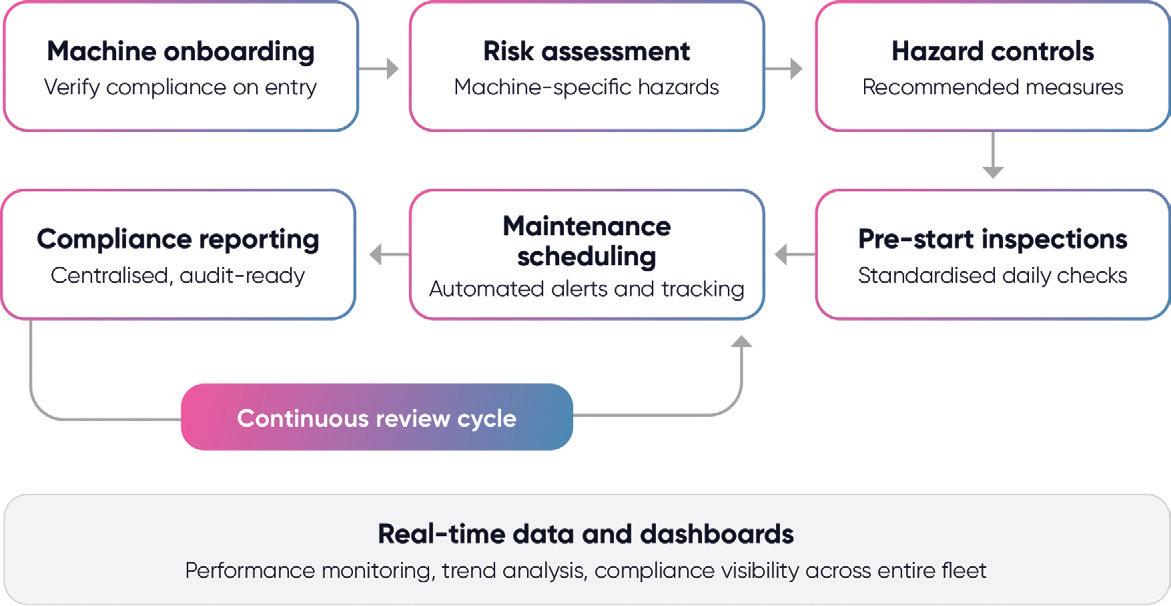
Standardised, machine-specific risk assessments
The most significant shift automation enables is moving from generic templates to machinespecific assessments. Modern platforms maintain databases of pre-profiled machine types, each with its own hazard profile mapped to relevant legislative requirements. When an assessor initiates a risk assessment, the platform presents hazards specific to that machine type rather than relying on the assessor to identify them from scratch. This does not eliminate the need for human judgement, site-specific conditions still require expert input, but it ensures a consistent baseline that is far less susceptible to subjectivity or oversight.
Automated hazard control recommendations
Beyond identifying hazards, some platforms can recommend appropriate control measures
AUTOMATION IN MACHINERY SAFETY IS NOT ABOUT REPLACING HUMAN JUDGEMENT, IT IS ABOUT PROVIDING A STRUCTURED, CONSISTENT FRAMEWORK THAT SUPPORTS BETTER DECISION-MAKING AND REMOVES THE ADMINISTRATIVE FRICTION THAT CAUSES GAPS IN THE FIRST PLACE.
based on the specific risk profile of a machine. Rather than leaving control selection entirely to the assessor, where experience levels, time pressure and personal judgement can produce wildly different outcomes, automation provides a standardised starting point. Controls such as guarding requirements, interlock specifications or PPE recommendations are matched to the identified hazards, ensuring a consistent and defensible approach across the organisation.
Proactive maintenance scheduling
Automated maintenance management replaces the reactive cycle with planned intervention. Platforms track service history against manufacturer specifications and operational hours, triggering alerts when maintenance is due and assigning work orders to relevant personnel. The shift from “fix it when it breaks” to “service it before it fails” has a direct impact on both uptime and safety.
Streamlined compliance documentation
Digital platforms consolidate safety reports, maintenance logs, operator certifications and risk assessments into a single, searchable system. When an auditor or regulator requests evidence of compliance for a particular machine, the organisation can produce a complete history in minutes rather than days. This is not merely an administrative convenience, it fundamentally changes the organisation’s ability to demonstrate due diligence.
Subcontractor machinery onboarding
For principal contractors and site operators, managing the compliance status of subcontractor-owned machinery is a persistent headache. Automated onboarding systems can verify that incoming equipment meets safety standards before it enters site, prequalifying compliance documentation, logging certifications and flagging non-compliant assets. This shifts the compliance burden from manual checking at the gate to a systematic pre-qualification process.
Real-time visibility and reporting
Automated platforms provide dashboards and reporting tools that give safety managers a live view of fleet compliance status, outstanding maintenance tasks and inspection completion rates. This visibility enables proactive management rather than periodic reviews, and supports data-driven decisions about where to allocate safety resources.
Transitioning from manual to automated machinery risk management is not an overnight exercise, and organisations considering the shift should approach it methodically.
The starting point is an honest assessment of current processes, specifically, where the biggest gaps exist between what the organisation does on paper and what actually happens on site. Automation delivers the most immediate value when applied to areas with the highest risk of inconsistency or non-compliance.
Scalability matters
The platform selected should accommodate fleet growth, multiple site operations and varying regulatory requirements without requiring a fundamental rearchitecture. Integration with existing business systems, fleet management, ERP, project management, is also a practical consideration that can determine whether automation simplifies workflows or adds another disconnected system to the stack.
Training is critical but often underestimated
The most sophisticated platform will fail if frontline workers, operators, supervisors and site managers, do not understand how to use it or, more importantly, why it matters. Adoption is strongest when the tools demonstrably make their daily work easier rather than adding another layer of bureaucracy. Automation should be treated as an evolving capability rather than a one-time implementation
The data generated by automated systems, inspection trends, maintenance patterns, compliance gaps, is itself a valuable input for continuous improvement. Organisations that use this data to refine their processes will see compounding returns over time.
The direction of travel is clear. As fleets grow, regulations evolve and the expectation of demonstrable compliance increases, manual machinery risk management will become progressively harder to sustain. Automation is not a silver bullet, it still requires competent people, sound processes and organisational commitment to safety. But it provides the infrastructure to manage machinery risk at a scale and consistency that paper-based methods cannot match.
For safety professionals evaluating their current approach, the question is no longer whether to automate, but how quickly the transition can be made, and which risks are accumulating in the meantime.
Between April and December 2026, SafeWork SA’s Stanley the cone campaign will provide advice across three common workplace hazards — falls from height, roll-away vehicles and spills. These hazards have been identified using SafeWork SA and ReturnToWorkSA data and aligned to national strategic WHS priorities.
Concerning falls, SafeWork SA received 300 notifications of a workplace incident involving a serious fall, with 12 fatalities and a further 288 people who were seriously injured during this period. The riskiest industry remained the construction sector, followed by transport, manufacturing and agriculture.
SafeWork SA received 196 slip and trip notifications during the same period, with many associated with spills — accounting for five fatalities and 191 seriously injured. Meanwhile, there were 42 roll-away vehicle incidents reported to SafeWork SA over the past four years; four people died and 17 were seriously injured while 13 incidents involved significant property damage.
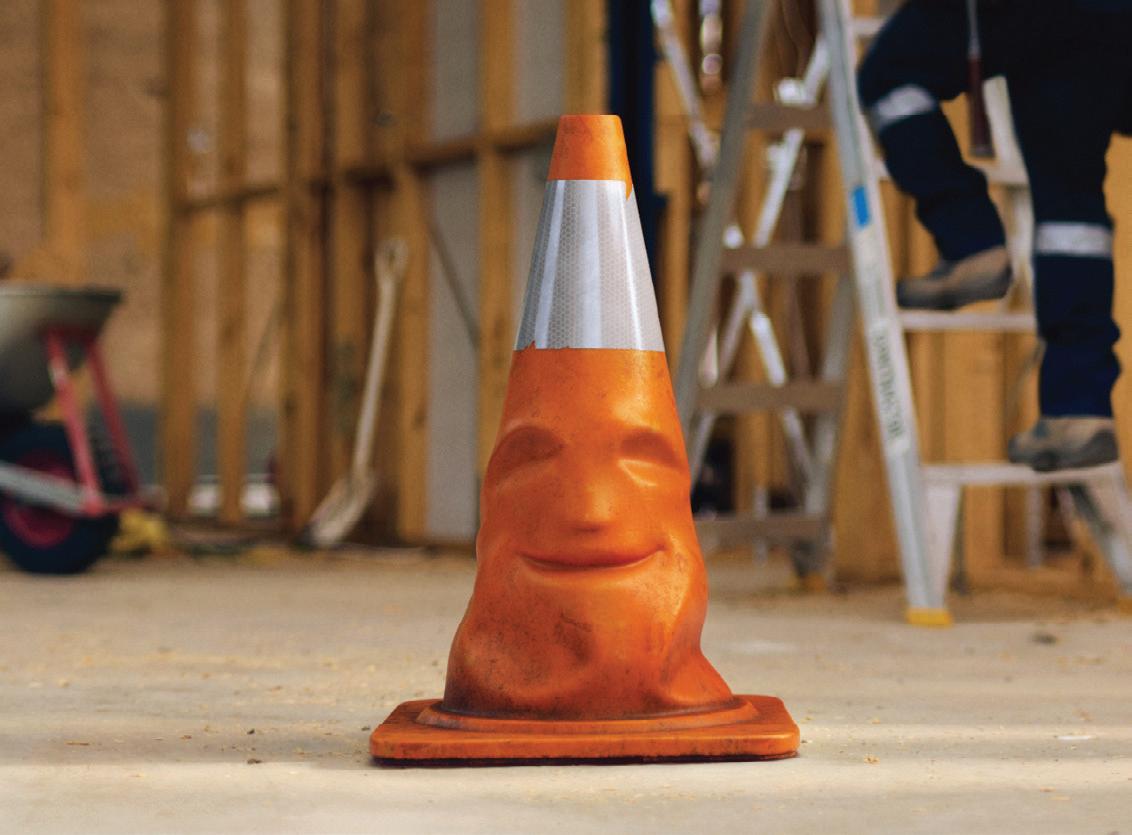
Director Glenn Farrell said. “Stanley the cone might be a bit gruff but he’s an expert on safety in the workplace and is a vital member of the SafeWork SA team.
SafeWork SA’s ongoing compliance and education activities across a range of industries will be supported by the campaign — the regulator visiting more than 7700 worksites and issuing almost 5240 statutory notices in 2024–25. For breaches to WHS laws, there were a total of 18 convictions — the highest in 10 years — with record fines totalling $2.37 million.
“By using a traffic cone — a universally recognised symbol of safety — we’re hoping to share workplace safety messages in a way that is novel, engaging and memorable,” SafeWork SA Executive
“Through this statewide campaign, we’re giving people clear, practical safety information to prevent incidents from occurring as well as encouraging people to contact SafeWork SA for expert advice and support.”
SafeWork SA www.safework.sa.gov.au
The Zetifi Connected Fleet Safety Platform is designed to help organisations with distributed and mobile workforces manage driver safety and WHS risk by turning safety signals into action, records and evidence. The platform is built on Geotab GO9 telematics, Geotab GO Focus Plus
AI-powered video and Microsoft 365 workflows, and integrates with Zetifi policy mapping, workflow design, agentic AI and tuning.
It is engineered to help organisations move beyond tracking and alerts to deliver policy-driven safety action, follow-up and evidence. It works through Microsoft-native workflows connecting vehicle, driver and field signals to alerts, actions, reporting and evidence within the systems teams already in use. A risk event such as an employee using a mobile phone while driving, for example, is detected and automatically triggers the right alert, assigns follow-up actions and creates a record of response within Microsoft-native agentic workflows.
Key features include AI-powered cameras and telematics and near real-time alerts that prompt action; clear reporting that shows trends, behaviours and emerging risk; and structured evidence that supports compliance and governance. The platform is designed to be suitable for industries with elevated vehicle and remote-worker risk, including agriculture, mining, utilities, construction, transport and local government. Zetifi
www.zetifi.com

Safety solutions for a major road upgrade, remote and isolated worker psychology, landscaping repetitive strain and a hospital’s “recovery at work” are among the winners in Victoria’s WorkSafe Awards.
Civil construction company Seymour Whyte won the OHS Leadership/ Achievement Award for the second consecutive year. Leading the Healesville-Koo Wee Rup Road upgrade — a major infrastructure project which saw 2100 machines on site and 600,000 tonnes of material moved — the company demonstrated its commitment to the health and safety of its workforce by challenging traditional approaches and implementing bespoke solutions to redefine safety in infrastructure.
“We weren’t willing to accept that what’s worked once, will work again, given the job possessed some unique challenges,” said Matthew Owen, Seymour Whyte’s Senior Project Engineer, who also said that the scale of the project required challenging the traditional approaches to high-risk work.
The winners of WorkSafe Victoria’s 2025 WorkSafe Awards were announced on 26 February, with inspiring stories of strength, innovation and leadership being this year’s theme. There were eight winners across seven award categories, honoured for their commitment to improve workplace health and safety or remarkable determination to return to work following an injury. Here’s a selection of some of the winning safety solutions according to industry.
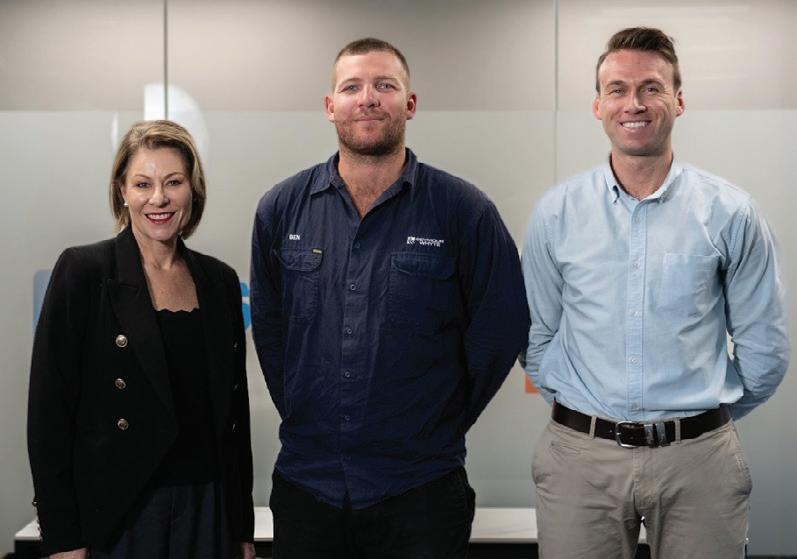
Winner of the Farm Safety Solution Award was Warakirri Cropping, who through data review and genuine consultation, were able to establish trust to drive engagement with the on-site psychology service model — designing and delivering a tailored and proactive intervention to reduce the risk of psychological harm to its remote and isolated workers.
Watch to learn more about this winning solution
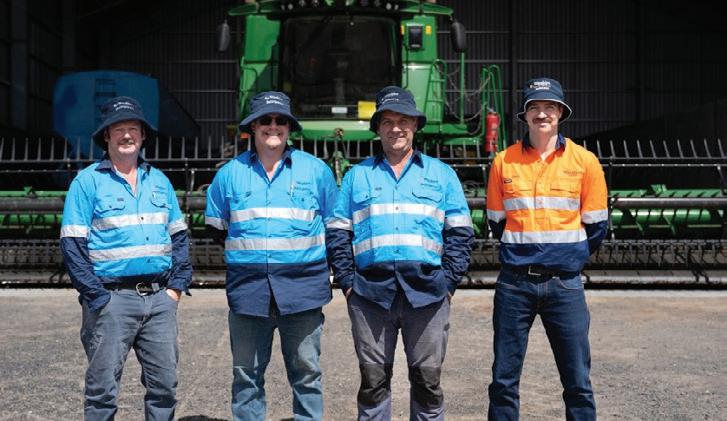
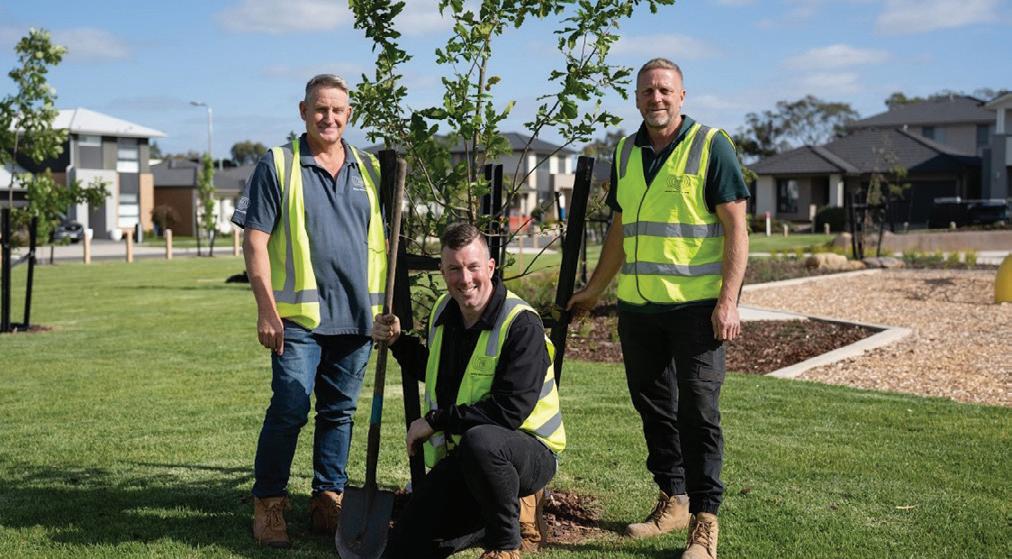
Designed to reduce the risk of manual handling and repetitive strains on site installations of trees, Tree Coach by Natural Growth Partners won the Workplace Health and Safety Solution of the Year Award. The solution is designed to eliminate the need for stake ramming and heavy lifting. Once Tree Coach is installed in the ground with the tree and excavation is backfilled, the surrounding compacted earth holds Tree Coach in place, and the tree is tied to Tree Coach stakes for support.
Watch to learn more about this winning solution
The Royal Melbourne Hospital won the Leading Return to Work Practice Award in recognition of the significant transformation in its approach to return-to-work practices. The hospital’s Injury Management Team cultivating a supportive and proactive environment through its “recovery at work” collaborative approach between injured workers and their managers.
Watch to learn more about this winning solution
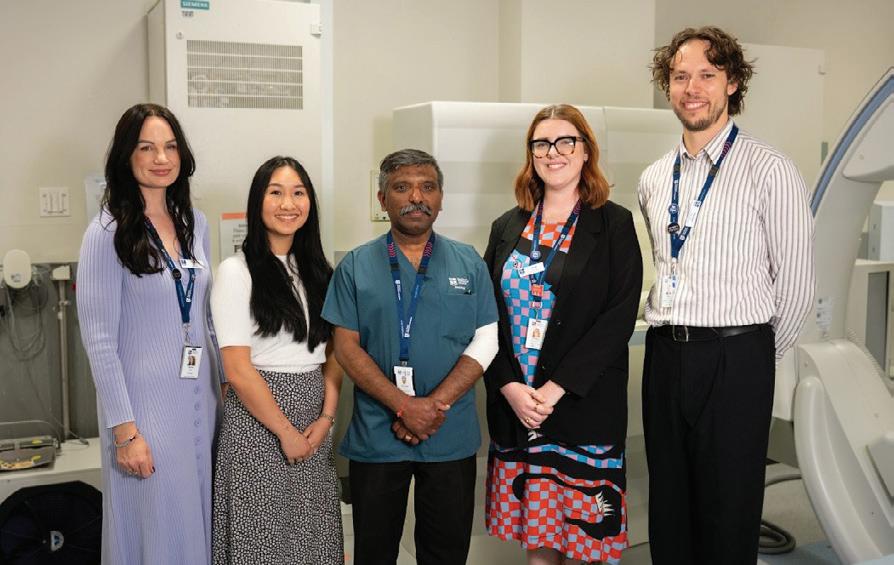
The other winners in the 2025 WorkSafe Awards were:
• Manor Lakes Community Learning Centre in the Excellence in Preventing and Managing Psychosocial Risk category;
• Maree McLean St Mary’s Primary School Swan Hill and Dennis Gabriel — Yarrawonga Riverlands Tourist Park in the Worker Return to Work Achievement category;
• Manny Mason City of Ballarat in the Health and Safety Representative of the Year category; and
• Tracey Browne Outstanding Leadership and Contribution to Health and Safety category.
Spotlight
To spotlight one of the above, Manny Mason from the City of Ballarat’s win recognised an ability to combine empathy with assertive advocacy to ensure a vulnerable worker was protected and supported through a traumatic experience. Holding the employer accountable to their legal obligations and advocating for the worker’s safe return to work, his actions set a precedent for how such matters should be handled across the organisation. Learn more in the below video.
“The quality of this year’s entries was outstanding and I want to congratulate all of our finalists along with the worthy award winners,” WorkSafe Victoria CEO Cathy Henderson said. “It’s inspiring to hear stories of resilience from those who have returned to work after injury and see the meaningful contribution of those dedicated to protecting the health and safety of their colleagues and workers across Victoria.”
Watch to learn more about this winning solution
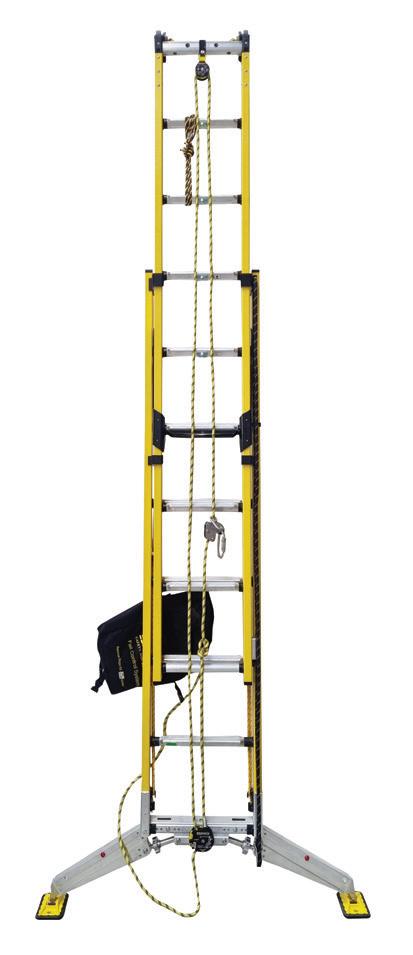
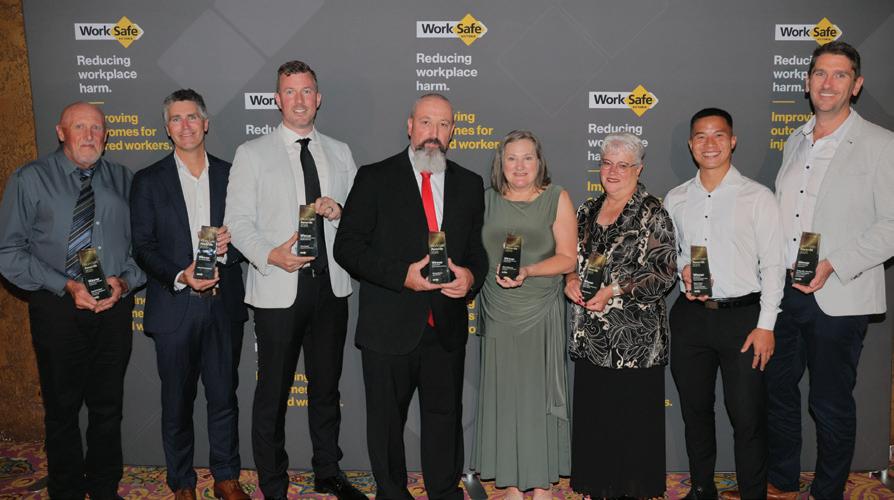
The Branach EN 795 Fall Control System (FEU EN795 FC) is a portable ladder system independently tested and certified by TÜV Austria as a complete integrated fall protection system under EN 795:2012 Type B. Unlike conventional ladders that rely on separate anchor points, external rescue plans or improvised controls, the Branach Fall Control System integrates strength, stability, anchoring and rescue into a single engineered solution. The Fall Control System is designed to address four critical elements of height safety: strength — independently tested to 12 kN across the complete system, not just individual anchor points; stability — engineered to remain upright during fall events, with TerrainMaster stabilisers reducing sway by up to 40%; tethering point — integrated tethering prevents separation from the ladder structure; and rescue — ground-based rescue capability enables controlled lowering of a suspended worker without exposing rescuers to additional risk.
Key technical features include: reinforced TerrainMaster stabilisers for uneven ground and slopes up to 15°; fibreglass box-rail construction, providing electrical resistance and reduced torsional movement; UniTop system, providing a mounting point for various UniTop accessories, enabling safer operation depending on the job and site conditions; non-slip rungs and hands-free work positioning; and compatibility with harsh and corrosive environments.
The Branach Fall Control System is designed to exceed current requirements while remaining portable and mobile, a critical factor for infrastructure, utilities and underground works where fixed systems are impractical. It is available through authorised distributors across Australasia and Europe, in working heights from 3.9 to 9.6m. Branach www.branach.com.au
Improving the way robots predict human behaviour in shared industrial environments is key to human-robot collaboration safety, a recent review suggests.
As manufacturing moves toward Industry 5.0, production systems are becoming more human-centred — combining human creativity, judgement and dexterity with robotic precision, strength and speed. However, proximity between human workers and robots also raises safety issues. Now, a team of Australian and Chinese researchers set out to review how manufacturers can make human-robot collaboration safer, more adaptive and efficient.
What they found is that improving the way robots predict human behaviour in shared industrial environments is key to avoiding potential collisions, risks and injuries. The review, published open access in International Journal of Production Research (doi: 10.1080/00207543.2026.2639732), examines the major approaches used to predict human behaviour in human-robot collaboration.
These include data-driven models that learn from sensors and artificial intelligence, mechanism-based models built around physical motion and interaction rules, and hybrid approaches combining both. Although each method has strengths, the reviews argues that more integrated approaches are likely to be the most effective for future human-centric manufacturing systems.
“Industry 5.0 is about designing manufacturing systems around people as well as technology. By improving how robots predict human behaviour, we can move towards production environments that are not only more productive, but also safer, more adaptive and more human-centred,” said Dr Yunlong Tang,
co-author of the review, Assistant Director of the Monash Centre for Additive Manufacturing, and Senior Lecturer in Mechanical and Aerospace Engineering and Materials Science and Engineering.
Several key challenges requiring attention are also pointed out by the review. These include:
• variability of human behaviour,
• limited scope of physical world models,
• absence of standardised multimodal datasets, and
• during collaboration, the need to more effectively consider human trust, workload and cognitive state.
A unified framework is proposed by the researchers to address these gaps. Such a framework that integrates multimodal data, physical world modelling, behaviour prediction and adaptive control. Further, combining physical models, sensor data and AI in ways that allow robots to respond more intelligently to human movement, intent and changing working conditions will be crucial to future progress, the review suggests.
As Industry 5.0 continues to evolve, these kinds of human-centred approaches are expected to play an important role in shaping the future of advanced manufacturing, the researchers suggest; the review highlighting how more intelligent prediction and planning tools could help manufacturers improve safety, strengthen collaboration between workers and robots, and build production systems that are more resilient, efficient and responsive.
Westwick-Farrow Media
A.B.N. 22 152 305 336
www.wfmedia.com.au
Head Office:
Unit 5, 6–8 Byfield Street, (Locked Bag 2226) North Ryde BC NSW 1670, AUSTRALIA
Ph: +61 2 9168 2500
Editor: Dr Joseph Brennan, PhD ss@wfmedia.com.au
Publishing Director/MD: Janice Williams
Art Director/Production Manager: Linda Klobusiak
Circulation: Alex Dalland circulation@wfmedia.com.au
Copy Control: Ashna Mehta copy@wfmedia.com.au
Advertising Sales Managers: Richard Austin Ph: 0401 400 866 raustin@wfmedia.com.au
Sandra Romanin Ph: 0414 558 464 sromanin@wfmedia.com.au
If you have any queries regarding our privacy policy please email privacy@wfmedia.com.au
ISSN 1447-8277
PP 100007391
Printed and bound by IVE Group

Westwick-Farrow Media is committed to using environmentally responsible print services to produce our publications. This edition is printed on paper 30% recycled and made up from elemental chlorine free bleached pulp which is FSC certified from sustainably managed sources. It is delivered in a totally degradable plastic wrapper.
All material published in this magazine is published in good faith and every care is taken to accurately relay information provided to us. Readers are advised by the publishers to ensure that all necessary safety devices and precautions are installed and safe working procedures adopted before the use of any equipment found or purchased through the information we provide. Further, all performance criteria was provided by the representative company concerned and any dispute should be referred to them. Information indicating that products are made in Australia or New Zealand is supplied by the source company. WestwickFarrow Pty Ltd does not quantify the amount of local content or the accuracy of the statement made by the source.