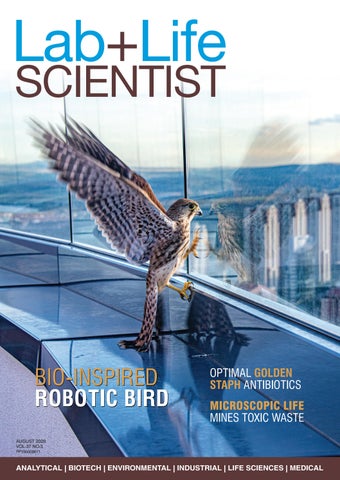
BIO-INSPIRED ROBOTIC BIRD AUGUST 2026 VOL.37 NO.3 PP100008671
OPTIMAL GOLDEN STAPH ANTIBIOTICS MICROSCOPIC LIFE MINES TOXIC WASTE
August 2026
Contents
6
6
DUAL-BUBBLE APPROACH ACHIEVES MICROPLASTIC REMOVAL RATES OF OVER 90%
Australian scientists have developed a method of capturing microplastics from wastewater.
11 TURNING POINT — OPTIMAL ANTIBIOTICS FOR GOLDEN STAPH BLOODSTREAM INFECTIONS A global clinical trial supports a rethink of the default treatment for MSSA and PSSA infections.
23
26
12 MICROSCOPIC LIFE IS MINING DECADES-OLD TOXIC WASTE At abandoned Flinders Ranges mines, stable radioactive and toxic metals are being turned into mobile nanoparticles.
16 1500 QUEENSLAND WOMEN TO HELP DEVELOP OVARIAN CANCER SCREENING TEST The EARLY study will evaluate the impact of shipment and storage on the stability of ovarian cancer biomarkers.
18 BIO-INSPIRED ROBOTIC BIRD HAS STABLE FLIGHT IN ITS SIGHTS The nankeen kestrel is among the most stable fliers. Motion capture technology has created a robotic replica.
23 SCIENTIFIC RIGOUR WITHIN A PERSONCENTRED, BIOPHILIC SETTING The RNA Research and Manufacturing Facility has opened within the Macquarie University Innovation Precinct.
26 PROTECTING PARTICLES THAT CARRY mRNA IN DRY VACCINE PATCHES An international team of scientists set out to provide practical guidance for future mRNA dry vaccine patch design.
28 FROM WASTE CO2 INTO VALUABLE CHEMICALS An electrochemical generator promises a safer and more environmentally friendly conversion pathway.
30 COPPER DRUG CLEARS ALZHEIMER’S PROTEINS — LAB EXPERIMENTS REVEAL A drug that delivers copper to the brain has been found to significantly reduce Alzheimer’s proteins.
32 PROTOTYPE PROMISES TO BUILD LIGHT ANALYSIS DIRECTLY INTO IMAGING HARDWARE Researchers believe they may be able to help cameras capture details that typically required separate, specialised instruments.
32 READ ONLINE! www.labonline.com.au/magazine
Cover image: iStock.com/fikretozk
This issue is available to read and download at
www.LabOnline.com.au | www.LifeScientist.com.au
BIO-INSPIRED ROBOTIC BIRD
OPTIMAL GOLDEN STAPH ANTIBIOTICS MICROSCOPIC LIFE MINES TOXIC WASTE
AUGUST 2026 VOL.37 NO.3 PP100008671
LAB+LIFE SCIENTIST - August 2026 | 3
editorial
D
r Merja Joensuu — a University of
Queensland (UQ) neuroscientist and biochemist — made an unexpected observation while working on unrelated research, one that’s led to a belief that a new treatment for deadly infectious diseases including COVID‑19, pneumonia in infants and children, or viral infections caused by Ebola and hantavirus, could now be made possible. “We were studying how certain processes work inside the human brain when I noticed a disruption in a pathway that numerous human viruses rely on to spread from one cell to the next,” Joensuu from UQ’s Australian Institute for Bioengineering and Nanotechnology said. “That was the lightbulb moment,” Joensuu added. “We realised that if we interfere with that pathway, we might be able to stop viruses from forming properly.” Along with collaborator Professor Giuseppe Balistreri from the University of Helsinki, the research team searched for a compound that could inhibit this pathway and found one currently being
Balistreri said. “This drug disrupts how the cell
confirm safety and effectiveness, the researchers
functions, causing new viruses to be assembled
emphasised. The study was published open access
incorrectly.” Balistreri added: “The virus doesn’t
in Nature Communications and you can read it at
know this and keeps making and releasing less
doi.org/10.1038/s41467-026-72938-z.
effective versions of itself, which would give the
This time, among the stories we have for you
immune system time to clean up the infection.”
are: a dual-bubble approach achieving microplastic
By testing the drug in laboratory studies against a range of viruses in cell cultures — including SARS‑CoV‑2 (which causes COVID‑19), respiratory syncytial virus, a major cause of pneumonia in infants, and vesicular stomatitis virus, which causes disease in cattle, horses and occasionally humans — it was found that infection levels dropped by about half after one day, and by up to 90% after two days. “The reduction is quite striking,” Joensuu said. “The study also suggests this strategy could potentially work on viruses with high mortality rates and long incubation time like Ebola and hantavirus. All viruses rely on exploiting host cell processes to replicate and spread,” Joensuu added.
removal rates of over 90%, a bio-inspired robotic bird with stable flight in its sights, the pursuit of practical guidance for future mRNA dry vaccine patch design, a prototype promising to build light analysis directly into imaging hardware, a human tissue biobank searching for the cause of a bowel cancer surge, and a rethink of the default treatment for MSSA and PSSA infections. Plus, much more, including a suite of further articles, case studies and some product innovations to explore. Lightbulb moments aplenty. I hope you enjoy the read. Regards, Dr Joseph Brennan, Interim Editor LLS@wfmedia.com.au
“Because we are interfering with the host cell instead of directly targeting the virus, there is less chance of it mutating and building resistance to
trialled as a cancer treatment. The compound’s
the drug,” Joensuu said, also saying that it showed
target was human enzyme N‑myristoyltransferase
a lot of promise. “You can imagine that this could
1 (NMT1), which helps direct where proteins are
be a very effective antiviral, for example with
located and how they function within human
treating respiratory conditions, used in the form
cells. “Viruses can’t reproduce on their own, so
of a nasal spray or an inhaler.” The drug is not
they hijack human cells to make new copies,”
approved for use and further studies are needed to
4 | LAB+LIFE SCIENTIST - August 2026
iStock.com/SolStock
Antiviral (and other) lightbulb moments
Dr Joseph Brennan
www.LabOnline.com.au | www.LifeScientist.com.au
movers&shakers
CTA granted for CAR-T cell therapy for multiple myeloma The Therapeutic Goods Administration (TGA) has granted Clinical Trial Approval (CTA) for a CAR-T cell therapy for multiple myeloma, which is the second most common blood cancer worldwide. A blood cancer arising from plasma cells in the bone marrow, despite significant advances in treatment, most multiple myeloma patients eventually relapse and become refractory to available therapies. iStock.com/Md Ariful Islam
The CTA is for the Phase 1 clinical trial of KMCAR T-cell immunotherapy (KMCAR) in multiple myeloma (KOALA study), which will represent the first clinical evaluation of KMCAR T-cell therapy in humans. The ethics approval process is currently underway with Peter MacCallum Cancer Centre (Peter Mac), with the first patient expected during Q2 CY26. Clinical stage Australian biotech company HaemaLogiX’s KMCAR is a novel autologous CAR-T cell therapy that targets Kappa Myeloma Antigen (KMA), a receptor found only on the surface of myeloma cells and not on healthy immune cells. Unlike currently approved BCMAdirected CAR-T therapies, HaemaLogiX stated that this tumour-specific targeting means that KMCAR T-cell is not expected to damage healthy immune cells — potentially offering patients an effective treatment without affecting their natural ability to ward off infection.
to expand these benefits to myeloma patients with a potentially safer approach,” said Professor Simon Harrison, Director of the Centre of Excellence in Cellular Immunotherapy at Peter Mac. “The KMA target has been extensively validated through the KappaMab antibody clinical trials conducted to date by HaemaLogiX, Alfred Health and Peter Mac. “The exceptional safety profile observed in those studies is highly reassuring as we move into this first-in-human CAR-T trial for multiple
“CAR-T cell therapy has already transformed outcomes for some
myeloma. We look forward to advancing the KOALA clinical trial in the
blood cancers, and KMCAR T- cell represents an exciting opportunity
hope of bringing this innovative therapy to myeloma patients worldwide.”
Noxopharm appoints Dr Olivier Laczka CEO
A national data resource on
Australian clinical-stage biotech company
diversity in STEM, intended
Noxopharm Limited has appointed Dr
to form a comprehensive
Olivier Laczka as its Chief Executive Officer.
and interactive view of
A longstanding member of the company’s
women’s and diverse groups’
leadership team, Laczka was formerly Chief
participation in STEM, the
Scientific Officer – Inflammation.
STEM Equity Monitor brings together multiple data sets
Supplied.
7th edition of STEM Equity Monitor now available
Laczka had been a driving force behind iStock.com/Moyo Studio
from across government and is now in is 7th edition. Following participation through school, higher education, graduation and into the workforce, measuring changes and trends through time, the monitor is designed to allow users to build a
the strategic development of the company’s Sofra technology platform, which “is focused on developing a novel class of immunomodulators capable of improving RNA vaccines and therapeutics, as well as treating autoimmune diseases”. “Dr Laczka has made a very significant contribution to the
consistent, evidence-based view of participation and outcomes
development of the Sofra program and is the ideal person to steer the
across the STEM ecosystem.
next phase of our growth,” Noxopharm Chairman Fred Bart said.
In 2026, new design features allow users to explore the most
“He has led our scientific team with genuine vision and energy
widely used data on each step of the pathway from early education to
while forming deep collaborative relationships with our external
employment and find data about First Nations people, people with
partners, and we have real confidence in his ability to deliver value
disability and those from culturally and linguistically diverse groups.
for our shareholders.”
It is also designed to allow users to dig deeper to find data on
On his appointment, Laczka said: “I am honoured to have been
location, socioeconomic status and other variables, and users
entrusted by the Board in this new role, and will take responsibility for
can also download infographic posters and view and save key
building the company in our shareholders’ best interests.
infographics across all areas of the monitor. You can access the latest edition of the STEM Equity Monitor at www.industry.gov.au/publications/stem-equity-monitor.
www.LabOnline.com.au | www.LifeScientist.com.au
“We have a real opportunity to grow by seizing the opportunities that are opening up for us, and not hesitating to make the right decisions that will take us forward.”
LAB+LIFE SCIENTIST - August 2026 | 5
Dual-bubble approach achieves microplastic removal rates of over 90% 6 | LAB+LIFE SCIENTIST - August 2026
www.LabOnline.com.au | www.LifeScientist.com.au
environmental science An RMIT University researcher examines wastewater treatment samples during laboratory testing of a dual-bubble approach that combines microbubbles and nanobubbles to improve microplastic removal.
Using a combination of microbubbles and nanobubbles, Australian scientists have developed a method of capturing microplastics from wastewater.
B
y optimising existing operating
conditions, including air pressure, saturation time and bubble size, the approach — developed by RMIT University researchers — is, according to RMIT, able to be adopted by wastewater treatment plants without major infrastructure changes. An enhanced version of dissolved air flotation — a widely used water treatment process that removes contaminants by attaching them to air bubbles and lifting them to the surface — was investigated by the researchers, who found that plastic removal rates increased when microbubbles and nanobubbles were used together, outperforming systems that relied on either bubble type alone. The lifting force needed to carry particles to the surface is provided by microbubbles, while nanobubbles made the process more effective by improving particle attachment and aggregation — increasing interactions between particles. Further, the approach was found to remain highly effective in realistic wastewater conditions. “Organic matter and fats, oils and grease, which are typically considered barriers to treatment, did not reduce performance,” said Dr Sirajum Monira, who completed the research during her RMIT PhD studies. “In some cases, they improved it by helping microplastics clump into larger, more easily removed particles when Seamus Daniel/RMIT University.
www.LabOnline.com.au | www.LifeScientist.com.au
combined with standard coagulants. “By capturing the microplastics before they become concentrated in sewage sludge, we can reduce the amount entering biosolids and ultimately minimise their release back into the environment,” Monira added.
LAB+LIFE SCIENTIST - August 2026 | 7
environmental science
Seamus Daniel/RMIT University.
Left: RMIT University Associate Professor Biplob Pramanik in the laboratory. Below: Laboratoryscale dissolved air flotation testing at RMIT University. Seamus Daniel/RMIT University.
Seamus Daniel/RMIT University.
Above: Microbubbles and nanobubbles working together in a dissolved air flotation system.
“Wastewater treatment plants are a major pathway for microplastics as they slip through filtration processes, posing risks to ecosystems and human health,” said Associate Professor Biplob Pramanik, lead author and director of RMIT’s Water Effective Technology and Tools Research Centre. “Our approach is simple to implement and significantly increases the removal of microplastics during the primary stage of treatment.” The study was published in ACS ES&T Water (doi.org/10.1021/acsestwater.6c00127).
8 | LAB+LIFE SCIENTIST - August 2026
Seamus Daniel/RMIT University.
www.LabOnline.com.au | www.LifeScientist.com.au
movers&shakers
Alliance seeks to boost regional capacity in clinical trials The Barwon Health–Deakin University Clinical Trials Alliance is intended to grow a regionally embedded but globally responsive partnership. Drawing on the complementary strengths of Barwon Health and Deakin University, by strengthening a longstanding research collaboration, the alliance also aims to place Geelong at the centre of a nationally significant medical research and innovation ecosystem. Deakin University.
“This partnership formally brings together clinical excellence and academic leadership to expand access to high-quality clinical trials close to home,” Barwon Health CEO Frances Diver said. “It means our community can benefit from the latest advances in health care, while ensuring regional voices
Left: (L–R) Distinguished Professor Matthew Clarke, Deputy Vice-Chancellor Research and Innovation, Deakin University; Richard Marles, Member for Corio; Frances Diver, CEO, Barwon Health; and Distinguished Professor Rachel Huxley, Executive Dean Faculty of Health, Deakin University.
supporting national objectives for sovereign capability, skilled jobs
and experiences help shape the future of medicine.” Alliance partners have committed $9.6 million in direct investment and in-kind support over five years and will support increased higher degree research and increased access to trials-related training for Barwon
and regional development,” said Professor Rachel Huxley, Deakin Distinguished Professor and Executive Dean of the Faculty of Health. “The initiative complements Australian Government investments in
Health and Deakin staff — this includes the establishment of the Clinician
medical research, innovation and advanced manufacturing, showcasing
Scientist PhD Pathway.
how regional partnerships can contribute to national outcomes.”
“Clinical trials are essential to improve access to innovative treatments
Having commenced in January, the alliance was officially launched by
and are a key driver of Australia’s health and medical research capacity,
Federal Member for Corio Richard Marles at Deakin Waterfront in April.
Scientists search for cystitis pain ‘off switch’ tract, cystitis is an inflammation of the bladder. Up to 13% of the population, mainly women, are affected by interstitial cystitis/bladder pain syndrome (IC/BPS),
Dr Stewart Ramsay.
Flinders University.
Usually caused by a bacterial infection in the urinary
which is a condition where bladder pain and urinary urgency become chronic. Current treatments remain invasive or have limited success, but now, a study led by Flinders University researchers suggests that, by targeting certain pain receptors in the bladder, the effects of cystitis could be reduced. “We have identified cannabinoid receptors located in peripheral bladder sensory pathways as potential targets,” said Dr Stewart Ramsay, first author and Flinders University neuroscience research fellow. “When activated together in our preclinical model, these receptors effectively switch off
Research Institute (FHMRI) Neuroscience research group and a
the exaggerated pain response associated with cystitis.
senior author on the study.
“By using specially designed ‘peripherally restricted’ cannabinoid
Peripheral CB1 receptors have been connected to visceral and
compounds that cannot cross the blood–brain barrier, this therapeutic
somatic pain, while CB2 receptors are increasingly recognised for
approach eliminates any mind-altering and psychoactive effects that
their role in reducing inflammation. The next stage of the work, the
have been seen with cannabis use,” Ramsay added.
researchers said, will be to further evaluate the safety and efficacy
“These findings provide strong support for the development of peripherally acting combination therapies for cystitis, targeting both cannabinoid receptors as a treatment strategy while minimising
of the therapeutic strategy, with the goal of translating the findings towards human clinical studies. The study was published open access in Autonomic Neuroscience:
central cannabinoid-related side effects,” said Associate Professor
Basic and Clinical and you can read it at doi.org/10.1016/j.
Vladimir Zagorodnyuk from the Flinders Health and Medical
autneu.2026.103444.
www.LabOnline.com.au | www.LifeScientist.com.au
LAB+LIFE SCIENTIST - August 2026 | 9
movers&shakers
RMIT announces $30m health and care capability investment RMIT University has announced it is investing $30 million in health and care capability, the majority
RMIT University.
centring on health capabilities at its Bundoora campus, which will become a precinct for education programs, research and industry partnerships. Existing infrastructure will be upgraded with the funding, which will also be used to deliver new equipment and build on the precinct’s technology, with improvement to students’ access to simulated real-world medical environments. Part of the investment will create a node of the RMIT Microscopy and Microanalysis Facility, the university said, which serves as a hub for advanced research and Supplied.
collaboration across science, health and engineering. “Our Bundoora campus is an important connector between the University and Melbourne’s culturally diverse
“We intend to work more closely with our partners like Northern
and rapidly expanding Northern Corridor, an area of over 620,000
Health to ensure we are playing a meaningful role in assisting this
residents which experiences complex health challenges and difficulty
underserved community.” Areas for applied research in MedTech, digital
in accessing health services,” RMIT Vice-Chancellor and President
health, food innovation and public health will also be supported, with
Professor Alec Cameron said.
additional investment planned in 2027 and 2028.
Lead exposure testing failures land Bendigo lab $10K fine iStock.com/filo
The lab had failed to arrange follow-up blood tests within the set timeframes, putting the workers’ ongoing health at risk, WorkSafe Victoria inspectors found when visiting the workplace. “The Occupational Health and Safety Regulations impose legal responsibilities on employers and employees in relation to lead exposure in workplaces where lead processes are carried out, and further obligations when lead-risk work is being performed,” WorkSafe Victoria advised. “This includes notifying WorkSafe that lead-risk work is being undertaken, arranging health monitoring of employees, and removing employees from lead-risk work if their blood-lead levels reach certain thresholds. “Lead-risk work is defined as work performed in a lead process that is reasonably likely to cause an employee’s blood-lead levels to exceed those specified in the regulations.
Sentenced in Bendigo Magistrates’ Court on 23 June, a Bendigo lab has
“WorkSafe’s Compliance Code provides practical guidance for
been fined $10,000 without conviction and ordered to pay $4259 in
controlling risks associated with lead exposure in the workplace,
costs after pleading guilty to failing to arrange for biological monitoring
including requirements for lead-risk work and lead processes.”
of two workers engaged in lead-risk work at the required intervals. Between June and September 2024, the two workers conducted lead
WorkSafe Victoria Chief Health and Safety Officer Sam Jenkin said: “Exposure to lead in the workplace can cause a range of illnesses
processing works when using a fire assay to determine the content
including cancer, kidney damage, nerve and brain damage, paralysis,
of core mineral samples sent to the workplace, the court heard. The
reduced fertility, and birth defects in children.”
workers underwent blood tests during this time and the results
“When working with lead, safety must always be the first priority
triggered a requirement under the Occupational Health and Safety
and WorkSafe has an abundance of practical guidance to help
Regulations for further testing.
employers follow the correct procedures.”
10 | LAB+LIFE SCIENTIST - August 2026
www.LabOnline.com.au | www.LifeScientist.com.au
pharma
Turning point — optimal antibiotics for golden staph bloodstream infections
M
ore than one million deaths
per year are caused by golden staph infections, the most serious form being when it enters the bloodstream — with a mortality rate of 15 to 25%. There are effective antibiotics to treat the bloodstream infections; however, uncertainty has remained over which treatments lead to the best patient outcomes. To address this, the Staphylococcus aureus
iStock.com/Alexander Maniakhin
Involving more than 150 hospitals across more than 14 countries, a global clinical trial supports a rethink of the default treatment for MSSA and PSSA infections.
cefazolin is associated with lower mortality,”
of golden staph led clinicians to adopt
said The Royal Melbourne Hospital’s Professor
flucloxacillin as the standard treatment for
Steven Tong, an Infectious Diseases Physician at
MSSA and PSSA infections. The above results,
the Doherty Institute. “Patients treated with cefazolin fare better, with fewer deaths within 90 days (15% compared to 17% for those who received flucloxacillin). Cefazolin was also associated with fewer cases of acute kidney injury, at 14%, compared to 20% with flucloxacillin,” Tong said. “The results are sufficiently compelling that I immediately made the switch in my own clinical practice.”
PSSA infections
led by researchers at the Peter Doherty Institute for
In The Lancet study (doi.org/10.1016/S0140-
the University of Newcastle — set out to evaluate different antibiotics and treatment strategies to reduce mortality and improve patient outcomes. In the trial’s findings, published in the New England Journal of Medicine (NEJM) and The Lancet, the long-held assumption that
the treatment of MSSA and PSSA bloodstream infections, signalling a shift in clinical practice — supporting a move away from flucloxacillin as the default treatment, given safer and equally effective alternatives are available. “These findings show clinicians can confidently use penicillin susceptibility results to guide treatment where laboratory testing
Network Adaptive Platform Trial (SNAP Trial) — Infection and Immunity (Doherty Institute) and
the researchers said, mark a turning point in
6736(26)00761-0), it was evaluated whether benzylpenicillin could be used to treat penicillinsusceptible Staphylococcus aureus (PSSA) infections where laboratory testing confirmed the susceptibility to penicillin. What was found was that benzylpenicillin was as effective as flucloxacillin and likely safer.
is available,” said Professor Joshua Davis, an Infectious Diseases Physician at the University of Newcastle and Australia’s Hunter Medical Research Institute in Australia, and global co-lead investigator of the SNAP Trial. Translating the findings into routine clinical practice will be the next challenge, the researchers said, adding that, while cefazolin
flucloxacillin should remain the default treatment
This is according to Professor Todd Lee, a
availability may need to increase in some
is challenged, and, the researchers say, new
scientist at the Research Institute of the McGill
countries, implementation will ultimately depend
evidence to guide treatment strategy is provided.
University Health Centre and Infectious Diseases
on hospitals, laboratories and guideline groups
and Internal Medicine Physician at the McGill
incorporating the findings into clinical care.
MSSA infections
University Health Centre in Canada who was
In the NEJM study, which compared
co-lead investigator of both studies.
antibiotics used to treat methicillin-susceptible
“Patients treated with benzylpenicillin
Staphylococcus aureus (MSSA) infections,
experienced less kidney damage, with mortality
cefazolin was found to be at least as effective
also lower at 14% compared with 22% in the
as flucloxacillin and associated with fewer side
flucloxacillin group,” Lee said.
effects and a lower risk of kidney injury (doi. org/10.1056/NEJMoa2506905).
A shift in clinical practice
“In the treatment of MSSA bloodstream
Penicillin was once widely used to treat
infections, there is an 89% probability that
Staphylococcus aureus, but antibiotic resistance
www.LabOnline.com.au | www.LifeScientist.com.au
“This is the largest trial ever conducted on staphylococcal bloodstream infections. It brought together countries from all over the world to answer important questions and improve care for millions of people,” Lee said. “Trials generate the evidence, but the next step is making sure that evidence changes practice.” You can learn more about the trial at www. snaptrial.com.au.
LAB+LIFE SCIENTIST - August 2026 | 11
Monash University.
Microscopic life is mining decades-old toxic waste
Meta-torbernite from Number 6 workings (detail).
F
ound in historic uranium and rare earth
element mine waste in a cluster of historical, abandoned mine shafts located in the rugged Mount Painter area of the northern Flinders Ranges, South Australia, the site — known as Mount Painter No. 6 Workings — served as a natural laboratory for Monash University researchers to understand the long-term fate of these hazardous materials. Left largely undisturbed for more than 80 years and now part of the protected Arkaroola Wilderness Sanctuary, scientists had previously believed that uranium and rare earth elements in these dry settings were immobile — safely locked away inside insoluble phosphate minerals. That is until researchers discovered high concentrations Monash University.
of polymetallic nanoparticles near the surface of the waste piles. Using advanced single-particle analysis, the researchers say they identified a direct link between the highest concentrations of these
12 | LAB+LIFE SCIENTIST - August 2026
Figure 2: overview of paper.
www.LabOnline.com.au | www.LifeScientist.com.au
microbiology
Loading ore around 1925.
“They are essentially acting as microscopic factories, breaking down stable minerals and mobilising elements like uranium into the surrounding ecosystem. As we ramp up mining for the green energy transition, we must factor these invisible biological processes into our waste management strategies to prevent long-term environmental damage.” With the volume of mining waste predicted to rise significantly, as the global transition to green energy drives unprecedented demand for critical minerals, the researchers warn that understanding
Monash University.
how microbes interact with this waste is vital for preventing unseen environmental contamination. On the flip side, the researchers also say that
nanoparticles and the areas of greatest microbial
“We have traditionally assumed that these
diversity. This suggests that specialised
toxic metals were securely locked away by
microbial communities are effectively ‘mining’
nature in these arid environments, but these
the minerals — extracting the metals and
tiny organisms are proving us wrong,” said Joël
sites or new low-impact extraction technologies.
transforming them into colloidal forms that
Brugger, Professor of Synchrotron Geosciences
The research was published open access (doi.
can easily move through soil and water systems
from Monash University’s School of Earth,
org/10.1016/j.jhazmat.2026.142213) in Journal
during rain events.
Atmosphere and Environment.
of Hazardous Materials.
the new mineral–microbe interaction pathways identified around the site could be harvested into new methods for the remediation of contaminated
Lowest plunger force.
The FIRST manual pipette that repeat dispenses.
SEE IT IN ACTION >
www.LabOnline.com.au | www.LifeScientist.com.au
LAB+LIFE SCIENTIST - August 2026 | 13
what’s new
Protein synthesis system PUREfrex from GeneFrontier is designed to be a breakthrough in cell-free protein synthesis technology, offering a precisely engineered in vitro coupled transcription/ translation system. Unlike traditional S30 translation extracts, PUREfrex utilises a completely reconstituted system derived from E. coli translation machinery. By adding DNA or mRNA
Fluorescence microscopy illumination system
that encodes the target protein to the reaction solution, proteins can be synthesised easily and quickly without using living cells.
is a high-performance fluorescence
Features of the PUREfrex protein synthesis system include: protein
microscopy illumination system designed to provide intense,
expression in hours instead of days; highly purified components that
broad-spectrum LED excitation for imaging of the majority of
eliminate contaminating nucleases and proteases; DNA and RNA template
commonly used fluorophores. Designed for flexibility and precision,
for integrity preservation; and maintaining optimal protein functionality.
The CoolLED pE-300
ultra
it is engineered to deliver exceptional optical performance while
Other features include: maximum yield of full-length target proteins;
supporting a wide range of fluorescence imaging applications.
to express proteins with any tag, including polyhistadine (HIS); that
Microsecond switching via multiple TTL inputs is designed to
PUREfrex components can be customised to meet the expression
enable the capture of fast biological events, while integrated inline
demands of a unique protein; and that PUREfrex volumes are easily
excitation filter holders allow rapid and flexible filter configurations.
scalable for protein production from µL to L quantities.
When combined with modern high-performance multi-band filter
United Bioresearch Products distributes the full range of PUREfrex
sets, the pE-300ultra can replace traditional white light sources and
products in Australia.
filter wheels, delivering all the advantages of LED illumination,
United Bioresearch Products Pty Ltd
including greater stability, faster switching and improved reliability.
www.unitedbioresearch.com.au
Advances in LED technology have significantly enhanced the system’s performance, with the latest generation delivering up to twice the irradiance at the sample plane compared with earlier
Kit for faeces and faecal preservation solution
models. A direct-fit version is also available, providing even higher
Faecal samples are inherently complex, containing inhibitors such as
irradiance while reducing both acquisition and operating costs
bile salts, haem, polysaccharides and DSS that can interfere with DNA
through fewer consumable components. The pE-300ultra is also ACT
extraction and compromise downstream analyses. To overcome these
Label certified, making it an environmentally responsible choice for
challenges, MP Biomedicals has launched the MagBeads FastDNA
fluorescence microscopy laboratories.
MaxPure Kit for Feces, a magnetic bead-based solution engineered for
The system is compatible with existing single-band and multi-
high-purity DNA extraction from inhibitor-rich stool samples. The kit is
band filter sets, eliminating the need to purchase new filters.
designed to be beneficial to IBD Researchers working on DSS-treated
Instant on/off operation removes the requirement for shutters
faeces samples and any general users facing low recovery samples
and eliminates warm-up or cool-down times, while simple
and challenging PCR inhibitors.
installation requires no optical alignment beyond an initial one-
The kit is compatible with both manual workflows and automated
time adjustment. Stable, repeatable illumination is designed to
platforms, including MPure-32, MPure-96 and MagFlex-96. Designed for
ensure reliable and consistent imaging results, and a wide range
demanding microbiome, qPCR and 16S workflows, MagBeads FastDNA
of microscope adaptors is designed to enable compatibility with
MaxPure Kit for Feces is designed to deliver consistent, high-quality results.
most major microscope platforms.
Key features include: specialised in removing common stool inhibitors
Users can precisely adjust illumination intensity from 0–100% in
(eg, polysaccharides, haem, bile acids, humic acids, phenolics), releasing
1% increments without the need for neutral density filters. Excellent
inhibitor-free DNA; works with 30–300 mg faecal input and produces
illumination uniformity is maintained across the entire field of view
gDNA suitable for applications such as PCR and sequencing; and fast
without ongoing alignment, while long-life LED technology reduces
and high-efficiency lysis using Lysing Matrix E with FastPrep, enabling
maintenance requirements and operating costs. Removable inline
complete lysis of host cells plus microbes.
excitation filter holders contain no moving parts, enhancing reliability,
DNA results can be further enhanced by using MP Biomedicals’
and individual LED channels can be triggered independently via
Fecal Preservation Solution. It is designed to help in stabilising
TTL inputs with microsecond switching speeds. Sequence Runner
genomic DNA in human and animal faecal samples, enabling safe
functionality further simplifies automated imaging by enabling
ambient-temperature storage and transport prior to downstream DNA
sequential excitation from a single TTL output.
extraction and molecular testing.
SciTech Pty Ltd
MP Biomedicals Australasia P/L
www.scitech.com.au
www.mpbio.com/au
14 | LAB+LIFE SCIENTIST - August 2026
www.LabOnline.com.au | www.LifeScientist.com.au
what’s happening
Could this human tissue biobank find the cause of a bowel cancer surge?
University of the Sunshine Coast.
With more than 1800 people under the age of 50 diagnosed with
cancer in Australia and we are working to identify the causes behind
bowel cancer in Australia each year, it is the country’s deadliest
this trend,” Fennell said.
cancer among people aged 25–54 years old. Now, part of a three-year, $2.5 million research project, the alarming increase in bowel cancer among younger Australians will be investigated via a human tissue biobank being set up by the University of the Sunshine Coast (UniSC). Believed to be the first biobank of its kind in the country, according to UniSC, living tissue will be donated from Sunshine
“We hope that analysing the tissue stored in the biobank will help us better understand how risk factors have changed over time, as well as how the disease develops and progresses. “We will grow miniature, 3D models of cancer tumours in our laboratory to allow us to test possible new treatments,” Fennell said. University of the Sunshine Coast www.unisc.edu.au
Coast patients under 50 who are diagnosed with the disease. Developed at the Sunshine Coast Health Institute by UniSC cancer biologist Dr Lochlan Fennell, researchers are seeking to find out why the disease is occurring earlier and how best to prevent and treat it. The wider collaboration is exploring whether modern living is to blame for the surge in earlyonset bowel cancer cases in Australia, UniSC said; with modern living factors including the role of increased antibiotic use, microplastics, chemicals and new lifestyle and environmental exposures. “Over the past two decades, there has been a 200% jump in the incidence of early-onset bowel
www.LabOnline.com.au | www.LifeScientist.com.au
University of the Sunshine Coast.
LAB+LIFE SCIENTIST - August 2026 | 15
clinical chemistry The University of Queensland. The University of Queensland.
Study participant Lisa Harrold getting a blood test.
Professor Carlos Salomon Gallo, Director of Centre for Extracellular Vesicle Nanomedicine.
1500 Queensland women to help
develop ovarian cancer screening test
Postmenopausal women between the ages of 50 and 74 with intact ovaries, and no prior history of ovarian cancer, are being encouraged to enrol in a UQ study.
A
“Ovarian cancer is one of the most serious cancers affecting Australian women — about 2 out of 3 are diagnosed when the disease is already round 1500 women will be
recruited from across Queensland to take part in The University of Queensland’s EARLY study, which will collect blood samples to evaluate the impact of shipment and storage on the stability of ovarian cancer biomarkers. The approach focuses on extracellular vesicles (EVs) — microscopic bubbles naturally released by cells that carry protein and genetic information — that can signal the presence of cancer, said Professor Carlos Salomon Gallo, Director of the UQ Centre for Extracellular Vesicle Nanomedicine. “Our aim is to systematically evaluate the impact of blood collection protocols, storage
“As a surgeon, I look after women with ovarian cancer every week and, too often, I meet them for the first time when the cancer is already advanced, something we urgently need to change,” Obermair said. “And women in rural and regional Australia are more likely to be diagnosed later and face greater barriers to specialist care.
advanced, when treatment is more complex and
“This study relies on women volunteering to
survival rates are poor,” Gallo added. “Rapid and
donate a small blood sample and some basic health
accurate identification of asymptomatic ovarian
information — it is quick, safe and free,” Obermair
cancer will dramatically improve survival rates.”
added. Ovarian Cancer Foundation CEO Robin
To develop and commercialise the EV-based
Penty said it is a significant milestone towards
ovarian cancer screening test, UniQuest — UQ’s commercialisation company — has exclusively licensed the technology to biotechnology company INOVIQ Ltd. It has demonstrated 100% detection of early-stage (I and II) ovarian cancer, UQ said, evaluated on more than 500 blood samples. “Another advantage of this test is the extremely low false positive rate of 0.4% in recent studies which makes it a potential candidate as a screening tool,” Gallo said.
early detection and screening for ovarian cancer. The five-year project has received grants from the National Health and Medical Research Council (NHMRC) in partnership with the Ovarian Cancer Research Foundation and the Lions Medical Research Foundation, and in collaboration with Mater Research and Queensland Centre for Gynaecological Cancer Research. A pathology request form will be given to participants, who can have the blood test done at a
temperatures, transport conditions and time-
Fewer than half of women are alive five years
to-processing on EV biomarker stability,” Gallo
after diagnosis; however, as Professor Andreas
convenient collection centre or at the UQ Centre
said. “This will allow us to establish a standardised
Obermair from the UQ Centre for Clinical
for Clinical Research. More information, including
specimen-handling protocol for the test under
Research explained, when ovarian cancer is found
how to enrol in the study, is available at gyncan.
real-world conditions.
early, cure rates are very high.
org/our-research/current-trials/early-study.
16 | LAB+LIFE SCIENTIST - August 2026
www.LabOnline.com.au | www.LifeScientist.com.au
Thermal shaker The Pacific Lab Products SERVICEBIO Thermal Tube Shaker is designed for heating, cooling and shaking, with a temperature range of 4–100°C and speed range of 200 to 1500 rpm. It utilises a microcomputercontrolled metal bath device and a key feature is the high temperature control accuracy it allows. Users can set the oscillation speed to the shaking orbital required. With multiple sample modules available for selection, the instrument is equipped with a function allowing users to set a cultivation time within the range of 1 minute to 99 hours and 59 minutes. An alarm activates after the time is completed. The unit is made in PRC and is driven by a brushless DC motor for longevity. It is designed to be an instrument that every lab can use with ease. Pacific Laboratory Products www.pacificlab.com.au
Cell-free dbDNA synthesis kit Speed is a critical differentiator in therapeutic development. For teams developing RNA and DNA therapeutics, viral vectors, cell-free protein synthesis workflows or CRISPR gene editing applications, shortening the design-to-test cycle can be critical for success. The EnClose Cell-free dbDNA Synthesis Kit (E9301) is designed to provide a faster alternative to conventional plasmid DNA manufacturing. Traditional plasmid production relies on E. coli fermentation, requiring bacterial transformation, culture growth, plasmid purification and restriction digestion before DNA is ready for downstream use. Production-scale manufacturing can take weeks to months and requires management of host-cell impurities and endotoxin control. dbDNA (doggybone DNA) is linear double-stranded DNA with covalently closed hairpin ends, produced entirely through enzymatic synthesis. Because dbDNA is generated without a bacterial host, it eliminates bacterial backbone sequences, antibiotic resistance markers and endotoxins associated with Gram-negative bacterial production, generating cleaner DNA material for therapeutic workflows. The EnClose Cell-free dbDNA Synthesis workflow combines phi29-XT DNA Polymerase for high-yield rolling circle amplification and TelN Protelomerase for deconcatenation and covalent closure of linear dsDNA ends in a streamlined one-day process. For RNA therapeutic development, an IVT template can be generated in approximately 24 hours with only 1.5 hours of hands-on time. Applications include RNA therapeutics, DNA therapeutics, AAV and lentiviral payload production and other workflows where rapid iteration and clean DNA starting material are important. New England Biolabs www.neb.com
www.LabOnline.com.au | www.LifeScientist.com.au
LAB+LIFE SCIENTIST - August 2026 | 17
biomimetics
Robotic bird.
RMIT University.
Bio-inspired robotic bird has stable flight in its sights The nankeen kestrel is among the most stable fliers in the avian world. Using motion capture technology, researchers have created a robotic replica.
T
racking the movements of kestrels
in gusty and turbulent conditions of RMIT University’s Industrial Wind Tunnel facility, researchers took their investigations further than studying movements to create a robotic replica capable of imitating the movements most crucial to kestrels’ remarkably stable flight — all part of understanding how subtle wing and body adjustments contribute to kestrels’ stability and exceptional hovering capabilities.
their wings and tails to stay balanced, while the
Published across two papers in the Journal of
natural flexibility of their feathers and joints helps
the Royal Society Interface, the project is part of a
absorb sudden changes in airflow. They can also
multi-year collaboration between RMIT and the
sense disruptions very quickly, which allows them to respond almost instantly and maintain control.” Understanding how birds naturally cope with rough air could, the researchers said,
we were able to measure how specific movements Robotic bird.
help engineers design small unmanned aerial vehicles (sUAVs) that are safer, more efficient and fly more smoothly — important given that atmospheric turbulence is expected to worsen due to climate change. Commonly used for applications including search and rescue, agricultural monitoring, aerial photography and package delivery, sUAVs are often grounded in
led part of the research. “They constantly adjust
turbulent conditions.
www.LabOnline.com.au | www.LifeScientist.com.au
RMIT University.
“Birds don’t rely on a single response to wind gusts,” said Matt Penn, an RMIT researcher who
18 | LAB+LIFE SCIENTIST - August 2026
University of Bristol. “By creating a robot replica,
were contributing to steadiness in flight,” said Dr Mario Martinez Groves-Raines,
RMIT University.
Kestrel.
RMIT University.
Kestrel and robotic bird composite.
who completed the research during his studies at RMIT and the University of
Single cell nuclei kits
Bristol, and is now at the Royal Veterinary College in London.
The Invent Biotechnologies Minute Single Cell Nuclei
“We uncovered several unique techniques behind the kestrel’s impressive stability. Many of these techniques have the potential to improve manoeuvrability of small aircraft, which encounter similar challenges to kestrels,” Groves-Raines said. While sUAVs already use a range of mitigation techniques similar to those seen in birds, due to complexity and efficiency trade-offs, the researchers said that few have been implemented effectively in operational aircraft. Initially focused on smaller aerial vehicles, the researchers hope to simplify the collected data for adaption in larger-scale aircraft. Both papers were published open access this year and you can read them at doi.org/10.1098/rsif.2025.0978 and doi.org/10.1098/rsif.2025.0930.
Kits use proprietary spin column-based technology which enables rapid and clean single-nuclei isolation with minimal clumping. They are suitable for sc/snRNAseq, ATAC, CNV and other downstream applications across diverse biological sources. The kits are designed to be fast, simple and consistent with low clumping. They can be used in high-throughputs and clinical samples, and are compatible with frozen and tough tissues. Also available in detergent-free kits or kits specific for plant, neuronal or adipose tissues/cells. Invent Biotechnologies’ Minute Single Cell Nuclei Kits are distributed in Australia and New Zealand by
Robotic bird mimics kestrel movements
Sapphire Bioscience.
(Credit: RMIT University)
www.sapphirebioscience.com
www.LabOnline.com.au | www.LifeScientist.com.au
Sapphire Bioscience
LAB+LIFE SCIENTIST - August 2026 | 19
what’s happening
Robotic laboratory to fast-track drug invention, trials and commercialisation Smaller fragments binding to a protein.
Biological crystals.
Monash University.
Once a slow and exhausting manual process for researchers, 25 years ago — to put the technology into perspective — researchers were flying to Chicago twice a year to collect a fraction of the structural data that will be available, Monash said. “HTX will attract investment, and importantly grow the Australian biotechnology and clinical trials economy as more partners invest locally to bring new clinical candidates to market,” Scanlon added. “Analysis of drug discovery projects successful in generating a clinical candidate Monash University.
showed 65% relied on structural information, most of which were derived from X-ray crystallography.”
As part of a $2.9 million national project, Monash University is partnering with key institutions to launch a robotic laboratory that, it says, is capable of drastically speeding up the invention, trials and commercialisation of medicines by Australian researchers. Backed by a Medical Research Future Fund National Critical Research Infrastructure grant, the nationally accessible facility will house what the university called Australia’s first automated system for highthroughput X-ray crystallography, often referred to as HTX, at the Australian Synchrotron in Clayton. A powerful scientific technique that involves blasting tiny biological crystals with X-rays to map the exact 3D shape of disease-causing proteins, HTX reveals how a molecule binds to its target. “When we’re creating a new medicine, we need to design a
Professor Christopher Porter, Director of MIPS, said: “HTX could allow us to screen a library of ~1000 compounds automatically in three days without human intervention, which is well beyond what is currently feasible with manual data collection.” A new method called crystallographic fragment screening, which tests tiny pieces of molecules to see which specific parts stick to a disease target best before snapping them together into a final drug, will also be introduced. “Instead of looking for one giant, perfect molecule right away, fragment screening allows us to test small pieces or fragments of molecules to see which individual parts fit into the target best,” Porter said. “Once we know which fragments stick, our medicinal chemists can pull that information together to build a single highly effective, custom-designed drug.”
compound to fit into a specific pocket of a protein, but the protein
Monash said the platform will boost sovereign capability in
often changes shape in response. We might plug one hole only to
therapeutics, supporting hundreds of researchers across the
realise the protein has shifted and created two more. Ultimately,
country investigating treatments for over 40 disease targets,
the protein decides what fits,” said Professor Martin Scanlon, Head
including bacterial infections, cancer, HIV and neurodegeneration.
of Medicinal Chemistry at the Monash Institute of Pharmaceutical
“This platform gives our scientists the world-class engine they need
Sciences (MIPS) in the Faculty of Pharmacy and Pharmaceutical
to turn basic biomedical research into the life-saving medicines of
Sciences. “HTX allows us to rapidly capture those changes. It
tomorrow, ensuring more Australian discoveries are clinically tested
doesn’t instantly solve the puzzle, but it provides the real-time data
and commercialised right here at home,” Scanlon said.
we need to accelerate that iterative back-and-forth process, allowing
Monash University www.monash.edu
us to incrementally build a successful compound.”
20 | LAB+LIFE SCIENTIST - August 2026
www.LabOnline.com.au | www.LifeScientist.com.au
SPONSORED CONTENT iStock.com/Jacob Wackerhausen
The Black Box Conundrum: Can You Trust Your Instrument Results? Peter Davis, ATA Scientific Modern scientific instruments have never been more powerful—or easier to use. Automation, intuitive software and AI-driven analysis have transformed complex analytical techniques into routine workflows. What was once the domain of specialists is now accessible to laboratories across research, healthcare and industry. This democratisation of science is undoubtedly positive. But it raises an important question: If you never question your result, have you truly done good science? Over decades of supplying analytical instrumentation, ATA Scientific has witnessed remarkable technological progress. Manufacturers have simplified operation, reduced operator variability and improved reproducibility. Yet while instruments have become easier to use, the science behind the measurements remains just as complex. Increasing automation and AI also risks encouraging users to treat sophisticated instruments as “black boxes”—systems that generate answers without understanding how those answers were obtained.
Are my results real? The answer is: it depends. Every analytical technique has limitations. Measurements are estimates based on scientific models, assumptions and statistics. No instrument measures absolute truth—it measures a property within the constraints of its operating principle. Understanding those limitations is essential for confidence in your data.
Do you understand the principle of measurement? Consider nanoparticle sizing. Dynamic Light Scattering (DLS), used by the Malvern Panalytical Zetasizer, determines particle size from fluctuations in scattered light caused by Brownian motion. It is rapid and highly sensitive, but reports an intensity-weighted size distribution, meaning a small number of larger particles can disproportionately influence the result.
Nanoparticle used
by
the
Tracking
Analysis
NanoSight
Pro,
(NTA),
measures
the same sample differently by tracking individual particles to determine both size and concentration, making it particularly useful for heterogeneous samples. Neither
technique
complementary strengths.
is
better—they
methods
Confidence
with
are
different
comes
from
understanding what your instrument measures, how it measures it, and when an orthogonal technique should be used.
Surely it can’t be me... Often, the greatest source of analytical error isn’t the instrument—it’s the sample. Poor sampling and sample preparation remain leading causes of variability across many analytical techniques. If the sample is not representative, even the most sophisticated instrument cannot produce meaningful data. Understanding your sample is just as important as understanding your instrument. Concentration also matters. Every analytical method has an optimal operating range. Too little sample increases statistical uncertainty, while excessive concentration can produce detector saturation, multiple scattering or other artefacts. Reliable measurements depend on working within the limits of the technique.
Garbage in, garbage out Sample
contamination
can
completely
compromise an analysis. Debris, aggregates or foreign particles may interfere with optical measurements, distort particle size distributions or
confuse
Appropriate
image sample
analysis
software.
Imaging-based cell counters, for example, can rapidly analyse thousands of cells, but users should still review the processed images. Did the software correctly identify the target cells? Were debris or artefacts included? Most modern systems allow this verification because visual inspection remains an important quality check.
Errors accumulate Analytical errors rarely arise from a single mistake. Small uncertainties in sampling, preparation, instrument settings and data processing can combine, with automated algorithms potentially amplifying those errors while masking their origin. As analytical software becomes increasingly sophisticated, understanding the principles behind your measurements is more important than ever. At ATA Scientific, we are committed to helping solve challenges, optimise workflows, and empower better science every day. Through training, application support and technical expertise, we help you understand methods, recognise limitations and gain greater confidence in your results. Because the best scientific instrument doesn’t just provide an answer—it helps you know when that answer can be trusted. ATA Scientific Pty Ltd +61 2 9541 3500 enquiries@atascientific.com.au www.atascientific.com.au Reference: L. Biosystems, “Why Your Cell Counting Results May Be Inaccurate,” Aligned Genetics, 11 6 2026. [Online]. Available: https://logosbio.com/ why-your-cell-counting-results-may-be-inaccurate/. [Accessed 12 6 2026].
preparation—whether
filtration, centrifugation, dilution or chemical treatment—is often essential for obtaining meaningful results.
Always perform a sanity check Automation
should
enhance
judgement—not replace it.
scientific
ATA Scientific Pty Ltd www.atascientific.com.au
what’s new
High-performance light sheet microscope MBF Bioscience’s SLICE Light-Sheet Microscope is engineered to expand access to high-performance 3D imaging by combining
Microbial cell counter
research-grade capability with a compact, cost-effective benchtop format. SLICE is designed to support a broad range of applications
Accurate and timely microbial quantification
across neuroscience, cancer research, developmental biology, tissue engineering, core imaging
remains a persistent challenge across
facilities, and translational research in biotechnology and pharmaceutical environments.
microbiology, biotechnology and quality control
SLICE is designed to deliver performance comparable to substantially more expensive
laboratories. Traditional colony-forming unit
systems, with approximately 1 µm lateral resolution and 5 µm axial resolution for imaging
(CFU) methods can take days to deliver results
cells and fine neuronal processes throughout cleared tissue. The platform also offers
and often underestimate total cell numbers,
three-wavelength imaging capability for flexible multi-channel imaging applications.
while flow cytometry may struggle to resolve
Designed to meet the practical needs of modern neuroscience and biology laboratories,
tightly clustered bacterial populations. The
SLICE is engineered to reduce the infrastructure demands often associated with advanced
QUANTOM Tx Microbial Cell Counter from
light-sheet imaging. Originating from the Tomer Lab at Columbia University and based
Logos Biosystems offers an image-based
on Projected Light Sheet Microscopy (Chen et al., 2024), the system received the 2025
alternative designed to deliver rapid, single-
Microscopy Today Innovation Award and is now installed at more than 30 leading research
cell resolution bacterial counts.
institutions across three continents.
The QUANTOM Tx is designed to provide
The system is designed to support imaging of whole mouse brains, cleared organs
automated fluorescence microscopy combined
and organoids at sub-micron resolution, while accommodating major clearing workflows,
with advanced image analysis software. After
including iDISCO, CLARITY, CUBIC and BINAREE, without requiring hardware changes.
staining and loading samples into dedicated
Its benchtop footprint eliminates the need for a vibration isolation table, while BrightSLICE
counting slides, the system captures multiple
software is designed to provide an integrated environment for image acquisition, processing
high-resolution fields of view and applies a
and visualisation without requiring separate licensing or third-party software assembly.
bacteria-optimised algorithm to identify and
SLICE is engineered to be a practical, research-ready platform for laboratories seeking
count individual cells, even within dense
high-quality 3D imaging in a compact and accessible format.
aggregates or chains. This is designed to
SciTech Pty Ltd
enable single-cell detection across a broad size range, including bacteria as small as 0.3 µm.
www.scitech.com.au
The workflow is designed for simplicity and reproducibility. Samples are stained using total
Histamine ELISA kit
or viability dyes, immobilised via a dedicated
Histamine is an endogenous short-acting
centrifugation step and analysed automatically
biogenic amine synthesised from amino acid
using built-in autofocus and multi-image
histidine and is widely distributed throughout
acquisition. The system is designed to provide
the body. Histamine is an important mediator
both total and viable cell counts, supporting
of immediate-type allergic reactions. Normally,
applications where distinguishing live from
there is a minimal amount of histamine
dead cells is critical.
circulating in the human body. An allergic reaction can occur when a substance enters
By removing reliance on culture-based
the body (ie, food, chemicals, insect bites, oils from plants).
methods and reducing user-to-user variability,
In response to the molecule, the body will then release larger quantities of histamine,
QUANTOM Tx is designed to enable faster
which starts a cascade of events and begins an immune response. The body balances the
decision-making in applications such as
histamine release by producing Epinephrine (adrenaline) which can help modulate the effects
fermentation monitoring, antimicrobial testing
of histamine. When histamine is released, part of the cascade of events is inflammation.
and microbial research. With results typically
The Enzo Life Sciences Histamine ELISA Kit is engineered to enable the ultra-sensitive
available in under a minute of analysis time,
detection of histamine in serum, plasma, urine and tissue culture media in just 2.5 hours.
it is designed to be a significant step forward
Its features include: sensitive measurement of histamine, detecting as little as 0.068 ng/
in routine microbial cell counting workflows.
ml; unique assay, does not require an additional acylation step; broad dynamic range,
As laboratories increasingly demand faster and
suitable for a large variety of samples; and high throughput format with results in 2.5
more quantitative microbial data, the QUANTOM Tx is engineered to provide a practical system
hours for up to 40 samples in duplicate. The Enzo Life Sciences Histamine ELISA Kit is distributed by Sapphire Bioscience in
for rapid and reliable bacterial cell counting.
Australia and New Zealand.
ATA Scientific Pty Ltd
Sapphire Bioscience
www.atascientific.com.au
www.sapphirebioscience.com
22 | LAB+LIFE SCIENTIST - August 2026
www.LabOnline.com.au | www.LifeScientist.com.au
design
Scientific rigour within a person-centred, biophilic setting Setting out to embed scientific rigour within a person-centred, biophilic setting, the RNA Research and Manufacturing Facility within the Macquarie University Innovation Precinct was conceived as a highprecision pavilion grounded within the surrounding eucalypt landscape.
Guy Wilkinson.
www.LabOnline.com.au | www.LifeScientist.com.au
LAB+LIFE SCIENTIST - August 2026 | 23
Guy Wilkinson.
Guy Wilkinson.
D
esigned by HDR for Health
Infrastructure in collaboration with the Office of the Chief Scientist & Engineer, NSW RNA Bioscience Alliance, Hindmarsh Construction and industry partner and operator Aurora Above: Grounded within the surrounding eucalypt landscape, the RNA facility is designed to establish a calm civic entry that balances advanced manufacturing precision with warmth, shadow and a strong sense of place.
Biosynthetics, the $96 million, 4,500 square metre RNA Research and Manufacturing Facility has opened within the Macquarie University Innovation Precinct. Intended to translate Ribonucleic Acid (RNA) technologies into clinical-grade vaccines, therapies and diagnostics for viruses, cancers, genetic diseases and other health-related issues, the purpose-built facility — designed to support TGA approval pathways and GMPaligned operations — includes pDNA and mRNA production suites, lipid nanoparticle encapsulation, pilot-scale fill-and-finish capability, and integrated QA/QC laboratories. “The facility is designed to evolve alongside emerging scientific technologies, with rapid adaptability and carefully managed visibility
Guy Wilkinson.
Above: Set behind a glade of eucalypts, the facade’s vertical rhythm and tonal palette is designed to allow the RNA facility to sit quietly within Country, using shadow, light and restraint to reduce its presence in the landscape.
24 | LAB+LIFE SCIENTIST - August 2026
into active spaces, maintaining the precision and containment requirements of RNA production,” HDR Project Lead Ady Chen said. “Our approach also grounds the building in its surrounding
www.LabOnline.com.au | www.LifeScientist.com.au
design
Guy Wilkinson.
Conceived as a highprecision pavilion within a grove of mature gum trees.
Above: Timber-lined collaboration spaces and soft internal daylight are designed to provide a humane counterpoint to the facility’s high-performance laboratory and manufacturing environments. Guy Wilkinson.
landscape, creating a humane and restorative environment that supports the wellbeing of the people who work here.” Setting out to embed scientific rigour within a person-centred, biophilic setting, the facility was conceived as a high-precision pavilion within a grove of mature gum trees. “The building’s horizontal form is articulated with slender vertical elements that reference the surrounding forest and draw natural light deep into the interior,” HDR Design Lead Alan Boswell said. “This creates a calm, grounded environment for complex RNA science, and respects the cultural and ecological character of the site.” HDR Principal of Education and Science Graeme Spencer said: “Purpose-built environments like this are critical to Australia’s ability to develop RNA-based therapeutics at speed. By bringing flexible pilot manufacturing together with collaborative research spaces, the facility strengthens sovereign capability and supports real-world health outcomes.”
Above: Rooftop plant, gantries and screened equipment are carefully organised against the sky, designed to balance servicing intensity with a disciplined architectural profile.
Guy Wilkinson.
Guy Wilkinson.
Right: Generous daylight, clean planning and mobile laboratory infrastructure are designed to create a calm, adaptable research environment for mRNA, pDNA and LNP production.
www.LabOnline.com.au | www.LifeScientist.com.au
LAB+LIFE SCIENTIST - August 2026 | 25
Cherry Cai / RMIT University.
Experimental microneedle patch samples used in research into dry mRNA vaccine patch design.
Protecting particles that carry mRNA in dry vaccine patches Combining expertise from RMIT University, MIT and Harvard Medical School, scientists set out to provide practical guidance for future mRNA dry vaccine patch design.
A
s an alternative to traditional
injections, microneedle patches use hundreds of tiny tips to deliver vaccine into the skin. Now, drawing on RMIT University’s materials characterisation expertise, Massachusetts Institute of Technology’s work in microneedle and mRNA delivery technologies, and Harvard Medical School expertise in virology and immunology, a study published in Advanced Functional Materials
stored at room temperature using a model mRNA
Studying particles that carry mRNA before
system, this study explained why some dry patch
drying, during drying and after rehydration, the
formulations perform better than others. With
team used advanced imaging and X-ray techniques,
14.3 million children globally receiving no
which allowed them to see how the particles
vaccines at all in 2024, according to the World
changed through the process and to determine
Health Organization and UNICEF, reducing the
which formulation conditions best preserved their
need for cold-chain logistics could help remove
structure and biological activity. Both the amount of
one barrier to vaccine delivery, the researchers
polymer used in the patch material and the design
said — particularly in lower-resource settings.
of the nanoparticles was found to influence how
“Many mRNA vaccines need to be stored at
well the particles survived drying and re-dissolving;
very low temperatures, adding cost and complexity
providing, the researchers said, practical guidance
to transport and delivery,” lead author Dr Brendan
for future dry mRNA vaccines and therapies.
Dyett from RMIT said. “Our study helps explain
“This research is helping build the foundation
used to carry mRNA when they are dried into the
how the particles that carry mRNA respond to
for microneedle patches that could make advanced
dissolvable material used in microneedle patches.
drying and rehydration, which is an important
vaccines and therapies simpler to use and easier
Building on earlier research — led by MIT
step towards designing future vaccine patches
to access,” lead researcher RMIT Distinguished
— that showed the patches could be printed and
that are more stable and practical to distribute.”
Professor Calum Drummond AO said. “The
examines what happens to the fragile particles
26 | LAB+LIFE SCIENTIST - August 2026
www.LabOnline.com.au | www.LifeScientist.com.au
pharma
RMIT University.
Cherry Cai / RMIT University.
Above: RMIT University Distinguished Professor Calum Drummond AO, Deputy Vice-Chancellor Research and Innovation and Vice-President.
long-term goal is to support technologies that are not only effective, but practical for the places and communities that need them most.” Further optimising the nanoparticle and patch formulations, testing how the design translates to immune responses and exploring whether similar approaches could be applied to other mRNA medicines have been described as the next steps for the research. The study was published open access and you can read it at doi.org/10.1002/adfm.75716.
Dr Brendan Dyett with an experimental microneedle patch sample.
Automated cell counter Transfection remains a key technique in molecular biology, supporting applications ranging from protein expression studies to gene therapy development. However, variability in transfection efficiency can significantly impact experimental outcomes. While flow cytometry has been the preferred method for evaluating transfection efficiency, it can be expensive, require specialised training and consume larger sample volumes. The LUNA-FX7 Automated Cell Counter from Logos Biosystems is designed to offer researchers a practical benchtop alternative by combining advanced image cytometry with dual-channel fluorescence detection. A recent application note from Logos Biosystems suggests the instrument’s capability to rapidly assess GFP-, RFP- and dualcolour GFP/RFP-transfected HEK293 cells. Using high-resolution fluorescence imaging and interactive gating tools, the product is designed to allow researchers to accurately identify and quantify transfected cell populations, even when fluorescence expression levels are low. Comparison with conventional flow cytometry suggested high correlation (>0.98) across single- and dual-colour fluorescence assays, with the LUNA-FX7 designed to be a rapid and reliable alternative for transfection analysis with a simpler workflow and lower operational complexity. Designed with dual-fluorescence detection, precision autofocus and the ability to analyse multiple images across a sample, the LUNA-FX7 is engineered to provide statistically robust data, making it well suited for transfection optimisation, gene expression studies, cell therapy development and routine fluorescence-based cell analysis. The LUNA-FX7 Automated Cell Counter is available in Australia and New Zealand from ATA Scientific. For more information, visit ATA Scientific or request a demonstration: https://www.atascientific.com.au/products/luna-fluorescence-cell-counter/. ATA Scientific Pty Ltd www.atascientific.com.au
www.LabOnline.com.au | www.LifeScientist.com.au
LAB+LIFE SCIENTIST - August 2026 | 27
environmental science
An Australian-designed electrochemical generator promises a safer and more environmentally friendly pathway to convert waste CO2 into useful products.
U
sing only carbon dioxide, water and
electricity, Australian scientists have developed a method to produce industrial chemicals often used in pharmaceuticals, agriculture and textiles, while reducing the need for fossil-fuel‑based chemical manufacturing. This is thanks to an electrochemical generator powered by electricity and requiring only
generator along with Dr Mike Tebyetekerwa and PhD student Rizal Evans from The University of Queensland’s School of Chemical Engineering. “It demonstrates that carbon dioxide can be reused, rather than treated solely as a waste product.” Australia currently imports almost all of its formic acid, which is commonly used in agriculture, leather tanning, rubber manufacturing and other industrial processes, something which, the researchers say, leaves local industry vulnerable to
something that, depending on industry needs, allows it to be scaled up or down. “Instead of transporting and storing large volumes of formic acid, the idea is that it could be produced where it is needed,” Tebyetekerwa said. “That has implications for safety, supply security and emissions, particularly for industries that already produce CO2 as part of their operations.” Regarding potential applications, Evans said these range from resource and energy sectors to agriculture and livestock production. “We have already had a resource company enquire about using it to produce formic acid as an antifreeze for its pipes,” Evans said. Still in the testing phase, Evans added that the
external supply disruptions. “There are industries
technology is “not quite ready yet for commercial
that need formic acid, and others that have large
use”. Field trials with industry partners would be
“With basic ingredients and the push of a
amounts of CO2 they want to manage,” Zhang said.
required to assess how the generator performs
button, we are able to deliver chemicals that are
“This technology creates an opportunity to
under real‑world conditions and how it could
hugely important for a number of industries,”
connect those two challenges,” Zhang added.
be adapted to different industrial settings, the
said Professor Xiwang Zhang, who designed the
The generator has been designed to be modular,
researchers said.
water and captured carbon dioxide to create formate, which is the base compound for formic acid.
28 | LAB+LIFE SCIENTIST - August 2026
www.LabOnline.com.au | www.LifeScientist.com.au
iStock.com/Toa55
From waste CO2 into valuable chemicals
what’s happening
Absorbable scaffolds regenerate lost breast tissue “The results showed no scaffoldrelated complications such as capsular contracture, infection, necrosis, calcification, oil cysts or scaf fold removals in the study cohort,” BellaSeno said. “They also demonstrated high patient-reported satisfaction, with 83% mean breast volume retention, and soft, natural-feeling tissue outcomes.” Deva said: “There are now 30 women walking around the world who have had breast scaffold surgery across both trials. By the end of August, we expect that number will more than double as we have many more patients scheduled for surgery. “By the time we conclude this trial, we will have generated a robust scientific evidence BellaSeno GmbH. BellaSeno GmbH.
base focused on efficacy, safety and longerterm patient outcomes,” Deva added. “It is without a doubt the most significant
As of 1 July, 30 Australian women have now undergone restorative
advancement we have seen in the field of breast surgery for decades.
breast surgery using an absorbable scaffold technology specifically
We have now entered the era of medical regeneration.”
designed to regenerate lost breast tissue. This number is across two
BellaSeno co-founder and CEO Dr Mohit P. Chhaya said the
trials: a first-in-human safety study involving 19 patients between
progress to date reflected years of collaboration between scientists,
2021 and 2023, and a pivotal clinical trial launched in January 2026
engineers, surgeons and patients and a common belief that future
in Australia.
health care will increasingly involve technologies designed to unlock
The proprietary scaffolds — by clinical-stage regenerative
the body’s own regenerative capacity.
medicine company BellaSeno GmbH — are inserted into the
Chhaya also said: “we are now considering the pathway from
breast and seeded with the patient’s own fat, acting as a protective
clinical investigation toward future commercialisation and broader
framework for tissue growth, gradually regenerating breast volume
clinical access.
and shape over one to two years. According to BellaSeno, 11
“Regenerative soft tissue surgery is no longer a futuristic idea.
patients have undergone scaffold surgery in the current trial as of
Dozens of patients have had these procedures, and many more
1 July, with dozens more enrolled.
are going to as part of human clinical studies, which are happening
Surgeons and Principal Investigators Professor Owen Ung and Professor Anand Deva, both based in Australia, led BellaSeno’s
inside operating theatres now.” More information on the active pivotal clinical trial is available at
clinical program, with Deva presenting the two-year outcomes of
www.bellaseno.com/breast-scaffold.
the first-in-human safety study in June 2026, at The Aesthetic MEET
BellaSeno GmbH www.bellaseno.com
2026 in Boston. Professor Anand.
Dr Mohit Chhaya.
Supplied.
www.LabOnline.com.au | www.LifeScientist.com.au
Supplied.
LAB+LIFE SCIENTIST - August 2026 | 29
pharma
— lab experiments reveal
iStock.com/selvanegra. Stock image used is for illustrative purposes only.
Copper drug clears Alzheimer’s proteins
T
oxic proteins called amyloid-beta are
normally flushed out by the brain into the bloodstream through the blood–brain barrier. But in Alzheimer’s, the pumps doing the heavy lifting, called P-glycoprotein (P-gp), weaken significantly, clogging the drain and trapping the toxic proteins in the brain, allowing build-up. Now, Monash University researchers conducting laboratory experiments on a drug that delivers copper to the brain have found that the compound — Cu(ATSM) — repairs a vital waste-clearing pump at the blood–brain barrier.
and Dynamics theme at Monash Institute of Pharmaceutical Sciences (MIPS). “By improving the pumps, the brain can finally clear out the trapped waste. Over 56 days, the treatment reduced toxic amyloid-beta by 42% and improved spatial learning by nearly 44%,” said Pyun, whose work on the study marked the
Above: (L–R) Dr Jae Pyun and Professor Joseph Nicolazzo.
final part of his PhD project. The treatment, Pyun explained, successfully engages the brain’s blood vessels to lower toxic protein levels, which results in behavioural benefits. “Cu(ATSM) is a copper compound with anti-inflammatory and neuroprotective properties that has already progressed to clinical testing for conditions like Parkinson’s and ALS,” said senior author Professor Joseph Nicolazzo, Director of the
The discovery, the researchers believe, unlocks
Centre for Drug Candidate Optimisation at MIPS.
a potential new avenue of therapeutics targeting
“Because reducing amyloid burden is
neurovascular dysfunction.
Monash University.
A drug that delivers copper to the brain has been found to significantly reduce Alzheimer’s proteins and improve long-term spatial memory.
clinically proven to improve functional
The researchers are still mapping the exact biological routes the proteins take to leave the brain; suspecting that, beyond repairing the blood–brain barrier, the copper treatment may empower the brain’s own immune cells, called microglia, to consume and degrade the toxic plaques. Tracking the precise clearance mechanisms to find how the proteins exit the brain into the bloodstream will be the focus of future studies. The current findings, the researchers believe,
“This is the first study to show that Cu(ATSM)
outcomes, these preclinical results strongly
can increase the abundance of P-gp clearance
support the rationale for testing this drug in
pumps in an Alzheimer’s model, by 24.1%,
early symptomatic Alzheimer’s disease.” The
effectively linking the repair of the blood–brain
compound, Nicolazzo also said, has strong
blood vessel dysfunction and memory loss in
barrier to a reduction in toxic proteins and
potential to quickly transition into human
Alzheimer’s disease. The study was published
improved cognitive function,” said lead author
clinics because it has already undergone safety
(doi.org/10.1021/acschemneuro.6c00252) in ACS
Dr Jae Pyun from the Drug Delivery, Disposition
evaluations for other diseases.
Chemical Neuroscience.
30 | LAB+LIFE SCIENTIST - August 2026
establish a strong foundation for exploring biometal therapies like Cu(ATSM) to combat
www.LabOnline.com.au | www.LifeScientist.com.au
what’s happening
Ecopha Biotech announces strategic cross-border model
Ecopha Biotech.
Above: Pongamia seeds, a non-food, low-carbon feedstock used by Ecopha to produce both sustainable aviation fuel (SAF) and marine-biodegradable PHA bioplastics.
Ecopha Biotech.
Above: Sustainable Aviation Fuel (SAF), a renewable alternative to traditional jet fuel and a key output of Ecopha’s Pongamia-based bioeconomy platform.
Australian biotech company Ecopha
Pongamia seed pods growing on tree, the renewable, non-food feedstock at the core of Ecopha’s bioeconomy platform.
Biotech Pty Ltd has announced that, to support the global commercialisation of its proprietary ecopha.bio technology, it is advancing an Australia–India strategy. The company said it is a step towards building a world-scale Pongamia-based bioeconomy platform — exploring how Australian-developed biotechnology can be paired with India’s industrial capacity to enable large-scale production. A dual-output model that converts Pongamia oil, a non-food, low-carbon feedstock, into both sustainable aviation fuel (SAF) and marine-biodegradable PHA bioplastics is at the centre of
Ecopha Biotech.
Ecopha Biotech’s platform — SAF being engineered to support aviation’s transition to lower-emissions energy and PHA bioplastics being a
“This collaboration is not just about production, it’s about building
next-generation material designed to biodegrade safely, including
a new bioeconomy system,” said CEO and Co-founder of Ecopha
in natural environments.
Biotech Dr Wilson Ling. “By uniting Australian innovation with Indian
The cross-border model will see Australia as the technology and innovation hub for ecopha.bio technology and India as a potential large-scale production and feedstock hub. A single facility at full operational scale is projected, the company said, to process up
scale, we are creating a sovereign, scalable solution to the twin challenges of climate change and plastic pollution. This dual-output model shows that sustainability and high-margin profitability can
to 1 million tonnes of Pongamia oil annually, with the potential to
go hand in hand.”
generate 700,000 tonnes of SAF, 200,000 tonnes of PHA bioplastics
Ecopha Biotech Pty Ltd ecopha.bio
and approximately $3.2 billion in annual revenue.
www.LabOnline.com.au | www.LifeScientist.com.au
LAB+LIFE SCIENTIST - August 2026 | 31
Dr Han Lin operates a nanofabrication system at RMIT, where structures around 1000 times smaller than a human hair can be built and characterised in real time during the manufacturing process.
Will Wright/RMIT University.
Prototype promises to build light analysis directly into imaging hardware Will Wright/RMIT University.
C
ameras are highly effective at
capturing images. However, extracting the kind of detail that can reveal differences in materials, surface conditions or environmental changes that appear identical to the human eye has, according to researchers at RMIT University, typically been handled by external laboratory equipment. By bringing light analysis alongside imaging, a collaboration between RMIT researchers — led by Distinguished Professor Baohua Jia — and a team at Zhejiang University — led by Professor Jianrong Qiu — has brought
Above: Distinguished Professor Baohua Jia and Dr Han Lin from RMIT’s Centre for Atomaterials and Nanomanufacturing with advanced nanofabrication equipment used in the study.
32 | LAB+LIFE SCIENTIST - August 2026
www.LabOnline.com.au | www.LifeScientist.com.au
imaging systems
Will Wright/RMIT University.
Universal and target-specific CAR detection reagents Chimeric antigen receptor (CAR) -based cell therapies are transforming treatments for cancer, autoimmune, and many other rare diseases. To support researchers developing and characterising CAR engineered cells, Proteintech offers a comprehensive range of CAR detection reagents designed for high sensitivity, lot-to-lot consistency, and compatibility with various workflows. Proteintech’s reagents are designed to enable precise quantification and monitoring of CAR expression, ensuring robust and reproducible data in functional assays and clinical manufacturing settings. Each product is validated across multiple applications, offering flexibility for scientists working with diverse cell types and protocols. These reagents are designed to be well suited for verification, in-process analytics of the manufacturing process, and release testing of the manufactured clinical product. Inside the nanofabrication system used at RMIT.
Recombinant manufacturing is intended to ensure improved specificity, higher lot-to-lot consistency and reliable supply. The reagents are compatible in flow cytometry, immunofluorescence, and IHC-based
together ultrafast laser fabrication and applied photonics to turn a new physical approach into a functioning prototype. “This is not about adding more image processing after the fact,” said Jia from RMIT’s Centre for Atomaterials and Nanomanufacturing (CAN). “It
applications for seamless integration into multiple workflows. FcZero technology is designed to abolish non-specific FcγR interactions and eliminate the need for additional blocking steps in flow cytometry. Proteintech’s universal CAR detection reagents are
introduces a new physical component that separates light at a very small scale,
designed to detect a broad range of CAR constructs
close to the sensor itself.”
through precise recognition of the scFv linker region.
Ultrafast laser pulses were used by the researchers to create tiny spiral-
This is designed to minimise non-specific Fc receptor
shaped structures inside transparent materials and a specialised optical system
interactions, producing cleaner data, lower background
to visualise them. These structures act like microscopic light sorters, breaking
and greater assay confidence. Incorporating AccuBright
incoming light into distinct patterns that a sensor can read. Without moving parts or additional equipment, the compact device works by analysing light on the spot. The researchers said the prototype overcomes several common limitations of existing microscale technologies, working across
site-specific labelling technology, the reagent is designed to ensure uniform conjugation, enhanced brightness, and superior reproducibility across flow cytometry and related immunoassays. The Target-Specific CAR Detection Reagent is purpose-
visible and near infrared light and being largely unaffected by viewing angle.
built for flow cytometric detection and quantification
The team integrated the structure with a commercial image sensor to
of CAR-T cells. Featuring a native protein fused to a
demonstrate the feasibility of the approach, showing that it could detect spectral
human IgG1 backbone, it is designed to enable direct,
information and support microscopic spectral imaging. “Demonstrating that
high-affinity binding to the target-binding region of CAR
a concept works at the chip level is a critical step,” co-author Dr Han Lin from
scFv, delivering clear and reproducible staining profiles
RMIT said. “It helps move the discussion from what is theoretically possible to what kinds of sensing systems could realistically be built in the future,” Qiu said. Bo Zhang from Zhejiang University said: “Next steps include scaling up fabrication, testing other materials and refining the software used to reconstruct light information.” The study was published in Nature Electronics (doi.org/10.1038/s41928026-01618-z).
www.LabOnline.com.au | www.LifeScientist.com.au
that confirm both CAR expression and its interaction with the target. For more information, contact United Bioresearch Products, distributor of the full range of Proteintech products in Australia: https://www.cosmobiousa.com/ resources/product-insights/purefrex-protein-synthesis. United Bioresearch Products Pty Ltd www.unitedbioresearch.com.au
LAB+LIFE SCIENTIST - August 2026 | 33
event horizon
iStock.com/gorodenkoff
63rd AACB Annual Scientific Conference September 14–17, Melbourne With three full days of keynote presentations, industry engagement and exhibition, symposia, oral and poster presentations, and extensive networking and social opportunities, this year’s theme of the Australasian Association for Clinical Biochemistry and Laboratory Medicine’s Annual Scientific Conference — held at the Melbourne Convention Exhibition Centre — is the Practical Clinical Laboratory. The theme highlights the essential role of the laboratory in translating innovation into realworld patient care, emphasising the laboratory as a place of action and application — where theory, emerging technologies and clinical guidelines are transformed into meaningful outcomes that support diagnosis, monitoring and treatment. Held immediately before the conference (on September 14), the Early Career Scientist Forum will offer rising scientists dedicated opportunities for collaboration, mentoring and professional development. The two-day Clinical Mass Spectrometry meeting — following the main conference (September 18–19, at Bio21, University of Melbourne) — will bring
Westwick-Farrow Media A.B.N. 22 152 305 336 www.wfmedia.com.au Head Office Unit 5, 6-8 Byfield Street, (Locked Bag 2226) North Ryde BC NSW 1670, AUSTRALIA Ph: +61 2 9168 2500 Editor Dr Joseph Brennan, PhD Interim Editor, Lab+Life Scientist LLS@wfmedia.com.au Publishing Director/MD Janice Williams Art Director/Production Manager Linda Klobusiak Circulation Alex Dalland circulation@wfmedia.com.au Copy Control Ashna Mehta copy@wfmedia.com.au
together experts and practitioners to discuss the latest advances, applications and challenges in mass spectrometry within clinical laboratories.
Advertising Sales
aacb.eventsair.com/aacb-63rd-annual-scientific-conference
Sales Manager: Kerrie Robinson Ph:0400 886 311 krobinson@wfmedia.com.au
74th CSANZ Annual Scientific Meeting
AIMS National Scientific Meeting 2026
August 6–9, Sydney www.csanzasm.com
September 16–18, Perth aimsnsm2026.com
National Science Week 2026
ARPS 2026
If you have any queries regarding our privacy policy please email privacy@wfmedia.com.au
August 15–23, Australia-wide www.scienceweek.net.au
September 20–24, Christchurch, New Zealand arpsconference.com.au
ASCIA 2026
ComBio 2026
September 1–4, Christchurch, New Zealand ascia2026.com International Vascular Biology Meeting 2026
September 6–10, Adelaide ivbm2026.com Science at the Shine Dome 2026
September 15–17, Canberra www.science.org.au/news-and-events/events/ science-shine-dome/science-at-the-shinedome-2026
September 29–October 1, Sydney www.combio.org.au AusBiotech International Conference 2026
October 20–23, Gold Coast ausbiotechic.com
Printed and bound by Dynamite Printing Print Post Approved PP100008671 ISSN No. 2203-773X
ACS Conference 2026
October 25–28, Sydney cytometryconference.org.au
Tell the world about your event: email LLS@wfmedia.com.au
34 | LAB+LIFE SCIENTIST - August 2026
Tim Thompson Ph: 0421 623 958 tthompson@wfmedia.com.au
All material published in this magazine is published in good faith and every care is taken to accurately relay information provided to us. Readers are advised by the publishers to ensure that all necessary safety devices and precautions are installed and safe working procedures adopted before the use of any equipment found or purchased through the information we provide. Further, all performance criteria was provided by the representative company concerned and any dispute should be referred to them. Information indicating that products are made in Australia or New Zealand is supplied by the source company. Westwick-Farrow Pty Ltd does not quantify the amount of local content or the accuracy of the statement made by the source.
www.LabOnline.com.au | www.LifeScientist.com.au
Upgrade to Premium – it’s free Vital information and resources for industry and business professionals, with complimentary membership for qualifying applicants.
www.WFMedia.com.au/subscribe
premium members receive print & digital publication best practices
12 industry media mastheads
+ +
enews white papers
+ +
online platform case studies
+ +
videos events, roundtables & webinars