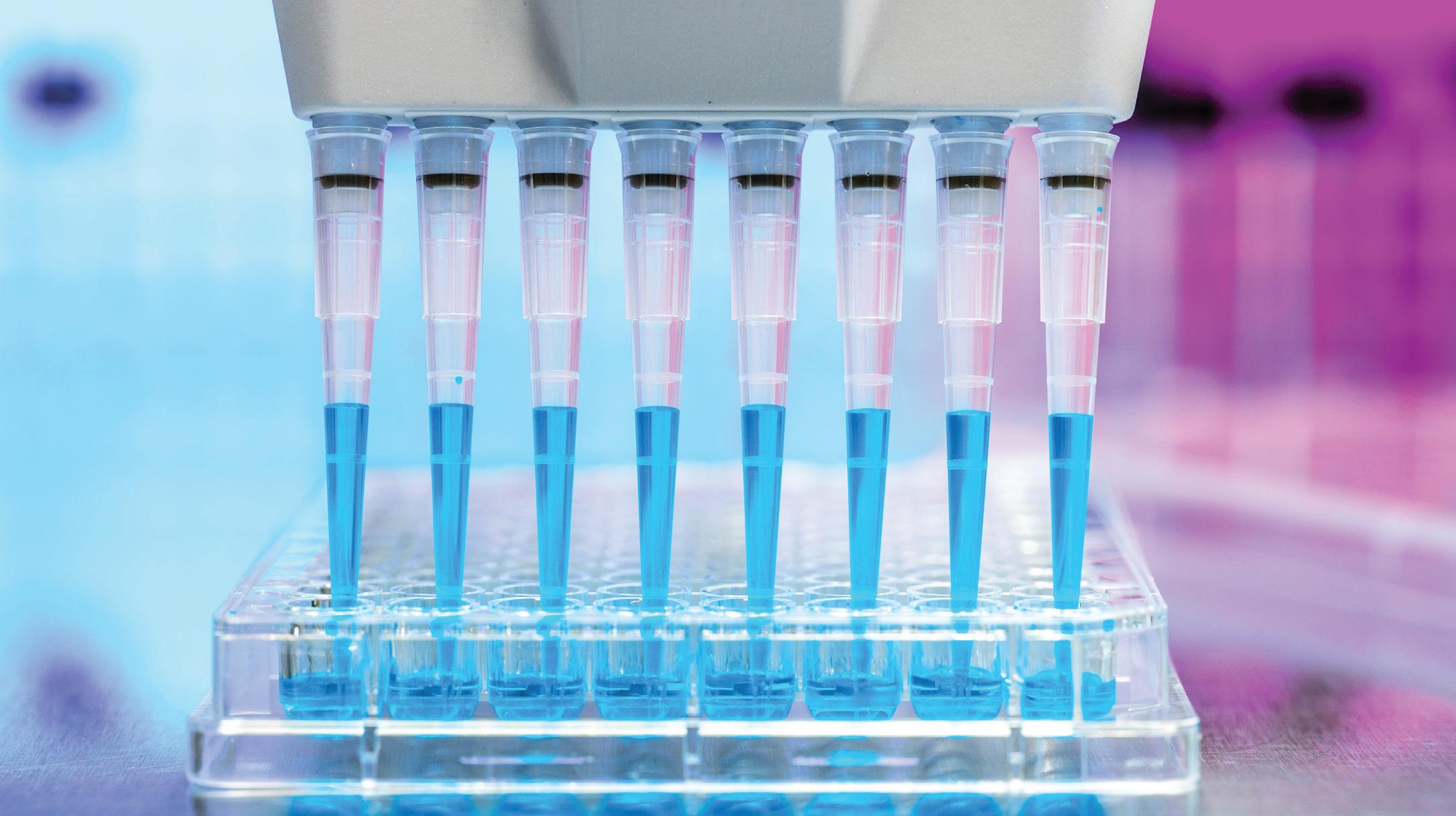
6 FROM ASSISTANCE TO AGENCY IN BIOPHARMA R&D: BENEFITS OF NEXT-GEN AI-NATIVE LAB NOTEBOOKS
The next generation of AI-native lab notebooks has the potential to turn AI into an active collaborator.
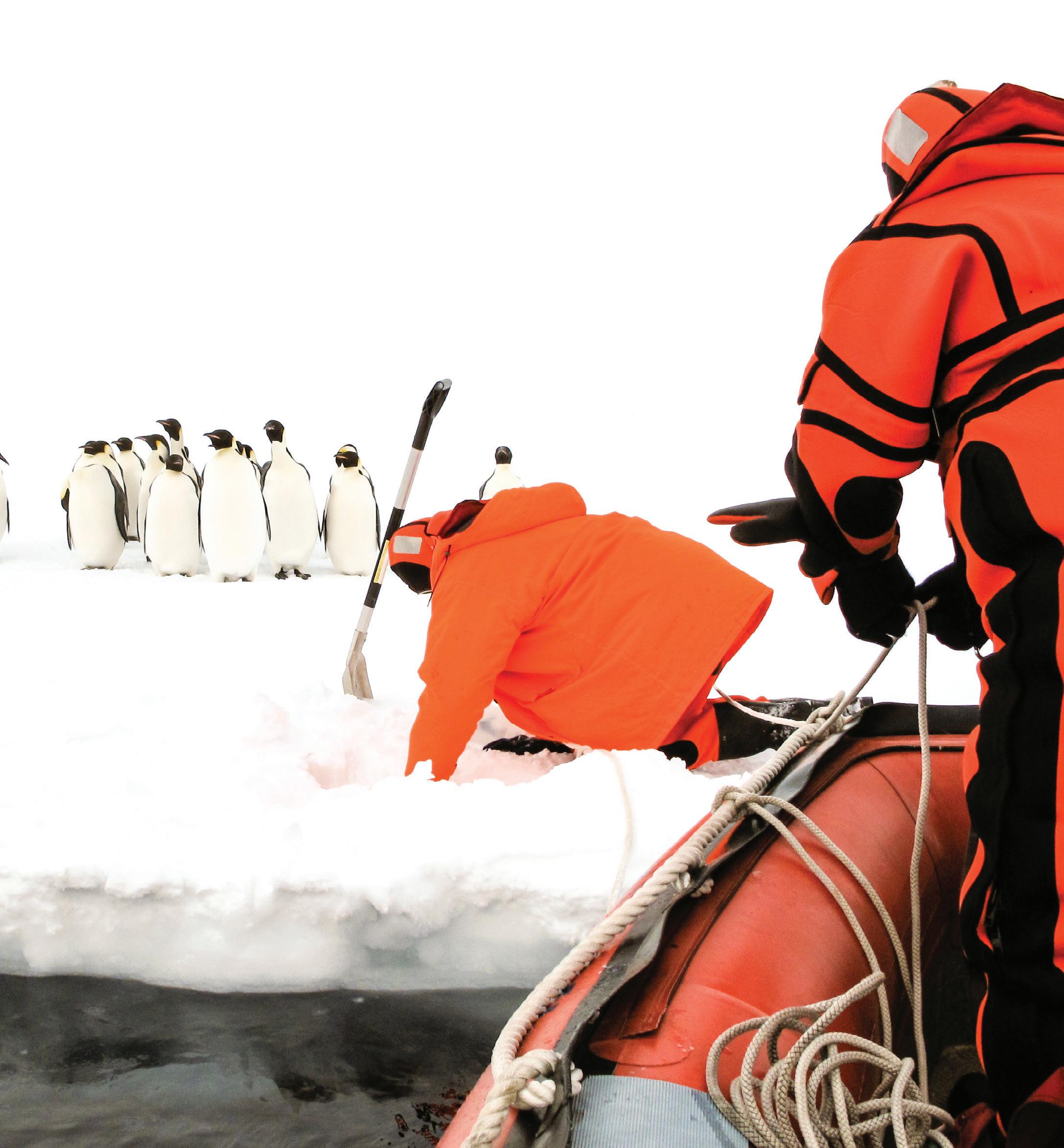
14 IN THE FACE OF CHANGE: HOW ANTARCTIC MICROBES CAN SURVIVE A 95°C TEMPERATURE SPAN
The resilience of Antarctica’s unique microbial ecosystems to a changing climate.
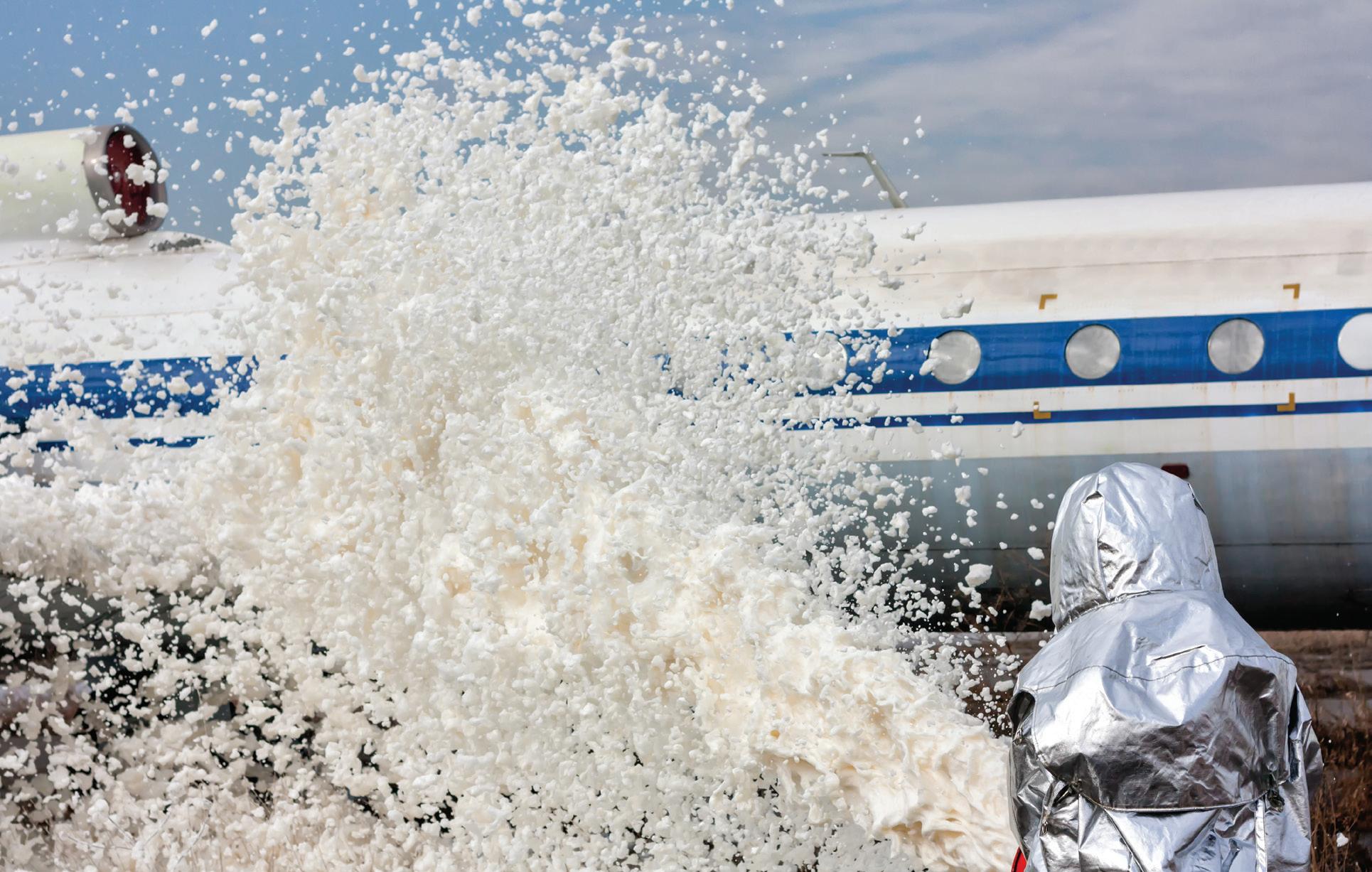
16 COULD THIS BIOSENSOR BYPASS LABS WITH ONSITE PFAS DETECTION?
26 FROM HOSPITALS INTO HOMES — COULD TINY BIOSENSORS TRANSFORM MEDICAL SAMPLING?
Diminutive laser technology with the potential to move certain types of medical sampling into patients’ homes.
28 HOW A TINY WORM CHANGED A DECADE OF SCIENTIFIC THINKING
Rethinking the way sensory nerve connections remain strong throughout a lifetime.
29 CUSTOMISED IMMUNE CELLS USED TO FIGHT BRAIN CANCER
CAR-T cells capable of destroying glioblastoma cells.
A portable biosensor may allow rapid, onsite detection of toxic ‘forever chemicals’ in water.
How Antarctic life will fare under future conditions. 14
20 SENSOR’S CELL-LIKE STRUCTURE SAID TO OVERCOME KEY BLOODTESTING BARRIER
A sensor that draws inspiration from nature.
22 REVEALED — A COMMON BACTERIUM’S ROLE IN STUBBORN WOUND INFECTIONS
A common bacterium can suppress the body’s early warning system in wounds.
24 5 SCENARIOS FOR THE FUTURE OF ANTARCTIC LIFE
30 INTEROPERABILITY IS CRITICAL: PREPARING FOR THE NEXT PANDEMIC NOW
How ETL networks could help prepare for the next pandemic.
33 COULD THIS ‘PFAS TRAP’ REMOVE THE MOST DIFFICULT-TOCAPTURE VARIANTS FROM WATER?
A nano-sized molecular cage that acts as a highly selective ‘PFAS trap’.
Who’s afraid of killer whales?
It’s a 2015 summer at the Neptune Islands Group Marine Park in South Australia and around six killer whales ( Orcinus orca ) are observed attacking and killing a white shark (Carcharodon carcharias) about 20 metres from a cage-diving vessel. During the incident, which occurred on 2 February, three whales appeared to corral the shark, restricting its movement, while others rammed it with their heads; signs of a successful predation coming when the shark was pushed under the water and an oil slick appeared on the surface.
This presumed kill of a white shark was widely documented and shared publicly, and was followed by an absence of white sharks from the area for around two months. Such disappearance was, at the time, widely attributed to killer whale predation and compared to similar events in South Africa. It has been thought that predation events by killer whales trigger dramatic changes in shark behaviour — causing abrupt departures from coastal aggregation sites — and can also cause cascading shifts in the wider marine ecosystem. These absences can last from weeks to months or even result in long-term site abandonment, as studies in California, South Africa and Mexico have suggested. However, most of this previous research has relied largely on observational data
rather than long-term tracking. And so, a team of researchers from across Australia set out to learn more, including whether extended absences from their aggregation sites are also part of the sharks’ natural behaviour.
The study used 12 years of acoustic telemetry and wildlife tourism sighting data — to find that the prolonged disappearance of white sharks from South Australia’s Neptune Islands after the 2015 predation event was unlikely to be driven solely by killer whales. Not every killer whale encounter or shark death led to long-term absences, the researchers highlight. For example, the death of a tagged white shark potentially releasing chemical signals known as necromones, resulted in just a four-day absence, while a killer whale sighting in October 2024 caused only a five-day departure.
The study was published open access in Wildlife Research in February, so you can read more at doi.org/10.1071/WR25088.
Nature, technology and health loom large in this issue of Lab+Life Scientist, which includes among its focus areas: environmental science, microbiology and biotechnology. Our scope is broad, starting in our lead feature with one of the prevailing concerns of our time, AI, as Andrew Wyatt — Chief Growth Officer for Strategic Partnerships at Sapio Sciences — considers the benefits of next-gen AI-native lab notebooks in biopharma R&D.
In the technology and health space, Michelle Frazer — Director APAC at X-Lab Systems —
explains that COVID-19 highlighted the lack of interoperability in our health systems, setting out how ETL (Extract, Transform, Load) networks could help prepare for the next pandemic. Also on health, we explore a common bacterium’s role in stubborn wound infections, look at how a sensor’s cell-like structure is being said to overcome a key blood-testing barrier, and the potential of customised immune cells in fighting brain cancer.
Concerning the environment, some standouts include a nano-sized molecular cage that acts as a highly selective ‘PFAS trap’, how the analysis of microbial soil samples helped Australian scientists understand the resilience of Antarctica’s unique microbial ecosystems to a changing climate and, in a further look to Antarctic futures, the prediction of five possible outcomes for how Antarctic life will fare in years to come.
I hope you enjoy the read.
Regards, Dr Joseph Brennan, Interim Editor LLS@wfmedia.com.au
Dr Joseph Brennan
A pod of killer whales (Orcinus orca) near tourist boats in the Sea of Cortez, Mexico.
Nominations now open for the 2026 NMI Measurement Awards
The National Measurement Institute (NMI) is now accepting nominations for the 2026 NMI National Measurement Awards, which celebrate outstanding achievements in measurement, spanning all experience levels and industries.
The 2026 awards are the:
• Barry Inglis Medal — for sustained contributions to Australian measurement science and infrastructure;
• NMI Measurement Impact Award — for measurement-related achievements with real-world impact; and
• Measurement Achievements Encouragement Award — recognising measurement-related achievements of early to mid-career professionals.
There will also be a People’s Choice Award, open to Measurement Awards finalists and chosen by audience vote in a virtual award ceremony during National Science Week this August.
Recognising excellence, contribution and impact to measurement science, you can nominate yourself or a colleague who inspires you.
More information about the awards, eligibility requirements and how to apply is available at www.industry.gov.au/national-measurementinstitute/measurement-awards.
Submissions close on World Metrology Day, 20 May 2026.
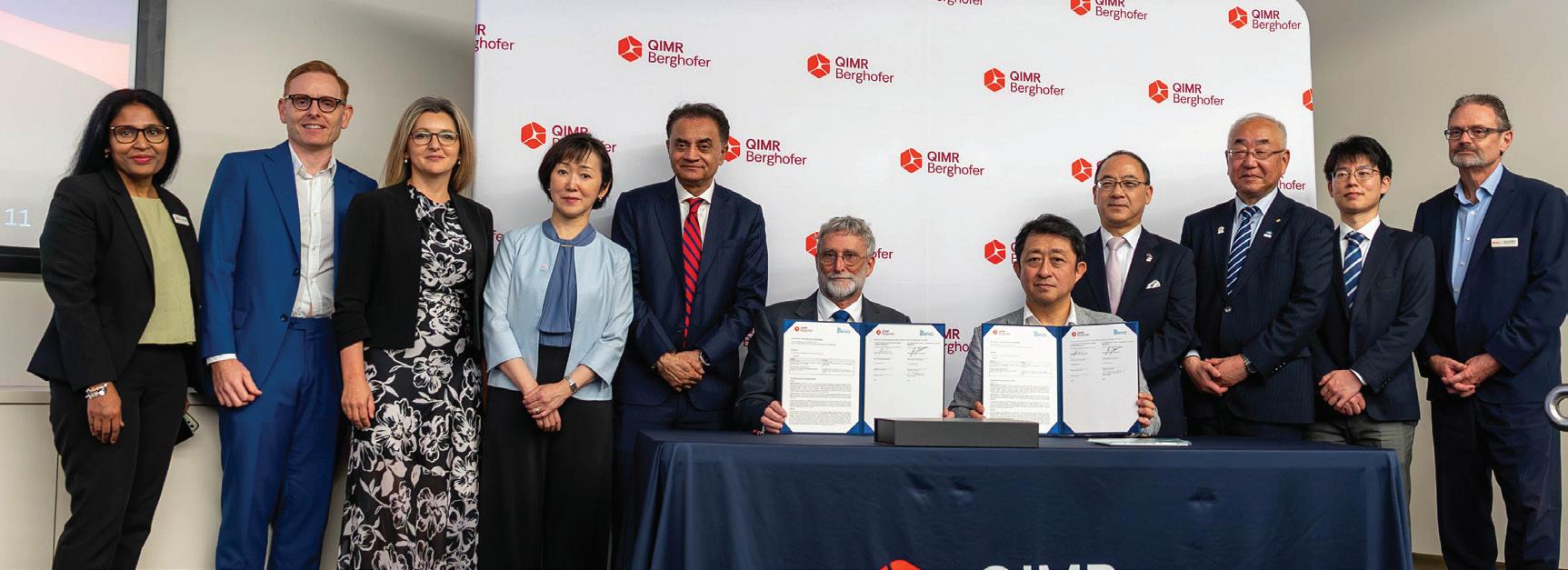
QIMR Berghofer signs strategic partnership with Nakanoshima Qross
With the goal of harnessing their combined medical research expertise to drive improved health outcomes for patients, QIMR Berghofer has signed a strategic partnership agreement with Japanese biomedical innovation hub Nakanoshima Qross.
Nakanoshima Qross (Organisation of Future Medicine) is a unique hub in Osaka, Japan that brings together medical institutions, companies, startups and support organisations to promote the development of cutting-edge ‘future medicine’.
QIMR Berghofer said the agreement marks a strengthening of ties between Queensland and Osaka and will seek opportunities for collaboration on medical research and translation from discovery to the clinic, as well as clinical trials, and joint training and talent exchange initiatives.
“Our internationally recognised research capabilities include expertise across cancer, infectious diseases, brain and mental health,
population health, and cell therapy manufacturing,” said Professor Grant Ramm, QIMR Berghofer Interim Director and CEO.
“We are excited to begin working together with Nakanoshima Qross to share knowledge and foster innovation to support our goal of delivering better health and wellbeing globally.”
Nakanoshima Qross Director Prof. Dr. Yoshiki Sawa said the strategic partnership will reinforce the capabilities of its unique research hubs in diverse areas such oncology, neurology and mental health, as well as cell therapy and regenerative medicine.
“QIMR Berghofer has had a long history of world class research and groundbreaking discoveries in the field of tropical diseases and oncology, and we are excited to be partnering with the Institute. By sharing and combining our complementary expertise, we will accelerate the social implementation of our innovative ideas to solve patients’ current and future medical needs,” Sawa said.
QIMR Berghofer.
QIMR Berghofer and Nakanoshima Qross partnership signing ceremony.
From assistance to agency in biopharma R&D:
Benefits of next-gen AI-native lab notebooks
Andrew Wyatt*
Generative AI can process information at incredible speed, but it cannot yet think like a scientist. In biopharma R&D, its real value lies in assisting scientists, automating routine tasks, interpreting data in context, and moving research faster. The next generation of AI-native lab notebooks goes further, turning AI into an active collaborator that helps scientists move from “what if” to “let’s find out”.
Generative AI (GenAI) and the large language models (LLMs) behind it have recently become some of the most talked-about technologies in both business and everyday life, sparking widespread debate about the future of work. They have inspired countless predictions and generated excitement across many industries for their potential to automate knowledge-based tasks.
In biopharma R&D, however, the question is not simply what AI can do, it is how it should help. Since the release of modern generative AI tools, there has been speculation about whether these systems could one day replace scientists, with suggested use cases ranging from accelerating literature reviews to protocol drafting. While these models are capable of impressive analysis and pattern recognition, they struggle to apply true scientific reasoning, understand experimental intent, interpret results in context and link data to hypotheses.
But the real opportunity for AI today is not as a replacement; it is as a complement to the tools and scientists already driving innovation. The issue is not that generative AI models aren’t powerful, it’s that they are designed to be broadly useful across many domains. They are trained using public content and generalised data, not the proprietary, structured and experimental data that drives biopharma R&D.
Generative AI may excel at handling language, but it still lacks scientific fluency. These models often fail to distinguish between a sample and a reagent, and cannot interpret assay results in context or anticipate whether a protocol step is valid or flawed. They know a lot, but do not think like scientists.
Rather than forcing users to adapt to rigid workflows, these tools are built to understand the intent behind scientific work.
From assistance to agency
What has emerged is a set of practical, targeted uses. These are applications where the AI’s rapid processing and recall can be precisely directed to assist scientists. AI can help streamline repetitive or administrative lab tasks, assist in drafting workflows and suggest possible interpretations of structured data. For most scientists, decisionmaking and creative problem-solving are core to their work. There is little appetite and no current need to give that up.
Some of the most impactful AI applications today are focused on accelerating the gap between idea and execution. Rather than automating science itself, AI can reduce the manual burden of tasks that pull scientists away from research. This helps scientists stay focused on the science itself, rather than getting pulled into administrative or technical detail.
For example, AI can:
• Translate high-level experiment descriptions into structured steps and protocol templates
• Retrieve data based on contextual, naturallanguage queries, rather than requiring complex filters or forms
• Track materials and consumables based on protocol logic
• Guide scientists through unfamiliar lab software, reducing the learning curve for new tools
But to do this well, the AI must not only understand language. It must understand science, and it must be embedded in scientific software that reflects real-world research environments.
From passive recording to active collaboration
This need has led to the emergence of thirdgeneration electronic lab notebooks (ELNs), sometimes referred to as artificially intelligent lab notebooks (AILNs). These are AI-native platforms that go beyond documenting experiments. They actively participate in the process of doing science.
Rather than forcing users to adapt to rigid workflows, these tools are built to understand the intent behind scientific work. They can help researchers plan and refine experiments, support decision-making and automate many of the steps that traditionally required specialist support.
AILNs are unique in that they understand both science and themselves, combining awareness of scientific logic with an understanding of the data structures, workflows and context of real-world research environments.
AILNs can assist with:
• Suggesting or validating complex tasks such as retrosynthesis, codon optimisation or molecular docking
• Capturing actions and decisions in a traceable, reviewable format, supporting compliance without adding friction
The
system that learns the science
The key evolution in these platforms is that they reverse the traditional dynamic. Earlier ELNs required users to learn how to use the software. Third-generation ELNs are built to learn how scientists work. They allow researchers to interact
naturally, often using simple text prompts, and automate the underlying complexity of the task. With the help of natural language processing (NLP), these systems can:
• Search and retrieve historical or crossdatabase data
• Interpret SOPs and convert them into structured experiment templates
• Manage experiment-related files and track material usage
• Guide users through software without requiring prior training
The result is a more intuitive, less disruptive way to run research.
A new foundation for scientific work
Third-generation ELNs represent a fundamental change in how digital lab tools support science. Instead of acting as passive record-keepers, modern ELNs are becoming intelligent collaborators, making it easier to turn a new idea into an executable workflow and reduce the effort required to explore novel directions.
By accelerating the path from “what if” to “let’s find out”, these platforms help researchers spend more time thinking and less time formatting, searching or switching tools. AI will not replace scientists, but it will reshape what scientists expect from their tools and fundamentally accelerate the boundaries of discovery.
*As Chief Growth Officer for Strategic Partnerships at Sapio Sciences, Andrew Wyatt is responsible for growing Sapio’s international operations. He has over 30 years of expertise in commercially scaling global software companies. Andrew has worked in a wide range of organisations, from NASDAQ-listed companies to privately held businesses, from the communications sector to life sciences industry. Most recently Andrew was the COO of healthcare orchestration company Lumeon, where he successfully grew the business and entered the US market.
DAC Labs seeks commercial scale-up with COO appointment
To lead commercial scale-up of its direct air capture technology, DAC Labs has appointed former Macquarie Group executive Emma Quigly-Hall as Chief Operating Officer. Quigly-Hall joins the company after a 22-year career at Macquarie Group, most recently serving as Executive Director and Global COO/CFO of Macquarie Capital’s Principal Finance business.
Selected for her experience in scaling capital-intensive businesses — aligning people, processes, technology and risk frameworks around complex projects — DAC Labs said this experience maps directly to the challenge it faces moving towards commercial-scale deployment.
“Scaling direct air capture requires more than breakthrough engineering — it demands disciplined capital deployment and operational execution at industrial scale,” DAC Labs Founder and CEO Dr Sam Wenger said.
“Emma has spent two decades doing exactly that at one of the world’s
Flinders works on method to filter nanoplastics from water
Nanoplastics are particles produced by the breakdown of larger plastic waste. These particles range in size from approximately 1 micron down to several nanometres in diameter, which makes identification, location and filtering a complex problem in water, soil and the air.
Amid concern around the purity and safety of drinking water, Flinders University researchers have published a proof-of-concept study (doi.org/10.1016/j.aca.2025.345008) in Analytica Chimica Acta that details a method capable of detecting nanoplastics using plasma polymer-coated filters.
“While effective filter materials and methods have been developed
leading financial institutions. Her experience in structuring transactions, managing risk and building operational infrastructure for rapid growth is exactly what DAC Labs needs at this stage.”
On the appointment, Quigly-Hall said: “Large-scale carbon removal requires engineered solutions that can scale within existing industrial systems, not decades from now, but in the near term.
“That’s what DAC Labs has built — proven chemistry, existing infrastructure and a business model that stands on its own. It’s elegant systems-thinking applied to one of the defining challenges of our generation.”
A qualified chartered accountant and a Graduate of the Australian Institute of Company Directors (GAICD), Quigly-Hall holds a Bachelor of Applied Finance and has served as a board director on several Macquarie investing entities.
for microplastic isolation (larger particles up to 5 mm in size), accessible and cheap-to-implement solutions often fall short in successfully capturing the smaller size fractions,” said Manpreet (‘Preet’) Kaur, a PhD candidate at the Nano and Microplastics Research Consortium at Flinders University and first author of the study.
“This may require advanced instruments, high pressure or complex systems which may be inconsistent,” Kaur said. “However, our work with plasma polymer coated filters shows we can capture and quantify nanoplastics in various water samples, enabling precise insights into levels of contaminants.
“While detection methods exist, the results can be misleading if you don’t know what you’ve actually isolated,” Kaur added. “We are working on developing ways to measure nanoplastics levels accurately, so then exposure or risk can be studied, for possible harmful effects on health and the environment.”
Specifically engineered plasma polymer coatings are used as a selective surface to capture nanoplastic particles, based on their affinity towards the developed coatings — the researchers claim that they can considerably decrease the uncertainty that has impacted previous measurements by separating nanoplastics prior to analysis.
“After particle isolation, we use thermogravimetric analysis to reveal the degradation behaviour of materials when heated,” said Dr Iliana Delcheva, a Flinders post-doctoral researcher and third author of the study. “This technique can be used to confirm if the material that has been isolated is plastic, as plastics exhibit distinct thermal responses.”
PhD candidate
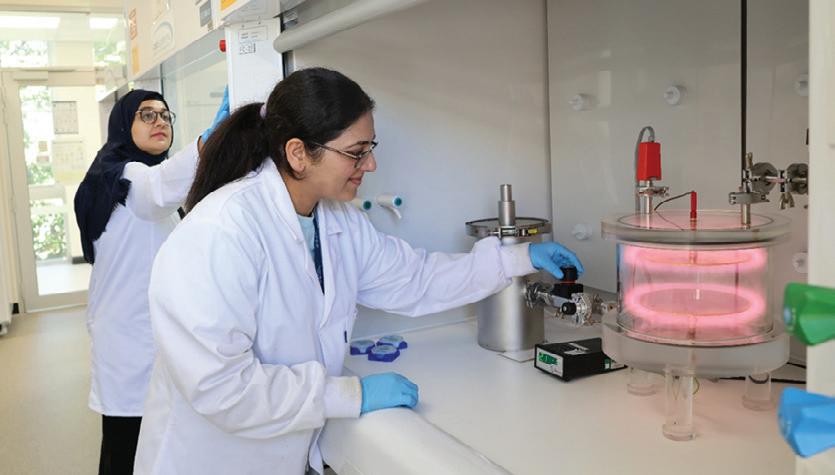
Preet Kaur works on the new plasma reactor technique.
Flinders University.
AusBiotech and Proto Axiom partner on investor-focused life sciences programs
AusBiotech and Sydney-based life sciences company creator Proto Axiom have signed a memorandum of understanding to strengthen national coordination across investor-focused life sciences programs. Starting with the Challenger Pitch for Health in March and a new joint program in August and September 2026, the new agreement creates a coordinated calendar of investor-focused events.
With the partnership designed to create a more connected researcher and founder journey, providing clearer pathways from early pitching and validation through to national industry platforms, and later stage investment, March’s Challenger Pitch for Health is Proto Axiom’s national pitch competition, run with the St Vincent’s Curran Foundation, awarding $500,000 in non-dilutive grants to leading researcher-founders.
The other two events are:
• Early Stage Innovation Forum (ESIF) sessions in May and October — aligned programming delivered alongside the AusMedtech and the AusBiotech International Conference, providing earlystage innovators with exposure to industry, investors and commercialisation pathways; and
• New Joint Program in August — a co-designed initiative focused on specific research areas of interest, with an initial emphasis on translational innovation in women’s health.
“Researchers do not experience the ecosystem in silos,” Proto Axiom CEO Anthony Liveris said. “They move from lab to pitch to conference to capital raise. We are especially excited about the August program and the opportunity to put underfunded areas of health (particularly women’s health) at the centre of Australia’s innovation agenda.”
On the partnership with Proto Axiom, AusBiotech CEO Rebekah Cassidy said it “sits within a broader set of investment-focused collaborations we are building nationally. It is designed to create clearer pathways from research excellence to commercial scale and to help Australian companies be better prepared to engage with capital at each stage of their growth”.
Method holds promise to
make bioimaging X-ray machines smaller and more flexible
Researchers from Nanyang Technological University, Singapore (NTU Singapore) have found a new way to produce X-rays with wavelengths in what is called the “water window”. The researchers believe the method holds promise to make bioimaging X-ray machines smaller and more flexible.
Water-window X-rays are useful for bioimaging because they visualise biological cells at high contrast without staining them or requiring potentially damaging preparation; however, some tabletop machines only produce radiation in a fixed range of energies, so more machines are needed if X-rays of varying energies are required to improve image contrast.
Even then, the researchers say, they cannot cover the full spectrum of energies in the water window. There are single machines that can flexibly produce X-rays of different energies, but these are expensive synchrotrons larger than a house and difficult for most researchers to access.
Associate Professor Wong Liang Jie from NTU Singapore’s School of Electrical and Electronic Engineering led a team of scientists to address these difficulties by showing that waterwindow X-rays of varying energies can be produced using thin flakes of graphite 10–170 nm thick in a table-sized set-up.
The energy of the X-rays can be precisely adjusted by changing the energy of an electron beam fired at the graphite to generate the radiation, the team also showed, as well as by tweaking the angle at which the graphite is tilted.
To achieve this, the team developed a framework that precisely accounts for the scattering of electrons fired at crystalline materials. The researchers also predicted and experimentally confirmed fundamental scaling laws governing the production of X-rays from shooting electrons at crystals.
Details of the study were published in Nature Photonics (doi. org/10.1038/s41566-024-01547-3).
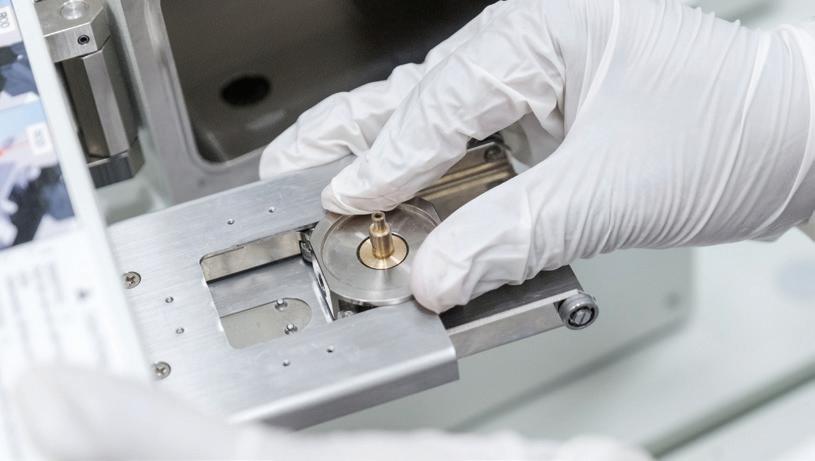
Graphite on a sample holder being loaded into a field emission scanning electron microscope for the NTU team’s X-ray experiments.
NTU Singapore.
Ateam of Korean researchers led by Professor Woo Youn Kim in the Department of Chemistry in the Korea Advanced Institute of Science and Technology (KAIST) have developed an artificial intelligence model that, they say, understands the physical laws governing molecular stability to predict structures, having published an article on their research in Nature Computational Science (doi.org/10.1038/s43588-025-00919-1).
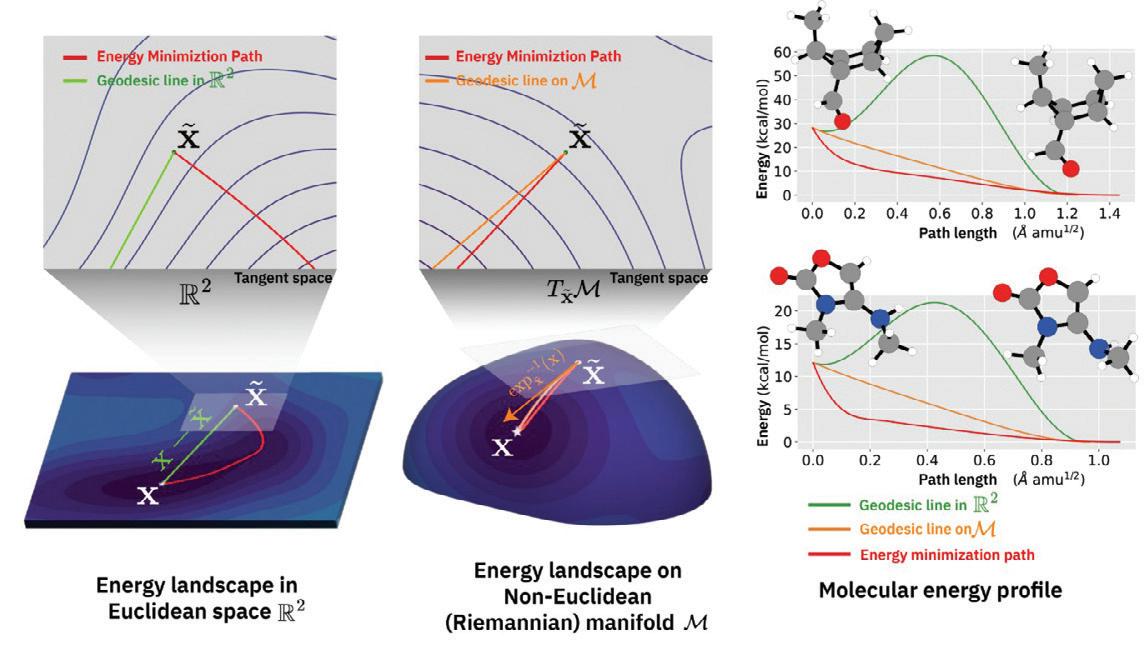
While existing AI models simply mimic the shape of molecules, the most significant feature of Riemannian DenoisingModel (R-DM) is that it directly considers the ‘energy’ of the molecule, refining the structure by considering the forces acting within the molecule. The molecular structure has been represented by the researchers as a map — where higher energy is depicted as hills and lower energy as valleys, designing the AI to move toward and find the valleys with the lowest energy.
By navigating this energy landscape, avoiding unstable structures to find the most stable state, R-DM completes the molecule. The mathematical theory of Riemannian geometry is applied here, resulting in the AI learning the fundamental law of chemistry: ‘matter prefers the state with the lowest energy’.
The team says that experimental results have shown R-DM achieved up to 20 times higher accuracy than existing AI models, reducing prediction errors to a level nearly indistinguishable from precise quantum mechanical calculations. This represents, the researchers claim, the world’s highest level of performance among AI-based molecular structure prediction technologies.
“This is the first case where artificial intelligence has understood the basic principles of chemistry and judged molecular stability on its own,” Kim said. “It is a technology that can fundamentally change the way new materials are
developed.” High-performance catalyst design, next-generation battery materials and new drug development are among the areas in which this technology can be utilised, the researchers say.
The model is expected to serve as an ‘AI simulator’ that will dramatically speed up research and development by significantly shortening the molecular design process. The team also sees significant potential in environmental and safety fields, as it can quickly predict chemical reaction paths in situations where experiments are difficult, such as chemical accidents or the spread of hazardous substances.
Comparison of energy landscapes in Euclidean space and Riemannian space.
KAIST.
Australia to begin treaty negotiations on association to Horizon Europe
To give Australian organisations access to the world’s largest pooled research fund in 2027, treaty negotiations on association to Horizon Europe have been announced by the Australian Government.
The European Union’s flagship research and innovation funding program, Horizon Europe, is worth AU$155 billion and once associated, Australian organisations can access the current round of Horizon Europe funding.
Access to this funding is to lead and participate in research projects with the brightest minds, the government said, including on climate and clean energy, health, critical technologies, advanced computing and critical minerals.
Countries including Canada, New Zealand, the Republic of Korea and the United Kingdom are among the more than 20 countries that have associated with Horizon Europe and have seen significant return on investment, the government said.
“Horizon Europe will ensure our researchers have the resources and
Portable
the partnerships they need to tackle the biggest challenges of our time, from climate change to cutting-edge technology and the next generation of health care,” Australia’s Minister for Science Tim Ayres said.
“The independent Ambitious Australia report released last week laid out the importance of making every Aussie research dollar count. Collaborating through Horizon Europe has a multiplier effect and is good value for money.
“Association to Horizon Europe, supported by partners at Australia’s Group of Eight universities, will facilitate access to joint projects with the EU and other associated countries, while also allowing our industry, science and research sectors to lead projects in the Indo-Pacific.
“This is a great example of international research cooperation at a time when the world needs more constructive collaboration,” Ayres said. It is expected that, following the conclusion of the treaty process, Australian organisations will be able to apply for Horizon Europe research calls from early 2027.
point-of-care test detects four common STIs in under an hour
Australian researchers have developed a portable point-of-care test that detects four common sexually transmitted infections at once, in under an hour. The next-generation CRISPR-based diagnostic can simultaneously detect and distinguish between the DNA and RNA of multiple pathogens at the same time.
The test identifies syphilis, herpes, chlamydia and gonorrhoea, while also detecting a key antibiotic-resistance marker in gonorrhoea at the point of care, which the Peter Doherty Institute for Infection and Immunity — where some of the researchers are based — said marks a critical advance amid growing global antimicrobial resistance.
“This new device has been validated using 900 clinical samples, the largest set of STI samples reported globally for a CRISPR-based pointof-care device,” said The University of Melbourne’s Matthew O’Neill, Research Support Officer at the Doherty Institute and co-first author of the paper.
“When benchmarked against gold-standard laboratory PCR, the rapid test showed 97–100% accuracy in correctly identifying negative results, a level of precision important for safe, evidence-based treatment decisions.”
On the value of the tool, The University of Melbourne’s Dr Shivani Pasricha, Laboratory Head at the Doherty Institute and senior author of the paper, said concurrent research conducted in urban Victoria in collaboration with, and led by researchers from Melbourne Sexual Health Centre, showed that sometimes patients tested for herpes alone were positive for syphilis.
“Syphilis has long been known as the great mimicker. Correct treatment depends on correct diagnosis,” Pasricha said. “This novel [device] enables accurate diagnosis and treatment immediately, without waiting days for laboratory testing or requiring multiple clinic visits.”
Making testing more accessible and acceptable for patients and accelerating pathways to treatment, the technology can also support broader use of self-collected samples. “This makes it particularly valuable for regional, remote and underserved communities, where diagnostic delays are common and STI rates are often higher.”
A study about the tool was published open access in The Lancet Microbe on 3 March and you can read it at doi.org/10.1016/j. lanmic.2025.101289.
The University of Sydney formalises cervical cancer elimination partnership
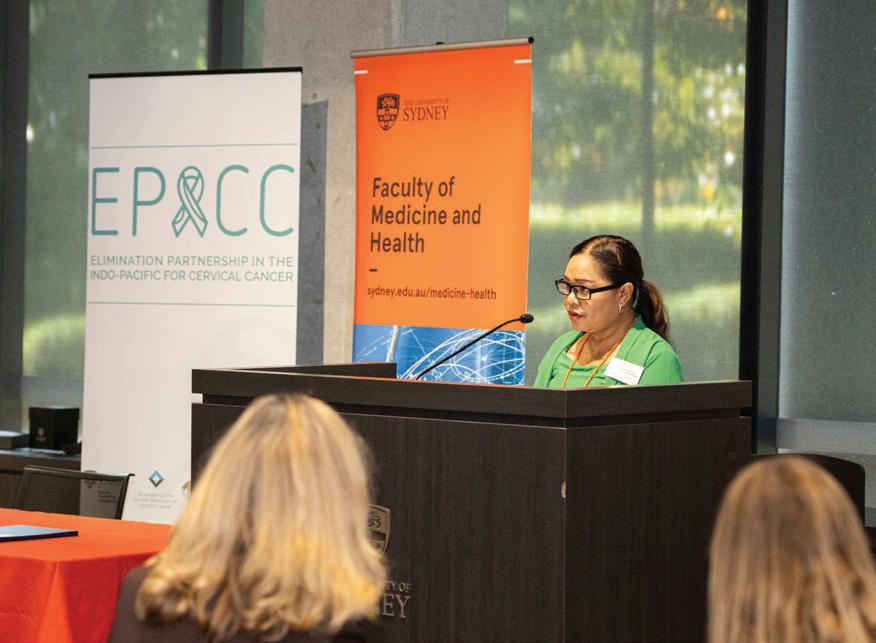
The University of Sydney has signed a memorandum of understanding with the Timor-Leste Ministry of Health. The signing was underpinned by the delivery of the Elimination Partnership in the Indo-Pacific for Cervical Cancer (EPICC) program in TimorLeste, where the program has been supporting rollout of human papillomavirus (HPV) screen-and-treat services since 2025.
The University of Sydney Vice-Chancellor and President, Professor Mark Scott AO, said the program’s success to date reflects the power of research when combined with government leadership. “Cervical cancer remains a leading cause of death in women in many Indo-Pacific countries. Thanks to research co-led by the Cancer Elimination Collaboration team at the University of Sydney, there is now an evidence-based global strategy for its elimination,” Scott said.
A four-year initiative operating in nine countries across the Indo-Pacific region, the EPICC program is supported by the Australian Government and the Minderoo Foundation and was established to accelerate progress towards the elimination of cervical cancer, in alignment with the World Health Organization’s global elimination strategy — a strategy underpinned by modelling studies co-led by Professor Karen Canfell AC, Program Lead for EPICC and head of the Cancer Elimination Collaboration in the Faculty of Medicine and Health at the University of Sydney.
“For a young nation like Timor-Leste, partnerships of this nature are transformative,” said Dr Elizabeth Leto Mau, Director General of Primary Health Care in the Timor-Leste Ministry of Health. “They allow us to strengthen national systems, and apply world-class evidence and innovation in ways that are adapted to our local context.”
EPICC’s work in Timor-Leste is led by Professor Deborah Bateson AM and supported by EPICC consortium members, including Family Planning Australia, the Australian Centre for the Prevention of Cervical Cancer, the Kirby Institute at UNSW Sydney, the National Centre for Immunisation Research and Surveillance, and Unitaid.
Dr Elizabeth Leto Mau.
The University of Sydney/Fiona Wolf.
In the face of change: how
Antarctic microbes can survive a 95°C temperature span
Analysis of microbial soil samples has helped Australian scientists understand the resilience of Antarctica’s unique microbial ecosystems to a changing climate.
Aerotrophy is the process that explains microbes’ ability to thrive during Antarctica’s dark, freezing winters, but also makes them suited to a future shaped by rising temperatures, a study led by Monash University researchers from Securing Antarctica’s Environmental Future (SAEF) has confirmed. Through this process, microbes live from gases — including hydrogen and carbon monoxide — in the atmosphere, surviving temperatures ranging from –20 to 75°C.
“It’s a bit like seeing a penguin thrive in a tropical jungle,” said Dr Ry Holland, Monash microbiology research fellow and co-author of the study published open access (doi.org/10.1093/ ismejo/wrag020) in The ISME Journal. “In most surface ecosystems, photosynthesis is the key process that enables life to grow. However, it requires sunlight and water, two things that are in short supply during dark Antarctic winters, when water is locked up as ice.
“By contrast, the air is always there, providing a steady supply of hydrogen, carbon monoxide and other trace gases,” Holland added. The team found that at typical summer temperatures of
It’s a bit like seeing a penguin thrive in a tropical jungle.
— Dr Ry Holland
Left: Holtedahl Mountains in Dronning Maud Land, Antarctica.
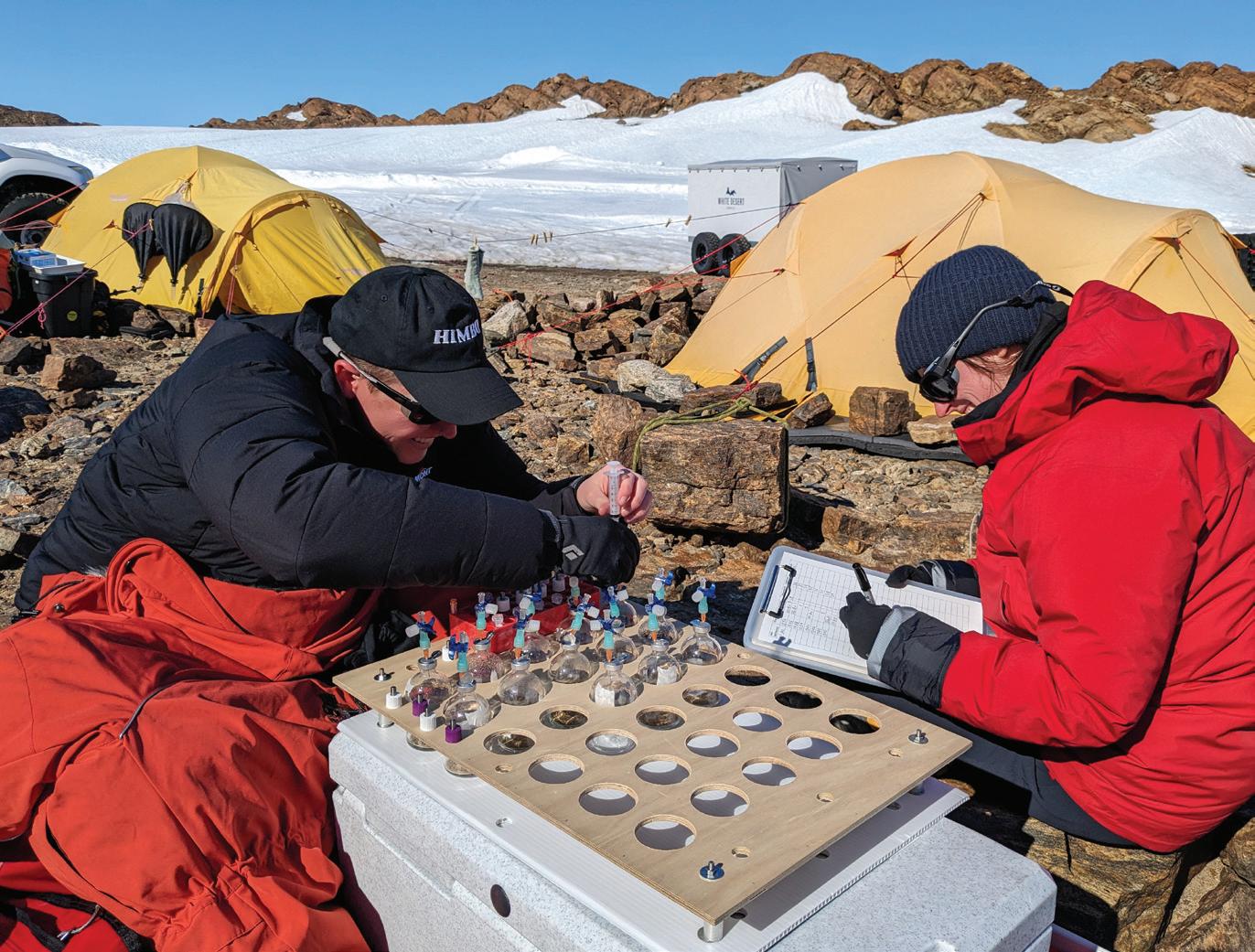
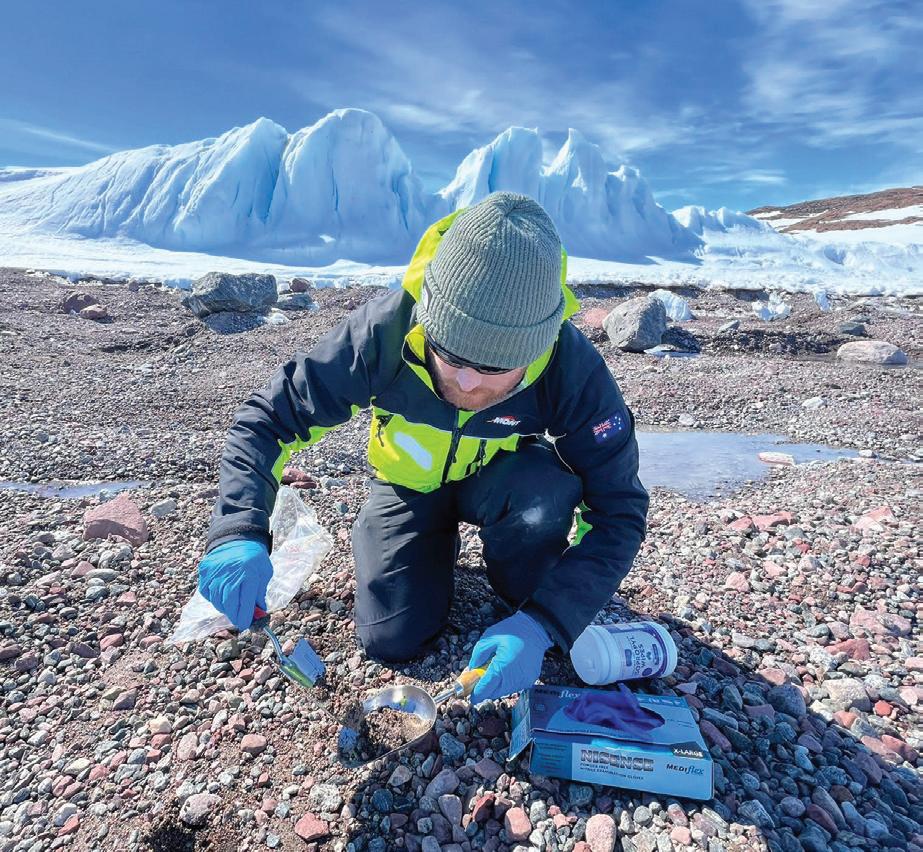
Above: Dr Ry Holland and Dr Rachael Lappan conducting gas flux experiment in Dronning Maud Land.
Right: SAEF researchers collecting microbial soil samples in the Bunger Hills.
4°C and winter temperatures of –20°C, Antarctic microbes continue to consume these gases as an energy source, confirming that aerotrophy occurs year-round.
“When we continued to increase the temperature in the lab, we were surprised to find that they continued to consume hydrogen up to 75°C. This shows that while these microbes are adapted to the continent’s cold conditions, they are not limited by them,” said Dr Tess Hutchinson, study lead author, from Monash Biomedicine Discovery Institute (BDI).
The SAEF program partnered with national Antarctic programs and business partners to
access sites across East Antarctica, with the aim to build a continent-wide understanding of the process of aerotrophy. For the study, soil samples were collected in Dronning Maud Land — with logistics support from White Desert — and from the Bunger Hills and Robinsons Ridge, through the Australian Antarctic Program.
How quickly microbes consumed atmospheric gases was then measured, both in the lab and in the field. The team also extracted and sequenced the microbes’ DNA to identify which species were present, the genes they carry and the energy sources they are capable of using. What they found was that aerotrophy is a widespread and
foundational survival strategy across Antarctica, not an isolated adaptation.
“Aerotrophy is clearly a vital process supporting ecosystems across East Antarctica,” Hutchinson said, describing the study as an important puzzle piece to understandings of Antarctic microbial ecosystems’ resilience to a changing climate. “It can occur in the dark or the light, in extreme cold and at surprisingly high temperatures. It’s good to know that these microbes are resilient to rising temperature, but there are lots of other factors that also determine how microbes will respond to climate change that we are continuing to uncover.”
Amy Liu/Monash University.
Toby Travers/Monash University.
Could this biosensor bypass labs with onsite PFAS detection?
A portable biosensor may allow rapid, onsite detection of toxic ‘forever chemicals’ in water.
Per- and polyfluoroalkyl substances (PFAS) — a group of more than 15,000 synthetic chemicals used in products such as firefighting foams, food packaging and stain-resistant fabrics — are highly persistent in the environment and have been linked to serious health risks, including cancer. Further, current PFAS-testing methods have limited how often and where water could be monitored.
This is according to Henry Bellette, a La Trobe University PhD student who, together with a team including Dr Saimon Moraes Silva — Director of La Trobe’s Biomedical and Environmental Sensor Technology (BEST) Research Centre — has published a paper in ACS Sensors (doi.org/10.1021/ acssensors.5c03678) setting out advantages of a point-of-need, yes/no biosensor solution.
This paper concerns a protein-based electrochemical sensor for the point-of-need detection of perfluorooctanoic acid (PFOA), which is one commonly regulated PFAS compound of particular concern. Developed at La Trobe, through rapid, onsite detection of PFOA, the portable biosensor may remove the need for samples to be sent to specialist laboratories.
“Most PFAS testing relies on expensive laboratory equipment and specialist analysis, which makes regular monitoring difficult,” Bellette said. “This biosensor could be used onsite and provides a simple yes or no result, allowing water to be screened quickly and easily.”
PFAS contamination has been identified across Australia, particularly at sites including airports, military bases and fire stations — where firefighting foams were historically used.
Silva said portable screening tools would play an important role in managing long-term contamination, with the researchers hoping that the technology developed can eventually be incorporated into a hand-held device for environmental monitoring and water screening.
“PFAS do not break down in the environment, so monitoring is an ongoing challenge,” Silva said. “A portable screening tool could allow more frequent testing, particularly in regional and remote areas, and help identify where more detailed laboratory analysis is needed.”
The DNA Manufacturing Bottleneck No One Talks About
Since Watson and Crick’s 1953 discovery unlocked the structure of DNA, a critical problem has plagued biotechnology for decades: producing DNA is painfully slow, expensive, and limited. Traditional plasmid DNA manufacturing can take months to over a year and can struggle to produce the complex materials required for the next generation of life saving medicines. For researchers developing gene therapies, mRNA vaccines, or diagnostic tools, this timeline isn’t just inconvenient, it’s a fundamental barrier to innovation as we step into the era of digitally encoded medicines.
Building the Foundation
The story of DNA didn’t begin in 1953. It began in 1869, when Swiss chemist Friedrich Miescher isolated a mysterious phosphorusrich substance from white blood cells, which he termed nuclein and correctly predicted as a new class of biological molecules. Later, Phoebus Levene described the phosphate–sugar–base structure of nucleotides, and Erwin Chargaff demonstrated that adenine pairs with thymine and guanine with cytosine. These discoveries enabled Watson and Crick’s double helix model, after Jerry Donohue corrected the atomic arrangements of thymine and guanine, allowing proper hydrogen bonding consistent with Chargaff’s rules. As Professor Matthew Cobb notes, progress in science rarely moves in straight lines; it comes from accumulated insights, corrections, and occasional luck.
Limitations of Traditional DNA Production
DNA is traditionally made using organic chemistry for synthesis and microbial
How Cell-Free Synthesis is Revolutionising Biotechnology
fermentation for amplification. While widely used, these methods have inherent limitations. Bacterial systems introduce endotoxins, requiring extensive purification before DNA can be used in therapeutics. Production is generally limited to circular plasmid formats, and certain sequences—such as homopolymers or GC-rich regions—remain difficult or impossible to synthesise reliably while such characteristics are essential features of many therapies such as mRNA. Scaling production to meet growing demand is also challenging. As demand increases for a reliable supply of high-quality synthetic DNA, mainly driven by RNA vaccines, gene and cell therapies and emerging applications, the need for more efficient and flexible production solutions has never been greater.
NunaBio: Pioneering Cell-Free Enzymatic DNA Synthesis
NunaBio offers a fully synthetic, cell-free approach to DNA production. Using multipatented technology it eliminates bacterial fermentation in a single system, these platforms enable rapid, scalable DNA production using enzyme-driven reactions from no more than nucleotides and simple enzymes. Gram-scale quantities of DNA can be produced in under 7 days, compared with months or years for conventional plasmid methods. A benchtop system can generate milligram-scale quantities of highly complex linear DNA in about 80 minutes, dramatically accelerating access to custom sequences.
Because the process is cell-free, manufacturing avoids endotoxin, antibiotics and host derived contaminants, reducing purification requirements and producing DNA suitable for
sensitive applications such as gene therapy or vaccine template generation. The platform also supports multiple formats, including short oligonucleotides, gene fragments, full-length genes, repetitive sequences, and homopolymers that are challenging for traditional synthesis. The system can run continuously to deliver the world’s first fully automated DNA production of one or several sequences simultaneously. Each system is interconnected across a manufacturing network meaning updates, mutations and new technologies can propagate globally in minutes through a single platform with one tenth of the footprint of current methods.
Enabling Next-Generation Biotechnology
Researchers in Australia and New Zealand may gain early access to cell-free DNA synthesis through local facilities expected in 2026. Local access reduces international shipping delays, accelerates project iteration, and maintains control over sensitive or proprietary sequences. As biotechnology evolves, innovations in DNA manufacturing may prove as essential as the discovery of DNA itself, enabling faster, safer, and more flexible research and development.
To learn more about NunaBio and this award winning technology, contact Pete Davis, ATA Scientific (www.atascientific.com.au, 02 9541 3500, enquiries@atascientific.com.au).
References:
Read the full article on ATA Scientific’s Latest News https://bit.ly/479ilmN
ATA Scientific Pty Ltd www.atascientific.com.au
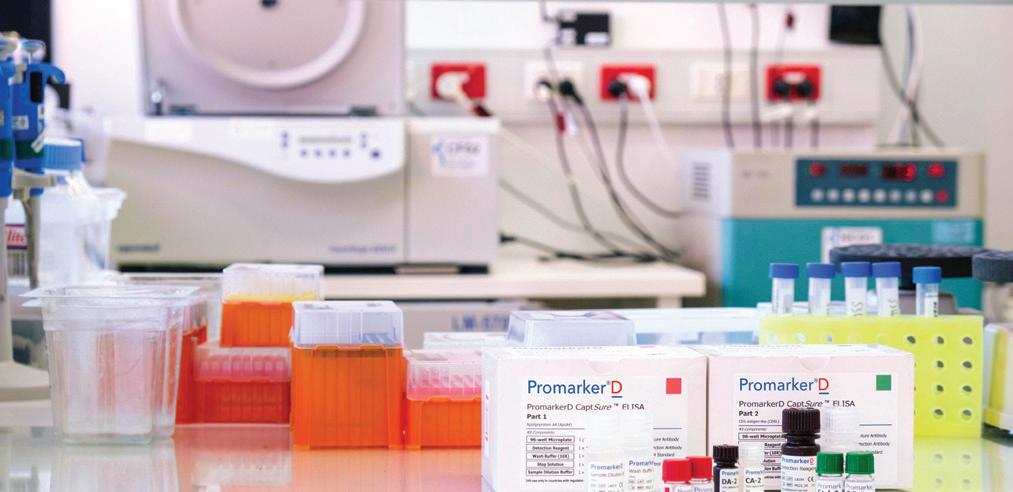
LDT immunoassay (ELISA)
PromarkerD is a blood test designed to assess an individual’s risk of developing chronic kidney disease (CKD) up to four years before clinical symptoms appear. CKD will affect approximately one in two adults living with diabetes in their lifetime and remains the leading cause of end-stage kidney disease worldwide.
Current diagnostics, such as estimated glomerular filtration rate (eGFR) and albuminuria (ACR), typically identify kidney damage only after significant and irreversible damage has occurred. PromarkerD is designed to address this gap by enabling earlier risk stratification, supporting more proactive clinical decision-making.
PromarkerD measures two plasma protein biomarkers, apolipoprotein A4 (ApoA4) and CD5 antigen-like (CD5L), using a standard ELISA-based workflow. Biomarker concentrations are combined with clinical variables including patient age and eGFR value to generate an individualised CKD risk score.
The assay is performed at Proteomics International’s NATA and CLIA-CAP accredited clinical and precision diagnostics testing laboratories in Australia and the US, respectively. The assay is designed to support diabetes care and CKD risk assessment in primary care by GPs.
The test is said to predict risk of CKD up to four years before clinical symptoms appear; uses a standard ELISA platform; combines protein biomarkers with routine clinical variables; stratifies patients into low-, moderate- or high-risk categories; and supports earlier identification of patients who may benefit from closer monitoring or earlier intervention to avoid or delay the progression to CKD.
According to Proteomics International, clinical validation studies involving more than 5000 adults with type 2 diabetes have demonstrated strong predictive performance (Odds Ratio >44), including identification of patients at risk of kidney function decline who are not detected using standard-of-care tests.
Proteomics International Pty Ltd www.proteomics.com.au
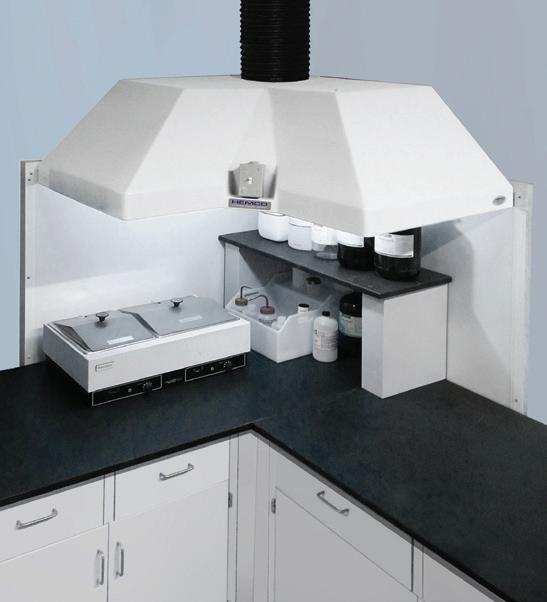
Corner canopy hood
The HEMCO Rust Proof Chemical Resistant Corner Canopy Hood is engineered to maximise wasted space in corner areas. It is designed to capture and exhaust corrosive vapours, heat steam and odours when mounted over areas that have water baths, hot plates or other lab equipment.
The canopy hood is a moulded one-piece seamless unit of advanced composite resins that have chemical and corrosion resistance, and are flame-retardant and lightweight. The corner canopy can either be wall-mounted or suspended from the ceiling, and can be equipped with optional side wall panels to prevent cross drafts from affecting the containment of fumes. Standard wall and island canopy hoods are also available, both in composite resin and stainless steel.
HEMCO Corporation
www.hemcocorp.com
Laboratory software
X-Lab Systems’ Labgnostic is a software solution engineered to streamline connectivity and translate data from disparate pathology IT systems, to digitise and automate laboratory referrals and results in real time, for improved efficiency, accuracy and compliance.
One bi-directional connection to the Labgnostic network enables data sharing with all other laboratories on the network. The solution delivers eOrders for referred tests into the performing laboratory information system and automatically sends results back to the originating laboratory information system.
By eliminating manual data entry and transcription errors, the solution is designed to meet accreditation guidelines, eliminate patient risk and free up staff for other highvalue work. Intended benefits include an average 85% reduction in manual administration, zero error rate, faster turnaround times, reduction in paper, ink and electricity and improved patient outcomes.
The solution is designed to cater for over 7000 tests covering biochemistry, haematology, serology, molecular pathology, immunology, microbiology, toxicology and more recently, histopathology.
X-Lab
x-labsystems.com
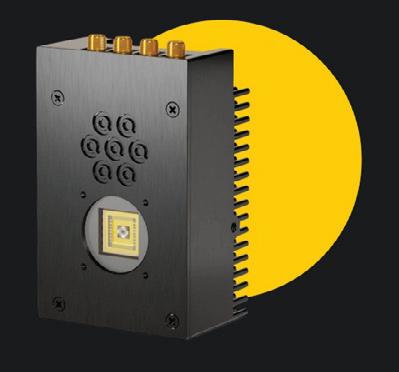
Single-photon detector
SPAD 23 from PI Imaging is a single-photon detector array designed to advance research in super-resolution imaging, fluorescence lifetime measurements, quantum optics and advanced microscopy. Its 23 hexagonally packed pixels allow researchers to generate super-resolution images beyond the diffraction limit, precisely time-stamp individual photons for lifetime imaging and characterise single-photon sources for quantum applications, making it a good solution for a wide range of experiments.
The SPAD 23 combines photon-counting and time-tagging capabilities to deliver sensitivity, precision and flexibility. It is designed as a solution for a confocal scanning set-up as each pixel can act as a virtual pinhole in confocal scanning set-ups, improving resolution and contrast. Fabricated using a CMOS process, the detector features an ultra-low dark count rate of less than 100 counts per second and microlenses that enhance detection efficiency to over 45%. Real-time photon processing is handled by a field-programmable gate array (FPGA), supporting up to 154 million counts per second across the array, while per-pixel time-to-digital converters enable timing resolution down to 20 picoseconds at maximum photon flux.
Designed for seamless integration, the SPAD 23 requires only a 5 V power adapter and USB3 connection, with additional SMA connectors and flexible mounting options for existing optical set-ups. Researchers can operate the system through an intuitive software interface for rapid prototyping and data acquisition or take full control remotely via TCP/IP using Matlab, LabVIEW, Python or Octave.
With its combination of highperformance detection, precise timing and versatile integration, the SPAD 23 is engineered to provide researchers with a powerful tool for microscopy, singlephoton imaging and quantum optics research.
SciTech Pty Ltd www.scitech.com.au
Ultralow-temperature freezer
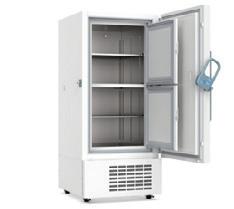
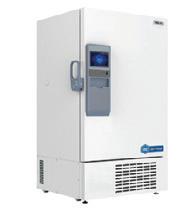
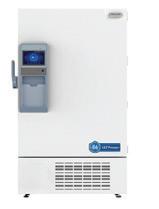
The Meling -86°C TwinDrive Ultra Low Temperature Freezer is designed with dual independent refrigeration systems, ensuring that if one system fails, the other maintains temperatures around -75 to -80°C, protecting samples. This redundancy makes it far safer than traditional single-compressor freezers, which risk sample loss in the event of failure.
Meling’s TwinDrive technology also delivers uniform cooling with minimal fluctuation, guaranteeing consistent -86°C storage conditions. The system achieves rapid temperature recovery after door openings, reducing risk during routine access. Each compressor operates under reduced load, extending service life and lowering maintenance costs.
Meling TwinDrive freezers meet ENERGY STAR V2.0 standards, consuming less power while maintaining ultra-low cooling. Advanced VIP vacuum insulation panels further reduce energy demand, while ecofriendly HC refrigerants align with sustainability goals.
User-focused design includes a 10 ″ intelligent touch screen, ergonomic handles and comprehensive alarm systems for monitoring. Optional CO2 back-up systems add an extra layer of protection.
Bioline Global Pty Ltd www.biolineglobal.com.au
Sensor’s cell-like structure said to overcome key blood-testing barrier
Drawing inspiration from nature, Australian researchers have developed a sensor they believe overcomes one of the biggest barriers in blood testing.
Blood quickly clogging most sensors and making accurate instant readings almost impossible over long periods is, according to a team led by La Trobe University, one of the biggest barriers in blood testing. This same team, drawing inspiration from nature, believe they have overcome this with a sensor that can rapidly track tiny molecular changes in blood, paving the way to real-time, personalised medicine. Their findings were published open access (doi.org/10.1021/ acssensors.6c00192) in ACS Sensors in March.
To mimic the way real cell surfaces protect themselves and sense molecules, the La Trobe team — in collaboration with CSIRO — combined a natural protective coating called
lubricin, fast-responding receptors and an ultra-sensitive, light-based detection method known as Surface-Enhanced Raman Scattering (SERS). SERS was used by the team to detect the antibiotic Vancomycin in unprocessed blood samples — without any loss in sensitivity over more than 10 hours of continuous exposure.
“Blood is one of the hardest substances to measure anything in,” said Dr Wren Greene, La Trobe University Associate Professor and research lead. “The secret to our sensor is its cell-like structure which filters the molecules from blood, enabling ultra-sensitive SERS detection.” Greene added: “Our sensor greatly expands the detection range, allowing us to measure hormones, toxins and other biomarkers that appear only at low concentrations. This is critical for early disease detection and monitoring the body’s response to treatments.
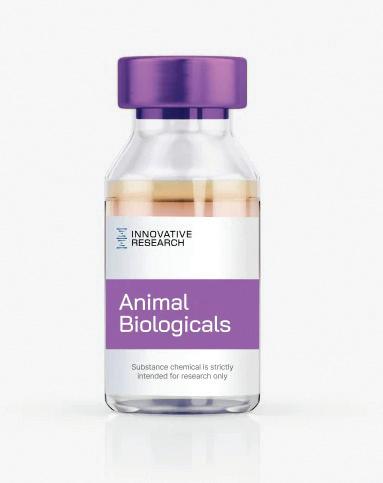
Animal biologicals
“This discovery also advances the scientific field itself, demonstrating a way to overcome the longstanding trade-off between high sensitivity and fast response in molecular testing,” Greene said. On the significance of the sensor, CSIRO’s Dr Mingyu Han, research co-leader, said other sensors had detected Vancomycin but this was 100 million times more sensitive, making it the first practical, real-time SERS sensor capable of working inside a fluid like blood.
Innovative Research offers a comprehensive selection of biological products sourced from various animal species. Their range includes whole blood, plasma, serum and blood cells, as well as animal tissues and organs. Additionally, they supply highly purified proteins, polyclonal antibodies in different purifications and monoclonal antibodies, along with animal lysates to support diverse research needs.
Innovative Research’s Animal Biologicals are distributed in Australia and New Zealand by Sapphire Bioscience. Sapphire Bioscience www.sapphirebioscience.com
Dr Wren Greene.
La Trobe University.
Aussie biotech to manufacture mRNA paediatric brain cancer vaccines
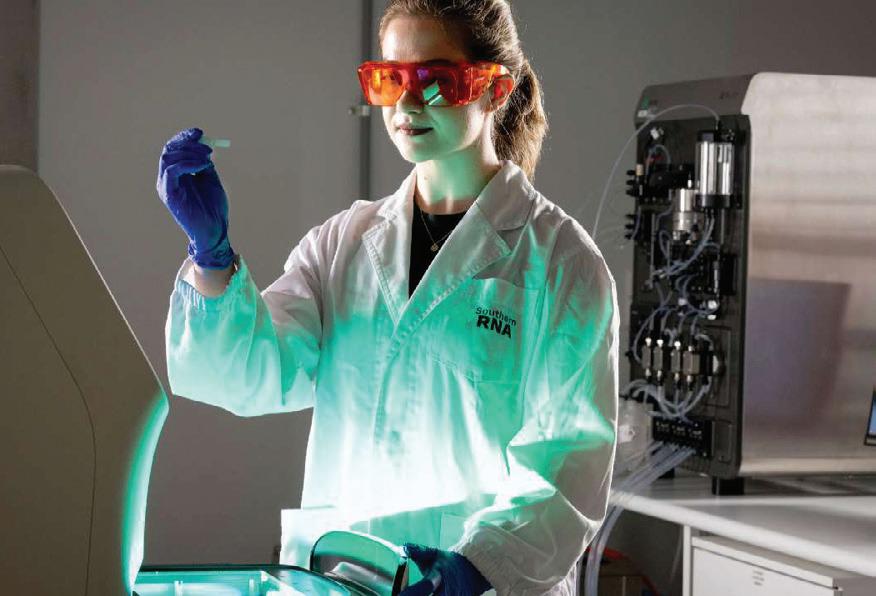
Southern RNA — a Queensland-based biotechnology company — is manufacturing personalised mRNA paediatric brain cancer vaccines for a clinical trial. The PaedNEO-VAX trial marks the first multi-site paediatric study to test individualised mRNA vaccines designed specifically for each child’s cancer and is co-led by The University of Queensland and the South Australian Health and Medical Research Institute (SAHMRI).
The trial is open to children and adolescents with relapsed or refractory high-grade brain tumours, including high-grade glioma, diffuse midline glioma, medulloblastoma and ependymoma.
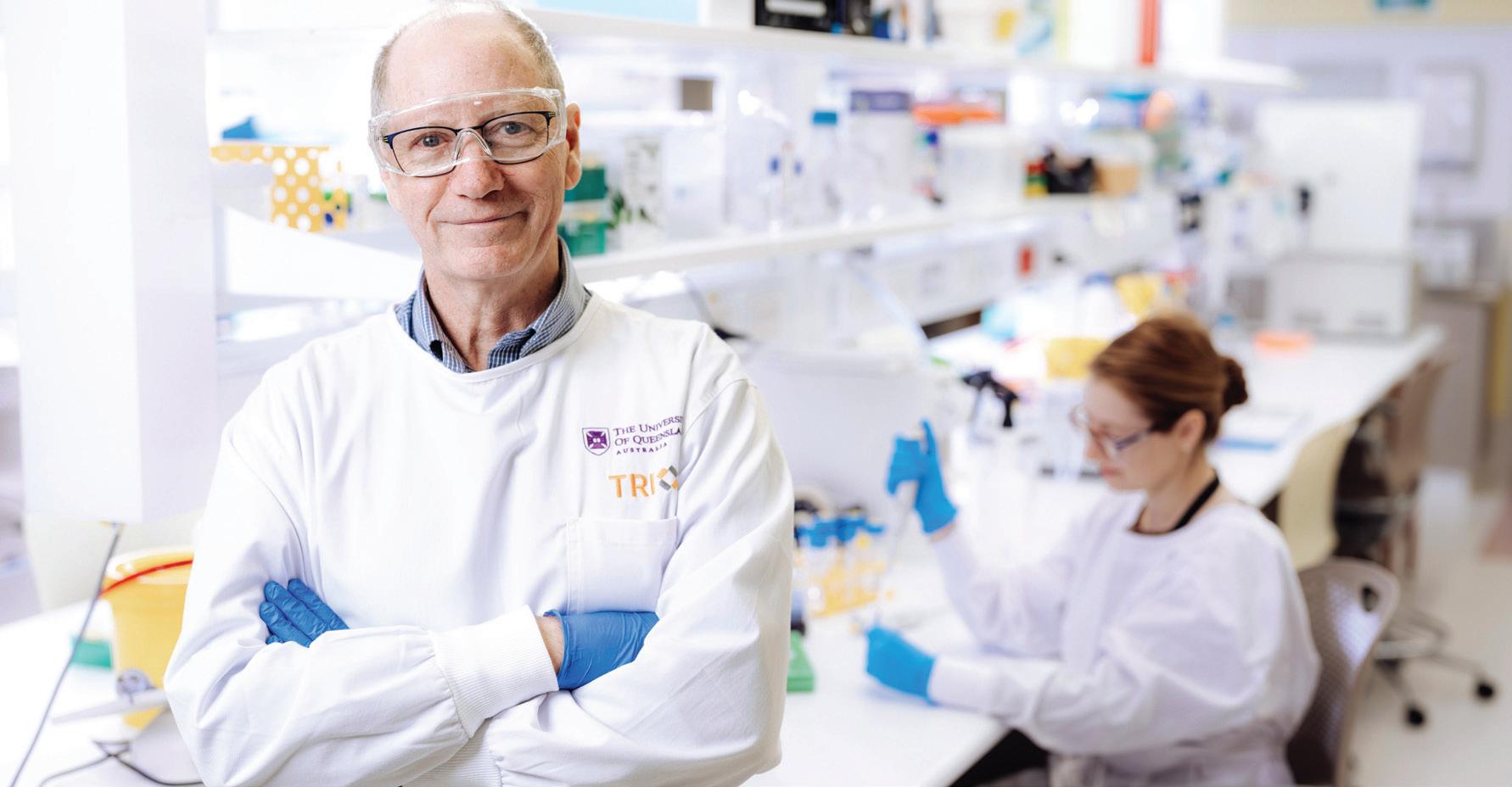
Scientific lead Professor Brandon Wainwright AM from The University of Queensland’s Frazer Institute said personalised mRNA cancer vaccines had shown promising results in adults with rare and hardto-treat cancers, including pancreatic cancer and melanoma.
“Phase I of the trial will help us determine the safest and most effective dose,” Wainwright said. “Phase II will assess how well the treatment works including whether it slows cancer progression and improves overall survival and quality of life for participating children and their families.”
Tumour-specific targets will be identified for each child using genome sequencing and advanced data analysis, with customised mRNA vaccines then manufactured locally in Australia by Southern RNA — with an expected turnaround of approximately 10 weeks from enrolment to dosing.
“In 2022, we created Southern RNA to be ready for the next pandemic,” said Chris Peck, Southern RNA’s Founder and Managing Director. Peck added that it became clear in early 2023 that messenger RNA (mRNA) “had such amazing potential for other treatments beyond COVID”, particularly for personalised treatment for unmet medical needs such as cancer.
With commencement in March across eight paediatric hospitals in Queensland, South Australia, New South Wales, Victoria and Western Australia, the trial is sponsored by the Australia & New Zealand Children’s Haematology and Oncology Group (ANZCHOG). It is funded by Canadian Organisation Providence therapeutics in combination with the Australian Government and a host of philanthropic donors.
Southern RNA Pty Ltd southernrna.com.au
Wainwright explains the PaedNEO-VAX trial
(Credit: UQ)
Southern RNA.
Professor Brandon Wainwright.
The University of Queensland.
Revealed — a common bacterium’s role in stubborn wound infections
A team of international researchers have uncovered how a common bacterium, Enterococcus faecalis, can suppress the body’s early warning system in wounds.
Chronic wound infections are notoriously difficult to manage as some bacteria can actively interfere with the body’s immune defences. Now, a team of international researchers have uncovered how a common bacterium, Enterococcus faecalis (E. faecalis), can suppress the body’s early warning system in wounds — causing infections to persist and create an environment that allows other bacteria to take hold. E. faecalis is particularly resilient in wounds, being able to survive inside tissues, alter the wound environment and weaken immune signals at the injury site.
This creates conditions where other microbes can easily establish themselves, resulting in multi-species infections that are complex and slow to resolve. Diabetic foot ulcers and postsurgical infections are examples of such persistent wounds, which can sometimes lead to serious complications such as amputations and place a heavy burden on patients and healthcare systems. What the researchers found is that E. faecalis releases lactic acid to acidify its surroundings and suppresses the immune-cell signal needed to start a proper response to infection.
E. faecalis releases lactic acid to acidify its surroundings and suppresses the immune-cell signal needed to start a proper response to infection.
The bacterium can cause persistent and hard-to-treat wound infections by silencing the body’s defences. The team consisted of researchers from Singapore-MIT Alliance for Research & Technology’s (SMART) Antimicrobial Resistance (AMR) interdisciplinary research group alongside collaborators from SCELSE, at Nanyang Technological University (NTU Singapore), MIT (Massachusetts Institute of Technology) and University of Geneva, who published their findings open access (doi.org/10.1016/j.chom.2026.01.002) in Cell Host & Microbe.
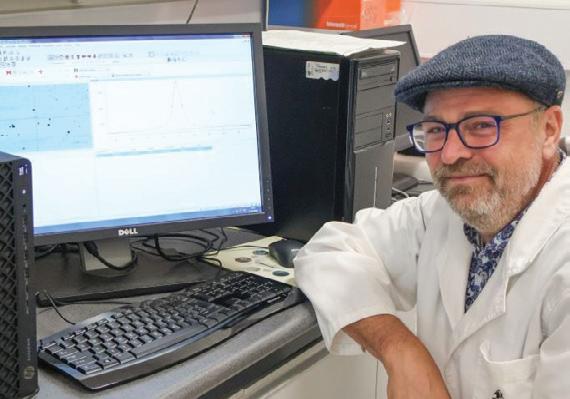
“Chronic wound infections often fail not because antibiotics are powerless, but because the immune system has effectively been ‘switched off’ at the infection site. We found that E. faecalis floods the wound with lactic acid, lowering pH and muting the NF-κB alarm inside macrophages — the very cells that should be calling for help. By pinpointing how acidity rewires immune signalling, we now have clear targets to reactivate
the immune response,” said Dr Ronni da Silva, Research Scientist at SMART AMR, SCELSE-NTU Visiting Researcher and first author of the paper.
“This discovery strengthens our understanding of host-pathogen interactions and offers new directions for developing treatments and wound care that target the bacteria’s immunosuppressive strategies,” said Prof Kimberly Kline, Principal Investigator at SMART AMR, SCELSE-NTU Visiting Academic, Professor at UNIGE and corresponding author of the paper. “By revealing how the immune response is shut down, this research may help improve infection management and support better recovery outcomes for patients, especially those with chronic wounds or weakened immunity.”
da Silva and Kline explain the findings
(Credit: SCELSE)
Whisper-quiet precision for modern analytical devices
Today’s biotechnology and diagnostics equipment needs to balance the requirements of precision engineering, regulatory compliance, automation, reliability and usability. Laboratory instruments used in biotechnology and pathology labs must deliver accurate and repeatable results while operating reliably in demanding clinical environments — all while keeping costs manageable and supporting evolving diagnostic technologies.
In addition, the field of biotechnology is evolving rapidly, with new diagnostic techniques emerging regularly. Companies developing analytical instruments need to support emerging advancements in staining techniques, molecular diagnostics and digital pathology workflows; ensuring that instrument platforms remain adaptable and future-ready is an ongoing challenge.
Such instruments need to control very small volumes of liquids or gases with extreme accuracy, and even tiny deviations can affect measurement results or calibration accuracy. At the same time there is a major trend in laboratory equipment towards more compact and portable instruments, so internal components need to deliver increasingly high performance while occupying minimal space.
There is also a drive towards creating better work environments for laboratory workers.
Traditional solenoid valves found in laboratory equipment to control fluids can generate noticeable clicking sounds during switching. In analytical instruments that may contain dozens of valves operating simultaneously, this can create significant acoustic noise, so valves that generate minimal sound are highly desirable, and given that analytical instruments often run thousands or even millions of cycles over their lifetime, it is also important to minimise any downtime due to component failure that can disrupt laboratory operations and increase maintenance costs.
Whisper-quiet compact valves
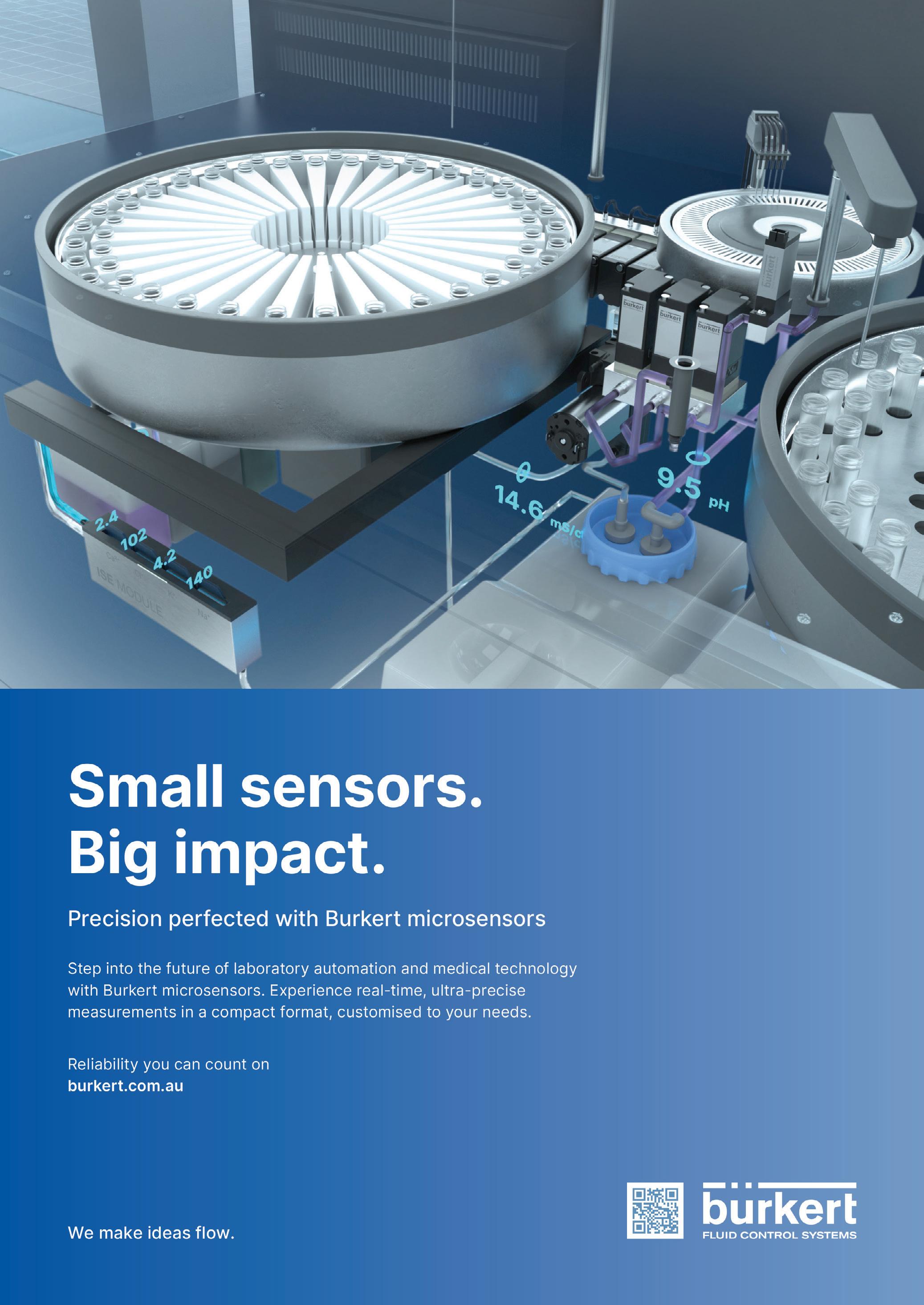
Bürkert’s Whisper Valves are designed to meet these demands, providing miniature, spacesaving solutions that deliver reliable, whisperquite control for the most critical fluid control applications.
Whisper Valves are compact electromagnetic micro-valves designed for highly precise dosing and fluid control. Their name comes from their extremely low switching noise, achieved through Bürkert’s proprietary actuator technology that offers a switching noise of less than 20 dB(A) in some models. Millisecondslevel switching enables precise micro-dosing and rapid fluid control in a compact footprint, with valves measuring only between 7 mm and 18 mm wide. Chemical resistance and
media separation also make them suitable for aggressive chemicals or sterile processes, while still offering a long service life, often exceeding 10 million switching cycles.
Sensor free, self-diagnosing technology
Developed specifically for its Whisper Valves, Bürkert’s ValveInsight diagnostic and monitoring technology allows the valves to not only switch fluids on and off, but to also monitor for changes without external sensors, and provide process diagnostics, further simplifying integration, improving reliability and allowing for the design of more compact instruments.
By analysing the electrical current profile when the valve is activated through the precise measurement the inrush current of the electrodynamic drive, internal algorithms can analyse this signal to determine whether the valve switched correctly, if switching behaviour is deviating from normal operation, and early signs of wear or malfunction, which can then be passed to the higher-level control system.
Ready to elevate your instrument design?
With Burkert Whisper Valves, Analytical instrument makers gain precision, reliability, and a partnership focused on success. Discover how Bürkert can help deliver breakthrough laboratory and medical devices — visit burkert.com.au or contact the team to discuss your project.
Burkert Fluid Control Systems www.burkert.com.au
5 scenarios for the future of Antarctic life
A team of Australian and international researchers have predicted five possible outcomes for how Antarctic life will fare under future conditions.
Antarctica has 2100 known terrestrial plants and animals, living mostly in its icefree regions, which cover less than 1% of the continent. The extreme cold, dry, isolated and windy conditions that Antarctic species — such as penguins, moss and microbes — are adapted to have made the continent difficult for scientists to access — limiting the data available to forecast future change.
This is according to Monash University researcher Professor Melodie McGeoch from Securing Antarctica’s Environmental Future (SAEF), who has led research published in Nature Biodiversity Reviews (doi.org/10.1038/s44358-02500113-1) that looks into the future, considering five ecological processes and encroaching changes that prompt thoughts of “what if”. Such thoughts include climate change, disease (eg, H5N1 bird flu), invasive species, land-use changes (eg, building research stations) and pollution.
“Rather than saying we need more data, we
Less than 1% percent of Antarctica is ice-free.
used what we already know about the five core ecological processes that shape biodiversity and applied these ideas to the Antarctic context,” McGeoch explained. “This helped us develop five possible outcomes for how life across the continent is likely to respond to climate change and other environmental pressures.”
The team’s five ecological processes were abiotic filtering (physical conditions which impact survival, such as water availability), dispersal (ability to reach new habitats), adaptation (ability to evolve), biotic interaction (interactions between lifeforms, such as predator–prey relationships) and stochasticity (loss of life due to unpredictable events, such as heatwaves).
The five scenarios for future Antarctic life the team came up with were:
1. Constrained — where cold, dry, isolated and windy conditions will continue to limit Antarctic life;
2. Dynamic — where species’ ability to spread to new ice-free areas and the ability of invasive species to arrive and establish will be limited by isolation;
3. Diversifying — where new species arrivals will enrich life on the continent and its surrounding islands, and Antarctic species will adapt to new conditions, such as warmer temperatures and larger ice-free areas;
4. Interactive — where through a release from physical constraints such as cold and dry conditions, diversity and frequency of species interactions will increase as will complexity of Antarctic biodiversity; and
5. Disordered — where local losses of many species and a decline in biodiversity will be caused by extreme events such as flooding and heatwaves.
“Antarctica will continue to be cold, dry, windy and isolated, and this will slow the response of life on the continent to otherwise changing conditions,” McGeoch said. “At the same time, how species adapt to change, the unpredictable nature of extreme events, and the complexity of species interactions mean that the response of Antarctic life will vary across the region.”
McGeoch added: “Looking for evidence of these emerging scenarios and predicting where in the region each is most likely will fast-track our understanding of its future.”
To help clarify the picture of the future for Antarctic life, knowledge gaps are identified by the team, with recommendations for priority further research and monitoring. These include better understanding of how far and how often species move across the region, their capacity to adapt, where new species are most likely to arrive, and how communities are responding to extreme events.
API crystallisation platform
Crystallisation is a critical step in the manufacture of active pharmaceutical ingredients (APIs). The size, shape and polymorphic form of API crystals directly influence drug properties such as solubility, bioavailability and stability. However, achieving consistent crystallisation can be challenging. Traditional methods like batch cooling or anti-solvent addition often struggle to deliver tight control over nucleation, particle size distribution, morphology and polymorphism — leading to inconsistent material, broad size distributions and significant post-processing requirements such as milling or additional purification steps. While these approaches remain widely used, they are often difficult to reproduce and scale reliably, creating bottlenecks in development and manufacture.
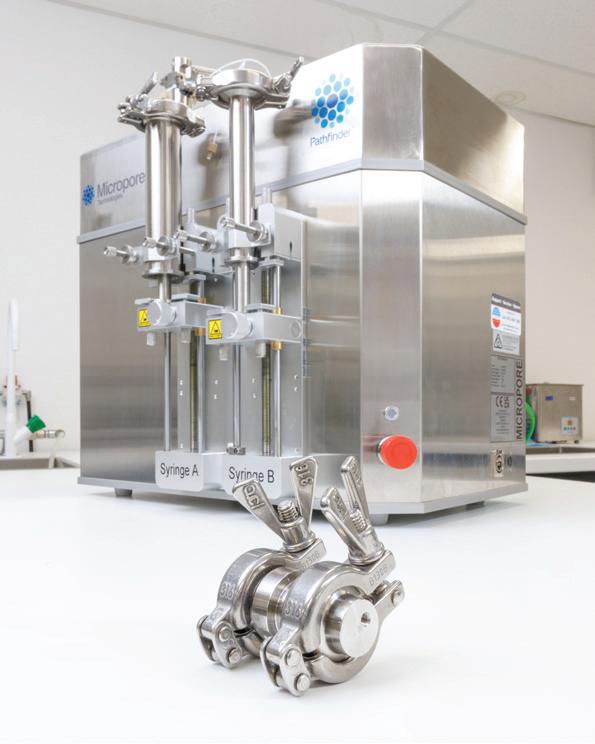
Micropore Technologies aims to address these challenges through its patented Advanced Crossflow (AXF) platform, which uses precision-engineered membranes to control mixing conditions during particle formation. This membrane -based approach has been widely explored for API crystallisation through both reactive and antisolvent crystallisation methods. The platform is designed to enable control over crystal size, morphology and polymorphic form, helping researchers tailor APIs for improved processability and bioavailability. Low shear conditions also protect sensitive materials during processing.
Key benefits include repeatable and reproducible control of crystal size and morphology, the ability to selectively produce desirable API forms or amorphous material and the capability to generate API nanocrystals to enhance dissolution and bioavailability. The continuous system is engineered to be scalable from early research and development through pilot and industrial production, support aseptic processing with in-line process analytical technology and reduce downstream processing of API crystals by delivering precise control over crystal size distribution.
ATA Scientific Pty Ltd www.atascientific.com.au
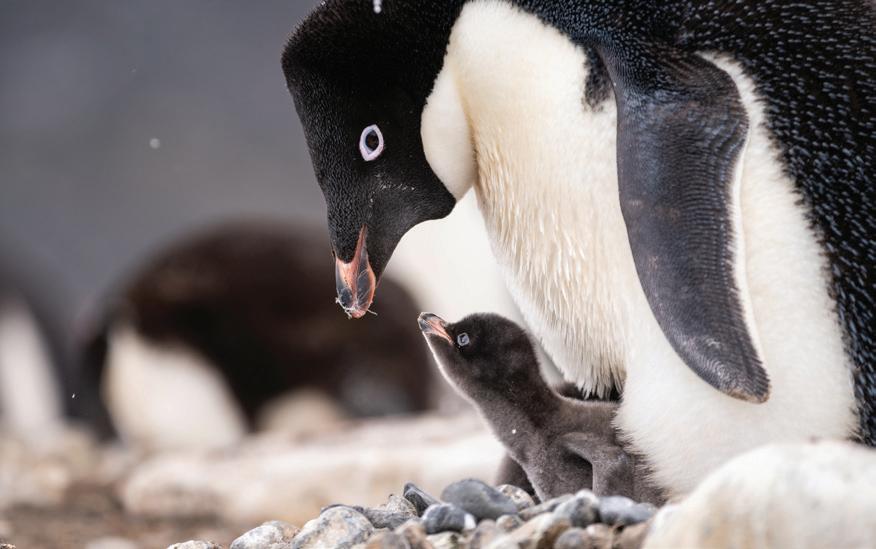
Adelie penguin and chick.
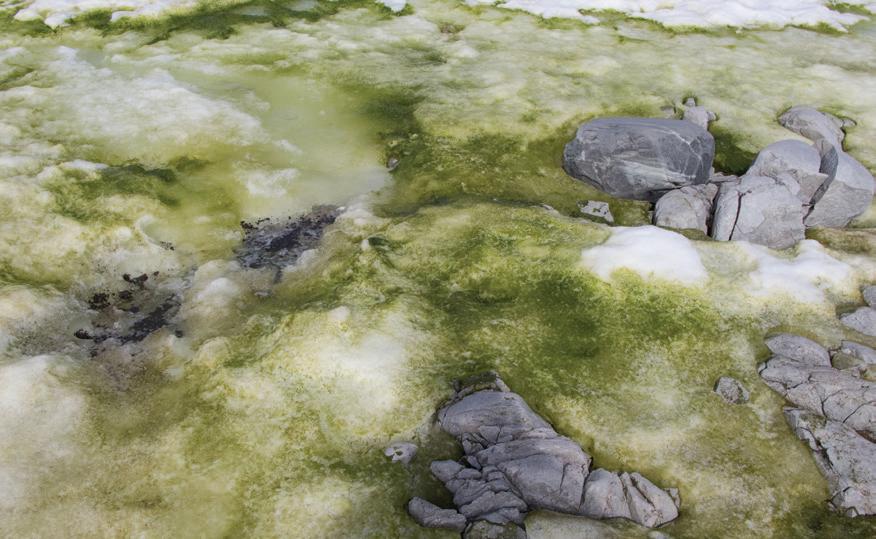
Antarctic snow algae.
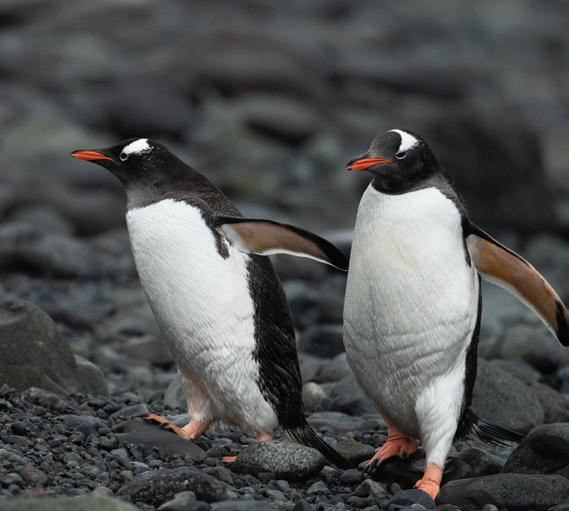
Gentoo penguins.
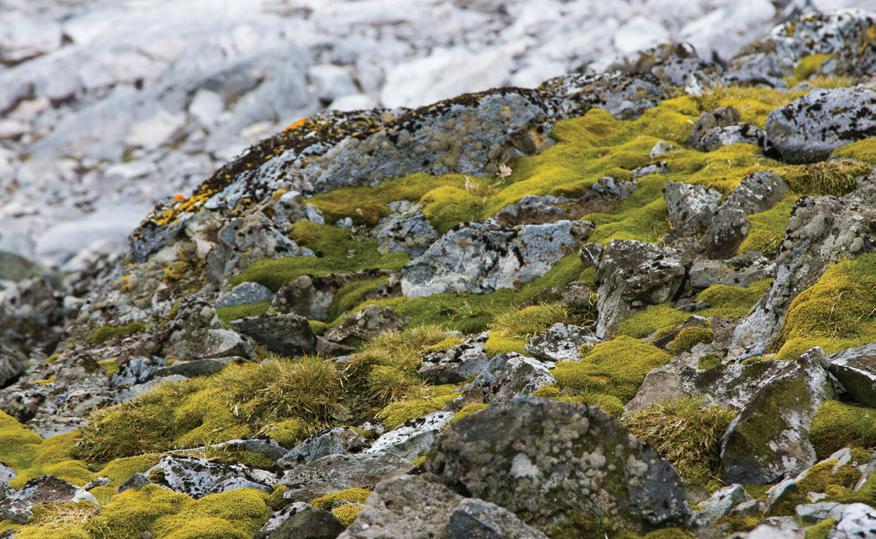
Antarctic moss and Antarctic hairgrass.
Steven Chown.
Madison Farrant.
Steven Chown.
Madison Farrant.
From hospitals into homes — could tiny biosensors transform medical sampling?
Swedish researchers have developed diminutive laser technology with the potential to move certain types of medical sampling out of hospitals into patients’ homes.
Laser technology that could lead to tiny, cost-effective biosensors has been developed by a team of researchers at Chalmers University of Technology in Sweden. Integrating lasers and optics together on a centimetresized chip, the researchers believe the sensors could free up hospital beds and reduce visits to clinics by moving testing from hospitals to patients’ homes.
Researchers can gain valuable insights by studying how various biomolecules interact with each other, for example antibodies in the immune system and xenobiotic antigens, leading to new medicines and vaccines — or assess whether a sample contains signs of infection. Based on a technique called surface-plasmon resonance, optical biosensors are a tool used for studying these types of interactions.
The sensors direct light onto a gold surface and measure minuscule changes in the light’s reflection when biomolecules are placed on the surface — the laser technology created by the Swedish researchers making it possible, they argue, to create such biosensors in a miniature format.
Opening the door to making optical sensing technology portable and applicable outside the laboratory environment, the laser source and the necessary optics are directly integrated onto a semiconductor chip, allowing for significantly more compact sensors. A study about the project was published open access in ACS Sensors (doi.org/10.1021/acssensors.5c01997).
“With this technology, we want to create an instrument that allows healthcare professionals to take certain samples in the patient’s home,” said the lead author of the study, Erik Strandberg — a doctoral candidate in photonics at Chalmers. “For example, we’re currently evaluating how well our sensor can perform a C-reactive protein (CRP) test.
“Because this technology is very general and can detect a wide range of biomolecular interactions, we see many potential applications for a wide variety of tests. This could allow patients to be discharged from hospital sooner after an operation — thereby freeing up hospital beds — and reduce the number of healthcare visits for sampling,” Strandberg said.
A precise laser beam must strike the gold surface at a steep angle to be able to monitor the interaction of biomolecules using an optical sensor; with extant solutions, the researchers said, requiring bulky optical components, such as prisms, which also make them time-consuming to install and align.
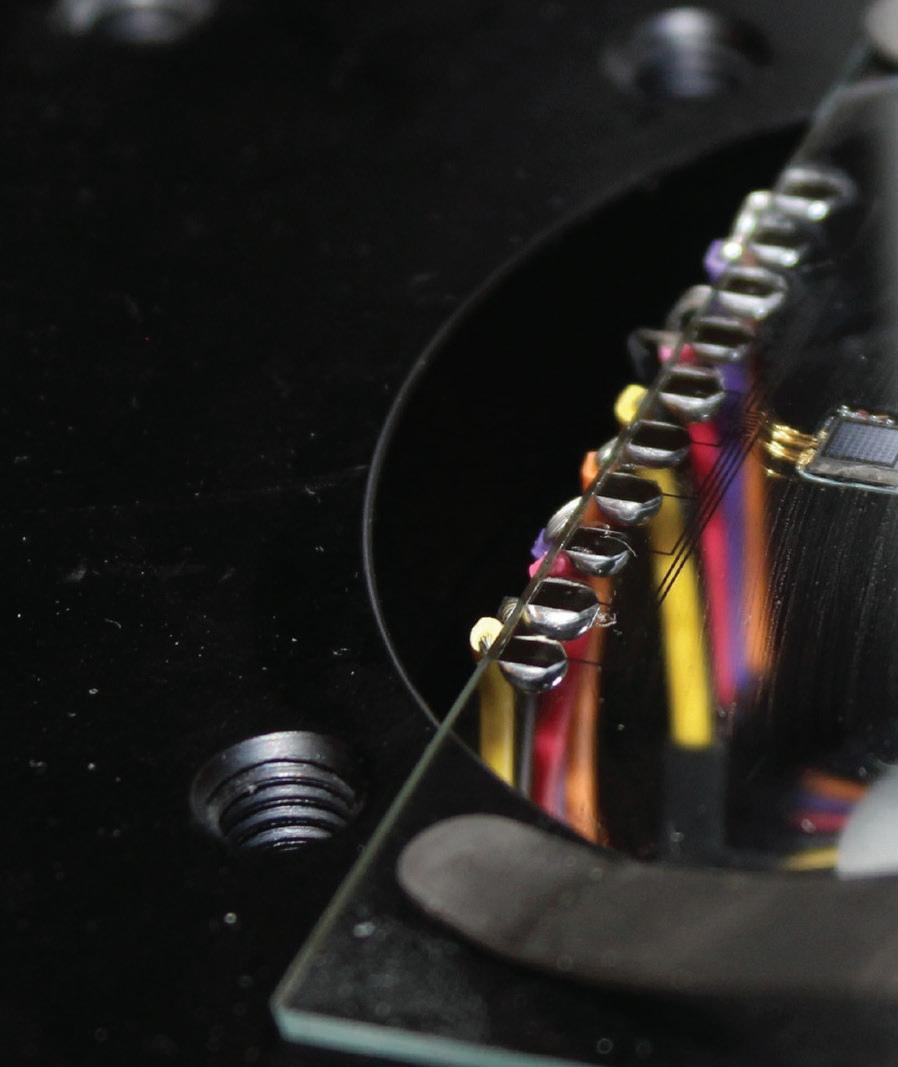
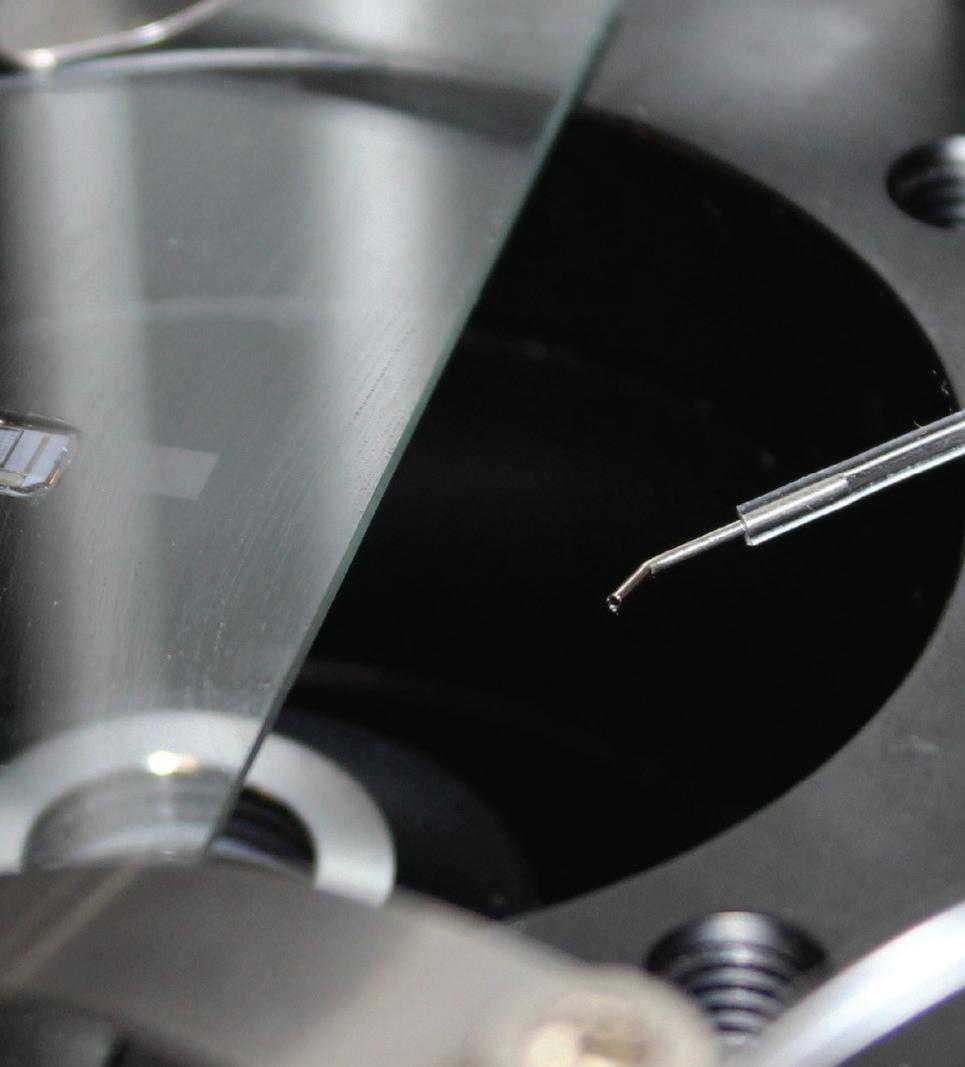
The sensor of the Swedish team consists of a one-centimetre chip fitted with hundreds of microscopic lasers, where the controlling optics to form exactly the right beam are integrated directly into the chip. This allows for a much smaller and lighter light source, the researchers said, which enables the creation of a compact sensor so small that it fits in the palm of your hand.
“By successfully integrating the optics with the laser sources right on the chip, our innovation opens a lot of doors and is a key step towards shrinking the current biotech instruments and creating portable, battery-powered systems,” Strandberg added. “The chips we manufacture are about the size of a thumbtack and contain hundreds of lasers, each measuring 200x250 micrometres — few times thicker than a hair.
“Having both the laser and the optics integrated into the same semiconductor chip also enables cost-effective large-scale production of light sources for this technology,” Strandberg said. Regarding the next steps towards the goal of this research, the team aims to further develop the technology by boosting the sensitivity of the sensor, as well as increasing the number of samples that can be analysed simultaneously.
“So far, we haven’t been able to use all the lasers on our chips to analyse samples, but this field offers great opportunities for further development,”
Above image: A research team at Chalmers University of Technology has developed a new diminutive laser technology that makes it possible to create a miniature biosensor with the laser source and optics integrated onto a one-centimetre semiconductor chip. This enables significantly smaller sensors, paving the way for portable optical technology and for moving certain types of medical sampling from hospitals to the patients’ homes.
said senior researcher in the study Hana Jungová — a researcher in nano and biophysics at Chalmers. “If we succeed, we believe the sensor will eventually make it possible to analyse significantly more samples at once than current technologies allow.
“But first, we plan to create a prototype of a portable sensor that can be used without extensive training. The ultimate goal is for hospitals and clinics to be able to use the sensor outside the lab.”
HEPA filters
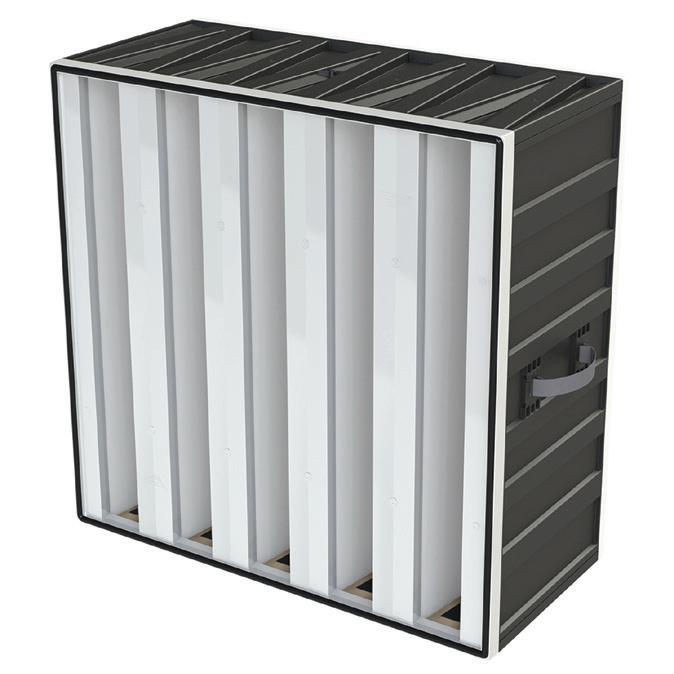
The Absolute V, VEXL and VEXXL HEPA filters are designed to be robust, lightweight solutions engineered for both supply and exhaust air systems where very high airflow and minimal pressure drop are essential. The Absolute VEXL and VEXXL stand out with a modern steel frame and V-shaped pleat pack, designed to offer the industry’s highest capacity and stability while achieving the lowest pressure drop and weight.
Capable of handling airflows up to 3.7 m/s, they deliver 23% energy savings over the market average and are claimed to be the lightest V-bank steel HEPA filters available. Each filter is individually scan-tested to guarantee 100% leak-free performance, and a strong, airtight frame is intended to ensure secure and reliable installation. Designed for Bag-in Bag-out safe change, they aim to provide the most convenient handling and maintenance.
Suitable for demanding pharmaceutical, healthcare, and food and beverage environments, these filters integrate seamlessly with air-handling units, HEPA housings and isolators. Their advanced design is engineered to protect against a broad spectrum of airborne contaminants while maintaining excellent indoor air quality. With a construction 41% lighter than the previous range and a 21% longer filter life, the Absolute V family is designed to simplify operations and reduce facility downtime. Absolute V is ProSafe certified and fully compliant with EC1935:2004, VDI6022 and ISO 846 standards. Camfil Australia Pty Ltd www.camfil.com.au
Illustration credit: Erik Strandberg/Chalmers University of Technology.
Hana Jungová, Chalmers University of Technology.
Chalmers University of Technology.
Chalmers University of Technology / Anna-Lena Lundqvist.
Erik Strandberg, Chalmers University of Technology.
How a tiny worm changed a decade of scientific thinking
A tiny roundworm has helped Australian scientists rethink the way sensory nerve connections remain strong throughout a lifetime.
With the help of a tiny roundworm, scientists at The University of Queensland (UQ) have uncovered miniscule structures in skin tissue that may protect the body’s ability to feel temperature, touch and pain; leading to research that, the university says, changes a decade of scientific thinking on the way sensory nerve connections remain strong throughout a lifetime.
The discovery of an external protective ‘scaffold’ in the skin that surrounds sensory nerves has, according to Dr Sean Coakley from UQ’s School of Biomedical Sciences, given a glimpse of how the skin and nervous system work together to protect the cable-like structures which receive and transmit messages back to the brain.
“If these axons are damaged, signals that transmit sensory information like touch, temperature and pain are disrupted with potentially devastating impact, as we see in both
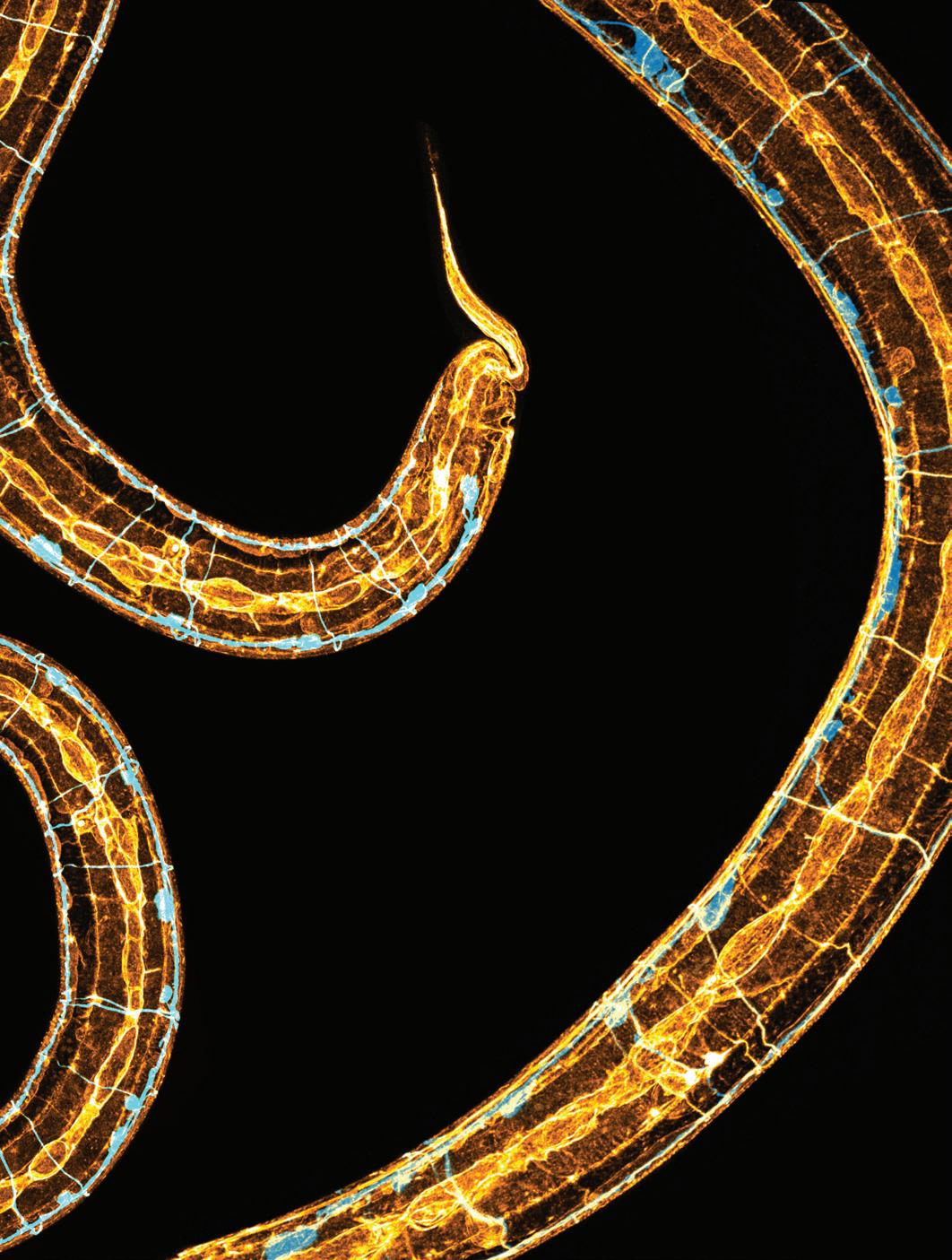
Microscopy image reveals the internal scaffolding structure in the skin (gold) and neurons (cyan) of C. elegans roundworms.
traumatic injuries and neurodegenerative diseases,” Coakley said. “Axons are very long and thin, and in humans they can reach up to a metre in length but they’re only one-fiftieth of the width of a hair.
“This should make them extremely vulnerable to damage, yet they withstand a lifetime of constant strain as our body moves, flexes and absorbs impacts in everyday tasks,” Coakley added. “Understanding how they are protected is important for future therapies to treat nervoussystem injuries and disease.”
Humans and other species have sensory axons embedded in the skin, the body’s largest organ, like in the roundworm C. elegans. This worm is tiny — only about one millimetre long — and the research team was able to reveal an internal scaffolding structure in the skin around the axons with super resolution microscopy.
“This scaffold appears to shield the axons in a similar way to a plaster cast protecting a broken arm,” Professor Massimo Hilliard from UQ’s Queensland Brain Institute said, explaining that the scaffold of nano-scale trusses and beams was
made from protein molecules known as spectrins. “Until now, we thought that axons were robust because they had an internal scaffold that made them elastic and able to stretch when needed.
“Now, we think that this is not enough,” Hilliard added. “The external scaffold present in the skin that we have discovered appears to be critically important for maintaining the integrity of these tiny underlying cables.”
According to Dr Igor Bonacossa Pereira from UQ’s Institute for Molecular Bioscience, this knowledge may inform and re-direct existing and new therapies aimed at protecting axonal structure and function.
“Focusing on the tissue surrounding the axon might uncover new ways of treating and preventing injury and disease,” Pereira said. “All animals have spectrins, which suggests these molecules are a key building block and will now be the subject of significant further study.”
This research was published open access (doi. org/10.1126/sciadv.adz4762) in Science Advances and features on the journal’s cover.
The University of Queensland.
Researchers have developed CAR-T cells — ie, genetically modified immune cells manufactured in the laboratory — that are capable of destroying glioblastoma cells.
Glioblastoma is one of the most aggressive types of brain cancer, with a five-year survival rate of less than 5% and all available treatments proving disappointing. Now, a team from the University of Geneva (UNIGE) and the Geneva University Hospital (HUG) has developed CAR-T cells — ie, genetically modified immune cells manufactured in the laboratory — that are capable of destroying glioblastoma cells, as detailed in the Journal for ImmunoTherapy of Cancer
Glioblastoma presents as a mass in the brain, consisting of tumour cells but also other types of cells, as is the case in most cancers. “However, glioblastoma is unique in that it contains very few T cells — the immune cells that are able to recognise cancer cells and destroy them,” said Valérie Dutoit, a researcher at the UNIGE Faculty of Medicine.
“This is why glioblastoma, unlike melanoma or certain lung cancers, for example, does not respond to standard immunotherapies. Our approach is therefore to provide the patient with the missing T cells by generating them in the laboratory.”
The production of CAR-T cells involves taking T cells from the blood of the patient, modifying them in the laboratory to enable them to identify and destroy tumour cells, and then re-injecting them. As explained by Denis Migliorini, a professor in the UNIGE Faculty of Medicine and Head of the
Customised immune cells used to fight brain cancer
Neuro-oncology Unit at the HUG, “This approach is based on identifying tumour-specific proteins that T cells can target without affecting healthy cells — a task that is particularly complex in the case of glioblastoma, which is characterised by a high cellular heterogeneity.”
Migliorini continued: “In a previous study, we identified an important target, the PTPRZ1 marker, which is present on the surface of certain tumour cells. However, attacking glioblastoma on a single target is not enough to avoid the risk of relapse.”
The team is now strengthening its arsenal with a new target associated with glioblastoma: the Tenascin-C (TNC) protein, produced and released into the tumour environment. It constitutes the extracellular matrix — a kind of jelly in which tumour cells are immersed. By targeting Tenascin-C, CAR-T cells trigger a series of pro-inflammatory reactions that induce the death of the cells that produce it.
“Furthermore, we have been able to demonstrate that CAR-T cells are capable of locally destroying cancer cells that do not produce Tenascin-C, which amplifies their activity without any risk of deleterious effects on healthy cells,” Migliorini said.
One of the problems encountered by scientists is the emergence of resistance mechanisms, which lead to the rapid exhaustion of CAR-T cells. Dutoit noted, “By identifying three markers of cell exhaustion and counteracting their activity, we were able to significantly prolong the efficacy of CAR-T cells in mice with glioblastoma used as models of the human disease” — with the positive results of this study making it possible to consider a clinical trial.
“Our goal is to generate genetically modified immune cells against several targets at once in the hope of reaching as many cancer cells as possible,” Migliorini said. “It will also involve adjusting CAR-T cells to each patient in order to eradicate as many cells as possible, even when facing tumour heterogeneity.”
Michelle Frazer*
Interoperability is critical: Preparing for the next pandemic now
COVID-19 highlighted the lack of interoperability in our health systems. Here’s how ETL (Extract, Transform, Load) networks could help prepare for the next pandemic.
When the COVID-19 pandemic hit in 2020, a meme stating it was a ‘one in a hundredyear’ pandemic went viral, but in fact, there have been five pandemics in the last 60 years1:
• 1957 — Asian Flu
• 1968 — Hong Kong Flu
• 1981 — AIDS/HIV
• 2009 — Swine Flu
• 2020 — COVID-19
That’s roughly one every 12 years, so it’s not going to be another 100 years before the next pandemic. Infectious disease specialists agree it’s probably not even going to be 12 years, because conditions for pandemics are improving — global warming, deforestation, high-density urbanisation and increasing global travel are allowing disease agents to spread more easily than ever before.
COVID-19 infected more than 780 million people worldwide and caused more than seven million deaths. 2 It highlighted the lack of interoperability in our health systems, with the associated lack of real-time, meaningful data leading to inconsistent decision-making, health inequities, economic disruption and social disorder.
We need to prepare for the next pandemic by unifying our healthcare information systems
so we have timely, accurate data to inform government decisions.
COVID-19 in Australia
Our governments never had a chance to get ahead of COVID-19. The disparate nature of pathology services in Australia, with a mixture of public and private laboratories, using vastly different and disconnected information systems, made the collection and collation of daily test results impossible to achieve in a timely manner.
Testing volumes in Australia increased to a peak of 450,000 a week nationwide,3 putting enormous pressure on laboratory staff to scale their processes to match demand.
Reporting results to Australia’s health authorities was also a nightmare — staff had the mammoth task of manually transcribing and consolidating paper records of results, from different LIMS systems, with different test names, codes and formats, and with the added problem that data was often missing or wrongly transcribed.
It took many days to complete these tasks, meaning the government was always on the back foot in trying to manage the spread of the pandemic.
Across the country, people were saying if only we had health interoperability… But we didn’t — despite the fact this kind of interoperability is available.
Interoperability we can have now Governments around the world have focused on achieving healthcare interoperability by designing, legislating and incentivising organisations to adopt data and communication standards.
The USA implemented the 21st Century Cures Act in 2016,4 which prohibited informationblocking and mandated standardised data sharing.
Here in Australia, the federal government committed $11.1 million from 2023 to 2025 for CSIRO to oversee the development and adoption of national FHIR5 standards for healthcare data exchange. An independent report by Voronoi in 20256 noted the standards developed to date are “fit-for-purpose” but adoption is slow due to the lack of incentives for change.
The UK took a faster approach — a data translation service, that converts disparate data through ETL (Extract, Transform, Load) procedures to facilitate fast data sharing, analysis and decision-making.
ETL means there’s no need to agree to new naming conventions, interoperability or messaging standards, or make significant changes to existing systems.
ETL networks also streamline connectivity by
replacing multiple point to point uni-directional interfaces with a single bi-directional interface to a hub, reducing the complexity of setting up and managing a distributed environment, eliminating manual tasks and freeing up IT staff to focus on more strategic and complex projects.
Implementation is fast because mapping only needs to be done once to the central hub, rather than every partner organisation. New advancements in AI are reducing the mapping process from weeks to mere hours.
Being cloud hosted, ETL services can be easily scaled and are highly secure, with all the security tools and capabilities that AWS, Microsoft Azure and other hosting platforms provide.
ETL services solve the interoperability problem by working with the differences in IT systems, rather than trying to standardise them.
They manage the complexity of interoperability, allowing organisations to continue using the systems they have, while immediately increasing efficiency and fully leveraging their data for analysis and insight generation.
This is especially important during the crisis of a pandemic.
The Optimising Coronavirus Testing Systems (OCTS) project led by Michael Hopkins, University of Sussex, found that high-capacity, responsive Test, Trace and Isolate (TTI)7 systems that enable testing services to be scaled for extremely high volumes, can prevent deaths in a pandemic. This research showed that in an average week during 2020–2022, each additional 5000 COVID tests that were able to be performed, saved one life.8
The UK was fortunate that it had a pathology ETL network established when COVID-19 hit
and NHS X Chief Clinical Information Officer Dr Simon Eccles quickly mandated its use for those laboratories not already using it “to achieve the interoperability required to defend the nation against COVID”.9 Forty-one laboratories were onboarded in just six weeks to give UK authorities real-time access to >95% of results.
That head start on interoperability was crucial to the UK being able to get real-time information on COVID test results it needed, to make timely and informed pandemic decisions.
There’s also a lot of operational benefits that could be realised by taking an ETL approach now — reductions in paper, manual data entry, duplication, transcription errors and patient risk, all of which lead to better resource utilisation, increased throughput, faster turnaround times and improved patient outcomes.
The economic benefits of health information exchange interoperability for Australia were modelled in 2007 with Level 4 interoperability benefits estimated at $2990 million — of which laboratory benefits account for 39%, or $1180 million,10 each and every year post implementation.
Summary
Recent concerns about the Nipah virus11 are a timely reminder that another pandemic is inevitable.
In order to be ready for the next pandemic, we need to prepare now. The quickest, most cost-effective and efficient way to prepare for the next pandemic, and deliver millions of dollars in industry benefits in the meantime, is to set up an ETL network.
*Michelle Frazer is Director APAC at X-Lab Systems.
10. Sprivulis P, Walker J, Johnston D, et al. The economic benefits of health information exchange interoperability for Australia. Aust Health Rev. 2007;31(4):531–539. doi:10.1071/ah070531
Azure Biosystems offers a range of highperformance Western blot imaging systems designed for versatility and precision. Azure Biomolecular Imagers support near-infrared (NIR) fluorescence, visible fluorescence and chemiluminescence, enabling comprehensive documentation and quantitative analysis across a wide range of applications. These include gels, Western blots, slides, tissue samples, small animal models, plants and media plates.
The Azure imaging family is engineered to deliver fast, sensitive, high-resolution detection using 9MP CCD technology, all within a compact, benchtop-friendly design. Models are available across the 200, 280, 300, 400, 500 and 600 series, offering flexible solutions to meet diverse research needs. These multimodal, multichannel systems feature NIR, visible light and UV excitation, allowing detection of a broad range of dyes, including Cy dyes, Alexa dyes, Safe dyes and trihalo compound-based gels.
The Azure Cielo Real-Time PCR System is engineered to generate high-quality qPCR data through advanced optical performance and broad-spectrum detection. It is designed to offer excellent specificity, precision, fast run times and reproducibility. Key applications include gene expression analysis (quantitative and qualitative), miRNA analysis, genetic mapping and fingerprinting, NGS library quantification, pathogen detection and six-channel multiplexing.
The chemiSOLO is a compact, personal chemiluminescent imager designed for highquality quantitative imaging. It is suitable for applications such as chemiluminescent Western blotting, densitometry and visible gel imaging.
The Sapphire Biomolecular Imager features a unique, patent-pending three-detector system combined with laser-based excitation that minimises background noise. This hybrid laser scanner-CCD platform is designed to deliver best-in-class performance across chemiluminescence, visible and NIR fluorescence, and phosphor imaging.
SciTech Pty Ltd www.scitech.com.au
Laboratory balances
Adam Equipment’s Polaris laboratory balances are made up of semi-micro, analytical, precision and top loading models. Developed to make weighing easier and results clearer, models feature innovations not seen before on Adam balances, including a brightly lit weighing chamber, so samples are easier to see; an expansive digital weight display, Adam’s largest-ever on a lab balance; and, for the 5 decimal-place model, technology to divert warm air away from the weighing pan.
Additionally, there are more connectivity options than on previous Adam balances, with RJ45 Ethernet, Bluetooth, USB and RS-232 for connecting to printers, PCs and LIMS software. The Polaris user interface has been developed by Adam’s in-house design and manufacturing team to be easier to use, with more intuitive operation, a more clearly laid-out display and — when in checkweighing mode — colour-changing backlight.
All Polaris models are covered by Adam’s five-year warranty.
Adam Equipment (SE ASIA) Pty Ltd www.adamequipment.com.au
Extraction kit for DNA and RNA
Primerdesign (part of the Novacyt Group) has launched its exsig Mag RapidBead Pro Extraction Kit — a next-generation, magnetic bead-based kit that can be used to extract high-quality DNA and RNA from diverse sample types. The streamlined and adaptable protocol enables efficient nucleic acid purification, helping researchers to move quickly from sample to PCR testing, without compromising on yield and purity.
The kit’s magnetic bead extraction technology has been optimised for simplicity, producing quality extractions with a refined workflow for both manual and automated platforms. The surface-activated magnetic particles are specifically designed to capture nucleic acids with high affinity and, combined with a single wash step, allow efficient removal of impurities present in the sample matrix. The nucleic acid is then eluted and ready for use in downstream real-time PCR applications.
The simple four-step workflow is designed to reduce hands-on time compared to traditional methods, lowering the risk of contamination and providing users with a refined workflow to extract DNA and RNA in less than 20 min. The kit can be used with various matrices, including human samples as well as veterinary, water, food and environmental material. It is also suitable for challenging sample types, including stool and serum, and efficiently isolates genetic material from RNA viruses, as well as both Gram-positive and -negative bacteria.
Available for research use only, the kit comes in two sizes to complement Primerdesign’s genesig qPCR kit range, supporting varying throughput requirements. Together, these provide a complete, end-to-end solution that supports consistent qPCR testing with high sensitivity, helping researchers to have confidence in their results. FB Australia www.fisherbiotec.com
Could this ‘PFAS trap’ remove the
most difficultto-capture variants from water?
Finding their way into fresh water as well as marine environments, perfluoroalkyl and polyfluoroalkyl substances (PFAS) from industrial manufacturing, aviation firefighting foam and consumer products are creating growing concerns about health risks to humans, livestock and wildlife — contaminating ground, surface and drinking water that affects millions of people worldwide.
Now, Flinders University researchers have discovered adsorbents that effectively capture PFAS, including short-chain forms that are especially difficult to remove using existing technologies. Funded by Australian Research Council grants, the study was published open access in Angewandte Chemie International Edition (doi.org/10.1002/ anie.202526027) in February 2026.
“While some long-chain PFAS can be partially removed using existing water treatment
technologies, the capture of short-chain PFAS — which are more mobile in water — remains a major unresolved challenge,” said project leader Dr Witold Bloch from Flinders’ College of Science and Engineering.
“We discovered that a nanosized cage captures short-chain PFAS by forcing them to aggregate favourably inside its cavity. This unusually strong
binding mechanism is different from that of traditional adsorbent materials.”
As part of the study, the team embedded these molecular cages into mesoporous silica — an adsorbent that normally shows no PFAS binding properties. According to first author Caroline Andersson — a Flinders PhD candidate in chemistry — the presence of the embedded nanosized cage enables a broad range of PFAS to be removed from water, including short-chain variants that are notoriously difficult to isolate.
“The most exciting aspect of this project was that we first conducted in-depth studies of how PFAS bind within the cage on the molecular level,” Andersson said. “That allowed us to understand the precise binding behaviour and then use that knowledge to design an effective adsorbent for PFAS removal.”
Through laboratory testing it was shown that the adsorbent material can remove up to 98% of PFAS at environmentally relevant concentrations in model tap water. “The adsorbent also demonstrated reusability, remaining highly effective after at least five cycles of reuse,” Bloch explained.
“These results highlight its potential for integration into water filtration systems for polishing drinking water at the final stage of treatment.” Bloch concluded: “This research represents an important step toward the development of advanced materials capable of tackling one of the world’s most persistent environmental contaminants.”
Facilities used for the study included the MX1 and MX2 beamline at the ANSTO Australian Synchrotron, Australian Cancer Research Foundation detector, Flinders Analytical, Flinders Deepthought and the National Facility of the National Computational Infrastructure, and Microscopy Australia, enabled by NCRIS and the Government of South Australia at Flinders Microscopy and Microanalysis.
Flinders University researchers Caroline Andersson and Dr Witold Bloch with a x70m-fold enlarged 3D printed model of the actual size of the microscopic cage designed to capture and remove PFAS.
Flinders University.
ASID Annual Scientific Meeting 2026 May 27–30, Hobart
The ASID Annual Scientific Meeting (ASM) is the Australasian Society for Infectious Diseases’ flagship event and a leading professional gathering for adult and paediatric ID physicians, clinical microbiologists, public health leaders, One Health, veterinarian and ecology specialists, nurses, scientists, pharmacists, policymakers and researchers across Australasia. Held annually and rotating across Australian and New Zealand cities, the meeting:
• showcases cutting-edge research, clinical innovation and public health strategies in infectious diseases;
• brings together specialists, trainees, researchers and policymakers from across the region and internationally;
• features keynote speakers, abstract presentations, workshops and panel discussions spanning adult and paediatric infectious diseases, antimicrobial resistance, microbiology, One Health, pandemic preparedness and more; and
• provides a platform for multidisciplinary networking, collaboration and continuing professional development. www.asidasm.com.au
Quantum Australia Conference 2026
April 29–30, Adelaide www.qac2026.com/quantum-australia-2026
AusMedtech 2026
May 19–21, Perth www.ausmedtech.com.au
ASM National Meeting 2026 June 15–18, Melbourne www.theasmmeeting.org.au
Mitochondrial Health Summit 2026 June 26, Sydney mitochondrialhealthsummit.com
2026 RACI National Congress July 5–10, Perth www.racicongress.org.au
Accreditation Matters 2026
July 7–8, Melbourne nata.com.au
74th CSANZ Annual Scientific Meeting August 6–9, Sydney www.csanzasm.com
National Science Week 2026 August 15–23, Australia-wide www.scienceweek.net.au
ASCIA 2026
September 1–4, Christchurch, New Zealand ascia2026.com
International Vascular Biology Meeting 2026 September 6–10, Adelaide ivbm2026.com
Science at the Shine Dome 2026 September 15–17, Canberra www.science.org.au/news-and-events/events/ science-shine-dome/science-at-the-shine-dome-2026
AIMS National Scientific Meeting 2026 September 16–18, Perth aimsnsm2026.com
ARPS 2026
September 20–24, Christchurch, New Zealand arpsconference.com.au
ComBio 2026
September 29–October 1, Sydney www.combio.org.au
AusBiotech International Conference 2026 October 20–23, Gold Coast ausbiotechic.com
ACS Conference 2026
October 25–28, Sydney cytometryconference.org.au
Westwick-Farrow Media
A.B.N. 22 152 305 336 www.wfmedia.com.au
Head Office Unit 5, 6-8 Byfield Street, (Locked Bag 2226) North Ryde BC NSW 1670, AUSTRALIA Ph: +61 2 9168 2500
Editor Dr Joseph Brennan, PhD Interim Editor, Lab+Life Scientist LLS@wfmedia.com.au
Publishing Director/MD Janice Williams
Art Director/Production Manager Linda Klobusiak
Circulation Alex Dalland circulation@wfmedia.com.au