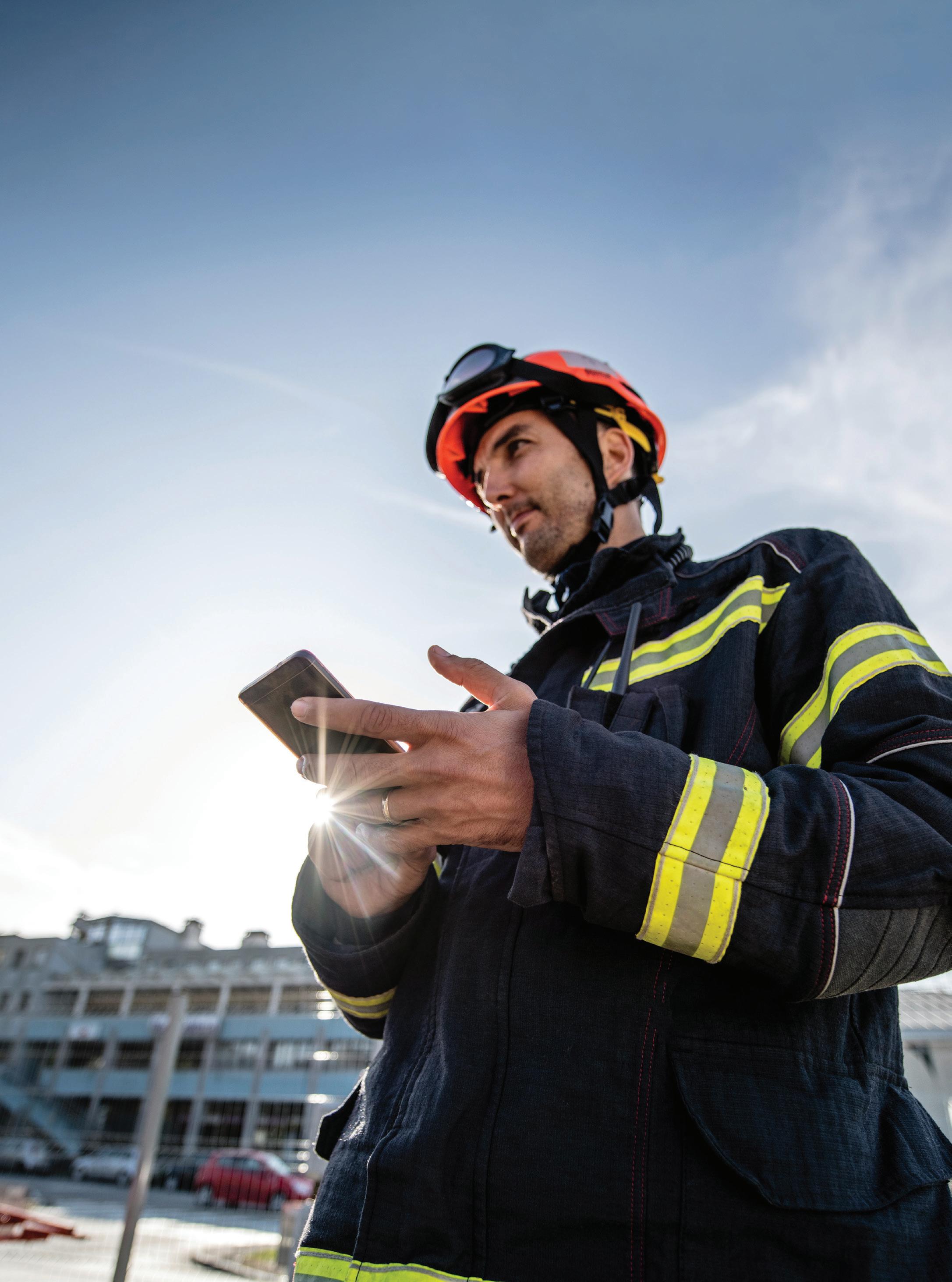
Voice quality is a critical pillar of missioncritical IP networks. Any degradation — whether increased latency, jitter or packet loss — can disrupt real-time coordination and potentially compromise safety and operational effectiveness. In environments such as emergency services, defence communications, transportation control and industrial operations, even brief impairments can lead to miscommunication, delayed response or loss of situational awareness.
Modern IP-based voice systems (VoIP, LTE/5G mission-critical services and radio-over-IP) are particularly sensitive to network conditions. Latency above 150 ms begins to affect conversational dynamics, while jitter introduces timing variability that can cause buffer underruns or overflows, leading to audio distortion. Packet loss — especially in burst patterns — can result in clipped speech or unintelligible gaps, which are not always fully mitigated by packet loss concealment algorithms.
By leveraging Perceptual Objective Listening Quality Analysis (PoLQA), engineers gain an objective, standardised method to assess and continuously validate end-to-end audio performance. Unlike traditional network-centric metrics (eg, MOS estimations based purely on packet statistics), PoLQA models human auditory perception, comparing a reference audio signal with the degraded output after transmission. This produces a highly accurate Mean Opinion Score (MOS-LQO) that reflects actual user experience across a wide range of codecs, bandwidths and noise conditions. Ultimately, the integration of perceptual quality measurement transforms voice assurance from a reactive process into a proactive discipline. By continuously validating acoustic fidelity at the transport layer, organisations can detect subtle degradations early, optimise network performance dynamically, and maintain the reliability required for mission-critical communications where clarity is non-negotiable. Rohde & Schwarz (Australia) Pty Ltd www.rohde-schwarz.com.au
Do you read me?
Mission-critical communications is a sector in transition, and this edition reflects the range of challenges and opportunities that transition presents.
The drive towards mission-critical broadband is one of the defining themes of the critical communications world at the moment. Organisations across public safety, utilities and defence are moving beyond voice-centric networks to demand integrated broadband capable of supporting video, data and real-time situational awareness. The technical challenges involved are not small, not least of which is how to achieve voice communication with the reliability and features of TETRA.
TETRA continues to underpin mission-critical voice communications across the world. Its resilience, group-call functionality and security credentials mean it remains the preferred choice for coordinated operational communications. The industry conversation has largely moved on from whether TETRA will survive the broadband era to how the two technologies will work alongside each other — and on what timeline.
In this issue we also examine the vulnerability of GNSS-dependent positioning that is receiving growing attention. Satellite navigation signals can be disrupted, spoofed or denied in contested environments, and reliance on a single positioning technology is increasingly seen as an unacceptable risk. This edition offers an article covering an alternative and complementary technology available to operators seeking greater resilience in navigation and tracking using inertial navigation.
We also address the communications needs of remote field workers — a subject that deserves more attention than it typically receives. Personnel working in areas of poor or absent coverage face real health and safety risks when things go wrong, and the responsibility on organisations to mitigate those risks is clear.
Finally, make sure you check out our conference preview for Comms Connect New Zealand, which is this year being held for the first time in Wellington on 27–28 May.
Westwick-Farrow Media
A.B.N. 22 152 305 336 www.wfmedia.com.au
Interim Editor: Glenn Johnson cc@wfmedia.com.au
Publishing Director/MD: Janice Williams
Art Director/Production Manager: Linda Klobusiak
Art/Production: Kate Atkinson
As always, more detailed daily news and new products can be found on criticalcomms.com.au, and by subscribing to our weekly email newsletter.
Glenn Johnson, Interim Editor cc@wfmedia.com.au
Circulation: Alex Dalland circulation@wfmedia.com.au
Copy Control: Ashna Mehta copy@wfmedia.com.au
Advertising Sales
Tim Thompson Ph 0421 623 958 tthompson@wfmedia.com.au
Liz Wilson Ph 0403 528 558 lwilson@wfmedia.com.au
Head Office
Unit 5, 6-8 Byfield Street, North Ryde Locked Bag 2226, North Ryde BC NSW 1670 Ph: +61 2 9168 2500
Westwick-Farrow Media is committed to using environmentally responsible print services to produce our publications. This edition is made with a mixture of materials from FSC-certified forests, recycled materials, and/ or FSC-controlled wood. While controlled wood doesn't come from FSC-certified forests, it mitigates the risk of the material originating from unacceptable sources. It is delivered in a totally degradable plastic wrapper.
Calendar
May
NSW Critical Communications Conference and State Networking Dinner 13–14 May 2026
NSW Teachers Federation Conference Centre arcia.org.au/events/criticalcommunications-conference-sydney-2026 Comms Connect New Zealand 2026 27–28 May 2026
Tākina Wellington Convention and Exhibition Centre comms-connect.co.nz
June
2026 EuCNC & 6G Summit 2–5 June 2026
FYCMA, Spain eucnc.eu
Critical Communications World 2026 16–18 June 2026
Excel London, UK critical-communications-world.com
July
Qld Critical Communications Conference and State Networking Dinner 29–30 July 2026
Rydges South Bank Brisbane arcia.org.au/events/criticalcommunications-conferencebrisbane-2026
September
SA Critical Communications Conference and State Networking Dinner 16–17 September 2026
National Wine Centre of Australia arcia.org.au/events/criticalcommunications-conferenceadelaide-2026
October
Comms Connect Melbourne 2026 14–15 October 2026
Melbourne Convention & Exhibition Centre melbourne.comms-connect.com.au
November
PMRExpo 2026 24–26 November 2026
Koelnmesse, Germany www.pmrexpo.com/en
Further event information can be found at criticalcomms.com.au/events
VIDEO TO THE RESCUE
ENHANCING EMERGENCY RESPONSE AND PUBLIC SAFETY OPERATIONS
Mission-critical video is ant integral part of the 3GPP MCX mission-critical communications standards, designed to meet the rigorous demands of public safety applications.
Softil Ltd
Video has emerged as a transformative tool in public safety by offering realtime, on-the-ground intelligence that allows command centres and field teams to make quicker, betterinformed decisions. Unlike traditional data forms like voice and text, video provides an unfiltered view of unfolding events, offering unparalleled context that can reduce misunderstandings and errors in assessment.
The proliferation of smart devices, high-speed mobile broadband and highdefinition cameras — and the ever-decreasing costs of such technologies — means that video is increasingly accessible to public safety agencies, helping first responders to monitor police operations, coordinate rescue operations, or assess crowd density at large public events. Video technology continues to evolve from its origins in fixed surveillance, adapting to the mobility and interoperability requirements of modern emergency response.
Applications of video don’t stop at public safety use cases. Railways, oil rigs, mining, transportation and utilities all have their unique applications for video communications, furthering the case for the widespread adoption of video communications for the benefit of all critical communications users.
Public safety broadband networks
Ubiquitous mobile broadband enables new applications to be deployed in mobile networks, taking advantage of transmission speed, high bandwidth, prioritisation and reliability in multiple verticals, including public safety communications.
The Public Safety Broadband Network (PSBN) concept stems from the need for dedicated, high-resilience networks that can handle the intense demands of public safety operations, especially during emergencies when commercial networks are often overloaded.
Established PSBNs, such as SafeNet in South Korea, FirstNet and Critical Linc in the United States, ESN in the UK and similar initiatives in countries around the world, were designed to offer reliable, secure, dedicated bandwidth that prioritises emergency responder traffic over regular network usage.
PSBN infrastructure is built upon LTE and, increasingly, 5G technology, enabling high-bandwidth applications such as video streaming, real-time location tracking and data sharing. PSBNs usually operate on dedicated frequency spectra, typically below 1 GHz,
to ensure greater range and penetration in urban and rural settings, giving responders communication capabilities even in remote or disaster-stricken areas.
PSBNs provide a controlled environment where data is prioritised, secured and optimised for mission-critical applications, making PSBNs invaluable in improving the responsiveness, coordination, and efficiency of public safety agencies across regions and states. Public Safety Broadband networks are actively developing around the world, and it is important to note that all include MCVideo as one of the core requirements, alongside MCPTT and MCData support.
Video communications in public safety today
Public safety video communications have transformed in recent years thanks to the power of LTE and 5G networks. Modern broadband networks are the primary carriers for video data, especially in urban areas, where they offer the bandwidth and speed necessary for high-definition, lowlatency video streaming. In more remote areas, agencies often rely on satellite and mesh networks to maintain connectivity and enable video communications.
Different video sources serve various roles in public safety today, including fixed surveillance cameras in public areas and facilities; bodyworn cameras providing first-person footage; drone footage offering aerial views; and citizengenerated content. In this complex environment, video feeds need to be aggregated and analysed in real time by command centres, enabling dynamic resource allocation, risk assessment and scenario planning.
What is mission-critical video?
Mission-critical video (MCVideo) is an integral part of 3GPP MCX standards-based missioncritical communications, alongside MCPTT and MCData. MCVideo was specifically designed to address the needs of first responders and other critical communications users, and enables both group calls and private calls.
MCVideo is a type of video service designed explicitly to meet the rigorous demands of public safety applications. Unlike commercial video services, MCVideo prioritises low latency, high quality and secure data transfer
Why MCVideo?
The unique demands of public safety situations require MCVideo’s robust architecture to
handle high-stakes scenarios where video clarity, timing and reliability are crucial. MCVideo enables agencies to visualise active threats, monitor responder safety and coordinate responses effectively. It helps provide situational awareness, allowing command centres to monitor events in real time and make informed decisions based on reliable visual data.
Compared to traditional video solutions, MCVideo offers end-to-end encryption, resilient streaming and dynamic bandwidth allocation, which ensures that video quality remains high and accessible despite potential network strain. MCVideo can also be tailored to work alongside other mission-critical services, such as MCPTT (push-to-talk), enabling a multifaceted approach to managing public safety incidents.
Use cases in public safety video
Bodycams
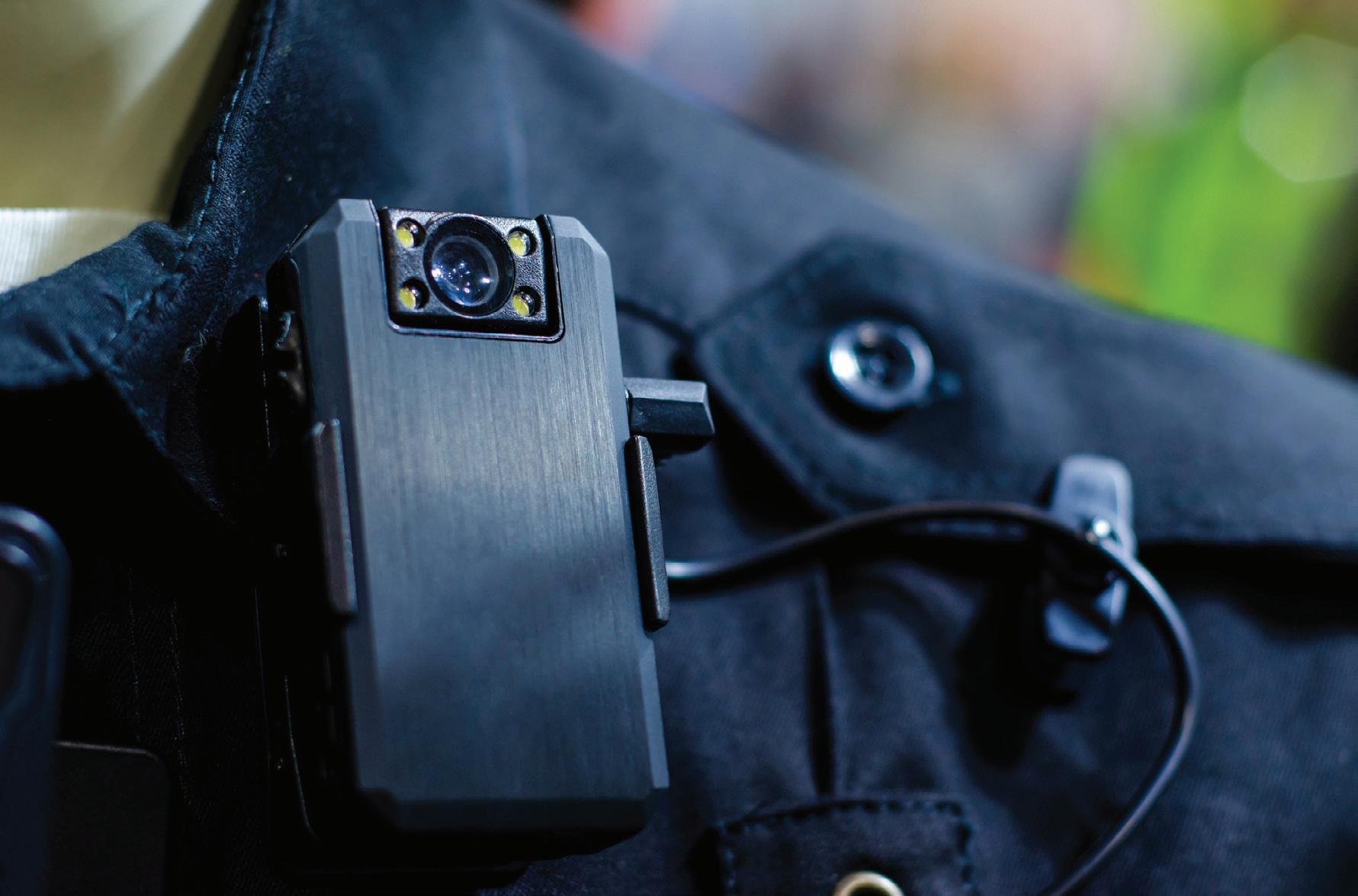
Body-worn cameras are used extensively in public safety, particularly by law enforcement agencies, to capture footage of interactions, document incidents, and provide an unbiased record of events. Privacy and data management are critical challenges, as bodycams generate substantial data volumes, and content must be stored, accessed and secured following legal standards.
Enabled with MCVideo capabilities, bodycam video can be shared live within a group of first responders working on specific tasks, greatly increasing situational awareness and enhancing efficiency of the response for every team member and the group overall.
Drones
Drones provide public safety agencies with aerial surveillance that can reach areas inaccessible or dangerous for personnel. Common applications include search and rescue, monitoring large crowds, assessing damage during natural disasters, and surveilling areas during incidents like fires or hazardous material spills. Drones are effectively already proven in firefighting response, allowing firefighters to have a full operational view of the situation.
Equipping drones with MCVideo capabilities will allow seamless and secure delivery of the video stream to the command-and-control centre where it can be not only shared with the response team but also processed by an AI-equipped analytics engine, improving the efficiency of the response.
Citizen video
911/000 today is largely limited to the voice, and increasingly, mobile text message interactions with emergency response centres. At the same time, the majority of emergency calls today are made using mobile smartphones, typically equipped with advanced video and photo capabilities.
Integrating MCVideo with emergency call centres and dispatch operations would represent a leap in emergency response capabilities, allowing citizens to share photos, videos and other digital media directly with emergency dispatchers. Implementing this type of citizen-generated content requires efficient data workflows to ensure that video and other media are received, processed and utilised while protecting privacy.
Mission-critical video communication for first responders
MCVideo allows first responders to make video calls to groups or individuals, stream video from drones or security cameras and share video content securely. These capabilities offer numerous benefits to first responders such as enhanced situational awareness through realtime video sharing, improved decision-making with visual information from the field, ability to collaborate visually across agencies during emergencies, and secure and prioritised video
communications on dedicated public safety broadband networks.
Railways
Railways use video for continuous monitoring of station platforms, on-board trains, and along the tracks to identify safety hazards, manage incidents and comply with safety regulations. Video in rail systems supports quick detection and response to emergencies, allowing staff to monitor train activity, passenger movements and operational conditions in real time. As an added benefit, video footage is also used for post-incident analysis, contributing to improved operational safety and efficiency.
Important considerations for delivering high-quality real-time video over mobile broadband
Real-time video faces several technical challenges in the public safety context, including:
• Bandwidth and latency constraints: Video streams require significant bandwidth, particularly high-definition or multi-camera set-ups.
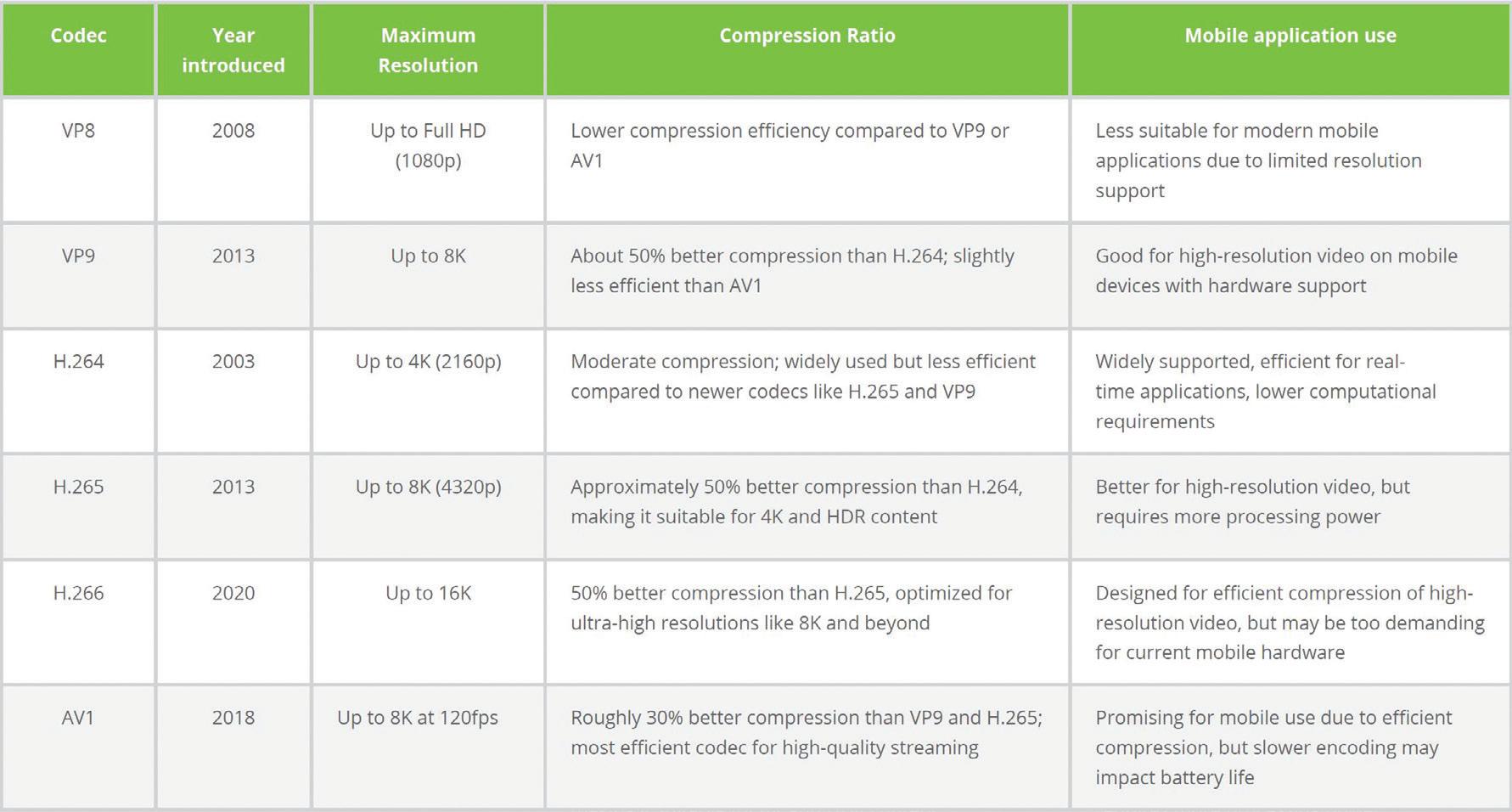
• Codec optimisation: Codecs like H.264, HEVC (H.265), and VP9 compress video to manage bandwidth, but each has trade-offs between quality and resource efficiency. Choosing the right codec is essential to ensure quality without excessive network strain (see Table 1).
• Media management: Storage, access and retrieval of vast amounts of video data can quickly become complex, requiring efficient media management systems that can store, archive and secure video data for retrieval when needed.
• Mass video delivery: Networks need to be ready and capable to process mass amounts of video. Enhanced Mobile Broadcast (eMBMS) is an essential networking technology which needs to be adopted by public safety service providers to ensure continuous uninterrupted video communications delivery in such cases.
Challenges in developing video-enabled communication solutions
Hardware limitations
Most endpoint devices are resourceconstrained, with limited processing power, memory and battery life. These constraints impact the ability to handle computationally intensive video processing tasks such as encoding, decoding and rendering. Hardware needs to leverage dedicated video processing hardware, such as GPUs or video decoding chips, to offload computational tasks, and utilise power-efficient designs that balance performance and thermal management.
THE UNIQUE DEMANDS OF PUBLIC SAFETY SITUATIONS REQUIRE MCVIDEOÍS ROBUST ARCHITECTURE TO HANDLE HIGH-STAKES SCENARIOS WHERE VIDEO CLARITY, TIMING AND RELIABILITY ARE CRUCIAL.
Software complexity
Developing software that supports seamless video communication involves addressing multiple technical aspects, including compression, synchronisation and error correction. Implementing advanced codecs and optimising them for diverse hardware platforms is challenging, while maintaining audio-video synchronisation, especially in low-latency environments, requires precise timing and careful buffer management.
Adaptive streaming algorithms are needed that adjust video quality dynamically based on network conditions. Machine learning can also be used to optimise compression and enhance video quality in real time.
Network variability
Reliable video communication depends on stable network conditions, but real-world networks are often far from ideal, often with bandwidth constraints and sometimes high latency.
Employing scalable video coding (SVC) can deliver a consistent experience across varying bandwidth conditions, and quality-of-
service (QoS) mechanisms should be used to prioritise video traffic.
Security and privacy
Video communication involves sensitive personal and business data, making security and privacy essential considerations. Implementing robust encryption protocols without compromising performance is critical, and compliance with regional regulations, such as GDPR or HIPAA, can complicate the deployment of global video solutions. Ensuring secure and seamless access to video services also requires sophisticated identity management.
Secure protocols, such as DTLS and SRTP, must be used to encrypt video streams, and software should be regularly updated and audited to mitigate vulnerabilities.
User experience
User expectations for video communication are higher than ever, requiring intuitive and reliable solutions. Users demand HD or 4K video and clear audio, even in suboptimal network conditions, and interfaces must be intuitive and require minimal configuration.
It is necessary to invest in good user interface and user experience design to create intuitive and accessible applications, as well as conducting rigorous testing to ensure compatibility across devices and platforms.
The future of public safety video
Public safety video is important, and we can only expect the use and the value of it will increase over time and emerging technologies will further advance MCVideo use cases. Technologies such as advanced analytics (such as facial recognition, behavioural analysis, anomaly detection, and crowd counting) as well as artificial intelligence and machine learning will revolutionise video analytics in public safety, enabling advanced functions such as predictive modelling, real-time threat recognition and object detection.
Direct mode (DRD) communication is an essential element of public safety broadband, and crucial for the success of the technology. It will be powered in the future by 5G-Sidelink technology, enabling devices to communicate directly with one another without a mobile network being present (with the caveat that real video communications are not expected to be available in D2D communications for several years). And although at least five years away from first deployment, 6G technology is still worth mentioning as we can expect that it will be a game changer for networkdemanding applications such as MCVideo.
AUSALERT TESTING TO OCCUR IN JUNE AND JULY
The federal government has announced that its new national emergency warning system, AusAlert, will begin testing in June and July.
AusAlert will bring cell-broadcast technology to Australian emergency warnings. According to the national Emergency Management Agency (NEMA), the technology is considered international best practice and is used by more than 30 countries for emergency warning communications.
The AusAlert system will send urgent messages to compatible mobile phones and other mobile devices in a specified area.
The system will allow emergency services organisations and some Australian Government agencies to send targeted warning messages. The system will be more reliable, accurate and efficient than current systems. This means authorities can reach people quickly when it matters most, keeping Australians informed and helping to save lives and property. In the future, AusAlert will also send automated voice messages to landline phones.
An AusAlert message will tell inform people of:
• what the emergency is
• where it is happening
• how serious it is
• what the person should do
• who the message is from
• where to find more information.
AusAlert may be used for a range of situations, including:
• natural hazards, such as bushfires, floods, cyclones and tsunamis
• public safety and security threats, such as serious public safety incidents or terrorism
• biosecurity incidents, such as animal or plant disease and biohazard outbreaks
• health emergencies, such as pandemics or other national public health events.
AusAlert uses cell-broadcast technology, which is more efficient than current SMS-based emergency alerts. It is also safer, faster and more secure.
AusAlert is currently being built, and NEMA has contracts in place for AusAlert to begin operating from October 2026. From then, the Australian Government and state and territory emergency services organisations will be able to send alerts, subject to individual state and territory agreements.
As part of early testing, during June 2026, some communities will receive a clearly labelled test message from AusAlert.
After community testing, there will be a national test on Monday, 27 July 2026 at 2 pm AEST. During this test, all compatible devices across Australia will receive a test alert. This helps ensure the system works as expected before it is used in real emergencies.
AIRBUS BRINGS DIGITAL TECHNOLOGY TO FIREFIGHTING
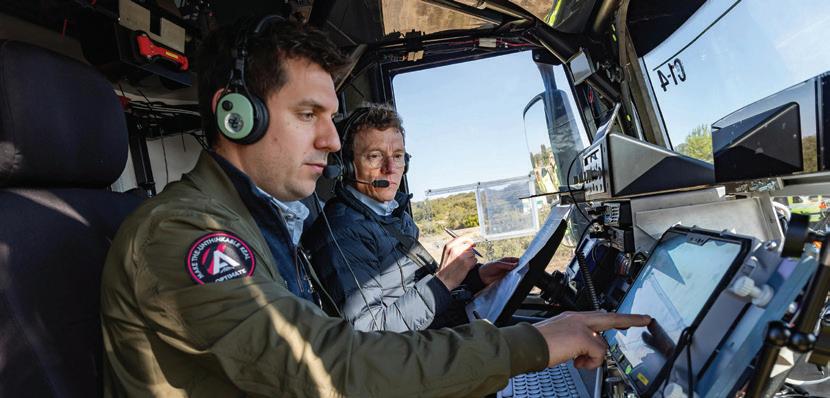
Airbus has announced the successful completion of what it says is a first-of-its-kind trial in forest firefighting in France. By linking aircraft, helicopters, drones and ground personnel via communication and data processing systems, Airbus has demonstrated the ability to carry out highly accurate water drops and significantly reduce the time between fire detection and extinguishment.
The trial mobilised multiple resources, including the Airbus H130 FlightLab helicopter, two aircraft, an ATR 72 test aircraft and a Cirrus SR20 light aircraft, four drones including an Airbus Aliaca, and three lorries from the Departmental Fire and Rescue Service of Le Gard (SDIS 30) to collect and process data. To interconnect the entire system, Airbus deployed a local private
mobile network bubble in the area, connected to Agnet, the missioncritical communication solution developed by Airbus for security and emergency services.
These tests were carried out by Airbus and its partners at the Garrigues military camp in Nîmes, based on scenarios developed with Departmental Fire and Rescue Services (SDIS) as well as the Entente Valabre, a public body recognised as an international authority which is empowered by the French Ministry of the Interior to assess forest firefighting equipment and provide training for personnel in France and abroad.
In these scenarios, two drones and the light aircraft captured images of the fire area, including infrared footage, and transmitted them in real time to Airbus servers connected to a command centre aboard a ground vehicle. The images were analysed, geolocated and merged with data, including satellite imagery, taking into account the terrain, wind strength and direction measured by a drone, and the location of firefighters on the ground. Data processing systems using AI produced a comprehensive view of the tactical situation on the ground and in the air, and enabled flight paths and water drop points to be transmitted to the helicopter equipped with a precision water drop assistance system and to the ATR72, which was simulating a water bomber.
iStock.com/Ridofranz
AUSTRA L IANOW
OPTUS, ERICSSON AND FRONTIERSI POWER EMERGENCY SERVICE LOCATION
POSITIONING
Optus, Ericsson and FrontierSI have partnered to bring what they say are new levels of accuracy to positioning systems for emergency response operations in a public safety proof-of-concept trial on a live commercial network. The companies say the trial successfully demonstrated more reliable connection and situational awareness for emergency services during search and rescue operations and other emergency responses using the Optus 5G Standalone (SA) network.
The solution involves pairing an emergency vehicle with autonomous drone tracking, using Ericsson’s 5G SA technology. It also uses 5G Advanced Global Navigation Satellite System Real-Time Kinematic (GNSS-RTK) positioning correction data and network slicing to provide centimetre-level positioning and real-time geo-referenced video and telemetry for safer and faster search and rescue missions.
MOTOROLA TETRA NETWORK TO SUPPORT $20BN AUTOMATED PORT
Motorola Solutions has announced that PSA Singapore has chosen the company’s TETRA digital radio communications to strengthen safety and efficiency across its operations while supporting its ongoing expansion through the Tuas Mega Port project.
“PSA Singapore is a strategic hub for global trade that facilitates the movement of more than 40 million twenty-foot equivalent unit (TEU) shipping containers annually across 600 ports around the world,” said Philbert Chua, container division managing director, PSA Singapore. “The development of the Tuas Mega Port is a long-term strategic investment that leverages advanced technologies and innovations to strengthen Singapore’s competitiveness, resilience and agility in managing the growing complexities and challenges of global supply chains.”
Motorola Solutions’ TETRA network supports more than 4000 users with an average of 540,000 voice calls made every day to coordinate complex, 24/7 port operations and maintain safety as containers, vessels and staff move between terminals.
Tuas Mega Port is predicted to become the world’s largest fully automated container terminal and is being developed in four phases.
FrontierSI’s system integration and positioning capabilities support the coordination of vehicle, drone and command-centre applications within the proof of concept. For emergency response operations, the solution helps to improve situational awareness by providing command centres with real-time visibility of exact vehicle and drone positions on a map. It is designed for use in environments such as urban canyons and bushland that challenge traditional GPS systems.
Ericsson says the proof of concept helps to support faster and safer interventions by reducing the time required to locate victims, enabling earlier identification of obstructions such as roadblocks or smoke, improving resource allocation, and helping minimise responder exposure to hazards.
Network slicing enables multiple logical networks to operate on shared physical network infrastructure combined with Mission Critical Push-to-Talk (MCPTT) service, providing purpose-built network experiences with specific performance characteristics. This supports the differentiated connectivity and precise positioning needed for mission-critical emergency operations.
“This proof of concept shows how we’re putting 5G SA to work beyond standard connectivity,” said Sri Amirthalingam, Optus Chief Technology Officer. “Together with Ericsson and FrontierSI, we’re bringing precise positioning and network slicing into real-world emergency response, and opening up new, mission-critical use cases for public safety, government and enterprise customers.”
The hardware setup includes 5G nodes and 5G SA routers equipped with GNSS-RTK modules, supported by the Ericsson Network Location Server (ENL) and GNSS-RTK reference station. Together, these components enable autonomous drone tracking of vehicles with lanelevel accuracy, supporting operations in conditions where visibility and standard satellite reception may degrade.
When fully operational in the 2040s, the Tuas Port will be capable of handling up to 65 million TEU shipping containers annually.
“Our 20-year relationship with PSA Singapore is built on a shared understanding that safety is the foundation of productivity,” said Rajat Gupta, vice president for Asia Middle East & Africa, Motorola Solutions. “As Tuas Port scales to become the world’s largest container terminal, our focus remains on providing the secure and reliable communication and services that personnel need to collaborate seamlessly every day.”
iStock.com/tupungato
IN MOMENTS OF HIGH-PRESSURE CLARITY IS KEY.
WHY NAVIGATION SYSTEMS MUST EVOLVE AGAINST GNSS SPOOFING
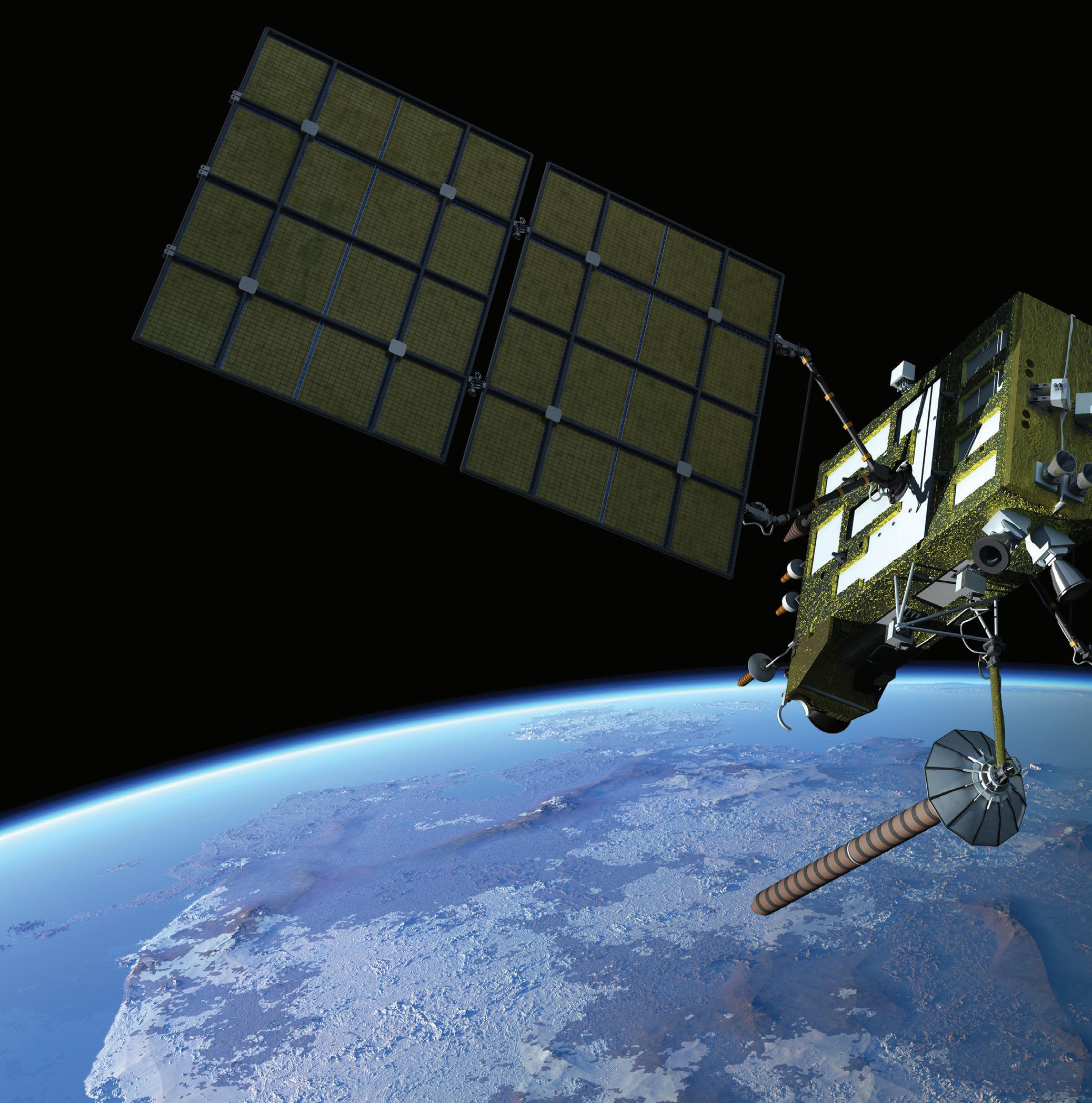
GNSS reception is facing growing threats from jamming and spoofing, and having a navigation system that doesn’t solely rely on satellite signals has become vital.
The Global Navigation Satellite System (GNSS) has long been the bedrock of modern positioning, navigation and timing (PNT).
From guiding autonomous vehicles to ensuring the precise synchronisation of global communication networks, GNSS signals are the silent workhorses enabling unprecedented levels of automation and efficiency.
Yet, beneath this reliability lies a growing, often underestimated vulnerability: GNSS spoofing.
Vital commercial sectors, from autonomous vehicles to global shipping,
are dangerously dependent on unencrypted GNSS signals for positioning and timing. This reliance creates a significant, yet often underestimated, vulnerability to spoofing attacks that can cause significant physical and economic disruption.
In military situations, defence forces require a resilient PNT solution architected with the capability to detect and reject spoofing, while delivering precision navigation in GPS-denied or GPS-contested environments when it counts. Adversarial electronic attacks are no longer limited to brute-force jamming. Today, they are sophisticated, multi-layered assaults designed to create believable but false
navigational guidance. For mission success in a contested environment, a simple anti-jam antenna is not enough.
Electronic protection, formerly known as electronic counter-countermeasures (ECCM), exists to provide precision in chaos. Electronic protection is an integrated set of capabilities designed to provide a multi-layered defence. The primary goal is to ensure the defence vehicle or platform can continue its mission despite operating in a hostile electromagnetic environment.
What is GNSS spoofing?
GNSS spoofing is the intentional transmission of counterfeit GNSS signals designed to deceive a receiver into calculating an incorrect position, velocity or time.
Unlike jamming, which merely blocks or disrupts signals, spoofing provides plausible, but false, data. This deception makes it particularly dangerous, as a system under attack might continue to operate, believing its PNT data is legitimate, while actually veering off course or operating with faulty timing.
Imagine a commercial airliner navigating through or even near GNSS-contested environments. A spoofing attack could subtly shift its perceived location, causing it to deviate from its intended path, risking collision, grounding or entry into restricted airspace.
Unfortunately, GNSS spoofing incidents (particularly in recent years) are well documented, highlighting the urgent need for robust anti-spoofing technology.
Engineers intimately understand that every component and data stream in a system is a potential point of failure or attack. The perceived infallibility of GNSS often leads to an oversight of its vulnerabilities.
A system that leverages the precision of GNSS could be rendered unsafe or ineffective by a relatively low-cost, unsophisticated spoofing device. This realisation drives the imperative for urgent change.
Why inertial navigation systems are the first line of defence
For many years, inertial navigation systems (INS) have been the backbone of reliable navigation in environments where GNSS is unavailable or unreliable — such as submarines, spacecraft or underground tunnels. Their core strength lies in their independence from external signals, using internal sensors (accelerometers and gyroscopes) to track changes in motion and orientation relative to a known starting point. >>
FOR MANY YEARS, INERTIAL NAVIGATION SYSTEMS (INS) HAVE BEEN THE BACKBONE OF RELIABLE NAVIGATION IN ENVIRONMENTS WHERE GNSS IS UNAVAILABLE OR UNRELIABLE.
While an INS drifts over time, its shortterm accuracy is exceptionally high. This characteristic makes it the perfect complement to GNSS. When integrated, a tightly coupled GNSS/INS system leverages the best of both worlds for long-term accuracy and global coverage of GNSS, combined with the highrate, short-term precision, and most critically, immunity to external signal interference of the INS.
This combination is about resilience. When GNSS signals are jammed or spoofed, a robust INS can maintain accurate PNT data for significant periods, allowing the system to continue operating safely, initiate evasive manoeuvres, or transition to alternative navigation methods. This capability is paramount for engineers designing systems where a loss of PNT integrity is simply not an option.
Electronic protection as a defence imperative
The concept of simply integrating an INS with GNSS is a good start, but in today’s threat landscape, it’s no longer enough. The market now demands electronic protection — a comprehensive suite of capabilities integrated directly into the navigation system to actively detect, mitigate and recover from
various forms of GNSS interference, including spoofing and jamming.
Understanding electronic protection as a distinct and vital market category is crucial for smarter processing and multi-layered defence strategies.
Building an electronic protection solution
Modern electronic warfare and commercial navigation demand a multi-layered, ‘defencein-depth’ architecture that preserves navigational precision across the entire signal processing chain.
Unlike standard systems that only check for basic signal power anomalies, INS units with advanced electronic protection assess incoming GNSS signals for anomalies that indicate spoofing. This can include monitoring signal power variations, sudden changes in estimated position inconsistent with inertial data, unexpected satellite constellations, or inconsistencies across multiple GNSS frequencies. These anti-spoofing techniques aim to immediately identify and reject malicious signals, preventing the system from being led astray.
An effective electronic protection navigation system must integrate three critical capabilities:
• Robust RF front-end: This involves using multi-band GNSS receivers to maximise satellite visibility, as well as advanced anti-spoofing and anti-jamming filtering techniques to mitigate the impact of bruteforce electronic attacks before they can corrupt the signal.
• Intelligent signal monitoring: Beyond simple jamming, the system must actively detect and reject sophisticated deception attacks. This requires real-time spoofing detection that constantly monitors signal integrity, cross-checks satellite data and identifies anomalies inconsistent with genuine GNSS transmissions.
• A high-performance inertial core: The source of precision is a coupled inertial navigation system (INS) and a fibre-optic gyroscope (FOG) for an independent, highintegrity source of position and attitude data. When the system detects jamming or spoofing, a sophisticated fusion of sensor inputs can reject the corrupted GNSS measurements and rely on this inertial holdover to bridge gaps in coverage and maintain precision until reliable signals return, ensuring continuous navigation in GPS denied or contested environments.
The time to build resilience is now
Commercial applications — from ensuring the safety of autonomous vehicles to the efficiency of global supply chains — are vulnerable, and the consequences of inaction are risky. Likewise, military missions and the lives of those involved depend on accurate PNT data at all times.
The evolution of navigation systems means embracing electronic protection as a core design philosophy. It means deploying robust, multi-layered defences that integrate high-performance INS solutions with advanced anti-spoofing and anti-jamming capabilities.
Conclusion
The threat of GNSS spoofing is not a distant or theoretical risk — it is a present and escalating reality affecting both commercial and military operations worldwide. As adversaries grow more sophisticated and our dependence on accurate PNT data deepens, the margin for complacency narrows to zero. Integrating electronic protection into navigation system design is no longer optional; it is a fundamental engineering imperative. Those who act now to build resilient, multilayered GNSS/INS solutions will be best positioned to operate safely and effectively in an increasingly contested electromagnetic environment.
iStock.com/Liudmila Chernetska
TEST & MEASURE
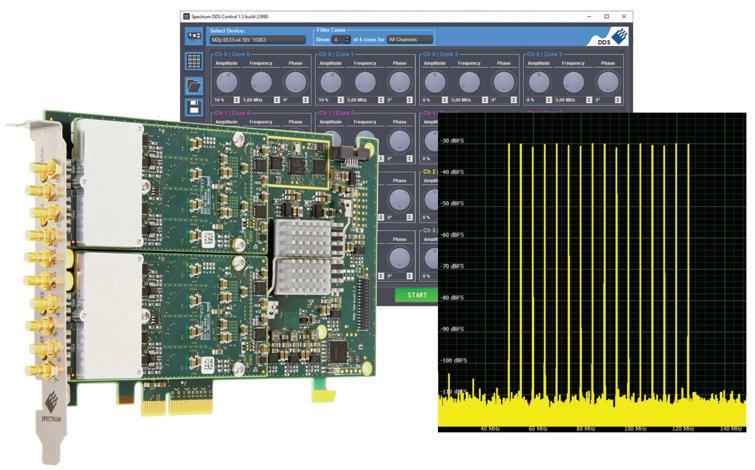
AWGs with direct digital synthesis
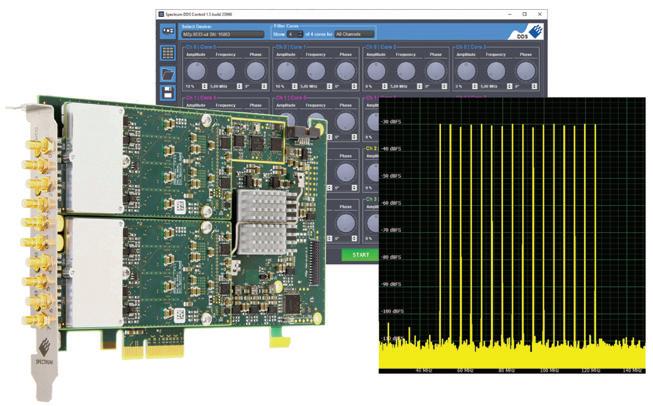
Spectrum Instrumentation has introduced a direct digital synthesis (DDS) option for its 65xx series arbitrary waveform generators (AWGs), providing a more technically economical solution for generating sinusoidal signals, finely tuneable reference sources, combined sine waves, waveform trains, frequency sweeps and modulated signals.
Combining traditional AWG operation with a DDS mode in a single instrument, the 65xx series delivers greater performance. In DDS mode, each channel can generate up to 16 individual sine wave tones, with frequency, amplitude and phase controlled through simple commands that allow parameter changes with just 8 ns spacing. This approach enables the fast creation of multitone and modulated signals without large data transfers or complex waveform calculations.
Designed for everyday test and measurement applications, the 65xx series offers a compact, general-purpose platform with output rates from 40–125 MS/s, 16-bit resolution and bandwidths up to 70 MHz. Individual cards provide 1 to 8 channels, while complete systems can scale to 80 fully synchronised channels, making the series suitable for both standalone use and larger automated test systems.
With the DDS option, advanced features such as frequency and amplitude slopes, along with flexible command sequencing, allow engineers to adapt signals in real time. These capabilities are particularly valuable in applications that require agile frequency sources to help identify resonant frequencies or compensate for system drift, like in network stimulation, automated testing of filters and amplifiers, or the operation of medical and industrial sensors.
Spectrum Instrumentation Asia www.spectrum-instrumentation.com
Scanning receiver
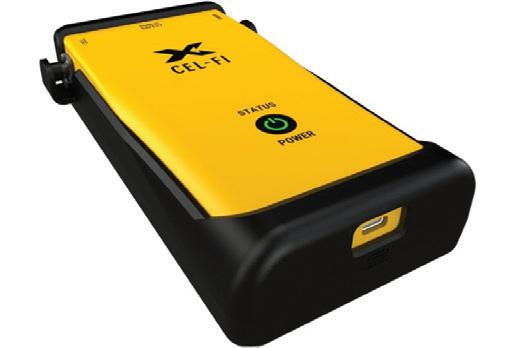
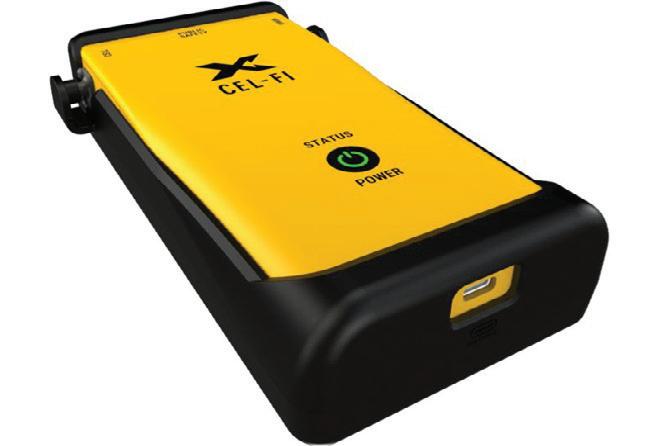
The COMPASS XR scanning receiver from Nextivity is a solution designed to enable integrators to install and optimise Nextivity CEL-FI cellular and SHIELD public safety coverage systems. Designed to be a convenient tool in a lightweight and portable package, it can be used to deploy and verify multiple technologies, including 5G New Radio networks in sub-6 GHz spectrum, LTE, CBRS, and LMR public safety coverage.
Users can perform grid tests and site surveys with the portable, handheld RF scanner that supports operator service bands worldwide with ultra-wide frequency range of 617-5000 MHz. It comes with all necessary accessories, including carrying case, hard storage case, antennas and RF adapters.
COMPASS XR is protected from drops, scrapes and tumbles with a rugged rubberised exoskeleton that provides a comfortable grip, and works with the CEL-FI WAVE PRO app (iOS and Android) for all operations, including Full Signal Report export in CSV format.
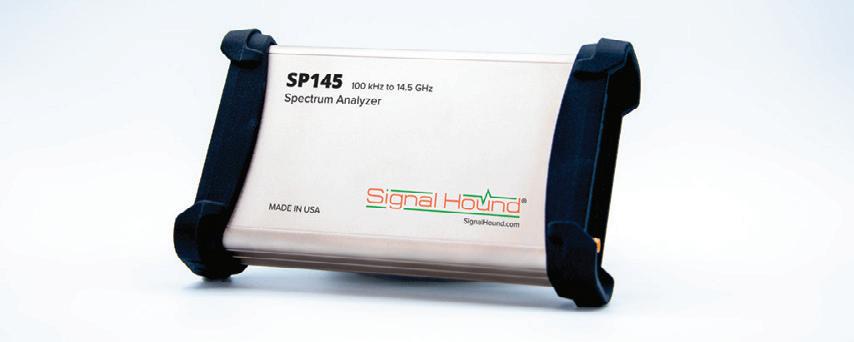
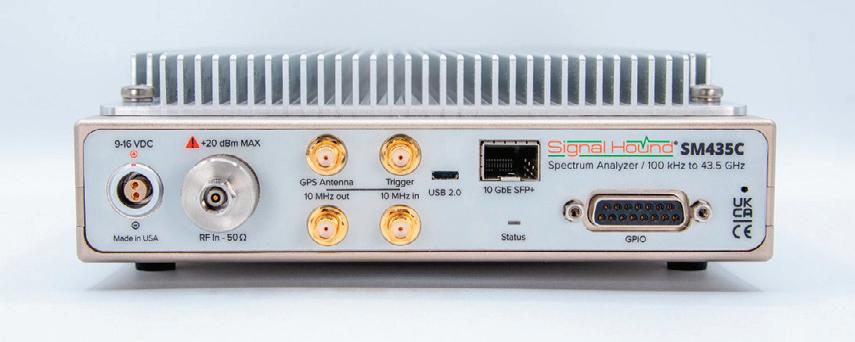
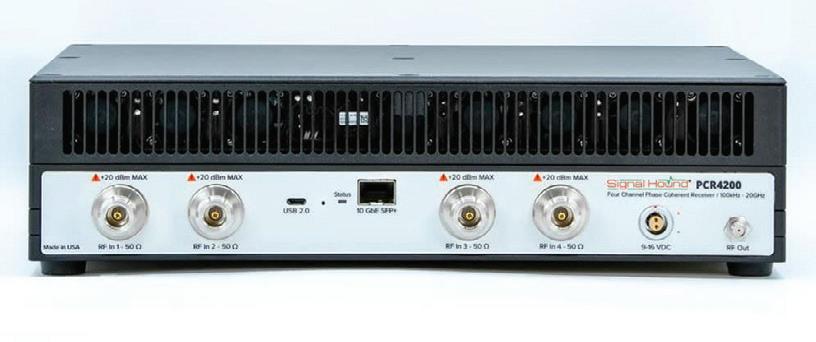
The Signal Hound PCR4200 is a high-performance, 100 kHz – 20 GHz, 4-channel phase coherent receiver that features a high dynamic range of 110 dB, high phase noise performance and fast sweep speeds. With built-in GPS, a sub-octave preselector from 45 MHz to 20 GHz and capability to tune channels independently, the PCR4200 is suitable for RF professionals working across a wide range of applications.
The PCR2400 is designed for flexibility with features like a built-in vector signal generator that streamlines system alignment and calibration, as well as a customisable API for easy integration with third-party software.
The PCR4200 includes SCPI automation capabilities and interfaces with both Windows and Linux operating systems. It has a standard operating temperature range of 0 to +50°C, weighs 7.34 kg, and measures 274 x 157 x 38 mm.
Applications include simultaneous multi-band spectrum monitoring, emitter detection and geolocation, multi-channel transmitter testing, drone detection and MIMO channel testing.
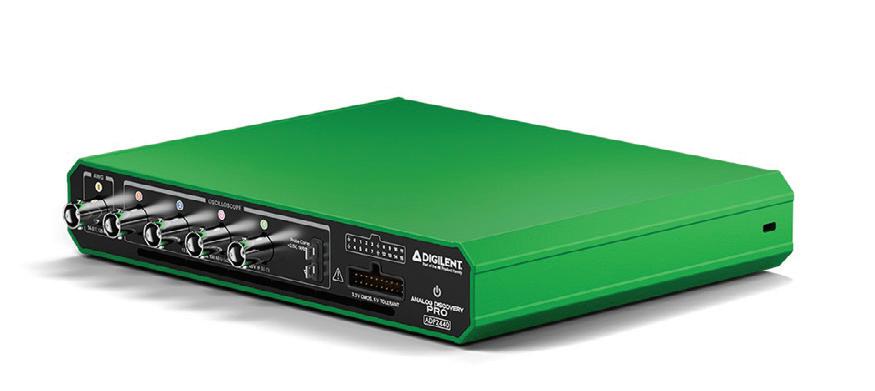
The Digilent ADP2440 and ADP2450 USB-based mixed signal oscilloscopes are designed for modern prototyping, research and validation. Both oscilloscopes feature four analog channels, 16 digital I/O, integrated arbitrary waveform generator and WaveForms software. Users can select a higher resolution or higher bandwidth depending on their signals.
The ADP2440 oscilloscope features four 12-bit analog channels with 100+ MHz bandwidth, up to 600 MS/s, while the ADP2450 oscilloscope comes with four 8-bit analog channels with 200+ MHz bandwidth, up to 1 GS/s.
Both devices feature one 14-bit AWG with 15 MHz bandwidth and free WaveForms integration with FFT, Bode Plot, Eye Diagram, custom Math, extensive API and much more.
A freely allocatable deep buffer memory is shared between analog and digital systems, thereby enabling the acquisition of hundreds of millions of samples. The mixed signal oscilloscopes also facilitate memory segmentation, with approximately 1 µs re-arm latency for efficient capture of repeated or burst events. The devices feature USB 3.2 (5 Gbps) for responsive streaming and long captures.
Users can also operate two devices as one synchronised system via BNC triggers with automatic phase alignment, 8 analog inputs, 32 digital I/O, 2 AWGs, coordinated internal and external triggering across instruments, and easy alignment with the DIN rail mounting holes. Digilent Inc www.digilent.com
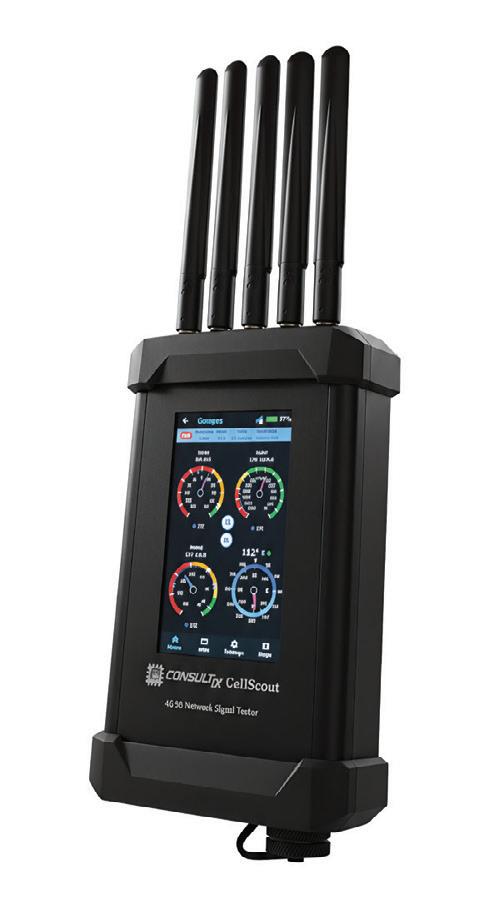
The CellScout is a powerful, ultra-portable handheld tool designed to give field technicians and engineers instant visibility into 4G LTE and 5G network performance. No bulky gear, no complicated setup,just fast, accurate results when and where you need them.
From antenna alignment to network troubleshooting, CellScout helps you work smarter in the field. With real-time data, cell-lock technology, and an intuitive touchscreen interface, you can quickly identify the right tower, optimise signal direction, and ensure peak network performance every time.
Key Features
• Standalone handheld device with 4x Antenna Ports + 1 GNSS Port
• Real-time 4G LTE and 5G NR (NSA/SA) network measurements with 5G slicing info
• Measures RF metrics: RSRP, RSRQ, SINR and RSSI
• Cell locking to ensure accurate tower-specific measurements
• Band forcing on any band including forcing on SA-only bands
• Integrated GPS, compass and online maps for location and antenna alignment
• SIM-based and SIM-less scanning modes
• RF metrics logging with coordinates, and exporting as CSV
• Supporting all global and Australian mobile bands including Emergency n79
• Database for Australian mobile network towers with distances to nearby ones Built for the field. Ready when you are.
Power supply
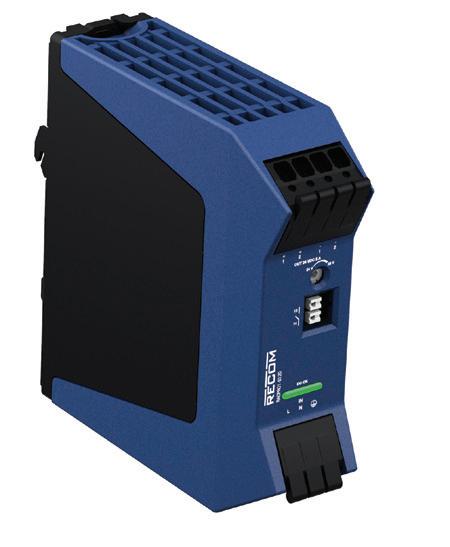
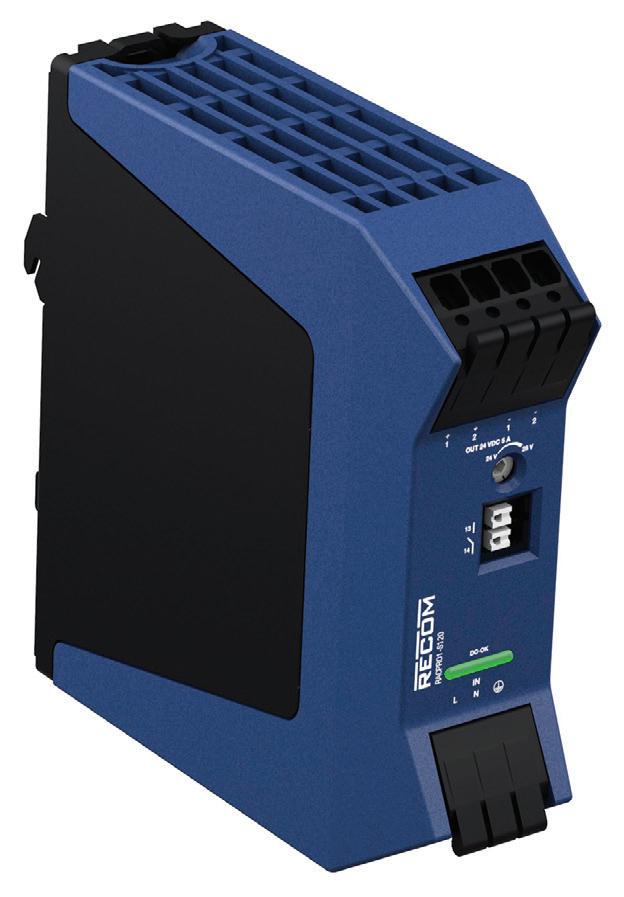
The RECOM RACPRO1-S120 DIN-rail AC/DC power supply delivers 120 W of output in an ultra-slim, space-saving design, making it suitable for compact industrial control cabinets and modern automation systems. With dimensions of 100×28×112 mm, it is designed to help engineers maximise panel density without compromising performance.
The power supply unit features a wide 85–277 VAC input range and offers regulated output voltages of 12, 24 or 48 V, adjustable to suit diverse application needs. High-efficiency operation enables full 120 W power delivery with convection cooling, eliminating the need for forced airflow and reducing system complexity.
Built for demanding industrial environments, the unit includes comprehensive protection features such as overvoltage, overload and short-circuit protection, thereby enabling long-term usage. With international safety approvals and robust thermal performance, the power supply unit is suitable for applications across Australia.
RECOM Asia Pte Ltd www.recom-power.com
Dual antenna high-precision GNSS platform
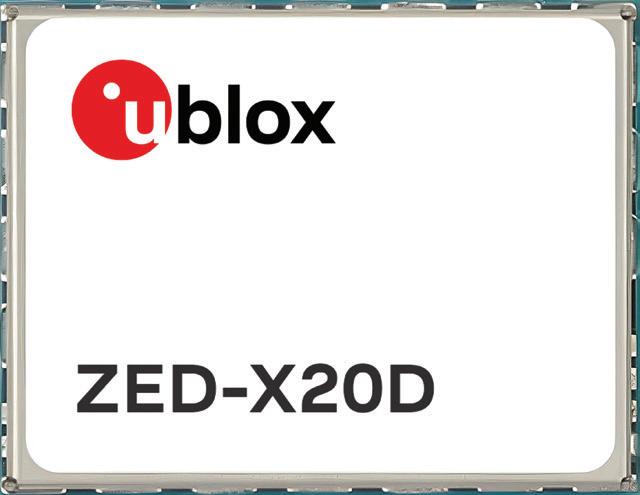
u-blox, has announced its latest all-band GNSS heading module, the ZED-X20D. Based on the u-blox all-band X20 technology, the ZED-X20D is a dual-antenna solution that is designed to deliver centimetre-level RTK positioning and precise, motionindependent GNSS-based heading.
The company says the ZED-X20D delivers accurate heading even at standstill and low speeds, enabling more reliable auto-steering, safer autonomous operation, and more predictable behaviour in realworld environments.
The compact, energy-efficient ZED-X20D targets industrial applications such as precision agriculture (including auto-steering and guidance systems), UAVs, heavy machinery, marine and robotics navigation. It supports all GNSS constellations on L1, L2, L5, and L6 on both antennas, as well as L-band. The ‘all bands on both antennas’ approach maximises heading availability and stability and provides improved performance in challenging GNSS conditions.
To meet diverse positioning accuracy and deployment needs, the ZED-X20D supports RTK, PPP-RTK, and PPP correction services. Users can use u-blox PointPerfect to access a comprehensive range of correction options for regional and global coverage, while built-in support for Galileo E6 enables the free-to-use Galileo High Accuracy Service (HAS).
ZED-X20D, together with the u-blox ANN-MB2 allband high-precision antenna and u-blox PointPerfect service, forms a ready-to-use all-band GNSS solution with centimetre-level positioning with accurate heading, simplifying design, reducing system cost, and accelerating mass adoption.
u-blox Singapore Pte Ltd www.u-blox.com
Firefighter-assured communications concept
Global fire and rescue organisations manage millions of emergencies each year, often in RFdenied environments — high-rise structures, tunnels, basements, rural terrain, or with congested networks — where legacy LMR voice networks cannot support growing needs for live video, telemetry, location, sensors and UxV control.
Codan’s Vehicle as a Node 2.0 (VaaN 2.0) concept transforms frontline appliances into communication hubs, delivering assured, noninfrastructure dependent communications to the incident location. Edge Spark Connect Pod provides vehicle-mounted Starlink and 4G/5G cellular backhaul, creating an on-scene Wi-Fi bubble linking the incident to the command centre. Edge Spark Connect Lite is a portable, battery-powered forward node that extends IP network coverage into remote, underground or complex environments.
At its core, the DTC MeshUltra MANET delivers a secure, self-forming, self-healing mesh network supporting high-throughput, non-line-of-sight voice, video and data for up to 144 nodes and 32 encrypted talk groups. This foundation enables future firefighter capabilities such as encrypted push-to-talk, body-worn video, indoor/outdoor location, SCBA and biometric telemetry, sensor fusion, and resilient C2 visualisation of firefighters, appliances and UxV on a live map.
Codan’s integrated Zetron ACOM command centre solution provides vital interoperability across diverse equipment and agencies, fusing multi-bearer connectivity with real-time voice, data, and incident coordination to improve situational awareness and speed operational decision-making.
VaaN 2.0 employs FIPS-certified encryption and supports multi-agency interoperability. A phased deployment — vehicle nodes, wearables, forward nodes and UxV integration — provides firefighting agencies with a ready-now, future-ready communications that maintains operational continuity, enhances safety, accelerates decision-making, and enables remote and autonomous firefighting.
DTC - a Codan Company www.dtccodan.com
Industry Talking
While March saw ARCIA’s first conference and dinner of the year take place in Perth, it also saw two other significant international events take place in Europe and the USA, namely Mobile World Congress and IWCE, both of which I was fortunate enough to attend.
Mobile World Congress is the showcase for global telecommunications, with over 100,000 visitors and exhibitors as far as the eye can see. With a huge emphasis on everything AI across networks, services and security, of particular interest to our sector is the increased investment in private 5G networks. Many countries, including Australia, have allocated dedicated spectrum for private 5G networks and the ecosystems of networks and devices are now developing at pace to meet the demand from multiple user groups and industry sectors.
Many challenges remain for building private 5G networks here in Australia, and the ARCIA spectrum team is looking at how our we can best work with the various user groups to help enable the timely deployment of this important technology. And while there are lots of discussions around 5G being used as a voice replacement for LMR within private networks, my view is that is still some way off occurring at scale.
IWCE was once again held in Las Vegas in mid-March, and it was great to see the many Australians visiting and exhibiting at the largest LMR conference in North America to make sure they are across developments and trends, and to demonstrate their technologies to this huge market. While the event is focused on the US, there are many parallels, as user needs and the technology mix are very similar.
ARCIA was invited by Andy Maxymillion of Blue Wing Services to join an international public safety panel, where I was joined by one of our Vice Presidents, Chris Stevens, and CEO of TCCA Kevin Graham. With public safety users around the world facing the age-old challenges of budget constraints and increasing demand for better communications services, what we are seeing in the market now to address this is movement from device manufacturers to include LMR, 5G and direct-to-satellite services all on the one device, allowing users to access the best available network, regardless of location. While there are still many questions for direct-to-satellite services in Australia, this has huge potential for public safety users.
Which brings me to Perth, and ARCIA’s first event for 2026, which saw solid numbers gather for our conference, and considered all of the above technologies as part of the professional communications mix. The conference closed with a panel of experts that considered ‘The Evolving Radio & Critical Communications Ecosystem: How Disruptive are Emerging Technologies?’; our WA State Networking Dinner, where David Deacon won the WA State Professional of the Year Award; and a sold-out professional development short course on Antenna & Line Transmission Fundamentals and Line Testing, demonstrating to us that the skills acquired on the day are still very much in demand, despite the continued march of new technologies. Congratulations to David on the award.
If you have team members in NSW, we’ll be running the same course on 13 May, close to the CBD — with limited places available — and running the day prior to the NSW conference and State Networking Dinner, so get in quick.
Hamish Duff President (Hon), ARCIA – Australia’s Radio & Critical Communications Association
Dual-band whip antenna for NGCC
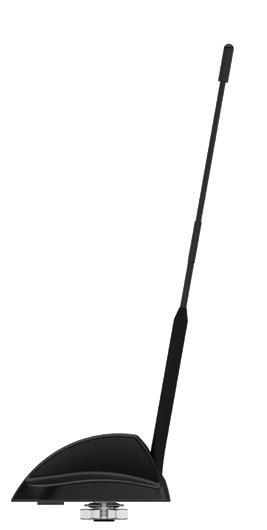
Panorama Antennas has released an ultraflexible whip antenna specifically for the requirements of NGCC. Incorporating an overmoulded filter circuit, the antenna is a true dual-band and does not rely on harmonics for functionality. With its simple appearance, the antenna whip is discreet and durable, resembling an OEM-style radio antenna while also offering a high level of efficiency. The whip features an over-moulded base section and is mountingcompatible with the Sharkee range of combination antennas from Panorama already used within a number of public safety fleets.
Covering 138-144 MHz and 450-502 MHz, the dual-band whip covers the digital VHF and UHF bands being adopted for public safety. Along with Panorama’s Sharkee products, the solution further allows the end user to fully integrate two-way radio and 5G LTE data requirements into a single solution. By using a single housing, it reduces the antenna footprint on the vehicle, thus reducing installation lead time and costs incurred for withdrawing the vehicle from service.
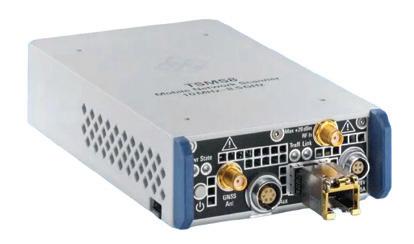
The TSMS8 super wideband mobile network scanner from Rohde & Schwarz, alongside the complementary TSMS-OMN8 broadband antenna, is designed to expand testing capabilities, enabling mobile network operators, service providers and government agencies to optimise network performance, improve efficiency and prepare for the future of mobile communications, including 6G.
The TSMS8 scans a frequency range of 10 MHz to 8.5 GHz, and a front-end bandwidth of up to 400 MHz and high scanning speed make the TSMS8 a unique scanner solution, allowing for more measurements in the same drive testing route, reducing re-drives and boosting efficiency. It simultaneously supports all major cellular technologies, from GSM to 5G, and covers mmWave frequencies up to 53 GHz when used in combination with the TSMS53DC downconverter.
This new solution addresses several key industry challenges, including the need for measurements on very low frequencies used by mission-critical networks like TETRA/P25, and on new bands above 6 GHz like n104. IQ streaming capabilities in a compact form factor will also enable diverse applications beyond traditional network testing, such as drone detection and signal intelligence.
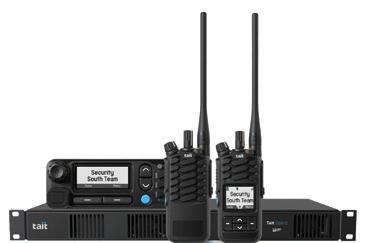
Tait Communications is expanding its digital mobile radio (DMR) standardsbased offerings with the launch of the Tait Open2 solution, featuring portable and mobile radios, infrastructure, accessories, and monitoring and services tools.
Based on the DMR Tier 2 conventional standard, and supporting Application Interface Specifications (AIS) — enabling compatibility with a range of third-party applications — Tait Open2 provides a solution for essential team communications within small and medium-sized operations.
Open2 portables and mobiles feature a rugged, compact design; support automated lone worker safety alerts; and include an orange emergency button. The TO2-P10 is the simplest portable in the range for teams that need the most essential functionality, while the TO2-P55 provides additional features with a colour screen, menu navigation keys and built-in Bluetooth and GPS. Tait Open2 mobiles also have a colour screen, menu navigation keys and optional GPS capability.
Tait Open2 base stations offer a way to expand radio coverage, keeping teams connected and safe, while the Open2 portables, mobiles and base stations come ready for single-and multi-site operation, with no additional licences required. Tait Open2 base stations also support simple and cost-effective network architecture options.
Tait Open2 is based on the digital mobile radio (DMR) Tier 2 standard and supports Application Interface Specifications (AIS), enabling compatibility with a range of third-party applications.
Tait Communications www.taitcommunications.com
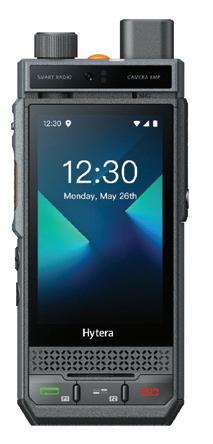
Smart PoC radio
Built to MCX standards, the Hytera P60 provides prioritised voice, video and data with ultra-low latency. A dual nano-SIM, eSIM and WLAN keep teams connected, while intelligent network switching is designed to ensure the strongest signal to maintain uninterrupted communication. The P60 also features a 3 W speaker capable of 105 dB output, combined with AI-based noise cancellation to maintain intelligible audio even in high-noise or high-speed environments.
The P60 also doubles as a professional recording device for onscene documentation. In unpredictable or fast-moving situations, such as unfolding incidents or emergency responses, the slide-to-record function instantly activates the 50 Mp rear camera, while a pre-record feature captures the preceding 120 seconds of video. Captured photos and videos can be uploaded to the Hytera Digital Evidence Management (DEM) platform for centralised review and archiving.
A 3.5-inch high-brightness touchscreen remains responsive to gloves or wet hands. Programmable keys and rotary knob allow fast access to essential functions and precise control. Powered by a 4000 mAh removable battery, the P60 provides up to 24 hours of operation per charge, and chip-level power management reduces power consumption. IP68-rated protection ensures resistance to dust, water and accidental drops. Hytera Communications Co. Ltd www.hytera.com.au
COMMS CONNECT NZ TO FEATURE A MINISTERIAL WELCOME
The Southern Hemisphere’s premier critical communications and public safety event, Comms Connect, will hold its New Zealand conference and expo from 27–28 May at the Tākina Wellington Convention & Exhibition Centre.
The 11th edition of Comms Connect New Zealand will feature the first-ever joint Ministerial Welcome on the opening day, with Communications Minister the Hon Paul Goldsmith and Emergency Management & Recovery Minister the Hon Mark Mitchell set to open proceedings at Wellington Tākina on 27 May.
The event will also open with headline presentations from the Director and Technical Director of Next Generation Critical Communications (NGCC), Steve Ferguson and Steve Lawrence, who will share the exciting next steps for expanding their Public Safety Cellular Network Service beyond their four emergency services customers to the hundreds of organisations across New Zealand’s wider public safety sector. NGCC is evolving PSN from a focused emergency service initiative into a broader, high-resilience communications ecosystem, and has shifted from initial rollout to expanding cellular services to hundreds of new eligible organisations.
The accompanying conference will meanwhile see presentations by over 30 expert speakers covering the latest critical communications technologies, applications and case studies.
On Day 1 the Radio Spectrum Management team will be joined onstage by the Communications Minister to discuss the road ahead for spectrum management in New Zealand, and the first-ever Women in Critical Comms panel session will close out the day, with leaders from Hourua, NGCC, ACCF and RSM already locked in.
Cybersecurity, mmWave and embedded antenna presentations, along with a case study from New Zealand Defence Force, will round out a strong day one program.
Day two will have an artificial intelligence and technology focus, including an AI case study from Surf Life Saving NSW and an AI in Emergency Services Communications presentation from senior industry analyst Louise Francis from Ecosystm. A range of local industry case studies will follow before the event closes with an expert panel discussing the reality versus hype of AI as it relates to the critical communications and public safety sectors.
TCCA CEO Kevin Graham will also share global critical comms insights from his attendance at CCW, MWC and IWCE in the past three months.
Over 45 technology vendors will also be on hand at Tākina Wellington Convention & Exhibition Centre over the two days, headlined by
Gold Sponsors, Broadtech/Tu Atea, Cable Ways, Complete-Coms, Pivotel and Tait Communications, showcasing the latest technology and solutions, both local and global, giving event attendees the chance to examine products up close, witness exclusive demonstrations, and ask all their burning questions.
The event is being run with the support of the Radio Frequency Users Association of New Zealand (RFUANZ), which will be holding its AGM at the conference venue after lunch on day one and its annual gala dinner following the day one networking drinks. The dinner will include the presentation of the RFUANZ Industry Excellence Awards, which are a celebration of outstanding achievement and a way to acknowledge the many forms of excellence in the NZ communications industry. Dinner registration is available at rfuanz.org.nz/gala-dinner.
For more details on the conference and exhibition, or to register for your ticket, visit www.comms-connect.co.nz. Discounts are available for group registration.
What: Comms Connect New Zealand
When: 27–28 May 2025
Where: Tākina Wellington Convention & Exhibition Centre
Web: www.comms-connect.co.nz
AI at the edge: Empowering emergency services
Jodi Favaloro, Senior Sales Engineer Consultant, Asia Paci c, Ericsson Enterprise Wireless Solutions
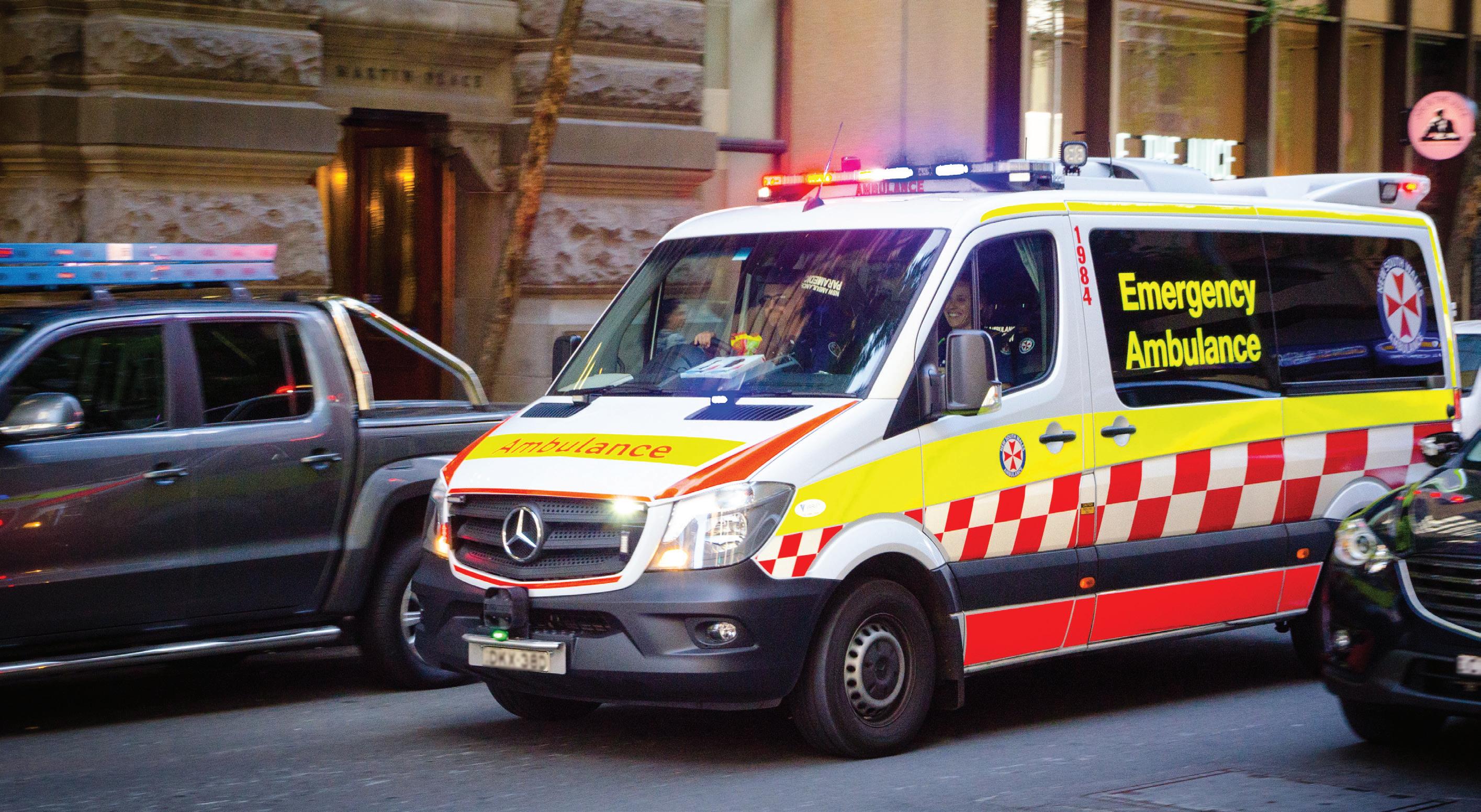
Every year across Australia and New Zealand, ambulances make millions of trips. In New South Wales for example, patients who meet major trauma criteria should be transported to the highest-level trauma service within an estimated 60-minute travel time (metropolitan area) or 90-minute travel time (regional and rural areas). In New Zealand, an ambulance service allows 30 minutes for a crew to hand over a patient to hospital staff, complete documentation, restock and debrief.
Vital minutes are spent completing important admin tasks that could be automated. Below are some trends we’re seeing in emergency services this year.
AI allows for earlier awareness and faster decisions
Public safety teams are dealing with more data than any agency can realistically keep up with. Video feeds, tips, calls, sensor alerts and digital evidence continually stream in and add up quickly. Arti cial Intelligence at the edge is making the task manageable by taking on the rst pass — scanning for moments that deserve attention, such as a drop in heart rate, unusual movement, or a de brillator being used in a vehicle. With AI at the edge, ambulance sta teams can spend less time debrie ng emergency department sta and typing up notes and more time acting. For AI to be e ective, insights must move quickly enough to shape decisions in the moment. at
means building a network foundation that can support high volume video and real-time data ows without slowing down during peak demand. 5G capacity and edge processing can reduce latency and keep intelligence usable when minutes matter.
Always-on connectivity with next-gen networks becomes a baseline
Mission-critical outcomes now depend on connectivity that holds up under congestion, disasters and geographic challenges. Today’s public safety agencies blend standalone 5G and network slicing to protect capacity during surges, blended cellular and satellite for coverage and continuity and edge compute to reduce backhaul strain as video and computer vision scale.
Public safety innovation is most valuable when it removes friction during response. With SD-WAN, agencies can use multi-path connectivity to steer traffic over the best available link as conditions change, such as in a moving ambulance, without responders worrying about the network during an incident.
A flexible foundation that combines cellular, satellite and intelligent traffic steering helps avoid expensive rebuilds and keeps voice, video and data moving when operations shift from routine to surge, without relying on satellite when lower-cost links are available.
Autonomous public safety systems reduce workload when the foundation is ready
Automation is expanding because agencies need to do more with fewer resources. The strongest use cases do not attempt to replace people. They’re meant to lessen the workload and help teams move faster from ‘we have information’ to ‘we know what to do next’. That can look like chat tools that handle common questions and sort
non-emergency requests before they hit dispatch, intersections that adjust signals as emergency vehicles approach, always-on monitoring for critical infrastructure that flags issues sooner, and reporting tools that help cut down on paperwork after a shift.
This means more time in the field and in response, and less time buried in administrative work — with humans still making the calls. But these tools only work if the foundation holds. First responders need reliable, low-latency connectivity and strong security at the edge, because more devices and more data also mean more points of failure. If the connection drops, the automation quickly stops being helpful.
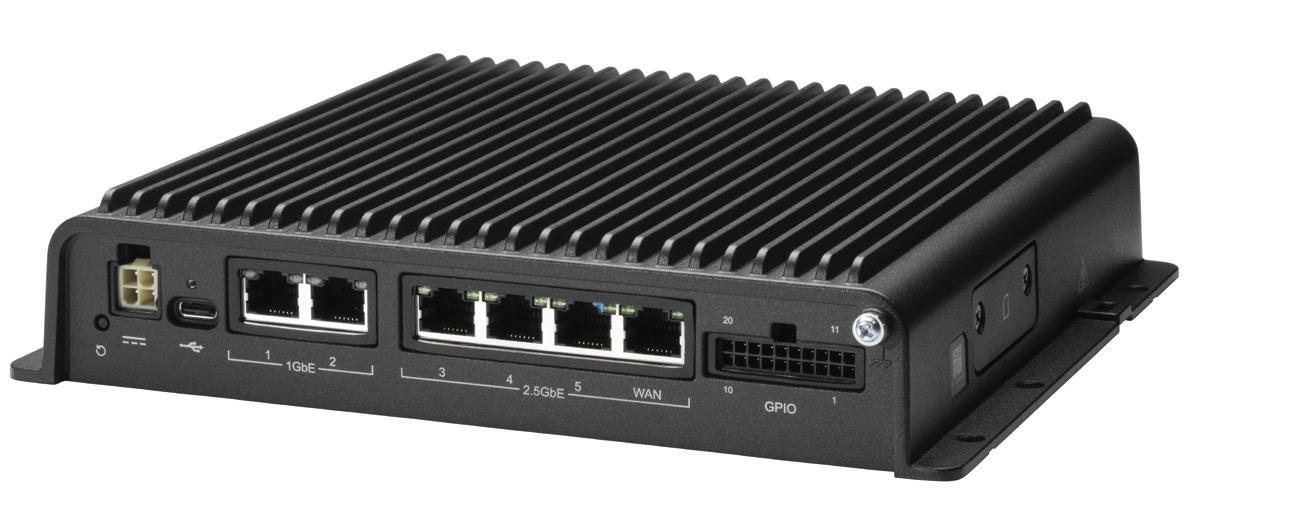
Ericsson's Cradlepoint R2400 ruggedised router features an industry-first Dual-SIM / Dual Standby (DSDS) on a single modem, which enables carrier switchover roughly 10 times faster than previous approaches keeping voice, video, and data flowing during critical events and transit routes. It also offers faster security processing, with Ericsson NetCloud SASE’s zero-trust security and SD-WAN services providing a highly secure and optimised WAN network across fleets, sites, and critical assets.
As fleets adopt video analytics, environmental sensors, automated alerts and emerging AIdriven applications, traditional vehicle routers struggle to meet the demand. Many lack the processing power required to handle workloads locally, forcing data back to the cloud even when latency or backhaul limitations make that impractical. The R2400 is engineered to support these evolving needs with significantly expanded edge compute capacity. Offering 2.5 times more processing power than its predecessor, it enables organisations to run AI inference for video analytics, computer vision, people counting and containerised applications directly in the vehicle.
This reduces delays, preserves bandwidth and ensures faster access to insights exactly where they are needed.
With multi-carrier 5G and edge AI, Ericsson’s R2400 can unify in-transit vitals, voice, and video so hospitals receive continuous insights and secure handovers.
The Ericsson R2400 enables:
• Sensor data reading, filtering, telemetry and simple anomaly detection
• Camera-based or audio-based basic analytics
• Image recognition and object detection
• Event detection
• Facial recognition
• Telemetry-driven predictive maintenance
• Voice activation and command recognition
• Industrial safety and security (incident detection)
• Local data pre-processing/aggregation
• People/object counting.
For agencies investing in modernisation, connectivity is the foundation, and nextgeneration networks make it resilient. 5G supports high-quality video and live data flows, while edge computing processes information closer to where it’s collected to reduce delays.
SD-WAN routes traffic intelligently, so critical applications stay up and responsive. Together, these technologies help agencies stay connected when it matters most.
Compact network survey instrument
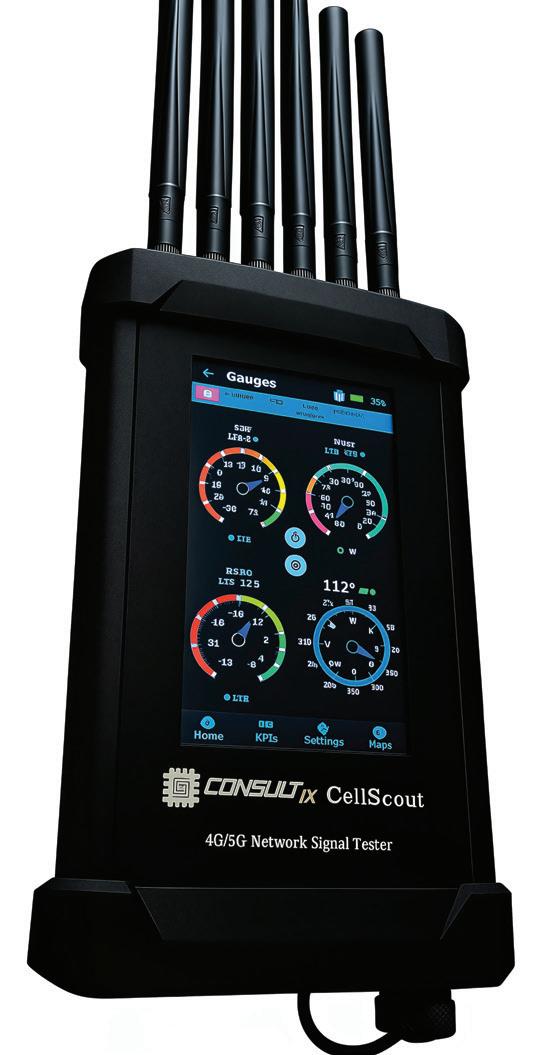
The Consultix CellScout is a compact, ultra-portable handheld network survey instrument engineered to deliver fast, accurate over-the-air measurements of 4G LTE and 5G cellular networks. It is purpose-built for installation teams, field technicians and wireless optimisation engineers who require real-time insight into mobile network performance without the need for bulky equipment or external devices.
Built for both indoor and outdoor use, CellScout is designed to enable precise tower and antenna alignment to provide optimal signal direction and network performance. It measures key RF metrics such as RSSI, RSRP, RSRQ and SINR, and its integrated compass functionality and cell-lock capability allow users to lock onto a specific cell tower, preventing incorrect measurements and eliminating signal ambiguity. USB and Wi-Fi data export are supported and it has a rugged, lightweight, IP65-rated design for field use.
The palm-sized, standalone device features a 5-inch touchscreen with an intuitive graphical user interface (GUI) with real-time measurement visualisation, and aims to combine simplicity, accuracy and high performance for mission-critical applications.
TelecomTest Solutions
www.telecomtest.com.au
Two-way radio
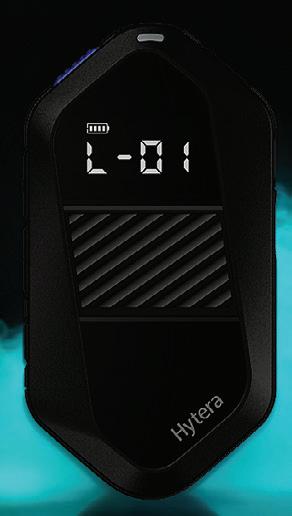
Hytera has expanded its S Series with the S1 E — a business-ready, palm-sized two-way radio designed specifically for the retail sector.
Adhering to the series’ signature design language, the product combines a stylish, modern and minimalist aesthetic with practical functionality. Weighing under 85 g, it provides all-day wearing comfort without tugging or weighing down uniforms.
The radio includes a high-sensitivity receiver and power-efficient antenna that deliver seamless coverage across large stores and busy shopping centres, eliminating dead spots. Built-in AI-powered noise cancellation filters out background noise — from crowded streets to bustling sales floors — for clear audio and stable messaging.
Support for wired headphone is included with the device, as well as connectivity to personal wireless earbuds, enabling hands-free communication. The product is IP67 rated for full protection against splashes, sweat, dust and dirt, so users can focus completely on their tasks.
An 1800 mAh Li-ion polymer battery supports up to 24 h of operation under a 5-5-90 duty cycle. The product also features a replaceable battery design and fast USB-C charging — suitable for quick shift changes — while an optional 8-pocket multi-unit charger simplifies fleet charging for larger teams.
Hytera Communications Co. Ltd www.hytera.com.au
Wideband GaN-on-SiC HEMTs
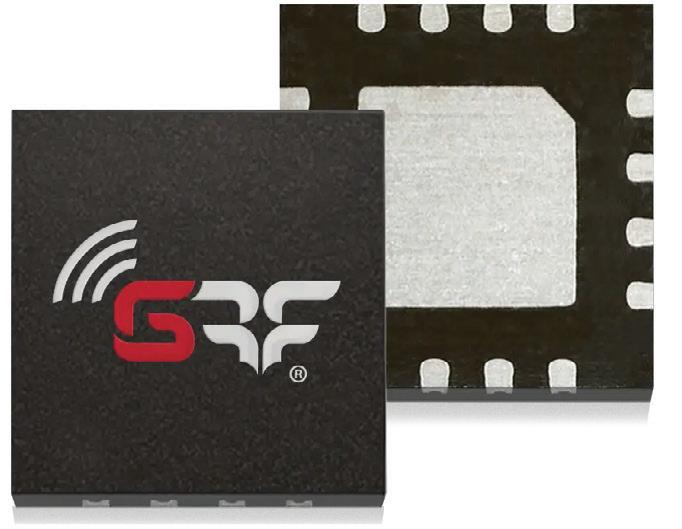
Guerrilla RF’s latest discrete GaN-on-SiC HEMTs, the 30 W GRF0020 and 50 W GRF0030, are designed to offer high performance, operating across DC to 7 GHz and DC to 6 GHz, respectively, on 50 V supply rails. The devices are also compatible with 28 V supply rails, providing saturated power outputs of 19 and 25 W.
The wide bandwidth of the devices makes them suitable for a variety of applications, including 5G/cellular infrastructure, radar, communications and test instrumentation. They can support both linear and pulse operations. Richardson RFPD www.richardsonrfpd.com
Swedish mine modernises communications by unifying DMR and LTE
Zinkgruvan Mining AB is an underground mine in south-central Sweden owned and operated by Boliden AB, a Swedish metals mining company. It produces zinc, lead and copper concentrates, with the deepest level of the mine approximately 1400 m below the surface. In 2024, the mine produced between 75,000 and 85,000 tons of zinc and 4000 to 5000 tons of copper.
Across the mine site Zinkgruvan had an existing Tait DMR Express 20 two-way radio system with six radio sites and approximately 750 users, as well as a separate broadband 4G LTE communications system. The company wanted to integrate the two in order to create a combined solution allowing seamless voice calls between DMR radios and LTE devices, with LTE users integrated into existing talk groups. The ability to support private calls between radios and LTE devices was an absolute necessity.
The main problem however, was that the existing DMR radio system covered all areas of the mine, while the LTE system only provided coverage in one-third of the underground section. The majority of the mine staff work in areas with LTE coverage and were not keen on carrying two communications devices.
There was also a broader strategic driver: through the LTE system the company hoped to create a platform for further digitalisation, support autonomous vehicles and enhance automation — all key drivers to make the mine more efficient, safer and less costly to operate.
Tait proposed implementing its PTToX system, designed to interconnect narrowband two-way radio and cellular LTE broadband
systems. The technology enables LTE devices to operate as PTT (push-to-talk) devices, allowing them to communicate with two-way radios. As a trial, a PTToX system was set up by Tait in the UK to demonstrate the effectiveness of the solution to Zinkgruvan. Tait then installed a gateway locally at the Zinkgruvan site to connect the PTToX platform, managed in the cloud from the UK, along with the existing DMR Tier 3 system at the mine.
The result was a system with no noticeable delays in communications between radios and LTE devices even though the PTToX installation is located off-site. The call diversion feature is proving very handy — calls to a radio user are forwarded to the LTE device when the radio is turned off, and calls to the LTE device are forwarded to the radio when the LTE device is out of coverage range. The Tait EnableFleet application also makes configuration changes and firmware upgrades easy to carry out remotely, with changes transferred instantly via over-the-air programming.
“Since we could use the same fleet management tools for both PTToX and legacy radio, administration was simple,” said Mats Andersson, Telecom Engineer at Zinkgruvan. “Administration of the PTToX devices was easy and straightforward.
“The main benefit is that the majority of our operators only need to carry one device. The call forwarding simplified operations and there was no need for re-learning users’ IDs and workgroups.”
VISION 2040 THE ENDURING ROLE OF TETRA IN MISSION–CRITICAL COMMUNICATIONS
Sepura
TETRA continues to be a globally trusted platform for mission-critical voice, offering unmatched reliability, security and performance.
As critical communications environments evolve, TETRA will coexist within hybrid ecosystems, integrating seamlessly with broadband technologies to deliver resilient, secure and efficient mission-critical communications for decades to come.
Over the last 25 years, TETRA (Terrestrial Trunked Radio) has become synonymous with reliability. It remains an established benchmark for mission-critical voice and the global gold standard against which all future technologies
will continue to be measured. Worldwide, governments, operators and enterprises are sharing a clear message as they plan operational strategies extending into the 2035–2040 horizon: TETRA remains essential.
This continued confidence is reflected in ongoing TETRA investments, sustained revenue growth, and even new nationwide deployments. Organisations across public safety, transport, utilities and industrial sectors continue to rely on TETRA because it delivers:
• a dependable cost-effective communications solution
• ultra-low latency and guaranteed group voice communications
• exceptional resilience in crisis conditions
• proven Direct Mode Operation (DMO) where network coverage does not exist
• predictable, trusted behaviour in the hands of frontline professionals.
Long-term investment and operational confidence
TETRA is expected to remain the global cornerstone for mission-critical voice services through 2040 and beyond. Many networks have guaranteed operational lifetimes extending into the 2035–2040 timeframe, including major national programs. In parallel, new networks continue to be
procured and rolled out, including Denmark’s national public safety network and a major expansion of Italy’s public safety system, along with numerous commercial deployments worldwide. These are substantial long-term investments, with typical lifecycles of 15 to 20 years. In many areas of the world where broadband spectrum is unavailable or not economically viable, TETRA will always be required to provide a robust and reliable communications solution.
While there is a clear global trend towards hybrid LTE and TETRA communications, TETRA remains as the dependable voice layer, while broadband technology augments data capabilities.
TETRA IS EXPECTED TO REMAIN THE GLOBAL CORNERSTONE FOR MISSION-CRITICAL VOICE SERVICES THROUGH 2040 AND BEYOND.
The reality of the migration to LTE and why hybrid communications are the practical path forward
Many organisations are planning a path towards broadband-enabled Mission Critical Services (MCX). This evolution is both necessary and positive, but it is also a long-term journey that extends well into the 2030s. Migration at this scale cannot be rushed: it must be safe, carefully coordinated, and fully aligned with operational reality.
For this reason, hybrid communication — combining TETRA and 5G — is not a temporary workaround. For many organisations, it represents the operating model of the 2030s. Across Europe, public safety programs expect extended periods of dual operation of TETRA and MCX to safeguard continuity, interoperability and resilience. Hybrid timelines of more than five years are typical as countries validate the nationwide coverage, priority and pre-emption, and off-network capabilities required for mission-critical broadband.
Hybrid devices, workflows and infrastructure are set to define the next decade as organisations adopt broadband capabilities at a controlled pace while still relying on TETRA as the trusted backbone for mission-critical voice.
Public safety operations demand unbroken, guaranteed communication, even when infrastructure fails, making device-to-device (D2D) communication a mandatory capability in public safety and many mission-critical operations worldwide.
TETRA delivers deterministic, groupcentric voice with Direct Mode Operation (DMO), enabling true off-network operation, the gold standard for incident response, rural coverage and in-building resilience.
While alternative 3GPP Sidelink approaches continue to develop, they are still maturing and are not yet certain to work, with further standards development and spectrum allocation still required. They are unlikely to be commercially available for device suppliers to start to create products before 2030. Until then, TETRA DMO remains the dependable and proven solution, which will persist even after TETRA networks are switched off, to provide a D2D service.
Security for the next era
The security and threat landscape continues to evolve, shaped by increasingly sophisticated tools, nation-state actors, and the emerging impact of quantum computing. TETRA rises to address these challenges through a robust security framework that provides exceptional levels of protection, safeguarding privacy and ensuring the secure transmission of sensitive information. With quantum-safe algorithms built into the standard, TETRA continues to support the highest levels of security, both now and in the future, helping organisations maintain trust and operational confidence as threat environments change.
A proven, evolving technology for mission-critical communications
TETRA has developed into a mature, robust and dependable technology, underpinned by a broad and competitive supplier ecosystem. It continues to evolve in response to user needs and expectations, particularly in the area of data communications. As networks grow, the TETRA standard continues to be refined to enhance capability while maintaining the consistent, reliable performance that mission-critical users depend on.
As the mission-critical communications landscape continues to evolve, TETRA stands firm as the trusted and resilient foundation on which the next generation of hybrid capabilities will be built. Its proven performance, security and operational certainty enable organisations to navigate the migration decade with confidence, adopting new broadband innovations while maintaining the dependable voice communications that they rely on every day.
With ongoing investment, continuous innovation and a clear global commitment to its long-term role, TETRA remains essential in supporting those who safeguard our communities and keep vital services running, today and well into 2040 and beyond.
iStock.com/Hoptocopter
Radio Matters
The past year has been one of steady progress and continued advocacy for RFUANZ, as we remain focused on protecting, promoting and preserving radio communications across New Zealand.
Following a period of internal change in 2024, 2025 allowed the committee to build momentum, strengthen relationships, and deliver on key initiatives that support both our members and the wider industry.
A highlight over the past 12 months has been securing a $20,000 grant to further develop the industry’s technical qualification pathway. This work is already underway and represents an important step towards addressing one of the sector’s most persistent challenges: an impending skills shortage. While a detailed update will be shared at our upcoming AGM, the direction is clear: ensuring we create a sustainable, recognised pathway for the next generation of technicians entering the industry.
Alongside this, RFUANZ has continued to actively engage with Radio Spectrum Management (RSM) across a range of matters impacting the sector. This includes our formal submission for the 2025 Radio Spectrum Fees Review, where we worked closely with members to ensure industry perspectives were well represented.
We acknowledge the balanced approach taken by RSM in the final proposal. While fee increases are never without impact, the outcome reflects a measured position compared to earlier projections. Changes are set to come into effect from July 2026.
A continued focus of ours is strengthening the connection within our community and the wider industry. In November, RFUANZ delivered two new membership networking events, which proved successful in bringing professionals together in a more informal and accessible setting. These events will return in 2026 as we continue to build opportunities for collaboration, knowledge-sharing and community across the sector. As a membership-based association, we encourage those involved in the industry to consider joining and contributing to this growing network.
Looking ahead, a calendar highlight is once again upon us: Comms Connect NZ 2026, taking place in Wellington on 27–28 May. After several successful years in Christchurch, the move to Wellington marks an exciting new chapter for the event.
RFUANZ is hosting our AGM at 2 pm on the 27th, followed by the Industry Awards Gala Dinner that evening — a key opportunity to recognise and celebrate the people who continue to drive this industry forward. This year also sees the introduction of a new award category, further evolving how we acknowledge contribution and excellence across the sector.
None of this would be possible without the ongoing support of our sponsors, partners and dedicated committee members, including the continued leadership of our Chair, Soren Low. Their commitment ensures RFUANZ can deliver meaningful initiatives and maintain a strong, representative voice for the industry.
As always, our focus remains clear: supporting the industry through advocacy, developing future talent, and creating opportunities for connection. We look forward to engaging with many of you in Wellington and continuing the conversation on how we collectively strengthen the future of radio communications in New Zealand. Radio Frequency Users Association of New Zealand (RFUANZ)
Rugged drone control solution
Getac Technology Corporation has announced the launch of its CommandCore rugged drone control solution for defence, public safety and utilities in Australia and New Zealand.
CommandCore lets users combine Getac’s rugged hardware with industry-specific accessories, payloads and software based on their individual needs and use case. The result is a UAV/USV/UGV control solution that is fully adaptable and can be tailored to suit a wide range of Australian and New Zealand challenging environments and operational scenarios, such as those found in the defence, public safety and utilities industries.
Central to CommandCore is Getac’s Ground Control Station (GCS), which serves as a centralised, mission-ready hub, designed for real-time data processing, drone control and overall management of operational parameters. Users can choose between several different Getac devices depending on their GCS needs, including the ZX80 fully rugged Android tablet, UX10 fully rugged Windows tablet, S510 rugged Windows laptop, B360 fully rugged Windows laptop and X600 fully rugged Windows workstation.
The form factor of the GCS can also be customised for maximum flexibility. Options include a fully integrated design with built-in drone controls and an accessory-type design that lets users separate the Getac device from externally housed drone controls as needed. Additional form factors include an office dock design, and a comprehensive suitcase design with dual display for use as part of mobile command and control activity. Getac Technology Corp www.getac.com
Delivering carrier-grade mobile connectivity at Victoria Cross station
Located in the heart of North Sydney, the Victoria Cross Station forms a key part of the city-shaping Sydney Metro program — Australia’s largest public transport infrastructure initiative. The integrated station development combines a metro station positioned 31 metres below ground with a significant over-station development (OSD), including a three-level retail and commercial podium and a 42-storey commercial tower rising above the southern station entrance.
Delivering seamless mobile connectivity across such a dense, multi-layered environment presented considerable complexity. The OSD required carrier-grade performance capable of supporting high user density and the strong service expectations typical of a premium commercial and retail precinct. Reinforced concrete, steel structures and deep underground construction created challenging RF conditions, while parallel station and OSD construction packages introduced interface risks and access constraints. Cable pathway limitations demanded innovative routing solutions and extended runs to maintain coverage integrity without compromising performance.
To address these challenges, RFI designed and deployed a fully integrated active distributed antenna system (DAS) using the ANDREW ERA Active Solution. The solution was engineered to deliver consistent, high-performance mobile coverage throughout the commercial tower and retail zones while meeting the stringent acceptance requirements of Telstra as the lead carrier.
The RF and antenna design was carefully optimised to account for both architectural constraints and demanding propagation conditions.
13 ERA remote units were strategically positioned to support current capacity requirements while allowing for future scalability as tenancy and user demand increase. The deployment involved extensive antenna and cabling installation undertaken within live construction environments, requiring disciplined staging, strict compliance controls and continuous coordination across multiple stakeholders.
Project delivery was structured in alignment with construction sequencing and site access limitations. RFI worked closely with the builder, client representatives and carrier teams to manage complex interfaces between station works, OSD construction and carrier integration activities. Comprehensive commissioning, walk testing and performance verification ensured that all coverage objectives and KPIs were achieved prior to handover.
The completed DAS now provides robust, carrier-approved mobile coverage across all designated OSD and retail areas. The system eliminates dead zones, enhances call reliability and data throughput, and supports the operational requirements of commercial tenants while delivering a seamless connectivity experience for building occupants and visitors. With complete handover documentation and verified performance results provided at completion, the solution establishes a resilient communications foundation to support the long-term success of this landmark development.
RFI Technology Solutions www.rfi.com.au
Dan Winson, CEO, Zetifi
Australia is a big country and travelling long distances on deserted roads is all in a day’s work for many mobile and field workers. So is toiling in isolated locations, miles and hours from towns and cities, as many agricultural and resources sector employees do.
While mobile phone coverage has improved in recent times, it’s still far from universal. Black spots remain plentiful in rural and remote locations.
Knowing you’re out of phone range is not a pleasant feeling. For lone workers travelling and working solo, it can mean being stranded by the side of the road for hours or even days, should they experience a breakdown or face other dangers such as human or animal aggression, an unfortunate medical event, or seasonal climate disaster.
And, in the event of a collision or industrial accident, they may well find themselves seriously injured and unable to raise the alarm that they need help urgently.
On the road and on your own
Fortunately, businesses are becoming alert to the fact that knowing they’re off the grid can be extremely stressful for workers. Over time, that stress can have a harmful effect on mental health and wellbeing.
Given mental health is the leading cause of absence and longterm incapacity in the workplace — it costs the Australian economy as much as $220 billion annually, by the Productivity Commission’s reckoning — there’s a clear imperative for businesses to take practical steps to promote worker safety and wellbeing wherever they can.
Doing so is both socially responsible and commercially smart. In recent years, states have strengthened regulatory frameworks around
psycho-social hazards; putting the onus squarely on businesses to identify, mitigate and manage them. In fact, directors who fail to take sufficient steps to safeguard workers’ psycho-social wellbeing may find themselves held personally liable for adverse consequences that arise as a result.
Turning to technology to boost worker wellbeing
That’s where technology has an important role to play. It can ensure lone workers, however remote their location, are not left feeling like they’re out there on their own.
Devices today can sense worker environments, deliver precise location awareness and create intelligent connections between devices, systems and people, via connectivity, telematics and applications including lone worker duress and safety alarm tools.
The signals they detect and transmit can be swiftly and seamlessly interpreted and forwarded to key personnel responsible for instigating an immediate and appropriate response.
That’s not always possible when a lone worker is solely reliant on their mobile phone to summon aid. As a safeguarding system, it’s far too vulnerable to single point failure. Should the network drop out, for example, or the phone malfunction, there’s no Plan B for getting word back to base.
Instead, what’s needed are two things:
1. An improvement in reliability where possible, extending coverage, and better high-quality devices, but this only takes you so far. 2. Redundancy, which is infinitely more achievable because no matter how high the quality of a device or network, things can and do go wrong.
However, ultimately, you need a back-up plan, including the use of antennas able to provide back-up signalling methods and back-up connectivity, so if a worker’s phone isn’t working it can get critical information out. Seamless integration with third party applications, such as telematics, can also be a game changer. This can provide businesses with highly accurate collision data on sudden stops and vehicle impact, along with the ability for workers to check in regularly and send an SOS via cabin-mounted and portable duress buttons.
Efficient incident management
If the technology array that’s adopted integrates seamlessly with low-code tools and systems, monitoring and managing remote worker activity can be highly efficient and cost effective. Indeed, by drawing on existing organisational structures, citizen developers can create customised workflows that ensure the right people are alerted, based on the nature of the data received.
Emerging agentic AI capabilities today also enable users to build intelligent virtual agents that can make decisions and issue instructions autonomously, around the clock. In effect, that means someone’s in the office, all the time, looking out for lone workers who are on the road and in the field.
Taking care of the team physically and mentally
Irrespective of the industry, a healthy, high-performing workforce will always be any organisation’s greatest asset. Whether they’re in the office or out on the road alone, it’s vital that steps are taken to show the team the company has their back. Having access to intelligent antenna technology that allows them to share their location and signal for assistance means they can get on with the job, secure in the knowledge they’ll receive speedy support whenever it’s needed.
If providing a mobile workforce with greater peace of mind is a priority, it’s an investment that will stand any business in excellent stead.
Answering the call to transform our emergency services Spectrum
Much has changed in Australia since Canberra introduced the Triple Zero (000) emergency service more than 60 years ago.
Designed for an era when public phone booths lined street corners and rotary dial phones occupied our homes, the brand behind our national emergency hotline has long survived the legacy infrastructure it was once based upon. In fact, the former Postmaster-General’s Department chose the number 000 in 1961 because it was easier to dial on a rotary phone, especially in the dark or when surrounded by smoke.
The technology we use to call for help has since evolved dramatically, with most emergency calls now made via smartphones. With high-definition cameras to film unfolding events, GPS to identify caller locations and internet connectivity, today’s smartphones make it possible to share much more of what we see and hear taking place in our communities. Despite these advances, public safety emergency systems are still largely based on voice communication and not yet fully equipped to ingest the wealth of valuable, contextual data that modern devices can generate.
From voice to vision
Focus on our national emergency hotline has intensified recently, after cellular network outages led to missed emergency calls, influencing the federal government’s decision to bolster the powers of the Triple Zero custodian.
In Australia and globally, the digital transformation of call-taking systems is already underway. The goal for public safety agencies is to streamline and accelerate emergency response — not only by answering urgent calls for support, but by receiving, interpreting and acting upon data in all its forms.
This includes modernising control rooms to receive relevant images, video and social media content from the public and providing richer incident awareness for first responders on the scene. For instance, allowing a Triple Zero caller to share video of a car accident could help dispatchers determine how best to respond and contribute to a better and faster response.
As community expectations rise to share more data with public safety agencies, the modernisation of emergency call-taking systems needs to keep pace with the way different generations of Australians communicate — quickly, visually and across multiple platforms.
An independent study commissioned by Motorola Solutions reveals that while an overwhelming 88% of respondents prefer to contact emergency services by phone, there’s also strong support for SMS/text messaging (41%) and smartphone apps (38%).
The study also found that while the public is comfortable with sharing their exact location data (86%), personal information about medical conditions/allergies (75%) and wearable health data from smartwatches, rings and other devices (54%), they have lower expectations that our emergency services
are actually capable of receiving and using that data to improve emergency response (by 1%, 20% and 16% respectively).
Embracing AI in emergency management
With artificial intelligence so prominent in our daily lives, it’s surprising that the research found that 78% of people were unaware AI is already being used or developed for emergency call handling.
When asked specifically where they’d like to see AI used in emergency call taking, almost 60% chose detecting critical key words such as ‘knife’ or ‘collision’, ranking emergency calls by urgency (55%), and automatically identifying potential safety threats in live video footage and enabling live translations of callers speaking foreign languages (both 52%).
Using AI to process this critical information means it can be better analysed, augmented and organised before it reaches human responders. This can save vital time during emergencies, when speed and precision can help to save lives.
Building resilient systems
Unlike ordinary ICT or telecom systems, public safety call-handling systems are designed with the highest levels of security and availability, reflecting the essential and life-saving capabilities they can provide. These systems deliver enhanced location services, providing precise and timely information to facilitate faster and more effective emergency response.
As it approaches its eighth decade of operation, the nation’s Triple Zero service remains an enduring symbol of help in times of crisis.
For Australia, the next wave of modernisation is an opportunity to redefine emergency response in a connected society, where voice, data, multimedia content and AI-powered capabilities come together to help keep our communities safe.
Con Balaskas is Managing Director and Country Manager for Motorola Solutions’ A/ NZ business. In his more than
25-year career with Motorola Solutions, Con has held many senior leadership roles, and began his career as a network engineer at Optus. He holds a Masters of Business Management degree from Monash University.
Modernise without disrupting what already works
MissionX: built for Australia’s harshest missions
3020 LifeX™ Designed for public safety organisations, unifies voice, text, multimedia, and partner system data in one mission critical platform, giving control room operators better situational awareness while public safety organisations modernise at their own pace. Unlike solutions focused solely on call handling, CAD, or broadband communications, 3020 LifeX™ unifies control room communications across channels, systems, and operational domains. The result: a lower risk path to next generation public safety communications, with open integration, flexible deployment, and continuity for end users.
Frequentis’ MissionX is the solution for mission critical communication services. From the outback to coastal cities, Australian responders need communication tools that work anywhere, anytime. Frequentis MissionX delivers mission-critical voice, video, and data over 4G/5G and satellite networks – ensuring secure, high-performance connectivity for public safety, utilities, rail and mining operations.
Designed for extreme conditions and peak load, MissionX supports encrypted communications, multimedia services, high-volume data flow, and defence grade cyber security. Field users stay connected with intuitive mobile apps, while command centres gain real-time situational awareness through fully integrated multimedia. With a focus on interoperability and resilience. MissionX enables seamless coordination across agencies, borders, and technologies – supporting critical missions not only in Australia, but around the world.
A trusted market leader for over a decade, 3020 LifeX™ powers more than 4,000 operator positions worldwide.