


By Nina Culver Stream contributor
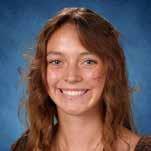
Cheney High School Senior Hayden Bowdish added a few new items to her wardrobe recently, including Lilac colored dresses, a sparkling sash and a crown that identifies her as Queen of the Spokane Lilac Association’s Royal Court.
Bowdish was one of 16 Spokane County teens who were named as Lilac Association ambassadors representing their high school. That group was narrowed down to seven finalists and Bowdish was named Queen after a round of interviews and speeches before a panel of judges.
Bowdish recalls the moment she heard her name called as Queen. “I was taken aback, to say the least,” she said. “The first thing I thought was, I wanted to talk to my mom.”
She was congratulated by her fellow princesses and accepted her crown and cape, but as soon as she could she got off stage and found her mother. “As a single working mom, she fought really hard to make sure I have opportunities like this,” she said. “She was sobbing and then I started sobbing. It was really emotional.”
The other members of the 2026 Royal Court are: Ava Hubble, University High School; Ava Payne, East Valley High School; Chloe Nelson, Spokane Valley Tech; Kahlan Cartmell, Shadle Park High School; Naliesha Richardson, Gonzaga Preparatory School; and Simone Kaczmark, Lewis and Clark High School.
Bowdish has lived in Spokane County since she was born, spending time living near downtown Spokane, in north Spokane and in Spokane Valley before moving to Cheney as she was preparing to start high school. She said it was a switch to attend a
high school in a small town rather than the more urban areas she was used to, but she’s glad to be in Cheney.
“It’s offered me a lot more opportunities than I would have had everywhere else,” she said.
Bowdish is very involved in extracurricular activities, but has always gravitated toward clubs and leadership opportunities instead of sports. She’s currently the ASB social media manager, a member of executive leadership, a member of Key Club and a member of Deca, where she works as a barista in the school’s coffee shop.
Last year Bowdish signed up for a NW Peer2Peer mentor. The mentorship program matches older students with younger, low-income students to help guide them through high school and into their future. Bowdish said at the time she was really worried about applying for college and how she was going to afford college. She said her mentor helped her set up her future for success.
“She was so insightful,” she said. “She helped me a lot.”
Bowdish said she was delighted when she was asked to switch roles and mentor a younger student this year. She has since been matched with a freshman who she meets with once a month. “She is a ray of sunshine,” Bowdish said. “It’s great being on the outside and seeing her achieve her goals.”
Bowdish said she anticipates being able to juggle her new duties with her school work and extracurricular activities. She said her teachers have been supportive, often asking how they can help. “It really does involve a lot of communication, for sure,” she said.
When Bowdish first attended an orientation for the Lilac Royal Court program, she was nervous. She said her nerves settled after they were shown a video featuring the previous Lilac Court, who talked about how they grew as people and what their experience was like in the program. “It definitely was intimidating at first,” she said. “Then they started talking about the opportunities.”

She and the other 16 school ambassadors spent nine weeks together getting training in everything from financial literacy to self-defense. “You get to know each other very well,” she said. “We still hang out together outside of Lilac.”
Bowdish said her job as Queen is to be the head spokesperson for the Lilac Court and to advocate for the Association’s mission to honor the military, empower youth and showcase the region.
She’s also becoming used to being approached by young girls in public, drawn in by her sash and lilac crown, excited about meeting a Queen. Some even wave at her using their best princess wave.
She said the princesses in the Lilac Court are a great group and supportive of her. “I’m so excited,” she said.
Still, her calendar is packed between now and the Lilac Association’s showcase event, the Armed Forces Torchlight Parade on May 16 in downtown Spokane. She now spends portions of her days mapping out upcoming events and helping select which princesses are best suited for particular tasks during those events.
She said she encourages anyone considering applying to be a member of the Lilac Court in the future to go for it. The most important thing to remember is to make sure you’re being your authentic self, Bowdish said.
“You’re enough as you are and you’ll find your place,” she said.
Q: What made you decide to apply to be a part of the Lilac Court?
A: I applied to be part of the Lilac Royalty Program because I wanted to engage with my hometown and give back to the city that raised me. Events like the Lilac Festival shaped my childhood, so when I saw a flyer seeking candidates at my school all the way out in Cheney, I jumped at the opportunity. I attended an orientation to better understand the program, and after hearing about the empowering experiences from last year’s court and how they contributed to something greater than themselves, I knew it was something I wanted to pursue.




























Continued from page 2
Q: Can you describe the steps you went through during the selection process?
A: My journey began in January alongside 16 other ambassadors representing our high schools. Over nine weeks, we developed skills ranging from financial literacy to self-defense, while volunteering with organizations like Habitat for Humanity. We then participated in roundtable interviews, delivered a one-minute speech on our Lilac journey, and responded to judged impromptu questions. The 2026 court was then selected through final interviews with an independent panel.
From there, the seven of us advanced to coronation, which included private interviews with a new panel, a prepared impromptu response, an unprepared response, and a twominute speech centered on the theme “Embrace.”
Q: What are you most looking forward to during your time as Queen?
A: I’m most looking forward to Lilac Festival week and the regional parades that follow. We’ve spent months preparing for these moments, so the anticipation has been building. It will be incredibly rewarding to finally experience the energy that Lilac brings to our community, and even more meaningful to represent that spirit beyond Spokane. This program
connects people in so many ways, and I’m honored to help showcase that as Queen.
Q: Can you describe your work as a NW Peer2Peer mentor and what got you involved in that?
A: As a NW Peer2Peer mentor, I work one-on-one with low-income underclassmen to help them navigate their current lives and optimize opportunities for their future. I meet with my mentee monthly to offer guidance, support, and any resources they might need. What makes this role especially meaningful to me is that I was once a mentee myself, experiencing first-hand the barriers between a low-income background and future goals. Being able to come back and support someone from that
place of understanding is what makes it so important to me.
Q: What are your future plans after high school?
A: Following graduation, I will attend the Washington State University Honors College as a top scholar, double majoring in Management Information Systems and Accounting. I love numbers just as much as I love service-based leadership, and I hope to build a career that combines both. My longterm goal is to work in Corporate Social Responsibility, helping organizations balance profitability with ethical decision-making and holding them accountable to any impacts they may have on the communities they serve.





As Mayor of Medical Lake, I’m proud of the strong sense of community that defines our city. Throughout the year, Medical Lake comes alive with events that bring neighbors together, welcome visitors, and celebrate the traditions that make our community unique. From seasonal festivals and family-friendly gatherings to volunteer-led activities and youth programs, these events reflect the heart and hospitality of our city.
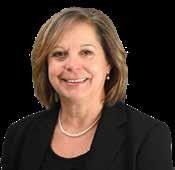
Our parks, lake, and recreation amenities play an important role in
Medical Lake continues to move forward through strategic investment, open communication, and collaboration rooted in community needs. Since 2022, the City has effectively leveraged local resources to secure millions of dollars in regional, state, and federal grant funding, allowing critical capital improvement projects to move forward while maintaining fiscal responsibility. Recent investments reflect a clear focus on safety, resilience, and shared spaces that connect people to one another and to the places they value most. The installation of backup generators at critical infrastructure and key public facilities helps ensure essential services remain operational during emergencies, strengthening community resilience when it matters most.
Investments in recreation, access, and infrastructure are also strengthening community connections. Grant-supported improvements such as the public access dock at Coney Island Park are expanding opportunities for residents and visitors to enjoy Medical Lake’s waterfront, while recent bus stop improvements enhance safety, accessibility, and comfort for those who rely on public transit. Stormwater mitigation projects underway across the city are protecting the long-term water quality of Medical Lake, safeguarding an important natural asset that supports recreation, tourism, and environmental health.

These physical improvements are paired with a strong commitment to outreach and citizen participation. As the City advances its Comprehensive Plan Periodic Update, residents are encouraged to share their perspectives and help shape Medical Lake’s future. Public meetings, engagement opportunities, and online feedback tools provide meaningful ways for people to weigh in on growth, housing, transportation, parks, and community priorities.
Collaboration remains at the heart of Medical Lake’s progress. Continued partnerships with local organizations, schools, businesses, regional agencies, and volunteers expand what the City can accomplish and help maximize the impact of both local and grant-funded investments. Medical Lake is truly a community of connections where people are invited to engage, contribute, and belong.
daily life here. Residents and visitors alike enjoy fishing, walking our trails, participating in recreation programs, and spending time outdoors in spaces that support wellness, connection, and fun. These amenities not only enhance quality of life for our residents but also help showcase Medical Lake as a destination rooted in natural beauty and small-town charm.
Tourism and community events are more than attractions – they tell the story of a resilient and welcoming city that values shared experiences and civic pride. I continue to be inspired by the dedication of our volunteers, local organizations, businesses, and residents who make Medical Lake a place where people feel connected and engaged. Together, we are building a community that honors its traditions, embraces the future, and remains a place we are proud to call home.

Events you won’t want to miss: 4/25 Fisherman’s Breakfast, 6/19 Golf Scramble/Softball Tourney/Founders Day Kickoff, 6/20 Founders Day Festival, 7/11-12 Community Yard Sale
Holidays: 5/10 Mother’s Day, 5/25 Memorial Day, 6/21 Father’s Day, 7/4 Independence Day
Medical Lake Farmers Market: 6/4, 6/20, 7/2, 7/18
Linger at the Lake Concert Series: 6/19, 7/2, 7/30, and 9/12 (Graphic of Linger at the Lake Concert Series dates).
By Nina Culver Stream contributor
Plans for a new elementary school in Airway Heights are moving forward briskly as the Cheney School District seeks input on the proposed attendance boundary for the new school and a name for the school. The District also just announced the selection of Gabby Smithley, currently the assistant principal at Sunset Elementary, as the first principal of the new school.
A map of the proposed attendance boundaries is available online at www.cheneysd.org. Parents are invited to give their input at two upcoming meetings, one from 6 p.m. to 7 p.m. April 21 at Cheney Middle School and the second from 6 p.m. to 7 p.m. April 22 at Westwood Middle School.
Superintendent Ben Ferney said the district put together an advisory committee that included parents, school staff and administrators to
create the new boundaries. The group met four times over several months to discuss various options, he said. “There was no idea before the team started meeting,” he said. “They looked at attendance, they looked at where people were.”
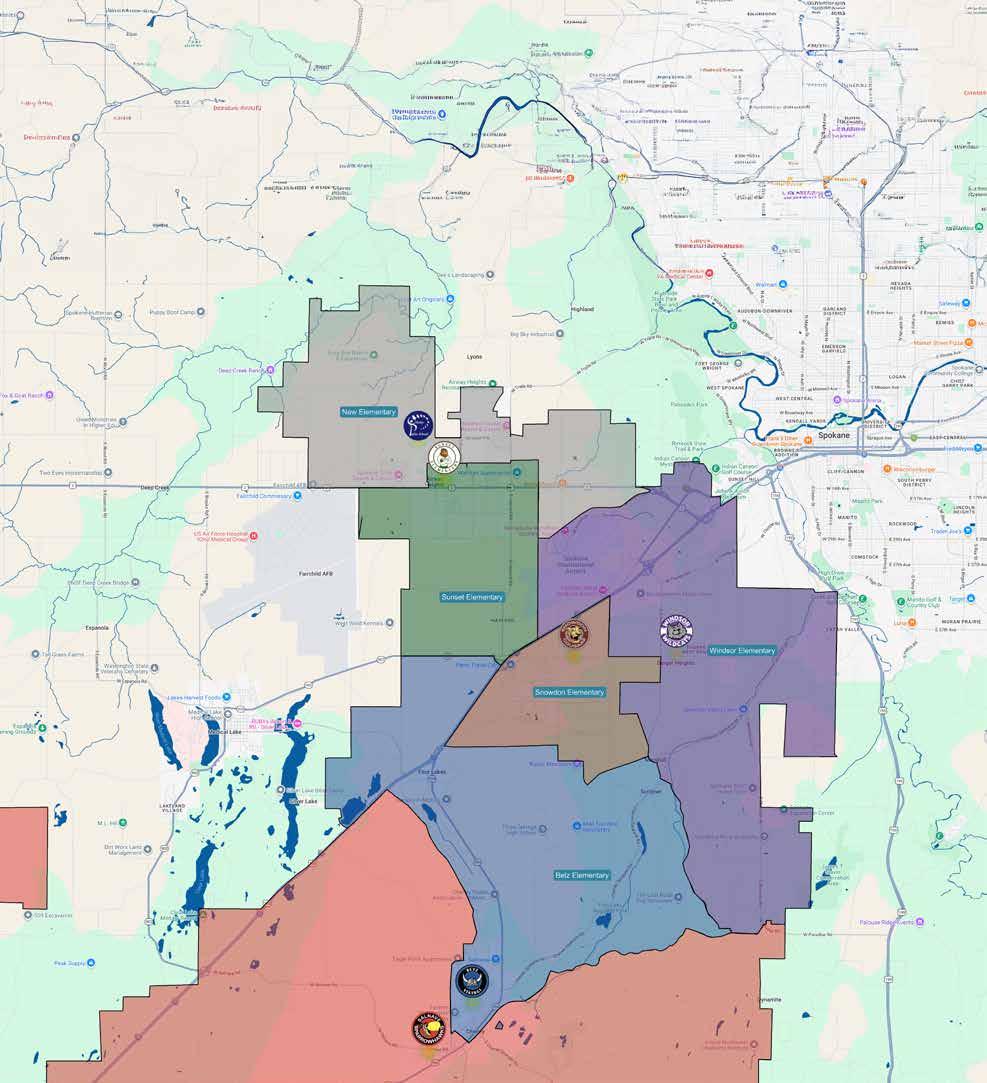
The proposed attendance area of the new elementary school is almost all north of Highway 2, though an area of the Sunset Elementary attendance area crosses north of Highway 2 in the area mostly east of Hayford Road. The new school attendance area dips south of Highway 2 just west of Deer Heights Road.
“The school that’s affected the highest is Sunset, because it is in the same town,” Ferney said.
At the same time, attendance at Snowden Elementary will be affected because quite a few students are being bused there, Ferney said. “Those students will go to either Sunset or the new school,” he said.
Parents will find that there have been some adjustments to other elementary school attendance
boundaries as part of the process. “The boundaries are changing for almost all the schools except for Salnave,” Ferney said.
However, the attendance boundaries for the middle schools and high schools have not been altered. “We made that decision early on,” he said.
Parent Karl Doran, who has children attending Salnave Elementary, was a part of the boundary review committee. He said he joined the committee because he wanted to understand how things work. “I live really close to the boundary between Salnave and another elementary,” he said. “Literally two houses down the road, the kids go to another school.”
Doran said he learned a lot about all the considerations that go into setting boundary lines. “It makes sense now,” he said. “The line needed to be drawn somewhere.”
The committee was given a blank map of the district with the schools marked and told to draw boundaries that make sense. Doran said they began by looking at how overcrowded each school is. They wanted to keep neighborhoods together when possible, so kids who
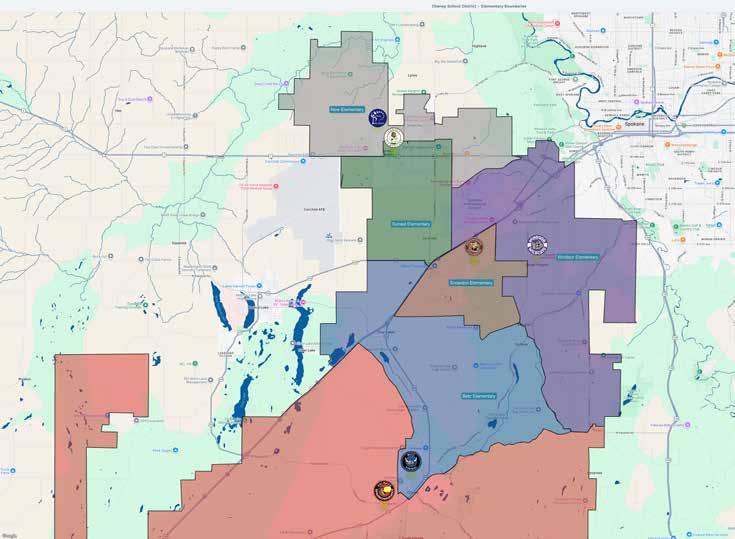
live on the same street can go to the same school. Doran said it turned into an exercise of allowing the lines to naturally draw themselves.
“It’s great to have it where the kids are close to where the schools are,” he said.
Early in the process, Doran went out and drove around the district so he could get a feel for where the boundaries were and if it made sense to change them in specific areas. He went as far to look at sidewalks and fencing that could either make access easier or block access for students walking to school.
Toward the end of the process, the district’s transportation department suggested a few small changes based on how easy or difficult it would be for busing. Doran said he thinks the final map proposal the committee came up with is better than the existing one.
“The last one had some long skinny strips,” he said. “It really feels like it’s the best situation out there. It felt like everyone there was satisfied with what we came up with.”
For the last several years, Sunset, Snowden, Betz and Windsor elementaries have all been overcrowded, with Sunset more so. Voters approved a $72 million bond in November 2024 to pay for the new school as well as upgrades at most other schools in the district.
The capacity of the new school will be 500 students, but the goal is to open with about 400 so there is still capacity to accommodate growth. The new school sits right next door to a new housing development and more development is likely in the area.
“The idea is you don’t fill that,” he said. “You want to have space to grow.”
Ferney said the district will review public input on the proposed attendance boundaries and make any necessary adjustments before submitting it to the school board for approval. Depending on feedback, there could be more public meetings scheduled. “It’s too hard to say if this is it,” Ferney said. “Our hope is this lands really well.”
The goal is to get the boundaries finalized this summer so parents have plenty of time to plan for upcoming changes, Ferney said. “Changing boundaries for schools can really impact families,” he said.
The district was able to get most

community, Ferney said. “There’s a whole bunch of things that need to happen,” he said. “She’ll be busy.”
Smithley said she’s excited to get to build a school from the ground up. She’ll be in charge of creating school systems and building a school culture. “It’s really cool to know your hands are going to be on everything,” she said.
Smithley can trace her desire to be an educator back to her childhood. “I always loved school,” she said. “I loved playing school with my sisters.”
She recalls that her teachers inspired her and showed her a level of caring that touched her. Her family moved to the area when she was a teen and she graduated from Lewis and Clark High School. After attending the University of Idaho, she did her student teaching at Snowden Elementary.
Smithley hasn’t left the Cheney School District since. She was a kindergarten teacher at Sunset Elementary for several years. She also served on district committees and was the Professional Learning Community team lead. Her assistant principal suggested she consider shifting from the classroom to administration.
“That sparked my curiosity,” Smithley said. “Maybe I could have an impact on a larger scale.”
She was a principal intern at
Salnave Elementary for a year before returning to Sunset as assistant principal in July 2024.
Smithley said she loves that she is able to explore a new challenge while staying in her chosen community. “I love serving the Airway Heights community,” she said. “It’s really been an impact on my life.”
She’ll also have the chance to see some familiar faces at the new school. The last class of kindergarteners she taught will be in fifth grade and some of them will be moving to the new school with her. She said they’re excited that their principal will be someone they know.
“I’m really just looking forward to creating that new community hub,” she said.
The opening of the new school will provide relief to Sunset and the other overcrowded schools, Smithley said. She said Sunset is currently at 121 percent of capacity and has either four or five classes per grade level. “We are busting at the seams,” she said. “To meet the needs of our students, it’s easier when it’s less crowded.”
Ferney said he’s grateful for the community support that is allowing the new school to be built. “Our community rose to the challenge,” he said. “I’m just so proud to serve in a district that has the support of the community. I can’t wait. Fall of 2027 is going to be outstanding.”
of the site grading done for the new school last fall. The $36 million school will sit on 11.5 acres on Craig Road north of Highway 2. Ferney said final permitting is underway and construction should start soon. The school should open in the fall of 2027.
“We’re right where we need to be,” he said.
The school was designed to be a community gathering place. Ferney said it has a larger gym and cafeteria than usual and there is a community room. “It’s got space to bring the community in,” he said.
A survey recently went out to get suggestions for a school name. A committee will review the names and present a short list of options to the school board for their consideration, perhaps by the end of June, Ferney said. “We have a lot of different entries that have been interesting,” he said.
The District went through a
lengthy process in selecting a principal to lead the new school.
Ferney said there was a “healthy” pool of candidates and the top five were interviewed by groups of staff, administrators and school leaders.
After the candidates were narrowed down to the top three, a community forum was held to introduce the finalists and get feedback from the public. At the end of the process, Gabby Smithley emerged as the top candidate.
“The thing that stood out about Gabby is her true heart for the Airway Heights community and the students she serves there,” Ferney said. “She’s committed, she’s open, she works hard. That’s the exact person we need there.”
Though the new school won’t open until 2027, Smithley will work as a planning principal for the next school year. She’ll work on staffing, work with the construction team and work on creating relationships in the

By John McCallum Stream contributor
The city of Airway Heights could join with other West Plains cities and Spokane County in an agreement to protect the area’s water supply.
At its March 16 legislative session, the Airway Heights City Council voted 7-0 to approve a Public Works Committee recommendation and put a voter measure on the August 2026 primary ballot to include the city’s boundaries in a West Plains Aquifer Protection Area (APA). If approved, city residents would be assessed aquifer protection fees for a 20-year time frame that would pay for “planning to protect, preserve, and rehabilitate subterranean water; infrastructure for stormwater, sanitary sewer, drinking water; monitoring onsite sewage disposal systems and quality and quantity of groundwater” as well as enforcement of water regulations and public education efforts.
State law allows for the creation of APAs that charge fees for using subterranean water and use of onsite sewage disposal systems. If approved, 18,600 West Plains parcels would be subject to these fees, including not only Airway Heights but the cities of Cheney and Medical Lake as well as Fairchild Air Force Base.
At a Feb. 24 council presentation, county officials proposed annual fees of $15 each for using West Plains groundwater and for on site septic systems. No fee would be charged if the property is hooked up to a sanitary sewer system.
Using the existing Spokane Valley APA average rate of $22 a year, times the number of West Plains parcels impacted would
provide $409,000 per year for the West Plains APA. The funding would be divided between the county and the three cities based on percentage of total parcels, with Airway Heights potentially receiving $53,170 to put towards public education, water conservation efforts or infrastructure construction.
Spokane County, with 62% of the impacted parcels, would receive $253,580. The county would be responsible for programs that monitor surface water flows to Deep, Marshall and Coulee creeks as well as groundwater levels, field parameters and potential chemical contaminants.
County officials also indicated that fees and revenue distributions can be adjusted to meet the West Plains’ needs.
“Those parts and pieces have yet to be determined by the respective cities,” Airway Heights City Manager Albert Tripp said in a March 6 interview.
The Cheney City Council voted unanimously at their Feb. 24 meeting to be included in the West Plains APA.
Wastewater treatment load limits approved
At the April 6 meeting, the council unanimously approved the second reading and final passage of an ordinance establishing wastewater treatment load limits for the city’s water reclamation plant. The limits are required as part of an agreement between the city and the city of Spokane to utilize a connection to the latter’s system for overflow purposes from the Airway Heights plant.
Airway Heights also has a number of properties within the city limits that are served by the Spokane sewer system. Because of this and the overflow connection, and that the state Department of Ecology regulates both plants, Airway Heights is required to meet Spokane’s wastewater pollutant limits established by Ecology.
“This has been baked into the city’s (Airway Heights) municipal code for awhile under section 13.06A,” Public Works Director Katherine Miller told the council.
Airway Heights was recently informed by Spokane that Ecology
Contributed graphic by Spokane County
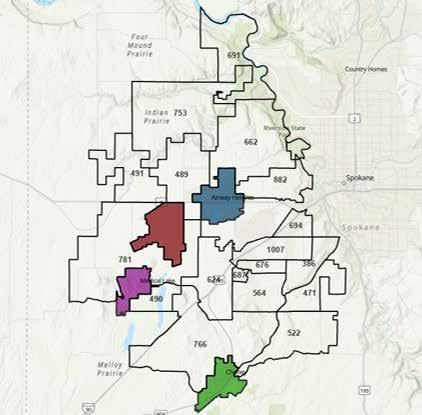
A map of the proposed West Plains Aquifer Protection Area is shown above. The numbers correspond to the number of parcels in each unincorporated county precinct. City parcel amounts are Cheney (green) 2,800, Airway Heights (blue) 2,400, Medical Lake (purple) 1,800 and Fairchild Air Force Base (red) 40.
has required an update on the number and amounts of specific pollutants that will be allowed. These span a wide range of chemicals and minerals from arsenic and barium to chloride, iron, fluoride, lead and zinc to sulfides, oil and grease.
First read on arterial maintenance program
Also at the April 6 meeting, council heard the first reading of an ordinance that would amend the city’s municipal code to establish an arterial maintenance program. Miller said the program was needed partly because several of the projects — such as the improvements to the 10th and 6th Avenue corridors — were funded by grants that require such a program.
The city also felt it imperative to establish a program and define responsibilities for maintenance of items such as landscaping, trees and drainage because of the high-dollar amounts invested in improving arterial corridors “carry the highest traffic volumes
and serve as the primary routes used by nearly everyone traveling through the community,” essentially serving as the city’s “front door.”
According to the city’s project website, approximately $10 million in grant funding has been secured for both arterial corridor projects.
Under the city’s current Municipal Code, property owners are responsible for maintaining landscaping up to the curb. The proposed ordinance would shift responsibility for maintenance from the sidewalk to the curb to the city, with property owners required for maintenance from the backside of the back of the sidewalk to the property line. The requirement is only for arterials improved by the city, and would be paid for out of Transportation Benefit District funds.
“We’re not talking about those other roadway (non-arterial)
See AIRWAY HEIGHTS, Page 14
By Tech. Sgt. Heather Ley
92nd Air Refueling Wing Public Affairs
More than a dozen Team Fairchild Airmen received the Distinguished Flying Cross and the Bronze Star Medal during a ceremony on March 31 for their heroic actions during recent combat operations.
Maj. Gen. Charles Bolton, Eighteenth Air Force commander, presided over the ceremony and praised 15 honorees for their "courage, professionalism and an unyielding commitment to the mission and their fellow Airmen."
The awards recognized the aircrews for their performance while flying complex and dangerous missions in contested airspace. The Airmen were lauded for providing critical refueling that enabled other Air Force assets to continue the fight and return home safely.
"These historic missions were fraught with peril and required decisive reactions to dynamic operational environments," said Bolton. "The way they choose to respond, the way they adapt and work together – that’s what we’re
highlighting today."
The Distinguished Flying Cross is awarded for extraordinary heroism and aerial achievement, while the Bronze Star recognizes heroic or meritorious service in a combat zone. Both are among the nation's highest military decorations.
"The skill and tenacity displayed by the members here today led directly to the success of the overall operation," said Bolton. "We thank them for displaying this true grit and dedication."
While the ceremony focused on the decorated Airmen, Bolton also credited the wider team whose efforts were essential to the mission. The decoration ceremony drew a crowd of approximately 300, comprising of Team Fairchild personnel, local community figures,
and family members to celebrate and honor the recipients.
“From maintainers ensuring aircraft readiness, to mission planners and support crews, none of this could happen without the collective efforts of our Air Force family," said Bolton.
He concluded by framing the actions of the honorees not just as a successful mission, but as a lasting legacy for the service.
"These Airmen have not only written a chapter in the proud history of our Air Force but have set an example for all who wear the uniform," said Bolton. "On behalf of a grateful nation and the Eighteenth Air Force, thank you for your service, your sacrifice and your unwavering commitment to the mission.”


Ages 5+ & their families
Children’s Games: Then & Now

Explore, craft, and play games that have been around since 1776.
MEDICAL LAKE LIBRARY
321 E Herb St
Wednesday, Apr 22, 3:30–4:30pm
CHENEY LIBRARY
610 First St
Thursday, Apr 23, 3:45–4:45pm








By John McCallum Stream contributor
CHENEY Baseball


West Plains spring sports team seasons are beginning to heat up, with most in the middle of their respective league schedules.

The Blackhawks were still looking for their first season win as of press time, April 8, starting Greater Spokane League play at 0-8, 0-11 overall.
Boys soccer
Cheney 0-3 in GSL 3A competition, 2-6 overall so far in 2026. The Blackhawks first win came March 23, 2-1 over GSL 2A West Valley, followed by a 4-0 shutout of Medical Lake April 7.
Fastpitch softball
The Blackhawks were third in the GSL 3A standings, fourth overall as of April 8. At 5-3 in league, 6-3 overall, Cheney trailed league and 3A leader Mt. Spokane (8-1, 10-1) by 2.5 games and third-place University (6-2, 7-3) by one game.
The Blackhawks finished sixth in the GSL overall in 2025, fourth among 3A schools, at 8-10, 8-14 overall.
Track and field
The Blackhawks are 1-0 in GSL 3A meets after a sweep of visiting Ridgeline in the league-season opener April 1. The boys downed the Falcons 104-41 while the girls edged the visitors 76-70.
While not a big team in turnout, head coach Derek Slaughter said both boys and girls combine experience, leadership and consistent competitiveness with a talented younger group eager to improve. Several athletes will compete strongly in multiple events, and Slaughter said the “energy and team culture have been strong early on.”


Cheney has a number of athletes ranked in the GSL top-10 in most events, led by sophomore Alisa Messing who is No. 1 in all three spring events (100 meters, 200 and 400). Messing is the leader in these three events in District 6 as well, and the leader in the 100 and 200 in 3A state overall.
Sophomore Aniyah Hagan leads the 300-meter hurdle event and is third in the 100 hurdles.
In the field, senior April Passey is second in the long and triple jumps, Burton is second in the high jump with freshman Allie Saccomanno second in the javelin and senior Lacey Holsten second in the discus. Senior Delia Keller is third in the pole vault.
For the boys on the track, junior Colton Hallett is first in the 300 hurdles and second in the 110 hurdles. Sophomore Andrew Ward is second in the 800 with sophomore Xander Hagan third in the 100.
In the field, senior Juleon Horyst is second in the high jump while junior Jackson Randall is third in the javelin. Slaughter said freshman Abram Weins, currently fourth in the GSL, is one to watch in the high jump.
“We may not have the biggest team, but we have athletes who are willing to work and improve, and that’s what we’re focused on every day,” Slaughter said. “If we continue to progress, we expect to be competing at a high level by the end of the season.”
The Cardinals are off to a 5-3 start in their campaign to defend their 2025 Northeast A League regular season title. Medical Lake wins have all come against Northeast 2B league teams, with the NEA season opener scheduled for April 18, a doubleheader at Colville (5-2).
Boys soccer
The Cardinals are 1-0 in NEA pitch action, 2-4-1 overall. That win came against Colville on April 2 as Medical Lake scored two second-half goals — the game-winner coming in the 78th minute from Josh Haynes — to knock off the Crimson Hawks 3-2.
The Cardinals are looking to

improve on last year’s NEA regularseason and District 6 titles. Medical Lake missed a state berth in 2025 with a loss to Cashmere in the District 5/6 crossover tournament.
Fastpitch softball
The Cardinals are 2-4 in nonleague action, with NEA competition opening April 17 with a doubleheader against Colville. Medical Lake’s wins both came against Tri-Cities Prep in a season-opening doubleheader March, 22-1 and 26-9.
The Cardinals are looking to improve on last year’s 2-8 NEA finish, 7-13 overall. Head coach Ivanna Lomas and assistants Hailey Cheevers and Nick Puzycki have eight returning varsity players, led by seniors Isabel Barry and Layla Armes.
Also returning are Mary Plute, Grace Burns, Alexis Gabric, Emma Michaud, Faethe Puzycki and Maureena Were. New varsity players are Isabel Armes, Evalynn Benitez, Josephine Boyd and Azalea Lamont.
Key players to watch begin with Barry, who is the Cardinals’ leading hitter with a .529 average to go with a 1.000 errorless fielding percentage. Armes is next in fielding with a .951, with Boyd leading the team in RBIs with 10.
“The girls came into the season swinging, taking two wins at TriCities Prep,” Cheevers said. “Since then, they’ve been up against teams with great pitching and consistent bats.”
Cheevers added one of the exciting aspects of the team for the coaches has been the leadership of Armes. Cheevers said the senior works hard on the field and in the dugout, keeping the team up and providing tips to the younger players.
“We’re hopeful that type of energy continues and thrives with this group leading to wins in league,” Cheevers added.
Golf
Twelve girls have turned out for head coach Jerry Ornelas and assistant coach Brent Griffis 2026 squad. The Cardinals have two returners from 2025 in juniors Madison Griffis and Brooklynn DeVore with one senior, Mikalyn Walker.
“The other 10 are pretty new to golf,” Ornelas said.
Right now, the Cardinals starting varsity lineup begins with Griffis and DeVore, followed by Makenzie Stoltz, Walker and Precious Faulman. The sixth and final spot is still up for grabs.
“We have a pretty close race between three golfers trying to get that final spot,” Ornelas said.
Griffis and DeVore are the two ML golfers to watch this season since both competed at state in 2025. Both finished in the top-25 in 1A competition at Liberty Lake Golf Course, with Griffis seventh at 166 strokes over two rounds and DeVore 24th with a two-day 195.
Overlake High School’s Kendria Wang was state champion at 145, with Medical Lake senior Kali Rowe second at 152.
Ornelas said both Griffis and DeVore have improved over the offseason. Others to watch are Walker, Stoltz and Faulman.
“They are making great progress each week,” Ornelas said. “I am excited to see how they do in our first league match on April 17.”
Track and field
The Cardinals are set to open their NEA league season on April 15 at Colville.
League leaders so far for the girls begin with sophomore Aniela Daniels, first in both the 100 and 200. Second in track event standings are junior Autumn Trout in the 400, sophomore Lilly Kelm in the 3,200 and junior Makalia McKenney in the 100 hurdles, with freshman Aya McNeill third in the 800.
In the field, sophomore Dylan Stoltz is second in the high jump with McKenney third in the long jump.
For the Cardinal boys, junior Aiden Murillo is first in the 400, sophomore Mercury Bergquist is second in the 1,600 meters with sophomore Steven Shotts third in the 800 and 1,600.
The highest ranked Cardinal in the boys field events is senior Kaeden Kelson, fifth in the triple jump, although several others have cracked the top-10.
By Ben Wick Stream Publisher Kratom
The council held a workshop on whether to ban Kratom. Mayor Cooper described the substance as an unregulated psychoactive substance with stimulant and opioid like effects that is currently sold in local stores with no age restrictions, making it easily accessible to youth. Staff was able to play a recording of testimony from the Washington State Toxicologist, who reported rising poison center calls, two toddler near fatal overdoses reversed only because naloxone was available, widespread lack of child resistant packaging, and the emergence of synthetic kratom alkaloids that can be up to 9 times more potent than fentanyl.
Council members emphasized that consumers have no way to know potency or purity, that products are marketed in youth appealing ways, and that combining kratom with common substances like caffeine can increase toxicity. The draft ordinance would prohibit the sale, distribution, and advertising of kratom in Medical Lake, with violations treated as a civil infraction carrying a $250 base fine (about $513 after state mandated fees).
Council members expressed strong support for moving forward, noting that Spokane and Spokane Valley have already enacted bans and that local action may be more effective than waiting for the state legislature, which failed to pass either a regulatory or prohibition bill this last legislative session.
During public comment, several speakers urged the Medical Lake City Council to support creation of a West Plains Aquifer Protection Area (APA)—a regional funding mechanism designed to protect the unique and increasingly stressed West Plains aquifer system. Speakers explained that an APA would provide predictable, 20 year dedicated funding for groundwater studies, monitoring, stormwater management, infrastructure improvements, and public education. The cost is estimated at $15 per household per year, with an additional $15 for properties on septic systems; households on municipal water or without septic would not pay the extra fee. The West Plains aquifer is
a 130 square mile, discrete groundwater system facing significant pressures, including PFAS contamination. It was noted that Airway Heights had already approved participation, Cheney is supportive, and Medical Lake’s action is needed if they want to be included in the measure which will be sent to the voters. Speakers highlighted that the APA could generate roughly $400,000 regionally, with about $160,000 flowing to Medical Lake for eligible local projects, and that these local funds could strengthen the city’s ability to secure state and federal grants requiring matching dollars. One speaker also raised concerns about fairness in cost distribution, noting that some West Plains residents already pay stormwater fees due to high risk drainage zones, and urged the council to consider proportionality when shaping the ballot measure. Overall, commenters framed the APA as a modest, community driven investment to safeguard drinking water, support long term growth, and address contamination challenges affecting the entire West Plains.
The Council voted unanimously on April 7th to approve including Medical Lake within the boundaries of the proposed West Plains Aquifer Protection Area which will go before voters for their consideration.
City Senior Planner Elisa Rodriguez brought forward a series of amendments to the Medical Lake Municipal Code for Councils consideration. One of which was to add a new section regarding street vacations.
Elisa, noted that the City of Medical Lake periodically receives requests from property owners and developers to vacate streets or alleys for purposes such as lot consolidation, redevelopment, public utility access adjustments, or to eliminate obsolete or unused right-of-way segments. “Historically, these requests have been processed on an ad hoc or case-by-case basis without a dedicated chapter in the Municipal Code outlining uniform procedures” said Rodriquez.
The proposed process includes gathering signatures from more than two-thirds of the abutting property owners, payment of a petition fee, a public hearing with defined notification procedures including mailing written notices to all petitioners and posting signage at each end of the street or
alley sought to be vacated and then review by the City Council.
The process also defines that the council reserves the right to require compensation which includes up to full appraised value if the right-of-way has been dedicated for 25 years or more and was acquired at public expense, and that half of all compensation received shall be dedicated to the public open space or transportation capital projects within the city.
The proposal was approved unanimously at the April 7th city council meeting.
At the March 17th City Council meeting it was noted that the WF General Contractors who had been awarded the project to build out the commercial kitchen in City Hall, a contracted in the amount of $211,225.65, was declared to be in default as of January 21st 2026. “After multiple attempts to correct deficiencies, the contractor was declared to be in default in accordance with our contract” noted city administrator Sonny Weathers.
When asked about what happened, Weathers responded that the company had declared bankruptcy.
“In the end, our down payment and the demolition work they did was close in value and that the cost for legal recovery fees would be more than we would recover” explained Weathers.
Moving forward Weathers noted that the City staff will be assuming the General Contractor role for the project and work with subcontractors in each of the specialty areas including electrical, plumbing, and roofing.
“We have the expertise to deliver this project and in taking it on ourselves and we believe we can deliver the project within the existing budget”
Later in the March 17th agenda, the Council approved a contract with Titan Mechanical, Inc to build out the kitchen’s plumbing and gas piping elements in a time and materials contract not to exceed $30,000. Which Mayor Cooper noted is $15,000 lower than the prior contract.
The goal for the project is to be completed by August 1st Federal Lobbyist
The city has been engaging at the Federal Government level to help identify grant funding programs and relationships with the cities federal
delegation to support city priorities and projects.
John Colton with Capital Path Consulting. Councilmember Pritchard asked about the selection process and whether a bid process was used. City Administrator Sonny Weathers responded that a bid process was not required and was not utilized for this selection. Mayor Cooper identified the urgency for getting this assistance “one of the funding request windows closed this week. Mr. Colton helped us get our ask submitted with Congressman Baumgartner before we got this contract in place.”
The contract with Capital Path Consulting is for $3,000 per month plus expenses or $27,000 for 2026.
Mayor Cooper noted that she has arranged a visit to Washington DC for the following week in order to advocate for the cities projects and highlighted how this contract would help with that visit.
The council noted that this was not a budget expense and cited concerns around the suddenness of this proposal. Staff noted that there was room within the end fund balance of the general fund to accommodate the contract for this year.
Contract was approved with Councilmember Kennedy opposed.
Additional Public Safety Contracts
The City Council approved the 2026 contract with the Spokane County Sheriff's Office establishing the process to request additional Sheriff Deputies during summer events and activities when they are available.
If available, the city will pay $105 per hour per deputy with a four hour minimum, and an additional hour drive time added to each shift and an additional $5 to $12 per hour per vehicle depending on use.
The city also approved a contract with the Spokane County Sheriff's Office to install, maintain, and operate the 20 approved cameras as city facilities, parks, open space areas, public streets, or other public locations. The cost for the service was set at $5,427 including the cellular service annually. The contract was approved with Councilmember Pritchard opposed.
In Brief
At the April 7th City council meeting the council approved a franchise agreement with NFC Northwest LLC which was noted as the parent company to Ziply Fiber. The agreement was substantially similar to the one previously approved for Ziply Fiber but allows the company to show ownership of their infrastructure under either name.
The Stream is committed to serving the West Plains area through excellent community journalism. We can’t do it at all without you, our readers, and we can’t do it for long without support from our advertisers. Please thank our business partners and look to them when offering your patronage.
Our sincere appreciation to the following businesses for their foundational partnerships withThe Stream and its partner publications:
Continued from page 8
sections,” Miller said. “Those would still be those adjacent property owners’ responsibility to maintain.”
Council will hold further discussion on the ordinance at the April 13 study session, and plans to bring it back for a second reading and final passage at the April 20 legislative session.
Council approves public defender salary changes





of
Of note: This thank you message was produced by The Stream’s advertising team, which works its tail off on behalf of partner businesses, helping them share their messages through advertisements. This is an independent function from The Stream’s editorial team, which has its own evaluation process to determine the community news stories and features it pursues. For more information about a win-win partnership that expertly markets your business to thousands of readers (while making this home-grown community newspaper possible), email advertise@westplainsstream.com. With story ideas, contact editor@westplainsstream.com.
At its March 16 meeting, the council unanimously approved increases to the public defender position in the city’s Municipal Court. The approval increases the previously approved annual salary of $85,000 to a range of $108,872 –$130,000 for the position created in February.
Court staff requested the salary changes due to the inability of finding qualified candidates. According to the report to council, four candidates applied for the position earlier this year, but two were not licenses to practice law in Washington, one was nonresponsive to follow-up contacts and the fourth could not meet requirements for the position.
According to the Washington State Public Defense Office, the state is experiencing a shortage of qualified public defenders. Part of the shortage is due to a recent state Supreme Court order in 2025 reducing public defender caseloads.
According to the order from June 9, 2025, the Court — after a year-long public review and testimony process in 2024 — reduced the annual number of felony “case credits” a public defender may carry from 150 to 47, and the number of annual misdemeanor case credits from 400 to 120. The order went into effect on Jan. 1, 2026.
Staff hope the increased Airway Heights public defender salary will make the court position more competitive, especially with other area courts who are also facing a public defender shortage but capable of paying more. The city of Spokane is offering $121,250 for public defender positions.


EDITOR/PUBLISHER Ben Wick
ben@westplainsstream.com
CO OWNER Danica Wick
danica@westplainsstream.com
CONTRIBUTORS
Nina Culver, John McCallum
West Plains Stream P.O. Box 363
Lake, WA 99019
Phone: 509-242-7752
www.westplainsstream.com
The Stream is published monthly by or near the 15th of each month. It is distributed free of charge to every business and home in Airway Heights, Fairchild Airforce Base, and Medical Lake area. Copies are located at drop-off locations in Airway Heights, Medical Lake and the surrounding area.
The Stream is brought to you by
Publishing House
Submitted materials
Announcements, obituaries, letters to the editor and story ideas are encouraged. Submit them in writing to publisher@westplainsstream.com. Submissions should be received by the 1st of the month for best chance of publication in the following month’s Stream.
Subscriptions
Subscriptions for U.S. postal addresses cost $20 for 12 issues. Send a check and subscription address to P.O. Box 363, Liberty Lake, WA 99019. Subscriptions must be received by the 1st of the month in order for the subscription to begin with the issue printed the end of that month.
Correction policy
The Stream strives for accuracy in all content. Errors should be reported immediately to 509-2427752 or by email to editor@westplainsstream.com. Confirmed factual errors will be corrected on this page in the issue following their discovery.
Advertising information
Display ad copy and camera-ready ads are due by 5 p.m. on the 1st of the month for the following month’s issue. Call 509-242-7752 for more information.
Advertising integrity
Inaccurate or deceptive advertising is never knowingly accepted. Complaints about advertisers should be made in writing to the Better Business Bureau and to advertise@westplainsstream.com. The Stream is not responsible for the content of or claims made in ads.
Copyright © 2026
All rights reserved. All contents of The Stream may not be reproduced without written permission of the publisher.
By Jane Baker and Aileen Luppert
Spokane County Library District (SCLD)
For the past two years, the Library Foundation of Spokane County has successfully fundraised for Library Giving Day, focusing on giving books to kids and teens to kick off Summer Reading in Spokane County. The Library Foundation met their fundraising goal both times, and each youth who registered for SCLD’s Summer Reading Challenge could receive a new book to keep for their own.
In 2026, the Library Foundation is supporting Summer Reading again with a goal of raising $5,000. Donations will be accepted throughout the month of April at supportscld.org.
The entirety (100%) of donations to Library Giving Day go directly to covering the costs of providing
Summer Reading books for youth ages 0–17.
By offering a book at the beginning of Summer Reading, SCLD has increased registration and participation, particularly among school-aged children. It also has incentivized readers to visit the library at the beginning of summer and continue their reading activity throughout the season.
This SCLD program encourages kids to maintain or even improve their reading skills during summer, which helps to ensure that they are ready to learn and not working to regain forgotten skills when they return to school in the fall.
If you’re passionate about reading, we hope you consider donating and helping spread the word about Library Giving Day. Donations of any size are welcome and can be made at supportscld.org.
Also in April, SCLD has teamed up for the annual spring food drive “Bites and Books—Turning the Page on Hunger” with Spokane Public Library, Liberty Lake Municipal Library, Second Harvest, Aequus Sports, and NonStop Local KHQ.
You can bring canned or packaged nonperishable food to any library during April. Donations of peanut butter and cereal are always appreciated. Your generosity does make a difference.
Nonperishable food donations will also be collected at the Spokane
Zephyr FC soccer match at One Spokane Stadium on Sunday, April 26.
As food donations are collected, Second Harvest and other local food banks will distribute food donations to communities in Airway Heights, Cheney, Medical Lake, and throughout Spokane County.
The USDA defines food insecurity as “limited or uncertain availability of nutritionally adequate and safe foods, or limited or uncertain ability to acquire acceptable foods in socially acceptable ways.”
Feeding America estimates that 48 million people are food insecure in the US. In Spokane County, 13% of our population and 19% of our children, nearly 1 in 5 kids, are food insecure. If you need help getting food for you or your family, visit Partner INW’s “Get Help” web page at partnersinw.org/get-help.
SCLD has taken steps to help ease food insecurity in our communities. After school and during school breaks, including summer, youth ages 1 to 18 can get a free, healthy snack at Spokane Valley Library and four other SCLD libraries. You can learn more at scld.org/free-snack.
Every library in the county will be collecting food during April for the Bites and Books food drive. To help end food insecurity in your community, bring your nonperishable food items to your local library.

A celebration of springtime in historic downtown Cheney!
CHENEY LIBRARY BOOTH Saturday, May 9, 10am–4pm
Stop by for activities. Build with our Big Blue Blocks! Friends of the Cheney Library Book Sale
CHENEY LIBRARY Saturday, May 9, 10am–3pm
Find great prices on used books for readers of every age.