
WELCOME TOTHE TEAM

Wearenotapolicymakingteam.Weare not a decision making team. We are an advisory team that will present recommendations to the Board of Education.
There are no predetermined outcomes and no decisions have been made regarding how, and if, to redraw school boundaries. We are a team grounded in inquiry and collaboration, committed to understanding the full complexity of the issue and working together to arrive at thestrongestpossibleoutcomes.
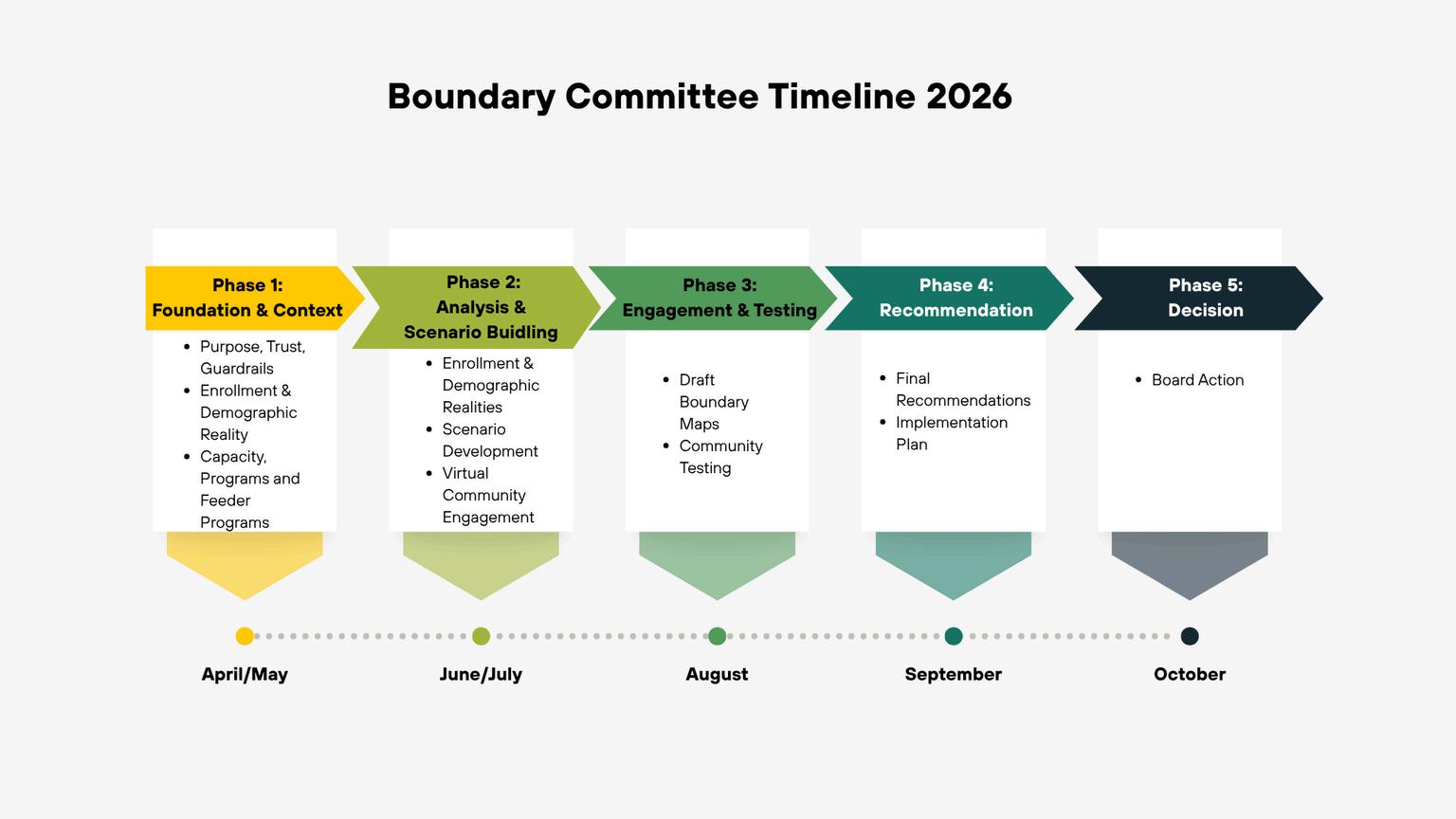
Giventhecomplexityofthisworkandthelikelihoodofnewinformation orunforseenchallenges,ourtimelinesareintendedasguidepostsand may evolve to allow for thoughtful analysis and informed decisionmaking. Our intent is to give our families as much advanced notice of anyboundarychangessotheyhavetimetoplanandconsiderwhatis bestfortheirchildforthe2027-2028schoolyear.
THE WORK
BOUN DARY
PURPOSE
Tonight’swork-Whyarewedoingthis?
BUILDASHAREDUNDERSTANDING OFBOUNDARYDECISION-MAKING EXPLOREHOWGEOGRAPHY, COMMUNITYCONTEXT,ANDDATA INTERACT IDENTIFYPATTERNSANDPITFALLS BEFOREWORKINGONREAL SCENARIOS
THETHREE ACTS

Tonightweareexploring:
1.ThePhysicalLandscape
2.TheCommunityServed
3.TheBoundariesWeDesign
NORMS
Staygroundedinthescenario
Focusontradeoffs,notperfectanswers
Usethecriteriaasyourguide
Becurious-assumecomplexity
ACT1
ThePhysicalLandscape:GeographyandInfrastructure
YourTask
Identifywhereboundaries wouldbeeasytodraw
Identifywheretheywouldbe difficultorrisky
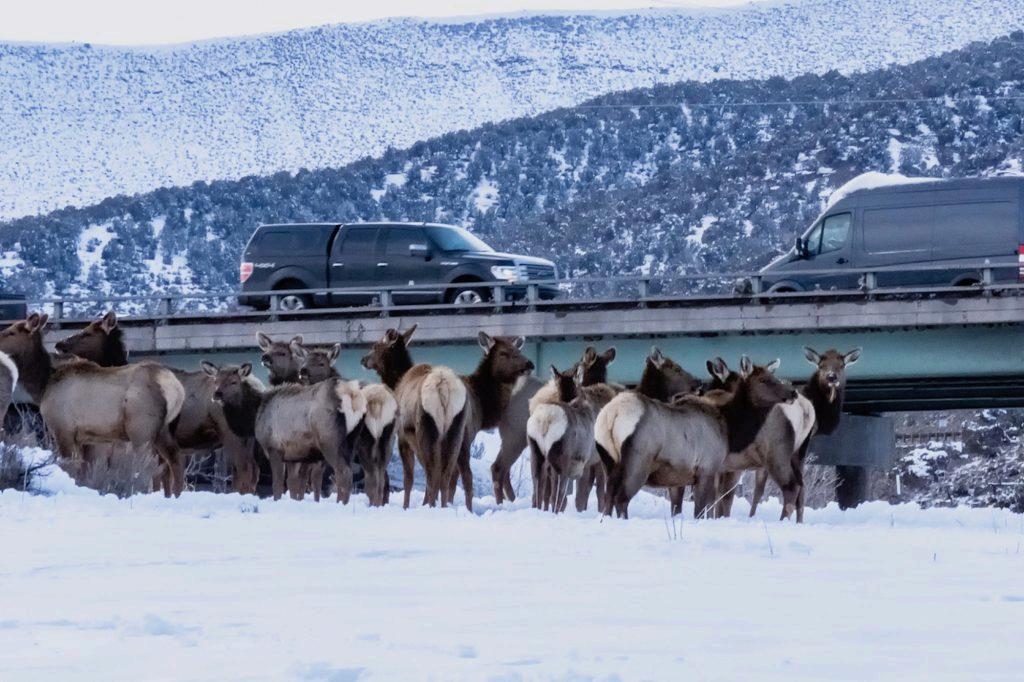
Considerroads,distance, barriers,andconnectivity
GuidingQuestions
Wheremightdrawinga“cleanline”create problems?
Whatbarriers(roads,rail,distance)matter most?
Ifweignoregeography,whatproblemscould emerge?
ACT1 ACTIVITY
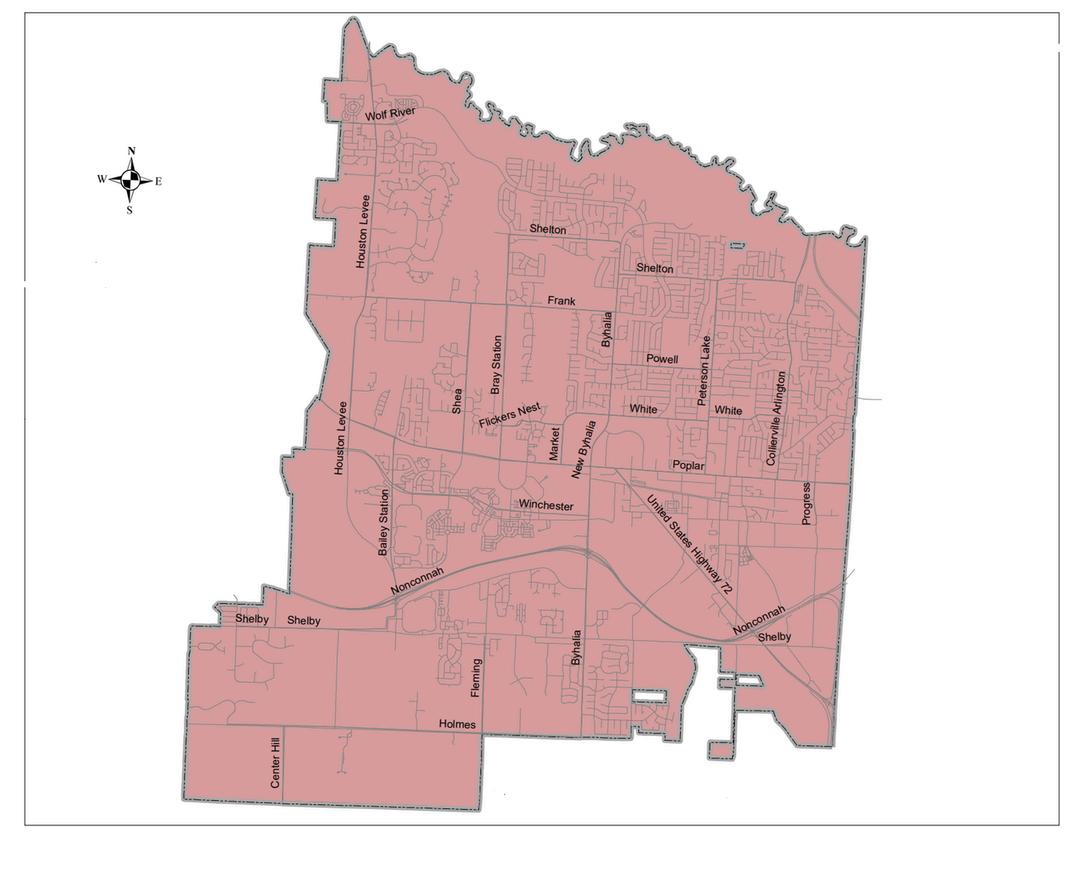
GUIDINGQUESTIONS
Wherewoulditbeeasytodrawboundaries?Why?
Wherewoulditbedifficulttodrawboundaries?Why?
Whatnaturalorman-madebarriers(roads,rails, distance)wouldforceyourhand?
Wheremightdrawinga“cleanline”actuallycreate problemsforfamilies?
Ifweignorethesefactors,whatproblemsmightwecreate later?
ACT2
TheCommunityWeServe:History,Identity,andLivedExperience

YourTask
Identifywhichcommunitiesmaybemost impactedbyboundarychanges
Considerhistory,identity,andaccesstoresources
GuidingQuestions
Whichneighborhoodsmaybemost sensitivetochange?Why? Wherecoulddecisionsunitentionally create: Isolation? Disruption? Inequity? Reflect Whatcouldgowrongifweignore thiscontext?
ACT2 ACTIVITY
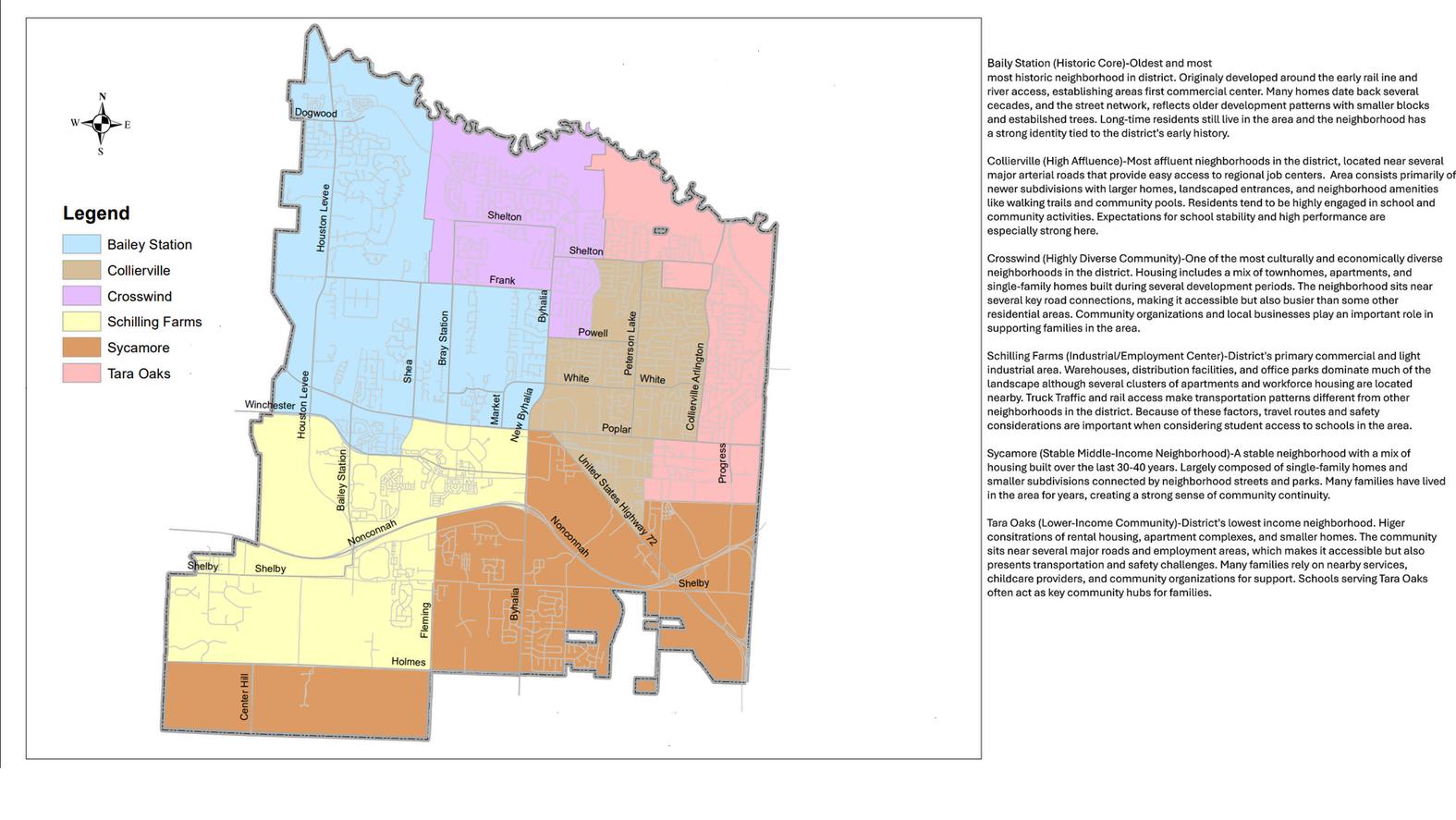
GUIDINGQUESTIONS
Whichneighborhoodsmightbe mostsensitivetoboundary changes?Why?
Wheredoyouseestrong identity,history,orexceptions thatcouldinfluencereactions?
Whichcommunitiesmaybe mostimpactedbydisruption (positivelyornegatively)? Wheremightboundary decisionsunitentionalyy:Concetratedisadvantage? Isolateacommunity? Disruptaccesstosupports? Whatcouldgowrongifboundary decisionsignorethiscontext?
ACT3
BoundaryDesignChallenge
Redrawboundariestomeetcapacitytargets
Consider:
Geography
CommunityContext
Transportation
Demographics
Foreachchange,bereadyto explain: Whatproblemdoesthis boundarysolve?
Whatnewchallengedoesit create?
Guidingquestions: Whattradeoffsdidyou face? Wheredidpriorities conflict? Whatstillfeelsunresolved?

ACT3 ACTIVITY
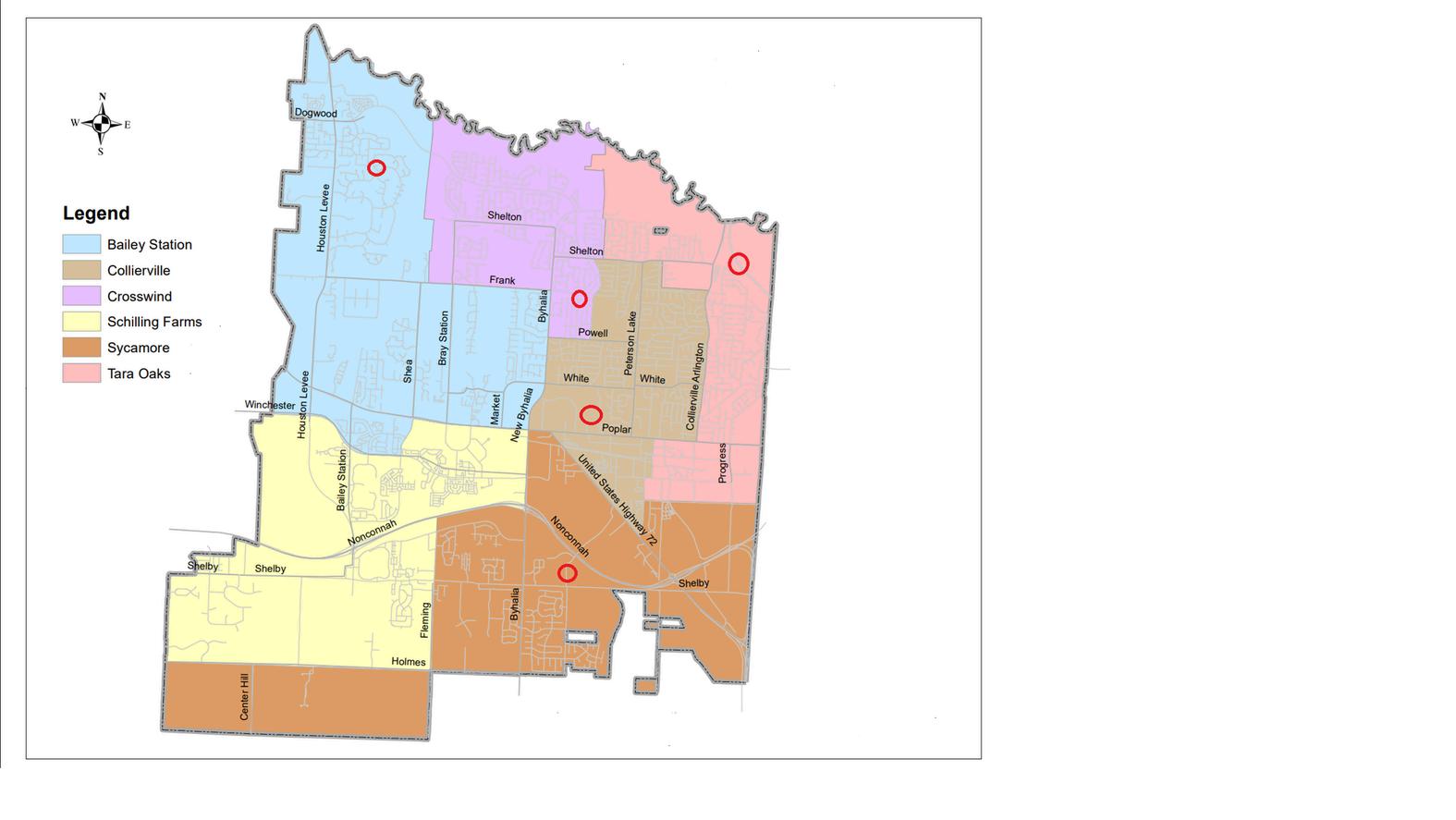
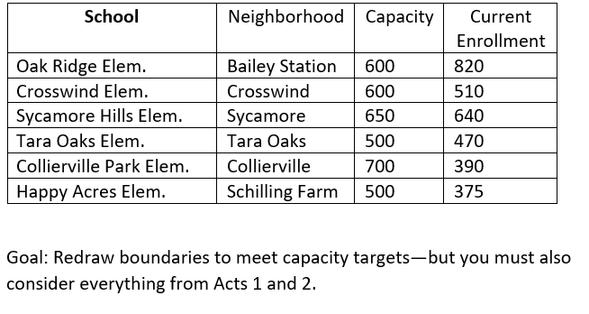
GUIDINGQUESTIONS
Whichneighborhoodsdidyoumove,andwhy? Wheredidyouprioritizeefficiencyvs.equityvs. stability?
Whattradeoffsdidyouhavetoaccept?
Wheredoesyourplanstillfeel“imperfect”?
Trackyourdecisionsandtradeoffs:
Decision WhatitFixes WhatitCreates MoveX Reduces Increases Neighborhood Overcrowding TravelTime
DEBRIEF
Whatpatternsdidyounoticeacrossallthreeacts?

Wheredidgroupsrunintosimilar challenges?
Whatseemedsimpleatfirstbutbecame complicated?
Whattradeoffskeptshowingup? Whatmakesaboundaryplannotwork well?
Whatmistakesshouldweavoidinour boundaryplanning?
GATHERING INPUT
EngagingtheCommunity Reviewtheproposedcommunitysurvey
Areweaskingtherightquestionstohelp usunderstandtheirprioritiesasweembark onthisjourney?
Doweneedadditionalquestions?
Whatformat(s)shouldweconsider whenweconductthesurvey?

CRITERIA
PromotesTransparencybymakingclearhowdecisionsare beingmadeandwhatfactorsarebeingconsidered.
Buildstrustwiththecommunitybyshowingdecisionsare groundedinsharedvaluesratherthanindividualpreferences.
Ensuresconsistencysoallboundaryscenariosareevaluated usingthesamestandards.
Supportsobjectivedecision-makingbyanchoringdiscussions inagreed-uponprioritiesratherthanopinions.

Helpsnavigatecomplextradeoffsbyprovidingaframework tobalancecompetingfactors(e.g.,equity,capacity,transportation).
Improvesqualityofrecommendationsbykeepingtheworkfocused onkeygoalsandavoidingunintendedconsequences.
Providesaccountabilitybyallowingstakeholderstoseehowwell proposedboundariesalignwithcriteria.
Createsacommonlanguageforthecommittee,staff,and communitytodiscussoptionsclearlyandconstructively.
Reducesconflictandconfusionbyminimizingambiguityabout whatmattersmostintheprocess.
Reviewthecriteriapresented.Whileall14 criteriaareimportant,theydonotallcarry thesameweight.Individuallyyouidentify whatismostimportanttoyou.