
SUPPORTIVE MEASURES, ACCOMMODATIONS, OR REMEDIES?
Where is the line?
April 2, 2026
Crystal C. Coombes
ADA/504 Practice Lead and Team Manager
Where is the line?
April 2, 2026
Crystal C. Coombes
ADA/504 Practice Lead and Team Manager
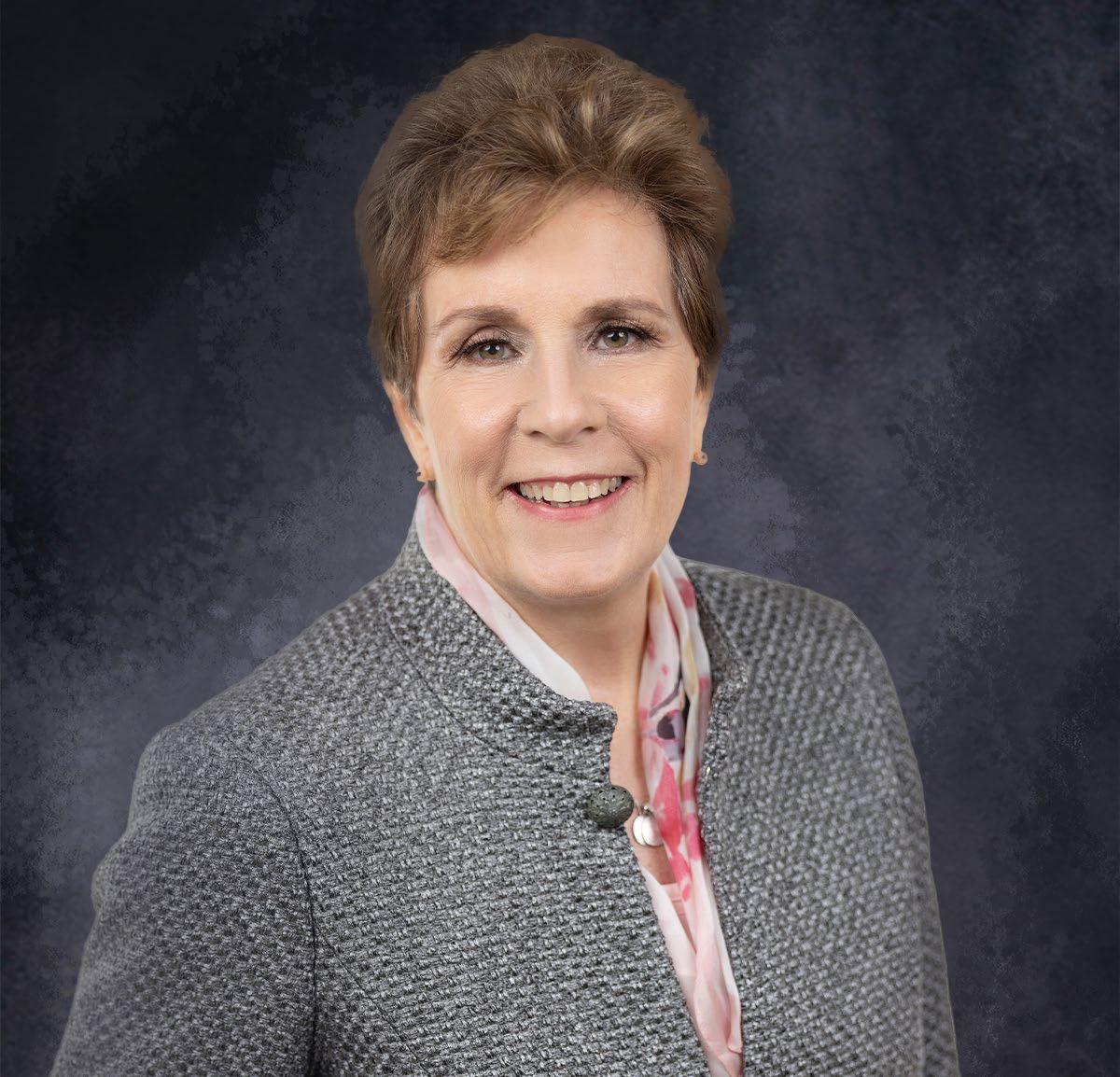

Crystal C. Coombes has more than 35 years of experience in private and public industry, higher education, and disability management. She previously served as ADA/504 Coordinator and Title IX Coordinator in addition to her role as the Assistant Vice President of Equity and Access Services with the Office for Diversity, Equity and Inclusion at George Mason University.

This session is not legal advice and attendees are advised to consult with counsel.


“Human behavior flows from three main sources: desire, emotion, and knowledge.”
-Plato

Each fosters access to educational programs or activities.
Title IX requires availability of support measures when requested while ADA/504 affords access and accommodation within the process. A result, either formal or informal, may identify and apply remedies.
Supportive Measures
Accommodations

“No person in the United States shall, on the basis of sex, be excluded from participation in, be denied the benefits of, or be subjected to discrimination under any education program or activity receiving Federal financial assistance.”
Title IX of the Education Amendments of 1972 (“Title IX”), 20 U.S.C. §1681 et seq.
Per 34 C.F.R. Subpart D Section 106.3 A. Definitions, Supportive Measures: “means non-disciplinary, non-punitive individualized services offered as appropriate, as reasonably available, and without fee or charge to the complainant or the respondent before or after the filing of a formal complaint or where no formal complaint has been filed.”
IN OTHER WORDS:
“Supportive measures are individualized services to restore or preserve equal access to education, protect student and employee safety, or deter sexual harassment.”
U.S. Department of Education Title IX Final Rule Overview: GUIDING PRINCIPLES
https://www2.ed.gov/about/offices/list/ocr/docs/titleix-overview.pdf
• Supportive measures must be offered and enacted even if a complainant does not wish to initiate or participate in a grievance process
• Consistent application of measures as related to details of the/each Title IX matter
• Available to both Complainant and Respondent (and other impacted parties, in certain instances)
• Foster continued access to program and activities
• May be in place for the duration of the student’s attendance or limited duration

• Should be documented in Title IX case record
• Jan believes she has been sexually harassed and has been the victim of unwanted sexual advances as well as exploitation by a male student and her suitemates. She reports this to her RA, who then completes a Title IX incident report.
• The details in the report state that Jan indicated that was sitting in her room in the residence hall suite she shares with three (3) other females when Michael came into Jan’s room unannounced. He told Jan we wanted to date her and began making explicit remarks about her breasts and her body, including what he’d like to do to her when they got together.
• When Jan tried to tell her suitemates, their reply was “He’s into you. Anyone would jump at that chance to date Michael. We thought you needed a jumpstart because you’re a virgin.”
• One of the suitemates admitted that they “let Michael into the suite” just so he could be with Jan alone.

“…no qualified individual with a disability shall, by reason of such disability, be excluded from participation in or be denied the benefits of the services, programs, or activities of a public entity, or be subjected to discrimination by any such entity.”
Americans With Disabilities Act of 1990, 42 U.S.C. § 12101 et seq. (1990).
“No otherwise qualified individual with a disability in the United States . . . shall, solely by reason of her or his disability, be excluded from the participation in, be denied the benefits of, or be subjected to discrimination under any program or activity receiving Federal financial assistance . . . ”
Section 504 of the Rehabilitation Act of 1973 (29 U.S.C. Code of Federal Regulations, title 28 (2002):516-544
Accommodations require a disclosure, a request and the presence of a qualifying disability or condition AND are those deemed reasonable (not preference) to ensure equitable access to programs and activities.
Applies to the entirety of campus including facilities, programs, and services
Under Title II of the Americans with Disabilities Act (ADA) ”State and local governments are required to give people with disabilities an equal opportunity to benefit from all of their programs, services and activities (e.g. public educations and employment…).”
Applies only within the academic environment but to all programs and activities
“Under Section 504 Postsecondary Education Academic adjustments may include auxiliary aids and services, as well as modifications to academic requirements as necessary to ensure equal educational opportunity.”
Purview of ADA/504 Coordinator and/or Director Student Accessibility Services
• Requires student disclosure and request
• Accommodation(s) based on type and form of qualifying disability and/or condition
• Application within the educational environment including programs and activities that may be within or outside the classroom
• Does not fundamentally alter the curriculum or activity
• Fosters continued access to program and activities
• Should be documented in student 504 case record, ADA record (and Title IX case record if given in context of a Title IX case)

Since Jan’s report:
Administrators in Housing/Res Life believe an immediate intervention is needed and call a “suite conference” for the four suitemates. This is well-intentioned and meant to “open up” honest dialogue. Jan does not attend because she does not feel safe and has taken up residence on a friend’s couch in another on-campus res hall.
The Title IX office reaches out to Jan via official university email but does not receive a reply. It’s the “practice” of the university not to call students except in emergencies.
Jan has also recently gone to the Student Accessibility Office because of a previously identified disability, which Jan reports she “just dealt with” in high school by recording lectures. She has begun the process for academic accommodations and again discloses her concerns about the unwelcome sexual come-ons by the male student Michael to the Learning Specialist.
Title IX receives a second Title IX Incident Report related to Jan from the Accessibility Office.
(not to be confused with “remedial” action)
“The means of enforcing a right or preventing or redressing a wrong.”
Blacks Law Dictionary, Seventh Edition. West Group: St. Paul, MN, (1999).

Steps taken to promptly address a hostile educational environment under Title IX
• Intended to formalize a necessary correction to a matter
• May/will differ from case to case
• Intended to restore, rectify, stop, or prevent the effects
• May involve providing services such as paid counseling
• Could include policy change, late withdrawal from class, added lighting on campus, prevention program creation, safety escort
• Documented in Title IX case record and possibly in 504 case record

Jan has agreed to come into the Title IX office but only with her victim advocate. She arrives with her phone ready to record and informs that she has asked for this accommodation in classes and wants it during these meetings as well.
At this point, all she wants is for this matter to “go away.” She reports she has had several panic attacks—anxiety that “she hasn’t felt in a while”—and that she is two weeks behind on all assignments. Jan is upset that Housing thought a “talk” would “fix this.” She hasn’t been back to the room except with the RA to get some of her things. She wants to move off campus (and can because the university does not require students to live on campus), but Housing has informed her that she would be charged for the full term and said it “was a breach of her agreement.”
Even though the details Jan describes about the incident would certainly be actionable under the university’s current Title IX policy, Jan isn’t ready to make a formal complaint. She discloses she is afraid of retaliation and is concerned for her safety on campus because “Michael is popular.”
• What issues might you see here as an ADA/504 Coordinator or Title IX Coordinator (or both, if you hold both roles)?
• What is the larger picture, if any?
• Who might you work with (or what offices might you include) and why?
• Is there anything concerning that would trigger elevating this to a higher level of some type?
• Who else might need assistance?
• What other processes might be engaged?
Things to consider:
• Pregnancy is not a disability though a condition/disability that arises as a result of pregnancy may be a qualifying disability or condition;
• Such qualifying disabilities or conditions may be temporary and end when the pregnancy ends while other may endure and become permanent;
• Academic adjustments may need to be defined/formalized; and,
• Pregnancy related needs may require service coordination.GrandRiverSolutions

• A sound practice altogether is use of past tense, third person narratives that eliminate use of subjective information and focus on facts
• Documentation should be clear and reference the reason for the action using correct terms (even when in an alternative office’s record)
• If multiple offices are documenting their roles in the action, relevant and supporting documentation should be obtained per policy and cited/referenced
• Agreed upon actions, outcomes and follow up should be annotated as a plan of action AND THEN actually completed according to the plan—whenever feasible—or alternatives detailed
• Assume nothing—meaning, document even if another office informs that they are documenting
02-02-2025 1:30 p.m. Summary: Student Jan Mathews (Complainant) appeared for a Title IX intake with her victim advocate, Nelly Forge, after receiving an invitation from Title IX Coordinator. The Title IX office received two (2) separate reports of alleged incidents (January 23, and January 29, 2023) occurring in XYZ res hall beginning on Monday, January 23, 2023. As previously documented by Title IX Incident Report #123 and #789, Complainant alleges that a male student, Michael Wright (Respondent) allegedly taunted and sexually harassed Complainant via comments about her breasts and sexualized intimations about her physical appearance in order to force Complainant into agreeing to a date. Complainant requested to record the meeting as an accommodation. TIX Coordinator agreed, established that she would also record the meeting, and then began by reviewing university policy 5555 and policy 2222, consistent with the allegations, and provided an overview of processes for each. Title IX Coordinator reviewed resources, safety planning, and supportive measures. Complainant indicated she did not wish to move forward with a formal action but needed academic support, the ability to live off campus, an NCO as well as an escort for the Spring term from and to classes, one of which she shared with the Respondent. Nelly Forge, the advocate, advised that Complainant wanted a review and change in protocols used by Housing in this matter. The Complainant affirmed that she found the “talk” by housing to be a form of victim blaming because the actions by Respondent were so “far out of bounds” that “no amount of discussion would fix the matter.” To this end, the Complainant asked for Housing staff to receive retraining. Meeting concluded with Complainant and victim advocate at 3:30 p.m. [Recording of meeting entered into case file: Title IX #12345678 Recording Initial Meeting Complainant 2-2-2025].
1. Follow up via email with the student to complete an accommodation process;
2. Ensure that reasonable accommodations are implemented in a timely manner;
3. Address questions regarding academic accommodations with faculty;
4. Provide information of what reasonable accommodations may be necessary during a formal process, such as the Title IX process to the Title IX office;
5. Coordinate accommodations with the Title IX Coordinator; and,
6. Via case management, follow up with student during academic term.
//Dana Cooper, ADA/504 Coordinator-----------
1. Follow up via email with the complainant to affirm campus resources and support measures;
2. Enact NCO and address questions of parties;
3. Arrange meeting with administration of housing to review a.) Support measure that removes complainant from housing and housing contract obligation as well as to address possible b.) Confer with housing to address complainant's concerns about how housing approached the situation;
4. Address questions regarding academic support measures with faculty and, upon receipt of class schedule/assignments from complainant provide letter to substantiate support while notifying SAO of same;
5. Follow up with complainant on outcomes of number 3 a and b above; and,
6. Monitor NCO and progress for spring term.
//Jane smith, TIX coordinator-----------
Remedies or other corrective measures:
1. Training of staff on processes;
2. Review of policy and processes within Res Life/Housing to ensure consistency with overall policy;
3. What else might be needed here from the Jan scenario?
Are written in language understandable to the general employee/student population
Account not only for law/regulation but provide the basis of a process that is also understandable and which can be documented according to the facts of each report/case.
Are reviewed regularly and updated accordingly
Dated
Identify administrator responsible for the policy
Versions are used correctly based on the reported incident and are documented in the case record
Understand the intersectionality of a diverse campus population
Actualize process steps and the completion of those steps
Clearly identify parties and offices involved
Use sound case management techniques, especially when several offices/teams are involved
Reflect communication between involved offices and the individual parties for all actions
Foster documentation protocols at each stage of service
ADA/504 AND ACCOMM-
Troy University, AL OCR# 04-21-2060 (2023) Failure to engage and offer adjustments
https://www2.ed.gov/about/offices/list/ocr/docs/investigations/more/04212060-a.pdf
Salt Lake Community College OCR# 08-22-2021 (2022) Policy and practices leading to forced drop
https://www2.ed.gov/about/offices/list/ocr/docs/investigations/more/08222021-b.pdf
University of Maine at Fort Kent OCR# 01-17-2317 (2020) Policy, procedures and qualified personnel
https://www2.ed.gov/about/offices/list/ocr/docs/investigations/more/01172317-a.pdf
Northeastern University OCR# 01-19-2158 (2019) Failure to provide adjustments
https://www2.ed.gov/about/offices/list/ocr/docs/investigations/more/01192158-a.pdf
Rivertown School of Beauty OCR# 04-15-2363 (2019) Dismissal at 7 months based on pregnancy based on policy that violated Title IX
https://www2.ed.gov/about/offices/list/ocr/docs/investigations/more/04152363-a.pdf
California State University East Bay OCR# 09-18-2245(2017) Pregnancy related hospitalization
https://www2.ed.gov/about/offices/list/ocr/docs/investigations/more/09182245-a.pdf

Let Our Team Support The Good Work You And Your Team Are Doing.
• Delegated Roles
• Investigations
• Hearings & Appeals
• Alternative Resolutions
• Program Review
• Policy & Procedures
• Consulting & Coaching

We work to resolve employee, faculty, and student cases at companies and educational institutions. Our experienced practitioners are available to serve as facilitators of alternative resolutions, investigators, decision-makers, hearing officers, chairs, panel members, or appellate officers for all equity and discrimination cases.

Gap in staffing? We can help.
Interim or Long-Term Needs
• Title IX Coordinators and Staff
• Title VI Coordinators and Staff
• EO Director
• Equity Director
• ADA/504 Coordinators and Staff

Delegated Roles
ADA/504

ADA/504 Coordinator
Policy Development & Review Training
Accessibility & Compliance Assessment Investigations
Policy Development & Review Training Consulting Investigations


ADA/504 Services
Please check out our wide selection of trainings and learn about our new unlimited training membership. Unlimited open training access for your whole campus, one annual fee.




We are experts and practitioners working in response and resolution for discrimination, harassment, & equity concerns.
Case Tracker allows you to:
• track and manage your cases
• communicate with campus stakeholders without compromising case privacy, and
• provide parties with the ability to follow the status of their case



©Grand River Solutions, Inc., 2024. Copyrighted material. Attendees who are required to post training materials in compliance with applicable federal law have express permission to do so. These training materials are intended for use by licensees only. Use of this material for any other reason without permission is prohibited.