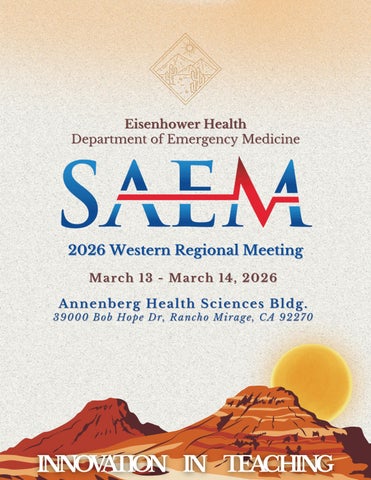
Education Fellowship at Eisenhower Medical Center, Rancho Mirage, CA
ABOUT THE PROGRAM
SAEM-approved Education Fellowship
Opportunities to learn in both Graduate and Undergraduate Medical Education
Offer “Training to Teach in Medicine” certificate program from Harvard Medical School
One- or two-year fellowship
Competitive salary with full-benefits from Eisenhower Health
ABOUT EISENHOWER MEDICAL CENTER
Rated among the region’s Best Hospitals by U.S. News & World Report
More than 85,000 visits per year
Advanced Primary Stroke Center, STEMI Center, Accredited Geriatric Emergency Department and Level Four Trauma Center
State-of-art medical center
50 private patient rooms
Best EMR: Epic
Three-year Emergency Medicine residency program
LIVING IN THE DESERT
Affordable cost of living
Variety of activities: hiking, shopping, dining, golfing, etc.
Within two hours from many big cities (L.A. and San Diego)
CONTACT
Wirachin Hoonpongsimanont, MD, MS
Cell: 862-216-0466 Email: wirachin@gmail.com
website: gme.eisenhowerhealth.org
39000 Bob Hope Drive, Rancho Mirage, CA 92270
Western Regional SAEM Abstracts Special Issue -
Table of Contents
Health Equity & Disparities/Social Emergency Medicine
1 Associations Between Language Proficiency, Insurance Status, and Compensation Redemption in Adolescents with Mild Traumatic Brain Injuries
Mitchell T. Walters, MS, Daniel J. Tancredi, PhD, Beth S. Slomine, PhD, Elizabeth D. Rosenthal, BA, Tara E. Gammi, BS, Nathan Kuppermann, MD, Stacy J. Suskauer, MD, Kristy Arbogast, PhD, Mohamed K. Badawy, MD, Daniel J. Corwin, MD, Andrea T. Cruz, MD, Stephanie M. Ruest, MD, Danny G. Thomas, MD, T. Charles Casper, PhD, Daniel K. Nishijima, MD, MAS
2 Changes in Acute Care Utilization among ForeignBorn Patients in Response to Immigration Enforcement Escalation in the Los Angeles SafetyNet Healthcare System
Daniel Cordova, MD, Sarah Anne Axeen, PhD, Cameron Kaplan, PhD, Shamsher Samra, MD, MPhil, Annette Dekker, MD, MS, Annie Ro, PhD, Todd William Schneberk, MD, MS, MA
3 Chronic Pain Severity & Alcohol Use Risk Among ED Patients at LA General Medical Center
Mark Tello-Rincón, Destiny Bui, Jamileth Zaragoza Godinez, Cassandra Olmos, Alexcia Garcia, Chun Nok Lam, PhD, MPH, Emily Johnson, MD, MPH
4 Current Challenges Transgender and Non-Binary Patients Face in the Emergency Department and Global Perspectives to Improve Provider Education
Emma Black, OMSII, Sarah Goetz MS, OMSII, Jensen Fisher, MPLS
5 Evaluating Health Care Access for Unhoused Patients at the Emergency Department
6 Health-related Social Needs Among Patients withChronic Pain Who Visited the Emergency Department
Chun Nok Lam, PhD, MPH, Yahan Lin, Lila Rabinovich, MPhil, BSc, Vanessa Rosas, MSW, Ayati Mishra, BS, Tiffany Abramson, MD, Elizabeth Burner, MD, PMH, PhD, Andrew Oh, MD, MBA, Doerte U. Junghaenel, PhD
7 Impact Analysis of a Potential ECPR Program in a Medically Underserved Urban Community
Daniel Bennett, MD, Carmen Lee, MD, Kristen Bascombe, MD, Martha Montgomery, MD, Justin
Moore, MD, Zita Konik, MD, Kevin Gardner, MD
8 Persons Experiencing Homelessness Perceptions and Utilization of Emergency Medical Services in Los Angeles County
Marcos Mendoza, Alison Ly, Michella Mansilla, Citlally Mendoza, Suzanne Wenzel, PhD, Marianne Gausche-Hill, MD, Sanjay Arora, MD, Elizabeth Burner, MD, MPH, PhD, Tiffany M. Abramson, MD, MS
Operations/Quality Improvement
9 Follow Up Resources Provided in Early Pregnancy: Analysis of Discharge Instructions for First Trimester Pregnant Patients Seen in an Academic Emergency Department
Joan Marie Hady, MPH, BS , Mako Gedi, BA, Esther Choo, MD, MPH
10 Meta-Analysis of Different Antibiotic Efficacies in the Case of Complicated Urinary Tract Infections
14 Point-of-Care Ultrasound as a Tool to Accurately Diagnose Diastolic Dysfunction
Soheil Saadat, MD, MPH, PhD, Joshua Wasmund, MD, Brandon Ton, Alyson Tsai, BS, Megan Guy, MD, Edmund Hsu, MD, John Fox, MD
15 Seeing the System: A Needs Assessment for an Equity-Centered Patient-Flow Dashboard
Namrata Garg, MD, Mariana Arino, Jaskaran (Karan) Bains, MD, MBA, Elizabeth Li, Hemal Kanzaria, MD, MSc, Christopher R. Peabody, MD, MPH
Education/Simulation/Ultrasound
16 Training Ultrasound Image Acquisition: Traditional Didactic Methods vs Butterfly’s Scanlab Application
Edmund Hsu, MD, Madison Nashu, MD, Andy Hsueh, MD,Omid Haghkhah, An Truong, Ronald Goubert, MD, Roy Almog, MD, Megan Guy, MD, Soheil Saadat, MD, MPH, PhD, John Fox, MD
17 Areas for Growth in an Emergency Medicine Procedural Simulation Curriculum: A Needs Assessment
Jack Basse, MD, Ashley Vuong, MD
18 Examining the Experiences of Ultrasound Standardized Patients Involved in Medical Education
Megan Guy, MD, Andy Hsueh, MD, Edmund Hsu, MD, Niyati Reddy, BS, Charlotte Duran, BA, Soheil Saadat, MD, MPH, PhD, John Fox, MD
19 Impact of a Low-Cost Ballistic Gel Phantom on Trainee Confidence in Ultrasound-Guided Fascia
Iliaca Block
Akash Desai, MD, Mitchell Steinhauser, MS, Philip Fallah, MD, Anthony Medak, MD, Bryan Merte, MD, Benjamin Liotta, MD, Evva Vail, Jessica Oswald, MD, MPH
20 Prevalence of Secondary Traumatic Stress and Burnout Among Emergency Medicine Residents: A Cross-Sectional Needs Assessment to Guide Wellness Interventions
23 Evaluating Emergency Department Naltrexone Initiation Using a Large Multicenter Database
Benjamin E Corbett, MS, Brittany E Page, MS, Daniel Novak, PhD, Robert Rodriguez, MD, Lisa Fortuna, MD, MPH
24 Is Housing Stability Associated with Telehealth Utilization among Emergency Department Patients?
Ryan Lui, MS, Maya Schiedel, Janiada Williams, Alexa Placencia, Angeles Rodriguez, Chun Nok Lam, PhD, Elizabeth Burner MD, MPH, PHD, Tiffany Abramson, MD, MS
Prehospital/Emergency Medical Services/Trauma
25 Patient Outcomes Following Prehospital Naloxone Administration in San Francisco
Jacob Perez, BS, Alyssa Falise, PhD, MSPH, Mireya Arreguin, BS, Amanda M. Sutphin, BSHCA, EMT-P, Michael Mason, MPA, CP-C, Jesus Acosta, CP-C, Joseph Graterol, MD, Rachel Culbreth, PhD, MPH, Kim Aldy, DO, MBA, MS, Sharan Campleman, PhD, MPH, DABT, Jeffrey Brent, MD, PhD, Paul Wax, MD
26 E-Bike Injuries and Rider Characteristics at a Level 1 Trauma Center: A Retrospective Review
27 Watch Out Below! A Comparison of Hiking and Rock-Climbing Falls at a Level I Trauma Center
Bridger Woods, BS, Allison McNickle, MD, FACS
1
Associations Between Language Proficiency, Insurance Status, and Compensation Redemption in Adolescents with Mild Traumatic Brain Injuries
Mitchell T. Walters, MS, Daniel J. Tancredi, PhD, Beth S. Slomine, PhD, Elizabeth D. Rosenthal, BA, Tara E. Gammi, BS, Nathan Kuppermann, MD, Stacy J. Suskauer, MD, Kristy Arbogast, PhD, Mohamed K. Badawy, MD, Daniel J. Corwin, MD, Andrea T. Cruz, MD, Stephanie M. Ruest, MD, Danny G. Thomas, MD, T. Charles Casper, PhD, Daniel K. Nishijima, MD, MAS
Background: Patient compensation is an important tool to enhance enrollment of participants in clinical research. The association between compensation redemption and socioeconomic factors, however, is not well-studied, particularly in pediatric study cohorts. Our objective was to identify key variables associated with redemption of research compensation in a multicenter study of adolescents with mild traumatic brain injuries (TBIs).
Method: We performed a secondary analysis within an ongoing multicenter observational study. Enrolled participants were emailed digital gift card codes after completing baseline surveys, followed by subsequent gift card codes for additional surveys completed after 1 week, 1 month, and 3 months. Our primary outcome was the redemption rate ratio, defined as the number of redemptions per transactions created. We used Poisson regression models with log-transformed transaction counts as offset terms to account for varying exposure periods and estimated associations between redemption rates and demographic and clinical characteristics. These included age, race, ethnicity, sex, area deprivation index, initial Glasgow Coma Scale score, and exposure to adverse childhood experiences. [NK1.1]
Results: We included 353 participants in our analysis. Participants with Spanish-speaking parents had significantly lower gift card redemption rates (rate ratio [RR] 0.58; 95% CI, 0.45–0.74; p < 0.001). Participants without health insurance also had lower redemption rates (RR 0.71; 95% CI, 0.52-0.95, p = 0.03). Demographic and clinical characteristics were not significantly associated with the redemption rate.
Conclusion: In this study of adolescents with mild TBIs, having Spanish-speaking parents and lacking health insurance were independently associated with lower gift card redemption rates. Digital gift card remuneration, while widely used in research, may inadvertently disadvantage participants facing structural or linguistic barriers.
2Changes in Acute Care Utilization among Foreign-Born Patients in Response to Immigration Enforcement Escalation
in the Los Angeles Safety-Net Healthcare System
Daniel Cordova, MD, Sarah Anne Axeen, PhD, Cameron Kaplan, PhD, Shamsher Samra, MD, MPhil, Annette Dekker, MD, MS, Annie Ro, PhD, Todd William Schneberk, MD, MS, MA
Background: Following the 2024 presidential election the incoming administration increased immigration enforcement. This study seeks to evaluate whether there were differential changes in Emergency Department (ED) and inpatient (hereafter, acute) utilization at Los Angeles County (LAC) safety-net hospitals by patient country of birth after the initiation of increased federal Immigration Enforcement (ICE) and rhetoric in LAC in May 2025.
Methods: This retrospective cross-sectional study used encounter level data for adult patients from three safetynet hospital emergency and inpatient departments in LAC between January and October 2025. Analyses estimated differences in weekly acute encounters by patient country or region of birth before and after the beginning of ICE raids in LAC. The pre-raid period extended from January 1, 2025 through May 27, 2025 and the exposure period started on May 28, 2025. We employ event studies to test for pre-existing trends in the outcome of interest and difference-in-differences regressions to estimate differential changes in acute encounters by country of birth.
Results: There was a reduction of acute care visits[TS1.1] for those identifying as being of Mexicans and Central Americans descent compared to US Born in the post-ICE period. [DC2.1] The hospitals in question recorded more than 196,305 acute encounters from January through October 2025; 43% for US-born patients, 27% for Mexican-born patients, 15% for Central American-born patients, and 4.6% for Asianborn patients. Event study analyses show no change in the relative number of weekly acute encounters by patient country of birth in the pre-ICE period. Difference-in-differences regression results show a relative reduction of 138 [95% CI: 95, 181] visits per week for Mexican-born individuals, 127 [95% CI: 83, 170] visits per week for Central American-born individuals, and 69 [95% CI: 26, 113] visits per week for Asian-born individuals compared to US born individuals in the post-ICE period. These reductions are still statistically significant up to 12 weeks into the post-ICE period.
Conclusions: After increased immigration enforcement
activity in LAC there was a decrease in overall visits among non-US born patients, with largest reductions in those identifying as Mexican or Central American. These data suggest that immigration enforcement led immigrant patients to avoid acute care, with potential health and economic consequences.
3
Chronic Pain Severity & Alcohol Use Risk Among ED Patients at LA General Medical Center
Mark Tello-Rincón, Destiny Bui, Jamileth Zaragoza Godinez, Cassandra Olmos, Alexcia Garcia, Chun Nok Lam, PhD, MPH, Emily Johnson, MD, MPH
Background: Chronic pain and alcohol use often cooccur, yet their relationship in emergency department (ED) settings is not well understood. Alcohol may be used to cope with chronic pain, but evidence on how pain severity relates to alcohol use among ED patients is limited. This study examines the association between chronic pain severity and alcohol use risk among ED patients at LA General Medical Center.
Methods: We conducted a cross-sectional analysis at a large urban level-one trauma and tertiary care center across three collection periods (Summer 2024, Spring 2025, Summer 2025). Eligible participants were ≥21 years and completed surveys in English or Spanish. Alcohol use was measured with AUDIT-C and categorized as no risk, low risk, or moderate-severe risk. Chronic pain severity was assessed using the Graded Chronic Pain Scale and grouped into two categories: Grade 0-1 (low-level chronic pain) versus Grade 2-3 (moderate-high impact chronic pain). Multinomial logistic regression examined associations between pain severity and alcohol risk, adjusting for age, gender, & Hispanic ethnicity.
Results: The sample included 337 ED patients with chronic pain (mean age 49.5 years; 55% male; 78% Hispanic/Latino). 66% reported Grade 2-3 chronic pain severity. Alcohol risk levels were 65.5% no risk, 22.5% low risk, and 12.0% moderate-severe risk. Higher chronic pain severity was associated with significantly lower relative log-odds of moderate-severe AUD compared to lower pain severity (coef = -0.86; 95% CI [-1.56, -0.16]; p = 0.016).
Conclusion: Greater chronic pain severity was linked to lower relative log-odds of moderate-severe alcohol use. These findings suggest complex interactions among pain, coping behaviors, and healthcare engagement. Further research should explore cultural influences, service access, and coping strategies to guide ED-based screening and interventions for patients with chronic pain.
Current Challenges Transgender and NonBinary Patients Face in the Emergency Department and Global Perspectives to Improve Provider Education
Emma Black, OMSII, Sarah Goetz MS, OMSII, Jensen Fisher, MPLS
Transgender and Nonbinary (TNB) individuals face mistreatment, misgendering and discrimination when seeking care in US Emergency Departments (ED), leading to delays in care and poor health outcomes. The lack of standardized education and guidelines for TNB patient care reinforces an environment where patients are likely to be harmed or ignored. The goal of this project is to identify areas of discrimination, evaluate gaps in education practices, and create models for ED Physicians to provide affirming healthcare for TNB patients across the US. A comprehensive literature review using PubMed, national surveys, institutional reports including the 2015 & 2022 U.S. Transgender Survey (USTS), emergency medicine education studies, and qualitative reviews of patient experiences. Our review revealed that 31% of TNB patients reported verbal harassment or denial of care, 27% were misgendered by staff, and 23% avoided the ED entirely due to fear of discrimination. Additionally, most ED residencies reported less than 2 hours of LGBTQIA+ curriculum, with low provider confidence in treating this community. International models have promoted gender-affirming care practices by initiating increased medical education for this community, inclusive intake forms, patient-led training, and policy changes within hospitals. These countries serve as important models to initiate change in the US health education and care systems. Due to the lack of standardized education for this community in medical settings, an LGBTQ+ lecture series was started at Rocky Vista University (RVU) with the goal to increase student confidence in treating this community. Considering 35% of DO students matched into EM residencies in 2025, it is crucial to improve education for future providers entering into the field. A survey was conducted before and after each lecture topic that assessed student’s confidence and understanding of the subject presented. The hypothesis is that increasing education will decrease discrimination for the TNB community when seeking healthcare, particularly in the ED. The long term goal of this ongoing project is to present the data, results and conclusion of the study to the RVU board in hopes to further implement LGBTQ+ healthcare into medical education.
5 Evaluating Health Care Access for Unhoused Patients at the Emergency Department
Background: Dn recent years, the unhoused population of Orange County, California has continuously increased. Existing data gaps on the unique medical needs and barriers for this population inhibit the development of sustainable, long-term health care solutions. This study aims to identify the housing obstacles, medical needs, and community stigmas faced by unhoused individuals to support a street medicine initiative and improved health care practices catered to their needs.
Methods: This cross-sectional survey study was conducted at the University of California, Irvine Emergency Department. A 34-question survey was administered by research associates to 105 consented participants. Survey questions addressed demographics, health care utilization, and social determinants of health. Primary outcome variables assessed the housing situations, health circumstances, medical needs, and community stigmas faced by unhoused individuals.
Results: Inclusion criteria included unhoused individuals at least 18 years of age with English proficiency; exclusion criteria included pregnancy, incarceration, or 51/50 holds. Based on survey responses, insufficient income (60.9%, 64/105) and lack of affordable housing (52.4%, 55/105) were the main barriers participants faced in obtaining stable housing. Sixty-nine participants (65.7%) identified the emergency department as their preferred source of health care. Forty-three participants (41.0%) reported experiencing barriers when attempting to access health care services, citing financial constraints (53.5%, 23/43) and transportation issues (48.8%, 21/43) as the most common obstacles. Participants indicated that the primary ways to improve access to health care services are transportation assistance (52.4%, 55/105), more affordable services (35.2%, 37/105), and more locations (35.2%, 37/105). Sixty-five participants (61.9%) reported experiencing discrimination or stigma related to their housing status.
Conclusion: These findings highlight the role of physical barriers in limiting health care access for the unhoused population. Street medicine initiatives may help address these barriers and potentially mitigate affordability challenges, which were also reported by respondents, thereby reducing emergency department overutilization. Implications are limited to Orange County and rely on self-reported participant data.
Health-related Social Needs Among Patients withChronic Pain Who Visited the Emergency Department
Chun Nok Lam, PhD, MPH, Yahan Lin, Lila Rabinovich, MPhil, BSc, Vanessa Rosas, MSW, Ayati Mishra, BS, Tiffany Abramson, MD, Elizabeth Burner, MD, PMH, PhD, Andrew Oh, MD, MBA, Doerte U. Junghaenel, PhD
Background: Chronic pain is prevalent among emergency department (ED) patients and is often intertwined with unmet health-related social needs (HRSNs), including structural barriers such as unstable housing and food insecurity. These unmet needs may both exacerbate pain and impede engagement with longitudinal care. Primary care providers (PCPs) may play a key role in mitigating HRSNs through continuity of care and service coordination; however, the extent to which PCP access buffers the association between chronic pain and HRSNs in ED populations remains unclear.
Methods: A cross-sectional survey was conducted at the Los Angeles General Medical Center ED between September and December 2025. Adults patients were systematically recruited by research assistants 10am-1am, 7 days a week. Patients who were critically ill and mentally altered were excluded. Participants reported ever-experiencing HRSNs (yes/no) using Accountable Health Communities HRSN Screening Tool out of 5 domains: living situation, food, transportation, utilities and safety. The presence of chronic pain (yes/no) was based self-reported pain symptoms that persisted or recurred for more than three months. We used logistic regression models to test the association between HRSNs and chronic pain, with access to PCP as a moderator, while controlling for age, gender, education, and Hispanic ethnicity.
Results: Of the 1,380 ED patients (48% female, mean age: 47 years) who completed the chronic pain screener, 35% had chronic pain. Patients with chronic pain were more likely to report having HRSNs compared to patients without chronic pain (75% vs 56%, aOR: 2.2, 95% CI: 1.7, 2.9, p<0.001). Moderation analysis showed that patients with chronic pain who visited a PCP in the last 12 months had a lower odds of HRSNs compared to those without PCP access or had a PCP visit beyond the 12-month (67% vs 84%, interaction aOR: 0.6, 95% CI: 0.3, 0.9, p=0.04).
Conclusion: At an urban, safety-net hospital, adult ED patients with chronic pain reported more social needs than non-chronic pain patients. These needs can limit patients’ ability to properly manage their pain symptoms; as a result they may continue to return to the ED for rescue treatments. However, access to PCP buffered this association. Providing
a pathway for continuity of care through the ED may mitigate patients’ unmet HRSNs and potentially affect their overall health services use.
7 Impact Analysis of a Potential ECPR Program in a Medically Underserved Urban Community
Daniel Bennett, MD, Carmen Lee, MD, Kristen Bascombe, MD, Martha Montgomery, MD, Justin Moore, MD, Zita Konik, MD, Kevin Gardner, MD
Background: EOut-of-hospital cardiac arrest (OHCA) from ventricular arrhythmia is a significant public health challenge. Survival rates are poor if refractory to standard Advanced Cardiac Life Support (ACLS). Extracorporeal cardiopulmonary resuscitation (ECPR) utilizes extracorporeal membrane oxygenation (ECMO) to perfuse vital organs intra-arrest and prevent anoxic brain injury while reversible causes are addressed. When initiated within 60 minutes in select populations, ECPR has shown significant improvement in outcomes compared to standard ACLS, a grade 2a recommendation in 2025 American Heart Association (AHA) guidelines. Implementation has been limited to large tertiary care centers, which may exacerbate existing racial, gender, and insurance status disparities in OHCA care and outcomes. The objective of this study is to perform an impact analysis of a hypothetical single-center ECPR program in a medically underserved area.
Methods: Non-traumatic cardiac arrests with an initial rhythm of ventricular tachycardia (VT) or fibrillation (VF) occurring in Oakland, California and the surrounding cities in Northern Alameda County were retrospectively analyzed. Arrests between January 1, 2020 and December 31, 2024 were identified from the Alameda County Emergency Medical System’s electronic medical record. ECPR inclusion criteria for impact analysis were: (1) Initial Rhythm VF/VT, (2) Age 18-75, (3) Witnessed arrest, (4) >2 shocks without ROSC.
Results: A total of 1217 OHCAs with an initial rhythm of VT or VF were identified. Of these, 141 patients met defined ECPR criteria, with a mean (SD) of 28 (8) patients per year. Mean (SD) time from 9-1-1 call to destination arrival was 38 (10) minutes, and EMS on-scene time for ECPR candidates was 19 (9) minutes. Nine (6.4%) patients survived neurologically intact with a cerebral performance category (CPC) of 1 or 2. Applying the current ECPR registry survival rate of 31%, an additional 34 patients may have survived with access to ECPR, a projected number needed to treat of 4.
Conclusion: In a medically underserved urban area, a significant number of patients meet ECPR criteria, and their current outcomes are poor. Current EMS transport
times allow adequate time for ECPR cannulation within 60 minutes, demonstrating that implementation of an ECPR program is potentially feasible and beneficial in this population.
8
Persons Experiencing Homelessness Perceptions and Utilization of Emergency Medical Services in Los Angeles County
Marcos Mendoza, Alison Ly, Michella Mansilla, Citlally Mendoza, Suzanne Wenzel, PhD, Marianne GauscheHill, MD, Sanjay Arora, MD, Elizabeth Burner, MD, MPH, PhD, Tiffany M. Abramson, MD, MS
Background: Persons experiencing homelessness (PEH) face high rates of chronic diseases and poor health outcomes. Los Angeles County has one of the largest PEH populations in the United States, with Emergency Medical Service (EMS) clinicians serving as frontline healthcare. This study examines PEH perceptions of EMS care and utilization to identify barriers to healthcare delivery.
Methods: Semi-structured, in-person interviews were conducted with a convenience sample of 30 adults experiencing homelessness in Los Angeles County. The interview guide explored attitudes and perceptions toward EMS, healthcare utilization, challenges to care delivery, and self- perceptions. Subjects were included if age ≥18 years, currently experiencing homelessness in Los Angeles County, English or Spanish speaking, and with at least one EMS interaction within the past 18 months. Interviews were audio-recorded, professionally transcribed and translated, and coded using an inductive, iterative approach. Thematic analysis was performed.
Results: Participants were predominantly male (90%), with a mean age of 52.7 years and an average of 7.2 years of homelessness. 57% reported a history of substance use, 63% frequent alcohol use, and 54% had a history of psychiatric diagnoses. Self-rated health was poor or fair in 63% of participants, good or very good in 37%, and none reported excellent health. PEH reported EMS interactions for conditions related to medical complaints (58%), followed by trauma (17%), mental health (15%), and substance use or alcohol related calls (10%). Reported barriers to EMS care included the need for selfadvocacy due to perceived EMS dissuasion of transport (35%); interpersonal conflict related to distrust, intoxication, or mental health crises (35%); and perceptions of differential treatment compared to housed individuals due to unhoused status (36%). Overall, 73% reported positive perceptions of EMS, citing professionalism and caring behavior.
Conclusion: PEH primarily use EMS for acute medical or trauma-related needs and generally report positive experiences. Barriers such as EMS dissuasion of care, interpersonal conflict, and perceived differential treatment limit optimal care. Further research is needed to characterize these barriers and develop
targeted educational and operational solutions to improve EMS care for PEH.
9
Follow Up Resources Provided in Early Pregnancy: Analysis of Discharge Instructions for First Trimester Pregnant Patients Seen in an Academic Emergency Department
Joan Marie Hady, MPH, BS , Mako Gedi, BA, Esther Choo, MD, MPH
Background: 1The emergency department (ED) is well positioned to connect patients in early pregnancy to care, but does it consistently do so? EDs serve patients who may otherwise not have healthcare access, and at times may identify new pregnancies. Due to the current landscape of reproductive services in the U.S., provision of complete and accurate discharge information is critical. This novel study aimed to explore the content of ED discharge instructions for comprehensive pregnancy options.
Methods: We retrospectively reviewed Electronic Medical Records (EMR) of patients ≥18 years old who presented to the pediatric or adult ED of an urban academic medical center between January 1, 2022 and October 31, 2024. Automated data query identified pregnant patients by presenting complaint, positive urine/serum human chorionic gonadotropin or ICD-10 code; an analyst extracted select fields including visit details and full-text discharge instructions for review. A priori, we defined components of comprehensive discharge instructions and coded visits as having prenatal care follow-up resources, family planning follow-up resources, both types of resources, or neither. Discharge instructions were independently coded by two team members, with disagreements resolved through a third rater and team discussion. Summary statistics were calculated; we also explored differences in provision of discharge instructions across patient demographic groups using chi square tests.
Results: Of 756 pregnancy visits initially identified, 321 were excluded due to gestation >14 weeks, nonviable pregnancy (miscarriage, ectopic), elective abortion, and elopement; 82 for unclear trimester; 50 for pregnancy of unknown location; and 5 for age <18 at time of visit. After these exclusions, 298 discharge instructions made up the final dataset, of which 39 (13.1%) contained prenatal care resources, 12 (4.03%) contained family planning resources, 1 (0.34%) contained both, and 246 (82.6%) contained neither. There were no statistically significant differences in provision of discharge instructions by race, ethnicity, preferred language, or rurality of home address.
Conclusion: In this exploratory study, most ED discharge instructions lacked specific and inclusive follow-up options for early pregnancy. Given barriers to care across the U.S.,
pregnant patients may benefit from locally-appropriate linkages to timely care from the ED.
10
Meta-Analysis of Different Antibiotic Efficacies in the Case of Complicated Urinary Tract Infections
Background: To evaluate and compare the efficacies of different antibiotics in treating and eradicating bacteria in cases of complicated urinary tract infections, including pyelonephritis.
Methods: The search terms “complicated UTI AND antibiotic” were applied to the PubMed and Google Scholar databases to evaluate publications assessing or comparing different antibiotics in treatment of a complicated urinary tract infection (cUTI). Search results from the two databases yielded 211 initial results. Inclusion criteria included mention of cUTIs treated with an antibiotic, included healthcare outcomes, patients over the age of 18, and publication of study within the last ten years. Exclusion criteria included lack of mention of cUTI, unclear or not present health outcome, or incomplete treatment duration of the antibiotic treatment. Final evaluation of the 211 initial search results yielded 13 publications used in this study, with 169 being eliminated based on relevance/exclusion criteria, and 29 being eliminated due to duplication in databases. From eligible studies, a comprehensive look at different antibiotics in the treatment of complicated urinary tract infections was conducted to look at clinical success, measured with a fixed effect.
Results: Ertapenem was mentioned in three studies, with varying success rates of 389/440, 392/419, and 116/143. The clinical success rates were 90.92%, with a 95% CI: 85.4-95.9%. Meropenem was mentioned in one study with a success rate of 116/143, or 81.1% with a 95% CI: 74.7-87.5%. Meropenem+ Vaborbactam was mentioned in one study, with a success rate of 189/192, or 98.4% with a 95% CI: 96.799.9%. Cefepime + Tanoribactam was mentioned in one study, with a success rate 251/293, or 85.7% with a 95% CI: 81.789.7%. Piperacillin+Tazobactam was included in 3 studies, with success rates of 296/333, 171/182, and 163/178 for a success rate of 90.91 with a 95% CI: 87.5-97.5%. Tebipenem was included in one study with a success rate of 418/449, or 93.1% with a 95% CI: 90.8-95.4%. Sulopenem was included in one study with a success rate of 397/444, or 89.4% with a 95% CI: 86.6-92.3%. Levofloxacin was included in one study with a success rate of 20/30, or 66.7% with a 95% CI: 49.883.5%. Ceftriaxone was included in one study with a success rate of 16/29, or 55.2% with a 95% CI: 37.1-73.3%.
Discussion: Meropenem+ Vaborbactam was associated with the highest rates of clinical success, followed by
Tebipenem and then Ertapenem. With complicated urinary tract infections having high rates of sepsis, prolonged hospitalization, and kidney damage, it is important to choose an initial antibiotic that has statistically high clinical success rates.
11
A Reliable β-hCG Threshold to Identify Fetal Non-Viability in the Absence of Sonographic Cardiac Activity Does Not Exist
Brent Lorenzen, MD, Tom Hauck, Roree Phillips, MD
Background: Women frequently present to the Emergency Department in early pregnancy seeking prognostic guidance. Serum beta-human chorionic gonadotropin (β-hCG) levels are widely used in conjunction with transvaginal ultrasound (TVUS) to assess early pregnancy viability. Previous studies have proposed various β-hCG thresholds for the reliable detection of fetal cardiac activity (FCA), ranging from approximately 6,600 to 47,000 mIU/mL. Despite technological advances in ultrasound, no definitive or updated β-hCG cutoff has subsequently been established. To determine whether a β-hCG level exists, above which fetal cardiac activity should be visualized on ultrasound in viable early pregnancies.
Methods: Retrospective chart review was conducted using the Kaiser Permanente (KP) electronic health record (Epic). The study population included all patients presenting to two KP community Emergency Departments between January 1 and December 31, 2023 with a documented β-hCG level, a radiologic interpretation of a first trimester pelvic ultrasound, and documented pregnancy outcome in the Obstetrical History section (N=579). β-hCG level at the time of ultrasound and the presence or absence of FCA was recorded and data analyzed.
Results: Among viable pregnancies, FCA was not uniformly visualized at any specific β-hCG level. In cases where FCA was absent, but the pregnancy was ultimately viable, β-hCG values ranged from 41 to 173,776 mIU/mL. These findings indicate substantial overlap and variability, challenging the utility of a strict β-hCG threshold for predicting FCA visualization.
Conclusion: These findings indicate that there is no reliable β-hCG threshold at which fetal cardiac activity can reliably be seen in the first trimester of viable pregnancies. In comparison to previous literature, this study showed a much wider variation in β-hCG levels at which FCA may not be seen in an ultimately viable pregnancy. This variability persists even with more modern imaging and a larger patient cohort. This study showed a significantly higher upper level of β-hCG at which FCA was not yet noted on TVUS in an ultimately viable pregnancy. Results indicate that clinicians should be
cautious in providing prognostic guidance to patients based solely on β-hCG levels and sonographic findings from a single ED encounter. Further research may be warranted to develop more nuanced, evidence-based guidelines.
12
Perceived Barriers to Emergency Physicians’ Adoption of Point-of-Care Ultrasound: A Survey Analysis
Joshua Wasmund, MD, Madison Nashu, MD, Megan Guy, MD, Edmund Hsu, MD, Cecilia Chiou, BS, Ryan Le, BS, Soheil Saadat, MD, MPH, PhD, John Fox, MD
Background: Point-of-care ultrasound (POCUS) has become a core competency in emergency medicine, but despite widespread training and robust evidence supporting its efficacy, substantial variability exists in the extent of its integration as a clinical and diagnostic tool. This study attempts to identify POCUS implementation barriers through the real-world experiences of formally trained emergency physicians to identify practical solutions for improving institutional integration.
Methods: An anonymous electronic survey was distributed nationally to emergency physicians at institutions with EM ultrasound fellowships. The survey assessed the frequency and utility of POCUS use, perceived implementation barriers, and perceived peer proficiency across clinical applications.
Results: Among 278 participants, 75.6% practiced in academic emergency departments, 42.4% completed formal ultrasound fellowship training, and 54.3% reported using POCUS frequently or almost every time in the past year. Consultant skepticism of POCUS validity despite relevant POCUS findings emerged as the highest-scored barrier, followed by time constraints. Confidence in peer proficiency varied by application, with high trust in cardiac POCUS and procedural guidance compared to much lower confidence levels for bowel, hepatobiliary, and testicular modalities. Regarding diagnostic accuracy, 61.7% of respondents believed there was no difference in the performance of goal-directed ultrasounds between emergency physicians and ultrasound technicians. This belief was significantly associated with ultrasound fellowship completion, academic practice, and frequent POCUS use.
Conclusion: POCUS implementation strategies should address both internal barriers of peer confidence through standardized training, and external barriers of consultant acceptance through interdisciplinary education and formal protocol integration. Amidst a boarding crisis and radiology shortage, supporting the integration of POCUS imaging can ease departmental strain and improve diagnostic efficiency.
13 Perceptions of a Resident Waterfall Schedule in an Academic Emergency Medicine Residency
Background: Many EDs have adapted scheduling models due to boarding, increased wait times, and other logistical challenges. An overlapping shift model, or waterfall, has been shown to reduce handoffs and improve perceptions of patient safety and department flow. After an attending waterfall schedule made positive changes in our department, we applied the same concept to our resident schedule and studied perceptions of the change. We hypothesized that the resident waterfall schedule would improve perceived quality of education, wellness, and patient care.
Methods: This cross-sectional survey study was performed at a 55,000 visit per year academic emergency department with a 3-year emergency medicine residency program with 8 residents per year. A waterfall schedule was implemented in the 2019-2020 academic year with data collection in April 2020. Resident shifts and handoffs were staggered every 2-4 hours with most shifts having no handoff the first 2-4 hours. After nine months, a survey was sent to residents and attendings using a 5-point Likert scale to measure the schedule’s impact. The primary outcome was median resident response to perceived improvements in workflow efficiency, handoffs, faculty teaching, overall education, chart completion, leaving on time, burnout, patient rapport, quality of care, patient satisfaction, and patient throughput. A one-sample Wilcoxon signed rank test was used to assess whether the median was equal to 3 (no effect).
Results: 14 residents (88%) and 8 attendings (40%) completed the survey. Both groups demonstrated statistically significant positive effects across most domains including faculty workflow (4.0, p=.014), resident workflow/efficiency (5.0, p<.001), number of handoffs received on shift (4.5, p=.004), overall education (4.0, p=.004), completion of documentation on shift (4.0, p=.003), ability to leave shift on time (4.0, p=.002), and quality of patient care (4.0, p=.004).
Conclusion: While limited to a small number of participants at a single center, this study is the first to incorporate a waterfall schedule change for residents and shows positive perceptions in multiple categories. In this era of systemic challenges to our specialty, this schedule change offers opportunities for other
residencies to improve their workflows. Future studies could evaluate its efficacy at other programs with objective outcomes.
14
Point-of-Care Ultrasound as a Tool to Accurately Diagnose Diastolic Dysfunction
Soheil Saadat, MD, MPH, PhD, Joshua Wasmund, MD, Brandon Ton, Alyson Tsai, BS, Megan Guy, MD, Edmund Hsu, MD, John Fox, MD
Background: ACongestive heart failure (CHF) is a prevalent health condition affecting a significant portion of the U.S. population. Among the different forms of CHF, diastolic heart failure (DHF) is of significant clinical importance. Currently, a comprehensive echocardiogram interpreted by a cardiologist is considered the gold standard for diagnosing DHF; however, there is a growing need to rapidly screen patients in the emergency department (ED) by emergency physicians (EPs) to potentially avoid costly admissions.
Methods: We conducted a prospective, observational study on a convenience sample of adult ED patients diagnosed with congestive heart failure. Each subject underwent point-of-care ultrasound (POCUS) at the cardiac window (parasternal long-axis, apical 4-chamber) to assess for diastolic dysfunction using pulsed wave Doppler and tissue Doppler measurements. EP-performed POCUS findings were analyzed using STATA/SE 14.2 and compared with comprehensive echocardiography interpretations by cardiologists blinded to the EP interpretations.
Results: Among 148 enrolled patients, 86 were included in the final analysis. Patients were excluded from analysis if comprehensive echocardiography was not completed, was cancelled, or lacked sufficient Doppler parameters to determine diastolic function. Studies deemed indeterminate by cardiology interpretation were also excluded. When compared to cardiologist-interpreted echocardiogram results, EPperformed POCUS demonstrated a sensitivity of 81.9% [95% CI, 71.1-90.6%], specificity of 42.9% [17.7-71.1%], PPV of 88.1% [77.8-94.7%], NPV of 31.6% [12.6-56.6%], +LR 1.43 [0.899, 2.29], and -LR 0.421 [0.193-0.919].
Conclusion: EP-performed POCUS may serve as a useful initial screening adjunct to gold-standard comprehensive echocardiography for diastolic dysfunction in the ED. In this population of known CHF, there was a high sensitivity for detecting clinically significant CHF. Further studies should aim to look at all comers with CHF symptoms, and could potentially contribute to prevention of admissions.
15 Seeing the System: A Needs Assessment for an Equity-Centered Patient-Flow Dashboard
Namrata Garg, MD, Mariana Arino, Jaskaran (Karan) Bains, MD, MBA, Elizabeth Li, Hemal Kanzaria, MD, MSc, Christopher R. Peabody, MD, MPH
Background: Emergency Department (ED) boarding is a system-wide operational challenge associated with worse clinical outcomes. Understanding patient flow through the hospital is essential to address factors that contribute to downstream boarding. Digital dashboards can enable early recognition of these factors and reveal gaps in equitable care. This study aimed to assess the need for a dashboard in a busy public hospital.
Methods: We conducted 30-minute interviews with department managers, administrative staff, physicians, and nurses across the acute care continuum. Audio files were transcribed and analyzed using qualitative thematic analysis.
Results: Interviews with 21 participants noted that fragmented data limits the ability to understand hospital-wide patient flow that contributes to complex focal issues. Participants emphasized that a centralized, easily interpretable dashboard could provide trusted data, creating a common reference point for factors that contribute to ED boarding. By making complex system dynamics visible in a clear format, participants felt dashboards could align stakeholders around shared goals and support more coordinated problem-solving. Importantly, respondents highlighted that shared visualization also enables an equity lens, allowing teams to jointly recognize disparities and ensure interventions avoid worsening them. Ultimately, participants viewed purposeful, action-oriented dashboard design as a critical tool for addressing the root cause of complex challenges such as ED boarding.
Conclusion: This needs assessment demonstrates that visualization of hospital-wide data is essential for understanding and addressing a focal problem such as ED boarding, which arises from a myriad of interrelated factors. A centralized, easy-to-use dashboard can foster collaboration, align teams, and support equity-informed decision-making to tackle this critical issue. These findings will guide the development of a purposefully designed dashboard to enable coordinated, systemlevel solutions to ED boarding.
16 Training Ultrasound Image Acquisition: Traditional Didactic Methods vs Butterfly’s Scanlab Application
Edmund Hsu, MD, Madison Nashu, MD, Andy Hsueh, MD,Omid Haghkhah, An Truong, Ronald Goubert, MD, Roy Almog, MD, Megan Guy, MD, Soheil Saadat, MD, MPH, PhD, John Fox, MD
Background: Scanlab, an AI-powered ultrasound
(US) teaching tool, has been proposed to be an effective alternative to traditional didactic ultrasound instruction, but currently there is little evidence to showcase this. While Point of Care Ultrasound (POCUS) is typically taught through in-person lectures and practice, virtual methods show promise in expanding access to places lacking the required infrastructure. Butterfly’s Scanlab offers live US instruction without instructors or additional materials. We aim to evaluate Scanlab’s efficacy as an alternative to traditional didactic methods in teaching POCUS techniques.
Methods: Undergraduate students from UCI School of Medicine’s Emergency Medicine Research Associates Program were trained on acquiring selected cardiac US views: parasternal long axis view (PLAX), parasternal short axis view (PSAX), apical 4 chamber view (A4C), and subxiphoid/ subcostal view (SUBX). 30 participants (>18 years old) were randomized into two groups: one trained using Butterfly’s Scanlab application and the other with a traditional US curriculum. After training, participants created an US video clip for each cardiac view with a standardized patient. Videos are graded by US-trained physicians and fellows using ACEP’s Emergency US Standard Reporting Guidelines and modified established rubrics. Participants also completed a confidence survey prior to and after training. Participants were tested again four weeks later in a retention assessment. After another four weeks, the groups switched training modalities and repeated instruction, assessment, and retention reassessment. In total, participants completed 2 trainings and 4 assessments over 12 weeks.
Results: Preliminary data analysis suggests similar scores between the Scanlab and Traditional training groups. Average scores after initial instruction are 0.938 and 1.03 respectively. After 4 weeks, average scores are 1.1 and 0.967 respectively. Further data analysis and discussion is pending video clip grading by US-trained physicians for inter-rater reliability.
Conclusion: We hypothesize that Scanlab is an effective alternative to traditional methods for teaching US image acquisition. Research challenges included a limited number of US probes and participant/physician availability. Future results may assess its efficacy for medical students, advanced practice providers, and professional workshops to contrast our findings at all levels.
17 Areas for Growth in an Emergency Medicine
Procedural Simulation Curriculum: A Needs Assessment
Jack Basse, MD, Ashley Vuong, MD
Background: Procedural simulation is a valuable tool in Emergency Medicine education, but the cost of simulation centers and models limits use and prevents standardization across residencies. The objective of our study was to identify
perceived areas of need in a current simulated procedural curriculum that can be addressed in a novel, low-cost manner. Methods: A needs assessment was performed at a large academic residency program. 59 residents were sent an electronic survey. 10 medical education faculty were invited for interviews. Survey questions assessed perspectives on procedural simulation and confidence performing specific procedures on 5-point Likert scales; results were descriptively analyzed. Interviews were assessed using a thematic approach over two rounds by two independent reviewers. Discrepancies were reconciled via consensus.
Results: 37 residents responded (62.7%). Five eligible faculty were interviewed (50%). Residents strongly agreed that procedural simulation is effective for teaching (median 5, interquartile range [IQR] 4-5), helps them learn new procedures (median 5, IQR 5-5), and improves confidence performing procedures in real life (median 4, IQR 4-5). They felt most confident with paracentesis (median 5, IQR 4.5-5) and intubation (median 4, IQR 3.5-5), and least confident with resuscitative hysterotomy and pericardiocentesis (median 1, IQR 1-1 each), as well as uterine packing and variceal tamponade (median 1, IQR 1-2 each). Faculty highlighted procedural simulation as important for initial teaching, individualized feedback in a safe environment, and maintaining skills for rare procedures. They desired realistic models but identified price and reusability as limitations. Frequently cited areas for improved models included chest tubes and obstetric and orthopedic emergencies.
Conclusions: Residents and faculty believe simulation is effective for procedural education. Important educational approaches and perceived areas for growth were identified. These findings can inform the development of a novel, standardized, low-cost procedural curriculum.
18 Examining the Experiences of Ultrasound Standardized Patients Involved in Medical Education
Megan Guy, MD, Andy Hsueh, MD, Edmund Hsu, MD, Niyati Reddy, BS, Charlotte Duran, BA, Soheil Saadat, MD, MPH, PhD, John Fox, MD
Background: Ultrasound standardized patients (USPs) remain an important aspect of medical education. In their role, USPs are often placed in vulnerable conditions, underscoring the importance of ensuring comfort and modesty. Literature pertaining to ultrasound training protocols primarily focuses on the training’s effectiveness, largely failing to explore its impact on USPs themselves. Literature that does emphasize the experience of standardized patients rarely includes specific references to ultrasound training. This quantitative survey intends to address this gap by examining the experiences of USPs in order to better inform training protocols.
Methods: The survey addresses demographics, USP comfort levels being scanned, ultrasonographer conduct, and overall sentiment on USP work performed. The majority of questions have scaled-response answer selections to allow for quantitative analysis. The survey was distributed to qualifying standardized patients at participating medical schools. To meet the inclusion criteria, participants must be at least 18 years of age, have participated as an ultrasound standardized patient, and be English-speaking. The survey was administered online through the UCI Research Electronic Database Capture program.
Results: Preliminary results were obtained (n=25). Participants ranged in age (range=18-66+) and gender [male(n=9), female(n=15), other(n=1)]. 96% (n=24) of participants were not students of the participating institution. 40% (n=10) did not sign a written consent form every time working as a USP. Despite that, 100% (n = 25) of participants did not feel pressured to expose body parts that they were not comfortable with, and 92% (n=23) felt comfortable asking for more coverage as needed. 92% (n=23) felt that their ultrasonographers treated them with dignity and respect and that their conduct remained professional during every experience.
Conclusions: Overall, USPs did not report negative experiences surrounding comfort levels or perceptions regarding ultrasonographer conduct and communication. 100% (n=25) of participants were willing to continue serving as a USP. Limitations of this study include insufficient sample size and potential sampling bias due to a lower likelihood that USPs with negative experiences continued working with institutions that the surveys were sent to.
19 Impact of a Low-Cost Ballistic Gel Phantom on Trainee Confidence in UltrasoundGuided Fascia Iliaca Block
Akash Desai, MD, Mitchell Steinhauser, MS, Philip Fallah, MD, Anthony Medak, MD, Bryan Merte, MD, Benjamin Liotta, MD, Evva Vail, Jessica Oswald, MD, MPH
Background: Ultrasound-guided fascia iliaca block (FIB) is an effective, opioid-sparing analgesic technique for hip pain in the emergency department (ED), yet many emergency medicine trainees receive limited hands-on procedural exposure. Low-cost simulation models may help address this educational gap. We evaluated the impact of a low-cost ballistic gel phantom model on emergency medicine trainee block-specific procedural self-efficacy in performing the ultrasound-guided fascia iliaca block.
Methods: We developed a reusable ballistic gel phantom incorporating 3D-printed pelvic anatomy for FIB training. Emergency medicine residents and fellows participated in a one-hour curriculum consisting of a brief didactic followed by supervised hands-on ultrasound scanning and in-plane needling practice. Learner outcomes were assessed using pre-
and post-intervention surveys with 5-point Likert scale items evaluating block-specific procedural self-efficacy, including sonoanatomy identification and ultrasound-guided in-plane needle visualization. Responses were dichotomized as not confident (0–3) or confident (4–5). Paired pre- and postintervention responses were compared using McNemar’s test.
Results: Paired pre- and post-intervention surveys were analyzed. Confidence in block-specific procedural skills demonstrated the greatest improvement. The proportion of trainees reporting confidence in identifying relevant sonoanatomy (fascia iliaca, iliopsoas, and femoral nerve) increased from 5% pre-intervention to 95% post-intervention (p < .001). Confidence in ultrasound needle tip identification and in-plane needle guidance similarly increased from ≤20% pre-intervention to 95% post-intervention (all p < .001).
Conclusion: A low-cost ballistic gel phantom paired with a brief, structured curriculum significantly improved emergency medicine resident and fellow self-efficacy in key procedural components of ultrasound-guided fascia iliaca block. This scalable simulation approach may facilitate earlier and safer adoption of regional anesthesia techniques in emergency medicine training.
20 Prevalence of Secondary Traumatic Stress and Burnout Among Emergency Medicine
Residents: A Cross-Sectional Needs Assessment to Guide Wellness Interventions
Background: Emergency medicine (EM) residents are exposed to traumatic events resulting in secondary traumatic stress (STS) and burnout, potentially undermining resident wellbeing, team performance, and long-term workforce sustainability. Programs often lack local data to tailor effective support structures.
Methods: A cross-sectional needs assessment survey was administered to one county EM residency which included exposures to potentially traumatic events (PTEs), the Secondary Traumatic Stress Scale (STSS), and the abbreviated Maslach Burnout Inventory (MBI). The MBI has three components: emotional exhaustion and depersonalization (higher scores associated with higher burnout), and personal achievement (higher scores associated with lower burnout).
Results: 43/68 residents (63%) completed the survey. MBI data suggested emotional exhaustion (mean 13.7±4.8) was greater than depersonalization (mean 10.1±4.0), but residents scored highest on personal achievement (mean 15±3.9). The total mean STSS was 45±12 (high STSS category). 43/43 (100%) of residents reported receiving training in resiliency, grief, or stress reduction. 16/40 (40%) stated the residency has adequate support systems in place. 35/39 (90%) reported at least
one PTE during residency. The most frequent PTE exposures were systemic failures (100%), patient suffering and death (97%), violent patients (95%), and witnessing traumatic injuries (93%). The most common symptoms reported after PTEs were poor sleep (77%), decreased mood (70%), and anxiety (67%). Residents identified the following coping strategies as very effective or effective after PTEs: talking to a colleague (98%), spending time with loved ones (95%), exercise (85%), team debrief (70%), and talking to a mentor (70%). Residents stated they were very likely or likely to utilize the following resources for PTEs: debriefing (83%), mental health professionals (58%), and mobile health applications (53%). 31/40 (78%) stated they would be or may be interested in piloting a longitudinal incident support tool.
Conclusion: PTEs, traumatic stress, and burnout are common in EM residency but residents maintain a sense of personal achievement. Coping strategies outside the hospital are commonly used and debriefing appears to be both effective and likely to be utilized. Residents are receptive to trialing an incident support tool.
21 Artificial Intelligence-Powered Electrocardiogram Interpretation Identifies STEMI Earlier than Physicians
Brandon L. Eller, MD , Owen A. Radey, Alexandra K. Inslee, MPH, Peter L. Barros, Robert Herman, MD, PhD, Daniel J. Tancredi, PhD, Bryn E. Mumma, MD, MAS
Background: Rapid identification of ST segment elevation myocardial infarction (STEMI) and STEMI equivalent patterns on electrocardiogram (ECG) is critical to reducing patient mortality and achieving guideline-recommended metrics. Our goal in this study was to determine whether an artificial intelligence (AI) system for ECG interpretation can identify STEMI and equivalent patterns on ECG in emergency department (ED) patients more rapidly than physicians.
Methods: We performed a retrospective, observational study of patients from 1/1/20 to 12/31/23 at a single academic medical center who were found to have acute coronary occlusion on emergent coronary angiography and who had at least one ECG tracing prior to the start of coronary angiography that was diagnosed by Queen of HeartsTM AI-ECG model as STEMI/equivalent. The outcome was difference in diagnostic ECG time. Physician diagnosis was defined as the time of last ECG prior to cardiac catheterization lab (CCL) activation. If no ECG prior to CCL was available, the CCL activation time was used as the diagnosis time. The AI-ECG diagnosis time was defined as the time of the first ECG interpreted by the system as positive for acute coronary occlusion. If no ECG prior to CCL activation was available and the AI-ECG model interpreted the first available ECG as positive for acute coronary occlusion, the CCL activation time
was used as the diagnosis time. Descriptive statistics were performed.
Results: We studied 248 patients with acute coronary occlusion on emergent coronary angiography; median age was 62 years (25th, 75th 54.5, 70), 183 (74%) were male, and 179 (72%) arrived via emergency medical services. The median interval from ED arrival to diagnosis by physicians was -3 (25th, 75th -14, 10) minutes and by the AI-ECG model was -5 (25th, 75th -18, 7) minutes. Of the 70/248 (28%) with differing diagnostic intervals, 67/70 (96%) were diagnosed earlier by the AI-ECG model and the median time difference (n=70) was 16 (25th, 75th 4, 48) minutes.
Conclusions: Application of an AI model for ECG interpretation in patients with suspected STEMI may decrease the time to diagnosis compared to physicians alone.
22 Effectiveness of Opt-Out HIV Testing in
the Emergency Department: A RE-AIM-Informed Evaluation of Linkage to Care
Background: Since 2023, the Emergency Department (ED) at St. Joseph’s Hospital and Medical Center in Phoenix, AZ has provided free opt-out HIV testing through Gilead’s FOCUS Program to patients aged 18 years and older who receive bloodwork in the ED, with linkage-tocare (LTC) services offered for both newly and previously diagnosed patients. Program workflow is evaluated using an implementation science framework to improve delivery and address barriers to integration. This presentation builds on prior evaluation efforts and focuses on program effectiveness related to LTC.
Methods: The RE-AIM framework (Reach, Effectiveness, Adoption, Implementation, and Maintenance) was used to analyze quantitative and qualitative program data from 2025, including the number of eligible patients tested and the number of HIV-diagnosed patients linked to care. Effectiveness was assessed through qualitative content analysis of electronic health record chart reviews, systematically coding LTC actions and documented barriers and facilitators at the individual, programmatic, and structural levels for patients with confirmed HIV diagnoses.
Results: In 2025, 9,754 ED patients were tested and 97 were confirmed HIV-positive. Among these patients, 38 were already engaged in care, 22 were successfully linked to care, and 37 were lost to follow-up, declined LTC, or had pending appointments. Key facilitators to LTC included family support, access to transportation, insurance coverage, and acceptance of HIV diagnosis. Identified barriers included delays in confirmatory test results limiting bedside navigation, unreliable contact information, and socio-structural factors
such as housing instability.
Conclusion: Using the RE-AIM framework allowed for systematic assessment of program effectiveness and identification of actionable opportunities to strengthen LTC processes. Findings highlight multi-level barriers and facilitators that inform program implementation and maintenance and are relevant to other EDs implementing optout HIV testing among vulnerable populations.
23
Evaluating Emergency Department Naltrexone Initiation Using a Large Multicenter Database
Benjamin E. Corbett, MS, Brittany E. Page, MS, Daniel Novak, PhD, Robert Rodriguez, MD, Lisa Fortuna, MD, MPH
Background: Alcohol Use Disorder (AUD) is the most commonly diagnosed substance use disorder in the US. While previous studies have demonstrated the benefits of naltrexone for AUD, data are limited on the patients who receive treatment as well as the outcomes following naltrexone initiation (NI) in Emergency Departments (EDs). The objectives of this study are to assess and compare characteristics and 1-year outcomes of patients prescribed naltrexone for AUD in EDs versus patients prescribed in ambulatory clinics (ACs).
Methods: The TriNetX US database was queried to establish 2 cohorts between 2007 and 2023: patients who were diagnosed with AUD who had received naltrexone initiation in an ED versus initiation in an AC. We excluded patients with a history of opioid use disorder. We compared the demographics of the ED and AC cohorts in the 5 years before NI. After propensity score matching, the prevalence of the following alcohol-related negative 1-year outcomes was assessed: cirrhosis, acute pancreatitis, alcoholic liver disease, and alcoholic gastritis.
Results: Each cohort contained 6,235 patients. As compared to the AC cohort, the ED cohort was significantly more likely to be younger, homeless, male, and Black or Hispanic. In the 5 years before NI, the ED cohort was more likely to have experienced depression, elevated AST/ALT, gastritis, pancreatitis, and cirrhosis. The ED cohort experienced greater risk of observed outcomes one year post NI with an odds ratio (OR) of 4.86 (95% CI: 3.33,7.08) for alcoholic gastritis, an OR of 3.42 (95% CI: 2.63,4.46) for acute pancreatitis, an OR of 2.13 (95% CI: 1.56,2.90) for liver cirrhosis, and an OR of 2.40 (95% CI:1.89,3.04) for alcoholic liver disease.
Conclusion: Findings suggest patients who received NI in the ED had a higher prevalence of comorbidities than those who received NI in the AC. The ED group also had more negative health outcomes 1 year post-NI than those in the AC. Results suggest NI may occur later in the course of illness
for the ED cohort, highlighting the necessity of intervening sooner for patients with a higher risk of comorbidities. The ED cohort being more likely to be Black/Latino is consistent with previous findings and may be related to systemic barriers to medical treatment these groups have historically faced. Systemic barriers to treatment, whether socioeconomic or racial inequity, warrant further research.
24 Is Housing Stability Associated with Telehealth Utilization among Emergency Department Patients?
Ryan Lui, MS, Maya Schiedel, Janiada Williams, Alexa Placencia, Angeles Rodriguez, Chun Nok Lam, PhD, Elizabeth Burner MD, MPH, PHD, Tiffany Abramson, MD, MS
Background: Housing instability is a major social determinant of health and is associated with increased reliance on emergency healthcare. Emergency departments (ED) often serve as an entry point to healthcare for people experiencing homelessness (PEH). Telehealth use has expanded rapidly since the COVID-19 pandemic. The majority of PEH own a mobile phone; many PEH perceive mobile health to be supportive and increase healthcare accessibility. However, telehealth use may be limited by a lack of awareness, inconsistent internet access, and limited access to charging. This study describes the relationship between telehealth utilization and housing stability.
Methods: This is a cross-sectional study conducted during Summer 2024, Spring 2025, and Summer 2025 in an urban safety-net ED. Patients were included if ≥ 18 years old and spoke English or Spanish. They were excluded if altered, critically ill, intoxicated, in law enforcement custody, or on a psychiatric hold. Research associates systematically sampled patients who visited the ED using standardized questions. Telehealth use was defined as accessing healthcare via phone or video call. Housing stability was defined as having a steady place to live (AHC-HRSN). Questions were adapted from a previously tested survey instrument. Chi-square analysis and logistic regression were performed.
Results: Of the 1,164 included patients, 39% used telehealth, 14% reported housing instability, and 89% owned a smartphone. Telehealth utilization was higher in individuals with stable housing (41% v 28%, p = 0.001), who own a smartphone (41% v 30%, p = 0.018), and with education at the college level or above (47% v 36%, p = 0.001). After adjusting for smartphone ownership, health literacy, age, and education, people with stable housing (OR: 1.65, 95% CI 1.13-2.42) and higher education (OR: 1.45, 95% CI 1.09-1.91) had statistically significantly greater odds of telehealth use. Smartphone ownership, age, and health literacy did not have significant associations with telehealth use.
Conclusion: Housing stability and higher education
level are associated with higher rates of telehealth utilization. Innovative and culturally tailored resources may be needed to increase telehealth use for individuals who are affected by social risk factors, specifically housing instability. Limitations include self-reported data from a single site.
25 Patient Outcomes Following Prehospital Naloxone Administration in San Francisco
Jacob Perez, BS, Alyssa Falise, PhD, MSPH, Mireya Arreguin, BS, Amanda M. Sutphin, BSHCA, EMT-P, Michael Mason, MPA, CP-C, Jesus Acosta, CP-C, Joseph Graterol, MD, Rachel Culbreth, PhD, MPH, Kim Aldy, DO, MBA, MS, Sharan Campleman, PhD, MPH, DABT, Jeffrey Brent, MD, PhD, Paul Wax, MD
Background: Naloxone (NLX) is available to laypersons and an effective public health intervention. In 2024, San Francisco, CA recorded 638 opioid-related deaths, showing the opioid crisis and need to expand bystander NLX access. As NLX is often administered before EMS arrival, understanding prehospital use patterns and transport dispositions is critical. This study quantifies the effects of these interventions on the EMS system.
Methods: The Toxicology Investigators Consortium (ToxIC) Real-World Examination of Naloxone for Drug Overdose Reversal (RENDOR) project is an ongoing multisite observational study where EMS providers collect prehospital data on opioid overdose cases, including demographics, scene type, NLX administrator/dose/route, transport disposition, and provision of leave-behind NLX. Patients were grouped by administrator: Pre-EMS only (family/friend/stranger, police (PD), non-transport fire, and community/social services (C/ SS) staff), EMS only, and Pre-EMS + EMS. EMS encounters from 6/2024-12/2025 were included.
Results: Among San Francisco cases (n = 350), 79.1% (n = 277) were male, and the mean age differed by group (p = 0.010): EMS-only recipients were older (45.5 y) than pre-EMS-only (40 y) and pre-EMS + EMS (41.7 y). Most overdoses were on streets/sidewalks (n = 264, 75.4%), with pre-EMS responders giving NLX 73% (n = 193) of these cases. EMS-only responses were more common in private residences (n = 24, 54.5%; p = 0.001). IN NLX was predominant among pre-EMS responders (n = 184, 93.9%) compared to IN + IM/IV/IO (n = 4, 2.0%). EMS used IN in 44.2% (n = 46), similar to IM/IV/IO use (n = 38, 36.5%), and more often than IN + IM/IV/IO (n = 19, 18.3%). Among preEMS administrators, bystanders accounted for 87.8% (n = 216), with smaller contributions from PD (n = 10, 4.1%) and C/SS providers (n = 20, 8.1%). Most patients were transported (n = 253, 72.3%), while 25.1% (n = 88) refused/eloped. On-scene deaths were rare (n = 6, 1.7%). No significant difference in transport outcomes was not found for patients
receiving either pre-EMS or EMS-only NLX.
Conclusion: In San Francisco, NLX is often administered by pre-EMS responders in public settings and among younger patients, while EMS use is more common in private residences. Most administrations are by bystanders, highlighting the critical role of layperson NLX use and supporting public health interventions that expand bystander distribution in urban settings.
26 E-Bike Injuries and Rider Characteristics at a Level 1 Trauma Center: A Retrospective Review
Background: MElectric bicycles (e-bikes) are an increasingly popular and convenient form of transportation, but with variable laws and regulations governing them across the country and the globe. With the increase in e-bikes in use, there has also been an increase in the number of e-bike-related injuries. This study aims to characterize the severity of injuries of patients presenting to a trauma center and to analyze characteristics of the riders.
Methods: This is a retrospective cross-sectional study of the trauma registry of patients presenting after e-bike incidents to a level 1 trauma center in Orange County, California from January 2021 - January 2025. We analyzed registry data including demographic information, mechanism of injury, helmet use, vitals, lab results, Injury Severity Score (ISS) and Abbreviated Injury Scale (AIS).
Results: 397 e-bike incidents were analyzed. 36 patients presented in 2021 with annual numbers increasing to 172 by 2024. 79.8% of riders were male, 16.3% were under 18 years of age, and 9.6% were 65 years or older. 26.8% of patients were wearing helmets at the time of collision. Patients without helmets were more likely to have a higher head and neck AIS score (p = 0.03). Other AIS scores were similar between helmeted and unhelmeted groups. Fall from e-bike (48.2%), e-bike vs automotive (35.1%), and e-bike vs stationary object (13.1%) made up the majority of specific mechanisms. Many riders tested positive for alcohol or drugs on urine and blood tests including marijuana (43.8%), alcohol (32.0%), methamphetamine (15.7%) and opiates (5.1%). Patients with alcohol or methamphetamine detected on drug screening were less likely to wear a helmet (p < 0.001). There was no difference in average ISS score between patients that tested positive or negative for substances.
Conclusion: This data reflects a trend seen globally of increasing e-bike incidents presenting to trauma centers and emphasizes the importance of addressing this public health concern. In our population, there are high rates of risky riding behavior including lack of helmet use and riding under the
influence of drugs or alcohol. This data can help clinicians, public health officials, policy makers, and other community stakeholders design preventative interventions and target the appropriate populations.
27
Watch Out Below! A Comparison of Hiking and Rock-Climbing Falls at a Level I Trauma Center
Bridger Woods, BS, Allison McNickle, MD, FACS
Background: Over 60 million Americans participate in hiking and 8 million in rock climbing. Limited data is available regarding injury patterns associated with these activities. We hypothesize that lower extremity injuries would be more common in hiking and fewer head injuries would be seen in climbing due to helmet use.
Methods: This is a retrospective review of patients injured in a “fall from cliff” (W15.xxx) at a single Level 1 Trauma Center from January 2017 to December 2024. Event details were collected from Emergency Medical Services (EMS) and hospital documentation with patients excluded if not participating in rock climbing or hiking. Data collected included: initial vitals, interventions, and transport time/ method from field to hospital. Hospital data included injuries, length of stay, interventions, and discharge disposition. The groups were compared using Stata with p<0.05 as significant.
Results: The cohort consisted of 127 patients, 51 rock climbers and 76 hikers, with similar demographics. Climbers more frequently used a helmet (65.2% vs. 5.3%, p<0.001). The median fall distance was similar (20 ft vs. 25 ft, p=0.682). Field extrication was mostly by helicopter (62.6%) and transport to the hospital by ground ambulance (65.4%). EMS interventions included spinal motion restriction (69.2%), medications (65.4%) and splinting (43.3%). Admission vital signs were similar. Frequency of traumatic brain injury and spine injuries were not different, but facial injuries were more common in hikers (25% vs 11.8%, p=0.066). Hikers had more upper extremity injuries (38.2% vs. 19.6%, p=0.026) but there was no significant difference in lower extremity injuries (36.8% vs. 51.0%, p=0.114). Almost equal numbers of hikers and climbers had surgery (34 climbers and 30 hikers), usually from orthopedic injuries. Hikers required more laceration repairs (39.5% vs 9.8%, p<0.001). Of the cohort, 22 (17.3%) were discharged from the ED while the remainder were admitted to the hospital, with an average length of stay of 4.6 days. Discharge disposition was mainly to home (83.5%), with 12.6% requiring inpatient rehabilitation and 2 mortalities, both climbers.
Conclusion: Despite differences in helmet use, the injury pattern and treatment for climbing and hiking were similar, except for hikers having higher rates of lacerations and upper extremity injuries. Fortunately, the in-hospital mortality was low, and most patients returned home after injury.