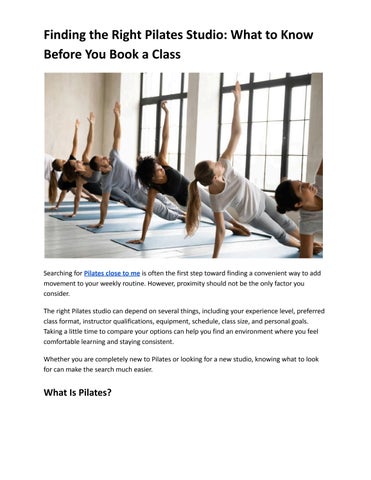
Finding the Right Pilates Studio: What to Know Before You Book a Class
Searching for Pilates close to me is often the first step toward finding a convenient way to add movement to your weekly routine. However, proximity should not be the only factor you consider. The right Pilates studio can depend on several things, including your experience level, preferred class format, instructor qualifications, equipment, schedule, class size, and personal goals. Taking a little time to compare your options can help you find an environment where you feel comfortable learning and staying consistent. Whether you are completely new to Pilates or looking for a new studio, knowing what to look for can make the search much easier.
What Is Pilates?
Pilates is a structured form of exercise that emphasizes controlled movement, posture, breathing, balance, coordination, and core control. Classes may take place on a mat or use specialized equipment such as a reformer and other Pilates apparatus. The experience can vary considerably from one studio to another. Some instructors follow a more traditional approach, while others use contemporary programming that incorporates additional movement techniques. For this reason, it is useful to understand what a studio actually offers before booking your first class.
Why Location Matters When Choosing a Pilates Studio Convenience can have a major effect on whether you maintain a regular exercise routine. A studio that is close to your home, workplace, or usual travel route may make it easier to attend consistently. When comparing options, consider more than the distance shown on a map. Think about: ● How long the journey takes during your normal travel hours ● Parking or public transportation availability ● Class times that fit your schedule ● Whether the studio is convenient on weekdays and weekends ● How easy it is to attend classes consistently ● Whether the studio's cancellation policy works with your schedule A slightly farther studio may still be a better choice if it offers instruction and class times that suit your lifestyle.
Decide Which Type of Pilates You Want Not every Pilates class is the same. Understanding the major formats can help you narrow your search. Mat Pilates Mat Pilates is performed primarily on a floor mat and may use small props such as resistance bands, rings, or balls. It can be a practical introduction to Pilates because it does not require large equipment. It can also be useful for people who prefer a straightforward exercise environment.
Reformer Pilates Reformer Pilates uses a specialized piece of equipment with springs, straps, and a moving carriage. Because the equipment can provide different levels of resistance and support, reformer classes can be adapted for different experience levels. Beginners should look for classes specifically designed to introduce them to the equipment and basic movements. Private Pilates Sessions Private instruction provides one-on-one attention from an instructor. This format may appeal to beginners who want detailed guidance, people who prefer individualized instruction, or participants with specific exercise goals. Private sessions are generally more expensive than group classes, so consider your budget alongside the amount of individual attention you want. Small Group Pilates Small group classes can provide a middle ground between private instruction and larger classes. With fewer participants, instructors may have more opportunities to observe individual technique and provide corrections. However, class sizes vary, so ask the studio how many people typically attend.
How to Evaluate a Pilates Instructor The instructor can have a significant effect on your experience. Before booking, look for information about the instructor's Pilates education, certifications, professional experience, and teaching background. A reputable studio should be able to explain the qualifications of its instructors rather than relying only on general marketing language. It is also worth considering how the instructor communicates. A good class should provide clear explanations and appropriate demonstrations. Beginners should feel comfortable asking questions when they do not understand an exercise. If an instructor cannot explain why an exercise is being performed or how it should be modified, you may want to consider another option.
Class Size Can Make a Difference
Class size is another factor that is easy to overlook when searching for a nearby studio. A larger class may offer a lively atmosphere and potentially a lower price. However, an instructor may have less opportunity to give individual feedback when many participants are present. Smaller classes may provide more personal attention. Neither option is automatically better. The right choice depends on your experience, preferences, and comfort level. Before booking, ask how many participants are normally included in the class rather than relying solely on labels such as "small group."
Look at the Studio's Equipment If you are interested in reformer or apparatus-based Pilates, examine the equipment available at the studio. Look for equipment that appears properly maintained and an environment that is clean and organized. New clients should receive appropriate instructions before using unfamiliar equipment. You can also ask whether equipment is suitable for beginners and whether instructors demonstrate how it should be used. A professional environment should make you feel comfortable asking questions before beginning an exercise.
Consider Your Fitness Experience Your current experience should influence the class you choose. If You Are New to Pilates Look for beginner or foundation classes. A slower introduction can help you understand basic movement principles and become familiar with the terminology used during classes. Private instruction can also be useful if you prefer individual guidance. If You Have Some Experience You may have more flexibility when choosing between mat, reformer, and other class formats.
Ask about class levels and prerequisites so that you do not accidentally choose a class that is significantly above your current ability. If You Are Experienced More advanced classes may provide additional challenges and variety. Before enrolling, confirm that the class matches your experience and that the instructor has appropriate expertise for the type of training being offered.
What Should You Ask Before Booking? A quick conversation with the studio can answer many questions before you spend money on a membership or class package. Consider asking: 1. What class is recommended for first-time clients? 2. How many people are normally in each class? 3. What training or certifications do the instructors have? 4. Which type of Pilates does the studio teach? 5. What equipment is used? 6. Are private sessions available? 7. Can exercises be modified for different experience levels? 8. What happens during the first session? 9. What are the cancellation and membership policies? 10.Is an introductory class available? These questions can help you compare studios based on practical information rather than advertising alone.
How to Prepare for Your First Pilates Class Once you choose a studio, preparation can make your first experience more comfortable. Wear clothing that allows unrestricted movement and follow the studio's instructions regarding socks, footwear, water, and other equipment. Arrive early enough to complete any required paperwork and introduce yourself to the instructor. Let the instructor know that you are new if this is your first Pilates class. You should also communicate any relevant physical limitations or concerns before beginning.
During class, concentrate on learning proper technique rather than trying to keep up with everyone around you. Pilates involves controlled movements, and learning the fundamentals can take time.
Listen to Your Body Exercise should be approached with awareness rather than competition. If an exercise causes pain, stop and tell the instructor. A qualified instructor may be able to provide a modification, but persistent or concerning pain should not be ignored. People with injuries, medical conditions, or other health concerns should consider speaking with an appropriate healthcare professional before beginning a new exercise program. Pilates instruction is not a substitute for medical diagnosis or treatment.
How Pilates Can Fit Into a Balanced Exercise Routine Pilates can be one part of a broader physical-activity routine. The World Health Organization recommends that adults accumulate 150 to 300 minutes of moderate-intensity aerobic physical activity each week, or an equivalent amount of vigorous activity, and perform muscle-strengthening activities on at least two days each week. Your individual exercise routine should reflect your goals, current fitness level, schedule, and recovery needs. Rather than trying to copy someone else's routine, focus on developing a sustainable pattern of physical activity that works for you.
How to Find Pilates Close to Me Without Choosing Too Quickly When searching for a Pilates studio nearby, start by creating a shortlist of convenient options. Then compare each studio based on: ● Instructor qualifications ● Class format ● Beginner availability ● Class size ● Equipment ● Schedule ● Pricing
● Studio policies ● Customer feedback ● Overall environment Reviews can provide useful insight, but read them critically. Look for specific comments about instructors, class organization, cleanliness, communication, and the overall experience rather than relying only on star ratings. If possible, try an introductory class before purchasing a large package. Your first visit can help you determine whether the teaching style and studio environment actually match your expectations.
Common Mistakes to Avoid Choosing Only by Distance The closest studio is not necessarily the best studio. Convenience matters, but instruction quality and class suitability matter too. Signing Up for an Advanced Class Immediately A popular class may not be appropriate for someone completely new to Pilates. Ask which level the instructor recommends. Ignoring Instructor Qualifications The person teaching your class plays an important role in your experience. Take time to understand their training and professional background. Buying a Large Package Before Trying a Class An introductory session can help you determine whether you like the studio, instructor, schedule, and class format before making a larger financial commitment. Comparing Studios Only by Price A lower price does not automatically represent better value. Consider what is included, how large the classes are, the instructor experience, and the overall quality of the studio.
Frequently Asked Questions 1. How do I find good Pilates close to me?
Start by identifying studios that are convenient for your regular routine. Then compare instructor qualifications, class formats, class sizes, schedules, equipment, pricing, and reviews. Trying an introductory class can help you evaluate the studio before making a long-term commitment. 2. Is Pilates suitable for beginners? Pilates can be approachable for beginners when they choose an appropriate class and receive clear instruction. Look for beginner or foundation sessions and tell the instructor that you are new to Pilates. 3. Should I choose mat Pilates or reformer Pilates? It depends on your preferences and goals. Mat Pilates uses a floor mat and generally requires less equipment, while reformer Pilates uses specialized equipment. If you are new to reformer Pilates, choose an introductory class where the equipment and movements are explained. 4. How often should I attend Pilates classes? There is no universal schedule that is right for everyone. Your ideal frequency depends on your goals, current activity level, recovery, and other exercise. Pilates can be combined with aerobic and muscle-strengthening activities as part of a balanced routine. 5. What should I ask a Pilates studio before joining? Ask about instructor qualifications, beginner classes, typical class size, equipment, pricing, cancellation policies, private sessions, and what to expect during your first visit. These details can help you determine whether the studio is a good fit.
Conclusion Finding Pilates close to me is easy with a local search, but finding the right Pilates environment requires a little more research. Distance, instructor qualifications, class size, equipment, teaching style, experience level, scheduling, and cost can all influence your decision. Instead of choosing the first nearby studio you find, compare several options and consider taking an introductory class. Most importantly, choose an environment where you can learn at an appropriate pace, ask questions, and develop a consistent approach to physical activity. For any new exercise program, especially when injuries or health concerns are involved, appropriate professional guidance should come first. With thoughtful research and realistic
expectations, you can make a more informed decision about which Pilates option fits your needs. For more: https://westhollywood.carriespilatesplus.com/