DAMP, MOULD & CONDENSATION POLICY, 2026 Including:
Managing Damp, Mould & Condensation Procedure 2026
This policy was approved by the Committee of Management on 22 July 2026 It should be reviewed again no later than 30 June 2029, or as and when any relevant legislation changes that would require the policy to be updated.
The policy has been assessed through the organisational impact assessment process.
We can, if requested, produce this document in different formats such as larger print or audioformat We can also translate the document into various languages, as appropriate.
SCOTTISH STANDARD 1
HOUSING
The governing body leads and directs the RSL to achieve REGULATOR good outcomes for its tenants and other service users. STANDARDS
STANDARD 2
The RSL is open about and accountable for what it does. It understands and takes account of the needs and priorities of its tenants, service users and stakeholders. Its primary focus is the sustainable achievement of these priorities.
STANDARD 3
The RSL manages its resources to ensure its financial well-being, while maintaining rents at a level that tenants can afford to pay.
STANDARD 4
The Governing body bases its decisions on good quality information and advice and identifies and mitigates risks to the organisation’s purpose.
STANDARD 5
The RSL conducts its affairs with honesty and integrity.
STANDARD 6
The Governing body and senior officers have the skills and knowledge they need to be effective.
1.0 INTRODUCTION
Estimates in the UK are that between 10-50% of homes are affected by damp. Social Housing and low-income communities where there is often overcrowding, potentially a lack of appropriate heating, ventilation and insulation, can experience a substantially higher proportion of damp and mould than the national average.
West Granton Housing Co-operative Ltd want to ensure that our tenants have warm, safe and healthy homes to live in. We understand that some properties and the way in which people live can be more susceptible to condensation and possible damp related issues, than others.
A more purposeful approach to the prevention, treatment and remediation of these issues will benefit both our tenants and our properties. We seek to inspect our properties (as part of our overall asset management strategies) to enable improved reporting and identification of mould, condensation and dampness.
We seek to provide end-to-end tenant satisfaction and service with the provision of clear advice, guidance and support alongside a robust and proactive approach to attending to and eradicating mould and/or damp within our properties.
2.0 WHAT IS DAMP, MOULD & CONDENSTATION?
Damp in properties is caused by a build-up of moisture. This can be caused by various issues with a building, such as leaking pipes, cracks which allow rain in, blocked guttering, or defects in the foundation. Moisture can also build up from condensation as a result of daily living activities, particularly in properties with inadequate ventilation.
Mould can develop in damp atmospheres, particularly when it is cold. Both damp and mould pose a danger to health, particularly to children, older people and people with existing skin and respiratory conditions or a weaker immune system. It can cause respiratory problems, trigger asthma attacks and allergies, and make it more likely that people will suffer from infections.
Damp and mould must not be dismissed as a ‘lifestyle issue’. While everyday activities such as bathing, cooking and drying clothes can increase moisture levels, WGHC will take a non-judgemental, evidence-based approach that identifies the root cause, assesses risk to health and safety, provides practical support to tenants and completes any required repairs or remedial works within applicable statutory and policy timescales.
3.0 OUR APPROACH
3.1 In the management of dampness, mould & condensation
We commit to:
Provide and maintain a comfortable, warm and healthy home, free from damp, mould or disrepair for our tenants.
Recognise that having mould issues in a home can be distressing for our tenants and ensure we are supportive in our approach to remediation and/or eradication.
Document Name: Created:
Owner:
Location / Path: Damp, Mould and Condensation Policy
David Mills / WGHC
David Mills / WGHC WGHC
Version: Version Date:
Work in partnership with tenants to resolve and understand how to reduce condensation, damp and mould issues.
Make sure the fabric of our homes are protected from deterioration and damage resulting from, or contributing to, damp and mould.
Ensure that responsive repairs to alleviate damp are carried out as quickly and efficiently as possible to protect the health & wellbeing of our tenants and minimise damage to the fabric, fixtures and fittings of the property.
Plan resources to respond to higher demand. For example, during the winter months.
Provide staff with the skills to identify and differentiate between signs of damp and condensation and understand the causes and remedies.
To support our tenants in ways to reduce damp and condensation in their home and how to make positive changes.
To take account of the issues of damp and condensation when designing investment programmes, for example heating and ventilation.
To comply with all statutory and regulatory requirements and sector best practice.
Comply with Awaab’s Law in Scotland and the Investigation and Commencement of Repair (Scotland) Regulations 2026 by ensuring reports or identified cases of damp and mould are investigated by a competent person within 2 working days, tenants receive written findings within 3 working days of the investigation being completed, and any required works commence within 5 working days of the investigation being completed, unless circumstances beyond WGHC’s control apply and these are clearly communicated to the tenant.
4.0 POLICY BACKGROUND
4.1 Legislation and Statutory/Regulatory Requirements
Housing (Scotland) Act 1987, including the Tolerable Standard and provisions relating to damp and mould.
Housing (Scotland) Act 2001, including the landlord’s duty to ensure homes are wind and watertight and reasonably fit for human habitation throughout the tenancy.
Housing (Scotland) Act 2006, including the Repairing Standard where applicable.
Housing (Scotland) Act 2014.
Housing (Scotland) Act 2025, including provisions enabling statutory timescales for investigation and commencement of repairs and provisions relating to damp and mould within the Tolerable Standard.
The Investigation and Commencement of Repair (Scotland) Regulations 2026, which implement Awaab’s Law in Scotland from 6 October 2026.
Scottish Secure Tenants (Right to Repair) Regulations 2002, as amended.
Scottish Housing Quality Standard (SHQS), including requirements for homes to be substantially free from rising or penetrating damp, to have satisfactory ventilation and to meet minimum energy efficiency standards.
David Mills / WGHC
David Mills / WGHC
Energy Efficiency Standard for Social Housing (EESSH) and any successor standards.
Scottish Social Housing Charter and Scottish Housing Regulator Regulatory Standards, including tenant safety, accountability, risk management and good governance.
Equality Act 2010, Human Rights Act 1998, UK GDPR and Data Protection Act 2018.
WGHC Maintenance and Repairs Policy, Health and Safety Policy, Complaints Policy, Equality, Diversity and Inclusion Policy, Privacy Notices, Tenancy Management procedures, Asset Management Strategy and Contractor Management arrangements.
The Energy Efficiency Standard for Social Housing (EESSH) aims to encourage landlords to improve the energy efficiency of social housing in Scotland. This supports the Scottish Government's vision of warm, high quality, affordable, low carbon homes and a housing sector that helps to establish a successful low carbon economy across Scotland.
Awaab’s Law in Scotland requires landlords to respond promptly and transparently when they become aware that a home is, or may be, affected by damp or mould.
From 6 October 2026, WGHC will ensure that an investigation is completed by a competent person within 2 working days of becoming aware of the issue, that the tenant receives a written summary of the investigation within 3 working days of the investigation, and that any required work begins within 5 working days of the investigation being completed.
Where timescales cannot be met due to circumstances beyond WGHC’s control, WGHC will write to the tenant explaining the reason, the revised timescale and any reasonable interim measures being taken to minimise risk to the tenant / their family etc.
5.0 PROCEDURE
Our procedures are set out within the accompanying procedure ‘Managing Damp, Mould & Condensation Procedure 2026’ (Appendix 1)
The procedure must be read alongside this Policy and must be implemented consistently by all relevant staff, contractors and agents. Where the procedure is silent or unclear, staff must apply the higher standard required by legislation, regulation, statutory guidance, SHR expectations, sector good practice or WGHC policy.
6.0 MONITORING & COMPLIANCE
It shall be the responsibility of all operational staff, tenant-facing staff, contractors and relevant managers to understand and comply with this Policy and the accompanying Procedure.
Compliance will be monitored through case records, inspection outcomes, repair response times, tenant communications, complaints, repeat reports, contractor performance, tenant satisfaction and reports to senior management and the governing body.
WGHC will maintain sufficient evidence to demonstrate that damp and mould cases have been investigated, risk assessed, communicated, completed, quality checked and followed up.
Document Name:
Created:
Owner:
Location / Path: Damp, Mould and Condensation Policy
David Mills / WGHC
David Mills / WGHC WGHC \ X:
Version:
Version Date:
Review Due: Pages: 1.0 22/07/26 30/06/29 Page 5 of 26
Where a case involves potential risk to health, vulnerability, repeat reports, significant mould growth, failure to gain access, decant considerations, complex repairs, contractor delay or tenant dissatisfaction, it must be escalated to the appropriate manager for oversight and recorded action.
7.0 APPEALS AND COMPLAINTS
WGHC is committed to valuing complaints and ensures that the organisation benefits from feedback to identify areas for change and improvement.
If anyone is dissatisfied with the service they have received because of this Policy, they will be encouraged to use our Complaints Procedure. Similarly, any individuals dissatisfied with decisions made in the operation of the Policy are entitled to appeal against these.
The WGHC Complaints Policy details the way in which complaints can be made, the timescales for responding and the appeals process.
Anyone dissatisfied with the outcome of their complaint having exhausted WGHC’s complaint procedure has the right to refer the matter to the Scottish Public Services Ombudsman.
8.0 EQUALITY, DIVERSITY AND INCLUSION
WGHC will ensure that in implementing this Policy it will not unfairly discriminate against any individual, household or group on the grounds of sex or marital status, on race grounds, or on the grounds of disability, age, sexual orientation, language or social origin, other personal attributes, including beliefs or opinions such as religious beliefs or political opinions. (See Section 25.0 for an Equalities Impact Assessment)
9.0 UK GDPR (GENERAL DATA PROTECTION REGULATION)
WGHC will treat all personal data in line with its obligations under the current UK General Data Protection Regulation and The Data Protection Act 2018.
Information regarding how data will be used and the basis for processing data is provided within the WGHC Privacy Notices (available on the WGHC website, or, upon request).
All suspected personal data breaches must be reported internally without delay, recorded in a breach log, investigated and risk assessed. Where a breach is likely to result in a risk to individuals’ rights and freedoms, WGHC must notify the Information Commissioner’s Office without undue delay and, where feasible, within 72 hours of becoming aware of the breach. Where the breach is likely to result in a high risk to individuals, affected individuals must also be informed without undue delay.
Document Name:
Created:
Owner:
Location / Path: Damp, Mould and Condensation Policy
David Mills / WGHC
David Mills / WGHC WGHC
Version:
Version Date: Review Due: Pages: 1.0 22/07/26 30/06/29
10.0 EQUALITIES IMPACT ASSESSMENT
WGHC Equality Impact Assessment
Policy Name: Damp, Mould & Condensation Policy, 2026
Assessor: David Mills, COO
1) Briefly describe the aims, objectives and purpose of the policy
2) Who is intended to benefit from the policy?
(e.g. Staff, Tenants, Contractors)
3) What outcomes are wanted from the policy (e.g. benefits to Tenants / Staff etc.)
4) Which protected characteristics could be affected by this policy?
(Highlight in yellow all that apply)
5) If the policy is not relevant to any of the protected characteristics listed above, state why and end the process here
Policy: New or Review Review
Assessment Date: 22 July 2026
To set out WGHC’s commitment to providing warm, safe and healthy homes by preventing, identifying, investigating and resolving damp, mould and condensation.
Tenants and household members, particularly those whose health or circumstances may make them more vulnerable to damp and mould.
Prompt reporting, competent investigation, risk-based prioritisation, timely repairs and remedial works leading to reduced recurrence of damp and mould, improved tenant health and wellbeing and stronger evidence of compliance with Awaab’s Law in Scotland.
6) Describe the likely positive or negative impacts the policy could have on any of the groups identified above in section 4.
The policy is relevant to protected characteristics because damp and mould can have greater health impacts on children, older people, pregnant people, disabled people and those with respiratory, immune or other health conditions. Race and language may also be relevant where tenants need translated information, interpretation or support to understand reporting routes, investigation findings, access requirements and repair timescales.
Positive Impacts
The policy supports positive outcomes by requiring damp and mould reports to be taken seriously and progressing repairs within clear timescales whilst offering practical support such as advice, access arrangements, welfare checks and alternative communication formats.
Negative Impacts
Potential negative impacts could arise if tenants cannot easily report concerns, provide access, understand written information, safely heat or ventilate their home, or act on advice because of disability, age, language, health, pregnancy, caring responsibilities or financial hardship.
7) What actions are required to address the impacts arising from this assessment?
Name: David Mills, COO
Signature:
Date: 22 July 2026
Ensure staff and contractors apply a non-judgmental, evidence-based approach; record vulnerabilities, health concerns, communication needs and access requirements; offer translation, interpretation and alternative formats where needed; provide clear written findings and timescales; consider interim measures where risk is identified; escalate repeat reports, access difficulties, complex cases and tenant dissatisfaction; monitor equality impacts through case records, complaints, repeat reports, satisfaction feedback and compliance reporting.
Document Name: Created:
Owner:
Location / Path: Damp, Mould and Condensation Policy
David Mills / WGHC
David Mills / WGHC WGHC \ X:
Version:
Version Date:
Review Due: Pages: 1.0 22/07/26 30/06/29
1.0 STRATEGIC AIMS
1.1 Purpose
To provide a procedure that will create a consistent approach to addressing cases of mould and condensation or dampness through to rectification and/or eradication of cause.
WGHC has a zero-tolerance approach to damp and mould. This means that every report or identified case will be taken seriously, investigated promptly, risk assessed, recorded, communicated clearly to the tenant and progressed through to resolution, with the root cause addressed as far as reasonably practicable to prevent recurrence.
The aim of all responses to damp and mould issues must be to tackle the root cause of the problem – it is not enough to remove the issue if it simply reappears again a few months later.
1.2 Scope
The procedure applies to West Granton Housing Co-operative Ltd employees, contractors and relevant stakeholders
2.0 FACTORS OF DAMPNESS, MOULD & CONDENSATION
2.1 Fuel poverty
It is recognised that fuel poverty is a major factor in cases of condensation which can lead to mould problems where tenants are unable to afford to heat their home effectively.
2.2 Cold Bridging
Cold Bridging can be found in many areas including poorly installed cavity wall insulation for example. Where a gap occurs in the insulation this can cause areas to become colder, which would then be at risk of increased condensation.
2.3 Blocked or broken ventilation
This would include blocked air bricks and blocked or broken window trickle vents
2.4 Broken or no extractor fans
Where possible, all kitchens, bathrooms and utility rooms should have a functioning extractor fan that adequately vents, preferably, with a timed overrun.
2.5 Radiators
Heating systems performance is not always at the standard required to prevent condensation. Radiators should be periodically bled to ensure ‘all over’ output. Ideally, radiators should not be used to dry damp washing.
2.6 Missing/damaged render or pointing on brickwork
There could be various reasons for poor or broken pointing (i.e. the finish between bricks) on parts of a brick wall which may have created cold spots for condensation and penetrating damp. The same can also be true with damaged render systems (harling)
Document Name:
Created:
Owner:
Location / Path: Damp, Mould and Condensation Policy
David Mills / WGHC
David Mills / WGHC WGHC
Version:
2.7 Leaking guttering
Guttering can, over time, corrode, warp or sag causing leaking joints. Lack of effective maintenance can result in blocked or choked gutters and downpipes that can, through time, cause damage to the fabric of the building, dampness to walls and/or dampness to fascia boards or soffits etc.
2.8 Leaking roofs
This could be caused by many things i.e. damaged or missing tiles, damaged flashing, roof vents or chimneys, blocked gutters or simply that the roof is approaching the end of its serviceable life.
2.9 Unvented and condensing tumble dryers
These can produce excessive amounts of water vapour in the property, encouraging condensation.
2.10 Tenant management of the home
Excessive humidity within the home and the lack of adequate ventilation is the primary cause of condensation. Drying clothes on radiators, cooking with lids off pans, and over-crowding all add to the moisture levels within a property.
2.11 Rising damp
Rising damp can occur where there is missing or ineffective damp proof course or where a high ground level breaches the damp proof course.
Alongside proactive work for staff to identify damp and mould issues, WGHC should encourage tenants to report any problems as soon as possible. They should share information with tenants explaining the risks of living in a home with damp and mould, how to report issues and what steps WGHC will take to resolve the issue. WGHC must have a simple way for tenants to report damp and mould problems and to complain if they are not satisfied with the response.
WGHC should ensure communications reach as many tenants as possible. To achieve this, it will be beneficial to combine a range of communication methods, such as: emails/ texts directly to residents; leaflets and resident newsletters; information at community events or drop-in sessions and the WGHC website. All ‘tenant facing/visiting’ WGHC staff should urgently review any records to identify where there are reports of either damp, mould or condensation and ascertain what action is being taken.
3.0 FOUR MAIN CATEGORIES OF DAMPNESS
Damp in properties is caused by a build-up of moisture. This can be caused by various issues with a building, such as leaking pipes, cracks which allow rain in, blocked guttering, or defects in the foundation. Moisture can also build up from condensation as a result of daily living activities, particularly in properties with inadequate ventilation.
Mould can develop in damp atmospheres, particularly when it is cold. Both damp and mould pose a danger to health, particularly to children, older people and people with existing skin and respiratory conditions or a weaker immune system. It can cause respiratory problems, trigger asthma attacks and allergies, and make it more likely that people will suffer from infections.
Document Name:
Created:
Owner:
Location / Path: Damp, Mould and Condensation Policy
David Mills / WGHC
David Mills / WGHC WGHC \ X:
Version:
Damp and mould must not be dismissed as a ‘lifestyle issue’.
Staff and contractors must avoid language that blames or stigmatises tenants. Advice about heating, ventilation, moisture management or use of rooms may be appropriate, but it must be provided alongside a proper assessment of property condition, health risk, support needs and any repair or remedial action required.
3.1 Penetrating dampness
This type of dampness will only be found on external walls or, in the case of roof leaks, on ceilings. It only appears because of a defect in the structure of the home, such as missing pointing to the brickwork, missing roof tiles, loose flashing or leaking gutters. These defects then allow water to pass from the outside to the inner surfaces.
Penetrating dampness is far more noticeable following a period of rainfall and will normally appear as a well-defined ‘damp patch’ which looks and feels damp to the touch. “Tide marks” will be left, even in periods of dry weather.
3.2 Defective plumbing
Leaks from water and waste pipes, especially in bathrooms and kitchens, are relatively common. They can affect both external and internal walls and ceilings. The affected area looks and feels damp to the touch and stays damp whatever the weather conditions outside.
An examination of the water and waste pipes in the kitchen and bathroom and the seals around the bath, shower and sinks will usually find the problem. In cases when leaks are not attended to, rot may become established in wooden joists and floorboards leading to a risk of collapse in severe cases. Mould may be seen with this type of dampness and even fungi are not uncommon if the defects are not addressed.
3.3
Rising dampness
This is caused by water rising from the ground into the home. The water gets through or around a defective damp proof course (DPC) or passes through the natural brickwork if the property was built without a DPC. Rising damp will only affect basements and ground floor rooms. It will normally rise no more than 36 inches above ground level (900mm) and usually leaves a ‘tide mark’ low down on the wall. You may also notice white salts on the affected areas.
Rising damp will be present all year round but is more noticeable in winter. If left untreated it may cause wall plaster to crumble and paper to lift in the affected area. Mould will rarely be seen where there is rising damp (and then only in the early stages). This is because rising dampness carries with it salts that prevent the growth of mould.
3.4
Condensation and mould growth
This is by far the most common occurrence which often lead to a repair request.
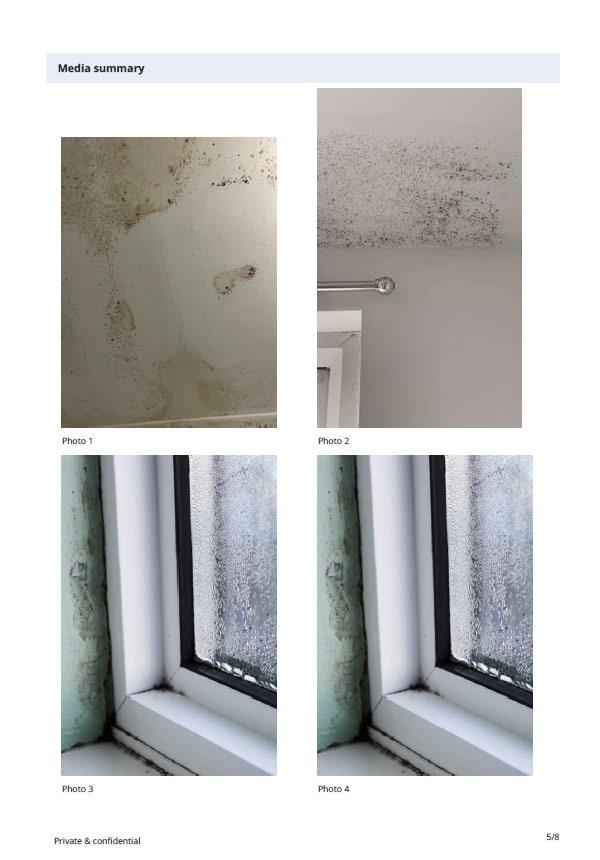
Condensation is caused by water vapour or moisture in the air, inside the dwelling, coming into contact with a colder surface, such as a window or wall. The drop in temperature causes water to form on the surface. This water may then soak into the wallpaper, paintwork or plasterwork.
Document Name: Created:
Owner:
Location / Path: Damp, Mould and Condensation Policy
David Mills / WGHC
David Mills / WGHC
Version:
Version Date:
Mould spores are invisible to the naked eye but are in the air all around us all of the time and will quickly grow on surfaces where condensation has formed into a visible covering.
Condensation can be more prevalent during the colder months and it would not be uncommon to see a spike in tenant demand during Autumn and Winter. A symptom of condensation is mould growth which is usually found in the corners of rooms, north facing walls and on or near windows. It is also found in areas of little air circulation such as behind wardrobes and beds, especially when they are pushed up against external walls. It also forms in bathrooms and kitchens as they are high moisture areas or in properties which are overcrowded.
All homes are affected by condensation at some point however certain activities can increase the problem and good practices can eliminate this from becoming a bigger problem. Condensation and mould growth can sometimes be a consequence of customer habits and lifestyles, although this is not exclusively the case.
Cooking, washing and drying clothes indoors etc. all produce water vapour that can only be seen when tiny drops of water (condensation) appear on colder surfaces such as walls, windows, ceilings or mirrors and often unseen on clothing, shoes and furniture.
The amount of condensation in a home depends upon a number of things, most importantly-
How much water vapour is produced by the actions of its residents
How cold or warm the property is
How much air circulation (ventilation)
How well the property has been insulated.
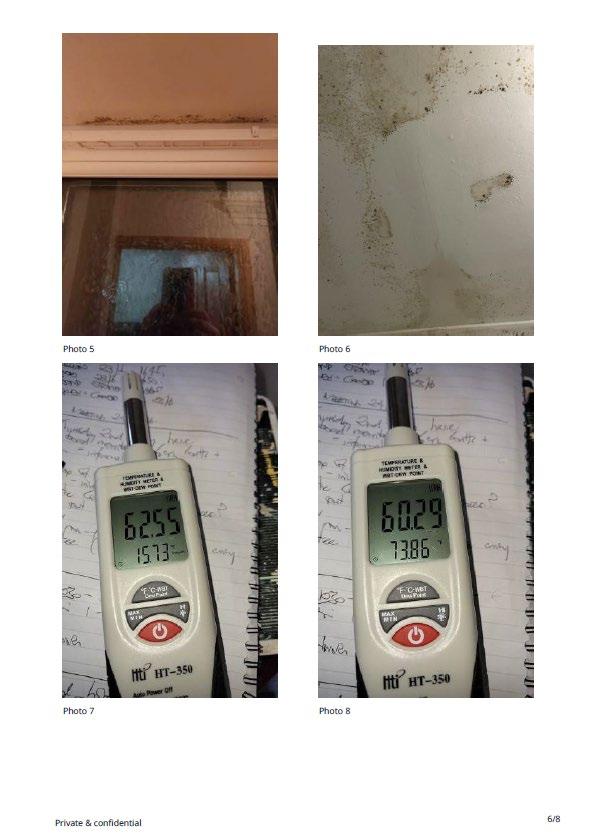
Simply turning up the heating will not sort out the problem, this may only temporarily reduce condensation. All factors may need to be looked at to reduce the problem. The first sign of a problem is often water vapour condensing on windows and other cold surfaces, which then takes a long time to disappear. This allows the surfaces to become damp resulting in mould growing on these damp areas.
4.0 PROCEDURE
The procedure below sets out the minimum standard for responding to any report or identified case of damp, mould or condensation. It must be applied consistently, recorded clearly and escalated where risk, complexity or delay is identified.
Log the report immediately, including the source of the report, affected rooms, visible signs, reported health concerns, household vulnerabilities, previous reports, access arrangements and any photographs or supporting information.
Triage the case on the same working day where possible and decide whether emergency action, an urgent inspection, temporary measures, tenant support or management escalation is required.
Arrange an investigation by a competent person and ensure it is completed within 2 working days of WGHC becoming aware that the property is or may be affected by damp or mould.
Document Name: Created:
Owner:
David Mills / WGHC
David Mills / WGHC
Version:
Provide the tenant with a written summary of the investigation findings within 3 working days of the investigation being completed. The summary must explain the likely cause, any health and safety concerns, required works, target timescales, interim advice, access requirements and a named contact.
Where the investigation confirms that works are required, ensure those works commence within 5 working days of the investigation being completed, unless circumstances beyond WGHC’s control prevent this.
Where statutory or policy timescales cannot be met, write to the tenant explaining the reason, revised timescale and reasonable interim steps being taken to minimise risk.
Confirm completion, quality check the works, update records and follow up with the tenant to check whether the issue has been resolved and whether any further support is needed.
Urgently review records to identify where there are reports of damp and mould and ascertain what action is being taken. This must include follow-up action.
Seek prompt access to all properties where damp or mould has been reported or identified. If access is not provided, staff must make reasonable attempts to agree access, explain the health and property risks, record all contact attempts and escalate to management. Any enforcement of access must be lawful, proportionate, authorised, based on the tenancy agreement and relevant legal powers, and used only after appropriate notice and advice.
Prepare a schedule of works and take steps to remedy the damp and mould without delay. The schedule should be provided to the tenant with a timescale for works.
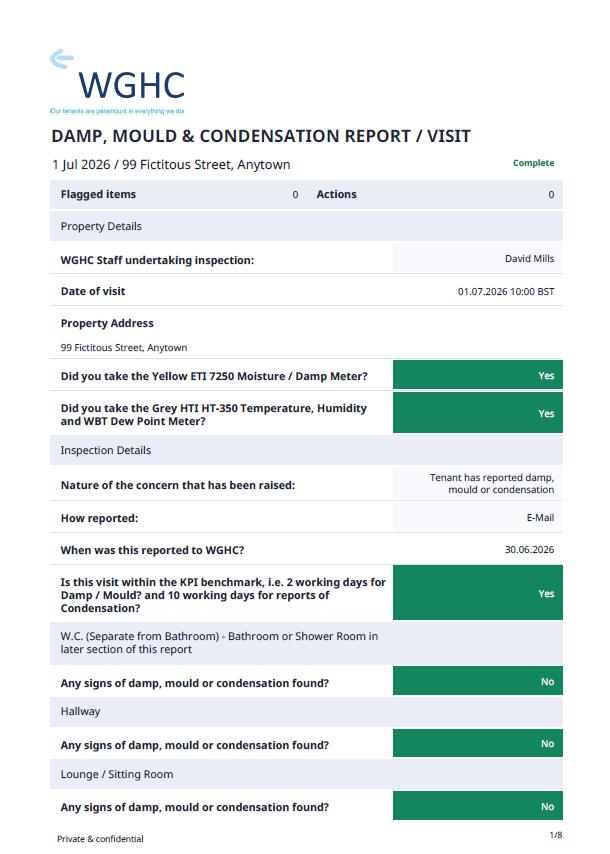
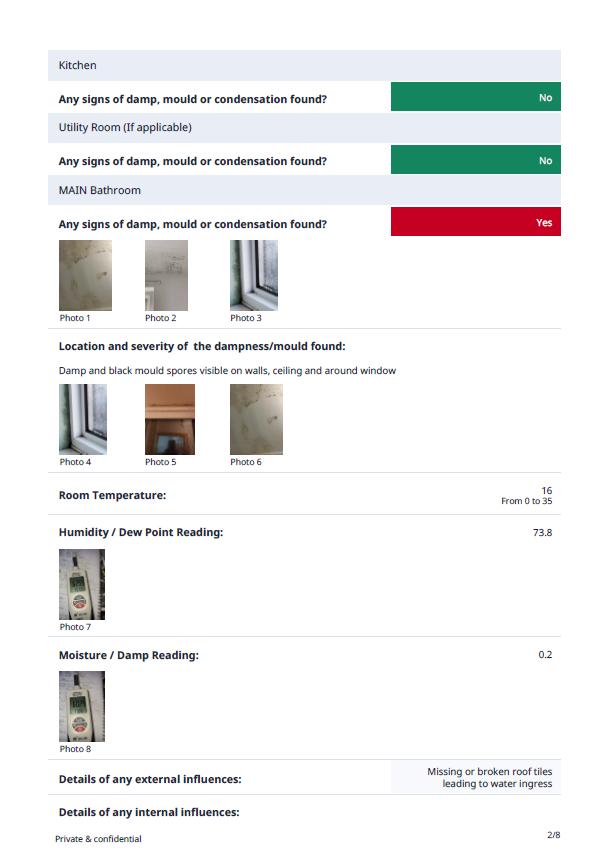
Use the i-auditor “damp, mould and condensation inspection report”. (Appendix 2)
What can be done internally to improve performance? Are policies and procedures fit for purpose and, preferably, co-designed with residents? Are contractors performing well? Is there a need to refresh training to ensure that the response to damp and mould is robust in all parts of the organisation?
4.1 How to Manage a Report of Damp or Mould and Condensation
4.2 First contact
Notification received via email, telephone call, reported in person to the Housing Management team or the Maintenance Team or noticed by staff following a tenancy visit.
The Housing Ombudsman is clear that responding to damp and mould primarily or initially as a lifestyle problem is unacceptable; it is also not going to resolve the problem. Taking this approach creates a negative impression with tenants who may feel blamed and stigmatised, and potentially less inclined to report further instances of the problem, creating more areas of ‘silence’ and long-term deterioration of the property.
A member of the housing team should speak with the tenant to understand the circumstances, identify any vulnerabilities or health concerns, confirm whether the tenant can safely heat and ventilate the home, provide non-judgemental practical advice and arrange any required inspection or support. Advice must not replace the need for a competent investigation where damp or mould is or may be present.
David Mills / WGHC
David Mills / WGHC
Where and, if relevant or needed, consider the issuance of a top up voucher for customers struggling to heat homes if this is found or believed to be a contributory factor.
Where damp or mould is reported or suspected, the housing team must request a competent investigation by the maintenance team or an appropriately qualified contractor to identify the source, assess risk, determine required works and record the outcome. The investigation must be completed within the statutory or policy timescale applicable at the time.
Any measures required to address dampness or mould must be implemented as soon as reasonably practicable and within applicable statutory or policy timescales. Works may include leak repairs, ventilation improvements, insulation measures, treatment or removal of contaminated materials, replacement of plasterboard, ceilings, tiling, kitchen or bathroom fittings, floor lifting, drying, cleaning, redecoration and reinstatement to return the property to a clean, habitable and safe condition.
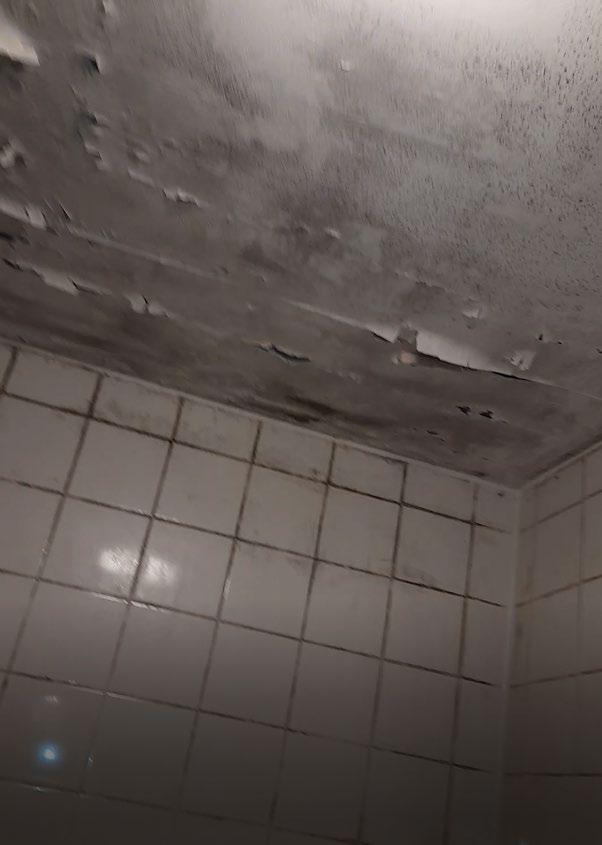
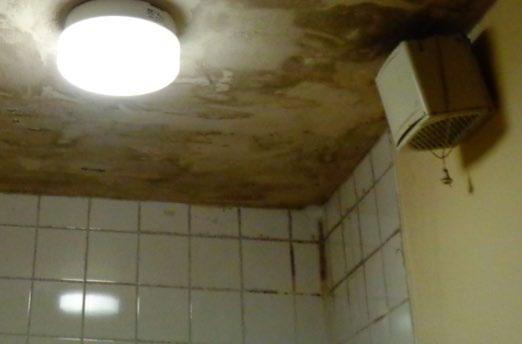
Before treatment
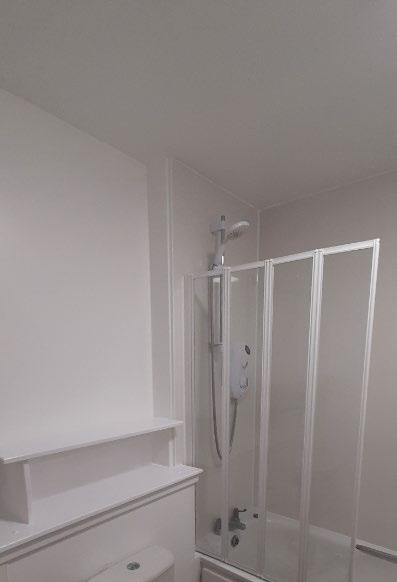
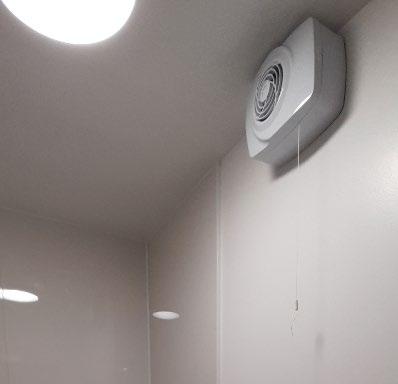
After treatment
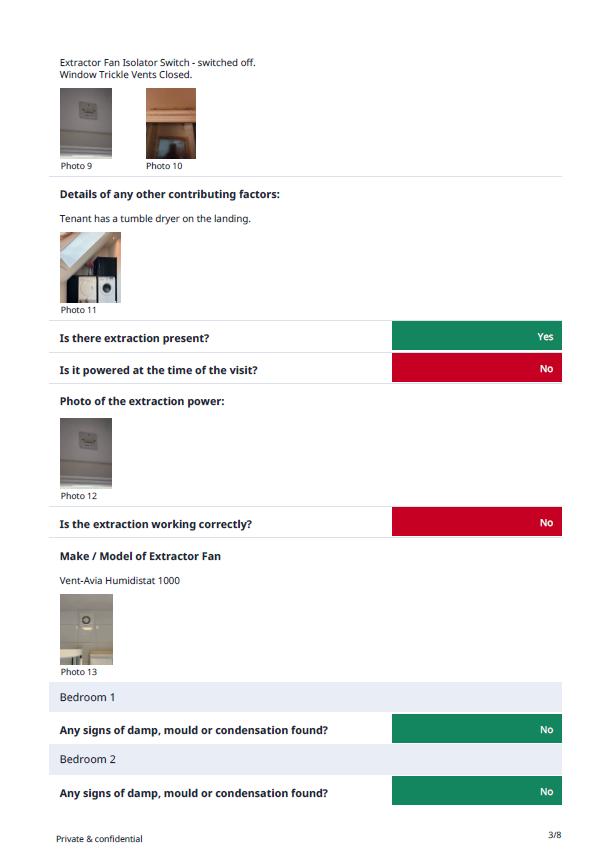
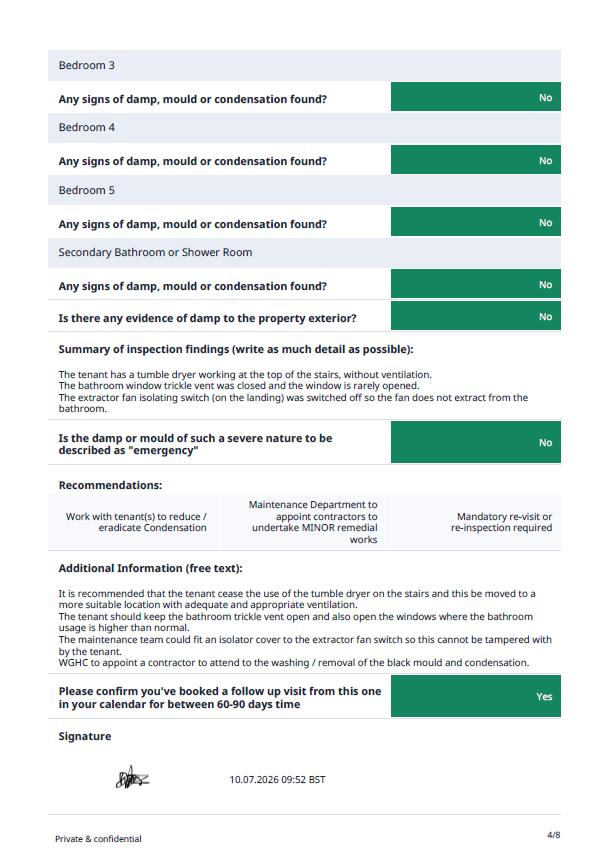
Damp, mouldy ceiling and mouldy tiles. Tiles replaced with shower boards and ceiling removed, treated, replaced, plastered & painted
Document Name: Created:
Owner:
Location / Path: Damp, Mould and Condensation Policy
David Mills / WGHC
David Mills / WGHC WGHC \ X:
Version:
Version Date: Review Due: Pages: 1.0 22/07/26 30/06/29
4.3 Repeat contact
If the tenant makes follow-up or repeat contact, the Housing Management Team and/or Maintenance Team must check whether the case remains open, whether agreed actions have been completed, whether the issue has worsened or recurred, and whether escalation is required. Repeat reports must not be treated as new isolated cases without reviewing the case history.
The Maintenance Team will arrange further investigation where issues have worsened, recurred or spread to new areas. A report must be saved to the tenant/property record with photographs, findings, risk assessment, actions, timescales, contractor instructions and follow-up requirements.
If the tenant remains dissatisfied, staff must explain the WGHC Complaints Policy and record and progress the complaint in line with that policy. The complaint process must not delay urgent action needed to reduce risk or complete repairs.
Before treatment
Mouldy ceiling, mouldy tiles, unused extractor fan.
4.4 How to Manage a Report of Defective plumbing
After treatment
New ceiling, new shower boards, new higher specification extractor fan.
Notification received via email, telephone call, reported in person to the Housing Management team or the Maintenance Team or noticed by staff following a tenancy visit.
Repair will be categorised as either Emergency (response within 24 hours but typically within 4 hours) where the leak cannot be contained and will likely cause significant damage or as an Appointment (up to 10 days based on customer requirements but typically within 3 days) where the customer confirms for example that there is a minor drip which can be contained
Most repairs of this type are a first time fix, however where a trades operative identifies additional works for example water staining on ceilings below a bathroom, water damage to kitchen fitments, a follow on technical inspection will be arranged to establish any further remedial works.
David Mills / WGHC
David Mills / WGHC
Version:
Version Date: Review Due: Pages: 1.0 22/07/26 30/06/29
4.5 How to Manage a Report of Penetrating dampness & Rising dampness
Notification received via email, telephone call, reported in person to the Housing Management team or the Maintenance Team or noticed by staff following a tenancy visit.
Repairs of this type will be triaged according to risk and urgency. A competent technical inspection will be arranged to diagnose the issue, determine whether temporary measures are required, identify any immediate health and safety concerns and confirm the repair route.
Many repairs of this type are associated with defective guttering/downpipes, missing or dislodged roof tiles, pointing, render, ground levels or damp proofing defects. Following the technical inspection, remedial works will be instructed and monitored to completion. Where works are complex, specialist, weather-dependent or require non-standard materials, WGHC will provide the tenant with written reasons for any delay, a revised timescale and any reasonable interim measures.
5.0 TURNING INSIGHT INTO ACTION
As well as addressing reports of dampness, mould and condensation effectively, taking a proactive approach will also be key to success.
WGHC will draw insight from as many sources as possible to identify instances of damp and mould. It is not sufficient to rely on stock condition or stock investment surveys as a sole mechanism for identifying issues not reported by tenants.
WGHC aim to undertake annual home visits, to check both for any issues in the property and on the wellbeing of tenants. Visits to any tenant should include checks for damp and mould in all rooms and is also a good opportunity to talk to tenants and ask about any specific concerns they may have.
WGHC have an important opportunity to assess the condition of our properties when they become void. Void assessments should include a focus on damp and mould in two main ways:
Damp and mould issues should be treated and resolved before reletting the property The void assessment checklist should include steps like checking that extractor fans and check ventilation systems are working effectively as this will help to prevent the build-up of condensation in the property.
Other preventative measures should be built into planned maintenance work, such as gutter cleaning.
Version:
Urgency Indicator Definition Examples
Emergency Target:
A.S.A.P.
Urgent
Target:
Complete in 2 working days
Routine
Target:
Complete in 10 working days
Repairs required where there is a significant hazard and/or imminent risk of harm to a tenant
Repairs that seriously affect the comfort or convenience of the tenant
• Severe, Damp and/or Mould likely to cause health issues to tenant(s)
• Reports of Damp and/or Mould
Repairs that will not seriously interfere with the comfort and convenience of the tenant
6.0 MONITORING AND REVIEW
• Reports of Condensation
This Procedure will be reviewed every three years as standard and earlier where required by changes to legislation, regulation, statutory guidance, SHR expectations, best practice, internal audit findings, complaints learning, performance information or organisational change. The review will include consideration of compliance with Awaab’s Law in Scotland, repair response times, repeat reports, tenant satisfaction, contractor performance, access issues, equality impacts and health and safety risks.
Document Name: Created:
Owner: Location / Path: Damp, Mould and Condensation Policy
David Mills / WGHC
David Mills / WGHC WGHC
Version:
Version Date: Review Due: Pages: 1.0 22/07/26 30/06/29
Document Name: Created: Owner: Location / Path: Damp, Mould and Condensation Policy
Version:
Version Date: Review Due: Pages: 1.0 22/07/26 30/06/29
David Mills / WGHC
David Mills / WGHC WGHC \ X:
Document Name: Created: Owner: Location / Path: Damp,
and Condensation Policy
Version:
Version Date:
Review Due: Pages: 1.0 22/07/26 30/06/29
Mould
David Mills / WGHC
David Mills / WGHC
Document Name: Created: Owner: Location / Path: Damp,
and Condensation Policy
Version:
Version Date:
Review Due: Pages: 1.0 22/07/26 30/06/29
Mould
David Mills / WGHC
David Mills / WGHC
Document Name: Created: Owner: Location / Path: Damp,
WGHC \ X:
and Condensation Policy
Version:
Version Date:
Review Due: Pages: 1.0 22/07/26 30/06/29
Mould
David Mills / WGHC
David Mills / WGHC
Document Name: Created: Owner: Location / Path: Damp,
WGHC \ X:
and Condensation Policy
Version:
Version Date:
Review Due: Pages: 1.0 22/07/26 30/06/29
Mould
David Mills / WGHC
David Mills / WGHC
Document Name: Created: Owner: Location / Path: Damp,
WGHC \ X:
and Condensation Policy
Version:
Version Date:
Review Due: Pages: 1.0 22/07/26 30/06/29
Mould
David Mills / WGHC
David Mills / WGHC
Document Name: Created:
Owner: Location / Path: Damp,
and Condensation Policy
Version:
Version Date: Review Due: Pages: 1.0 22/07/26 30/06/29
Mould
David Mills / WGHC
David Mills / WGHC