This Issue:
Conserving Wetlands Where the River Meets the Tides
Willapa River
Washington
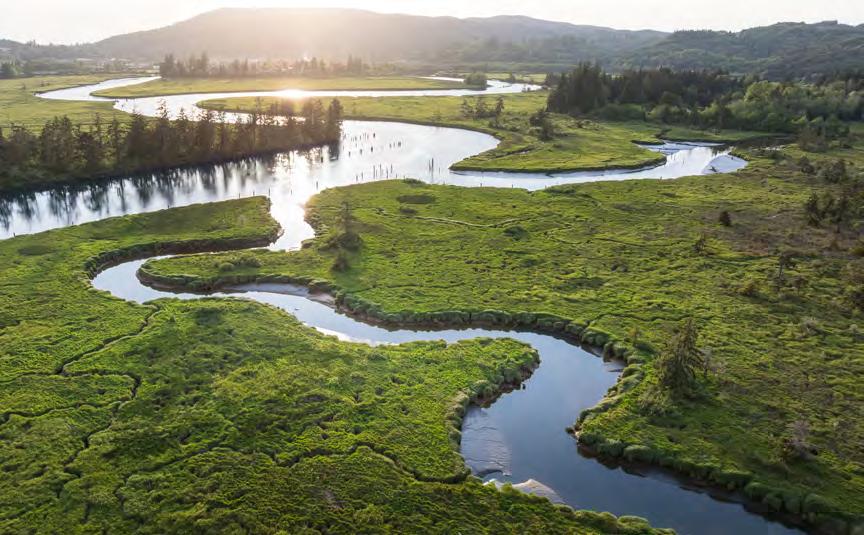
Formed by a long finger of land jutting north from the mouth of the Columbia River, Willapa Bay is one of the largest, most ecologically vibrant estuaries on the West Coast. Here, tidal mudflats, salt marshes, coastal forest and wetlands create a nursery for salmon and a refuge for wildlife, including more than 200 species of birds. It’s a vibrant area within a working landscape shaped by generations of small-scale agriculture, forestry and commercial shellfishing. Now, Western Rivers Conservancy is working to
conserve 393 acres of rare, nearly pristine wetlands along 2.2 miles of the Willapa River just above its confluence with the bay. Our goal is to convey the property to the Chinook Indian Nation, which will own and steward the lands in perpetuity.
Known as Willapa Wetlands, the property lies just upstream of Raymond, where the river widens and begins to feel the pulse of the tides. It is a place of spongy ground and shifting salinity—99 percent of it is wetlands—with 4.5 miles of inlets and sloughs
Willapa River, WA
Conserving pristine tidal wetlands and returning ancestral lands to the Chinook Indian Nation
McDermitt Creek, OR & NV
Ahead of Disaster Peak Ranch conveyance, WRC lays groundwork for large scale Lahontan cutthroat recovery
Little Deschutes River, OR
Setting a property on a clear path to recovery ahead of conveyance to its long-term steward
Teton River, ID
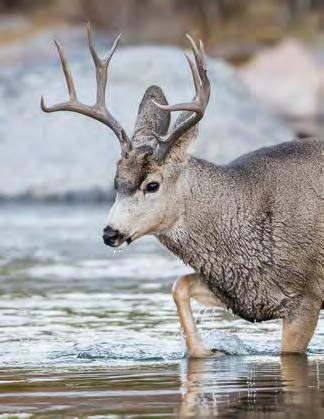
Teeing up conveyance to the BLM with habitat enhancements for mule deer and Yellowstone cutthroat trout
La Jara Basin, CO
Two major milestones secured in conservation of the vast La Jara Basin
Willapa Wetlands’ combination of freshwater, estuarine and riverine wetlands creates a diverse habitat for fish and wildlife. WRC plans to purchase the property and convey it to the Chinook Indian Nation for permanent protection.
Gains for Trout and Wildlife in the Teton River Basin
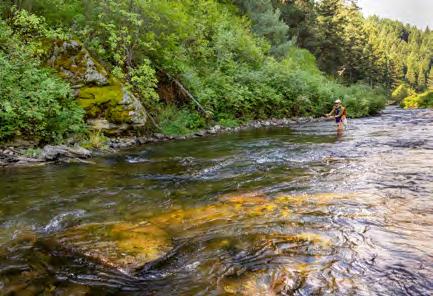
In Idaho’s Teton River Valley, deer, elk, moose and other wildlife still move much as they have for generations—down from the high country of Yellowstone and Grand Teton national parks into the shelter of the river canyons each winter, then back again with the seasons. A key player in the canyons is Badger Creek, a tributary to the Teton and a stronghold for imperiled Yellowstone cutthroat trout. The stream has long been a top priority for conservation and is the namesake of the 613-acre Badger Creek Canyon Ranch, which WRC is working to conserve.
In 2024, WRC purchased the ranch, including its 2.5 miles of Badger Creek and prime canyon habitat, with sagebrush and junipers to the north and Doug fir and aspen on the southern side. Since then, WRC and the Idaho Department of Fish and Game (IDFG) have been working to improve the property ahead of our planned conveyance to the BLM for permanent conservation.
One immediate priority was restoring safe passage for wildlife. In late 2024, WRC removed antiquated fencing that posed a hazard to animals moving through the canyon. Each winter, 2,000 to 3,000 mule deer and up to 800 Rocky Mountain elk pass through the area, along with grizzly bear and moose. The ranch provides a large portion of the winter range in lower Badger Creek Canyon.
In the fall of 2025, IDFG achieved a major milestone for the stream by removing non-native rainbow trout from lower Badger Creek, including the reach that flows through the ranch. With the rainbows gone, native Yellowstone cutthroats can naturally recolonize the creek.
WRC is committed to leaving every property better than we find it. With antiquated fencing gone and the state’s work on the creek moving full steam ahead, we’re already seeing big gains for Badger Creek and the Teton River basin. g
Recovering Lahontan Cutthroat at Disaster Peak Ranch
McDermitt Creek
Oregon and Nevada
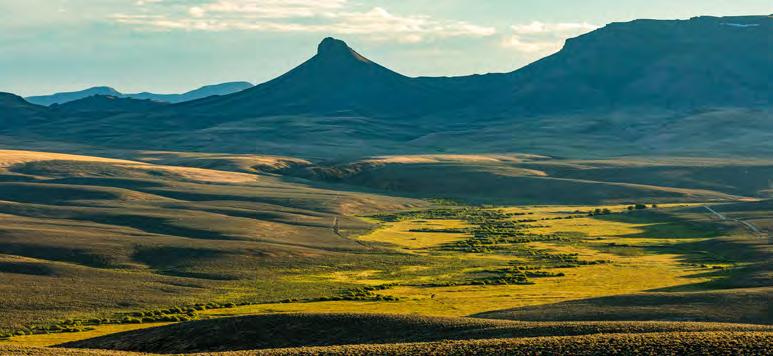
In the remote high desert where southeast Oregon meets northern Nevada, McDermitt Creek meanders cold and clear through the dry sagebrush of the Great Basin. The stream is poised to become a stronghold for Lahontan cutthroat trout, a federally threatened species. Disaster Peak Ranch is home to a critical stretch of the creek, and protecting the property is key to recovering these iconic, speckled orange fish in the Quinn River Basin.
To that end, WRC purchased the 3,345acre ranch in 2020. In 2024, we transferred the Nevada portion of the property to the state for management by the Nevada Department of Wildlife. Now, after more than five years of owning and stewarding the property, we are about to convey the Oregon portion of the ranch—including its 54,000-acre grazing allotment—to Oregon Desert Land Trust (ODLT).
Disaster Peak Ranch includes 7.5 miles of McDermitt Creek and 11.4 miles of tributary streams. Conserving this frontage allows WRC and our partners to restore and reconnect 55 miles of stream habitat on and around the property—doubling the stream miles available to Lahontan cutthroat in the species’ northwest range. The property’s
wet meadows, meandering streams and willow thickets have largely recovered thanks to more than three decades of family cattle ranching that prioritized the health of the land and creek. Under ODLT’s ownership, these compatible grazing practices will continue.
ODLT, which owns and is actively restoring the neighboring 16,645-acre Trout Creek Ranch, has deep ties to the Trout Creek Mountains and is a natural fit to steward Disaster Peak Ranch.
Our conveyance comes at an exciting moment. In July, partners and volunteers will gather at the ranch to begin removal of non-native fish from McDermitt Creek and its tributaries. This will allow agencies to reintroduce genetically pure Lahontan cutthroat to the full length of the creek and these tributaries. ODLT will work in partnership with the Nevada Department of Wildlife, Oregon Department of Fish and Wildlife, U.S. Fish and Wildlife Service, BLM, Trout Unlimited and WRC to move species recovery at Disaster Peak Ranch forward.
This is collaborative conservation at its best: WRC, agencies and other NGOs working together on a shared goal— ensuring the McDermitt Creek population of Lahontan cutthroats survives into the next century and beyond. g
By conserving Disaster Peak Ranch, WRC has set the stage for Lahontan cutthroat trout recovery on McDermitt Creek (inset) and its tributaries.
SAGE BROWN
Restoring River, Forest and Frog Habitat along a Deschutes River Tributary
Little Deschutes River
Oregon
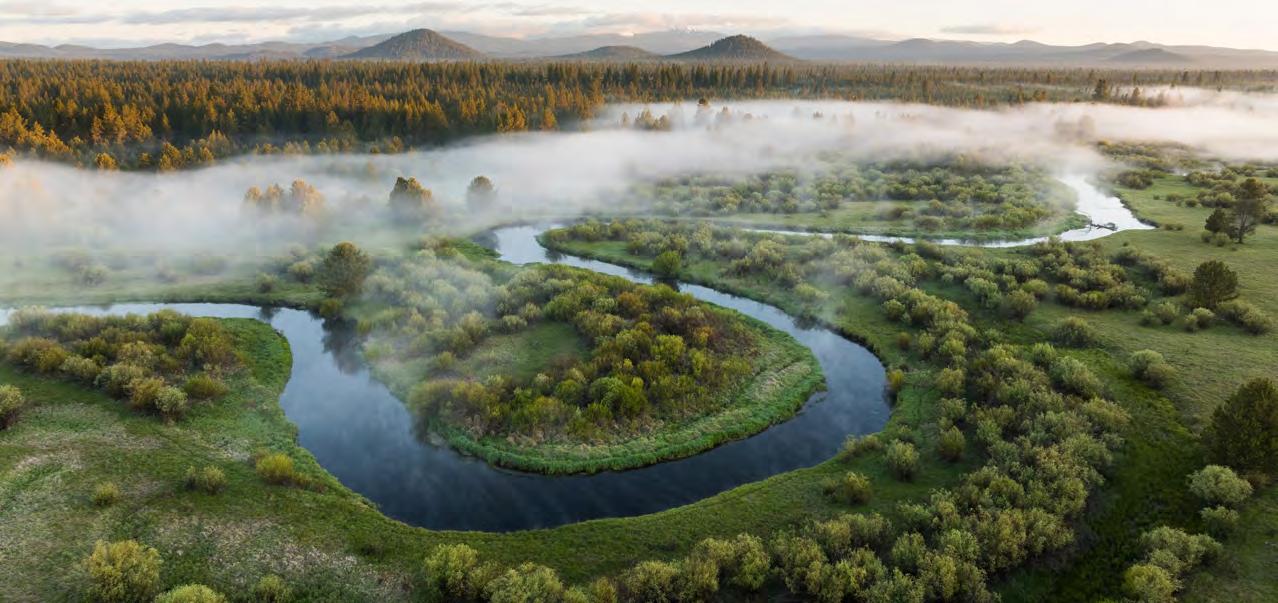
On its 105-mile journey from the Mount Thielsen Wilderness to the Deschutes River, the Little Deschutes flows through glacial canyons, verdant marshes and 7,700-year-old ash deposits from the eruption of Mt. Mazama that formed Crater Lake. Designated Wild and Scenic in its upper reaches, the Little Deschutes is the southernmost of the Deschutes’ principal tributaries.
At the confluence of the Little Deschutes and Paulina Creek—which flows from Paulina Lake in the Newberry National Volcanic Monument—Western Rivers Conservancy purchased the 674-acre Paulina Meadows property. Nestled in the shadow of the snowcapped Three Sisters, Paulina Meadows contains a mosaic of meadow, forest, wetland and riparian habitat. It is a stronghold for threatened Oregon spotted frog, home to a large elk herd and a critical resting and grazing area for the Crescent Herd of mule deer,
which migrate farther than any other mule deer in the state.
While we work with our potential long-term stewards, WRC is advancing restoration across the property, with a focus on improving forest health and strengthening Oregon spotted frog habitat.
This winter, WRC began thinning 180 acres of dense lodgepole pine forest on Paulina Meadows to reduce the risk of severe wildfire affecting the property and adjacent lands. The work will continue this spring, when our partners at Northwest Youth Corps will complete the project.
As part of that effort, Youth Corps crews will plant 4,000 ponderosa pine seedlings, transitioning the forest from dense, singlespecies lodgepole stands to a more diverse mix of native conifers. The fuels reduction and replanting work is funded by the Oregon-based Climate Trust.
At the same time, our partners at the Upper Deschutes Watershed Council are launching a multi-phased project
to improve habitat on the property for Oregon spotted frog. These amphibians have declined sharply due to predation by non-native bullfrogs, water withdrawals and habitat alteration. Oregon spotted frogs depend on the oxbows and slowwater habitat the Little Deschutes creates as it meanders through meadows and grasslands. The stretch of river flowing through Paulina Meadows supports the highest concentration of Oregon spotted frog on the lower Little Deschutes. The Watershed Council’s restoration will encompass 5.5 miles of the Little Deschutes where it runs through Paulina Meadows and adjacent BLM lands—work made possible by WRC’s acquisition of the property.
Together, these efforts will ensure that Paulina Meadows remains a resilient refuge for forests, frogs, mule deer and the people who depend on this stretch of the Little Deschutes. g
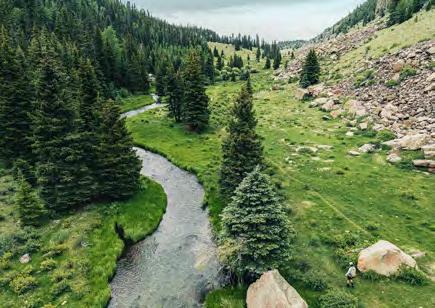
Colorado
Milestones for the Vast La Jara Basin
In Colorado’s San Luis Valley, two major milestones were recently reached in WRC’s effort to secure permanent protection for the 45,952-acre La Jara Basin, one of Colorado’s great natural, cultural and recreational treasures. The Colorado State Land Board (SLB) voted to move forward with WRC’s conservation plan for the property, and Great Outdoors Colorado announced funding for Colorado Parks and Wildlife’s (CPW) portion of the project. CPW is one of three agencies partnering with WRC in this effort, the others being the U.S. Forest Service (USFS) and the BLM.
The La Jara Basin is a 71-square-mile mix of grasslands and forest with more than 30 miles of cold-water streams. It’s home to diverse fish and wildlife and abundant recreation opportunities and has been shaped by generations of family land use that dates back more than a century.
Since 2021, after the SLB announced it needed to sell the La Jara property, WRC has been working in partnership with the SLB, CPW, USFS and the BLM to transfer ownership of the lands to federal and state partners. The SLB’s vote to move the project forward is a critical step in ensuring the La Jara will remain in public hands, permanently protected and open to all.
The La Jara’s tremendous importance was on full display at November’s State Land Board meeting, where local ranchers, community members, NGOs, and even former Colorado senator and Secretary of the Interior Ken Salazar turned out in support of the project.
“This is about the future of conservation in the U.S., and really, in the world,” Salazar said of the La Jara project. He highlighted the broad cross section of the valley that came together to make the effort a reality, and his words underscore what makes the La Jara exceptional: not just the basin’s ecological significance, but its deep importance to people from all walks of life in the San Luis Valley. g
intermittently lined in Sitka spruce. Freshwater, estuarine and riverine wetlands overlap, creating a mosaic of habitat that fish rely on at every stage of life.
For salmon, this stretch of river is essential. All fish migrating upstream to spawn or downstream to the Pacific pass through it. Fall Chinook, chum and coho rear here alongside winter steelhead and coastal cutthroat trout. The property’s fluctuating salinity levels help salmon regulate their transition between freshwater and saltwater, dramatically improving survival rates. In fact, the National Oceanic and Atmospheric Administration has designated the property as Essential Fish Habitat for fall Chinook and coho.
Unlike many wetlands in the area, which are cut off by berms and tide gates, these wetlands remain accessible to fish. That rarity makes them especially valuable in a watershed once deeply impaired, and which is now bouncing back thanks to city, state and nonprofit recovery efforts.
Beyond fish, Willapa Wetlands supports an array of wildlife. The bay is a key stop along the Pacific Flyway, and recent surveys documented bandtailed pigeon, dusky Canada goose, bald eagle and other state-listed Species of Greatest Conservation Need onsite. The property also contains one of the state’s few known mineral sites where imperiled band-tailed pigeons obtain the sodium they need to produce eggs and nourish their young.
WRC’s purchase of Willapa Wetlands and the immediate conveyance to the Chinook Indian Nation will secure lasting protection of this special property while placing ancestral homelands back into the hands of their original stewards. Our work at Willapa Wetlands builds on WRC’s recent conservation of 2,366 acres along the Bear River, which flows into the bay to the south, expanding protections across a coastal system that remains one of the Northwest’s great estuarine landscapes. g
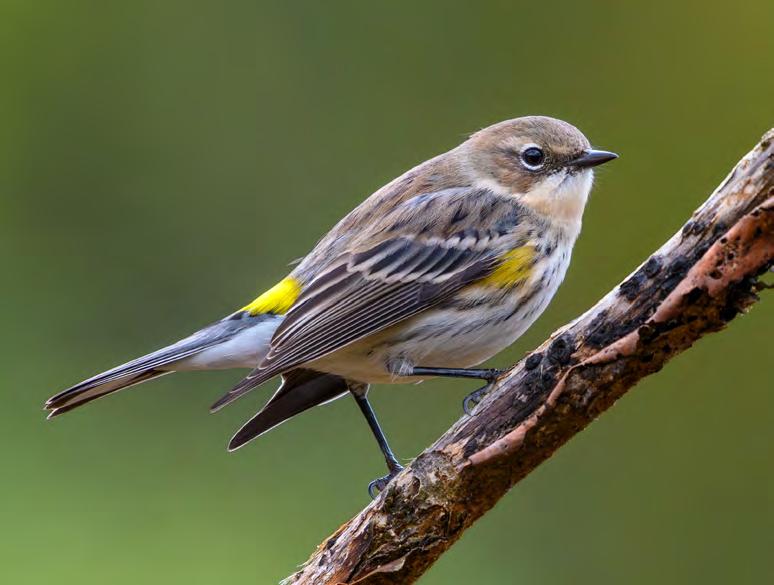
With its 393 acres of pristine wetlands, the Willapa Wetlands property is a haven for birds like the yellow-rumped warbler (pictured), band-tailed pigeon and many others.