


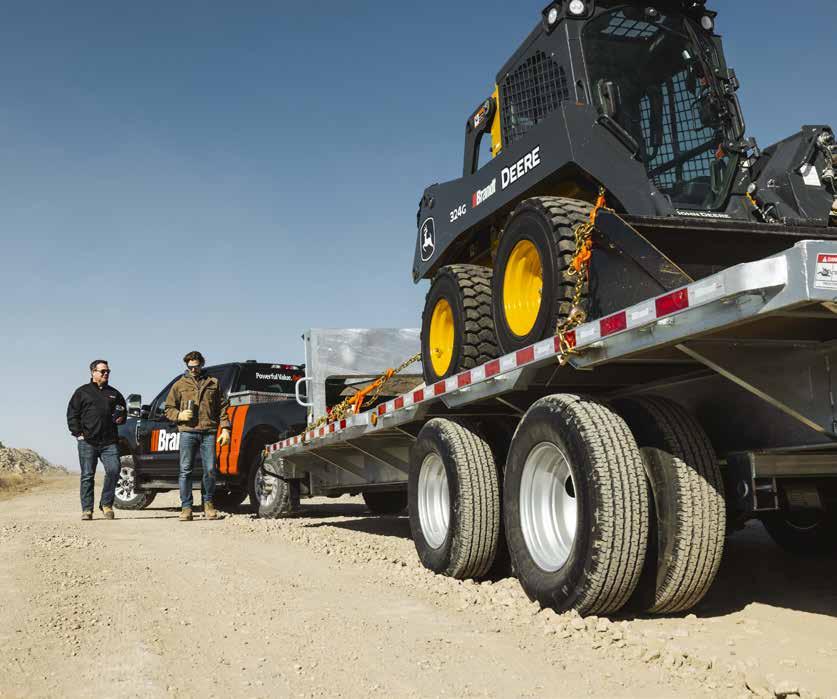
Test our machines on your turf—we deliver demos when and where you need them without any obligation. Count on Brandt for compact power, expert support, and a commitment to do whatever it takes to keep you working.
We know compact construction equipment inside out, helping you own and operate your machine easier.
Brandt delivers expert service—at our counter, in the shop, on the road, or on the phone with 24/7/365 customer support.
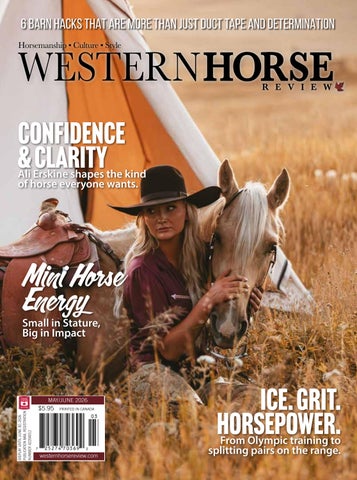
Vol. 33 No. 1
WIINTER WESTERN HORSE REVIEW
EDITORIAL
westernperformancepublishing@gmail.com
Publishers
Clay & Jenn Webster
Editor
Jenn Webster
Art Direction and Production
Kendra Roberts
Advertising
westernperformancepublishing@gmail.com
Marketing & Account Executives
Laurie Price ldprice63@gmail.com
Subscriptions
$19.95 CDN - 1 year Subscription
$39.95 USD - 1 year Subscription
For SUBSCRIPTION ENQUIRIES: 1-(403)-823-0980 or ldprice63@gmail.com
For BACK ISSUES visit our store at www.westernhorsereview.com
Subscribers: Your name may be made available to reputable companies with products that may interest you. If you do not want your name shared, please e-mail subscriptions@westernhorsereview.com and request OPT-OUT in the subject line.
Accounting
Laurie Price at 1-(403)-823-0980 ldprice63@gmail.com
Contributors
Barbara Bostock Photography
Candace Meyer Photography
Elizabeth Clymer Equine Marketing
Ryan Fleetwood
Tim Hiller
Jonathan Field Horsemanship
Katja Jensen Photography
Aidan Nicholson
Debbie MacRae
Rustic Compass Imagery
Carolyn Simancik
Steven Quon Photography Twisted Tree Foto
Wild Lily Imagery
Published four times a year by:
WESTERN PERFORMANCE PUBLISHING INC. 235, 3545 - 32 Ave. NE, Unit/Box #814 Calgary, Alberta T1Y 6M6
westernperformancepublishing@gmail.com www.westernhorsereview.com





A Miniature Horse named “Nugget” is creating a
Xibition hits the ropes with a new team roping collaboration.
Socks,
WHR readers weigh on in personal / breeder prefixes.
Remembering Vicki Lee Johnson and Deb Flegel.
Introducing Destry Workwear, a company for rural women who get stuff done!
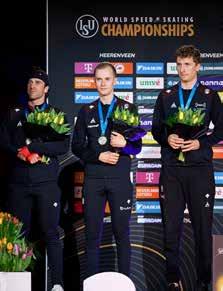
In our newest column, we meet Hayden Mayeur, who is making his way from the high performance ice rinks of speed skating, to the cow horse arena.
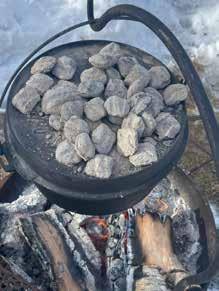
Tim Hiller delivers his comfort food recipe of Dutch oven sweet and sour spare ribs.
Let’s talk about what happens to farm property when the unexpected happens and there is no Will.
Here are some really clever ideas horse owners have come up with for everyday equine efficiency.
54
Professional horse trainer Jonathan Field brings his talents to the Vancouver Mounted Police Unit.
38 ZERO DRAMA
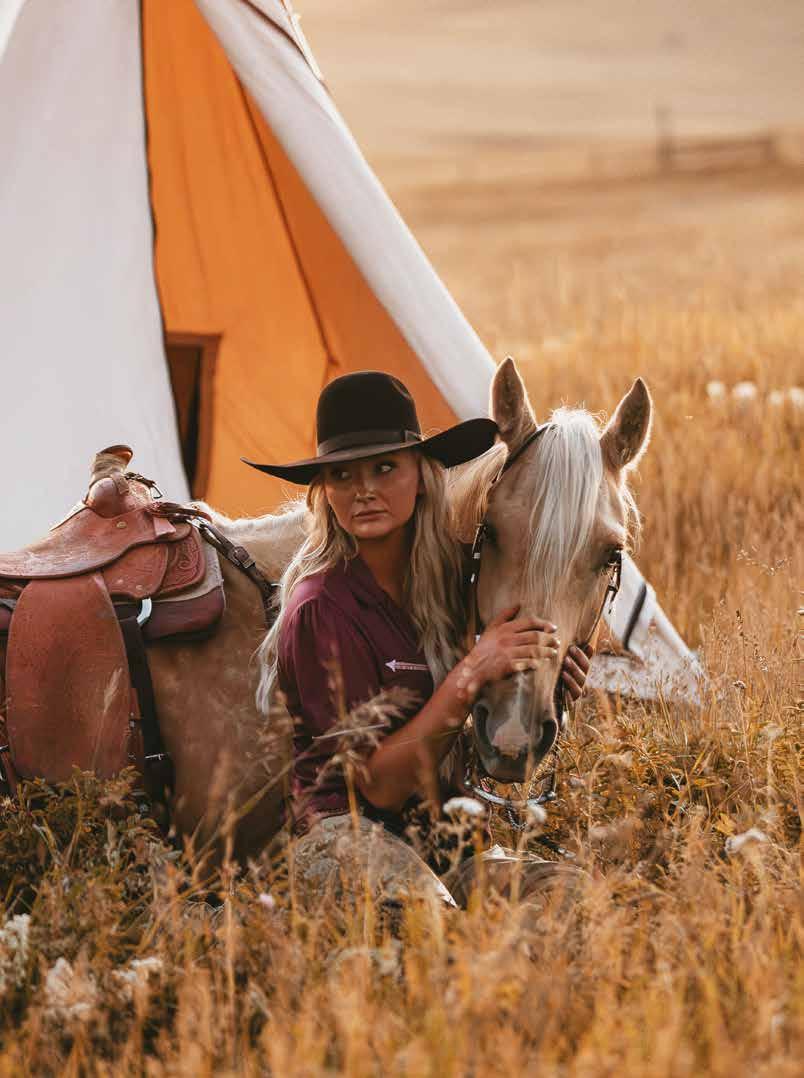
Up-and-comer, Ali Erskine shows us how she starts her colts with quiet confidence and carefully calculated pressure.
44 PROGRESS, POLICY, AND PUSHBACK
The Story Behind American Quarter Horse Association’s Most Recently Debated 2-Year Rule.
50 RESILIENCE & THE POWER OF COMMUNITY
Veronica “Ronnie” Swales’ inspirational return to riding.
58
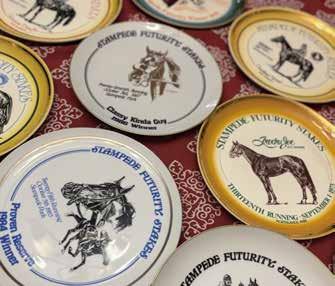
In the fall of 1961, The Calgary Stampede and Exhibition inaugurated the Calgary Stampede Futurity Stakes. With a purse of $100,000, it attracted young horses across the country to compete annually from 1961 through to 1996. To commemorate these exciting races, a special plate was designed.
Bronco Betty’s friend writes in this time, with a hilarious trail ride on the beach that didn’t go quite as well as the bucket list projected.
Usually, the Publisher’s Note is the hardest piece for me to write in each issue of Western Horse Review.
This one, however, has been building for the past six months. I’ll be honest – this magazine has been under pressure. The cost of printing has risen exponentially. Canada Post has thrown us curveballs with ongoing disruptions. And then there’s the daily reality of competing with social media, where the phrase “print is dead” seems to surface more often than I’d like.
Here’s the truth: we’re still here.
That said, there are some changes ahead. In 2026, Western Horse Review will move from six print issues per year, to four. It’s a necessary shift, one that allows us to stabilize the business while continuing to produce the kind of content you’ve come to expect from us.
For those of you waiting on subscriptions, I haven’t forgotten. We will make that right by extending renewals accordingly.
This past year, I also watched a fellow publication step away from print. It didn’t feel like competition leaving the field – it felt like a loss. Because I know firsthand how hard this industry is, and how much heart goes into every single issue. trailblaz•her, you were a beautiful publication.
Which brings me to this:
If you want to see this Western Horse Review continue, then I ask you to support it.
Advertise with us. Share it. Stand behind it.
WHR was noticeably absent from a western performance event that debuted in March 2026. If you care about this publication, I’d implore you to ask, “Why?”
We are a small, Canadian family-owned business. This is how I put groceries on the table. Like many of you, our lives revolve around the horse industry. It also revolves around feedings, late nights, colics, unexpected weather, and responsibilities that don’t take a day off. Horses are 365 days a year.
This magazine isn’t something I observe from a distance. It’s something I live.
When you support this publication, that support doesn’t stop
here. It flows back into the industry. Into breeders, events, small businesses, and horse people across Canada. It’s a ripple effect that matters.
To those of you who have supported Western Horse Review through the years, thank you. Truly.
And to those who haven’t yet, I’ll leave you with this: Buy local, or bye local.
This magazine exists to tell your stories. Your horses. Your accomplishments. Your way of life. It’s a space for the western performance industry that often gets overlooked elsewhere –and it deserves to be seen.
On a brighter note, I’m excited to share that WHR has launched a brand-new website: www.westernhorsereview.com
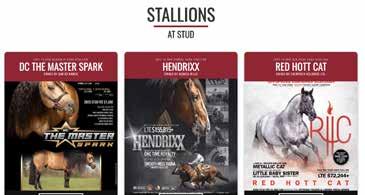
Created by Natalie Jackman, it’s a fresh, modern platform designed to better serve our readers with a mix of education and entertainment, while also offering increased visibility for breeders through our new stallion hub.
This issue, in particular, felt like a return to my roots.
From Nugget, the Miniature therapy horse making a big impact (page 12), to Ali Erskine’s thoughtful approach to colt starting (page 38), this edition reminded me why I started in this industry in the first place. Training features have always been some of the most challenging pieces to produce, but also the most rewarding.
I’m also proud to introduce a new column, WHY I RIDE. In this issue, we meet Hayden Mayeur – an Olympic-level speed skater who has found a new kind of purpose in the cow horse world. His story is one that stayed with me long after the interview.
And on page 44, we take a closer look at the controversy surrounding the AQHA 2-Year Rule. With insight from AQHA Director Ryan Fleetwood, we unpack both the obvious and the less-discussed factors behind the rule and its eventual removal.
At the end of the day, this magazine has always been about one thing: connection.
Thank you for being part of it.
- Jenn Webster

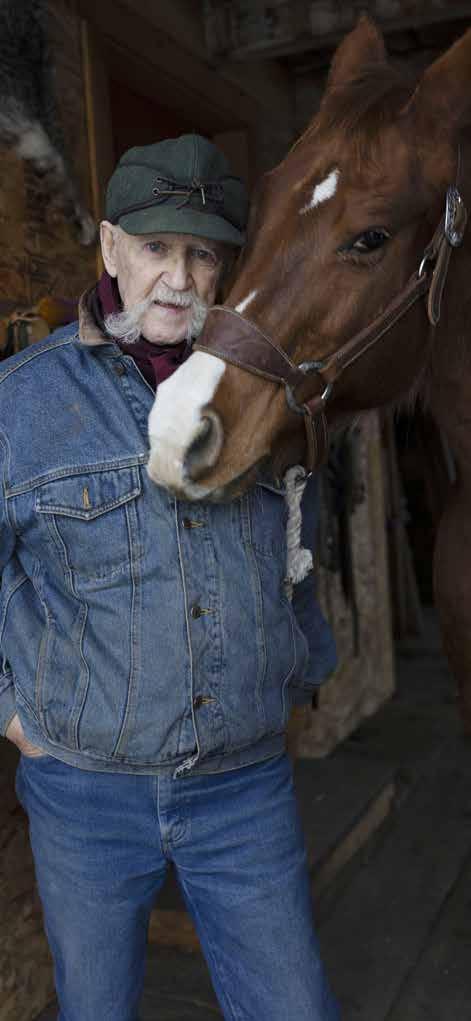
Across Canada, there are cowboys, horse trainers, and stockmen whose lives were shaped by long days in the saddle, hard winters, and a deep understanding of land, livestock, and tradition. Their knowledge wasn’t learned in classrooms. It was earned through experience, passed down through stories, and carried forward in the quiet, steady rhythm of ranch life.
Sadly as time moves on, many of those voices are fading.
Recognizing the urgency of preserving this living history, the British Columbia Versatility Ranch Horse Association has launched The Heritage Cowboy Project, a documentarystyle interview series dedicated to capturing the stories, wisdom, and way of life of Canadian cowboys and horsemen before they are lost. At its core, the project is simple in purpose but powerful in impact: record these stories in the voices of those who lived them, and share them with future generations.
Each episode is built around two elements. The first is a short documentary film, offering a visual and emotional glimpse into the subject’s life and work. The second is a fulllength interview – an unfiltered conversation that preserves stories, lessons, humour, poetry, and hard-earned insight in depth.
The episodes are recorded where life happens which includes working ranches, in barns, and out in the landscapes that have shaped these individuals. It’s an approach that grounds each story in authenticity, allowing viewers not just to hear the words, but to feel the environment behind them.
The first episode (found on YouTube) features respected horseman Terry Milliken, who generously shared hours of stories and original poetry. His reflections offer a window into a lifetime spent working with horses and cattle. One that speaks not only to the past, but to the values and work ethic that continue to define the western way of life.
Projects like this don’t come together without a strong community behind them.
The inaugural episode was made possible through the efforts of a passionate team, including Haley Rutherford of Beaver Ranch, who hosted and conducted the interview, alongside photographers and creatives Candace Meyer and Kelsey Toevs, whose camera work, drone footage, and editing brought the story to life. Deborah Dickson served as producer, helping guide the project from idea to execution.
Together, they’ve created something that feels both timeless and immediate. It’s a reminder that these stories are not relics of the past, but living pieces of Canadian heritage. It’s about honouring the people who built this way of life, while ensuring their knowledge and experiences continue to shape those who come next. From insights on horsemanship and cattle work, to reflections on changing times, each interview becomes a resource. One that preserves not only what was done, but how and why it was done.
In the future more episodes will follow, each featuring a new voice and a new story from the western landscape. Behind the scenes, the team is also preparing to launch fundraising efforts to support continued filming – an important step in ensuring that more of these stories can be documented while there is still time.
For those who value western heritage, ranch history, and the grit it took to live it, this project offers something rare: a chance to listen, to learn, and to connect directly with the people who lived it.
Because the old stories matter.
- By Jenn Webster
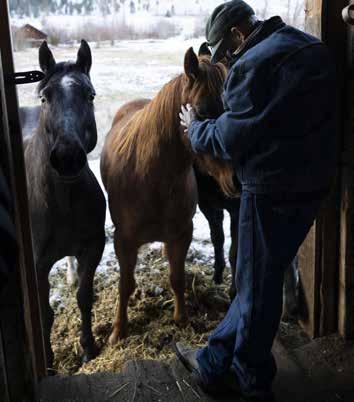
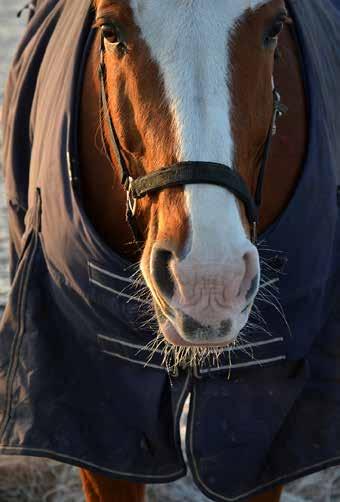

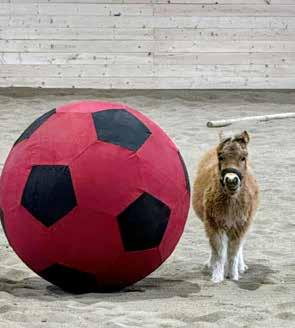
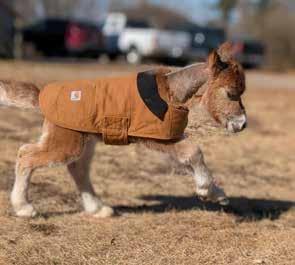
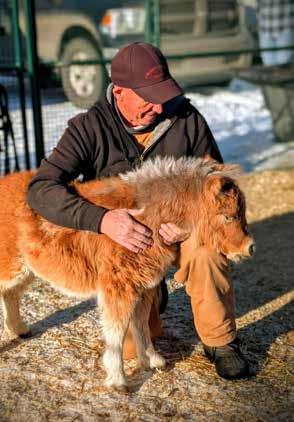
Small enough to fit comfortably in the back seat of a vehicle (although she travels in style in her own mini van,) and gentle enough to nuzzle into a waiting hand, the tiny Miniature mare “Nugget” draws smiles almost instantly. Behind those soft eyes and fuzzy ears is a story that reaches far beyond her size. It’s one of survival, second chances, and the quiet power horses have to offer for healing.
Nugget’s journey didn’t start in comfort. It began in crisis.
Rescued as a young foal, Nugget was found in devastating condition after a near-fatal dog attack.
Help Alberta Wildies Society (HAWS) received a desperate phone call around 9 pm on October 19, 2025, about a newborn foal east of Calgary, AB. HAWS organization founders, Darrell Glover and Barb, immediately drove out to the scene where they discovered a newborn Miniature foal (only about two to three-days-old,) in critical condition. They immediately took Nugget home and began nursing her back to health.
The filly was weak, injured, and struggling to survive. In fact, Nugget was so fragile that her future was uncertain. Those early days were defined by roundthe-clock care, patience, and a determination from her rescuers to give her a chance.
Slowly however, Nugget began to recover. Her strength returned and curiosity followed. What once looked like a long shot turned into something remarkable – a tiny horse with a big personality and an even bigger purpose. HAWS administrator Anita Resnechenko of Carstairs, AB, agreed to take Nugget over and continue her care.
Today, Nugget is doing what horses have done for generations, just in a slightly different setting. She’s giving back.
Now about six-months-old, the filly has stepped into a new role as a therapy Miniature Horse, making visits to senior centres in Alberta. While her size might be unconventional, her impact is anything but.
At places like Abrio Place in Airdrie, AB, Nugget walks quietly through the halls, stopping at wheelchairs and beside couches, meeting residents. For some seniors, the feel of her soft coat brings back memories – to ranches, farms, or a lifetime spent around horses. For others, it’s simply the joy of something unexpected: a horse, right there in the room, breathing life and energy into an ordinary day.
Nugget doesn’t know the details of the lives she touches, her presence alone is enough. With carefully wrapped hooves to ensure she doesn’t skid on slippery floors, Nugget brings comfort, laughs and plenty of gentle nuzzles to everyone she meets.
Her small size makes her accessible, non-intimidating, and easy to bring into spaces where full-sized horses simply can’t go. But beyond logistics, it’s her nature (curious, kind, and highly intuitive,) that makes Nugget such an effective therapy animal.
To that end, they are training regimes Resnechenko is continually pursuing with Nugget.
“We are members of Miniature Equine Therapy Standards Association (METSA) and have Nugget in training to receive her certification before the end of the year. We also have Nugget registered as an Emotional Support Animal,” says Resnechenko.
Until then, Nugget will continue her visits, bringing smiles, sparking memories and quietly lifting spirits. She is proving that even if you are small, you can make a big difference.
- By Jenn Webster

Canadian western performance horse enthusiasts will continue to feel the rush of the momentum the folks at The Xibition (The X) have been building for the last few years – with a new team roping collaboration.
Embracing one of the fastest growing sectors of the western lifestyle, The X has partnered with Chad Thomson (Black Diamond, AB) – mastermind behind the Canadian Snaffle Bit Team Roping Futurity. Thomson is a competitor, breeder and futurity developer in team roping, constantly geared towards pushing his sport forward in Canada.
To kick things off, The X added $10,000 to the Team Roping Futurity 2025 pot and created the Xibition Team Roping Stakes (XTRS). What this means is, any foal resulting from a breeding purchased through The Xibition Stallion Auction is automatically nominated into the XTRS and eligible to compete for added money at the 2026 Canadian Snaffle Bit Team Roping Futurity, to be held in Ponoka, AB. Any horses that were nominated into the XTRS will also have the chance to compete for added money that came from their stallion auction this year.
While folks might know The X mostly from the reining industry side of things, this new collaboration offers a bright new future for the Canadian rope horse industry as well.
“The roping stakes will launch this year,” says Dave Benard, creator of The X. “It will open up opportunities, so that horses that initially breed to be reiners can also go on to the roping discipline, should they choose.”
Therein, if a particular nominated horse prefers the roping disciplines over reining patterns, this program guarantees added incentives for their owners either way. Should a reiner be reinvented as a roping mount, they will have options.
“Team ropers want producing mares and producing stallions now,” says Thomson. “Team roping (in the past), has been the cheapest, most user-friendly sport to get into. Because it’s all numbered. It’s not like the other events where you have to keep your horse in training all year – anyone can be a team roper.”
With the creation of roping futurities there is more money to be won, which means ropers are currently in search of precision-bred performance horses and finely-tuned equine competitors. Making a partnership with The Xibition, a bold stride forward.
Meanwhile, the work at The X will continue to ramp up its reining events.
“We have big goals for The X bank account,” states Benard. “Our reining stakes will go up thanks to a good stallion auction, but our main goal is to build the auction up even more so that in 2028, we will have a $100,000 futurity in Canada!
“Everything tells me that’s possible – so that’s what we’re shooting for.”
- By Jenn Webster
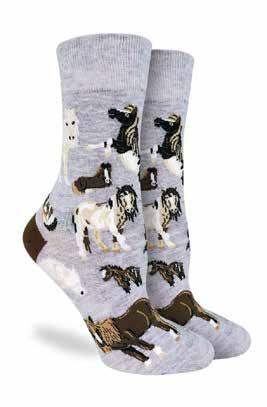
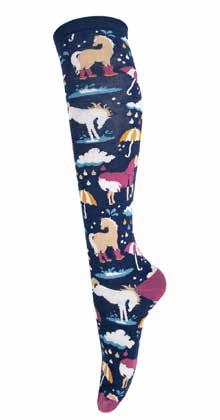
Upgrade your sock drawer with these adorable pony socks. Over 1,000 pairs of fun socks are available to choose from from this company for both men and women. You can also subscribe to the Sock of the Month Club, shipping monthly!
$14 goodlucksock.ca
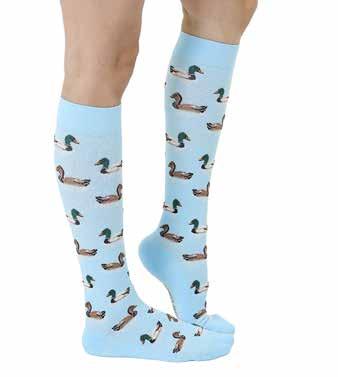
Living Royal Horse Compression Socks offer a unisex fit with 15-20mmHg graduated compression. Complete with a padded cushion bottom, invisible toe seam, and moisture wicking material. Suitable for use under tall boots.
$22 www.greenhawk.com
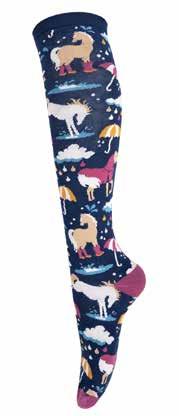
socks are suitable for pairing with your breeches for a comfortable fit under tall boots or chaps. Features an equestrian design for added style, and is designed to absorb but not retain moisture, helping to keep your feet dry. Complete with a reinforced toe and heel.
$15 www.greenhawk.com
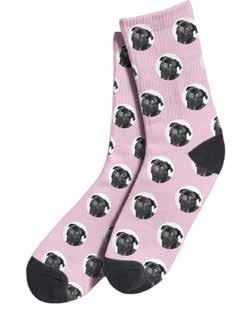
Wrap your feet in comfort with personalized socks that you create from Staples! Customize with your favourite photo, choose your favourite colour and create a unique all-over pattern. Great for gift-giving as well!
$27 www.staples.ca
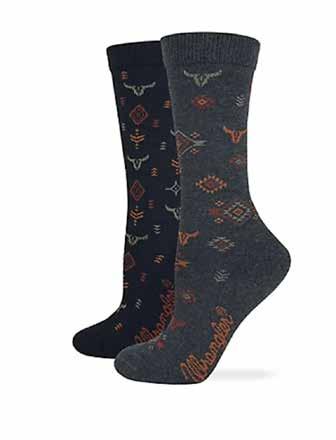
Four White Socks knee high socks are suitable for pairing with your breeches for a comfortable fit under tall boots or chaps. Features an equestrian design for added style, and is designed to absorb but not retain moisture, helping to keep your feet dry. Complete with a reinforced toe and heel.
$15 www.greenhawk.com
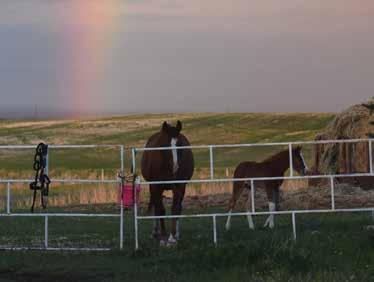
We recently asked WHR readers what they thought about personal / breeder prefix added to a horse’s registered name. Is it boring? Is it bad luck to change that horse/s registered name? Here’s what some had to say:
“I think it’s very disrespectful to the breeder that if you choose to rename the horse you also remove their initials/name as that is used as an identifier for their program.” ~ Lisa Bryant Katsiris
“If I really disliked the registered name or barn name I will change it. I understand why some breeders put their initials before the name but personally hate the way it looks and reads.” - Barb Bodholdt
“Prefixes and suffixes are the norm in the Lusitano world. It is very helpful because you can tell who the breeder is simply from the associated initials. As well, because Lusitanos are named alphabetically according to their birth year, it makes it is easy to differentiate between all the ‘Xenas’ for instance. There are only so many ‘X’ names after all! As far as renaming, by all means. When a horse is sold the breeder should have no say in what the buyer chooses to do with their new pony.” -Wintertime Lusitanos
“Not a fan of the prefix. Have
changed horses name.”
-Madison Strelezki
“In Miniature Horses it’s commonplace that breeders put their farm name as prefix, and you cannot change a registered name ever.”
~Kaycee Ann Lunde
Bad luck to change a name. If the horse has been shown, points, or used for breeding (registered foals on ground) AQHA will not allow a name change. Same goes for a barn name! If you have to change it (and if there are already 5 Bens in the barn,) then it has to be the name of who you brought the horse from or where the horse came from! Like ‘Calie,’ if the horse was brought in Calgary.” ~Virginia Olafsen
“Prefix is a no for me. You can take a cool registered name and completely foul it up with a prefix. My name is already on the papers of everything I’ve bred anyway.”
~Ryan A. Fleetwood
“To me changing their name with a prefix is erasing their history. Many breeders have a lot of time and money invested in that prefix and are proud of it… I like to see a horse and know by the prefix where it came from and have a good idea what their breeding is.” -Pam Bonar
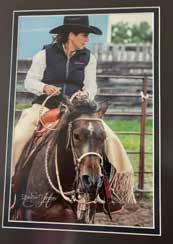
Debbie Flegel of Sundre, AB, was a multi-faceted horse woman. She hosted many great Saskatchewan Reined Cow Horse Association shows at Hidden Meadows Ranch. She was a shining light for many people throughout her life as well as an instructor, competitor, mother, grandmother and friend. She was a wonderful horse person, who will be dearly missed by many.
One of the founding members of the Saskatchewan Reined Cow Horse Association, Vicki Lee Johnson was a longstanding President and show secretary. She was often the driving force behind the organization for many many years. A “little firecracker of a human” who always had encouraging words for everyone and had a true love of horses.
Sadly, Vicki passed away on April 13, 2026. She left peacefully beside her loving husband Roger in the comfort of her home. She will be enormously missed by her family and friends as well as professional acquaintances around the world.

This liquid supplement is designed to maximize reproductive efficiency and sperm production in breeding stallions. Its key ingredients include high levels of L-Carnitine (for sperm energy metabolism) and Omega-3 fatty acids (to protect sperm membranes, especially against low temperatures). Recommended for supporting sperm motility and protecting against oxidative stress during the breeding season.
$316.50 www.westhillsevs.com
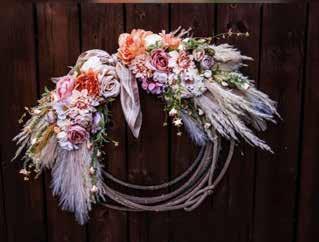
Need a thoughtful western gift for someone? Each of these one-of-a-kind wreaths begins with a rope once held by Alberta cowgirls and cowboys and is handcrafted by Soulfully Wild Co. into a luxurious wall hanging. Adorned with high-end faux florals, western-inspired décor, and silk scarves, no two pieces are alike.
$125 – $375 each www.soulfullywildco.ca
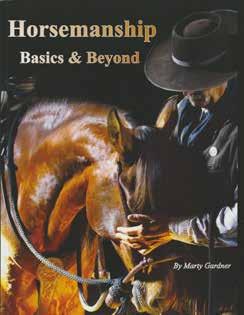
First-time author and respected Alberta horseman, Marty Gardner, is proud to release his debut book, Horsemanship Basics and Beyond. This essential new guide offers a fresh and thoughtful perspective on foundational horsemanship – rooted in real-world experience and taught in a way that’s easy to grasp, yet deeply insightful. $60 (Paperback) www.flattophorsemanship.com
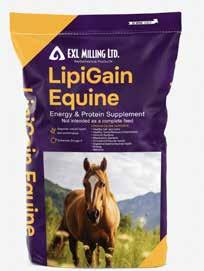
Improve your horse’s health with this expertly formulated, rich blend of Omega-3 fatty acids, essential proteins and natural vitamins. With its stable, free-flowing granular form, LipiGain Equine is highly palatable and suitable for all types of feed applications – making it an ideal choice for young and adult horses alike. www.exlmilling.com

This product is brought to you by the trusted folks at ABSORBINE and is the only thrush treatment with Manuka Honey and MicroSilver® BG for powerful, natural antimicrobial relief. It’s expanding foam penetrates deep into frog and hoof crevices for complete, even coverage and its straw applicator ensures precise, mess-free application in tight, hard-to-reach areas. This unique formula stays in place to actively fight infection without runoff or staining and treats thrush without caustic chemicals.$24.99 USD absorbine.com
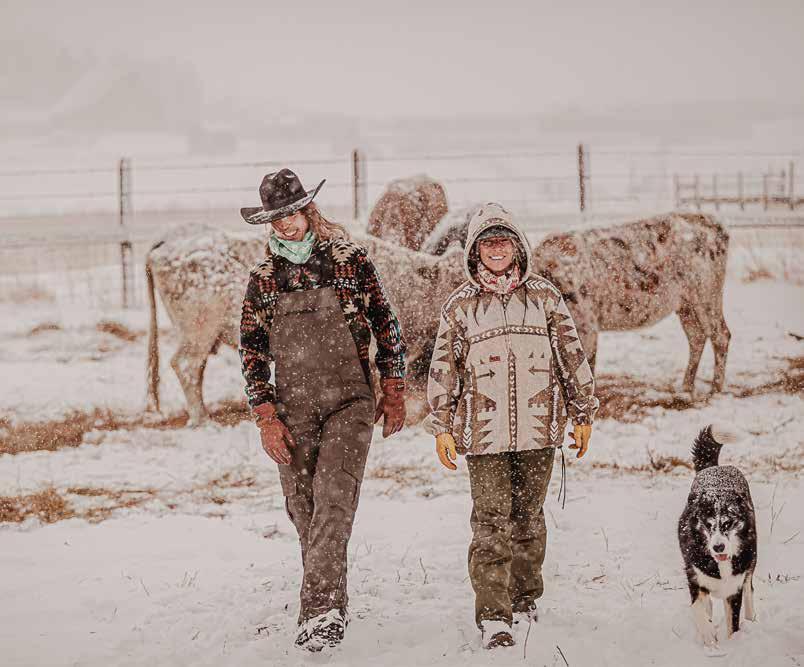
Destry Workwear is redefining what women wear to get the job done.
STORY BY JENN WEBSTER PHOTOS BY RUSTIC COMPASS IMAGERY
Canadian-made workwear, built for women who get sh*t done.
That’s the unapologetic tagline behind Destry Workwear – a brand born not in a boardroom, but on a road trip somewhere between Alberta and Arizona.
“December 2024-ish,” laughs Renada Crawshaw of Nanton, AB, recalling when she and business partner Jesse Romo (also of Nanton, AB,) first landed on the idea.
“We both run a million other businesses and just got busy, which is what took so long…”
What started as a conversation quickly turned into a realization: despite the number of women working in agriculture and rural trades, truly functional gear made specifically for them was almost non-existent.
“The original concept was pants and coveralls for working women,” Crawshaw explains. “And the more we talked to
people about it… apparently it was common sense to everyone who wasn’t making them.”
The problem? Most women’s workwear isn’t really made for women at all.
“We refused to just ‘pink it and shrink it,’” she says. “We wanted quality overalls and pants that were actually designed for how women work.”
That meant solving real-world problems like curbing extreme weather, durability, movement, and practicality.
“We realized there was nothing out there that was cut-proof, waterproof, and long enough to ride in. Especially heading into winter.”
The result is Destry’s flagship piece, a set of overalls that feel less like a compromise and more like a solution.
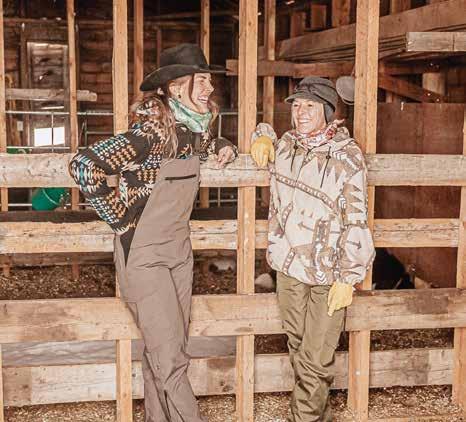
Built for extreme conditions, the overalls are both waterproof and cutresistant and durable enough to handle everything from daily chores to the lessthan-graceful reality of crawling through a barbed wire fence. A removable 200-denier liner adds warmth when needed, but can be zipped out entirely without removing the garment – making them as functional in summer rain as they are in winter snow.
In many ways, it’s two pieces of gear in one.
Details matter, too. An extendable cuff allows riders to drop the leg length by up to three inches. This feature is ideal for time in the saddle and can be snapped back up for chores on foot. And in what might be the most appreciated feature of all, the front-fastening shoulder straps and full side zips allow for quick bathroom breaks without peeling off layers in subzero temperatures.
It’s a small detail – until it’s not.
Behind the scenes, building the product wasn’t simple. Finding the right material proved to be one of the biggest hurdles.
“It was hard to find,” Crawshaw admits. “It wasn’t easy to land on something that was waterproof and cutproof, and still affordable for the women we know are out there working every day.”
Crawshaw, who studied fashion design and has long focused on handmade, functional clothing through her business PaleHorse, took the lead on design. She drafted patterns, weighed in on prototypes and refined the fit. Romo, meanwhile, brought business experience to the table, balancing multiple ventures including Ranch Hand Store, Mosquito
Creek Horses & Productions, and Alberta Tree Planting.
“She’s figured out what works and what doesn’t on the business side,” Crawshaw says. “I like to hide from that.”
Still, the road to launch wasn’t without setbacks. An early prototype missed the mark, and life full of kids, horses, and other businesses, demanded energy. But in summer 2025, Romo and Crawshaw started again.
By April 2026, Destry Workwear officially launched its first products through pre-sales, with plans for expanded colourways including olive, charcoal, and burgundy. The brand will also feature handmade hoodies –designed and prototyped by Crawshaw and made in Alberta – continuing the company’s commitment to practical, well-made clothing that reflects the realities of rural life.
And yet, even with the momentum building, Crawshaw keeps circling back
to the same thought:
“Why has no one put these overalls together yet?”
It’s a fair question.
But for the women already putting Destry Workwear to use, the better answer might be this: finally, someone did.
or making moves in town.
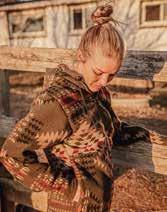
here is the Ride A Long hoodie.
• Waterproof + cut-resistant • Built to withstand harsh conditions – even barbed wire encounters.
• Removable 200D liner • Zip-in warmth for winter, or remove for lighter wear in warmer months • Full side zips
• Easy on/off and practical functionality without removing layers. • Front-fastening straps • Designed specifically for women – no full undressing required. • Extendable leg cuff (+3”) • Adjust length for riding or working on foot.
• Made for women, not modified from men’s gear • Designed from the ground up for fit, movement, and real work.
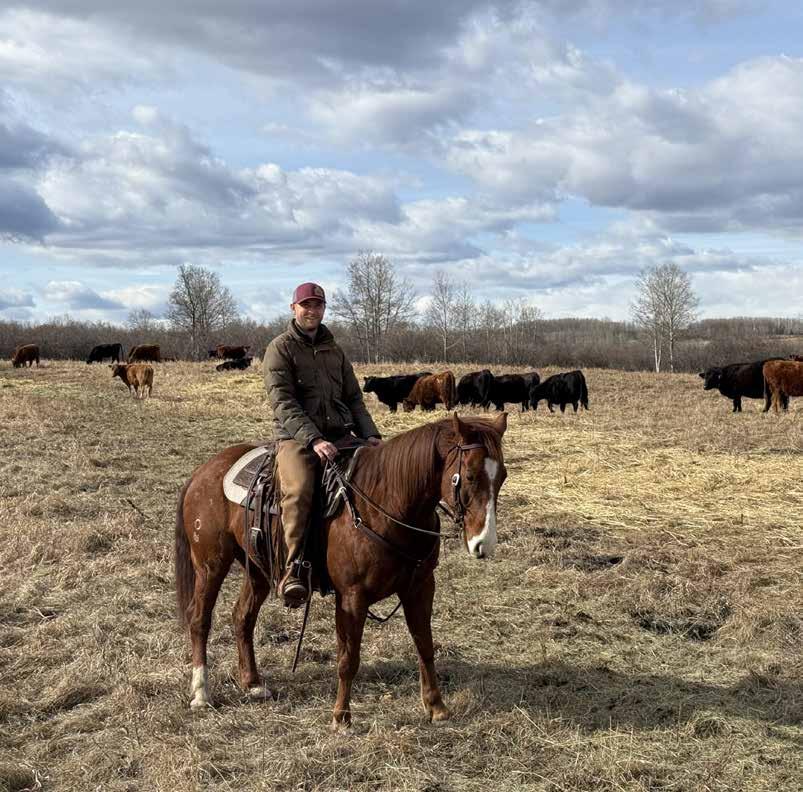
From the ice, to the western performance horse arena: Hayden Mayeur is trading blades for reins and discovering a new kind of speed in the cow horse pen.
STORY BY JENN WEBSTER
STORY BY JENN WEBSTER
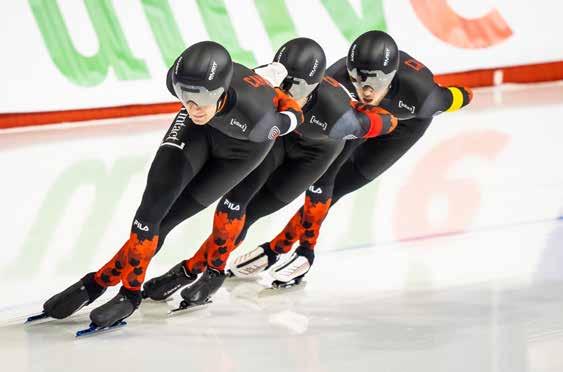
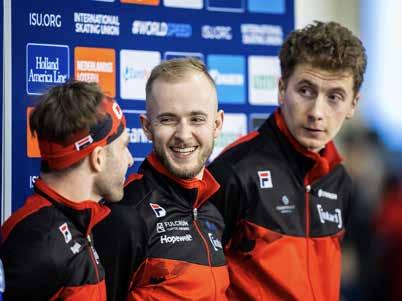
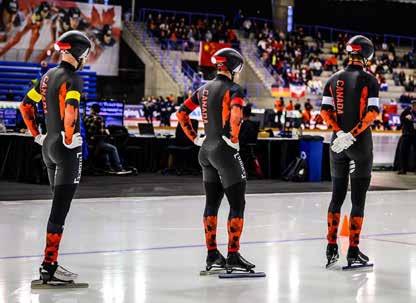
By any measure, Hayden Mayeur has already lived the kind of athletic career most can only dream about. A Canadian National Team long track speed skater, he has circled the globe representing Canada, stood on World Cup and World Championship podiums and spent the better part of a decade chasing Olympic excellence.
But it’s what’s happened off the ice, far from the polished surface of the Olympic Oval, that’s quietly reshaping his next chapter.
And it starts with horses.
Raised in Toronto, ON, Mayeur’s path to elite sport wasn’t linear, but it was relentless. Like many Canadian kids, he grew up playing hockey, eventually stepping away at age 13 in search of something different.
“At 13, I decided the politics in hockey just weren’t for me and I had recently been exposed to short track speed skating on television by the 2010 Vancouver Olympics. My parents found me a local club and the rest is history,” Mayeur recalls.
By 2015, he made the move west
to Calgary, AB, trading familiarity for opportunity. Coaches quickly recognized his physiological advantage for endurance, steering him toward long track. It was a shift that would define his career.
“By 2018, I qualified onto the Canadian NextGen team, and today, I am proud to be a member of the Senior team,” he reminisces.
The results continued to follow
An individual World Cup medal. Then a World Championship silver medal in Men’s Team Pursuit and following the 2023/2024 season, Mayeur found himself on the podium once again with a bronze finish in front of a hometown Calgary crowd.
Sadly, high performance sport has a way of humbling even the most disciplined athletes and after falling short of qualifying for the 2026 Olympic team, Mayeur made a decision many elite competitors struggle with –step back, reset and rebuild with an eye towards the 2030 Games.
“I know I can compete at that level and I have proven it in past seasons, but sometimes, things don’t go as planned and qualifying for an Olympic team comes down to one selection competition. If you have a bad day, that’s it.”
AN INDIVIDUAL WORLD CUP MEDAL. THEN A WORLD CHAMPIONSHIP SILVER MEDAL IN MEN’S TEAM PURSUIT AND FOLLOWING THE 2023/2024 SEASON, MAYEUR FOUND HIMSELF ON THE PODIUM ONCE AGAIN WITH A BRONZE FINISH IN FRONT OF A HOMETOWN CALGARY CROWD.
For athletes at Mayeur’s level, the schedule is relentless. Two training sessions a day, up to six days a week. Recovery isn’t optional.
“[Training is] a full-time job to say the least and anytime we’re not training or working, it’s critical you give yourself the opportunity to recover, be it mentally or physically,” the athlete explains. “If all you do is train, train, train, you eventually burn out.”
For Mayeur, the common release of video games, didn’t appeal the same to him as many others.
“I’ve always preferred to stay busy outside,” he says. “Video games never really did it for me.”
That instinct to keep moving and stay engaged physically and mentally, would eventually lead Mayeur somewhere unexpected.
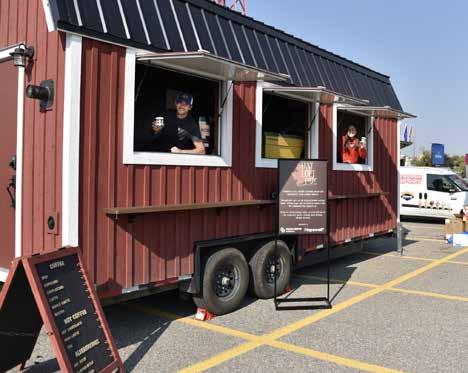
In 2021, Mayeur founded Hayloft Cafe, a mobile espresso business born out of necessity.
Funding gaps in sport are no secret, and balancing a traditional job alongside elite training is often unrealistic. Hayloft gave him something rare: control.
What started as a solution for himself
has grown into something much bigger.
Today, the business operates as an athlete-driven model, employing fellow Team Canada athletes and paying them well enough to prioritize training over financial stress. It’s a small business with a big ripple effect – supporting not just one Olympic dream, but many.
“Hayloft acts as a hub for Team Canada athletes to work around their training schedules, at a significantly inflated wage so they can focus on chasing their Olympic goals, rather than their finances,” Mayeur affirms.
“By hiring us, you’re not only supporting small business, but also the next generation in Canadian high performance sports.
In a full-circle moment, the first year Hayloft was in business allowed Mayeur to leave his part-time job and he earned his first career World Championship medal as a result.
The next shift in Mayeur’s story came quietly.
Around approximately 2019, the athlete began spending time at a ranch near Jumping Pound, AB. What started as a way to stay active outside of training gradually turned into something more meaningful.
“I made some connections with some ranchers just outside of town… They started to have me out when I had time to spare around my training schedule,” he says.
“Over the years, I’ve gone from
learning some of the basics to now helping with anything and everything from feeding, to fencing, doctoring cattle, processing cattle, haying, etc.”
Over time, Mayeur became part of the rhythm of ranch life.
“Moving cattle on a regular basis this past summer (2025) is what first got me onto a horse. I had little to no experience prior so every cow move was a major learning experience for me. That being said, I loved it!”
By the end of that summer, Mayeur
IN 2021, MAYEUR FOUNDED HAYLOFT CAFE, A MOBILE ESPRESSO BUSINESS BORN OUT OF NECESSITY.

wasn’t just enjoying riding – he was studying it. As his skating season began to wind down and Olympic qualification slipped out of reach, he leaned into something new.
That’s when he found a cow horse trainer.
“I remember the first time I pulled into the yard and saw him spinning one of his studs,” Mayeur recalls. “I thought that was the coolest thing.”
By December, he the skater was all in, riding twice a week, attending cow horse nights, auditing lessons and chasing knowledge the same way he had on the ice.
“I figured if I’m going to do this, I’m going to be coached by a high performer and really put the work in.”
There’s no denying that entering the cow horse world as an adult beginner is a steep climb.
But Mayeur doesn’t see it as a disadvantage – just another challenge.
Years of elite sport have wired him for process, for patience, and for showing up when progress is slow and invisible.
And in many ways, the parallels are striking. Whether it’s a perfectly executed team pursuit or a clean stop on a cow, the margin for error is razorthin and the pursuit of mastery is endless.
Today, Mayeur is still riding, learning and helping during calving season.
He’s hauling to cow nights, attending
BUT
IT’S WHAT’S HAPPENED OFF THE ICE, FAR FROM THE POLISHED SURFACE OF THE OLYMPIC OVAL, THAT’S QUIETLY RESHAPING HIS NEXT CHAPTER. AND IT STARTS WITH HORSES.
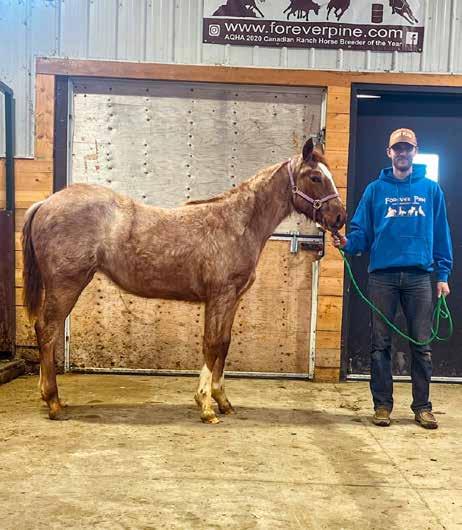
clinics and recently purchased a filly from Forever Pine Performance Horses – a long-term investment in a future he’s just beginning to build.
The Olympic dream isn’t over. Far from it. Now, it just shares space
with something new in Mayeur’s life. It doesn’t come with a stopwatch or a podium, but it demands just as much because whether he’s on ice or horseback, the pursuit is the same. Get a little better every day.
BY TIM HILLER
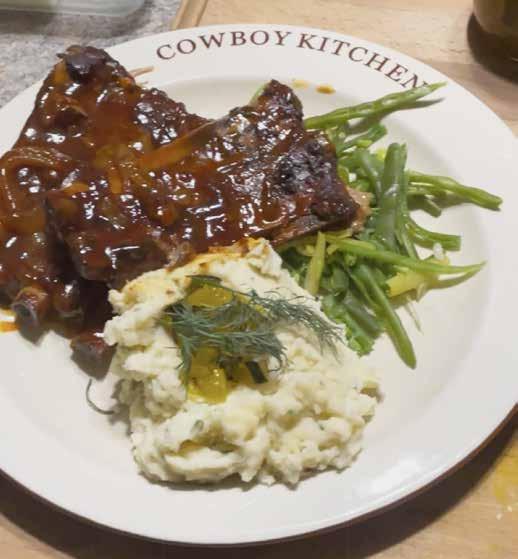
Hiller first learned to cook from his mother, at a very young age. Lifting him up and setting him on the countertop beside the stove, his mother would seek his help “stirring the gravy.” Later in life Hiller got his first job as a dish boy at the age of 12, at a private golf club down the road. He would wash dishes and simultaneously watch the chef –and then come home and compare the prepared dishes to how his mother did things in the kitchen.
“It was then that I learned that you can learn something from everyone,” Hiller states.
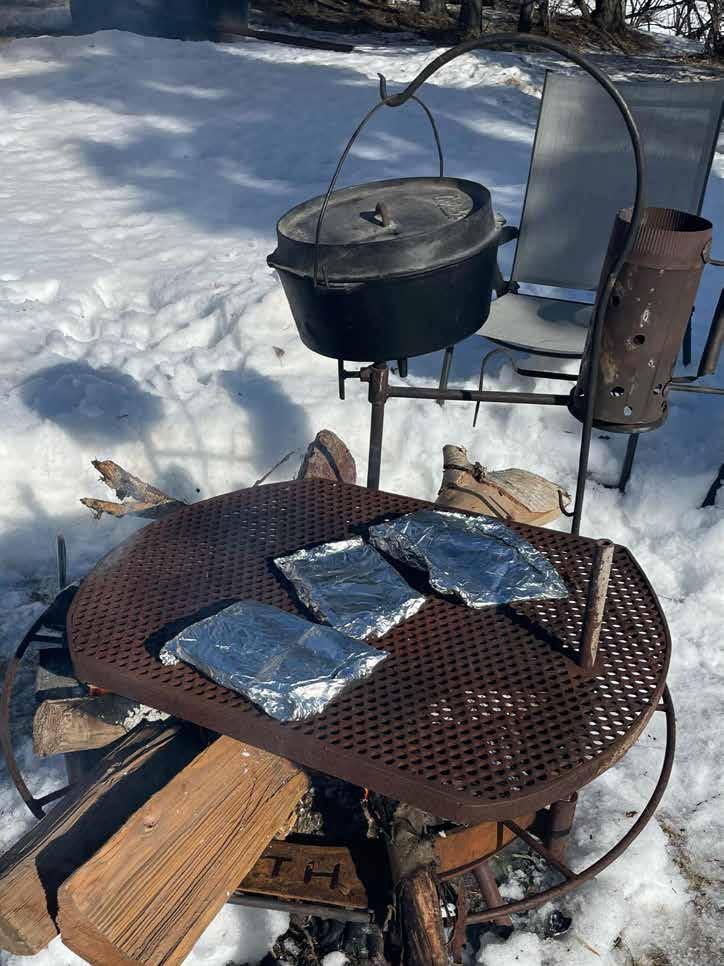
He first discovered this sparerib recipe from an in-law, and to this day, keeps her handwritten instructions on a brightly coloured note. Since then, Hiller has added some tweaks of his own and prefers to fix up his own dish from the depths of an outdoor-fired Dutch oven. During a river cruise on the river Seine (France’s second-longest river after the Loire), the cowboy chef picked up a side dish he figured would pair perfectly with the spareribs – dill infused mashed potatoes. Matched with steamed green beans and a glass of red wine, this meal will leave you full and satisfied.
Comfort food at its finest. These Dutch oven spareribs are rich, tender and made to be shared.
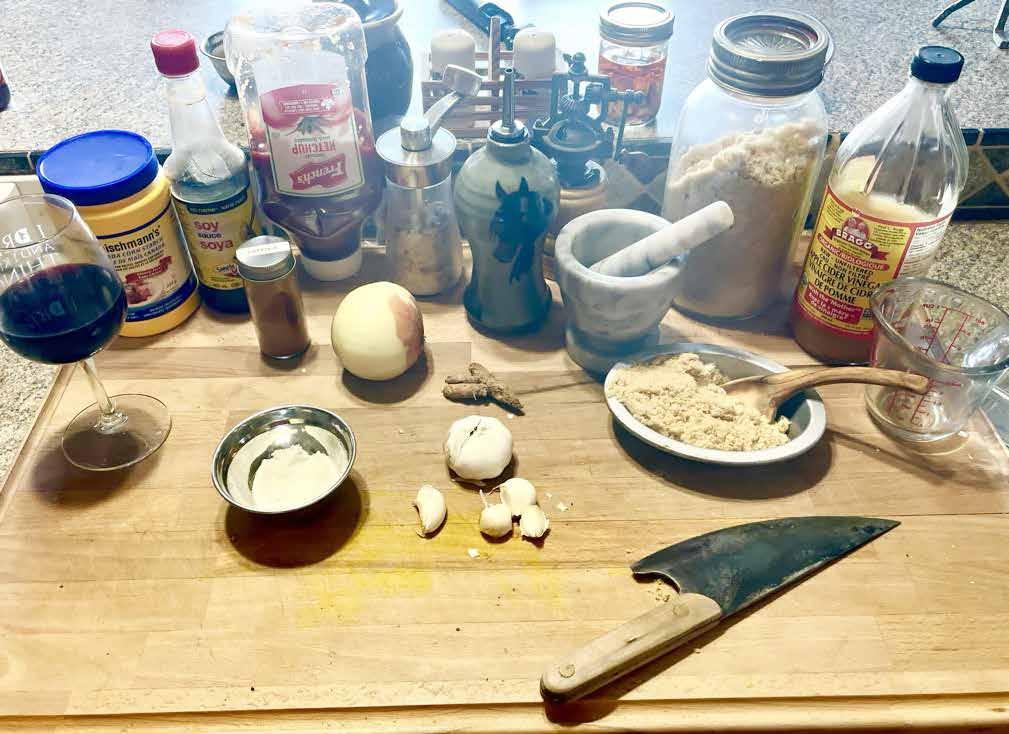
2 lbs of Your Favourite Rack of Ribs
1 Cup of Brown Sugar
1 Cup of Ketchup
2 Tbsp of Soy Sauce
1 Cup of Red Wine
1/2 Cup Apple Cider Vinegar
3/4 Cup Water
4 Tbsp Water
7 Cloves Garlic, Minced
2 Tbsp Cornstarch
1/2 Onion
4 Tbsp Butter
1 Tsp Salt
1 Tsp Paprika
1 Tsp Tumeric
1 Tsp Coarse Black Pepper Salt & Pepper to taste
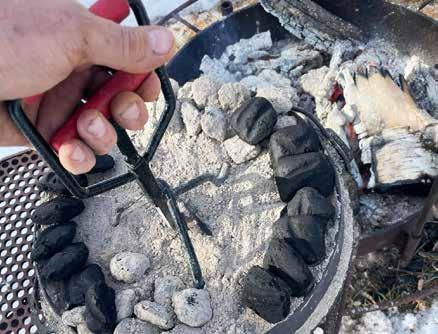
Prep your ribs with salt and pepper and wrap tightly in tinfoil. Bake over the fire or in the oven at 375 degrees Fahrenheit for 20 minutes. Take the ribs out of the tin foil and drain the fat, then place into your Dutch oven. Put enough lit briquettes on top of your Dutch oven to bring it to a temperature of 350 degrees Fahrenheit, then reduce the temperature by circling the perimeter on top of the lid with unlit briquettes. This will allow your oven to cook “low and slow” for the remainder of the dish. (Roughly about 250-275 Degrees Fahrenheit, for two hours.) Be
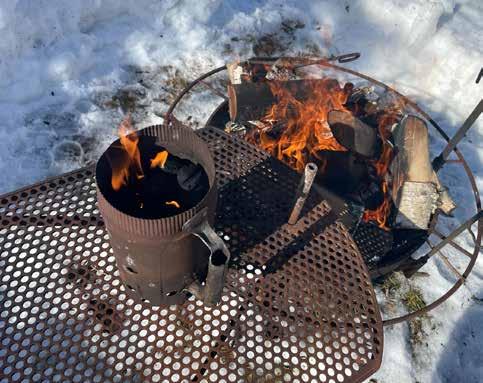
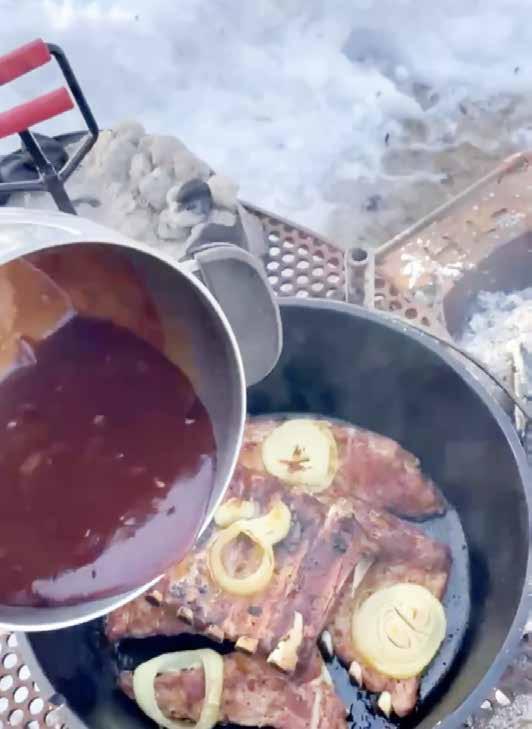
sure to monitor your fire below so that you don’t “fry” your dish on the bottom. Instead, you want to ensure more heat is coming from the topside.
Mix together the flour and salt. Cut up your onion finely and crush up four cloves of garlic. Throw into a frying pan and caramelize it all with four tablespoons of butter, over medium heat.
Add sugar, Ketchup and all the other liquids and bring ingredients to a boil: This includes Soy Sauce, Red
Wine, Apple Cider vinegar and water. Boil on low for approximately ten minutes, mixing constantly.
Make a paste with the cornstarch and water by slowly boiling in a pot and add; one teaspoon of salt, one teaspoon of Paprika, one teaspoon of Turmeric and one teaspoon of coarse ground pepper. Let this paste simmer gently until you are ready to pour overtop of the ribs.
Once your sauce is ready, open up the Dutch oven and pour overtop of the ribs. Bake on “low and slow” for approximately another hour before serving.
Mash your potatoes however you like. You can leave the peel on, mash by hand, use an electric mixer – whatever you choose. However as you are mashing them, along with the dairy product you use to gain a creamy consistency, be sure to add generous portions of dill as you go along. Once ready to serve, add a dollop of relish to the top and garnish with more dill.
BY AIDAN NICHOLSON, J.D.
FOR MANY FARM FAMILIES, SUCCESSION IS SOMETHING WE KNOW WE NEED TO ADDRESS – JUST NOT TODAY. BUT WHEN THE UNEXPECTED HAPPENS, THE ABSENCE OF A WILL CAN QUICKLY TURN UNCERTAINTY INTO LASTING CONSEQUENCES.
When a legally valid Will is prepared, the appointed executor has immediate legal authority to manage the deceased’s estate pursuant to the terms of the Will. However, when a person dies “intestate” – that is, without a legally valid Will – the process differs and can add layers of confusion and stress. Under intestacy, the rights and duties to take control of an estate will be afforded to a court-appointed
administrator upon the issuance of a grant of administration. The person who ends up being appointed may not be the individual that the deceased would have wanted to administer their estate, which can cause plenty of obvious problems as well as some not so obvious ones.
The distribution of intestate estates is governed by provincial legislation with little to no reference nor adherence to the deceased’s wishes or intentions. Generally, intestate estates will be distributed in fixed proportions to
a spouse or adult interdependent partner and/or the surviving children or grandchildren. If there are no heirs beyond four degrees of familial relationship, the estate vests in the Crown. The order of distributions and determination of asset division, in other words, are more or less predetermined by lawmakers. As you are no doubt already thinking, this can cause significant problems in the farm succession context.
With so much at stake in carrying on a farming operation and ensuring
that it continues for future generations, seeking professional guidance to formalize a Will and ensure it is legally valid is an absolutely crucial step in the succession process. Doing so can formalize the desired distribution of farm property upon death, protect your interests and reflect your wishes, support healthy family relationships, optimize tax advantages, and avoid problems that commonly give rise to litigation.
In my previous articles for WHR I have emphasized the urgent need for succession planning in agricultural communities. Make no mistake: in some sense, these articles are calls to action. Producers need to formalize their succession plans. We all know this and yet we keep putting it off, so it remains a huge problem in our industry. We are losing farms everyday and the lack of succession planning is directly contributing to that decline.
Without a legally valid Will, it can be unclear how farm property is to be distributed on the death of the owner. To make matters worse, if there is a verbal agreement or handshake deal (as is often the case), then not only can it be difficult to determine the enforceability of those
verbal promises, but it typically ends up being one person’s word against another’s, which increases the risk of family members ending up opposite each other in litigation proceedings.
The hope is that farm estates will be administered in a way that gives effect to the deceased’s wishes while providing for surviving family members and leaving the farm in a viable position to continue. Absent a legally valid Will, however, farm property will be distributed as strictly directed under provincial legislation. This is a parentelic distribution to certain family members by statutory order or priority. This may result in an acceptable distribution of property, but in most
circumstances the farm property will not be disposed of in precisely the way the deceased owner would have wanted or precisely in a way that works in the family’s favour.
Even if ownership of the farm property is transferred in a way that is generally acceptable or workable for the family, without proper succession planning, there are still many variables that need to be dealt with, such as the transfer of management responsibilities and transfer of labour. At the end of the day, farms are businesses that require leadership
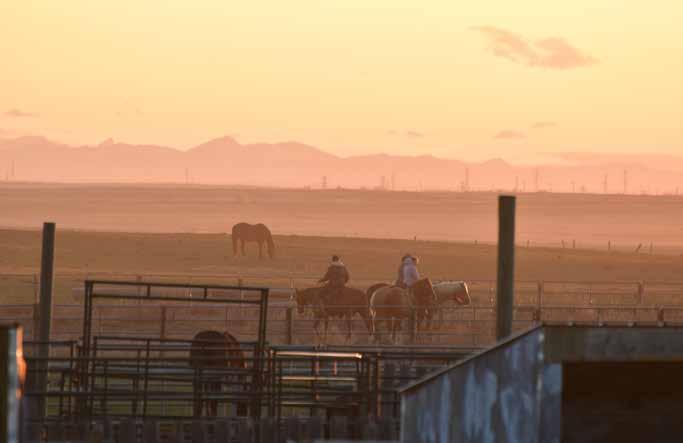
and governance to continue with the successor generation. As mentioned, when there is no Will, the court appoints an administrator who may not be the right person for the job. They may not be the individual that the deceased would have wanted to take on the responsibilities of continuing the farm and managing the farm’s assets. Because the decision of who gets to administer the estate is so consequential, it is vital that a Will is properly drafted and executed pursuant to strict legal requirements so that successor selection and designations make sense given the overall dynamics of the operation.
The appointed executor or administrator should be someone who can be trusted to exercise prudent farm management through the transition. This is particularly important because there are ownership, management, and use criteria that must be assessed in determining whether certain tax advantages may be used, such as the lifetime capital gains exemption or rollovers for quali-
fied farm property. For these reasons, intestacy could leave the family in a position where use of the property is limited and decision-making authority is flimsy. This, in turn, can impact farm financing and leasing, investing in or divesting of farm assets, and other related issues that are necessary for keeping the operation productive and sustainable.
I just alluded to certain tax implications on intestacy that should be explained in a little more detail. On the death of an owner of farm property without a Will, there can be a significant tax burden left on the family. When a taxpayer dies, they are deemed to have disposed of their assets (including, for example, shares of a farm corporation) at fair market value immediately prior to their death. Because much of a farm’s value is tied up in its assets, hefty capital gains taxes may result, putting substantial tax liability on the estate and stress on the surviving family members. The tax burden is made especially onerous when there is insufficient funds to pay all
FARMS ARE MORE THAN ASSETS. THEY ARE BUSINESSES THAT RELY ON CLEAR LEADERSHIP, MANAGEMENT, AND PLANNING TO SUCCESSFULLY CARRY FORWARD THE NEXT GENERATION.
outstanding debts or taxes. Thankfully, with proper planning done with professional advice and guidance, there may be options and strategies available to relieve the tax burden by deferring or eliminating payable tax on the transfer or disposition of those farm assets.
AND
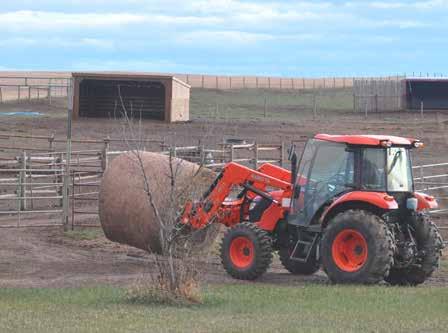
It should be noted that the succession process does not only contemplate retirement or death. Injuries on the farm or in the arena do happen, which can leave farm property owners incapacitated or otherwise unable to manage their affairs and continue to run the operation as usual. Succession in these circumstances therefore ought to cover incapacity planning as well. There are generally two documents regarding incapacity planning: enduring powers of attorney and personal directives. These documents reflect your wishes for the management of financial matters on incapacity or by declaration, and healthcare decisions on incapacity, respectively. For obvious reasons, you want your planning to contemplate
unforeseen injuries or health issues that may leave you incapacitated and unable to work. Similar to not having a Will, without these incapacity documents, there can be a lot of uncertainty around running the operation if something unexpected happens.
I will wrap up by highlighting fundamental issues of fairness that come up when a farmer dies without a legally valid Will. Again, the intestacy provisions under provincial legislation may not divide and distribute farm property equitably. There have been many cases to go through the courts in Alberta where family members lost out on inheriting certain farm property because of the lack of a legally enforceable Will, or because of outdated, unclear, and contested Will provisions. Indeed, this area is one that is commonly litigated and it can result in disastrous results
for farm families, including the loss of the farm entirely. To avoid costly and contentious disputes, it is imperative that farm families get together to communicate and collaborate on formalizing their succession plan. There is a lot at stake, and by working with the right professionals to create a carefully tailored plan that accomplishes the objectives for your operation and your family, you can gain peace of mind knowing that the farm should be left in the right hands to continue for generations to come.
This article is provided as a source of information only. It does not constitute legal or tax advice and should not be relied on as such. Readers are cautioned not to act on the information provided without seeking specific advice from legal and tax practitioners with respect to their unique circumstances and the applicable laws in their jurisdiction.
Aidan Nicholson is a tax and estate planning lawyer at Linmac LLP in Calgary, Alberta where he focuses on agricultural succession planning. Coming from a family that lost their farm, he intimately understands the difficulties that ag families face when dealing with succession and protecting their legacies. Nicholson volunteers with the High River Agricultural Society, lends a hand on farms and ranches around southern Alberta, and travels the rodeo trail helping stock contractors whenever needed. He can be reached at anicholson@linmac.com.
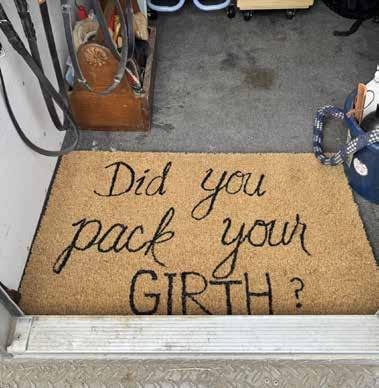
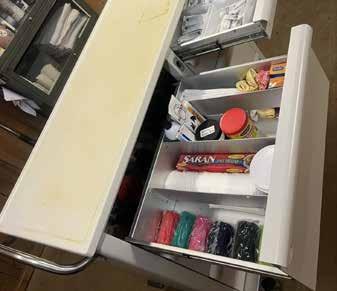
This one comes to us from Savannah Emerson Kennedy. She says, “A couple of years ago, I saw a post about using a tool cart for vet supplies so you can roll it to a stall or wash rack when having to work on horses. I had been on lookout for one for a while. I lucked out and found a medical cart today. It even came with a sharps container cabinet!”
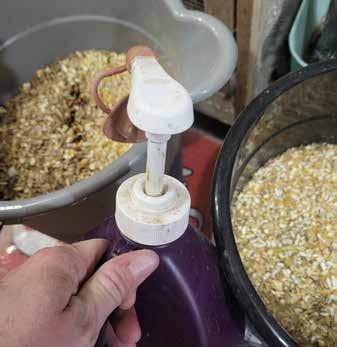
If you have a drippy pump and you’re getting sick of wasting expensive equine supplements as a result, solve the issue with those trendy straw toppers you’re seeing all the teenagers with these days! Yeah, maybe you need to “borrow” one from your kid (and no, you’re not giving it back.)
Often toppers are made of food-grade silicone, are durable, reusable, and easy to clean by hand or in the dishwasher. Plus, they come in cute designs. Airtight, dustproof and splash-proof features make them the perfect hack for sealing pump dispensers. Who knew? Idea courtesy of Cindy Hamilton Dale.
When something breaks, spills, tangles, or just plain doesn’t work, horse people don’t always run to the store… we improvise. These barn hacks are simple, practical, and proven to make life at the barn run a little smoother. Because sometimes, the best solutions come from a little bit of grit and a lot of creativity.
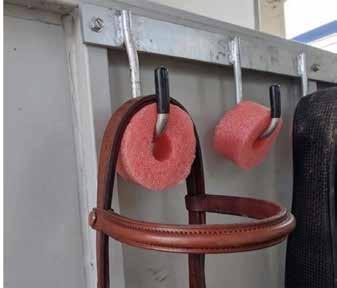
Pool noddles boast a medley of benefits. From holding your boots in correct form, to creating emergency medical dog-collars – they can be helpful in so many ways! If you’re tired of your headstalls and bridles losing their shape at the poll during travelling, try this hack in your trailer where hooks aren’t always crafted in a circular formation. Credit to Kristen Cantow
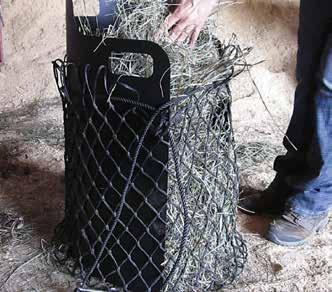
Roll your crazy carpet into a tube, insert into your hay net and let the natural tension of the roll open and expand the net open. Drop your loose hay or flakes inside and Voilà! Remove the crazy carpet once your hay net is as full as you like.
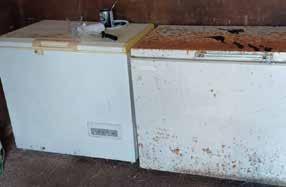
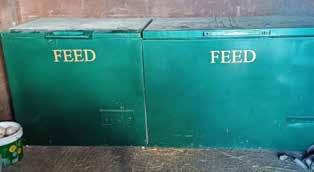
Use an old chest freezer that no longer works electrically, in your barn to store horse feed. The gasket seal on the lid will keep mice out and the same seal creates a vacuum – which makes it harder for nosy equine noses to open (should they escape their stalls in the evening). But you can add a latch for extra protection!
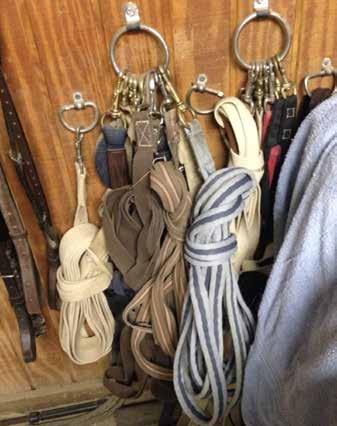
Either in the trailer or in the barn, it’s handy to have a specific place for things like extra lead ropes or longe lines. Simply wrap each one up individually and attach them by their clip, to a tie ring mounted securely on the wall. Go the extra mile and label these items so everyone in the barn knows where to look when the time comes.
Secondly, its insulation helps protect against extreme heat or cold and will protect your feed if your barn floods unexpectedly. Think about it, a 20+ year-old discarded freezer may have a further purpose and doesn’t need to end up in a landfill. Put an “in search of” (ISO) message on any local Facebook page and you’re likely to find many, for zero dollars. What are your favourite barn hacks? Let us know at westernperformancepublishing@gmail.com
After
BY JENN WEBSTER PHOTOS BY JONATHAN FIELD HORSEMANSHIP
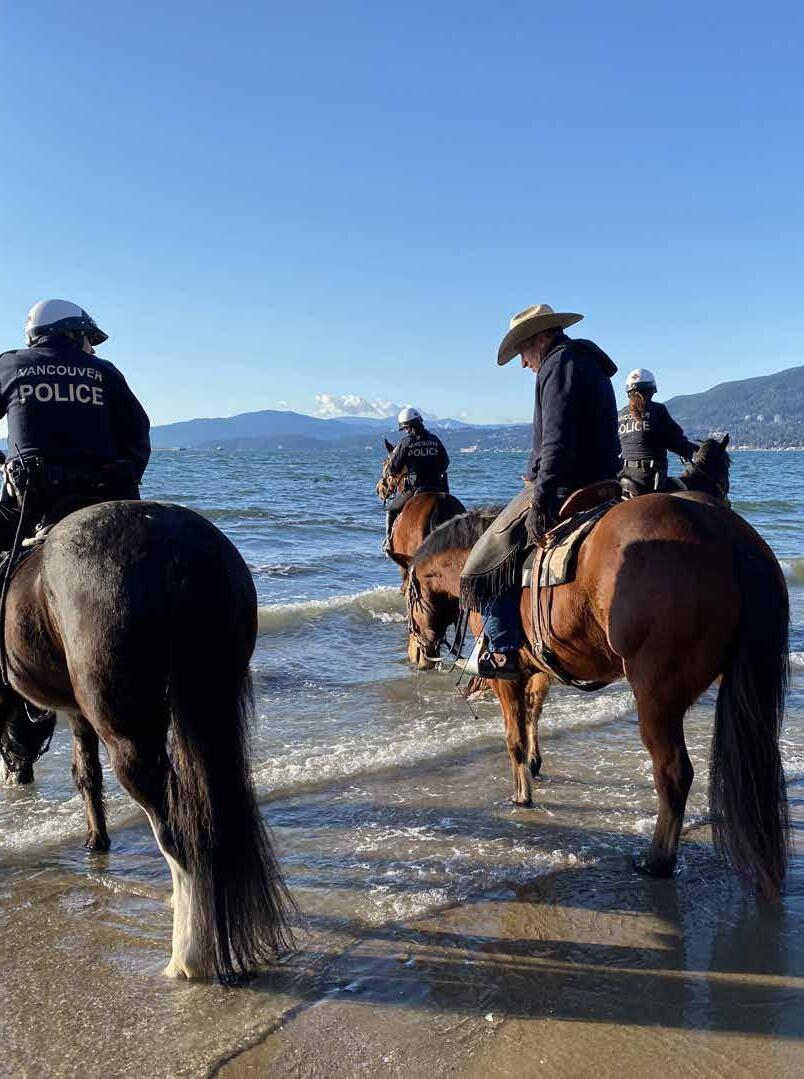
In Vancouver, BC, the concrete meets cowboy, Jonathan Field as he brings his refined horsemanship skills to the Vancouver Mounted Police Unit.
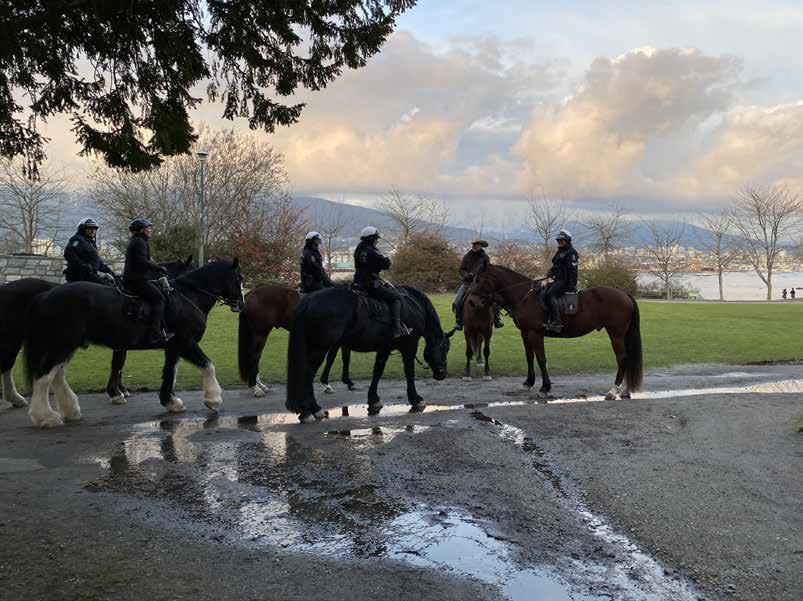
When horseman Jonathan Field (Kamloops, BC) first met members of the Vancouver Police Mounted Unit, it didn’t happen in a formal setting, it happened in the arena.
“They came out to a clinic and just participated like everyone else,” Field recalls. “They were in uniform, wearing badges and on duty – but they stepped right into the process.”
That willingness to learn has become the foundation of a unique and evolving partnership between Field and the Vancouver Police Department’s mounted unit. One rooted not in enforcement, but in horsemanship.
Unlike Canada’s federal Royal Canadian Mounted Police (known for its iconic Musical Ride but without a deployable mounted patrol), cities like Vancouver maintain their own working units. The Vancouver Police Mounted Unit (VPD) patrols everything from the trails of Stanley Park, to the busy sidewalks of downtown and the beaches of English Bay.
It’s a job that demands a very particular kind of horse and rider.
“Some of these officers come in with no horse background at all,” says Field. “Their first time riding might be in the unit itself.”
That’s where his program has come in. However, Field is quick to define his role: “I’m very clear, I don’t train for deployment or public safety. What I provide is the horsemanship foundation.”
Through clinics, ranch sessions, and hands-on work, Field focuses on building confident, responsive horses and riders who understand them.
The partnership between Field and the VPD deepened during COVID, when Field’s clinic schedule slowed and the mounted unit needed support.
“They asked if they could send a few horses,” he says. “I told them, ‘I’ll help however I can.’ Then it turned into, ‘Can we send the whole unit over?’”
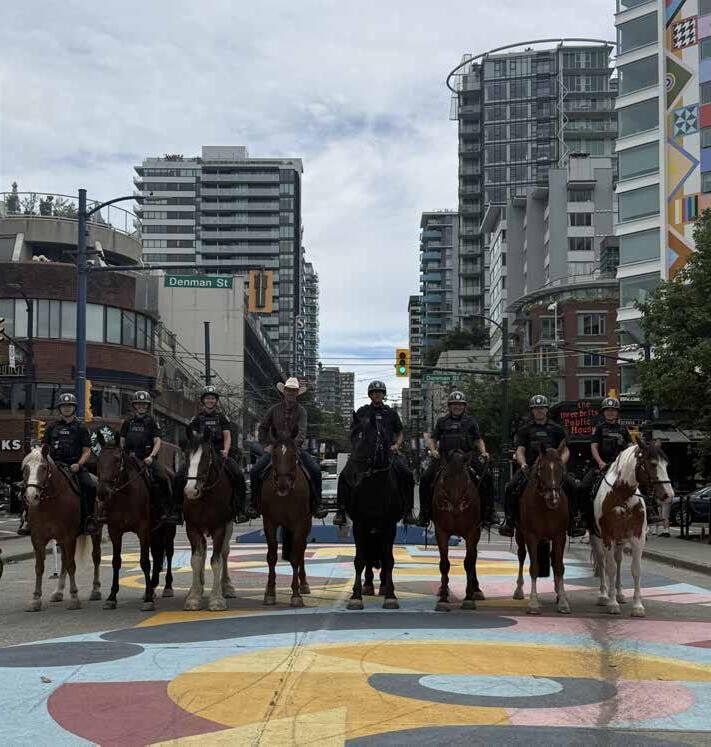
Soon, police trailers and trucks were a regular sight at Field’s ranch.
“My neighbour started asking questions,” he laughs. “There were a lot of police vehicles coming and going.”
At the ranch, the horses get something invaluable: time away from the intensity of the city. Miles of quiet riding, foundational exercises, and consistency help prepare them for the unpredictable nature of urban patrol work.
Field recalls riding with the unit recently down busy Robson
Street, crowds spilling out of shops to watch. His mount “Bentley,” a towering new recruit, was soaked from the rain of the day and a little unsure of his surroundings.
“He’s a big, gentle horse, but he needs confidence,” Field says. “That’s what we’re building.”
For Field, whose resume includes high-performance dressage horses working at the Grand Prix level, the mounted unit presents an entirely different challenge.
“This is so different from anything else I do,” he explains. “There’s a whole system. Shift work, multiple riders per horse,
constant deployment. It took me a couple of years just to understand how it all functions.”
And yet, the core remains the same: feel, timing, and trust.
The officers, he notes, are highly coachable.
“They show up ready to learn. ’Yes, sir,’ and they go to work. It’s very productive.”
Still, not every horse is suited for the job.
“If a horse doesn’t handle the noise or the pressure, they find it a new home,” says Field. “And those horses often go on to be exceptional partners elsewhere.”
The same standard applies to the officers. The mounted unit demands a level of commitment beyond a typical assignment.
“The horse comes first. That’s part of the culture,” he says. “It’s more time, more responsibility.”
That part of the culture is also what makes the unit so special.
Mounted patrol units offer something no vehicle or bicycle can replicate – connection. Horses are often an “ice-breaker” in tense situations.
During major events, like fireworks along English Bay or the upcoming FIFA tournaments, the presence of horses provides both visibility and approachability.
IF A HORSE DOESN’T HANDLE THE NOISE OR THE PRESSURE, THEY FIND IT A NEW HOME, AND THOSE HORSES OFTEN GO ON TO BE EXCEPTIONAL PARTNERS ELSEWHERE.
“People love to see them,” Field says. “They come out, they engage. It changes the interaction completely.”
As cities across North America begin to phase out mounted units due to cost and logistics, Vancouver’s program stands out. Not just for its functionality, but for its commitment to doing it well.
“Don’t take it for granted,” Field says. “These programs are special.”


BY JENN WEBSTER
Colt starting is often defined by milestones: the first saddling or the first ride, for instance. However, the real work happens long before that. Doing it without allowing human emotion to play into the equation is imperative. For up-and-comer, Ali Erskine, building a foundation with her colts from the ground up and keeping the pressure in check is something she understands very well.
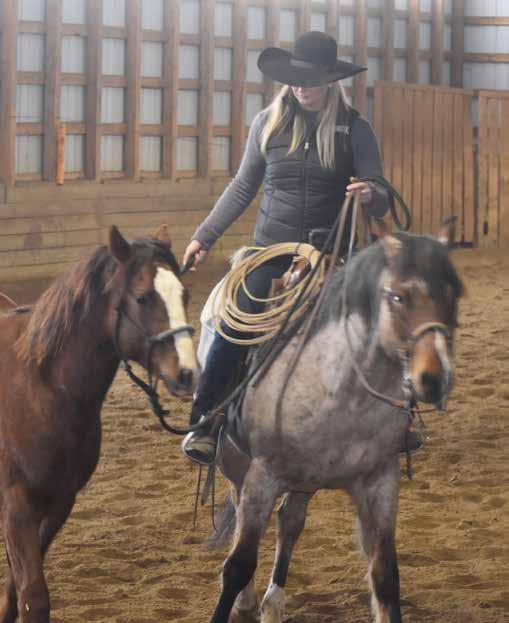
From the first touch to the first ride, Ali Erskine builds colts with clarity, timing, and a commitment to keeping life in them. There’s a moment in every colt’s life where the conversation with its trainer begins.
Not when the saddle is cinched, nor when a rider first swings a leg over – but earlier than that. For Erskine, sometimes it starts in the pasture, as she observes her colts with their mates. From there, the conversation progresses to the quiet, often overlooked exchanges on the ground. A shift of weight. A try. A release.
For this young trainer, that moment is everything.
“Ego gets expensive when the horse pays the price,” she says.
It’s not just a sharp line. It’s a philosophy that threads through every part of her program. From the first time a young horse feels pressure, to the moment it begins to understand its job, Erskine’s approach is rooted in one principle: the horse’s learning curve always comes first.
Raised in central Alberta, Erskine’s early years were spent like many rural kids, balancing 4-H projects with eventing
and jumpers, and always with a project horse in the mix.
“I always had an $80 project pony kicking around,” she recalls. “I’d try whatever I was learning from YouTube, or books. I was just figuring it out,” she states.
At 17, she left for New Zealand, working as a shepherd in the rugged country of the South Island. It was there that her understanding of pressure and timing sharpened. Lessons learned working dogs translated seamlessly to her work with horses.
From there, her path led to the oilfield, earning her journeyman ticket as a crane operator.
“I worked in Fort McMurray, AB, as a crane operator for oil and gas operations for a while,” she tells. “But I got sick of oil and gas, so went into ranching, training and selling horses on the side.”
The last four years saw Erskine’s main job as working in coal mines of southern Alberta. It was a strategic move, which allowed her to earn enough to build her own shop and barn in Burmis, AB. Burmis is a tiny community in southern Alberta and its name is derived from a portmanteau of Burns and Kemmis – the names of two of its pioneer citizens. Although Erskine jokes that not many people may know where Burmis is, it’s highly likely they’ve driven past its
the famous Burmis tree at one point. Today, she operates out of the place she’s built in the mountains near the Crowsnest Pass. Training horses by day and building a denim company for working women, by night.
On a crisp Alberta morning, a two-year-old colt named Jimmy stands at the beginning of that conversation. This liver chestnut stud colt is owned by Erskine, sired by Hendrixx
and out of a Shining Spark mare. Up until today, Jimmy has simply been growing up at Erskine’s ranch with his fellow pasture mates.
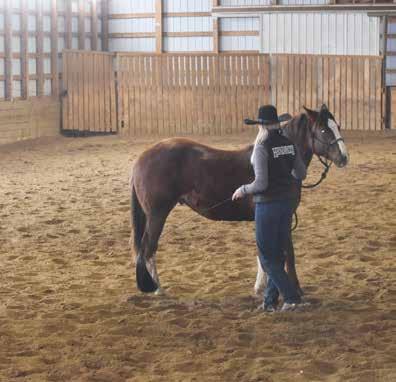
Using her seasoned horse, Pac Man, as both a snub horse and a source of confidence, Erskine begins shaping the colt’s first responses.
“Younger horses are naturally drawn to older, confident horses,” she explains.
“My goal is to get the colt to yield its hindquarters and respect my space. Then yield the front end.”
She explains that she wants the horse to keep its eye on her and once it has been taught to yield to pressure, his shoulders come through easier. From the ground or aboard Pac Man, Erskine also likes to ask her colt to back up, to get them to show submission. If the moment calls for, she will dismount her snub horse, work the colt from the ground and ask for his hind end and shoulders.
“Whatever Jimmy is ‘sticky’ on, I’ll spend more time in that area,” she states.
“Colts immediately go to defence mode. I’m always in offence – so I’m just trying to teach Jimmy to know that.”
Here the trainer introduces the feel of a rope around the colt’s hindquarters,teaching him to move forward and towards her. Simultaneously, this exercise teaches Jimmyhow to prevent himself from feeling “stuck,” which can ultimately lead to panic. 2 3
And in that moment, Jimmy starts being “lighter” already.
Forward motion is good, but Erskine also refines what she is looking for in each of her colt’s footfalls, even in the earliest moments of training.
“The front foot should step in front of the other one when moving the shoulders and not the other way around. You can make a horse sticky and start to suck back otherwise, even in these early exercises and that’s not what we want,” Erskine relays. “Horses are notoriously lazy and if they can find a way to keep their front feet still, they will. It comes from their drive for self-preservation.”
“Forward motion is your friend,” she says.
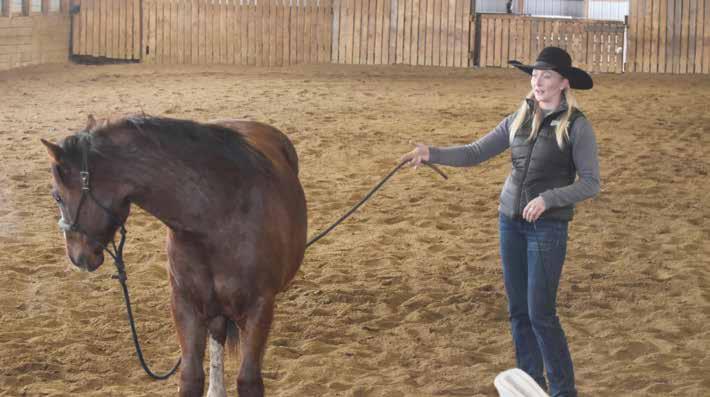
But the tool itself isn’t the point.
“And the flag is great, but it’s only as good as your application. You want to keep life in your horse.”
When Jimmy hesitates, the flag becomes an extension of his trainer’s ask – encouraging his feet to move. If they don’t, she increases the pressure. The moment he tries, she releases.
“Pressure is like a volume dial,” she explains. “Start at one and build up. If you start at 50, you’ve already lost half your feel.”
Too much pressure creates fear. Too little, creates dullness. The balance is everything.
When Jimmy begins to think about leaving, drawing back toward his herd, Erskine doesn’t fight it directly. She redirects the horse’s mindset instead.
“Change direction to change their mind.”
By moving Jimmy’s feet with purpose, she shifts his focus from resistance to response. Each turn and step, becomes part of the larger conversation.
One of Erskine’s key techniques involves introducing the lead rope around the colt’s hindquarters, teaching him to move forward and turn without feeling trapped. Starting from the ground and with the colt still in halter, Erskine walks her lead rope gently around the horse’s bum. Then, she adds a little pressure and waits for Jimmy to turn towards the gentle pressure of the rope and towards her.
“With this technique, they learn to have the rope around their bottom,” she explains. “As soon as they have forward motion, they don’t feel stuck.”
This matters a great deal for future rope or ranch horses. If Erskine eventually wants to rope with the horse, or the horse finds itself with a rope under its tail – if it feels trapped – it will panic. This early training method instead teaches colts to step through pressure, not brace against it.
However, this technique is two-fold as it also allows Erskine
to begin working with the colt on both sides of its body.
“Switching eyes” is trainer jargon for working the horse from both the right and left sides, and allowing the animal to see everything that’s being done through both of its eyes. As horses have monocular vision, they sees things independently through each the left and right eyes.
“This becomes especially important when I’m on his back,” Erskine declares.
At one point, Erskine notices a gap in Jimmy’s confidence. Suddenly the horse demonstrates to her that he’s uncomfortable with having her beside his front left shoulder.
“He didn’t want me beside him,” she says.
Erskine adjusts, treating Jimmy instead like a broke horse in that moment, working through the issue before returning to her program.
“Whatever they’re sticky on, I’ll spend more time there,” she repeats.
It’s a reminder that no two colts follow the exact same path and good trainers don’t force them to.
Introducing the Saddle, Without the Drama
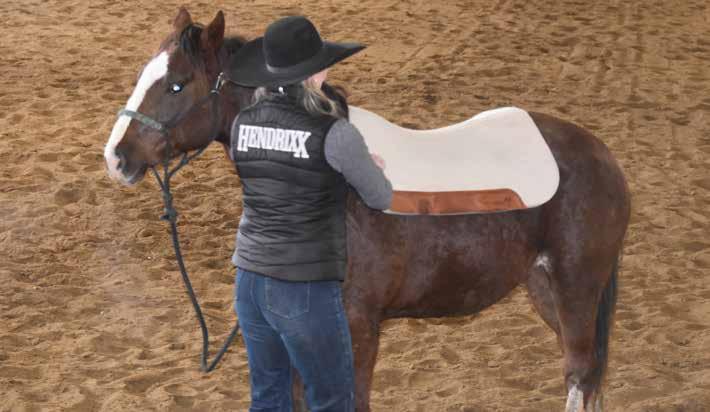
By the time the saddle pad appears in Jimmy’s training, it isn’t a big moment.
“I just throw it on him,” Erskine says. “I do it from both sides. I don’t make a big deal about it. Emotion has no place here.
“To have an honest conversation with a horse, you have to leave your emotion at the door,” the trainer asserts.
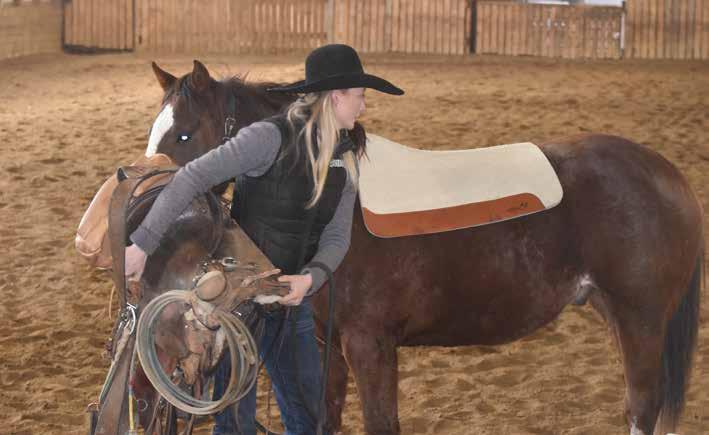
The saddle follows the same approach – quiet, methodical, and without tension. Once he is comfortable wearing the saddle pad, with space between herself and Jimmy, Erskine moves to throw a saddle on him for the first time. Similar to what she did with the pad, she doesn’t make a big deal about the saddle either. Her gear is equipped with a breast collar and a back cinch.
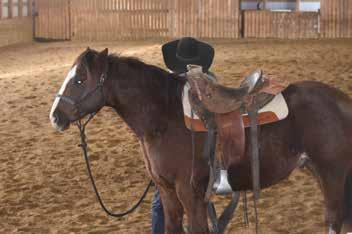
5 7 6
The saddle is next and Erskine swings it up as though it’s no big deal.
She moves Jimmy through the same ground work exercises she did before, putting the saddle on and letting the horse “feel” the weight of it.
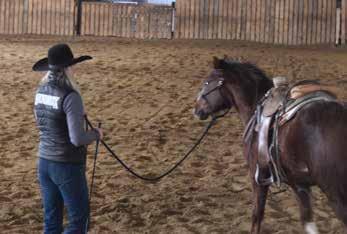
Once she has done up the front cinch and back cinches, she moves the colt around at the end of the lead. Again, the trainer switches eyes by flipping the halter lead around the colt’s rear end and patiently waits for him to turn towards her – emphasizing the work she did previously on the ground. Next, she switches eyes with the rope closer to the saddle, to initiate where her hands with be in the future when she is riding Jimmy.
She says, “I want to begin getting him thinking about steering. If he gets sticky, I’m just patient. I don’t want to pull him around because it doesn’t help me accomplish what I want.”
With colts, sometimes standing still doesn’t always mean acceptance. Standing still is ideal for tightening a colt’s cinch for the first time, but movement is ultimately what will help Jimmy release his energy. Sometimes if a colt refuses to move forwards, it signifies shutdown or a “bottling up of tension” – and Erskine is careful to avoid that.
“I want my colts to move left, right, forward, and back,
but I also want them to have a neutral.”
With the saddle secured (front cinch and back cinch in place,) Erskine returns to movement. She asks Jimmy to step forward, then begins “switching eyes” again, reinforcing the groundwork from earlier. This time, however, her cues shift closer to the saddle, mirroring where her hands will eventually be when she rides.
“I want to start getting him thinking about steering,” she explains.
Again, if he hesitates, she waits and allows the horse to find the answer.
“You can always make a horse do something,” she says. “But you get consistency when they understand your end goal.”
With that, Erskine releases Jimmy from the halter and allows him to wander off in the arena she’s working in, saddle and all. She reaches for her next colt – one she will also snub up to Pac Man, ground work and saddle him for the first time as well.
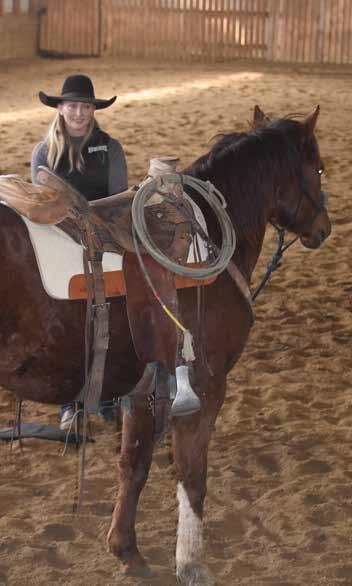
By the time Erskine is ready to swing a leg over any of her colts, the work is largely done. Her horses understand pressure, release and forward motion. But most importantly, they understand the conversation. Every step in Erskine’s program points forward and not just for the first ride, but to the horse’s entire career. Small details matter.
She is constantly thinking about ways to make her horses well-rounded and “user-friendly.” One such example is what the trainer refers to as a “special trick” she uses during the training of all her young horses.
“I make all my horses pick me up off something like a fence, a panel or even a big rock. That way, if a 75-year-old lady wants to buy them down the road, they can easily stand on a mounting block and my horses won’t give them any trouble with it. This is a great tool because it also teaches my colts to see me from above,” Erskine relays.
It’s a simple exercise, but one that comes with a lasting impact and helps her create horses that are practical, safe, and accessible for any rider.
Ali Erskine’s Colt-Starting Principles
Leave Ego Out of It.
1 3 4 6 5 7 8 9 10 2
“Ego gets expensive when the horse pays the price.”
Training should follow the horse’s learning curve, not the handler’s expectations.
Pressure is a Dial, Not a Switch Start soft and build only as needed. The release (not the pressure) is what teaches the horse.
Forward Motion Fixes Most
Problems “90% of your problems will be fixed with forward motion.”
A moving horse is thinking. A stuck horse is reacting.
Change Direction to Change the Mind Redirecting the feet shifts the horse’s focus, preventing resistance from building into a fight.
Eliminate the Feeling of Being Trapped Teaching the horse to move through pressure (such as with a rope around the hindquarters,) builds confidence and prevents panic responses.
Keep the Life in Your Horse
Over-desensitizing creates dullness. The goal is responsiveness, not shutdown.
Build Understanding, Not
Compliance “You can always make a horse do something, but consistency comes when they understand.” Clarity leads to reliability.
Work Both Sides, Every Time
“Switching eyes” ensures the horse processes information evenly, setting it up for success under saddle.
Fix the Sticky Spots
Spend time where the horse struggles. Those moments shape the outcome of the training.
If the groundwork is done right, the first ride should feel like a natural progression, not a breaking point.
BY JENN WEBSTER
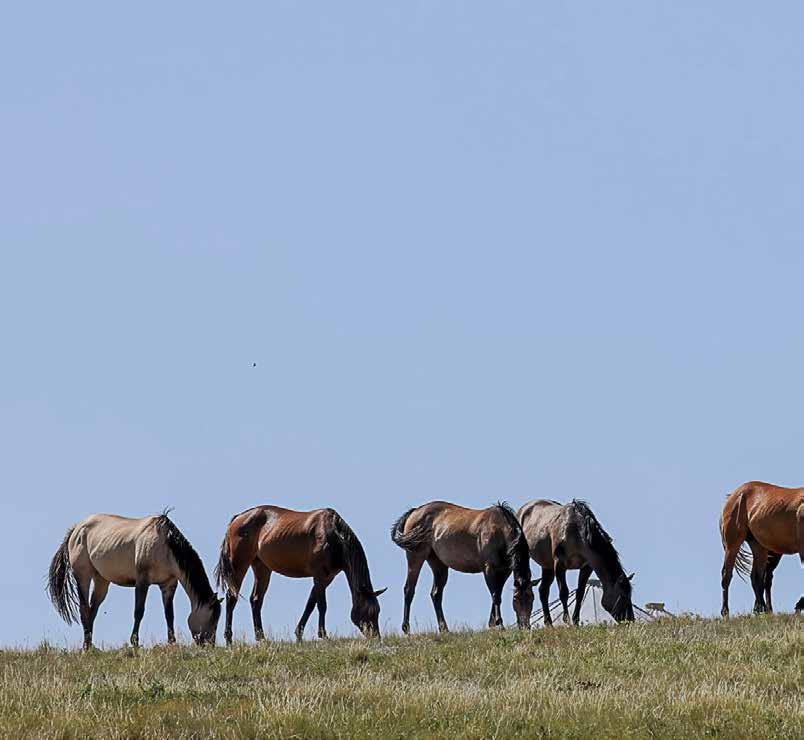
In an industry where tradition and innovation constantly collide, few decisions ripple as widely as those that shape how the Quarter Horse is bred. At the centre of one of the most debated policies in recent AQHA history is the “2-Year Rule” – a regulation born from good intentions, challenged by advancing science, and ultimately undone by the very membership it aimed to guide.
Introduced in 2015 by the American Quarter Horse Association (AQHA) Stud Book & Registration Committee, the 2-Year Rule placed a limit on how long frozen genetics could be used from certain horses after their death or sterilization. Specifically, for stallions and mares foaled in 2015 or later, AQHA-eligible offspring would only be produced within two calendar years following their death, gelding, or spaying.
After that window, any resulting foals would not qualify for registration.
For Ryan Fleetwood (Champion, AB), AQHA director and member of the Stud Book & Registration Committee, the rule reflected a forward-thinking approach rooted in the realities of the time.
“The goal was to keep people using horses that are alive and, in theory, improving the breed moving forward,” says Fleetwood.
It came from a place of wanting progress. The Stud Book & Registration Committee committee itself is composed of long-time breeders, industry professionals, and directors
tasked with evaluating the many factors that influence registration policy. Their mandate is to balance the interests of the horse, the integrity of the registry, and the needs of AQHA members.
“Our committee is made up of longterm, knowledgeable, involved members and directors of the association who look at all of the factors that create the policies surrounding the registration of Quarter Horses.
“When they put the 2-Year Rule together in 2015, their intention was to try to focus forward. It was to try to have people using horses that are alive, and in theory, should be better than what we used to breed with yesterday,” he explains.
Crucially, AQHA rules are not retroactive. Horses foaled 2014 or prior were exempt from the limitation, meaning their frozen genetics could continue to be used without constraint. The expected outcome at the time was to continue to move the breed forward under the belief that the horses should be getting better with each generation.
“While that is, in a perfect world, the way it should be,” says Fleetwood, “That is a matter of perspective as to whether or not it’s true. For me, when I consider the very discipline specific way that our horses are bred now, I am not sure that moving away from the old versatility of the Quarter Horse is the right move for all Quarter Horse enthusiasts, considering the majority of folks are recreational in one way or another.”
Theoretically, at the time, the distinction between the two age groups of horses appeared like it would decrease.
However, over the next decade the landscape was about to change.
In the years following the rule’s introduction, reproductive technology in the equine industry advanced rapidly and far beyond what many had anticipated.
Procedures like Intracytoplasmic Sperm Injection (ICSI) expanded the possibilities of what could be done with even limited or previously unusable genetic material. Not only could frozen semen be utilized more effectively, but oocytes and embryos could also be preserved and used in ways that extended a horse’s genetic influence well beyond its lifetime.
What followed was an unintended consequence as a growing disparity between the two age groups of horses to influence genetics.
Older stallions (those not subject to the 2-Year Rule) could, in theory, continue siring offspring indefinitely through frozen genetics. Meanwhile, newer stallions faced strict limitations.
“You had these stallions that could almost go on in perpetuity,” Fleetwood explains. “And at least to me, that doesn’t come across as fair game.”
What had once been a rule designed to encourage progress began to feel, to some, like a restriction.
By the time the AQHA Convention convened in March 2026 in Las Vegas, NV, the 2-Year Rule had become a focal point of discussion. The process itself followed AQHA’s established governance structure. Rule changes are first reviewed at the committee level, then move to the general membership, and finally to the Directors Meeting.
At the Stud Book & Registration Committee level, the decision was made to maintain the rule. The vote, 16 to 8, reflected strong support within the committee, though not unanimous agreement. Fleetwood’s vote fell within the minority.
From there, the conversation moved to the general membership. The rule was challenged on the floor and ultimately defeated by the membership vote. When the decision reached the Directors (the final step in AQHA’s governance process), the directors chose not to override the will of the membership.
The 2-Year Rule was officially abolished. Which means we can now breed ongoing to stallions that were born 2015 or after, that have since been gelded or are deceased.
“This means that AQHA members and breeders can make their own decisions without being limited by the rules of the association,” says Fleetwood. ,
While the outcome made headlines, the process behind it is equally important.
“One thing people don’t always understand is just how open the process is,” Fleetwood notes.
Any AQHA member – whether they purchased their first horse yesterday or have decades of experience – can submit a rule change suggestion, addition or deletion to be discussed at the annual AQHA convention. From there, the submission is reviewed by the appropriate committee, evaluated on its merit, and voted on before advancing to the membership and ultimately, the Directors. The association also publishes convention agendas well in advance, allowing members to stay informed and participate.
At the top of the governance structure sits the AQHA Executive Committee (EC), a group of five directors. While they hold significant authority, even they cannot override recommendations from key committees such as Stud Book & Registration or Nominations & Credentials.
It’s a system designed for transparency, participation, and accountability and in this case, it worked exactly as intended.
While much of the debate surrounding the 2-Year Rule focused on fairness and advancing technology, another factor lingered quietly in the background: cloning.
“At the time (2015), there were conversations about what might happen if clones entered the marketplace, and provided semen from the stallion they were cloned from,” Fleetwood explains.
“In the last decade we could have all sorts of horses and their progeny, and their progeny, who were created from a clone – and right now as the rules exist – the association would pull the registration on anything created from a clone,” Fleetwood explains.
The AQHA has long held a firm position that cloned horses, along with their offspring and descendants, are not eligible for registration. That stance has even been upheld in federal court.
Until recently, however, enforcing that rule came with a significant limitation. From a genetic standpoint, there was no reliable way to distinguish between a cloned horse’s semen and the original animal’s semen, using standard DNA testing. Historically, nuclear DNA that is commonly used to determine parentage would be identical.
“Up until now, there was no way to tell on frozen semen if it came from the original horse or a cloned horse,” says Fleetwood.
Advancements from the University of California, Davis, have recently introduced new testing methods that go beyond nuclear DNA, examining mitochondrial DNA and other markers that can identify origin – not just identity.
The implications are significant because for the first time in history, it may be possible to detect whether genetic material used in breeding came from a clone, rather than the original horse.
So now, a new conversation that may challenge registration integrity, breeding transparency, and, if it’s discovered that at some point in time genetic material from a clone was used where the original was expected…
Well, can you imagine the lawsuits that will come of this? Can you fathom owning a horse for several years, thinking you knew its lineage – only to have its AQHA registration papers revoked? What if you own a stallion and all of a sudden, you find out you have an unregistered horse. And then think of all the implications to his progeny and grandprogeny…
YOU HAD THESE STALLIONS THAT COULD ALMOST GO ON IN PERPETUITY… THAT DOESN’T FEEL LIKE FAIR GAME
Ryan Fleetwood
Depending on how far back the identifiable origins can be traced, the situation could involve hundreds (if not thousands) of horses affected, and even the involvement of other breed associations since AQHA horses are prevalent amongst breeding stock in breeds such as Paints and Appaloosas.
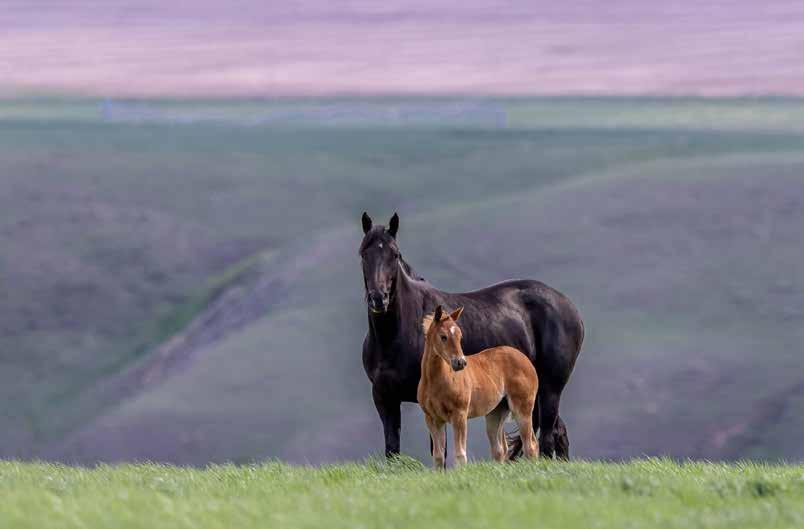
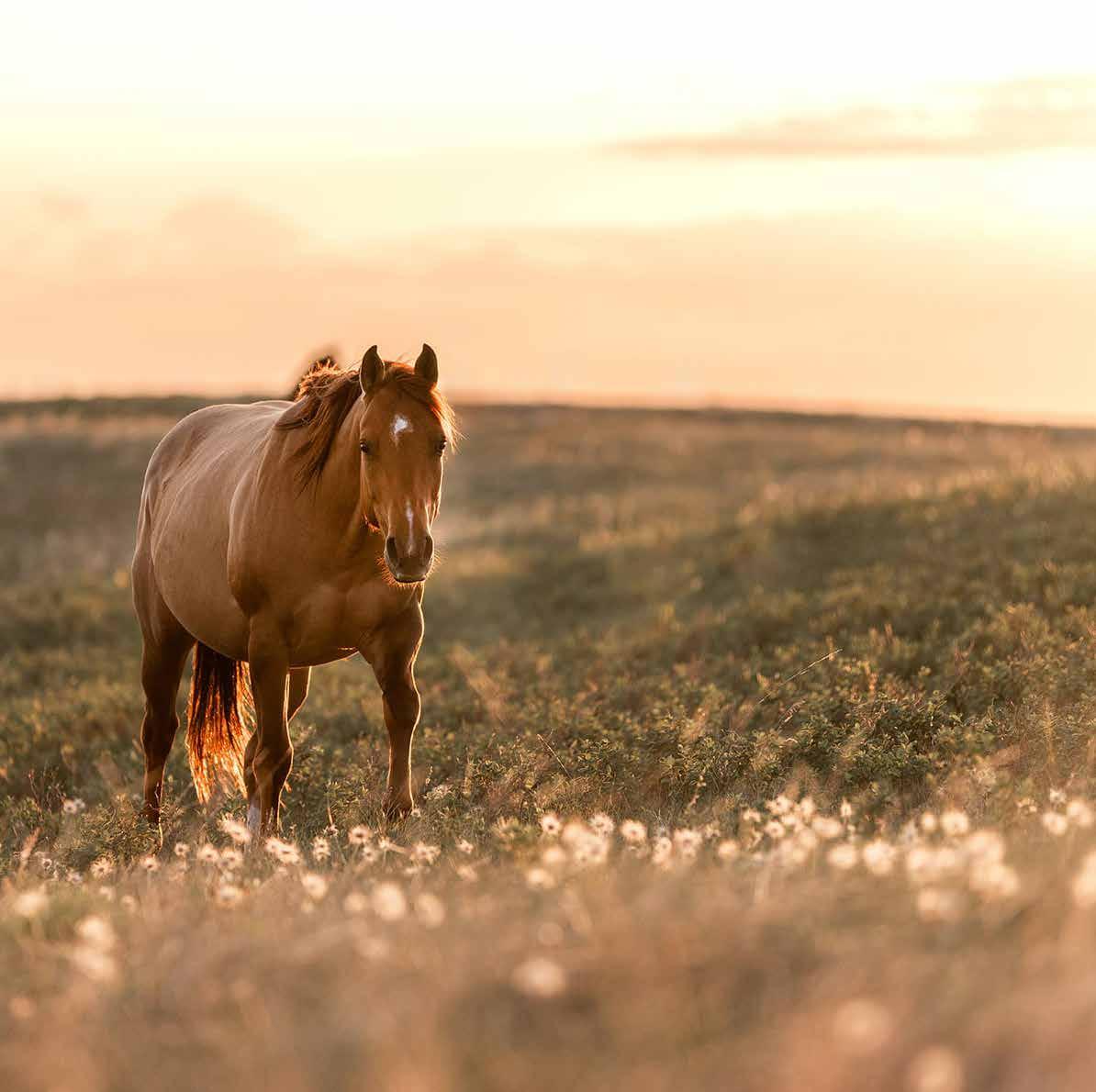
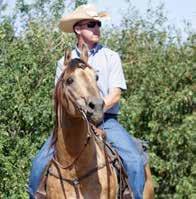
With the 2-Year Rule now removed, breeders have regained the freedom to make their own decisions regarding the use of frozen genetics, regardless of a horse’s age, status, or date of birth.
Could the rule return in a different form? Absolutely. AQHA’s structure allows for any member to propose changes at any time. More importantly, the industry now faces evolving questions around genetic technology, fairness, and the very definition of lineage.
So how does a breed built on history adapt to a future where science can both preserve and complicate its legacy?
For Fleetwood, one thing remains certain – he is committed to ensuring future AQHA decisions are grounded in science, data and what is best for the breed long term.
Ryan Fleetwood is continually interested in what’s best for the Quarter Horse breed. Fleetwood is a fourth-generation Quarter Horse breeder from Champion, AB. He owns Fleetwood Farms, is an AQHA Professional Horseman, AQHA Director for Alberta, winner of the Canadian Quarter Horse Association 2021 “Best Remuda Award” and always is willing to talk “horses.”
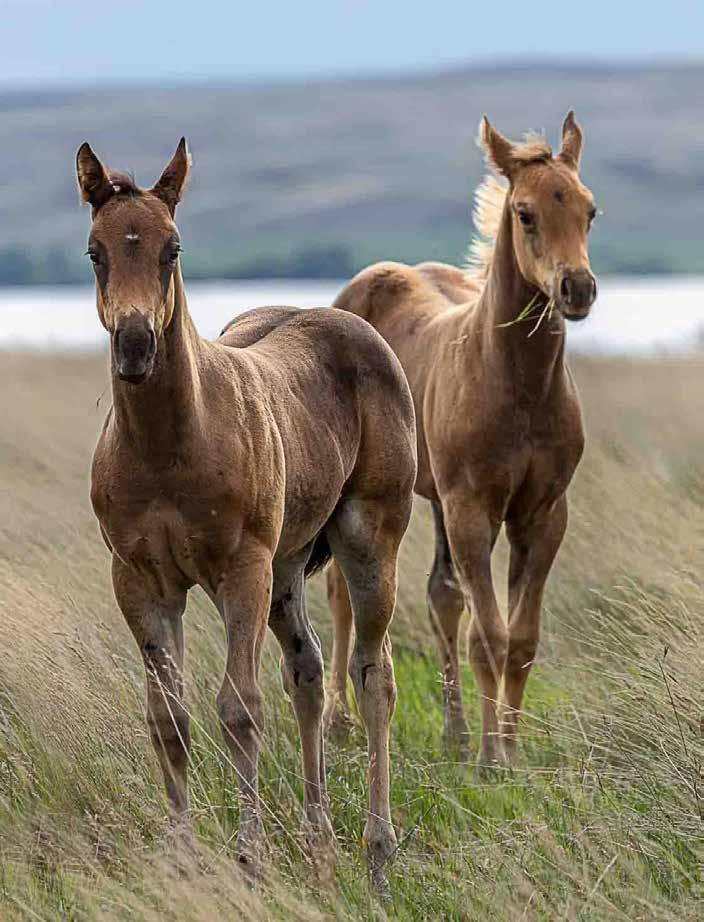
UP UNTIL NOW, THERE WAS NO WAY TO TELL IF FROZEN SEMEN CAME FROM THE ORIGINAL HORSE OR A CLONE.
BY JENN WEBSTER PHOTOS BY CAROLYN SIMANCIK
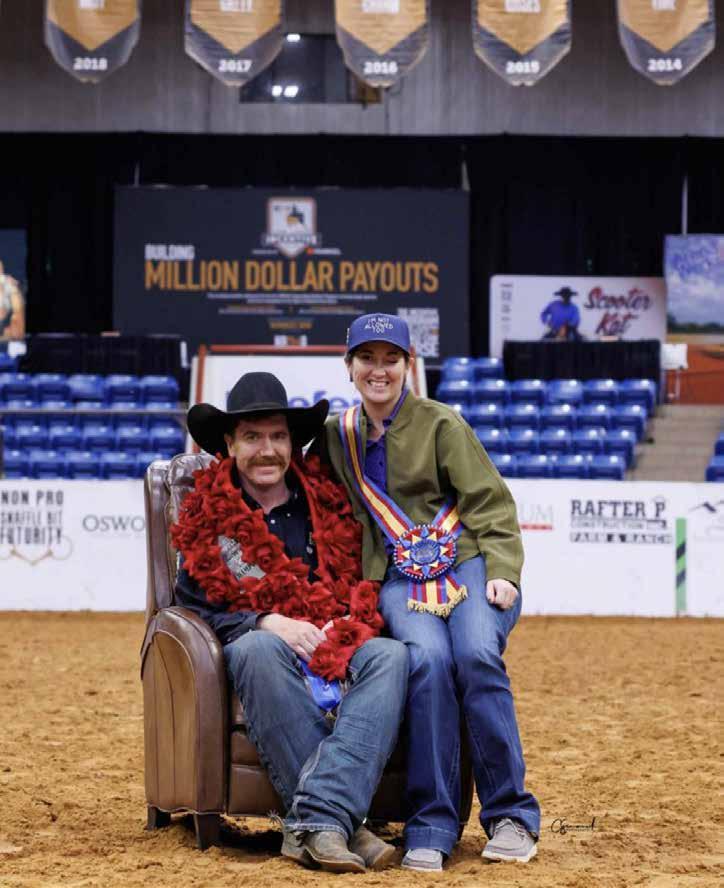
After a devastating accident, reined cow horse trainer Veronica “Ronnie” Swales is finding her way back. Supported by family, grit, and a horse industry that showed up when it mattered most, here’s how the celebrated cowgirl found strength after her fall.
WASN’T EVEN DONE IN THE FENCE WORK YET AND TEARS WERE WELLING UP IN MY EYES – BECAUSE I ALREADY KNEW HE HAD PULLED IT OFF.
Veronica Swales
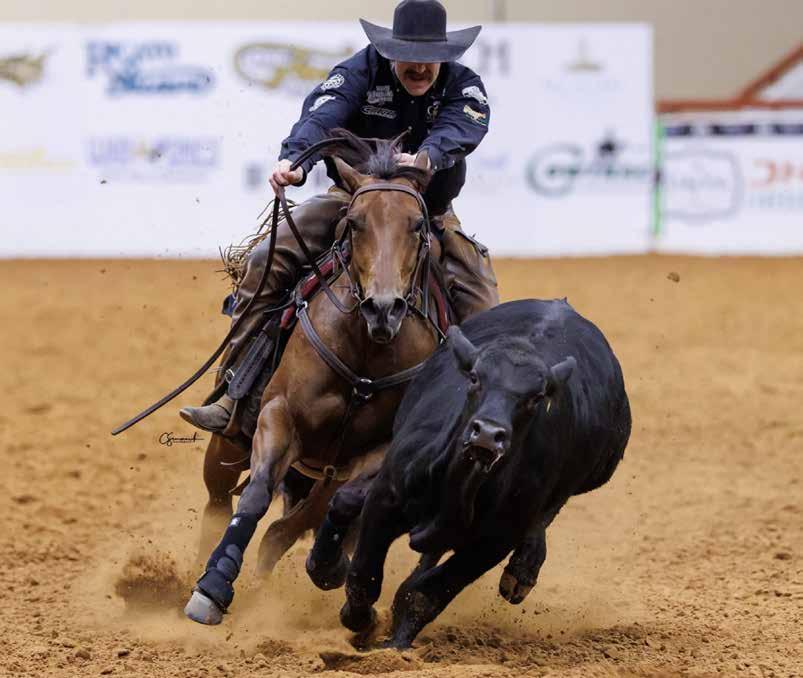
On August 24, 2025, in Las Vegas, NV, what should have been just another run down the fence turned into something no one could have predicted.
Professional stock horse rider Veronica “Ronnie” Swales remembers none of it.
“From what I’ve been told, it was quite the wreck,” she says.
During a fence run at the National Stock Horse Association (NSHA) Futurity, her horse Jelly Time lost balancee and rolled over her. The injuries were severe: a fractured rib, a broken scapula and internal bleeding in her brain. She was rushed to the Trauma Center ICU, where the outcome, for a time, was uncertain.
It was the kind of moment that splits life cleanly in two –before, and after.
“I feel very, very fortunate,” Ronnie tells.
Months later, Swales speaks with a calm clarity that only comes from having lived through something life-altering.
“Things are going really good. I feel like I have recovered pretty darn good,” she says. “The only thing I’m still
struggling with now is a little bit of my eyesight. I feel very, very fortunate.”
Doctors have reminded her that healing (especially brain healing) takes time. Her specialist has requested that wear a helmet for at least a year.
“And if a helmet makes it so I can ride, then so be it,” the trainer states.
However, for someone like Ronnie Swales, that adjustment wasn’t just physical – it was deeply personal.
At the National Reined Cow Horse Association (NRHCA) Stallion Stakes in April 2026, she returned to the show pen wearing a helmet.
The helmet keeps her safe, but she admits that she struggles with it.
“When everyone around you is wearing a cowboy hat, you feel out of place. I’ve worn a cowboy hat my entire life,” she confesses.
If you know the Swales family a cowboy hat isn’t just a preference, it’s an identity. So, one sleepless night before her
reined work, Ronnie made a decision.
“At 3 a.m., my husband Clay asked what I was thinking,” she relaus. “I told him, ‘I’m not wearing a helmet in my reined work today.’ He said, ‘Okay.’”
Since the reined work wasn’t followed by an immediate cow horse run, Ronnie felt as though she might be alright without one. The next day, she rode through the gate without it. Her mom didn’t recognize her at first.
“She had to do a double take,” Ronnie laughs. “But later she told me, if that’s what made me comfortable, then go for it.”
However, the helmet stayed in place for any runs down the fence or in the herd. Having been through such a tough battle the previous 185 days, Ronnie wasn’t ready to completely ditch her brain bucket.
While Ronnie’s accident shook the family to its core, resilience is nothing new in the Swales household.
Her son Boyd (now age 16) has already faced something far bigger than most kids ever will. Diagnosed in 2019 with an ependymoma, a rare brain tumour, Boyd underwent emergency cranial surgery and months of intensive treatment. Today, he’s seven years cancer-free – but still suffers from occasional seizures, especially under stress.
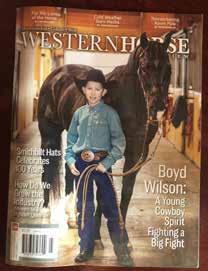
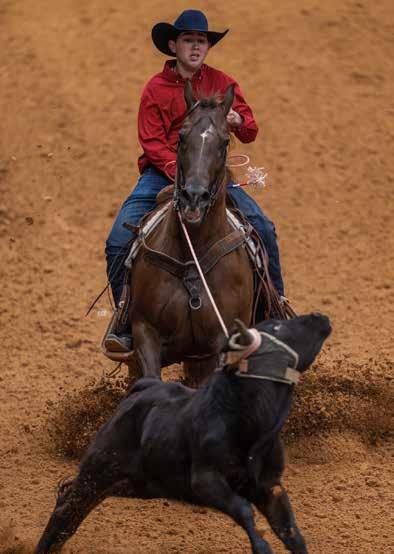
“He said, out of the blue, ‘I need a yellow scarf.’”
Ronnie, who has a longstanding superstition with the colour yellow (and especially during competition), has always thought it signified bad luck.
“But I didn’t want to put that on Boyd,” she laughs.
He wore his new scarf for children’s cancer.
“When they presented him with the Robbie Schroeder Memorial saddle that he won for the high score in the steer stopping, he made sure he had the scarf on,” she says. “It brought tears to my eyes.”
The night of Ronnie’s accident, the stress caught up with him.
“He had a seizure that night,” Ronnie says. “Even with medication, if he gets really stressed, it can still happen.”
And yet, like his mom, Boyd keeps moving forward. He now competes at a high level and in February 2026, he finished fifth in the NRCHA World’s Greatest Youth Horseman Finals.
Before the finals, he made a deal with his mom.
“He told me he would only do it if I stepped in the show pen too,” she says. “So I said, ‘Okay, you got it.’”
When Boyd made the finals of the Youth World’s Greatest, he requested to purchase a symbolic item to wear that caught Ronnie off guard.
Back home, the support didn’t stop.
Ronnie’s brother, John Swales, flew down from Canada and stepped in to help with her futurity horses. He went on to win the 2025 NRCHA Snaffle Bit Futurity Championship aboard Bowie Nights, owned by Bar One Land & Cattle LLP.
John and Bowie Nights secured the fairytale win by five full points, winning $200,000 in the process. Ronnie and her family were present during the final run and were overrun by emotion at the back gate.
“It was pretty cool to watch,” she says. “His run wasn’t even done in the fence work yet and tears were welling up in my
Veronica Swales and Spanish Nights in the Open Bridle Spectacular Herd Work, April 2026.
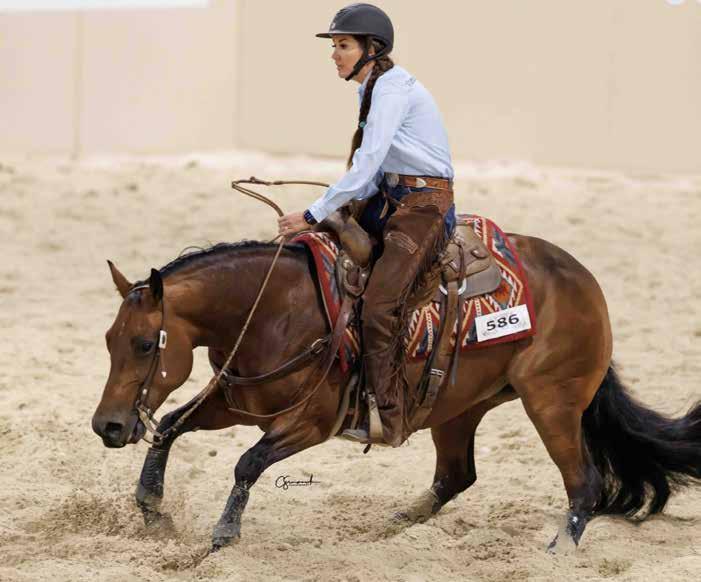
eyes – because I already knew he had pulled it off.”
Ronnie goes on to say that after John and Bowie Nights had their score announced and they walked out of the arena, she walked over to him. That’s when John reached out and embraced his sister in a hug.
“I was like ‘Whoa…!’” She laughs.
“I’ve been told a few times now that someone should probably turn all of this into a movie,” Ronnie says.
Honestly, it’s not hard to see why.
Today, the Swales/Volmer crew is not just recovering, they’re building.
In 2025, they purchased a 96-acre facility near Perrin, Texas complete with 38 stalls and 10 turnouts. It didn’t have a house at the time, but it had everything a high-end horse operation required.
The home arrived just after Ronnie’s accident and once again, people stepped in.
“Phil Hanson (who was the previous owner) and his son
Jake came and helped us set everything up,” she says.
“It’s Kind of amazing, because here’s Phil – who is an incredible horse trainer – who knew exactly what we’d want in that kind of facility, so they just came in to help us. He and Jake are still helping us build it now, every day! I couldn’t imagine how overwhelming it would have been trying to recover and do all this without them.”
There’s no hesitation when Ronnie talks about the future. She plans to continue showing Spanish Nights (also known as “Naomi”) and hopes to prepare her for the World’s Greatest competition next year. She’s also bringing along a promising group of three-year-olds.
And Boyd?
“He’s qualified for Run for the Million,” she says. “Top five in the youth – that’s how he got there.”
He may also step into the Non-Pro World’s Greatest in Scottsdale, Arizona later this year.
The next chapter is already in motion.
BY DEBBIE MACRAE
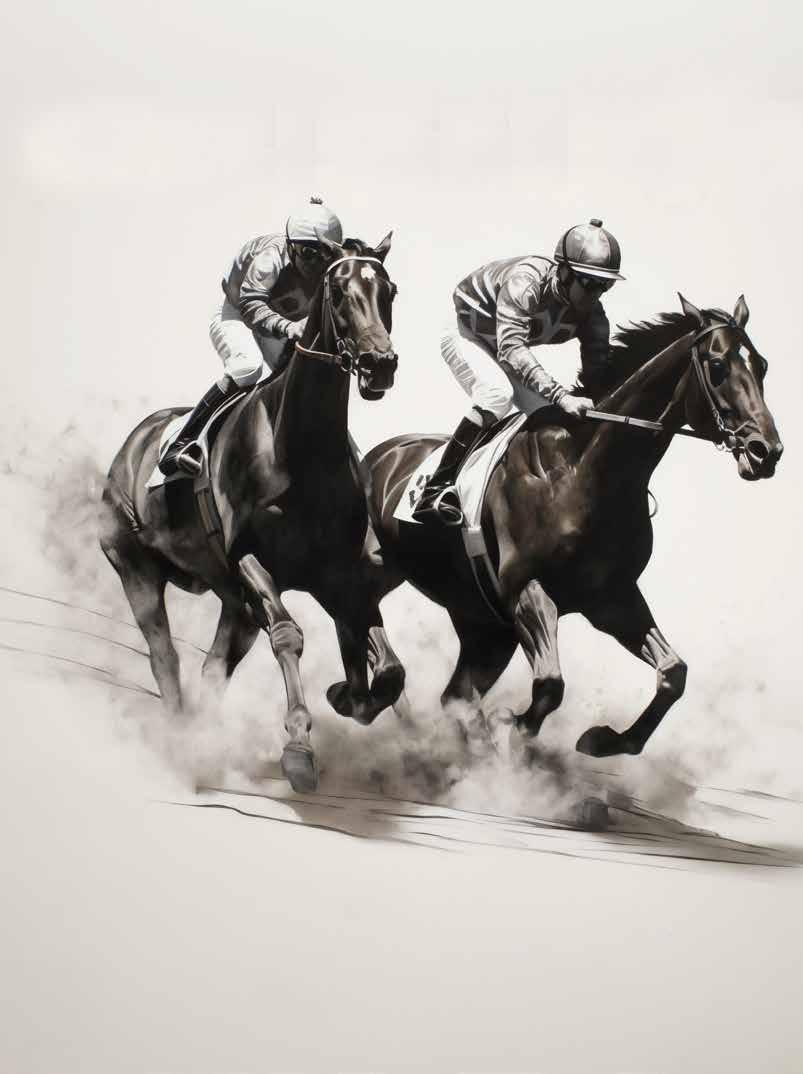
On June 27, 1860, a horse race took place at the Carleton racetrack in Toronto; Don Juan was the winner. It was known as the Queen’s Plate.
One hundred sixty-five years later, Mansetti, an 18-1 longshot, captured the 166th running of the $1-million King’s Plate on August 16, 2025, at Woodbine Racetrack, delivering a stunning victory for trainer Kevin Attard and 20-year-old apprentice jockey Pietro Moran.
In a remarkable performance, Moran guided the bay colt to a near wire-to-wire win, finishing 2 1/2 lengths ahead of Tom’s Magic in a time of 2:03.68, with Notorious Gangster finishing third.
This victory marked the first Plate win for owners Al and Bill Ulwelling and for Moran, who made history by competing against his father, David Moran, in the historic Canadian classic.
The early roots of horse racing in Canada date back to the 1700s where horses and competition were integral to the culture and life of the Indigenous.
Western lifestyle stimulated ranch-based competitions, which then grew to more organized competitions in larger centres. Competitors often held matches on public roads, and as enthusiasm grew, racing evolved into a regulated industry in the late 19th century.
Eight years after the defeat of French General JosephLouis Montcalm by British General James Wolfe on the Plains of Abraham in old Quebec, (a battle during which both generals would be mortally wounded), the very first recorded racing event in Canada was held.
Participants who had registered their horses with Mr. Wilcox at the Market Place for a sum of two dollars, at least two days prior to starting, would be granted the opportunity to compete for a purse of $40.00.
Racing on the pasture owned by Martin Abraham, a fisherman and river pilot on the St. Lawrence, the race took place at precisely 5:00 p.m. on July 1, 1767, exactly 100 years before the establishment of the Dominion of Canada. The victor was a mare by the name of Modesty, owned and ridden by Captain Prescott. Modesty would be inducted into Canada’s Racing Hall of Fame in 2017.
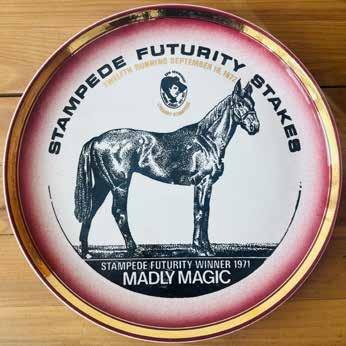
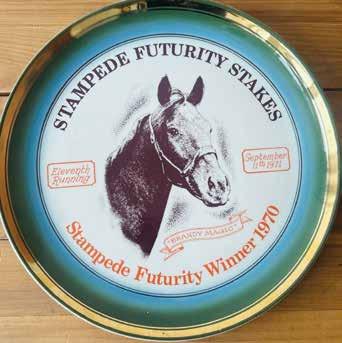

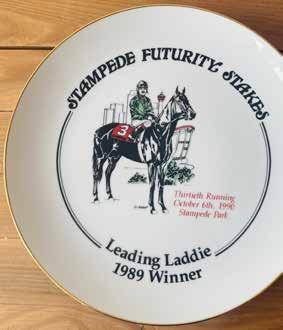
As early as the 17th century, (1660-1685), King Charles II began awarding valuable silver plates as racing trophies at Newmarket, the global headquarters of horse racing. Newmarket lies on the border of Suffolk and Cambridgeshire, England, and is home to the Jockey Club where horse racing has been celebrated since the reign of King James I (160325). The size of the plate awarded had a direct correlation to the value of the race.
When George I was the King of Great Britain and Ireland between 1714 to 1727, he introduced a racing prize of 50 gold coins, known as guineas. Although the minting of guineas was discontinued in 1813, the tradition of “galloping for the guineas” continues.
As “the eyes on the prize” sought more variety and creativity, prizes evolved; from the early rewards of bridles, and cash purses, to silver plates and gold guineas, other valuable metals were instituted, and the prize took varying forms. The reward was more than the monetary gain. It was an ornamental symbol of victory and prestige over utilitarian function – and the tradition had the more imposing stature due to its link with Royalty.
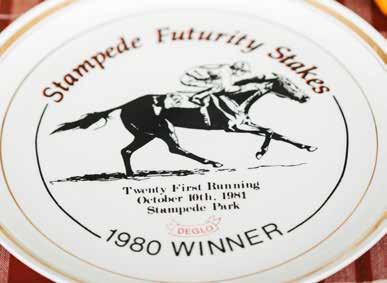
After the historic race on the Plains of Abraham, more races would be organized at that location by the soldiers in the garrisons.
Owning a race horse, even at the expense of economic ruin, was a status symbol many could not ignore, especially among the French Canadian population. The sport of horse racing seemed to take precedence over all other sports, and newspapers thrived on it.
The Quebec Turf Club was initialized in 1789. By the 1830s racing was popular in both Upper (Quebec) and Lower Canada (Ontario), often arranged by officers in the military. In order to gain better horses, both for the purposes of racing and soldiering, better breeding was fundamental.
What better way to encourage the development of horse breeding in Canada, than to offer a Royal Prize to the winner of a prestigious horse race? However, in order to do, one would require the sponsorship and endorsement of the reigning monarchy.
The first Royal race to be held was in honour of King William IV, the reigning monarch between 1830 and 1837. It was the inaugural running of a royal sponsored purse of 100 guineas. The race was restricted to horses bred in Lower Canada (Quebec) and pre-dated the continuous running of the
Horse racing between eastern and western Canada began to converge in the 1930s, driven by the establishment of major western racing circuits and the expansion of the Canadian Derby.
In 1930, R. James Speers established major racing in the west with the development of the Manitoba Stakes, which would become the Canadian Derby at Polo Park in Winnipeg. By 1936, that event was opened to three-year-olds foaled anywhere in the Dominion of Canada. When Goldlure, the King’s Plate winner in Toronto, traveled 1,300 miles by rail to win the Canadian Derby in Winnipeg in 1937, the two racing worlds converged. While racing had existed in both regions for centuries, regular competition of horses in both areas was primarily facilitated by the high-stake or “plate” races like the Canadian Derby. Moving further west, informal horse racing already had
The only way to obtain these limited edition Hycroft China Company plates was to attend the brunch held on race day, or buy it at the gift shop. Attending the brunch ensured you had both a good start to race day and included the plate for the sum of $35.
IN ITS INAUGURAL RUNNING OF THE STAMPEDE FUTURITY STAKES, SEPTEMBER 2, 1962, ONLY 258 PLATES WERE ORDERED.
Queen’s Plate in Upper Canada. In 1859 horses from Upper Canada were eligible to complete, and the rivalry was intense.
Consistent with that rivalry, the same year, Casimir Gzowski, President of the Toronto Turf Club, petitioned Sir Edmund Walker Head, then the Governor General of the Province of Canada, for a racing prize to be awarded by the monarchy to horses bred and raised, in what was then Upper Canada.
In agreement with the opportunity to encourage better breeding, Queen Victoria graciously awarded a prize of 50 guineas (21 shillings sterling,) to be awarded annually in a race to be known as the Queen’s Plate. The race was open to any horses reared in Upper Canada which had never won public money.
On June 27, 1860, a five-year old horse by the name of Don Juan, owned by Mr. White, and ridden by Charles Littlefield, would become the first recipient of the Queen’s Plate, competing in three heats over a one-mile track with his best time of 1 minute 58 seconds.
Over the years, that event would evolve to a maximum of 17 three-year-old horses racing in a single heat over 1.25 miles in the oldest continuously-run horse race in America. (Horse racing in Canada continued even through WWI, as the Red Cross held the 59th and 60th runnings of the Queen’s Plate as features of a Red Cross Horse Show to ensure the perpetuity of the race.)
its roots in Indigenous culture and ranch-based culture. The first formally organized race available to the general public is believed to have taken place in 1884, in the vicinity of Fort Calgary (Calgary, AB). With deep roots in agricultural fair tradition, racing competitions and demonstrations were often the highlight.
The Millarville Fair and Races (Millarville, AB), initiated by early settlers in a nod to the racing traditions in England and Ireland, was first held in June of 1905, making them the oldest in the province. Local ranchers raced their best horses on land donated by a local resident, Raymond DeMalherbe, rent-free for the first 35 years. Steeplechases were added in 1910.
The Calgary Stampede was in its infancy in 1912 and featured various rodeo events and horse races. By 1923, Guy Weadick introduced the chuckwagon races as a means of
Bred by Mrs. Katherine Durrand, owned by H. Buechler and trained by L.D. White the multiple stakes winner, CARELESS
WORD had 100 starts winning the Western Handicap and the Teeworth Plate Handicap twice along with the Birdcatcher, the Klondike Handicap, and the Strathcona Handicap to mention a few.
raising Stampede attendance. They too, incorporated the Thoroughbred, as an integral part of the running. In 1925, legendary Alberta jockey George Woolf of Seabiscuit fame, rode in his first major organized race at the Calgary Stampede.
With the advent of chuckwagon racing, the horse racing histories of the Millarville Fair and the chuckwagons of the Stampede represented two distinct, yet solidly connected,
In the fall of 1961, The Calgary Stampede and Exhibition inaugurated the Calgary Stampede Futurity Stakes, as a premier fall event for two-year-old Thoroughbreds. With a sizeable purse of $100,000, it attracted young horses across the country to compete annually from 1961 through to 1996.
In keeping with the tradition of Royal heritage, commemorative plates were introduced and produced by the Hycroft China Company out of Medicine Hat, Alberta. The factory, initially founded as Medicine Hat Potteries Ltd. was established in 1937-1938 and in itself, was a significant part of western Canadian industrial heritage. The evolution of the Hycroft China Company offered more refined and decorated products than its competitor Medalta Potteries, and was a compelling choice to supply the limited-edition mementos celebrating the annual Stampede Futurity Stakes horse race.
Recognized for their affiliation with Alberta-bred Thoroughbreds, all of the Hycroft plates were produced on a 10.5 inch, flat, rimless concave plate with a distinctive 22K gold trim. Each plate was intended to feature the winning horse and jockey from the prior year, however, in the inaugural running, there was, of course no winner, so the plate featured a green wreath in the shape of a horseshoe.
Subsequent plates depicted the name and image of the winning horse sometimes with the jockey, from the previous year, with the number and dates of the running. The plate was generally white with a shaded band around the perimeter, and the horse was imaged in black or brown.
The only way to obtain a plate was to attend the brunch held on race day, or buy it at the gift shop. Attending the brunch ensured you had both a good start to race day and included the plate for the sum of $35.
Although the plates were limited-edition, Hycroft
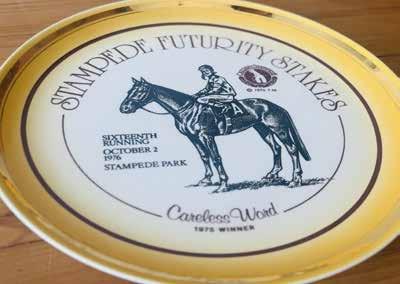
pillars of western heritage. While the Calgary Stampede evolved into a world-renowned commercial venue centered on high-stakes chuckwagon racing, the Millarville Races remained an historical community racing event, rooted in tradition, and remains the oldest in the province. Both events offered significant “purse money” to the winner.

maintained the original silk-screen patterns on hand to ensure they could reproduce them in the case of breakage.
Before producing the actual plate, the Hycroft China Company designed and arranged five or six different layouts to allow the Calgary Stampede to review them to make their selection. Over the years it has been noted that there are few samples of multiple plates for a given year, suggesting perhaps that some may have been part of the unofficial samples submitted, which simply were not returned to Hycroft during production.
Depending on the popularity of the Futurity Stakes at the time, Hycroft produced numbers ranging from 250 to 500 plates on average. Numbers increased substantially in 1971, featuring Brandy Magic and 1972 depicting Madly Magic, this being the 60th Anniversary – Diamond Jubilee of the Calgary Stampede. Based on sales of $24,500 in 1971, today’s equivalent would be almost $200,000 in plate merchandising!
Over the first 24 years during which Hycroft produced the plates, a number of artists were commissioned, including an Alberta/Arizona artist by the name of Sandra (Leavitt) Hayes. Well-loved for her warm and caring personality, Hayes designed several of the Stampede Futurity plates.
Passing in 2024, Hayes has left a legacy of her art and friendships in the racing world.
Several of the plates feature two images, some of the horse, and the horse and jockey, and some with the First and Second Division winners.
The 1963 Futurity Plate, Third Running, depicts two winners from 1962, Sky Spark in the First Division and Brother Leo (Second Division). Based on records from Hycroft, between 1961 and 1975, at least three of the races listed two horses, noting first and second division winners.
Ultimately, the plate is the symbol of victory, the race to the finish line, and the glory of the win.
There are two kinds of people who go on a family beach trail ride in Galveston, TX.
The ones who lean back in the saddle, let the salty breeze hit their face, and think, “…this is living!”
nd then there’s me.
It started out like a postcard moment. The kind you imagine when you book the thing online: golden sand stretching for miles, waves rolling in, the rhythmic sound of hooves on packed shoreline. My kids were thrilled. My husband looked relaxed. The horses (all steady, beach-wise professionals,) knew their job better than we did.
We climbed aboard, adjusted our stirrups with varying degrees of confidence and a little help from the tour guide, and headed out in a tidy little line.
For the first stretch, I was doing great. Truly sitting tall. Smiling. Just casually horseback riding along the ocean like I’ve done in my mind’s bucket list a thousand times.
But then something caught me off-guard. I looked down at my horse’s headgear.
Now, I’m not saying I’m an expert, but I knew enough about horses to know there should be… a bit. You know – the part that goes into the horse’s mouth. The part that feels, in my mind, like a very important component of the whole steering and stopping situation.
My mount didn’t appear to have one. I blinked. Looked again. Leaned slightly to the side, as though a different angle might magically reveal it.
Nothing. No bit.
By Bronco Betty’s Friend
At this point, the soundtrack in my head shifted from peaceful beach ride to fullblown internal alarm bells.
There is no bit.
There is absolutely no bit.
How am I stopping this animal?
How has no one else noticed this?
Meanwhile, my kids had kicked into full vacation mode – laughing, trotting ahead, attempting what they believed were competitive beach races (the horses, mercifully, disagreed). My husband turned back at one point and gave me a thumbsup.
I did not return the thumbs-up. Because I was now deeply concerned that I was riding a 1,000-pound animal… essentially free-range.
I tested the reins cautiously. The horse slowed. That should have reassured me. It did not.
In my mind, this was clearly a coincidence. A fluke. A temporary alignment of the universe that could unravel at any second, sending me galloping uncontrollably into the Gulf of Mexico.
Naturally, there was only one logical course of action.
I dismounted. Right then and there. The guide raised an eyebrow. My family looked confused. I, however, remained calm.
“I think… I’ll just walk her back,” I said, trying to sound like someone who had made a thoughtful, informed decision. Not someone unraveling over imaginary horse equipment.
And so I began the long walk back. Step by step, leading my very patient horse
along the sand, scanning the ground like a detective in a crime scene drama.
Obviously the bit had fallen out somewhere, along miles of beach.
“We’ll find it,” I told myself. “We have to find it. This feels like something they’ll charge me for.”
Behind me, the sounds of laughter and hoofbeats faded in and out as my family continued to enjoy what was, for them, a delightful and completely uneventful trail ride.
Ahead of me? Sand. Endless sand. No bit.
By the time I reached the little tourist booth, I had fully committed to the narrative. I was slightly winded, mildly sunburned, and carrying the quiet dignity of someone who had just taken safety very, very seriously.
“I think,” I said carefully to the staff, “there might be a piece missing from her bridle.”
Then, gently – so gently – the manager responded. It was almost impressive: “Oh… she’s in a hackamore. Hackamores are bitless bridles.”
Just then one of the kids strolled up beside me on their mount and asked, “Why’d you walk back?”
I considered my answer. There are moments in life where you can choose honesty. And then there are moments where you simply say, “I just felt like it.”
Because sometimes, the real takeaway from a beach ride in Galveston isn’t the scenery. It’s the reminder that confidence is everything… right up until you look too closely.




The farm and ranch community are inherently proactive and aware that hazardous atmospheres exist. However, these conditions continue to remain in traditional and non-traditional workplaces and are often ignored with catastrophic results. It is the lack of training and experience for those working in a potentially explosive atmosphere that is creating the likelihood for disaster in seemingly safe environments. At CANARY, we are part of the ground-floor hazardous locations awareness planning that enables companies to ensure that their operations are functioning safely and that old and new explosion risks are properly addressed through education.
HAZARDOUS ATMOSPHERES EXIST WHERE:
• Explosive gas atmosphere is present in the air in quantities that require special precautions for the construction, installation, and use of electrical equipment
• Dusts and Grain Dusts are present in the form of clouds or layers in quantities that require special precautions for the construction, installation, and operation of electrical equipment