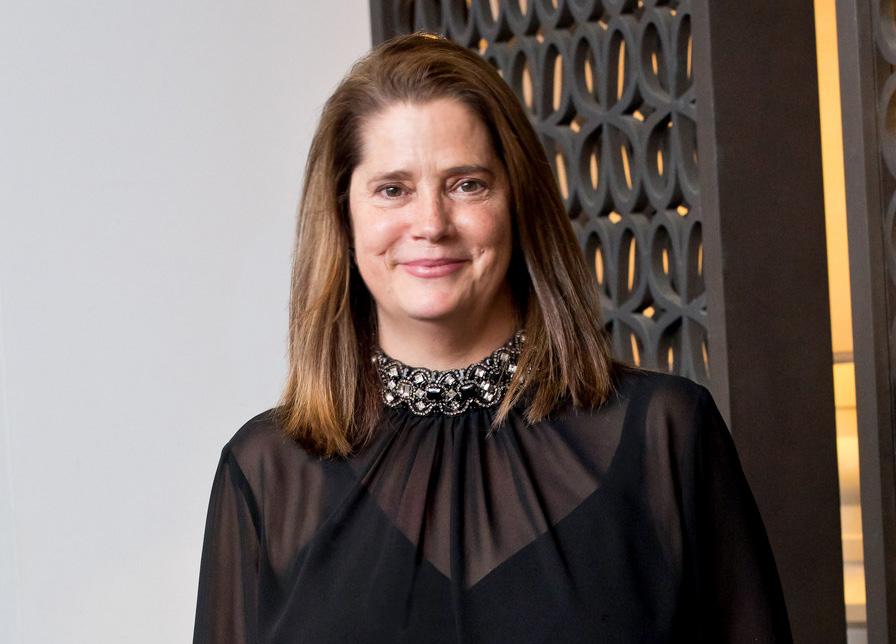
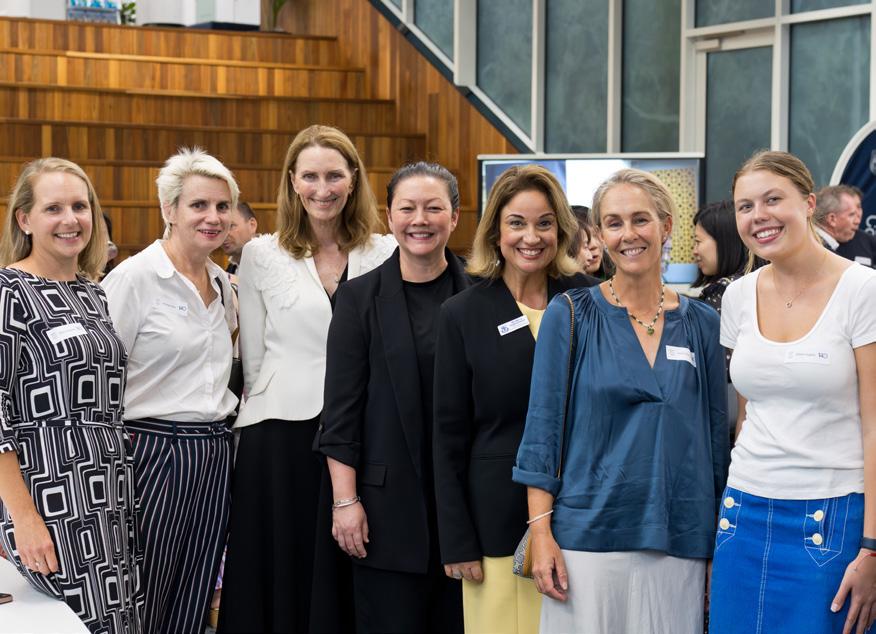
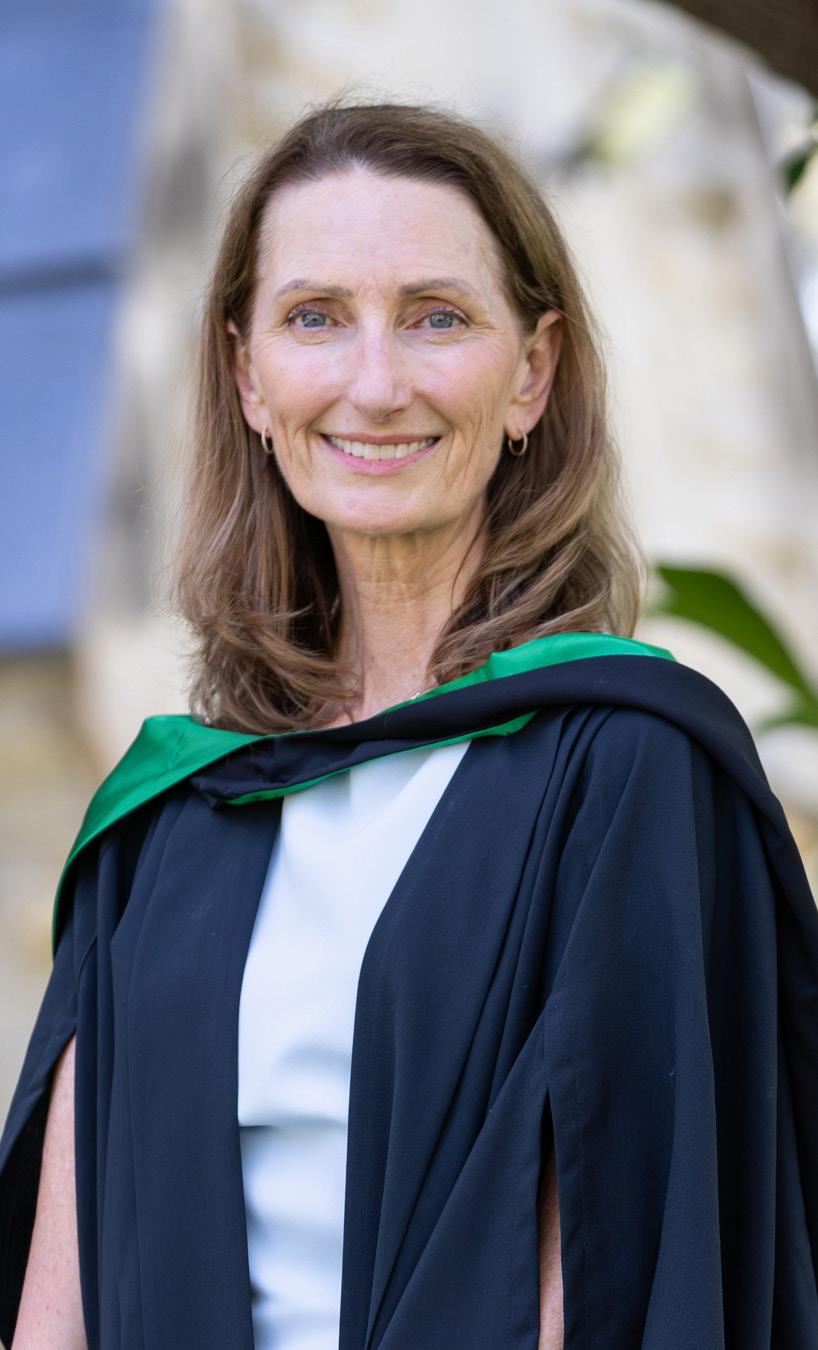
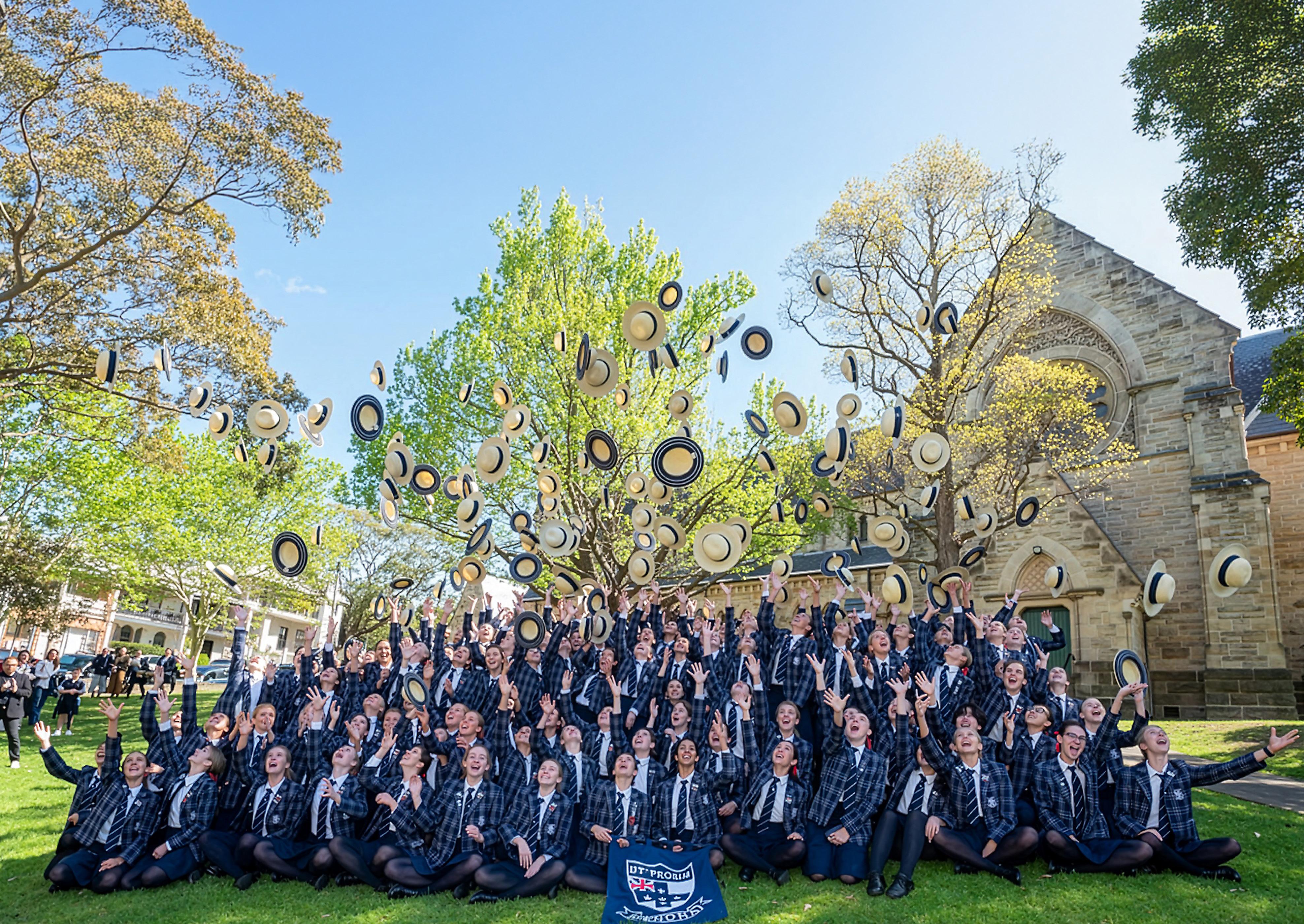
As Wenona’s first year under new leadership draws to a close, Board of Governors Chair, Ms Catherine West, reflects on a community whose strength lies in balancing tradition with innovation.
PRINCIPAL’S MESSAGE
OUR NINTH PRINCIPAL
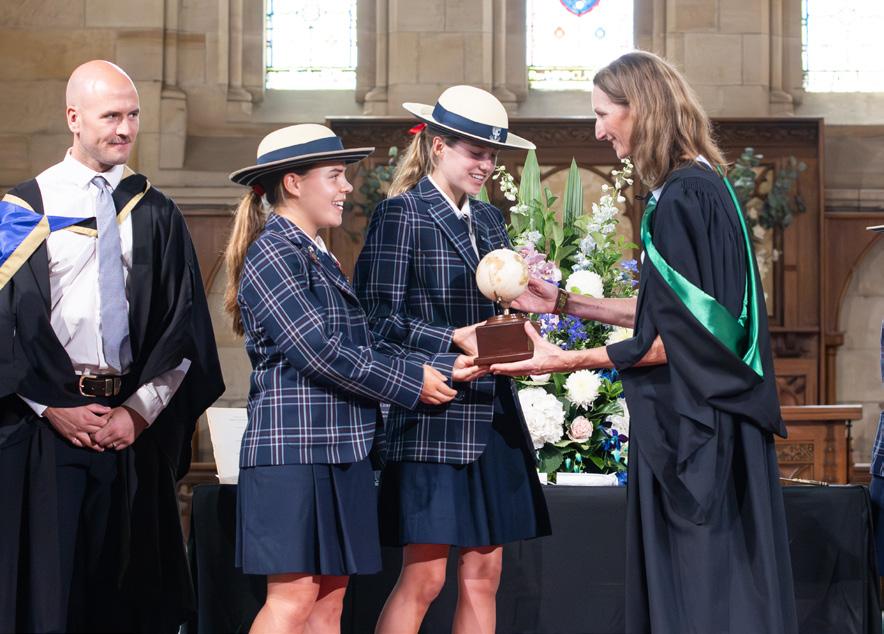
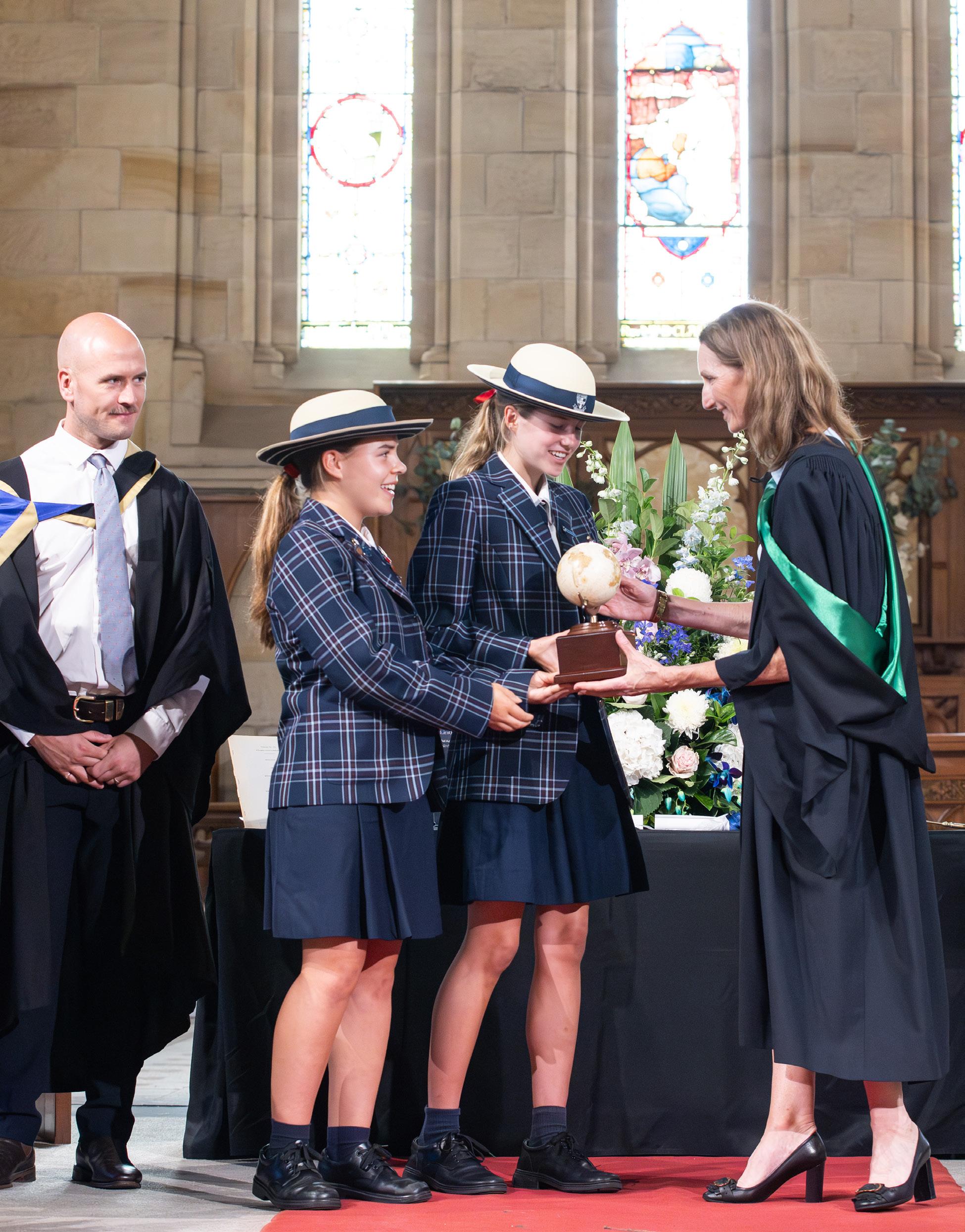
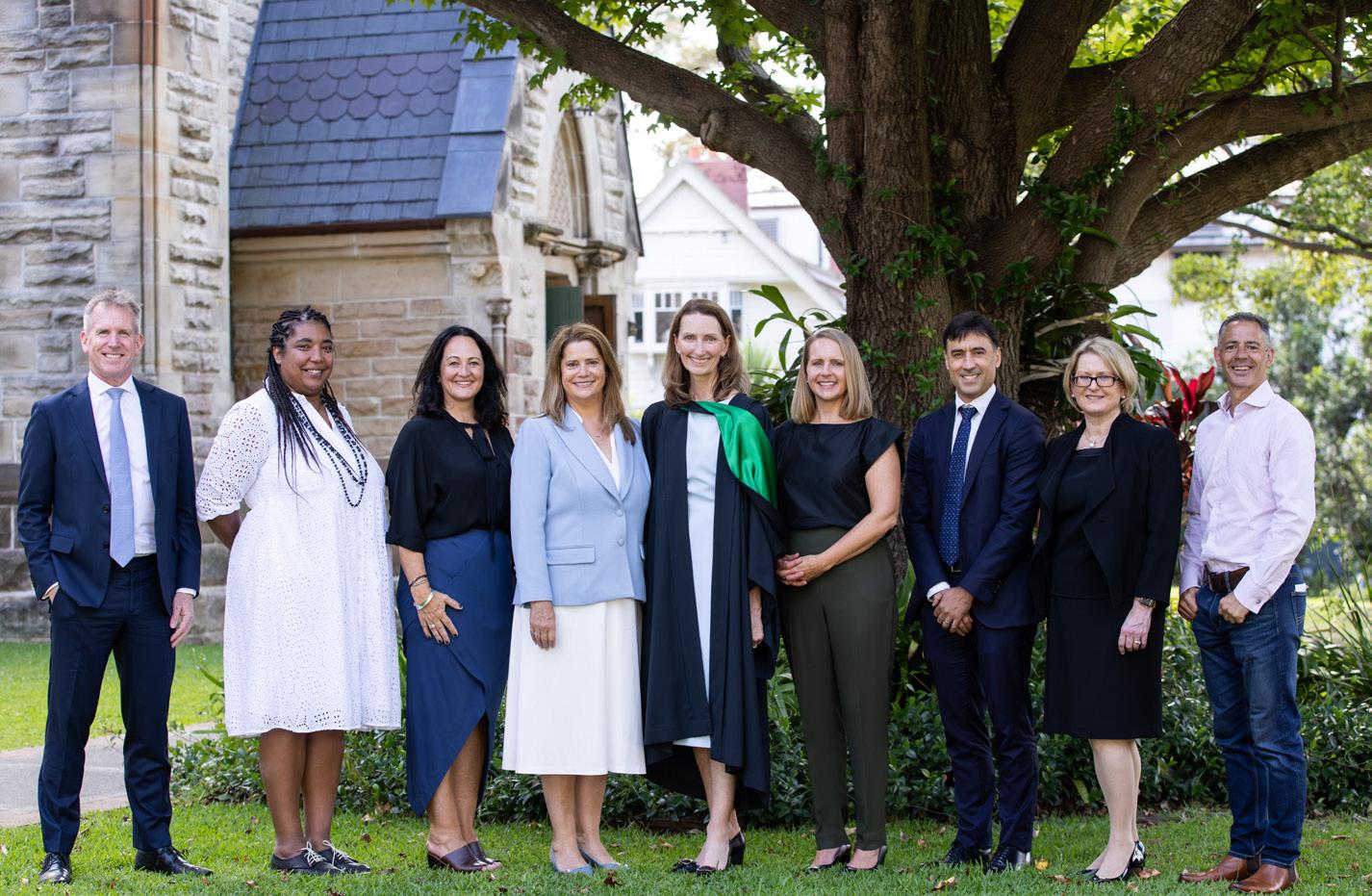
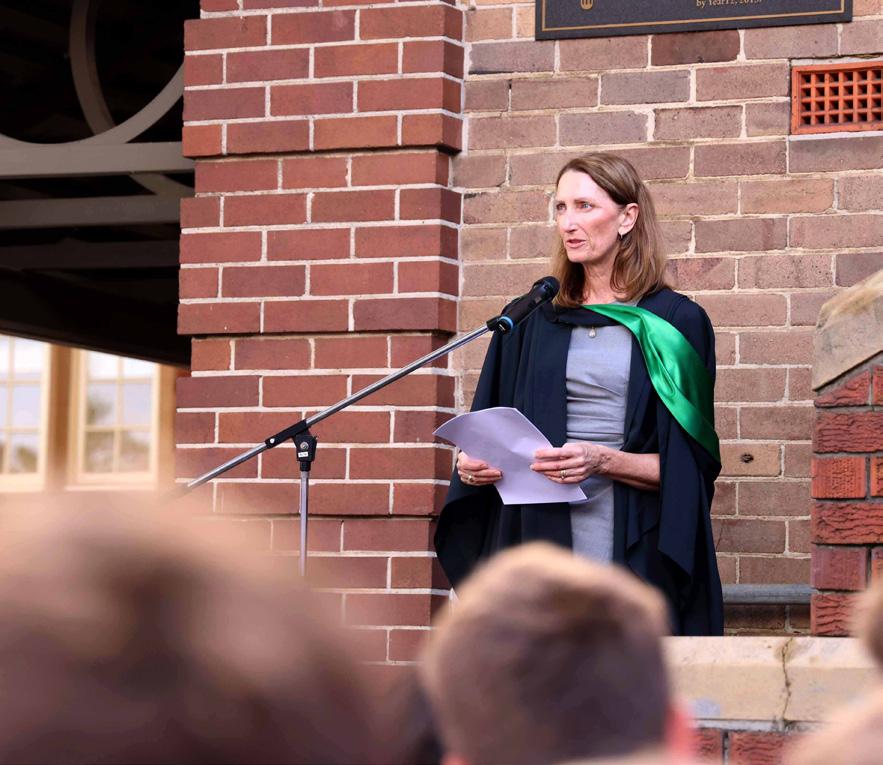
A Commissioning Service at St Thomas’ Church marked the formal beginning of Ms Linda Douglas’ tenure, with symbolic gifts representing each facet of her new responsibilities. 10 6 4
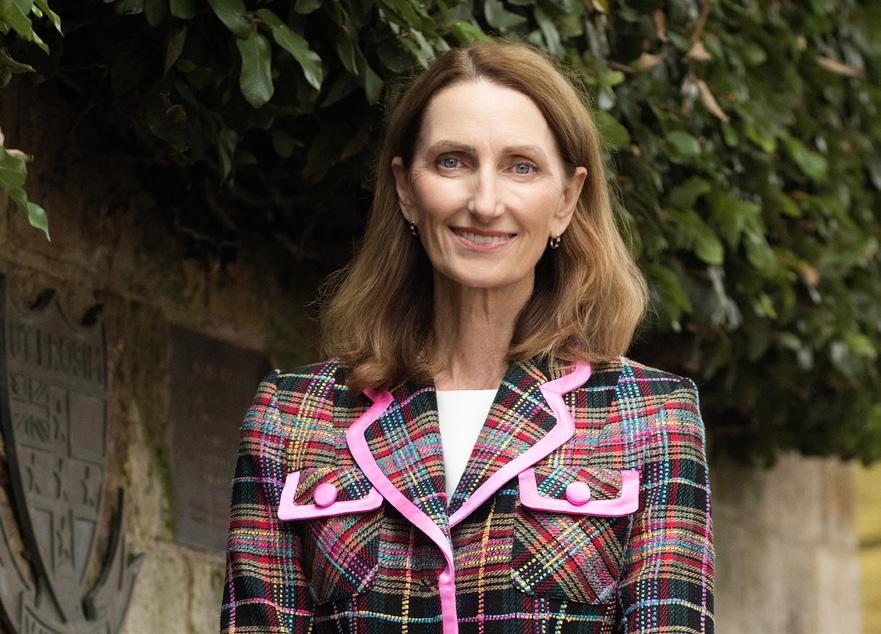
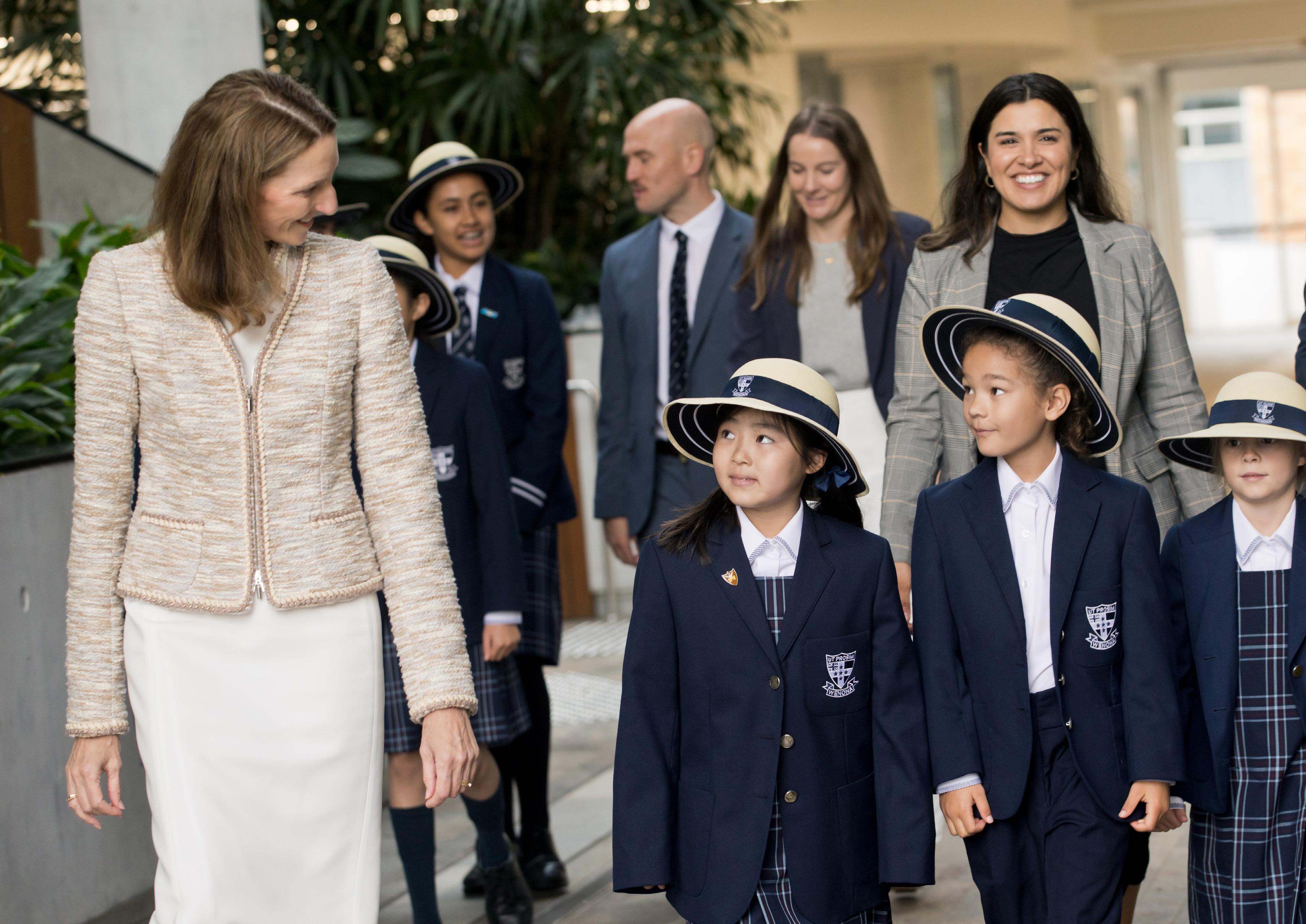
In her first year at the helm, Principal Ms Linda Douglas is celebrating a School where the most compelling voices speak from genuine engagement with issues that matter.
A RECORD YEAR
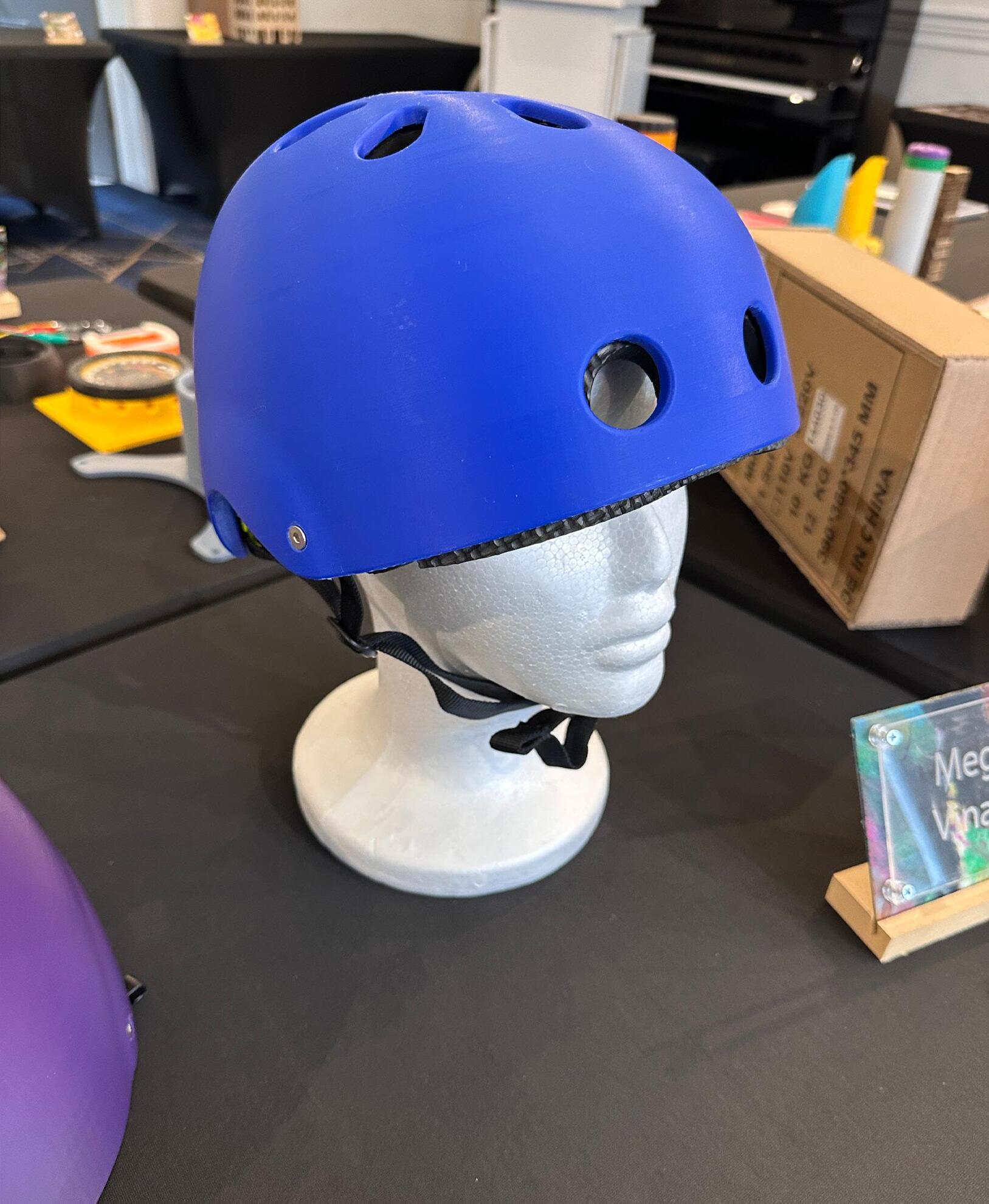
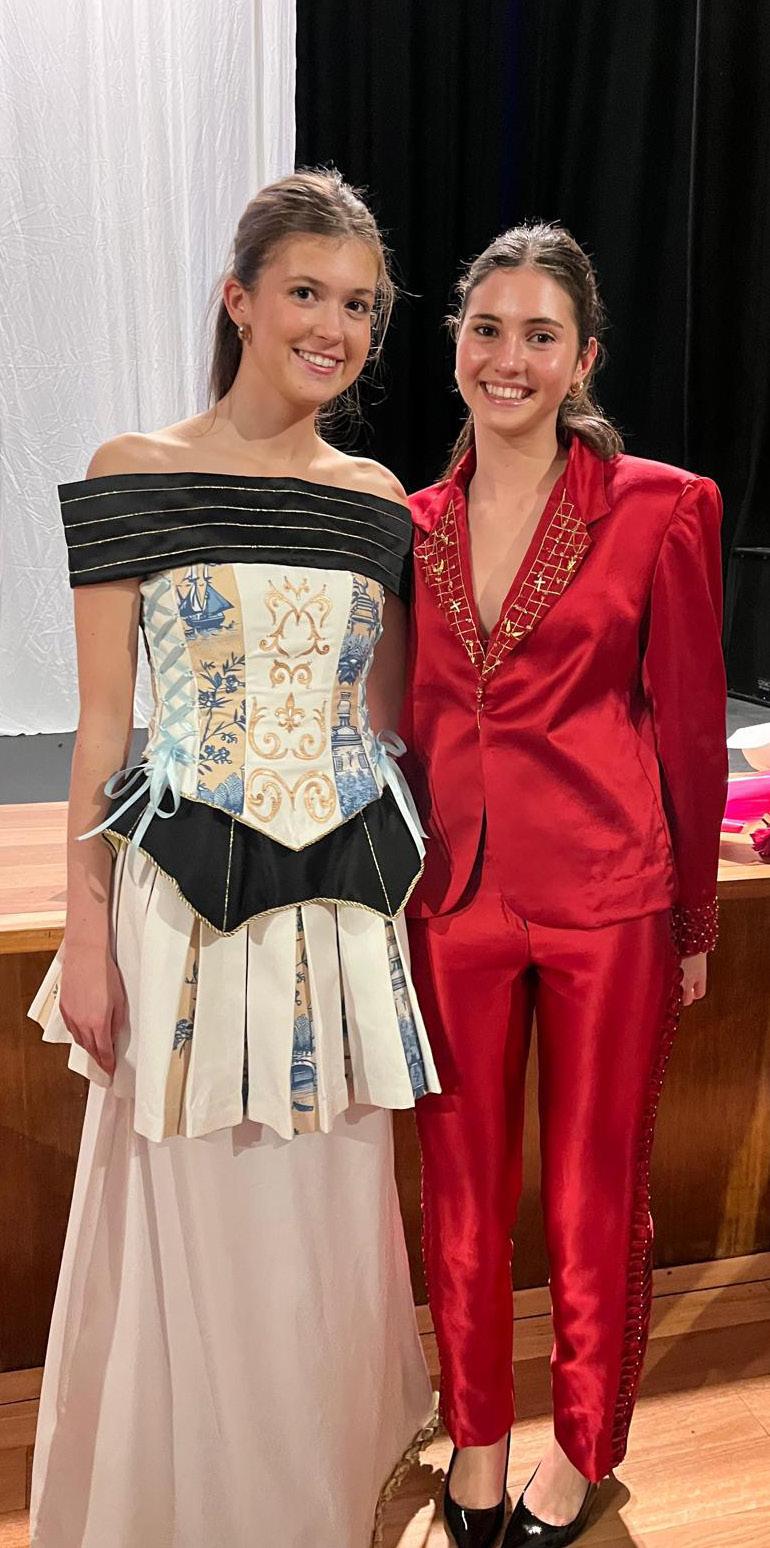
From a bike helmet engineered around cochlear implants to Renaissance-inspired portraiture, Wenona’s Class of 2025 work demonstrates sophisticated thinking and technical ambition.
FAR BEYOND THE CLASSROOM
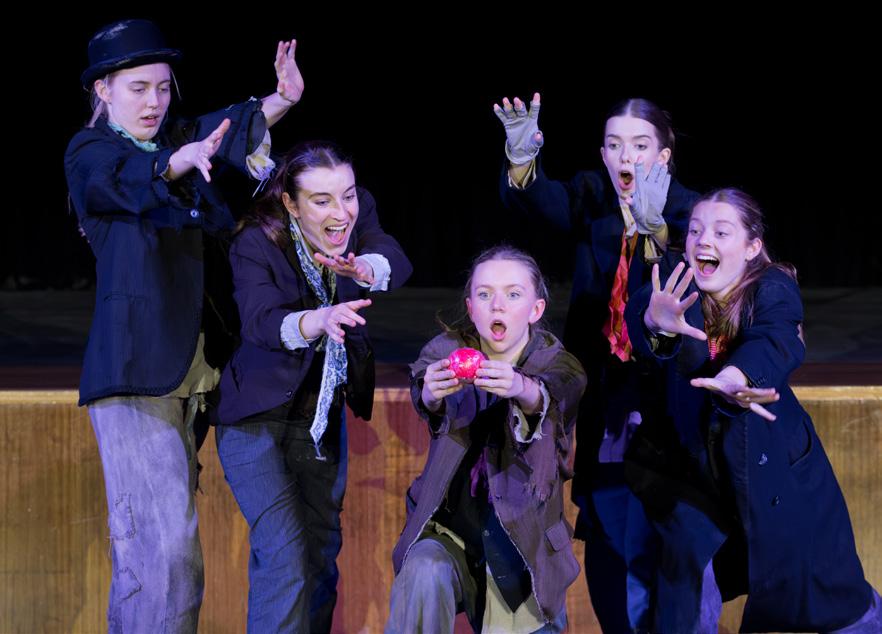
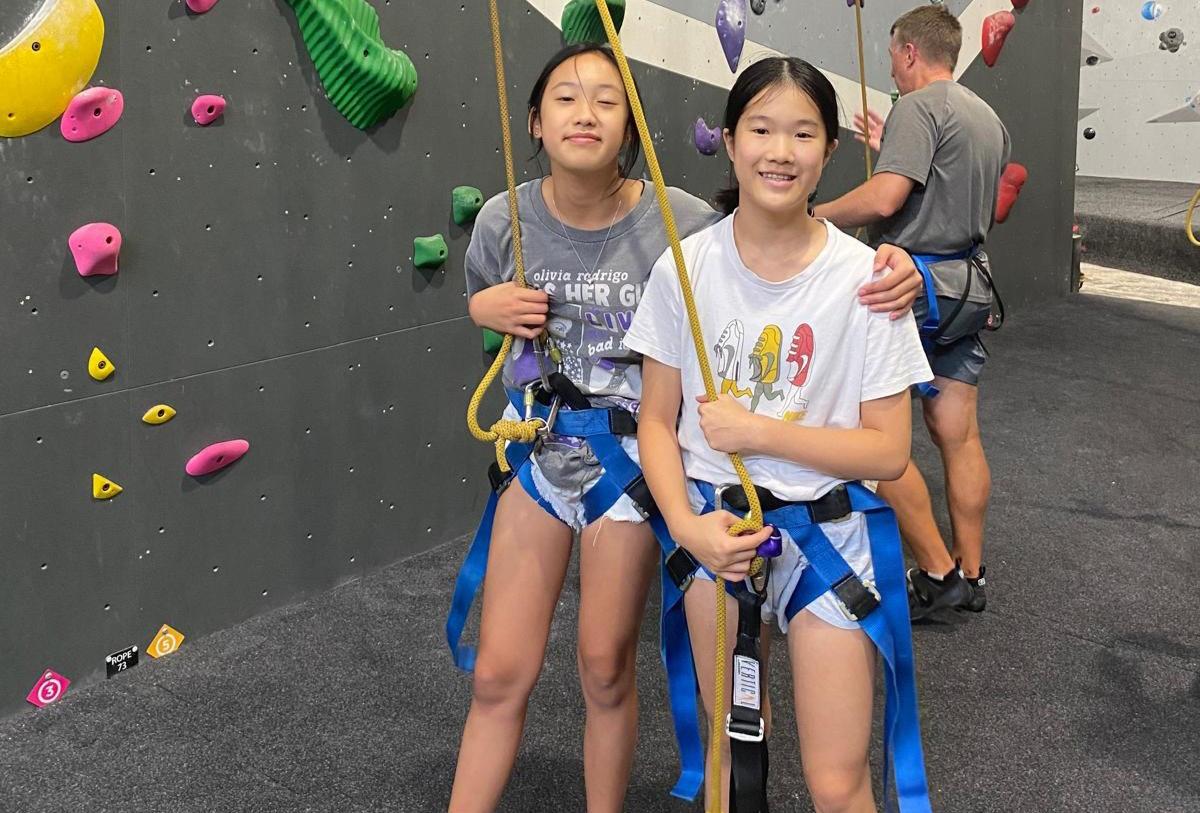
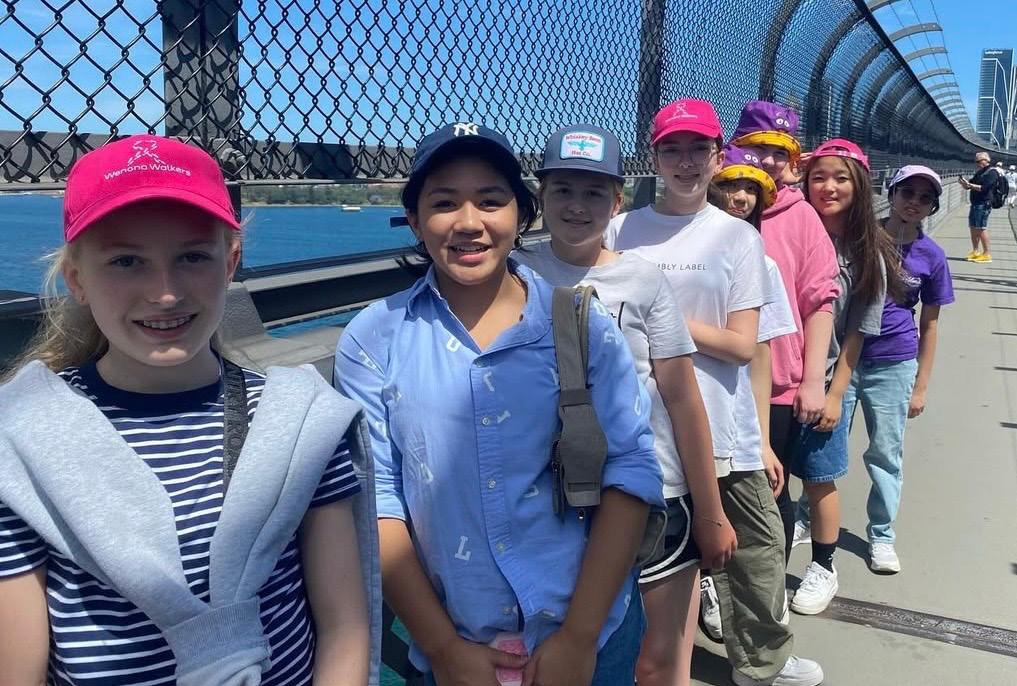
Travelling across Asia, Europe and Australia, Wenona students this year proved that the world can be the best classroom.
SHARP QUESTIONS
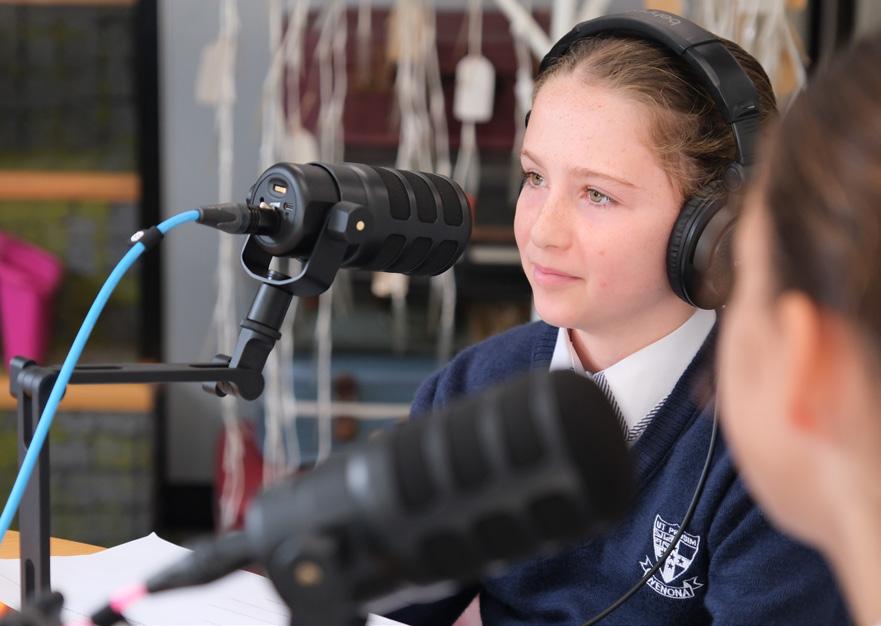
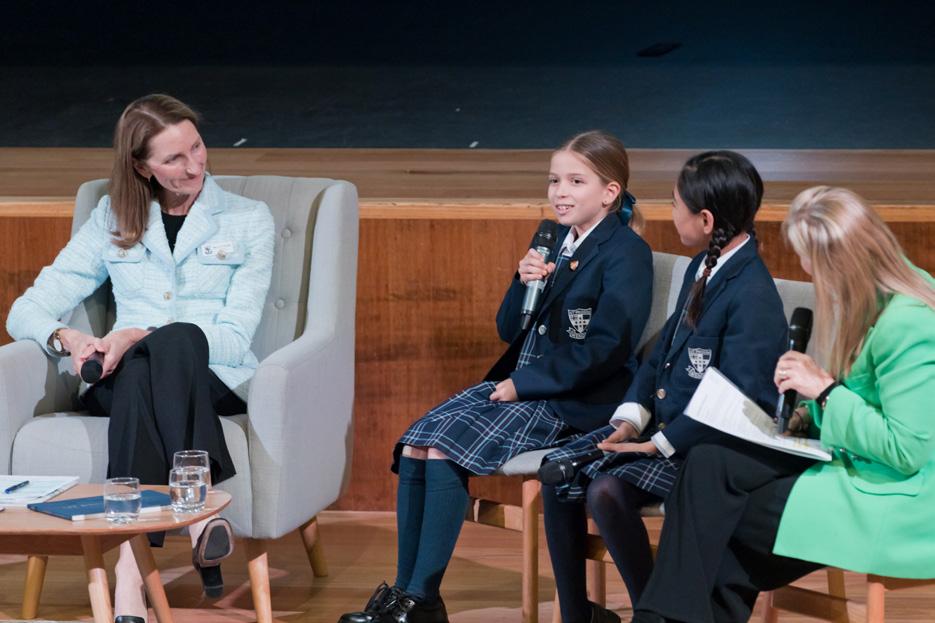
From a Year 10 Environment Captain discussing the UN’s Sustainable Development Goals to Kindergarten students proposing chocolate fountains, the Year 6 podcast series captures student voice at its most natural.
BLONDE AMBITION
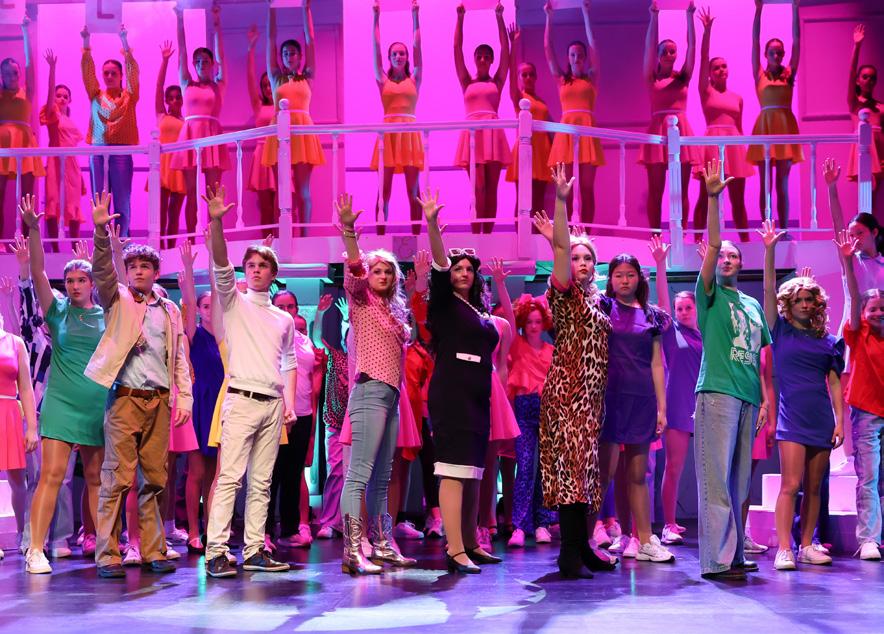
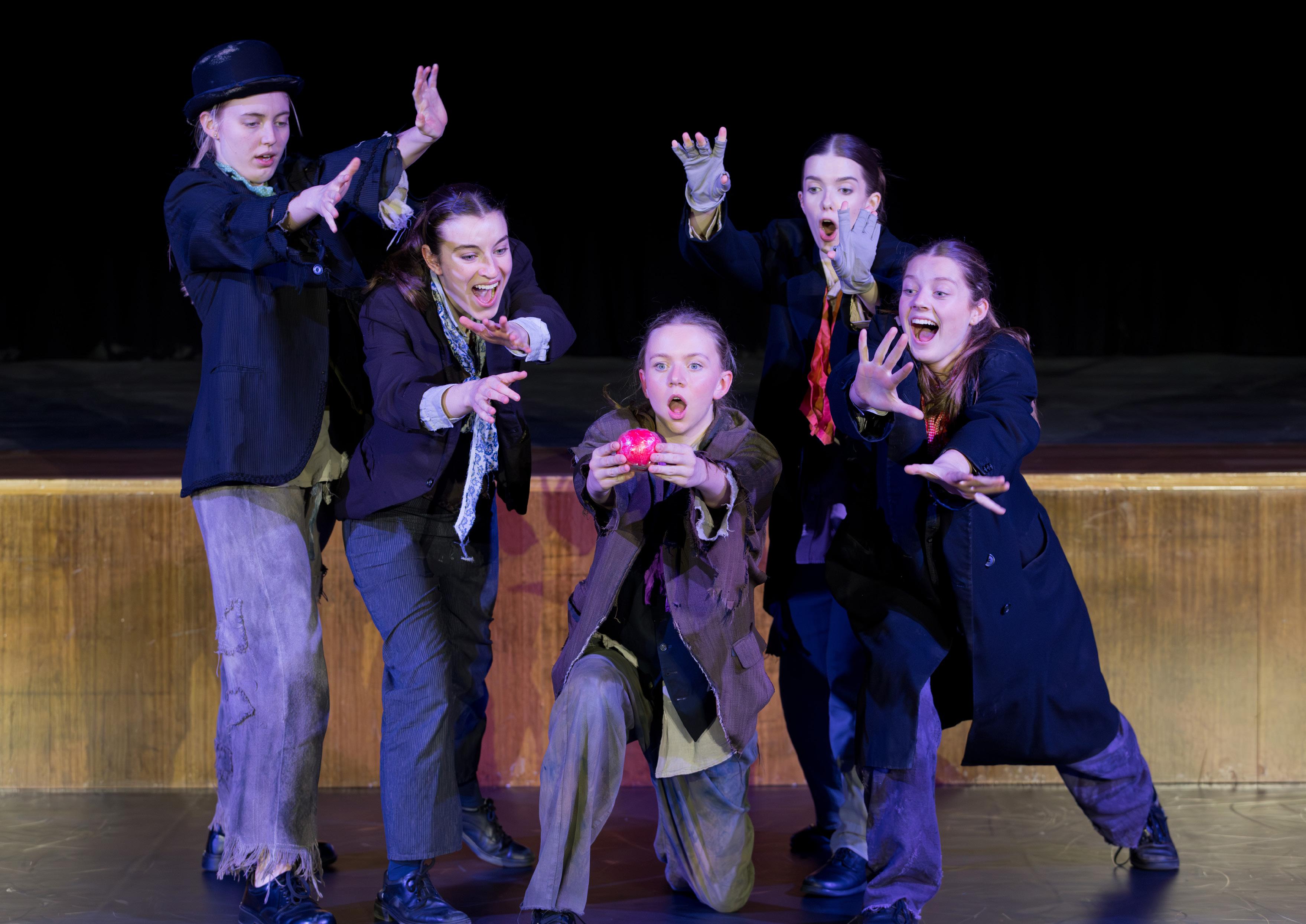
Four sold-out shows at the Concourse Theatre proved that pink is definitely the new black, as we brought the award-winning Legally Blonde the Musical to life. 36
BREAKING GROUND
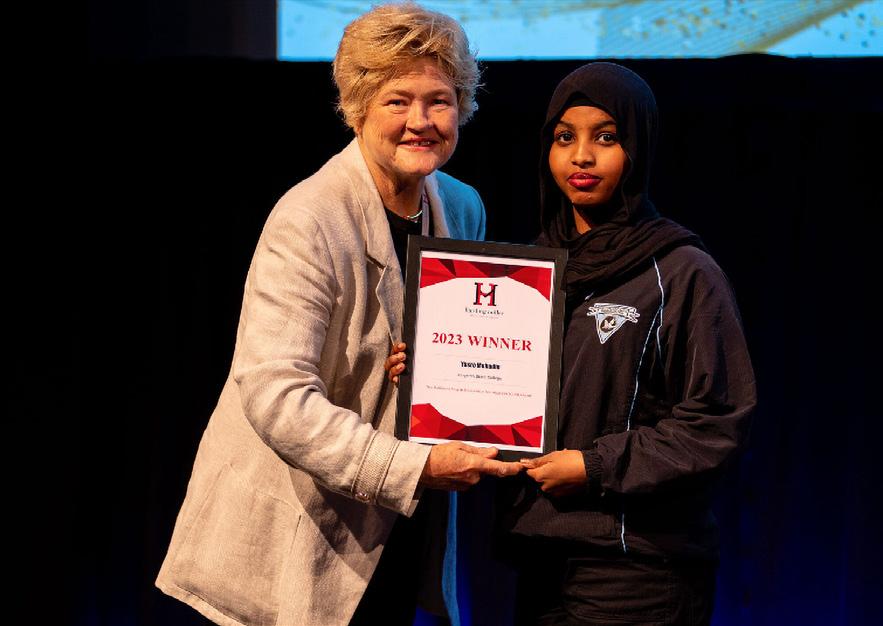
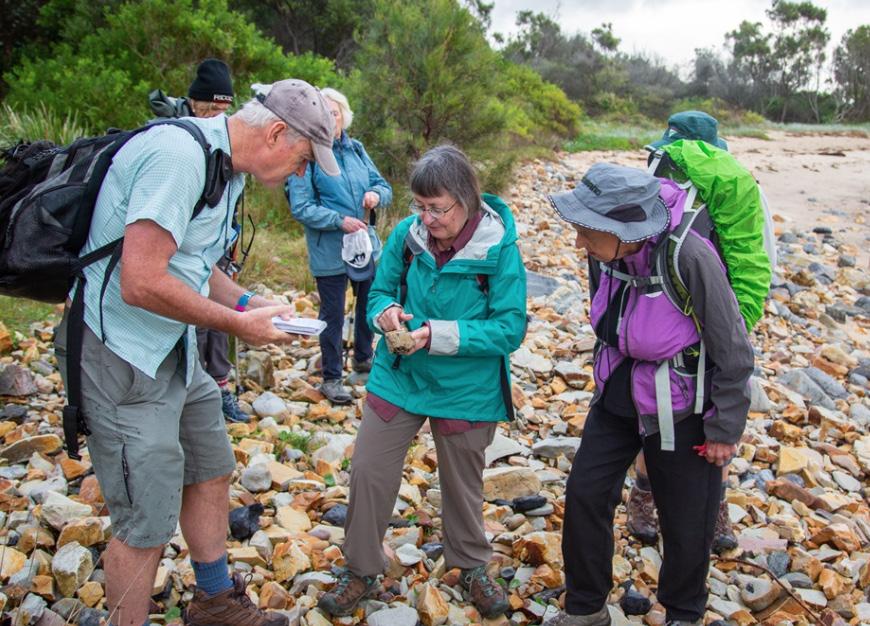
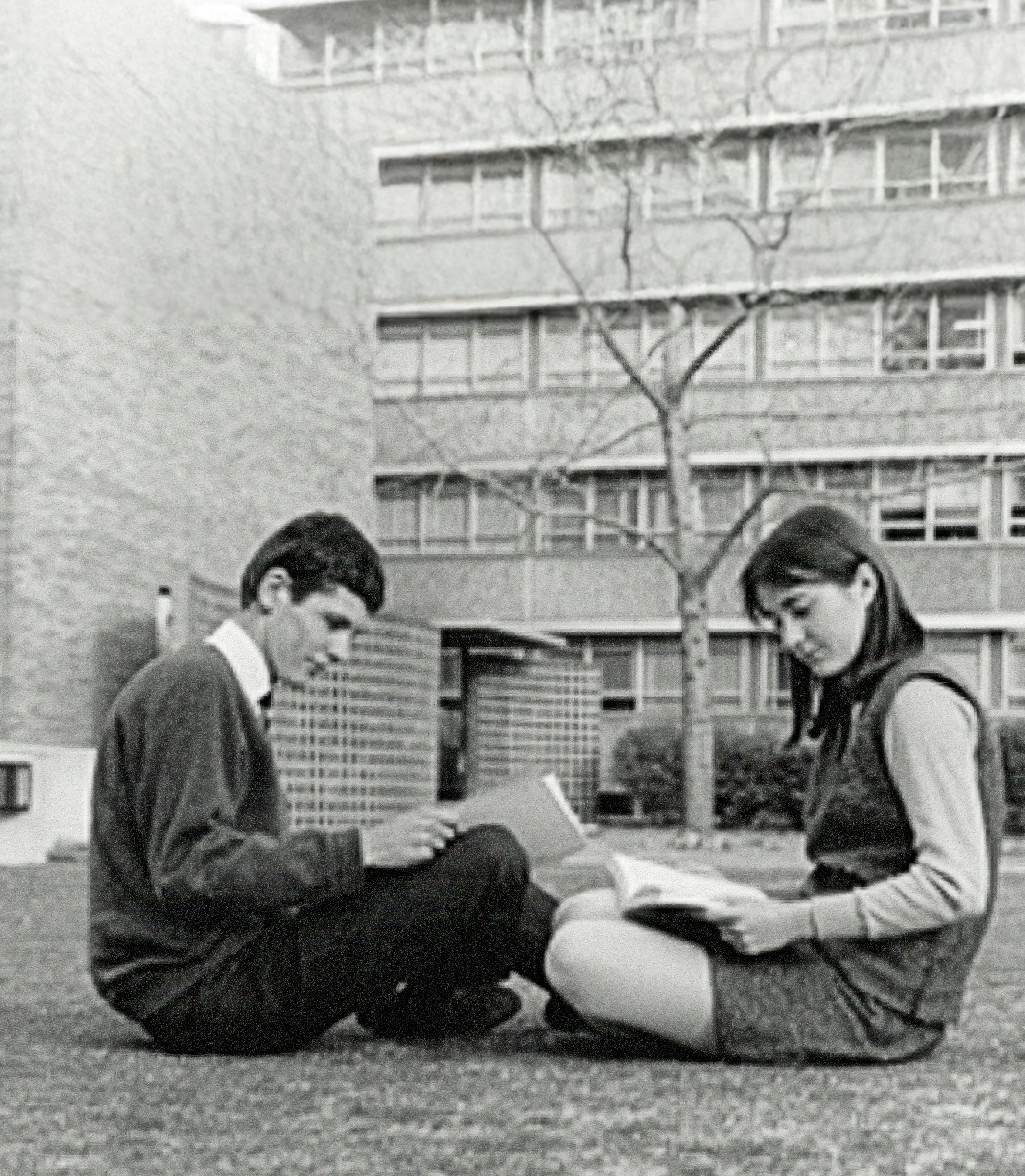
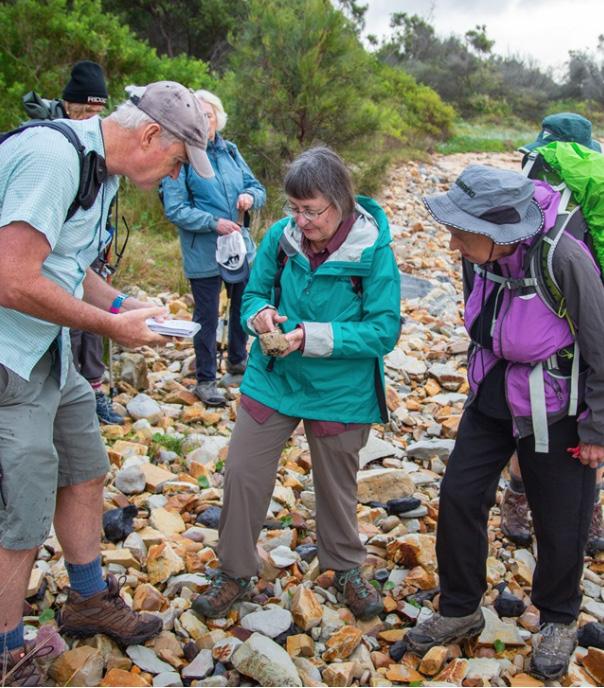
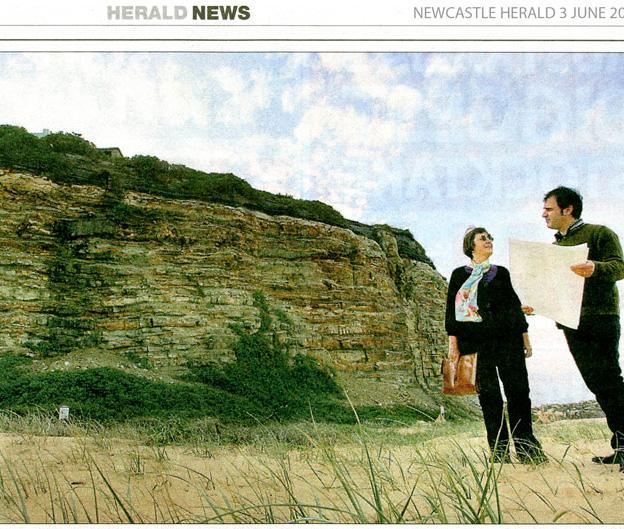
Inspired by legendary Wenona geology teacher A. James Lambeth, Roslyn Kerr (Uren, 1964) she became the first woman employed full-time in a field section of the Geological Survey of New South Wales.
IN HER FATHER’S WAKE
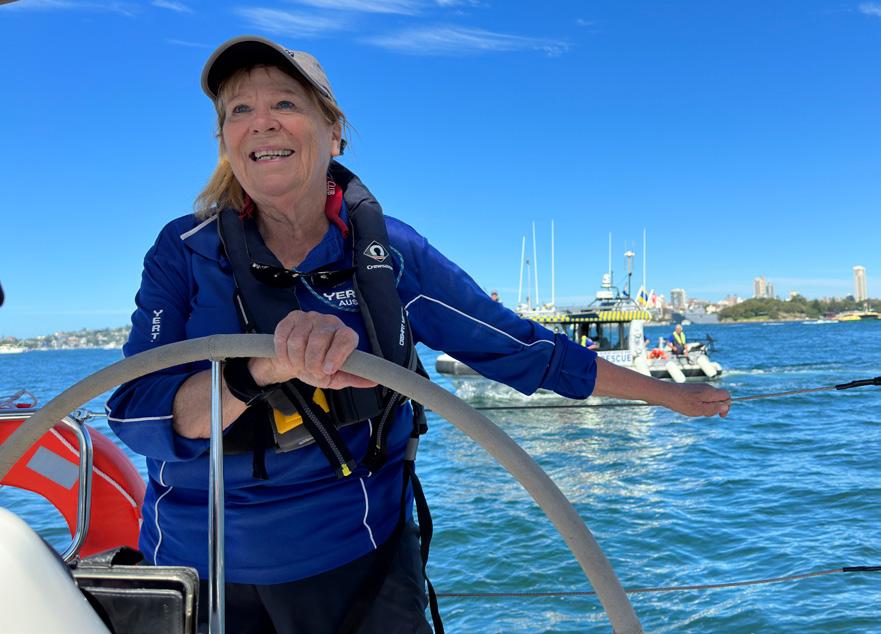
Jan Newland (1965) cheerfully admits she spent her Wenona Saturdays in detention. Decades later, the self-confessed ‘loveable rebel’ has built careers in television production and world championship sailing. 62 52 66 76 68
PASSING IT ON
When Kim Harding (1970) received her Medal of the Order of Australia, it recognised decades of philanthropic work spanning marine conservation, homelessness, domestic violence prevention and the arts.
REWRITING THE ODDS
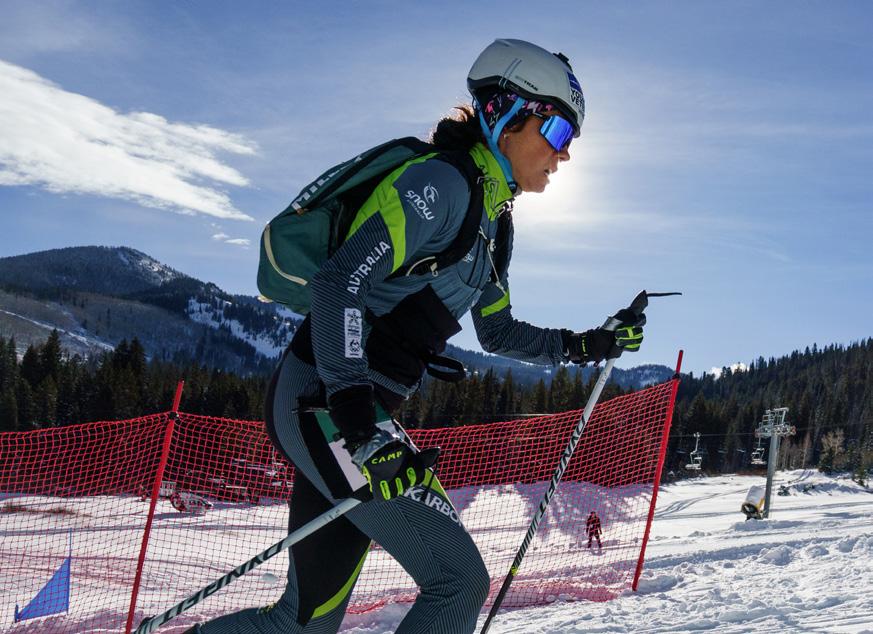
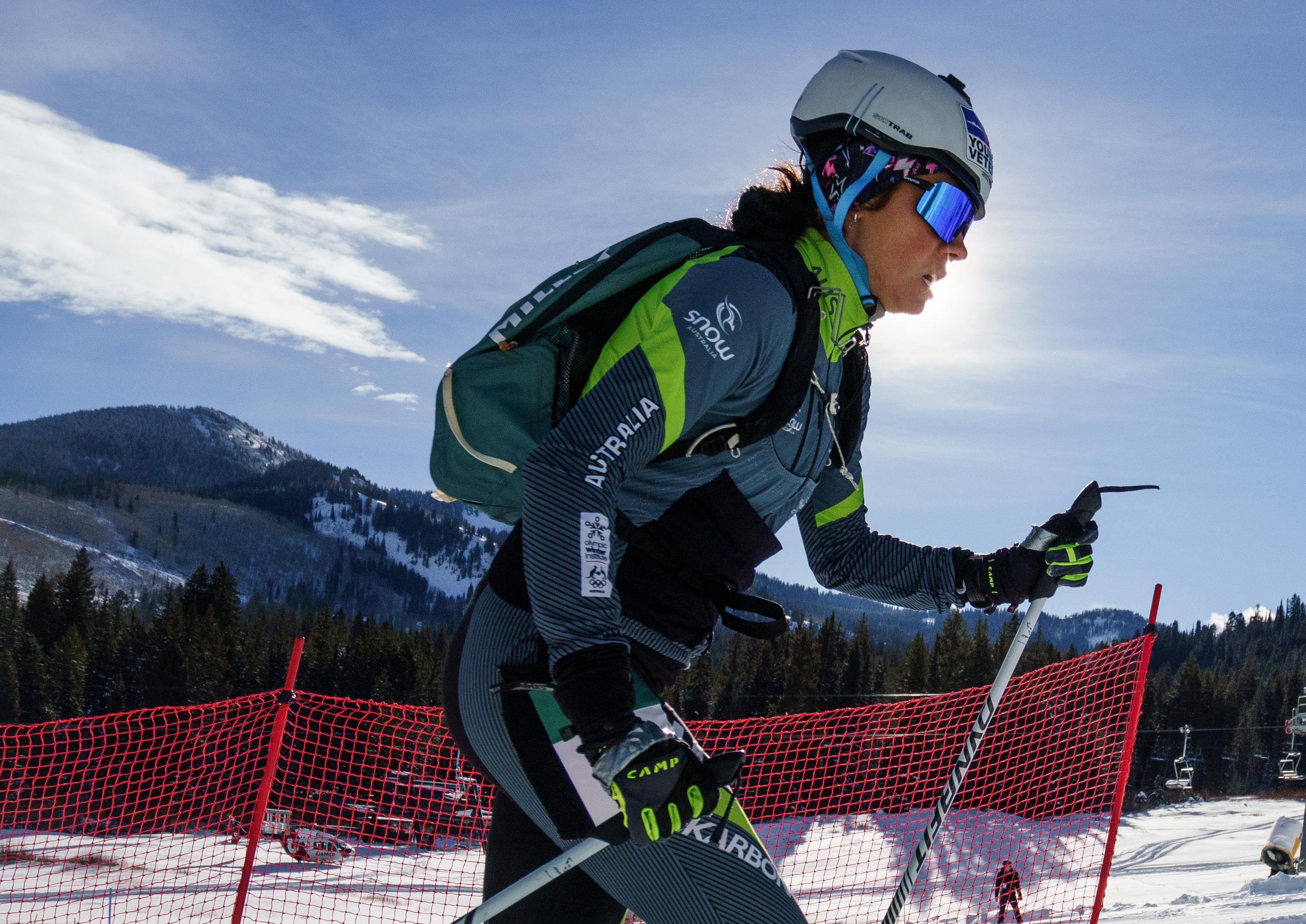
Living out of suitcases since 2019 and managing a chronic inflammatory disease, Lara Hamilton (2015) gave everything to become Australia’s first female ski mountaineering Olympian at Milano Cortina.
THE WENONA FOUNDATION
From welcoming new families to honouring the Custodians whose bequests invest in students not yet born, the Foundation’s year reflected the generosity at the heart of the Wenona community.
Chair’s Message
The pages of this publication document another year of remarkable achievement at Wenona, captured through the voices and experiences of students, staff and Alumnae whose contributions extend well beyond our campus.
In early 2025, the Board of Governors commissioned Ms Linda Douglas as Wenona’s ninth Principal.
Over the course of her first year, the Board’s confidence has been thoroughly confirmed as she has engaged fully in the life of Wenona and led our visioning for the future. Ms Douglas’ appointment as Vice President of the International Coalition of Girls’ Schools is a testament to her outstanding leadership, vision and long-standing commitment to advancing girls’ education globally. Her appointment reflects immense recognition from her international peers and reinforces Wenona’s reputation as a leader in the education of young women.
The Board takes particular pride in the dedication and expertise of all our staff, from teaching staff to professional services staff, to co-curricular staff. Notably, eight of our teaching staff received recognition from the Teachers’ Guild of New South Wales in 2025 and another was recognised by the Professional Teachers’ Council.
These awards reflect what we see consistently: educators who combine subject mastery with genuine commitment to student growth. When teachers receive external recognition for excellence, it validates the investment Wenona makes in attracting and retaining exceptional talent.
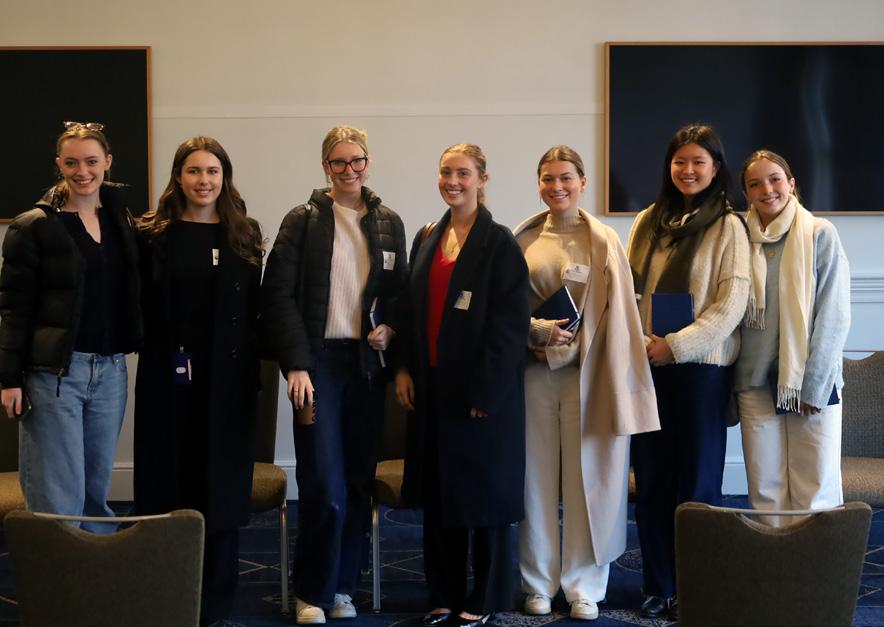
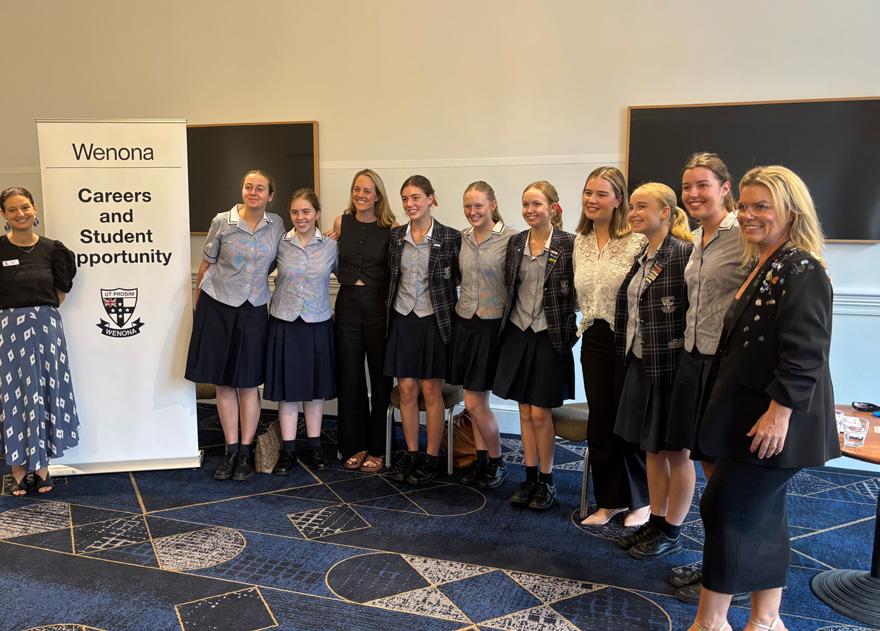
The contributions of our Alumnae through Wenona careers events and panel discussions are creating valuable networks for current students while keeping graduates connected to the School. These connections prove invaluable. When current students hear directly from women navigating diverse professional fields, they gain insights that complement their formal education. The willingness of Alumnae to return and share their expertise strengthens the intergenerational bonds that distinguish Wenona.
The Wenona Foundation’s events throughout 2025 have strengthened our capacity to provide the programs and facilities that distinguish Wenona. The generosity of our community, whether current and former families, Alumnae or friends, enables investments in teaching, technology and infrastructure that directly benefit students.
The Wenona Parents’ Association (WPA), through events including the Gala Ball and numerous morning teas, lunches and other gatherings, strengthens the community bonds that make Wenona distinctive. Education works best when families and school are genuinely aligned, and the WPA facilitates those connections.
From the perspective of the Wenona Board of Governors, one feature that emerges clearly from 2025 is Wenona’s ability to balance competing priorities. It maintains rigorous academic standards while nurturing creativity, honours tradition while embracing innovation, develops individual potential while building community strength and prepares students for their future while equipping them for life beyond academic achievement. The student leadership evident throughout this publication reflects the School’s core purpose to educate and empower girls to learn, lead and shape their world with confidence and ambition.
When young women develop the confidence to lead, advocate and contribute meaningfully to their communities, they embody the values that have sustained Wenona for generations. The development of our young women’s voice and agency remains central to our educational mission.
Ms Catherine West Chair, Board of Governors
Principal’s Message
When I was commissioned as Wenona Principal in March 2025, I spoke about the privilege of leading a school where young women find their voice and learn to use it with conviction.
Reflecting on my first year, the pages of this publication confirm what I’ve witnessed daily: our students are actively living our motto with purpose and conviction.
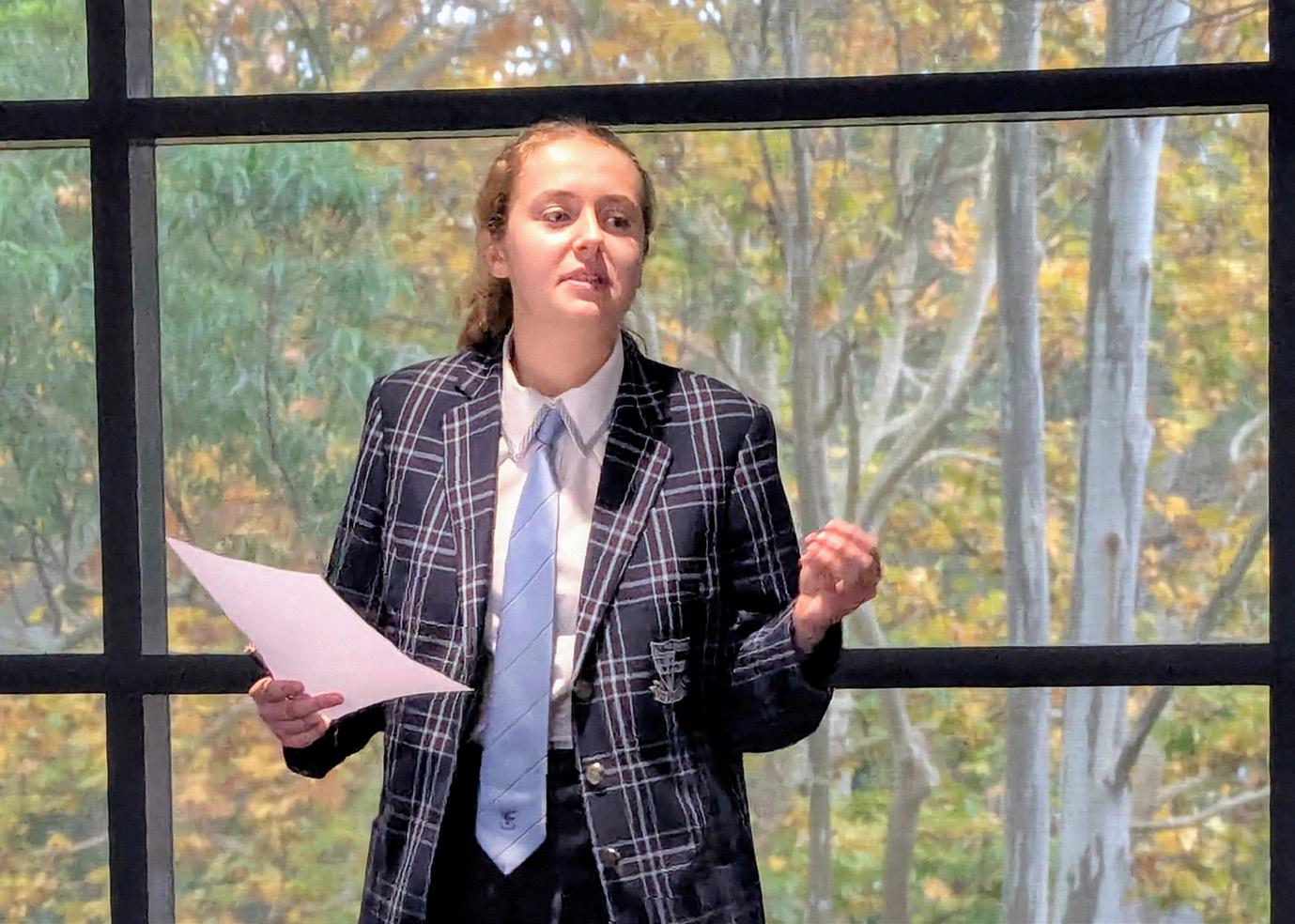
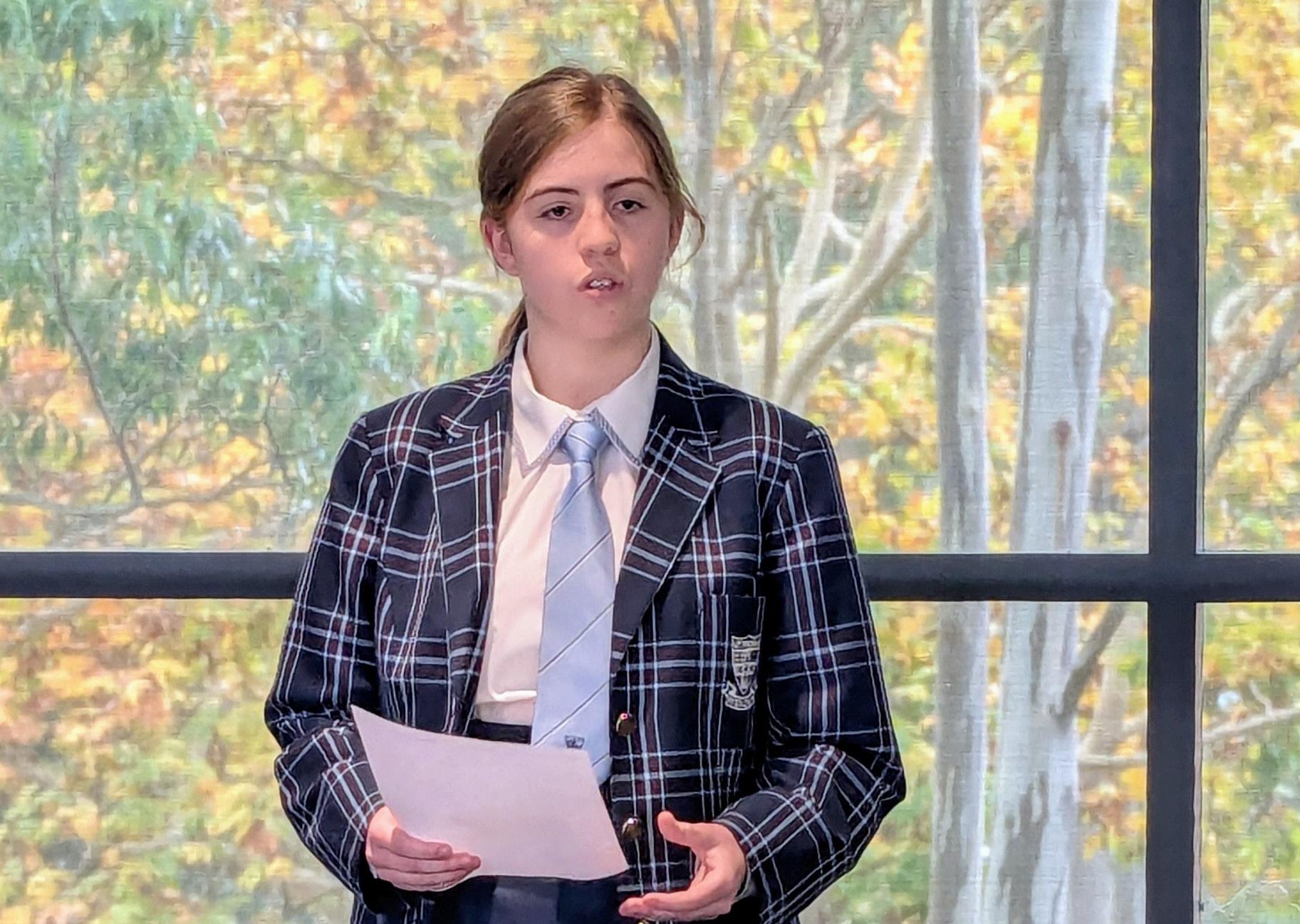
Consider Year 6 student Bella, who not only noticed the shoreline erosion near our School but researched the matter, presented this to Greenwich Council and sought action to protect marine life. Or Year 9 student Serena, one of 11 finalists in the Junior Secondary Speaking Award state final, demonstrating the kind of clear, thoughtful advocacy that strengthens communities. Throughout 2025, Wenona students have shown that the most compelling voices speak from genuine engagement with issues that matter.
The service learning experiences documented in these pages reveal how our students approach the world. In Cambodia, Vietnam and Central Australia in 2025, Wenona students did not arrive as observers or tourists. They helped to build homes, connected with communities and returned transformed by what they had learned about resilience, resourcefulness and cultural richness. These immersive experiences reflect our commitment to education that extends far beyond classroom walls.
The Class of 2025 delivered outstanding results across the board, reflecting years of dedicated teaching and a student body willing to set ambitious goals. Their achievements were particularly striking in the creative disciplines, where 55 works earned HSC Showcase nominations across subjects from Visual Arts to TAS, a testament to a culture where creative risk-taking is nurtured and admired.
The Wenona Junior School podcast captures something I value deeply: curiosity expressed through conversation. Students interviewing staff, classmates and Alumnae about topics that fascinate them creates connections across generations, reminding us that the best learning often happens when we are genuinely interested in the experiences, wisdom and knowledge of others.
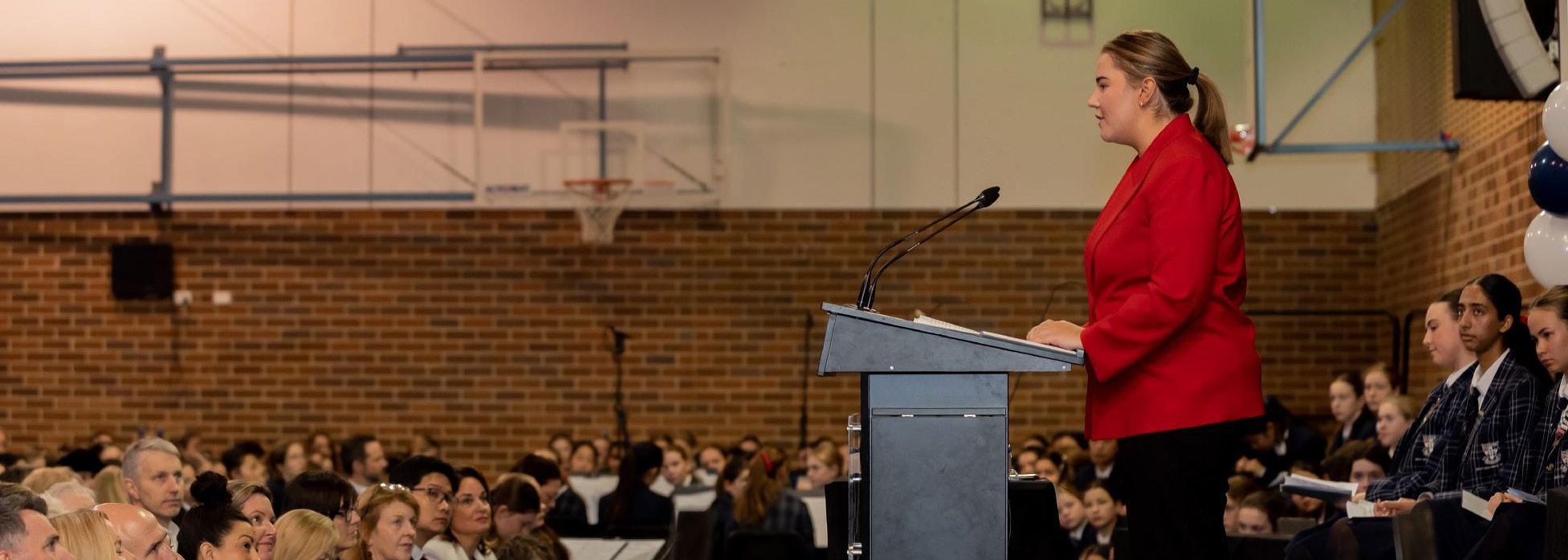
My visit with Head Prefect Zara to Shore School on International Women’s Day embodied what single-sex education at its best can offer: a space to develop confidence and conviction, then take that voice into the broader world. Zara’s speech that day reflected the sophisticated thinking I encounter regularly in our students – nuanced, purposeful and unafraid of complexity.
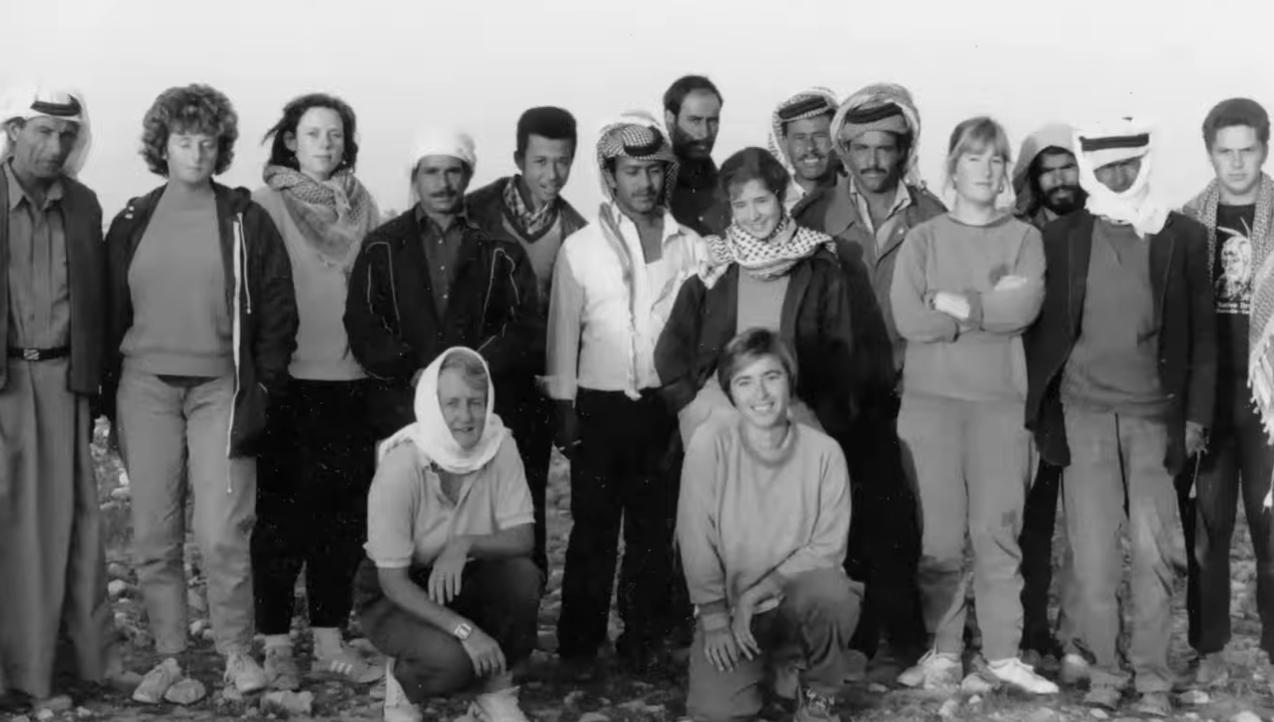
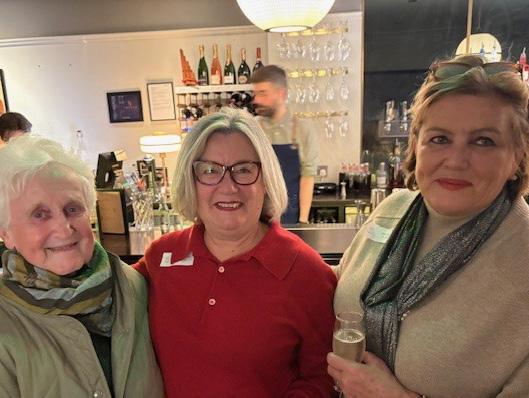
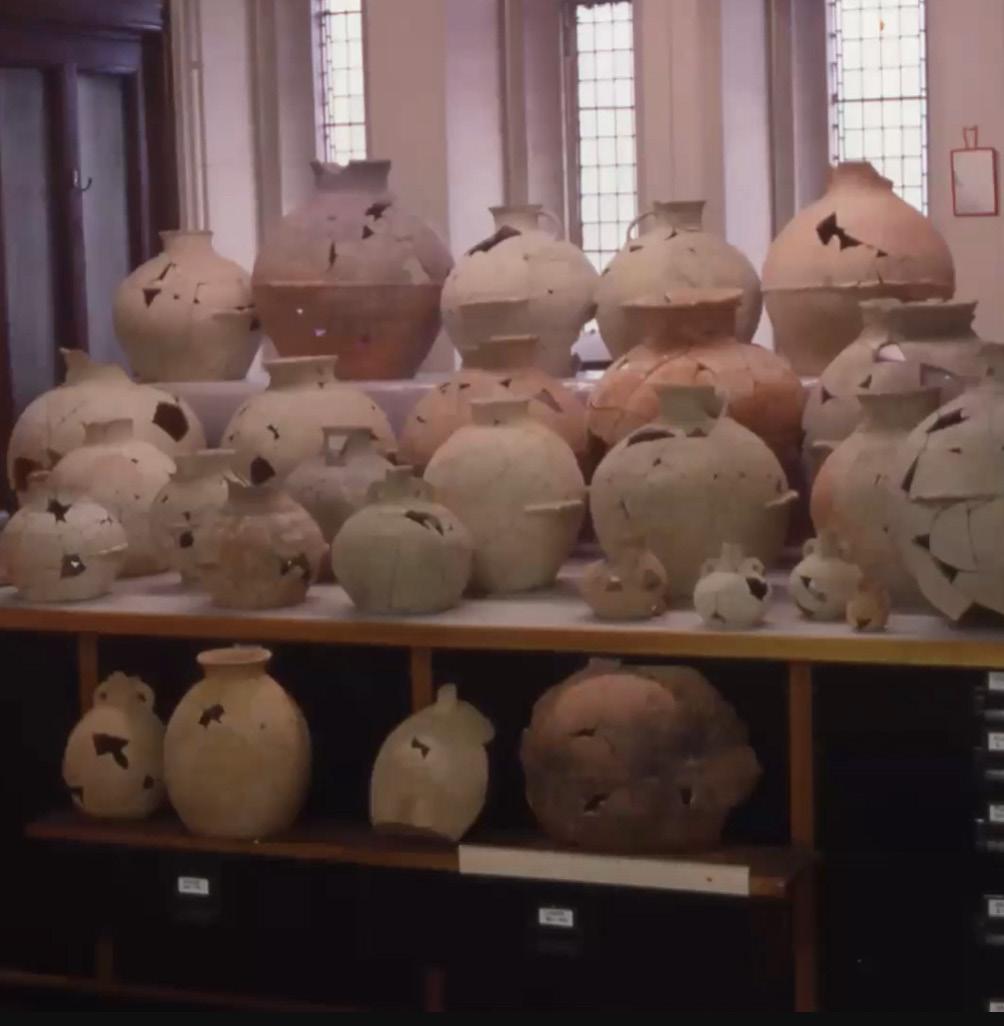
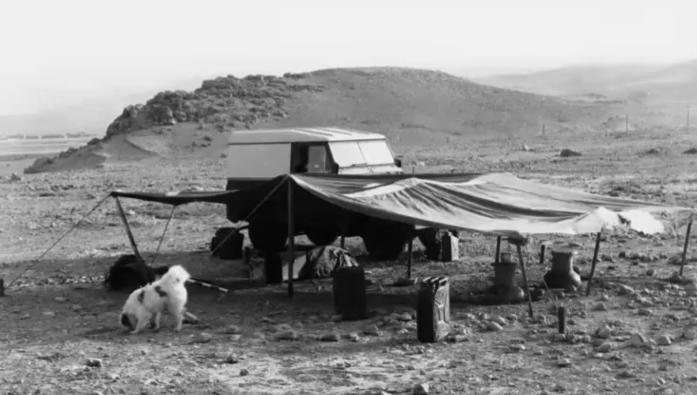
The Alumnae profiles throughout this publication demonstrate the breadth of paths Wenona women forge. From archaeology to aviation, design to dance, geology to philanthropy, these women carry forward the School’s values while shaping them to their own purposes. Jan Newland chronicling her father’s yachting legacy, Claudia Reid at the Victorian College of the Arts, Dr Kay Prag pioneering in international archaeology – each found her distinctive path.
This diversity of outcomes reflects something fundamental about our approach. We don’t produce a singular type of graduate. We support the development of individual women who understand their strengths, know their values and possess the courage to pursue work and agency that matters to them. The young women featured in this publication, whether current students or Alumnae, share a common thread: they use their education not for personal advancement alone but to contribute meaningfully to their communities. It is in this purpose that we truly see the richness of their ambition.
As I reflect on my first year at Wenona, I am struck by how naturally this School balances tradition with innovation, individual growth with collective purpose, academic excellence with creative expression. The intellectual curiosity I see daily in classrooms, the artistic ambition evident in exhibitions and performances, the passion for contribution displayed in service projects – these qualities suggest that Wenona students are well-prepared not just for university, but for lives of purpose.
I thank the Wenona community for your support throughout 2025. The trust you have placed in our students and staff enables the holistic education reflected in these pages and creates the conditions in which young women can flourish with confidence and ambition.
Ms Linda Douglas Principal, Wenona School
SCHOOL LIFE
Welcoming Wenona’s Ninth Principal
When Ms Linda Douglas walked through Wenona’s gates in January 2025, she brought with her not only decades of experience in girls’ education but a clear vision for how to honour the School’s remarkable legacy while shaping its future.
We marked the beginning of her tenure with a Commissioning Service at St Thomas’ Church, North Sydney, a ceremony that has now been followed by her first full year in the role.
The event combined formal tradition with the symbolic presentation of gifts representing the various aspects of her responsibilities. Chair of the Wenona Board of Governors, Ms Catherine West, presented Ms Douglas to the congregation, noting her commitment to academic excellence, student wellbeing, and maintaining Wenona’s values of Courage, Strength, Grace, Wisdom and Kindness.
The presentation of gifts formed the centrepiece of the ceremony. Ms West offered the Certificate of Incorporation of the Company of Wenona, acknowledging Ms Douglas’ role as Chief Executive Officer of the School. Deputy Principal (Students), Ms Elizabeth Oakley, presented the names of all current students, while Deputy Principal (Staff), Ms Nicole Timbrell, presented the names of current staff, entrusting these members of the community to the new Principal’s care.
Deputy Principal (Academics), Ms Patricia Davis, presented a book representing academic achievement and the pursuit
of knowledge. Wenona Alumna and Custodian, Ms Dianna Crebbin, together with Wenona Parents’ Association President, Ms Sharmila Soorian, then presented a Bible.
The boarding community’s gift of the School Values was presented by Head of Boarding, Ms Nonie Ayling, and Boarding Prefect, Bethany. A globe, representing Wenona’s vision as a global learning community, came from Head of Senior College, Ms Santina Restuccia, Acting Head of Upper School, Mr Ross Millar, and students Eloise and Emma.
The final presentation came from Middle and Junior Schools, with Head of Middle School, Ms Emma Poole, Junior School representative, Ms Amy Webb, and students Ciara and Audrey presenting a candle, symbolising the strength of Wenona’s motto, Ut Prosim, that I may serve.
The Wenona Combined Choir, conducted by Ms Kim Lemon and accompanied by Mr Michael Curtain, performed Festival Sanctus.
In accepting these gifts, Ms Douglas pledged her commitment to the School’s motto, values, vision, mission and purpose, promising to care for staff and students and to embrace the global community.
A Global Voice for Girls’ Education
Ms Douglas’ leadership extends beyond Wenona’s gates. She has been appointed Vice President of the International Coalition of Girls’ Schools (ICGS), the leading global advocate for girls’ schools, which connects educational leaders worldwide to advance best practice in girls’ education.
Chair of the Wenona Board of Governors, Ms Catherine West, described the appointment as extraordinary, noting that it reflects recognition of Ms Douglas’ commitment to advancing girls’ education globally and reinforces Wenona’s position in international educational leadership.
Championing Female Voices
Wenona Marks International Women’s Day (IWD) Across All Year Levels
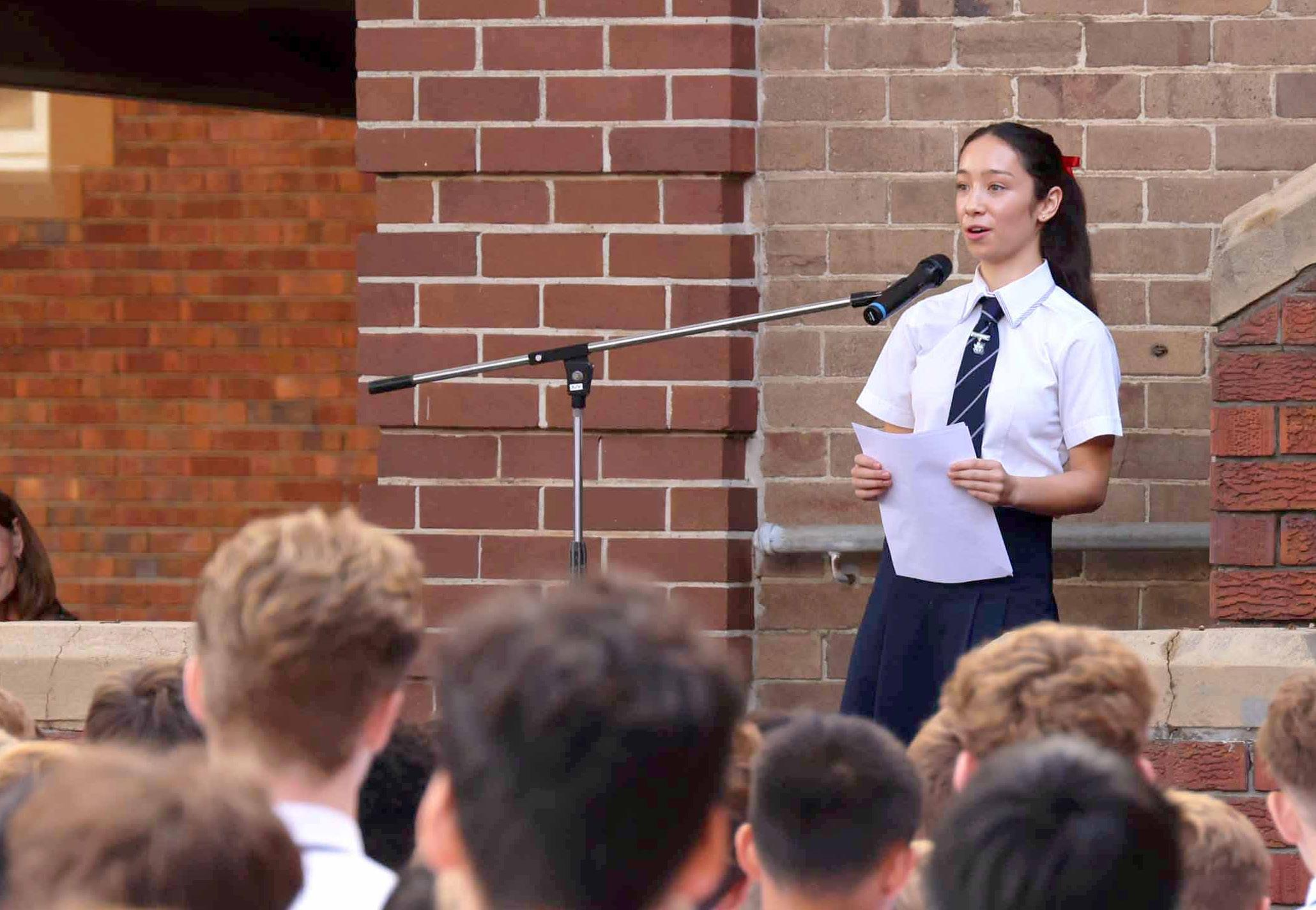
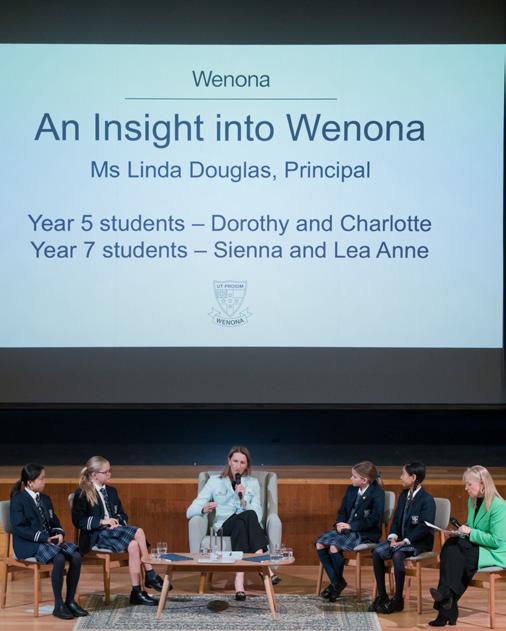
When Principal, Ms Linda Douglas, and Head Prefect, Zara, stood before 1,400 Shore School boys to address gender equality, they carried with them a message that had already resonated through every corner of Wenona’s campus. From Kindergarten presentations in the Woodstock Piazza to a Senior School Assembly that challenged the entire Senior School to champion female voices, Wenona’s observance of International Women’s Day demonstrated how deeply the School’s commitment to empowering young women runs.
The day’s celebrations began with Ms Douglas’ powerful Senior School Assembly address, where she drew on examples from the sporting world to illustrate ongoing inequality. Scottish tennis champion, Andy Murray, she noted, consistently corrects media that overlooks female athletes’ achievements. “Murray said he sees it as important to call out the inequality he witnesses against female sports people day after day,” Ms Douglas told the assembled students, emphasising that “society needs all of us to champion female equality in all walks of life”.
She also spoke of the ‘gender knot’ we remain caught in, where positions of authority default to men, and women in leadership are treated as exceptions who must prove themselves.
That same afternoon, the Gender Equity Club hosted a gathering for the Senior School. Club leader, Poppy (Year 11), said this year’s theme of ‘March Forward’, speaks to “the consistency, dedication, and perseverance behind the feminist movement and improved gender equality outcomes”.
The celebrations extended well beyond the campus gates. Not only did Zara accompany Ms Douglas to Shore School for that landmark assembly on equality, but groups of students attended official International Women’s Day events across Sydney. Years 10 to 12 students participated in an International Women’s Day lunch at the International Convention Centre in Darling Harbour, hearing from distinguished speakers including the former President of Ireland, Mary Robinson, Her Excellency the Honourable Sam Mostyn AC, Governor-General of Australia, and actor, comedian and author Celeste Barber. Another group attended a panel discussion at the University of Technology Sydney.
For Zara, International Women’s Day carries profound responsibility: “It is my duty as a citizen of the globe to educate myself and help my sisters whenever and wherever I can. It starts with education, empathy, and action from all humans”.
Another highlight of IWD at Wenona came from our youngest students. In the Woodstock Piazza, Kindergarten girls shared their reflections on the importance of women in society to their families. Their presentations marked the beginning of a journey of understanding gender equality that will develop throughout their years at the School.
Wenona’s dedication to female empowerment was further evidenced when Ms Douglas’ thought-provoking article on empowering young women was featured in the Sydney Morning Herald’s special International Women’s Day edition on Saturday 8 March, 2025. In it, she articulated the philosophy that underpins Wenona’s approach: “Girls thrive when given platforms to express themselves authentically”.
It was a theme she expanded on in Senior School Assembly, expressing confidence that “the future is in good hands”, while urging the girls and women in the room to “take your place in the march forward for women’s rights, because women’s rights are human rights and the world cannot afford a step back”.
Celebrating the Class of 2025
As their HSC results arrived, Wenona’s Year 12 students had every reason to feel proud. Their achievements reflected not just academic excellence, but the determination, resilience, and personal growth that defined their final school year.
“We are proud of the efforts of this cohort, whose achievements are a testament to their determination, ambition, and resilience,” said Principal, Ms Linda Douglas. “We thank their parents and families whose partnership and encouragement have been instrumental in ensuring these young women flourish. We also acknowledge the expertise and guidance provided by our staff throughout their Wenona journey, and express gratitude to our extended community for their unwavering support.”
The School’s highest ATAR of 99.8 was achieved by Jessica Ellis, who also came first in NSW in Visual Arts, third in Modern History, was selected for ARTEXPRESS, and nominated for the Young Writers Showcase. In total, six students achieved an ATAR above 99: Jessica Ellis (99.8), Annabella Bartlett (99.6), Juliet Poole (99.6), Amelie Potts (99.6), Bronte Haynes (99.4), and Isobel Alderson (99.35).
Jessica was interviewed by the Sydney Morning Herald about her achievements, explaining that she chose Visual Art to ensure she “stayed creative” during her HSC year.
Her Visual Arts Body of Work, Becoming, captured an appreciation for the fleeting, unfiltered moments of girlhood. “I explored the thrill of reinvention, the way we might try on different versions of ourselves like vintage jackets; swapping identities as if they were accessories,” she explained.
Meanwhile, Audrey Metcalfe achieved First in Course in Dance. Her Major Performance work, Theory of Reality, was an “exploration of the relentless cycle of overthinking,” portraying an individual “consumed by erratic thought surrounding the complex realities of the world”. Audrey plans to study
Occupational Therapy and paid tribute to both Wenona educators and her Dance cohort: “The teachers went above and beyond … and my class was close knit. We all supported each other. I owe a large amount of my success to them.”
State Recognition
Wenona achieved a remarkable 13 places on the Top Achievers List, which acknowledges students who attain state placings: Jessica Ellis (1st Visual Arts and 3rd Modern History), Audrey Metcalfe (1st Dance), Bianca Stanmore (3rd Spanish Continuers), Annabella Bartlett (5th Ancient History and 6th English Extension 1), Tess Parker (5th English Advanced), Zara Yee (6th Design and Technology), Megan Vinalon (8th Design
and Technology), Evelyn Miller and Lily Paff (equal 10th Design and Technology), Naomi Subbaraman (12th Legal Studies), and Isobel Alderson (16th Business Studies).
Among them was Bianca Stanmore, who came third in Spanish Continuers, developing her vocabulary through a “formula” of studying past Band 6 responses and calling her grandparents in Chile for advice. “Studying Spanish for the HSC strengthened my connection to my family and heritage,” she said.
Annabella Bartlett came fifth in Ancient History and sixth in English Extension 1. “I love Ancient History as it allows me to build critical thinking and explore fascinating stories, encouraging me to travel and see the world,” she said. “I plan to study Law, either with a Ramsay Scholarship at the University of Queensland or Sydney University, where I will build on my love of history.”
Tess Parker came fifth in English Advanced and appreciated the chance to engage deeply with texts and ideas while developing her analytical and writing skills. “The Merchant of Venice, An Artist of the Floating World and John Donne’s poetry all challenged me to think critically about perspectives, values, and human experiences,” she said.
Naomi Subbaraman came 12th in Legal Studies after combing through huge booklets of past papers supplied by her teacher and using a whiteboard to recall important cases. “I loved Legal Studies because we were able to learn laws through the investigation of current cases, which made it so much more fascinating.”
Eleven students were named on the All-round Achievers list, demonstrating excellence across at least 10 units of study: Annabella Bartlett, Katerina Brennan, Emily Davison, Jessica Ellis, Jemima George, Adriana Katsoudas, Scarlett Kraft, Phoebe Oswald, Juliet Poole, Amelie Potts, and Kiara Sloan.
Showcase Success
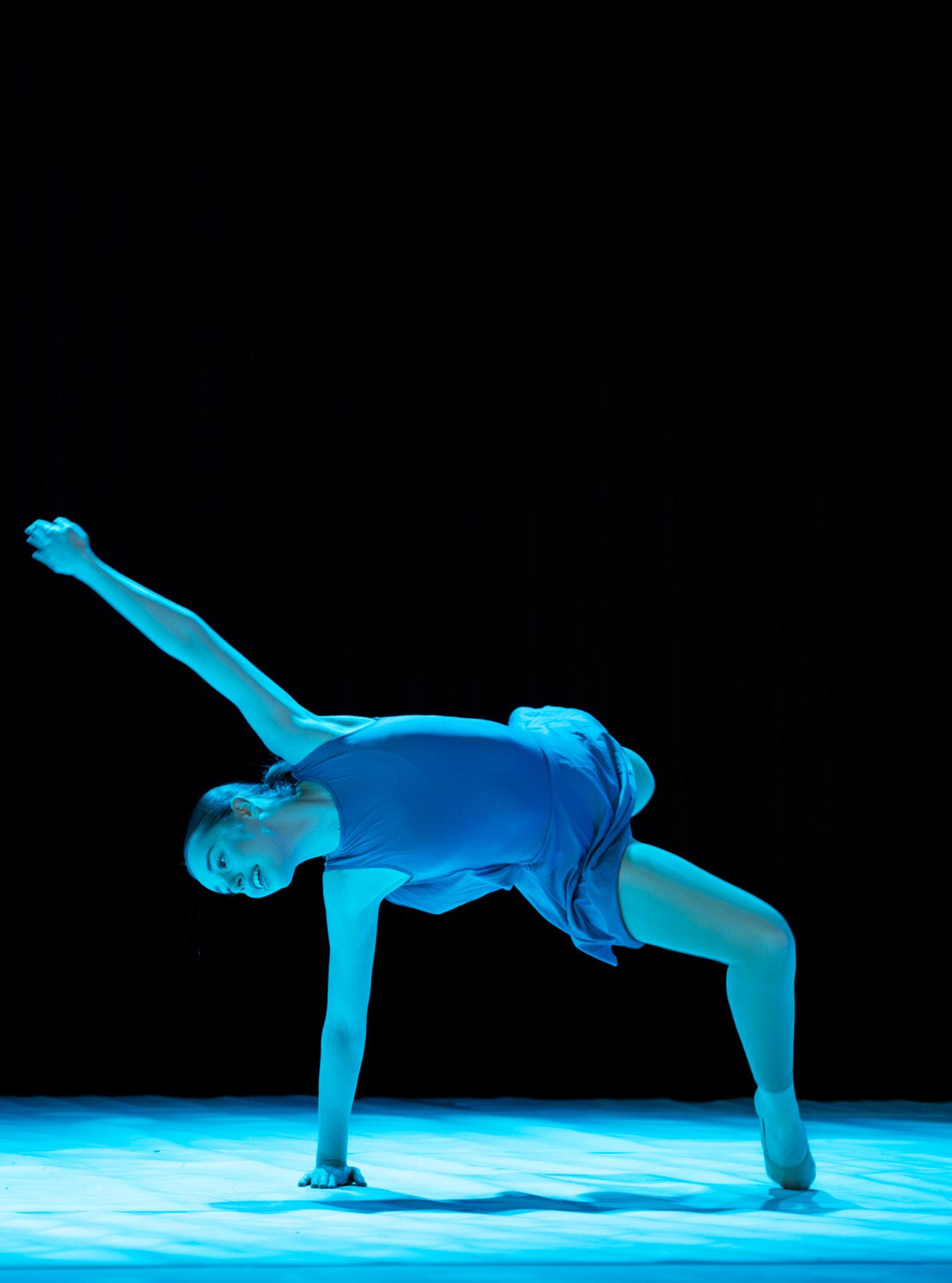
A record 55 students were nominated for NESA Showcases across English Extension 2, Visual Arts, Design and Technology, Textiles and Design, Dance, and Drama. Seven were selected for NESA Showcases, including Hannah Israel, who performed at the Dance showcase CALLBACK. Her composition, Translucent Layers, explored the body across the skin, muscles, bones, and soul. Her major performance, Cosmos, depicted space travel and the expansion and beauty of outer space, while her core performance, Wildflower, focused on dance technique.
Hannah was accepted into the Sydney Dance Company’s full-time course and will also study Architecture at the University of Technology Sydney.
“Of course, a single grade, mark, or score never fully defines success,” Ms Douglas reflected. “These are young women who have brought energy to every endeavour, from the sporting field to the stage, and from community service to student leadership. It is their personal qualities, including perseverance, compassion, and integrity, that we will always admire. As the Class of 2025 graduate from Wenona, we thank them for their impressive contribution to our School and look forward to seeing the positive difference they will continue to make in the world.”
A Record Year for Creative Excellence
The best design solutions often begin with a simple observation. For Year 12 Design and Technology student Megan, it was watching a young boy she knew struggle with scootering, the sport he loved, because his cochlear implants rubbed uncomfortably against his helmet. “I wanted to innovate to help people,” she said.
Megan’s HSC Major Project, a bike helmet with a precisely engineered cavity for the implant that maintains structural integrity, was one of 56 individual NESA Showcase nominations and selections achieved by our Class of 2025, a new Wenona record.
Across Design and Technology, Textiles and Design, Visual Arts, Drama, and Dance, Wenona students demonstrated the sophisticated thinking and technical excellence that define a true Renaissance education.
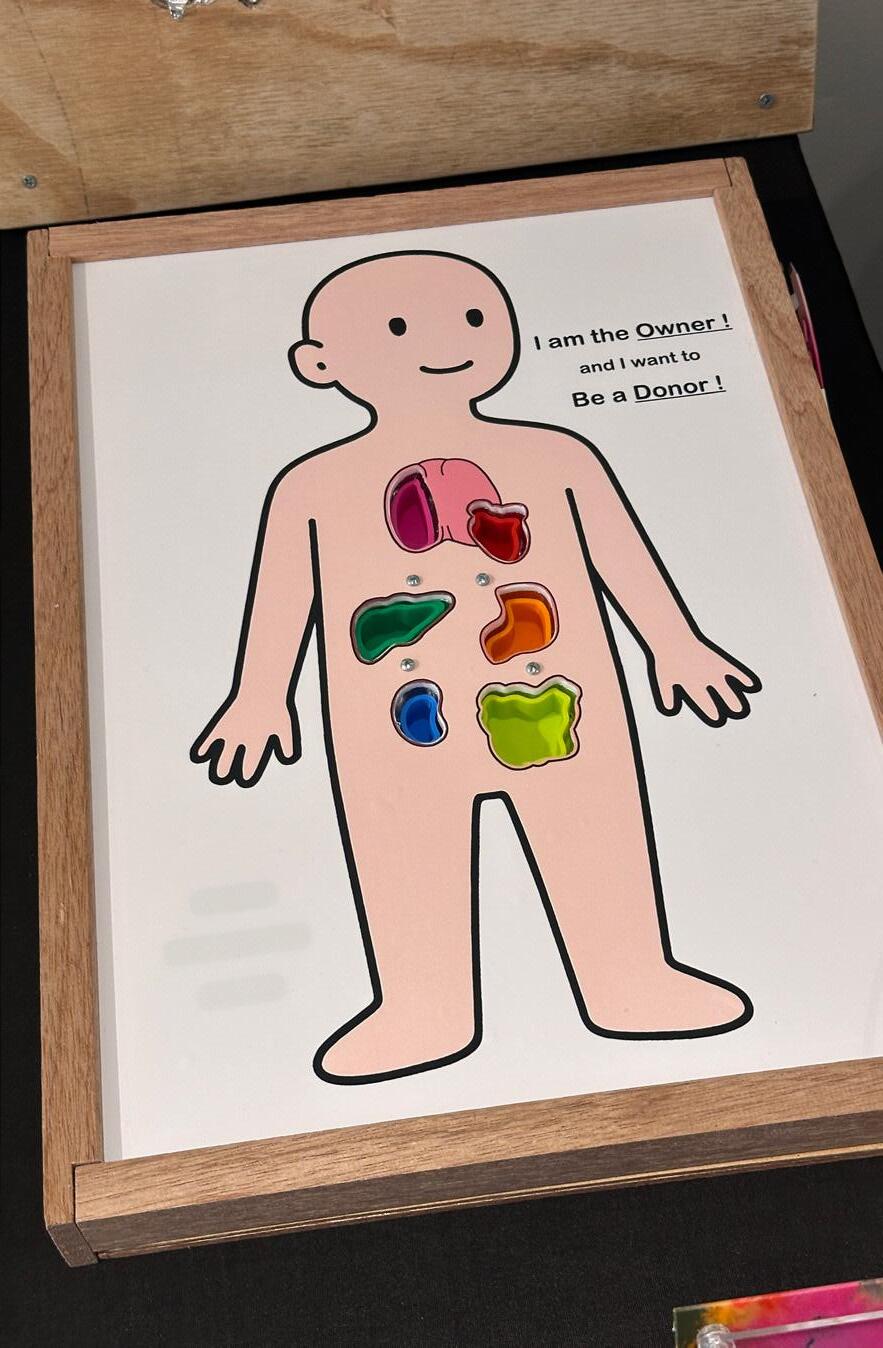
Their work spanned everything from organ donation awareness campaigns to Formula One track design and from Renaissanceinspired portraiture to contemporary dance.
“I wanted to innovate to help people”
Innovation in Design
The 15 SHAPE nominations from Wenona’s Technological and Applied Studies Department demonstrated the cohort’s keen sensitivity to real-world challenges. Felicia developed an at-home knee rehabilitation kit after recognising issues caused by gaps between physiotherapy appointments, while Charlotte designed a multidirectional desk lamp addressing the strain inadequate lighting causes students. Lily, understanding the life-or-death importance of temperature control for EpiPens, created an insulated travel case ensuring medication remained below 26 degrees.
Some projects emerged from highly specific observations. Isla, a rower, identified secure storage as an issue for athletes in scull boats and designed a solution that retrofitted into the boat’s inspection hole without interfering with their stroke. Zara Y created a magnetic-lock beach storage device after watching beachgoers reluctantly leave valuables unattended, while Hannah’s student stool with a retractable backrest addressed common room furniture that encourages slouching.
Saskia took a different approach to social impact, developing an organ donation awareness campaign centred around a morning tea where food items were shaped like organs, with an electronic game providing educational information. Two students ventured into architectural design: Eloise developed a concept for a Formula One track in Sydney with a pit lane that transformed into a multipurpose sports court, while Evie designed an additional surf lifesaving tower for North Curl Curl beach to provide visibility for an unseen area where children swim.
The three Textiles and Design nominations showcased equally sophisticated thinking. Adriana created an extravagant costume for Snow White and the Huntsman, drawing inspiration from designer Elsa Schiaparelli and the ornate 17th-century Baroque period. Amelie’s tailored pantsuit captured Parisian nightclub culture through the lens of the Moulin Rouge, while Tess’ three-piece costume for the Mad Hatter’s tea party blended Tim Burton’s eccentric vision with Dior’s ethereal 2017 collection.
Meanwhile, Sophie Kassel from the Class of 2024 was selected for the TEXStyle Exhibition in Concord this year. Her highly embellished three-piece costume featured a structured corset, flowing skirt and dramatic flamenco ruffles, which drew inspiration from international designer Oscar de la Renta, Wicked the Musical, and the Egyptian Jewel Beetle.
Visual Arts Excellence
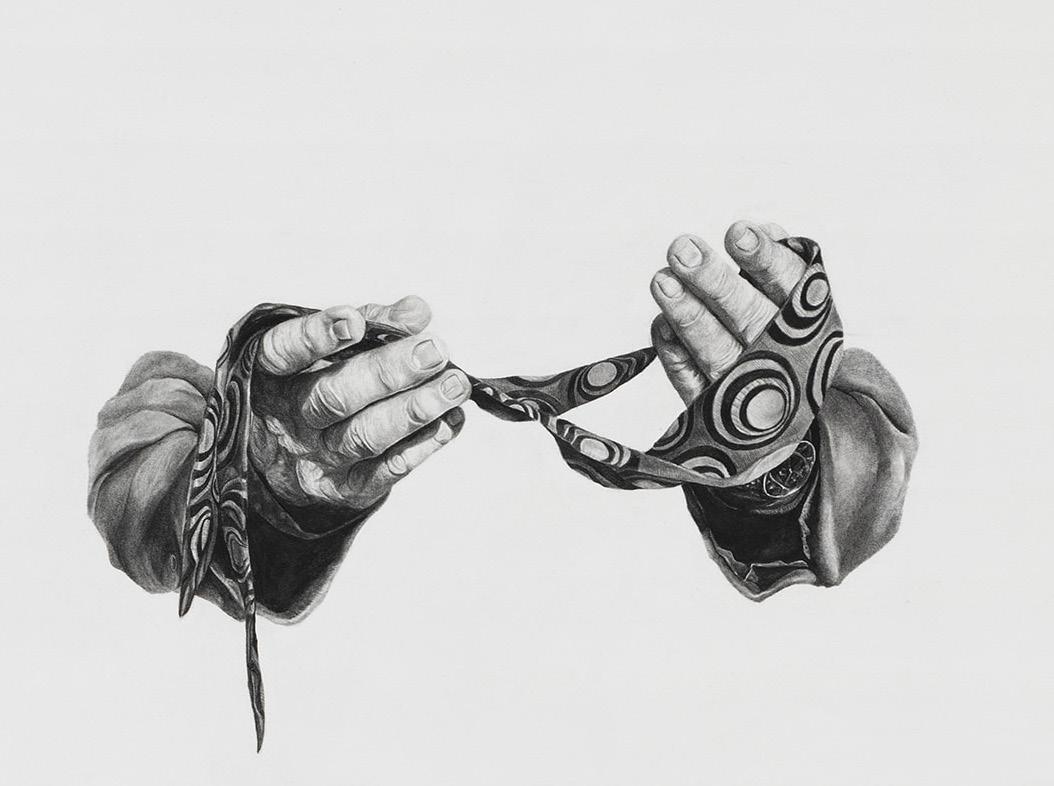
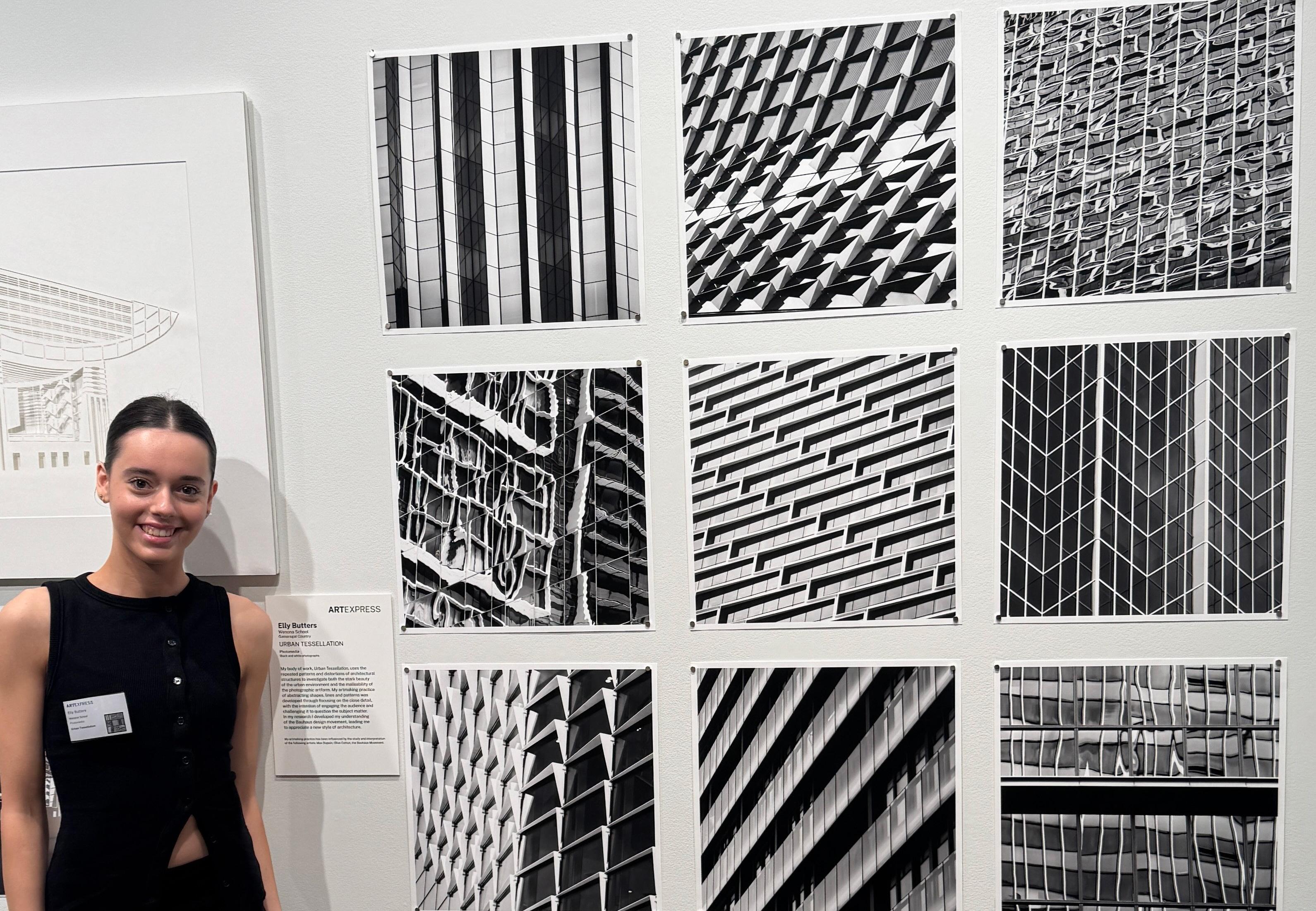
An unprecedented 13 students were nominated for ARTEXPRESS for a range of exceptional Bodies of Work. Bethany’s beautifully rendered drawing of male hands holding a tie demonstrated technical mastery, while Elise’s portrait channelled the luminous quality of Renaissance painting. Grace’s printmaking work depicted a serene landscape where water reflected sky in subtle turquoise tones.
Harriet’s painting ventured into darker territory with a futuristic and gothic architectural vision featuring staircases and skeletal motifs. Isabel’s portrait conjured both modernity and the richness of the Old Masters, while Olivia’s photomedia work captured a fleeting moment on a New York bus, a figure silhouetted against motion and urban chaos.
Drama and Dance
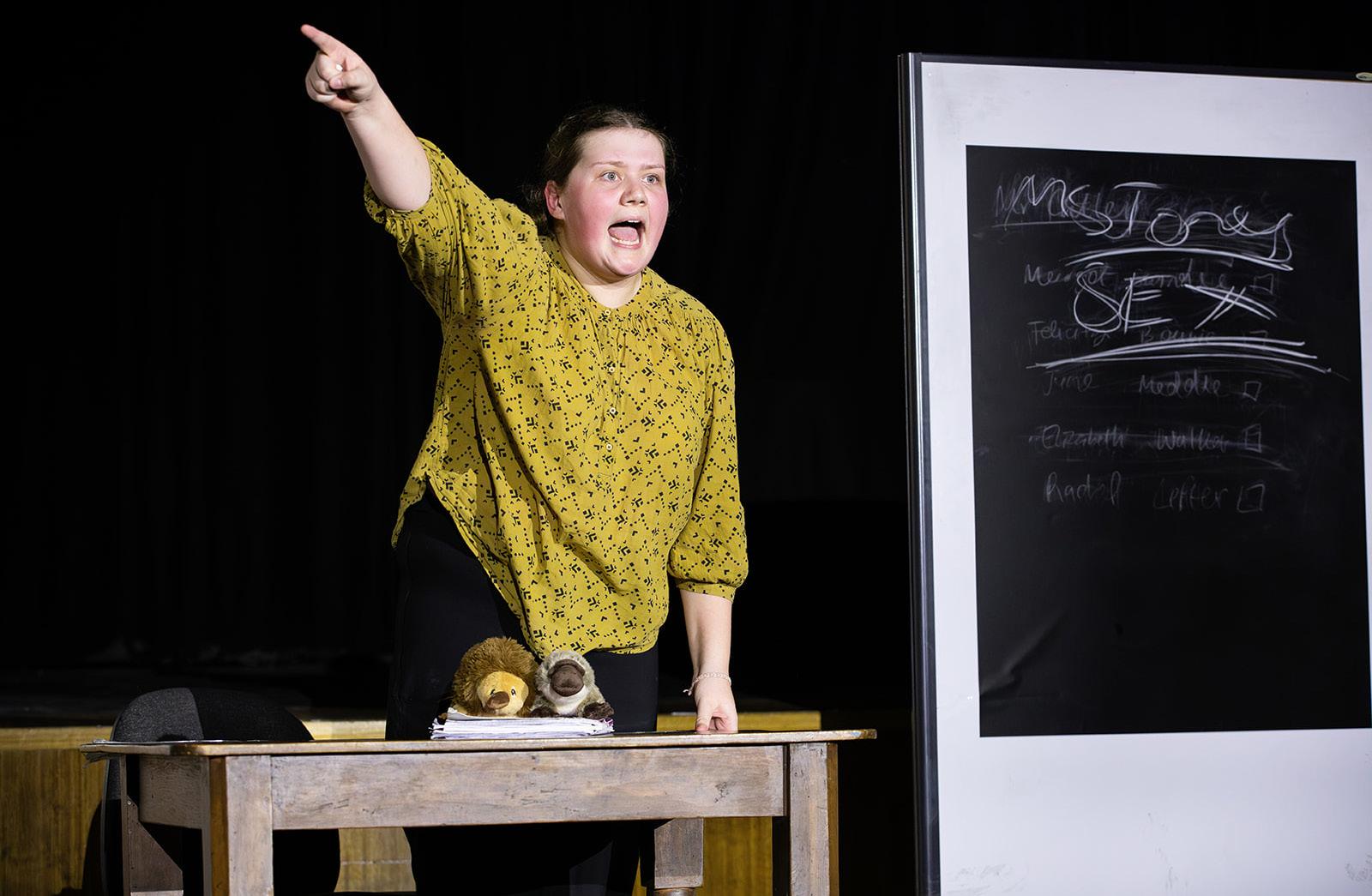
Eight students received recognition for Drama. Shanti and Rosie both earned OnSTAGE nominations for costume design inspired by Friedrich Dürrenmatt’s 1956 tragicomedy The Visit. Rosie’s concept drew on the serpent’s temptation in the Garden of Eden, while Shanti created an expressionist interpretation set during the Great Depression.
Six students were nominated for individual performances at OnSTAGE 2026: Daniella for ‘The Orange’, India for ‘Too Much Sun’, Scarlett for ‘The Actor’, Sophie for ‘The Underpants’, Tara for ‘Principal Problems’, and Xanthe for ‘Doug’.
Meanwhile, Hannah achieved selection for the prestigious HSC Dance showcase CALLBACK. She performed her Core Performance to Billie Eilish’s Wildflower, demonstrating sophisticated technical sequences alongside artistry. According to Director of Co-Curricular and Dance Teacher, Ms Brittany Skea, the quality of Hannah’s dynamic variation and performance skills brought layered emotions into physical form.
Behind each of these 56 achievements lay countless hours in studios, workshops, and rehearsal spaces, testament to both student dedication and the expertise of Wenona’s teaching staff. Being nominated for an HSC Showcase is an extraordinary academic and creative achievement, and this record-breaking cohort exemplified the depth of talent nurtured within our School community.
Far Beyond the Classroom
From Ancient Rome to Central Australia, Wenona students ventured far beyond the familiar rhythms of School life, discovering the world can be the best teacher.
When Year 9 student Annabel stood in a Vietnamese village, concrete staining her clothes and heat pressing down, she understood something textbooks cannot teach.
“Meeting the children and seeing firsthand the impact our service had on them made the whole experience feel genuine and meaningful,” she reflected.
Where Language Lives
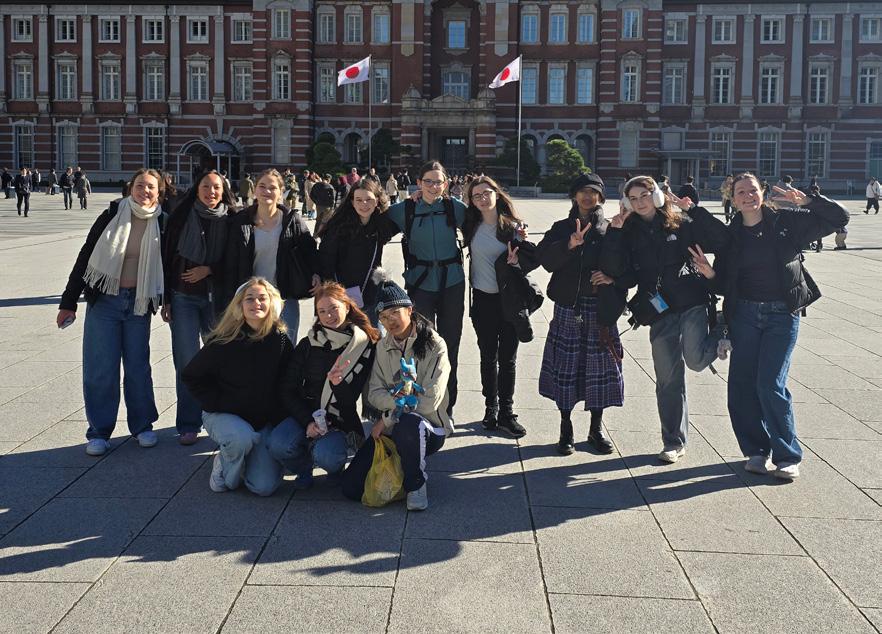
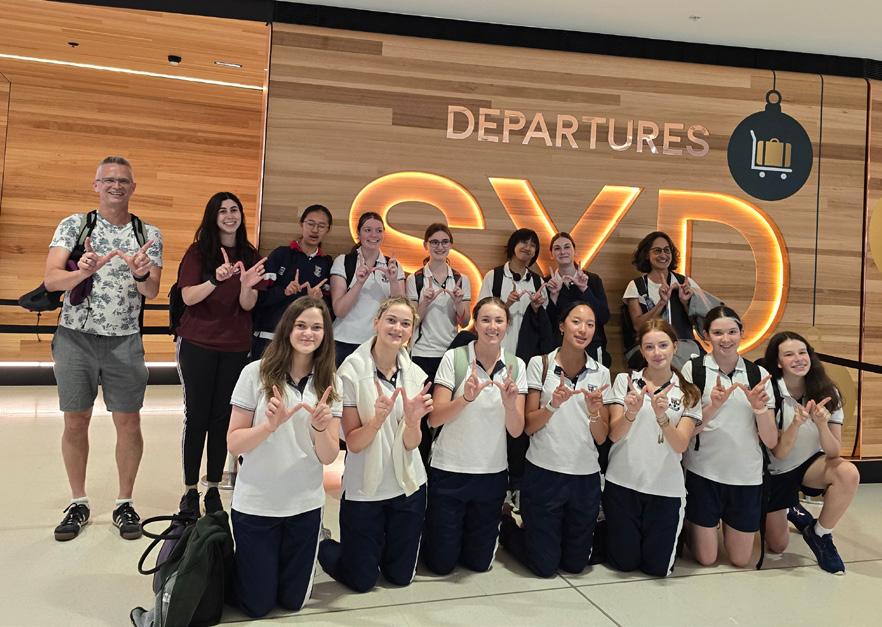
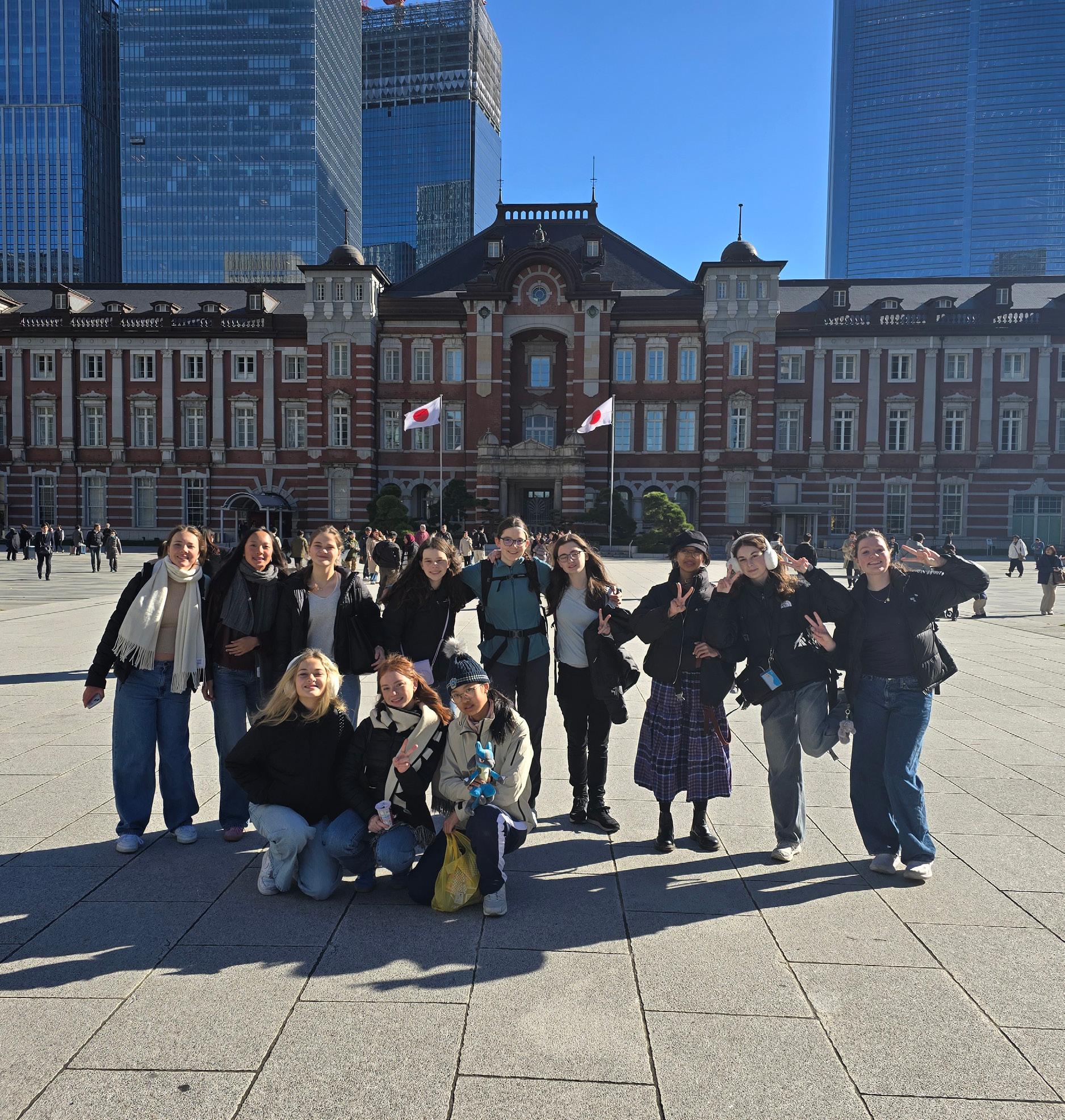
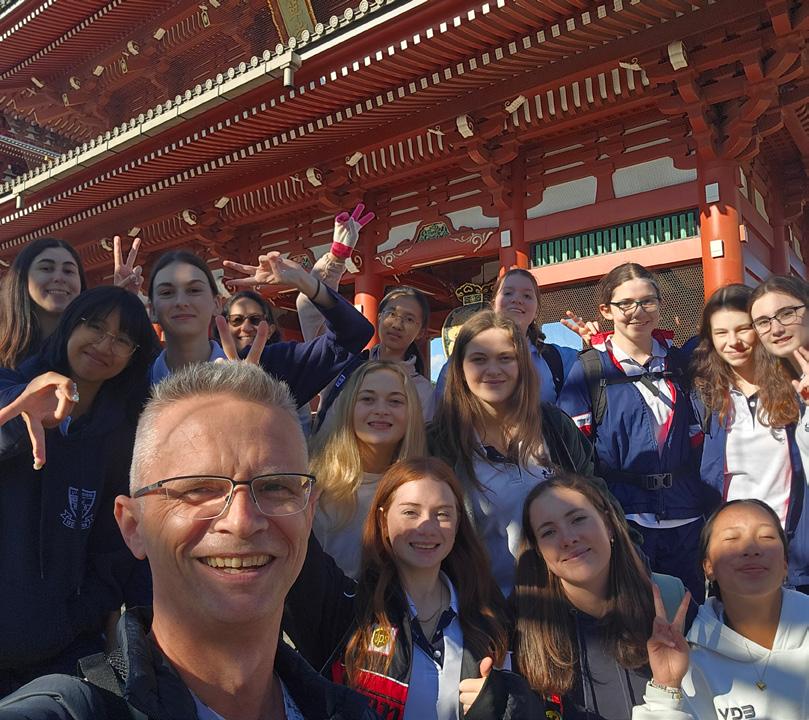
For 13 Year 9 students, Japan became an immersive classroom. Accompanied by Mr Freeman, Mrs Nathan, and Ms Benkenstein, they navigated Tokyo’s efficient transport system, ordered meals in Japanese, and discovered that fluency emerges not from perfection but from courage.
The heart of their journey was Yashiro High School in Nagano, where the ongoing partnership creates genuine cultural exchange. Beyond classroom interactions, Japan revealed its layers through Kyoto’s vermillion gates of Fushimi Inari Shrine, Nara’s ancient temples, and Tokyo’s remarkable fusion of tradition and innovation – particularly during visits to science museums and technology hubs where STEM students observed advances in robotics, engineering, and artificial intelligence.
“Meeting the children and seeing firsthand the impact our service had on them made the whole experience feel genuine and meaningful,” she reflected.
Walking Through History
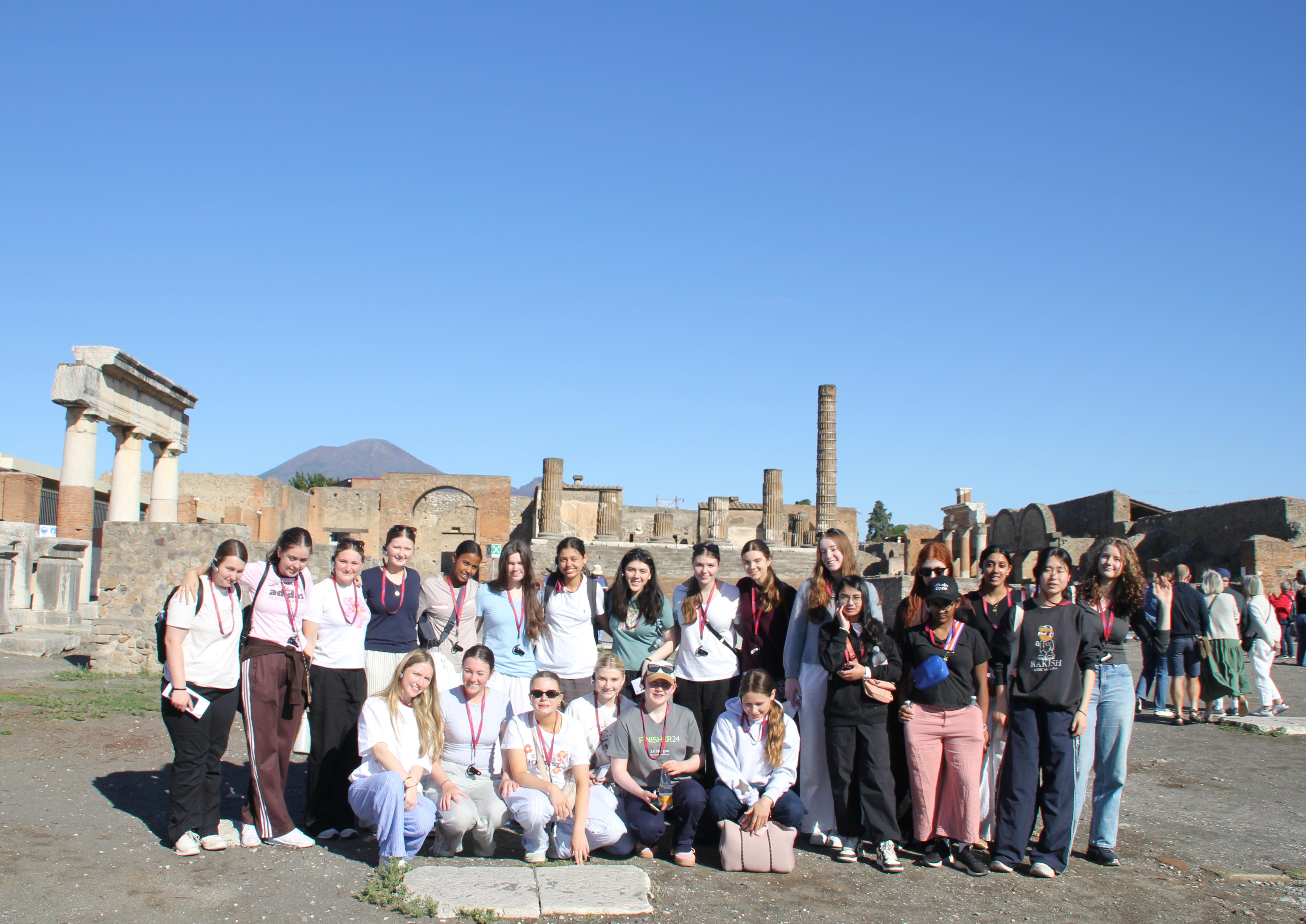
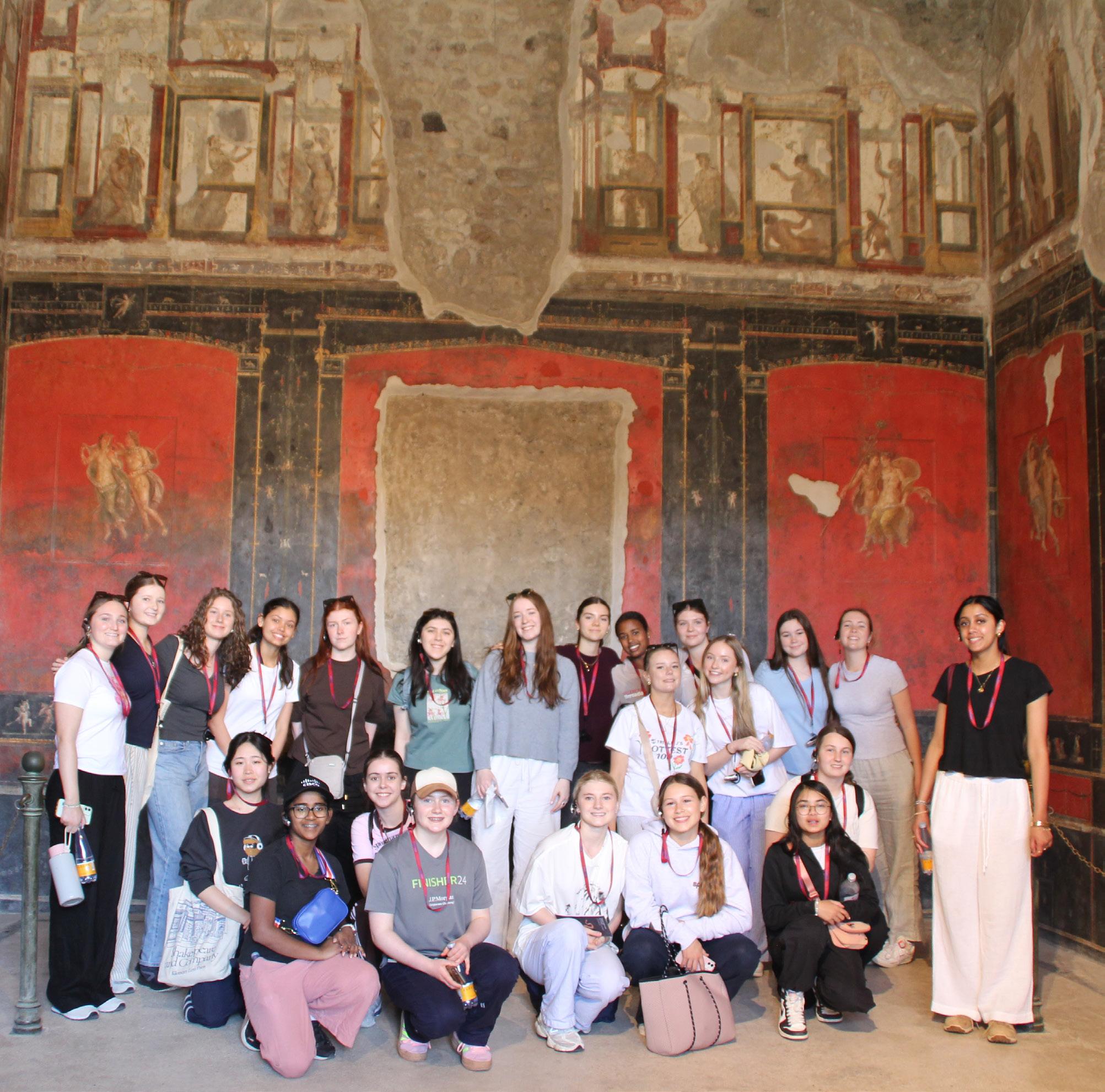
As Years 10 and 11 students on the History Tour discovered, the past becomes infinitely more complex when you stand where it happened. Their two-week European tour took them from ancient Rome through Renaissance Florence to the sobering memorials of 20th-century Germany.
In Rome, they explored the Colosseum, Forum Romanum, and Vatican City’s overwhelming artistic heritage. South of Rome, Pompeii and Herculaneum offered remarkable glimpses into Roman daily life, preserved by Mount Vesuvius’ eruption in 79 AD. Between historical explorations, a hands-on Italian gelato-making class added a delicious cultural dimension.
Florence opened the Renaissance chapter through the Uffizi Gallery and sites including the Duomo, Ponte Vecchio, and the Gates of Paradise at the Baptistery. Germany’s portion focused on 20th-century history, with Berlin’s Jewish Museum, Holocaust Memorial, and Checkpoint Charlie providing essential context. Nuremberg proved particularly significant, with the Nazi Party Rally Grounds Museum and War Crimes Trial Museum examining the post-war reckoning with Nazi crimes. The tour concluded at Dachau, the first Nazi concentration camp, providing a learning-rich if sombre end to the students’ examination of Europe’s complex history.
Service Across Cultures
During September holidays, Year 9 students embarked on Service Learning trips to Vietnam, Cambodia, and Central Australia, embodying Ut Prosim, that I may serve.
Vietnam
The Vietnam contingent’s 16 students faced an immediate test when severe flooding forced complete reshaping of their itinerary. They responded with resilience and bright spirits. After exploring Hanoi and kayaking through Ha Long Bay, service work relocated to Ninh Binh, where students completed an entire concreting project for a local high school’s bike park.
“We were welcomed into the villages and schools with open arms,” Skye reflected. “Even whilst wearing concrete-stained clothes and working in the heat, the smiles on people’s faces made every effort worthwhile.” The trip coincided with Tết (the Mid-Autumn Festival), offering a window into Vietnamese culture at its most vibrant.
Cambodia
The Cambodia group’s ten-day journey combined historical learning with hands-on service. Beginning in Phnom Penh, students confronted the country’s difficult past through visits to Tuol Sleng Museum and the Killing Fields of Choeung Ek.
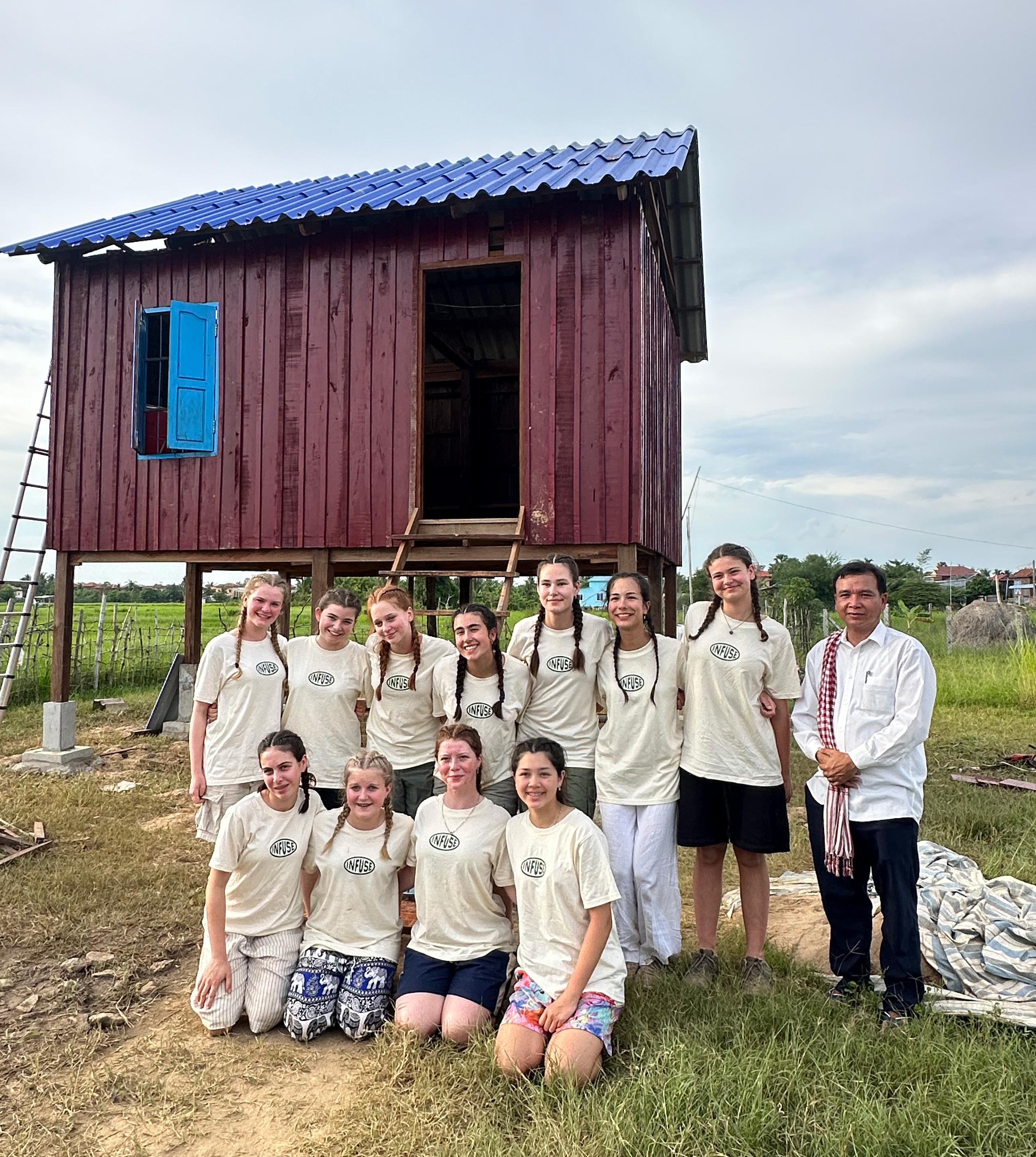
The heart of their work took place in Kampong Cham, where they spent four days building a wooden house for Thavy, a local scholarship student living in cramped conditions with her large family. Working alongside local builders, students assisted with flooring, cladding, concreting, and painting, culminating in a memorable handover ceremony blessed by a local monk. The journey concluded with exploration of Siem Reap’s ancient wonders, including sunrise at Angkor Wat.
Central Australia
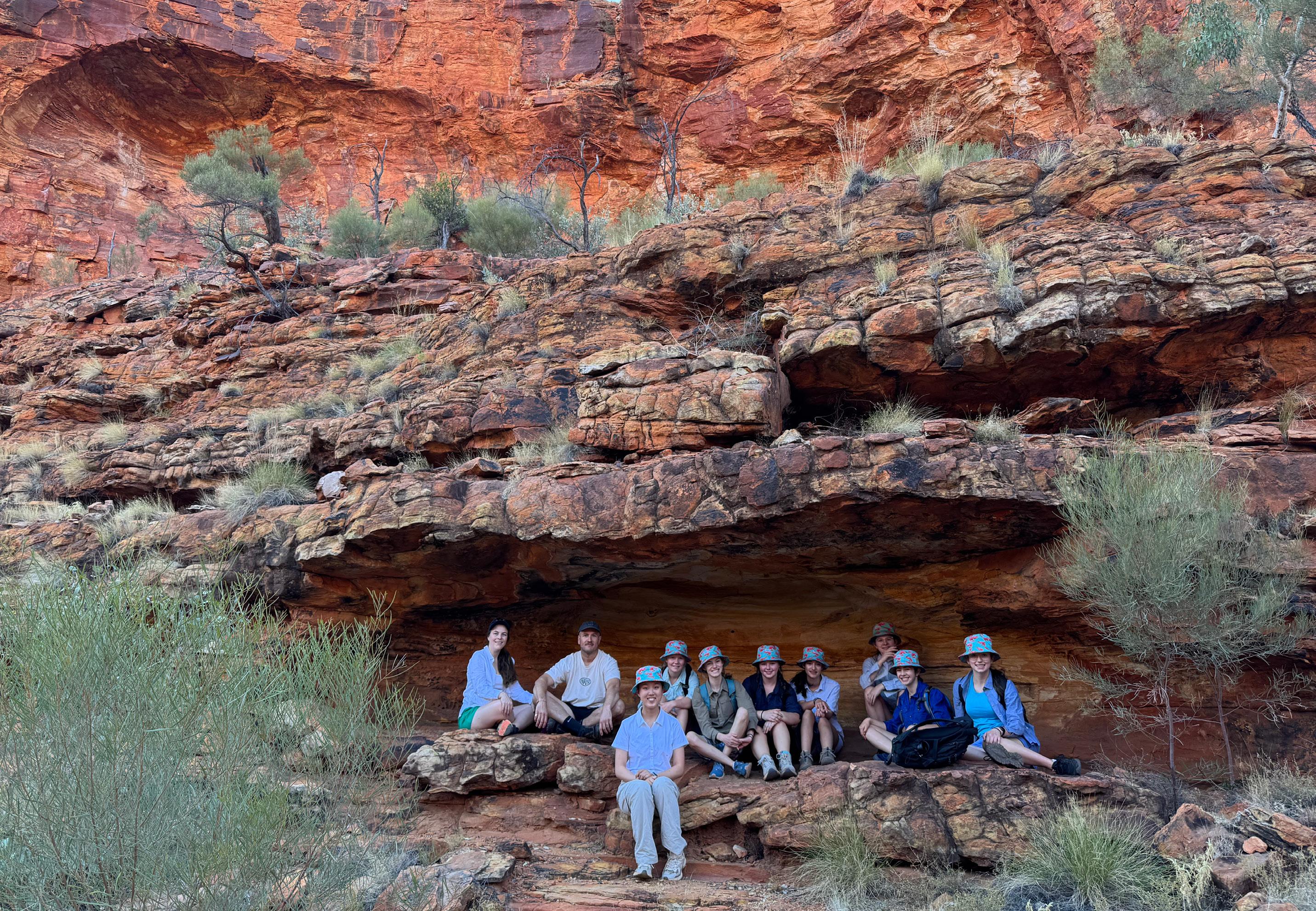
Students spent nine days immersed in Indigenous culture, beginning with a welcome to Mparntwe (Alice Springs) by members of the Bloomfield family, Traditional Owners who shared their connection to Country. Living on-country in the East MacDonnell Ranges, they slept under the stars in swags and experienced intergenerational transfer of traditional knowledge.
In Alice Springs, they contributed to Indigenousowned youth services, supporting culturallyled activities including food preparation and traditional art-making. The adventure included physical challenges such as the six-kilometre Kings Canyon Rim Walk and watching sunset transform Uluru’s colours.
Mapping Tomorrow’s Pathways
Year 11 students embarked on transformative journeys across Australia’s leading universities during September, returning with greater clarity about their future direction.
The 2025 Academic Tour took in five locations from Melbourne’s urban campuses to Adelaide’s collegiate atmosphere.
In Melbourne, students immersed themselves in Deakin University and the University of Melbourne, experiencing cutting-edge research facilities and touring residential colleges. The Queensland cohort split time between the University of Queensland and Bond University. “The Queensland Academic Tour has been an amazing experience,” reflected Lauren. “It has allowed us to immerse ourselves in the lives of university students, and a life beyond school that will come sooner than we expect.”
At Bond University, the High-Performance Sports Centre proved particularly compelling for elite athletes and aspiring health professionals. “The students loved exploring aspects including injury prevention, physio, biomechanics, and occupational therapy,” said Head of Careers, Ms Evette Wenlock.
The Adelaide tour offered exploration of Flinders University and Adelaide University, whilst the NSW and ACT tour provided rich experiences at the University of Wollongong, the Australian National University, and the University of Newcastle, where medical training facilities impressed. The presence of Wenona Alumnae at multiple destinations added invaluable dimension, offering candid insights from practical advice about accommodation to recommendations for the best coffee spots on campus.
“It has been a privilege to see and hear about the experiences of our Year 11 students as they visit a range of university campuses,” said Head of Senior College, Ms Santina Restuccia.
“I am hopeful that this next generation will enjoy the richness of campus life alongside the remarkable advancements in higher education, providing them with genuine choice and opportunity as they shape their futures.”
Voice and Vision
Plain Speaking
Year 10 students Chloe and Annabelle impressed at the Plain English-Speaking Competition at Pymble Ladies’ College. The format is demanding: an eight-minute prepared speech on any topic, followed by a three-minute impromptu response, all without props, lecterns, or microphones.
Chloe questioned why society expects teenagers to be dismissive of younger siblings, sharing her genuine affection for her 12-year-old brother, Max, and supporting her points with research on how negative sibling interactions affect mental health.
Annabelle drew connections between the shallowness of the Jazz Age in F Scott Fitzgerald’s The Great Gatsby and today’s social media culture. Rather than simply criticising modern habits, she offered hope: “If we want to evolve and lose the self-centred attitudes retained from the 1920s to now, we can start by living more in the present.”
ISDA Debating Victory
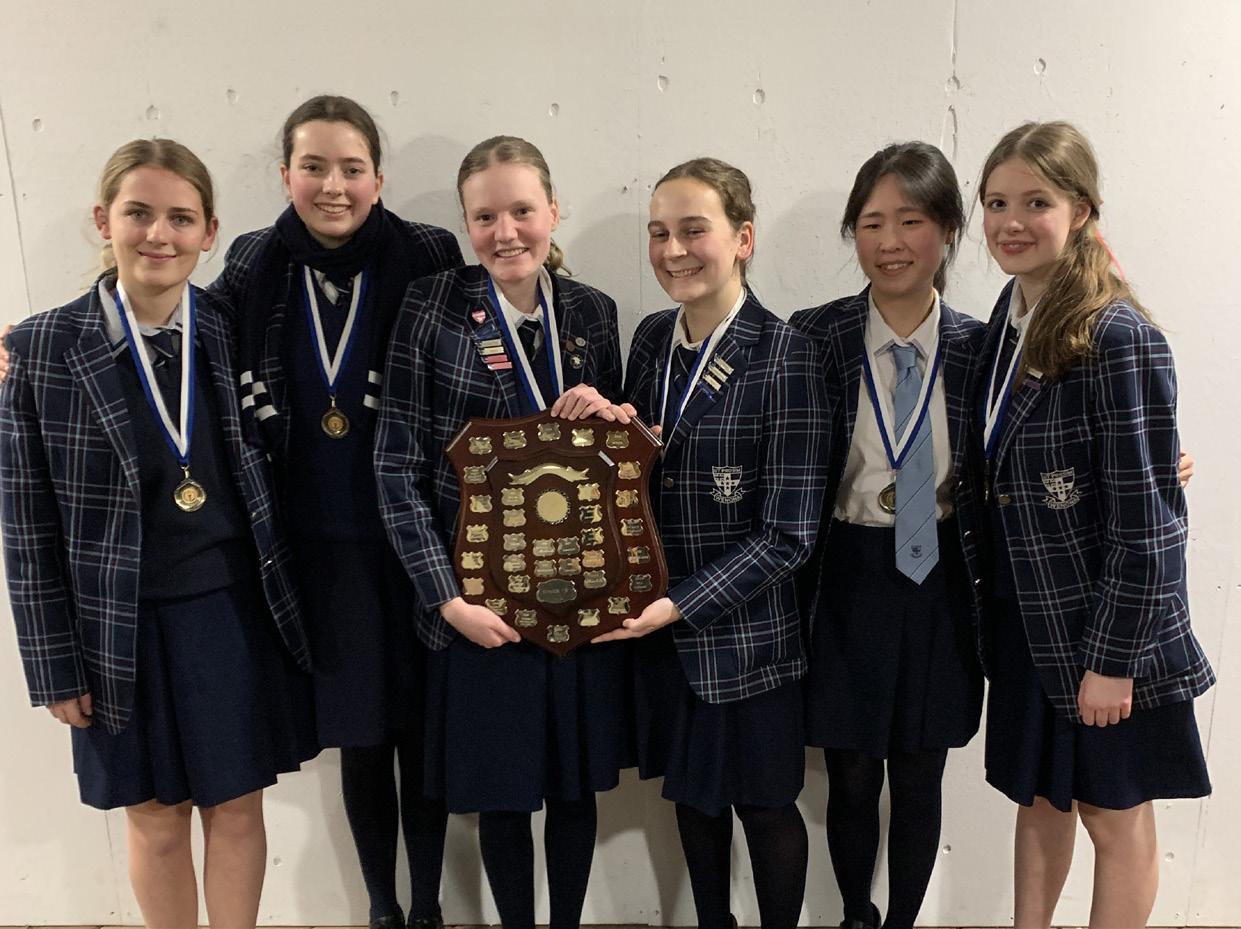
After seven months of rigorous Friday night training, Wenona’s Senior B team achieved a Grand Final victory in the Independent Schools’ Debating Association competition.
Featuring 32 schools across four zones, the contest is one of Sydney’s premier independent school debating contests. Annie, Saoirse, Ruby, Clemency, and Poppy from Year 11, along with Mia from Year 10, progressed through seven preliminary rounds and knockout stages to claim the title, arguing against the motion that adult children should take in their elderly parents rather than help them live independently.
What set them apart was genuine engagement with ideas rather than point-scoring. “You cannot win if you do not listen, consider, and invite other viewpoints,” Ruby observed.
The victory follows the 2024 Primary B championship win, establishing Wenona as a consistent presence at the top of multiple age divisions.
IGSA Debating Victory
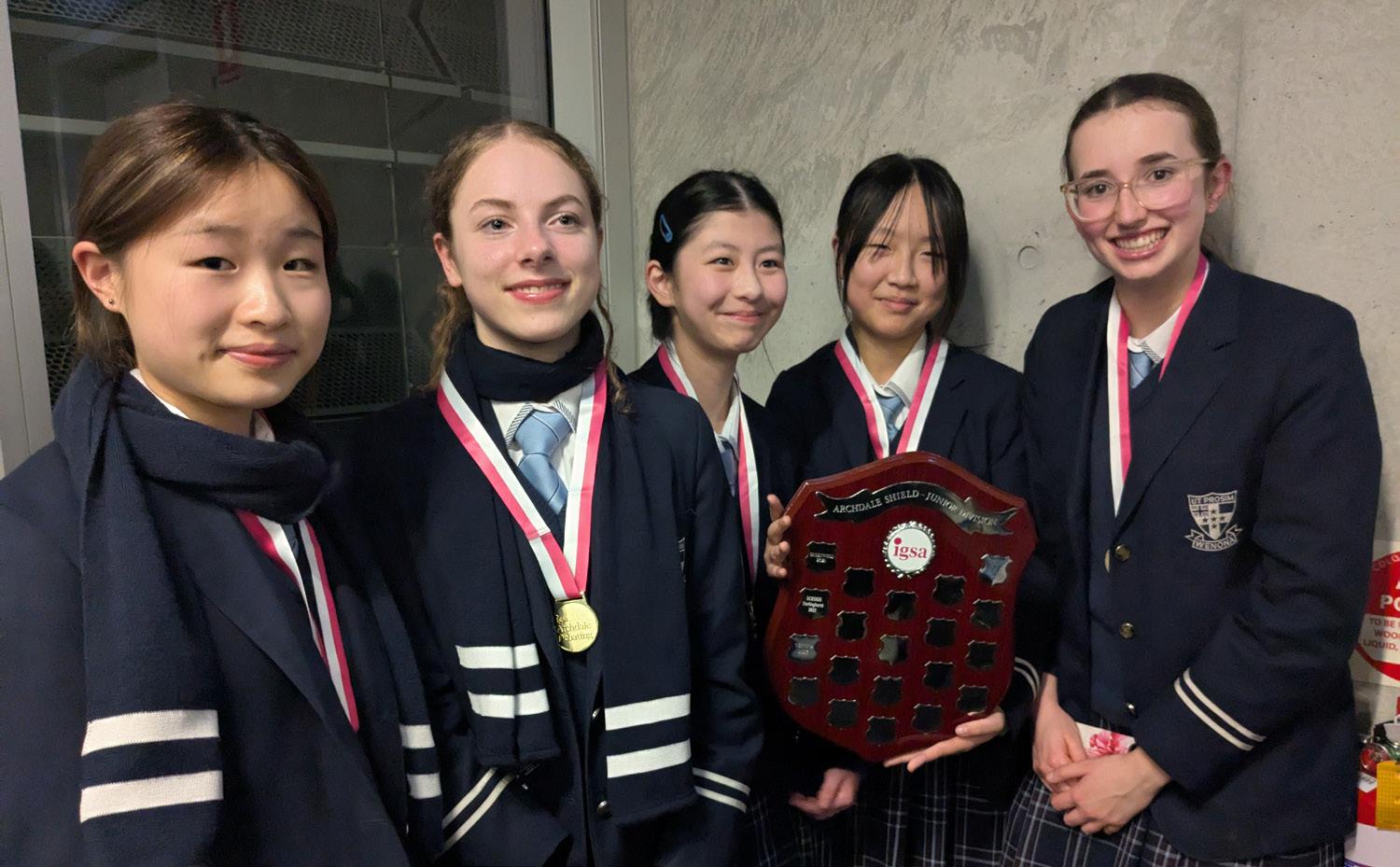
Our Junior Debating team finally won the Archdale IGSA championship in September, after reaching the Grand Final three years in a row. Lucinda, Serena, Elaine, Selena, Sienna and Lucy (all in Year 9) once again demonstrated the persistence and sharp thinking that has defined their debating journey. A proud moment for Wenona.
Ethics Champions
The same Year 11 students who achieved at IGSA, also won Gold in the NSW Region Ethics Olympiad, tackling questions that would challenge seasoned philosophers, including, ‘Is it ethical to fall in love with a chatbot?’ and ‘Should we edit Roald Dahl’s works to remove outdated language?’
Unlike debating, the Ethics Olympiad requires teams to defend the stance they genuinely believe while understanding opposing viewpoints. Teams receive eight complex case studies a month beforehand, but on competition day, all notes are banned.
“It’s about articulating your intuition on a challenging topic,” explained 2025-2026 Head Prefect, Poppy. “It forces you to think about why something feels wrong, not just that it feels wrong.”
Wenona Educators Honoured for Excellence
Eight Wenona staff members were recognised at the Teachers’ Guild of NSW Annual Awards Dinner in November 2025, continuing the School’s strong tradition of professional excellence.
The Teachers’ Guild, founded in 1891, is the oldest teachers’ organisation in New South Wales and exists to promote better standards of teaching. Unlike a union, it has maintained an abiding concern with the professional development of teachers throughout its history, and its awards recognise outstanding educators at all career stages.
Seven staff members received World Teachers’ Recognition Awards for their contributions to the profession: Charbel Assaf (Science), Carly Biddolph (English), Sonia Qin (Languages), Matthew Scouller (Mathematics), Melissa Sokol (Year 6), Vanessa Stewart (TAS) and Andrew Tate (Mathematics).
Matthew Woolaston, Head of English, received a particular honour, being awarded a Fellowship of the Teachers’ Guild of NSW – a distinction recognising sustained excellence and leadership in education.
Meanwhile, Dean of Research and Practice Natasha Isbel was recognised beyond the Guild, receiving the Innovation Excellence Award for 2025 from the Professional Teachers’ Council.
Congratulations to all.
Staff Recognised
A number of Wenona staff were recognised for their contribution to the School at our annual Board of Governors Dinner.
Going Beyond Award
Kerry Swain, Yvette Lewington
Commitment to Improvement Award
Bella Xiong, Holly Antoine
Stepping Up Award
Erin Healey
Behind the Scenes Award
Kylie Zhao
Outstanding Commitment to the Teaching Profession Award
Kasey Wood
Leadership of Learning Award
Erin Johnson
Commitment to Staff Development Award
Sarah Howe
Promoting a Culture of Care and Support Award
Kristie McDonald
Equanimity of Spirit Award
Emma Gutierrez, Nick Drake
Outstanding Professional Services Staff Member
Linh Tran
Outstanding Teacher
Dean Pomfrett, Annette Fyfe
Ut Prosim Award
Kim Lemon
Our Principal, Olympian
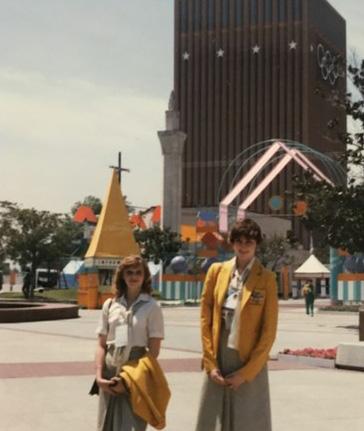
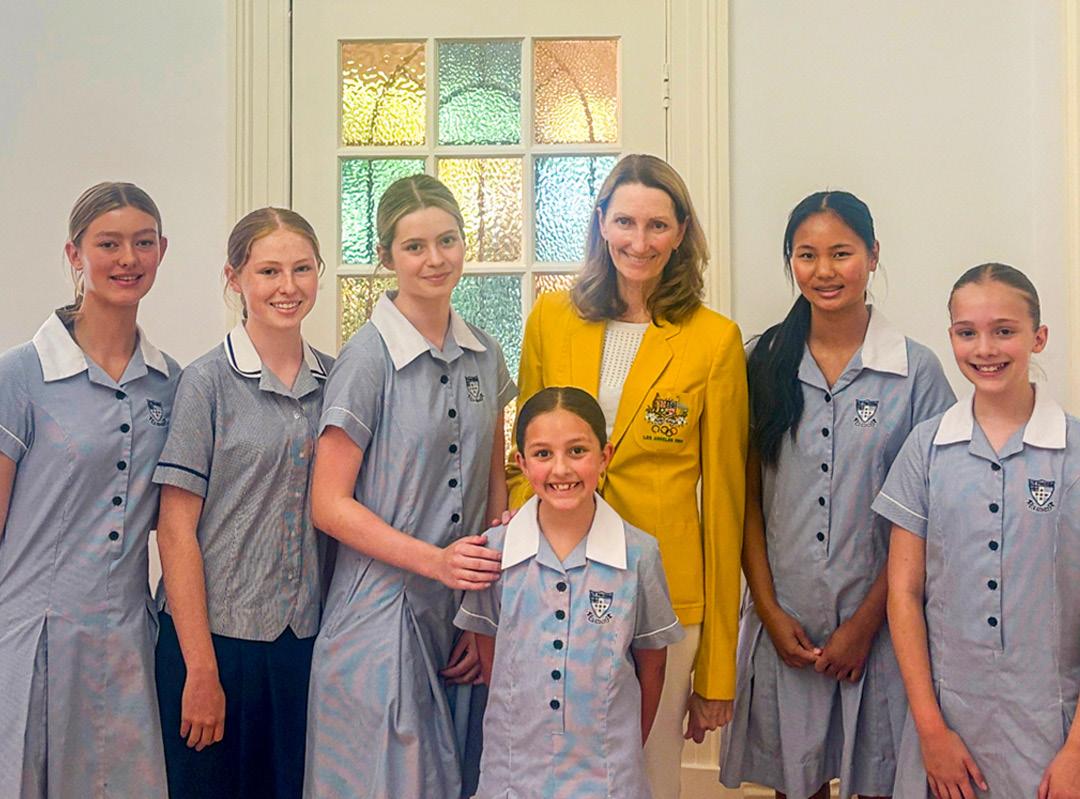
On a much-anticipated visit to Junior School, Principal Ms Linda Douglas took along some rather special memorabilia: her Australian Olympic blazer and a collection of photographs reflecting her athletic dedication.
Speaking first to Year 5 students as part of their PDHPE gymnastics unit, then to the broader School community at Senior School Assembly, Ms Douglas shared her remarkable journey as a rhythmic gymnast who represented Australia at the 1984 Olympic Games.
Accompanied by images and video footage that drew admiration from her audience, Ms Douglas traced her path from her first dance concert at age two through to the Olympic arena. Her message was clear: success and achievement are not mutually exclusive, and setbacks are simply stepping stones on the path to growth.
“Believe in yourselves,” she urged the students, “and listen to those who believe in you and champion you”.
For Senior School students preparing for end-of-year examinations, the timing proved particularly relevant. Ms Douglas reminded them that success is not defined by winning alone, but by the growth, grit and Grace we demonstrate along the way.
Her story resonated powerfully across all year levels, offering a living example of how persistence, self-belief and the courage to embrace challenges can lead to extraordinary achievements.
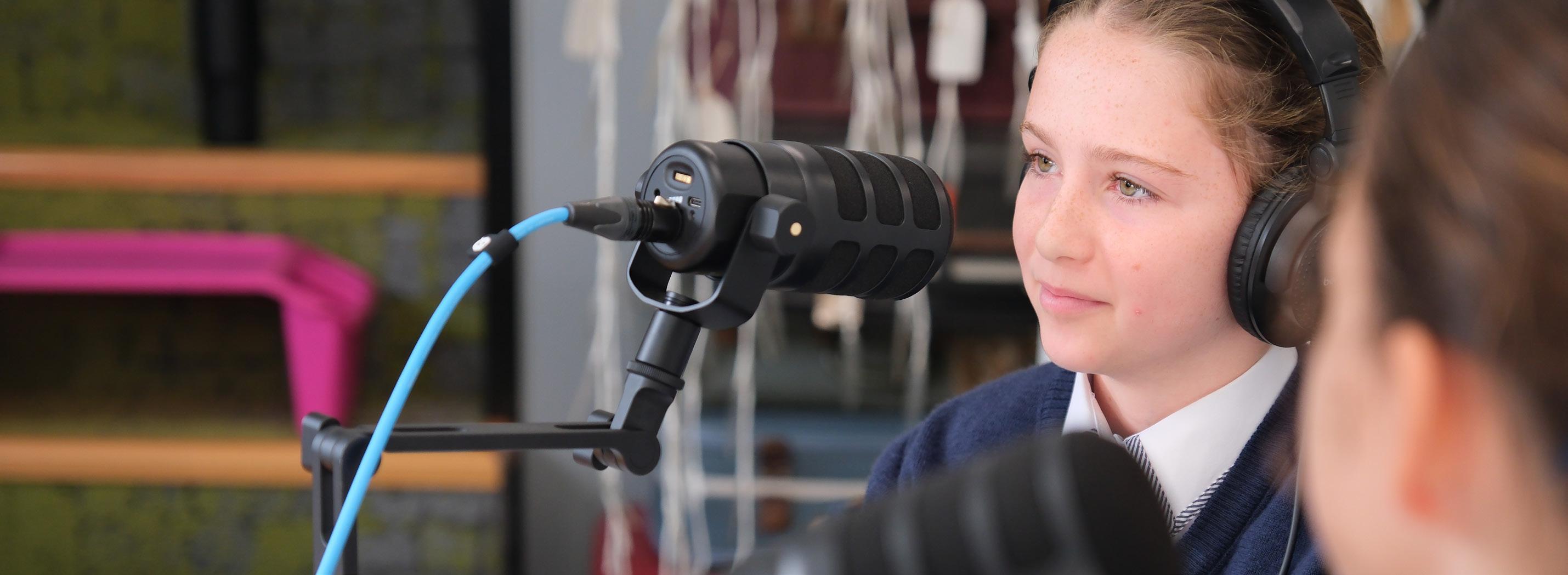
Young Hosts, Sharp Questions
When Year 6 students Phoebe and Coco sat down to discuss the philosophical concept of “purpose” for Wenona’s Student Voice Podcast, their exchange was unexpectedly revealing.
“Purpose
is not just something you enjoy doing,” offered Coco.
“It’s
something that you want to be or something that you’re striving towards.”
This is the calibre of conversation emerging from a student-led podcast that has quietly become one of the School’s most engaging initiatives. Hosted predominantly by Year 6 girls, the series sees young broadcasters interviewing everyone from Kindergarten Class Captains to Principal Ms Douglas herself –and they’re not afraid to ask pointed questions.
When probing Ms Douglas about her childhood, one host asked directly: “Did your family members ever get on your nerves?” The Principal’s response – about her sister drawing a sticky tape line down their shared bedroom – captures exactly the kind of authentic detail that makes these conversations so enjoyable.
The topics range widely. In one episode, Environment Club Co-Captain Sanaya (Year 10) and Director of Property and Facilities Mr Demsitz explore everything from solar panel installations to the United Nations’ Sustainable Development Goals. In another, Head Prefect Zara (Year 12) discusses her aspirations to become a Navy pilot. Meanwhile, Kindergarten students Eva and Chiara share their vision for improving the
Woodstock campus: “A chocolate fountain that spreads chocolate everywhere!”
What emerges across episodes is a consistent thread of student agency. As Mr Demsitz notes, “Any sustainability program at a school should be student-led. That’s where you find the success.” This philosophy of students actively practising leadership rather than simply learning about it, is the spirit embodied by the podcast.
The young interviewers are also creating a lasting audio archive of Wenona life, told in their own voices. You can listen at PodBean.
Where We Belong
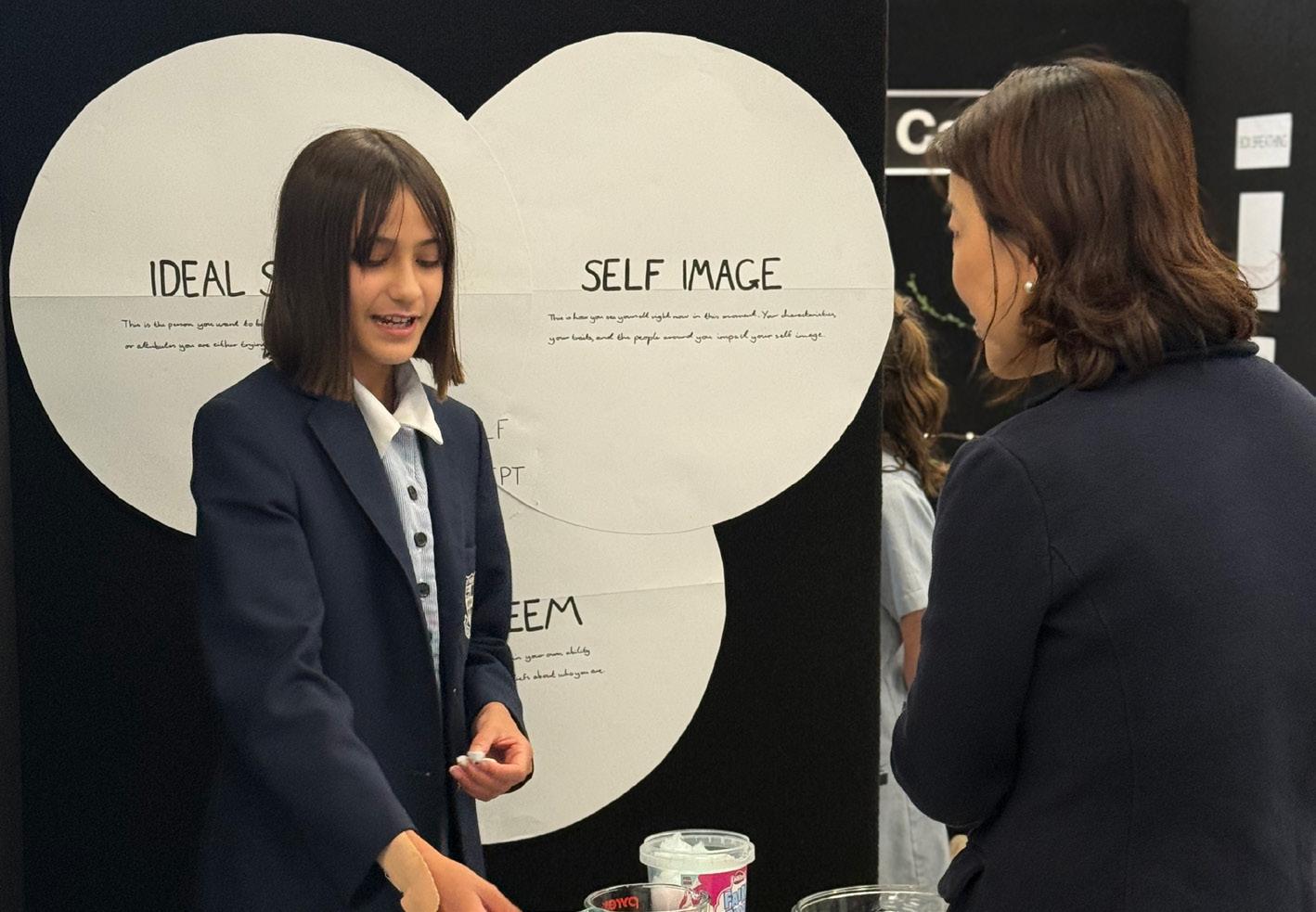
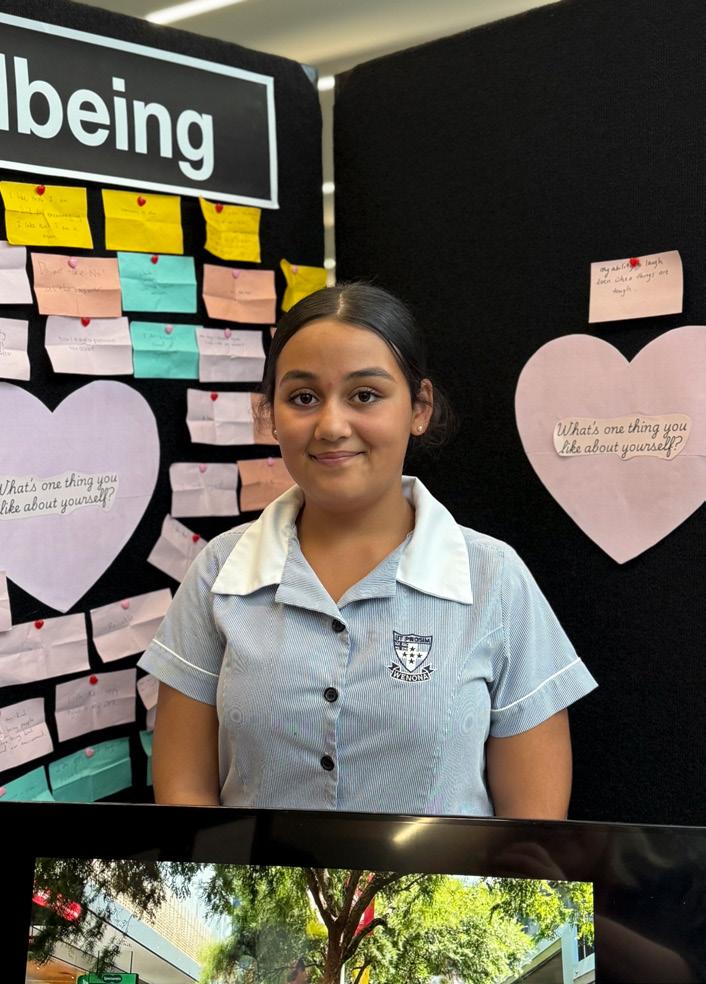
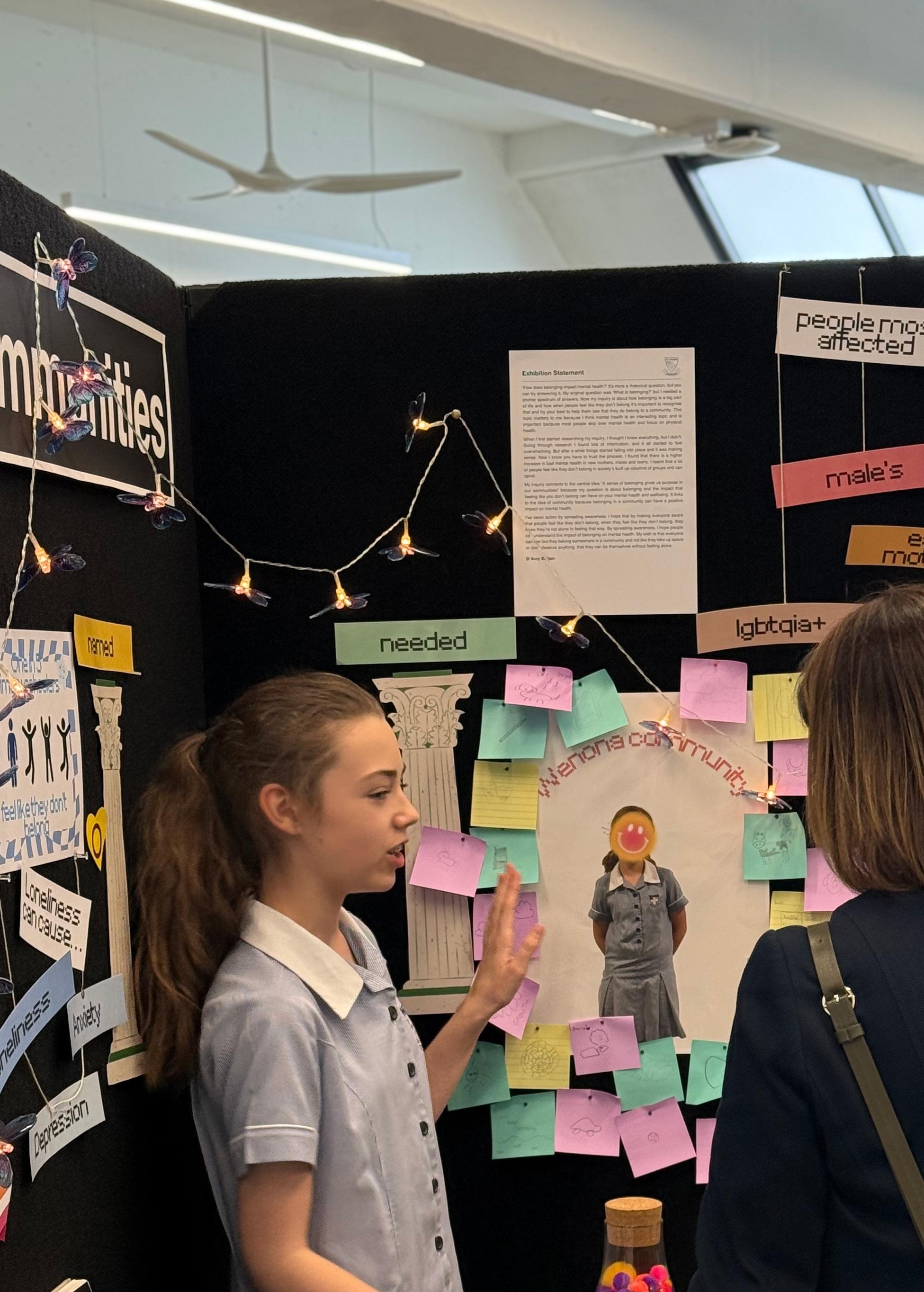
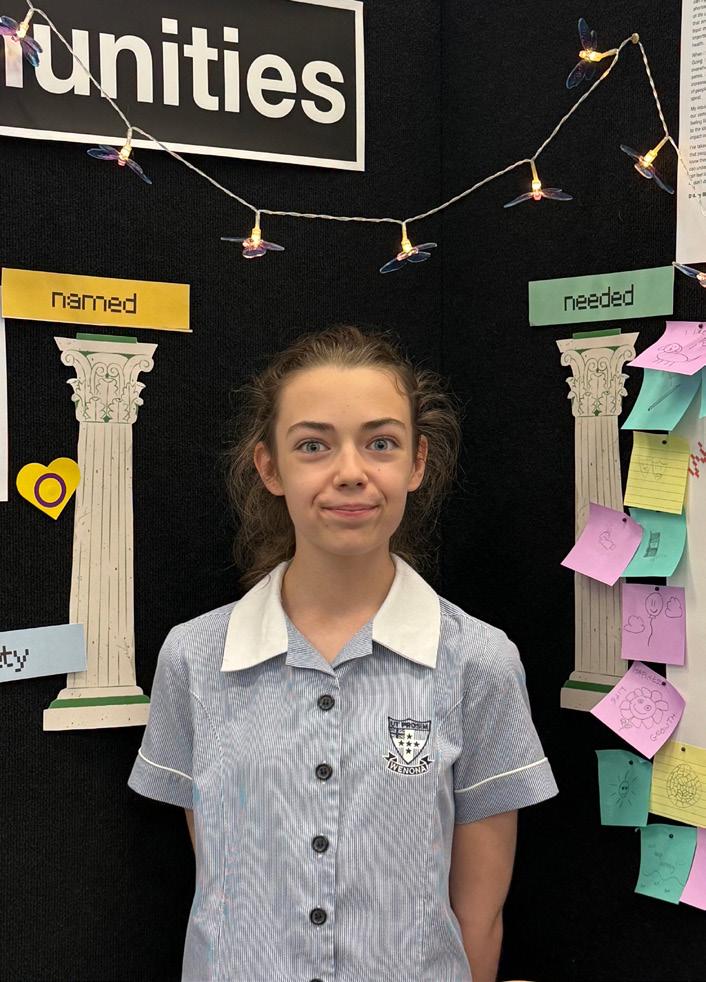
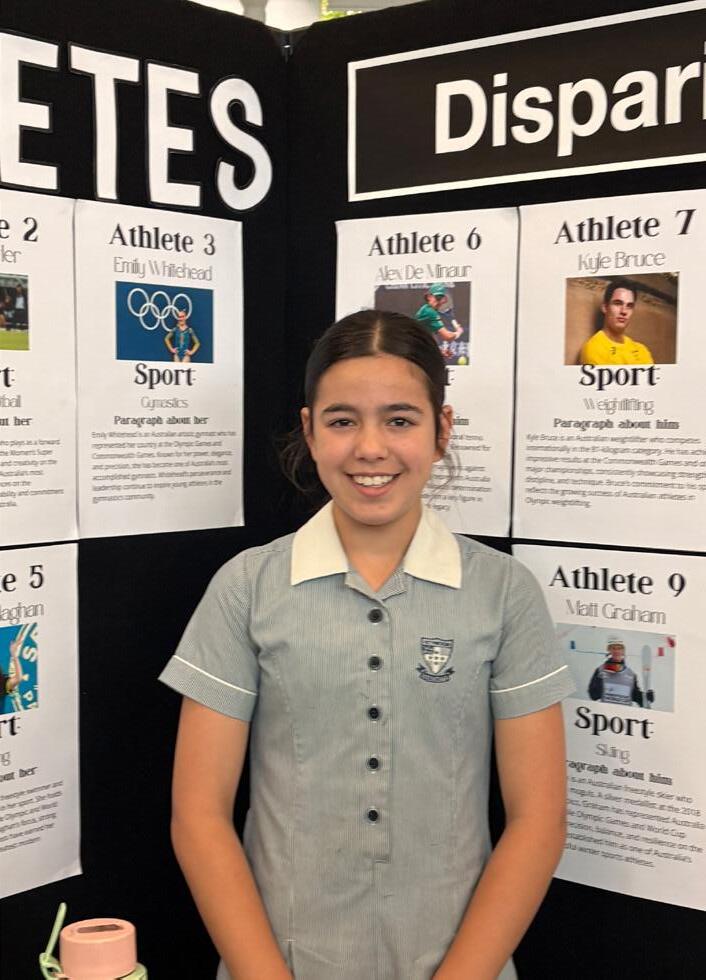
What does it mean to truly belong? It’s a question that has occupied philosophers for centuries and was examined by Year 6 for their 2025 International Baccalaureate Primary Years Programme Exhibition.
The learning included an excursion to Western Sydney University’s Parramatta campus for Refugee in My Neighbourhood, an immersive experience that placed students in the shoes of refugees and asylum seekers. Guided by people with lived experience, the girls gained firsthand insight into the challenges of displacement and the courage required to rebuild belonging in a new country. It was confronting, thought-provoking and precisely the kind of provocation that sparks genuine inquiry.
Back at the Junior School, a two-day conference allowed students to delve deeper into their three lines of inquiry: what it means to be human, how humans adapt to change, and how we might think beyond ourselves.
SBS Board Director, Vic Alhadeff OAM, opened proceedings with a keynote that drew from his extraordinary journey across four countries and three continents. Born to parents from Rhodes Island, Greece, but raised in Zimbabwe, Alhadeff’s career as a journalist has placed him at history’s pivotal moments, from the fall of the Soviet Union to the collapse of the Berlin Wall, to South Africa’s first free elections. For young students grappling with questions of identity, his message resonated clearly: our experiences of displacement and adaptation can become our greatest strengths in building inclusive communities.
The following day brought Olympic water polo player Holly Young to the podium. A member of the Aussie Stingers who claimed silver at the Paris Olympics, Young shared how she discovered belonging through sport. Her journey from a 13-year-old trying something new to representing Australia on the world’s biggest stage illustrated a powerful truth: belonging isn’t simply about where we come from, but what we choose to commit ourselves to.
Between keynotes, students moved through workshops designed to deepen their understanding of community and connection. They heard from a Paralympian about overcoming challenges, explored sound healing and breathwork as tools for inner peace, and engaged with an immigration lawyer about the complexities of legal belonging. Wenona speakers, including School Archivist, Ms Elizabeth Hartnell, a Senior School student, and staff members from the ICT and Boarding departments, each offered different perspectives on finding one’s place.
These experiences then informed each student’s individual research as they prepared for their Exhibition presentations. The girls discovered that belonging is not something that simply happens to us but something we must work to create, nurture and extend to others.
In the Spotlight
Junior Athletes on the Rise
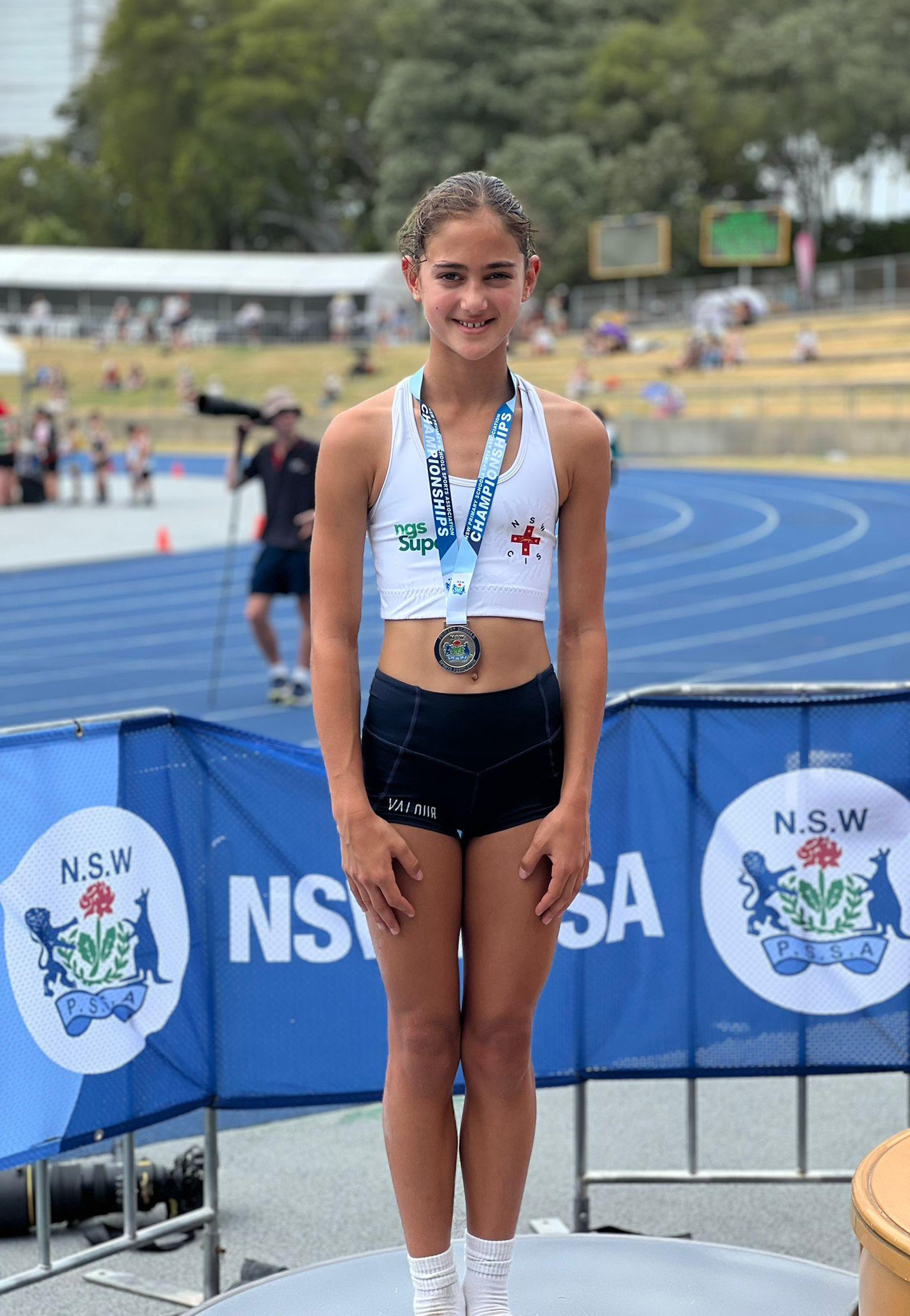
Two Junior School students made their mark on the national sporting stage in 2025. Sierra (Year 6) dominated the 11 years athletics season, winning gold in high jump and shot put at the IPSHA Athletics Carnival, gold in long jump and high jump at the CIS Championships, and capping it off with gold in long jump at the School Sport Australia Primary Athletics Championships. She trains two to three times a week with her mother’s squad, mixing disciplines to build speed and technique across events. “The more I work at it, my results keep getting better and better,” she says.
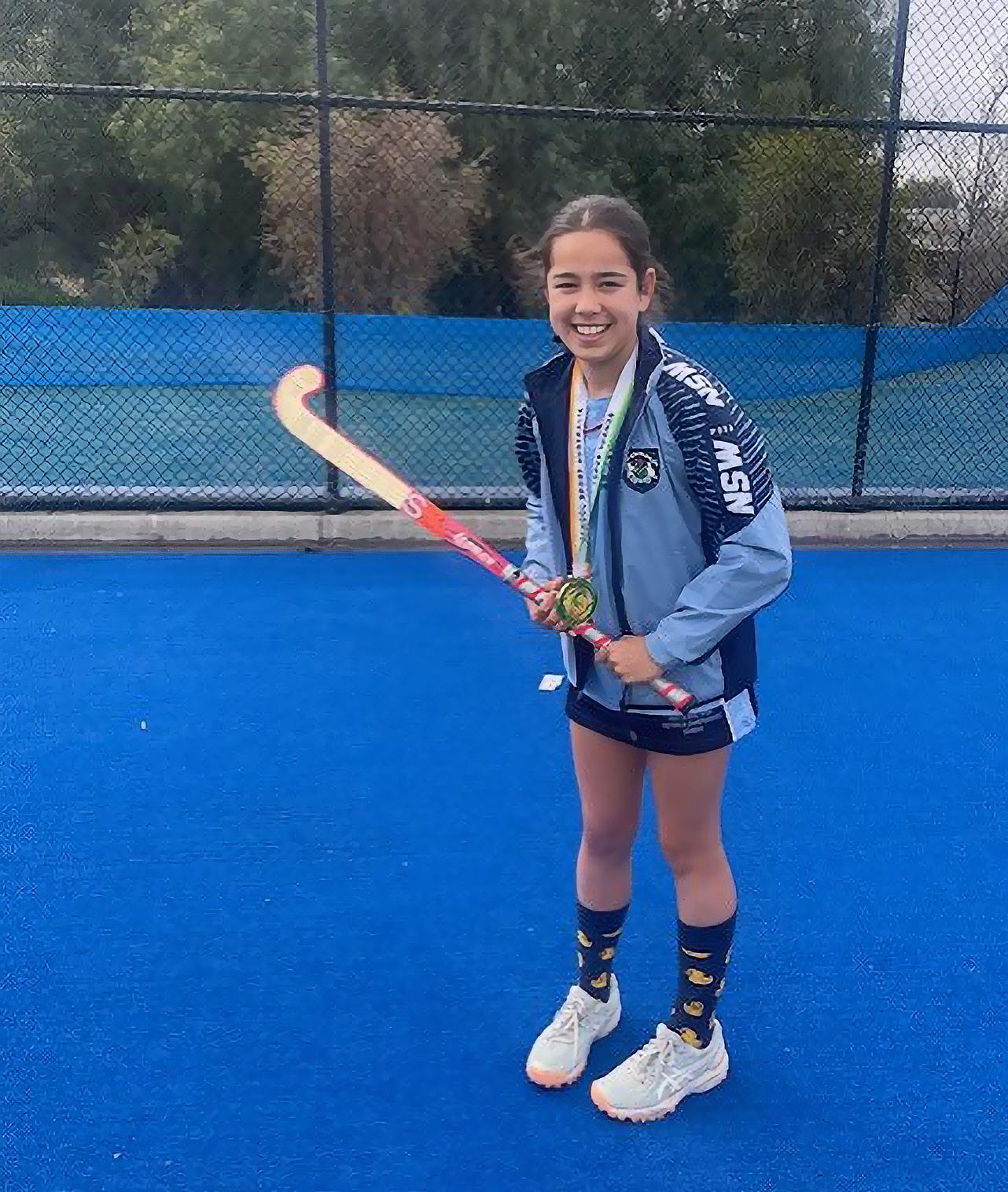
Harriet’s (Year 6) hockey season was equally impressive.
Selected into the CIS team after NSWCIS trials, she won bronze at the NSWPSSA Championships before earning gold with Team NSW at the national championships. She trains and plays club matches on top of representative commitments, driving up to an hour to reach the hockey fields.
“I met girls all across NSW,” she says of nationals, “and we created so many memories I will never forget”.
A Campaign that Made Waves
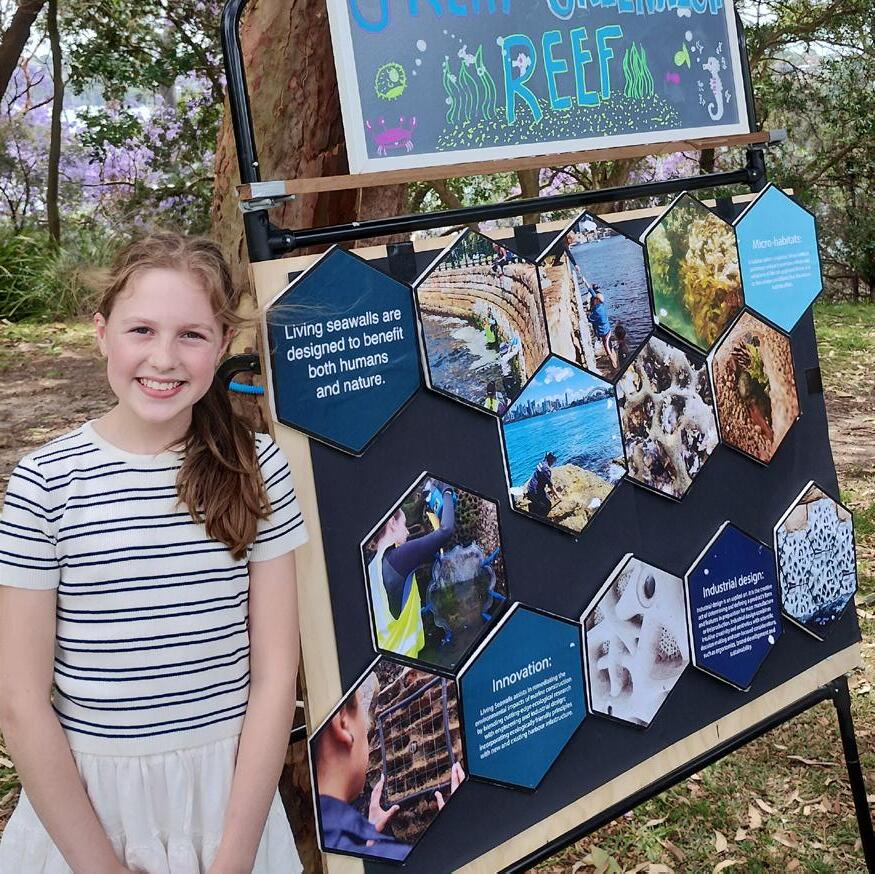
Following in the footsteps of many Wenona Year 5 students, Bella learned about Living Seawalls, modular panels that create micro-habitats for endangered marine species, through her International Baccalaureate Primary Years Programme (IBPYP) unit, Sharing the Planet.
As a Year 6 student in 2025, she took on the challenge of convincing her local council to install seawalls at Greenwich Wharf. Bella launched a petition to restore habitats for species including seahorses, collecting signatures at Shell Park during the Greenwich Village Arts Trail and catching the attention of Lane Cove Councillor, Merri Southwood, who shared her campaign on the council’s social media.
Bella’s persistence paid off. Due to the work of many, Living Seawalls are now being installed at Greenwich Wharf.
Dancing for Australia
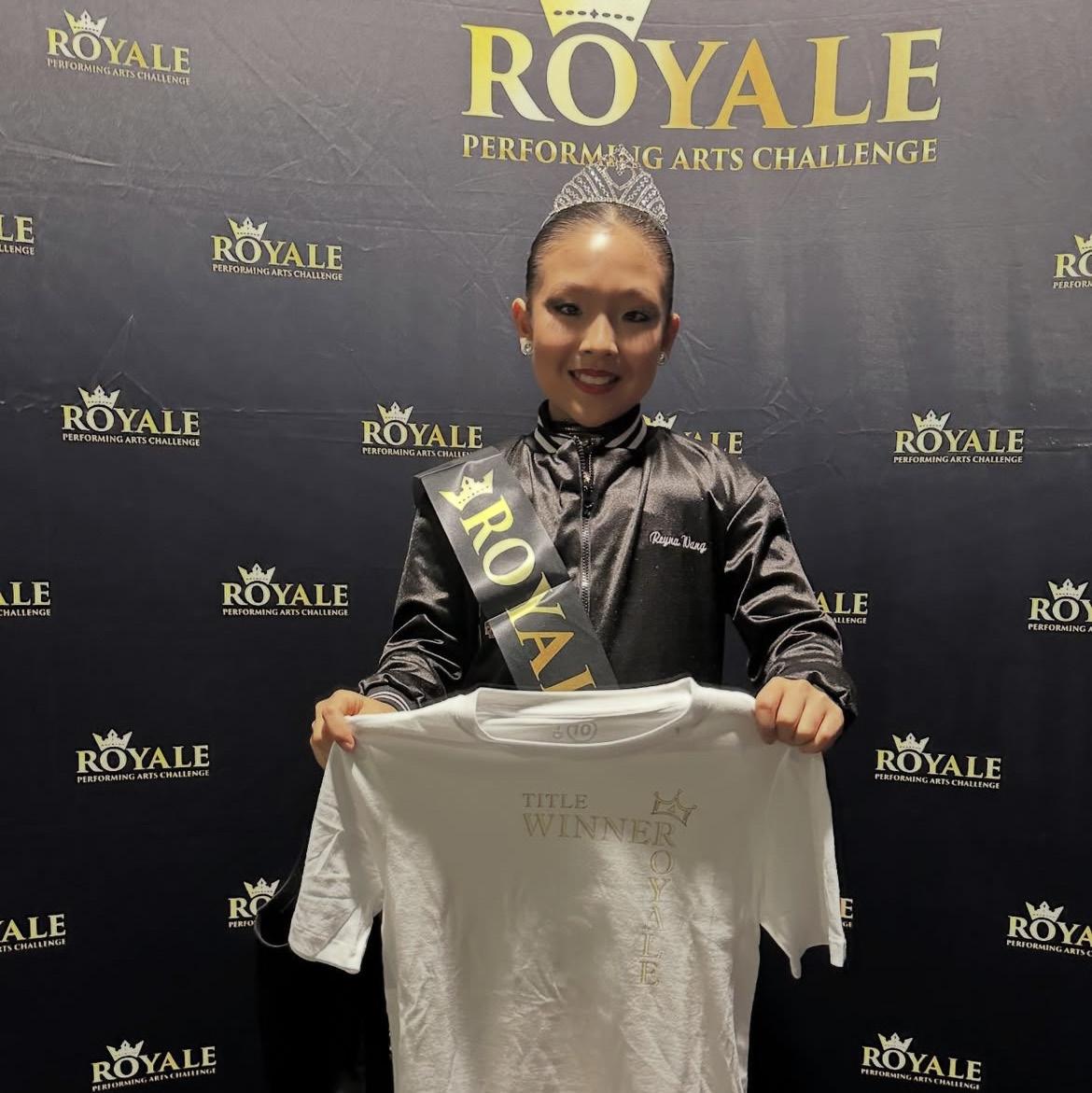
For Reyna (Year 6), dance is a path to represent her country on the international stage. Her journey began at age three and has since taken her to stages in Singapore, New Zealand and Las Vegas. She is the reigning DanceLife Unite National Grand Champion and the 2024 Get the Beat World Grand Champion, and has twice travelled to the United States to compete for Australia. Reyna’s signature piece is a Japanese contemporary fan dance called Geisha (she broke more than five fans mastering its one-handed throwing and catching technique).
Training four-and-a-half hours most evenings, her advice to younger dancers is clear:
Skye Takes the Stage
When Skye’s (Year 6) father broke the news that she had earned a place in the Sydney cast of Annie, she burst into tears. She had survived one of the most competitive audition processes in Australian theatre, with more than 8,000 girls vying for roles. Chosen for the role of Friday at Sydney’s Capitol Theatre, Skye impressed directors through eight gruelling rounds of auditions. “It was nerve-wracking,” she admits.
“I just hoped I remembered the lines, character traits, and most of all where each character has to move on stage.”
“Work hard and stay humble. You cannot expect things to magically happen”.
In 2025, Skye balanced theatre rehearsals with her role as Junior School Captain, and was recognised with the 2025 Bennelong Award for the Arts.
On Her Own Terms
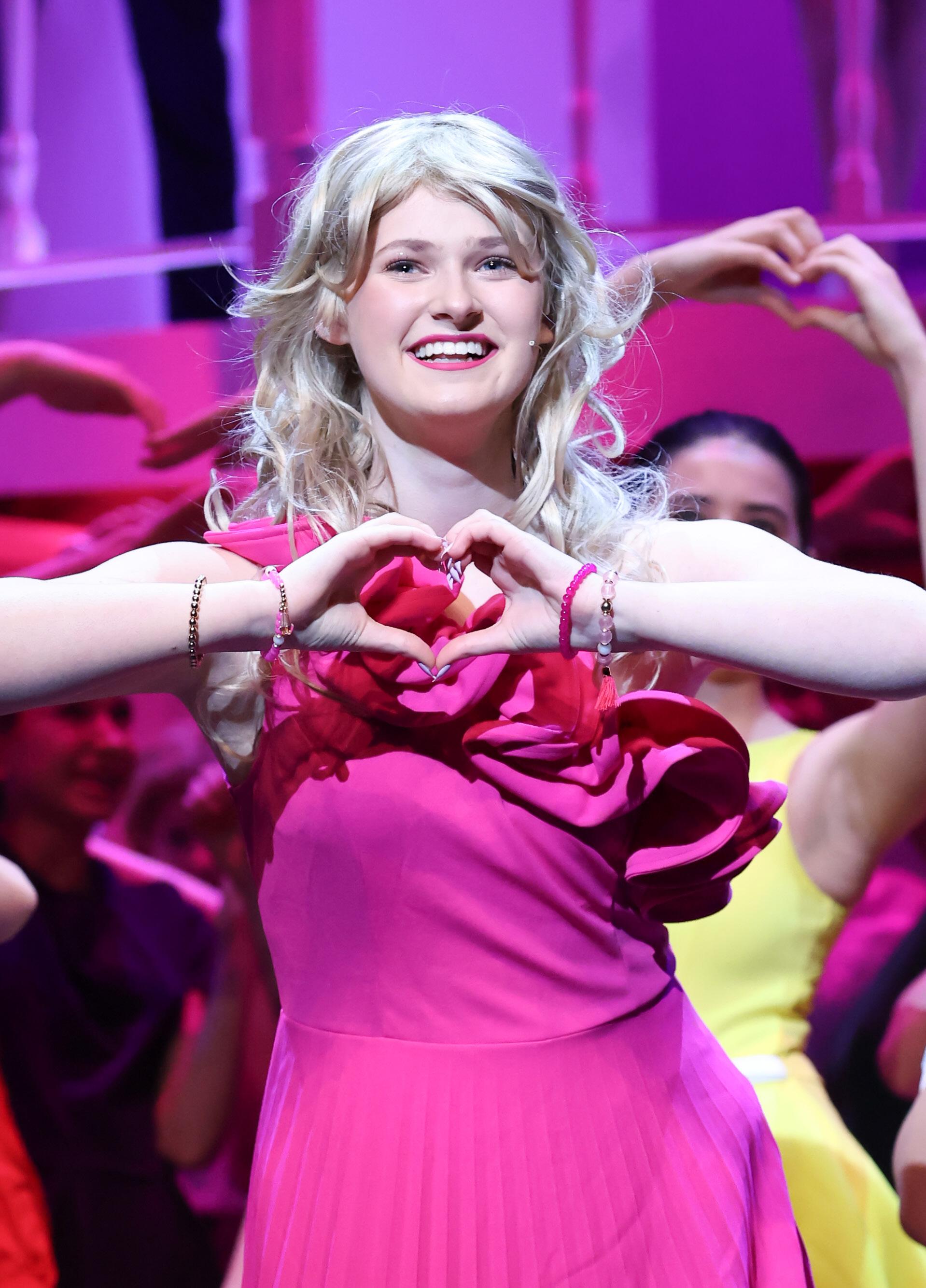
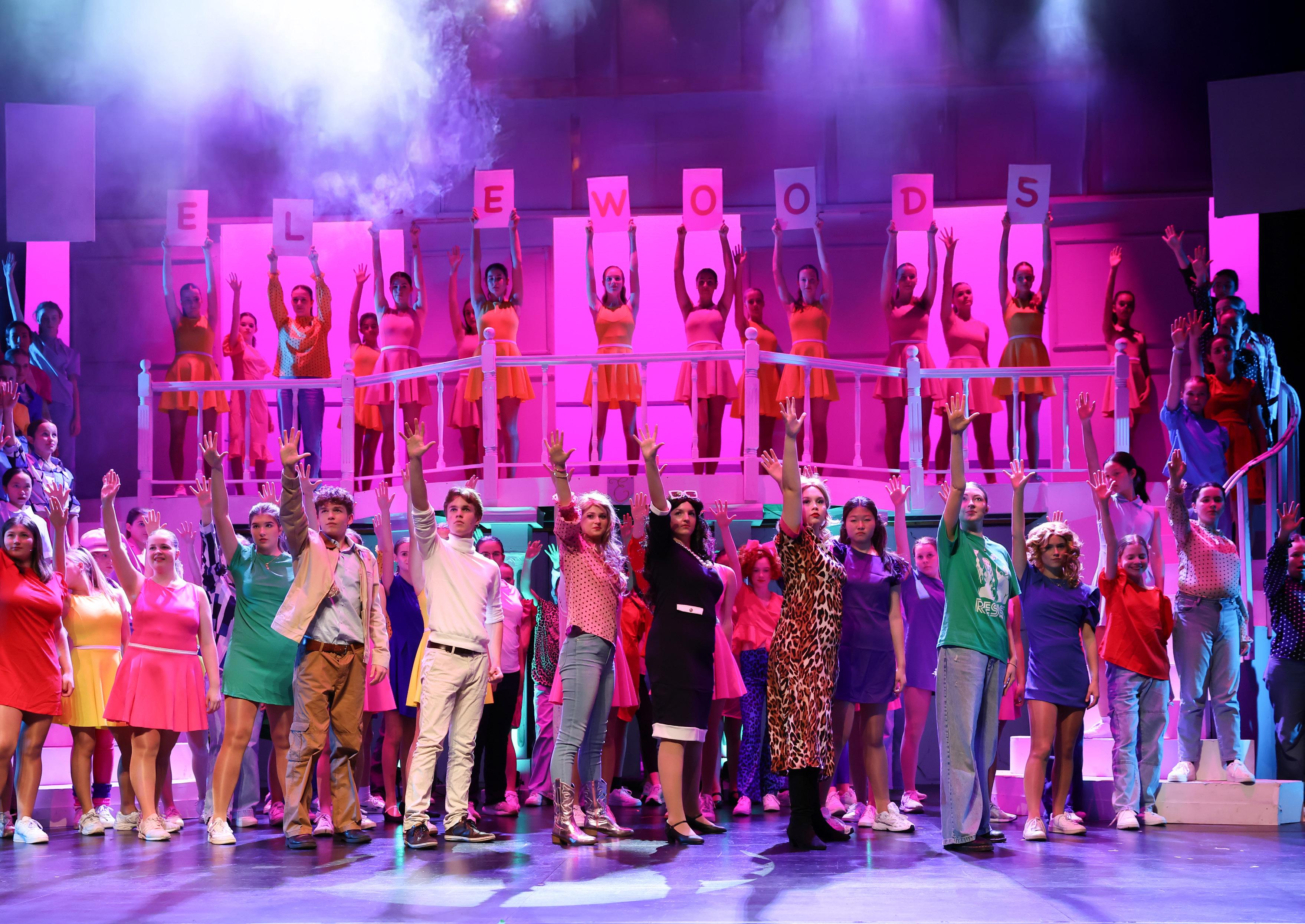
Wenona’s production of Legally Blonde the Musical was a celebration of self-belief and the power of women who refuse to be underestimated
When Elle Woods strode onto the stage at the Concourse Theatre in August, audiences were treated to far more than a polished school production. They witnessed a story about a young woman’s refusal to let anyone else define her worth, a message that resonated powerfully with the cast who brought it to life.
The award-winning musical, in which a young woman dismissed as “just a blonde” proves she belongs at Harvard Law School through sheer determination and self-belief, brought together cast members from St Aloysius’ College and Shore School alongside Wenona students across four sold-out shows.
Heidi (Year 9) commanded the stage as Elle, a character whose arc from sorority president to courtroom champion is fundamentally about a young woman backing herself when no one else will. Supported by a high-energy cheer squad and the Delta Nu crew, she led a cast that brought real conviction to the show’s central message: that a woman’s strength lies in staying true to who she is. The production was overseen by a director with years of experience in the British theatre scene and supported by a choreographer whose credits as a performer include Sydney productions of Mamma Mia! and The Phantom of the Opera.
Across around 30 rehearsals and four performances, Elle’s journey of self-belief mirrored the cast’s own. For many students, the experience extended well beyond the stage. Deputy Head Prefect 2025–2026, Emmy (Year 11), who played Harvard Admissions Committee Member Lowell, described the production as transformative.
“Participating in Legally Blonde had a huge impact on me, even helping me to learn more about myself, where I have come from and where I am going from here. At every single rehearsal, my love for the performing arts grew stronger each day.”
It is no coincidence that Wenona chose a musical whose heroine succeeds not by changing who she is, but by trusting in her own abilities. Throughout the production, these young women did the same, stepping into the spotlight with confidence, resilience, and a shared understanding that being yourself is more than enough.
Going the Distance
From record-breaking swims to historic sprints, 2025 delivered Wenona’s most successful sporting year on record. With 122 teams competing across Saturday sports and athletes rewriting the record books, the year showcased individual brilliance and the collective strength.
The statistics are particularly impressive for an inner-city school on a small footprint. More than half of our 122 teams reached finals in their respective competitions, with at least 20 claiming division championships. All but four of the School’s top Senior and Junior teams competed in the highest division, a testament to the depth of talent across every sporting code.
“This is the largest number of teams we have ever had,” noted Director of Sport and Performance, Mr Tom Hill. “It doesn’t happen overnight and certainly not without so many students contributing.”
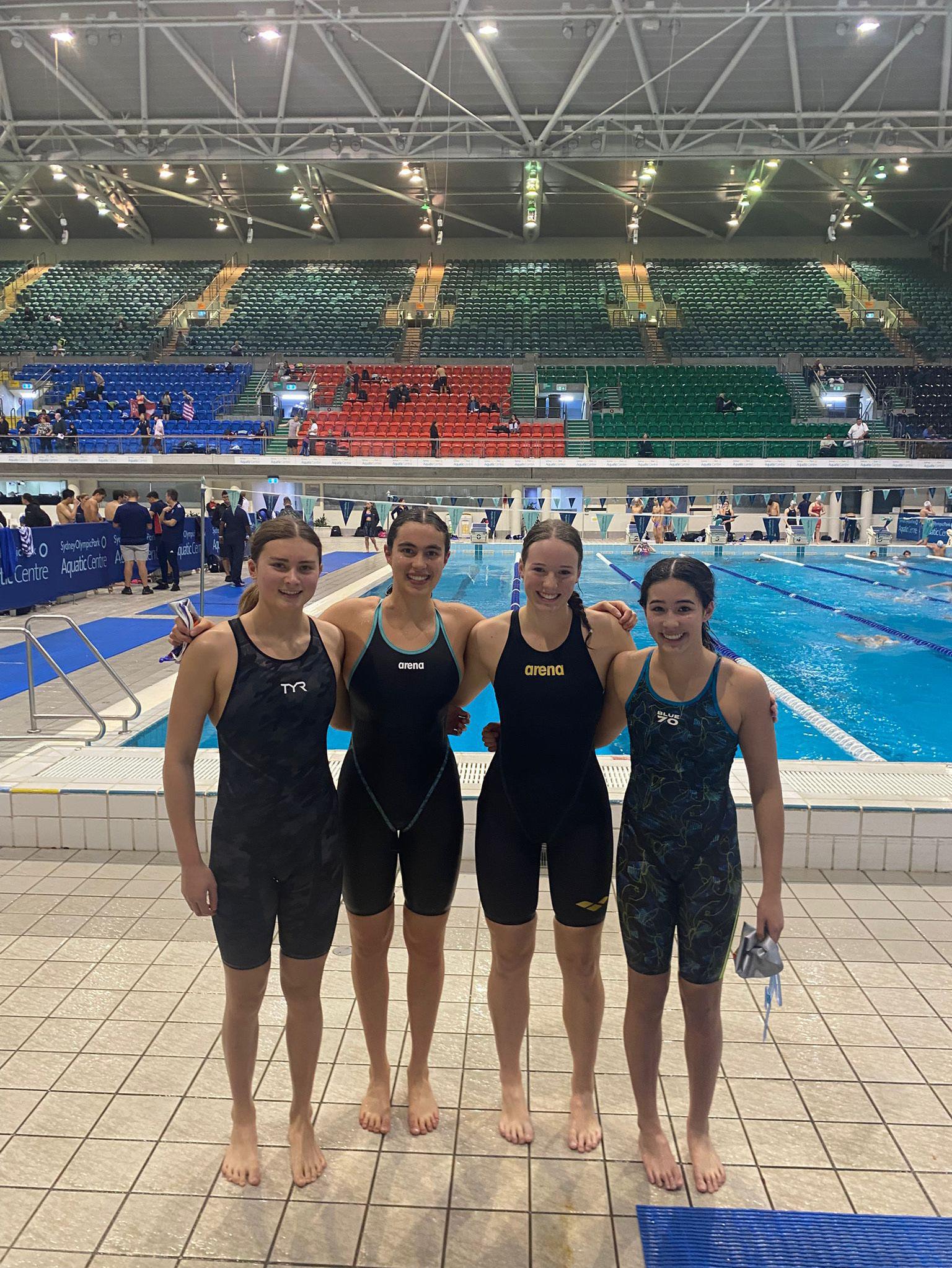
The Swimming Carnival provided one of the year’s most electrifying moments. In the 50m Freestyle final, Year 11 students Ali and Kira both dipped under 26 seconds, a feat never before achieved at a Wenona carnival. Both are Australian Junior Team and Squad representatives, and their performances have set records that may stand for years to come. Their success reflects what Mr Hill described as “a truly golden era of Wenona Swimming”.
Adding to the excitement, Jackson House claimed victory at both the Athletics and Swimming Carnivals, bringing fresh names to the trophies and demonstrating the healthy competition between Houses.
From Interschools to the World Stage
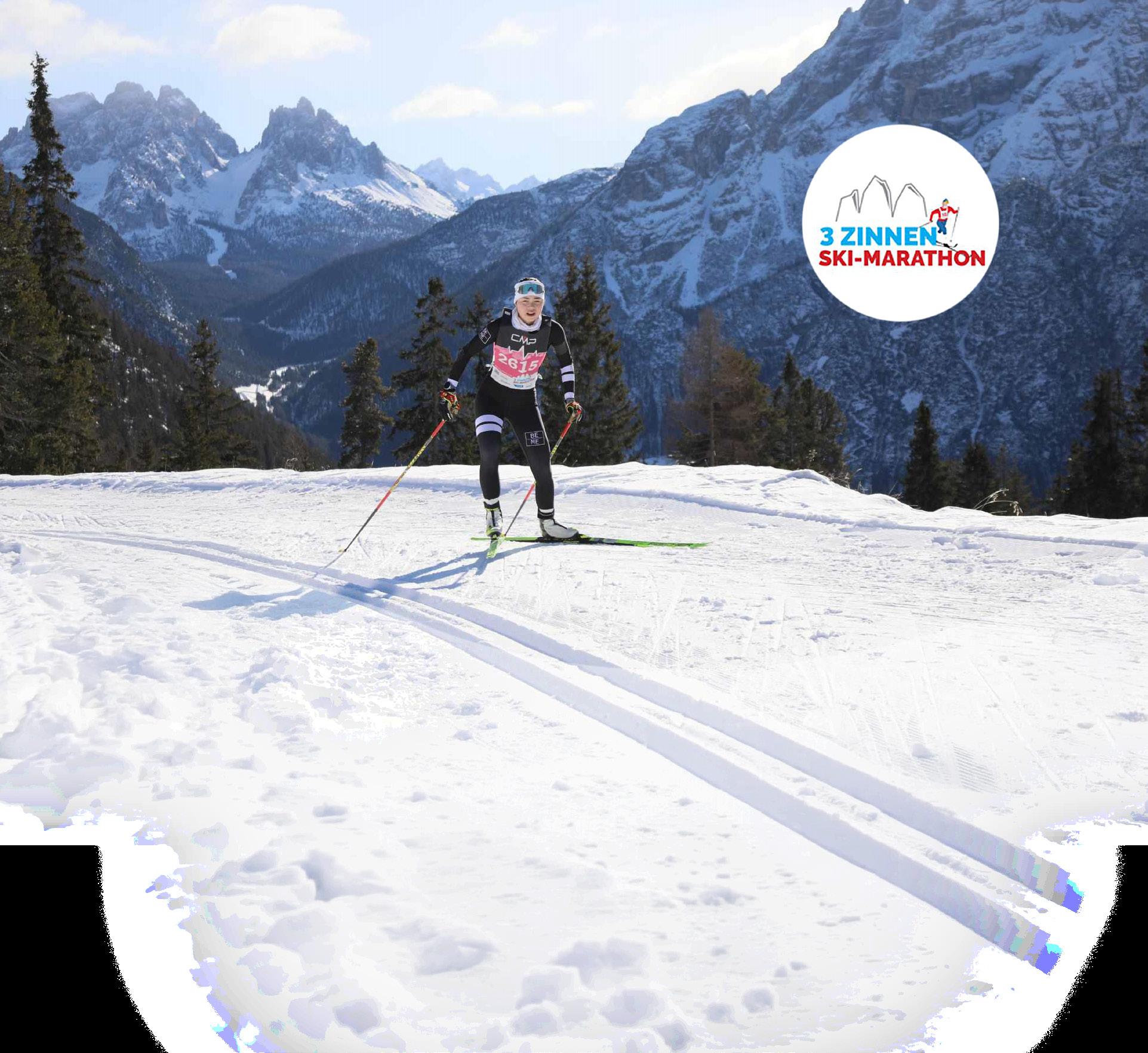
At the International Ski Mountaineering Federation Youth World Championships in Puy Saint Vincent, France, in late March, Ava McCann placed sixth in the Individual event and 12th in the Sprint - strong results in a sport dominated by European athletes. The Year 12 student’s debut season on the senior Ski Mountaineering World Cup circuit also yielded a ninth-place Youth World Cup finish in Italy and a top-50 Sprint result in Spain, enough to meet the qualifying standard for Milano Cortina 2026. It capped a year that saw her named Snow Australia’s SkiMo Junior Athlete of the Year.
It is a long way from 2017, when Ava first put on cross-country skis simply to make up the numbers for a Wenona Interschools team. Challenge has always been Ava’s default setting. By age 10, she had earned a black belt in Kyokushin karate, the youngest through the Kyokushin World Federation, and has since won 15 national titles. But it was biathlon, pairing cross-country skiing with rifle shooting, that truly captured her. In January 2024, she represented Australia in Biathlon at the Gangwon Winter Youth Olympic Games in South Korea, competing in front of her Korean family, an experience she described as “a lifelong dream”.
Her horizons expanded further when an ISMF development camp in Spain introduced her to SkiMo, a discipline combining gruelling uphill ascents with technical descents and rapid equipment transitions. Ski Mountaineering made its Olympic debut at Milano Cortina in February 2026, making it one of the most exciting emerging winter sports.
Through it all, Ava completed her HSC while maintaining her place on both the Cross-Country Skiing national junior team and Biathlon Australia’s women’s team.
Record-Breaking on the Track
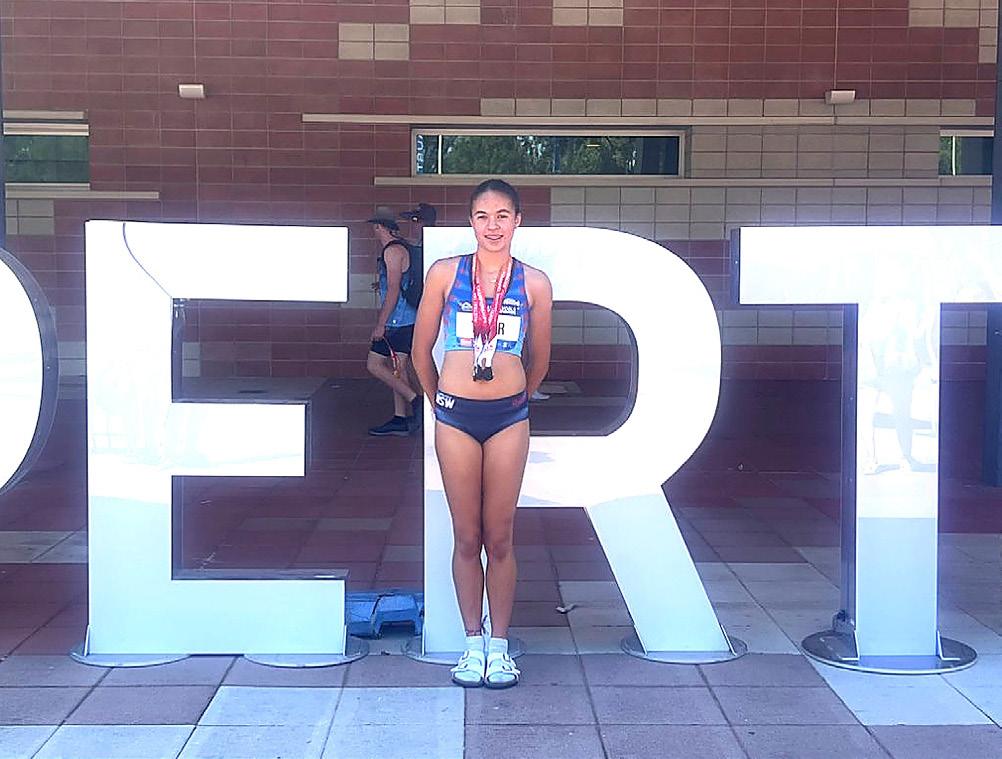
Athletics Captain Maya (Year 11) delivered one of the most defining seasons in Wenona Athletics history. At the NSW All Schools Athletics Championships, she broke the 16 Years Girls 100m record, a mark that had stood untouched since 1979. She followed this with gold in the 200m and earlier broke the IGSA 17 Years 100m record, cementing her status as one of the state’s premier young sprinters.
Yet it is Maya’s leadership that has perhaps made the greatest impact. “Maya leads from the front in every sense,” her coaches observed. “She lifts those around he and has created an environment where younger athletes feel supported and inspired to chase their own breakthroughs.”
Cross Country also flourished, with Wenona achieving its best-ever point score and second place at the IGSA Cross Country Carnival.
Fourteen athletes qualified for the NSW Combined Independent Schools Championships, where the 14 Years team of Chloe, Grace, Sadie, and Scarlett (Year 8) placed second overall. Emma (Year 9) earned particular distinction, finishing third in the 15 Years division at CIS before placing eighth at the NSW All Schools Championships, competing against the best young distance runners in the state.
The Art of Mastery
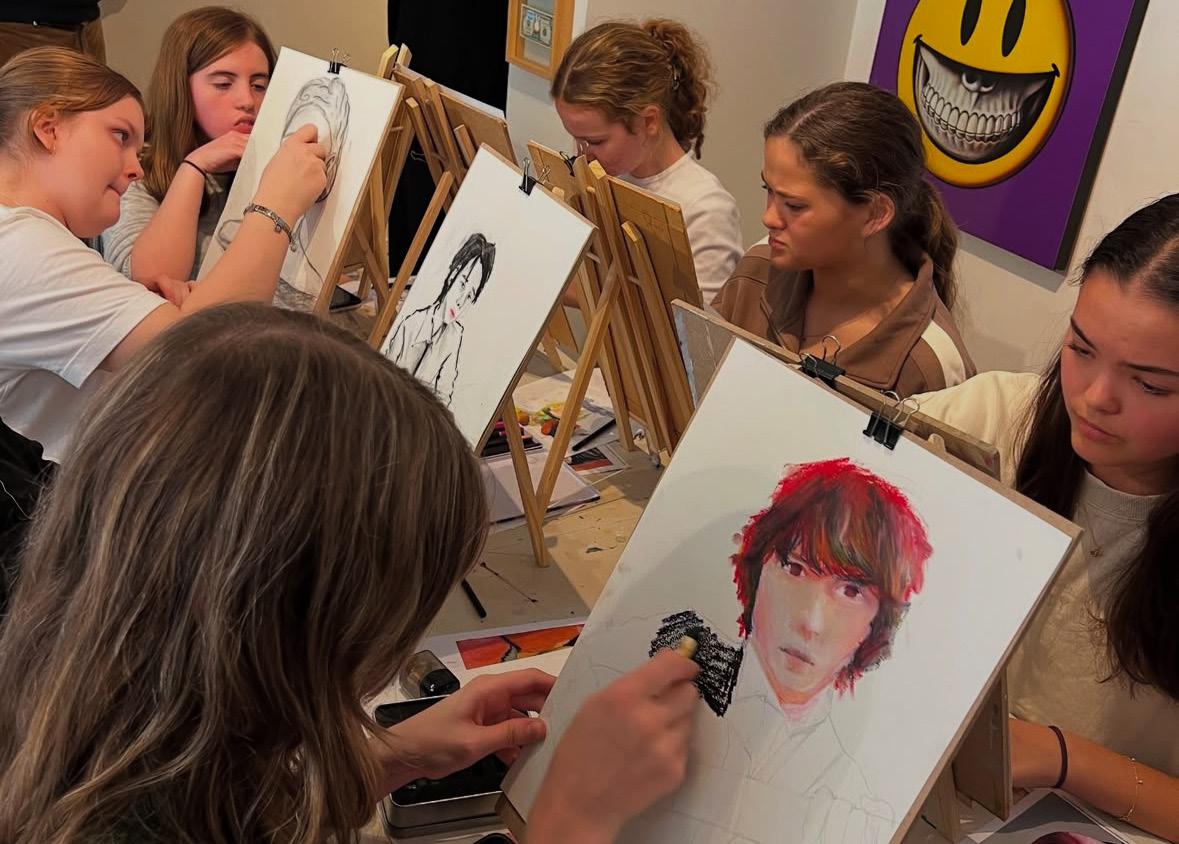
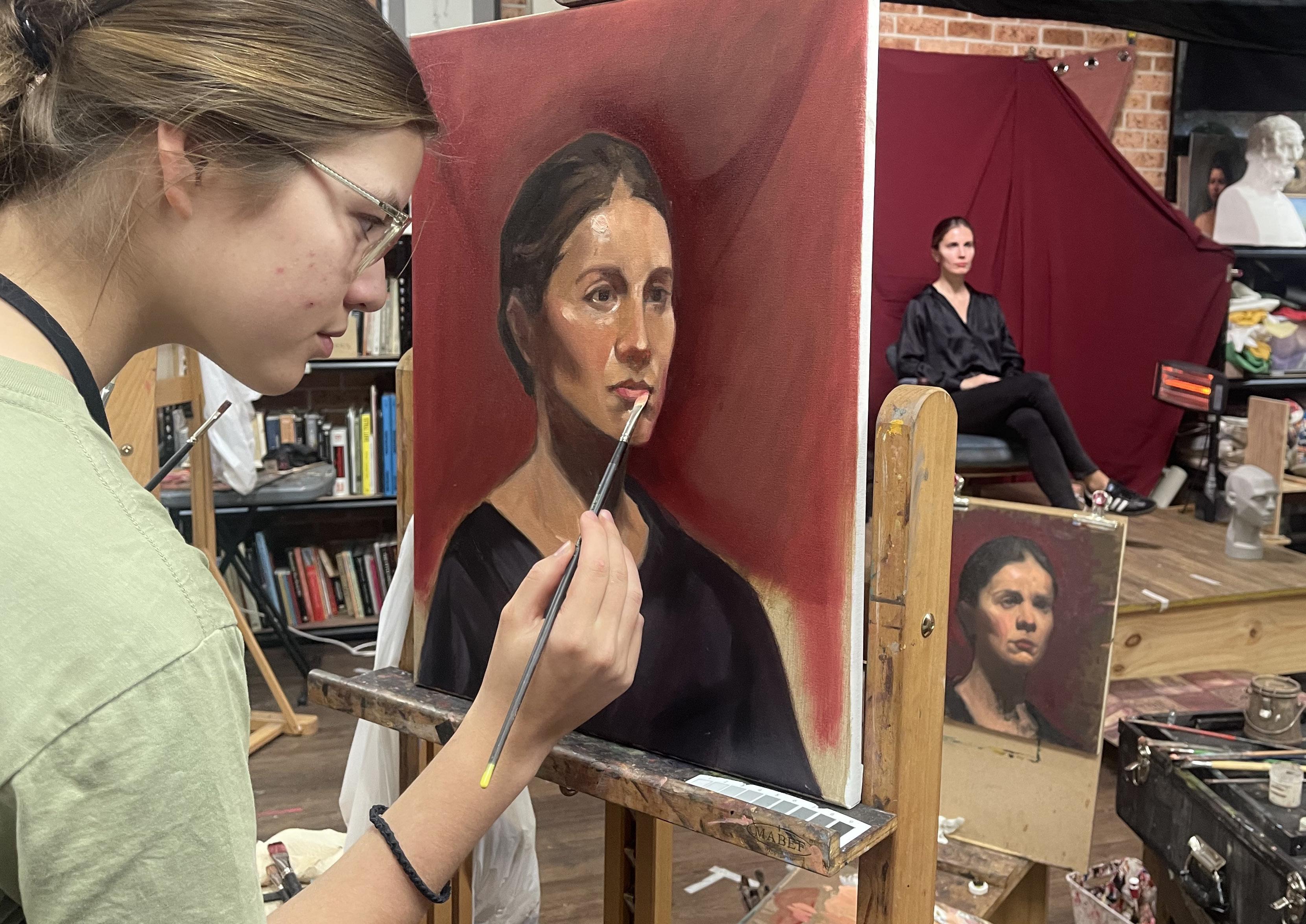
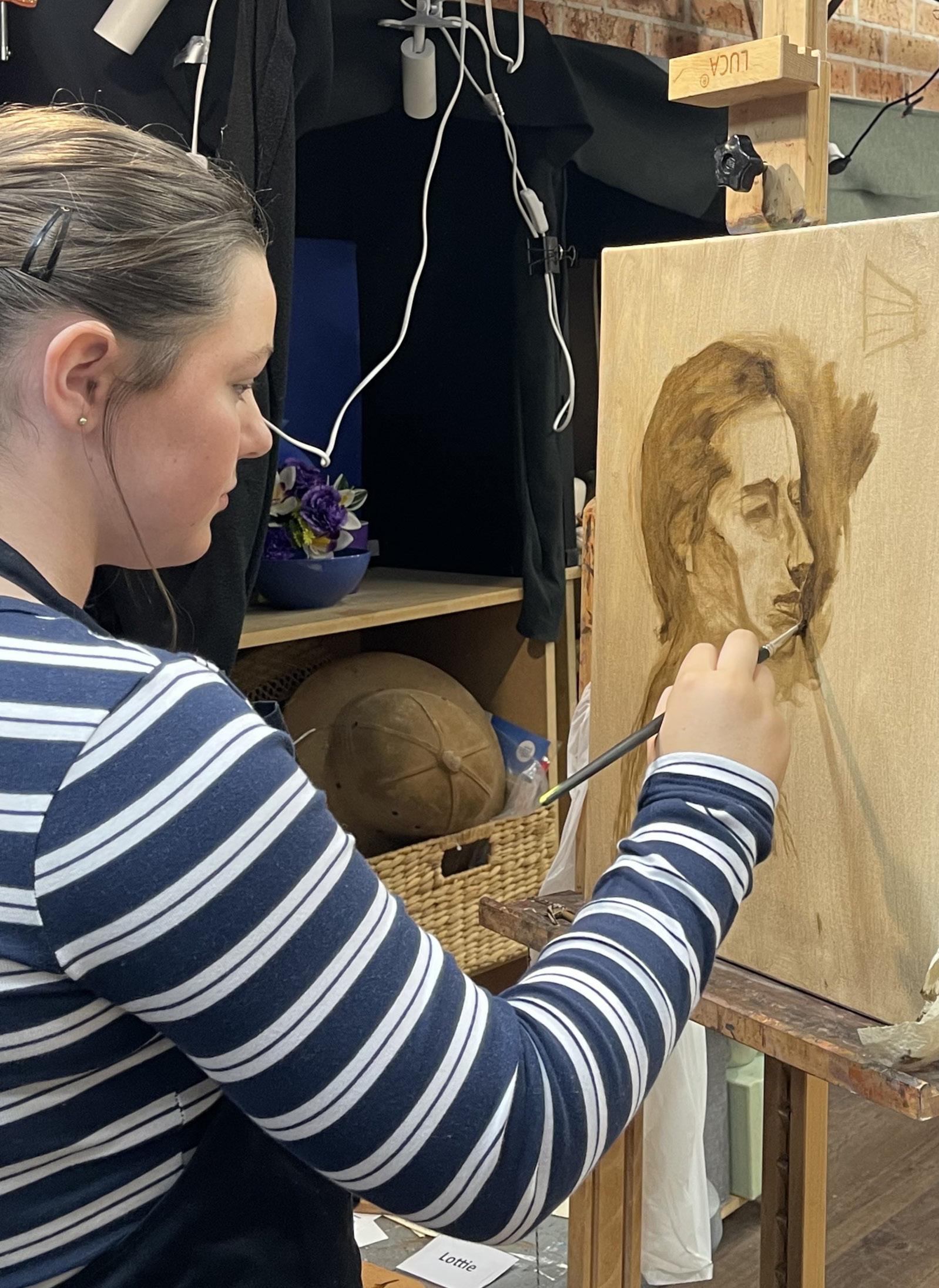
Wenona’s Visual Arts Talent Development Program has grown into one of the School’s most distinctive offerings for high-capacity creative students, culminating each year in an Exhibition that celebrates the remarkable growth achieved through intensive mentorship with professional artists.
The 2025 program focused on classical oil painting techniques, the time-honoured methods that trace their origins to the Italian Renaissance and have been passed down through generations of master painters. To deepen her own expertise and bring this rich tradition to Wenona students, Head of Visual Arts, Ms Michele Brennan, travelled to Florence, Italy, to study with one of the world’s foremost teachers of classical technique, an investment by the School that reflects its commitment to artistic excellence.
Students spent the term working alongside three distinguished mentors. Sally Ryan, a threetime Archibald Prize finalist whose 2025 portrait Lette loose (depicting author Kathy Lette) hung alongside Australia’s finest contemporary portraiture, brought her refined understanding of composition and character. Ben Ryan, who trained at both the Julian Ashton Art School and the prestigious Florence Academy of Art, shared techniques rooted in centuries of tradition.
The program also welcomed Wenona Alumna Xanthe Muston (2017), whose meteoric rise in the Australian art world offers students a powerful example of where talent and dedication can lead. In 2024, Xanthe won the National Emerging Art Prize, a $20,000 acquisitive award recognising Australia’s most promising emerging artists. A PhD candidate at UNSW exploring narrative and art, her latest solo exhibition, Two Person Book Club, was a sell-out success.
For participating students, the term-long immersion offered more than technical instruction — it provided a window into what it means to pursue art seriously, guided by artists whose work hangs in the nation’s most prestigious galleries.
Bridging Generations
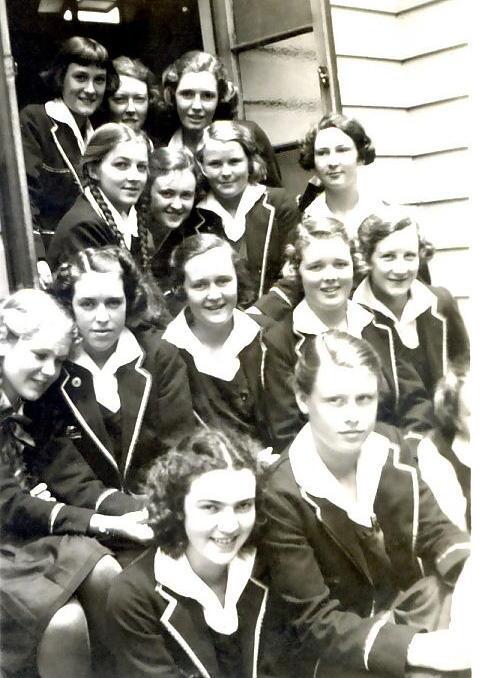
When today’s students open photo albums from years gone by, they discover something remarkable: the Wenona they know stretches back through decades of familiar buildings, familiar activities and familiar faces. They are not only doing the important work of safeguarding history; they are discovering how they fit into it.
The Wenona Archive is rich from the efforts of generations of students and their families, with tens of thousands of donated images now filling the shelves of a compactus.
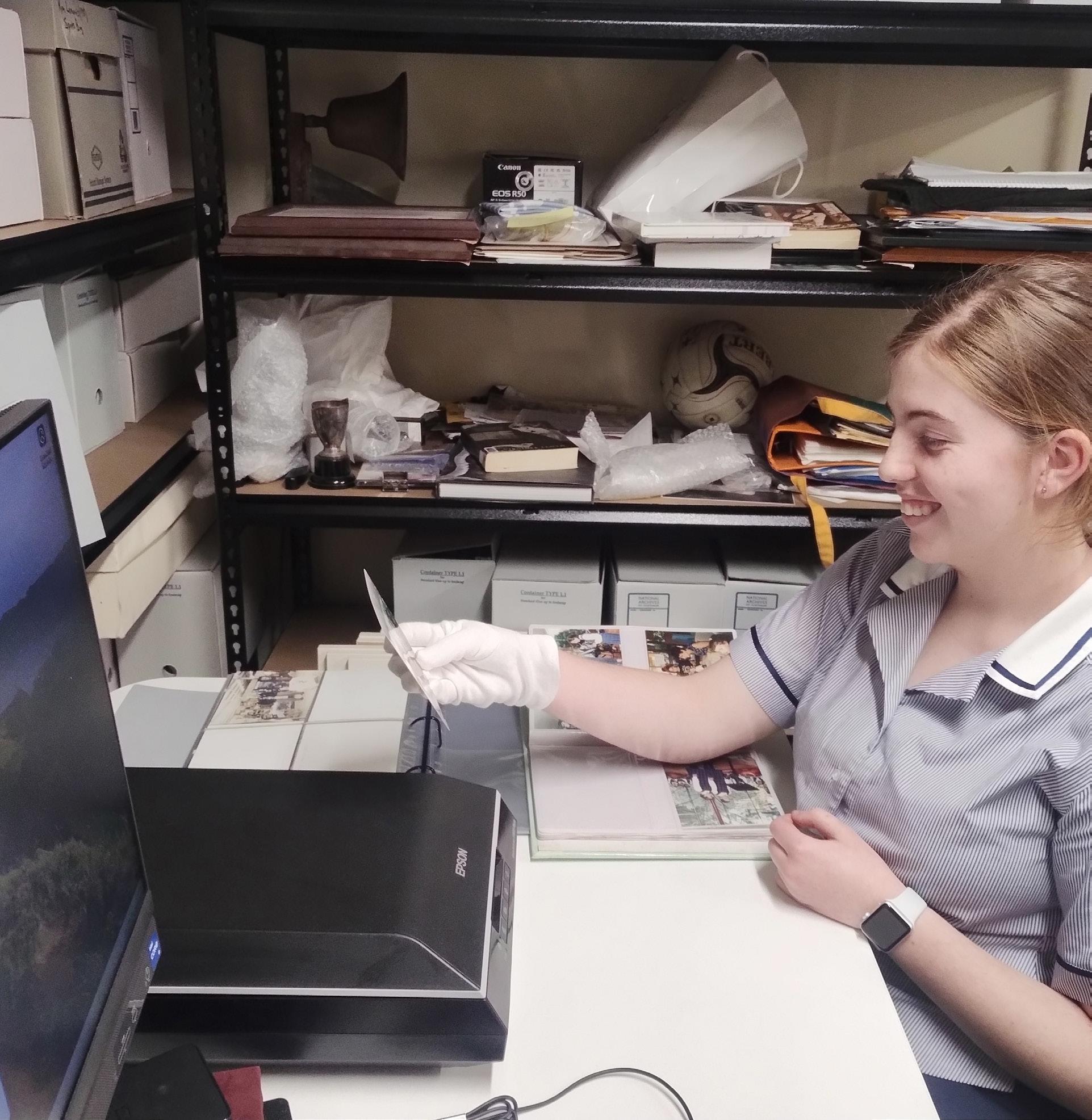
During the 1990s and 2000s, roll after roll of film was snapped around the School and used in weekly newsletters and annual publication The Wenonian Prints of these candid images have been stored in photo albums whose plastic has become sticky with time. Archivist, Dr Elizabeth Hartnell, has been digitising the photos with the assistance of Upper School students, whose efforts aligned perfectly with the 2025-2026 Prefects’ inspirational theme, ‘Give More, Grow More’.
For the last few years, dozens of Years 9 and 10 students have volunteered half an hour at lunch to scan, rehouse and label the photographs. On a weekly rotation, they don white cotton gloves and carefully remove an image from its degrading plastic sleeve and place it on the scanner flatbed. Working in pairs to make a repetitive task more enjoyable, they are helping preserve our history for future generations.
While photos of annual events such as graduation ceremonies and sports carnivals are more predictable finds, photos of excursions and activities spark personal interest. Familiar buildings and classrooms stretch forward through time; students often find themselves identifying with Alumnae who are now middle aged. “With several pairs of students working on the same edition of The Wenonian (currently 1996), we revisit the halls of three decades ago,” said Dr Hartnell.
Year 10 student Annabelle concurred. “It is really cool to see people from many years ago doing the same things that we do. That really helps add to the sense of community that Wenona has.”
Most students begin their Archive experience via an introduction to the Service Learning in the Community (SLIC) program. Students often fulfill their SLIC hours by continuing their participation through to the end of Term 4. There have even been contests to see who can scan the most images.
“The assistance provided by each student, even by scanning just one more photograph, accumulates to hundreds of images added to the Digital Archive each year,” Dr Hartnell said. “I scan items almost every day, but the students’ voluntary efforts significantly hasten the progress that can be made on this essential ongoing project”.
In preserving these glimpses of School life from earlier eras, today’s students are living our motto Ut Prosim, that I may serve, while creating a bridge between Wenona’s history and its future.
Bringing the Bard to Life
After an energetic and imaginative term of preparation, the Year 9 Shakespeare Performance became a vibrant celebration of creativity, collaboration, and the students’ growing confidence on stage.
Over the course of their learning, the Drama students immersed themselves in the world of Shakespeare, investigating their characters in depth and developing an understanding of the rhythms, nuances, and emotional power of his language.
A highlight of the process was the opportunity to rehearse with professional actors from the Sport for Jove theatre company. Their expert guidance offered students invaluable insights into how to bring Shakespeare’s words to life on stage: how to move with intention, speak with clarity, and allow the text to shape their performance. Through workshops and rehearsals, students learned that performing Shakespeare is as much about physical storytelling and connection with scene partners as it is about memorising lines.
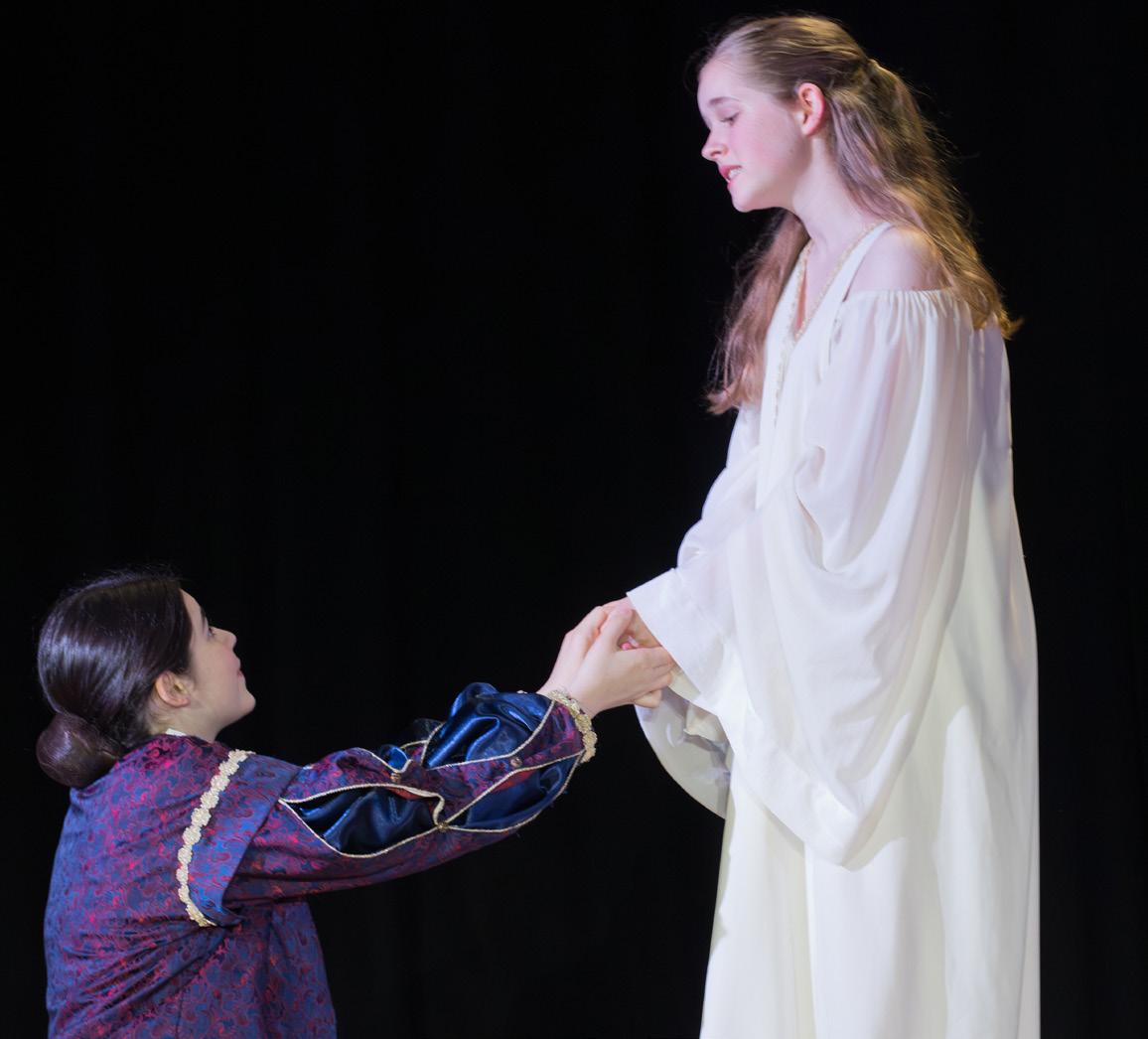
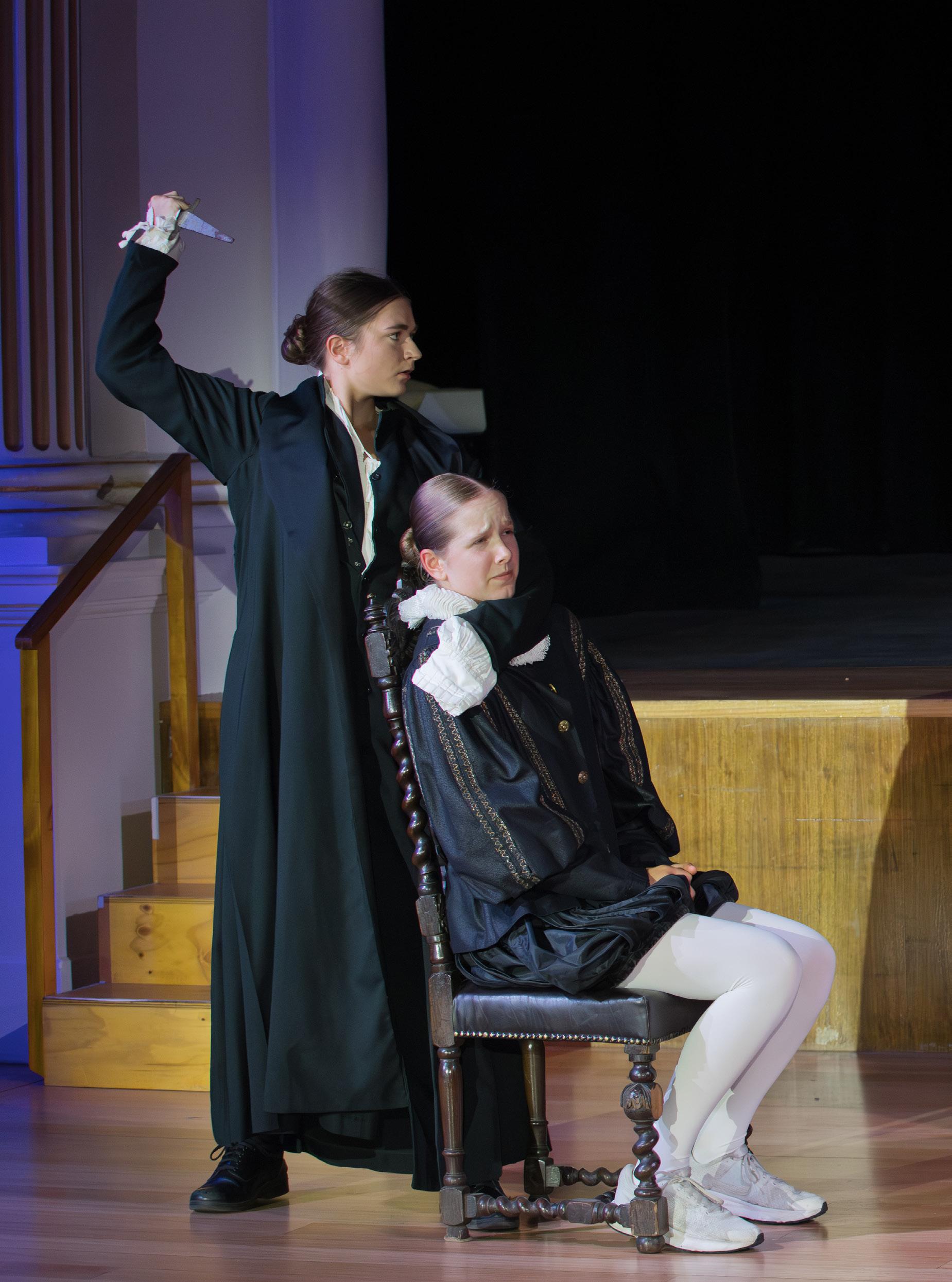
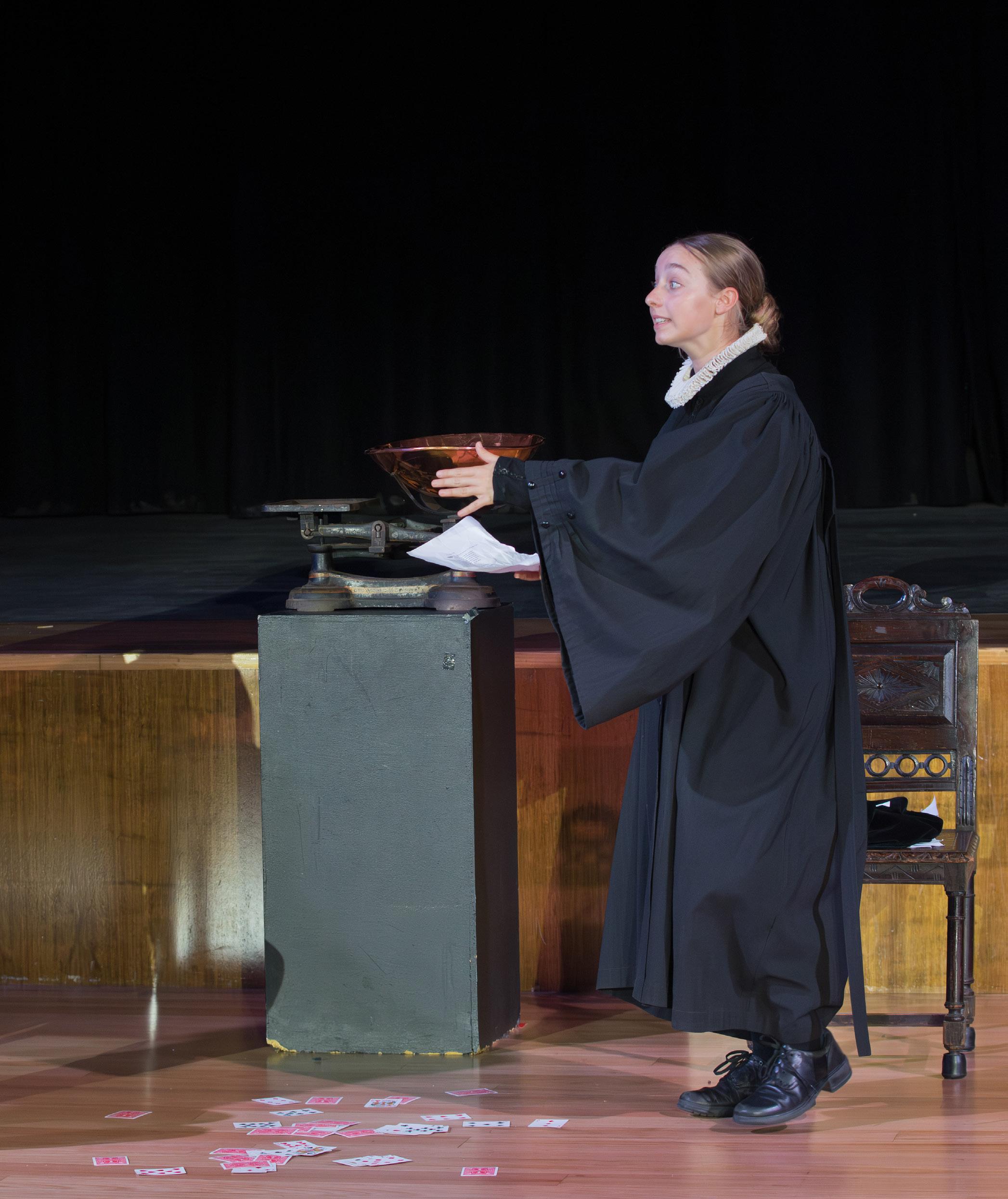
The final performance, presented to an appreciative audience of family and friends, showcased scenes from A Midsummer Night’s Dream, Macbeth, The Merchant of Venice, and Romeo and Juliet. Each extract highlighted different facets of Shakespeare’s geniusfrom magical mischief and comic confusion to fierce conflict, and tender romance.
For some students, the evening marked a return to the stage as seasoned performers; for others, it was their first time ‘treading the boards’. Regardless of experience, every performer demonstrated commitment, growth and enthusiasm. The energy and engagement on stage were a testament to their hard work and the supportive ensemble spirit that developed over the term.
The
Year 9 Shakespeare Performance not only celebrated the enduring relevance of Shakespeare but also showcased the talent and passion of our students - an inspiring achievement for all involved.
A Year of Adventure
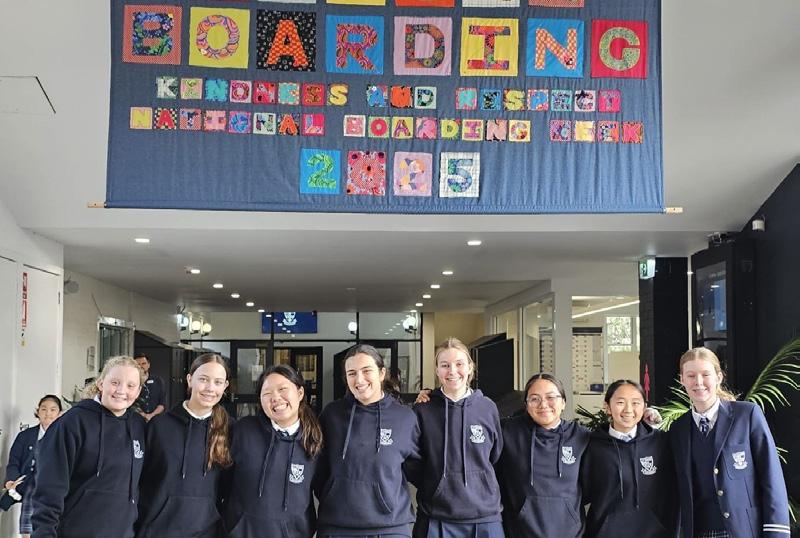
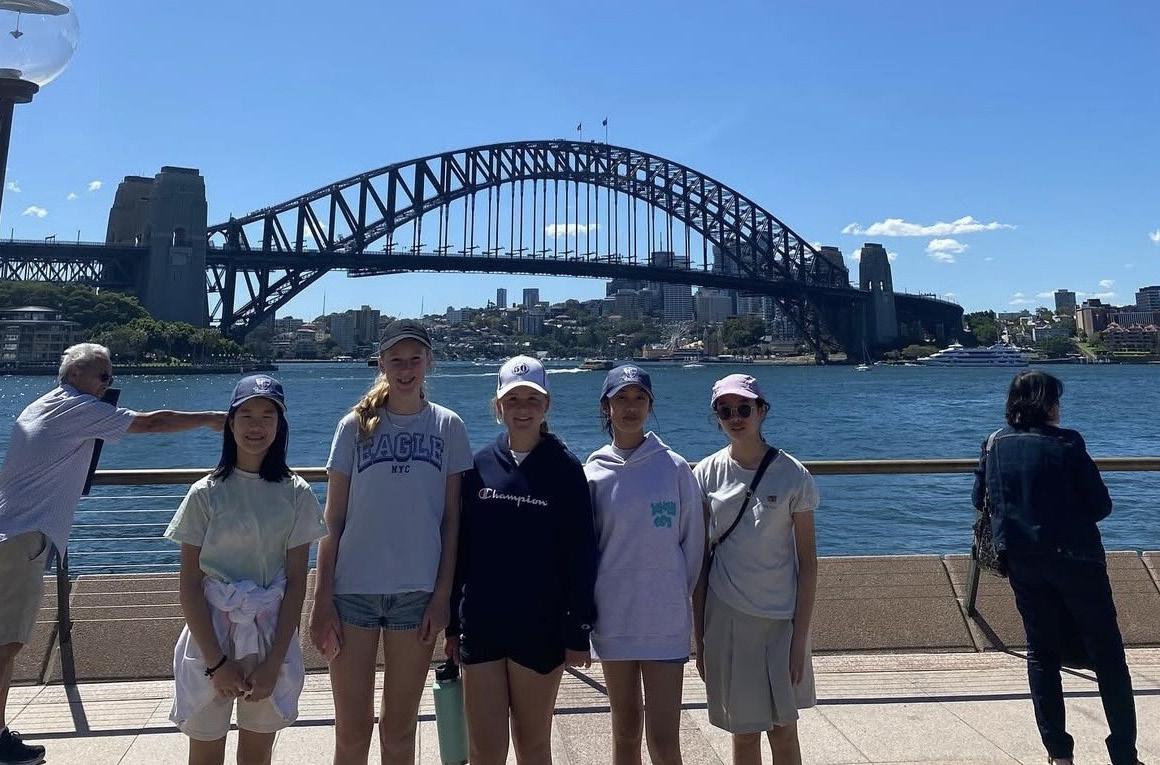
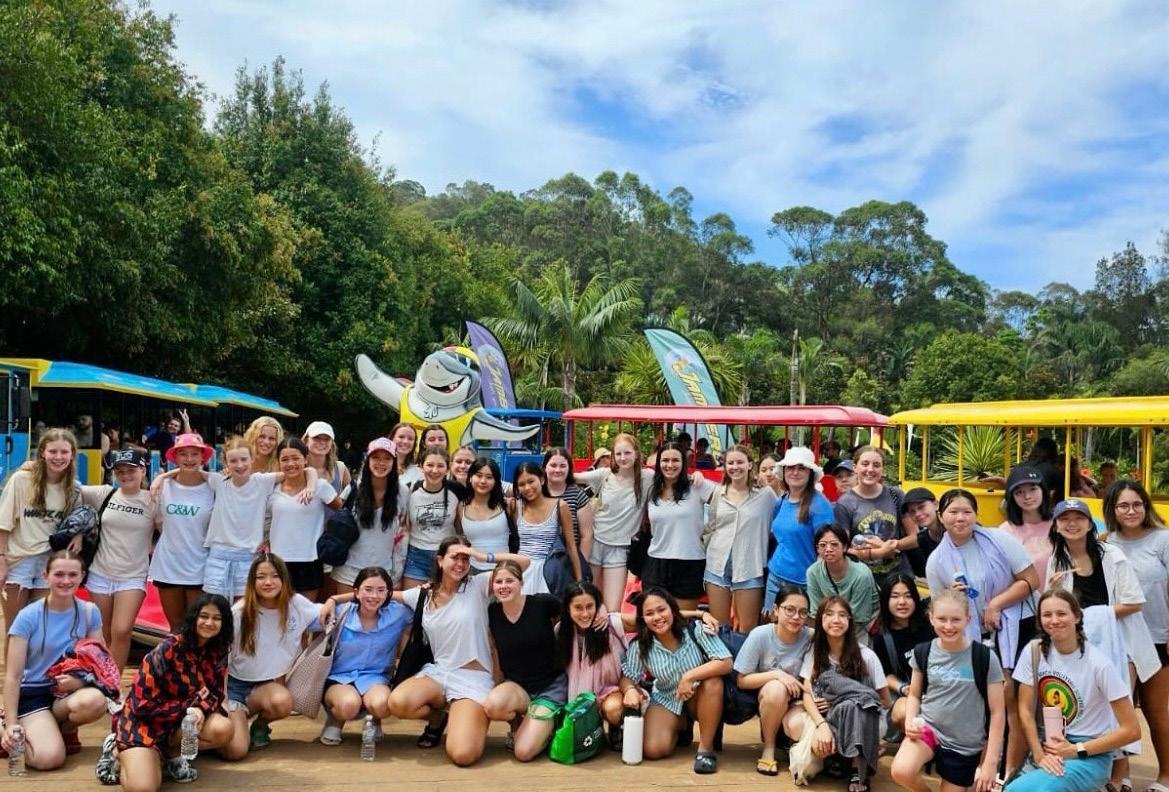
For Wenona’s boarders, 2025 was a year of connection, exploration and unforgettable weekends across Sydney.
When Bethany returned to Wenona in Year 10 after two years in Singapore, she wasn’t sure what to expect from boarding life. In 2025, as Boarding Prefect, she discovered that living at School comes with an unexpected bonus: Sydney itself is an extended campus.
“People imagine boarding as being stuck in one place, but it’s actually the opposite,” Bethany says. “We’re out exploring Sydney together almost every weekend. It’s like having a built-in adventure squad.”
And what adventures they had. In 2025 the boarders took full advantage of their harbourside location, with excursions ranging from the thrilling to the cultural. Luna Park’s roller coasters provided plenty of screaming and laughter, while Taronga Zoo offered a more contemplative day out, watching the animals against the backdrop of the city skyline. At Flipout, competitive spirits emerged as the girls bounced their way through adrenaline-filled challenges.
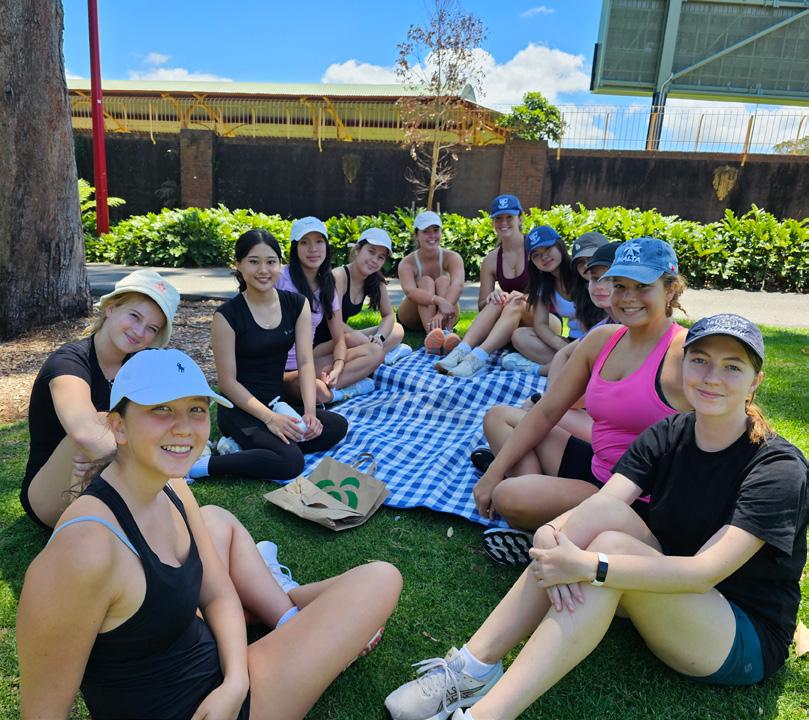
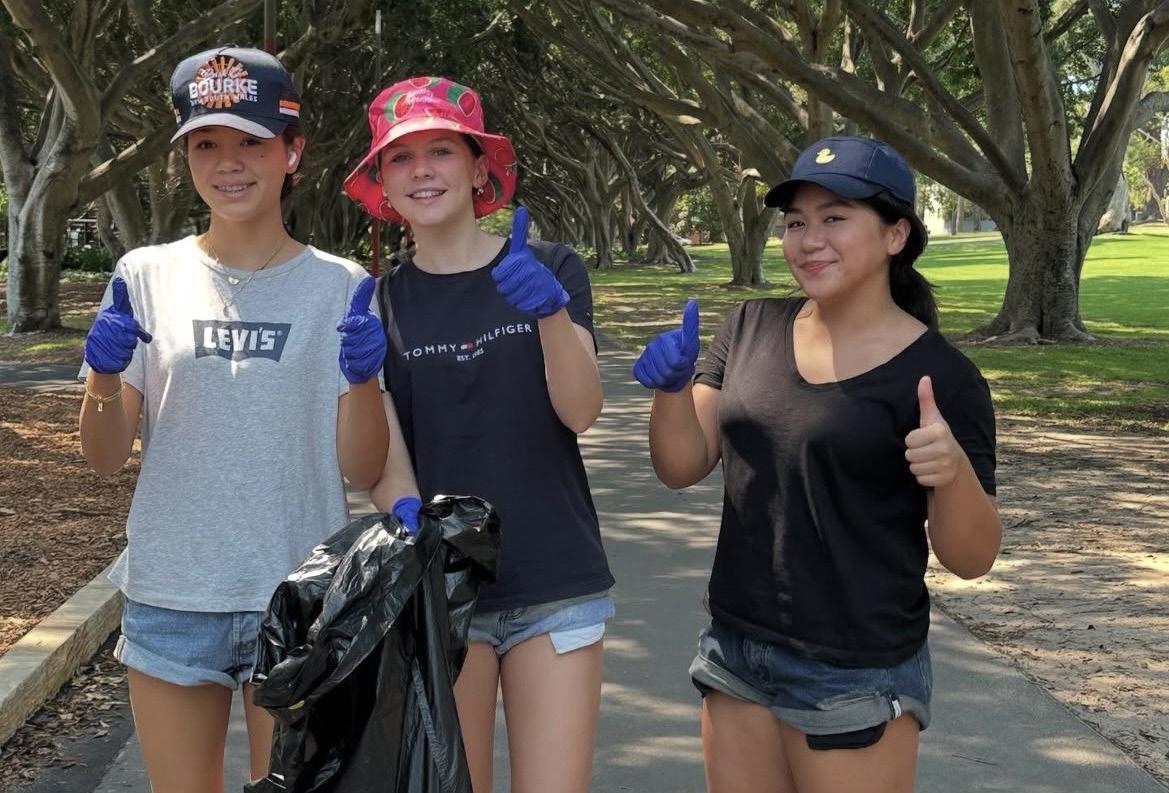
But not every weekend required a major excursion. Some of the most treasured moments unfolded closer to home, with picnics in the local park, morning wanders through the Kirribilli Markets, and afternoons spent in the Boarding House kitchen, where baking sessions produced everything from slightly questionable first attempts to genuinely impressive creations.
“The baking nights are my favourite,” Bethany admitted. “There’s something about making a mess in the kitchen together that just brings everyone closer. And then you get to eat the results, which is a bonus.”
Service activities were also woven throughout the year, giving the boarders opportunities to contribute to causes that matter to them.
During National Boarding Week, they hosted a fundraising barbecue for Lymphoma Australia, a charity close to the community’s heart, especially their beloved Head of Boarding, Nonie Ayling.
For Bethany, who first joined Wenona as a Kindergarten student before her family’s move overseas, the Boarding House has become a place where different chapters of her life have come together. “I came back to a school I’d known since I was five, but I was experiencing it in a completely new way,” she reflected. “The boarding community welcomed me in and made it feel like home again.”
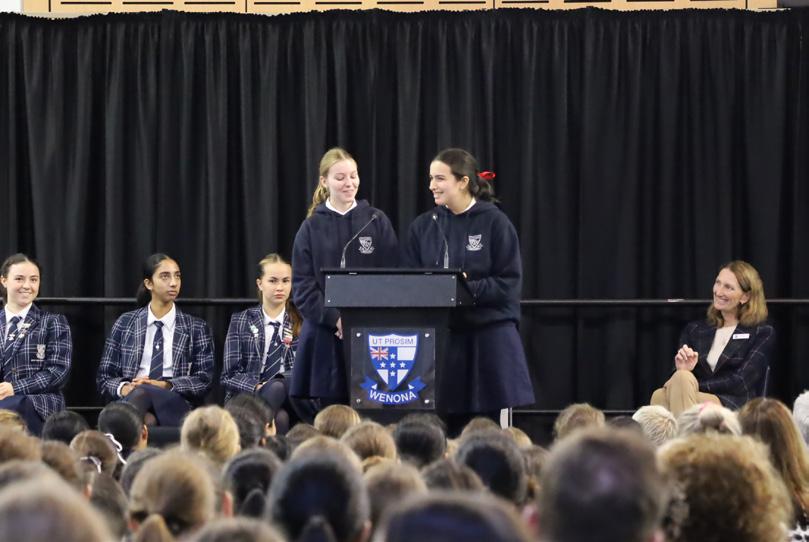
The 2025 National Boarding Week theme, ‘Threads of Connection’, resonated deeply with her. Speaking at Assembly, Bethany described how those threads are found in the everyday moments: “sharing a smile as you pass someone in the hallway, chatting over dinner each night, helping each other through homesickness, and the quiet solidarity of study marathons during exam blocks”.
What strikes visitors to the Boarding House is how naturally friendships form across year groups. Younger students find mentors in the seniors, while older girls discover that teaching someone how to navigate the first weeks of boarding can be just as rewarding as receiving that guidance themselves.
“Living at School might sound terrible,” Boarding Captain Asha observed at Assembly, “but living with your friends and not having to wake early to travel is the best thing ever”.
ALUMNAE STORIES
Learning from a Content Queen
Amelia Barry (2007) joined Year 6 students Jazzy, Sophie and Seina for the Junior School Podcast this year. Their conversation featured the same energy that once earned Amelia the nickname ‘Activity Bazz’ during her own time at Wenona.
Speaking from Canberra, where she now lives with her two children, Amelia shared with Year 6, insights about her School days, her transition from television to technology, and what it’s like working at the forefront of Australia’s tech industry.
What year did you join Wenona and how did you feel about starting?
I started Wenona in 2001, which feels like a lifetime ago! I was really excited about joining. I had attended a local primary school, and I was looking forward to meeting new friends. I was happily placed in Hook House and made some wonderful friendships there.
What opportunities did you take on at Wenona?
I had a nickname at Wenona – Activity Bazz. My surname is Barry, and I earned that name because I loved doing every activity I could possibly sign up for. Drama, Rock Concert, Netball, Water Polo, Touch Football – you name it, I did it!
What was life like at Wenona for you?
Being part of the Wenona community is a real privilege. We had excellent facilities and wonderful girls to go to school with. Of course, there was always the pressure of getting homework done – I haven’t forgotten that! Life looked fairly similar in some ways to what it does today. We had computers and laptops, though we didn’t have the new gymnasium on the Senior Campus yet. Things at the canteen looked quite different too – we had this hot cheese roll that was literally cheese in a roll heated in a microwave. I’m not sure that would quite meet health standards these days!
What led you to work at Canva?
For about 15 years, I made television for every network in Australia – lots of reality TV. I worked on shows you might have seen, like Gruen, which is about advertising, and Love on the Spectrum. I helped create that first series. Another was War on Waste for the ABC. I made television for all different types of audiences around the world. Then I moved into technology and led content for Uber, which I’m sure you’re all familiar with. I built a few software companies myself during that period when everyone was creating tech startups. Then COVID happened –I’m not sure how much you remember of that – and I had two children. Now I’m at Canva, leading content creation there.
Can you describe what you actually do at Canva?
Canva creates content both internally and externally. We have social media accounts where we publish content daily, and we run large campaigns. I oversee social media and campaigns, so if there are any major marketing initiatives, I help manage that content and ensure it’s produced on time and within budget. That involves working with creative teams and coordinating everything.
What do you mean by “create content”?
Great question! Content is an all-encompassing word. It means video, photography, copywriting – people who help us write and create emails. Content can be many different things. Anything you receive that feels designed by Canva or organically served to you represents content where Canva has had creative input.
When we run a campaign, that’s a centralised focus on one theme. For example, we did a back-to-school campaign. We develop a strategy about how we want to tell the story and what we want to communicate about education and Canva. We gather everyone together – in a room or on Zoom – and
work out our core message. From that one central message, we then branch off to consider: How do we express this in a video? How do we show it in a photograph? How do we communicate it in an email? How do we present it in a deck? We’re essentially figuring out how to tell our users about this one core message across multiple platforms.
What’s your favourite part about working at Canva?
Canva is a genuinely innovative company. You get to work with brilliant minds who are trying to build the best business in the world – world-leading technology. For that to be based in Australia is really exciting. It’s also thrilling to work for a company that people know and love. There’s tremendous affection out there for Canva.
Is there anything new happening at Canva at the moment?
Are you trying to get an exclusive? We do have some really exciting features coming. We’ve just launched a new campaign called the Canva World Tour, where we’re doing a global tour teaching people how to use Canva. Some new features were announced on 31st October, Australian Eastern Standard Time.
As the student podcasters agreed after their chat, Amelia’s story is a reminder that sometimes the most exciting careers come not from following a single path, but embracing every opportunity along the way.
Breaking Ground
When Roslyn Kerr (Uren, 1964) arrived at a remote drilling site in regional New South Wales, her colleague walked ahead to warn the workers: there was a woman on board. It was 1968, and Roslyn had just become the first woman to be employed full-time in a field section of the Geological Survey of New South Wales.
The path to that pioneering moment began in a Wenona classroom, under the guidance of A James Lambeth. Readers of Ut Prosim 2024 might recall that Lambeth, Chief Geologist of the 1947 Australian Antarctic expedition to Heard Island, inspired a generation of Wenona students to pursue careers in geology. Dr Jane Barron (Watts, 1961), credited him with treating students “more like university students than schoolgirls”. Roslyn is another of his protégés. “My geology teacher A James Lambeth at Wenona School inspired me to continue studying geology at university,” she recalls, “and my mother supported my choice.”
It was an unusual path for a young woman in the 1960s, a fact her father understood well. “Employment as a female geologist would be very hard to find,” he cautioned. “Who is going to employ a female geologist?” Rather than discouraging her, this reality motivated Roslyn to apply for a traineeship with the Department of Mines in 1966. She was one of just three women selected that year, the first female trainees in the department’s history. The traineeship funded her Bachelor of Science degree at the University of Sydney, providing a book allowance, paid vacation employment, and four years of guaranteed work upon graduation.
Her university holidays were willingly traded for fieldwork, offering a taste of the adventures to come. During one memorable summer, she joined a regional mapping expedition to the Grafton area, watching the identification of granite, basalt and fault lines in awe. The resulting geological map, published in 1976, included her name among the contributors.
When she commenced full-time work in 1968, Roslyn entered a workplace where no women had held permanent field positions. That same year, Jane Barron became the first woman permitted to conduct fieldwork at the Survey as an external PhD researcher, but Roslyn’s appointment as a full-time
staff member in a field section broke different ground. Some male colleagues were openly resistant. Their objections ranged from the practical, such as the lack of facilities for women in remote bush locations, to the personal, with one asking: “What would my wife say if I took a woman to the bush?”
Undeterred, Roslyn was assigned to the Coal Section, where she logged drill cores at the Huntley exploration area, learned to drive a Land Rover on country roads and potato paddocks (mastering the art of double declutching), and held her own at the Robertson pub after long days in the field. Yet after six months, she was transferred to an office-based role answering public enquiries. After more than a year, she wrote formally to management requesting a return to fieldwork. “I had to assert myself to gain a long-term field position,” she reflects.
Her persistence paid off. She was offered a position in the Non Metallics Section, where she spent years conducting geological assessments of clay deposits, construction sand, and gravel resources across New South Wales. Her work informed land use planning decisions, helping authorities identify extraction sites before they disappeared beneath housing estates. She later returned to the Coal Section, contributing to the Denman/ Scone Coal Drilling Program in the Hunter Valley, research that formed the foundation of her Master of Science degree at the University of Newcastle.
The workplace culture that once questioned her presence eventually transformed. During the mining boom of 1969, many of the men who had resisted working with women left for private industry, and successive intakes of female trainees joined the field sections. The Geological Survey of New South Wales now counts approximately one third of its staff as female, working as geologists, geophysicists, geospatial officers and palaeontologists.
Bridging Worlds in Global Marketing
Remarkable young women like Evett Baranov come from every socio-economic background. By fostering diversity among our student body, Wenona enriches the educational experience for all.
In 2025, the Wenona Foundation launched the Renaissance Women’s Scholarship program, to remove barriers for deserving students with the aptitude to succeed.
Evett is a 2009 graduate and former DalCorp Scholar, who says her own journey illustrates why scholarships matter so deeply and why every gift to the program, no matter how small, not only helps shape the future of young women, but of our entire community.
As a Year 12 student, Evett had no idea her path would lead her into criminology lecture halls, European boardrooms, and eventually to Silicon Valley, where she began to question the status quo of tech companies there.
Evett’s journey began as a student of criminology at the University of New South Wales, when a career counsellor’s assessment opened her eyes to communications and public relations. The turning point came with a master’s degree in public relations and advertising, a qualification that proved transformational. “Continual learning is a game changer,” she explains.
“It adds credibility, especially when you’re trying to switch careers. It shows you’ve added education onto what you’d done previously, even though it was so different.” In 2017, Evett joined the Wenona Mentorship Program, where the guidance of her mentor proved invaluable. “The support I received gave me
the confidence to navigate the early stages of my career,” she reflects. This pivotal experience strengthened her resolve to lead with purpose, a foundation that continues to shape her success in global marketing.
From an internship at IBM, Evett’s career flourished at global enterprise software leader, Workday, where she became Global Digital ABM Lead for EMEA and APAC in just six years. Leading strategy and execution across five key regions, the UK, France, Germany, Australia, and Japan, she collaborated with senior stakeholders to drive tailored campaigns that delivered measurable business outcomes while providing education and training on advanced marketing methodologies to her peers.
Her global perspective became her greatest asset, enabling her to champion a more inclusive approach, ensuring campaigns reflected the diverse needs of regions like Europe and Asia-Pacific.
Driven by a passion for connecting people across cultures, Evett brings creativity and empathy to every campaign she leads. “Part of my job was to bring people together,” she explains, “educating my team about what was happening on the ground and working with regional teams to understand their programs and what they needed from us helped achieve that.”
Now back in Australia and working as Head of Global Marketing at a more fledgling company, LEAP Legal Software, she is
building the global marketing organisation from the ground up, leveraging her work experience to drive innovation and empower legal professionals worldwide.
She now sees her success as a chance to encourage contributions to the Wenona Renaissance Women’s Scholarship program, supporting young women to graduate with the confidence to question, the courage to lead, and the wisdom to build bridges across differences. To support future young women like Evett, please go to Wenona.me/gift and make a contribution.
Centre Stage
When Claudia Reid graduated from Wenona in 2024, she had a secret. She had auditioned for the prestigious Victorian College of the Arts acting program – and been accepted on her first attempt. Of the 20 students in her cohort, only eight entered straight from high school. It’s the kind of achievement most aspiring actors consider out of reach.
“I sort of thought I wouldn’t get in,” Claudia admits. “I didn’t tell anyone about it until I got in, which was obviously a very big surprise. I hadn’t really even considered moving to Melbourne at all. It was a crazy time.” Her path to VCA began quietly at Wenona, where she first stepped on stage in Year 9 for a House Drama performance. That same year, she took Drama as an elective and discovered something unexpected. “There’s a certain feeling after performing – you just feel very accomplished and grateful,” she says. “The feedback obviously adds to that.”
By Year 10, she had fallen in love with Oscar Wilde. Studying The Importance of Being Earnest proved transformative; her performance caught the attention of staff, leading to a role as Francis Nurse in the School’s production of The Crucible. Excursions to the Sydney Theatre Company deepened her ambitions. “It made it feel a bit more real, a bit more of a goal to reach,” she recalls. “That’s who I want to be up on stage.”
Her final years brought two OnStage nominations – for both her group and individual performances. It was confirmation that her instincts were sound. Still, she kept her VCA application private, uncertain whether such dreams were realistic for someone her age.
Now settled in Melbourne, Claudia has found exactly what she hoped for. “Being able to do what you love doesn’t feel like work,” she says. The first year has focused on building foundations: voice work, movement, stage combat, rather than diving straight into performance. Her biggest challenge came with the final production, a play in which she carried a substantial role with only three weeks to prepare. “It took a lot of time for me to prepare,” she says, “but ultimately it was very rewarding.”
Comedy and improvisation come naturally to Claudia, drawing on skills she first developed through NIDA holiday courses as a primary school student. More dramatic roles, she acknowledges, require continued work. “I’m still learning,” she says.
The VCA program culminates in third year with students performing full productions in Melbourne and Sydney before audiences of agents and directors – a launchpad into professional careers.
Beyond that, Claudia’s sights are set on London, where she believes opportunities align more closely with her aspirations. The Royal Academy of Dramatic Art (RADA) remains a dream.
For now, she is exactly where she needs to be – building her craft, surrounded by fellow students who share her passion, preparing for a career she once thought out of reach.
Double Vision
Now in her second year at performing arts institution Village Nation, it is dance that commands Elly’s focus. “I’m basically living my dream right now,” she says of her days training from 8am to 4pm across five demanding classes. “The body of knowledge that professionals have accrued and are willing to share with you along with their advice, is invaluable,” Elly says.
When Elly Butters graduated from Wenona in 2024, she achieved something rare: nomination for the HSC Dance Showcase CALLBACK and selection for ARTEXPRESS, the state’s most prestigious exhibition of outstanding visual arts work.
“Your body is sore every day but honestly, I feel like I have become a better version of myself, it’s just amazing.”
Elly has been dancing since the age of three, progressively developing the technical skill and artistic maturity required for showcase-level work. She is now training in everything from contemporary dance to ballet, jazz, hip-hop, Latin and musical theatre, building the versatility essential for a sustainable career.
Her ARTEXPRESS selection came through a photographic series exploring architectural patterns and distortions with sophisticated conceptual rigour. From over 2,000 photographs taken across six months, she selected just nine that met her exacting standards. Using her father’s camera with various lenses, she photographed buildings at different distances, focusing on detail, pattern and texture. Her most striking images captured reflections of buildings on glass surfaces, effects achieved entirely through careful observation rather than digital manipulation. At the ARTEXPRESS opening, viewers repeatedly asked whether she had used Photoshop. “I literally just went most weekends and chose the buildings with the best light,” she says.
Elly has also returned to her childhood dance school, Northbridge Dance Studios, as a teacher, working all week from Monday to Saturday, “I have always had such a strong passion for teaching and it is blossoming and developing day after day,” she says. The role provides financial stability while she completes her training and lays groundwork for potential studio ownership further down the track.
She recognises the potential connections between her two passions, seeing photography as a possible complement to her performance career. Her photographic eye understands dance intimately: she knows when to anticipate a leap, how bodies move through space, the split-second timing required to capture grace.
Dyslexia Pioneer
Remembering Elizabeth Melck (1936–2025)
Long before dyslexia was widely understood, Elizabeth Melck was asking the questions that would change how we support children who learn differently. The Wenona Alumna, who attended the School in the early 1950s, went on to build a distinguished career as an orthoptist, earning recognition from the British and Irish Orthoptic Society for her groundbreaking work in the assessment and treatment of specific learning difficulties.
After Wenona, Elizabeth trained as an orthoptist in Perth, beginning a career that would span decades and three countries. A shipboard romance led to marriage in Sydney in 1959, after which she and her husband moved to South Africa. Never comfortable with the Apartheid regime, and shaken by the Sharpeville massacre in 1960, the young couple returned to Australia before eventually settling in England.
There, Elizabeth practised at Coventry and Warwickshire Hospital and ran the outreach clinic at The Hospital of St Cross in Rugby. Colleagues remember her kind, caring approach and her ability to put anxious children and families at ease.
It was through this clinical work that Elizabeth made her most significant contribution. She noticed that many children referred to her for eye problems because they were struggling at school actually had very little wrong with their vision. Her curiosity led her to investigate further, and she came to recognise that these children were often dyslexic.
Finding little support available at the time, and realising that members of her own family were dyslexic, Elizabeth undertook extensive research. In 1986, she self-published Finding Out
About Specific Learning Difficulties and Dyslexia, a practical guide that proved invaluable to parents navigating similar challenges. It even made an unexpected appearance in an episode of Brookside. Nearly four decades later, the book remains available, testament to its enduring relevance.
Beyond her professional life, Elizabeth was an active member of her village community and church, serving as a church warden and participating in the Women’s Institute.
Upon her death, the British and Irish Orthoptic Society paid tribute to Elizabeth as a much-valued colleague whose professional curiosity and generous spirit touched the lives of countless children and families.
From Saturday Detention to Les Voiles de St Tropez
Jan Newland’s (1965) journey from selfconfessed ‘loveable rebel’ to television trailblazer, world championship sailor and author.
Jan Newland cheerfully admits she was not Wenona’s model student.
A self-described “loveable rebel child”, she found School “mostly a place to daydream, swim and avoid concentrating”. Wenona enjoyed her company six days a week - Saturday being the sixth, reserved for detention, where she says she perfected the art of writing out School rules. Her early dreams of becoming an air traffic controller or vet came to nothing (“neither were ideal for someone who couldn’t concentrate”), but a TAFE video production course launched a career that would take her around the world.
Sailing, though, was always in Jan’s blood. A self-proclaimed ‘Daddy’s girl’ through and through, she spent childhood weekends climbing trees at Middle Harbour Yacht Club while her father, fabled Australian sailor, Graham Newland, sailed. By age 10, she was racing snub nose moths
at the Royal Sydney Yacht Squadron, juggling her grandmother’s attempts to drag her to church against heading off with Dad. Her father, a two-time winner of the Sydney to Hobart Yacht race, navigator, tactician, and a part-time helm on Gretel II in the America’s Cup, usually won.
Taking after her father, adventure called early for Jan. She and her friends caught the Trans-Siberian Railway to England. Jan eventually landed in London, then Canada, where she married, had two daughters and built a television career.
Back in Australia by 1998, she worked her way up to producing commercials and corporate films, including Destination Darwin with radio and television presenter, Amanda Keller. When her business partner relocated to Adelaide, Jan found herself “the only girl I knew in Sydney running her own production house in a very male-dominated industry”. Her biggest project was shooting archival footage for the Australian government, featuring helicopters, the Twelve Apostles, Mary River crocodiles and a controlled burn in Kakadu. “It had everything”, she says. If there were challenges being a woman in a man’s world, she chose to ignore them. “I simply presented as an it-is-what-it-is person,” she says. “Someone who didn’t oversell the sizzle and always delivered the job to the brief.”
But sailing was to eventually call her back. Jan has raced in two world championships and last year received an extraordinary invitation: to join her Australian counterparts as tactician in Les Voiles de St Tropez, rubbing shoulders with 250 magnificent yachts, world-class sailors … and King Frederick of Denmark. “An unforgettable thrill,” she now recalls. Long ocean passages remain a particular love; Jan has crewed on yacht deliveries from Airlie Beach to Sydney and twice from Hobart to Pittwater, happily disappearing over the horizon whenever possible.
Her father’s legacy still runs deep. When he died, Jan inherited 27 folders of press clippings documenting his remarkable career. She spent more than a year compiling his story into a book, which contributed to the Cruising Yacht Club of Australia posthumously inducting him into their Hall of Fame in June 2025.
Not bad for the once-naughty Wenona girl who spent her Saturdays writing out School rules.
The Late Bloomer
When Judith Rostron (Illingworth, 1961) left Wenona, her School reports offered a familiar refrain: “Could do better”. Six decades later, with a career spanning advertising, stockbroking, education and art, she wants her story to be an inspiration to current students who are not top of the class … and a reminder to parents that graduation is a beginning, not an ending.
Judith passed her Leaving Certificate in 1961, despite what she describes as minimal effort. What followed was a journey of reinvention that few could have predicted.
Her early career meandered through Sydney’s professional landscape: from processing visas at the American Consulate General, to advertising agencies where she worked alongside some remarkable figures. At Jackson Wain (now Leo Burnett), she became assistant to author Donald Horne, just as he was writing The Lucky Country, the book that would become a touchstone of Australian identity.
The mining boom of the 1970s drew Judith into stockbroking, where she rose from taking orders to becoming a share adviser – a rare achievement for women at the time. She was even offered the opportunity to study for membership of the Stock Exchange. “It was a very flattering offer,” she notes, “considering at that time very few women were involved at that level”.
When her first marriage ended, Judith chose adventure over security, sailing to Central America with plans to teach English. What followed was a crash course in independence: navigating ancient buses through Mexico, stretching her Spanish, and eventually making her way to London, then Aberdeen, where she worked for an American oil company.
Australia eventually called her home, and it was after remarriage that Judith finally discovered her academic self. Enrolling as a mature student for the HSC in 1988, she found herself among “sixteen fiercely competitive souls” at North Sydney Tech. Three of their four teachers were published authors, and Judith thrived. Her results were excellent: second in the state in French, top one per cent in English, top two per cent in History.
“My results would have made my parents very proud,” she reflects. “I wish they had lived long enough to see me succeed. There’s nothing like a little motivation!”
Macquarie University followed, where she was offered Honours. A postgraduate TESOL certificate led to four years teaching English to speakers of other languages.
Then, finally, came art.
For more than 20 years now, Judith has been painting and exhibiting, moving fluidly between acrylics, watercolour, mixed media and lino prints, making the finals of the Waverley Woollahra 9x5 Landscape Prize over the last two years. She has also travelled to more than 50 countries and published a book documenting her adventures.
Judith’s message to students who feel uncertain about their futures is simple: “From being a low-achieving student, I eventually worked out what I wanted to do in life. What you don’t realise at school is that you are really just learning how to learn. Even though the subjects often appear irrelevant, everything adds to your knowledge.”
It is said that if you find a job you love, you’ll never work again. Judith Rostron says she has found several, and proven that the only deadline for success is the one we set ourselves.
Impact and Purpose
When Kim Harding (1970) received her Medal of the Order of Australia in 2024, the honour recognised decades of philanthropic work across marine conservation, homelessness, domestic violence prevention and the arts. Through her most recent work, awarding scholarships to talented girls via the Harding Miller Education Foundation, she is passing on the opportunities she received at Wenona.
There are photos in the 1970 Wenonian of Kim Harding in the Basketball and Athletics teams, along with a mention of her umpiring the Teachers versus Sixth Formers’ Netball match. The year before, she had been Debating Captain and in 1966, won the Class Prize. But it was Kim’s role on Wenona’s Charities Committee in 1969 that provided the best indication of where her interests would eventually lead.
After leaving School, Kim rapidly excelled in the business sphere. She was a finalist for Australian Business Woman of the Year in 1982, and a finalist for the Bulletin Young Executive award in 1987. She built Pinpoint Pty Ltd from a direct marketing agency in 1984 into the Asia Pacific’s largest marketing company, eventually employing 450 people with annual sales of $350 million. Her innovations transformed how Australians engage with rewards – from the Qantas Frequent Flyer Program to credit card loyalty schemes and Seniors Cards. When she sold Pinpoint to MasterCard in 2014, it became their global loyalty platform, serving 100 million customers across Asia and Australia.
In 2008, Racing NSW appointed Kim to their board - the first woman to hold the position. By this stage she had been breeding and racing horses for 15 years and prior to that, negotiated television rights with race clubs as general manager of Sky Channel. Her horses trained with Les Bridge, whose efforts had led to wins in both the Melbourne Cup and Golden Slipper. Her top-class mare, Miss Zoe, did particularly well. On the board, Kim developed a loyalty rewards club for racing enthusiasts, bringing her Pinpoint expertise to the billion-dollar industry.
Then in 2015, she and Irene Miller launched the Harding Miller Education Foundation. The concept was straightforward: to find bright girls in public schools who lack the resources to reach their potential and find ways to bridge the educational gaps.
As the UN Girls Education Initiative has noted, girl’s education “has a multiplier effect like no other” in raising families out of poverty and accelerating community development. The Foundation has taken this principle seriously. Each scholarship is worth $20,000 over four years and provides a high-quality laptop, high-speed internet access, and remote IT support. The Foundation funds $2,500 worth of personalised tutoring annually, available both online and face-to-face, alongside
online homework assistance. Prepaid expense cards cover the essentials that other students take for granted: uniforms, textbooks and school excursions.
The Foundation’s enrichment program broadens horizons beyond the classroom. Through partnerships with companies including Ernst and Young, Allen and Overy, ANZ Bank and Mastercard and leading universities such as the University of Sydney and the University of New South Wales, scholarship holders gain exposure to diverse career pathways and professional environments. Over 150 volunteer coaches provide personal guidance, helping each girl navigate the opportunities and make informed decisions about her future.
The Foundation has now awarded more than 1,200 scholarships across every state and territory, with over 400 schools involved. When Kim received her OAM, they had just marked their thousandth scholarship, contributing to more than $20 million distributed to high-potential girls.
Kim and Irene have personally funded all administration and operational costs since the Foundation’s inception in 2015, ensuring every donated dollar directly supports scholars. They have also personally supported more than 600 scholarships over eight years.
One of the benefits of the Foundation’s model is that it allows the scholars to stay at their public schools, in their communities and with their families and friends:
“We support girls in public education because we know that this investment returns more
their
to
families, our community, and Australian society.”
Through Alumna Kim Harding, Wenona’s motto Ut Prosim, that I may serve is continuing its work 54 years after her graduation.
The Long Climb
Alumna Lara Hamilton (2015) spent years training for a sport many Australians had not even heard of before the 2026 Winter Olympic Games.
In February 2026 at Milano Cortina, Lara became Australia’s first female ski mountaineering Olympian. Getting there meant living out of suitcases, managing a chronic inflammatory disease, and perfecting the incredibly demanding format of threeminute races.
In France, where Lara was based, Lara spent her days climbing peaks on skis, then racing back down, perfecting transitions that take seconds but can cost a place on the podium. She was training for ski mountaineering, a sport that made its Olympic debut at Milano Cortina in February. Lara competed in both the Women’s Sprint and the Mixed Relay alongside fellow Australian Olympian, Phillip Bellingham, flying the flag for Australia in a field dominated by European athletes who have trained in the discipline since childhood.
When we featured Lara in the 2023 Ut Prosim, she was already competing internationally in trail running. Since then, her life has taken some unexpected turns, and we felt compelled to revisit her journey.
The sprint format in ski mountaineering is just over three minutes of all-out effort - climbing and descending a slope on skis with rapid transitions. “It’s like running 800 metres all out on the track,” Lara has explained. For someone who was once a national under-20 cross country running champion, that gives you a sense of the intensity.
Lara’s path to Milano Cortina was shaped by a diagnosis of ankylosing spondylitis, a chronic inflammatory autoimmune disease, when she was 23. The condition primarily affects the spine and joints, and simply sitting in a chair causes burning pain through her tendons. Some days, running is excruciating.
On other days, when the pain subsides, she says it feels “superhuman” … and those tend to be the days when she posts her best results.
“I know I’ve done well when I enter and exit a transition zone cleanly,” Lara says. “Because if I can do that, and knowing where I’m at right now with everything and the work I’ve put in, I will be extremely proud.”
To pursue this goal, Lara lived out of suitcases from 2019, moving between France and wherever the World Cup circuit took her. She sold her car. She flew back to Australia regularly for medical treatment, squeezing appointments between competitions. “I don’t even have a home,” she said. “I live out of suitcases, bouncing around. My cousin told me, ‘You have to create home where you are.’”
One constant in all this movement is music. Lara trained in opera but now performs as an electronic music DJ under the name DJ Solara at ski resorts and World Cup after-parties. She has played sets straight off finish lines and once prepared a last-minute Sunday evening set in a Swiss casino — the only place with Wi-Fi in a small town. “Music has saved my life,” she reflects.
Lara’s story has attracted attention well beyond the ski mountaineering world. She has been interviewed by ABC News and journalists from Body and Soul (The Sydney Morning Herald) and Sunday Life (The Sun-Herald). Her openness about living with ankylosing spondylitis has connected her with others who share the condition, offering tips and advice through social media.
On the World Cup circuit, Lara’s results improved steadily in the lead-up to the Games. She finished 20th in her first vertical race in 2024, and 19th at the World Championships earlier in 2025, before storming to 13th in the vertical at the World Cup in Schladming - the best Australian World Cup finish on record.
Snow Australia recognised her season by naming her Ski Mountaineering Female Athlete of the Year. She came 13th in the vertical trail race at the World Mountain Running Association World Cup Final in Slovenia. She had planned to compete in the second race, but dropped a knife on her foot the night before, cutting it badly enough that she had to withdraw. She did, however, DJ at the closing event, injury and all.
“You can’t afford to not be positive,” she said in the months before Milano Cortina. “If you think it’s not going to be possible, I don’t think you will make it. I trust the process.”
When Lara lined up for that sprint race in February, she had given everything she had. “I’ve sold my car. I don’t even have a home. Everything in my life right now is centred towards this goal.”
As she put it at the Games, with characteristic humour and honesty: “Always had the dream to go to the Olympics. I just failed in three different sports until I got one”.
Sixty Years of Discovery
Dr Kay Prag (1957) has devoted six decades to uncovering the secrets of ancient civilisations in the Near East. Now based at Oxford, she recently published the culmination of a lifetime’s work.
It was 1965 when Kay Prag first set foot on a dusty hillside in Jordan called Iktanu. She knew little about it except that that surface pottery fragments suggested occupation during the later third millennium BC. What she discovered that day would shape the next sixty years of her life.
“The excitement, when I visited it, was to find the surface was covered by wall foundations which all appeared to date from that time,” Kay recalls. “I managed to organise a small excavation in early 1966 which showed this was indeed the case.”
That first dig confirmed her instincts. Three further seasons followed between 1987 and 1990, along with decades of painstaking research that has culminated in the recent digital publication of her monograph, Excavations at Iktanu in the South Jordan Valley, a work celebrated at a special launch event at Wolfson College, Oxford, where Kay is now part of the Ancient World Research Cluster.
Kay studied Near Eastern archaeology at the Universities of Sydney, London and Oxford, where she became a doctoral student of Dame Kathleen Kenyon, the legendary archaeologist who led the famous excavations at Jericho and Jerusalem. Kay served as a field supervisor on Kenyon’s Jerusalem excavation in the 1960s, has curated its archive since 1980, and continues to work on the publication of the final reports.
Her recollections of Kenyon reveal both respect and a dry wit: “She had been excavating in Jerusalem in the summer of ‘65 and while there, she adopted a dog. It became part of my student responsibilities to look after the dog until she returned. I’m very relieved to say the dog survived the process — otherwise I might not have done.”
Beyond Jerusalem, Kay has led field surveys in Jordan and Lebanon, and served for many years as Honorary Editor of Levant, the leading journal in her field. Her principal publications illuminate the later third millennium BC in the Near East and the history of Jerusalem itself, including Re-excavating Jerusalem: Archival Archaeology (2018) and multiple volumes documenting Kenyon’s excavations.
But Iktanu has remained her constant. Located twelve kilometres northeast of the Dead Sea, the site offered answers to questions that had puzzled scholars for decades. When Kay began her work, the latter part of the third millennium BC was viewed as something of a dark age — known mainly from cemeteries, with little understanding of how people actually lived.
“Iktanu is not the most beautiful site in Jordan, nor is it located in the most beautiful area,” she reflects, “but the site and its area have a deep history and a dramatic landscape, backed by the hills of Ammon and Moab and within sight of the Dead Sea.”
The excavations revealed a settlement with a complex history: first occupied in the fourth millennium BC, abandoned for centuries, then re-established as a properly laid-out township before being abandoned again. Kay’s team — working with local men mainly from the Azazma tribe — uncovered evidence of domestic life, burial practices and agricultural systems.
“We battled flies, scorpions and snakes, wind and rain, in an area not lavishly supplied with the comforts of life,” she recalls, “with small teams of friends and the excellent local workmen.”
The fieldwork was not without challenges beyond the natural ones. When Kay returned in 1987, the landscape had transformed dramatically — military trenches from the 1967 war scarred the site, and minefields had to be cleared.
At her recent book launch, colleague Dr Robert Bewley emphasised the enduring relevance of Kay’s research: “This work will help in our understanding of human adaptation to changing environments.”
It is a fitting tribute to a career built on patience, persistence and an unwavering commitment to piecing together how ancient peoples lived, adapted and survived in challenging landscapes; work that continues to resonate thousands of years later.
*Kay can be seen in the top left photo (bottom left) and the bottom photo (left).
The Art of Less
Charlotte Hicks is redefining Australian fashion with a philosophy that champions quality over quantity
When Charlotte Hicks (2003) was growing up in Sydney, her pathway into fashion seemed almost inevitable. Her father was a jewellery designer; her mother had studied fashion design before having children. Yet it wasn’t family legacy alone that shaped her trajectory but an unwavering vision of what the industry could become.
At Wenona, that vision began to take form. Charlotte was in former Head of TAS, Ms Jan McNally’s, Textiles class and was selected to complete her Major Work in Textiles and Design – an early indication of the talent that would later see her rise through the ranks of Australian fashion. “It is fantastic to see the success she’s had after Wenona!” Ms McNally reflects.
Today, as founder and creative director of ESSE Studios, Charlotte stands at the forefront of Australia’s sustainable fashion movement. Her brand, launched in 2019 after more than a decade designing for leading labels including Zimmermann and sass & bide, represents something of a quiet revolution in an industry notorious for excess.
“After over a decade of being in the industry, I was struggling with its abundance of excess, wastefulness and speed,” Charlotte explains. “There was an overall loss of value, particularly for customers. I wanted to start something that took a different approach.”
That approach has earned her recognition across the fashion world. In 2022, Charlotte made her debut at Australian Fashion Week with a show at the Sydney Opera House’s Bennelong Restaurant, a venue whose architectural significance resonated deeply with her design philosophy. The collection left audiences wanting to dress more elegantly, more thoughtfully.
“All I knew was that I wanted to create a moment,” she reflects. “A moment in the chaos.”
The name ESSE, pronounced ‘es-ay’, derives from the Latin for ‘to be’ – though the play on ‘essentials’ captures the brand’s founding ethos equally well. Charlotte releases what she calls ‘Editions’ rather than seasonal collections, each designed to complement the last, allowing customers to slowly curate a wardrobe of pieces that truly work for them.
“I am not a consumer. I don’t buy much at all, I never have,” she says. “I just want the right pieces. Full stop.” This conviction extends to her commitment to Australian manufacturing. The majority of ESSE garments are made in Sydney, working with local pattern makers, cutters and machinists. While this comes with limitations, Charlotte sees it as an opportunity rather than a constraint.
“We are in this incredible position to be able to keep a whole manufacturing industry thriving,” she notes. “I do need to be creative within the parameters.”
Her design aesthetic balances masculine and feminine influences – think beautifully tailored trousers, structured blazers, and crisp shirting, all rendered in exceptional fabrics that feel as considered as they look. She speaks of wanting women to feel like “the best version of themselves” and describes her ideal customer as something of a ‘gentlewoman’: refined, confident, and possessed of quiet strength.
“It’s not being overtly sexy, more sensual perhaps,” she muses. “Intriguing, discerning and of substance.”
Beyond creating beautiful clothes, Charlotte is committed to transparency around sustainability – a topic she approaches with characteristic thoughtfulness. She acknowledges the complexity of the conversation, noting that true sustainability requires questioning everything at every turn.
“I believe sustainability is an outlook,” she explains. “It’s really ‘baked into’ everything that we do. That isn’t to say we are perfect and have all the answers – far from it. But if it is a core value, there are daily incremental shifts that work towards the wider goals.”
One initiative close to her heart involved reworking excess stock from previous collections, transforming surplus shirts and scarves into entirely new pieces.
“Just taking more responsibility for our own excess,” she says simply. “No need to just throw things onto the sale rack.”
Looking ahead, Charlotte envisions continuing to build what she calls “a world that women can escape to” – though she hints that ESSE may one day evolve beyond fashion entirely. She remains committed to the belief that there is a finite number of pieces any wardrobe truly needs.
“We loathe that moment in the morning where we get up and look at our wardrobe and feel crap about ourselves,” she observes. “For me, it’s about trying to erase that very vulnerable feeling. It’s just trying to make everyone feel a bit better.”
From her home overlooking the Pacific Ocean in Tamarama, Charlotte continues to prove that success in fashion need not come at the cost of one’s values – and that sometimes, the most radical thing a designer can do is simply encourage us all to buy less.
The Wenona Foundation
Gala Evening to Remember
The generosity of the Wenona community shone brightly at the recent Blooms and Boaters Gala Ball, which raised more than $200,000 for the Renaissance Women’s Scholarship – a record-breaking reflection of our shared commitment to transformational education. Tickets sold out within a week, and 600 guests in stunning floral ensembles and elegant headpieces transformed the Grand Ballroom of the Hyatt Regency Sydney into a sea of colour and celebration. Between dancing and laughter, guests were tempted by an impressive silent auction and numerous raffles, all in support of a scholarship that opens doors for girls who might not otherwise have access to a Wenona education.
Master of Ceremonies and Wenona parent, Monique Wright, brought warmth and wit to the evening. A highlight came when she shared a video of herself interviewing Wenona students about their love for the School, before drawing Principal, Ms Linda Douglas, into a candid on-stage conversation. Her question about Ms Douglas’ passion for girls’ education prompted thoughtful reflections that resonated throughout the ballroom.
Mid-Autumn Festival
The Wenona Foundation brought together parents and families for an evening that honoured one of the world’s oldest traditions of connection and thanksgiving. Gathering at Mama Mulan in Chatswood, the community shared in the spirit of the Mid-Autumn Festival.
Through traditional cuisine, cultural performances and warm conversations, our families discovered how themes of gratitude and togetherness transcend seasons and borders.
As lanterns glowed and stories were shared, the celebration demonstrated what the Wenona community does best: coming together to honour traditions while creating new memories.
Custodians of the Future
The Renaissance Legacy Circle Luncheon brought together Wenonians whose commitment to the School extends beyond their own school years. The gathered Custodians, predominantly Alumnae, represent investment in possibilities for students not yet born.
Principal Linda Douglas addressed the significance of this long-term vision in her speech. “Education at Wenona is not about the transfer of knowledge but the development of capability,” she said.
The Custodians in attendance understand this philosophy from their own experience. Many benefitted from scholarships during their time at Wenona and recognise how financial support transforms not just individual lives but entire communities. Their decision to include Wenona in their estate planning ensures future students will have similar opportunities.
Ms Douglas connected the work of the Renaissance Legacy Circle to Wenona’s motto, Ut Prosim, that I may serve. She described service not as obligation but as “the fullest expression of capability.”
The Principal acknowledged the unique position Custodians occupy. “Your bequests represent confidence in a future you won’t witness, investment in students whose names you don’t know,” she told the gathering. Some gifts can be acknowledged immediately. Theirs will be measured in innovations we can’t imagine, in leadership we won’t witness, in contributions to fields that don’t yet exist.
The Alumnae connection extends well beyond financial support. Many Custodians maintain active involvement through mentoring students, hosting career conversations, and attending School events.
Welcome to the Wenona Community
Wenona welcomed its newest families at a dinner in the School Hall, marking the beginning of partnerships that will shape students’ education over the years ahead.
Principal Linda Douglas addressed the significance of strong parent partnerships, noting the way it enriches students’ educational experience and strengthens the broader community. The evening provided opportunity for families to connect across year groups and form the kinds of relationships that characterize Wenona’s community. Parents shared stories about their daughters’ early experiences at the School, discussed the transition into new academic environments and discovered common interests that extended beyond school gates.
Wenona Foundation Cocktail Party
The Wenona Foundation Cocktail Party, held alongside the Welcome Parents’ Dinner, brought together significant supporters whose commitment to the School’s mission enables scholarships and programs that shape students’ futures. The evening provided the Foundation with opportunity to thank and connect with donors while reflecting on the impact of their continued support in making Wenona accessible to young women whose families might not otherwise afford the fees.
Coming Home
A Year of Alumnae Connection
The Wenona Alumnae community came together in wonderful ways throughout 2025, with events that strengthened bonds across generations and gave back to current students.
In March those with daughters at the School joined us for the annual Mother Daughter Breakfast, to share their memories of Wenona with their daughters and make new connections among the Alumnae mother body.
May brought an opportunity for our Alumnae to meet new Principal Linda Douglas, to share their recollections and experiences of the School and the traditions that bind them so strongly to the community.
Each year our Alumnae make an extraordinary contribution to current students and this year was no exception. In March, the Alumnae Insights Series focused on creative careers, with Elissa Maine, Amelia Barry-Campbell, and Sophie Watson sharing their expertise in media, advertising and communications.
July saw the inaugural Alumnae Professional Networking Event, moderated by Rebecca Barry and bringing together professionals from media, banking, education, and consulting.
In September, we welcomed the Class of 2025 into the Alumnae community with a special breakfast featuring an inspiring presentation from guest speaker Ellie Lunn (Class of 2020).
Year 9 students participated in ‘Thinking Beyond’ in October, featuring speed networking and a panel discussion, while Year 11 students on Academic Tours were welcomed by Alumnae at universities across Australia, who generously showed students around campus and answered questions about tertiary life.
Principal Linda Douglas hosted a gathering at Lockes in London’s Covent Garden in November, bringing together more than 20 UK-based Alumnae from across a range of year groups, representing different chapters of Wenona’s story. It was a delightful evening of networking and shared stories, proving that the Wenonian bond truly knows no borders.
As always, we were delighted to host 13 reunions on campus throughout 2025 for year groups celebrating milestones. There is something very special about welcoming former students back to Wenona, guiding them through the spaces they once loved and introducing them to new corners of the School they have yet to explore, all accompanied by plenty of laughter and cherished memories.
In 2026, we welcome back the Classes of 2021, 2016, 2011, 2006, 2001, 1996, 1991, 1986, 1981, 1976, 1971, 1966, and 1961.
Building Bridges, Making Friends
How Wenona’s Parent Community Creates Connections That Last
At Wenona, connection begins before the academic year starts, through a partnership between the Wenona Parents’ Association (WPA) and the School that ensures no one navigates those early days alone.
“We begin with the Parent Icebreaker during the week before Term 1 starts,” says WPA President, Ms Sharmila Soorian. “It is an amazing time, especially for new families.”
Throughout the year, parents and guardians enjoy relaxed morning teas in the Garden Café. Families with daughters in intake years (Years 3, 5 and 7) attend special lunches in the homes of parent volunteers.
“This new initiative is proving successful as it is more casual and intimate,” Ms Soorian explains.
By the time the community gathers for the annual Wenona Parent Cocktail Party, friendships are already forming. Director of Advancement and Executive Director, Wenona Foundation, Ms Marie Soghomonian, notes these events also connect parents with Principal, Ms Linda Douglas and key staff.
“It has been wonderful to witness so many organic opportunities for parents to chat with Ms Douglas.”
The calendar includes male mentor camps, fatherdaughter dances and parent restaurant outings. Junior School families enjoy art appreciation excursions to the Art Gallery of NSW, while grandparents have their own dedicated events. The Parent Education Program offers valuable sessions on supporting daughters through adolescence.
Parents also rally beyond the School gates. At the Mother’s Day Classic, Wenona consistently fields the largest team, creating a sea of pink for breast cancer research. Others have travelled to Orange to support enrolment events, helping introduce regional families to the benefits of Wenona boarding.
“Nothing says school community like staff, parents and guardians coming together to share the same goal,” says Year 11 Coordinator and English Teacher, Ms Sarah Sleiman. “It is through the wonderful work of the WPA that we are able to come together and grow as a community.”
Five Addresses, One Vision
As Wenona marks its 140th year in 2026, we’ll be celebrating the people, places and moments that have shaped our School since 1886. This article, drawn from Archivist Dr Elizabeth Hartnell’s recent research, is the first of many stories we’ll share throughout the year — and a fitting place to begin: by tracing the School’s path across five North Sydney addresses.
The campus on Walker Street is so familiar to generations of Wenonians that it is easy to forget it was not always home.
Before the School settled into its current site just over a century ago, it spent nearly four decades on the move, shifting between five North Sydney addresses as its founder, Edith Hooke, searched for a permanent home for her growing community of girls.
Recent research by Dr Hartnell, using historical sources online and at Stanton Library, has traced that journey. What it reveals is striking: every one of the School’s five locations sits within a short walk of the others. Wenona has been woven into the fabric of North Sydney from the very beginning.
The story opens at 172 Pacific Highway, where 20 year old Miss Hooke, supported by her mother Mrs Hooke and sisters, established Woodstock in the cottage by the same name, in 1886. The building had been constructed around 1870 by a local timberman, Mr Brown, for his growing family. Miss Hooke is believed to have been teaching some of Mr Brown’s grandchildren. It was in this modest house that she laid the foundations of the School, selecting the motto Ut Prosim, that I may serve, which endures to this day.
From there, the School moved to 198 Miller Street, on the
corner of Miller and McLaren Streets, just steps from the present campus. The building, leased from a private owner, no longer stands, but the School operated from that address for around a decade. When the owner died and the property was sold, Miss Hooke moved on once more.
The third chapter took the School to West Street, first at number nine in 1901, then expanding into number seven, to accommodate additional students, including boarders. This proved a formative period. Woodstock was formally registered as an entity in New South Wales, and in 1905 the School published its very first newsletter. Then, in April 1913, Miss Hooke made a decision that would define the School’s identity — she renamed it Wenona. A devotee of the American poet Henry Wadsworth Longfellow, she drew the name from his celebrated epic, The Song of Hiawatha, in which Wenonah, meaning `firstborn daughter’, is a figure of strength and grace. It was a fitting choice for a school devoted to the education of girls.
In 1914, the newly named Wenona moved to St Thomas, beginning in a small stone building on the site where the St Thomas preschool stands today. From there Miss Hooke expanded steadily, taking over several wooden buildings and eventually occupying St Thomas Hall.
By 1920, the School’s leadership had passed to Miss Ralston, who found herself frustrated not only by the lack space, but the absence of electricity and heating. Her parents stepped in, purchasing a property called Ernieville, known today as School House. After modifications to accommodate students, Wenona moved into its Walker Street home at the beginning of 1922. The areas now occupied by the Undercroft and School Hall followed in the 1930s, by which time enrolment had grown to around 200 students.
More than a century later, Wenona remains on the site Miss Ralston’s parents secured for it. The campus has transformed beyond recognition, but the connection to this corner of North Sydney has never been broken. Few schools anywhere can claim such continuity of place.
It is a reminder, too, of just how much was set in motion by one young woman teaching in a timberman’s cottage, and carried forward by those who shared her conviction. Every move was driven by the same impulse: more room, more students, more opportunity. When the School finally found a site that could grow with that vision, it stopped moving … and Wenona has been here ever since.
VALE
Wenona regrets to announce the passing of the following Alumnae:
Mrs Susan Bonagura (Battersby, 1955) – 19 November, 2022
Mrs Janet Carter (Cartledge, 1964) – 25 January 2025
Mrs Elizabeth Melck (Steel, 1953) – 25 January 2025
Mrs Margaret Hamilton (Townsend, 1954), 25 June, 2025