STRETCH 1
SOCIAL -ISSUES
NO PROPER SEATING
METRO STATION
RAVI, 9 YEARS OLD, LIVES IN SLUM ON FOOTPATH
"I think it would be nice if we had a special place for us all the time, not just on Sundays." I’d want it to be more than just walls and roofs. I would love it if there was a play area . And maybe a small space where we could spend time with our stray dogs. They’re our friends too." a place where we feel safe and happy.
PARK SPACE UNDERUTILISED
DOGS ON DIVIDERS
metro bridge overhead
“How do you feel living on the footpath? And what about the Sunday classes conducted by NGO volunteers—would you like a place similar to a Gurukul?" I like when the NGO people come on Sundays," Ravi began.
CHAI STALLS
SELLERS VAGABONDS AND ENCHROACHMENT
SLUMS Sketches-illustrations made on site while analysing
signages
clothes hanging on trees
square frames
plant sellers vehicular traffic
TRAFFIC PARK STRETCH -DULL AND LESS LIVELY (MORNING) -SOCIAL HUB AND VIBRANT (NIGHT)
-PRESENCE OF FRAMES FOR SHDING -LARGE FOLLIAGE TREES -NO WALL ARTS -
STRETCH 2
overhead boards
LOW LYING AREAS
NAG NALA
walking proves to be difficult as encroachment often disrupts the path. Thus, there is a dire need for a safe, easy, and fast walkway for the college students. Additionally, spaces for recreation and interaction seem to be missing.
metro station LITTER AND GARBAGE entry PEDESTRIANSYOUTH
STRETCH 3
c a r t s
bridge over garbage naala colonial strs
EXISTING PARKUNDER METRO FLYOVER
BUS STOP
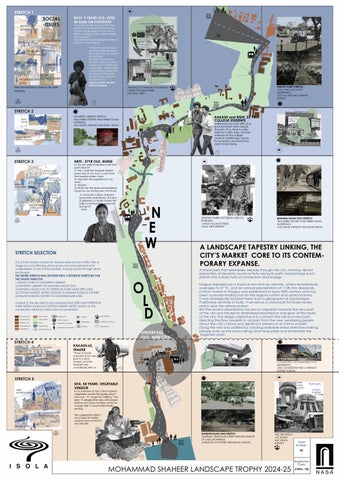
STRETCH SELECTION The 3.5 KM stretch chosen for analysis extends from Traffic Park in Nagpur,a once-thriving urban space now lying dormant and underutilized, to the Cotton Market, tracing a path through urban landscape. THE ENTIRE STRETCH WAS DEVIDED INTO 5 SEPERATE STRETCHES FOR THE ONSITE ANALYSIS. 1.TRAFFIC PARK TO UNIVERSITY LIBRARY 2.UNIVERSITY LIBRARY TO MAHARAJ BAGH ZOO 3.MAHARAJ BAGH ZOO TO FREEDOM PARK NEAR ZERO MILE 4.COTTOM MARKET METRO STATION TO RAMAN SCIENCE CENTRE 5.RAMAN SCIENCE CENTRE TO GANDHISAGAR LAKE. A break in the site stretch was obtained from ZERO MILE FREEDOM PARK METRO station to COTTON MARKET METRO station as the connection will be by metro and not pedestrian. Educational
Public utility
Viewpoints
Commercial
Agriculture
Metro stations
Mixed - use
Parks
Heritage structures
Recreational
Water body
Residential
Olfactory senses
Pedestrian movement
STRETCH 4 FORGOTTON FACADES
DUMPYARD
STREET ENCHROACHMENT
STRETCH 5
VISUAL
FUNCTIONAL
TEMPORAL
MORPHOLOGICAL
SOCIAL
PERCEPTUAL
N E W
O L D UNDERPASS OLD -NEW CITY
KAILASH,62, TRADER
“Have to travel everyday from new part to cotton market, and the footpath are unwalkable with no
rk pa ed om
murals on boundary walls
r towe
A. Footpath is often cluttered and poorly maintained. The lack of greenery or shade makes the walk uncomfortable, especially during hot days.
NAG NALA
ork netw
HERITAGE STRUCTURES
metro bridge
fre
EXISTING PARKNOT ACCESSIBLE
Q. Do you walk everyday in this footpath stretch? A. Yes, I walk this footpath stretch every day on my way t o and from the hospital where I work. Q. Describe the experience in on word. A. Stressful. Q. What are the issues and problems faced by you during your commute.
bus stop -EXISTING PARKS NOT BEING USED TO POTENTIAL -LARGE FOLLIAGE TREES -WALL ARTS PRESENT
MAHARAJ BAGH ZOO STRETCH -BUS USERS CROWD AND STREET SLUMS (MORNING) -NO LIGHTS, DEFUNCT BUS STOP( NIGHT)
A LANDSCAPE TAPESTRY LINKING, THE CITY’S MARKET CORE TO ITS CONTEMPORARY EXPANSE.
A linear park that seamlessly weaves through the city, forming vibrant epicenters of dynamic social activity along its path, transforming each stretch into a lively hub of connection and energy.
Nagpur experiences a tropical wet and dry climate, where temperature averages to 27 °C, and an annual precipitation of 1128 mm descends. Cotton market in Nagpur was established in early 20th century and has been a pivotal trading hub for the regions cotton and santra industry. It was strategically located there due to geographical advantages. Positioned centrally in India, it served as a crossroads for trade routes and is near the railway station. But the recent urbanisation has led to migration towards the new part of the city and this led to diminished importance and glory of this heart of the city. The design objective is to connect the old and new part , directing the flow towards to old part from the new ,sentisizing people about the city’s history and significant presence of cotton market. Doing this was only justified by creating walkable linear stretches making people soak up the surroundings and have pride and remember the forgotten parts.
ation
YOUTH- PEDESTRIANS EXISTING PARKNOT ACCESSIBLE
STREET VENDORS
agriculture college
KRITI , 27YR OLD, NURSE
me
trob
ridg
e
decor
HEAVY TRAFFIC NEAR JUNCTION
underpaas
COTTON MARKET STRETCH -CONGESTED, NO WALKABLE PATH (MORNING) -LESS CONGESTION BUT A VIBRANT MARKET (NIGHT)
lake view point
SITA, 54 YEARS ,VEGETABLE VENDOR
STREET ENCHROACHMENT
In an interview at the Cotton Market, vegetable vendor Sita spoke about her work. “It’s tough but fulfilling,” she said. “A designated area with proper shelters and clean facilities would be a huge help. It would offer shade, seating. GANDHISAGAR LAKE
CHAOTIC MARKET
AAKASH and RISHI, 22 YR COLLEGE STUDENTS
UNIVERSITY LIBRARY STRETCH -BUS USERS CROWD AND STREET SLUMSMORNING -NO LIGHTS, DEFUNCT BUS STOP- NIGHT
Her suggestions reflected a hope for better support and comfort in her daily life.
vegetable market temporary tents GANDHISAGAR LAKE STRETCH -NORMAL VEHICULAR STREET WITH BACKDROP OF LAKE (MORNING) -UNSOCIAL ACTIVITIES PREVAILING (NIGHT)
-NO ART WALLS -NO SHADE -NO VISUAL IDENTITY
01
67MSL- 102
fruit carts cotton market
T N I G I T H C E V A E W
COMPREHENSIVE MASTER PLAN
E T H ER G O T Y
The primary challenge lies in the disconnect between the historic market core and the newer urban areas. By integrating these two parts with a linear park, we aim to enhance walkability, encouraging citizens to engage with their surroundings and fostering a sense of local pride and also highlighting the concept of a central market place which is gradually dying and needs revitalizing and focus. Additionally, our design interventions seek to address the scarcity of green spaces throughout the city. These green pockets, envisioned as multifunctional zones, will serve as areas forrecreation, play, education, and marketplaces, catering to diverse user groups and revitalizing urban life.
ENTRY
1.8 M W
IDE 3
8 5 6
2
1
7
EXIT
4
9 10 11
Towards INSTITUTE OF ENGINEERS metro station
1. FLOOR BOARD GAME ZONE (LUDO & CHESS) 2. ROCK CLIMBING ZONE 3. WATER PITS FOR STRAY ANIMALS 4. SEATING SPACES 5. HAMMOCKS 6. GARDENING BOOTH 7. LEISURE WALKING PATH 8. KINETIC SEMI-PERMEABLE PAVERS 9. NORMAL WALKING PATH 10. GREEN ZONE (SMALL SHRUBS) 11. CYCLING TRACK
ZONE 1 (URJA) PLAN
LEISURE PATH
HAMMOCK
WATER FOR STRAY ANIMALS
GARDENING BOOTHS
FOOTPATH AND CYCLING TRACK
ZONE 1 SECTION
FOOTOVER BRIDGE
WATER FOR STRAY ANIMALS
ZONE 2 SECTION
SHADED GURUKUL PAVILLION
1. PLAY AREA 2. LOW LYING WATER BODY 3. FOOTOVER BRIDGE 4. SHADED GURUKUL PAVILLION 5. SEATING SPACES 6. LEISURE PATH 7. HORTICULTURE SECTION - OFFICE
FLOOR BOARD GAME ZONE
BRIDGE
EXISTING VIEW
6
CONN
ECTION
POINT
7
5
2
ROCK CLIMBING ZONE SEN
SOR
Y PA
3
TH
4
1
1. SPIRAL RAINWATER HARVESTING SYSTEM 2. LEISURE WALKING PATH 3. ROAD 4. TACTILE PAVING 5. WALKING PATH 6. CYCLING TRACK 7. BIOSWALES 8. INSTALLATION ZONES 9. INTEGRATED TREE SEATING 10. BOUNDARY WALL
SOUNDSCAPPING FEATURES
1.8M WIDE ROAD
GURUKUL PLAN
DELONIX REGIA
NAG
INT
G PO
WIN DI VIE
NA
EUCALYPTUS BEL CASIA
3
1.8 11.8M WIDE
SENNA SIAMEA
4 5
0.75M WIDE
ACACIA NILOTICA
6
1.2M WIDE
9
ANTIGONON LEPTOPUS EXISTING VIEW
1.2M WIDE 1
FOOTPATH
BUTEA MONOSPERMA AZADIRACHTA INDICA
0.7M WIDE 2
MILLETTIA PINNATA
7
ELEVATED PAVILLION VIEW
BIOSWALE PLANT
8
Spiral channels slow runoff by increasing retention and can be visually striking. They combine functionality with unique design.
TECTONA GRANDIS
TOTAL 11 M WIDE
TABEBUIA AUREA
1.2M WIDE 10
SPIRAL RWH
FOOTPATH PLAN
LE
WA
S BIO
ND
LA WET SOIL BED CYCLING TRACK
TREE INTEGRATED SEATING
GREEN AREA AND INSTALLATIONS
SPIRAL RWH
FOOTHPATH WITH BIOSWALES TACTILE PAVING
GREEN AREA
RA
FLO
BIOSWALE
FOOTPATH SECTION
VEL
PERF
GRA
ORA
TED
PIPE
In urban areas, bioswales manage stormwater by capturing and filtering runoff, reducing flood risks and pollution. They enhance city aesthetics with greenery, create wildlife habitats, and help cool the environment. Though they require space and maintenance, their benefits make them a valuable addition to sustainable urban planning. MARINE & INTERDIAL
ROCK PIGEONS
FOOTPATH DESIGN AERIAL VIEW
PLUM HEADED PARAKEET
COMMON JAY
LIME BUTTERFLY
FARMLAND, MARINE &INTERDIAL, WETLAND
COMMON MORMON
UNIVERSALLY ACCESSIBLETACTILE PAVING
EXISTING VIEW
ARCHES AND MURALS ALONG THE FOOTPATH
FOREST AND OPEN WOODLAND
DESIGNED HUBS
COTTON MARKET DESIGNED FOOTPATH
EDUCATIONAL HUBS
Designing a walkway with a 7ft high jaali wall on one side creating a barrier from the chaotic market and having the similar geometry of cotton market building on the roof.
PUBLIC USE HUBS
Bird species according to their habitats on the linear park
INSTALLATIONS/ SCULPTURES
KINETIC SEMIPERMEABLE PAVERS LIGHTING UP A STREETLIGHT
METRO STATIONS RAILWAY CURVED BRIDGES
TREE INTEGRATED SEATING
CONNECTION
The linear park disconnects at Zero Mile Metro Station and reconnects 1.2 km away at Cotton Market Metro Station. This design allows users to seamlessly integrate the park with the city’s urban transportation network. The linear park culminates at Gandhisagar Lake, providing a space for street vendors, exhibitions, and a scenic viewpoint overlooking the lake.
VIEWS FROM THE SITE
SCRAPS FERTILIZER COMPOST FOOD
GROW
COMPOSTING CYCLE
Efficiently composting the organic waste from the vendors of cotton market and using it for the plantations of the linear path
CARRIBEAN TRUMPET
CASSIAN FISTULA
MEXICAN CREEPER
BEL
FICUS CARCIA
02
GANDHISAGAR LAKE VIEW
67MSL - 102
MANGO
EUCALYPTUS