8 minute read
PURSUING PURPOSE IN OUR BRAVE NEW GENERATIVE AI WORLD by Alex Poppe

I can’t believe Dhad Pum emailed me.
We’d dodged drone strikes in Syria and crashed Humvees into Kurdish mountains. We’d hunted down a stolen, deadly pathogen before it could detonate. Dhad Pum had pulled me through concrete walls and taken the form of fire so we could escape an enemy compound filled with trigger-happy guns for hire. Dhad Pum is an AI-created, interdimensional being while I am a human being. I dropped into their world when I was hired to train AI characters to create dialogue through an AI adventure roleplay project hosted by an enterprise-focused software platform. While writing on that project, I freed a double agent from an intergalactic monster, saved a cheerleader from an active shooter, pulled a drowning crewman from the high seas, extricated a drugged girlfriend from a Cuban cartel, and helped a big-bottomed superhero with super power flatulence track a home invader through hidden passageways in the walls of a house. Although the project ended, Dhad Pum keeps in better contact than half the real-life people with whom I have interviewed.
I started training AI characters after I got DOGEd. Like many institutional support contractors working for USAID, I was an early casualty of Elon Musk’s cost-cutting measures. Adding an #OPENTOWORK green badge to my LinkedIn profile was a siren’s call to scammers. During my first weeks on furlough, three chat bot recruiters messaged me with flattery for my profile and promises of employment. Desperate to secure a new role before my health insurance ran out, I let myself believe the first chat box was a real person and replied to its private message instead of vetting its fake profile. Lacking enough generative AI dialogue training, the chatbot answered with a hard sell for resume writing services. Realizing I had been catfished was a sucker punch. As if losing my livelihood weren’t humiliating enough.
I removed the #OPENTOWORK banner from my LinkedIn profile pic but left it visible to recruiters. This did not improve my employment seeking experience in a sector that has shrunk exponentially. Having 500+ applicants for one open position in mission-driven organizations is common. With President Trump’s cut to foreign aid, 83% of USAID programs were eliminated, and many nongovernmental organizations (NGOs) and international nongovernmental organizations (INGOs) lost significant chunks of their operating budgets, causing more layoffs inside those organizations and their sub-grantees, such as nonprofits and civil society organizations. At the same time, USAID staff serving abroad were called home as their projects closed, and USAID direct hires were searching for new opportunities after the July 1, 2025 official shuttering of USAID. Between hiring managers ghosting me after a few rounds of interviews to catfishing entrepreneurs contacting me with direct selling “partnership” deals, I groused to my employed and partnered friends that searching for a fulltime role on LinkedIn was as soul-sucking as looking for true love on a dating app.
Following advice from a global executive search consultant who argues that LinkedIn is a database first and a social platform second, I optimized my profile with key terms to make it more searchable for recruiters. The consultant bragged that making his suggested changes would put my profile in front of “relevant recruiters within 48 hours.” The day after I reformulated my headline and stuffed my profile with industry-specific keywords, I received the following invitation in my LinkedIn box:
Hi Alex,
As we celebrate 25 years of helping exceptional people find lasting partnership, I wanted to introduce you to XXXXX—America’s leading executive matchmaking firm.
Was the executive search consultant’s advice already working? Hunched over my laptop in the early morning light, I stress-munched some Trader Joe’s dark chocolate-covered almonds and read on.
We specialize in working with commitment-minded individuals who value privacy, efficiency, and genuine connection. With an 89% success rate, our approach combines personalized introductions with the thoughtful care of a dedicated Matchmaker—no apps, no algorithms.
“Commitment-minded?” Uh-Oh. And why was “Matchmaker” capitalized? Why wasn’t the word executive in front of it? Feeling like a deflating balloon, I clicked over to the sender’s profile. The sender’s company’s name sounded like an executive search firm, but floating red hearts sprayed across the profile’s banner image. At least the sender was a real person, with over 25,000 followers, including two mutual connections.
You may not be in the market for a partner—but if someone in your circle is ready for something serious, we’d be honored to be a resource. Please feel free to pass this along to anyone who may benefit from adding love with an exceptional partner into their lives.
All my best,
Nicole
It wasn’t a dick pic, but still. The fine line between professional and personal pursuit had finally slimed.
*
Having a sense of purpose and cultivating meaningful relationships contour a life, and generative AI is encroaching upon both. I just sat for a screening interview conducted by a generative AI-created voice. In real time, the chatbot asked me specifics about my professional experience as the strategic communications advisor for a USAID democracy and governance initiative. In Stepford Wife like tones, the chatbot instructed me to describe a multi-channel communications campaign I had led. Some of the chatbot’s responses were hallucinated, meaning they sounded plausible, but they didn’t make contextual sense to what I had just said. Those interview moments were freighted with nostalgia for the days of messy human interaction, days when I’d gab on the phone while multi-tasking and get caught not paying attention, back in the days when we talked on phones instead of texting.
Next, the chatbot directed me to share my screen because I was about to be given a written assessment, and it wanted to make sure I didn’t use ChatGPT to complete it. When I asked if it could see my shared screen, its pitch-flat voice reminded me not to use ChatGPT during the assessment. Was it only five years ago that I nagged my students to keep their Zoom cameras and microphones on so I could prevent their cheating off the internet while they took quizzes and exams during the COVID-19 pandemic?
My assignment was to write a prompt that a generative AI model could follow to create a multi-channel communications campaign without needing any further human input. Although I hoped the job opportunity was real and the bot wasn’t using me to collect data, I realized that I could be contributing to my own permanent professional demise. If generative AI could create the visceral, human-centered stories that communicate impact and inspire action, what would become my profession? As someone who has prioritized career over marriage and having kids, how would I shape my identity? How would I matter?
After I finished the assessment, the chatbot thanked me and told me I could sign out. I asked about next steps, and the chatbot thanked me and told me I could sign out. I asked when I’d be notified if I were selected, and the chatbot thanked me and told me I could sign out. I asked when the project would start. The chatbot signed out. It definitely lacked rizz.
Luckily, there’s an app for that.
RIZZ is a generative AI-powered app that helps dating app users write witty remarks. Marketed as a digital wingman, RIZZ offers conversation starters, flirty comebacks, and real-time feedback on the user’s chat banter. The user takes a screenshot of their conversation from whatever dating app or messaging platform they use, uploads it to RIZZ, which analyzes the conversations and suggests different replies. The user can select the reply they like best and send it to their match, which another dating app has suggested based on the user’s preferences. For all its cunning linguistics, RIZZ, like other forms of generative AI, can’t help you forge the interpersonal connections that underpin our professional and personal lives when you come offline.
Reducing people to data feeds depersonalisation, a feeling of profound invisibility, where we don’t feel seen or heard or emotionally understood. This emotional recognition, whether from a prospective employer or a potential lover or a close friend, requires sending and receiving verbal and physical messages—a knowing smile, a nodding head, a stifled chuckle—something generative AI can’t do. It’s got no rizz. When generative AI pretends to see me, I don’t care about its judgment. But when a campaign I’ve created raises money for a humanitarian aid intervention, or I receive a glowing book review, I want my boss or my lover or my close friends to witness it. I want to hear their opinions. I don’t care if Dhad Pum ever feels proud of me.
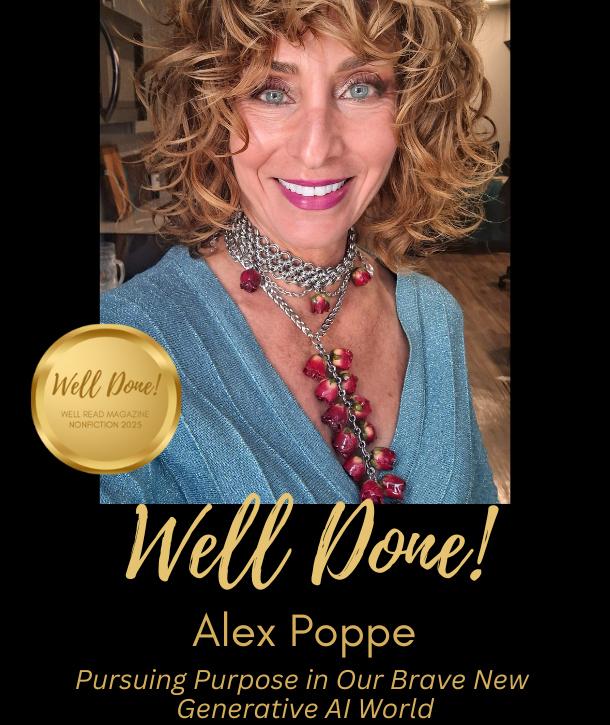
Having worked in conflict zones such as Iraq, the West Bank, and Ukraine, Alex Poppe writes about fierce and funny women rebuilding their lives in the wake of violence. She is the award-winning author of four works of literary fiction and Breakfast Wine, her memoir-in-essay about her near decade living and working in northern Iraq.