Publishing with Heart
At Colorful Crow Publishing, every story begins with connection—between author and reader, past and present, truth and imagination. Rooted in a legacy of honoring diverse voices and carried forward with a deep commitment to care, we champion books that matter—stories that stay with you long after the final page. From literary fiction to children’s adventures, from heartfelt memoirs to imaginative journeys, our titles reflect the beauty, complexity, and resilience of the human experience.
FEATURED FORTHCOMING TITLES:
CROOKED LINES (Historical Fiction) by KristineAnderson
A journalist returns to the Deep South to investigate the disappearance of a childhood friend—only to confront grief, addiction, and the tangled lines of race, loyalty, and truth in 1960sAmerica.
SARAH THE SEED (Picture Book) by L.G. Bridges
When a strong wind carries Sarah far from everything she knows, she discovers that being lost may be the very thing that helps her grow into something extraordinary.
THE ELDDIR CHRONICLES (Middle-Grade Series) by L.G. Bridges
In a richly imagined world of mystery and magic, young heroes must discover who they are—and what they’re willing to risk—to protect the future of Elddir.
WORK IS A FOUR-LETTER WORD: MY CRAZY CAREER, COWORKERS,AND CLIENTS (Memoir)
by
Bobbie Christmas
From outrageous clients to unbelievable workplace moments, this candid and often hilarious memoir reveals the hard-earned wisdom—and wild stories—behind a lifetime in the world of work.
MORE STORIES TO DISCOVER:
THE
MOUNTAINS
DON’T FORGET
(Historical Fiction) by
Pat Walker Johnson
After escaping an abusive marriage, Pru Massey builds a new life—but love, loss, and a haunting crime force her to reckon with the past she cannot outrun.
EXPLORE NATURE
(Picture Book Series) by MaKayla
Rodriguez
Join a curious little snail as he journeys through the natural world, discovering friendship, wonder, and the beauty of exploring one small step at a time.
THE FOARK RIVER SALON AND BAIT SHOP (Literary Fiction with
Humor) by
Barbara G. Tucker
When a small-town bait shop becomes the center of a reality TV show, three employees must confront their secrets—and decide whether they’re ready for the truth to come to light.
NED FLETCHER AND THE LAST CRACIAN (Sci-Fi
Adventure) by
Travis Williams
Aspace pilot with the soul of the Old West navigates danger, mystery, and sharpwitted dialogue in a futuristic tale that blends frontier grit with interstellar stakes.
AND MORE TO COME…
Some stories are still taking shape—but we can’t wait to share them with you. Discover more at Colorful Crow Publishing. Follow along for new releases, author features, and behind-the-scenes glimpses into the stories we’re proud to bring into the world.


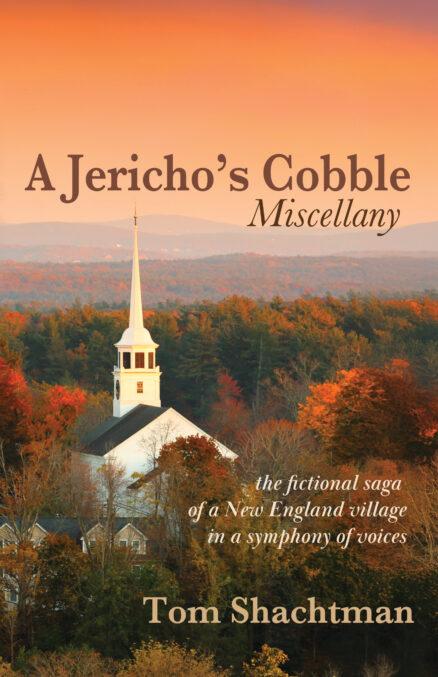
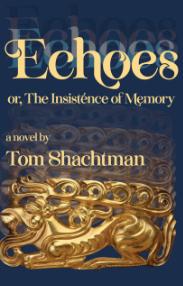
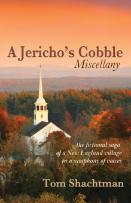
When I first opened A Jericho’s Cobble Miscellany, I expected a quaint collection of small-town stories. What I found was something richer, stranger, and more layered. Tom Shachtman’s book is not so much a single story as it is a patchwork quilt stitched from voices, artifacts, and memories. We meet townspeople past and present, from accident victims hovering between life and death to schoolteachers scribbling in their diaries, from old family dynasties with troubling legacies to modern-day residents juggling community duty and private worries. The narrative dances between perspectives: sometimes a newspaper clipping, sometimes a poem, sometimes the musings of a geological formation. It’s messy and alive, much like the New England hamlet it captures, spanning from Labor Day 2003 to Memorial Day 2004, with centuries of echoes reverberating in the background.
What struck me first was the sheer variety of voices. Shachtman has a gift for making each character distinct, whether it’s the weary but hopeful thoughts of Grace Newington in a hospital waiting room or the earthy humor of the women at Get’nGo who call themselves “the sorority of the brown bags.” The writing has an intimacy to it that I enjoyed. At times, I found myself moved by how history and personal memory get tangled. I loved how the town’s past, its Native roots, its Whitbred settlers, its scandals, sits so close to the surface that every conversation seems to brush against it. The book shifts forms. A poem would melt into a diary entry, which would jump into a mock playlet, and I’d have to steady myself. But maybe that’s the point: a miscellany should feel like rummaging through a box in an attic, never sure what you’ll find next.
The book also made me think about how communities wrestle with memory and change. There’s anger and pride about names, schools, and family legacies. There’s tenderness in how neighbors watch over one another, yet sharp divides between “Cobblers” and “Gobblers,” the locals and the weekenders. I liked that the author never smoothed these tensions away. He let the contradictions stand, and they felt real. The emotions felt raw. I found myself laughing at one passage and then feeling the weight of grief a page later. The shifts gave the book a strange vitality that straight storytelling might have missed.
A Jericho’s Cobble Miscellany is less about a plot than about a place, less about neat answers than about what it feels like to live in the shadow of history while stumbling through the present. I would recommend it to readers who like community sagas, who enjoy oral histories, or who simply want to sink into the rhythm of a small town that is both ordinary and mythic. If you’re willing to wander, to let yourself be surprised, you’ll find something touching here.
April Pulliam,Assistant Editor
Ell, a millennial of European and Mexican heritage, has one humorous children’s book published, but her more serious writing projects are stalled, her boyfriend has dumped her, and she is deeply frightened by a recurring dream. To solve her problems, she delves into family mysteries—Civil War-era slaveholding, madness, and theft of artifacts. The key to all, previously unknown to Ell but remarkable, is a female Confederate warrior ancestor whose nightmare echoes her own. By tracing both of their dreams to ancient times, and by using insights from modern genetic theory, Ell solves the mysteries and enables herself to move forward.
Dreaminations is a collection of prose poems in haibun or tanka prose style. Haibun or tanka prose links prose and haiku or tanka to complement each other through juxtaposition to gain a new sensibility, an insight into a significant moment. The linked forms also stand independently with their complete meanings that present two views of each moment, inviting the reader to leap in between for an aesthetic appreciation. That’s the uniqueness of haibun and tanka prose and the fascination of writing them. This collection explores the self and the world through the working of the senses. It is a quest about where to posit the self and how a human being gains learning from nature and human nature.
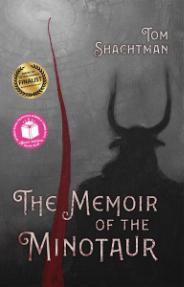
The Memoir of the Minotaur is the posthumous confessions of the half-man, half-bull of Crete, as offered to an audience of recently-deceased, 21st century fellow souls in Hades’domain. This book is a satire for readers unafraid of a rollicking good tale involving anatomically-complex beings, unforgivable puns, the champion serial killer of all time, scantily-clad Greek maidens and youths, articulate tyrants, and feminist proto-history leavened with theological impertinence.

MADVILLE PUBLISHING seeks out and encourages literary writers with unique voices. We look for writers who express complex ideas in simple terms. We look for critical thinkers with a twang, a lilt, or a click in their voices. And patois! We love a good patois. We want to hear those regionalisms in our writers’ voices. We want to preserve the sound of our histories through our voices complete and honest, dialectal features and all. We want to highlight those features that make our cultures special in ways that do not focus on division, but rather shine an appreciative light on our diversity.
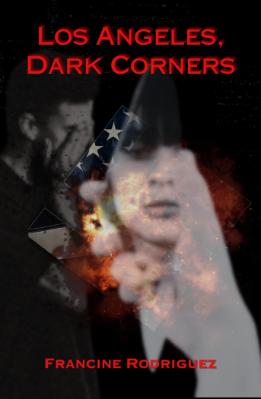
LosAngeles, Dark Corners by Francine
Rodriguez
Against the January 6 capitol riots, a young FBI agent, Josh, works undercover to infiltrate neo-Nazi group in Los Angeles. He becomes involved with Novena, the on/off girlfriend of the group’s leader, blurring the lines between investigation and romance, and placing them both in a situation which threatens to explode into violence when a top-ranking official is murdered.
Told in dual narration, the novel opens with Novena in prison awaiting sentencing for two murders. Novena’s position in the movement was largely shaped by her perception that she is overlooked and discriminated against by the system of government in the U.S. even though she is white.Afew months earlier, after an argument with her boyfriend, Drew, head of the local chapter of the White Knights, she meets Josh at a rally, and the two become close, Josh pressing Novena for information on the Knights’preparation for January 6 and beyond, and her looking to him for the stability and direction she lacks in her own life as she begins to become distant from Drew and the Knights.
But Drew brings Novena back into the fold, convincing her that one of the top men in the organization, Norwood, is a traitor. On January 6, while many of the Knights are away, participating in the insurrection at the capitol, Novena and Drew break into Norwood’s home to find information to use against him so Drew can replace him as head of the Knights.The break in turns violent when the owner unexpectedly returns home, and Novena shoots Norwood, killing him. Lost and alone in the aftermath of the robbery, she turns back to Josh, eventually confessing the murder to him. Blindsided, Josh’s reaction will determine both of their fates.
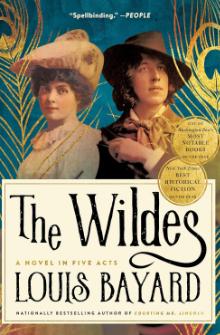
The Wildes:ANovel in Five Acts by
Louis Bayard
In this singularly powerful novel, bestselling author Louis Bayard brings Oscar Wilde's wife Constance and two sons out from the shadows of history and creates a vivid and poignant story of secrets, loss, and love.
In September of 1892, Oscar Wilde and his family have retreated to the idyllic Norfolk countryside for a holiday. His wife, Constance, has every reason to be happy: two beautiful sons, her own work as an advocate for feminist causes, and a delightfully charming and affectionate husband and father to her children, who also happens to be the most sought-after author in England. But with the arrival of an unexpected houseguest, the aristocratic young poet Lord Alfred Douglas, Constance gradually--and then all at once--comes to see that her husband's heart is elsewhere and that the growing intensity between the two men threatens the whole foundation of their lives.
"Wonderfully researched, beautifully crafted, movingly told, The Wildes is a treasure to read." --Andrew Sean Greer, Pulitzer Prizewinning author of Less and Less Is Lost
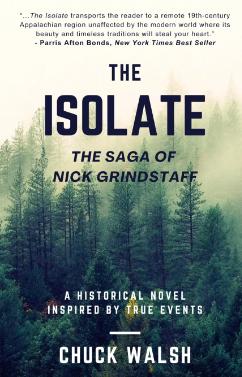
The Isolate - The Saga of Nick Grindstaff by Chuck Walsh
In the heart of East Tennessee's rugged Iron Mountain lives the legend of Nick Grindstaff, a man who turned his back on a cruel world and carved out a life of fierce independence and raw survival. The Isolate is the unforgettable true story of a soul beaten down by tragedy, betrayal, and loss, and his decision to retreat into the wilderness to find solace, solitude, and meaning.
Born into hardship and orphaned at just three years old, Nick was raised in the secluded Doe Valley. After a rare chance to see the outside world, he set off to St. Louis with dreams of prosperity and a future with his belovedAnnabeth. But the world proved merciless-his hard-earned savings were stolen, and his return home brought heartbreak. Shattered and disillusioned, Nick climbed into the mountains, where he vowed never to come down again.
What follows is a riveting tale of self-reliance and grit. Battling bears, panthers, deadly winters, and human cruelty alike, Nick transforms from a heartbroken man into a mythic mountain figure. His only companion?Aloyal stray dog.To outsiders, he was a recluse, the "Hermit of Johnson County," but to those who knew him, he was a quiet soul whose life echoed the struggle between man and nature, hope and despair.
The Isolate is more than a story of survival. It's a haunting journey into a forgotten corner of American history. Lush with Appalachian landscapes and driven by the enduring human spirit, this gripping narrative honors a man who sought freedom in the wild and found peace on his own terms. Readers will be swept away by Nick's heartbreaking resilience and the haunting beauty of the life he left behind.
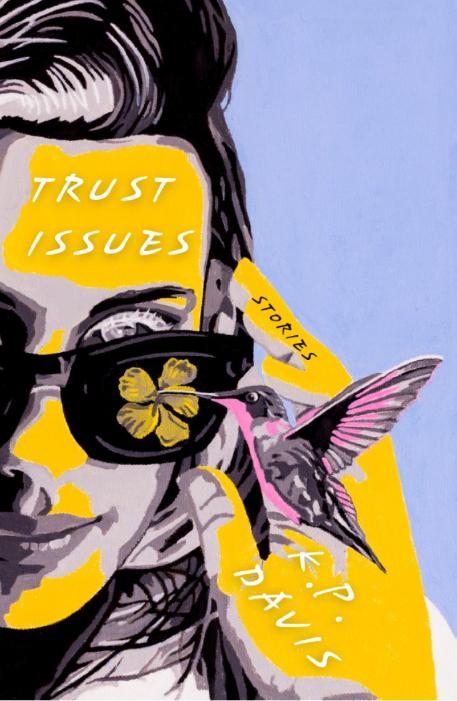
Someone or something lurks around every corner, but K.P. Davis's characters have come prepared. These are women carrying on their daily struggles in a dangerous world, striving and searching for safety. They include Nell, an antisocial, nomadic, shade-tree mechanic and getaway driver; 'Bula, an odd girl who talks to animals; and a whole host of others who follow lonely paths spreading empathy while kicking ass. The endings aren't always happy, and these women have plenty of reasons to be afraid, but they keep on going.The twenty sharp, poignant, and biting stories in Trust Issues comprise a stunning beacon for hard-headed folk fighting to be heard when nobody listens.
Trust Issues: Stories
K. P. Davis
Bringing Gills’ Go Love novel sequence to a fiery close, BC1 lays down the Harvell grudge of Mountain Meadows and aims, finally, at healing for all involved. Lara Luce Harvell has been charged with carrying her late father’s prized Martin D-28, handmade in Nazareth, Pennsylvania in 1998, the same year she was born, to Mr. Edgar Paris in Dinnehotso, Arizona. Such is repayment to him for saving Joey’s right index finger when it got bit off in an Arkansas fight. The resulting journey, part dynamite, revenge, and the tenderness of love, wanders into the lands of the woolly-headed Washers, a whole tribe of wandering relatives who “…inhabited the desert, living in trailer parks from Tuba City to Las Vegas, pumping five dollars’ worth of regular at a time into jalopies that overheated and ran on threadbare tires.”
Acollection of magically real stories and a novella set in theAmerican south.
“Only a poet of Braggs’ talent and sensibility could bring us stories of such lively language and lost-andin-love characters. He tells their truths but tells them at a slant that is joyful to read and heartbreakingly beautiful to apprehend.” —Anthony Grooms, author of Bombingham and The Vain Conversation
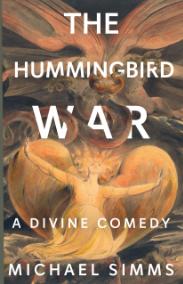
The Hummingbird War follows events of Bicycles of the Gods, in which Jesus returns to earth with two celestial pals with a mandate to destroy the earth. In that volume, Jesse (Jesus) and his two friends Xavi (Shiva), and Mikey (as in the Archangel) decide not to destroy the world quite yet. But the battle continues in The Hummingbird War.
MADVILLE PUBLISHING seeks out and encourages literary writers with unique voices. We look for writers who express complex ideas in simple terms. We look for critical thinkers with a twang, a lilt, or a click in their voices. And patois! We love a good patois. We want to hear those regionalisms in our writers’ voices. We want to preserve the sound of our histories through our voices complete and honest, dialectal features and all. We want to highlight those features that make our cultures special in ways that do not focus on division, but rather shine an appreciative light on our diversity.
Small Town Witch by Deborah Z
Adams
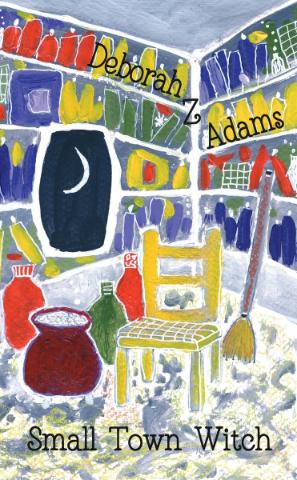
Small Town Witch, a new chapbook from award-winning author Deborah Z Adams, is a collection of spell-binding tales about the witches we meet every day. Written with warmth, humor, and a little bite, Small Town Witch is packed with more substance than meets the eye.
“Adams’s witches may inhabit a small town, perhaps your small town, but they are not small women. They are powerful and empowering. You’ll root for these women, these coven leaders and elementary school teachers. Two parts poetry, two parts prose, with a healthy pinch of feminist indignation, Adams’s tales will surely charm you and remind you that you’re “not in this fight alone.’”
—Joanna Grisham, author of Phantoms
(Finishing Line Press, 2023)
Available from your favorite bookseller!
All proceeds from sales of Small Town Witch are donated to organizations that do good in the world.
You can sample Small Town Witch stories here.
“I’ve lived my life surrounded by women who wield their powers quietly but effectively,” saysAdams. “They’re everywhere, but especially prevalent in small towns.”
Deborah Z Adams is an awardwinning author of novels, short fiction, CNF, and poetry. She served as executive editor of Oconee Spirit Press for ten years, and is currently a reader for Boomerlit. Her writing has appeared or is forthcoming in Roanoke Review, Litmosphere: a journal of Charlotte Lit, WELL READ Magazine, Dead Mule and other journals.
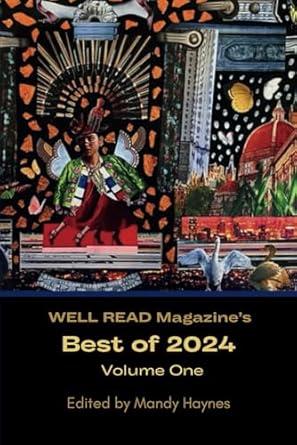
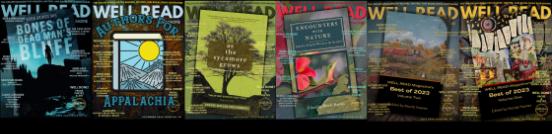
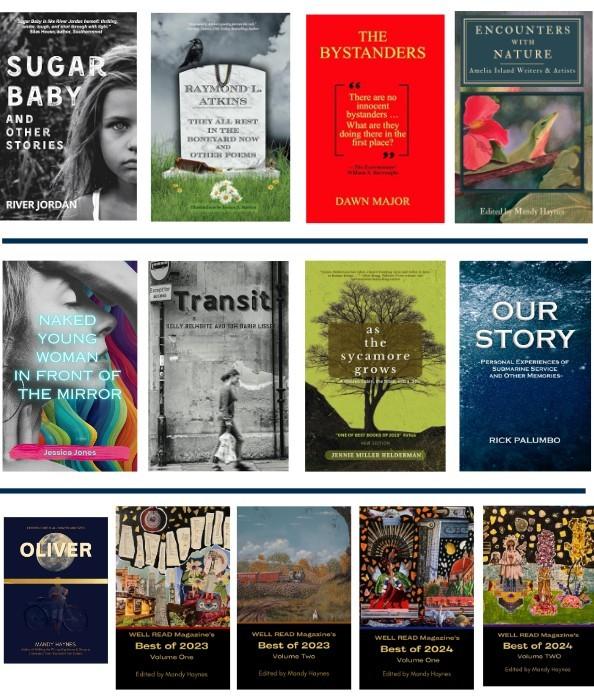
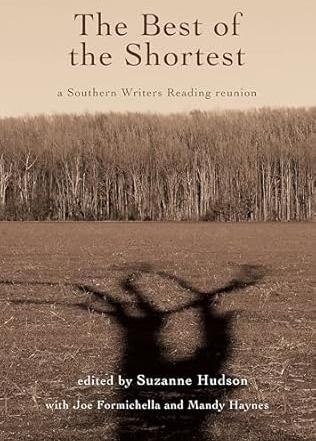
In the Best of 2024 Volume One, you’ll find fifty-one submissions written by a fantastic mix of awardwinning authors and poets plus new ones to the scene. Three submissions in this volume were nominated for a Pushcart Prize: The Hanging by Doug Gray, Sandy Tells Me About Dead Pine Trees by J.D. Isip, and Wilma by Phyllis Gobbell. The cover art is by artist, Lindsay Carraway, who had several pieces published in February of 2023.
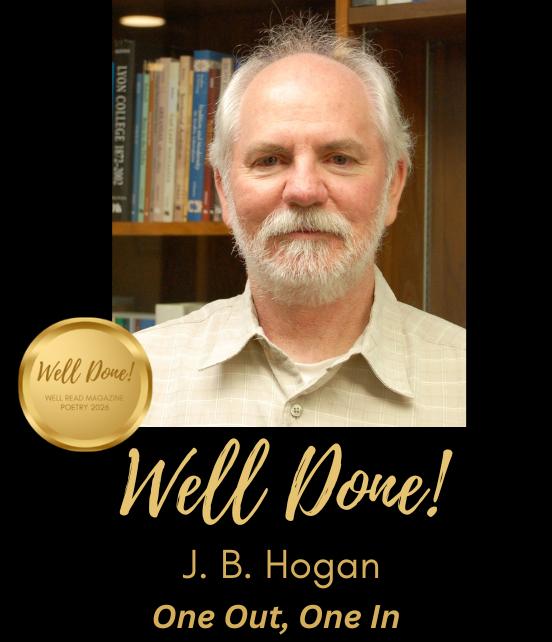
Contributors: Carolyn Haines, Doug Gray, Angela Patera, Kimberly Parish Davis, Michael Spake, Jennifer Smith, Ashley Tunnell, Ken Gosse, Dr. Elizabeth V. Koshy, Ann Hite, Ellen Notbohm, Micah Ward, Malcolm Glass, Katie Crow, Lorraine Cregar, Patricia Feinberg Stoner, John M. Williams, Michael Lee Johnson, J.D. Isip, Casie Bazay, Jacob Strunk, Ann Christine Tabaka, Joan McNerney, Fhen M., Steven Kent, Peter Magliocco, Mark Braught, Rita Welty Bourke, Loretta Fairley, Barbara Anna Gaiardoni, S. Dodge, DeLane Phillips, Candice Marley Conner, Arvilla Fee, J. B. Hogan, Ramey Channell, Hope Kostedt, John Grey, Martha Ellen Johnson, Nancy Chadwick-Burke, Mike Coleman, Margaret Pearce, Nicole Irizawa, Donald Edwards, Janet Lynn Oakley, Mandy Jones, Phyllis Gobbell, and Suzanne Kamata
In the Best of 2024 Volume Two, you’ll find fifty-two submissions written by a fantastic mix of awardwinning authors and poets plus new ones to the scene. Three submissions in this volume were nominated for a Pushcart Prize: Hanging Pictures by Micah Ward, The Lone and Level Sands by James Wade, and American Chestnut by Candace Connor. The cover art is by artist, Lindsay Carraway, who had several pieces published in February of 2023.
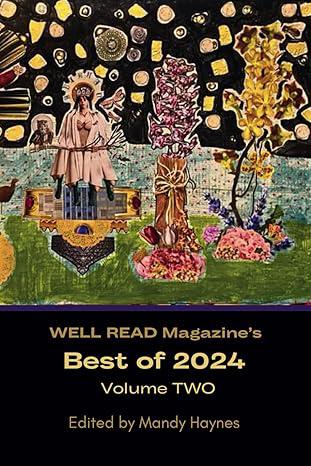
Contributors: Candice Marley Conner, Kaye Wilkinson Barley, Mike Ross, Will Maguire, AJ Concannon, Patricia Feinberg Stoner, Gregg Norman, Robin Prince Monroe, Ramey Channell, April Mae M. Berza,Anne Leigh Parrish, B.A. Brittingham, MikeAustin, Sara Evelyne, Jennifer Smith, Loretta Fairley, J.L. Oakley, Celia Miles, Kris Faatz, Ed Nichols, Linda Imbler, Annie McDonnell, Mike Turner, Micah Ward, James Wade, Ashley Tunnell, John M. Williams, Robb Grindstaff, Stevie Lyon, Laura McHale Holland, Saeed Ibrahim, Nancy Julien Kopp, Julie Green, DeLane Phillips, Shayla Dodge, Edilson Afonso Ferreira, Chris Wood, Jasna Gugić, Fhen M., Hubert Blair Bonds, Ellen Birkett Morris, Margaret Pearce, Ellen Notbohm, Kimberly Parish Davis, J. B. Hogan, and Royal Rhodes
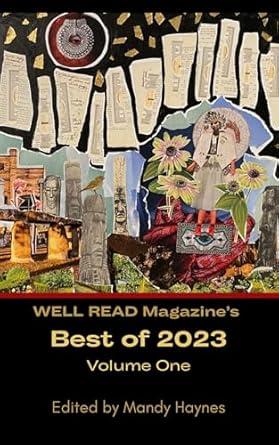
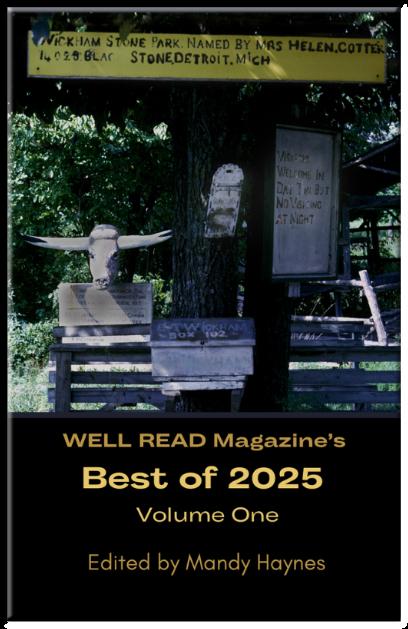
In Volume One, you’ll find thirty-eight submissions writtenbyafantasticmixofawardwinning authors and poets plus new ones to the scene. Three submissions in this volume were nominated for a Pushcart Prize: Miller’s Cafe by Mike Hilbig, Sleeping on Paul’s Mattress by Brenda Sutton Rose, andAHard Dog by Will Maguire. The cover art is by artist, Lindsay Carraway, who had several pieces published in February’s issue.
Contributors: Jeffrey Dale Lofton, Phyllis Gobbell, Brenda Sutton Rose, T. K. Thorne, Claire Hamner Matturro, Penny Koepsel, Mike Hilbig, Jon Sokol, Rita Welty Bourke, Suzanne Kamata, Annie McDonnell, Will Maguire, Joy Ross Davis, Robb Grindstaff, Tom Shachtman, Micah Ward, Mike Turner, James D. Brewer, Eileen Coe, Susan Cornford,Ana Doina, J. B. Hogan, Carrie Welch, Ashley Holloway, Rebecca Klassen, Robin Prince Monroe, Ellen Notbohm, Scott Thomas Outlar, Fiorella Ruas, Jonathan Pett, DeLane Phillips, Larry F. Sommers, Macy Spevacek, and Richard Stimac
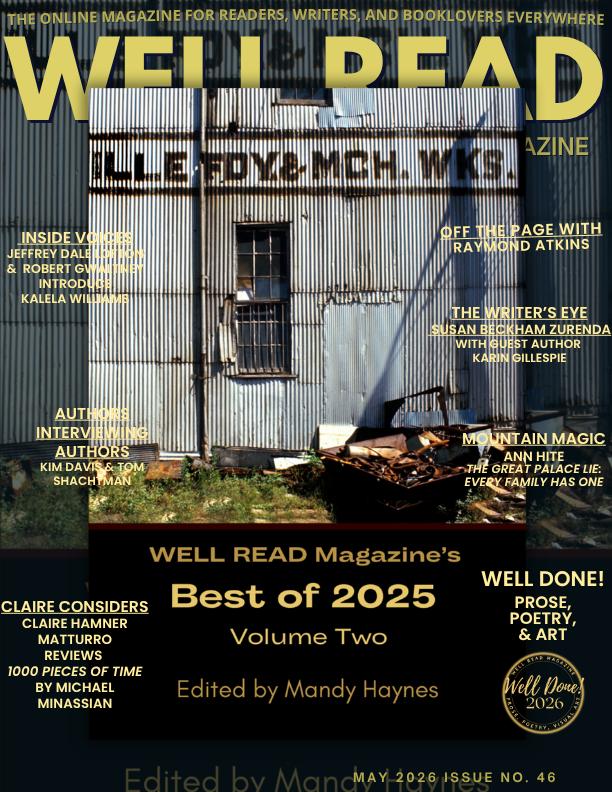
InVolumeTwo, you’ll find fortythree submissions written by a fantastic mix of award-winning authors and poets plus new ones to the scene. Three submissions in this volume were nominated for a Pushcart Prize: A Bleeding Heart by Ann Hite, A Few Hours in the Life of a Five-Year-Old Pool Player by Francine Rodriguez, and There Were Red Flags by Mike Turner. The cover art for Volume Two is by artist, DeWitt Lobrano, who had several pieces published in November’s issue. Enjoy!
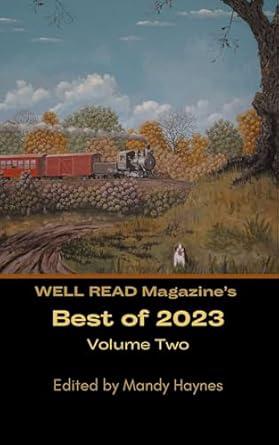
Contributors: Ann Hite, Malcolm Glass, Dawn Major, John M. Williams, Mandy Haynes, Francine Rodriguez, Mike Turner, Mickey Dubrow, William Walsh, Robb Grindstaff, Deborah Zenha Adams, Mark Braught, B. A. Brittingham, Ramey Channell, Eileen Coe, Marion Cohen, Lorraine Cregar, John Grey, J. B. Hogan,Yana Kane, Philip Kobylarz, Diane Lefer, Will Maguire, David Malone, Ashley Tunnell, Tania Nyman, Jacob Parker, LaVern Spencer McCarthy, K. G. Munro, Angela Patera, Micheal Spake, George Pallas, Marisa Keller, Ken Gosse, and Orlando DeVito
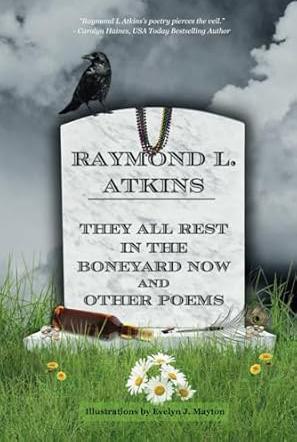
TheyAll Rest in the Boneyard Now by
Raymond L.Atkins (Author), Evelyn Mayton (Illustrator)
“Raymond Atkins writes with intuitive wisdom, as he channels those from beyond the grave. His poetry gives voice to those who once mattered, those who time wants us to forget. In They All Rest in the Boneyard Now, Atkins wrestles death from the dusty clay and breathes life into dry bones while reminding us that every soul who once had breath is worthy of being remembered. These saints, sinners, socialites, and the socially inept are all victims of time, or circumstance, as we too shall one day be. Atkins offers salvation to all who are tormented, and solace to those who seek eternal rest.”
– Renea Winchester,Award-winning author of Outbound Train
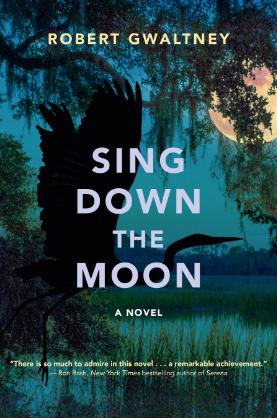
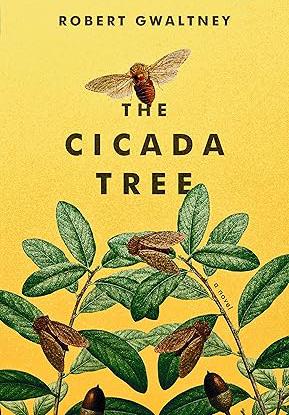
The Cicada Tree by
Robert Gwaltney
The summer of 1956, a brood of cicadas descends upon Providence, Georgia, a natural event with supernatural repercussions, unhinging the life of Analeise Newell, an eleven-year-old piano prodigy. Amidst this emergence, dark obsessions are stirred, uncanny gifts provoked, and secrets unearthed.
During a visit to Mistletoe, a plantation owned by the wealthy Mayfield family, Analeise encounters Cordelia Mayfield and her daughter Marlissa, both of whom possess an otherworldly beauty, a lineal trait regarded as that Mayfield Shine. A whisper and an act of violence perpetrated during this visit by Mrs. Mayfield all converge to kindle Analeise’s fascination with the Mayfields.
Analeise’s burgeoning obsession with the Mayfield family overshadows her own seemingly, ordinary life, culminating in dangerous games and manipulation, setting off a chain of cataclysmic events with life-altering consequences—all of it unfolding to the maddening whir of a cicada song.
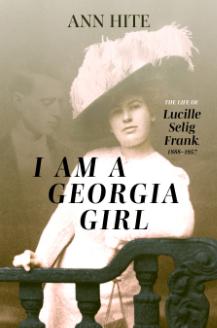
IAm a Georgia Girl: The Life of Lucille Selig Frank, 18881957
byAnn Hite
Twenty-five-year-old Lucille Selig Frank's whole life changed on April 26, 1913, as the Confederate Memorial Parade marched through Atlanta, Georgia. Lucille was attending the opera matinee with her mother. Her husband, Leo Frank, sat in his office in the National Pencil Company, where he was superintendent, working on a financial report. The brutal murder of fourteen-year-old Mary Phagan, an employee of Leo's, took place in the pencil factory that day. Lucille's husband would be the last known person to see Mary alive. While much has been written about Mary Phagan's murder and Leo Frank's subsequent trial over the past 115 years, very little has given voice to Lucille Selig Frank and other women connected to the horrific events that took place between 19131915. Lucille was part of a mission to make Governor John Slaton aware of the antisemitism being shown to Leo during his arrest and trial. She paid a heavy price for her courage. The story of Lucille and the women connected to this case is as timely today as it was in the early 1900s. This book has many diverse characters, including place which influences the outcome. Within this complexity, Hite's telling of Lucille's story will help others see that antisemitism, the marginalization of women, and mobs taking justice into their own hands cannot be tolerated. How many people were complicit in Leo and Lucille's journey? Was justice truly served? This book leaves the reader to answer these questions.
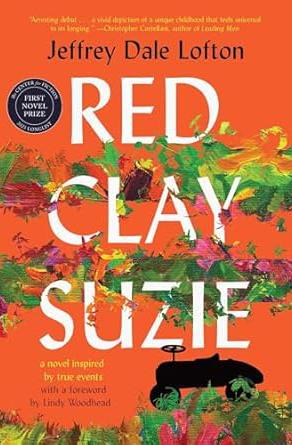
Red Clay Suzie by
Jeffrey Dale Lofton
A novel inspired by true events.
The coming-of-age story of Philbet, gay and living with a disability, battles bullying, ignorance, and disdain as he makes his way in life as an outsider in the Deep South—before finding acceptance in unlikely places.
Fueled by tomato sandwiches and green milkshakes, and obsessed with cars, Philbet struggles with life and love as a gay boy in rural Georgia. He’s happiest when helping Grandaddy dig potatoes from the vegetable garden that connects their houses. But Philbet’s world is shattered and his resilience shaken by events that crush his innocence and sense of security; expose his misshapen chest skillfully hidden behind shirts Mama makes at home; and convince him that he’s not fit to be loved by Knox, the older boy he idolizes to distraction. Over time, Philbet finds refuge in unexpected places and inner strength in unexpected ways, leading to a resolution from beyond the grave.
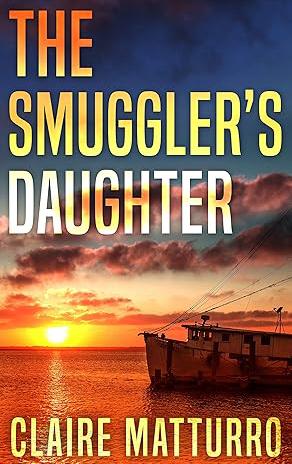
The Smuggler's Daughter by
Claire Matturro
Ray Slaverson, a world-weary Florida police detective, has his hands full with the murders of two attorneys and a third suspicious death, all within twenty-four hours. Ray doesn’t believe in coincidences, but he can’t find a single link between the dead men, and he and his partner soon smash into an investigative stonewall.
Kate Garcia, Ray’s fiancée, knows more than she should. She helped one of the dead attorneys, just hours before he took a bullet to the head, study an old newspaper in the library where she works. Kate might be the only person still alive who knows what he was digging up— except for his killer.
When Kate starts trying to discover what’s behind the murders, she turns up disturbing links between the three dead men that track back to her family’s troubled past. But she has plenty of reasons to keep her mouth shut. Her discovery unleashes a cat-and-mouse game that threatens to sink her and those she loves in a high tide of danger.
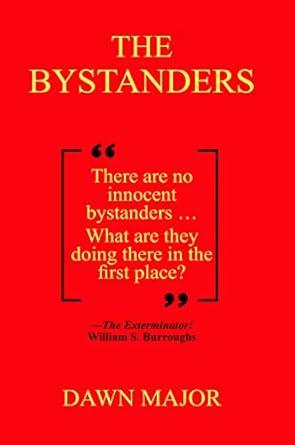
The Bystanders by Dawn Major
The quaint town of Lawrenceton, Missouri isn’t sending out the welcoming committee for its newest neighbors from Los Angeles—the Samples’ family. Shannon Lamb’s “Like a Virgin” fashion choices, along with her fortune-telling mother, Wendy Samples, and her no-good, cheating, jobless, stepfather, Dale Samples, result in Shannon finding few fans in L-Town where proud family lines run deep. Only townie, Eddy Bauman, is smitten with Shannon and her Valley Girl ways. The Bystanders is a dark coming-of-age story set in the 1980s when big hair was big, and MTV ruled. In a quiet town of annual picnics and landscapes, the Samples’ rundown trailer and odd behaviors aren’t charming the locals. Shannon and Wendy could really use some friends but must learn to rely upon themselves to claw their way out of poverty and abuse if they want to escape Dale.
TheBystanders pays homage toAmericana, its small-town eccentricities, and the rural people of the Northern Mississippi Delta region of Southeast Missouri, a unique area of the country where people still speak Paw Paw French and honor Old World traditions.
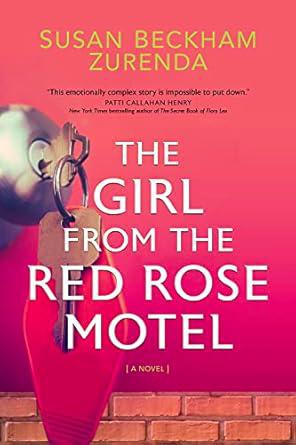
The Girl from the Red Rose Motel:ANovel by Susan Beckham Zurenda
Impoverished high school junior Hazel Smalls and privileged senior Sterling Lovell would never ordinarily meet. But when both are punished with in-school suspension, Sterling finds himself drawn to the gorgeous, studious girl seated nearby, and an unlikely relationship begins. Set in 2012 South Carolina, the novel interlaces the stories of Hazel, living with her homeless family in the rundown Red Rose Motel; Sterling, yearning to break free from his wealthy parents' expectations; and recently widowed Angela Wilmore, their stern but compassionate English teacher. Hazel hides her homelessness from Sterling until he discovers her cleaning the motel's office when he goes with his slumlord father to unfreeze the motel's pipes one morning. With her secret revealed, their relationship deepens. Angela-who has her own struggles in a budding romance with the divorced principal-offers Hazel the support her family can't provide. Navigating between privilege and poverty, vulnerability and strength, all three must confront what they need from themselves and each other as Hazel gains the courage to oppose boundaries and make a bold, life-changing decision at novel's end.
INSIDE VOICES
“There are so many amazing books out there, so first, it’s tough to choose from our hundreds of submissions each year. But it’s crucial to bring a mix of authors, from bestsellers with “Big-Five” publications under their belts, to emerging authors, to those who’ve published with small presses or academic presses.”
Robert
Gwaltney & Jeffrey Dale Lofton
introduce Author and Director of the Virginia Center for the Book, Kalela Williams
Gwaltney
Kalela Williams is an author, a proud auntie, a cat mama, and a "Black History Maven." She is the Director of the Virginia Center for the Book and directs theVirginia Festival of the Book and other events. She has created and produced literary events for the Philadelphia library system, a youth writing non-profit, a university poetry center, and other institutions. Kalela grew up in Atlanta, but now she calls the cute, artsy town of Staunton, Virginia home, where she and her partner run a community arts organization, The Off Center.
In addition, her debut novel Tangleroot was published in October 2024, and is anAmerican BooksellersAssociation Indies Introduce and an Indie Next Pick, a Junior Library Guild Selection, and one of Kirkus Reviews Best Books of 2024.
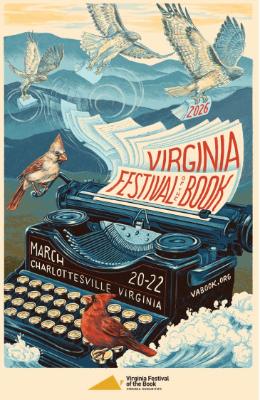
The Virginia Festival of the Book is a multi-day celebration of literature, storytelling, and ideas held annually in Charlottesville. Bringing together acclaimed and emerging authors, the festival features readings, panel discussions, workshops, and community events across a wide range of genres. With a strong emphasis on accessibility and engagement, the festival creates a welcoming space where readers and writers connect.
Jeffrey: It's called theVirginia Festival of the Book, but it's about so much more than books. Tell us about the artists, volunteers, businesses, government entities, and nonprofits that come together to enrich your local community.
Robert
& Jeffrey Dale Lofton introduce Kalela Williams
The Virginia Festival of the Book is really about community, because that’s what books do: they bring us together as a community, right? Each year we feature authors of recent and in some cases, not-so-recent books; but we have also brought together authors, actors, musicians, and other special guests like scholars and knowledge bearers to join us. Not only do we feature anywhere from 80 to 150 authors and special guests in a given year, but we also take over the town of Charlottesville, with events spread out all over the downtown mall and beyond. We engage about a dozen local and regional bookshops to sell books at events and in their venues, work with non-profit partners, and invite city officials to join in on the event.
Robert: I'd bet good money that the attendees and participants have no idea just what goes into producing anevent of thisscale. What does the yearlong cycle look like leadingup to the festival?
It is a year-long cycle. Before one festival ends, we are already low-key starting a new festival, which revs up in earnest as soon as the given year’s festival is over. We begin booking venues at the close of, or before the close of the given festival year. In the late spring we begin accepting author submissions, and work with hotels to book rooms. Fall is spent inviting authors and getting programming infrastructure in place, and in the winter we are gathering a cadre of volunteers and announcing the schedule of events.
Robert Gwaltney & Jeffrey Dale Lofton introduce Kalela Williams
This doesn’t include all of the marketing and other efforts that go into the Festival.
Jeffrey: You feature debut authors as well as today's bestselling and award-winning literary stars in the Virginia Festival of the Book. Why is it important to offer attendees a varietyof choices?
There are so many amazing books out there, so first, it’s tough to choose from our hundreds of submissions each year. But it’s crucial to bring a mix of authors, from bestsellers with “Big-Five” publications under their belts, to emerging authors, to those who’ve published with small presses or academic presses. For one, our audience is curious, and they come here not only to engage with big names, but to discover authors whose works they are unfamiliar with.
Robert: What are some of the highlights of this year's festival?
The 2026 Virginia Festival of the Book happened March 20-22, and it was full of too many highlights to name, but I’ll try! We started the festival off with a fun preview event, a recording of a live podcast that takes a humorous look at Black history, called “Our Ancestors Were Messy.” Friday’s highlights included a visit from Dr. Ibram X. Kendi for his new book, as well as a storytelling night that brought authors and community members together. On Saturday we featured renowned photographer Sally Mann and a
host of other authors.An event that was like no other I’d ever seen featured an 1870s book called A Miserable Revenge: A Story of Life in Virginia. Written by George A. Newman, the son of enslaved people, it stayed as a handwritten manuscript in his home until a descendant, Ruth Tolliver, had it published by James Madison University. At the event, a JMU scholar gave context to the work, and a group of actors actually narrated one of the chapters! Then, I loved interviewing author Elizabeth Evitts Dickinson and clothing historian Marcy Linton for a book about a largely unknown fashion designer, Claire McCardell. We actually featured historic garments onstage. In the evening, we all had fun at a party for authors and readers.And a Sunday highlight for me was Laurie HalseAnderson at Monticello. I have always loved her work, so it was fun to fangirl.
Jeffrey: What impact have you seen cultural programs like book festivals have on communities, and how does the Virginia Festival of the Book nurture Charlottesville?
The Virginia Festival of the Book is in its thirty second year, and it has become part and parcel of Charlottesville, a beloved annual tradition. We bring authors from around the country and beyond, and draw in readers from all overVirginia. It brings a sense of liveliness to our city, with people all along the downtown mall, with restaurants and indie stores seeing shoppers, with hotels booked to the brim. We also engage the University of Virginia community.
Book festivals are so important to communities because they help boost the local economy, they bring visitors in, and they knit together the communities who live here.
Robert: Who are the sponsors, and why do theywant to be a part of the festival?
Our biggest sponsors are Virginians Michelle and David Baldacci, and our other vital sponsors are the Anne and Gene Worrell Foundation, Dominion Energy, and the Joseph and Robert Cornell Memorial Foundation. We also have a host of community, media, and venue sponsors, everyone from the County of Albemarle and the City of Charlottesville; to local organization WriterHouse, to arts and leisure publication Cville Weekly, to our newest sponsor, TheVault/Bradbury, who lent their space for events, lunch, and our all-important information desk. This is not an exhaustive list of all of our much-appreciated sponsors. Sponsors are so important because without them, we literally couldn’t offer this festival, especially in the wake of 2025 cuts to the National Endowment to the Humanities.
Jeffrey: I’ve talked to so many writers, and it seems many prefer to sit at their computer or take their paper and pen outside and sit under a tree to create the worlds that end up between the pages of their books. How do you and your team make those sometimes
timid souls feel at home and comfortable when they appear in front of large audiences full of readers?
One of the most important things we can do is ensure that authors have a fulfilling experience at our Festival. I’m an extrovert myself, so I thrive on all the people-energy, but I know that for so many writers, being among so many people can be overwhelming. We try to communicate clearly with authors so that they are not dealing with the stress of guesswork when they arrive. We also work with our moderators, offering a moderator training so that they know how to draw out our quieter authors in a way that feels comfortable to them. And we ask moderators to introduce themselves to authors in advance of the Festival and share questions they plan to ask, so that authors know what to expect.And our authors get free tickets to our Kickoff Event andAuthor Party, where I’ve seen even the quietest of authors meet other writers.
Robert: If it’s not too early, do you have any news you can share about next year, or any of the programming you offer throughoutthe year?
Well one big piece of news is that after decades of taking place in March, the Festival is moving to April in 2027. This is because of AWP, the Association of Writers and Writing Programs, is having its huge conference in mid-March. Everything else for the 2027 Festival is still TBD, but I can announce that we are in the works
for some other big events around the state and in the region. Readers will be able to find us at the National Book Festival on August 22nd, and we’ll be announcing our “Great ReadsAuthors,” in partnership with the Library of Congress, very soon. And we are excited to be bringing bestselling author Matthew Quick to Northern Virginia for his newest book, on September 26th. We’ll be announcing details in the coming weeks! Finally, we are hosting our second annual Cider Festival with the Frontier Culture Museum in the Shenandoah Valley, as well as the Virginia Cider Association. So we’ll have our hands full with events this fall!


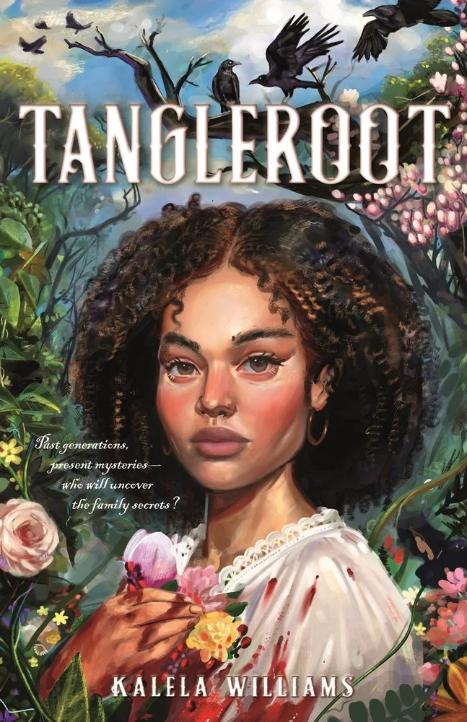
"In this mystery set in the rural South, a teen from Wellesley, Massachusetts, faces racist legacies and the enduring implications of enslavement. .... Each well-chosen detail Williams includes of Noni’s daily life, quest for autonomy, and search for answers is essential to this coming-of-age story. Racism, past and present, adds palpable tension as Noni brings her family’s true history to light and reckons with her own sense of identity. A gripping and heartbreaking debut." -- Kirkus Reviews, starred review
Kalela Williams
Click above to go to the BETWEEN THE PAGESYouTube channel, or on one of the links below to listen to the podcast. Please take a second to like and subscribe if you enjoy the channel - we appreciate you!
The Great Palace Lie: Every Family Has One
The Great Palace Lie: Every Family Has One
(I have been busy on book tour and picked one of my favorite columns for a rerun. Enjoy.)
I always tell my writing students to read, read, read. To be a writer, you must read. In the words of others, we find inspiration to write our own stories. This month’s column started when I was reading a book about Appalachian conjuring. This has nothing to do with my piece, but the book inspired me to think about the meaning of family bibles in Appalachia. And that made me think of my granny and there I went. See how reading and writing go together. How inspiration trickles from stories. Here is the column that came forth.
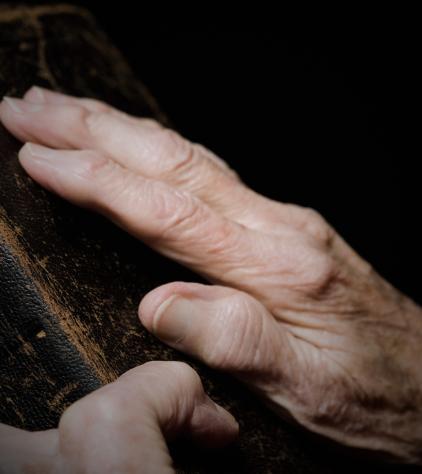
Granny had a bible with a cracked leather cover that she kept in the drawer of her nightstand beside her big four-poster bed. Back in those days, everyone owned some kind of bible and displayed them on coffee tables or bookshelves. InAppalachia, the bible was
more than just “the good book” that went to church with a soul on Sunday. In Appalachia, believing in God and conjuring, healing, and having sight went hand-in-hand. Still does. Being a Christian in SouthernAppalachia was a whole different ballgame than down here inAtlanta. My great aunts went to the small, one room church every Sunday morning. And when I stayed with them, I went too. The place was jammed packed with folks. No one cared what a person did the night or week before, mostly everyone was accepted. Uncle Dogun (pronounced: Doo-gun) would stay out drinking until daybreak, drag himself in the front door, and go clean-up for church while Aunt Stella (pronounced: Stellar) made a pot of black coffee for him to drink before leaving for church. The “men will be men” attitude prevailed in their holler. It wasn’t so much like that for women, who were held to higher standards and considered the bedrocks of their families. In many cases they were the healers, the granny women. Bibles were seen as the granny woman’s guidance to conjuring their spells and saving a person from some sickness. Many outside of Appalachia would view this activity as not very Christian.This was far from the truth. Every act of healing—pulling fire, stopping bleeding, lowering sugar in the blood—was associated with a bible verse. The only thing that would get a person kicked out of church, especially women, was adultery.
Unbeknownst to me, Granny had fallen out of grace within her childhood holler. If I have to be honest, I only saw her inside a church once in my whole life when she married her second hus-
band after being a widow for forty years. That’s not to say she didn’t believe because she did. Her bible stayed tucked away in her bedside table, and she never offered it to me.
Bibles in Appalachia were used to preserve family records for generations. A person could learn about the distant past from the front pages of these books. While visiting my great aunts, I was allowed to flip through the giant family bible that belonged to my great-grandparents. There were pages of people I had never heard of, going back to my second great grandparents on Granny’s maternal side. There was a list of Granny’s brothers and sisters and their families. I flipped the page expecting to see Granny’s name. Instead, I found nothing. Granny wasn’t mentioned. This bothered me and I tracked downAunt Stella, who frowned at my blunt childish question. “You’ll have to ask your granny about that story.”
And that was that. Granny had told me many stories about her childhood. If she didn’t mention the big family bible, she had a secret meant to be kept. The subject was buried. When I returned home from my great aunts’, in my first quiet alone moment in the small overcrowded house, I slipped the bible out of the bed-side drawer, took a deep breath, and opened it to the front page. There was the writing I wanted to see.
Granny always said to be careful what questions you ask because you might get an answer that you can’t live with.
On the page was Granny’s chicken scratch writing. Written as if she had pressed down so hard she wrinkled the tissue thin paper. Ink was smeared. No, it was a mark through.Awhole name next to
hers was crossed out with a black inky blob. All that was left was J.D., my grandfather’s initials. Well, I already knew his last name. The same as Granny’s, Loyd. Then I spied a name under Mother’s. A girl’s name, Estelle. The birth and death date revealed she was two when she left the world. Mother was not the only child she claimed to be. This was the biggest question mark in my life. How would I keep it a secret, pretend I never saw this little girl’s name?
I couldn’t. Well, that’s not true. I kept it close to my heart for three whole days. Then one evening as I stood in the small, heated kitchen with Granny as she cooked supper after work, I blurted out the burning question.
“I took your bible out of the drawer and looked at the front pages.” I prepared myself for her disappointment. Instead, I saw a flicker of fear cross her face.
“Did you have a little girl that died?”
This time her expression relaxed and a big breath was released, as if the question she feared wasn’t the one I asked. Of course this is my opinion in adult hindsight. “Yes. She was younger than your mother. She died at two.”
“So, what was the big deal? Why didn’t someone tell me?”
Granny paused a full minute. The old clock ticked on the wall above the kitchen table. “Sometimes a person just can’t tell the stories that hurt the most. You’ll understand when you grow up and you have your own hurt. It’s just easier to sweep it out the door and go on with life.” She went on to tell me how Estelle died. Meningitis. The subject was rarely brought up after that. Only once many
years later, when my middle daughter was two and we sat in Granny’s living room within view of the nightstand that once held the bible.
“She looks just like the baby girl I lost. All those blond curls. It seems like yesterday.”
I almost asked about the bible but decided against it. After all, I had become an adult with children of my own. The bible was something Granny saw fit to keep tucked away for her own reasons.
So, you ask what is the mountain magic in this story? Remember sometimes the question one asks could produce an answer you aren’t expecting.
To be honest, I never thought about that bible again until today when I was wondering what to write for this month’s column. I should have thought about this mysterious book many times after, but for some reason, I shoved it in a drawer in my mind. Of course I kept asking questions. In 2020 seventeen years after Granny died, I wrote a memoir about her, Mother, and me. While writing this manuscript, I found many questions and sought answers. The book, Roll The Stone Away, began when a second cousin told me a shocking secret at my mother’s funeral. “You know, Ann, your mother’s maiden name wasn’t really her name. Your grandmother changed it when your mother was six.”
Granny’s last name, Loyd, wasn’t her last name? Still I didn’t put that day of looking at the bible together with this news.
This morning as I thought of writing about family bibles in Appalachia, I realized why Granny looked so relieved when I asked about Estelle that day in the kitchen. The real secret wasn’t Estelle’s death. Granny truly hurt too much from the loss to talk about her. No, that wasn’t the secret hidden in the bible that was hidden away. The secret was the last name of J.D. (my grandfather) that was marked through with such a force that it wrinkled the page. In that moment, I realized I didn’t even know what J.D. stood for. That Mother died not knowing what her father’s initials stood for. That the ink blot in Granny’s bible should have made me suspicious.
And this is mountain magic. A memory emerging fifty years later, connecting to an ink spot in a hidden bible. A memory that showed up exactly when I was ready to understand, when I was plenty old enough to see that the details of the past can be forgiven, that we can move forward.
I know. I didn’t tell my dear readers the true secret, but only revealed the name change, leaving more questions than answers. Seems to be a nasty habit in my family. But this story is such a long and winding tale, I don’t have enough room here to do it justice. But you can read whole truth in the memoir. Mountain magic helped me to understand Granny’s great palace lie and how life is never just black or white. That all people have flaws. Remember every family has skeletons in their closets. Maybe that’s why Granny never seemed to judge a person even when they deserved it.
Forgiveness and acceptance are the ultimate gifts passed on with this memory. May we all experience this magic in our lives.
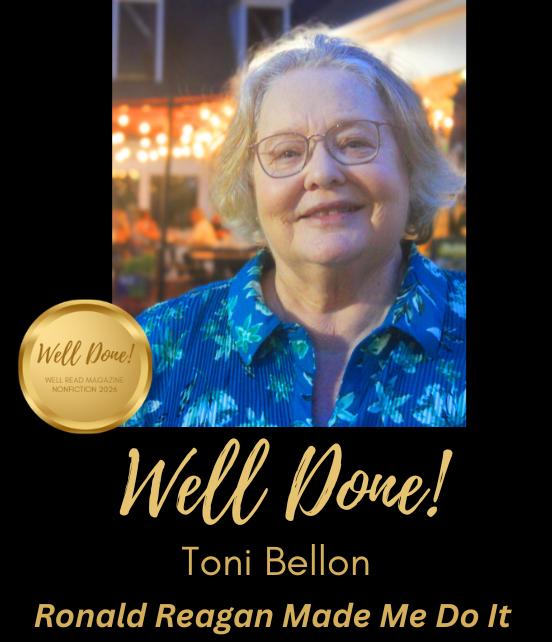
Ronald Reagan Made Me Do It
Toni Bellon
Making Excuses (1996)
Living with a federal agent isn’t easy. My husband dedicates his life to finding the truth behind criminal allegations. I’d like to say he’s as gleeful when a person’s innocent as when they’re guilty, but he’s not. Besides, I’m not a criminal.
Jupe walks in after the drive from Knoxville to Marietta. He places a sheet of paper in front of me.
“Toni, look at the target list for my new case.”
I glance down. “You were near one of my high schools.” I smile and attempt to hand the file back. Honestly, I don’t care.
Jupe points at the list. “You mentioned this guy was missing from the class reunion.”
Concentrating on the document, a name jumps out. My head snaps up. “We have an agreement, remember? You said you wouldn’t investigate family or friends.”
Jupe sits down and looks at me. “He’s not a friend I’ve met.”
“Still, give this case to someone else.” How do I say this to my squeaky-clean husband? “He was a friend for a few months in high
school. If he’s done something illegal, you shouldn’t be the investigator.”
“Friends for only a few months? Why?” Jupe crosses his arms. “Did he hurt you?”
“No. It was kinda funny.” I try a laugh. “I got caught lying. Rather than admit my bad behavior, I stopped hanging with his group.”
“Why would you dump your friends?” Jupe loosens his arms.
“I was a teen... I was angry.” I take a breath. “Ronald Reagan made me do it.”
Jupe leans back in his chair and smiles at me. “Oh, I’ve got to hear this excuse.”
Summer (1970)
It’s the same sky, so why does this morning seem so depressing? I pull my head away from the car window as the clouds turn different shades of pink.
Dad catches my eyes in the rearview mirror. “Smile Toni, it’ll be a great adventure.”
“California was an adventure,” I answer.
Mom speaks without turning around, “Today starts a new one.”
“I’m not ready. I was going to be the drum majorette. I had friends... and there was a boy.” There were many boys, but I’m not telling.
“You’ll make new friends and if you don’t find another boy, I’m happy.” Dad laughs.
“Not funny.” I roll my eyes. “Why are we awake so early?”
“We’ve been traveling for five days.” Mom answers. “We’re tired. Starting early means getting to the house today.”
“There’s no furniture there.”
“I called, and the truck arrives tomorrow. Sleeping on the floor tonight won’t hurt,” Mom says.
I don’t speak. If I open my mouth, all the hurt that is my life will come rushing out. I look back at the happy pink sky. I hate pink.
Of course, I’m depressed. I don’t want a new life in Tennessee. If the sky cared, it would be raining. I mean, who takes a teenager and moves over halfway across the country to Tenn-a-freakingsee? Someone who only cares about his career, that’s who. I stare at the back of Dad’s head and wallow in my resentment. Unfortunately, I’m not sure this move is completely Dad’s fault.
Where should I focus my anger? The name, Ronald Reagan, pops into my head.
Day One, JuniorYear
Arriving at the bus stop for day one, I’ve made at least one mistake. I should’ve paid attention during the two weeks we’ve been here. New school rule—choose your clothes with care.
I keep my head up and walk to the group. “Hi, guys.”
They look me up and down, but no one speaks. They must think my hippy clothes are not acceptable. I don’t care. I’m a California girl... completely. The bus pulls up and the others stand back. I en-
ter first, find an empty seat, and fix my face to communicate disinterest.
It takes thirty minutes to reach the school. The bus is nearly full but the seat next to me remains empty. Fine! I’m not looking for new friends.
Following the students out of the bus, I head toward the school door. Once inside, the herd turns into the cafeteria. They sit and talk to others at their tables. I stop short, not knowing what to do. My friends are a five-day drive West.
My thoughts are interrupted by an accent so thick it sounds like the lazy flow of molasses. “Hey there, y'all new?”
I look at the two girls standing near me. “You don’t have to do that.” I laugh.
“Do what?” one asks.
“Your accent,” I say. “You don’t have to sound like a country singer for me.”
Accent girl narrows her eyes. “Y’all can take your Yankee ass back where it came from.”
My second blooper of the day and I haven’t seen a classroom. Rule number two—don’t make assumptions about accents.
“I’m not a Yankee. I’m from California. It’s a western state that didn’t have anything to do with the North-South issue.”Accent girl snarls and walks away.
I look at the brown-haired girl still there and clarify. “California did send gold to the Union, but we’re not Yankees.”
“For us,” the girl smiles “if you’re not from the South, you’re a Yankee.” She sticks out her hand. “I’m Shirley, what’s your name?”
“Toni.” I shake her hand and look around for an escape route.
“At church they said you were coming.” Shirley chuckles. “You’re the first new student since third grade. Can I ask a question?”
I guess what’s coming and grit my teeth. “Sure.”
“What does the Mississippi River look like?”
Okay, I didn’t see that coming. “You haven’t seen the Mississippi River?”
“Only in books.”
I shake my head. “It’s big enough to have a bridge that goes on forever.And it’s as muddy as Mark Twain described it.”
“Did you paint the flower on your face?” Shirley leans in for a better look.
I roll my eyes. “My friends all paint their faces on Mondays. It’s like our thing.”
“Like your thing?”
Mom says if I cross my eyes too often, they’ll get stuck. What happens if you roll your eyes repeatedly? “We wear face paint, jeans, and purple t-shirts on Mondays. It’s our thing.”
“Did you embroider your jeans yourself?”
“Yes.”
“Were they already ripped or did you ruin them on purpose?”
“They were old. I added the rainbow to cover the holes.” I need to change the subject. “What about your clothes? Where do you buy dresses like those?”
“Mom sews. She makes all my clothes.” Shirley looks around. “We wear dresses here. It’s our thing.”
“Is it a rule? Dress code?”
“Not a rule.” Shirley smiles but seems to judge me. “Why did you move here?”
Here’s the question I’ve been dreading. How do I explain the shit show that derailed my high school experience? If I were in The Sound of Music, I’d sing about the beginning. But, let’s be honest, nobody wants to hear me sing.
“Ronald Reagan won the election for his second term as governor—"
“Ronald Reagan’s a governor?”
“You didn’t know that?”
Shirley pulls back from me. “Can you name the governor ofTennessee?”
“No,” I admit. “Can you?”
“No, but he’s not an actor.”
Third rule—Don’t discuss politics with Shirley, or anyone my age.
Shirley continues. “Why did you move here? What does your father do for a living?”
Remembering how Dad jokes about his job, I follow his lead. “He sells vacuum cleaners.”
“You don’t have to move to sell vacuums.”
“Dad’s company has one for artificial turf.” I lie. “The University installed ‘Doug’s Rug’in their football stadium. Dad’s the guy to clean it.”
Shirley stares at me. I don’t think she believes me. I try another topic. “How do you find your first classroom?”
Shirley’s attention shifts to the room. “Most days, we would go to our classes when the bell rings. But today we go to the gym and get our homeroom assignments.” She glances at her watch. “It’s almost time to head out.Tomorrow morning, sit with my group. On the right, with the good kids. The bad kids are on the left.”
“Got it,” I respond. “I know where I belong.”
The bell rings. Everyone walks toward the back. I follow the crowd out the door, up the stairs, into the gym, and search for a seat in the bleachers.
A man introducing himself as Vice Principal Dagley taps on the microphone and speaks, I listen for my homeroom. What I hear isn’t a roll call. I can’t understand what he’s saying... students stand and echo his words. I stay seated attempting to figure it out. I freeze once I understand the accented chant. They’re reciting the Lord’s Prayer—in school. What about separation of church and state? My brain’s still processing disbelief as the students sit down. Rule four—religion can be a part of schooling.
Finally, Dagley begins to list homerooms. When he finishes speaking, I have no idea where to go. Thanks for nothing, Ronnie—I’m screwed!
By the end of day one, I have a headache from decoding the words I don’t recognize. I want to be nice, but I’m angry.
Mom’s waiting at the front door. “How was school? Did you learn anything?”
I drop my backpack. “I learned a lot of things but none include math or science.” I want to keep my anger to myself but, no. “First, I need dresses.”
“An easy fix. I unpacked the sewing machine.” Mom smiles. “Or we could go shopping. What else?”
“Southern accents. I thought people who sound different were joking. I didn’t recognize my name when the Vice Principal called it.” I pause. “And, I have aYankee ass. I’ll check my mirror and let you know what it looks like.”
Mom’s not amused. “Did you meet any kids?”
“Yeah. I met a girl who thinks Ronald Reagan is still acting. And, there are words I don’t recognize, like poke. How many beans do I have if I have a poke of beans? MyYankee ass should go back West.” I can’t stop ranting. “In the gym, students recited the Lord’s Prayer. There’s an assignment due Tuesday week. . . when is that? The boy with the locker next to mine says I have a reputation for being a badass. Not a Yankee ass, but a radical, liberal, atheist, badass. Since you asked, today sucked.”
“It’ll get better,” Mom murmurs.
I grab my backpack and drop the bomb I shouldn’t. “Some of those kids offered to sell me drugs... twice. They think California girls need a dealer.”
Mom’s face loses its color and her jaw drops.
“Don’t worry,” I tell Mom. “I’ve never used drugs.”
I walk into my room, fall on my bed, and cry. I shouldn’t unload on Mom. The move wasn’t her fault. I wipe the tears away.
“They think I’m a badass? So, I’ll be bad.”
Badassery
The next morning, I enter the cafeteria in my embroidered jeans. I skipped painting flowers on my face. That doesn’t say badass. I should’ve drawn a hand flashing a middle finger. But I’m not that talented. Shirley waves at me from the right. I ignore her and walk to the left. Picking the group that looks like a motorcycle gang, I sit down. If my pants weren’t decorated with rainbows, I’d fit in.
“Hi, guys. My name is Toni and I’m new.”
The Easy Rider wannabe wearing scruffy Levi’s and a leather jacket tilts his head. “We don’t have drugs. Looking like this doesn’t mean what you think.”
“I know.” I point to a table near Shirley. “If I want a dealer, I’ll ask the guy who shops at J. C. Penney. Being from California doesn’t mean I want drugs.”
Easy Rider laughs, “You sure you want to sit here? People don’t like us.” The others grumble their agreement.
“Well, I’ve got a Yankee ass that should go back where it came from.”
“I heard about a new girl.” Easy Rider leans toward me. “Also heard you’re starting your junior year. How’d that happen?”
I do a mental eye-roll and wonder how often I’ll get that question. I repeat my vacuum for artificial turf answer. Easy Rider accepts my story as if nothing’s unusual.
We stand to leave when the bell rings. Easy Rider holds me back. “At lunch, we meet in the smoking pit.” He points to the door by the steps. “If you bring your lunch, join us. You can’t bring cafeteria food out there. See ya, Toni from California.”
I spend the morning asking others about the smoking pit. Being a badass requires information I don’t have. Who knew pit means stairwell?
* * *
My life falls into a pattern. I wear jeans and hang out with Easy Rider’s group in the stairwell/pit.
Answering questions about moving to Tennessee gets harder. Like the boy who stopped me in the hallway.
“Hey, you’re Toni, right?”
“Yep, what do you need?” I try to walk around him.
He blocks my path. “I was at the University the other day... the one downtown?”
“That a question?” I roll my eyes.
Annoying boy continues. “I saw your father. He was wearing a suit. I don’t think he sells vacuums.”
Maybe this guy understands Ronald Reagan and politics? Not likely. “Everyone wears a suit at the University.” I grumble. “Now, move.”
He steps sideways and I continue down the hallway.
* * *
Why did I think Tennessee would be like California? I blot my nose with a tissue. On paper, the weather patterns are similar. So why is my nose bleeding?
I try to keep this quiet. But, when Mom walks into my room, it’s over.
She picks up my trashcan. “What’s bleeding?”
“It’s a nosebleed,” I explain.
Next thing I know, we’re at a medical office. The doctor says I'm reacting to things not in California. Like tree mold, cigarette smoke, and other environmental issues.The winter is colder, so my blood vessels can’t handle the aging heater in our house. Mom nearly faints at the mention of smoking.
Her eyes dart around. “Cigarettes? Toni, you smoke? What will we tell your father?”
“Mom.” I touch her hand to focus her. “I don’t smoke cigarettes. In Tennessee, they allow students and teachers to smoke at school.” Okay, that’s a half-lie. Teachers can’t smoke near students. I don’t tell Mom about the stairwell/pit where I hold unlit cigarettes.
The doctor adds, “Cigarettes are one irritant. Let’s start by putting a humidifier in Toni’s room and she can gargle with saltwater.”
Driving home, Mom focuses on smoking. “Your father and I never smoked. Where would you pick up such a dirty habit?”
I roll my eyes. “I don’t smoke.”
“Should I check your purse? I’ve never wanted to be that parent. I’m a good mother.” She glances at me. “I’ve made dresses. But you keep wearing jeans. Your father and I are respectable.Are you doing drugs? Smoking the weed?”
I need to sound calm if I want to live. Mom’s a terrible driver and screaming out of frustration will send her into oncoming traffic. “I’m not doing drugs or smoking the weed. You two are great parents.”
Mom sits up straighter with the compliment. I hold a tissue to my bleeding nose. During the rest of the drive, I attempt to calm myself by repeating two thoughts.
It’s not Mom’s fault we had to move.
My nosebleeds are Ronald Reagan’s fault.
ANew Year (1971)
For Christmas my parents give me a full-on purple coat. It is the best gift ever and I wear it constantly—during break. But I’m still mad about moving. On the first day back to school, I leave it hanging in my closet.
Dad raises an eyebrow as I walk past. “Where’s your new coat?”
“It’ll get dirty. I’m leaving it home.”Asort-of lie.
Dad rearranges the newspaper he’s reading. “Jeans? Where are the dresses your mother made?”
“It’s too cold for dresses.” I need better lies.
“Do what’s right.”
I walk out without responding to all the guilt. There’s a huge difference between what’s right and being a badass. I hate when Dad reminds me to care.
Everyone on the bus shares New Years’ greetings, I sit alone, angry.
I’m surprised when annoying boy sits down. “Happy New Year.”
I glance around. “Do you ride this bus?”
“Yes. I haven’t sat with you ‘cause the look on your face made me afraid I’d get castrated.”
“You’re not afraid now?” I attempt to look irritated.
Annoying boy laughs. “Your face no longer looks dangerous.”
“Great,” I grumble.
“It’s a new year, why are you so mad?”
I consider not answering but my mouth’s moving without permission. “It’s been six months and my friends have forgotten me.”
Annoying boy lowers his eyebrows. Then everything about his face relaxes. “You mean your California friends, not us.”
“No, Shirley and some kids came by the house over break. But I haven’t got any friends here.” I sigh, “Nobody to make me laugh.”
“You have me and I’m funny.” He smiles like a fairytale character you push into an oven. “My name’s Craig and I know about you.”
“What do you know?”
“My father works at the University and I know you’re lying.” I try to ignore him, but Craig keeps talking. At school he follows me into the cafeteria and taps me on the shoulder.
“Smile,Toni.We’re not so bad.” Craig joins his friends at a middle table.
At lunchtime, I’m not listening to Easy Rider. I’m thinking about what Craig said and getting a driver’s license. My birthday’s coming up but I don’t know how this works in Tennessee. I need to get a booklet so I can avoid Craig on the bus. This requires a car and my parents’permission. Pretty sure that’s not going to happen.
When all conversation stops, I notice Vice Principal Dagley in the stairwell. Looking around the group, his eyes stop when he gets to me. He crooks his finger, “You, come to my office.” Dagley turns and walks back inside.
I straighten my collar, smile, and saunter after him. “I’m bad.” I brag to the stairwell/pit. I maintain my obnoxious attitude to his office.
“Have a seat.” Dagley points to a chair as he settles behind his desk. “Do you know what I did last night?”
“No, what did you do?”
“I started my graduate program at The University ofTennessee.” Dagley smiles and I know I’m toast. “Do you know what the first course is?”
“Yes,” I mutter.
“What would that be?” Dagley’s enjoying himself.
“Educational Leadership.”
“And who is the teacher?”
I roll my eyes. “My father.”
“Yes,” Dagley’s voice is gleeful. “Your father, Dr. Bellon, told us an interesting story. All about his conversation with Governor Reagan. Reagan promised to cut funding to the University system. He said the Teacher Education program wasn’t needed. After that, Dr. Bellon looked for a new job and moved his family here.”
Why comment on facts I already know? I wait.
Dagley continues, “I told your father where I work. He was happy to talk about you.What a great kid… enjoys school... happy. Imagine my surprise.” Dagley leans forward and the joy in his voice disappears. “This is what you will do.” He points at me. “You will find friends less likely to be arrested.You will stop the vacuum story. And you will be the person your father is proud of. Are we clear?” Dagley glares at me.
He’s found me out. No matter where I live, Dad’s view of me is important. Then again, I hate people telling me what to do. “How am I supposed to explain the Reagan thing to kids who think he’s still an actor or don’t know about him?”
Dagley stands up, indicating he’s done with me. “Ignore Reagan and treat Dr. Bellon with respect.” As I walk out of his office, he shouts, “And, stay out of the smoking pit!”
* * *
Getting ready for school the next day takes longer than usual. Until Dagley, I told myself I didn’t care. But I care about Dad, and my clothing choices matter to him.
I walk past Dad reading his newspaper.
He glances at me. “Nice outfit.”
I bow in his direction and continue out the door.
On the bus, most stare. Craig calls out, “Wow, legs and everything.”
“Watch out, I still might castrate you.”
“Uh-oh, purple coat girl is acting tough.” Craig laughs.
“I could wear my jeans and face paint,” I warn.
“No thanks.” Craig looks around and whispers, “Looks like you’re turning over a new leaf. Are you going to stop lying about your father?”
“It’s on a need-to-know basis,” I whisper.
I walk into the cafeteria, and turn right. Sitting in an empty seat next to Shirley I wait to be sent away.
Shirley looks at me. “Toni, so glad you joined us.” She taps the boy sitting next to her. “Pete, this is Toni. She moved here from California.” Pete extends his hand as Shirley continues “Toni, this
is Pete. He’s the president of the Junior class. Everyone loves Pete.”
Pete laughs as his large hand overwhelms mine. “So, Toni, why did you move to Tennessee during the middle of high school?”
I close my eyes so he won’t see them roll and consider my truth and my lies. I visualize Ronald Reagan talking to Dad. There’s only one faultless person and no one’s going to question her. I smile at Pete. “You know the mental hospital off Kingston Pike?”
“Sure,” he answers.
“My Mom is there.”
Pete glances at Shirley but she remains quiet. “I’m sorry to hear that.”
“The doctors think Mom’s issues are genetic. They want to keep an eye on me.” I start chuckling and it becomes a belly laugh. I’m pretty sure I’m not as lovable as Pete.
Ronald Reagan Made Me Do It is about Toni Bellon’s experience with culture shock when she moved from California to Tennessee in high school. After living in nine states, North, South, East, and West, Toni settled in Georgia. She uses humor to talk about human ordeals. Toni hopes her skewed view of life will bring a smile to the audience.
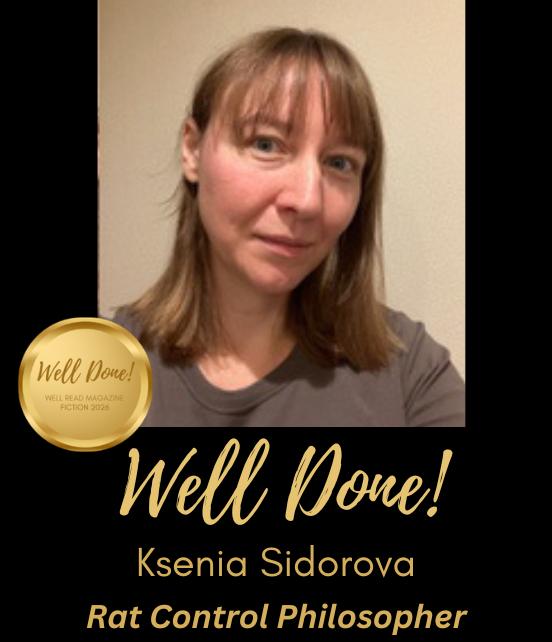
Rat Control Philosopher
Ksenia Sidorova
Hidden somewhere in the industrial jungle of Alexandria, beneath a particularly concrete warehouse there stood a tiny pub—a drinking hole really. It was overlooking the Royal Princess Highway, although her highness could have hardly envisioned the honor. It was one of those places where hope comes to die on Friday.
On that night Ivan arrived way too late to meet his drinking mates, which was a “moderate” on the bummer scale. He hated the place, just like everyone who had ever set foot there. The beer on a good day tasted like rat piss—and as an exterminator, he knew exactly what rat piss tasted like.
It wasn’t the kind of career you dream of as a child.
His parents were pretty decent and had even sent him to uni. When he chose literature, they were heartbroken. They were fully aware it was a highway to a career as a “professionally unemployed” person. Ivan didn’t make it easy on them either. He had dropped out halfway through his third year. He’d tried to explain that the pretentious idiots in berets weren’t exactly his jam, but it hadn’t landed well.
Now he killed rats for a living and drowned his misery at the pub.
Ivan held a sticky glass in his hands above the battered counter. At the bottom floated a fat dead fly. Ivan felt vaguely sad.
“You poor bastard,” he said to the fly’s corpse. “Couldn’t stand piss beer either.”
Ivan didn’t really have much to look forward to, with perhaps the exception of the soft numbness that came from alcohol consumption every Friday night. Casual “hi”s to his mates, bullshitting about the news blaring from a tiny, ancientTV, and waiting for the next Friday before the current one had had a chance to bleed into oblivion.
Next Monday came like taxes—uncalled, unwanted, and completely inevitable.
His boss, Harry, with oily eyes and short, stubby fingers, was yelling again.
“What do you think we are, a charity? A client complained again! What do you think this is—a daycare?”
“Yeah, totally our fault the client hasn’t heard of, I don’t know, cleaning,” Ivan muttered under his breath.
“Whaaat? Talking back?” the boss roared like a hungry Tassie devil. “I’ll fire you!”
“Sure,” Ivan said, as if there were a waiting line for this job.
With that, he left the meaningless morning meeting that Harry had recently introduced after reading too many books about
cheese, influencing people, and all other business self-help nonsense. ***
The client was a small vegetable warehouse. It was so wet, dirty, and clammy that Ivan was positively impressed that rats were the only infestation.
After half an hour of “we trusted you with our business and the rats returned” kind of brain-laundering, Ivan was getting mildly irritated. Not so much as to talk back but just enough to reconnect with all his various inner shadows.
Ivan pulled on a rubber smile, apologized, and promised to “do better this time,” but with every breath he imagined various misfortunes befalling the face in front of him. ***
When Ivan finally got to the only part of the job that actually paid, he was as efficient as always: a white mask, trusted green gloves, poison, routine.
In one corner, he noticed an ancient wooden rat trap—the old snap kind. It was a relic from the time when the sky seemed wider, trees appeared taller, air smelled like freshness and a mullet was an unironically fashionable haircut. He took this bout of accidental nostalgia as a personal and professional insult.
Ivan always apologized to the rats. Not out of compassion, more out of some weird, private necessity. It didn’t really make sense, but to him it did.
His colleagues always thought him strange.
“You’re such a weirdo,” Nathan liked to tease.
Nevertheless, Ivan was good at what he did.
After everything was done, Ivan looked at the warehouse in the same way an artist might at a finished painting. Then he stopped for a second; something was missing from his masterpiece.Apeculiar urge for petty revenge was itching inside. Not that he had the determination to be truly vengeful, but that fart of a client... “Who on earth uses ancient rat traps like that?”
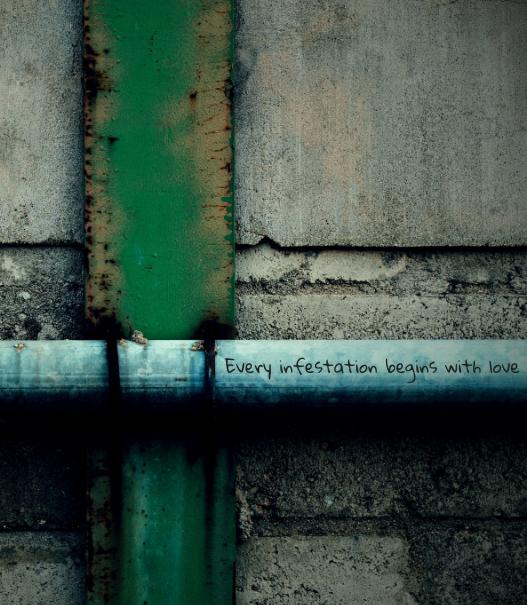
He picked up a marker used to label infested areas, came close to a huge rusted pipe, and wrote in an act of micro-vandalism:
Every infestation begins with love
That was all of it.
That day Sharon—a young, efficient supervisor and a very aspiring urban photographer—came for an inspection. She noticed the messy writing on the pipe and found it oddly endearing. She then snapped a quick photo.
Later, Sharon posted it on her Instagram, which had fewer followers than the number of people she followed.
Afew hours passed.
Someone famous must have shared it, because her old Redmi was vibrating stronger than the actual vibrator ever had. At first,
she figured it must be a glitch. Then she saw the same photo reposted under new tags: #RatsofMeaning, #UrbanRatDecay.
By the end of the day, she had gained a few hundred followers— and absolutely no clue what she had just started.
The next day, Ivan came to work with as little enthusiasm as a man could master without faking the flu at Dr. Chan’s office.
“Morning, Nathan,” he said, halfway through a yawn. “How was the footie yesterday?”
“Oh, you wanna talk about footie now?” Nathan grinned. “Always knew you were weird as shit. Now Harry’s losing his balls over your nonsense.”
“Oh, bollocks,” Ivan groaned and rolled his tired eyes. “What the hell is wrong again?”
Then he saw the red, swollen face of his boss. Harry looked like a proud Lord Tomato from Gianni Rodari’s tale.
“What are you, some kind of Marxist rebel?” the boss bellowed. “One of those—what do you call them—anti-globalists? I knew it!” He continued. “Always knew you were a bad fruit, Ivan. Even your name! Ivan! You’re a Russian commie!”
“Harry, calm down,” Ivan vocalized—a sentiment that had never in human history calmed a single boss ever.
Harry slammed a stack of printouts onto the desk. For half a second Ivan had hoped they were just eternal accounting papers. Then he realized the pile consisted of Facebook printouts, Twitter screenshots, even a lonely Medium article all with pictures of
Ivan’s handwriting.Thanks to Sharon’s post, Ivan’s small, petty act of revenge had grown rather grand.
“You see this?” Harry roared. “You’ve brought politics into pest control! People are calling to ask if we’re a socialist collective exterminating bourgeois mice! Do I look like a socialist collective to you, Ivan?”
Ivan glanced at Harry’s tie—paisley, wine-stained, heroic in its ugliness.
“Now do I?” Harry’s eyes became even smaller than usual.
“You look like a man who exterminates rodents,” Ivan said.
Harry’s face deepened from tomato to beetroot.
“Don’t you get smart with me! This—” He waved a crumpled piece ofA4 paper and shouted, “this is brand damage!”
Ivan shrugged.
“Looks like free advertising to me. You finally went viral, right?”
Harry blinked, torn between fury and something achingly similar to pride. “Well… yes. Business inquiries have gone up. But for all the wrong reasons! Someone even asked if we offer ethical traps. Come on!Another nut even demanded emotional support for the rats.”
Ivan smiled faintly. “Yeah, sounds awesome. Maybe like a subscription plan: Extermination with Empathy.”
“Not funny!” Harry snapped, then sighed, defeated. “Listen, mate, we’ll just let this blow over. No more graffiti, though. No
more quotes. No more philosophy. Just poison and professionalism, all right?”
“Sure,” Ivan said. “I’ll keep my insights to myself.”
“Good.”
Abeat passed. Harry glanced at the ceiling fan from the side.
“Although,” Harry added, glancing back at the printouts, “it is catchy... that line. Maybe we could use it... You know, just the words, not the politics.”
Ivan blinked.
“You mean—‘Every infestation begins with love’? You want to brand that?”
“Exactly! It sounds... approachable. Human empathy marketing. You’re not a Marxist, you’re... how can I call it... a creative!”
Ivan rubbed his eyes. “Congrats, you’ll be the world’s first irony reinventor.”
Harry smiled proudly, misunderstanding completely. “That’s the spirit, team player!” He then patted Ivan’s back with his small, puffy hand.
As Ivan walked back to his extermination van, he thought that perhaps he was wrong, perhaps it was still possible for things to get worse—after all Harry could still misinterpret his poetry for profit.
Scene — The Drinking Buddies
By Friday, the pub felt weirdly different. Not cleaner, of course, but noisier in a way that made Ivan feel slightly uneasy. He walked in, expecting the usual sticky floors, the
faint odor of beer with distant notes of puke, and the comfort of absolute anonymity. Instead, he felt eyes turn.
“Oi, look who’s here!” Nathan yelled across the room. “Our celebrity—the undercover philosopher himself!”
Afew of the regulars laughed, clinking glasses. Ivan felt like he was 8 again and reading aloud a passage from the textbook. One bloke even saluted with a half-empty pint.
“To Ivan! The People’s Rat!”
Ivan winced. “I’m not a people’s anything,” he said. “I’m just here for the rat piss beer.”
“Humility!” someone shouted from under the TV. “That’s what makes him great!”
Ivan sat at the corner table, the one under the flickering yellow light. The beer really did taste worse than usual—fame must have dulled the flavor of despair.
Nathan pulled up a chair toward Ivan, and grinned way too widely.
“So, mate, are you gonna, like, quit and become, what, an influencer now? Sell rat traps with inspirational quotes or something?”
Ivan stared at the cork coaster, and said, “No, I think I’ll just die quietly at this table.”
Nathan laughed but it came out like an echo. He didn’t know whether Ivan was joking.
Ivan wasn’t sure himself.
A few drinks later, as the night sagged, a beefy bloke from TV scored a goal and the room’s attention turned back to footie.
Ivan still noticed how often they glanced at him. Then the pub’s TV switched to evening news, the headline bar flashing:
THE PEST CONTROL PHILOSOPHER— A BLUECOLLAR BARD ORABASEMENT HOOLIGAN
The bartender pointed at the screen.
“That’s you, mate.”
Ivan didn’t even look up.
“Just another infestation,” he muttered to himself.
He finished the beer and left a few coins on the table. Outside, an old neon sign buzzed above him. It was half-lit and half-dead, which seemed oddly fitting.
Scene — The Invitation
Monday began badly, which, in Ivan’s book counted for consistency.
Harry stopped him the moment he walked in.The boss was waving a printed email like a white flag from the trenches.
“Ivan!You’ve been invited to some seriously important event.A panel.”
“Awhat?”
“You know, one of those intellectual things. The Symposium of UrbanAuthenticity.”
He squinted at the paper. “You’ll be joined by a semiotician, a Buddhist scholar, and—wait for it—an influencer who paints with dust.”
“Come on, that’s not a real job,” Ivan said.
“Neither is yours, apparently.” Harry smirked. “They want you to talk about your vision.”
“My what? What?” Ivan asked, feeling his brows arch.
“Your artistic vision,” Harry clarified.
“My vision is rats,” Ivan said simply, but Harry ignored that.
“They’re promising great exposure.You’ll represent our company—good for the brand, you know, that empathy marketing I mentioned.”
“Do I at least get paid?”
Harry hesitated just long enough.
“They, uh… offered a small honorarium.You know for the company, of course.”
“Of course.”
“You’ll get refreshments, though,” Harry added quickly.
Ivan nodded, pretending to consider this gravely.
“Tell them I’ll do it for sandwiches and iced tea.”
“Iced tea?”
“Yes. The fancy kind. With lemon.”
Harry blinked with fake naivety.
“You sure you don’t want cash?”
“No,” Ivan said. “I prefer my disappointment served cold.” Harry smiled, with noticeable relief.
“That’s the spirit, I always said you were a true team player.”
As he walked away, Ivan could hear Harry on the phone in his office. “Yes, absolutely, we do accept the speaking fee. Of course he’ll be there—he’s thrilled, yes, yes, delighted...”
Ivan rubbed his temples and muttered, “I sell out for sandwiches and tea. The philosopher’s wage”
Two days later, Ivan got an email. The subject line made him suspect it was spam or a stupid prank.
INVITATION: “Decay as Dialectic — A Panel on Meaning, Modernity, and Mice.”
He almost deleted it, but curiosity (and the faint hope it was a pyramid scheme) made him open it anyway. The message was absurdly formal:
Dear Mr. Ivan Petrov,
We would be honored to have you as a guest speaker at our upcoming symposium on Urban Authenticity and the Poetics of Labor. Your groundbreaking piece “Every infestation begins with love” has sparked vital interdisciplinary discussion about the intersection of decay and empathy in the modern cosmopolitan context.
Ivan reread the paragraph twice. He checked the sender’s address—a university domain.
He checked the signature—Dr. Milena Kovar, Department of Cultural Semiotics.
He checked his fridge—empty.
“Well,” he said out loud, “rats don’t pay, maybe this one will.” Later that same day, Nathan bumped into Ivan in the tiny hallway.
“Heard you’ve got fans now. Some all-important folks want you to talk about mice’s feelings.”
“That’s philosophers for you,” Ivan said. “They love rodents.”
“Are they paying you?”
“Free sandwiches.”
“Then you’re overqualified.” Nathan grinned.
Ivan almost didn’t go.
But the day came—and he oddly found himself ironing the least stained shirt. He was wondering if this was how celebrities felt before they ruined their lives on talk shows.
He practiced in the mirror:
“I kill pests.”
It sounded more profound every time he said it.
Scene — The Symposium
The symposium was held in a converted gallery art space that looked like it used to store furniture or corpses—it was hard to guess which one exactly. A projector hummed like a summer bug, casting Ivan’s handwriting across a white wall:
Every infestation begins with love.
Beneath it, on plastic folding chairs, sat three academics: a cultural theorist with tortoiseshell glasses, a thin woman in a black turtleneck, and a bald man whose expression suggested his tenure made him resent his choices.
Ivan satattheend of thetablelikeagood schoolboy:hands carefully folded on his lap, trying not to touch anything expensive.
The audience, about a hundred people, mostly students looked at him with honest curiosity.
He seriously wished he’d brought insecticide.
The moderator, a young man with a colorful shirt and an arts degree, leaned into the microphone.
“Tonight, we have the rare privilege of hearing from the working-class visionary. His groundbreaking message of infestation, empathy, and love has reshaped urban discourse.”
Ivan coughed.
Afew clapped prematurely.
The woman in the turtleneck began.
“Through Ivan’s art,” she said, “we encounter a radical tenderness, a revolt, you may say, against the sterile cleanliness of late capitalism. His message transcends the form. And in this novel paradigm the rat is no longer simply vermin but rather a witness, a cohabitant, maybe even a comrade.”
The bald man nodded gravely. “Yes, yes, I definitely agree on the paradigm shifting aspect, but I think we shouldn’t overlook the apparent eschatological symbolism in his work. Ivan is intention-
ally utilizing writing as a medium of choice so as to allude to John (1:1) and of course the Word is love, so there is this dimension of humility—the end of times rendered domestic, so to speak.”
“Love as contagion, and infestation as divine punishment…”
The theorist chimed in:
“But of course this symbolism is merely a tool, wouldn’t you agree? The infestation of ideology, that’s the point, right? This hidden, understated labor gnawing at the very foundations of bourgeois comfort. You see—”
Ivan stopped listening and stared at the bottled water in front of him. The label read Pure Essence. He wondered if rats would prefer filtered water if offered a choice.
The moderator smiled at him.
“Ivan, of course your art piece speaks for itself, but if you were to introduce it to those less familiar with the context, what themes were you exploring in your work?”
“I kill pests,” he said. Silence.
Then applause.
The woman nodded in agreement.
“It’s quite special,” she whispered, feeling her throat tightening with emotion. “This lack of explanation, the sheer silence itself is a form of protest. This is an apparent anti-violence manifesto, a clear nod toward the Silent Protest of 1917.”
“Yes, you are right. It’s denial as a living expression,” said the theorist. “A performance, a meditation almost on the rejection of
meaning, not quite in Susan Sontag’s terms, but definitely in the spirit of poststructuralism.”
Ivan nodded, mostly because it was easier.
Afterward, they offered him thin tofu sandwiches and a lanyard that said Guest Visionary.
He put it in his pocket and left quietly.
On the way home, he wondered if perhaps there was truly no exit.
Scene — The Break-Up
That evening, Ivan was wrestling with noodles, trying to make them behave like a dinner. Then the doorbell rang.
It was Nana, his on-and-off girlfriend—if the word girl suited a forty-something woman with messy hair and messier life choices.
“How could you not tell me?” she half-yelled, half-wept. Cheap mascara dripping in panda circles.
Ivan blinked. “Tell you what exactly?”
“Don’t play dumb! Or what are you thinking, like, you’re some big important shot now? So you can treat me like an idiot? I know everything. Everything!”
“I’m a rat exterminator, Nana,” he said plainly.
“Oh, one of your new genius quotes again! You think I’m too stupid to understand it, right? That’s what you think isn’t it? Say it—say you think I’m stupid.”
“I don’t—”
“Everyone knows that you are secretly attracted to Harry.”
“So secretly that I, in fact, don’t know anything about it myself?” Ivan asked.
“Oh, stop it! Everyone knows that you’re in love with your boss. That’s why you spend so much time with him!”
“Nana, come on,” Ivan said. “My boss is, well... mm—” he carefully searched for the word that didn’t rhyme with ‘fuss’— “a tragedy in human form.”
“See! You make jokes. You intellectual types can’t ever just feel things. It’s all sarcasm and rats.”
“I kill them, not date them,” he said.
“There! There, that tone again! You think I can’t read between the lines? Don’t you? It’s all over the news, Ivan. ‘Hidden admiration—one true love.’I’m not blind.”
“Nana—”
“I’m leaving. I thought you could have at least apologized, but you know what? I won’t be your cover story.”
The door slammed. The noodles kept boiling.
Ivan stood there for a brief moment, then switched the gas off, and stirred the noodles in the pot.
“Well,” he muttered, “at least someone’s staying warm tonight.”
He sat down, ate in silence, and wondered if explaining things ever made them better. Lately, truth seemed to have a shorter shelf life than the raw milk.
Scene — The Boss’s Rejection
The next morning, Ivan was called into Harry’s office.
Harry was dressed like a man about to confess to murder—cautiously, overtly neutral. The excess of cheap aftershave betrayed the nerves. On his desk sat two paper cups with teabags of chamomile tea, and a box of tissues.
“Ivan,” he began carefully, “I think it’s time we had an honest conversation.”
Ivan sat down slowly.
“About what? My performance reviews? Because, I’ll warn you, the rats are giving me five-star feedback.”
Harry gave a sympathetic nod. The kind that is usually reserved for the people about to be euthanized.
“Listen, mate… I know about your feelings.”
“My what?”
“Your feelings. Toward me.”
Harry’s voice dropped to a whisper.
“I read the article. The way you described our bond is just beautiful—the trust, the respect, the… admiration.”
Ivan blinked.
“That was about sanitation protocols.”
“It’s all right.You don’t have to pretend anymore.And I am flattered, honestly. These things happen. Life is fluid. It’s absolutely OK. I respect your courage and accept you the way you are.”
Harry placed a hand on his heart.
“This is new for me too. I’m honored, truly, and under different circumstances, well, if I was... well, if things were different... But for now I think it’s best we… keep things professional.”
Ivan stared at him, with the eyes of a freshly gutted fish.
So this is it, he thought. A scented office with sympathy tea. He could have tried to explain. Could have. But there was simply no point. So he nodded.
“Thank you, Harry. It means a lot.And don’t worry, I totally understand. I have already moved on, but of course you’ll always have a very special place in my heart.”
Harry’s face softened.
“You’re a beautiful man, Ivan. No, truly, truly.You are brave and sensitive, but professional and a team player. I wish more employees were like you.”
Ivan stood up, and forced on a grin.
“Let’s hope not.”
As Ivan was approaching the entryway, Harry called after him, “And mate, this is a safe workspace.You’re totally safe here.We’re allies.”
“That’s what worries me,” Ivan muttered and stepped into the corridor. There he laughed.
It was a quiet, defeated sound.
One of the hallway lights above him was broken, another was flickering in desperation. He thought about the rats. At least they never misinterpreted anything.
Scene — The Nonsense Graffiti
That weekend, Ivan decided that he had had enough. He bought a new expensive marker. It was the thick kind used to label poison. Then Ivan took a late shift at one of the abandoned warehouses.
The building was vast but smelled of moisture, metal and something slightly sour. He stood before a concrete wall streaked with blue mold and thought, Fine. Now you’ll get what you deserve. He then proceeded to scribble the most nonsensical sentence he could possibly come up with:
Mold remembers water.
He stepped back, and admired the sentence for its stupidity. It meant absolutely nothing—not even to him. Not even if he tried.
“Now take it,” he thought with a petty delight. A perfect act of vandalism left like a rat trap.
Three days later, Nathan barged into the office, holding the phone like some holy grail. “You’ve done it! You’ve done it again, mate! You’re trending!”
“What?”
“Look!”
On the screen Ivan saw a picture of the familiar moldy wall with a stupid phrase—framed by hashtags: #PostDecayPoetics, #MoldRemembers, #MinimalistProphet.
Harry appeared in the doorway, pink with excitement and bursting with pride.
“Now that’s branding! It’s... like what they say... a sublimation of memory and trauma, wrapped in a clever commentary about environmental conditions!”
“It’s about mold, Harry,” Ivan said flatly.
“Exactly! I get it, I totally get it — a universal metaphor, right...” Harry tapped him on the shoulder. “Keep up the good work, philosopher.”
Ivan went to the bathroom and stared quietly into the mirror until his eyes watered.
Scene — The Backlash
Fame spread faster than the mold ever did. It was a losing game at this point, and Ivan felt it. But he put up a good fight nonetheless. First he tried yet again to leave a couple of totally nonsensical bits of graffiti. They all went viral. Realizing his dire situation, he tried to outwit everyone by writing something genuine, which was then swiftly misconstrued as irony—and then went viral. He decided to go completely silent for a couple of days, only to discover that it was generating even bigger newsworthy stories. After a while he simply accepted his defeat.
Within only weeks, the buildings where Ivan had worked—the damp, forgotten ones—became “urban heritage sites.” Same flickering lights, same broken pipes, but now with intention. Developers started calling them The Love Walls.
The same landlords who once begged to rid the place of rodents, now offered “exclusive lofts in the original environment of the Pest Control Philosopher.”
Some D-grade celebrity even filmed a music video there.
The rats stayed, naturally.
The ball rolled for a while propelled by the initial momentum until reaching its natural hiatus. Ivan first realized something was wrong when an old woman he used to chat with outside a vegetable market stopped him.
“They raised my rent, dear,” she stated simply. “Said the neighborhood is artistic now.”
“Artistic,” Ivan repeated. “There’s still a dead rat under your porch.”
“Maybe it’s conceptual,” she said bitterly.
Aweek later, an online magazine ran an article titled: ‘Is the Pest Control Philosopher a Sellout?’
The author accused him of “cashing in on the decay” and “turning working-class pain into Instagram spectacle.”
Someone on Twitter posted: “He’s not a voice of the people — he’s a landlord’s muse.”
His followers began unfollowing in righteous waves.
The comments morphed from devotion to disgust.
“Used to be deep. Now he’s just all money, money, money. Can’t buy authenticity, bro.”
“My rent tripled thanks to this clown.”
Ivan scrolled through them on a cracked screen while eating a sandwich from the petrol station. It tasted worse than cardboard. He wanted to explain that he’d never earned a cent from it—that the only thing his art had ever earned him was, in fact, higher blood pressure, not even high blood sugar, as that would require more money for the actual food.
But he knew it wouldn’t help.
No one listened.
One sunny afternoon he accidentally walked into one of his old job sites. There was a tour group of about five people taking photos.
Aguide with a megaphone pointed to the pipe where it all began.
“Here we can see Ivan’s early work—his famous raw critique of the industrial neglect.”
Ivan stood in the back in his brown jacket and an old navy baseball cap. Someone asked if the artist was still alive.
“Barely,” he said under his breath.
Scene — The Fade
Fame, like a bad flu, eventually burned itself out. The tags stopped trending. The think pieces dried up. Even the university that once called him “a voice of post-industrial tenderness” was moving on to someone younger, louder, and with a podcast.
For a few weeks, Ivan felt something strange, forgotten, something almost like peace.
No one asked him about rats or moldy metaphors or poetry of postindustrial decay. He was back to the comfort of Monday misery—just a man, his van, and the smell of chemicals in the air.
Sometimes, though, in quiet morning minutes with a cuppa of instant coffee, he caught himself missing it.
Not so much the attention—but the sandwiches.They’d been vegan, yes, but free.
And edible. Mostly.
Back then, he hadn’t known how comforting tofu between two slices of whole-wheat bread could feel. Now his lunches came out of a vending machine at the depot: stale candy bars, occasional pretzels, and a vague sense of déjà vu.
Nathan passed him in the hallway one afternoon. “So, mate, what’s it like being irrelevant again?”
“Lighter,” Ivan said. “Like a deflated balloon.”
Nathan laughed.
“Yeah? Miss the spotlight?”
“Nah, just the sandwiches,” Ivan said with certainty.
At night, when he couldn’t sleep, Ivan scrolled through old photos. There were walls with his handwriting half-covered by mold and fresh graffiti.
One said, ‘Hope Lives Here.’
“Not too long,” he smirked. Too bad he didn’t have the marker anymore.
He shut his eyelids and thought that obscurity was perhaps the truest form of rest.
Until one autumn evening, the phone rang.
Scene — The Hospice
It was a simple job at the nursing home. Ivan had been called in to deal with a small mouse problem. Nothing major. He moved carefully through the jolly yellow hallway. Traps and gloves were in hand. He was trying not to make a sound. In one of the rooms, an old woman sat by the window.
Aname tag on the bedside read Margaret, 95.
She was watching the rainy garden with so much involvement, as if it was a film with some seriously exciting plot. When Margaret finally noticed Ivan, she smiled. “Are you the angel of death?” she asked in all seriousness.
He hesitated, for a moment, trying to answer as honestly as possible.
“Well,” he said, “kind of. But not for you.”
“That’s too bad,” she said.
He chuckled. “Do you want me to be?”
“No,” she said after a pause. “But I’d like to know when he’s coming. One hates being late for appointments.”
He didn’t know what to say, so he simply set down the trap. She watched his hands with cautious attention.
“Do you take souls gently?” she asked.
“As much as I can,” he confessed.
“Then you’re better than most,” she said, and closed her eyes as if she’d already tested the truth of it.
He finished his work fast.
Before leaving, he wrote on the metal base of the heavy heater, small and discreet:
We are all temporary tenants.
Outside, the wind smelled faintly of rust and chlorine bleach. He stood by the van. Thoughts were messy and tired. The only thing he could make out of them was that perhaps just this once, someone had understood him exactly.
Scene — TheAccident
It happened, as these things usually do, on a night that didn’t really mean anything.
No storm. No drama. There was just wind and a bit of traffic hum from the nearest highway.
Ivan had taken a late job at one of the old warehouses—the kind with rusted pipes and an occasional broken window.
He was tired, his toes were cold and sticking out through holes in his torn socks. Inside the warehouse he could hear a tiny hissing sound, like a little angry snake. He turned on his flashlight. There were no snakes in sight, but in the dark corner a rat scurried. He felt almost grateful for the company.
He set down his traps, checked behind pipes and along every wall. He was muttering something under his breath like he always did.
“Freedom is mostly ventilation,” he said to no one in particular. Then he lit a cigarette.
The cracking sound came first—small, almost polite. Then the light swallowed the whole room.
The explosion wasn’t large. “A minor industrial incident,” the paper called it. But the angle was good—someone’s phone caught the fireball perfectly against the darkness of the night. By morning, Ivan was trending.
“The Pest Control Philosopher DiesAmong His Subjects.”
“ATragic Performance, or One Final Protest?”
Reporters camped outside the ruins. Theories multiplied faster than the rats. Was it a suicide? Martyrdom? Performance art, perhaps? What does it all mean?
Someone said Ivan had predicted it in his last post.
Someone sold candles.
Harry, ever the opportunist, announced a “temporary rebranding period.”
Nana wrote a long essay titled “Loving the Man Behind the Meaning.” She was interviewed twice.
The vegan sandwiches made a comeback.
Weeks later, a news crew filmed at the site of the accident.
The camera lingered on the charred wall. Barely visible under the tar was Ivan’s handwriting. A journalist called it his final masterpiece. The demolition crew shook their heads and went back to business.
Scene — TheAftermath
A month passed. The pub under the warehouse reopened under a new name: The Philosopher’s Pint. Nothing had changed much except for the prices. The same sticky floors, the same shit beer— only now it was “heritage atmosphere.”
Tourists came to “absorb Ivan’s vibe.”
The bartender sold limited-edition mugs printed with his quote: Every infestation begins with love. Twenty bucks a pop.
At the corner table, a youth in an immaculate sweater—one of the old regulars who used to call Ivan “that weird ass-bloke with the rat job”—now sat livestreaming earnestly. “You can really feel it here,” he said into his phone. “The raw urban honesty. This is where Ivan found his truth.”
Beside him, a girl in a red beret sipped her lager reverently.
“It’s amazing,” she said. “You can really taste the existential dread. No wonder he loved it here.”
The beer, still thin and suspiciously cloudy, tasted exactly as Ivan had always described—rat piss and resignation. Only now it was “authentic.”
On the wall hung a grainy pixelated photo of Ivan, half-smiling, half-blinking. Below it, written in chalk: To Truth, to Rats, to Ivan.
Outside, the city buzzed with traffic, excitement, and the usual life.Asingle rat scurried along the curb. It paused by the pub door, and then disappeared into the gutter. No one noticed. The sign above flickered once, then steadied—The Philosopher’s Pint glowing faintly in the dark.
Ksenia Sidorova is an aspiring writer based in Japan.
AWorld Beyond Our World Chitra Gopalakrishnan
The February afternoon sun is a melting, silvery mess. It spills unevenly from behind slate-grey clouds and the sulphureous smog, like a runny egg, and is at best a hazy phantom presence.
"We're being served moonshine during the day, maybe that's why our area is called Chandini Chowk," jokes Khalid Ansari, a greying, middle-aged shopkeeper surrounded by rolls of ribbon, lace, and trim for every imaginable garment, in a narrow, overcrowded alley of Kinari Bazar in Old Delhi's Chandni Chowk. He adjusts his red sweater and settles his matching woolen cap as he invites a customer into his small, overladen shop.
Not to be outwitted, Imran Hasan, his regular customer who has come to buy sequins for his owner's designer clothing outlet, replies, "In this bazaar of bling, where shop after shop sells golden zari, gota, and shiny sequins, perhaps Allah intends for this dazzling display to compensate for the sun."
Just then, a power outage strikes, a common occurrence in this most chaotic market of the world. The lights in the densely packed alleyways go out, the clogged shops plunge into darkness, and the
by Chitra Gopalakrishnan
blaring music from each shop dies down, too. The dissolvingsun disappears completely behind the clouds at the same time.
Stepping outside the shop, and into the narrow, crowded lane, without a sidewalk, and filled with rickshaws, cycles, carts, cows and shoppers, all walking haphazardly, and recklessly, Imran Hasan and Khalid Ansari look up, and helplessly survey the tangled mess of black electrical, internet, and cable television wires that crisscross the skyline, unsure which wire has given away. The cables in the chaotic canopy seem impossible to untangle. "I will turn on my emergency light that runs on batteries," Khalid Ansari reassures Imran Hasan, worried he might leave in the dark.
Meanwhile, the world outside continues to function normally, undaunted by the surrounding dimness. Neighbouring shops ply their glitzy wares. Golgappa sellers serve crunchy, puffed wheat balls filled with spicy water, tamarind chutney, and small chunks of potatoes and chickpeas to the hungry lines of people. Sweet sellers are busy packing an assortment of milk-based barfis. In contrast, parantha sellers clatter their tavas, serving flaky flatbreads stuffed with a variety of vegetables, rolled in ghee, their hands speckled with dough and coated with shiny grease. And, in the background, several men use the lane as an open urinal, without shame.
Averting his gaze from the men relieving themselves, Khalid Ansari asks, "Where isAbdul, your young bhatija?" He adds, "Can you not call your nephew to help?""That boy is on his lunch break and will be on the rooftop with his kabootars. There is no way he
will leave them, no matter how much I beg," KhalidAnsari replies with a laugh. "These pigeons teach him to reach for the real sky, beyond our sky of wires."
Ansari is right.
Seventeen-year-oldAbdul is on the rooftop four stories above. It is his hideaway, his escape from the false glitter of the market, his workplace, from the crush of people in it, the unbearable overcrowding, and from the squeeze of his memories, that constantly scuttle back and forth, settle in the hidden crevices of his mind, hurt when he remembers and hurt when he tries to forget, and ceaselessly remind him how things can happen in seconds, changing the future course of events forever.
Abdul has a mild-mannered and reserved demeanor. A thin, curly-haired boy with a solemn face,there is just a hint of facial hair beginning to grow on his chin and upper lip. Thisperilous cusp in his life, his not knowing whether he is aboy or a man, is one reason for his speaking only when spoken to, and his general uncertainty about everything. The azaan, the call to prayer, echoes around him at half past noon. His aunt serves him lunch in their second-floor home promptly at one o'clock, right after he completes his namaz,and thenhe makes his way up to the rooftop every day without failto be with his favourite companions: his pigeons.
From above here, if he wishes to, he can see the thin, winding lanes, the bustling, sparkling shops, clusters of eateries, with cooks peeling and chopping mounds of vegetables, the confused clutter
by Chitra Gopalakrishnan
of lakhori brick buildings, shanties, frothing gutters, decaying, abandoned medieval structures with domed pavilions and chhatris, and the Fatehpuri Masjid and thehistoric Red Fort. However, on this day, they are not visible through the smog, and, at the moment, Abdul is oblivious to the smog, the geography around him, and the historical significance of his area, which came to prominence during the Mughal era, particularly under Shah Jahan in the 17th centuryA.D.
Abdul's attention is focused elsewhere. His eyes are fixed on his pigeons as they ruffle, fluff, strut, and puff. He makes soft, repetitive cooing sounds to them as they flap their wings, fan their tails, circle, and take short flights. For him, these birds dispel the dreariness of winter, its smog and cold drafts.
His thin green sweater, which offers no genuine warmth against the biting cold, no longer feels inadequate. His feet, which were frozen just moments ago when he removed his leather khussas, are now cozy.These pigeons bring him a sense of sunshine,folds of air that hold mellow snugnessregardless of the weather, and they open his perspective to the skies. While others may see the sky as grey and forbidding, he perceives it as an expansive, lively, and uplifting space that liberates him from all internal boundaries, both those he understands and those he may misunderstand. And his pigeons provide him with sukoon, a word his mother often used, which signifies a deep calm and tranquility of the mind and soul—a state beyond mere happiness, one that lifts all feelings of tiredness, disappointment, and unhappiness.
Abdul has just released the pigeons from their netted enclosure, which has a slot—a pigeonhole—for each pigeon, along with terracotta water bowls on the floor. He knows they will not fly away or return to their enclosure until he instructs them to do so. The pigeons are busy feasting on grains like millet, corn, wheat, chickpeas, and sorghum, as well as broken pieces of chappatis smeared with ghee and bits of raisins and almonds thatAbdul has scattered. They kick up clouds of dust on the cement with their three forward-facing toes and a hind toe that points backwards, revealing their pinkish-red undersides. For Abdul, the smell they create reminds him of the earth's aroma, evoking memories of his parents' courtyard that stood in Dariba Kalan, in the same area, until a few years ago.
Abdul is so absorbed in caring for his pigeons that he doesn't notice his sixteen-year-old cousin, related to him through his aunt's family, has quietly followed him to the rooftop. She arrived a day ago from South Delhi, as her parents are away for a wedding. Her interaction with her has been minimal; societal rules dictate a distance between the genders, even if they are related. When he finally notices her, he is uneasy about her presence. His mind becomes jumbled, and he worries that he might be tongue-tied or incoherent if he tries to speak. Then, a quiet anger rises within him; he feels that she has invaded his personal space.
Seeing his stern expression and deepened frown lines, Noor begins to turn away, almost running in terror and humiliation. However, her anxiety, seriousness, and shyness—she is even shyer than
by Chitra Gopalakrishnan
he is, he realises—endear her to him. He tries to make amends hurriedly. "Please, don't go, Noor, make friends with them," he urges her hesitantly. He suspects she has never seen pigeons kept as pets, especially not in such large numbers and variety.
Of medium height, Noor has a long face and a defined nose. Dressed in a pink salwar kameez, her lengthy hair covered by a floral dupatta, she wears black glasses that make her face look larger and give her the expression of a startled deer. But he has the impression that behind every glance there are a hundred secrets. Seeing her irresolute, he gently says, again, "I thought the cats had come in to attack the pigeons, which is why I frowned. Please, don't be upset."
Her eyes are animated and curious, but her lips are compressed into a thin line, and her posture is rigid and uncomfortable. Noticing her ongoing discomfort,Abdul gently guides her toward his pigeons. He holds Noor's hand tightly and leads her across the vast, cement terrace where the birds are scattered. They don't mind her presence. He notices her white plastic sandals as she walks, and observes that she drags her legs.
"How many pigeons do you have? How can you tell one from the other? Are there boys and girls amongst them? And do they fight amongst themselves?" Noor ventures to ask tremulously.Abdul is pleased.
"I have two hundred pigeons," says Abdul. "Look at these pigeons. They are called Masakalis; they are pure white and have fan tails.The Patiala pigeons, on the other hand, are slightly green with
yellow feet. Then, see, these are Hyderabadi pigeons. They are pure white with grey feathers, and their red eyes make them easy to identify. You can easily spot the Kabuli pigeons here because they have black heads, necks, and tails, but white bodies. Next, Noor, check out the Ferozpuri pigeons.They have grey heads, grey necks, and grey spots. The Lahori pigeons display shades of brown similar to those of the Rampuri pigeons. The Banke pigeons fluttering around in the far corner have coloured neck rings and very striking tails. I have named each one. Some of the male pigeons are named Adil, Amin, Azad, Bansi, Masti, Faisal, Hani, and Hassan. There are also female pigeons namedAziza, Fatima, Layla, Lubna, and Nadira. The male pigeons have thicker heads and necks, but it takes a lot of practice to distinguish between males and females. However, I know them well. And, to answer your question, whether they fight. They absolutely do. Over food, over perches, over water."
Noor remains quiet for a moment, looking at him quizzically through the black frames of her glasses.Abdul hears her say, "Why have you befriended pigeons? Are you lonely like I am, with no friends?", and then without waiting for him to reply, she adds, "I think girls don't like girls who limp, so they don't include me in any of their groups or games and incessantly abuse and taunt me."
Abdul is horrified that girls can be that mean but tries not to show his disquiet. Instead, Abdul gazes at her steadily and explains, "My uncle bought many of these pigeons for kabootarbazi, which involves competitive flights. He trained the birds to follow
by Chitra Gopalakrishnan
a specific route using his calls and whistles. He would either walk or drive while they flew above him, relying on his voice as a cue. Once he returned home, he would whistle for them, encouraging them to find their way back without his guidance."
"It sounds silly!" giggles Noor, a little braver now, much more forthcoming. "Why would he do such a thing? Why abandon them? Why not bring them back with him?"
"It's a sport, training with intent, Noor. His pigeons have to compete with other groups owned by different people, and the winners receive large sums of cash," explainsAbdul.
Noor is puzzled. "How can the owners tell the difference between theirs and others?" queries.
"Well, I will let you into their secret. They bathe their pigeons in unique fragrances," repliesAbdul.
Noor's peals of laughter are uninhibited. "I still think it's a stupid sport," she insists. Then, as an afterthought, she asks, "Does he not enter them into competitions anymore?"
"My uncle got tired and bored after ten years of nurturing them and wanted to sell the pigeons three years ago. I begged him not to and promised to take care of them,"Abdul says.
“Why?" Noor persists; her timidity on the wane, her eyes locked on him. This time, however, he cannot bring himself to meet her gaze; he keeps his eyes downcast, and his expression is unreadable. He has never confessed the reason for his attachment to the pigeons to anyone—not even to himself, his thoughts always tightly wrapped in his mind.
"Abdul?" Noor nudges, as the silence becomes unbearable.
"I am an orphan, Noor. My taya, my father's elder brother, took me in because he has no children of his own. While my tayi ammi and taya abu care for me in every way, I still yearn for my parents, who died ten years ago when our house in Dariba Kalan collapsed. The building we lived in was old and unstable. I was ten years old when it happened, playing outside with my friend Rajiv Sharma. All I remember is the sight of the tumbled building, and the only remnants of my parents were my mother's shawl and my father's cap. These images, along with other flashes of remembrances— bits of flesh stuck to the sidewalks, infants crying over their dead mothers, and rubble everywhere—haunt me daily. I often have bouts of panic. I wish my memories could melt away like ice in summer, but they don't. I feel I can't trust anything or anyone to last in my life. I feel alone even in the crowded lanes of Chandni Chowk and carry a fear of abandonment within me always."
Noor's eyes are wide with understanding, soft with compassion. She says nothing. But the silence between them is affable, comforting, soothing.
After a while, Noor asks, "Don't you study?"
"I stopped studying after school because I didn't want to burden my uncle. Instead, I volunteered to work for him, and he agreed to pay me a stipend, which I use to care for my pigeons. However, I worry that they might not be part of my life for much longer. Many people and organisations claim that keeping pigeons and street dogs spreads disease and fosters unsanitary conditions. I've read
by Chitra Gopalakrishnan
about campaigns against them. But I am not sure if these claims are true; all I know is that the creatures that I love, and who need me, might be taken away from me,"Abdul says.
"Well, you have to admit that your pigeons smell like popcorn, and their droppings have a terrible odour, even if they resemble vanilla ice cream," Noor says with a playful grin. "I've been wanting to tell you this for a while." They both laugh, and the dark mood they were in begins to lift.
Some pigeons start a fight—pecking, wing slapping, chasing and flapping in disarray—and even begin to make distraught, highpitched sounds, almost like human shrieks.Abdul manages to quieten them with hypnotic, soothing voice cues. Noor looks alarmed at the mayhem. "Don't be afraid, they are like us, they fight, and then become placid. And, they are not as vicious as other birds. Anyway, I have marigold juice to aid the wounded birds." Abdul pacifies her.
After the birds settle, Noor says, "Abdul, I have a street dog named Vipreet whom I love dearly, just as you love your pigeons. My mother is sympathetic towards him, but my father hates him, calls him naapak, and often chases him away. He also doesn't seem to like me very much. Perhaps that's because I have a limp. He often tells me that no one will want to marry me and belittles me every day. Since my mother couldn't have more children, I've become the sole target of his anger. I've decided to study hard and support myself, or at least try to. I need to see my misfortune as an opportunity; I don't have any other choice. Since my mother will not go
against him and support me, I need to create my own path. I plan to study computers and ensure I graduate. Then, I will provide a home for many dogs likeVipreet, and no one will be able to tell me I shouldn't. I understand that many people are currently against feeding street dogs, and we need to address that issue by finding simple solutions until humane facilities can be established for them. Having witnessed cruelty to dogs, I cannot unsee it, just as I'm sure you won't be able to see savagery against pigeons. We are similar in that way, aren't we?"
Abdul nods intently while trying to absorb the immensity of what she has told him. "You are wise beyond your years," he says admiringly.
Mischief shines through her cheeks. "Of course, I am!" she says.
"But to tell you the truth, I am a kitaabi keeda. I read a lot of books. They make me think in this unthinking world. And, really, half of my understanding comes from my khala, my mother's sister, who was widowed at a young age. Because her in-laws were not tolerant of her, she moved out, educated herself, and lived on her own terms, never depending on anyone for anything, including emotional support. She has often told me, 'Noor, you need to learn from me; the lessons of my life should be yours. It is no secret that your father has another household with another wife and three sons. While he may leave something for your mother, I don't think you are his priority. The life you lead today may not last forever, so study and support yourself so you can make something of it.
by Chitra Gopalakrishnan
Learn to lose sight of the shore and swim towards new horizons. You cannot give in to despair.'"
Abdul is shocked to hear her tell her story with such dispassion. "How are you so composed at such a young age?" he asks, shaking his head in disbelief.
"While you have endured the pain of losing your parents, I have lived my entire life knowing that I am parentless, even though I have a mother and father. In both our situations, we have seen harshness up front, yet we are perhaps fortunate to live with uncertainty as it makes us strong enough to weather adversity," Noor says.
She stops abruptly, wondering if she has said too much, been too forward, or upset his feelings.
"Go on, Noor, I am listening," saysAbdul reassuringly.
"Our worlds may seem different, yours is wildly chaotic and unmethodical, while my part of the world is comparatively less dense, planned, with wide streets featuring concentric circles, hexagons and octagons. It is meant to be the opposite of your world, but, actually, our worlds are not dissimilar. Neither of them is sensitive to outliers like you and me. Abdul bhaijaan, you too, like me, need to work towards establishing your own identity. Don't erase yourself; instead, focus on building upon your strengths. Your parents' lives may have fallen apart, and that is an inconsolable truth. However, you have survived for a reason known only toAllah. It is his will, his marzi! Oh, please don't abandon your studies out of a misguided belief that you are a burden. I
can see that your uncle and aunt care deeply for you, and I know they will support you in pursuing your dreams.Let's place our trust inAllah and embark on a journey of learning together.You may be a year behind, but that's not a big deal. Go and enroll in college in June, and let's explorewhat life has in store for us. We will begin college at the same time. Let's seek a world beyond our own. Your uncle and aunt may not be there forever, and you may lose your pigeons, but you have you and the world you create,” says Noor in a voice laced with sincerity, and with reddened cheeks, flushed as they are with her effort.
The pigeons are ready to return home behind the netting. Abdul whistles, and they rush back, their stomachs filled with food and their bodies warmed with sunshine, even if the sunlight has been fleeting.
“Today feels different, Noor, and it's because of you,” Abdul says gratefully. “In just an hour, you've lifted some of my sadness, despite bringing home some hard truths. That's incredible, and you've brought hope into my otherwise dreary life. I have never spoken to anyone as much as I have spoken to you.”
"If anything, I bring light, silly boy! My name is Noor, not Amal! Chalo, return to work; the electricity is back, and we can catch up later this evening.I will make my special chai for you. I am told it's thebest.And while we are exchanging confidences, let me say I, too, have not been as open with anyone before you.I don't talk easily to people, and to be honest, I was terrified of you at first. But remember, we still have a lot to discuss, including all
by Chitra Gopalakrishnan
the unsaid in our lives. Ireturn home in a week, and we need to make the best of it,” says Noor, her voice edged with laughter. ButAbdul looks crestfallen.Asadness overpowers him. "Hey, cheer up! I will return soon. My parents will be happy to send me because they like your uncle and aunt. I'm not sure why they didn't send me earlier. I guess my khala was always the only option they had in mind, but now that she has begun traveling for work, there's a chance I'll see you more often.Anyway, I will keep in touch through phone and email, so don't think you can get rid of me that easily. Plus, there's always the bus service that can bring you to my home. But remember, I will kick you on your shins if you waver in your path. You can do the same, but remember I am a girl, and a girl with a limp," Noor says, sticking out her tongue. Abdul’s face breaks into a smile. “Well, all I know is that you are an imp, and not as grown up and serious as you pretend to be,” he says. “But, yes, let’s be each other’s rehnuma, each other’s guide to the new world we seek.”
He hums a happy tune while descending the stairs.
Chitra Gopalakrishnan, a writer based in New Delhi, uses her ardour for writing to break firewalls between nonfiction and fiction, narratology and psychoanalysis, marginalia and manuscript, and tree-ism and capitalism.