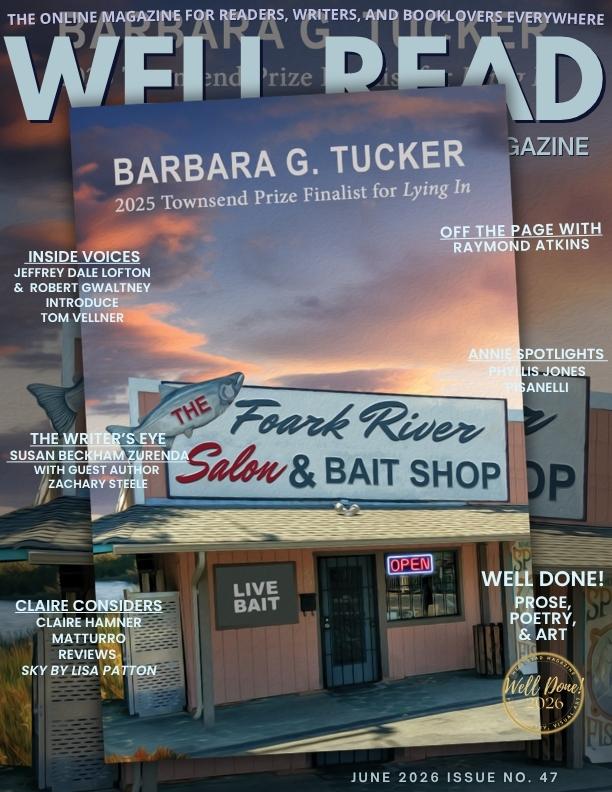
Colorful Crow Publishing presents:
Colorful Crow Publishing presents:
PB Release Date: Tuesday, September 22, 2026
Three employees of a combination bait shop and hair salon in a lake resort town south of the Smoky Mountains have their lives upended when their boss announces he is going to turn the shop’s daily activities into a reality television show. All three have secrets from their lives they want to keep private and have strong reservations about the project.As the show progresses, they face opposition from the town leaders, townspeople who want their little piece of fame, conflicts with the director, demands to rethink their lives, and further opportunities. In the end, they realize they cannot hide from pain and the past and it’s time to see what lies beyond Foark River, Tennessee.
After almost five decades of teaching and leading in the college environment, Barbara G.Tucker looks forward to retirement in the near future. This will allow her to pursue her second love behind teaching—writing and helping other writers. She has published ten novels, two with Colorful Crow: Sudden Future (2023), and Lying In (2024). Lying In has been selected as one of ten finalists for the 2025 Townsend Prize for Fiction and nominated for Georgia Author of the YearAward.
Her novels explore family relationships, community, and the role of faith and conviction in life choices. She has also published three textbooks in communication, Bible studies, and academic works.
She currently lives in Dalton with Nala and Butter, her rescue dogs. Barbara attends Brainerd Baptist Church and belongs to the Ft. Oglethorpe Northwest Georgia Writers Group, Georgia Writers, and the Chattanooga Writers Guild. She is married and has a son, daughter-in-law, and beautiful granddaughter in Ringgold.
Her website is www.barbaragrahamtucker. net and her podcast is Dialogues with Creators. ine





You can find books from past issues as well as current books to add to your reading list.

Happy reading!


Order your copy today!

Order your copy today!

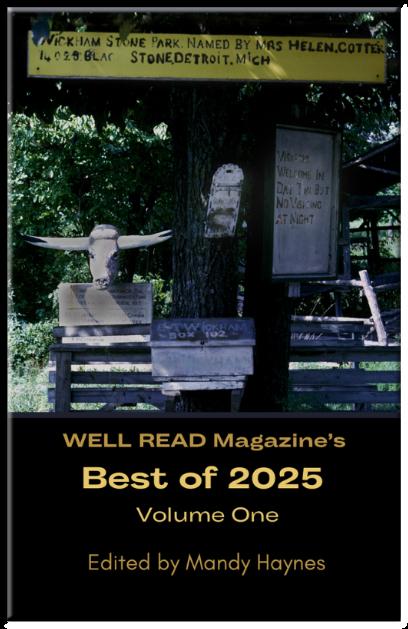
In the Best of 2025 Volume One, you’ll find forty-one submissions written by a fantastic mix of awardwinning authors and poets plus new ones to the scene. Five submissions in this volume were nominated for a Pushcart Prize: Why I Said What I Said to the Bartender by Alaina Hammond, The Easter Dress by Dawn Major, Montecito by Leslie Zemeckis, Dream Merchant by Francine Rodriguez, and Stagnation by Rachid Toumi. The cover art is a photograph by author and artist, Malcolm Glass, who had several pieces published in October of 2024.
List of Contributors: J. B. Hogan, Steve Putnam, Gregg Norman, Deborah-Zenha Adams, Rita Welty Bourke, B.A. Brittingham, Mike Turner, Leslie Zemeckis, Micah Ward, John Drudge, Jennifer Susan Smith, DeLane Phillips, Julie Green, Ann Hite, Mary Kendall, John M. Williams, Alaina Hammond, Jake Sheff, JoyAnne O'Donnell, Aaron Goodman, Dawn Major, Souad Zakarani, Zoé Mahfouz, Don Edwards, Celia Miles, Malcolm Glass, Neth Williams, Hubert Blair Bonds, Rickie Zayne Ashby, Francine Rodriguez, Rachid Toumi, Mike Ross, James Garrison, Mike Nemeth, and Robin Prince Monroe

In the Best of 2025 Volume Two, you’ll find forty-three submissions written by a fantastic mix of award-winning authors and poets plus new ones to the scene. One submission in this volume was nominated for a Pushcart Prize: Burtrell’s Pieces by Jeff Clemmons.
The cover art is a photograph by artist, Malcolm Glass, who had several pieces published in October of 2024.
List of contributors: Janet Clare, Mike Ross, Mike Nemeth, Patricia Feinberg Stoner, Colette Lynch, Karen Miller, Linda C. Rehkopf, Jeff Clemmons, Mike Coleman, Micah Ward, LaVern Spencer McCarthy, J. B. Hogan, Fhen M., Ken Gosse, Celia Miles, Cindy Sams, Robin Prince Monroe, Beverly Fisher, Rickie Zayne Ashby, Maria Mackas, Jim Cherry, Martha Ellen Johnson, Michael Lee Johnson, Donald Edwards, Alex Poppe, Janet Oakley, John M. Williams, Hubert Blair Bonds, Ellen Notbohm, Steve Putnam, Souad Zakarani, Mike Turner, Nancy Dillingham, and Saeed Ibrahim

At Colorful Crow Publishing, every story begins with connection—between author and reader, past and present, truth and imagination. Rooted in a legacy of honoring diverse voices and carried forward with a deep commitment to care, we champion books that matter—stories that stay with you long after the final page. From literary fiction to children’s adventures, from heartfelt memoirs to imaginative journeys, our titles reflect the beauty, complexity, and resilience of the human experience.
CROOKED LINES (Historical Fiction) by KristineAnderson
A journalist returns to the Deep South to investigate the disappearance of a childhood friend—only to confront grief, addiction, and the tangled lines of race, loyalty, and truth in 1960sAmerica.
SARAH THE SEED (Picture Book) by L.G. Bridges
When a strong wind carries Sarah far from everything she knows, she discovers that being lost may be the very thing that helps her grow into something extraordinary.
THE ELDDIR CHRONICLES (Middle-Grade Series) by L.G. Bridges
In a richly imagined world of mystery and magic, young heroes must discover who they are—and what they’re willing to risk—to protect the future of Elddir.
by
Bobbie Christmas
From outrageous clients to unbelievable workplace moments, this candid and often hilarious memoir reveals the hard-earned wisdom—and wild stories—behind a lifetime in the world of work.
Fiction) by
Pat Walker Johnson
After escaping an abusive marriage, Pru Massey builds a new life—but love, loss, and a haunting crime force her to reckon with the past she cannot outrun.
(Picture Book Series) by MaKayla
Rodriguez
Join a curious little snail as he journeys through the natural world, discovering friendship, wonder, and the beauty of exploring one small step at a time.
by
Barbara G. Tucker
When a small-town bait shop becomes the center of a reality TV show, three employees must confront their secrets—and decide whether they’re ready for the truth to come to light.
Adventure) by
Travis Williams
Aspace pilot with the soul of the Old West navigates danger, mystery, and sharpwitted dialogue in a futuristic tale that blends frontier grit with interstellar stakes.
Some stories are still taking shape—but we can’t wait to share them with you. Discover more at Colorful Crow Publishing. Follow along for new releases, author features, and behind-the-scenes glimpses into the stories we’re proud to bring into the world.

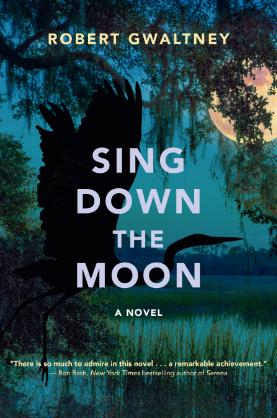
Sixteen-year-old Leontyne Skye yearns to escape Good Hope, the remote Georgia coastal barrier island where she resides.
Leontyne's heritage is bleak. Tasked with tending Damascus, an ancient fig tree beguiling haints across the river with its wind chime song, Leontyne's mother, Eulalee, disintegrates into tufts of hair, teeth, and memory.
This affliction befalls all Skye women, a fatal consequence of distilling Redemption, an addictive drug made from the figs of Damascus imbued with the essence of haints.
Leontyne also tumbles apart, her memories and hand lost in a life-altering accident suffered two years back during an event known as Tribulation Day.
Through unreliable recollections of her trusted friends the Longwood twins, Leontyne stitches a dubious understanding of who she was before she fell "the long-long ways."
In the aftermath of Eulalee's death, Leontyne is pressured by the Longwoods to render Redemption, continuing the legacy upon which Good Hope depends.
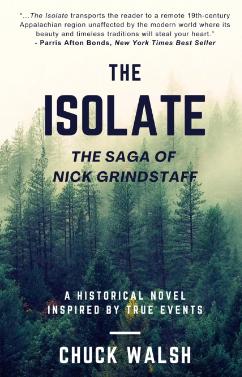
In the heart of East Tennessee's rugged Iron Mountain lives the legend of Nick Grindstaff, a man who turned his back on a cruel world and carved out a life of fierce independence and raw survival. The Isolate is the unforgettable true story of a soul beaten down by tragedy, betrayal, and loss, and his decision to retreat into the wilderness to find solace, solitude, and meaning.
Born into hardship and orphaned at just three years old, Nick was raised in the secluded Doe Valley. After a rare chance to see the outside world, he set off to St. Louis with dreams of prosperity and a future with his belovedAnnabeth. But the world proved merciless-his hard-earned savings were stolen, and his return home brought heartbreak. Shattered and disillusioned, Nick climbed into the mountains, where he vowed never to come down again.
What follows is a riveting tale of self-reliance and grit. Battling bears, panthers, deadly winters, and human cruelty alike, Nick transforms from a heartbroken man into a mythic mountain figure. His only companion?Aloyal stray dog.To outsiders, he was a recluse, the "Hermit of Johnson County," but to those who knew him, he was a quiet soul whose life echoed the struggle between man and nature, hope and despair.
The Isolate is more than a story of survival. It's a haunting journey into a forgotten corner of American history. Lush with Appalachian landscapes and driven by the enduring human spirit, this gripping narrative honors a man who sought freedom in the wild and found peace on his own terms. Readers will be swept away by Nick's heartbreaking resilience and the haunting beauty of the life he left behind.

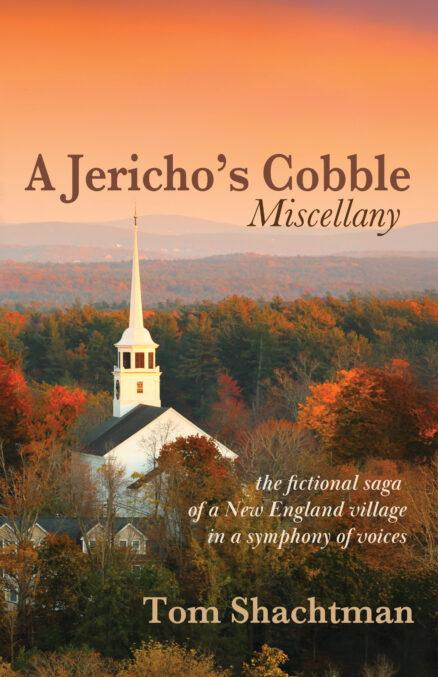
When I first opened A Jericho’s Cobble Miscellany, I expected a quaint collection of small-town stories. What I found was something richer, stranger, and more layered. Tom Shachtman’s book is not so much a single story as it is a patchwork quilt stitched from voices, artifacts, and memories. We meet townspeople past and present, from accident victims hovering between life and death to schoolteachers scribbling in their diaries, from old family dynasties with troubling legacies to modern-day residents juggling community duty and private worries. The narrative dances between perspectives: sometimes a newspaper clipping, sometimes a poem, sometimes the musings of a geological formation. It’s messy and alive, much like the New England hamlet it captures, spanning from Labor Day 2003 to Memorial Day 2004, with centuries of echoes reverberating in the background.
What struck me first was the sheer variety of voices. Shachtman has a gift for making each character distinct, whether it’s the weary but hopeful thoughts of Grace Newington in a hospital waiting room or the earthy humor of the women at Get’nGo who call themselves “the sorority of the brown bags.” The writing has an intimacy to it that I enjoyed. At times, I found myself moved by how history and personal memory get tangled. I loved how the town’s past, its Native roots, its Whitbred settlers, its scandals, sits so close to the surface that every conversation seems to brush against it. The book shifts forms. A poem would melt into a diary entry, which would jump into a mock playlet, and I’d have to steady myself. But maybe that’s the point: a miscellany should feel like rummaging through a box in an attic, never sure what you’ll find next.
The book also made me think about how communities wrestle with memory and change. There’s anger and pride about names, schools, and family legacies. There’s tenderness in how neighbors watch over one another, yet sharp divides between “Cobblers” and “Gobblers,” the locals and the weekenders. I liked that the author never smoothed these tensions away. He let the contradictions stand, and they felt real. The emotions felt raw. I found myself laughing at one passage and then feeling the weight of grief a page later. The shifts gave the book a strange vitality that straight storytelling might have missed.
A Jericho’s Cobble Miscellany is less about a plot than about a place, less about neat answers than about what it feels like to live in the shadow of history while stumbling through the present. I would recommend it to readers who like community sagas, who enjoy oral histories, or who simply want to sink into the rhythm of a small town that is both ordinary and mythic. If you’re willing to wander, to let yourself be surprised, you’ll find something touching here.
April Pulliam,Assistant Editor

In her debut collection, No Lace Fronts in Iowa City, Meghan Malachi explores how community, desirability, and notions of home influence the journeys by which girls come of age. These poems celebrate a South Bronx childhood and navigate a complicated womanhood in the Midwest through confessional musings on Black Latinx identity and intimate epistolary interludes. Favorite wigs, main character moments, and reimagined anti-heroines are all vessels for exploring girlhood in this love letter to female kinship. No Lace Fronts in Iowa City is ultimatelyatestamenttothedesiresforbelongingand tenderness that we all harbor.

The witchy goddess of rock has been casting a spell on music lovers for more than 50 years as a solo artist and a member of the iconic Fleetwood Mac. In this anthology, poets explore the myth, the music, and the enduring legacy of Stevie Nicks.
From haunting ballads of heartache to empowering anthems of liberation, this collection of poems in White Winged Doves embraces the wild spirit and introspective depth synonymous with Nicks’artistry. Poets channel her iconic imagery and fierce individuality, crafting an homage that resonates with both tribute and innovation. This book invites readers to wander through the witchy realms of dreaming and desiring, exploring the mystical landscapes and emotional depths that continue to define Nicks’legendary career. Each poem weaves a tapestry of resilience and enchantment that mirrors the timeless muse herself.

Incidental pollen refers to pollen that collects on bees as they forage for nectar—like the cumulative life experiences we cannot help but carry. The hive serves as a thematic thread in this collection that explores the space between past and present, shame and redemption, grief and resilience. Poetic forms lend meaning—like the villanelle that captures the grief-driven magical thinking of the speaker. Are recurring red fox sightings visitations from her deceased father and nephew? Trauma and loss appear in these tonally rich and imagistic poems, but the arc ultimately centers on the search for belonging, the attempt to recreate home.

MADVILLE PUBLISHING seeks out and encourages literary writers with unique voices. We look for writers who express complex ideas in simple terms. We look for critical thinkers with a twang, a lilt, or a click in their voices. And patois! We love a good patois. We want to hear those regionalisms in our writers’ voices. We want to preserve the sound of our histories through our voices complete and honest, dialectal features and all. We want to highlight those features that make our cultures special in ways that do not focus on division, but rather shine an appreciative light on our diversity.
Madville Publishing is an American nonprofit corporation registered in the state of Texas. It has been in operation since 2018. Madville is not an academic press but adheres to the same rigorous standards when evaluating manuscripts. Madville’s reviewers hold advanced degrees in literature and creative writing.
Mission Statement: The mission of Madville Publishing is to produce, publish, and market literary works of the highest quality that reflect the diversity of the modern English-speaking world.We seek to publish poetry, fiction, and creative nonfiction by notable and emerging authors who display diversity in ethnicity, gender, age, and worldview, and whose work exhibits the full range of this diversity. Our goal is to discover and showcase works that might otherwise be overlooked, to provide opportunities for voices that might otherwise be unheard.
What we like: We love language, dialect, and regionalisms. We yearn to know other cultures and other worlds. From poets’ philosophies and introspections, to essayists examinations of the world and all its foibles, to imaginary worlds, our authors deal in snapshots of time, slivers of memory, and flashes of inspiration. English is our first language, but we adore code switching and idioms from around the world. Our books straddle borders. While our authors generally hail from English-speaking communities, our audience extends beyond those narrow confines.
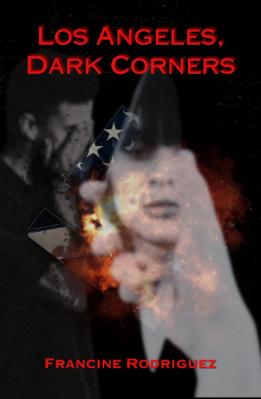
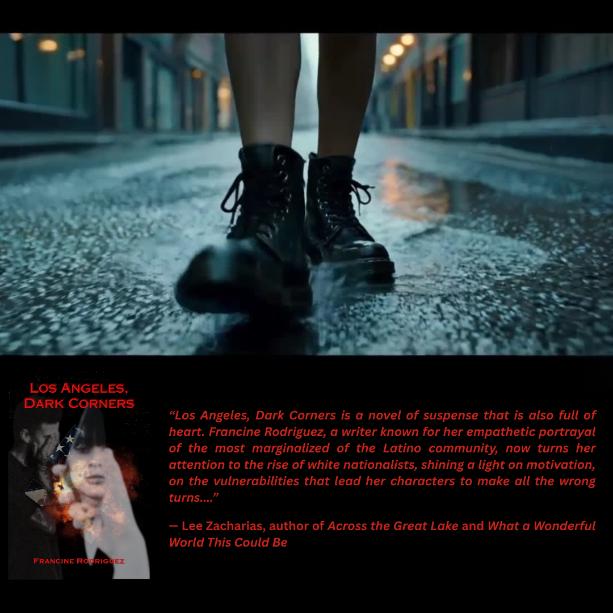
Rodriguez
Against the January 6 capitol riots, a young FBI agent, Josh, works undercover to infiltrate neo-Nazi group in Los Angeles. He becomes involved with Novena, the on/off girlfriend of the group’s leader, blurring the lines between investigation and romance, and placing them both in a situation which threatens to explode into violence when a top-ranking official is murdered.
Told in dual narration, the novel opens with Novena in prison awaiting sentencing for two murders. Novena’s position in the movement was largely shaped by her perception that she is overlooked and discriminated against by the system of government in the U.S. even though she is white.Afew months earlier, after an argument with her boyfriend, Drew, head of the local chapter of the White Knights, she meets Josh at a rally, and the two become close, Josh pressing Novena for information on the Knights’preparation for January 6 and beyond, and her looking to him for the stability and direction she lacks in her own life as she begins to become distant from Drew and the Knights.
But Drew brings Novena back into the fold, convincing her that one of the top men in the organization, Norwood, is a traitor. On January 6, while many of the Knights are away, participating in the insurrection at the capitol, Novena and Drew break into Norwood’s home to find information to use against him so Drew can replace him as head of the Knights.The break in turns violent when the owner unexpectedly returns home, and Novena shoots Norwood, killing him. Lost and alone in the aftermath of the robbery, she turns back to Josh, eventually confessing the murder to him. Blindsided, Josh’s reaction will determine both of their fates.
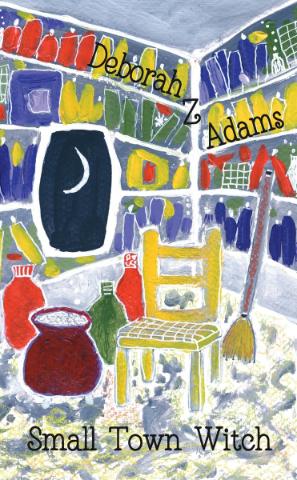
Small Town Witch by Deborah Z
Adams
Small Town Witch, a new chapbook from award-winning author Deborah Z Adams, is a collection of spell-binding tales about the witches we meet every day. Written with warmth, humor, and a little bite, Small Town Witch is packed with more substance than meets the eye.
“Adams’s witches may inhabit a small town, perhaps your small town, but they are not small women. They are powerful and empowering. You’ll root for these women, these coven leaders and elementary school teachers. Two parts poetry, two parts prose, with a healthy pinch of feminist indignation, Adams’s tales will surely charm you and remind you that you’re “not in this fight alone.’”
—Joanna Grisham, author of Phantoms
(Finishing Line Press, 2023)
Available from your favorite bookseller!
All proceeds from sales of Small Town Witch are donated to organizations that do good in the world.
You can sample Small Town Witch stories here.
“I’ve lived my life surrounded by women who wield their powers quietly but effectively,” saysAdams. “They’re everywhere, but especially prevalent in small towns.”
Deborah Z Adams is an awardwinning author of novels, short fiction, CNF, and poetry. She served as executive editor of Oconee Spirit Press for ten years, and is currently a reader for Boomerlit. Her writing has appeared or is forthcoming in Roanoke Review, Litmosphere: a journal of Charlotte Lit, WELL READ Magazine, Dead Mule and other journals.


In the Best of 2024 Volume One, you’ll find fifty-one submissions written by a fantastic mix of awardwinning authors and poets plus new ones to the scene. Three submissions in this volume were nominated for a Pushcart Prize: The Hanging by Doug Gray, Sandy Tells Me About Dead Pine Trees by J.D. Isip, and Wilma by Phyllis Gobbell. The cover art is by artist, Lindsay Carraway, who had several pieces published in February of 2023.
Contributors: Carolyn Haines, Doug Gray, Angela Patera, Kimberly Parish Davis, Michael Spake, Jennifer Smith, Ashley Tunnell, Ken Gosse, Dr. Elizabeth V. Koshy, Ann Hite, Ellen Notbohm, Micah Ward, Malcolm Glass, Katie Crow, Lorraine Cregar, Patricia Feinberg Stoner, John M. Williams, Michael Lee Johnson, J.D. Isip, Casie Bazay, Jacob Strunk, Ann Christine Tabaka, Joan McNerney, Fhen M., Steven Kent, Peter Magliocco, Mark Braught, Rita Welty Bourke, Loretta Fairley, Barbara Anna Gaiardoni, S. Dodge, DeLane Phillips, Candice Marley Conner, Arvilla Fee, J. B. Hogan, Ramey Channell, Hope Kostedt, John Grey, Martha Ellen Johnson, Nancy Chadwick-Burke, Mike Coleman, Margaret Pearce, Nicole Irizawa, Donald Edwards, Janet Lynn Oakley, Mandy Jones, Phyllis Gobbell, and Suzanne Kamata
In the Best of 2024 Volume Two, you’ll find fifty-two submissions written by a fantastic mix of awardwinning authors and poets plus new ones to the scene. Three submissions in this volume were nominated for a Pushcart Prize: Hanging Pictures by Micah Ward, The Lone and Level Sands by James Wade, and American Chestnut by Candace Connor. The cover art is by artist, Lindsay Carraway, who had several pieces published in February of 2023.
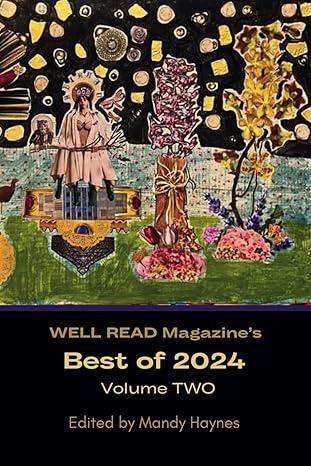
Contributors: Candice Marley Conner, Kaye Wilkinson Barley, Mike Ross, Will Maguire, AJ Concannon, Patricia Feinberg Stoner, Gregg Norman, Robin Prince Monroe, Ramey Channell, April Mae M. Berza,Anne Leigh Parrish, B.A. Brittingham, MikeAustin, Sara Evelyne, Jennifer Smith, Loretta Fairley, J.L. Oakley, Celia Miles, Kris Faatz, Ed Nichols, Linda Imbler, Annie McDonnell, Mike Turner, Micah Ward, James Wade, Ashley Tunnell, John M. Williams, Robb Grindstaff, Stevie Lyon, Laura McHale Holland, Saeed Ibrahim, Nancy Julien Kopp, Julie Green, DeLane Phillips, Shayla Dodge, Edilson Afonso Ferreira, Chris Wood, Jasna Gugić, Fhen M., Hubert Blair Bonds, Ellen Birkett Morris, Margaret Pearce, Ellen Notbohm, Kimberly Parish Davis, J. B. Hogan, and Royal Rhodes

In Volume One, you’ll find thirty-eight submissions written by a fantastic mix of awardwinning authors and poets plus new ones to the scene. Three submissions in this volume were nominated for a Pushcart Prize: Miller’s Cafe by Mike Hilbig, Sleeping on Paul’s Mattress by Brenda Sutton Rose, and A Hard Dog by Will Maguire. The cover art is by artist, Lindsay Carraway, who had several pieces published in February’s issue.
Contributors: Jeffrey Dale Lofton, Phyllis Gobbell, Brenda Sutton Rose, T. K. Thorne, Claire Hamner Matturro, Penny Koepsel, Mike Hilbig, Jon Sokol, Rita Welty Bourke, Suzanne Kamata, Annie McDonnell, Will Maguire, Joy Ross Davis, Robb Grindstaff, Tom Shachtman, Micah Ward, Mike Turner, James D. Brewer, Eileen Coe, Susan Cornford, Ana Doina, J. B. Hogan, Carrie Welch, Ashley Holloway, Rebecca Klassen, Robin Prince Monroe, Ellen Notbohm, Scott Thomas Outlar, Fiorella Ruas, Jonathan Pett, DeLane Phillips, Larry F. Sommers, Macy Spevacek, and Richard Stimac
InVolumeTwo, you’ll find fortythree submissions written by a fantastic mix of award-winning authors and poets plus new ones to the scene. Three submissions in this volume were nominated for a Pushcart Prize: A Bleeding Heart by Ann Hite, A Few Hours in the Life of a Five-Year-Old Pool Player by Francine Rodriguez, and There Were Red Flags by Mike Turner. The cover art for Volume Two is by artist, DeWitt Lobrano, who had several pieces published in November’s issue. Enjoy!
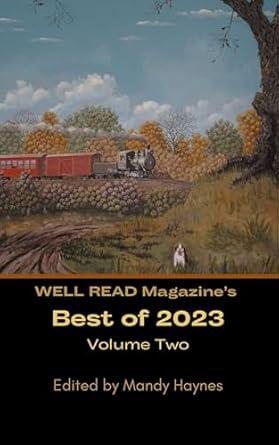
Contributors: Ann Hite, Malcolm Glass, Dawn Major, John M. Williams, Mandy Haynes, Francine Rodriguez, Mike Turner, Mickey Dubrow, William Walsh, Robb Grindstaff, Deborah Zenha Adams, Mark Braught, B. A. Brittingham, Ramey Channell, Eileen Coe, Marion Cohen, Lorraine Cregar, John Grey, J. B. Hogan, Yana Kane, Philip Kobylarz, Diane Lefer, Will Maguire, David Malone, Ashley Tunnell, Tania Nyman, Jacob Parker, LaVern Spencer McCarthy, K. G. Munro, Angela Patera, Micheal Spake, George Pallas, Marisa Keller, Ken Gosse, and Orlando DeVito
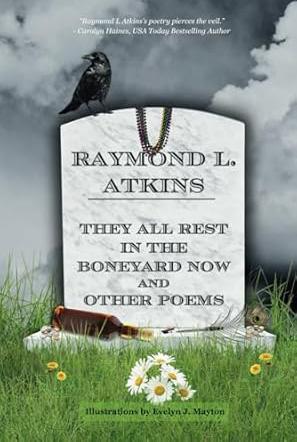
TheyAll Rest in the Boneyard Now by
Raymond L.Atkins (Author), Evelyn Mayton (Illustrator)
“Raymond Atkins writes with intuitive wisdom, as he channels those from beyond the grave. His poetry gives voice to those who once mattered, those who time wants us to forget. In They All Rest in the Boneyard Now, Atkins wrestles death from the dusty clay and breathes life into dry bones while reminding us that every soul who once had breath is worthy of being remembered. These saints, sinners, socialites, and the socially inept are all victims of time, or circumstance, as we too shall one day be. Atkins offers salvation to all who are tormented, and solace to those who seek eternal rest.”
– Renea Winchester,Award-winning author of Outbound Train
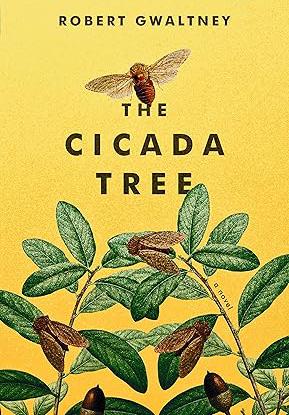
Robert Gwaltney
The summer of 1956, a brood of cicadas descends upon Providence, Georgia, a natural event with supernatural repercussions, unhinging the life of Analeise Newell, an eleven-year-old piano prodigy. Amidst this emergence, dark obsessions are stirred, uncanny gifts provoked, and secrets unearthed.
During a visit to Mistletoe, a plantation owned by the wealthy Mayfield family, Analeise encounters Cordelia Mayfield and her daughter Marlissa, both of whom possess an otherworldly beauty, a lineal trait regarded as that Mayfield Shine. A whisper and an act of violence perpetrated during this visit by Mrs. Mayfield all converge to kindle Analeise’s fascination with the Mayfields.
Analeise’s burgeoning obsession with the Mayfield family overshadows her own seemingly, ordinary life, culminating in dangerous games and manipulation, setting off a chain of cataclysmic events with life-altering consequences—all of it unfolding to the maddening whir of a cicada song.
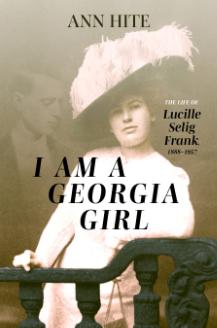
byAnn Hite
Twenty-five-year-old Lucille Selig Frank's whole life changed on April 26, 1913, as the Confederate Memorial Parade marched through Atlanta, Georgia. Lucille was attending the opera matinee with her mother. Her husband, Leo Frank, sat in his office in the National Pencil Company, where he was superintendent, working on a financial report. The brutal murder of fourteen-year-old Mary Phagan, an employee of Leo's, took place in the pencil factory that day. Lucille's husband would be the last known person to see Mary alive. While much has been written about Mary Phagan's murder and Leo Frank's subsequent trial over the past 115 years, very little has given voice to Lucille Selig Frank and other women connected to the horrific events that took place between 19131915. Lucille was part of a mission to make Governor John Slaton aware of the antisemitism being shown to Leo during his arrest and trial. She paid a heavy price for her courage. The story of Lucille and the women connected to this case is as timely today as it was in the early 1900s. This book has many diverse characters, including place which influences the outcome. Within this complexity, Hite's telling of Lucille's story will help others see that antisemitism, the marginalization of women, and mobs taking justice into their own hands cannot be tolerated. How many people were complicit in Leo and Lucille's journey? Was justice truly served? This book leaves the reader to answer these questions.
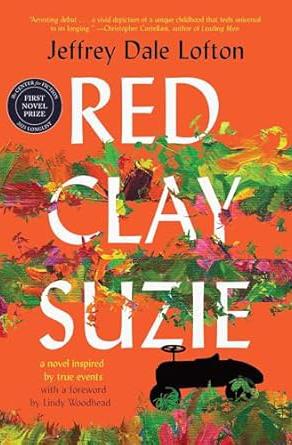
Red Clay Suzie by
Jeffrey Dale Lofton
A novel inspired by true events.
The coming-of-age story of Philbet, gay and living with a disability, battles bullying, ignorance, and disdain as he makes his way in life as an outsider in the Deep South—before finding acceptance in unlikely places.
Fueled by tomato sandwiches and green milkshakes, and obsessed with cars, Philbet struggles with life and love as a gay boy in rural Georgia. He’s happiest when helping Grandaddy dig potatoes from the vegetable garden that connects their houses. But Philbet’s world is shattered and his resilience shaken by events that crush his innocence and sense of security; expose his misshapen chest skillfully hidden behind shirts Mama makes at home; and convince him that he’s not fit to be loved by Knox, the older boy he idolizes to distraction. Over time, Philbet finds refuge in unexpected places and inner strength in unexpected ways, leading to a resolution from beyond the grave.
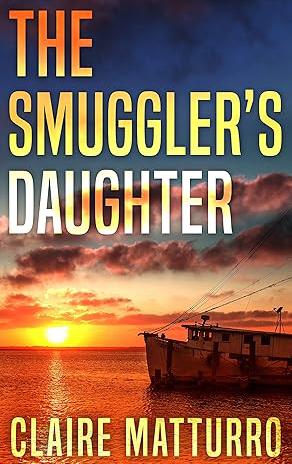
Claire Matturro
Ray Slaverson, a world-weary Florida police detective, has his hands full with the murders of two attorneys and a third suspicious death, all within twenty-four hours. Ray doesn’t believe in coincidences, but he can’t find a single link between the dead men, and he and his partner soon smash into an investigative stonewall.
Kate Garcia, Ray’s fiancée, knows more than she should. She helped one of the dead attorneys, just hours before he took a bullet to the head, study an old newspaper in the library where she works. Kate might be the only person still alive who knows what he was digging up— except for his killer.
When Kate starts trying to discover what’s behind the murders, she turns up disturbing links between the three dead men that track back to her family’s troubled past. But she has plenty of reasons to keep her mouth shut. Her discovery unleashes a cat-and-mouse game that threatens to sink her and those she loves in a high tide of danger.
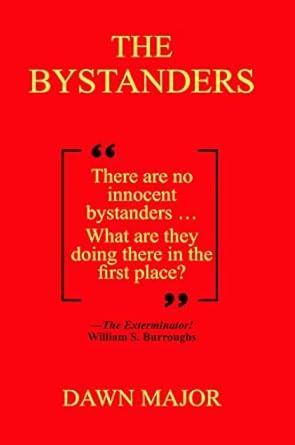
The quaint town of Lawrenceton, Missouri isn’t sending out the welcoming committee for its newest neighbors from Los Angeles—the Samples’ family. Shannon Lamb’s “Like a Virgin” fashion choices, along with her fortune-telling mother, Wendy Samples, and her no-good, cheating, jobless, stepfather, Dale Samples, result in Shannon finding few fans in L-Town where proud family lines run deep. Only townie, Eddy Bauman, is smitten with Shannon and her Valley Girl ways. The Bystanders is a dark coming-of-age story set in the 1980s when big hair was big, and MTV ruled. In a quiet town of annual picnics and landscapes, the Samples’ rundown trailer and odd behaviors aren’t charming the locals. Shannon and Wendy could really use some friends but must learn to rely upon themselves to claw their way out of poverty and abuse if they want to escape Dale.
TheBystanders pays homage toAmericana, its small-town eccentricities, and the rural people of the Northern Mississippi Delta region of Southeast Missouri, a unique area of the country where people still speak Paw Paw French and honor Old World traditions.
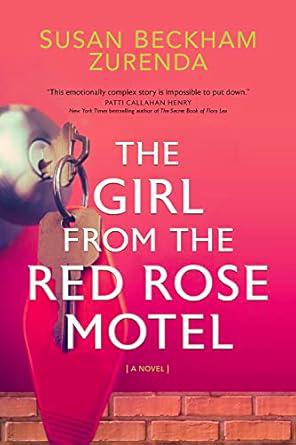
Impoverished high school junior Hazel Smalls and privileged senior Sterling Lovell would never ordinarily meet. But when both are punished with in-school suspension, Sterling finds himself drawn to the gorgeous, studious girl seated nearby, and an unlikely relationship begins. Set in 2012 South Carolina, the novel interlaces the stories of Hazel, living with her homeless family in the rundown Red Rose Motel; Sterling, yearning to break free from his wealthy parents' expectations; and recently widowed Angela Wilmore, their stern but compassionate English teacher. Hazel hides her homelessness from Sterling until he discovers her cleaning the motel's office when he goes with his slumlord father to unfreeze the motel's pipes one morning. With her secret revealed, their relationship deepens. Angela-who has her own struggles in a budding romance with the divorced principal-offers Hazel the support her family can't provide. Navigating between privilege and poverty, vulnerability and strength, all three must confront what they need from themselves and each other as Hazel gains the courage to oppose boundaries and make a bold, life-changing decision at novel's end.
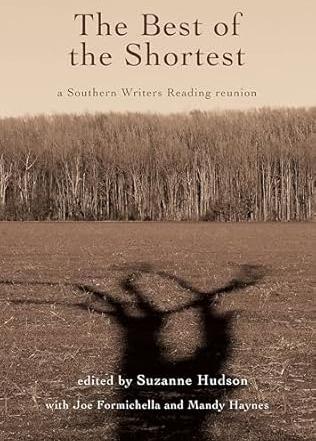
Suzanne Hudson (Author, Editor), Mandy Haynes (Editor), Joe Formichella (Author, Editor)
“Some of the happiest moments of my writing life have been spent in the company of writers whose work is included in these pages. They all brought their A-game to this fabulous collection, and at our house it is going on a shelf next to its honored predecessors. The only thing that saddens me is that the large-hearted William Gay is not around to absorb some of the love that shines through every word.” ―Steve Yarbrough
“The Best of the Shortest takes the reader on a fast-paced adventure from familiar back roads to the jungles of Viet Nam; from muddy southern creek banks to the other side of the world, touching on themes as beautiful as love and as harsh as racism. However dark or uplifting, you are guaranteed to enjoy the ride.” --Bob Zellner
“I had some of the best times of my life meeting, drinking and chatting with the writers in this book, times matched only by the hours I spent reading their books. This collection showcases a slice of Southern literature in all its complicated, glorious genius. Anyone who likes good writing will love it.” --Clay Risen
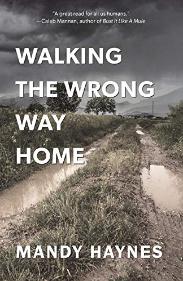
Walking The Wrong Way Home by Mandy Haynes
Spanning nearly twenty decades, the struggles and victories these characters face are timeless as they all work towards the same goal.
A place to feel safe, a place to call home.
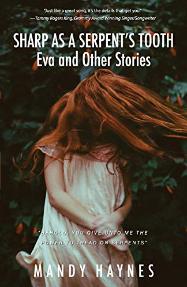
Sharp as a Serpent's Tooth: Eva and other stories by Mandy Haynes
Each story features a female protagonist, ranging from ten to ninety-five years of age. Set in the south, you’ll follow these young women and girls as they learn that they’re stronger than they ever thought possible.
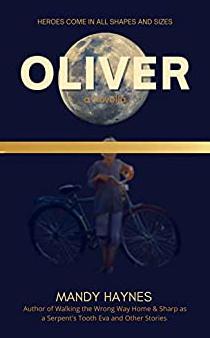
Oliver by Mandy Haynes
“Dear God…and Jesus and Mary…” Even though eleven-year old Olivia is raised Southern Baptist, she likes to cover her bases when asking for a favor. Unlike her brother Oliver, she struggles with keeping her temper in check and staying out of trouble. But Oliver is different, and in the summer of ’72 he proves to Olivia there’s magic in everything - it’s up to us to see it.
Mandy Haynes spent hours on barstools and riding in vans listening to great stories from some of the best songwriters and storytellers in Nashville, Tennessee. After her son graduated college, she traded a stressful life as a pediatric cardiac sonographer for a happy one and moved to an island off the east coast. She is a contributing writer for Amelia Islander Magazine, Amelia Weddings, and editor of Encounters with Nature, an anthology created by Amelia Island writers and artists. She is also the author of two short story collections, Walking the Wrong Way Home, Sharp as a Serpent's Tooth Eva and Other Stories, and a novella, Oliver. She is a co-editor of the Southern Writers Reading reunion anthology, The Best of the Shortest. Mandy is the editor-in-chief of WELL READ Magazine and the editor of four WELL READ anthologies.
Like the characters in some of her stories, she never misses a chance to jump in a creek to catch crawdads, stand up for the underdog, or the opportunity to make someone laugh. At the end of 2024, Mandy moved back to middle Tennessee and now spends her time writing and enjoying life as much as she can.

If you’d like to feature your work in the reading recommendation section with live links to your website and purchase link, and have personalized graphics of your ad shared to WELL READ Magazine’s social sites, click here to see examples of the different options and moreinformation.
Click here for more information on purchasing a cover.
Don’t let the low prices fool you - WELL READ was created by an author who understands how much it costs to get your book in the best shape possible before it’s ready to be queried by agents, small presses, or self-published. Showing off your book and getting it in front of readers shouldn’t break the bank.
WELL READ Magazine receives approximately 8,000 views each month on Issuu’s site alone (the world’s largest digital publishing and discovery platform available). Your book will be included with the featured authors, great interviews, submissions, essays, and other fantastic books inside each issue. There is strength in numbers. Let’s get our books seen!
Ad rates for 2026:
$50 - One FULL PAGE AD
$75 - TWO-PAGE SPREAD
$100 - TWO HIGH IMPACT - FULL COLOR PAGES - (this is NOT a standard two page spread)
$100 - FOR PUBLISHERS ONLY (limit 3 months of ads)- Advertise up to THREE books with one live link that takes viewers to your website.
$75 - BOOKSTORES, PUBLICISTS, AUTHORS - two-page spread to promote book events
$450 - FRONT COVER - includes two full color interior pages for book description, author bio, and/or blurbs, plus an additional one page ad in the next three issues. Also included is the Featured Author spot in the issue your book is on the cover.
$350 - INTERIOR COVER or BACK COVER - includes TWO additional full color interior pages for book description, author bio, and/or blurbs.
*Prices include creating the graphics for the magazine pages and all social sites. Everything is taken care of for you.


“For so long, queer stories have been underrepresented or erased entirely. And when they have appeared, they have often been drenched in tragedy and death. But joyful queer romance novels are finally starting to break through, and I think readers are thrilled about that.”
Robert Gwaltney & Jeffrey Dale Lofton
introduce Author Tom Vellner
Tom Vellner is a writer, editor, and, yes, a tennis player. A former staff writer at BuzzFeed, he has also contributed to VICE, Thrillist, ACLU Magazine, and more. He lives in the HudsonValley with his husband and two dogs. Thirty Love is his debut novel.
Jeffrey: Tom, to start us off, will you tell us what ThirtyLove is about?
Tom: Thirty Love follows American tennis star Leo Chambers, who is determined to win the US Open by 30, the age when many players feel retirement looming. He’s just a year away from that dreaded birthday, but he can’t find his focus—considering he hasn’t told anyone that he’s gay, he’s helping his father-coach navigate health issues, and he still can’t figure out how to get his longtime rival, Gabe Montoya, out of his head both on and off the court.
Robert: Thirty Love blends intense sports action with emotional personal arcs. What inspired you to set a romance within the competitive world of professional tennis, and what did you want readers to feel from that setting?
Tom: I've been a tennis fan for a long time, but my love for this sport really deepened during the pandemic. I was stuck at home
Robert Gwaltney & Jeffrey Dale Lofton introduce Tom Vellner
with a Tennis Channel subscription, so I was watching tons of matches, and what always struck me was that there still had never been an openly queer male player. There have been openly queer women on tour for years thanks to Billie Jean King blazing the trail, but up until recently, there were never any out men. I've also been a rom-com fan for a long time, so it dawned on me that I could combine my love of tennis and romance and explore what it would look like if there were a pro tennis player navigating his queer identity while falling in love with his longtime rival behind the scenes. I was surprised that tennis hadn't found a big place in the sports romance genre yet because it's perfect for it: such high stakes, so much tension, lots of glitz and glamour, and of course, sweaty men in short-shorts. I wanted readers to feel the immense pressure these players are under year-round and how adaptive they have to be: to different court surfaces, to different cities, to different obstacles that arise along the way—whether it’s a difficult opponent, a family emergency, or a hidden love.
Jeffrey: The matches inThirty Love are vividly written, pulling readers into that “courtside” feel. How did you approach writing those scenes, and did your own experience with the sport influence them?
Tom: I’ve watched thousands of matches at this point, observing players’movements, the momentum shifts between opponents, and
all the ways they fight to win. I wanted the match scenes to immerse readers in the electricity of a match and to show them Leo’s character growth, too. After years stuck in the same routine, he grows more comfortable with mixing up his play style and finding new strategies, which, of course, is symbolic of how he realizes that he needs to start changing his approach to life and becoming more open about his identity. If he wants to win the US Open, his ultimate goal, he can’t stick with the same old, same old. His path to victory, both on and off the court, needs to look different than he’s always imagined, and he has to learn to be okay with that shift.
Robert: Leo’s relationship with his father—who is also his coach and has MS—plays a big part in the emotional landscape of the book. How did you develop that father/son dynamic, and why was it important to you?
Tom: Leo and Johnny’s dynamic is very much inspired by my own relationship with my dad. Like Johnny, my dad has multiple sclerosis, and what I've learned from him about navigating a world that wasn't built for you as a marginalized person really informed how I built Leo and Johnny's relationship. You don’t often get to see people with disabilities represented in romance or fiction in general, especially when it involves sports, so that was important for me to include. It was also important for me to include a complex father-son relationship that felt tender and vulnerable. That doesn’t
Robert Gwaltney & Jeffrey Dale Lofton introduce Tom Vellner
show up often in novels either, especially when the son is gay, and I wanted it to feel comforting for queer readers who might have complicated relationships with their parents, too.
Jeffrey:The themes of self-acceptance and identity are center court inThirty Love. How does your story compare to Leo’s struggles with coming out and being true to himself?
Tom: I came out in college after many years wondering if people would reject me or treat me differently, which is the core struggle that Leo is facing but with extremely high stakes: Will he lose support from fans? Sponsors? Players? It takes him longer to want to share his identity because he has people across the globe watching his every move. Like Leo, I knew I was gay for a while before I was ready to take the plunge and start opening up to people and living authentically. It can be terrifying to take that huge step forward, and I wanted to show just how much courage it would take for a famous athlete like Leo or Gabe to do so on the world stage.
Robert: Celebrity looks glamorous and perfect with money and beautifulfaces andphysiques, but youshow the real struggle underpinningit all. How did you manage to capture and show that rarified world of professional tennis stars, their hard work, disappointment, the loneliness that goes along with being on the cir-
cuit,having to operate and live inside those narrow bands of what is acceptable?
Tom: Tennis is fascinating in that regard because it seems so glamorous to spend your life traveling the world, making tons of money if you’re at the top of the game, and having crowds cheer for you and only you. Some of these players are global superstars. But this sport is grueling. It has a nonstop schedule, it demands perfection, and it doesn’t allow for much time at home with family and friends. So I wanted to pull back the curtain in Thirty Love. I was able to do that by reading and watching players’ stories in articles and docuseries like Break Point on Netflix. Some of the women on tour have opened up about losing parents, helping a parent after a medical emergency, or taking a hiatus from the sport for their mental health, and that helped me understand better what they must go through, handling such heavy personal issues while playing a sport that requires so much mental fortitude. I have to shout out one of my all-time favorite players, Naomi Osaka. Her openness about the depression she’s experienced as a pro player — one whose star rose so quickly — really influenced my view of the sport. I admire her so much. Everyone should watch the Naomi Osaka docuseries on Netflix, too.
Jeffrey: I was talking with another author who happens to write romantically themed books, and she opined that Romance books
Robert Gwaltney & Jeffrey Dale Lofton introduce Tom Vellner
don't get their due. Would you comment on Romance stories’place in the literary pantheon and why we need them?
Tom:Lovestories havehad an importantplacein literaturefor centuries. Pride & Prejudice, for one thing, is essentially an enemiesto-lovers romance novel, and it’s still beloved and getting new film and TV adaptations. But romance novels have been looked down upon for so long because people write them off as frivolous, mostly because women are the primary readers of them, so a patriarchal society of course has deemed them lesser. It’s human nature, though, to be fascinated by love and sex and relationships. That’s why these novels endure and are seeing a new surge (romance bookstores are now popping up across the country). They allow us to learn about how we connect with each other and to escape into a world where happy endings are possible when they so often aren’t in our own. Many of the romance novels I read deal with serious issues — LGBTQ identity, race, mental health, family dynamics — and you get to navigate those issues while knowing that there’s a safe place to land at the end of the book. That’s a special experience that we will always need in literature.
Robert: Male/Male Romance stories are having a moment! Let's hope that moment turns into a long and sustained reign. Whydo you think stories of connection and love like those by Rachel Reid,
Casey McQuiston, M.A. Wardell, you, and others have such a devoted following?
Tom: For so long, queer stories have been underrepresented or erased entirely. And when they have appeared, they have often been drenched in tragedy and death. But joyful queer romance novels are finally starting to break through, and I think readers are thrilled about that. We want to cling to them, celebrate them, and make sure they find success so that publishers know we want more of them. I had a reader tell me recently that they consider queer romance to be life-saving, and I couldn’t agree more. It’s impossible to overstate how important it is to see someone like you find love and live happily ever after when the world often tells you that you aren’t deserving of that.
Jeffrey: I understand that the primary readers of gay male fiction are women. Is that your understanding? Why do you think that is?
Tom: Across the board, statistically, women read more fiction and more romance, so that’s a big part of it. But beyond that, I think many women are interested in learning about LGBTQ stories and being allies to LGBTQ folks, so they’re drawn to stories that allow them to understand what our love and our lives look like. I’ve also heard from women in my life who mostly read gay romance that they find the vulnerability and connection between two gay men,
Robert Gwaltney & Jeffrey Dale Lofton introduce Tom Vellner
especially between two gay men finding their place in the world, more exciting and emotionally satisfying than some of the straight romance they read. I see more queer men starting to get into queer romance, though, as the genre continues to grow. For so long, I think many of us, myself included, didn’t know that these books existed because we never learned to look for them. In a way, we had accepted that our love stories weren’t being told. But that’s finally changing.
Robert:And now for the question every author dreads. What's next for you?
Tom: Without giving away too much, I’m working on a second novel right now, set in the same tennis universe, following a new cast of characters. But Leo, Gabe, and others from Thirty Love will be making cameos. Stay tuned!
In this queer, rivals-to-lovers rom-com, a closetedAmerican tennis star determined to win the US Open by age 30 battles a frustratingly handsome challenger both on and off the court.
“KINETICAND EXPLOSIVE” —THE NEWYORK TIMES “OUTSTANDING” —PUBLISHERS WEEKLY
“ATALENTED NEW VOICE” —LIBRARY JOURNAL APPLE BOOKS’BEST BOOKS OF MARCH
SPOTIFY EDITORS’PICK: MARCHAUDIOBOOKS LIBRARY JOURNAL’S ROMANCE DEBUT OF THE MONTH


“The cast is charming, the sex is buoyant and the tennis — whew, the tennis writing is kinetic and explosive.”
—The New York Times
Vellner



Click above to go to the BETWEEN THE PAGESYouTube channel, or on one of the links below to listen to the podcast. Please take a second to like and subscribe if you enjoy the channel - we appreciate you!








HeatherAdel
Have you ever woken up and known something was wrong before your eyes even opened? Have you ever felt so heavy that brushing your teeth felt like a task worthy of applause? Have you ever wondered if what you were feeling was just a bad mood… or something far darker?
Most of us understand sadness as temporary. A rough night’s sleep. A fight. A stressful week. We power through it. We promise ourselves a glass of wine, a long shower, and an early bedtime. And usually—mercifully—it passes. The fog lifts. The irritation softens. The world regains colour.
What I was feeling was not that. It wasn’t waking up on the wrong side of the bed. It wasn’t exhaustion from single parenting or work stress. It wasn’t even grief in the romantic sense. It was a slow, deliberate erasing of emotions.
It began quietly. I stopped noticing the ocean. I stopped feeling pride when I accomplished something at work. I stopped laughing at jokes I normally found funny. My affirmations still buzzed on
my phone each morning—You are strong. You are capable. You are enough. I would read them. I would even say them out loud. But they sounded like someone else’s words, floating past me without landing.
The silence in my house during the weeks the girls were gone no longer felt peaceful. It felt accusatory. Every room echoed with absence. Every quiet evening became a mirror reflecting a single, persistent thought: You did this to yourself.
The sadness deepened into something physical. My chest felt hollow. My limbs felt weighted. My thoughts grew louder and more cruel.
You ruined your family. You are alone.
You will always be alone.
I tried to counter them. I tried to breathe through them. I tried to tell myself, “This is just heartbreak doing what heartbreak does.”
But heartbreak doesn’t whisper solutions. Depression does.And it was only a matter of time before the whisper became a suggestion.
My career on the Island was thriving. That’s the strange part. The work I had moved here to do—the reason I packed a trailer and drove twelve hours and boarded a ferry into the unknown—was working. Relationships with the five communities strengthened. Meetings turned into partnerships. Ideas turned into funded
projects. The organization that had once been criticized was now being complimented in council chambers and coffee shops.
Professionally, I was exactly where I had hoped to be. Personally, I was unravelling.
The memory of my first date—the gym note, the wine, the couch, the snoring—would drift into my mind at random times, like a cruel little highlight reel. It wasn’t even about Nate. It was what the night symbolized. I had tried to step forward. I had tried to prove I could be bold and alive and desirable. But that night, I drove home alone.
Elly was still my anchor, but she had her own life, her own job, her own orbit. Nanny Number One had long since packed up and left the Island. The house that once felt like proof of my independence had grown cavernous. The ocean roared outside, but inside it was quiet. Too quiet.
Conner had moved on. The girls laughed in the background of phone calls that ended too quickly. His anger had shifted into performance—charm for the public, contempt for me.And somehow, despite everything I knew about gaslighting and narcissism and emotional abuse, I still felt like the villain of my own story.
At Rowan’s school events, I showed up early and stayed late when I could. The kindergarten teacher smiled politely but never warmly. Conversations seemed to taper when I approached. At karate, I sat on the bleachers no matter whose week it was, clapping at every kick and bow. Brianna was the only one who sat beside me.
At soccer, a few parents chatted with me about the weather, snacks or the score. It never moved beyond the sidelines. No one was cruel.That would have been easier. It was just… distance.And distance, layered on top of heartbreak, layered on top of self-doubt, was becoming something heavy.
I wanted independence. I wanted control over my own life. I wanted to choose myself. Instead, everything felt isolated.
Outside of work, every decision felt like it backfired. I left my marriage—now I was the villain. I moved for my career—now I was alone. I tried dating—humiliation. I tried standing firm in conflict. I tried being strong—exhausted.
I would lie in bed at night and replay everything, searching for the fork in the road where I must have taken the wrong turn.
Maybe leaving was a mistake.
Maybe I overreacted.
Maybe I destroyed something that could have been fixed.
My job was flourishing. But I wasn’t.And the gap between those two truths was beginning to feel impossible to bridge.
By the first week of January, Conner had ended things with the kindergarten teacher. Just like that. No dramatic implosion. No public fallout. Just a quiet shift in status, and suddenly, he and I were talking again.
The hostility softened first. The vicious texts slowed. The public narratives about me being unstable and impossible seemed to fade.
Our conversations became… almost normal. We talked about the girls.About schedules.About the Island. We even found ourselves laughing in the truck during exchanges, lingering a little too long in the driveway.
We started doing small family outings again. Exploring beaches. Letting the girls run ahead while we walked behind them, our shoulders almost brushing. Every once in a while, he would say something light and familiar, and I would feel that old reflex—the one that used to make me lean toward him instead of away.
“Maybe this will work this time,” I would tell myself, cautiously, like I was testing icy water with one foot.
But there was always something unsettled underneath. A quiet hum in my chest that didn’t trust how easily things could swing from nuclear to nostalgic.
Connor was still on paid sick leave, yet his life seemed to be opening up rather than slowing down. He bought a recreational fishing boat—hardly the kind of expense you’d expect from someone claiming financial strain during a separation.Around the same time, he hired a second nanny, this one live-in, who stayed at his place full-time. She would come to my house during the day on my weeks to look after the girls, then return to Connor’s at night. For someone on long-term disability due to mental stress, his version of needing childcare looked surprisingly active.
It was late on a Sunday afternoon when I pulled into his driveway to drop the girls off. Connor was outside, dressed in fishing
gear, rinsing out coolers with a hose. The girls launched themselves out of their seats and ran toward him, shrieking his name.
As I stepped forward, I noticed someone standing in the boat behind him.
She was young. Attractive. Around five-foot-eight with dark skin and long brown hair pulled into a tight bun. Effortlessly beautiful in the way women in their early twenties are without even trying.
“She looks a lot like Connor’s ex-girlfriend,” my mind whispered before I could stop it. The same physical type as the woman he cheated on me with when I was at university.
“This is Jane,” Conner said casually, gesturing toward her as though he was introducing me to a neighbour borrowing sugar.
“Hi,” I replied, keeping my voice level.
She smiled politely. Confidently. Comfortable.
“How was fishing?” I asked him, forcing my eyes back onto his face.
“It was good. Didn’t catch anything. Jane used to guide in Masset, so she came out to show me some spots.”
Of course, she did, I thought.
I handed him the girls’ bags, made sure their jackets were zipped, and left.
The moment I got home, I opened my laptop. I told myself it was harmless curiosity. Research. Due diligence.
I scrolled through Conner’s friends’ list on Facebook. Jane Williams, twenty-two years old, is an Administrative Assistant at the doctor's office.
Photos filled with a young man her age. Arms wrapped around each other. Smiling in filtered sunsets. Captions about love and adventure.
“Good,” I exhaled. “She has a boyfriend.”
My thoughts tried hard to write her off. She is fourteen years younger than Conner. He swore the girls would be his only kids. What twenty-two-year-old doesn’t want her own kids? This is nothing.
I closed the computer as if that simple task settled it. But something inside me didn’t feel settled.
Days alone continued to feel empty. The quiet pressed against my ears. I stopped cooking real meals. A glass of wine replaced dinner more often than I would admit. The television played in the background, not because I was watching it, but because silence felt louder.
Unless there was a scheduled exchange or a school event, I didn’t see the girls much in his weeks. I would call them to say goodnight. Keep my tone cheerful.Ask about their day.And then I would sit back down alone. I did my best to convince myself I was still in control. But the truth was quieter. The truth was that I was starting to disappear.
Things here are beautiful. The girls are busy. Loving the new job. Still getting used to Island living.
That became my script. I could type it in under ten seconds. Copy. Paste. Send. Every word was technically true. The ocean was breathtaking. My job was thriving. The girls were adjusting. What I didn’t write was that I felt like I was living underwater. Numb. Slow. Muted.
From the top of the long dirt driveway, my little saltbox house looked proud and settled, as it belonged there. One acre of green grass stretched out in front of it. The ocean lay just across a twolane highway, beyond, wide and silver.
It was Sunday afternoon when I invited Conner over to spend time with the girls and me. We had talked about how much we missed playing golf as a family. Since the ocean floor was about one hundred and fifty yards from the top of my yard at low tide, we created our own “Family Driving Range.”
Rain boots instead of golf shoes. Seaweed instead of sand traps. Rowan and Brianna’s drives barely cleared ten feet, but they swung with dramatic intensity, tongues poking out in concentration. Conner and I laughed when our balls disappeared into tidal puddles.
For a few hours, it felt almost normal.Almost easy.
After we lost more balls than we could count, I grabbed firewood from the garage and lit the outdoor pit. Conner set up chairs for the four of us. The girls hovered impatiently while the flames caught.
Hot dogs first. Then s’mores. They barely chewed the hot dogs, too eager to stab marshmallows and set them on fire. Their cheeks were pink from the cold, their hair smelling like smoke and salt. For a moment, watching them laugh between us, I felt something dangerous. Was it hope?
“Okay, girls, inside,” I finally said. “Wash your hands and brush your teeth.”
They ran toward the house, arguing about whose marshmallow had been more perfect. I stayed seated by the fire. The flames crackled low. I poked at them with a stick, pretending I was just tending embers.
“Today was fun,” I said, keeping my voice light.
“Yeah,” Conner replied. “It was.”
My stomach fluttered. Okay, Heather. It’s now or never.
“Come with me,” I said, standing and reaching for his hand.
He followed, slightly confused, as I led him behind the garage— out of sight from the girls, out of sight from the world.
I turned toward him, closed the space between us, and kissed him. It wasn’t dramatic. It wasn’t desperate. It was familiar. Like muscle memory.
He placed his hands on my shoulders. And gently pushed me back.
“I can’t do this,” he said. The words were calm. Almost rehearsed.
“I’ve decided to move on. Jane and I are together.” The ocean roar suddenly seemed louder.
“The girl you went fishing with?” I asked, though I already knew.
He nodded up and down. Simple. Definitive.
“Okay,” I said. “I have to check on the girls.”
I walked back into the house before my face could betray me. He followed, kissed the girls goodnight, then paused at the door.
“Sorry, Heather.”
“No worries,” I replied. “I hope it works out for you.”
I closed the door and leaned my forehead against it for one full second before straightening up. I tucked the girls into bed, smoothed their hair, and kissed their cheeks. I kept my voice steady. Soft. Then I turned off every light in the house except the small desk lamp beside the couch.
I poured a glass of wine. I sat down and pulled the blanket tight around my shoulders. The tears came fast. Violent. Unstoppable.
I had convinced myself that maybe—just maybe—if we found our way back to each other, the ache would quiet. That choosing him again would mean I hadn’t blown up my life for nothing.
Instead, the rejection felt worse than the original separation.
“She’s a kid,” I muttered into the empty room. “It’s been a month since he broke up with the teacher.”
My mind spiraled.
“They probably broke up with their partners at the same time. They were probably screwing in the boat instead of fishing. No wonder they didn’t catch anything.”
The anger lasted about thirty seconds. Then it turned inward.
God, Heather. You mess up everything. You leave your marriage and regret it. You try to fix it and get rejected. You can’t keep a husband. You can’t make new friends. You can’t even land a first date without the guy passing out.
The voice in my head was relentless.
Maybe you’re the problem. Maybe you are too much. Maybe you are not enough.
The wine glass sat heavy in my hand—the ocean outside kept moving—steady, indifferent. Inside, I was beginning to crack.And the worst part wasn’t that Conner had chosen someone else. It was then that I started to believe I deserved it.
For three weeks, I moved through my life like a ghost. I smiled when required and nodded in meetings. I answered emails. Packed lunches. Signed school forms.
But inside, something had shifted.The numbness wasn’t sadness anymore. It was absent altogether.
Every morning, I would stand in front of the mirror and whisper, “Today will be better.” I said it the way you say grace before a meal—out of habit, not belief.
It was a Tuesday. The girls were with me that week. I filled my travel mug with coffee and drove to work.
The drive felt longer than usual, like the road had stretched overnight. When I parked, I sat there gripping the steering wheel. “Get out of the car,” I told myself.
It took everything I had to open the door and walk into my office. I shut the door behind me and just stared at my computer screen. Emails. Budgets. Community proposals. Important things. But all I could see were mistakes.
You’re failing.
You’re not good enough for this job.
You’re not good enough for anyone.
The thoughts weren’t loud yet.They were quiet. Steady. Reasonable. I tried to focus on a report, but the words blurred. My chest felt hollow.
Then the thought came—soft at first.
I wish I weren’t here.
Not dramatic. Not theatrical. Just a quiet suggestion. I left work early. I don’t even remember making the decision. I just found myself in the car driving home while tears slid down my face. Not sobbing. Just leaking.
“You gotta be kidding me,” I said. I felt lost. I was scared. I needed help, so I called Conner. “Hello.”
“Hi,” I said. My voice didn’t sound like mine.
“What’s wrong?Are the girls okay?”
“They’re fine. I’m sending them over with the nanny.”
“Why? What’s going on?” I swallowed.
“I need you to come over. I don’t know what’s happening to me. This is more than depression. Conner… my mind is telling me to kill myself.”
There was a pause.
“I’ll be right there.” I hung up.
I sat in the driveway and wiped my face. I practiced the fake smile I had perfected over the past few months. The one who said I was strong. Capable. Fine.
Inside, the girls were playing.
“Girls,” I called out.
They ran towards me. I grabbed them and held them so tight that I could feel their small ribs under my arms.
“I need you to pack your things. You’re going to Daddy’s for a few days.”
“Why, Mommy? We were just there.”
“I have some work stuff I have to do,” I lied. It was enough of an explanation in both of the girls’eyes. They ran upstairs, excited about an unexpected switch.
I went into the bathroom and locked the door. And that’s when the voice changed. It wasn’t quiet anymore. It was strategic.
You are exhausting them. They will be better without you. You ruin everything you touch. Look at your marriage. Look at your friendships.
Suddenly, the statements came with the sound of a gun.
“You are worthless.” Pop.
“You don’t deserve them.” Pop. Pop.
“They will be happier when you’re gone.” Pop. Pop. Pop.
The thoughts didn’t feel emotional. They felt logical. Efficient. Like a business plan. You’re the problem. Remove the problem. That’s the smart thing to do. That’s the loving thing to do.
I slid down the bathroom wall and covered my ears, as if that could block whatever was happening inside my own skull.
When the girls came down the stairs with their bags, I forced myself upright and opened the door. I knelt in front of Rowan and put my hands on her cheeks.
“Mommy loves you beyond the moon, Doodlebug.”
I quickly embraced her in my arms for fear that this could be the last hug I share with her.
“Mommy, you’re squishing me.”
I laughed too loudly. Wiped my face quickly.
“Be good, Stinky,” I said to Brianna. “Mommy loves you beyond the moon, too.” I lightened my hug a bit more this time. “I love you too, Mommy.”
They left, and the house went silent.
I walked upstairs slowly, like someone twice my age, and sat on the edge of the bed.And then the voices started again. Not yelling. Not violent. Measured.
You are exhausting everyone. You can see it in their faces.
You ruin everything you touch. Marriage. Friends. Even this island. Look at the evidence.
It was presenting a case. It wasn’t emotion. It was a cross-examination.
Your girls deserve stability. You are not stable. You cry in bathrooms.
You can’t focus at work. You are barely functioning.
The argument was building.
You are the variable. Remove the variable.
I pressed my hands into my temples. “No,” I whispered. But it didn’t stop.
Think about it logically. They will adjust. Children are resilient. They will have a father. They will have a routine. They won’t have to watch you fall apart.
It reframed itself as love.
This would be selfless. You’re staying is selfish.
I changed into my pajamas and climbed into bed, dragging the blankets up over my face like they might shield me from the words pressing in on every side.
My heart was pounding, but not in panic. In calculation.
If you are gone, the fighting will stop. The humiliation will stop. The loneliness will stop. The shame will stop. This is the only way to guarantee it ends.
And then came the narrowing.The words shrank to a single hallway of thought.There were only two options: Keep living like this. Or stop.
Every time my mind insisted that dying was the solution, I screamed back at myself, “Rowan and Brianna need you to live, Heather.”
Their names felt like lifelines. But the voice in my mind adapted. They will cry. Yes. But they will heal.
You are the long-term damage. You are unstable.
They will eventually be better.
That’s when I felt it. The terrifying calm. The absence of chaos. There was a quiet belief that this was a reasonable conclusion. I wasn’t hysterical. I wasn’t out of control. I was disturbingly steady.
“This makes sense,” I said to myself, wiping tears from my eyes. There was no dramatic movie scene. No cinematic breakdown. Just a woman in pyjamas calculating her own disappearance.
And the most dangerous part? It felt intelligent. It felt compassionate. It felt like the smartest solution I had come up with in months. That is how depression lies.
It doesn’t say, “End your life.” It says, “Relieve others you love.”
It doesn’t say, “You are worthless.” It says, “You are the problem.”
It doesn’t say, “Destroy everything.” It says, “Fix everything permanently.”
I started sobbing again—not because I wanted to die —but because I could feel myself agreeing with it.And that terrified me. I didn’t want to die. I wanted the pain to stop. But my brain had decided those were the same thing.And I was losing the argument.
I heard the front door slam and Conner’s feet racing up the stairs. They slowed at the threshold of my bedroom when he saw I was still there—still alive.
“There is something really wrong,” I told him between breaths. “My mind is telling me I’m a failure. That everything is my fault. That, the best thing I can do, is kill myself.”
He crawled into the bed beside me and wrapped his arms around me tightly.
“I have no control,” I whispered. “Every thought ends the same way. I yell the girls’names out loud in hopes they will be stronger than what my mind is telling me. But it doesn’t seem to be working. I don’t want to die. But I don’t know how to stop this.”
He held me tighter.
“You need to go to the hospital, Heath.”
“I can’t,” I said. “Not here. Not like this. I need to see Doctor Quinly. We’ll call her in the morning.”
What I didn’t understand then—what I couldn’t understand— was that this wasn't a weakness. It was an illness. My brain had turned against me. And for the first time in my life, I wasn’t sure being anAdel was strong enough to win.
The next morning, as Conner drove me an hour and twenty minutes to see Doctor Quinly, I rested my forehead against the cold passenger window.
The island was breathtaking—jagged coastline, dark evergreens, the ocean flashing silver beneath a pale sky. It looked like a postcard. But I felt nothing. My eyes were dry and swollen from the day before. I stared at the scenery the way you stare at static— aware it’s there, unable to connect to it.
Conner came into the examination room with me. I sat on the crinkling paper of the medical table, my hands clenched together between my knees.
“I’m scared,” I whispered.
“You’re going to be okay,” he said, placing his hand over mine. “Just tell her everything.”
Doctor Quinly walked in—straight brown hair, glasses, calm eyes. She spoke gently but directly, moving through what felt like a checklist of my unravelling.
When did this start?
How are you sleeping?
Are you eating?
Any unexplained aches or pains?
concentrating?
Have you thought about killing yourself?
“Yes,” I said, my voice cracking. “My mind keeps telling me to.”
She nodded, not startled, not judgmental. Just steady.
“Heather, you’re describing Major Depressive Disorder—clinical depression,” she said. “This isn’t a weakness. This is an illness. And it’s treatable.”
Tears slid down my face again. “How did this happen?”
“It can be genetic. It can be caused by stress. It can be environmental. Often, it’s a combination. What matters now is that we treat it so you don’t get back to that place again.”
She recommended immediate admission to the hospital in Masset to begin antidepressants and stabilize me.
“How long until it works?” I asked.
“You may feel the intensity of the depression will reduce over the next few days,” she said. “But full effect takes a couple of weeks. We’ll monitor and adjust as needed. For now, I need you to go straight there.”
We drove another thirty-five minutes north to the Northern Haida Gwaii Hospital and Health Centre. I handed over my health card at the front desk. The woman looked at my name, then at me, and stood quietly.
“Ms.Adel, please follow me.”
She led me to a private room.Asingle bed.Asmall bathroom.A folded hospital gown was waiting at the foot of the mattress.
“Get changed,” the nurse said softly. “Then we’ll talk.”
In the bathroom mirror, I barely recognized myself. Pale. Puffy. Hollow.
“What’s wrong with you?” I muttered to my reflection—not with cruelty this time, but confusion.
I changed, crawled into bed, and pulled the blanket up to my chin. The nurse brought me a heavier one—warm, almost grounding. She asked more questions. I answered from underneath layers of fabric, as if insulation could keep my thoughts from escaping.
By two in the afternoon, they had checked my vitals twice and given me my first dose of medication. I lay on my side staring at the muted television, not watching it.
“I have to go,” Conner said finally, his hand resting on my shoulder. “The girls haven’t seen either of us since yesterday.”
A wave of fear rushed through me. “When are you coming back?”
“I’ll pick you up when they discharge you. Text me when you know.”
“You’re leaving me here?” My voice broke.
“It’s a two-hour drive, Heather. I’m not coming every day. You need to focus on getting better.”
“Can you at least bring my computer in?” It was still in the car.
“No. You don’t need it. You need to sleep. Recover. You have your phone to call the girls.”
I didn’t argue. I didn’t have the strength. He hugged me, briefly, and walked out of the room. The door clicked shut.And just like that, in a hospital bed on the far edge of an island, I was alone again.
Over the next few days, I slowly gathered enough energy to do something other than stare blankly at the television mounted on the wall across from my hospital bed. The medication hadn’t “fixed” me, but it had taken the sharpest edge off the noise. There was just enough space in my head to start asking questions.
If my mind had tried to kill me, I needed to understand why.
Conner had taken my laptop home, so my phone became my only window to the outside world. I lay propped up against stiff hospital pillows and typed two words into the search bar: Depression symptoms.
What I read wasn’t clinical to me. It was my personal experience—loss of interest, emotional numbness, exhaustion, and no amount of sleep fixes it. Shame. Hopelessness. Feeling like a burden. Believing everyone would be better off without you.
It felt less like information and more like someone had been secretly documenting my life.
I kept scrolling. I wasn’t looking for definitions anymore. I wanted to know what it felt like for other people. Did their minds turn on them the way mine had? Did their thoughts become commands?
One line stopped me cold. It wasn’t from a doctor. It was from a nameless patient. Depression is when you don’t control your thoughts—your thoughts control you.
I read it again.And again. That was it. That was the fight. It didn’t feel like I “wanted” to die. It felt like my brain had calmly, logically, methodically presented suicide as the correct solution. The smart solution. The responsible solution.
You are the problem.
You are ruining your daughters. You are a failure. They will be better off without you. End it.
Fix it.
Stop being selfish.
The terrifying part wasn’t how loud the voice was. It was how reasonable it sounded at the time. If I had listened to it—if I hadn’t called Conner, if I hadn’t asked for help—people would have read about me the same way I had once read about others.
“Can you believe she killed herself? How could she do that to her children? What a selfish thing. What a terrible mother.”
I had said those words before. I had judged people whose pain I did not understand. I had shaken my head at headlines, never once considering that maybe they weren’t choosing death because they didn’t love their families. Maybe they were choosing it because their illness had convinced them it was an act of love, and that their absence would be a gift. That their children would finally be free of them.
I was that person. The woman whose mind had built a case against her so convincing that suicide felt like the only responsible verdict. The woman who, had she succeeded, would have been remembered as selfish instead of sick. As weak instead of overwhelmed.As a bad mother, instead of a woman losing a war inside her own brain.
I lay there, phone resting on my chest, tears sliding sideways into my hair. The scariest realization wasn’t that I had almost died. It was how close I came to believing that killing myself was the most caring gesture I could give to those I love.
Four days later, Conner came to take me home. The nurse handed me my discharge paper and cut the bracelet off my wrist. I folded my clothes into a small hospital bag and walked out through the sliding doors feeling lighter—and strangely fragile at the same time.
The drive back was quiet.The ocean rolled beside us, steady and indifferent.
“Thank you,” I said finally, staring out the windshield. “For what?” he asked.
“For showing up. You didn’t have to. Not with… everything.”
He kept his eyes on the road. “I’m just glad you’re feeling better.”
I was definitely recovering, but it wasn’t a switch that flipped. It was more like someone had lowered the volume on the chaos in my head. The medication didn’t erase the thoughts—it gave me a fighting chance against them.
Over the next couple of months, I guarded that chance fiercely. I took my medication at the same time every day. I kept my followup appointments. I watched for shifts in my mood the way a sailor watches for changes in the tide. Slowly, the fog thinned.
Work became engaging again, rather than overwhelming. My projects moved forward. I could concentrate. I could problemsolve. I could finally feel pride again.
My weeks with the girls were loud, busy, and real. Homework at the kitchen table. Bedtime stories. Giggles over burnt popcorn. I wasn’t just physically present—I was there.
And no matter what issues my divorce still entailed; one truth remains steady:
When my mind tried to kill me, Conner helped keep me alive. Without him running into my bedroom.Without him saying, “Let’s get you help.”Without him driving me to Doctor Quinly.The voice that whispered, the smartest thing you can do is kill yourself, might have won.
My life didn’t come roaring back in some cinematic breakthrough. It returned in whispers. In the weight of a warm coffee mug between my hands. In finishing a report without rereading the same sentence ten times. In the sound of my daughters laughing down the hall.
Healing wasn’t dramatic. It was deliberate.
Leaving my marriage did not break me. Silencing my pain almost did. For months, my mind had been a battlefield—and I had been losing ground. Now, for the first time, the noise was no longer commanding me. I wasn’t at war with myself anymore. I was taking my mind back, inch by inch.
Heather Adel is a memoirist whose work explores motherhood, chronic illnesses, assaults, and the unpredictable ways life unfolds. Writing with dry humour and candour, she concentrates on the intersection of resilience and absurdity. She is currently finishing her memoir. You Gotta Be Kidding Me: Stories So Unbelievable They Can Only Be True.
Ashley Tunnell
I once sat through ten minutes of a theoretical physics class by accident. I thought it was the astronomy class I had signed up for a few weeks prior, and by the time the professor started talking about quantum entanglement and spacetime curvature, I was too embarrassed to leave. I just nodded along like I, too, had often pondered the implications of Schrodinger’s cat over a breakfast of stale toast and black coffee. I remember the room was silent except for the professor’s voice, which sounded like it had been engineered in a lab designed to make you feel stupid. I clutched my notebook full of constellations and tried to look contemplative. I even wrote down a few words like “tensor field,” “event horizon,” and “why the hell am I here,” just in case someone glanced over and needed proof that I belonged. Eventually, I was able to slip away before someone asked me to calculate the volume of existential dread in a vacuum, but that moment—me, clutching a notebook full of metaphors while surrounded by people who probably dream in equations—was the purest distillation of imposter syndrome I’ve ever experienced. What struck me later was how familiar that feeling was, as if I’d been rehearsing it for years without realizing it. Unfortunately, it
wasn’t the first time I’d felt that way, nor would it be the last. Being a writer often feels like sitting in on a class you never signed up for and pretending you understand the language, but writing wasn’t always tangled up with fear and performance. When I was a child, it was the purest thing I had. I wrote the way other kids played tag or built forts—instinctively, joyfully, and without any awareness that someone might someday judge the architecture of my imagination. I filled notebooks with stories about dragons who refused to breathe fire because they were pacifists, detectives who solved mysteries using nothing but sarcasm, and planets where the laws of theoretical physics politely stepped aside to make room for magic. I didn’t write to impress anyone. I wrote because something inside of me insisted upon it.
Unfortunately, somewhere between childhood and adulthood, we’re taught—quietly, subtly, and almost ceremonially—to put away the things that make us feel that kind of wonder. We learn that “real life” requires practicality, that creativity is a hobby at best and a liability at worst. This message is woven into questions like: What do you want to be when you grow up? How will you make money? What’s your backup plan? No one ever asks us what we loved before we learned to be afraid of loving it. So, I tucked writing away like a toy I was embarrassed to still be caught playing with. I told myself that stories were something I’d eventually outgrow, like training wheels or imaginary friends. I learned to treat my childhood passions as sentimental relics rather than legitimate foundations for a life well-lived. When I returned to writing later, I carried that conditioning with me: the belief that writing was frivolous, that it wasn’t
a “real” pursuit, and that loving it made me naive. I think that’s one of the cruelest parts of imposter syndrome—it doesn’t just make you doubt your abilities; it makes you doubt the legitimacy of the things that once made you feel most like yourself. It convinces you that the child who wrote fearlessly was foolish, instead of recognizing that she was the truest version of herself.
Those early ideas—that wonder is childish and passion is impractical—didn’t disappear when I grew up. They simply changed their shape. Doubt doesn’t fade with success—it adapts. There is a strange psychology to imposter syndrome. It doesn’t just make you doubt your own talent; it makes you doubt your ability to even recognize talent.You start to believe that every compliment is a misunderstanding, every success is a clerical error, and every moment of clarity is just a lucky break in the fog. I’ve had publications. I’ve had people say things like, “this made me ugly cry in public,” but I tend to read into those moments with the suspicion of someone checking for sarcasm. I wonder if I was the intended recipient of their message. I’ve told myself that they’re just having a sentimental day, that they’re easily impressed, or that I am just good at emotional sleight of hand. Then, I sit down to write again, and the cycle begins anew. The blank page becomes my courtroom, and I am both the defendant and prosecutor. The evidence is always flimsy, the jury is always hostile, and the verdict is always the same: “Guilty of pretending.”
Writing is a strange endeavor because, according to the rhetorical theory and composition gods, it is both solitary and performative. You spend hours wrestling with words and trying to make sense out of the chaos in your head before releasing them into the world and
praying they land somewhere soft.There is a particular vulnerability in writing that no other profession can replicate. If you’re a surgeon, no one asks you if your incisions are emotionally authentic.Accountants don’t wonder if their spreadsheets reflect their soul. If you’re a writer, however, everything you produce is assumed to be a window into your psyche, and if that window is in the least bit cracked or smudged, people notice. So, you edit, you revise, and you agonize until you think you sound like someone who knows what they’re doing. It feels a bit like you’re rearranging furniture in a house that is on fire, and the irony is that the more you do it, the worse the fire seems to become because now people expect brilliance or at least consistency.
I used to believe that there was some secret club of “real writers.” I used to think these were people who never doubted themselves and had muses instead of migraines—that they always woke up inspired and went to bed fulfilled. I imagined them living in sunlit cottages in the English countryside, sipping tea, and writing profound things in leather-bound journals. The more writers I meet, the more I realize that this club doesn’t exist. We are all just a bunch of pretenders trying not to panic, winging it, and praying that we’re not one bad draft away from being exposed. Yet we keep writing. I don’t think it’s because we’re certain that we are writers but because we are certain that we must write…because something in us insists on turning chaos into coherence…because stories are how we make sense of the world—and ourselves.
One of the people who helped unravel that myth was a professor who didn’t look like he belonged in a creative writing classroom at
all. He looked like someone who had been kicked out of a philosophy department for being too honest, and he dressed like someone who was perpetually mourning the death of subtlety. He lectured differently than the other professors, too. He didn’t deliver sermons or stand-up routines, but he was still inspirational in the most unexpected way. He spoke with intensity, conviction, and just enough dry humor to make you feel both seen and a little intimidated. It has taken me a while to realize that he was speaking from the perspective of someone who spent a lifetime struggling with words but wanted people to know that it was still worth it.
He had a way of tying that class together, not with forced camaraderie or icebreakers, but with a kind of emotional gravity. He created a space where vulnerability wasn’t just allowed—it was expected. That semester, we wrote about love, grief, shame, heartbreak, identity, and unicorns with substance abuse issues. Somehow, through all that collective unraveling, we became better writers. Not because we learned where commas are supposed to go or the difference between similes and metaphors, but because we learned to write honestly. I think that I felt that most clearly the day he handed back a story I’d agonized over. He handed it back with just one comment in the margin: “nice.” I had written a story about a serial killer, formatted it as a recipe blog, and thought it made me clever. I wanted him to tell me as much, but all he said was: “You have a voice. Don’t lose it.”
I thought about that for a long time. It didn’t sound like praise and honestly, praise was a rarity from him. It sounded like a challenge— like he was daring me to stop hiding behind a desire for cleverness PRETENDERS by Ashley Tunnell
by Ashley Tunnell
and approval and start writing like I meant it. He made me see that writing was more than a craft. He taught it like it was a rebellion…like every sentence was a small act of defiance against silence. His words stayed with me long after the semester ended, resurfacing in moments I least expected.At a magazine launch party not too long ago, a fellow student told me that I was one of her favorite authors. Not her “favorite blogger” or her “favorite person who once wrote that one thing that made her cry,” but author. I’d like to think that I smiled graciously and thanked her, but inside I was spinning. Author? The word felt too big for me…too official. It had an air of permanence and legitimacy, and I wasn’t sure I could carry that kind of weight. In that moment, I thought of something else my creative writing professor once said: “People don’t like being referred to as authors because it sounds too much like the word ‘authority.’To that I say, you’re damn right it does.”
That sentence has lived rent-free in my head ever since because he was right. To be an author is to claim authority—not over others, but over your own voice…your own story…your own right to speak. Perhaps that is where the real fear lies. Not that we’re frauds, but that we have power…that our words matter…that someone might read them and feel seen or call us their favorite…that we might actually be what it is that we pretend to be.At that same magazine launch party, my professor repeated his own theory about imposter syndrome: “The only people who like their own writing are serial killers and psychopaths.”
Delivered in his signature deadpan, it landed like both a punchline and a permission slip. I’m glad that he didn’t try and cure my im-
poster syndrome or try to tell me to silence it. Instead, he taught me how to sit with it and treat it like background noise while I kept writing. He made me see that discomfort isn’t a flaw. It’s a way to tell that I’m still human, and I’m still desperately reaching for something that feels like honesty. My imposter syndrome hasn’t vanished. It still shows up uninvited, like a bad ex with a sixth sense for vulnerability. I’m still learning how to acknowledge its presence and keep writing anyway because the truth is, I’d rather be a fraud who tries over and over again than a genius who stays silent. I am a writer…a reluctant one…a self-questioning one…a pretender with a fountain pen and this stubborn belief that stories can somehow save us, even when I’m not sure if I deserve to tell them. If I ever wander into another theoretical physics class by mistake, perhaps I’ll stay a little while longer. Not because I understand it, but because being a writer often means sitting in the wrong room, asking the wrong questions, and still somehow finding the right words to tell a story about it.
Ashley Tunnell is a writer from Blairsville, GA. She is completing a bachelor’s degree in English from the University of North Georgia, and she intends to pursue her master’s degree in the same field with a concentration in creative writing. Her work has been published in UNG’s literary magazine as well as the Southern Literary Festival’s anthology of poetry and short stories. When she is not reading, writing, or studying, Ashley enjoys spending time with her family and singing in her local community choir.
Robin Prince Monroe
The cry began as a request, not a demand. It was no nonsense, but not urgent. Someplace in my mom heart I knew I needed to respond, but there was the heavy weight of exhaustion sitting square on my chest. I couldn’t move, not yet.
The cry grew louder, more demanding. In my mind the words came, Please, baby, quit crying.” More crying, urgent now. My momma-love gave me the strength to push the weight off. I opened my eyes. As I became more aware, the smell of breast milk and sweat reminded me where I was. More crying, now frantic.
“I’m coming, baby.” I picked her up and held her on my shoulder. She calmed, taking those little staccato breaths that meant the crying was over. I took her back to bed, laid her in the crook of my arm and let her nurse. I breathed in her new baby smell and stroked her downy head.
And my heart was full.
My house was wrecked. Giant Lego blocks were strewn across the floor. Anxious stuffed animals peeked from under the couch.
Cracker crumbs, Cheerios, and an M&M were crushed into the carpet. A tired sippy cup had laid over to rest, and was drooling onto my favorite throw pillow, the one that made me feel like a decorator.
It was naptime. What should I do with this one quiet hour? I felt like a desperately starving woman holding one small crust of bread. My mind raced. I needed to clean. I needed to start supper. I needed to fold laundry, read about potty training… and I needed to rest!
“Mommy!”
“It’s okay, baby, please quit crying.” “Mommy!!” She screamed.
I ran to her room. “What’s wrong, baby?” She gulped the next scream. It caught in her throat with soppy breaths. I picked her up and carried her to the living room. We sat in the padded rocking chair, the one that we had rocked miles in when she was teething. She pointed to the pile of picture books on the small, wood table next to us.
I picked up her favorite and opened it. She quieted, and so did I. And my heart was full.
The table was pushed against the wall of our small kitchen. I sat there with my planning book, and thick know-it-all teacher texts, working on the lessons for next week.
On the pantry door a brightly colored task chart taunted me with empty grid boxes and a few scattered stickers of hope. She was in her room now. Probably playing with her Barbies, having them act out the next friend crisis. Or maybe, she was reading her comic books, finding relief in an invented world. I wanted to let her stay there, playing and reading, remaining nine forever.
“Mom!” she shouted. “Mom!” Her persistence reminded me of a cawing crow.
I knew if I didn’t go, she would peck at me until I did.
I found her in her bedroom, standing in front of her dresser staring in the mirror. Tears were running down her sweet face collecting flecks of black mascara like a river collects sand.
“What is it, baby? What’s wrong?”
“Look at me! I look horrible! No wonder no one likes me.”
“Quit talking like that, baby. I am looking and here’s what I see.
I see Aunt Erin’s golden eyes, Uncle Caleb’s curly, brown hair, Grammie’s turned up nose, and Daddy’s big smile.You are beautiful, Sweetheart. Beautiful.”
She sat on her bed. I pulled up a chair.
I wiped her tear-stained cheeks, then helped her with a little make-up.
“Just for at home,” I said.
She reached over to hug me.
And my heart was full.
I tucked an errant curl back under her veil, then touched up her lips with rosy gloss.
“Quit fussing over me, Mom. You know you can’t fix my crazy hair.”
We laughed. I kissed her cheek, then went to my designated seat in the almost front pew. The pink and yellow flowers strategically placed around us smelled green, not sweet. Pastel dresses, blazers and ties, filled the rows, waiting with expectant eyes and whispers.
Then the trill of Pachelbel’s Cannon tinkled through the air. She floated on her Daddy’s arm, all satin, fluff, and joy. Daddy kissed her on the cheek then handed her over.
She smiled and promised. He smiled and promised. They kissed.
An end, and a beginning.
The organ sang again. She stopped to give me a hug.
And my heart was full.
Robin Prince Monroe delights in writing for children and has authored seven picture books, a middle grade novel, and a chapter book. Her titles for big people include a cookbook, a poetry book and a problem solver. She is a certified teacher, ASL Interpreter, and artist. Her work has also appeared in Guideposts, Special Education Today, and Money Matters. www.RobinPrinceMonroe.com

Ramo had never thought about emigration. He was in harmony with his life, content with his small world in a village with no more than twenty houses. He was born in this village forty years ago, the only child of parents who passed away more than twenty years ago. He inherited from them a modest house and fifteen hectares of farmland that provide him with enough money to live for a whole year without needing anyone.
The unique trait he inherited from his childhood is his deep love for folk tales. This trait drove him to get closer to the elderly, whether men or women. He sits in their gatherings, listening to the stories. When he returns home, he writes down those stories in a notebook he bought from the nearby town. Stories, proverbs, or jokes in the same words as those who narrated them. He dreamed of publishing this notebook as a book titled Stories from Village B and writing his name on it. Since he doesn't like his name, Ramo, he will choose a name from those folk tales for himself.
In recent years, he had a television in his house to listen to folk songs in his native language. He imagined that if he published his book, one of the channels would interview him. He will then talk a
by Chitra Gopalakrishnan
lot. He also bought a small Chamber motorcycle in recent years to use for commuting between the nearby villages and small towns to meet his needs.
Two years before his emigration, there were major disturbances in his country. At first, they were small wars far from his village. Soon they became large wars that burned everything, both the green and the dry. With the passing days, those disturbances reached his region. The state collapsed along with its institutions. So the police and security personnel fled. Armed groups formed in each village instead of them, taking on the role of protecting the village and its residents' property. With the passing days, these groups began to gather, forming large battalions that went beyond the task of protection to robbing people on the roads.
He saw from afar what looked like a boat. He shouted once and twice, then fell silent, convinced that the boat was too far away and his voice wouldn't reach it. He raised one of his hands and waved it, but he found no response from the boat.Afterashortwhile,hefound that the boat was growing larger before his eyes. He was convinced that the boat was moving toward him, and perhaps it was just an illusion he wanted to create. The closer the boat got to him, the larger it appeared compared to the boat he had boarded. He saw a flag fluttering at its bow. He shouted again, calling for help in the two languages he knew.
When the boat approached him, he found two men and a woman on its deck. They threw him a rope, dragged him to the edge of the ship, and then pulled him up to the deck. He spoke with them and they spoke with him, but they couldn't understand each other.Aman
pulled him by the hand into the boat, offered him dry clothes, and went up to the deck. He understood the boat owner's intention, so he took off all his clothes, and suddenly something fell from him. He looked at it and saw that it was the plastic envelope containing his notebook, ID, and some money. He put on the dry clothes. He took the envelope, opened it with difficulty due to the numerous layers of tape he used to seal it, fearing water would step in. The notebook was intact with some light moisture. He surfaced again. The three smiled as they found him weak in this loose clothing. They offered him some dry food and a cup of hot coffee. He ate, drank, and felt warm.
After more than an hour, they arrived at a beach, and there was a car waiting for them along with a man and a woman in uniforms. They put him in the car and took him to a place with a crowd of immigrants. There were many from his country among them. And he understood from them what would happen to them. He wandered among the crowd for more than two hours searching for his colleague, the one who had the idea of migration, but to no avail.
After traveling by busses and trains, he arrived with a group at a shelter where their names were registered and they were assigned to rooms. He found himself in a room with a huge, dark-skinned man who spoke to him in a language he didn't understand at all. He spoke to him in the language of his country, and the black man responded in that language with a strange accent. He was happy to find someone who understood him.The black man recounted what would happen to him.And he warned him, “When you stand before the judge, be careful with your answers, because if the judge is not convinced
by your answers or realizes that you are lying, he will send you back to your country.”
They took him in the morning to appear before the judge with an interpreter in his native language.The judge asked him several questions. He answered him without fabricating any event different from what had happened to him.
The judge asked, “Why did you specifically seek refuge in this country?”
He answered, “I didn't choose, the caravan chose.”
The judge asked, “If the situation in your country improves, will you return?”
He answered immediately, “Definitely.”
Finally, he asked him how he got here. Ramo answered without thinking.
“Li ser pişta mirinê (On the back of death).” The judge's face changed color as he stared at him in silence.
Finally, he settled in a small house that meets all his needs. He received a monthly salary at the beginning of each month. He has enough time now to rethink everything, which has happened, and what awaits him tomorrow. He was amazed by nature’s beauty and tranquility. In his village, he would hear the sound of dogs and roosters in the morning and the sound of the cow owned by the old woman Pira Îs*. While in this town, there is never a sound except for the chirping of the birds.
He used to wander around the town daily, looking at everything with amazement. He looks at the buses, trains, cars, and cyclists— children, women, and men. He noticed that people walk on the side-
walks without making noise. They speak in an inaudible voice. Women wear light clothing in the summer, revealing most of their legs and their chests are almost exposed. There was no negative reaction toward all of that. But he wondered why there was such a big difference between our lives and the lives of the residents of this city.
One of the neighbors gifted him a used television, which was better than his television in the village. He was very happy but he couldn't find a channel whose language he understood. He became depressed and rarely turned on the television anymore.
One day, he felt a deep depression, so he went out to the park near his house. He sat on a bench-watching people.Adark-haired woman came dragging a dog and sat at the other end of his bench, talking to her dog. She seemed to be in her fifties. She spoke to him in the local language, but he didn't understand anything she said. Suddenly, she spoke to him in his language. He became excited with joy.
She said, “I thought you were a refugee from the East.”
“Yes.”
She added, "I am also from those countries."
The conversation between them developed and expanded over time. He told her his story from beginning to end. She said, “I have been here for thirty years. I came with my husband and gave birth to a daughter here. She is now married and living with her husband in another city. Ten years ago, my husband divorced me and married a woman from this country. I live alone but I don't suffer from the loneliness like you.”
A week later, he went to the park again. He found that woman sitting on the same bench, playing with her dog. He went to her, greeted her, and sat beside her. He felt that the woman was happy to see him again. They talked a lot. Their conversation intertwined between personal and public matters. But he realized that the woman was educated, even cultured, and her life was richer than his. The woman told him that she works at a large cleaning products company and her income is good. At the end of the conversation, the woman invited him to visit her. He accepted the invitation and they agreed on a date.
At the appointed time, he went to her house, not far from his own. Her house was beautiful and tidy, with furniture that seemed to be of high quality. The woman welcomed him warmly. She had set the table with some Eastern dishes.They sat around the table.They both started eating quietly while the woman was talking more. She poured a red drink into his glass and her glass. She held her glass, and he, in turn, raised his glass. She clinked her glass with his and said, “To the health of our acquaintance.” When he drank, he found its taste bitter, but delicious.
When their conversation started to dwindle, she proposed playing some oriental music. He used to watch these dances on his television. “I also know how to belly dance, do you want me to dance in front of you?” Without waiting for his answer, she tied a handkerchief around her waist and began to dance. He found her dancing like those dancers. She started to get closer to him, then move away, and sometimes bend over with her large breasts in front of his face.
When the music ended, she cupped his face with her hands and began pulling him toward her breasts.
He was silent and confused. She leaned toward his head and started kissing him warmly. He remembered that woman he used to visit in the neighboring village. How she used to kiss him, hug him, and start taking off his clothes piece by piece. The woman pulled him by the hands to her bedroom, began to undress him until he was naked. Then she started slowly to take off her clothes, never taking her eyes off his. Her body was beautiful despite her age. When she removed the last piece from her body, she pushed him onto the bed, and they both fell onto the mattress, where she began to indulge her desire on him. He remained rigid, feeling that he had no desire at all. Despite all the efforts of the experienced woman in sex, she failed to arouse his desire.
She finally stopped trying and looked at him with great sympathy, saying, “It's okay, this happens sometimes with men.” He got off the bed. He put on his clothes. Without saying a word; he left her and returned to his home.
Since that day, he no longer goes to that park.
This incident affected him deeply, increasing his sense of alienation. He could no longer stand himself, nor did he like meeting anyone or going for a walk in the city.As the days passed, this condition intensified for him. He once said softly to himself, I expect nothing in this country except dying alone. I don't see the sunrise or the sunset, and I don't know the directions as if I were in a circle. Death has become the only thing I await, whether it is long or short. He made his decision. Why don't I go and die in my village?
He returned to the country where he boarded the cursed boat. From there, he inquired with his acquaintances about the situation in his country. They told him that the war had calmed down somewhat in his area, and that some of them had returned.
When he approached the village, he noticed that some of its houses were in ruins, including his own. He reached the village but found no one. He went around the houses until he reached the house of the old woman Pîra Îs, the owner of the cow. She was sitting at the entrance of her house, her head bent on her chest as if she were asleep.
He said, “Good evening.” The old woman raised her head and looked at him for a long time.
“Who? Is that you, Ramo! When did you return? Why did you come back?”
He understood from the old woman that she, Pîra Fêdo, and the old man Kalê Kemo are the only ones left in the village. She said, “Everyone has emigrated, my son.We have not met anyone for three months. We live off the blessings of the few chickens and goats we have.”
The three gathered around him and started talking about what had happened to them while he told them what had happened to him.At dusk, he stood up and bid them farewell to return to the nearby town he fled to when the armed battalions attacked the village. Before leaving the village, he passed by his demolished house. He sat on the remnants of a wall, reminiscing about the details of his past.
On the second morning, Pîra Îs took her goat out to graze. She noticed a figure lying on the ruined house of Ramu. I went there and
found Ramo lying on his back. I shouted at him: Why are you sleeping here? Our house has room for you too. But she didn't hear his answer. She poked him with her stick, but he did not wake up. She shook him with her hands and found him dead. She screamed loudly. Pîra Fêdo and the old woman Kalê Kemo rushed to her, both shouting, “What is wrong with you? Did a snake bite you this morning?”
When they reached her, she told them, “Ramo is dead.”
The old man was sick and unable to do anything. The two old women have to dig a grave for him next to his house. Moreover, when they finished digging the grave, they came and searched Ramo's pockets, finding some money, his ID, and a notebook. They said to the old man, “What should we do with his inheritance?”
The old man said, “He is alone, and there is no one else but us. We need the money, but we will keep the notebook until we find someone who can read it so we know what is written in it. No one needs the ID after him, so place it on his chest in the grave.”
Souad Zakarani is a poet, writer, and Literature-translator from Morocco. Her works have appeared in many Anthologies worldwide. Her poems, short stories, Essays, and Articles can be read in a variety of international publications, including WELL READ Magazine, Hooligan Street Poetry, Revista Sofón,RESEARCH PLANET Journal and others. In 2025, her poem “Weiß” is shortlisted for Ulrich Grasnik Lyrikpreis.
Judge Santiago Burdon
Kicking at the ground while I walked around a vacant lot in the inner city without purpose, I discovered under leaves and grass clippings an incredible amount of cigarette butts, beer cans, broken bottles and styrofoam cups. It was as though I was an amateur Archeologist, discovering relics of a not so ancient civilization. I could determine their living habits and economic status from the clues of discarded evidence. My first reaction was to the amount of garbage that had been dumped there. Didn't the City provide garbage collection? Why had so much garbage accumulated in this vacant lot?Although, what I found to be most astounding was that I hadn't found a single used condom among the litter, since they seem to appear everywhere I go. I determined a wasteful, apathetic and careless culture unconcerned with their habitat lived in the area.
Then on the ground near an ink pen, a green plastic lighter and the skeleton of a pocket comb with missing teeth laid a key. Just a single key, I couldn't find anything special about it at first. I could tell it had been there for a long while from the grime it had col-
lected over time. It was a bit tarnished and weathered but there was a certain beauty in its determination to maintain a small amount of glimmer. I dug it out of the dirt and it left an impression of its shape. I became interested in the type of story the key might tell if it could communicate.
Did someone lose it? Was it thrown away no longer needed? What did it keep locked away? There wasn't a key ring with other keys, only the one single key.
I was keyless at the time without a key to a house, key to a car, or anything that needed a key. I did however have the key to the highway and the ability to sing in key. I've been known to get keyed up. I can still tickle the keys on a piano and type or text on the keyboard. I've smuggled Keys of Marijuana (Street name for Kilo) from Mexico to the Florida Keys, actually spelled Cayos. I've been to Key West where I ate the best Key Lime Pie ever. Who doesn't enjoy Key Lime Pie? I've never keyed a car, although mine has been keyed. When I was a kid I danced the HoKEY-PoKEY and shook it all around but it caused me some trauma, worried if it was really what it's all about.
I'm without a key to any kind of lock including the key to someone's heart. My experiences in love and romance have caused me to re-key my heart far too often. I think a combination lock would be more appropriate in my case.
The key to my parent's house I found no longer opened the door locks. They had re-keyed them after discovering they had been robbed of cash, jewelry and other valuable items. I was the key sus-
pect in the burglary due to my drug addiction at the time. They believed I stole the items to fund my habit, knowing very few drug addicts had an income to support their addiction. They never directly accused me but never gave me a new key. My father simply mentioned that I no longer needed one. Truthfully I didn't burglarize their house. It wasn't me.
I rubbed the key on my pant leg in an attempt to restore its luster. I held it above my head trying to catch the sunlight's reflection causing it to sparkle. It changed from a piece of discarded metal into a beautiful shining key. Once again I had a key in my life and wondered if I ever found the lock would it still work? It was then I realized the key does still work! It must've contained a tidbit of magic in its metallics shine. Because it has unlocked memories, thoughts and ideas from my imagination. I smiled and looked at the key in the palm of my hand. I wrapped my fingers around it and held it tightly in my fist. Then I threw the damn thing as far as I could. I didn't need it reminding me of my screwed up pathetic homeless life and everything that I didn't have. I had finally learned to leave well enough alone. After many times in the past when I had gone so far as to date it. I finally realized that was most likely the key factor attributing to my demise.
A couple of weeks later walking through the same lot I noticed the face of a watch without the band. I started to bend down to pick it up but stopped and let it lay right where it was. I knew if I retrieved it, most likely it would turn out to be just wasted time.
Judge Santiago Burdon's stories and poems have appeared in over three hundred Magazines, Literary Journals, Podcasts, and Anthologies. He was recognized as an International Poet and Author in Who's Who of Emerging Writers 2020 and again in 2021. He has been credited with creating the genre of “Impulse Fiction”. Santiago has had 9 books published by three different distinguished presses. He lives in Tucson Arizona.
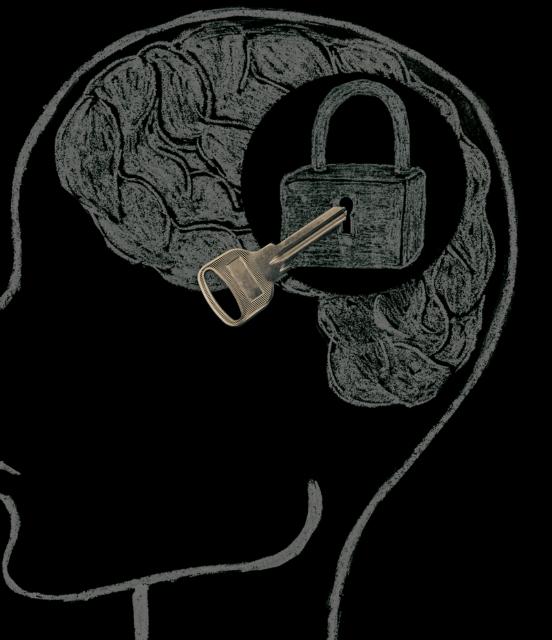
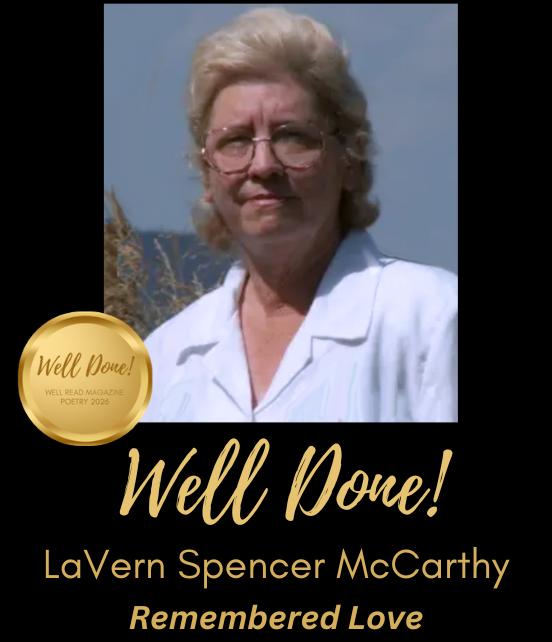
LaVern Spencer McCarthy
He is not lost; I see him when I sleep. In solitude and hope he beckons me. I rush to him, emotions running deep. O time, you have not dimmed his memory, or altered any closeness of the past that we fulfilled, with true devotion’s glow. How foolish to believe love would not last. The thrill is still the same as long ago. I find in deepest hours of the night there is no need to grieve that he is gone. I will be happy in the morning light. My fate is not to face this world alone, for when I yield unto a dream’s command, I reach across the years and touch his hand.
LaVern Spencer McCarthy, a Texas native, has published eight books of poetry and four books of short stories plus three journals. Her poems have been published in Visions International, Poetry Society of Texas Book of The Year, Open Skies Quarterly, National Federation of State Poetry Society's Encore, Austin Poetry Society's Austin's Best Poets, A Texas Garden of Verses as well as numerous state anthologies and newspaper columns. Her poem, October’s Agenda, was nominated for the Pushcart Award in 2023. She has won over five-hundred state awards and forty-one national awards
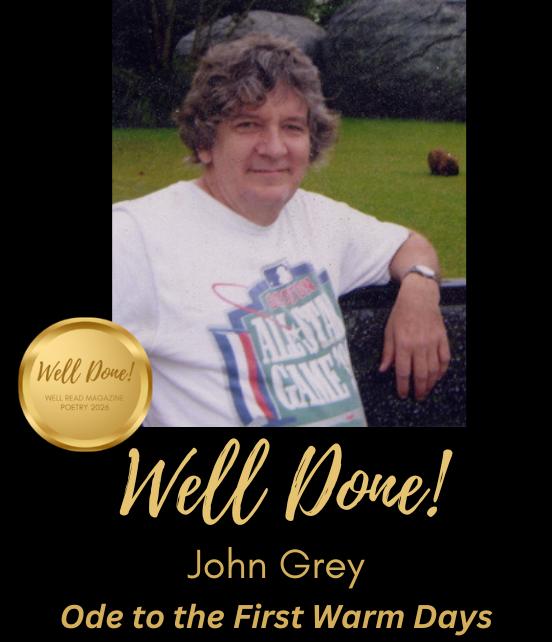
The sun is a burning balloon that got away from a giant’s child. It blows this way, puts winter on notice.
Hands of frost grab at the string but fail to grasp it. My garden, my lawn, have been silent for months but I detect a muffled underground applause. It’s enough to awaken the crocus, rouse the bugs, for the spider to start spinning more web. Birds rise up to peck at the sun. Most are thwarted Some follow where it leads. The woods have seen all this before. Trees peer out from their crow’s nests. Sap is alerted
but the snow at their feet is always the last to know what’s happening. I sit on the porch. As the sun passes overhead, I grab hold of that string.
John Grey is an Australian poet, US resident, recently published in Midnight Mind, Novus and Abbey. Latest books, “Bittersweet”, “Subject Matters” and “Between Two Fires” are available through Amazon. Work upcoming in the MacGuffin, Touchstone and Willow Review.

CALLFOR SUBMISSIONS IS OPEN!
*No prompts or themes - no boundaries*
WELL READ is looking for submissions from writers and artists who have stories to tell – through words and art. We combine new and established voices from diverse backgrounds and celebrate different perspectives. We want people who aren’t afraid to shake things up, speak their mind, and share their humanity.
Click here for SUBMISSION GUIDELINES


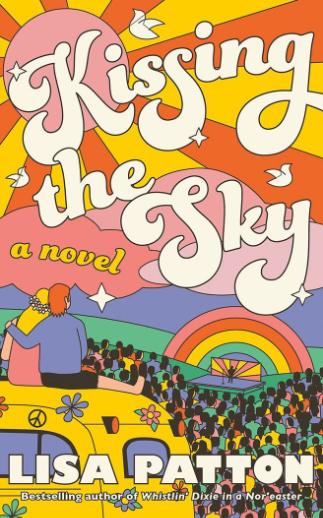
Lisa Patton
“Kissing the Sky” by
Lisa Patton
Reviewed by Claire Hamner Matturro
Kissing the Sky (Lake Union Publishing 2026) by Lisa Patton is an engaging historical coming-of-age novel about finding and asserting one’s true self. Set during turbulent times, much of the story takes place at Woodstock—both the original 1969 famous music festival and the 50-year anniversary celebration. In her author’s notes, Patton admits she was too young to attend Woodstock, but acknowledges she is “a child of the sixties and seventies.” Regardless of whether she was there or not, Patton captures not just the basic historical facts but she also conveys the many moods and sheer raw energies of the original Woodstock. One can almost feel the mud under bare feet, hear the reverberating notes of music, smell the drifts of marijuana, and see exuberant youths dancing in the rain. Music festival aside, the emotional core of the novel is about family, friendship, and young love because what’s a comingof-age story without the stirrings of first love?
Suzannah, the protagonist and the voice in the story, is a twentyyear-old college student during the summer of Woodstock in 1969. She seems more naïve and younger than twenty due to a restrictive home environment and her attendance at a rigid, conservative reli-
gion-based college. She yearns to break free of her dominating father, who forbids her to listen to rock and roll under the threat of hell (and being disowned) or to dress in the mini-skirts and bell bottom jeans that other girls are donning.Though she is immensely talented as a singer, she is forbidden to play any music except for their church.
The father’s domination reaches further than dress style or music as his control over her and her brother borders on pathological. A retired colonel with a history of combat duty and a strict moral code imposed by his conservative church, he is driven by many forces to the detriment of his children. Indeed, the father’s wrathful condemnation of his son and daughter threatens his marriage and has already compelled his son, Ron, to enlist in the military and to be deployed to Vietnam. The father believes serving in Vietnam will make Ron “a real man,” but the war Ron experiences is killing his gentle, pacific spirit and might well kill him physically.
The two siblings are close. Both Ron and Suzannah are musically talented and once dreamed of being a brother/sister folk rock duo. But their father has destroyed that dream and seems determined to further destroy his children’s talents in the name of his misguided concepts of religion.
Another pivotal character, Livy, is Suzannah’s one-time best friend and a girl who has long had a major crush on Ron. Three years beforeWoodstock, Suzannah and Livy’s friendship broke up, but one day in the summer of 1969, she reenters Suzannah’s life. At times, Livy appears more the antagonist than protagonist—yet,
she is “complicated” and her true personality is only slowly revealed. Though vain about her beauty and often lacking in common sense, she is also determined to push or pull Suzannah from the cloister of her narrow, unhappy life. Livy has a few tricks up her sleeve and powerful motivation, but it might take Suzannah more than just some rock and roll and a trip to Woodstock to see Livy for the person she really is. Within the backstory of their earlier relationship and its break-up, author Patton conveys the extreme closeness of teen girl bonds as well as the risks of betrayal and envy that often torpedo such intense relationships.
Notwithstanding the costs to Suzannah, she escapes her father’s wrath to go with Livy to Woodstock. After a long drive from Tennessee, they arrive in New York only to be forced to abandon Livy’s car due to a traffic shutdown. Upon leaving the auto, Suzannah meets Leon, and soon the two of them are inseparable. With the first stirring of love and desire, Suzannah counts their moments together as precious amidst the music, the mud, the drugs, and the sheer wondrous energy of Woodstock. Complications naturally arise, yet Suzannah cannot bear the thought that when the festival ends, so will the relationship. Yet something as powerful as her first love is poised to shake up her world even more.
The story is enhanced by Patton’s graceful language and control of the plot and pacing, and by close attention to theWoodstock music. It’s hard for a written novel to have a soundtrack, yet the references, descriptions, and occasional quotes of lyrics (especially from Crosby, Stills, Nash, and Young) provide something close to
a soundtrack in writing. There’s also song which was written especially for the book by Patton, Michael McDonald, and his wife Amy Holland. The song, “If Not For You” is available at YouTube among other online music sources.
The frame of the book sets up the dual timeline in a smooth, workable way. Suzannah takes her granddaughter to the 50th anniversary celebration of Woodstock, and then in flashback scenes tells the granddaughter and the readers what happened there—and what happened to her, Livy, Leon, and Ron. Of course, Suzannah holds some things back from the granddaughter, but not from the readers.
There is much angst in the story—as there was in the sixties— with the anti-war sentiment, the horrors of the Vietnam war, the fate of Ron, and the cultural clashes. But these aspects are handled with a respectful, deft hand and serve to enrich and authenticate the story. Though readers will have a strong, realistic sense of the historical setting, they will not lose sight of the humanity of Suzannah, her friend, her first love, and her brother. This is an appealing, captivating, even charming, well-done novel by an author who once more proves her talent at capturing the nuances of a time and place as well as the hearts of her characters.
If you are the Woodstock generation, dive in and relive that era. And if you are not of that time, dive in and experience what it might have been like to be twenty and at Woodstock.
ATennessee native and University ofAlabama communications graduate, Lisa Patton is the bestselling author of Whistlin’ Dixie in
A Nor’easter and Yankee Doodle Dixie, both featured on the Southern Independent Booksellers Alliance (SIBA) Bestseller List. “Southern As a Second Language” is the third book in what Library Journal calls, “The beloved Dixie series.” Lisa’s fourth novel, Rush, was a summer 2018 Okra Pick from SIBA, as well as a SIBAbestseller. She lives in Nashville with her husband.
I met Zachary Steele when he came to my hometown of Spartanburg to manage our local Hub City Bookshop. He has been amazing in this capacity, but Zach is also an extraordinary author. I look forward to reading his intriguing new novel, Perfectly Normal. It comes out June 2, 2026, and revolves around sixteen-year-old Nate Alexander, who has undiagnosed autism and a father determined to make him more “normal.” Additionally, Nate possesses the gift of chromesthesia, a condition in whichsound, often music, involuntarily evokes an experience of color, shape, and movement. Here, Zach focuses on how music (plus some other powerful influences), is an important source of inspiration for his writing. Enjoy: Finding inspiration isn’t all that far removed from debating which is the best cheese in the world. I mean, it’s cheese. It’s all perfect and delicious. In the end, it’s more about what you need it for, what it goes with. Inspiration, for me, can come from music. Often. My last two novels began with a scene tied to songs that grew from there, each building a diverse playlist of music that inspired the remainder of the story. There’s something profound in those moments. Something that pulls me into a story that isn’t, helping it to become a realized world, filled with what are, to me, living breathing people. My passion can find root in that fertile soil. I keep several playlists that serve as inspirational jumping points, as well as playlists from those completed novels. Filtering back through songs that inspired me once before may not serve to create new stories, but they do trigger the emotional motivation to sit back in my chair and write.
In fact, that may ultimately be the better use of inspiration. Not just to help create new stories and characters, but to cut through the noise in my head. That ever-persistent voice of doubt. That feeling of Imposter’s Syndrome. No matter the success my novels may have, or how confident I might feel about my ability to tie this word to that one, sitting down in that chair is a constant battle with the demon on my shoulder. A constant whisper that whatever it is I think I’m about to create will be dreadful.Awful. Unpublishable. Something people will scoff at.
Music can silence that. Prop me up and give me the drive I need to write before the demon has its say. So can movies or shows or books that I love, for that matter. Stories that speak to me. Stories that touch a familiar nerve or free me to laugh until my sides hurt. It isn’t just the movement of music. It’s freedom. Permission to do what I love without distraction or interference.
This is an area I preach constantly about when talking to writers, particularly those involved with my writing organization, Broadleaf Writers. Though for me inspiration is primarily found through the arts, it can also be found through community. Sometimes the smallest connection or conversation can unlock blocks, opening barriers to storytelling or character development that prevented the writer from moving forward. Finding your people, or even just a few people, who share in this journey of constant rejection and self-doubt is another avenue to freedom and permission. It’s a lonely road otherwise. Community is vital, an inspirational tool every writer needs.
As I work through this, I am beginning to see that there is no limit to where I find inspiration. Arts and community, yes. But also: Nature, beauty, compassion, love, in acts of kindness that remind me of who we are at our core—or at the very least, who we were meant to be as humans. One of the more peaceful and inspirational places I’ve ever found is not a place at all, but something in my head. Something that also quiets the noise into something more focused and serene.Asimple landscape built of my own creation where I can imagine myself at peace and away from life’s myriad complications. Away from my doubts and fears. The closest I can come to meditation, I suppose. Much like the other forms of inspiration, it can lead me to discoveries that unlock creative blocks or indecision.
In the end, where I find inspiration may not be where anyone else finds it. Or, at least, not in the same way I find it. The goal, the ambition, every writer—everyone for that matter—should reach for is to find what inspires them not to creation or decision, but to that elusive sense of freedom that holds them back.

“Zachary Steele deftly draws characters that feel so real they could walk right off the page. This beautiful portrait of a boy trying to determine what it means to be ‘normal’ in a world that refuses to celebrate uniqueness is in turns quietly powerful, sharply insightful, and a stunning celebration of humanity—in all its messiness.”
-- Colleen Oakley, USA
Today bestselling author of The Mostly True Story of Tanner & Louise
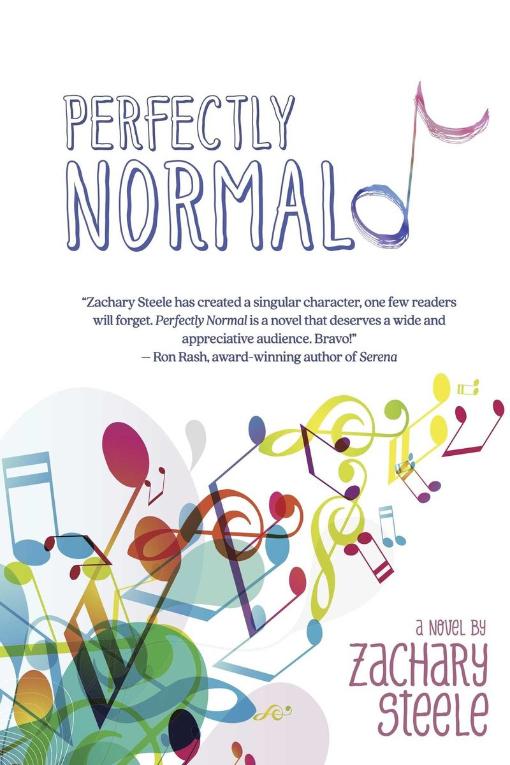
Phyllis Jones Pisanelli has been an extraordinary Book Reviewer since 2019. She began reviewing for The Write Review, then began her own blog, pjp-reviews.com. Phyllis didn't know there was such a thing until she joined Goodreads and met Annie, who she credits for her success as a book reviewer. She never thought she would have such a wonderful retirement.
Phyllis built a reputation in the book world by communicating with authors, posting her reviews, and keeping her word. Her reviews are written from the heart. Her niche is self-published authors, but she isn’t limited to just that. Phyllis loves the whole process of reading and writing reviews. She is an avid fan of several authors and keeps in contact with them for her next best read.
In 2020 she wrote her first blog post with DJ Palmer. She thinks that was when she happened to join The Write Review’s Facebook group. Soon after the owner, Annie Mondesir, contacted her and asked if she wanted to post her reviews on her blog. Of course, she tookAnnie up on the offer.
“Annie would read my reviews and help me make them better,” says Phyllis. For this she will be forever grateful. Now, when Phyllis writes a review she pretends she is writing to her best friends giving them the low down on why they should read the book.
Phyllis is more than happy to help any Reader write book reviews, andAuthors can reach out to her for reviews on their work.
You can contact Phyllis by searching Goodreads for “Phyllis Jones Pisanelli Reviews”, or go to her blog, pjp-reviews.com. She also runs two Facebook book groups: Online Book Club Girls and Book Review Room.




I’m an indie author of two short story collections – Walking the Wrong Way Home and Sharp as a Serpent’s Tooth – Eva and Other Stories, and a novella, Oliver. I’m the editor, designer, and publisher of WELL READ Magazine’s Best of 2023, and Best of 2024 anthologies, editor of the Encounters With Nature anthology, and co-editor of The Best of the Shortest: A Southern Writers Reading Reunion. I’m also a freelance writer for Amelia Islander Magazine, and the Editor in Chief and Publisher of WELL READ MAGAZINE.
I’ve learned so much about formatting, interior design, cover design, and self-publishing since my first short story collection came out and oddly enough, I’ve had fun doing it! But it can be frustrating and overwhelming trying to figure it all out on your own. I’d like to use what I’ve learned to help you.
Whether you’re thinking of self-publishing, querying agents or small presses, I can get your manuscript ready to send out without costing a fortune or waiting for months for a finished product.
Cover Design Pricing starts at $250 - Price include covers for both your print and ebook with unlimited tweaks until it’s perfect. See the next page for a few examples of covers I’ve created.
Interior formatting for print - $2 per page (for edited manuscript ready to go), $3 per page if photos or images are included in your manuscript. If you’d like to include an epub file there’s an additional $1 charge per page.
Professional Critique - $2 per page
For more information, click here, or contact me at mandy@mandyhaynes. com for a free consultation.
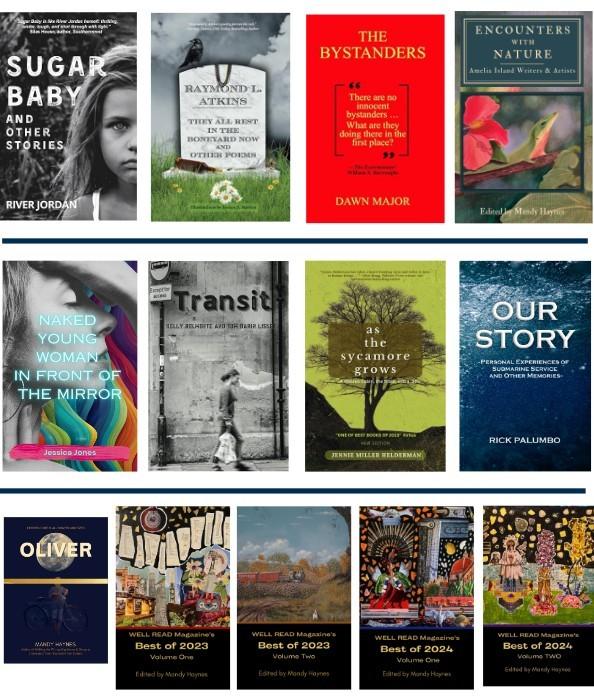









I’m looking for Authors Interviewing Authors and would love to shine a spotlight on your favorite Independent Bookstores, Book Sellers, Libraries, and Librarians.
These pages are a great way to let readers know who you are and they are FREE.
Send orders for ads, interviews, or the stories mentioned above, as well as any questions about the magazine to:

A monthly column that takes us off the page and into the
One of my favorite stories is The Gift of the Magi, written by O. Henry sometime around 1905. It tells the story of Della and Jim, a young married couple living in poverty who each secretly sacrifice their most prized possession to buy a meaningful Christmas gift for the other. Della sells her long, beautiful hair to purchase a fine chain for Jim’s heirloom watch, while Jim sells that very watch to buy ornate combs for Della’s hair. Their gifts, now ironically unusable, reveal a deeper truth. Their willingness to give up what they treasure most proves the depth of their love, making them, like the biblical Magi, the wisest givers of all. If you haven’t read it, you should, and if you take one of my Literature classes, you absolutely will.
O. Henry was a national treasure, and the fact that he did three years in the big house in Ohio for embezzlement does not detract from that fact. Since he was a writer, I assume he needed the money. He wrote his most famous story well over 100 years ago, and many of my students tell me that it seems a bit dated. What they don’t realize is that I always assign older pieces that are in the public domain, so they don’t have to buy books, and you’re welcome. Still, perhaps the tale could use some freshening up, so here is a modernized version.
On the outskirts of a small Southern town lived Della Mae and Jimmy, a couple long on devotion and short on disposable income. Jimmy had been down on short time out at the mill since tariffs had disrupted the global markets, and Della Mae’s Amway business was not doing as well as she had hoped. Their home was a double‑wide modular with a two-flag flagpole and a porch swing that leaned slightly left, though not politically. They loved their little abode, and if they managed to keep up the payments, they intended to stay right there forever. They had a plan to get a couple of months ahead of the bank as soon as the DOGE Rebate and the Tarriff Reimbursement checks arrived. Once that happened, they were sure that everything would be great again. Christmas was two days away, and Della Mae had exactly $7.43, most of it in quarters she’d fished out from between the couch cushions, along with a petrified Cheeto she briefly considered keeping as a snack. She wanted to buy Jimmy something special, but times had been especially hard since Jimmy had invested and subsequently lost their nest egg speculating on $TRUMP cryptocurrency. Jimmy, meanwhile, had $5.11 to his name. He wanted to give Della Mae a gift worthy of the woman who once kicked some tail at a Kid Rock concert when the lady in front of her wouldn’t sit her skinny ass down so Della Mae could see the show. Back during the previous April he had sent in a $100 deposit and ordered her a golden phone from some internet outfit, and that was
supposed to be her Christmas gift, but it still had not arrived, and he was at a loss as to what to give her, and about how to pay for it. Now, each of them possessed one item of great personal value. For Della Mae, it was her limited‑edition commemorative Jesus Was a Republican plate set, purchased off a late‑night infomercial. She displayed her plates at her mama’s house in a China cabinet like they were the Hope Diamond. She went over there and dusted them weekly and spoke of them reverently, as if they were her ancestors. For Jimmy, it was his autographed red hat, you know the one, signed by a man he once waited four hours in line to see on an airport tarmac, only to faint from heat exhaustion just before the man actually appeared. The signature was slightly smudged, but Jimmy insisted that made it more authentic.
On the morning of December 23rd, Della Mae boxed up her beloved plate set and listed it on Facebook Marketplace with the caption: Rare. Patriotic. Practically priceless. Cash only. Within minutes, a man named Randy messaged her: Will u take $40 and a leaf blower that still works most of the time? She met him at Dollar General and took the $40, and in the spirit of the season, she let Randy keep the leaf blower. Meanwhile, Jimmy drove his truck down to the local pawn shop and placed his autographed hat on the counter.The shop owner squinted at it like it was a suspicious mole on his arm before offering $35. Jimmy took the $35. After spending $5 of this windfall to purchase a gallon of gas to get home on, he had $30 left to shop for Della Mae. It would have to do.
That evening, each returned home with a secret and a shopping bag. Della Mae had bought Jimmy a gold‑plated hat rack that spoke three phrases when tapped, all of them delivered in a voice that was extremely annoying. She was pretty sure that it wasn’t real gold, because real gold doesn’t flake off, but it looked nice anyway, and Della Mae thought she had some fingernail polish in her makeup drawer that might do for a little touch up. None of the things the hat rack said were actually true, and it had a habit of unexpectedly drifting off into sleep mode, which she didn’t know until she got it home and put batteries into the thing, but it was a nice gift regardless, and she was sure that Jimmy would like it.
Jimmy had bought Della Mae a wall shelf to hold her plates. It was painted with an eagle, a cross, and the Preamble to the Constitution. It was imported and was actually one of the few items that had made it through the Strait of Hormuz during the previous six weeks, and Jimmy was pretty happy with the find.This gift was his second choice, or maybe his third, if the wayward phone counted. He had gone to Trade Day to do his shopping, and there he spotted and intended to buy for Della Mae a just like brand new Bible signed by the President of the United States, but during the negotiation phase of the transaction, ICE raided Trade Day, and since the merchant Jimmy was dealing with did sort of have that South-ofthe-Border look about him, he and that Bible were scooped up and carted away. Luckily for Jimmy, and for Della Mae, the guy in the next booth over was white, and Jimmy was able to buy the shelf on the rebound.
On Christmas morning, they exchanged gifts. Della Mae squealed when she saw her shelf. Jimmy tapped the hat rack, and when it spoke, he grinned. Then they both froze and stared at each other as they realized that there were no longer plates to display or hats to hang. They both burst out laughing. And in that moment, standing in their living room in their sock feet on the good rug from Ollie’s, they understood something O. Henry knew all along: love will make fools of us all, but it’s the best kind of foolishness. Their gifts were useless, but their hearts were in the right place, which is more than you can say for a lot of folks these days.And so, like the original Magi, they proved themselves wise not by what they gave, but by what they were willing to give up.


Mandy Haynes is the author of two short story collections, Walking the Wrong Way Home, Sharp as a Serpent's Tooth Eva and Other Stories, and a novella, Oliver. Her stories have appeared in several anthologies and literary journals. She is the editor and designer of Encounters with Nature, a collaboration ofAmelia Island Writers and Artists, The WELL READ's Best of 2023 anthologies, and also the co-editor of The Best of the Shortest: A Southern Writers Reading Reunion.



Raymond L. Atkins resides in Rome, Georgia, on the banks of the Etowah River in an old house with a patient wife and a lazy cat. His hobbies include people-watching, reading, and watching movies that have no hope of ever achieving credibility. His first novel, The Front Porch Prophet, was published in 2008 and was awarded the Georgia Author of the Year Award for First Novel. Camp Redemption, was awarded the Ferrol Sams Award for Fiction and the 2014 Georgia Author of the Year Award for Fiction. Sweetwater Blues was a Townsend Prize nominee, the 2015 GeorgiaAuthor of the Year runner-up for fiction, and the 2016 selection for One Book, Many Voices. South of the Etowah, his first creative non-fiction book, was released in 2016. It was nominated for a Push-cart Prize and was the 2016 GeorgiaAuthor of theYearAward runner-up for essay. In 2017, he was awarded the Lifetime Achievement Award by the Georgia Writers Association.


Robert Gwaltney, award winning author of southern fiction, is a graduate of Florida State University. He resides in Atlanta Georgia with his partner, where he is an active member of the Atlanta literary community. Robert’s work has appeared in such publications as The Signal Mountain Review and The Dead Mule School of Southern Literature. His debut novel, The Cicada Tree, won the Somerset Award for literary fiction. In 2023, Gwaltney was named Georgia Author of the Year for first novel.



In September of 2011 Gallery, an imprint of Simon & Schuster, published Ann Hite’s first novel, Ghost on Black Mountain. In 2012 this novel was shortlisted for the Townsend Prize, Georgia’s oldest literary award. In the same year, Ghost on Black Mountain won Hite Georgia Author of the Year. She went on to publish four more novels, a novella, memoir, and most recently Haints On Black Mountain: A Haunted Short Story Collection from Mercer University Press. In December 2022, Haints On Black Mountain was one of ten finalist for the Townsend Prize. The collection was a Bronze Winner in Foreword IndieAward 2023 and GeorgiaAuthor of the Year Second Place Winner for Short Stories 2023. Ann received a scholarship to the Appalachian Witers Workshop Hindman Settlement in the summer of 2020 and was invited back in 2021. Her passion for history influences all her work.


Jeffrey Dale Lofton hails from Warm Springs, Georgia. His years telling the stories of playwrights and scriptwriters as a stage and screen actor taught him the pull of a powerful story arc. Today, he is Senior Advisor at the Library of Congress, surrounded by books and people who love them. Red Clay Suzie is his debut novel, a fictionalized memoir written through his lens—gay and living with a disability—in a conservative family in the Deep South. It was longlisted for the 2023 Center for Fiction First Novel Prize and awarded the Seven Hills Literary Prize for Fiction, among other distinctions.

Dawn Major’s debut novel, The Bystanders, was named finalist for 2024 GeorgiaAuthor of the Year for Best First Novel. Major is an associate editor at Southern Literary Review and advocates for southern authors via her blog, Southernread. Her literary awards include the following: the Dr. Robert Driscoll Award, Reinhardt University’s Faculty ChoiceAward, and the James Dickey Review Literary Fellowship. Major is a member of the William Gay Archive and has edited and helped publish the works of the late author. She serves on the board for Broadleaf Writers Association and is also a member of M’ville, anAtlanta-based artist salon. Major lives in the Old Fourth Ward inAtlanta, GA and is working on her next novel, The Dandy Chronicles.

Claire Hamner Matturro is a former attorney, former university writing instructor, avid reader, and the author of seven novels, including four published by HarperCollins. Her poetry appears in various journals including Slant and Lascaux Review. She is an associate editor ofThe Southern LiteraryReview and lives happily in Florida with her cross-eyed rescued black cat and her husband.




Mondesir,
Founder of The Write Review Literary Community, Podcaster, Book Reviewer, Author Consultant and Matchmaker. She also teaches workshops on top of all of this!Annie has been introducing us to books and authors since 2006, when she began reviewing books for Elle Magazine. Proud Stiff Person Syndrome Warrior, and several other illnesses.

Susan Beckham Zurenda, Contributing Editor for THE WRITER’S EYE
Susan Beckham Zurenda taught English for 33 years on the college level and at the high school level toAP students. She is author of the award-winning Southern literary novel, Bells for Eli, and the recipient of numerous awards for her short fiction, including the South Carolina Fiction Awards, twice. Her second novel, The Girl From the Red Rose Motel (Mercer University Press, September 2023), was the recipient of the 2024 Patricia Winn Award in Southern Fiction, Gold Medal winner in the 2024 IPPY Awards for Southeast Fiction, a 2024 Pushcart Prize nominee, a Shelf Unbound 2023 Notable 100 books, and a finalist in theAmerican Book FestAwards. Susan lives in Spartanburg, SC.


Mandy Haynes
Junebug Fischer will be ninety-six come June. She's ready to set the record straight and let you know what really happened the summer she turned fifteen. It’s true, she killed someone, but she never killed nobody on purpose. That was purely accidental.
“I don’t know what caused me to shoot the arrow. I didn’t think about it. I just did it. Was it fear or was it pride?”
5.0 out of 5 stars One of the most compelling story/book writers in America.
“Outstanding book. Intelligent, and yet creative, in the best sense of the word. The story/book keeps you engaged right up until the final page. Great, great book!!!”
5.0 out of 5 stars Will leave you wanting more!
“Junebug Fischer is the kind of strong, feisty young lady hero we love, and Mandy's writing of her story draws you in from the start. You'll feel like you're sitting on that porch with her, and I guarantee you'll want more. Her characters come to life in all of her stories, and I recommend you read everything Mandy has written, and will write! You won't be disappointed.”
5.0 out of 5 stars A Southern Voice to Remember
“There's an echo of 'To Kill a Mockingbird' in the voice of the central character here, and I mean that as a high compliment. You'll like her after the first two sentences and root for her the rest of this short but powerful book. I don't want to give anything away. Buy it and read for yourself. 5 stars.”