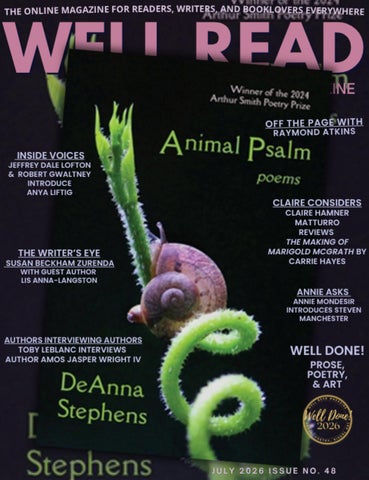
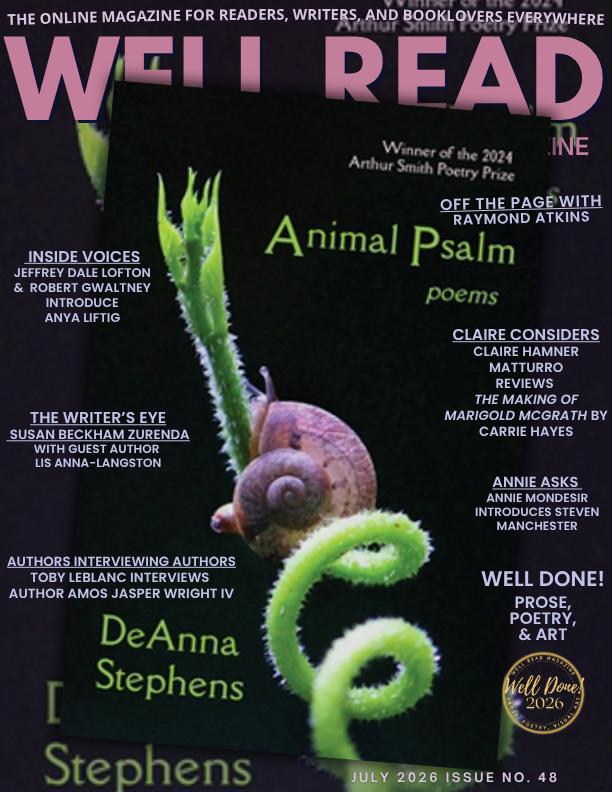
Animal Psalm
poems by DeAnna Stephens
August 18, 2026
WINNER OFTHE 2024ARTHUR SMITH POETRY PRIZE
In this collection, love reveals itself at the thresholds of forests, at the frayed edges of language and heritage, reminding readers that the backbone of love is the assurance of the senses—current of creek, texture of quartz, flavors of late summer—the ever-presence of the natural world. In their exploration of the complexity of familial and romantic bonds and cultural identity, these poems reveal the significance of myth in articulating loss and longing.
In the poems of Animal Psalm, I am struck by the intimacy with both the natural world and the bonds of family, family secrets, memories of youthful romance, sex, intense sensuousness, and ache of love. Who can forget hightension lines such as: “Hearts became windows lovers broke for exit.”
—Robert Morgan, author of Dark Energy

A central question of this ambitious poetry seems to be “How many eons can a body hold?” Indeed, one of the volume’s pleasures lies in never knowing just where, or to whom, these lovely poems will lead us. Within their brief, seemingly ephemeral confines, Stephens’ vibrant language sparks semantically across time and vast distances. And in that voice her dense domestic tableaus brim with mystery—multi-layered, multifaceted, multi-tonal, their “hues,” as she says, that of “indistinct heritage.” If you love the music, energy, and surprise inherent in our language, you will appreciate this fine book.
—Mark Cox, author of
Knowing
DeAnna Stephens’work has appeared in Cherry Tree, Pedestal Magazine, Feminist Studies, and other journals. In 2024, her poetry was a semifinalist for the Scotti MerrillAward for Poetry, and in 2023, her work won the George Scarbrough Prize for Poetry. She was the 2019 recipient of the Tennessee Williams Festival Poetry Contest. Her poetry has received two Pushcart Prize nominations, and in 2022, she was inducted into the EastTennesseeWriters Hall of Fame. She is the author of Heliotaxis from Main Street Rag. Stephens resides on Tennessee’s Cumberland Plateau where she teaches writing at Roane State Community College.




You can find books from past issues as well as current books to add to your reading list.

Happy reading!


Order your copy today!

Order your copy today!
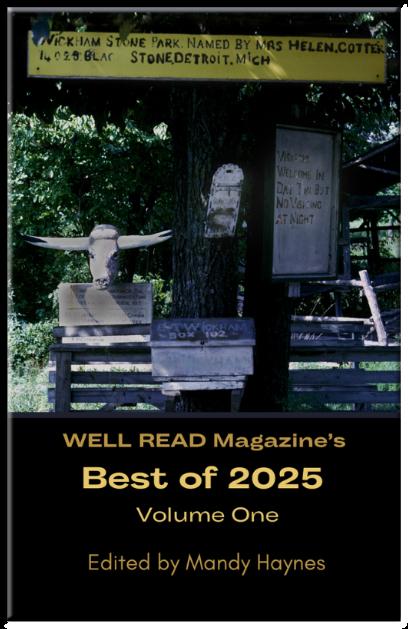
In the Best of 2025 Volume One, you’ll find forty-one submissions written by a fantastic mix of awardwinning authors and poets plus new ones to the scene. Five submissions in this volume were nominated for a Pushcart Prize: Why I Said What I Said to the Bartender by Alaina Hammond, The Easter Dress by Dawn Major, Montecito by Leslie Zemeckis, Dream Merchant by Francine Rodriguez, and Stagnation by Rachid Toumi. The cover art is a photograph by author and artist, Malcolm Glass, who had several pieces published in October of 2024.
List of Contributors: J. B. Hogan, Steve Putnam, Gregg Norman, Deborah-Zenha Adams, Rita Welty Bourke, B.A. Brittingham, Mike Turner, Leslie Zemeckis, Micah Ward, John Drudge, Jennifer Susan Smith, DeLane Phillips, Julie Green, Ann Hite, Mary Kendall, John M. Williams, Alaina Hammond, Jake Sheff, JoyAnne O'Donnell, Aaron Goodman, Dawn Major, Souad Zakarani, Zoé Mahfouz, Don Edwards, Celia Miles, Malcolm Glass, Neth Williams, Hubert Blair Bonds, Rickie Zayne Ashby, Francine Rodriguez, Rachid Toumi, Mike Ross, James Garrison, Mike Nemeth, and Robin Prince Monroe

In the Best of 2025 Volume Two, you’ll find forty-three submissions written by a fantastic mix of award-winning authors and poets plus new ones to the scene. One submission in this volume was nominated for a Pushcart Prize: Burtrell’s Pieces by Jeff Clemmons.
The cover art is a photograph by artist, Malcolm Glass, who had several pieces published in October of 2024.
List of contributors: Janet Clare, Mike Ross, Mike Nemeth, Patricia Feinberg Stoner, Colette Lynch, Karen Miller, Linda C. Rehkopf, Jeff Clemmons, Mike Coleman, Micah Ward, LaVern Spencer McCarthy, J. B. Hogan, Fhen M., Ken Gosse, Celia Miles, Cindy Sams, Robin Prince Monroe, Beverly Fisher, Rickie Zayne Ashby, Maria Mackas, Jim Cherry, Martha Ellen Johnson, Michael Lee Johnson, Donald Edwards, Alex Poppe, Janet Oakley, John M. Williams, Hubert Blair Bonds, Ellen Notbohm, Steve Putnam, Souad Zakarani, Mike Turner, Nancy Dillingham, and Saeed Ibrahim

Owls in the Ginza: (and other stories from a life in Japan)
by Suzanne Kamata
"Suzanne Kamata, an American writer who has made her home in Japan for over twenty years, presents vivid stories of her visits to islands in the Inland Sea, her fears for her children during the tsunami of 2011, and her stress when she's faced with graveyard weed-pulling duties as the only foreign participant in a community where people have known each other for generations. Owls in the Ginza is more than a volume of informative travel essays. It's a collection of thought-provoking and life-affirming tales from this prolific award-winning author." --Miho Kinnas, author of
Waiting for Sunset to Bury Red Camellias
"Owls In the Ginza is a mesmerizing, unique chronicle of contrasts: discovering remote pockets of Japan with an adventurous, disabled daughter, parenting mixed race children as anAmerican in Japan, as a perpetual insider/ outsider who is alternately vexed and delighted." — Susan Kiyo Ito, author of National Book Critics CircleAward Finalist I Would Meet You Anywhere
"Suzanne Kamata is a brilliant observer of people, and these essays and vignettes pulse with humanity. Her prose is infused with empathy, whimsy, and a profound honesty that cannot fail but appeal to readers. Whether in fiction or nonfiction, Kamata's stories have a melancholic warmth that leaves you simultaneously uplifted and deeply moved. "-- Iain Maloney, author of The Japan Lights
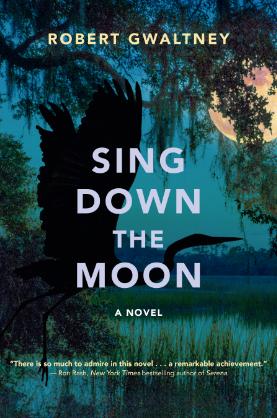
Sing Down the Moon by Robert Gwaltney
Sixteen-year-old Leontyne Skye yearns to escape Good Hope, the remote Georgia coastal barrier island where she resides.
Leontyne's heritage is bleak. Tasked with tending Damascus, an ancient fig tree beguiling haints across the river with its wind chime song, Leontyne's mother, Eulalee, disintegrates into tufts of hair, teeth, and memory.
This affliction befalls all Skye women, a fatal consequence of distilling Redemption, an addictive drug made from the figs of Damascus imbued with the essence of haints.
Leontyne also tumbles apart, her memories and hand lost in a life-altering accident suffered two years back during an event known as Tribulation Day.
Through unreliable recollections of her trusted friends the Longwood twins, Leontyne stitches a dubious understanding of who she was before she fell "the long-long ways."
In the aftermath of Eulalee's death, Leontyne is pressured by the Longwoods to render Redemption, continuing the legacy upon which Good Hope depends.

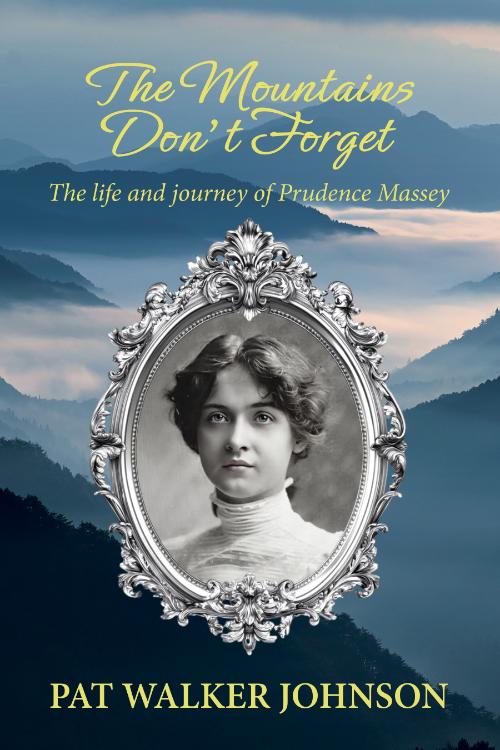
Some journeys take us far from home. The ones that matter most lead us back.
Born in the mountains of North Carolina in 1882, Prudence "Pru" Massey dreams of a life beyond the narrow world she's known. What begins as a young girl's hope for freedom becomes a lifetime marked by impossible choices, heartbreaking loss, enduring love, and the courage to begin again.
From the rugged Appalachians to the growing cities of Florida, Pru reinvents herself as a nurse, a mother, a wife, and a survivor. Along the way, she discovers that while you can outrun the past, you can never truly escape the place that shaped you—or the people who continue to call you home.
Rich in historical detail and unforgettable characters, The Mountains Don't Forget is a sweeping story of resilience, redemption, and the enduring bonds of family. Perfect for readers who loved The Book Woman of Troublesome Creek, Where the Crawdads Sing, and BeforeWeWereYours.

The Mountains Don't Forget
ANovel
by Pat Walker Johnson

COLORFULCROW PUBLISHING
Publishing with Heart
At Colorful Crow Publishing, every story begins with connection—between author and reader, past and present, truth and imagination. Rooted in a legacy of honoring diverse voices and carried forward with a deep commitment to care, we champion books that matter—stories that stay with you long after the final page. From literary fiction to children’s adventures, from heartfelt memoirs to imaginative journeys, our titles reflect the beauty, complexity, and resilience of the human experience.
FEATURED FORTHCOMING TITLES:
CROOKED LINES (Historical Fiction) by KristineAnderson
A journalist returns to the Deep South to investigate the disappearance of a childhood friend—only to confront grief, addiction, and the tangled lines of race, loyalty, and truth in 1960sAmerica.
SARAH THE SEED (Picture Book) by L.G. Bridges
When a strong wind carries Sarah far from everything she knows, she discovers that being lost may be the very thing that helps her grow into something extraordinary.
THE ELDDIR CHRONICLES (Middle-Grade Series) by L.G. Bridges
In a richly imagined world of mystery and magic, young heroes must discover who they are—and what they’re willing to risk—to protect the future of Elddir.
WORK IS A FOUR-LETTER WORD: MY CRAZY CAREER, COWORKERS,AND CLIENTS (Memoir)
by
Bobbie Christmas
From outrageous clients to unbelievable workplace moments, this candid and often hilarious memoir reveals the hard-earned wisdom—and wild stories—behind a lifetime in the world of work.
MORE STORIES TO DISCOVER:
THE
MOUNTAINS
DON’T FORGET
(Historical Fiction) by
Pat Walker Johnson
After escaping an abusive marriage, Pru Massey builds a new life—but love, loss, and a haunting crime force her to reckon with the past she cannot outrun.
EXPLORE NATURE
(Picture Book Series) by MaKayla
Rodriguez
Join a curious little snail as he journeys through the natural world, discovering friendship, wonder, and the beauty of exploring one small step at a time.
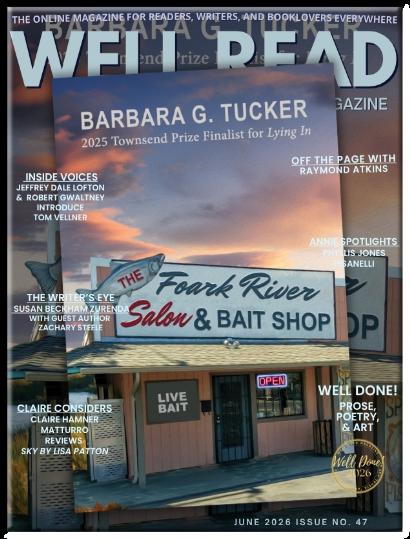
THE FOARK RIVER SALON AND BAIT SHOP (Literary Fiction with
Humor) by
Barbara G. Tucker
When a small-town bait shop becomes the center of a reality TV show, three employees must confront their secrets—and decide whether they’re ready for the truth to come to light.
NED FLETCHER AND THE LAST CRACIAN (Sci-Fi
Adventure) by
Travis Williams
Aspace pilot with the soul of the Old West navigates danger, mystery, and sharpwitted dialogue in a futuristic tale that blends frontier grit with interstellar stakes.
AND MORE TO COME…
Some stories are still taking shape—but we can’t wait to share them with you. Discover more at Colorful Crow Publishing. Follow along for new releases, author features, and behind-the-scenes glimpses into the stories we’re proud to bring into the world.


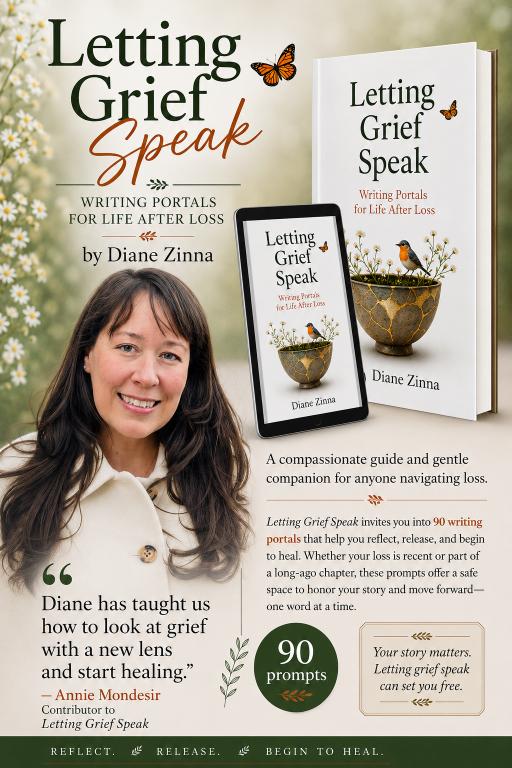
Letting Grief Speak: Writing Portals for Life After Loss by Diane Zinna Society doesn’t always make it easy to tell stories about loss. Grief can make us feel that we have crossed over to another side, where people can’t reach us and we can’t reach others. We’re encouraged to move quickly through the often-misunderstood “stages of grief”; we fear that we are burdening others with our pain. But pain can feel more manageable when we find ways to describe it—and writing about grief can help us connect with others who have felt pain of their own.
Letting Grief Speak is a creative writing craft book on the art of telling our hardest stories. Based on a class called Grief Writing Sundays that Diane Zinna has led for several years, it provides ninety writing prompts with accompanying craft techniques to help people find language for their grief. By turns gentle, unexpected, rebellious, and wonderfully strange, these prompts open portals: entryways into spaces where difficult emotions can become meaningful narratives. Warm, sensitive, and honest, Letting Grief Speak is a memoir of the craft, interwoven with stories from the author’s own life. It also includes pieces from acclaimed writers and more than forty of her Grief Writing students, inviting readers to find their own ways to tell vulnerable stories. A tool for writers and a companion for grievers, this book meets writers of all levels where they are, no matter what kind of grief they hold.

RUNNER-UP FOR THE 2024 ARTHUR SMITH POETRYPRIZE
In her debut collection, No Lace Fronts in Iowa City, Meghan Malachi explores how community, desirability, and notions of home influence the journeys by which girls come of age. These poems celebrate a South Bronx childhood and navigate a complicated womanhood in the Midwest through confessional musings on Black Latinx identity and intimate epistolary interludes. Favorite wigs, main character moments, and reimagined anti-heroines are all vessels for exploring girlhood in this love letter to female kinship. No Lace Fronts in Iowa City is ultimatelyatestamenttothedesiresforbelongingand tenderness that we all harbor.
The witchy goddess of rock has been casting a spell on music lovers for more than 50 years as a solo artist and a member of the iconic Fleetwood Mac. In this anthology, poets explore the myth, the music, and the enduring legacy of Stevie Nicks.
From haunting ballads of heartache to empowering anthems of liberation, this collection of poems in White Winged Doves embraces the wild spirit and introspective depth synonymous with Nicks’artistry. Poets channel her iconic imagery and fierce individuality, crafting an homage that resonates with both tribute and innovation. This book invites readers to wander through the witchy realms of dreaming and desiring, exploring the mystical landscapes and emotional depths that continue to define Nicks’legendary career. Each poem weaves a tapestry of resilience and enchantment that mirrors the timeless muse herself.

Arts and Sciences is, a unique poetry collection in that all the poems in it deal with figures, works, or events in literature, music, painting, film, or the sciences. Its poems cover a wide range, from Hamlet and Emily Dickinson to Sinatra and Bessie Smith, from Edward Hopper and Invasion of the Body Snatchers to gene therapy and quantum entanglement.

MADVILLE PUBLISHING seeks out and encourages literary writers with unique voices. We look for writers who express complex ideas in simple terms. We look for critical thinkers with a twang, a lilt, or a click in their voices. And patois! We love a good patois. We want to hear those regionalisms in our writers’ voices. We want to preserve the sound of our histories through our voices complete and honest, dialectal features and all. We want to highlight those features that make our cultures special in ways that do not focus on division, but rather shine an appreciative light on our diversity.
Madville Publishing is an American nonprofit corporation registered in the state of Texas. It has been in operation since 2018. Madville is not an academic press but adheres to the same rigorous standards when evaluating manuscripts. Madville’s reviewers hold advanced degrees in literature and creative writing.
Mission Statement: The mission of Madville Publishing is to produce, publish, and market literary works of the highest quality that reflect the diversity of the modern English-speaking world.We seek to publish poetry, fiction, and creative nonfiction by notable and emerging authors who display diversity in ethnicity, gender, age, and worldview, and whose work exhibits the full range of this diversity. Our goal is to discover and showcase works that might otherwise be overlooked, to provide opportunities for voices that might otherwise be unheard.
What we like: We love language, dialect, and regionalisms. We yearn to know other cultures and other worlds. From poets’ philosophies and introspections, to essayists examinations of the world and all its foibles, to imaginary worlds, our authors deal in snapshots of time, slivers of memory, and flashes of inspiration. English is our first language, but we adore code switching and idioms from around the world. Our books straddle borders. While our authors generally hail from English-speaking communities, our audience extends beyond those narrow confines.
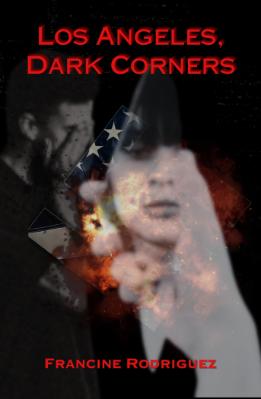
LosAngeles, Dark Corners by Francine
Rodriguez
Against the January 6 capitol riots, a young FBI agent, Josh, works undercover to infiltrate neo-Nazi group in Los Angeles. He becomes involved with Novena, the on/off girlfriend of the group’s leader, blurring the lines between investigation and romance, and placing them both in a situation which threatens to explode into violence when a top-ranking official is murdered.
Told in dual narration, the novel opens with Novena in prison awaiting sentencing for two murders. Novena’s position in the movement was largely shaped by her perception that she is overlooked and discriminated against by the system of government in the U.S. even though she is white.Afew months earlier, after an argument with her boyfriend, Drew, head of the local chapter of the White Knights, she meets Josh at a rally, and the two become close, Josh pressing Novena for information on the Knights’preparation for January 6 and beyond, and her looking to him for the stability and direction she lacks in her own life as she begins to become distant from Drew and the Knights.
But Drew brings Novena back into the fold, convincing her that one of the top men in the organization, Norwood, is a traitor. On January 6, while many of the Knights are away, participating in the insurrection at the capitol, Novena and Drew break into Norwood’s home to find information to use against him so Drew can replace him as head of the Knights.The break in turns violent when the owner unexpectedly returns home, and Novena shoots Norwood, killing him. Lost and alone in the aftermath of the robbery, she turns back to Josh, eventually confessing the murder to him. Blindsided, Josh’s reaction will determine both of their fates.
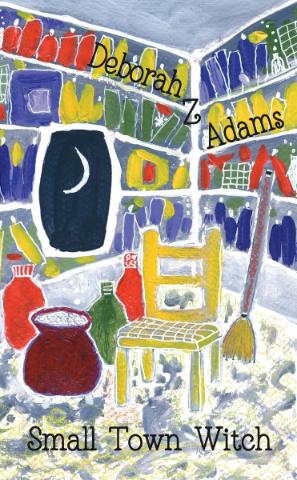
Small Town Witch by Deborah Z
Adams
Small Town Witch, a new chapbook from award-winning author Deborah Z Adams, is a collection of spell-binding tales about the witches we meet every day. Written with warmth, humor, and a little bite, Small Town Witch is packed with more substance than meets the eye.
“Adams’s witches may inhabit a small town, perhaps your small town, but they are not small women. They are powerful and empowering. You’ll root for these women, these coven leaders and elementary school teachers. Two parts poetry, two parts prose, with a healthy pinch of feminist indignation, Adams’s tales will surely charm you and remind you that you’re “not in this fight alone.’”
—Joanna Grisham, author of Phantoms
(Finishing Line Press, 2023)
Available from your favorite bookseller!
All proceeds from sales of Small Town Witch are donated to organizations that do good in the world.
You can sample Small Town Witch stories here.
“I’ve lived my life surrounded by women who wield their powers quietly but effectively,” saysAdams. “They’re everywhere, but especially prevalent in small towns.”
Deborah Z Adams is an awardwinning author of novels, short fiction, CNF, and poetry. She served as executive editor of Oconee Spirit Press for ten years, and is currently a reader for Boomerlit. Her writing has appeared or is forthcoming in Roanoke Review, Litmosphere: a journal of Charlotte Lit, WELL READ Magazine, Dead Mule and other journals.

In the Best of 2024 Volume One, you’ll find fifty-one submissions written by a fantastic mix of awardwinning authors and poets plus new ones to the scene. Three submissions in this volume were nominated for a Pushcart Prize: The Hanging by Doug Gray, Sandy Tells Me About Dead Pine Trees by J.D. Isip, and Wilma by Phyllis Gobbell. The cover art is by artist, Lindsay Carraway, who had several pieces published in February of 2023.
Contributors: Carolyn Haines, Doug Gray, Angela Patera, Kimberly Parish Davis, Michael Spake, Jennifer Smith, Ashley Tunnell, Ken Gosse, Dr. Elizabeth V. Koshy, Ann Hite, Ellen Notbohm, Micah Ward, Malcolm Glass, Katie Crow, Lorraine Cregar, Patricia Feinberg Stoner, John M. Williams, Michael Lee Johnson, J.D. Isip, Casie Bazay, Jacob Strunk, Ann Christine Tabaka, Joan McNerney, Fhen M., Steven Kent, Peter Magliocco, Mark Braught, Rita Welty Bourke, Loretta Fairley, Barbara Anna Gaiardoni, S. Dodge, DeLane Phillips, Candice Marley Conner, Arvilla Fee, J. B. Hogan, Ramey Channell, Hope Kostedt, John Grey, Martha Ellen Johnson, Nancy Chadwick-Burke, Mike Coleman, Margaret Pearce, Nicole Irizawa, Donald Edwards, Janet Lynn Oakley, Mandy Jones, Phyllis Gobbell, and Suzanne Kamata
In the Best of 2024 Volume Two, you’ll find fifty-two submissions written by a fantastic mix of awardwinning authors and poets plus new ones to the scene. Three submissions in this volume were nominated for a Pushcart Prize: Hanging Pictures by Micah Ward, The Lone and Level Sands by James Wade, and American Chestnut by Candace Connor. The cover art is by artist, Lindsay Carraway, who had several pieces published in February of 2023.
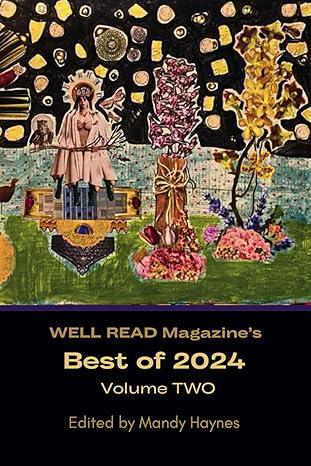
Contributors: Candice Marley Conner, Kaye Wilkinson Barley, Mike Ross, Will Maguire, AJ Concannon, Patricia Feinberg Stoner, Gregg Norman, Robin Prince Monroe, Ramey Channell, April Mae M. Berza,Anne Leigh Parrish, B.A. Brittingham, MikeAustin, Sara Evelyne, Jennifer Smith, Loretta Fairley, J.L. Oakley, Celia Miles, Kris Faatz, Ed Nichols, Linda Imbler, Annie McDonnell, Mike Turner, Micah Ward, James Wade, Ashley Tunnell, John M. Williams, Robb Grindstaff, Stevie Lyon, Laura McHale Holland, Saeed Ibrahim, Nancy Julien Kopp, Julie Green, DeLane Phillips, Shayla Dodge, Edilson Afonso Ferreira, Chris Wood, Jasna Gugić, Fhen M., Hubert Blair Bonds, Ellen Birkett Morris, Margaret Pearce, Ellen Notbohm, Kimberly Parish Davis, J. B. Hogan, and Royal Rhodes
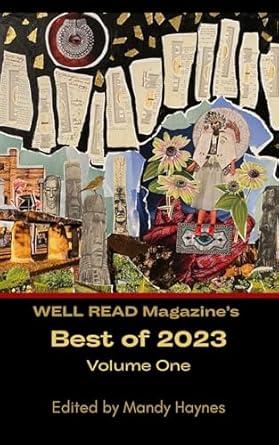
In Volume One, you’ll find thirty-eight submissions writtenbyafantasticmixofawardwinning authors and poets plus new ones to the scene. Three submissions in this volume were nominated for a Pushcart Prize: Miller’s Cafe by Mike Hilbig, Sleeping on Paul’s Mattress by Brenda Sutton Rose, andAHard Dog by Will Maguire. The cover art is by artist, Lindsay Carraway, who had several pieces published in February’s issue.
Contributors: Jeffrey Dale Lofton, Phyllis Gobbell, Brenda Sutton Rose, T. K. Thorne, Claire Hamner Matturro, Penny Koepsel, Mike Hilbig, Jon Sokol, Rita Welty Bourke, Suzanne Kamata, Annie McDonnell, Will Maguire, Joy Ross Davis, Robb Grindstaff, Tom Shachtman, Micah Ward, Mike Turner, James D. Brewer, Eileen Coe, Susan Cornford,Ana Doina, J. B. Hogan, Carrie Welch, Ashley Holloway, Rebecca Klassen, Robin Prince Monroe, Ellen Notbohm, Scott Thomas Outlar, Fiorella Ruas, Jonathan Pett, DeLane Phillips, Larry F. Sommers, Macy Spevacek, and Richard Stimac
InVolumeTwo, you’ll find fortythree submissions written by a fantastic mix of award-winning authors and poets plus new ones to the scene. Three submissions in this volume were nominated for a Pushcart Prize: A Bleeding Heart by Ann Hite, A Few Hours in the Life of a Five-Year-Old Pool Player by Francine Rodriguez, and There Were Red Flags by Mike Turner. The cover art for Volume Two is by artist, DeWitt Lobrano, who had several pieces published in November’s issue. Enjoy!
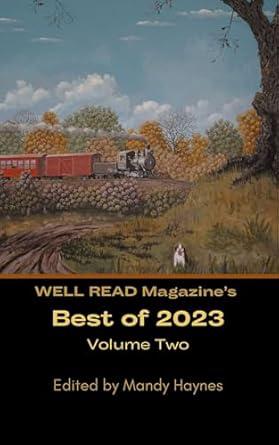
Contributors: Ann Hite, Malcolm Glass, Dawn Major, John M. Williams, Mandy Haynes, Francine Rodriguez, Mike Turner, Mickey Dubrow, William Walsh, Robb Grindstaff, Deborah Zenha Adams, Mark Braught, B. A. Brittingham, Ramey Channell, Eileen Coe, Marion Cohen, Lorraine Cregar, John Grey, J. B. Hogan,Yana Kane, Philip Kobylarz, Diane Lefer, Will Maguire, David Malone, Ashley Tunnell, Tania Nyman, Jacob Parker, LaVern Spencer McCarthy, K. G. Munro, Angela Patera, Micheal Spake, George Pallas, Marisa Keller, Ken Gosse, and Orlando DeVito
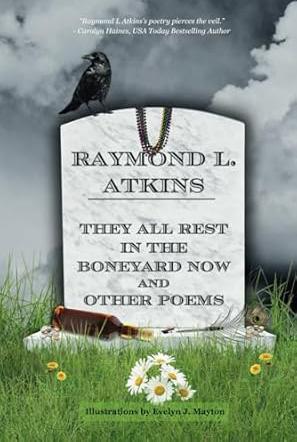
TheyAll Rest in the Boneyard Now by
Raymond L.Atkins (Author), Evelyn Mayton (Illustrator)
“Raymond Atkins writes with intuitive wisdom, as he channels those from beyond the grave. His poetry gives voice to those who once mattered, those who time wants us to forget. In They All Rest in the Boneyard Now, Atkins wrestles death from the dusty clay and breathes life into dry bones while reminding us that every soul who once had breath is worthy of being remembered. These saints, sinners, socialites, and the socially inept are all victims of time, or circumstance, as we too shall one day be. Atkins offers salvation to all who are tormented, and solace to those who seek eternal rest.”
– Renea Winchester,Award-winning author of Outbound Train
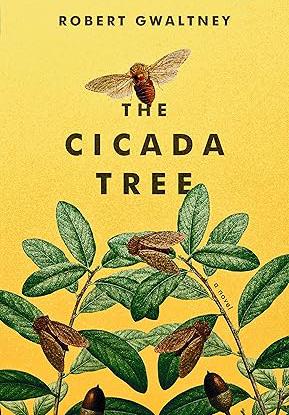
The Cicada Tree by
Robert Gwaltney
The summer of 1956, a brood of cicadas descends upon Providence, Georgia, a natural event with supernatural repercussions, unhinging the life of Analeise Newell, an eleven-year-old piano prodigy. Amidst this emergence, dark obsessions are stirred, uncanny gifts provoked, and secrets unearthed.
During a visit to Mistletoe, a plantation owned by the wealthy Mayfield family, Analeise encounters Cordelia Mayfield and her daughter Marlissa, both of whom possess an otherworldly beauty, a lineal trait regarded as that Mayfield Shine. A whisper and an act of violence perpetrated during this visit by Mrs. Mayfield all converge to kindle Analeise’s fascination with the Mayfields.
Analeise’s burgeoning obsession with the Mayfield family overshadows her own seemingly, ordinary life, culminating in dangerous games and manipulation, setting off a chain of cataclysmic events with life-altering consequences—all of it unfolding to the maddening whir of a cicada song.
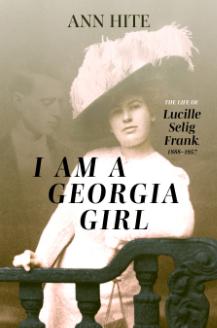
IAm a Georgia Girl: The Life of Lucille Selig Frank, 18881957
byAnn Hite
Twenty-five-year-old Lucille Selig Frank's whole life changed on April 26, 1913, as the Confederate Memorial Parade marched through Atlanta, Georgia. Lucille was attending the opera matinee with her mother. Her husband, Leo Frank, sat in his office in the National Pencil Company, where he was superintendent, working on a financial report. The brutal murder of fourteen-year-old Mary Phagan, an employee of Leo's, took place in the pencil factory that day. Lucille's husband would be the last known person to see Mary alive. While much has been written about Mary Phagan's murder and Leo Frank's subsequent trial over the past 115 years, very little has given voice to Lucille Selig Frank and other women connected to the horrific events that took place between 19131915. Lucille was part of a mission to make Governor John Slaton aware of the antisemitism being shown to Leo during his arrest and trial. She paid a heavy price for her courage. The story of Lucille and the women connected to this case is as timely today as it was in the early 1900s. This book has many diverse characters, including place which influences the outcome. Within this complexity, Hite's telling of Lucille's story will help others see that antisemitism, the marginalization of women, and mobs taking justice into their own hands cannot be tolerated. How many people were complicit in Leo and Lucille's journey? Was justice truly served? This book leaves the reader to answer these questions.
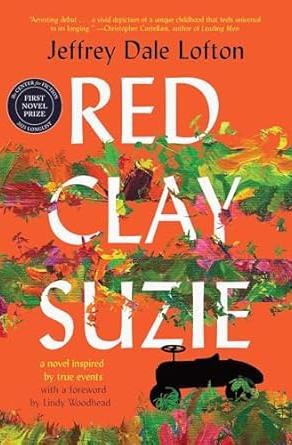
Red Clay Suzie by
Jeffrey Dale Lofton
A novel inspired by true events.
The coming-of-age story of Philbet, gay and living with a disability, battles bullying, ignorance, and disdain as he makes his way in life as an outsider in the Deep South—before finding acceptance in unlikely places.
Fueled by tomato sandwiches and green milkshakes, and obsessed with cars, Philbet struggles with life and love as a gay boy in rural Georgia. He’s happiest when helping Grandaddy dig potatoes from the vegetable garden that connects their houses. But Philbet’s world is shattered and his resilience shaken by events that crush his innocence and sense of security; expose his misshapen chest skillfully hidden behind shirts Mama makes at home; and convince him that he’s not fit to be loved by Knox, the older boy he idolizes to distraction. Over time, Philbet finds refuge in unexpected places and inner strength in unexpected ways, leading to a resolution from beyond the grave.
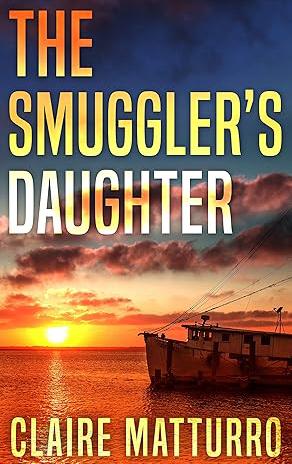
The Smuggler's Daughter by
Claire Matturro
Ray Slaverson, a world-weary Florida police detective, has his hands full with the murders of two attorneys and a third suspicious death, all within twenty-four hours. Ray doesn’t believe in coincidences, but he can’t find a single link between the dead men, and he and his partner soon smash into an investigative stonewall.
Kate Garcia, Ray’s fiancée, knows more than she should. She helped one of the dead attorneys, just hours before he took a bullet to the head, study an old newspaper in the library where she works. Kate might be the only person still alive who knows what he was digging up— except for his killer.
When Kate starts trying to discover what’s behind the murders, she turns up disturbing links between the three dead men that track back to her family’s troubled past. But she has plenty of reasons to keep her mouth shut. Her discovery unleashes a cat-and-mouse game that threatens to sink her and those she loves in a high tide of danger.
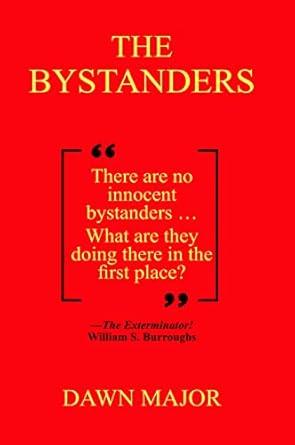
The Bystanders by Dawn Major
The quaint town of Lawrenceton, Missouri isn’t sending out the welcoming committee for its newest neighbors from Los Angeles—the Samples’ family. Shannon Lamb’s “Like a Virgin” fashion choices, along with her fortune-telling mother, Wendy Samples, and her no-good, cheating, jobless, stepfather, Dale Samples, result in Shannon finding few fans in L-Town where proud family lines run deep. Only townie, Eddy Bauman, is smitten with Shannon and her Valley Girl ways. The Bystanders is a dark coming-of-age story set in the 1980s when big hair was big, and MTV ruled. In a quiet town of annual picnics and landscapes, the Samples’ rundown trailer and odd behaviors aren’t charming the locals. Shannon and Wendy could really use some friends but must learn to rely upon themselves to claw their way out of poverty and abuse if they want to escape Dale.
TheBystanders pays homage toAmericana, its small-town eccentricities, and the rural people of the Northern Mississippi Delta region of Southeast Missouri, a unique area of the country where people still speak Paw Paw French and honor Old World traditions.
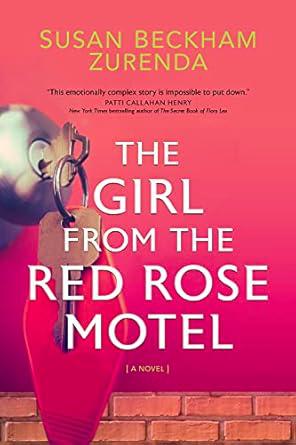
The Girl from the Red Rose Motel:ANovel by Susan Beckham Zurenda
Impoverished high school junior Hazel Smalls and privileged senior Sterling Lovell would never ordinarily meet. But when both are punished with in-school suspension, Sterling finds himself drawn to the gorgeous, studious girl seated nearby, and an unlikely relationship begins. Set in 2012 South Carolina, the novel interlaces the stories of Hazel, living with her homeless family in the rundown Red Rose Motel; Sterling, yearning to break free from his wealthy parents' expectations; and recently widowed Angela Wilmore, their stern but compassionate English teacher. Hazel hides her homelessness from Sterling until he discovers her cleaning the motel's office when he goes with his slumlord father to unfreeze the motel's pipes one morning. With her secret revealed, their relationship deepens. Angela-who has her own struggles in a budding romance with the divorced principal-offers Hazel the support her family can't provide. Navigating between privilege and poverty, vulnerability and strength, all three must confront what they need from themselves and each other as Hazel gains the courage to oppose boundaries and make a bold, life-changing decision at novel's end.
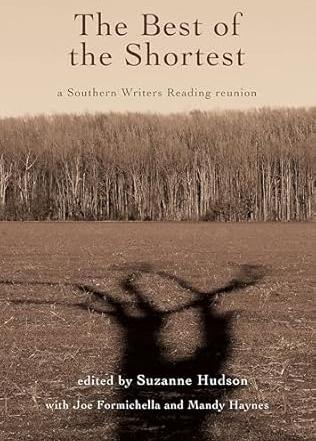
The Best of the Shortest: ASouthern Writers Reading
Reunion by
Suzanne Hudson (Author, Editor), Mandy Haynes (Editor), Joe Formichella (Author, Editor)
“Some of the happiest moments of my writing life have been spent in the company of writers whose work is included in these pages. They all brought their A-game to this fabulous collection, and at our house it is going on a shelf next to its honored predecessors. The only thing that saddens me is that the large-hearted William Gay is not around to absorb some of the love that shines through every word.” ―Steve Yarbrough
“The Best of the Shortest takes the reader on a fast-paced adventure from familiar back roads to the jungles of Viet Nam; from muddy southern creek banks to the other side of the world, touching on themes as beautiful as love and as harsh as racism. However dark or uplifting, you are guaranteed to enjoy the ride.” --Bob Zellner
“I had some of the best times of my life meeting, drinking and chatting with the writers in this book, times matched only by the hours I spent reading their books. This collection showcases a slice of Southern literature in all its complicated, glorious genius. Anyone who likes good writing will love it.” --Clay Risen
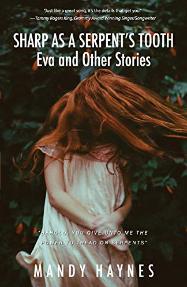
Walking The Wrong Way Home by Mandy Haynes
Spanning nearly twenty decades, the struggles and victories these characters face are timeless as they all work towards the same goal.
A place to feel safe, a place to call home.
Sharp as a Serpent's Tooth: Eva and other stories by Mandy Haynes
Each story features a female protagonist, ranging from ten to ninety-five years of age. Set in the south, you’ll follow these young women and girls as they learn that they’re stronger than they ever thought possible.
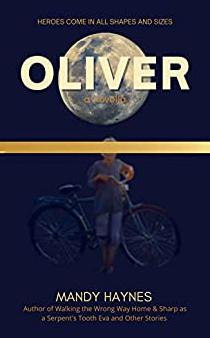
Oliver by Mandy Haynes
“Dear God…and Jesus and Mary…” Even though eleven-year old Olivia is raised Southern Baptist, she likes to cover her bases when asking for a favor. Unlike her brother Oliver, she struggles with keeping her temper in check and staying out of trouble. But Oliver is different, and in the summer of ’72 he proves to Olivia there’s magic in everything - it’s up to us to see it.
Mandy Haynes spent hours on barstools and riding in vans listening to great stories from some of the best songwriters and storytellers in Nashville, Tennessee. After her son graduated college, she traded a stressful life as a pediatric cardiac sonographer for a happy one and moved to an island off the east coast. She is a contributing writer for Amelia Islander Magazine, Amelia Weddings, and editor of Encounters with Nature, an anthology created by Amelia Island writers and artists. She is also the author of two short story collections, Walking the Wrong Way Home, Sharp as a Serpent's Tooth Eva and Other Stories, and a novella, Oliver. She is a co-editor of the Southern Writers Reading reunion anthology, The Best of the Shortest. Mandy is the editor-in-chief of WELL READ Magazine and the editor of four WELL READ anthologies.
Like the characters in some of her stories, she never misses a chance to jump in a creek to catch crawdads, stand up for the underdog, or the opportunity to make someone laugh. At the end of 2024, Mandy moved back to middle Tennessee and now spends her time writing and enjoying life as much as she can.

If you’d like to feature your work in the reading recommendation section with live links to your website and purchase link, and have personalized graphics of your ad shared to WELL READ Magazine’s social sites, click here to see examples of the different options and moreinformation.
Click here for more information on purchasing a cover.
Don’t let the low prices fool you - WELL READ was created by an author who understands how much it costs to get your book in the best shape possible before it’s ready to be queried by agents, small presses, or self-published. Showing off your book and getting it in front of readers shouldn’t break the bank.
WELL READ Magazine receives approximately 8,000 views each month on Issuu’s site alone (the world’s largest digital publishing and discovery platform available). Your book will be included with the featured authors, great interviews, submissions, essays, and other fantastic books inside each issue. There is strength in numbers. Let’s get our books seen!
Ad rates for 2026:
$50 - One FULL PAGE AD
$75 - TWO-PAGE SPREAD
$100 - TWO HIGH IMPACT - FULL COLOR PAGES - (this is NOT a standard two page spread)
$100 - FOR PUBLISHERS ONLY (limit 3 months of ads)- Advertise up to THREE books with one live link that takes viewers to your website.
$75 - BOOKSTORES, PUBLICISTS, AUTHORS - two-page spread to promote book events
$450 - FRONT COVER - includes two full color interior pages for book description, author bio, and/or blurbs, plus an additional one page ad in the next three issues. Also included is the Featured Author spot in the issue your book is on the cover.
$350 - INTERIOR COVER or BACK COVER - includes TWO additional full color interior pages for book description, author bio, and/or blurbs.
*Prices include creating the graphics for the magazine pages and all social sites. Everything is taken care of for you.
INSIDE VOICES
“I originally wrote the book as a way of trying to figure out how I had come to a point in my life where so many things in my life had gone wrong. Through the process of writing it, I came to understand myself better. And through that, I came to forgive myself.”
Robert Gwaltney & Jeffrey Dale Lofton
introduce Author Anya Liftig

Gwaltney
Anya Liftig, author of the memoir Holler Rat, is a performance artist and writer. Her performance work has been in venues around the world including MOMA,Tate Modern, Queens Museum, Stedjek Museum, New Museum and many others. She has received fellowships from MacDowell and Yaddo. She is an avid book and dollhouse miniature collector.
InsideVoices/Jeffrey: I love to judge a book by its cover. I’m just judgy like that. I love the photograph on the cover of Holler Rat. What’s the story there, and why did you choose it? Do you recall it as a happy time?
That is a picture of me sitting on my mom’s shoulders pretending to be the head of the scarecrow in my Mamaw’s potato field up at the family homeplace in Ganderbill Holler. I always loved it when I was growing up. It was a memory I didn’t quite actually remember, but one that I THOUGHT I might remember. I was just on the cusp of true memory at that moment in life. I sent the publisher about ten pictures of me as a kid in Kentucky and they all chose that one for the cover. I think that the human head on the inanimate scarecrow kind of evokes some of the splitting and dichotomies that are explored in the book—so it works for me as an image that reveals and symbolizes the world that readers will experience in the pages.
Robert
& Jeffrey Dale Lofton introduce Anya Liftig
Inside Voices/Robert: Your memoir covers your childhood through adulthood, and your prose moves between very painterly images that evoke the time and place and very direct observations about how challenging it was for you at times. I’d love to know how you came to writing? Is it a natural talent reinforced with formal training? Is it an outcome of being a performance artist? What’s the story?
My father was an English professor and he was constantly writing freelance history articles when I was growing up.When I wrote some of my first poems at age 7, he helped me get them published in the local newspaper. I grew up in a household that worshiped books and literature and I always found writing exciting but I never really gravitated towards fiction. I most often wrote about personal experiences. (Of course, my father was my toughest editor.) In college, though I was an English major, I never took a writing course. Though my day job involves editing other people’s words, I only occasionally wrote my own until I was almost 40. My first writing courses were as an adult at the Westport Writers’Workshop where I produced some of the material that is in Holler Rat.
Inside Voices/Jeffrey: I continue to be taken with the contrasts in your story. For example, you grew up moving back and forth between two worlds, geographically, but also stark differences culturally, economically, and religiously. What is it about belonging to two worlds that sometimes means you don’t fully belong to either?
Robert Gwaltney & Jeffrey Dale Lofton
I think it’s that a part of you always knows, intrinsically, fundamentally, that you are on some level an imposter. You can know everything there is to know about what makes an insider and still, you know you are of the outside. I think that umbrella of knowledge sort of keeps you getting rain soaked with confusion and dislocation in a way.
InsideVoices/Robert: Many people go to monumental lengths to hide their inner and outward struggles. Your performances and your writing—you’re revealing so much. Why?
When I was growing up, I was very lucky to be trained in ballet by former dancers from George Balanchine’s New York City Ballet. One of them, Carol Sumner, who I write about in the book, always told me about something Balanchine would say in company class. I am paraphrasing, but essentially it was, “Dear, don’t be boring.” I was taught that being boring was the greatest sin to commit in front of an audience. Vulnerability is many things; some positive, some negative, but it is rarely boring.
Inside Voices/Jeffrey: The arts are so fragmented, in their forms and disciplines, even the media an artist uses within a single discipline. You’ve moved around and set up home in several areas. What makes you an art nomad? Where are you most at home?
I am nomadic in the fact that I keep my hands in many media: writing, performance art, photography, dance, collage, and DIY publishing. I am most at home surrounded by my books, my favorite sounds, my favorite stickers, and my favorite images. I love to make a cocoon around me and these days I am very cautious about who I invite into that cocoon.
InsideVoices/Robert:What does “bearing it all” mean?The evolution of identity, as you as a person, as an artist?
I think it means being willing to peel back the layers of your personal onion in front of others. Letting others witness that process.
Inside Voices/Jeffrey: You are silent in many of your performance pieces, and you wait for the audience to figure out your intention, sometimes thorough a stare—which seems to be all you give. Silence is uncomfortable. It strikes me that writing Holler Rat is the opposite of silence. How has this difference in the way you connect, the way you express yourself, been for you?
It’s been a great challenge, which is partly why I wanted to do it. I came to feel that words were too specific, too committal and in a way, too scary for me. But writing Holler Rat, and being specific about my experiences using the written word, has allowed me to connect with many people beyond the small enclave of the art world.
Robert Gwaltney & Jeffrey Dale Lofton introduce Anya Liftig
Inside Voices/Robert: Your book is a way to accept and forgive yourself, your family, your community, and the medical professionals who failed you. You liken it to de-barnacle-ing yourself. Tell us more about it.
I originally wrote the book as a way of trying to figure out how I had come to a point in my life where so many things in my life had gone wrong. Through the process of writing it, I came to understand myself better.And through that, I came to forgive myself.
Inside Voices/Jeffrey: Telling one’s truth is so powerful. But, to tell it, you have to tell the story of others as well. How has your family reacted to Holler Rat?
I was most worried about my mother, because I didn’t show this book to anyone other than my writing group partners until it was in galleys. But she was very supportive when she did read it. For the most part, those that have read all of it, have been very supportive.
Inside Voices/Robert: What’s next for you,Anya?
I have actually returned to live performance---incorporating words! A totally new world for me. I am also working on another memoir manuscript. I recently published a photograph zine and am excited to be back in the traditional darkroom after a 20 year hiatus.

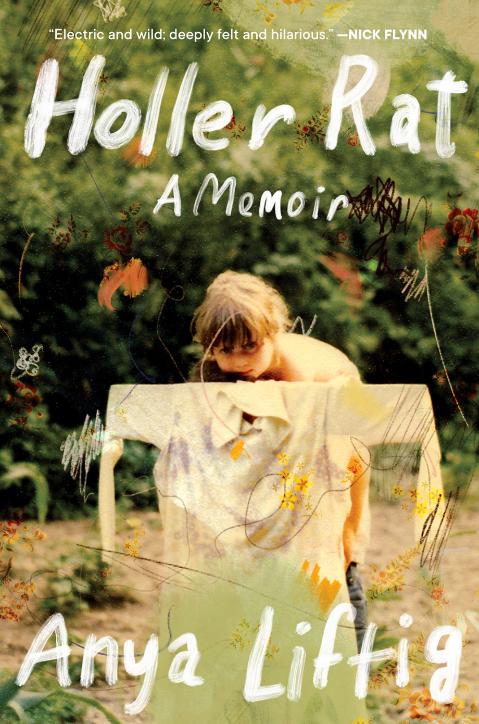
In visceral, beautiful prose that ranges from raunchy and outrageous to serious and tragic, Holler Rat is the origin story of an unconventional artistic life and a captivating account of the stumbling blocks, sacrifices, and discoveries along the way.
As Publishers Weekly noted, "Readers put off by the sermonizing of Hillbilly Elegy may find this glimpse at Appalachia more illuminating.”
Holler Rat
Anya Liftig



Click above to go to the BETWEEN THE PAGESYouTube channel, or on one of the links below to listen to the podcast. Please take a second to like and subscribe if you enjoy the channel - we appreciate you!







AKindness
Mandy Haynes
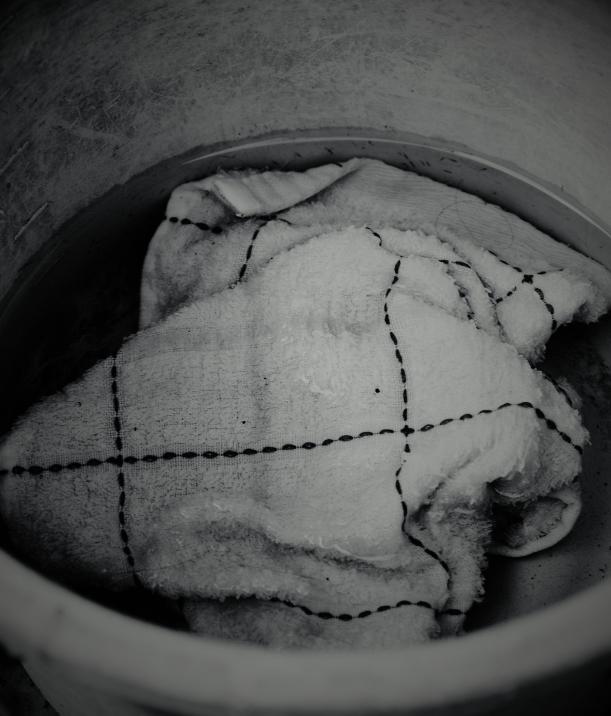
Willie Mae knew people were already talking. That they all thought this was the worst thing he could’ve done. Pure meanness, they’ll say for weeks to come. But they’re wrong.
She was used to cleaning up his messes. Plates of food thrown from the table, bottles shattered on countertops, her treasured collection of milkglass turned into weapons before being thrown away like common trash. And how many times had it been her blood she’d scrubbed from the floorboards and walls of this old house? Too many to count.
It wasn’t a pleasant job by any means, but Willie Mae found great comfort knowing this was the last time blood would ever be spilled in her house.
No, it wasn’t meanness. Him finally making good on thirty years worth of promises to put a bullet in his head was a kindness. Maybe now they could both rest in peace.
Mandy Haynes is the author of two short story collections, Walking the Wrong Way Home, Sharp as a Serpent's Tooth Eva and Other Stories, and a novella, Oliver. Her stories have appeared in several anthologies and literary journals.
One More Sunrise John M. Williams
Walton was a problem child—meaning, he had a mind of his own. He came out of the personality oven fully baked, as though stepping into this Walton business from an immediately previous and unresolved life, fully equipped with an innate resistance to any force trying to make him do or be something he knew he wasn’t. No one but his father, the source of the gene, understood him. “You can’t help but love the stubborn little bastard,” he would say, frustrating the stubborn little bastard’s mother, in her relentless motherly campaign to shape him to a norm implanted in her, not his, head. She meant well, and for all her frustration, wasn’t immune to his charm. His willfulness expressed itself in laughter. Turns out, being Walton was funny.
“He’s just Walton being Walton,” people would say.
Then when he was twelve, his father died.
Walton’s rebelliousness changed key, and he became a different sort of problem child. He challenged his mother, he challenged his teachers, he challenged all authority, he skipped school, he
shoplifted, he started smoking. He found cars with keys in them and took them on joyrides, leaving them wherever he happened to end up. But he was just Walton being Walton in a different key, people said, and as with all those blessed with charm, he tended to get off easy.
Then, when he was thirteen, his financially strapped mother remarried—sadly, a former Marine, who took it upon himself to “straighten Walton out.” In the process, the sadistic warrior succeeded in breaking the heart of Walton’s mother, but failed in breaking the will of Walton. The rebellious little bastard ran away.
Thus began the period of his living in abandoned cars, in homeless camps under bridges, stealing, dumpster diving, constant hustling, and, inevitably, in an on again/off again relationship with Juvie. All attempts to relocate him with his mother and the Marine, despite the locks, the corrective discipline, the threats, ended invariably in his running away again. “Let the little bastard starve,” the Marine would snarl. “He’s living in an abandoned car!” his mother would protest.
“Freezing to death will do him good,” the Marine would counter. “Bring me another beer.”
As the years went by, the system grew tired of him. Wherever they put him, he escaped. No cell, no chains, could hold the little Houdini. And everywhere he went, fellow misfits fell over themselves to help him, because, humorously enough, Walton being Walton, they couldn’t help it! You just wanted to rescue the little imp. The unlikeliest ally of all, Sheriff Hurt, kept track of him,
looked him up from time to time, brought him a hot meal, and shared a few laughs.And he was a rare sheriff in understanding that the secret to Walton’s charm lay in his willingness to endure any privation, any hardship, in exchange for the freedom to be Walton.
ThenWalton turned eighteen, an adult in the eyes of the law, and began to be picked up for minor thefts, trespassings and squattings. He did some stints in jail, but they always got tired of feeding him. No matter what arm of the system tried to restrain him, he always slithered out somehow, and eventually they got tired of chasing him.
But when, at twenty, he held up a convenience store with a handgun, he crossed the line. This time they cornered him in an abandoned house on the outskirts of town, but since he was presumably armed, the situation turned into a stand-off. After a tense hour, Sheriff Hurt said, “I’m going in there.”
“He’s got a gun!” his deputies protested.
“I’ll take my chances,” said the sheriff.
With blue lights blinking all around, the sheriff approached the front door of the house. No sign of life from within. He reached the stoop. “Walton!We need to talk!” the sheriff called out. No response—then, “I’m coming in.” And he grasped the door knob. No resistance. Bravely, he opened the door and stepped inside. Walton was sitting in the ratty remains of an armchair, and as the sheriff stepped into the dim room, Walton raised the gun to his head.
“I’m going to kill myself,” he announced.
The sheriff squinted. “That’s not a real gun, is it?” he asked.
“All guns are real at a distance,” said Walton.
That meant something, but the sheriff pressed on. “Don’t do it,” he said earnestly. “You’re the only Walton there is. I’m just trying to get you through this, buddy, and help you.”
“I appreciate that, Sheriff,” said Walton, “but I think I’m done. I can’t complain, I’ve had a good run.”
“I’m just trying to help you,” said the sheriff.
“That’s the thing, Sheriff. Nobody can really help me. Helping me will just make me worse. That’s how I see it. This is the only way. I only ask one thing—”
“What’s that?”
“I just want to see one more sunrise.”
The sheriff stared at him. “I can’t keep my men out here all night.”
“Well,” said Walton, “it’s not all night—it’s already after midnight. More like half the night. But, really, you could just send them home. I’ll behave.”
The sheriff started walking towards him. “The smart thing to do would be to give me that gun.”
Walton pressed the gun barrel hard against his temple. The sheriff stopped. “No, that’s not how it needs to go. I won’t get to see my sunrise.”
The sheriff stared, at a loss for words.
“I would like to be cremated,” said Walton. “And I want a community memorial service. So the angels will get word that I was here. I don’t care where it’s held. I would like my mother to be
there, but my stepfather is strictly forbidden. People can tell stories if they want to.And I want two hymns sung, by a singer as close to Loretta Lynn as you can get, and a piano: ‘When They Ring Those Golden Bells,’ and ‘There’s Within My Heart a Melody.’ And I want my ashes scattered over the lake. That’s all.”
“We don’t need any funerals,” said the sheriff. “We just need you to give me that gun,” he held out his hand, “so we can get you to a safe place and help you.”
“I’m already in a safe place.”
The sheriff studied him for a moment. “Okay,” he said, “I’m going to send my men home, and I’m going to stay here with you until you come to your senses.”
Walton smiled.
The sheriff carefully returned to the door, glanced over his shoulder, then stepped outside. He called his chief deputy over, who approached with his gun in front of him in both hands. “Relax,” said the sheriff. “Put that away.” The deputy nervously complied, and the sheriff explained the situation.
The men got in their vehicles and drove away, and the sheriff went back into the house.
But of course there was no trace of Walton—who had left only, as always, the impression of himself.
And nobody did Walton like Walton.
John M. Williams retired from LaGrange College in 2015, and currently is a mentor in the Reinhardt University MFA Creative Writing program. His first novel, Lake Moon, won the Georgia Author of the Year (First Novel) award in 2003. His most recent novel, End Times, was published in fall 2023 by Sartoris Literary Group and was a Townsend Prize finalist.
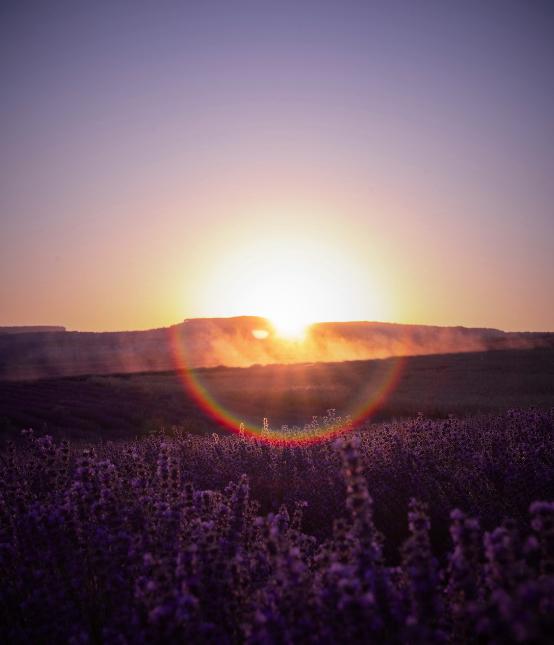
by John M. Williams
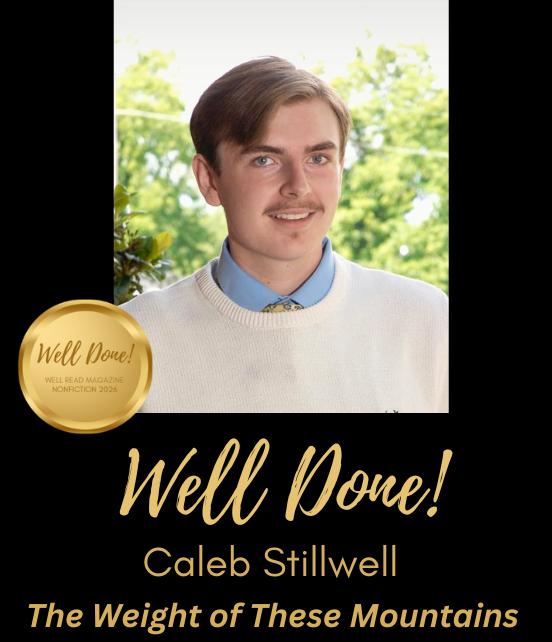
The Weight of These Mountains
Caleb Stillwell
Growing up in rural Appalachia means learning to exist in the margins. It means expecting to be overlooked, remaining invisible until someone decides you’re worth seeing. Usually we Appalachian students find ourselves creating opportunities rather than having them readily available to us. My hometown exists in a world where it is too small to warrant marking on a weather map and too far from significance to bother knowing. Mentioning its name evokes the same polite confusion as someone asking about a song you only vaguely remember hearing.As a child my only plan for this area was to leave it behind the first second I could, but as I've grown up and matured, my perspective has changed.
One of the first experiences that started this shift was my time in the NC House Page Program. I sat in countless conference rooms with that generic hotel smell and nausea-evoking lights stabbing my eyes. I listened to the other pages speak about their high school experiences, from lacrosse championships to AP finals; my school didn't even have AP courses. How could I possibly compete with
Caleb Stillwell
that? One student spoke about their Senator Grandfather, others swapped stories about their hometowns, with malls, restaurants with food from varied cultures, and many other things I could not help but envy. When I had mentioned the name of my hometown to my fellow pages in earlier conversations, I had gotten that alltoo-familiar head tilt I have become so accustomed to, that polite pause waiting for me to further elaborate, to say more. I stopped trying to connect with them eventually, for the disconnect was like a canyon separating my life from theirs. This chasm was a simple reminder of how different my life’s journey had been from theirs. That isolation, however painful, became the unexpected catalyst I needed to change my perspective.
As isolated as it made me feel, those moments of differentiation served as a turning point in my journey.As I met many people during my time in the Page Program, I found comfort in speaking with Representative Karl Gillespie. In a place where I felt invisible, he saw me. Seeing someone from ruralAppalachia clearly embodying the values of my area helped me realize that my background was not a weakness, but a quiet strength. He didn't treat my town like it was an obstacle to overcome, he spoke of it as a potter constantly molding the potential of the clay. He showed me how my story was not smaller or insignificant, just different, and certainly no less powerful than anyone else’s. This new perspective changed almost everything I had once thought about my hometown and the surrounding region. It was with this new lens that I began to see, feel, and hear my hometown differently. What I once heard as a pester-
ing noise, I now began to recognize as a symphony. Sounds that I once heavily resented in childhood now belonged to me, they became part of me.
My nights have always been filled with the sound of crickets threading the air with song, rather than the sounds of bustling streets and honking cars. As a child I resented those crickets, perceiving them and their fields as a signal of limitation.At times they were just a reminder of everything I didn't have: no malls, no fancy stores, just a handful of struggling restaurants. I see now that quiet was not emptiness, but an invitation to discover who I am in a place unhurried enough to let me. I get to watch the seasons change without a skyline in the way. That is a wealth most people spend their whole lives searching for, a wealth that cannot be bought.
I have come to realize that coming from this place means showing up for those in your community, it is about seeing opportunity in a place where most see obstacles. I thank God every day for the people around me: my family, my community, my teachers. They helped me understand that resilience and dignity weren't qualities I needed to find elsewhere; they were threads woven already into the fabric of my daily life.
From the quiet resilience etched in my father’s calloused hands, to the familiar rhythm of a conversation shared over a checkout counter at Ingles, these lessons revealed a truth to me that I had long forgotten: the mountains I see daily are not restricting walls as I thought for years, but rather monuments, representing the beauty of this milieu and the strength of generations who call these
Stillwell
mountains home. My instructors and my experiences showed me that embracing my Appalachian identity is how my story begins, not where it ends. My community became my greatest instructor, teaching me to take pride in the heritage I once foolishly felt I needed to hide.
I used to believe that I would need to change who I was. I would have to become invisible in order to fit into a society where I am perceived as unintelligent simply because of where I am from. I thought I would have to discard this bucolic town to be seen as worthy somewhere else. As I have grown, I have realized that my worth does not lie in rejecting who I am, but in honoring my identity, especially the part of me that is Appalachian. What was once a heavy burden is now my greatest source of confidence. Today, I claim my Appalachian roots without an ounce of apology. I am proud to come from a place that may be a footnote in most history books, but hosts a lifetime of history that has shaped me into the person I am today. As I leave this beautiful place to pursue my studies and chart my own path, I will not run away from the place that claims my heritage but rather keep these mountains and their lessons within me. I will share my story and culture with others and honor those who paved the way for me to be able to thrive because of my identity, not in spite of it. Climbing to the peak of these mountains, I can see past the barriers placed upon me. I will not be buried under the roots of Appalachia but rather use them as a foundation upon which I stand. I am a child of Appalachia, and its beauty is my inheritance. It has shaped me, loved
me, and lifted me higher than any obstacle I meet. I will not be washed away by the currents of this world: I will rise, I will climb, I will stand, forever anchored by the weight of these mountains.
Caleb Stillwell is a graduated senior from rural Appalachia in Andrews, North Carolina. Shaped by his experiences in the NC House Page Program and community leadership after Hurricane Helene, he is passionate about honoring Appalachian identity and mental health advocacy. Caleb will attend UNC Chapel Hill, where he plans to double major in Biology and Psychology on a pre-med track.
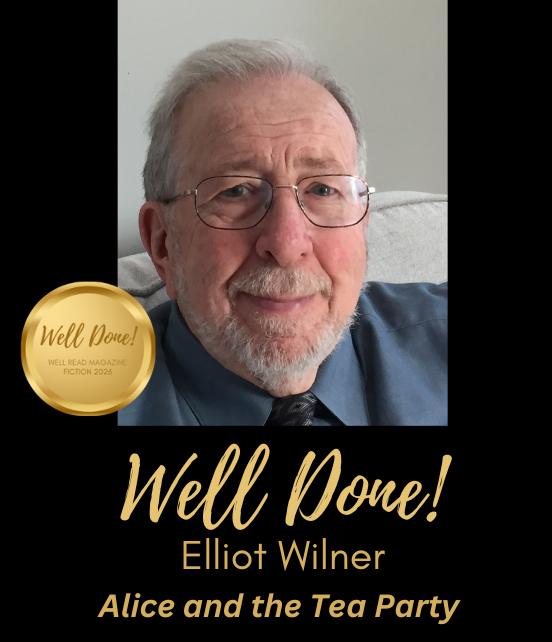
Alice and the Tea Party
Elliot Wilner
Why, I thought to myself, would anyone accept, of his or her own free will, an invitation to a seventy-year high school reunion? A seventy-year reunion! If those people were to ask my opinion, I would urge them to politely decline. I’d say, “Okay, you had a great time at the fifty-year reunion, I get that, but why press your luck? Truly, do not go, unless you have a morbid sense of humor. Do you need to see the captain of the football team—now sixty pounds heavier and gripping a walker—shuffling his feet oh-soslowly through the doorway? Or do you long to greet the Homecoming Queen whose face now looks like a National Geographic relief map? And do you really want to experience the agony, once again, of listening to a half-hour monologue from the former president of the Debate Club—on the ever-fascinating topic of U.S. foreign policy toward Yugoslavia during the Truman administration?”
I had, in fact, been ignoring serial invitations to my own seventy-year high school reunion until, two days before the event, I was shamed into registering. A few out-of-town classmates had emailed or phoned me to point out that I lived only four miles from the venue for the reunion—La Ferme, a popular French restaurant in Chevy Chase—and wasn’t it my duty to show up and report back to them since they lived far away and couldn’t travel, etc. etc.? So, I went to the reunion. Nonetheless, though I was seated at a table with four classmates, I spent most of the afternoon in a reverie, largely oblivious to the cheesy speeches and the ambient chatter in the room. I was instead absorbed in the retrieval of some sweet, twenty-year-old memories. Memories of the Woodrow Wilson High School Class of 54’s wonderful fifty-year reunion. Then, the football captain and the Homecoming Queen looked great!And everyone else at the reunion looked great, too. Fifty years out and we were all in our prime, weren’t we? I cherished my memories of that weekend.
Never mind that two decades had passed since the fifty-year reunion, I was able to recapture almost every detail of the main event, the Saturday evening dinner. It was a little after six o’clock, on a warm day in early October, I remembered, when I drove my car up the driveway of the Bethesda Country Club. I was headed toward the clubhouse where the Woodrow Wilson High School Class of ‘54 fifty-year reunion was already underway. The parking lot closest to the clubhouse was by now nearly full, and it pleased me to see that the parked cars were mostly mid-size SUVs, or ag-
ing Volvos like mine, unpretentious cars, utilitarian cars, none of them gas-guzzlers. Good, I reckoned, it’s good to know that we’re fifty years out of high school and most of us are still socially conscious. Even though I dd spot, here and there, the occasional Porsche or Jaguar or Cadillac Escalade.
I located a snug space for myVolvo between a Subaru SUVand a vintage Ford Taurus. I didn’t exit my car immediately but reclined in my seat, with the driver’s side window open, listening to the waves of laughter and animated conversation rippling outward through the opened French doors of the clubhouse. What I was hearing was, of course, a chorus of many voices, but I imagined that out of the chorus I could distinguish one woman’s voice—the lilting, southern-accented voice ofAlice Hazelton.
Many years before—was it now fifty-one years?—in Mrs. Randolph’s eleventh grade English class, my brain had recorded that voice. Shutting my eyes, I played that record once again, and at the same time I conjured up a vision of Mrs. Randolph’s classroom: Voila! There wasAlice, standing tall in front of the class and emoting effortlessly as she recited poems by Dickenson, Frost and Whitman. I had adored those poems, and the wayAlice could bring them to life. Yes, I thought, I do have fond memories of Alice— even though I recognized that, apart from having listened to her poetry recitations, I had not had any contact with her during our years at Wilson High, in school or outside of school. Would she, I wondered, after all these years even remember who I was?
I turned off the Alice record in my brain and rolled up the driver’s side window. It was time to join the reunion.Yet I lingered in the car another minute and imagined how the evening would likely transpire. I could predict with whom I’d be talking most of the evening, It would be with Bob and Steve and Marilyn and their spouses, because I knew they would be there and we’ve been meeting and talking regularly over the course of the past fifty years anyway. But I wouldn’t know at least two-thirds of the other people who will be there. I didn’t know them fifty years ago, and I didn’t really see any point in getting to know them now. On the other hand, I did want to talk withAlice. I really hoped she’d be there. After exiting from my car, I glanced back to remind myself of the row in which I had parked, and my attention was then drawn to a Lexus LC convertible with a NewYork license plate. Who might have driven here from New York, I wondered. Really, could that Lexus be Mario’s? He does live in New York City, doesn’t he, and he never misses a WWHS reunion. Hmmm. I’ll bet that is Mario’s car.
As I walked up the footpath from the parking lot to the clubhouse, following theWWHS ’54 signs that pointed toward the registration desk, I reflected on how strange it was that, while fifty years had passed since graduation, it was only during the past few years that I had become fixated onAlice Hazelton.Why this obsession? I didn’t recall having met her at any of the previous reunions. Maybe, I speculated, she had actually attended one or more reunions but I hadn’t recognized her. Aperson’s appearance sure can
change over the years, can’t it? Like Maria Bremen, who had been such a plain jane in high school but was a knockout at the twentyyear reunion? Alice, given the passage of fifty years, no doubt has changed a lot, too. Never mind, ifAlice is here tonight, I will find her, one way or another.
At the registration desk I was immediately enveloped in the embrace of Barbara Harling Brown, our class-secretary-for-life, who was in charge of the Reunion Committee. Barbara was, in fact, pretty much the whole of the committee, having taken upon herself, since graduation, the sole responsibility for organizing reunions every ten years. WW ’54 reunions seemed to be her main raison d’etre. She not only planned these events meticulously but passed the years between reunions by tracking down every classmate who was MIA and, whenever the need arose, circulating an obituary of the recently departed to all the surviving members of the class.
“Oh, Simon, how are you? Where have you been?” A flurry of Barbara’s kisses followed, some connecting, others not. “I’m excited to see you, haven’t seen you in ages! It’s so great that you could make it to the reunion!”
In ages? Yeah, that seemed about right. I guessed that Barbara measured “ages” by the intervals between reunions. The last time I had seen Barbara was at the forty-year reunion, so I figured that an “age” must be ten years.And she’s excited to see me? We both live in Bethesda, don’t we, yet it seems to be okay if ten years pass
during which we don’t have any contact with one another. Maybe it just takes ten years for the excitement to build, huh, Babara?
“Great to see you, too, Barbara. How is Harry?” I silently congratulated myself for remembering that Barbara’s husband was named Harry. Harry was also a physician, a psychiatrist, but we, too, only met at these reunions.
“Oh, Harry is getting along. He had a heart attack last year, you know, but he’s back at his practice. He’d love to talk with you. You’ll find him inside, sitting at the table with Bob and Elaine.”
All the while that Barbara was chatting about Harry, her eyes were scanning the reception table for my badge, which she presently located and pinned to my lapel. There was my name in bold all-caps, SIMON WEST, below which appeared “Woodrow Wilson Class of 1954,” and above was my black-and-white yearbook photo. This photo, I reckoned, was taken when I was sixteen years old, a lifetime ago; it was a photo of a person who looked only vaguely familiar to me . I didn’t observe, among the two dozen or so badges that remained on the table, one that was printed with Alice’s name. Either she had already picked up her badge or she hadn’t registered for the event. I hoped that I would be able to spot, in the crowd of bodies tightly compressed one against another, a badge that readALICE HAZELTON.
I thought to ask Barbara ifAlice had registered, but Barbara had by now turned her attention to the next arrivals at the reception table, so I walked into the ballroom and immediately became assimilated into the protean mass of people that spilled into every corner
and niche of the elegantly decorated room.Ahundred and seventyfive alumni of WWHS ’54 – more than half the graduating class— together with another hundred or so spouses and significant others had traveled from far and near to join the celebration. For this milestone fifty-year reunion, which actually encompassed an entire weekend (although I had been unable to attend the opening event, a barbecue supper on Friday), several members of the class had prepared brief remarks or poems, which they delivered sententiously, as might be expected on such an occasion. Simon was particularly impressed with one woman who spoke following the dinner Saturday night, expressing herself in words like these: “Fifty years have passed since our days at Wilson, and many of us can recall how petty, how judgmental, how mean we often were to one another. We are better people now, and I hope that going forward we will be treating one other better, with kindness and sympathy, not with meanness and jealousy.”
The reunion was indeed impressive for its pervasive spirit of warmth and congeniality. It was, I fantasized, like being immersed in a huge hot tub, for an entire weekend, with a hundred and seventy-five of your oldest and dearest friends. And throughout the weekend we did indeed treat one another with kindness and sympathy, as if we might never again have such an opportunity. Indeed.
During the Saturday night cocktail hour I spotted Mario Kreel, whom I immediately recognized even before checking the name on his badge. Mario, the class valedictorian, who had gone on to med-
Wilner
ical school and then embarked on a distinguished career as a medical researcher in the field of immunology – a subject that had attracted him even in high school, because of his multiple allergies –was engaged in conversation with Bernie, another of the quartet of physicians from WW ’54. I walked over to greet both of them, but Mario hesitated in retuning the greeting until he had glanced at my badge and read the boldly printed SIMONWEST. Of course, many other classmates had needed to resort to the same tactic, scrutinizing the name and photo on someone’s badge before entering into a conversation, but that didn’t surprise me. In all fairness, who but a close friend could bump into someone and connect his name to a face that was – compared to the photo on the badge—fifty years past its expiration date?
“Well, how are you, Simon?What have you been up to?” Mario hesitated to say much more, because he was searching his memory for a connection to me.
“Not much, Mario. Still practicing neurology. And still reading Cicero and Caesar’s Gallic Wars.”
Now Mario made the connection. “Right! We were together in one of Mrs. Murphy’s Latin classes, weren’t we? I remember that class very well.”
He did remember but not all that well. The teacher was addressed as Dr. Murphy by her students, not as Mrs. Murphy, and Mario and I were actually together in her classes for all three years of high school.
“Tell me, Simon, are you serious? Do you still read Latin?”
Is he putting me on, I wondered, or is he really that gullible? Mario never had a sense of humor, as best I could recall. I was tempted to answer the question affirmatively, just to impress Mario, but thought better of it.
“No, Mario, I was just fantasizing. I actually hated Latin.”
After exchanging a few more banalities with Mario and Bernie, I declared himself in need of a drink and set off in the direction of the bar. From there, with a gin and tonic firmly in my grasp, I navigated through the crowd of partyers and reached the veranda just outside the ballroom. A couple of other people had preceded me, seating themselves on a chaise longue at the far end of the veranda. I stood in solitude, gazing upon the eighteenth green of the golf course and the undulating fairways beyond, which seemed to stretch all the way to the setting sun. Yes, I reflected, I had hated Latin. But I always got A’s in Latin, and that was because my mother – who was a Latin teacher before she re-invented herself as a real estate agent – drilled me and drilled me and made sure that I gotA’s. Mario of course gotA’s in every course.Anything less than an A in any subject would have frustrated his ambition of becoming the class valedictorian, which he considered his destiny, his ticket to Harvard Medical School.
As I continued gazing upon the crepuscular landscape beyond the veranda, a vision intruded, a vision of Dr. Murphy’s classroom at Wilson High fifty years ago. Dr. Irene Murphy was an elegant and self-assured woman in her 60s, who had been teaching Latin at the school for many years. Only six senior students had regis-
tered for Advanced Latin that year, including myself and Mario. Mario had taken Latin every year because he knew that he would be going to medical school, and once upon a time every medical student was expected to have a reading knowledge of Latin (although that was no longer true, actually, in the 1950s.) Since there were many empty seats in the classroom, the six students were all seated in the first two rows, at adjacent desks. Mario sat to my right, in the second row. One day, during a midterm exam, Dr. Murphy began to cough and excused herself from the classroom briefly in order to find a drink of water. At that moment Mario – to my astonishment – leaned across the narrow aisle separating our desks and peeked at my exam paper, copying my answer to one of the questions. Dr. Murphy returned to the classroom a half-minute later.
The artist Norman Rockwell was fond of portraying scenes in which one individual – be it an adult or a child – is acting mischievously, although in a good-natured way, while the others in the group look on indulgently, even amusedly. I had been inclined, over the years, to recall that scene in Dr. Murphy’s classroom as if it had been portrayed by Norman Rockwell. In my mind’s eye, I pictured a classroom in which five students appear to be working diligently on their exam papers, while another one of the students leans across the aisle to peek at his neighbor’s paper -- and the expression on the neighbor’s face bespeaks pure astonishment. But such a Norman Rockwell portrayal, I concluded, would not have told the truth about what had transpired in Dr. Murphy’s classroom,
because Mario hadn’t been simply mischievous—he had been dishonest and had betrayed the teacher who had placed her trust in all of us. And my astonishment had not signified an indulgent or amused attitude, but rather an attitude compounded of disbelief, disgust and perverted pride. (The perverted pride resulted from my realization that the smartest kid in the school had more confidence in my answer than in his own.)
Well, I mused, all that stuff is water that’s long since passed under the bridge – and it’s proof that cheating often does pay. Mario did get his A in Latin that last semester and did become the class valedictorian, and he did eventually get admitted to Harvard Med and graduated with an MD/PhD and became a professor at the Rockefeller Institute. But the least he should have done in giving his valedictory speech – the jerk! — was to thank me for his A in Latin and for helping him get to where he was going. And, just think, now the guy drives a Lexus…a damn gas-guzzling Lexus. I did not spotAlice anywhere during the course of the evening. Who knows, maybe she hadn’t registered for the reunion after all. Following dinner and the speeches and, at the end, a boisterous rendition of “Sons of Wilson”—the WWHS alma mater—many of the alumni departed, mostly those who had brought along a spouse. But others gravitated to the bar for another round of drinks and another round of stories. I decided that it was time for me to head for home, before the luster of a most convivial and sentimental evening could begin to tarnish. I walked to the parking lot, found my car and drove away.
My wife had long since gone to bed by the time I arrived home. It’s good she stayed home, I reflected, as she no doubt would have been bored at the reunion. I poured some sherry into a glass, sat in the kitchen, and pondered. Yes, Mario would certainly have been astounded to learn what memories I had retained over these many years, and a class reunion is the appropriate occasion for reminiscence, isn’t it?Yet, some memories, if they could prove embarrassing, even after the passage of many years, deserve to be kept private. I began to experience a touch of indigestion. Was it something I had eaten, or was it Mario? I poured myself a glass of milk and took two Tums. As I raised the glass to his lips, my mind once again drifted back fifty-one years, to that eleventh grade English classroom.
Alice Hazelton was a tall girl, at least five-foot-ten, maybe six feet in height, and undeniably very pretty. She was also very goodnatured and outgoing, and, unlike most of the good-looking girls in the school, approachable by nerds like myself.Academically,Alice seemed to be just about average, and I guessed that her long-term ambitions were focused on a secretarial job and marriage rather than college. Alice did, however, demonstrate one remarkable talent in that English class, a talent that no one else in the class seemed to possess: she would recite a poem beautifully, dramatically, as if she – alone among her emotionally stunted classmates – had real insight into the creative soul of the poet.
Mrs. Randolph would often ask for a volunteer to recite a poem that had been assigned as homework the previous day and that
would now be discussed in the classroom. If no one’s hand shot up immediately, she would arbitrarily pick a “volunteer” – and nearly everyone dreaded the moment when she would advance down an aisle, her eyes scanning one row after another, shifting her focus from one desk to the next, until she would finally lock onto her intended victim. It was the class’s good fortune that Alice would often volunteer, sparing her classmates untold anguish and humiliation.
Alice obviously enjoyed reciting those poems, and she instinctively understood the proper cadence and tempo for each poem; she enunciated every word clearly and, above all else, she emoted quite impressively. I vividly recalled occasions when tears would flood my eyes during Alice’s recitation of an especially melancholic or wistful poem. I recalled in particularAlice reciting Emily Dickenson’s “Because I Could Not Stop for Death,” which had reduced me to an inert blob, tears coursing down my cheeks and my lips aquiver. When the class ended that day, soon after Alice has finished reciting the Dickenson poem, and I had mopped up my tears, I summoned up a little nerve and approached her as she was collecting her papers and books.
“Alice,” I said, “you read that poem so beautifully. It must really be saying something significant to you, something really meaningful.”
Alice straightened up – and I had to lift my gaze to meet her eyes, because she was a good three inches taller – regarded me kindly, paused a few seconds and then replied, “Not really. I don’t
really understand much about that poem — or most any poem that we’ve read, actually. I suppose that I just enjoy reading poems out loud in front of an audience.”
So, more than fifty years later, while seated in my kitchen with my half-finished glass of milk, I closed my eyes and recreated that scene with Alice in Mrs. Randolph’s classroom in the same light that I had recreated a number of other scenes from my days at Wilson High—as if it were framed in a Norman Rockwell painting. Again, I imagined the canvas that Rockwell might have painted: There is the classroom, anAmerican flag drooping from a flagstaff in the corner, the teacher half-seated on the edge of her desk,Alice standing tall and erect in front of the class while reciting a poem, and twenty-nine other students sitting behind their desks, all appearing passive and semi-attentive except for one boy in the last row who was slumping in his chair, casting his gaze downward and hiding his face behind his book because of the tears that he was furtively wiping from his face.
But such a painting by Rockwell would not, of course, have told the whole story. It would not, could not, have conveyed the conversation that I had had with Alice about the Dickenson poem. And it would have been, necessarily, a misleading portrayal of the person that wasAlice. Apainting, or a photograph for that matter,
can only capture a moment in a person’s life; it can’t project a person’s whole life, can it?
In any case, I thought, “Rockwell Moments” such as the ones I pictured from my days at WWHS, authentic or not, didn’t really tell very much about the overall high school experience. They were outweighed by the more commonly occurring moments of frustration, of humiliation and of self-doubt, which usually, with the passage of time, become buried in the darkest recesses of a grownup’s psyche. An honest assessment of our high school years in Washington, D.C. would also, I judged, have to reckon with the fact that we were educated in a segregated school system, that we never encountered a Black student and only rarely anAsian student in any of our classes. The Supreme Court did not hand down its decision in Brown v. Board of Education until May 1954, a month before we graduated. We were all the offspring ofWhite, middle— or upper-middle-class families, the large majority of which were Christian and the rest Jewish. I had never met a Muslim or a Hindu. AlthoughWilson was a public high school, our culture was substantially parochial. What we knew about the wider world, by the time we graduated, we had gleaned almost entirely from books, not from living in the wider world. With those thoughts milling about in my mind, I turned out the light and retired to bed.
Four years after the fifty-year reunion, Barbara Harling scheduled another reunion — a fifty-four-year reunion! — for reasons that were unclear to everyone. Who ever heard of a fifty-four-year reunion? (At the fifty-year reunion Barbara had announced her in-
Wilner
tention to schedule a sixty-year reunion – but she might have become alarmed by the obituaries that were arriving in her mailbox at an accelerating pace and for that reason decided to move up the date by six years.) This reunion was scheduled for a Saturday night only, at a hotel in downtown Bethesda, and just ninety members of the class showed up for the event. I did attend, and, to my pleasant surprise, so did Alice Hazelton. (Mario did not attend, and few years later Barbara circulated a notice of his passing.) It was easy to spot Alice because she was the tallest woman in the crowd. At present she was engaged in conversation with another woman, but I edged closer to the pair so that I could glimpse her badge, which identified her as ALICE HAZELTON DEMARCO. I was determined to meet up with her and ask about “I Could Not Stop for Death,” the Emily Dickenson poem that had reduced me to tears in Mrs. Randolph’s classroom so many years ago. Would she even recall having read that poem? Apoem that had made such a lasting impression on me but which – she confessed at the time –had been incomprehensible to her?
I seized the opportunity when the woman with whomAlice was conversing turned to embrace another classmate. I inserted myself into the slight gap between Alice and the other women, made eye contact with her (again looking up, because she was still a couple of inches taller) and introduced myself.
“Hi, Alice. I’m Simon, and I used to sit two rows back of you in Mrs. Randolph’s class.”
Alice peered for a second at the photo on my badge and greeted me warmly. “Oh, sure, Mrs. Randolph’s class. I loved that class. How have you been, Simon?”
“Okay. I loved that class, too. Especially when you would read a poem.” I thought that my mention of those poetry readings might trigger a recollection of our long-ago conversation, but Alice was not forthcoming. She probably didn’t have any recollection of me at all.
The political campaigns for President and Congress were then in full swing, and I was impressed by the number of his classmates who let it be known that they were committed Republicans. I had assumed, rather naively, that everyone in the class of ’54 would be a liberal Democrat. (That assumption was indeed naïve, since I should have recalled that several of my classmates were the sons and daughters of senators and congressmen from the Deep South.)
Alice, who had settled in Lynchburg, Virginia – a city of 74,000 souls and 166 churches, also the location of Jerry Falwell’s fundamentalist Liberty University — was not only a longtime Republican but an enthusiastic supporter of the then-nascent Tea Party. When I asked her what it was about the Tea Party agenda that appealed to her, she responded with the usual cliches, like “We need to take back our country” and “We are fast becoming a socialist state.”
“What, exactly,” I asked, “does it mean to ‘take back our country’?”
Alice paused for a few seconds and then responded, “You know, to return to the way the country was years ago, when we were in high school. Then there was hardly any crime, there weren’t all these illegal immigrants on welfare, and there were hardly any gay people, and no pornography on TV, and we didn’t pay such high taxes. And this used to be a Christian country, but now there are a lot of people don’t even believe in God. We need to return the country to the way it was back then.”
I decided this wasn’t the time or place for a history lesson. I wasn’t going to tell Alice that in 1954 there was plenty of crime, gay people were still hiding in their closets, and income taxes were a lot higher than they were now. And many churches nowadays –she should be aware — were surviving only because of Hispanic immigrants. Alice, I realized, remembered her years at Wilson High as one big Norman Rockwell canvas. Whereas I could recall only a few and somewhat deceptive Rockwell Moments from my years in high school, Alice was able to recall a whole Rockwell Life. Maybe, I fantasized, if Rockwell were alive today, I might persuade him to paint a scene of Tea Party loyalists — all of them White of course — gathered in a room in which there was a podium flanked on one side by an American flag and on the other by a Confederate flag, and all the people in the room were standing and saluting both flags. That might be an arresting picture, especially if it were positioned, as a sort of counterpoise, next to Rockwell’s popular illustrations of Roosevelt’s Four Freedoms.
So, I wished Alice well and we parted. Soon I was back in his kitchen, again sipping – as I had after the previous reunion – a glass of sherry. My only regret, concerning Alice, was that I had not reminisced with her about our eleventh grade English class and had not asked her to recite, once again, Emily Dickenson’s “Because I Could Not Stop for Death.” I wondered if her recitation now would have affected me in the way it had fifty-four years earlier, or if she would even have retained a memory of the poem. If she actually had, I thought, the poet’s words might by now have become more meaningful for her:
“Because I could not stop for death//He kindly stopped for me/ /The carriage held just ourselves//And immortality.”
Alice, Alice, I wanted to say, don’t let the Tea Party deceive you, don’t let Norman Rockwell beguile you, those days at WoodrowWilson High School are not coming back.The world has changed, and we need to change, too, and soon – before we all go for a ride aboard that carriage. But I, not wishing to offend, had in fact said nothing of the sort to Alice. Now, as midnight approached, I drained the last drops of sherry from my glass, closed my eyes for a minute to retrieve once more an image of the teenaged Alice in Mrs. Randolph’s classroom, and then turned off the kitchen light and retired to bed.
That should have been the end of my obsessions withWoodrow Wilson High School and with my two classmates,Alice and Mario. The fifty-year reunion had been wonderful, and the fifty-four-year reunion had at least afforded me the opportunity of finally meeting
up withAlice – even if that meeting did prove to be disillusioning. Now, twenty years later, in the dining room of La Ferme, I found myself at yet another WW ’54 reunion, this time against my better judgement. Who needed this seventy-year reunion? I was abruptly aroused from my reveries when someone on a keyboard began playing the familiar melody of “Sons of Wilson,” the Woodrow Wilson H.S. alma mater. Everyone at my table stood up to sing the chorus. Reluctantly, I stood up, too, and joined the chorus — although I, and probably most of the others, managed to recall only snatches of the lyrics. (Barbara, our class-secretary-for-life, of course remembered every word of the lyrics and sang them without missing a beat.)
I should have expected the seventy-year reunion to be morbid. I shouldn’t have succumbed to my friends’pleas that I attend, just so I could serve as their proxy. Only eighteen classmates – out of the original three hundred and thirty – showed up for the seventyyear reunion. The Homecoming Queen had planned to come, but a week prior she suffered a fall and broke her hip. Mario, of course, had died several years ago. One of the attendees was Alice, who arrived with her husband, and I came over to greet her. She had lost about two inches in height, her husband told me. But I had lost three inches myself, so I still had to look upward to meet her gaze. Alice did not have any recollection of our conversation sixteen years earlier, at the fifty-four-year reunion. She did not even recall having attended a fifty-four-year reunion. Nor could she recall her
husband’s name. It quickly dawned upon me that Alice had a significant memory problem.
Everyone who came to the reunion looked very old and fragile. It was dispiriting. Except for the lunch itself, which was quite palatable, nothing about the reunion was enjoyable. Nostalgia wasn’t working anymore. I said my goodbyes and departed the restaurant a short while after dessert – a delicious Peach Melba –was served and Barbara delivered her closing remarks. I did not, this time, feel the need for a glass of sherry, or time to reflect on Alice, when I returned home. I knew I had attended one reunion too many.
Elliot Wilner is a retired neurologist, living in Bethesda, MD.
Hustle Culture
Carl Scharwath
The days arrive heavy, stacked like towers of concrete and noise. We move through crowds of deadlines, faces smeared by motion, voices swallowed by engines and sirens. Even the sky hangs exhausted— its blue, bruised by smoke, It’s quiet, broken by machines. We shoulder the weight of endless striving, the dull ache of rest in a world that refuses to pause. And still, beneath the clamor, a soft longing persists: to step out of the current, to breathe without counting, to simply be.
by Carl Scharwath
Carl Scharwath is an American poet, writer, artist, and photographer whose work has appeared internationally more than 170 times. He is the author of multiple poetry and hybrid collections, including Ebb Tide Reflections, which blends poetry, short fiction, and photography, and The World Went Dark, published by Alien Buddha Press. His recent projects continue to explore emotional interiority, memory, and natural landscapes through cross-genre forms. Scharwath’s photography has been exhibited in regional arts centers and published in book form. He also serves in editorial roles for literary magazines and has received multiple Best of the Net and Pushcart nominations.
Art by Carl Scharwath
Treat Others with Kindness not Cruelty
Debby Hackbarth
She was a private girl, alone and always online. To an older male predator, she was an easy find. Aclassmate helped her to pay him no mind. Cyber bullying is electronic harassment that few people observe.
Awithdrawn and shy teen became fascinated by popularity. Agroup of unrestrained intimidators treated him with vulgarity. The boys attacked him but fortunately he had karate dexterity. Physical and psychological bullying harms the body and the spirit.
Denise, an unhappy teen, targeted Sally, a disabled girl. In her grief, she caused untrue rumors about Sally to swirl. The truth was exposed before lasting damage could unfurl. Social bullying can bring embarrassment and anxiety.
Unkind words hurt worse than a weapon. Being humane to others is a job for everyone. Bullying others is not good for anyone. Get help if you are tempted to harass others.
by Debby Hackbarth
Debby Hackbarth has a master’s degree in literacy and worked at colleges in Illinois and Washington. She has published Dynamic Debby: Overcoming Prematurity and Poor Vision and Soul Stories: Poetry From the Heart. She is featured in anthologies by Clarendon House, and Four Feathers Press. Online, she is published by The Writers Club, Inner Circle Writers Group, and Spillwords Press.
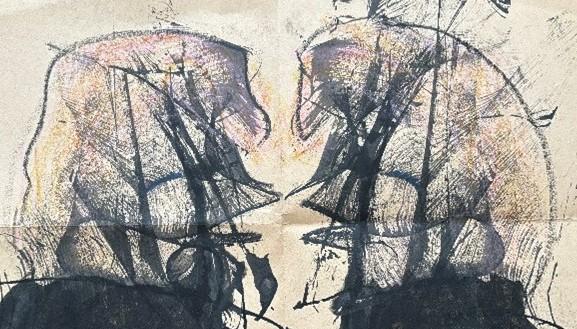
Artwork titled Conversation by Debby Hackbarth

HELLO
WRITERS &ARTISTS
CALLFOR SUBMISSIONS IS OPEN!
*No prompts or themes - no boundaries*
WELL READ is looking for submissions from writers and artists who have stories to tell – through words and art. We combine new and established voices from diverse backgrounds and celebrate different perspectives. We want people who aren’t afraid to shake things up, speak their mind, and share their humanity.
Click here for SUBMISSION GUIDELINES

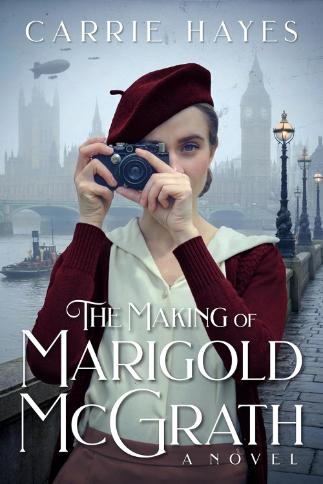

CLAIRE CONSIDERS
The
Making of Marigold McGrath by Carrie Hayes
“The
Making of Marigold McGrath” by Carrie Hayes
Reviewed by Claire Hamner Matturro
“The Making of Marigold McGrath,” an April 2026 release by Carrie Hayes, is an excellent historical/coming-of-age novel by an author who has already proved herself with prior historical novels focused on women. “The Making of Marigold” offers all the elements one might want in historical fiction—accurate and detailed historical elements of a compelling time, adventure and drama, a tender love story, well-drawn and fascinating characters, and a controlled, well-paced plot. The writing itself is crisp, clear, and descriptive. The story is told from multiple points of view, which adds insight and richness to the story and the characters.
As the title reflects, the novel traces the events that shape a very young Marigold into a vital, maturing young woman—someone who comes of age in England during the lead-up to and the actual wartime of WWII. The novel starts in New York City in winter, 1936, and the focus is on the deep friendship between Marigold and Trude. This friendship will be a critical and emotionally moving part of the story as both will end up in Europe during the war.
Marigold’s foreign-born mother is more than a bit of a mystery, and Marigold will later seek to learn more about her, but before
McGrath by Carrie Hayes
Marigold is grown, she will lose her mother. Marigold’s solace—in addition to her friendship with Trude and Trude’s family—is her camera. Before her mother’s death, her mother encouraged Marigold’s passion for photography and often acted as her model.
After the death of her mother, Marigold begins college locally, though Trude goes off to Oxford. Soon, though, Marigold is banished to England after a scandal that embarrasses her distant and disapproving, pro-Nazi father. Though she was more victim than not, her father’s reaction is to send her off so he can be done with this child of his first marriage. Motherless and estranged from her father, Marigold arrives lost and lonely in London in 1938. She finds lodging with Falaise Cooper, an older woman who knew Marigold’s mother during the WWI era. Meeting Falaise “allowed Marigold’s grief to finally unwind.”
Marigold expresses her self-doubts to Falaise and says, “I seem to have a case of poor judgment.”The older woman replies that she is sure Marigold does not and soon introduces her to a “tall and stylish” brother-and-sister team who were also close with Marigold’s mother. The three had been refugees during the upheaval of the First World War. The brother is a gifted photographer who takes Marigold under his wing and begins to mentor her. The sister becomes involved in a mysterious relationship as the story develops.
Within the comfort and support of Falaise and friends, Marigold begins to recover from her shame and sadness, and soon she finds meaningful work at a charity that helps relocate Jewish refugees.
McGrath by Carrie Hayes
The work is intense and heartbreaking but gives her a sense that she is truly helping. She will move on to other positions during the war, but her desire to be of service remains strong.
Her camera will become ever more important as the novel progresses, and she begins to record on film the times and events surrounding her—including orphaned Jewish child refugees and then the bombing of London. Along the way, she meets historical figures like famed photographer Lee Miller, Winston Churchill, and Edward R. Murrow, renowned for his live radio broadcasts for CBS from rooftops and streets during the Blitz.
Marigold’s love affair with a brilliant, brave Dutchman named Joop, who works with the Dutch underground, adds both the emotions of young love’s awakening and the suspense surrounding his dangerous work. The moments between young lovers Marigold and Joop are tender and captivating, yet haunted by the knowledge that he will leave her to return to his work with the underground. Hayes writes the life-and-death scenes with Joop with accurate, page-turning suspense and details. His work saving Jewish refugees adds great tension and drama to the novel while also serving as a powerful historical lesson.
Marigold and Trude do meet again in London before the war, and their lives intertwine more closely as WWII starts and the bombings of the infamous London Blitz threaten their very lives. The passages involving the bombing are intense, graphic, and illustrate the very real dangers and impacts of the bombing on civil-
McGrath by Carrie Hayes
ians. Marigold’s photographs become ever more important both as historical documentation and as her way of helping the war effort.
Author Carrie Hayes seamlessly weaves real events and real people into the fictional characters and events in this novel in ways that create a sense of being there. Everything in the novel—from scenic descriptions, historical events, well-drawn characters, and the suspenseful plot—is vibrant, realistic, and captivating. This is an immersive novel not to be missed. Written with acuity and knowledge, as well as great talent, the story both educates and entertains—as the best historical fiction should do.
Born in New York City, Carrie Hayes grew up around journalists, idealists, and rule-breaking women. She has had many diverse professions and jobs, including teaching. Her debut novel, “Naked Truth or Equality,” was an Editor's Choice in the Historical Novel Review. She is also the author of a second historical novel, “Well Dressed Lies.”
Marigold McGrath by Carrie Hayes
CLAIRE CONSIDERS The Making of Marigold McGrath by

Carrie Hayes
Finding Inspiration in Unexpected Places
THE WRITER’S EYE
with Susan Beckham Zurenda
and guest author, Lis Anna-Langston
One of the many wonderful things about being out in the book world is the people you get to meet, including other authors. In March, I had the pleasure of being on a panel at the Read Freely Fest in Columbia, SC, with author Lis Anna-Langston. During the panel, Lis talked about the inspiration behind her stories. I immediately asked her to write a column for us about unexpected inspiration, and she agreed. Enjoy:
I started at a performing arts school when I was eleven years old, which sounds like the beginning of a story about inspiration. It isn’t.
At least, not from the inside.
No one sat me down and said, this is what it means to be inspired. There was no lightning bolt, no moment where the world opened and poured something luminous into me.What I remember instead is the beginning of doing what I love every single day. I’d never wanted anything like I wanted to get into that school. Once I was accepted, I definitely didn’t wait for inspiration.
When you attend a dramatic arts class every day there is a kind of hum that threads its way through your life. A sense that there is always something just out of reach and you have to get to it. That is the assignment. That is the work. Pushing further and further, deeper and deeper.
People call it talent. Or passion. Or inspiration. But that word has always felt too clean, too polite, too airyfairy.
Because what actually drives my work—the real work—is rarely beautiful. I don’t roll up my sleeves and take on incredibly difficult work because I am inspired.
When people talk about finding inspiration in unexpected places, they usually mean small, charming moments. A conversation overheard in a coffee shop. A photograph. A piece of music that unlocks something.
And those things exist. They can be useful. But they’re not the engine. The engine is more dynamic than that.
The engine for me is a story that won’t settle. A memory that doesn’t behave.Acharacter whose reality bends in ways that don’t match the agreed-upon version of the world.
That’s where the work starts—not in clarity, but in friction, in a disturbance in the field.
I’ve written pieces that orbit grief, mental illness, memory, madness and the thin membrane between what is real and what feels real. Not because I sat down and thought, this will be inspiring, but because I couldn’t stop circling those questions. I circle them constantly.
What do we do with someone we love when their mind fractures into pieces we can’t put back together? Where does imagination end and delusion begin?And more unsettling: who gets to decide?
Those aren’t inspirational questions. They don’t resolve neatly. They don’t offer comfort.
But they generate energy. They demand attention. They pull me back to the page when I’d rather look away. Because every amaz-
ing piece I’ve ever written and will write sits in that empty space when I look away from the page because what I am looking at is too much. Too deep, too raw, too unbearable, too hard.
If there is such a thing as inspiration in my work, it lives in the refusal to ignore what is difficult to name.
The truth is, I don’t trust inspiration very much. In fact, I am deeply suspicious of it. It suggests that writing is something that happens to you, rather than something you pursue with intent. It implies a kind of passivity, as if the work depends on waiting for the right feeling, the right mood, the right moment.
But most of the writing that matters doesn’t arrive when I feel ready. It’s not comfortable or easy. It arrives when I stay long enough to hear difficult truths. When I sit with material longer. When I follow a thread somewhere inconvenient. When I resist the urge to tidy things up.
That’s not inspiration. That’s endurance.
My favorite writer, James Baldwin said, “Talent is insignificant. I know a lot of talented ruins. Beyond talent lie all the usual words: discipline, love, luck, but, most of all, endurance.”
Not a single mention of inspiration. Because if I follow those threads far enough, if I stay with the discomfort long enough, something shifts. A moment where the scattered pieces begin to align—not into a clean answer, but into a shape I can finally see.A shape that feels true and often unsettling.
That’s the closest thing I’ve found to what people mean when they talk about inspiration.
THE
EYE with guest author Lis
Anna-Langston
Not the spark.
The click.
So, when I’m asked where I find inspiration, I don’t think about beautiful moments or sudden ideas. I think about the things that won’t leave me alone. Questions that resist easy answers. Emotional knots that refuse to untangle.Things that find me in the dark. Things that are complicated.
Those are the places I return to. Not because they are pleasant, but because they are alive. The spaces after the spark.
Writing, at its core, is an attempt to stay with what is alive long enough to understand it or at least render it honestly.
If there’s anything I learned starting young, it’s this: You don’t wait to be inspired.
Pay attention to what unsettles you and then be stubborn enough to follow it.
Hailed as “an author with a genuine flair for originality” by Midwest Book Review and “a loveable, engaging, original voice…” by Publishers Weekly, LisAnna-Langston was raised along the winding current of the Mississippi River on a steady diet of dog-eared books. She attended a Creative and Performing Arts School from middle school until graduation and went on to study Literature at Webster University. Her novels have won the Parents’ Choice Gold, Moonbeam Book Award, Independent Press Award, Benjamin Franklin Book Award and NYC Big Book Awards. A three-
time Pushcart award nominee and Finalist in the Brighthorse Book Prize, William Faulkner Fiction Contest, George Garrett Fiction Prize and Thomas Wolfe Fiction Award, her work has been published in The Literary Review, Emerson Review, The Merrimack Review, Emrys Journal, The MacGuffin, Sand Hill Review and dozens of other literary journals.
You can find her in the wilds of South Carolina plucking stories out of thin air.


“Loyalty above all things except honor.”
Annie Asks Steven Manchester
After serving in Operation Desert Storm and returning to the demanding world of corrections as a Massachusetts prison investigator, Steven Manchester found inspiration in an unexpected challenge from a college professor who encouraged him to write the book no one else had.That moment transformed his life. More than three decades later, Manchester is an acclaimed, award-winning and bestselling author whose works—including The Menu, The Ledger, You Will Be Peter, Three Shoeboxes, The Rockin’ Chair, and the beloved Bread Bags & Bullies series—have touched readers around the world. His writing has been featured on national television, in major publications, and honored by numerous literary festivals, reflecting a career dedicated to storytelling that inspires hope, healing, and the resilience of the human spirit.
What is your idea of perfect happiness?
Sitting on the beach, listening to the surf—knowing that my family is safe and thriving. That is my true happiness; my place of peace.
What is your greatest fear?
Leaving this world with stories untold…and feelings withheld.
What is the trait you most deplore in yourself?
I have OCD, which has served as both a blessing and a curse for me. It drives me to be a prolific writer. But it can be maddening not being able to turn it off.
Which living person do you most admire?
My mother-in-law, Isabel DeSousa; she is the most selfless person I know.
What is the quality you most like in a man or woman? Empathy.
What or who is the greatest love of your life?
Who… my wife, Paula. What… my writing.
What do you consider your greatest achievement?
Being a good dad and Grampy. Everything else pales in comparison.
Who are your favorite writers?
Stephen King; Kristen Hannah; Mitch Albom; Jenna Blum, Robert Dogoni—the list is endless
What do you most value in your friends? Their time.
Who is your hero of fiction?
Atticus Finch (To Kill a Mockingbird)
How would you like to die?
Having a final laugh… surrounded by family and friends, knowing that they are okay and that my life’s work is done.
What is your motto?
Loyalty above all things except honor.
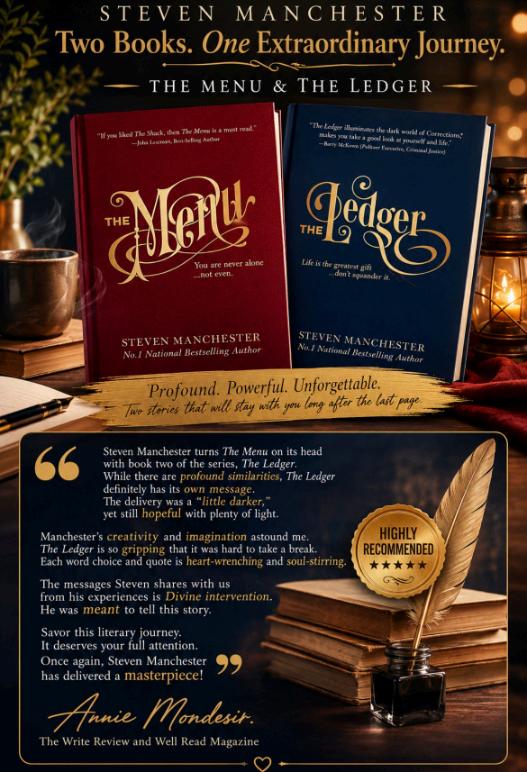

Author Toby LeBlanc Interviews
Author Amos Jasper Wright IV
AUTHORS INTERVIEWINGAUTHORS
Do you feel you understand the South more or less as you write about it?
Setting out, with all the hubris of a Southerner (capital S!) to make the final statement aboutTHE SOUTH, I imagine in the honeymoon phase of composition that I understand something about this place that is more mental headspace than mappable terrestrial coordinates and to that end I spend years, actual years of my life typing out this final statement: a florid and humid description of THE SOUTH here, a little twangy dialogue spoken by a Southerner there; by the end, hundreds of thousands of made-up words later, more self-mystified than ever, I understand less at the omega than all the way back at alpha, like taking a marathon test, thinking you aced it, only to get a failing grade; emptied of all knowledge and drained of the most picayune data point, there is at least the thrilling sensation of depletion and futility which, because he is a knuckleheaded Southerner and not a practical southerner, a small uncertain species that dwells in the very real suburbs of Atlanta, become the germ of the next final statement.
Partly, this may be because these books are more products of my first-person understanding of the South, an exercise in phenomenological tourism, scattered decoratively with some historical rumormongering that professional historians might find recognizable, more than transparent contact with the South’s deep-fried downand-dirty bona fide Kantian thing-in-itself, which would either be transcendent or terrifying. The tradition of Southerners making the final statement about THE SOUTH, legendary and yarned as the multifarious ways to make gumbo or barbecue, is a tradition I expect will continue so long as the South tricks us into thinking its a real place.
What do you think is currently missing from literature and/or there is too much of?
Given the glut of publishing in most developed economies there’s probably too much of all of it. The United States routinely leads the Bibliomaniac Bloc in population-level graphomania, saturating the market with our internal monologues, so that the signalto-noise ratio is mostly noise and locating signal becomes a matter of personal preference, some dumb and often dumber luck, and recommendation algorithms. I could cite statistics, but the fact that statistics exist simply confirms the thesis.
I’m often tentative around definitive statements, yet scanning the more bookish corners of the internet, I see a lot of the office novel, the tech novel, the climate novel, the covid novel and what-
ever soup du jour is trending in the book market. Then there’s hyphenated hybrids, techno-horror and dungeon-crawler clowncorethriller and other whatnots. I’m of course guilty of operating in these genres, as they reflect the world we have created for ourselves. I’m excited to finally introduce readers to my upcoming neo-noir vampire romance techno-horror space opera bodice ripper comedy thriller!
Fine, so I’m disappointed in the apparent lack of rigorous treatments of economic issues, micro and macro. The office novel and tech novel will sometimes bluff in this direction – “capitalism bad” (of course it is!) – and then fizzle out. Maybe exempla of this technical genre exist, and I haven’t found them yet or the recommendation algos haven’t found me – I’m not claiming to have read every book in these genres, I’m only human – but give me the technical élan with which Melville wrote, perhaps ad nauseum, about whaling or the technical exotica of the hard science fiction novels, some of them written by credentialed practicing scientists who made genuine contributions to their fields. I’m not saying Milton Friedman should’ve written short fiction – although “The Social Responsibility of Business is to Increase Profits” is great for some real screams – or John Maynard Keynes should have written supply-side sagas or demand-side dystopias, but where is the deep engagement with the technical minutia of the infrastructure of the financial system that overdetermines our lives with insidious invisibility? The global financial system is every bit as complex as the interstellar propulsion systems of hard science fiction. Maybe
readers find all this frightfully boring and oppressively pedantic –that’s fine, while I admire their prose, there’s only so much of David Foster Wallace’s microscopy of tennis or Sir Walter Scott’s tedious descriptions of antiquarian junk a fellow maximalist can take – but what is fiction for if not to indulge solipsistic hobbyhorses? To the surprise of no one, I’m not an economist!
And don’t forget to make me laugh! Hit me with humor and satire that isn’t cheap. I want to hoot, not smirk; hollering, not mockery. Think of S.J. Perelman, James Thurber, H.L. Mencken, Robert Benchley, Wolcott Gibbs, those early New Yorker humorists whose parodic prose sparkled with an intelligent wit and ironic precision rarely observed now except maybe in the Weird Twitter feeds of anti-humor accounts like dril or wint. Mencken’s nonfiction is so chockfull of withering howlers and freakish takedowns I don’t know whether to laugh and be grateful we once had such a wry cutup or cry that we produced so many sorry targets of his self-lettered scorn (corrupt judges, senators, cops, politicians, preachers, dogmatists, race-baiters, prohibitionists, fundamentalists – the booboisie that is still with us). Thurber’s subject matter was often dismissed as too trivial and small for literary gatekeepers, but his shaggy dog stories possess a human-sized glowing humor seldom seen. Even Stanislaw Lem, from the gray uniformity behind the Iron Curtain, made space travel funny! Now I sound like one of those “back in my day” stuffed shirts from the antediluvian golden years before the internet…
Every writer I've spoken with wants their reader to feel something after reading their work. Is there something you would want your reader to do after reading yours?
Despite its fantastical or surrealist elements, this particular book, The Battle of Danziger Bridge, is embedded in sociohistorical realities that haunt the city to this day. New Orleans may be a dead museum, but it is a museum of a restless poltergeist history that won’t die, which goes on rattling chains and spooking the characters with kinetic hijinks – in the book, it’s undecided whether an early 20th century New Orleans axe murderer is still alive (undead?), running amok in the Garden District and terrorizing the bayou bourgeoisie or if Mark Essex is still haunting neoConfederate krewes. To arrive at the point of all this otherworldliness; because Louisiana, which is miraculously somehow still part of the United States, is a sort of swampy laboratory for our republic’s experiments on human subjects in advanced methods of plantation political economy, maybe the reader leaves with some discernment of how these bloodsucker poltergeists are very much contemporary actors in the national nightmare. If not, then sorry for wasting everybody’s time.
Enough of the partisan necromancy. Then there’s the fun part: aesthetics. Like the city that constitutes its chief setting, the novel is baroque in style – you know the Victorian gingerbread woodwork all over town, the overwrought filigrees and gaudy gables and splashy spindlework, this wondrous sinking, stinking, subli-
mating below-sea-level metropolis dripping with humidity and gothic memory – the reader can detect all that sensory detail, I hope, even if they’ve never been to New Orleans.Tasteless, showy, vulgar? Sure! But jazzy, rhythmic and real!
Describe your ideal writing retreat.
The ideal writing retreat must be some sanctum akin to retirement at a young enough age that one’s faculties are not dilapidated and the solitary confinement of Crusoe in a deep space capsule with no return flight.Aretreat is temporary, but this will be a heavily defended fortress of solitude, boobytrapped with final statements about THE SOUTH and tedious descriptions of fractional reserve banking that will terrorize the booboisie with boredom and drive the would-be meddler to seek immediate mental health treatment as far away from my retreat as their sense of humor will take them. Otherwise, I will have a superabundance of unstructured time to read and write, not to mention edit; with mind-over-matter willpower I will slow my metabolism to a wormlike wiggle so that I don’t have to interrupt the internal monologue for the bothersome routines of the flesh; and the so-called man on urgent business from Porlock, infamous for interrupting opium-addled Coleridge while composing “Kubla Khan,” will stay far from my door which will be guarded by a heavily armed shaggy dog story. Who does this Porlock agent work for? What does he want? Why is he bothering me and asking me to pay taxes, report to a workstation every
morning Monday through Friday to perform the same unfunny futilities as last week, and to get my work product in by the close of business? Get off my lawn! Scram, mister! Not having a door at all may be the only solution to unwanted guests and untimely interruptions.
Is there something else you are working on?
Projects are always percolating and gestating upstairs in the old bean. Meanwhile, I’m applying the finishing touches to a collection of interrelated stories, long enough to be novellas, based in speculative economics and weird finance; for example, a billionaire who funds the building of a Challenger II to settle the moon (an animatronic Ronald Reagan tells him to “touch the face of God” as the trickle-down supply-side president said in his address to the nation after the original shuttle disaster) and who attempts –and this is not figurative or allegorical – to pass through the eye of a needle with his loot which is Biblically impossible.
One day I’ll find the courage and the time to edit two novels in draft form: one loosely plotted around the GameStop stock bonanza that just about broke the stock market during the pandemic (gamma squeeze!) and an overlong office novel – I never said I was innocent! – known as The Empire of Repetitive Motions, dramatizing how a fintech worker copes with the metaphysical repetitions of the daily grind while also diagnosing the narrator’s 9/11 trauma and covid lockdown lunacy. I’ll muddle through these while gam-
ing out future voyages into cosmic horror, weird anthropology, prison literature, science fiction, SETI, megascale engineering and, should the South ever call again, a novel on Alabama football and machine politics. Look out for that neo-noir spy thriller vampire erotica!
Amos Jasper Wright IV is from somewhere in the Deep South. His first short story collection, Nobody Knows How It Got This Good won the 2017 Tartt First Fiction Award from Livingston Press and was published in 2018. Livingston Press then published his first novel, Petrochemical Nocturne in 2023 and his second novel, The Battle of Danziger Bridge in 2026. His author website is www.amosjasperwright.com
Toby LeBlanc grew up in the prairies of Scott, Louisiana, surrounded by both English and French. He's been known to talk to trees and slip extra seasoning into food when no one is looking. Some of his writing can be found in Barrelhouse Magazine and Coffin Bell Journal. He is a regular review contributor for The Southern Review of Books. His novel, Dark Roux, was published by Unsolicited Press in 2022. Soaked, his short story collection, was released in 2025 from Cornerstone Press. His most recent manuscript was a finalist for the Faulkner-Wisdom competition in New Orleans.

The Battle of Danziger Bridge presents a collection of interlocking stories set in contemporary New Orleans dealing with dilemmas and questions of local and national urgency. The collection deploys a mix of male and female, black and white narrative voices in humor and pathos, some of whom narrate multiple stories or reappear as characters in other stories, creating a cacophonous effect of conflicting perspectives and values. This overlapping action and character give the collection the cohesiveness of a novel. The Battle explores themes of police brutality, post-Katrina redevelopment, the 2016 presidential election, gender relations, trauma, sports superstitions, the legacy of institutional racism, environmental catastrophe, and the alienating effects of technology—all themes relevant to the country’s current cultural climate.
The Battle of Danziger Bridge Amos Jasper Wright IV

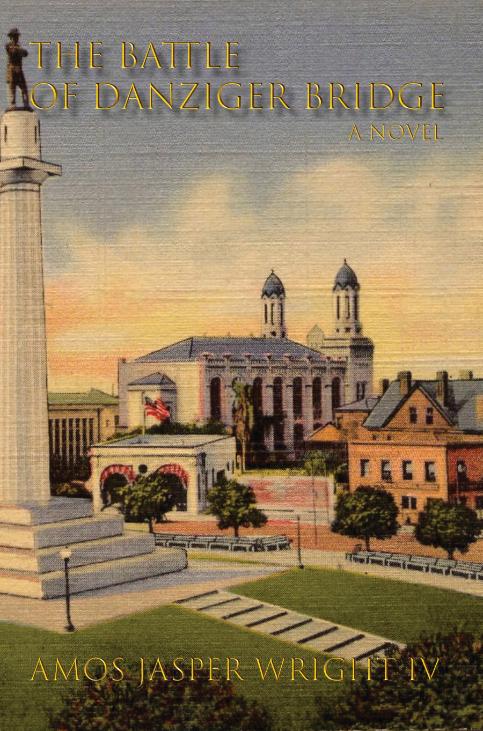

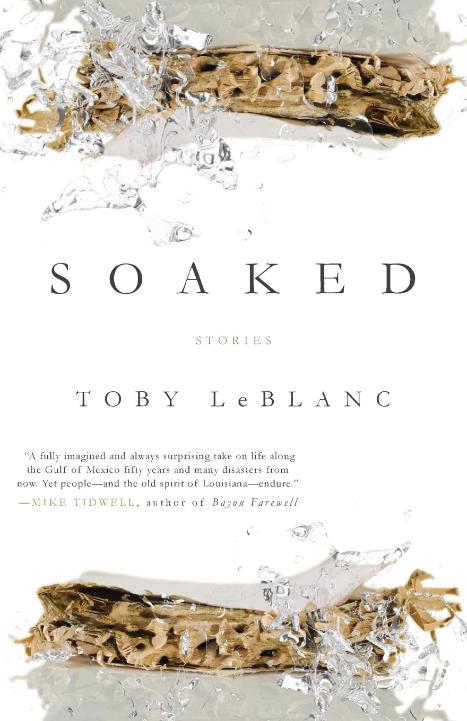
"A fully imagined and always surprising take on life along the Gulf of Mexico fifty years and many disasters from now. Yet people-and the old spirit of Louisiana-en- dure."
-MIKE TIDWELL, author of Bayou Farewell
Soaked
Stories
Toby LeBlanc




I’m an indie author of two short story collections – Walking the Wrong Way Home and Sharp as a Serpent’s Tooth – Eva and Other Stories, and a novella, Oliver. I’m the editor, designer, and publisher of WELL READ Magazine’s Best of 2023, and Best of 2024 anthologies, editor of the Encounters With Nature anthology, and co-editor of The Best of the Shortest: A Southern Writers Reading Reunion. I’m also a freelance writer for Amelia Islander Magazine, and the Editor in Chief and Publisher of WELL READ MAGAZINE.
I’ve learned so much about formatting, interior design, cover design, and self-publishing since my first short story collection came out and oddly enough, I’ve had fun doing it! But it can be frustrating and overwhelming trying to figure it all out on your own. I’d like to use what I’ve learned to help you.
Whether you’re thinking of self-publishing, querying agents or small presses, I can get your manuscript ready to send out without costing a fortune or waiting for months for a finished product.
Cover Design Pricing starts at $250 - Price include covers for both your print and ebook with unlimited tweaks until it’s perfect. See the next page for a few examples of covers I’ve created.
Interior formatting for print - $2 per page (for edited manuscript ready to go), $3 per page if photos or images are included in your manuscript. If you’d like to include an epub file there’s an additional $1 charge per page.
Professional Critique - $2 per page
For more information, click here, or contact me at mandy@mandyhaynes. com for a free consultation.
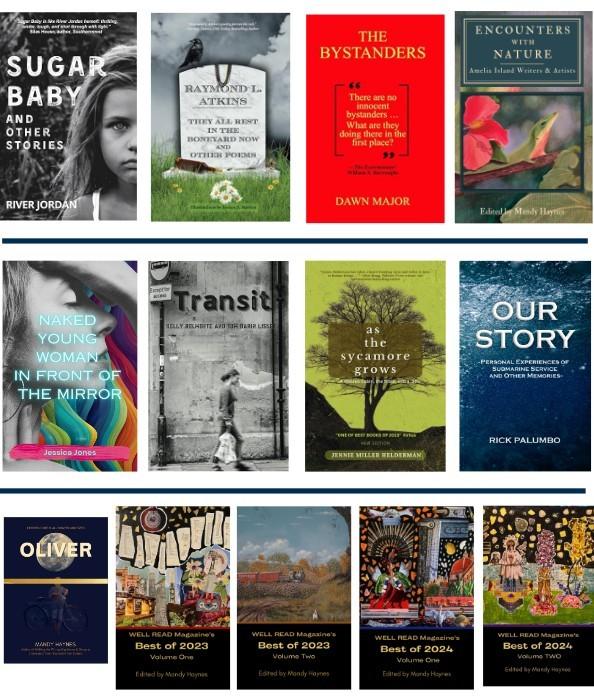









I’m looking for Authors Interviewing Authors and would love to shine a spotlight on your favorite Independent Bookstores, Book Sellers, Libraries, and Librarians.
These pages are a great way to let readers know who you are and they are FREE.
Send orders for ads, interviews, or the stories mentioned above, as well as any questions about the magazine to:

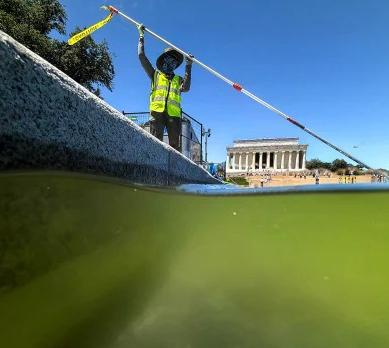
A monthly column that takes us off the page and into the life of
Ray Reflects
As a public service, and because it is my patriotic duty, I feel compelled to weigh in on the current issues manifesting at the Reflecting Pool in Washington, DC. The thing has been there since 1923, and for all of that time it has been just fine. Millions of tourists have gazed into it, two of my children waded in it until their mama ran them out, photographers have captured postcardperfect reflections, and all manner of waterfowl have used it as a pit stop on their annual journeys from somewhere to somewhere else. Yet all of a sudden this year it has decided to turn into a swamp. No one knows why. Personally, I think the Reflecting Pool is just trying to blend in with its surroundings, but that is just my opinion, and now I will pause a moment to make sure you got that one.
Anyway, I have been a pool boy for 38 years now—not as a professional, mind you, because you couldn’t PAY me to do the work—and as a talented amateur it is clear to me all of the many missteps that those in charge up there have made. In the interest of full disclosure I should tell you at this point that my wife and I never even wanted a swimming pool, which just goes to show what can happen when you don’t take a look out behind the house before
you buy it, but that is water under the bridge—or into the pool as the case may be—and there is nothing we can do about it now.
WifeAfter Closing: Hey, have you looked in the backyard?
MeAfter Closing: Is there a deer out there?
WifeAfter Closing: Uh, no. Not a deer.
There is an unverified story that the exact same thing happened back in 1923 when First Lady Grace Coolidge looked out from the back porch of the Lincoln Memorial.
First Lady: Hey, have you looked in the backyard?
Silent Cal: Is there a deer out there?
First Lady: Uh, no. Not a deer.
The first mistake that was made leading up to our national quagmire—yes I know I am using the passive voice, and as an English teacher I know better, but I am trying to write this essay without singling out any specific person who might have caused the whole mess because he or she thinks they know better than anyone else when they absolutely do not—was that the cardinal rule of pool ownership was broken. Simply put, if a pool is holding water and nothing dead is floating in it, you leave it alone. You don’t tweak, and you don’t adjust. If you don’t believe me on this one, and I have never lied to you—except maybe that one time, and the less
we say about that the better—then ask anyone you know who owns a pool and they will tell you the same thing.
The second mistake I have identified was in the choice of pool contractors. In the normal places of the world, down here where the real people live, when it comes time to have something done to a pool and you can’t figure out how to do it yourself, the first step is to ask all of the pool owners you know who they have used for maintenance and repair. Once they have all told you who never to use no matter what, you once again try to fix the problem yourself. If you go this route and find yourself trying to rebuild a Heyward pump on top of the picnic table in the back yard, whatever you do, do not touch the blind end of the capacitor with the tip of your screwdriver. Don’t ask me how I know, and you’re welcome. To continue, the government in its wisdom skipped all of this and just hired someone’s buddy. I am not sure what we the taxpayers paid for the privilege of having a concrete bayou, but all of the figures I have heard begin with two numbers followed by the word million. I guess the pool crew had to come through the Strait of Hormuz.
As an aside, if you are determined to turn your pool into a marsh, just give me a holler. For one million dollars I will come ruin your pool, and as an added bonus I will throw in killing your lawn and puncturing two of your tires for free.
As all pool owners know, sometimes despite your best efforts, your pool will be beset by algae. Regardless of what you may have heard, it is not true that scattering $100 bills into a pool with an algae bloom will clear the water. Anyway, even if it did work, the
Reflecting Pool is pretty big, and the deficit is bad enough as it is. The only thing that works on algae is chlorine. Lots and lots of chlorine. When algae rears its ugly head, it is time to shock the water. To do this, you must buy powdered chlorine to scatter into the pool. It is called shock because of its effect upon pool owners when they get to the cash register, especially this year, because the price has doubled since last year. I’m not fussing, though. As a true American, I love inflation.
There are two schools of thought about how much shock is enough. You can play it safe and read the backs of the chlorine bags, which will tell you all about ph’s and ppm’s and chemical interactions and the like.
Then, once you have mastered the theory of water purification, you can proceed slowly and carefully, adding a bit of chlorine at a time between tests, until you have gently coaxed the water to its ultimate purity. Or you can do what I do and just keep loading the pool with shock until random birds flying over it drop dead from the fumes. Once you hear that bird plop into the water, the pool will clear up by the next morning. If you are a member of theAudubon Society and squeamish when it comes to using birds as test strips, another tried and true method is to throw the kids in there. If they all come out pale and blond, you are good to go.
Today, the Reflecting Pool remains on duty between the Lincoln Memorial and the Washington Monument, doing what it has always done, but in a murkier manner. If my government needs me to straighten out this mess, I am available, and they know where to
find me. I have 38 years of experience, a good skimmer net, and detailed knowledge of what a capacitor will do if you look at it wrong. My long suffering and amazingly patient wife says I should mind my own business. She is not wrong. She is, in fact, almost never wrong, which is one of the things that makes her indispensable and occasionally difficult to live with, and I say that with great affection and also with the full awareness that she will read this. But I believe the Reflecting Pool is everyone's business, because it belongs to everyone. It has been there through good times and bad, through wars and recessions, and I believe it will survive the current administration. For over 100 years it has reflected all of it without complaint, without editorial, and without billing anyone for its time. Despite every challenge, it remains one of Washington's most reliable mirrors, still perfectly willing to show us exactly what is standing in front of it, whether the people in charge appreciate the view or not.
To the right is a photo of Ray’s pool. I can’t help but think someone would be jealous over the lining’s beautiful shade of blue - mh


Mandy Haynes, Editor-in-Chief, Designer, Publisher, & Founder
Mandy Haynes is the author of two short story collections, Walking the Wrong Way Home, Sharp as a Serpent's Tooth Eva and Other Stories, and a novella, Oliver. Her stories have appeared in several anthologies and literary journals. She is the editor and designer of Encounters with Nature, a collaboration ofAmelia Island Writers and Artists, The WELL READ's Best of 2023 anthologies, and also the co-editor of The Best of the Shortest: A Southern Writers Reading Reunion.



Raymond L.Atkins, Contributing Editor for OFF THE PAGE
Raymond L. Atkins resides in Rome, Georgia, on the banks of the Etowah River in an old house with a patient wife and a lazy cat. His hobbies include people-watching, reading, and watching movies that have no hope of ever achieving credibility. His first novel, The Front Porch Prophet, was published in 2008 and was awarded the Georgia Author of the Year Award for First Novel. Camp Redemption, was awarded the Ferrol Sams Award for Fiction and the 2014 Georgia Author of the Year Award for Fiction. Sweetwater Blues was a Townsend Prize nominee, the 2015 GeorgiaAuthor of the Year runner-up for fiction, and the 2016 selection for One Book, Many Voices. South of the Etowah, his first creative non-fiction book, was released in 2016. It was nominated for a Push-cart Prize and was the 2016 GeorgiaAuthor of theYearAward runner-up for essay. In 2017, he was awarded the Lifetime Achievement Award by the Georgia Writers Association.


Robert Gwaltney, Contributing Editor for INSIDE VOICES
Robert Gwaltney, award winning author of southern fiction, is a graduate of Florida State University. He resides in Atlanta Georgia with his partner, where he is an active member of the Atlanta literary community. Robert’s work has appeared in such publications as The Signal Mountain Review and The Dead Mule School of Southern Literature. His debut novel, The Cicada Tree, won the Somerset Award for literary fiction. In 2023, Gwaltney was named Georgia Author of the Year for first novel.
Meet the staff


Ann Hite, Contributing Editor for MOUNTAIN MAGIC
In September of 2011 Gallery, an imprint of Simon & Schuster, published Ann Hite’s first novel, Ghost on Black Mountain. In 2012 this novel was shortlisted for the Townsend Prize, Georgia’s oldest literary award. In the same year, Ghost on Black Mountain won Hite Georgia Author of the Year. She went on to publish four more novels, a novella, memoir, and most recently Haints On Black Mountain: A Haunted Short Story Collection from Mercer University Press. In December 2022, Haints On Black Mountain was one of ten finalist for the Townsend Prize. The collection was a Bronze Winner in Foreword IndieAward 2023 and GeorgiaAuthor of the Year Second Place Winner for Short Stories 2023. Ann received a scholarship to the Appalachian Witers Workshop Hindman Settlement in the summer of 2020 and was invited back in 2021. Her passion for history influences all her work.


Jeffrey Dale Lofton, Contributing Editor for INSIDE VOICES
Jeffrey Dale Lofton hails from Warm Springs, Georgia. His years telling the stories of playwrights and scriptwriters as a stage and screen actor taught him the pull of a powerful story arc. Today, he is Senior Advisor at the Library of Congress, surrounded by books and people who love them. Red Clay Suzie is his debut novel, a fictionalized memoir written through his lens—gay and living with a disability—in a conservative family in the Deep South. It was longlisted for the 2023 Center for Fiction First Novel Prize and awarded the Seven Hills Literary Prize for Fiction, among other distinctions.

Dawn Major, Contributing Editor for TRIPLIT with D Major
Dawn Major’s debut novel, The Bystanders, was named finalist for 2024 GeorgiaAuthor of the Year for Best First Novel. Major is an associate editor at Southern Literary Review and advocates for southern authors via her blog, Southernread. Her literary awards include the following: the Dr. Robert Driscoll Award, Reinhardt University’s Faculty ChoiceAward, and the James Dickey Review Literary Fellowship. Major is a member of the William Gay Archive and has edited and helped publish the works of the late author. She serves on the board for Broadleaf Writers Association and is also a member of M’ville, anAtlanta-based artist salon. Major lives in the Old Fourth Ward inAtlanta, GA and is working on her next novel, The Dandy Chronicles.

Claire Hamner Matturro , Contributing Editor for CLAIRE CONSIDERS
Claire Hamner Matturro is a former attorney, former university writing instructor, avid reader, and the author of seven novels, including four published by HarperCollins. Her poetry appears in various journals including Slant and Lascaux Review. She is an associate editor ofThe Southern LiteraryReview and lives happily in Florida with her cross-eyed rescued black cat and her husband.




Annie
Mondesir,
Contributing Editor forANNIEASKS
Founder of The Write Review Literary Community, Podcaster, Book Reviewer, Author Consultant and Matchmaker. She also teaches workshops on top of all of this!Annie has been introducing us to books and authors since 2006, when she began reviewing books for Elle Magazine. Proud Stiff Person Syndrome Warrior, and several other illnesses.

Susan Beckham Zurenda, Contributing Editor for THE WRITER’S EYE
Susan Beckham Zurenda taught English for 33 years on the college level and at the high school level toAP students. She is author of the award-winning Southern literary novel, Bells for Eli, and the recipient of numerous awards for her short fiction, including the South Carolina Fiction Awards, twice. Her second novel, The Girl From the Red Rose Motel (Mercer University Press, September 2023), was the recipient of the 2024 Patricia Winn Award in Southern Fiction, Gold Medal winner in the 2024 IPPY Awards for Southeast Fiction, a 2024 Pushcart Prize nominee, a Shelf Unbound 2023 Notable 100 books, and a finalist in theAmerican Book FestAwards. Susan lives in Spartanburg, SC.

Junebug Fischer by
Mandy Haynes
Junebug Fischer will be ninety-six come June. She's ready to set the record straight and let you know what really happened the summer she turned fifteen. It’s true, she killed someone, but she never killed nobody on purpose. That was purely accidental.
“I don’t know what caused me to shoot the arrow. I didn’t think about it. I just did it. Was it fear or was it pride?”
5.0 out of 5 stars One of the most compelling story/book writers in America.
“Outstanding book. Intelligent, and yet creative, in the best sense of the word. The story/book keeps you engaged right up until the final page. Great, great book!!!”
5.0 out of 5 stars Will leave you wanting more!
“Junebug Fischer is the kind of strong, feisty young lady hero we love, and Mandy's writing of her story draws you in from the start. You'll feel like you're sitting on that porch with her, and I guarantee you'll want more. Her characters come to life in all of her stories, and I recommend you read everything Mandy has written, and will write! You won't be disappointed.”
5.0 out of 5 stars A Southern Voice to Remember
“There's an echo of 'To Kill a Mockingbird' in the voice of the central character here, and I mean that as a high compliment. You'll like her after the first two sentences and root for her the rest of this short but powerful book. I don't want to give anything away. Buy it and read for yourself. 5 stars.”