LANGUAGESMAGAZINE LOSTINTRANSLATION:
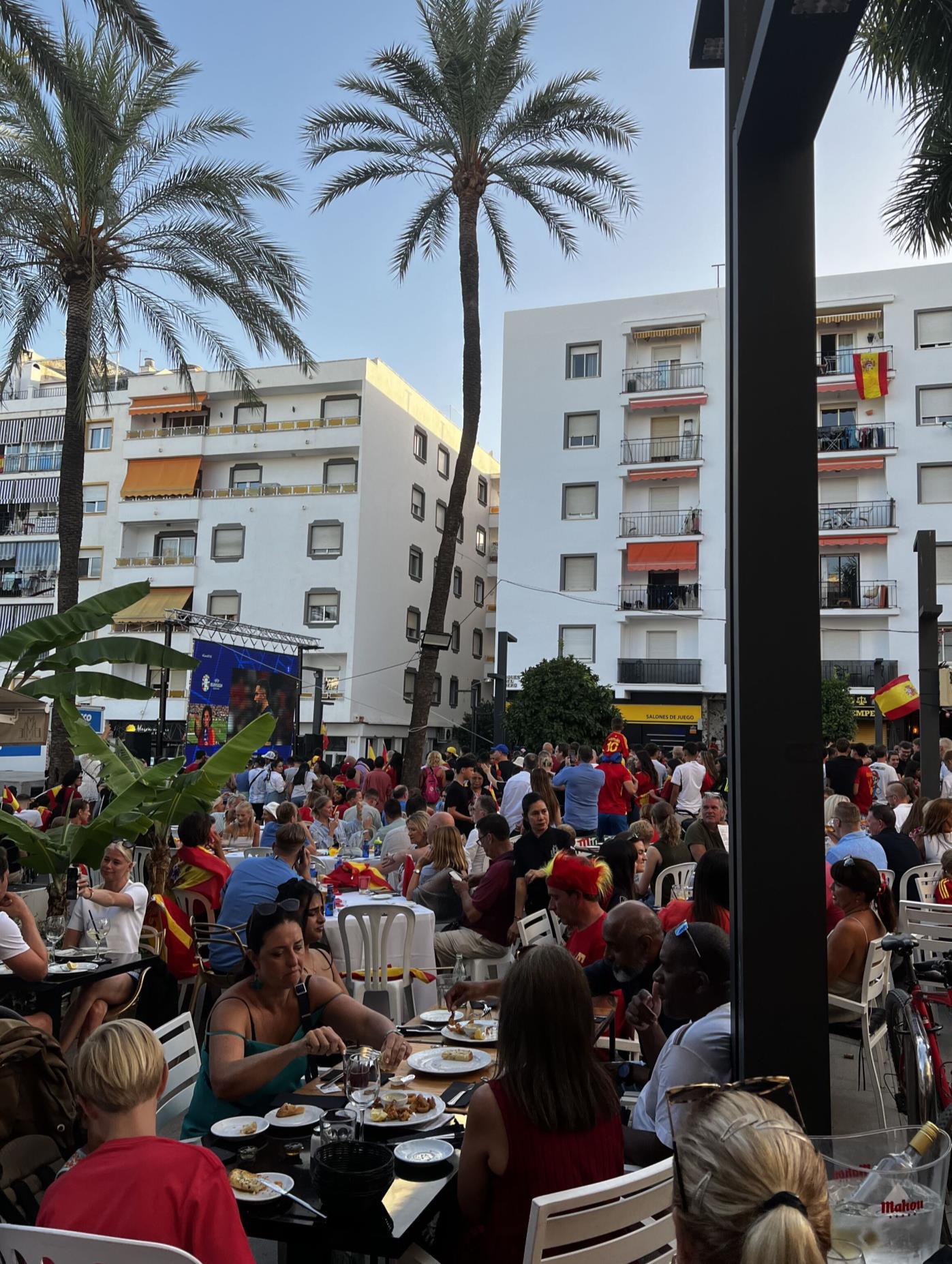

In this magazine, we explore why people choose to study or teach languages, interesting experiences that we have had relating to languages, Hispanic and francophone culture, sports and more. We would love if reading this will encourage you to consider taking up a new language or continuing with one that you are currently studying. We hope that in this magazine, written by 3 lower sixth linguists, we can celebrate MFL and highlight its importance in the workplace, music, meeting new people etc.


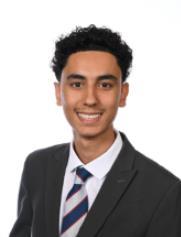

My name is Lois and I take Spanish A level alongside maths, further maths and physics.I have studied Spanish since I was 8 and from then on knew it was something I wanted to continueas the idea of being able to communicate in another language and potentially live abroad isone that I'vealways aspired tomake reality.The Hispanic world is rich with culture and history coupled with amazing cuisine and A-level Spanish has allowed me todevelop this passion by expanding my knowledge. I also have a love of music and the current developmentof the music world happening within the Hispanic community is really exciting to me.
My name is Ian, and I am the editor of Lost in Translation. I'm a sixth form student studying Spanish, Economics, and Maths. I enjoy learning languages because it allows me to communicate with people from a different background. I also have a passion for thedifferent cultures associated with the Spanish language andexploring them. I have studied Spanish since I was in year 4, and quickly became interested, hence why it is one of my A-level subjects. I hope to use my A-level Language in international work and engaging with Spanishspeaking communities.
My name is Maisie.I am currently studying French, Spanish and English Literature for my A levels and I hope to take French and Spanish at university. Languages have always been my passionever since I was little and did French lessons with my Granny. The Hispanic world is incredibly interesting to me, especially music and film- ElPerdón by Enrique Iglesias is a particular favourite of mine. I would absolutely encourage anyone who has an interest intalking to new people and learning more about other cultures to take up languages.
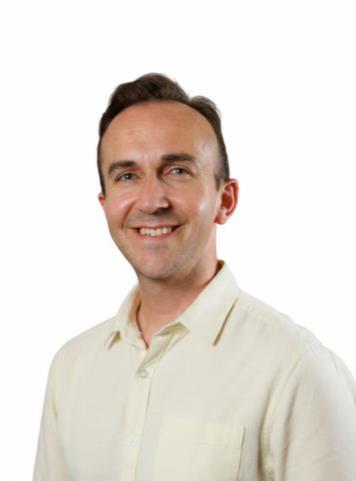
I have always been interested in languages and culture from a young age. My uncle moved to Barcelona when I was three or four and that was the small spark that started things off. I recall him coming back every Christmas with Spanish treats like turrón that I'd never seen before and opened my eyes to the possibilities that could come with travel. I didn't get to travel abroad until I was 7 years old but that trip to France left an enormous impression. It was the little things that sparked my curiosity: from shop or road signs to something as unremarkable as a supermarket. It struck me that everything was although things were different and despite all our differences with culture and language, we are all essentially the same.
Subsequently, I went on to study French and Spanish at GCSE, then A level. One of the highlights of my A level studies was spending a couple of weeks out in Reims, in the Champagne region of France and completing work experience with a sports centre who were running a programme to take sports coaching out to some of the more disadvantaged suburbs of the city. It was such a rewarding experience and lives long in my memory.
At university I completed a degree in French and Hispanic Studies, spending my year abroad as a language assistant in a small town called Almazora, about an hour from Valencia. Funnily enough, that experience almost put me off teaching as I was under-utilised in my role and mostly read aloud from the textbook to provide exposure to my "difficult northern accent". Thankfully a year working in an office at a pensions' company helped me see the error of my ways and I realised that I craved the unpredictability that comes with being in the classroom every day.
The next time I got to travel would be a few years later when we travelled to France and Spain, where I got to meet my extended Catalan family, although my cousin was yet to be born at that time. I enjoyed experiencing the different foods they shared with us, although I was pretty grumpy to eat after 9pm, which was something of a shock for 10-year-old me.
Mostly though, it was the curiosity I had as a child what took me into teaching, to share that wonder and interest in the French and Spanish languages I love taking students on trips and seeing them experience culture first hand or practise their language outside of the classroom with native speakers. Above all, language learning is such an important tool to help others to see how powerful it can be to speak a language and understand a culture when it comes to building relationships and breaking down barriers in the world.
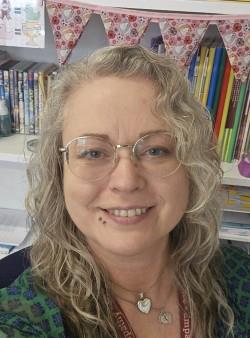
I don’t remember a time when I didn’t want to be able to speak French. Largely because I was a very nosy child and desperately wanted to know what my French cousin was talking about with her dad! I was thrilled when I finally made it to secondary school and was able to start on what has become my lifelong language learning journey.
After completing my A levels in French, Maths and Music, I was able to spend a summer living with a French family in Provence where I was truly immersed in not only the language (the family spoke almost no English) but also the wonderful sights, sounds and flavours of what quickly became a favourite region of France.
Having been made redundant (as many were in the IT sector at that time), I decided to retrain and become a Paramedic, a career that lasted me nearly 15 years. It was following this that I made the decision to follow in the footsteps of many family members and become a teacher.
Whilst my three careers may at first glance appear to have nothing in common, they do in fact all share a core characteristic of communication using specific languages.
As a Software Consultant I had to communicate with clients in whichever language ensured full understanding of what needed to be translated into the programming languages for creating end products.
I studied for my degree in French and Computer Science at UMIST (University of Manchester Institute of Science and Technology) which included a year living and studying Maths at university in Lyon. Attending German lessons in French is certainly challenging as is navigating musical terminology in French as the only non-French member of a flute orchestra! After graduating I worked for several years as a Software Consultant (programmer) primarily within the telecoms industry.
As a Paramedic, communication was key to being able to understand the history and needs of each patient I encountered, sometimes through spoken language and sometimes through gestures and compassion both of which I consider to be ‘languages’. I also had to be able to communicate clearly with other medical professionals using the appropriate language and terminology to ensure best patient outcomes.
As a teacher I communicate with many different people, but it is the students I interact with on a daily basis with whom I hope to share my love of languages and the communication that using different languages facilitates.
And whilst not a career, I also believe that music, which plays a big part in my life, is also an important language and means of communication in its own right.

My love of languages began with French. After a family camping holiday to France and 3 French exchanges in between Year 10 and 12, I was hooked. I loved the culture, the people and speaking the language; I was good at it, so that boosted my confidence and when I spoke French and people understood me - it gave me a real buzz. Keen to spend a longer period of time there, I asked my French A level teacher if she knew of anyone who'd like an English speaking au pair for the summer; she contacted a friend in the southwest of France in an area called Le Gers and low and behold, I had a summer job for 2 months in France after my A levels. I spent one month looking after two lively French boys and then another month with a family of 5 kids, who I am still in contact with 30 years later. I loved it so much that I returned the following year
Luckily for me, few people spoke English and so, I felt totally immersed in French. Getting used to the accent, and struggling to understand the pronunciation of basic words such as du pain and demain matin, was a challenge; however, I persevered and it paid off.
As I had such a love of French, when I was applying to university, I decided to try my hand at Spanishhow hard could it be? I decided to study French and Spanish at The Queen's University, Belfast. The first year, we did beginners' Spanish and that took my language learning to a whole new level; we had to learn and we had to learn fast so that we were at the same level as the Post A level students by our second year. As part of the course, I got to spend a month in the summer studying in Grenoble, France and this was followed by my year abroad in Navarra, Spain; this is probably one of the most memorable years in my life. I lived with 3 very chatty, hugely interesting Spanish ladies who helped me no end with my Spanish. I was then contacted by a language School to see if I would take some night classes with adults. This then led me getting a job in an English summer camp teaching little kids English but working amongst Spanish young people. I also met people from all over the world and I'm still in touch with them now.
I've always enjoyed working with children and with my love of languages, I already new my path was to be a teacher. If you want to learn a language - be brave! You have to immerse yourself at every opportunity and as they say, no pain, no gain! For me, it was all about the people I met and the experiences I had. Luckily I get to do it again with my family; I love exposing them to France and Spain and the cultures. Ever since the light was ignited in me when I was a teenager, no year is complete without a visit to both countries.
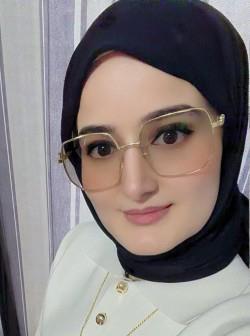
Growing up in Morocco, I experienced the benefits of multilingualism from an early age. While French was the language used throughout my education, Arabic is my native language and another language that I know very well. Speaking more than one language allowed me to connect with different cultures and perspectives, and it gave me a lifelong appreciation for the power of languages to open doors and create opportunities.
After moving to the UK 14 years ago, I was determined to improve my English and build my confidence. Although adapting to a new language and culture was challenging, I embraced every opportunity to learn and grow. Along the way, I won two writing competitions and had my work published on my school’s website, achievements that encouraged me to continue my educational journey.
This confidence led me to university, where I completed a Foundation Degree in Education with Distinction. I am now working towards a full degree and hope to complete teacher training to become a French teacher.
My role as a Language Assistant and Teaching Assistant has strengthened my passion for education. Supporting secondary school students with French and teaching Key Stage 2 pupils has shown me the positive impact that language learning can have on young people. Seeing students develop their skills and confidence has been one of the most rewarding aspects of my work.
I am especially grateful for the encouragement and trust I have received from colleagues, staff, and university tutors throughout my journey. Their support has inspired me to continue developing both personally and professionally so that I can provide the very best support for my students.
Languages have shaped many of the opportunities in my life, and I hope to inspire future generations to enjoy learning languages and exploring different cultures.
Within the MFL department there are many opportunities to broaden your knowledge outside of the classroom.
My experience with this started back in July of Year 9, I had just picked my GCSEs and of course chose Spanish as one of them and during activity week got the opportunity to spend the week in Barcelona.
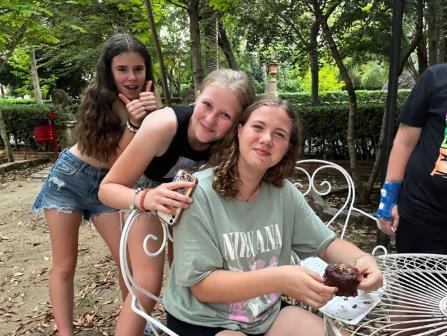
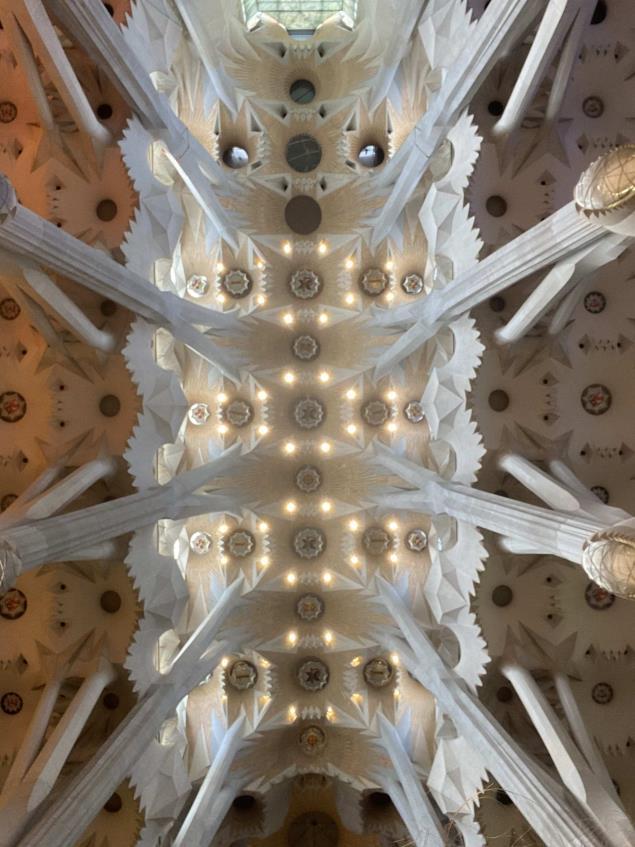
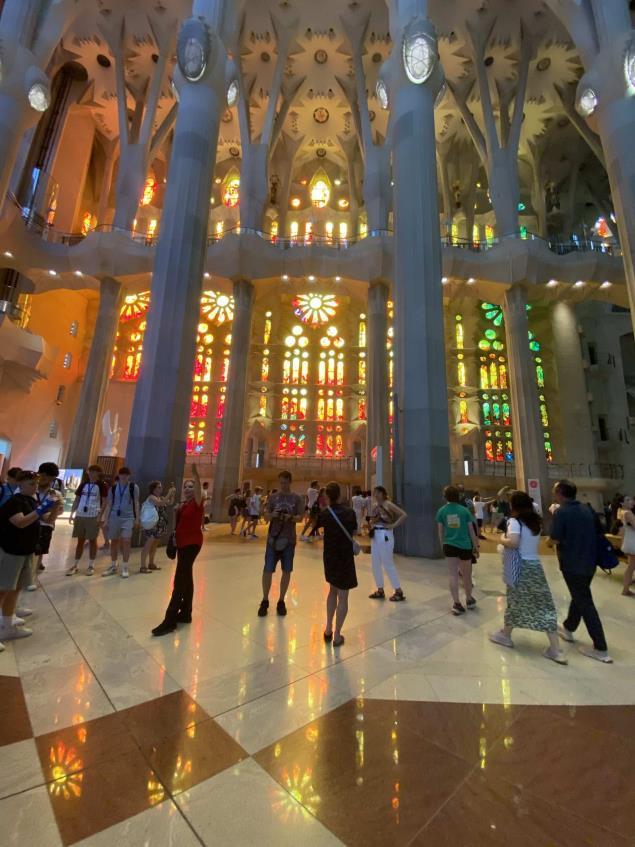
We also explored the rich culture that can be found in the city visiting the Sagrada Familia, Park Guell and the Gothic Quarter to name but a few.
Pupils from Y9-12 attended and it was my first experience of a school trip abroad. After a short flight to Spain the week began, and it was jam-packed. We spent each morning in language lessons arranged by year group with native speakers in a language school in the heart of the city. It allowed us to step out of our comfort zones speaking with locals and tryingnew things.
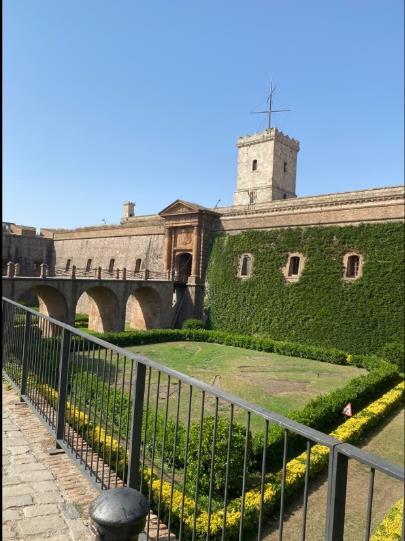
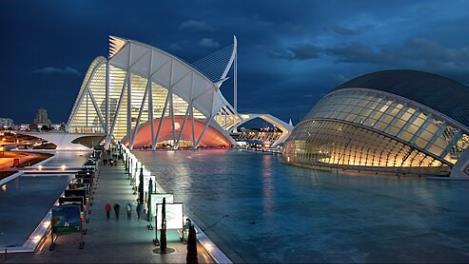
Trips like these have given me the confidence to step further out of my comfort zone which has led to Maisie and I booking a work experience trip to Valencia this summer where we still stay with a host family, take part in more advanced language lessons and then utilise our Spanish knowledge in real world settings which I hope will be incredibly beneficial for the development of our fluency.
There are also many trips in the pipeline within school with a trip planned to leave for France and another one for Spainin the near futurewhich I’d highly encourage anyone who can to attend and get involved.
Additionally, it doesn’t have to just be abroad as shown by our upcoming trip in December to the Tate Modern in London to visit the exhibition showing the work of Frida Kahlo for both GCSE and A-Level students.

In conclusion, there are so many opportunities for everyone to further explore the languages they learn and the cultures that come with them and so my one piece of advice is to get involved even if it seems a little daunting.
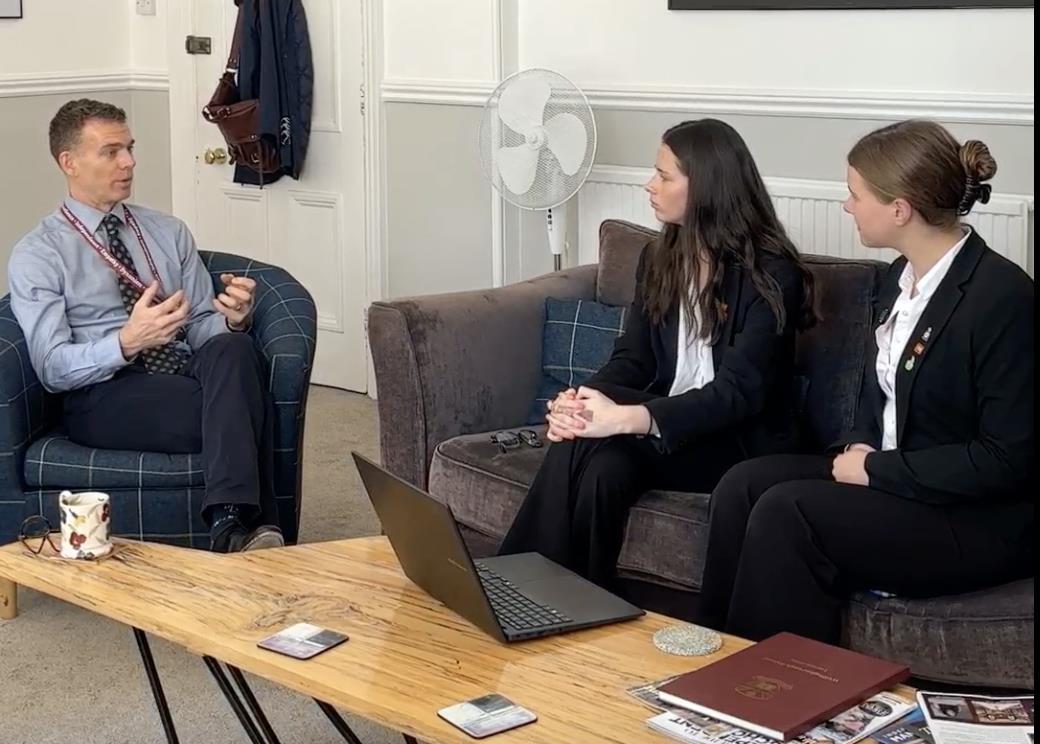
Introduction: Wecaught up with Mr Hawkes (Headmaster) toask him his thoughts regarding MFL. These are some of the highlights....
Key
L: Lois
M: Maisie
H: Mr Hawkes
L: Ok, What are your favourite languages to study and why? 0:03
H: Well, I'veonly ever studied French and German and I enjoyed both, but I think Ienjoy German because you've got some really funwords, the way the words are constructed. So, I think I enjoyed German more when I was at school actually. 0:16
M: Well, it's kind of thesame one. What languages have you studied and at what level? 0:22
H: So only French and German and German only up to year 9, and then French up to GCSE and that'sit. And then beyond that, a bit of Duolingo when I'm on holiday. 0:36
L: Do you think that as a country we could do more to understand and promote languages? 0:40
H: Absolutely. I think it's often said that we're really terribleat learning other people's languages and using them properly when we go abroad.
I think we could be doing so much more both in our education system and just, you know, as human beings, we should be better at speaking other languages. I'm always embarrassed about how well people from other countries can speak English compared with how badly I speak their languages. 1:06
M: Is there any language thatyou'd like to learn to speak? 1:10
H: OK, so I would love to speak Japanese fluently, but I know that that'sthe hardest language in the world to learn. So, I think I would say Spanish because, you know,I'vebeen to Spain quite, quite a lot, never learnt Spanish in the classroom. AndI'd,I'd love to be able to speak a bit more than just my very basic holiday Spanish. 1:30
L: How important to you are languages as part of a strong curriculum? 1:34
H: They're a,they'rea really important part of the strong curriculum. I think, you know, with languages comes better communication skills. I think a good grasp of languages, a confidence to learn languages really helps young people, you know, withtravel and work and study. So having languages as part of an integrated curriculum is, is really, really important. You're not seeing languages going anywhere here at Wellingborough. 2:00
M: If you see someone who has studied their language on their CV, do you consider that an advantage?
2:05
H: Yes, absolutely, for some of the reasons I'vejust outlined. So communication skills are really important in the world of modern world of work.
Even if, you know, we don'tuse Spanish or French or German or Japanese as our first language of communication here at Wellingborough.
If someone has studied a language to a high level, you know, that demonstrates they'vegot a confidence to communicate with a whole range of different people. So I do think it just adds an extra string to their bow. I do think it's impressive when people have studied a language to a high level.
2:34
L: OK,we'll move on to the quick fire round. We will say favourite French or Spanish, so we'll start with music. 2:44
H: French, Serge Gainsborough
M: food
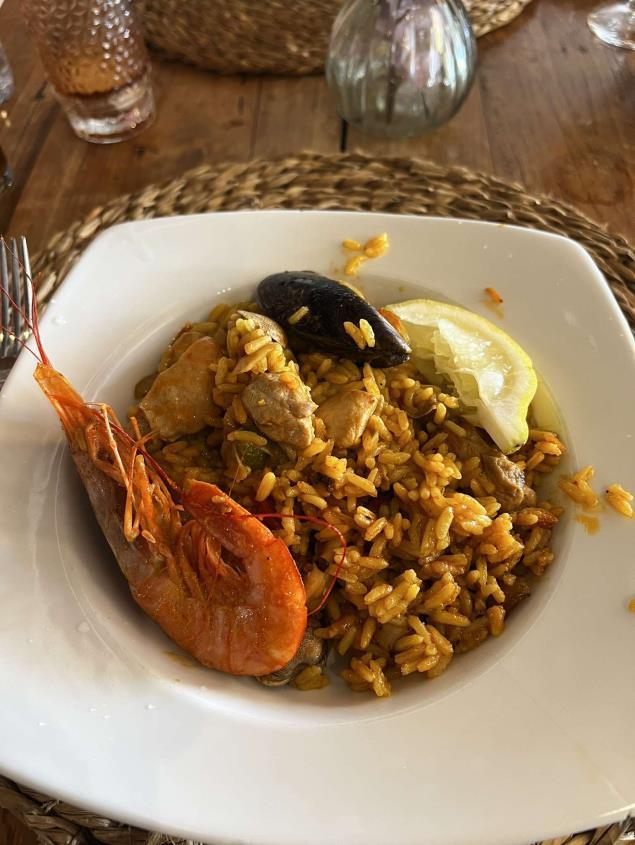
H: Paella
L: Drink. 2:55
H: Well, whenever I go to France Orangina, just you don't… It's not the same hereis it?
3:00
M: Film?
3:04
H: French film Amelie Seen that? 3:07
M: Yes. 3:07
L: I'veheard of it. 3:08
L: Sports person. 3:11
H: Fernando Torres, Liverpool striker from back in the day. Excellent Spanish striker. 3:18
M: And City or place
H: Barcelona. 3:20
L: That's all the questions. 3:23
H: Super, brilliant. Thanks guys.
Bad Bunny is a Puerto Rican singer and rapper and one of the most popular Latin artists in the world. His music mixes reggaeton, Latin trap, and pop, and he is known for his unique style and energetic performances.
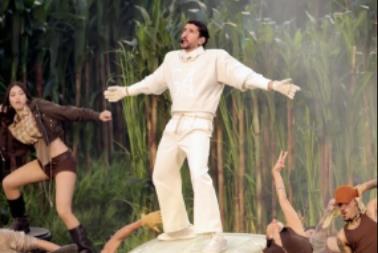
During the SuperBowl LX halftime show, Bad Bunny gave a historic performance. He became the first solo Latino artist to headline the Super Bowl halftime show and performed mostly in Spanish. The show took place on February 8, 2026, and was watched by millions of people around the world. Whilst his performance celebrated Latin music and culture, he also showed day to day challenges faced in Puerto Rico and he reminded everyone that America isn’t just one country.
There are many other Spanishspeaking artists who have become popular around the world. For example, Rosalía. She combines flamenco with modern pop and urban music, creating a unique style. Also, Karol G is one of the most successful female Latin artists and is known for her reggaeton and empowering songs. Another popular artist is Rauw Alejandro, whose music mixes reggaeton, pop, and electronic sounds.


I enjoy listening to different Spanish-speaking artists because they help me improve my Spanish vocabulary and pronunciation. Their music also allows me to learn more about the cultures of Spain, Puerto Rico, Colombia, and other Spanish-speaking countries
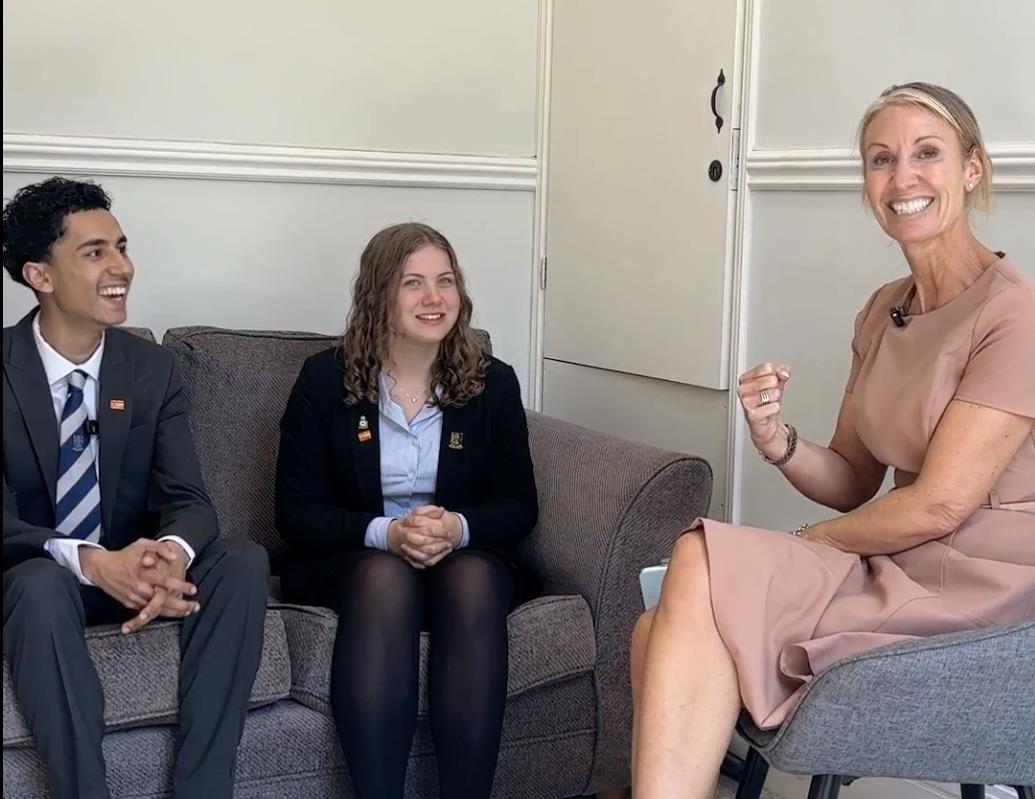
Key
JL– MissLivingstone
L – Lois
I – Ian
0:12
L: What'syour favourite language and why?
JL: Well, what are the European ones that you feel we have more exposure to? So French, Spanish, Italian. I love the sound of Portuguese, although I believe it's quite complicated actually.
1:26
I: Is there any languageyou'd like to learn or speak?
JL: I’m very interestedin learning some Chinese. I think having been to China a couple of times in school trips and been fascinated about how one word is four different ones, like theexact sameword but four different intonations havecompletely different meanings, and it sounds so complicated but so interesting and obviously as a global language, I think that would be one that I would like to do more.
1:52
L: How important to you is a language as part of a strong curriculum?
JL: Very much, I think the pointI'vealready made in terms of allowing us to interact with people globally I mean, I think I talked in my assembly the other day for years 10 & 11 how. we are this one planet and need to be working together, and ultimately,I think it's kind of shrinking globally because communications have grown so quickly, now we've got that access to people all over the world and so say in terms of understanding them culturally, their perspectives, operating within a business context also so that, you know, we can bring people around the world together much more closely
I: If you see someone that'sstudied a language on their CV, is that an advantage to you?
JL: It's definitely another string to their bow and it shows that discipline as well that outside of our sciences and our arts thatactually they have that diversity of skills that they can bring to it as well. And, also understanding, I think people assume if you'redoing an A level in it,it'ssimply about learning the language, but what they don'talways appreciate is that you have to do texts within it as well. So, itactually bringstogether not just learning another language, but the fact you have to do literature, you need to know the politics of the country, you need to do presentations about it.You need to be able to speak confidently on other issues.
So I think there's a really sort of skill to being able to bring all of those disciplines together within just one subject.
3:24
L: So,we'll move on to the quick-fire questions with your favourite French or Spanish, and we will start with music.
JL: Oh, OK, ‘Palillos y Panderos’. Have I got that right Ian, with the pronunciation? I don't know whether it's my favourite, but it's like catchy andit's something that they play at the Christmas lights show in Malaga and everybody seems really enthusiastic about it, and everyone responds to it.
It'smy favourite tune, but in terms of what I associate with it
I: Food?
JL: Cheese, Can I go French now? The stronger the better, ‘roquefort’. We could be here for a while.
4:02
L: Drink?
JL: I have to say French wine. I'm afraidFuenieror Cote de Provence
I: Film?
JL: La Haine
L : Sports person?
JL: Serge Betsen, bit before your time, you're not going to have any idea.
He'sa French rugbyflanker. He was ferocious.
I: And city?
JL: I think I’d say Valencia, but there are others.I would really like to go to Seville and from whatI'vebeen told that could become one of my new top favourite ones.
L: That's all the questions. Thank you very much.
JL: Thank you.
Earlier this year in January, I travelled with my dad to Bordeaux to watch the rugby match against Saints. For his job as a sports journalist, he is in the position of knowing a lot about French rugby- this is not the case for me. Being an A level French student myself, with the intent of studying French and Spanish at university, I thought it would be an exciting opportunity to broaden my knowledge on French sport as well as the beautiful city of Bordeaux.
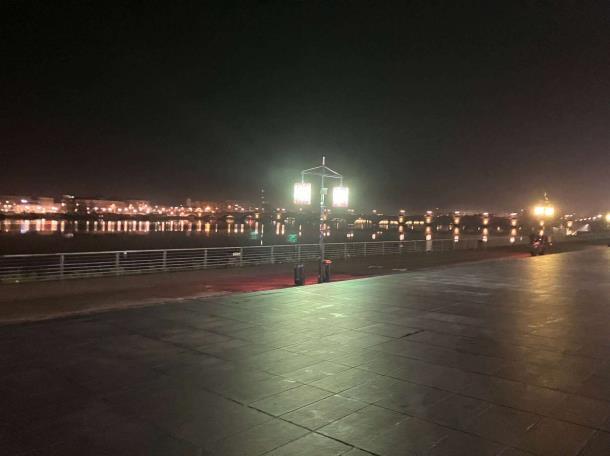
The day before the game, we explored the pretty streets and restaurants as well as walked down the river Garonne- an experience that I would recommend to anyone. It was fascinating to see all the famous sights there, making it one of UNESCO’s world heritage sites. I was also interested to learn that it officially has the largest number of preserved historic buildings in all of France.
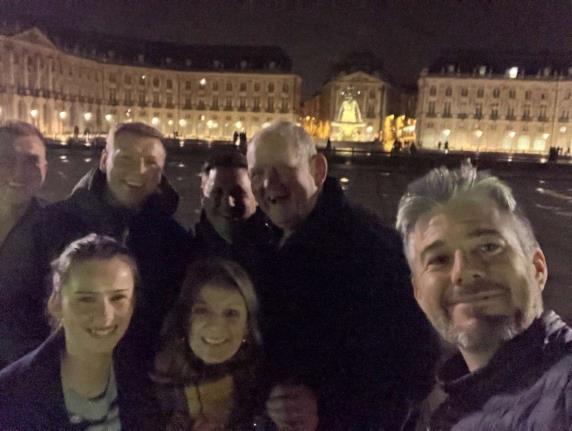
It struck me that the Bordeaux supporters were actually quite pleased to see his name called out before the match. The same reaction was not heard with the announcement of Henry Pollock’s name. I had seen before the conflict that Pollock had been involved in during Saints’ loss in Cardiff at the finals, so it was not greatly surprising to hear the chorus of boos as he ran out of the tunnel (which seemed to make him even more fired-up).
Unfortunately, Saints lost the match 50-28, but I didn’t mind too much because the experience of being a part of a French rugby crowd was exciting enough- I had never heard one quite so loud.
The second night, there was the rugby match. I don’t know if Bordeaux just happens to have all the biggest players, but I was shocked to see the height of some of them as they walked past me. As well as this, Bordeaux has many world renounced players, such as Louis Bielle-Biarrey, their top tryscorer. Anthony Belleau, Saints’ new fly-half, was a name known to the Bordeaux supporters as his prior club was Clermont Auvergne (another strong French team).

Despite the loss, I thoroughly enjoyed my trip to Bordeaux as it gave me the opportunity to practise speaking the language with natives, to see the amazing architecture, and to be fully immersed in the UBB supporters’ chaos. I would thoroughly recommend Bordeaux to anyone studying French or even if you love rugby.
Why do you work with languages?
Languages have always been an important part of my life. I enjoy helping students discover that learning a language is not just about vocabulary and grammar - it is also about confidence, communication, and understanding different cultures.
Where did you grow up?
I grew up in Morocco, where French is widely spoken and was the language used throughout my education.
When did you start learning English? What challenges did you face?
I learned English in Morocco, but I focused on improving it when I moved to the UK. The biggest challenge was believing in myself and having the confidence to use English every day. Over time, my confidence grew, and I was proud to complete a Foundation Degree in Education with Distinction.
How do you find living in England?
I have enjoyed living in England and have made it my home. It has given me many opportunities to learn, grow, and pursue my career goals.
Do you often use French here in England?
Yes, I use French regularly in my role at school. I enjoy sharing my language skills with students and helping them develop confidence in speaking French.
What is the most rewarding thing about helping young people develop their language skills?
Seeing students gain confidence and realise what they are capable of is incredibly rewarding. It is wonderful to watch them make progress and become proud of their achievements.

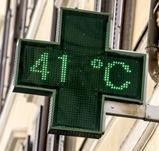
Spain experienced its hottest summer ever recorded in 2025, with temperatures regularly exceeding 40℃. Scientists say this highlights the growing challenge of climate change and has sparked discussions about how cities can adapt to extreme heat.

In April 2025, France unveiled its new space strategy, investing €9 billion by 2030 into satellite technology, space security and future exploration. The goal is to strengthen Europe’s independence in space and stay at the forefront of global innovation.
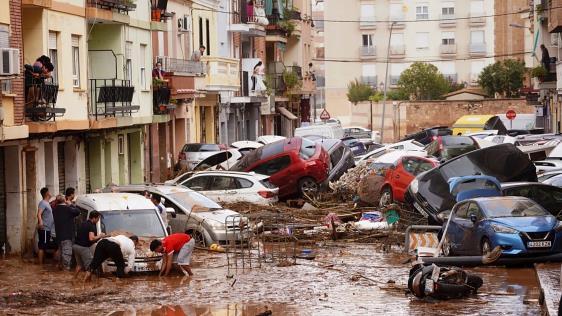
After the devastating floods that hit the Valencia region in October 2024, communities across Spain came together to rebuild homes, schools, and businesses. Recovery efforts have been supported by major European funding.

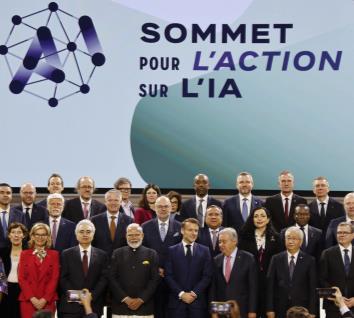
France hosted the AI Action Summit 2025 in Paris in February, bringing together world leaders, scientists, and tech companies to discuss how artificial intelligence can be developed safely and used to solve global challenges like healthcare, education, and the environment.
- Spanish is the official language in 20 countries.
- The longest word in the Spanish dictionary is ‘electroencefalografista’ (someone who specialises in electroencephalography).
- Some languages have words with no direct English translation, such as the German word "Fernweh", meaning a longing to travel somewhere far away.
- The longest word commonly found in French dictionaries is anticonstitutionnellement (meaning "unconstitutionally"), with 25 letters.
- There are more French speakers in Africa than in France itself.
- Italy is home to the most UNESCO World Heritage Sites in the world.
Embarazada = pregnant, not embarrassed
Sensible = sensitive, not sensible
Actualmente = currently, not actually
Asistir = to attend, not to assist
Ropa = clothes, not rope
Éxito = success, not exit
Librería = bookshop, not library
Stage = work experience / internship, not stage (like theatre stage)
Demander = to ask, not to demand
- The piano was invented in Italy.
- The Spanish word "sobremesa" describes the time spent chatting at the table after a meal. There is no direct English equivalent.
Assister à = to attend, not to assist
Blesser = to injure, not to bless
Une figure = a face / figure, not just “figure” in maths context



https://www.britishcouncil.org/school-resources/languages/where-will-languages-take-me/where-will-languages-take-me-online
Studying a language opens so many doors for you across the entire world and there are many opportunities out there may never have considered. https://www.britishcouncil.org/school-resources/languages/wherewill-languages-take-me/where-will-languages-take-me-online
Studying a language opens so many doors for you across the entire world and there are many opportunities out there may never have considered.
Possible
Destinations
Translator
Diplomat
Disaster Response
Politician
Au Pair
Teacher
International
Retail Healthcare
Travel Industry
Sports
Interpreter
Lecturer
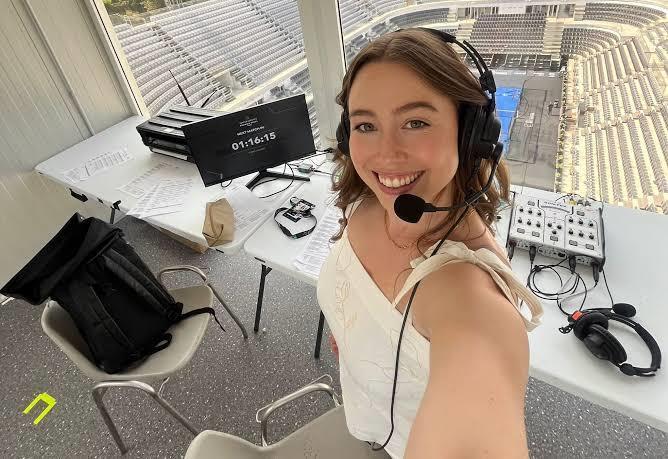
Where have others gone: Emily Kilner – Her love of both languages and sport has led her to become a sports broadcaster for padel, hockey and football. She is also a commentator, stadium announcer and reporter. Additionally, she is the recipient of the BBC Sports New Voice Award.
Tom Hiddleston - Aside from acting in the Marvel movie, he studied Classics (Ancient Greek and Latin) at the University of Cambridge, where he learned Ancient Greek and Latin. While he may not get to have a chat in those languages very often, his knowledge of classical languages probably gave him a good foundation to learn some modern ones. He's been interviewed in Spanish, French and Italian.

Philippa Hunt (Head of Careers) - "Studying languages can open doors to a wide range of global career paths. In an increasingly interconnected world, the ability to communicate across cultures is highly valued by employers in areas such as international business, diplomacy, law, media, travel and the creative industries. Languages don’t just give you skills – they give you opportunities to work and connect globally in almost any field."