

Hello, Dolly! Educational Packet
Hello, Dolly! Summaryof
In the late nineteenth century, excitement surges through New York as Dolly Gallagher Levi, the widowed matchmaker, returns to find a match for Mr. Horace Vandergelder, the well-known half-a-millionaire. Always a step ahead of everyone else, Dolly has more than a few tricks up her sleeve as she arranges expected and unexpected encounters of love. Based on Thornton Wilder’s hit play The Matchmaker, Michael Stewart and Jerry Herman expertly adapt the farcical nature of Wilder’s play while maintaining lessons of love in the simple and mundane. While each character faces his or her own personal journey, Hello, Dolly! ultimately demonstrates what it truly means for all to embrace “a world outside of Yonkers” and discover what makes a life lived to its fullest.
Dolly Levi Characters
HoraceVandergelder
The half-amillionare owner of Vandergelder’s Hay and Feed who employs the services of Dolly to find a wife
The widowed matchmaker of New York who utilizes her wit and charm to orchestrate romance
The chief clerk at Vandergelder’s Hay and Feed store who longs for a bit of adventure
Cornelius Hackl
The stock boy at Vandergelder’s Hay and Feed
Characters
Irene Molloy
Irene Molloy’s shop assistant and best friend
A widowed millineress who is a possible match for Horace Vandergelder
Horace’s niece who longs to marry Ambrose Kemper (insert crying here)
An artist who wishes to marry Ermengarde
Minnie Fay
Ambrose Kemper
Ermengarde
Barnaby Tucker
Marching On Living Life
While Hello, Dolly! takes its viewers on a fantastic ride of joy and fun, it also demonstrates the importance of marching on and reclaiming a hold on life itself. Throughout the show, the audience will find themselves fully immersed in the thrill of taking a chance. They’ll watch as Dolly guides others into making the most of their lives. They will also find strength in her thoughtful monologues addressed to her late husband Ephraim Levi. In these speeches, Dolly declares that she will no longer merely watch as others live their lives but will rejoin the human race herself “before the parade passes by.”
Themes Key Christian Charity
In many ways, Dolly Levi illustrates a world immersed in charity that is born out of love. We as Christians have a responsibility to show a similar charity that flows from our Christian faith. Dolly builds relationships and crosses social classes by bringing high society to low society and vice versa. She acts to help others and gives freely —not because it is required of her, but because she desires to better the world around her. She refuses to see man-made barriers of class but rather recognizes worth in each and every person, “encouraging them to grow” on their own despite status.
“Put on your Sunday clothes, there’s lots of world out there!”
These words launch an entire lifetime of excitement into action— all taking place in just one day. Hello, Dolly! not only encourages the audience to break free, take a leap, and have an adventure of their own (no matter the age) but also shows that adventure often reveals itself in the simple things of life—a stuffed whale, a shared look, a dance, a moment.
Industrialization
The musical takes place at the turn of the century (1890-1900) New York City and Yonkers, New York, making each of these elements part of the setting of Hello, Dolly!
Population of Yonkers:
1,870 - 3,500
Historical
Elements
Mass Immigration
1890: First Trolley Line Connecting Yonkers to New York City
The End of the Gilded Age
Political Shift Toward the Progressive Era
Context Historical
The middle class suffered as the industrial workforce “became the primary concern leading to huge organizations, primarily benefitting the upper class.”
The Homestead Strike of 1892 caused mass panic and led to devastating depression.
Independent farmers and craftsmen (the majority in the more democratic Jeffersonian-Jacksonian era) felt increasingly out of place, sensing that they were competing with immigrants, Catholics, Jews, and other people groups.
The surrounding climate led to a shift from laissez-fair to savoir-fair.
The Matchmaker ThePlay
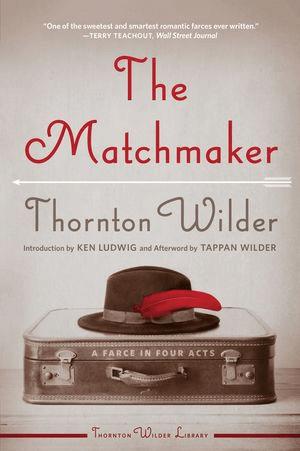
Written and adapted by Thornton Wilder and originally named The Merchant of Yonkers, The Matchmaker set the stage for what we now know as Hello, Dolly!
The Merchant of Yonkers closed after only 39 performances.
The name was changed to The Matchmaker in 1954, with the key difference (other than the name, of course) being the addition of the character Dolly Levi.
The Matchmaker opened on Broadway in 1955 and ran for 486 performances (Wilder’s Broadway record).
On January 16, 1964, an adaptation of The Matchmaker opened as the award-winning musical Hello, Dolly!
T P y
TheAuthor
maker
n Wilder
ant of stage for ly!
fter only 39 Matchmaker (other than ddition of adway in nces tion of The d-winning
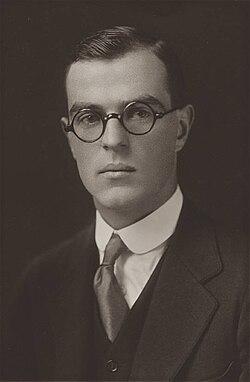
The celebrated novelist and playwright Thornton Wilder had a dual career as a teacher and house master. He considered himself a teacher first and a writer second and was most interested in the mundane things of life. Many of Wilder’s works demonstrate his ideals through the use of minimalist sets, addresses to the audience, and other forms of experimental theater. His writing rested on the foundation of his desire not simply to entertain the audience but to teach them.
OtherNotableFacts:
Thornton Wilder was a triple Pulitzer winner!
He wrote seven novels in addition to four major full-length plays. He often combined traditional and modern elements in his writings. He promoted an idyllic democracy. He encouraged engaging in dialogue with worldviews that differ from one’s own.
Economic Growth
PoliticalandCultural InfluenceofThorntonWilder
Demographic Growth
Cold War
Industrialization
Mass Political Participation
JFK Assassination in ‘63
In the midst of the turmoil of the twentieth century, Wilder desired a “unity greater than the East and the West (Soviets and Americans).” He longed for a more peaceful global and political climate, imagining what the world would look like if it truly ascribed to the highest ideals. He found it imperative that surrounding culture find joy, lighthearted fun, and excitement while upholding those ideals and promoting change.
Sources
>Blaze, Jack. “Hello, Dolly! ★★★★☆: Review.” Secret Stage Reviews, 5 Nov. 2024, secretstagereviews.co.uk/reviews/hellodolly/.
>Eichler, Liz. “Review: Say Hello! To ‘Dolly’ at the Carnegie.” League of Cincinnati Theatres, 6 Mar. 2024, www.leagueofcincytheatres.info/review-say-hello-to-dolly-at-the-carnegie/.
>Fishman, David, et al. New York 1880: Architecture and Urbanism in the Gilded Age. Monacelli Press, 2009.
>Hello, Dolly! | Musical by Herman [1964] | Britannica, www.britannica.com/topic/Hello-Dolly-musical-by-Herman-1964. Accessed 2 Mar. 2026.
>“Matchmaker to Dolly: The Surprising History behind a Show Business Classic.” Thornton Wilder, Thornton Wilder, 18 Jan. 2019, >www.thorntonwilder.com/blog/2017/07/21/matchmaker-to-dolly-the-surprising-history-behind-a-showbusiness-classic.
>“The Matchmaker.” Encyclopedia.Com, Encyclopedia.com, www.encyclopedia.com/arts/educationalmagazines/matchmaker. Accessed 2 Mar. 2026.
>“On Becoming Dolly.” Town Theatre, 20 Sept. 2019, towntheatre.com/on-becoming-dolly/.
>Rojcewicz, Stephen. “The Matchmaker.” Thornton Wilder Society, www.twildersociety.org/works/the-matchmaker/. Accessed 2 Mar. 2026.