


















































BY BRONWYN HASTINGS
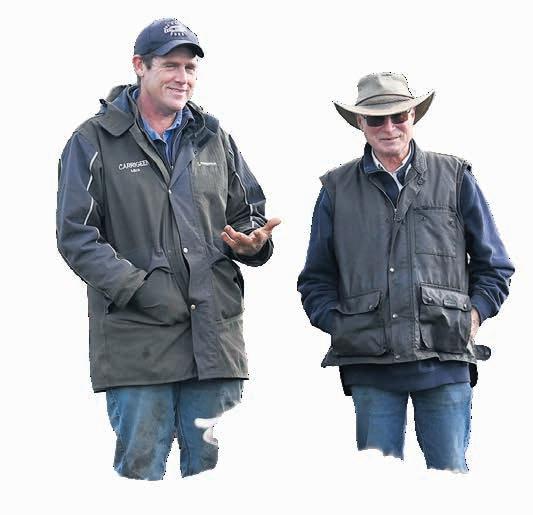
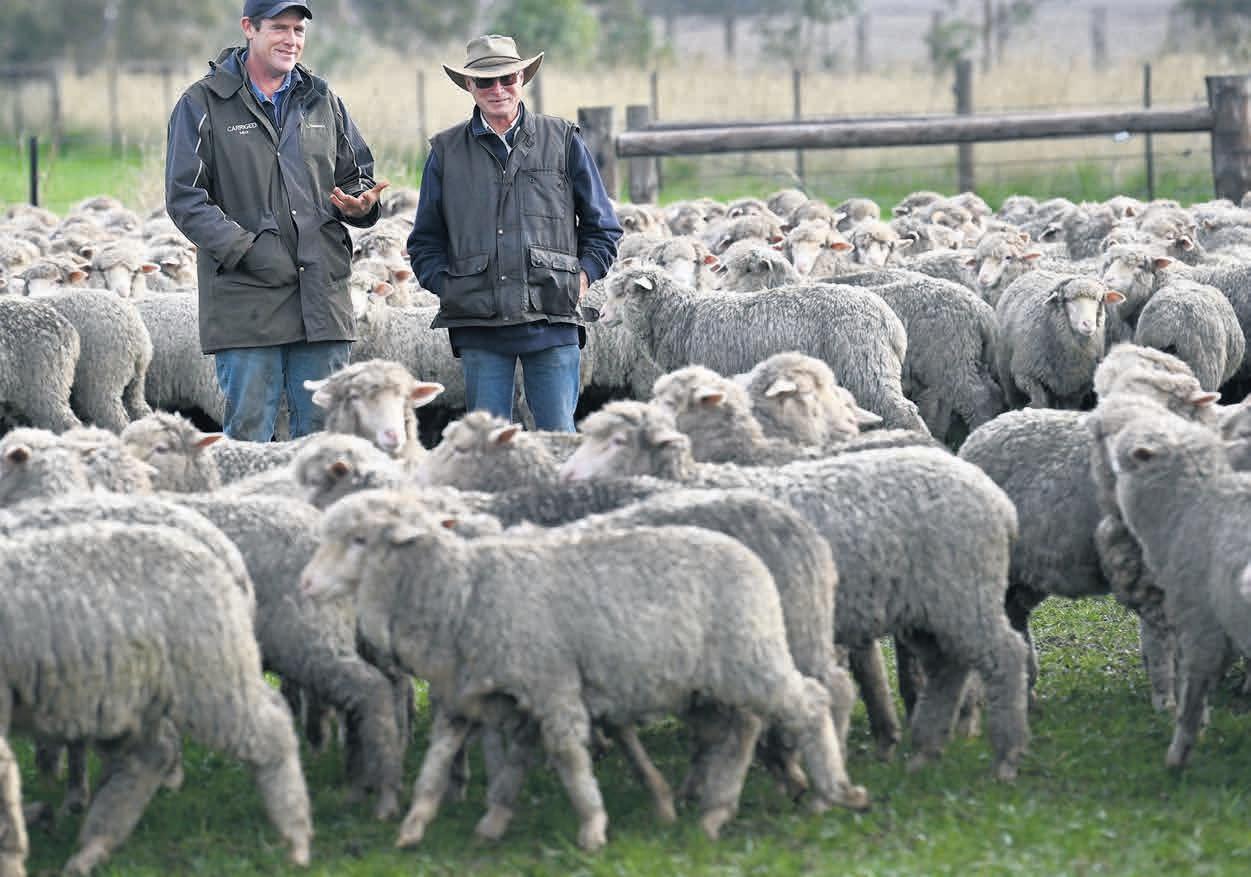
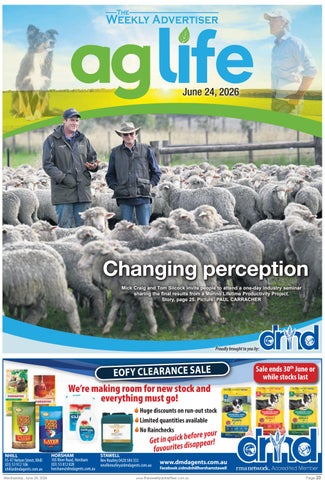
Aone-day seminar will discuss results of the decades-long Merino Lifetime Productivity Project at Balmoral next month, highlighting sheep breeding for specific needs and areas and for use alongside visual selection.
Traditionally known for its wool, the meat quality of merinos has improved as a result of the project, along with its fleece, fat, worm resistance and methane emissions.
The project’s sire evaluation sites are based in diverse climates and with genetically diverse ewes across Australia: Pingelly in Western Australia; New South Wales’ Temora, Trangie and Armidale; and Victoria’s Balmoral.
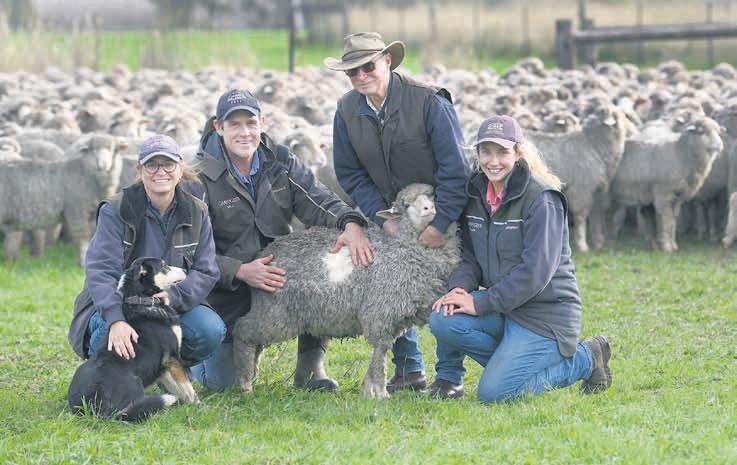
The annual trials, worth millions of dollars, started on Tom Silcock’s property in 1998 and have been continued by the Balmoral Breeders committee, a group including stud-breeders, service-providers and commercialproducers.
Mr Silcock said the project gave breeders more confidence in the predictability of genetics and genomics, and had both bolstered and dispelled past theories.
“The merinos we’re running now aren’t the merinos we were running 10 years ago – the evolution from the learning and implementing those learnings, we’re radically genetically changing the sheep we run,” he said.
“One of the shocking statistics of our industry is that the two-tooth merino is not recognised for the meat product quality that it is – different genetics give you different qualities in how well they fatten, how well they kill, and then how well they eat.
“We’ve also monitored their conception rate, fleece weights and body weights – it was a comprehensive trial where sheep were measured up to six or seven years of their lifetime.
“Typically, in the industry, sheep get measured once. But we kept measuring, and re-measuring and analysing all the impacts – it’s hugely comprehensive.”
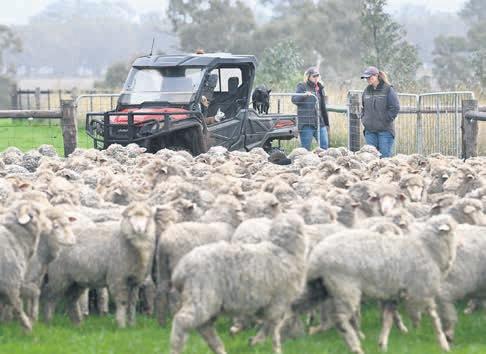
Mr Silcock said Balmoral had the biggest trial ‘by a long shot’, joining 25 different sires every year – about double the amount of others.
“One of the easy things to look at is probably the move in breeding values,” he said.
“I know some producers who have an index, which is a combination of
breeding values, that suits their breeding philosophy.
“They use it to gauge every year, and they’ve been going up seven per cent a year for the last three years – it’s huge.
“You would think that you’re going to plateau, but at the moment, they’re not, they’re almost accelerating, and it’s because we’re using every tool available to us, including genomics and ram lambs, and you’re just pushing every button you possibly can.”
Mr Silcock said the breeding philosophies of steering committee members were acknowledged in the trial.
“We quite deliberately made sure we represented all the different breeding philosophies in the sires,” he said.
“There were over 140 sires representing bloodlines and breeding programs from across Australia, and we made sure we had the different philosophies of opinion around the steering committee table.”
Mr Silcock said the takeaway message for farmers was to use all the tools available to them to be able to get the most out of producing sheep.
“It’s an ongoing evolution of discovery, but this trial has been a huge component of a lot of that – the ability to find $14-million and commit to an agricultural breeding program, it’ll never happen again,” he said.
Industry leaders from Australian Me-
rino Sire Evaluation Association and Australian Wool Innovation will be at the event, along with trial representatives.
Mr Silcock said the free event, at Balmoral Recreation Reserve on July 23, was a formal function from 9am until 3pm.
“It will be less formal after that and questions-and-answers will continue for another couple of hours,” he said.
“We want people to understand how
Agriculture events, grants
Pastures and Pests crop walk
July 15: 10am-1pm at Woosang. Join Birchip Cropping Group and Cesar Australia at the Pastures and Pests crop walk at Matt McGurk’s property near Charlton. Visiting Cesar’s Red Legged Earth Mite, RLEM, TIMERITE trial, attendees will explore how to identify RLEM and avoid confusing them for other common mites; results from the new TIMERITE dates; understand how the tool works to support managing RLEM; and gain insight into what other invertebrates might be in the paddock. The crop-walk will also visit BCG’s pasture soil amendments trial, run in collaboration with LaTrobe University. A free event, a light lunch will be provided following the session. People can register at www.bcg.org.au/event/pastures-andpests-crop-walk/#rsvp-now.
Grain marketing in volatile times
July 28: 9.30am-1.30pm at Horsham Golf Club, 304 Golf Course Road.
People can join farmers from across the region at the free BCG workshop to learn the fundamentals of grain marketing and how they can be applied in their own business. Bendigo Bank’s Joe Boyle will guide attendees through a current market outlook, and Ed Scamps and Darren Arney, from CloudBreak Grain Marketing, will share insights into the challenges currently facing growers and highlight opportunities to support a profitable 2026-27 grain marketing season. People can register at www. bcg.org.au/event/grain-marketing-involatile-times/#rsvp-now.
BCG Main Field Day September 9: 8.30am-4pm at Birchip.
profitable merinos can be and how they’ve radically changed, and by pursuing the knowledge that we’ve gained, the improvements can be made very quickly.
“Anyone who’s thinking about running sheep in the future, really can’t afford not to be there.”
People can visit website merino superiorsires.com.au/events for more information and to register for catering purposes.
BCG’s flagship event showcases the latest in local agronomic research and draws growers, advisors and industry professionals together to explore advances in crop management, weed control, soil nutrition, new varieties and farming systems.
Farm drought support
Farmers in southwest Victoria can access $10,000 in drought-support grants to make on-farm infrastructure upgrades and improvements such as grain feeders, troughs, pasture restoration and stock containment areas. People can find more information at the Agriculture Victoria website.
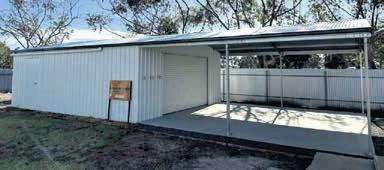
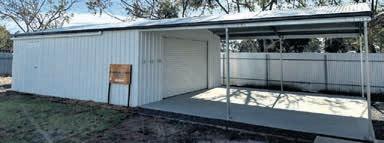



Whether you’re running a single truck, managing a eet or preparing for a busy harvest season, one thing remains the same – when your truck stops, your business stops.
Welcome to Truck Talk, a new regular columnwherewe’lllsharepracticaladvice, industryinsightsandmaintenancetipsto help keep local operators rolling.
MEET BRENDAN WILLS
Forthosewhodon’tknowme,I’mBrendan Wills from Horsham Truck Company.
Every day, our team works with truck owners, farmers, contractors and transportoperatorsfromrightacrossthe Wimmera.Weunderstandthepressurethat comeswithkeepingvehiclesontheroad and the cost of unexpected downtime. That’swhywe’recommittedtoproviding qualityparts,expertadviceandtheright solutions when you need them.
NO MUCKING ABOUT
AtHorshamTruckCompany,webelieve in keeping things simple. No mucking about. No waiting around.
Whether you’re chasing a replacement part, preparing for harvest or trying to solve a problem before it becomes
KEEPING THE WIMMERA MOVING Trucks
From transporting grain and livestock tomovingmachinery,buildingsupplies andfreight,thetransportindustrykeeps localbusinessesmovingandcommunities connected.
We’re proud to support the people who keep those wheels turning.





As someone who has worked in the farming ecosystem for the bulk of my 30-year-career I am used to scanning the industry horizon for issues.
In the media, this observation and insight created opportunities for stories – knowing what was happening as an ABC rural reporter was vital, caring about the industry and its people, innate.
Later, in corporate communications and leadership roles for the dairy and banana industry – scanning that same horizon for issues came from a different perspective … damage control, issues management, advocacy, education and protection.
In my new role as executive officer for Partners in Ag, an organisation whose remit is to nourish the farmers that run our primary production engine rooms, I am again scanning that horizon. Like a farmer looking
for rain … But this time, I’m looking at a crowded space of education and support sector businesses competing to do the same job, in an industry that has issues exploding in rapid fire across all sectors and geographies, simultaneously.
To say the farm sector in 2026 is ‘issues rich’ is an understatement.
There has never been a greater challenge to the farm sector’s social license to operate. Translation – it has never been harder to be a farmer.
And I wonder, do the children of farmers still say ‘when I grow up I want to be a farmer,’ as they watch their parents stretch to survive another day, another issue, another challenge, another financial or emotional crisis?
Do the children of our farmers still fantasise about life on the land when their parents have to rush from the dinner table to make it to the next zoom call or advocacy group that

with Paula Doran
helps them navigate and fight back against the chasm that is now the country-city divide?
When I grew up just outside Colac on the edge of the urban sprawl that is now filled with a concentration of new housing estates, I was proud to be the daughter of farmers.
I secretly resented the fact the older kids in the family grew up on the family farm, which was sold by the time I could have enjoyed it.
When I became a journalist, the politicians I interviewed were usually farmers. They understood the land and advocated for its people and processes.
It seems now though, the chasm between city and country – yes, I’m going to repeat that until it sinks in – is represented by a government in which those who hold the power have little understanding and certainly no empathy for the farm sector.
And while it is important for a person in my role to remain politically ‘Switzerland’ – it is impossible to ignore the impact the lack of empathy and understanding has through the policies that are then inflicted on regional industries and communities.
It is impossible to not be disturbed by the shredding of community that those policies and projects have – as they pit neighbour against neighbour in our rich farm regions across the country.
When I grew up, community was the heart of my existence.
If not the football club, then it was the church community, the many extended family gatherings in a town
that knew who I was and how I was connected.
What a blissful way to grow up. But that was then.
Knowing how to support and add value, to create programs that fill the gaps, bolster a sector that is battling on every front, is now my focus at Partners in Ag.
Because if our children aren’t saying ‘when I grow up I want to be a farmer,’ and who would blame them if they’re not – then the issues we are facing now will feel like the dress rehearsal for the ones we will face in short decades across the country.
• Paula Doran is the new executive officer at Partners in Ag. She is a former journalist and regional business woman who is passionate about supporting primary producers and their communities. People can contact her via email eo@partnersinag.org.au.
Bee keepers and businesses that rely on bees for their income and pollinating their crops can now access support amid an outbreak of Varroa mite.
Varroa mite is now established across New South Wales, Queensland, Victoria, South Australia and the ACT, with Western Australia and Tasmania the last jurisdictions free of the pest.
Agriculture Victoria has appointed James Rowe as a new horticulture sector officer to support pollinationdependent businesses affected by Varroa mite.
Mr Rowe’s experience with pollination-dependant industries stems from his involvement in pasture management and the industries that rely on European honeybees.
In his new role he will support businesses by providing information, guidance and access to resources as pollination services increasingly rely on managed commercial European honeybee hives.
Funded through the Victorian Varroa Transition Program, the role supports industries including horticulture, cropping and pasture that are significantly affected by Varroa mite.
Agriculture Victoria horticulture services program manager Aimee McCutcheon said the appointment would
help businesses adapt to long-term changes in pollination services and safeguard productivity into the future.
“Working closely with apiary and pollination-dependent industry groups and businesses helps us understand their challenges and respond to the changing landscape,” she said.
“James will also continue supporting the horticulture and apiary industries through the Farm Business Resilience Program, which supports commercial beekeepers and pollination-dependent businesses.”
Ms McCutcheon said the sectors were critical to Victoria’s economy and food security.
“Pollination-dependent industries and the apiary sector deliver significant economic value for Victoria and provide flow-on benefits across the broader agricultural economy,” she said.
“Varroa brings ongoing challenges for growers and beekeepers. This new role will support them to navigate challenges by developing and delivering practical information, resources and advice.”
The National Farmers Federation, NFF, Horticulture Council and the Australian Honey Bee Industry Council, AHBIC, are jointly calling on hor-
ticulture producers to plan for a future where reliable, managed pollination can no longer be taken for granted.
The national Transition to Management program concluded in February 2026, confirming that Varroa is long lasting and the cost and complexity of pollination has changed permanently for Australian growers.
The program brought the reality to a national audience, including the decline of feral honeybee populations
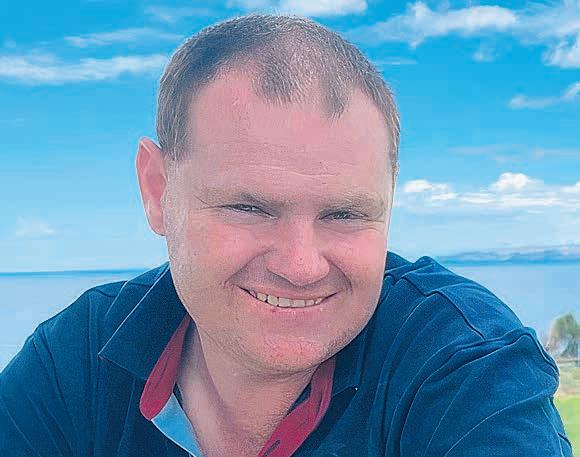
James Rowe is Agriculture Victoria’s new horticulture sector officer and will support pollinationdependent businesses affected by Varroa mite.
that many crops have historically relied on for free, ambient pollination.
NFF Horticulture Council executive officer Richard Shannon said for decades a large share of horticulture’s pollination had come from feral bees that growers never had to think about, let alone pay for.
“Varroa is steadily removing that invisible workforce,” he said.
“The growers who likely fare best from here will be the ones who treat


pollination as a managed input –planned, budgeted and contracted –rather than something the landscape provides for free.”
AHBIC chief executive Danny Le Feuvre said it was not just a beekeeping problem, it was a national food production and resilience issue.
“Beekeepers are doing everything they can to keep healthy, strong hives in the system, but they are now carrying permanent management costs and the added pressure of emerging chemical resistance,” he said.
“Growers and beekeepers are in this together, and securing pollination for Australia’s horticulture industries depends on us planning side by side.”
To help growers prepare, NFF Horticulture Council and AHBIC will co-host a national grower webinar on managing pollination in a Varroaendemic Australia on August 5, people can register on the NFF website.
People can report suspected Varroa mites or any other plant pest or disease to the national Exotic Plant Pest Hotline on 1800 084 881 or make a report via the Agriculture Victoria website at www.agriculture.vic.gov. au/varroa.
– Bronwyn Hastings







BY COLIN MacGILLIVRAY
Dingo researchers have pushed back on a Victorian Farmers Federation call for the State Government to remove protections for the animals, claiming renewed culling would drive dingoes towards extinction in the state
VFF vice-president Peter Star earlier this month called for the government to roll back protection measures banning the unauthorised killing of dingoes on private and public land in the state’s west.
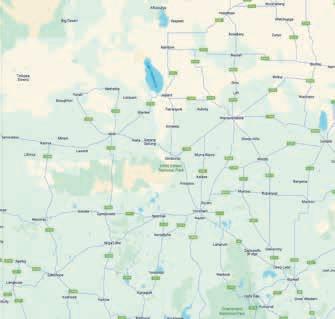
Farmers in the northern Wimmera and Mallee regions near Big Desert National Park have reported an increase in livestock attacks and killings by dingoes following the introduction of stronger protection measures for the animals.
Mr Star said a paper titled ‘Domestic Dog Introgression in Australian Dingoes: Environmental Drivers and Evolutionary Consequences’ published in the Molecular Ecology journal in March, as well as research from Adelaide University’s Australian Centre for Ancient DNA, showed ‘substantial levels of domestic dog ancestry within south-eastern Australian dingo populations’.
Mr Star said the presence of, on average, about 20 per cent domestic dog DNA within Victorian dingo populations should prompt authorities to reconsider protecting the animals.
“The science underpinning current government policy has shifted.
When populations contain significant levels of historic domestic dog hybridisation, the government must seriously reconsider whether these animals should continue to receive the same threatened-species protections,” he said.
But Adelaide University’s Yassine Souilmi, who contributed to the research cited by Mr Star, rejected increased lethal control for dingoes as an appropriate solution.
He said further reducing dingo numbers would exacerbate a lack of genetic diversity within the Big Desert population.
“The more the management leans on removing protections and more lethal culling strategies, the more we actually make the genetic component of interbreeding that’s coming from domestic dogs higher,” he said.
“If you reduce the number of the wild dingo population that will have more dingo ancestry, you’re actually increasing the European dog ancestry in that group on average.
“Then you’re using that same measure to justify reducing numbers of dingoes even further, and you end up with this downward spiral.”
Dr Souilmi said he did not believe the presence of some domestic dog ancestry invalidated dingoes’ status as a threatened species.
“Our findings are that the Mallee population has more dingo ancestry than reported in the past, but a little bit less than was reported more recently,” he said.
“Overall from a genetics perspective the question is, is a dingo in the
wild living a dingo lifestyle less of a dingo at 80 per cent dingo ancestry?
“It’s similar if you think about it from a human perspective. Someone might be, say, British, and they have 20 per cent French ancestry. Does that make them 20 per cent less British? It’s about where and how you live, and for an animal it’s about the functional role you fulfil in the environment.”
Dr Souilmi said he empathised with farmers affected by dingo attacks, and said the best solution was for researchers and farmers to work together.
“I understand that sheep farmers are concerned for their livelihoods and are probably not getting enough support from the government to offset the financial losses,” he said.
“It’s a fairly traumatic thing to come back and find your sheep dead, whether that’s by dingoes or foxes or disease or anything else.
“I think we’re caught a little bit in Australia in this situation where it’s essentially all-out war between livestock farmers and conservationists who want to preserve dingoes.
“I think the right answer is probably somewhere in the middle. We probably need to explore better ways of keeping dingoes away from sheep and vice-versa, whether that’s through better fencing or something else – cleverer people than me might have better ideas than I do.”
Rainbow-based dingo researcher Ellisha Martion, founder of Big Desert Dingo Research, said research
When writing this column on a monthly basis, I am conscious of not reverting to talking about the weather, however the weather is such that it has become hard not to talk about.
Summer rain events of varying totals helped get the season off to an Asafa Powell like start in parts of the Wimmera, with Asafa now not far out of the blocks, looking for his bogs and an ore.
Dry years can be hard on the mind and the bank balance, however wetter periods can make it logistically impossible at times to achieve what needs to be done, and quite destructive and frustrating in their own right.
As a close confidant to the author recently stated in jest, ‘the next person that tells me that there is money in mud may very well find themselves in serious harm’.
It is during times when water runs, that you get a glimpse into the past and why some farms were set up the way that they are.
That is a strange thing to say, however with the years trending drier and drier all the time, water running in winter seems to be now the exception and not the rule. As the development and transition to pure broadacre cropping continues to creep south, less and less remain committed to the idea of pastoralism in the region, in particular merino wool production.
Although the transition will do what it will do, and the business case to do so is no doubt sound, 2026 is shaping up to be a rare year where the stars align for the stoic wool-producer, especially those persisting with their own bloodlines, and they will rightfully be starting to feel quite vindicated in their unwavering commitment to the cause.
A trip to the Melbourne wool sales last week has confirmed that momentum is at fever pitch

in the wool market with the pass-in rate next to zero per cent, the SMI sitting at approximately 1900-1950 cents, and a low weekly offering at about 20-22,000 bales.
The lack of supply is driving the market and there is a clear ‘pep in the step’ of those embedded and committed in the industry, which is great to see.
The sustainability of current levels is now a common topic of conversation.
Supply will undoubtedly remain low for quite some time, with growers who have exited wool not considering jumping back in, unless in a trading capacity, for quite some time.
The question is, are the international buyers of Australian wool, particularly on the finer end of the scale, going to be able to turn a profit after producing the finished product given the state of the global economy, and keep buying Australian wool at elevated levels?
Only time will tell on that one.
At AWN Wimmera we are pleased to have recruited local Casey Quick as our new private wool-buyer out of our Horsham Wool Store.
Along with our team of brokers in the region, Casey will be out and about in the coming quieter months, introducing herself and getting ready to respond to the private buying needs of our wool clients when the time comes.
showed relatively little dingo-dog interbreeding in recent years, with most domestic dog DNA introduced to dingo populations decades ago.
“Domestic dog ancestry in dingoes is largely historical, not evidence of recent or ongoing hybridisation,” she said.
“Much of the admixture is estimated to date back to the mid-20th century. In other words, the dog ancestry being discussed is not from someone’s pet dog roaming around last week. It reflects historic population disruption, landscape-scale lethal control, and human-modified environments.
“A dingo population carrying historic dog ancestry from 10 or more generations ago does not cease to be a dingo population. It does not lose its ecological role, cultural significance, or conservation value.”
Dr Souilmi concurred that most domestic dog DNA was introduced to dingo populations more than 60 years ago.
“The most recent interbreeding of the dingoes we worked with in the study anywhere on the continent was about 15 years ago,” he said.
“But most of it – there was a peak when we graphed it – was around the 1950s and 1960s. We don’t know for sure, but the speculation is it was around the time farming intensified in that area post-Second World War.
“That’s when soldiers came back and they were given land and started shifting to farming-based activity. There were likely a lot of dogs running around without being desexed.”
A landowner bordering Big Desert National Park north of Yanac says a governmentsubsidised 70km dingo exclusion fence will not be enough to prevent livestock attacks in the region.
Merino producer Alan Bennett has installed about 30 kilometres of exclusion fencing on his property – about 20km of which is set to be subsidised by the State Government in a trial aimed at preventing dingo livestock attacks.
In all, the government will subsidise 70km of fencing across five properties that, according to Mr Bennett, have sustained 84 per cent of confirmed livestock deaths in dingo attacks since a government unprotection order on the animals was lifted in 2024.
Mr Bennett told Country Today dingoes had already found ways around and under the fencing on his property.
“They’re effective, but they’re not foolproof. The skirt is only 300mm wide in some situations, and I don’t reckon that’s quite wide enough,” he said.
“We’ve had situations where dogs have been digging under the fence. But that’s more from them coming around and being caught inside and digging out and pushing out under the skirt. Like all things, they require maintenance and checking, but they’re the best tool we’ve got at the moment.”
Mr Bennett said although exclusion fencing had been successful in preventing attacks in some areas, it had only pushed the problem to different parts of his property.
“In May we’ve probably had some of the worst attacks. One night we lost 20 ewes and 30 lambs in one attack,” he said.
“The dogs are living in our area now. That’s the problem. Once a fence has got an end, that’s obviously the weakest point and the dogs can travel 10 to 20km a night.”



•
•
•
•

one major 5203 bearing manufacturer and over 7 times longer than a 2nd major 5203 bearing manufacturer.










BY BRONWYN HASTINGS
The Bureau of Meteorology has confirmed an El Niño weather pattern and its low-average rainfall might lead to an early fire season across Victoria.
BOM climatologist Jonathon Pollock, on Country Today, said despite low average rainfall, some areas had a good start to the year.
“Parts of western New South Wales and northwestern Victoria are much wetter than they normally would be, but then there are other areas that are still having this lingering dry, notably parts of southern central and southwest Victoria,” he said.
“During an El Niño phase, the head winds weaken or sometimes even reverse, and we get a build-up or warm surface water in the central and eastern Pacific.
“This draws the focus of convection away from the Australian region and often results in less cloudiness and rainfall to the north of Australia, and below average rainfall for parts of central and eastern Australia.”
Bureau observations show it was the wettest May in Victoria since 2019, but Victoria’s area-averaged rainfall total in May was 60.7mm, 8.7 per cent below the 1961-1990 average. Some rainfall collection sites
had their highest total May rainfall for at least 20 years, Apsley and Manangatang had their highest total May rainfalls on record.
The month’s mean maximum temperatures were above average for all of the state. The areaaveraged mean maximum temperature was 17.5 degrees, 1.46 degrees above the 1961-1990 average, the ninth-warmest on record for all Mays since 1910.
Emeritus professor, atmospheric scientist and councillor on Australia’s Climate Council David Karoly told Country Today there had been cases of El Niño events that led into bushfires.
“It was seen in the conditions leading up to the 2019-20 extreme bushfires when there were repeated years of dry conditions,” he said.
“Starting with an El Niño in 2016, and then drought that lasted for much of the 2016 to 2019 period in much of eastern and northeastern Australia.
“Hot and dry conditions increase the chance of extreme bushfire years, such as occurred in the 2019-20 Black Summer period.
“But of course, black summer wasn’t El Niño three years in a row, but there were droughts for extended periods over 2017, 2018 and 2019, leading up to the extreme fire danger conditions.”
Emergency services continue to monitor conditions for changes in fire-risk, particular throughout these regions. People are encouraged to take time to prepare their properties ahead of the spring and summer seasons, and review and practise their fire safety plan.
Forest Fire Management Victoria chief fire officer Chris Hardman said the AFAC Seasonal Bushfire Outlook, developed quarterly by Australian and New Zealand Council for fire and emergency services, showed a strong likelihood of continuing dry and warm conditions.
“Winter is an important time for planning and preparing our fuel management activities,” he said.
“Managing vegetation and fire-breaks and road-maintenance helps to keep communities safer year-round.
“With the support of communities and working with our emergency sector partners, we will continue to deliver our fuel management program where forest and weather conditions make it safe and suitable to do, and prepare for spring and a potential early start to the fire season.”
People can keep up-to-date with fire-danger ratings on the VicEmergency app, VicEmergency website and tune in to emergency radio broadcasters.

Described as the ‘premier event for the sheep industry’, LambEx26 will bring together producers and industry from across Australia and the world to provide practical value for sheep businesses.
In Adelaide from July 7 to 10, the event will feature a world-leading line-up of more than 80 speakers, spanning producers, processors, researchers, global market analysts and innovators.
Across four days, the program brings together real-world examples from different production systems, breeds and regions, alongside rapid-fire innovation sessions, artificial intelligence in agriculture and practical business management, with a consistent focus on what works – and how it applies on farms.
At the centre of the program sits the AMPC Carcase Showcase – the largest lamb carcase showcase and feedback exercise from one cohort in the world.
LambEx Task Force member Tim Leeming, who manages the prime lamb business Paradoo Prime at Pigeon Ponds, said the conference brought together all aspects of sheep production from fine-wool merino sheep through to prime lambs to shedding breeds.
“It’ll open some eyes for newcomers for sure, and there’s something for everyone –whether it’s new technology out there in the industry through to listening to colleagues who are doing a fantastic job,” he said.
“The other thing is it brings that whole national perspective in. We’ve got speakers and people coming from Queensland, Western Australia and Tasmania and even across the ditch – we’ve got a lot of people coming from New Zealand this year, which is fantastic.”
Mr Leeming said more farmers had been added to the speakers’ list than past conferences, which he hoped added inspiration to sheep producers in the audience.
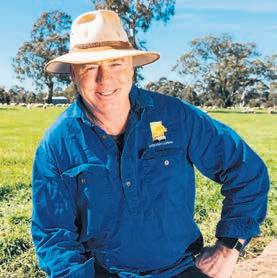
“We’ve got more farmers on the program than we’ve had for a number of conferences,” he said.
“I think farmers love listening to farmers. They bring that practical edge, their real stories – they’re guys and girls who live down the road that are, not pushing their own envelope or barrow, just doing a ripping job.
“Then that transitions to farmers being able to think what they can change on their farms if they can see one of their colleagues doing a great job down the road.”
Mr Leeming said there would be nearly 100 trade displays at the conference, which also provided attendees with an ideal opportunity to network.
“The mingling will be really good, and that’s where we’re catching up with friends and farmers from other regions who we haven’t seen for a while – it’s very social,” he said.
“We’ve got a welcome function on the Tuesday night, and then for those who want to stay on a little bit longer after the conference, there’s some wonderful tours that explore the best of South Australia on the Friday.”






















I’mvery fond of my Ford Ranger ute.
It’s the second one I’ve owned and it’s never complained about my poor driving.
I have a habit of hitting things when I’m trying to park – the latest being misjudging the size of the vehicle in a supermarket car park and ignoring the beeping to hit a pole hidden from view.
Heads up to the bloke who walked up to the passenger side window shaking his head. Thanks mate, but too late.
Why am I talking cars?
Because a report has concluded that electrification of farm machinery is the best option to make serious savings on fuel.
Don’t we all know about that, with the current fuel crisis due to the war with Iran?
Hopefully by the time this goes to print, the peace deal is still in place.
If nothing else the crisis has forced a rethink on our reliability on fossil fuels.
The report, Energy Sovereignty for Regional Australia was commissioned by Farmers for Climate Action.
I spoke on Country Today to report author Professor Ray Wills, managing director of future smart strategies and adjunct professor with the University of Western Australia.
So let’s work through some of the key issues. Firstly, as farmers, why not use biofuel such as canola oil as is used widely in Europe and North America?
“If we’re going to make an effort to change from diesel, then we can do a couple of things,” Professor Wills said.
“We can actually obviously head to biofuels. And if we head to biofuels, then we’re still burning stuff … but we’re also still burning stuff at about the same price.
“You’re actually just trading one liquid fuel

with Libby Price
for another liquid fuel, which is more or less the same cost. And even if it’s a bit cheaper, it’s still the same cost on the farm.”
With more farmers going solar for powering homes and the likes of woolsheds, it’s proving its worth.
But how do you source enough electricity for large scale farm machinery. Why, build your own solar farm of course!
“A large tractor that might tow your seeder and across the paddock, if you use that for 35 days to do a seeding program on a 6000-hectare property you’ll use about 30,000 litres of fuel,” Professor Wills said.
“But that 30,000 litres of fuel used each day is the equivalent of about 3.1 megawatts of energy.
“And that’s the amount of energy that you need to stick into a tractor each day if it’s electric. To generate that amount of energy on a farm, you can install a hectare of solar panels, you can have two and a half megs of batteries just sitting there, and that can recharge the tractor in that time.”
As for replacing my beloved ute, there is one electric ute model on the market already but not one I’d fancy.
I’m keeping an eye on the Toyota HiLux Bev heading to Australia in the not too distant future. Just might be a bit expensive, but I’ll have a gander.

“Their leadership will be instrumental as we continue advocating for policies that strengthen farm businesses, support regional communities and ensure agriculture remains a cornerstone of Victoria’s economy” – VFF president Ryan Milgate
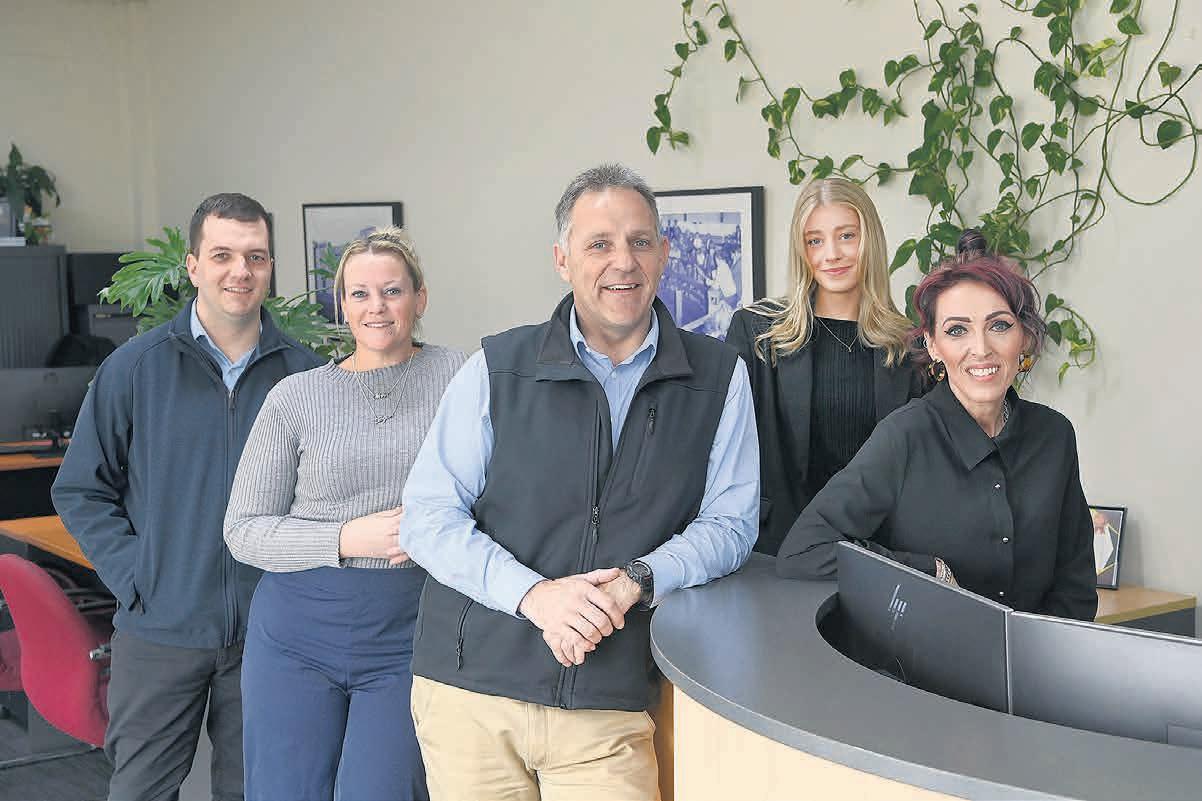
Two Wimmera people have joined the ranks of the Victorian Farmers Federation, VFF.
Carron farmer Jason Mellings has been appointed VFF Grains president, taking over from Minyip farmer Ryan Milgate, who is now president of the VFF.
Avril Hogan, of Horsham, has also joined the VFF board as a special skills director.
The appointments bring a wealth of industry knowledge, leadership experience and a commitment to ensuring Victorian agriculture remains productive, profitable and sustainable.
Mr Mellings, who farms between Donald and Warrackna-
beal, will lead the commodity group at a critical time for Victoria’s grain industry, advocating on behalf of grain growers and driving policy priorities that support the sector’s longterm success.
Joining him as vice-president is Raywood farmer Dusty Pascoe, who brings strong industry experience and a deep understanding of the opportunities and challenges facing grain producers across Victoria.
The VFF board has also welcomed Ms Hogan, adding expertise and strategic insight to the VFF’s governance and will have a particular focus on commercial growth and marketing.
VFF president Ryan Milgate
said the appointments would hit the ground running and look forward to delivering for farmers.
“Jason, Dusty and Avril each bring invaluable experience, fresh perspectives and a strong commitment to advancing the interests of Victorian farmers,” he said.
“It’s a massive year for Victorian farmers and these additions to the VFF team strengthen our ability to ensure we remain the voice of Victorian farmers.
“Their leadership will be instrumental as we continue advocating for policies that strengthen farm businesses, support regional communities and ensure agriculture remains a cornerstone of Victoria’s economy.”






BY COLIN MacGILLIVRAY
Promising results from a farm trial at Wilkur, north-east of Warracknabeal, could pave the way for growers in the region to access Australia’s carbon-credit scheme, according to officials from agricultural biotechnology company Loam Bio.
The trial examined the effects of Loam Bio’s proprietary CarbonBuilder fungal seed treatments on a 30-hectare paddock, using 10 alternating field-length strips – five treatment strips and five control strips.
According to Loam Bio officials, the trial boosted soil-carbon levels, with a host of other ancillary benefits.
Officials said the Wilkur CarbonBuilder trial resulted in: an 11 per cent improvement in plant establishment; a 14 per cent improvement in tiller count; a 0.2 per cent higher yield, with no quality trade-off despite higher tiller counts; and lower screenings at 0.59 per cent versus 0.67 per cent in the control strips.
A New South Wales farm recently became the first Australian broadacre cropping operation to successfully generate Australian Carbon Credit Units, ACCUs, using CarbonBuilder, and Loam Bio officials said Victorian growers could soon follow suit.
ACCUs are tradeable financial assets issued by Australia’s Clean Energy Regulator, with each unit representing one tonne of carbon dioxide stored.
Businesses that generate ACCUs can sell them to private companies looking to offset their carbon footprints, or directly back to the government.
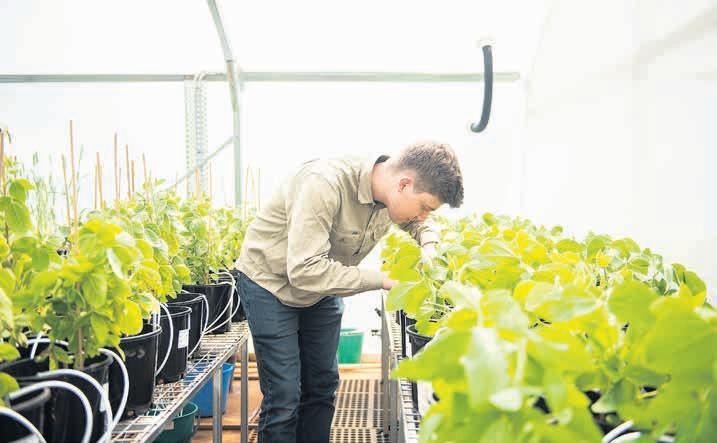
Bio product manager Chris Shafto said CarbonBuilder could allow Wimmera growers to access the regulated carbon market while improving crop yields.
“Over multiple years we’re able to see, demonstrated in field trials, that we’re increasing soil-carbon levels, which is really fantastic for productivity,” he said.
“It’s enhancing water-holding capacity … and also being able to store more nitrogen from what’s being applied to the crop as well.
“So you’re not losing much to leeching or perspiring to the atmosphere.”
Mr Shafto said Loam Bio could
help growers access the government’s carbon-credit scheme, but growers would see benefits regardless of whether they took part in the scheme.
“The return on investment is crucial, and that is something the trial program aims to deliver to people before they enter a carbon project if they’re not quite ready, or if they’re really keen to enter a carbon project,” he said.
“The product can deliver benefits in season above the cost of the product.
“We’ve seen that through either yield gains or the evenness of the yield across paddocks, improving yield in underperforming or low-
fertility soils, or sandier soils like we saw in this trial.
“So there are benefits without being in a carbon project.”
Mr Shafto said CarbonBuilder worked by applying a fungal endophyte to crops at sowing, with the endophyte working to aggregate soil particles.
He said growers could either apply CarbonBuilder directly to seed or use a Loam Bio-developed air-seeder called FurrowMate to dose fungal powder into furrows during sowing.
People can find more information about Loam Bio and its CarbonBuilder products online at www. loambio.com.
Member for Lowan and shadow Agriculture Minister Emma Kealy is calling on the State Government to do more to support farmers dealing with invasive weed species.
Ms Kealy said weeds such as gorse were causing havoc across regional Victoria, and the burden of dealing with the plants was falling on farmers. She said amid high diesel costs, fertiliser shortages and a rising farmcrime rate, invasive weeds were placing extra unnecessary pressure on farmers.
“Farmers are doing everything they can to keep their businesses afloat, but they are being let down by a government that refuses to take responsibility for even the most basic land-management issues,” she said.
“Recent parliamentary hearings further highlighted Labor’s attitude towards these issues, with figures tabled showing the government is spending 50 per cent less on biosecurity than two years ago.
“Gorse is a well-known invasive weed.
“It can be controlled with co-ordinated action, yet what we are seeing is a complete lack of leadership and accountability.”
Ms Kealy said the government’s hands-off approach to weed control was leaving farmers with little support and also had potential to result in lost productivity, as well as biodiversity and fire-risks.
She said the situation highlighted a failure of fairness and consistency.
“Farmers are being threatened with fines over minor compliance issues, while government agencies turn a
blind eye to serious weeds that pose a real risk to farm viability,” Ms Kealy said.
“At a time when farmers are already under pressure from rising input costs and increasing crime, it is unacceptable that they are being left to deal with preventable problems like gorse.
“The government must step up and take co-ordinated action on weed control across Victoria.
“Victorian farmers deserve practical support and accountability – not neglect.”
Researchers are seeking more responses for a sixth Wimmera Rural Landholder Survey that seeks to identify Wimmera farmers’ needs, challenges and priorities.
Murdoch University associate professor Hanabeth Luke is leading the survey – Australia’s longest-running research project of its type – for Wimmera Catchment Management Authority, CMA.
Landholders are able to complete the survey until July 6.
Assoc Prof Luke said researchers had received some completed surveys but needed more.
“We are grateful to all the Wimmera landholders who have completed the survey so far, during what is a busy time of year on farms,” she said.
“To ensure the results are representative of the region, we would really appreciate if more landholders could contribute their insights, knowledge and experience.”
The university sent out 2000 surveys as part of a national Soil Cooperative Research Centre Rural Landholder Social Benchmarking Study. The confidential survey takes about 30 minutes to complete.
Assoc Prof Luke said questions covered topics including soil management, farm practices, long-term property plans and preferred sources of information.
Previous Wimmera surveys were in 2002, 2007, 2012, 2017 and 2023.
Wimmera CMA acting chief executive Luke Austin said results enabled the CMA to target investment and deliver support that aligned with landholder goals.
“This research helps us further understand the issues facing farmers, and we can then strongly argue a case for projects and funding that will have the most impact and relevance in the longterm,” he said.
Mr Austin said although researchers were able to compare results between surveys, the CMA was primarily focused on current issues.
“The higher the number of people who contribute to the survey, the better understanding we get of priorities for Wimmera farmers and how best we can support them,” he said.
To complete the survey online, people can visit soilcrc.com.au and click on Wimmera Victoria Landholder Survey in the top menu bar.






BY COLIN MacGILLIVRAY
Donald woman Carolyn Wheeler is already making a difference in her community after completing a Victorian Rural Women’s Network leadership and mentoring program.
The program brought together women from agricultural backgrounds across Victoria, with participants receiving mentoring and leadership training from industry and government leaders including Alana Johnson and Christine Nixon.
The 11-week program included two three-day immersive sessions in Melbourne and the Yarra Valley, which Ms Wheeler described as ‘very intense’ but ‘well worth it’.
Participants received certificates from Agriculture Minister Michaela Settle at Victoria’s Parliament House upon completing the program earlier this month.
Ms Wheeler, who is a human resources manager for joint agriculture venture Excel Farms, said the program had given her confidence to make a difference.
“I wanted to gain confidence to pursue any opportunities that would make a positive difference in my workplace and the community,” she said.
“The most valuable part of the program was the cohort of women I did the course with. They’re a very diverse group in different areas of agriculture.
“We supported one another and now we have a strong network. We’re all planning to catch up again even though the course has finished.”
Ms Wheeler said taking part in the program had inspired her to take up an ambassador role for South Australian not-for-profit organisation Women To-
gether Learning, WoTL, which supports women in agriculture.
She organised a WoTL event in Donald this month and described it as a success.
“We had a facilitator and a group of women from all different backgrounds. We had an agronomist and some young farming mums who were looking for connection and support in the community,” she said.
“We had women from Berriwillock, Warracknabeal, Marnoo, Donald and a lady from Yarrawonga. It was a good mix of people, so I reckon it’s going to take off pretty well. It’s about bringing programs, networking opportunities and professional development to those women.”
Ms Wheeler said she was now helping organise a WoTL seminar titled Women Thriving in Bendigo on August 10 and 11.
She encouraged any women across the Wimmera, Grampians and southern Mallee regions considering applying for next year’s Victorian Rural Women’s Network leadership program to put their hands up.
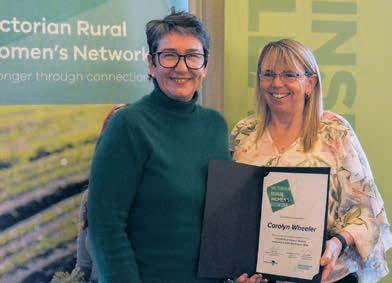
GRADUATE:
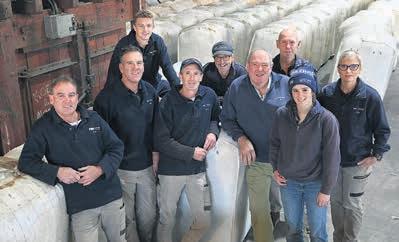
Agriculture Minister Michaela Settle presents Carolyn Wheeler a Victorian Rural Women’s Network leadership and mentoring program certificate of completion at Parliament House earlier this month.
“I’ve been able to use a lot of what I learned throughout the program in different ways, and I’m sharing it wherever I can,” she said.
“I’d definitely encourage other women to consider taking part, just for the networking and the cohort of people – you build strong relationships and it gives you good skills to take back into your workforce or your community. You use those skills every day.”
Ms Settle said the program was the State Government’s flagship initiative supporting rural women to take on leadership roles and participate in decisionmaking across Victoria.
She said the government had invested more than $850,000 in the program since its inception, producing more than 100 graduates.
“Congratulations to this year’s graduates – your leadership will help shape a stronger, more inclusive future for Victoria’s agriculture sector, and we’re ensuring that continues with our support,” she said.
Agriculture Victoria officials are encouraging farmers affected by the January 2026 bushfires to check if they are eligible for recovery support.
Victorian Rural Assistance Commissioner Peter Tuohey said recovery from fires could take months or years, and that government support was still available for affected landowners.
“Recovery doesn’t stop when the fires are out. For many farmers, the real work is just beginning,” he said.
“Farmers have been getting on with the job and may not realise what support is available to ease some recovery pressures.
“I encourage anyone affected to take a moment to see what’s available. You might be eligible for assistance that can make a real difference.”
Financial assistance available for farmers includes: Primary Producer Bushfire Recovery grants of up to $75,000 to assist with clean-up and reinstating enterprises, including rebuilding or replacing damaged on-farm infrastructure; Primary Producer Bushfire Recovery concessional loans of up to $250,000 for producers who suffered significant damage to assets, with loans of up to $100,000 to support those experiencing a major loss of income.
The loans aim to help farmers cover essential costs such as repairing or replacing damaged
equipment, rebuilding infrastructure, purchasing livestock and meeting working capital expenses such as wages, rent and fodder.
Mr Tuohey said Agriculture Victoria staff were on the ground in communities, partnering with councils and other support services to provide farm-management information and talk with farmers and their families.
He said staff were also at events providing farmers with technical information on topics including managing and feeding livestock, pasture recovery, managing and protecting farm-water supplies, farm mapping and refencing.
“Reaching out can ease some of the pressure. There are people ready to help,” he said.
People can apply for Primary Producer Bushfire Recovery grants and-or loans online at ruralfinance.com.au/grants.
Farmers can also access free, independent support through the Rural Financial Counselling Service, including wellbeing support, financial counselling and assistance with grant and loan applications.
To speak with a counsellor or access wellbeing support, people can call 1300 771 741.
For more information on bushfire support, people can visit agriculture.vic.gov.au/bushfires or call 136 186.