
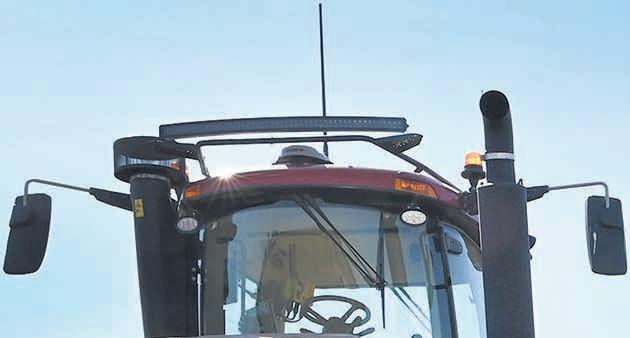
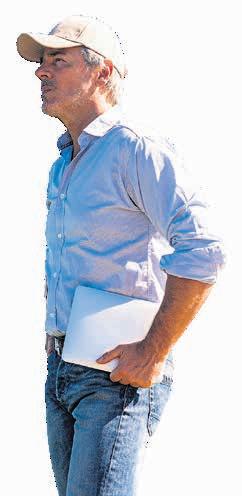

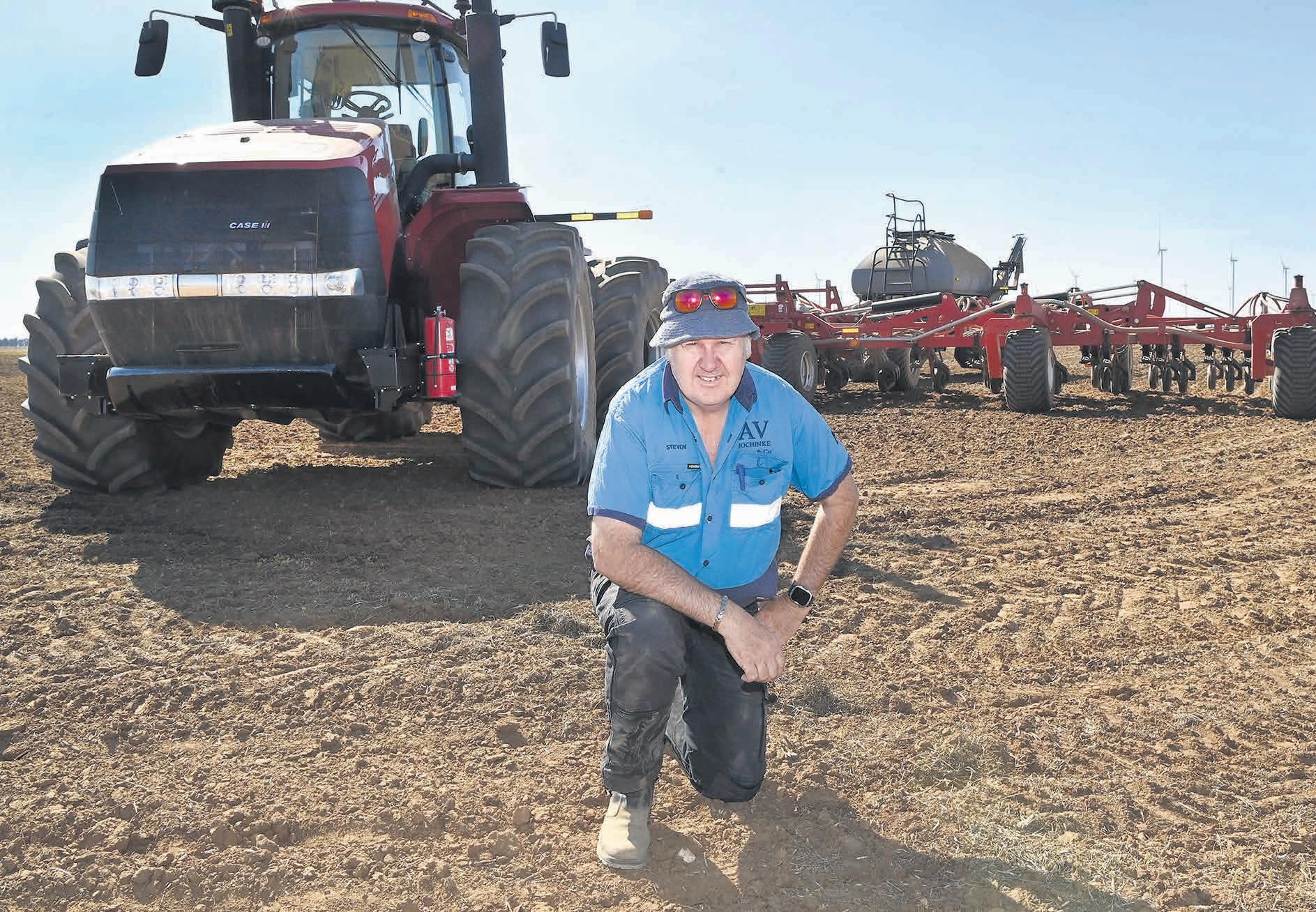
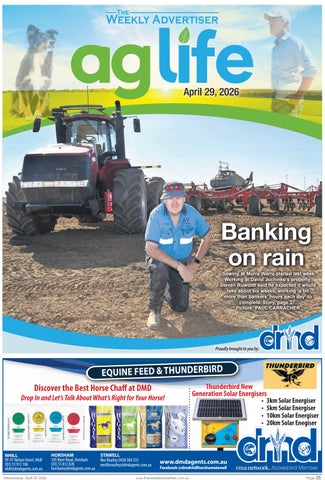
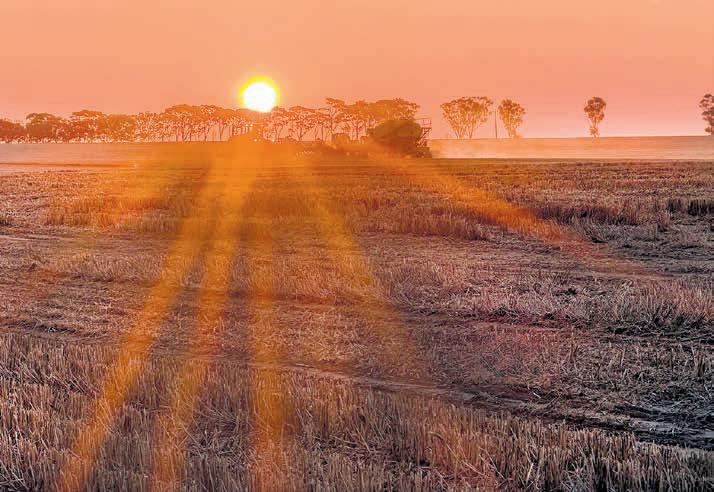
Sowing at Murra Warra started last week. Working at David Jochinke’s property, Steven Ruwoldt said he expected it would take about six weeks, working ‘a bit more than bankers’ hours each day’ to complete. Story, page 27.































Picture: PAUL CARRACHER







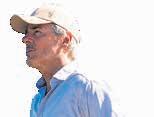












Sowing at Murra Warra started last week. Working at David Jochinke’s property, Steven Ruwoldt said he expected it would take about six weeks, working ‘a bit more than bankers’ hours each day’ to complete. Story, page 27.
BY BRONWYN HASTINGS
Farmers in the region enjoyed a wet start to the season –with parts of the northern Mallee recording its wettest March on record – while growers in the Wimmera are sowing into soil with lower moisture content.
Birchip grain grower Mick Foote, at the gateway to the Mallee, told Country Today he had finished sowing this season’s canola and was moving onto barley.
“We finished the canola, and I’m hoping some will come up, the moisture’s gone down a little bit,” he said.
“We’re going to Neo barley, which is a long-term barley, and then we’ll whack in a bit of wheat.
“We had Neo last year, I was a bit worried in the dry season, but it yielded quite well.”
Mr Foote said he was persisting with wheat, despite current low prices, and had already sown vetch.
He said he and his father had also been deep-ripping.
“So far, it looks good,” he said.
“But you look at fuel, which was not good, but luckily we finished it this year before the war started.
“We found that if we open up the hard pan, the moisture gets through better and the roots get through better, and it seems to be working quite well.”
Mr Foote said he was ‘thinking positive’ about fuel prices and shortages.
“You’ve got to be positive about the whole thing and look for the positive in it,” he said.
Agriculture Victoria seasonal risk agronomist Dale Grey said it had been a great start across much of the state.
“In March, looking at maximum temperature deciles, it was close to average across the state – only the western Mallee was cooler, and a small region around Warrnambool was warmer,” he said.
“Minimum temperature deciles were much warmer at decile eightto-10.
“Surveying the Bureau of Meteorology Australian Water Outlookmodelled soil-moisture decile for perennial-pasture paddocks, it’s much wetter in the Mallee at decile 10, with the Wimmera, northern country, and parts of the east, at decile eight.
“Comparing this with soil-moisture probes shows higher values where the rainfall was greatest, and lowsoil moisture values in some of the southwest areas, and where perennial pastures have fired up after using surface soil water.”
Mr Grey said air-pressure was normal over most of Victoria, with higher pressure over March.
“My assessment of 12 climate models for Victoria are split between likely drier and neutral rainfall, and split between lightly warmer and neutral temperatures for the next three months,” he said.
“As for the autumn break – west Gippsland is the earliest average break in the state, the only region commonly occurring in March.
“A suite of other high-rainfall locations see their average break in April, with some before the folkloric date of Anzac Day – including Moyston around April 18 and Longerenong May 9.
“The northern and northwest croppers often have to wait until May for their action to begin, except this year, it’s been early March for them –something that’s only happened one to three times before, which makes it very rare indeed.”
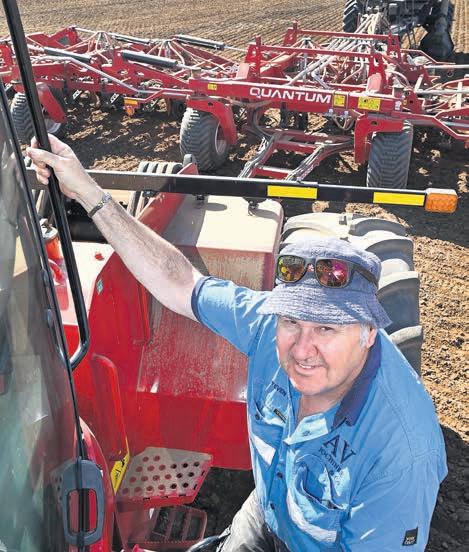
week. He said it was ‘pretty dry’ at seed bed level, and without rain forecast, it was time to sow.

Agriculture events, grants
Mildura Field Days
May 15: 9am-5pm; May 16: 9am-4pm at Mildura Racecourse.
Tickets $10 per person, aged concession $5, students aged 18 years and younger free of charge, available at www.trybooking.com/DIUGZ, or by cash or card at the gate. For tickets and more information, people can visit www.mildurafielddays.com.au.
Drought resilience workshops
May 19: 4pm-7pm at Hamilton. May 20: 4pm-7pm at Warrnambool. Designed to help farmers take practical, achievable steps to strengthen farm resilience and productivity. People will hear from industry experts, leading farmers and agency staff in topics including water management and farm water security, soil health and productivity, and biodiversity and natural asset management. People can also connect with local experts, agencies and programs that can support implementation and funding. For more information and to book, people can visit www.eventbrite.com.au.
BestWool/BestLamb and BetterBeef June 23 and 24: Ballarat Conferences return to The Goods Shed in Ballarat for two days of insights, innovation and practical messages for sheep and cattle producers. There will be a combined industry dinner at the end of day one.
BCG Main Field Day
September 9: 8.30am-4pm at Birchip. BCG’s flagship event showcases the latest in local agronomic research and draws growers, advisors and industry professionals together to explore advances in crop management, weed control, soil nutrition, new varieties and farming systems.
Farm drought support
Farmers in southwest Victoria can access $10,000 in drought-support grants to make on-farm infrastructure upgrades and improvements such as grain feeders, troughs, pasture restoration and stock containment areas. People can find more information at the Agriculture Victoria website.
Bushfire recovery grants and loans
The State Government has measures to support primary producers affected by January bushfires, including grants and concessional loans. People can check eligibility at Rural Finance’s website rural finance.com.au or call 1800 260 425. Applications are now open and close at 4pm on October 21.



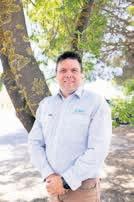
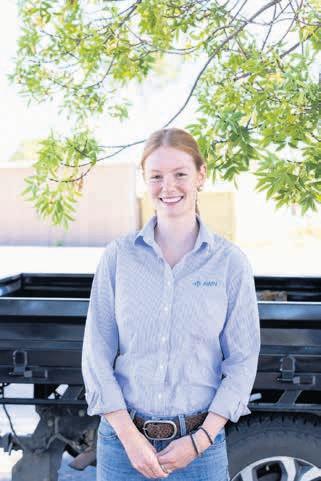

Alast autumn flurry of sales has seen an exceptional run of livestock make its way through our local saleyards and over the hooks during April.
Growers have offloaded young stock before they begin cutting teeth, moved on scanned dry ewes deemed to be unproductive – which there have not been that many of due to excellent joining conditions in the spring of 2025 – as well as the need to make way for the sprayers and seeders as they begin to roll throughout the region.
As is regularly the case, when top lambs are sold off early in the season, the tail left behind often explode to become the best lambs of all, with time on feed also improving their yield as every week passes.
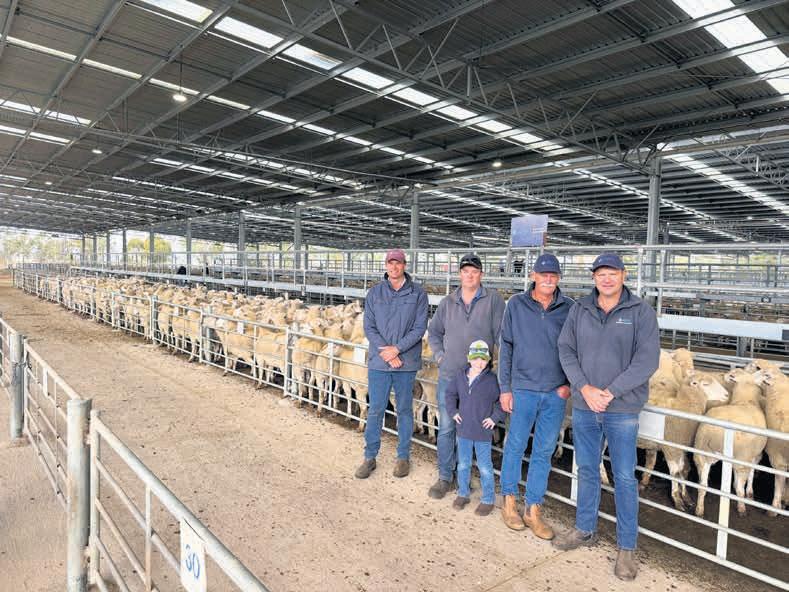
This, combined with growers who choose to hold all of their cards until the crescent of the moon hangs at just the right angle before sending stock in, saw a brilliant penning of lambs at the Horsham Rural Livestock Exchange on April 15, deemed to be the best run of lambs on offer at the Horsham yards by AWN for a number of years, topping out at $490 per head, for a run, and not just a pen, of 222 extra heavy lambs.
In recent years, the over-the-hooks grid spec to achieve the optimal price on lambs – which flows loosely through



to the physical marketplace – has gradually crept upwards with growers happily responding to the challenge, now often sending out lambs at this time of year that exceed the buyer’s brief.
High weights, in a high-priced environment, brings with it high expectations and rightfully so, however buyers will liberally implement a sliding scale on increasing weights depending on their charter, hence the importance of sending the right article to the right place at the right time to capitalise and be rewarded on the quality product the market has demanded the vendor produce – of which our client base has become very good at doing.
Water supply is becoming a major issue in grazing areas that rely solely on runoff.
Positive signs remain firm for those involved in livestock production, but it will require a break to the season within an average timeframe, along with considerable runoff in the winter and spring months to take full advantage of the opportunity moving forward.
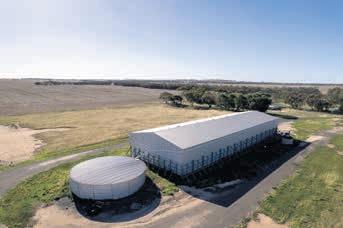
Australian plant-breeding company InterGrain officially opened its new state-of-the-art, purposebuilt facility on Horsham’s Stawell Road this month.
Features include enhanced pest and temperature control and dust extraction systems, alongside unique machinery.
Site operations manager Dave Watson said the new site offered efficiency through a range of purpose-built machines, one of which is a thresher – his brainchild and unique to the site.
“It is much cleaner than it was in the past – we have a bigger space, and new aspects – it’s a much better environment to be in,” he said.
“We have added efficiency and cleanliness, which give us purity and integrity.
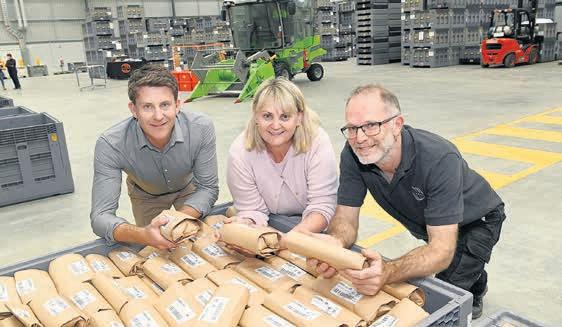
OFFICIAL: Chief operating officer Dan Mullan, chief executive Tress Walmsley and Horsham operations manager Dave Watson at InterGrain Horsham’s opening at its new site on Stawell Road.
Picture: PAUL CARRACHER
“It also allows for future growth – we outgrew our previous sites at Plumpton Road, and now we have room for our expanding operation.”
The Horsham facility is the company’s east coast hub, its other site is in Perth.
The hub employs about six people, and up to 12 at its seasonal height at Horsham, and more than 80 people across both sites.
“We just do cereals at the moment – barley, wheat and oats – and are working to get better varieties for farmers,” Mr Watson said.
“It takes about eight to 10 years to get the seed to market, so it’s a big process.
“We breed to find that one or two out of a yield that will suit different environments around the country.”
InterGrain chief executive Tress
Walmsley said InterGrain started operations in Horsham in 2010.
“The facility is a significant investment and a crucial hub for our breeding activities,” she said.
“This site enables us to translate national breeding investment into grain varieties with strong regional fit, ensuring our future wheat and barley varieties perform where it matters most – in growers’ paddocks across Australia.
“Just as importantly, the facility represents a step-change in working conditions and workplace health and safety for our team, providing modern, fit-for-purpose infrastructure is central to attracting and retaining highly skilled staff, which ultimately underpins our ability to deliver innovation and value to growers over the long term.”
























Regional excellence was celebrated at Wimmera Agricultural Shows Association gala dinner this month, which included the presentation of its ambassador awards and announcement of its crop competition winner.
This year’s competition saw seven ambassadors representing their local shows, including Horsham,

Kaniva, Donald, Warracknabeal, Goroke, Jeparit and Nhill.
The judges said all participants demonstrated outstanding commitment, enthusiasm and leadership, which made the judging process particularly challenging.
Warracknabeal Show’s Aiden Keys is this year’s rural ambassador, who now progresses to represent the Wimmera at state finals at the Royal Melbourne Show.
Goroke’s Lucinda Smith was announced the junior ambassador, representing the Wimmera at the state finals at the Victorian Agricultural Shows’ Convention at Wangaratta in June.
Marcel Padua, representing Jeparit, was runner-up.
The evening also celebrated excellence in agriculture; Goroke’s Cliff Allen and family won the Southern Wimmera Annual Crop Competi-
tion, with Kaniva’s Matthew Feder the runner-up.
The evening’s guest speaker was Harry Lloyd, a bachelor from television program ‘Farmer Wants a Wife’.
Mr Lloyd spoke of his experiences on the show, as well as his current role as the 2025 Victorian Rural Ambassador, highlighting the importance of young people in the agricultural sector.
Moist hay continues to be a significant hazard, with the CFA recording 25 haystack fires across the state so far this year.
Cooler conditions might suggest a reduced fire risk, but producers are urged to maintain regular monitoring of baled and stacked hay, as no current technology reliably tracks internal hay temperatures.
Agriculture Victoria dairy extension officer
Michele Jolliffe said the real danger in hay was what people could not see, with regular checks remaining the strongest protection against fire.
“Simple actions like testing temperatures and watching for warning signs can prevent a heating haystack from becoming a dangerous ignition,” she said.
“Warning signs such as steam, roof condensation, mould, acrid smells or humid air near stacks should prompt immediate checks to prevent heat buildup and potential ignition.
“Most heating occurs within the first fortnight after baling, although hay can still reach ignition point up to eight weeks later, especially during fluctuating autumn temperatures.
“Cooler weather can hide the risk, but moisture in hay can still spark trouble if vigilance drops.”
Ms Jolliffe said using a crowbar inserted for two hours remained an effective temperature test, and a bar too hot to hold indicated a dangerous internal temperature above 70 degrees.
“If hay is heating, stacks should be carefully pulled apart to release heat, with water supply and trained personnel on standby to prevent ignition,” she said.
“Producers should avoid walking on stacks due to potential internal charring, any extra weight on the stack may cause the stack to collapse and cause serious injury.
“If there is the slightest risk of a fire starting due to wet hay, never keep machinery in the hayshed and don’t allow children to play in or near heating stacks.”
Further information on hay fire risks is available on the CFA website, and seasonal support is accessible by calling 136 186.












The Victorian Farmers Federation has released a 20-point plan demanding all major parties commit to the strongest farmland protections in Australia ahead of the Victorian state election in November.
The VFF’s Victorian Farmland Protection Plan calls for a fundamental reset in the way Victoria safeguards its agricultural land.
Prior to stepping down from the VFF presidency role due to being pre-selected as a Nationals candidate, Brett Hosking said farmers across regional Victoria were at breaking point as competition for farmland from mining, energy projects and urban sprawl intensified without adequate rules or protections.
“Farmers are the first to feel it, but every Victorian will live with the consequences if we don’t get this right. This isn’t only a farming issue, left unchecked it’s a food security issue for every Victorian,” he said.
“Victorian farms produce a quarter of Australia’s food and fibre from a mere three per cent of our farmland.
“Once that land’s gone, it’s gone forever and we’re seeing that loss accelerate at an alarming rate.”
Mr Hosking said government policy settings were failing to keep up with population growth
and the protection of farmland.
“Government and developers have taken a crash-or-crashthrough approach for too long. This election is the chance for the major reset that Victoria needs to protect food production for every Australian,” he said.
The plan is built on four pillars – compensation and community benefits; planning and community engagement; rehabilitation and decommissioning; and guaranteeing the right to farm.
The proposed solutions include the establishment of a statutory farmland and food security commissioner, reforming planning laws to require cumulative impact assessment, a $200-million agriculture productivity fund through a royalties for regions model, government-backed rehabilitation and decommissioning, and a pause on critical minerals projects until a plan is in place and community impacts are assessed with rigour.
The plan also calls for standalone Right to Farm legislation modelled on New South Wales law, a ban on non-disclosure agreements that silence landholders and isolate neighbours, and binding rehabilitation requirements backed by credible science for all non-permanent land uses on farmland.
“Victoria is home to Austral-
ia’s most productive farmland, yet we have weaker protections than New South Wales and Queensland. That must change,” Mr Hosking said.
“This is about creating a fair and balanced system, a framework that gives rural communities a voice, and recognises our land is a critical asset for every Victorian, not vacant space awaiting development.
“The wellbeing of those impacted is worth more than the profit of large companies and we must not lose sight of that.”
Mr Hosking said tensions across Victoria were growing as farmers are forced to negotiate individually against wellresourced corporations and government entities, compulsory acquisition powers overriding landholder consent, and longterm productivity losses going unmeasured and uncompensated.
He said Victoria was approaching a wave of wind and solar decommissioning and mining rehabilitation with little guarantee or evidence base for returning land to productive agriculture.
“Australia’s best farmland and those who work it deserve Australia’s strongest protections. This plan gives every party a clear platform to commit to. We’ll be taking it to every candidate in every seat between now and November,” he said.

last year.
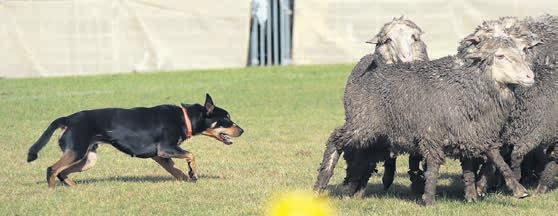
Casterton, the birthplace of the Australian Kelpie, is preparing to host a landmark event as entries for the 30th Australian Premier Working Dog Auction close on May 1.
The auction, part of the annual Australian Kelpie Muster over the King’s Birthday long weekend in June, continues to attract strong national attention, with buyers and sellers travelling from across the country and increasingly bidding online to secure some of Australia’s best working dogs.
Whether circling a mob of sheep or holding pressure on stubborn cattle, kelpies remain a quiet but essential workforce on farm – their contribution includes reducing labour demands, improving stock flow, supporting animal welfare and lifting overall productivity.
For generations, the dogs have been relied upon to move, manage and protect livestock, and that value is being recognised beyond the farm gate, with well-trained dogs attracting strong competition in the sale ring.
The 2025 auction highlighted the event’s national reach and resilience, with strong interstate demand driving results despite challenging seasonal conditions.
Two Victorian Kelpies reached the top
price of $17,500, highlighting the continued demand for proven, high-quality working dogs. Several other dogs sold between $8000 and $16,500, with multiple lots exceeding $10,000 early in the sale.
Casterton Kelpie Association president Karen Stephens said the results highlighted the enduring strength of the event and the offering ahead.
“Last year’s auction showed demand for quality working dogs remains strong across the country,” she said.
Mrs Stephens said this year’s auction would again offer depth across all levels.
“The auction has a dog for everybody – we sell young pups, started dogs, right through to fully trained dogs. There really is something for everyone,” she said.
The muster draws more than 25,000 visitors annually and features a full weekend program including the kelpie triathlon, street festival, working dog demonstrations and community events.
For entry details and further information, people can visit www.castertonkelpieassociation.com.au.










The Coalition has promised to strengthen Victoria Police’s Farm Crime Squad as part of a plan to recruit 3000 more additional officers if elected at November’s state election.
The Nationals and Liberals say Victoria’s Farm Crime Unit has been reduced to just a couple of dedicated officers covering the entire state, and as a result the number of farm crimes has skyrocketed.
Shadow minister for agriculture
Emma Kealy said farm crime had reached a point where stock and fuel theft was occurring almost daily.
“These thefts strike at the heart of family farms, where margins are tight and trust runs deep. Unsurprisingly, Labor has turned a blind eye,” she said.
Ms Kealy said livestock theft was costing the sector millions each year, while high diesel prices have made onfarm fuel supplies an attractive target.
“So forgotten is the Farm Crime Squad by the Allan government that Labor is even relying on interstate support for specialist capabilities such as DNA testing in stock theft cases,” she said.
“It’s an embarrassing position and one that reflects years of neglect.”
Ms Kealy said a reinvigorated Farm Crime Squad, backed by more officers on the ground, would send a clear mes-
sage that rural communities matter and their safety matters.
“Dedicated officers bring an understanding of rural environments, livestock systems and the patterns of offending unique to agricultural communities,” she said.
“That translates into smarter, intelligence-led policing, better co-ordination across regions and a visible presence that acts as a deterrent.
“Farms are both workplaces and homes, and no Victorian should feel unsafe on their own land, just as no police officer should be left carrying the burden of under-resourcing when they are doing their best with what they have.
“Rebuilding a properly resourced specialist farm crime unit will make a tangible difference in protecting our farms and farming families.”
Labor announced last week it would allocate $137-million in the 202627 Victorian Budget for police resources, including $62-million to recruit up to 200 reservists for administrative duties, thus freeing up frontline officers.
The Budget also includes $18.3-million for 3000 mobile devices for specialist police to access Victoria Police systems; $13.4-million to almost triple the number of Tobacco Licensing Victoria inspectors; and $44-million for 50 additional protective service officers.
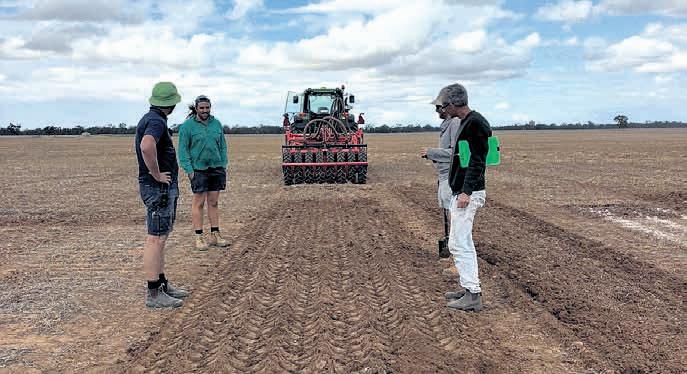
BCG has established a deep-ripping trial across the southern Mallee this month, starting in Birchip’s west.
Interest in the soil management technique that mechanically breaks up compacted soil by pulling narrow tines at a depth of up to 30cm, has been growing across the region.
BCG senior scientist James Nuttall said he was working closely with researchers from Adelaide and Murdoch universities to determine optimal ripping depths and gypsum application rates.
“The aim is to apply high rates of gypsum to improve water dynamics, water into the soil profile and as
a result, water used more effectively by the plant,” he said.
Dr Nuttall said research had demonstrated yield increases of up to 11 per cent from shallow ripping and as much as 44 per cent from deep ripping on sandy loam soils in low rainfall zones in Western Australia.
However, the impact of deep ripping on heavier calcarosol soils, which are widely encountered across Birchip and the southern Mallee, remains less understood – the trial aims to address that gap.
“The aim of the project is to actually look and see if we can remediate some of these heavy soils using
high rates of gypsum to get sort of better water dynamics going on, get the water into the profile, and get the water more effectively out and used by the crops,” he said.
“We’ve got a design of various treatments and rates and placements, so we can actually get a gauge on which is the most effective amelioration strategy to actually get the improved water dynamics for some crops in this region.”

The findings of the trial will provide valuable insights for growers managing heavy clay soils, helping to improve productivity and resilience across the region.













The war in the Middle East is waking the sleeping giant of governments around the world who are starting to realise it is threatening global food security.
We know, as our communities and livelihoods rely on agriculture, the tensions and nervousness about the near future are weighing heavily on our minds and for some of us, our mental health. At last, that realisation is spreading.
The United Nations last week declared ‘with hunger looming, life-saving fertiliser shipments cannot wait. United Nations Secretary-General Antonio Guterres has established a taskforce to facilitate the safe passage of fertilisers and related raw materials for humanitarian purposes’.
The manager of the taskforce, Jorge Moreira da Silva, said in a statement: So if we don’t get some solution immediately, the crisis will be very significant and severe, particularly for the poorest countries and for the poorest citizens. He hopes the taskforce will be running in just seven days, once combatants blocking the strait allow fertilisers and other raw material through.
The Albanese government seems to also have dawned to the fact it needs to intervene to support our farmers.
Earlier last week, it announced it would underwrite shipments of fertiliser. Companies like Incitec Pivot and CSBP would be able to import fertiliser, knowing that if there was a sudden price collapse from the recent 97 per cent increase, the government would pick up the tab. Even so, the crisis will not ease overnight. Rabobank’s latest fertiliser outlook warned the global fertiliser market faces a prolonged period of tight supply, weak affordability and heightened price risk and, even if current geopolitical tensions ease soon, ‘normalisation will be slow’.
Speaking to Country Today, Rabobank analyst Paul Joules said ‘the effective closure of the Strait of Hormuz has removed a substantial volume of fertilisers and critical inputs from

global trade, triggering an abrupt supply shock that cannot be quickly replaced. The resulting market environment is characterised by tight availability, sharply higher prices and elevated volatility across major nutrients’.
Fertiliser is now front of mind, sitting squarely behind it is fuel.
The Prime Minister repeatedly assured us Australia had 30 days of supply to tide us over. The old ‘whatever you do, don’t panic’. We are now two months into the war, with no end in sight, and finally, the Federal Government has started to make the tough decisions.
Mr Albanese was able to call on a few favours from Asian countries who buy gas from Australia. Four additional shiploads of fuel are heading to Australia with 200-million litres of diesel from South Korea, Brunei and Malaysia.
Not before time, in what must be admission that Australia needs to be better prepared for any future conflicts, the government has pledged to invest in Australia’s petrol and diesel capacity.
The money will come from the $15-billion National Reconstruction Fund, which for the first time will allow fuel to be eligible for investment of funding to a total of $1-billion.
No doubt we’ll find out more in the upcoming Federal Budget as the national reconstruction fund announcement was vague.
The NFF has welcomed the government’s latest response to the crisis, but even if the war was to end tomorrow, it will take many months for fertiliser supplies to return to normal.
Longerenong College students who completed their studies last year were recognised at an annual graduation ceremony at Horsham Town Hall last month. Students gained a range of qualifications, including: Certificate IV in Agriculture, Certificate IV in Wool Classing, Diploma of Applied Agronomy, and Advanced Diploma of Agribusiness Management. Longerenong College has been ‘cultivating careers in agriculture’ since 1889.
Site, delivered and ex-farm pricing
We can help you find the best value for your grain
We manage the marketing and sales process so you can focus on what you do best –growing the crop!