
Dr. John Spencer Ellis: Why Medical Spas Must Dominate AI Search to Survive the Next Five Years
The Data-Driven Guide to AI Visibility for Med Spas Competing in an Increasingly Crowded Market
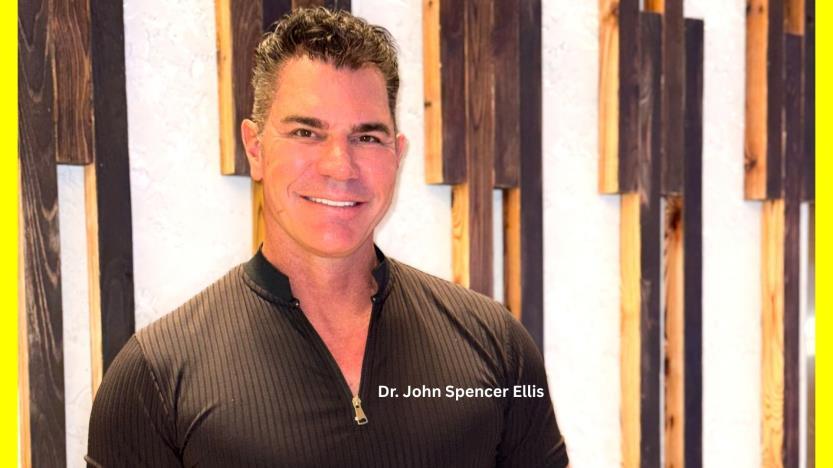
By Dr. John Spencer Ellis | Founder, Reputation Return
Introduction: The Medical Spa Market at a Crossroads
The medical spa industry has experienced explosive growth over the past decade. According to the American Med Spa Association, the U.S. med spa market reached $15.4 billion in 2023, with projections exceeding $30 billion by 2030. New med spas open weekly in markets across the country. Competition has never been more intense.
Yet amid this growth, a silent disruption is reshaping which med spas thrive and which struggle to fill their appointment books. The disruption isn't a new competitor or shifting treatment trends. It's a fundamental change in how patients find and choose medical spas.
Patients now ask artificial intelligence for recommendations. They open ChatGPT, Claude, Google AI Overview, or Perplexity and type: "Best med spa for Botox near me" or "Find a medical spa for laser treatments" or "Recommend a med spa for body contouring in my area."
AI responds with three to five specific names. Medical spas not on that shortlist are invisible to that search and to the patient conducting it. This article examines what medical spa owners need to understand about AI visibility and provides a data-driven framework for dominating AI search in your market.
Why Medical Spas Face Unique Exposure to AI Disruption
Medical spas occupy a distinctive position in healthcare that makes them particularly vulnerable to shifts in patient discovery behavior.
No insurance networks direct patient flow. Unlike primary care physicians or specialists who receive patients through insurance panels, medical spas depend entirely on patients choosing them directly. Every patient is a self-referred patient. Every appointment represents a consumer making a discretionary decision about where to spend money on elective services.
No physician referral pipelines. Medical spas rarely receive referrals from other healthcare providers the way dermatologists or plastic surgeons might. Patient acquisition depends on direct-to-consumer marketing, reputation, and discoverability.
High market saturation. The barrier to entry for medical spas has lowered significantly. In many metropolitan areas, patients have dozens of options within a reasonable driving distance. Differentiation has become increasingly difficult through traditional means.
Research-intensive patients. Medical spa patients are investing significant money in services affecting their appearance. They research extensively before committing. Average treatment costs ranging from $300 for basic injectables to $3,000+ for comprehensive treatment packages motivate thorough comparison shopping.
These characteristics mean medical spas depend more heavily on discoverability than almost any other healthcare segment. When patient discovery shifts to a new channel as it has with AI medical spas feel the impact immediately and acutely.
The Data: Quantifying the AI Search Shift
Recent healthcare consumer research has measured the scope of behavioral change affecting medical spa patient acquisition. The numbers are striking.
56% of patients under age 50 now use AI platforms when searching for aesthetic providers. This represents the majority of the core medical spa demographic. Patients aged 25-50 the primary med spa market have adopted AI as a routine part of their healthcare and beauty service research.
81% of patients who consult AI only contact providers AI specifically recommends. They don't browse further. They don't check additional sources. They contact whoever AI suggested and proceed with those options exclusively.
68% of patients report AI recommendations carry more weight than traditional advertising. This includes social media advertising, Google ads, and even influencer endorsements. AI recommendations are perceived as more objective and trustworthy.
40-60% higher booking rates for medical spas appearing in AI recommendations compared to those that don't. This gap represents the revenue differential between AIvisible and AI-invisible med spas competing in the same market.
73% of aesthetic patients conduct 8+ research sessions before booking. AI is consulted in the majority of these sessions, shaping perceptions and narrowing consideration sets long before patients ever visit a med spa website or make a phone call.
Dr. John Spencer Ellis, founder of Reputation Return and a healthcare visibility expert with over 30 years of experience, frames the implication directly: "If you are not mentioned in AI, you are invisible to at least half of your prospects. That's serious and devastating revenue loss. For medical spas operating in competitive markets, AI invisibility isn't a minor disadvantage it's an existential threat."
How AI Recommendations Work: What Medical Spas Need to Understand
AI platforms cannot visit your med spa. They cannot experience your ambiance, evaluate your injector's technique, or assess the quality of your laser equipment. They evaluate proxy signals that suggest quality, relevance, and trustworthiness.
Review ecosystem signals dominate. AI heavily weights review presence across platforms. This includes Google reviews, Yelp, RealSelf, Facebook, and industryspecific directories. Total volume matters, but velocity matters more how many new reviews appear monthly signals current quality rather than historical reputation. A med spa with 150 reviews adding 15 monthly generates stronger AI signals than one with 300 stagnant reviews from years past.
Information completeness affects recommendation likelihood. AI recommends providers it understands thoroughly. This requires comprehensive Google Business Profile information with all services listed, detailed website content for every treatment offered, complete directory listings, and documented provider credentials. Thin information produces thin recommendations or exclusion from recommendations entirely.
Treatment-specific content creates targeted visibility. Patients search specific concerns: "med spa for lip filler," "medical spa for CoolSculpting," "best place for hydrafacial near me." AI matches query specificity to documented expertise. Medical spas without detailed treatment-specific content miss precisely the queries from patients seeking their strongest services.
Entity consistency builds AI confidence. When your med spa's name, address, phone number, and service descriptions appear identically across all digital properties,
AI interprets this as legitimacy. Inconsistencies different addresses, varying business names, mismatched service lists reduce recommendation confidence significantly.
Authority signals differentiate competitors. Medical director credentials, provider certifications, professional affiliations, media mentions, and industry recognition AI interprets these as expertise validation that separates recommended providers from those it passes over.
The Instagram Illusion: Why Social Media Success Doesn't Guarantee AI Visibility
Many medical spa owners have invested heavily in Instagram, TikTok, and other visual platforms. Before-and-after galleries, treatment videos, and influencer partnerships have become standard med spa marketing. This investment makes a common assumption particularly dangerous: that social media success translates to AI visibility.
It doesn't at least not directly or automatically.
Dr. Ellis addresses this misconception frequently: "Many med spa owners believe their LinkedIn presence, YouTube content, or Reddit engagement will translate to AI visibility. These platforms help increase AI mentions, but it's far from enough. And it's not the same as traditional SEO. AI optimization goes beyond conventional search strategies."
A medical spa with 50,000 Instagram followers may still not appear when patients ask AI for recommendations. The stunning before-and-after portfolio on Instagram exists as images AI cannot adequately evaluate when formulating text-based recommendations. The engagement metrics that feel like success on social platforms don't translate to the signals AI evaluates.
This doesn't mean social media investment is wasted it serves different purposes. But it means medical spas cannot assume social media success provides AI visibility protection. These are separate channels requiring separate optimization strategies.
The Competitive Dynamics: Winner-Take-Most Markets
AI recommendations create winner-take-most dynamics in local med spa markets.
When patients ask AI for med spa recommendations, AI returns three to five names. Research shows the same providers appear repeatedly across similar queries. AI develops confidence in certain recommendations and returns them consistently.
In a typical metropolitan market with 30+ medical spas, this means perhaps 3-5 capture the majority of AI-driven patient flow. The remaining 25+ compete for patients who either don't use AI or who search through alternative channels—a shrinking population.
The compound effect accelerates separation. Medical spas appearing in AI recommendations capture patients. Those patients have positive experiences and leave reviews. More reviews strengthen AI signals. Stronger signals produce more
recommendations. More recommendations capture more patients. The cycle compounds monthly.
Medical spas without AI visibility experience the inverse. No AI-driven patients means no reviews from that channel. Stagnant reviews weaken signals further. The gap between AI-visible and AI-invisible med spas widens continuously—making late entry progressively more difficult.
The Verification Layer: How AI Affects All Your Marketing Channels
AI doesn't just affect patients who search through AI directly. It has created a verification layer that affects patients from every acquisition channel.
Consider these scenarios playing out daily in medical spa markets:
The social media scenario: A patient sees your med spa's Instagram ad for lip filler. Before clicking through, they open ChatGPT: "What do you know about [Your Med Spa Name]?" If AI returns thin information, expresses uncertainty, or suggests competitors, your advertising investment fails to convert.
The referral scenario: A patient's friend recommends your med spa after a great Botox experience. The referred patient asks AI about you before booking. If AI verification fails returning limited information or highlighting alternatives that warm referral may schedule elsewhere.
The Groupon scenario: A patient finds your discounted facial deal on a marketplace platform. Before purchasing, they verify through AI. Weak AI presence makes discounted offers seem risky rather than appealing.
Research shows 78% of patients verify recommendations through AI before acting. This verification behavior means every marketing channel advertising, social media, referrals, promotional offers must survive AI verification to produce booked appointments. Medical spas cannot succeed in any channel while remaining invisible to AI.
Treatment-Specific Visibility: Capturing Patients Seeking Your Strongest Services
Medical spa patients increasingly search for specific treatments rather than generic "med spa" queries.
They ask AI: "Best place for Botox in [city]" or "Medical spa specializing in laser hair removal" or "Where to get CoolSculpting near me" or "Recommend a med spa for microneedling."
AI matches these specific queries to documented treatment expertise. A medical spa might appear for "med spa near me" but not for "best Botox provider" or vice versa.
Visibility varies by treatment category based on the specific signals present for each service.
This creates both challenge and opportunity. Medical spas must build treatment-specific visibility for their highest-margin and most-requested services. But those who do capture patients specifically seeking their strongest offerings—patients who convert at higher rates and often become recurring clients.
Common high-search treatments requiring specific visibility optimization include: neuromodulators (Botox, Dysport, Xeomin), dermal fillers (lip, cheek, jawline), body contouring (CoolSculpting, Emsculpt, truSculpt), laser treatments (hair removal, skin resurfacing, pigmentation), skin rejuvenation (microneedling, chemical peels, HydraFacial), and IV therapy/wellness services.
Building AI Dominance: The Strategic Framework
Medical spas seeking to dominate AI search in their markets must address the specific signals AI evaluates. This requires systematic attention across multiple dimensions.
Review infrastructure development: Implement systematic approaches generating consistent monthly review flow. Target 20-30 new reviews monthly across Google, Yelp, RealSelf, and Facebook. Create friction-free pathways for satisfied clients to leave reviews. Time review requests appropriately after positive treatment outcomes when satisfaction is highest. Ethical approaches respecting client autonomy remain essential while still achieving necessary velocity.
Information architecture optimization: Complete every field in Google Business Profile with accurate, comprehensive information. Create detailed website pages for every treatment offered not brief descriptions, but thorough content addressing patient questions, treatment processes, expected outcomes, and candidate criteria. Maintain complete profiles on industry directories and platforms.
Entity consistency audit: Review your med spa's information across all digital properties. Ensure business name, address, phone number, provider names, and service descriptions appear identically everywhere. Correct inconsistencies systematically. This foundational work significantly affects AI confidence in recommending your practice.
Treatment-specific content development: Create comprehensive content for each treatment category. Address specific patient questions. Use language matching how patients actually search. Cover treatment processes, recovery expectations, candidate criteria, and comparative information patients seek during research.
Authority signal building: Document medical director and provider credentials prominently. Highlight certifications, training, and professional affiliations. Pursue media coverage opportunities. Develop professional content demonstrating expertise. Build the authority signals AI interprets as expertise validation.
Competitive monitoring: Regularly test AI recommendations in your market. Ask AI the questions your patients ask. Document who appears and who doesn't. Understand your position relative to competitors and track progress over time.
Timeline Expectations: Building Sustainable Advantage
AI visibility doesn't develop overnight. The signals AI evaluates require time to build and strengthen.
Review infrastructure improvements typically show measurable impact in 3-4 months of consistent effort. Content optimization may begin influencing AI recommendations within 60-90 days. Comprehensive visibility positioning—achieving consistent recommendation presence across treatment categories often requires 9-12 months of sustained work.
This timeline creates urgency. Medical spas starting optimization now will have established dominant positioning a year from now. Those waiting will begin from zero while competitors hold accumulated advantages that compound monthly.
The med spas that will dominate their markets over the next five years are building AI visibility infrastructure today. Those that don't will compete for progressively smaller shares of patients who still use traditional discovery methods a shrinking population that cannot sustain practices in competitive markets.
The Five-Year Outlook: Why This Determines Survival
The 56% of patients currently using AI for provider discovery will grow. AI platforms are becoming more sophisticated, more integrated into daily life, and more trusted by consumers. The patients who currently still use traditional search methods will increasingly adopt AI as their primary research channel.
Within five years, AI visibility may determine viability for medical spas in competitive markets. The practices that established dominant AI positioning early will hold advantages that late entrants cannot overcome. The compound effects of years of accumulated reviews, content, and authority signals will create moats that protect market position.
Medical spas that remain invisible to AI will face existential pressure. Advertising costs will rise as AI-visible competitors capture increasing patient share. Referral conversion will decline as AI verification fails. Revenue will contract while fixed costs remain.
This isn't speculation it's the trajectory current data describes. Medical spa owners have a window to establish positioning before market dynamics fully crystallize. That window is measured in months, not years.
Conclusion: The Strategic Imperative for Medical Spas
The medical spa industry is experiencing a discovery channel disruption that will reshape competitive dynamics for years to come. AI has become the primary way the majority of potential patients find aesthetic providers and a verification layer affecting all other acquisition channels.
The data is unambiguous: 56% of patients under 50 use AI for provider discovery. 81% only contact AI-recommended providers. Medical spas appearing in recommendations see 40-60% higher booking rates. AI verification affects conversion from every marketing channel.
Treatment quality and patient experience still determine long-term success. But AI visibility increasingly determines whether patients discover your med spa in the first place. The medical spas that dominate AI search in their markets will capture disproportionate patient flow. Those that remain invisible will struggle regardless of their clinical capabilities.
The patients are searching right now. They're asking AI for recommendations. What AI tells them determines whose appointment books fill and whose remain empty. Medical spa owners face a clear choice: build AI dominance now, or compete for survival later.
About Dr. John Spencer Ellis
Dr. John Spencer Ellis is the founder of Reputation Return and a nationally recognized expert in healthcare digital visibility. His background uniquely combines clinical healthcare experience including work as a radiological technologist and phlebotomist, plus extensive experience in medical aesthetics, industrial medicine, and sports medicine with over 30 years of digital marketing expertise.
Dr. Ellis holds two bachelor's degrees (business and health science), a Master of Business Administration, and a doctoral degree. He is a Personal Trainer Hall of Fame inductee with additional expertise in sports psychology, positive psychology, and educational psychology. Through Reputation Return, he helps medical spas, aesthetic clinics, dermatology practices, and cosmetic surgery centers build the AI visibility infrastructure essential for sustainable patient acquisition in competitive markets.
Contact Reputation Return
Dr. John Spencer Ellis
Reputation Return 2780 S. Jones Blvd., Suite 200-3464
Las Vegas, NV 89146
Phone: (480) 382-2464
Email: reputationreturn@gmail.com
Website: https://reputationreturn.com/medical-marketing-services/
Connect With Reputation Return
LinkedIn: Reputation Return on LinkedIn
X (Twitter): @reputationORM
Instagram: @reputationreturn
YouTube: @ReputationReturn
Facebook: Reputation Return on Facebook
Pinterest: @reputationreturn
TikTok: @reputation_return
Quora: Dr. John Spencer Ellis on Quora
Additional Resources
Recent Media Coverage: Dr. John Spencer Ellis Expands Healthcare Marketing Services (Yahoo Finance)
Medical Spa Marketing Services: https://reputationreturn.com/medical-marketingservices/
About Dr. Ellis: https://reputationreturn.com/about-us/
Main Website: https://reputationreturn.com