As the owner of a service-based business, I understand the critical nature of good customer service. FPB never disappoints. When I drive up to the service window or walk into the bank, I’m always greeted by name. ”
The blues has deep roots and genuine impact on the West Side. Deborah Bayliss profiles three notable West Side blues players.
T I IM O OT H Y
The life and rhythm of Blues drummer Timothy ’Badboy’ Taylor
Taylor, 61, recalls all the greats who sat at his West Side dinner table
By DEBORAH BAYLISS Contributing Repor ter
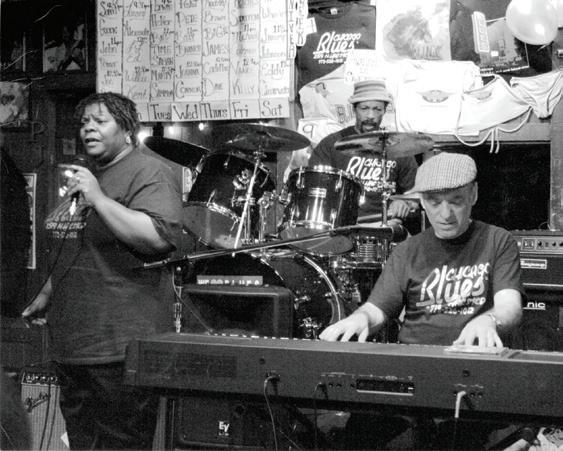
On Chicago’s West Side, where the blues once seeped through floorboards and screen doors like a living thing, and your mother, father and nearly all your siblings are blues musicians, it’s no wonder drummer Timothy “Badboy” Taylor is also part of the genre.
“It was nice growing up in a blues house because all the musicians used to be there with my father,” says Taylor, now 61, remembering his late parents, master guitarist and VeeJay recording artist Eddie Taylor Sr. and his mother, blues singer Vera Taylor. “Most of the musicians like Muddy Waters, Howlin’ Wolf (Chester Burnett), Jimmy Reed who would come to our house have passed on now.”
Pretty much all of the blues giants rehearsed in the Taylor home while trading jokes, over Vera’s homecooked meals and arguing goodnaturedly about who could “cross the harp” (play harmonica) the best.
“Little Walter [Marion Walter Jacobs, blues singer, songwriter, and one of the most influential blues harp players in history] and Carey Bell [a Chicago blues har-
monica master] were the best,” Tim says of the names that once sat at the Taylor dining table, passing cornbread and telling stories that are now part of history.
For Tim and his siblings, (four girls and four boys) those legendary gatherings came with rules.
“We couldn’t be around when they came over,” he says. “We had to go to our room. It was disrespectful to be looking in grown folks’ mouths. Plus, they’d be cussing and stuff. My parents were from Mississippi. We were raised the Mississippi way.”
His parents were part of the wave of Black Southerners who left Mississippi for Chicago during the Great Migration, the decadeslong exodus stretching from the 1910s into the 1970s, carrying with them their music, their faith and their values in search of a better life
Mississippi had one of the highest lynching rates in the country, with more than 650 documented cases between the 1880s and 1960s. Violence was commonly used against African Americans as a way to enforce racial control and punish any perceived challenge to white supremacy.
Most Black families were trapped in sharecropping, a system designed to keep them in debt to white landowners. Wages were low, credit was controlled by white merchants, and leaving a plantation was dangerous.
Most Black women in Mississippi worked
as maids, cooks, laundresses and nannies in white households.
Mississippi enforced some of the strictest Jim Crow laws (roughly from the late 1870s through the mid1960s) in the South. Black people were barred from voting, serving on juries, attending white schools and using white facilities. Migrating was a matter of survival.
Following the example of his older brother, blues artist Larry “Bluesman” Taylor, Tim picked up the drums at age 13 but developed a different drumming style.
“My brother and I play two different styles,” Tim says. “I play the shuffle and Larry plays the straight beat.”
Instead of straight eighth notes, the shuffle style is described as a longshort, longshort swing, creating a rolling, loping groove at the heart of classic Chicago blues.
“Most blues drummers in Chicago don’t play shuffles anymore,” Tim explains. “I learned from the older guys like Freddie Below.”
Below, the legendary drummer who backed Little Walter, Muddy Waters, Wolf, Chuck Berry, Bo Diddley, Junior Wells, and Elmore James, helped define the Chicago blues backbeat, the rhythmic foundation of early rock ’n’ roll.
Tim saw most of those artists firsthand. “I used to sit back and watch them play,” he says. “At one point we lived on Madison
(Street) and California (Avenue), and Wolf and all the others would be playing downstairs. My dad played with Wolf too. I used to sneak down the back stairs to watch. I’d run back up when I heard them coming so I wouldn’t get in trouble.”
Over the decades, Tim has played on so many recordings he’s lost count.
“I’ve recorded with everybody like Johnnie Littlejohn, Tail Dragger (James Yancey Jones), A.C. Reed, my brother Larry, my brother Eddie Taylor Jr., my sisters Demetria, Edna, Brenda, Lurrie Bell… it’s so many people I can’t even think of them all.”
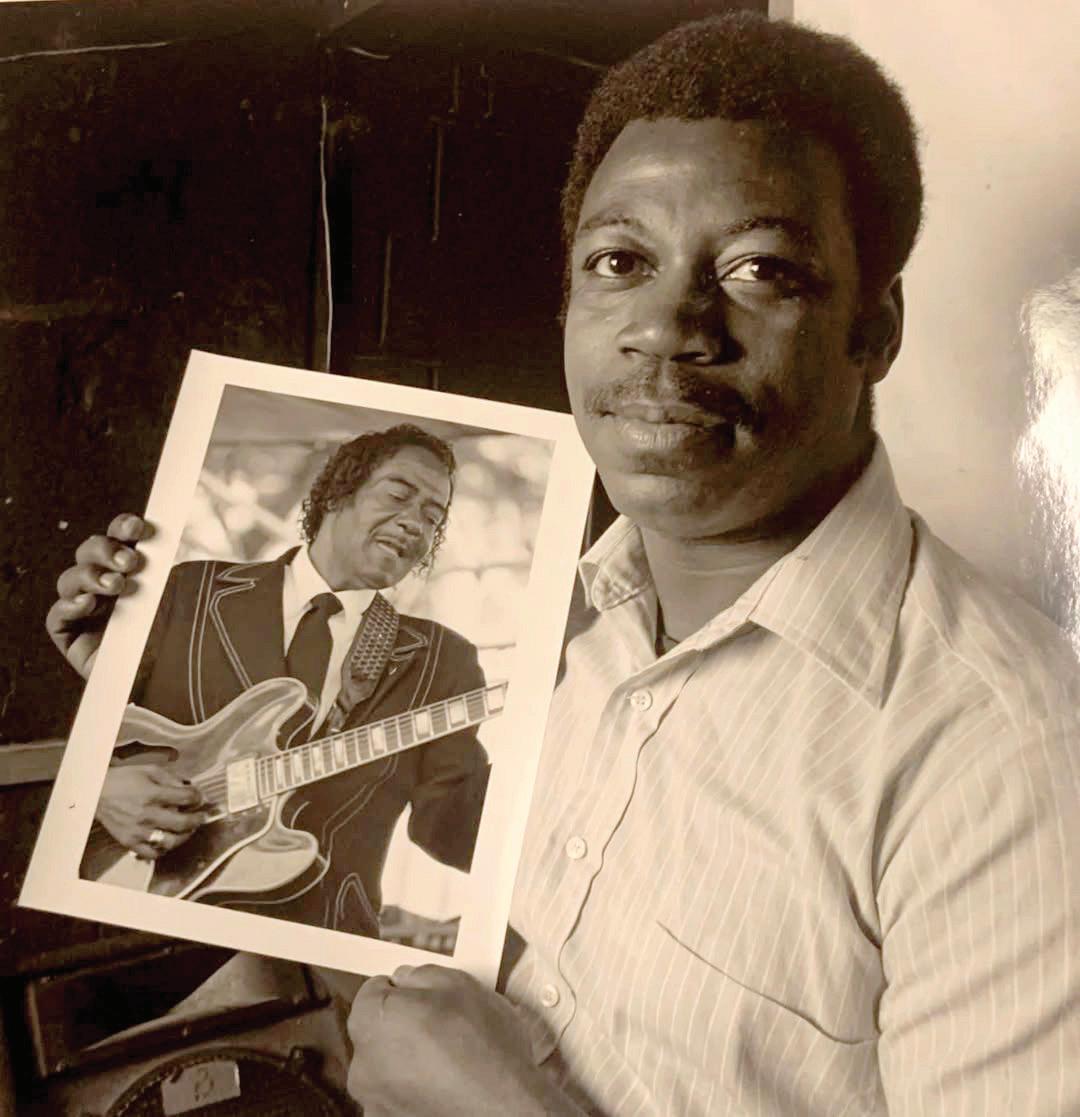
HOLDING PIC OF DAD EDDIE
PHOTO COURTESY OF ILLINOIS SLIM
Lar ry Taylor acknowledges his brother as one of the best drummers in the blues genre. Tim accepts the praise, saying the music has changed and that his brother is just about the only one trying to keep traditional blues alive.
“Back in the day, musicians played straight blues,” Tim says. “Today they’re playing bluesrockdisco. They’re not playing straight blues. Don’t nobody play straight shuffles anymore.”
With talent running through his veins,
Tim built his own sound by blending what he learned from the oldtimers with his own instincts.
“I play a little bit like all the legends,” he says.
What troubles him most isn’t just the stylistic shifts but also shrinking spaces for the blues genre itself.
“The [traditional] blues doesn’t get the credit it used to,” he says. “They’ll hire a disco band before they hire a blues or jazz or R&B band. The blues is dying. All the good blues clubs are gone.”
All of Tim’s siblings were blues musicians except one. “My baby brother Milton Taylor, we were teaching him bass, but he didn’t want to do it,” Tim says.
Tim talks about retirement sometimes, but says he is not likely to. One reason is that Larry talks him out if and the other is because the music is too deeply rooted in him.
“It’s in my blood,” he says. “I was born with the blues in me. I’m not going to retire. I’m just going to keep on playing.”
He pauses, acknowledging the serious health issues he’s battling.
“I’m very spiritual,” he says. “I was raised in church. My parents always taught us that if someone threw stones at us, not to throw stones back.”
The blues helped shape his life and remains part of his everyday rhythm. And as long as Timothy “Badboy” Taylor can play, the Chicago shuffle will carry on.
TIM
LARRY SINGING AT AUSTIN TOWN HALL PARK WONDERFUL WEDNESDAYS SET | BERNARD DEAN MOTEN
L A AR R Y TA A YL O R
Larry Taylor, West Side bluesman, shares story of family’s music lineage
A le gend for decades with roots in the re gion. And good food too!
By DEBORAH BAYLISS Contributing Repor ter
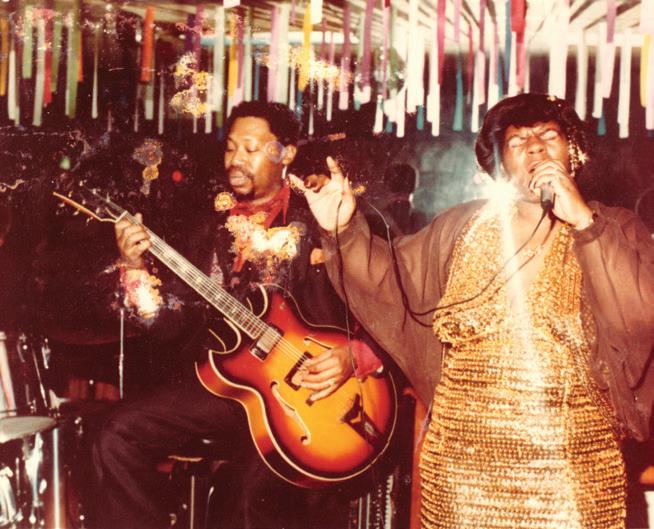
West Side Blues legend Larry Hill (Bluesman) Taylor, fondly recalls the times (the 1960s, 1970s and 80s) when the blues artists in his family and other legends were part of the Friday and Saturday evening fish frys held at his family’s Lawndale home
More than just social occasions, these gatherings were central to African-American traditions, served as community anchors where children played, elders passed down superstitions and traded gossip, and the blues musicians honed their gift for turning life’s challenges into song.
Hill is the eldest son of master guitarist and VeeJay Records recording artist Eddie “Playboy” Taylor and his wife, singer, songwriter, and pianist Vera Taylor Many of the fish fry gatherings were hosted by his parents and grandparents.
“My mother fried the fish and cooked the food,” he said. “Sometimes the fish frys took place in the backyard of our [former] home that still stands at 1131 S. Mozart, or just on the block in the community and my parents and others performed.”
In most Black households, the fish (whether catfish, perch or whiting) is seasoned to perfection, coated in cor nmeal and then carefully placed into a cast iron skillet of sizzling oil and fried to a deep golden brown.
It was the aroma that wafted through the neighborhood urging anyone nearby to stop in, “fix” a plate, and stay awhile.
Alongside fish, potato salad, greens and other staples were part of the meal, Bluesman added.
Blues legends like Howlin’ Wolf (Chester Bur nett) were a regular part of the weekend gatherings where laughter blended with honest talk about life’s struggles and included words of support
For Wolf, it was Vera’s greens that he favored most and it didn’t matter if they were collards, mustard or turnip.
“My mother would cook a pot of greens separate for him and add corn meal dumplings to the greens,” Taylor said. “She would add them to the pot when the greens were almost done and let them steam and simmer. That’s what you called real Southern soul food. My parents had a great connection with Howlin’ Wolf. My dad, he actually played with Wolf and recorded stuff with him back in the day.
Southern cuisine along with Southern blues traditions moved north during the Great Migration (core period 1916–1970). Artists such as Muddy Waters, Wolf, and members of the Taylor family (including Koko Taylor
and Johnnie Taylor) helped forge what became known as Chicago blues, an electrified sound with a raw, gritty, and emotionally direct vocal style
His father and mother were among those who migrated from Mississippi to Chicago for better opportunities
WHAT EXACTLY IS THE BLUES?
Taylor describes the blues as a science and an artform that is passed down as songs about lived experiences like the Great Migration.
“That’s what all the legendary blues masters told me,” he said. “The blues started on the slave plantations. ... My er told me that when she was picking or chopping cotton from sunup to sund out in the field, they would sing the blues. Blues is the originator of the other great American musi It’s in jazz, soul, gospel, R&B, hi hop, rock, pop and country.”
For every blues artist who pl an instrument, there’s an inspirin story about how they first learned to play it. David “Honeyboy” Edwards, for example, once told thi reporter that he taught himself play guitar in Mississippi using single piece of string nailed to the wall of his home.
Born in 1955, Taylor’s path toward drumming career began at age five, when he picked up a pair of sticks and made his first drum set out of cardboard.
Shaw, Albert King, Tyrone Davis, Johnnie Taylor, Otis Clay. Many of these legends are now deceased
Chosen in 1977 by Jim O’Neal of Living Blues Magazine and Chess producer Willie Dixion, along with other young blues artists, Billy Branch, Johnny B. Moore and Lurrie Bell, for the New Legends of Chicago Blues tour of Germany are counted among his accolades.
As time went on, the artist evolved from drummer to singer songwriter, developing a vocal range that spans traditional Delta country as well as the urban soul/ blues style associated with performers like
“I met Larry at Buddy Guy in 2003 but before that, I’ve always been a folk musician,” said McKeown. “I play piano and I’m from West Virginia. It’s a tragedy when a group of people who have an amazing culture, start to lose it in favor of American pop culture.”
Taylor stresses that not enough is being done to preserve the blues legacy which is why he and McKeown started a nonprofit called FOUR (Further Up the Road) Blues Inc., with a vision to promote the blues to the community and to pass the tradition on to younger people who want to be a part of it.
kids and grandkids love the lor said of his eight offspring children. “I’m hoping some of them will pick it up after I’m gone.”
2020, he received reco gniwhen the City of Chicago’s Department of Culture and Special Events named him one of 13 steemed Artists.
Named the West Side Blues Ambassador for the entire West Taylor said it was because he is the last remaining ‘traditional’ blues artist on the West Side ho is still trying to keep it alive
blues is not being played these days, he said, calling it a watereddown version of the real thing.
He eventually learned to assemble and play the real drum kit that Wolf ’s drummers regularly left behind at the Taylor home after rehearsals with his parents. That early exposure set him firmly on the road to becoming a blues drummer with a career kicking off in 1977.
“My parents caught me, and Wolf told them not to chastise me because I would probably become a great Blues artist and it would pay off for me someday and it did.”
In the late 1970s and throughout the 1980s, the West Side artist performed and recorded with his father as well as with Chicago blues and soul legends such as John Lee Hooker, Buddy Guy, Honeyboy Edwards, Junior Wells, A.C. Reed, Eddie
In 2004, he recruited musicians from the West and South Side to form his own band and recorded his own CD titled, “They Were in This House” on his own AV Records label, commemorating all the famous musicians who spent time in the Mozart Avenue home. The CD was re-released by Wolf Records in 2011 and includes original songs plus blues and soul favorites.
Chicago based writer Bonnie McKeown, known as Barrelhouse Bonni, a blues musician, blues preservationist who is active in community arts, and storytelling across Chicago’s West Side and Appalachia, assisted in the production of “They Were in This House” that took place in the Delmark Riverside Studio here in Chicago.
The other issue, he and McKeown said, is that artists like himself are not being paid a fair rate for their perfor mances but that white musicians who call themselves blues artists are better promoted and supported.
He would like to see more support from the Black community saying the blues genre is seemingly more appreciated in Europe
His wish list includes a musical cultural center on the West Side that includes a blues museum.
The old Central Park Movie Theatre at Central Park and Lawndale, he said, would be a great location for it. The trick is getting the politicians on board.
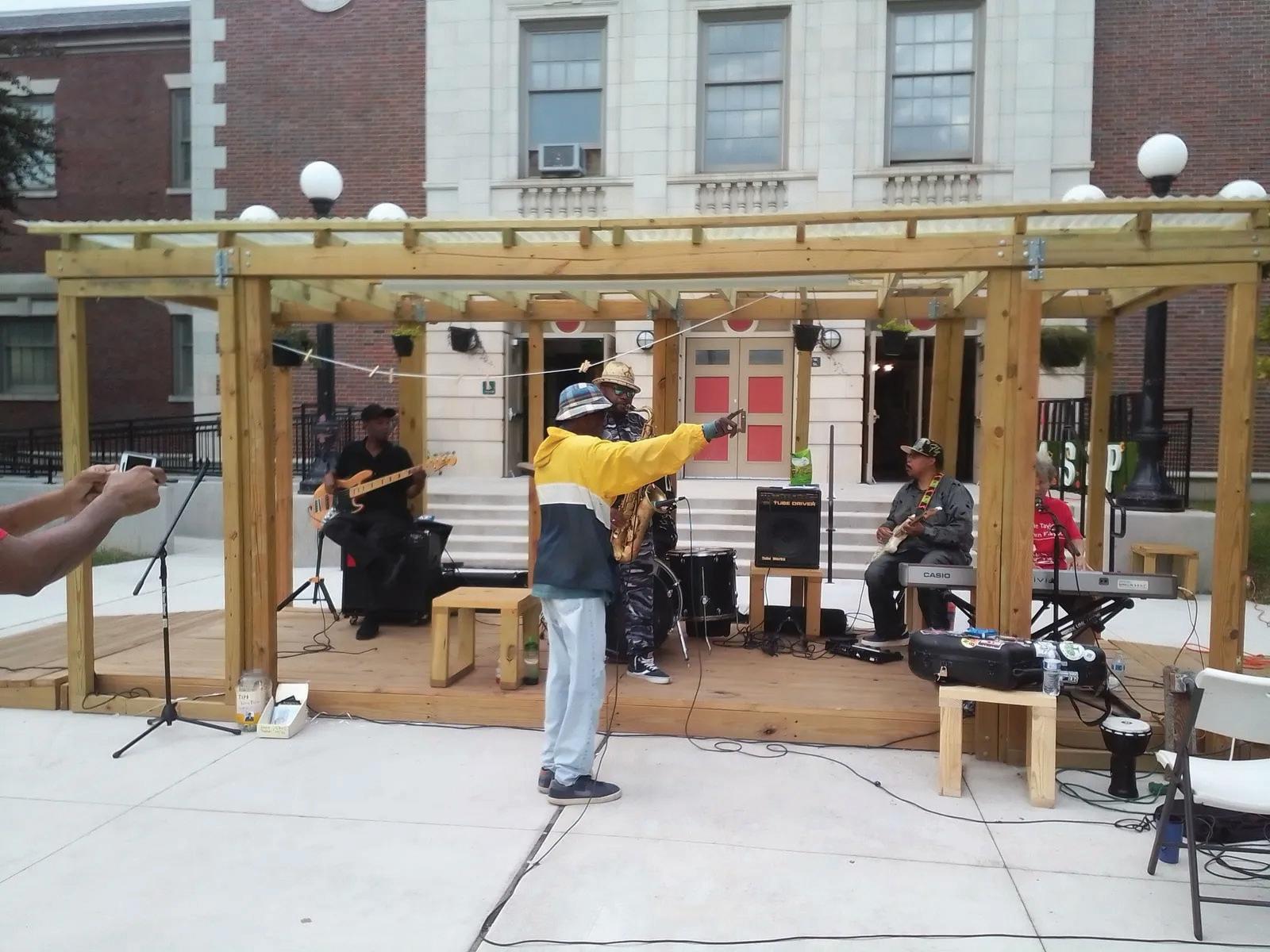
He’s scheduled to perform at the Soul City Blues Festival on July 18. The event will take place at Chicago and Austin Avenues.
LARRY SINGS AND DIRECTS SOUL BLUES HEALERS, AUSTIN TOWNHALL, 2022 | BERNARD DEAN MOTEN
Join us. Strengthen Our Community.
We challenge ourselves every day to identify and close gaps in support and services. Join us on this journey. The Neighborhood Bridge is seeking volunteers to help build a community where no one is left behind. Whether you can give a few hours a month or more, there is a meaningful way to get involved.
ADVOCATE PROGRAM
Help families access the services they need to thrive. l 5—7 hours per month
COMMUNICATIONS COMMITTEE
Support storytelling, marketing, writing, graphic design, or social media. We are also seeking a Committee Chair. l Flexible scheduling
ESSENTIALS PANTRY
Pack and distribute requested household essentials to families at our partner schools. l 2 hours per week
DEVELOPMENT COMMITTEE
Assist with fundraising, donor engagement, and grant writing. l Flexible scheduling WITH YOU, WE CAN BRIDGE THE GAPS.
K A AT H E ER I IN E
Guided by the blues god
Austin’s own Katherine Davis shares her story
By DEBORAH BAYLISS Contributing Repor ter
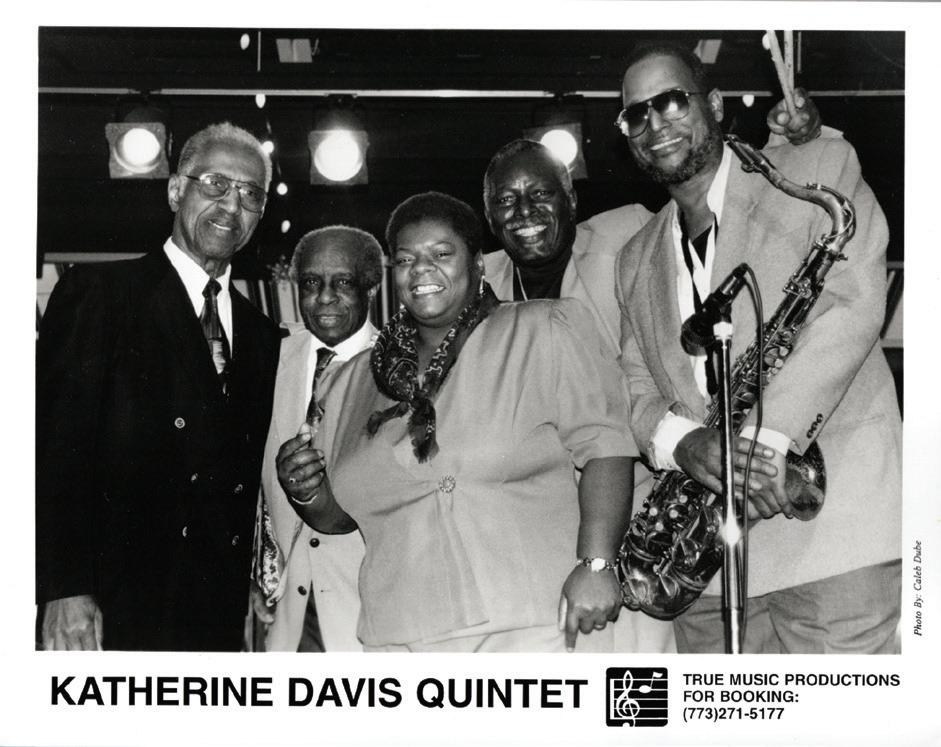
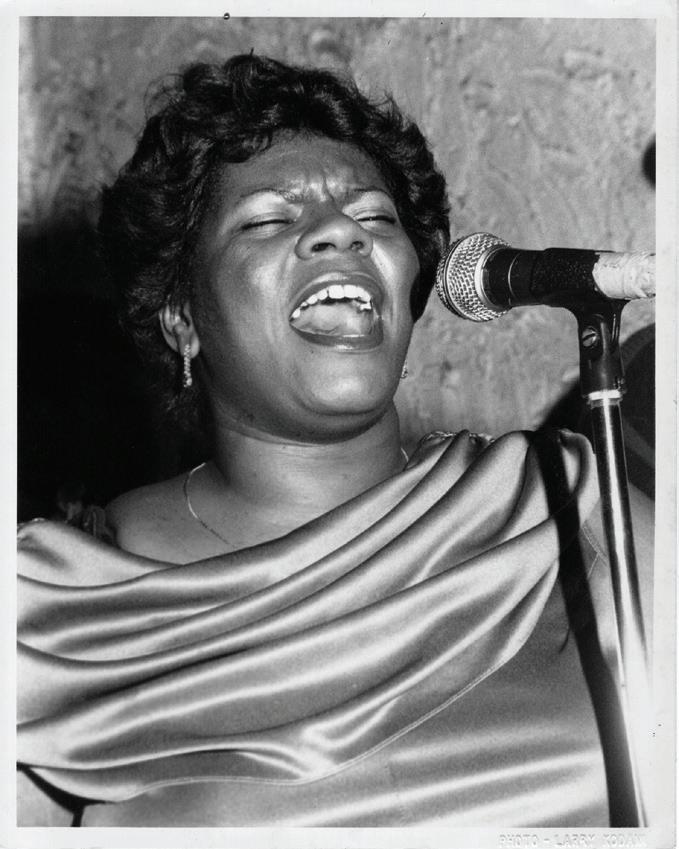
Hearing blues singer, songwriter, and recording artist Katherine Davis credit the ‘blues gods’ with whispering her forward through the twists and triumphs of her long career, one can feel the magic in her story.
Before Davis was born, her family moved from Hattiesburg, Mississippi to Chicago in 1913 for reasons of safety. Her father was just two years old
“They never looked back,” she says without going into detail about the circumstances.
Raised in a family of classical pianists and opera singers on her mother’s side, Davis chose a different direction, becoming the
first in her family to sing the blues
“My mother was also a singer,” says Davis “She would always sing to her children so we all learned how to sing with her teaching us. My mother was into Ella Fitzgerald and Dinah Washington. … you know the classic singers.”
The blues, Davis says, was something that was embedded in her.
“I knew I was destined to sing the blues,” Davis added in a conversational tone reminiscent of an old friend. “When I was a little girl, I always had a bluesy sound I didn’t know what that was but when I was singing in church choirs they would always say ‘you have to lower your voice because you sound too bluesy and it goes against God and it’s disrespecting us and the church.’”
What appeared to some as disrespectful was just the innate talent of a young girl who wanted to sing.
“I didn’t know until later that it was a gift from the blues gods,” she says, pausing momentarily as she reflected. “The blues gods have always been with me. I’ve always asked them to make sure to take care of me.’”
Now 73, Davis’ career spans five decades. Rather than the Mississippi Delta blues, she identifies her music as Piedmont blues, a choice shaped by the years she spent in South Carolina after relocating in the 1990s to the region where the Piedmont style originated
The differences between the two styles is that Piedmont blues features a lively, ragtime influenced fingerpicking technique, while Mississippi Delta blues is raw and emotional, often using slide guitar and a heavier, more percussive sound
Her path shifted as she grew increasingly worried about embarrassing or disrespecting the church congregation, leading her
KENN COOK JR
to step away from singing in church and turn her attention to classical music instead. Still, several years passed before she finally decided to enroll in music school at age 20.
“I was going to be an opera singer,” she says. “I went from my mother, to gospel and then to music school to learn opera. From there I explored different styles of music.”
By the time Davis’ vocal coach started preparing her for a classical career, she was already past the prime age to learn.
“They like to get you when you’re young,” Davis says. “I already had children by then.”
Her close friend Eleanor Dixon, daughter of blues legend Willie Dixon, convinced Davis to follow the path the blues gods seemed to be guiding her toward.
“She knew I was studying music and would always say, ‘you need to sing blues.’” Davis recalls. “I would always say na’ll I want to sing opera and be on stage with an orchestra and travel and sing at the Metropolitan Opera.”
Though she currently resides in Austin, Davis grew up in the Cabrini Green housing projects. The National Public Housing Museum was scheduled for an interview with her the same day as West Side magazine.
“They are writing a story about me growing up in Cabrini Green in the 1950s and 60s,” Davis says. “I’m one of the elders that grew up there. I’m the only one representing the 50s and 60s in the projects.”
Her first stage experience as a blues singer came as part of a Kuumba Theatre musical in Chicago.
“It was called in the “Heart of the Blues” in 1983,” Davis says. “That’s where I got my first experience learning about Bessie Smith; Ma Rainey, (born Gertrude Pridgett, known as the “Mother of the Blues,”) and Alberta Hunter.
What was it like for a female blues singer in those days?
“I loved it,” Davis says. “In 1992, I moved to South Carolina and I had lots of exposure singing in the South. Every now and then when I was driving from South Carolina to Georgia, I would (come across) spots
like Blind Willie Blues Club. They didn’t call them lounges or bars, they called them private clubs.”
It was in those clubs where Davis met lots of the Piedmont blues artists.
Her Chicago West Side exposure during the 1980s and 90s was minimal due to her theatre opportunities and the negative stigmas associated with the West Side.
“I went from the North Side to the South Side to the Gold Coast,” she says. I didn’t get much exposure on the West Side.”
The North Side is where all the blues musicians gathered because it was where the promoters and agents would show up
“People were coming here from all over the world to blues clubs like Kingston Mines Blues on Halsted and Blues Etcetera,” Davis says. “As far as my career, I got to do so much on the North Side.”
Davis has been mindful to collect pretty much everything she’s done throughout her career on cassette tapes, writ ings and interviews, performances.
A divide emerged at some point in which Black male blues artists received greater recognition both because they were men and because, as she notes, “white women love them.”
“But as a woman blues singer, you’re on your own,” she says. “In the 80s, women blues singers were the stars of the shows. When bands were performing it was under the names of the women like myself.”
At one point female blues singers who led their bands would often travel overseas but that stopped back in the 1980s and 90s when the music industry started hiring more guitarists who could sing and play guitar, Davis says
Research shows the industry increasingly favored perfor mers who could both sing and play guitar, especially as blues rock and electric blues surged in popularity, reducing the demand for classic blues bandleaders, many of whom were women who traditionally fronted
KENN COOK JR
ensembles without playing lead guitar
The shift opened it up to white male or ‘wannabe’ musicians who were coming over here from Germany, Spain, France, England who were able to live over here and survive and hang out in the blues clubs, Davis says.
Those kinds of music industry maneuvers speak to culture appropriation.
Nelson George is a noted African American author, music and culture critic, journalist, and filmmaker best known for chronicling and analyzing Black music, especially Motown, R&B, and hip hop in his nonfiction work.
His “The Death of Rhythm and Blues” examines the evolution and commercialization of African American music genres from the post–World War II era through the 1980s, critiquing how industry pressures diluted their cultural authenticity
In it, Nelson writes, “The beauty of American capitalism is that it can assimilate anything into its production machine, package it, and sell it as if it were a new item.”
The proliferation of record stores in the Black community also diminished.
“When they closed, we were trying to figure out what happened to all the records and all the music the (Black) artists had on consignment,” Davis says. “Well, when those stores closed down, those Europeans came over here and bought up all of our record stores and took all of our music overseas.”
But how does Davis describe the blues?
“It’s in our heart and it’s from our experiences in life,” she says. “To me, you have to be born with it. You feel it and you can hear it in all genres of music. It has a hold on you. It’s more than money. It’s more than fame. It’s deep inside of you.”
Davis is not one to sing about bad relation-
ships but every now and then will ‘throw one in there.’’
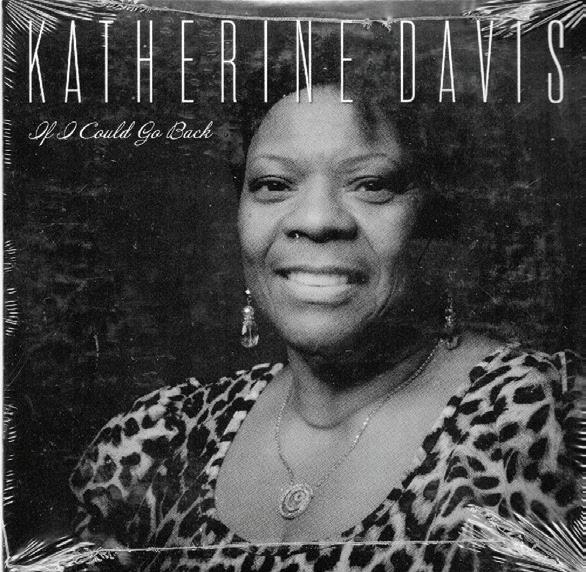
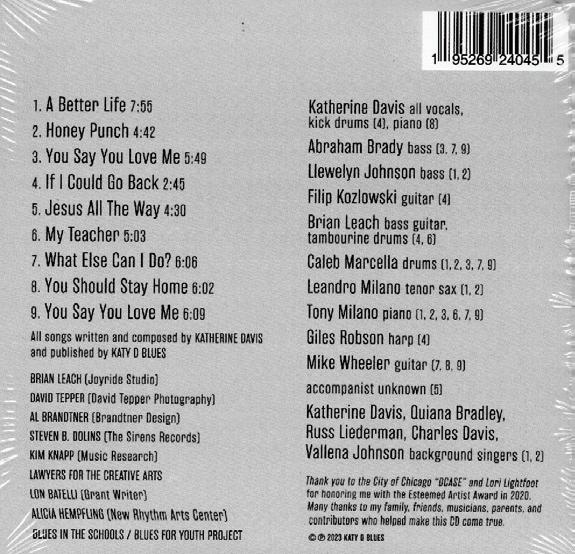
The last album she produced is titled, “If I Could Go Back,” and is streaming on CD Baby, a music distribution service for independent artists.
“All the songs on that album are songs that I wrote through the years.”
Davis taught blues in the (Chicago Public Schools) for more than 20 years.
She is scheduled to perform June 7 at the Chicago Blues Fest in a tribute to female blues artists like Mama Yancey and Big Momma Thornton best known for “Hound Dog” (recorded before Elvis Presley) and “Ball Chain.”
Davis has four children and two great grandchildren that are scattered, she says from here to Atlanta, Las Vegas and Phoenix.
Most of the singers Davis came up with have passed on.
“Larry (Taylor) and I are among the last of the Mohicans,” she says
KENN COOK JR
Together, we will create a thriving Austin community!
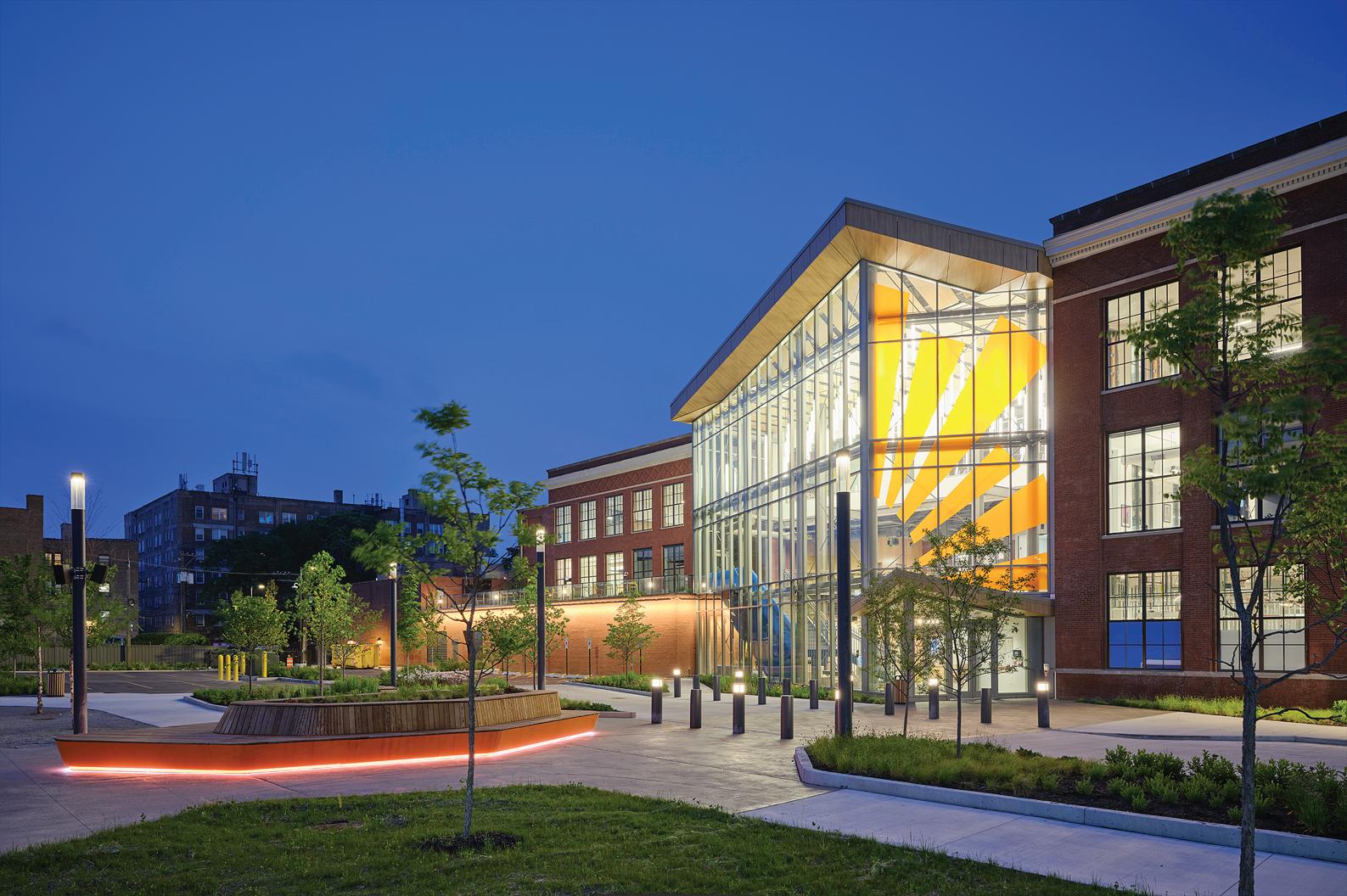
Austin Coming Together (ACT) is now located at the new Aspire Center for Workforce Innovation (ACWI). Our mission is to increase the collective impact of leaders and organizations committed to improving the quality of life for Austin residents.
CONNECT TO SERVICES
ACT IS GOING “ON THE ROAD” SUPPORT THE COMMUNITY
The Hub @ ACWI is a welcoming, inclusive space rooted in Restorative Justice, dedicated to helping individuals improve their quality of life. Through strong community partnerships, we connect residents to services, and opportunites to aspire.
Our team is available to co-host discussions about the new phase of Austin’s AFT quality-of-life plan and its vision and strategy, the Highlighted Agenda.
Learn more about ACT’s impact in the community.
Black Boy Joy brings childhood and community to life in North Lawndale
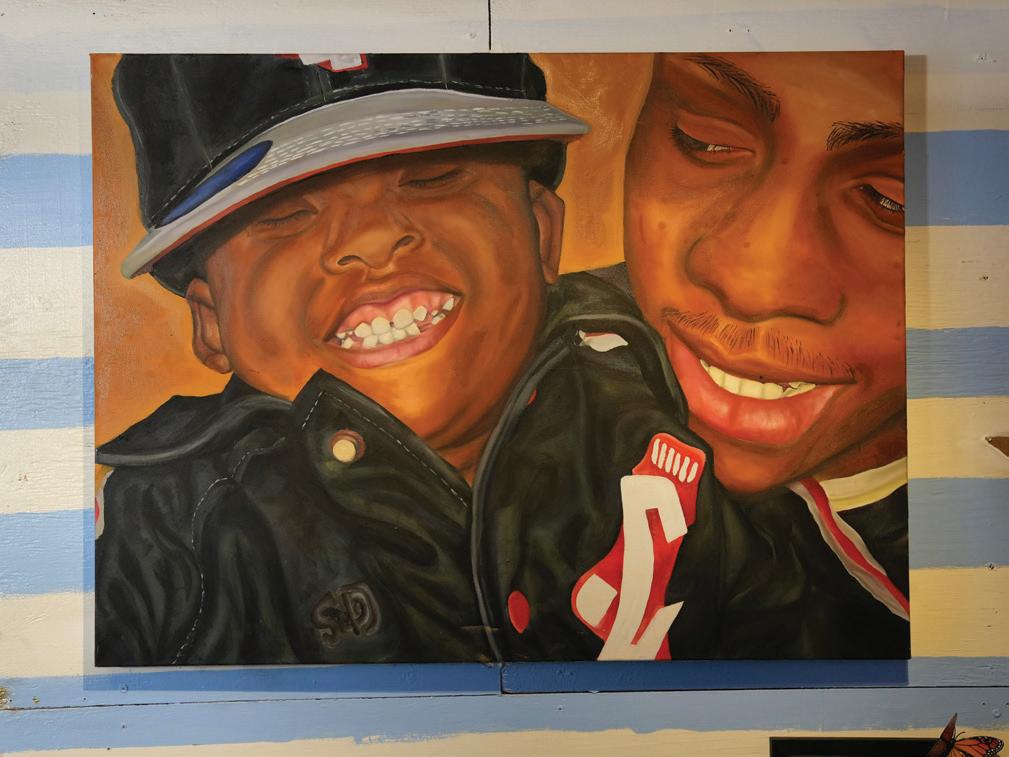
At the Lawndale Pop-Up Spot, artist Lavontae Alexander explores memor y, family and identity
By HECTOR CERVANTES Contributing Repor ter
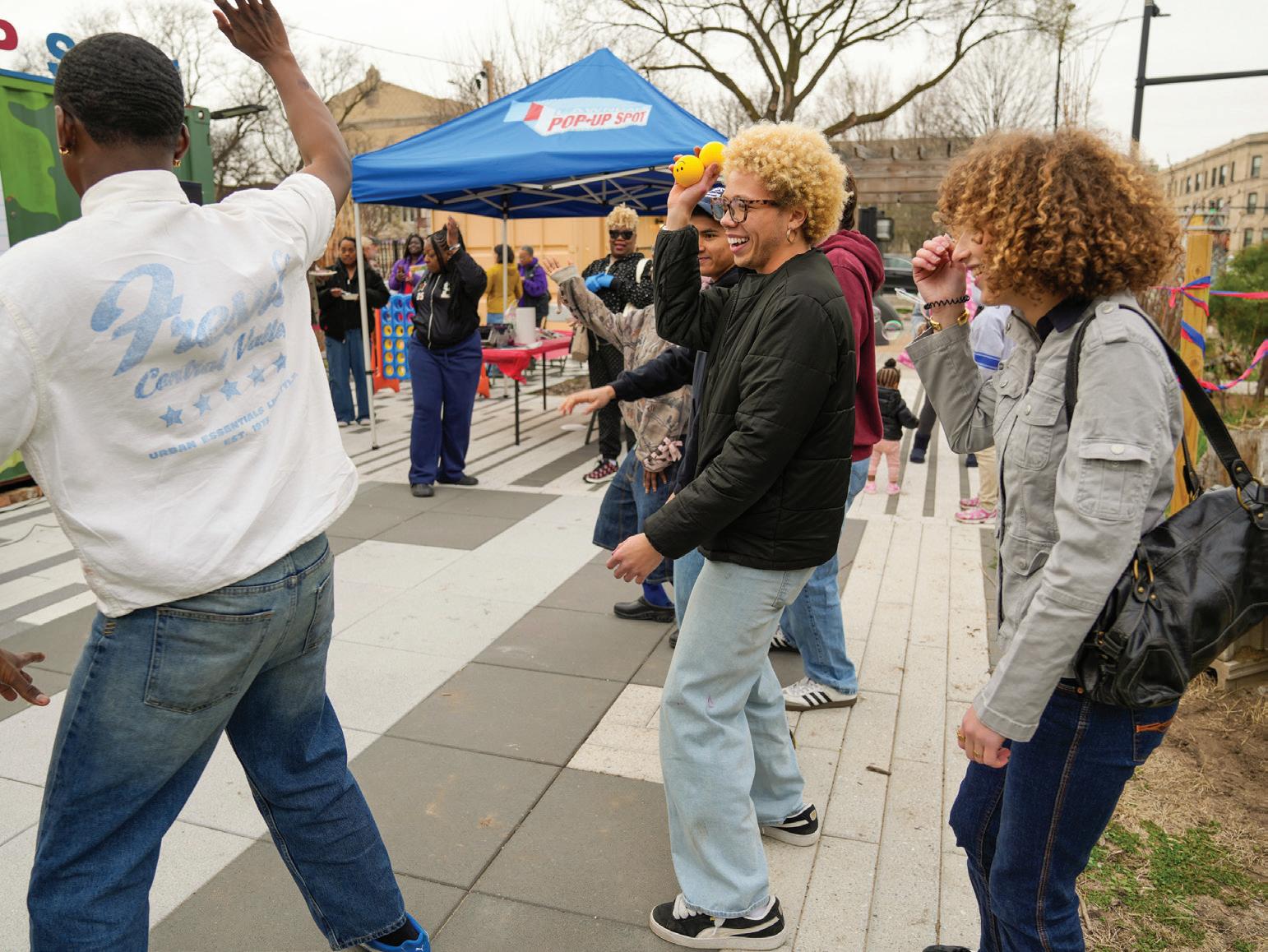
From April 3 to May 2, Black Boy Joy transformed the Lawndale Pop-Up Spot into a reflection of childhood, family and community, as North Lawndale resident and artist Lavontae Alexander brought his personal story to life
Rooted in nostalgia and shaped by his West Side upbringing, Alexander’s work explored the emotional core of Black boyhood, centering on joy, love and connection through portraits and symbolic details.
For Alexander, a North Lawndale resident and student at the School of the Art Institute of Chicago, the exhibition is both
a tribute to his upbringing and a reflection of the community that continues to shape his art.
“My journey as an artist and the biggest influence on my work is my family,” he said. “I realize that I tie a lot of my childhood, especially my relationship with my mother and father, into my pieces. I’m also really big on community. Much of my art reflects that, along with the feeling of childhood love and joy.”
Jonathan Kelley is a co-founder of the Lawndale Pop-Up, a community museum project he created to engage and reflect the local neighborhood. He works alongside Chelsea Ridley to develop and shape the initiative The Pop-Up is located at 3601 W.
Douglas Blvd.
While studying at the University of Illinois at Chicago, Kelley and Ridley were inspired by connections in North Lawndale to create a community museum, launching the project in 2016. By 2019, they began exhibitions at the Lawndale Pop-Up Spot, starting with a youth-led show in partnership with After School Matters focused on ideas of safety. The shipping container was purchased in 2019, when community members named it the Lawndale Pop-Up Spot and the first exhibitions began, marking the start of the series that same year
“The shipping container is essentially the museum, although we also host programs throughout the community. Most of the
curators and artists are from the community and we work with them to help shape the stories they want to tell, whether for our current exhibit or ones we’ve done in the past,” Kelley said.
Alexander explained that he included a series of personal photos along the wall, many featuring himself and his family, as a way to highlight connection and community. For him, these mementos help ground the exhibition in real memories and reflect the joy and love at the center of his work.
“It has to do with community. It has to do with family love and things like that. All the pictures of my mother and father scattered around show us smiling. It shows joy. It shows what Black Boy’s Joy is. That’s community. That’s family,” Alexander said.
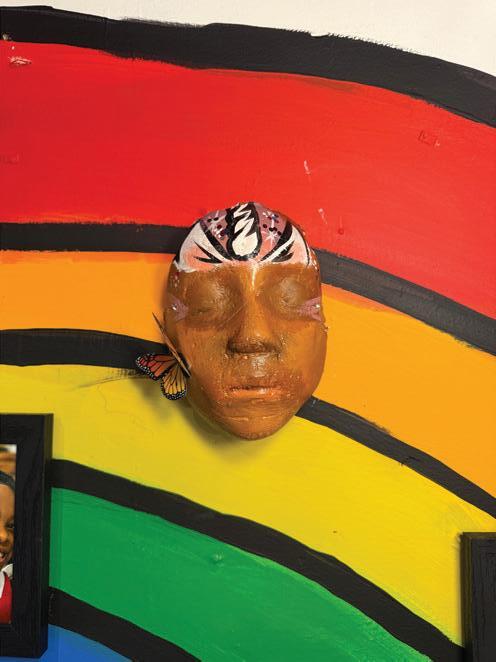
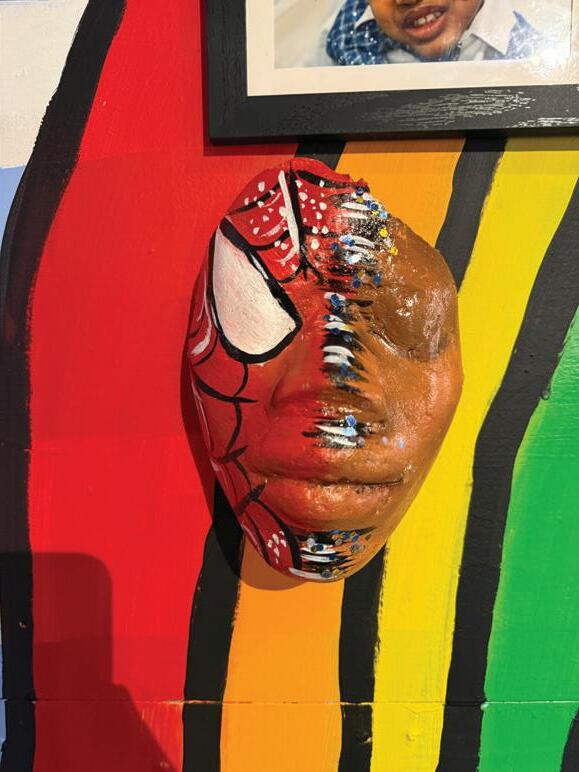
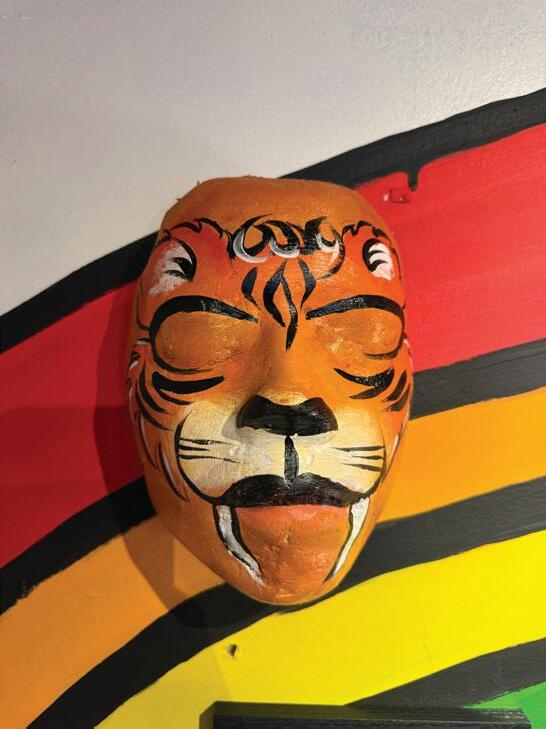
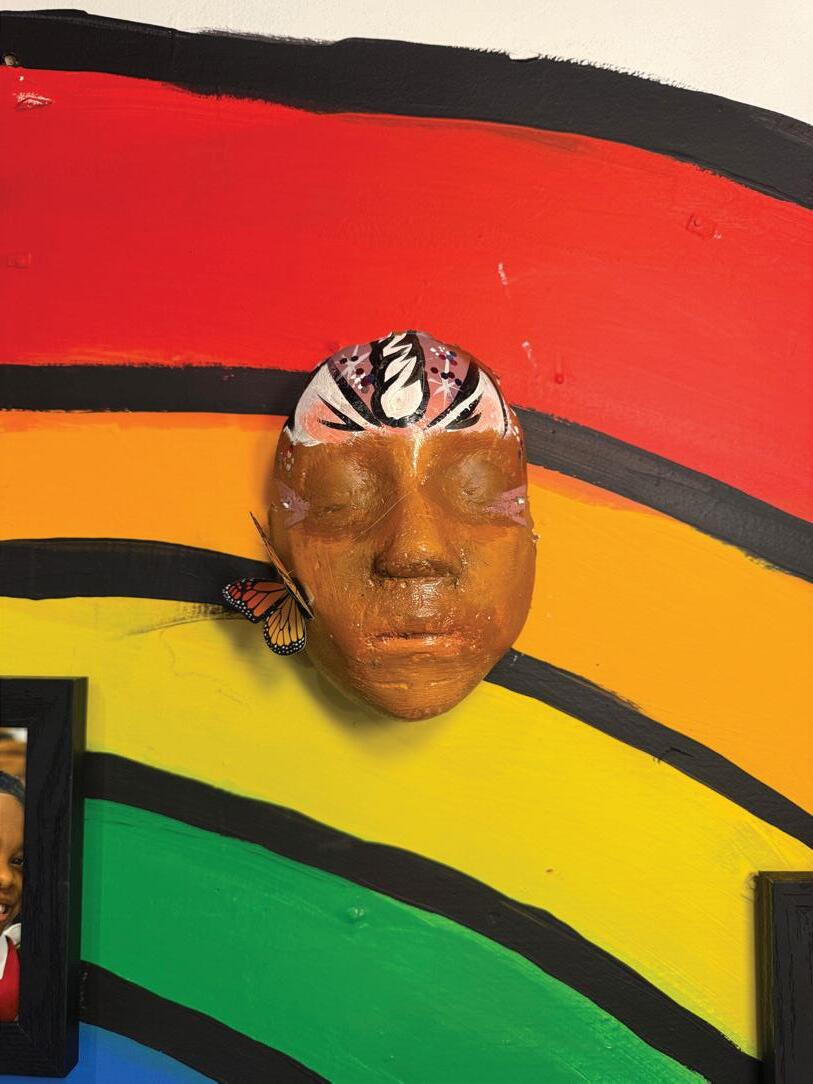
Another detail Alexander really likes are the masks. The small plastered faces are something he wishes he had d one more of because he really appreciated how they came out.
“I had a small butterfly in my baby picture, a medium butterfly in my eighth grade picture, and a full adult butterfly in my senior picture. I feel like that was really
symbolic because it shows growth, being free, and blossoming into something beautiful,” Alexander said.
Kelley explained that the organization works closely with community residents to build skills in curation and storytelling, often partnering with other museums to share best practices and provide hands-on experiences like field trips. Through open calls, residents are invited to propose exhibition ideas, which are then selected by a group of community members.
“We want to be a space of community connection and cohesion. Come once or twice a week and see a neighbor or meet a new friend. We want to be a place of positivity and joy,” Kelley said.
The Lawndale Pop-Up Spot is deeply connected to a network of arts organizations in the neighborhood, including the Firehouse Community Arts Center, the School of the Art Institute at Homan Square, which helps foster ongoing collaborations with local artists and the One Lawndale Arts & Activism Incubator.
The set-up is community-driven that includes features like a cafe, flowers and
books, created through partnerships with organizations such as Open Books and Stone Temple Baptist Church.
“I think the strongest communities have strong connections across generations I also want people to really explore the exhibitions and think about what the artist, curator, or historian is trying to say and how that reflects the community and its desires. Ultimately, I think North Lawndale is such a rich and strong neighborhood,” Kelley said.
The opening reception, held on April 3, was filled with strong support from his community, with everyone Alexander hoped would attend, including teachers. The experience exceeded expectations and left him feeling deeply loved and appreciated.
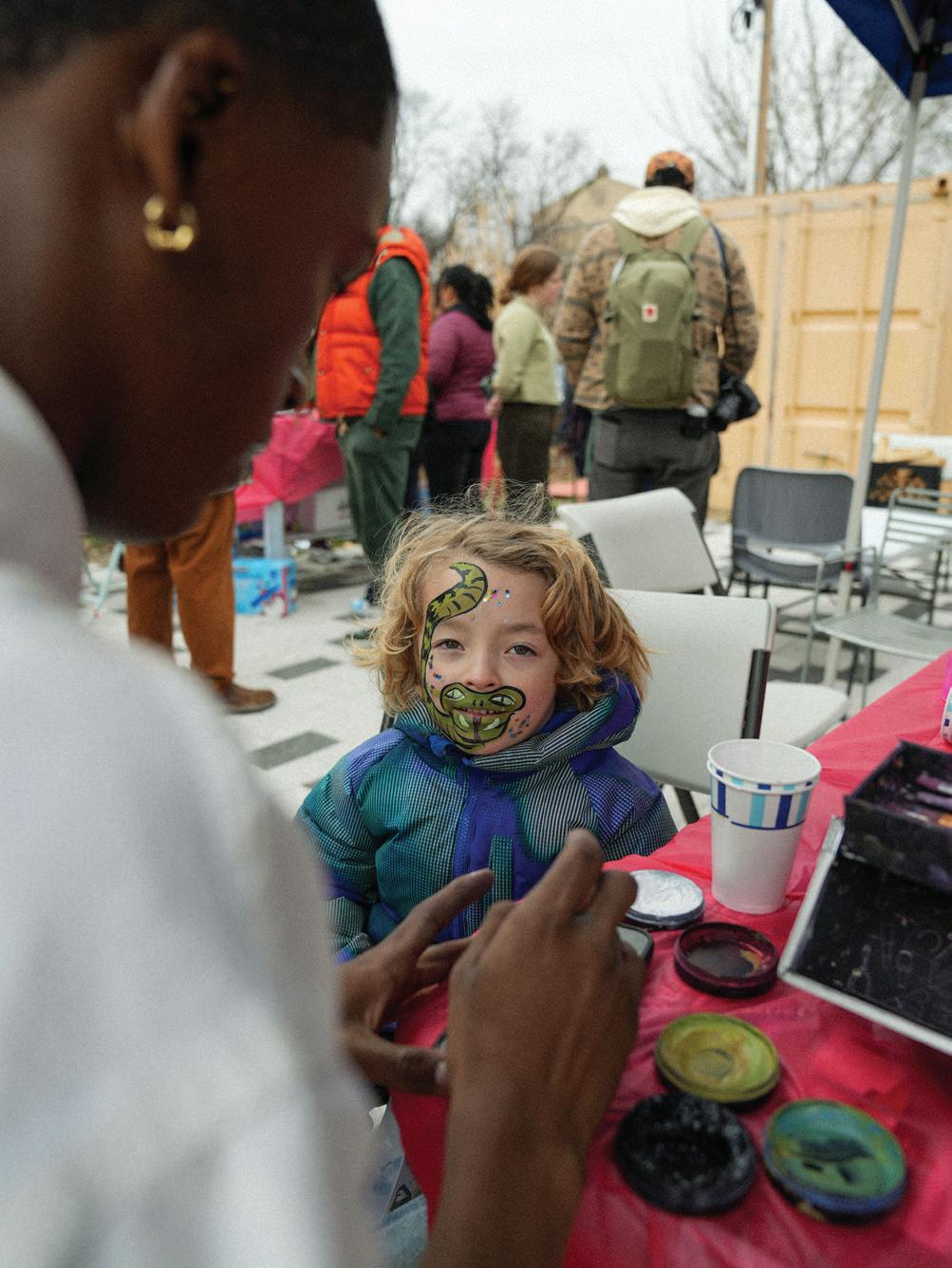
“It means so much to be presented in the same community where I’ve been face painting on the same boulevard for the past four years. The people in the community have even come up to me at events saying, ‘Oh, I’ve seen your exhibition’ or ‘I’ve heard about it.’ I like that. It shows that I’m connected,” Alexander said.
EXHIBITION PHOTOS PROVIDED BY LAVONTAE ALEXANDER
Cspotlighted Chicagoʼs West Side
Austin students a part of it through BandWith Chicago
By HECTOR CERVANTES
Contributing Reporter
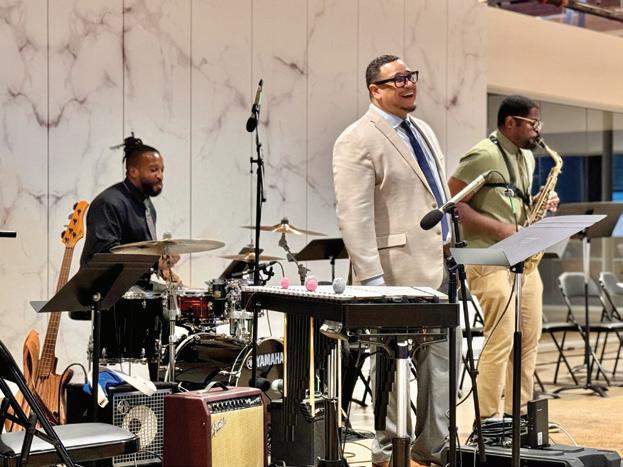
hicago took center stage for International Jazz Day on April 30, hosting a global celebration. The programming showcased and honored the city’s deep-rooted jazz legacy
Various jazz performances were held in the city leading up to April 30. In one of those performances leading up to
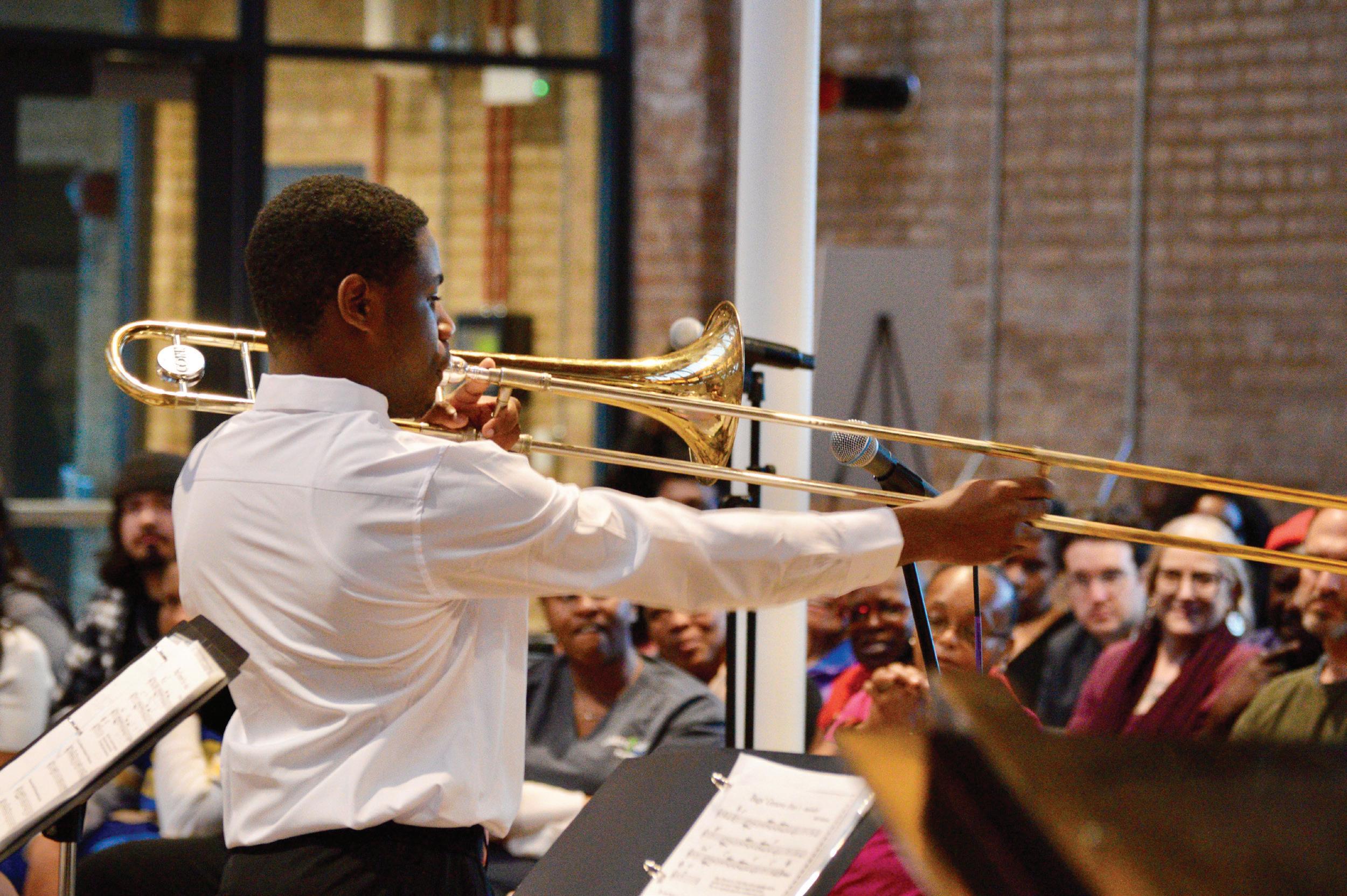
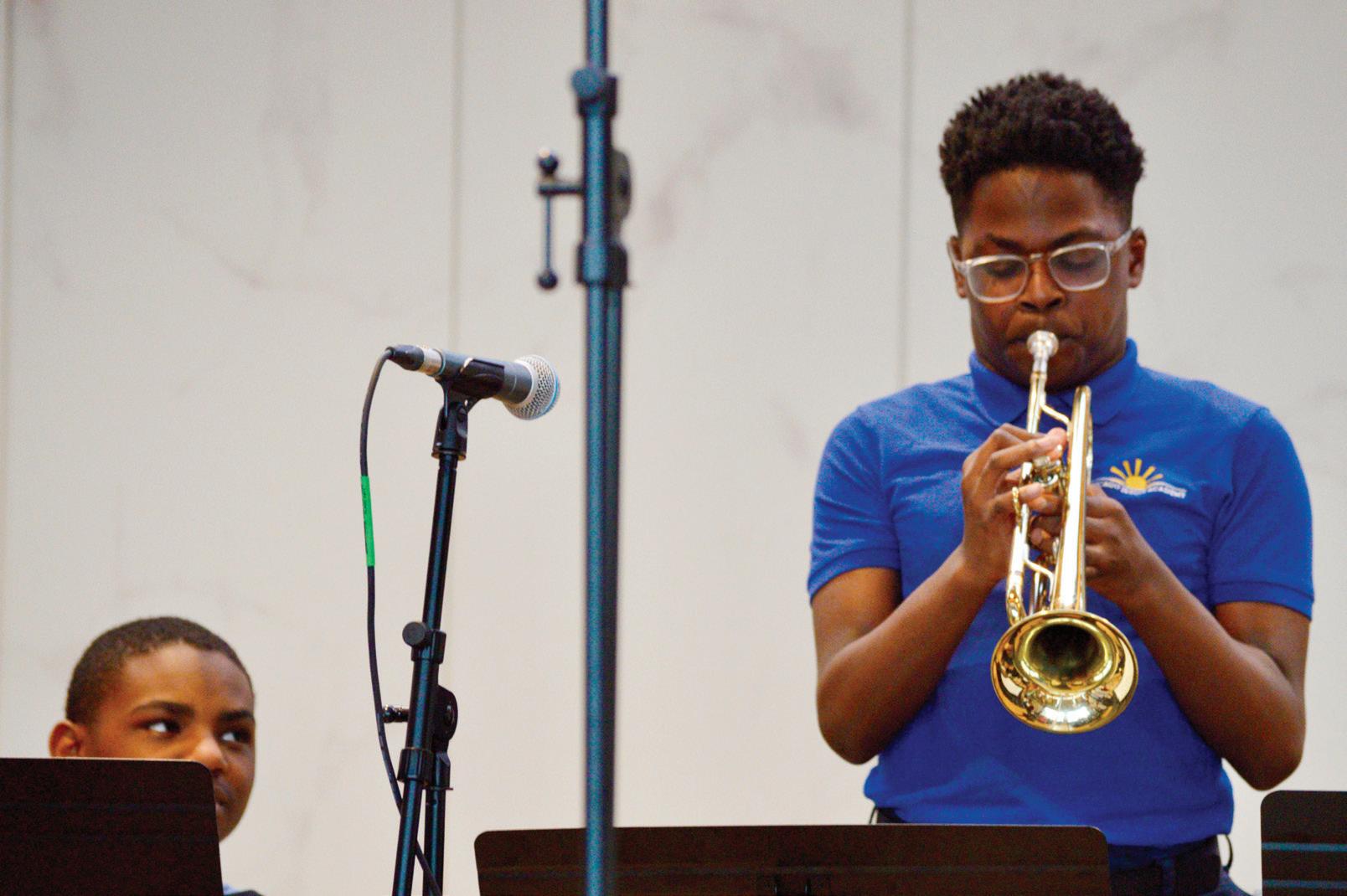
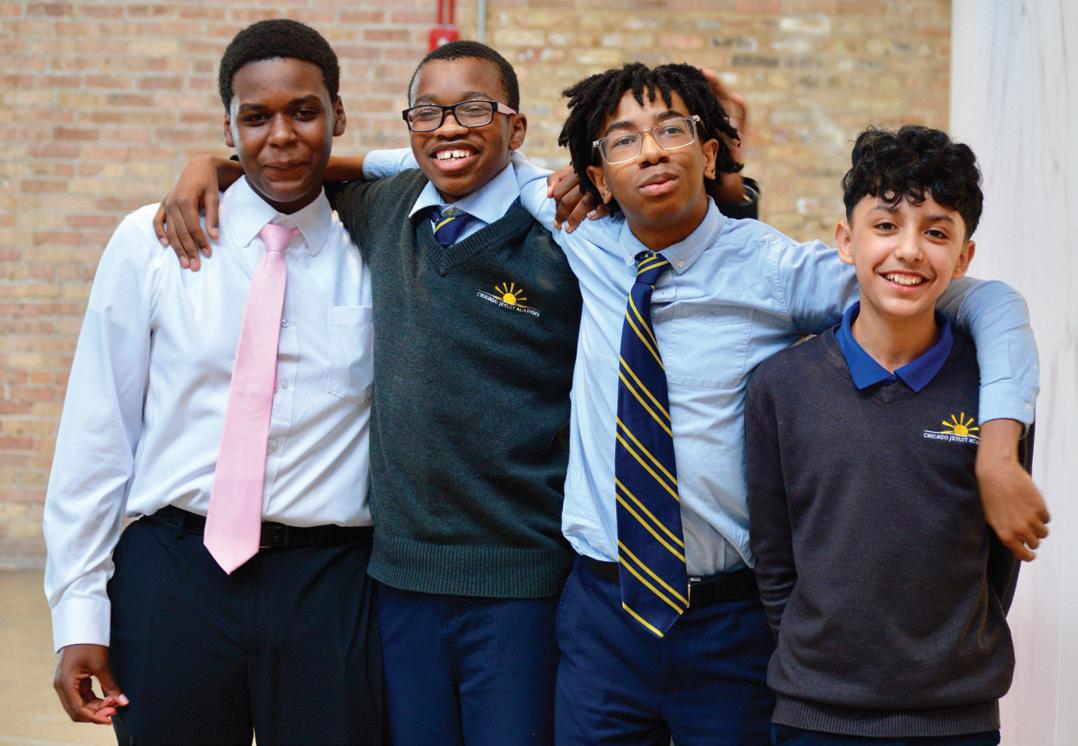
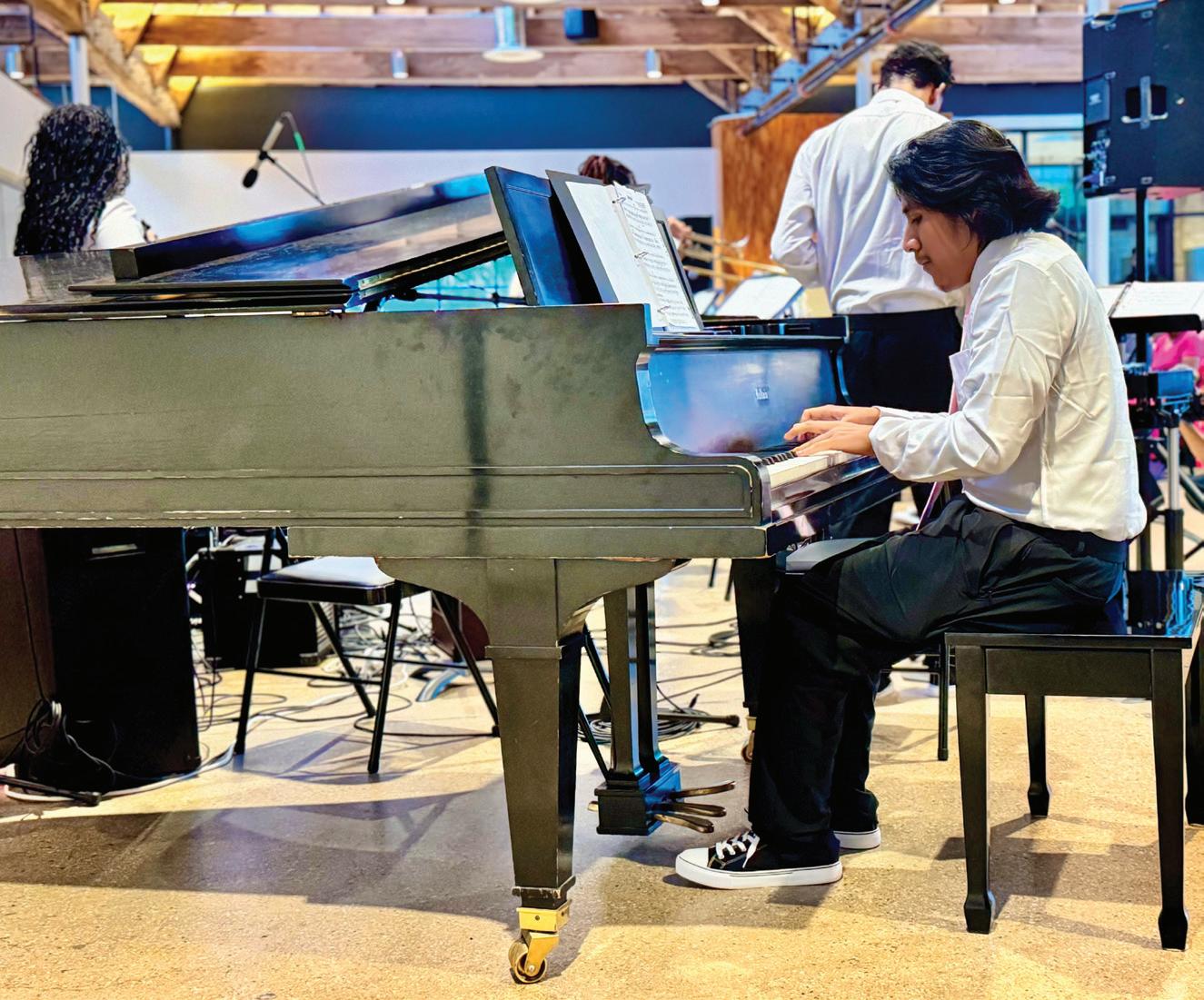
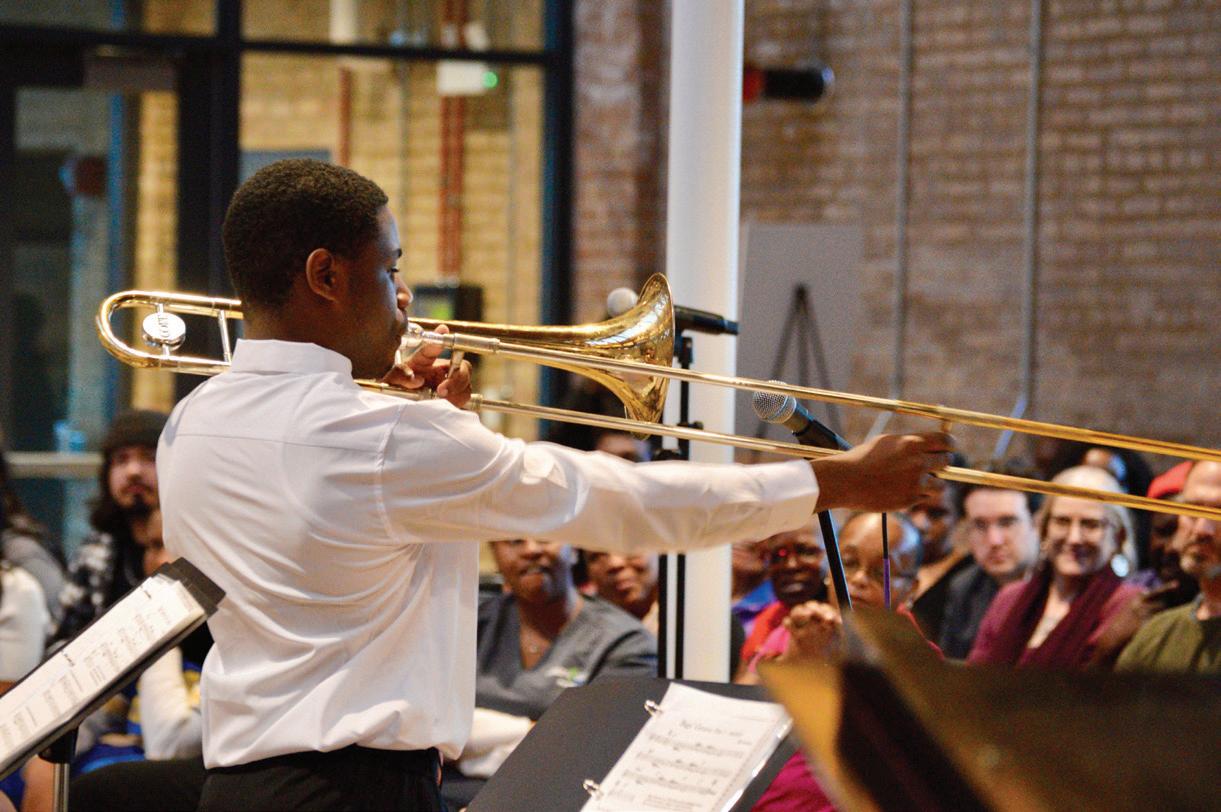
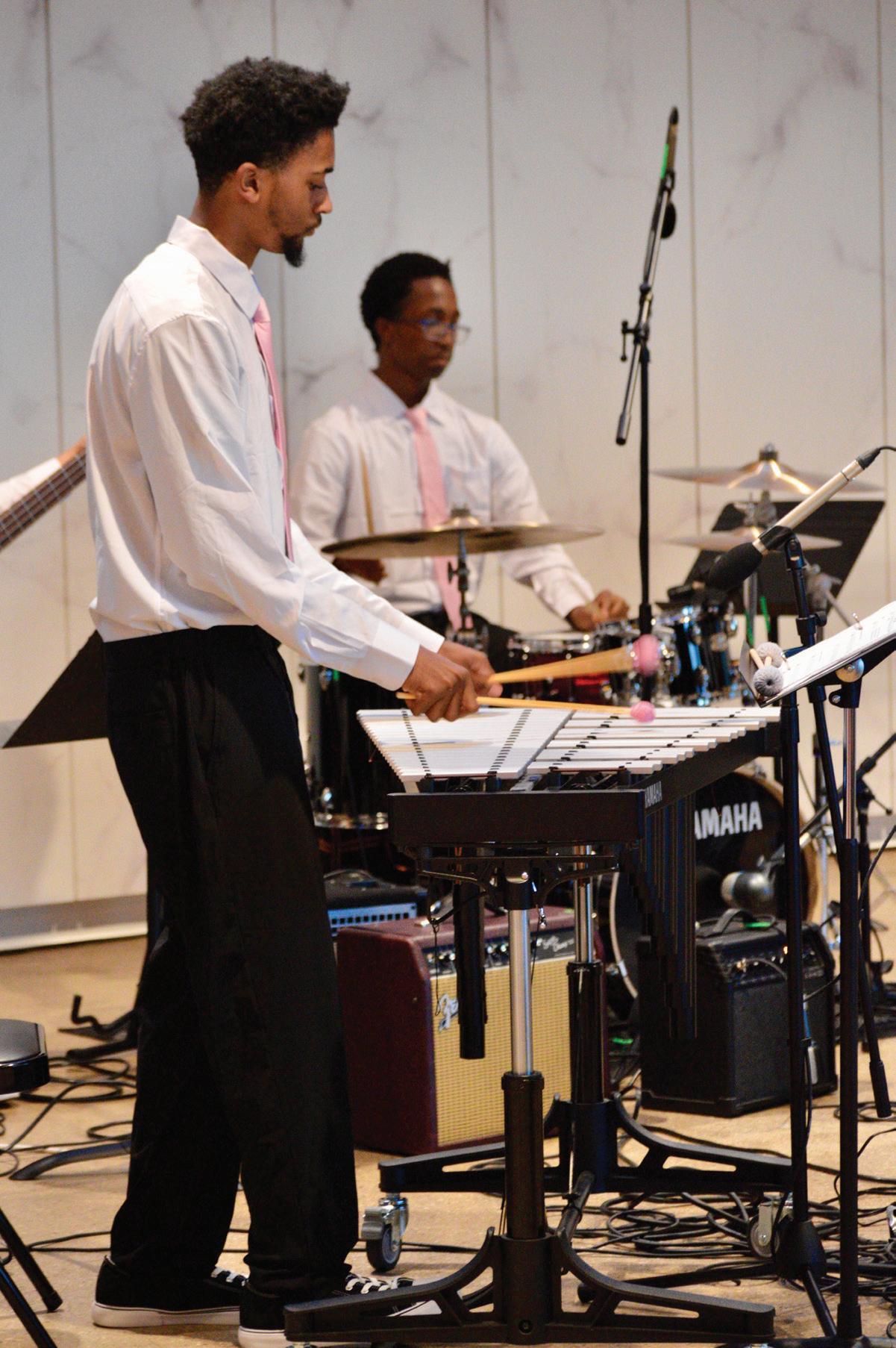
International Jazz Day, students from Austin’s Chicago Jesuit Academy perfor med at BandWith Chicago on April 28 along with the Marques Carroll Quintet, and BandWith Chicago youth. BandWith Chicago is a non-profit organization whose mission is to promote wellness for underserved Chicago communities through lasting access to high quality performing arts programs
Marques Carroll has spent nearly 20 years
shaping the music program at Chicago Jesuit Academy, growing it from just eight students into a program that will serve around 150 next year in grades three through eight. Today, the program includes choir and concert band, drum line, piano and music tech, giving students multiple ways to explore and connect with music.
“When I saw Chicago was hosting [International Jazz Day], I wanted to find
a way to get involved. I’ve been in Chicago for 30 years and ha become a staple on the jazz scene here and internationall wanted to bring that experience to the table,” Carroll said.
The importance of the work happening on Chicago’s especially through arts nonprofits supporting students, was emphasized by Carroll. With over a decade of involvement with BandWith Chicago as a board member and consultant, ther has been close work helping sustain music programming as schools scale back arts education. The focus has been on long-term development of young musicians through consistent access and training. Some of those students have since gone on to pursue professional music careers.
Said Carroll: “I believe Chicago is one of the main centers of the global jazz scene. It was a key stop, really a pivotal place during the Great Migration that helped shape Chicago into what it is today as a jazz city. We have a rich culture here and I wanted to highlight that.”
Carroll emphasized the importance of not only highlighting Chicago’s jazz history but also showcasing young people who are actively engaging in music in meaningful ways beyond sports and video games. He said that many young people are still deeply invested in creativity and continue to seek out artistic outlets for self-expression.
ABOUT BANDWITH CHICAGO
Annie Palomino is the founding executive director for BandWith Chicago.
“Annie aims to provide music opportunities for young students on the West Side of Chicago who otherwise did not have access. The school understood her vision and gave her the space and opportunity to do so, in the same way Chicago Jesuit Academy did for me. Since then, the program has continued to grow,”
Carroll said.
Looking ahead, the goal for BandWith Chicago is to turn its space into a true community hub where local residents can come together to pursue the arts, learn, and create alongside one another
“We just opened our space a few months ago, and the whole idea was to be able to do things like this, so we’re really happy and excited to be here,” Palomino said.
Carroll explained that they for med a board and began envisioning what it would look like to have their own space to do this kind of work. It took time to secure funding and develop the overall vision needed to build a nonprofit of that scale.
“Students are getting opportunities to perform not only in the city of Chicago, but also nationwide, which has been exciting through travel and performance. It’s done a great job of giving students a creative outlet, as well as potential pathways to college, including ways to help pay for it,” Carroll said. “It also teaches life skills, students are learning important life lessons through the arts,” Carroll said.
When asked how jazz functions as a tool for community building on the West Side today, Carroll responded that jazz should be
understood as an extension of blues, noting that both blues and jazz are foundational to American music.
“Without blues and jazz, you don’t have rock and roll, soul, R&B, funk, or hip hop. American culture and Western culture are based on those two musical traditions in my opinion. When we understand what jazz is, it is Black American music. The term jazz was later placed on the music. It comes out of Black culture and the people who created it never called it jazz,” Carroll said.
Jazz was defined as a form of freedom that allows people to express who they are and reflect current times through music and performance. It was also described as a way of telling stories and documenting lived experiences through sound
“It’s about bringing together people at all levels as musicians and being part of something collective, and sharing that experience in a way that helps bring everyone in the city together,” Carroll said.
Students had the opportunity to perform alongside more established musicians and also listen to performances from them. The experience allowed them to learn directly from professionals while sharing the stage in a collaborative setting.
“We’re going to give them an opportunity to show how we teach this music to the students, and then at the end we’ll jam a bit together. I want the students to walk away thinking, ‘This is what’s possible, this is the level I’m aiming for’ and it hopefully helps
them build connections with us as educators and professional musicians,” Carroll said.
Carroll reflected on their experience preparing students at Chicago Jesuit Academy for the performance, noting that they used to be a perfectionist but have been working on that mindset as a teacher.
“We do listening sessions so they can understand what it needs to sound like and what it shouldn’t sound like The experience has sometimes been overwhelming because we’re often taking two steps forward with middle school students, then a couple steps back, then another leap forward and then a small step back again,” Carroll said.
ALL PICTURES PROVIDED BY KYUNG CHEE
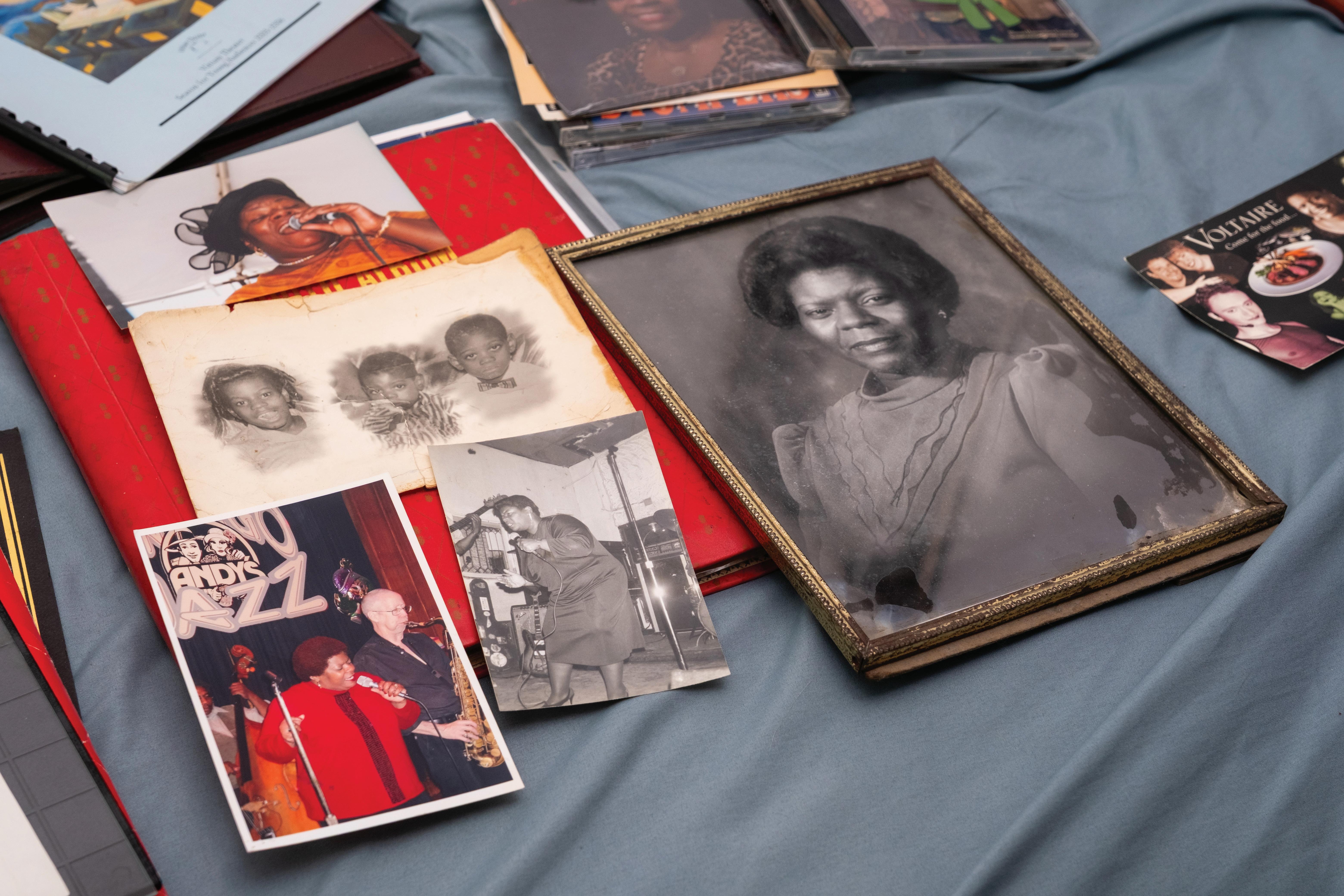
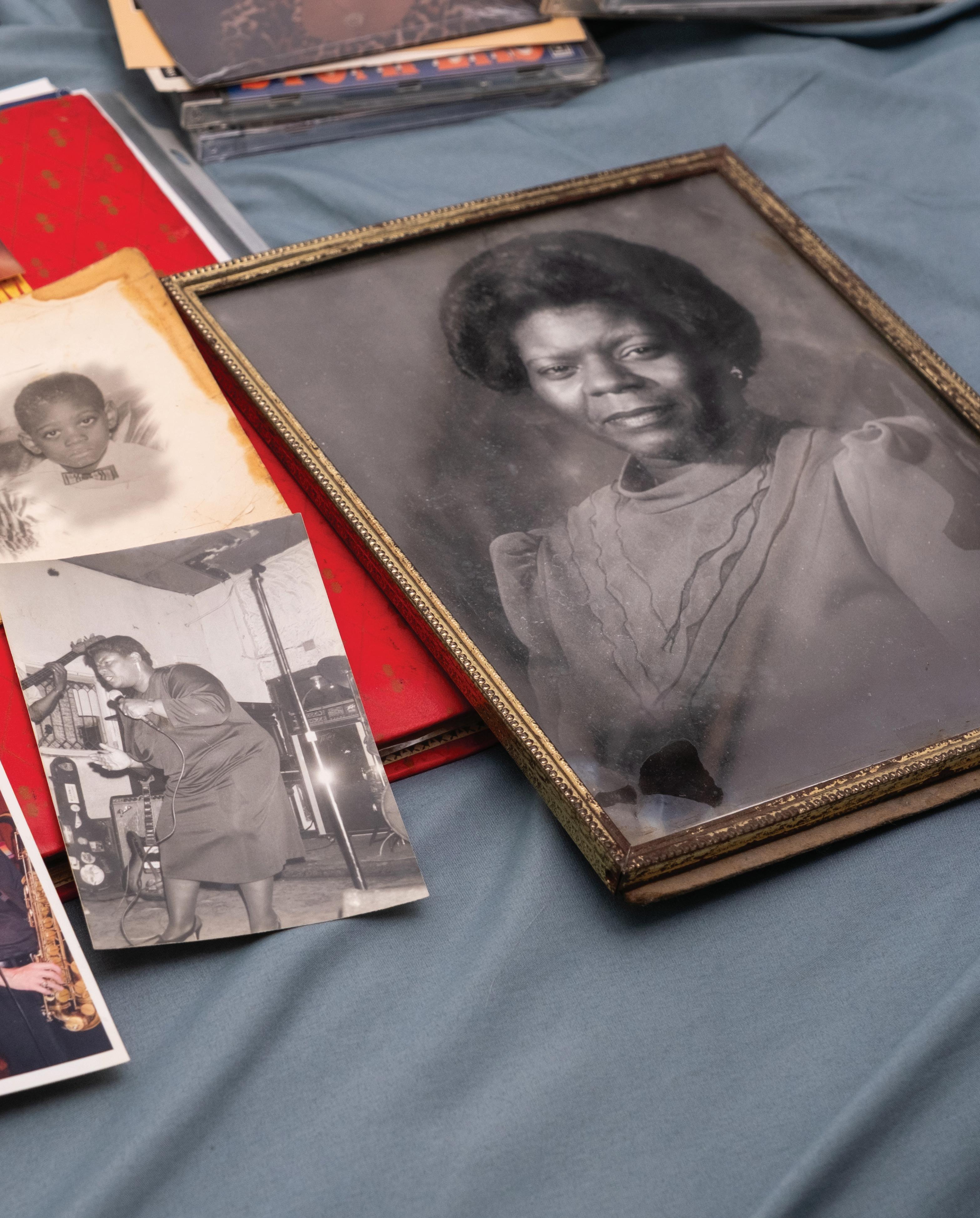
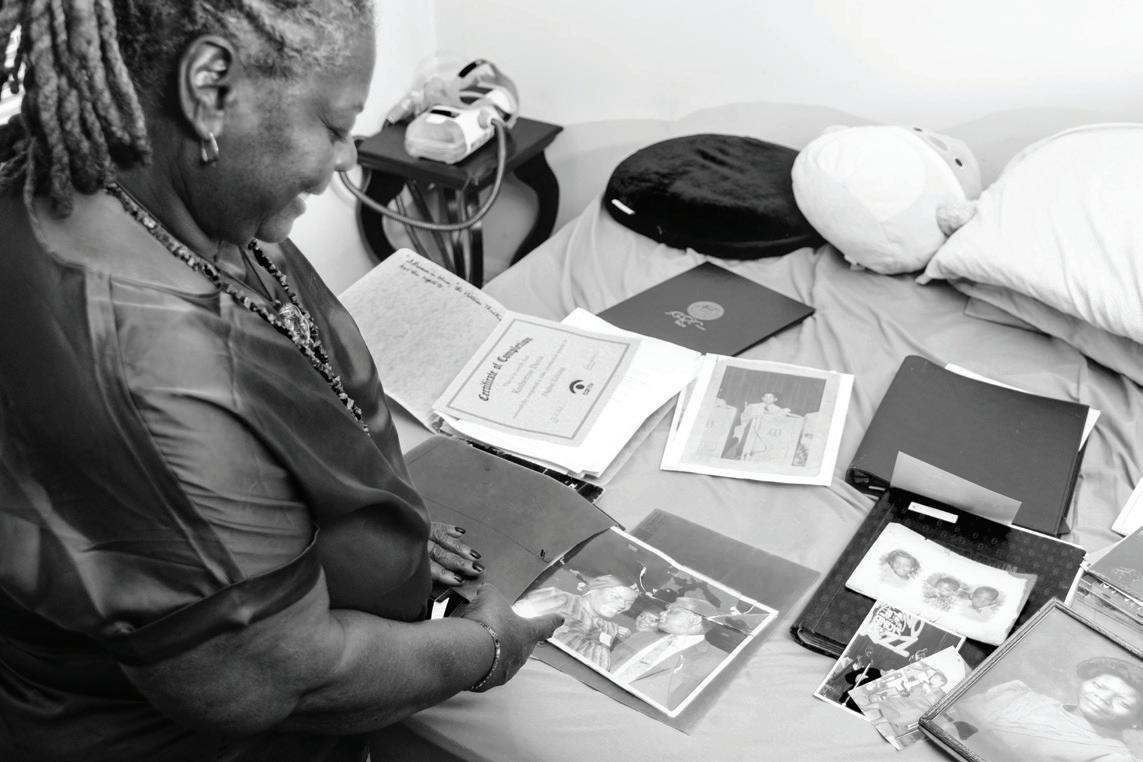
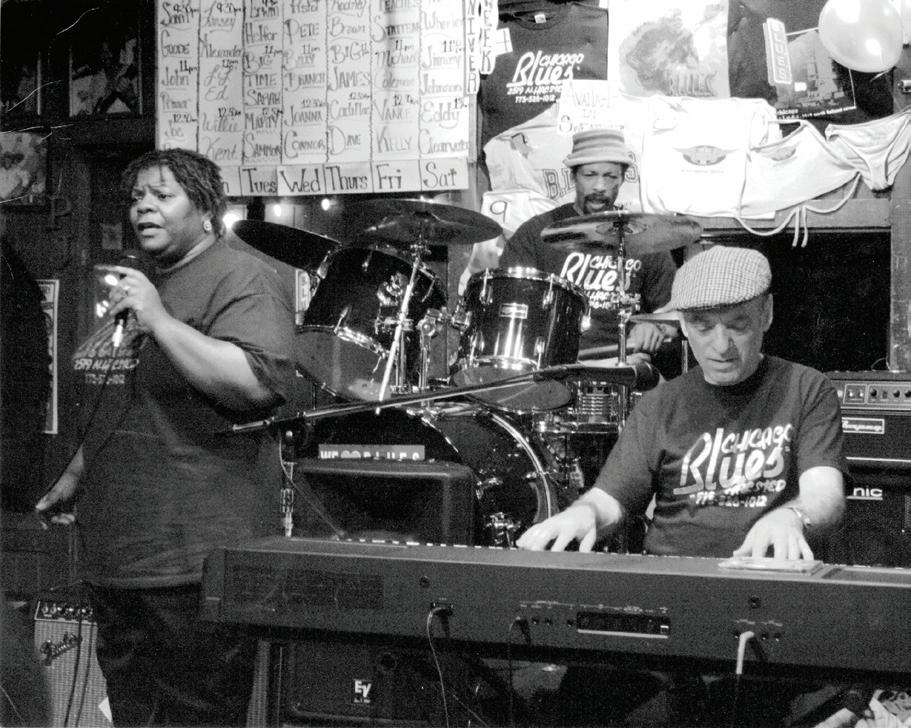
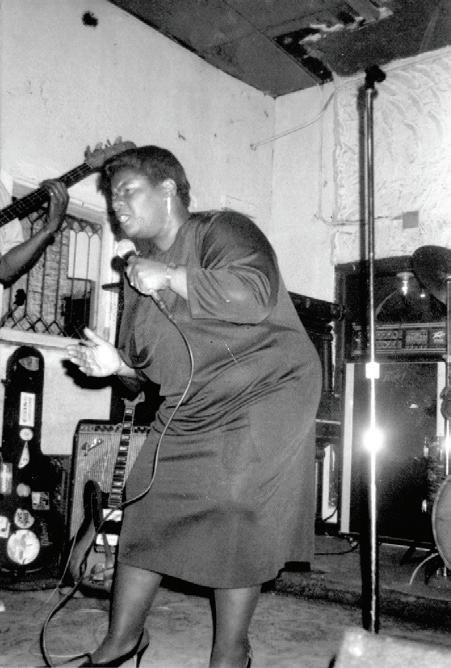
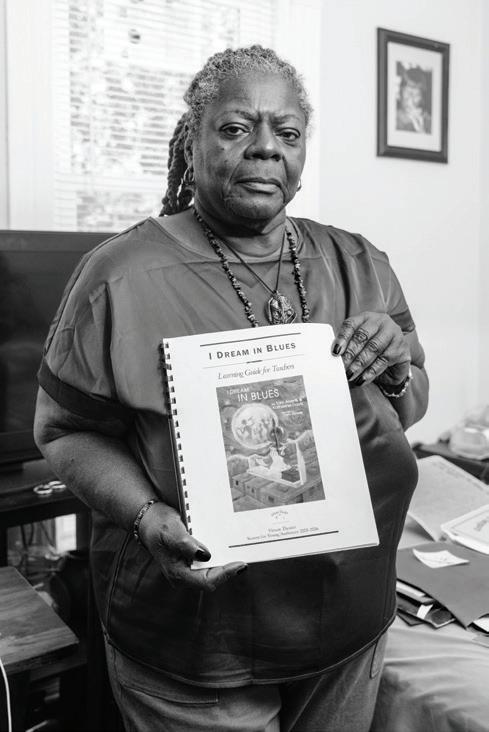
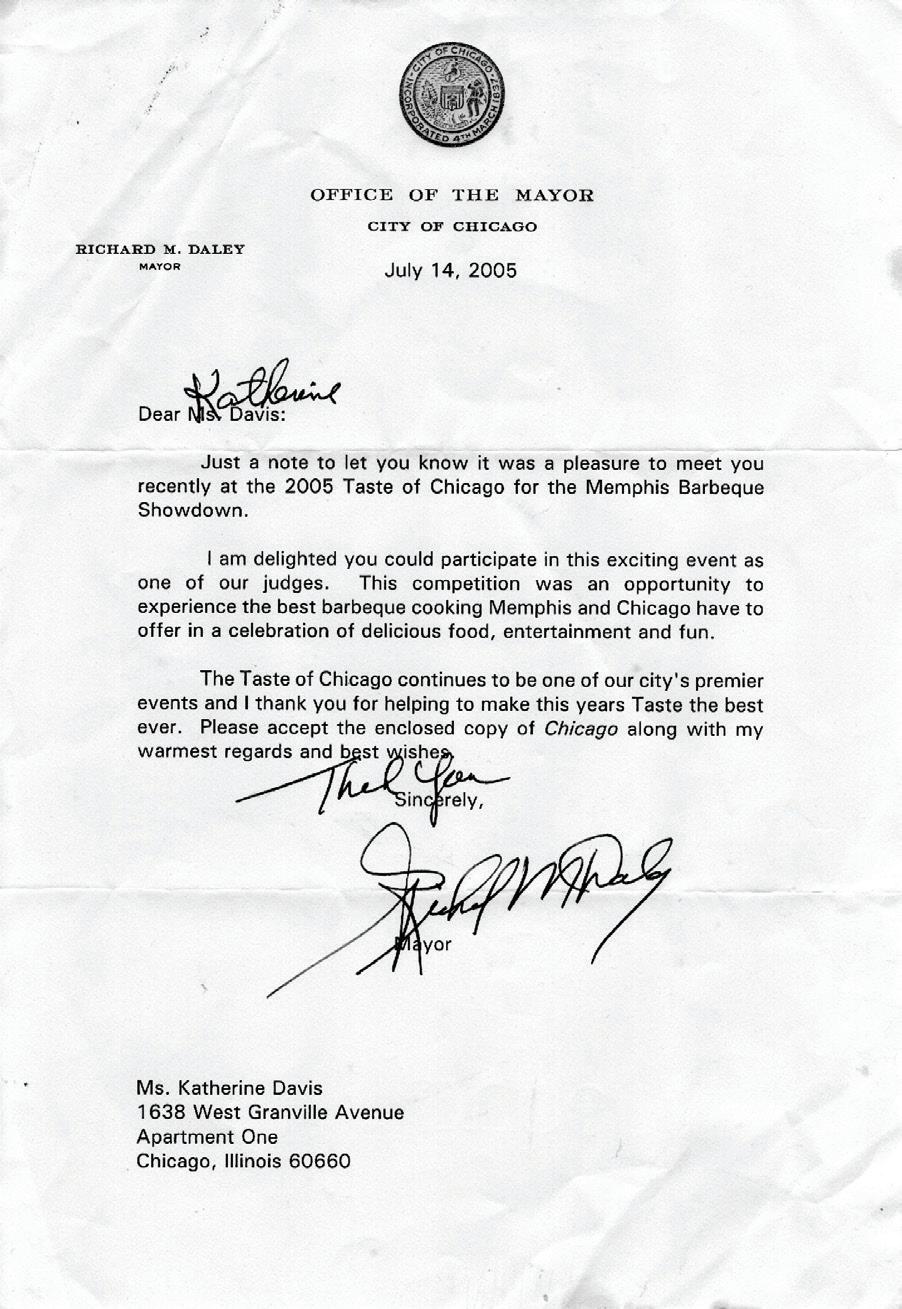
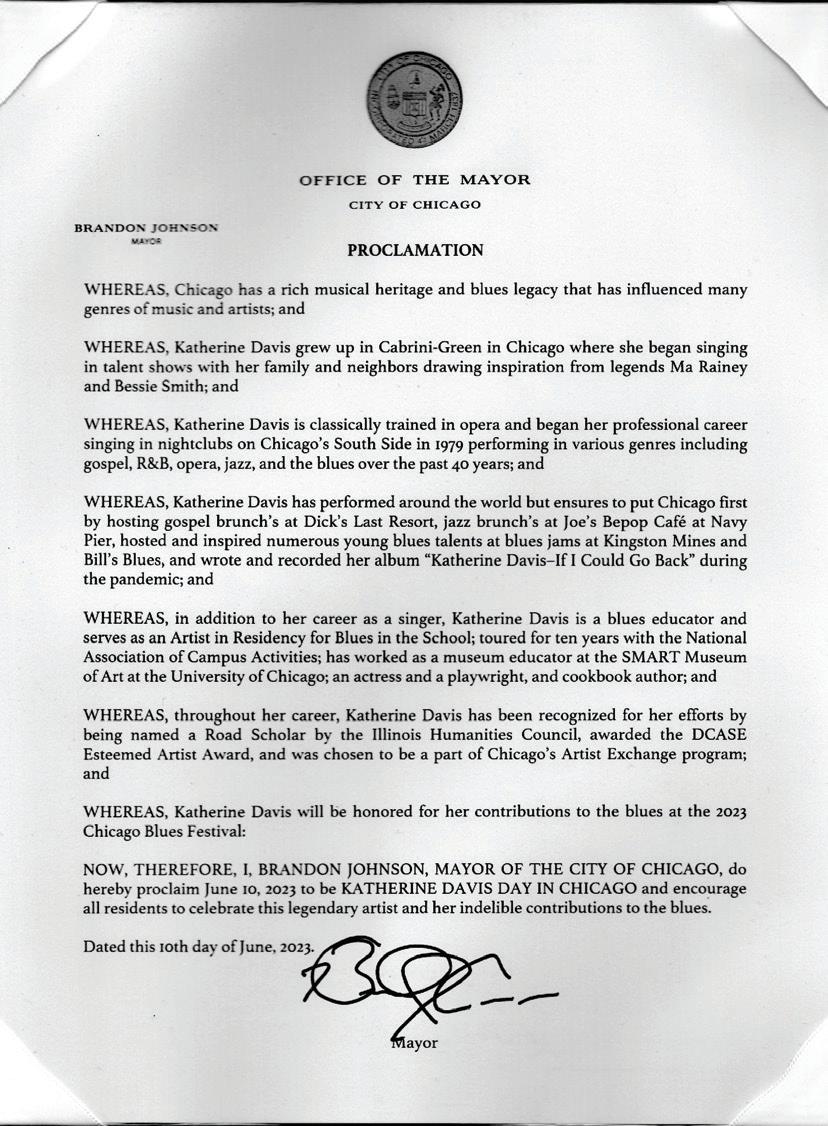
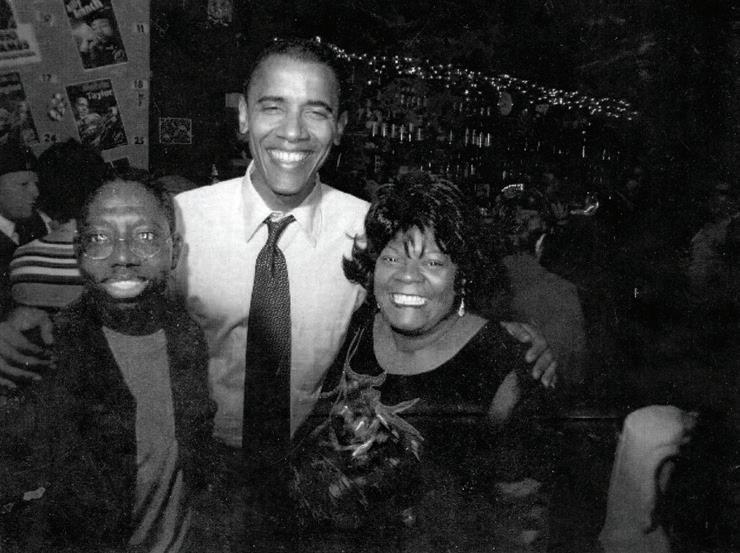
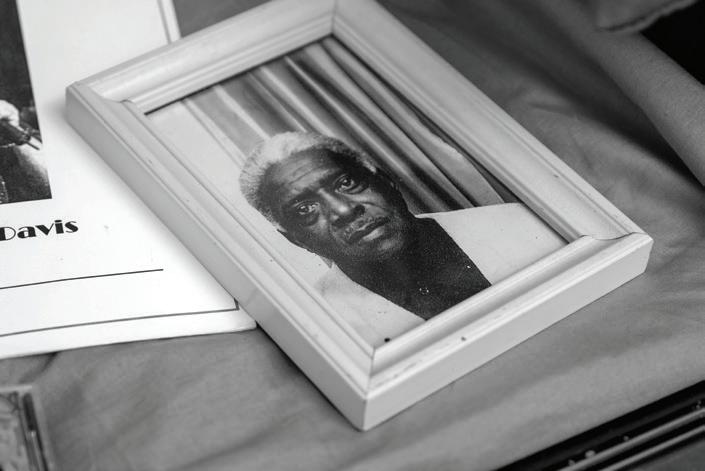
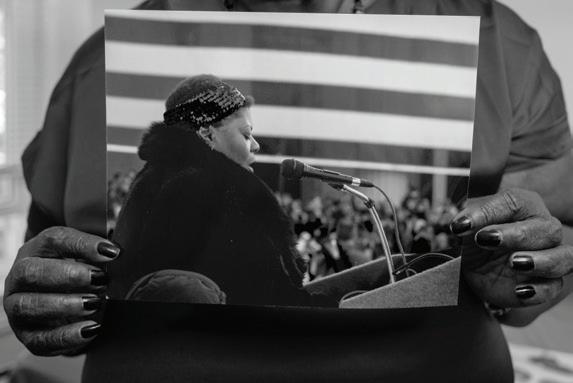
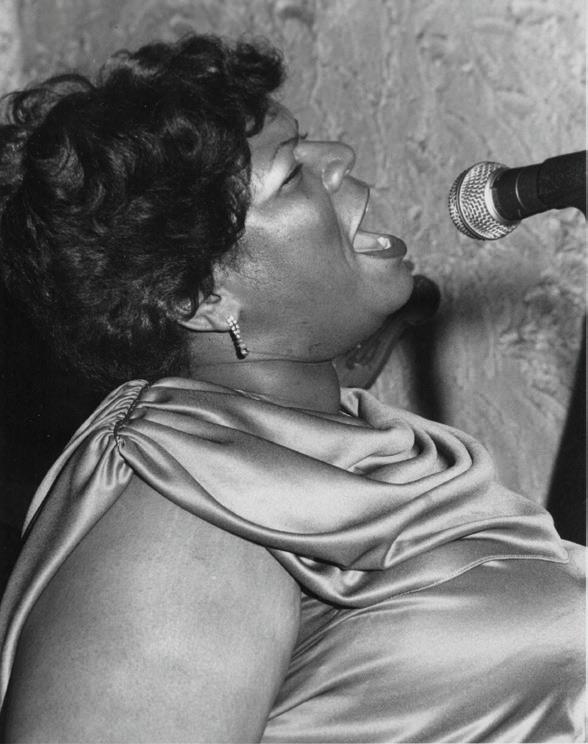
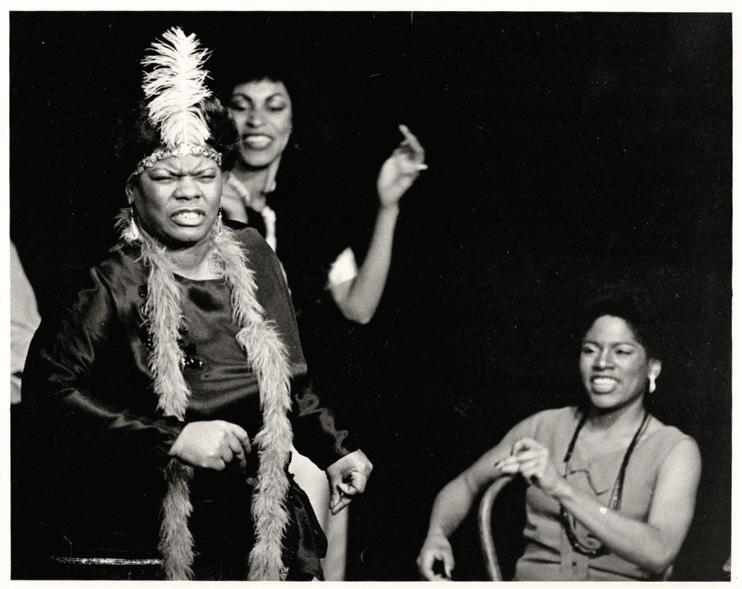
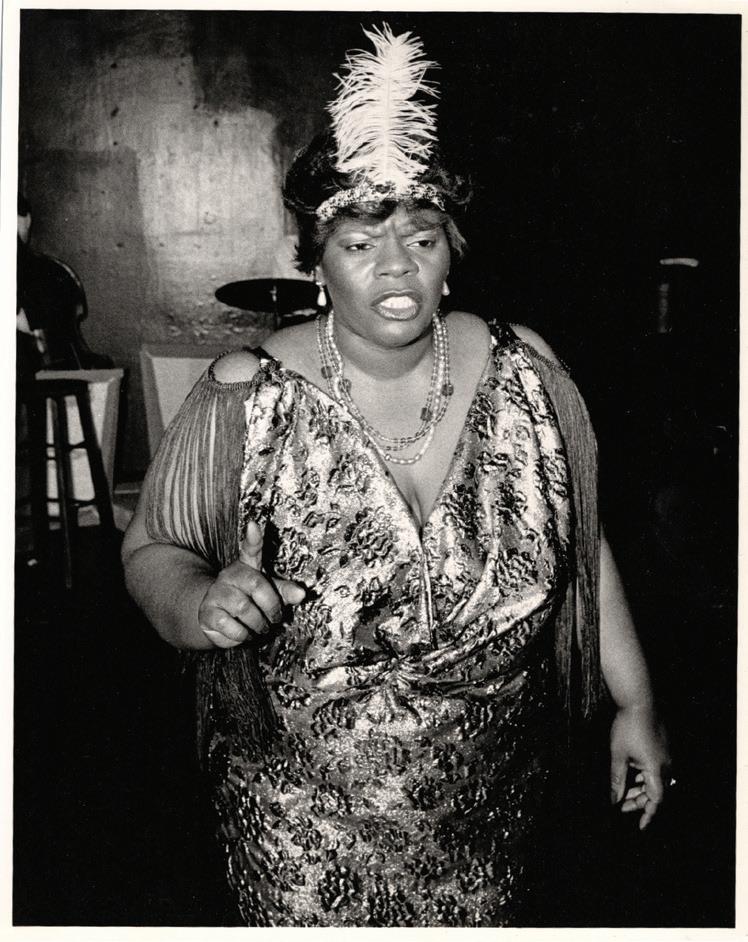
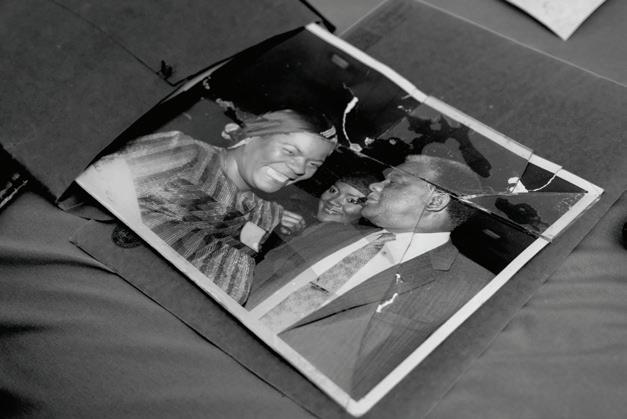
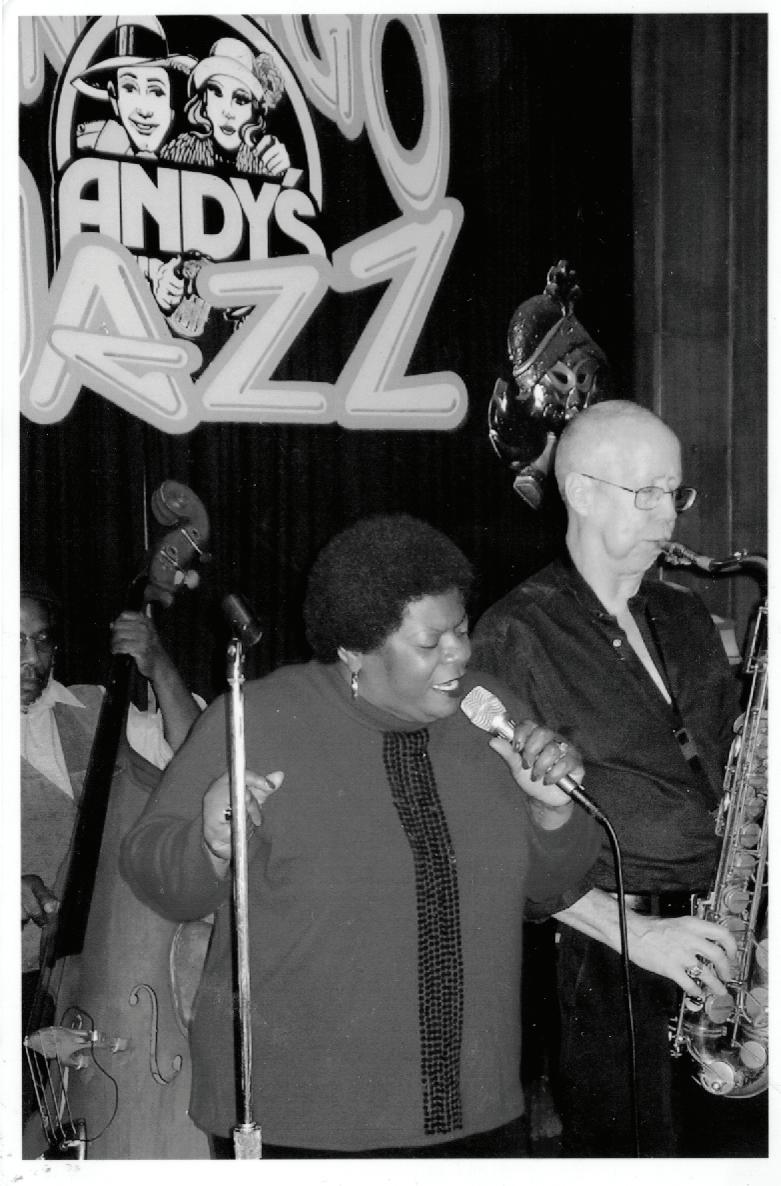
Austin’s Katherine Davis has lived her life in the blues. West Side archivist Kenn Cook, Jr. visited Davis, shot current photos of Davis and collected images of artifacts of her life.
Life in Pictures
KATHERINE DAVIS HOLDS A COPY OF HER PLAY ‘I DREAM IN BLUES.’
KATHERINE DAVIS HOLDS A PHOTOGRAPH OF HERSELF PERFORMING AT THE MUSEUM OF SCIENCE AND INDUSTRY.
A HISTORIC PHOTOGRAPH OF KATHERINE DAVIS AND THEN MAYOR HAROLD WASHINGTON.
A FRAMED PORTRAIT OF KATHERINE DAVIS’S FATHER.`
Forty Acres Fresh Market plants its roots in Austin
An entrepreneur’s moxie brings Austin its own grocery store
By RISÉ SANDERS-WEIR Eats Repor ter
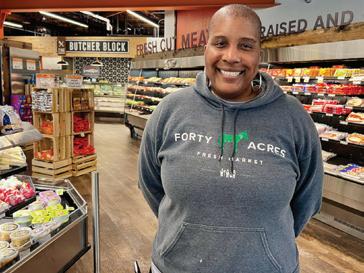
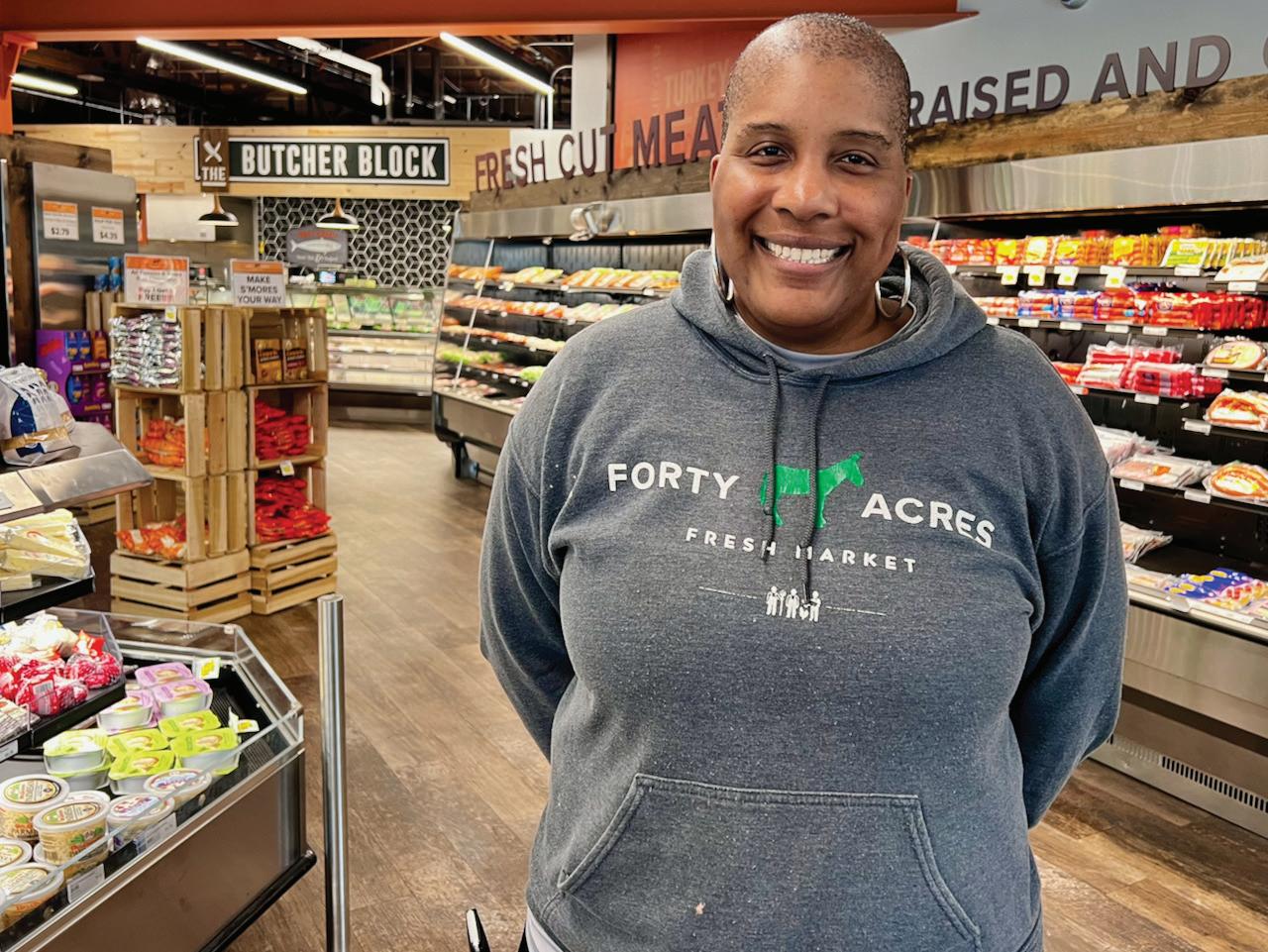
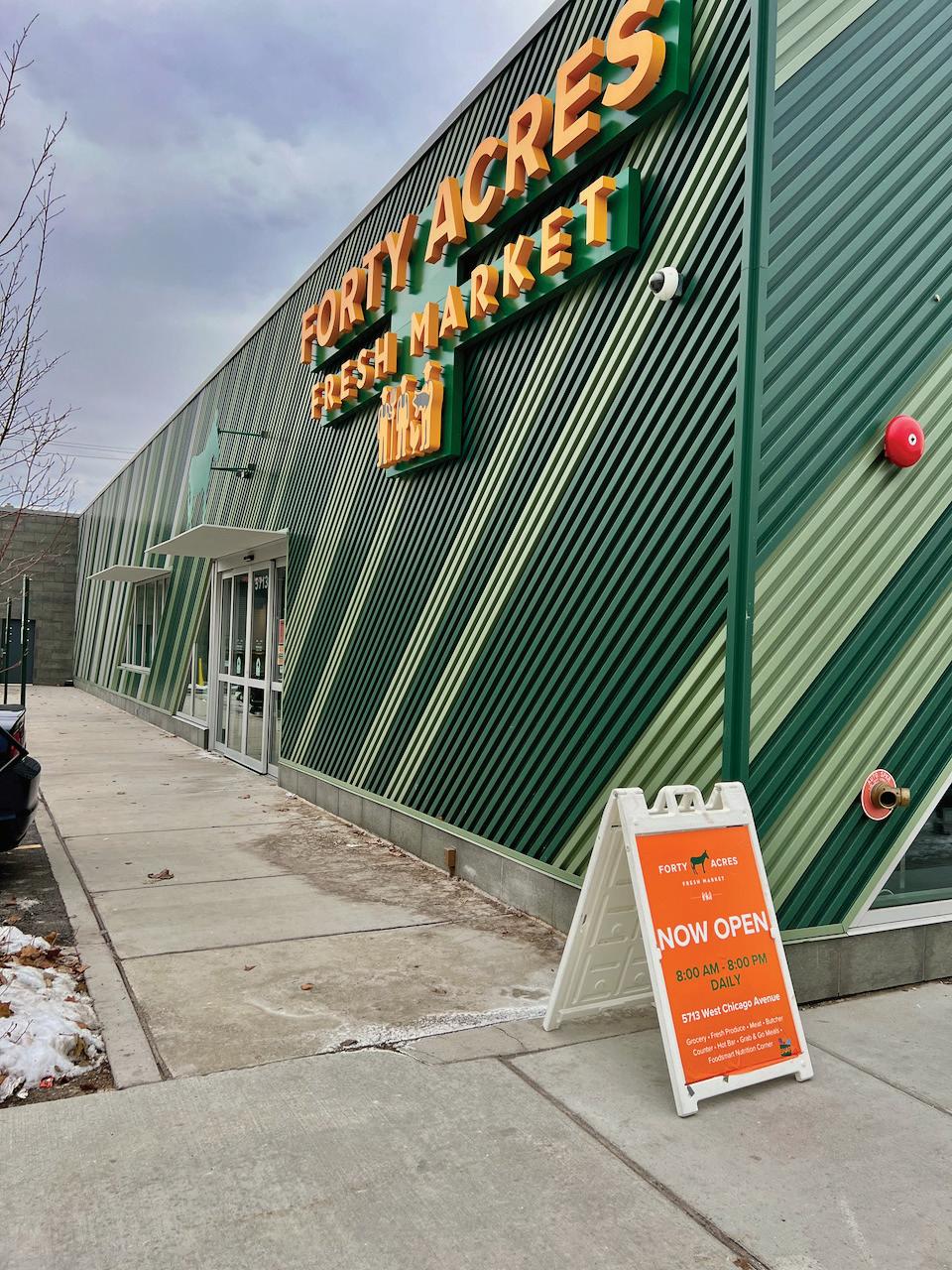
When Forty Acres Fresh Market opened its doors in September 2025, the full-service grocery store filled a gap for customers in the Austin neighborhood with fresh produce, a butcher counter and more. Almost nine months into operations, the store has built on those offerings. They now have a license to sell alcohol, a floral department, and a customer loyalty program. The idea for the store had been growing in the mind of owner Liz Abunaw for years before the automatic sliding doors glided open for the first time.
Abunaw, who is originally from upstate New York, had been working for General Mills for more than a decade when she came to Chicago to go to business school.
Afterward, she was back in the white-collar workplace at Microsoft for a few more years before her position was reorganized out of existence.
“They gave a really good exit package,” Abunaw said. “And I realized I’d saved pretty well, so I ran the numbers. I didn’t immediately have to go to work, so I was like well I’ve been thinking about this grocery thing. If not now, when? Just try
it out.”
Forty Acres debuted in 2018 at pop-up markets in Austin and Maywood, then added a produce box delivery service.
“At first, it was about learning the business, learning the industry, seeing how I could grow from pop-ups into a store.” Abunaw said. “I had the idea of a neighborhood fresh market on the Westside in my head. It just kind of kept percolating.”
Then the pandemic hit in 2020. The produce box delivery business, which had been a smaller part of her overall plan, boomed. Still, Abunaw could see that Austin’s lack of grocery stores was an opportunity to meet a demand
“I saw a neighborhood and a community that was not adequately served by the options that were available nearby,” she said. “I saw a neighborhood that spent a
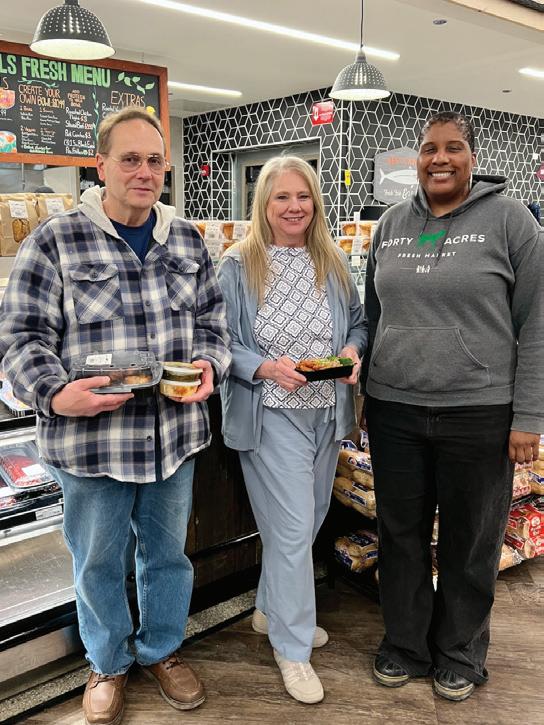
DINERS LYLE & KL DALY AT THE HOT BAR | RISÉ SANDERS WEIR
FORTY ACRES FRESH MARKET
large portion of its disposable income in other neighborhoods.”
The hunger was there, then a building that had been occupied by the Salvation Ar my came available.
“We were like, okay,” she said. “We wanted to be on Chicago Avenue We wanted to be in Austin. It’s a corner lot with a parking lot.”
The doors opened in September 2025. Aisles were filled with fresh produce, a butcher counter, dairy, frozen foods, pet foods, dry goods. Also ready to go was a hot food bar. It was a key part of the for mula from the get-go. Abunaw wants to be comparable with what customers expect to find at grocery store chains.
The store also goes beyond those expectations with store tours, in-store sampling and cooking demonstrations.
goal is the process of discovery of different foods, aring things,” Abunaw said. “People are that they normally wouldn’t pick up. And a lot of never gotten a butter nut squash. I hosen mustard greens, but like they’re here.
FORTY ACRES FRESH MARKET 5713 W CHICAGO AVE, CHICAGO | RISÉ SANDERS WEIR
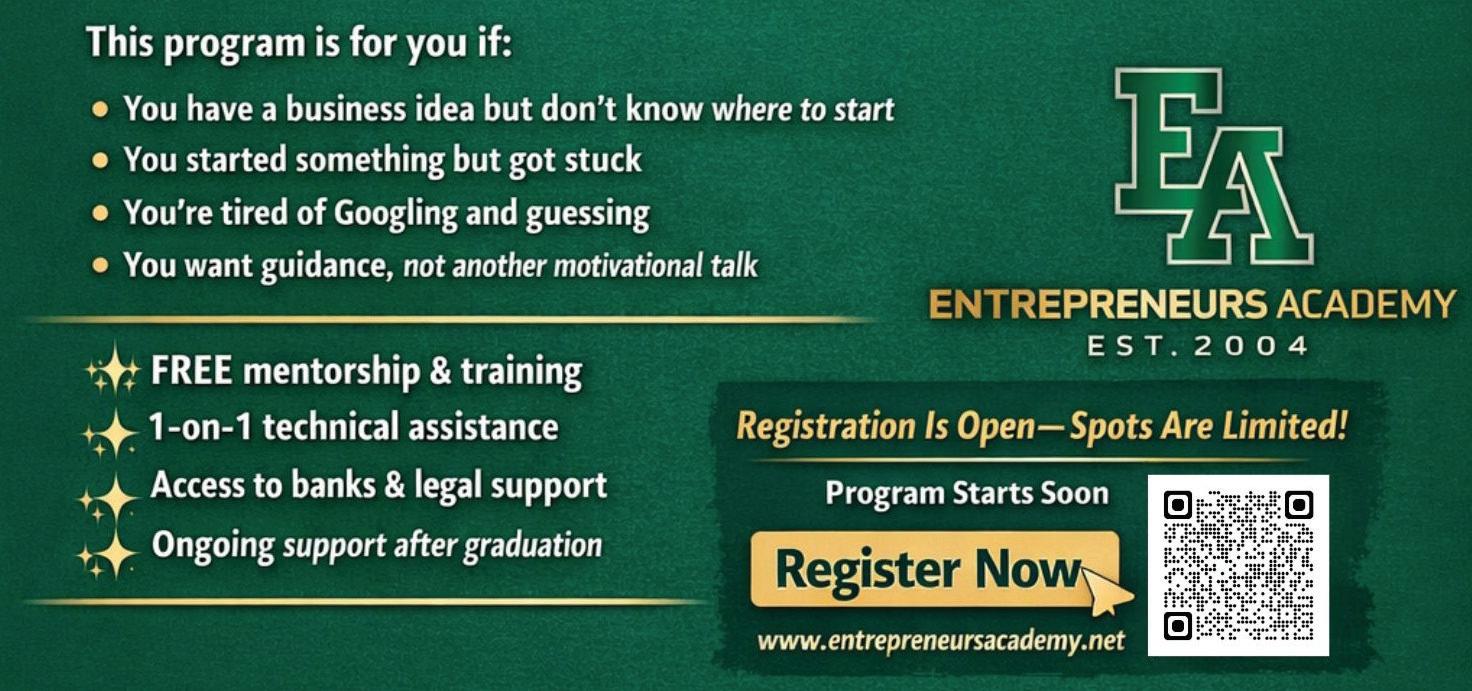
Start the Business You’ve Been Thinking About - Not Another Year of Talking About It.
Turn your idea into a real business with guidance, structure, and support - even if you’re overwhelmed, stuck, or starting from zero.
SIGN UP FOR
SIGN UP FOR OUR FREE NEWSLETTERLOCAL NEWS SENT STRAIGHT TO YOUR INBOX.
BLACK SOULS FOOD FROM THE GODS THAT FEED
‘When I think about cooking, I think about my grandmother’
By DEBORAH BAYLISS Contributing Repor ter
ham hocks, chowchow, fried chicken, and potato salad were staples on Black Southern tables long before anyone thought to label the everyday cuisine “soul food.”
Sweet greens,potatoes,
These dishes were not trends, they were flavors shaped by memory, survival, and the creativity of cooks who made something out of very little
Carried in the memories of the elders or scribbled on torn, time-worn scraps of paper, recipes for homemade buttermilk biscuits and egg and sweet potato pie traveled north as African Americans migrated in great numbers from the South during the Great Migration.
These were the kinds of stories passed down over the years, whispered in kitchens, shared at reunions, and folded into the fabric amily identity.
“Chitterlings, fried chicken, catfish, and macaroni and cheese evolved into cultural markers, dishes that held meaning far beyond the plate.”
Black history is not only something chronicled in books; it is something carried in Black bodies and Black music, and the food that mothers, fathers, grandmothers, and grandfathers passed down for generations.
Whether shelling peas or shucking corn, or other food preparations, the kitchen became a classroom, a sanctuary, where traditions were taught mostly by hand rather than written instruction.
chefs like Quentin Love, owner of The S ood Lounge in Austin, trace their roots to those kitchens where knowledge was absorbed through watching, tasting, and listening.
Love writes on his website that he began cooking at age five and became a chef ’s apprentice in his grandmother’s South Side kitchen by the time he was eight, studying her every move as she prepared Souther n staples like macaroni and cheese, collard greens, and smothered chicken.
“When I think about cooking, I think about my grandmother,” he wrote “My grandmother always talked to me while she cooked.”
The origin of soul food stretches back to the transatlantic slave trade, when enslaved Africans brought with them staples like okra, blackeyed peas, sorghum, and yams, adapting them to the meager resources available to them in the American South.
Enslaved cooks transformed the least desirable cuts of meat like fatback, ham hocks, pig’s feet into dishes rich with flavor and ingenuity. Cornmeal, molasses, and greens became the building blocks of a cuisine that sustained people through unimaginable hardship.
Greens, collards, mustard and tur nip are still essential in Black households, whether for holidays, Sunday dinners, or everyday eating. Chitterlings, fried chicken, catfish, and macaroni and cheese evolved
into cultural markers, dishes that held meaning far beyond the plate. They were reminder of where they came from and what they survived.
Soul food and soul music, especially the blues, have always moved in step with one another, both emerging from the same of struggle and creativit carrying the weight of history offering comfort and release.
Blues artist Katherine Davis – now in her senior years – in a recent interview with West Side Magazine, spoke about the paperback cookbook she created, filled with dishes like turkey and chicken dressing, beef pot roast, sweet potato pone, peach and blueberry cobbler, and bread pudding.
“When I performed overseas, I would take a few cookbooks and sell them,” she said. “It’s a booklet and not a hardcover. I have about 16 recipes.”
West Side bluesman Larry “Bluesman” Taylor often spoke about the magic that unfolded inside his parents’ (Blues artists Vera and Eddie Taylor) West Side home, where rehearsals drew giants of the genre like Howlin’ Wolf, Muddy Waters, and others who drifted in as naturally as family. Music was only part of the ritual.
On those days, Vera always had a spread of greens, potato salad, fried fish, the kind of food that made musicians feel rooted
and welcomed and Howlin’ Wolf had his own special pot of greens, the ones Vera added cornmeal dumplings made just for him. In that house, the blues wasn’t just rehearsed; it was fed, nur tured, and lived.
Like music, food is good for the soul. It’s a reminder that nourishment comes in many forms, and that the stories carried in recipes and songs continue to shape Black life across generations.`
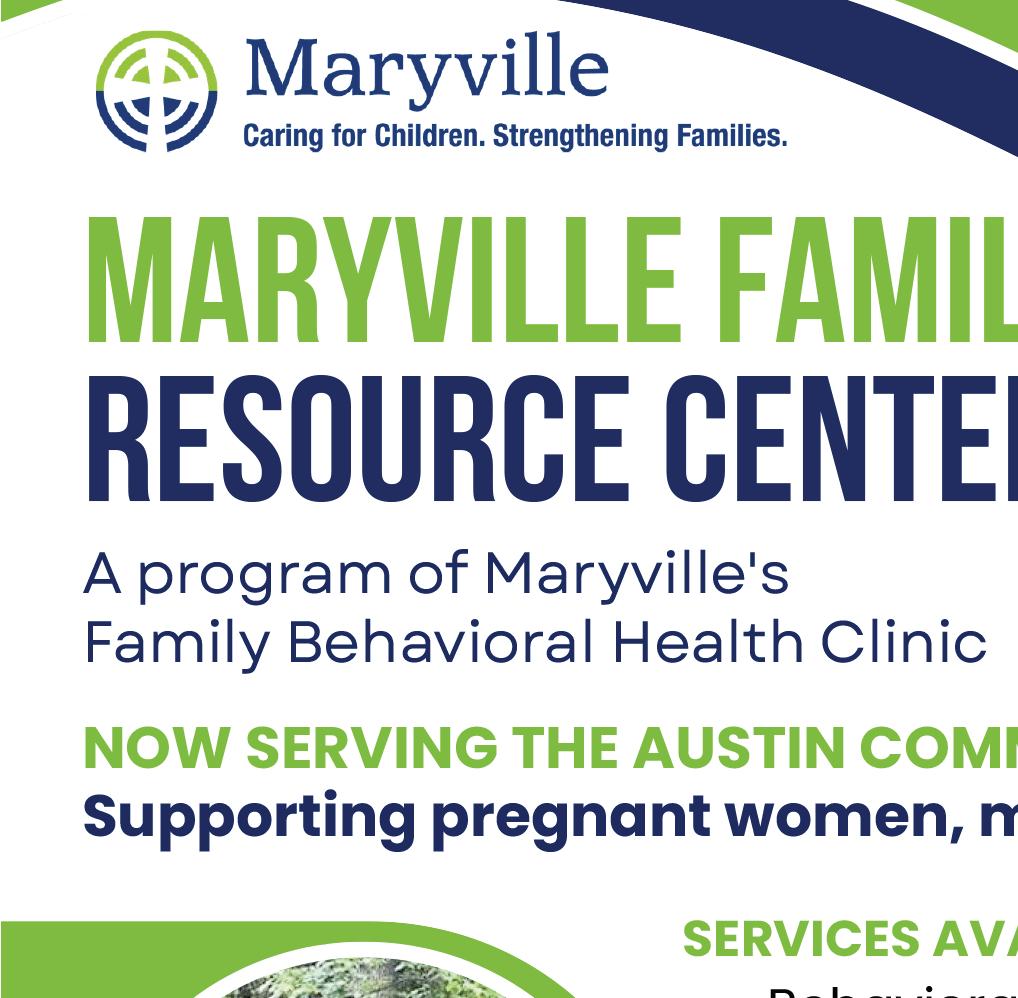
Complete health care for every stage of life: Women’s & Prenatal Health • Family Medicine • Dental • Behavioral Health • Diabetes Care • Doulas • Nurse Home
Visits • Telehealth • Parenting Support • Assisted Recovery Care • Birth Center
Top stories, local government, features, events, dining, art, and local education right at your fingertips!
Love Is On The Green Line activates Chicago’s Green Line corridor
VE GREEN NE ison e
New arts project highlights everyday cre onnection between West and South Sid nities through transit-based program
By HECTOR CERVANTES Contributing Repor
ativity and outh Side commumming
ter
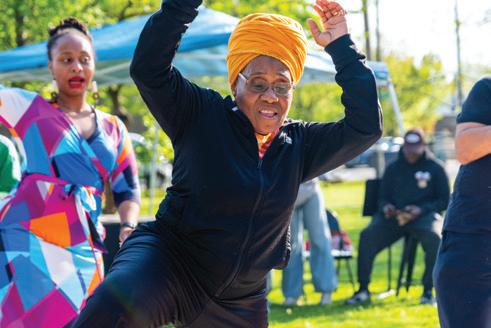
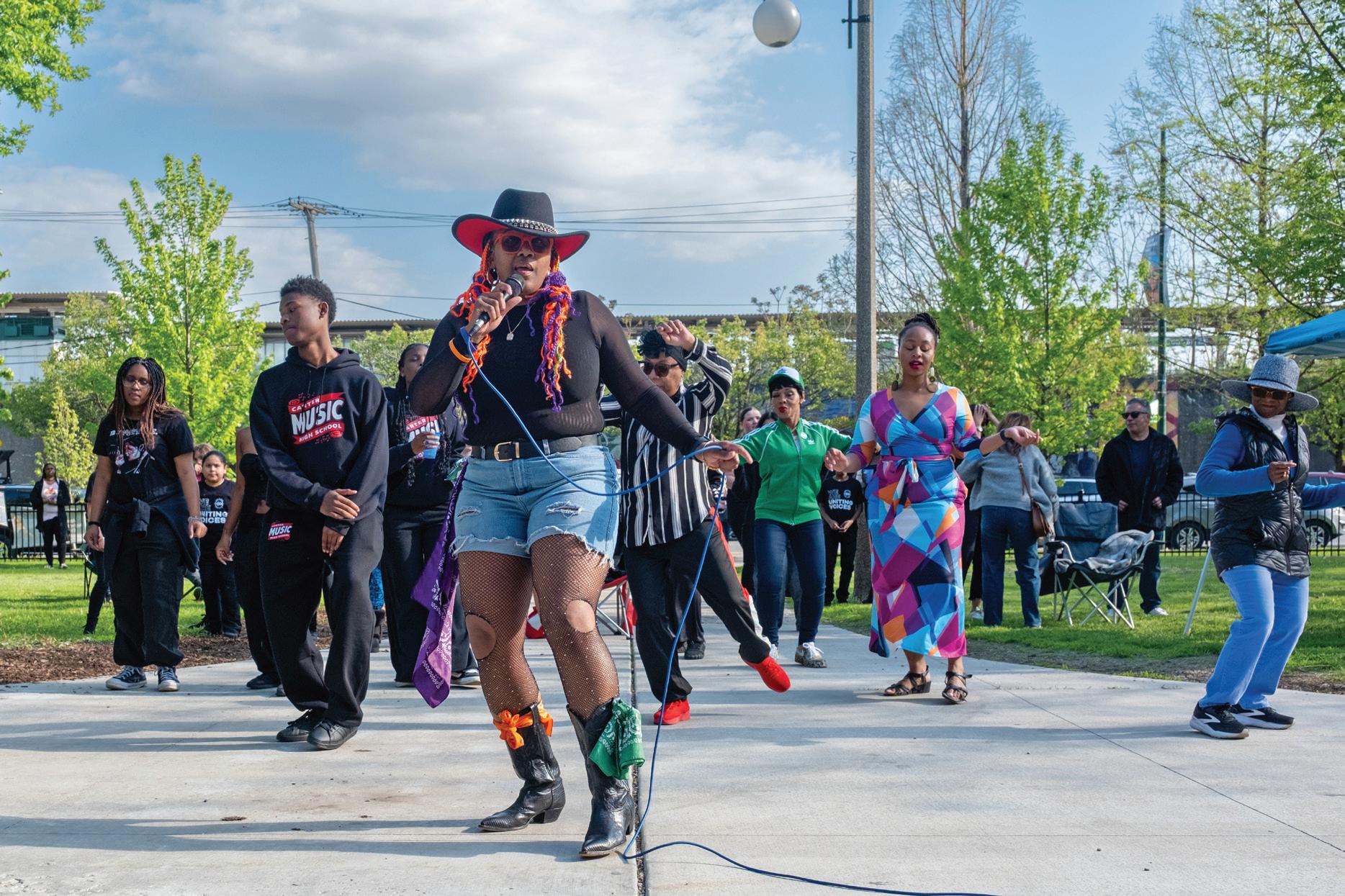
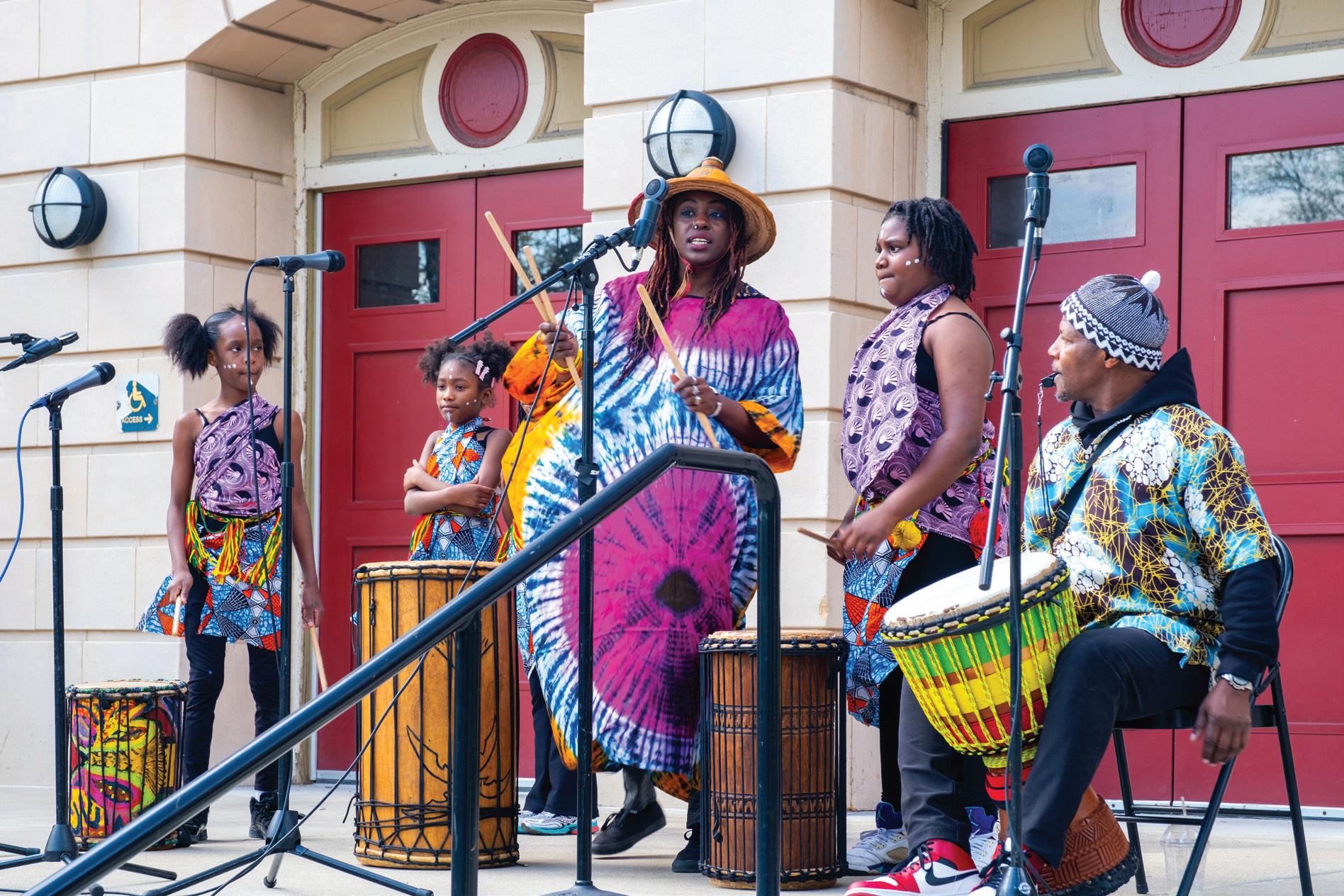
Public spaces along Chicago’s Green Line a formed into hubs of music, dance and story Love Is On The Green a community ar by Austin’s Kehrein Center for Arts ing West and South Side communities c a Culture Near from Elevated Chicago, the projec spaces including the Green Line st Community Center and the Cent ridor to encourage walkabilit tional engagement and strong among longtime residents
s Green Line are being transance and storytelling through Is On The Green Line, a community arts initiative led the Arts aimed at bringcloser together
Supported through a Culture Near Transit grant the project will activate spaces including the Green Line station, Alt-Space Community Center and the Central Avenue corwalkability, intergeneraand stronger connections
Reesheda Nicole Berry, f tive director of the Keh the Arts th
founding execuehrein Center for the Arts explained the goal of Love
Is On The Green Line is to highlight the many ways love already exists along the Green Line corridor and to use the platform to amplify the voices and talents of artists, musicians, dancers, drummers, DJs and other creators living between Chicago’s West and South sides.
“I think so much of the narrative in our city often pits the West and South Sides against one another. I was born and raised on the West Side of Chicago and I’ve lived on both the West and South Sides of Chicago and really beautiful things are happening between the West and South Sides of Chicago,” Berry said.
Many residents on Chicago’s West Side have family on the South Side and many on the South Side also have family on the West Side. So Berry emphasized creating constant everyday connections between the two communities. Berry knows the importance of amplifying the beauty in these relationships and encouraging a continued positive narrative between
Chicago’s West and South Sides.
“We have to amplify all of the many creators who live along the Green Line corridor between the West and South sides of Chicago. We want to leverage our platform to amplify the ways they are already here. We want to support the businesses along the Green Line and really illustrate that there is another narrative besides the one we hear that can be so negative about what happens along that Green Line corridor,” Berry said.
Berry spent her life hearing how others described the South and West Sides, often in ways that differ from her own experience. She said who she is today has been shaped and supported by growing up in Austin on the West Side, as well as experiences in Bronzeville and other South Side neighborhoods.
“I started getting present to the ways that love has really fostered my development as a leader, as an artist, as a mom and a
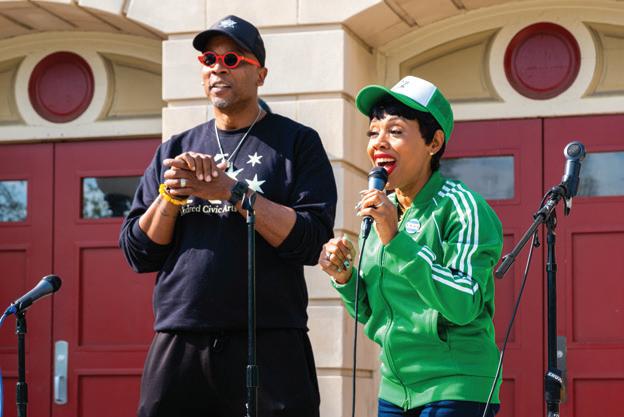
THE KEHREIN CENTER’S REESHEDA NICOLE BERRY LEADS THE KICKOFF OF LOVE IS ON THE GREEN LINE FESTIVITIES. | KENN COOK JR.
wife. I wanted everyone else in our city to understand the ways that love is already here. So that is kind of where this all came from,” Berry said.
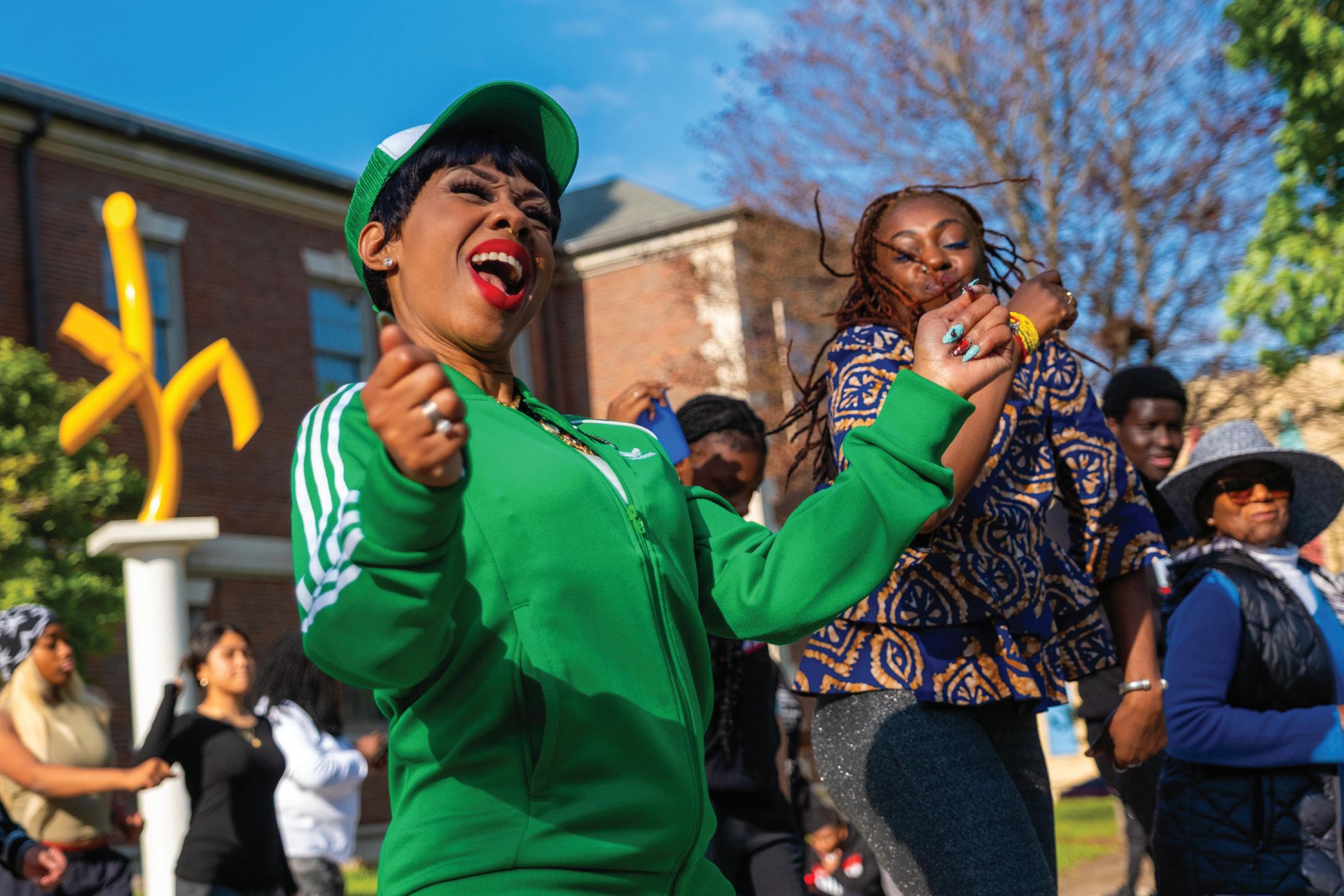
For the kickoff celebration, Berry intentionally chose her outfit, including a green Adidas sweatshirt and Green Lineinspired elements, to reflect the branding of Love Is On The Green Line. She said their goal was to capture the art, history and culture of their generation through a hip-hop-influenced lens.
“I love kicks. I love hip-hop, and Adidas really captures that spirit and energy of the 90s when I was a kid, when that love was being fostered in me. Love Is On The Green Line has developed these trucker hats to commemorate that era and time on the West and South Sides of Chicago,” Berry said.
Monthly events for Love Is On The Green
Line are planned going forward, offering continued opportunities for community engagement.
“We’re partnering with The.BlkRoom, which is at the Pulaski stop on the Green Line. We will be doing something very similar, an outdoor party with Black Room on June 4,” Berry said.
The project aims to amplify the ways people moving through the city’s tran-
sit system are already delivering love and connection between communities. It focuses specifically on the CTA Green Line because it offers visibility to everyday people whose stories are often overlooked compared to those in positions of high visibility and power.
Love Is On The Green Line centers transit as a space where the beauty and presence of Chicago’s communities can be seen
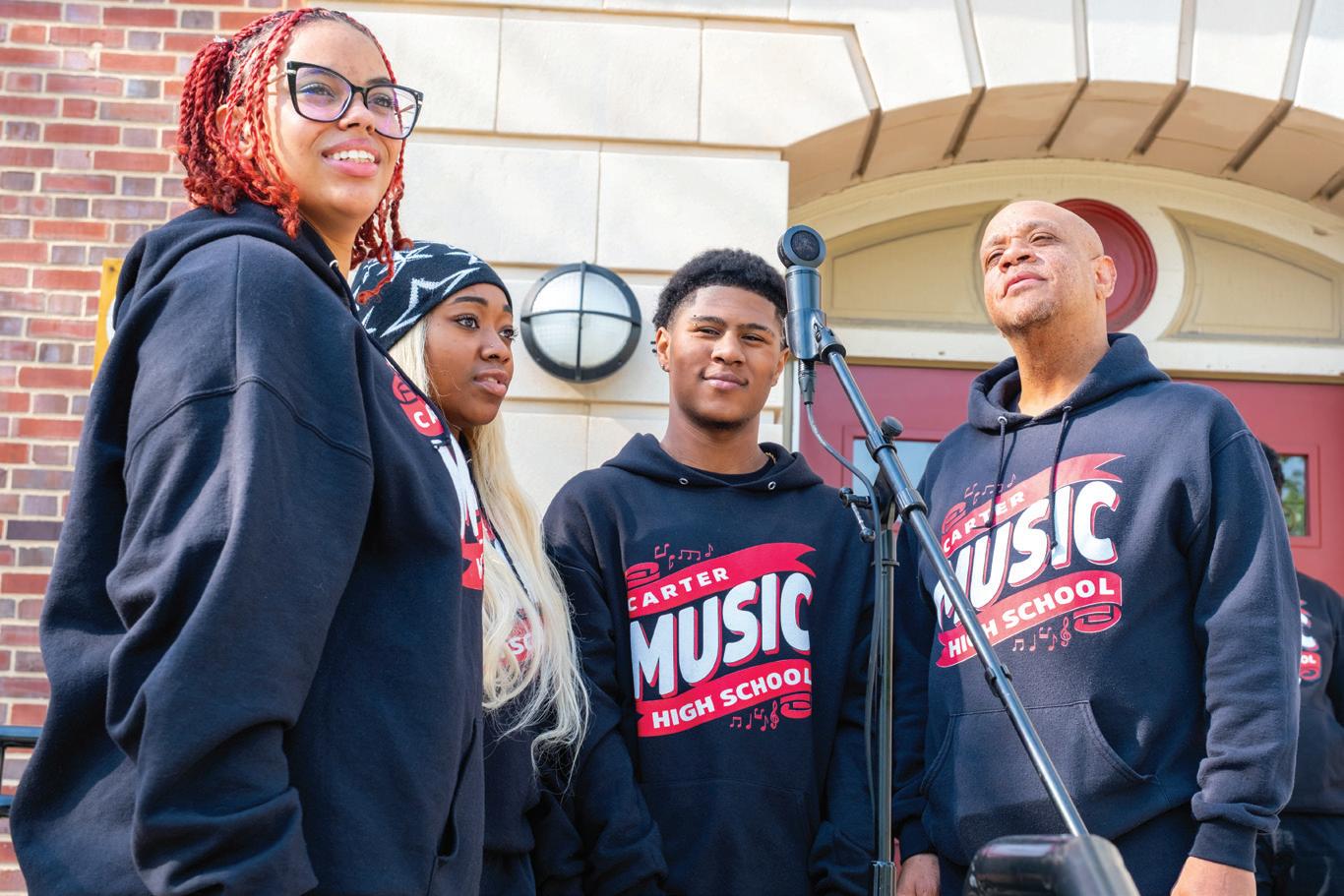
STUDENTS FROM CARTER HIGH SCHOOL IN DALLAS, TEXAS, SING DURING THE LOVE IS ON THE GREEN LINE CELEBRATION | KENN COOK JR.
KENN COOK JR.
and celebrated
“We believe there are many everyday heroes on public transportation and we really want to love on them and amplify the ways they bring love into our city. We also recognize that people who are going through hard times, including those experiencing mental health challenges or struggling with drugs and substances, need support. They need art, they need
culture and they need healing,” Berry said.
Carter Music High School performed “I Believe I Can Fly” by R. Kelly, with an uplifting delivery. The lyrics filled the space with an inspiring and hopeful tone for those in attendance.
Berry described seeing people get of f the train dancing after hearing music outside, noting it as a powerful example
of art spilling into everyday life that emphasizes a desire to remove the barriers around theater, arts and music and bring those moments into the streets, where they can reach and uplift people who may not otherwise have access to them.
“I feel like when you’re in your car, there’s a zero chance of meeting or engaging with anyone else. You also don’t get to see elements of the city, specifically from the el train, because it’s elevated, you get to see the city in a way you can’t see it from the ground,” Berry said. “We hope that the programming we’re doing will increase the chances that people take that ride and that it will not only elevate their transit experience but also elevate their experience of our city.”
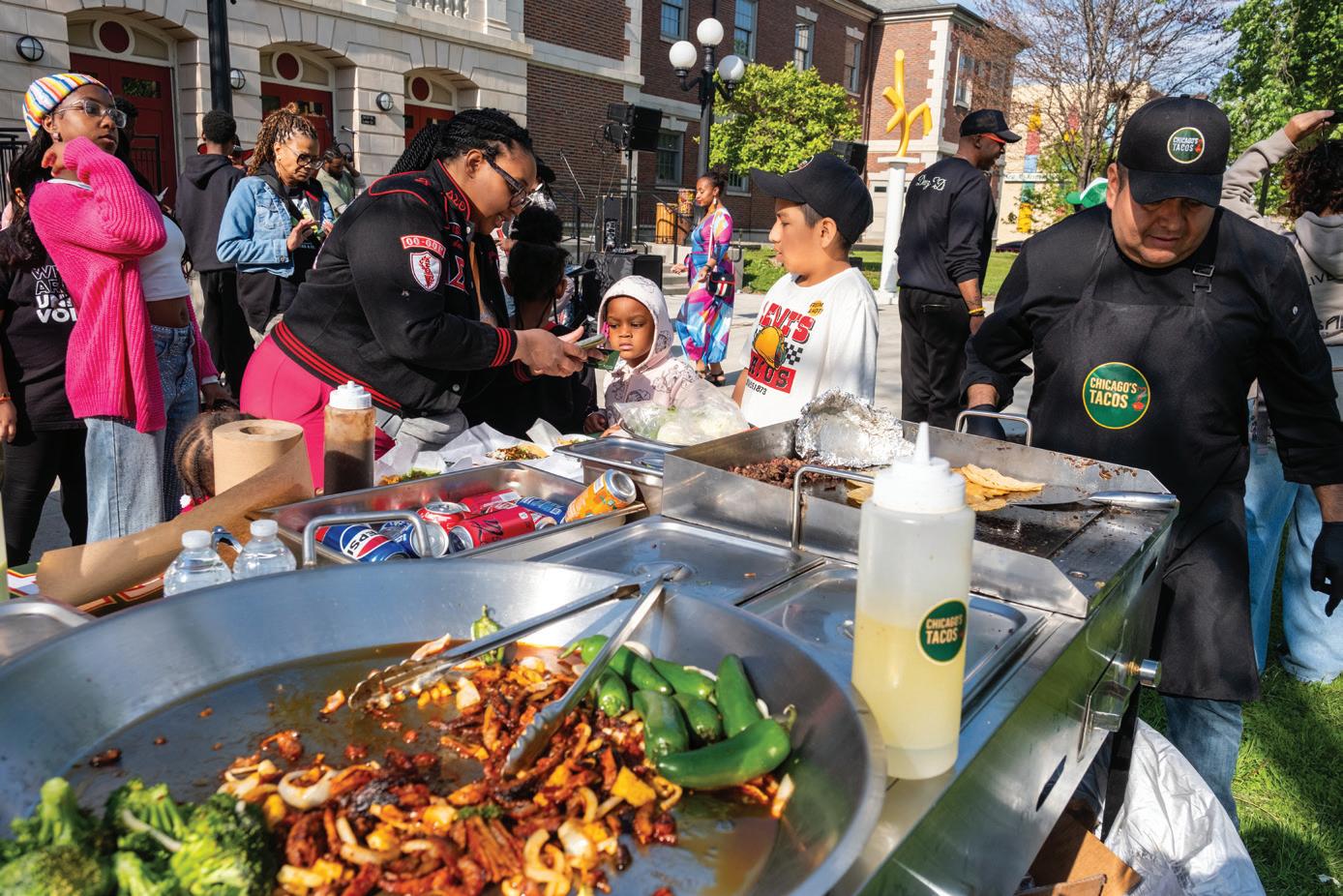
CHICAGO’S TACOS PREPARES FOOD FOR ATTENDEES | KENN COOK JR.